Article

Adherence to the Mediterranean Diet Among Croatian Children with Parent-Reported Adverse Food-Related Reaction: Cross-Sectional Study on Diet Quality, Regional and Socioeconomic Differences


by
Vedrana Jurčević Podobnik
1,†,
Gordana Kenđel Jovanović
2,3,†,
Martina Pavlić
4,
Jasna Pucarin-Cvetković
5,
Nataša Šarlija
6,
Sandra Pavičić Žeželj
2,3,* and
Darja Sokolić
4
1
Department of Epidemiology of Infectious and Chronic Non-Communicable Diseases, Teaching Institute of Public Health of Primorsko-Goranska County, Krešimirova 52a, 51000 Rijeka, Croatia
2
Department of Environmental Protection and Health Ecology, Teaching Institute of Public Health of Primor-Sko-Goranska County, Krešimirova 52a, 51000 Rijeka, Croatia
3
Department of Health Ecology, Faculty of Medicine, University of Rijeka, Braće Branchetta 20, 51000 Rijeka, Croatia
4
Centre for Food Safety, Croatian Agency for Agriculture and Food, Ivana Gundulića 36b, 31000 Osijek, Croatia
5
Department of Environmental and Occupational Health, School of Medicine, University of Zagreb, Salata 3, 10000 Zagreb, Croatia
6
Faculty of Economics and Business, Josip Juraj Strossmayer University of Osijek, Trg Ljudevita Gaja 7, 31000 Osijek, Croatia
*
Author to whom correspondence should be addressed.
†
These authors contributed equally to this work.
Submission received: 22 September 2025 / Revised: 10 November 2025 / Accepted: 2 March 2026 / Published: 4 March 2026

Abstract

Background: Food-related reactions can significantly impact children’s dietary choices, health, and nutritional status. This study evaluated adherence to the Mediterranean diet and explored its associations with regional and family socioeconomic status among Croatian children whose parents reported adverse food-related reactions. Methods: The cross-sectional study analyzed data on 193 children aged 2–9 years with parent-reported food-related reactions, collected from the Croatian National Food Consumption Survey, which included 1820 children aged 3 months to 9 years, based on the EU Menu methodology (OC/EFSA/DATA/2016/02 CT3). Parents completed standardized questionnaires on food-related reactions, lifestyle, dietary patterns, and socioeconomic indicators. Regional differences were assessed, and adherence to the Mediterranean diet was evaluated using the KIDMED index. Results: This survey found an 11% prevalence of parent-reported adverse food-related reactions among children aged 2 to 9 years. Milk, eggs, and tree nuts were the most commonly reported allergens. Adherence to the Mediterranean diet was moderate (36%) to low (41%; p = 0.011), with higher KIDMED scores associated with greater fruit, vegetable, legume, fish, and olive oil intake and lower adherence associated with more ultra-processed foods and obesity. Children from coastal and urban areas had better diet quality and socioeconomic indicators. Maternal education was strongly associated with Mediterranean diet adherence (OR = 1.88, p < 0.001), while maternal employment and household income showed no significant relationship. Conclusions: The findings highlight significant nutritional challenges among Croatian children with adverse food-related reactions, driven by regional and socioeconomic disparities. An adherence to a low Mediterranean diet indicates a need for a personalized approach to the diet management of children with food-related reactions. Addressing these through targeted, equitable public health strategies may improve outcomes for affected children.

1. Introduction

Food-related reactions involve both allergic responses driven by the immune system and non-immune mechanisms such as intolerances, with symptoms that can impact the skin, gut, lungs, or cardiovascular system [1]. Food allergies, both life-threatening and life-altering, in children represent a growing global public health issue, with rising prevalence and significant regional variation [1,2]. In Europe, 19.9% of individuals self-report food-related allergic reactions, 16.6% show IgE-mediated sensitization, and 5.7% test positive on skin prick tests [3,4]. In Croatia, 5.4% of preschool-aged children are diagnosed with allergic diseases, and parent-reported food allergies reached 13.5% in 2015 [5]. The most common allergens, milk, eggs, peanuts, soy, wheat, tree nuts, fish, and shellfish, are also frequently consumed in Croatia [6]. Children with food allergies often follow restrictive diets that, if not properly managed, may lead to nutritional deficiencies, particularly in essential nutrients due to the elimination of allergen foods [2,3,7]. Individualized dietary management and accurate diagnostics are therefore essential to reduce risks and improve health outcomes [8,9]. Children with multiple allergies are especially vulnerable to nutrient deficiencies [10,11]. Croatia, like other European countries, is advancing a multidisciplinary approach involving allergists, dietitians, and mental health professionals [12,13]. Genetic predisposition and early-life environmental exposures significantly influence allergy development and household dietary practices [8,14]. Geographic and socioeconomic factors also shape food access and quality [15,16,17,18], underscoring the importance of public health measures in addressing disparities [19,20].
Dietary patterns that were established in childhood have long-term health implications. The Mediterranean diet, rich in antioxidants, fiber, and healthy fats, is associated with a reduced chronic disease risk [21]. Although traditional in Croatian coastal regions, adherence is declining among the youth, with only 10% showing high adherence and 21% reporting low adherence [22,23], reflecting an increased intake of saturated fats and a reduced consumption of plant-based foods [24]. Emerging evidence suggests that Mediterranean diet components, such as polyphenols and n-3 polyunsaturated fatty acids, may modulate immune responses and help prevent or mitigate allergic diseases [25,26,27,28].
Systematic dietary assessment is crucial for identifying nutritional gaps in children with food allergies [29], particularly as their diets often change significantly following diagnosis. Children with food allergies, such as those allergic to dairy, nuts, or fish, may face challenges adhering to the Mediterranean diet due to the inclusion of these allergenic foods in its central components. Assessing both adverse food-related reactions and diet adherence enables the identification of safe, nutritionally adequate alternatives that support the development of personalized, allergy-aware Mediterranean-style dietary plans. This dual assessment also provides insight into how adverse food-related reactions may impact current and long-term diet quality, thus informing targeted interventions that promote adherence without compromising health and safety [6,9,23]. Given the limited available data in Croatia on adverse food-related reactions among children, this study used the data from the National Food Consumption Survey on Infants and Children (OC/EFSA/DATA/2016/02 CT3) of the children whose parents reported food-related reactions data with aims to assess: (1) overall and regional prevalence of adverse food-related reactions in Croatian children based on parent reports; (2) adherence to the Mediterranean diet using the KIDMED index; and (3) the relationship between children’s dietary habits and parental socioeconomic status.

2. Materials and Methods

2.1. Study Procedure

This study used data from the National Food Consumption Survey on Infants and Children based on EU Menu methodology (OC/EFSA/DATA/2016/02 CT3) [29,30]. A national survey was carried out from January 2017 to July 2021. Data were collected by trained nutrition, food technology, and public health professionals. The National Ethical Board of the Institute for Medical Research and Occupational Health (Reg. No: 100-21/21/18-9) and the Croatian Personal Data Protection Agency (Class: 004-02/17-01/900; Reg. No: 567-02/12-18-05) approved the study of the National Food Consumption Survey on Infants and Children, while the Faculty of Medicine, University of Rijeka, approved this sub-study research (Class: 007-08/24-01/27; Reg. No: 2170-1-42-04-36/1-24-7). The methodology used for collecting the data for the National Food Consumption Survey has been described in detail elsewhere [29,30].

2.2. Participants

The National Food Consumption Survey on Infants and Children (OC/EFSA/DATA/2016/02 CT3) included 1820 children aged 3 months to 9 years across Croatia, using a stratified random sample based on sex, age, and the number of inhabitants from six geographical regions (Dalmatia (n = 347), Istria and Primorje (n = 205), Lika and Banovina (n = 108), Northern region (n = 218), Slavonia (n = 348), and Zagreb and the surrounding area (n = 594)). Parents provided written informed consent after being fully informed about the study. Data were drawn from the Ministry of the Interior Affairs. Hospitalized or institutionalized children or those living abroad were excluded from the survey. In line with the study’s aims, the inclusion criteria were data from 193 children aged 2–9 years (11% of the national sample) with parent-reported adverse food-related reactions, which were analyzed to assess adherence to the Mediterranean diet, as well as regional and socioeconomic differences. The mean age of these children was 4.7 years.

2.3. Data Collection

2.3.1. Questionnaire and Anthropometric Measurements

Data were collected through structured face-to-face interviews in which parents reported symptoms and specific foods that triggered food-related allergic or hypersensitivity reactions to food. Sociodemographic and geographical information was also recorded. Anthropometric measurements were taken using standardized equipment (a digital scale (Seca 877®, seca GmbH & Co. KG, Hamburg, Germany) and portable stadiometer (Seca 217®, seca GmbH & Co. KG, Hamburg, Germany)). Body Mass Index (BMI) was calculated as weight (kg) divided by height squared (m2) and expressed as BMI-for-age percentiles according to CDC age-specific cut-offs. Nutritional status categories were underweight (<5th percentile), healthy weight (5th to <85th percentile), overweight (85th to <95th percentile), and obese (≥95th percentile). Socioeconomic status was assessed by household income, parental education, employment status, and household size. Parental education was classified by the International Standard Classification of Education (ISCED) into low (preschool/primary), medium (secondary/post-secondary non-tertiary), and high (tertiary and above). Children’s physical activity was reported by parents and categorized as low (sedentary behaviors like screen time and quiet play), moderate (active play and school physical education), or high (participation in organized sports or training).

2.3.2. Dietary Data

Children’s dietary habits were assessed using a 24 h dietary recall method. Parents recorded food intake via printed or digital diaries accessible through a website and a smartphone app. These records were verified through follow-up telephone interviews that were conducted by trained professionals using computer-assisted methods to ensure accuracy. The NutriCro® 2.0 software, developed specifically for this study, facilitated data management. It includes detailed participant information, dietary records, and a comprehensive food database featuring composition data [31,32], over 500 national recipes, and portion sizes estimated using a national photo atlas showing reference foods and weights in grams [33]. The database also covers standard portion sizes, household measures (e.g., spoon or cup), energy content, food brands, and packaging types. Data collection occurred throughout all four seasons and across all days of the week to capture seasonal and weekly variation in food consumption and availability.

2.3.3. Assessment of Adherence to the Mediterranean Diet

The assessment of adherence to the Mediterranean diet was done with the KIDMED index only among the participants included in this study. The KIDMED index is used to assess dietary habits of children and adolescents in relation to their adherence to the Mediterranean diet and a traditionally healthy dietary pattern [34]. This validated tool comprises 16 questions, each scoring +1 for positive or −1 for negative associations with the Mediterranean diet. Total scores range from −3 to 12, categorizing adherence as optimal (≥8), moderate (4–7), or poor (≤3) [23]. The index emphasizes a consumption of whole foods, recommending a daily intake of whole grains, fruits, vegetables, olive oil, olives, seeds, and nuts (1–2 servings/day). Fish and white meat are suggested as primary protein sources, with at least two servings per week, while eggs are recommended at 2–4 servings weekly. Legumes, a key plant-based protein, should be consumed at least twice weekly. Dairy intake favors low-fat fermented products like yogurt, around two servings per day. The Mediterranean diet advises limiting red meat (under two servings weekly), processed meat (no more than one serving weekly), and fast food, snacks, and sweets (up to two servings weekly) to reduce intake of unhealthy fats, salt, sugar, and additives [29,34].

2.3.4. Statistical Analysis

This research followed a cross-sectional epidemiological study design. Standard descriptive statistical methods were used for data analysis. To assess statistically significant differences between groups, the chi-square test, independent samples t-test, Kruskal–Wallis test, or ANOVA were applied, followed by Tukey’s post hoc test where appropriate. The associations of children’s characteristics and KIDMED index components with the overall KIDMED score across tertiles were assessed with Pearson’s correlation coefficients. Correlations below 0.49 were considered weak, between 0.50 and 0.59 were considered moderate, and between 0.60 and 1.00 were considered high. An ordinal logistic regression model was used to assess the independent association between parental socioeconomic status (SES) indicators and children’s adherence to the Mediterranean diet (KIDMED tertiles: low, medium, high). SES indicators (maternal education, household income, and maternal employment status) were included as ordinal predictors, where higher values indicate higher SES. The model was adjusted for the children’s age, sex, region of living, physical activity and BMI category. Adjusted odds ratios (ORs) and 95% confidence intervals (CIs) were calculated. A p-value of less than 0.05 was considered statistically significant. Statistical analyses were conducted using Statistica software, version 12.7 for Windows (StatSoft Inc., Tulsa, OK, USA).

3. Results

According to the objectives of this study on assessing adherence to the Mediterranean diet among children older than 2 years, we analyzed data from children aged 2 to 9 years with parent-reported adverse food-related reactions. Among them (n = 193, 11% of all) were 106 (55%) boys and 87 (45%) girls (p = 0.195), and, significantly, most of the children were from 2–4 years old (61%; p = 0.035) (Table 1). They were mostly from the capital city Zagreb and the surrounding area (32%) (Table 1). The lowest prevalence of children with adverse food-related reactions was in the Lika and Banovina region (3%), where most children had poor adherence to the Mediterranean diet (1st tertile, p < 0.001).

3.1. Socioeconomic, Geographical, and Anthropometric Data of Participants and Nutritional Status in Relation to Adherence to the Mediterranean Diet

Children were divided into three tertiles based on their KIDMED scores, which ranged from −3 to 8 (Table 1). The first tertile, representing the lowest adherence to the Mediterranean diet (scores −3 to 2), included the largest proportion of children (41%; p = 0.011). The second tertile, with scores from 3 to 4, comprised 69 children (36%), while the third tertile, with scores from 5 to 8, included the fewest children (23%). Overall, children’s diets showed poor adherence to the Mediterranean dietary pattern, with a mean KIDMED score of 2.97 ± 2.15. Those in the highest tertile had a mean score of 5.80 ± 0.84, indicating moderate adherence, while those in the lowest had a mean score of 0.92 ± 1.28, and those in the middle had a mean score of 3.48 ± 0.50 (p < 0.001). Boys predominated in the lowest adherence group (66%), while girls predominated in the highest tertile (53%) (p = 0.040). Younger children scored higher, with children aged 2 to 4 averaging a score of 4.74. The highest adherence group was significantly younger (mean age 3.92 years; p = 0.011) and included 78% of the youngest children (p = 0.035). Children from coastal regions, Dalmatia (41%) and Istria and Primorje (25%), showed significantly higher adherence. Similarly, 62% of children from the capital city Zagreb and its surrounding areas were mainly in the second (35%) or third (36%) tertiles (p < 0.001). Conversely, children from central Croatia, Lika, Banovina, Slavonia, and the Northern region had lower KIDMED scores, indicating poorer adherence. Physical activity levels did not differ significantly across tertiles, with most children being moderately active (53%, p = 0.295). Overweight and obese children were more common in lower adherence groups. In the first tertile, 10% were overweight, and 11% were obese, compared to the 12% that were overweight and 4% that were obese in the second tertile. Energy intake generally aligned with age- and activity-based recommendations, without significant differences across tertiles (p = 0.562). Namely, 44% of children in the highest tertile exceeded recommended energy intakes, whereas an inadequate energy intake was more common among those in the lower adherence groups (38% and 41% in the first and second tertiles, respectively). Dietary supplement use was reported by 63% of children, with the highest prevalence in the second tertile (72%), though it was not statistically significant (p = 0.152). Regarding socioeconomic status, 84% of mothers were employed (p = 0.096), with the lowest employment rate (77%) among mothers of children in the lowest adherence group. A significantly higher proportion of mothers of children in the highest adherence group had completed tertiary education (91%, p < 0.001) and more reported higher household incomes (69%), although this was also not statistically significant (p = 0.199). Mothers of children in the second tertile were more likely to have completed secondary education (78%) (Table 1). Children of mothers with the highest education were almost twice as likely to have a dietary pattern adhering to the Mediterranean diet when compared to children of mothers with lower education, even after the adjustments for children’s characteristics (OR = 1.88, p < 0.001) (Table 2). On the other hand, maternal employment (OR = 0.86, p = 0.284) and household income did not show a significant association with the KIDMED index (OR = 1.07, p = 0.116) and remained insignificant even after the adjustment for the children’s characteristics.

3.2. The Associations of Children’s Characteristics and KIDMED Index Components with the KIDMED Score

Table 3 shows associations between children’s characteristics and KIDMED scores using Pearson’s correlation. Age was moderately and negatively correlated with KIDMED scores in the lowest tertile (r = 0.37, p < 0.001). No significant correlations were found between KIDMED scores and BMI, nutritional status, physical activity, energy intake, or dietary supplement use. While maternal employment status and household income did not directly correlate with KIDMED scores, a moderate positive correlation was observed between the mothers’ employment and the higher KIDMED scores in children (r = 0.30, p = 0.045).
Table 4 shows dietary components of the KIDMED index that were associated with overall scores. Intake of fruit or 100% fruit juice was moderately and positively correlated with KIDMED scores in the lowest tertile (r = 0.38, p < 0.001), while consumption of a second fruit daily correlated with the second tertile (r = 0.24, p = 0.049). Daily intake of fresh or cooked vegetables showed a strong positive correlation with higher KIDMED scores, especially in the lowest tertile (r = 0.48, p < 0.001). Eating whole grain cereals (r = 0.32, p = 0.004), milk or dairy products (r = 0.35, p = 0.001), and avoiding commercial baked goods for breakfast (r = 0.49, p < 0.001) were positively associated with higher scores in the lowest adherence group. Daily use of olive oil correlated positively in the first and second tertiles (r = 0.24, p = 0.032; r = 0.33, p = 0.005). Not skipping breakfast was associated with higher KIDMED scores in the second and third tertiles (r = 0.27, p = 0.023; r = 0.30, p = 0.047).
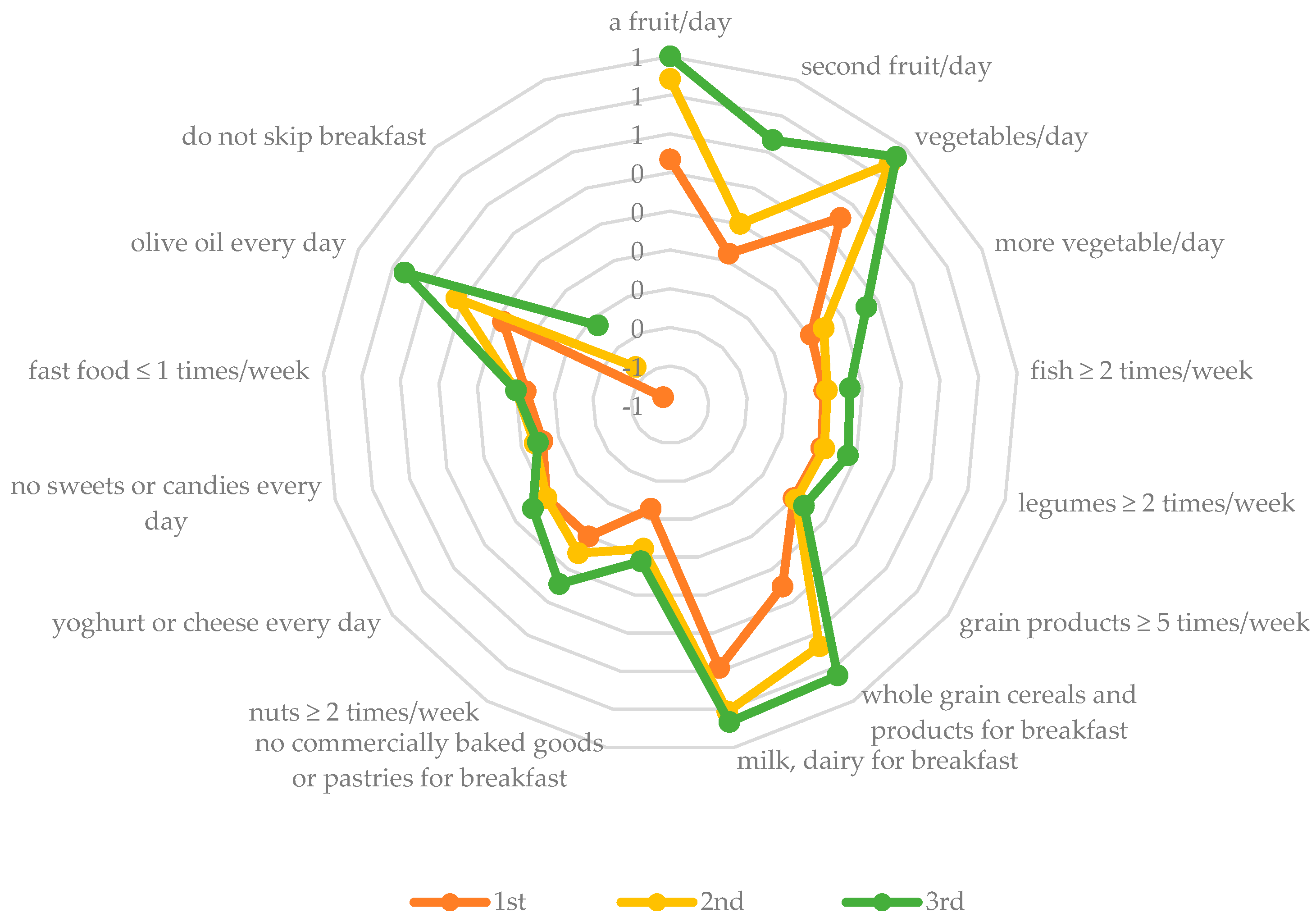
Figure 1 shows the average KIDMED item scores by overall score tertile. Children in the lowest adherence group scored the lowest for fruit and vegetable intake. Those in the second and third adherence groups had higher scores for fish, legumes, and grains. Both higher tertiles scored similarly on consuming milk or dairy for breakfast and daily fish, legumes, nuts, and yogurt or cheese. All groups reported similar avoidance of daily sweets and fast food but with no significant differences.

3.3. The Adverse Food-Related Reaction Types Prevalent Among Croatian Children Aged 2 to 9 Years Regarding the KIDMED Tertiles Groups

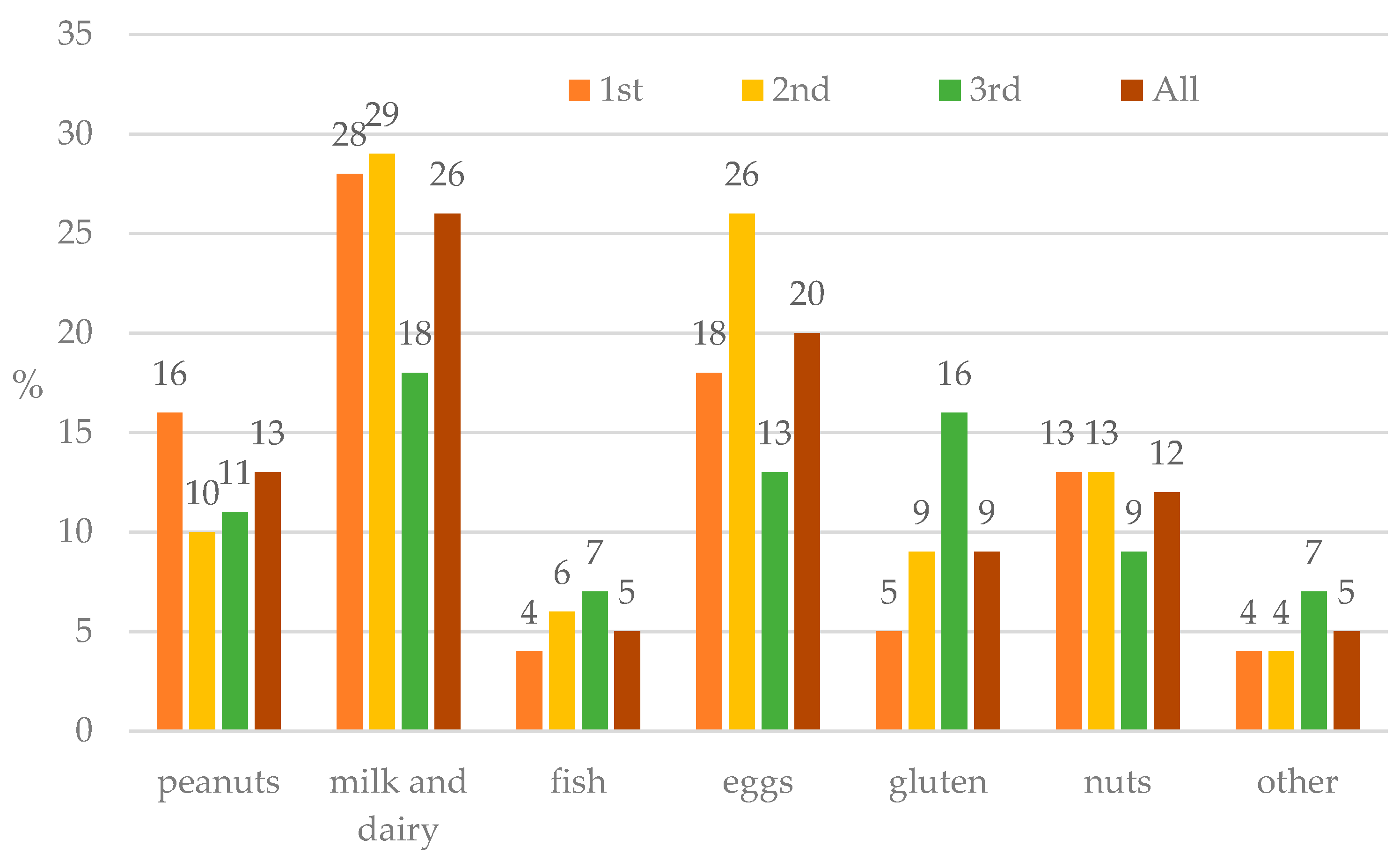
The most common adverse food-related reactions that parents reported were to milk and milk products (26%) and eggs (20%), with no significant differences across tertiles (p = 0.814) (Figure 2). In lower adherence groups (1st and 2nd tertiles), milk (28%, 29%), eggs (18%, 26%), and nuts (both 13%) were prevalent. In the highest adherence group (3rd tertile), milk (18%), eggs (13%), and gluten (16%) were the most parent-reported adverse food reactions.

4. Discussion

The prevalence of parent-reported food-related reactions.
This study assessed the overall and regional prevalence of adverse food-related reactions, such as allergies and hypersensitive reactions, among Croatian children aged 2 to 9 years, based on parent reports, and evaluations of their dietary habits compared to the Mediterranean diet and their family’s socioeconomic status. The study revealed that 11% of children in this age group had parent-reported food-related reactions. This prevalence is consistent with the prevalence from other European countries, where self-reported food allergy rates range from 6.5% in Greece to 24.6% in Poland [34]. The rise in reported food allergies is partly due to increased diagnoses [35], confirming that food allergies are a significant and growing public health concern in Croatia, consistent with broader European trends [5,36].
Regional disparities in the prevalence of adverse food-related reactions and adherence to the Mediterranean diet were observed. Higher adherence was noted in Croatian coastal areas and urban centers such as the capital city. These regions, traditionally associated with Mediterranean dietary patterns, also tend to have better socioeconomic conditions, including higher parental education and household income, suggesting that socioeconomic status influences both the awareness of food-related reactions and the adoption of a healthy diet. Such differences likely reflect variations in environmental exposure, cultural food practices, and population demographics [37,38].
Milk, eggs, and tree nuts were most commonly reported as food-related reactions, consistent with European data [39,40]. These foods are known as allergens and are critical for allergen labeling, early detection, dietary management, and public education, given their nutritional importance as sources of essential nutrients. Avoidance without adequate management can lead to nutritional deficiencies [40]. Given the burden of food allergies, identifying common allergens is the key to prevention and support. National strategies should emphasize early diagnosis and target nutrition and education, while ensuring allergen-safe, balanced meals in schools and childcare to support healthy growth and well-being.
Adherence to the Mediterranean diet and its association with the socioeconomic status of their parents.
Despite dietary restrictions due to food-related reactions, most studied children maintained an adequate energy intake. However, overall adherence to the Mediterranean diet was generally moderate or low, which is consistent with prior studies documenting a decline in Mediterranean diet adherence among children in Mediterranean countries, including Croatia [22]. This trend is concerning given the Mediterranean diet’s well-established health benefits, such as its anti-inflammatory and immunomodulatory effects [41,42]. For children with food allergies, particularly those with multiple allergies, adherence to the Mediterranean diet may offer protective nutritional benefits and support improved immune function [26].
The study also revealed a link between adherence to the Mediterranean diet and family socioeconomic status. Children from families with higher income levels, more educated mothers, and employed parents were more likely to follow a Mediterranean dietary pattern. This aligns with previous research showing that socioeconomic deprivation correlates with poorer diet quality, including lower consumption of fruits, vegetables, and other Mediterranean foods [43,44,45,46]. However, no statistically significant differences in maternal education were observed across dietary adherence tertiles, possibly due to generally low adherence within the sample studied but also due to the possibility that higher education may not be accompanied by a higher socio-economic status at the same time. This suggests that even highly educated mothers may face barriers in promoting or accessing Mediterranean dietary practices for their children with food-related reactions. In this study, a higher maternal education was the most important sociodemographic when predicting children’s adherence to the Mediterranean diet. Children of mothers with higher education were almost twice as likely to follow healthier dietary patterns compared to children of mothers with lower education. On the other hand, maternal employment and household income did not show a significant association with children’s better adherence to the Mediterranean diet, suggesting that economic resources alone are not sufficient to promote healthy eating habits if they are not accompanied by knowledge, awareness and nutritional literacy. These findings are in line with previous research that highlights that parental education, and especially maternal education, acts as a mediator between socioeconomic status and children’s eating habits [47]. Higher levels of education are often associated with better knowledge of dietary recommendations, greater awareness of the importance of a healthy diet, and a greater ability to understand and apply health information [47,48]. Future public health activities aimed at children with adverse food reactions should target communities of lower socioeconomic status, where eating habits are often less favorable, and the availability of healthy foods is more limited. Future research should explore why educational attainment may not consistently bridge into healthier diets, including qualitative studies on family habits, food marketing, and environmental factors.
The study showed that children with lower Mediterranean diet adherence were more likely to be overweight or obese and consumed more ultra-processed foods and fewer fruits and vegetables, indicating dietary imbalances that may contribute to excess weight and impaired immune function and possibly aggravate adverse food-related symptoms. These findings underscore the dietary benefits of the Mediterranean diet alongside lifestyle factors such as regular meal patterns and moderate physical activity [20,49]. This supports the well-established relationship between diet quality and childhood obesity, emphasizing the Mediterranean diet’s preventive potential in managing obesity and improving overall health outcomes [20]. While no statistically significant association between physical activity and Mediterranean diet adherence was found, the more physically active children in this study tended to exhibit healthier eating patterns. The results highlight the importance of early dietary education and family-level interventions to promote healthier food choices and lifestyles, especially for children with food-related reactions. Study findings reinforce existing evidence of Mediterranean diet health benefits as a key priority in pediatric public health strategies [21,50] and align with previous research linking Mediterranean diet adherence to positive lifestyle factors, including better sleep quality, body image satisfaction, and overall well-being [51].

Study Strengths and Limitations

Despite strengths like a nationally representative sample and the use of the validated KIDMED index, this study has limitations. The cross-sectional design limits the ability to draw causal inferences, and the use of parent-reported food-related reaction data may introduce reporting bias, as the reactions were recorded regardless of clinical confirmation. This limitation underscores the need for standardized, registry-based documentation of adverse food-related reactions, allergies and intolerances in Croatian children to ensure more accurate assessment and monitoring at the population level. The sample was drawn from a nationally representative population, which was followed by a stratification method according to the number of inhabitants. However, the relatively small number of participants may limit the statistical power of the study’s findings, which highlights the need for more extensive research and a broader clinical data assessment to validate the study’s findings. Nevertheless, it provides the first consistent national data on the prevalence of adverse food-related reactions and dietary habits of Croatian children following EFSA’s EU Menu methodology.

5. Conclusions

This study identifies significant nutritional challenges among Croatian children with adverse food-related reactions, affecting approximately one in ten. Despite adequate energy intake, children’s diets generally adhered to the Mediterranean diet to a low or moderate degree. Socioeconomic disparities, particularly maternal education, employment status, and household income, emerged as key determinants of diet quality, emphasizing the need for equity-oriented, region-specific public health strategies to support children with adverse food-related reactions. The use of tools such as the KIDMED index in adverse food-related reaction management may facilitate early identification of children at risk of poor diet quality and support timely, personalized interventions. Public health approaches should integrate allergen-safe meal planning with culturally appropriate nutrition education, while enhancing access to pediatric dietitians, especially in underserved regions. National nutrition policies should be aligned with school-based health programs to support long-term outcomes in vulnerable populations.

Author Contributions

Conceptualization, D.S., S.P.Ž., G.K.J., J.P.-C. and N.Š.; methodology, D.S., S.P.Ž., G.K.J. and J.P.-C.; vali-dation, D.S. and J.P.-C.; formal analysis, N.Š., G.K.J., M.P. and V.J.P., investigation and data curation, M.P. and V.J.P.; writing—original draft preparation, V.J.P.; writing—review and editing, D.S., G.K.J., M.P., J.P.-C., N.Š. and S.P.Ž.; visualization, V.J.P.; supervision, D.S., J.P.-C. and S.P.Ž.; project administration, D.S. and M.P. All authors have read and agreed to the published version of the manuscript.

Funding

This research received no external funding.

Institutional Review Board Statement

The study was conducted in accordance with the Declaration of Helsinki and approved by the Institutional Ethics Committee of The Institute for Medical Research and Occupational Health (protocol code 100-21/18-9, date of approval: 20 September 2018) and of The Faculty of Medicine, University of Rijeka (protocol code 2170-1-42-04-36/1-24-7, date of approval: 30 April 2024).

Informed Consent Statement

Informed consent was obtained from all subjects involved in the study.

Data Availability Statement

The data presented in this study are available on request from the corresponding author due to the participants’ privacy and ethical reasons.

Conflicts of Interest

The authors declare no conflicts of interest.

Abbreviations

The following abbreviations are used in this manuscript:
KIDMEDMediterranean Diet Quality Index for children and adolescents
BMIBody mass index
ISCEDInternational Standard Classification of Education
CDCCenters for Disease Control and Prevention

References

  1. Peters, R.L.; Koplin, J.J.; Allen, K.J.; Dharmage, S.C.; Tang, M.L.K.; Gurrin, L.C.; Wake, M. Update on food allergy. Pediatr. Allergy Immunol. 2021, 32, 647–657. [Google Scholar] [CrossRef] [Scilit]
  2. Prescott, S.L.; Pawankar, R.; Allen, K.J.; E Campbell, D.; Sinn, J.K.; Fiocchi, A.; Ebisawa, M.; A Sampson, H.; Beyer, K.; Lee, B.-W. A global survey of changing patterns of food allergy burden in children. World Allergy Organ. J. 2013, 6, 21. [Google Scholar] [CrossRef] [Scilit]
  3. Spolidoro, G.C.I.; Amera, Y.T.; Ali, M.M.; Nyassi, S.; Lisik, D.; Ioannidou, A.; Rovner, G.; Khaleva, E.; Venter, C.; van Ree, R.; et al. Frequency of food allergy in Europe: An updated systematic review and meta-analysis. Allergy 2023, 78, 351–368. [Google Scholar] [CrossRef] [Scilit]
  4. Roehr, C.C.; Edenharter, G.; Reimann, S.; Ehlers, I.; Worm, M.; Zuberbier, T.; Niggemann, B. Food allergy and non-allergic food hypersensitivity in children and adolescents. Clin. Exp. Allergy 2004, 34, 1534–1541. [Google Scholar] [CrossRef] [Scilit]
  5. Baričić, T.; Čatipović, M.; Cetinić, E.; Krmek, V.; Horvat, I. Parental perception, prevalence and primary care physicians’ knowledge on childhood food allergy in Croatia. Children 2015, 2, 305–316. [Google Scholar] [CrossRef] [Scilit]
  6. Košćina, S.; Gospić, A.M.; Banić, I.; Sabljak, D.; Lipej, M.; Birkić, T.; Plavec, D.; Marjanović, T.; Sokolić, D.; Turkalj, M. Protocol development of a personalized balanced nutrition concept for preschool children, primarily those with food allergies, using an IT platform. Medicina 2023, 59, 1367. [Google Scholar] [CrossRef] [Scilit] [PubMed]
  7. Podlecka, D.; Jerzyńska, J.; Sanad, K.; Polańska, K.; Bobrowska-Korzeniowska, M.; Stelmach, I.; Brzozowska, A. Micronutrients and the risk of allergic diseases in school children. Int. J. Environ. Res. Public Health 2022, 19, 12187. [Google Scholar] [CrossRef] [Scilit] [PubMed]
  8. Lack, G. Update on risk factors for food allergy. J. Allergy Clin. Immunol. 2012, 129, 1187–1197. [Google Scholar] [CrossRef] [Scilit]
  9. Gargano, D.; Appanna, R.; Santonicola, A.; De Bartolomeis, F.; Stellato, C.; Cianferoni, A.; Casolaro, V.; Iovino, P. Food allergy and intolerance: A narrative review on nutritional concerns. Nutrients 2021, 13, 1638. [Google Scholar] [CrossRef] [Scilit] [PubMed]
  10. Sova, C.; Feuling, M.B.; Baumler, M.; Gleason, L.; Tam, J.S.; Zafra, H.; Goday, P.S. Systematic review of nutrient intake and growth in children with multiple IgE-mediated food allergies. Nutr. Clin. Pract. 2013, 28, 669–675. [Google Scholar] [CrossRef] [Scilit]
  11. Walia, C.L.S.; Feuling, M.B.; Baumler, M.; Gleason, L.; Tam, J.S.; Zafra, H.; Goday, P.S. Changes in calcium intake and growth in children with multiple food allergies. ICAN Infant. Child Adolesc. Nutr. 2014, 6, 357–362. [Google Scholar] [CrossRef] [Scilit]
  12. Cummings, A.; Knibb, R.; King, R.; Lucas, J. The psychosocial impact of food allergy and food hypersensitivity in children, adolescents and their families: A review. Allergy 2010, 65, 933–945. [Google Scholar] [CrossRef] [Scilit] [PubMed]
  13. Lyons, S.A.; Knulst, A.C.; Burney, P.G.; Fernández-Rivas, M.; Ballmer-Weber, B.K.; Barreales, L.; Bieli, C.; Clausen, M.; Dubakiene, R.; Fernández-Perez, C.; et al. Predictors of food sensitization in children and adults across Europe. J. Allergy Clin. Immunol. Pract. 2020, 8, 3074–3083.e32. [Google Scholar] [CrossRef] [Scilit]
  14. Vidaković Samaržija, D. Povezanost Prehrambenih Navika i Razine Tjelesne Aktivnosti sa Sastavom Tijela Desetogodišnjaka. Ph.D. Thesis, Sveučilište u Zagrebu, Kineziološki Fakultet, Zagreb, Croatia, 2014. Available online: https://urn.nsk.hr/urn:nbn:hr:117:704581 (accessed on 10 August 2025).
  15. Kopko, C.; Garthoff, J.A.; Zhou, K.; Meunier, L.; O’Sullivan, A.J.; Fattori, V. Are alternative proteins increasing food allergies? Trends, drivers and future perspectives. Trends Food Sci. Technol. 2022, 129, 126–133. [Google Scholar] [CrossRef] [Scilit]
  16. Nieczuja-Dwojacka, J.; Borowska, B.; Budnik, A.; Marchewka-Długońska, J.; Tabak, I.; Popielarz, K. The influence of socioeconomic factors on the body characteristics, proportion, and health behavior of children aged 6–12 years. Int. J. Environ. Res. Public Health 2023, 20, 3303. [Google Scholar] [CrossRef] [Scilit]
  17. Béghin, L.; Dauchet, L.; De Vriendt, T.; Cuenca-García, M.; Manios, Y.; Toti, E.; Plada, M.; Widhalm, K.; Repasy, J.; Huybrechts, I.; et al. Influence of parental socio-economic status on diet quality of European adolescents: Results from the HELENA study. Br. J. Nutr. 2014, 111, 1303–1312. [Google Scholar] [CrossRef] [Scilit]
  18. Ravikumar, D.; Spyreli, E.; Woodside, J.; McKinley, M.; Kelly, C. Parental perceptions of the food environment and their influence on food decisions among low-income families: A rapid review of qualitative evidence. BMC Public Health 2022, 22, 9. [Google Scholar] [CrossRef] [Scilit] [PubMed]
  19. Darmon, N.; Drewnowski, A. Does social class predict diet quality? Am. J. Clin. Nutr. 2008, 87, 1107–1117. [Google Scholar] [CrossRef] [Scilit]
  20. Matana, A.; Franić, I.; Radić Hozo, E.; Burger, A.; Boljat, P. Adherence to the Mediterranean diet among children and youth in the Mediterranean region in Croatia: A comparative study. Nutrients 2022, 14, 302. [Google Scholar] [CrossRef] [Scilit]
  21. Masini, A.; Dallolio, L.; Sanmarchi, F.; Lovecchio, F.; Falato, M.; Longobucco, Y.; Lanari, M.; Sacchetti, R. Adherence to the Mediterranean diet in children and adolescents and association with multiple outcomes: An umbrella review. Healthcare 2024, 12, 449. [Google Scholar] [CrossRef] [Scilit]
  22. Sila, S.; Kolaček, S.; Hojsak, I.; Radonić, M.; Niseteo, T.; Radunić, A.; Marić, L.; Mašić, M.; Trivić, I. Adherence to the Mediterranean Diet in Children and Adolescents in the Mediterranean and Continental Regions of Croatia. Coll. Antropol. 2022, 46, 21–27. [Google Scholar] [CrossRef] [Scilit]
  23. Castro-Rodriguez, J.A.; Garcia-Marcos, L. What are the effects of a Mediterranean diet on allergies and asthma in children? Front. Pediatr. 2017, 5, 72. [Google Scholar] [CrossRef] [Scilit]
  24. Rito, A.I.; Dinis, A.; Rascôa, C.; Maia, A.; Mendes, S.; Stein-Novais, C.; Lima, J. Mediterranean Diet Index (KIDMED) adherence, socioeconomic determinants, and nutritional status of Portuguese children: The Eat Mediterranean Program. Port. J. Public Health 2019, 36, 141–149. [Google Scholar] [CrossRef] [Scilit]
  25. Deng, S. Association of components of the Mediterranean diet with food allergies. Highlights Sci. Eng. Technol. 2024, 102, 179–183. [Google Scholar] [CrossRef] [Scilit]
  26. Panagiotou, E.; Andreou, E.; Nicolaou, S.A. The effect of dietary components of the Mediterranean diet on food allergies: A systematic review. Nutrients 2023, 15, 3295. [Google Scholar] [CrossRef] [Scilit]
  27. Massini, G.; Capra, N.; Buganza, R.; Vitello, M.; de Sanctis, L.; Guardamagna, O. Impact of Mediterranean diet adherence on lipid profiles in pediatric primary dyslipidemia: Insights from the updated KIDMED score. Nutrients 2025, 17, 623. [Google Scholar] [CrossRef] [Scilit] [PubMed]
  28. Šoher, L.; Čačić Kenjerić, D.; Pavlić, M.; Rumbak, I.; Šarlija, N.; Ilić, A.; Sokolić, D. Macronutrient intake and food categories’ contribution to daily energy intake according to BMI in primary school children in Croatia. Nutrients 2024, 16, 4400. [Google Scholar] [CrossRef] [Scilit]
  29. European Food Safety Authority (EFSA). Guidance on the EU Menu methodology. EFSA J. 2014, 12, 3944. [Google Scholar] [CrossRef] [Scilit]
  30. Sokolić, D.; Kenjerić, D.; Colić-Barić, I.; Rumbak, I.; Pucarin-Cvetković, J.; Šarlija, N.; Pavlić, M.; Šoher, L. Croatian national food consumption survey on children from 3 months to 9 years of age. EFSA Support. Publ. 2022, 19, 7724E. [Google Scholar] [CrossRef] [Scilit]
  31. Kaić-Rak, A.; Antonić, K. Tablice Sastava Hrane i Pića [Food and Drink Composition Database]; Zavod za Zaštitu Zdravlja SR Hrvatske: Zagreb, Croatia, 1990. [Google Scholar]
  32. Rumbak, I.; Sokolić, D.; Blažok, T.; Šakić, D.; Vukman, D.; Niseteo, T.; Colić-Barić, I. Validacija serije fotografija kao pomoć pri mjerenju veličine porcije u procjeni prehrane kod djece. Paediatr. Croat. 2019, 63, 17–22. [Google Scholar] [CrossRef] [Scilit]
  33. Serra-Majem, L.; Ribas, L.; Ngo, J.; Ortega, R.M.; García, A.; Pérez-Rodrigo, C.; Aranceta, J. Food, youth and the Mediterranean diet in Spain. Development of KIDMED, Mediterranean Diet Quality Index in children and adolescents. Public Health Nutr. 2004, 7, 931–935. [Google Scholar] [CrossRef] [Scilit]
  34. Lyons, S.A.; Clausen, M.; Knulst, A.C.; Ballmer-Weber, B.K.; Fernandez-Rivas, M.; Barreales, L.; Bieli, C.; Dubakiene, R.; Fernandez-Perez, C.; Jedrzejczak-Czechowicz, M.; et al. Prevalence of food sensitization and food allergy in children across Europe. J. Allergy Clin. Immunol. Pract. 2020, 8, 2736–2746.e9. [Google Scholar] [CrossRef] [Scilit]
  35. Loh, W.; Tang, M.L.K. The epidemiology of food allergy in the global context. Int. J. Environ. Res. Public Health 2018, 15, 2043. [Google Scholar] [CrossRef] [Scilit]
  36. Pavlović, N.; Vlahović, J.; Miškulin, M. Prevalence of food allergies in the population of preschool children from the city of Osijek. Hrana Zdr. Bolest. 2014, 3, 78–83. [Google Scholar]
  37. Tham, E.H.; Leung, D.Y.M. How different parts of the world provide new insights into food allergy. Allergy Asthma Immunol. Res. 2018, 10, 290–299. [Google Scholar] [CrossRef] [Scilit] [PubMed]
  38. Bartra, J.; García-Moral, A.; Enrique, E. Geographical differences in food allergy. Allergol. Int. 2016, 66, 497–503. [Google Scholar] [CrossRef] [Scilit] [PubMed]
  39. Nwaru, B.I.; Hickstein, L.; Panesar, S.S.; Roberts, G.; Muraro, A.; Sheikh, A.; EAACI Food Allergy and Anaphylaxis Guidelines Group. Prevalence of common food allergies in Europe: A systematic review and meta-analysis. Allergy 2014, 69, 992–1007. [Google Scholar] [CrossRef] [Scilit]
  40. Jasielska, M.; Buczyńska, A.; Adamczyk, P.; Grzybowska-Chlebowczyk, U. Nutritional status of children with newly diagnosed food allergies. Children 2023, 10, 1687. [Google Scholar] [CrossRef] [Scilit]
  41. Tsigalou, C.; Raptis, S.; Markatos, A.; Kaltsas, G. Mediterranean diet as a tool to combat inflammation and chronic diseases. Biomedicines 2020, 8, 201. [Google Scholar] [CrossRef] [Scilit]
  42. Koumpagioti, D.; Tsioufis, C.; Kardara, M. Does adherence to the Mediterranean diet have a protective effect against asthma and allergies in children? A systematic review. Nutrients 2022, 14, 1618. [Google Scholar] [CrossRef] [Scilit]
  43. Warren, C.; Bartell, T.; Nimmagadda, S.R.; Bilaver, L.A.; Koplin, J.; Gupta, R.S. Socioeconomic determinants of food allergy burden: A clinical introduction. Ann. Allergy Asthma Immunol. 2022, 129, 407–416. [Google Scholar] [CrossRef] [Scilit] [PubMed]
  44. Mekonnen, T.; Beyene, A.; Ali, F. Mediators of socioeconomic inequalities in dietary behaviours among youth: A systematic review. Obes. Rev. 2020, 21, e13016. [Google Scholar] [CrossRef] [Scilit]
  45. Facina, V.B.; Moreira, M.P.; Gomes, T.L. Association between socioeconomic factors, food insecurity, and dietary patterns of adolescents: A latent class analysis. Nutrients 2023, 15, 4344. [Google Scholar] [CrossRef] [Scilit] [PubMed]
  46. Warren, C.M.; Bartell, T.R. Sociodemographic inequities in food allergy: Insights on food allergy from birth cohorts. Pediatr. Allergy Immunol. 2024, 35, e14125. [Google Scholar] [CrossRef] [Scilit] [PubMed]
  47. van Ansem, W.J.; Schrijvers, C.T.; Rodenburg, G.; van de Mheen, D. Maternal educational level and children’s healthy eating behaviour: Role of the home food environment (cross-sectional results from the INPACT study). Int. J. Behav. Nutr. Phys. Act. 2014, 11, 113. [Google Scholar] [CrossRef] [Scilit]
  48. Sandri, E.; Pardo, J.; Cantín Larumbe, E.; Cerdá Olmedo, G.; Falcó, A. Analysis of the influence of educational level on the nutritional status and lifestyle habits of the young Spanish population. Front. Public Health 2024, 12, 1341420. [Google Scholar] [CrossRef] [Scilit]
  49. Velázquez-López, L.; Santiago-Díaz, G.; Nava-Hernández, J.; Muñoz-Torres, A.V.; Medina-Bravo, P.; Torres-Tamayo, M. Mediterranean-style diet reduces metabolic syndrome components in obese children and adolescents with obesity. BMC Pediatr. 2014, 14, 175. [Google Scholar] [CrossRef] [Scilit]
  50. George, E.S.; Gavrili, S.; Itsiopoulos, C.; Manios, Y.; Moschonis, G. Poor adherence to the Mediterranean diet is associated with increased likelihood of metabolic syndrome components in children: The Healthy Growth Study. Public Health Nutr. 2021, 24, 2823–2833. [Google Scholar] [CrossRef] [Scilit]
  51. Jin, Y.; Kwon, Y.; Park, Y.H.; Lim, L.R.; Lee, J.W. Development and validation of a questionnaire to measure adherence to a Mediterranean-type diet in youth. Nutrients 2024, 16, 2754. [Google Scholar] [CrossRef] [Scilit]
Figure 1. The average scores of the KIDMED components regarding the tertiles of the overall KIDMED score among Croatian children aged 2 to 9 years with parent-reported adverse food-related reactions (n = 193).
Sci 08 00059 g001
Figure 2. Types of food-related reaction reported by parents of Croatian children aged 2 to 9 years (n = 193) regarding the KIDMED tertiles groups.
Sci 08 00059 g002
Table 1. Characteristics of Croatian children (n = 193) aged 2 to 9 years with parent-reported adverse food-related reaction according to KIDMED score tertiles (n %).
Variables KIDMED Tertiles
All
n = 193
(100%)
KIDMED
(−3 to 2) n = 79 (41%)
KIDMED
(3 to 4)
n = 69 (36%)
KIDMED
(5 to 8) n = 45 (23%)
p-Value
0.011
KIDMED scoreMean ± SD3.31 ± 2.120.99 ± 1.253.48 ± 0.505.81 ± 0.90<0.001
n%n%n%n%
SexBoys106555266334821470.040
Girls8745273436522453
Age group2–4 years117614253405835780.035
5–7 years341813161522613
≥8 years42222430142049
RegionDalmatia4121162011161431<0.001
Istria and Primorje2513561116920
Lika and Banovina63561100
Northern Croatia211191191337
Slavonia38202228131937
Zagreb and surrounding6232222824351636
Physical activity levelLow271410138129200.295
Medium10353405136522760
High633329372536920
Nutrition statusUnderweight2010911710490.784
Normal weight13872536751743476
Overweight201081081249
Obese1589113437
Meeting recommendations for the energy intake Below 72373038284114310.772
Within 5026222817251124
Above 7137273424352044
Dietary supplements intakeYES122634456507228620.152
Mother employedYES162846177629039870.096
Mother’s highest level of educationPrimary3016192481237<0.001
Secondary562911547812
Tertiary106555975694191
Household income level1st1162369370.199
2nd1910101346511
3rd382017221522613
4th11861435444643169
Table 2. The relationship between maternal socioeconomic indicators and their children’s adherence to the Mediterranean diet (KIDMED index).
Predictor CrudeAdjusted
OR (95% CI)p-ValueOR (95% CI)p-Value
Mother’s tertiary education1.88 (1.63–2.17)<0.001 1.86 (1.61–2.15)<0.001
Mother’s employment (yes)0.89 (0.68–1.17)0.4060.86 (0.66–1.13)0.284
High household income1.05 (0.98–1.14)0.1791.07 (0.98–1.16)0.116
Adjusted for children’s sex, region of living, age, BMI and physical activity.
Table 3. The associations of children’s characteristics with the overall KIDMED score across tertiles.
VariablesTertiles of KIDMED
KIDMED (−3 to 2)KIDMED (3 to 4)KIDMED (5 to 8)
r95% CIp-Valuer95% CIp-Valuer95% CIp-Value
Age (years)−0.37−0.54 −0.16<0.001−0.10−0.330.140.4200.06−0.240.350.695
Body mass index (kg/m2)0.08−0.150.290.4980.04−0.200.270.768−0.18−0.450.120.229
Nutrition status 0.07−0.160.280.566−0.01−0.240.240.990−0.20−0.460.100.192
Physical activity level−0.03−0.250.200.817−0.10−0.330.140.4180.19−0.110.460.219
Dietary energy intake (kJ/day)−0.08−0.300.140.460−0.16−0.380.090.205−0.07−0.350.230.659
Meeting energy intake recommendations 0.210.010.410.065−0.11−0.340.130.353−0.23−0.480.070.131
Dietary supplements intake 0.09−0.140.300.4450.07−0.170.300.5640.09−0.210.370.565
Mother employed 0.03−0.200.260.786−0.06−0.300.180.6090.30−0.080.480.045
Mother’s highest level of education 0.11−0.110.330.313−0.10−0.330.140.424−0.18−0.420.150.246
Household income 0.12−0.110.330.3100.04−0.250.220.7710.01−0.300.290.961
Table 4. The associations of children’s KIDMED index components with the overall KIDMED score across tertiles.
KIDMED ComponentsTertiles of KIDMED
KIDMED
(−3 to 2)
KIDMED
(3 to 4)
KIDMED
(5 to 8)
r95% CIp-Valuer95% CIp-Valuer95% CIp-Value
a fruit/day0.380.170.55<0.0010.17−0.070.390.174----
second fruit/day0.06−0.160.280.5750.240.000.450.0490.110.190.390.459
vegetables/day0.480.290.63<0.001−0.02−0.250.220.8980.26−0.040.510.089
more vegetables/day0.06−0.300.140.4710.09−0.320.150.4640.400.120.620.007
fish ≥ 2 times/week----0.13−0.110.350.3000.09−0.210.380.538
legumes ≥ 2 times/week0.10−0.130.310.4010.01−0.230.240.951−0.04−0.330.250.773
grain products ≥ 5 times/week----0.13−0.110.350.3000.17−0.130.440.261
whole grain cereals and products for breakfast0.320.110.510.0040.00−0.240.240.9990.27−0.030.520.078
milk and dairy for breakfast0.350.140.530.001−0.06−0.290.180.636−0.02−0.300.280.918
no commercial baked goods or pastries for breakfast0.490.300.64<0.0010.04−0.200.270.7440.04−0.260.330.813
nuts ≥ 2 times/week----0.06−0.180.300.6090.09−0.210.380.538
two yogurts and/or 40 g cheese daily--------0.29−0.000.530.057
no sweets or candies every day0.320.110.510.0040.16−0.080.380.2010.21−0.090.470.174
fast food ≤ 1 times/week0.21−0.010.410.059--------
olive oil every day0.240.020.440.0320.330.100.530.0050.10−0.200.380.528
do not skip breakfast0.13−0.100.340.2670.270.040.480.0230.300.000.540.047
Disclaimer/Publisher’s Note: The statements, opinions and data contained in all publications are solely those of the individual author(s) and contributor(s) and not of MDPI and/or the editor(s). MDPI and/or the editor(s) disclaim responsibility for any injury to people or property resulting from any ideas, methods, instructions or products referred to in the content.