
Review

A Review of Recent Advances in ZnO-Enzyme Hybrid Systems and Their Applications in the Food Industry


The Stephan Angeloff Institute of Microbiology, Bulgarian Academy of Sciences, “Acad. Georgi Bonchev” Street, Bl. 26, 1113 Sofia, Bulgaria
*
Authors to whom correspondence should be addressed.
Submission received: 23 January 2026 / Revised: 19 February 2026 / Accepted: 26 February 2026 / Published: 3 March 2026
(This article belongs to the Section Biology Research and Life Sciences)

Abstract

Zinc oxide nanoparticles (ZnO-NPs) have gained increasing attention across food, biomedical, environmental, and many industrial fields due to their antimicrobial properties, chemical stability, and favorable physicochemical characteristics. In parallel, enzyme immobilization on nanostructured supports has emerged as an effective strategy to enhance enzyme stability, reusability, and functional performance in biosensing and biocatalytic systems. This mini-review summarizes recent advances in the synthesis of ZnO-NPs, with emphasis on green and biogenic approaches, and examines their integration with enzymes to form ZnO-enzyme hybrid systems. Key enzyme classes, immobilization strategies, and representative applications in food quality monitoring, biosensing, and food-processing-related biocatalysis are discussed. The novelty of this article is its comprehensive and application-oriented perspective. Unlike previous reviews that primarily addressed either ZnO nanoparticle synthesis or generic enzyme immobilization, this manuscript critically integrates strategies across the full value chain, from material preparation to functional application. In addition, the review critically evaluates toxicity, migration, safety, and regulatory considerations associated with ZnO-NPs, highlighting existing knowledge gaps and the need for standardized assessment frameworks. Despite promising proof-of-concept studies, challenges related to nanoparticle reproducibility, enzyme leaching, and long-term safety remain, underscoring the need for integrated and application-oriented research to enable safe and effective implementation of ZnO-enzyme hybrid technologies in many different sectors.

1. Introduction

The food industry faces increasing demands for improved product safety, quality, and process efficiency, alongside the need for sustainable analytical and biocatalytic solutions. Nanotechnology offers powerful tools to address these challenges by enabling materials with enhanced antimicrobial, catalytic, and sensing functions that are difficult to achieve using conventional approaches.
Among metal-oxide nanomaterials, ZnO-NPs have attracted particular interest because of their favorable combination of properties—low cost, antimicrobial activity, UV-blocking, chemical stability and relative biocompatibility—which make them suitable for applications in active packaging, biosensing and processing aids in food systems [1].
Concurrently, enzyme immobilization on solid supports has become a core strategy for improving enzyme stability, reusability, and operational robustness in industrial settings. Immobilized enzymes retain catalytic specificity while gaining resistance to denaturation, enabling repeated use in batch and continuous processes and simplifying downstream separation [2]. When enzymes are immobilized onto nanostructured supports, the large available surface area and tunable surface chemistry can further enhance catalytic performance and enable efficient signal transduction in biosensors [2,3]. These properties render enzyme-nanomaterial hybrids attractive for food-industry applications such as sugar monitoring, starch conversion, lipid modification, spoilage detection and as functional components of smart packaging.
Enzyme-functionalized ZnO nanohybrids—systems in which ZnO nanostructures act as carriers and/or transducers for immobilized enzymes—combine the advantages of both elements. ZnO nanorods and nanostructured films have repeatedly been demonstrated as excellent supports for enzymes such as glucose oxidase (GOx), producing highly sensitive electrochemical glucose sensors with rapid response and low limits of detection; these reports illustrate ZnO’s effectiveness for enzyme immobilization and electron transfer enhancement, which can translate directly to food-quality monitoring (e.g., sugar levels in juices and fermented beverages, or process control in fermentation) [4]. Beyond GOx, a growing number of studies describe immobilization of α-amylases, lipases, and oxidases on ZnO or Zn-based supports for catalytic transformations (esterification, hydrolysis), reactions that are directly relevant to flavor generation, lipid modification, and processing in the food sector [5,6].
Green/biogenic routes to ZnO synthesis (particularly plant-mediated methods) have gained traction because they replace hazardous reagents with benign phytochemicals that act as reducing, stabilizing, and capping agents; such methods frequently improve biocompatibility and reduce residual toxic reagents, making the resulting ZnO-NPs more attractive for food-related uses and contact with edible matrices [7]. Reviews and comparative studies emphasize that plant-derived ZnO-NPs can be produced at low cost, with milder conditions and potentially lower toxicity than many conventional syntheses, although reaction parameters (plant species, extract preparation, pH, temperature, calcination) substantially influence NPs’ size, morphology, and surface chemistry and require standardization for reproducible performance [8,9].
Applications of ZnO-enzyme hybrids in new safety packaging materials are a promising strategy. ZnO contributes antimicrobial and barrier functionality, while immobilized enzymes can provide catalytic removal of spoilage markers, generate detectable signals (colorimetric or electrochemical) in response to chemical changes, or catalyze in situ generation of antimicrobial agents (for example, GOx generating H2O2 locally). Several recent reviews and experimental studies have documented ZnO’s role in antimicrobial films and coatings for meat and products, and highlight the potential for integrating enzymes to create multifunctional packaging materials [10,11]. However, migration of Zn species, enzyme leaching, and stability during film processing are persistent concerns; studies show that ZnO dissolution (and thus ionic Zn migration) can be substantial in acidic or fatty simulants, and that polymer matrix, NPs loading and processing conditions strongly influence migration behavior and functional longevity. These safety and regulatory issues must be addressed systematically prior to commercialization [12].
This review synthesizes current knowledge on enzyme-functionalized ZnO nanoparticles to evaluate their readiness for application in different industries, with a primary focus on the literature published between 2015 and 2025. Emphasis is placed on studies relevant to green synthesis routes, enzyme immobilization performance, and food-related applications, including food processing, packaging, and biosensing. Seminal earlier works are cited selectively where necessary to establish foundational concepts or contextualize recent developments. It summarizes ZnO synthesis routes, immobilization techniques, and enzyme classes used with ZnO, and surveys biosensing and biocatalytic demonstrations. The review critically appraises safety, migration, and regulatory challenges and identifies priority research directions for scalable, safe, and effective ZnO-enzyme platforms for the food sector.
Although promising proof-of-concept studies exist, the literature remains fragmented regarding safety: most work addresses ZnO-NPs synthesis, enzyme immobilization, or packaging/biosensor applications in isolation. Few studies combine a plant-mediated ZnO-NPs synthesis with robust immobilization protocols and validation in real food matrices. Standardized methods for phytochemical profiling, nanoparticle reproducibility, enzyme loading and leaching, and migration or toxicology assessment are still limited. Closing these gaps is critical for translating ZnO-enzyme hybrids from laboratory demonstrations to safe, regulatory-compliant broad applications.

2. Synthesis of ZnO Nanoparticles

Nanoparticles, characterized by their size range of 1–100 nm, possess unique properties that are advantageous for various applications. Different morphologies of zinc oxide nanoparticles have been reported by researchers due to the variation in various process parameters. These include nanorods, nanowires, nanospheres, nanoflowers, nanotubes, nanotetrapods, nanoplates and nanotripods. ZnO-NPs can be classified based on their morphology as nanorods, nanowires, nanoflowers, nanotubes, nanospheres, quantum dots, etc. [13].
Due to the increasing use of nanoparticles, researchers must master existing synthesis techniques and develop new ones that offer greater efficiency, eco-friendliness, and safety for humans and animals. These strategies are broadly classified into two major groups based on their approach: physicochemical and green synthesis methods [14]. The controlled synthesis of ZnO-NPs is essential for achieving the desired size, morphology, and surface properties required for food-grade applications.
In this context, conventional physicochemical methods alongside emerging green synthesis strategies represent the two major production pathways. Figure 1 illustrates the main methods for NP synthesis and physicochemical and green synthesis benefits.

2.1. Conventional Physicochemical Methods

Among the available synthesis strategies, conventional physicochemical methods remain the most extensively investigated and widely implemented due to their reliability and precise control over particle characteristics, their chemical and structural properties. Understanding the principles and advantages of each method is essential for selecting the most suitable route for targeted nanomaterial design. The most commonly used conventional methods for the synthesis of ZnO nanoparticles include sol–gel, co-precipitation, hydrothermal and solvothermal processes, thermal decomposition, chemical vapor deposition, spray pyrolysis, microwave-assisted synthesis, pulsed laser deposition, thermal evaporation, solid-state reaction, and the hydrothermal method [15].
Hydrothermal/solvothermal is a well-known classical method for nanoparticle synthesis. Aqueous (or solvent) reactions in sealed autoclaves at elevated temperature and pressure produce crystalline ZnO with tunable morphologies (rods, plates, spheres) by adjusting precursor, pH, temperature, time and capping agents. Excellent for morphology control and for producing well-crystallized materials at relatively low temperatures. Amongst the most popular methods for the production of metal oxide nanostructures is hydrothermal synthesis. For producing ZnO nanostructures, a nitrate-based precursor reaction with equimolar amounts of hexamethylenetetramine (HMTA) is commonly used. In these reactions, zinc nitrate provides the source of Zn2+ ions, and HMTA produces the desired amount of OH- ions. The growth process occurs due to a dissolution-secondary precipitation mechanism [16]. The sol–gel method provides an alternative chemical route that also enables similarly fine control over composition and particle size. During this synthesis, metal alkoxide or salt precursors are hydrolyzed and condensed to form a Zn-containing gel, which is dried and calcined to yield ZnO nanoparticles. This allows fine control over composition, homogeneity, and particle size via precursor concentration, pH and calcination temperature; widely used for thin films and powders [17,18]. Microwave-assisted synthesis is rapid heating by microwave irradiation that shortens reaction times and can give smaller, more uniform particles; commonly combined with sol–gel, precipitation or green precursors. Reaction time, power, and solvent/capping agents control size and phase. This is useful when speed and energy efficiency matter. As mentioned previously, the use of physical and chemical procedures for the preparation of ZnO-NPs requires a long time; hence, the microwave-assisted route attracted the attention of many researchers due to its high preparation rate, which results from superior traditional heating. The reason is the use of volumetric heating, as microwaves usually supply energy by penetrating the material, which allows the reaction to be completed in minutes or even seconds. For example, ZnO-NPs prepared by microwave-assisted showed outstanding colloidal stability and more uniform size, shape and chemical surface properties compared with the traditional heating approach [19].
Laser ablation in liquid (LAL) represents a sustainable and versatile technique for synthesizing heterogeneous nanomaterials, including metal oxides, sulfides, carbides, and metals, with diverse morphologies. The growing interest in LAL over the past decade stems from its advantages, namely, minimal reagent and solvent consumption, operational simplicity, and enhanced laboratory safety [15].
Tailoring the functional properties of ZnO nanoparticles for diverse applications necessitates precise morphological control. Synthesis parameters, such as solution pH, templating agents, reaction temperature/duration, stirring rate, solvent type, and calcination conditions, significantly influence ZnO nanostructure development. Optimizing these factors systematically directs nucleation and crystal growth, leading to the formation of ZnO nanoparticles with defined shapes and controlled physicochemical characteristics [12]. Physicochemical methods frequently employ hazardous chemical agents (toluene, H2S, NaOH, Al2O3, Si2O3, etc.), which are associated with significant adverse biological outcomes, including cytotoxicity, genotoxic alterations, oxidative stress, and multi-organ toxicity in both human and animal systems. The persistence of long-term exposure risks, compounded by the paucity of comprehensive toxicological datasets, continues to represent a substantial impediment to the safe and effective application of these approaches [8,11,20].
Physicochemical synthesis routes can be summarized as highly controllable, reproducible, and scalable, with high-purity products, making them particularly suited to electronics, optics, and applications demanding tight material specifications [18,21].

2.2. Green Synthesis

In recent decades, green/biogenic synthesis of ZnO nanoparticles has gained significant attention due to its numerous advantages over traditional methods. The biogenic or green synthesis of zinc oxide ZnO-NPs is a sustainable and cost-effective alternative to conventional physicochemical fabrication techniques. This methodology uses various biological systems, such as plant-derived phytochemicals, bacterial cultures, fungal strains, algal extracts, and probiotic microorganisms, as intrinsic reducing and stabilizing agents. Substituting hazardous chemical reagents with naturally occurring biomolecules significantly mitigates the formation of toxic byproducts and reduces energy requirements, aligning with the principles of environmental management [20,22]. Biogenic synthesis not only minimizes environmental impact but has also been reported to enhance the functional characteristics of ZnO-NPs, including antimicrobial potency, photocatalytic performance, and overall biocompatibility [7,23,24,25,26]. The ZnO-NPs synthesized using plant extracts appear to be simpler, safer, sustainable, and more environmentally friendly compared to the physical and chemical routes. A wide variety of plant extracts, including leaves, flowers, fruits, and peels, have been successfully used to synthesize ZnO nanoparticles [23]. The choice of plant, extract preparation, and synthesis conditions significantly affects nanoparticle characteristics and potential applications in biomedicine, environmental remediation, and industry [27]. Plant extracts act as both reducing and capping agents, enabling rapid, scalable, and diverse nanoparticle synthesis.
In plant-mediated green synthesis, Zn2+ ions are initially chelated by phytochemicals (e.g., flavonoids, terpenoids, polyphenols), which act as complexing and stabilizing agents, followed by controlled hydrolysis to Zn(OH)2 and subsequent dehydration to ZnO under alkaline or thermal conditions without requiring a formal reduction to Zn(0).
Two principal mechanistic pathways are known for plant-mediated green synthesis of ZnO nanoparticles. In the first and more widely accepted mechanism, Zn2+ ions are chelated by hydroxyl-rich phytochemicals such as flavonoids, tannins, anthocyanidins, and phenolic acids, whose phenolic rings act as complexing and capping agents. The resulting organo–zinc complexes undergo hydrolysis to form Zn(OH)2, which subsequently dehydrates during thermal treatment or calcination to yield ZnO nuclei that grow via electrostatic interactions and biomolecule-directed stabilization. In this pathway, the redox potential of most plant phytochemicals is insufficient to reduce Zn2+ to ZnO, and therefore ZnO formation proceeds without a discrete metallic zinc intermediate. An alternative mechanism described in some studies involves the initial reduction in Zn2+ by strongly reducing phytoconstituents in the aqueous extract to transient Zn0 nanoclusters, which are rapidly oxidized by dissolved oxygen to ZnO, followed by capping of the oxide surface by residual phytochemicals to prevent agglomeration and enhance colloidal stability. However, thermodynamic considerations and the predominance of spectroscopic evidence generally support the chelation, hydrolysis, and dehydration pathway as the dominant mechanism, while ZnO formation, if it occurs, is likely transient and system-dependent rather than a universal intermediate [25,26].
The process is uncomplicated, non-toxic, and yields nanoparticles with varied shapes and sizes [7,27,28,29,30,31,32,33]. For example, various studies have successfully synthesized ZnO nanoparticles using leaf extracts of Ziziphus jujube, medical plant Aloe vera, nutritious plant Moringa oleifera, flowering plant Pisonia alba [28,34,35,36], and many others. Beyond leaves, flower extracts from species like Hibiscus rosa-sinensis and fruit extracts from Solanum lycopersicum are also applicable. Citrus limon has also proven effective due to its high concentrations of phytochemicals capable of mediating Zn2+ reduction and nanoparticle stabilization [37]. The phytochemicals present in these plant extracts, including alkaloids, terpenoids, flavonoids, amino acids, enzymes, vitamins, proteins, glycosides, and phenolic compounds, function effectively as both reducing and stabilizing agents, facilitating the conversion of zinc ions (Zn2+) to zinc nanoparticles and preventing agglomeration [23,32].
Microbial synthesis of zinc oxide nanoparticles is a rapidly growing field. Bacteria, fungi, and algae can mediate ZnO-NPs formation either intracellularly or extracellularly. Generally, the process in microbial systems involves the initial capture or biosorption of metal ions onto the cell surface or within the cellular matrix, followed by their enzymatic reduction to elemental nanoparticles.
Bacteria-mediated green synthesis of nanoparticles includes two main mechanisms: extracellular and intracellular. In the extracellular mechanism, secreted enzymes such as NADH-dependent reductases on the cell surface or in the culture supernatant catalyze the reduction in Zn2+ ions to ZnO nuclei, with extracellular proteins and other biomolecules acting as capping and stabilizing agents that facilitate nucleation and prevent agglomeration in the surrounding medium. In the intracellular mechanism, Zn2+ ions are first bound by negatively charged cell wall functional groups and transported into the periplasmic space or cytoplasm, where enzymatic processes reduce the ions and initiate ZnO nanoparticle formation, which subsequently accumulate within or are released from the cell [22,37].
A wide array of microorganisms has been explored for the biogenic synthesis of inorganic nanoparticles, offering control over size, morphology, and chemical composition. The importance and potential utility of these biologically derived nanomaterials in various technological applications have been a subject of recent research interest [38,39]. Microbial metabolites, such as enzymes and proteins, facilitate reduction and stabilization, allowing precise control over nanoparticle size and morphology [38,40,41,42].
Microbial synthesis of nanoparticles offers distinct advantages over plant-based methods, because bacteria and fungi can be readily cultured and scaled under controlled conditions. Their ability to reduce and stabilize metal and metal-oxide NPs is closely tied to their inherent tolerance to heavy metals such as silver (Ag), gold (Au), cadmium (Cd), chromium (Cr), and lead (Pb). Microorganisms inhabiting metal-enriched or contaminated environments typically exhibit high metal resistance, conferred through mechanisms including surface adsorption, intracellular sequestration, and chelation by intra- and extracellular proteins [43]. The microbial growth phase is pivotal in NP biosynthesis, as different metabolites, such as enzyme production, vary with cell age. Early exponential cells exhibit heightened enzymatic and protein activity, facilitating efficient metal reduction and NP formation. Moreover, shorter reaction times have been correlated with rapid synthesis, yielding smaller NPs [20].
Compared to bacteria, filamentous fungi are often regarded as more promising candidates for Green synthesis of ZnO-NPs. Their resilience to elevated metal levels, combined with their ability to bind and accumulate metals, makes them particularly effective in driving the green synthesis of nanoparticles [43].
Fungi such as Aspergillus sp., Trichoderma sp., Penicillium and Daedalea sp., and Dictyota dichotoma have been successfully used to mediate the production of ZnO-NPs, offering unique advantages in nanoparticle stability, morphology, and biocompatibility [14,44]. A low-energy, cost-effective synthesis method, which may facilitate the broader utilization of biosynthesized ZnO-NPs, was developed by [45]. Cell filtrates from three filamentous fungi of the genera Aspergillus, Penicillium, and Paecilomyces were used for the biosynthesis of ZnO-NPs in the presence of various zinc salts. In this study, the influence of the zinc salt’s anion and different fungal species on the morphology of the resulting nanoparticles was explored. Characterization analysis revealed that the biosynthesized ZnO-NPs exhibited a wide range of sizes and diverse morphologies. The results demonstrate that both the specific fungal species and the type of precursor salt are determinants of the final particle size and shape [45]. Aspergillus species have been widely employed for the synthesis of ZnO-NPs. For example, A. niger has demonstrated efficient extracellular synthesis of stable, spherical ZnO-NPs with strong antibacterial activity against Escherichia coli and S. aureus [46].
Similarly, biosynthesized ZnO-NPs from A. fumigatus exhibit significant antimicrobial and antifungal activities. They have demonstrated effectiveness against plant pathogens like Fusarium oxysporum and various bacteria, as well as potential for crop protection and enhancement of plant growth and enzyme activity. These nanoparticles also show promise in inhibiting biofilm formation and may be explored for medical and agricultural uses [47].
Yeasts can also serve as biofactories for the green synthesis of NPs. Species such as Pichia kudriavzevii, Saccharomyces cerevisiae, and various marine yeast isolates have been shown to produce ZnO-NPs. This microbially mediated biogenic process follows a bottom-up mechanism, in which biomolecules in the culture supernatant reduce metal ions to form nanoparticles. ZnO-NPs synthesized by S. cerevisiae typically exhibit an average size of around 15 nm, spherical morphology, and antimicrobial activity against S. aureus and E. coli. Their potential application in wastewater treatment has also been proposed [48]. Previously, in the work of Boroumand Moghaddam et al. (2017) [49], a green method for producing ZnO-NPs was achieved using a newly identified yeast strain, Pichia kudriavzevii. The synthesized final product displayed a hexagonal wurtzite structure with crystallite sizes of roughly 10–61 nm. They demonstrated notable antimicrobial activity against both Gram-positive and Gram-negative bacteria, with S. epidermidis showing the highest susceptibility.
Bacterial strains act as natural reducing and stabilizing agents, producing ZnO-NPs with enhanced biocompatibility and functional properties. Recent studies highlight several species: Microbacterium arborescens, which enables multifunctional ZnO-NPs fabrication for environmental and agricultural applications [40]. These examples illustrate the versatility of bacterial systems in nanoparticle biosynthesis, aligning with green chemistry principles while offering biomedical and environmental benefits. To date, reports on the use of extremophilic bacteria for the biosynthesis of ZnO-NPs remain relatively scarce in the scientific literature. Nevertheless, several studies have demonstrated successful green synthesis of ZnO-NPs using thermophilic and halophilic bacterial isolates. For example, a thermophilic strain identified as Bacillus haynesii, isolated from date palm leaf tissue, has been shown to function as an eco-friendly nanobiofactory capable of generating ZnO-NPs (50 ± 5 nm in size) with antimicrobial activity against Escherichia coli and Staphylococcus aureus [50]. More recently, newly isolated halophilic strains such as Halomonas elongata IBRC-M 10214 and the haloalkaliphilic Alkalibacillus sp. have likewise been identified as efficient biological producers of ZnO-NPs [51].
Extending beyond extremophilic isolates, probiotic bacteria have also been explored as biogenic reducing and capping agents in the green synthesis of ZnO-NPs. Studies have shown that Lactiplantibacillus plantarum GP258 can mediate biosynthesis, yielding particles with an average size of 10 nm and exhibiting antibacterial activity against selected human pathogens [52]. In a related approach, ZnO-NPs synthesized using the probiotic bacterium Lactobacillus fermentum were found to be spherical, crystalline, and exhibiting strong antimicrobial activity, particularly against Vibrio harveyi. These findings further highlight the potential of probiotic-mediated green synthesis as an eco-friendly and effective strategy for producing antimicrobial ZnO nanoparticles [53].
Similarly, when used as living “nanofactories,” Bacillus subtilis strains have been reported to produce ZnO-based nanomaterials via extracellular metabolic activity. Importantly, those synthesized using probiotic bacteria demonstrate significant antimicrobial efficacy against both Gram-positive and Gram-negative pathogens, which is attributed to reactive oxygen species generation, membrane disruption, and the release of Zn2+ ions [38].
Furthermore, the use of microorganisms in nanoparticle synthesis frequently yields materials with superior properties, including enhanced antimicrobial activity and improved biocompatibility. These advantages are primarily attributed to the involvement of specific biological substrates and to precise control over particle size and morphology during the synthesis process [43].
Morphology control in green ZnO synthesis is achievable through precise parameter adjustments. Key factors include the choice of biological extracts, pH, base addition rate, solvent, temperature, and reaction time. This enables the reproducible production of ZnO nanorods, nanospheres, and complex hierarchical structures with tunable properties [54,55].
Despite these benefits, microbial synthesis of nanoparticles faces several limitations, including complex purification procedures and limited understanding of the factors governing particle morphology, size, and dispersity. Moreover, challenges associated with scaling up production hinder industrial translation. A major challenge for translation from laboratory protocols to industrial-scale production is the intrinsic variability of biological extracts, as the composition of plant metabolites or microbial secretions fluctuates with growth conditions, season, nutrient availability, and strain differences. These variations affect reducing capacity, capping molecules, and reaction kinetics, resulting in inconsistent nanoparticle size, morphology, and yield. Conversion efficiency also remains relatively low, with many biological systems producing ZnO slowly or incompletely when scaled beyond small-volume reactions [21].
Process standardization is another bottleneck. Parameters such as pH, temperature, extract concentration, and metabolic activity are difficult to control uniformly at larger scales, and small deviations can significantly alter nanoparticle characteristics. Downstream processing adds further complexity, as biogenic ZnO is typically coated with proteins, polysaccharides, or polyphenols that complicate purification and may not meet food- or biomedical-grade purity requirements. Achieving tight control over particle size distribution and crystallinity—critical for many industrial applications—remains challenging with biologically driven pathways [56].
Scale-dependent biological instability also poses limitations. Large-volume fermentations or extract reactors are more susceptible to contamination, metabolite degradation, and inconsistent enzyme activity. The chemically undefined coating layers present in biogenic ZnO-NPs complicate its toxicological evaluation and regulatory approval for widespread use. Finally, economic considerations remain significant; biomass cultivation, extract preparation, and purification steps can be more costly than established chemical synthesis routes unless processes are optimized [57]. Consequently, the careful selection of biocatalysts and the optimization of reaction parameters remain critical for achieving high yields and uniform nanoparticles [58].
The green synthesis of nanoparticles provides significant advantages because it relies on natural sources such as plants and microorganisms rather than hazardous chemicals. This approach is environmentally sustainable, economical, and safer, as it minimizes toxic waste and environmental contamination. By requiring less energy and fewer raw materials, green synthesis also supports resource conservation and sustainable development. Green/biogenic synthesis of ZnO nanoparticles leverages plant and microbial systems to produce functional, eco-friendly nanomaterials with broad applications in medicine, agriculture, food industry and environmental remediation. This approach offers significant sustainability and safety advantages, though further work is needed to optimize scalability and assess long-term impacts [59].

3. ZnO-Enzyme Hybrids and Their Potential Applications

Green-synthesized ZnO-NPs are effective supports for enzyme immobilization, improving enzyme stability, reusability, and activity. These hybrids can be used to maintain or monitor food quality, extend shelf life, and enable sustainable biocatalytic processes [60,61]. Immobilizing enzymes on zinc oxide (ZnO) nanostructures is a key strategy to enhance enzyme stability, reusability, and performance in biosensors and industrial applications. ZnO’s high surface area, biocompatibility, and tunable surface chemistry make it an excellent support for various immobilization methods. Enzyme immobilization on ZnO nanostructures can be achieved through adsorption, covalent bonding, or entrapment in composites, with surface modification and nanostructure morphology playing crucial roles in performance. These techniques enhance enzyme stability, reusability, and activity, making ZnO-based supports highly effective for biosensor and industrial applications [6].
The morphology of ZnO nanoparticles (nanorods, nanospheres, nanosheets, and hierarchical architectures) governs the available surface area, pore structure, and distribution of reactive sites, thereby directly influencing enzyme loading capacity and orientation. Morphology controls accessible surface area, porosity, and diffusion paths [62]. Surface charge is a critical parameter, as ZnO typically exhibits a positive charge under neutral to slightly acidic conditions, promoting electrostatic attraction with negatively charged enzyme residues. Variations in pH relative to the isoelectric point of ZnO-NPs and of enzymes of interest can affect adsorption efficiency, binding strength, and enzyme conformation. Consequently, designing effective ZnO-NPs enzyme hybrids necessitates careful control of both nanoparticle morphology and surface charge in relation to the selected immobilization strategy (adsorption, covalent bonding, or entrapment) to optimize enzyme loading, catalytic activity, and operational stability for biosensing and industrial applications [63]. For example, positively charged ZnO surfaces favor electrostatic adsorption of enzymes with net negative charge at the working pH; variations in surface potential after sorption confirm strong interaction [64].
In physical adsorption, enzymes are immobilized onto ZnO-NPs or nanorods via electrostatic interactions, taking advantage of ZnO’s high isoelectric point and large accessible surface area. This method is simple and largely preserves enzymatic activity, although it is often limited by enzyme leaching under operational conditions [65,66].
To overcome this drawback, more robust immobilization strategies such as covalent attachment have been developed in which target enzymes are covalently bonded to functionalized ZnO surfaces using cross-linkers (e.g., using glutaraldehyde), providing strong binding and improved stability. Functionalization with amino groups or chitosan enhances binding strength and immobilization efficiency, resulting in improved stability and reusability [67,68,69]. Enzyme leaching from ZnO supports is primarily driven by the dominance of weak, non-covalent interactions, such as electrostatic attraction and van der Waals forces, which can be easily disrupted by changes in pH, ionic strength, or the presence of competing molecules in food matrices [7,70]. When ZnO surfaces lack sufficient functional groups or are not chemically modified, immobilized enzymes remain only loosely attached, making them prone to detachment during washing, agitation, or repeated operational cycles. This problem is further exacerbated by the hydrophilic nature of ZnO, which can promote water penetration at the enzyme–surface interface and weaken adsorption forces over time. Studies have also shown that surface heterogeneity and limited anchoring points reduce the stability of the enzyme layer, increasing the likelihood of desorption under mechanical or thermal stress [24]. As Hamed (2023) [26] notes, the absence of strong covalent bonding or cross-linking is a major factor limiting long-term stability, particularly in aqueous or high-shear environments typical of food processing applications.
However, despite improved stability, covalent immobilization may involve complex surface chemistry and potential enzyme conformational changes, prompting interest in alternative methods such as entrapment and composite formation. In entrapment-based strategies, enzymes are encapsulated within ZnO-based nanocomposites, including ZnO/chitosan, ZnO/alginate, and ZnO/Fe2O3 systems, which provide high immobilization yields, minimize enzyme leakage, and enhance operational stability, consistent with the comparative parameters reported in Table 1 [71,72,73,74]. In addition, the presence of polymeric or biopolymeric matrices can partially shield ZnO surfaces, which may reduce Zn2+ release and mitigate potential cytotoxic effects, as discussed further in Section 5. Three-dimensional architectures, such as nanomultipods and hierarchical structures, provide more favorable microenvironments.
The morphology of ZnO (nanorods, nanospheres, nanomultipods) significantly affects enzyme loading, catalytic activity retention, and reusability. Three-dimensional structures like nanomultipods provide more favorable environments for enzyme attachment, often leading to enhanced catalytic activity compared to simple spherical particles [67].
At the same time, nanoparticle size and shape also affect ZnO dissolution behavior and cellular interactions, linking immobilization performance directly to toxicity considerations discussed in Section 5.1.
Modifying ZnO with amino groups, chitosan, or other polymers increases enzyme binding sites and stability, reducing enzyme leakage and enhancing reusability [68,72].
The cross-linking method involves binding biocatalyst molecules using bi- or multifunctional reagents, producing high-molecular-weight, typically insoluble aggregates. Although this method can reduce enzyme leakage and enhance operational stability, it is often costly and may lower enzymatic activity due to the formation of strong covalent bonds between enzyme molecules [75,76].
Beyond surface functionalization strategies, a mechanistic understanding of interactions between enzymes and nanoparticles is essential for designing ZnO-enzyme hybrids with predictable catalytic performance and stability. Evidence from the study by Coccia et al. (2018) [76] shows that nanoparticle size, surface chemistry, loading, and enzyme–nanoparticle proximity can markedly influence enzymatic activity and reaction pathways. Their systematic methodology—comprehensive nanoparticle characterization, controlled variation in nanoparticle concentration, and quantitative evaluation of enzyme modulation—provides a transferable framework for ZnO-based hybrids.
Applying similar mechanistic approaches to ZnO materials would help distinguish beneficial synergistic effects (e.g., improved mass transfer or microenvironment tuning) from detrimental outcomes such as enzyme inhibition, conformational changes, or deactivation. Standardizing these evaluation strategies would enhance comparability across studies and support the rational development of ZnO-enzyme systems with optimized activity, operational stability, and reduced toxicity.
Physicochemical ZnO synthesis typically yields highly crystalline particles with limited surface functionality, often requiring additional modification to introduce suitable binding groups [20]. In contrast, green synthesis produces biomolecule-capped ZnO nanoparticles with enhanced surface reactivity and biocompatibility, improving enzyme immobilization efficiency and stability [22].
A brief comparison with alternative supports highlights ZnO’s position among commonly used immobilization materials. Silica, Au and titanium offer high surface area and chemical stability, as well as easy recovery and reuse, but may suffer from lower biocompatibility and potential oxidative effects on enzymes. Metal hybrids such as Au–enzyme and Ag–enzyme systems often provide superior electron-transfer properties and enhanced catalytic rates, but they are costly and may induce enzyme denaturation at high metal loadings. Compared with these systems, ZnO combines biocompatibility, antimicrobial activity, and straightforward synthesis, while its lower surface area and potential enzyme inhibition at high concentrations remain notable limitations [75,77].
Enzymes successfully immobilized on ZnO-NPs include oxidoreductases such as glucose oxidase and horseradish peroxidase and hydrolases such as lipase, urease, alkaline phosphatase, proteases, and carbohydrases, including α-amylase and β-galactosidase.
As summarized in Table 1, ZnO-enzyme hybrids have attracted significant interest for applications in biocatalysis, biosensing, food processing, environmental remediation, and biomedical fields, underscoring their versatility and technological potential.
Table 1. Some Enzymes immobilized on ZnO-NPs and their possible applications.
EnzymesMode of Immobilization Reuse
Cycles
pH
Optimum
T °C StabilityApplicationsReferences
Proteases
(non-specified)
electrostatic affinity multipleup to 12up to 90food processing, leather treatment, and pharmaceutical production[78,79]
Trypsincovalent immobilization98.560dairy processing[68,69]
Papaincovalent attachmentndndndbiomedical applications[71]
Cellulasescovalent attachment3550–60biomass conversation,
bioethanol production
[80]
β-galactosidasescovalent attachment75–7.550–60food industry[65,81,82]
β-glucosidasesadsorption,
covalent binding
10770bioethanol
production
[63,83]
β-glucuronidaseadsorption85.540–45food industries[84]
Glucose oxidasescovalent attachment food preservation, biosensors[85,86,87]
α-amylaseselectrostatic interaction45.750–55food processing, pharmaceuticals, clinical chemistry, detergents, textiles, and paper manufacturing [64,66,88,89]
Lipasescovalent attachment5–9up to 10about 55food and feed industry[90,91,92,93,94,95,96]
Xantine oxidasesphysical immobilization (entrapment/adsorption)ndndndfood quality control,
clinical diagnostics
biosensors
[97]
Ureasephysical immobilizationndndndbiosensors[98]
Phytasesphysical adsorption, electrostatic interaction104–980–100food and feed applications, agriculture[99,100,101,102,103,104]
Proteases are hydrolytic enzymes that cleave peptide bonds in proteins, contributing to vital physiological functions and enabling diverse biotechnological and industrial applications such as detergent formulation, food processing, leather treatment, and pharmaceutical production [95]. Their mode of action involves a nucleophilic attack on the carbonyl carbon of the scissile bond, often facilitated by a conserved catalytic triad (serine, aspartate, and histidine) within the enzyme’s active site. Immobilization of these biocatalysts onto solid supports, such as ZnO-NPs, significantly enhances their operational stability, facilitates reuse, and allows for easier separation from reaction mixtures [82]. It was proven that protease-based nanobiocatalysts offer a sustainable alternative to conventional sodium sulfide in leather dehairing. Proteases immobilized on zinc oxide nanoparticles enable faster processing while achieving comparable dehairing efficiency, with reduced environmental impact [79]. Utilizing polyethylene glycol (PEG)-modified ZnO-NPs with a mean diameter of approximately 100 nm, Penaeus vannamei protease was successfully immobilized. The PEG layer creates a favorable electrostatic affinity between the nanoparticle surface and the enzyme. This immobilization strategy achieved high activity recovery and conferred substantially enhanced functional properties upon the protease. The immobilized enzyme retained full catalytic activity after 60 min of incubation at 80 °C and 90 °C, demonstrating exceptional thermostability. Furthermore, the biocatalyst maintained over 70% of its initial activity through multiple reuse cycles [82]. This example illustrates the efficacy of tailored ZnO-NP supports in improving key enzymatic performance metrics for industrial biocatalysis.
Trypsin (serine protease) immobilized on ZnO nanostructures has demonstrated improved hydrolytic efficiency and operational stability in protein-rich substrates. Chitosan-coated ZnO-NPs were functionalized with glutaraldehyde (GA) to enable covalent immobilization of trypsin. The resulting ZnO/Chitosan-GA-trypsin nanocomposite showed high activity recovery and protein coupling efficiency (93.31%). In addition to improved catalytic performance, the immobilized enzyme demonstrated superior reusability and thermal and storage stability across a wide pH and temperature range. These protease-ZnO nanocomposites have been successfully applied in dairy processing for casein hydrolysis and bioactive peptide production, while the intrinsic antimicrobial properties of ZnO contribute to reduced microbial contamination, highlighting their potential for safe and sustainable food processing applications [68].
Papain is a proteolytic thiol enzyme that was successfully immobilized onto ZnO-NPs through a chitosan-glutaraldehyde coupling system. Covalent immobilization of papain onto the ZnO/chitosan support was achieved using glutaraldehyde activation, resulting in the formation of a stable enzyme-nanoparticle conjugate. The immobilized enzyme system was found to retain its proteolytic activity, indicating that the catalytic functionality of papain was preserved following immobilization. Furthermore, activation of the cellular phagocytic system was not observed in the presence of the papain-containing bionanomaterial, demonstrating favorable biocompatibility and supporting its potential suitability for biomedical applications [71]. Following investigations on proteinases, β-galactosidases have emerged as another important enzyme class for which immobilization strategies have been systematically explored due to their industrial relevance.
Among the enzymes immobilized on ZnO-NPs, β-galactosidase has been extensively studied due to its industrial relevance. β-Galactosidase (EC 3.2.1.23), also known as lactase, catalyzes the hydrolysis of lactose into glucose and galactose. The catalytic reaction involves cleavage of the β-1,4-glycosidic bond in lactose and other β-D-galactosides. This enzyme is widely used in the dairy industry for the production of lactose-free milk and whey, the prevention of lactose crystallization in frozen dairy products, and the synthesis of galacto-oligosaccharides (GOS), which act as prebiotics. In addition, β-galactosidase has applications in clinical diagnostics, molecular biology, and treatment strategies for lactose intolerance [82]. An example of a ZnO-β-galactosidase hybrid system was reported by Husain et al. (2011) [65] who immobilized Aspergillus oryzae β-galactosidase onto ZnO-NPs via a simple adsorption mechanism. The immobilized enzyme exhibited improved thermal stability, broader pH tolerance, and enhanced resistance to denaturation compared to the free enzyme. Importantly, the ZnO-NP-bound β-galactosidase retained significant catalytic activity after repeated use, demonstrating its suitability for batch and continuous reactor systems. There was a marked broadening in the temperature–activity profile for ZnO-NP-adsorbed β-galactosidase. The authors concluded that reactors containing ZnO-NP-adsorbed enzyme could be effectively exploited for lactose hydrolysis in milk and whey, highlighting the industrial relevance of such nanobiocatalysts. While simple adsorption proved effective for enzyme immobilization on ZnO-NPs, later investigations incorporated additional stabilization approaches, such as cross-linking, to further improve catalytic performance. β-Galactosidase from Lactobacillus plantarum HF571129 was immobilized on ZnO-NPs using adsorption and the cross-linking technique. Immobilized β-galactosidase showed a broad pH and temperature optimum. The cross-linked adsorbed enzyme retained 90% activity after one-month storage, while the native enzyme showed only 74% activity under similar conditions. The cross-linked β-galactosidase showed activity until the seventh cycle and maintained 88.02% activity [82]. Several studies have demonstrated that β-galactosidase immobilized on ZnO-NPs exhibits significantly reduced sensitivity to galactose inhibition compared to the free enzyme. While galactose competitively inhibits the activity of free β-galactosidase during lactose hydrolysis, the immobilized enzyme maintains remarkably high catalytic activity even in the presence of up to 5% galactose. This enhanced resistance to inhibition highlights the improved stability and suitability of ZnO-NP-immobilized β-galactosidase for the production of lactose-free dairy products [82].
Cellulases have also been successfully integrated into ZnO-based hybrid materials to enhance biomass conversion processes. The immobilization of cellulase on zinc oxide deposited onto zeolite pellets creates a robust ZnO-zeolite support for enzymatic saccharification of cellulose. The immobilized cellulase exhibited satisfactory immobilization efficiency and successfully catalyzed the hydrolysis of microcrystalline cellulose, while enabling enzyme reuse over multiple reaction cycles. Although immobilization led to a reduction in the maximum reaction rate compared to the free enzyme, improved substrate affinity and operational stability were observed. These results further demonstrate the versatility of ZnO-containing supports for improving enzyme reusability and performance in industrial biocatalytic applications [80].
Within the cellulase enzyme complex, β-glucosidase (β-D-Glucosidase, EC3.2.1.21) is a glucohydrolase responsible for the terminal hydrolysis step of lignocellulose, converting cellobiose and short-chain cellodextrins into glucose, which is essential for complete cellulose degradation [105]. Research on the immobilization of β-glucosidase and β-glucuronidase on ZnO-NPs remains limited. Kumar et al. (2017) [83] reported the cloning and heterologous expression of a novel β-glucosidase from Streptomyces griseus in E. coli, followed by its immobilization on ZnO-NPs via simple adsorption. The immobilized enzyme showed strong binding stability, retained activity over ten reuse cycles, and exhibited a higher optimum temperature and improved thermostability compared to the free enzyme [83]. It has been shown that, in addition to adsorption, covalent binding is also a successful approach to further improve the stability and productivity of β-glucosidase enzymes. The construction of ZnO-polyethylenimime (PEI) nanostructures on glass microtube interiors enabled the covalent attachment of β-glucosidase from Thermotoga maritima. In situ-grown ZnO nanowires functionalized with PEI provided a favorable microenvironment for enzyme immobilization, resulting in improved stability and biocatalytic efficiency [63]. The successful immobilization of β-glucosidases has prompted further investigations into structurally and functionally related enzymes, such as β-glucuronidase, using ZnO-NPs as immobilization platforms.
In addition to native enzymes, recombinant enzymes with enhanced properties are of significant scientific and practical interest. They are frequently immobilized to improve their stability and catalytic performance. Among these, β-glucuronidases (EC 3.2.1.31) are glycosidase enzymes that catalyze the hydrolytic cleavage of β-linked glucuronides, yielding various derivatives and free glucuronic acid. Owing to their broad applicability in the pharmaceutical and food industries, β-glucuronidases are regarded as promising biocatalysts for the production of high-value compounds. For instance, a recombinant β-glucuronidase isolated and purified from Aspergillus oryzae Li-3 was immobilized on ZnO-NPs for the biotransformation of glycyrrhizin. The immobilized recombinant enzyme demonstrated superior operational stability in an ionic liquid co-solvent system compared to a conventional buffer medium [84].
Another important class of enzymes is glucose oxidase (GOx), which catalyzes the oxidation of β-D-glucose to yield gluconic acid and hydrogen peroxide (H2O2). Through this reaction, GOx helps limit oxidative spoilage, making it an effective enzymatic substitute for conventional chemical antioxidants in food industry applications [86]. Recently, Khan et al. (2022) [85] reported that an innovative method using glucose oxidase (GOx) immobilized on cysteine-modified ZnO-NPs for extending bread shelf life was developed. GOx purified from Aspergillus niger was covalently immobilized via a two-step process involving cysteine adsorption and glutaraldehyde activation. The immobilized enzyme showed higher activity than the free form and functioned as both an oxygen scavenger and an antibacterial agent by generating a thin hydrogen peroxide (H2O2) layer on the bread surface. This GOx/ZnO-NPs bioconjugate demonstrates strong potential for industrial food preservation applications [92]. In a newly published work, a spray based on covalently immobilized glucose oxidase (GOx) on modified ZnO-NPs was developed. The GOx/ZnO-NPs spray was applied to treat fruits. The control and treated groups of peaches were stored at room temperature. After a period of 12 days, it was found that the GOx/ZnO-NPs spray treatment contributed to the shelf life of the fruits compared to the control group [86]. Furthermore, GOx immobilized on the ZnO nanocomposite can be used for the elaboration of a precise glucose biosensor with a wide linear detection range [87].
In biosensor applications, the morphology of ZnO plays a decisive role in governing electron-transfer efficiency between the immobilized enzyme and the electrode surface. Structures with high surface area and direct charge-transport pathways, such as nanorods, nanowires, nanosheets and hierarchical nanoflowers, promote faster electron movement by reducing grain boundaries and improving enzyme contact. These architectures also support higher enzyme loading and more favorable orientations that shorten the electron-tunneling distance. In contrast, spherical or aggregated nanoparticles often show slower electron transfer because of their limited contact area and higher resistance [13,25]. Such morphology-dependent behavior highlights the importance of controlled ZnO nanostructure design for achieving high-performance enzyme-based biosensors.
The α-amylases (EC 3.2.1.1) catalyze the hydrolysis of starch by cleaving internal α-1,4-glycosidic linkages, producing products that range from dextrins to smaller glucose-based polymers. They are among the most widely used enzymes in industrial sectors including food processing, pharmaceuticals, clinical chemistry, detergents, textiles, and paper manufacturing. Enzyme immobilization can further improve their functional performance. However, the application of free α-amylases in industrial production has limitations because of poor stability, difficult recycling, and high cost [88]. Amylase-ZnO hybrid systems are being explored for starch conversion in food processing, aiming to enhance enzyme stability, reusability, and process efficiency. ZnO-amylase systems consistently demonstrate improved heat resistance, storage stability, and reusability compared to free enzymes. For example, immobilized amylase retained 70% activity after 30 days and 80% after four cycles, while free enzyme lost activity much faster [66]. Additionally, ZnO-amylase hybrids exhibit synergistic antimicrobial properties, which can be advantageous for food safety [64]. However, ZnO-amylase hybrids have been found to be generally ineffective in enhancing catalytic efficiency. Notwithstanding the decline in catalytic performance, these hybrids confer substantial benefits in terms of enzyme stability, operational lifespan, and reusability, which are of considerable value for industrial food processing. ZnO-amylase hybrids have been demonstrated to exhibit enhanced tolerance to elevated temperatures and extended storage conditions, rendering them suitable for repeated utilization in food industry applications [64,89]. In addition to increased enzyme stability, amylase-ZnO systems also exhibit antimicrobial benefits for starch conversion, though they may not always improve catalytic efficiency. Their main value lies in operational robustness and food safety, making them suitable for specific industrial applications [64].
The process of starch hydrolysis into maltose is catalyzed by diastase α-amylase, an enzyme that is extracted from malt and is widely utilized in the food and fermentation industries. In this study, the immobilization of α-amylase was achieved through electrostatic interactions with functional groups on the surface of ZnO nanoparticles. The immobilized α-amylase demonstrated enhanced thermal stability and an optimum pH of 6. Despite the immobilization process leading to a decrease in substrate affinity, the immobilized enzyme demonstrated remarkable storage and operational stability. Following 30 days of storage, over 50% of the initial activity was retained, and approximately 80% of activity was maintained after three successive reuse cycles [66].
Lipases immobilized on ZnO-NPs have been widely explored, highlighting the adaptability of ZnO nanostructures for enzymes with diverse catalytic mechanisms. The immobilization of lipase (triacylglycerol acylhydrolase, EC 3.1.1.3) onto zinc oxide (ZnO) nanoparticles represents a significant advancement in the development of robust nano-biocatalysts for food and feed processing. This synergy merges the high catalytic specificity of lipases with the advantageous physicochemical properties of ZnO-NPs, including high surface area, chemical stability, biocompatibility and antimicrobial effect. Immobilization primarily addresses the limitations of free enzymes, such as poor operational stability, non-reusability, and sensitivity to process conditions, thereby enabling more efficient and sustainable bioprocessing [95]. Lipase-nanomaterial hybrids are used for enzymatic interesterification, transesterification, and synthesis of flavor esters, leading to improved lipid modification and production of high-quality oils for baking and other food products [96]. These biocatalysts also facilitate the synthesis of natural flavor compounds and can operate efficiently at high temperatures and in organic solvents, expanding their utility in diverse food processes [91]. Research demonstrates that Candida rugosa lipase immobilized on functionalized ZnO-PEI-GLU nanocomposites can achieve a 94% yield of geranyl acetate in organic solvents under optimized conditions, showcasing exceptional efficiency for crafting natural flavor compounds [5]. Furthermore, immobilized lipases are instrumental in flavor development in dairy products. The controlled hydrolysis of milk fat by a recoverable nano-biocatalyst can release short- and medium-chain free fatty acids, precursors to flavorful ketones and esters, enabling the standardized production of cheeses with tailored organoleptic profiles [90].
Lipase isolated from Thermomyces lanuginosus was covalently immobilized on ZnO nanoparticles functionalized with glycine, using glutaraldehyde as a spacer. ZnO-NPs were synthesized by a co-precipitation method, functionalized with glycine, activated with glutaraldehyde, and subsequently used for enzyme immobilization via a simple wet chemical process. The immobilized lipase exhibited high catalytic activity for the esterification of oleic acid with methanol in an organic medium, showing a threefold increase in activity compared to the free enzyme at 55 °C. It also demonstrated enhanced thermal stability, a longer half-life, and excellent reusability with minimal activity loss. The immobilized enzyme consistently outperformed the free lipase, confirming the effectiveness of the rational immobilization strategy [94]. In the food industry, immobilized lipase-ZnO systems are predominantly applied for the modification of fats and oils to tailor their nutritional and functional properties. A key application is the interesterification of triglycerides to produce structured lipids without generating trans fatty acids. This enzymatic route is exemplified by the high-yield synthesis of flavor esters, such as geranyl acetate [92].
Further broadening the scope beyond protein, lipids and carbohydrates degrading enzymes, xanthine oxidases, ureases and phytases were studied. According to Sahyar et al. (2019) [97], xanthine oxidase (XO) was immobilized onto an electrochemical sensor surface using a polypyrrole (PPy)/Ag-doped ZnO nanoparticle composite. The immobilization matrix provided a biocompatible and conductive environment that preserved the enzymatic activity of XO while enhancing electron transfer between the enzyme and the electrode. Ag-doped ZnO-NPs increased the surface area and catalytic efficiency, while PPy ensured stable enzyme entrapment and mechanical stability. This immobilized XO system was applied to the electrochemical detection of xanthine, where XO catalyzes the oxidation of xanthine to uric acid, producing an electrochemically measurable signal. The resulting biosensor showed improved sensitivity, selectivity, and low detection limits, making it suitable for clinical diagnostics (e.g., monitoring purine metabolism disorders), food quality control (freshness of meat and fish), and biomedical analysis. Zinc oxide nanoparticle-enzyme hybrids are widely recognized as excellent materials for biosensor development, providing superior sensitivity, stability, and adaptability across diverse applications. Their integration into biosensors is well-supported by research and continues to drive advances in diagnostic and analytical techniques.
Ureases (EC 3.5.1.5) are a nickel metalloenzyme that catalyze the hydrolysis of urea to ammonia and carbon dioxide. They are widely used in biosensors for clinical, environmental, and industrial monitoring. An efficient urea biosensor was developed using a ZnO-multiwalled carbon nanotubes (MWCNT) hybrid nanocomposite deposited on indium tin oxide (ITO)-coated glass, onto which urease was physically immobilized. The resulting Urs/ZnO–MWCNT/ITO bioelectrode showed significantly enhanced sensitivity and a shelf life exceeding four months compared with a ZnO-only electrode, demonstrating strong potential for high-performance urea sensing [98].
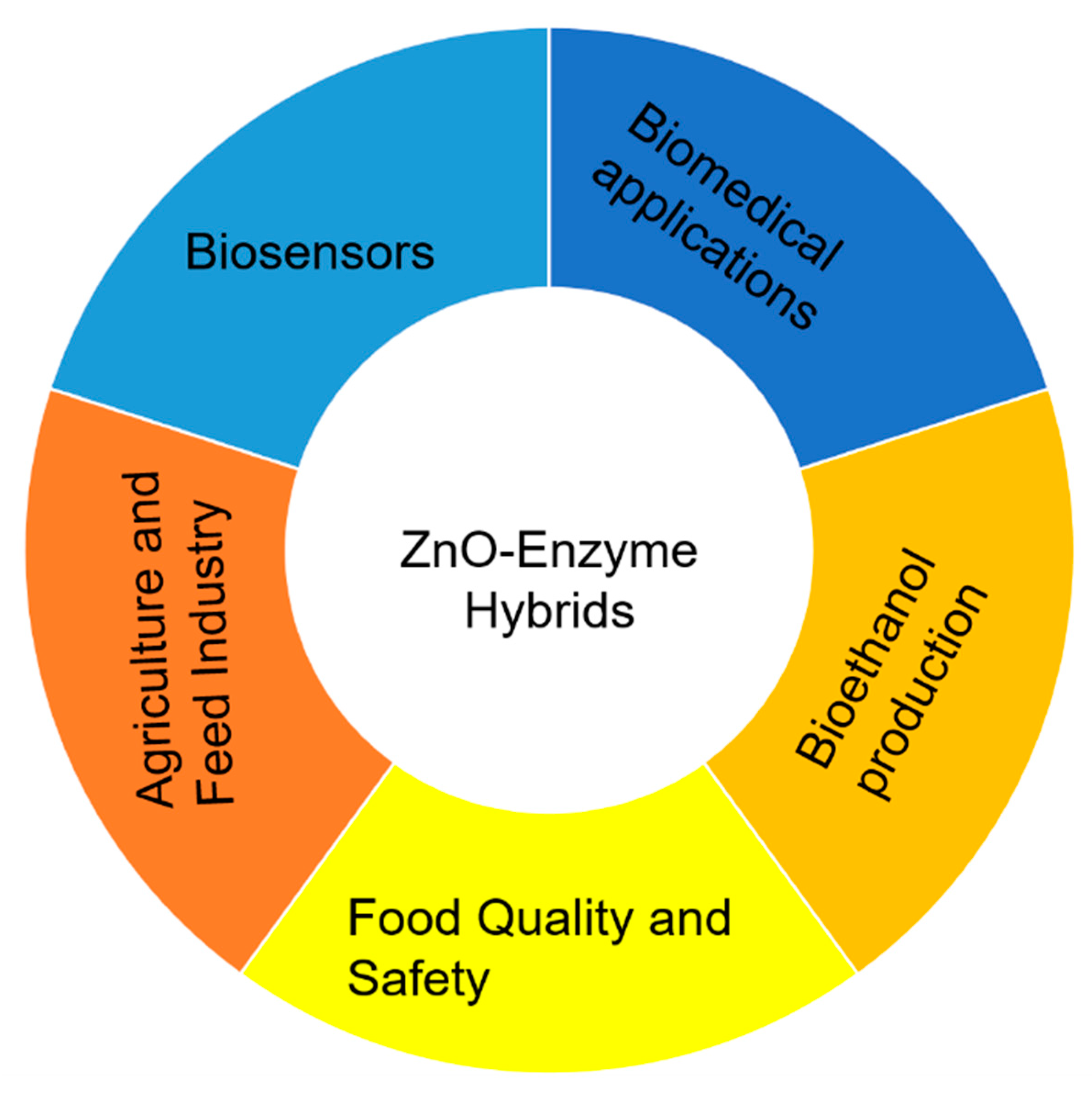
Phytase activity involves the hydrolysis of phytic acid (myo-inositol hexakisphosphate) into lower inositol phosphates and inorganic phosphate, thereby improving mineral bioavailability and reducing the antinutritional effects of phytate in food and feed systems. Phytases are widely produced by microorganisms, particularly fungi and bacteria [105]. Immobilization of phytases on ZnO-NPs is typically achieved through physical adsorption via electrostatic interactions between charged amino acid residues of the enzyme and hydroxyl or oxide groups on the ZnO-NP surface. In some systems, surface modification of ZnO with polymers or functional groups further enhances enzyme binding and stability [89]. Compared to free phytases, ZnO-NPs-immobilized phytases generally show improved thermal stability, pH tolerance, and storage stability, although a slight reduction in catalytic efficiency or substrate affinity is often observed due to conformational constraints or diffusion limitations. Immobilized phytases demonstrate enhanced reusability and operational lifespan, retaining a significant portion of their initial activity after multiple reaction cycles. Similar stability improvements have been reported for phytases immobilized on other nanostructured supports, such as chitosan-coated iron nanoparticles [99]. Overall, ZnO-NP-based immobilization offers a promising strategy for improving phytase performance in industry. The effects of phytases immobilized on ZnO-NPs were evaluated on the growth of tomato plants (Solanum lycopersicum). This enzyme was isolated from Lactobacillus kefiri and then purified and biochemically characterized. The impacts of ZnO-NPs, free phytase, and immobilized phytase on tomato growth parameters were compared. Plants treated with ZnO-NP-immobilized phytase showed significant increases in plant height (41.1%), main root length (64.1%), and shoot length (36.1%) compared with the control, along with enhanced vegetative growth and branching [100]. In the study of Rebello et al. (2018) [101] ZnO-phytase nanocomposites were developed to improve the thermal stability and shelf life of phytase isolated from Penicillium decumbens, a fungus obtained from industrial wastewater. Phytases used in animal feed must withstand high temperatures during pelletization and sterilization, where most enzymes lose activity. The P. decumbens phytase retained stability up to 80 °C with an activity of about 37 U/mL. Zinc oxide nanoparticles were biosynthesized using Lactobacillus strains to impart additional antimicrobial and probiotic functions. Immobilization on these ZnO-NPs increased phytase activity at 100 °C compared with the free enzyme. The antibacterial properties of the nanocomposites further improved shelf life. Moreover, the ZnO-phytase hybrid maintained high activity at 37 °C in simulated gastric juice, demonstrating its suitability as a robust animal feed additive. A. niger NT7 phytase was purified and immobilized on chemically synthesized ZnO nanoparticles to improve the stability and other physicochemical properties further. The immobilized phytase on ZnO-NPs (Phy-ZnP) has shown improved thermostability, protease resistance, higher optimal temperature (70 °C) and low pH (4.0) compared to free phytase (Phy). Phy-ZnP can be used effectively for up to 10 catalytic cycles. The application of purified phytase on sorghum flour improves its nutritional content in simulated digested conditions [102,103]. In addition to the successful immobilization of purified phytase on nanoparticles, similar strategies have been explored to immobilize whole phytase-active cells onto nanoparticles, aiming to combine the stability of the nanomaterials with the catalytic efficiency of living cells. It has been demonstrated that phytase-producing bacterial cells can be effectively immobilized on ZnO-NPs. In this approach, chitosan-tripolyphosphate gel beads cross-linked with ZnO-NPs were employed to entrap phytase-producing probiotic Bacillus coagulans cells. Immobilization on the ZnO-chitosan matrix resulted in a significant enhancement of enzymatic activity. The entrapped cells exhibited resistance to elevated temperatures and a wide pH range. In addition, the resulting complex displayed antibacterial activity against Streptococcus agalactiae and demonstrated the ability to solubilize insoluble phosphate and phytin. These combined properties indicate that the ZnO-chitosan-bacteria complex represents a promising candidate for use as a functional additive in human and animal food applications [104]. In Figure 2, the diverse applications of the ZnO-enzyme hybrids discussed above are summarized.
The integration of enzymes with ZnO-NPs has demonstrated significant potential in enhancing catalytic activity, stability, and specificity, underscoring their value in diverse biotechnological applications. While these ZnO-enzyme hybrids offer promising functional benefits, it is equally important to consider the potential toxicity, safety, and regulatory implications associated with zinc oxide nanoparticles. A thorough understanding of these factors is critical for the responsible development and practical implementation of such nanobiocatalytic systems.

4. Doping Strategies in ZnO Nanomaterials and Their Influence on ZnO–Enzyme Hybrid Systems

Doping represents an effective strategy for tailoring the physicochemical and functional properties of ZnO nanomaterials, enabling improved performance in biosensing, food quality monitoring, active packaging, and nanobiocatalysis. Incorporation of metal ions, non-metals, or rare-earth elements into the ZnO lattice modifies band structure, defect density, surface charge, and catalytic behavior, all of which directly influence enzyme immobilization efficiency, catalytic turnover, stability, and antimicrobial activity.

4.1. Metal-Ion Doping

Transition-metal dopants such as Cu2+, Co2+, Mn2+, Fe3+, and Ni2+ are widely explored because they introduce oxygen vacancies and enhance charge carrier density. These modifications improve electrical conductivity and electron-transfer kinetics, which are critical for enzyme-based electrochemical biosensors. Cu- and Co-doped ZnO nanostructures, for example, enhance electron transfer between glucose oxidase and electrode surfaces, resulting in lower detection limits and faster response times in glucose sensing—applications directly relevant to food quality monitoring and fermentation control [13,25]. Metal doping also affects enzyme immobilization. Fe- and Mn-doped ZnOs often exhibit increased surface hydroxyl density and modified isoelectric points, strengthening electrostatic interactions with enzymes such as lipases and amylases. This leads to higher immobilization efficiency and improved operational stability in biocatalytic processes relevant to starch conversion, lipid modification, and flavor development [7,24].
In antimicrobial packaging, metal-doped ZnO (Ag/ZnO and Cu/ZnO) shows enhanced bactericidal activity due to synergistic ion release and increased reactive oxygen species (ROS) generation. These doped nanostructures incorporated into polymer matrices can inhibit foodborne pathogens more effectively than undoped ZnO, supporting their use in active packaging for meat and dairy products [20,26].

4.2. Non-Metal Doping

Non-metal dopants such as N, C, S, and P primarily modify the bandgap and optical absorption of ZnO. N- or C-doped ZnO exhibits improved visible-light activity, which is advantageous for photoelectrochemical biosensors and light-activated antimicrobial packaging. Enhanced charge separation and reduced electron-hole recombination improve photocurrent responses in sensors detecting sugars, phenolics, or spoilage markers in beverages and juices [25]. Non-metal doping can also influence enzyme orientation and microenvironment by altering surface acidity/basicity. For example, N-doped ZnO with increased surface basicity may favor immobilization of enzymes with acidic isoelectric points, improving activity retention in aqueous food matrices [7,25].

4.3. Rare Earth Doping

Rare-earth ions such as Eu3+, Tb3+, Ce3+/Ce4+, and La3+ introduce luminescent or defect-engineering functionalities. Eu- and Tb-doped ZnO nanostructures exhibit strong photoluminescence, enabling optical biosensors and fluorescence-based indicators for food spoilage or freshness. Enzymes immobilized on rare-earth-doped ZnO can modulate emission intensity in response to biochemical changes, creating sensitive optical readouts for food quality monitoring [24]. Ce-doped ZnO offers improved resistance to photocorrosion and tunable ROS generation due to Ce3+/Ce4+ redox cycling, enhancing stability in long-term sensing or photocatalytic applications. This is particularly relevant for enzyme-based packaging materials exposed to light or oxidative environments [26].
Across the reviewed applications of ZnO-enzyme hybrids, doping of ZnO-NPs provides several benefits relevant to the food industry. Rational selection of dopants, considering ionic radius, valence state, and targeted property enhancement, offers a powerful route to expand the functional capabilities of ZnO-enzyme hybrid systems. Integrating doping strategies with green synthesis approaches and application-oriented design will be essential for advancing high-performance, safe, and multifunctional platforms for biosensing, packaging, and biocatalysis.

5. Zinc Oxide Nanoparticles: Toxicity, Safety, and Regulatory Considerations Discussion

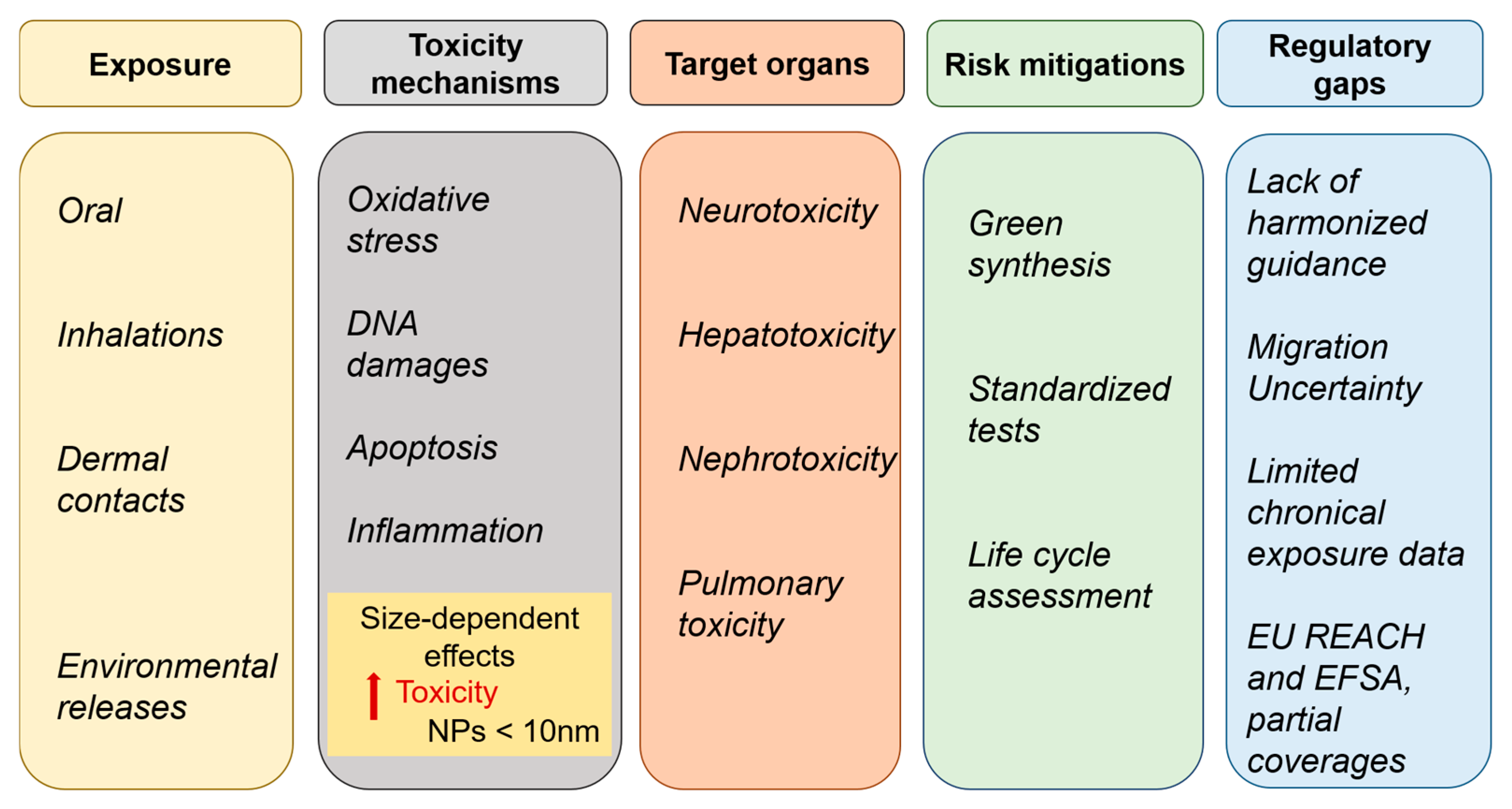
Zinc oxide nanoparticles are widely utilized in various applications, including food, cosmetics, packaging, and biomedical fields, due to their distinctive physicochemical properties, such as antimicrobial activity, UV absorption, and high surface reactivity. The global production of ZnO-NPs nanoparticles is estimated to be approximately 550 tons annually, driven largely by their use as UV filters in cosmetics and sunscreens [105]. However, their nanoscale size and enhanced reactivity raise important concerns regarding toxicity, human safety, and regulatory oversight, particularly as their incorporation into consumer and industrial products continues to expand. In Figure 3, a roadmap of NP toxicity and some regulatory gaps is shown.

5.1. Mechanisms and Evidence of Toxicity

The toxicity of ZnO-NPs is primarily attributed to two interconnected mechanisms: the release of Zn2+ ions and the generation of reactive oxygen species (ROS). These processes can induce oxidative stress, inflammation, genotoxicity, and cellular damage across multiple tissues [106,107,108,109,110]. Adverse effects have been reported in the liver, kidneys, lungs, heart, and nervous system, with smaller nanoparticles (<10 nm) generally exhibiting higher toxicity due to increased surface area and cellular uptake [111].
The toxicity of zinc oxide nanoparticles (ZnO-NPs) is strongly influenced by factors such as dose, particle size, surface properties, and route of exposure, with adverse effects often exacerbated under chronic or high-dose conditions, as comprehensively reviewed by Keerthana and Kumar, 2020 [112]. A wide range of in vitro and in vivo models has been employed to evaluate ZnO-NP toxicity.
The exotoxicity of ZnO-NPs has been demonstrated in aquatic species at different trophic levels, with sensitivity depending on the species and conditions of exposure. The toxic effects are mainly due to the release of Zn2+ ions and the generation of reactive oxygen species (ROS). Biosynthesized ZnO-NPs show reduced toxicity compared to those synthesized by physicochemical methods [113].
This approach employs plant extracts enriched in polyphenols, flavonoids, proteins, and other bioactive compounds that function as both reducing and stabilizing agents and remain adsorbed on the nanoparticle surface [114]. This biomolecular corona forms a protective organic layer around the ZnO core, thereby limiting direct membrane interactions, decreasing reactive oxygen species (ROS) generation, and attenuating apoptosis compared with bare or chemically synthesized ZnO nanoparticles [115].
More broadly, surface functionalization has been shown to substantially reduce ROS production, DNA damage, and apoptotic responses relative to uncoated ZnO nanoparticles [116].
Consequently, green-synthesized ZnO nanoparticles are generally considered less cytotoxic, since biomolecule-derived capping layers from plants or microorganisms, together with controlled particle size and morphology, can reduce direct cellular damage, Zn2+-induced oxidative stress, and the presence of residual synthetic contaminants. Nevertheless, the inherent dose-dependent toxicity associated with ZnO itself cannot be completely avoided.
Studies using human cell lines, including A172 glial cells and A549 lung epithelial cells, as well as model organisms such as Caenorhabditis elegans, zebrafish embryos, mice, and rats, have consistently reported cytotoxicity, oxidative stress, genotoxicity, inflammatory responses, and behavioral alterations following exposure [117,118]. Notably, pulmonary toxicity has been well documented, with ZnO-NP exposure inducing significant oxidative stress, reduced cell viability, and inflammatory signaling in A549 lung epithelial cells, highlighting the respiratory system as a particularly vulnerable target [112].
It was shown that exposure of zebrafish embryos and larvae to functionalized ZnO-NPs and bulk ZnO resulted in developmental and chronic toxicity, with NH2-ZnO-NPs showing the greatest hazard. Enhanced hepatotoxicity driven by ROS, autophagy, and programmed cell death highlights the increased toxicity of positively charged NH2-ZnO-NPs compared to COOH-ZnO-NPs [117]. Rodent studies similarly report neurotoxicity, oxidative stress in brain tissue, and anxiety- or Parkinson-like behaviors, although some investigations observed minimal effects when zinc accumulation was negligible [118,119,120].
Mechanistic studies further demonstrate that Zn2+ ions play a substantial role in observed toxicity. Experiments using ZnSO4 to mimic ionic zinc release confirm that DNA damage and behavioral effects are at least partly ion-mediated rather than attributable solely to nanoparticle structure [121]. These findings highlight the need to better distinguish nanoparticle-specific effects from those driven by dissolved zinc.

5.2. Safety Assessments and Human Exposure

At low concentrations, ZnO-NPs are generally considered safe and are approved by the U.S. Food and Drug Administration as “Generally Recognized as Safe” (GRAS) for certain applications. Nevertheless, concerns persist regarding their potential migration from packaging materials into food and their accumulation in biological tissues [108,122]. While most studies indicate limited skin penetration and low acute toxicity following dermal exposure, oral and inhalation routes pose greater risks, particularly under conditions of prolonged or high-dose exposure [108,109].
Interactions with food matrices, digestive fluids, and biological environments can alter nanoparticle dissolution, aggregation, and bioavailability, thereby influencing toxicity outcomes [106]. These factors complicate exposure assessment and underscore the importance of context-specific safety evaluations.
A clearer distinction between laboratory proof-of-concept demonstrations and systems approaching food-grade or regulatory readiness would further improve conceptual clarity, as many reported applications remain far from meeting the safety, stability, and migration-control requirements needed for real-world use. Typical proof-of-concept studies include antimicrobial packaging films where ZnO-NPs are simply blended into starch, chitosan, or polylactic acid and evaluated only for inhibition zones, without conducting migration tests or toxicokinetic assessments [96,105]. Other examples involve in vitro cytotoxicity studies on isolated cell lines (e.g., Caco-2, H9c2) that do not account for nanoparticle transformation in food matrices, or green-synthesized ZnO-NPs characterized only by basic techniques before being applied to food-contact materials without dissolution or stability testing. Short-term storage studies that omit evaluation of nanoparticle release during heating, freezing, or long-term use also fall into this category.
In contrast, systems approaching regulatory readiness include studies that quantify ZnO migration into standardized food simulants, assess dissolution and transformation in simulated gastric and intestinal fluids, and evaluate toxicokinetics, tissue distribution, and chronic oral toxicity in vivo, approaches reflected in recent toxicological investigations [96,97,98,99,100,101,102,103,104,105,106,107,108]. These more comprehensive assessments align with the data requirements for GRAS-, EFSA-, or FDA-relevant safety evaluations and represent meaningful progress toward real-world applicability.

5.3. Regulatory and Environmental Considerations

Current regulatory frameworks frequently fail to fully account for nanoparticle-specific characteristics such as particle size, surface area, morphology, solubility, and surface reactivity, leading to significant uncertainties in risk assessment and management [108,123,124]. Traditional chemical risk assessment paradigms, which are largely based on mass concentration thresholds, may not adequately capture the unique behaviors and biological interactions of nanoparticles. As a result, regulatory agencies increasingly emphasize the need for targeted research addressing chronic exposure, size- and shape-dependent toxicity, bioaccumulation, and long-term environmental fate [109,123].
Within the European Union, nanomaterials are regulated across multiple sectors, including food, cosmetics, medical devices, and chemicals. Legislative instruments such as the Registration, Evaluation, Authorisation and Restriction of Chemicals (REACH) regulation and the EU Cosmetics Regulation have been updated to explicitly address nanomaterials [123]. These frameworks require detailed physicochemical characterization, toxicological and ecotoxicological data, and explicit labeling of nanomaterials (e.g., listing ingredients with the suffix “(nano)” to enhance transparency and consumer awareness. In the food sector, the European Food Safety Authority mandates pre-market authorization for engineered nanomaterials used in food additives, novel foods, and food-contact materials, with a strong emphasis on migration studies and exposure assessment [124].
Despite these regulatory advances, significant gaps remain. In particular, there is no harmonized international guidance governing the safety evaluation of biogenic or plant-derived nanoparticles intended for food-contact or food-related applications. Existing regulatory frameworks were largely developed for chemically synthesized nanomaterials and may not adequately capture biogenic-specific properties, such as surface-bound phytochemicals, variable batch composition, or dynamic transformations during digestion and environmental exposure. Consequently, current risk assessment models require updating to incorporate biogenic-specific endpoints, life-cycle analysis, and realistic exposure scenarios [123].
From an environmental perspective, the increasing production and use of ZnO-NPs raise concerns regarding their release into soil, water, and wastewater systems during manufacturing, use, and disposal. Once released, ZnO-NPs may undergo aggregation, dissolution, or transformation, influencing their bioavailability and ecological toxicity. Studies have reported adverse effects on aquatic organisms, soil microbiota, and plants, highlighting the need for comprehensive ecotoxicological assessments that consider trophic transfer and long-term ecosystem impacts [124,125].
Emerging mitigation strategies, including green synthesis approaches and surface functionalization, show promise in reducing ZnO-NPs toxicity and improving environmental compatibility [70,108]. However, the adoption of these strategies must be supported by standardized testing protocols, validated reference materials, and harmonized international guidelines. Comprehensive life-cycle risk assessments integrating human health, environmental exposure, and regulatory compliance are essential to ensure the safe and sustainable development of ZnO-NPs-based technologies.
The commercial viability of ZnO-enzyme hybrid systems is strongly influenced by material costs, scalability, manufacturing complexity, and regulatory requirements [125].
The major findings of this review article are presented in Table 2.

5.4. Future Research Priorities

To support the safe, reproducible, and application-oriented development of ZnO-enzyme hybrid systems, future research priorities can be organized into short-, medium-, and long-term directions (Table 3). These priorities reflect the major gaps identified in recent studies, including variability in green synthesis routes [7,19,20], limited integration of immobilization and application testing [2,4], and insufficient toxicological and migration data for food-contact uses [9,10,11].
In the short term (1–3 years), efforts should focus on improving reproducibility through standardized biogenic ZnO-NP synthesis protocols, as variability in plant and microbial extracts continues to affect particle size and yield [2,20,25,70]. Consistent reporting of key characterization parameters and systematic optimization of immobilization strategies are also needed to reduce enzyme leaching and improve stability [7,23].
In the medium term (3 to 7 years), research should integrate green ZnO synthesis with robust immobilization workflows and validate these hybrids in real food matrices, a gap highlighted by recent studies [20,70]. Further work on ZnO migration, dissolution, and toxicity under realistic conditions is essential for regulatory acceptance [62], alongside tailoring ZnO-NPs morphologies for specific biosensing, packaging, or biocatalytic applications [23,25].
In the long term (more than 7 years), priorities should shift toward enabling industrial translation through harmonized safety guidelines for biogenic nanomaterials [62]. Scaling green synthesis will require advances in bioreactor design and life-cycle assessment [70], while future innovation should explore multifunctional smart food systems integrating antimicrobial ZnO, immobilized enzymes, and real-time sensing [25,124,125].

6. Conclusions

ZnO-enzyme hybrid systems represent a promising approach for advancing food quality monitoring, biosensing, and biocatalytic processes by combining the physicochemical advantages of ZnO-NPs with the high specificity of enzymes. Studies reviewed here demonstrate that ZnO-NPs can serve as effective enzyme supports, improving stability, reusability, and operational performance across a range of enzyme classes relevant to food analysis and processing. Green and biogenic synthesis routes further enhance the appeal of these systems by offering more sustainable and potentially safer alternatives to conventional nanoparticle production.
Despite these advances, the current body of literature remains fragmented, with many studies focusing on synthesis or immobilization strategies without thorough validation under realistic food-related conditions. Standardized protocols for nanoparticle characterization, enzyme loading and leaching, migration behavior, and toxicological assessment are still limited, complicating comparisons across studies and hindering regulatory evaluation.
Furthermore, existing regulatory frameworks do not yet fully address nanoparticle-specific and biogenic-specific characteristics, highlighting the need for updated risk assessment strategies tailored to nano-enabled enzyme systems. Future research should emphasize integrated design approaches that couple food-grade ZnO-NPs synthesis with robust immobilization methods, application-relevant testing, and comprehensive safety evaluation. Addressing these challenges will be essential for translating ZnO-enzyme hybrid systems from laboratory studies into safe, reliable, and regulatory-compliant tools for the food industry. The commercial adoption of ZnO-enzyme hybrids depends on factors such as material cost, scalability, manufacturing complexity, and regulatory requirements.

Author Contributions

Conceptualization, Y.G. and E.K.; software, Y.G., E.K., I.L., S.E. and R.E.; investigation, Y.G., E.K., I.L., S.E. and R.E.; data curation, Y.G., E.K., I.L., S.E. and R.E.; writing—original draft preparation, Y.G.; writing—review and editing, Y.G., E.K., I.L., S.E. and R.E.; visualization, Y.G. and S.E.; supervision—Y.G. and E.K. All authors have read and agreed to the published version of the manuscript.

Funding

This research received no external funding.

Data Availability Statement

The original contributions presented in this study are included in the article. Further inquiries can be directed to the corresponding authors.

Conflicts of Interest

The authors declare no conflicts of interest.

References

  1. Mutukwa, D.; Taziwa, R.; Khotseng, L.E. A Review of the Green Synthesis of ZnO Nanoparticles Utilising Southern AfricanIndigenous Medicinal Plants. Nanomaterials 2022, 12, 3456. [Google Scholar] [CrossRef] [PubMed]
  2. Sharma, S.; Gupta, S.; Arya, S.K.; Kaur, A. Enzyme Immobilization: Implementation of Nanoparticles and an Insight into Polystyrene as the Contemporary Immobilization Matrix. Process. Biochem. 2022, 120, 22–33. [Google Scholar] [CrossRef]
  3. Kucherenko, I.S.; Soldatkin, O.O.; Kucherenko, D.Y.; Soldatkina, O.V.; Dzyadevych, S.V. Advances in Nanomaterial Application in Enzyme-Based Electrochemical Biosensors: A Review. Nanoscale Adv. 2019, 1, 4560–4577. [Google Scholar] [CrossRef] [PubMed]
  4. Zhou, F.; Jing, W.; Liu, P.; Han, D.; Jiang, Z.; Wei, Z. Doping Ag in ZnO Nanorods to Improve the Performance of Related Enzymatic Glucose Sensors. Sensors 2017, 17, 2214. [Google Scholar] [CrossRef]
  5. Patel, V.; Shah, C.; Deshpande, M.; Madamwar, D. Zinc Oxide Nanoparticles Supported Lipase Immobilization for Biotransformation in Organic Solvents: A Facile Synthesis of Geranyl Acetate, Effect of Operative Variables and Kinetic Study. Appl. Biochem. Biotechnol. 2016, 178, 1630–1651. [Google Scholar] [CrossRef]
  6. Liu, D.M.; Dong, C. Recent Advances in Nano-Carrier Immobilized Enzymes and Their Applications. Process. Biochem. 2020, 92, 464–475. [Google Scholar] [CrossRef]
  7. Zeghoud, S.; Hemmami, H.; Seghir, B.; Amor, I.; Kouadri, I.; Rebiai, A.; Messaoudi, M.; Ahmed, S.; Pohl, P.; Simal-Gándara, J. A Review on Biogenic Green Synthesis of ZnO Nanoparticles by Plant Biomass and Their Applications. Mater. Today Commun. 2022, 33, 104747. [Google Scholar] [CrossRef]
  8. Zhou, X.; Hayat, Z.; Zhang, D.; Li, M.; Hu, S.; Wu, Q.; Cao, Y.; Yuan, Y. Zinc Oxide Nanoparticles: Synthesis, Characterization, Modification, and Applications in Food and Agriculture. Processes 2023, 11, 1193. [Google Scholar] [CrossRef]
  9. Kolotygina, V.Y.; Zhilyakov, A.Y.; Bukharinova, M.A.; Khamzina, E.I.; Stozhko, N.Y. Green Synthesis of ZnO Nanoparticles: Effect of Synthesis Conditions on Their Size and Photocatalytic Activity. Chem. Eng. 2026, 10, 15. [Google Scholar] [CrossRef]
  10. Bumbudsanpharoke, N.; Choi, J.; Park, H.J.; Ko, S. Zinc Migration and Its Effect on the Functionality of a Low Density Polyethylene-ZnO Nanocomposite Film. Foods 2019, 20, 100301. [Google Scholar] [CrossRef]
  11. Smaoui, S.; Chérif, I.; Ben Hlima, H.; Khan, M.U.; Rebezov, M.; Thiruvengadam, M.; Sarkar, T.; Shariati, M.A.; Lorenzo, J.M. Zinc oxide nanoparticles in meat packaging: A systematic review of recent literature. Food Packag. Shelf Life 2023, 36, 101045. [Google Scholar] [CrossRef]
  12. Kang, M.; Liu, Y.; Weng, Y.; Wang, H.; Bai, X. A Critical Review on the Toxicity Regulation and Ecological Risks of Zinc Oxide Nanoparticles to Plants. Environ. Sci. Nano 2024, 11, 14–35. [Google Scholar] [CrossRef]
  13. Shaba, E.Y.; Jacob, J.O.; Tijani, J.O.; Suleiman, M.A.T. A Critical Review of Synthesis Parameters Affecting the Properties of Zinc Oxide Nanoparticle and Its Application in Wastewater Treatment. Appl. Water Sci. 2021, 11, 48. [Google Scholar] [CrossRef]
  14. Adeleke, B.S.; Olowe, O.M.; Ayilara, M.S.; Fasusi, O.A.; Omotayo, O.P.; Fadiji, A.E.; Babalola, O.O. Biosynthesis of nanoparticles using microorganisms: A focus on endophytic fungi. Heliyon 2024, 10, e39636. [Google Scholar] [CrossRef]
  15. Popa, M.L.; Preda, M.D.; Neacșu, I.A.; Grumezescu, A.M.; Ginghină, O. Traditional vs. Microfluidic Synthesis of Zinc Nanoparticles. Int. J. Mol. Sci. 2023, 24, 1875. [Google Scholar] [CrossRef] [PubMed]
  16. Gerbreders, V.; Krasovska, M.; Sledevskis, E.; Gerbreders, A.; Mihailova, I.; Tamanis, E.; Ogurcovs, A. Hydrothermal Synthesis of ZnO Nanostructures with Controllable Morphology Change. CrystEngComm 2020, 22, 1346–1358. [Google Scholar] [CrossRef]
  17. Srujana, S.; Bhagat, D. Chemical-Based Synthesis of ZnO Nanoparticles and Their Applications in Agriculture. Nanotechnol. Environ. Eng. 2022, 7, 269–275. [Google Scholar] [CrossRef]
  18. Yarbrough, R.; Davis, K.; Dawood, S.; Rathnayake, H. A Sol-Gel Synthesis to Prepare Size and Shape-Controlled Mesoporous Nanostructures of Binary (II–VI) Metal Oxides. RSC Adv. 2020, 10, 14134–14146. [Google Scholar] [CrossRef]
  19. Wojnarowicz, J.; Chudoba, T.; Lojkowski, W. A Review of Microwave Synthesis of Zinc Oxide Nanomaterials: Reactants, Process Parameters and Morphologies. Nanomaterials 2020, 10, 1086. [Google Scholar] [CrossRef]
  20. El-Saadony, M.T.; Fang, G.; Yan, S.; Alkafaas, S.S.; El Nasharty, M.A.; Khedr, S.A.; Hussien, A.M.; Ghosh, S.; Dladla, M.; Elkafas, S.S.; et al. Green Synthesis of Zinc Oxide Nanoparticles: Preparation, Characterization, and Biomedical Applications—A Review. Int. J. Nanomed. 2024, 19, 12889–12937. [Google Scholar] [CrossRef]
  21. Król, A.; Pomastowski, P.; Rafińska, K.; Railean-Plugaru, V.; Buszewski, B. Zinc Oxide Nanoparticles: Synthesis, Antiseptic Activity and Toxicity Mechanism. Adv. Colloid Interface Sci. 2017, 249, 37–52. [Google Scholar] [CrossRef]
  22. Rani, S.; Kumar, P.; Dahiya, P.; Dang, A.S.; Suneja, P. Biogenic Synthesis of Zinc Nanoparticles, Their Applications, and Toxicity Prospects. Front. Microbiol. 2022, 13, 824427. [Google Scholar] [CrossRef] [PubMed]
  23. Bandeira, M.; Giovanela, M.; Roesch-Ely, M.; Devine, D.M.; da Silva Crespo, J. Green synthesis of zinc oxide nanoparticles: A review of the synthesis methodology and mechanism of formation. Sustain. Chem. Pharm. 2020, 15, 100223. [Google Scholar] [CrossRef]
  24. Gupta, S.; Kumar, V.; Yadav, N.; Dagar, R.; Kalyankar, R.; Gupta, K. Enhanced Antimicrobial Activity of Biogenic Zinc Oxide (ZnO) Nanoparticles. ChemistrySelect 2025, 10, e01732. [Google Scholar] [CrossRef]
  25. Xu, J.; Huang, Y.; Zhu, S.; Abbes, N.; Jing, X.; Zhang, L. A Review of the Green Synthesis of ZnO Nanoparticles Using Plant Extracts and Their Prospects for Application in Antibacterial Textiles. J. Eng. Fibers Fabr. 2021, 16, 15589250211046242. [Google Scholar] [CrossRef]
  26. Hamed, R.; Obeid, R.Z.; Abu-Huwaij, R. Plant Mediated-Green Synthesis of Zinc Oxide Nanoparticles: An Insight into Biomedical Applications. Nanotechnol. Rev. 2023, 12, 20230112. [Google Scholar] [CrossRef]
  27. Murali, M.; Kalegowda, N.; Gowtham, H.; Ansari, M.; Alomary, M.; Alghamdi, S.; Shilpa, N.; Singh, S.; Thriveni, M.; Aiyaz, M.; et al. Plant-Mediated Zinc Oxide Nanoparticles: Advances in the New Millennium towards Understanding Their Therapeutic Role in Biomedical Applications. Pharmaceutics 2021, 13, 1662. [Google Scholar] [CrossRef]
  28. Bouttier-Figueroa, D.; Cortez-Valadez, M.; Flores-Acosta, M.; Robles-Zepeda, R. Green synthesis of zinc oxide nanoparticles using plant extracts and their antimicrobial activity. BioNanoScience 2024, 14, 3385–3400. [Google Scholar] [CrossRef]
  29. MuthuKathija, M.; Badhusha, S.; Rama, V. Green Synthesis of Zinc Oxide Nanoparticles Using Pisonia alba Leaf Extract and Its Antibacterial Activity. Appl. Surf. Sci. Adv. 2023, 14, 100400. [Google Scholar] [CrossRef]
  30. Manojkumar, U.; Kaliannan, D.; Venkatesan, S.; Balasubramanian, B.; Kamyab, H.; Mussa, Z.; Jayanthi, P.; Mesbah, M.; Chelliapan, S.; Palaninaicker, S. Green Synthesis of Zinc Oxide Nanoparticles Using Brassica oleracea var. botrytis Leaf Extract: Photocatalytic, Antimicrobial and Larvicidal Activity. Chemosphere 2023, 333, 138263. [Google Scholar] [CrossRef]
  31. Melese, A.; Wubet, W.; Hussen, A.; Mulate, K.; Hailekiros, A. A Review on Biogenic Synthesized Zinc Oxide Nanoparticles: Synthesis, Characterization, and Its Applications. Rev. Inorg. Chem. 2024, 44, 303–321. [Google Scholar] [CrossRef]
  32. Mousa, S.; Wissa, D.; Hassan, H.; Ebnalwaled, A.; Khairy, S. Enhanced Photocatalytic Activity of Green-Synthesized Zinc Oxide Nanoparticles Using Low-Cost Plant Extracts. Sci. Rep. 2024, 14, 66975. [Google Scholar] [CrossRef] [PubMed]
  33. Mohamed, H.; Maaza, M.; Krief, A.; Gibaud, A. Decoding Plant-Based Green Synthesis of Zinc Oxide Nanoparticles. Chem. Biodivers. 2025, 22, e202402412. [Google Scholar] [CrossRef] [PubMed]
  34. Akhras, N.; Çelekli, A.; Bozkurt, H. Enhanced antimicrobial activity of green-synthesized Ziziphus jujuba–ZnO nanoparticles: A comparative study with pure ZnO nanoparticles and plant extract. Foods 2025, 14, 2449. [Google Scholar] [CrossRef]
  35. Wu, C.; Zhang, T.; Ji, B.; Chou, Y.; Du, X. Green Synthesis of Zinc Oxide Nanoparticles Using Aloe vera Leaf Extract and Evaluation of the Antimicrobial and Antioxidant Properties of the ZnO/Regenerated Cellulose Film. Cellulose 2024, 31, 4849–4864. [Google Scholar] [CrossRef]
  36. Sarwar, K.; Nazli, Z.I.H.; Munir, H.; Aslam, M.; Khalofah, A. Biosynthesis of Zinc Oxide Nanoparticles Using Moringa oleifera Leaf Extract, Probing Antibacterial and Antioxidant Activities. Sci. Rep. 2025, 15, 20413. [Google Scholar] [CrossRef]
  37. Alvarado, J.A.; Conzalez, G.S.A.; Arce-Plaza, A.; Reyes-Carmona, S. New approach in effective and reproducible green synthesis of pure ZnO nanoparticles using lemon juice with less solvent and without strong base chemical precursor. Ceram. Int. 2025, 51, 18348–18355. [Google Scholar] [CrossRef]
  38. Al-Tameemi, A.; Masarudin, M.; Rahim, R.; Mizzi, R.; Timms, V.; Isa, N.; Neilan, B. Eco-friendly zinc oxide nanoparticle biosynthesis powered by probiotic bacteria. Appl. Microbiol. Biotechnol. 2025, 109, 32. [Google Scholar] [CrossRef]
  39. Adra, H.; Ryu, H.; Jo, A.; Lee, J.; Choi, S.; Kim, Y. Ligand-based magnetic extraction and safety assessment of zinc oxide nanoparticles in food products. J. Hazard. Mater. 2023, 465, 133235. [Google Scholar] [CrossRef]
  40. Shah, N.N.; Priyadarshi, G.; Patel, B.; Sahu, S.K.; Joshi, M.; Syed, R.; Shahid, M.; Rami, E.; Sahoo, D.K.; Patel, A. Green Synthesis of ZnO Nanoparticles Using Microbacterium arborescens. Water Reuse 2025, 15, 215–229. [Google Scholar] [CrossRef]
  41. Murali, M.; Gowtham, H.; Shilpa, N.; Singh, S.; Aiyaz, M.; Sayyed, R.; Shivamallu, C.; Achar, R.; Silina, E.; Stupin, V.; et al. Zinc Oxide Nanoparticles Prepared through Microbial-Mediated Synthesis for Therapeutic Applications: A Possible Alternative for Plants. Front. Microbiol. 2023, 14, 1227951. [Google Scholar] [CrossRef] [PubMed]
  42. Barani, M.; Masoudi, M.; Mashreghi, M.; Makhdoumi, A.; Eshghi, H. Cell-free extract-assisted synthesis of ZnO nanoparticles using aquatic bacterial strains: Biological activities and toxicological evaluation. Int. J. Pharm. 2021, 600, 120878. [Google Scholar] [CrossRef] [PubMed]
  43. Gomaa, E. Microbial Mediated Synthesis of Zinc Oxide Nanoparticles, Characterization and Multifaceted Applications. J. Inorg. Organomet. Polym. Mater. 2022, 32, 4114–4132. [Google Scholar] [CrossRef]
  44. Kumar, R.V.; Vinoth, S.; Baskar, V.; Arun, M.; Gurusaravanan, P. Synthesis of Zinc Oxide Nanoparticles Mediated by Dictyota dichotoma Endophytic Fungi and Its Photocatalytic Degradation of Fast Green Dye and Antibacterial Applications. S. Afr. J. Bot. 2022, 151, 337–344. [Google Scholar] [CrossRef]
  45. Moormann, G.; Bachand, G. Biosynthesis of Zinc Oxide Nanoparticles Using Fungal Filtrates; U.S. Department of Energy, Office of Scientific and Technical Information: Oak Ridge, TN, USA, 2021; Volume 3, pp. 48–55. [CrossRef]
  46. Abdelkader, D.H.; Negm, W.A.; Elekhnawy, E.; Eliwa, D.; Aldosari, B.N.; Almurshedi, A.S. Zinc oxide nanoparticles as potential delivery carrier: Green synthesis by Aspergillus niger endophytic fungus, characterization, and in vitro/in vivo antibacterial activity. Pharmaceuticals 2022, 15, 1057. [Google Scholar] [CrossRef]
  47. Gaber, S.; Hashem, A.; El-Sayyad, G.; Attia, M. Antifungal Activity of Myco-Synthesized Bimetallic ZnO–CuO Nanoparticles against the Fungal Plant Pathogen Fusarium oxysporum. Biomass Convers. Biorefinery 2023, 14, 25395–25409. [Google Scholar] [CrossRef]
  48. El-Khawaga, A.M.; Elsayed, M.A.; Gobara, M.; Suliman, A.A.; Hashem, A.H.; Zaher, A.A.; Salem, S.S. Green Synthesized ZnO Nanoparticles by Saccharomyces cerevisiae and Their Antibacterial Activity and Photocatalytic Degradation. Biomass Convers. Biorefinery 2025, 15, 2673–2684. [Google Scholar] [CrossRef]
  49. Boroumand Moghaddam, A.; Namvar, F.; Moniri, M.; Tahir, P.M.; Azizi, S.; Mohamad, R. Biosynthesis of ZnO nanoparticles by a new Pichia kudriavzevii yeast strain and evaluation of their antimicrobial and antioxidant activities. Molecules 2017, 22, 872. [Google Scholar] [CrossRef]
  50. Rehman, S.; Jermy, B.R.; Akhtar, S.; Borgio, J.F.; Abdul Azeez, S.; Ravinayagam, V.; Gani, A. Isolation and Characterization of a Novel Thermophile Bacillus haynesii Applied for the Green Synthesis of ZnO Nanoparticles. Artif. Cells Nanomed. Biotechnol. 2019, 47, 2072–2082. [Google Scholar] [CrossRef]
  51. Al-Kordy, H.M.; Sabry, S.A.; Mabrouk, M.E. Statistical optimization of experimental parameters for extracellular synthesis of zinc oxide nanoparticles by a microorganism. Sci. Rep. 2021, 11, 10924. [Google Scholar] [CrossRef]
  52. Chakra, P.S.; Banakar, A.; Puranik, S.N.; Kaveeshwar, V.; Ravikumar, C.R.; Gayathri, D. Characterization of ZnO nanoparticles synthesized using probiotic Lactiplantibacillus plantarum GP258. Beilstein J. Nanotechnol. 2025, 16, 78–89. [Google Scholar] [CrossRef] [PubMed]
  53. Shanmugam, R.; Munusamy, T.; Jayakodi, S.; Al-Ghanim, K.A.; Nicoletti, M.; Sachivkina, N.; Govindarajan, M. Probiotic-Bacteria (Lactobacillus fermentum)-Wrapped Zinc Oxide Nanoparticles: Biosynthesis, Characterization, and Antibacterial Activity. Fermentation 2023, 9, 413. [Google Scholar] [CrossRef]
  54. Swain, M.; Mishra, D.; Sahoo, G. A review on green synthesis of ZnO nanoparticles. Discov. Appl. Sci. 2025, 7, 997. [Google Scholar] [CrossRef]
  55. Trejo-Flores, P.G.; Sánchez-Roque, Y.; Vilchis-Bravo, H.; Pérez-Luna, Y.d.C.; Velázquez-Jiménez, P.E.; Ramírez-González, F.; Soto Martínez, K.M.; López de Paz, P.; Saldaña-Trinidad, S.; Berrones-Hernández, R. Evaluation of Aqueous and Ethanolic Extracts for the Green Synthesis of Zinc Oxide Nanoparticles from Tradescantia spathacea. Nanomaterials 2025, 15, 1126. [Google Scholar] [CrossRef]
  56. Ortiz-Tirado, A.; Medina-Ganem, L.F.; Bandala, E.R.; Conejo-Davila, A.S.; Vega-Rios, A.; Goonetilleke, A.; Rodriguez-Narvaez, O.M. Biogenic nanoparticles: Synthesis, characterization, applications and scaling up limitations in water treatment. J. Environ. Chem. Eng. 2025, 13, 117730. [Google Scholar] [CrossRef]
  57. Saini, D.K.; Singh, M.; Pandey, J.; Rathore, S.; Kumar, M. Green Synthesis of Nanoparticles for Biomedical Applications. J. Mater. Environ. Sci. 2025, 16, 1833–1859. [Google Scholar]
  58. Deka, B.; Baruah, C.; Babu, A.; Kalita, P. Biological and Non-Conventional Synthesis of Zinc Oxide Nanoparticles (ZnO-NPs): Their Potential Applications. J. Nanotechnol. Nanomater. 2022, 3, 79–89. [Google Scholar] [CrossRef]
  59. Pal, K.; Chakroborty, S.; Nath, N. Limitations of Nanomaterials Insights in Green Chemistry Sustainable Route: Review on Novel Applications. Green Process. Synth. 2022, 11, 951–964. [Google Scholar] [CrossRef]
  60. Shouket, S.; Khurshid, S.; Khan, J.; Batool, R.; Sarwar, A.; Aziz, T.; Alhomrani, M.; Alamri, A.; Sameeh, M.; Filimban, F. Enhancement of Shelf-Life of Food Items via Immobilized Enzyme Nanoparticles on Varied Supports: A Sustainable Approach Towards Food Safety and Sustainability. Food Res. Int. 2023, 169, 112940. [Google Scholar] [CrossRef]
  61. Sadi, S.; Ghollasi, M.; Eskandari, K.; Darvishi, E. Innovative Approaches in Invertase Immobilization: Utilizing Green Synthesized Zinc Oxide Nanoparticles to Improve Biochemical Properties. Anal. Biochem. 2024, 687, 115661. [Google Scholar] [CrossRef]
  62. Zhang, Y.; Wu, H.; Huang, X.; Zhang, J.; Guo, S. Effect of substrate (ZnO) morphology on enzyme immobilization and its catalytic activity. Nanoscale Res. Lett. 2011, 6, 450. [Google Scholar] [CrossRef] [PubMed]
  63. Gkantzou, E.; Govatsi, K.; Chatzikonstantinou, A.V.; Yannopoulos, S.N.; Stamatis, H. Development of a ZnO Nanowire Continuous Flow Microreactor with β-Glucosidase Activity: Characterization and Application for the Glycosylation of Natural Products. ACS Sustain. Chem. Eng. 2021, 9, 7658–7667. [Google Scholar] [CrossRef]
  64. Długosz, O.; Matysik, J.; Matyjasik, W.; Banach, M. Catalytic and Antimicrobial Properties of α-Amylase Immobilised on the Surface of Metal Oxide Nanoparticles. J. Clust. Sci. 2020, 32, 1609–1622. [Google Scholar] [CrossRef]
  65. Husain, Q.; Ansari, S.; Alam, F.; Azam, A. Immobilization of Aspergillus oryzae β-Galactosidase on Zinc Oxide Nanoparticles via Simple Adsorption Mechanism. Int. J. Biol. Macromol. 2011, 49, 37–43. [Google Scholar] [CrossRef]
  66. Antony, N.; Balachandran, S.; Mohanan, P. Immobilization of diastase α-amylase on nano zinc oxide. Food Chem. 2016, 211, 624–630. [Google Scholar] [CrossRef]
  67. Ridhuan, N.; Razak, A.; Lockman, Z. Fabrication and Characterization of Glucose Biosensors by Using Hydrothermally Grown ZnO Nanorods. Sci. Rep. 2018, 8, 32127. [Google Scholar] [CrossRef]
  68. Aggarwal, S.; Ikram, S. Zinc oxide nanoparticles-impregnated chitosan surfaces for covalent immobilization of trypsin: Stability and kinetic studies. Int. J. Biol. Macromol. 2022, 206, 205–221. [Google Scholar] [CrossRef]
  69. Zhao, J.; Wu, D.; Zhi, J. A Novel Tyrosinase Biosensor Based on Biofunctional ZnO Nanorod Microarrays on the Nanocrystalline Diamond Electrode for Detection of Phenolic Compounds. Bioelectrochemistry 2009, 75, 44–49. [Google Scholar] [CrossRef]
  70. Sharma, R.; Garg, R.; Kumari, A. A Review on Biogenic Synthesis, Applications and Toxicity Aspects of Zinc Oxide Nanoparticles. EXCLI J. 2020, 19, 1325–1340. [Google Scholar] [CrossRef]
  71. Soares, A.; Gonçalves, L.; Ferreira, R.; De Souza, J.; Fangueiro, R.; Alves, M.; Carvalho, F.; Mendes, A.; Cantanhêde, W. Immobilization of Papain Enzyme on a Hybrid Support Containing Zinc Oxide Nanoparticles and Chitosan for Clinical Applications. Carbohydr. Polym. 2020, 243, 116498. [Google Scholar] [CrossRef]
  72. El-Shishtawy, R.; Ahmed, N.; Almulaiky, Y. Immobilization of Catalase on Chitosan/ZnO and Chitosan/ZnO/Fe2O3; Nanocomposites: A Comparative Study. Catalysts 2021, 11, 820. [Google Scholar] [CrossRef]
  73. Fotiadou, R.; Chatzikonstantinou, A.; Hammami, M.; Chalmpes, N.; Moschovas, D.; Spyrou, K.; Polydera, A.; Avgeropoulos, A.; Gournis, D.; Stamatis, H. Green Synthesized Magnetic Nanoparticles as Effective Nanosupport for the Immobilization of Lipase: Application for the Synthesis of Lipophenols. Nanomaterials 2021, 11, 458. [Google Scholar] [CrossRef] [PubMed]
  74. Batool, I.; Imran, M.; Anwar, A.; Khan, F.; Mohammed, A.; Shami, A.; Iqbal, H. Enzyme-triggered approach to reduce water bodies’ contamination using peroxidase-immobilized ZnO/SnO2/alginate nanocomposite. Int. J. Biol. Macromol. 2023, 235, 127900. [Google Scholar] [CrossRef]
  75. Ahmad, R.; Sardar, M. Enzyme immobilization: An overview on nanoparticles as immobilization matrix. Biochem. Anal. Biochem. 2015, 4, 1. [Google Scholar] [CrossRef]
  76. Coccia, F.; Tonucci, L.; Del Boccio, P.; Caporali, S.; Hollmann, F.; d’Alessandro, N. Stereoselective double reduction of 3-methyl-2-cyclohexenone by use of palladium and platinum nanoparticles, in tandem with alcohol dehydrogenase. Nanomaterials 2018, 8, 853. [Google Scholar] [CrossRef]
  77. Abdussalam-Mohammed, W. Comparison of chemical and biological properties of metal nanoparticles (Au, Ag), with metal oxide nanoparticles (ZnO-NPs) and their applications. Adv. J. Chem. Sect. A 2020, 3, 111–236. [Google Scholar] [CrossRef]
  78. Diyanat, S.; Homaei, A.; Mosaddegh, E. Immobilization of Penaeus vannamei Protease on ZnO Nanoparticles for Long-Term Use. Int. J. Biol. Macromol. 2018, 118, 92–98. [Google Scholar] [CrossRef]
  79. Bilal, M.; Qamar, S.A.; Carballares, D.; Berenguer-Murcia, Á.; Fernandez-Lafuente, R. Proteases immobilized on nanomaterials for biocatalytic, environmental and biomedical applications: Advantages and drawbacks. Biotechnol. Adv. 2024, 70, 108304. [Google Scholar] [CrossRef]
  80. Eom, T.; Isanapong, J.; Kumnorkaew, P.; Songthanasak, K.; Pornwongthong, P. Immobilization of cellulase on zinc oxide deposited on zeolite pellets for enzymatic saccharification of cellulose. E3S Web Conf. 2023, 428, 02003. [Google Scholar] [CrossRef]
  81. Selvarajan, E.; Mohanasrinivasan, V.; Subathra Devi, C.; George Priya Doss, C. Immobilization of β-Galactosidase from Lactobacillus plantarum HF571129 on ZnO Nanoparticles: Characterization and Lactose Hydrolysis. Bioprocess Biosyst. Eng. 2015, 38, 1655–1669. [Google Scholar] [CrossRef]
  82. Ansari, S.A.; Damanhory, A.A. Biotechnological application of Aspergillus oryzae β-galactosidase immobilized on glutaraldehyde-modified zinc oxide nanoparticles. Heliyon 2023, 9, e13089. [Google Scholar] [CrossRef] [PubMed]
  83. Kumar, P.; Ryan, B.; Henehan, G.T.M. β-Glucosidase from Streptomyces griseus: Nanoparticle Immobilisation and Application to Alkyl Glucoside Synthesis. Protein Expr. Purif. 2017, 132, 164–170. [Google Scholar] [CrossRef] [PubMed]
  84. Kaleem, I.; Rasool, A.; Lv, B.; Riaz, N.; Hassan, J.U.; Manzoor, R.; Li, C. Immobilization of Purified β-Glucuronidase on ZnO Nanoparticles for Efficient Biotransformation of Glycyrrhizin in Ionic Liquid/Buffer Biphasic System. Chem. Eng. Sci. 2017, 162, 332–340. [Google Scholar] [CrossRef]
  85. Khan, J.; Khurshid, S.; Sarwar, A.; Aziz, T.; Naveed, M.; Ali, U.; Makhdoom, S.I.; Nadeem, A.A.; Khan, A.A.; Sameeh, M.Y.; et al. Enhancing Bread Quality and Shelf Life via Glucose Oxidase Immobilized on Zinc Oxide Nanoparticles-A Sustainable Approach towards Food Safety. Sustainability 2022, 14, 14255. [Google Scholar] [CrossRef]
  86. Batool, R.; Kazmi, S.A.R.; Khurshid, S.; Saeed, M.; Ali, S.; Adnan, A.; Fatima, N. Postharvest shelf life enhancement of peach fruit treated with glucose oxidase immobilized on ZnO nanoparticles. Food Chem. 2022, 366, 130591. [Google Scholar] [CrossRef]
  87. Hwa, K.-Y.; Subramani, B. Synthesis of Zinc Oxide Nanoparticles on Graphene–Carbon Nanotube Hybrid for Glucose Biosensor Applications. Biosens. Bioelectron. 2014, 62, 127–133. [Google Scholar] [CrossRef]
  88. Cui, J.; Tang, X.; Ma, Q.; Chang, Y.; Zhang, Q.; Jia, S. Cross Linked α Amylase Aggregates on Fe3O4 Magnetic Nanoparticles Modified with Polydopamine/Polyethyleneimine for Efficient Hydrolysis of Starch. Particuology 2024, 90, 98–105. [Google Scholar] [CrossRef]
  89. Khade, B.; Gawali, P.; Waghmare, M.; Dongre, P. Adsorption of α-Amylase and Starch on Porous Zinc Oxide Nanosheets: A Biophysical Study. Food Biophys. 2021, 16, 280–291. [Google Scholar] [CrossRef]
  90. Garcia-Galan, C.; Berenguer-Murcia, Á.; Fernandez-Lafuente, R.; Rodrigues, R.C. Potential of Different Enzyme Immobilization Strategies to Improve Enzyme Performance. Adv. Synth. Catal. 2011, 353, 2885–2904. [Google Scholar] [CrossRef]
  91. Cheng, W.; Nian, B. Computer-Aided Lipase Engineering for Improving Their Stability and Activity in the Food Industry: State of the Art. Molecules 2023, 28, 5848. [Google Scholar] [CrossRef]
  92. Khan, M.F.; Kundu, D.; Hazra, C.; Patra, S. A Strategic Approach of Enzyme Engineering by Attribute Ranking and Enzyme Immobilization on Zinc Oxide Nanoparticles to Attain Thermostability in Mesophilic Bacillus subtilis Lipase for Detergent Formulation. Int. J. Biol. Macromol. 2019, 136, 66–82. [Google Scholar] [CrossRef]
  93. Chandra, K.; Dong, C.; Chauhan, A.; Chen, C.; Patel, A.; Singhania, R. Advancements in Lipase Immobilization: Enhancing Enzyme Efficiency with Nanomaterials for Industrial Applications. Int. J. Biol. Macromol. 2025, 311, 143754. [Google Scholar] [CrossRef] [PubMed]
  94. Shah, E.; Mahapatra, P.; Bedekar, A.V.; Soni, H.P. Immobilization of Thermomyces lanuginosus Lipase on ZnO Nanoparticles: Mimicking the Interfacial Environment. RSC Adv. 2015, 5, 26291–26300. [Google Scholar] [CrossRef]
  95. Homaei, A.A.; Sariri, R.; Vianello, F.; Stevanato, R. Enzyme immobilization: An update. J. Chem. Biol. 2013, 6, 185–205. [Google Scholar] [CrossRef] [PubMed]
  96. Zhou, P.; Fang, H.; Zhao, Z.; Liu, G.; Zeng, J.; Deng, Y.; Zhang, M. Fabrication of Nanomaterial-Immobilized Lipase Enables Robust Enzymatic Interesterification: Lipid Characteristics and Underlying Catalytic Mechanism. J. Food Sci. 2025, 90, e70302. [Google Scholar] [CrossRef]
  97. Sahyar, B.Y.; Kaplan, M.; Ozsoz, M.; Celik, E.; Otles, S. Electrochemical Xanthine Detection by Enzymatic Method Based on Ag-Doped ZnO Nanoparticles Using Polypyrrole. Bioelectrochemistry 2019, 130, 107327. [Google Scholar] [CrossRef]
  98. Tak, M.; Gupta, V.; Tomar, M. Zinc Oxide-Multiwalled Carbon Nanotubes Hybrid Nanocomposite Based Urea Biosensor. J. Mater. Chem. B 2013, 1, 6392–6401. [Google Scholar] [CrossRef]
  99. Onem, H.; Nadaroglu, H. Immobilization of Purified Phytase Enzyme from Tirmit (Lactarius volemus) on Coated Chitosan with Iron Nanoparticles and Investigation of Its Usability in the Cereal Industry. Iran. J. Sci. Technol. Trans. A Sci. 2016, 42, 1063–1075. [Google Scholar] [CrossRef]
  100. Dikbaş, N.; Alım, Ş.; Uçar, S.; Şenol Kotan, M. Biochemical Properties of Phytase Immobilized and Its Effect on Growth Parameters of Tomato. J. Plant Nutr. Soil Sci. 2024, 187, 533–544. [Google Scholar] [CrossRef]
  101. Rebello, S.; Anoopkumar, A.N.; Puthur, S.; Sindhu, R.; Binod, P.; Pandey, A.; Aneesh, E.M. Zinc Oxide Phytase Nanocomposites as Contributory Tools to Improved Thermostability and Shelf Life. Bioresour. Technol. Rep. 2018, 3, 1–6. [Google Scholar] [CrossRef]
  102. Ansari, S.A.; Husain, Q. Potential applications of enzymes immobilized on/in nano materials: A review. Biotechnol. Adv. 2012, 30, 512–523. [Google Scholar] [CrossRef] [PubMed]
  103. Kumari, N.; Bansal, S. Production, Immobilization and Characterization of Fungal Phytase and Its Utilization in Food and Feed Industry. Doctoral Dissertation, Jaypee University of Information Technology, Solan, HP, India, 2022. [Google Scholar]
  104. Chatraei, N.; Emtiazi, G. Immobilization of Phytase Producing Probiotics in Shrimp Chitosan Cross-Linked by Zinc Oxide Nanoparticles and Assay Its Antibacterial Activity. Appl. Food Biotechnol. 2019, 6, 139–150. [Google Scholar] [CrossRef]
  105. Rani, V.; Mohanram, S.; Tiwari, R.; Nain, L.; Arora, A. Beta-glucosidase: Key enzyme in determining efficiency of cellulase and biomass hydrolysis. J. Bioprocess. Biotech. 2014, 5, 197. [Google Scholar] [CrossRef]
  106. Awasthi, G.; Maheshwari, T.; Sharma, R.; Kumawat, T.K.; Singh, G.P.; Lodha, P. Actions and reactions of plant-derived zinc oxide nanoparticles. Mater. Today Proc. 2023, 95, 77–87. [Google Scholar] [CrossRef]
  107. Youn, S.; Choi, S. Food Additive Zinc Oxide Nanoparticles: Dissolution, Interaction, Fate, Cytotoxicity, and Oral Toxicity. Int. J. Mol. Sci. 2022, 23, 6074. [Google Scholar] [CrossRef]
  108. Fujihara, J.; Nishimoto, N. Review of Zinc Oxide Nanoparticles: Toxicokinetics, Tissue Distribution for Various Exposure Routes, Toxicological Effects, Toxicity Mechanism in Mammals, and an Approach for Toxicity Reduction. Biol. Trace Elem. Res. 2023, 202, 9–23. [Google Scholar] [CrossRef]
  109. Mendoza-Milla, C.; Macías, F.; Delgado, K.; Rodríguez, M.; Colín-Val, Z.; Ramos-Godínez, M.P.; Cano-Martínez, A.; Vega Miranda, A.; Robledo-Cadena, D.; Delgado-Buenrostro, N.; et al. Zinc Oxide Nanoparticles Induce Toxicity in H9c2 Rat Cardiomyoblasts. Int. J. Mol. Sci. 2022, 23, 12940. [Google Scholar] [CrossRef]
  110. Yang, J.; Xiong, D.; Long, M. Zinc Oxide Nanoparticles as Next-Generation Feed Additives: Bridging Antimicrobial Efficacy, Growth Promotion, and Sustainable Strategies in Animal Nutrition. Nanomaterials 2025, 15, 1030. [Google Scholar] [CrossRef]
  111. Bilgi, E.; Karakus, O. Machine-learning assisted insights into cytotoxicity of zinc oxide nanoparticles. J. Phys. Conf. Ser. 2024, 2695, 012001. [Google Scholar] [CrossRef]
  112. Keerthana, S.; Kumar, A. Potential Risks and Benefits of Zinc Oxide Nanoparticles: A Systematic Review. Crit. Rev. Toxicol. 2020, 50, 47–71. [Google Scholar] [CrossRef]
  113. Bordin, E.; Ramsdorf, W.; Domingos, L.; de Souza Miranda, L.; Filho, N.; Cestari, M. Ecotoxicological effects of zinc oxide nanoparticles (ZnO-NPs) on aquatic organisms: Current research and emerging trends. J. Environ. Manag. 2023, 349, 119396. [Google Scholar] [CrossRef] [PubMed]
  114. Abdelmigid, H.M.; Hussien, N.A.; Alyamani, A.A.; Morsi, M.M.; AlSufyani, N.M.; Kadi, H.A. Green Synthesis of Zinc Oxide Nanoparticles Using Pomegranate Fruit Peel and Solid Coffee Grounds vs. Chemical Method of Synthesis, with Their Biocompatibility and Antibacterial Properties Investigation. Molecules 2022, 27, 1236. [Google Scholar] [CrossRef] [PubMed]
  115. Maheswaran, H.; Djearamane, S.; Tanislaus Antony Dhanapal, A.C.; Wong, L.S. Cytotoxicity of green synthesized zinc oxide nanoparticles using Musa acuminata on Vero cells. Heliyon 2024, 10, e31316. [Google Scholar] [CrossRef] [PubMed]
  116. Mohammad, F.; Bwatanglang, I.B.; Al-Lohedan, H.A.; Shaik, J.P.; Al-Tilasi, H.H.; Soleiman, A.A. Influence of Surface Coating towards the Controlled Toxicity of ZnO Nanoparticles In Vitro. Coatings 2023, 13, 172. [Google Scholar] [CrossRef]
  117. Chen, Z.Y.; Yang, Y.C.; Wang, B.J.; Cheng, F.Y.; Lee, Y.L.; Lee, Y.H.; Wang, Y.J. Comparing Different Surface Modifications of Zinc Oxide Nanoparticles in the Developmental Toxicity of Zebrafish Embryos and Larvae. Ecotoxicol. Environ. Saf. 2022, 243, 113967. [Google Scholar] [CrossRef]
  118. Rahdar, A.; Hajinezhad, M.R.; Bilal, M.; Askari, F.; Kyzas, G.Z. Behavioral Effects of Zinc Oxide Nanoparticles on the Brain of Rats. Inorg. Chem. Commun. 2020, 119, 108131. [Google Scholar] [CrossRef]
  119. Aschner, M.; Skalny, A.V.; Lu, R.; Martins, A.C.; Tsatsakis, A.; Miroshnikov, S.A.; Tinkov, A.A. Molecular mechanisms of zinc oxide nanoparticles neurotoxicity. Chem.-Biol. Interact. 2024, 403, 111245. [Google Scholar] [CrossRef]
  120. Fernández-Bertólez, N.; Alba-González, A.; Touzani, A.; Ramos-Pan, L.; Méndez, J.; Reis, A.T.; Quelle-Regaldie, A.; Sánchez, L.; Folgueira, M.; Laffon, B.; et al. Toxicity of zinc oxide nanoparticles: Cellular and behavioural effects. Chemosphere 2024, 363, 142993. [Google Scholar] [CrossRef]
  121. Mendes, A.; Granadeiro, C.; Leite, A.; Geiss, O.; Bianchi, I.; Ponti, J.; Mehn, D.; Pereira, E.; Teixeira, P.; Poças, F. Functional Properties and Safety Considerations of Zinc Oxide Nanoparticles under Varying Conditions. Nanomaterials 2025, 15, 892. [Google Scholar] [CrossRef]
  122. Casiano-Muñiz, I.; Ortiz-Román, M.; Lorenzana-Vázquez, G.; Román-Velázquez, F. Synthesis, Characterization, and Ecotoxicology Assessment of Zinc Oxide Nanoparticles by In Vivo Models. Nanomaterials 2024, 14, 255. [Google Scholar] [CrossRef]
  123. European Union Observatory for Nanomaterials (EUON). Available online: https://euon.echa.europa.eu/ (accessed on 12 January 2026).
  124. Schoonjans, R.; Castenmiller, J.; Chaudhry, Q.; Cubadda, F.; Daskaleros, T.; Franz, R.; Gromadzka-Ostrowska, J.; Hardy, A.; Hartmann, N.B.; Hernández, L.; et al. Regulatory safety assessment of nanoparticles for the food chain in Europe. Trends Food Sci. Technol. 2023, 134, 98–111. [Google Scholar] [CrossRef]
  125. Abdel-Mageed, H.M. Frontiers in nanoparticles redefining enzyme immobilization: A review addressing challenges, innovations, and unlocking sustainable future potentials. Micro Nano Syst. Lett. 2025, 13, 7. [Google Scholar] [CrossRef]
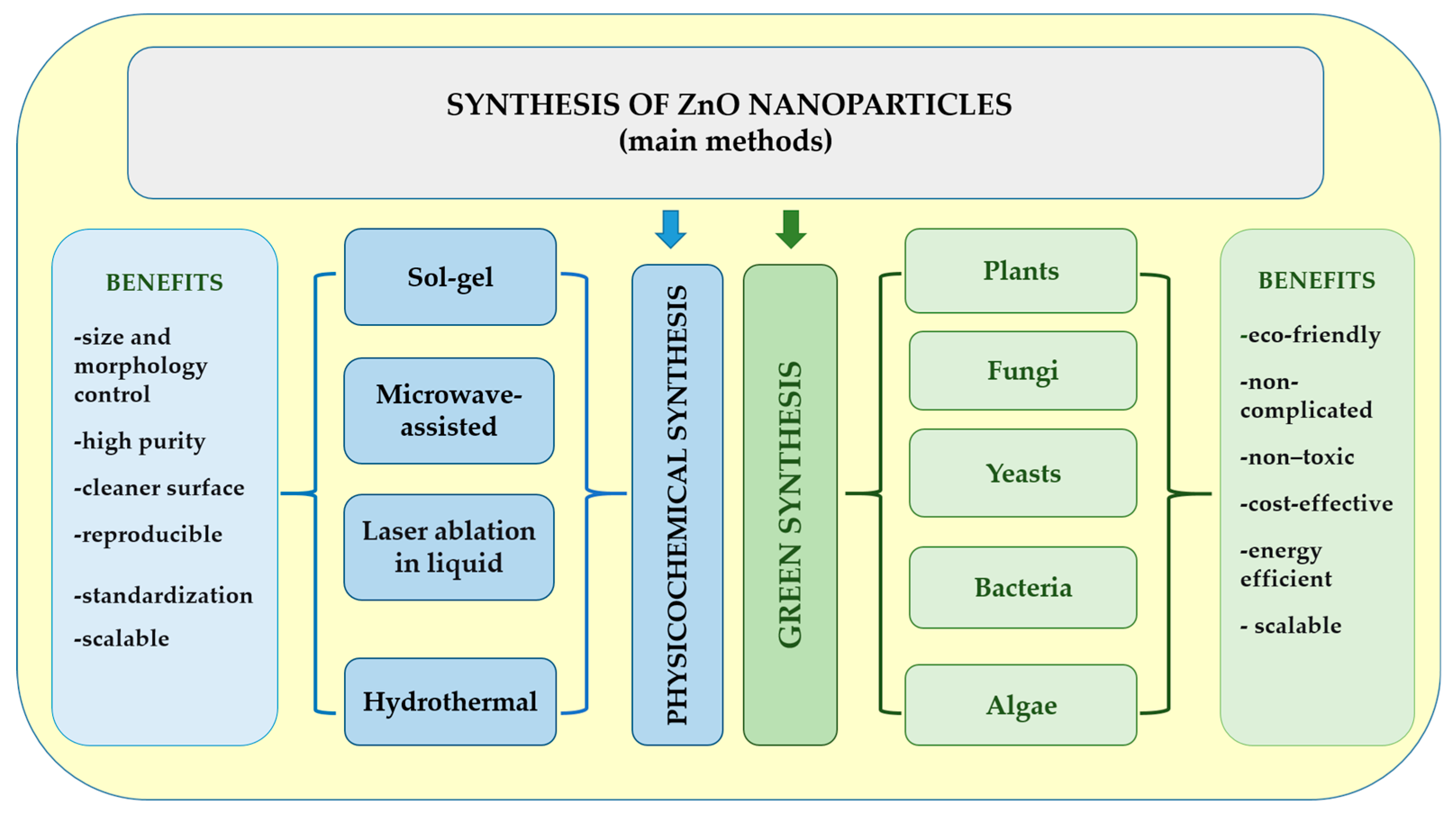
Figure 1. Main methods for synthesizing ZnO-NPs.
Sci 08 00057 g001
Figure 2. Application of ZnO-enzyme hybrids across different contexts.
Sci 08 00057 g002
Figure 3. ZnO-NPs toxicity, pathways, and regulation considerations.
Sci 08 00057 g003
Table 2. Summary of key findings from the review.
TopicKey Findings
ZnO-NPs
Green synthesis advantages
Plant-mediated and microbial synthesis routes reduce toxicity, avoid hazardous reagents, and produce ZnO-NPs with diverse morphologies and improved biocompatibility.
Microbial synthesis opportunities and challengesMicrobial systems can produce ZnO with good antimicrobial activity, but variability in biological extracts and purification challenges limit scalability.
Advantages of enzyme immobilization on ZnO3ZnO nanostructures enhance enzyme stability, reusability, and catalytic performance due to high surface area and tunable surface chemistry.
Importance of ZnO-NPs in the food industryZnO-NPs provide antimicrobial activity, UV-blocking, chemical stability, and biocompatibility, making them suitable for packaging, biosensing, and processing aids.
ZnO–enzyme hybrids in biosensing and biocatalysisZnO-enzyme systems enable sensitive glucose detection; lipases, amylases, and oxidases immobilized on ZnO support food-relevant reactions such as hydrolysis and esterification.
Safety and migration concernsZnO dissolution and Zn2+ migration in acidic or fatty food simulants, enzyme leaching, and lack of standardized toxicology assessments remain major barriers.
Gaps in the scientific literatureFew studies combine green synthesis, robust immobilization, and validation in real food matrices; standardization is urgently needed.
Table 3. Overview of nanotechnology research priorities highlighting short-, medium-, and long-term objectives.
Time FrameResearch PriorityReferences
Short-Term
(1–3 years)
Standardization of biogenic
ZnO-NP synthesis
Comprehensive characterization
and reporting standards
Optimization of enzyme immobilization strategies
[3,5,7,20,23,25,70]
Medium-Term
(3–7 years)
Integration of green synthesis with immobilization workflow
Migration, dissolution, and toxicity assessment
Engineering application-specific hybrid architectures
[9,10,11,12,13,14,20,25,62,70]
Long-Term
(7+ years)
Development of regulatory frameworks for biogenic nanomaterials
Industrial-scale production and life-cycle assessment
Smart multifunctional food systems and packaging
[25,62,70,124,125]
Disclaimer/Publisher’s Note: The statements, opinions and data contained in all publications are solely those of the individual author(s) and contributor(s) and not of MDPI and/or the editor(s). MDPI and/or the editor(s) disclaim responsibility for any injury to people or property resulting from any ideas, methods, instructions or products referred to in the content.