Article

Techno-Economic Assessment and FP2O Technical–Economic Resilience Study of Peruvian Starch-Based Magnetized Hydrogels at Large Scale


by
Anibal Alviz-Meza
1,2,*,
María Verónica Carranza-Oropeza
1,3 and
Ángel Darío González-Delgado
2,*
1
Centro de Investigaciones Tecnológicas, Biomédicas y Medioambientales (CITBM), Laboratorio de Síntesis y Caracterización de Materiales (SyCAM), Lima 15081, Peru
2
Nanomaterials and Computer-Aided Process Engineering Research Group (NIPAC), Chemical Engineering Department, Universidad de Cartagena, Cartagena 130014, Bolívar, Colombia
3
Chemical and Chemical Engineering Faculty, Universidad Nacional Mayor de San Marcos, Lima 15081, Peru
*
Authors to whom correspondence should be addressed.
Sci 2025, 7(4), 181; https://doi.org/10.3390/sci7040181
Submission received: 13 October 2025 / Revised: 27 November 2025 / Accepted: 3 December 2025 / Published: 5 December 2025
(This article belongs to the Section Computer Sciences, Mathematics and AI)

Abstract

We conducted a techno-economic feasibility study and assessed the FP2O resilience of an industrial plant producing magnetized hydrogels from Peruvian Amarilla Reyna potato starch. The process includes alkaline pretreatment, grafting with acrylic acid, crosslinking with N, N′-methylenebisacrylamide, and in situ magnetization via Fe3O4 coprecipitation. A total of 12 techno-economic and three financial indicators were analyzed. At the base scale, the total capital investment was 49.78 MMUSD, with raw materials accounting for 92.4% of costs. The economic analysis indicates a payback period of 2.13 years, an IRR of 34.52%, and an NPV of 25.38 MMUSD. The break-even point is at 4760.84 USD/t, with 32.15% capacity utilization, demonstrating operational flexibility to handle demand variations or planned shutdowns. Compared to published techno-economic assessments of lignin- and chitosan-based hydrogels, which involve total capital investments of 236–1248 MMUSD and payback periods in the 6–30-year range, this scheme requires less capital investment and a payback period three to ten times shorter, underscoring its economic competitiveness on an industrial scale.

1. Introduction

Starch-based hydrogels have been increasingly developed in recent years because they are renewable, biocompatible, and have diverse cross-linking properties. Hydrogels are three-dimensional water-insoluble polymeric networks that absorb lots of water and have had wide applications in biomedicine, agriculture, and environmental industries [1]. As one of the most promising and abundant biopolymers for hydrogel fabrication, starch is characterized by its biodegradability, ease of mass production, and tunable physicochemical properties [2]. For example, potato starch has been demonstrated to be a good candidate for the fabrication of hydrogels with excellent water retention ability by means of several processes, such as hydrostatic pressure-assisted and conventional chemical synthesis [3,4]. Furthermore, the introduction of magnetic nanoparticles permits the controlled separation and release of hydrogels [5]. In this work, we go beyond materials development and explicitly address the large-scale techno-economic evaluation of these magnetized hydrogels through a detailed resilience analysis.
Hydrogels can absorb and hold a large amount of water due to the presence of hydrophilic functional groups in their composition. Starch, a natural polysaccharide that contains amylose and amylopectin, is also commonly used because of its biocompatible, flexible network structure and cost-effectiveness [6]. The characteristics of starch gels are strongly affected by their source, granule size, and amylose/amylopectin ratio, as well as processing conditions [7]. In this context, potato starches from Peruvian native varieties have been found to have a medium to high level of amylose, mainly in the form of B-type crystallinity structure and typical granule shape [8]. These properties contribute special gelatinization, rheological, and mechanical characteristics to the starch-based hydrogels, making them attractive as an alternative material for advanced hydrogel systems [9]. Hydrogels based on starch are obtained from a variety of sources, such as cereals, tubers, and non-conventional plants, using methods such as high-pressure processing, gamma radiation, and chemical cross-linking [4,6,10]. In this regard, free radical grafting and oxidation from chemical approaches offer alternatives to modify the swelling capacity, mechanical properties, and functional behavior of hydrogels [11,12,13]. In addition, magnetic hydrogels are usually achieved by doping Fe3O4 nanoparticles in the hydrogel’s matrix. Techniques such as ultrasonic-assisted coprecipitation and green approaches are some of the methods used for obtaining the desired magnetic response [14]. These magnetized hydrogels are magnetoelastic and can help sense, actuate, and drug release [15].
Although significant research on starch-based hydrogels has been conducted, the application of native Peruvian potato starch as a substrate has not been reported, particularly for the production of magnetized hydrogels. This is even more relevant when considering the above-mentioned physical and chemical characteristics of Peruvian potato starches [8,16]. Furthermore, from a process engineering point of view, available research only covers techno-economic assessments for hydrogels from biomasses such as lignin, chitosan, or pilot-scale superabsorbents [17,18]. To date, no techno-economic assessment has been reported for industrial magnetized hydrogels derived from Peruvian Amarilla Reyna potato starch. The lack of this assessment limits the transition from laboratory-scale to local industrial operations, in which costs such as native starch extraction and Fe3O4 synthesis are essential for competitiveness and sustainability.
On the other hand, recent market reports indicate sustained growth in the global hydrogels sector during the period 2024–2029 [19]. Given this context, the increasing demand for hydrogels in the coming years might underscore the need to invest in this sector. Accordingly, this study conducted a techno-economic evaluation and resilience analysis utilizing the FP2O (Feedstock-Product-Process-Operating) methodology [20,21,22]. This method allows for diagnosing the process by assessing both technical indicators like processing capacity and economic metrics such as annual profits and operational expenses. FP2O analysis offers a comprehensive view from technical and financial perspectives, helping pinpoint areas where improvements are needed.
This study conducts a comprehensive technical and economic assessment of Peru’s Amarilla Reyna starch-based potato, focusing on large-scale magnetized hydrogel production. It employs 12 technical and economic indicators, along with 3 financial metrics, to assess commercial feasibility and identify potential cost-saving opportunities. The approach examines how changes in raw material costs, market prices, processing capacity, and operational expenses impact the process’s technical and economic stability. This localized evaluation provides regional insights and contributes valuable data to the global hydrogel research, with possible relevance to markets with similar conditions. Our objective is to address two scientific and engineering gaps: exploring magnetized materials linked to an Andean varietal identity and assessing scalable, cost-effective industrial applications. This research sets the stage for future sustainability evaluations and promotes the development of local biopolymer value chains.

2. Materials and Methods

2.1. Process Description

The process outlined below is based on the work of Chen et al. [23] regarding the hydrogel synthesis and proposed chemical structure from native Peruvian potato starch (Amarilla Reyna), taking into account the annual production capacity of this Peruvian potato, its peel weight percentage, starch concentration, and data obtained from lab scale related to the hydrogel magnetization. All reagents, except for native potato starch, were purchased from Sigma-Aldrich (St. Louis, MO, USA) and used as received without further purification.
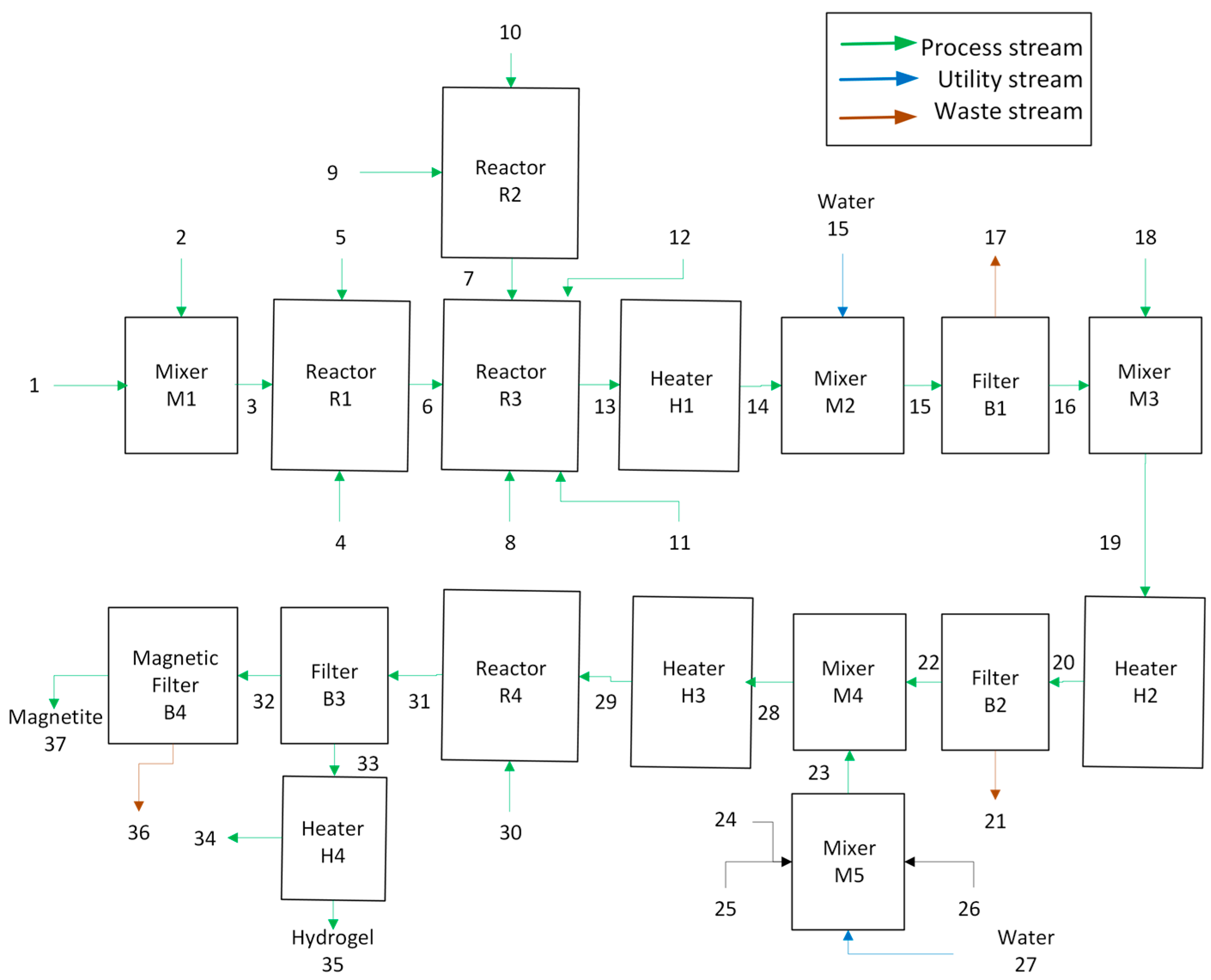
Starch pretreatment involves the reaction of hydroxide ions (OH) with starch. This interaction ionizes the hydroxyl groups, adding negative charges to the starch molecules. The process destroys the semi-crystalline structure of the starch, thereby revealing its hydroxyl groups. In the lab, the standard procedure includes 5 g of starch, 1 g of NaOH, and 50 mL of water at 25 °C and 1 atm for 20 min. On a large scale, this pretreatment was simulated in Aspen Plus V12.0 by mixing starch and water in the proportions mentioned above with NaOH at 25 °C and 1 atm in Mixer 1, as shown in the process diagram in Figure 1.
Grafting Polyacrylic Acid (PAA) onto starch involves using Acrylic Acid (AA) as the graft monomer and Ammonium Persulfate (APS) as the initiator for graft copolymerization. The reaction primarily occurs at the hydroxyl groups on the C6 carbon of starch. This process required adding 5 mL of AA and 6 mL of APS solution (10 g/L) at lab scale in water saturated with N2. The reaction was conducted at 65 °C for 40 min. This was modeled using a Ryield performance reactor R1, applying the stoichiometry proposed by Chen et al. [23], where the mass percentage of acrylic acid in the hydrogel is reported as 0.6244, based on the grafting efficiency. A gas flow rate of 0.1 vvm (volume of gas per volume of liquid per minute) was used for the nitrogen atmosphere to maintain an inert environment.
For the crosslinking step (R3), N, N’-Methylene-Bisacrylamide (MBA) was used as the crosslinking agent to form a three-dimensional network structure in the hydrogel. In the lab scale, 5 mL MBA solution (10 g/L) and 5 mL AA (34% NaOH neutralized) were charged into the reaction solution. After neutralizing the AA obtained in R2, MBA is added to R3 at 65 °C for 40 min under a nitrogen atmosphere. The reaction yield was modeled accordingly. The reaction mixture then flows to heat exchanger H1, where it is heated to 70 °C and maintained at that temperature for 60 min.
In mixer M2, distilled water is added to eliminate any unreacted AA and other impurities, and the resulting mixture is then directed to Filter B1. This filter removes 90% of the water. Following, ethanol is added to the hydrogel in mixer M3. The drying process was simulated using two pieces of equipment: heater H2, which operates at 50 °C, and the filter B2. The dried non-magnetized hydrogel is collected at the outlet of B2. The amount of hydrogel obtained after drying in the lab was 1.7–2.7 times the amount of potato starch fed into the process. Before the magnetization process, the hydrogel’s size was reduced to ensure all particles had a uniform diameter of 2–3 mm (considered for the economic analysis), which benefits the potential diffusion processes of the magnetic nanoparticles.
Subsequently, in Mixer M4, the dried hydrogel is combined with FeCl3·6H2O and FeSO4·7H2O (reactants in a mass ratio of 2:1 FeCl3·6H2O to FeSO4·7H2O) within nitrogen-saturated water (Mixer M5) to facilitate the in situ coprecipitation of magnetite. The magnetite was incorporated into the hydrogel at a 4:1 precursor-to-hydrogel ratio, endowing the hydrogel with magnetic properties. This process occurs in reactor R4 at 80 °C and 1 atm, with a N2 flow rate of 0.1—gas volume to liquid volume ratio—and a residence time of 30 min, during which the hydrogel is mixed with the magnetite precursors. Subsequently, a 25% NH3 solution is introduced into Mixer 4 in accordance with the established laboratory protocol, and the coprecipitation process continues for an additional 30 min. This reaction is delineated in Equation (1). Finally, the magnetized hydrogels and the supernatant magnetite with impurities are separated by filter B3. At this stage, the supernatant magnetite is separated from the stream by magnetic means in the B4 unit, while the wet magnetized hydrogel is recovered after drying in Heater 4. The resulting magnetized hydrogel comprises approximately 5 wt% Fe3O4, aligning with the ranges reported in comparable studies [24].
F e S O 4 + 2 F e C l 3 + 8 N H 3 + 4 H 2 O F e 3 O 4 + 6 N H 4 C l + ( N H 4 ) 2 S O 4

2.2. Process Simulation and Modeling Assumptions

For process simulation in Aspen Plus V12.0, the ELECNRTL (Electrolyte NRTL). Alternative non-electrolyte models (classical NRTL, UNIQUAC, or an ideal solution assumption) were not considered, because the process streams are strongly electrolytic and involve NaOH, partially neutralized AA, APS, FeCl3/FeSO4 salts, and NH3, for which ionic dissociation and acid–base equilibrium are essential. Non-electrolytic models treat these salts and acids/bases as neutral pseudo-components. Furthermore, ELECNRTL has been successfully applied to describe hydrogel systems in aqueous NaCl solutions and mixed-solvent electrolyte systems containing Na+, K+, and halides [25,26]. FeSO4·7H2O was defined as an electrolyte component using the Electrolyte Wizard. These apparent species were expanded into their corresponding true ionic species (Na+, OH, H+/H3O+, NH4+, Fe2+, Fe3+, Cl, SO42−) and associated ion pairs based on the ELECNRTL databank. Water autoprotolysis and the acid–base equilibria of acrylic acid and ammonia, as well as neutralization reactions with NaOH and NH3, are treated as homogeneous solution equilibria and are solved implicitly by the ELECNRTL framework in every unit operation, ensuring overall electroneutrality and consistent speciation. Aspen’s electrolyte algorithm entirely handles dissociation sets, speciation, and equilibrium reactions, while an explicit stoichiometric constraint controls the formation of solid Fe3O4.
We used the MIXCINC flow class to handle both conventional and unconventional components—starch, starch-PAA, and hydrogel. These three last compounds required ultimate analysis data, including percentages of C, H, O, N, and ash on a dry basis, as well as proximate analysis data, including moisture and volatile matter. Pretreatment, grafting, and crosslinking were modeled using RYIELD reactors that convert starch into an unconventional pseudocomponent, STARCH_PAA, with an acrylic acid mass fraction of 0.6244 in the hydrogel described by Chen et al. [23]. Partial neutralization of the acrylic acid with NaOH (34% conversion) before crosslinking was carried out in a stoichiometric reactor (RSTOIC). Magnetization was achieved using a RYELD reactor that converts FeCl3·6H2O, FeSO4·7H2O, and NH3 into Fe3O4 and ammonium salts, following the overall coprecipitation stoichiometry, thus limiting the final magnetized hydrogel to 5 wt% Fe3O4. Washing, filtration, ethanol purification, and drying were described not in terms of intrinsic kinetics but in terms of separation efficiencies within unit-operation blocks. The primary washing and filtration stage was represented by a SEP (separator) block, followed by a filter that removed 90% of the aqueous phase, retaining all hydrogel solids. Subsequent ethanol washing and oven drying were implemented using a combination of SEP and heater blocks, aiming to achieve a residual moisture content of approximately 10 wt% in the unmagnetized hydrogel. In the magnetization section, a RYIELD reactor produces a mixture of magnetized hydrogel and Fe3O4-rich solids. A filtration stage and a magnetic separator are then modeled as solid-solid separations that retain the hydrogel matrix and remove excess magnetite and byproducts. At the same time, the final dryer (HEATER) reduces the moisture content to 10 wt%. These stage efficiencies were selected so that the simulated process reproduces both the experimental dry hydrogel-to-starch mass ratio (1.7–2.7 kg/kg) and the final Fe3O4 loading within the observed range.
Among the limitations of this simulation, it should be mentioned that the yields of the pretreatment, grafting, washing, drying, and magnetization processes were not quantified on a laboratory scale and are therefore defined as modeling assumptions.

2.3. Technical–Economic Evaluation

We performed a technical and economic analysis to determine the main factors affecting large-scale magnetized hydrogel production. This included setting operating parameters such as pressure, temperature, and the composition of process streams. We identified necessary equipment and simulated the process with Aspen Plus V12.0. Data on equipment costs, process profits, labor, taxes, and land expenses were collected to aid in designing a magnetized hydrogel plant. The economic performance was evaluated using Equations (2)–(25). The Total Capital Investment (TCI) was calculated from Equation (2), where the Fixed Capital Investment (FCI) covers equipment, civil structures, land preparation, control systems, and facilities. WCI indicates working capital, while SUC refers to start-up costs like legal fees, advertising, and employee training, which are estimated at 10% of FCI [27].
Costs directly associated with processing capacity—such as buildings, piping, and purchased equipment (FOB—Free on Board)—were determined using Equation (3). Sometimes, equipment costs were derived from prior studies. In such instances, these costs were adjusted for inflation and economic changes over time using cost indexes that track trends in equipment costs. The Marshall and Swift (M&S) Equipment Cost Index (ECI) is frequently employed for these adjustments, as shown in Equation (4). Additionally, the plant’s fixed annual operating costs (FAOC) are divided into direct production costs (DPC), fixed charges (FCH), plant overhead (POH), and general expenses (GE), as outlined in Equation (5). The FAOC is calculated per unit of product. To facilitate comparison across different scenarios and account for depreciation, fixed costs can be annualized by valuing the Depreciable Fixed Capital Investment (DFCI) annually using Equation (6). This results in the annualized fixed costs (AFC). After calculating the FAOC and AFC, the total fixed costs (TFC) are obtained by summing these two values, as indicated in Equation (7). Variable operating costs (VAOC), which depend on fluctuations in raw materials (RM) and utilities (U), are computed using Equation (8). The Annualized Operating Costs (AOC) are then determined by adding VAOC and FAOC, as shown in Equation (9). Total annual costs (TAC)—covering one year of operation—are calculated by summing AFC and AOC, as described in Equation (10). Suppose the variable component of operating costs is expressed per unit of raw materials. In that case, it is termed normalized variable operating costs (NVAOC), calculated by dividing VAOC by the total annual raw material flow in tons, as per Equation (11) ( m R M ) [28,29].
T C I = F C I + W C I + S U C
F O B B = F O B A C a p a c i t y B C a p a c i t y A 0.6
F O B t 2 = F O B t 1 E C I t 2 E C I t 1
F A O C = D P C + F C H + P O H + G E
A F C = D F C I 0 D F C I s N
T F C = F A O C + A F C
V A O C = R M + U
A O C = F A O C + V A O C
T A C = A F C + A O C
N V A O C = V A O C m R M
where F O B B and F O B A are FOB price for B and A capacities, respectively. While F O B t 2 and F O B t 1 are FOB prices at times 1 and 2, respectively.   E C I t 2 and E C I t 1 are Equipment Cost Index at time 2 and Equipment Cost Index at time 1, respectively. D F C I 0 represents the initial direct fixed capital investment. D F C I s is the residual value of this investment at the end of the recovery period—salvage value—and N is the recovery period (y).

2.4. Technical–Economic Resilience via FP2O Methodology

A technical–economic resilience framework was developed and applied using the FP2O methodology to evaluate how particular factors impact the industrial production of magnetized hydrogels. 14 graphs were generated to assess the resilience and sensitivity of a magnetized hydrogel plant, designed for a 15-year lifecycle, to variations in sales prices of its five core products, raw material expenses, processing capacity, and NVAOC. These visuals also indicate the locations of the Break-Even Point (BEP) and Net Present Value (NPV). Additionally, 4 graphs analyze the plant’s resilience to sales price fluctuations in relation to on-stream efficiency at the BEP, alongside key technical and economic metrics such as PAT (Profitability After Taxes), GP (Gross Profit), and DGP (Gross Depreciable Profit), as well as financial indicators like EBITDA (Earnings Before Interest, Taxes, Depreciation, and Amortisation). Similarly, 4 graphs examine resilience to raw material cost changes, comparing these fluctuations with on-stream efficiency at the BEP and various indicators including Profit Before Tax (PAT), Debt Gearing Ratio (DGR), Internal Rate of Return (IRR), and EBITDA. 2 graphs analyze resilience regarding processing capacity by comparing it with annual sales, AOC, and Normalized FCI (NFCI)—FCI per unit of yearly production capacity. Furthermore, 2 graphs explore the relationships between NVAOC, ROI (Return on Investment), and PBP (Payback Period). Finally, 2 graphs illustrate the positions of the BEP and NPV, completing the comprehensive analysis.
The BEP was calculated using Equation (12), accounting for hydrogel processing capacity, prices, and raw material costs during sub-maximal production. These parameters were obtained from Equations (13)–(16). The equilibrium operating time is based on the on-stream efficiency at equilibrium, which identifies the minimum duration required for the plant to avoid losses, as shown in Equation (16). Key financial metrics, such as GP and DGP, were calculated using Equations (17) and (18), respectively. The plant’s PAT, along with interest and loans, was determined through Equation (19). Finally, Equation (20) was employed to examine the relationship between process benefits and capital investment—Cumulative Cash Flow, CC—, considering the process attractive if this ratio is below 1 [30].
B E P = m p C p v T A C = 0
m R M B E P = A F C + F A O C C p v θ N V A O C ; θ = m R M m p
C p v = A F C + F A O C   m m a x + N V A O C θ
η O n s t r e a m B E P = m R M B E P m m a x
t i m e B E P = η O n s t r e a m B E P t i m e m a x
G P = m p C p v A O C
D G P = m p C p v T A C
P A T = D G P 1 i t r
C C F = m p C p v A O C T C I
where, C p v is the selling price of the product (USD/t) and m p the mass flow of the product (t/y). η O n s t r e a m B E P is the on-stream efficiency at BEP. m R M B E P is the mass flow of the raw material at BEP and m m a x the maximum mass flow of the raw material. i t r is the tax rate.
This analysis also examines other crucial economic indicators. The PBP, which accounts for the time value of money, is determined using Equation (21). If adjustments are needed for the changing value of money over time, the Depreciable Payback Period (DPBP) is calculated through a cumulative function spanning two periods, as shown in Equations (22) and (23). The project’s profitability, indicated by ROI, is assessed with Equation (24). Moreover, cumulative profits during the plant’s operational phase are computed via the NPV method outlined in Equation (25). The IRR is found using Equation (26), representing the interest rate that zeroes out the NPV. Economic potentials are derived from Equations (27)–(29): the first potential equals profit after subtracting raw material costs from sales revenue; the second potential subtracts utility costs from the first; the third potential is obtained by deducting annualized operating costs from sales revenue. Financial performance is evaluated through key indicators, including EBIT, EBT, and EBITDA. EBIT, representing operating profit, is calculated via Equation (30). EBT, indicating profit before taxes, is determined using Equation (31). EBITDA, reflecting operating cash flow, is computed with Equation (32) [31].
P B P = F C I P A T
D P B P = y e a r   b e f o r e   d i s c o u n t e d   n o n   F C I   e x p e n s e s   + d i s c o u n t e d   n o n   F C I   e x p e n s e s     C u m m u l a t i v e   N P V   b e f o r e   d i s c o u n t e d   n o n   F C I   e x p e n s e s C u m m u l a t i v e   N P V   a f t e r   d i s c o u n t e d   n o n   F C I   e x p e n s e s     C u m m u l a t i v e   N P V   b e f o r e   d i s c o u n t e d   n o n   F C I   e x p e n s e s
D i s c o u n t e d   n o n   F C I   e x p e n s e s = L a n d   c o s t W C I ( 1 + i ) n   f o r   W C I
%   R O I = P A T T C I × 100 %
N P V = n A C F n 1 + i n
I R R = T = 0 n A C F n 1 + i n = 0
E P 1 = m p C p v j m j C j R M
E P 2 = m p C p v j m j C j R M U
E P 3 = m p C p v A O C
E B I T = m p C p v A O C
E B T = E B I T i n t e r e s t / r e n t
E B I T D A = E B I T + d e p r e c i a t i o n
where y is years. A C F n , i and n are the net profit for year n, the inflation rate, and time in years, respectively. C j R M and m j are the cost of the raw material (USD/y) and the mass flow of the raw material (t/y), respectively.
From this set of equations, it follows that EBITDA = Sales − AOC = EP3 + AFC and, therefore, EBIT = EBITDA − AFC = EP3. Consequently, EP3 and EBIT coincide in our results. However, we retain EP3 because it belongs to the FP2O framework and serves as the operational metric in the technical–economic resilience analysis. At the same time, EBIT is the standard accounting term that facilitates comparison with conventional financial indicators. To avoid redundancy, we will indicate in the summary tables that EP3 ≡ EBIT.

2.5. Considerations for Technical–Economic Resilience Analysis

In 2020, Peru produced 5,458,076 tons of potatoes of all varieties [32]. Of these, 15% were Amarilla Reyna (AR) potatoes. For this analysis, 30% of the total AR potatoes were used. The percentage of potato peel waste chosen was 20%, which falls within the range of 15% to 40%, depending on the peeling method used [33]. The maximum starch content in potato peels is 16.83% by weight [34]. Considering these factors, there is an availability of 8267.35 t/y, or 972 kg/h (assuming a plant operational period of 8500 h/y). For this study, we used the market price of magnetized hydrogel reported by Wu et al. (6500 USD/t) as a reference [35], but we chose a more conservative estimate of 5500 USD/t.
Table 1 outlines the technical and economic factors included in the analysis. The TCI encompasses costs like equipment and installation, land acquisition and improvements, electrical systems, instrumentation, buildings, service facilities, engineering and supervision, construction, legal fees, contractor charges, contingencies, working capital, and start-up expenses. These estimates follow the methods specified by El-Halwagi [31] and Peter-Timmerhaus [27].
For reference, regarding the annual flow of magnetized hydrogel at 23,488 t/y, in addition to the 8267 t/y of starch entering the process, NaOH, AA, MBA, APS, ethanol, ammonia, and nitrogen are added with flows of 4797 t/y, 16,524 t/y, 83 t/y, 99 t/y, 26.39 t/y, 28,621 t/y, and 3923 t/y, respectively. Furthermore, for the incorporation of 5 wt.% magnetite into the resulting hydrogel, 57,968 t/y of iron(III) chloride and 28,984 t/y of iron(II) sulfate enter the process. All these compounds are considered the raw materials of the process. Finally, it should be noted that the recovered supernatant magnetite is generated as a significant byproduct with a flow of 229,528 t/year.

3. Results and Discussion

The technical–economic assessment indicators—such as land costs, yard improvements, pipelines, electrical expenses, contractor fees, construction costs, legal expenses, the sale price of a magnetized hydrogel unit, and plant assembly—facilitated the development of resilience results.

3.1. Technical–Economic Evaluation Analysis

To estimate the cost of a magnetized hydrogel plant and determine its technical, economic, and financial parameters, we reviewed a few published studies with similar analyses. Special emphasis was placed on the hydrogel synthesis processes proposed by Chen et al. [23] and replicated by us at a lab scale for the AR Peruvian potato. The work of Martínez Ruano et al. [17] and Srinivas-Gujjala [18] provides a comparison of financial indicators for industrial-scale hydrogel production, although these studies primarily focus on non-magnetized hydrogels. The sixteenth rule was applied in the respective cases using Equation (3) to estimate equipment costs based on production capacity [31]. Additionally, the Marshall and Swift indices from 2006 and 2022 were used to update the economic data to current values [36]. Calculations are based on Equation (4). Table 2 presents the contribution of each parameter to the total annual operating cost of the magnetized hydrogel process.
Table 3 shows the results of the technical–economic evaluation, covering the initial DFCI for equipment, instrumentation, pipelines, electrical systems, and services. It also details the indirect fixed capital investment, which encompasses land development, civil engineering works, supervision, design, research and development, and construction costs such as temporary operations, machinery rental or purchase, on-site office staff, payroll, and other related expenses costs. Additionally, the table takes into account legal costs, contractor fees, and contingencies. Moreover, Table 3 presents the following metrics: DFCI, Indirect Fixed Capital Investment (IFCI), FCI, WCI, SUC, TCI, Salvage value FCI, AFC, TAC, and TFC.
The data in Table 3 clearly demonstrate that the hydrogel magnetization process highlights the plant’s competitive edge compared to industry standards, utilizing waste materials with a Total Investment Cost (TIC) of 49.78 million dollars (MMUSD). For instance, producing lactic acid from lignocellulosic biomass with an annual capacity of 100,000 tons entails investments between 236 MMUSD and 268 MMUSD [37]. Biodiesel plants have investment costs that vary depending on the raw material, ranging from 6 MMUSD to 40 MMUSD, largely due to the complexity of the separation and purification processes [38]. Similarly, a reference design for a large-scale biorefinery utilizing agricultural waste for second-generation ethanol indicates a total investment of around 422.5 MMUSD, highlighting the significant capital required for thermal conversion and wastewater treatment sections [39]. Another example is the creation of biodegradable calcium alginate composite bioplastic, which was assessed for its economic viability and environmental impact in the Caribbean. It was compared with bio-based polylactic acid and synthetic plastics. The techno-economic analysis shows that an annualized cost of 4560 USD per ton for alginate bioplastic is feasible, primarily due to raw material costs used in production.
The manufacturing cost for the magnetized hydrogel is 4690 USD/t, while the selling price is 5500 USD/t, resulting in a price–cost margin of 810 USD/t. Besides, raw materials account for 92.4% of total production costs. The Payback Period (PBP) in this analysis is 2.13 years, which is under three years, indicating a potential increase in the NVAOC. Additionally, the DPBP is 5.80 years. Table 4 and Table 5 present an overview of the technical, economic, and financial metrics. To put this data in context within the hydrogel industry, the TCI for producing hydrogels from lignin was 1248 MMUSD (approximately 25 times higher than ours), with 51% of this amount attributed to installed equipment costs [18]. This case is unique because the solvent recovery and vacuum evaporation sections significantly increased the TCI. In this study, the cost of acrylic monomers accounts for 89% of production costs, resulting in a minimum selling price of 2141 USD/t for the hydrogel, obtained through a discounted cash-flow analysis in which the net present value was zero at an IRR of 10% over a 30-year projected life. Conversely, regarding hydrogel production from chitosan, over 10 years, although no TCI was reported, a production cost of 3024 USD/t was reported, with raw materials contributing 92% of the total cost [17]. However, the price–cost margin is only 276 USD/t, as the authors assumed a selling price of 3300 USD/t for their hydrogel, making it less attractive than our magnetized hydrogel. However, the investment becomes profitable in year 6, one year earlier than in our proposal (counting from the start of operations). These studies suggest that part of the appeal of this industrial-scale magnetized hydrogel project lies in the absence of additional reagent treatment and recovery steps, as well as a higher expected market value compared to conventional hydrogels [35]. Although not quantified in this study, the greater ease of recovery of magnetized hydrogels compared to non-magnetized ones could, in principle, generate additional economic benefits through reuse and less frequent replacement. Furthermore, the refining and sale of the magnetite generated as a byproduct were not included in this cash flow analysis; if implemented, this valorization could further improve the economic performance and resilience of the process and should be addressed in future studies.
Regarding the technical–economic indicators, a GP and a DGP above 17.3 MMUSD were achieved, indicating favorable high values. Additionally, the economic potentials EP1, EP2, and EP3 are notably high, exceeding 27.3 MMUSD, 25.6 MMUSD, and 18.9 MMUSD, respectively. Besides, since the IRR, ROI, and ACF were found to be 34.52%, 24.41%, and 3.73, respectively, the hydrogel magnetization process can be deemed economically viable. Moreover, the magnetized hydrogel plant generates an NPV of 25.38 MMUSD and shows substantial annual benefits, suggesting potential for economic enhancement. Finally, the financial indicators include an EBITDA exceeding 20.5 MMUSD, which is a positive sign due to its relatively high value.

3.2. Break-Even Point Analysis

The results from the BEP analysis confirm that the proposed magnetized hydrogel plant is economically viable. It has a BEP of 4760.84 USD/t and operates at just 32.15% capacity (2732.97 h/y), allowing it to cover costs even when running below one-third of its full capacity. This provides flexibility for shutdowns or sudden changes in demand. The unit cost is mainly driven by raw materials, approximately 4690 USD/t, with a target selling price of 5500 USD/t. Moreover, the break-even raw material capacity of 2658.16 t-RM/y indicates that the plant reaches feasibility at a relatively low production volume compared to its design capacity. Compared to published research on hydrogel production, the primary reason to explain our economic indicators is the absence of a complex solvent recovery and vacuum drying system, which, for lignin-based hydrogels, necessitates the most significant investment and erodes profit margins, as well as a cost structure where raw materials account for the majority of annual expenses [18]. Although a similar pattern was seen with chitosan hydrogels, their financial outlook was less favorable [17]. Our process features a lower break-even point and relies less on profits from separation and recycling, all while maintaining the ability to adapt to demand or price changes.

3.3. FP2O Technical–Economic Resilience Analysis

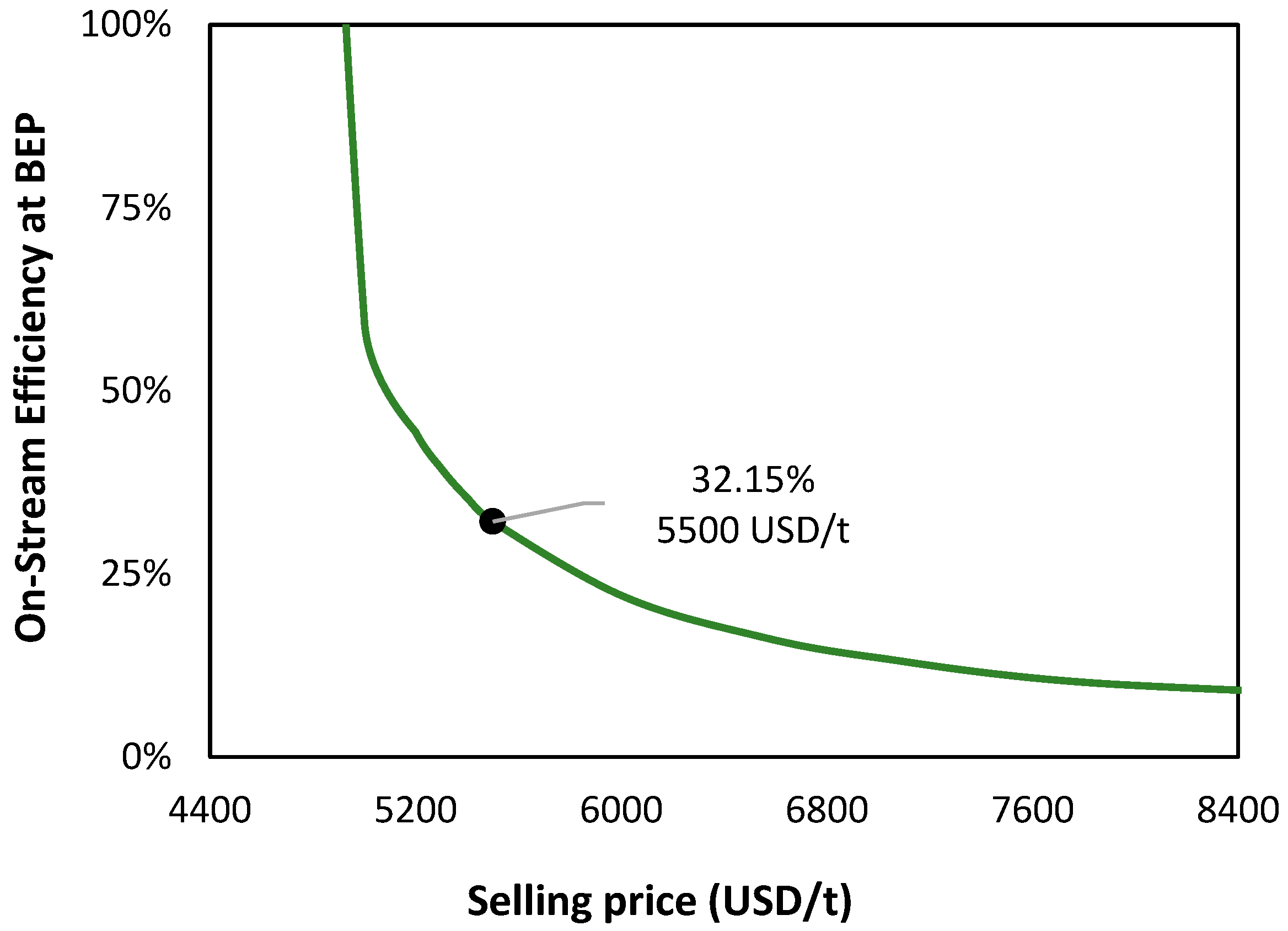
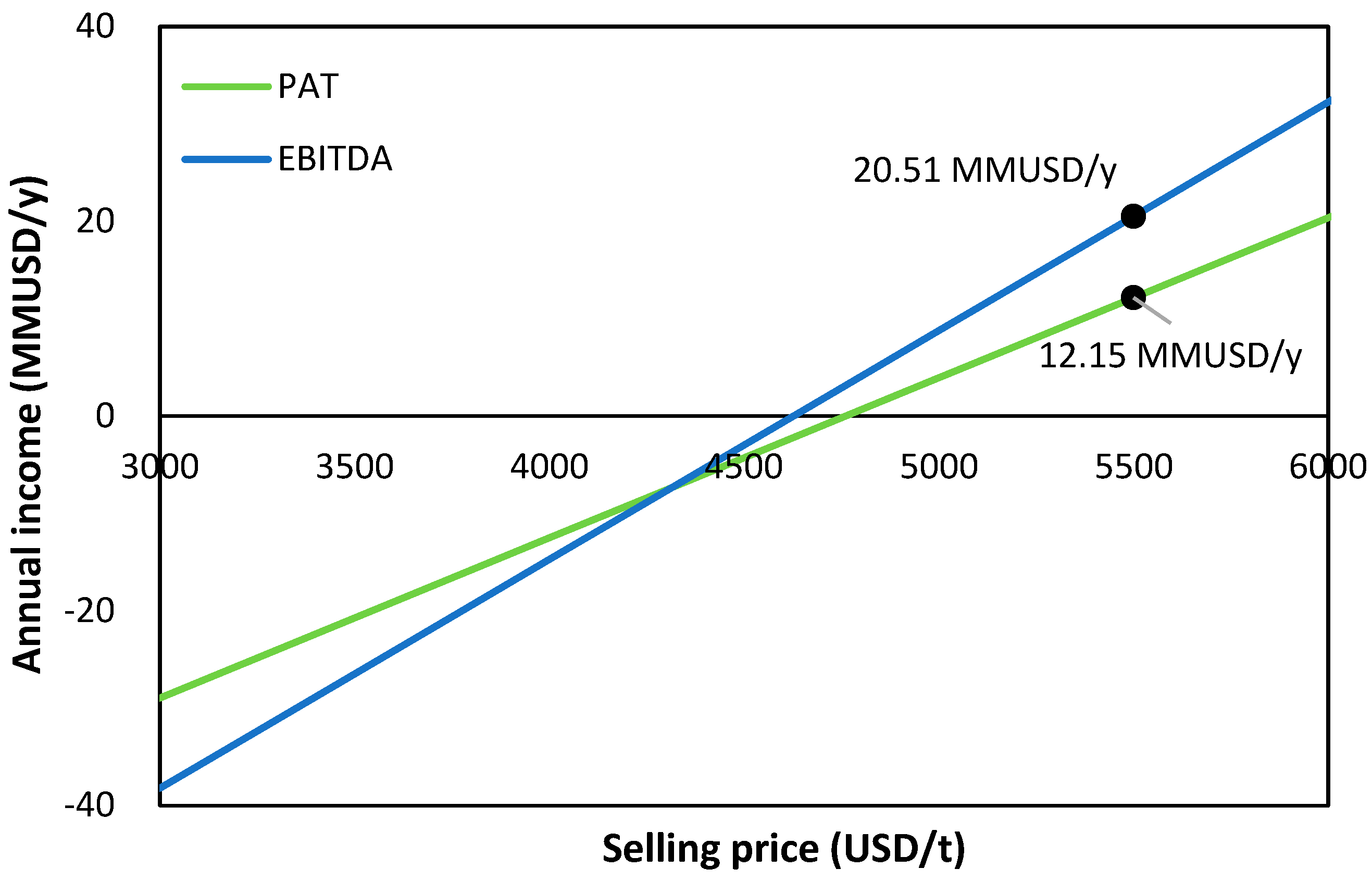
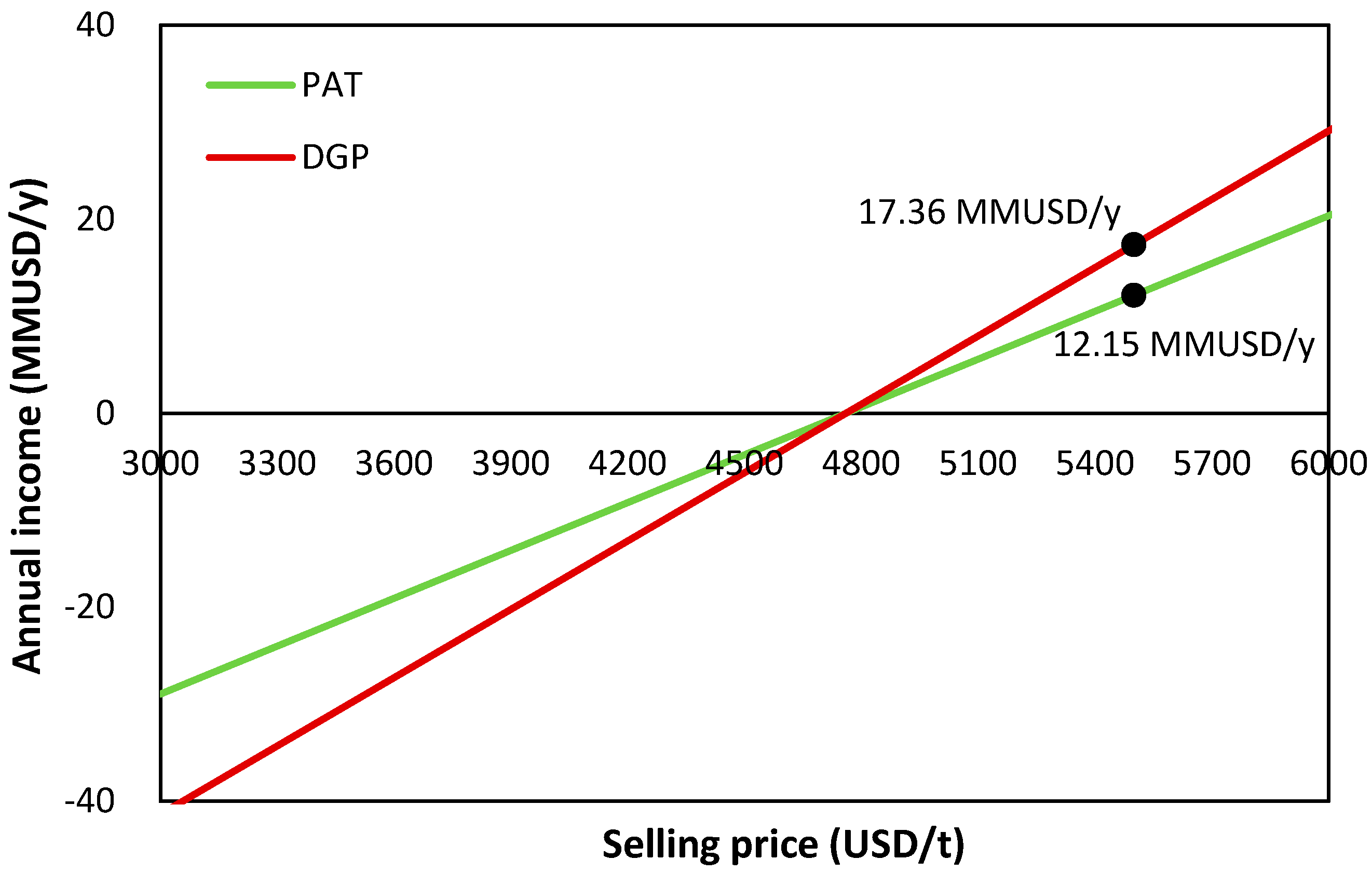
Figure 2, Figure 3 and Figure 4 illustrate the relationship between the technical and economic resilience of the hydrogel magnetization process and the sales price. Figure 2 illustrates the relationship among sales price, EBITDA, and PAT. Figure 3 compares sales price, DGP, and PAT. Figure 4 presents the relationship between product price and on-stream efficiency at the breakeven point.
Figure 2 shows that the EBITDA of the hydrogel magnetization process is more resilient to price fluctuations than PAT, evidenced by the steeper slope of the EBITDA line compared to the PAT line. The intersection of these lines indicates a critical sales price and annual revenue level, below which losses occur, approximately at 4690 USD/t.
This indicates that the process is in a favorable zone since a sales price of 5500 USD/t results in positive EBITDA and PAT. Comparing this critical sales price with the current process’s price helps evaluate its vulnerability to potential declines. The closer the current process is to the intersection point, the greater the risk. In this case, the values are relatively close, indicating high sensitivity to a decrease in the magnetized hydrogel’s sale price. The positive issue is that the forecast for the forthcoming years appears favorable, with global demand and prices for hydrogels anticipated to increase [19].
Figure 3 demonstrates that the DGP of the hydrogel magnetization process is less sensitive to changes in product price than the PAT, following the same reasoning as Figure 2. The point where the two lines intersect marks a critical threshold regarding the sales price and annual income, with losses occurring below roughly 4760.84 USD/t. This suggests the process is in a favorable zone at a sales price of 5500 USD/t. Similar to the analysis in Figure 2, comparing the critical sale price with the current one helps assess the process’s sensitivity to price drops. The greater the distance from the intersection, the more resistant the process. Therefore, the process was identified as vulnerable to fluctuations in the price of magnetized hydrogel.
Figure 4 can be segmented into three distinct zones. The first zone, below 5200 USD/t, indicates that the on-stream efficiency at the Break-Even Point (BEP) is highly sensitive to minor fluctuations in the product’s selling price. This reveals a fragile process in this range: even a slight drop in the magnetized hydrogel’s sale price causes a notable increase in efficiency at BEP. The graph depicts this with an asymptotic approach toward the y-axis. The second zone, from about 5200 USD/t to around 6000 USD/t, functions as a transition zone. Profitability remains acceptable because, unlike the first region, this area is less sensitive, offering greater flexibility to respond to sales fluctuations and price shifts. In the third region, significant increases in product prices do not significantly affect on-stream efficiency at the BEP for sale prices above 6000 USD/t. As a result, efficiency no longer depends on this factor. Thus, significant changes in the sale price within this range will not noticeably impact on-stream efficiency at the BEP.
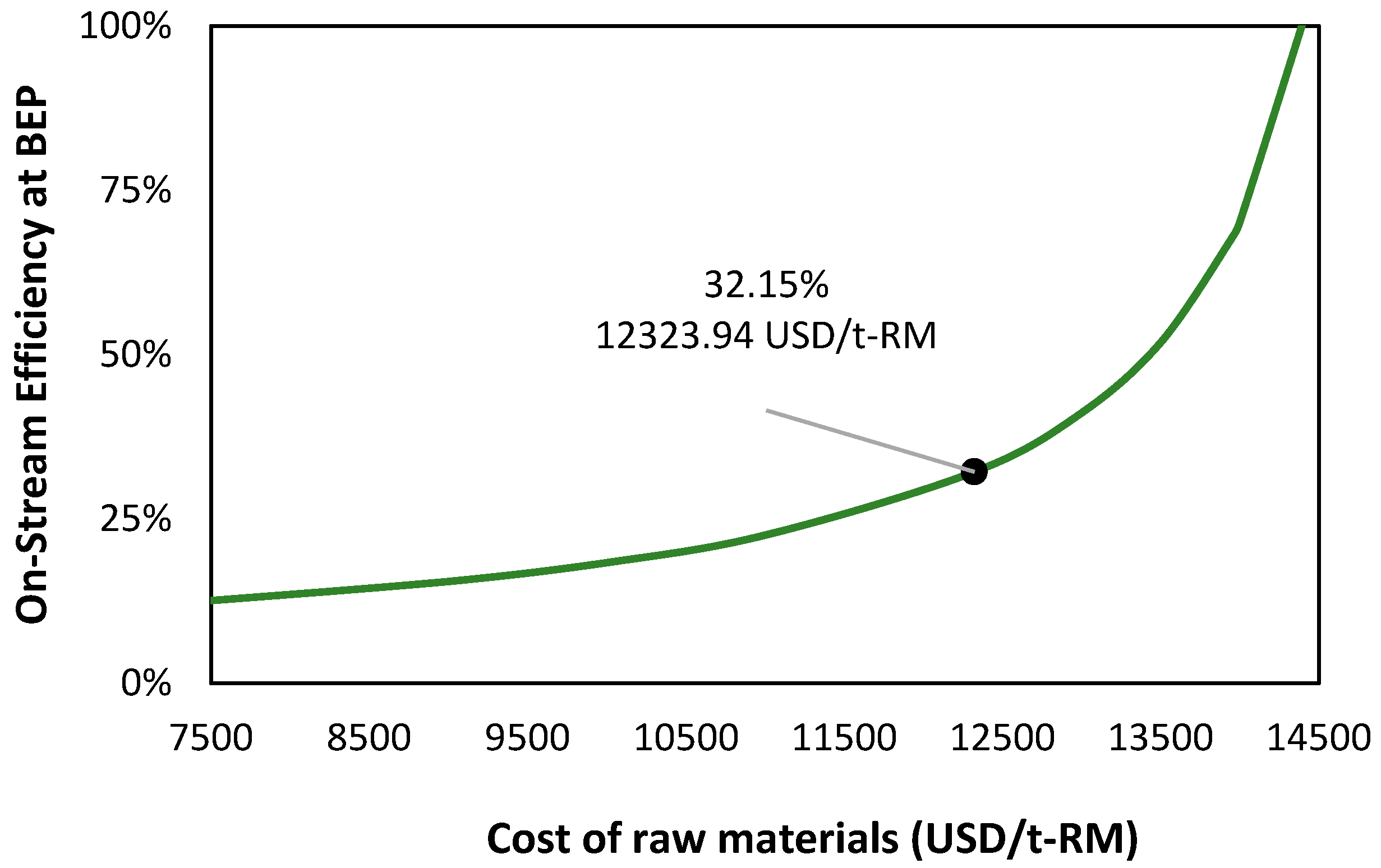
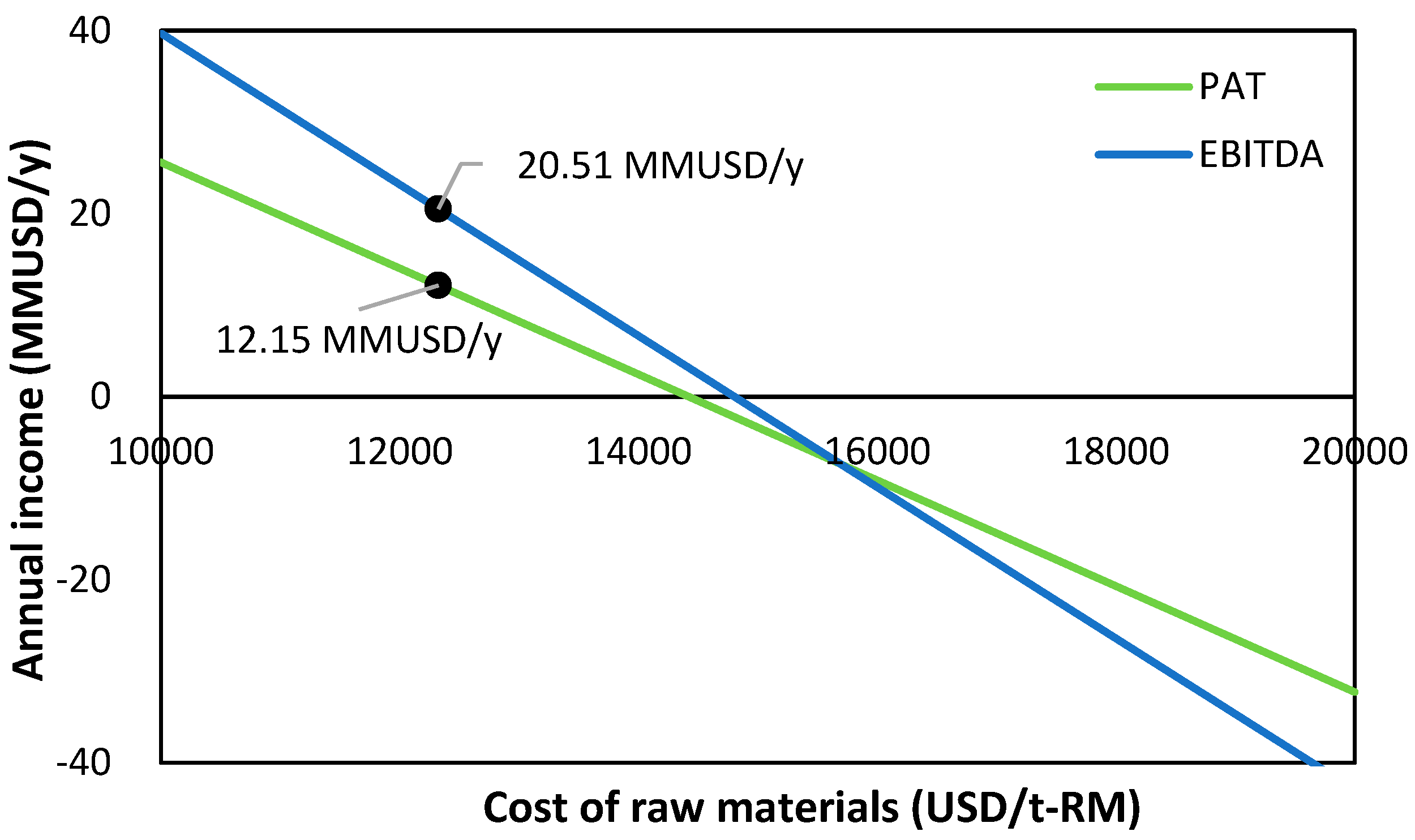
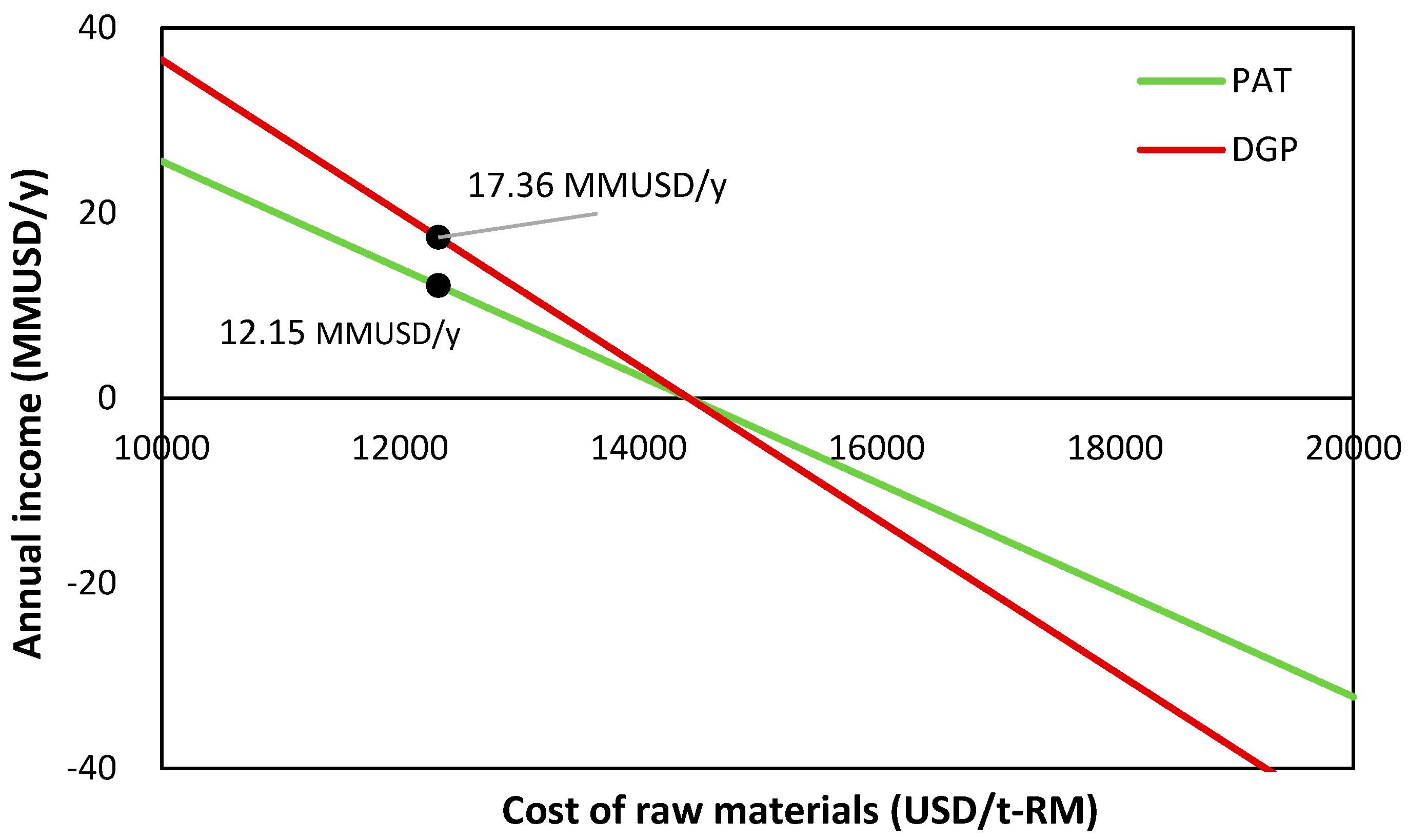
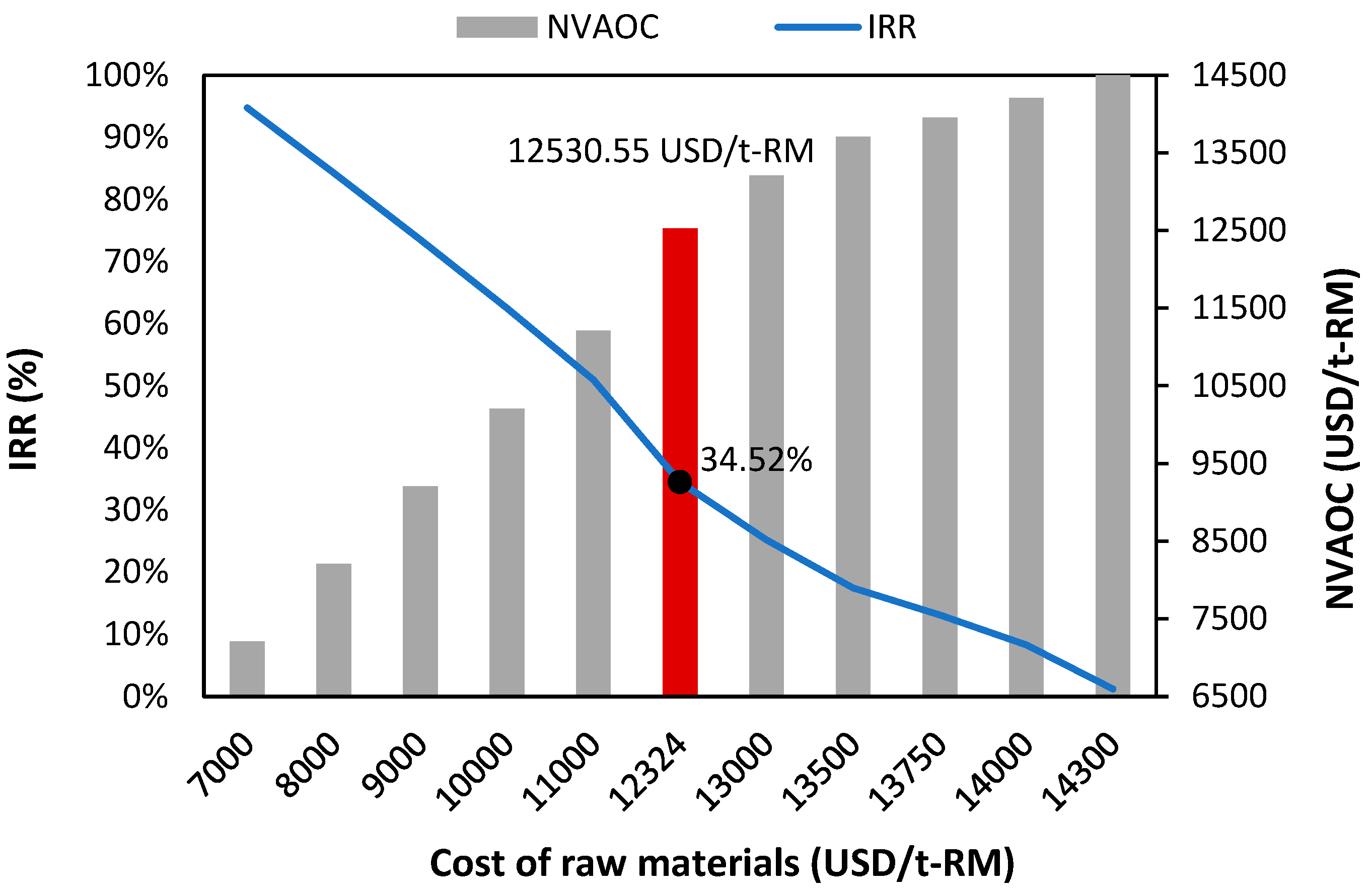
Figure 5, Figure 6, Figure 7 and Figure 8 demonstrate the resilience of the technical and economic aspects of the hydrogel magnetization process, including raw material costs. Figure 5 shows the connection between feedstock cost, EBITDA, and PAT. Figure 6 compares feedstock cost, DGP, and PAT. Figure 7 depicts how feedstock cost relates to on-stream efficiency at the breakeven point. Figure 8 contrasts feedstock cost, IRR, and NVAOC.
Figure 5 indicates that EBITDA is more robust against fluctuations in raw material costs than PAT. The PAT shows losses above approximately 14,000 USD/t, implying the process remains viable at a raw material cost of 12,300 USD/t, which yields a positive EBITDA and PAT. Comparing this critical raw material cost with current prices highlights the process’s vulnerability to increasing raw material costs.
Figure 6 shows that, like other financial metrics, the DGP of the hydrogel magnetization process is more resistant to fluctuations in raw material costs than the PAT. As with PAT and EBITDA for raw materials, losses occur when raw material costs reach around 14,000 USD/t or higher. This suggests that the process remains profitable, yielding positive results at a raw-material cost of 12,300 USD/t. Comparing this critical raw material cost with the current process cost helps evaluate its sensitivity to raw material price increases. The farther the current cost is from the intersection point, the more resistant the process; in this case, however, it is vulnerable to increases in raw material prices.
Similar to Figure 4, Figure 7 also shows three distinct regions. In the first zone, where raw material costs range from 7500 to 10,500 USD/t, significant changes in raw material prices have little impact on on-stream efficiency at the BEP. Consequently, it no longer depends on these costs. Large fluctuations within this range do not notably affect efficiency. The second zone, from 10,500 USD/t to 13,500 USD/t, serves as a transition area where the process continues operating. Here, lower sensitivity helps sustain reasonable profits and offers greater operational flexibility despite cost variations. In the third zone, with raw material costs above 13,500 USD/t, the on-stream efficiency at the BEP becomes highly sensitive to minor price changes, reducing process resilience. A slight increase in raw material costs leads to a steep rise in efficiency at the BEP, as shown by an asymptote approaching the y-axis.
Figure 8 shows how IRR, NVAOC, and feedstock costs are connected. The economic resilience analysis suggests that as feedstock costs rise, IRR decreases while NVAOC increases. Consequently, NVAOC and IRR have an inverse relationship: a high NVAOC relative to cash flows can decrease IRR by reducing net revenues and profitability, whereas a low NVAOC compared to cash flows can boost IRR by increasing net income.
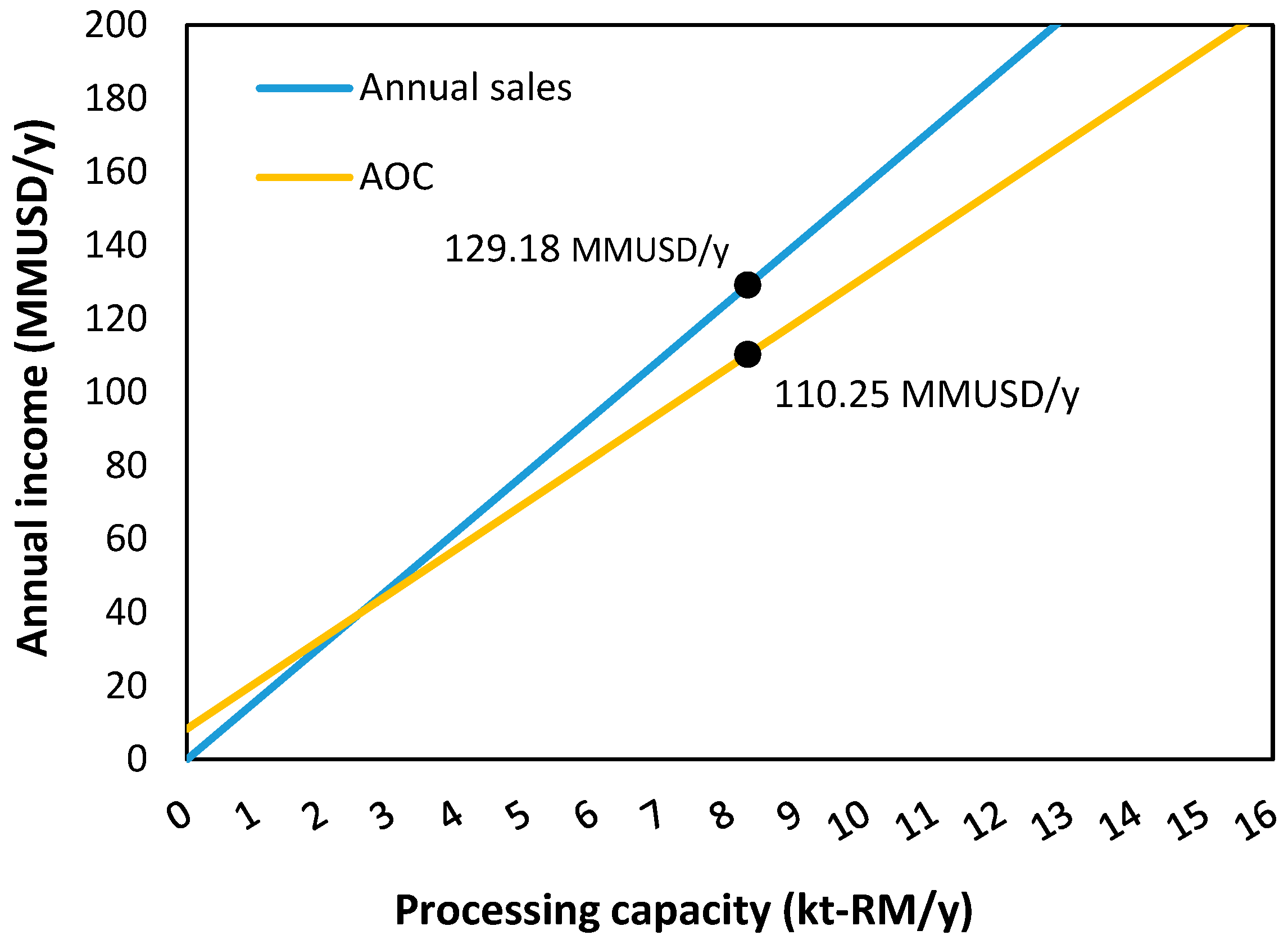
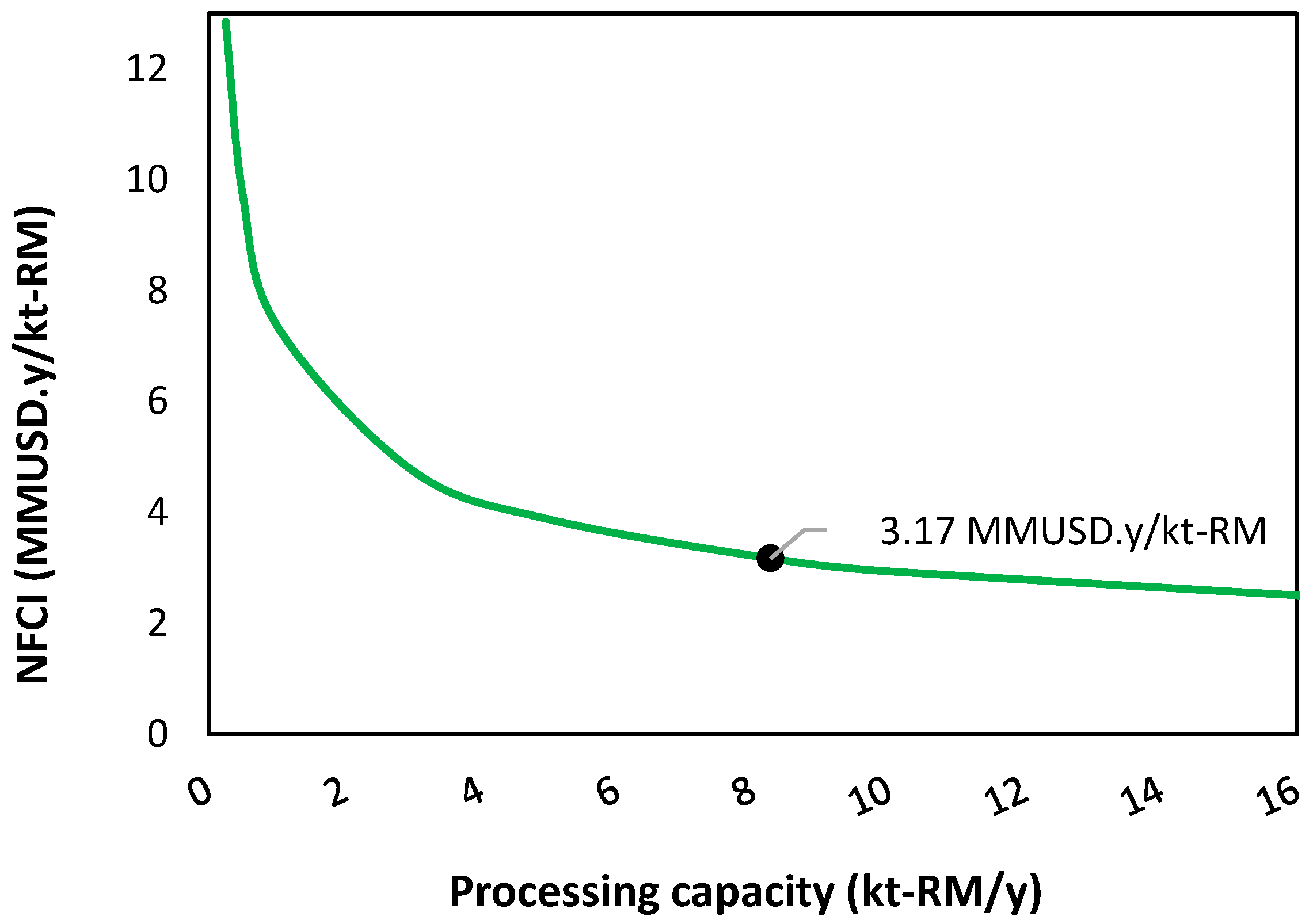
Figure 9 and Figure 10 demonstrate how the plant’s processing capacity influences the technical and economic resilience of the hydrogel magnetization process. Specifically, Figure 9 shows the relationship between processing capacity, annual sales, and AOC, while Figure 10 compares processing capacity with the other variables NFCI.
Figure 9 shows that the AOC of the magnetized hydrogel production process remains more stable in response to changes in plant processing capacity than annual sales. This pattern has been observed in similar scenarios. The intersection of the two lines indicates the break-even processing capacity, approximately 2.5 kt-RM/y, at which the AOC and annual sales are balanced. Below this capacity, the AOC is advantageous; above it, yearly sales exceed the AOC. This indicates that operating at approximately 8.5 kt-RM/y is optimal. Comparing the break-even processing capacity with the actual capacity reveals the process’s sensitivity to capacity increases. In this case, the process was also found to be susceptible to capacity changes.
Figure 10 shows the inverse relationship between normalized fixed costs and processing capacity in the proposed hydrogel plant. The process was estimated to have an NFCI of 3.17 MMUSD.y/kt-RM at the chosen operating capacity. Fixed costs stay constant regardless of how much is produced. As production increases, these costs are distributed across more units, decreasing the fixed cost per unit and potentially lowering overall unit costs.
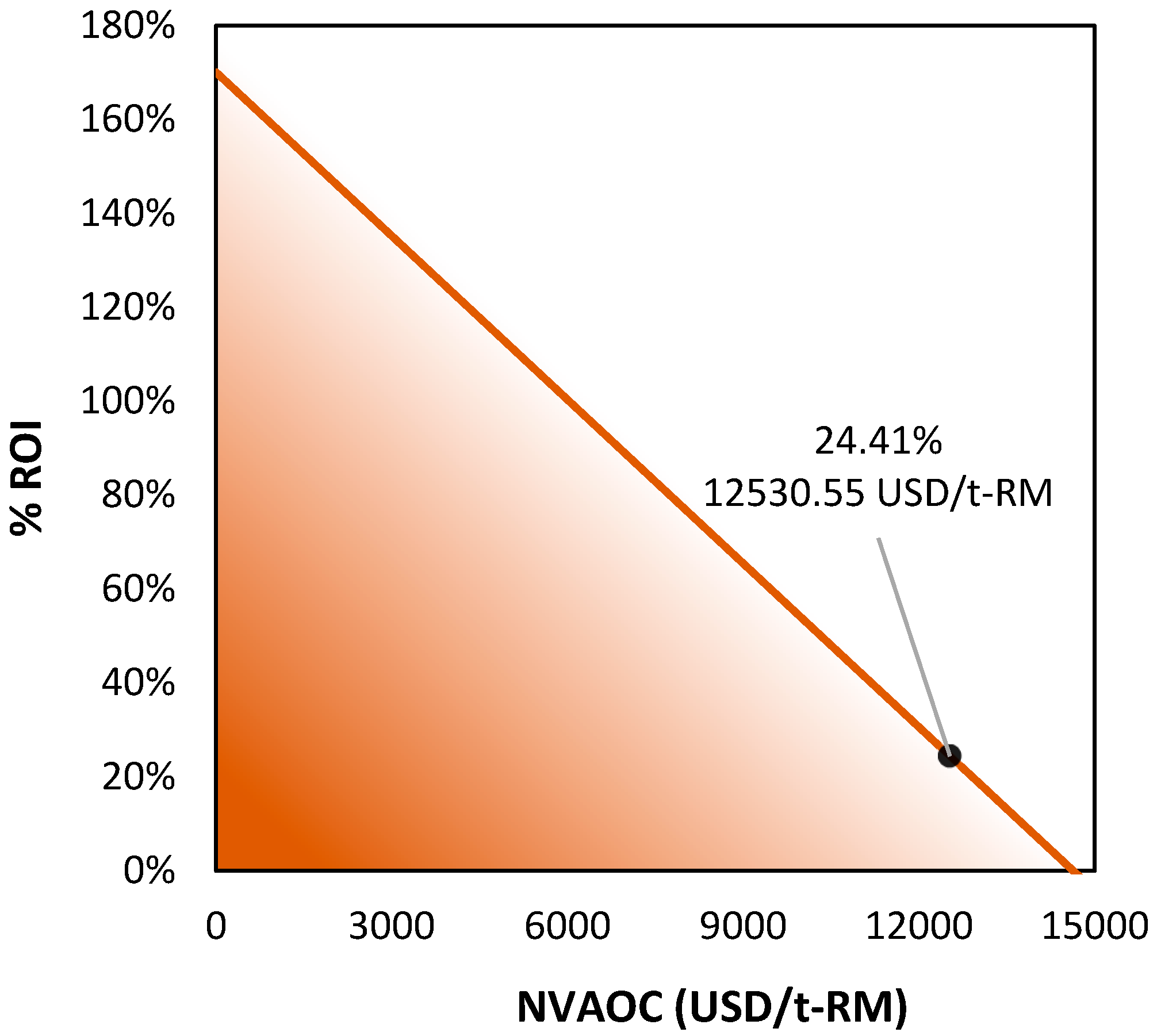
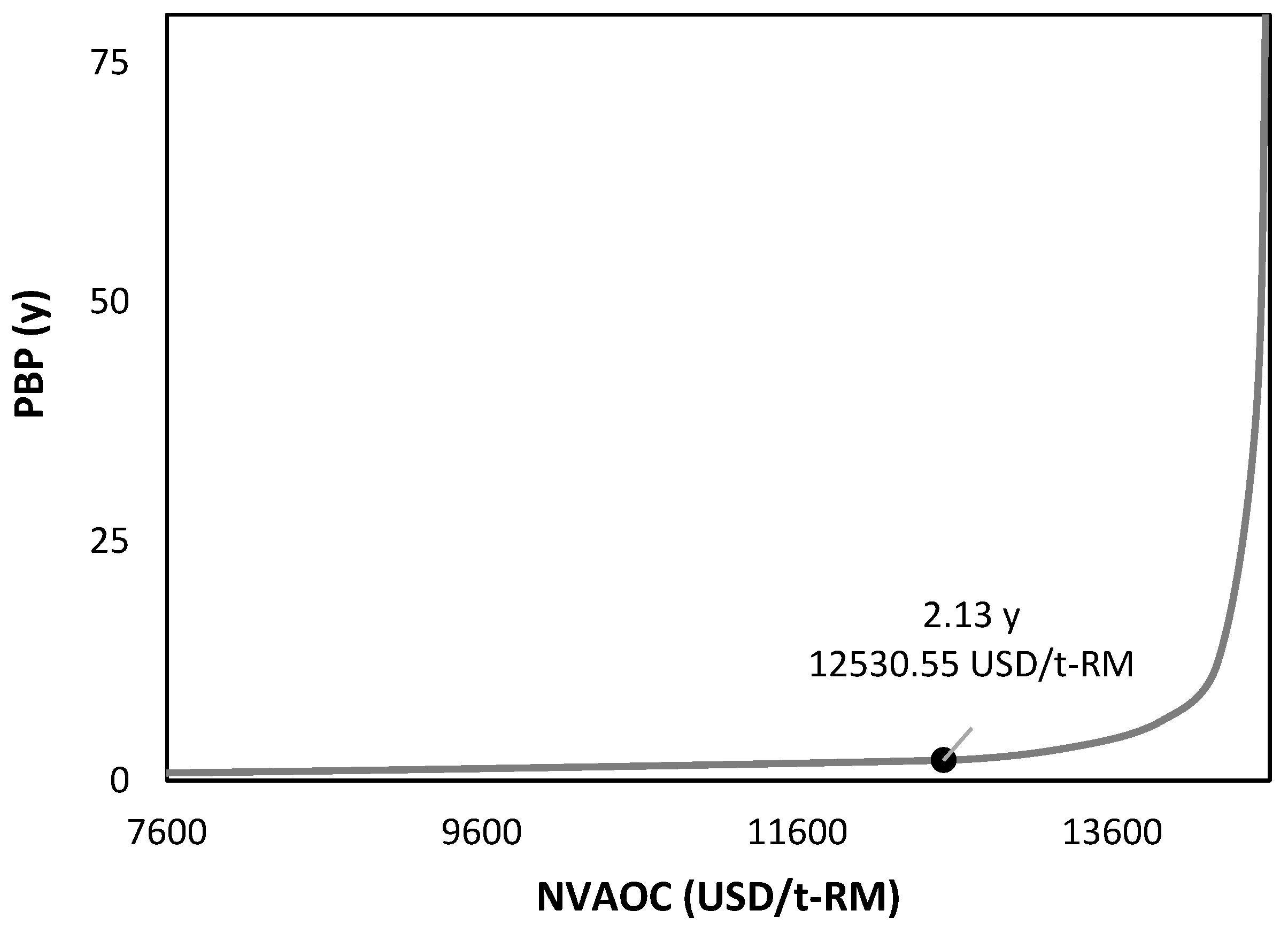
Figure 11 and Figure 12 demonstrate the technical and economic resilience of the magnetized hydrogel process concerning NVAOC. Figure 11 shows the relationship between NVAOC and ROI, while Figure 12 compares NVAOC with PBP.
Figure 11 illustrates how NVAOC, encompassing industrial services, maintenance, repair, labor, and supervision, impacts the process’s ROI percentage. The graph shows a strong linear relationship between ROI and variable costs, with a critical threshold near 1500 USD/t, at which ROI drops to zero. In hydrogel production, this threshold is just above the current NVAOC of 12,530.55 USD/t-RM, thereby slightly increasing it and making the process more sensitive to fluctuations in variable costs. In Latin America, social factors such as local electricity supply also influence the process [40]. High labor costs and employee strikes can noticeably impact this metric [41].
Conversely, the highest possible ROI for this process could be approximately 170% if variable costs were almost negligible. The actual ROI for the proposed plant is relatively high (24.41%), as proof of the economic potential of this process. To put this data into context, studies focusing on the integrated production of polyhydroxyalkanoates and biofuels, such as biohydrogen, bioethanol, and 2,3-butanediol, from food waste, have shown a 13.68% ROI, a PBP of 7.31 years, and an IRR of 11.95%. The estimated minimum selling price for polyhydroxyalkanoates was 4830 USD/t. Therefore, our analysis delivers promising financial metrics [42].
Figure 12 demonstrates the sensitivity and resilience analysis of the PBP. Notably, the plant is highly sensitive to variations in NVAOC. This means that even minor fluctuations in operating costs can decide if the project stays viable or faces bankruptcy. While this sensitivity is undesirable, it is an unavoidable consequence of the current global financial environment [43]. We identified three zones in Figure 12: one stable region up to ≈11,600 USD/t-RM, a transition zone from ≈11,600 to ≈13,600 USD/t-RM, and a loss-of-control region beyond ≈13,600 USD/t-RM. The studied process remains below this critical threshold, indicating a relatively quick recovery time. However, proximity to this crucial point reduces the process’s resilience to minor fluctuations in NVAOC.
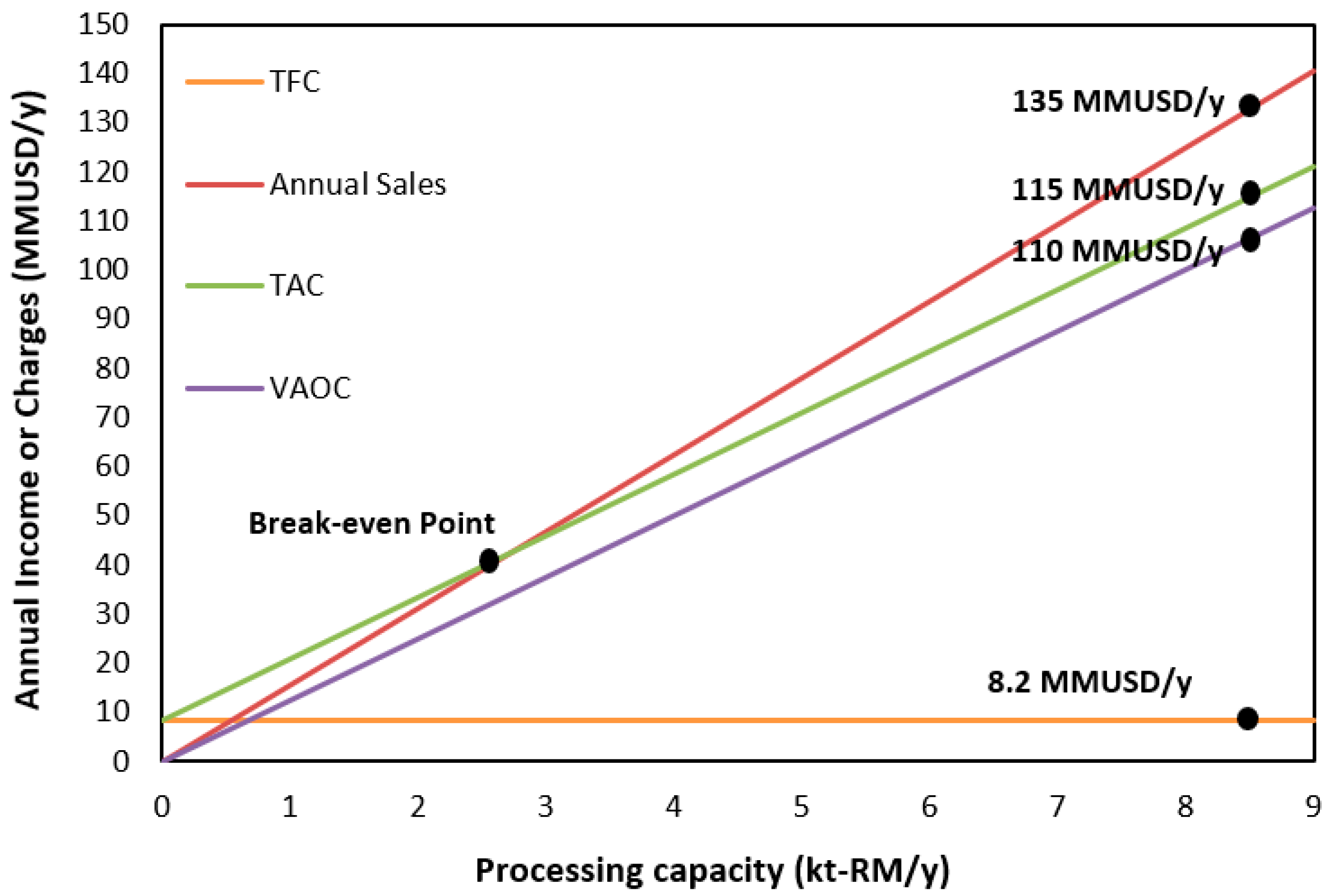
Figure 13 illustrates the technical and economic resilience of the hydrogel magnetization process concerning plant capacity, annual fixed charges, sales, AOC, and variable costs. The break-even analysis shows when total production costs match process revenues, visually representing expenses and revenues based on the processing flow rate. The intersection of the TAC and sales lines marks the BEP. Below this point, TAC surpasses sales, indicating a loss; above it, the process is profitable—evident in the hydrogel plant, which operates comfortably above the BEP [28].
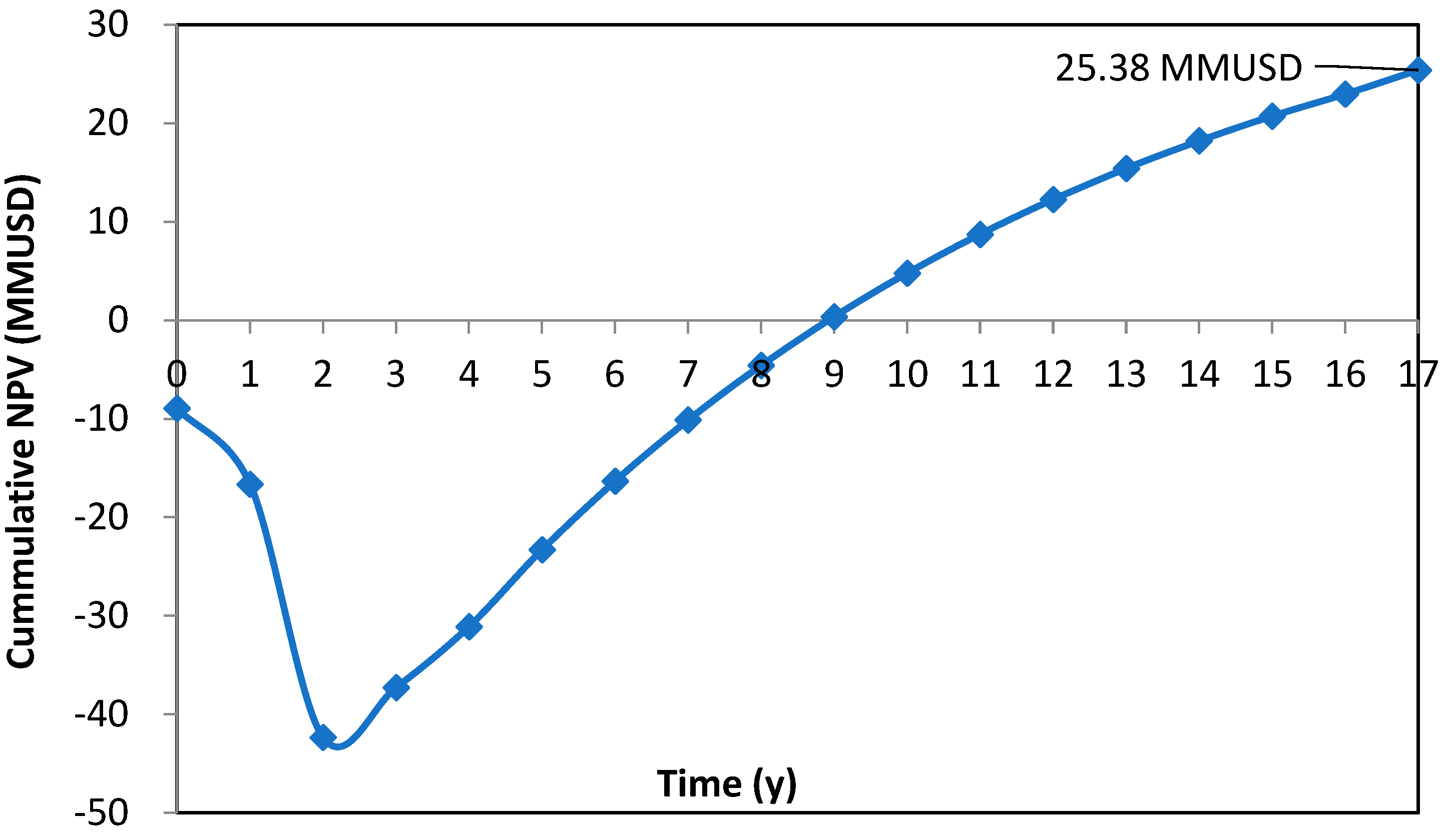
Figure 14 depicts the technical and economic resilience of the studied process, highlighting net present value and the plant’s operational life. As per Table 1, the hydrogel magnetization process has a useful life of 15 years, plus 2 years of construction. This means that once all costs are recovered, the project generates a significant current value within 9 years, or 7 years of operation. This early profitability is beneficial as it lowers the risk of project abandonment at any stage, safeguarding the investment. In comparison, a techno-economic analysis of an integrated plant producing polyhydroxyalkanoates, biohydrogen, bioethanol, and 2,3-butanediol from food waste, with a 25-year lifespan, reported an NPV of 4.47 MMUSD [42]. Similarly, a study on a non-magnetic chitosan-based hydrogel process estimated an NPV of approximately 60 MMUSD for a 10-year plant [44]. While our estimate is around seven times higher than the food waste process, it is about three times lower than that of the magnetic hydrogel process. This difference is mainly because this type of hydrogel is less specialized and harder to recover and reuse, unlike our magnetic hydrogel. Furthermore, our baseline analysis did not include revenues from the sale of excess magnetite produced during the hydrogel synthesis process.

4. Conclusions

This work introduces the first technical and economic analysis at an industrial scale for magnetized hydrogels. The proposed production plant demonstrates robust financial viability, with an estimated total investment of 49.78 MM USD. The production cost is approximately 4690 USD/t, while the target selling price is 5500 USD/t. The payback period is 2.13 years, or 5.80 years when including depreciation, with an IRR of 34.52%, an ROI of 24.41%, an NPV of 25.38 MMUSD, and a break-even price of 4760 USD/t, operating at a plant utilization rate of 32.15%. Raw materials account for 92.4% of costs, highlighting the importance of efficiently managing inputs and energy during drying to sustain profitability. Compared to other studies, this project benefits from a simpler design, lower capital investment, and an adequate price–cost margin, assuming market prices remain at or above the threshold. Additionally, a complete analysis that considers magnetite as a byproduct is recommended, as it could further improve profitability and process robustness.

Supplementary Materials

The following supporting information can be downloaded at: https://www.mdpi.com/article/10.3390/sci7040181/s1.

Author Contributions

Conceptualization, A.A.-M., Á.D.G.-D. and M.V.C.-O.; methodology, A.A.-M. and Á.D.G.-D.; software, A.A.-M. and Á.D.G.-D.; validation, Á.D.G.-D. and M.V.C.-O.; formal analysis, A.A.-M., M.V.C.-O., and Á.D.G.-D.; investigation, A.A.-M.; resources, Á.D.G.-D. and M.V.C.-O.; data curation, A.A.-M.; writing—original draft preparation, A.A.-M.; writing—review and editing, A.A.-M., M.V.C.-O. and Á.D.G.-D.; visualization, Á.D.G.-D. and A.A.-M.; supervision, Á.D.G.-D. and M.V.C.-O.; project administration, M.V.C.-O.; funding acquisition, M.V.C.-O. All authors have read and agreed to the published version of the manuscript.

Funding

Funded by ProCiencia, Peru, under the funding scheme E067-2024-01 2—Special Projects, Technological Development Project, contract number PE501092820-2024.

Data Availability Statement

The data that support the findings of this study are available from the corresponding author, A.A-M., upon reasonable request.

Acknowledgments

The researchers express their gratitude to the Programa Nacional de Investigación Científica y Estudios Avanzados (ProCiencia), the implementing unit of CONCYTEC in Peru, to the Universidad de Cartagena for providing the software and time for researchers, and to the Universidad Nacional Mayor de San Marcos (UNMSM) and Centro de Investigaciones Tecnológicas, Biomédicas y Medioambientales (CITBM) for providing its equipment and materials.

Conflicts of Interest

The authors declare no conflicts of interest.

Nomenclature

AAAcrylic Acid
ARAmarilla Reyna
ACRAnnual Cost/Revenue
AFCAnnualized Fixed Costs
AOCAnnualized Operating Costs
APSAmmonium Persulfate
BEPBreak-Even Point
CCFCumulative Cash Flow
DADepreciation and Amortization
DFCIDirect Fixed Capital Investment
DGPDepreciable Gross Profit
DPBPDepreciable Payback Period
DPCDirect Production Costs
EBITEarnings Before Interest and Taxes
EBITDAEarnings Before Interest, Taxes, Depreciation, and Amortization
EBTEarnings Before Taxes
ECIEquipment Cost Index
EP1Economic Potential 1
EP2Economic Potential 2
EP3Economic Potential 3
FCHFixed Charges
FCIFixed Capital Investment
FAOCFixed Annual Operating Costs
FOBFree on Board
FP2OFeedstock-Product-Process-Operating
GEGeneral Expenses
GPGross Profit
IFCIIndirect Fixed Capital Investment
IRRInternal Rate of Return
MBAN, N’-Methylene-Bisacrylamide
M&SMarshall and Swift
MRMaintenance and Repairs
MMUSDMillion USD
NFCINormalized Fixed Capital Investment
NPVNet Present Value
NVAOCNormalized Variable Operating Costs
OCOperating Costs
OLOperating Labor
PAAPolyacrylic Acid
PATProfitability After Tax
PBPPayback Period
POHPlant Overhead
ROIReturn On Investment
RMRaw Material
SUCStart-Up Costs
TACTotal Annual Costs
TCITotal Capital Investment
TFCTotal Fixed Costs
TMCTotal Manufacturing Cost
TPCTotal Product Cost
UUtilities
VAOCVariable Operating Costs
WCIWorking Capital Investment

References

  1. Mojo-Quisani, A.; Licona-Pacco, K.; Choque-Quispe, D.; Calla-Florez, M.; Ligarda-Samanez, C.A.; Mamani-Condori, R.; Florez-Huaracha, K.; Huamaní-Melendez, V.J. Physicochemical Properties of Starch of Four Varieties of Native Potatoes. Heliyon 2024, 10, e35809. [Google Scholar] [CrossRef]
  2. Cui, C.; Jia, Y.; Sun, Q.; Yu, M.; Ji, N.; Dai, L.; Wang, Y.; Qin, Y.; Xiong, L.; Sun, Q. Recent Advances in the Preparation, Characterization, and Food Application of Starch-Based Hydrogels. Carbohydr. Polym. 2022, 291, 119624. [Google Scholar] [CrossRef] [PubMed]
  3. Fang, S.; Zhong, Y.; Wu, J.; Xie, Y.; Cai, L.; Li, M.; Cao, J.; Zhao, H.; Dong, B. A Comparative Analysis of the Water Retention Properties of Hydrogels Prepared from Melon and Orange Peels in Soils. Gels 2025, 11, 8. [Google Scholar] [CrossRef]
  4. Koshenaj, K.; Ferrari, G. Optimization of Processing Conditions of Starch-Based Hydrogels Produced by High-Pressure Processing (HPP) Using Response Surface Methodology. Front. Food Sci. Technol. 2024, 4, 1376044. [Google Scholar] [CrossRef]
  5. Fathi, M.; Entezami, A.A.; Arami, S.; Rashidi, M.R. Preparation of N-Isopropylacrylamide/Itaconic Acid Magnetic Nanohydrogels by Modified Starch as a Crosslinker for Anticancer Drug Carriers. Int. J. Polym. Mater. Polym. Biomater. 2015, 64, 541–549. [Google Scholar] [CrossRef]
  6. Soto, D.; Oliva, H. Methods for Preparation of Chemical and Physical Hydrogels Based on Starch: A Review. Rev. Latinoam. Metal. Mater. 2012, 32, 154–175. [Google Scholar]
  7. Pereira, A.G.B.; Fajardo, A.R.; Valente, A.J.M.; Rubira, A.F.; Muniz, E.C. Outstanding Features of Starch-Based Hydrogel Nanocomposites. In Starch-Based Blends, Composites and Nanocomposites; Green Chemistry Series; Royal Society of Chemistry: London, UK, 2015; pp. 236–262. [Google Scholar] [CrossRef]
  8. Martínez, P.; Vilcarromero, D.; Pozo, D.; Peña, F.; Manuel Cervantes-Uc, J.; Uribe-Calderon, J.; Velezmoro, C. Characterization of Starches Obtained from Several Native Potato Varieties Grown in Cusco (Peru). J. Food Sci. 2021, 86, 907–914. [Google Scholar] [CrossRef]
  9. Choque-Quispe, D.; Obregón Gonzales, F.H.; Carranza-Oropeza, M.V.; Solano-Reynoso, A.M.; Ligarda-Samanez, C.A.; Palomino-Ríncón, W.; Choque-Quispe, K.; Torres-Calla, M.J. Physicochemical and Technofunctional Properties of High Andean Native Potato Starch. J. Agric. Food Res. 2024, 15, 100955. [Google Scholar] [CrossRef]
  10. Ping, B.W.; Lazim, A.M. Synthesis and Characterization of Starch-Based Hydrogel by Using Gamma Radiation Technique. Malaysian J. Anal. Sci. 2016, 20, 1011–1019. [Google Scholar] [CrossRef]
  11. Kayati, F.N.; Purnomo, C.W.; Kusumastuti, Y. Rochmadi The Optimization of Hydrogel Strength from Cassava Starch Using Oxidized Sucrose as a Crosslinking Agent. Green Process. Synth. 2023, 12, 20230151. [Google Scholar] [CrossRef]
  12. Ma, L.; Liu, J.; Cheng, Y.; Frank, J.; Liang, J. Structural Features, Physiological Functions and Digestive Properties of Phosphorylated Corn Starch: A Comparative Study of Four Phosphorylating Agents and Two Preparation Methods. Int. J. Biol. Macromol. 2025, 292, 139146. [Google Scholar] [CrossRef] [PubMed]
  13. Reyniers, S.; De Brier, N.; Matthijs, S.; Brijs, K.; Delcour, J.A. Impact of Mineral Ions on the Release of Starch and Gel Forming Capacity of Potato Flakes in Relation to Water Dynamics and Oil Uptake during the Production of Snacks Made Thereof. Food Res. Int. 2019, 122, 419–431. [Google Scholar] [CrossRef] [PubMed]
  14. Abdullah, N.H.; Shameli, K.; Abdullah, E.C.; Abdullah, L.C. A Facile and Green Synthetic Approach toward Fabrication of Starch-Stabilized Magnetite Nanoparticles. Chin. Chem. Lett. 2017, 28, 1590–1596. [Google Scholar] [CrossRef]
  15. Sunaryono; Taufiq, A.; Munaji; Indarto, B.; Triwikantoro; Zainuri, M.; Darminto. Magneto-Elasticity in Hydrogels Containing Fe3O4 Nanoparticles and Their Potential Applications. AIP Conf. Proc. 2013, 1555, 53–56. [Google Scholar] [CrossRef]
  16. Sanz, V.; Domínguez, H.; Torres, M.D. Formulation and Thermomechanical Characterization of Functional Hydrogels Based on Gluten Free Matrices Enriched with Antioxidant Compounds. Appl. Sci. 2021, 11, 1962. [Google Scholar] [CrossRef]
  17. Anderson, J.; Ruano, M.; Andrés, C.; De, T.; Eduardo, C.; Alzate, O.; Ariel, C.; Alzate, C. Techno-Economic Analysis of Chitosan-Based Hydrogels Production; Springer: Berlin/Heidelberg, Germany, 2018. [Google Scholar]
  18. Gujjala, L.K.S.; Won, W. Process Development, Techno-Economic Analysis and Life-Cycle Assessment for Laccase Catalyzed Synthesis of Lignin Hydrogel. Bioresour. Technol. 2022, 364, 128028. [Google Scholar] [CrossRef]
  19. MordorIntelligence Mercado de Hidrogel-Tamaño, Informe y Descripción General. Available online: https://www.mordorintelligence.com/es/industry-reports/hydrogel-market (accessed on 17 September 2025).
  20. Herrera-Rodríguez, T.C.; Ramos-Olmos, M.; González-Delgado, Á.D. A Joint Economic Evaluation and FP2O Techno-Economic Resilience Approach for Evaluation of Suspension PVC Production. Results Eng. 2024, 24, 103069. [Google Scholar] [CrossRef]
  21. García-Maza, S.; González-Delgado, Á.D. Technical–Economic Assessment and FP2O Technical–Economic Resilience Analysis of the Gas Oil Hydrocracking Process at Large Scale. Sci 2025, 7, 17. [Google Scholar] [CrossRef]
  22. García-Maza, S.; Rojas-Flores, S.; González-Delgado, Á.D. Impact of Mass Integration on the Technoeconomic Performance of the Gas Oil Hydrocracking Process in Latin America. Processes 2025, 13, 3681. [Google Scholar] [CrossRef]
  23. Chen, L.; Zhu, Y.; Cui, Y.; Dai, R.; Shan, Z.; Chen, H. Fabrication of Starch-Based High-Performance Adsorptive Hydrogels Using a Novel Effective Pretreatment and Adsorption for Cationic Methylene Blue Dye: Behavior and Mechanism. Chem. Eng. J. 2021, 405, 126953. [Google Scholar] [CrossRef]
  24. Peighambardoust, S.J.; Fakhiminajafi, B.; Mohammadzadeh Pakdel, P.; Azimi, H. Simultaneous Elimination of Cationic Dyes from Water Media by Carboxymethyl Cellulose-Graft-Poly(Acrylamide)/Magnetic Biochar Nanocomposite Hydrogel Adsorbent. Environ. Res. 2025, 273, 121150. [Google Scholar] [CrossRef]
  25. Tanveer, S.; Chen, C.C. Thermodynamic Analysis of Hydrogel Swelling in Aqueous Sodium Chloride Solutions. J. Mol. Liq. 2022, 348, 118421. [Google Scholar] [CrossRef]
  26. Valverde, J.L.; Ferro, V.R.; Giroir-Fendler, A. Application of the E-NRTL Model to Electrolytes in Mixed Solvents Methanol-, Ethanol- Water, and PEG-Water. Fluid Phase Equilibria 2022, 560, 113516. [Google Scholar] [CrossRef]
  27. Peters, M.S.; Timmerhaus, K.D. Solutions Manual to Accompany Plant Design and Economics for Chemical Engineers, 4th ed.; McGraw-Hil: Columbus, OH, USA, 1991. [Google Scholar]
  28. El-Halwagi, M.M. Overview of Process Economics. In Sustainable Design Through Process Integration; Elsevier: Amsterdam, The Netherlands, 2012; pp. 15–61. [Google Scholar] [CrossRef]
  29. Herrera-Aristizábal, R.; Meza-Cuentas, E.; González-Delgado, Á.D. Economic Evaluation and Technoeconomic Resilience Analysis of Two Routes for Hydrogen Production via Indirect Gasification in North Colombia. Sustainability 2023, 15, 16371. [Google Scholar] [CrossRef]
  30. El-Halwagi, M.M. A Return on Investment Metric for Incorporating Sustainability in Process Integration and Improvement Projects. Clean Technol. Environ. Policy 2017, 19, 611–617. [Google Scholar] [CrossRef]
  31. El-Halwagi, M.M. Sustainable Design Through Process Integration: Fundamentals and Applications to Industrial Pollution Prevention, Resource Conservation, and Profitability Enhancement; Elsevier: Amsterdam, The Netherlands, 2017; pp. 1–604. [Google Scholar] [CrossRef]
  32. Agencia_Agraria_de_Noticias Perú Produjo 5.4 Millones de Toneladas de Papa En 2020. Available online: https://agraria.pe/noticias/peru-produjo-5-4-millones-de-toneladas-de-papa-en-2020-23985 (accessed on 16 September 2025).
  33. Chauhan, A.; Islam, F.; Imran, A.; Ikram, A.; Zahoor, T.; Khurshid, S.; Shah, M.A. A Review on Waste Valorization, Biotechnological Utilization, and Management of Potato. Food Sci. Nutr. 2023, 11, 5773–5785. [Google Scholar] [CrossRef]
  34. Liang, S.; McDonald, A.G. Chemical and Thermal Characterization of Potato Peel Waste and Its Fermentation Residue as Potential Resources for Biofuel and Bioproducts Production. J. Agric. Food Chem. 2014, 62, 8421–8429. [Google Scholar] [CrossRef]
  35. Wu, B.; Yan, D.Y.S.; Khan, M.; Zhang, Z.; Lo, I.M.C. Application of Magnetic Hydrogel for Anionic Pollutants Removal from Wastewater with Adsorbent Regeneration and Reuse. J. Hazard. Toxic Radioact. Waste 2016, 21, 04016008. [Google Scholar] [CrossRef]
  36. Jiang, L.; Shen, J.; Li, Z.; Chen, J.; Wang, W. Evaluation of Three Suction Pretreatment Systems for the Air Compressor. Appl. Therm. Eng. 2024, 246, 123022. [Google Scholar] [CrossRef]
  37. Manandhar, A.; Shah, A. Techno-Economic Analysis of the Production of Lactic Acid from Lignocellulosic Biomass. Fermentation 2023, 9, 641. [Google Scholar] [CrossRef]
  38. Gholami, A.; Pourfayaz, F.; Saifoddin, A. Techno-Economic Assessment and Sensitivity Analysis of Biodiesel Production Intensified through Hydrodynamic Cavitation. Energy Sci. Eng. 2021, 9, 1997–2018. [Google Scholar] [CrossRef]
  39. Humbird, D.; Davis, R.; Tao, L.; Kinchin, C.; Hsu, D.; Aden, A.; Schoen, P.; Lukas, J.; Olthof, B.; Worley, M.; et al. Process Design and Economics for Biochemical Conversion of Lignocellulosic Biomass to Ethanol: Dilute-Acid Pretreatment and Enzymatic Hydrolysis of Corn Stover; National Renewable Energy Laboratory: Golden, CO, USA, 2011. [Google Scholar] [CrossRef]
  40. Arriagada, G.; Ignacio, P. Estudio de Estabilidad En Las Interconexiones Eléctricas Internacionales En Latinoamérica; Facultad de Ciencias Físicas y Matemáticas, Universidad de Chile: Santiago, Chile, 2021; Available online: https://repositorio.uchile.cl/handle/2250/181814 (accessed on 2 December 2025).
  41. Pérez-Ahumada, P.; Carrasco, K. Política de Clases y Confianza En Los Sindicatos En América Latina. Lat. Am. Res. Rev. 2025, 60, 410–433. [Google Scholar] [CrossRef]
  42. Rajendran, N.; Han, J. Techno-Economic Analysis of Food Waste Valorization for Integrated Production of Polyhydroxyalkanoates and Biofuels. Bioresour. Technol. 2022, 348, 126796. [Google Scholar] [CrossRef] [PubMed]
  43. Bobasu, A.; Quaglietti, L.; Ricci, M. Tracking Global Economic Uncertainty: Implications for the Euro Area. IMF Econ. Rev. 2024, 72, 820–857. [Google Scholar] [CrossRef]
  44. Martínez Ruano, J.A.; Taimbu de la Cruz, C.A.; Orrego Alzate, C.E.; Cardona Alzate, C.A. Techno–Economic Analysis of Chitosan-Based Hydrogels Production. In Cellulose-Based Superabsorbent Hydrogels; Springer: Cham, Switzerland, 2019; pp. 1769–1790. ISBN 978-3-319-77830-3. [Google Scholar]
Figure 1. Process flow diagram for the large-scale production of magnetized hydrogel. The operating conditions and composition of the simulated streams in Aspen Plus V12.0 are detailed in the Supplementary Material.
Sci 07 00181 g001
Figure 2. Resilience of the magnetized hydrogel plant in relation to the selling price of the product, EBITDA, and PAT. MMUSD stands for million dollars.
Sci 07 00181 g002
Figure 3. Resilience of the magnetized hydrogel plant in relation to the selling price of the product, the DGP, and the PAT. MMUSD stands for million dollars.
Sci 07 00181 g003
Figure 4. Resilience of the magnetized hydrogel plant in relation to the selling price of the product and the on-stream efficiency at BEP. MMUSD stands for million dollars.
Sci 07 00181 g004
Figure 5. Resilience of the magnetized hydrogel plant in relation to the raw material cost, EBITDA, and PAT. MMUSD stands for million dollars.
Sci 07 00181 g005
Figure 6. Resilience of the magnetized hydrogel plant in relation to the main raw material cost, DGP, and PAT. MMUSD stands for million dollars.
Sci 07 00181 g006
Figure 7. Resilience of the magnetized hydrogel plant in relation to raw material cost and on-stream efficiency at BEP.
Sci 07 00181 g007
Figure 8. Resilience of magnetized hydrogel plant in relation to raw material cost, IRR, and NVAOC.
Sci 07 00181 g008
Figure 9. Resilience of the magnetized hydrogel plant in relation to annual sales, AOC, and process capacity in kilotons of raw material per year. MMUSD stands for million dollars.
Sci 07 00181 g009
Figure 10. Resilience of the magnetized hydrogel plant in relation to the process processing capacity and NFCI. MMUSD stands for million dollars.
Sci 07 00181 g010
Figure 11. Resilience of the magnetized hydrogel plant in relation to process NVAOC and ROI.
Sci 07 00181 g011
Figure 12. Resilience of the magnetized hydrogel plant in relation to the process of NVAOC and PBP (depreciation not included).
Sci 07 00181 g012
Figure 13. Resilience of the magnetized hydrogel plant in relation to the process processing capacity, annual fixed charges, annual sales, AOCs, and annual variable charges. MMUSD stands for million dollars.
Sci 07 00181 g013
Figure 14. Resilience of the magnetized hydrogel plant in relation to the NVP. MMUSD stands for million dollars.
Sci 07 00181 g014
Table 1. Considerations for analyzing the technical and economic resilience of the magnetized hydrogel process.
ItemValue
Processing capacity (starch, t/year)8267
Main product flow (magnetized hydrogel, t/year)23,488
Raw material cost (USD/t)12,323.94
Main product selling price (USD/t)5500
Plant life (years)15
Salvage value10% of the depreciable FCI
Construction time2 years
LocationPeru
Tax rate30%
Discount rate12%
Capacity operated50% in the 1st year, 70% in the 2nd year, 100% from the 3rd year onwards
Subsidies (USD/year)0
Process typeNew and untested process
Process controlDigital
Type of projectPlant on undeveloped land
Type of soilSoft clay
Contingency percentage (%)20
Tank design codeASME
Vessel diameter specificationInner diameter
Operator hour cost (USD/h)30
Supervisor hourly cost (USD/h)35
Salaries per year13
UtilitiesGas, water, vapor, and electricity
Process fluidsSolid-liquid-gas
Depreciation methodLinear for 15 years
Table 2. Total product cost for the magnetized hydrogel plant.
Annualized Operating Costs (AOC)Total (USD/Year)
Variable Annual Operating Cost (VAOC)
Raw materials (RM)101,886,288.39
Utilities (U)1,708,102.61
Total VAOC103,594,391.00
Normalized Variable Annual Operating Cost (NVAOC)12,530.55
Fixed Annual Operating Cost (FAOC)
Local taxes786,053.70
Insurance262,017.90
Interest/rent497,834.01
Fixed charges (FCH)1,545,905.61
Maintenance and repairs (MR)1,310,089.49
Operating supplies196,513.42
Operating labor (OL)1,252,533.33
Direct supervision and clerical labor187,880.00
Laboratory charges12,253.33
Patents and royalties262,017.90
Direct production cost (DPC)3,334,287.47
Plant overhead (POH)751,520.00
Total Manufacturing Cost (TMC)4,085,807.48
Saling administration and General expenses (GE)1,021,451.87
Total FAOC6,653,164.95
Annualized Operating Costs (AOC)110,247,555.95
Table 3. Capital costs for the magnetized hydrogel plant.
Capital CostsTotal
Equipment cost F.O.B. (USD)4,335,145
Delivered purchased equipment cost (USD)5,202,174
Purchased equipment (installed; USD)1,560,652
Instrumentation (installed; USD)624,261
Piping (installed; USD)1,560,652
Electrical network (installed; USD)988,414
Buildings (including services; USD)2,601,087
Services facilities (installed; USD)2,080,870
Total DFCI (USD)14,618,109
Land (USD)312,130
Land improvements (USD)2,080,870
Engineering and supervision (USD)2,705,130
Equipment (research & development; USD)520,217
Construction costs (USD)1,768,739
Legal expenses (USD)52,021.2
Contractors’ fees (USD)1,023,268
Contingency (USD)3,121,304
Total IFCI (USD)11,583,680
Fixed capital investment (FCI; USD)26,201,790
Working capital (WCI; USD)20,961,32
Start-up (SUC; USD)2,620,179
Total capital investment (TCI; USD)49,783,401
Salvage value FCI (USD)2,588,966
Annualized fixed costs (AFC; USD/year)1,574,188
Total Annualized Costs (TAC)111,821,744.21
Total Fixed Costs (TFC)8,227,353.21
Table 4. Technical and economic indicators for the magnetized hydrogel plant.
IndicatorTotal
Gross profit (depreciation not included) (GP; USD)18,935,344.05
Gross profit (depreciation included) (DGP; USD)17,361,155.79
Profitability after tax (PAT; USD)12,152,809.05
Economic potentials 1 (EP1; USD/year)27,296,611.61
Economic potentials 2 (EP2; USD/year)25,588,509.00
Economic potentials 3 (EP3; USD/year)18,935,344.05
Cumulative cash flow (CCF; 1/year)0.38
Payback period (PBP; years)2.13
Depreciable payback period (DPBP; years)5.80
Return on investment (% ROI)24.41
Net present value (NPV; MMUSD) 125.38
Annual cost/revenue (ACR)3.73
Internal rate of return (% IRR)34.52
1 MMUSD stands for million dollars.
Table 5. Financial indicators for the magnetized hydrogel plant.
IndicatorTotal
Earnings before taxes (EBT; USD)18,437,510.04
Earnings before interest and taxes (EBIT ≡ EP3; USD)18,935,344.05
Earnings before interest, taxes, depreciation, and amortization (EBITDA; USD)20,509,532.31
Disclaimer/Publisher’s Note: The statements, opinions and data contained in all publications are solely those of the individual author(s) and contributor(s) and not of MDPI and/or the editor(s). MDPI and/or the editor(s) disclaim responsibility for any injury to people or property resulting from any ideas, methods, instructions or products referred to in the content.