Article

Evaluation of Essential and Potentially Toxic Elements in Kalanchoe laetivirens Leaves, Tea, and Juice: Intake Estimates and Human Health Risk Assessment


by
Giselle Angelica Moreira de Siqueira
1,
Leonardo Cordeiro Novais
1,
Marta Aratuza Pereira Ancel
1,
Marcelo Sampaio Ocampos
1,
Regiane Santana da Conceição Ferreira Cabanha
1,
Amanda Lucy Farias de Oliveira
1,
Marco Aurélio Vinhosa Bastos Junior
1,
Elaine Silva de Pádua Melo
2,
Rita de Cássia Avellaneda Guimarães
1,
Daniela Granja Arakaki
1 and
Valter Aragão do Nascimento
1,*
1
Faculty of Medicine (FAMED), Federal University of Mato Grosso do Sul (UFMS), Campo Grande 79079-900, MS, Brazil
2
Faculty of Medicine, State University of Mato Grosso do Sul, Dourados 79804-970, MS, Brazil
*
Author to whom correspondence should be addressed.
Sci 2025, 7(4), 180; https://doi.org/10.3390/sci7040180
Submission received: 6 September 2025 / Revised: 9 October 2025 / Accepted: 27 October 2025 / Published: 5 December 2025

Abstract

Kalanchoe laetivirens is widely consumed as a medicinal plant in rural and urban communities, traditionally used in folk medicine for treating inflammatory conditions and cancer. However, little is known about its elemental composition and the potential health risks associated with different preparation methods. This study aimed to evaluate concentrations of Al, As, Ba, Co, Cu, Fe, Mg, Mn, Mo, Na, Ni, P, Pb, Se, V, and Zn in raw leaves, tea infusions, and aqueous extracts, and to assess associated health risks. Elemental analysis revealed significant differences among preparations, with raw leaves presenting the highest concentrations, tea showing intermediate values, and aqueous extracts the lowest. For example, potassium (K) reached 15,399.31 ± 131.55 mg/kg in leaves and 12,249.97 ± 240.17 mg/L in tea, while arsenic (As) and lead (Pb) were also detected at concerning levels, with As at 5.98 ± 1.64 mg/L and Pb at 3.82 ± 0.179 mg/L in tea. Risk assessment was performed using the Chronic Daily Intake (CDI), Hazard Quotients (HQs), Hazard Index (HI), and Incremental Lifetime Cancer Risk (ILCR), considering different exposure frequencies. Results indicated phosphorus (P) as the dominant contributor to non-carcinogenic risk, with HI values exceeding safety thresholds in all scenarios, while arsenic was the primary carcinogenic element, with ILCR values up to 10−3 in tea. These findings highlight the influence of preparation methods on exposure levels and reinforce the need for continuous monitoring and regulatory guidelines to ensure the safe medicinal use of K. laetivirens.

1. Introduction

Cancer remains one of the leading causes of death worldwide, representing a major public health challenge despite significant advances in conventional treatments such as chemotherapy, radiotherapy, and targeted therapies [1]. According to Pan American Health Organization, in 2022, cancer accounted for 1.4 million deaths, 45% of which occurred in people 69 years old or younger [2]. While these approaches have improved survival rates and disease management, they are often associated with severe side effects, high costs, and limited accessibility in some regions [3]. As a result, many individuals seek alternative or complementary therapies, including the use of medicinal plants, in hopes of alleviating symptoms, enhancing overall well-being, or even contributing to cancer control [4]. In this context, natural products derived from plants have shown potential to reduce these undesirable effects [5]. Several substances with anticancer activity have been identified in vitro, but they still lack clinical studies confirming their efficacy in humans [6].
Ethnopharmacological studies in African countries such as Morocco reveal the frequent use of medicinal plants by local populations for cancer treatment, based on empirical knowledge and cultural traditions [7,8,9]. In Brazil, one of the species that has gained popular attention in the treatment of diseases, including cancer, is Kalanchoe laetivirens (K. laetivirens), popularly known as “mother of thousands,” “aranto,” or “leaf of fortune” [10]. Kalanchoe is a genus of succulent plants in the family Crassulaceae and order Saxifragaceae. originantes from African and also known as the flower of fortune or kalandiva [11].
This easily cultivated plant propagates through buds formed along the edges of its leaves, facilitating its spread [12]. The genus Kalanchoe is native to Africa and Asia and is widely used in traditional medicine as an anti-inflammatory and antimicrobial agent. Preparations made from these plants are also indicated for the treatment of bronchitis, gastritis, anti-inflammatory, antitumor, healing, antidiabetic, antiulcerogenic, antihypertensive, detrusor relaxant, and respiratory infections [13,14], while in countries such as Peru and Nigeria, it is used for pain relief, epilepsy, dysentery, skin lesions, and other therapeutic purposes [15,16,17].
Traditional medicine uses various parts of the K. laetivirens plant as fresh leaves, juice, and infusions to treat different ailments. However, the detailed chemical composition of this species, especially regarding inorganic elements and the toxic potential of its ingestion or topical application, remains poorly understood [18,19]. Studies on the macroelements (Na, K, Ca, Mg, P) and microelements (Fe, Mn, Zn, Co, Cu, Cr, Pb, Ni, Cd, Al, Se, As) present in K. laetivirens are scarce, particularly in Brazil. Although Brazil has established regulations for the use of herbal medicines, such as ANVISA’s Resolution RDC No. 10/2010, and created the National List of Medicinal Plants of Interest to SUS (RENISUS), there are still considerable gaps regarding the safety evaluation of several medicinal species. Among these are species of the Kalanchoe genus, whose mineral composition remains underexplored, as do the potential health risks associated with different preparation methods [20].
Considering the extensive traditional use of Kalanchoe laetivirens leaves and their aqueous preparations (tea and juice) as medicinal remedies, these products may contain both essential and potentially toxic elements whose concentrations and estimated intakes could pose a risk to human health. Therefore, further studies are required to assess their elemental composition and possible toxicological implications associated with traditional consumption.
Given this context, the objectives the present study were to (i) assess the concentration of Al, As, Ba, Co, Cu, Fe, Mg, Mn, Mo, Na, Ni, P, Pb, Se, V and Zn in the leaves, aqueous extract of the leaves (leaf juice prepared by blending with water), and tea made from K. laetivirens leaves, a plant popularly used for treating diseases by rural and urban communities in the Central-West region of Brazil; (ii) compare the concentration results in leaves, aqueous plant extract and tea with other studies; (iii) calculate chronic daily intake (CDI); (iv) the risk associated with the ingestion of leaf juice and tea consumption for people according to hazard quotients (HQs) for each metals and a hazard index (HI); and (v) calculate the carcinogenic risk using the Incremental Lifetime Cancer Risk (ILCR). For this purpose, an acid digestion protocol was applied to the samples, followed by ICP OES analysis, aiming to provide support for the toxicological risk assessment associated with the traditional use of this medicinal plant.

2. Materials and Methods

2.1. Sample Collection

The leaves of K. laetivirens were collected on the Jaboatão, 113, Bairro Silvia Regina—Campo Grande (state of Mato Grosso do Sul), Brazil (coordinates: latitude-2051546; longitude-5459285) (Figure 1). Leaf samples were collected in December 2021. Samples were collected and taken for identification to the herbarium of the Federal University of Mato Grosso do Sul. A quantity of approximately 1000 g of plant samples were collected.

2.2. Digestion of Dried Leaves

A quantity of 300 g of collected leaf samples were washed with ultra-pure water (18.2 MΩ·cm, Milli-Q system, Merck Millipore, Bedford, MA, USA) to remove any dirt, and then placed in an oven to dry at a constant temperature of 50 °C for 24 h (Drying oven, Model 315 SE, Fanem, São Paulo, Brazil) until reaching a constant weight. The dried samples were crushed separately with a portable stainless steel electric grinder to obtain a very fine powder (Thermomix TM6, Vorwerk, São Paulo, Brazil) and then sieved (Stainless steel sieve, 200 µm mesh, Model SS-200, Marconi, São Paulo, Brazil). Approximately 250 mg of the powdered leaf sample was transferred to Teflon® DAP-60 digestion vessels. Subsequently, 2.0 mL of HNO3 (65%, Merck, ultrapure, Darmstadt, Germany), and 2.0 mL of H2O2 (35%, ultrapure, Merck, Darmstadt, Germany) were added. The samples were then subjected to acid digestion using a microwave digestion system (Speedwave Four®, Berghof, Eningen, Germany), following the parameters detailed in Table 1. After digestion, the samples were diluted to 50 mL with ultrapure water (18.2 MΩ·cm, Milli-Q system, Merck Millipore, Bedford, MA, USA). The sample digestion procedure was performed in triplicate.

2.3. Preparation of Aqueous Plant Extract

In this stage, the experiment was designed to simulate the traditional use of the plant, closely reflecting common popular practices. To ensure analytical standardization and representativeness of such use, 500 g of fresh plant leaves were blended in an industrial blender (Industrial blender (Model SPL-4, Metvisa, Brusque, SC, Brazil) equipped with stainless steel blades to obtain the aqueous extract of the leaves (leaf juice). The resulting material was then filtered, and an 8 mL aliquot of the juice was transferred to appropriate vials. Then, 1 mL of nitric acid (65%, Merck, ultrapure, Darmstadt, Germany), 0.5 mL of hydrogen peroxide (35%, ultrapure, Merck, Darmstadt, Germany), and 0.5 mL of ultrapure water were added (18.2 MΩ·cm, Milli-Q system, Merck Millipore, Bedford, MA, USA), making up a final volume of 10 mL. The samples were then subjected to digestion using a microwave digestion system (Speedwave Four®, Berghof, Eningen, Germany), according to the parameters described in Table 1.

2.4. Obtaining Tea from the Plant Leaves

Approximately 100 mL of ultrapure water (18.2 MΩ·cm, Milli-Q system, Merck Millipore, Bedford, MA, USA) in a sterilized beaker was heated to 80 °C (Fisatom 752A, Fisatom, Diadema, SP, Brazil). After heating the water, 0.7 g of plant leaves and 30 mL of heated water were placed in a 100 mL beaker, covered and left to infuse for thirty minutes. Subsequently, the tea samples from the plant were placed to cool. After cooling, the samples were filtered and transferred into 25 mL volumetric flasks, in which, to an 8 mL sample of tea, 1 mL of HNO3 (65%, Merck, ultrapure, Darmstadt, Germany), 0.5 mL of H2O2 (35%, Merck, ultrapure, Darmstadt, Germany), and 0.5 mL of ultrapure water were added (18.2 MΩ·cm, Milli-Q system, Merck Millipore, Bedford, MA, USA), totaling 10 mL of final volume. The tea samples were digested using microwave equipment (Speedwave Four®, Berghof, Eningen, Germany), as shown in Table 1.

2.5. Elemental Measurement by Using ICP OES

The contents of Al, K, As, Ba, Co, Cu, Fe, Mg, Mn, Mo, Na, Ni, P, Pb, Se, V and Zn in the leaves, tea and aqueous extract of K. laetivirens were quantified by Inductively Coupled Plasma Optical Emission spectroscopy (ICP OES) (iCAP 6300 Duo, Thermo Fisher Scientific, Bremen, Germany). The ICP OES operating conditions were as follows: RF power of 1250 W, sample flow rate of 0.35 L·min−1, plasma gas (argon) flow rate of 12 L·min−1, integration time of 5 s, stabilization time of 20 s, and nebulizer pressure of 20 psi. An axial view configuration was employed for metal(loid) quantification, with air used as the auxiliary gas for the axially viewed plasma. The emission wavelengths (in nm) selected for the analysis of each element were: Al 308.215 nm, K 766.490 nm, As 189.042 nm, Ba 455.403 nm, Co 228.616 nm, Cu 324.754 nm, Fe 259.940 nm, Mg 279.553 nm, Mn 257.610 nm, Mo 202.030 nm, Na 589.592 nm, Ni 231.604 nm, P 177.495 nm, Pb 220.353, Se 196.090 nm, V 309.311 nm and Zn 213.856 nm.
The calibration standard solutions were prepared by diluting stoke multi-elemental standard solution (SpecSol, Quinlab, Brazil) containing 100 mg/L of each element (Al, K, As, Ba, Co, Cu, Fe, Mg, Mn, Mo, Na, Ni, P, Pb, Se, V and Zn). For quantification of contents in the leaves, juice and tea of the plant, external calibration curves were built on seven different concentrations, namely, 0.001 ppm, 0.0026 ppm, 0.005 ppm, 0.01 ppm, 0.025 ppm, 0.05 ppm, 0.1 ppm, 0.25 ppm, 0.5 ppm, and 1.24 ppm. The Limit of Detection (LOD) values ranged from 0.0002 to 0.0773 (mg/L), Quantification (LOQ) was from 0.0007 to 0.2576 (mg/L), and the range of the correlation coefficient (R2) was 0.9995–0.9999 (Table 2). The LOD and LOQ were calculated according to Ref. [21].
The analytical method was validated according to international guidelines, confirming excellent linearity (R2 ≥ 0.9995), precision (RSD < 5%), and accuracy based on spike-recovery tests ranging from 90–110%. The performance parameters (LOD, LOQ, linearity) demonstrate the reliability of the ICP-OES procedure for multi-elemental determination in plant matrices.
Possible spectral interferences, particularly in the UV region for As and Se, were carefully evaluated. Interference-free emission lines were selected, and background correction was applied automatically by the instrument software. The use of an axial-view configuration improved sensitivity, while signal stability and reproducibility were monitored throughout the analytical runs.
Therefore, the method employed in this study meets the analytical performance criteria recommended by the European Commission (2017) for contaminant measurement in food and feed matrices [21].

2.6. Risk Assessment Model

The exposure to metal(loid)s may occur through the direct ingestion of tea or aqueous extracts (leaf juice). In this study, the oral chronic daily intake (CDI) was calculated according to Equation (1) [22,23]. Based on this approach, the non-carcinogenic and carcinogenic risks were estimated for Al, K, As, Ba, Co, Cu, Fe, Mg, Mn, Mo, Na, Ni, P, Pb, Se, V, and Zn present in tea or aqueous extracts (leaf juice).
C D I m g / k g · d a y = C × I R × A B S × E F × E D A T × B W
where C is the concentration value of quantified elements in tea or aqueous extract in mg/L, IR is the ingestion rate = 1 L/day; ABS is the dermal absorption factor (unitless), which in this study 0.001 for all elements except for arsenic, which is 0.03 [24]. EF (days/year) is frequency of exposure for adults, which was assumed as 90, 180 and 365 days/year; ED (years) is the exposure duration in 10 years, where AT is the average time in days: for non-carcinogens, AT = ED × 365 days, that is 3650 days, and for carcinogens, AT = 70 years × 365 days/years = 25,550 days; and BW is the body weight (70 kg) [25,26].

2.7. Hazard Quotient (HQ) and Hazard Index (HI)

The non-carcinogenic health hazards through ingestion of aqueous extract (leaf juice) or tea were evaluated by the target hazard quotient (HQ) using Equation (2) [27].
H Q = C D I R f D
The CDI was obtained in Equation (1) for oral route of exposure, and RfD corresponds to oral reference dose (oral). The RfD values used in this study, as established by the United States Environmental Protection Agency [28], were: Al (1.0 mg/kg/day), K and Mg (not established), As (3.0 × 10⁻⁴ mg/kg/day), Ba (2.0 × 10⁻¹ mg/kg/day), Co (3.0 × 10⁻⁴ mg/kg/day), Cu (4.0 × 10⁻² mg/kg/day), Fe (7.0 × 10⁻¹ mg/kg/day), Mn (1.4 × 10⁻¹ mg/kg/day), Mo (5.0 × 10⁻³ mg/kg/day), Na (3.0 × 10⁻² mg/kg/day), Ni (2.0 × 10⁻² mg/kg/day), P (2.0 × 10⁻⁵ mg/kg/day), Pb (4.0 × 10⁻³ mg/kg/day*), Se (5.0 × 10⁻³ mg/kg/day), V (5.0 × 10⁻³ mg/kg/day), and Zn (3.0 × 10⁻¹ mg/kg/day). A hazard quotient less than or equal to 1 indicates that adverse effects are not likely to occur; however, if, HQ > 1, in the exposed population, health risk may occur [27].
Hazard index (HI) as sum of hazard quotients (HQs) of studied metal(loid)s was obtained as:
H I = H Q
If HI < 1, exposures are unlikely to result in non-cancer adverse health effects during the lifetime of exposure; however, when HI > 1, exposure may pose a health risk [27].

2.8. Carcinogenic Analysis

The cancer risks due to ingestion of the tea or aqueous extract from the leaves of the studied plant were estimated using the Incremental Lifetime Cancer Risk (ILCR) equation [28]:
I L C R p a t h w a y = C D I × C S F
where CDI corresponds to Equation (1), while CSF is the cancer slope factor (mg/kg/day)−1, which represents the estimated increase in cancer risk per unit of daily exposure to a substance over a lifetime [29]. The cancer slope factor (CSF oral in kg·day·mg−1) values for Pb, Cr, Cd and As were 8.5 × 10⁻³, 0.5, 15 and 1.5 [30].
The permissible limits are considered to be 10−6 and <10−4 for a single carcinogenic element and multi-element carcinogens. The carcinogenic risk level was classified as Oral Risk < 10−6 estimated as a very low level, 10−6–10−5—estimated as a low level, 10−5–10−4—the medium level, 10−4–10−3—high level and >10−3—estimated as a very high level [31].

2.9. Statistical Analysis

A one-way analysis of variance (ANOVA) was conducted to assess differences in elemental concentrations among raw leaves, aqueous leaf extract (leaf juice), and tea prepared from K. laetivirens leaves. Statistical analyses were carried out using R software (version 4.3.1; R Core Team, Vienna, Austria), employing the stats package for ANOVA and the multcomp package for Tukey’s HSD post hoc test. Prior to analysis, data were evaluated for normality using the Shapiro–Wilk test and for homogeneity of variances using Levene’s test. Results were considered statistically significant at p < 0.05, and descriptive statistics are expressed as mean ± standard deviation (SD).

3. Results

3.1. Concentration of meta(loids) in Tea, Aqueous Extract and Leaves of K. laetivirens

The mean concentration levels (±standard deviation) of metal(loid)s determined in K. laetivirens leaves, tea, and aqueous extract are presented in Table 3. In addition, the results of the ANOVA (F values ranging from 2.4 × 10³ to 9.1 × 10⁴; p < 0.001), complemented by Tukey’s HSD post hoc test, confirmed statistically significant differences in the concentrations of all analyzed elements among raw leaves, leaf tea, and aqueous juice of K. laetivirens.
In the raw leaves, the elements were present in the following decreasing order: K > P > Mg > Na > Mn > Fe > Ba > Al > Cu > Se > Mo > V > Ni > Pb > Co > As > Zn. Among these, potassium (15,399.31 ± 131.55 mg/kg), phosphorus (10,811.24 ± 197.22 mg/kg) and magnesium (3895.12 ± 100.63 mg/kg) were the most abundant, highlighting their predominance in the plant material.
For the leaf tea, the concentration order was: K > P > Mg > Na > Ba > Zn > Mn > Al > V > Se > As > Pb > Fe > Mo > Cu > Ni > Co. Potassium (12,249.97 ± 240.17 mg/L), phosphorus (5793.47 ± 760.74 mg/L) and magnesium (3660.52 ± 32.17 mg/L) also showed the highest concentrations in the tea, indicating high extraction efficiency of these elements during infusion.
In the aqueous extract, the elements followed the decreasing order: K > P > Mg > Ba > Fe > Cu > Al > Se > V > Na > Mn > Mo > Ni > Pb > As > Co > Zn. Again, potassium (943.16 ± 26.92 mg/L), phosphorus (664.07 ± 8.65 mg/L) and magnesium (218.83 ± 4.10 mg/L) were the main elements detected, confirming their considerable solubility even under simple aqueous extraction.

3.2. Risk Assessment Model: Chronic Daily Intake (CDI)

Table 4 presents the estimated Chronic Daily Intake (CDI) values calculated for the analyzed elements in both tea and aqueous extract samples. The CDI values were determined considering three exposure frequencies (EF = 90, 180, and 365 days per year) and two different averaging times (AT): 3650 days for non-carcinogenic risk (corresponding to an exposure duration of 10 years) and 25,550 days for carcinogenic risk (corresponding to a lifetime exposure of 70 years).
These results provide the basis for subsequent comparison with health-based reference doses and for the assessment of potential human health risks associated with the consumption of these preparations under varying exposure scenarios.

3.3. Risk Assessment Model: Hazard Quotients (HQs) and the Total Hazard Index (HI)

Table 5 presents the estimated Hazard Quotients (HQs) for individual elements determined in tea and aqueous extract samples. Phosphorus was the predominant contributor to the non-carcinogenic risk in both matrices, followed by arsenic, which exceeded the reference level in tea. Other elements such as sodium, cobalt, vanadium, selenium, and lead showed minor contributions, all below the threshold of concern. Overall, tea presented a substantially higher cumulative risk than the aqueous extract. Furthermore, no reference dose (RfD) values have been established for elements such as K and Mg; therefore, the corresponding calculations could not be performed.
According to Equation (3), for phosphorus, the HI values increased consistently with exposure frequency, ranging from 16.7 (Extract_c, EF = 90 days/year) and 116.5 (Extract_nc, EF = 365 days) to 67.75 (Extract_c, EF = 90 days/year) and 474.3 (Extract_nc, EF = 365 days). In tea, HI values were even higher, ranging from 145.5 and 1020 (Tea_c, EF = 90 days/year) to 591.0 and 4135 (Tea_nc, EF = 365 days).

3.4. Incremental Lifetime Cancer Risk (ILCR)

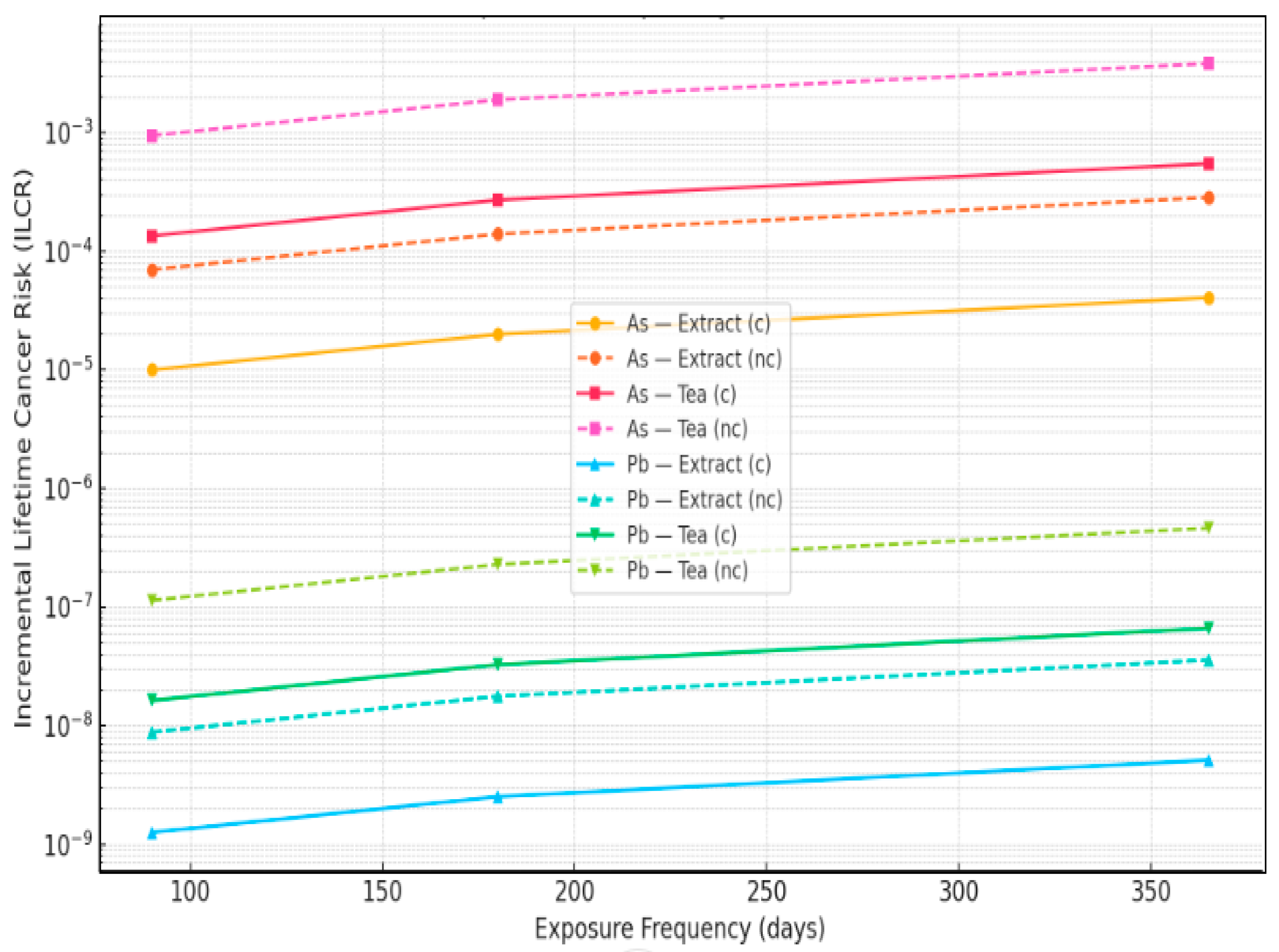
Table 6 shows the Incremental Lifetime Cancer Risk (ILCR) values estimated for arsenic (As) and lead (Pb) through different exposure pathways (tea and aqueous extract), using the pathway-specific chronic daily intake (CDI) and the oral Cancer Slope Factors (CSF) as defined in Equations (1) and (4). These data can be better visualized in Figure 2, which clearly shows that the ILCR associated with arsenic (As) is consistently higher than that for lead (Pb) across all evaluated scenarios.
Table 6 shows that the estimated ILCR values for arsenic increase proportionally with higher exposure frequency (EF), ranging from 1.00 × 10⁻⁵ to 4.07 × 10⁻⁵ for the aqueous extract (c) pathway and from 1.35 × 10⁻⁴ to 5.49 × 10⁻⁴ for the tea (c) pathway. The non-carcinogenic fractions (nc) show even higher ILCRs, reaching up to 3.84 × 10⁻³ at 365 days, indicating a relevant lifetime cancer risk associated mainly with chronic arsenic intake through tea consumption. In contrast, lead (Pb) shows ILCR values that are several orders of magnitude lower, with maximum values ranging from 1.26 × 10⁻⁹ to 5.12 × 10⁻⁹ for the extract (c) and up to 6.63 × 10⁻⁸ for tea (c) at 365 days. Overall, the ILCR values for arsenic, especially via tea, approach or exceed the commonly used acceptable cancer risk range (10−6 to 10−4), highlighting a potential health concern for long-term exposure.
Figure 2 indicates that arsenic is the main contributor to lifetime cancer risk, with ILCR values increasing with exposure frequency and reaching levels close to or above the acceptable risk range, particularly through tea consumption. In contrast, lead shows negligible contributions, with values several orders of magnitude lower. These findings highlight a potential health concern related to chronic arsenic intake.

4. Discussion

These findings indicate that the preparation method exerts a marked influence on the elemental composition of K. laetivirens (Table 3). In general, raw leaves exhibited the highest concentrations of most elements, reflecting their unprocessed nature and the natural accumulation of minerals within plant tissues. One-way ANOVA revealed statistically significant differences among the leaf tea, raw leaves, and aqueous juice. Post hoc comparisons using Tukey’s HSD test confirmed that for the majority of elements, the concentrations in raw leaves were significantly higher than those in tea and juice. For example, potassium (K) showed distinctly different levels across treatments, with raw leaves presenting the highest concentrations (15,399.31 ± 131.55 mg/kg), followed by tea (12,249.97 ± 240.17 mg/L) and aqueous juice (943.16 ± 26.92 mg/40 mL), indicating substantial decrease due to infusion and dilution processes. Although the tea retained appreciable amounts of elements such as phosphorus and magnesium, their overall concentrations were lower than those found in raw leaves, likely as a result of partial leaching during infusion. The aqueous juice displayed markedly reduced concentrations for most elements, suggesting a significant dilution effect. Interestingly, certain elements such as sodium and cobalt, showed comparatively smaller differences between tea and juice, possibly reflecting variations in solubility or extraction efficiency. Importantly, elements of toxicological concern, including arsenic (As) and lead (Pb), also varied significantly, with lower concentrations observed in tea and juice compared with raw leaves. This reduction implies a lower potential risk of exposure when these preparations are consumed instead of the raw leaves. Overall, these results emphasize that both processing methods and consumption forms play critical roles in determining potential human exposure to trace elements derived from K. laetivirens.
Regarding aluminum (Al) (Table 3), the concentration found in the raw leaves was 109.54 mg/kg, decreasing to 20.47 mg/L in the tea and 4.22 mg/L in the aqueous extract. However, these values are lower than those reported by Petenatti et al. (2011) [32], who observed Al levels ranging widely in species such as Melissa officinalis, with concentrations exceeding 920 mg/kg in raw plant material and 310 mg/L in infusions. Similarly, the Al content in our raw leaves is also below the levels reported for dry powdered leaves of E. indica (1220.4 ± 30.6 mg/kg), Orthosiphon stamineus (460.8 ± 24.1 mg/kg), and Bauhinia forficata (452.7 ± 17.5 mg/kg) [33]. This may be associated with specific soil characteristics or regional contamination. It is important to note that the Al concentrations in both the tea and the aqueous extract exceed the Brazilian standard for freshwater (0.2 mg/L) [34], as well as the WHO guideline value for drinking water (0.2 mg/L) [35]. Aluminum is not known to play any biochemical or physiological role in the human body. Its absorption is very limited and, in healthy individuals, it is efficiently excreted through the kidneys. However, in cases of impaired renal function, aluminum may accumulate and result in toxic effects [35].
According to Table 3, potassium (K), an essential macronutrient, showed a concentration of 15,399.31 mg/kg in the raw plant material, which is comparable to the levels reported for M. officinalis (16,900 mg/kg) and Passiflora caerulea (16,100 mg/kg) by Petenatti et al. (2011) [32]. This high concentration was partially retained in the tea (12,249.97 mg/L) and in the aqueous extract (943.16 mg/L), indicating that a significant fraction of K remains bioavailable, thus reinforcing the nutritional potential of this plant material. It is worth noting that the K concentrations found in the raw leaves of K. laetivirens are considerably lower than those reported by Souza et al. (2021) [33] for other dry powdered medicinal plants, such as E. indica (96,886.2 ± 1997.0 mg/kg), O. stamineus (79,071.9 ± 1020.0 mg/kg), and B. fortificata (80,680.3 ± 260.0 mg/kg). Furthermore, the K concentrations detected in the tea and extract of K. laetivirens were also lower than those reported for M. officinalis infusions (852,320.0 mg/L) [32]. Currently, there is no specific regulatory limit for potassium in water established by Brazilian or WHO guidelines. According to the World Health Organization (WHO, 2022), no guideline value for aluminum in drinking-water was established, since it is not considered toxic at the concentrations typically found in water, which generally occur well below levels of health concern [35].
In contrast to other elements in Table 3, arsenic (As) showed particularly concerning levels in the present study, with concentrations of 6.52 mg/kg in the raw leaves, 5.98 mg/kg in the tea, and 0.443 mg/kg in the aqueous extract. When compared with Zhu et al. (2013) [36], who reported As levels in raw herbal flowers ranging from 0.247 to 0.839 mg/kg and corresponding infusion concentrations of 0.009 to 0.023 mg/L, the values found here (Table 3) are considerably higher—up to fifteen times greater in the raw material and up to 20 times higher in the infusion. Moreover, the As concentration in the tea and aqueous extract in this study far exceed the maximum limit for arsenic in freshwater bodies set by the Brazilian CONAMA Resolution No. 357/2005 (0.01 mg/L) [34], as well as the WHO Guidelines for Drinking-Water Quality, Fourth Edition (0.01 mg/L) [35]. Arsenic is a toxic element for humans. This indicates that the prepared infusions pose a significant risk of arsenic exposure if consumed regularly, with levels that surpass safe drinking water standards by more than one order of magnitude. These findings highlight the high bioaccumulation potential of As in this species, which may be associated with local soil conditions or environmental contamination. Noteworthy, continuous monitoring, good agricultural practices, and stricter regulatory measures are essential to minimize human health risks related to arsenic exposure from herbal products.
Regarding barium (Ba), the concentrations detected in this study were 109.93 mg/kg in the raw leaves, 70.17 mg/L in the tea, and 4.23 mg/L in the aqueous extract (Table 3). These levels are substantially higher than those reported by Akhbarizadeh et al. (2023) [37], who found mean Ba concentrations of 0.62 ± 0.4 mg/kg in dried herbal medicines and 0.05 ± 0.04 mg/L in their infusions. This indicates a markedly greater accumulation and transfer of Ba in this plant species compared to the herbal samples examined in Iran. Furthermore, although the Ba concentration in the infusion here (70.17 mg/kg) does not directly match the units of drinking water standards, even when considering dilution during consumption, the detected levels could exceed the maximum limits for Ba in freshwater (1.0 mg/L according to Brazilian CONAMA Resolution No. 357/2005) [34] and in drinking water (1.3 mg/L according to the WHO Guidelines for Drinking-Water Quality, Fourth Edition) [35]. In addition, barium is not carcinogenic or genotoxic; evidence on hypertension is inconclusive, while nephropathy in animals is the main toxicological concern. This suggests that regular consumption of this herbal tea could contribute to Ba intake above recommended safe levels, reinforcing the importance of monitoring Ba contamination in medicinal plants and derived products.
For cobalt (Co) in Table 3, the mean concentration in the raw leaves was 0.891 mg/kg, with 0.855 mg/L measured in the tea and 0.0525 mg/L in the aqueous extract. Compared to Akhbarizadeh et al. (2023) [37], who reported average Co levels of 0.53 ± 0.1 mg/kg in dried herbal medicines and 0.07 ± 0.01 mg/L in infusions, the values found in the present study are noticeably higher for both the plant material and the prepared tea. Notably, the Co concentration in the infusion slightly exceeds the Brazilian freshwater limit of 0.05 mg/L set by CONAMA Resolution No. 357/2005 [34]. Although the WHO Guidelines for Drinking-Water Quality do not provide a specific value for Co, the results indicate a potential concern for cobalt exposure, especially with frequent consumption. This emphasizes the need for continued monitoring of Co levels in medicinal plants and for clear labeling and quality control to protect consumers from unintended heavy metal intake.
Regarding copper (Cu), the concentration found in the raw leaves was 8.824 ± 0.211 mg/kg, while the levels in the tea and aqueous extract were 1.114 ± 0.053 mg/L and 1.42 ± 0.0108 mg/kg, respectively (Table 3). Compared to Akhbarizadeh et al. (2023) [37], who reported an average Cu level of 2.26 ± 3.2 mg/kg in dried herbal medicines and only 0.03 ± 0.02 mg/L in herbal infusions, the present study shows substantially higher concentrations for both the raw plant material and the prepared tea. Zhu et al. (2013) also observed a broader range of Cu in dried herbal flowers (0.861 ± 0.054 to 13.7 ± 0.8 mg/kg) and 0.625 ± 0.045 mg/L in their infusions [36], which partially aligns with the current findings. In addition, Souza et al. [33] reported even higher Cu concentrations in dry powdered leaves of E. indica (32.96 ± 0.84 mg/kg), O. stamineus (22.42 ± 0.49 mg/kg), and B. fortificata (22.20 ± 0.32 mg/kg), all of which surpass the levels found in K. laetivirens raw leaves in this study. However, the Cu levels in the infusions of these species were relatively low: 0.014 ± 0.001 mg/L for E. indica, 0.011 ± 0.002 mg/L for O. stamineus, and 0.187 ± 0.004 mg/kg for B. fortificata [33], which are markedly lower than the 1.114 mg/L observed in the tea analyzed here. Notably, the Cu concentration in the tea greatly exceeds the Brazilian freshwater standard of 0.013 mg/L [34], highlighting a potential risk of excessive copper intake through repeated consumption. Although the WHO Guidelines for Drinking-Water Quality do not establish a specific limit for Cu in drinking water in the referenced edition, the elevated levels detected reinforce the need for careful monitoring, risk assessment, and quality control in the production and consumption of herbal teas and extracts.
For iron (Fe), the concentration quantified in the raw leaves was 90.547 ± 1.64 mg/kg, while the tea and aqueous extract contained 3.680 ± 0.487 mg/L and 3.61 ± 0.056 mg/L (Table 3), respectively. These levels are considerably lower than those reported by Souza et al. (2021) [33], who found Fe concentrations in dry powdered leaves ranging from 652.53 ± 5.85 mg/kg in B. fortificata to 1605.1 ± 29.2 mg/kg in E. indica. Similarly, Zhu et al. (2013) reported Fe levels of 347 ± 24 mg/kg in L. japonica flowers and 1305 ± 87 mg/kg in R. rugosa [36], all of which exceed the Fe content observed in the raw leaves analyzed in the present study. However, the Fe concentration in the tea infusion here (3.680 mg/L, Table 3) is significantly higher than the Brazilian legal limit for freshwater, which is 0.3 mg/L (CONAMA Resolution No. 357/2005) [34]. It is also worth noting that the Fe concentrations reported by Souza et al. (2021) for herbal infusions were much lower than those found in the tea of K. laetivirens, with values of 0.19 ± 0.05 mg/L in E. indica, 0.03 ± 0.05 mg/L in O. stamineus, and 0.084 ± 0.006 mg/L in B. fortificata [33]. These comparisons highlight that although the raw leaf Fe levels in K. laetivirens are lower than those in other species, its infusion releases a relatively high amount of Fe, which may pose a health concern if consumed frequently and without quality control. Although herbal infusions are not directly regulated as potable water, this comparison suggests that frequent consumption may contribute to iron intake above the recommended safe limit for drinking water. These findings highlight the need for monitoring iron levels in herbal teas and underline the importance of standardizing preparation methods to manage potential health risks associated with excessive Fe intake.
Regarding magnesium (Mg) in Table 3, the concentration found in the raw leaves was 3895.12 ± 100.63 mg/kg, while the tea and aqueous extract contained 3660.52 ± 32.17 mg/L and 218.83 ± 4.103 mg/kg, respectively. Compared to Souza et al. (2021) [33], who reported Mg levels ranging from 17,381 to 18,399.9 mg/kg in dried powdered leaves of various medicinal plants, the values observed in this study are significantly lower for the raw material. On the other hand, when compared to Petenatti et al. (2011) [32], the Mg concentration in the raw material of K. laetivirens (3895.12 mg/kg) is very similar to that found for M. officinalis (4050 mg/kg) and markedly higher than that in Valeriana officinalis (1320 mg/kg). Interestingly, the Mg levels in the tea infusion analyzed here (3660.52 mg/L) are far lower than the extremely high concentrations reported by Petenatti et al. (2011) [32], for infusions of M. officinalis (80,050 mg/L) and V. officinalis (24,830 mg/L), which may reflect different extraction efficiencies, preparation methods, or possibly unit inconsistencies in the original report. Although there is no maximum regulatory limit for magnesium in drinking water due to its nutritional relevance, the substantial levels found in the tea indicate that K. laetivirens could represent a meaningful dietary source of Mg. This reinforces its nutritional value but also calls for attention to appropriate consumption, especially for individuals with dietary restrictions related to mineral intake.
In the present study, manganese (Mn) concentrations measured in raw leaves were 37.047 ± 0.917 mg/kg, while the tea and aqueous extract showed 28.88 ± 2.11 mg/L and 1.87 ± 0.016 mg/kg Table 3. Compared to Akhbarizadeh et al. (2023) [37], who found much lower Mn levels in dried herbal medicines (4.1 ± 1.9 mg/kg) and herbal infusions (ranging from 0.06 ± 0.03 to 0.44 ± 0.13 mg/L), the values observed here are considerably higher. When compared to Souza et al. (2021) [33], the Mn content in K. laetivirens leaves is notably lower than that in O. stamineus dry powdered leaves (470.90 ± 4.03 mg/kg), but the concentration in the tea (28.88 mg/L) far exceeds the Mn level in O. stamineus infusions (0.77 ± 0.01 mg/L). Petenatti et al. (2011) reported even higher Mn levels in raw materials of Nepeta cataria (320 mg/kg) and M. officinalis (63,500 mg/kg), as well as unusually elevated concentrations in infusions (450 mg/L for M. officinalis), which may reflect high accumulation capacity or unit inconsistencies [32]. Importantly, the Mn concentration in the tea obtained in this study (28.88 mg/L) is significantly above the Brazilian regulatory limit of 0.1 mg/L (CONAMA Resolution No. 357/2005) and the WHO guideline of 0.08 mg/L for drinking water [34]. Although herbal infusions are not regulated as drinking water, this finding indicates a potential health concern, particularly if consumed frequently and in large volumes. Therefore, the results highlight the need for monitoring and quality control of manganese levels in herbal teas to ensure safe consumption.
In the present study (Table 3), the concentration of molybdenum (Mo) in raw leaves was 22.136 ± 0.637 mg/kg, with a significant reduction observed in the tea (1.678 ± 0.017 mg/L) and aqueous extract (0.127 ± 0.0013 mg/L). These values are considerably higher than those reported by Akhbarizadeh et al. (2023) [37], who found mean Mo levels of 0.53 ± 0.3 mg/kg in dried herbal medicines analyzed in Iran. On the other hand, the value observed in the raw leaves is within the range reported by Lawson-Wood et al. (2021) [38], who quantified 35.2 mg/kg (dry weight) in Lepidium sativum L., suggesting that elevated Mo levels may naturally occur in certain plant species depending on environmental conditions, soil composition, and contamination sources. Regarding the tea infusion, the concentration of 1.678 mg/L exceeds the guideline value set by the World Health Organization (WHO), which recommends a limit of 0.07 mg/L for molybdenum in drinking water (WHO, 2011) [39], by more than 23 times. This finding is concerning, as regular consumption of teas with such Mo levels may pose toxicological risks, particularly due to its potential for bioaccumulation and its association with adverse effects such as interference in copper metabolism and hepatic dysfunctions following chronic exposure. Moreover, Brazil currently lacks a regulatory limit for Mo in drinking water [34]. This highlights a critical regulatory gap and the need for further investigations into the presence of molybdenum in natural products commonly used for medicinal purposes. Therefore, the molybdenum concentrations found in this study were markedly higher than most of those reported in the literature for herbal teas and plant materials, underscoring the importance of systematic monitoring and toxicological evaluation of this element in phytotherapeutic preparations, and the urgency of setting specific regulatory standards to safeguard public health.
The sodium (Na) concentration in K. laetivirens was found to be 134.74 ± 2.827 mg/kg in the raw leaves, 132.94 ± 1.44 mg/L in the tea, and 0.727 ± 0.061 mg/L in the aqueous extract (Table 3). These values are significantly higher than those reported by Petenatti et al. (2011) for Tilia x moltkei, which showed only 120 mg/kg in the raw plant material [32]. However, the sodium content in K. laetivirens aqueous extract remains below the 1950 mg/L reported in Tilia x moltkei infusions [32]. When compared to data from Souza et al. (2021) [33], our results show the sodium content in K. laetivirens is notably lower than that found in dry powdered leaves of E. indica (18,747.1 ± 280.5 mg/kg) and B. fortificata (7961.0 ± 90.7 mg/kg) but higher than the concentrations observed in their infusions (9.81 ± 0.61 mg/L and 14.29 ± 0.99 mg/L, respectively) [33]. These findings indicate that although K. laetivirens does not exhibit the highest absolute sodium levels among the medicinal plants studied, its concentrations in tea and raw leaves surpass most reported values for other species, particularly in liquid preparations. It is noteworthy that to date, neither Brazilian regulations nor the World Health Organization (WHO) guidelines have established maximum permissible limits for sodium in drinking water, revealing a significant regulatory gap. Given that sodium is an essential electrolyte, but excessive intake is associated with hypertension and cardiovascular disease, the elevated sodium levels found in K. laetivirens infusions warrant attention—especially among individuals with sodium-restricted diets. The potential cumulative dietary exposure for regular consumers should be further investigated in future studies.
In Table 3, the concentration of nickel (Ni) in K. laetivirens was found to be 1.094 ± 0.194 mg/kg in raw leaves, 0.948 ± 0.043 mg/kg (or mg/L) in tea, and 0.097 ± 0.002 mg/L in the aqueous extract. These values fall within the range reported in previous studies on herbal materials. Zhu et al. (2013) reported Ni concentrations of 2.10 ± 0.12 mg/kg and 1.25 ± 0.08 mg/kg in dried herbal flowers of M. chinensis and R. rugosa, respectively, which are slightly higher than those found in K. laetivirens, while the value reported for C. praecox (15.9 ± 2.8 mg/kg) was substantially higher [36]. When compared to data from Souza et al. (2021), which show 3.35 ± 0.07 mg/kg in dry powdered leaves of E. indica, the Ni concentration in K. laetivirens is again lower [33]. Regarding infusions, the Ni level in K. laetivirens tea (0.948 mg/L) is comparable to that reported in herbal infusions of M. chinensis (0.825 ± 0.063 mg/L) and R. rugosa (0.603 ± 0.045 mg/L) by Zhu et al. (2013) [36], though it is significantly lower than the concentration found in C. praecox infusions (44.6–54.1 mg/L). The aqueous extract of K. laetivirens showed the lowest concentration (0.097 mg/L), indicating a reduced transfer of Ni into this preparation [36]. Overall, while K. laetivirens does not exhibit the highest nickel content compared to other medicinal plants, the levels detected in both tea and leaves are not negligible and could contribute to cumulative dietary intake. Given the potential toxicity of nickel at elevated concentrations, especially in sensitive individuals, these findings underscore the importance of monitoring nickel levels in herbal preparations regularly consumed.
The concentration of phosphorus (P) in K. laetivirens was found to be 10,811.24 ± 197.22 mg/kg in raw leaves, 5793.47 ± 760.74 mg/L in the tea, and 664.071 ± 8.65 mg/L in the aqueous extract (Table 3). These values are notably higher than those reported by Petenatti et al. (2011) for Melissa officinalis (2760 mg/kg) and V. officinalis (3060 mg/kg) in raw materials [32]. However, the phosphorus levels in the Kalanchoe tea and extract were substantially lower than the extremely elevated concentrations found in infusions of Melissa officinalis (70,150 mg/L) and V. officinalis (111,420 mg/L). When compared to other medicinal plants, such as E. indica (96,886.2 ± 1997.0 mg/kg) and B. fortificata (80,680.3 ± 260.0 mg/kg) [33], the phosphorus content in K. laetivirens raw material is considerably lower. Similarly, the levels in K. laetivirens tea (5793.47 mg/L) are much higher than those detected in leaf teas from E. indica (27.7 ± 0.8 mg/L) and B. fortificata (144.43 ± 0.31 mg/L). From a public health perspective, the phosphorus concentrations found in K. laetivirens tea (5793.47 mg/L) and extract (664.071 mg/L) exceed by several orders of magnitude the maximum limits established for freshwater by environmental and health authorities. The Brazilian CONAMA Resolution No. 357 (2005) sets a limit of 0.020 mg/L [34], and the World Health Organization (WHO, 2022) recommends an even lower threshold of 0.006 mg/L for phosphorus in drinking water [35]. These findings raise concerns about the excessive phosphorus content in herbal preparations, particularly when consumed regularly. High phosphorus intake has been linked to health risks, especially for individuals with kidney disease. Therefore, careful monitoring and regulatory control are recommended to ensure the safety of such herbal products.
According to Table 3, the concentration of lead (Pb) in K. laetivirens was quantified at 4.11 ± 0.86 mg/kg in raw leaves, 3.82 ± 0.179 mg/L in tea, and 0.295 ± 0.0045 mg/L in the aqueous extract. These values indicate a relatively high presence of lead, particularly in the tea preparation, which is close to the concentration found in the raw plant material—suggesting significant transfer of Pb during infusion. When compared to other studies, the Pb concentration in K. laetivirens raw leaves is similar to that reported for M. chinensis flowers (5.97 ± 4.23 mg/kg) and C. officinalis (3.10 ± 0.23 mg/kg) by Zhu et al. (2013) [36]. However, it is considerably higher than the average level of Pb reported in dried herbal medicines by Akhbarizadeh et al. (2023) [37], which was only 0.19 ± 0.2 mg/kg. In relation to infusions, the Pb level in K. laetivirens tea (3.82 mg/L) far exceeds the values found in the infusions of M. chinensis (0.415 ± 0.034 to 0.480 ± 0.036 mg/L) and is drastically above the average of 0.01 ± 0.003 mg/L reported by Akhbarizadeh et al. (2023) [37]. Critically, the Pb content in K. laetivirens tea also surpasses the maximum limits established by Brazilian legislation (0.01 mg/L—CONAMA, 2005) [34], and the World Health Organization (0.02 mg/L) [35] for drinking water. These findings raise toxicological concerns, especially considering the chronic exposure that may result from the regular consumption of herbal teas. Lead is a well-known neurotoxic and nephrotoxic element, with no safe level of exposure, particularly for sensitive populations such as children, pregnant women, and individuals with compromised renal function. Therefore, the high Pb content found in K. laetivirens, especially in its tea preparation, underscores the need for stricter quality control measures in the production of herbal products and more comprehensive regulatory oversight to safeguard public health.
As Table 3 shows, the selenium (Se) content in K. laetivirens was 7.012 ± 0.407 mg/kg in raw leaves, 6.46 ± 1.50 mg/L in the tea, and 0.455 ± 0.0033 mg/L in the aqueous extract. These values are relatively elevated when compared to most herbal preparations and suggest that Se is effectively extracted into the tea, retaining a large portion of its initial content from the raw leaves. Compared to other studies, the Se concentration in K. laetivirens raw leaves is lower than that reported in the raw material of V. officinalis (310 mg/kg) and Passiflora caerulea (500 mg/kg) by Petenatti et al. (2011) [32], but higher than in B. fortificata (16.44 ± 0.12 mg/kg) as noted by Souza et al. (2021) [33]. However, the Se content in the tea of K. laetivirens (6.46 mg/L) is substantially higher than in herbal teas from B. fortificata (0.059 ± 0.006 mg/L), E. indica (0.129 ± 0.004 mg/L), and O. stamineus (0.015 ± 0.001 mg/L), which all exhibited Se levels several-fold lower [33]. The infusions from V. officinalis and Passiflora caerulea, however, reportedly reached up to 20 mg/L [32], surpassing K. laetivirens tea. Crucially, the Se concentration found in the K. laetivirens tea (6.46 mg/L) greatly exceeds the maximum limits for freshwater established by both Brazilian legislation (0.05 mg/L—CONAMA) [34], and the World Health Organization (0.04 mg/L—WHO, 2022) [35]. While selenium is an essential micronutrient known for its antioxidant properties and role in thyroid function, excessive intake may result in selenosis, characterized by symptoms such as gastrointestinal disturbances, hair loss, fatigue, and neurological damage [35]. Therefore, while the Se levels found in K. laetivirens may suggest potential nutritional benefits, the concentrations—especially in the tea preparation—are above safe exposure thresholds for drinking water. These findings highlight the importance of toxicological evaluation and regulatory surveillance for selenium levels in herbal infusions, particularly in products consumed regularly and in high volumes.
The concentration of vanadium (V) in K. laetivirens was 12.21 ± 0.186 mg/kg in raw leaves, 11.97 ± 0.401 mg/L in the tea, and 0.844 ± 0.005 mg/L in the aqueous extract (Table 3). These values are considerably higher than those reported in other medicinal plants analyzed in previous studies. For example, Antal et al. (2009) quantified vanadium in medicinal plant roots and flowers and found much lower levels: 0.453 mg/kg in the dry roots of Cichorium intybus (chicory) and 0.385 mg/L in its decoction [40]. Similarly, Sambucus nigra (elder) flowers showed only 0.148 mg/kg in dry material and 0.082 mg/L in decoction. Compared to these references, K. laetivirens presents vanadium concentrations up to 27 times higher in raw leaves and over 100 times higher in tea infusions. Importantly, the Brazilian regulatory limit for vanadium in freshwater, as established by CONAMA Resolution No. 357/2005, is 0.1 mg/L [34]. The vanadium concentration in K. laetivirens tea (11.97 mg/L) exceeds this limit by more than 100 times, raising serious concerns regarding its potential health risks when consumed regularly. In contrast, the World Health Organization (WHO) has not established specific guideline values for vanadium in drinking water, indicating a gap in international regulation. Vanadium is a trace element that can exhibit both beneficial and toxic effects depending on dose and chemical form. Thus, the high levels found in K. laetivirens, particularly in tea preparations, underscore the need for further toxicological assessment and regulatory oversight. In summary, the elevated vanadium content observed in K. laetivirens—particularly when compared with other medicinal plants—may pose potential toxicological risks, especially if the herbal tea is consumed frequently or in high volumes. This highlights the importance of monitoring vanadium in phytotherapeutic products to ensure consumer safety.
In Table 3, the zinc (Zn) concentrations in K. laetivirens were measured at 98.95 ± 33.19 mg/kg in raw leaves, 69.11 ± 6.57 mg/L in the tea infusion, and 5.97 ± 0.062 mg/L in the aqueous extract. These values are markedly elevated when compared with those found in other medicinal plants. For instance, Souza et al. (2021) reported Zn concentrations of 51.48 ± 0.65 mg/kg in E. indica dry leaves and 16.57 ± 0.14 mg/kg in O. stamineus [33], both of which are significantly lower than the levels found in K. laetivirens. The Zn concentration in K. laetivirens tea (69.11 mg/L) is particularly notable, as it greatly surpasses the values found in teas prepared from other medicinal plants. In the same study, Zn levels in herbal leaf teas were 0.51 ± 0.03 mg/L for E. indica and 0.11 ± 0.01 mg/L for O. stamineus, indicating that K. laetivirens infusions contain over 100 times more Zn than these comparators. Likewise, Akhbarizadeh et al. (2023) reported average Zn concentrations of 1.34 ± 0.6 mg/kg in various dried herbal medicines (e.g., hollyhocks, peppermint, cheeseweed) [37], and only 0.09 ± 0.05 mg/L in the respective infusions—both far below the values found in K. laetivirens. When compared to regulatory standards, the Zn concentration in K. laetivirens tea (69.11 mg/L) greatly exceeds the Brazilian CONAMA limit of 0.18 mg/L for freshwater (CONAMA Resolution No. 357/2005) [34], raising potential health concerns related to chronic exposure via ingestion. However, the World Health Organization (WHO) does not consider zinc in drinking water a health concern at levels commonly found, although no specific maximum guideline value is established. Zinc is an essential trace element involved in numerous biological functions. Nonetheless, excessive intake can lead to adverse effects such as gastrointestinal irritation, interference with copper absorption, and immune dysfunction.
In order to assess potential health risks associated with the consumption of K. laetivirens, the estimated oral Chronic Daily Intake (CDI) values for metal(loid)s were calculated from both tea infusions and aqueous leaf extracts. Table 4 summarizes these values, considering three exposure frequencies (EF = 90, 180, and 365 days/year) and two averaging times (3650 days for non-carcinogenic risk and 25,550 days for carcinogenic risk), in relation to the ingestion of tea and aqueous extract from this medicinal plant. Among the elements, potassium (K) and magnesium (Mg) exhibited the highest CDI values, especially in tea infusions, with CDI_Tea_nc for K reaching up to 0.0249 mg/kg/day at 365 days/year. Although these elements are essential nutrients, their elevated intake under chronic exposure scenarios may warrant consideration in populations with compromised renal function or dietary imbalances.
Based on the data in Table 4, a clear distinction is observed when comparing the values of aqueous extract samples to those of leaf tea samples. The CDI_Tea values—both carcinogenic (CDI_Tea_c) and non-carcinogenic (CDI_Tea_nc)—were consistently higher than those from aqueous extracts (CDI_Extract_c and CDI_Extract_nc) across all exposure frequencies and elements. This suggests that the traditional tea infusion method may extract more metal(loid) content from the plant material than simple aqueous soaking (extract with water), potentially increasing exposure levels in frequent consumers [41].
In the group of trace elements (Table 4), arsenic (As) and lead (Pb) showed particularly elevated values in tea infusions. For instance, CDI_Tea_c for As reached 3.66 × 10⁻⁴ mg/kg·day at 365 days/year, compared to 2.71 × 10⁻⁵ mg/kg·day in CDI_Extract_c, reinforcing the higher extractability and potential exposure through tea. Similarly, Pb had a CDI_Tea_nc of 5.46 × 10⁻⁵ mg/kg·day, notably higher than its aqueous counterpart (4.21 × 10⁻⁶ mg/kg·day), raising concern for cumulative toxicological effects over long-term use.
Aluminum (Al), though not classified as a carcinogen, also demonstrated elevated exposure via tea. The CDI_Tea_nc at 365 days was 2.92 × 10⁻⁴ mg/kg·day, in contrast to 6.03 × 10⁻⁵ mg/kg·day in CDI_Extract_nc, indicating a nearly fivefold increase. For essential but potentially toxic elements such as selenium (Se) and zinc (Zn), tea preparations again yielded higher values. For Se, CDI_Tea_c reached 1.32 × 10⁻⁵ mg/kg·day, while CDI_Extract_c was 9.29 × 10⁻⁷ mg/kg·day. Zinc followed the same trend, with CDI_Tea_nc at 9.87 × 10⁻⁴ mg/kg·day and CDI_Extract_nc at 8.52 × 10⁻⁵ mg/kg·day at 365 days/year.
These consistent differences between the extract and tea infusions highlight the greater mobilization and bioaccessibility of metal(loid)s during the decoction or boiling process, reinforcing the relevance of tea consumption as a significant exposure pathway for both essential and potentially toxic elements. Akhbarizadeh et al. (2023) Akhbarizadeh et al. [37] investigated the concentration, transfer rate, and health risks associated with metal(loid)s (e.g., As, Cd, Cr, Pb) in 30 medicinal plants collected in Iran and their infusions. They found that Cd concentrations in five dry plant samples exceeded recommended limits [37]. Despite these high levels in raw materials, the transfer rate to water-based infusions was relatively low (less than 30%). Therefore, although the aqueous method reduces the intake of toxic metals compared to the dry plant material, the consumption of infusions may still pose health risks to vulnerable populations, such as children.
This comparison emphasizes the importance of not generalizing exposure risk solely based on the total element concentration in raw plant material and instead considering the actual preparation and consumption method. The findings reinforce the need for regular monitoring of elemental composition in herbal products and for regulatory benchmarks that consider cumulative and combined exposure risks—especially for widely consumed infusions.
Other trace metals such as lead (Pb), nickel (Ni), cobalt (Co), vanadium (V), and selenium (Se) exhibited low CDI values in both matrices. However, their cumulative toxic potential should not be disregarded, especially if other exposure routes (e.g., ingestion from other foods, water, or inhalation) contribute significantly to total intake.
When the frequency of exposure is increased (e.g., daily intake, EF = 365 days/year), the CDI values naturally increase proportionally, reinforcing the need for realistic exposure scenarios in health risk assessments. The carcinogenic risk scenario, with a longer averaging time (AT = 25,550 days), produces lower daily intake estimates due to the extended exposure period used in the calculation.
Overall, while the high levels of macronutrients dominate the CDI estimates, the presence of arsenic and other heavy metals should be closely monitored, as even low concentrations can pose health risks over prolonged exposure. Proper regulatory compliance and routine monitoring are recommended to ensure the safety of such products for regular consumption.
The chronic daily intake (CDI) values estimated for the tea samples under continuous daily exposure (365 days/year) were compared against the Minimal Risk Levels (MRLs) established by the Agency for Toxic Substances and Disease Registry (ATSDR) to evaluate potential non-carcinogenic health risks [42]. In this case, most of the elements analyzed in the tea, including aluminum (Al), barium (Ba), cobalt (Co), copper (Cu), iron (Fe), manganese (Mn), molybdenum (Mo), nickel (Ni), selenium (Se), vanadium (V), and zinc (Zn), presented CDI values significantly below their respective MRLs. For instance, the estimated CDI for aluminum (2.92 × 10⁻⁴ mg/kg·day) is well below its oral MRL of 1.0 mg/kg·day. Similarly, the CDI for cobalt (1.22 × 10⁻⁵ mg/kg·day) is far lower than the MRL of 3.0 × 10⁻² mg/kg·day, indicating low risk from long-term consumption of the tea. However, notable exceptions include arsenic (As) and lead (Pb). Arsenic showed a CDI of 2.56 × 10⁻³ mg/kg·day in tea, which is more than eight times higher than the MRL of 3.0 × 10⁻⁴ mg/kg·day [42]. This suggests a potential carcinogenic health risk associated with chronic oral exposure to arsenic through tea consumption.
Lead also raises concern, as there is no defined MRL for non-carcinogenic effects, and health agencies such as the U.S. EPA and WHO recognize no safe level of lead exposure, particularly for vulnerable populations such as children and pregnant women. The estimated CDI for lead was 5.46 × 10⁻⁵ mg/kg·day, which, although relatively low, still indicates a need for caution and continuous monitoring.
For elements without defined oral MRLs, such as potassium (K), magnesium (Mg), sodium (Na), and phosphorus (P), the estimated CDI values were reported but cannot be directly compared for risk characterization. For example, potassium and phosphorus showed the highest CDI values among all elements (0.175 mg/kg·day and 0.0828 mg/kg·day, respectively), reflecting their high natural content in plant-based materials. Although these are essential macronutrients, excessive intake—especially from multiple sources—may pose health risks in sensitive individuals, such as those with renal dysfunction.
Regarding the risk assessment, among the analyzed elements in Table 5, phosphorus (P) shows exceptionally high HQ values in both matrices, with an HQ of 4138.19 for tea and 474.34 for the aqueous extract, indicating that phosphorus largely dominates the overall non-carcinogenic risk profile. Arsenic (As) is the second highest contributor, with HQ values of 8.54 (tea) and 0.63 (aqueous extract), exceeding the unitary reference level in tea, which suggests potential concern for non-carcinogenic health effects if exposure is chronic.
Other elements such as sodium (Na), cobalt (Co), vanadium (V), selenium (Se), and lead (Pb) also show detectable contributions to the cumulative HI, although their individual HQ values remain below 1. For most elements, the HQs are considerably lower than the threshold of concern, indicating minimal individual non-carcinogenic risk.
The total HI values calculated for phosphorus (P) demonstrated a clear cumulative effect with increasing exposure frequency (EF = 90, 180, and 365 days/year). For the aqueous extract, HI ranged from 16.7 (EF = 90) to 67.75 (EF = 365), while for the non-carcinogenic scenario it increased from 116.5 to 474.3. Similarly, for tea preparations, HI values were substantially higher, ranging from 145.5 to 591.0, with the non-carcinogenic estimates reaching extremely elevated levels (1020 to 4135). These results indicate that phosphorus is the predominant contributor to the overall HI, surpassing the acceptable threshold (HI > 1) by several orders of magnitude in all scenarios. This suggests that under the exposure assumptions applied, phosphorus intake from K. laetivirens could represent a potential health concern, particularly in long-term or daily consumption.
Considering the well-documented toxic and carcinogenic properties of certain elements, the Incremental Lifetime Cancer Risk (ILCR) was specifically calculated for arsenic (As) and lead (Pb), as these represent the primary contaminants of concern in the evaluated samples. According to Table 6, the ILCR values show a clear descending order: arsenic (As) consistently exhibits substantially higher carcinogenic risk than lead (Pb) under all exposure scenarios analyzed. Within each element, the ILCR follows the trend Tea_nc > Tea_c > Extract_nc > Extract_c. This pattern indicates that the non-carcinogenic (‘nc’) and the tea pathway represent the highest potential risk for lifetime cancer development. Specifically, for arsenic at the highest exposure frequency (365 days), the ILCR reaches 3.84 × 10⁻³ for Tea_nc, followed by Tea_c (5.49 × 10⁻⁴), Extract_nc (2.85 × 10⁻⁴) and Extract_c (4.07 × 10⁻⁵). By contrast, the ILCR for Pb under the same conditions is much lower, with Tea_nc peaking at 4.64 × 10⁻⁷, followed by Tea_c (6.63 × 10⁻⁸), Extract_nc (3.58 × 10⁻⁸) and Extract_c (5.12 × 10⁻⁹). This consistent difference of several orders of magnitude highlights that As is the dominant element driving the total carcinogenic risk in the studied samples. Additionally, ILCR values increase progressively with exposure frequency (from 90 to 365 days), reinforcing the direct relationship between chronic exposure duration and accumulated cancer risk. Overall, the results confirm that ingestion via tea poses a greater carcinogenic risk than the aqueous extract, and that pathway-specific conditions significantly affect the final ILCR estimates.
Figure 2 clearly demonstrates that the Incremental Lifetime Cancer Risk (ILCR) associated with arsenic (As) is significantly higher than that for lead (Pb) under all evaluated scenarios. The ILCR values for As reached the order of 10−3 for the Tea (nc) pathway at the highest exposure frequency (365 days), while Pb levels remained consistently below 10−7. This pattern underscores that arsenic is the primary contributor to carcinogenic risk in this context. Furthermore, the results confirm that increasing the exposure frequency has a direct linear effect on the ILCR for both elements, emphasizing the cumulative nature of chronic exposure. Additionally, the tea pathway consistently showed higher ILCR values compared to the aqueous extract, suggesting that ingestion through tea poses a greater potential for carcinogenic risk. Notably, the ‘nc’ condition resulted in higher ILCRs than the ‘c’ pathway for both elements, indicating that preparation and consumption conditions can strongly influence the estimated risk levels. Although Pb concentrations contributed to the overall risk, their relative impact on ILCR was minimal compared to As under the same exposure scenarios. These findings highlight the importance of monitoring arsenic levels in similar products and support the need for specific risk management strategies to minimize long-term health risks.
Further scientific evidence is still required to substantiate the therapeutic efficacy of Kalanchoe laetivirens in cancer treatment. Although its traditional use as a medicinal plant is well documented, current evidence remains largely limited to preliminary findings and anecdotal reports. Rigorous experimental and clinical studies are necessary to confirm its anticancer potential, clarify its mechanisms of action, and establish safe and effective dosages. In particular, the practice of consuming K. laetivirens as an aqueous extract lacks systematic investigation. Experimental studies addressing this preparation are essential to evaluate not only its pharmacological activity but also its safety profile, given the potential mobilization of toxic elements.
It is also important to note that the present investigation was based on total elemental concentrations determined by ICP OES, which does not differentiate between chemical species or account for gastrointestinal bioavailability. Future research should therefore include arsenic and phosphorus speciation using HPLC-ICP-MS, combined with in vitro gastrointestinal bioaccessibility assays (e.g., UBM or PBET protocols), to better estimate the bioavailable and toxicologically relevant fractions of these elements.

5. Conclusions

This study demonstrates that preparation methods exert a decisive influence on the elemental composition and associated health risks of K. laetivirens. ANOVA confirmed significant differences among raw leaves, tea infusions, and aqueous extracts, with tea consistently mobilizing higher levels of metal(loid)s than aqueous extracts. Overall, the data indicate that most elemental concentrations in tea are within acceptable safety margins, with the exception of arsenic and lead, which deserve further toxicological attention.
Risk assessment revealed that phosphorus (P) dominated the non-carcinogenic profile, with Hazard Index (HI) values far exceeding the acceptable threshold, while arsenic (As) emerged as the principal carcinogenic concern, particularly in tea preparations. Lead (Pb) contributed minimally, and most other elements remained within safe exposure limits. Nonetheless, the elevated HQ and ILCR values for P and As, respectively, underscore potential health concerns under scenarios of frequent or chronic consumption.
Future research should prioritize the investigation of phosphorus bioavailability and arsenic speciation in herbal infusions, as these factors critically influence toxicological outcomes. Additionally, studies addressing combined dietary exposures are needed to better contextualize potential health risks. Establishing regulatory benchmarks that integrate preparation methods and chronic exposure scenarios will be essential to ensure the safe medicinal use of Kalanchoe laetivirens.

Author Contributions

Conceptualization, G.A.M.d.S. and E.S.d.P.M.; methodology, G.A.M.d.S. and L.C.N.; validation, M.A.P.A., M.S.O., R.S.d.C.F.C. and A.L.F.d.O.; formal analysis, E.S.d.P.M. and M.A.P.A.; data curation, D.G.A. and E.S.d.P.M.; writing—original draft preparation, V.A.d.N.; writing—review and editing, D.G.A. and V.A.d.N.; visualization, M.A.V.B.J., R.d.C.A.G. and V.A.d.N.; supervision, V.A.d.N.; project administration, V.A.d.N.; funding acquisition, V.A.d.N. All authors have read and agreed to the published version of the manuscript.

Funding

This research was financially supported by the Brazilian Research Council (CNPq) (CNPq: Process No 314551/2023-9) and Coordenação de Aperfeiçoamento de Pessoal de Nível Superior-Brasil (CAPES)-Finance Code 001.

Institutional Review Board Statement

Not applicable.

Informed Consent Statement

Not applicable.

Data Availability Statement

The data used to support the findings of this study are available from the corresponding author upon request.

Acknowledgments

The authors thank the Federal University of Mato Grosso do Sul, Faculty of Medicine, Brazil for their scientific support.

Conflicts of Interest

The authors declare no conflicts of interest.

Abbreviations

The following abbreviations are used in this manuscript:
CDIChronic Daily Intake
HQHazard Quotient
HIHazard Index
ILCRIncremental Lifetime Cancer Risk
ICP OESInductively Coupled Plasma Optical Emission spectroscopy
LODLimit of Detection
LOQLimit of Quantification
CSFCancer slope factor
ANOVAOne-way analysis of variance
Alaluminum
Kpotassium
Asarsenic
Babarium
Cocobalt
Cucopper
Feiron
Mgmagnesium
Mnmanganese
Ninickel
Pphosphorus
Pblead
Seselenium
Vvanadium
Znzinc
ANVISAAgência Nacional de Vigilância Sanitária
HPLCHigh Performance Liquid Chromatography
ICP-MSInductively Coupled Plasma Mass Spectrometry
UBMUnified BARGE Method
PBETPhysiologically Based Extraction Test

References

  1. Xia, Y.; Sun, M.; Huang, H.; Jin, W.-L. Drug repurposing for cancer therapy. Sig. Transduct. Target Ther. 2024, 9, 92. [Google Scholar] [CrossRef]
  2. Pan American Health Organization. Cancer; PAHO: Washington, DC, USA, 2025; Available online: https://www.paho.org/en/topics/cancer (accessed on 2 June 2025).
  3. Liu, B.; Zhou, H.; Tan, L.; Siu, K.T.H.; Guan, X.-Y. Exploring treatment options in cancer: Tumor treatment strategies. Sig. Transduct. Target Ther. 2024, 9, 175. [Google Scholar] [CrossRef]
  4. Bouh, A.; Mehdad, S.; El Ghoulam, N.; Daoudi, D.; Oubaasri, A.; El Mskini, F.Z.; Labyad, A.; Iraqi, H.; Benaich, S.; Hassikou, R.; et al. The use of medicinal plants by cancer patients receiving chemotherapy: A cross-sectional study at a referral oncology hospital in Morocco. J. Oncol. Pharm. Pract. 2025. [Google Scholar] [CrossRef] [PubMed]
  5. Sultana, S.; Asif, H.M.; Nazar, H.M.; Akhtar, N.; Rehman, J.U.; Rehman, R.U. Medicinal plants combating against câncer—A green anticancer approach. Asian Pac. J. Cancer Prev. 2014, 15, 4385–4394. [Google Scholar] [CrossRef] [PubMed]
  6. Merrouni, I.A.; Elachouri, M. Anticancer medicinal plants used by Moroccan people: Ethnobotanical, pharmacological and phytochemical review. J. Ethnopharmacol. 2021, 267, 113413. [Google Scholar] [CrossRef]
  7. Twilley, D.; Rademan, S.; Lall, N. A review on traditionally used South African medicinal plants, their secondary metabolites and their potential development into anticancer agents. J. Ethnopharmacol. 2020, 261, 113101. [Google Scholar] [CrossRef] [PubMed]
  8. Sagbo, I.J.; Otang-Mbeng, W. Plants Used for the Traditional Management of Cancer in the Eastern Cape Province of South Africa: A Review of Ethnobotanical Surveys, Ethnopharmacological Studies and Active Phytochemicals. Molecules 2021, 26, 4639. [Google Scholar] [CrossRef] [PubMed]
  9. Merrouni, I.A.; Elachouri, M. Anticancer medicinal plants used by Moroccan people: Ethnobotanical, preclinical, phytochemical and clinical evidence. J. Ethnopharmacol. 2021, 10, 113435. [Google Scholar] [CrossRef]
  10. Lorenzi, H.; Matos, F.J.A. Plantas Medicinais do Brasil: Nativas e Exóticas; Instituto Plantarum: Nova Odessa, Brazil, 2002; p. 512. [Google Scholar]
  11. Trease, G.E.; Evans, W.C. Textbook of Pharmacognosy, 16th ed.; Tyndall and Cassel: London, UK, 2009. [Google Scholar]
  12. Garcês, H.M.P.; Champagne, C.E.M.; Townsley, B.T.; Sinha, N.R. Evolution of asexual reproduction in leaves of the genus Kalanchoe. Proc. Natl. Acad. Sci. USA 2007, 104, 15578–15583. [Google Scholar] [CrossRef]
  13. Moreira, R.C.T.; Costa, L.C.B.; Costa, R.C.S.; Rocha, E.A. Abordagem etnobotânica acerca do uso de plantas medicinais na Vila Cachoeira, Ilhéus, Bahia, Brasil. Acta Farm. Bonaer 2002, 21, 205–211. [Google Scholar]
  14. Santos, M.B.C.; Santos, A.T.; Azevedo, G.Z. Use of plants of the genus Kalanchoe as a potential treatment for inflammatory diseases. In Exploring the Field of Agricultural and Biological; Seven Editora: São José dos Pinhais, Brazil, 2024; pp. 1–12. [Google Scholar] [CrossRef]
  15. Milad, R.; El-ahmady, S.; Singab, A.N. Genus Kalanchoe (Crassulaceae): A review of its ethnomedicinal, botanical, chemical and pharmacological properties. Eur. J. Med. Plants 2014, 4, 86–104. [Google Scholar] [CrossRef]
  16. Akinpelu, D.A. Antimicrobial activity of Bryophyllum pinnatum leaves. Fitoterapia 2000, 71, 193–194. [Google Scholar] [CrossRef] [PubMed]
  17. Supratman, U.; FujitA, T.; Akiyama, K.; Hayashi, H. Insecticidal compounds from Kalanchoe daigremontiana × tubiflora. Phytochemistry 2001, 58, 311–314. [Google Scholar] [CrossRef] [PubMed]
  18. Nascimento, L.B.d.S.; Casanova, L.M.; Costa, S.S. Bioactive Compounds from Kalanchoe Genus Potentially Useful for the Development of New Drugs. Life 2023, 13, 646. [Google Scholar] [CrossRef]
  19. Assis de Andrade, E.; Machinski, I.; Terso Ventura, A.C.; Barr, S.A.; Pereira, A.V.; Beltrame, F.L.; Strangman, W.K.; Williamson, R.T. A Review of the Popular Uses, Anatomical, Chemical, and Biological Aspects of Kalanchoe (Crassulaceae): A Genus of Plants Known as “Miracle Leaf”. Molecules 2023, 28, 5574. [Google Scholar] [CrossRef]
  20. Brasil, Ministério da Saúde Agência Nacional de Vigilância Sanitária (ANVISA). Resolução de Diretoria Colegiada—RDC Nº 10, de 9 de Março de 2010. Available online: https://bvsms.saude.gov.br/bvs/saudelegis/anvisa/2010/rdc0010_09_03_2010.pdf (accessed on 10 June 2025).
  21. European Commission. Guidance Document on the Estimation of Limit of Detection (LOD) and Limit of Quantification (LOQ) for Measurements in the Field of Contaminants in Feed and Food. 2017. Available online: https://food.ec.europa.eu/system/files/2017-05/animal-feed-guidance_document_lod_en.pdf (accessed on 31 August 2025).
  22. Mohammadi, A.A.; Zarei, A.; Majidi, S.; Ghaderpoury, A.; Hashempour, Y.; Saghi, M.H.; Alinejad, A.; Yousefi, M.; Hosseingholizadeh, N.; Ghaderpoori, M. Carcinogenic and non-carcinogenic health risk assessment of heavy metals in drinking water of Khorramabad, Iran. MethodsX 2019, 6, 1642–1651. [Google Scholar] [CrossRef]
  23. Wang, N.; Han, J.; Wei, Y.; Li, G.; Sun, Y. Potential Ecological Risk and Health Risk Assessment of Heavy Metals and Metalloid in Soil around Xunyang Mining Areas. Sustainability 2019, 11, 4828. [Google Scholar] [CrossRef]
  24. .Lara, R.; Suárez-Peña, B.; Megido, L.; Negral, L.; Rodríguez-Iglesias, J.; Fernández-Nava, Y.; Castrillón, L. Health Risk Assessment of Potentially Toxic Elements in the Dry Deposition Fraction of Settleable Partic-ulate Matter in Urban and Suburban Locations in the City of Gijón, Spain. J. Environ. Chem. Eng. 2021, 9, 106794. [Google Scholar] [CrossRef]
  25. Gerba, C.P. Risk Assessment. In Environmental and Pollution Science, 3rd ed.; Brusseau, M.L., Pepper, I.L., Gerba, C.P., Eds.; Academic Press: Cambridge, MA, USA, 2019; pp. 541–563. [Google Scholar]
  26. Junior, A.d.S.A.; Ancel, M.A.P.; Garcia, D.A.Z.; Melo, E.S.d.P.; Guimarães, R.d.C.A.; Freitas, K.d.C.; Bogo, D.; Hiane, P.A.; Vilela, M.L.B.; Nascimento, V.A.d. Monitoring of Metal(loid)s Using Brachiaria decumbens Stapf Leaves along a Highway Located Close to an Urban Region: Health Risks for Tollbooth Workers. Urban Sci. 2024, 8, 128. [Google Scholar] [CrossRef]
  27. Rosa, A.C.G.; Melo, E.S.P.; Junior, A.S.A.; Gondim, J.M.S.; de Sousa, A.G.; Cardoso, C.A.L.; Viana, L.F.; Carvalho, A.M.A.; Machate, D.J.; do Nascimento, V.A. Transfer of metal(loid)s from soil to leaves and trunk xylem sap of medicinal plants and possible health risk assessment. Int. J. Environ. Res. Public. Health 2022, 19, 660. [Google Scholar] [CrossRef]
  28. USEPA (United States Environmental Protection Agency) Regional Screening Levels (RSLs)—Generic Tables. Available online: https://www.epa.gov/risk/regional-screening-levels-rsls-generic-tables (accessed on 17 June 2024).
  29. ATSDR (Agency for Toxic Substances and Disease Registry). Calculating Hazard Quotients and Cancer Risk Estimates. 2022. Available online: https://www.atsdr.cdc.gov/pha-guidance/conducting_scientific_evaluations/epcs_and_exposure_calculations/hazardquotients_cancerrisk.html (accessed on 2 July 2025).
  30. Oni, A.A.; Babalola, S.O.; Adeleye, A.D.; Olagunju, T.E.; Amama, I.A.; Omole, E.O.; Adegboye, E.A.; Ohore, O.G. Non-carcinogenic and carcinogenic health risks associated with heavy metals and polycyclic aromatic hydrocarbons in well-water samples from an automobile junk market in Ibadan, SW-Nigeria. Heliyon 2022, 8, e10688. [Google Scholar] [CrossRef]
  31. Qi, H.; Liu, Y.; Li, L.; Zhao, B. Optimization of Cancer Risk Assessment Models for PM2.5-Bound PAHs: Application in Jingzhong, Shanxi, China. Toxics 2022, 7, 761. [Google Scholar] [CrossRef]
  32. Petenatti, M.E.; Petenatti, E.M.; Del Vitto, L.A.; Téves, M.R.; Caffini, N.O.; Marchevsky, E.J.; Pellerano, R.G. Evaluation of macro and microminerals in crude drugs and infusions of five herbs widely used as sedatives. Rev. Bras. Farmacogn. 2011, 21, 1144–1149. [Google Scholar] [CrossRef]
  33. de Souza, I.D.; Elaine, S.P.M.; Nascimento, V.A.; Pereira, H.S.; Silva, K.R.N.; Espindola, P.R.; Tschinkel, P.F.S.; Ramos, E.M.; Reis, F.J.M.; Ramos, I.B.; et al. Potential Health Risks of Macro- and Microelements in Commercial Medicinal Plants Used to Treatment of Diabetes. BioMed. Res. Int. 2021, 2021, 6678931. [Google Scholar] [CrossRef] [PubMed]
  34. Conselho Nacional do Meio Ambiente (CONAMA). Resolução nº 357, de 17 de Março de 2005. Dispõe Sobre a Classificação dos Corpos de Água e Diretrizes Ambientais para o seu Enquadramento. Diário Oficial da União Brasília, 18 March 2005. Available online: https://conama.mma.gov.br/?option=com_sisconama&task=arquivo.download&id=450 (accessed on 25 August 2025).
  35. World Health Organization. Guidelines for Drinking-Water Quality, 4th ed.; WHO: Geneva, Switzerland, 2022; Available online: https://www.who.int/publications/i/item/9789240045064 (accessed on 15 August 2025).
  36. Zhu, F.; Wang, X.; Fan, W.; Qu, L.; Qiao, M.; Yao, S. Assessment of potential health risk for arsenic and heavy metals in some herbal flowers and their infusions consumed in China. Environ. Monit. Assess. 2013, 185, 3909–3916. [Google Scholar] [CrossRef] [PubMed]
  37. Akhbarizadeh, R.; Dobaradaran, S.; Spitz, J.; Mohammadi, A.; Tekle-Röttering, A.; De-la-Torre, G.E.; Keshtkar, M. Metal(loid)s in herbal medicines and their infusions: Levels, transfer rate, and potential risks to human health. Hyg. Environ. Health Adv. 2023, 5, 100042. [Google Scholar] [CrossRef]
  38. Lawson-Wood, K.; Jaafar, M.; Felipe-Sotelo, M.; Ward, N.I. Investigation of the uptake of molybdenum by plants from Argentinean groundwater. Environ. Sci. Pollut. Res. 2021, 28, 48929–48941. [Google Scholar] [CrossRef]
  39. WHO. Molybdenum in Drinking-Water. Background Document for Preparation of WHO Guidelines for Drinking-Water Quality. (WHO/SDE/WSH/03.04/11/Rev/1); World Health Organization: Geneva, Switzerland, 2011; Available online: https://iris.who.int/bitstream/handle/10665/75372/WHO_SDE_WSH_03.04_11_eng.pdf (accessed on 5 August 2025).
  40. Antal, D.S.; Dehelean, C.A.; Canciu, C.M.; Anke, M. Vanadium in Medicinal Plants: New Data on the Occurence of an Element Both Essential and Toxic to Plants and Man; Analele UniversităĠii din Oradea, Fascicula Biologie. Tom. XVI/2, 2009; Université de Oradea: Oradea, Romania, 2009; pp. 5–10. Available online: https://bioresearch.ro/2009-2/005-10%20Antal.pdf (accessed on 5 August 2025).
  41. Abd El-Aty, A.M.; Choi, J.H.; Rahman, M.M.; Kim, S.W.; Tosun, A.; Shim, J.H. Residues and contaminants in tea and tea infusions: A review. Food Addit. Contam. Part A Chem. Anal. Control Expo. Risk Assess. 2014, 31, 1794–1804. [Google Scholar] [CrossRef]
  42. Agency for Toxic Substances and Disease Registry. Minimal Risk Levels (MRLs). Atlanta (GA): Centers for Disease Control and Prevention. 2024. Available online: https://wwwn.cdc.gov/TSP/MRLS/mrlsListing.aspx (accessed on 30 July 2025).
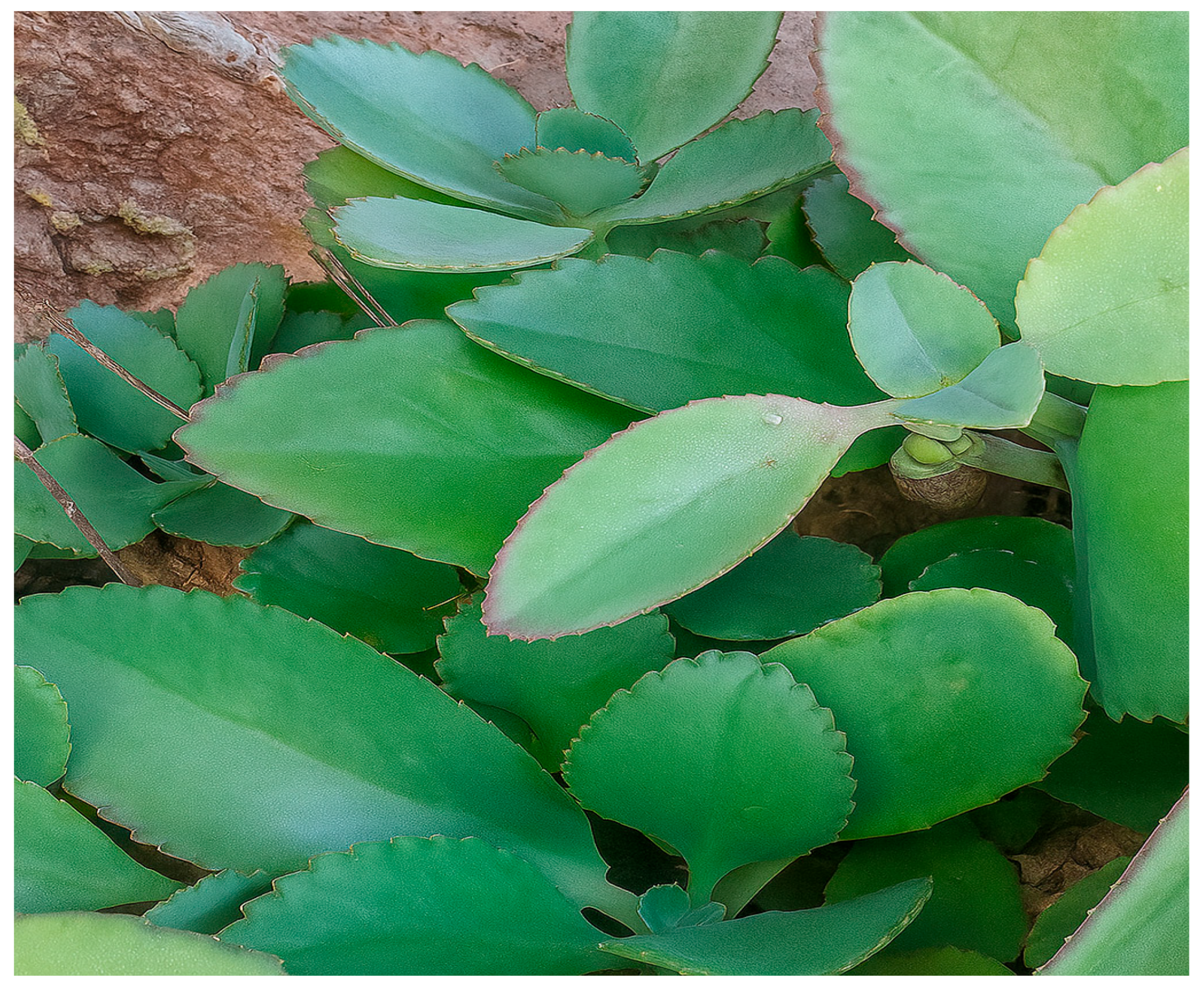
Figure 1. Specimen of the K. laetivirens plant.
Sci 07 00180 g001
Figure 2. Incremental Lifetime Cancer Risk (ILCR) vs. Exposure Frequency (EF) for Pb and As (tea and extract). Exposure Frequency: EF = 90, 180, 365 days/year; AT = 3650 days (nc = non-carcinogenic) and 25,550 days (c = carcinogenic).
Sci 07 00180 g002
Table 1. Microwave digestion program for dried leaf samples.
StepTemperature (°C)Pression (bar)TRamp (min)THold
(min)
Power (W)
1170405101800
2200402201800
35001100
Table 2. Chemical elements, Limit of Detection (LOD) and Limit of Quantification (LOQ) and correlation coefficients (R2).
Chemical ElementsLOD (mg/L)LOQ
(mg/L)
R2
Al0.02820.09400.9998
K0.0050.0170.9996
As0.00480.01600.9998
Ba0.00020.00070.9997
Co0.00080.00280.9998
Cu0.00340.01130.9998
Fe0.00710.02360.9998
Mg0.00070.00230.9997
Mn0.00100.00330.9998
Mo0.00060.00200.9998
Na0.07730.25760.9997
Ni0.00130.00420.9999
P0.03980.13250.9995
Pb0.00410.01380.9999
Se0.00680.02260.9999
V0.00060.00210.9996
Zn0.00230.00760.9999
Table 3. Mean concentrations (±standard deviation) of metal(loid)s in raw leaves, tea, and aqueous leaf extracts of K. laetivirens quantified by ICP OES.
ElementsRaw Leaves (mg/kg)Tea (mg/L)Aqueous Extract (mg/L)
Al109.54 ± 7.5620.47 ± 0.474.22 ± 0.12
K15,399.31 ± 131.5512,249.97 ± 240.17943.16 ± 26.92
As6.52 ± 0.425.98 ± 1.640.443 ± 0.0062
Ba109.93 ± 2.1070.17 ± 4.194.23 ± 0.060
Co0.891 ± 0.1590.855 ± 0.0370.0525 ± 0.001
Cu8.824 ± 0.2111.114 ± 0.0531.42 ± 0.0108
Fe90.547 ± 1.643.680 ± 0.4873.61 ± 0.056
Mg3895.12 ± 100.633660.52 ± 32.17218.83 ± 4.103
Mn37.047 ± 0.91728.88 ± 2.111.87 ± 0.016
Mo2.136 ± 0.6371.678 ± 0.0170.127 ± 0.0013
Na134.74 ± 2.82132.94 ± 1.440.727 ± 0.061
Ni1.094 ± 0.1940.948 ± 0.0430.097 ± 0.002
P10,811.24 ± 197.225793.47 ± 760.74664.071 ± 8.65
Pb4.11 ± 0.863.82 ± 0.1790.295 ± 0.0045
Se7.012 ± 0.4076.46 ± 1.500.455 ± 0.0033
V12.21 ± 0.18611.97 ± 0.4010.844 ± 0.005
Zn98.95 ± 33.1969.11 ± 6.575.97 ± 0.062
Table 4. CDI values (mg/kg/day) for metal(loid)s considering three exposure frequencies (EF) and two averaging periods (AT).
ElementEF_days/yearCDI_Extract_cCDI_Extract_ncCDI_Tea_cCDI_Tea_nc
Al902.124 × 10−61.487 × 10−51.030 × 10−57.211 × 10⁻⁵
Al1804.247 × 10−62.972 × 10−52.060 × 10−51.442 × 10⁻⁴
Al3658.612 × 10−66.029 × 10−54.178 × 10−52.924 × 10⁻⁴
As906.688 × 10−64.681 × 10−59.028 × 10−56.319 × 10⁻⁴
As1801.338 × 10−59.363 × 10−51.805 × 10−41.264 × 10⁻³
As3652.712 × 10−51.899 × 10−43.661 × 10−42.563 × 10⁻³
Ba902.129 × 10−61.490 × 10−53.531 × 10−52.472 × 10⁻⁴
Ba1804.257 × 10−62.980 × 10−57.062 × 10−54.943 × 10⁻⁴
Ba3658.633 × 10−66.043 × 10−51.432 × 10−41.002 × 10⁻³
Co902.642 × 10−81.849 × 10−74.302 × 10−73.011 × 10⁻⁶
Co1805.284 × 10−83.699 × 10−78.604 × 10−76.023 × 10⁻⁶
Co3651.071 × 10−77.50 × 10−71.745 × 10−61.221 × 10⁻⁵
Cu907.146 × 10−75.001 × 10−65.606 × 10−73.924 × 10⁻⁶
Cu1801.429 × 10−61.00 × 10−51.121 × 10−67.848 × 10⁻⁶
Cu3652.898 × 10−62.029 × 10−52.274 × 10−61.591 × 10⁻⁵
Fe901.816 × 10−61.272 × 10−51.852 × 10−61.296 × 10⁻⁵
Fe1803.633 × 10−62.543 × 10−53.704 × 10−62.593 × 10⁻⁵
Fe3657.367 × 10−65.157 × 10−57.510 × 10−65.257 × 10⁻⁵
K904.746 × 10−43.322 × 10−36.164 × 10−34.315 × 10⁻²
K1809.492 × 10−46.645 × 10−31.233 × 10−28.630 × 10⁻²
K3651.925 × 10−31.347 × 10−22.499 × 10−21.749 × 10⁻¹
Mg901.101 × 10−47.708 × 10−41.842 × 10−31.289 × 10⁻⁴
Mg1802.202 × 10−41.541 × 10−33.684 × 10−32.579 × 10⁻²
Mg3654.466 × 10−43.126 × 10−37.470 × 10−35.229 × 10⁻²
Mn909.410 × 10−76.587 × 10−61.453 × 10−51.017 × 10⁻⁴
Mn1801.882 × 10−61.317 × 10−52.907 × 10−52.035 × 10⁻⁴
Mn3653.816 × 10−62.671 × 10−75.894 × 10−54.126 × 10⁻⁴
Mo906.391 × 10−84.474 × 10−78.444 × 10−75.911 × 10⁻⁶
Mo1801.278 × 10−78.947 × 10−71.689 × 10−61.182 × 10⁻⁵
Mo3652.592 × 10−71.814 × 10−63.425 × 10−62.397 × 10⁻⁵
Na903.658 × 10−72.561 × 10−66.689 × 10−54.682 × 10⁻⁴
Na1807.317 × 10−75.121 × 10−61.338 × 10−49.366 × 10⁻⁴
Na3651.484 × 10−61.039 × 10−52.713 × 10−41.899 × 10⁻³
Ni904.881 × 10−83.417 × 10−74.770 × 10−73.339 × 10⁻⁶
Ni1809.762 × 10−86.834 × 10−79.541 × 10−76.679 × 10⁻⁶
Ni3651.979 × 10−71.386 × 10−61.934 × 10−61.353 × 10⁻⁵
P903.342 × 10−42.339 × 10−32.915 × 10−32.040 × 10⁻²
P1806.683 × 10−44.678 × 10−35.830 × 10−34.082 × 10⁻²
P3651.355 × 10−39.487 × 10−31.182 × 10−28.276 × 10⁻²
Pb901.484 × 10−71.039 × 10−61.922 × 10−61.346 × 10⁻⁵
Pb1802.969 × 10−72.078 × 10−63.844 × 10−62.691 × 10⁻⁵
Pb3656.020 × 10−74.214 × 10−67.796 × 10−65.457 × 10⁻⁵
Se902.289 × 10−71.603 × 10−63.251 × 10−62.276 × 10⁻⁵
Se1804.579 × 10−73.205 × 10−66.502 × 10−64.551 × 10⁻⁵
Se3659.286 × 10−76.50 × 10−61.318 × 10−59.229 × 10⁻⁵
V904.247 × 10−72.973 × 10−66.024 × 10−64.216 × 10⁻⁵
V1808.494 × 10−75.946 × 10−61.205 × 10−58.433 × 10⁻⁵
V3651.722 × 10−61.206 × 10−52.443 × 10−51.710 × 10⁻⁴
Zn903.004 × 10−62.102 × 10−53.478 × 10−52.434 × 10⁻⁴
Zn1806.008 × 10−64.206 × 10−56.955 × 10−54.869 × 10⁻⁴
Zn3651.219 × 10−58.529 × 10−51.410 × 10−49.873 × 10⁻⁴
EF = 90, 180, 365 days/year; AT = 3650 days (nc = non-carcinogenic) and 25,550 days (c = carcinogenic).
Table 5. Hazard Quotients (HQs) for tea and aqueous extract of K. laetivirens, considering EF = 90, 180, and 365 days/year; AT = 3650 days (nc) and 25,550 days (c).
ElementEF_days/yearHQ_Extract_cHQ_Extract_ncHQ_Tea_cHQ_Tea_nc
Al902.12 × 10−61.49 × 10−51.03 × 10−57.21 × 10⁻⁵
Al1804.25 × 10−62.97 × 10−52.06 × 10−51.44 × 10⁻⁴
Al3658.61 × 10−66.03 × 10−54.20 × 10−52.92 × 10⁻⁴
As902.20 × 10−31.56 × 10−13.00 × 10−12.11
As1804.45 × 10−33.12 × 10−16.01 × 10−14.21
As3659.04 × 10−26.32 × 10−11.228.54
Ba901.10 × 10−57.45 × 10−51.77 × 10−41.24 × 10⁻³
Ba1802.13 × 10−51.49 × 10−43.53 × 10−42.47 × 10⁻³
Ba3654.32 × 10−53.02 × 10−47.15 × 10−42.0 × 10⁻⁴
Co908.80 × 10−56.16 × 10−51.43 × 10−31.0 × 10⁻³
Co1801.76 × 10−41.23 × 10−32.87 × 10−32.0 × 10⁻²
Co3653.57 × 10−42.50 × 10−35.82 × 10−34.07 × 10⁻²
Cu901.79 × 10−51.25 × 10−41.40 × 10−59.81 × 10⁻⁵
Cu1803.25 × 10−52.50 × 10−52.80 × 10−51.96 × 10⁻⁴
Cu3657.24 × 10−55.07 × 10−45.68 × 10−53.98 × 10⁻⁴
Fe902.59 × 10−61.81 × 10−52.64 × 10−51.85 × 10⁻⁵
Fe1805.19 × 10−53.63 × 10−55.29 × 10−53.70 × 10⁻⁵
Fe3651.05 × 10−57.37 × 10−51.02 × 10−57.51 × 10⁻⁵
K90NDNDNDND
K180NDNDNDND
K365NDNDNDND
Mg90NDNDNDND
Mg180NDNDNDND
Mg365NDNDNDND
Mn906.53 × 10−54.71 × 10−51.04 × 10−47.21 × 10⁻⁴
Mn1801.34 × 10−59.81 × 10−52.07 × 10−41.45 × 10⁻³
Mn3652.73 × 10−51.90 × 10−64.21 × 10−52.94 × 10⁻³
Mo901.27 × 10−58.94 × 10−51.69 × 10−41.18 × 10⁻³
Mo1802.55 × 10−51.78 × 10−43.37 × 10−42.36 × 10⁻³
Mo3655.18 × 10−53.63 × 10−46.85 × 10−44.79 × 10⁻³
Na901.22 × 10−58.53 × 10−52.22 × 10−31.56 × 10⁻²
Na1802.44 × 10−51.71 × 10−44.42 × 10−33.12 × 10⁻²
Na3654.94 × 10−53.46 × 10−49.04 × 10−36.33 × 10⁻²
Ni902.44 × 10−61.70 × 10−52.38 × 10−51.66 × 10⁻⁴
Ni1804.88 × 10−63.41 × 10−54.77 × 10−53.33 × 10⁻⁴
Ni3659.90 × 10−66.69 × 10−59.65 × 10−56.75 × 10⁻⁴
P9016.7116.5145.51020
P18033.41233.5291.52040.5
P36567.75474.3591.04135
Pb903.72 × 10−52.60 × 10−44.80 × 10−43.36 × 10⁻³
Pb1807.42 × 10−55.20 × 10−49.61 × 10−46.75 × 10⁻³
Pb3651.50 × 10−41.05 × 10−3195 × 10−31,36 × 10⁻²
Se904.58 × 10−53.20 × 10−46.50 × 10−44.56 × 10⁻³
Se1809.16 × 10−56.42 × 10−41.30 × 10−39.10 × 10⁻³
Se3651.86 × 10−41.30 × 10−32.64 × 10−31.84 × 10⁻²
V908.50 × 10−55.94 × 10−41.20 × 10−38.42 × 10⁻³
V1801.70 × 10−41.19 × 10−32.40 × 10−31.68 × 10⁻²
V3653.44 × 10−42.41 × 10−34.88 × 10−33.42 × 10⁻²
Zn901.0 × 10−57.0 × 10−56.7048.0 × 10−4
Zn1802.0 × 10−51.40 × 10−42.32 × 10−41.62 × 10⁻³
Zn3654.06 × 10−52.84 × 10−44.70 × 10−43.30 × 10⁻³
EF = 90, 180, 365 days/year; AT = 3650 days (nc = non-carcinogenic) and 25,550 days (c = carcinogenic); ND = not determined.
Table 6. Incremental Lifetime Cancer Risk (ILCR) calculated for Pb and As using pathway-specific CDI (Equation (1)) and Cancer Slope Factor (CSF, Equation (4)).
ElementEF (Days)ILCR_Extract_cILCR_Extract_ncILCR_Tea_cILCR_Tea_nc
As901.00 × 10−57.02 × 10−51.35 × 10−49.48 × 10⁻⁴
As1802.00 × 10−51.40 × 10−42.71 × 10−41.90 × 10⁻³
As3654.07 × 10−52.85 × 10−45.49 × 10−43.84 × 10⁻³
Pb901.26 × 10−98.83 × 10−91.63 × 10−81.14 × 10⁻⁷
Pb1802.52 × 10−91.77 × 10−83.27 × 10−82.29 × 10⁻⁷
Pb3655.12 × 10−93.58 × 10−86.63 × 10−84.64 × 10⁻⁷
EF = 90, 180, 365 days/year; AT = 3650 days (nc = non-carcinogenic) and 25,550 days (c = carcinogenic).
Disclaimer/Publisher’s Note: The statements, opinions and data contained in all publications are solely those of the individual author(s) and contributor(s) and not of MDPI and/or the editor(s). MDPI and/or the editor(s) disclaim responsibility for any injury to people or property resulting from any ideas, methods, instructions or products referred to in the content.