
Article

A Validated Train-Track-Bridge Model with Nonlinear Support Conditions at Bridge Approaches
1
Boston Consulting Group, Boston, MA 02210, USA
2
Department of Civil and Environmental Engineering, University of Illinois at Urbana-Champaign, 205 North Mathews, Urbana, IL 61801, USA
*
Author to whom correspondence should be addressed.
Infrastructures 2021, 6(4), 59; https://doi.org/10.3390/infrastructures6040059

Submission received: 18 March 2021 / Revised: 12 April 2021 / Accepted: 12 April 2021 / Published: 16 April 2021
(This article belongs to the Special Issue Road and Rail Infrastructures)

Abstract

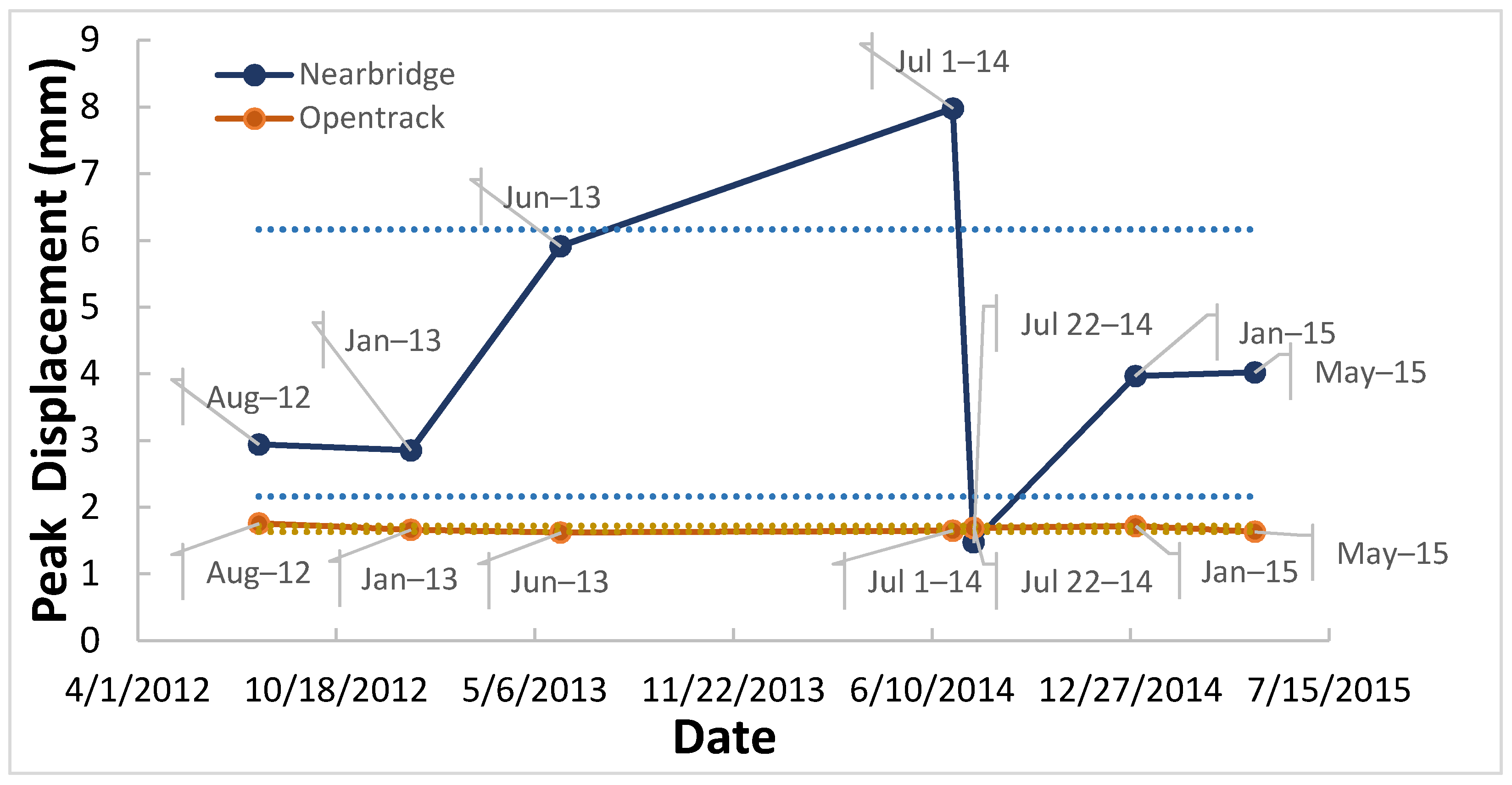
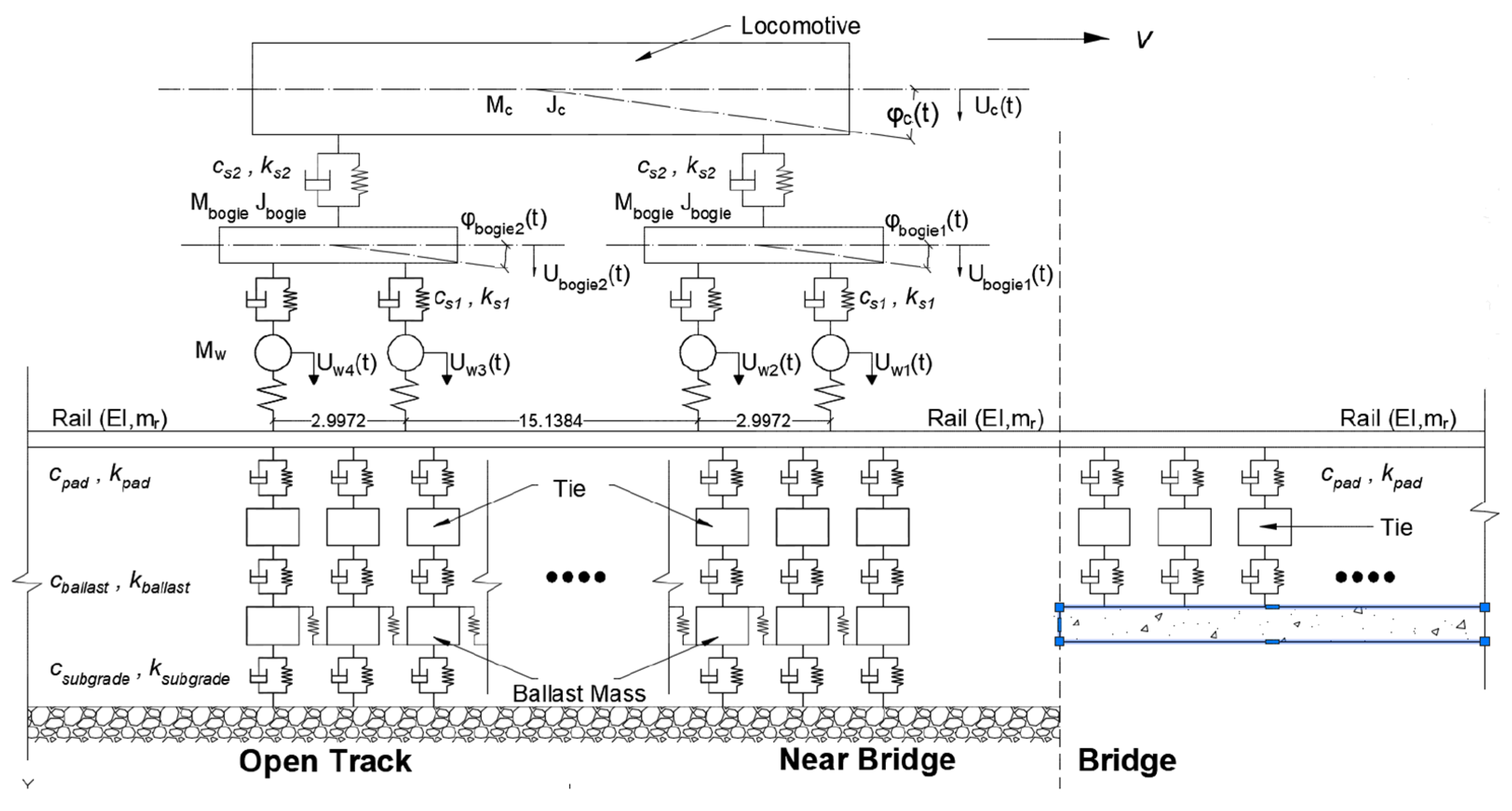
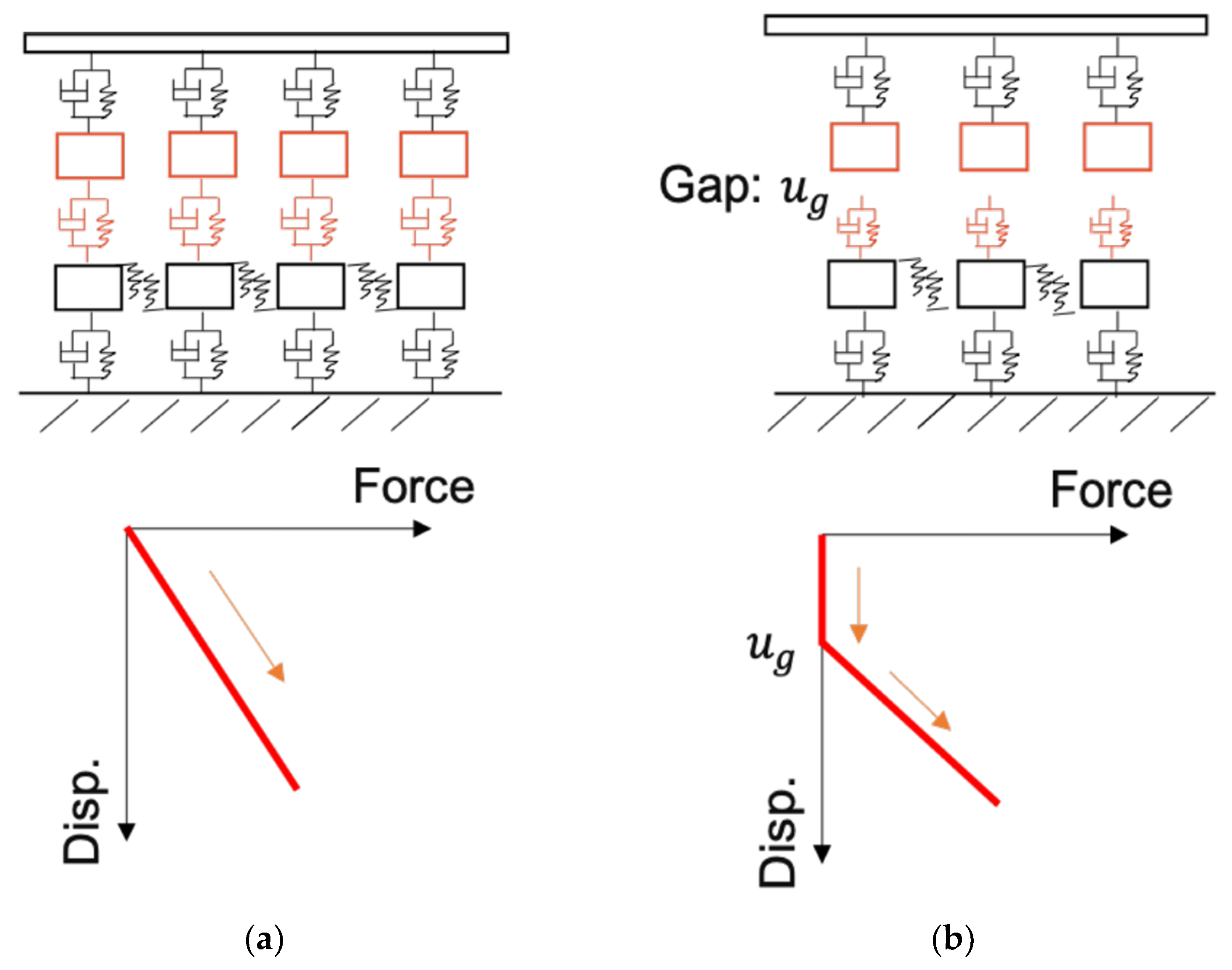
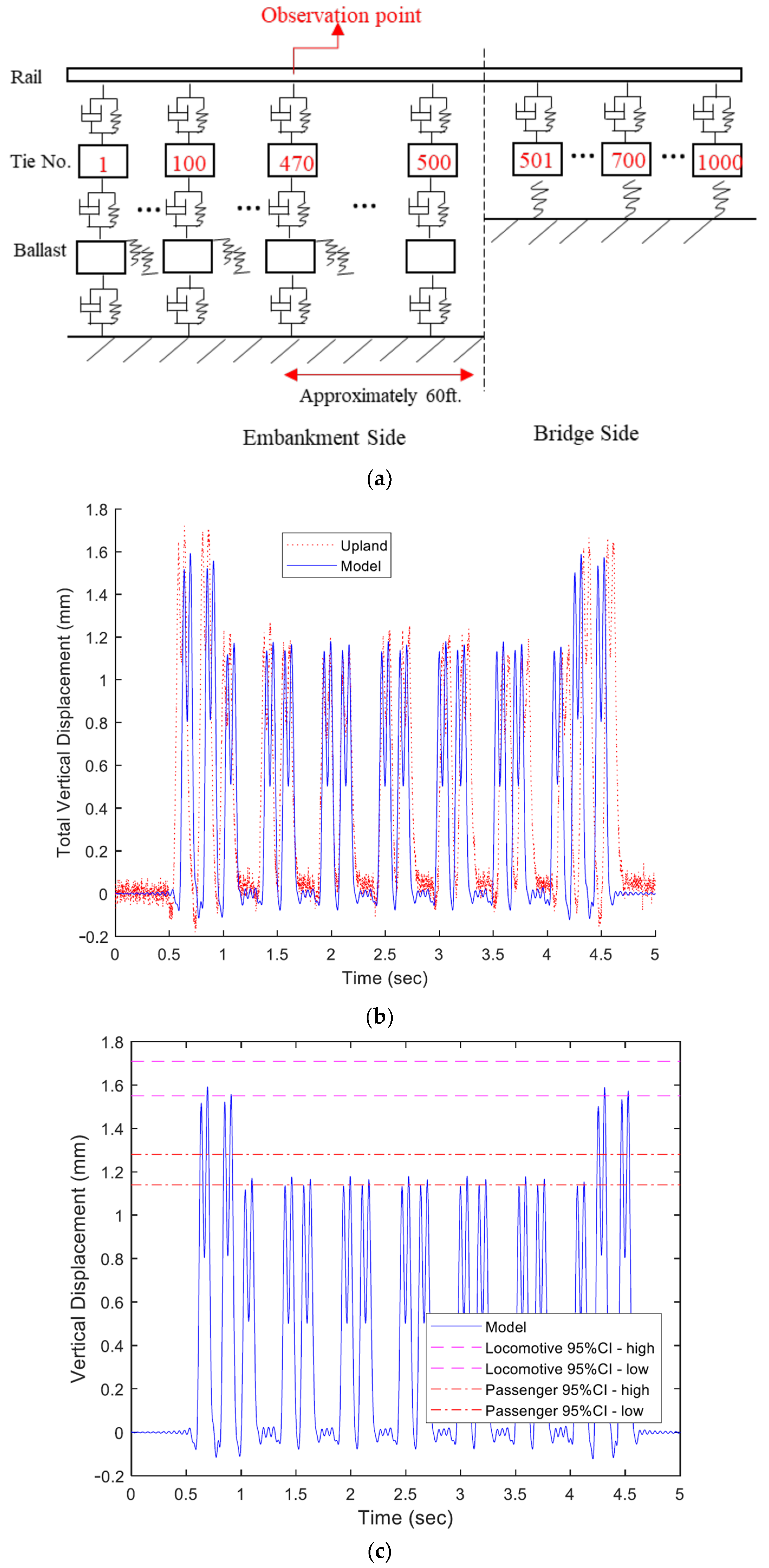
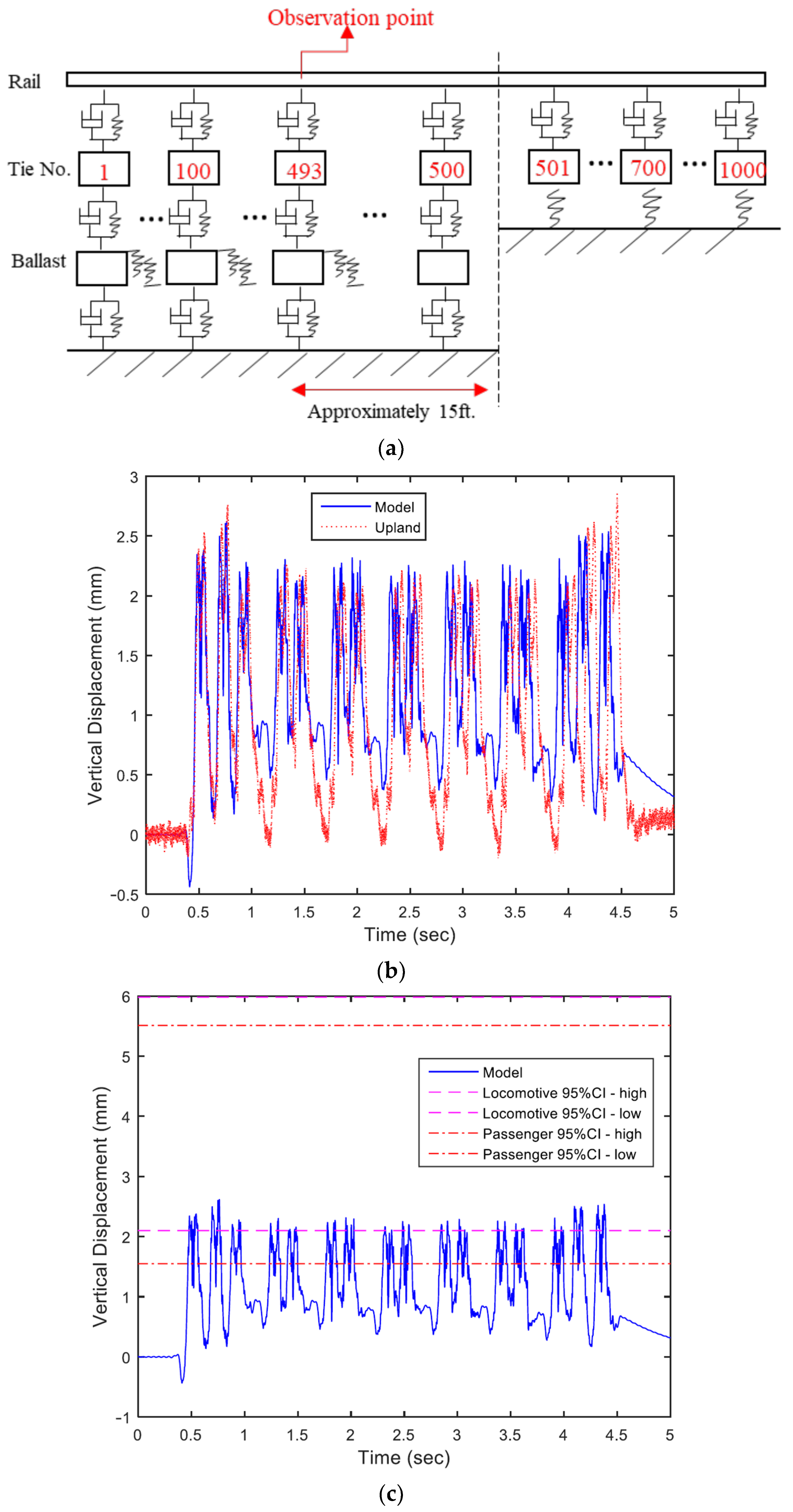
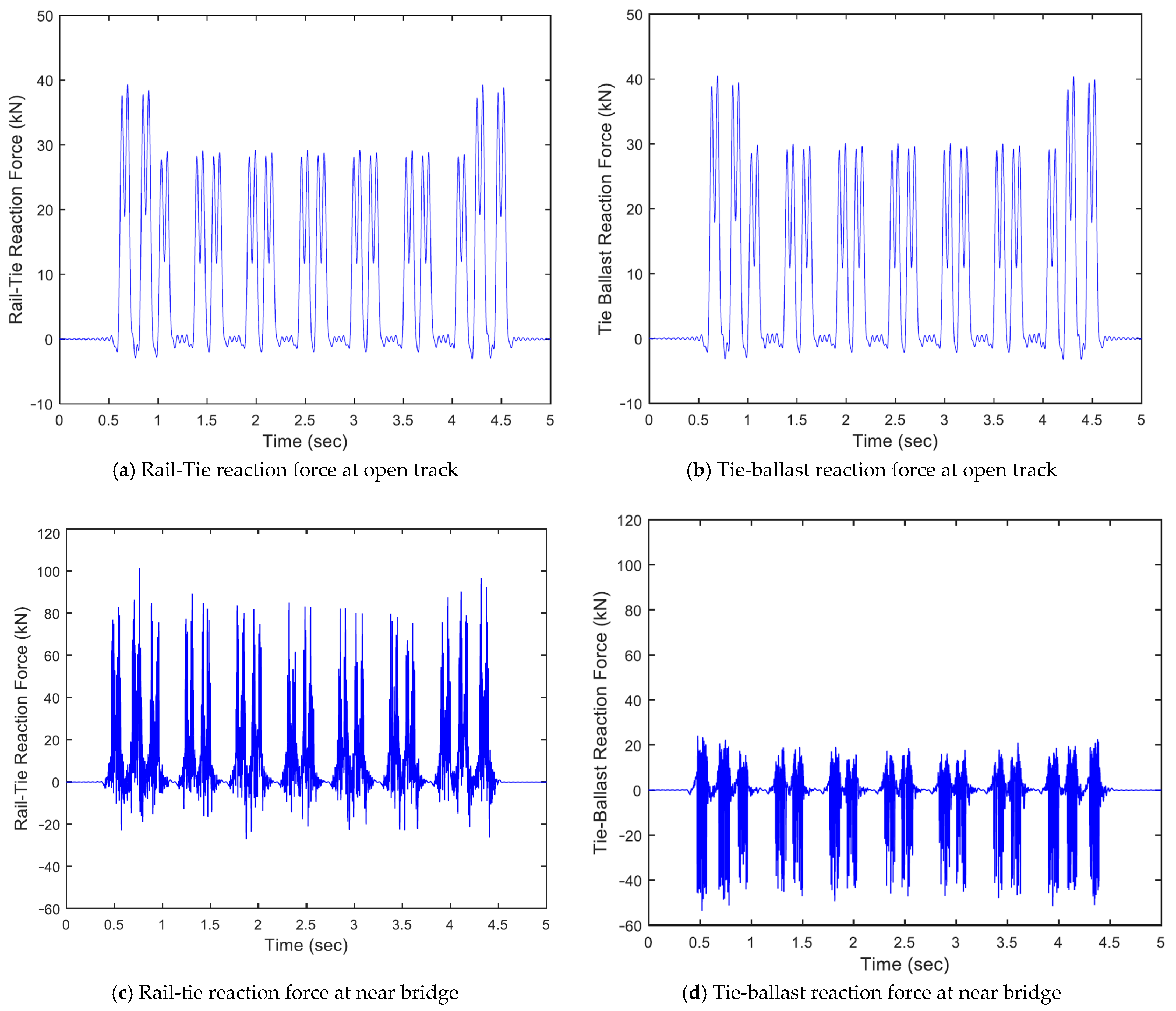
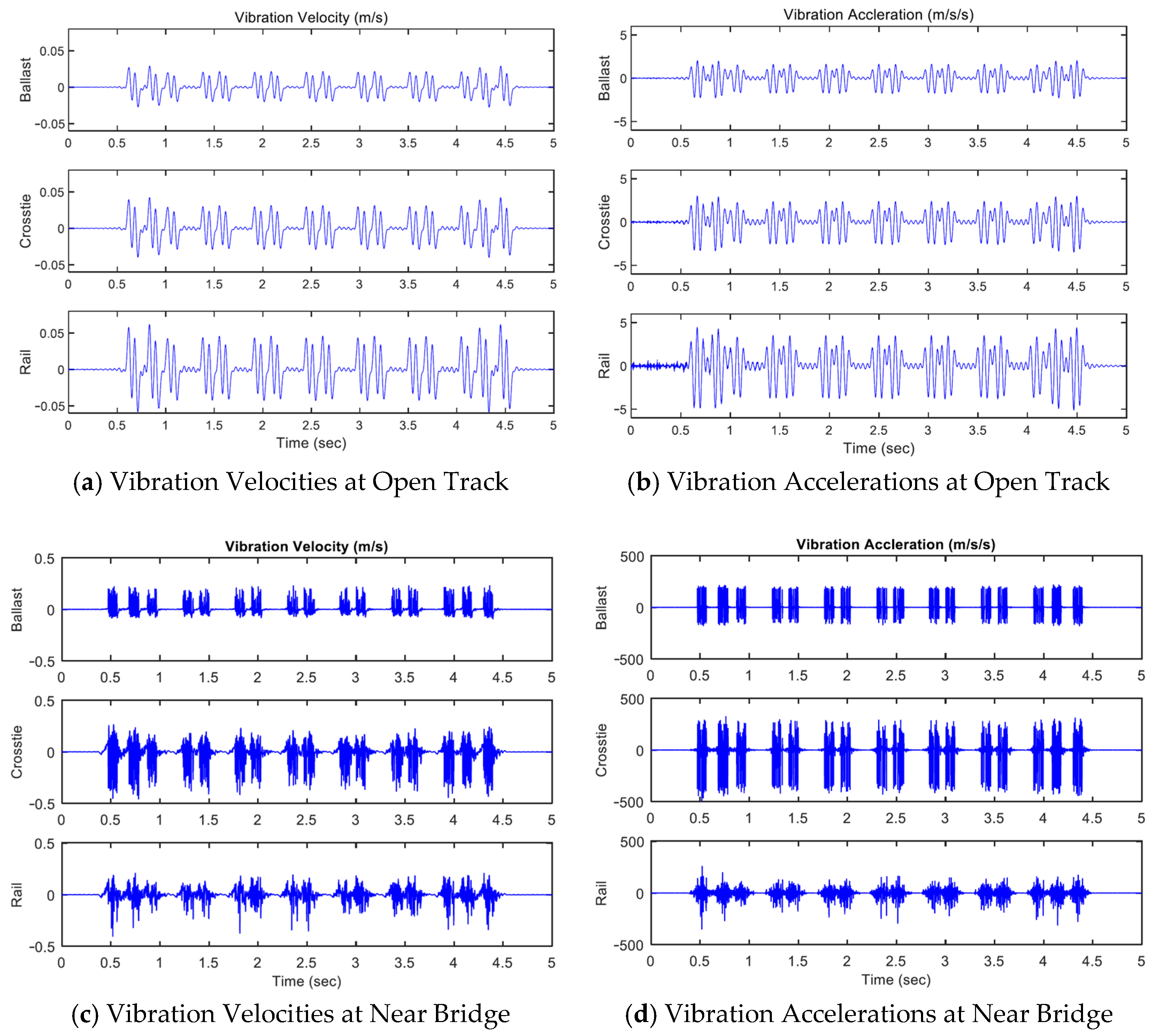
A bridge approach, an essential component connecting a relatively rigid bridge and a more flexible track on subgrade soil, is one of the most common types of track transition zones. The tracks on a bridge deck often undergo significantly lower deformations under loading compared to the approach tracks. Even though there have been numerous efforts to understand and remediate performance deficiencies emerging from the differences in stiffness between the bridge deck and the approach, issues such as differential settlement and unsupported hanging crossties often exist. It is often difficult and expensive to try different combinations of mitigation methods in the field. Therefore, computational modeling becomes of vital importance to study dynamic responses of railroad bridge approaches. In this study, field instrumentation data were collected from the track substructure of US Amtrak’s Northeast Corridor railroad track bridge approaches. After analyses and model implementation of such comprehensive field data, an advanced train-track-bridge model is introduced and validated in this paper. Nonlinear relative displacements under varying contact forces observed between crosstie and ballast are adequately considered in the dynamic track model. The validated model is then used to simulate an Amtrak passenger train entering an open deck bridge to generate typical track transient responses and better understand dynamic behavior trends in bridge approaches. The simulated results show that near bridge location experiences much larger transient deformations, impact forces, vibration velocities and vibration accelerations. The validated track model is an analysis tool to evaluate transient responses at bridge approaches with nonlinear support; it is intended to eventually aid in developing improved track design and maintenance practices.
Keywords: bridge approach; track transitions; analytical train-track-bridge model; field instrumentation; tie gap; track dynamics bridge approach; track transitions; analytical train-track-bridge model; field instrumentation; tie gap; track dynamics