1. Introduction
Environmental concerns in asphalt pavement construction are increasingly centred on reducing the use of virgin materials and minimising the high production temperatures required for hot mix asphalt (HMA) [
1]. These concerns have prompted the paving industry to seek more sustainable alternatives that reduce greenhouse gas emissions and energy consumption while conserving non-renewable resources [
2,
3]. Traditionally, HMA is produced, laid, and compacted at temperatures of 170 °C to 180 °C because bitumen is highly viscous at ambient temperatures. However, these elevated temperatures contribute significantly to atmospheric pollution and global warming [
4,
5].
In response to these issues, various techniques have been developed to produce asphalt mixtures at lower temperatures, aiming to reduce energy consumption and mitigate environmental impacts [
3,
6]. Depending on the production temperature and materials used, asphalt mixtures can be grouped into four main categories: hot mix asphalt (HMA), produced at 150–180 °C; warm mix asphalt (WMA), at 100–140 °C; half-warm mix asphalt (HWMA), at 66–100 °C; and cold recycled mixtures (CRM), at 0–30 °C [
1,
7]. Among these, HWMA is a relevant intermediate technology, combining reduced production temperatures with the potential to achieve mechanical performance closer to that of conventional hot mixtures than cold recycled materials [
8].
A key innovation enabling HWMA production is foamed bitumen technology, which allows mixing at temperatures up to 60 °C lower than those required by conventional methods [
1,
4,
8]. The process injects pressurised water and air into hot bitumen, generating foam that temporarily reduces binder viscosity and improves coating and workability [
9,
10]. Lower production temperatures are expected to reduce energy demand and emissions relative to conventional hot-mix production, although the present study does not quantify these environmental indicators. Jenkins [
11] also emphasised the potential operational and health-related benefits associated with reducing asphalt production and handling temperatures.
The use of foamed bitumen also allows the incorporation of damp aggregates, as the water film on their surfaces promotes foaming and dispersion, thereby improving mixture workability and performance [
4]. From an engineering perspective, this makes HWMA a relevant intermediate technology whose mechanical performance and durability must be assessed together with its expected production-temperature advantages [
3,
4,
6].
Another strategy for reducing the demand for virgin aggregates and binder is to incorporate reclaimed asphalt pavement (RAP) and industrial by-products, such as steel slag aggregates (SSA), into new asphalt mixtures, including hot recycled mix asphalt (HRMA). These materials can support circular-economy objectives by increasing the reuse of existing resources. However, their effectiveness depends on whether the resulting mixtures meet mechanical and durability requirements. When properly integrated, both RAP and SSA may improve mixture properties, including stiffness, durability and resistance to permanent deformation [
12,
13].
Research shows that mixtures with high RAP content tend to be stiffer and more resistant to rutting owing to the aged binder in the reclaimed material [
1]. Moreover, HWMA can improve RAP integration by partially softening the aged binder and enhancing workability at lower production temperatures [
7,
14].
Previous laboratory and field studies indicate that HWMA incorporating RAP can achieve satisfactory mechanical performance when the mixture design, binder system and compaction conditions are properly controlled [
1,
7,
15]. For instance, Lizárraga et al. [
1] and Botella et al. [
2] investigated HWMA with up to 100% RAP and bitumen emulsion, reporting field performance comparable to HMA. Eloufy et al. [
7] and Punith et al. [
16] also reported favourable mechanical responses for HWMA containing RAP. Similarly, Ibrahim et al. [
15] and Pasandín et al. [
17] found that 100% RAP mixtures can exhibit favourable resistance to permanent deformation, while Marcobal et al. [
18] reported satisfactory stiffness, moisture resistance and rutting performance. These studies support the technical potential of high-RAP HWMA, but they also show that performance depends strongly on binder type, production conditions and mixture design.
In parallel, SSA has been recognised as a promising by-product for asphalt applications. SSA is a dense, micro-porous, angular material, generally characterised by high mechanical strength, good wear resistance, and favourable surface properties. It is widely reported to improve key mechanical properties of asphalt mixtures, such as stiffness, fatigue resistance, and rutting performance, particularly under heavy traffic and high-temperature conditions [
19,
20,
21]. In a previous study, Moura et al. [
22] evaluated an asphalt mixture containing 75% SSA and reported excellent water sensitivity performance and rutting resistance, thereby confirming the material’s potential to enhance durability and mechanical stability.
Despite these promising outcomes, most studies of high-recycled-content HWMA rely on bitumen emulsions, rejuvenating agents, virgin aggregate fractions, or mix design strategies developed specifically for hot or cold recycling conditions. Less attention has been given to the use of foamed bitumen in HWMA designed specifically for very high RAP contents and produced at temperatures close to, but below, 100 °C, particularly when the aim is to avoid added water and cement while maintaining a high proportion of non-virgin granular materials. This creates a relevant research gap between CRM, which benefits from very low production temperatures but may require a cementitious contribution to improve cohesion and stiffness, and HRMA, which can provide high mechanical performance but requires substantially higher production temperatures.
The present study was conducted to address this intermediate technological space by assessing whether a very high-RAP CRM-derived design could be transferred to half-warm production and then redesigned using an HRMA-inspired aggregate skeleton approach. It builds on two previously validated recycled mixtures developed within the same broader research framework: a CRM with foamed bitumen and cement, used as the reference for the initial HWMA design logic [
23], and a high-recycled-content HRMA incorporating RAP and SSA, used as the reference for the subsequent aggregate skeleton redesign and final performance positioning [
24]. These mixtures are used as contextual benchmarks rather than as same-campaign controls. Therefore, the comparisons are intended to position the redesigned HWMA relative to previously validated cold and hot recycled solutions while recognising that differences in production, compaction, testing dates and material variability may affect direct quantitative equivalence.
The experimental approach followed a targeted sequential screening-and-redesign process rather than a factorial investigation or full parametric optimisation. A CRM-derived HWMA was first evaluated to determine whether a very high-RAP cold-recycling design logic could be transferred to half-warm production without added water or cement. The governing limitation identified in this initial assessment then guided a single redesign based on an HRMA-inspired aggregate skeleton. As several design variables were modified simultaneously, the observed performance changes should be attributed to the redesign strategy as a whole rather than to any individual modification.
The objective of this study is to develop and assess a high-RAP HWMA with foamed bitumen as an intermediate recycled asphalt solution between cold and hot recycling technologies. More specifically, the study aims to evaluate the feasibility and limitations of a CRM-derived initial HWMA produced at 90 °C without added water or cement; identify permanent deformation resistance as the key design constraint; redesign the mixture using an AC20/HRMA-inspired aggregate skeleton with coarse SSA and an adjusted foamed bitumen content; and compare the mechanical performance of the redesigned HWMA with previously validated CRM and HRMA benchmarks. The experimental programme focuses on volumetric properties, moisture sensitivity, triaxial response, rutting resistance, stiffness modulus, and fatigue resistance, providing a performance-based interpretation of the conditions under which HWMA with high RAP content and foamed bitumen can contribute to circular pavement engineering.
2. Materials and Methods
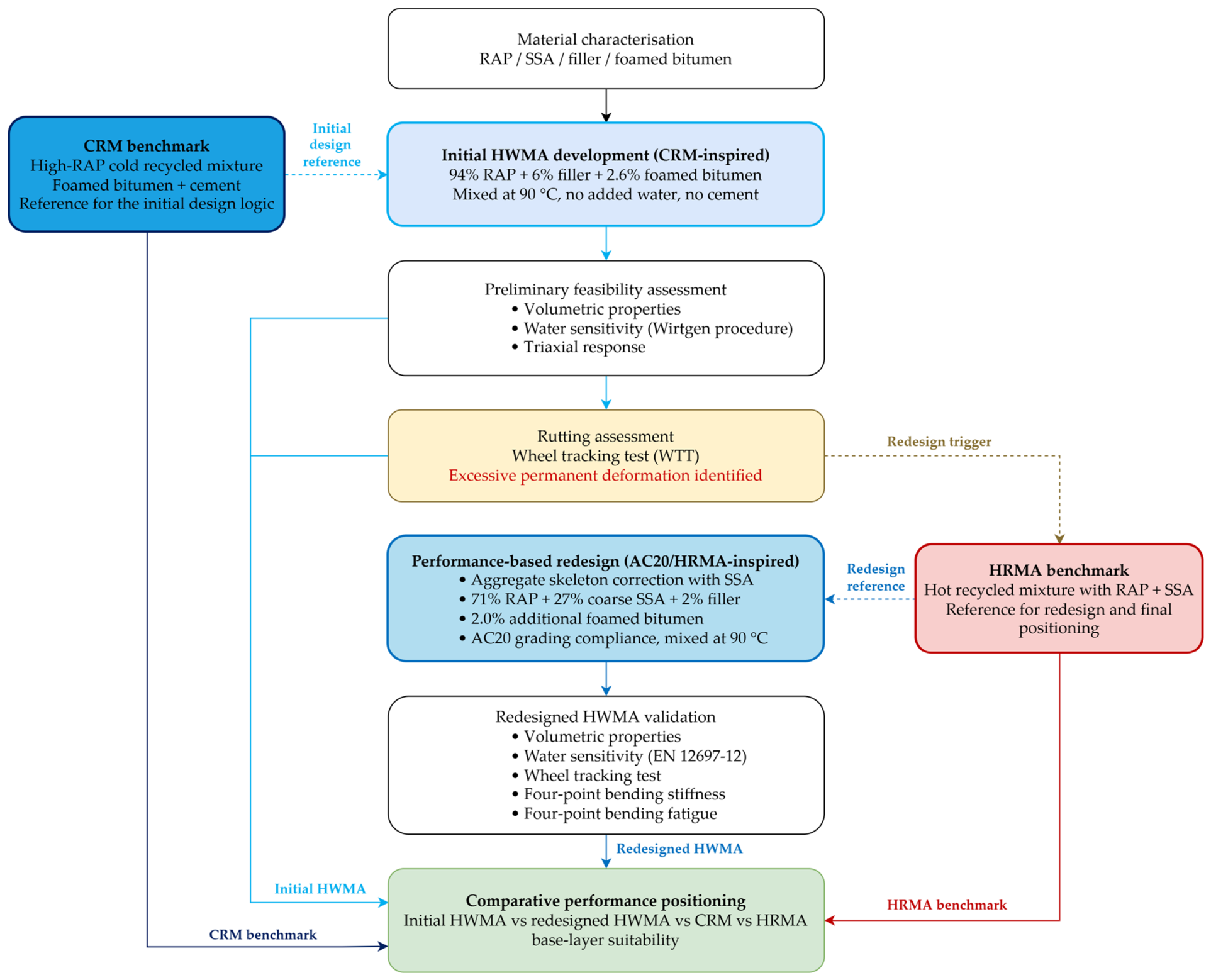
The methodology was designed to develop and assess a high-RAP HWMA with foamed bitumen, produced at approximately 90 °C and positioned between previously validated cold and hot recycled asphalt solutions. The experimental programme followed a sequential approach. Rather than a full parametric optimisation with predefined acceptance thresholds, the programme adopted a sequential screening-and-redesign strategy, in which rutting resistance served as the critical performance indicator to determine whether the initial CRM-derived formulation should proceed to advanced mechanical characterisation or be reformulated.
First, an initial HWMA design (HWMA-I) was derived from a CRM benchmark with foamed bitumen and cement [
23] by adapting its composition for half-warm production without added water or cement. Second, the initial mixture was evaluated using volumetric, moisture sensitivity, triaxial and wheel tracking tests. Third, after excessive rutting was identified, a redesigned HWMA (HWMA-R) was developed using an AC20/HRMA-inspired aggregate skeleton approach [
24], supported by the incorporation of coarse steel slag aggregate (SSA) and an adjusted foamed bitumen content. The overall development and testing sequence is shown in
Figure 1.
To clarify the experimental scope and avoid ambiguity in comparing mixtures,
Table 1 summarises the designation, role, composition, and tests considered for each mixture. The initial and redesigned HWMA mixtures were produced and tested in the present study. The CRM and HRMA mixtures were used as contextual benchmarks from previous studies [
23,
24].
The detailed materials, mixture design strategy and testing procedures are described in the following subsections.
2.1. Materials and Benchmark Mixtures
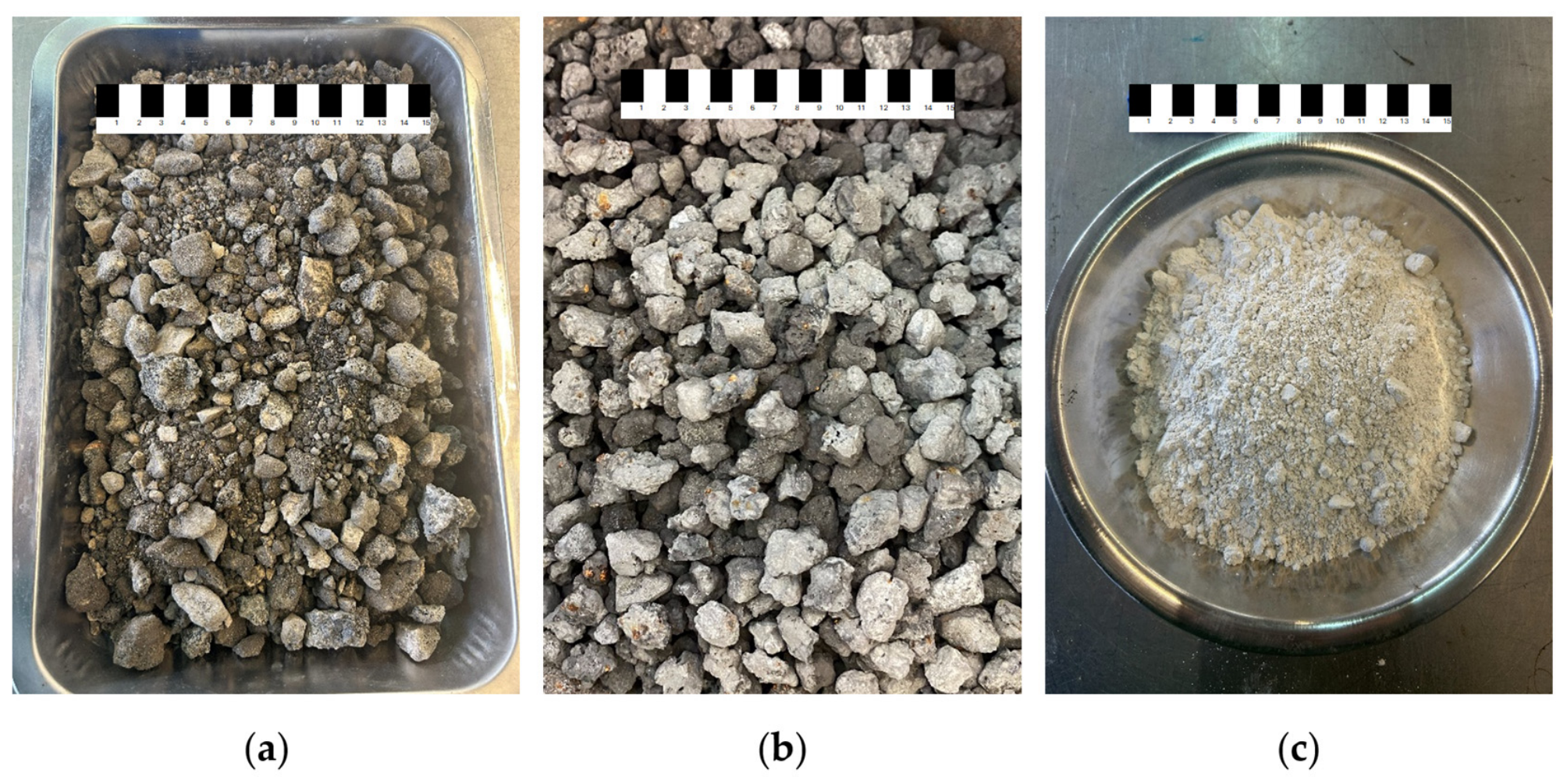
The materials used in the HWMA formulations were reclaimed asphalt pavement, steel slag aggregate, limestone filler and 70/100 penetration-grade bitumen, applied in foamed form. Some of these constituent materials are shown in
Figure 2. The study aimed to maximise the use of recycled or reused granular materials, minimise the use of new binder and avoid cementitious stabilisation in the HWMA compositions.
The RAP was obtained from milling operations during road pavement rehabilitation. Before laboratory processing, the material was screened through a 20 mm sieve to remove oversized particles. To minimise variability, the RAP was homogenised and stored in sealed containers. Before testing and mixture production, the material was stabilised at 20 ± 2 °C under laboratory conditions.
SSA was used only in the HWMA-R fractions at 12/16 mm and 16/20 mm. Its incorporation aimed to address the absence of a coarse aggregate fraction observed in the RAP-recovered aggregates (i.e., after binder incineration) and to provide a more stable aggregate skeleton.
Limestone filler was used as a grading correction material in both HWMA compositions analysed in this study. The virgin binder consisted of 70/100 penetration-grade bitumen, selected to produce foamed bitumen under the same conditions as those previously adopted for the CRM benchmark [
23].
Two previously developed recycled mixtures served as benchmark references. The CRM benchmark [
23], produced with high RAP content, foamed bitumen, and cement, formed the basis for the HWMA-I design logic. The HRMA benchmark [
24], a high-recycled-content hot recycled mix asphalt incorporating RAP and SSA, was used to support the redesign of the aggregate skeleton and to inform the final comparative performance assessment. These benchmark mixtures were not retested in the present work; their published results were used solely for comparative interpretation.
2.2. Material Characterisation
2.2.1. Reclaimed Asphalt Pavement and Recovered Binder
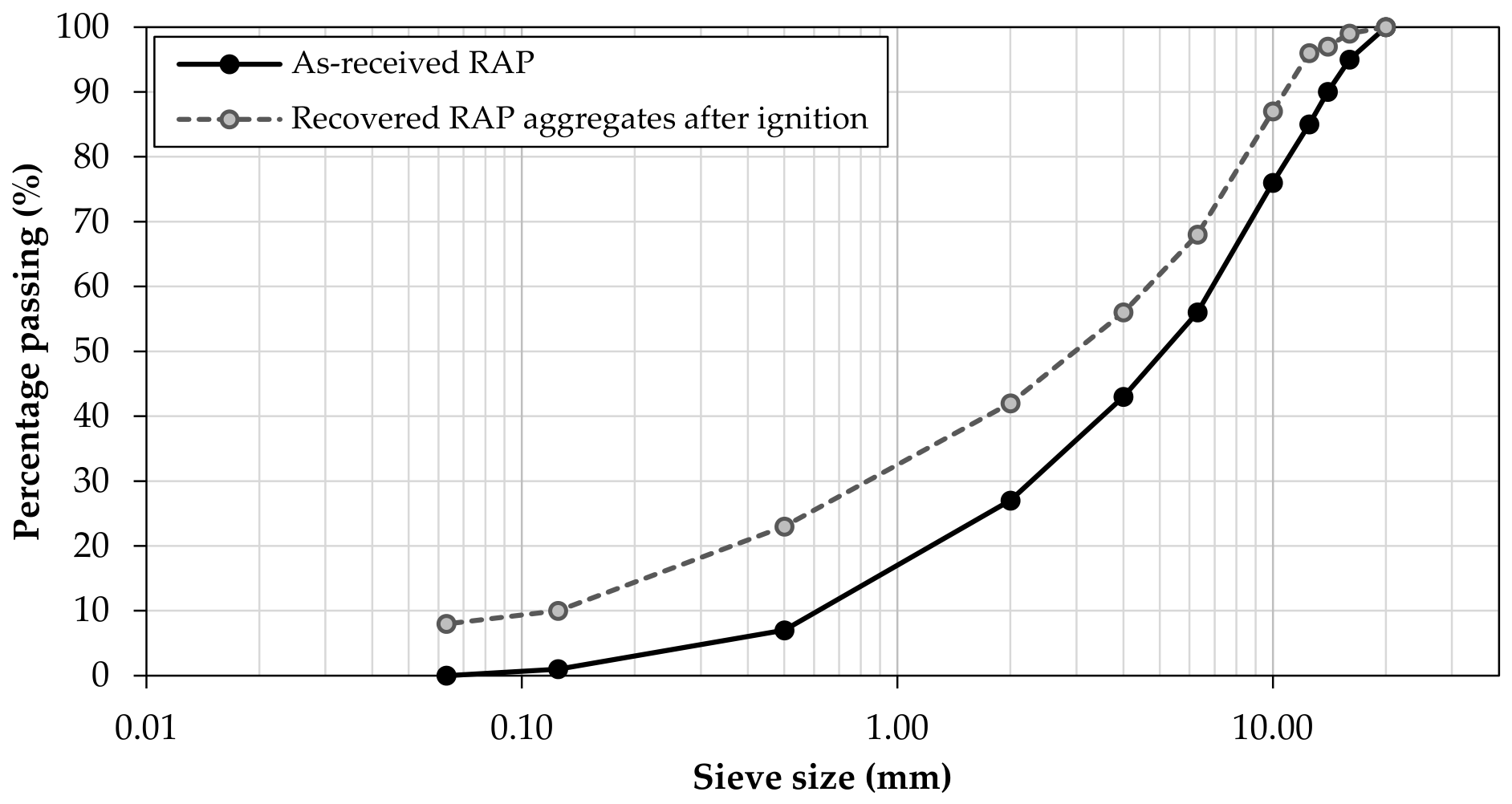
The particle size distribution of the RAP was determined before and after binder removal by ignition, in accordance with EN 933-1 [
25] and EN 12697-2 [
26] (
Figure 3). The ignition method, performed in accordance with EN 12697-39 [
27], was also used to determine the residual binder content of the RAP. Two representative samples were tested, yielding an average binder content of 3.9% by mass.
The distinction between the as-received RAP gradation and the post-ignition aggregate gradation was important for the mix design process. The as-received RAP gradation reflects the agglomerated material introduced into the mixer, with aged binder still adhered to the aggregate particles. In contrast, the post-ignition gradation represents the actual aggregate skeleton after the aged binder has been removed. This distinction was particularly relevant when assessing the limitations of the HWMA-I and when defining the aggregate skeleton correction adopted in the redesigned mixture.
The binder recovered from the RAP was also characterised. Penetration and softening point were determined in accordance with EN 1426 [
28] and EN 1427 [
29], respectively. The recovered binder exhibited a penetration of 10 × 0.1 mm and a softening point of 72.2 °C, confirming its aged and hardened condition within the RAP. These results were considered relevant to interpreting the potential partial activation of the RAP binder during half-warm mixing.
2.2.2. Steel Slag Aggregate and Limestone Filler
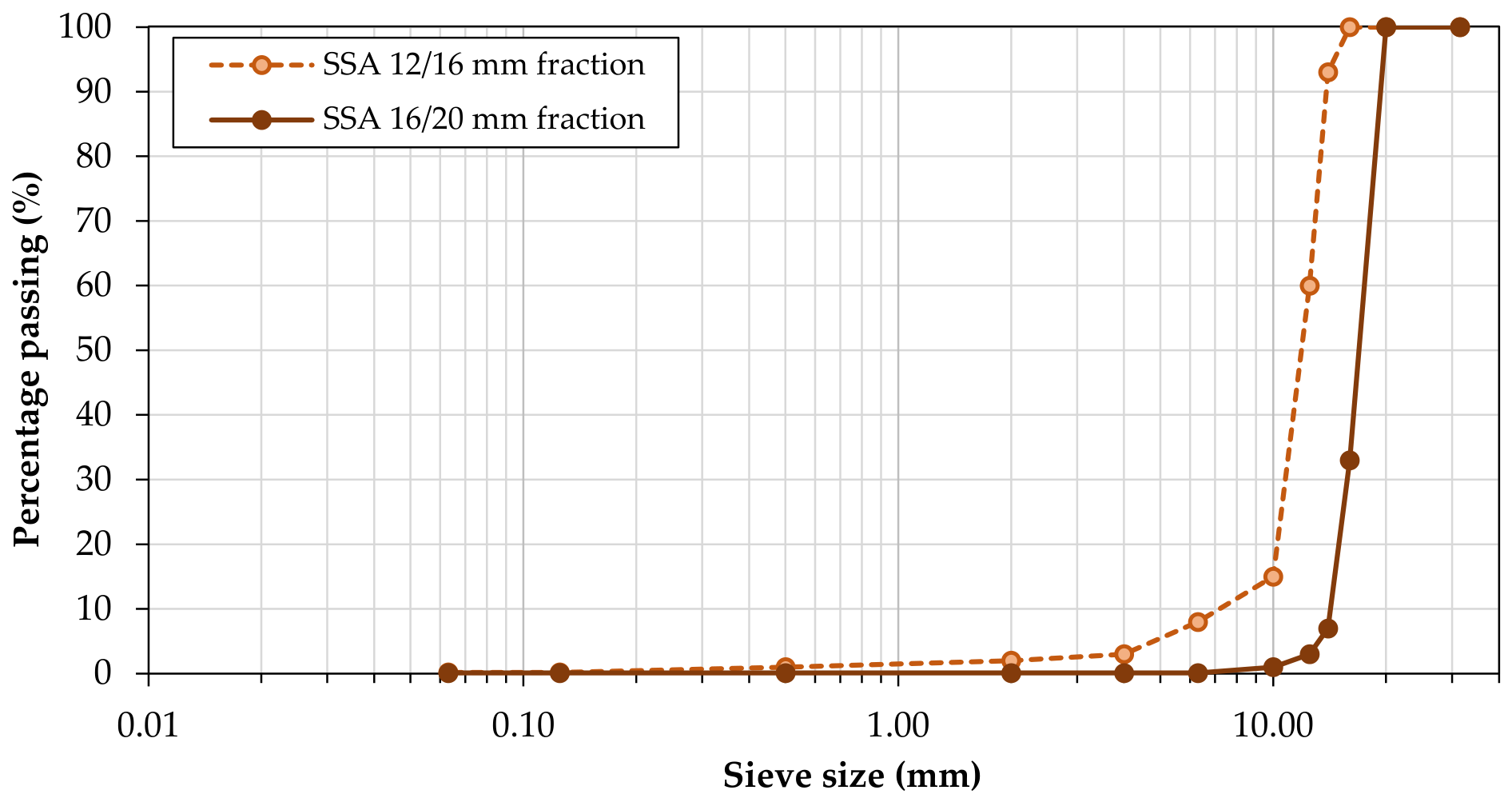
The particle size distributions of the 12/16 mm and 16/20 mm SSA fractions were determined in accordance with EN 933-1 [
25] and are shown in
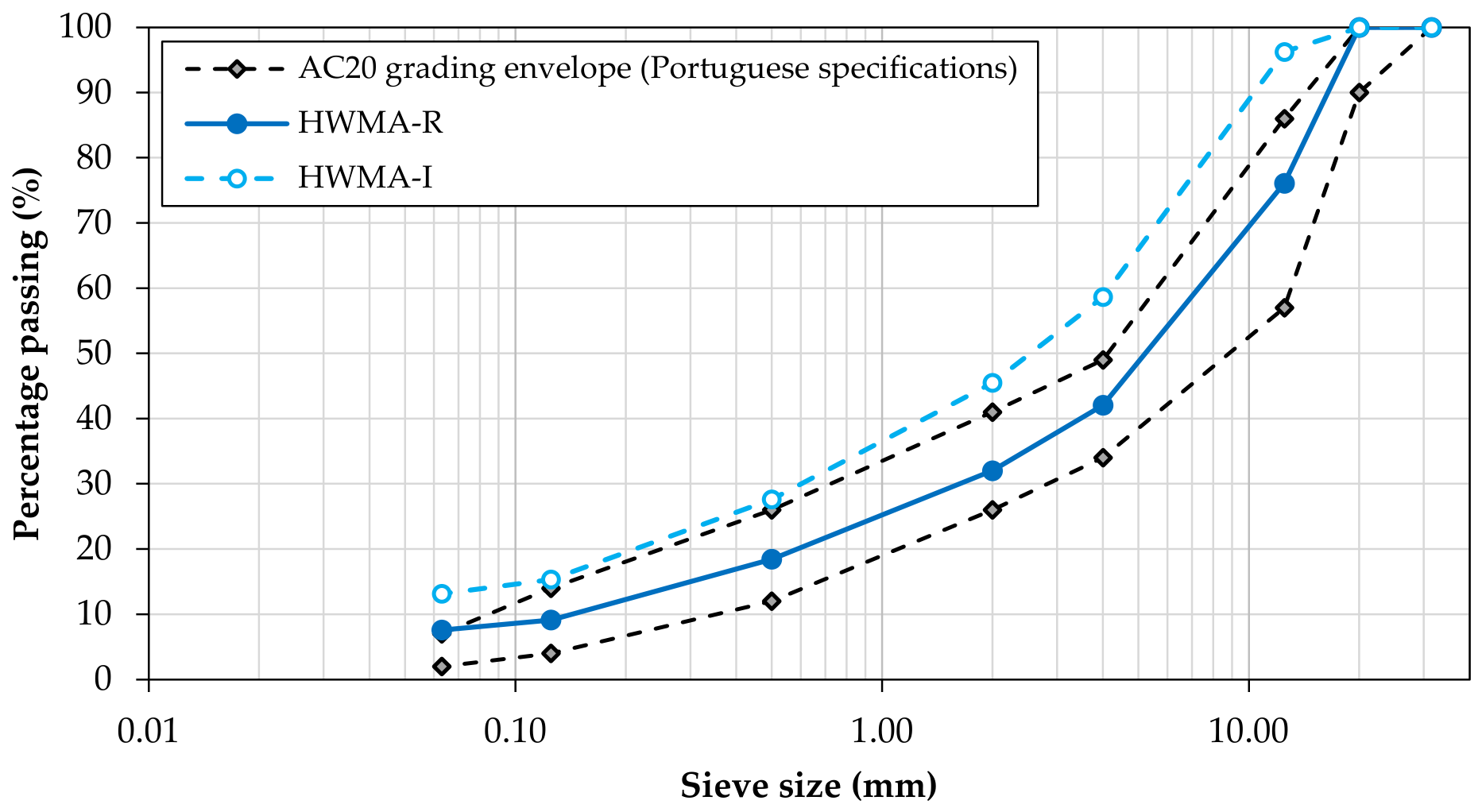
Figure 4. These fractions were selected to increase the coarse aggregate content in the HWMA-R and to bring the aggregate skeleton closer to the AC20 grading envelope defined in the Portuguese specifications [
30].
The limestone filler was used as a fine-grading correction material. In the HWMA-I, it replaced cement in the CRM benchmark on a mass basis. In the HWMA-R, its content was reduced to avoid an excessive fine fraction and to correct the aggregate size distribution.
2.2.3. Foamed Bitumen
The 70/100 penetration-grade bitumen was foamed using the same laboratory foaming equipment and conditions as those used for the CRM benchmark [
23]. As the binder and equipment were the same, a new foaming optimisation study was not repeated. The bitumen was heated to 170 °C before foaming, as this temperature is required to achieve suitable foaming properties.
The foaming water content was 2.5% by mass of bitumen. In the previous CRM benchmark study [
23], this value yielded a maximum expansion ratio (
ERmax) of 4.05 and a half-life (
HL) of 16.08 s.
ERmax is the ratio of the maximum volume of foamed bitumen to the original bitumen volume after water injection, while
HL is the time required for the foam to collapse to half its maximum volume, i.e., a measure of foam stability [
26]. These parameters were considered adequate for the present HWMA production, particularly because the half-life provided sufficient time for binder dispersion during mixing. Lower water content reduces expansion, whereas higher water content reduces foam stability.
2.3. HWMA Design Strategy
2.3.1. Initial CRM-Derived HWMA Design
The HWMA-I design was derived from the CRM benchmark composition [
23], which contained 94% RAP, 2% cement, 4% limestone filler and 2.6% foamed bitumen. In the present HWMA composition, the cement used in the CRM was not retained because no added water or hydraulic curing mechanism was intended in the half-warm production process. Therefore, the 2% cement content was replaced by additional limestone filler on a mass basis.
The HWMA-I aggregate skeleton comprised 94% RAP and 6% limestone filler. To maintain consistency with the CRM-derived design logic, the same foamed bitumen content of 2.6% was adopted. No additional mixing water was added beyond that used to produce the foamed bitumen. The mixture was produced at approximately 90 °C to improve workability while remaining within the half-warm production range. At this temperature, some softening or partial activity of the aged RAP binder may occur, but binder mobilisation was not directly measured in the present study.
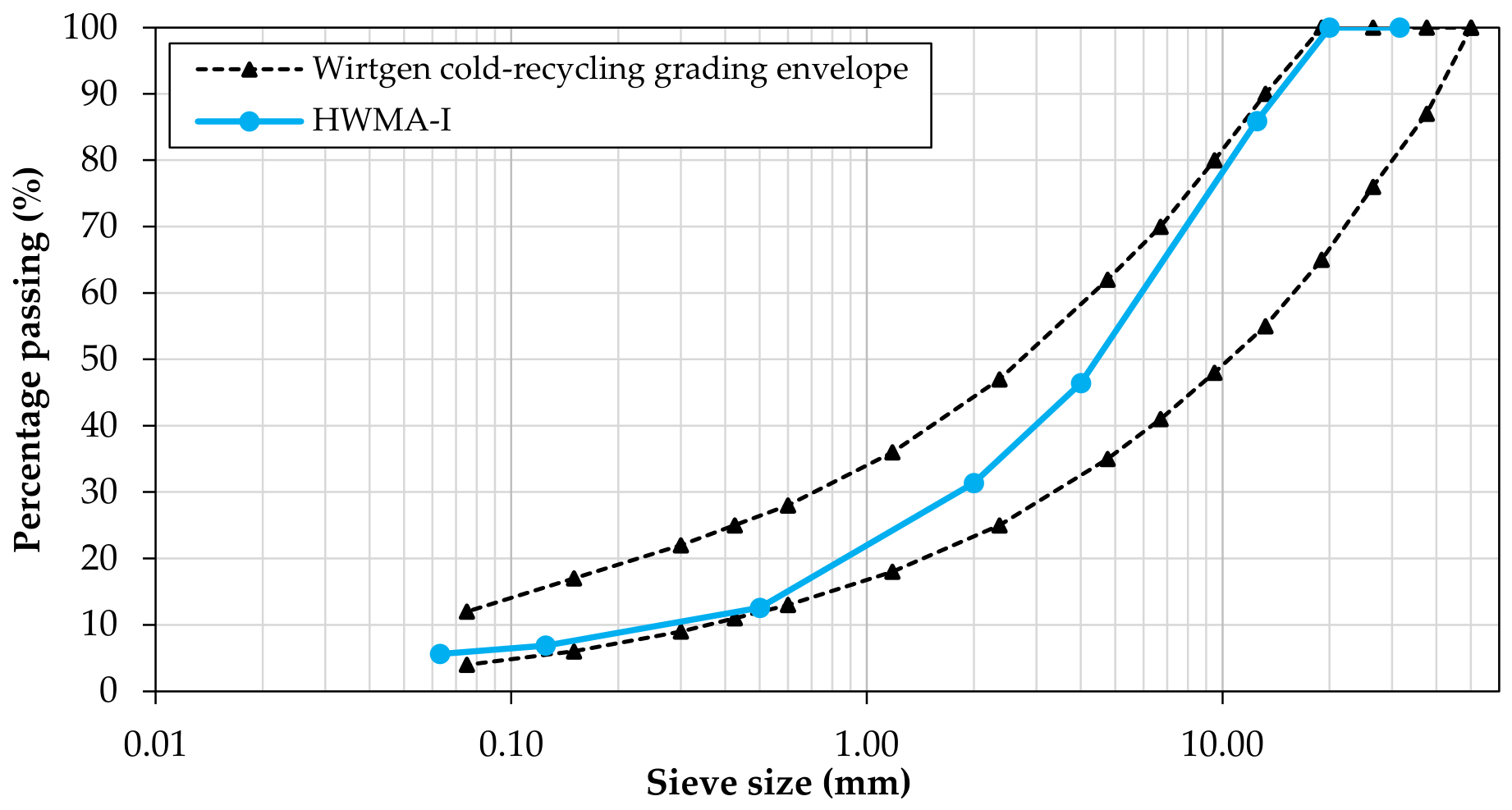
The grading curve of the HWMA-I was evaluated against the Wirtgen cold-recycling grading envelope [
31], as shown in
Figure 5. This comparison was used to verify the compatibility of the CRM-derived formulation with the reference grading framework commonly used for cold recycled mixtures with foamed bitumen.
2.3.2. Performance-Based Redesign of the HWMA
Following the preliminary assessment of the HWMA-I, the wheel tracking test indicated excessive susceptibility to permanent deformation. Therefore, the mixture was redesigned using a performance-based approach to correct the aggregate skeleton and adjust the added foamed bitumen content.
The post-ignition RAP gradation indicated that the aggregate skeleton contained an excessive fine fraction and insufficient coarse aggregates. To address this limitation, coarse SSA was incorporated into the HWMA-R. The selected SSA content accounted for 27% of the aggregate mass, comprising 9% SSA 12/16 mm and 18% SSA 16/20 mm. Consequently, the RAP content was reduced to 71%, and the limestone filler content was reduced from 6% to 2%. This formulation was designed to approach the AC20 grading envelope defined in the Portuguese specifications [
30], as shown in
Figure 6.
The added foamed bitumen content was also reduced from 2.6% to 2.0%. This adjustment was based on the assumption that part of the aged RAP binder could contribute to the effective binder phase during half-warm mixing. Following the degree of binder activity (DoA) concept [
32] adopted in the HRMA benchmark [
24], and considering a RAP binder content of 3.9%, a RAP proportion of 71% and an assumed binder activity within the commonly reported range for hot recycled asphalt mixtures [
33], the active aged binder contribution was estimated to be approximately 2.1% on the same mass basis used in the mix design. Therefore, 2.0% additional foamed bitumen was adopted to achieve an estimated effective binder content of approximately 4.1%. This calculation was used as a design assumption to avoid an overly binder-rich mixture that could increase rutting susceptibility; it should not be interpreted as direct experimental evidence of RAP binder mobilisation or blending.
The final HWMA-R therefore comprised 71% RAP, 27% coarse SSA and 2% limestone filler in the aggregate skeleton, with an additional 2.0% foamed bitumen. RAP and SSA accounted for 98% of the aggregate skeleton of the new composition, excluding the added foamed bitumen.
2.4. Production of Mixtures and Compaction of Specimens
Both HWMA compositions were produced under controlled laboratory conditions. RAP, SSA and limestone filler were preheated to 90 °C before mixing. The 70/100 bitumen was heated to 170 °C and foamed with 2.5% water by mass of the bitumen. Due to the short handling time and limited heat losses in the laboratory, the mixture temperature during production remained between approximately 85 °C and 90 °C.
After mixing, specimens for the standardised tests were compacted in accordance with the relevant European standards. Cylindrical specimens were compacted using the Marshall impact method in accordance with EN 12697-30 [
34], applying 75 blows to each face. These specimens were used for volumetric characterisation and water sensitivity testing. Maximum density was determined as the average of three measurements taken during mixture production. Bulk density was reported as the average of the six cylindrical specimens used in the water sensitivity test, as this procedure is commonly used for quality control under Portuguese specifications [
30]. Nevertheless, additional specimens used in the mechanical testing programme showed bulk densities within the same general range.
Slab specimens were compacted using a laboratory roller compactor in accordance with EN 12697-33 [
35]. Two slabs per mixture, with nominal dimensions of 30.5 × 40.0 × 6.0 cm, were prepared for the wheel tracking test. Additional slabs with nominal dimensions of 30.5 × 40.0 × 7.0 cm were prepared for the HWMA-R and subsequently sawn into prismatic beams measuring 5.1 × 6.3 × 38.0 m for four-point bending stiffness and fatigue tests.
Specimens were allowed to rest for at least 24 h before testing. This period was adopted for logistical and procedural reasons and should not be interpreted as a curing stage. Before each test, specimens were conditioned at the required test temperature: (i) 20 °C for triaxial, stiffness, and fatigue tests; (ii) 60 °C for wheel tracking tests; and (iii) the temperatures specified in the corresponding water sensitivity procedures.
2.5. Testing Programme
The testing programme was aligned with the sequential development of the HWMA. The HWMA-I was assessed using volumetric characterisation, water sensitivity testing in accordance with the Wirtgen manual procedure [
31], triaxial testing, and wheel tracking. Stiffness and fatigue testing were not performed on the HWMA-I because the wheel tracking test indicated excessive permanent deformation. This sequential approach avoided performing advanced mechanical characterisation on a formulation whose rutting resistance had already been shown to be inadequate.
The performance of the HWMA-R was then validated through volumetric characterisation, water sensitivity testing in accordance with EN 12697-12 [
36], wheel tracking, stiffness modulus, and fatigue resistance.
Unless otherwise stated, measured results are reported as mean ± standard deviation when replicate determinations or specimens were available. This approach was also adopted for the wheel-tracking results obtained from the two slabs tested for each mixture. The indirect tensile strength ratio (ITSR) is reported as a single derived value, calculated as the ratio of the mean water-conditioned indirect tensile strength to the mean dry indirect tensile strength. For fatigue testing, the specimens were tested at different initial strain levels; therefore, the results are represented by the individual experimental points, the fitted fatigue law and the corresponding coefficient of determination (R2), rather than by a mean value and standard deviation. Bulk density and air void content were determined from the Marshall-compacted cylindrical specimens used for water sensitivity testing. Results obtained from roller-compacted slabs and beams were not combined with the Marshall-specimen results because they reflect different compaction procedures and specimen geometries. Given the limited number of replicates required by the standards and the use of benchmark mixtures from previous experimental campaigns, the statistical analysis was descriptive, with no formal hypothesis testing.
2.5.1. Volumetric Evaluation
Bulk density was determined in accordance with EN 12697-6 [
37], Procedure B. Maximum density was measured in accordance with EN 12697-5 [
38], and air void content was calculated in accordance with EN 12697-8 [
39]. These parameters were used to assess compaction quality and compare the HWMA-I, HWMA-R, and benchmark mixtures.
2.5.2. Water Sensitivity and Indirect Tensile Strength
Water sensitivity was assessed using the indirect tensile strength ratio (ITSR), calculated as the ratio of the mean water-conditioned indirect tensile strength (ITS) to the dry ITS. Two procedures were used to evaluate the water sensitivity of HWMA mixtures, reflecting the different design logic of the initial and redesigned compositions.
The HWMA-I was evaluated using the Wirtgen manual procedure [
31], consistent with its CRM-derived design logic. Three specimens were stored dry at 25 °C, and three were conditioned in water at the same temperature for 24 h before testing. All six specimens were tested in accordance with EN 12697-23 [
40] for ITS at 25 °C.
The HWMA-R was evaluated using a more demanding water-conditioning procedure in accordance with EN 12697-12 [
36], consistent with its AC20/HRMA-inspired asphalt mixture design. Three specimens were stored dry, and three were partially vacuum-saturated and then immersed in water at 40 °C for approximately 72 h. All six specimens were tested in accordance with EN 12697-23 [
40] for ITS at 15 °C.
2.5.3. Triaxial Test
Triaxial testing was performed only on the HWMA-I to assess its confined deformation response and to compare its behaviour with the CRM benchmark at the same confinement level. The tests were conducted at 20 °C on three cylindrical specimens, each 100 mm in diameter and 200 mm in height.
The triaxial test was not repeated for the HWMA-R because it was specifically included in the preliminary assessment of the CRM-derived HWMA-I and enabled direct comparison with the CRM benchmark under the same confinement condition. Following the redesign, the mechanical validation of the HWMA-R focused on tests commonly used to evaluate asphalt mixtures, in line with its AC20/HRMA-inspired concept.
A constant confining pressure (
σ3) of 80 kPa was applied using a vacuum confinement system, matching the highest confinement level used in the CRM benchmark study [
23]. Axial strain (
εa) was continuously measured using local deformation transducers attached to the specimen surface, thereby minimising the influence of system compliance on the measured deformation response.
The specimens were subjected to monotonic axial loading at 0.2 mm/min until failure to obtain the deviatoric stress–axial strain response. In addition, loading–unloading cycles were applied at selected deviatoric stress levels (
q = 40, 500, 700, and 1000 kPa) to determine the triaxial deformation modulus under confined conditions. The curves presented in
Section 3.3 represent the mean response of the three specimens. The variability of the main scalar triaxial parameters, including peak deviatoric stress, axial strain at peak stress, and deformation modulus at the selected deviatoric stress levels, is reported in
Section 3.3 as mean ± standard deviation.
Unlike the CRM benchmark study [
23], the triaxial testing programme in the present work did not aim to determine a complete Mohr–Coulomb failure envelope, cohesion or friction angle. Instead, it focused on the confined deformation response of the HWMA-I under a single vacuum-confinement condition, using local deformation measurements to assess specimen deformability while minimising the influence of system compliance.
2.5.4. Wheel Tracking Test
Resistance to permanent deformation at high service temperatures was evaluated using the small-size wheel tracking test (WTT) device in accordance with EN 12697-22 [
41], Procedure B, under conditioning in air. Tests were conducted at 60 °C under a moving load of 700 N for 10,000 cycles at 0.44 Hz. Two slabs were tested for each HWMA mixture.
The key parameters determined in this study were the wheel tracking slope in air (WTSAIR) and the proportional rut depth in air (PRDAIR). WTSAIR represents the rutting rate between 5000 and 10,000 cycles, whereas PRDAIR expresses the final rut depth as a percentage of the specimen thickness. These indicators were used to assess the effectiveness of the HWMA redesign in reducing susceptibility to permanent deformation.
2.5.5. Four-Point Bending Stiffness Test
The stiffness modulus of the HWMA-R was determined using the four-point bending beam test in accordance with EN 12697-26 [
42], Annex B. Tests were conducted at 20 °C under controlled sinusoidal loading. A frequency sweep from 0.1 Hz to 10 Hz was used to evaluate the frequency-dependent stiffness response and phase angle. Four prismatic beams were tested, in line with the minimum number of specimens required by the standard. The reported curves represent the mean response of the four beams, with variability at 8 Hz reported as mean ± standard deviation in
Section 3.5.
2.5.6. Four-Point Bending Fatigue Test
Fatigue resistance of the HWMA-R was assessed using the four-point bending beam test in accordance with EN 12697-24 [
43], Annex D. Tests were conducted at 20 °C and 10 Hz under controlled sinusoidal strain loading. Eight prismatic beams were tested at three strain levels selected to yield fatigue lives within a suitable experimental range.
Following the fatigue-test interpretation commonly adopted for four-point bending tests in EN 12697-24 [
43], failure was defined as a 50% reduction in the initial stiffness modulus. Fatigue results were analysed by fitting a linear regression of log
Nf against log(
ε), where
Nf is the number of cycles to failure, and
ε is the initial tensile strain amplitude used in the test. From this relationship,
ε6 was determined as the strain expected to cause failure at 10
6 cycles. In addition,
N100 was calculated as the fatigue life expected for a test at an initial tensile strain of 100 µ
ε. These indicators were used to compare the fatigue response of the HWMA-R with the CRM and HRMA benchmark mixtures.
3. Results and Discussion
This section presents and discusses the experimental results for the initial and redesigned HWMA mixtures and positions their behaviour against the benchmark CRM and HRMA mixtures. The analysis follows the main response indicators considered in the experimental programme: volumetric characterisation, water sensitivity, indirect tensile strength, preliminary confined mechanical response, resistance to permanent deformation, stiffness modulus, phase angle and fatigue resistance. This structure allows the performance-based redesign process to be traced from the initial CRM-derived formulation to the final AC20/HRMA-inspired HWMA.
3.1. Volumetric Characterisation
The volumetric properties of the initial and redesigned HWMA mixtures were analysed to assess their compactability and internal structure.
Table 2 summarises the maximum density, bulk density, and air void content for both HWMA mixtures, as well as the benchmark CRM and HRMA mixtures.
The maximum density results mainly reflect the aggregate skeleton and mineralogy of each mixture. The HWMA-I and CRM benchmark, which did not incorporate SSA, showed lower maximum densities, whereas the HWMA-R and HRMA benchmark exhibited higher values due to the presence of dense SSA. Therefore, density values should be interpreted primarily as a consequence of the aggregate skeleton adopted in each mixture.
The air void contents indicate that both HWMA mixtures developed intermediate volumetric structures between the CRM and HRMA benchmarks. The HRMA benchmark showed the lowest air void content, consistent with hot-mix production and compaction conditions. In contrast, the CRM benchmark showed the highest air void content, consistent with the more open structure expected for cold recycled mixtures with foamed bitumen and added water. The HWMA-I and HWMA-R presented air void contents of 6.5 ± 0.3% and 7.0 ± 1.0%, respectively. Given the observed variability, this difference was small, indicating that the aggregate skeleton correction did not substantially affect compactability under the adopted laboratory compaction conditions.
To contextualise these results, the volumetric response of the HWMA-I can be compared with values reported in the literature for high-RAP half-warm mixtures produced at reduced temperatures. Lizárraga et al. [
1] reported a bulk density of 2306 kg/m
3 and an air void content of 5.5% for an HWMA produced with 100% RAP and bitumen emulsion. Marcobal et al. [
18] obtained a bulk density of 2328 kg/m
3 and a maximum density of 2407 kg/m
3, corresponding to an air void content of 3.4%, while Nosetti et al. [
14] reported a bulk density of 2318 kg/m
3, a maximum density of 2460 kg/m
3 and an air void content of 5.8%. These values are close to those obtained for the HWMA-I, particularly for density, as expected because this mixture did not incorporate SSA. A direct comparison with the HWMA-R and the HRMA benchmark is less appropriate because incorporating dense SSA substantially increases both the maximum and bulk densities.
Air void content provides a more useful indicator of compactability. The air void contents measured for both HWMA mixtures were slightly higher than those typically targeted for conventional hot asphalt mixtures under laboratory conditions. However, this should be interpreted in light of the lower production temperature, the high RAP content and the use of foamed bitumen. In this context, the volumetric response of the HWMA mixtures was consistent with their intermediate production concept and did not, by itself, indicate a critical limitation of either mix design.
Overall, the volumetric results indicate that both HWMA mixtures developed coherent internal structures under the adopted laboratory compaction conditions. Therefore, the suitability of the mixtures had to be assessed using additional durability and mechanical performance indicators, particularly water sensitivity and resistance to permanent deformation.
3.2. Water Sensitivity and Indirect Tensile Strength Response
Water sensitivity was assessed by indirect tensile strength testing, as described in
Section 2.5.2.
Table 3 presents the dry and water-conditioned indirect tensile strength values, together with the corresponding ITSR. As two testing procedures were used, the results should be interpreted by test method. The HWMA-I should be compared primarily with the CRM benchmark, while the HWMA-R should be compared primarily with the HRMA benchmark.
Under the Wirtgen manual procedure [
31], the HWMA-I showed substantially higher indirect tensile strength than the CRM benchmark. The dry ITS was 1117 kPa for the HWMA-I and 359 kPa for the CRM benchmark, while the water-conditioned ITS was 1133 kPa and 315 kPa, respectively. This difference indicates that the HWMA-I developed a more cohesive bituminous matrix than the CRM benchmark under the adopted testing conditions. This behaviour can be associated with the absence of added water, the lower air void content, and the potential partial activity of the aged RAP binder during half-warm mixing.
The ITSR of the HWMA-I was 101%, compared with 88% for the CRM benchmark. An ITSR slightly above 100% should not be interpreted as a true strength increase caused by water conditioning but rather as evidence that the conditioning procedure did not produce a measurable detrimental effect within the natural variability of the test. These results indicate that moisture susceptibility was not a critical limitation of the HWMA-I.
For the mixtures assessed according to EN 12697-12 [
36], the HWMA-R exhibited lower ITS values than the HRMA benchmark. The dry ITS was 2146 kPa for the HWMA-R and 3063 kPa for the HRMA benchmark, while the water-conditioned ITS was 1674 kPa and 3014 kPa, respectively. This difference is consistent with the distinct production conditions and mixture structures of the two materials. The HRMA benchmark was produced under hot-mix conditions and incorporated a denser aggregate skeleton with a higher SSA content, which favoured higher tensile strength. The HWMA-R, produced at approximately 90 °C with foamed bitumen, still developed substantial tensile strength but did not reach the same strength level as the HRMA benchmark.
The ITSR of the HWMA-R was 78%, compared with 98% for the HRMA benchmark. This result indicates that the HWMA-R was more sensitive to water conditioning than the HRMA benchmark. The slightly higher air void content of the HWMA-R, the lower production temperature, and the use of foamed bitumen may have contributed to this behaviour. The ITSR value was close to, but slightly below, the 80% recommended threshold for satisfactory performance [
4,
30]. Therefore, although the difference is small, the result should be interpreted cautiously and indicates that moisture susceptibility remains a relevant aspect for further development and validation of this type of mixture.
Overall, the water sensitivity results indicate that both HWMA mixtures developed measurable cohesion under the adopted test conditions. The HWMA-I showed high ITS and ITSR values under the Wirtgen procedure, whereas the HWMA-R showed an intermediate response under EN 12697-12 [
36]. However, the HWMA-R remained below the HRMA benchmark and slightly below the commonly used 80% ITSR threshold level. Moisture sensitivity should therefore be retained as a point for further validation, even though permanent deformation was the governing limitation identified for the HWMA-I in the present experimental sequence.
3.3. Preliminary Confined Mechanical Response of the HWMA-I
Triaxial testing has been used to characterise the confined shear response and stress-dependent deformation behaviour of cold recycled mixtures and hot asphalt mixtures under controlled confinement conditions [
44,
45]. In the present study, the test was not used as a direct substitute for wheel tracking but as a preliminary mechanical indicator to assess whether the initial CRM-derived HWMA developed a coherent load-bearing response under confinement.
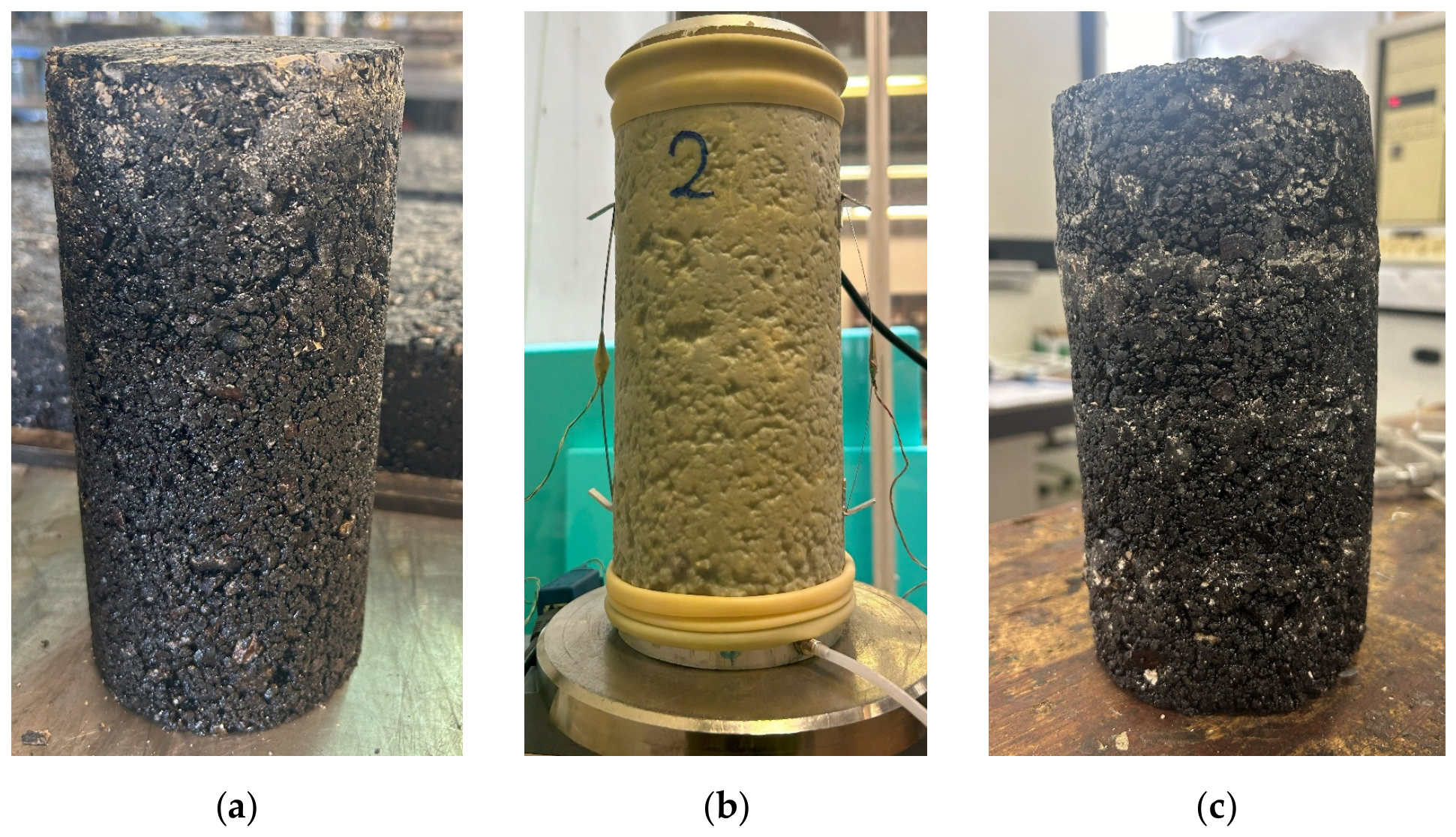
Figure 7 shows the specimen before testing, under vacuum confinement with local deformation transducers, and after failure.
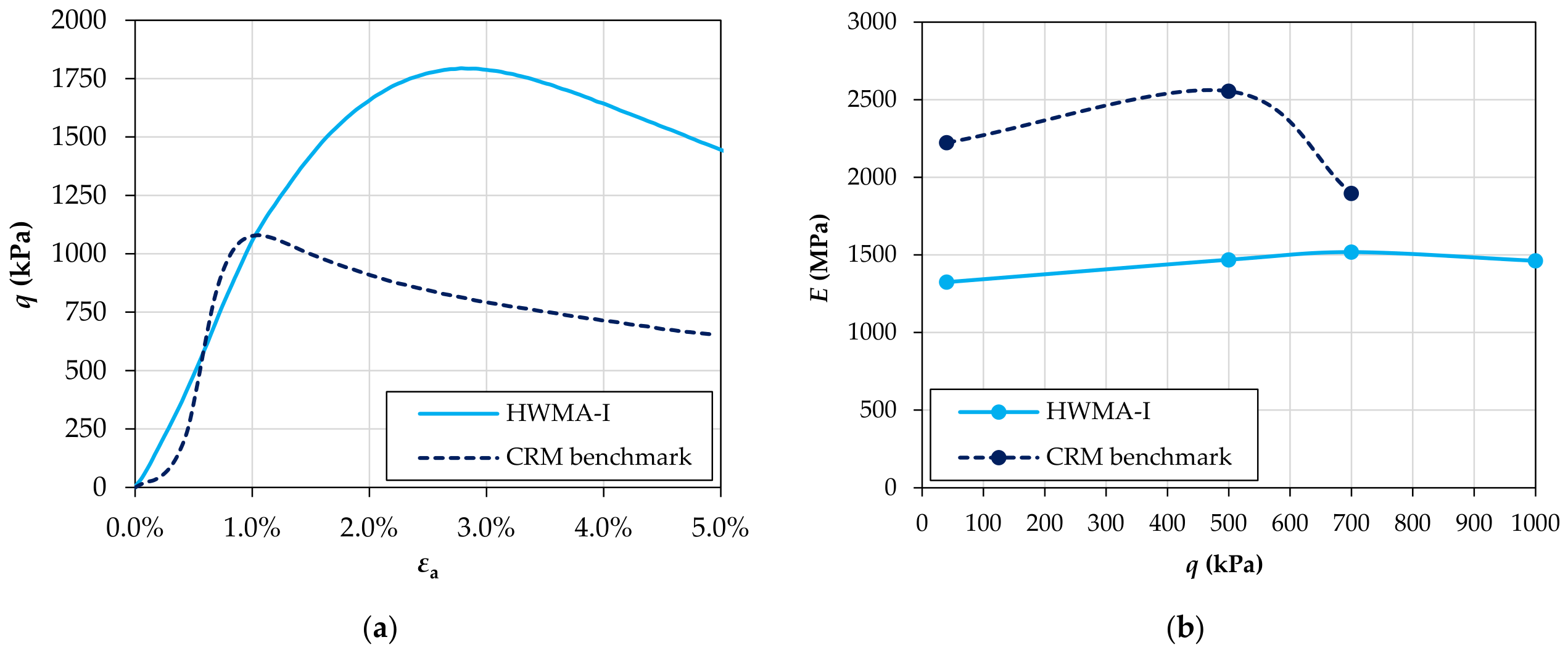
Figure 8 compares the triaxial response of the HWMA-I with that of the CRM benchmark at a confinement pressure of 80 kPa. The HWMA-I reached a mean peak deviatoric stress of 1795 ± 168 kPa at an axial strain of 2.8 ± 0.3%. The deviatoric stress–axial strain curve shows that the HWMA-I reached a higher peak deviatoric stress and peak axial strain than the CRM benchmark. This indicates that the HWMA-I developed a more deformable and ductile confined response, while still mobilising significant shear resistance.
This behaviour is consistent with the higher indirect tensile strength observed for the HWMA-I. The absence of added water and the production at 90 °C likely promoted greater bituminous cohesion than in the CRM benchmark. However, the higher peak strain also indicates that the HWMA-I behaved more like a flexible bituminous material than a cement-stabilised recycled material.
The triaxial deformation modulus results provide complementary information. The triaxial deformation moduli determined at q = 40, 500, 700 and 1000 kPa were 1326 ± 125, 1469 ± 58, 1518 ± 73 and 1463 ± 154 MPa, respectively. The HWMA-I exhibited lower triaxial deformation moduli than the CRM benchmark over the analysed stress range. This should be interpreted in light of the slow loading rate used in the triaxial test. Under slow loading, the viscoelastic component of the bituminous matrix becomes more significant, potentially reducing the apparent deformation modulus of the HWMA. In the CRM benchmark, the presence of cement and the associated hydraulic contribution provide a more elastic component that remains effective under slower loading conditions.
Overall, the triaxial results indicate a differentiated confined response between the two materials. The HWMA-I reached higher deviatoric stress and higher deformation capacity, while the CRM benchmark showed higher deformation modulus under the selected loading conditions. This indicates that the HWMA-I developed confined mechanical coherence, although its response was more dependent on the asphalt matrix than on a rigid, stabilised skeleton. However, the triaxial results alone were insufficient to confirm resistance to permanent deformation under repeated surface loads. Accordingly, these results should be interpreted as indicators of confined deformability under the adopted test configuration, rather than as a comprehensive assessment of structural performance.
3.4. Permanent Deformation Resistance and Redesign Effectiveness
Resistance to permanent deformation was the key performance indicator in the development of the HWMA mixtures.
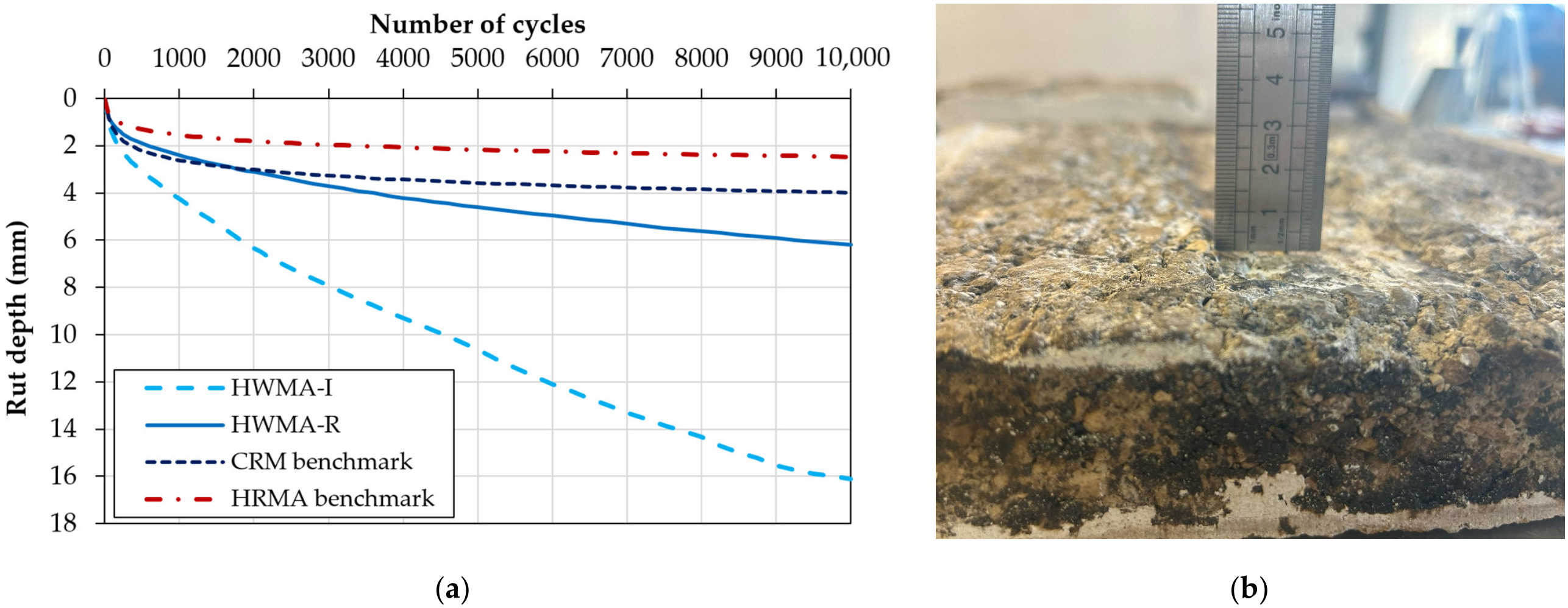
Figure 9 compares the rut depth evolution of the initial and redesigned HWMA mixtures with those of the CRM and HRMA benchmarks. The results show that the HWMA-I exhibited excessive susceptibility to permanent deformation, confirming that the direct transfer of a CRM-derived composition to half-warm production was not sufficient.
The HWMA-I presented a WTSAIR of 1.25 ± 0.21 mm/103 cycles and a PRDAIR of 28.1 ± 0.9%. These values were much higher than those obtained for both benchmark mixtures. The CRM benchmark showed a WTSAIR of 0.08 ± 0.03 mm/103 cycles and a PRDAIR of 10.8 ± 2.1%, while the HRMA benchmark showed a WTSAIR of 0.06 ± 0.01 mm/103 cycles and a PRDAIR of 4.2 ± 0.6%. This result demonstrates that the HWMA-I did not develop adequate resistance to permanent deformation, despite its acceptable volumetric, water sensitivity and triaxial responses.
The poor rutting behaviour of the HWMA-I is interpreted as the result of a combination of mechanisms, although their individual contributions were not experimentally isolated. First, the post-ignition RAP gradation showed that the aggregate skeleton lacked a sufficient coarse aggregate fraction, limiting aggregate interlock. Second, the HWMA-I did not contain cement, unlike the CRM benchmark, and therefore did not benefit from the elastic and stabilising contribution provided by cement hydration. Third, the half-warm production temperature may have promoted partial activation of the aged RAP binder. Together with the 2.6% added foamed bitumen, this could have increased the effective bituminous contribution of the mixture, favouring viscoplastic deformation under repeated loading.
The comparison with the CRM benchmark is particularly relevant. Although both mixtures were derived from the same high-RAP design logic, the CRM benefited from the addition of cement, resulting in a more stable response at elevated temperatures. This suggests that the cement used in the CRM did not merely accelerate strength development or support early cohesion; it also contributed to permanent deformation resistance by providing a more elastic stabilised component. In the HWMA-I, the removal of the cementitious contribution revealed the limitations of relying mainly on a fine-rich bituminous matrix and foamed bitumen cohesion to resist permanent deformation.
The HWMA-R substantially reduced permanent deformation. WTSAIR decreased from 1.25 ± 0.21 to 0.32 ± 0.03 mm/103 cycles, and PRDAIR decreased from 28.1 ± 0.9% to 10.4 ± 0.6%. The final rut depth was reduced to less than half that observed in the HWMA-I. This improvement supports the effectiveness of the combined redesign strategy, which included aggregate-skeleton correction using coarse SSA, reductions in limestone filler content, and adjustment of the added foamed bitumen content. Because these changes were introduced simultaneously, the results should be interpreted as the effect of the combined redesign rather than as isolated effects of each variable.
The incorporation of coarse, angular and rough-textured SSA likely increased the aggregate-interlock contribution to the load-bearing skeleton. At the same time, reducing the filler content limited the excessive fine fraction identified in the initial formulation, while reducing the added foamed bitumen content decreased the risk of an overly binder-rich response if part of the aged RAP binder became active during mixing. These changes addressed the mechanisms proposed to govern the excessive deformation of the HWMA-I.
Nevertheless, the HWMA-R did not reach the permanent deformation resistance of the benchmark mixtures. Its WTSAIR remained higher than those of the CRM and HRMA benchmarks, indicating a higher rutting rate during the later stages of the test. However, its PRDAIR became very close to that of the CRM benchmark, showing that the final proportional rut depth was brought into a substantially more favourable range. The HRMA benchmark remained the best-performing mixture, consistent with its hot-mix production conditions, more effective aggregate–binder bonding, and high SSA content.
These results show that permanent deformation resistance was the governing limitation of the HWMA-I and the main justification for the performance-based redesign. They also indicate that the HWMA-R achieved a more stable permanent deformation response, sufficient to justify further evaluation of its stiffness and fatigue resistance. However, the HWMA-R did not fully match the benchmark mixtures in rutting rate, and this remaining performance gap should be considered a key limitation for practical implementation, particularly for highly demanding surface-layer applications.
3.5. Stiffness Modulus and Phase Angle of the HWMA-R
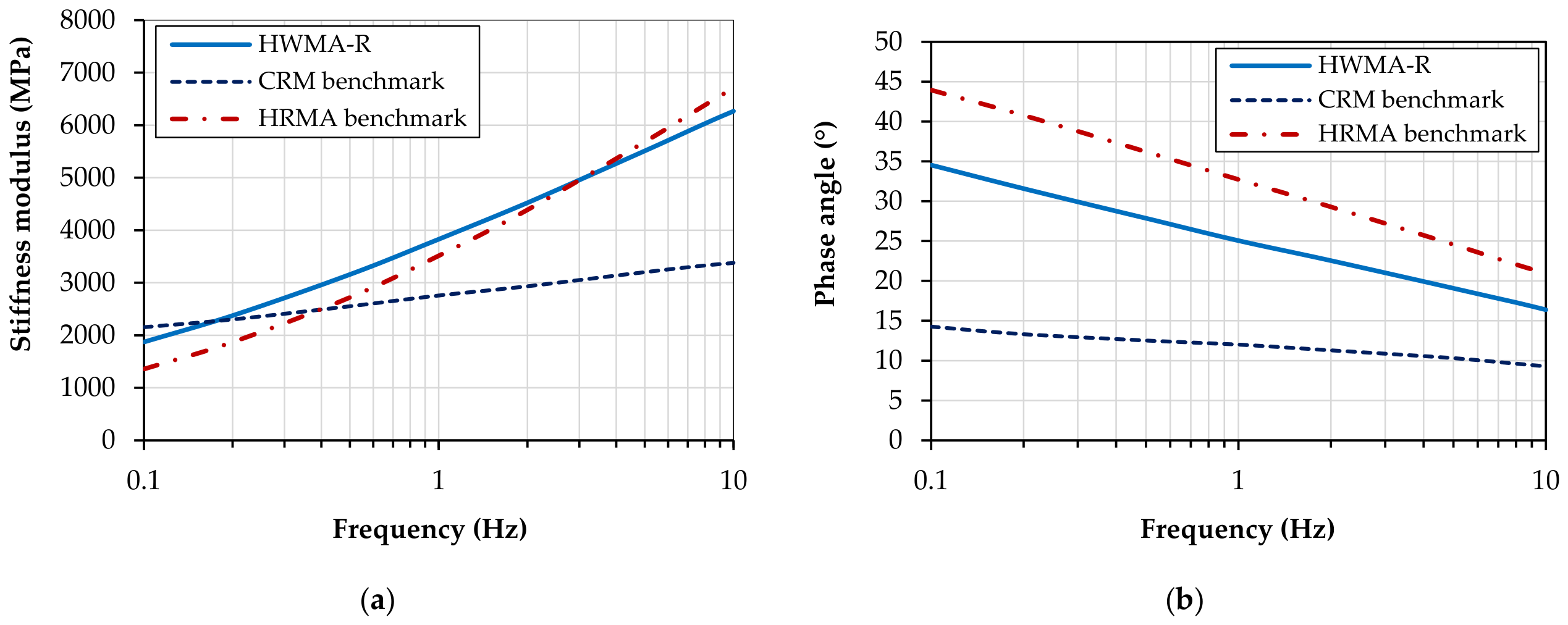
The stiffness modulus and phase angle of the HWMA-R were evaluated using four-point bending tests and compared with the benchmark CRM and HRMA mixtures, as shown in
Figure 10. These results place the viscoelastic response of the HWMA-R within the cold, half-warm, and hot recycling framework.
The stiffness modulus of the HWMA-R increased markedly with loading frequency, as expected for a bituminous mixture. At 8 Hz, the HWMA-R reached a stiffness modulus of 6034 ± 163 MPa, which was very close to the HRMA benchmark value of 6386 ± 507 MPa and clearly higher than the CRM benchmark value of 3332 ± 682 MPa. This indicates that, after the combined redesign, the HWMA-R achieved stiffness levels closer to those of the hot recycled asphalt mixture than to those of the cold recycled mixture.
Because the redesign combined SSA incorporation with changes in RAP content and filler content and added foamed bitumen, the individual contribution of SSA to stiffness cannot be quantified from the present experimental design. Nevertheless, the incorporation of coarse SSA may have contributed to the observed stiffness response by enhancing aggregate interlock and reducing the fine-rich character of the initial HWMA-I skeleton.
The frequency-dependent behaviour also highlights the difference between the HWMA-R and the CRM benchmark. The CRM showed a more stable stiffness response across the frequency range, reflecting the contribution of cementitious bonding and a more elastic, stabilised structure. In contrast, the HWMA-R showed stronger frequency dependence, consistent with a fully bituminous viscoelastic material in which the loading rate has a more pronounced effect on stiffness. This also helps explain why the triaxial deformation modulus of the HWMA-I, obtained at a slow loading rate, was lower than that of the CRM benchmark, whereas the dynamic four-point bending stiffness of the HWMA-R approached that of the HRMA benchmark at higher frequencies.
The phase angle results further support this interpretation. At 8 Hz, the HWMA-R had a phase angle of 17.3 ± 0.2°, compared with 9.6 ± 1.0° for the CRM benchmark and 22.1 ± 1.0° for the HRMA benchmark. The lower phase angle of the CRM reflects a more elastic response associated with the cementitious contribution. The higher phase angle of the HRMA benchmark reflects a viscoelastic behaviour consistent with a more effectively mobilised binder phase. The HWMA-R occupied an intermediate position, exhibiting a bituminous viscoelastic response while retaining a more elastic character than the HRMA benchmark.
Overall, the stiffness and phase angle results indicate that the HWMA-R exhibited an intermediate viscoelastic response between the CRM and HRMA benchmarks. The mixture was substantially stiffer than the CRM benchmark and approached the HRMA benchmark in stiffness while maintaining an intermediate phase angle. These results show that the HWMA-R did not behave as an overly compliant, binder-dominated material, nor as a highly elastic, cement-stabilised material. From a pavement engineering perspective, this combination of high stiffness and an intermediate phase angle is consistent with its intended use as a base-layer material.
3.6. Fatigue Resistance of the HWMA-R
The fatigue resistance of the HWMA-R was evaluated using four-point bending tests under controlled strain.
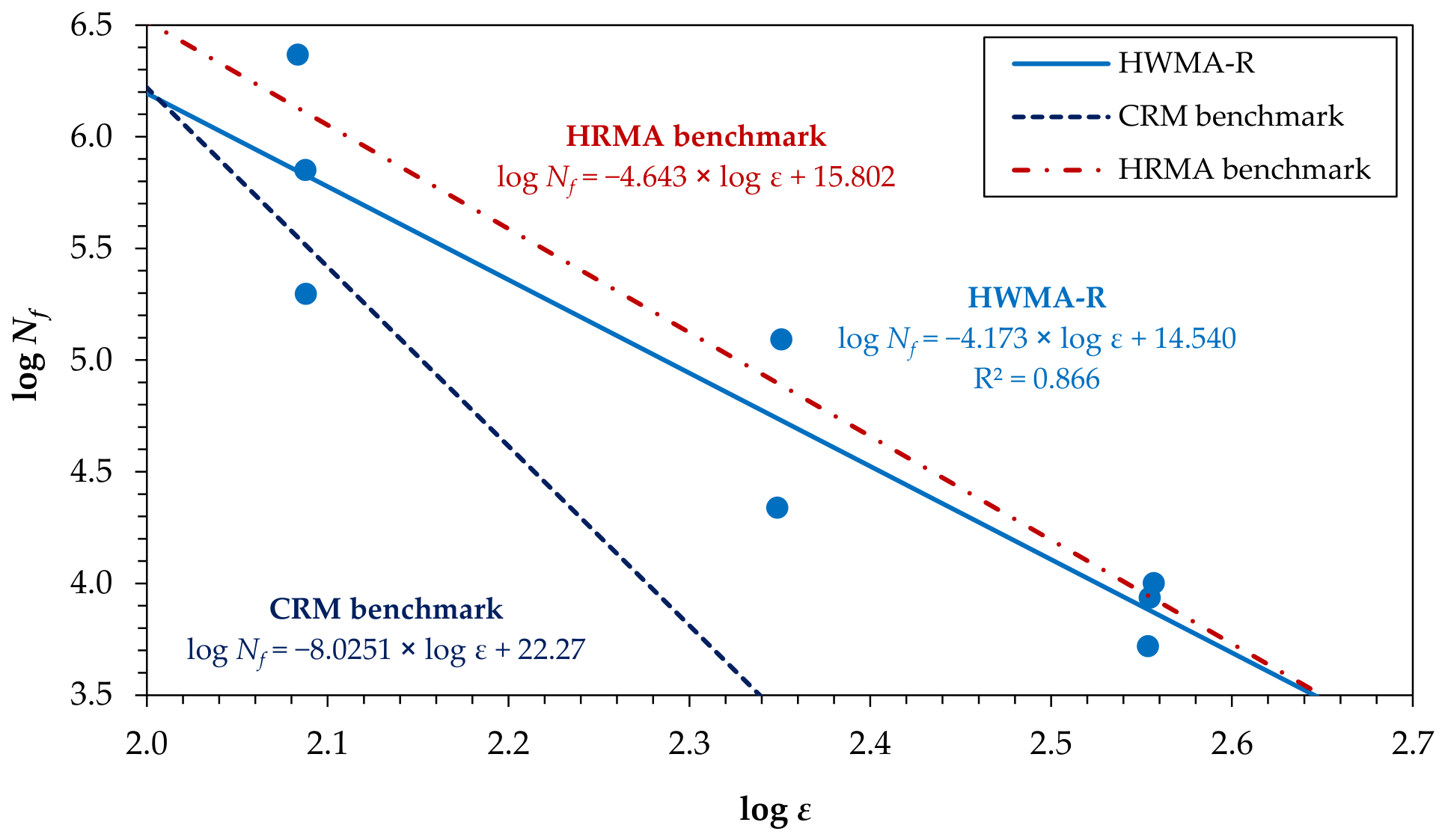
Figure 11 presents the fatigue law for the HWMA-R alongside those of the CRM and HRMA benchmarks. Experimental points are shown only for the HWMA-R, whereas the benchmark lines were replotted from previously reported fatigue laws.
The HWMA-R showed a fatigue relationship described by the equation log Nf = −4.173 × log ε + 14.540, with R2 = 0.866. The slope of this relationship was closer to that of the HRMA benchmark than to that of the CRM benchmark. This indicates that the fatigue-life evolution of the HWMA-R with increasing applied strain was more similar to that of a hot recycled asphalt mixture than to that of the cement-containing cold recycled mixture. The CRM benchmark exhibited a steeper fatigue law, meaning its fatigue life decreased more rapidly with increasing strain.
The fatigue indicators ε6 and N100, derived from the fatigue relationship, support this interpretation. The HWMA-R exhibited an ε6 of 111.3 µε, compared with 106.5 µε for the CRM benchmark and 129.2 µε for the HRMA benchmark. For N100, the HWMA-R reached 1.56 × 10⁶ cycles, very close to the CRM benchmark of 1.66 × 10⁶ cycles but below the HRMA benchmark of 3.28 × 10⁶ cycles.
These values indicate that the HWMA-R exhibited an intermediate fatigue response. Numerically, its ε6 and N100 values were close to those of the CRM benchmark, but the shape of its fatigue law was closer to that of the HRMA benchmark. This means that at low strain levels, the CRM benchmark can approach the HWMA-R, but as strain increases, the CRM response becomes less favourable because of its steeper fatigue law. The HWMA-R therefore retained a more asphalt-like fatigue trend across the analysed strain range.
This behaviour is consistent with the different bonding mechanisms of the mixtures. The CRM benchmark benefits from cementitious contributions at low strain levels, but its more stabilised structure is more sensitive to increasing strain amplitude. In contrast, the HWMA-R behaves as a fully bituminous mixture, with fatigue behaviour governed by the interaction between the corrected aggregate skeleton, including the coarse SSA fraction, the adjusted added foamed bitumen content and any aged RAP binder that may have become active during mixing. The HRMA benchmark remained the best-performing mixture in fatigue, consistent with its hot-mix production conditions and likely more effective binder mobilisation.
Despite its lower added foamed bitumen content, the HWMA-R exhibited a cyclic tensile response compatible with its intended base-layer application. However, because fatigue testing was not performed on the HWMA-I and several design variables were modified simultaneously, the specific effect of reducing the added binder content cannot be isolated. The fatigue results should therefore be interpreted as characterising the redesigned formulation as a whole rather than the effect of binder content reduction alone.
3.7. Overall Mechanical Performance Positioning
Table 4 presents the key performance indicators used to position the initial and redesigned HWMA mixtures against the benchmark CRM and HRMA mixtures, summarising the comparative mechanical responses of the mixtures analysed in this study. The table focuses on the indicators most relevant to the performance-based redesign process, namely resistance to permanent deformation, stiffness and fatigue response. This comparison supports the overall interpretation of the HWMA-R within a cold–half-warm–hot recycling framework, without re-assessing the previously published benchmark mixtures.
The performance trends observed for the HWMA-R are consistent with previous studies reporting that high-RAP HWMA can achieve satisfactory mechanical performance when mixture design, binder system and compaction conditions are properly controlled [
1,
7,
15,
18]. However, the remaining rutting gap relative to the CRM and HRMA benchmarks confirms that high RAP content alone is insufficient to ensure satisfactory overall performance and that the aggregate skeleton, binder content and production conditions remain decisive factors.
The results confirm that resistance to permanent deformation was the primary limitation of the HWMA-I. After redesign, the HWMA-R showed substantial improvement, with PRDAIR decreasing from 28.1% to 10.4% and WTSAIR from 1.25 to 0.32 mm/103 cycles. Although the HWMA-R still exhibited a higher rutting rate than both benchmark mixtures, its final proportional rut depth approached that of the CRM benchmark, confirming the effectiveness of the combined redesign strategy.
The HWMA-R also exhibited a stiffness modulus close to that of the HRMA benchmark and clearly higher than that of the CRM benchmark. In terms of phase angle, it occupied an intermediate position between the more elastic CRM benchmark and the more viscoelastic HRMA benchmark. Its fatigue indicators were close to those of the CRM benchmark and below those of the HRMA benchmark: ε6 was slightly higher than the CRM value, whereas N100 was slightly lower.
Overall, the HWMA-R can be viewed as a mechanically improved half-warm recycled asphalt solution rather than as a fully optimised mixture. It did not match the permanent deformation resistance of the HRMA benchmark and did not benefit from the cementitious stabilisation of the CRM benchmark. However, it substantially improved the inadequate permanent deformation response of the HWMA-I, achieved stiffness values close to those of the HRMA benchmark, and maintained a fatigue response compatible with base-layer application. This positions the HWMA-R as a promising intermediate recycled asphalt solution between cold and hot recycling technologies while highlighting rutting resistance and moisture durability as priorities for further optimisation. Therefore, the HWMA-R is better suited to underlying pavement layers, particularly base-layer applications. Surface-layer use under heavy traffic would require further optimisation of rutting resistance and moisture durability.




 ,
,