1. Introduction
Railway bridges are critical infrastructure in railway transportation networks; therefore, their structural conditions and structural health are a high priority. Regardless of their strategic significance, railway bridges must be used in service with a certain degree of safety and serviceability. Regulations in Poland require acceptance load tests to allow bridges into operation and check their safety [
1]. They are mainly carried out for new structures or after a major bridge renovation. Load tests must also be carried out for reconstructed structures or as supplementary tests of existing bridges to determine their load-carrying capacity. The static load test for a railway bridge needs to be carried out for a span length above 20 m, and a dynamic load test should be performed for all spans above 15 m [
2]. Acceptance load testing is commissioned by an investor and can be requested for shorter spans [
3]. The results are used to update the FE structural model and Bridge Information Modeling (BrIM). Reports on acceptance load testing are made available to the public. Acceptance load tests are aimed at checking the adopted computational structure and confirming safety inventory as required by law. The test results in the context of law are evidence confirming that the design and implementation of the bridge structure have been carried out in a manner ensuring the load-carrying capacity of the structure.
Deflections are one of the most important physical quantities characterizing the change in a bridge, providing information about the global behavior of the structure, while the other measurements are usually local. In addition, according to a survey conducted in 2010, displacement measurement under dynamic loading provides objective information about the performance of bridges, and it should be a priority for the assessment of railroad bridges [
4].
The traditional method for bridge displacement measurement utilizes contact sensors such as linear variable differential transducers (LVDTs) [
5] and accelerometers installed on the structure [
6,
7]. Most of these sensors require access to measurement locations under the bridge, and the installation of these transducers is expensive and time-consuming, and very often requires special equipment. A more recent method is to use Global Positioning System (GPS) contact sensors for displacement measurements [
8]. However, the reading from a GPS unit is not accurate enough for detecting smaller displacements. To enhance accuracy, some researchers fused GPS data along with data from accelerometers and inertial measurement units (IMUs) [
9]. Recently, a measuring system that uses inertial sensors, inclinometers, and accelerometers was developed and implemented to assess the structural condition of railway bridges and viaducts under dynamic loading [
10]. The system does not need any reference points. However, all contact sensor methods need manual installation of their systems and regular monitoring. Therefore, an interruption of rail traffic is required during the instrumentation setup.
Recent scientific and technological advancements have enabled a more efficient structural condition assessment of bridges, mainly through the implementation of intelligent inspection strategies and monitoring of the bridge response under load. The advancements achieved in digital image correlation (DIC) and Motion Amplification over the past three decades have rendered computer vision an increasingly efficient methodology poised for practical applications in the future. Computer vision nowadays is widely regarded as a transformative discovery for full-span deflection calculations in static testing and dynamic studies. Finally, due to the rapid development of optical tools, such as high-resolution video recorders and unmanned autonomous devices for capturing images, and matching algorithms (including FEM software, Sofistick 2025) for analyzing captured images in full-field 2D and 3D, computer vision technology is introduced in common engineering practice. In recent years, non-contact sensors such as the robotic total station (RTS), image processing on unmanned aerial systems (UASs) [
11], and the Laser Doppler Vibrometer (LDV) have been proposed for measuring bridge displacement. Often, the accuracy of the system is sensitive to atmospheric conditions, in such case the system needs to be set up close to the target and requires complex post-processing algorithms. A review of methods for remote and autonomous bridge inspection technologies was presented by Rakoczy et al. in [
12], while methodology for data processing for remote bridge inspection was reviewed by Ribeiro et al. [
13].
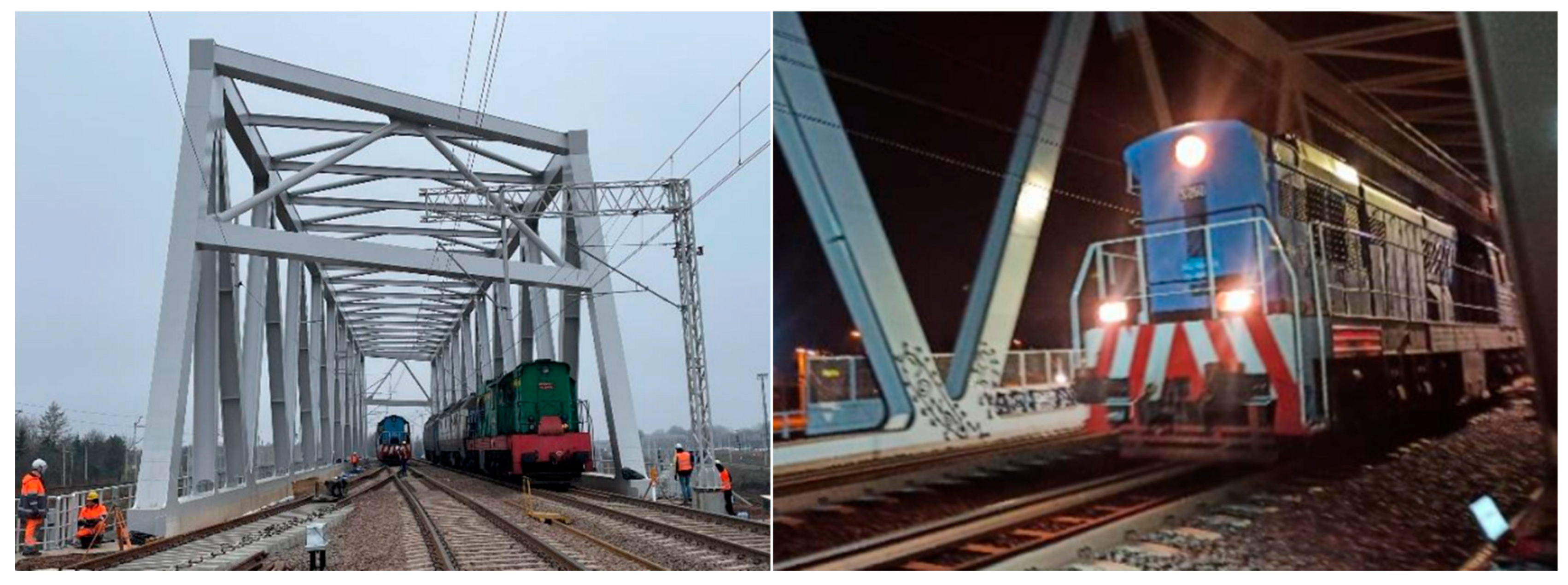
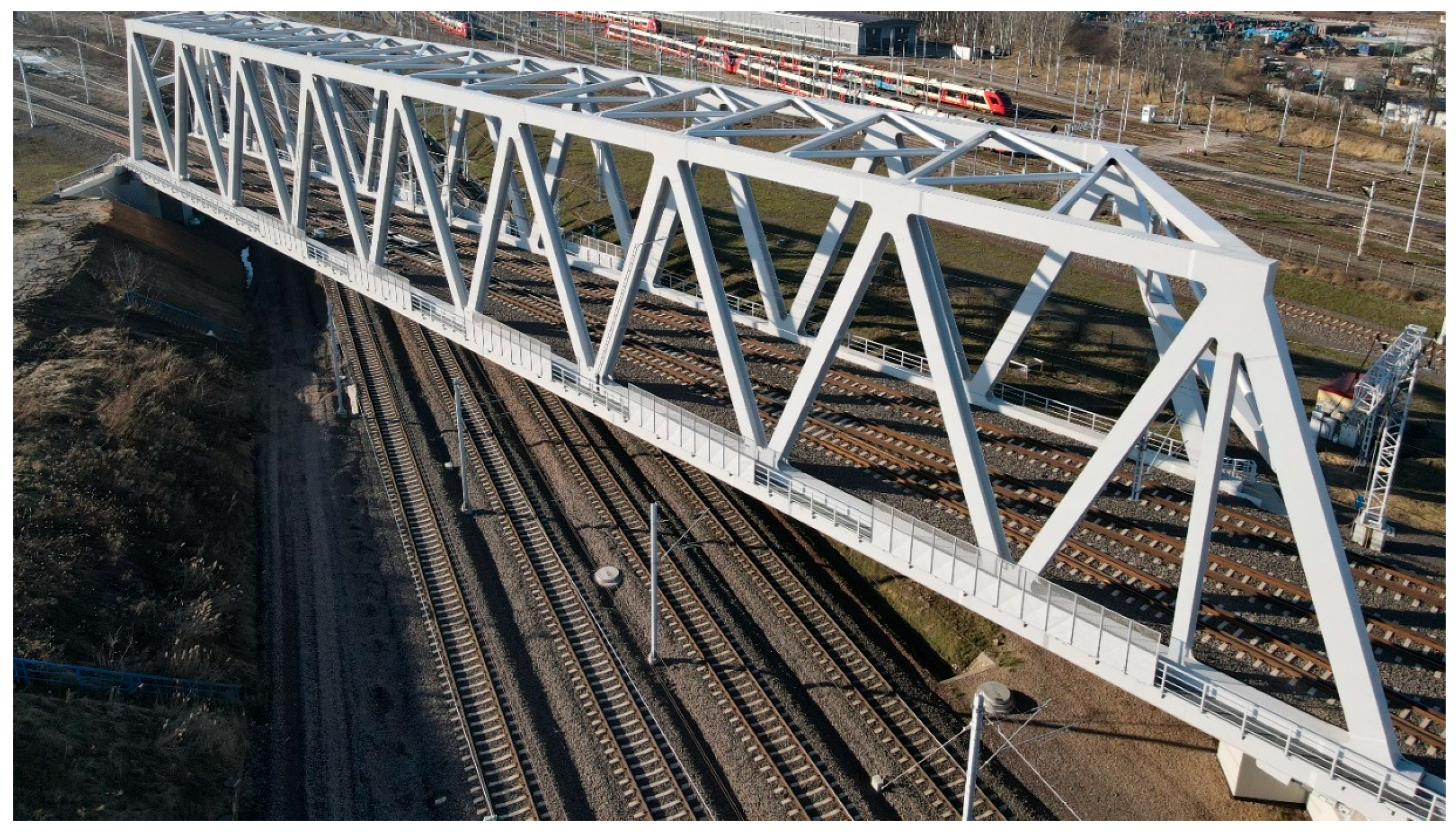
The objective of this paper is to demonstrate a displacement measurement using photogrammetry and DIC. In September 2024, a new railway truss bridge located at Warsaw West Station in Poland, with a span length of 117 m, on the Polish railway network managed by PKP PLK, underwent the first static and dynamic load tests on two straight tracks across the bridge (
Figure 1). Following the construction of a third, diagonal track (through a turnout), additional acceptance dynamic load tests were required; these were carried out in September 2024, including video recordings for DIC measurements, after which the track was opened to traffic.
During the testing, conventional measurements were obtained using accelerometers installed on the structure and complemented by video recordings of displacements, which were analyzed with sub-millimeter precision using the DES Vision System. The specific contributions of the present work include:
Full-scale field validation of a smartphone-based DIC system during railway bridge acceptance load testing, including both static and dynamic loading scenarios;
Integration of image-based measurements, traditional sensors, and FEM modeling, enabling cross-validation of results within a single study;
Demonstration of a rapid, low-cost, and easily deployable workflow (≈20 min setup) using standard equipment (smartphone + tripod), which is directly applicable in engineering practice;
Evaluation of the method in a real railway environment, including operational constraints such as nighttime conditions and limited access to the structure;
Use of an ISO-validated measurement system (DES Vision System), providing an additional level of credibility and traceability compared to many experimental studies.
The paper summarizes the results of the case study research and possible further implementation.
2. Literature Review on Computer Vision Technology
Computer vision is a field of artificial intelligence that enables computers to interpret and understand the visual world. Remote inspection and monitoring of bridges based on computer vision are increasingly implemented thanks to improvement in displacement/strain measurement using optical flow or DIC, detection, and assessment of surface defects using deep learning and integration of computer vision with other sensors and data sources to enhance situational awareness. Computer vision devices and associated data processing techniques can capture dense information about the entire surface captured in the frame [
14]. In the monitoring of civil infrastructures, DIC is a computer vision-based technique widely used for displacement and strain measurement, comparing changes in images. Pan et al. [
15] showed that DIC has a simple experimental setup and sample preparation, low measurement environment requirements, and a wide range of measurement sensitivities and resolutions, since the accuracy of the technique depends heavily on the quality and resolution of the imaging system recording device. Despite the attractive theoretical simplicity of the DIC technique, surface deformation and strain measurements are still computationally intensive. Therefore, over the past three decades, the DIC algorithm has been gradually modified and improved to increase its computational efficiency and measurement accuracy.
Non-contact vision-based displacement measurement began in the 1990s with Stephen et al. [
16] at the Humber Bridge in the UK. Since then, various studies have emerged to address the numerous challenges associated with this technique. The most commonly used methods include template-matching algorithms [
17,
18,
19], optical flow methods [
20,
21], and DIC [
22,
23,
24,
25,
26,
27]. Template matching, for instance, is a technique used to locate small parts of an image (the template) within a larger image. The core idea is to slide the template image over the input image and measure the similarity between the template and the image patch at each position. This method typically involves a high computational load due to the image processing requirements. To address this issue, a study by Wang et al. [
28] introduced the Efficient Match Slimmer (EMS) algorithm. By combining EMS with a robust template-matching algorithm, the Raspberry Vision System was developed. This system is a compact, cost-effective, real-time bridge displacement measurement solution that is mounted on the bridge tower.
Optical flow methods are essential in computer vision for analyzing motion in image sequences. They calculate the apparent movement of brightness patterns in an image, which can be caused by either the movement of objects or the camera. Optical flow is typically represented as a vector field, where each vector indicates the displacement of pixels between consecutive frames. This method assumes that the brightness of a specific point remains constant between frames and that the movement between consecutive frames is small, allowing the use of differential methods to estimate the motion. There are several optical flow methods, including the Horn–Schunck method, the Farnebäck method, and the Lucas–Kanade method. The last one is the most widely used because it is less computationally demanding compared to the other methods and is especially suitable for small displacements, such as in the case of measuring displacements in bridges.
The study conducted by Pan et al. [
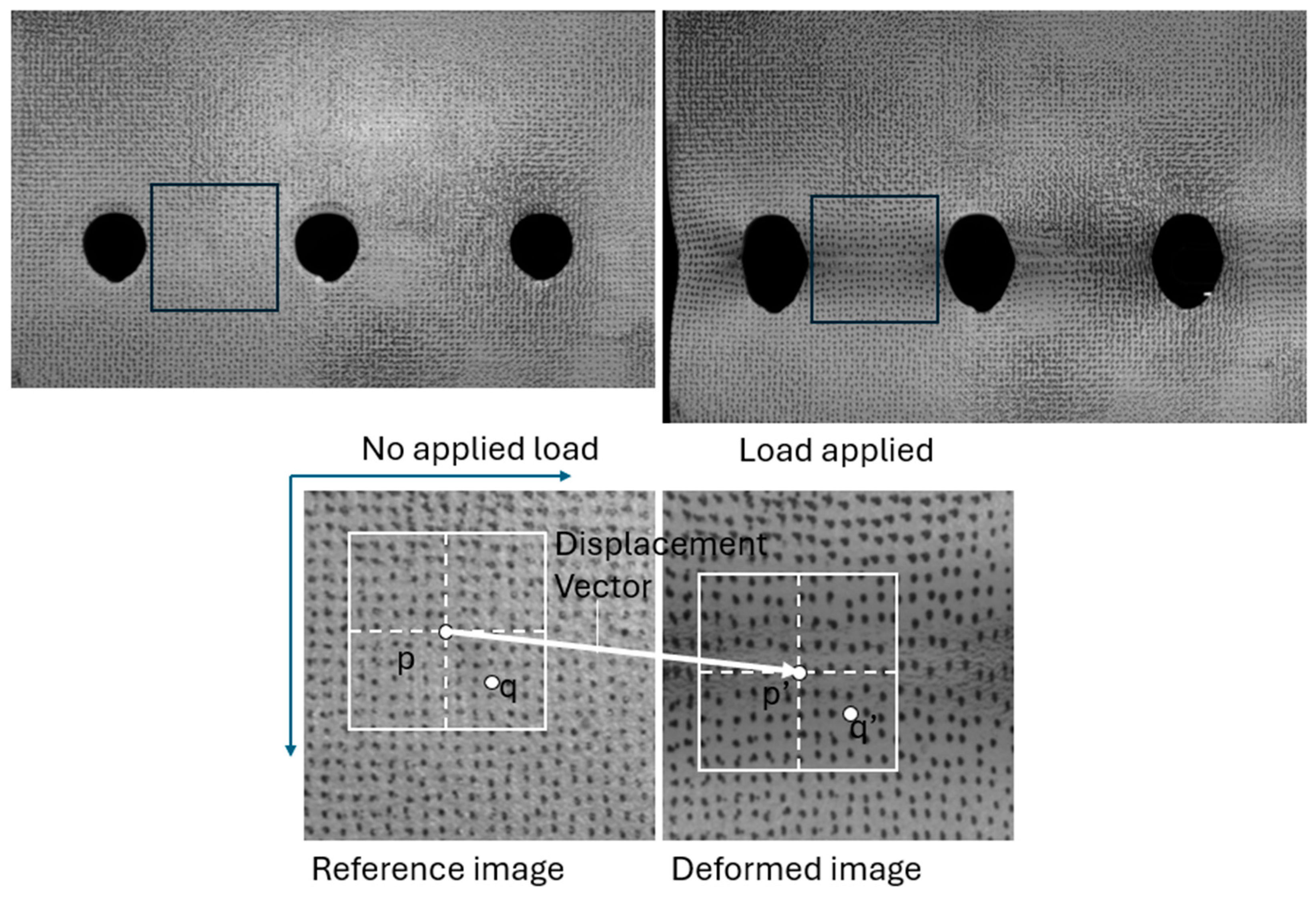
15] uses a computer vision-based technique known as DIC, which analyses variations in texture patterns or known markings on the object, correlating points in common between the images to determine the displacements suffered. Image analysis involves capturing the reference image of a bridge component surface in its initial state (undeformed). As the load is applied (e.g., locomotive, railcar), subsequent images are captured. The algorithm involves a stagewise analysis in which each stage consists of one image resulting in a description of displacements occurring on the surface of the bridge component. Correlation measurement is then used to determine the coordinates, deformations, and stresses on the surface (
Figure 2).
DIC requires experimental setup of surface preparation, camera calibration, and some requirements for the measurement environment such as light exposure. Since the technique uses images, its accuracy strongly depends on the quality and resolution of the recording device of the imaging system. Despite the attractive theoretical simplicity of DIC, surface displacement measurements are still computationally intensive. Therefore, over the past two decades, the DIC algorithm has been gradually modified and improved to increase its computational efficiency and measurement accuracy. The DIC system was tested on different bridge types, such as a steel railway bridge [
22], and concrete [
23], suspension [
23,
24,
27], masonry [
25], and steel bridges [
26]. The most recent developments in computer vision include:
3D geometric reconstitution of bridges envisaging the development of Bridge Information Models (BrIMs) [
29,
30,
31];
Automatic damage identification supported by AI [
14,
23,
32];
Non-contact measurement of structural parameters, such as displacements [
25,
26,
33], modal parameters [
34,
35] and stresses [
22,
36,
37].
The process of extracting vibration modes through PMM (Phase-Based Motion Magnification) has been continuously studied to produce more precise and automated results. It was necessary to refine certain amplification criteria and strengthen phase analysis techniques to avoid the algorithm becoming dependent on subjective interpretation, especially when comparing different magnification settings or analyzing complex structures. This refinement aimed to ensure consistent and reliable results. To solve the difficulties posed by modal identification of full-scale bridge structures, ref. [
38] developed a new approach to facilitate the extraction of natural frequencies of full-scale bridges from video obtained by a UAV.
This study explores the application of digital image correlation (DIC) for evaluating the vertical displacements of a truss railway bridge span during a dynamic acceptance load test under moving loads. Video recordings of the span were captured remotely using smartphones under nighttime conditions with artificial illumination, and the resulting data were processed using the DES Vision System. The study primarily focuses on quasi-static and low-frequency displacement monitoring, as encountered during acceptance load testing.
The obtained results were verified with data acquired using traditional measuring methods such as string potentiometers and accelerometers. Furthermore, the DIC method was used to measure displacements during regular train operation, without a designated target point on the bridge, and the fixed reference point was selected from the bridge’s surroundings.
3. Data Collection on the Warsaw West Station Railway Bridge in Poland
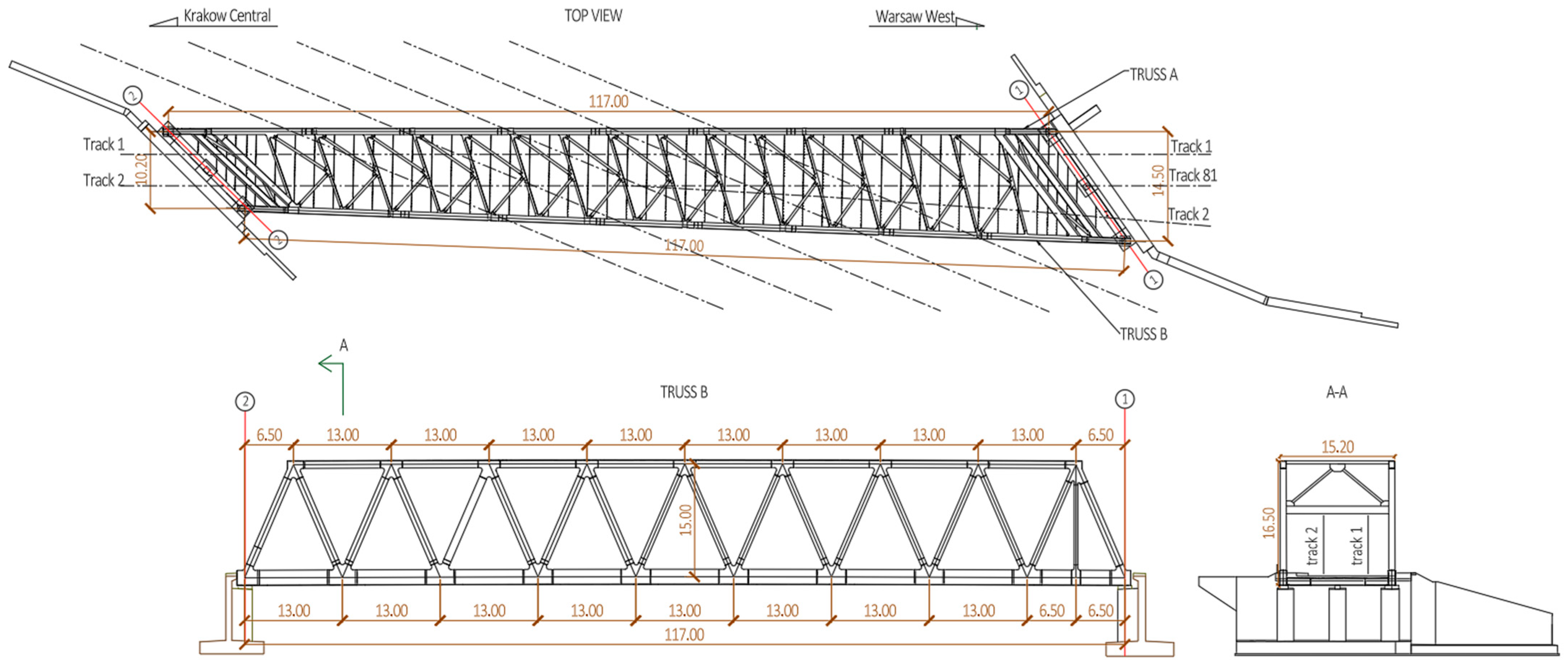
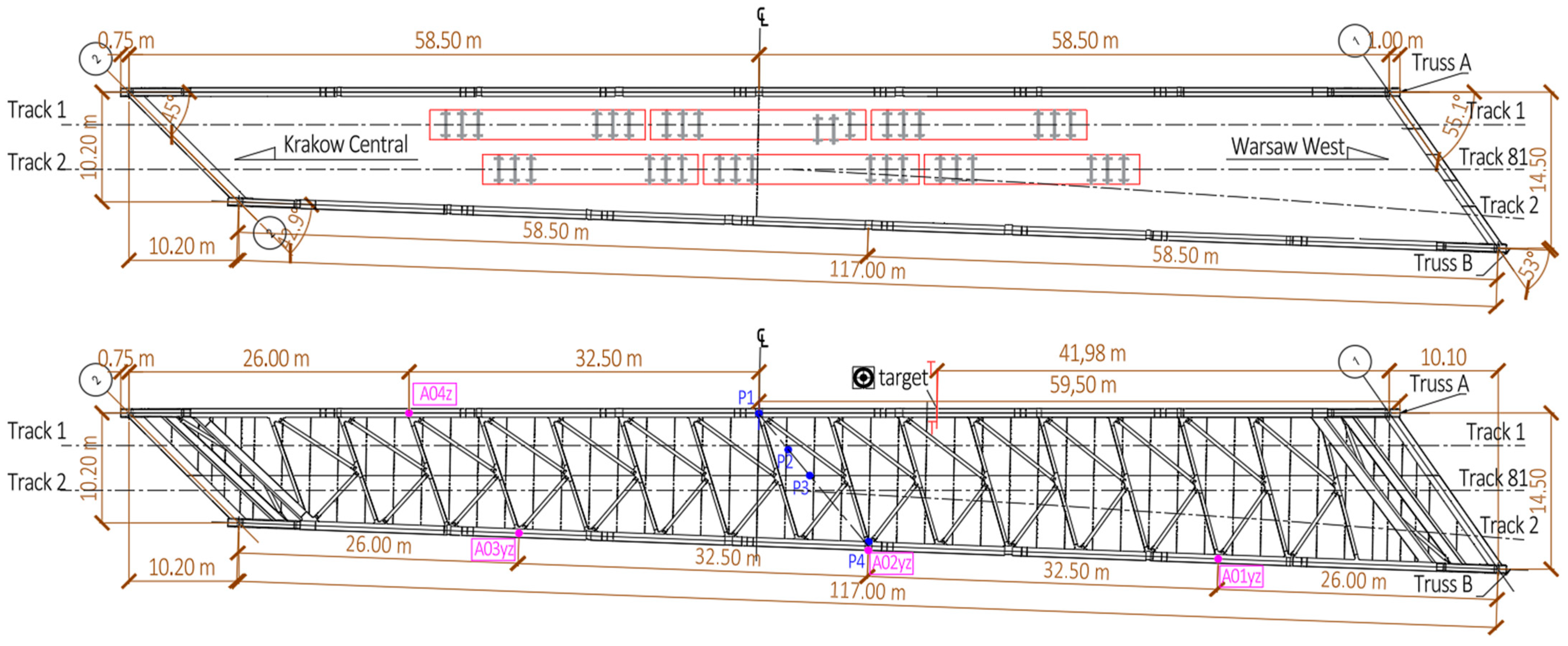
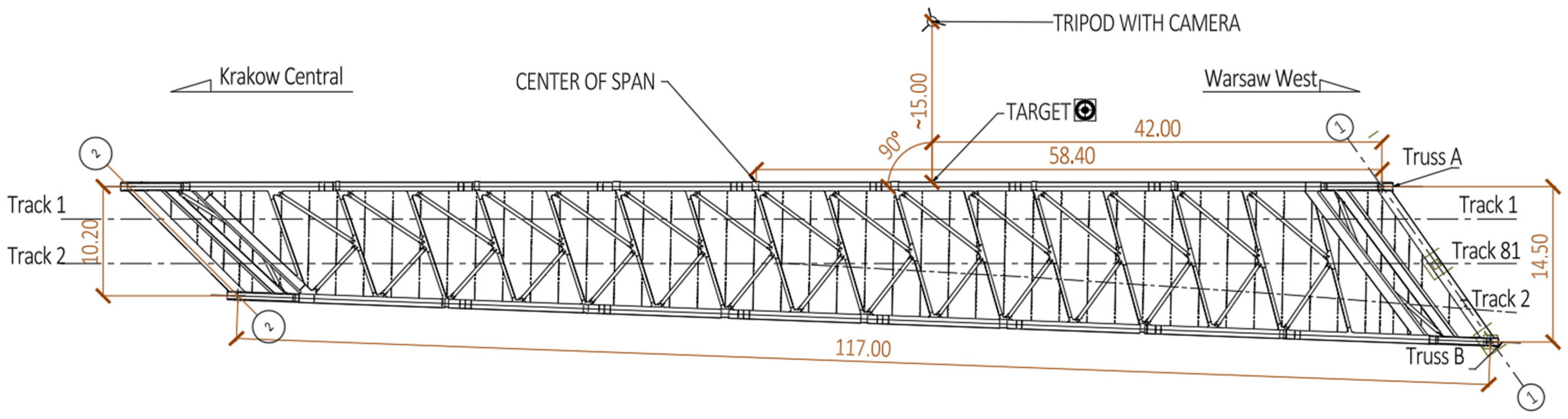
The Warsaw West Station Railway Bridge is a steel truss bridge with an orthotropic deck that carries two railway tracks with a switch in the middle. The obstacle through which the railway traffic will be carried out is five railway tracks. The theoretical span length is 117 m with a variable width from 13.0 to 17.33 m The bridge is diagonally oriented in plan. The main dimensions are presented in
Figure 3 while the side view of the truss bridge is presented in
Figure 4.
The bridge is designed for rolling stock loads corresponding to the design load models according to PN-EN 1991-2, Ref. [
39] taking into account the load classification factor α = 1.21. The bridge is supported by driven piles with reinforced concrete foundation strips that are 9.0 m wide and 26.413 m long and 8.5 m wide and 23.2 m long. The foundation strip of the abutment in axis no. 1 has an additional offset of 4.5 m long and 10 m wide under the rib projecting towards the backfill. The heights of the foundation strips are 2.0 m and 1.80 m, respectively, at the point of connection with the abutment wall.
The superstructure is a steel Warren-type truss with parallel top and bottom chords and diagonals. The height of the structure (measured in the axes of the lower and upper chords) is 15.00 m, and the total height of the structure is 16.50 m. The axial spacing of the girders is from 10.20 m on support no. 2 to 14.50 m on support no. 1. The truss nodes are arranged at a spacing of 13.00 m. The truss was designed as a steel truss in which the upper chord and lower chord are steel boxes, the cross braces are box or I-beams, and the braces are I-beam profiles. The truss girders are supported on abutments using pot bearings.
At the level of the upper chord, braces were designed, arranged following the truss module and portal frames in the plane of the extreme cross braces. An orthotropic deck is designed to connect the bottom chords of a truss. The transverse T-beams are arranged at a spacing of 2.60 m with density at the supports, and the longitudinal T-ribs are arranged at a spacing of 0.4 m. The structural height of the orthotropic plate is approximately 1.0 m. The sheet metal of the orthotropic plate is shaped at a slope of 2%. On the outside of the lower chord of the truss, service walkways have been designed with a clear width of approximately 0.85 m. The supporting structure of the walkways consists of supports made of steel sections; the surface of the walkways consists of steel gratings.
3.1. The Acceptance Load Tests and Measurements on the West Station Railway Bridge
The new railway truss bridge considered in this research, with a span length of 117 m on the Polish railway (PKP PLK), underwent acceptance load testing. The first set of tests were performed in February 2023, on two straight tracks across the bridge. Static tests were carried out in series every 10–15 min, until the displacements stabilized, following the PB-01 procedure of the quality management system [
40]. Ultimately, in the case of the implemented schemes, the load remained on the span for 30–45 min (until the deflection increases were minimal—they met the standard condition). During the test load, the structure was subjected to continuous observation to determine whether there were any deformations or other visible damages. No such changes were noted throughout the tests.
Based on the measured displacements of both girders of the truss structure, recorded during the test at the assumed measurement points, the vertical displacements of the span were calculated at approximately 1/4, 1/2 and 3/4 of the span length and at two support points. Each time, the displacement values (specified in millimeters) were referred to the initial state before loading. As a result, based on the vertical displacements of five points of the span along the length of the girder, its deflection arrow can be determined, considering the effect of support settlements (procedure PB-01 of the quality management system). The values of the deflections determined in this way in the subsequent loading and unloading phases were included in the appropriate forms. The above values were used to determine the greatest total, permanent, and elastic deflections in the tested points of the loaded structure.
The vertical displacements of the span were measured with inductive linear displacement sensors with a range of up to 2 inches (50 mm) and a reading accuracy of 0.0004 inch (0.01 mm). Piezoelectric accelerometers were used to measure accelerations under the dynamic test load following the PB-02 test procedure of the quality management system. Vertical and lateral accelerations were measured with piezoelectric accelerometers with a sensitivity of 1 V/g.
Dynamic tests of the viaduct were carried out after a static load test in two stages. The first stage (E1—designation used in the report) was carried out on February 15th, 2023 [
40], in daylight, full cloud cover, and light wind at a temperature of 2 to 1 °C. At this stage, test runs were carried out at speeds of up to 40 km/h and up to 50 km/h on track no. 1 and track no. 2, respectively. The second stage (E2—designation used in the report) was carried out at night on February 16th, 2023, in artificial lighting, no cloud cover, and light wind at a temperature of 0 to −2 °C.
A second dynamic test of the bridge, taking into account train passage on the newly constructed diagonal track no. 2 (via a turnout), was conducted to prepare for opening to operation. It was carried out at night on 5 September 2024 [
41]. under artificial lighting, full cloud cover, no precipitation, and light wind, at a temperature of approx. 17 °C. The results of the test run in the form of time histories of vertical and lateral accelerations were recorded electronically. The measurement set consisted of a portable computer, an HBM QuantumX multi-channel recorder, and PCB Piezotronics piezoelectric accelerometers. A sampling frequency of 300 Hz was used in the measurements. The measured values were accelerations using accelerometers.
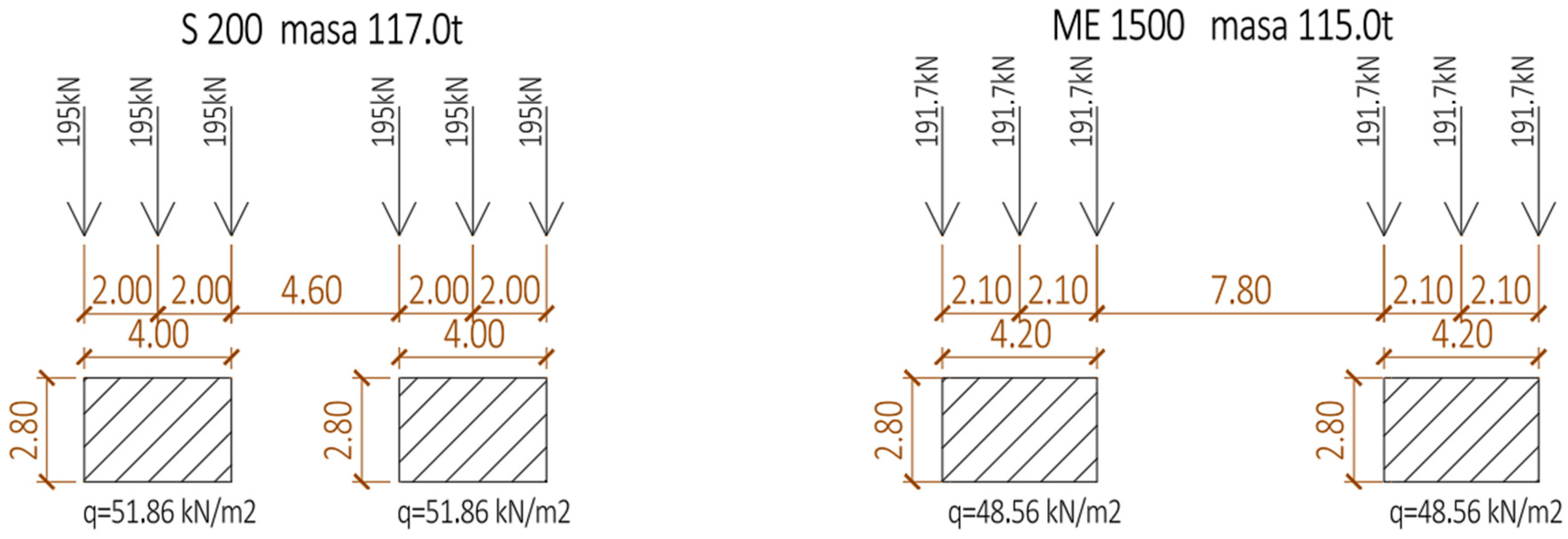
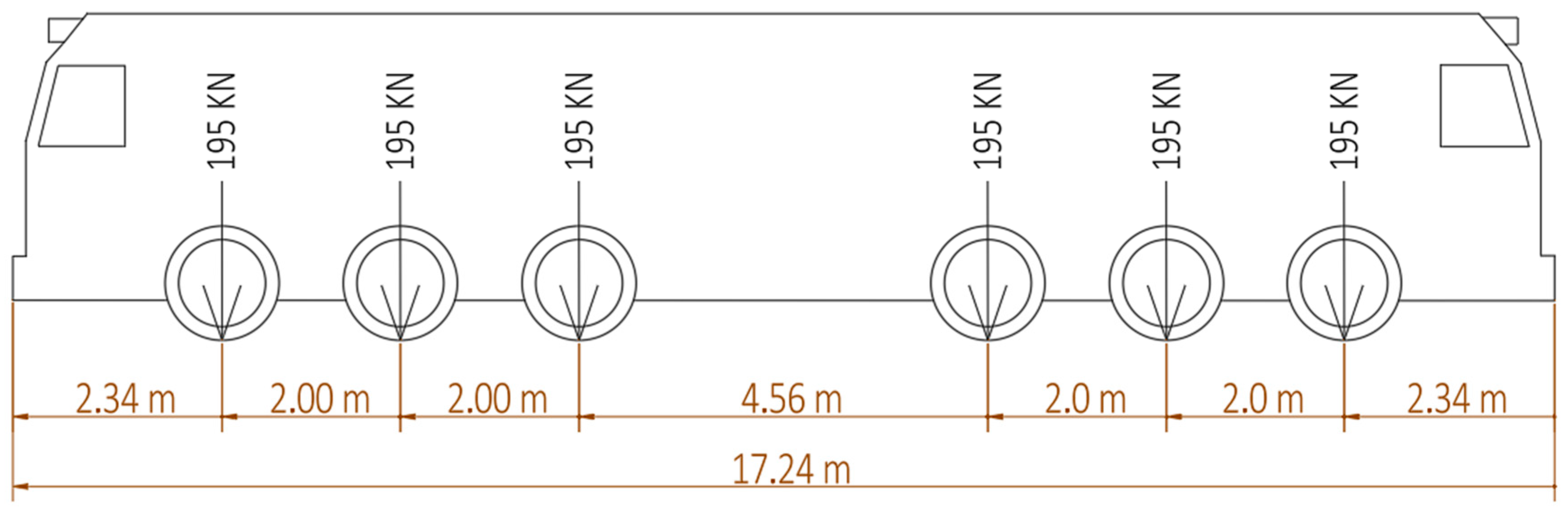
The locomotive used in both dynamic acceptance load tests weighed 117 long tons (131 short tons (US)) and had axle spacings as shown in
Figure 5. The train was passing on track 2, from one side of the bridge to the other. The placement of the accelerometers during the acceptance load testing is presented in
Figure 6.
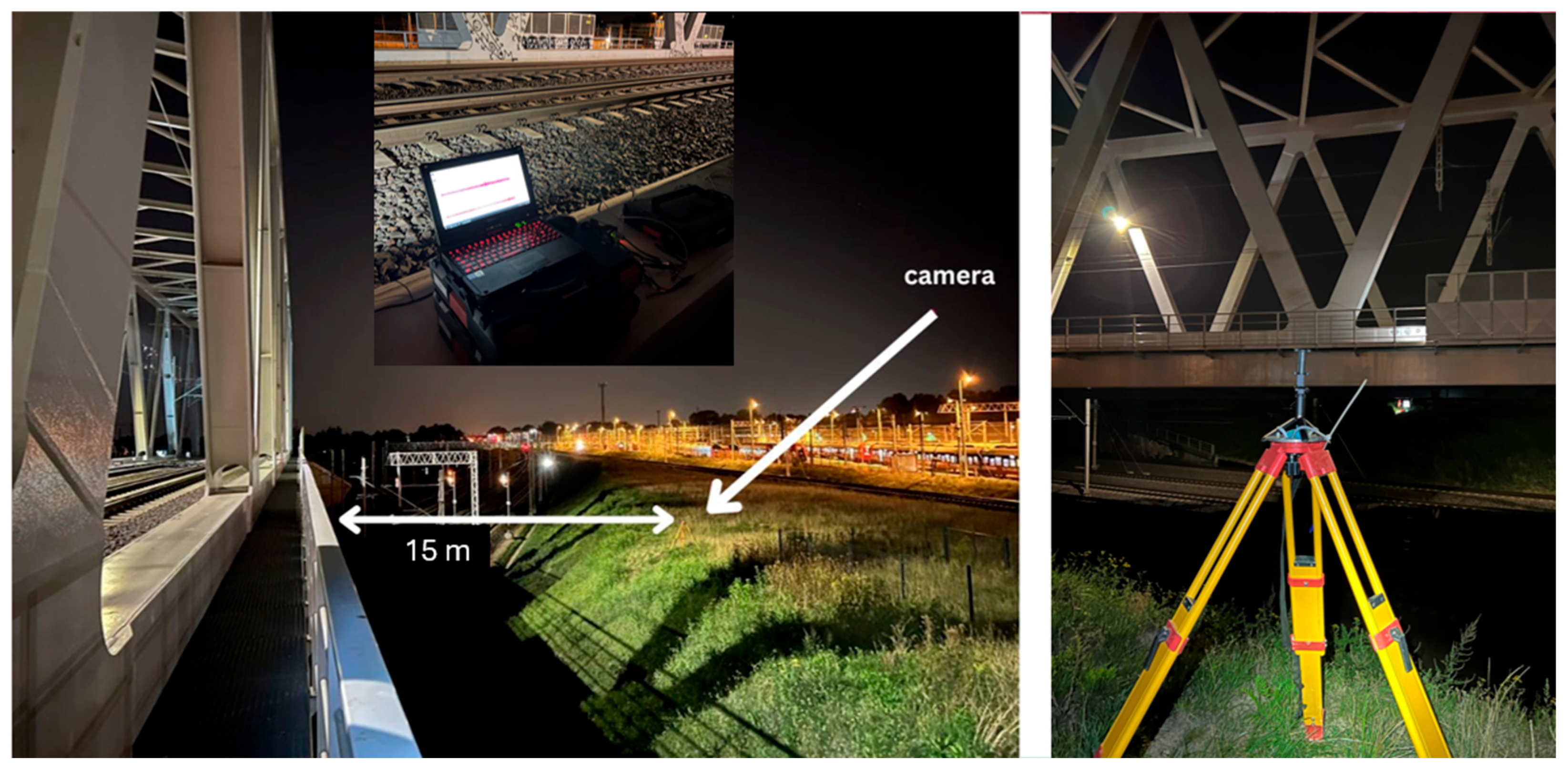
During the additional dynamic testing, supplemented measurements of video recordings were carried out using a tripod and a cell phone with a video function in 4K quality. Each train passage over the bridge was recorded using a camera positioned perpendicular (90°) to the primary structural axis and directed toward a printed target affixed to the bottom chord of the truss. In this case, the camera was placed on an embankment at a similar height to the span (
Figure 7).
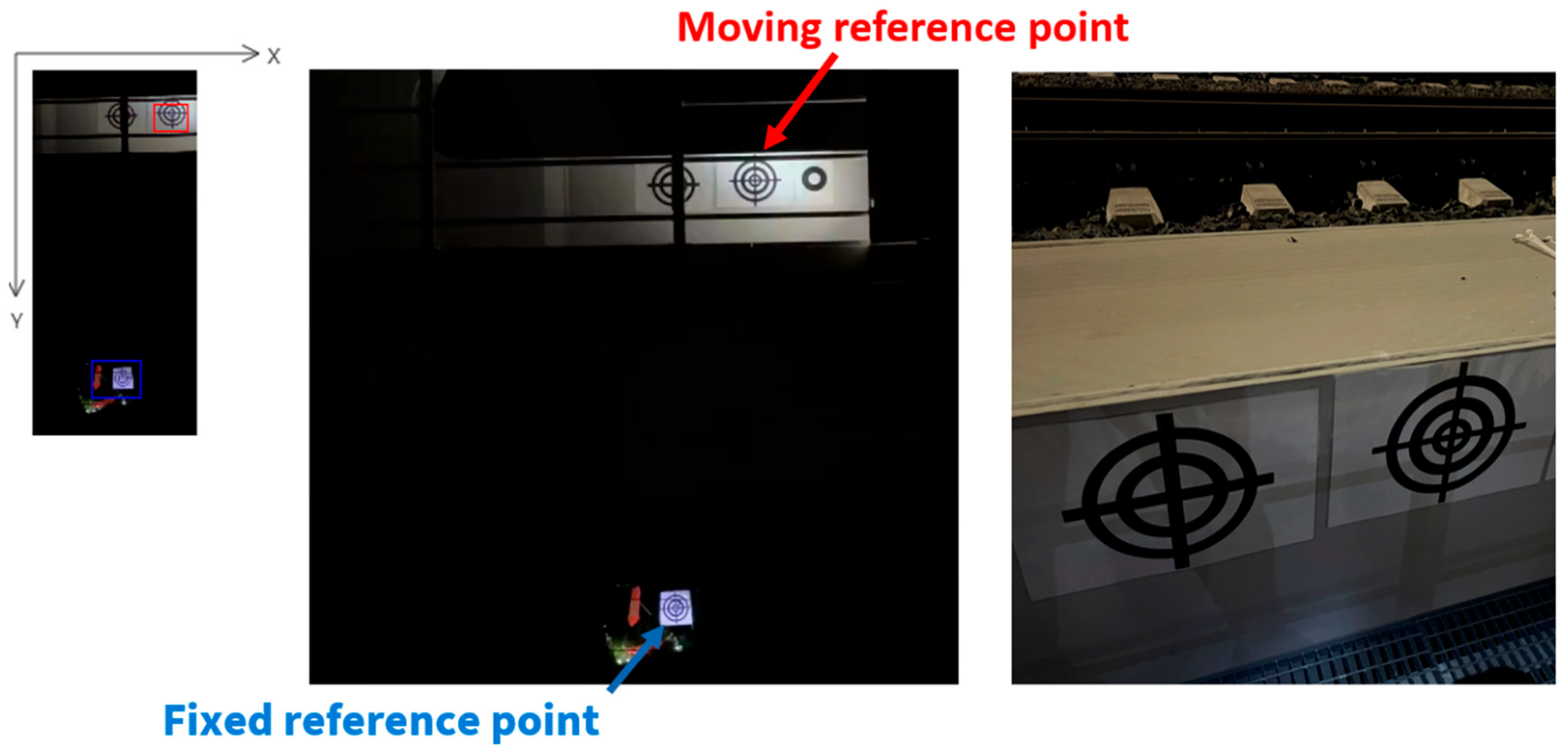
The complete setup of measurements during the acceptance load testing is shown in
Figure 8. The camera was positioned approximately 15 m from the bottom chord of Truss A and oriented directly toward the target, which was illuminated with artificial lighting. A fixed reference point, also illuminated, was established on the embankment on the opposite side of the bridge. The target measured 288 mm in size.
3.2. FE Analysis of the Considered Truss Railway Bridge
The structural analysis of the truss railway bridge was performed using the FEM with a numerical model in Sofistik 2025 software. The structure was modeled using a three-dimensional beam model and a single shell element—a model of class e1, e2, p3. The resulting models comprised one QUAD element and 28 BEAM elements. The main girders (lower chords of the truss) (three cross-sections), upper chords of the truss (four cross-sections), diagonals (11 cross-sections), bracing (two cross-sections), crossbeams (five cross-sections), and longitudinal beams (three cross-sections) were modeled with beam elements having geometric characteristics consistent with the technical documentation [
42]. The bridge deck was modeled as a shell element—QUAD. The support conditions were implemented using constraints according to the assumed bearing scheme of the structure. The material properties of the structural elements were defined using the material library in Sofistik 2025 software in accordance with the design documentation and subsequently refined for structural calibration based on data obtained from the static load test conducted in February 2023 (
Table 1).
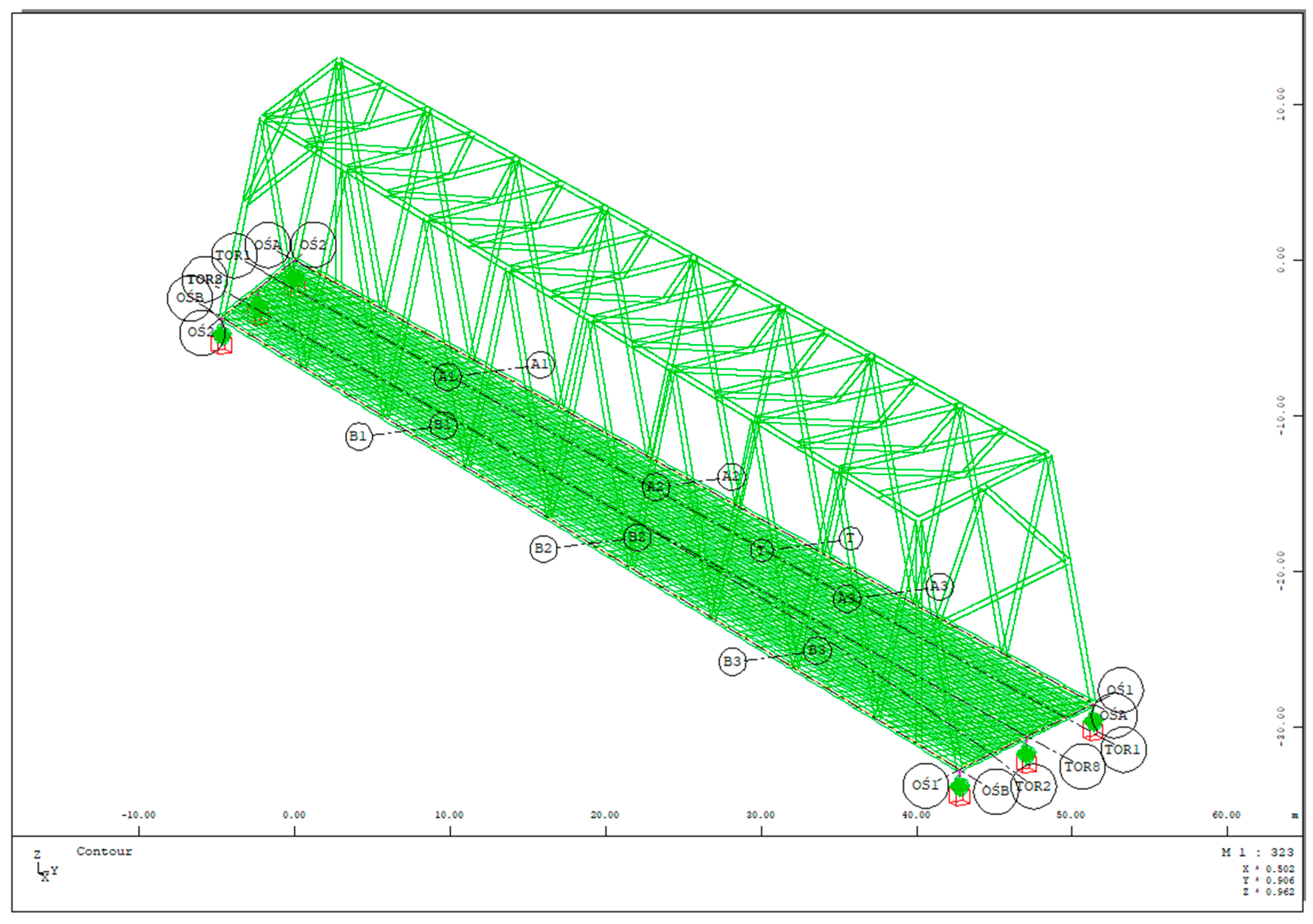
The geometry of the computational model accurately reflects the designed geometry of the structure with 28 beam members of various cross-sections and the bridge deck modeled as a shell element (
Figure 9). The truss nodes were modeled as rigid.
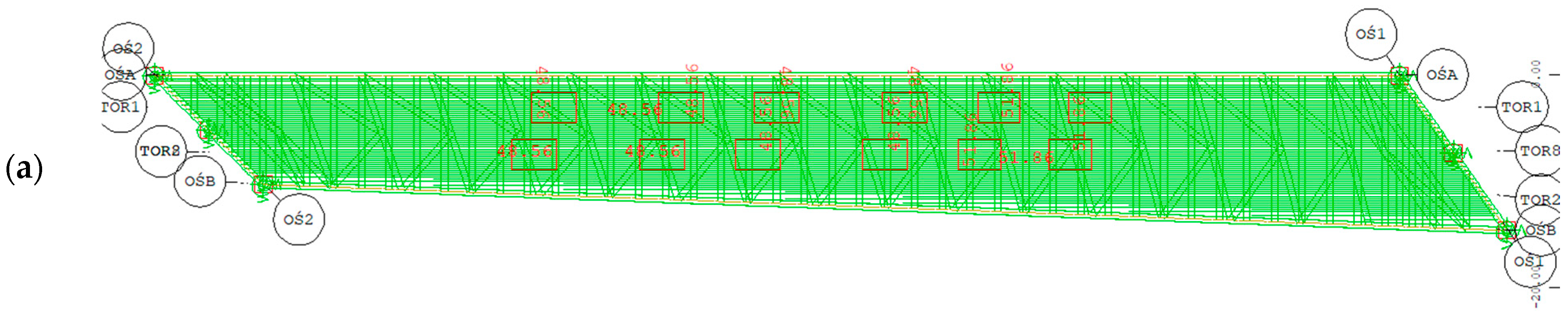
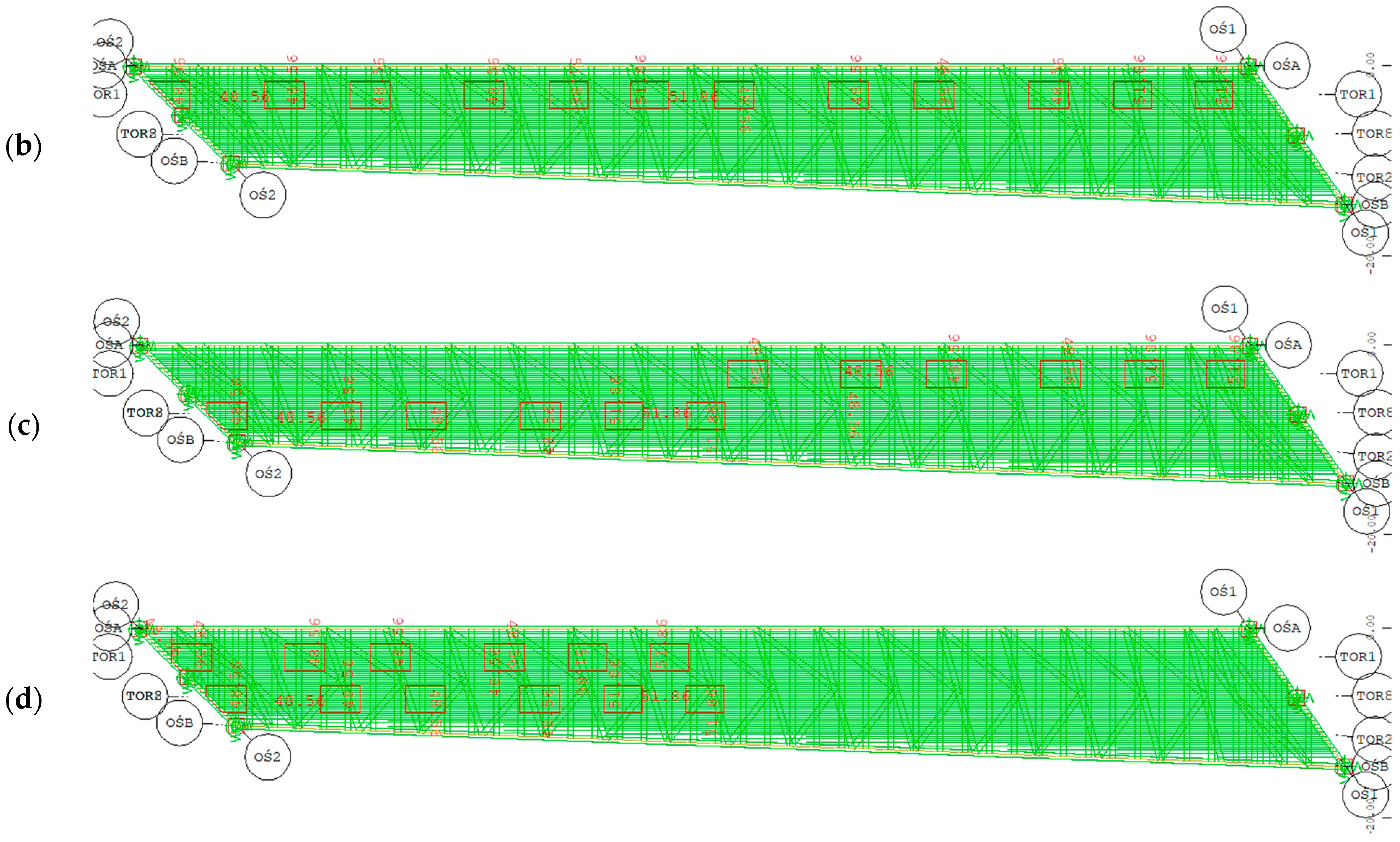
To verify the model’s accuracy, static load models S1–S4 from the static load test conducted in February 2023 were used in the FEM as presented in
Figure 10.
To simulate the loads from the axles of locomotives, a simplified surface load scheme was used, taking into account the distribution of forces through the sleepers and a ballast layer approximately 50 cm thick (
Figure 11).
Next, the displacements of the truss bottom cords were identified at locations A1, A2, and A3 (corresponding to ¼, ½, and ¾ of the length of beam A) and similarly on beam B, where displacement sensors with an electronic display and a reading accuracy of 0.01 mm were located. The sensor at location A2 corresponds to the A2-A2 axis in the model, the sensor at location B2 corresponds to the B2-B2 axis, and so on for sensors A1, A3, B1, and B3. The target where the remote sensing measurement was performed is marked with the T-T axis (as shown in
Figure 9).
Following this, the vertical displacements for points A1, A2, and A3 and B1, B2, and B3 were compared using data from the Sofistik software model and the measurements from a static acceptance load test [
41]. The elastic deflections of the span were smaller than those calculated theoretically in the Sofistik program, ranging from 67% to 85% of the calculated value (on average up to 76%). These results indicate slightly greater flexural stiffness of the span. The analytical model used for design shows results on the conservative side and provides assurance that the assumed theoretical load-bearing capacity has been achieved. To calibrate the FEM for a more accurate representation of the actual structural behavior, the steel stiffness was iteratively adjusted to achieve the best agreement with the measured span deflections under static loading. For steel components with thicknesses below 40 mm, the equivalent stiffness in the FEM was increased from 210 GPa to 276 GPa, while a value of 251 GPa was adopted for steel components thicker than 40 mm. This equivalent stiffness adjustment accounted for the effects of boundary conditions, composite action, and connection rigidity.
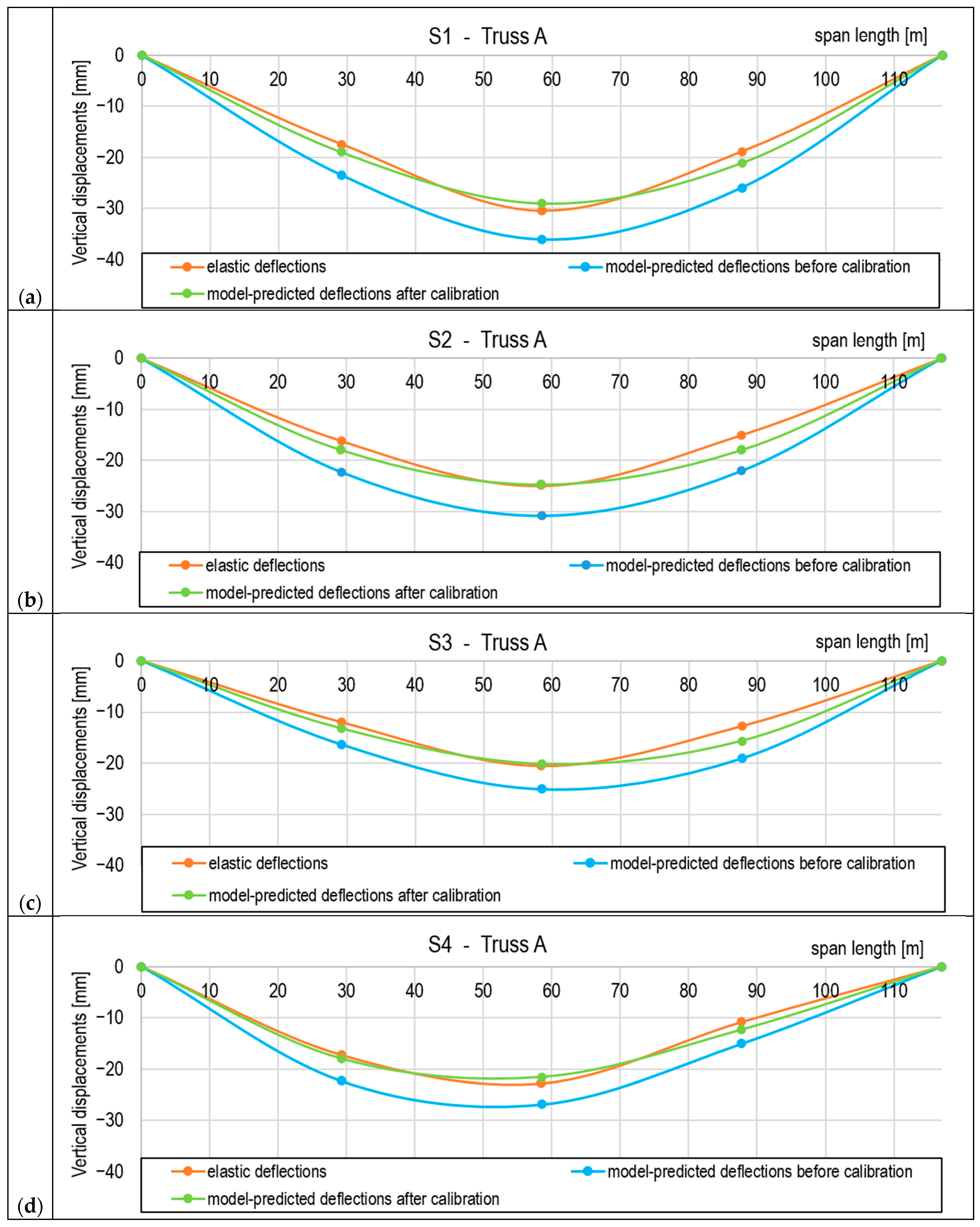
After modifying material properties, the FEA provided the displacement closer to the measured displacement. At the midspan of Truss A, the displacement was compared with an accuracy of 3.2%. For ¼ and ¾ of the span, the displacement was compared with an accuracy from 8% to 17%. The calculated and measured displacement plots of Truss A are presented in
Figure 12, while the detailed numerical data for Truss A and Truss B are summarized in
Table 2. The data presentation focuses on the bottom chord of Truss A, as the measurement target was subsequently installed at this location and the video recordings were obtained from this side.
In summary, the elastic deflections of the bridge are smaller than those calculated theoretically. The calculation model adopted for dimensioning gives results on the side of certainty and thus indicates the correct, theoretically assumed load-bearing capacity. Additionally, the permanent deflections in the tested span ranged from 0% to 4% of the total deflections and therefore meet the standard condition of not exceeding the level of 15% [
40]. This also indicates that the structure behaved consistently with the expectations; therefore, the static load test may be regarded as a reliable source of valid reference data.
4. Results of Data Analysis Using DES Vision System
The data collected using a cell phone during the acceptance load testing were analyzed using the DES Vision System.
First, video data were acquired using a smartphone camera positioned under controlled geometric and lighting conditions to ensure consistent image quality during the proof load testing. The relevant time segment corresponding to the test was subsequently selected, and preprocessing operations, including frame selection and image stabilization where applicable, were performed to minimize the influence of potential camera motion. Next, the region of interest containing the monitored structural element was defined for analysis, and distinct reference points were identified in the images, including a moving reference point on the structure and a fixed reference point located outside the structure (
Figure 8). These points were tracked using feature recognition techniques based on digital image correlation (DIC) principles, enabling relative displacements to be measured. Finally, the image data were calibrated by defining a known physical dimension on the analyzed structure—specifically the target size—allowing conversion of pixel-based measurements into real-world displacement values. The resulting displacement time histories were then filtered to reduce measurement noise prior to further analysis.
Preliminary results were obtained for 10 test conditions at different speeds from 10 km/h up to 80 km/h and in two directions.
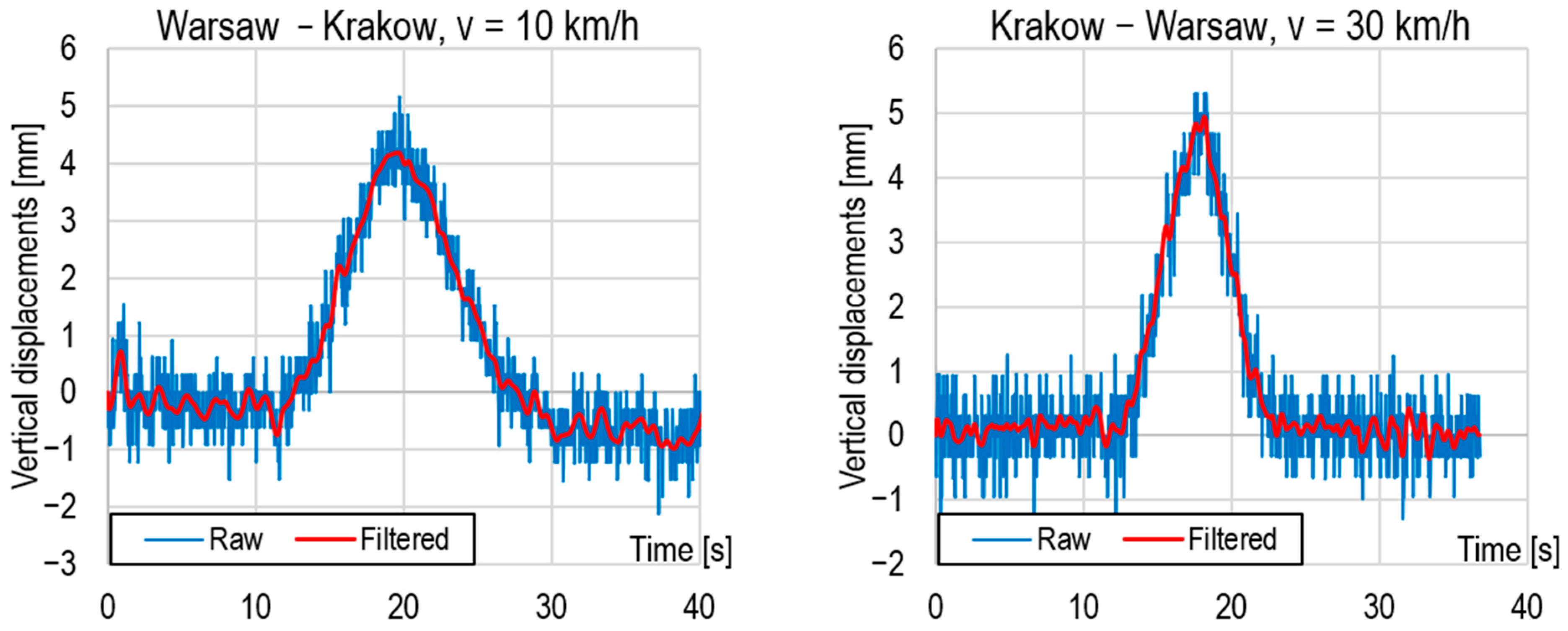
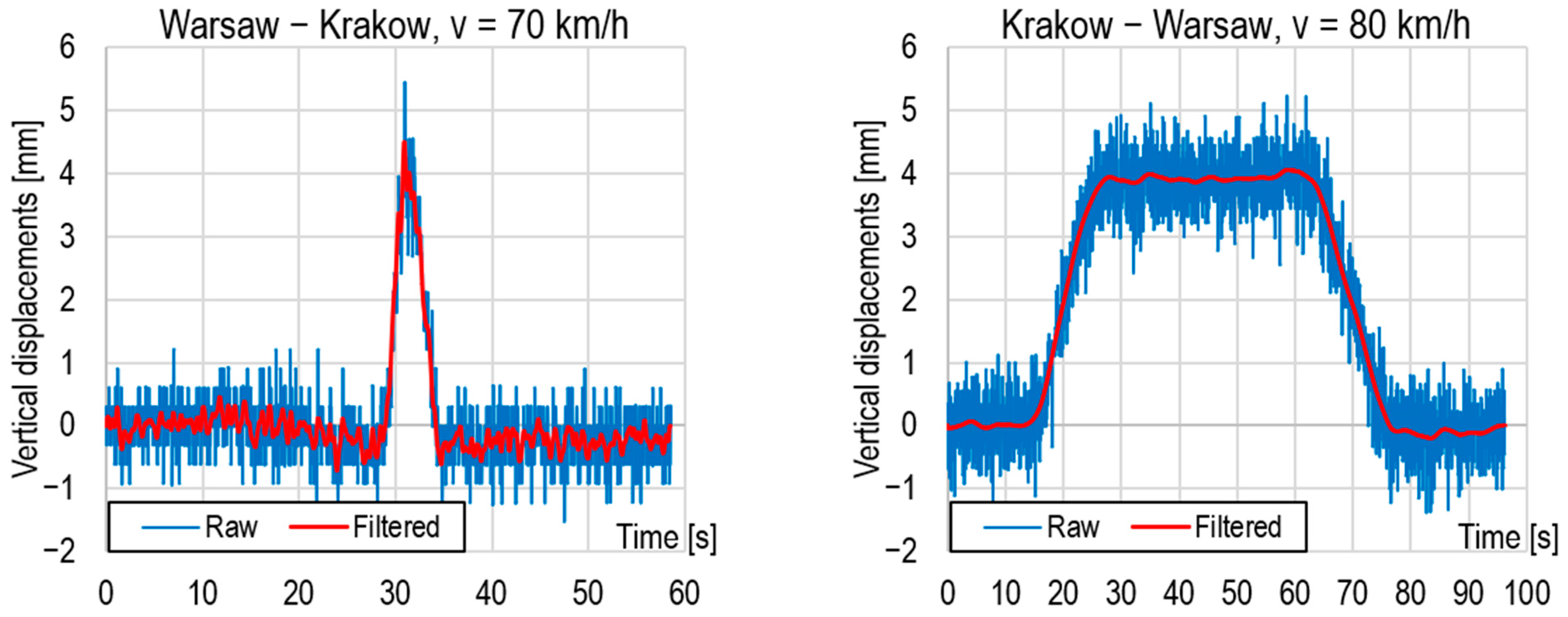
Example graphs showing the relationship between vertical displacement and time generated by the DES Vision System application are presented in
Figure 13 and
Figure 14. The summary of displacement measured using the standard method and DES Vision System is presented in
Table 3.
The displacements listed in
Table 3 show a small correlation to the train’s speed. During the acceptance load testing in February 2023, the dynamic deflection factor was defined as the ratio of the maximum deflection during the next test run to the maximum deflection in the same measuring cross-section during a quasi-static run, i.e., at a speed of 10 km/h. In general, the structure is characterized by low susceptibility to dynamic influences. The WPD factor (under normal conditions for the orthotropic bridge crossbeam, at measurement points P2 and P3—
Figure 6) reached a maximum value of 1.03 and is lower than the standard dynamic factor, which is 1.19 for this element. The WPD factor (under normal conditions for the entire span, at measurement points P1 and P4—
Figure 6) reached a maximum value of 1.04 and is slightly higher than the standard dynamic factor, which is 1.00.
The displacement listed in
Table 3 described using a standard method was measured at the midspan, while the displacement from the DES Vision System was analyzed at a target located 16.5 m away from the midspan (
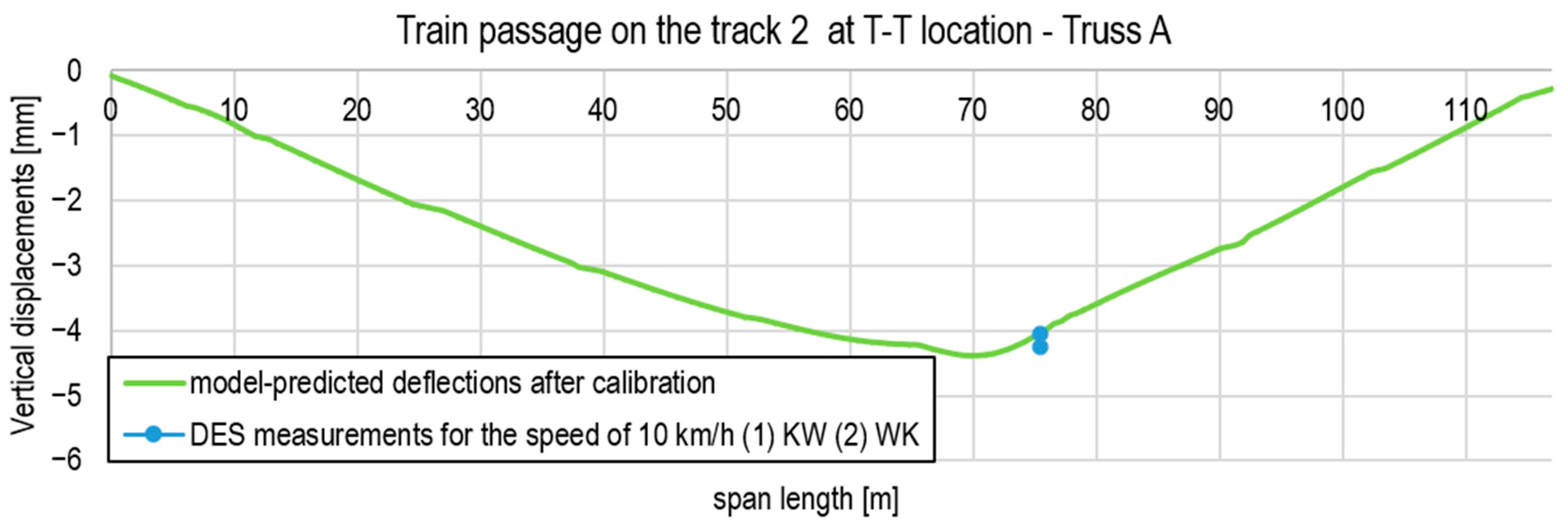
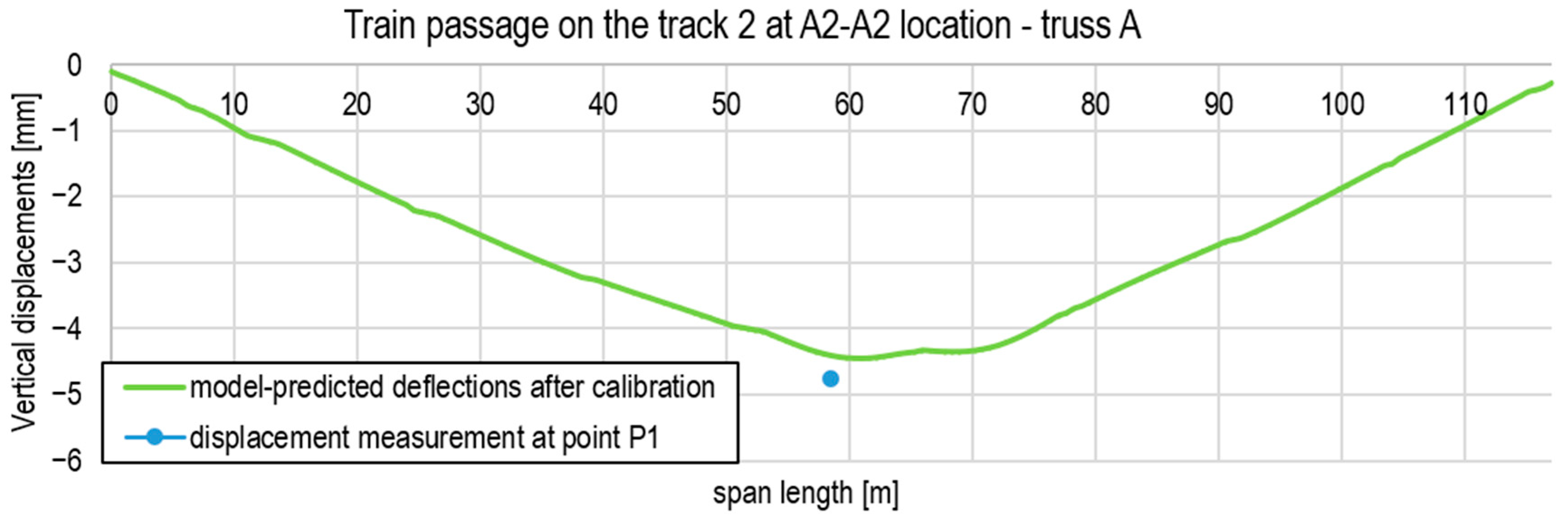
Figure 7). Therefore, the adjusted measured displacement was calculated based on the FEM and the results obtained from the DES Vision showed maximum absolute discrepancies of less than 0.4 mm, with average deviations of approximately 9%. Further analysis of the dynamic load in the FE model was performed to provide a better understanding of the observed discrepancy in the results. The vertical displacement analyzed using the DES Vision System during the acceptance load testing and calculated using the FE model is presented in
Figure 15 and
Figure 16. In
Figure 15, the train—the applied load on the span—is positioned precisely to generate the maximum deflection along the T–T axis. In
Figure 16, the load is placed in a location that produces the maximum displacement in the FE model at the position of sensor P1, that is, at midspan. The summary of the displacements measured using sensors P1 and P4, measured using the camera and analyzed in the DES Vision System along with the FE model calculations is presented in
Table 4.
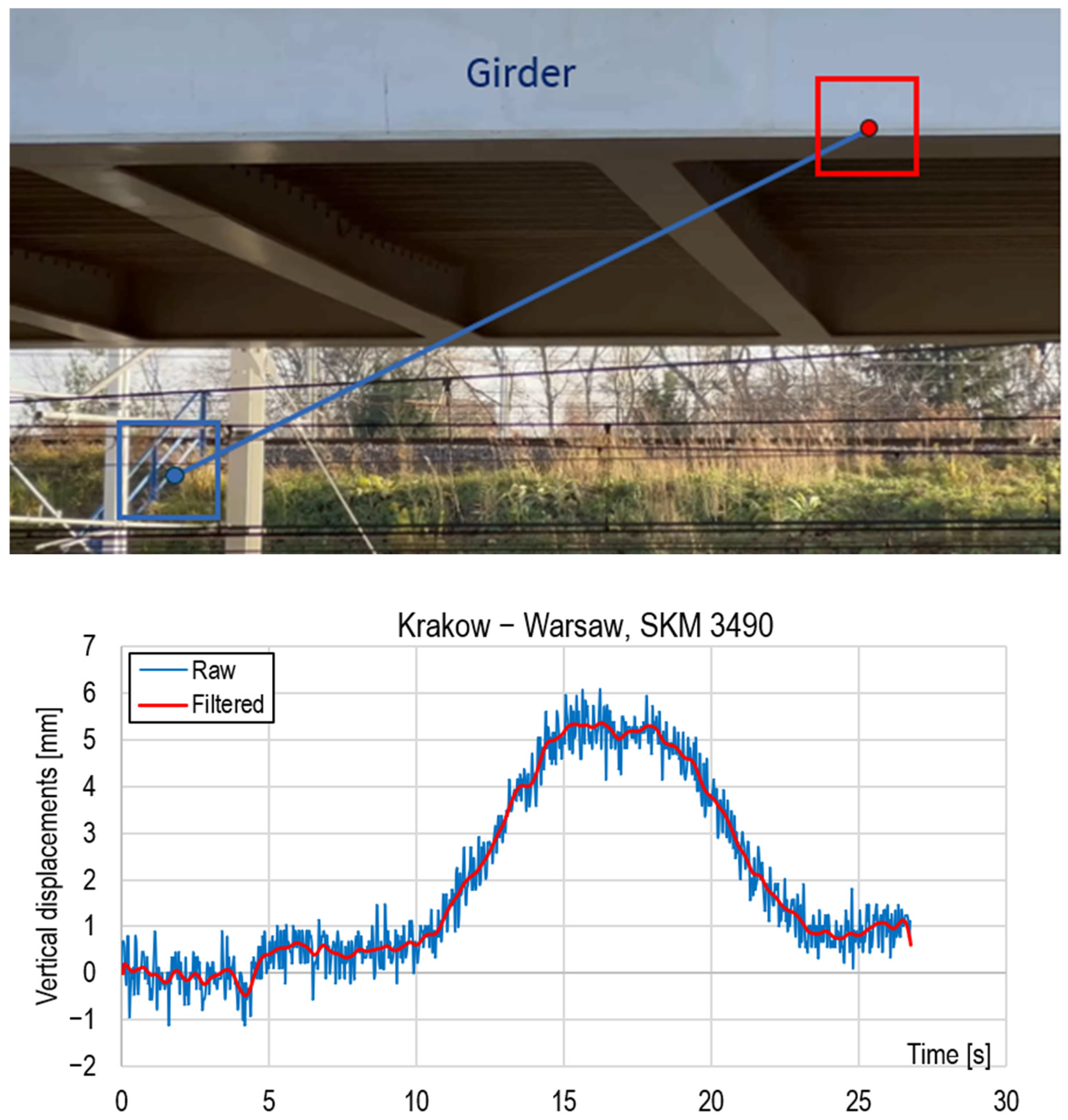
After the acceptance load tests, the bridge was approved for normal operation. Only SKM (PL: Szybka Kolej Miejska, ENG: Rapid Urban Railway) and KM (PL: Kolej Miejska, ENG: Urban Railway) passenger trains run on the line, so additional video recordings were made during the passage of a passenger train over the bridge. The graphs analyzed by the DES Vision System showed a maximum vertical displacement of 4.87 mm (
Figure 17).
5. Discussion
This paper presents the possibility of using modern remote sensing methods, based on DIC, to assess the vertical displacements of a truss railway bridge during an acceptance load test. Recorded videos were analyzed using the DES Vision System, utilizing a standard smartphone during nighttime conditions with artificial lighting. The following assumptions and limitations were present during the data collection:
Distance—limitations: The camera-to-object distance was approximately 15 m, which we consider close to the practical upper limit for reliable displacement monitoring using a standard smartphone camera due to resolution constraints and increased sensitivity to pixel-level errors.
2D measurement assumption: The proposed method is based on two-dimensional (2D) image analysis, and therefore assumes that the structural motion is entirely in-plane. The system does not capture full 3D displacement, which limits applicability in more complex deformation scenarios.
Lighting conditions: The experiments were conducted at night under controlled artificial illumination. The performance may degrade under varying or non-uniform lighting conditions (e.g., daylight variation, shadows, glare), affecting feature detection and tracking robustness.
Camera stability and vibration: Although the camera (smartphone imaging system) was mounted on a surveyor’s tripod to ensure stability, such setups are still susceptible to wind-induced or ground-borne vibrations. Therefore, mitigation strategies such as stable mounting, reference targets, or image stabilization algorithms are required.
Lens distortion and calibration: Although modern smartphone cameras include internal corrections, residual lens distortion may still be present, particularly toward the image edges. In this study, we intentionally adopted a simple 2D measurement approach, consistent with the goal of an easy-to-deploy system.
The applied smartphone-based DES Vision System is, however, validated and ISO-certified, with calibration performed by an accredited laboratory in accordance with ISO 9513 standards [
43], confirming the reliability of displacement measurements. Additionally, the reliability and precision of the DES Vision System were validated using LVDTs in other real-world bridge applications in Belgium, the UK and Poland [
22].
Target visibility and contrast: The method relies on clearly visible targets and reference points. Performance may deteriorate in cases of occlusion, insufficient contrast, or complex background conditions, requiring careful target design.
Distance to the structure: As noted above, increasing distance reduces spatial resolution and amplifies pixel-level uncertainty. The ~10–15 m distance used in this study already approaches the practical limit for smartphone-based monitoring, and longer distances would require higher-resolution imaging systems.
Frame rate and dynamic response: The smartphone-based acquisition limits the achievable frame rate (typically 25–30 fps), which is generally sufficient for capturing the global structural response of railway bridges; however, this frame-rate limitation restricts the ability to resolve higher-frequency dynamic components associated with bridge vibrations. Consequently, the method is more suitable for quasi-static or low-frequency structural monitoring rather than detailed high-frequency response analysis or modal identification. In addition, the influence of frame rate, shutter speed, and synchronization on measurement reliability should be considered if high dynamic frequency is expected, as these factors can significantly affect the accuracy and consistency of dynamic response measurements.
Environmental conditions: These include potential impacts from wind, temperature variations, atmospheric effects, and weather conditions, all of which may influence both camera stability and image quality.
The obtained results were compared with data acquired using traditional methods during the static and dynamic acceptance load test (CADMOST, 2024) [
41], which allowed for an assessment of the accuracy and consistency of the DIC method. During dynamic tests, the dynamic amplification factor (DAF) was determined as the ratio of the maximum deflection during a subsequent pass to the deflection in a quasi-static state (10 km/h). The DAF for the entire span (points P1 and P4) reached a maximum of 1.04, slightly exceeding the standard of 1.00. The study also included the development of a numerical finite element method (FEM) model, which served as a tool for interpreting the behavior of the structure under load. To calibrate the model, the stiffness of the steel in structural elements thicker than 40 mm was increased, as the actual behavior of the structure was stiffer due to welded connections at the nodes.
The traditional methods for bridge displacement measurement utilize contact sensors that require access to the bridge, which can be very difficult in some locations, while remote systems can be used outside the bridge with the regular speed of operation and no interruption to traffic. This can revolutionize the inspection of railway bridges. In Poland, over a thousand truss railway bridges are currently in operation [
44]. One of the key physical parameters describing changes in the technical condition of a bridge is displacement, which—unlike many local measurements—provides information about the global behavior of the entire structure. If every newly built structure in Poland were equipped with a continuous monitoring system, starting from the construction phase and recording the structure’s behavior from the first loads, it would be possible to significantly extend its service life. Monitoring data could be used to continuously update FEM (finite element method) computational models and BrIM (Bridge Information Modeling) information models, allowing for real-time tracking of the structure’s technical condition. The ease of implementing mobile measurement systems and quick access to data on structural movement provide significant support in making operational decisions. Smartphone-based systems offer a promising, low-cost alternative for selected applications such as acceptance testing and rapid field assessments. Their performance has been validated through comparison with traditional measurements and accredited laboratory testing (ISO-based verification). However, their applicability to different bridge types (e.g., beam-, arch-, and cable-supported structures) and continuous operational monitoring under demanding conditions (e.g., strong vibrations, environmental variability) require further investigation.
6. Conclusions
This study presented and validated a low-cost, vision-based displacement measurement approach based on digital image correlation (DIC) for structural monitoring of a truss railway bridge during acceptance load testing. The primary objective was to assess whether a simple smartphone-based imaging system operating in a 2D configuration could provide displacement measurements comparable to conventional techniques. The proposed methodology combined field measurements under real operational conditions, comparison with traditional reference sensors, and calibration of a finite element (FEM) model to evaluate both measurement performance and practical applicability. The applied DES Vision System is a validated and ISO-certified solution, with measurement performance confirmed through accredited laboratory testing (e.g., according to ISO 9513 [
43]), which further supports the reliability of the obtained results.
Particular emphasis was placed on rapid deployment, minimal equipment requirements, and practical field applicability, including measurements performed at night under artificial illumination. The results demonstrate that the proposed system can serve as an effective and practical tool for non-contact displacement monitoring while also highlighting important assumptions and limitations, particularly those associated with the 2D in-plane motion assumption.
The following conclusions can be drawn:
Feasibility and performance of the DIC-based system: The results confirm that the DIC method enables rapid, non-contact measurement of bridge displacements with minimal setup effort, typically requiring less than 20 min depending on visibility conditions and the desired precision. This represents a significant practical advantage over conventional contact-based systems, which often require more complex installation procedures.
The study demonstrated that a smartphone-based imaging system, combined with appropriate image processing techniques, can effectively capture and quantify structural response under operational loading conditions. The obtained results indicate sub-millimeter tracking precision, reflecting high repeatability in feature detection and displacement estimation within the image domain. Moreover, the use of standard video recordings enables continuous monitoring of structural behavior and provides time-resolved displacement data, offering a more comprehensive representation of structural response than discrete measurement methods. Overall, the findings confirm that the proposed approach constitutes a practical, cost-effective, and scalable solution for displacement monitoring, particularly suitable for rapid field assessments and acceptance load testing. Nevertheless, the overall measurement accuracy relative to reference sensors remains dependent on factors such as calibration quality, measurement geometry, environmental conditions, and the validity of the 2D motion assumption.
Agreement with reference measurements and numerical modeling: Comparison of the DIC-based measurements with traditional measurement techniques and FEM results showed generally good agreement between the methods. The calibrated FEM model reproduced the measured displacements with an average deviation of approximately 8%, indicating that the integration of experimental measurements and numerical modeling provides a reliable basis for structural assessment.
Influence of loading conditions: The measured displacements exhibited sensitivity to locomotive speed and loading conditions, indicating the influence of dynamic effects on structural response. The observed discrepancies between the methods, reaching approximately 0.4 mm, are attributed to differences in measurement principles, synchronization accuracy, and modeling assumptions. However, these discrepancies remain within an acceptable range for engineering evaluation.
Model calibration and structural representation: The results indicate that accurate FEM calibration requires careful representation of material properties and connection stiffness. Although the adopted model provided a satisfactory approximation of structural behavior, further refinement through iterative adjustment of stiffness parameters could improve agreement with measured responses and better reproduce the actual bending and torsional stiffness of the structure.
Practical applicability and limitations: The proposed approach offers a cost-effective and easily deployable measurement solution suitable for rapid field assessments. However, its applicability is constrained by several factors, including the assumption of 2D in-plane motion, dependence on lighting conditions and target visibility, sensitivity to camera stability, and limitations associated with measurement distance and imaging resolution. In the present study, reliable measurements were achieved at distances of approximately 15 m under operational conditions.
Despite these limitations, the method proved robust under the tested conditions and demonstrated significant potential for practical implementation in bridge monitoring applications, particularly during acceptance testing and periodic inspections.
Future work should focus on validation under a wider range of environmental conditions and larger measurement distances, and the development of multi-view or fully 3D measurement approaches to further improve robustness, accuracy, and practical applicability. In addition, future filed data collections will incorporate co-located measurements to support more rigorous validation and direct statistical comparison.
Author Contributions
Conceptualization, A.M.R. and J.S.; methodology, A.M.R., J.S. and J.W.; software, J.W.; validation, A.M.R., J.S. and J.W.; investigation, A.M.R. and J.S.; resources, A.M.R. and J.S.; visualization, A.M.R. and J.S.; supervision, A.M.R. and J.S.; project administration, A.M.R. and J.S.; funding acquisition, A.M.R. and J.S.; writing—original draft preparation, A.M.R., J.S. and J.W.; writing—review and editing, A.M.R., J.S. and J.W. All authors have read and agreed to the published version of the manuscript.
Funding
The authors would like to thank Warsaw University of Technology for its financial support.
Data Availability Statement
Data may be made available on request.
Acknowledgments
The authors would like to thank PKP PLK S.A., the main infrastructure manager of Polish Railways, for providing access to the Warsaw West Station Bridge and Budimex for allowing the use of measurement data and technical documentation of the structures used in this study. The authors would like to thank Digital Engineering Solutions (DES) for their help in enabling the use of the DES Vision System for video analysis. The research was carried out as part of Joanna Szczęch’s master’s thesis.
Conflicts of Interest
Author Anna M. Rakoczy was employed by Warsaw University of Technology and Purdue University, and declares that the research was conducted in the absence of any commercial or financial relationships that could be construed as a potential conflict of interest. Author Joanna Szczech was employed by Budimex and declares that the research was conducted in the absence of any commercial or financial relationships that could be construed as a potential conflict of interest. Author Jan Winkler was employed by Digital Engineering Solutions (DES) and AtkinsRéalis, and declares that the research was conducted in the absence of any commercial or financial relationships that could be construed as a potential conflict of interest.
References
- Ministry of Transport and Maritime Economy. Ustawa z dnia 7 lipca 1994 r.—Prawo budowlane. J. Laws 1994, 414, 1995. [Google Scholar]
- Instytut Kolejnictwa. Standardy Techniczne, Szczegółowe Warunki Techniczne dla Budowy Infrastruktury Kolejowej Centralnego Portu Komunikcyjnego; Centralny Port Komunikacyjny: Warszawa, Poland, 2023. [Google Scholar]
- Zarząd PKP Polskie Linie Kolejowe S.A. Standardy Techniczne Dotyczące Szczegółowych Warunków Technicznych dla Modernizacji lub Budowy Linii Kolejowych; PKP PLK S.A.: Warszawa, Poland, 2016. [Google Scholar]
- Moreu, F.; LaFave, J.M. Current Research Topics: Railroad Bridges and Structural Engineering; Newmark Structural Engineering Laboratory, University of Illinois at Urbana-Champaign: Champaign, IL, USA, 2012. [Google Scholar]
- Moreu, F.; Rakoczy, A.M.; Sanei, M. Lateral Loads and Displacements of Railroad Bridges from Field Investigations. J. Bridge Eng. 2023, 28, 9. [Google Scholar] [CrossRef]
- Moreu, F. Framework for Risk-Based Management and Safety of Railroad Bridge Infrastructure Using Wireless Smart Sensor (WSS). Doctoral Dissertation, University of Illinois at Urbana-Champaign, Champaign, IL, USA, 2015. [Google Scholar]
- Gomez, J.A.; Ozdagli, A.I.; Moreu, F. Reference-free dynamic displacement of railroad bridge using low-cost sensors. J. Intell. Mater. Syst. Struct. 2017, 30, 1291–1305. [Google Scholar] [CrossRef]
- Yi, T.; Li, H.; Gu, M. Experimental assessment of high-rate GPS receivers for deformation monitoring of bridge. Measurement 2013, 46, 420–432. [Google Scholar] [CrossRef]
- Kogan, M.G.; Kim, W.; Bock, Y.; Smyth, A.W. Load Response on a Large Suspension Bridge during the NYC Marathon Revealed by GPS and Accelerometers. Seismol. Res. Lett. 2008, 79, 12–19. [Google Scholar] [CrossRef]
- Olaszek, P.; Sala, D.; Kokot, M.; Piątek, M. Railway bridge monitoring system using inertial sensors. In Maintenance, Safety, Risk, Management and Life-Cycle Performance of Bridges; CRC Press: Boca Raton, FL, USA, 2018; pp. 1522–1529. [Google Scholar]
- Olaszek, P.; Maciejewski, E.; Rakoczy, A.M.; Cabral, R.; Santos, R.; Ribeiro, D. Remote Inspection of Bridges with the Integration of Scanning Total Station and Unmanned Aerial Vehicle Data. Remote Sens. 2024, 16, 4176. [Google Scholar] [CrossRef]
- Rakoczy, A.M.; Ribeiro, D.; Hoskere, V.; Narazaki, Y.; Olaszek, P.; Karwowski, W.; Cabral PhD Student, R.; Guo, Y.; Futai, M.M.; Milillo, P.; et al. Technologies and Platforms for Remote and Autonomous Bridge Inspection—Review; Structural Engineering International: Zurich, Switzerland, 2024; pp. 1–23. [Google Scholar]
- Ribeiro, D.; Rakoczy, A.M.; Cabral, R.; Hoskere, V.; Narazaki, Y.; Santos, R.; Tondo, G.; Gonzalez, L.; Matos, J.C.; Massao Futai, M.; et al. Methodologies for Remote Bridge Inspection—Review. Sensors 2025, 25, 5708. [Google Scholar] [CrossRef]
- Spencer, B.F.; Hoskere, V.; Narazaki, Y. Advances in Computer Vision-Based Civil Infrastructure Inspection and Monitoring. Engineering 2019, 5, 199–222. [Google Scholar] [CrossRef]
- Pan, B.; Qian, K.M.; Xie, H.M.; Asundi, A. Two-dimensional digital image correlation for in-plane displacement and strain measurement: A review. Meas. Sci. Technol. 2009, 20, 6. [Google Scholar] [CrossRef]
- Stephen, G.A.; Brownjohn, J.M.W.; Taylor, C.A. Measurements of static and dynamic displacement from visual monitoring of the Humber Bridge. Eng. Struct. 1993, 15, 197–208. [Google Scholar] [CrossRef]
- Guo, J.; Zhu, C.A. Dynamic displacement measurement of large-scale structures based on the Lucas-Kanade template tracking algorithm. Mech. Syst. Signal Process 2016, 66, 425–436. [Google Scholar] [CrossRef]
- Ye, X.W.; Yi, T.H.; Dong, C.Z.; Liu, T.; Bai, H. Multi-point displacement monitoring of bridges using a vision-based approach. Wind. Struct. 2015, 20, 315–326. [Google Scholar] [CrossRef]
- Wang, M.; Ao, W.K.; Bownjohn, J.; Xu, F. A novel gradient-based matching via voting technique for vision-based structural displacement measurement. Mech. Syst. Signal Process. 2022, 171, 108951. [Google Scholar] [CrossRef]
- Dong, C.Z.; Celik, O.; Catbas, F.N. Marker-free monitoring of the grandstand structures and modal identification using computer vision methods. Struct. Health Monit. 2019, 18, 1491–1509. [Google Scholar] [CrossRef]
- Javh, J.; Slavic, J.; Boltezar, M. The subpixel resolution of optical-flow-based modal analysis. Mech. Syst. Signal Process. 2017, 88, 89–99. [Google Scholar] [CrossRef]
- Winkler, J.; Hendy, C. Improved Structural Health Monitoring of London’s Docklands Light Railway Bridges Using Digital Image Correlation. Struct. Eng. Int. 2017, 27, 435–440. [Google Scholar] [CrossRef]
- Tian, Y.; Zhang, C.; Jiang, S.; Zhang, J.; Duan, W. Noncontact Cable Force Estimation with Unmanned Aerial Vehicle and Computer Vision. Comput.-Aided Civ. Infrastruct. Eng. 2021, 36, 73–88. [Google Scholar] [CrossRef]
- Winkler, J.; Hansen, M. Innovative long-term monitoring of the great belt bridge expansion joint using digital image correlation. Struct. Eng. Int. 2018, 28, 347–352. [Google Scholar] [CrossRef]
- Dhanasekar, M.; Prasad, P.; Dorji, J.; Zahra, T. Serviceability Assessment of Masonry Arch Bridges Using Digital Image Correlation. J. Bridge Eng. 2019, 24, 04018120. [Google Scholar] [CrossRef]
- Wang, Y.; Tumbeva, M.D.; Thrall, A.P.; Zoli, T.P. Pressure-Activated Adhesive Tape Pattern for Monitoring the Structural Condition of Steel Bridges via Digital Image Correlation. Struct. Control Health Monit. 2019, 26, e2382. [Google Scholar] [CrossRef]
- Winkler, J. Long-Term Real-time Monitoring of Suspension Bridge Hangers using Vision-Based System. J. Bridge Eng. (ASCE) 2025, 31, 04025105. [Google Scholar] [CrossRef]
- Wang, M.; Xu, F.; Koo, K.; Wang, P. Real-time displacement measurement for long-span bridgesusing a compact vision-based system with speed-optimizedtemplate matching. Comput.-Aided Civ. Infrastruct. Eng. 2024, 39, 1988–2009. [Google Scholar] [CrossRef]
- Abu Dabous, S.; Al-Ruzouq, R.; Llort, D. Three-dimensional modeling and defect quantification of existing concrete bridges based on photogrammetry and computer aided design. Ain Shams Eng. J. 2023, 14, 102231. [Google Scholar] [CrossRef]
- Cabral, R.; Oliveira, R.; Ribeiro, D.; Rakoczy, A.M.; Santos, R.; Azenha, M.; Correia, J. Railway Bridge Geometry Assessment Supported by Cutting-Edge Reality Capture Technologies and 3D As-Designed Models. Infrastructures 2023, 8, 114. [Google Scholar] [CrossRef]
- Pepe, M.; Costantino, D.; Crocetto, N.; Restuccia Garofalo, A. 3D modeling of roman bridge by the integration of terrestrial and UAV photogrammetric survey for structural analysis purpose. Int. Arch. Photogramm. Remote Sens. Spat. Inf. Sci.-ISPRS Arch. 2019, XLII-2/W17, 249–255. [Google Scholar] [CrossRef]
- Du, W.; Lei, D.; Bai, P.; Zhu, F.; Huang, Z. Dynamic Measurement of Stay-Cable Force Using Digital Image Techniques. Measurement 2020, 151, 107211. [Google Scholar] [CrossRef]
- Narazaki, Y.; Gomez, F.; Hoskere, V.; Smith, M.; Spencer, B. Efficient development of vision-based dense three-dimensional displacement measurement algorithms using physics-based graphics models. Struct. Health Monit.-Int. J. 2021, 20, 1841–1863. [Google Scholar] [CrossRef]
- Chen, J.G.; Wadhwa, N.; Cha, Y.-J.; Durand, F.; Freeman, W.T.; Buyukozturk, O. Modal identification of simple structures with high-speed video using motion magnification. J. Sound Vib. 2015, 345, 58–71. [Google Scholar] [CrossRef]
- Nguyen, D.H.; Nguyen, Q.B.; Bui-Tien, T.; de Roeck, G.P.; Abdel Wahab, M.M. Damage detection in girder bridges using modal curvatures gapped smoothing method and Convolutional Neural Network: Application to Bo Nghi bridge. Theor. Appl. Fract. Mech. 2020, 109, 102728. [Google Scholar] [CrossRef]
- Wangchuk, S.; Siringoringo, D.M.; Fujino, Y. Modal analysis and tension estimation of stay cables using noncontact vision-based motion magnification method. Struct. Control. Health Monit. 2022, 29, e2957. [Google Scholar] [CrossRef]
- Jana, D.; Nagarajaiah, S.; Yang, Y. Computer vision-based real-time cable tension estimation algorithm using complexity pursuit from video and its application in Fred-Hartman cable-stayed bridge. Struct. Control. Health Monit. 2022, 29, e2985. [Google Scholar] [CrossRef]
- Hoskere, V.; Park, J.-W.; Yoon, H.; Spencer, B.F., Jr. Vision-Based Modal Survey of Civil Infrastructure Using Unmanned Aerial Vehicles. J. Struct. Eng. 2019, 145, 04019062. [Google Scholar] [CrossRef]
- PN-EN 1991-2:2008; (Eurocode 1, Part 2) Actions on structures–Part 2: Traffic Loads on Bridges. CEN: Brussels, Belgium, 2008.
- CADMOST. Raport z Próbnego Obciążenia Statycznego i Dynamicznego Obiektu M.01; Politechnika Śląska: Warsaw, Poland, 2023. [Google Scholar]
- CADMOST. Raport z Próbnego Obciążenia Dynamicznego-Uzupełnienie, Obiekt M.01 Badania Dynamiczne na Torze nr 2 Linii Kolejowej nr 8; Politechnika Śląska: Warsaw, Poland, 2024. [Google Scholar]
- Topolewicz, K. Projekt Wykonawczy Wiaduktu w km 4+787 Linii nr 1 w Ramach Zadania. Wykonanie Robót Budowlanych Związanych z Przebudową Stacji Warszawa Zachodnia w Ramach Projektu POIiŚ 5.1-13; PKP Polskie Linie Kolejowe S.A.: Warszwa, Poland, 2022. [Google Scholar]
- ISO 9513:2012; Metallic Materials—Calibration of Extensometer Systems Used in Uniaxial Testing. ISO: Geneva, Switzerland, 2012.
- Salamak, M.; Łaziński, P.; Pradelok, S.; Radziecki, A.; Weseli, J.; Poprawa, G. Specyfikacja Badań Terenowych Obiektów Mostowych Realizowanych w Skredytowanym Laboratorium Politechniki Śląskiej; Politechnika Śląska: Gliwice, Poland, 2017. [Google Scholar]
Figure 1.
Acceptance load tests at Warsaw West Station Railway Bridge.
Figure 1.
Acceptance load tests at Warsaw West Station Railway Bridge.
Figure 2.
Basic principle of DIC.
Figure 2.
Basic principle of DIC.
Figure 3.
Main dimensions [m] of the West Station Railway Bridge.
Figure 3.
Main dimensions [m] of the West Station Railway Bridge.
Figure 4.
Side view of the West Station Railway Bridge.
Figure 4.
Side view of the West Station Railway Bridge.
Figure 5.
The locomotive S200 used in the acceptance load testing, dimensions in mm (195 kN = 44 kip; 1 mm = 0.04 inch).
Figure 5.
The locomotive S200 used in the acceptance load testing, dimensions in mm (195 kN = 44 kip; 1 mm = 0.04 inch).
Figure 6.
The acceptance load test setup: (top drawing)—placement of the locomotive for the static test; (bottom drawing)—placement of the accelerometers.
Figure 6.
The acceptance load test setup: (top drawing)—placement of the locomotive for the static test; (bottom drawing)—placement of the accelerometers.
Figure 7.
Location of a camera.
Figure 7.
Location of a camera.
Figure 8.
Setup of measurements during the acceptance load testing and targets used for the DES Vision System.
Figure 8.
Setup of measurements during the acceptance load testing and targets used for the DES Vision System.
Figure 9.
The truss railway bridge structure FEM, Sofistik 2025 software.
Figure 9.
The truss railway bridge structure FEM, Sofistik 2025 software.
Figure 10.
The load models used in the FEM analysis: (a) S1, (b) S2, (c) S3, and (d) S4.
Figure 10.
The load models used in the FEM analysis: (a) S1, (b) S2, (c) S3, and (d) S4.
Figure 11.
Simplified locomotive load diagram used in the program.
Figure 11.
Simplified locomotive load diagram used in the program.
Figure 12.
Vertical displacement comparison of beam A for the static load model: (a) S1, (b) S2, (c) S3, and (d) S4.
Figure 12.
Vertical displacement comparison of beam A for the static load model: (a) S1, (b) S2, (c) S3, and (d) S4.
Figure 13.
Bridge response analyzed using the DES Vision System during the acceptance static load testing—the vertical displacement at the target (1 mm = 0.04 inch).
Figure 13.
Bridge response analyzed using the DES Vision System during the acceptance static load testing—the vertical displacement at the target (1 mm = 0.04 inch).
Figure 14.
Bridge response analyzed using the DES Vision System during the acceptance dynamic load testing—the vertical displacement at the target (1 mm = 0.04 inch).
Figure 14.
Bridge response analyzed using the DES Vision System during the acceptance dynamic load testing—the vertical displacement at the target (1 mm = 0.04 inch).
Figure 15.
Bridge response analyzed using the DES Vision System during the second dynamic load test—the vertical displacement at the target location.
Figure 15.
Bridge response analyzed using the DES Vision System during the second dynamic load test—the vertical displacement at the target location.
Figure 16.
Bridge response analyzed using the calculated FEM model and measurements taken from the second dynamic load test—vertical displacement at the A2–A2 location.
Figure 16.
Bridge response analyzed using the calculated FEM model and measurements taken from the second dynamic load test—vertical displacement at the A2–A2 location.
Figure 17.
Bridge response analyzed using the DES Vision System under regular train operation—the vertical displacement at the selected point (there was no target mounted on the bridge).
Figure 17.
Bridge response analyzed using the DES Vision System under regular train operation—the vertical displacement at the selected point (there was no target mounted on the bridge).
Table 1.
The steel parameters used in the model, including adjusted parameters after calibration.
Table 1.
The steel parameters used in the model, including adjusted parameters after calibration.
| Material Parameters | For Elements with a Thickness |
|---|
| <40 mm | 40 mm < t < 80 mm |
|---|
| Steel type | S355 | S355ML |
| Young modulus before calibration | 210 GPa |
| Young modulus after calibration | 276 GPa | 255 GPa |
| Poisson’s ratio | 0.3 | 0.3 |
| Shear modulus before calibration | 80,769 MPa |
| Shear modulus after calibration | 106,154 MPa | 98,077 MPa |
| Compressibility modulus before calibration | 175,000 MPa |
| Compressibility modulus after calibration | 230,000 MPa | 212,500 MPa |
| Density | 78.5 kN/m3 |
| Yield strength | 355.00 MPa |
| Tensile strength | 510.00 MPa | 450.00 MPa |
Table 2.
Comparison of vertical displacements obtained for Trusses A and B.
Table 2.
Comparison of vertical displacements obtained for Trusses A and B.
| | Truss A |
| Location | Load model | Displacement before calibration—Sofistick [mm] | Displacement after calibration—
Sofistick [mm] | Measured displacement [mm] [40] | The difference in displacements between the model and the measurement [mm] |
| [mm] | [%] |
| A1 | S1 | 23.55 | 19.00 | 17.49 | 1.51 | 8.6% |
| S2 | 22.27 | 18.05 | 16.17 | 1.88 | 11.6% |
| S3 | 16.35 | 13.28 | 12.02 | 1.26 | 10.5% |
| S4 | 22.31 | 17.98 | 17.26 | 0.72 | 4.2% |
| A2 | S1 | 36.13 | 28.97 | 30.48 | 1.51 | 5.0% |
| S2 | 30.78 | 24.80 | 24.95 | 0.15 | 0.6% |
| S3 | 25.04 | 20.20 | 20.56 | 0.36 | 1.8% |
| S4 | 26.85 | 21.55 | 22.77 | 1.22 | 5.4% |
| A3 | S1 | 25.96 | 21.08 | 18.89 | 2.19 | 11.6% |
| S2 | 22.03 | 18.04 | 15.02 | 3.02 | 20.1% |
| S3 | 19.04 | 15.67 | 12.77 | 2.90 | 22.7% |
| S4 | 15.04 | 12.30 | 10.81 | 1.49 | 13.8% |
| | Truss B |
| Location | Load model | Displacement before calibration—Sofistick [mm] | Displacement after calibration—Sofistick [mm] | Measured displacement [mm] [40] | The difference in displacements between the model and the measurement [mm] |
| [mm] | [%] |
| B1 | S1 | 21.50 | 17.35 | 15.49 | 1.86 | 12.0% |
| S2 | 10.98 | 8.91 | 7.87 | 1.04 | 13.2% |
| S3 | 16.65 | 13.51 | 11.82 | 1.69 | 14.3% |
| S4 | 17.92 | 14.51 | 12.51 | 2.00 | 16.0% |
| B2 | S1 | 29.58 | 23.74 | 24.63 | 0.89 | 3.6% |
| S2 | 14.34 | 11.58 | 12.14 | 0.56 | 4.6% |
| S3 | 20.40 | 16.53 | 16.68 | 0.15 | 0.9% |
| S4 | 19.21 | 15.63 | 15.69 | 0.06 | 0.4% |
| B3 | S1 | 18.62 | 15.42 | 13.94 | 1.48 | 10.6% |
| S2 | 9.80 | 7.94 | 7.27 | 0.67 | 9.2% |
| S3 | 13.22 | 10.76 | 9.77 | 0.99 | 10.1% |
| S4 | 10.94 | 8.93 | 7.89 | 1.04 | 13.2% |
Table 3.
Average pick displacement under dynamic acceptance load testing (1 mm = 0.04 inch; 1 km/h = 0.62 mph).
Table 3.
Average pick displacement under dynamic acceptance load testing (1 mm = 0.04 inch; 1 km/h = 0.62 mph).
| train passage on track 2 | Krakow–Warsaw/
Warsaw–Krakow | Train Velocity [km/h] | Measured Displacement [mm] | Relative Displacement Differences |
| Standard Methods [40], February 2023 | Measurement Adjusted to the Location | DES Vision System,
September 2024 |
| Point P1 | (Target T-T) | (Target T-T) | [mm] | [%] |
| KW | 10 | 4.762 | 4.250 | 4.05 | 0.200 | 4.7 |
| WK | 10 | 4.759 | 4.247 | 4.25 | −0.003 | 0.1 |
| KW | 30 | 4.839 | 4.318 | 4.69 | −0.372 | 8.6 |
| WK | 30 | 4.927 | 4.397 | 4.02 | 0.377 | 8.6 |
| KW | 50 | 4.831 | 4.311 | 4.47 | −0.159 | 3.7 |
| WK | 50 | 4.750 | 4.239 | 4.52 | −0.281 | 6.6 |
| KW | 70 | 5.032 | 4.491 | 4.25 | 0.241 | 5.4 |
| WK | 70 | 4.793 | 4.277 | 4.54 | −0.263 | 6.1 |
| KW + inhibiting | 80 → 0 | 5.049 | 4.506 | 4.11 | 0.396 | 8.8 |
| WK + inhibiting | 80 → 0 | 4.856 | 4.333 | 4.53 | −0.197 | 4.5 |
Table 4.
Summary of span vertical displacements during dynamic load tests on track 2, including static displacement measurements obtained using the DES Vision System.
Table 4.
Summary of span vertical displacements during dynamic load tests on track 2, including static displacement measurements obtained using the DES Vision System.
Dynamic Load of S200 Locomotive
on Track 2 | Displacement
—from Dynamic Load Test, February 2023 | Displacement Measured with Camera and Analyzed in DES, September 2024 | Static Displacement from Calibrated FEM | Difference Between Analytical Model and Measured Results |
|---|
| Sensor P1 | 4.75–5.05 mm * | - | 4.42 mm | 0.33–0.63 mm |
| Sensor P4 | 6.31–6.61 mm * | - | 6.42 mm | within the range |
| Target for DES Vision System | - | 4.05–4.91 mm | 4.07 mm | within the range |
| Disclaimer/Publisher’s Note: The statements, opinions and data contained in all publications are solely those of the individual author(s) and contributor(s) and not of MDPI and/or the editor(s). MDPI and/or the editor(s) disclaim responsibility for any injury to people or property resulting from any ideas, methods, instructions or products referred to in the content. |