1. Introduction
Pedestrian walkways are now seen as a key infrastructure for public spaces, as they promote health and reduce air and noise pollution by reducing motorized traffic. However, they are often neglected and lack a rigorous design process [
1,
2,
3]. They rarely benefit from exclusive safety measures or innovations, and in most cases are conceived and designed as if they were road pavements [
4]. Stone blocks and surface aggregate materials, along with pavement unevenness, do not encourage the use of pedestrian networks, especially for pedestrians with mobility difficulties [
5,
6,
7].
Falls are common among pedestrians, underscoring the need to create shock-absorbing pavements that mitigate injury severity. Studies show that this type of pavement reduces the number of fall-related injuries [
8]. In addition, shock-absorbing pavements reduce the impact on ligaments during walking/running, thereby preventing long-term injuries [
9].
Ultimately, the incorporation of advanced smart technologies into urban infrastructure over the past few years has fundamentally altered our perspective on mobility [
10]. Researchers define high-quality sidewalk surfaces as continuous, uniform, non-slippery, and free of cracks, irregularities, unevenness, tripping hazards, or other barriers that provide safe and accessible mobility for all pedestrians. Selecting suitable sidewalk materials is essential to ensure pedestrian safety and comfort, which are key to promoting walkability [
11,
12]. These findings underscore the importance of incorporating sidewalk data, particularly surface attributes, into walkability assessments and broader pedestrian studies. Developing new tools and methodologies for collecting and analyzing sidewalk data is essential to advance this integration, as limited data availability remains a key barrier to its broader use in walkability research [
13].
When designing new paving solutions, it is also essential to integrate an environmental and sustainable perspective into technical performance requirements [
14,
15]. Undeniably, using recycled materials instead of natural resources is an effective approach. The paving industry is a sector with high potential for improvement, where the use of recycled rubber from tires in different formats extends the life cycle of this waste and reduces carbon dioxide emissions, unlike virgin mineral raw materials [
16]. This approach is linked to several of the Sustainable Development Goals, which are set to encourage cities to become more resilient and sustainable.
The paving material proposed to reduce the risk of injury among vulnerable users was inspired by playground paving, traditionally composed of recycled tire rubber, which helps reduce injuries from falls. This type of solution combines durability and sustainability, with no smoke or odor emissions, chemical leaching processes, or particle release [
17,
18,
19].
The incorporation of shredded rubber into asphalt mixtures can be carried out using either a dry or wet process. In the dry method, granulated rubber is added directly to the aggregates in the asphalt mixture. In contrast, in the wet method, it is mixed into the bituminous binder at a specific temperature. During the dry process, a fraction of the aggregate in the mixture is replaced with rubber particles, which primarily serve as an elastic aggregate. This technique results in the creation of a rubber-modified asphalt mixture that does not require special equipment and can use more used tires. López-Moro et al. found, from a microscopic perspective, that adding crumb rubber to the dry process increases asphalt hardness, improves rutting resistance, and alters the shape and porosity of the crumb rubber due to its interaction with asphalt [
20]. The main difference between the two methods is the time allowed for the digestion of the crumb rubber into the bitumen phase. Furthermore, crumb rubber can be added in a range of amounts, usually expressed as a percentage of the bitumen mass. Most research on the modification of bitumen binders and asphalt mixtures with crumb rubber has focused on higher dosages, typically 20% to 30% by mass of the bitumen [
21], to improve the mechanical properties of asphalt mixtures, as with conventional polymers [
22].
Two studies were recently conducted on asphalt mixtures with varying rubber contents to improve shock absorption. According to these studies, comfort, appearance, stiffness, friction properties, and impact attenuation capabilities were the main criteria for characterizing materials. These rubber-modified asphalt mixtures exhibit lower permanent deformation due to their elastic behavior; however, concerns have been raised about their long-term performance, particularly under adverse weather conditions. It is therefore imperative to invest more in-depth assessments of their durability, ensuring that impact-absorption properties remain consistent over time and across different climatic conditions [
23,
24]. These rubberized mixtures also offer better durability, performance, and superior recovery capacity compared to conventional mixtures. They also show that incorporating rubber into asphalt mixtures can reduce pavement stiffness, thereby reducing the likelihood of injuries to users of pedestrian areas and cycle paths [
25,
26].
Given that pedestrian pavements have requirements different from road pavements, primarily to provide pedestrian comfort, which can be achieved through the inclusion of crumb rubber in asphalt mixtures, the objective of this paper is to develop an asphalt mixture for pedestrian pavements with shock-absorbing and pervious properties. The development of the asphalt mixture followed an experimental methodology that involved formulating asphalt mixtures with conventional bitumen, polymer-modified bitumen, and a bituminous emulsion. The shock-absorbing capability was evaluated by measuring the deformation of the asphalt mixture over time in response to a falling weight from a Light Falling Weight Deflectometer. Permeability capabilities were assessed through the permeability test. Subsequently, the asphalt mixture was characterized, accounting for macrotexture, friction, air void content, rutting resistance, and stiffness to verify its suitability as a walking surface material.
2. Materials and Methods
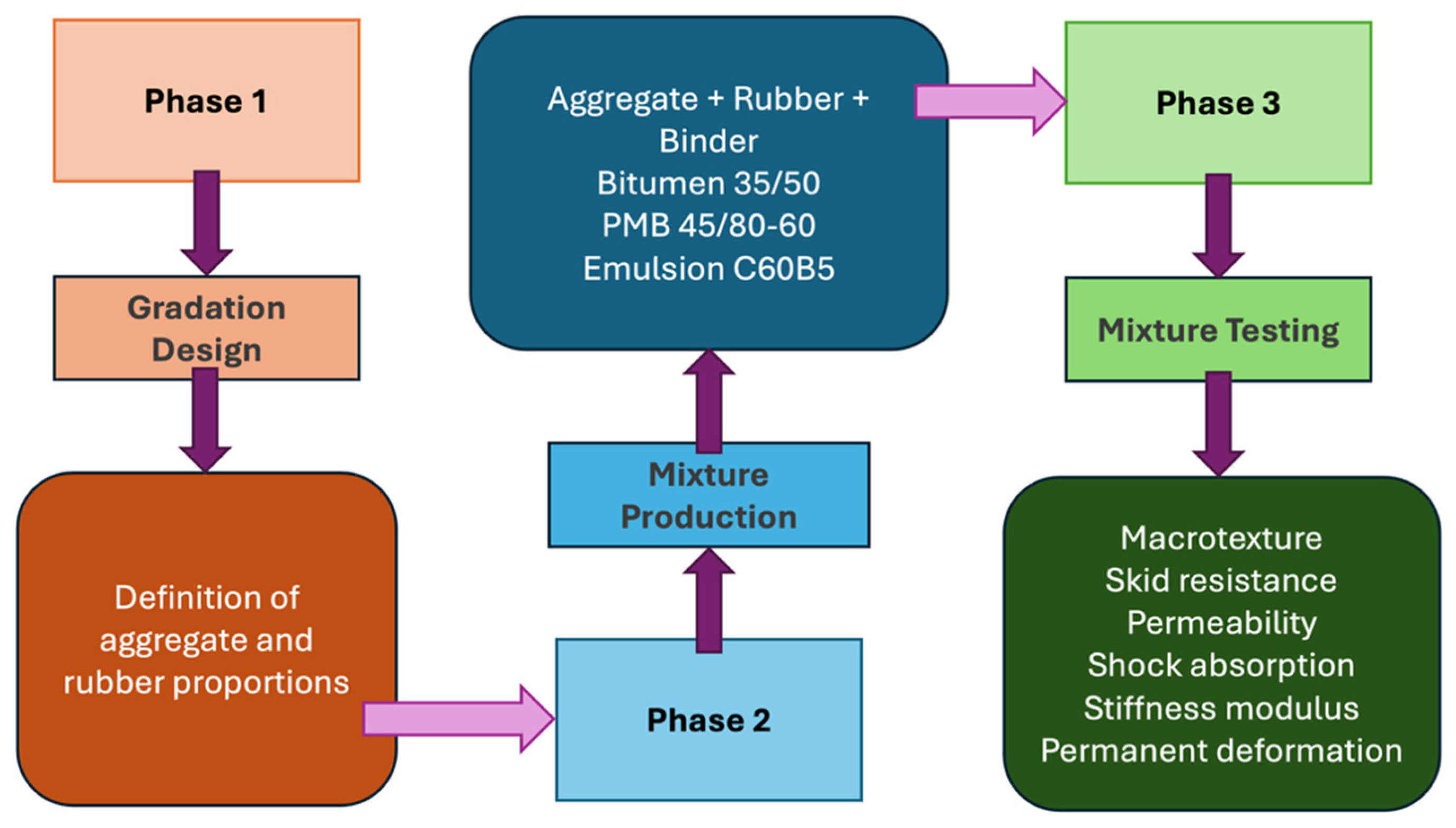
The development of this project had as its main goal the design of an asphalt mixture with shock-absorbing and drainage capabilities to enhance pedestrian comfort and promote environmental sustainability. A soft pavement surface provides pedestrian comfort, while environmental sustainability is achieved through water infiltration in the pavement base layers. These two achievements were obtained by the use of crumb rubber recycled from ground tires and an open-graded aggregate gradation. To provide a smooth pavement surface, the maximum aggregate size was limited to 6 mm.
The first phase consisted of defining the gradation of the solid skeleton of the asphalt mixture by selecting the aggregates and rubber to be used, along with their respective proportions, to ensure the designed mixture’s permeability. Aggregates and rubber with similar particle size distributions were selected so that rubber could replace part of the aggregate of equivalent size. Thus, granite aggregates with good quality, with sizes of 0/4 mm and 2/6 mm, and rubber particles with sizes of 2/4 mm and 3/7 mm were selected. Although the particle sizes of aggregates and rubber are not identical, they are sufficiently similar to allow for direct distribution. The aggregate blend and the rubber blend were defined based on a void content analysis. Subsequently, to ensure the permeability of the asphalt mixture, a voids content study was conducted on mixtures of aggregates and rubber at three different proportions.
In the second phase, both hot and cold mixtures were produced. Conventional bitumen (35/50) and polymer-modified bitumen (PMB) (PMB 45/80-65, elastomer-modified) were used for the hot mixtures, while a bituminous emulsion (C60B5) was used for the cold mixtures. The binder content was determined using the “shine method”, which consists of gradually adding bitumen during mixing until a uniform glossy appearance is achieved, ensuring adequate coating of the aggregate and rubber particles. A binder content of 5% was adopted.
In the third phase, the asphalt mixtures were tested, and the properties indicated in
Figure 1 were evaluated to identify the mixture best suited for pedestrian pavement application.
2.1. Aggregates
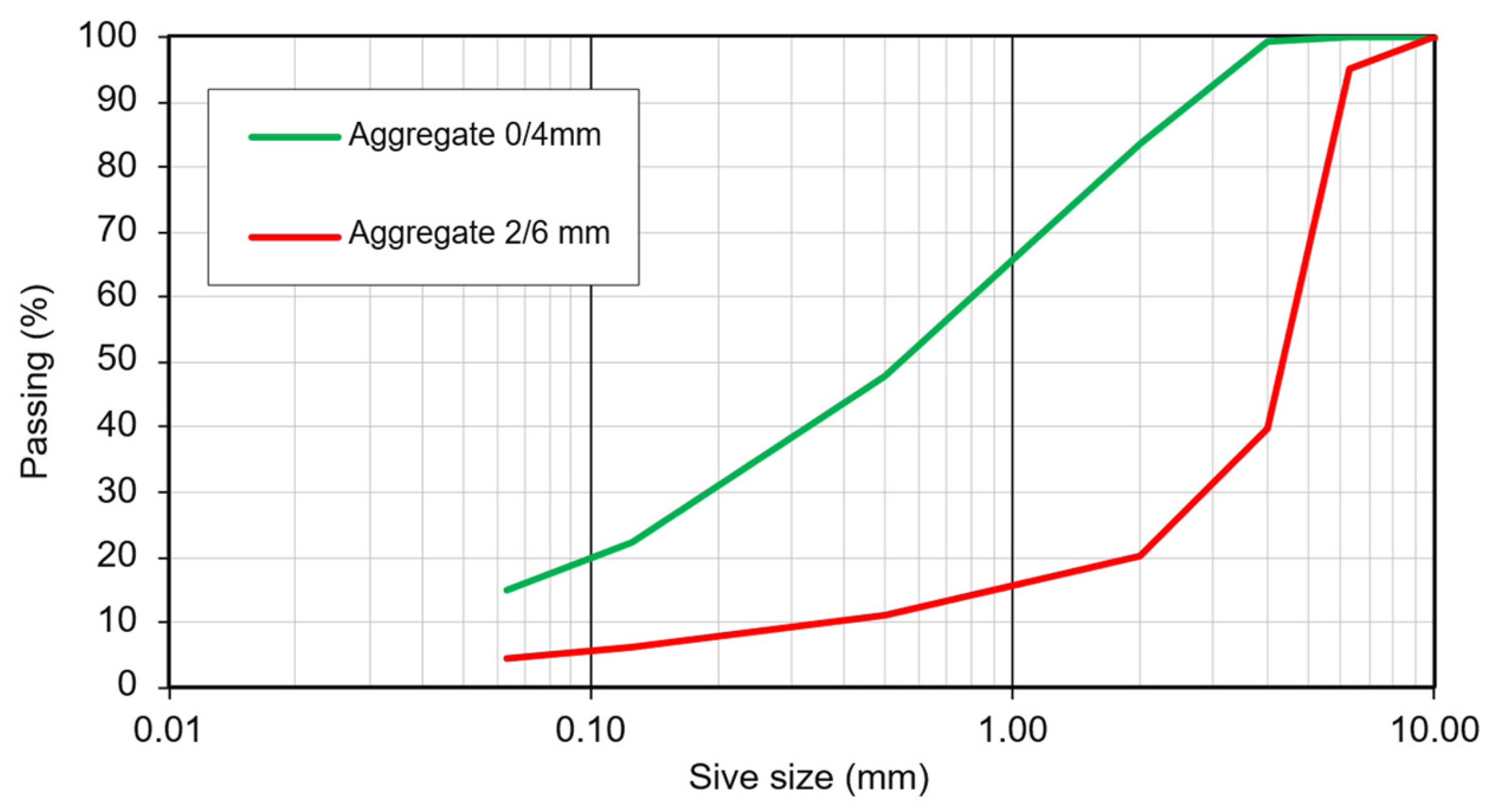
The aggregates used in this work were obtained from two different stockpiles: one with a 0/4 mm grading and the other with a 2/6 mm grading. Their aggregate gradation curves are shown in
Figure 2. A continuous gradation characterizes the 0/4 mm aggregate, while the 2/6 mm aggregate is characterized by a monogranular aggregate with a vertical curve after 2 mm. This late aggregate was used to extend the maximum dimension of the 0/4 mm aggregate up to 6 mm.
These two aggregates were combined to obtain a drained mix. Typically, pervious asphalt mixtures have an air void content of around 25%. The 0/4 mm aggregate has an apparent air void content of 56.1% while the 2/6 mm aggregate has an apparent air void content of 55.7%. These values were obtained by measuring the apparent density of the material placed in a known volume. For these calculations, a bulk density of 2.65 g/cm3 was used.
The mix of these two aggregates was designed not to follow a specific aggregate gradation but to achieve a specific air void content. Thus, the air void content of the aggregate mix was measured by combining the aggregates, as indicated in
Table 1. As we can see, the mix of these two aggregates has an average air void content of around 52–55%. Despite the reduced influence of aggregate percentages on the air void content, it was decided to use the percentages that maximize the air void content for the aggregate mixture, namely 20% 0/4 mm + 80% 2/6 mm.
2.2. Crumb Rubber
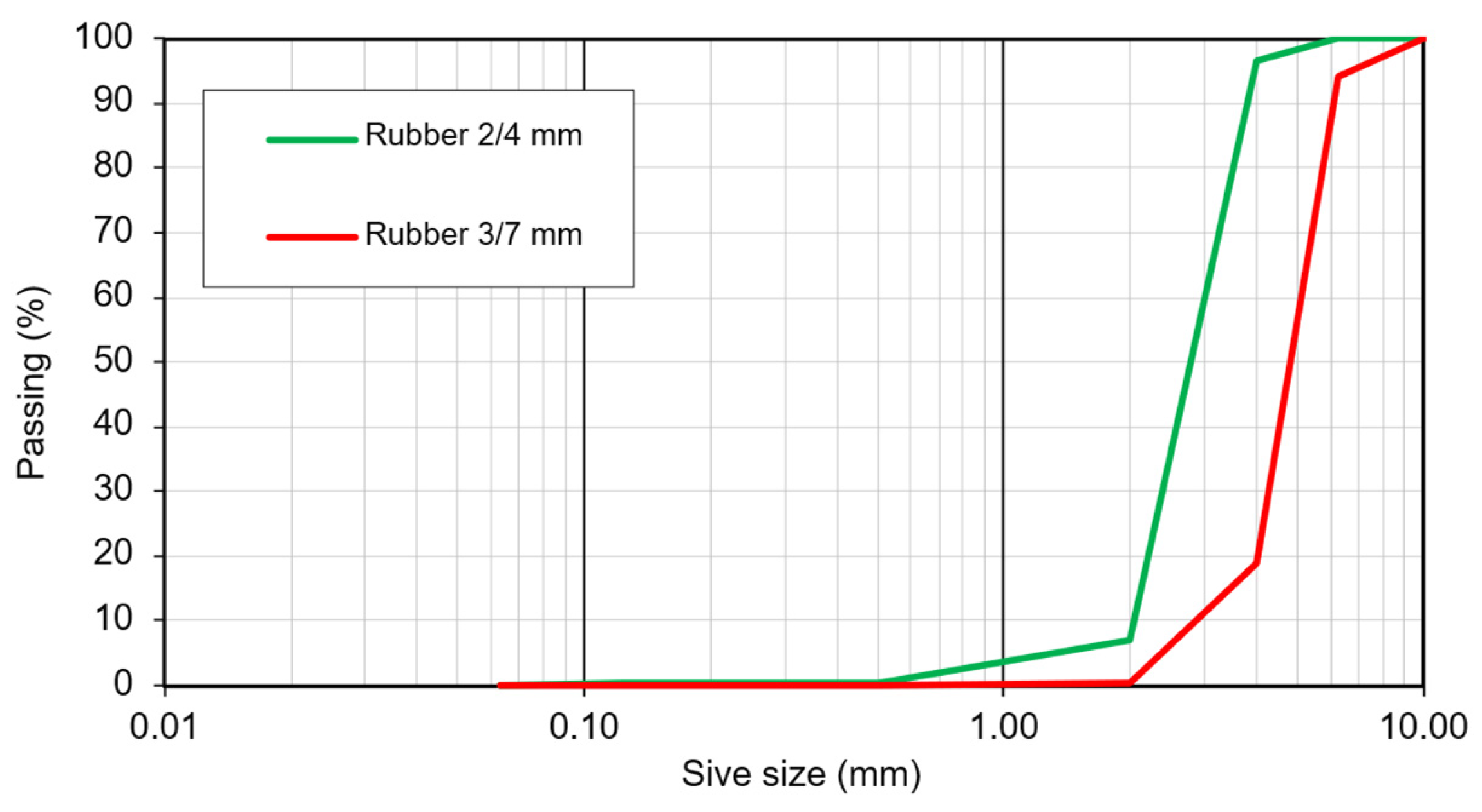
The recycled rubber used in this article comes from the tires of light and heavy vehicles, from two different batches (2/4 mm and 3/7 mm). As shown, the maximum and minimum dimensions of each rubber are very similar to those of the two aggregates used, indicating that they can be used to partially replace the aggregates. The grain gradation of these rubbers was determined, and the gradation curves are shown in
Figure 3.
Analysis of the gradation curves of the rubbers indicates that, for larger materials, the curves are very similar. In comparison, for smaller materials, the aggregate has a minimum size of zero, which is used to produce the mastic that surrounds the entire solid skeleton of the asphalt mixtures.
The rubber mix design was carried out by analyzing the air void content of the mix and combining different percentages of each rubber. A similar procedure, such as the one used for the rubber mix (measuring the amount of rubber in a given volume), was used to evaluate the apparent air void of the mix.
Table 2 summarizes the air void content of the rubber mix, which is around 65–66%. Thus, it was decided to use 40% 2/4 mm rubber and 60% 3/7 mm rubber, as this combination produces the maximum air void content in the rubber mix.
2.3. Bituminous Binders
Three different types of bitumen were used in this work, namely a 35/50 pen bitumen, a polymer-modified bitumen (PMB), and C60B5 conventional bituminous emulsion.
Bitumen 35/50 is a hard, conventional binder (penetration = 42 mm/10; softening point = 54 °C). This bitumen was used for its stiffness, which is necessary to produce an open-graded (pervious) mixture that requires high stiffness at the contact points between the mineral grains.
Polymer-modified bitumen is obtained by incorporating polymers into bitumen, thereby improving the binder’s mechanical and thermal performance. The bitumen used was modified with elastomeric polymers, which have a penetration of 62 (0.1 mm) at 25 °C and a softening point above 74 °C.
As for the bituminous emulsion, a C60B5 emulsion was used, containing approximately 60% residual bitumen (penetration of recovered bitumen = 176 mm/10; softening point = 48 °C). This emulsion is particularly suitable for cold mixes, eliminating the need for intense heating, reducing energy consumption and emissions.
2.4. Test Methods
This section describes the tests used to characterize asphalt mixtures and ensure they have shock-absorbing, drainage, and structural capabilities.
The air void content of each material or material mixture was determined by placing a representative portion of the material into a container of known volume; in this case, a Marshall specimen mold was used. The mass of the material was then measured, excluding the mass of the mold. Based on these measurements, the material’s bulk density was determined.
The air void content is given by:
where
—air void content;
—maximum density of the material (rubber, aggregate, or their combination);
—bulk density of the material (rubber, aggregate, or their combination).
For shock-absorbing measurements, asphalt mixtures were tested using a Light Falling Weight Deflectometer (LFWD), defined in ASTM E2583-11 [
25] as a small device used to assess the bearing capacity of road pavement soils, which can also be used to evaluate the bearing capacity of thin asphalt pavement. It consists of a weight dropped from a given height, with the surface deflection measured.
For the test, a slab measuring 40 × 30 × 5 cm3 was placed on a leveled, properly cleaned surface to simulate the asphalt mix on the ground of pedestrian sidewalks. The LFWD was positioned on the surface, ensuring the guide rod remained fully vertical, and the drop height was set to half the rod length to minimize measurement noise. During testing, six drops were performed; the first three were used for preconditioning and stabilizing the slab mixture, while the remaining three were used to record settlement values.
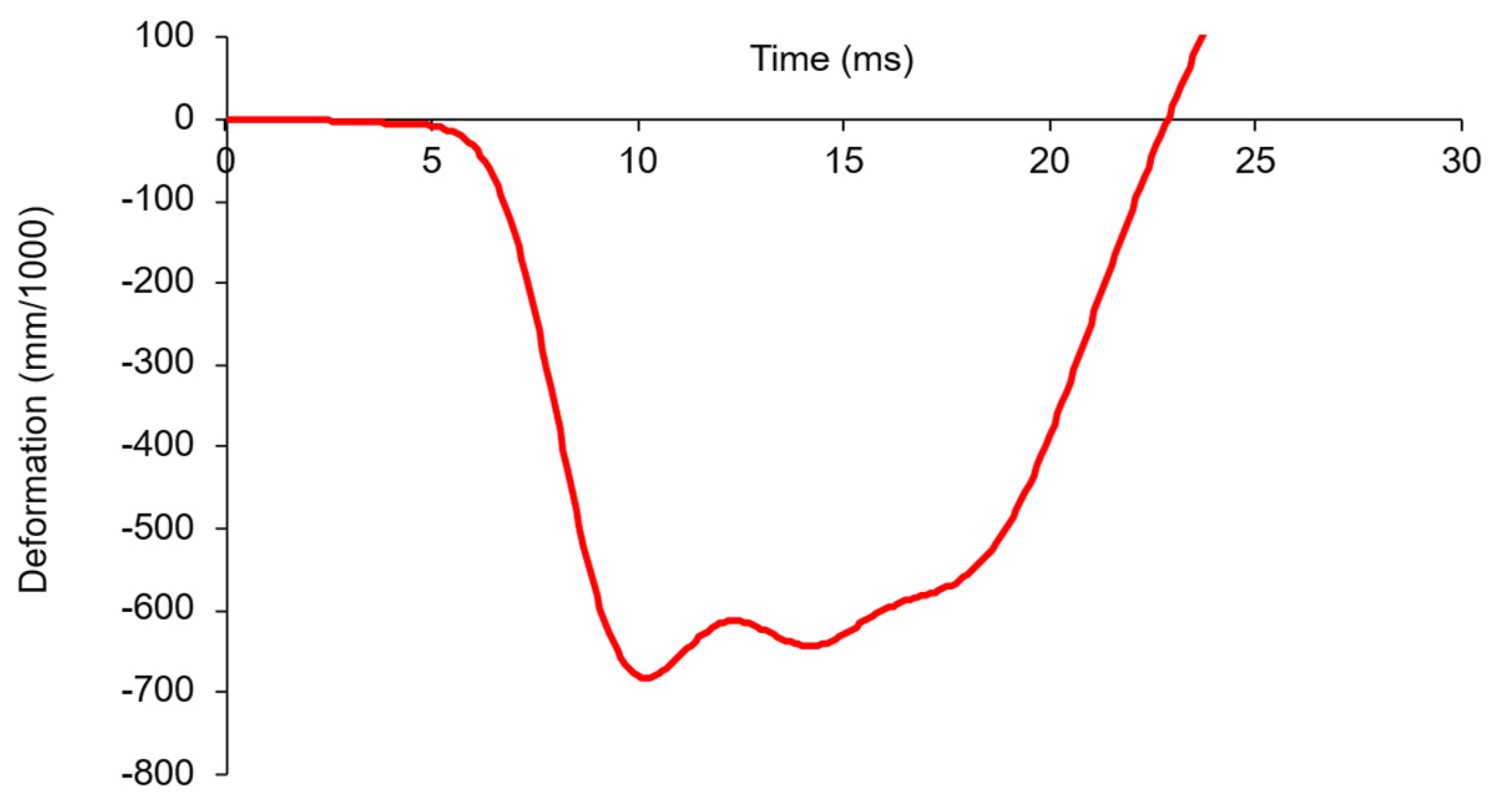
For linear elastic materials, knowing the applied load and deformation allows the material’s stiffness to be assessed. For this case, the objective is not the evaluation of the material’s stiffness but the material response over time. This was done by recording the deformation over time, as indicated in
Figure 4.
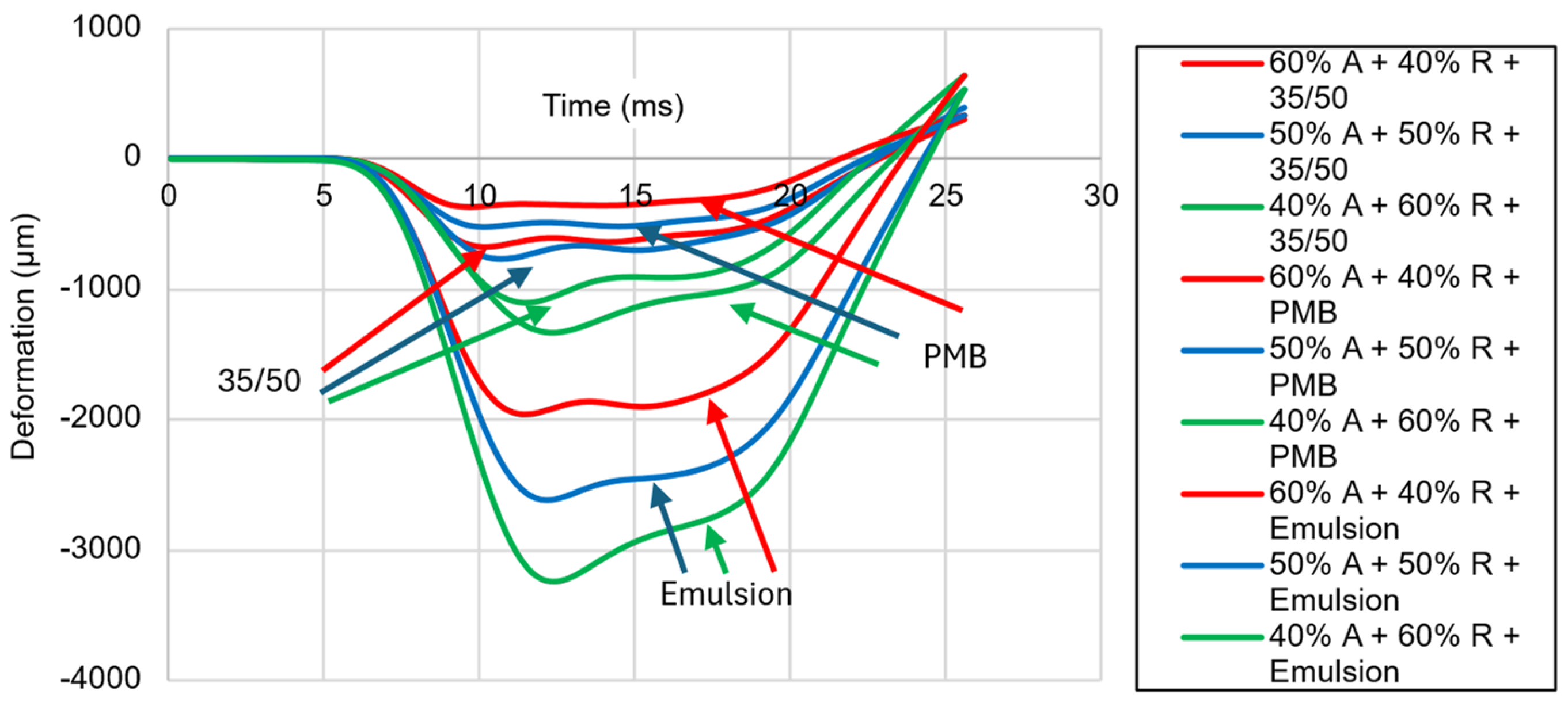
The presence of two successive peaks in the deformation–time profile is attributed to the dynamic response of the LFWD system. The first peak corresponds to the maximum deformation induced by the initial impact of the falling mass. Following this, the system undergoes elastic recovery, leading to a rebound of the loading plate. Due to inertia and the viscoelastic nature of the material, this recovery is not monotonic but results in a secondary deformation peak. This behavior reflects a damped oscillation of the mass–plate–material system, with energy progressively dissipated. The reduced magnitude of the second peak compared to the first indicates the material’s damping capacity and energy dissipation characteristics. The shock absorption performance was evaluated as the area under the deformation–time curve, which is correlated to the energy spent during the deformation.
Permeability was assessed using the permeability test, following the NLT-327/00 standard [
26], which measures the vertical water flow through the compacted asphalt mixture. The permeability of a porous mixture is evaluated based on the time, in seconds, required for a specific volume of water, as defined by the standard, to flow through the mixture via a 3 cm diameter orifice. At the initial stage of the test, the permeameter tube is filled with water to approximately 15 cm below the upper reference mark, then allowed to drain to achieve saturation of the pavement specimen. Subsequently, the tube is refilled in the same manner, and the outflow time is measured between the upper and lower reference marks. For this measurement, the time required for a volume of water to flow through the specimen, corresponding to vertical flow, is measured and expressed in millimeters per second (mm/s). Also, the vertical permeability can be calculated using Darcy’s formula.
Functional properties, including macrotexture and friction, were evaluated. Macrotexture was measured using the sand patch method, in accordance with EN 13036-1 [
27], the European standard, which measures the volume of pavement surface depressions using a known amount of sand. The friction was evaluated using the British Pendulum method specified in the EN 16165 [
28] European standard, which involves swinging a weighted, rubber-shod arm over a surface to measure friction.
Finally, the structural performance of the asphalt mixtures was evaluated for permanent deformation and stiffness. Permanent deformation was assessed by subjecting the asphalt mix to the wheel tracking test but with the simulation of a load similar to that applied by walking persons. Stiffness was evaluated by testing prismatic specimens under a constant load and measuring the deformation.
3. Results
3.1. Air Voids in the Mix of Aggregates and Crumb Rubber
Porous asphalt mixtures have been used worldwide in road pavements, typically with a maximum aggregate size of approximately 10, 12.5, or 15 mm. This aggregate size is directly related to car and truck tire sizes and is intended to provide a suitable macrotexture for security conditions. In pedestrian conditions, small aggregate sizes produce a smoother surface, increasing walking comfort, which is why a maximum aggregate size of 6 mm was chosen instead of typical aggregate sizes for this type of mixture.
To obtain a porous asphalt mix, it was necessary to ensure a proper combination of aggregates and crumb rubber to achieve the best porosity, or a value that allows free water entry. That combination was experimentally studied by mixing aggregates and crumb rubber at different percentages. This is one of the main questions addressed in this work, i.e., how to combine different materials to produce a porous asphalt mixture.
Despite the reduced influence of the percentage of aggregate and rubber on the air void content of the mixture of these two materials, it was decided to use the percentages that maximize their air void content for the mixture of aggregates and rubber, namely:
As mentioned above, the main objective of this work is to develop a shock-absorbing asphalt mixture for pedestrian pavements that mitigates the impact of walking by incorporating crumb rubber from recycled tires to produce a softer mixture.
Since the asphalt mixture is produced with aggregate (hard material) and crumb rubber (soft material), it will be designed to maximize the rubber content or to add a large amount of crumb rubber. However, it is important to have a large amount of aggregates to provide the asphalt mixture with suitable stiffness. Thus, three percentages, in volume, of each component have been studied, namely:
Mix1: 60% aggregate + 40% rubber.
Mix2: 50% aggregate + 50% rubber.
Mix3: 40% aggregate + 60% rubber.
Mineral filler was not used because the aggregates used (20% 0/4 mm + 80% 2/6 mm) had sufficient material, passing the 0.063 mm sieve to produce the mastic, ensuring proper involvement of the aggregates and crumb rubber.
The above-defined asphalt mixtures were designed to ensure similar amounts of aggregates and crumb rubber, producing a mix neither too soft (excess of rubber) nor too hard (excess of aggregates). Thus, the idea was to change half of the aggregate with rubber. To verify the influence of rubber on the mix, two additional mixes were prepared, with 10% of crumb rubber added or removed.
The air void content of these mixtures, without bitumen, is indicated in
Table 3, where it is possible to verify that as the aggregate increases, the air void content of the mix decreases. Air void content is around 50%, with no significant variation in the percentage of the mixture components. Even so, the study was developed for these three mixtures.
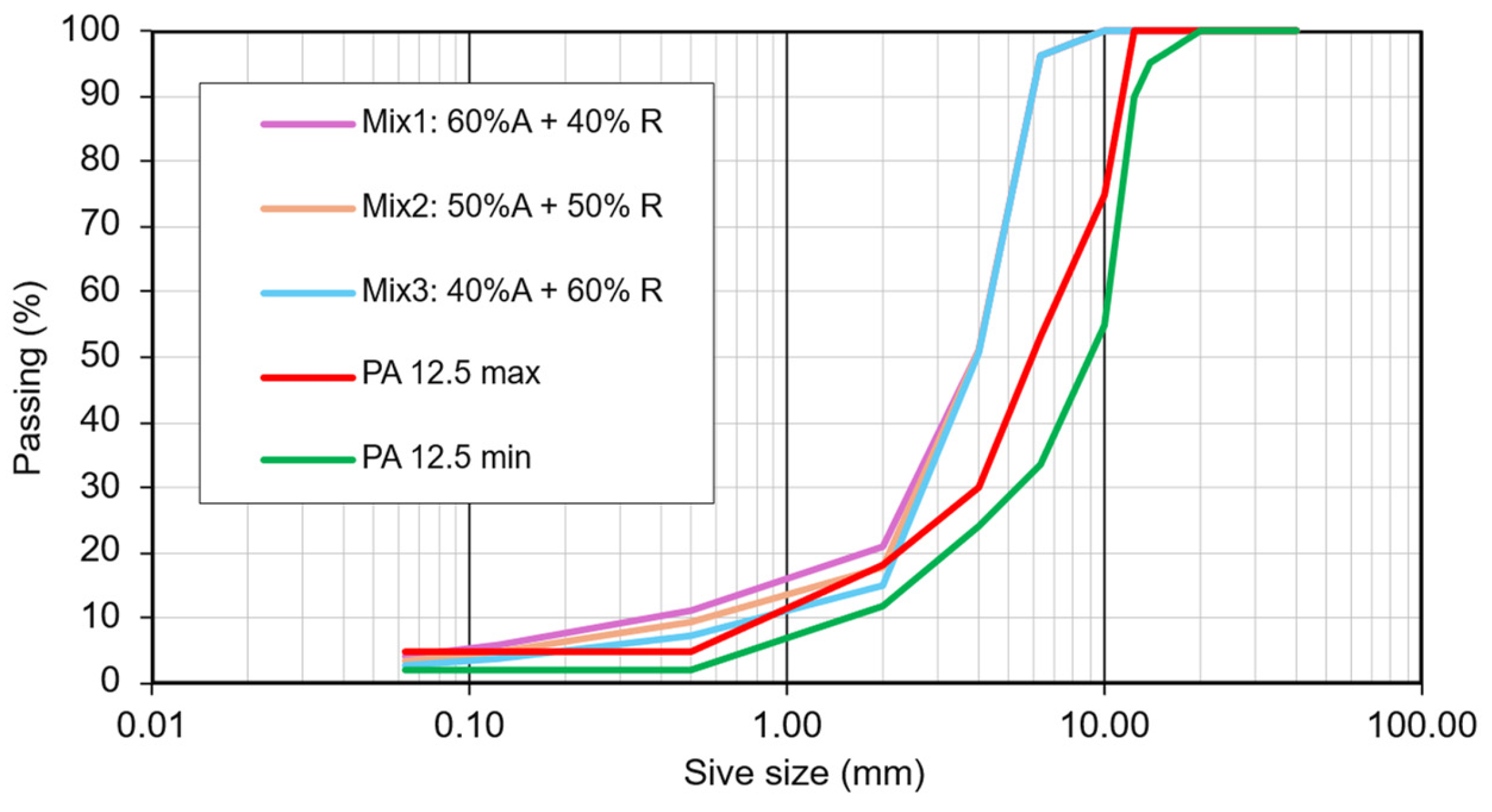
The grain gradation of these mixes is shown in
Figure 5 and compared to a typical 12.5 mm maximum aggregate size for a porous mix. The studied mixes have identical grain gradation curves. Small differences are visible below 2 mm, but the difference in the 2 mm sieve is only 6%. Compared to the 12.5 mm porous asphalt aggregate gradation, the studied mixtures present similar gradation curves but shifted to the left due to the maximum aggregate and rubber sizes adopted.
3.2. Air Voids in the Asphalt Mixes
As mentioned above, the asphalt mixtures were produced with three bitumens: 35/50 pen bitumen, polymer-modified bitumen (PMB), and C60B5 conventional bituminous emulsion, designated as 35/50, PMB, and emulsion, respectively. These mixtures were produced in the laboratory and compacted into slabs measuring 40 × 30 × 5 cm3 using an asphalt roller compactor.
The air void content of the asphalt mixtures (aggregate + rubber + bitumen) is indicated in
Table 4 and follows the values of the mixture of aggregates and rubber (without bitumen). These results show values around 50%, which are higher than typical values for porous asphalt mixes but good enough to provide suitable drainage.
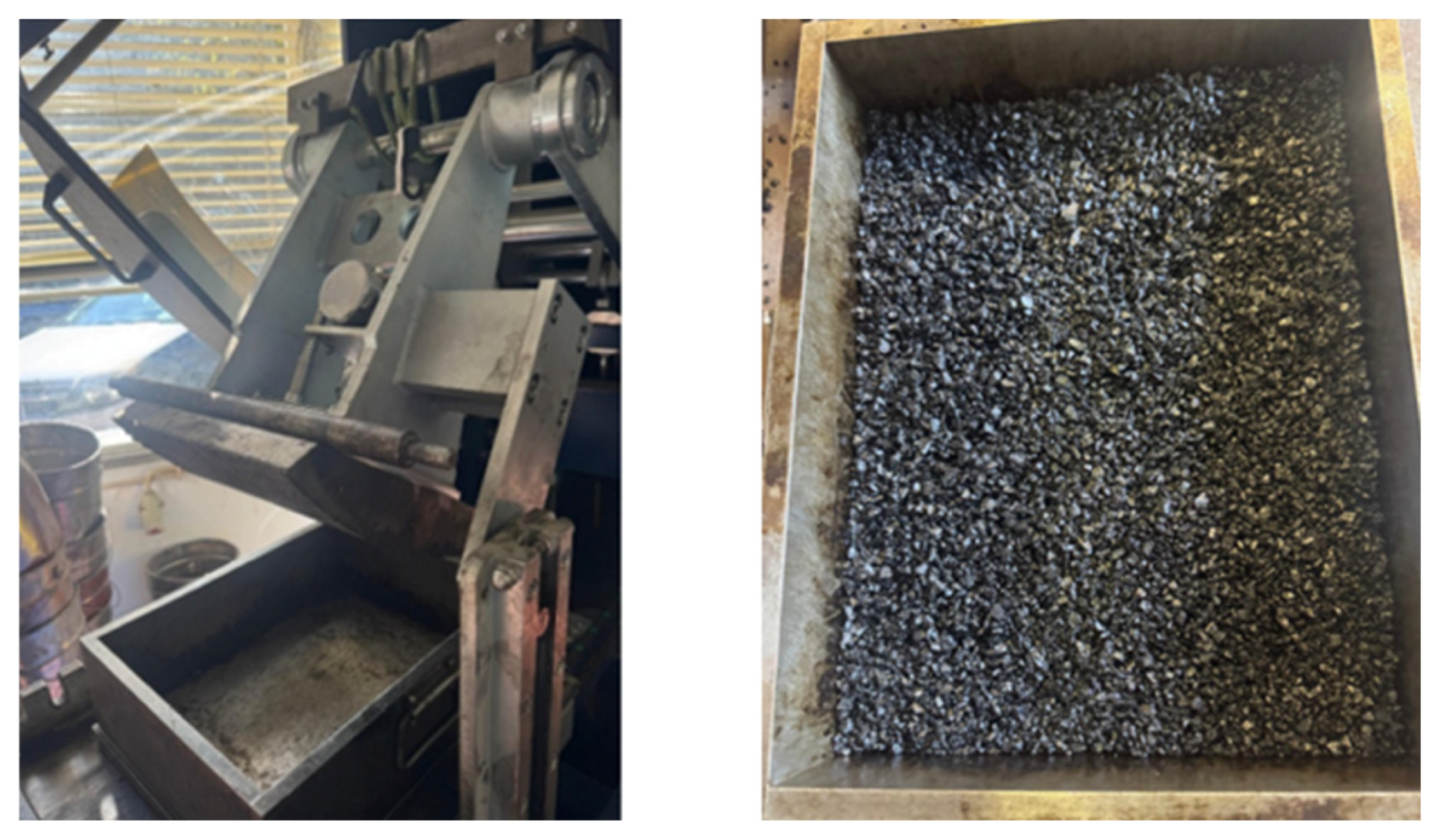
In
Figure 6 it is presented the asphalt roller compactor and the aspect of the slabs where it is possible to observe that the asphalt mixtures produced with these materials (Aggregates: 20% of 0/4 mm + 80% of 2/6 mm + Rubber: 40% of 2/4 mm + 60% of 3/7 mm) present a solid skeleton very open, typically of an asphalt mixture with 50% air void content. It is important to note that this asphalt mixture is designed for pedestrian pavements and is not suitable for road pavements due to the high air void content.
3.3. Macrotexture
The macrotexture of the pavement surface is an essential parameter for assessing the functional performance of pedestrian pavements because it affects the friction the surface provides for walking. Among other methods, sand patch tests according to standard EN 13036-1 [
27] evaluate macrotexture by measuring the average texture depth (MTD) in an easy, fast manner.
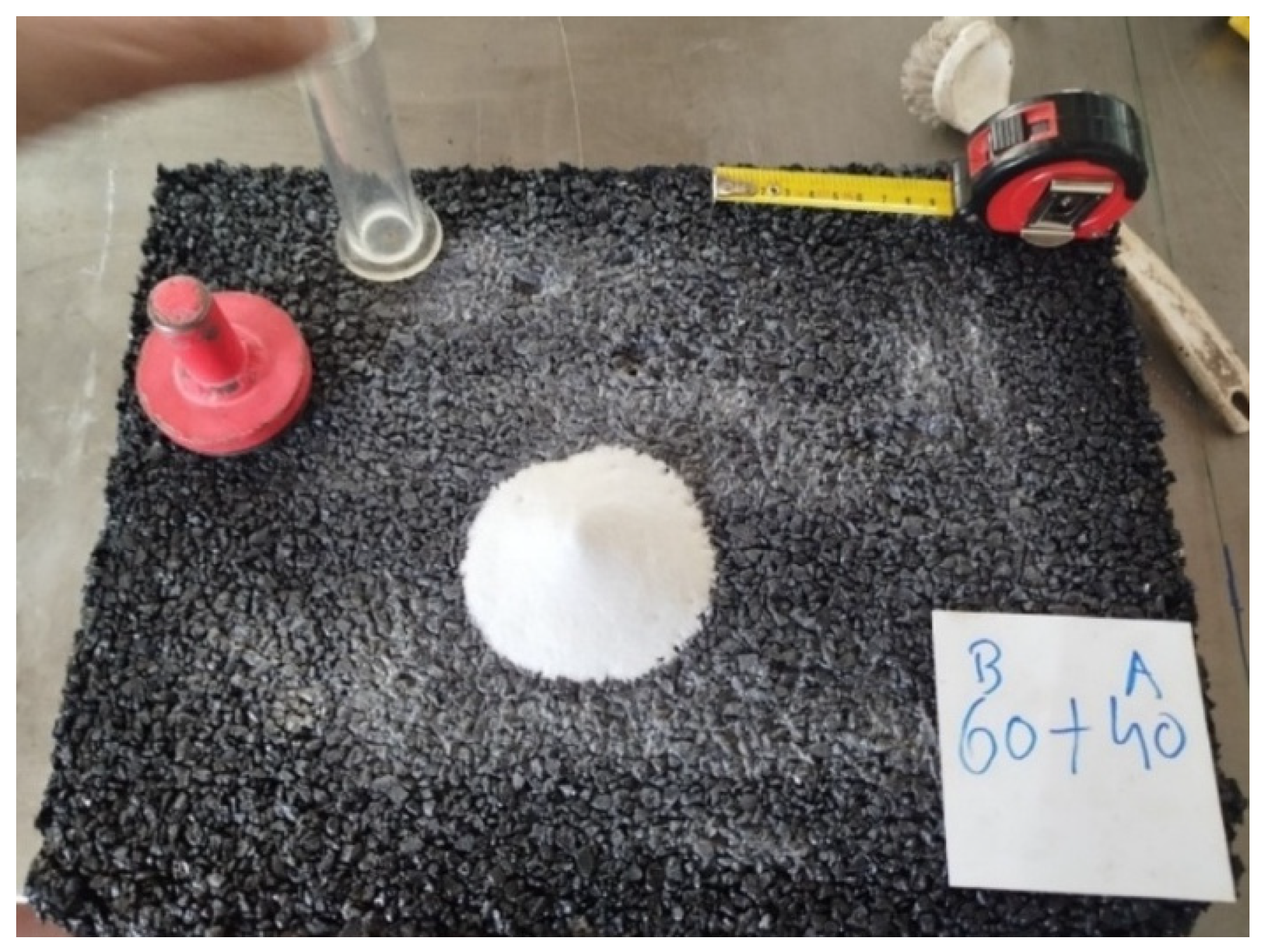
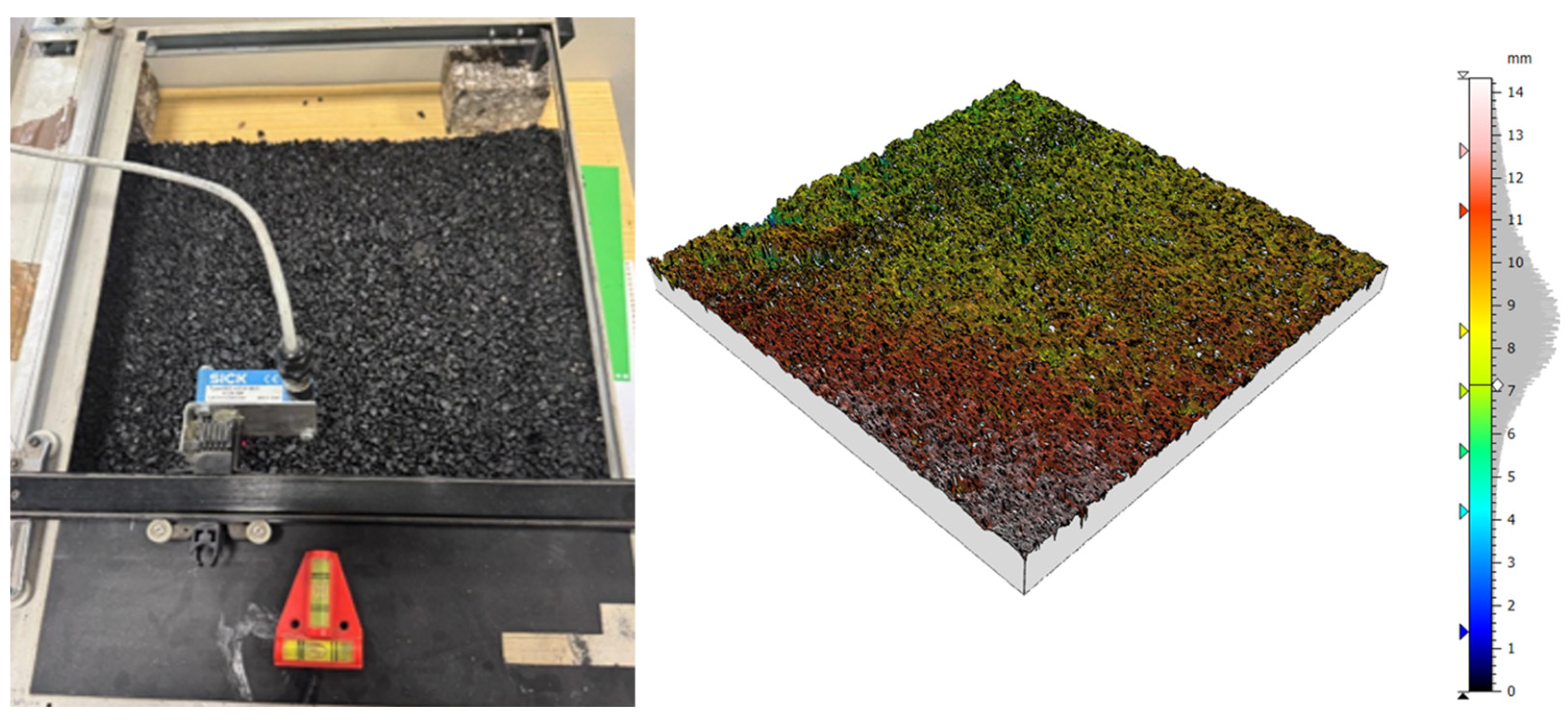
Figure 7 presents the apparatus for those measurements. Still, the objective of this figure is to present the surface of the compacted asphalt mixture, where it is possible to observe the texture and porosity obtained by the mix of aggregate and rubber considered in this work.
The macrotexture measured for the mixtures considered in this work is presented in
Table 5, indicating a small increase in macrotexture with increasing crumb rubber content, more evident in the mixtures with emulsion.
These findings are consistent with previous literature, which reported that higher rubber content contributes to increased surface texture in gap-graded asphalt rubber mixtures [
29].
The applicability of the sand patch test to this highly porous, permeable material is questionable because the mixture has interconnected voids, and part of the sand may penetrate internal open pores, rendering the measured result no longer representative of only the surface macrotexture depth. This may lead to overestimation or distortion of MTD. Due to this, the macrotexture was measured with a laser-scanning device.
The macrotexture was also evaluated using a laser-scanning device that measures the depth over the slab surface relative to a reference plane. The measurements taken allow the vertical profile of the pavement surface to be obtained over an area of 20 × 20 cm2. The analysis of the pavement surface allowed the following parameters to be obtained:
Sa: Average surface roughness, which represents the average deviation of heights (peaks and valleys) in relation to the reference plane;
Sq: Average quadratic roughness, which represents a general measure of the texture;
Sz: Maximum surface height, measured between the highest peak and the deepest valley;
Vmp: Maximum material volume, which represents the volume of material corresponding to the upper level of the surface (peaks), normally up to 10% of the support curve (Abbot–Firestone);
Vmc: Volume of material that comprises heights between 10% and 80% and corresponds to the contact zone;
Vvc: Valley void volume, which represents the space delimited between the peaks in relation to the material at 10% and 80%;
Vvv: Volume of the deepest valleys, below 80% of the curve, represents the drainage capacity of the surface.
Laser scanning measurements were obtained with the device shown in
Figure 8 (left), which enables the generation of 3D models of the pavement surface, as indicated in
Figure 8 (right). From this 3D model, the above-mentioned parameters were obtained and are indicated in
Table 6.
Among these parameters, it is important to consider the average surface roughness (Sa) and the maximum material volume (Vmp), which are similar to the macrotexture measured with the sand patch. However, no direct correlation was observed between the macrotexture and the average surface roughness or the maximum material volume; however, these parameters showed that increasing the rubber content produces pavement surfaces with increased texture. While internal voids may influence the sand patch test, laser scanning captures only the surface profile. Therefore, the methods are complementary; the sand patch allows comparison with standard practice, whereas laser scanning provides more detailed surface characterization.
3.4. Skid Resistance
The skid resistance of the asphalt mixtures was measured using the British pendulum method in accordance with standard EN 12026-4 [
30]. The average values obtained for the PMB and emulsion mixtures are shown in
Table 7, expressed by the PTV values. The obtained values are well above the limits for road pavements and, by extension, for walking paths or pedestrian pavements, indicating no risk of slipping with these mixtures. Regarding the 35/50 mixture, the results indicate no conciseness, as the mixtures during the test exhibited some disintegration. This suggests that this type of bitumen is not the most suitable for this type of solution.
3.5. Permeability
The permeability of the asphalt mixtures was obtained using a permeability test. This test was carried out in accordance with the Spanish standard NLT-327 [
26]. The permeability of the drainage mixture is evaluated by the time, in seconds, it takes for the volume of water to flow through an orifice. For this work, permeability was expressed as a permeability rate. The obtained values are shown in
Table 8.
The permeability observed for these mixtures is very high, in accordance with their air void content, indicating that they are pervious and allow rapid water entry. With these mixtures, it is not expected that any water accumulation will occur on the pavement surface, providing a safe ride and restoration of the water to the soil. There are no significant differences in water permeability among these mixtures. However, the increase in rubber content does not result in a linear increase in permeability, but in a tendency towards a reduction or stabilization of the permeability coefficient.
This behavior is consistent with findings from other works, which show that, at similar air void contents, the coefficient of permeability decreases with increasing crumb rubber content. The authors attributed this behavior to the higher water flow resistance of the rubberized asphalt mixture. Similar mechanisms may explain the present results, where the increased rubber content likely enhances binder film thickness and internal cohesion, partially restricting water flow through the interconnected void structure [
28].
3.6. Shock-Absorbing Properties
The shock-absorbing properties of the asphalt mixtures were evaluated using a light impact deflectometer. This test, defined in ASTM standard E2835-11 [
31], consists of applying a load to the pavement and measuring its deformation. The test is used to evaluate the modulus of the material under the applied load; however, it is possible to measure pavement deformation over time and thus evaluate pavement damping under a falling load.
To carry out the test, the slabs of the asphalt mixes were placed on the ground. The light-impact deflectometer was then placed on the surface with the rod fully vertical and the drop height set to half the rod length to avoid excessive noise during the test. During the test, six drops were made: three initial drops for pre-settling and slab mixture stabilization, and three additional drops for recording settlement values. The deformation curves obtained in the LFWD tests are presented in
Figure 9.
After Light Falling Weight Deflectometer tests, the area above the deformation curve was determined for each mixture.
Table 9 presents the deformation energy, a measure of the shock-absorption impact. The greater the energy, the greater the material’s capacity to absorb the load’s impact. According to the method adopted to study the shock-absorption impact of the asphalt mixtures, a progressive increase in deformation energy is observed with increasing rubber content in all cases analyzed, indicating that shock-absorption impact increases with increasing rubber content. This increase is very significant: from 40% to 60%, it increases by 56% for mixes with 35/50 pen bitumen, by 3 times for PMB, and by 61% for mixes with emulsion. In terms of binder, the softer the binder, the softer the mix, meaning that emulsion mixtures have greater shock absorption capability than 35/50, and this one more than the PMB mixes.
In addition to their shock-absorbing properties, these mixes exhibit large deformations, providing greater walking comfort. Thus, if these mixes are applied to pedestrian pathways, walking is more comfortable than with conventional mixtures (without rubber).
A similar tendency was observed in LFWD field studies, where rubber-modified pavements exhibited elastic modulus-displacement levels comparable to those of unmodified pavements. This supports the hypothesis that rubber incorporation alters the elastic response while maintaining structural integrity [
32].
3.7. Wheel Tracking Test (WTT)
The resistance to permanent deformation of the asphalt mixtures was evaluated using the wheel tracking test. This test simulates the permanent deformation of asphalt mixtures in asphalt pavements due to traffic (trucks) loading by applying a standard load of 0.7 kN (70 kg) at 60 °C. Still, these conditions simulate human walking on a pedestrian pavement because the load is equal to that of a 70 kg person.
So, permanent deformation tests were carried out, maintaining the standard load (0.7 kN). However, it is important to note that this 0.7 kN load for this type of mix with 50% air void content is very aggressive and leads to rapid failure of the mixture. However, it was decided to apply the standard load to allow comparison with conventional road pavement mixtures.
Resistance to permanent deformation was assessed using the wheel tracking test in accordance with EN 12697-22 [
33], which determines the slab deformation resulting from repeated wheel passes. Two tests were performed for each mixture.
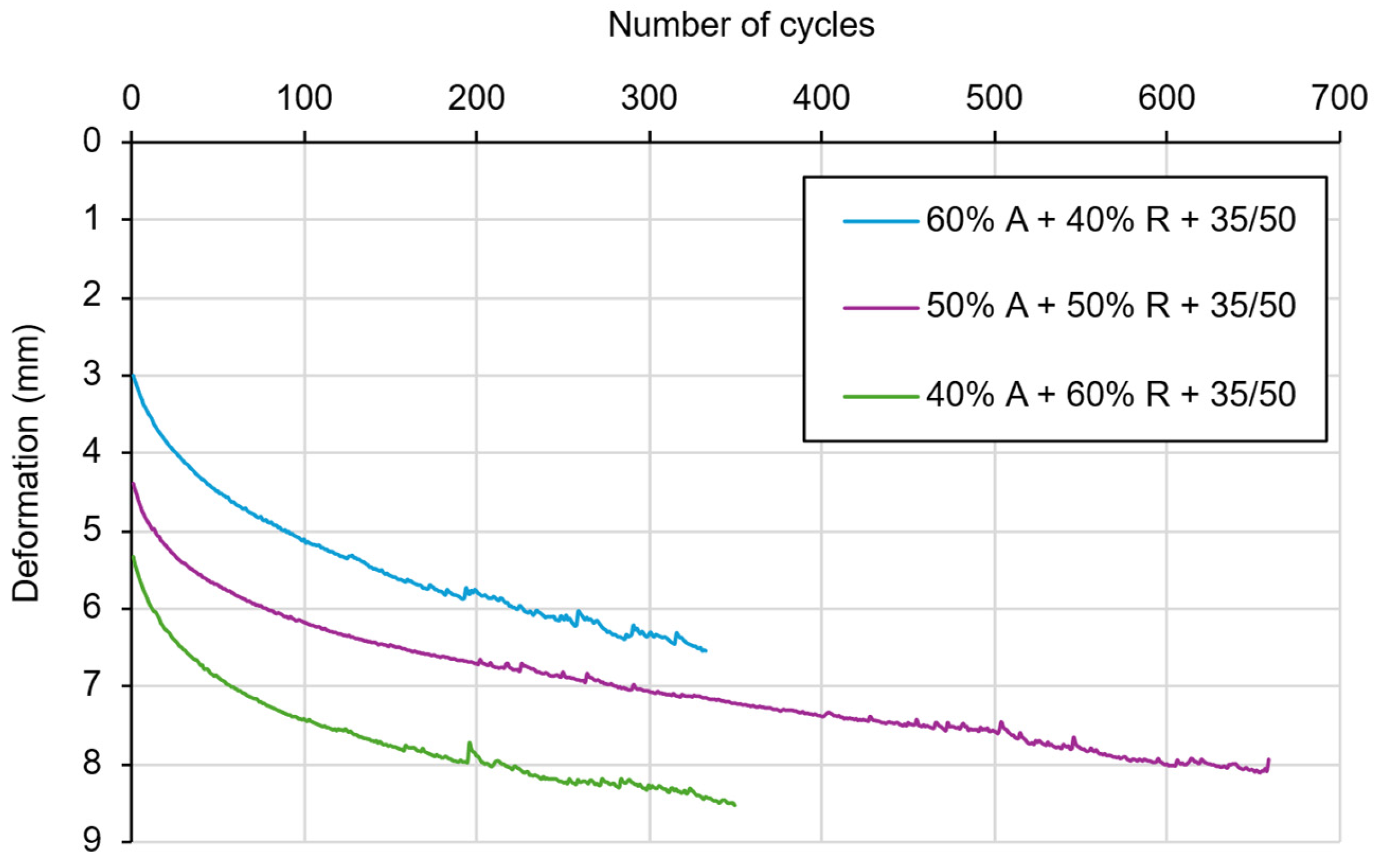
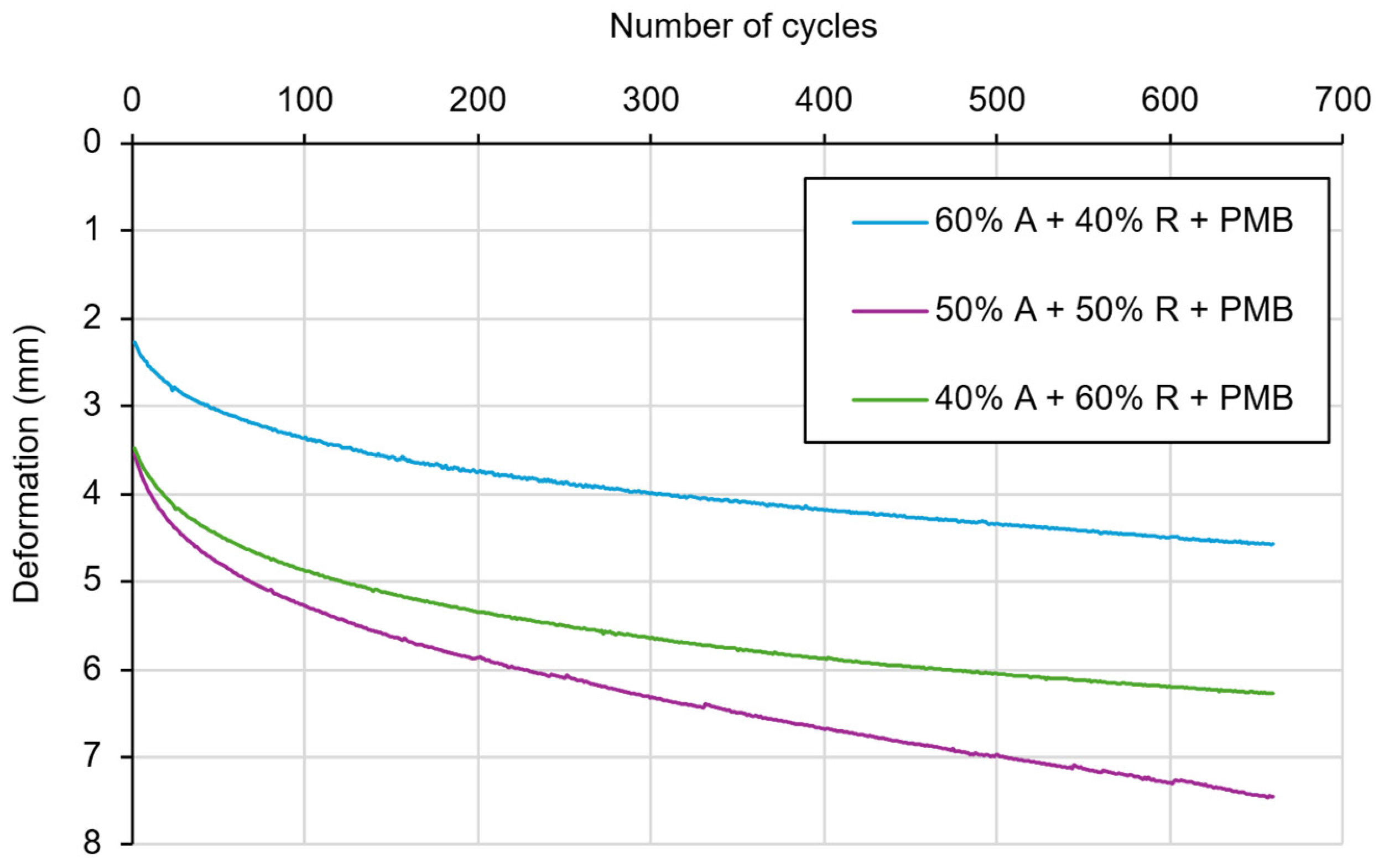
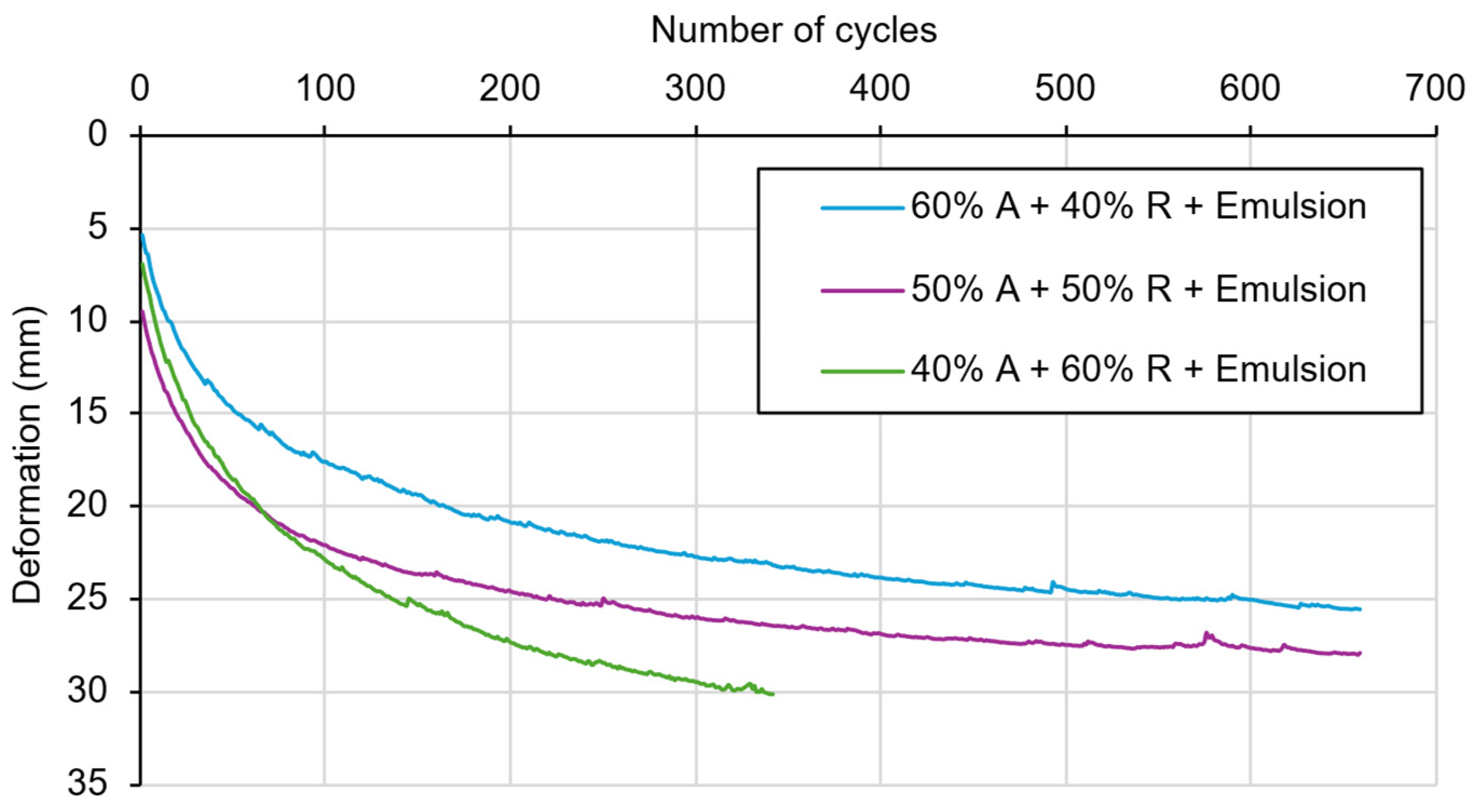
The permanent deformation results for the mixtures are presented in
Figure 10,
Figure 11 and
Figure 12, respectively, for mixes with 35/50 pen bitumen, PBM, and emulsion. Due to the high air void content, wheel tracking tests showed irregular deformation, most of which was probably attributed to the skeleton arrangement. Tests were stopped at around 700 cycles for PMB mixes and 300 cycles for the other mixes.
For a better comparison between the different mixes, the results of the permanent deformation tests are summarized in
Table 10 and
Table 11, which present the permanent deformation at 300 cycles and the rate of permanent deformation per cycle from cycle 200 to 300.
The results of the wheel tracking tests evaluating the permanent deformation resistance of the asphalt mixes, presented in the above figures and tables, indicate that increasing the rubber content increases permanent deformation, i.e., it reduces the permanent deformation resistance. The deformation of these mixtures follows the typical pattern of a conventional mixture, with an initial phase of fast deformation, followed by a phase of stable or slightly increased deformation.
In terms of the effect of the binder on the permanent deformation, the mixtures with emulsion exhibit large deformation compared to the other binders. The use of PBM does not produce a significant reduction in the permanent deformation.
These findings agree with previous studies, which reported that increasing rubber content reduces the stiffness modulus of asphalt mixtures. This reduction in stiffness increases the mixture’s flexibility and, consequently, its susceptibility to permanent deformation under repeated loading, consistent with the results of the present article [
34].
Except for the mixture with emulsion, the values obtained for the resistance to permanent deformation are in line with the expected values for conventional mixtures for road pavements, meaning that these mixtures, when applied in pedestrian pathways, will perform perfectly in terms of permanent deformation.
3.8. Stiffness Modulus
In mechanical terms, the stiffness modulus is the main variable that characterizes materials, particularly asphalt mixtures. For road and airfield pavements, the stiffness characteristics of asphalt mixtures are analyzed through cyclic loading tests to simulate the cyclic passage of vehicles. For pedestrian walkways, the loads are typically static, so the stiffness modulus of asphalt mixtures can be evaluated in monotonic tests.
Thus, the stiffness modulus of the asphalt mixtures under study was evaluated in simple compression tests by applying a displacement rate of 5 mm/minute at 20°, using specimens with dimensions of 8 × 5 × 5 cm3.
The stiffness modulus, E, was determined considering the linear behavior of the materials established by Hooke’s law, being given by the quotient between the force, F, and the deformation, ΔL, weighted by the area, A, of load application and by the height of the specimen, Lo. The results are presented in
Table 12.
Analysis of these values shows that slabs with PMB have, as expected, the highest modules due to the binder’s stiffness. Also, as expected, the mixtures with emulsion presented the lower stiffness, meaning that the stiffness of the asphalt mixtures is directly related to the stiffness of the binder. The increase in rubber in the asphalt mixtures reduces the stiffness modulus.
The obtained stiffness modulus values for the PBM mixtures are within the range of those obtained for porous asphalt mixtures with PMB, 2000 to 3000 MPa. For the other binders (conventional binder and emulsion), the stiffness of the asphalt mixtures is much lower than that of the conventional binder. In these mixtures, the modulus is influenced by the air void content; once it reaches around 50%, and with about 50% crumb rubber, the stiffness modulus is very low, resulting in high deformation under load and providing comfort for walking.
4. Conclusions
The results demonstrate the feasibility of designing asphalt mixtures for pedestrian applications that combine high drainage capacity, shock-absorbing behavior, and recycled materials, thereby contributing to more sustainable and comfortable pedestrian infrastructure.
Regarding functional performance, the macrotexture results indicate that increasing rubber content does not compromise surface texture. However, macrotexture alone does not allow a direct conclusion about skid resistance under wet conditions, although the measured friction values confirmed adequate surface safety.
Both rubber content and binder type influenced the mechanical response of the mixtures. In general, an increase in rubber content led to a reduction in stiffness modulus, although some variability was observed depending on the binder used. This reduction in stiffness is associated with an increased deformation capacity, which is beneficial for pedestrian comfort.
The Light Falling Weight Deflectometer results showed that higher rubber contents lead to increased deformation energy, indicating an enhanced capacity to absorb impact. However, this increase in deformability may also be associated with reduced resistance to repeated loading, highlighting the need to balance shock-absorbing performance and mechanical stability.
The wheel tracking results confirmed that mixtures with higher rubber content are more susceptible to permanent deformation. This behavior is consistent with the observed reduction in stiffness and reflects the trade-off between flexibility and structural resistance.
Overall, the results indicate that different mixtures may be suitable depending on the specific application requirements. Mixtures with higher rubber content offer improved impact attenuation. Therefore, the selection of the optimal mixture should consider intended use, prioritizing either durability or shock-absorbing performance.
In summary, this study contributes to the development of function-oriented asphalt mixtures specifically designed for pedestrian pavements, demonstrating that mechanical and functional properties can be tailored through controlled rubber incorporation and binder selection. It also provides experimental evidence on the interaction between porosity, stiffness, and impact absorption in high-porosity asphalt mixtures. Nevertheless, this study presents some limitations. The laboratory testing conditions may not fully represent in-service conditions, particularly regarding pedestrian loading and environmental exposure. In addition, some test methods were adapted from road applications and may not fully capture pedestrian-specific behavior.
Future research should focus on validating the proposed mixtures under field conditions through pilot sections, improving testing methodologies to simulate pedestrian loading and surface interaction better, and evaluating long-term performance and environmental impacts, including durability and life-cycle assessment.