Article

Bond Behavior of Post-Installed Rebar Under One-Way and Two-Way Transverse Pressure

1
Shanghai Municipal Engineering Design Institute (Group) Co., Ltd., Shanghai 200092, China
2
School of Railway Engineering, Tianjin Railway Technical and Vocational College, Tianjin 300240, China
3
School of Civil Engineering, Chongqing Three Gorges University, Chongqing 404020, China
4
School of Civil Engineering, Chongqing Jiaotong University, Chongqing 400074, China
5
School of Civil Engineering, Chongqing University, Chongqing 400045, China
*
Authors to whom correspondence should be addressed.
Infrastructures 2026, 11(4), 120; https://doi.org/10.3390/infrastructures11040120
Submission received: 4 February 2026 / Revised: 10 March 2026 / Accepted: 23 March 2026 / Published: 1 April 2026
(This article belongs to the Section Infrastructures Inspection and Maintenance)

Abstract

Post-installed rebars are extensively used in the strengthening and rehabilitation of concrete structures, where compressive stresses in the anchorage zone provide transverse pressure and significantly affect bond behavior. However, it remains unclear how different transverse pressure conditions, particularly one-way and two-way transverse pressure, influence the bonding behavior of post-installed rebars and how their effects differ. To address this gap, this study investigates the effects of one-way and two-way transverse pressure on the bond mechanism and failure mode of post-installed rebars. To achieve this, 22 pull-out tests were carried out under two transverse pressure configurations, namely one-way and two-way transverse pressure, with pressure levels ranging from 0 to 12 MPa. The results show that, without confinement, concrete splitting was the dominant failure mode, whereas under transverse pressure, failure shifted to adhesive failure or adhesive–rebar interface failure. Transverse pressure significantly improved bond strength, with maximum increases of 49.9% under one-way transverse pressure and 82.9% under two-way transverse pressure. Both the transverse pressure configuration and pressure level had a significant influence on failure evolution and bond performance. In general, increasing the pressure level enhanced the interfacial bonding capacity; however, one-way transverse pressure tended to induce stress concentration in the adhesive layer, thereby promoting adhesive-related failure. These findings clarify the role of transverse pressure conditions in the anchorage behavior of post-installed rebars and provide a basis for the design and analysis of post-installed rebar anchorage systems.

1. Introduction

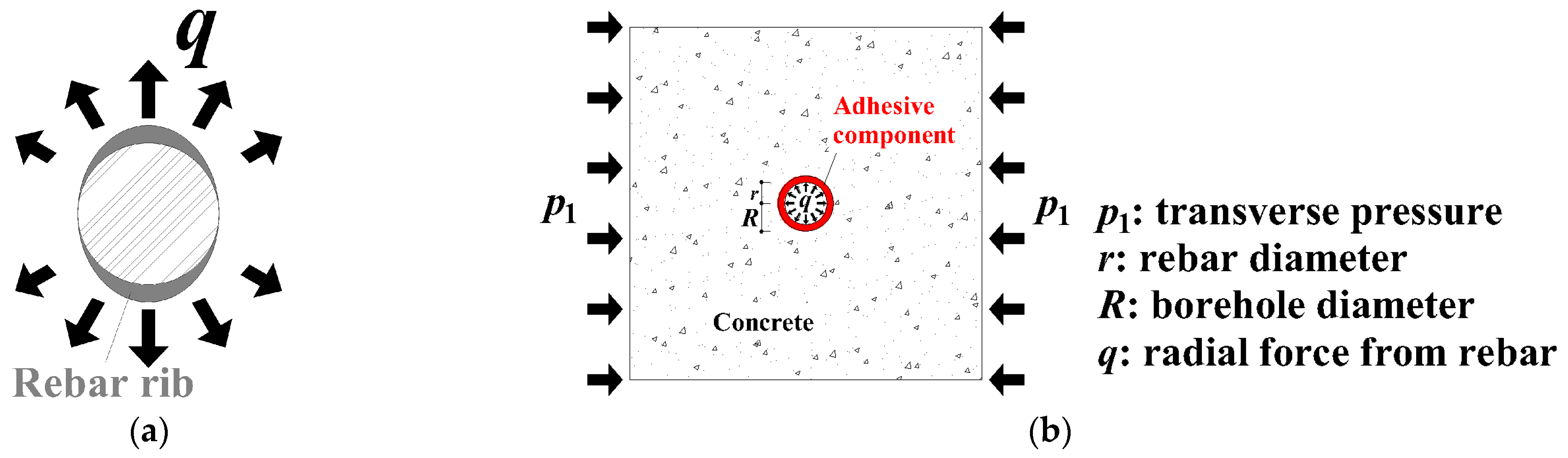
Post-installed rebars are widely used in the strengthening and retrofitting of concrete structures, primarily to connect newly added components to existing structural members. In engineering applications involving post-installed rebars in newly constructed beam–column joints, wall–slab joints, and column–foundation joints, the anchorage substrate (e.g., columns and walls) is subjected to structural loads, which place the concrete surrounding the post-installed rebars under compression. Drilling holes for rebar installation leads to stress release in the surrounding concrete, while the tensile action of the post-installed rebars induces outward radial components. The compressed concrete provides a confining reaction that restrains the radial deformation of the adhesive layer (Figure 1) [1,2,3]. In addition, the anchorage concrete is subjected to sustained loads, under which the transverse pressure exerted by the compressed concrete around the drilled hole may gradually recover [4]. For primary load-bearing members such as columns and walls, the sectional compressive stress can reach up to 0.5 fcu (fcu: concrete cube compressive strength) [5], resulting in a non-negligible confining effect on the anchorage performance of post-installed rebars [6,7]. However, Eurocode EN 1992-1-1 [8], which the post-installed rebar is designed according to, has limited the accounted transverse pressure effect to 7.5 MPa. However, the favorable effect of transverse pressure has been most considered in codes and studies, regardless of the adverse effect from excessive transverse pressure.
Solid experimental results have evidenced the favorable effect of transverse pressure on the splitting resistance of the substrate concrete and increases in the bond strength of post-installed rebars [9,10]. However, further studies have shown that excessive one-way transverse pressure can decrease the splitting resistance of cast-in rebars [4,9,10]. For post-installed rebar cases, studies [3,11,12,13,14] show that one-way transverse pressure can result in excessive stress concentration and damage the adhesive component, with behaviours like the following: post-installed rebars may experience failure within the adhesive layer or at the adhesive–rebar (A-R) interface, exhibiting failure modes and anchorage performances that are distinctly different from those observed under unconstrained conditions. The current findings indicate that transverse pressure’s effects on post-installed rebars differ, especially under one-way and two-way transverse pressure conditions.
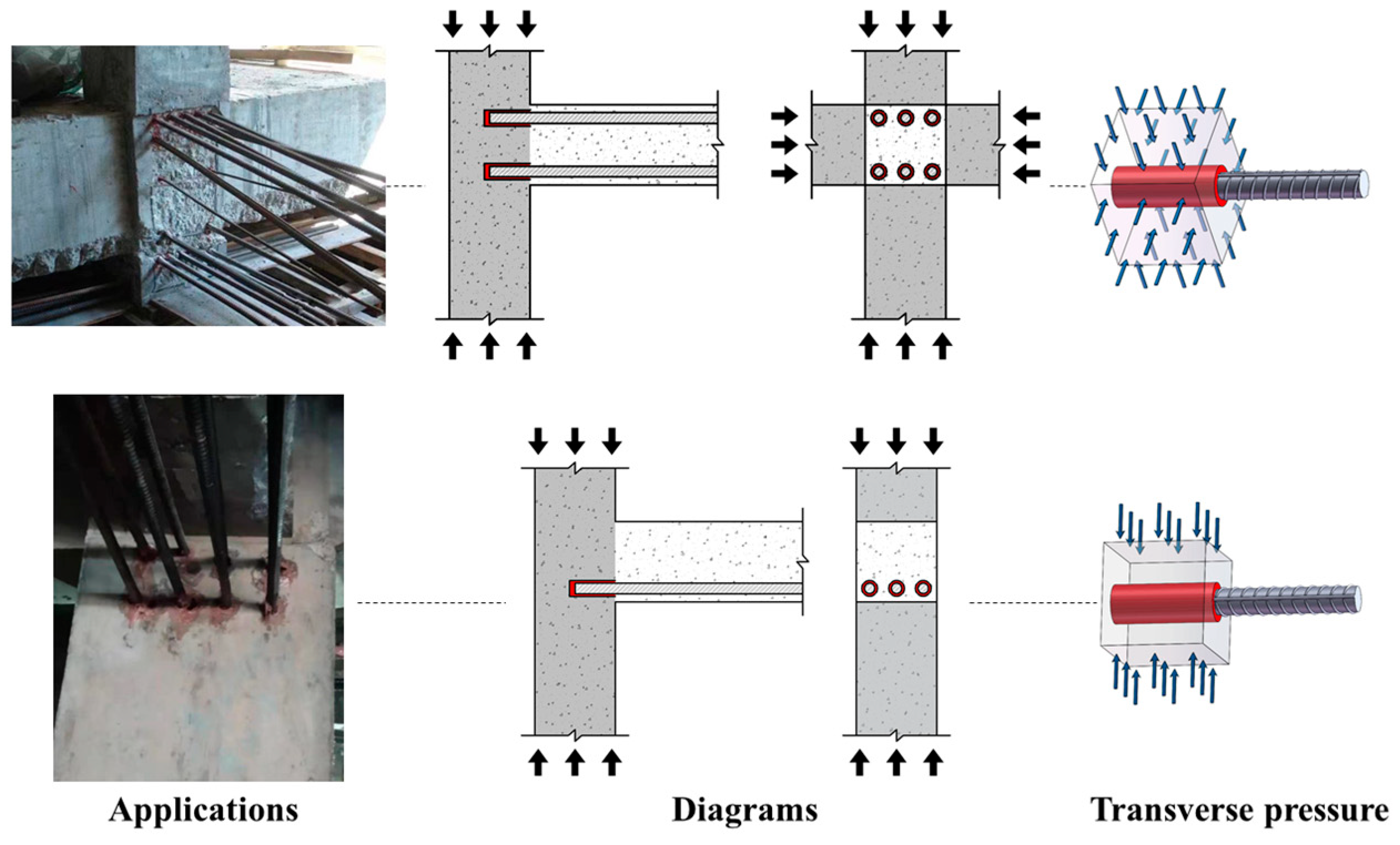
According to the direction of action, transverse pressure can be classified into one-way confinement (e.g., in beam–column joints) and two-way confinement, as illustrated in Figure 2. Experimental results reported by Gao and Yang [11,12] indicate that a post-installed rebar fails through concrete splitting under unconfined conditions (the edge distance and rebar diameter configuration were intentionally designed to be insufficient to better highlight the favorable effect of transverse pressure on splitting resistance), whereas under one-way confinement, failure modes such as fragmentation of the adhesive layer or shearing and scraping of the adhesive by the transverse ribs of the rebar are observed. Xiang [13] reported similar findings for two-way confinement, with experimental results showing higher bond strength compared with one-way confinement; however, a more in-depth comparative analysis was not provided. On this basis, Zhao, Yang, and co-workers [14,15] investigated the influencing factors, bond–slip behavior, and failure mechanisms of post-installed rebars under one-way confinement. By analyzing the stress distribution within the adhesive layer and the surrounding concrete, they concluded that stress concentration induced by confinement is the primary cause of adhesive failure. Furthermore, Zhao et al. [3] summarized adhesive failure as a combined result of splitting cracks and transverse cracks, incorporating internal damage within the adhesive layer, and established a classification of pull-out failure modes for post-installed rebars. A summary of these studies is shown in Table 1.
The above studies provide a relatively comprehensive discussion on the anchorage performance of post-installed rebars under transverse pressure and its influencing factors, consistently demonstrating that confinement has a pronounced effect on both failure modes and bond behavior under tensile loading. Nevertheless, existing research mainly focuses on the effects of one-way confinement, with limited investigation into two-way confinement. Consequently, the differences in the underlying mechanisms governing post-installed rebars under one-way and two-way confinement remain unclear. In engineering practice, a qualitative understanding of the influence of confinement conditions on post-installed rebars is still lacking, and the uncertainty surrounding failure modes and bond behavior may significantly compromise the reliability of post-installed rebar design.
Cast-in reinforcement and post-installed rebars share similar anchorage mechanisms, and extensive studies have been conducted on the influence of transverse pressure. The results reported by Gambarova and Robins [16,17] indicate that relatively low levels of one-way confinement (with stress levels lower than 0.5 times the compressive strength of concrete) can enhance the splitting resistance of concrete and increase bond strength. When the level of one-way confinement exceeds 0.5 times the concrete’s compressive strength, the bond strength decreases with increasing confinement levels. Gambarova et al. [18] attributed this phenomenon to excessive Poisson effects induced by one-way confinement. Studies by Malvar, Xu, and others [5,7,19,20,21] on the effects of two-way confinement on cast-in-place reinforcement demonstrate that two-way confinement is more effective than one-way confinement in restraining deformation of the anchorage concrete and enhancing bond strength. In addition, their studies indicate that the failure mode of cast-in-place reinforcement transitions from concrete splitting to interface pull-out and ultimately to rebar rupture as the confinement level increases. The above studies focus on the effects of transverse pressure on cast-in reinforcement and summarize the governing roles of confinement level and confinement direction, providing valuable references for the present study. However, due to the presence of an adhesive layer in post-installed rebar systems, current conclusions on cast-in rebars cannot be implemented directly on post-installed rebars. Further investigations must be conducted on the different effects between one-way and two-way transverse pressure in post-installed rebar cases.
To investigate the influence of transverse pressure conditions on the anchorage performance of post-installed rebars, a series of confined pull-out tests were conducted on post-installed rebar specimens under different confinement levels and confinement directions, comprising a total of 22 specimens. By comparatively analyzing the failure modes, crack propagation, and bond strength of post-installed rebars under unconstrained conditions, one-way confinement, and two-way confinement, the effects of confinement level and confinement direction on anchorage performance were examined. The mechanisms by which confinement level and confinement direction affect post-installed rebars are discussed in detail, and evaluation indices for assessing the influence of confinement are proposed. The findings of this study provide insights and design references for future research and related engineering applications.

2. Experimental Program

2.1. Test Condition Design

Previous experimental studies [13,14] created transverse pressure by exerting external pressure on the surface of the concrete specimen. However, when the loaded surface area is too large, it is difficult to achieve a uniform pressure distribution, whereas a smaller surface area leads to pronounced edge effects. Based on relevant research [4,5,13,14], the concrete specimens for this study were designed as 150 mm cubes.
Since there are similar anchorage scenarios between post-installed rebars and cast-in rebars, the test design in cast-in rebar studies provides an excellent reference for the current tests. Previous studies on cast-in rebars [19,21,22,23] have shown that when the transverse pressure is less than 0.5 fcu, the bond strength increases with the transverse pressure level. In contrast, when the transverse pressure exceeds 0.5 fcu, the bond strength decreases with higher confinement levels.
Accordingly, the transverse pressure levels in this study were designed as follows:
One-way transverse pressure: 0 fcu, 0.1 fcu, 0.2 fcu, 0.3 fcu, and 0.4 fcu.
Two-way transverse pressure (equal levels in two direction): 0.1 fcu:0.1 fcu, 0.2 fcu:0.2 fcu, 0.3 fcu:0.3 fcu, 0.4 fcu:0.4 fcu.
Two-way transverse pressure (unequal levels in two direction): 0.1 fcu:0.2 fcu, and 0.2 fcu:0.4 fcu.

2.2. Materials and Manufacture

The concrete specimens utilized in this study had a compressive strength of 31.9 MPa (tested according to GB/T 50081 [24]). The rebars had a yield strength of 433 MPa (tested according to GB/T 228.1 [25]) with a diameter of 16 mm.
The bonding agent employed in tests was provided by manufacturers (qualified by EAD 330087 [26] and ACI 355.5 [27]), and its product name is not given due to potential ethical issues.
The anchorage length (l) was designed to be 5 d (d: rebar diameter, 5 d is 80 mm). The material properties of the materials are listed in Table 2.
The diameter of the borehole in tests is designed to be 20 mm. To improve the vertical alignment of the post-installed rebars and the drilling accuracy, water drilling (drill bit of 18 mm diameter) was employed first, followed by roughening of the wall of the borehole with an electric hammer (drill bit of 20 mm diameter).
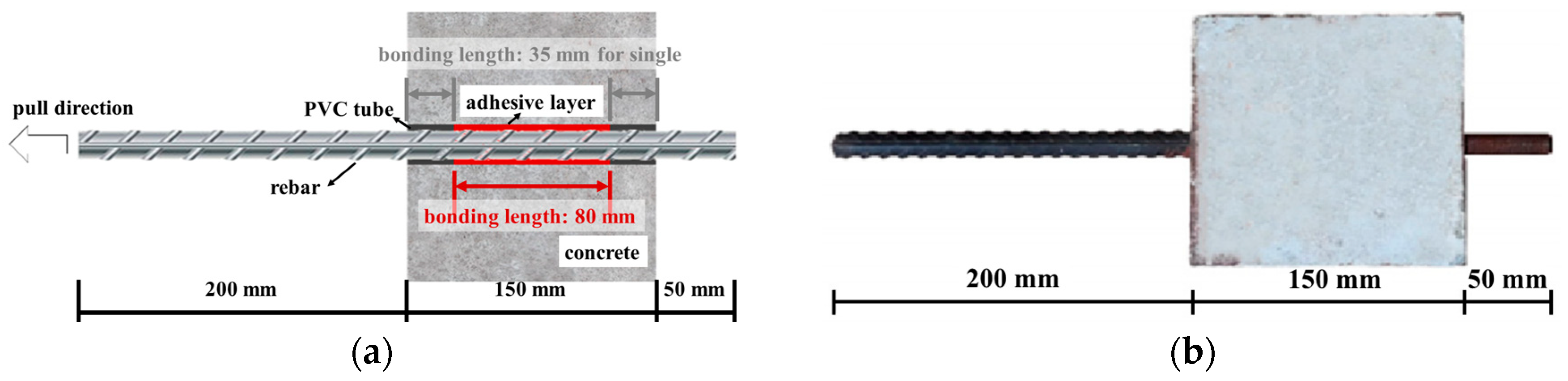
Before the injection of bonding agent, the borehole is cleaned with an air blower. A PVC tube was plugged in at both ends of the borehole to prevent adhesive–concrete bonding to avoid potential concrete cones [4]. The single PVC tube length is 35 mm to guarantee an effective bonding length of 80 mm. The free end of the borehole is sealed with tape to block the bonding agent from flowing out of the borehole, which is pierced through by the rebar during installation (pierced tapes can still block the fluid bonding agent). Moreover, additional tests were conducted to examine the quality of bonding agent injection by observing the cured adhesive part after cutting the specimen (which are excluded in this paper). A schematic diagram and photographs of the specimens are presented in Figure 3.

2.3. Loading and Mesurement

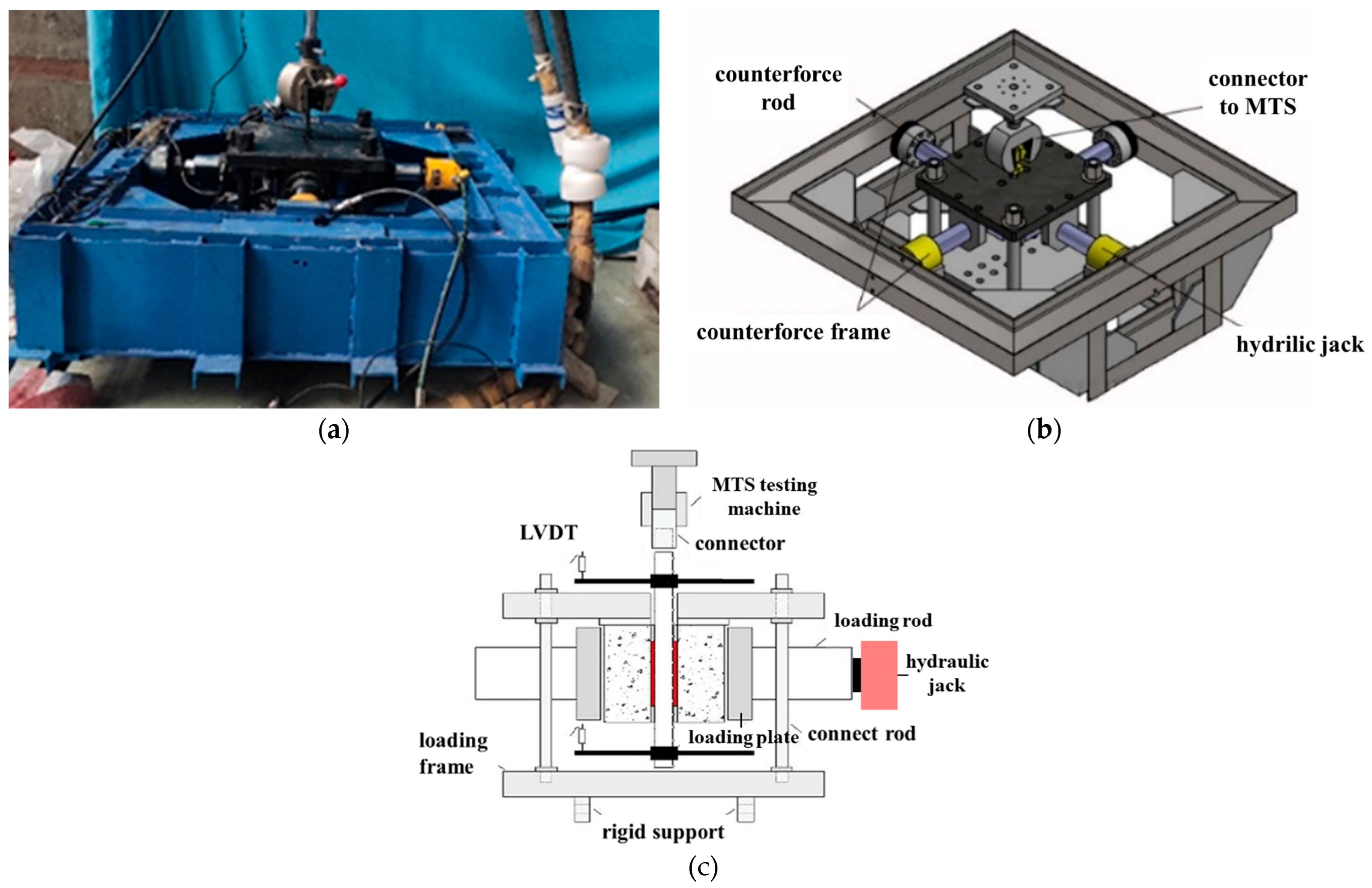
A diagram of the pull-out test frame is shown in Figure 4. The pull load is exerted with an MTS hydraulic servo-testing machine (loading capacity: 250 kN, MTS Systems Corporation, Eden Prairie, MN, USA), which is connected to the rebar through a connector. The transverse pressure is provided via hydraulic jacks (loading capacity: 100 kN, one hydraulic jack for one-way transverse pressure, and two for two-way transverse pressure). The hydraulic jack exerts the transverse pressure onto the lateral concrete surface via the loading rod and loading plate, as Figure 4c shows. In tests, the transverse pressure is exerted first, and then the pull-out starts. The pull load was measured by a pressure sensor placed between the anchorage fixture and the MTS connector, while the pull-out displacement was monitored using LVDTs (accuracy: 0.001 mm, MTS Systems Corporation, Eden Prairie, MN, USA) that were fixed at the loaded and free ends of the rebar [11,12]. The loading rate was controlled at 2 mm/min [4,21].

3. Test Results and Failure Modes

3.1. Overall Results

In this study, the bond strength (τu) was obtained from the average bond stress theory, as expressed in Equation (1). To be more precise, to identify the beginning of bond slip and the correspondence of the bond–slip relationship, bond slip was defined as the average displacement measured at the free and load ends of the rebar [4,21], calculated with Equation (2). The corresponding results are presented in Table 3.
τ u = P u π d l
s 0 = s f + s l 2
In Equation (1), Pu denotes the peak load; in Equation (2), s0 denotes the bond slip corresponding to peak load, sf denotes the bond slip measured at the free end of the rebar, and sl denotes the bond slip measured at the load end of the rebar.
Three primary failure modes were observed during testing: concrete splitting failure, A-R (adhesive–rebar) interface failure, and adhesive component fracture failure. For the tests in this paper, all specimens in the no-transverse-pressure group failed by concrete splitting, while those under confinement failed by A-R interface debonding or adhesive layer fracture.
In some cases, surface cracks appeared on the concrete during pull-out, but the specimens continued to carry load. The splitting cracks had not developed through the entire specimen’s cross-section, and these failures were attributed to bond-related debonding (A-R interface failure or adhesive component fracture), rather than overall concrete failure, and were still classified as pulling out [3,21].

3.2. Concrete Splitting

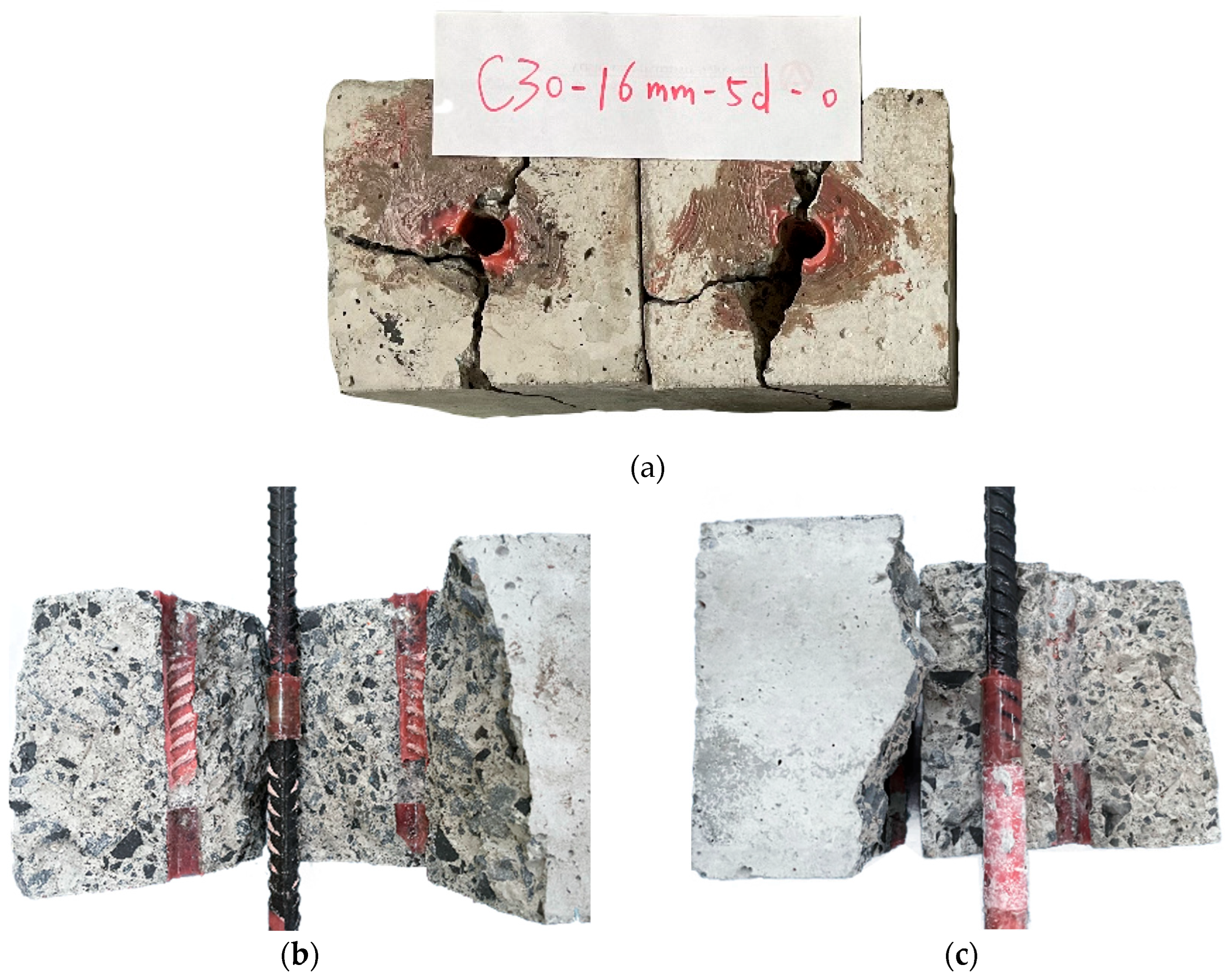
All specimens in the unconfined group exhibited concrete splitting failure. The substrate concrete split into three parts (Figure 5), and the anchorages lost their capacity due to concrete damage.
Two distinct splitting failure characteristics were observed: (1) both the concrete and the adhesive layer split, with cracks propagating continuously along the A-C interface (Figure 5b); (2) the concrete split, while the adhesive layer remained intact (Figure 5c).
The development of splitting cracks was associated with the circumferential tensile stresses induced by the mechanical interlock of the rebar ribs. Experimental results indicated that only the unconfined specimens experienced splitting failure. Neither the one-way nor two-way transverse pressure groups exhibited full splitting cracks reaching the specimen surface or penetrating the entire concrete block. This suggests that transverse pressure effectively reduces circumferential tensile stresses in the anchorage zone, restrains crack propagation, and significantly enhances the splitting resistance of the surrounding concrete.

3.3. A-R Interface Failure

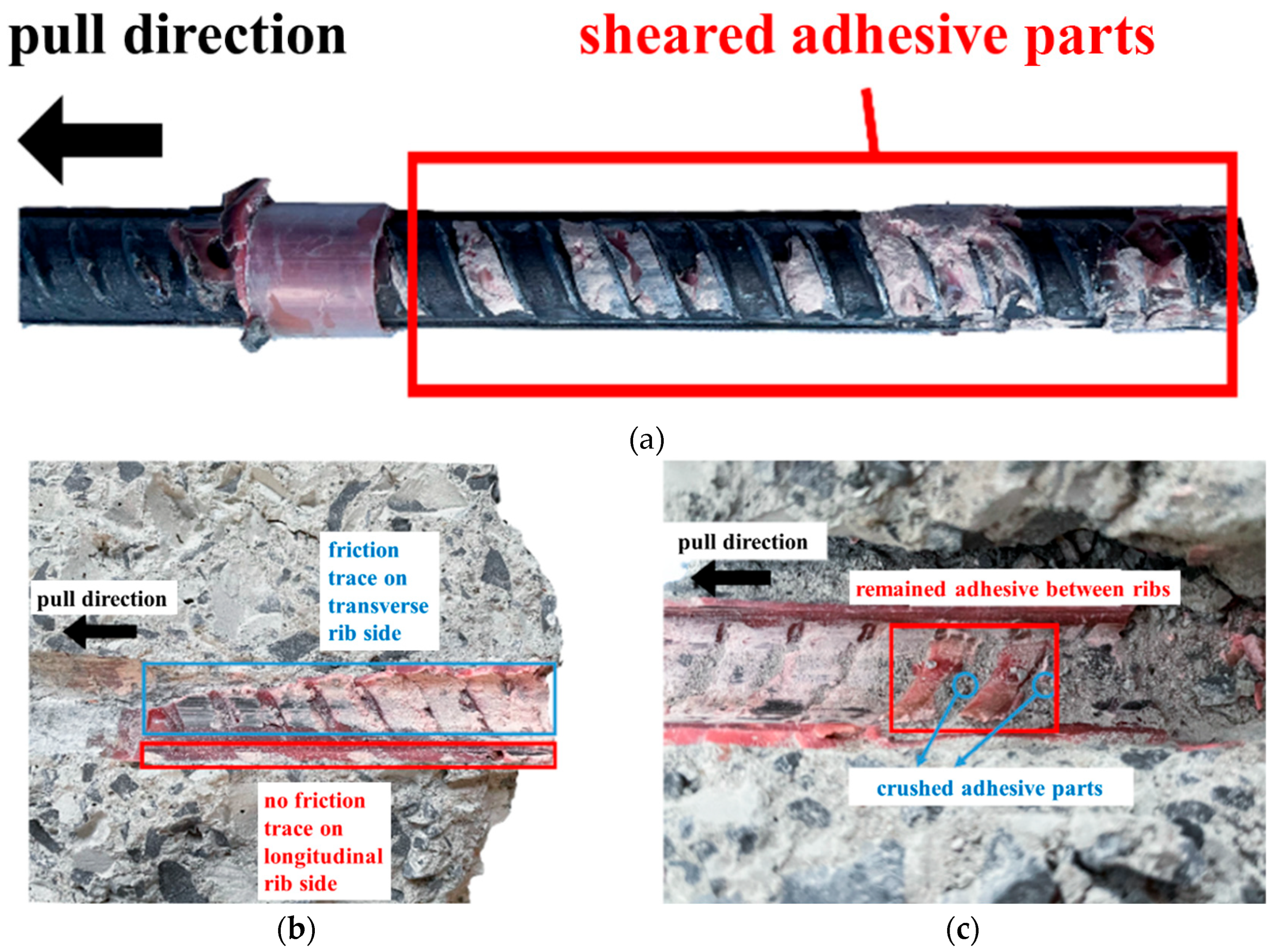
Only specimens 1-a and 3-b experienced A-R interface failure. During pull-out, the adhesive layer between transverse ribs was crushed and sheared by the mechanical interlock of the rebar, leading to bond loss between the adhesive and rebar. Consequently, the sheared adhesive pieces were carried out with the rebar (Figure 6a). Notably, only the adhesive located on the rib sides was sheared, while that along the side without transverse ribs remained intact (Figure 6b).
The test observations revealed that (1) the un-sheared adhesive parts between ribs had a residual height of 7 to 8 mm, smaller than the rib spacing; (2) some un-sheared adhesive parts were locally crushed at one end (Figure 6c). These findings suggest that during pull-out, the adhesive at the interface was first subjected to compressive failure due to rib interlocking, followed by shearing after sufficient compression, leading to extraction of crushed adhesive with the rebar.

3.4. Adhesive Component Fracture Failure

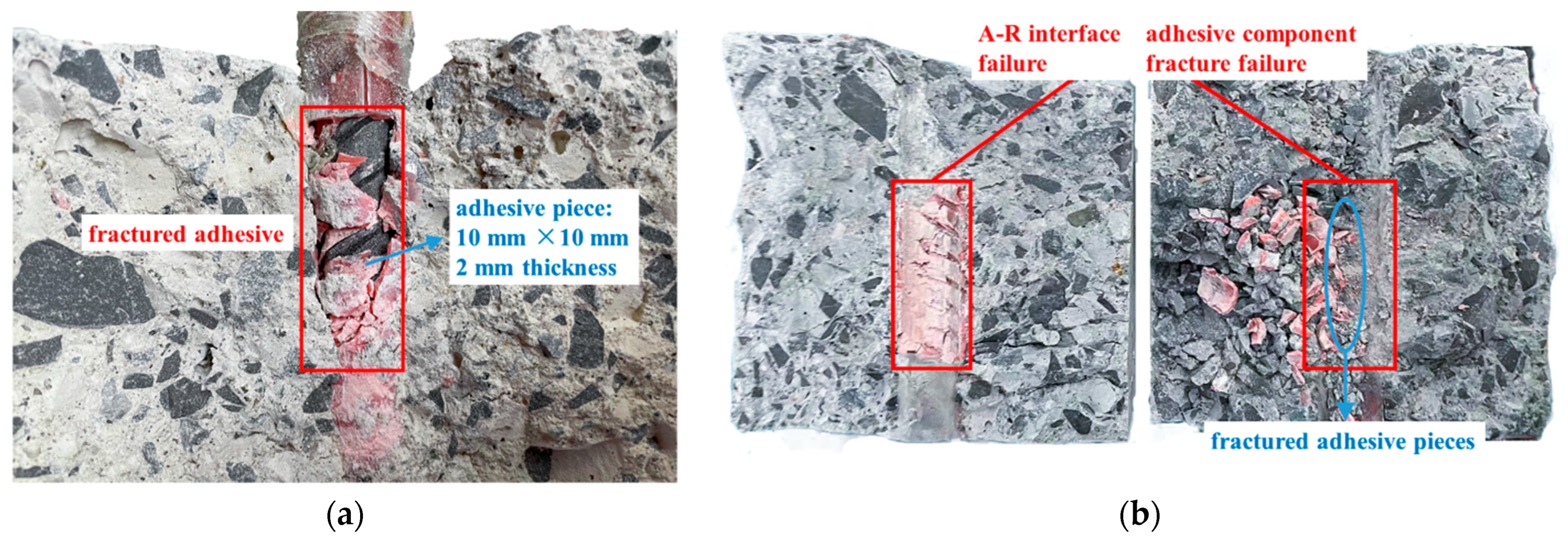
Except for specimens 1-a, 3-b, and 4-b (the latter failed due to concrete crushing), all confined specimens exhibited adhesive component fracture failure. The adhesive fractured into blocks of approximately 10 mm × 10 mm in area and 2 mm in thickness during pull-out (Figure 7a). In some cases, localized concrete crushing was also observed at the interface (Figure 7b).
Moreover, the adhesive fracture exhibited regular patterns. Along the axial direction, failure consistently occurred at the location of the one-third anchorage length closest to the loaded end. Circumferentially, failure was concentrated on the rib side of the rebar. It is noteworthy that both locations correspond to areas where interfacial stress concentration develops during pull-out [16].

4. Discussion of Influence of Transverse Pressure

4.1. Influence on Failure Modes

Specimens without confinement failed by concrete splitting, whereas those under confinement failed by A-R interface debonding or adhesive component fracture failure. This indicates that transverse pressure significantly enhances the splitting resistance during the pull-out process: it effectively restrains concrete deformation and reduces circumferential tensile stress within the concrete. Consequently, the failure mode shifted from concrete splitting under unconfined conditions to rebar pull-out failures (A-R interface debonding and adhesive component fracture failure).
From the perspective of crack development, in the absence of confinement, large circumferential stresses developed in both the concrete and the adhesive layer, which increased with pull-out progression. Splitting cracks extended to the surface of the specimen, leading to full concrete splitting failure.
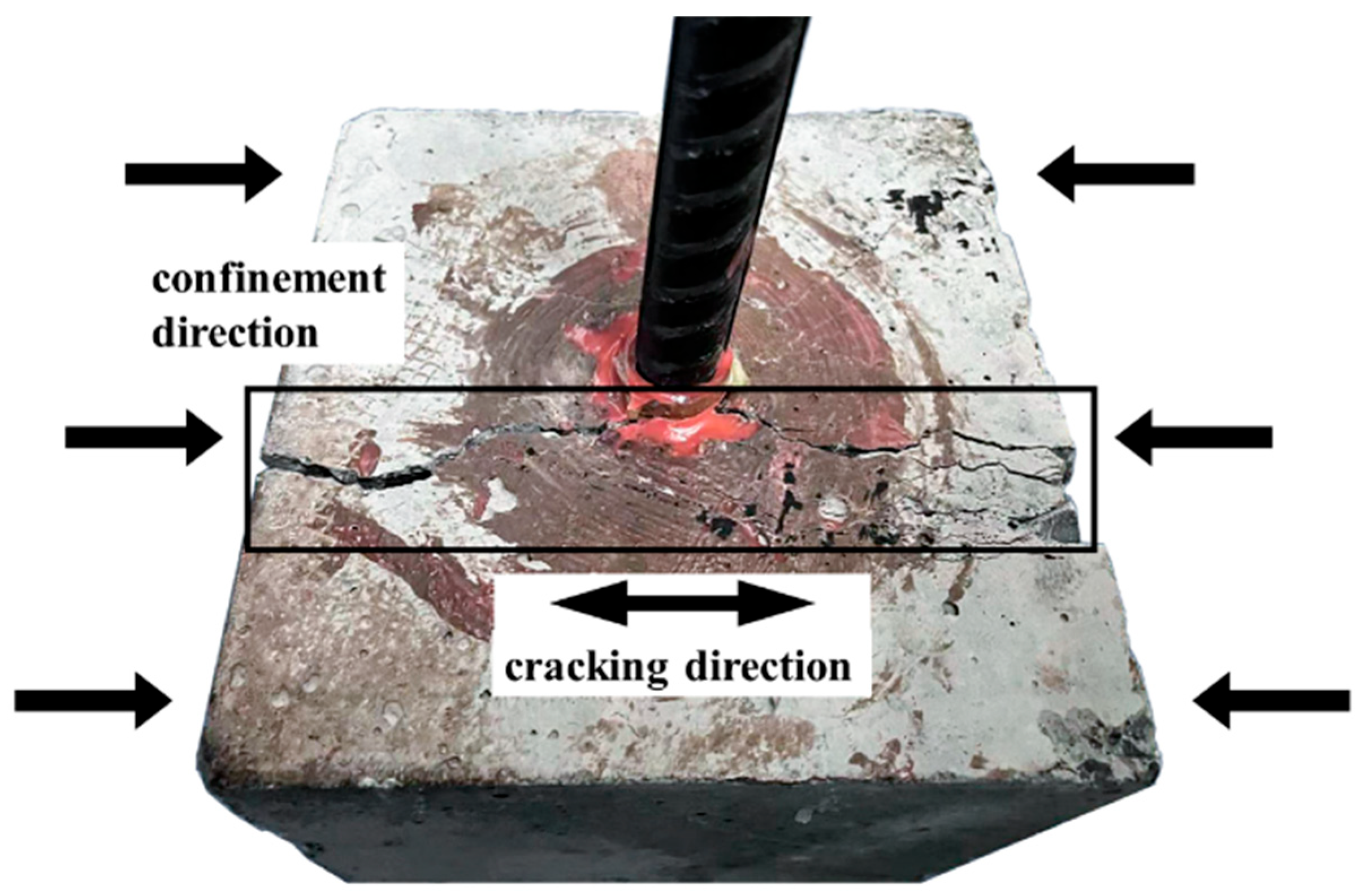
Under one-way transverse pressure, splitting cracks appeared on the concrete surface parallel to the confinement direction but did not develop across the whole substrate concrete section (Figure 8). These cracks were related to the Poisson effect of the concrete under lateral compression and the interfacial shear forces generated during rebar pull-out. Increasing the one-way confinement level did not noticeably reduce crack width, suggesting that its effect on splitting resistance depends strongly on the loading direction.
The development of splitting cracks reflects the internal restraint conditions of the concrete and thus reveals the failure mechanisms and bond performance of the specimens [12,19]. In this study, failure in the unconfined group was governed by the material properties of the concrete and the absence of restraint, whereas under confinement, the failure mechanisms changed, and the dominant factors shifted to the adhesive properties and rebar geometry [7]. Furthermore, the results highlight that unequal two-way confinement is a necessary condition for splitting crack formation, while one-way confinement can be considered a special case, where one direction of confinement is zero. However, two-way transverse pressure can constrain the deformation around the rebar (caused by the bond-splitting effect) and greatly reduce the circumferential tensile stress caused by the Poisson effect [4,12,21], therefore improving the anchorage’s splitting resistance.

4.2. Influence on Bond Strength

4.2.1. Under A-R Interface Failure

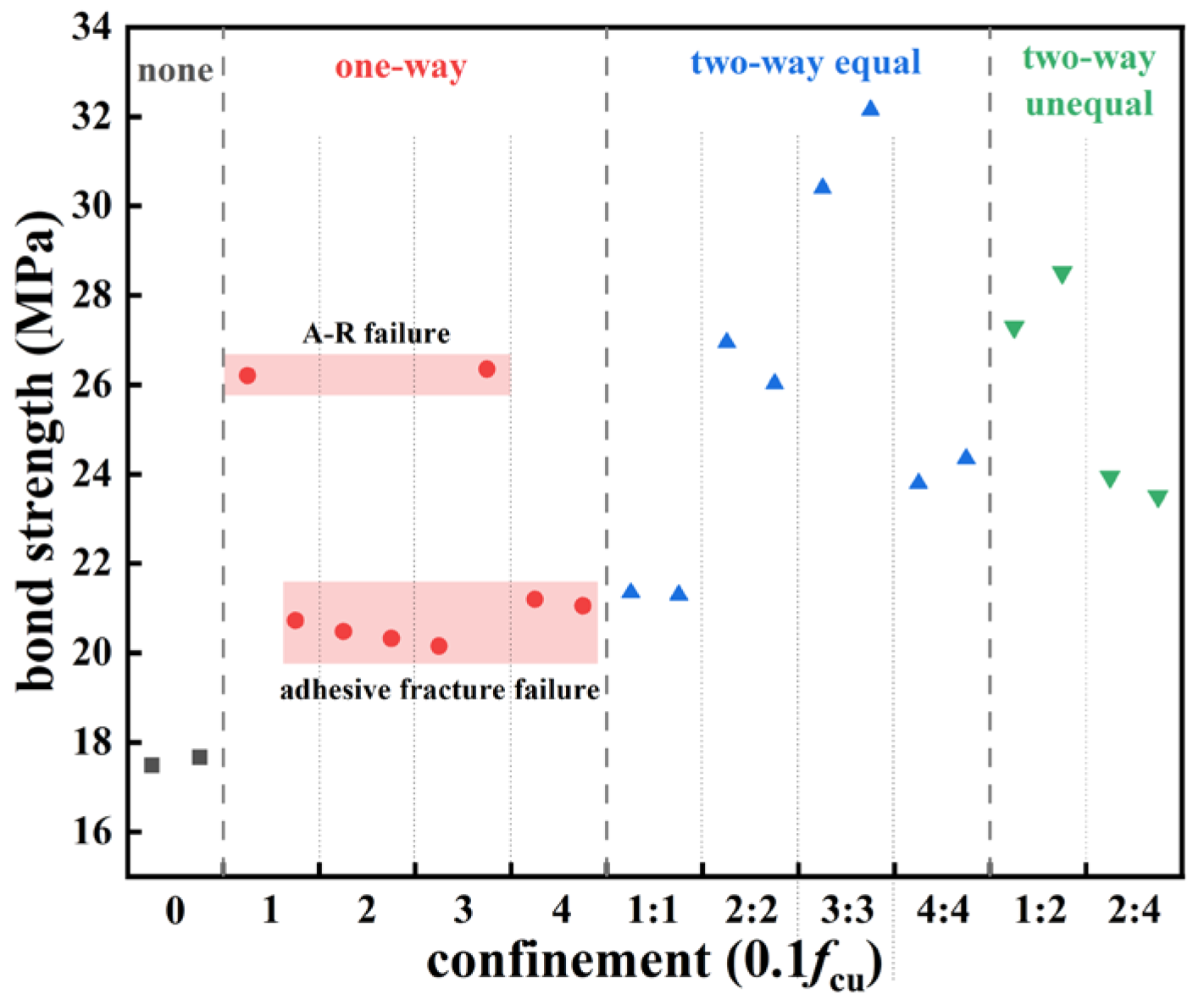
In this study, only specimens 1-a and 3-b experienced A-R interface failure, with corresponding bond strengths of 26.20 MPa and 26.35 MPa. These values were significantly higher (approximately 49.0 to 49.9%) than the bond strength of unconfined specimens, which failed by concrete splitting and had an average bond strength of 17.58 MPa (the tensile capacity of post-installed rebars under concrete splitting failure is determined by the concrete strength [4,21]). They were also higher than those of specimens that failed by adhesive fracture within the same groups (20.73 MPa and 20.15 MPa for specimens 1-b and 3-a, respectively). This large difference in bond strength is due to the different failure patterns: the adhesive component’s fracturing greatly reduces the integrity of the adhesive component, and the tensile capacity of the bonding agent has not been fully utilized before it fractures [11,12,13].
Notably, specimen 1-a was subjected to a one-way confinement level that was 0.2 fcu (about 6 MPa) lower than that of specimen 3-b, yet their bond strengths were nearly identical. This suggests that the influence of one-way confinement on A-R interface failures is limited, as this failure type is primarily governed by the mechanical properties of the cured adhesive rather than by confinement.

4.2.2. Under Adhesive Component Fracture Failure

All other confined specimens, except 1-a and 3-b, failed by adhesive component fracture. Their bond strengths were higher than those of unconfined specimens (concrete splitting) but lower than those of A-R interface failures.
As shown in Figure 9, under one-way confinement, the bond strength remained nearly constant (20.15 to 21.20 MPa) as the confinement level increased from 0.1 fcu to 0.4 fcu, representing an improvement of 14.6–20.6% compared with unconfined specimens. Under two-way confinement, the bond strength first increased with the confinement level (0.1 fcu to 0.3 fcu) and then decreased (0.3 fcu to 0.4 fcu), ranging from 21.30 MPa to 32.15 MPa, corresponding to improvements of 21.2% to 82.9% over unconfined specimens. It should be noted that the decrease in bond strength observed under two-way equal confinement as the confinement level increases from 0.3 fcu:0.3 fcu to 0.4 fcu:0.4 fcu can be attributed to internal damage induced by excessive confinement [4,7,18].
Table 4 compares results under equal confinement levels. Two-way confinement consistently produced greater enhancements in bond strength than one-way confinement, and the difference became more pronounced with increasing confinement levels. This behavior can be attributed to the influence of confinement difference in two directions: one-way transverse pressure will result a larger Poisson effect and circumferential tensile stress (which will further reduce the splitting resistance of the adhesive component) [4,12], while two-way transverse pressure can constrain the Poisson effect and enhance the interfacial bonding to improve the bond strength [21].
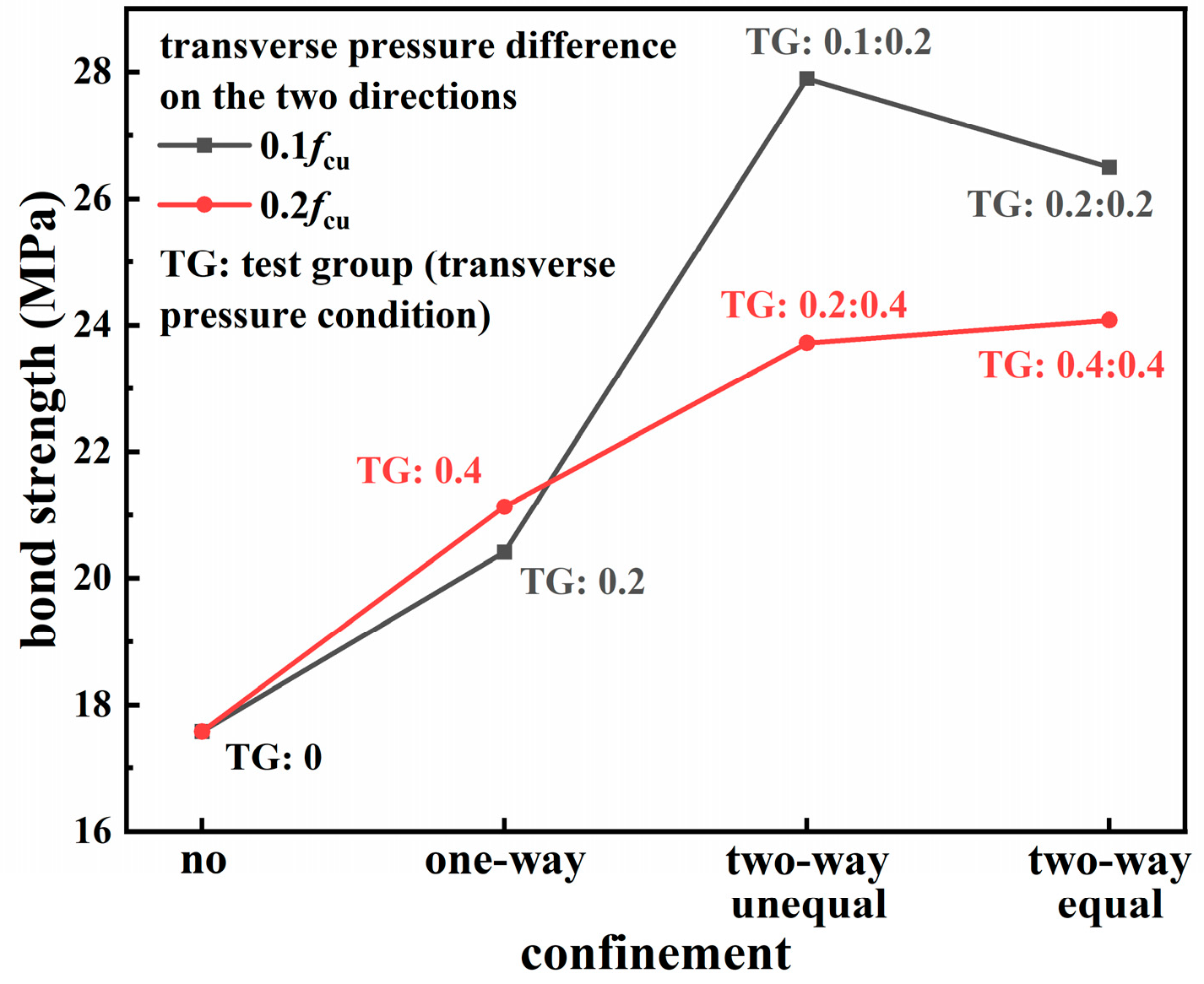
The influence of different confinement conditions on bond strength is discussed, and the corresponding results are presented in Table 5 and Figure 10. Under a constant confinement level (0.1 fcu or 0.2 fcu), the confinement condition varies from one-way confinement to two-way unequal confinement and further to two-way equal confinement.
At a confinement difference of 0.1 fcu, the bond strength of the specimens initially increases and then exhibits a slight decrease. In contrast, at a confinement difference of 0.2 fcu, the bond strength generally increases as the confinement condition varies from one-way confinement to two-way equal confinement. The slight reduction in bond strength observed at a confinement difference of 0.1 fcu can be attributed to experimental scatter, as the difference in confinement levels between the cases of 0.1 fcu:0.2 fcu and 0.2 fcu:0.2 fcu is relatively small.
The bond strengths obtained under confinement levels of 0.2 fcu and 0.4 fcu are comparable, whereas the bond strength under the 0.1 fcu:0.2 fcu confinement condition is markedly higher than that under the 0.2 fcu:0.2 fcu condition. This behavior can be explained by the fact that a larger confinement difference tends to induce more pronounced stress concentration and splitting tendency in the anchorage zone, thereby weakening the bond performance of post-installed rebars. However, the bond strength under the 0.4 fcu:0.4 fcu confinement condition is significantly lower than that under the 0.2 fcu:0.2 fcu condition. This reduction can be attributed to internal damage caused by excessive confinement [28], as discussed previously in this paper.

4.3. Influence on Bond Slip

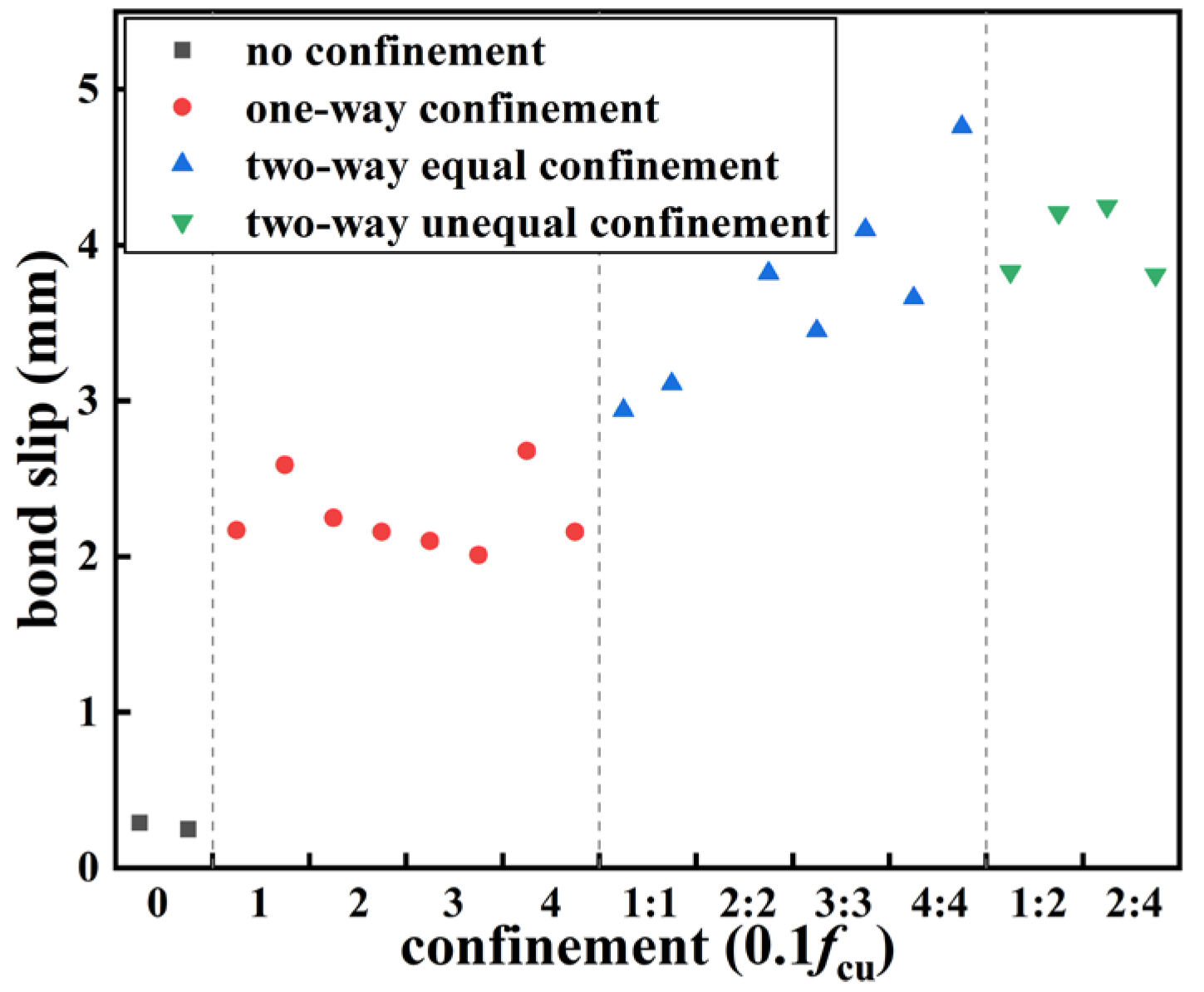
As shown in Figure 11, specimens under unconfined conditions failed by concrete splitting, exhibiting low bond slip (0.25 to 0.29 mm) and brittle behavior. In contrast, specimens under confinement failed by pull-out (A-R debonding or adhesive component fracture) and demonstrated significantly greater bond slip, indicating ductile behavior. For the one-way confinement group, excluding specimen 4-b (concrete crushing), bond slip ranged between 2.01 and 2.68 mm, with little variation among specimens. Furthermore, no clear difference was observed between A-R interface failures and adhesive component fracture in terms of slip.
For the two-way confinement group, bond slip increased markedly with the confinement level, from 2.94 mm to 4.76 mm, demonstrating that two-way confinement substantially enhances the ductility of post-installed rebar anchorage.
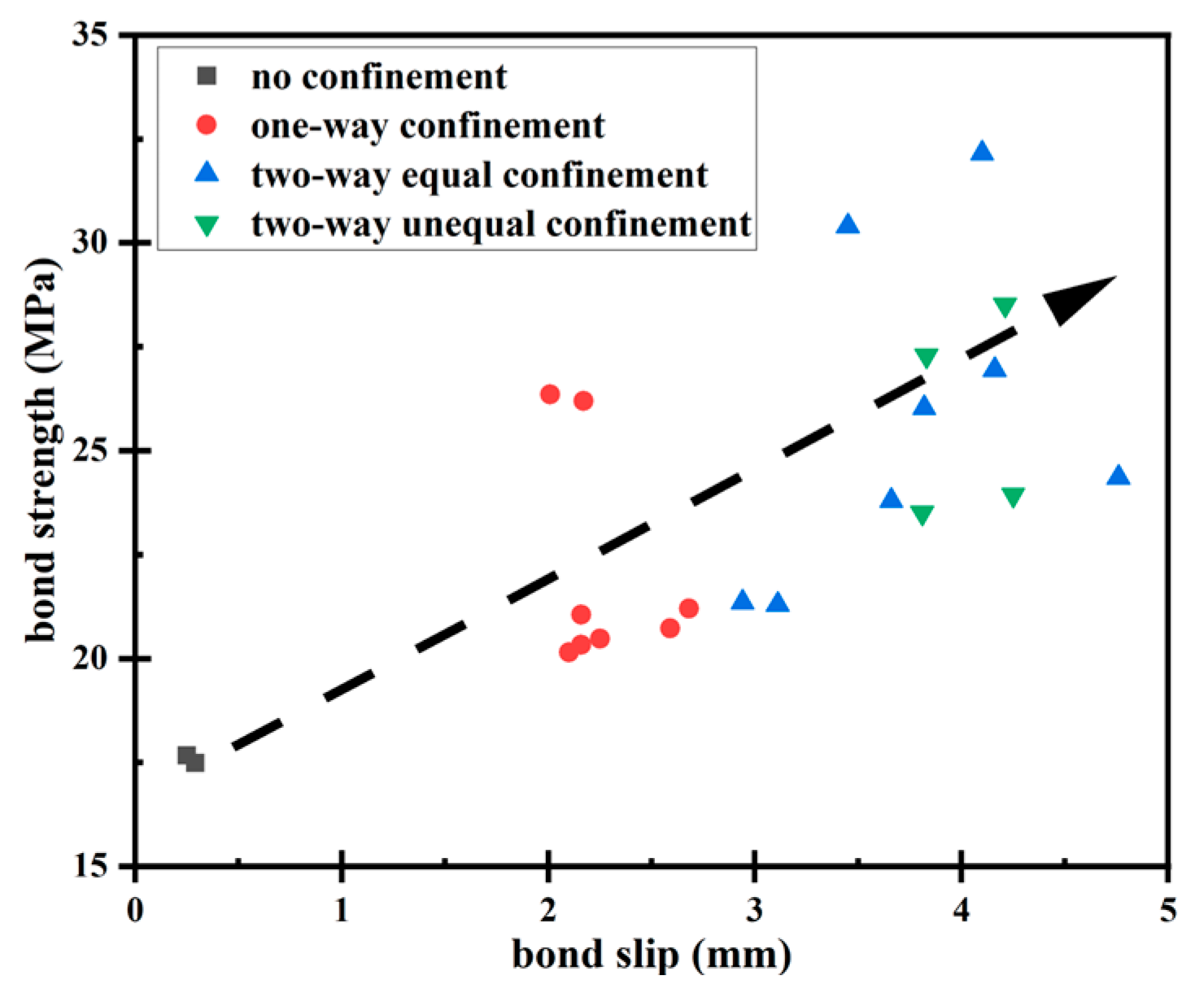
Additionally, Figure 12 illustrates the relationship between bond strength and bond slip under confinement. The results reveal an approximately positive correlation between the two parameters.

5. Conclusions

This study conducts an experimental investigation of post-installed rebars that are subjected to transverse pressure to discuss the transverse pressure effect and how the one-way and two-way transverse pressure effect differ. The series of pull-out tests consider confinement type, confinement level, and confinement difference. Based on the analysis of internal failure characteristics and crack propagation patterns, the study identified unconventional failure modes—namely adhesive–rebar (A-R) interface failure and adhesive component fracture failure—and examined their features. The effects of different transverse pressures were evaluated in terms of failure mode, bond strength, and bond–slip behavior, leading to the following main conclusions:
(1) Post-installed rebars failed by concrete splitting in the absence of confinement, while under confinement, they failed by A-R interface debonding or adhesive component fracture. A-R interface failure was characterized by crushing and shearing of the adhesive between transverse ribs, which was carried out with the rebar during pull-out. Adhesive component fracture, in contrast, was the result of brittle crushing of the cured adhesive. Although both belong to pull-out failures, their mechanisms differ substantially. Crack propagation analysis further revealed that two-way confinement was more effective than one-way confinement in enhancing splitting resistance, a behavior that is attributable to stress concentration induced by confinement difference.
(2) One-way confinement had no significant influence on bond strength, whereas bond strength under two-way confinement first increased and then decreased with higher confinement levels. Moreover, increasing the confinement difference within two-way confinement reduced its beneficial effect on bond strength. Regarding bond–slip behavior, the results demonstrated that transverse pressure substantially enhanced the splitting resistance of specimens, transforming brittle failures into ductile failures. Furthermore, bond slip increased with the level of two-way confinement, indicating improved ductility of anchorage performance.

Author Contributions

Conceptualization, S.X. and Y.X.; methodology, J.D.; software, J.D.; validation, J.Z.; formal analysis, S.X.; investigation, X.Y.; resources, Q.C.; data curation, J.Z.; writing—original draft preparation, J.D.; writing—review and editing, S.X.; visualization, J.D.; supervision, S.X. All authors have read and agreed to the published version of the manuscript.

Funding

This research received no external funding.

Institutional Review Board Statement

Not applicable.

Informed Consent Statement

Not applicable.

Data Availability Statement

The data that support the findings of this study are available from the corresponding author upon reasonable request.

Acknowledgments

The authors would like to thank Shanghai Municipal Engineering Design Institute and Chongqing Three Gorges University for providing research facilities. The authors also appreciate the constructive comments from the anonymous reviewers.

Conflicts of Interest

Author Siqi Xiang was employed by the company Shanghai Municipal Engineering Design Institute (Group) Co., Ltd. The remaining authors declare that the research was conducted in the absence of any commercial or financial relationships that could be construed as a potential conflict of interest.

References

  1. CEN (European Committee for Standardization). Design of Concrete Structures—Part 1-1: General Rules and Rules for Buildings (Eurocode 2); CEN (European Committee for Standardization): Brussels, Belgium, 2023. [Google Scholar]
  2. Fédération Internationale du Béton. FIB Bulletin 10: Bond of Reinforcement in Concrete; Fédération Internationale du Béton: Lausanne, Switzerland, 2000. [Google Scholar]
  3. Zhao, N.Y.; Yang, A.L.; Lin, J.Y.; Jiang, H.F.; Yi, B. Experimental investigation of adhesive-related failures in post-installed rebars under transverse pressure. J. Build. Eng. 2025, 114, 114419. [Google Scholar] [CrossRef]
  4. Xu, F.; Wu, Z.M.; Li, W.W.; Liu, W.Q.; Wang, S.G.; Du, D.S. Analytical bond strength of deformed bars in concrete due to splitting failure. Mater. Struct. 2018, 51, 4–10. [Google Scholar] [CrossRef]
  5. Zhao, W.P. Impacts of transverse pressure on bond capability of bars in concrete. Eng. Mech. 2012, 29, 168–177+184. (In Chinese) [Google Scholar] [CrossRef]
  6. Buranbayeva, A.; Sarsembayeva, A.; Tee, B.P.; Zhumadilov, I.; Orazbekova, G. Performance Evaluation of Fixed-Point DFOS Cables for Structural Monitoring of Reinforced Concrete Elements. Infrastructures 2025, 10, 349. [Google Scholar] [CrossRef]
  7. Eligehausen, R.; Cook, R.A.; Appl, J. Behavior and Design of Adhesive Bonded Anchors. ACI Struct. J. 2006, 103, 822–831. [Google Scholar] [CrossRef] [PubMed]
  8. EN 1992-1-1:2004+A1:2014; Eurocode 2: Design of Concrete Structures—Part 1-1: General Rules and Rules for Buildings. European Committee for Standardization: Brussels, Belgium, 2014.
  9. Mahadik, V.; Sharma, A.; Hofmann, J. Cast-in and post-installed rebar anchorage systems in RC column foundation joints: Experimental investigations. Eng. Struct. 2021, 238, 67–72. [Google Scholar] [CrossRef]
  10. Cattaneo, S.; Mahadik, V.; Genesio, G.; Hofmann, J. Influence of edge proximity on concrete breakout failure in post-installed RC columns foundation joints. Mater. Struct. 2023, 56, 44–48. [Google Scholar] [CrossRef]
  11. Gao, Q. Study on Tensile Performance and Confinement Quantification of Post-Installed Rebars Under Transverse Pressure Conditions. Master’s Thesis, Chongqing Jiaotong University, Chongqing, China, 2025. (In Chinese) [Google Scholar]
  12. Yang, A.L. Bonding Behavior of Bonded Rebar Interface Under One-Way Compressive Stress State. Master’s Thesis, Chongqing Jiaotong University, Chongqing, China, 2025. (In Chinese) [Google Scholar]
  13. Xiang, S. Interfacial Bonding Properties of Bonded Rebar Under Complex Stress State. Master’s Thesis, Chongqing Jiaotong University, Chongqing, China, 2025. (In Chinese) [Google Scholar]
  14. Zhao, N.Y.; Yang, A.L.; Liu, H.; Song, Y.; Jiang, H.F. Experimental Study of Bonding Performance of Post-installed Rebar Anchors under Unilateral Pressure. J. Adv. Concr. Technol. 2024, 22, 47–61. [Google Scholar] [CrossRef]
  15. Yang, A.L.; Zhao, N.Y.; Song, Y.; Song, S.Y.; Liu, H.; Yi, B. Component-section transverse-pressure effect on internal damage and failure mode of post-installed rebar. Struct. Concr. 2024, 26, 3565–3581. [Google Scholar] [CrossRef]
  16. Mahrenholtz, C.; Eligehausen, R.; Reinhardt, R.W. Qualification and design of cast-in-place and post-installed reinforcing bar anchorages. ACI Struct. J. 2020, 117, 3–16. [Google Scholar] [CrossRef]
  17. Robins, P.J.; Standish, I.G. The influence of lateral pressure upon anchorage bond. Mag. Concr. Res. 1984, 36, 195–202. [Google Scholar] [CrossRef]
  18. Gambarova, P.G.; Rosati, G.P. Bond and splitting in reinforced concrete: Test results on bar pull-out. Mater. Struct. 1996, 29, 267–276. [Google Scholar] [CrossRef]
  19. Malvar, L.J. Bond of reinforcement under controlled confinement. Mater. J. 1992, 89, 593–601. [Google Scholar] [CrossRef]
  20. Gambarova, P.G.; Rosati, G.P. Bond and splitting in bar pull-out: Behavioral laws and concrete-cover role. Mag. Concr. Res. 1997, 49, 99–100. [Google Scholar] [CrossRef]
  21. Xu, F.; Wu, Z.M.; Zheng, J.J.; Hu, Y.; Li, Q.B. Bond behavior of plain round bars in concrete under complex lateral pressures. ACI Struct. J. 2014, 111, 15–25. [Google Scholar] [CrossRef]
  22. Vita, N.; Sharma, A. Behaviour of single bonded anchors in non-cracked and cracked steel fiber reinforced concrete under short-time tensile loading. Eng. Struct. 2021, 245, 112900. [Google Scholar] [CrossRef]
  23. Wu, Z.M.; Zhang, X.; Zheng, J.J.; Hu, Y.; Li, Q.B. Bond Behavior of Plain Round Bars Embedded in Concrete Subjected to Biaxial Lateral Tensile-Compressive Stresses. J. Struct. Eng. 2014, 56, 21–25. [Google Scholar] [CrossRef]
  24. GB/T 50081-2019; Standard for Test Methods of Concrete Physical and Mechanical Properties. Standardization Administration of China: Beijing, China, 2019.
  25. GB/T 228.1-2021; Metallic Materials-Tensile Testing Part 1: Method of Test at Room Temperature. Standardization Administration of China: Beijing, China, 2021.
  26. EAD 330087; Systems for Post-Installed Rebar Connections with Mortar. EOTA: Brussels, Belgium, 2018.
  27. ACI 355.5; Post-Installed Reinforcing Bar Systems in Concrete—Qualification Requirements and Commentary. ACI: Farmington Hills, MI, USA, 2024.
  28. Croppi, J.I.; Genesio, G.; Piccinin, R.; Casucci, D.; Ahrens, M.A.; Mark, P. Investigation on bond in post-installed anchored bars and lap splices subjected to direct tension. Struct. Concr. 2023, 24, 5769–5786. [Google Scholar] [CrossRef]
Figure 1. Confinement to anchorage: (a) rebar rib effect and (b) transverse pressure.
Infrastructures 11 00120 g001
Figure 2. Transverse pressure directions.
Infrastructures 11 00120 g002
Figure 3. Post-installed rebar specimen: (a) illustration and (b) actual photograph.
Infrastructures 11 00120 g003
Figure 4. Loading frame: (a) actual photograph, (b) illustration and (c) diagram of loading.
Infrastructures 11 00120 g004
Figure 5. Concrete splitting failure: (a) split specimens, (b) both concrete and adhesive split, and (c) only concrete split.
Infrastructures 11 00120 g005
Figure 6. A-R interface failure: (a) sheared adhesive parts, (b) shearing and friction on A-R interface, and (c) crushed adhesive parts.
Infrastructures 11 00120 g006
Figure 7. Adhesive component fracture failure: (a) internal damage and (b) localized damage.
Infrastructures 11 00120 g007
Figure 8. Cracking on specimen surface.
Infrastructures 11 00120 g008
Figure 9. Influence of confinement level on bond strength.
Infrastructures 11 00120 g009
Figure 10. Influence of confinement difference on bond strength.
Infrastructures 11 00120 g010
Figure 11. Influence of confinement difference on bond slip.
Infrastructures 11 00120 g011
Figure 12. Relationship of bond strength and bond slip.
Infrastructures 11 00120 g012
Table 1. Summary of relevant studies.
Author(s)Main Conclusion
Gao and Yang [11,12]adhesive component fractures under one-way transverse pressure
Xiang [13]adhesive component fracturing is also found under two-way transverse pressure
Zhao [14,15]stress concentration caused by one-way transverse pressure is the main cause of adhesive component fracturing
Table 2. Material properties.
MaterialPropertyValue
concretefcu: cube compressive strength (MPa)31.9
Ec: elastic modulus (GPa)31
vc: Poisson’s ratio0.224
rebard: diameter (mm)16
fy: yield strength (MPa)433
Er: elastic modulus (GPa)200
vr: Poisson’s ratio0.3
bonding agenttypeepoxy resin
τb: bond strength (to concrete) (MPa)15.4
Table 3. Test results.
GroupConfinement ConditionSpecimen NumberPu (kN)τu (MPa)s0 (mm)Failure Mode
no transverse pressure00-a70.317.490.29S
00-b7117.670.25S
one-way transverse pressure0.1 fcu1-a105.326.22.17A-R
1-b83.320.732.59F
0.2 fcu2-a82.320.482.25F
2-b81.720.332.16F
0.3 fcu3-a8120.152.1F
3-b105.926.352.01A-R
0.4 fcu4-a85.221.22.68F
4-b84.621.052.16F
two-way transverse pressure0.1 fcu:0.1 fcu1:1-a85.821.352.94F
1:1-b85.621.33.11F
0.2 fcu:0.2 fcu2:2-a108.326.954.16F
2:2-b104.626.033.82F
0.3 fcu:0.3 fcu3:3-a122.230.43.45F
3:3-b129.232.154.1F
0.4 fcu:0.4 fcu4:4-a95.6623.83.66F
4:4-b97.8724.354.76F
0.1 fcu:0.2 fcu1:2-a109.727.293.83F
1:2-b114.628.514.21F
0.2 fcu:0.4 fcu2:4-a96.223.944.25F
2:4-b94.523.513.81F
Note: in Table 3, S denotes concrete splitting failure, A-R denotes A-R (adhesive–rebar) interface failure, and F denotes adhesive component fracture failure.
Table 4. Analysis of bond strength under different confinement levels.
Groupp1/fcuτu,m/MPaD/MPaR
primary017.58//
0.1 fcu0.120.733.1517.91%
0.1:0.121.323.7421.30%
0.2 fcu0.220.42.8216.04%
0.2:0.226.498.9150.68%
0.3 fcu0.323.255.6732.25%
0.3:0.331.2713.777.93%
0.4 fcu0.421.133.5520.19%
0.4:0.424.086.536.97%
Note: in Table 4, τu,m denotes the average bond strength of specimens in same test condition, D denotes the bond strength difference of specimens from the unconfined group, and R denotes the bond strength difference rate of specimens from the unconfined group.
Table 5. Analysis of bond strength under different confinement differences.
Groupp1/fcuτu,m/MPaD/MPaR
primary017.58//
0.1 fcu0.220.412.8316.1%
0.1:0.227.9010.3258.70%
0.2:0.226.498.9150.68%
0.2 fcu0.421.133.5520.19%
0.2:0.423.726.1434.93%
0.4:0.424.086.536.97%
Note: in Table 5, the definitions of τu,m, D, R comply with Table 4.
Disclaimer/Publisher’s Note: The statements, opinions and data contained in all publications are solely those of the individual author(s) and contributor(s) and not of MDPI and/or the editor(s). MDPI and/or the editor(s) disclaim responsibility for any injury to people or property resulting from any ideas, methods, instructions or products referred to in the content.