
Mechanical Performance, Durability, and Environmental Assessment of Low-Carbon Fiber-Reinforced Reactive Powder Concrete with a High Content of Fly Ash



Abstract
1. Introduction
2. Experimental Details
2.1. Materials
2.2. Sample Preparation
2.2.1. Mix Design
2.2.2. Mixing, Casting, and Curing Procedure
2.3. Testing
3. Results and Discussion
3.1. Optimization of Binder and Fiber Combinations
3.1.1. Selection of Binder Materials
3.1.2. Narrowing Binder Materials
3.1.3. Determination of Fiber Content
3.2. Mechanical Properties
3.3. Durability Assessment
3.4. Environmental Assessment
4. Conclusions
- A cost-effective and low-carbon RPC matrix was successfully developed by substantially reducing cement and silica fume contents and incorporating high-volume class-F fly ash while maintaining dense particle packing and adequate rheological performance. Among the binder systems investigated, Mix No. 14 exhibited the most balanced overall performance and was therefore selected as the optimal reference matrix for subsequent fiber optimization.
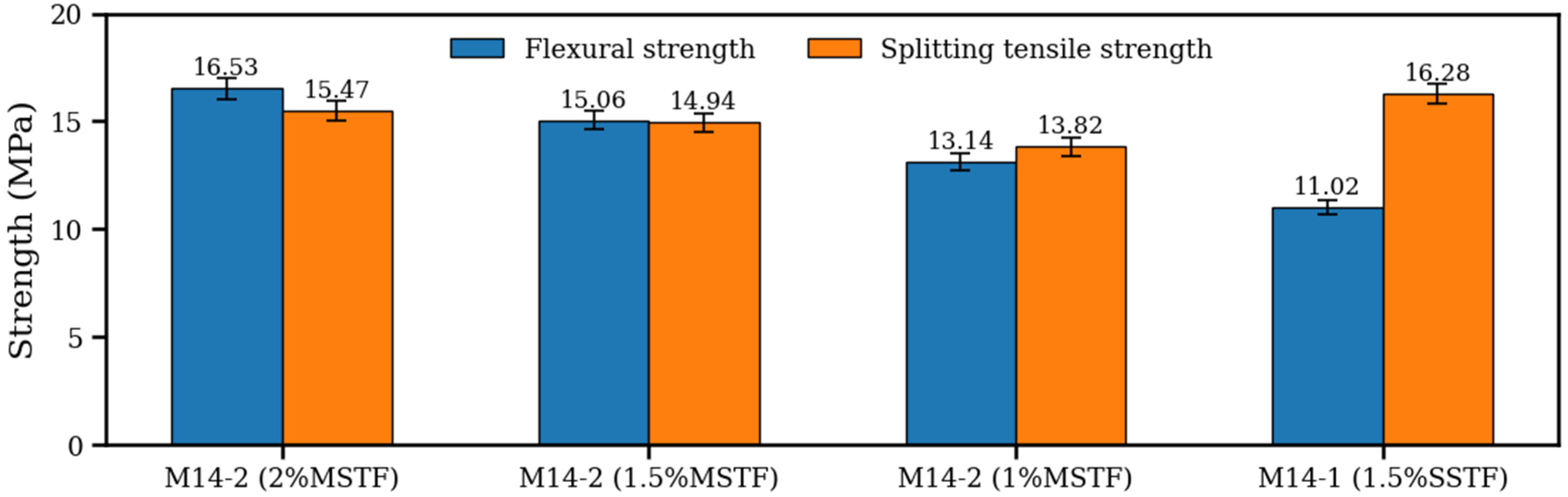
- MSTF significantly improved the tensile-related performance and overall mechanical synergy of RPC. An optimal fiber volume fraction of 1.5% was identified, delivering the best balance among compressive, splitting tensile, and flexural strengths, together with a good workability and low result scatter. Increasing the fiber content to 2.0% provided diminishing or even adverse returns, which is attributed to fiber crowding, impaired dispersion, and the associated degradation of mixture stability and load-transfer efficiency.
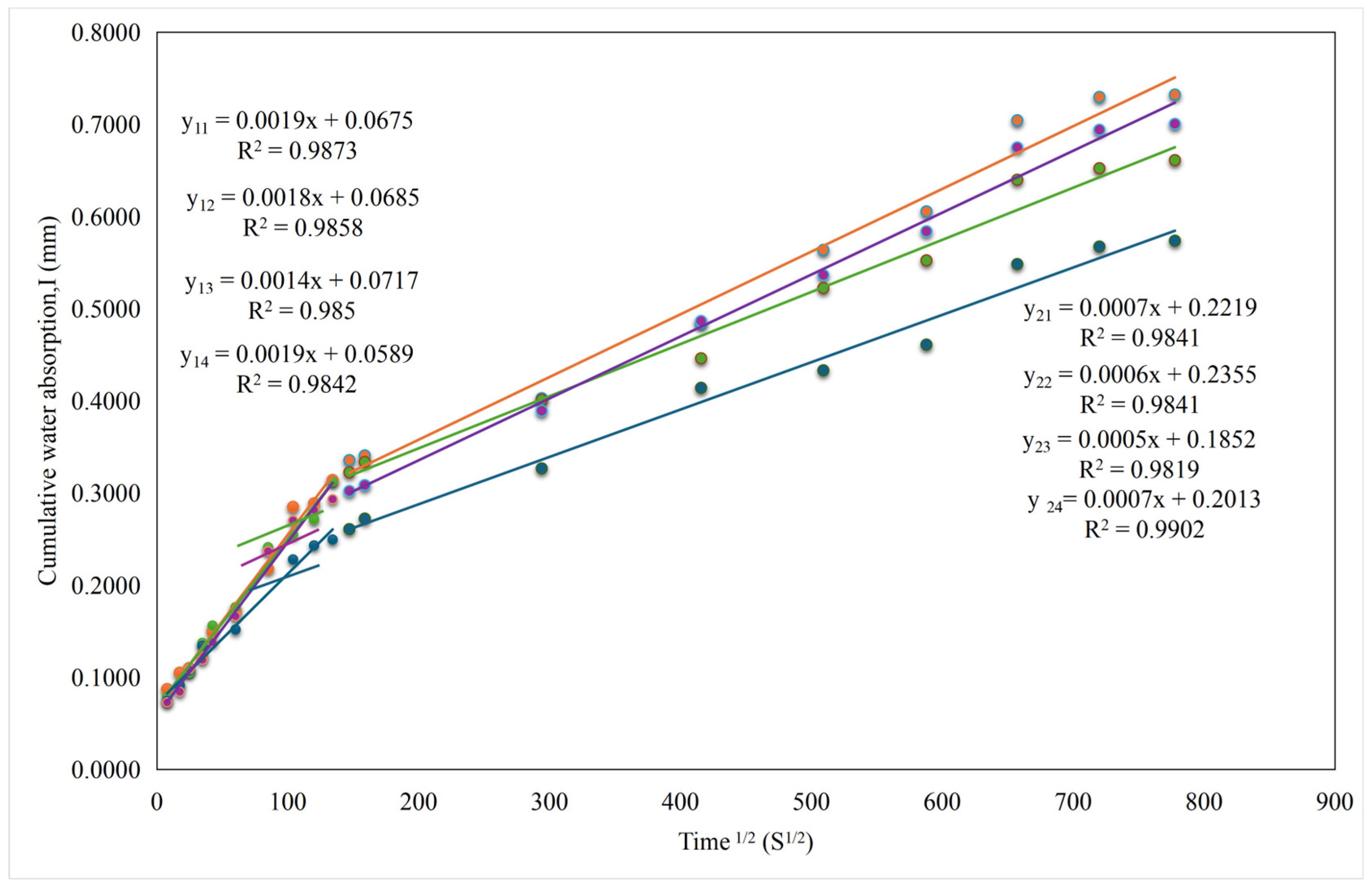
- Durability-related transport tests confirmed the exceptional impermeability of the optimized low-carbon RPC. The 1.5% MSTF mixture showed a very low chloride ion penetrability (RCPT charge passed predominantly within the “Very Low” range) and an extremely low sorptivity, indicating a highly compact, weakly connected pore network and a strong resistance to water and ion ingress. These results support its suitability for long-term service in aggressive environments where chloride attack and moisture transport govern durability.
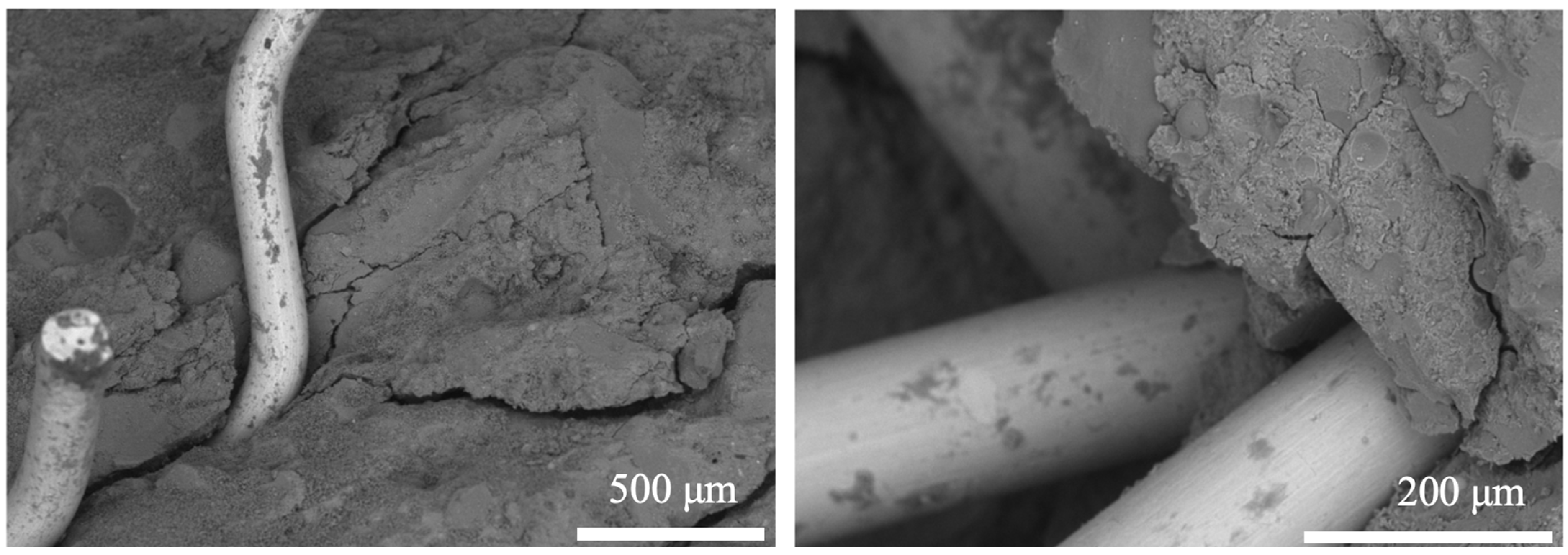
- The superior macroscopic performance of the optimized mixtures is mechanistically consistent with a densified matrix and effective fiber–matrix interaction. The mixed-size fiber system promotes multi-scale crack bridging, improving stress redistribution and restraining crack opening while maintaining a relatively uniform dispersion, thereby enhancing both strength and performance stability.
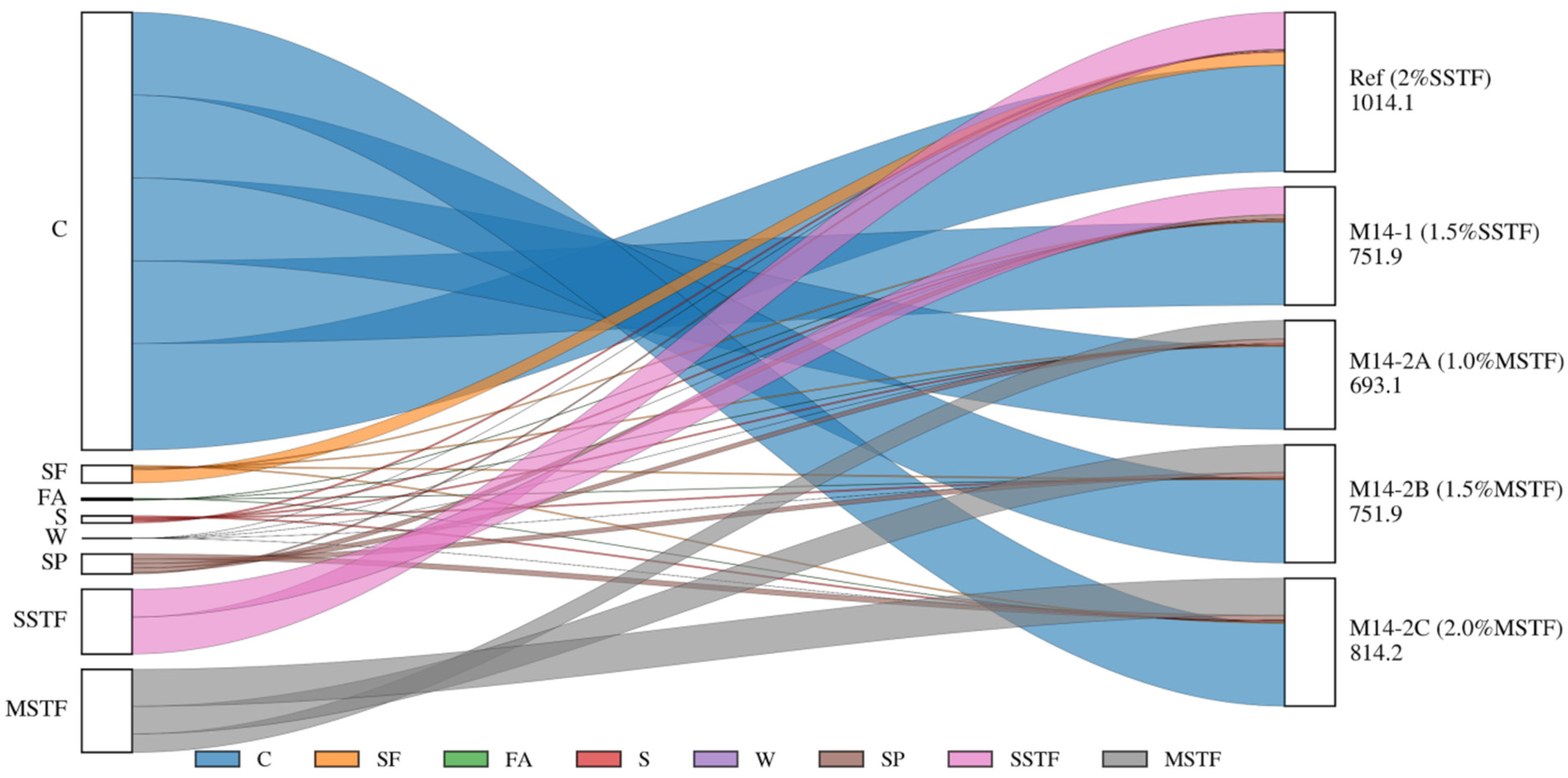
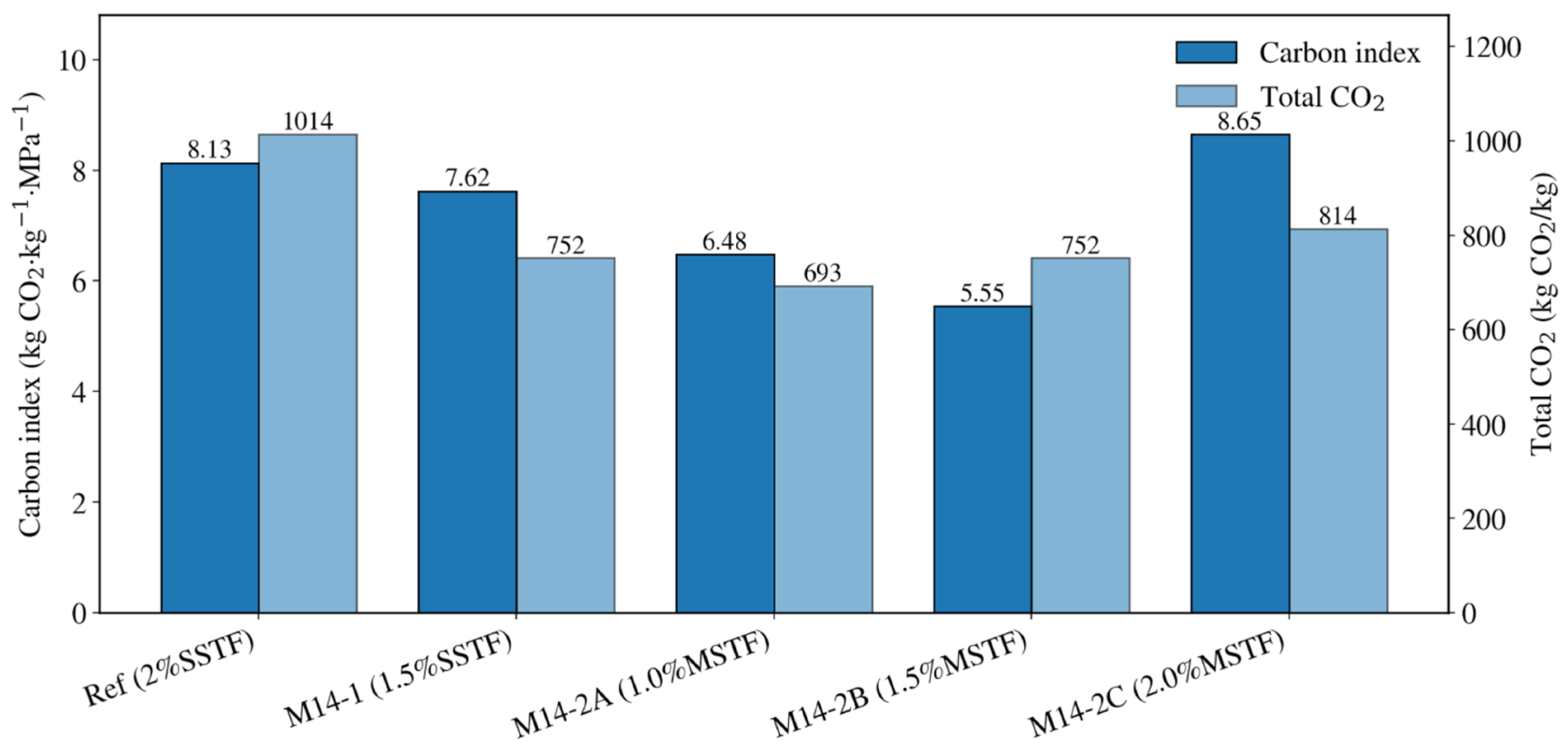
- The environmental assessment results demonstrate that all of the optimized mixtures achieve a substantial reduction in embodied carbon relative to the reference RPC, with CO2 intensity decreasing markedly and overall emissions reduced by approximately 20.4–31.6%. This improvement is primarily driven by the drastic reduction of clinker-based constituents and silica fume, confirming that ultra-high performance can be achieved alongside meaningful decarbonization when the binder system is packing- and rheology-optimized.
Author Contributions
Funding
Data Availability Statement
Acknowledgments
Conflicts of Interest
References
- Ullah, R.; Qiang, Y.; Ahmad, J.; Vatin, N.I.; El-Shorbagy, M.A. Ultra-High-Performance Concrete (UHPC): A State-of-the-Art Review. Materials 2022, 15, 4131. [Google Scholar] [CrossRef] [Scilit] [PubMed]
- Nasr, M.S.; Hasan, Z.A.; Jaaz, H.A.G.; Abed, M.K.; Falah, M.W.; Hashim, T.M. Mechanical properties of sustainable reactive powder concrete made with low cement content and high amount of fly ash and silica fume. J. Mech. Behav. Mater. 2022, 31, 617–622. [Google Scholar] [CrossRef] [Scilit]
- Ge, W.; Wang, A.; Zhang, Z.; Ge, Y.; Chen, Y.; Li, W.; Jiang, H.; Shuai, H.; Sun, C.; Yao, S.; et al. Study on the workability, mechanical property and water absorption of reactive powder concrete. Case Stud. Constr. Mater. 2023, 18, e01777. [Google Scholar] [CrossRef] [Scilit]
- da Silva, M.L.; Prado, L.P.; Félix, E.F.; de Sousa, A.M.D.; Aquino, D.P. The Influence of Materials on the Mechanical Properties of Ultra-High-Performance Concrete (UHPC): A Literature Review. Materials 2024, 17, 1801. [Google Scholar] [CrossRef] [Scilit] [PubMed]
- Odorčić, N.B.; Kravanja, G. Combined Effects of Metakaolin and Hybrid Fibers on Self-Compacting Concrete. Materials 2022, 15, 5588. [Google Scholar] [CrossRef] [Scilit]
- Tang, J.; Gao, C.; Li, Y.; Xu, J.; Huang, J.; Xu, D.; Hu, Z.; Han, F.; Liu, J. A Review on Multi-Scale Toughening and Regulating Methods for Modern Concrete: From Toughening Theory to Practical Engineering Application. Research 2024, 7, 0518. [Google Scholar] [CrossRef] [Scilit]
- Huts, A.; Konkol, J.; Marchuk, V. Granite Dust and Silica Fume as a Combined Filler of Reactive Powder Concrete. Materials 2024, 17, 6025. [Google Scholar] [CrossRef] [Scilit]
- Rong, H.; Sun, W.; Ma, H.; Luo, M.; You, Z.; Zhang, G.; Zhu, P.; Liu, Z.; Gómez-Zamorano, L.Y. Machine Learning-Driven Strength Prediction and Sustainability Analysis of Ultra-High-Performance Concrete. Materials 2025, 18, 5116. [Google Scholar] [CrossRef] [Scilit]
- Liu, W.; Han, J. Fiber Synergy of Polyvinyl Alcohol and Steel Fibers on the Bond Behavior of a Hybrid Fiber-Reinforced Cementitious Composite. Materials 2024, 17, 629. [Google Scholar] [CrossRef] [Scilit] [PubMed]
- Vairagade, V.S. Multi-scale theoretical modeling with molecular simulation framework for fly ash-based high-performance concrete. Sci. Rep. 2025, 15, 44895. [Google Scholar] [CrossRef] [Scilit] [PubMed]
- Zhou, Y.; Elchalakani, M.; Sadakkathulla, M.A.; Hassanli, R.; Guo, X.; Tawfik, E.; Youssf, O. Impact of fly ash on slag-based engineered geopolymer composites: Multiple-scale investigations. Structures 2025, 80, 109751. [Google Scholar] [CrossRef] [Scilit]
- Kumar, B.; Sharma, A.; Ray, S. An analytical approach for characterizing the fracture behaviour of ultra-high-performance fibre reinforced concrete. Compos. Struct. 2024, 324, 117922. [Google Scholar] [CrossRef] [Scilit]
- Hawileh, R.A.; Shaw, S.K.; Assad, M.; Khan, A.A.; Abdalla, J.A. Influence of fly ash on the compressive strength of ultrahigh-performance concrete: A state-of-the-art review towards sustainability. Int. J. Concr. Struct. Mater. 2025, 19, 25. [Google Scholar] [CrossRef] [Scilit]
- Sarmiento-Pupo, K.D.; Escalante-Tovar, J.D.; Altamiranda, J.E.; Abellan-Garcia, J.; Vélez, J.I. Predicting flexural strength in fiber-reinforced UHPC via random forest. Sci. Rep. 2025, 15, 42045. [Google Scholar] [CrossRef] [Scilit]
- TIS 2594-2556; Hydraulic Cement. Thai Industrial Standards Institute: Bangkok, Thailand, 2013.
- Wu, Q.; An, X.H. Development of a mix design method for SCC based on the rheological characteristics of paste. Constr. Build. Mater. 2014, 53, 642–651. [Google Scholar] [CrossRef] [Scilit]
- Solouki, A.; Visintin, P.; Sheikh, A.H. Multi-objective optimization of ultra-high performance concrete using an integrated ANN-based approach. Constr. Build. Mater. 2022, 340, 127718. [Google Scholar] [CrossRef] [Scilit]
- Thai Cement Manufacturers Association. Cement Products Care for the Environment: Hydraulic Cement. Available online: https://www.thaicma.or.th/en/environmentally/environment/environmentally_friendly_cement_products (accessed on 9 June 2024).
- ASTM C618; Standard Specification for Coal Fly Ash and Raw or Calcined Natural Pozzolan for Use in Concrete. ASTM International: West Conshohocken, PA, USA, 2003.
- JT/T 524; Fiber for Cement Concrete in Highway. Ministry of Transport: Beijing, China, 2019.
- Meng, W.; Valipour, M.; Khayat, K.H. Optimization and performance of cost-effective ultra-high performance concrete. Mater. Struct. 2017, 50, 29. [Google Scholar] [CrossRef] [Scilit]
- ASTM C1437; Standard Test Method for Flow of Hydraulic Cement Mortar. ASTM International: West Conshohocken, PA, USA, 2001.
- ASTM C109; Standard Test Method for Compressive Strength of Hydraulic Cement Mortars. ASTM International: West Conshohocken, PA, USA, 2002.
- ASTM C496; Standard Test Method for Splitting Tensile Strength of Cylindrical Concrete Specimens. ASTM International: West Conshohocken, PA, USA, 2004.
- ASTM C78; Standard Test Method for Flexural Strength of Concrete (Using Simple Beam with Third-Point Loading). ASTM International: West Conshohocken, PA, USA, 2002.
- ASTM C1202; Standard Test Method for Electrical Indication of Concrete’s Ability to Resist ChlorideIon Penetration. ASTM International: West Conshohocken, PA, USA, 1997.
- ASTM C1585; Standard Test Method for Measurement of Rate of Absorption of Water by Hydraulic Cement Concretes. ASTM International: West Conshohocken, PA, USA, 2013.
- Ojala, T.; Chen, Y.; Punkki, J.; Al-Neshawy, F. Characteristics of Entrained Air Voids in Hardened Concrete with the Method of Digital Image Analysis Coupled with Schwartz-Saltykov Conversion. Materials 2021, 14, 2439. [Google Scholar] [CrossRef] [Scilit] [PubMed]
- Khayat, H.K.; Kassimi, F.; Ghoddousi, P. Mixture design and testing of fiber-reinforced self-consolidating concrete. ACI Mater. J. 2014, 111, 143–152. [Google Scholar]
- Farrant, W.E.; Babafemi, A.J.; Kolawole, J.T.; Panda, B. Influence of Sugarcane Bagasse Ash and Silica Fume on the Mechanical and Durability Properties of Concrete. Materials 2022, 15, 3018. [Google Scholar] [CrossRef] [Scilit]
- Zhao, S.; Bo, Y. Effect of Casting Position on Mechanical Performance of Ultra-High Performance Concrete. Materials 2022, 15, 404. [Google Scholar] [CrossRef] [Scilit] [PubMed]
- Chen, Y.; Waheed, M.S.; Iqbal, S.; Rizwan, M.; Room, S. Durability Properties of Macro-Polypropylene Fiber Reinforced Self-Compacting Concrete. Materials 2024, 17, 284. [Google Scholar] [CrossRef] [Scilit]
- Choi, M.S.; Kang, S.-T.; Lee, B.Y.; Koh, K.-T.; Ryu, G.-S. Improvement in Predicting the Post-Cracking Tensile Behavior of Ultra-High Performance Cementitious Composites Based on Fiber Orientation Distribution. Materials 2016, 9, 829. [Google Scholar] [CrossRef] [Scilit]
- Yang, K.; Huang, W.; Sun, M.; Zheng, Z.; Lin, H. Effect of Fiber Characteristics on Cracking Resistance Properties of Stone Mastic Asphalt (SMA) Mixture. Polymers 2025, 17, 2623. [Google Scholar] [CrossRef] [Scilit]
- Ashokan, A.; Rajendran, S.; Dhairiyasamy, R. A comprehensive study on enhancing of the mechanical properties of steel fiber-reinforced concrete through nano-silica integration. Sci. Rep. 2023, 13, 20092. [Google Scholar] [CrossRef] [Scilit]
- Yang, Y.; Takasu, K.; Suyama, H.; Ji, X.; Xu, M.; Liu, Z. Comparative Analysis of Woody Biomass Fly Ash and Class F Fly Ash as Supplementary Cementitious Materials in Mortar. Materials 2024, 17, 3723. [Google Scholar] [CrossRef] [Scilit]
- Niewiadomski, P.; Szymanowski, J.; Karolak, A.; Sadowski, Ł.; Stefaniuk, D.; Królicka, A. Cement Paste Mixture Proportioning with Particle Packing Theory: An Ambiguous Effect of Microsilica. Materials 2021, 14, 6970. [Google Scholar] [CrossRef] [Scilit]
- Xie, B.-X.; Wang, S.; Zhang, X.-E.; Luo, R.-H.; Chen, G.; Xie, Z.-H.; Lin, J.-X. Dynamic Mechanical Properties and a Predictive DIF Model of Seawater-Coral Sand ECC: Effects of Water-to-Binder and Sand-to-Binder Ratios. Constr. Build. Mater. 2026, 507, 145059. [Google Scholar] [CrossRef] [Scilit]
- Malaiškienė, J.; Jakubovskis, R. Influence of Pozzolanic Additives on the Structure and Properties of Ultra-High-Performance Concrete. Materials 2025, 18, 1304. [Google Scholar] [CrossRef] [Scilit]
- Tran, T.M.; Trinh, H.T.; Nguyen, D.; Tao, Q.; Mali, S.; Pham, T.M. Development of sustainable ultra-high-performance concrete containing ground granulated blast furnace slag and glass powder: Mix design investigation. Constr. Build. Mater. 2023, 397, 132358. [Google Scholar] [CrossRef] [Scilit]
- Moula, S.; Fraj, A.B.; Wattez, T.; Bouasker, M.; Ali, N.B.H. Mechanical properties, carbon footprint and cost of ultra-high performance concrete containing ground granulated blast furnace slag. J. Build. Eng. 2023, 79, 107796. [Google Scholar] [CrossRef] [Scilit]
- Liu, Z.; Fang, M.; Jiao, Y.; Chen, Y.; Yang, H.; Wu, Q. Acoustic Emission–Based Shear Fracture Characterization of Ultra-High-Performance Concrete with Varying Steel Fiber Contents. Fatigue Fract. Eng. Mater. Struct. 2025, 48, 580–598. [Google Scholar] [CrossRef] [Scilit]
- Khan, M.I.; Abbass, W.; Alrubaidi, M.; Alqahtani, F.K. Optimization of the Fine to Coarse Aggregate Ratio for the Workability and Mechanical Properties of High Strength Steel Fiber Reinforced Concretes. Materials 2020, 13, 5202. [Google Scholar] [CrossRef] [Scilit] [PubMed]





| Chemical Composition | C | SF | FFA |
|---|---|---|---|
| SiO2 | 13.32 | 94.8 | 53.03 |
| Al2O3 | 2.73 | 0.15 | 16.97 |
| Fe2O3 | 3.54 | 0.03 | 6.22 |
| CaO | 74.37 | 0.88 | 15.69 |
| MgO | 0.89 | 0.70 | 0.78 |
| SO3 | 3.50 | 0.96 | 4.09 |
| Na2O | 0.28 | 0.20 | 0.35 |
| K2O | 0.49 | 1.98 | 1.27 |
| TiO2 | 0.26 | 0.00 | 0.98 |
| LOI | 0.12 | 0.01 | 0.01 |
| Number | Group | Code | Cement | FFA | SF |
|---|---|---|---|---|---|
| 1 | 1 | C100 | 100 | 0 | 0 |
| 2 | 2 | C73F27 | 73 | 27 | 0 |
| 3 | C64F36 | 64 | 36 | 0 | |
| 4 | C54F46 | 54 | 46 | 0 | |
| 5 | C49F51 | 49 | 51 | 0 | |
| 6 | C44F56 | 44 | 56 | 0 | |
| 7 | C39F61 | 39 | 61 | 0 | |
| 8 | 3 | C98S2 | 98 | 0 | 2 |
| 9 | C96S4 | 96 | 0 | 4 | |
| 10 | C92S8 | 92 | 0 | 8 | |
| 11 | C89S11 | 89 | 0 | 11 | |
| 12 | C85S15 | 85 | 0 | 15 | |
| 13 | C81S19 | 81 | 0 | 19 | |
| 14 | 4 | C66F32S2 | 66 | 32 | 2 |
| 15 | C64F32S4 | 64 | 32 | 4 | |
| 16 | C60F32S8 | 60 | 32 | 8 | |
| 17 | C61F37S2 | 61 | 37 | 2 | |
| 18 | C59F37S4 | 59 | 37 | 4 | |
| 19 | C55F37S8 | 55 | 37 | 8 | |
| 20 | C56F42S2 | 56 | 42 | 2 | |
| 21 | C54F42S4 | 54 | 42 | 4 | |
| 22 | C50F42S8 | 50 | 42 | 8 |
| No. 14 | Vf (%) | C | FA | SF | W | S | MSTF | SP | Extra Water |
|---|---|---|---|---|---|---|---|---|---|
| C66F32S2MSTF | 2.0 | 728.44 | 349.65 | 20.35 | 197.72 | 906.5 | 157 | 45 | 2.72 |
| 1.5 | 117.75 | 40 | |||||||
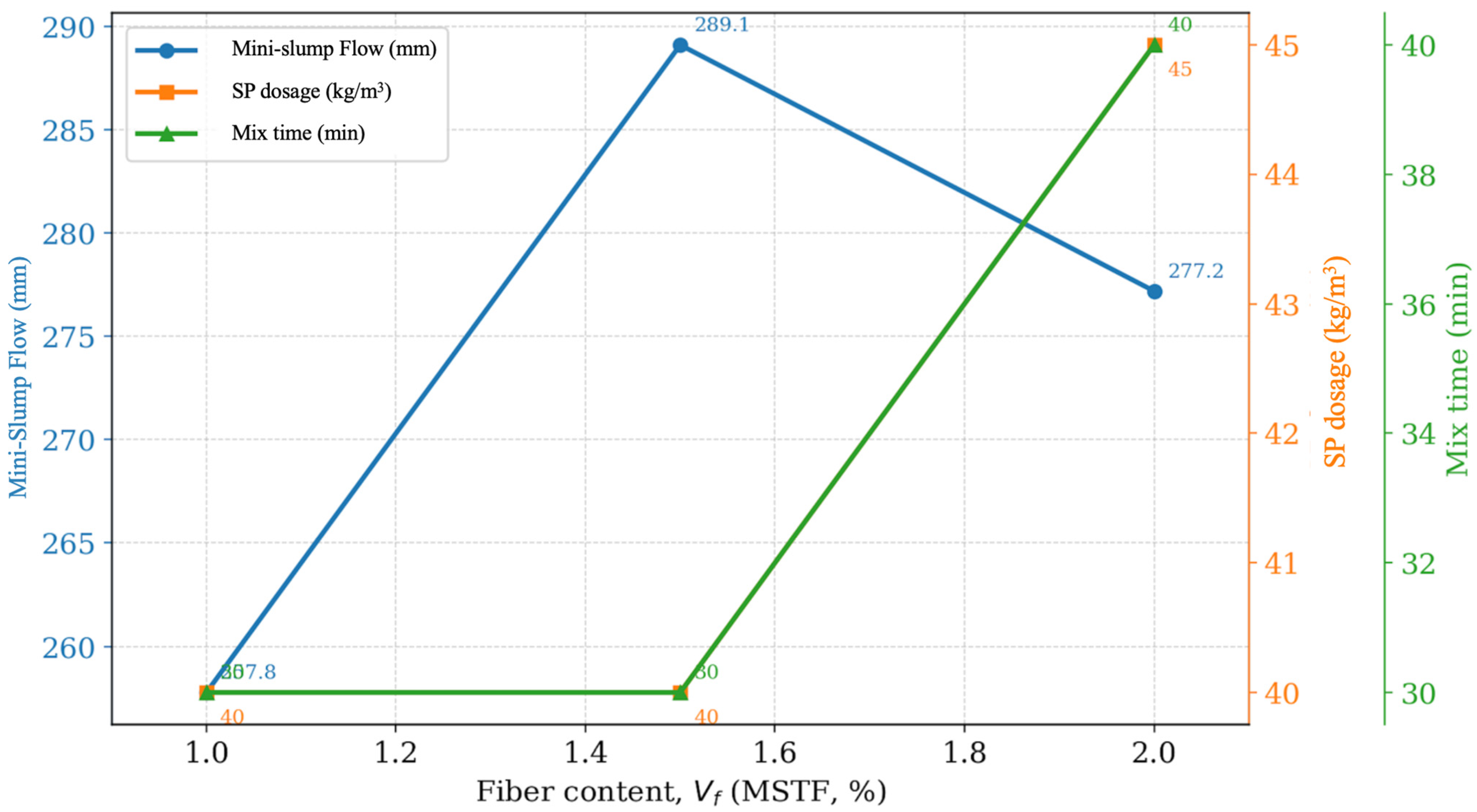
| 1.0 | 78.5 | 40 |
| Parameter | Sample 1 | Sample 2 | Sample 3 | Sample 4 |
|---|---|---|---|---|
| Actual Voltage (V) | 60 | 60 | 60 | 60 |
| Actual Current (mA) | 34.5 | 47.8 | 43.3 | 50.8 |
| Temperature (°C) | 27.5 | 27.9 | 29.7 | 29 |
| Time (h) | 6 | 6 | 6 | 6 |
| Pred. Coulombs (adjusted) | 688 | 1022 | 894 | 1066 |
| Avg. Coulombs | 917.5 | |||
| Permeability Class | Very Low | |||
| Parameters | Sample 1 | Sample 2 | Sample 3 | Sample 4 | |
|---|---|---|---|---|---|
| Initial Sorptivity (mm/√s) | Standard Requirement | <0.01 | |||
| Test Result | 0.0019 | 0.0018 | 0.0014 | 0.0019 | |
| Secondary Sorptivity (mm/√s) | Standard Requirement | <0.01 | |||
| Test Result | 0.0007 | 0.0007 | 0.0007 | 0.0007 | |
| R2 correlation Coefficient | Standard Requirement | >0.98 | |||
| Initial Sorptivity | 0.9873 | 0.9858 | 0.985 | 0.9842 | |
| Secondary Sorptivity | 0.9841 | 0.9841 | 0.9819 | 0.9902 | |
| Status | PASS | PASS | PASS | PASS | |
Disclaimer/Publisher’s Note: The statements, opinions and data contained in all publications are solely those of the individual author(s) and contributor(s) and not of MDPI and/or the editor(s). MDPI and/or the editor(s) disclaim responsibility for any injury to people or property resulting from any ideas, methods, instructions or products referred to in the content. |
© 2026 by the authors. Licensee MDPI, Basel, Switzerland. This article is an open access article distributed under the terms and conditions of the Creative Commons Attribution (CC BY) license.
Share and Cite
Peng, Y.; Chaimoon, N.; Wu, Y.; Chen, Y.; Chaimoon, K. Mechanical Performance, Durability, and Environmental Assessment of Low-Carbon Fiber-Reinforced Reactive Powder Concrete with a High Content of Fly Ash. Infrastructures 2026, 11, 91. https://doi.org/10.3390/infrastructures11030091
Peng Y, Chaimoon N, Wu Y, Chen Y, Chaimoon K. Mechanical Performance, Durability, and Environmental Assessment of Low-Carbon Fiber-Reinforced Reactive Powder Concrete with a High Content of Fly Ash. Infrastructures. 2026; 11(3):91. https://doi.org/10.3390/infrastructures11030091
Chicago/Turabian StylePeng, Ying, Nida Chaimoon, Yike Wu, Yuanfeng Chen, and Krit Chaimoon. 2026. "Mechanical Performance, Durability, and Environmental Assessment of Low-Carbon Fiber-Reinforced Reactive Powder Concrete with a High Content of Fly Ash" Infrastructures 11, no. 3: 91. https://doi.org/10.3390/infrastructures11030091
APA StylePeng, Y., Chaimoon, N., Wu, Y., Chen, Y., & Chaimoon, K. (2026). Mechanical Performance, Durability, and Environmental Assessment of Low-Carbon Fiber-Reinforced Reactive Powder Concrete with a High Content of Fly Ash. Infrastructures, 11(3), 91. https://doi.org/10.3390/infrastructures11030091