


Abstract
This study presents an experimental investigation into the rehabilitation of fire-damaged reinforced concrete (RC) columns using Ultra-High-Performance Concrete (UHPC) under an eccentric load of (e = 45 mm). The experimental program comprised nine small-scale RC column specimens, which were divided into two groups based on exposure temperatures of 500 °C and 700 °C, applied using a specially designed furnace. A control column that was not exposed to fire was also tested for comparison. The study included two fire exposure durations: 60 and 120 min. During the heating phase, the columns were subjected to a pre-applied axial load equal to 50% of their ultimate capacity (Pu). After sustaining fire-induced damage, the columns were rehabilitated using UHPC jacketing. The experimental results revealed a reduction in the ultimate load-carrying capacity of the RC columns with increasing fire temperature and exposure duration. Specifically, the load capacity decreased by 22.68% and 33.89% when exposed to 500 °C for 60 and 120 min, respectively, and by 42.02% and 49.02% when exposed to 700 °C for 60 and 120 min, respectively, compared with the control column. However, strengthening the fire-damaged columns with UHPC significantly enhanced their structural performance, resulting in an increase in ultimate load capacity ranging from 81.88% to 157.14% compared with their corresponding fire-damaged unstrengthened specimens. Based on the experimental findings, the load lateral displacement response at mid-height, load–axial deformation curves, failure modes, ductility, and stiffness characteristics of the columns were analysed. The study concludes that the use of UHPC in rehabilitating fire-exposed columns substantially improves most of these structural properties.
1. Introduction
Concrete is one of the most widely used construction materials worldwide due to its durability and long service life when design safety requirements whether related to mix composition or structural design are properly satisfied. However, concrete structures may suffer damage resulting from design errors, non-compliance with building codes, or unexpected environmental conditions that compromise the integrity of reinforced concrete (RC) systems [1]. RC structures are particularly vulnerable under severe environmental exposures such as corrosion, fire, and natural disasters. In addition, accidental design mistakes or changes in building use leading to overloading beyond the intended design life are major factors that reduce the structural capacity of critical elements such as beams, columns, and slabs [1,2]. A reinforced concrete (RC) column is a fundamental load-bearing member designed primarily to resist compressive forces. It consists of concrete combined with steel reinforcement to enhance its load carrying capacity. In practice, columns seldom sustain purely axial loads, as bending moments almost always arise from structural continuity and unavoidable construction imperfections. These effects introduce eccentricities that produce additional bending within the column. The ultimate strength of the column depends largely on the mechanical properties of the materials particularly the compressive strength of concrete and on the geometry of the cross-section [3,4,5,6]. Ensuring adequate fire resistance is a critical safety requirement in building design, as fire represents one of the most severe hazards to which structures may be exposed [7,8]. Fire resistance refers to the period during which a structural element can maintain its stability, integrity, and thermal insulation under standard fire exposure. It is governed by several parameters, including concrete cover thickness, moisture content, reinforcement configuration, fire severity and duration, load intensity, and concrete strength grade [9,10,11,12,13]. Standardized fire testing, such as ASTM E-119-20 [14], is therefore essential to reliably assess structural performance.
Limited studies have addressed the residual capacity of RC columns after fire exposure. Experimental findings by Kodur et al. [15] showed that RC columns retain a substantial portion of their load capacity even after severe fire exposure. Consequently, repair is required when structural deterioration is observed, including but not limited to visible cracking, to ensure proper load transfer to the foundation. Repairing fire-damaged RC structures is often more economical than demolition, as damage is frequently limited to superficial concrete cover deterioration without major harm to the reinforcement [16]. Common rehabilitation methods include injection, removal and replacement, and jacketing.
Ultra-high-performance concrete (UHPC) has emerged as an efficient and modern technique for extending the service life of damaged RC structures due to its superior mechanical and durability properties [16,17]. Previous studies have demonstrated that rehabilitation techniques such as jacketing and concrete replacement using high- and ultra-high-performance materials can significantly enhance the load-carrying capacity and durability of deteriorated RC members, while also presenting limitations related to constructability and material compatibility [18,19,20]. UHPC, typically composed of cement, fine sand, high silica fume content, water, superplasticizers, and steel fibers, provides high compressive strength, improved ductility, and excellent durability resulting from its dense matrix and homogeneous fiber distribution [21]. Consequently, UHPC has been shown to be particularly effective for repair and strengthening applications, offering improved structural performance compared with conventional rehabilitation methods [22,23].
This study investigates the behavior of short RC columns subjected to fire exposure under load and evaluates their rehabilitation using UHPC jacketing. The objective is to assess the effectiveness of UHPC in restoring and improving the load-carrying capacity of fire-damaged columns that experience strength degradation without complete failure.
2. Materials and Mix Proportions
2.1. Material
2.1.1. Normal Strength Concrete
All specimens were cast with normal-strength concrete exhibiting a compressive strength (f′c) of 32 MPa. The compressive strength was determined based on standard cylindrical specimens with dimensions of 150 mm × 300 mm. Ordinary Portland Cement (Type I) was used in all mixtures. Crushed coarse aggregate with a well-graded particle size distribution and a maximum size of 14 mm was adopted. The particle size distribution of the coarse aggregate was verified through sieve analysis, and the results were compared with the limits specified in the Iraqi Specification IQS 45:1984, showing compliance with the standard grading requirements. The mix proportions are presented in Table 1.
Table 1.
Mix proportions of the concrete used in this study.
2.1.2. Steel
Three types of steel reinforcing bars were used in the experimental program. Deformed Ø10 mm bars (Al-Mass production, Sulaymaniyah, Iraq) served as longitudinal reinforcement in all column specimens. Deformed Ø12 mm bars (Al-Mass production, Sulaymaniyah, Iraq) were used to reinforce all corbels, while Ø6 mm deformed bars (Turkish production, Turkey) were employed as transverse ties in both the corbels and the column specimens. The mechanical properties of these steel bars were determined from standard tensile tests. The Ø6 mm bars exhibited a yield strength of 614 MPa and an ultimate strength of 625 MPa. The Ø10 mm bars had a yield strength of 593 MPa and an ultimate strength of 669 MPa, while the Ø12 mm bars showed a yield strength of 585 MPa and an ultimate strength of 651 MPa. These values provide complete information on the reinforcement used in the tested specimens and are used in the analysis of the experimental results.
2.1.3. Ultra-High-Performance Concrete (UHPC)
- A.
- Cement: Type V Portland cement was selected based on trial mixtures to achieve an optimal balance between compressive strength and workability.
- B.
- Fine Sand: Locally sourced natural sand, sieved through a 0.6 mm mesh, was used as the fine aggregate for UHPC in accordance with prior recommendations.
- C.
- Silica Fume (SF): Silica fume, a by-product of silicon and ferrosilicon alloy production, consists of particles much finer than cement. It reacts with calcium hydroxide to form C–S–H and fills micro-voids, thereby reducing porosity and improving the strength and durability of the concrete.
- D.
- Superplasticizer (SP): A carboxylic ether-based high-range water-reducing admixture, MasterGlenium 54 (BASF) [24], was used to produce UHPC and obtain the desired workability. A dosage of 3.5% by weight of cementitious materials was adopted based on trial mixes.
- E.
- Steel Fibers: Copper-coated straight micro-steel fibers were incorporated into the UHPC at 2% of the total mix volume, consistent with trial mix outcomes and previous recommendations. The fibers had a length of 13 mm and a diameter of 0.2 mm, resulting in an aspect ratio of 65. Their physical properties comply with the requirements of ASTM A820.
2.2. Concrete Mix Design
The mixing procedure and material proportions of the UHPC were developed and optimized after modifications to previous trial mixes. A total of eight trial mixes were conducted to identify the most suitable mixture achieving the required fresh and hardened properties. The dry constituents, including cement, sand, and silica fume, were first combined and mixed for 1–2 min, followed by the gradual addition of water and superplasticizer, and mixed for an additional 12–15 min until a homogeneous and flowable paste was obtained. Steel fibers were then incorporated and mixed for 3–5 min to ensure uniform distribution. The flowability of the selected mix was evaluated in accordance with ASTM C230 [25] and ASTM C1437 [26], resulting in a spread of 230 to 240 mm, which complies with the requirements of ASTM C1856 [27]. The optimized trial mix achieved a notional 28-day compressive strength of 135.7 MPa. The constituent materials and their corresponding weight proportions are presented in Table 2.
Table 2.
Mix proportions of UHPC.
3. Specimens Details
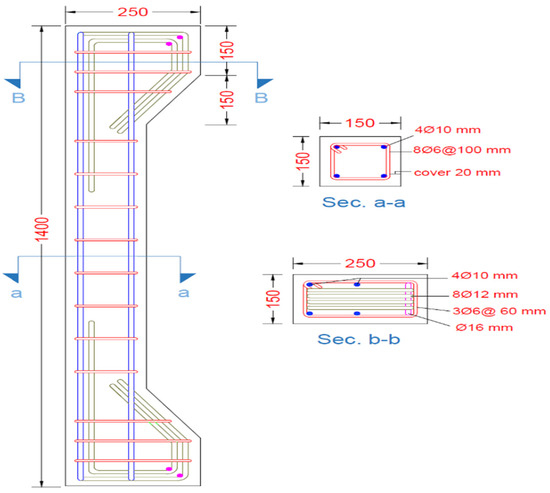
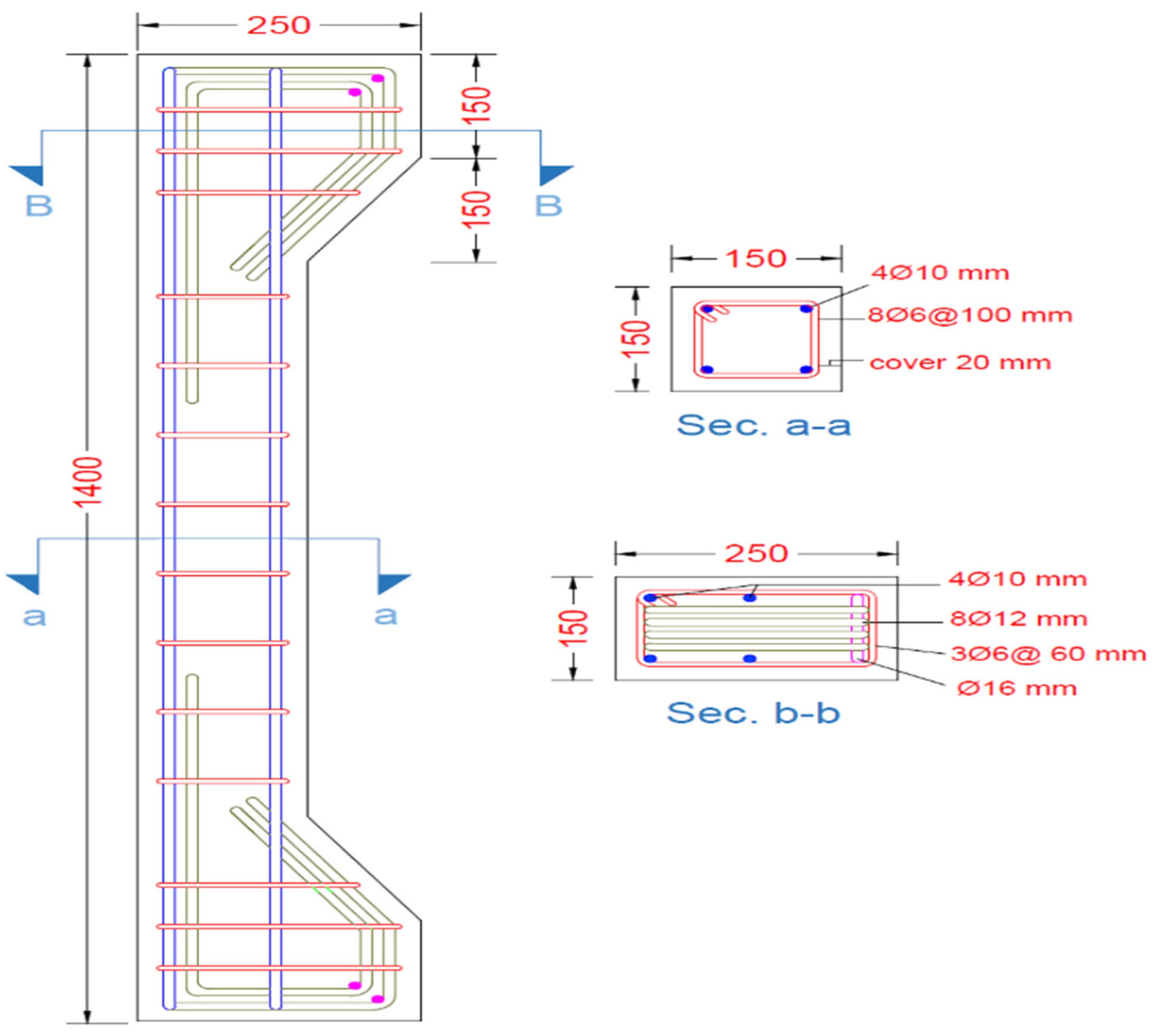
All specimens had identical external dimensions and geometry, with a constant square cross-section. Each column had a total length of 1400 mm and a cross-section of 150 mm × 150 mm. The central portions of the corbels were spaced 800 mm apart, with each corbel measuring 150 mm × 250 mm × 300 mm. The corbels were designed to apply eccentric loading. Each column included a clear concrete cover of 20 mm and four longitudinal reinforcements (ρ = 0.0140) using Ø10 mm deformed steel bars. Transverse ties with a diameter of 6 mm were spaced at 100 mm intervals. All columns were fabricated in accordance with ACI 318-19 requirements. Figure 1 illustrates the reinforcement details of the columns and corbels. The current experimental program investigated nine normal concrete column specimens, including one control column (C1) without pre-loading or fire exposure, and eight columns subjected to fire under a pre-load of 50% of the ultimate load (Pu). The columns were divided into two groups:
Figure 1.
Layout of reinforcement in the tested columns showing the longitudinal reinforcement arrangement and cross sections at a–a and b–b.
The first group consists of four columns (C2–C5). Columns C2 and C3 were exposed to fire at 500 °C for 60 min. Column C3 was subsequently rehabilitated by removing the damaged concrete cover and replacing it with Ultra-High-Performance Concrete (UHPC). Columns C4 and C5 were exposed to fire at 500 °C for 120 min, and column C5 was repaired using the same procedure as C3. The second group also consists of four columns (C6–C9), with a testing program identical to Group 1, except that the fire exposure temperature was 700 °C. It is noteworthy that all eight columns from both groups were subjected to a pre-loading level corresponding to 50% (178.5 kN) of the ultimate load (Pu) during fire exposure, with a constant load eccentricity of e = 45 mm (e/h = 0.3) for all specimens. Table 3 summarizes all details of the column groups.
Table 3.
Details of the examined specimens.
4. Casting Procedures
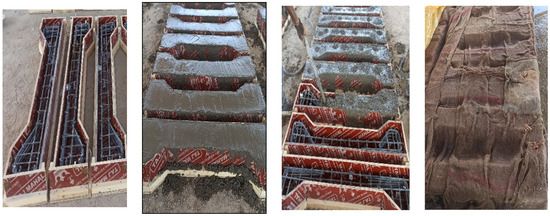
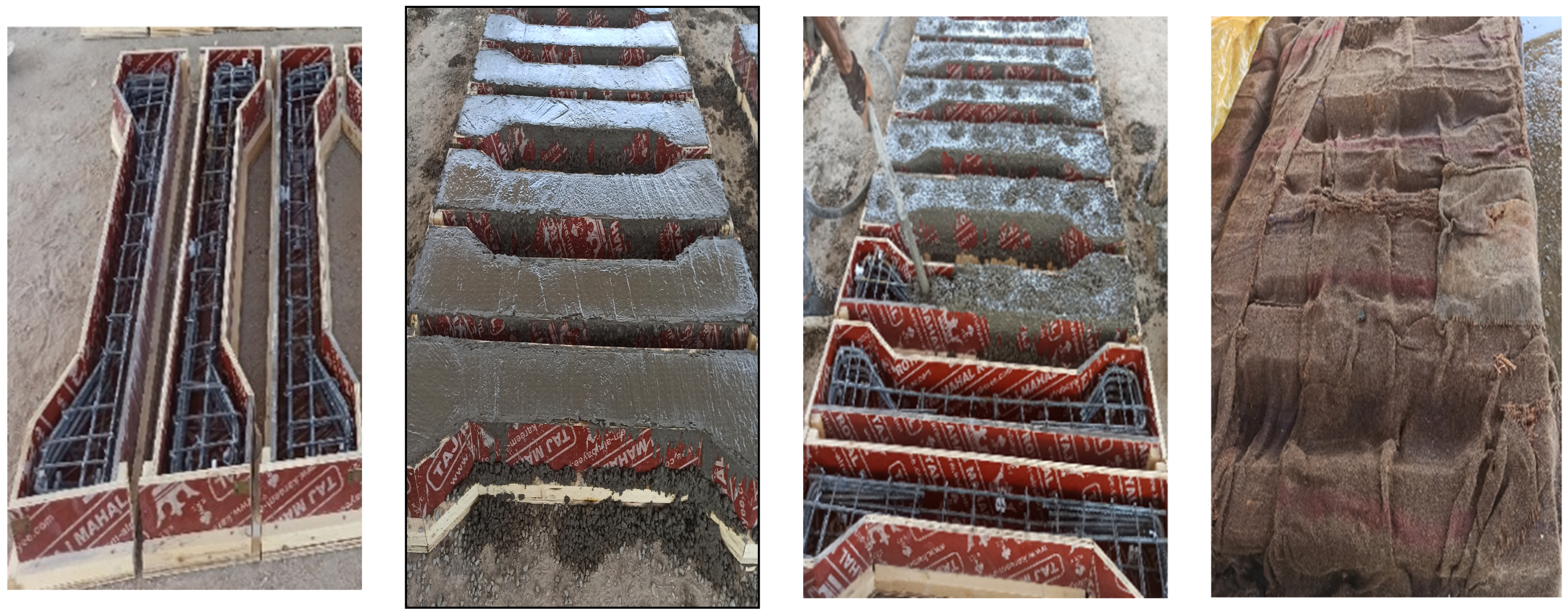
A central batching mixer with a capacity of 10 m3, provided by Al-Mustaqbal Ready-Mix Concrete Company, was used for concrete preparation in this study. To prevent adhesion to the hardened concrete, the interior surfaces of the cube and cylinder molds were thoroughly cleaned and lubricated. Each steel reinforcement cage for the columns was then placed horizontally within the wooden formwork and securely fixed. Concrete was poured in a single layer into each mold, compacted, and vibrated for two minutes using a built-in vibrator. The standard procedures for layer placement and rodding, commonly applied for compacting conventional concrete in cube and cylinder molds, were followed as illustrated in Figure 2.
Figure 2.
Casting process phases.
5. Fire Test
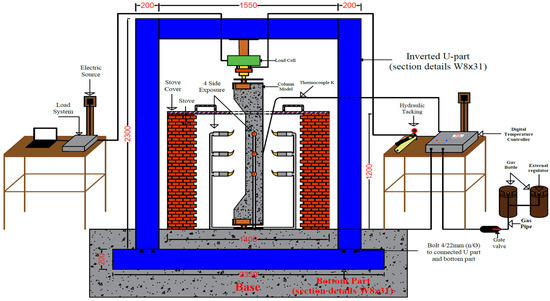
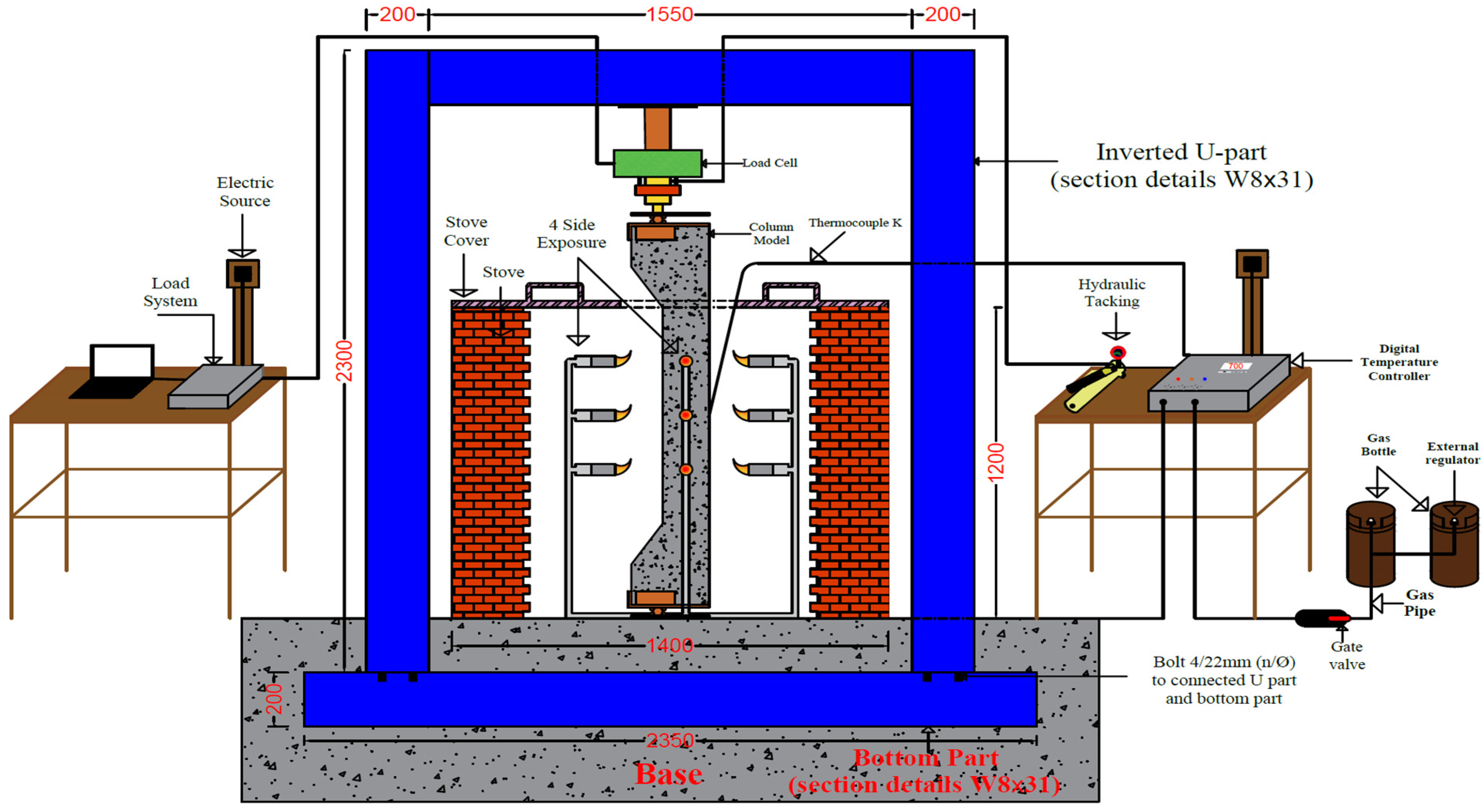
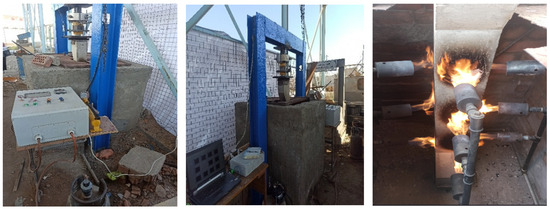
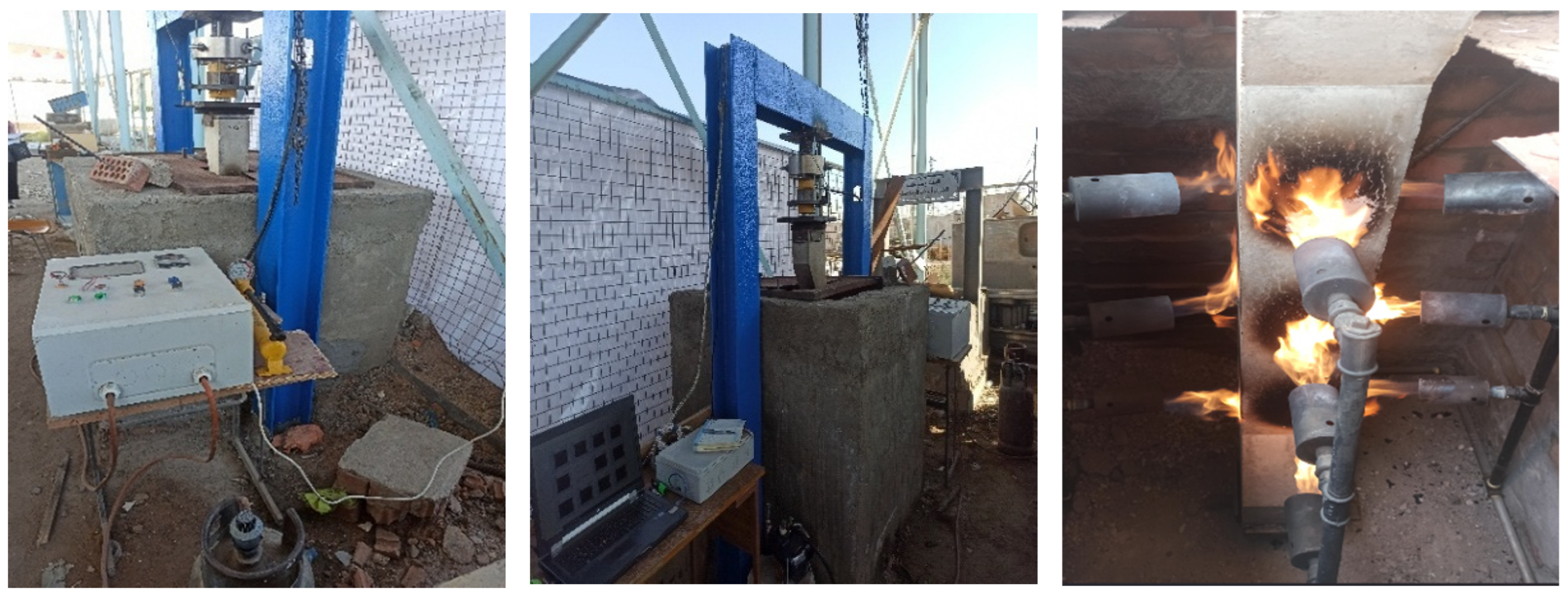
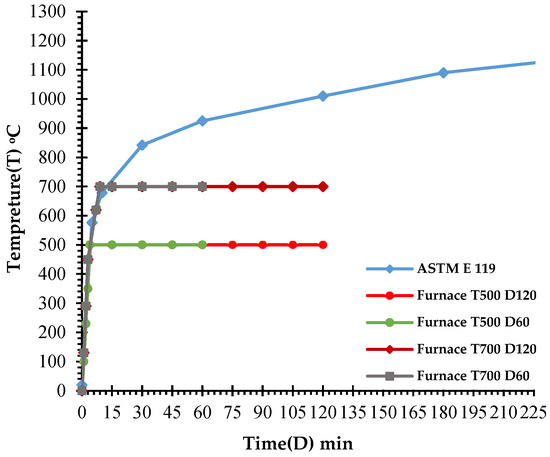
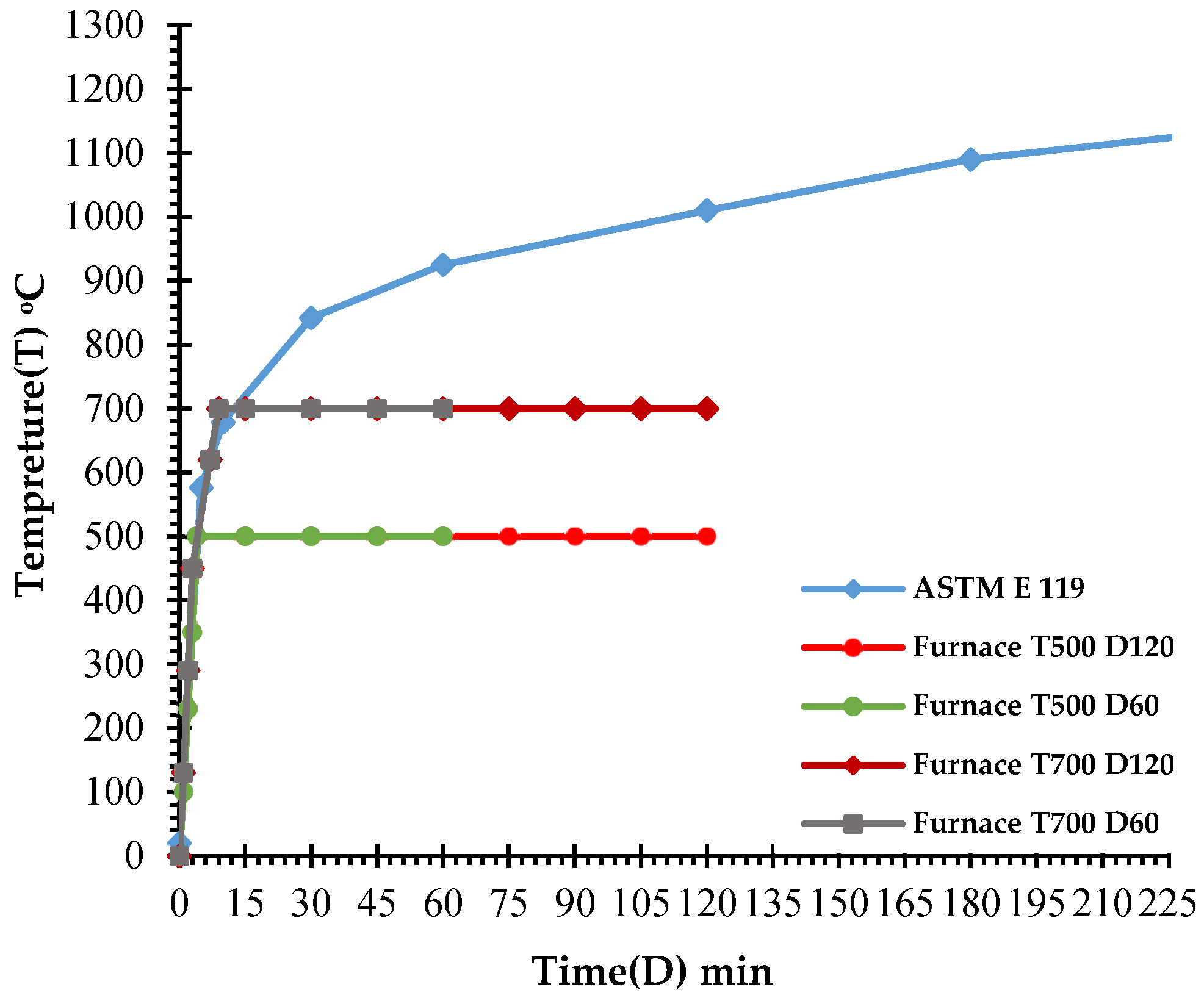
The columns were exposed to fire several months after casting using a brick furnace with internal dimensions of 1400 mm × 1400 mm × 1150 mm, as shown in Figure 3. Two fire-exposure durations were considered: 60 and 120 min. The corresponding maximum furnace temperatures reached approximately 500 °C and 700 °C, representing moderate and severe heating conditions commonly associated with structural fire scenarios. These temperature–time combinations were adopted as controlled experimental parameters to investigate the influence of dwell time at elevated temperatures on the structural damage of pre-loaded RC columns. The adopted heating regime does not represent a standard fire test but rather a parametric experimental investigation.
Figure 3.
Description of the loading frame.
Furnace temperature was controlled automatically via a digital device connected to a gas regulator, which adjusted operation based on real-time sensor readings after the setpoint was specified. Temperature measurements were recorded using 4 mm K-type thermocouples installed on the external surface of the columns at mid-height of each specimen and connected to a data acquisition system to ensure continuous monitoring during fire exposure. To simulate natural cooling after fire exposure, the furnace cover was removed, and specimens were allowed to cool under ambient conditions. The fire-exposed length of each column was approximately 800 mm. Although localized flame exposure may induce temperature gradients across the column surface, the heating conditions were maintained consistently for all specimens, ensuring a reliable comparative assessment of thermal damage under identical exposure parameters.
All columns were tested under eccentric axial loading. Column C1 served as the control specimen and was not exposed to fire, while columns C2–C9 were subjected to a sustained pre-load of 178.5 kN, which was determined as 50% of the ultimate capacity obtained from preliminary testing of the control column C1. The pre-load was applied prior to fire exposure to simulate service load conditions and to represent columns carrying sustained loads during a fire event. Detailed information regarding the furnace, testing apparatus, and pre-loading system is provided in Figure 4. During testing, the fire exposure regime was carefully controlled to maintain the desired temperature levels throughout the specified exposure durations, as illustrated in Figure 5.
Figure 4.
Specimens subjected to fire exposure under pre-loading curve.
Figure 5.
Temperature–time curve recorded during the experimental fire exposure.
6. Repair of Fire-Damaged Column Specimens
The rehabilitation of fire-exposed columns (C3, C5, C7, and C9) was carried out through the following key procedures:
- (a)
- Removal of Damaged Concrete: The deteriorated outer concrete layer was carefully removed manually until the longitudinal reinforcement was fully exposed. Mechanical methods were avoided to prevent dynamic vibrations that could compromise the structural integrity of the columns. The removal depth corresponded to the original concrete cover thickness (20 mm), which was fully removed in all fire-exposed specimens to eliminate thermally deteriorated concrete. The removal depth was kept constant regardless of exposure temperature or duration to maintain consistent rehabilitation geometry.
- (b)
- Installation of Shear Connectors: Shear connectors with a diameter of 4 mm were horizontally installed on all four sides of the stirrups to ensure a strong bond between the existing concrete core and the newly applied UHPC layer.
- (c)
- Epoxy Preparation and Application: The epoxy resin (Sikadur®-32 LP) was prepared by separately stirring the base and hardener, followed by thorough mixing using a slow-speed drill for 2 min until a uniform color was achieved. Approximately 90 min prior to casting the UHPC, the cleaned surface of the existing concrete was coated with epoxy to enhance adhesion between the old and new concrete layers.
- (d)
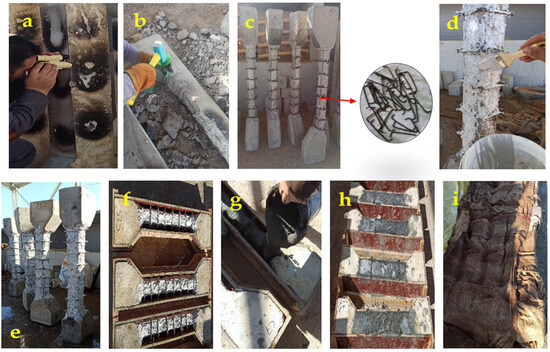
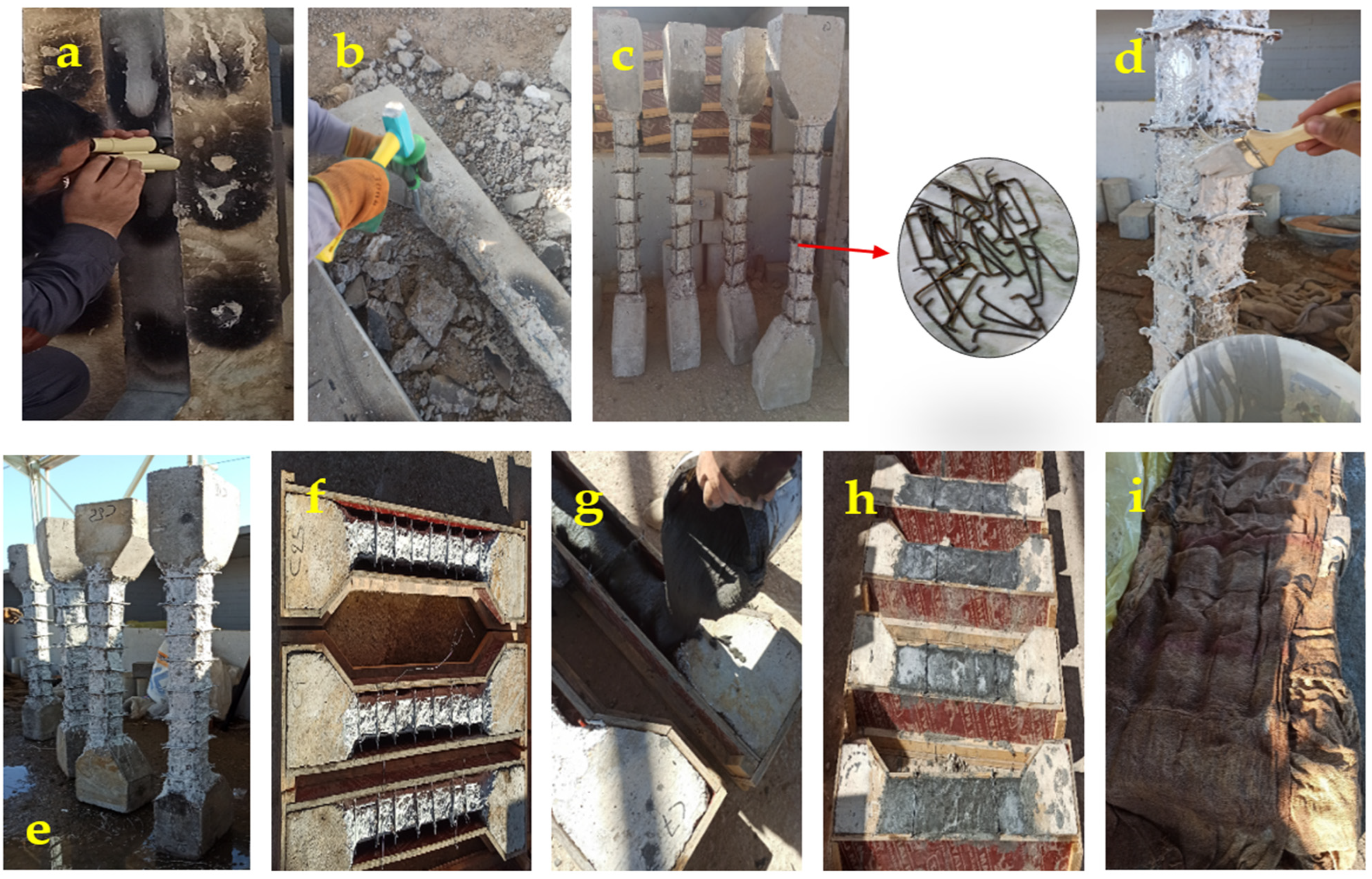
- Casting of New Concrete: The Ultra-High-Performance Concrete (UHPC) layer was then cast over the prepared surface. All rehabilitation steps are illustrated in Figure 6.Figure 6. Rehabilitation procedure: (a) measuring crack width; (b) removal of damaged concrete; (c) fastening of shear connectors; (d,e) application of bonding agent; (f) installation of columns within the formwork; (g,h) UHPC casting; (i) curing process of UHPC.
7. Test Setup and Procedure
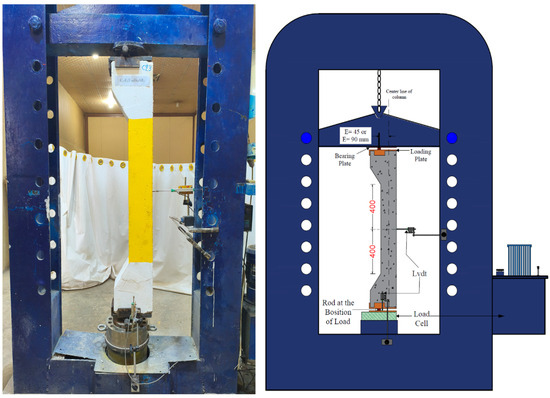
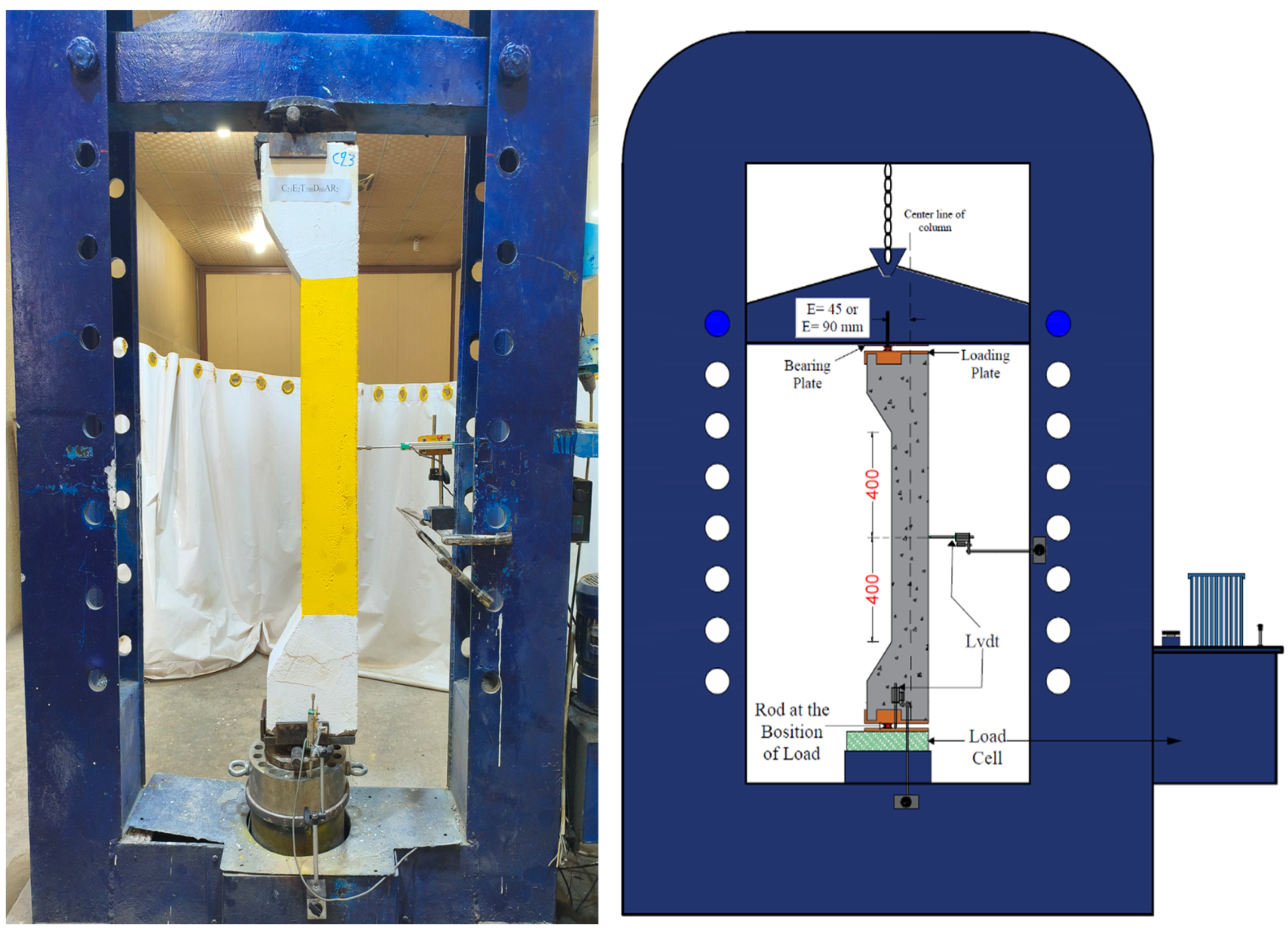
The specimens were tested under monotonic loading using a hydraulic universal testing machine with a maximum capacity of 2500 kN. The applied load was recorded via a data logger connected to a load cell located at the base of the machine. Load–deflection responses were monitored as the load was incrementally increased until failure occurred. Axial and lateral displacements of the eccentric columns were measured using two LVDTs installed along the column height. Two LVDTs at the base recorded axial shortening at each loading stage, while a third LVDT positioned at the column midpoint measured lateral deflection. This procedure was repeated for each stage of loading. Special safety precautions were taken during crack observations. The experimental loading setup and instrumentation arrangement are illustrated in Figure 7.
Figure 7.
Test setup with instrumentation details.
8. Results and Discussion
The test results for each column were compared with those of the other specimens to assess the effects of fire duration and intensity, while keeping the applied load and eccentricity constant. The evaluated parameters included the failure mode, ultimate load capacity, first cracking load, and axial deformation of the columns, as summarized in Table 4.
Table 4.
Results of laboratory testing on column specimens.
8.1. Load Carrying Capacity
The maximum applied load recorded during the experimental tests represents the ultimate capacity of the column specimens. Beyond this limit, a noticeable drop in load readings occurred alongside rapid and irreversible deformation, indicating structural failure. The behavior of the specimens tested under ambient conditions was adopted as the reference benchmark for evaluating the residual load-carrying capacity after high-temperature exposure. As previously noted, the columns were divided into two groups for comparative analysis. The results showed that the unexposed reference column exhibited the highest ultimate load among all unstrengthened specimens.
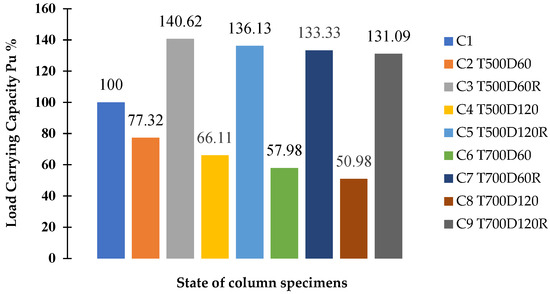
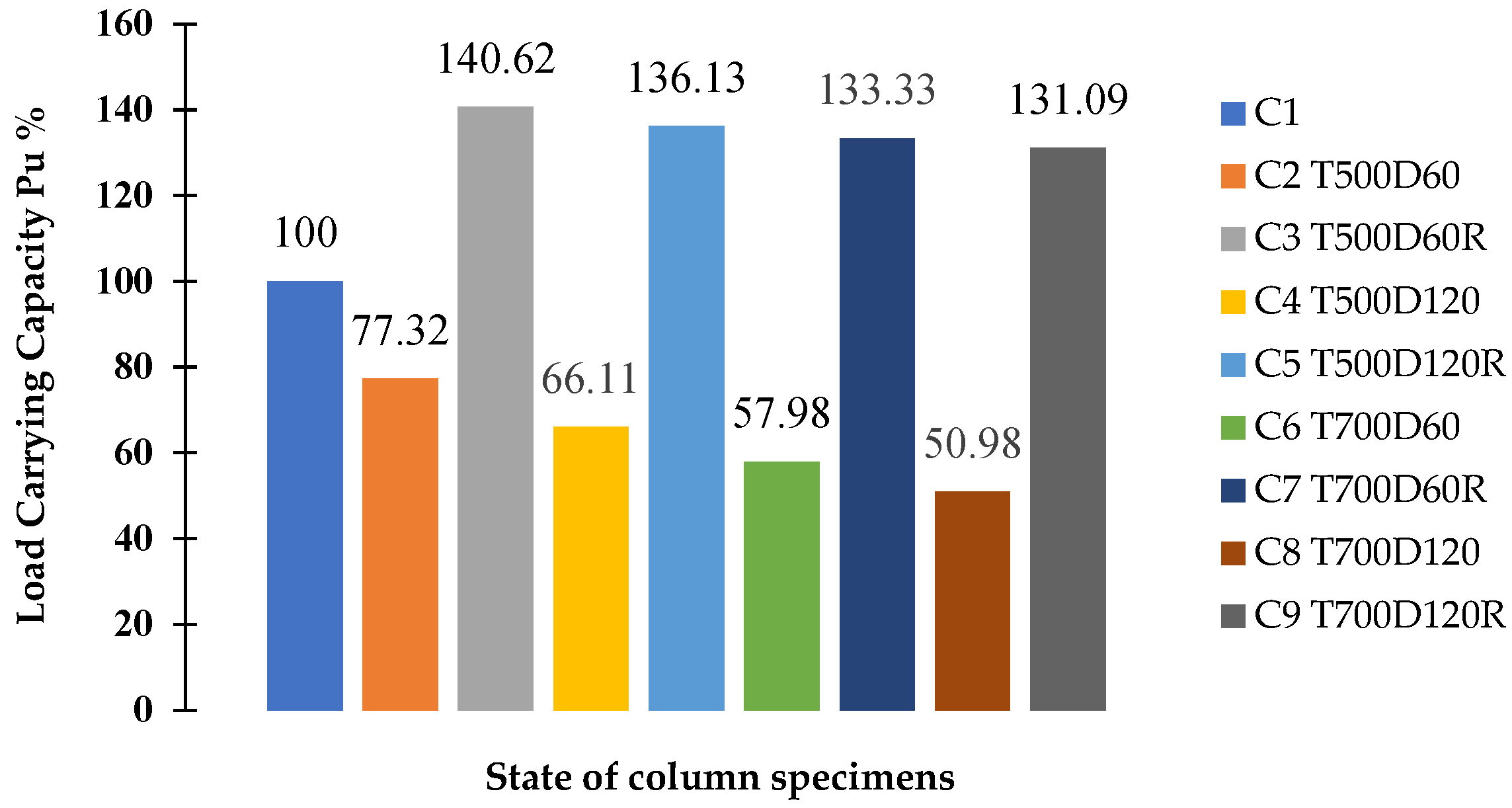
Compared with the unexposed reference column, the ultimate load capacities of columns C2T500D60 and C4T500D120 in the first group, which were exposed to 500 °C for 60 and 120 min, decreased by 22.68% and 33.89%, respectively. Ultra-High-Performance Concrete (UHPC) was subsequently used to strengthen and rehabilitate the fire-damaged columns C3T500D60R and C5T500D120R to restore and enhance their load-carrying capability. After removing the damaged concrete cover, a UHPC layer with a thickness of 20 mm, corresponding to the depth of the removed cover, was applied uniformly across all specimens. The UHPC layer fully reconstructed the deteriorated concrete cover during the rehabilitation process. Relative to the unexposed reference column, this technique increased the ultimate load capacity by 40.62% and 36.13%, respectively. Furthermore, when compared with their fire-damaged counterparts (C2T500D60 and C4T500D120), the strengthened specimens demonstrated even greater improvements of 81.88% and 105.93%, respectively.
When the fire exposure temperature was raised to 700 °C for 60 and 120 min, the columns in the second group (C6T700D60 and C8T700D120) experienced more severe reductions in capacity, decreasing by 42.02% and 49.02%, respectively, compared with the reference column. After rehabilitation, the UHPC-jacketed columns C7T700D60R and C9T700D120R showed notable increases in ultimate capacity, rising by 33.33% and 31.09%, respectively, relative to the reference column. Additionally, as illustrated in Figure 8, these rehabilitated specimens achieved substantial improvements of 129.95% and 157.14%, respectively, when compared with their fire-damaged counterparts C6T700D60 and C8T700D120.
Figure 8.
Percentage of load carrying capacity for the tested column specimens.
A comparison between the two fire temperatures (500 °C and 700 °C) for a 60 min exposure revealed reductions of 22.68% and 42.02% in load capacity for columns C2T500D60 and C6T700D60, respectively. Similarly, when the duration was extended to 120 min, the capacity losses in columns C4T500D120 and C8T700D120 increased to 33.89% and 49.02%, respectively, due to the longer fire exposure. Moreover, when comparing the damaged columns C8T700D120 and C2T500D60, it is evident that the rehabilitated specimen C9T700D120R, which experienced more severe thermal degradation, achieved a higher improvement ratio than column C3T500D60R, with increases of 157.14% and 81.88%, respectively. This substantial enhancement in the severely damaged columns is attributed to the mechanical deterioration of the original concrete core. Thermal degradation significantly reduces the stiffness and elastic modulus of the original concrete, causing a greater portion of the applied stress to be redistributed toward the high stiffness UHPC layer, which then carries a larger portion of the load and effectively confines the inner core. In contrast, columns with milder fire damage retain a larger percentage of their original concrete strength, resulting in a lower contribution from UHPC to the overall structural performance, despite having the same jacketing thickness.
The superior mechanical properties of UHPC, particularly its exceptionally high compressive strength, make it highly effective for strengthening fire-damaged columns dominated by compressive behavior. However, compressive strength alone should not be the primary parameter for evaluating UHPC efficiency in structural rehabilitation. Other mechanical properties, especially tensile strength, are equally critical because they help mitigate cracking and shrinkage-induced deformations [21].
8.2. Load–Displacement Relationships of Reinforced Concrete Columns
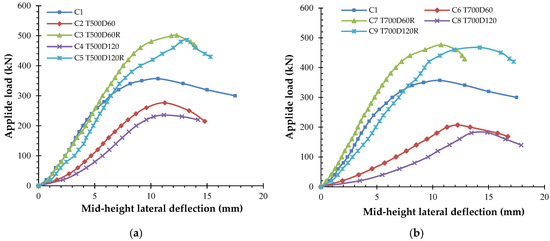
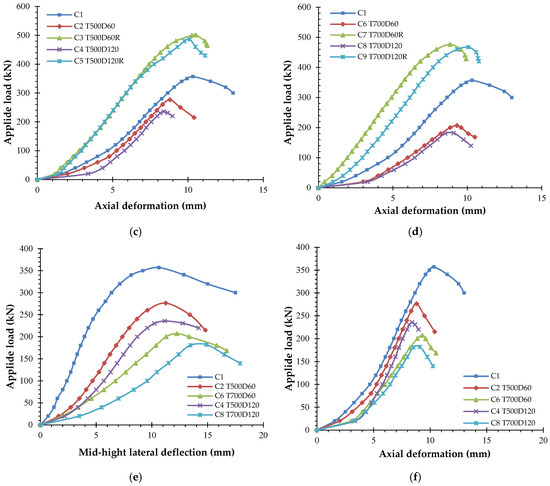
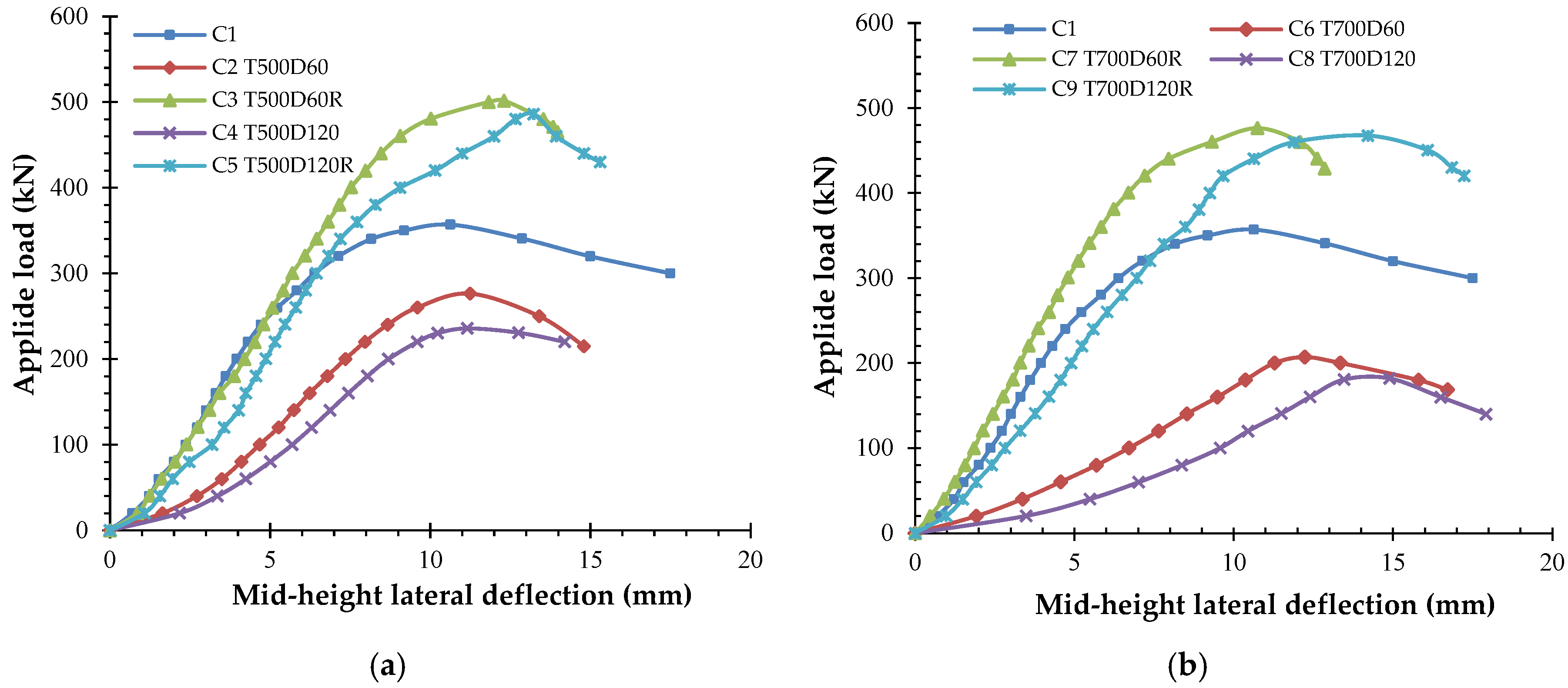
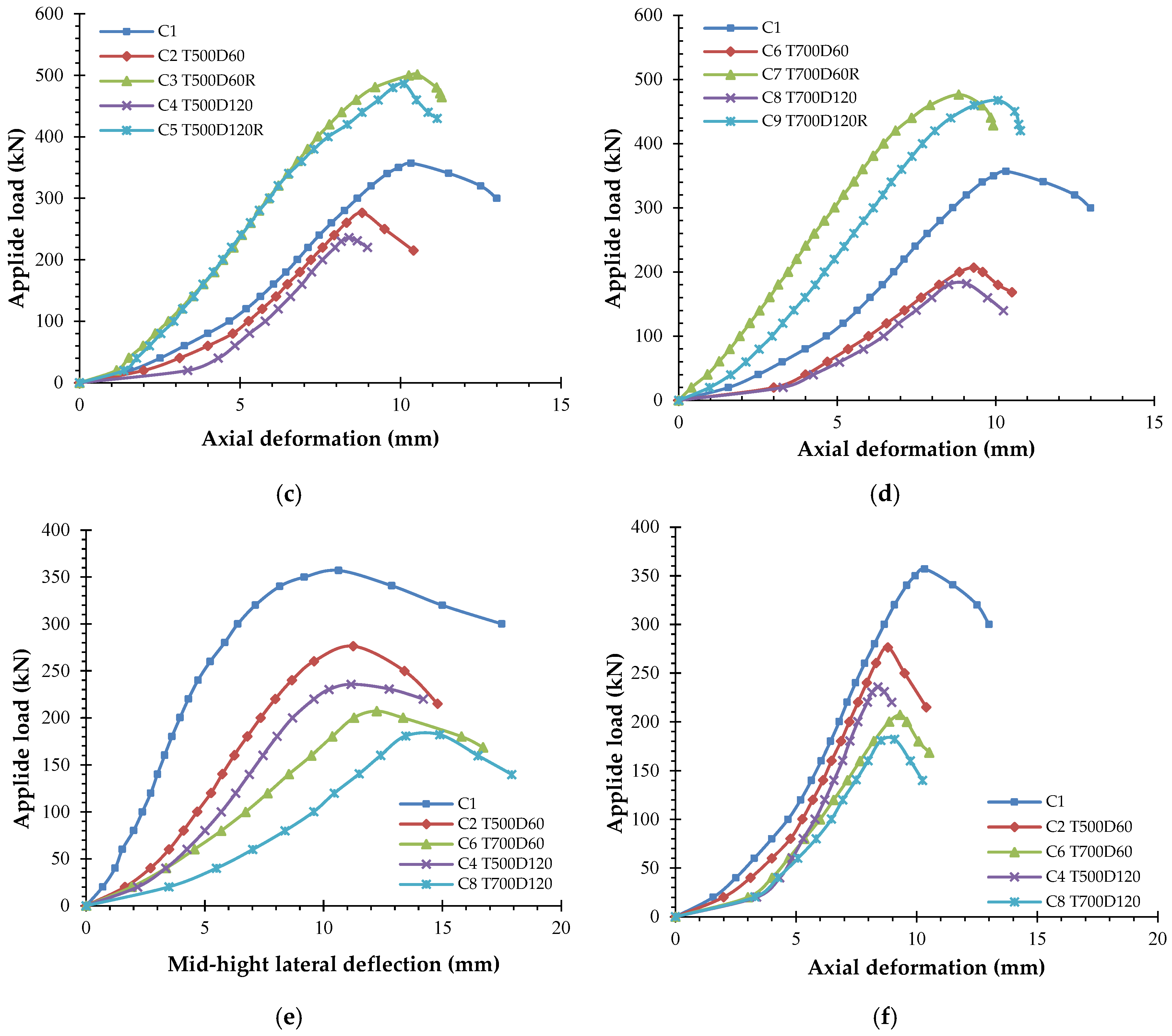
As illustrated in Figure 9a–f, the mid-height lateral deflection of the columns was clearly influenced by the longer fire exposure duration. The comparison also indicates that the load–displacement curves of the second group were more sensitive to elevated temperatures than those of the first group. This behavior can be attributed to the reduction in the effective cross-sectional area caused by cracking, as well as the decrease in column stiffness resulting from the reduced elastic modulus of the concrete.
Figure 9.
Load–displacement of columns for each group. (a) Load–deflection of exposed and strengthened column of group one. (b) Load–deflection of exposed and strengthened column of group two. (c) Load–axial deformation of exposed and strengthened column of group one. (d) Load –axial deformation of exposed and strengthened column of group two. (e) Load–deflection of exposed to 500 °C and 700 °C. (f) Load–axial deformation of exposed to 500 °C and 700 °C.
Furthermore, strengthening the fire-damaged columns using Ultra-High-Performance Concrete (UHPC) enhanced their overall deformation performance under loading. This improvement is primarily associated with the high compressive strength and elastic modulus of UHPC, which increase the rigidity of the rehabilitated columns and limit crack propagation due to the presence of steel fibres.
8.3. First Crack Load
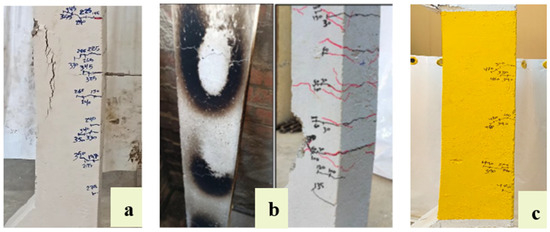
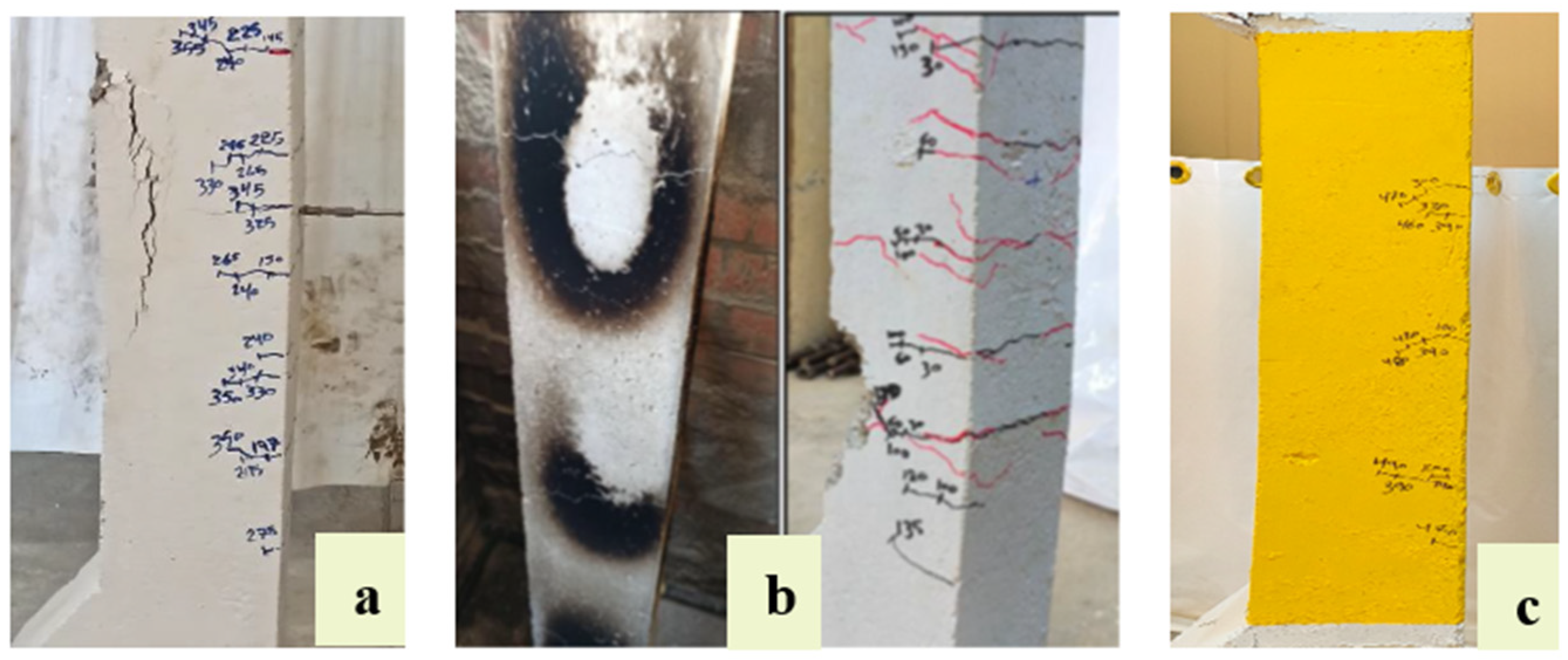
The reference reinforced concrete columns exhibited no visible cracking during the initial stages of loading. Crack widths were measured using a crack gauge, while the initiation of the first crack was identified visually and the corresponding load was recorded. For eccentrically loaded specimens, transverse flexural cracks typically initiated in the tension zone and progressed toward the compression zone, whereas longitudinal cracks often developed as shear cracks near the corbel region. In fire-exposed specimens, very fine micro-cracks commonly referred to as “hairline cracks” were observed, indicating that thermal effects had already induced preliminary cracking in these columns. Cracks marked in black were attributed to the eccentric loading applied during the mechanical test, whereas those marked in red resulted from axial loading after fire exposure. Table 5 presents the maximum recorded crack widths for both repaired and unrepaired specimens under service load conditions and after fire exposure. The non fire exposed column exhibited the smallest crack width among the unrepaired specimens, with an average value of 0.24 mm, as shown in Figure 10a and Table 5. For the fire-exposed specimens, the average crack widths were (0.41–0.50) mm for cracks measured after fire exposure and under service load, respectively, as illustrated in Figure 10b. This increase is attributed to the detrimental effects of elevated temperatures. In contrast, the fire-damaged columns that were subsequently repaired showed average crack widths of 0.42 mm after fire exposure and 0.10 mm under service load, as shown in Figure 10c. This reduction is primarily due to the presence of steel fibers in the UHPC, which enhances tensile resistance and improves crack control in the rehabilitated columns.
Table 5.
Crack Width of the Columns.
Figure 10.
Spread of crack in specimens. (a) Column specimens without fire, (b) column specimens with fire exposure and (c) repaired column specimen.
8.4. Failure Modes
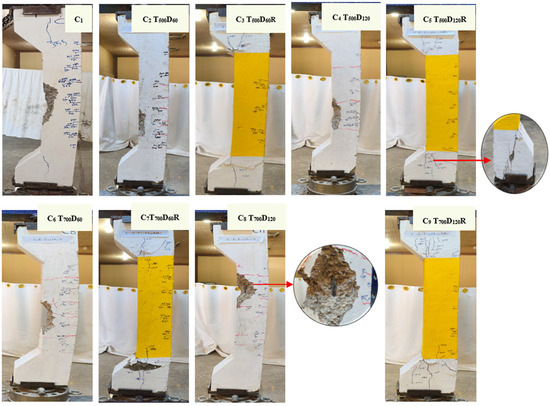
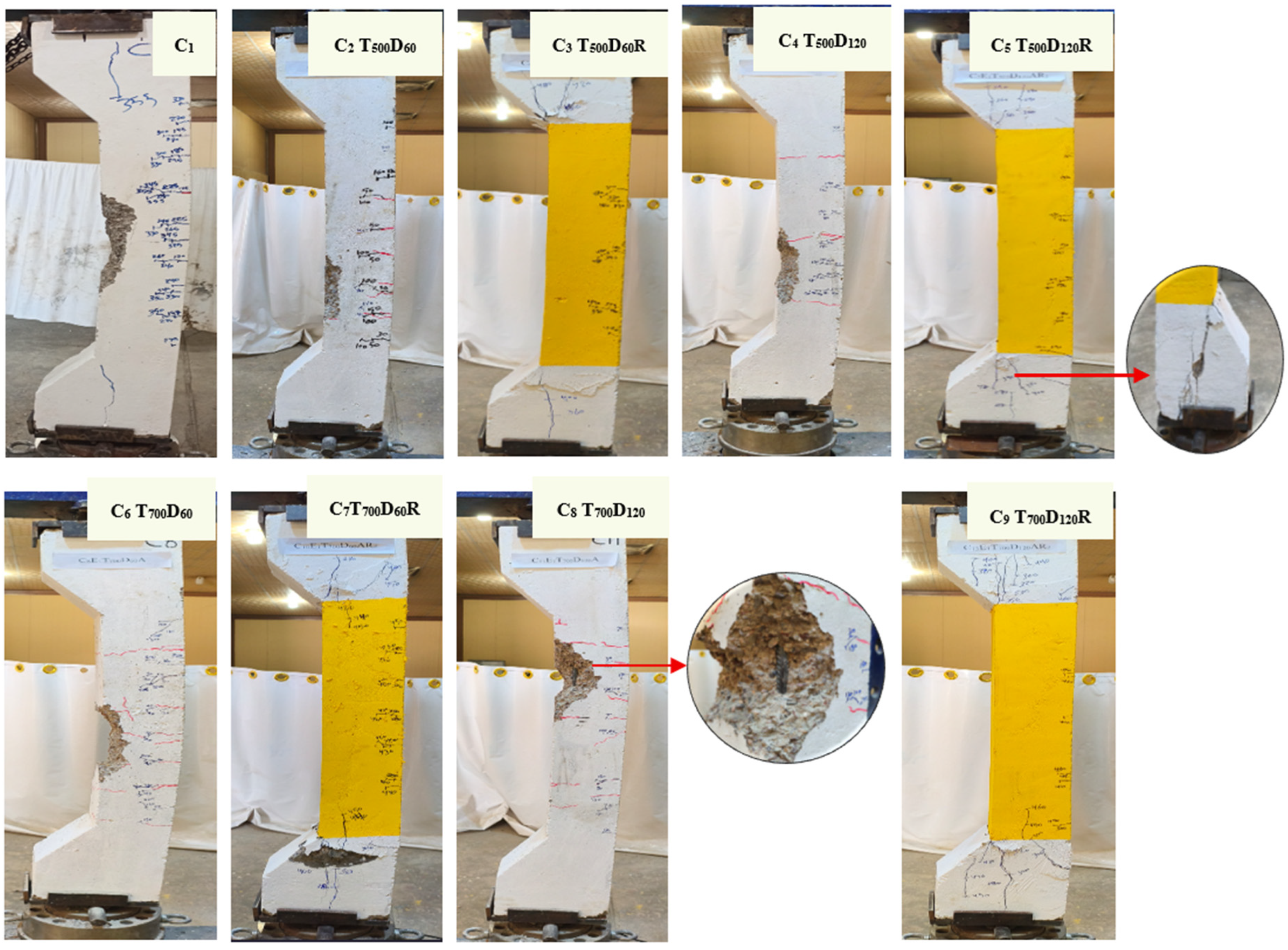
In general, the columns were tested under an eccentric load of (e = 45 mm). Columns subjected to this type of loading typically exhibited compressive failure. The failure process developed gradually, with cracks first forming on the tension side and then progressively propagating toward the compression zone, extending across the remaining faces of the column. For the control column (unexposed to fire), crack initiation and propagation occurred slowly and remained limited compared with the fire-exposed specimens. In contrast, the fire-damaged columns already contained pre-existing thermally induced cracks, which resulted in faster crack propagation and widening under lower load levels. The ease of crack initiation increased with longer fire exposure durations. Specimens exposed for 120 min developed wider and more numerous cracks than those exposed for 60 min at the same temperature. Failure generally occurred due to spalling of the concrete cover in the compression zone. The cover subsequently began to crush and propagate both longitudinally and transversely until it completely detached, accompanied by buckling of the longitudinal reinforcement, as shown in Figure 10.
For the columns strengthened using Ultra-High-Performance Concrete (UHPC), cracks appeared in the tension zone; however, they were extremely narrow and less widespread due to the presence of steel fibers, and they formed only at higher load levels. The UHPC jacket provided additional confinement, enhancing the column’s resistance to compressive failure under the same loading conditions. Owing to the high compressive strength and the high elastic modulus of UHPC, no crushing failure occurred in the compression zone at the same load level. However, as the applied load increased, shear failure was observed in the corbel region, which had been affected by fire exposure due to heat absorption by the concrete and, subsequently, the reinforcing steel. The shear crack initiated at the support area and propagated toward the inner corner of the column. Under high shear stresses, splitting of the corbel occurred, as illustrated in Figure 11.
Figure 11.
Failure modes of columns after testing.
8.5. Post-Fire Ductility of the Columns
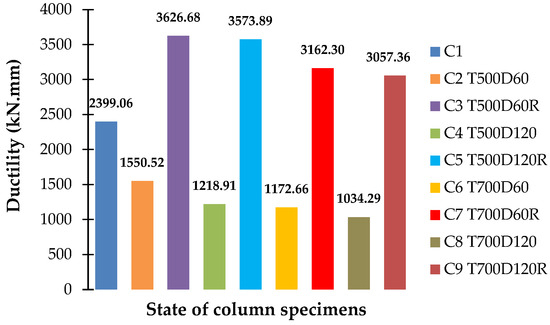
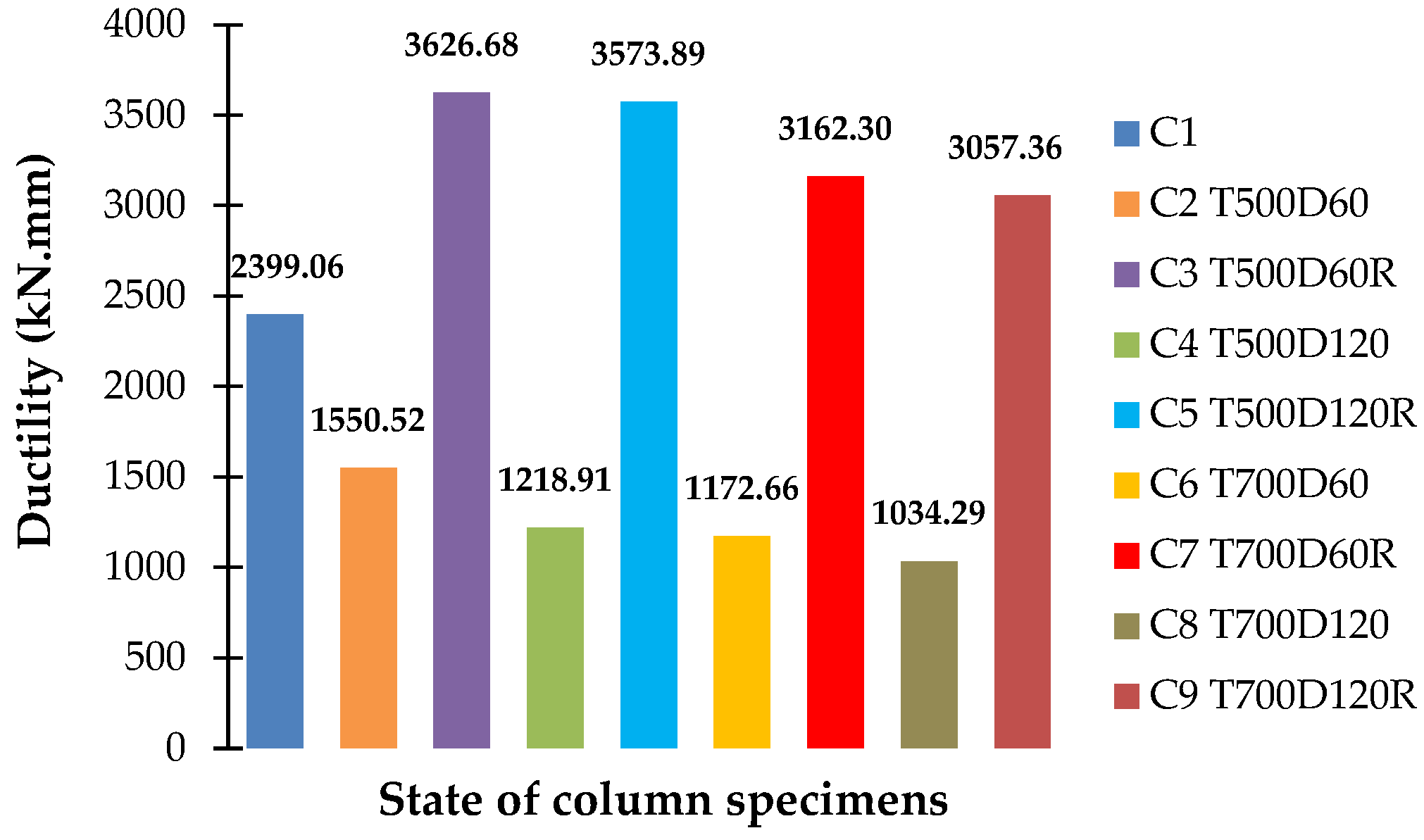
To evaluate the ductility of the tested columns, the Energy Absorption Capacity method proposed by Kumar et al. [28] was adopted in this study. The area enclosed under the load–displacement curve up to the peak load represents the energy absorption capacity of a concrete column. This parameter provides an effective measure of the post-fire ductility, as it accounts for the reduction in load-carrying capacity resulting from exposure to elevated temperatures. Figure 12 illustrates the calculated areas corresponding to the ductility values.
Figure 12.
The ductility of specimens.
The results demonstrated a significant enhancement in the ductility of fire-exposed columns after strengthening with Ultra High-Performance Concrete (UHPC) compared with the unexposed control column. Strengthening the columns exposed to 500 °C for 60 and 120 min increased their ductility by 50.07%, while columns exposed to 700 °C for 60 and 120 min exhibited a ductility increase of 29.36%, respectively. These findings clearly highlight the high effectiveness of UHPC in improving the post-fire ductile behavior of reinforced concrete columns, thereby enhancing their energy absorption capacity and resistance to sudden failure.
8.6. Stiffness Parameter
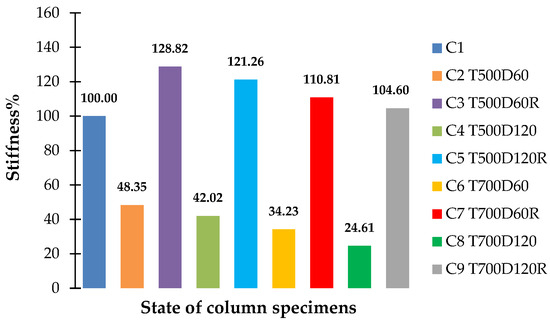
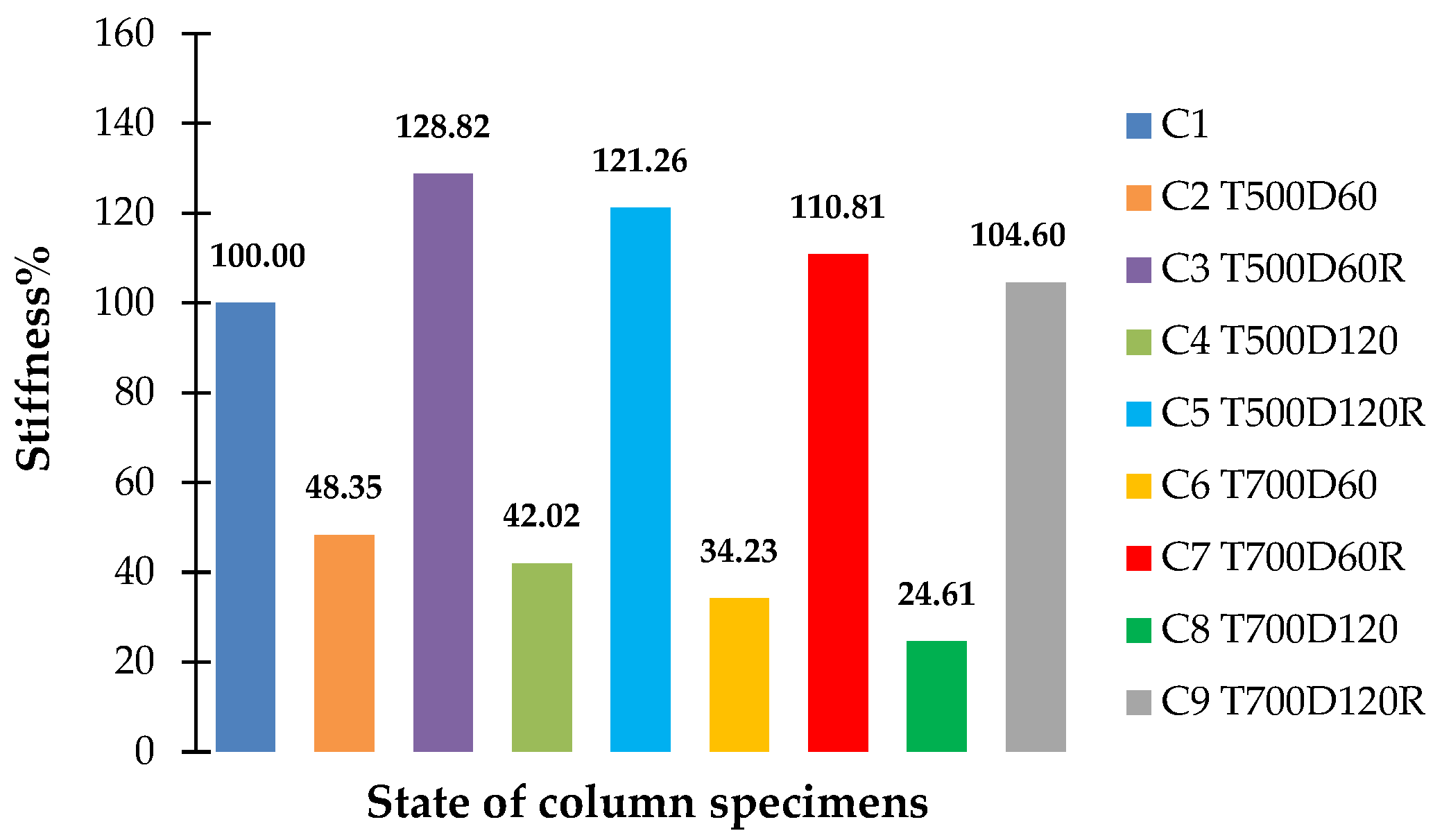
Stiffness is defined as the amount of load required to induce a unit deformation in a structural member. It can be evaluated using the secant slope drawn on the load–deflection curve at a point corresponding to 75% of the ultimate load [29]. As illustrated in Figure 13, the stiffness of each column was calculated and compared with that of the reference specimen.
Figure 13.
Stiffness of specimens.
The results clearly indicate a substantial reduction in stiffness with increasing fire temperature and exposure duration. The greatest loss in stiffness occurred at 700 °C for 60 and 120 min, with reductions of 65.77% and 75.39%, respectively, accompanied by a decrease in load-carrying capacity. In contrast, strengthening with Ultra-High-Performance Concrete (UHPC) resulted in a notable enhancement in both load capacity and column stiffness. The maximum improvements reached 28.82% and 21.26% at 500 °C for exposure durations of 60 and 120 min, respectively.
8.7. Limitations of the Study
Several limitations of the present study should be noted. First, the experimental program considered only a single fire exposure following pre-loading, and the effect of repeated fire events was not investigated. Second, an epoxy layer was used to improve the bond between UHPC and the existing concrete, which may exhibit poor performance at high temperatures. Third, the study involved a limited number of column specimens, and different geometries or loading conditions were not tested. Finally, numerical simulations were not performed, which limits the generalization of the results to other structural scenarios. These aspects should be considered when interpreting the findings.
9. Discussion
The experimental results confirm that fire exposure temperature and duration significantly influence the structural performance of pre-loaded reinforced concrete columns. The reductions in load-carrying capacity observed at 500 °C and 700 °C are consistent with previous studies reporting substantial degradation of compressive strength and stiffness of concrete at elevated temperatures due to microcracking, dehydration, and thermal incompatibility between constituents [11,12,13,15].
The interaction between sustained axial loading and thermal exposure plays a critical role in accelerating structural deterioration. Previous investigations on pre-loaded fire-exposed columns have demonstrated that mechanical loading during heating intensifies crack development and stiffness loss [7,8]. The present study extends these findings by quantifying the combined influence of temperature level and dwell time on residual strength.
The rehabilitation results demonstrate the high effectiveness of UHPC jacketing in restoring structural capacity. Similar enhancement trends have been reported in studies utilizing composite and jacketing repair systems for fire-damaged columns [16,18,19]. However, the recovery ratios observed in this study, particularly for columns exposed to 700 °C, highlight the strong confinement and stress redistribution capacity of UHPC.
The superior performance of UHPC can be attributed to its dense microstructure, high compressive strength, and fiber reinforcement, which improve both confinement and crack control [21,22,23]. The redistribution of stresses from the thermally degraded concrete core to the UHPC jacket significantly enhances the overall structural response. The observed shift in failure mode from compressive crushing to shear-dominated behavior further confirms the structural strengthening effect of the UHPC layer.
Overall, the findings indicate that UHPC strengthening is particularly beneficial for severely fire-damaged columns, where the contribution of the original concrete core becomes limited and the strengthening layer governs the structural response.
10. Conclusions
Below is a summary of the key conclusions that can be drawn regarding the behavior of the tested columns based on the experimental results:
- Specimens exposed to 500 °C exhibited higher stiffness after fire exposure compared to those exposed to 700 °C, as indicated by the load–displacement response. This behavior is attributed to the higher fire temperature at 700 °C, which induced greater thermal expansion of concrete and steel reinforcement, leading to increased internal stresses and stiffness degradation.
- Increasing the fire exposure duration from 60 to 120 min resulted in a noticeable reduction in load-bearing capacity. Columns exposed to 500 °C exhibited reductions of 22.68% and 33.89% after 60 and 120 min, respectively, compared to the reference column. In contrast, columns exposed to 700 °C showed greater reductions of 42.02% and 49.02% for the same exposure durations.
- It was observed that crack width and propagation became more pronounced with increasing temperature and longer exposure durations, consistent with the crack patterns in the preloaded fire exposed columns.
- The UHPC-strengthened columns exposed to 500 °C recovered 81.88% and 105.93% of their load-carrying capacity after 60 and 120 min of fire exposure, respectively, compared to their corresponding fire-damaged unstrengthened specimens. For columns exposed to 700 °C, the recovery percentages increased to 129.95% and 157.14% for 60 and 120 min, respectively. This significant improvement is attributed to the severe fire-induced damage, which caused extensive thermal expansion and a considerable loss of stiffness and strength in both concrete and steel reinforcement. UHPC strengthening also altered the failure mode to a shear failure in the corbel region and prevented further column failure.
- Full UHPC jacketing of the fire-exposed columns led to a notable improvement in both stiffness and ductility. Ductility increased by 39.85%, while stiffness increased by 16.37% compared with the reference specimens.
Author Contributions
Conceptualization, M.W.M., S.S.A. and A.S.M.; data curation, M.W.M.; formal analysis, A.S.M.; investigation, M.W.M.; methodology, S.S.A.; project administration, S.S.A. and A.S.M., resources, A.S.M.; software, M.W.M.; supervision, S.S.A. and A.S.M.; validation, M.W.M., S.S.A. and A.S.M.; visualization, S.S.A.; writing—original draft preparation, S.S.A.; writing—review and editing, A.S.M. All authors have read and agreed to the published version of the manuscript.
Funding
This research received no external funding.
Data Availability Statement
The data supporting the findings of this study are available from the corresponding author upon reasonable request.
Conflicts of Interest
The authors declare that there are no conflicts of interest.
Abbreviations
The following abbreviations are used in this manuscript:
| NSC | Normal Strength Concrete |
| UHPC | Ultra-High-Performance Concrete |
References
- Tayeh, B.A.; Naja, M.A.; Shihada, S.; Arafa, M. Repairing and Strengthening of Damaged RC Columns Using Thin Concrete Jacketing. Adv. Civ. Eng. 2019, 2019, 2987412. [Google Scholar] [CrossRef] [Scilit]
- Christke, S.; Gibson, A.G.; Grigoriou, K.; Mouritz, A.P. Multi-layer polymer metal laminates for the fire protection of lightweight structures. Mater. Des. 2016, 97, 349–356. [Google Scholar] [CrossRef] [Scilit]
- Darwin, D.; Dolan, C.W.; Nilson, A.H. Design of Concrete Structures; McGraw-Hill Education: New York, NY, USA, 2016; Volume 2. [Google Scholar]
- Ali Ahmad, A.; Abdul-Rahman Alkhazraji, F.; Mohammed Omar, S. Experimental study of Circular Short Columns made from Reactive Powder Concrete. Eng. Technol. J. 2016, 34, 1860–1872. [Google Scholar] [CrossRef] [Scilit]
- Sarsam, K.F.; Al-Shaarbaf, I.A.S.; Shuber, M.S. Behavior of Short Reinforced Porcelinite Concrete Columns Under Concentric Loads. Eng. Technol. J. 2009, 27, 1219–1234. [Google Scholar] [CrossRef] [Scilit]
- Mohammed, Z.; Muhammad, B.; Resheq, A. Slenderness effect on the behavior of composite RC columns under eccentric loads. Eng. Technol. J. 2024, 42, 1304–1313. [Google Scholar] [CrossRef] [Scilit]
- Raut, N.; Kodur, V. Response of Reinforced Concrete Columns under Fire-Induced Biaxial Bending. ACI Struct. J. 2011, 108, 610–619. [Google Scholar] [CrossRef] [Scilit]
- Jawad, S.A.; Ali, A.Y. Structural response of post-fire exposed reinforced concrete column with pre-load. IOP Conf. Ser. Mater. Sci. Eng. 2020, 928, 22151. [Google Scholar] [CrossRef] [Scilit]
- Al-Khafaji, Z.S.; Falah, M.W. Applications of high density concrete in preventing the impact of radiation on human health. J. Adv. Res. Dyn. Control Syst. 2020, 12, 666–670. [Google Scholar] [CrossRef] [Scilit]
- Mansour Kadhum Alkafaji, M. Structural Performance of Short Square Self Compacting Concrete Columns in Fire. Eng. Technol. J. 2015, 33, 237–256. [Google Scholar] [CrossRef] [Scilit]
- Shah, A.H.; Sharma, U.K. Fire resistance and spalling performance of confined concrete columns. Constr. Build. Mater. 2017, 156, 161–174. [Google Scholar] [CrossRef] [Scilit]
- Balaji, A.; Luquman, K.M.; Nagarajan, P.; Madhavan Pillai, T.M. Studies on the behavior of Reinforced Concrete Short Column subjected to fire. Alexandria Eng. J. 2016, 55, 475–486. [Google Scholar] [CrossRef] [Scilit]
- Kodur, V.; Hibner, D.; Agrawal, A. Residual response of reinforced concrete columns exposed to design fires. Procedia Eng. 2017, 210, 574–581. [Google Scholar] [CrossRef] [Scilit]
- ASTM E119-20; Test Methods for Fire Tests of Building Construction and Materials. ASTM International: West Conshohocken, PA, USA, 2020. [CrossRef] [Scilit]
- Kodur, V.K.R.; Raut, N.K.; Mao, X.Y.; Khaliq, W. Simplified approach for evaluating residual strength of fire-exposed reinforced concrete columns. Mater. Struct. 2013, 46, 2059–2075. [Google Scholar] [CrossRef] [Scilit]
- Yaqub, M.; Bailey, C.G. Repair of fire damaged circular reinforced concrete columns with FRP composites. Constr. Build. Mater. 2011, 25, 359–370. [Google Scholar] [CrossRef] [Scilit]
- Toska, K.; Beaucour, A.-L.; Faleschini, F.; Pellegrino, C.; Noumowe, A. Thermally Damaged Concrete: Repair through Textile-Reinforced Mortar Jackets. J. Compos. Constr. 2025, 29, 04025002. [Google Scholar] [CrossRef] [Scilit]
- Raza, S.; Khan, M.K.I.; Menegon, S.J.; Tsang, H.-H.; Wilson, J.L. Strengthening and Repair of Reinforced Concrete Columns by Jacketing: State-of-the-Art Review. Sustainability 2019, 11, 3208. [Google Scholar] [CrossRef] [Scilit]
- Wang, L.; Su, R.K.-L. Repair of Fire-Exposed Preloaded Rectangular Concrete Columns by Postcompressed Steel Plates. J. Struct. Eng. 2014, 140, 04013083. [Google Scholar] [CrossRef] [Scilit]
- Toska, K.; Hofer, L.; Faleschini, F.; Zanini, M.A.; Pellegrino, C. Seismic behavior of damaged RC columns repaired with FRCM composites. Eng. Struct. 2022, 262, 114339. [Google Scholar] [CrossRef] [Scilit]
- Alasmari, H.A. Rehabilitation of overload-damaged reinforced concrete columns using ultra-high-performance fiber-reinforced concrete. Open Eng. 2023, 13, 20220437. [Google Scholar] [CrossRef] [Scilit]
- Abbas, S.; Nehdi, M.L.; Saleem, M.A. Ultra-High Performance Concrete: Mechanical Performance, Durability, Sustainability and Implementation Challenges. Int. J. Concr. Struct. Mater. 2016, 10, 271–295. [Google Scholar] [CrossRef] [Scilit]
- Brühwiler, E.; Denarié, E. Rehabilitation and Strengthening of Concrete Structures Using Ultra-High Performance Fibre Reinforced Concrete. Struct. Eng. Int. 2013, 23, 450–457. [Google Scholar] [CrossRef] [Scilit]
- BASF. Glenium 54. High Performance Concrete Superplasticizer Based on Modified Polycarboxylic Ether; Technical Data Sheet; BASF Construction Chemicals: Dubai, United Arab Emirates, 2009. [Google Scholar]
- C230/C230M A; Specification for Flow Table for Use in Tests of Hydraulic Cement. ASTM International: West Conshohocken, PA, USA, 2014. [CrossRef] [Scilit]
- ASTM-C1437-15; Test Method for Flow of Hydraulic Cement Mortar. ASTM International: West Conshohocken, PA, USA, 2015. [CrossRef] [Scilit]
- ASTM-C1856/C1856M-17; Standard Practice for Fabricating and Testing Specimens of Ultra-High Performance Concrete. ASTM International: West Conshohocken, PA, USA, 2017. [CrossRef] [Scilit]
- Kumar, V.; Iqbal, M.A.; Mittal, A.K. Energy absorption capacity of prestressed and reinforced concrete slabs subjected to multiple impacts. Procedia Struct. Integr. 2017, 6, 11–18. [Google Scholar] [CrossRef] [Scilit]
- Muthuswamy, K.R.; Thirugnanam, G.S. Structural behaviour of hybrid fibre reinforced concrete exterior Beam-Column joint subjected to cyclic loading. Int. J. Civ. Struct. Eng. 2014, 4, 262–273. [Google Scholar]

Disclaimer/Publisher’s Note: The statements, opinions and data contained in all publications are solely those of the individual author(s) and contributor(s) and not of MDPI and/or the editor(s). MDPI and/or the editor(s) disclaim responsibility for any injury to people or property resulting from any ideas, methods, instructions or products referred to in the content. |
© 2026 by the authors. Licensee MDPI, Basel, Switzerland. This article is an open access article distributed under the terms and conditions of the Creative Commons Attribution (CC BY) license.