


Abstract
To address the current absence of targeted gradation design for porous asphalt pavements both domestically and internationally, this study employs the Coarse Aggregate Void Filling (CAVF) method to design the gradation of porous asphalt mixtures. Marshall stability tests, rutting tests, and scattering tests were conducted to investigate the relationship between coarse aggregate proportions and the structural stability of the mixture skeleton. An orthogonal experimental design was further utilized to examine the influence of three levels of fine aggregate gradation on the acoustic absorption characteristics of the mixture, and to analyze the effects of aggregate gradation on the primary pore diameter, connected pore diameter, and connected pore length. The results indicate that the coarse aggregate gradation predominantly governs the skeleton strength and overall pavement performance of the mixture, whereas the fine aggregate gradation exhibits significant effects on the interconnected void ratio, pore structure, and sound absorption performance. The optimal roughness range of coarse aggregates in porous asphalt mixtures is determined to be 0.46–0.52. The proportion of 0.6–1.18 mm aggregates has a pronounced influence on the primary pore diameter, connected pore diameter, and connected pore length. By integrating the design considerations for both coarse and fine aggregate gradations, a recommended gradation range for porous asphalt mixtures is proposed that achieves a balance between pavement performance and sound absorption/noise-reduction effectiveness.
1. Introduction
In recent years, the number of motor vehicles in China has continued to grow. According to the latest statistics released by the Ministry of Public Security, as of June 2024, the national motor vehicle fleet has reached 440 million units [1]. While the increasing number of vehicles has facilitated passenger travel and freight transportation, the large-scale operation of motor vehicles has resulted in an escalating problem of traffic noise pollution [2]. Traffic noise has become one of the primary factors contributing to the deterioration of the urban acoustic environment. Studies have shown that [3]: long-term exposure to high-noise environments exceeding 80 dB can cause significant hearing damage. In addition, noise pollution can lead to elevated blood pressure and increased secretion of stress hormones, thus posing serious threats to the physical and mental health of urban residents [4]. Consequently, the prevention and control of traffic noise have attracted growing attention from transportation management authorities, and relevant research has been conducted by domestic and international institutions and scholars.
Current strategies for traffic noise mitigation are primarily implemented from two perspectives: (1) noise reduction at the source, and (2) interruption of noise propagation [5]. Measures aimed at blocking noise transmission include the installation of green belts [6], noise barriers [7], and noise-reducing glazing systems [8]. Source-control measures include the application of low-noise pavements [9] and the use of low-noise engines or tires [10]. Among these, source-based noise mitigation fundamentally addresses the issue, offering more substantial noise-reduction benefits and greater cost-effectiveness. Low-noise pavements, in particular, can effectively control noise generation at the source while enhancing pavement skid resistance. At present, low-noise pavement technologies primarily include porous asphalt pavements and elastic noise-reducing pavements [11]. Elastic noise-reducing pavements reduce vehicle noise by increasing pavement elasticity and damping capacity, thereby decreasing vibration generated at the tire–pavement interface [12]. However, this type of pavement is associated with high construction costs, and the incorporation of rubber powder (or granules) may release toxic fumes, posing risks to human health. The noise-reduction mechanism of porous asphalt pavements mainly includes the following: first, their high air-void content reduces air-pumping noise generated by the suction and release of air within the cavity formed between tire tread grooves and the pavement surface, and eliminates the horn effect at the tire–pavement contact area [5]; Second, when sound waves encounter the pavement surface, they undergo refraction, reflection, and diffraction within the interconnected voids, converting acoustic energy into thermal energy and dissipating it, thereby achieving effective noise attenuation [13]. Furthermore, due to their high porosity, porous asphalt pavements also offer additional advantages such as reduced surface runoff, mitigation of the urban heat island effect, and improved pavement skid resistance [14,15].
Extensive research has been conducted by scholars worldwide on the influencing factors, noise-reduction performance, and acoustic modeling of porous asphalt pavements. Regarding the factors affecting sound absorption. Knabben et al. [16] used an impedance tube to assess the sound absorption coefficients of four types of asphalt mixtures and examined the effects of aggregate size distribution and void volume on sound absorption. Their findings indicate that absorption performance is strongly influenced by interconnected porosity and layer thickness. Wang et al. [17] investigated the influence of pore-structure parameters on the acoustic absorption of porous asphalt mixtures, demonstrating that increases in pore radius and air-void content reduce sound absorption capacity, whereas a higher air-void content broadens the effective absorption frequency range. Regarding the noise-reduction performance of porous asphalt pavements, Ejsmont et al. [9] reported that porous elastic pavements can reduce tire–pavement noise by 7–12 dB compared to dense asphalt concrete. Yuan et al. [18] found that dual-layer porous asphalt pavements on inner and outer lanes provide superior tire–pavement noise reduction for both light and heavy vehicles compared with other pavement configurations. To further analyze the acoustic absorption characteristics of porous asphalt surfaces, several researchers have developed sound absorption models. Li Mingliang et al. [19], based on the theoretical acoustic model of porous solid media and the transfer matrix method, established a multilayer porous asphalt sound absorption prediction model with frequency-dependent characteristics, providing an effective acoustic design tool for low-noise pavement development. GAOL et al. [20] constructed a predictive model relating absorption coefficients to void parameters using CT scanning, image processing, and 3D reconstruction, offering valuable guidance for the practical applications of porous asphalt concrete (PAC) in noise reduction, sound absorption, and vibration mitigation. In summary, although extensive studies have been conducted on the sound absorption performance of porous asphalt pavements, research addressing the interrelationship among mixture gradation, void characteristics, and acoustic absorption performance remains insufficient. Therefore, investigating these relationships holds significant importance for advancing the understanding and optimization of the sound absorption mechanisms of porous asphalt pavements.
Due to the low fine-aggregate content and high air-void content of porous asphalt mixtures, their mechanical strength primarily depends on the interlocking of coarse aggregates [21]. Therefore, pavement performance and durability must be emphasized during gradation design. Bin Xu et al. [22] conducted experimental studies using limestone as the aggregate in mixtures and established the forming parameter range of the Marshall design method suitable for porous asphalt with limestone as coarse aggregate. MANSOUR et al. [23] investigated the influence of aggregate gradation on the pavement performance of porous asphalt mixtures. Gummadi Chiranjeevi et al. [24] studied the conditions affecting density and stiffness characteristics under aggregate gradation packing conditions. The findings demonstrate that filler material significantly affects the air void content and stability of the skeleton and that gradations, particularly fractions with 4.75 to 2.36 mm. impact the performance of porous asphalt mixtures. Currently, gradation design research for porous asphalt mixtures primarily focuses on improving single performance indicators, with limited attention to the coordinated optimization of coarse-aggregate skeletal interlock and fine-aggregate void-structure parameters. Furthermore, gradation design often relies on recommended ranges from PAC, Open-Graded Friction Course (OGFC), and Porous Asphalt (PA) specifications, which insufficiently address the relationship between gradation design and acoustic mechanisms, and thus are not fully suited for low-noise asphalt mixture design. Therefore, a targeted gradation design that simultaneously considers pavement performance and acoustic performance is urgently needed.
In this study, the Coarse Aggregate Voids-Filling (CAVF) method is adopted to control the air-void content of the mixture. Six mixtures with different coarse-aggregate gradations are designed by adjusting the coarse-aggregate proportions. Rutting tests, Marshall stability tests, immersion Marshall tests, and scattering tests are conducted to evaluate the influence of coarse-aggregate gradation on the pavement performance of porous asphalt mixtures and to determine the optimal range of coarse-aggregate roughness. Based on the relationship between gradation parameters and interconnected void ratio, gradation parameters strongly affecting acoustic absorption (0.6–4.75 mm) are selected as experimental factors for an orthogonal test. Through range analysis and analysis of variance, optimal factor levels at each frequency band are identified, and a recommended gradation range is proposed based on the acoustic absorption and noise-reduction performance of the mixtures.
2. Materials and Methods
2.1. Materials
2.1.1. Asphalt
This study uses high-viscosity asphalt to prepare porous asphalt mixtures. Based on previous experiments conducted by the research team [25], the amount of High Viscosity Additive (HVA) is determined to be 12% by weight of the base asphalt with a penetration grade of 90. The high-viscosity modifier and the high-viscosity modified asphalt were purchased from Shandong Province, China. The technical specifications of the high-viscosity modifier and the high-viscosity modified asphalt are shown in Table 1 and Table 2.
Table 1.
Performance indicators of HVA high viscosity modifier.
Table 2.
Performance indicators of high viscosity modified asphalt.
2.1.2. Aggregate
In this study, basalt is used as the coarse aggregate, limestone as the fine aggregate, and dry, clean limestone mineral powder is used as the filler. The coarse and fine aggregates were purchased from Hebei Province, China. The technical specifications of the aggregates are provided in Table 3, Table 4 and Table 5.
Table 3.
Performance indicators of coarse aggregate.
Table 4.
Performance indicators of fine aggregate.
Table 5.
Performance indicators of mineral powder.
2.2. Methods
2.2.1. Standing Wave Tube Method
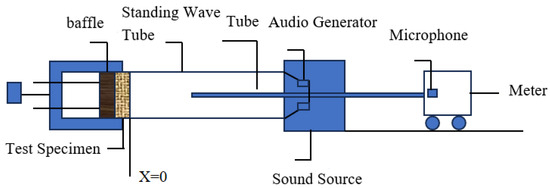
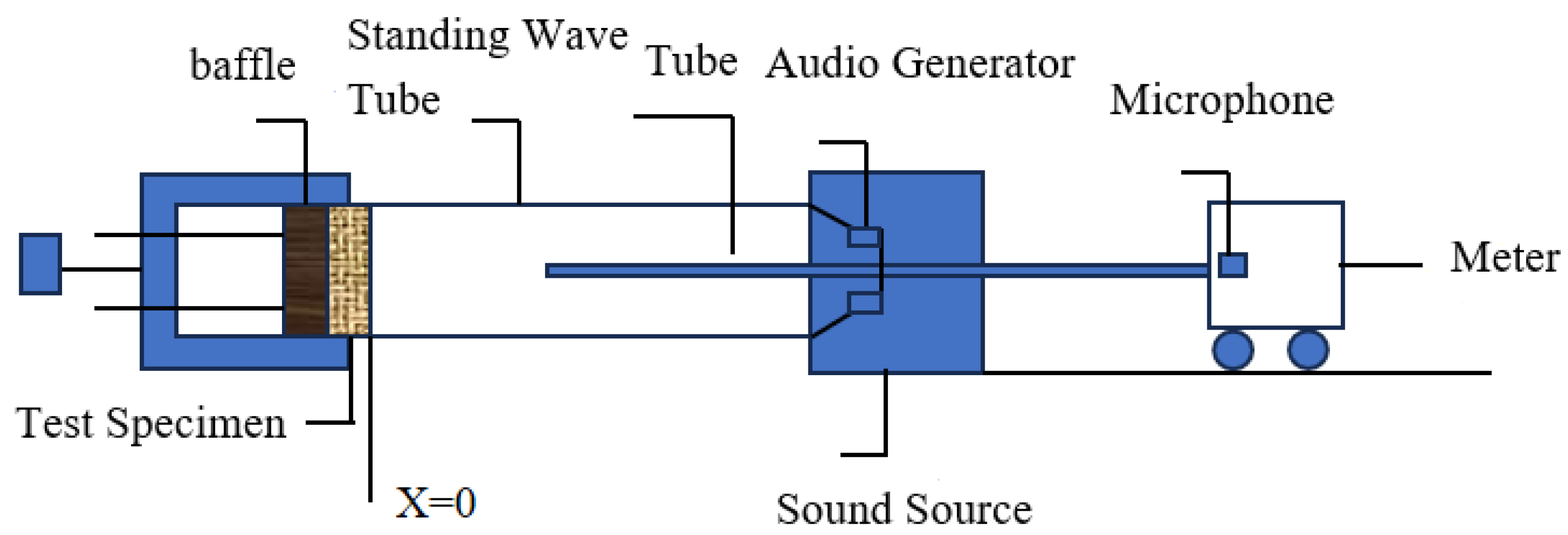
The sound absorption coefficient is defined as the ratio of the acoustic energy absorbed by a material to the acoustic energy incident upon its surface, and is commonly used to characterize the sound absorption capacity of porous materials. In this study, the Standing Wave Tube Method (referencing the provisions in GB/T 18696.1-2004, “Measurement of Sound Absorption Coefficient and Acoustic Impedance in Acoustic Impedance Tubes” [26]) is used to determine the sound absorption coefficients of porous asphalt mixtures within the frequency range of 400–2000 Hz. The standing wave tube method operates on the principle that sound waves emitted by a loudspeaker superimpose with waves reflected from the opposite end of the tube, thereby generating a standing wave phenomenon. Under such conditions, the sound pressure exhibits a periodic distribution of maxima and minima along the longitudinal axis of the tube. The formation of a perfect standing wave requires the superposition of two waves that satisfy the following conditions: they must have identical frequency and amplitude, and propagate in opposite directions.
The diameter of the test specimen is 9.5 cm, and its thickness is 5 cm. The structure of the standing wave tube is shown in Figure 1. The formula for calculating the sound absorption coefficient α at a specified frequency is as follows (1):
Figure 1.
Schematic diagram of standing wave tube structure.
α = 4 × 10ΔL/20/(10ΔL/20 + 1)2
In the formula, ΔL represents the peak-to-peak difference between the maximum and minimum sound pressure levels, with the unit being dB. This is the standing wave ratio.
2.2.2. Image Processing
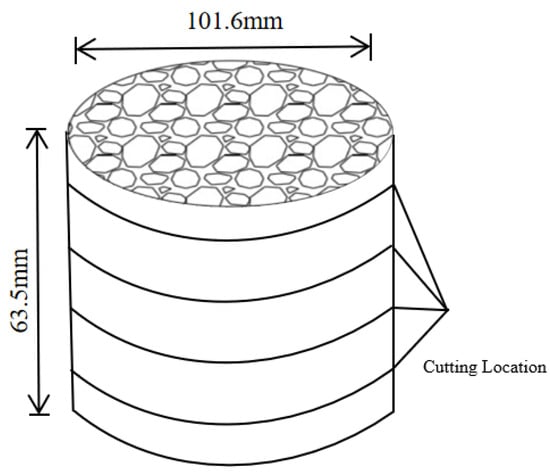
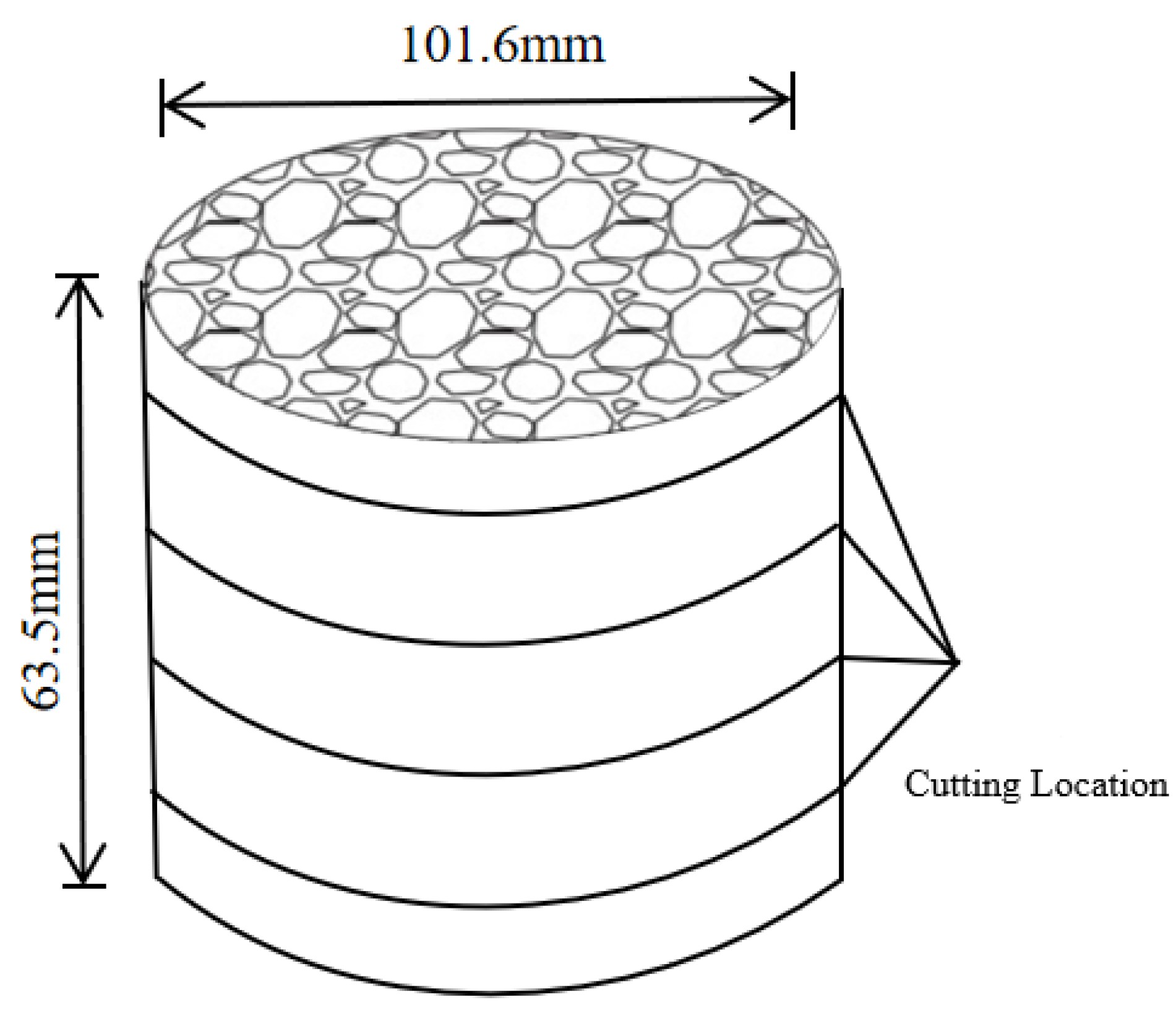
To characterize the internal void structure of the porous asphalt mixture, the samples are subjected to sectioning. The cutting method is shown in Figure 2. After cutting, image acquisition is performed under the same scene and consistent lighting conditions, with the lens kept parallel to the surface of the specimen. The distance between the lens and the specimen surface is fixed at 25 cm.
Figure 2.
Marshall specimen cutting method.
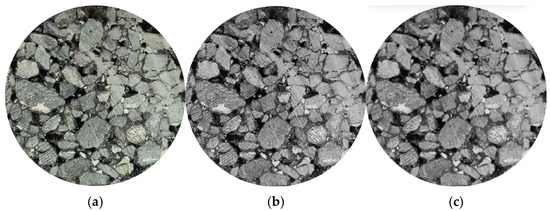
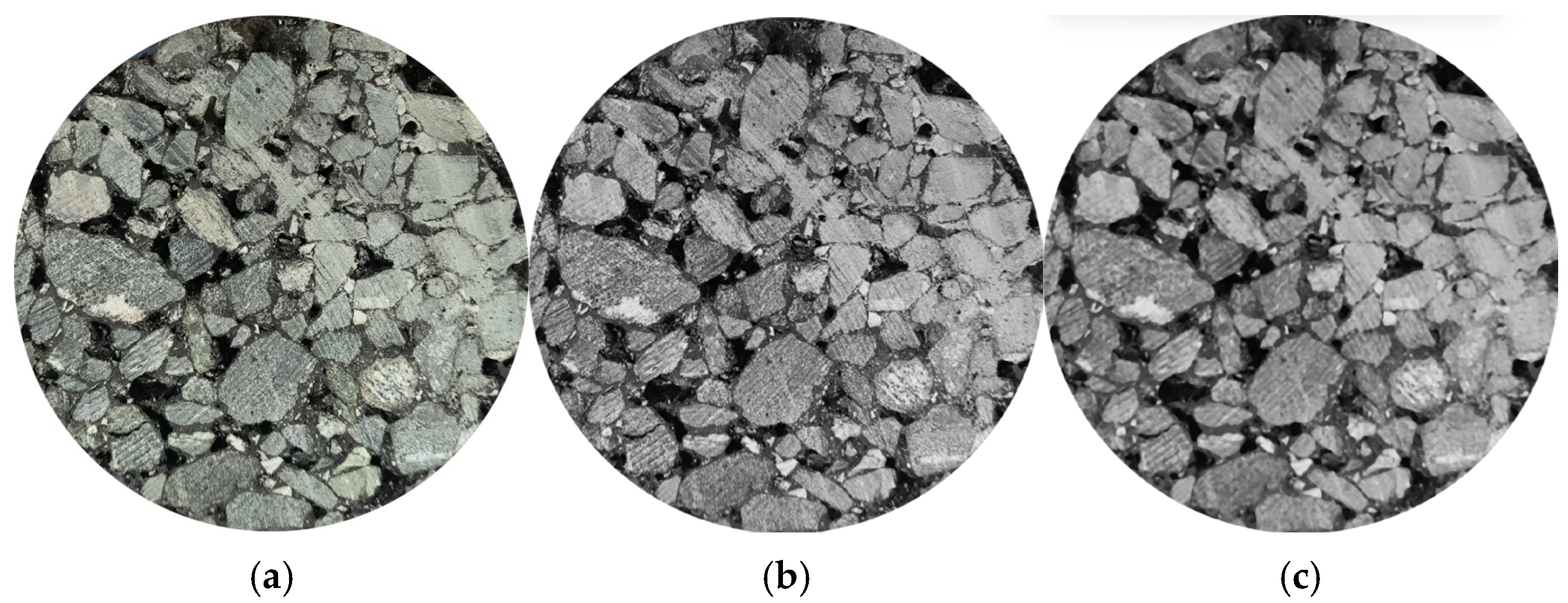
The image processing method is as follows: First, the image is converted to grayscale to enhance the contrast and highlight the details in the image. A filtering and noise reduction process is then applied to remove some image noise, revealing the true features of the image. Next, a grayscale thresholding technique is employed, selecting a threshold value T to differentiate between object points and background, thus providing clearer void information. After obtaining the void distribution map and void information from each cross-section using the above methods, parameters such as the diameter of the connected pores (Dc), the diameter of the primary pores (Ds), and the length of the connected pores (Lc) are extracted. The specific test procedure is shown in Figure 3.
Figure 3.
(a) Original cross-sectional image (b) Grayscale-sectional image (c) Median filtered image.
2.2.3. Performance Testing
To evaluate the key pavement performance characteristics of porous asphalt mixtures, a series of mechanical tests were conducted following Chinese standards (JTG E20-2011) [27], with reference to corresponding ASTM standards.
Marshall stability and water sensitivity: The Marshall stability test (JTG T0709, analogous to ASTM D6927 [28]) measures the resistance of asphalt mixtures to deformation under load, reflecting their mechanical strength. The water sensitivity (immersion Marshall) test (JTG T0709, similar to ASTM D1075 [29]) evaluates the retained stability after water conditioning, which is critical for porous mixtures due to their high air void content and susceptibility to moisture damage. High-temperature stability:
The rutting test (JTG T0719, corresponding to ASTM D8292 [30]) assesses permanent deformation resistance under repeated wheel loading at elevated temperatures, which is essential for pavements in hot climates. Ravelling resistance:
The Cantabro test (JTG T0733, analogous to ASTM D7064 [31]) determines the mass loss of specimens subjected to abrasion in a Los Angeles drum, simulating the loss of aggregate particles under traffic.
3. Gradation Design
3.1. CAVF Method
This paper adopts the CAVF method to design the gradation of porous asphalt mixtures, exploring the relationship between the coarse aggregate proportion and the skeleton stability of the mixture. Through an orthogonal experiment, the influence of gradation parameters on the sound absorption characteristics of the mixture is analyzed. The CAVF method utilizes the volumetric relationship of the mixture components to directly design for the target void ratio. The design approach aims to ensure that the sum of the target void volume ratio, asphalt binder volume ratio, and the fine aggregate volume ratio equals the measured void ratio of the mineral skeleton [32].
The calculation formulas for the CAVF method are shown in Equations (2) and (3):
qc + qf + qp = 100
In the formulas, qc, qf, and qp represent the mass percentages of coarse aggregate, fine aggregate, and mineral powder, respectively, with units in %; qa represents the mass percentage of asphalt, with units in %; ρa represents the density of asphalt, with units in g/cm3; ρtf(p) represents the apparent density of fine materials and mineral powder, with units in g/cm3; ρSC represents the compacted density of coarse aggregate, with units in g/cm3; VCADRC represents the filling void ratio percentage of coarse aggregate, with units in %; Vvs represents the design void ratio of the asphalt mixture, with units in %.
3.2. Coarse Gradation Design
To quantify the effect of the coarse aggregate gradation ratio on the skeleton structure, the roughness of coarseness (σ) is used to characterize the gradation coarseness of the coarse aggregate [33]. P9.5 was determined according to the sieving method specified in the Test Methods of Aggregate for Highway Engineering, and the result was taken as the average of three parallel tests. σ represents the proportion of aggregate particles larger than 9.5 mm in the coarse aggregate, and its expression is shown in Equation (4).
σ = P9.5/Pc
In the formulas, P9.5 represents the proportion of aggregate particles larger than 9.5 mm in the total aggregate, and PC represents the proportion of the total coarse aggregate content in the aggregate mix.
According to the «Technical Specifications for Design and Construction of Porous Asphalt Pavement (JTG/T 3350-03-2020)» [34], the calculated range of the coarse aggregate coarseness (σ) is 0.32 to 0.85, based on the gradation design range for a nominal maximum aggregate size of 16 mm. According to gradation design theory, the particle size distribution of aggregates should exhibit good continuity. If σ is too high (>0.55), it may lead to a deficiency in intermediate particle sizes. In such cases, although a coarse aggregate skeleton can still form, the stability of the mixture could be significantly compromised. Therefore, for the purpose of this investigation, the σ values were preliminarily set at 0.34, 0.38, 0.42, 0.46, 0.50, and 0.54. [35].
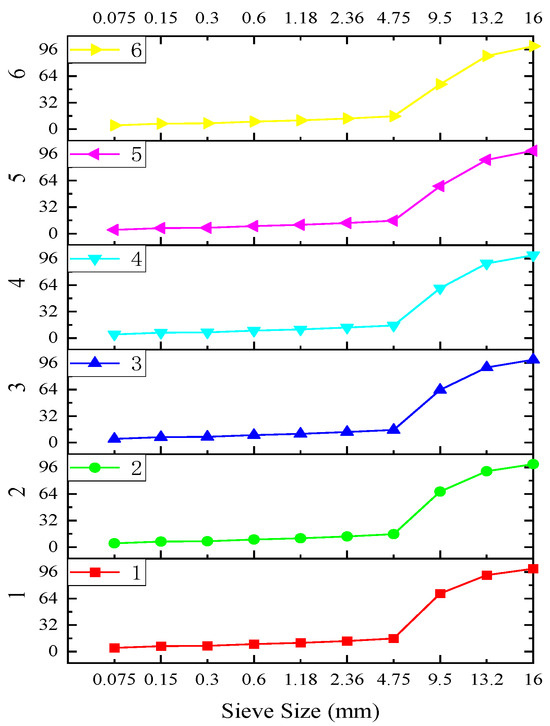
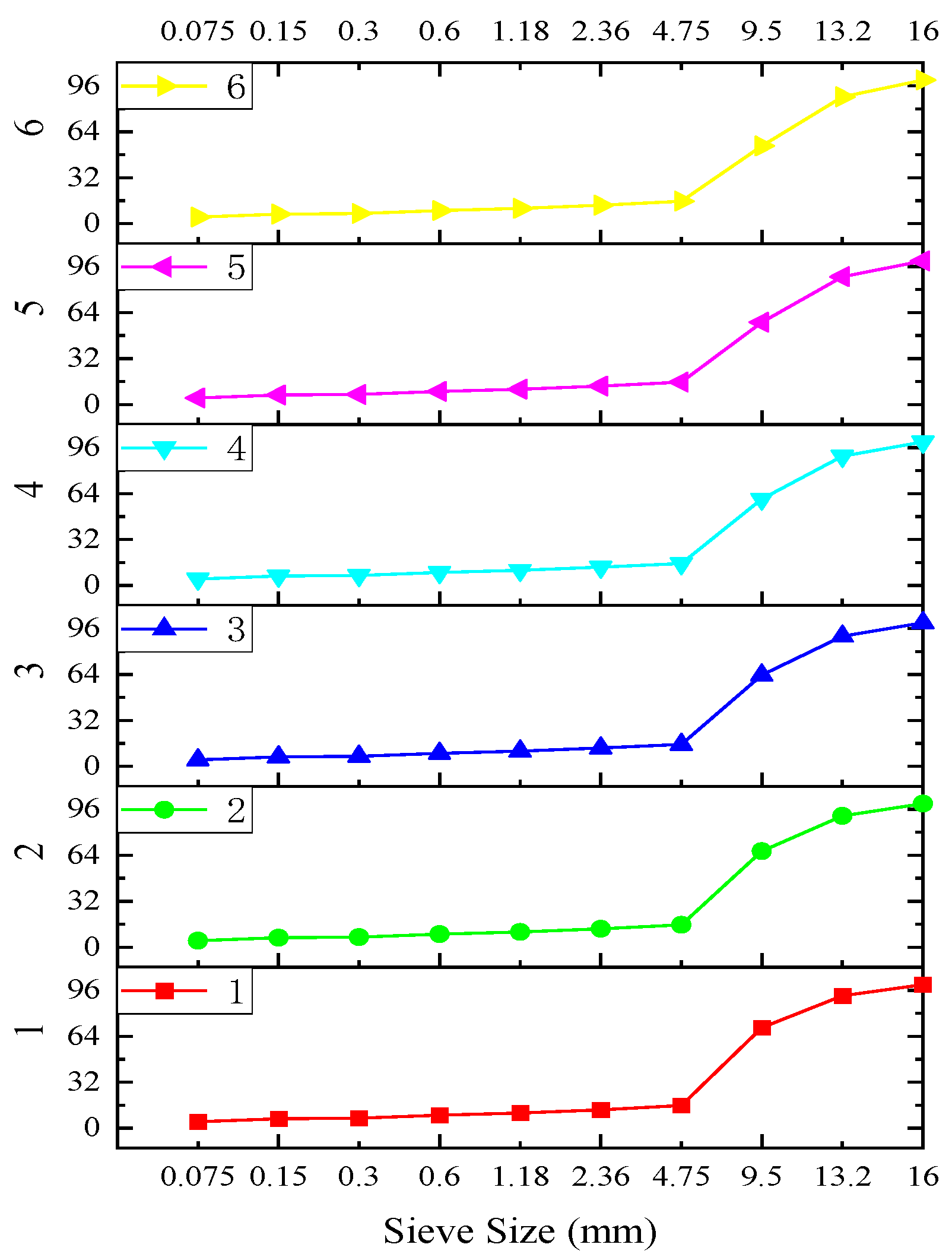
In exploring the effect of coarse aggregate proportions on the performance of the mixture, in order to minimize the interference caused by variations in void ratio on the experimental results, the void ratio must be controlled within 21 ± 1% [32]. The gradation parameters for the six groups with different roughness levels are shown in Table 6 and Table 7, and Figure 4.
Table 6.
CAVF Parameters and Theoretical Void Ratio Calculation Table.
Table 7.
The gradation composition of porous asphalt mixture used in the experiment.
Figure 4.
Grading curve chart.
3.3. Fine Aggregate Gradation Design
Research has shown that the usage of aggregates in the particle size ranges of 0.6~1.18 mm, 1.18~2.36 mm, and 2.36~4.75 mm significantly affects the void ratio of porous asphalt mixtures [36]. Therefore, the proportion of these three aggregate size ranges in the total mineral material is selected as the experimental factors for the orthogonal experiment, which is a three-factor, three-level orthogonal experiment. The aim is to investigate the relationship between the gradation design and the sound absorption coefficient.
Excessive amounts of aggregates in the 0.6–4.75 mm range can lead to a reduction in the air void content of the mixture, thereby adversely affecting its sound absorption and noise reduction performance. In practical engineering applications of porous asphalt (drainage) mixtures and noise-reducing asphalt mixtures, the proportion of aggregates other than the primary coarse aggregate skeleton is typically controlled within the range between the lower gradation limit and the mid-value of the gradation specification. Accordingly, in this study, the 0% level represents a boundary condition below the commonly applied lower limit in engineering practice, while the 2/2.5% and 4/5% levels approximate the lower limit and the mid-value, respectively, thereby covering the interval from the lower limit to the conventional range. Furthermore, the inclusion of 0%, 2/2.5%, and 4/5% levels establishes a continuous gradient from complete absence to moderate incorporation, which facilitates the investigation of the influence and underlying mechanism of fine aggregate fractions on the pore structure and acoustic performance of the mixture as they transition from absence to presence. The values of each factor and the orthogonal experimental design are shown in Table 8.
Table 8.
Factor Level Table.
To test the experimental errors and determine the reliability level, an error column is added to the orthogonal design table, as shown in Table 9.
Table 9.
Three-factor three-level orthogonal experimental design table with error column.
Based on Table 8, the coarse aggregate gradation adopts the recommended roughness range mentioned earlier. The CAVF method is used for trial calculation and adjustment, and the resulting orthogonal experimental gradation design table is shown in Table 10.
Table 10.
Orthogonal Experimental Grading Design Table.
4. Results Analysis
4.1. Performance Analysis
4.1.1. Marshall Test Analysis
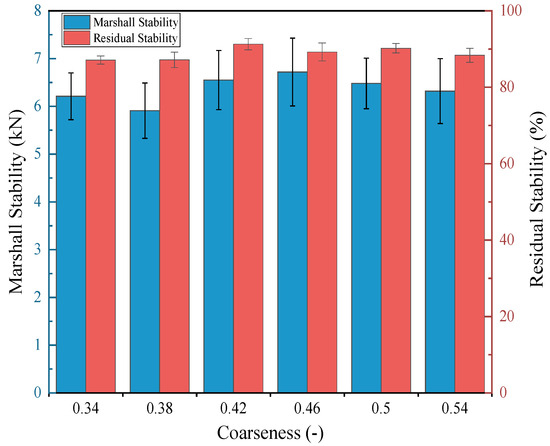
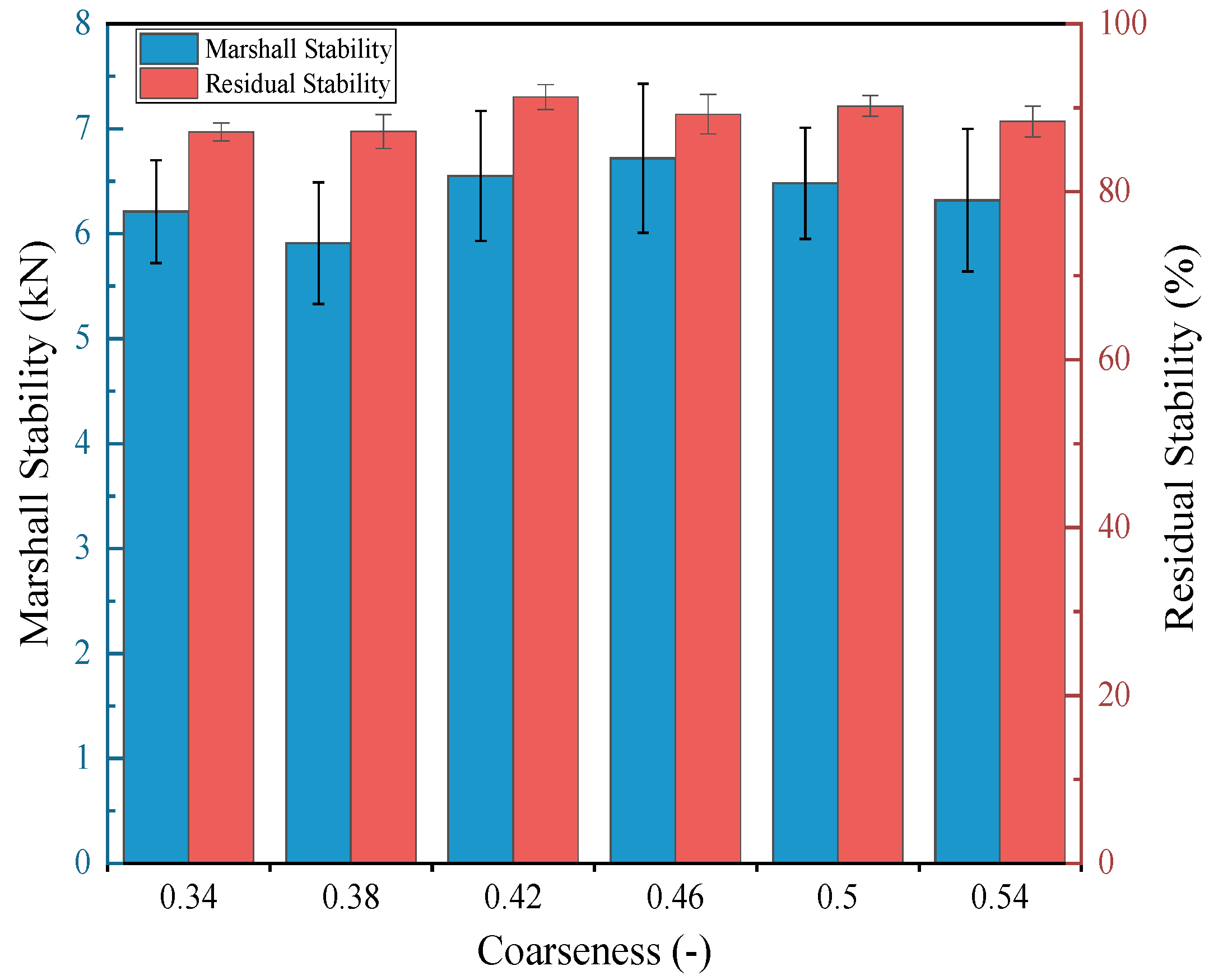
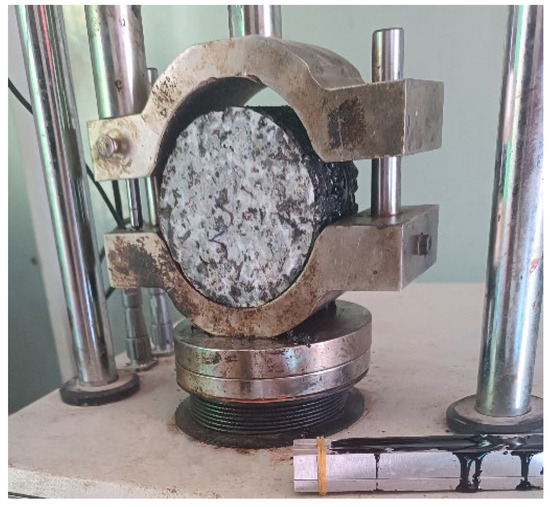
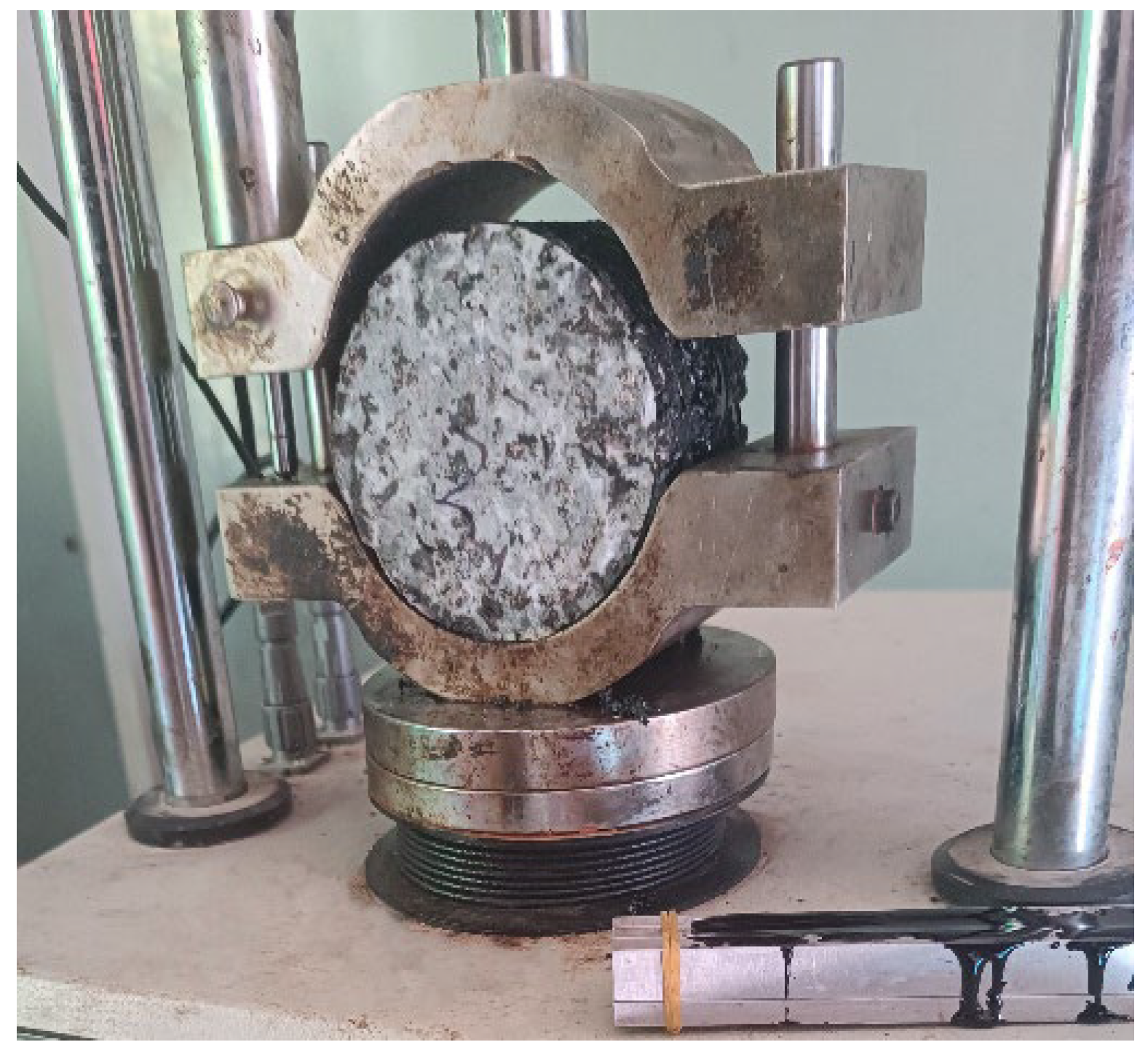
The Marshall Stability Test is selected for evaluating the stability, using Marshall stability as the evaluation index. The Water Immersion Marshall Stability Test is chosen for evaluating water stability, with residual stability as the evaluation index. The test results are shown in Figure 5. The testing process is shown in Figure 6.
Figure 5.
Linear fitting of connectivity porosity and grading parameters.
Figure 6.
Marshall Stability Tester for Asphalt Mixtures.
As shown in Figure 5, the Marshall stability of all six samples is around 6 kN, which meets the specification requirement of 5 kN. The Marshall stability is minimally affected by changes in roughness, as it is primarily influenced by factors such as asphalt performance, quantity, and fine aggregate. In the Marshall stability test, the internal tensile forces generated during loading are mainly borne by the asphalt and fine aggregates. The gradation differences caused by changes in roughness are diminished by the bonding and lubricating effects of the asphalt. Furthermore, in the mix design used for the experiment, both the fine aggregate ratio and the asphalt content remained unchanged.
As shown in Figure 5, the average residual stability is 89.76%, which meets the requirement of 85% as specified in the “Design and Construction Technical Specifications for Permeable Asphalt Pavements” [34] (JTG/T3350-03-2020). When the roughness changes, no significant variation in residual stability is observed, indicating that it is less affected by gradation. This is because residual stability mainly depends on the adhesion between asphalt and aggregate, with the asphalt coating the surface of the fine aggregates, ensuring water stability.
4.1.2. Dynamic Stability and Anti-Raveling Resistance
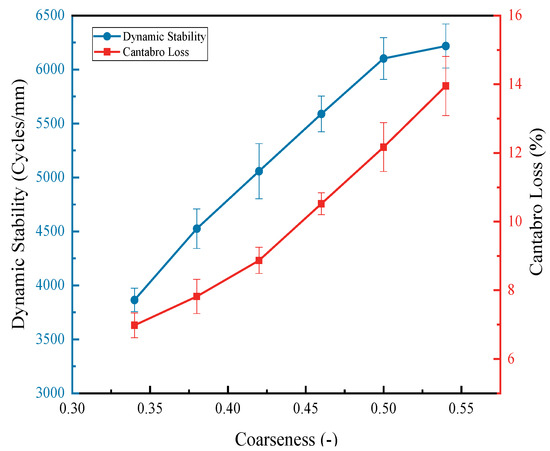
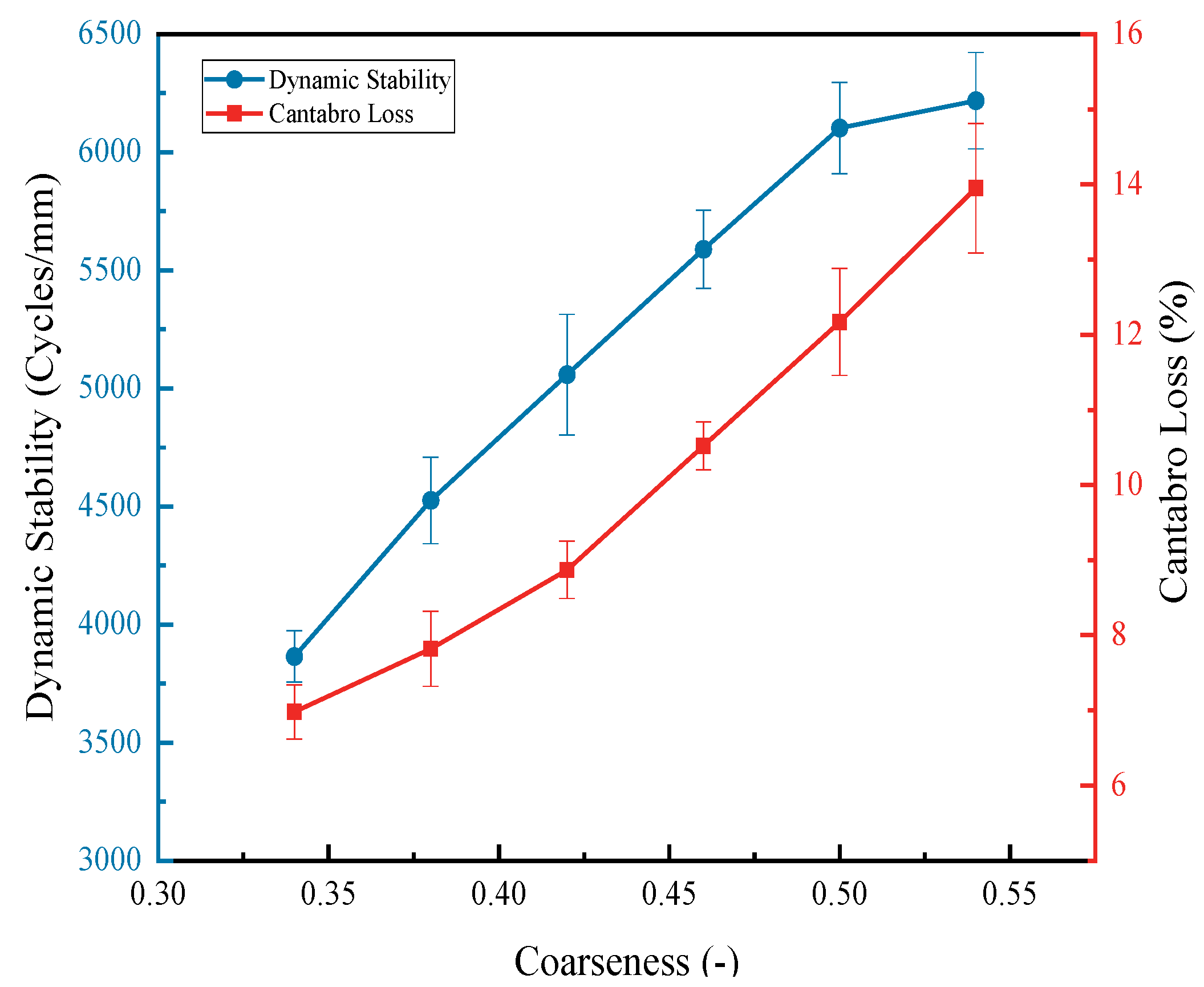
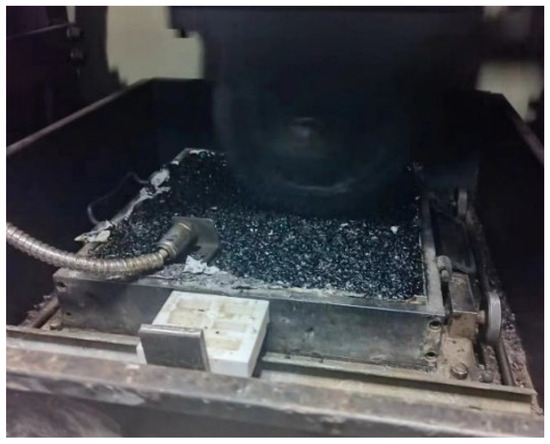
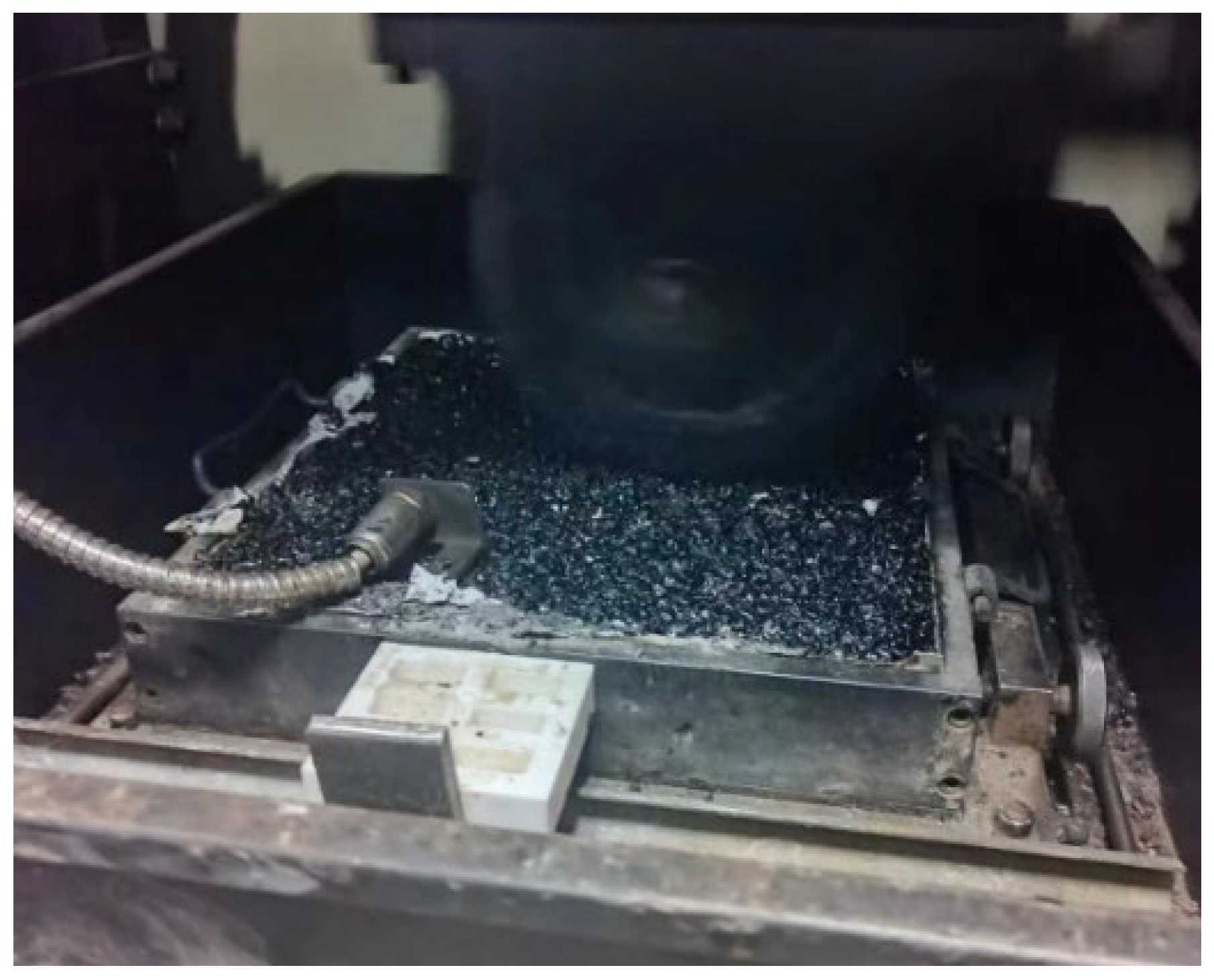
The rutting test is selected for evaluating high-temperature stability, using dynamic stability as the evaluation index. The raveling test is chosen for evaluating anti-raveling performance, with raveling loss as the evaluation index. The test results are shown in Figure 7. The testing process is shown in Figure 8.
Figure 7.
The relationship between dynamic stability and roughness σ.
Figure 8.
Asphalt Mixture Rutting Test.
As shown in Figure 7, as the aggregate roughness increases, the dynamic stability of the porous asphalt mixture gradually improves, enhancing high-temperature stability. However, when the roughness reaches 0.5, the increase in dynamic stability slows down significantly. When the roughness is 0.54, the dynamic stability reaches its highest value of 6238 cycles/mm. This occurs due to the increased coarse aggregate content in the mixture when the coarseness level is elevated. The coarse aggregates play a significant role in forming the skeleton, providing good resistance to high-temperature deformation. However, when the roughness exceeds a certain level, the lack of secondary-sized aggregates to support the skeleton leads to only a minimal increase in rutting resistance, and the growth of dynamic stability slows down.
It can be observed that when the roughness is 0.34, the raveling loss is 7.2%, and when the roughness is 0.54, the raveling loss increases to 13.9%. The raveling loss is positively correlated with the roughness, and a finer gradation of coarse aggregates is beneficial for improving the anti-raveling performance of the mixture. This is primarily because, as the roughness of the coarse aggregate increases, the specific surface area of the aggregates decreases, reducing the bonding area with the asphalt binder. This leads to a lower adsorption capacity of the asphalt, weakening the adhesive bond between the aggregate and asphalt, thus increasing the likelihood of raveling and particle loss under external forces. According to the “Design and Construction Technical Specifications for Permeable Asphalt Pavements” [34] (JTG/T3350-03-2020) in China, the raveling loss requirement for porous asphalt mixtures should not exceed 15%. To ensure the bonding performance of the mixture, excessively high roughness values should be avoided in the gradation design.
From the above pavement performance tests of the mixture, it is clear that Marshall stability and residual stability are not significantly affected by roughness. The parameters most affected by roughness are dynamic stability and raveling loss, both of which show a clear increasing trend as roughness increases. Considering the overall impact of roughness on the pavement performance of the mixture, the recommended roughness range is 0.46–0.52.
4.2. Acoustic Absorption Coefficient: Results and Analysis from Orthogonal Experimental Design
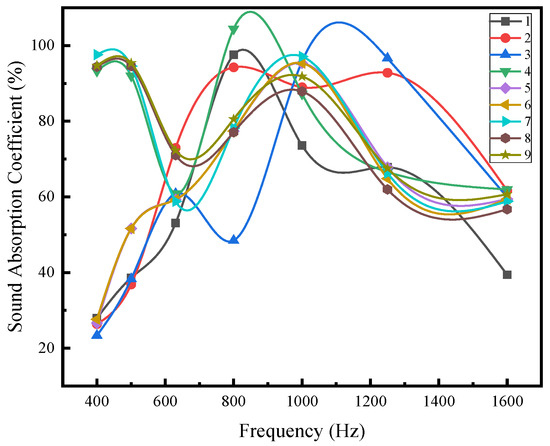
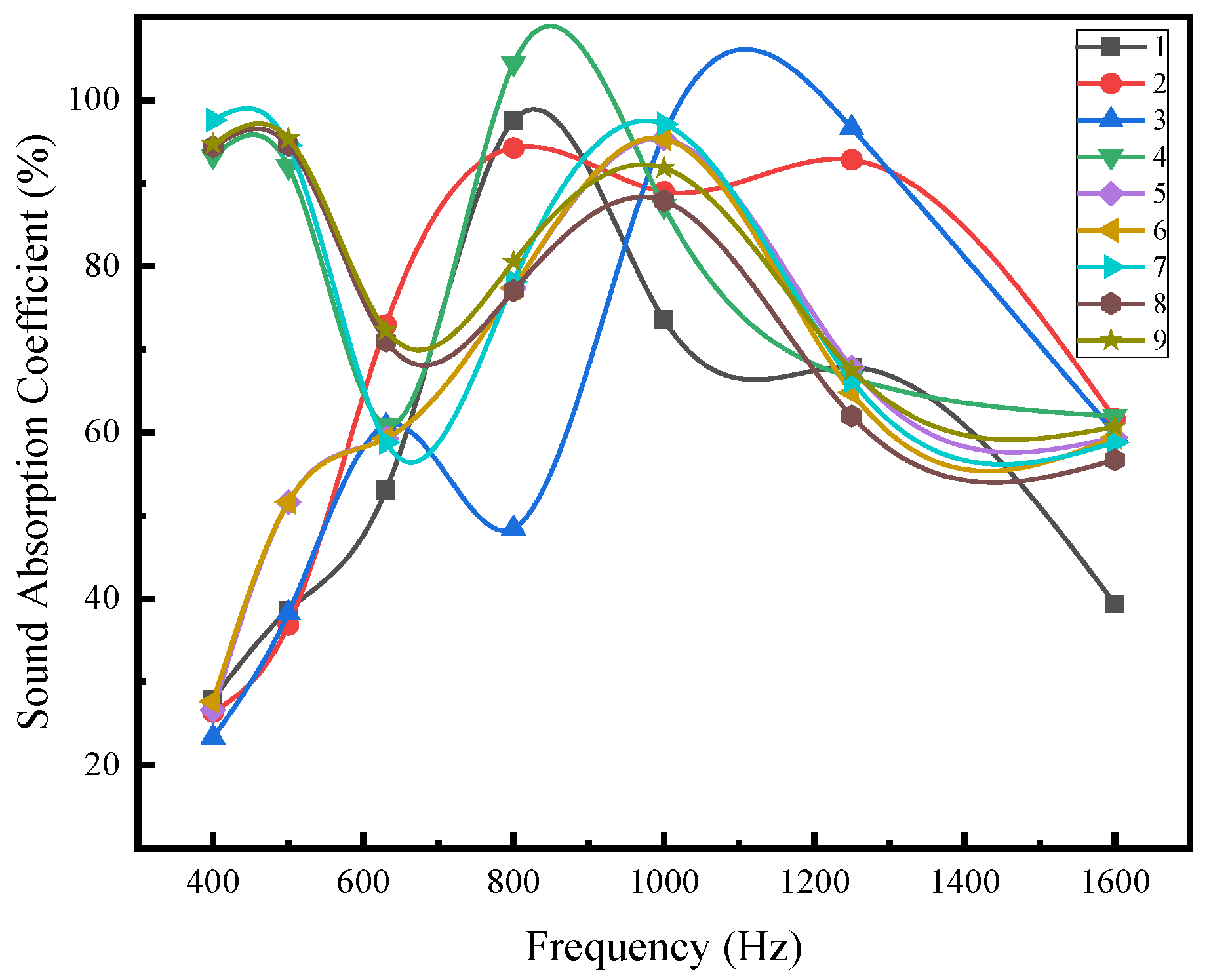
According to the nine gradations designed in Table 10, 5 cm-thick rutting slab specimens were formed. Cylindrical specimens with a diameter of 9.5 cm were then cored from these slabs for sound absorption coefficient testing using the standing wave tube method. To facilitate subsequent analysis, the sound absorption coefficient values were multiplied by 100%. The resulting sound absorption coefficient spectrum is shown in Figure 9.
Figure 9.
Orthogonal test results of sound absorption coefficient.
4.2.1. Range Analysis
The analysis of the range deviation, calculated based on the sound absorption coefficient test results for each specimen group, is presented in Table 11.
Table 11.
Range analysis table of orthogonal test results for sound absorption coefficient.
As shown in the table above, the influence of various factors on the sound absorption coefficient varies across different frequencies. At lower noise frequencies (400–530 Hz), Factor 1, which corresponds to the proportion of aggregates with a particle size of 2.36–4.75 mm, has the greatest impact. At noise frequencies of 630 Hz and 800 Hz, Factor 2, corresponding to the proportion of aggregates with a particle size of 1.18–2.36 mm, exerts the most significant influence. At higher noise frequencies (above 1000 Hz), Factor 3, associated with aggregates in the 1.18–2.36 mm range, becomes the dominant factor. As the noise frequency increases, the aggregate size fractions that play a dominant role in the sound absorption coefficient gradually shift toward finer particle size ranges. However, the optimal sound absorption performance in the high-frequency region relies on the synergistic combination of multiple fine aggregate fractions. For Factor 1, as the noise frequency increases, the optimal level gradually approaches Level 1, indicating that the proportion of 2.36–4.75 mm aggregate tends toward a lower value. For Factor 2, as the noise frequency increases, the optimal level gradually approaches Level 3, meaning that the proportion of 1.18–2.36 mm aggregate tends toward a higher value. The optimal levels corresponding to different frequencies are shown in Table 12.
Table 12.
Optimum level.
A comparison of the sound absorption coefficients for each specimen group within the frequency range of 400–1000 Hz was conducted. Based on the results, the optimal combination of the three factors is recommended as “3-1-2”, meaning that the proportion of aggregates in the 2.36–4.75 mm range should be 4% of the total aggregate mass, the proportion of aggregates in the 1.18–2.36 mm range should be 0%, and the proportion of aggregates in the 0.6–1.18 mm range should be 2% of the total aggregate mass.
4.2.2. Analysis of Variance
This paper performs an analysis of variance (ANOVA) on the experimental results of the sound absorption coefficient, and the analysis results are shown in Table 13.
Table 13.
Variance analysis table of orthogonal test results for sound absorption coefficient.
According to the results of the analysis of variance, when the noise frequency is 400–500 Hz, the proportion of 2.36–4.75 mm aggregate shows the highest significance; the proportion of 1.18–2.36 mm aggregate is most significant at a noise frequency of 630 Hz; and at a noise frequency of 1250 Hz, the proportions of 2.36–4.75 mm and 0.6–1.18 mm aggregates show higher significance. The results are consistent with the range analysis presented earlier. Thus, based on the optimal level combinations of the experimental factors and the recommended coarseness index, the final recommended gradation range for the porous sound-absorbing asphalt mixture is proposed, as shown in Table 14.
Table 14.
Recommended Grading.
4.3. Orthogonal Experiment Void Parameter Analysis
4.3.1. Main Pore Diameter
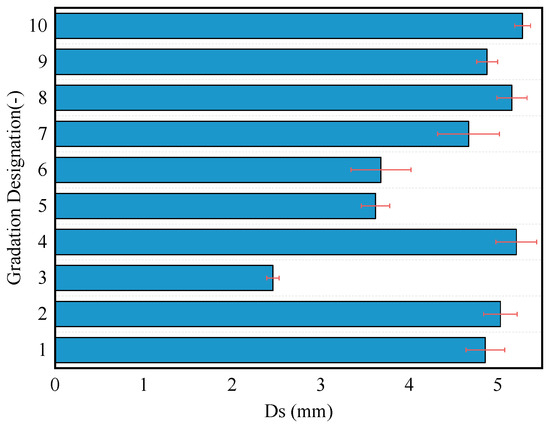
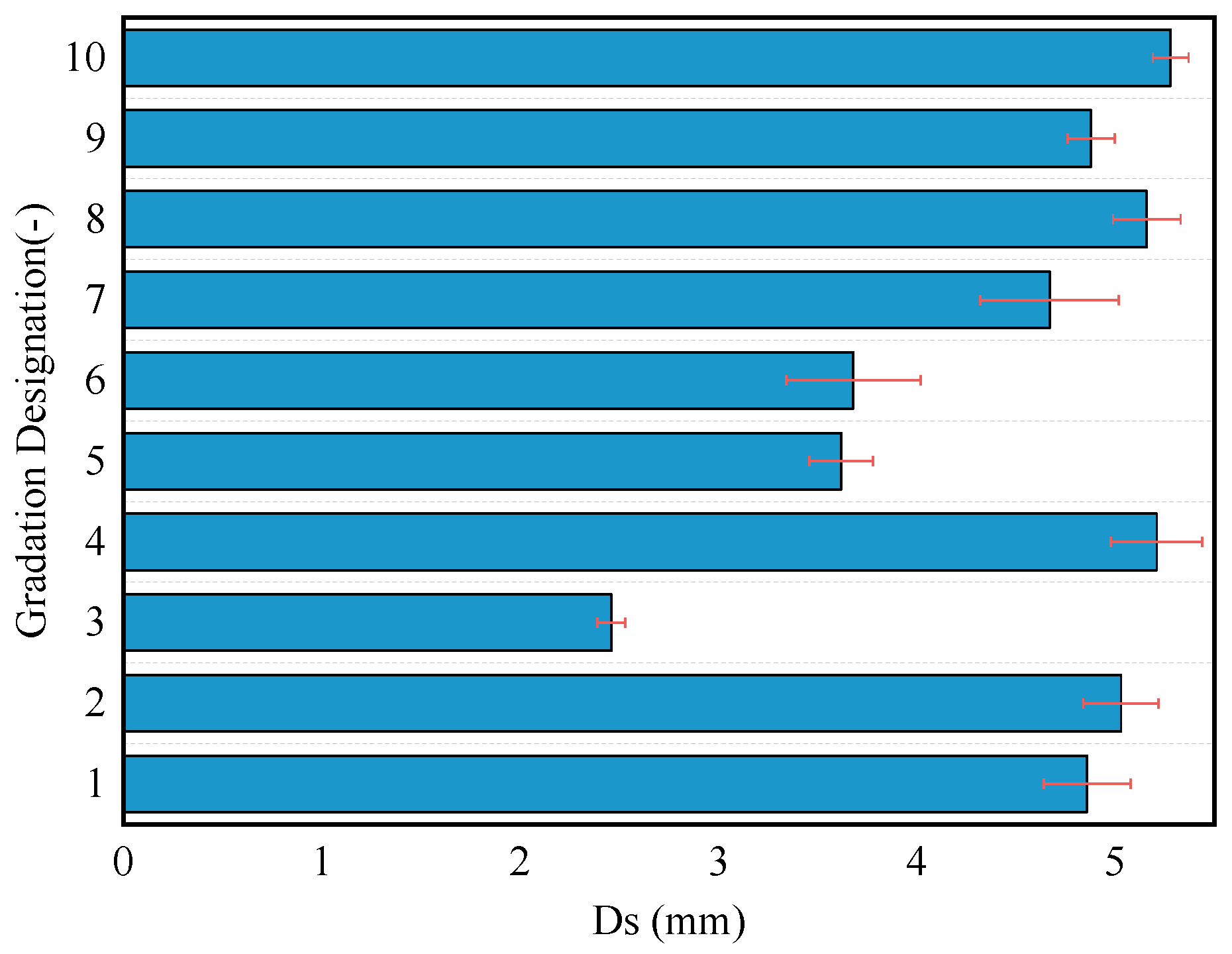
Based on the image recognition results, the relationship between the gradation of each group and the sound absorption coefficient model parameter Ds is summarized, as shown in Figure 10. Groups 1 to 9 represent the orthogonal experimental gradations designed in Section 3.2, while Group 10 corresponds to the gradation recommended earlier.
Figure 10.
Ds of each grading group.
As shown in Figure 9, among the ten gradation groups, except for Groups 3, 5, and 6, which have smaller Ds values, the remaining seven groups have Ds values above 4.5 mm, with the Ds of Group 10 being the largest. Based on the previous analysis, it can be inferred that the low-frequency sound absorption coefficient of Groups 3, 5, and 6 is lower. Therefore, an increase in Ds is beneficial for improving the low-frequency sound absorption coefficient. This is because, on the one hand, as Ds increases, low-frequency noise can penetrate into the voids and interact with the void walls through viscous friction and thermal conduction effects, converting sound energy into heat energy for dissipation. At the same time, the increase in Ds alters the vibration modes of the structure, allowing low-frequency noise to undergo cavity resonance within the material, thereby dissipating sound energy.
Range analysis and variance analysis of the orthogonal experiment results are presented in Table 15 and Table 16.
Table 15.
DS range analysis.
Table 16.
DS analysis of variance.
According to the results of range analysis, for Ds, the optimal factor is Factor 3. The order of influence of the factors on Ds is as follows: the proportion of 0.6~1.18 mm aggregate > the proportion of 1.18~2.36 mm aggregate > the proportion of 2.36~4.75 mm aggregate. The optimal levels for Factors 1–3 are Level 3, Level 1, and Level 2, respectively. That is, the optimal level combination occurs when the proportions of 0.6~1.18 mm, 1.18~2.36 mm, and 2.36~4.75 mm aggregates are 4%, 0%, and 2%, respectively.
Additionally, according to the variance analysis results, the p-value for Factor 3 is less than 0.05, indicating that the proportion of 0.6~1.18 mm aggregate has a significant impact on Ds. This is because the size of Ds mainly depends on the gap size between coarse aggregates. However, when the proportion of fine aggregates is higher, they fill the voids, causing the pore size distribution to shift towards smaller sizes, which leads to a reduction in Ds.
4.3.2. Connected Pore Diameter
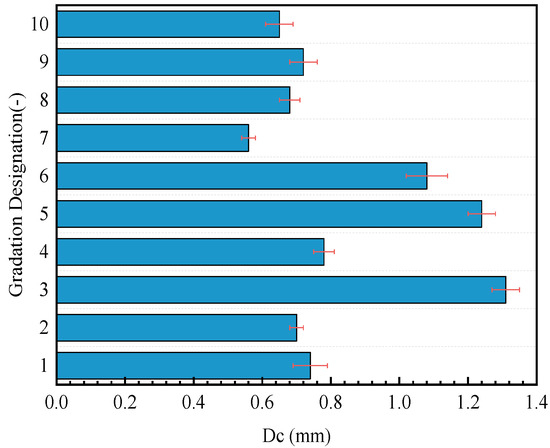
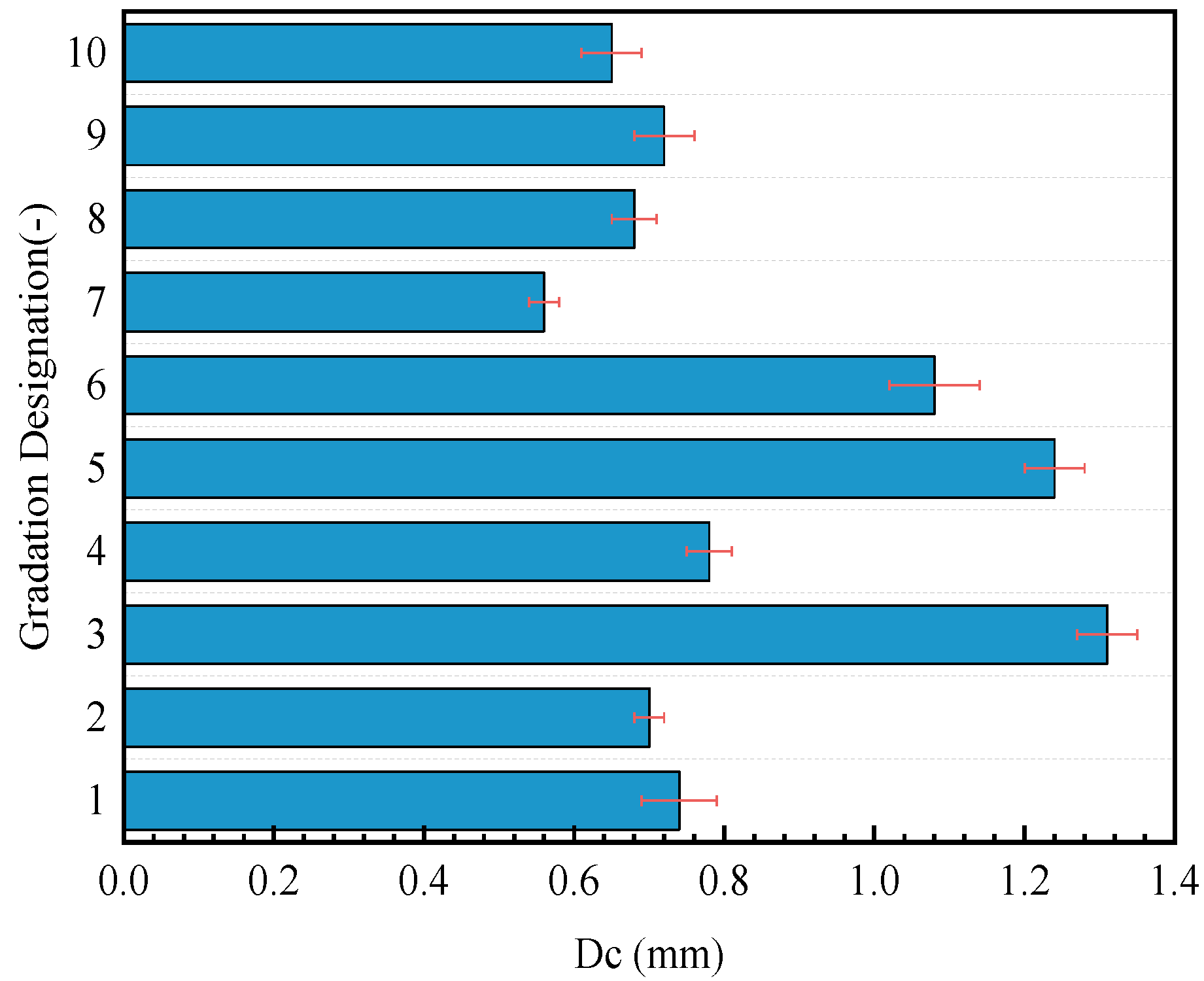
Based on the image recognition results, the relationship between the gradation of each group and the sound absorption coefficient model parameter Dc is summarized, and the results are plotted as shown in Figure 11. The gradations of each group are the same as those in Section 4.3.1.
Figure 11.
DC of each grading group.
It can be observed that, except for the gradation samples of Group 3, Group 5, and Group 6, which have larger Dc values, the connected pore diameter (Dc) for the other experimental groups is less than 0.9 mm. Among them, the Dc of the gradation in Group 10 is the smallest, while Group 3 has the largest. A decrease in Dc is beneficial for improving the low-frequency sound absorption coefficient, whereas an increase in Dc is favorable for absorbing high-frequency noise. This is because when Dc decreases, the contact area between the noise and the void walls increases as the sound travels through the voids, resulting in a significant enhancement of the air viscous friction effect. Low-frequency noise, with its longer wavelengths and slower propagation speed, stays longer in narrow voids and is thus more effectively converted into heat energy for dissipation. At the same time, smaller connected pores make the void structure more tortuous, and the sound wave propagation path within the material is extended, which enhances the sound absorption efficiency for low-frequency noise.
Range analysis and variance analysis of the relationship between the orthogonal experiment results and Dc are presented in Table 17 and Table 18.
Table 17.
DC analysis of range.
Table 18.
DC analysis of variance.
According to the results of range analysis, the optimal factor for the connected pore diameter (Dc) is Factor 3, meaning the significance order of factors affecting Dc is as follows: the proportion of 0.6~1.18 mm aggregate > the proportion of 2.36~4.75 mm aggregate > the proportion of 1.18~2.36 mm aggregate. To achieve better low-frequency noise absorption, a smaller Dc is required. Therefore, the optimal level combination occurs when the proportions of 0.6~1.18 mm, 1.18~2.36 mm, and 2.36~4.75 mm aggregates are 4%, 0%, and 2%, respectively.
Additionally, based on the variance analysis results, the p-value for Factor 3 is less than 0.05, indicating that the proportion of 0.6~1.18 mm aggregate has a significant impact on Dc. The reason is that the proportion of 0.6~1.18 mm aggregate lies between coarse and fine particles, which neither results in excessive compaction that could block the voids nor causes excessively wide gaps that could lead to uneven void distribution. Its size is suitable for forming stable and continuous void channels, ensuring the connectivity of the void structure.
4.3.3. Connected Pore Length
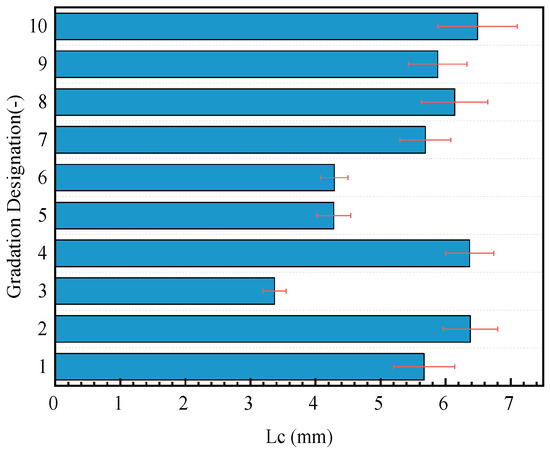
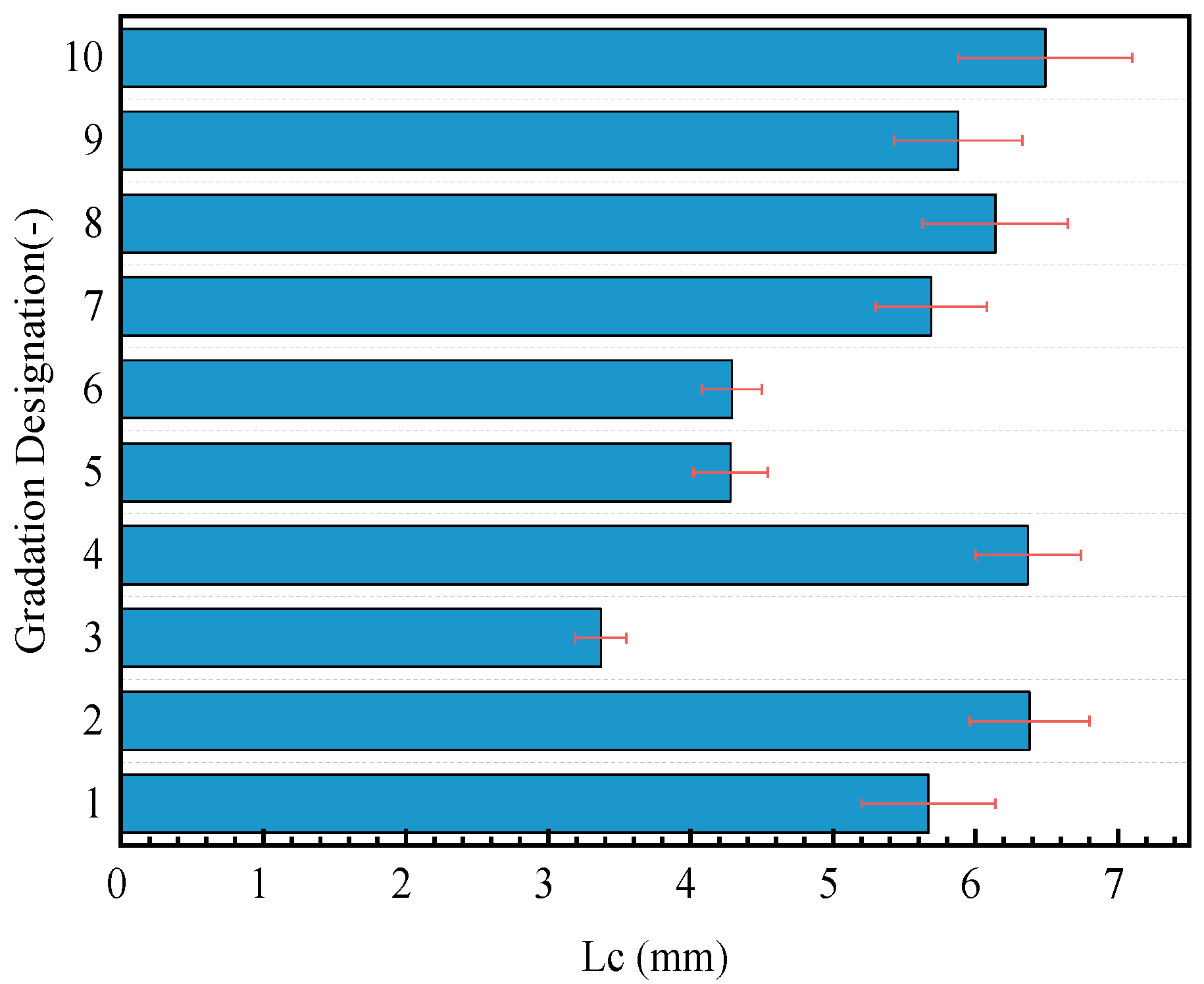
Based on the image recognition results, the relationship between the gradation of each group and the model parameter connected pore length (Lc) is summarized, and the results are plotted as shown in Figure 12.
Figure 12.
LC of each grading group.
As shown in the above figure, the connected pore length (Lc) of the gradation sample in Group 3 is the smallest, at 3.37 mm, while Groups 2, 4, 8, and 10 have larger Lc values, with an average of 6.30 mm. The increase in Lc is beneficial for improving the low-frequency sound absorption coefficient and also helps enhance the sound absorption coefficient across the entire test frequency rang. This is because the increase in connected pore length can extend the effective propagation path of sound waves through the tortuous void structure, achieving a similar effect to “increasing material thickness,” which significantly improves the low-frequency sound absorption. At the same time, it extends the sound wave propagation path, increasing the contact time between the sound wave and the pore walls, allowing more sound energy to dissipate through viscous effects and thermal conduction.
Range analysis and variance analysis of the relationship between the orthogonal experiment results and Lc are presented in Table 19 and Table 20.
Table 19.
LC analysis of range.
Table 20.
LC analysis of variance.
According to the results of range analysis, the optimal factor for connected pore length (Lc) is Factor 3, meaning the significance order of factors affecting Lc is as follows: Factor 3 > Factor 2 > Factor 1. The optimal levels for Factors 1–3 are Level 3, Level 1, and Level 2, respectively. Therefore, the best combination for Lc occurs when the proportions of 0.6~1.18 mm, 1.18~2.36 mm, and 2.36~4.75 mm aggregates in the total aggregate are 4%, 0%, and 2%, respectively.
Additionally, according to the variance analysis results, the p-values for Factors 1, 2, and 3 are all less than 0.05, indicating that the proportions of all three aggregate sizes significantly affect the connected pore length (Lc). This is because the three gradations can collaborate to regulate the void network step by step. The 2.36~4.75 mm aggregate acts as the coarse aggregate extension, dominating the distribution direction of the main pores; the 1.18~2.36 mm aggregate forms a bridge between the coarse and fine aggregates, supporting the stability of the void structure; the 0.6~1.18 mm aggregate fills the small gaps between the coarse aggregate skeleton, dividing larger pores into narrow, connected voids.
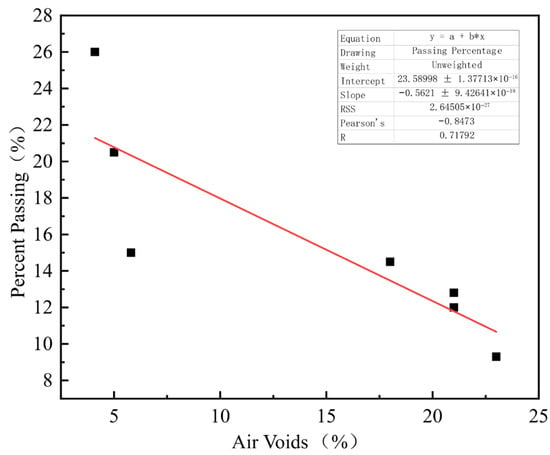
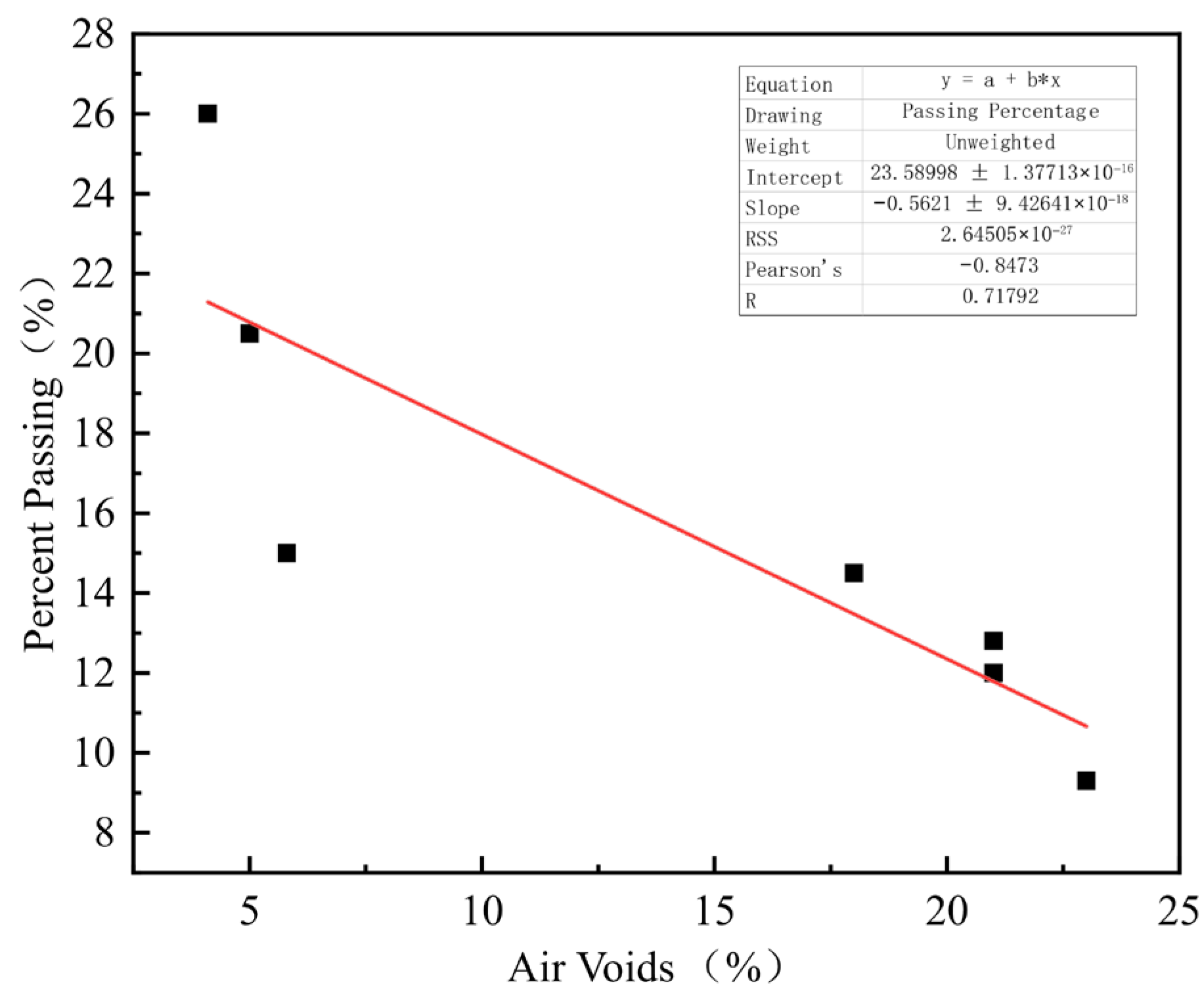
Research shows that when the maximum nominal particle size is 13.2 mm, the key factor influencing the porosity of porous asphalt mixtures is the passing rate through the 2.36 mm sieve. The relationship between the passing rate of the 2.36 mm sieve and the corresponding porosity in various gradations of the porous asphalt mixture is shown in Figure 13. Based on a target porosity of 21%, it is determined that the passing rate through the 2.36 mm sieve should be between 7% and 18%.
Figure 13.
2.36 mm sieve pass rate and porosity.
Once the 2.36 mm sieve passing rate is determined, the coarse aggregate roughness is then established by combining the previously recommended roughness range of 0.46–0.52, which corresponds to the 9.5 mm sieve passing rate. Based on the optimal level combination from the orthogonal experiment, the gradation range for particles in the 0.6 mm to 4.75 mm size range is then derived. The final recommended gradation range for the porous sound-absorbing asphalt mixture, along with the current permeable asphalt mixture (PA-13) gradation range, is shown in Table 21. The sieve passing rates for other sizes are determined according to the standard specifications.
Table 21.
Table of Grading Range of Porous Asphalt Noise Reduction Asphalt Mixture.
5. Conclusions
This paper uses the CAVF method to design the gradation of the mixture, exploring the impact of coarse aggregate roughness on the performance of porous asphalt mixtures. At the same time, to ensure the noise reduction effect of porous asphalt pavements, a preliminary selection of the fine aggregate gradation range was made, followed by an orthogonal experiment on the sound absorption coefficient of the three fine aggregate gradations. The recommended gradation range for porous asphalt mixtures was obtained. The main conclusions are as follows:
- (1)
- The coarse aggregate coarseness σ significantly influences the performance of porous asphalt mixtures. As the coarseness increased from 0.34 to 0.54, the dynamic stability increased from approximately 3000 passes/mm to 6238 passes/mm, indicating improved high-temperature rutting resistance; however, the Cantabro loss increased from 7.2% to 13.9%, indicating reduced ravelling resistance. Marshall stability and retained stability were not significantly affected by coarseness. Considering overall pavement performance, the optimal coarseness range is recommended to be 0.46~0.52.
- (2)
- The fine aggregate gradation plays a crucial role in controlling the internal void parameters of the mixture. The proportion of aggregate sized 0.6~1.18 mm had a significant effect on both the primary pore diameter Ds and the connecting pore diameter Dc (p < 0.05), while the three fine aggregate fractions (0.6~4.75 mm) all significantly influenced the connecting pore length Lc (p < 0.05). The 0.6~1.18 mm fraction is a key factor in regulating pore size, and the synergistic effect of the three fine aggregate fractions determines the connectivity and tortuosity of the pore network.
- (3)
- The influence of fine aggregate gradation on sound absorption performance is frequency-selective. In the low-frequency range (400–500 Hz), the 2.36~4.75 mm fraction is dominant; in the mid-frequency range (630–800 Hz), the 1.18~2.36 mm fraction is dominant; and in the high-frequency range (above 1000 Hz), the 0.6~1.18 mm fraction is dominant. In the high-frequency range, the optimal combination corresponded to a 2.36~4.75 mm fraction content of 2% rather than 0%, indicating that retaining an appropriate amount of this fraction helps construct a micro-connected pore network conducive to high-frequency sound energy dissipation.
- (4)
- Based on the above research findings, a gradation range for porous asphalt mixtures that balances pavement performance and sound absorption noise reduction is recommended: percentage passing by mass for the 13.2 mm sieve: 88~93%; 9.5 mm sieve: 54~59%; 4.75 mm sieve: 13~16%; 2.36 mm sieve: 10~12%; 1.18 mm sieve: 9~12%; 0.6 mm sieve: 8~10%; 0.3 mm sieve: 5~8%; 0.15 mm sieve: 4~6%; 0.075 mm sieve: 3~5%.
- Innovations and Contributions
Compared with existing studies, the innovations and contributions of this research are mainly reflected in the following aspects. Firstly, it extends the optimization from single-performance improvement to collaborative optimization. While previous gradation design studies have primarily focused on enhancing individual performance indicators, this study integrates both pavement performance and sound absorption performance into a unified design framework. Through orthogonal experiments, a quantitative relationship between fine aggregate gradation and sound absorption coefficient is established, thereby achieving collaborative optimization of porous asphalt mixtures. Furthermore, this study transitions from empirical design to mechanism-oriented design. Existing specifications provide gradation ranges primarily based on engineering experience. In contrast, this study employs image recognition techniques to extract meso-scale void parameters, including primary pore diameter (Ds), connected pore diameter (Dc), and connected pore length (Lc). It reveals the differentiated influence mechanisms of three fine aggregate fractions within the 0.6–4.75 mm range on pore structure and sound absorption performance, thereby providing a theoretical basis for refined gradation adjustment.
- Limitations and Future Prospects:
This study has certain limitations that should be acknowledged. First, the aggregates used were limited to basalt, and the asphalt binder was confined to SBS-modified high-viscosity asphalt; therefore, the influence of material variability—such as different aggregate lithologies (e.g., limestone, granite) and asphalt modifiers (e.g., rubber-modified asphalt, resin-modified asphalt)—on gradation design outcomes was not considered. Second, all performance evaluations were conducted under short-term laboratory aging conditions, which do not fully replicate the complex and prolonged service environment encountered in the field. Consequently, validation of long-term pavement performance, including resistance to aging, moisture damage, fatigue, skid resistance and functional degradation due to pore clogging, remains lacking.
Author Contributions
Conceptualization, S.X. and M.Z.; methodology, S.X., M.Z., P.L., S.W. and Y.L.; validation, S.X.; formal analysis, S.X. and W.Y.; investigation, J.Z., W.Y., Y.L., S.X. and M.Z.; data curation, S.X. and W.Y.; writing—original draft preparation, S.X. and M.Z.; writing—review and editing, S.X. and M.Z.; visualization W.Y.; supervision, P.L.; project administration, S.W. All authors have read and agreed to the published version of the manuscript.
Funding
This research was funded by the Shandong Traffic Science and Technology Project (2023B70).
Data Availability Statement
Data will be made available on request.
Conflicts of Interest
Author Peng Lu, Shengxu Wang, Jinpeng Zhu was employed by the company Shandong Expressway Infrastructure Construction Co., Ltd. and Shandong High-speed Group Dongraocheng Xugang Expressway Co., Ltd. The remaining authors declare that the research was conducted in the absence of any commercial or financial relationships that could be construed as a potential conflict of interest.
References
- National Motor Vehicle Ownership Reaches 440 Million; Licensed Drivers Total 530 Million; Road Traffic Accidents Show Steady Decline Over Past Five Years. Auto Saf. 2024, 108.
- Brown, A.L.; van Kamp, I. WHO Environmental Noise Guidelines for the European Region: A Systematic Review of Transport Noise Interventions and Their Impacts on Health. Int. J. Environ. Res. Public Health 2017, 14, 873. [Google Scholar] [CrossRef] [Scilit]
- Gupta, A.; Gupta, A.; Jain, K.; Gupta, S. Noise Pollution and Impact on Children Health. Indian J. Pediatr. 2018, 85, 300–306. [Google Scholar] [CrossRef] [Scilit] [PubMed]
- Huang, T.; Chan, T.-C.; Huang, Y.-J.; Pan, W.-C. The Association between Noise Exposure and Metabolic Syndrome: A Longitudinal Cohort Study in Taiwan. Int. J. Environ. Res. Public Health 2020, 17, 4236. [Google Scholar] [CrossRef] [Scilit]
- Ling, S.; Yu, F.; Sun, D.; Sun, G.; Xu, L. A comprehensive review of tire-pavement noise: Generation mechanism, measurement methods, and quiet asphalt pavement. J. Clean. Prod. 2021, 287, 125056. [Google Scholar] [CrossRef] [Scilit]
- Karbalaei, S.S.; Karimi, E.; Naji, H.R.; Ghasempoori, S.M.; Hosseini, S.M.; Abdollahi, M. Investigation of the Traffic Noise Attenuation Provided by Roadside Green Belts. Fluct. Noise Lett. 2015, 14, 1550036. [Google Scholar] [CrossRef] [Scilit]
- Ishizuka, T.; Fujiwara, K. Performance of noise barriers with various edge shapes and acoustical conditions. Appl. Acoust. 2004, 65, 125–141. [Google Scholar] [CrossRef] [Scilit]
- Louen, C.; Wehrens, A.; Vallée, D. Analysis of the Effectiveness of Different Noise Reducing Measures Based on Individual Perception in Germany. Transp. Res. Procedia 2014, 4, 472–481. [Google Scholar] [CrossRef] [Scilit]
- Ejsmont, J.A.; Goubert, L.; Ronowski, G.; Świeczko-Żurek, B. Ultra Low Noise Poroelastic Road Surfaces. Coatings 2016, 6, 18. [Google Scholar] [CrossRef] [Scilit]
- Ho, K.Y.; Hung, W.T.; Ng, C.F.; Lam, Y.K.; Leung, R.; Kam, E. The effects of road surface and tyre deterioration on tyre/road noise emission. Appl. Acoust. 2013, 74, 921–925. [Google Scholar] [CrossRef] [Scilit]
- Vaitkus, A.; Vorobjovas, V.; Čygas, D.; Andriejauskas, T.; Tuminienė, F. Surface Type and Age Effects on Tyre/Road Noise Levels. In 10th International Conference on Environmental Engineering (ICEE); Vilnius Tech: Vilnius, Lithuania, 2017. [Google Scholar]
- Duan, W.; Dong, R. An investigation on the asphalt with enhanced damping properties: Development, performance evaluation and mechanisms. Constr. Build. Mater. 2025, 475, 141125. [Google Scholar] [CrossRef] [Scilit]
- Mikhailenko, P.; Piao, Z.; Kakar, M.R.; Bueno, M.; Athari, S.; Pieren, R.; Heutschi, K.; Poulikakos, L. Low-Noise pavement technologies and evaluation techniques: A literature review. Int. J. Pavement Eng. 2022, 23, 1911–1934. [Google Scholar] [CrossRef] [Scilit]
- Darshan, N.; Kataware, A.V. Review on Porous Asphalt Pavements: A Comprehensive Resolution for Stormwater Management and Applications in Current Built Environment. Int. J. Pavement Res. Technol. 2024, 19, 1–25. [Google Scholar] [CrossRef] [Scilit]
- Mullaney, J.; Lucke, T. Practical Review of Pervious Pavement Designs. Clean-Soil Air Water 2014, 42, 111–124. [Google Scholar] [CrossRef] [Scilit]
- Knabben, R.M.; Trichês, G.; Gerges, S.N.Y.; Vergara, E.F. Evaluation of sound absorption capacity of asphalt mixtures. Appl. Acoust. 2016, 114, 266–274. [Google Scholar] [CrossRef] [Scilit]
- Wang, H.; Ding, Y.; Liao, G.; Ai, C. Modeling and Optimization of Acoustic Absorption for Porous Asphalt Concrete. J. Eng. Mech. 2016, 142, 04016002. [Google Scholar] [CrossRef] [Scilit]
- Yuan, M.; Wang, J.; Wang, Y.; Shao, S. Study on Noise Reduction with Paving Different Low Noise Pavement Materials. Appl. Sci. 2021, 11, 10273. [Google Scholar] [CrossRef] [Scilit]
- Li, M.; Li, J.; Yuan, M.; Han, D. Modeling and Analysis of Sound Absorption of Multilayered Porous Asphalt Pavement. China J. Highw. Transp. 2023, 36, 222–235. [Google Scholar] [CrossRef]
- Gao, L.; Wang, Z.; Xie, J.; Wang, Z.; Li, H. Study on the sound absorption coefficient model for porous asphalt pavements based on a CT scanning technique. Constr. Build. Mater. 2020, 230, 117019. [Google Scholar] [CrossRef] [Scilit]
- Yang, B.; Wen, X.; Zhong, K.; Liu, Y. Anti-rutting Performances of Coarse Aggregate Porous Asphalt Mixtures. J. Residuals Sci. Technol. 2016, 13, S193–S198. [Google Scholar] [CrossRef] [Scilit]
- Xu, B.; Chen, J.; Zhou, C.; Wang, W. Study on Marshall Design parameters of porous asphalt mixture using limestone as coarse aggregate. Constr. Build. Mater. 2016, 124, 846–854. [Google Scholar] [CrossRef] [Scilit]
- Mansour, T.N.; Putman, B.J. Influence of Aggregate Gradation on the Performance Properties of Porous Asphalt Mixtures. J. Mater. Civ. Eng. 2013, 25, 281–288. [Google Scholar] [CrossRef] [Scilit]
- Chiranjeevi, G.; Shankar, S. Evaluation of different porous asphalt gradations based on aggregate packing and stiffness parameters. Innov. Infrastruct. Solut. 2022, 8, 30. [Google Scholar] [CrossRef] [Scilit]
- Yaoyao, Y.; Chuan, L.; Mulian, Z. Effect of Meso-void Characteristics on Acoustic Absorption of Porous Asphalt Pavement. In Proceedings of the 2024 World Transport Convention, Qingdao, China, 26–29 June 2024; p. 5. [Google Scholar]
- GB/T 18696.1-2004; Acoustics—Determination of Sound Absorption Coefficient and Impedance in Impedance Tubes—Part 1: Method Using Standing Wave Ratio. General Administration of Quality Supervision, Inspection and Quarantine of the People’s Republic of China (AQSIQ). Standardization Administration of China (SAC): Beijing, China, 2004.
- JTG E20-2011; Standard Test Methods of Bitumen and Bituminous Mixtures for Highway Engineering. Ministry of Transport of the People’s Republic of China: Beijing, China, 2011.
- D6927-22; Standard Test Method for Marshall Stability and Flow of Asphalt Mixtures. ASTM International: West Conshohocken, PA, USA, 2022.
- D1075; Standard Test Method for Effect of Water on Compressive Strength of Compacted Bituminous Mixtures. ASTM International: West Conshohocken, PA, USA, 2007.
- D8292; Standard Test Method for Permanent Deformation Behavior and Rutting Resistance of Compacted Asphalt Mix in the Modified Loaded Wheel Tracker Test Utilizing Controlled Confining Pressure. ASTM International: West Conshohocken, PA, USA, 2020.
- D7064; Standard Practice for Open-Graded Friction Course (OGFC) Mix Design. ASTM International: West Conshohocken, PA, USA, 2018.
- Li, Q.; Wang, N.; Wu, J.; Zheng, J.; Ma, T.; Zhang, C. Performance evaluation of reclaimed porous asphalt mixtures based on different mixture design methods: Meso-structural characteristics and macro-pavement properties. Constr. Build. Mater. 2025, 501, 144320. [Google Scholar] [CrossRef] [Scilit]
- Liu, X.; Wu, J.; Yan, P.; Ji, W. Grading Method of Mixed Recycled Coarse Aggregate. J. Mater. Civ. Eng. 2021, 33, 04021085. [Google Scholar] [CrossRef] [Scilit]
- Research Institute of Highway Ministry of Transport. Technical Specifications for the Design and Construction of Porous Asphalt Pavement; Ministry of Transport of the People’s Republic of China: Beijing, China, 2020.
- Ghafari Hashjin, N.; Zarroodi, R.; Payami, M.; Aghdasi Gehraz, S.H. Effect of type and aggregate gradation on the functional properties of porous asphalt (case study of Iran). SN Appl. Sci. 2023, 5, 265. [Google Scholar] [CrossRef] [Scilit]
- Cao, W.; Ma, C.; Zhang, X.; Li, J.; Li, Y.; Zhan, Z. Design method for aggregate gradation of porous asphalt mixture based on target air voids. Mater. Struct. 2025, 58, 125. [Google Scholar] [CrossRef] [Scilit]

Disclaimer/Publisher’s Note: The statements, opinions and data contained in all publications are solely those of the individual author(s) and contributor(s) and not of MDPI and/or the editor(s). MDPI and/or the editor(s) disclaim responsibility for any injury to people or property resulting from any ideas, methods, instructions or products referred to in the content. |
© 2026 by the authors. Licensee MDPI, Basel, Switzerland. This article is an open access article distributed under the terms and conditions of the Creative Commons Attribution (CC BY) license.