

Strength, Transport Properties, and Life Cycle Impacts of Mortar Containing German Natural Pozzolan

 , ,
, ,
Abstract
1. Introduction
2. Materials and Methods
2.1. Materials
2.1.1. Sand
2.1.2. Cement
2.1.3. Pozzolan
2.2. Methods
2.2.1. Sample Preparation and Mix Proportions
2.2.2. Physical Properties: Water-Accessible Porosity and Bulk Density
2.2.3. Mechanical Properties: Flexural and Compressive Strengths
2.2.4. Measurement of Hygric Properties
Water Absorption Measurement
- M1 = Specimen’s dry mass after oven-drying.
- M2 = Specimen’s saturated mass after immersion in water.
Capillary Water Absorption
- B − A = Cumulative absorbed water.
- S = Cross-sectional area.
- d = Water density (g/mm3).
2.2.5. Life Cycle Analysis Methodology
- CEM II/A-LL 52.5R cement: Factor entered based on ICE database (0.87 kgCO2e/kg).
- Mixing losses: 1% flat-rate increase (mixing waste), as implemented in the ICE model [26].
2.3. Numerical Analysis Using Mathematical Models
2.3.1. Compressive Strength Modeling
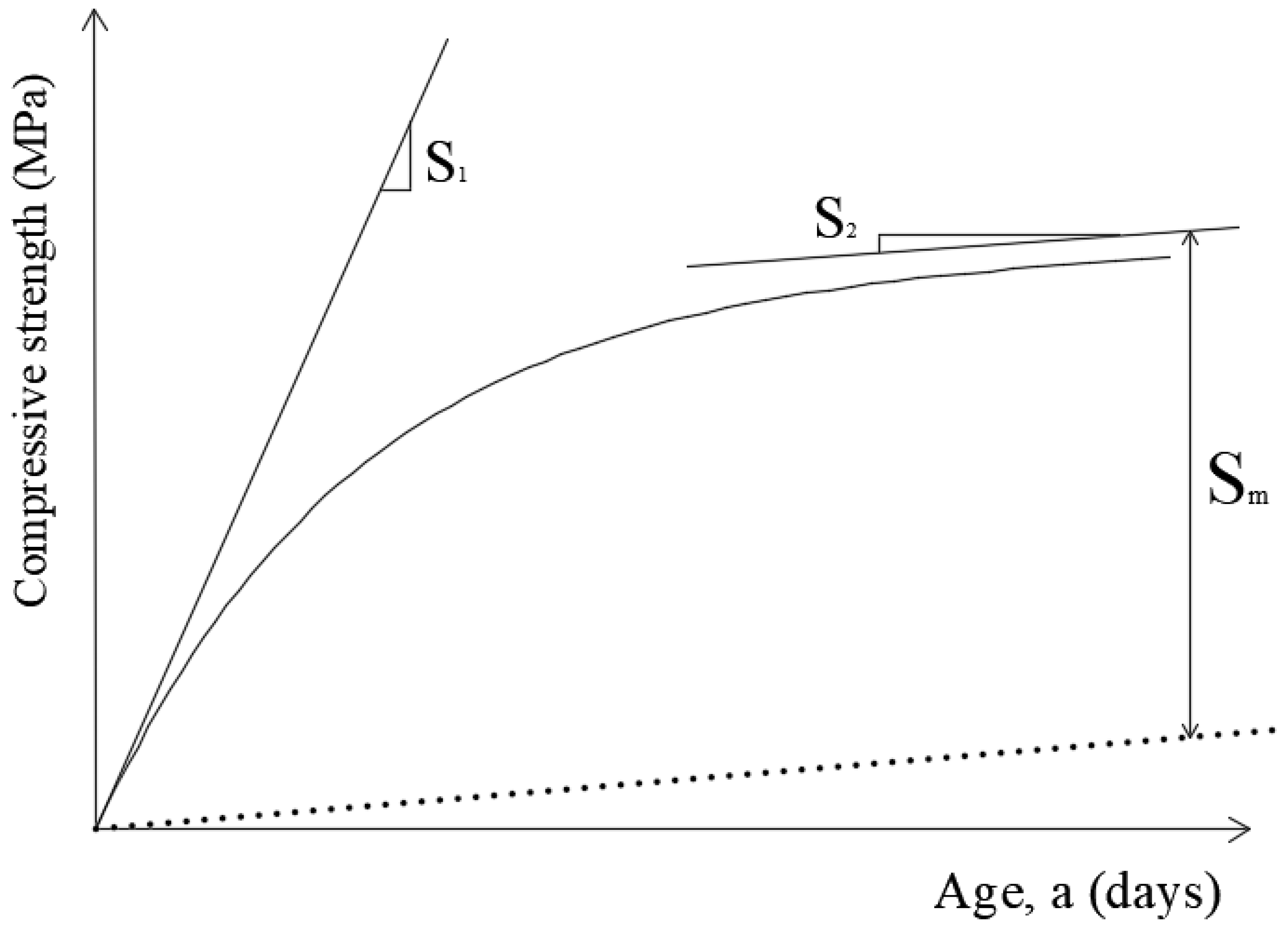
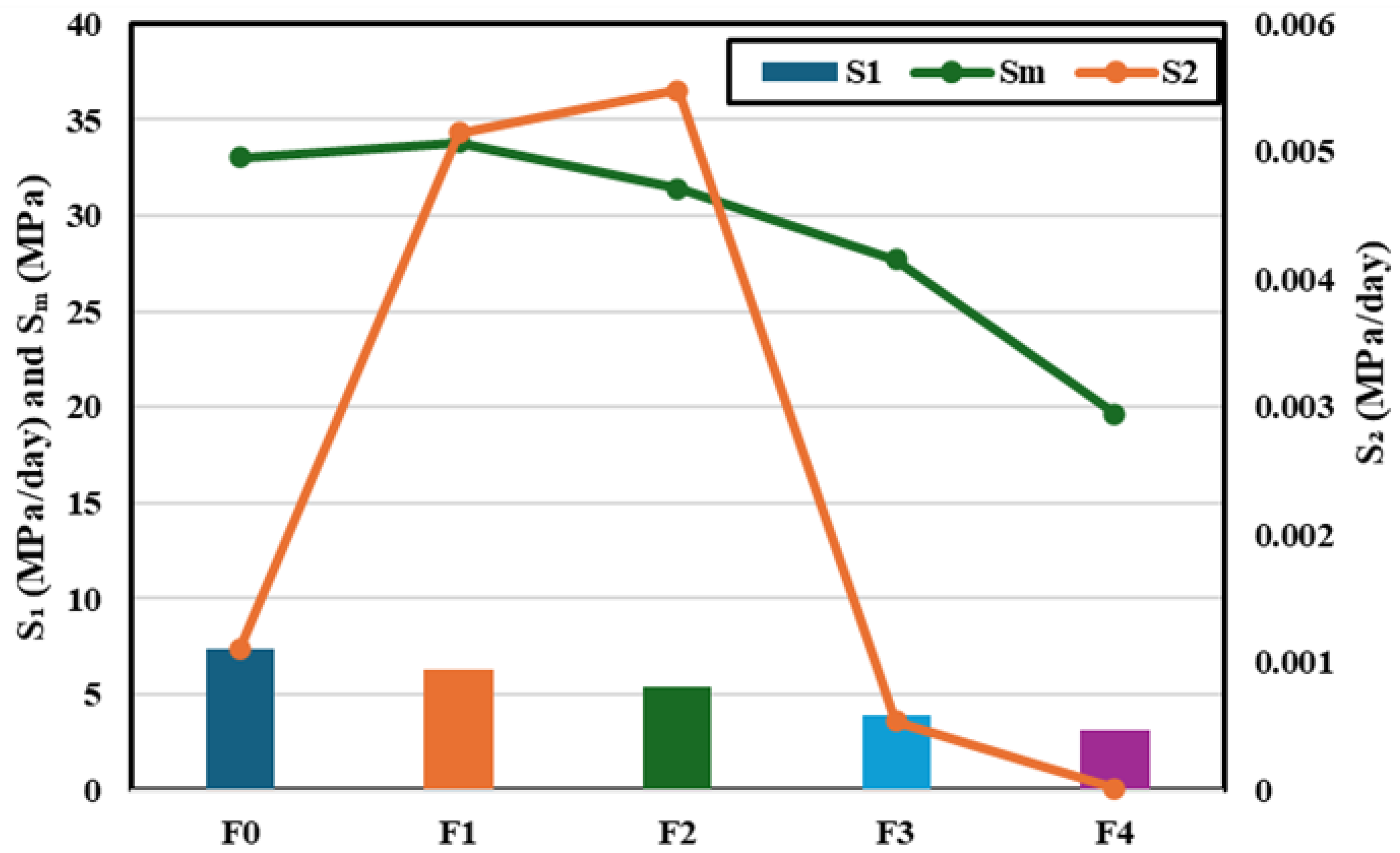
- S1 = The reactivity at early age (cement fineness, curing, accelerators, low w/c).
- S2 = The residual, long-term gain attributed to slower hydration or pozzolanic reactions.
- Sm = The finite capacity of the fast mechanism, i.e., how much extra strength mortar can develop beyond what the slow process alone would provide.
2.3.2. Capillary–Diffusive Process Modeling
- M/A = Absorbed water mass per unit area of the specimen (kg/m2).
- C = Constant depending on the distance from the concrete surface where capillary pores regulate the initial sorption.
- = Water density (kg/m3).
- S = Sorptivity coefficient (kg/m2.s1/2).
- T = Time (s).
- C0 = Constant of water concentration (kg/m2).
- L = Sample height = 0.1 m.
3. Results and Discussion
3.1. Physical Properties
3.1.1. Water-Accessible Porosity
3.1.2. Bulk Density
3.2. Mechanical Properties
3.2.1. Compressive Strength
Experimental–Model Comparison of Compressive Strength
Model Parameter Analysis (S1, S2, and Sm)
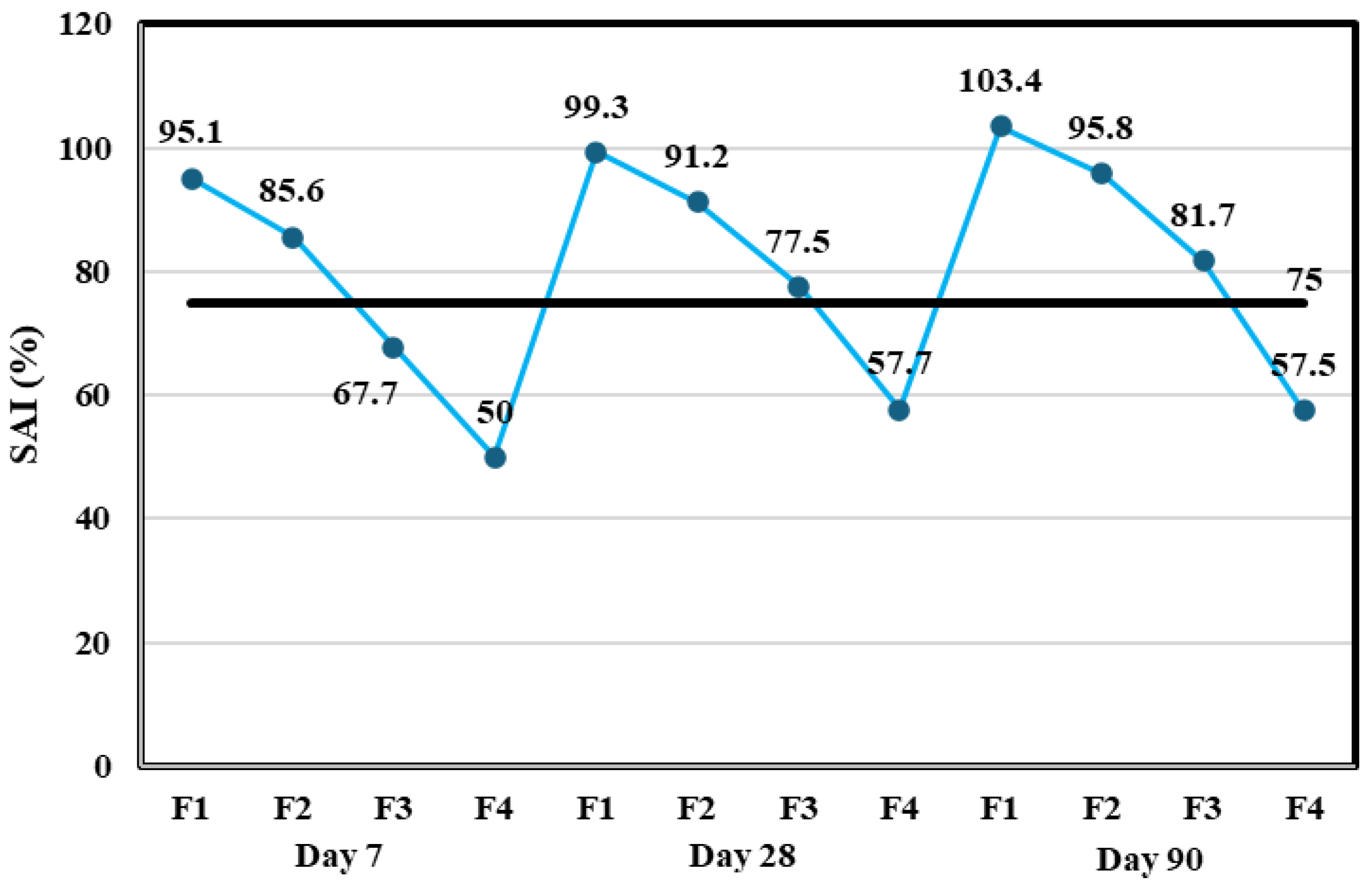
Strength Activity Index (SAI)
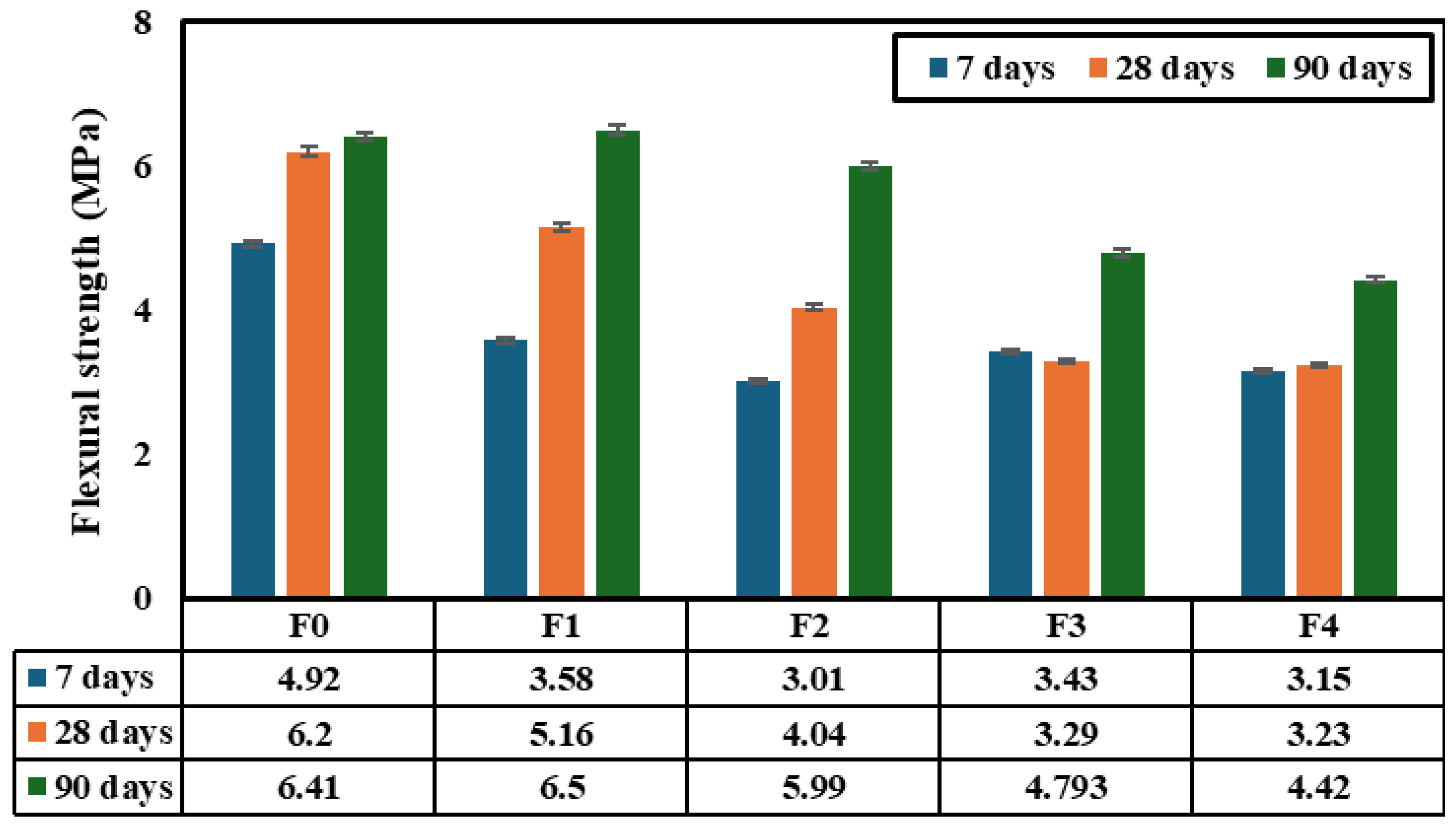
3.2.2. Flexural Strength
3.3. Hygric Properties
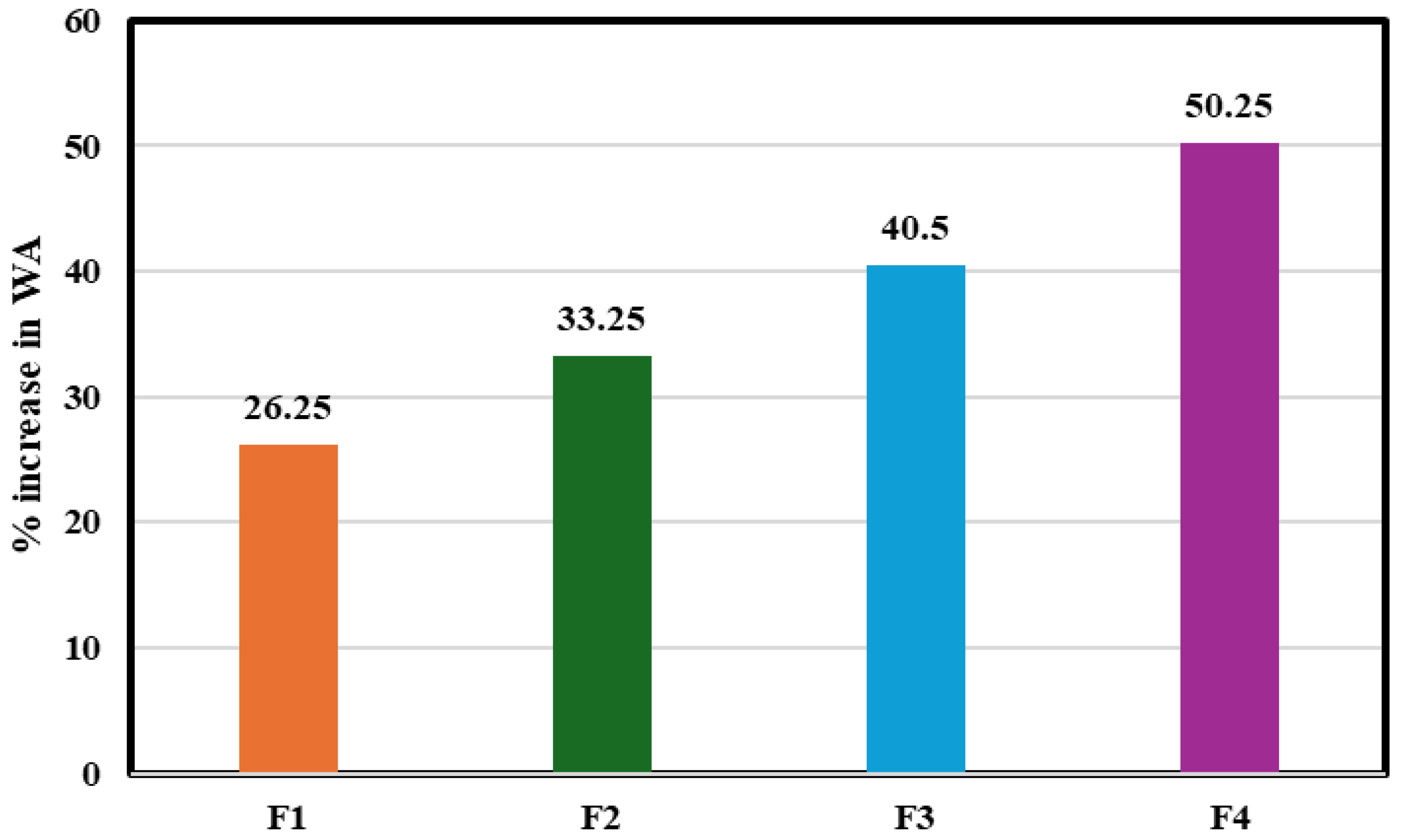
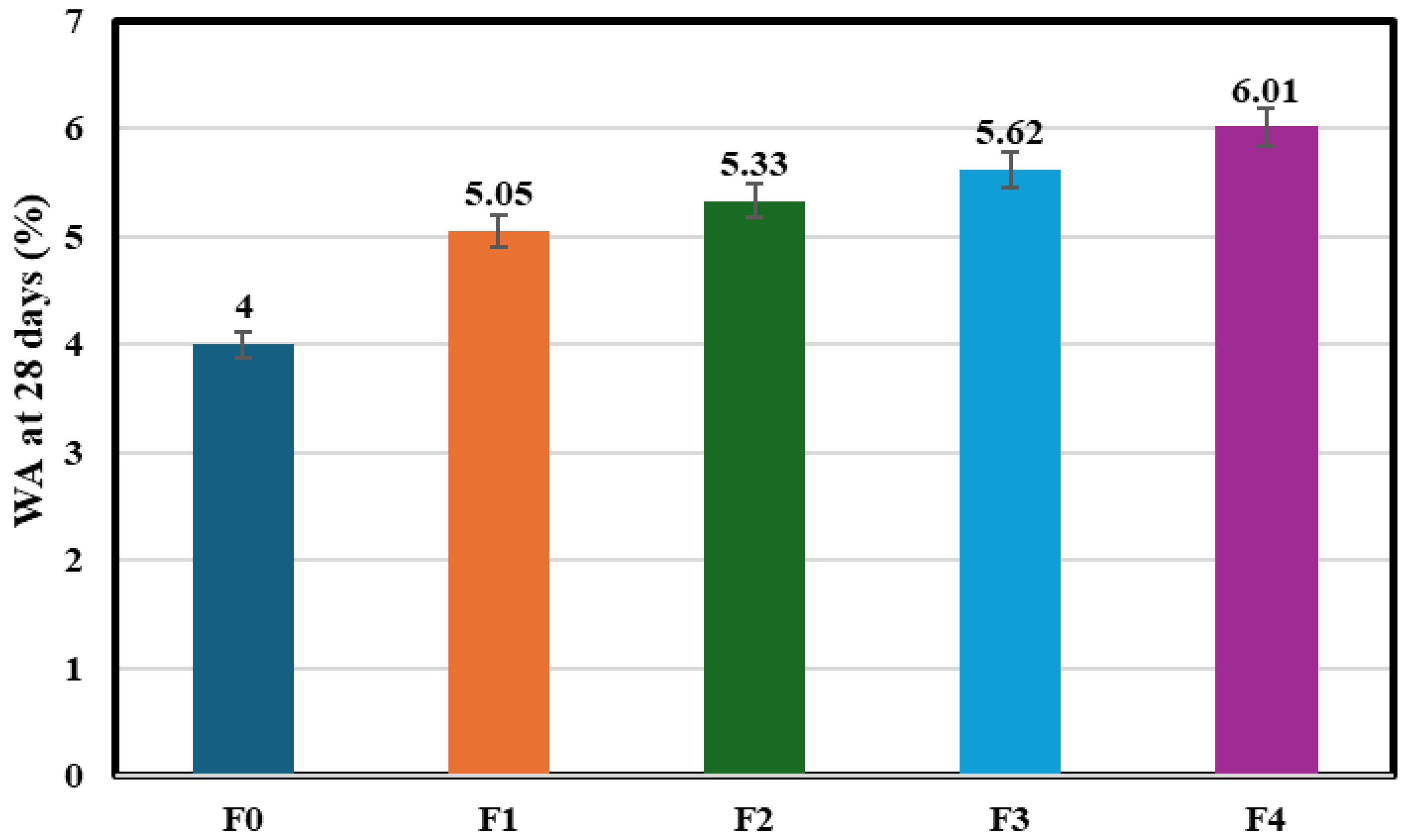
3.3.1. Water Absorption
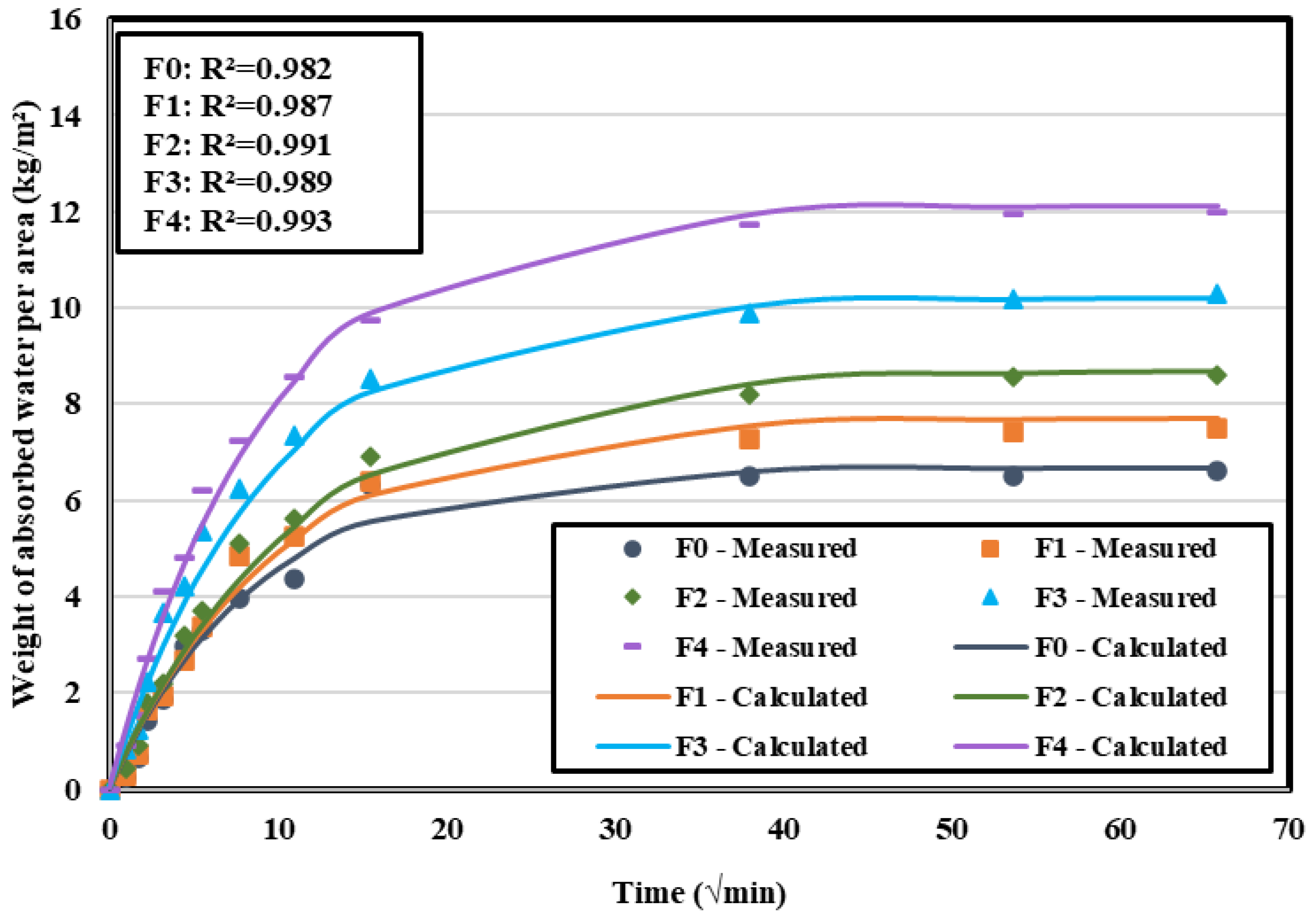
3.3.2. Capillary Water Absorption
Experimental–Model Comparison of CWA
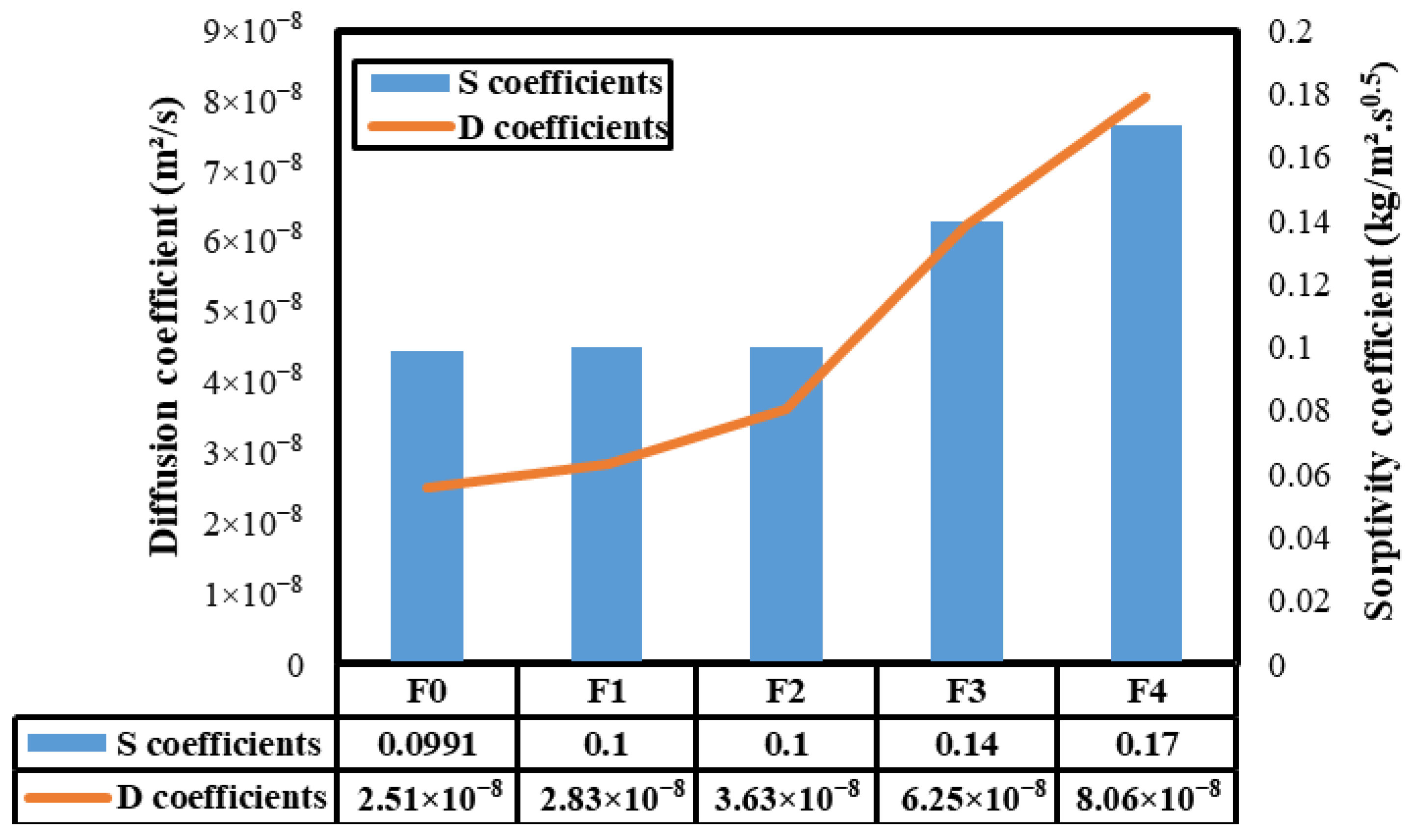
Capillary–Diffusive Model Parameters Analysis (S and D)
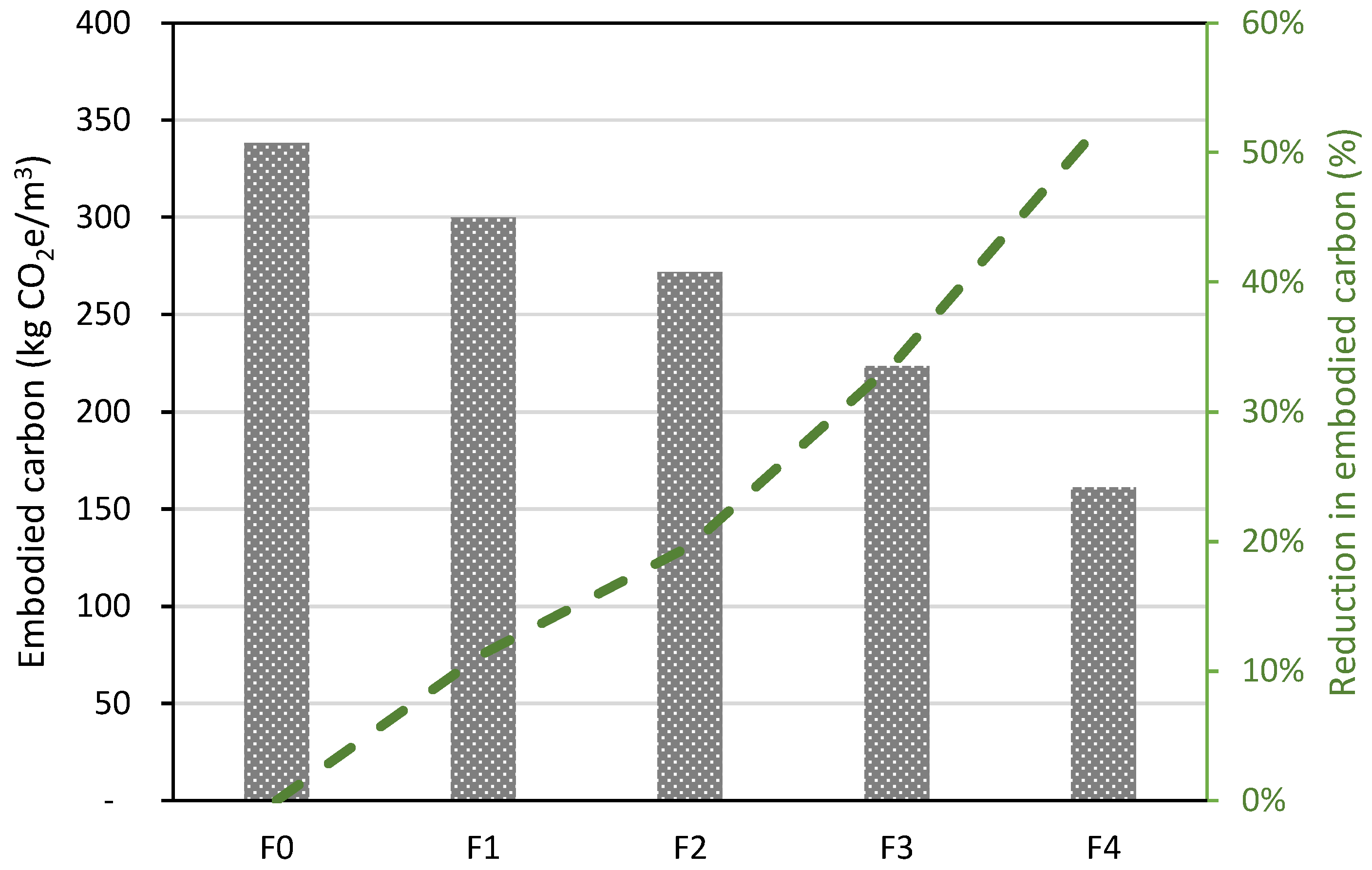
3.4. Life Cycle Analysis
3.5. Relationships Between Different Properties
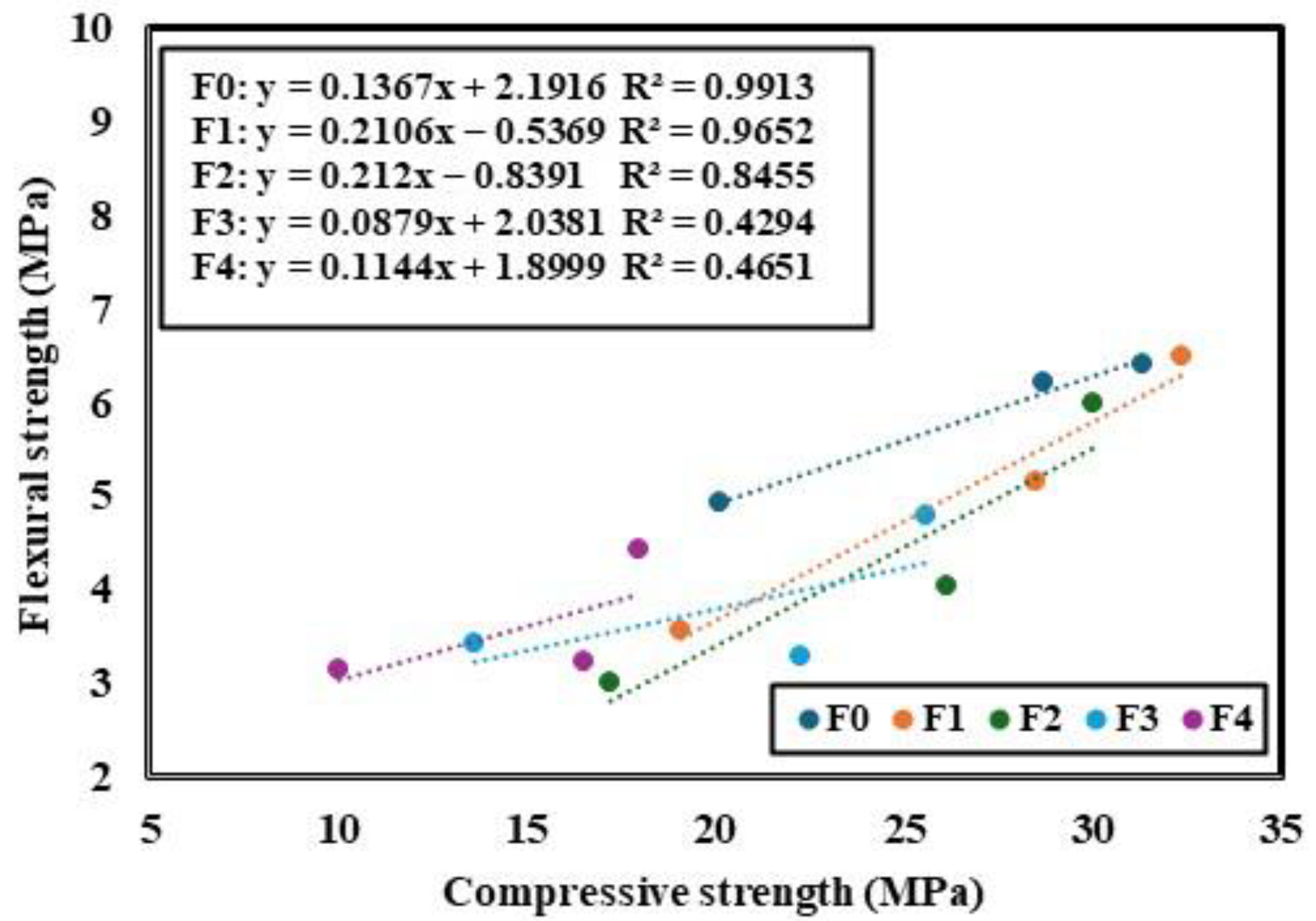
3.5.1. Compressive Strength–Flexural Strength Relationship
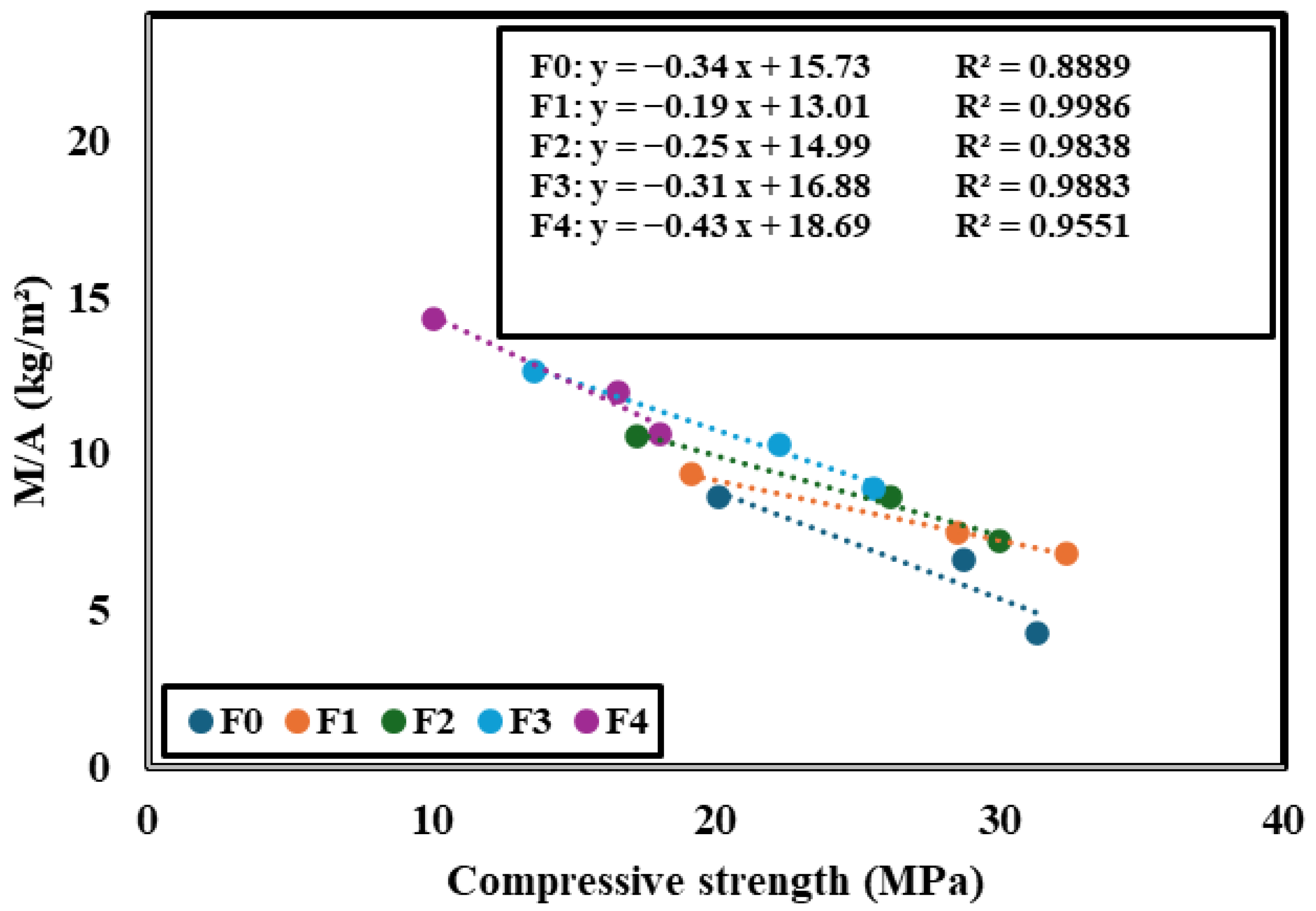
3.5.2. Compressive Strength–(M/A) Relationship
4. Conclusions and Perspectives
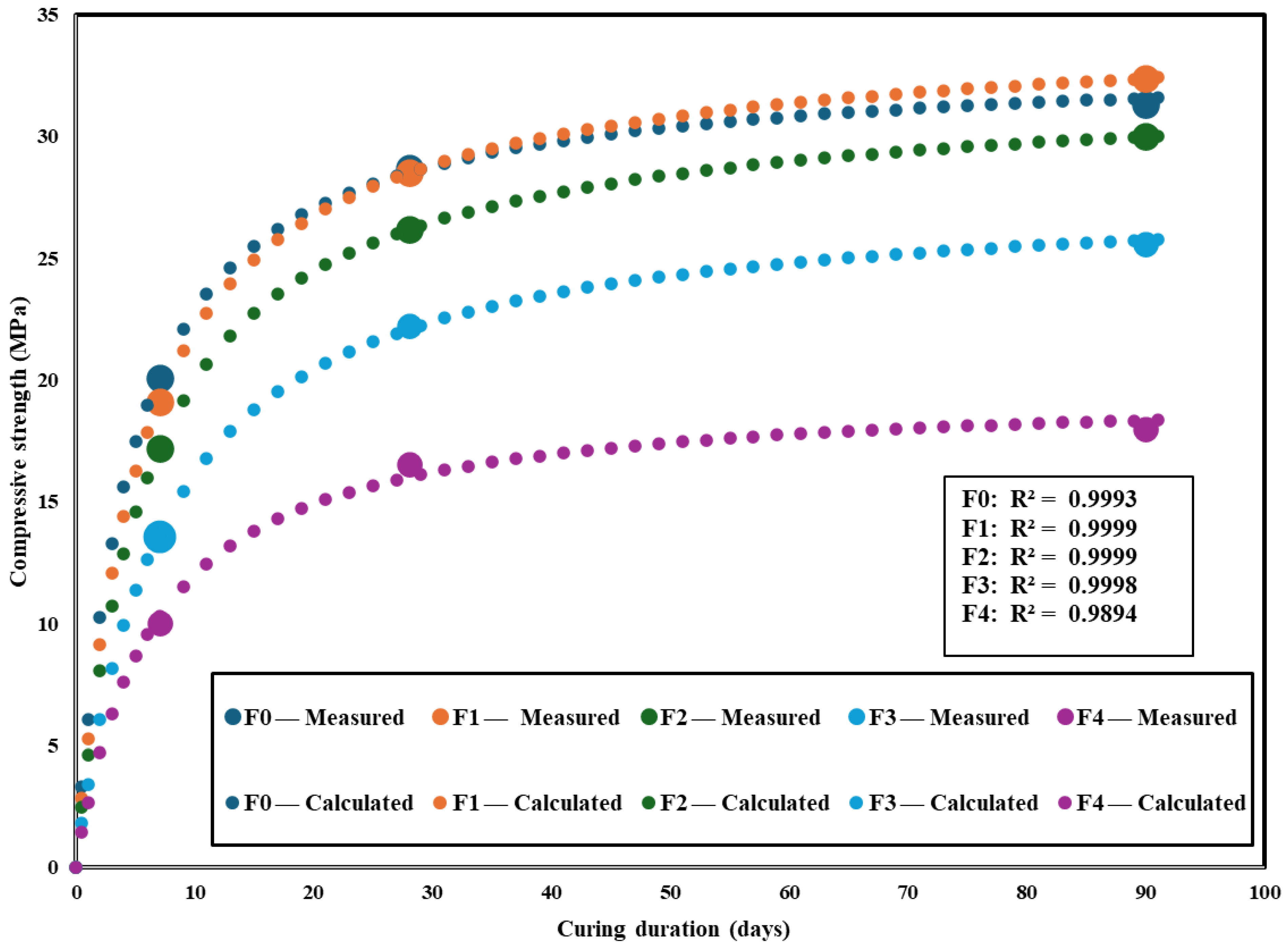
- Strength development (compressive and flexural). Increasing the pozzolan replacement reduced the early-age strength because clinker dilution lowers the amount of early hydration products. At 7 d, the compressive strength decreased by 4.86%, 14.35%, 32.30%, and 50.04% at 12%, 21%, 36%, and 56% replacement, respectively (corresponding to reductions of 0.98 MPa, 2.89 MPa, 6.49 MPa, and 10.06 MPa compared to the control value of 20.10 MPa).
- Later-age recovery confirms reactivity. Later-age gains indicate pozzolanic contribution through secondary hydrates and matrix refinement. At 90 d, the 12% mixture slightly exceeded the control by 3.38% in compressive strength and 1.40% in flexural strength (+1.06 MPa in compression: 32.38 vs. 31.32 MPa; +0.09 MPa in flexure: 6.50 vs. 6.41 MPa). Higher replacements show significant reductions at 90 d (compressive: −5.74 MPa at 36% and −13.32 MPa at 56% relative to 31.32 MPa; flexural: −1.62 MPa at 36% and −1.99 MPa at 56% relative to 6.41 MPa).
- ASTM activity criterion (SAI). Using the ASTM criterion (≥75% at 28 d), the natural pozzolan shows acceptable activity at 12% (99.3%) and 21% (91.2%), is marginal at 36% (77.5%), and is not acceptable at 56% (57.7%). At 90 d, the 12% mix reached 103.4%, confirming effective late-age contribution.
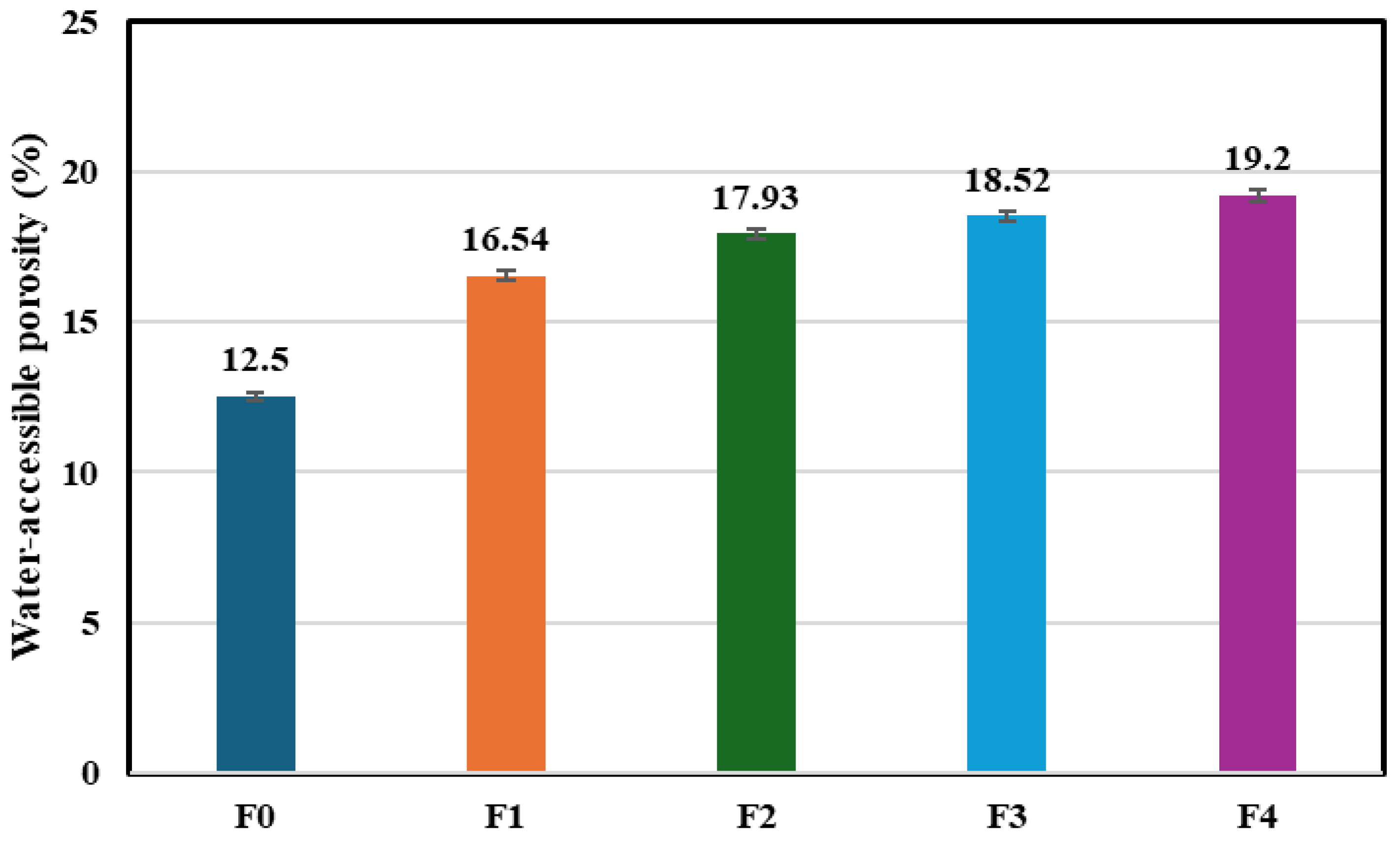
- Porosity and water absorption trends. Water-accessible porosity at 28 d increased steadily with replacement. Relative to the control, porosity increased by 32.3%, 43.4%, 48.16%, and 53.6% at 12%, 21%, 36%, and 56%, respectively. Total water absorption at 28 d also increased, with relative increases (vs. control) ranging from 26.2% to 50.2% as the replacement rose from 12% to 56%. These changes are consistent with the strength reductions at high substitution.
- Modeling and correlation. The nonlinear age–strength model reproduced the experimental trends with very high fit quality (R2 ≈ 0.98–0.99 across mixtures). A strong compressive–flexural correlation was obtained for the low-to-moderate replacement range (R2 > 0.8), supporting the consistency of the mechanical dataset in that window.
- Sustainability benefit (community impact). The embodied carbon analysis shows a monotonic reduction in EC with increasing cement substitution by pozzolan. The decrease reaches 177 kg CO2e·m−3 between F0 and F4, corresponding to a reduction of approximately 52% when substitution directly targets the cement content. The binder contribution decreases markedly (from 314.2 to 138.3 kg CO2e·m−3), while the non-binder contributions remain relatively stable (≈22–24 kg CO2e·m−3), explaining the high sensitivity of embodied carbon to variations in clinker content and the existence of an emission “floor” at high substitution levels. This confirms that decarbonization of mortar is primarily driven by cement reduction, in agreement with published LCA/EPD studies.
- Practical recommendation. A moderate replacement (12–21%) provides the best overall balance. It keeps performance close to the control while still lowering cement demand and environmental impacts. Higher replacement can be justified mainly when strength requirements are lower and longer curing is acceptable.
- Limitations and future work. The study is based on one mix design and one curing regime, with pore/transport assessed mainly by porosity and 24 h absorption. Future work should include microstructural confirmation (e.g., XRD/TGA/SEM) and durability indicators (chloride migration, carbonation, sulfate resistance, shrinkage) to validate long-term field performance, especially at ≥36% replacement.
Author Contributions
Funding
Data Availability Statement
Acknowledgments
Conflicts of Interest
References
- Barcelo, L.; Kline, J.; Walenta, G.; Gartner, E. Cement and carbon emissions. Mater. Struct. 2014, 47, 1055–1065. [Google Scholar] [CrossRef] [Scilit]
- Alassaad, F.; Haddad, B.; Affan, H.; Mohamad, A.; Sebaibi, N. Incorporation of concrete polishing waste as a partial substitute for cement in mortar. Materials 2025, 18, 530. [Google Scholar] [CrossRef] [Scilit]
- Papadakis, V.G.; Tsimas, S. Supplementary cementing materials in concrete: Part I: Efficiency and design. Cem. Concr. Res. 2002, 32, 1525–1532. [Google Scholar] [CrossRef] [Scilit]
- Aprianti, E. A huge number of artificial waste material can be supplementary cementitious material (SCM) for concrete production–A review part II. J. Clean. Prod. 2017, 142, 4178–4194. [Google Scholar] [CrossRef] [Scilit]
- Lin, Z.; Lyu, G.; Fang, K. Carbon emissions assessment of concrete and quantitative calculation of CO2 reduction benefits of SCMs: A case study of C30–C80 ready-mixed concrete in China. Case Stud. Constr. Mater. 2025, 22, e04287. [Google Scholar] [CrossRef] [Scilit]
- Johari, M.M.; Brooks, J.J.; Kabir, S.; Rivard, P. Influence of supplementary cementitious materials on engineering properties of high strength concrete. Constr. Build. Mater. 2011, 25, 2639–2648. [Google Scholar] [CrossRef] [Scilit]
- Sutter, L.L. Supplementary Cementitious Materials Best Practices for Concrete Pavements; Federal Highway Administration: Washington, DC, USA, 2016.
- Wong, C.L.; Mo, K.H.; Yap, S.P.; Alengaram, U.J.; Ling, T.-C. Potential use of brick waste as alternate concrete-making materials: A review. J. Clean. Prod. 2018, 195, 226–239. [Google Scholar] [CrossRef] [Scilit]
- Damineli, B.L.; Pileggi, R.G.; Lagerblad, B.; John, V.M. Effects of filler mineralogy on the compressive strength of cementitious mortars. Constr. Build. Mater. 2021, 299, 124363. [Google Scholar] [CrossRef] [Scilit]
- Sharbaf, M.; Najimi, M.; Ghafoori, N. A comparative study of natural pozzolan and fly ash: Investigation on abrasion resistance and transport properties of self-consolidating concrete. Constr. Build. Mater. 2022, 346, 128330. [Google Scholar] [CrossRef] [Scilit]
- Liu, J.C.; Hossain, M.U.; Ng, S.T.; Ye, H. High-performance green concrete with high-volume natural pozzolan: Mechanical, carbon emission and cost analysis. J. Build. Eng. 2023, 68, 106087. [Google Scholar] [CrossRef] [Scilit]
- Turanli, L.; Uzal, B.; Bektas, F. Effect of large amounts of natural pozzolan addition on properties of blended cements. Cem. Concr. Res. 2004, 34, 2277–2283. [Google Scholar] [CrossRef]
- Mehta, P.K. Studies on blended cements containing Santorin Earth. Cem. Concr. Res. 1981, 11, 507–518. [Google Scholar] [CrossRef] [Scilit]
- Mouli, M.; Khelafi, H. Performance characteristics of lightweight aggregate concrete containing natural pozzolan. Build. Environ. 2008, 43, 31–36. [Google Scholar] [CrossRef] [Scilit]
- Derrouiche, Y.; Achoura, D.; Saliba, J.; Cassagnabère, F. Natural pozzolan as a sustainable cement replacement in high-performance concrete: Effects on mechanical properties, durability, and microstructural development. Sci. Afr. 2025, 27, e02574. [Google Scholar] [CrossRef] [Scilit]
- Haddad, B.; Alassaad, F.; Affan, H.; Mohamad, A.; Sebaibi, N. Characterization of mortars incorporating concrete washing fines: Impact on mechanical properties, microstructure, and carbon footprint. Appl. Sci. 2024, 14, 8381. [Google Scholar] [CrossRef] [Scilit]
- Ababneh, A.N.; Al-Thiab, E.H.; Al-Shorman, B.H. Early strength development in cement mortars containing high proportions of Jordanian natural pozzolan. Results Eng. 2025, 27, 105868. [Google Scholar] [CrossRef] [Scilit]
- Ababneh, A.N.; Matalkah, F.; Al-Akhras, M. The use of graphene nanoplatelets for enhancement of the compressive strength of mortar containing high levels of natural pozzolan. Constr. Build. Mater. 2024, 449, 138302. [Google Scholar] [CrossRef] [Scilit]
- Khitas, N.E.H.; Hebbache, K.; Douadi, A.; Boutlikht, M.; Belebchouche, C.; Messai, A.; Mahar, N.E.-H.; Del Serrone, G.; Moretti, L.; Czarnecki, S.; et al. Modeling and optimizing the properties of mortars based on natural pozzolan, silica sand, and recycled brick waste mixture design: A technical and environmental study. Constr. Build. Mater. 2025, 459, 139706. [Google Scholar] [CrossRef] [Scilit]
- Hosseinzadehfard, E.; Mobaraki, B. Corrosion performance and strain behavior of reinforced concrete: Effect of natural pozzolan as partial substitute for microsilica in concrete mixtures. Structures 2025, 79, 109397. [Google Scholar] [CrossRef] [Scilit]
- NF EN 197-1:2012; Cement—Part 1: Composition, specifications and conformity criteria for common cements. AFNOR: Paris, France, 2012.
- ASTM C1437; Standard Test Method for Flow of Hydraulic Cement Mortar. ASTM International: West Conshohocken, PA, USA, 2013.
- NF EN 196-1; Methods of Testing Cement—Part 1: Determination of Strength. AFNOR: Paris, France, 2016.
- NF P18-459; Concrete—Determination of Water Absorption by Immersion. AFNOR: Paris, France, 2010.
- ASTM C1585; Standard Test Method for Measurement of Rate of Absorption of Water by Hydraulic-Cement Concretes. ASTM International: West Conshohocken, PA, USA, 2013.
- Concrete Embodied Carbon Footprint Calculator. Circular Ecology. Available online: https://circularecology.com/concrete-embodied-carbon-footprint-calculator.html (accessed on 27 January 2026).
- Jones, C. Bath Inventory of Carbon and Energy (ICE)|GHG Protocol. 2010. Available online: https://ghgprotocol.org/Third-Party-Databases/Bath-ICE (accessed on 10 February 2026).
- Hammond, G.P.; Jones, C.I. Embodied energy and carbon in construction materials. Proc. Inst. Civ. Eng.-Energy 2008, 161, 87–98. [Google Scholar] [CrossRef] [Scilit]
- ISO 14040; Environmental Management—Life Cycle Assessment—Principles and Framework. International Organization for Standardization: Geneva, Switzerland, 2006.
- ISO 14044; Environmental Management—Life Cycle Assessment—Requirements and Guidelines. International Organization for Standardization: Geneva, Switzerland, 2006.
- Hill, N.; Bonifazi, E.; Bramwell, R.; Karagianni, E.; Harris, B. 2018 Government GHG Conversion Factors for Company Reporting: Methodology Paper for Emission Factors–Final Report; Department for Business, Energy & Industrial Strategy: London, UK, 2018. [Google Scholar]
- Department for Energy Security and Net Zero; Department for Business; Energy & Industrial Strategy. Greenhouse Gas Reporting: Conversion Factors 2018. GOV.UK. 2018. Available online: https://www.gov.uk/government/publications/greenhouse-gas-reporting-conversion-factors-2018 (accessed on 10 February 2026).
- Summary Sustainable Development Data 2017, MPA Cement—Publication Index | NBS. Available online: https://dev.web.pubs-search.thenbs.cloud/documents/details?Pub=MPAC&DocId=321791 (accessed on 11 February 2026).
- Ghazzawi, S.; Ghanem, H.; Chahal, S.; Khatib, J.; Elkordi, A. Mechanical and physical performance of cement paste containing olive waste ash: Implications for paving block applications. Appl. Sci. 2025, 15, 3959. [Google Scholar] [CrossRef] [Scilit]
- Al-Massri, G.; Ghanem, H.; Khatib, J.; Elkordi, A. Influence of adding banana fibers on the mechanical properties and volume stability of mortar for paving block applications. J. Nat. Fibers 2025, 22, 2464152. [Google Scholar] [CrossRef] [Scilit]
- Yang, L.; Gao, D.; Zhang, Y.; Tang, J.; Li, Y. Relationship between sorptivity and capillary coefficient for water absorption of cement-based materials: Theory analysis and experiment. R. Soc. Open Sci. 2019, 6, 190112. [Google Scholar] [CrossRef] [Scilit]
- Neithalath, N. Evaluating the short- and long-term moisture transport phenomena in lightweight aggregate concretes. Mag. Concr. Res. 2007, 59, 435–445. [Google Scholar] [CrossRef] [Scilit]
- Al-Massri, G.; Ghanem, H.; Khatib, J.; El-Zahab, S.; Elkordi, A. The effect of adding banana fibers on the physical and mechanical properties of mortar for paving block applications. Ceramics 2024, 7, 1533–1553. [Google Scholar] [CrossRef] [Scilit]
- Villar-Cocina, E.; Valencia-Morales, E.; Vega-Leyva, J.; Munoz, J.A. Kinetics of the water absorption in GGBS-concretes: A capillary–diffusive model. Comput. Concr. 2005, 2, 19–30. [Google Scholar] [CrossRef] [Scilit]
- Ghanem, H.; Ghazzawi, S.; Khatib, J.; Elkordi, A.; Kırgız, M.S. Physical, mechanical, and volumetric stability properties of mortar with olive waste ash as cement substitute. Eng. Rep. 2025, 7, e70501. [Google Scholar] [CrossRef] [Scilit]
- Martys, N.S.; Ferraris, C.F. Capillary transport in mortars and concrete. Cem. Concr. Res. 1997, 27, 747–760. [Google Scholar] [CrossRef] [Scilit]
- Rosa, D.; Rizzo, F.; Palma, L.D. Lime- and pozzolan-based matrices for an efficient immobilization of hazardous waste. Chem. Eng. Sci. 2025, 313, 121735. [Google Scholar] [CrossRef] [Scilit]
- Ahmed, W.; Ye, C.; Lu, G.; Ng, S.T.; Liu, G.; Wang, Y. Low-carbon concrete comprising high-volume pozzolan and recycled aggregate: Evaluating mechanical performance, microstructure, environmental impact, and cost efficiency. J. Clean. Prod. 2025, 518, 145796. [Google Scholar] [CrossRef] [Scilit]
- Mostofinejad, D.; Saljoughian, A.; Sadeghi, E.; Bahmani, H. Flexural strengthening of reinforced concrete beams using engineered cementitious composite panels with artificial pozzolan, glass mesh, and grooving method. Results Eng. 2025, 26, 105187. [Google Scholar] [CrossRef] [Scilit]
- López, M.; Castro, J.T. Effect of natural pozzolans on porosity and pore connectivity of concrete with time. Rev. Ing. Construcción 2010, 25, 419–431. [Google Scholar] [CrossRef] [Scilit]
- Affan, H.; El Haddaji, B.; Ajouguim, S.; Khadraoui, F. A review—Durability, mechanical and hygrothermal behavior of building materials incorporating biomass. Eng 2024, 5, 55. [Google Scholar] [CrossRef] [Scilit]
- Boukachabia, M.; Bendjeffal, H.; Bouaroudj, T.; Djebli, A.; Riant, O. Natural pozzolan as a novel heterogeneous catalyst for the synthesis of alkylaminophenols. J. Organomet. Chem. 2025, 1033, 123635. [Google Scholar] [CrossRef] [Scilit]
- Hamdi, O.M.; Boumaza, A.; Alioui, H.; Moretti, L.; Douadi, A.; Hebbache, K.; Ahmed-Chaouch, A. Response surface methodology to model the effects of key synthesis parameter interactions on mechanical and microstructural properties of natural pozzolan-based geopolymers. Constr. Build. Mater. 2025, 478, 141411. [Google Scholar] [CrossRef] [Scilit]
- Nassiri, O.; Mahboub, I.; Ibnoussina, M.; Moukmir, O.; El Amrani, A.; Mazirh, K.; Ammari, A.; El Cheickine, I. Physico-mechanical, structural, and mineralogical analysis of composite concrete incorporating hydraulic lime and pozzolan. Constr. Build. Mater. 2024, 437, 136804. [Google Scholar] [CrossRef] [Scilit]
- Rojas-Martínez, A.E.; González-López, J.R.; Guerra-Cossío, M.A.; Hernández-Carrillo, G. Sulphate-based activation of a binary and ternary hybrid cement with Portland cement and different pozzolans. Constr. Build. Mater. 2024, 421, 135683. [Google Scholar] [CrossRef] [Scilit]
- Kasaniya, M.; Thomas, M.D.; Moffatt, T.; Hossack, A. Significance of fineness of pozzolans in determining pozzolanic reactivity. Cement 2025, 19, 100137. [Google Scholar] [CrossRef] [Scilit]
- ASTM C311; Standard Test Methods for Sampling and Testing Fly Ash or Natural Pozzolans for Use in Portland-Cement Concrete. ASTM International: West Conshohocken, PA, USA, 2018.
- ASTM C618; Standard Specification for Coal Fly Ash and Raw or Calcined Natural Pozzolan for Use in Concrete. ASTM International: West Conshohocken, PA, USA, 2019.
- Santos, F.J.; de Brito, J.; Evangelista, L. Mechanical performance of mortars with natural pozzolan additions: Compressive and flexural strength development. Constr. Build. Mater. 2018, 189, 1030–1041. [Google Scholar]
- Kapeluszna, E.; Kotwica, Ł. New insights into the role of highly reactive pozzolans in the early hydration process of C3S and C3A monitored by conductometry, calorimetry, phase composition, and microstructure analyses. Constr. Build. Mater. 2024, 452, 138950. [Google Scholar] [CrossRef] [Scilit]
- Wahedy, M.N.; Sharbatdar, M.K.; Rezaifar, O. Mechanical, environmental, and economic assessment of sustainable cement mortar using Afghan natural pozzolan as a partial replacement for cement. Constr. Build. Mater. 2023, 386, 131574. [Google Scholar] [CrossRef] [Scilit]
- Laguna-Torres, C.A.; González-López, J.; Guerra-Cossío, M.; Guerrero-Baca, L.; Chávez-Guerrero, L.; Figueroa-Torres, M.; Zaldívar-Cadena, A. Effect of physical, chemical, and mineralogical properties for selection of soils stabilized by alkaline activation of a natural pozzolan for earth construction techniques such as compressed earth blocks. Constr. Build. Mater. 2024, 419, 135449. [Google Scholar] [CrossRef] [Scilit]
- Bediako, M.; Valentini, L. Strength performance and life cycle assessment of high-volume low-grade kaolin clay pozzolan concrete: A Ghanaian scenario. Case Stud. Constr. Mater. 2022, 17, e01679. [Google Scholar] [CrossRef] [Scilit]
- Agra, T.M.S.; Lima, V.M.E.; Basto, P.E.A.; Melo Neto, A.A. Characterizing and processing a kaolinite-rich water treatment sludge for use as high-reactivity pozzolan in cement manufacturing. Appl. Clay Sci. 2023, 236, 106870. [Google Scholar] [CrossRef] [Scilit]
- Hamada, H.M.; Abdulhaleem, K.N.; Majdi, A.; Al Jawahery, M.S.; Thomas, B.S.; Yousif, S.T. The durability of concrete produced from pozzolan materials as a partially cement replacement: A comprehensive review. Mater. Today Proc. 2023. [Google Scholar] [CrossRef] [Scilit]
- Firdous, R.; Stephan, D.; Djobo, J.N.Y. Natural pozzolan-based geopolymers: A review on mechanical, microstructural, and durability characteristics. Constr. Build. Mater. 2018, 190, 1251–1263. [Google Scholar] [CrossRef] [Scilit]
- Arairo, W.; Khatib, M.; Affan, H.; Tehrani, F.F.; Absi, J.; Sraj, O.; Saba, M. Experimental and analytical investigation for mechanical behaviour of vegetable fiber reinforced concrete. Eur. J. Environ. Civ. Eng. 2024, 29, 1345–1366. [Google Scholar] [CrossRef] [Scilit]
- Khatib, J.M.; Wild, S. Porosity and durability of pozzolan-modified cement systems. Cem. Concr. Res. 1996, 26, 721–733. [Google Scholar]
- Thomas, M.D.A. Optimizing the use of supplementary cementitious materials in concrete. Concr. Int. 2007, 29, 47–52. [Google Scholar]
- Los Santos-Ortega, J.; Fraile-García, E.; Ferreiro-Cabello, J. Environmental and economic viability of using concrete block wastes from a concrete production plant as recycled coarse aggregates. Materials 2024, 17, 1560. [Google Scholar] [CrossRef] [Scilit]
- Los Santos-Ortega, J.; Ferreiro-Cabello, J.; Fraile-García, E.; Somovilla-Gómez, F. Applying the life cycle assessment to the use of biochar from vine pruning waste as an additive in mortar. Materials 2025, 18, 5573. [Google Scholar] [CrossRef] [Scilit]
- Los Santos-Ortega, J.; Fraile-García, E.; Ferreiro-Cabello, J. Environmental assessment of the use of ground olive stones in mortars: Reduction of CO2 emissions and production of sustainable mortars for buildings. Environ. Impact Assess. Rev. 2025, 110, 107709. [Google Scholar] [CrossRef] [Scilit]
- Los Santos-Ortega, J.; Fraile-García, E.; Ferreiro-Cabello, J. Methodology for the environmental analysis of mortar doped with crumb rubber from end-of-life tires. Constr. Build. Mater. 2023, 399, 132519. [Google Scholar] [CrossRef] [Scilit]
- Huang, B.; Ye, G.; Gong, J. Mechanical properties of cement mortars containing natural pozzolan: Compressive and flexural strength correlations. Constr. Build. Mater. 2017, 149, 526–535. [Google Scholar]
- Li, G.; Zhao, Z.; Ma, Y. Influence of pozzolan content on the early and long-term mechanical properties of blended cement mortars. Cem. Concr. Compos. 2019, 104, 103393. [Google Scholar]
- Azimi, N.; Schollbach, K.; Oliveira, D.V.; D’Antino, T.; Lourenço, P.B. Durability of natural hydraulic lime–pozzolan mortars for TRM strengthening systems under acidic aging: Linking microstructural degradation to mechanical performance via chemo-mechanical modeling. Constr. Build. Mater. 2025, 500, 144244. [Google Scholar] [CrossRef] [Scilit]
- Al-Massri, G.; Ghanem, H.; Khatib, J.; Kırgız, M.S.; Elkordi, A. Chemical shrinkage, autogenous shrinkage, drying shrinkage, and expansion stability of interfacial transition zone material using alkali-treated banana fiber for concrete. J. Struct. Integr. Maint. 2024, 9, 2390650. [Google Scholar] [CrossRef] [Scilit]
- Pipilikaki, P.; Katsioti, M. Study of the hydration process of quaternary blended cements and durability of the produced mortars and concretes. Constr. Build. Mater. 2009, 23, 2246–2250. [Google Scholar] [CrossRef] [Scilit]








| Density | Water Absorption | Sand Equivalent | pH |
|---|---|---|---|
| 2590 kg/m3 | 1.1% | 81.3 | 9.00 |
| Property | Value |
|---|---|
| Clinker (%) | 80–94 |
| Limestone (%) | 6–20 |
| SO3 (%) | <4 |
| MgO (%) | 0.29 |
| Na2O (%) | <0.1 |
| Cl− (%) | <0.1 |
| Apparent density (kg/m3) | 3100 |
| Specific surface area (cm2/g) | 5373 |
| Initial setting time | 45 min |
| Compressive strength 2 d (MPa) | ≥30 |
| Compressive strength 28 d (MPa) | ≥52.5 |
| Property | Value |
|---|---|
| SiO2 (%) | 59.82 |
| Al2O3 (%) | 17.60 |
| Fe2O3 (%) | 6.52 |
| CaO (%) | 4.41 |
| MgO (%) | 2.36 |
| Alkaline (Na2O + K2O) (%) | 7.28 |
| Other oxides (%) | 1.79 |
| Density (kg/m3) | 2760 |
| Specific surface area (cm2/g) | 5500–6000 |
| Loss on ignition (wt.%) | 5.25 |
| SO3, CO2, Cl, Cr2O3, MnO, TiO2, P2O5. | |
| Quantities (kg/m3) | ||||
|---|---|---|---|---|
| Mix Code | Cement | Pozzolan | Sand | Water |
| F0 | 393 | 0 | 1179 | 197 |
| F1 | 345 | 48 | 1179 | 197 |
| F2 | 310 | 83 | 1179 | 197 |
| F3 | 251 | 142 | 1179 | 197 |
| F4 | 173 | 220 | 1179 | 197 |
Disclaimer/Publisher’s Note: The statements, opinions and data contained in all publications are solely those of the individual author(s) and contributor(s) and not of MDPI and/or the editor(s). MDPI and/or the editor(s) disclaim responsibility for any injury to people or property resulting from any ideas, methods, instructions or products referred to in the content. |
© 2026 by the authors. Licensee MDPI, Basel, Switzerland. This article is an open access article distributed under the terms and conditions of the Creative Commons Attribution (CC BY) license.
Share and Cite
Affan, H.; Fehr, L.; Al-Massri, G.; Alassaad, F.; Yaghi, A.; Ghanem, H. Strength, Transport Properties, and Life Cycle Impacts of Mortar Containing German Natural Pozzolan. Infrastructures 2026, 11, 67. https://doi.org/10.3390/infrastructures11020067
Affan H, Fehr L, Al-Massri G, Alassaad F, Yaghi A, Ghanem H. Strength, Transport Properties, and Life Cycle Impacts of Mortar Containing German Natural Pozzolan. Infrastructures. 2026; 11(2):67. https://doi.org/10.3390/infrastructures11020067
Chicago/Turabian StyleAffan, Houssam, Laurent Fehr, Ginan Al-Massri, Farjallah Alassaad, Amro Yaghi, and Hassan Ghanem. 2026. "Strength, Transport Properties, and Life Cycle Impacts of Mortar Containing German Natural Pozzolan" Infrastructures 11, no. 2: 67. https://doi.org/10.3390/infrastructures11020067
APA StyleAffan, H., Fehr, L., Al-Massri, G., Alassaad, F., Yaghi, A., & Ghanem, H. (2026). Strength, Transport Properties, and Life Cycle Impacts of Mortar Containing German Natural Pozzolan. Infrastructures, 11(2), 67. https://doi.org/10.3390/infrastructures11020067