1. Introduction
Concrete is the most widely used construction material worldwide and constitutes a fundamental pillar of modern infrastructure. However, its extensive production and consumption are associated with major environmental impacts, including high energy demand, substantial greenhouse gas emissions (e.g., carbon dioxide), and intensive extraction of natural resources. In particular, the cement and concrete industries are under increasing pressure to reduce their environmental footprint and adopt more sustainable and circular production models [
1,
2,
3]. These challenges have positioned concrete at the center of global sustainability and decarbonization strategies within the construction sector.
Beyond cement-related emissions, the extraction and processing of aggregates represent a major environmental burden, as aggregates constitute the largest volumetric fraction of concrete. At the same time, the construction industry generates massive amounts of construction and demolition waste (C&DW), much of which is still landfilled despite its potential for reuse and recycling. The implementation of circular economy principles in construction, particularly through the recycling of C&DW into recycled concrete aggregates (RCAs), has therefore gained increasing attention as a strategy to reduce natural aggregate consumption and mitigate waste-related environmental impacts [
4,
5,
6].
Although recycled concrete aggregates offer a promising pathway for closing material loops, their widespread use remains largely limited to non-structural applications in most countries. For example, according to Ram et al. (2019) [
7], while Spanish (EHE-08, 2010) and Hong Kong (HKBD 2009) standards allow 100% replacement of natural coarse aggregates with RCA in non-structural concrete, Indian standards permit 100% replacement of both natural coarse and fine aggregates with recycled concrete aggregate for non-structural concrete with compressive strength below 15 MPa (IS 383:2016). Other standards from countries such as Portugal (LNEC E-471, 2006) and Germany (DAfStB, 1998) do not specify a maximum allowable replacement level for non-structural applications; instead, they establish minimum density requirements for recycled concrete aggregate, which are 2000 kg/m
3 and 1500 kg/m
3, respectively. This is because conventional recycled concrete aggregate typically exhibits higher porosity, higher water absorption, adhered mortar, and greater variability compared to natural aggregates. These characteristics often lead to reduced workability, increased admixture demand, and potential deterioration of mechanical and durability-related properties, especially at high replacement ratios or in high-strength concrete [
8,
9,
10].
According to Ram et al. (2019) [
7], in the context of high-strength concrete (HSC), mixes with compressive strengths between 50 and 100 MPa, standards from countries such as Japan (JIS 5021, 2005), China (JGJ/T 240, 2011), Switzerland (OT-70085, 2006), the Netherlands (NEN-5905, 2005), Denmark (DCA, 1995), and Portugal (LNEC E-471, 2006) clearly specify conditions related to maximum allowable replacement levels, density-water absorption requirements, and durability parameters (i.e., sulfate and chloride contents) when using recycled concrete aggregates in high-strength concrete. In this case, as compressive strength increases, the contribution of the aggregate phase and the characteristics of the interfacial transition zone (ITZ) become increasingly important in governing mechanical behavior and stiffness [
11]. Several studies have demonstrated that the performance of recycled concrete aggregate strongly depends on the quality of the parent concrete from which the RCA is produced [
12]. In this regard, RCA derived from high-strength parent concretes has been shown to exhibit improved physical and mechanical properties, enabling higher replacement ratios without compromising strength [
13,
14]. For example, Jagadesh et al. (2024) [
15] reported mechanical improvements of 15–20% in the compressive strength of high-strength concrete incorporating recycled concrete aggregates. Similarly, Rezar et al. (2024) [
16] observed a 5–8% increase in the tensile strength of concrete mixes produced with recycled aggregates sourced from deconstructed high-strength concrete bridges. Although it is a different recycled material, the use of biochar highlights its potential to refine pore structure, enhance ITZ quality, and improve the mechanical and durability performance of geopolymer concretes [
17].
Experimental investigations on high-strength recycled aggregate concrete have reported that RCA obtained from parent concretes with compressive strengths exceeding approximately 60 MPa can perform comparably to natural aggregates in terms of compressive strength and stiffness, especially when appropriate mix design strategies are adopted [
18]. Nevertheless, concerns related to durability, pore connectivity, and transport properties often persist, particularly at intermediate replacement levels, where the balance between adhered mortar content and additional hydration effects is not fully understood [
19,
20].
Recent research has explored various approaches to enhance RCA performance, which can be classified into methods that modify the RCA surface (e.g., carbonation, bio-deposition, use of pozzolanic materials) and those aimed at separating the old mortar from the natural aggregate (e.g., mechanical scrubbing, acid soaking, and microwave heating) [
21,
22,
23]. While these strategies have shown promising results, they may introduce additional processing steps, costs, or environmental trade-offs. According to the recent comparative analysis by Prajapati et al. (2019) [
24], untreated recycled concrete aggregate replacements above 20% lead to a significant reduction in both compressive strength and elastic modulus, an effect that becomes even more pronounced when the fine natural fraction is substituted. Consequently, there remains a need for systematic studies evaluating the intrinsic potential of high-performance recycled concrete aggregates (HP-RCAs), defined in this study as recycled concrete aggregates produced from high-strength concrete waste without significant additional treatment procedures.
In addition to aggregate-related challenges, high-strength concretes are commonly produced with very low water-to-cement ratios, which significantly increase the risk of early-age autogenous shrinkage and associated cracking. Among the mitigation strategies proposed in the literature, the use of superabsorbent polymers (SAPs) as internal curing agents has proven to be particularly effective [
25,
26,
27]. Parallel to performance-driven material design, sustainability considerations have become central to contemporary concrete technology. Circular economy approaches focused on the valorization of industrial and post-industrial waste have demonstrated strong potential to reduce environmental impacts while delivering high-performance cement-based materials [
28,
29,
30].
Within this broader framework, the development of high-strength concretes incorporating HP-RCA represents a logical extension of circular economy concepts. By combining high-quality recycled aggregates derived from high-strength concrete waste with advanced mixture design strategies, it is possible to produce structurally efficient concretes with enhanced mechanical performance while reducing environmental impacts associated with natural aggregate extraction and waste disposal.
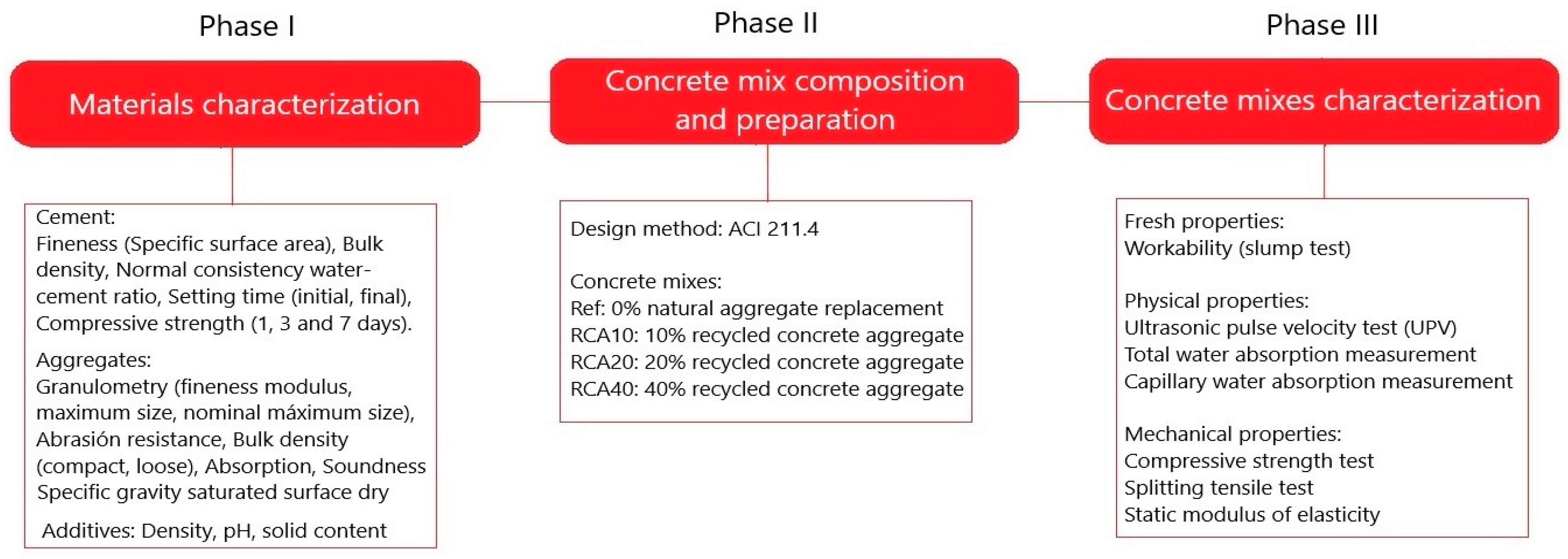
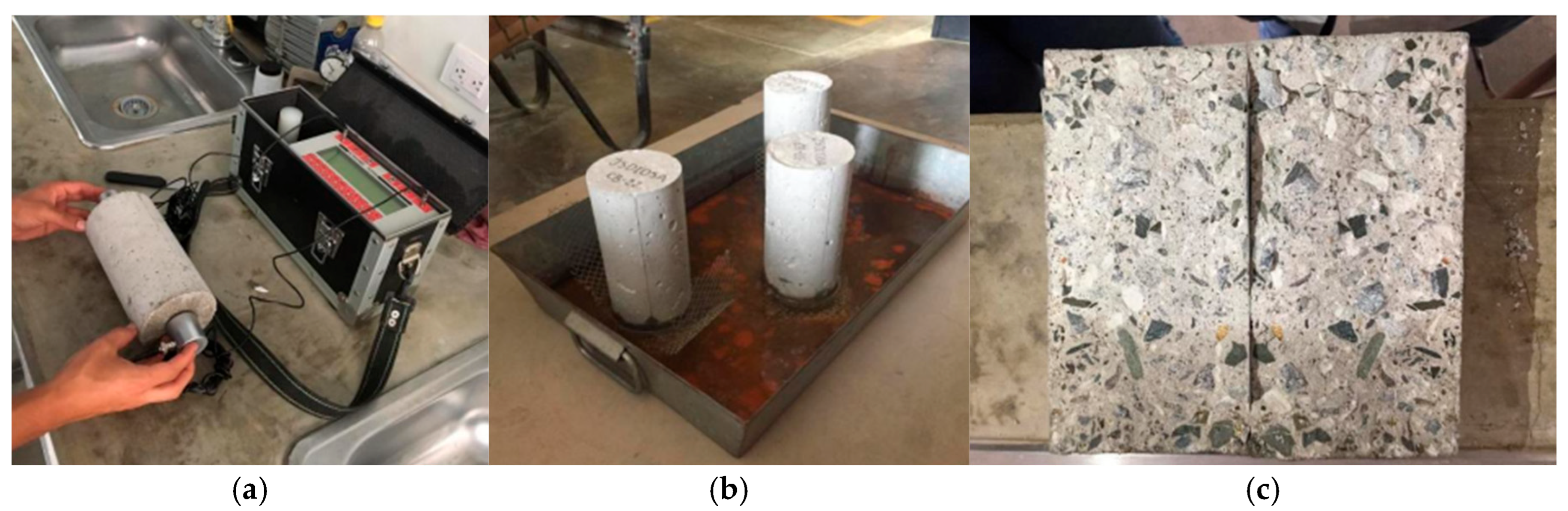
Accordingly, the present study investigates the influence of HP-RCA derived from high-strength concrete laboratory specimens on the fresh, physical, and mechanical properties of new high-strength concrete mixtures. Four mixtures are evaluated: a reference mixture and mixtures incorporating 10%, 20%, and 40% replacement of natural coarse aggregate by HP-RCA (by mass). Fresh properties are assessed through workability measurements, while physical properties related to microstructural quality and durability are evaluated using ultrasonic pulse velocity, total water absorption, and capillary absorption tests. Mechanical performance is analyzed through compressive strength, splitting tensile strength, and static modulus of elasticity at different curing ages.
The main contribution of this research lies in providing experimental evidence on the feasibility of using HP-RCA as a viable constituent for high-strength concrete, achieving not only comparable but, in some cases, enhanced mechanical performance at high re-placement levels. From a sustainability perspective, this approach supports the valorization of high-quality C&DW, reduces the demand for virgin aggregates, and aligns with circular economy strategies and life-cycle-based environmental assessments promoted in the construction sector [
1,
31,
32,
33]. As such, HP-RCA represents a promising pathway toward the development of structurally efficient and environmentally responsible concrete mixes.
4. Conclusions
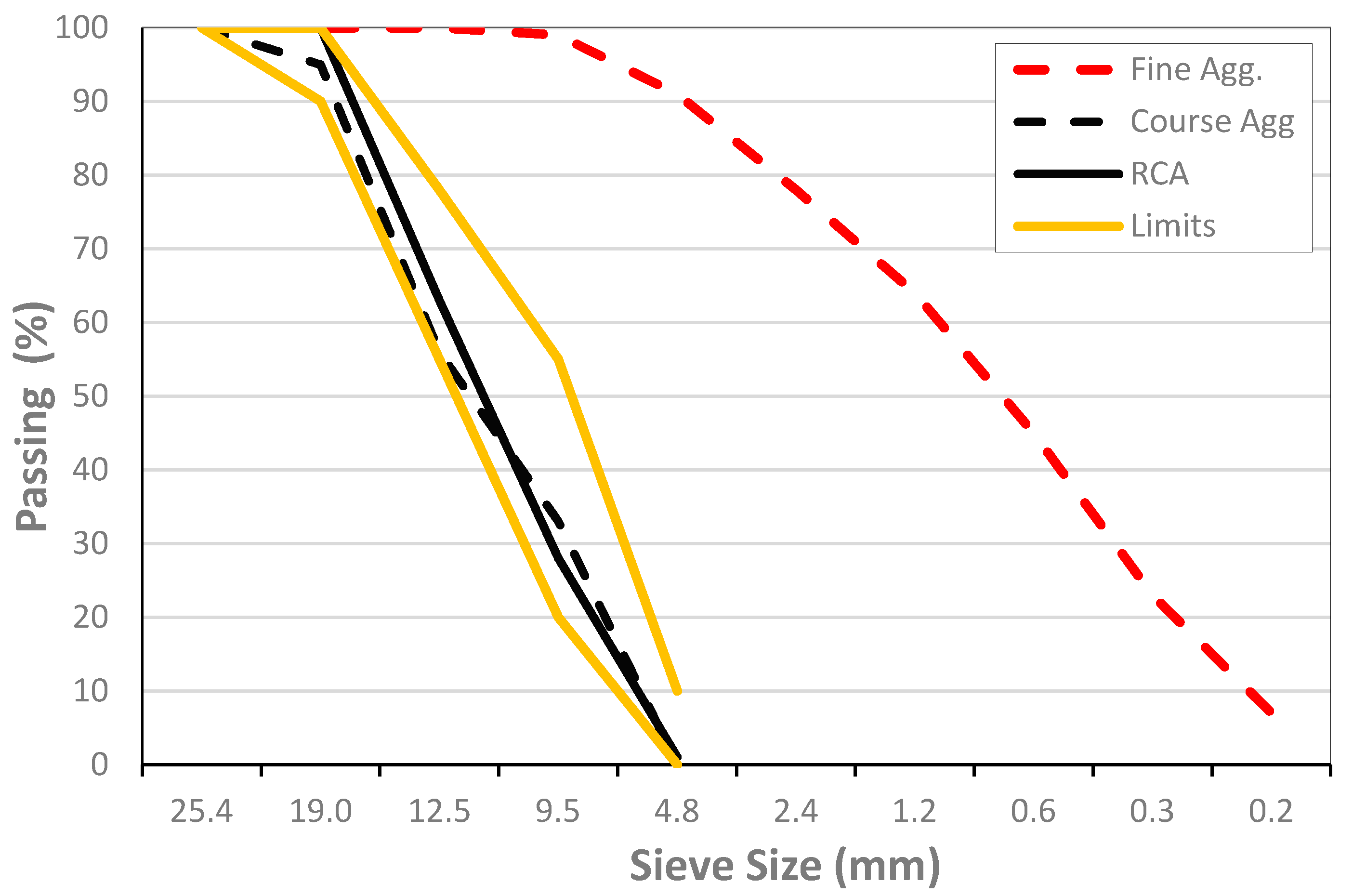
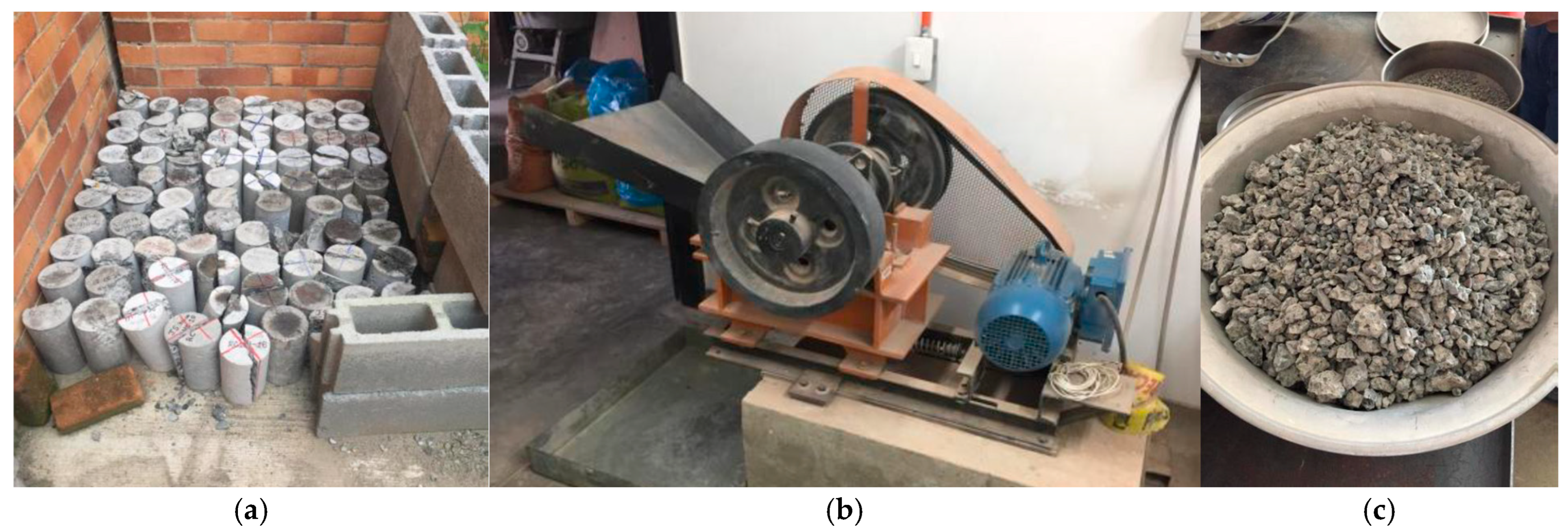
The findings of this research demonstrate the feasibility of producing high-performance recycled aggregates derived from high-strength concrete waste obtained from laboratory test specimens. These recycled aggregates can meet the technical requirements established by international standards for use in concrete and mortar production. The recycled aggregate is herein classified as a high-performance recycled coarse aggregate (HP-RCA) due to its low porosity, high abrasion resistance, and its origin from high-strength concrete.
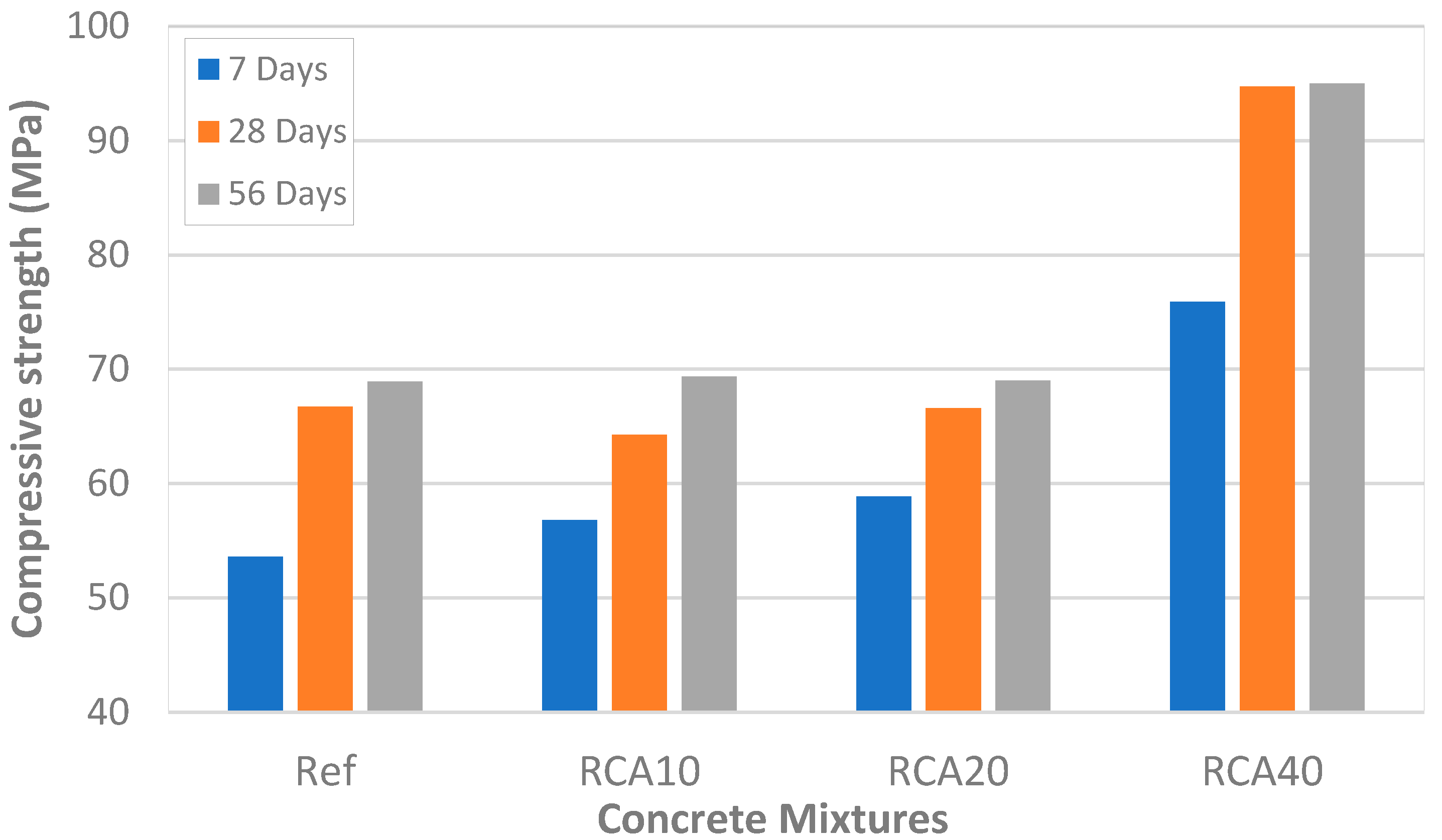
Also, the results confirm that it is feasible to produce high-strength recycled aggregate concrete by partially replacing natural coarse aggregate with recycled concrete aggregate. Regarding compressive strength, the incorporation of RCA did not negatively affect this property. In fact, a 40% replacement level led to higher compressive strength values. This improvement can be attributed to the continued hydration of anhydrate cement present in the old high-strength paste within the RCA and the enhanced bond between the recycled aggregate and the new cement matrix due to its rough surface texture. Therefore, it is recommended that the production of high-strength recycled aggregate concrete includes the use of superplasticizers and pre-saturation of the RCA prior to mixing. Similarly, given the high quality of the recycled aggregate, a positive influence was observed on the static modulus of elasticity with increasing replacement levels.
Concerning physical properties which are related to durability, the use of RCA resulted in a reduction in void content and, consequently, in overall concrete porosity, which may positively influence the durability and service life of the material. Conversely, capillary absorption results indicated greater water ingress in the mixtures with 10% and 20% RCA replacement. This suggests a change in the pore structure of the concrete (pore radius, connectivity, and tortuosity) caused by the presence of the recycled aggregate. This non-linear behavior suggests that moderate HP-RCA contents may increase pore connectivity without sufficient additional hydration to compensate, whereas higher replacement levels promote matrix refinement and reduced permeability. Future research should further validate the mechanisms underlying the observed improvements in mechanical performance by incorporating additional porosimetry analyses and detailed SEM microstructural characterization. Moreover, future studies should assess key durability indicators, such as chloride penetration and sulfate resistance, which are required by most international standards governing the use of recycled concrete aggregates.
Finally, this study promotes the use of high-performance recycled aggregates to produce various types of structural concretes. Within the framework of the circular economy, this approach supports the development of sustainable construction materials with high mechanical performance, contributing to the reduction in the environmental impact of the construction industry, the conservation of natural resources, and the achievement of global targets for construction and demolition waste valorization. Therefore, the results presented here were considered a case study that supports the use of recycled aggregates in high-strength concrete in the circular economy model included in the Cali Construye Sostenible Certification and the Manual de Construcción Sostenible de Santiago de Cali, both local public policies from Cali (Colombia) which promote sustainable construction.