1. Introduction
Transportation has always been one of the factors that has the worst impact on the environment, and due to the current environmental crisis, every social and economic activity is becoming more sustainable. This applies to the mobility sector, since motor vehicles have many negative effects. In fact, cities worldwide are dealing with these effects [
1], drifting towards a more sustainable approach, shifting the focus from cars and private motor vehicles to public transport and micro-mobility vehicles (PMVs), increasing micromobility. The transportation modes included in this concept range from bicycles to stand-up electric scooters (e-scooters). All of these allow for hybrid use, letting users choose between behaving either as pedestrians or as a vehicle whenever necessary [
2]. PMVs are also associated with many benefits, such as lower emissions, travel time and user cost [
3].
Although more citizens are turning towards these sustainable modes of transportation for different purposes (e.g., commuting, leisure), there has been a particularly noticeable increase in e-scooters on the streets [
4,
5]. Specifically in Valencia (Spain), they are almost a third of users [
6,
7]. These two studies have also highlighted that many users drive over the speed limit set by local regulations [
8].
In addition to this, the lack of specifically designed infrastructure for these vehicles has led cities to regulate their presence on the streets. Some have allowed them to ride on the existing cycling infrastructure [
8]. However, studies have questioned whether these networks and regulations can adequately accommodate these vehicles, given their unique dynamics [
1,
9]. Research has shown that many e-scooter users prefer riding on sidewalks —despite regulation prohibiting it—because they have a higher perception of safety and comfort [
10,
11,
12].
Altogether, these behavioral patterns point to a disconnect between the needs of users and their experience based on the current micromobility infrastructure. This has also led to an increase in the likelihood of crash occurrence [
9], which highlights the need for studying the operation and safety of this mode of transportation in order to develop or establish design criteria to guarantee a safe and comfortable riding experience. In this regard, Hossein Sabbaghian et al. [
13] researched the state of the art in micromobility infrastructure safety and comfort and found several gaps of knowledge regarding the infrastructure characteristics, such as vibrations and skidding. This paper builds upon their findings and focuses on the comfort part of the vibrational assessment.
Comfort can cover a wide range of factors, from the infrastructure configuration itself to weather conditions, but the most significant one is the pavement, including its roughness and maintenance [
14,
15]. The assessment of these factors is subjective, as they are mainly perceived through touch. Thus, standardizing objective measures of comfort for micromobility vehicles remains challenging.
The ISO 2631-1:1997 [
16] standardizes the study of vibrations’ effect on humans in terms of comfort and health. It considers a methodology for analyzing the vibrations for a standing person (floor/feet interface) that considers the accelerations in the three axes. However, this does not completely describe the experience of e-scooter drivers, since they also receive vibrations through the handlebar. This is because this standard was originally designed for passengers in motor vehicles (e.g., cars) and guided transportation modes (e.g., trains). Micromobility users also move from side to side and are more prone to move forwards and backwards, which would have a noticeable impact on the accelerations on the horizontal axes. This is proven by the findings of Gao et al. [
17], who pointed out that the accelerations in the x-direction and y-direction had a very limited effect on the overall comfort of cyclists. In this regard, several studies measured vibrations on bike lanes when riding a bicycle on different types of pavements [
17,
18,
19,
20] and simplified this methodology by measuring only the vertical accelerations. However, the vibrational impact of pavements on e-scooter users is different from that experienced by bicyclists, mainly due to the difference in tires [
21]. Regarding this, some authors have started studying the vibrations of e-scooters [
9], although samples are scarce and pavement condition was not taken into account.
Cafiso et al. [
22] presented an initial approach considering asphaltic pavement deterioration, relating the root mean square (RMS) of the vertical accelerations with the International Roughness Index (IRI) used on roads. However, this proposal can only be applied on shared lanes, since the IRI is measured at 80 km/h, which cannot be reached by micromobility vehicles. Conversely, Tomiyama et al. [
23] analyzed the vertical accelerations on sidewalks at a 3 km/h speed for an electric mobility scooter and found a poor correlation between the measured accelerations and the IRI. They also compared the RMS accelerations to the Mean Profile Depth (MPD) and found a better correlation.
Some researchers have compared the vibrational behavior of e-scooters and e-bikes, when volunteers rode on different pavements surfaces, in order to develop an Artificial Neural Network that, when given a set of explanatory variables (e.g., gender, speed, pavement), can predict the Root Mean Square of the accelerations [
24]. However, the application of their results is limited, given the small scale of the samples.
There are other studies that focused on other things aside from vertical vibrations. This is the case of Gao et al. [
25], who concluded that there is a tight link between comfort and experimented vibrations for shared bicycles by analyzing the resisting characteristics of the tire–pavement surface. Similarly, Olieman et al. [
26] analyzed the influence of tire pressure and speed on the vertical acceleration, finding an almost proportional relationship, although they only focused on bicycles and the transition from asphalt to cobblestone pavements.
Another study that combined vibrations with other variables is the one from Quian et al. [
27], relating also to the handlebar rotation and macrotexture of the infrastructure. However, they only analyzed it for bicycles. Similarly, Valle et al. [
28] analyzed the combination of accelerations and rotation on the three axes, developing a model for bicycles that could assess the pavement’s status. From a different perspective, Yang et al. [
29] created a predictive model based on vibrational intensity and skid resistance measurements on urban asphalt pavements compared to a questionnaire for cyclists.
Regarding ways of measuring vertical accelerations, Ahmed et al. [
30] studied ride quality across different types of cycling streets, comparing two tools to collect empirical data on a bicycle (i.e., a smartphone and a smart bicycle light sensor) and concluded that there were no statistical differences between both sources. Additionally, Pérez-Zuriaga et al. [
31] developed a low-cost sensor system to analyze users’ interactions and vertical accelerations of the infrastructure that could be mounted, with small adjustments, onto an e-scooter and onto a bicycle. The system consisted of a pair of ultrasonic sensors and an Inertial Measurement Unit (IMU) controlled by a Raspberry Pi, complemented by a video camera with GPS.
The research presented in this paper aims to move beyond the intuitive assumption that smoother pavements generate lower vibration levels by providing a structured, repeatable and objective methodology to quantify riding comfort for micromobility vehicles under real operating conditions. Specifically, this study evaluates and compares the vertical vibrations experienced by e-scooter users across different pavement typologies and operating speeds using an instrumented e-scooter equipped with a low-cost sensing system. By isolating the effect of pavement type while controlling speed and geometry, the proposed approach allows identifying vibration ranges associated with common urban pavement configurations, independently of isolated surface defects such as potholes or singular elements. The results are intended to support infrastructure managers in diagnosing comfort-related deficiencies, prioritizing maintenance actions, and making informed design or operational decisions—such as pavement selection or speed management strategies—aimed at improving user comfort and safety in micromobility networks.
2. Materials and Methods
This section presents the methodology applied on different sections of Valencia’s cycling infrastructure to assess the vibrational comfort experienced by micromobility users. It includes the materials used, the selection of study segments, the data collection process and data treatment.
First, Valencia’s micromobility infrastructure was classified according to pavement characteristics, in order to identify possible study sections. The ones on the sidewalk are the only ones where cobblestone, concrete and tiling pavements were found, usually without any physical barrier between pedestrians and micromobility vehicles.
Regarding the geometry, all the selected sections were located on tangents. They were also chosen trying to avoid discontinuities (e.g., traffic lights, stop signals) or changes in pavement typology. These sections were later assigned an ID with a description of its characteristics (i.e., pavement typology and location). The sample size was firstly approximated based on the hypothesis that the data followed a normal distribution, with Equation (1).
where
n represents the sample size,
represents the standard deviation of the studied variable,
is the assumed error and
is a value depending on the confidence level.
After selecting the study segments, a quasi-naturalistic data collection was designed using the system described by Pérez-Zuriaga et al. [
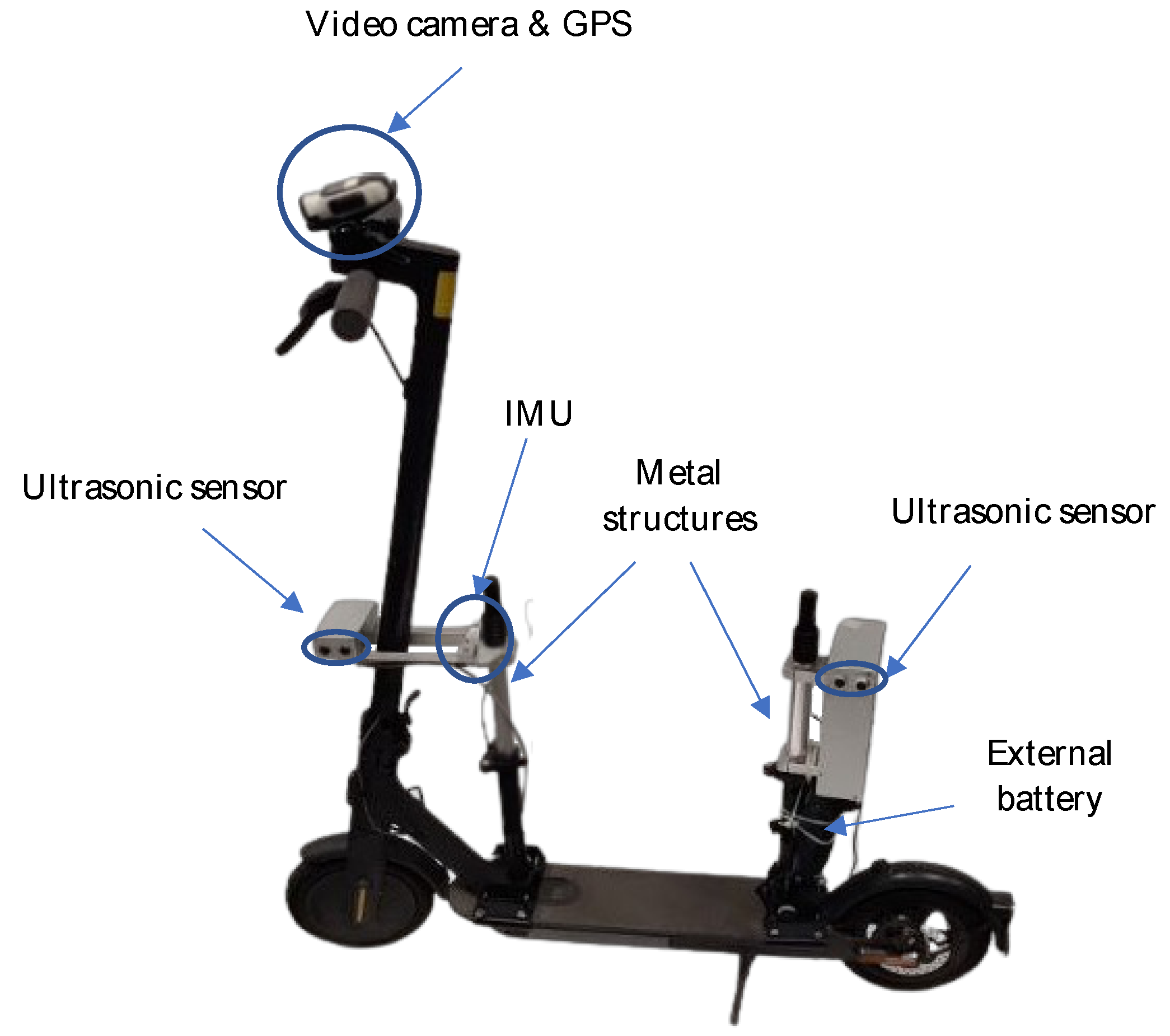
31], specifically the IMU, to measure vertical accelerations, with a camera to synchronize and filter the data and a GPS to obtain geo-referenced data.
Figure 1 shows the whole system used.
Each section was tested at 15 km/h and at 20 km/h. These speeds correspond to the speed limit for cycle lanes at the pedestrian level (15 km/h) and protected bike lanes (20 km/h) in the city of Valencia [
8].
Vertical accelerations were analyzed based on pavement typology and speed. For the analysis, the root mean square (RMS) of each pavement material and speed was calculated (Equation (2)). This measure is used instead of the average value, since the latter should be close to 0 in every case, since the data can have either positive or negative values. Afterwards, the interval explaining 90% of the vertical accelerations of each set was obtained.
where
RMSPavement is the Root Mean Square of each pavement typology,
N is the total number of measurements and
represents each of the vertical acceleration recorded.
2.1. Study Sections Selection
The selection of micromobility infrastructure was based on the following criteria:
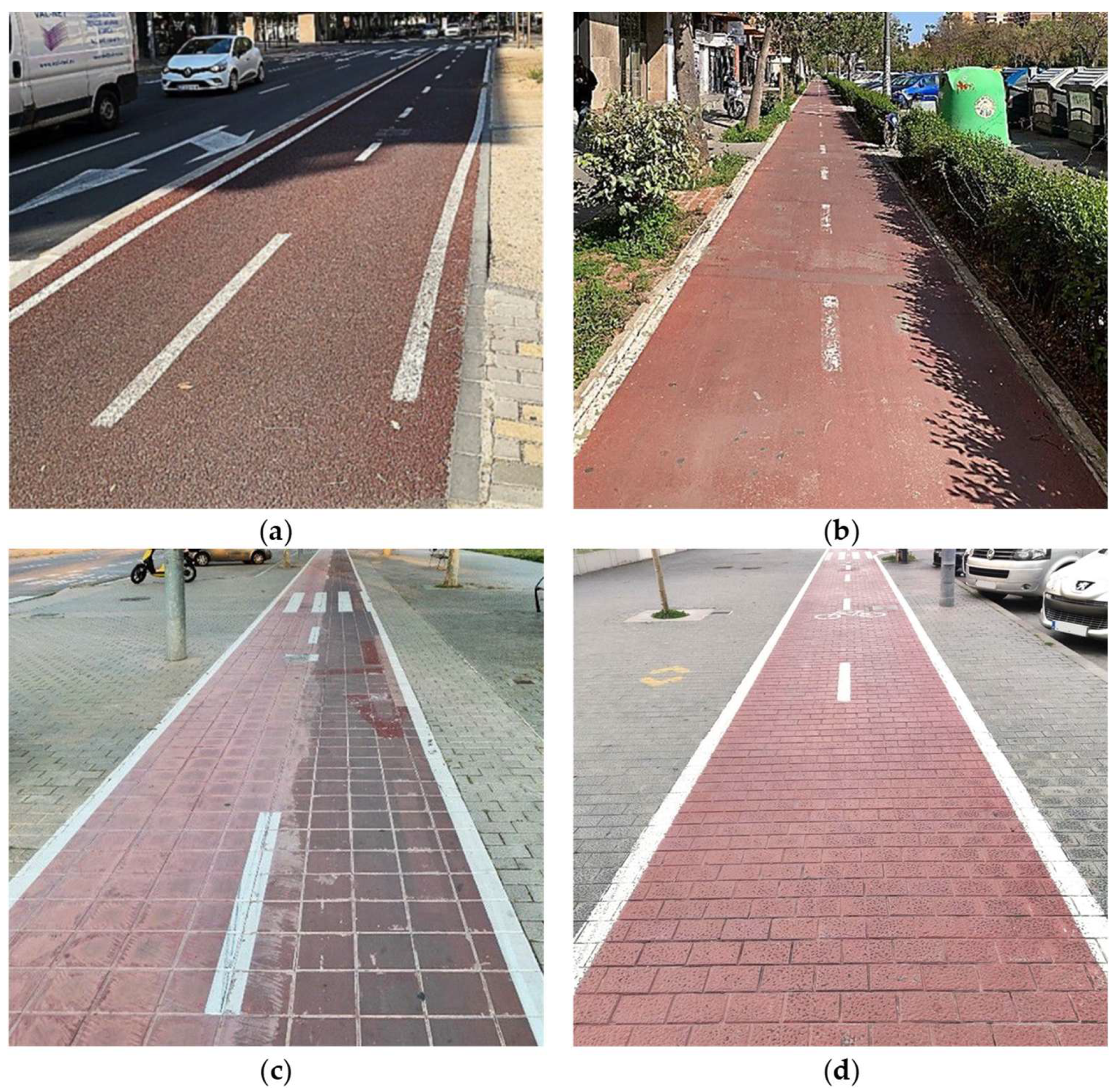
Pavement configuration. The segments had to be representative enough of the existing infrastructure in the city, and changes in pavement within the same section were avoided whenever possible. In this regard, the chosen pavement typologies were:
- (a)
Asphalt pavement;
- (b)
Concrete pavement;
- (c)
Square tiling (20 × 20 cm).
Cycling demand. This was taken into account to study some sections that might not be that common in the city, but were in important areas. This is the case for a long corridor near the universities, which also connects the north of the city to the beach. This added a fourth pavement type:
- (d)
Transversely oriented cobblestones (20 × 10 cm).
Horizontal geometry. The segments needed to be on tangents without discontinuities (e.g., traffic lights, stop signals, intersections), and with enough length to allow the e-scooter to reach the desired speeds. When it was not possible to meet this criterion, it was guaranteed that the traffic lights were green for most of the trajectory, so the speed was not reduced.
Figure 2 shows an example of each of the surfaces selected.
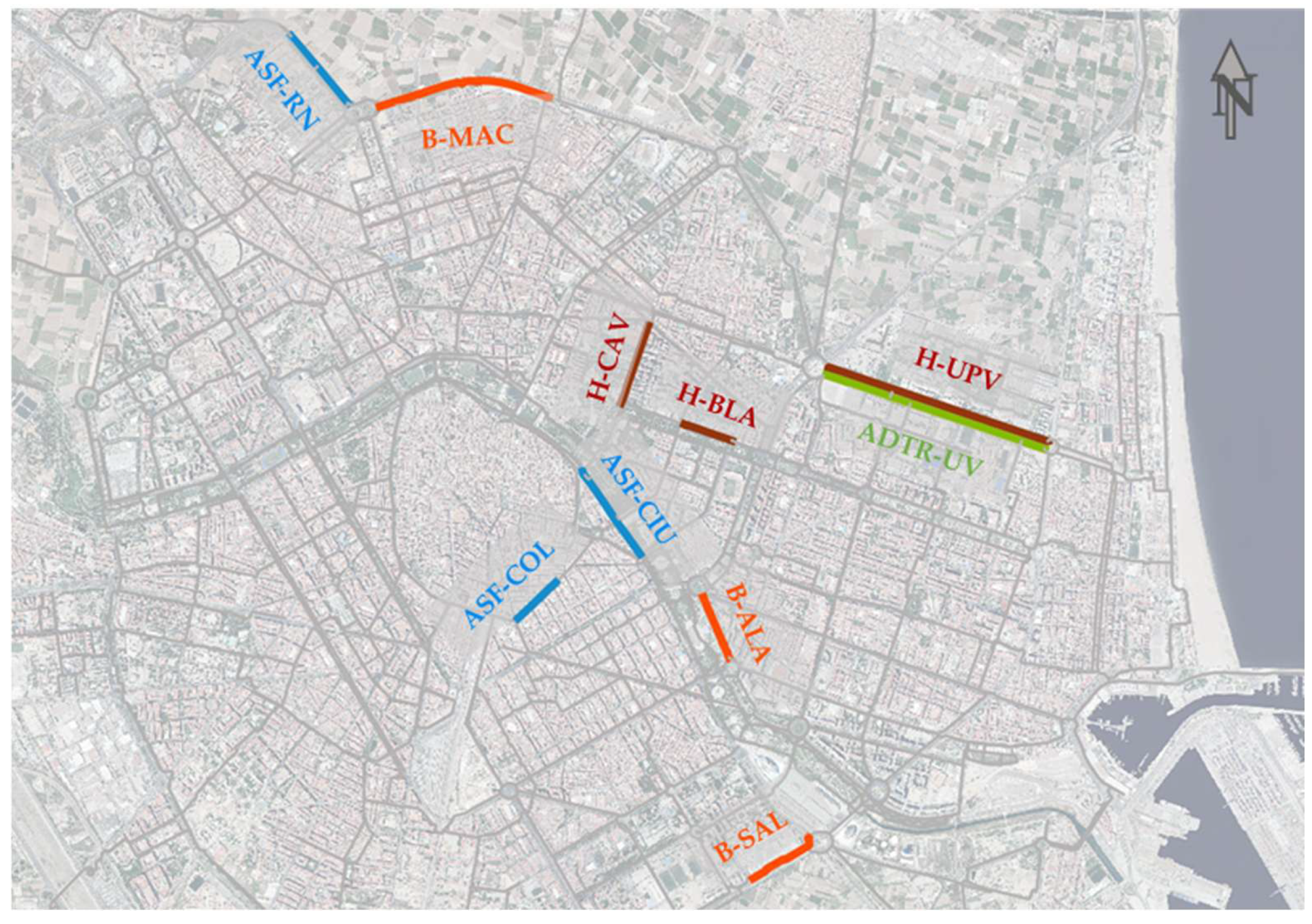
Following the abovementioned considerations for the test segments, a total of 10 sections from Valencia’s micromobility infrastructure were chosen.
Table 1 shows a description of these, indicating pavement type, location and ID, whereas
Figure 3 shows an overview of the distribution of those segments in the city of Valencia. For convenience, the pavement showcased in
Figure 2d is referenced as “Cobblestone” in all figures and tables that follow.
2.2. Data Collection
Data collection was performed by using part of the system developed by Pérez-Zuriaga et al. [
31]. This is: an IMU controlled through Python 3.10 script on a Raspberry Pi 4 and a Garmin Virb Elite video camera (which has a GPS module integrated). The code was set to record data at 10 Hz and store it into a CSV file.
Collection sessions took place when the weather conditions allowed for representative vibrational data (i.e., sunny weather and dry pavement). Data was taken when the traffic flow was low, so the vehicle could develop the needed speed throughout the entire section.
Each section was tested 3 times at 15 km/h and another 3 times at 20 km/h, which were the speed limits drawn by local regulations [
8].
Each group of 3 runs per speed was recorded continuously. Before each set, the camera started recording and a synchronization frame was introduced, starting the code in front of the camera, which returned lines every second verifying that the data was stored correctly.
The e-scooter made a sound when constant speed was achieved after maintaining this speed for 5 s, at which point the accelerator does not need to be pressed. This sound is recorded by the camera and is used for calculating the time at which the valid data starts. If it was achieved before entering the segment, as well as when the break was activated, a verbal signal was spoken loudly enough so that the camera’s microphone registered it.
2.3. Data Reduction and Analysis
The first step to clean the data was to get rid of all the unnecessary data from the time between one run and the next, the data collected during acceleration and deceleration, as well as whenever traffic lights and intersections with other pavements where inevitable (i.e., micromobility infrastructure at the sidewalk level crossing a street). Whenever this happened, speed was kept constant, so only small sections had to be removed.
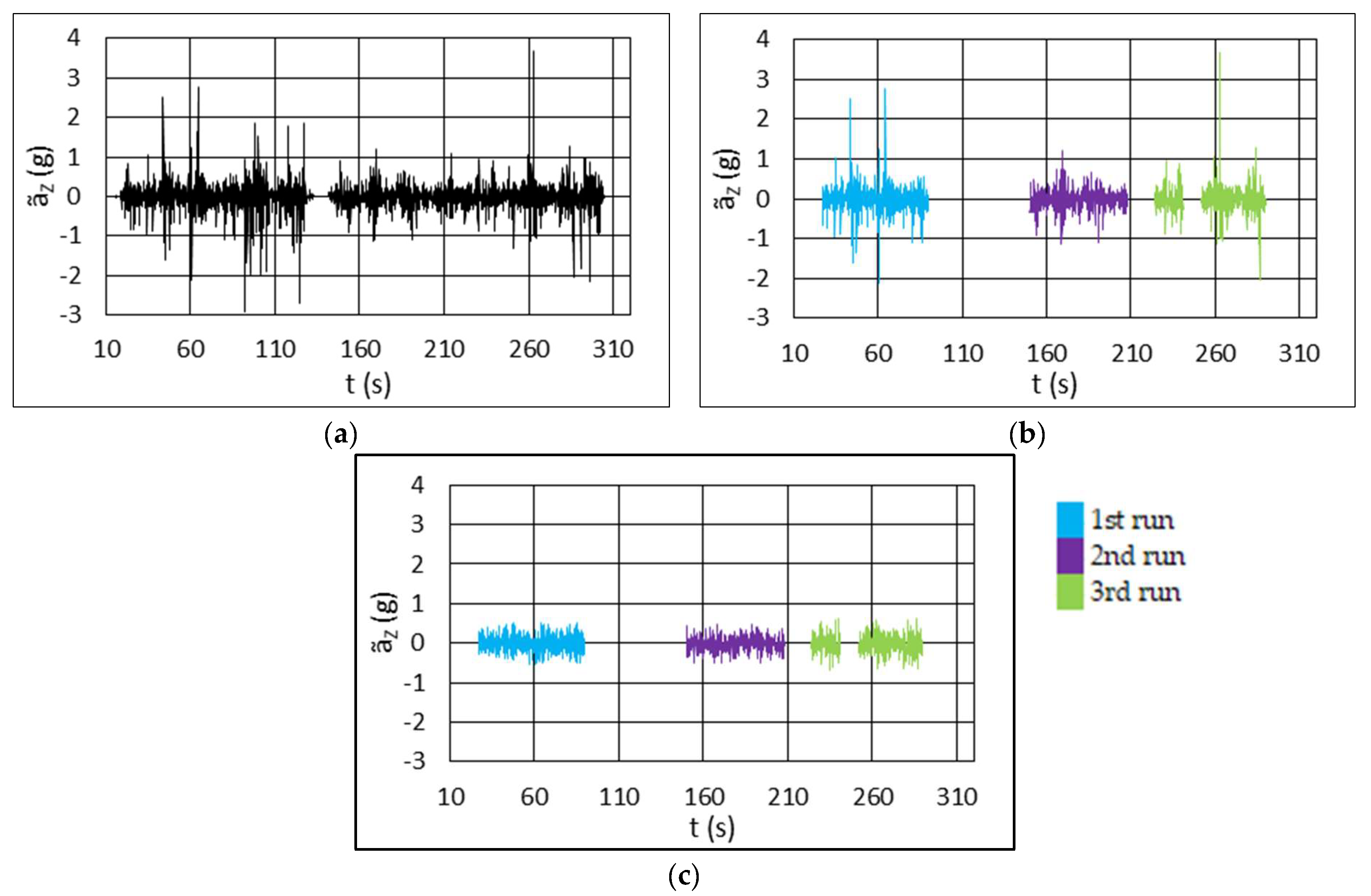
At this point, the data that is left represents the raw data for each lap, and outliers must be removed. These outliers might come from singular elements on the path of the e-scooter (e.g., utility covers, cracks) or due to some noise on the sensor. The first kind are easily detected with help of the videos, whereas the second kind were removed with the help of a box-and-whisker plot for each run. The ones due to local surface defects were also removed, since the goal of the research was to study the pavement comfort, not the influence of pavement condition on users’ comfort.
In smoother sections, the singular elements stand out when the data is displayed in a graph, whereas in sections with higher vibrational level, this is more difficult to identify visually.
Figure 4 shows an example of the data appearance of a dataset throughout this processing phase. In this case, the third run was interrupted, so it was divided in two.
Afterwards, each run was analyzed independently. First, a Kolmogorov–Smirnov test for normality was carried out. If the test rejected the null hypothesis for at least one of the runs within a section-speed combination, a Kruskal–Wallis test was performed to compare them. If no statistically significant difference is found, then they were aggregated to form the data set of each combination.
On the other hand, if Kolmogrov–Smirnov did not reject any of the three in each set, and the standard deviation of the RMS () of each combination was under the one established in the previous section, no further analysis was performed before aggregating them, since it is assumable that they are part of the same population within a 95% confidence level. However, if was greater, then a classic ANOVA test was carried out. If this test showed statistically significant differences, then more data was collected.
This process was then repeated to obtain the pavement-speed combination set, comparing the section-speed combinations of each pavement. At the end of the process, the RMS and percentile distribution of each pavement-speed set was obtained.
3. Results
The analysis was focused on understanding the vibrational levels mobilized by e-scooters when riding over different pavement configurations.
Practically the full extent of the runs passed the Kolmogorov–Smirnov test, thus making it reasonable to suppose they follow a normal distribution.
Table 2 shows a summary of the Kolmogrov–Smirnov analysis for all the iterations of the analysis.
The only exception in the first step that did not pass the Kolmogrov–Smirnov test was one run at ADTR-UV at 15 km/h, where it fell a little short. Therefore, a Kruskal–Wallis test had to be performed to compare the three runs of ADTR-UV at 15 km/h and show they had no statistically significant difference. It returned a p-value of 0.9514, meaning that there are no statistically significant differences between them and they could be aggregated.
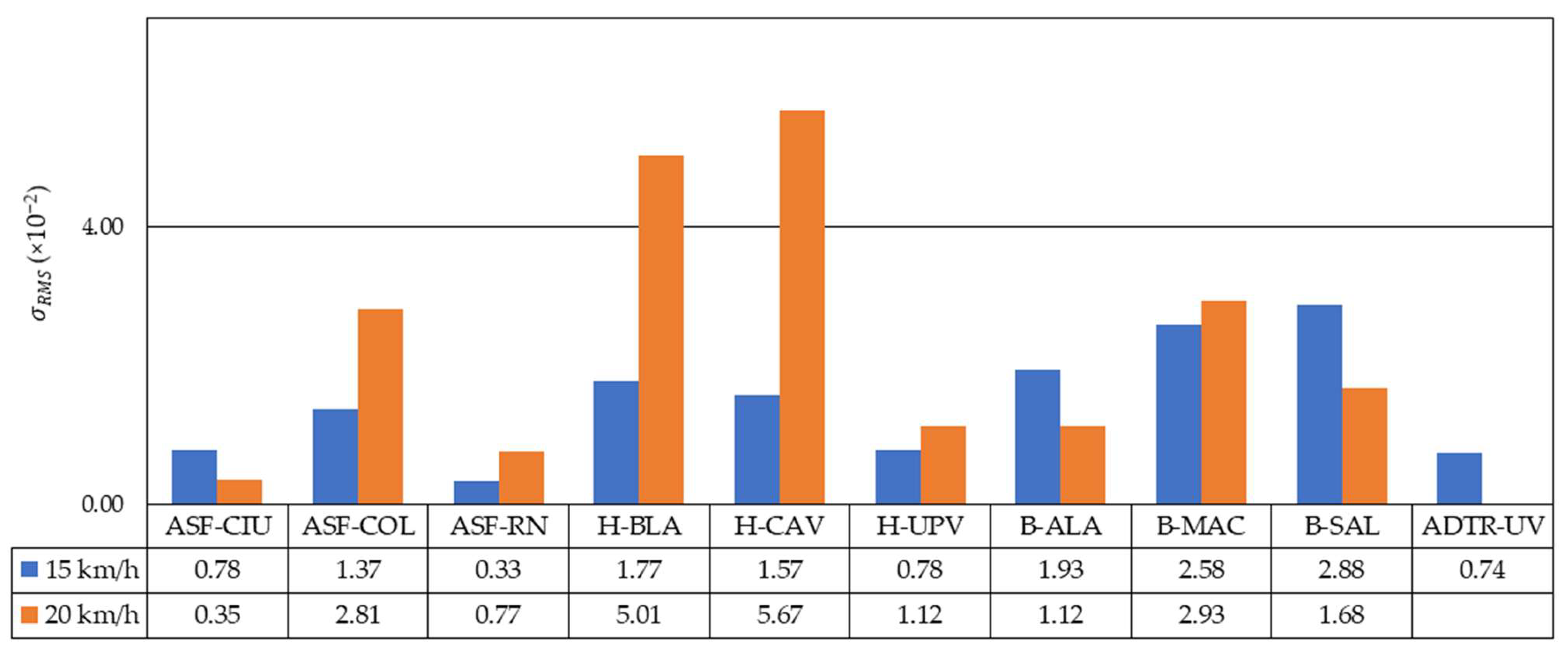
In
Figure 5, the
value of each section-speed combination has been plotted.
Only two cases exceeded the 0.04 limit established, therefore an ANOVA test was needed to check those points. In both cases, the p-Value returned by the test was greater than 0.05, thus making it viable to assume that they belong to the same population and can be aggregated.
For the next step, comparing the RMS and the
values is enough to check if they can be put in the same set, since Kolmogorov–Smirnov test showed that the
hypothesis could not be rejected for all of them except for section B-MAC at 20 km/h (
Table 2). Therefore, to compare the tiling-pavement sections at 20 km/h, the non-parametric Kruskal–Wallis test was performed and returned a
p-value of 0.6901. Therefore, the tiling-pavement sections at 20 km/h showed no statistically significant differences between them.
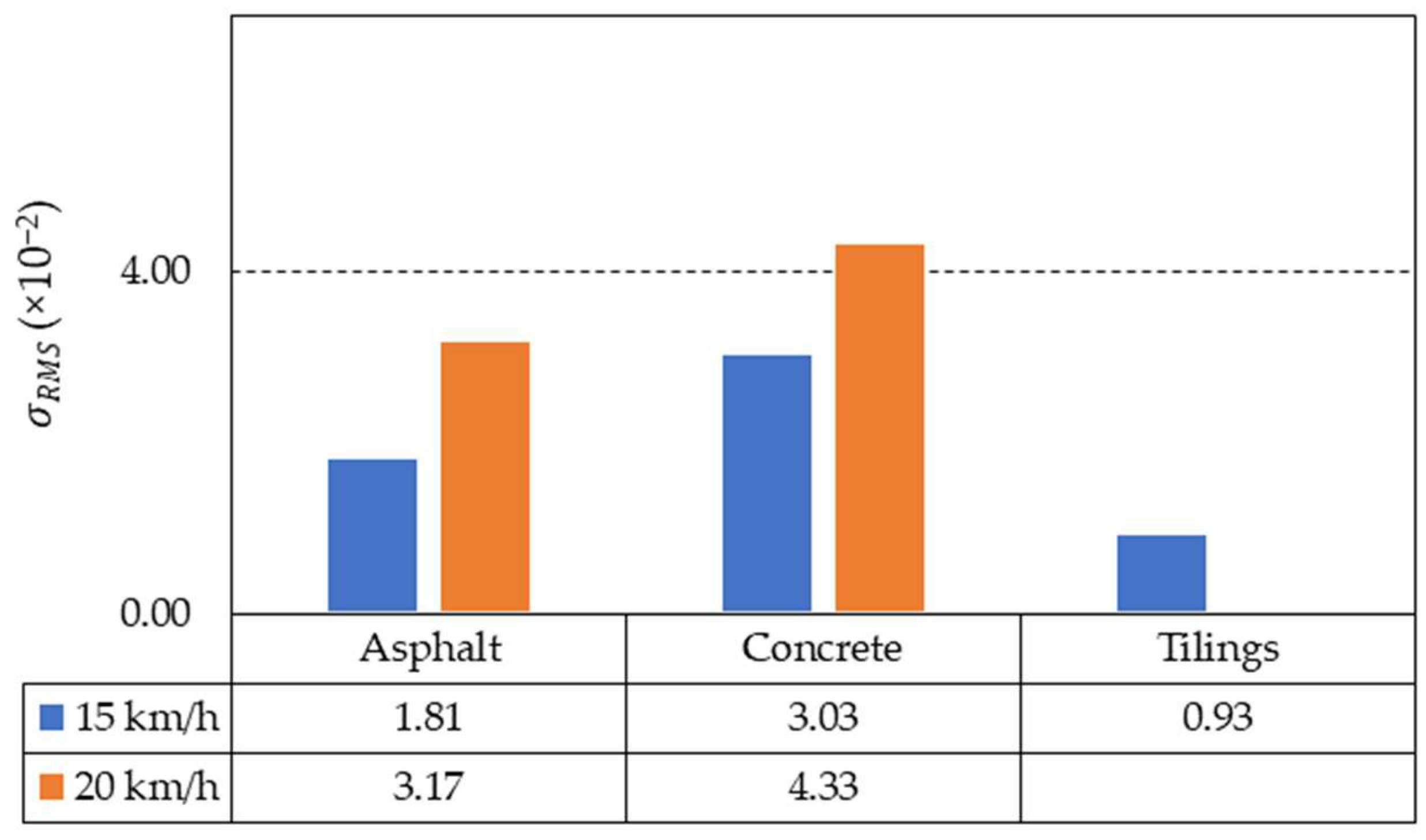
Figure 6 gathers the five combinations that passed the Kolmogrov–Smirnov test. For concrete pavements, the
is greater than the limit established, but the ANOVA test showed that no statistically significant differences were found (
p-Value of 0.1255).
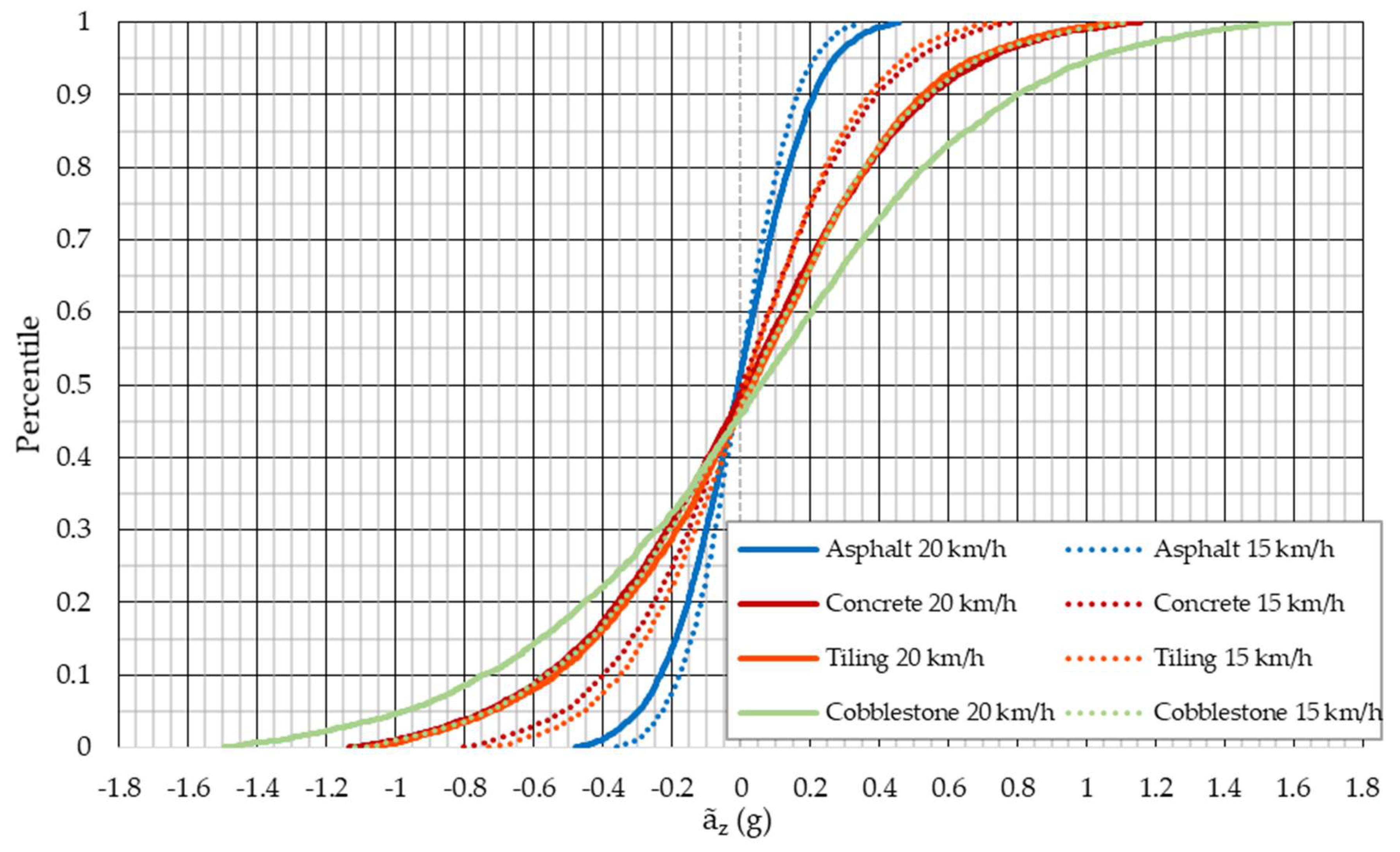
After reaching this point where each pavement has its vibrational set, two charts were developed. First,
Figure 7 shows a comparison of the vertical acceleration ranges that were observed for each pavement and speed, allowing for a more detailed comparison of the vibrational response associated with each typology, by analyzing the full percentile distribution of vertical accelerations. Asphalt pavements present the steepest percentile curves and the narrowest acceleration ranges at both speeds, which indicates a more homogenous and predictable response, which usually relates to higher riding comfort. In contrast, concrete and tiling surfaces show flatter curves and wider distributions, reflecting a less uniform surface-vehicle interaction. Transversely oriented cobblestone presents the widest acceleration ranges and flattest curves, especially at 20 km/h, evidencing a pronounced sensitivity to speed and more heterogeneous vibrational response. Notably, the percentile distribution of cobblestones and concrete at 15 km/h overlaps with those observed for concrete and tiling pavements at 20 km/h, highlighting that speed reductions can partially compensate for the discomfort of poorer surface characteristics in terms of vibrational exposure.
These differences across percentile distributions suggest that comfort differences between pavements are not limited to extreme values, but affect the entire range of vibrations experienced by users. Therefore,
Figure 7 provides additional insight beyond the RMS values by illustrating how pavement typology and operating speed jointly influence both the magnitude and variability of vibrations perceived by e-scooter riders.
On the other hand,
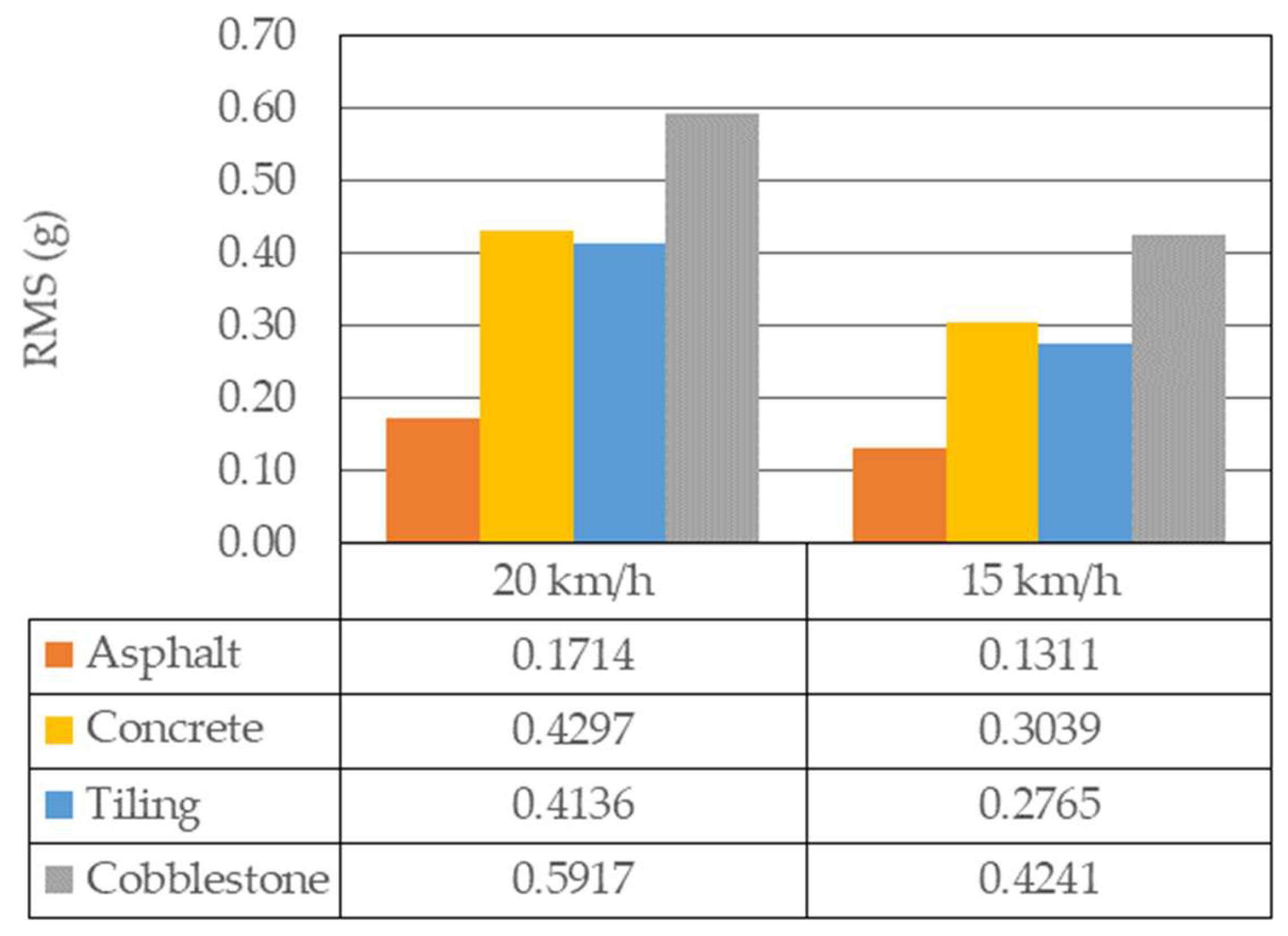
Figure 8 summarizes the vibrational response of each pavement-speed combination through a single aggregated indicator like the RMS of the vertical accelerations, complimenting the percentile-based analysis shown in
Figure 7.
Asphalt pavements exhibit the lowest RMS values at both speeds, reinforcing their more homogeneous response. The concrete and tiling pavements present intermediate RMS levels, with relatively small differences between them, which is consistent with the partial overlap of their percentile curves. In contrast, transversely oriented cobblestones show the highest RMS values and the largest increase with speed, reflecting the broader acceleration ranges and higher variability identified.
It is noticeable that the RMS for asphalt pavements is less than half the one from concrete and tiling at both speeds. The comparison between speeds further confirms the direct relation between speed and vibrational response for all surface materials, although the effect is more noticeable for rougher surfaces. It also sustains the overlap between cobblestone at 15 km/h and concrete and tiling surfaces at 20 km/h.
Taken together, both figures provide a comprehensive characterization of riding comfort by combining information on the distribution of vibrations and their overall intensity, strengthening the interpretation of statistically significant differences between pavements.
A Kruskal–Wallis non-parametric test was performed again to compare pavements at the same speed, obtaining as a result a
p-Value lower than 0.05, meaning that there are statistical differences between some of the compared groups. After applying a post hoc Bonferroni procedure to determine which groups presented said statistically significant differences, it was determined that all of them were statistically different from one another, except for tiling and concrete pavements at any speed, as well as tiling and transversely oriented cobblestones at 15 km/h.
Table 3 shows the summary of the analysis.
4. Discussion
The findings of this research are based on the analysis of the vertical accelerations registered on 10 sections, divided into four pavements, using the sensor system developed by Pérez-Zuriaga et al. [
31]. All sections were analyzed at two speeds: 15 km/h and 20 km/h, based on the speed limits set by local regulations [
8]. The number of sections per pavement are higher than most studies carried out on e-scooters. In this regard, Ventura et al. [
24] only studied one section per pavement and conducted two runs on each section, whereas Gao et al. [
17] focused on the vibrations experienced by a cyclist driving on 46 asphalt sections that were tested three times at speeds varying from 12 to 16 km/h. Even though this last study only focused on asphalt, it took into account different asphaltic pavements and different maintenance levels.
As expressed by Ma et al. [
9] and Ventura et al. [
24], asphalt pavement presents less vibration—thus being safer and more comfortable. This is consistent with the findings of this research, since asphalt sections were systematically the ones with lower RMS values. On the other hand, the results showed that higher speeds correlate to a wider range in vertical accelerations and higher RMS. This is also consistent with findings from Ventura et al. [
24], who found that it had a greater impact on e-scooters than in e-bikes, probably due to the front-suspension of the e-bike.
From the Bonferroni analysis, it is also possible to say that concrete pavement could be considered to provide the same comfort level as tiling when ridden at 20 km/h, leaving transversely oriented cobblestone as the worst pavement in terms of vibrations. At 15 km/h, the distinction becomes less clear, as concrete and cobblestone surfaces are statistically different from each other, but tiling was not significantly different from either.
This difference in comfort can affect users’ behavior, allowing them to reach higher speeds on smoother surfaces and forcing them to slow down on pavements that present higher vibrational levels, which may partly explain observed user preferences for certain facilities and conscious deviation from regulated riding environments. In fact, the studied cobblestone surface at 15 km/h presented a similar vibrational level as tiling and concrete surfaces at 20 km/h, whereas asphalt pavement showed a RMS value less than half of that of concrete. This can be used as a means of speed control in residential areas or near schools.
The results also hint to the possibility of using this methodology as means of assessing the infrastructure’s pavement status by comparing the evolution of the vibrations. This would allow more efficient management and planning of the network’s maintenance.
The presented work has some limitations that should be considered. First, only one type of micromobility vehicle was tested, and results could vary from one model to another, but the e-scooter used was one of the most common models in the city of Valencia. Secondly, maintenance level was not taken into consideration at the time of selecting the different sections. Finally, subjective user feedback was not collected, preventing a direct assessment of perceived comfort.
Future work could address these limitations by including more instrumented vehicles and volunteers to assess subjective perception of each section, similar to previous research [
15,
17,
24]. This way, the correlation between vibrational level and perceived comfort could be reliably established. However, it would be necessary to have a large participant pool. Furthermore, future research could also include the maintenance level of the pavement to study the impact of surface weathering and other forms of surface deterioration, as well as the effect of different singular elements (e.g., manhole covers, cracks) and the use of paint on the vibrational level and perceived comfort.
5. Conclusions
The rapid expansion of micromobility in urban environments—particularly the widespread adoption of stand-up electric scooters—has outpaced the adaptation of existing infrastructure and the development of objective performance criteria tailored to these vehicles. In many cities, e-scooters are required to operate on cycling facilities originally designed for bicycles, despite their distinct dynamic behavior and sensitivity to pavement-induced vibrations. This mismatch has raised concerns regarding user comfort, safety, and the suitability of current infrastructure, motivating the need for quantitative tools capable of evaluating micromobility facilities under real operating conditions.
In this context, this paper proposed and applied an objective, repeatable methodology to assess the riding comfort of micromobility infrastructure by analyzing the vertical vibrations experienced by e-scooter users. Using an instrumented e-scooter equipped with a low-cost sensing system, vertical accelerations were collected and processed across ten representative sections of Valencia’s cycling infrastructure, covering four common pavement typologies and two regulated operating speeds.
The results demonstrate that pavement type has a clear and statistically significant influence on the vibrational levels transmitted to e-scooter users. Asphalt pavements consistently produced the lowest RMS values and the narrowest acceleration ranges, confirming their superior comfort performance. Concrete and square tiling pavements showed intermediate vibrational levels and were not statistically different from each other at either speed. Transversely oriented cobblestones generated the highest vibration levels, particularly at 20 km/h, where their RMS values approached or exceeded those observed for other pavements at lower speeds.
Operating speed was also found to be a key factor affecting comfort. An increase from 15 km/h to 20 km/h resulted in higher RMS values and wider acceleration distributions for all pavement types, with the effect being especially pronounced on rougher surfaces. These findings confirm that riding comfort depends not only on pavement characteristics, but also on their interaction with speed.
From an applied perspective, the proposed methodology provides infrastructure managers with a practical tool to diagnose comfort-related deficiencies, prioritize maintenance interventions, and support pavement selection decisions for micromobility networks. Furthermore, the observed relationship between pavement-induced vibration and riding speed suggests that surface characteristics may be intentionally leveraged as a passive speed management strategy in sensitive urban areas, such as school zones or shared pedestrian spaces.
Overall, this research contributes to addressing a critical gap in the current state of micromobility planning by offering an empirical, infrastructure-focused assessment of e-scooter riding comfort. The methodology is scalable and transferable to other urban contexts, supporting the integration of comfort considerations into the design, operation, and management of micromobility facilities. Future work combining objective vibration measurements with subjective user perception and a broader range of vehicle types would further strengthen the development of comfort-based criteria for micromobility infrastructure design.





 ,
,