Article

Exploring the Root Causes of Wide Thermal Cracks in the Southwestern United States

School of Sustainable Engineering and the Built Environment, Arizona State University, Tempe, AZ 85281, USA
*
Author to whom correspondence should be addressed.
Infrastructures 2026, 11(1), 19; https://doi.org/10.3390/infrastructures11010019
Submission received: 3 December 2025 / Revised: 30 December 2025 / Accepted: 5 January 2026 / Published: 8 January 2026

Abstract

Wide thermal cracks are a common form of pavement distress affecting primary state and county highways, urban residential streets, and parking lots across the Southwest climatic regions. These cracks are primarily caused by thermal fatigue, driven by diurnal temperature variations despite the lack of extremely cold events. This research aims to identify and analyze the local factors contributing to the initiation and propagation of thermal fatigue cracks. Field cores are collected from 12 sites exhibiting wide thermal cracks in the Phoenix metropolitan area in Arizona to evaluate their volumetric properties and the degree of binder aging. Advanced finite element (FE) models were developed to examine the influence of pavement structures and local climatic conditions on the development of tensile stresses due to thermal fatigue. The FE analysis indicated a high magnitude of thermal stresses due to cyclic temperature variations in Arizona compared to colder regions in the United States. Based on the forensic investigation and analysis performed, the initiation of wide cracks was shown to be primarily due to repeated localized damage from frequent thermal fatigue events on severely aged pavements. This damage is exacerbated by low air voids in mineral aggregate, an insufficient effective binder volume. and excessive binder aging, which compromise the structural integrity of the pavement.

1. Introduction

Thermal and durability cracking in asphalt pavements is a major deterioration mechanism for asphalt concrete (AC) pavements in regions experiencing extreme temperature variations and precipitation levels. Asphalt mixture durability is defined as the ability of compacted asphalt concrete to maintain its structural integrity throughout its expected service life when exposed to the damaging effects of the environment and traffic loading [1]. Due to complex environmental mechanisms coupled with deteriorating AC characteristics on the pavement surface during its service life, representative laboratory characterization and optimization of asphalt pavements against thermal and durability cracking remain a significant challenge. Despite the existence of mechanistic–empirical models for thermal cracking [2,3], the fundamental causes and deterioration mechanisms of thermal fatigue are not well understood. In this paper, a case study is presented on thermal and durability cracks widely observed in the Southwestern United States. Key factors and root causes influencing occurrences of thermal durability cracks are identified using data obtained from forensic site investigations, field core characterization, and mechanistic assessment of the conventional flexible pavement structures.
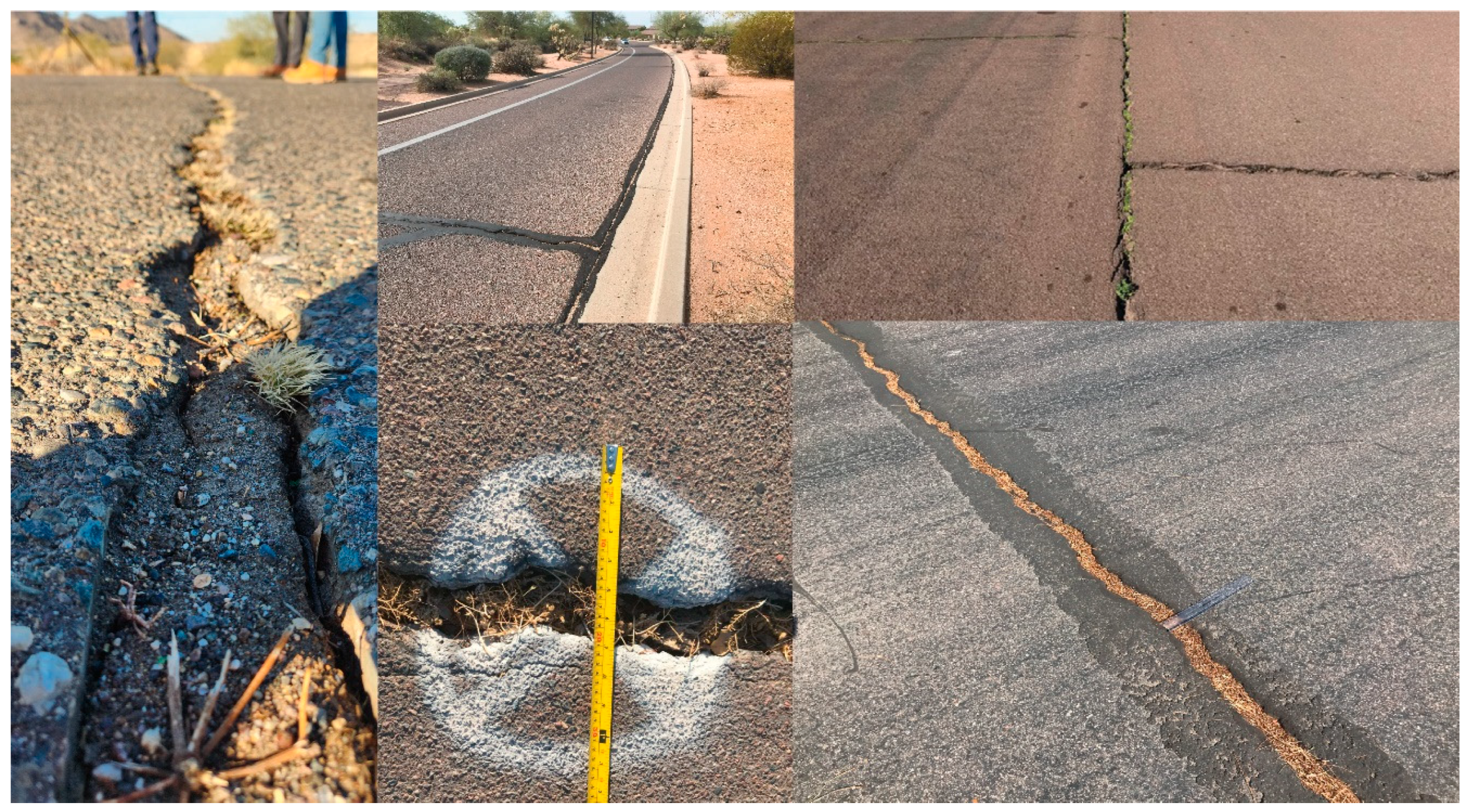
Widespread occurrences of transverse cracking in the Southwest region can be identified as wide thermal or durability cracks. Transverse thermal cracks can severely deteriorate further over time, expanding to widths ranging from 2 to 10 inches, as shown in Figure 1. Thermal cracks are generally spaced uniformly at 20 to 40 ft intervals. The occurrence of wide cracking represents one of the most critical distresses within the network of primary state and county highways, urban residential streets, and parking lots across the region, with significant economic implications for the pavement maintenance. Traditional sealant application may not be mechanically effective. Conventional sealant applications are often ineffective in providing long-term mechanical performance. Filling such cracks with specially designed mastic products can be expensive and problematic during future overlay operations. Reflective cracks can develop rapidly when the sections are overlaid without a sufficient milling depth. These challenges are particularly critical in regions where existing state-level calibration approaches may not fully capture the effects of extreme climatic loading. Mitigating durability cracking in AC pavement systems is essential to improving the long-term performance and yielding a favorable benefit–cost ratio for agencies in the Southwestern United States.
Despite its significance and widespread occurrences, limited knowledge exists regarding the root causes of transverse cracking. Transverse thermal cracks represent structural distresses that occur in pavements due to temperature gradients and associated thermal stresses. Numerous past studies have described and predicted low-temperature thermal cracking, which occurs when thermal-induced stress during a critical cold event exceeds the tensile strength of the pavement. Prediction models of thermal cracks, also referred to as low-temperature cracking, were integrated into the original version of the AASHTO M-E design method [2], and subsequently refined in later studies [3]. However, state-level calibration of the thermal cracking mechanistic–empirical model was reported to be s challenge due to the variability of local climatic and material properties [4]. In contrast, the type of transverse cracking observed in the Southwest region occurs in environments where temperatures rarely fall below freezing and mean winter temperatures are relatively mild (average daily low temperature of around 8 °C). Under such conditions, conventional thermal cracking frameworks and prediction models are inadequate for capturing the initiation and progression of transverse thermal cracks that ultimately widen into severe wide cracks in the Southwest region.
The substantial daily temperature variations and the absence of cold events in the study area suggest that thermal fatigue cracking is likely the predominant mechanism causing the initiation of wide thermal cracks. However, additional local factors need to be considered. For instance, severe pavement aging due to extreme temperatures can significantly affect the integrity of the asphalt mixture on the surface and accelerate crack initiation. Additionally, some prevalent regional practices in asphalt design and construction may also contribute to the issue. Ensuring consistency and achieving target in-place densities, meeting mix design volumetrics requirements, selecting appropriate binder grades and stiffness levels, and maintaining quality control specifications are the critical considerations. Overall, assessing the root causes of wide thermal cracks in the climatic conditions of the southwestern United States is necessary for developing effective design, material, and maintenance strategies to mitigate this problem.
In this paper, the factors that influence the initiation and widening of thermal fatigue cracking are investigated within the local context of the Southwest region. The extent of the wide cracking issue is investigated within a designated study area. Core samples were obtained from selected sites to identify the primary factors contributing to wide cracking by comparing other reference sites. Asphalt binder extracted from these cores was analyzed to assess aging and rheological characteristics, while the density and volumetric properties of the mixtures were also examined. In addition, climatic variables that contribute to thermal fatigue cracking are assessed. The investigation further incorporated the development of finite element models to quantify thermally induced stresses and assess cracking susceptibility across various pavement structures under differing climatic conditions. The finding presented in this paper shed light on the fundamental factors influencing thermal fatigue cracking manifesting as wide cracks in the Southwest region.

2. Background

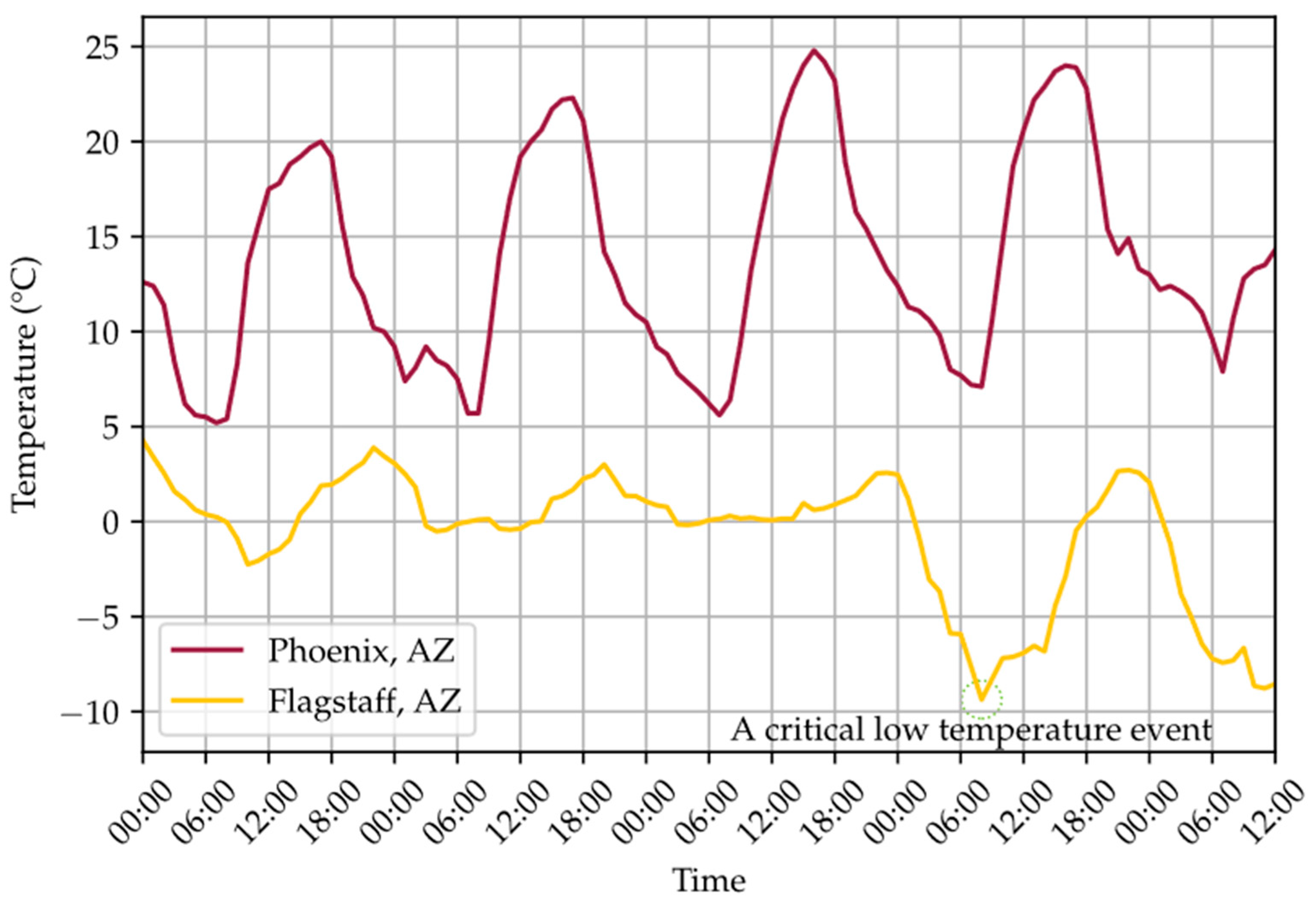
Transverse thermal cracking of asphalt pavement can primarily be attributed to two mechanisms. The first involves temperature-related tensile stresses that develop due to the contraction of the asphalt layer under significant temperature gradients [2,3]. Crack initiation occurs when these stresses exceed the tensile strength of the asphalt mixtures at low temperatures. This phenomenon is commonly known as low-temperature cracking. The second mechanism, known as thermal fatigue cracking, results from daily temperature variation developing cyclic thermal stresses even in the absence of extremely cold events. These stresses lead to localized repeated damage that could develop into cracks over time. This type of transverse crack is most common in regions with a moderate climate and high diurnal temperature variation [5,6]. Vinson et al. argued that pavements are mostly prone to thermal fatigue damage in the range of temperatures between −7 and 22 °C while low-temperature cracking becomes more dominant at lower temperatures [7]. Higher temperatures are believed to dissipate thermal stresses in the asphalt layer [7,8]. Transverse thermal cracking can also be caused by the combined effect of the two mechanisms as thermal fatigue causes localized incremental damage that weakens the mixture and increases the susceptibility to low-temperature cracking [9]. Figure 2 highlights the ambient diurnal temperature variation associated with low-temperature and thermal fatigue cracking.
Thermal analysis of pavement structures is conducted using climate data, thermal properties, and pavement layer geometry to predict the pavement temperature through heat transfer analysis. Analytical methods, finite difference methods, finite element methods, or empirical estimates are often used to solve the heat transfer problem [10]. The resulting pavement temperature profile is used to estimate thermal stress development using analytical [2,11,12] or computational methods [3,13]. Subsequently, fracture mechanics-based approaches [2,3,11,14] or a continuum damage-based one [15,16] are then employed to predict thermal cracking in the pavement. Empirical models are often calibrated with field data to improve the accuracy and reliability of the models.
Thermal fatigue cracking, recognized since the 1970s [17], remains less developed compared to low-temperature cracking. Modeling cyclic thermal fatigue follows a similar approach to low-temperature cracking but focuses on incremental damage accumulation due to repeated thermal cycles. Lytton et al. developed mechanistic–empirical guidelines for thermal-fatigue-resistant pavements using fracture mechanics, predicting the pavement surface temperature from environmental conditions and calculating the thermal stress distribution with FEM simulations [5]. Al-Qadi et al. highlighted the importance of viscoelastic properties and layer friction calibration in predicting thermal fatigue responses [6]. A viscoelastic continuum damage model, originally for traffic-induced fatigue, was used to assess combined thermal and mechanical fatigue damage, revealing the need to incorporate plasticity due to damage overestimation [9].
Specific factors that contribute to the initiation of thermal cracking include an intermediate asphalt binder grade, pavement aging, AC modulus and fracture behavior, AC volumetric and thermo-volumetric properties, insufficient pavement thickness, strong friction between the asphalt layer and the base, and climate-related factors such as a high cooling rate [7,13]. Pure laboratory-based cyclic thermal fatigue tests remain limited due to the lack of standardized methods and equipment, constraining the influence of these factors on the development of thermal fatigue damage. Stresses induced by a cyclic thermal fatigue version of the thermal stress restrained specimen test were shown to be insufficient to initiate cracks in freshly compacted samples due to stress relaxation, leading the authors to attribute thermal cracks in a moderate climate to low-temperature cracking mechanisms in aged asphalt [18]. However, testing notched samples indicated that cyclic thermal fatigue could still cause damage, and that modified binders improved thermal fatigue resistance [19]. Findings from the Asphalt Thermal Cracking Analyzer (ATCA) further demonstrated stress buildup and damage in asphalt specimens, with slower cooling rates effectively reducing stress levels [14]. Other studies used bottom-up or flexural fatigue tests to simulate thermal fatigue, highlighting the impact of the binder type, binder modification, aging, and volumetric properties on mix resistance to thermal fatigue [5,8].
The widening of transverse cracks after crack propagation to the pavement surface could be attributed to the compression of the asphalt layer during cooling cycles in response to thermal stresses, and the compression and shear generated from traffic loading as vehicles pass over the cracks [20]. The crack width and crack spacing are interrelated, with a larger crack spacing typically leading to a larger crack width. A limited number of studies focus on the spacing of low-temperature thermal transverse cracks in asphalt pavements [21,22,23]. Generally, the studies developed analytical solutions for stresses induced by cooling the pavement while imposing a frictional constraint between the asphalt layer and the underlying base. Crack spacing was then calculated based on the point at which the calculated tensile stress in the asphalt layer exceeds the tensile strength, using either direct strength measurements or other material properties.
The primary factors that influence crack spacing in the models include material properties, mostly in the form of the strength or modulus, the layer thickness, the rate of cooling, climatic conditions, and frictional constraints. Shen and Kirkner conducted a parametric sensitivity analysis of their developed model to examine all mentioned factors, including material homogeneity. While all the factors were influential, the frictional constraints exhibited the most significant effect [22,23]. Further research is needed to fully capture the influence of thermal fatigue stress, mechanical loading, and their combined interaction with low-temperature cracking on the transverse crack spacing and width in asphalt pavements.

3. Research Objectives

The goal of this study is to develop a better understanding of the root causes and mechanisms of thermal fatigue cracking, which manifests as wide transverse cracks in the Southwestern region. To achieve this goal, the following research objectives were established:
  • Identify wide-cracking pavement sections in the study region and collect representative samples along with relevant site data.
  • Identify the key volumetric properties that may contribute to the formation of wide cracks.
  • Evaluate the extent of binder aging and characterize the rheological properties of the asphalt binder obtained from the wide-cracking sections.
  • Develop a pavement temperature prediction model that incorporates climatic factors that influence thermal fatigue cracking in the study area and compare model predictions to reference scenarios.
  • Develop finite element method (FEM) models to simulate thermal fatigue stress under local conditions and investigate the influence of structural design on thermal stresses development.

4. Materials and Methods

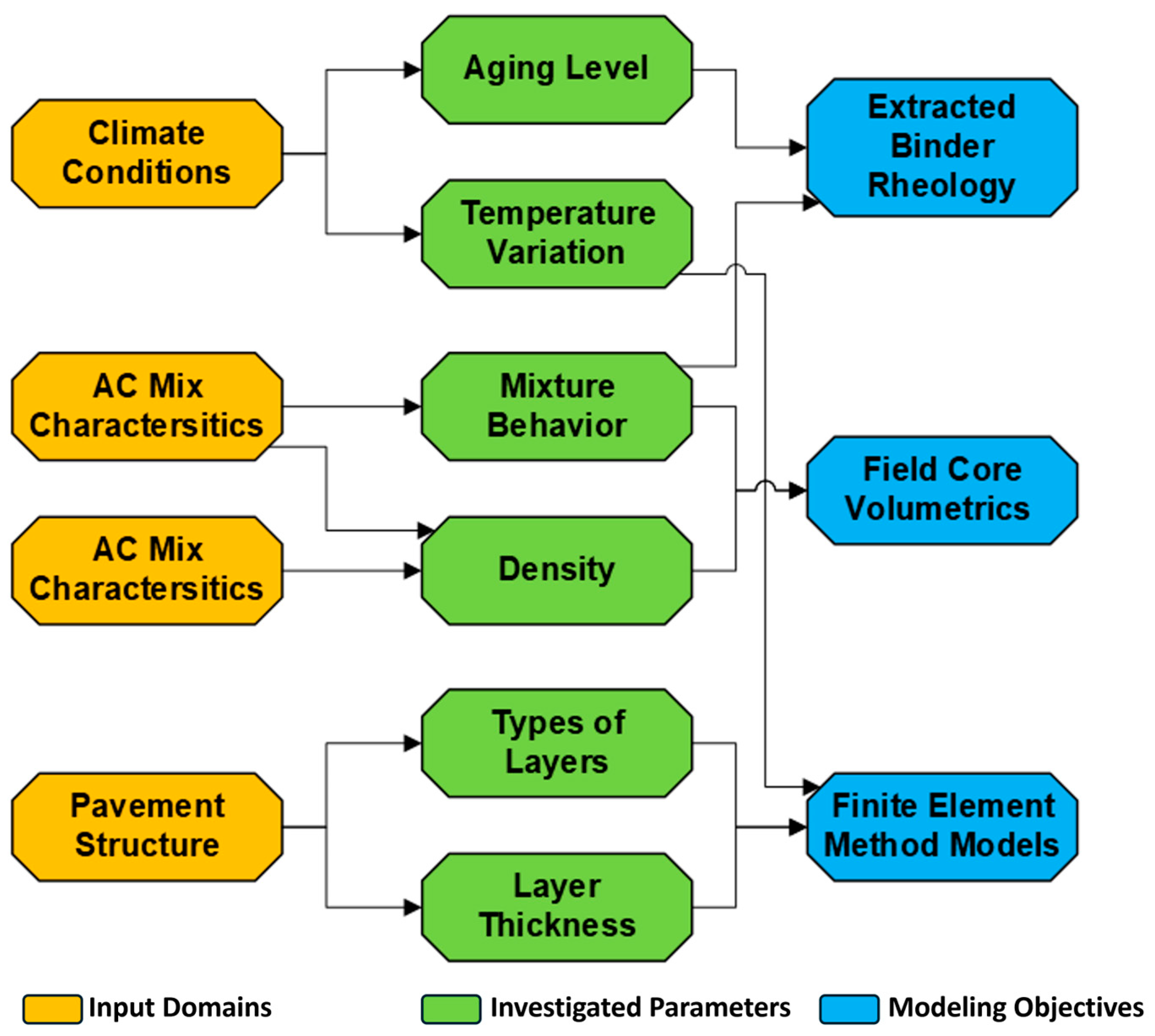
A research plan was developed to include site and regional forensic investigation, laboratory characterization of field cores, and mechanistic assessment. The Phoenix metropolitan area has been selected as the region of study due to the widespread occurrences of wide cracks. A schematic illustrating the key components and influencing factors of the research approach is presented in Figure 3. The factors related to the mixtures’ volumetric and behavioral properties were investigated through forensic analysis of field cores obtained from wide crack sections. Factors related to the climate and structure were assessed by incorporating a pavement temperature model into FEM models to predict thermal stresses and the cracking risk.

5. Study Area Evaluation

5.1. Geographical Overview

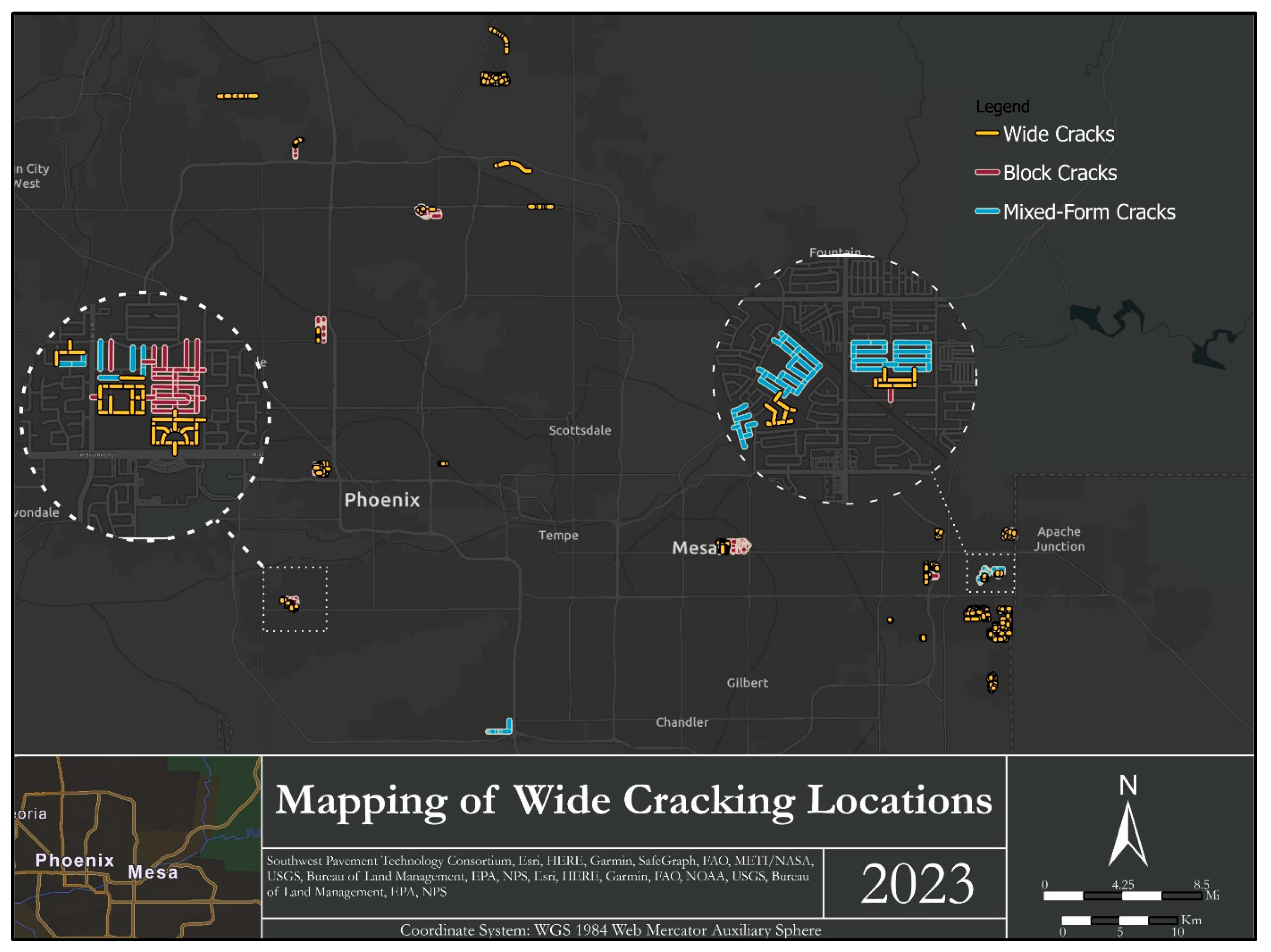
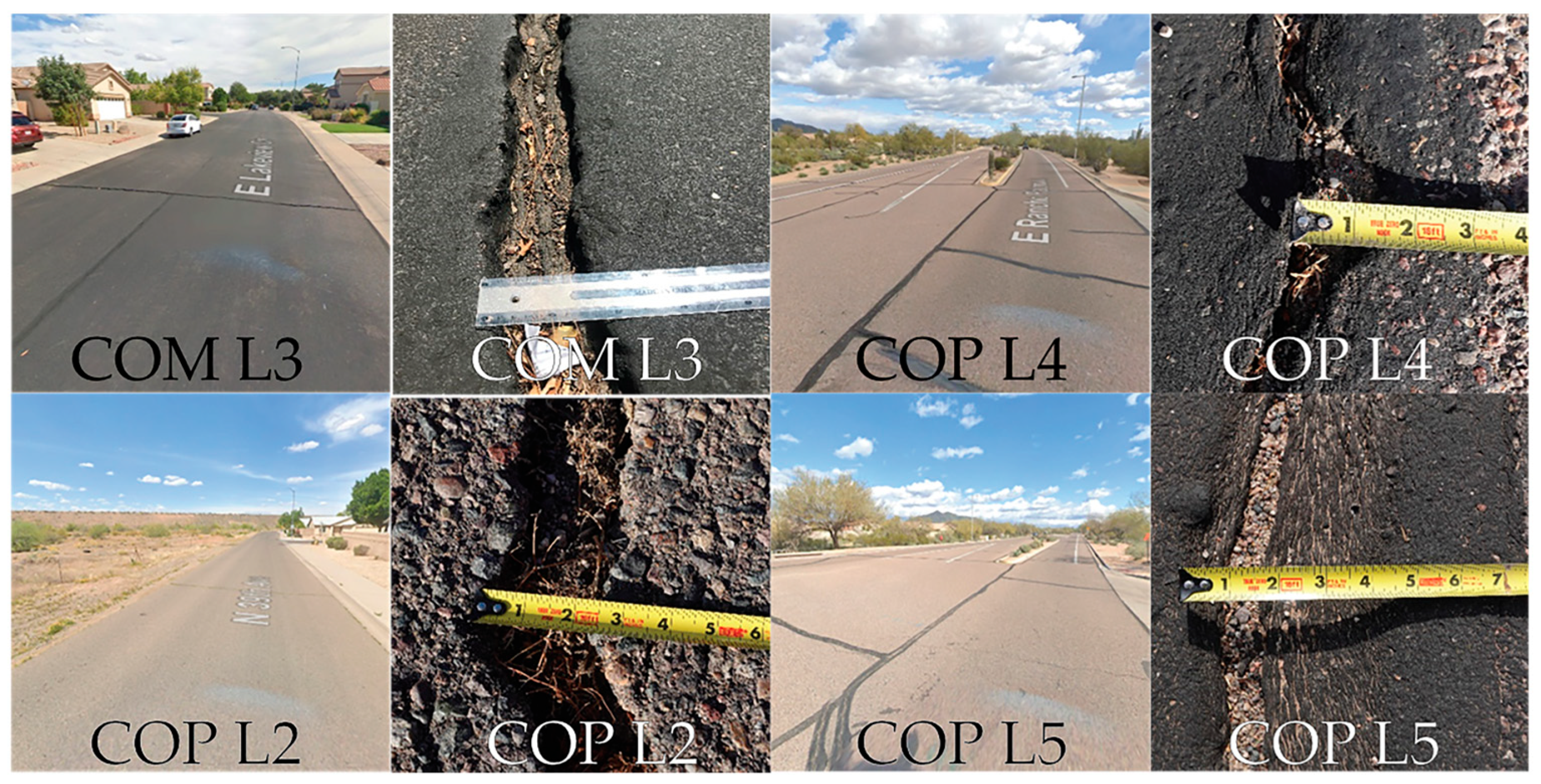
Locations of wide-cracking sites were provided by the City of Mesa (COM) and the City of Phoenix (COP) in Arizona. These locations were subsequently examined using satellite imagery and site visits to identify patterns and select candidate sections for further analysis. The identified cracks were categorized into three types: wide cracking, block cracking, and mixed-form cracking, where both block and wide cracking occur together. The analysis revealed that mixed-form cracking can be found in only 10.8% of the sites, supporting the hypothesis that this type of cracking rarely occurs. The remaining sites exhibited either block cracking or wide cracking exclusively. The overall locations of the mapped cracks are presented in Figure 4. A sample of sites impacted by wide cracks is presented in Figure 5.
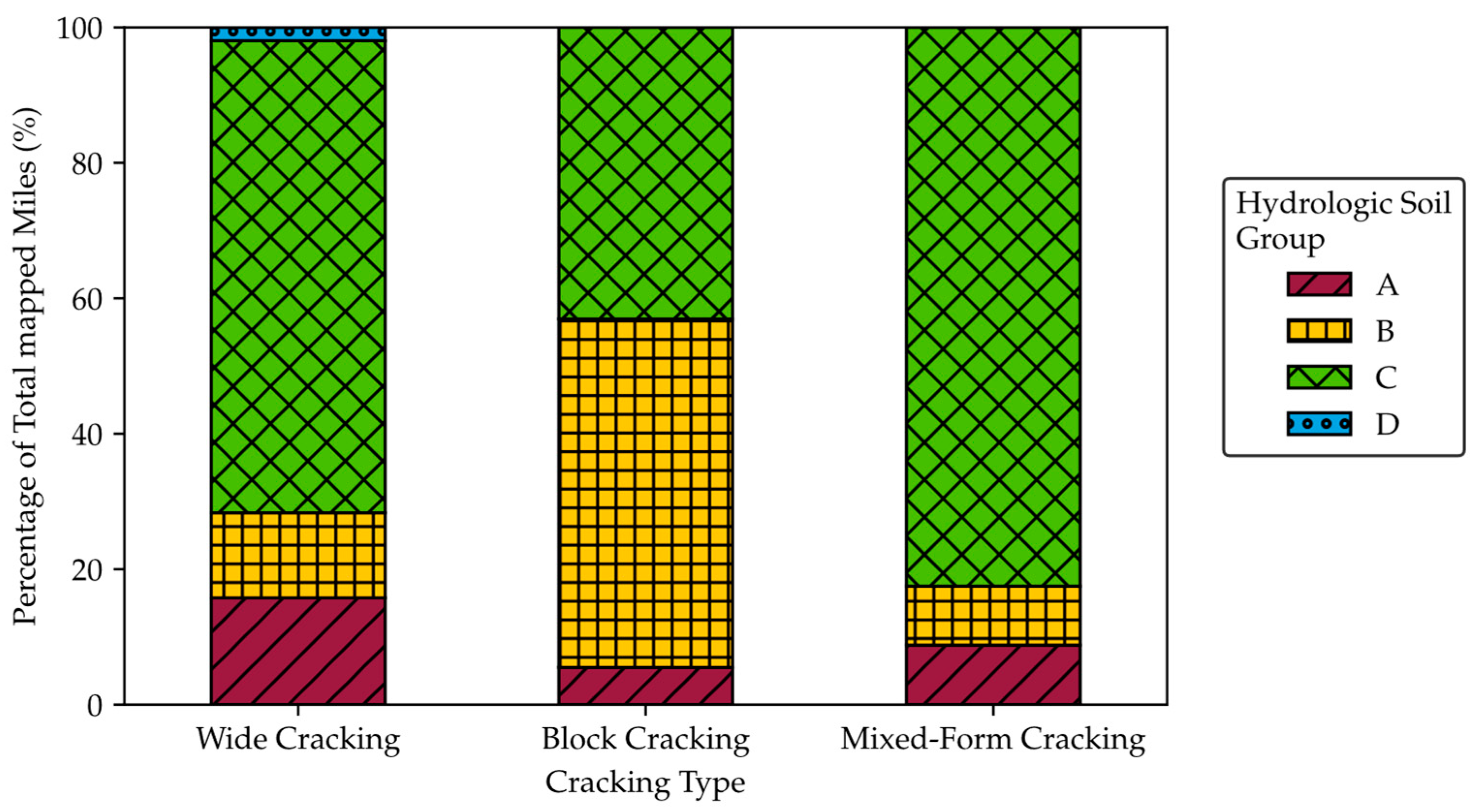
The soil maps of the study area were obtained from the United States Department of Agriculture (USDA) Web Soil Survey (WSS). The AASHTO classification for regions impacted by extensive wide or block cracking predominantly includes the A-2-4 or A-4 classes. This indicates that areas where wide cracking occurs are typically dominated by soils classified as silty and silty and gravel. The soils were classified based on their hydrologic groups for ease of interpretation. Wide cracks mostly occurred in areas where the soil type was of the hydrologic group C, while block cracks were more likely to occur in group B. This offers some anecdotal evidence that wide cracks might be more likely to occur in areas where the soil is less permeable, as shown in Figure 6.
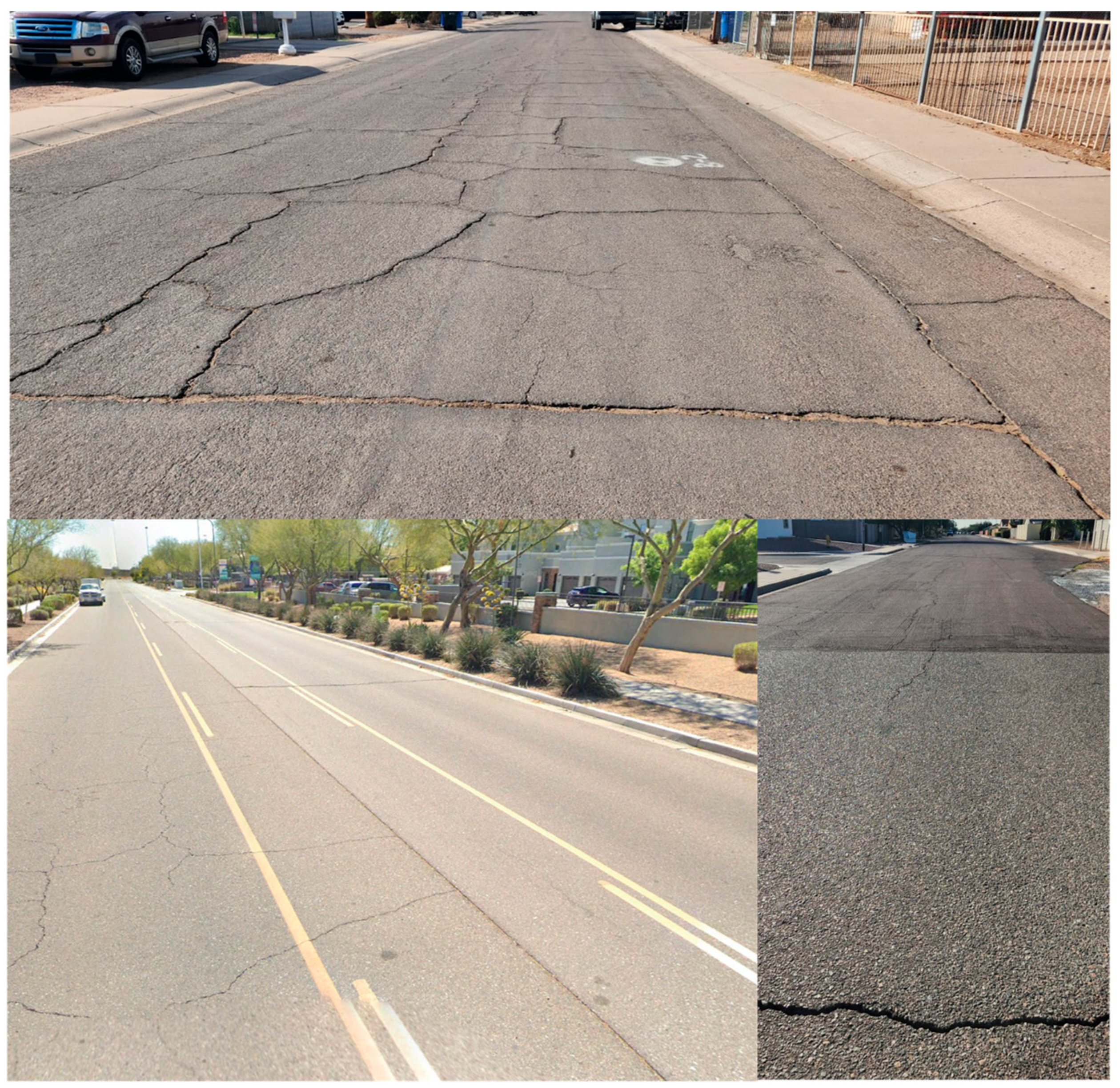
Notable observations were recorded and identified as potential sites for further investigation through coring. Figure 7 highlights some of the few instances where block and thermal cracking occur in the same pavement section. At one site, wide cracking was observed in one lane and block cracking in the other within the same pavement section, while in other cases, wide cracks occur in different portions of the same section. This study aims to investigate the differences in some of the underlying causes of wide cracking compared to block cracking. The sites shown in Figure 7 were investigated to identify fundamental differences in sections exhibiting block cracking.

5.2. Climate Assessment

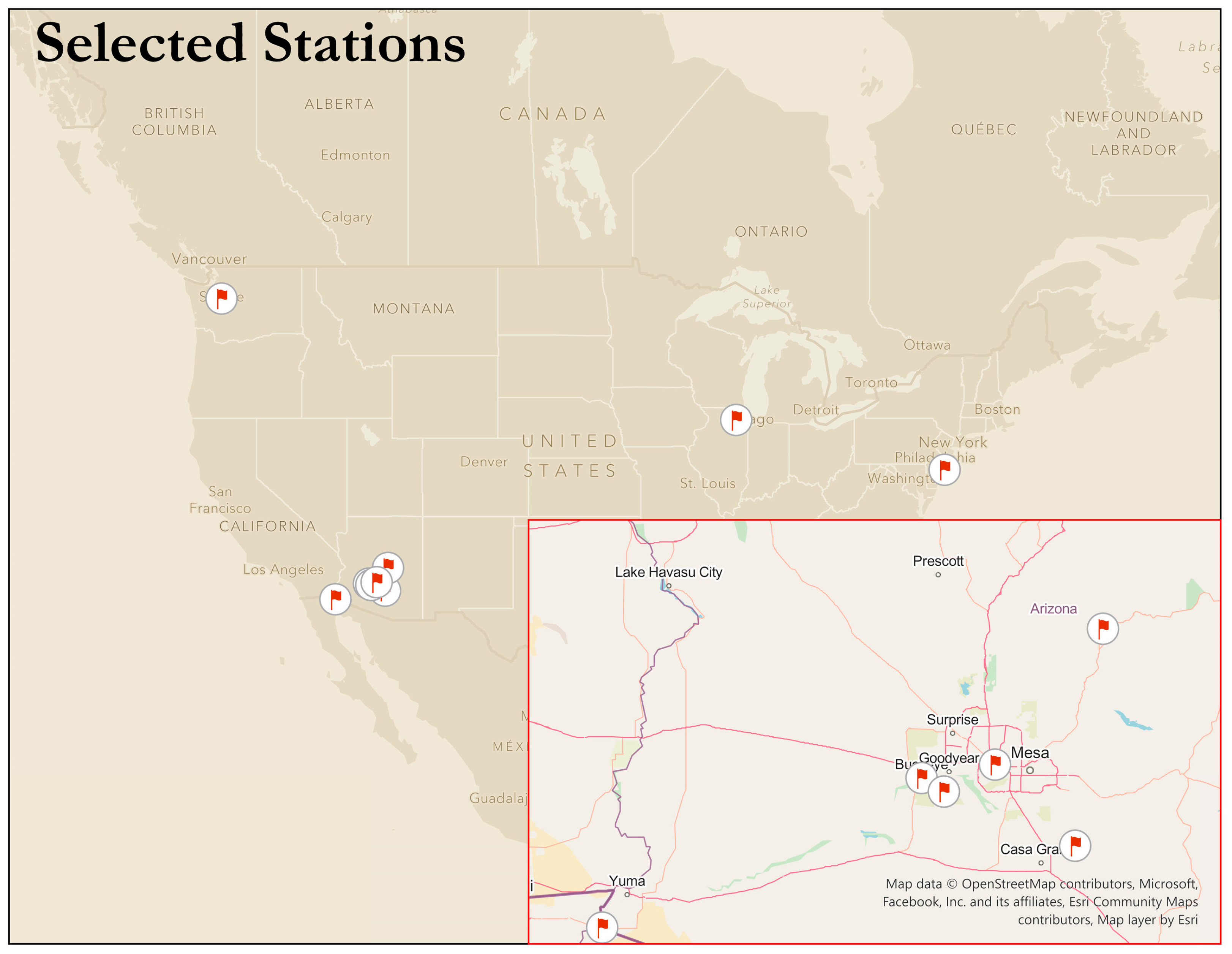
Climate data were obtained from six weather stations across the state of Arizona. In addition, climate data from three other states (Illinois, New Jersey, and Washington) were included to assess the contrast between the Southwest region and wet-freeze climatic conditions. Figure 8 depicts the locations of the selected weather stations.
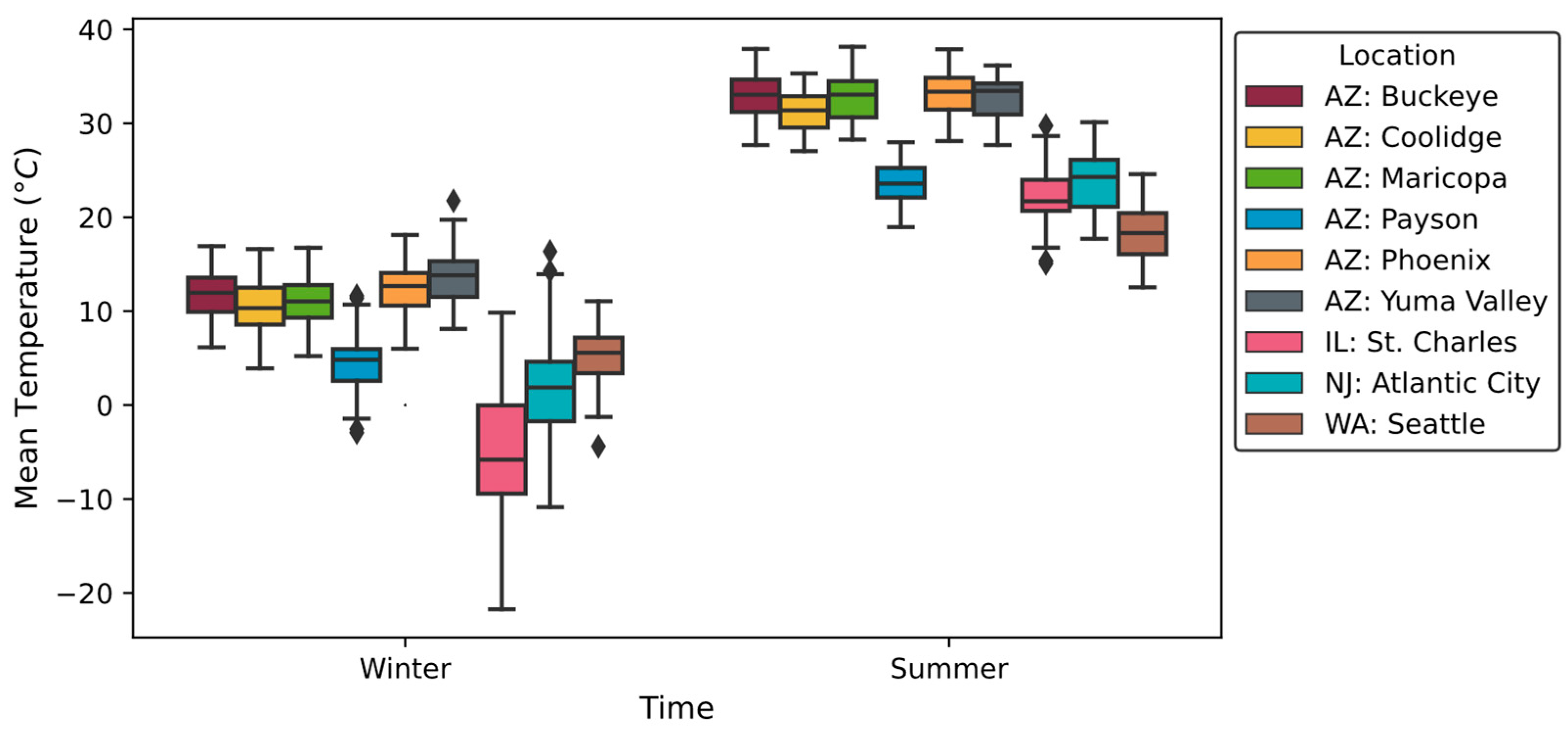
Hourly data from the years 2017 to 2022, including the ambient temperature, wind speed, solar radiation, and precipitation, were extracted from the gathered weather station data. The presented study employed this dataset for characterizing the local climate conditions, and their influence on hourly variation in pavement temperature profiles and pavement thermal stresses. Figure 9 and Table 1 presents the mean daily temperature across different regions. As shown, the ambient temperature of Payson (Northeastern part of AZ) was found to be comparable with Seattle (WA) and Atlantic City (NJ). Other locations in Arizona reported higher mean temperatures throughout the years. Except for Payson, none of the other selected locations in Arizona reported subzero ambient temperatures.
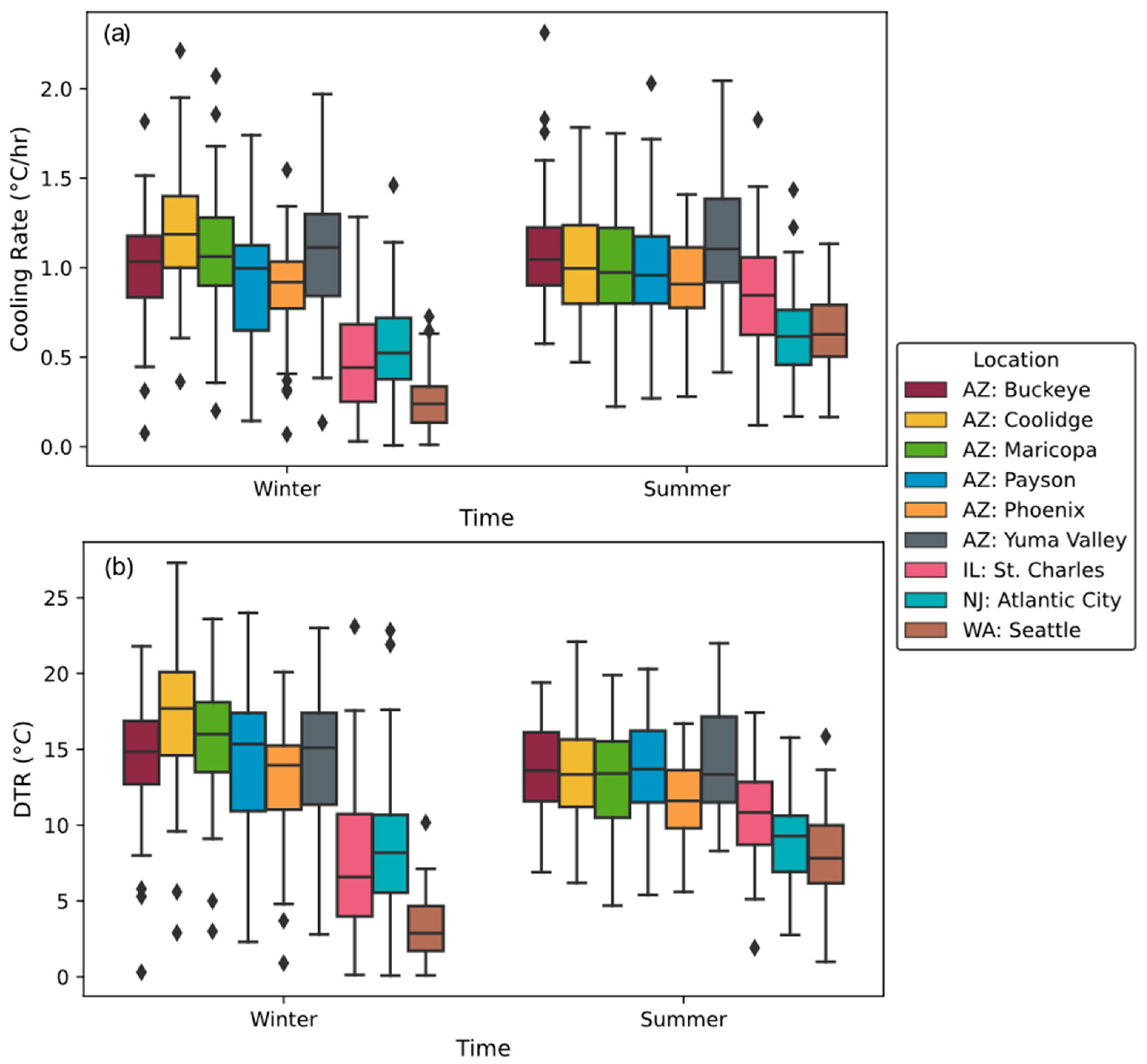
Considering the viscoelastic behavior of AC, in addition to the asphalt temperature, the rate and magnitude of variation in the pavement temperature profile also govern the magnitude of thermal responses. Thus, the magnitude and rate of cooling of an ambient temperature are studied to obtain initial insights into the variations in the pavement temperature profile. The magnitude of temperature drop in daily cooling cycles is quantified using the diurnal temperature range (DTR). The diurnal temperature range refers to the difference between the maximum ambient temperature and the subsequent minimum ambient temperature within 24 h. The cooling rate was calculated by dividing the DTR by the duration of the cooling period.
As presented in Figure 10a, average cooling rates at the selected locations in Arizona are about 1 °C per hour in winter, which is approximately twice those observed in the other states. Figure 10b shows that diurnal temperature range (DTR) values are higher in Arizona compared to the other three states. In winter, the average DTR in Arizona exceeds that of the selected locations in other states by approximately 5 to 15 °C, while this difference decreases to about 1 to 6 °C during summer.

5.3. Sampling Area

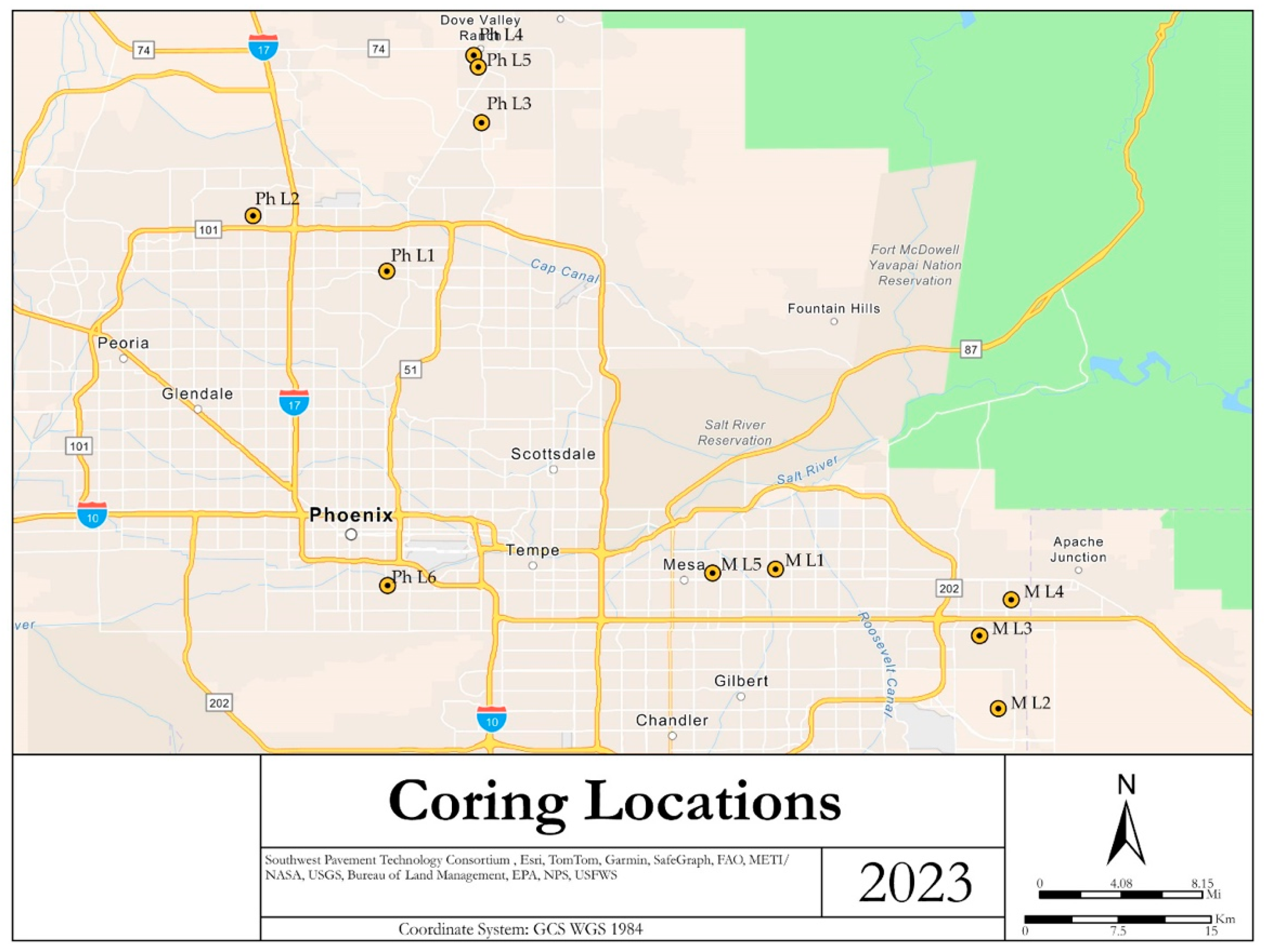
Twelve wide-cracking sites are identified for coring in cooperation with the City of Mesa and the City of Phoenix. The factors considered in the site selection include the severity of the cracks, the presence of different types of cracks in the same site, and the feasibility of the coring operation. The locations of the twelve sites are shown in Figure 11.
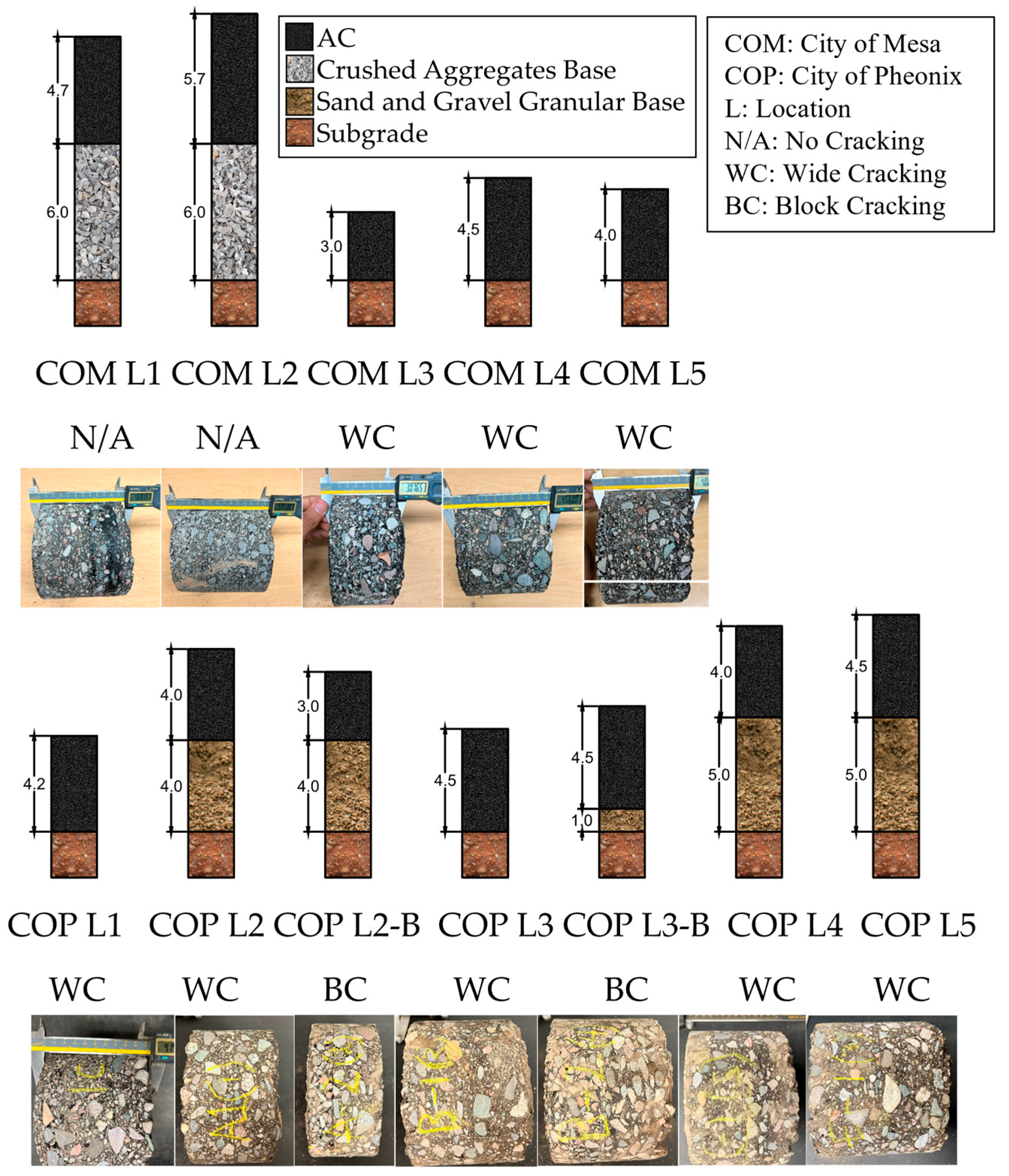
Six full-depth 6-inch-diameter cores were sampled following AASHTO T 225 at each of the 12 sites. The sampling operation was conducted in cooperation with the City of Mesa and the City of Phoenix. Relevant information about the pavement sections including structural composition and layer thicknesses are presented in Figure 12, along with a picture of core samples from each site. Two of the selected sampling sites (COM L1 and COM L2) were used as reference sites with no observed cracking and other forms of distress. Additionally, two other sites where block cracking occurred (COP L2-B and COP L3-B) on the same street as wide cracking were also cored to serve as benchmarks.

6. Results

6.1. Core Sampling and Processing

6.1.1. Overview

The field cores were sliced into distinct layers. The upper 1.5 inches of each field core were divided into 0.5-inch-thick slices, while the remaining lower portion was cut into 1-inch-thick slices. Only the top 0.5-inch and the bottom 1-inch layers of the field cores were used for rheological and chemical characterization of the binder. Any surface coating applied on the surface or bottom of the cores is removed during the slicing process. The binder was extracted from the slices and then recovered following AASHTO T 319.

6.1.2. Binder Rheology and Aging Impacts

The extracted and recovered binder samples were tested using a dynamic shear rheometer (DSR) to determine the rheological characteristics of the field cores. The complex shear modulus test was conducted on the recovered binder of the top and bottom layers of the sliced cores. The binder samples were conditioned with 10 cycles of 0.1% strain at 15 °C and a frequency of 0.5–0.61 rad/s before testing. Frequency sweeps were performed at frequencies ranging from 0.1 rad/s to 100 rad/s across a temperature range from 5 °C to 115 °C, in increments of 10 °C. The dynamic shear rheometer (DSR) tests were conducted using 8 mm and 25 mm parallel plate geometries for low- (5 °C to 45 °C) and high- (45 °C to 115 °C) temperature testing, respectively. Strain levels of 0.1% and 5% were selected for the low- and high-temperature G* testing based on linearity testing results. The complex shear modulus (|G*|) and the phase angle (δ) were measured for all top and bottom slices of the field cores. The resulting data was shifted into master curves of a complex shear modulus and black space. The binders’ performance-grade (PG) grading and the Glover–Rowe parameter were also calculated. The Glover–Rowe (G-R) parameter was calculated at a temperature–frequency combinations of 15 °C and 0.005 rad/s and 15 °C and 10 rad/s, per NCHRP 09-59 recommendations [24]. The Glover–Rowe parameter was originally introduced by Glover et al. (2005) and later reformulated by Rowe et al. (2011) for practical use in binder specification [25,26,27]. Consistent with current practice, threshold values of 180 kPa (onset of cracking) and 600 kPa (severe cracking) evaluated at 15 °C and 0.005 rad/s were adopted as reference limits for non-load-related cracking susceptibility [26].
The GR parameter was calculated using the following formula:
G R   P a r a m e t e r = G * × ( c o s ( δ ) ) 2 s i n ( δ )
where G* is the complex modulus and δ is the phase angle at 15 °C and 0.005 rad/s or 10 rad/s.
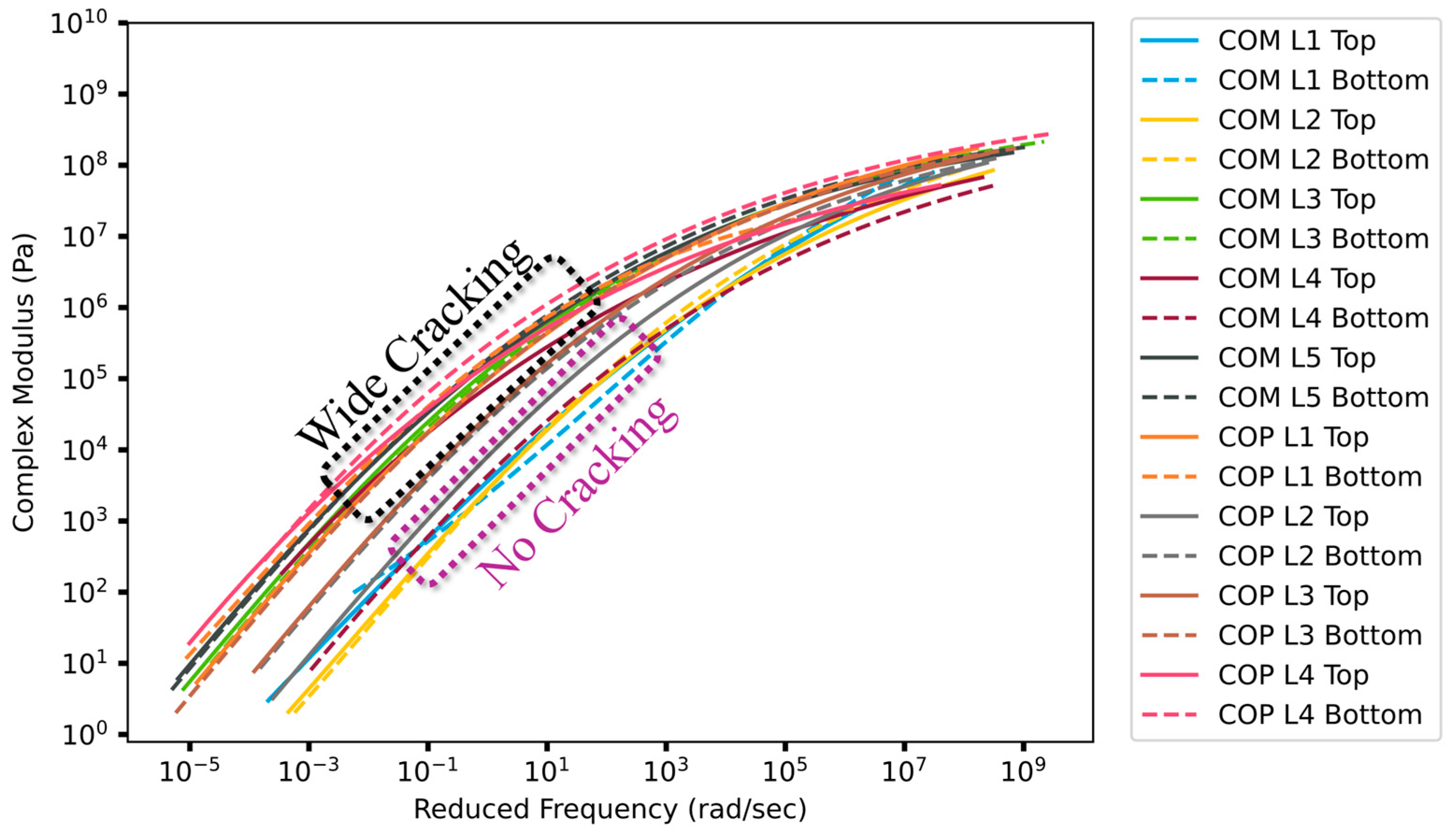
The impact of aging on the rheological properties of the extracted and recovered binder from field cores is evaluated using the frequency sweep test. Figure 13 illustrates the master curves of the extracted binders from the field cores. Higher stiffness was observed at older sites with severe pavement cracking and lower stiffness was observed at new control sites such as COM L1 and COM L2. The sites with no cracking have lower stiffness compared to the sites with severe cracking. This implies the potential for a high correlation between the wide-cracking risk and pavement aging.
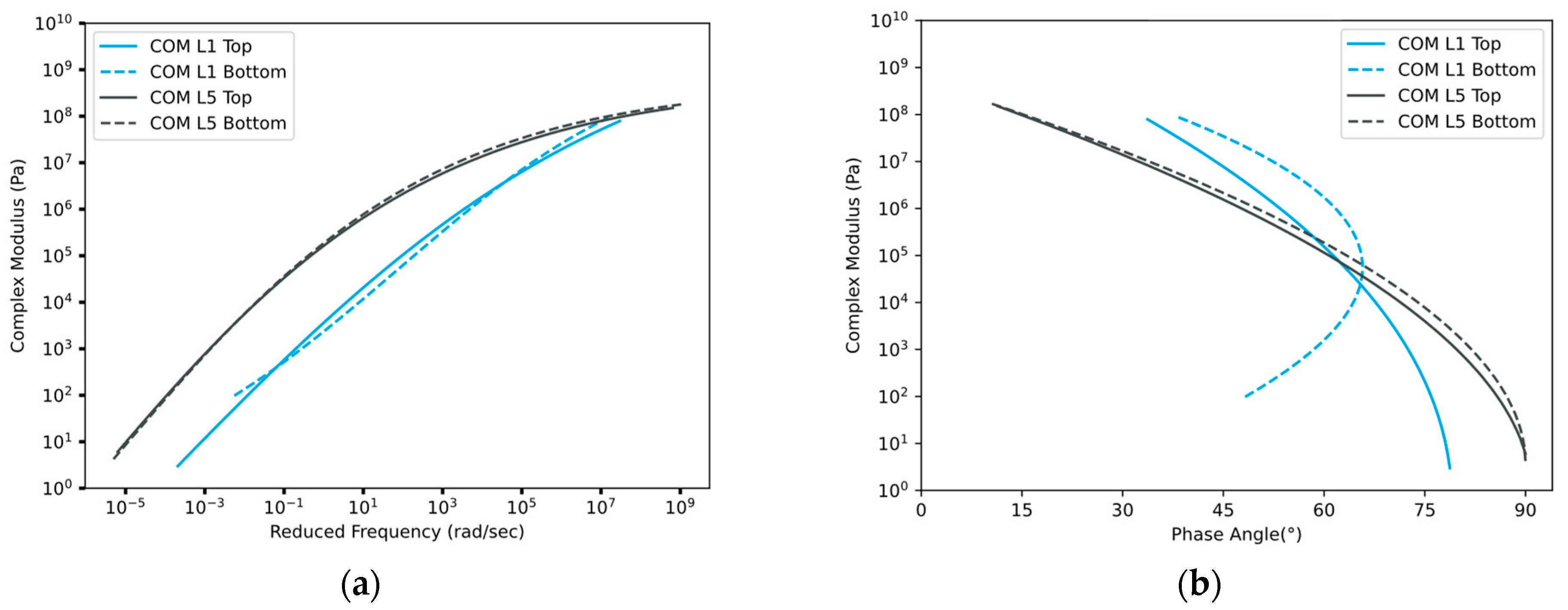
The master curve and black space plot of a control site, which is relatively newly constructed, and one of the typical datasets from one of the wide-cracking sites are shown in Figure 14a,b. Figure 14a demonstrates that at the new site (COM L1), the top layer of the field core exhibits stiffer or more brittle behavior compared to the bottom layer. In contrast, the old site (COM L5) shows much higher stiffness for both the top and bottom layers with similar stiffness characteristics. Generally, for older pavement sites, both the top and bottom layers show comparable binder stiffness behavior. These observations suggest that aging affects the pavement surface consistently up to a depth of 4 inches in the study area’s extreme climate.
Figure 14b presents the black space diagram. The COM L1 bottom layer’s binder shows a characteristic polymer tail that indicates the presence of thermoplastic modifiers like SBS or tire rubber. This modification shifts the phase angle from the Newtonian range of 90° to a more viscoelastic range of 40° to 50°. The use of a modified PG 76-22 binder at the L1 site was also verified by the COM. In contrast, the binder from COM L5 exhibits characteristics of an unmodified binder, with phase angles reaching 90° at high temperatures, typical of Newtonian materials. In short, pavements that suffer from wide cracking generally have unmodified binders that experience a significant increase in stiffness due to aging.
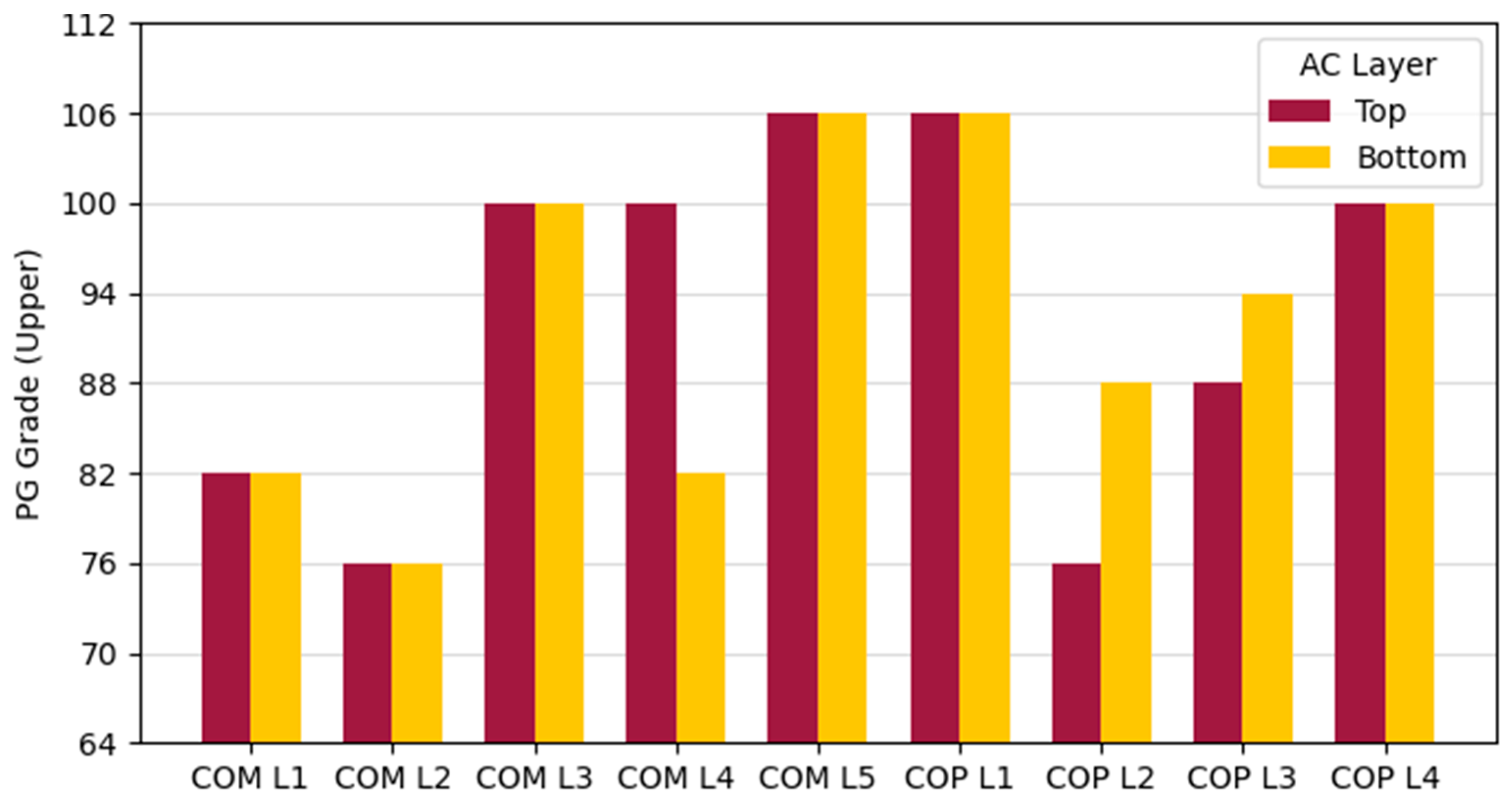
Figure 15 shows the PG grades of all field core binders. The control sites, COM L1 and L2, had PG grades of 82 and 76, respectively. This indicates that the original binder grade is mostly maintained (the binder in the sections is PG 76-22). However, most other sites have PG grades higher than 100, with some sites like COP L2 and L3 having lower PG grades. Generally, the PG grades for the top and bottom layers are similar across all wide-cracking sites. While no original construction data is available for the binder grade or construction year, it is likely that all wide-cracking sites had unmodified binders. Field aging has increased the PG grade, with sites like COM L5 and COP L1 showing nearly double their presumed original PG grades. The increase in the stiffness of the binder can be associated with the binder aging.
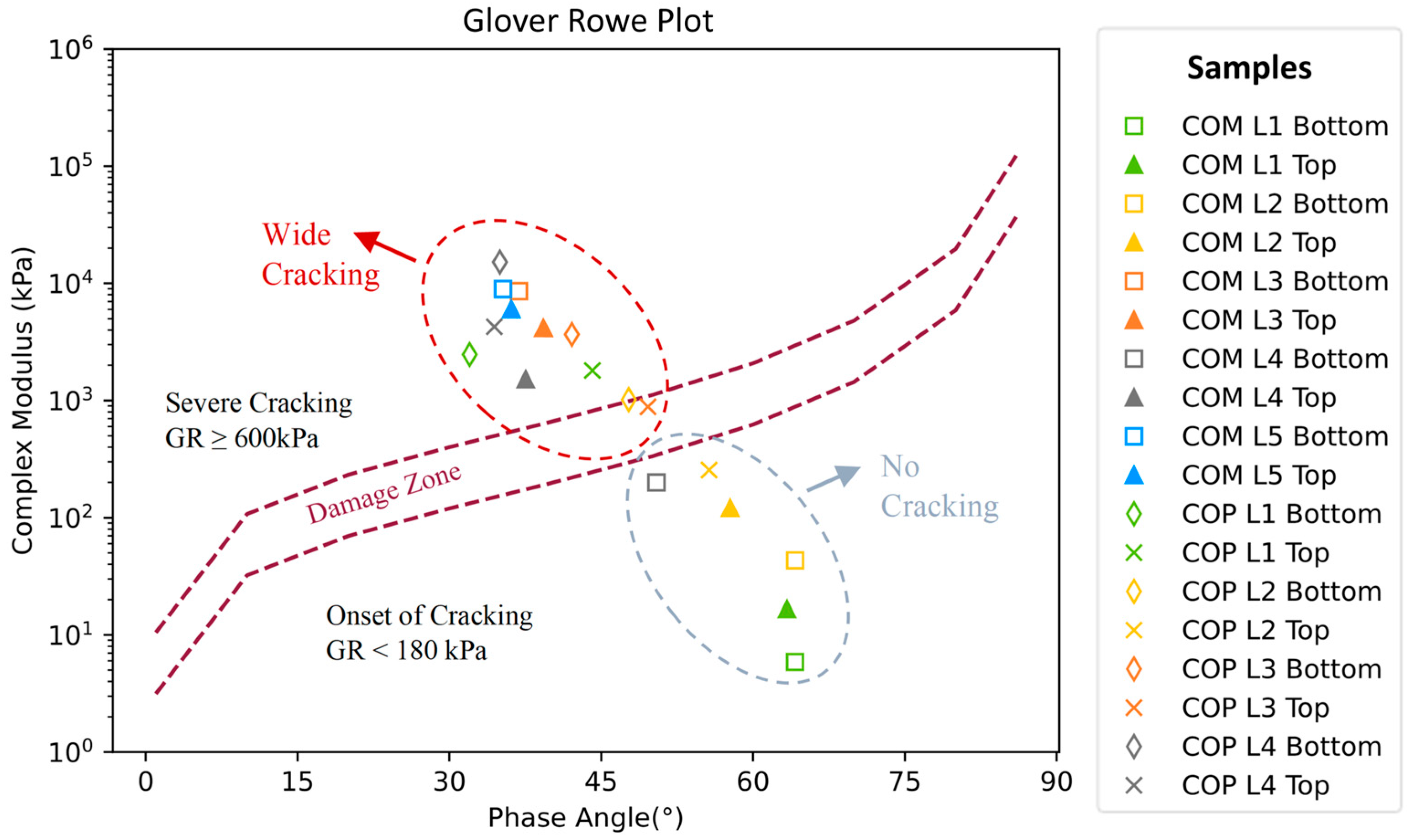
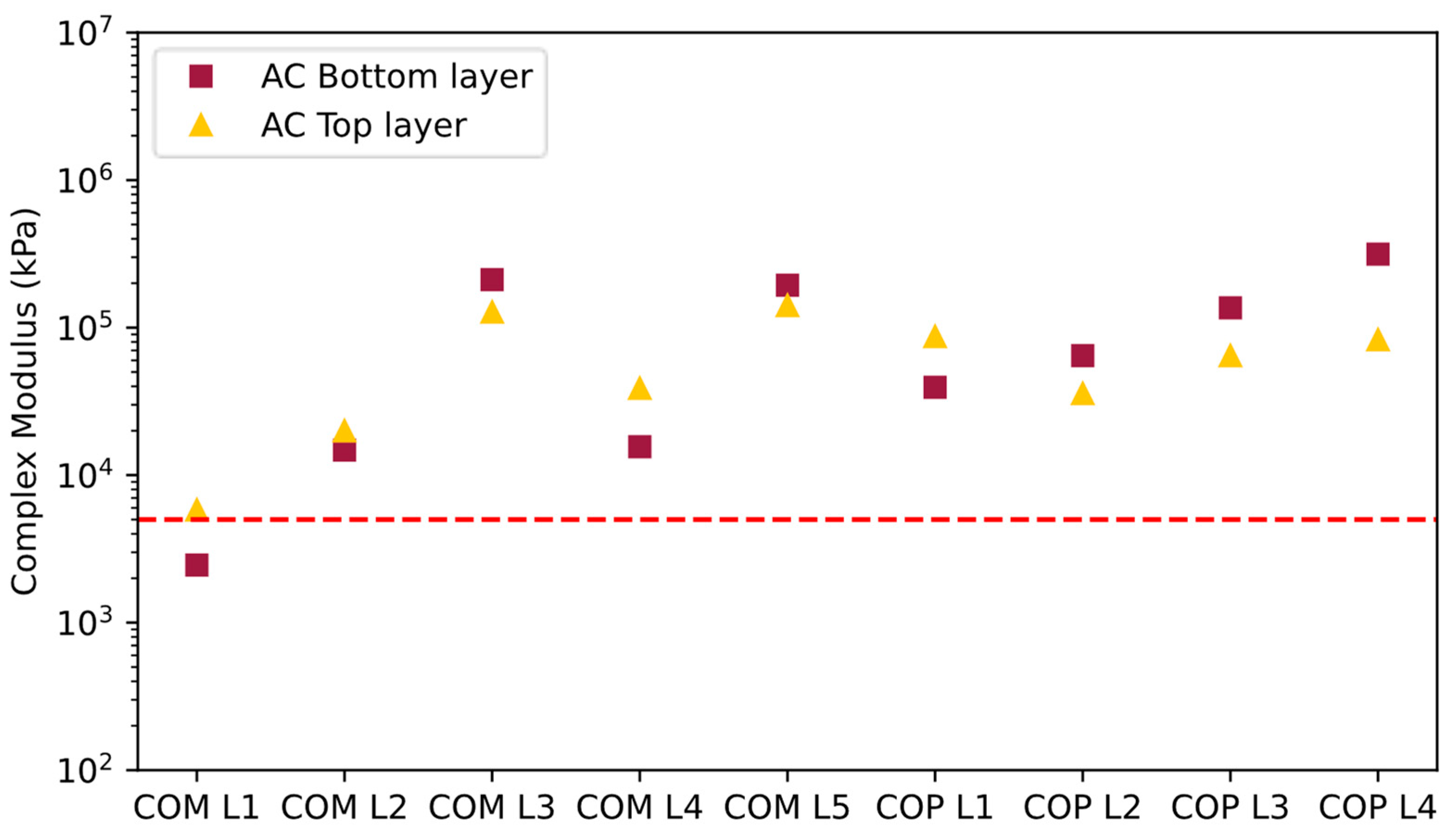
Glower–Rowe (GR) parameters at both low and high frequencies for the extracted binders are shown in Figure 16 and Figure 17, respectively. The GR parameter increases with aging and progresses toward the severe cracking zone. The GR values for newer pavement surfaces, such as COM L1 and COM L2, do not show cracking in the field and exhibit minimal aging, consistently falling below the 180 kPa threshold. In contrast, GR values for all wide-cracking sites were above 600 kPa, with lower phase angles indicating their aging extent and a higher risk of cracking. Overall, the GR parameter effectively captured the cracking trends. Figure 17 highlights the high-frequency (10 rad/s) GR parameter for all field cores’ extracted binders. The high-frequency test has a single-modulus threshold of 5000 kPa following AASHTO M 320. The sites COM L1 and COM L2 have lower GR values compared to other old pavement sites, but in both cases, the binder extracted from the top 0.5″ of the core crossed the fatigue 5000 kPa threshold, which indicates a higher sensitivity to aging. The high-frequency tests showed some consistency with lower-frequency ones in that all sites that experienced wide cracking crossed the GR threshold limit in both cases, indicating their susceptibility to cracking.

6.1.3. Field Core Volumetric Evaluation

The cores were sliced in half, and the bulk specific gravity of each slice is then measured following AASHTO T166. The cut and fractured aggregates were removed from remaining core slices following in AASHTO R 67. The retrieved loose asphalt mixture was then used to produce an estimate of the theoretical maximum specific gravity (Gmm) of the mixture following AASHTO T 209, including the supplemental procedure for mixtures containing porous aggregate to account for any remaining cut aggregates. An ignition oven was used to estimate the binder content of the Gmm sample following AASHTO T 308.
The purpose of this volumetric analysis is to identify patterns that can be attributed to mixture characteristics or construction quality. It is acknowledged that the method might not yield the most accurate results due to the lack of original construction site data. The measured values and actual volumetric terms are used interchangeably to gather information about these variables, though not precise measurements. Given that our measurement method has been consistently applied throughout, it can be assumed that the observed patterns reflect similar trends in the authentic values. The measured volumetrics are presented in Table 2. The most significant finding is that block cracking sites exhibited significantly higher voids in mineral aggregate (VMA) and effective binder volumes (Vbe) in all measured cores compared to wide-cracking sites. Although the dataset used from field locations is limited, it highlights the importance of an effective volume of binder and in-place air voids, as they have impacts on the durability of asphalt pavements.

6.2. Predicting Thermal Stresses in the Pavement Sections

6.2.1. Pavement Temperature Model

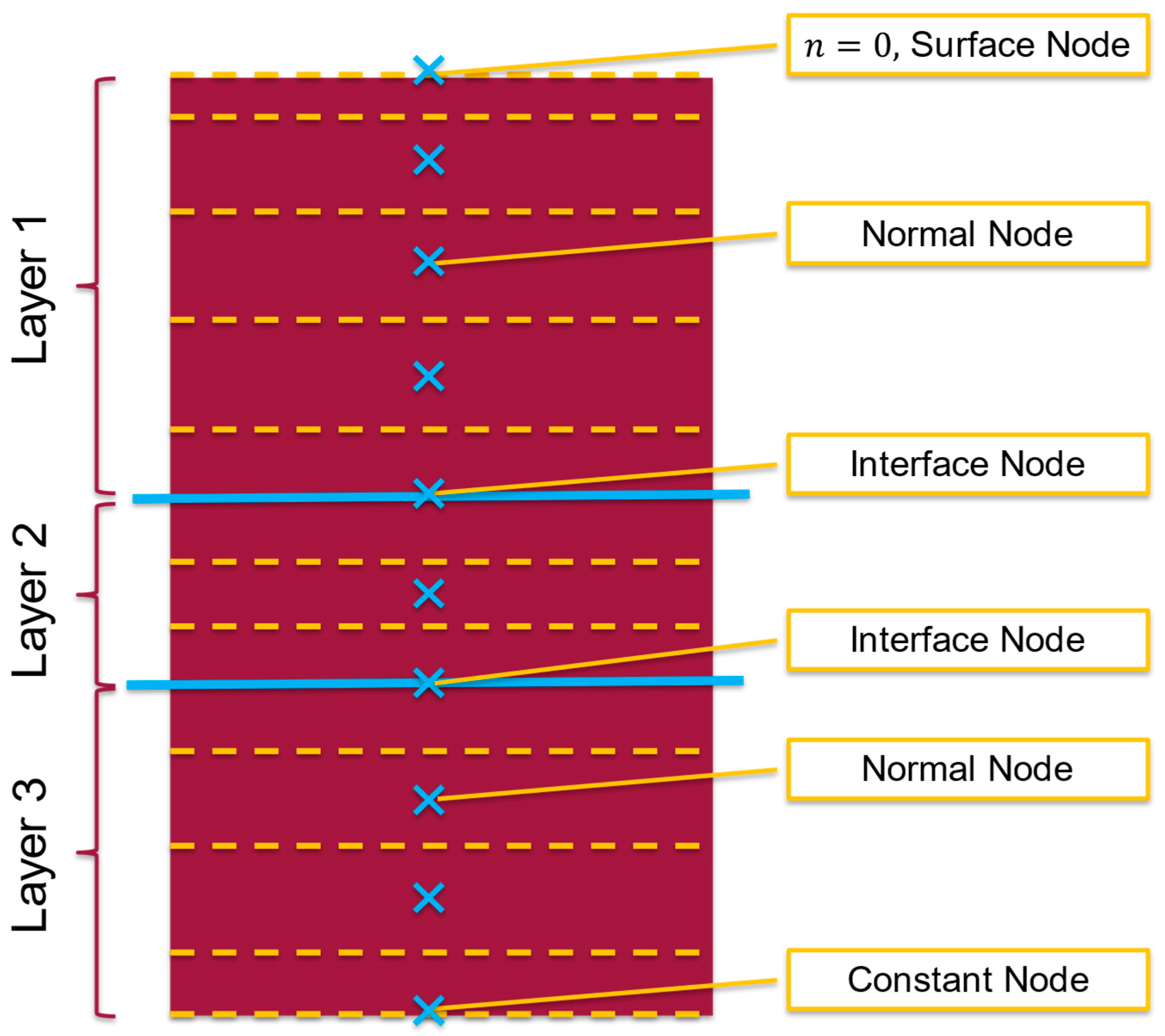
The finite difference method (FDM) was used to predict the hourly pavement temperature profile. Application of the FDM to predict the pavement temperature profile can be dated back to the 1970s [28,29]. The governing PDE was solved for a multi-layered pavement structure discretized to multiple nodes, as illustrated in Figure 18.
The changes in pavement temperature are governed by the heat transfer partial differential equation (PDE). As the pavement structure is a layered system, the heat transfer governing equation can be written in a one-dimensional form as shown below.
k i ρ i c i × T i x , t x 2 = T i x , t t x i 1 < x < x i
where Ti (x, t) is the temperature in the i-th layer in depth of x at time t, ki is the thermal conductivity of the layer, ρi is the density of the layer, and ci is the specific heat capacity of the layer. Assuming that both heat flux due to conduction and the temperature are continuous at the interfaces between the layers, the following boundary conditions are applied.
T i x , t x = x i = T i + 1 x , t x = x i
k i T i x , t x x = x i = k i + 1 T i + 1 x , t x x = x i + 1
The most challenging part was the determination of the boundary conditions at the pavement surface. Common modes of heat transfer at the pavement surface are radiation and convection, as illustrated in [10,30]. Thus, the boundary condition at the pavement surface can be written as below.
k 1 T 1 x , t x x = 0 = q n s q n l q c
where qns, qnl, and qc are the net solar radiation absorbed by the pavement, net long-wave radiation going from the pavement, and the head flux induced by convection, respectively.
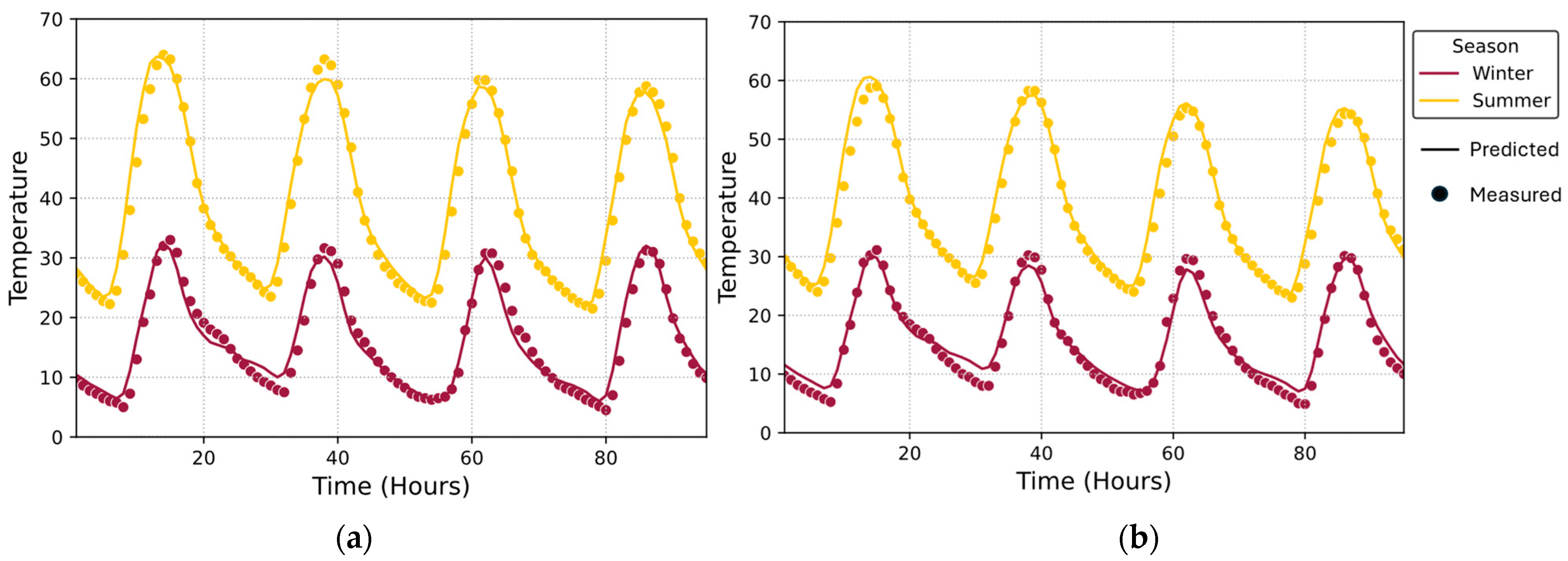
The developed model was validated using the data obtained from two pavement sections in the Phoenix metropolitan area [31]. The selected instrumented sections with the structure of AC over the subgrade have a 76 and 152 mm AC thicknesses. A thermal conductivity (TC) of 1.05 W/m.K and specific heat capacity (SHC) of 940.0 J/kg.K are measured for the AC layer [31]. As the subgrade thermal properties were not reported, values of 0.4 W/m.K and 850 J/kg.K were assumed for subgrade TC and SHC, respectively. Measurements from 13 mm below the AC surface are used for validation as model’s predictions would be less influenced by the assumed subgrade thermal properties at this depth. Figure 19 presents the validation results. The model’s predictions were compared with reported temperature values in December and May for four consecutive days. As shown, the predicted values follow the trend of the measured values by the thermocouples with a very high degree of correlation. A maximum root means square error of 2.0 °C was observed among the validation cases.

6.2.2. Finite Element Modeling

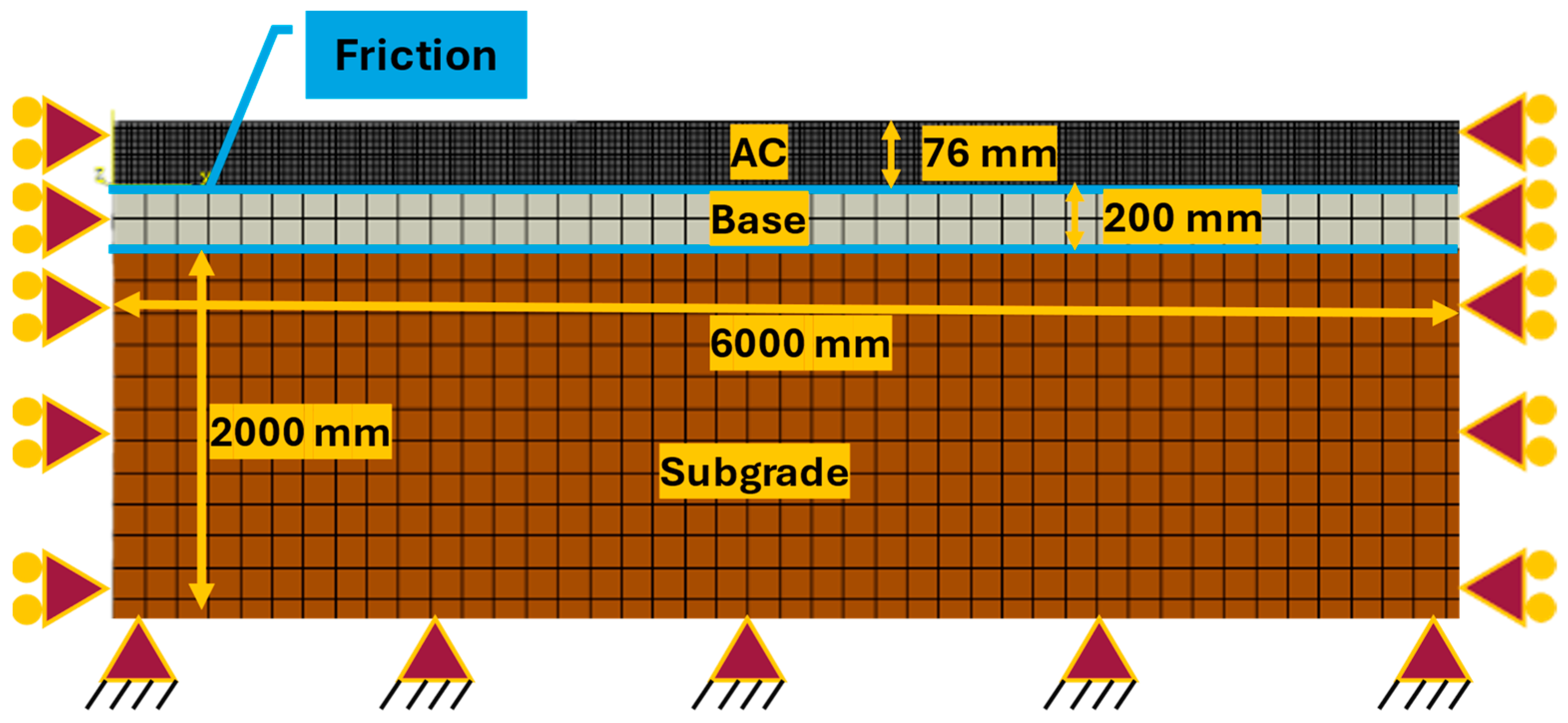
The finite element method (FEM) is used to develop a thermo-mechanical model. The hourly pavement temperature profiles from the FD model were used as inputs to the FE model in Abaqus 2022 software. Figure 20 illustrates the plane strain FE problem domain.
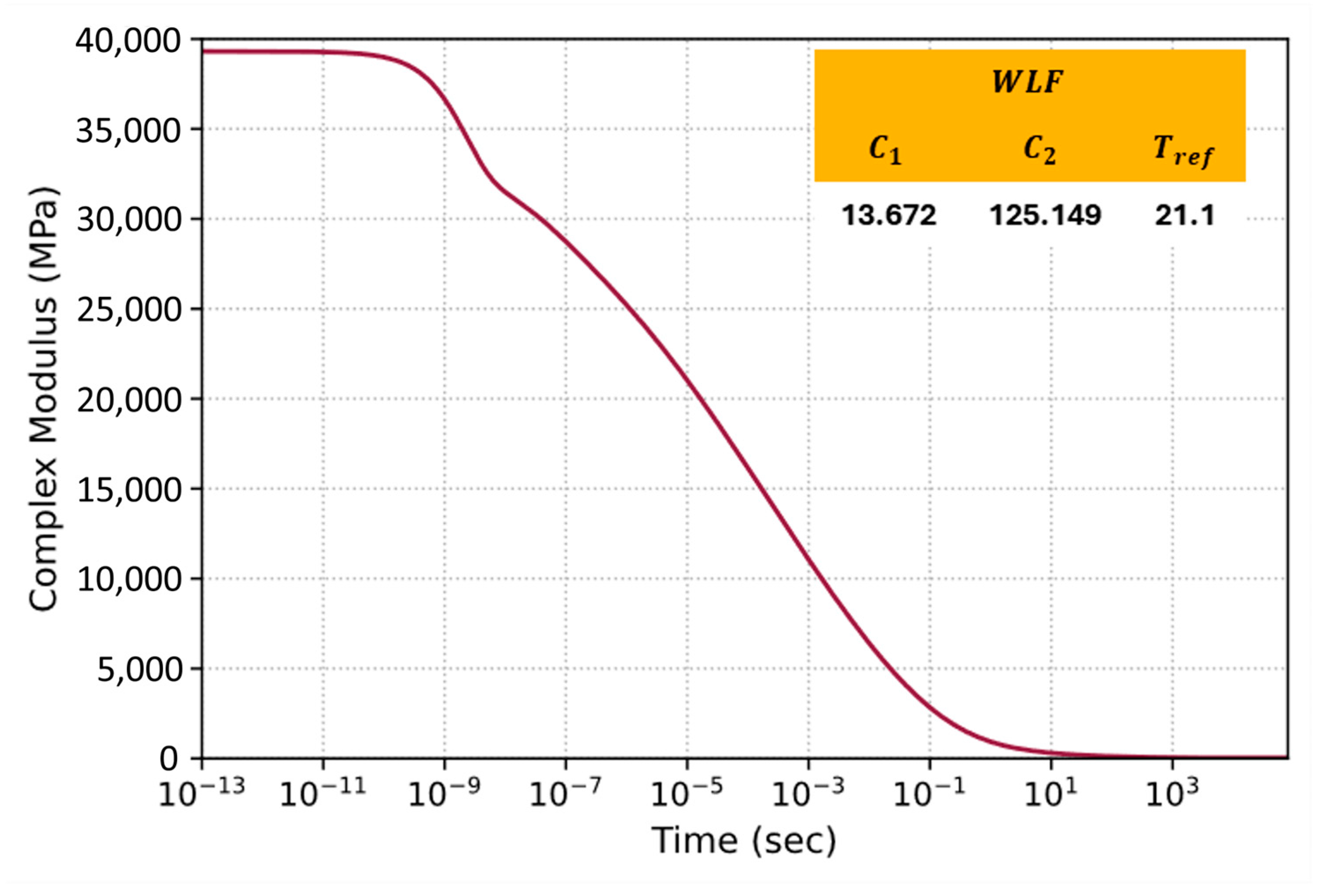
Table 3 presents the domain properties. Friction behavior was assigned to the interfaces of the layers. Friction coefficients of 0.5 and 0.7 were assumed for AC–base and base–subgrade interfaces, respectively. Each simulation started with an initial step assigning the weight of the layers followed by the second step applying an hourly temperature profile. The duration for the initial step was assigned to be long enough in order to ensure that the initial responses generated by body weight do not affect the thermal stresses, considering the viscoelastic behavior of AC. A PG64-22 AC mixture was considered for this study. The choice of the PG 64-22 mixture as the basis for the mechanistic analysis is intended to establish a standardized baseline for future studies. By using this common performance grade, which is the most widely utilized binder in the United States, it was possible to isolate climatic variables as the primary driver of the pavement response across the selected geographic regions for analysis. The complex modulus of this mixture is presented in Figure 21.

6.3. Mechanistic Analysis of Thermal Fatigue

6.3.1. Effect of Climatic Conditions on Pavement Temperature Profiles

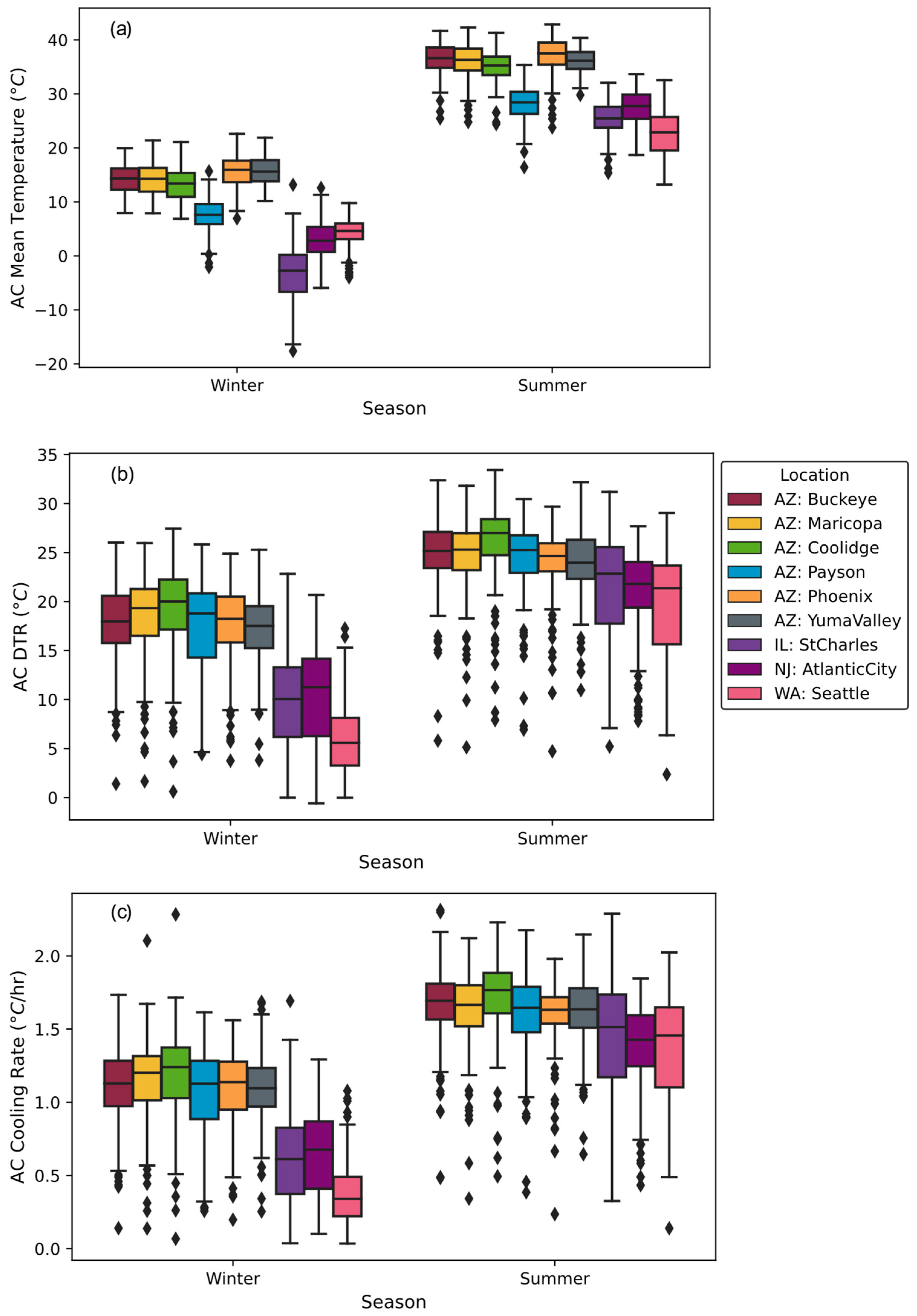
A pavement structure with an AC thickness of 76 mm and base thickness of 200 mm was simulated under different climatic conditions. Similar trends of mean temperature, DTR, and cooling rate were observed for the AC layer compared to the obtained ambient temperature from the weather station data. Figure 22a illustrates the average daily AC temperature for different climatic regions. Warmer mean temperature profiles are shown in Arizona as compared to other selected states throughout the year. A limited occurrence of sub-zero temperatures is only observed for Payson, AZ. The average AC temperature variation in winter is shown to be approximately two times higher in Arizona’s regions compared to other selected states, as illustrated in Figure 22b. Furthermore, as shown in Figure 22c, approximately a 2.5 times higher magnitude of cooling rate was observed for Arizona’s regions compared to other states. Thus, although AC experiences a higher average temperature in Arizona, it is also experiencing noticeably higher and faster variations in temperature on a daily basis in winter.

6.3.2. Effect of Pavement Structure on Pavement Temperature Profiles

The pavement temperature profile was calculated considering different pavement structures. AC thicknesses from 50 to 150 mm are considered for this study. The effect of various pavement structure scenarios is initially investigated. Based on a preliminary analysis of the data, the effect of AC thickness is found to be the most influential factor. Therefore, the analysis focuses on the effect of AC thickness. Pavement temperature profiles are calculated for different pavement structures considering the climate data obtained from the Phoenix, AZ weather station.
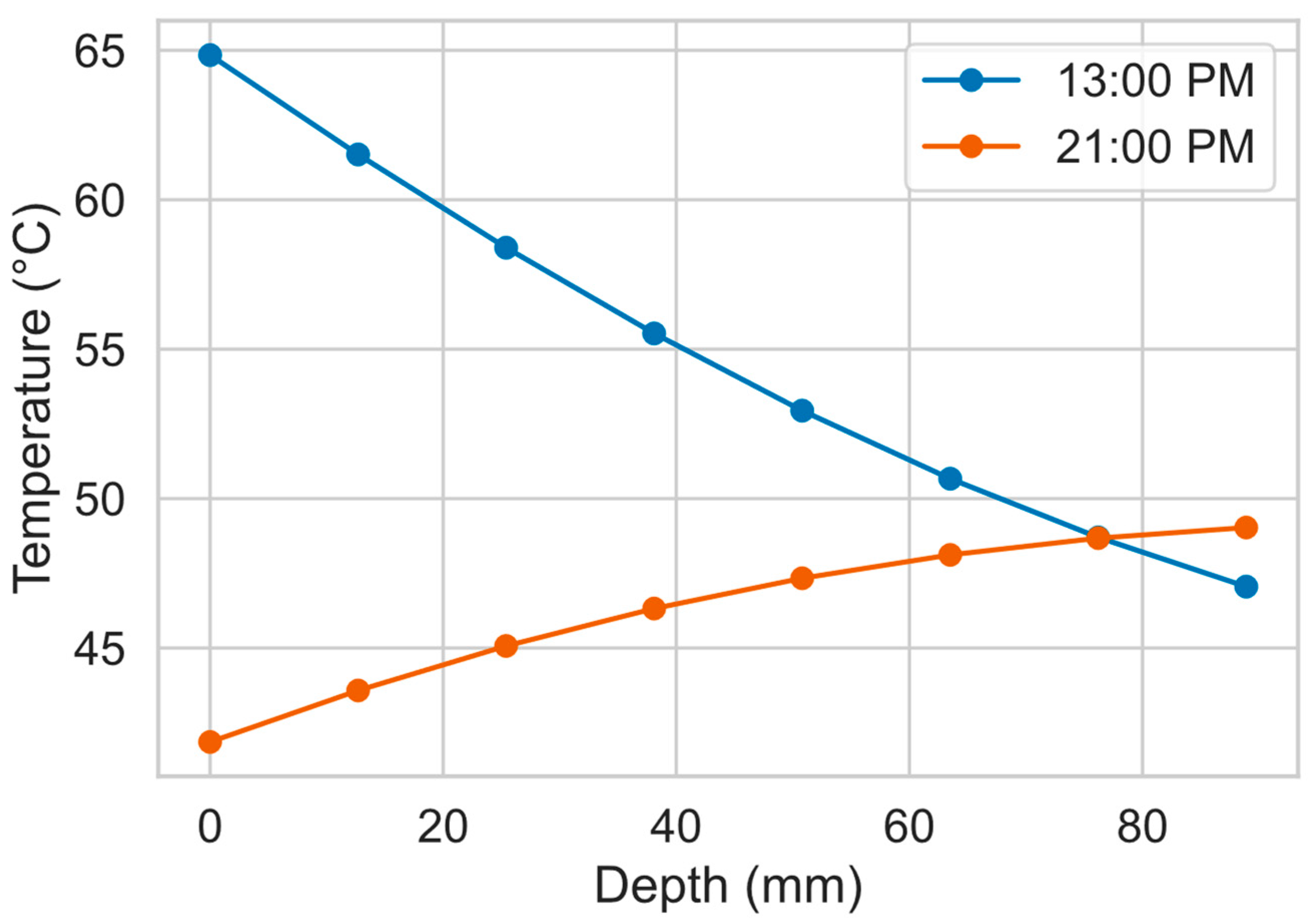
Similar to the previous section, the analysis in this section utilizes the average temperature across all the nodes within the AC layer at each hourly time step. Figure 23 illustrates an example of temperature distribution within a typical AC layer during the daytime heating and nighttime cooling cycles for the Phoenix, AZ climate. The profiles demonstrate a significant non-linear gradient between the surface and the bottom of the layer. During peak solar radiation, the surface temperature can be substantially higher than the temperature at the bottom. Conversely, at night, the surface cools rapidly while the lower portion of the layer remains warmer. Therefore, as the result of the localized temperature variations through the AC thickness, the average temperature of all nodes within the AC layer was used for the analysis. This layer-wide mean temperature provides a more representative measure of the overall thermal state of the pavement section, allowing for a consistent comparison across different structural scenarios without being disproportionately influenced by temperature fluctuations throughout the AC depth.
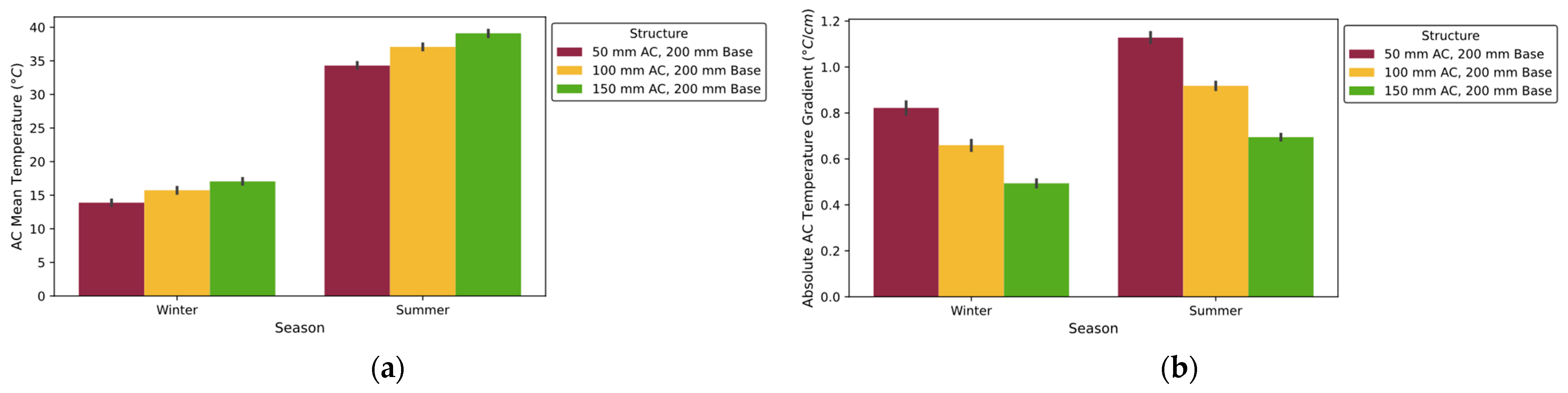
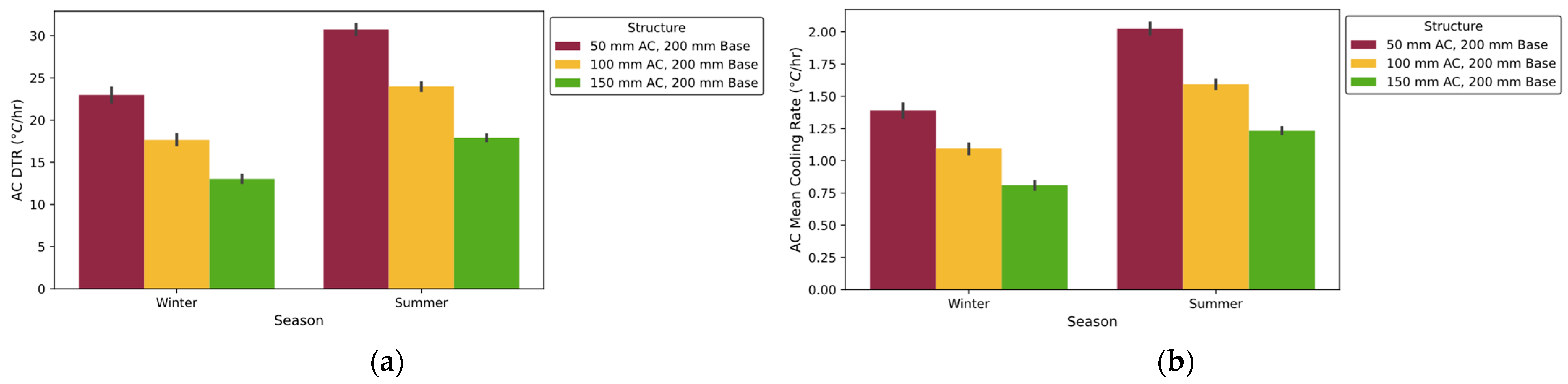
As shown in Figure 24, an increase in AC thickness increases the average daily AC temperature and lowers the AC temperature gradient through the depth. Thus, a decrease in the thickness of the AC layer would lead to a more uniform temperature distribution within the layer. Furthermore, as illustrated in Figure 25, increasing in the AC thickness leads to noticeable decrease in the magnitude and rate of the hourly variations in AC temperature, which can reduce the chances of thermal cracking.

6.3.3. Thermal Stresses

The results from the FE thermo-mechanical simulations were used to investigate the differences in thermal stresses in different climate conditions, including Arizona (Phoenix), Illinois, Washington, and New Jersey climates. Average hourly temperatures were assigned to each individual layer based on the result obtained from the pavement temperature prediction model. Only pavement temperature profiles from winter were assigned as AC would experience higher tensile responses as the result of the lower temperature.
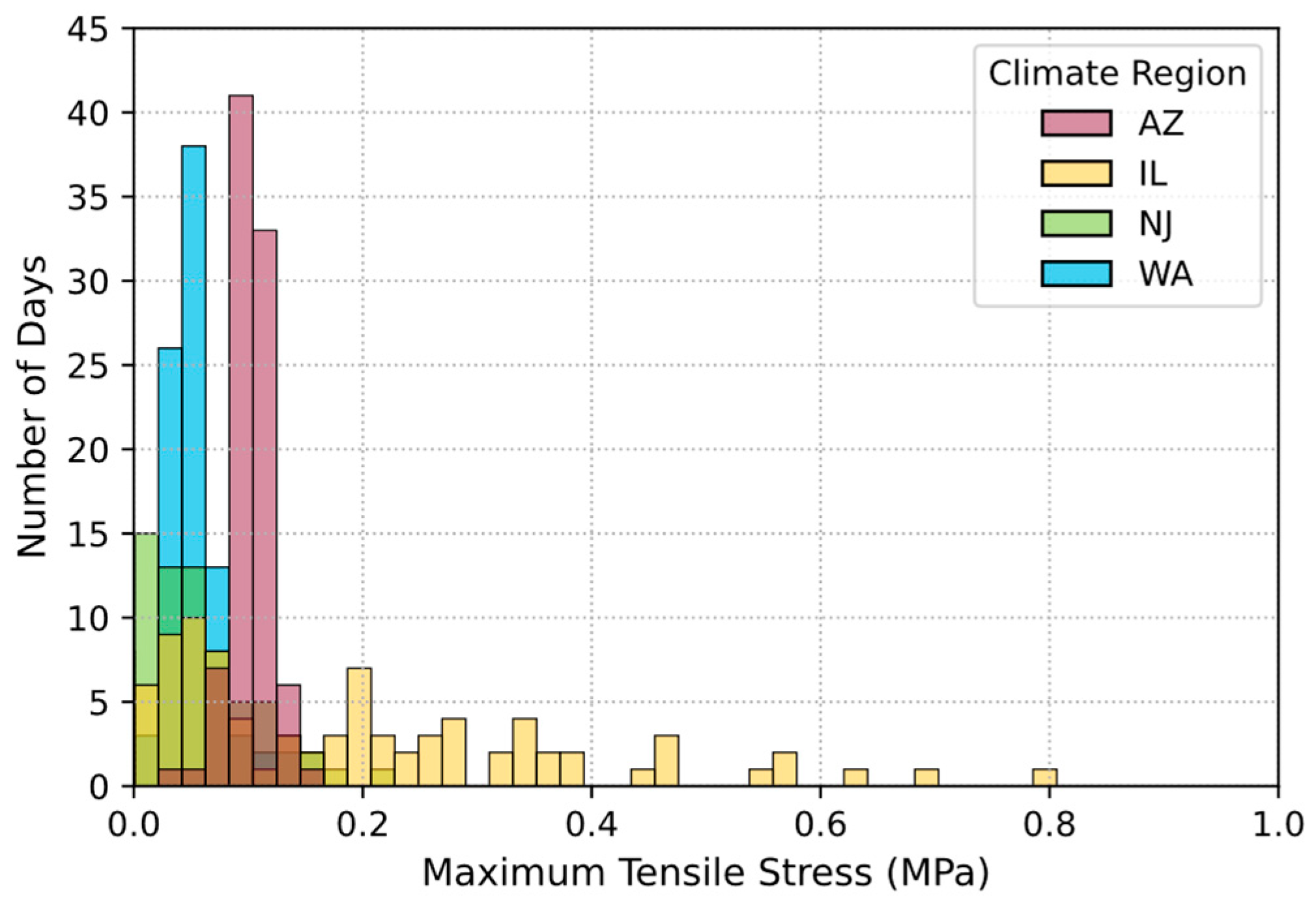
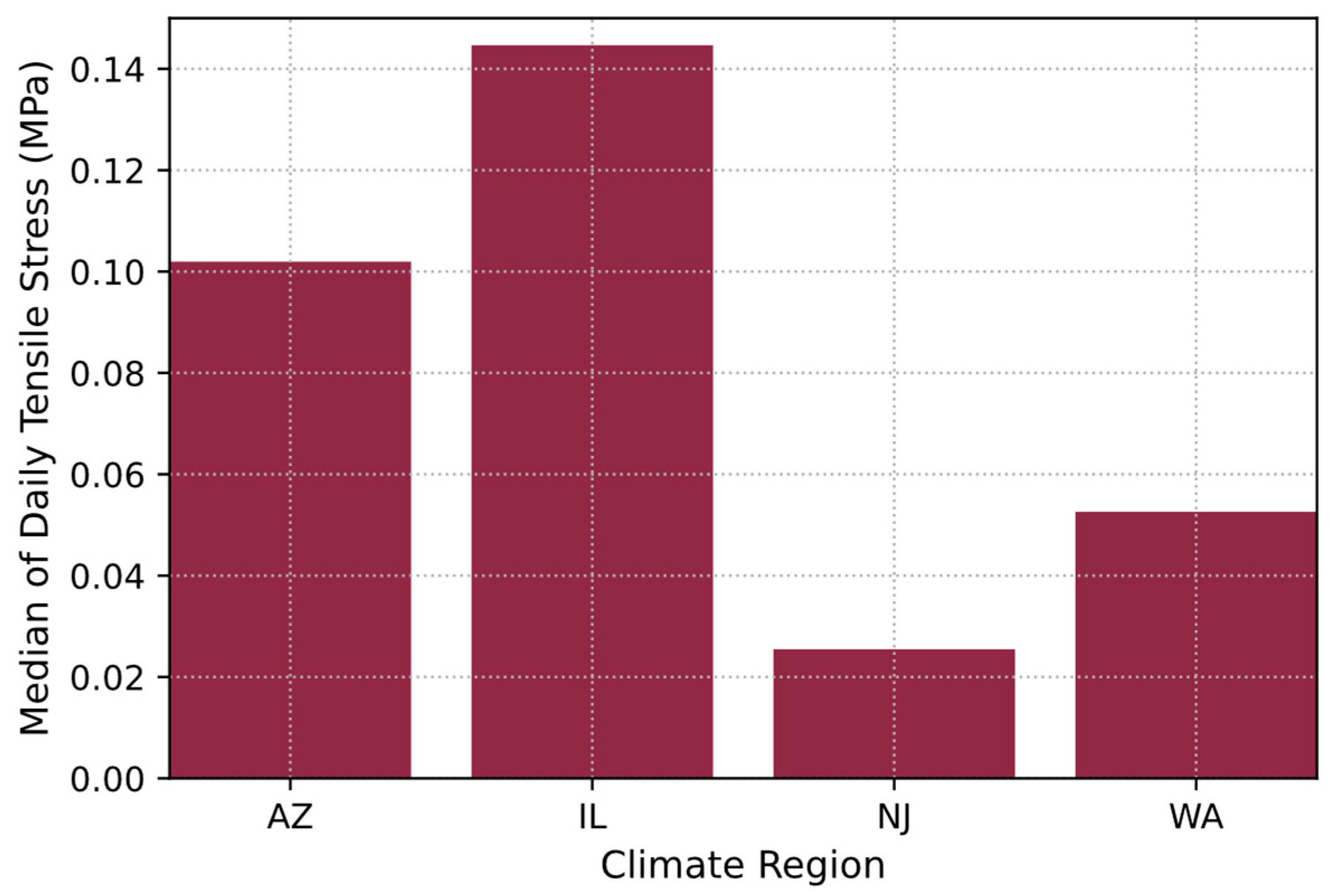
The maximum daily horizontal tensile responses are illustrated in Figure 26. As the figure shows, the Illinois climate results in a larger magnitude of thermal stresses as a result of the state’s colder weather compared to the other selected states. Furthermore, despite warmer mean temperatures, common daily tensile responses in the Arizona climate region are found to be higher compared to Washington and New Jersey, as the result of higher variations in hourly AC temperature (i.e., DTR effect). Thus, while other selected climate regions may experience occasional events with high tensile responses, the AC layer under the Arizona climate region experiences higher average daily tensile stress compared to common tensile responses in the Washington and New Jersey climate regions. As illustrated in Figure 27, an AC layer in the Illinois and Arizona climate regions exhibits a higher 50th percentile of maximum daily horizontal stresses compared to the other selected climate regions. Thus, it is shown that pavements in Arizona are subjected to more frequent thermal fatigue cycles, which would lead to an accumulation of damage that can initiate thermal cracks. Aging and surface AC mixture characteristics (density, volume of effective binder, and binder grade) can be considered compounding factors that accelerate the initiation of thermal cracks in regions like Arizona with warmer average temperatures but higher day-to-night thermal variations.

7. Discussion and Conclusions

Given the climate conditions in the study area, thermal fatigue cracking is considered the most probable mechanism contributing to the initiation of thermal cracks. Key potential underlying factors for the initiation and widening of transverse thermal cracks were investigated. A forensic investigation was conducted by geographically assessing the locations of wide cracks, obtaining field cores from selected locations, and evaluating their volumetric properties and rheological characteristics of the extracted asphalt binder. Additionally, mechanistic analysis was performed to assess the influence of region-specific factors on the development of tensile stresses due to cyclic thermal fatigue across a range of representative pavement sections. The significant findings from this investigation are summarized below.
  • Wide-cracking pavement sections predominantly consisted of asphalt concrete (AC) layers placed directly on subgrade or on sand and gravel base layers, with AC thicknesses generally ranging from 3 to 4.5 inches.
  • All evaluated wide-cracking sections exhibited severely aged and embrittled unmodified binders, as indicated by elevated complex shear modulus values, increased equivalent PG grades, and reduced fracture resistance.
  • Based on observations from field core volumetric data, wide-cracking sections tended to exhibit a lower binder content, reduced effective binder volume, and lower voids in mineral aggregate (VMA) when compared with block-cracking sections.
  • The study area experiences a significantly higher diurnal temperature range and a faster cooling rate compared to other regions, reflected also into the temperature distributions in the pavement structures.
  • Finite element (FE) thermo-mechanical simulations indicated that, although the magnitude of tensile stresses generated by cyclic thermal fatigue is lower than in other regions, such stresses occur with a much higher frequency.
Based on the findings, the initiation of wide cracks in the region is primary attributed to repeated localized damage from thermal fatigue on severely aged pavements, compounded by a lower VMA and insufficient effective binder volume. Pavement aging reduces the flexibility of the surface AC layers, limiting its capacity to accommodate thermal contraction. When combined with an inadequate bond between the AC and the underlying base, this behavior promotes the widening of cracks during repeated cooling cycles.
Detailed construction histories were unavailable for all evaluated sections, which restricted the ability to validate the initial mixture design, construction practices, and historical maintenance effects. A comprehensive performance-based evaluation using controlled pavement sections and considering mixture design variations including the VMA, binder content, and grade should be planned as a next step for durability-related cracking in the Southwestern United States.
The finite element (FE) modeling framework employed the properties from a short-term aged PG 64-22 asphalt mixture as a representative material. This selection was intended to establish a standardized baseline for mechanistic comparison across multiple climatic regions (Arizona, Illinois, New Jersey, and Washington), allowing climatic loading effects to be isolated as the primary variable influencing the pavement response. While this approach provides a useful benchmark, it may underestimate thermally induced stresses in severely aged pavements commonly observed in the field, where binder stiffness is significantly higher than that of a new PG 64-22 mixture. Consequently, the conclusions from the FE simulations are based on mechanistic reasoning rather than explicit quantitative life prediction.
Future work will expand this framework through investigations involving dedicated field test sections in Arizona. These efforts will focus on characterizing local binders and their aging profiles and linking binder rheology to observed thermal stresses and cracking behavior. The future scope of work includes multiple controlled pavement test sections with known material and design variables, including the binder type and content, in-place density, low-temperature (Low-N) design mixtures, reclaimed asphalt pavement (RAP) content, and surface treatments. These controlled sections will enable a more robust evaluation of material-specific thermal fatigue behavior and damage accumulation mechanisms in the Southwestern United States.

Author Contributions

Conceptualization, H.O.; methodology, H.O., S.N.A.A., A.Z. and M.B.; formal analysis, H.O., S.N.A.A., A.Z. and M.B.; investigation, H.O., S.N.A.A., A.Z. and M.B.; data curation, S.N.A.A., A.Z. and M.B.; writing—original draft preparation, H.O., S.N.A.A., A.Z. and M.B.; writing—review and editing, H.O., S.N.A.A., A.Z. and M.B.; visualization, S.N.A.A., A.Z. and M.B.; supervision. H.O.; project administration, H.O.; funding acquisition, H.O. All authors have read and agreed to the published version of the manuscript.

Funding

This research was funded by the Southwest Pavement Technology Consortium (SWPT) under project SWPT 2023-01, titled Assessment of Thermal and Durability Cracks in Asphalt Pavements in the Southwest Region.

Data Availability Statement

The raw data supporting the conclusions of this article will be made available by the authors on request.

Acknowledgments

The authors would also like to acknowledge the SWPT’s advisory board and steering committee members for their support and technical feedback. This study was conducted at the AASHTO-accredited Advanced Pavement Laboratory at ASU.

Conflicts of Interest

The authors declare no conflicts of interest. The funders had no role in the design of this study; in the collection, analyses, or interpretation of data; in the writing of the manuscript; or in the decision to publish the results.

Abbreviations

The following abbreviations are used in this manuscript:
ACAsphalt Concrete
AASHTOAmerican Association of State Highway and Transportation Officials
ATCAAsphalt Thermal Cracking Analyzer
ASTMAmerican Society for Testing and Materials
COMCity of Mesa
COPCity of Phoenix
CTECoefficient of Thermal Expansion
DSRDynamic Shear Rheometer
DTRDiurnal Temperature Range
EModulus of Elasticity
E*Dynamic Modulus
FDMFinite Difference Method
FEFinite Element
FEMFinite Element Method
FHWAFederal Highway Administration
G*Complex Shear Modulus
GmmTheoretical Maximum Specific Gravity
GmbBulk Specific Gravity of Compacted Mixture
G-RGlover–Rowe Parameter
GseEffective Specific Gravity of Aggregate
HMAHot Mix Asphalt
LVDTLinear Variable Differential Transformer
M-EMechanistic–Empirical
NCHRPNational Cooperative Highway Research Program
PGPerformance Grade
PbTotal Binder Content
PbeEffective Binder Content
SHCSpecific Heat Capacity
SHRPStrategic Highway Research Program
TCThermal Conductivity
VbeEffective Binder Volume
VaAir Voids
VFAVoids Filled with Asphalt
VMAVoids in Mineral Aggregate
WSSWeb Soil Survey

References

  1. Bonaquist, R. Impact of Mix Design on Asphalt Pavement Durability. Transp. Res. Circ. 2014, 186, 1–17. [Google Scholar]
  2. Roque, R.; Hiltunen, D.; Buttlar, W.; Farwana, T. Development of the SHRP Superpave Mixture Specification Test Method to Control Thermal Cracking Performance of Pavements. In Engineering Properties of Asphalt Mixtures and the Relationship to Their Performance; ASTM International: West Conshohocken, PA, USA, 1995; pp. 55–73. ISBN 978-0-8031-2002-0. [Google Scholar]
  3. Dave, E.V.; Buttlar, W.G.; Leon, S.E.; Behnia, B.; Paulino, G.H. IlliTC—Low-Temperature Cracking Model for Asphalt Pavements. Road Mater. Pavement Des. 2013, 14, 57–78. [Google Scholar] [CrossRef]
  4. Lanotte, M.; Kutay, M.E.; Haider, S.W.; Musunuru, G.K. New Calibration Approach to Improve Pavement ME Design Thermal Cracking Prediction: Mixture-Specific Coefficients—The Michigan Case Study. Road Mater. Pavement Des. 2020, 21, 1859–1871. [Google Scholar] [CrossRef]
  5. Lytton, R.L.; Shanmugham, U.; Garrett, B.D. Design of Asphalt Pavements for Thermal Fatigue Cracking; Texas Transportation Institute. Texas A&M University: College Station, TX, USA, 1983. [Google Scholar]
  6. Al-Qadi, I.L.; Hassan, M.M.; Elseifi, M.A. Field and Theoretical Evaluation of Thermal Fatigue Cracking in Flexible Pavements. Transp. Res. Rec. 2005, 1919, 87–95. [Google Scholar] [CrossRef]
  7. Vinson, T.S.; Janoo, V.C.; Haas, R.C. Low Temperature and Thermal Fatigue Cracking; Strategic Highway Research Program, National Research Council: Washington, DC, USA, 1989.
  8. Epps, A. Design and Analysis System for Thermal Cracking in Asphalt Concrete. J. Transp. Eng. 2000, 126, 300–307. [Google Scholar] [CrossRef]
  9. Zeng, Z.; Kim, Y.R.; Underwood, B.S.; Guddati, M. Modeling Damage Caused by Combined Thermal and Traffic Loading Using Viscoelastic Continuum Damage Theory. Constr. Build. Mater. 2024, 418, 135425. [Google Scholar] [CrossRef]
  10. Chen, J.; Wang, H.; Xie, P. Pavement Temperature Prediction: Theoretical Models and Critical Affecting Factors. Appl. Therm. Eng. 2019, 158, 113755. [Google Scholar] [CrossRef]
  11. Alavi, M.; Hajj, E.Y.; Sebaaly, P.E. A Comprehensive Model for Predicting Thermal Cracking Events in Asphalt Pavements. Int. J. Pavement Eng. 2017, 18, 871–885. [Google Scholar] [CrossRef]
  12. Velasquez, R.; Bahia, H. Critical Factors Affecting Thermal Cracking of Asphalt Pavements: Towards a Comprehensive Specification. Road Mater. Pavement Des. 2013, 14, 187–200. [Google Scholar] [CrossRef]
  13. Ling, M.; Chen, Y.; Hu, S.; Luo, X.; Lytton, R.L. Enhanced Model for Thermally Induced Transverse Cracking of Asphalt Pavements. Constr. Build. Mater. 2019, 206, 130–139. [Google Scholar] [CrossRef]
  14. Marasteanu, M.; Buttlar, W.; Bahia, H.; Williams, C.; Moon, K.H.; Teshale, E.Z.; Falchetto, A.C.; Turos, M.; Dave, E.; Paulino, G. Investigation of Low Temperature Cracking in Asphalt Pavements National Pooled Fund Study–Phase II; Minnesota Department of Transportation: St. Paul, MN, USA, 2012. [Google Scholar]
  15. Chehab, G.R.; Kim, Y.R. Viscoelastoplastic Continuum Damage Model Application to Thermal Cracking of Asphalt Concrete. J. Mater. Civ. Eng. 2005, 17, 384–392. [Google Scholar] [CrossRef]
  16. Keshavarzi, B. Prediction of Thermal Cracking in Asphalt Pavements Using Simplified Viscoelastic Continuum Damage Theory. Ph.D. Thesis, North Carolina State University, Raleigh, NC, USA, 2019. [Google Scholar]
  17. Shahin, M.Y.; McCullough, B.F. Prediction of Low-Temperature and Thermal-Fatigue Cracking in Flexible Pavements; University of Texas at Austin: Austin, TX, USA, 1972. [Google Scholar]
  18. Jackson, N.M.; Vinson, T.S. Analysis of Thermal Fatigue Distress of Asphalt Concrete Pavements. Transp. Res. Rec. 1996, 1545, 43–49. [Google Scholar] [CrossRef]
  19. Hesp, S.; Terlouw, T.; Vonk, W. Low Temperature Performance of SBS-Modified Asphalt Mixes. Asph. Paving Technol. 2000, 69, 540–573. [Google Scholar]
  20. Colombier, G. Cracking in Pavements: Nature and Origin of Cracks. In Prevention of Reflective Cracking in Pavements; CRC Press: Boca Raton, FL, USA, 2004; pp. 14–29. [Google Scholar]
  21. Timm, D.H.; Guzina, B.B.; Voller, V.R. Prediction of Thermal Crack Spacing. Int. J. Solids Struct. 2003, 40, 125–142. [Google Scholar] [CrossRef]
  22. Shen, W.; Kirkner, D.J. Thermal Cracking of Viscoelastic Asphalt-Concrete Pavement. J. Eng. Mech. 2001, 127, 700–709. [Google Scholar] [CrossRef]
  23. Shen, W.; Kirkner, D.J. Distributed Thermal Cracking of AC Pavement with Frictional Constraint. J. Eng. Mech. 1999, 125, 554–560. [Google Scholar] [CrossRef]
  24. Christensen, D.W.; Tran, N. National Cooperative Highway Research Program; Transportation Research Board; National Academies of Sciences, Engineering, and Medicine. Relationships Between the Fatigue Properties of Asphalt Binders and the Fatigue Performance of Asphalt Mixtures; Transportation Research Board: Washington, DC, USA, 2021; p. 26302. ISBN 978-0-309-09342-2. [Google Scholar]
  25. Glover, C.J.; Davison, R.R.; Domke, C.H.; Ruan, Y.; Juristyarini, P.; Knorr, D.B.; Jung, S.H. Development of a New Method for Assessing Asphalt Binder Durability with Field Validation; TxDOT Research Project 0-1872; Texas Department of Transportation: Austin, TX, USA, 2005.
  26. Anderson, R.M.; King, G.N.; Hanson, D.I.; Blankenship, P.B. Evaluation of the Relationship between Asphalt Binder Properties and Non-Load Related Cracking. J. Assoc. Asph. Paving Technol. 2011, 80, 615–649. [Google Scholar]
  27. Rowe, G.M.; Sharrock, M.J.; Bouldin, M.G.; DongreÂ, R.N. Advanced Techniques to Develop Asphalt Master Curves from the Bending Beam Rheometer. In Proceedings of the 10th International Conference on Asphalt Pavements (ISAP), Québec City, QC, Canada, 12–18 August 2001. [Google Scholar]
  28. Dempsey, B. A Heat-Transfer Model for Evaluating Frost Action and Temperature Related Effects in Multilayered Pavement Systems. Ph.D. Thesis, University of Illinois, Urbana, IL, USA, 1969. [Google Scholar]
  29. Beheshti, M.; Ozer, H. Viscoelastic Computational Fracture Mechanics Approach for the Analysis of Thermal Reflective Cracking in Asphalt Overlaid Jointed Concrete Airfield Pavements. Transp. Res. Rec. J. Transp. Res. Board 2025, 2679, 823–843. [Google Scholar] [CrossRef]
  30. Gui, J.; Phelan, P.E.; Kaloush, K.E.; Golden, J.S. Impact of Pavement Thermophysical Properties on Surface Temperatures. J. Mater. Civ. Eng. 2007, 19, 683–690. [Google Scholar] [CrossRef]
  31. Obando, C.J.; Karam, J.J.; Kaloush, K.E. Characterization and Assessment of Aerogel-Modified Asphalt Binders. Int. J. Pavement Eng. 2023, 24, 2185617. [Google Scholar] [CrossRef]
Figure 1. Wide thermal transverse cracks commonly observed in Arizona.
Infrastructures 11 00019 g001
Figure 2. Examples of ambient diurnal temperature variations in Flagstaff and Phoenix, AZ.
Infrastructures 11 00019 g002
Figure 3. Components of the research approach.
Infrastructures 11 00019 g003
Figure 4. Overview of the mapped cracking locations with two detailed examples (highlighted with dashed lines).
Infrastructures 11 00019 g004
Figure 5. Wide cracking observed at selected sites.
Infrastructures 11 00019 g005
Figure 6. Classification of cracking locations based on hydrological soil group.
Infrastructures 11 00019 g006
Figure 7. An example of a site where block and wide cracking appeared in different portions of the same road.
Infrastructures 11 00019 g007
Figure 8. Locations of the weather stations (shown as red flags).
Infrastructures 11 00019 g008
Figure 9. Variation in mean daily ambient temperatures in the selected locations for the year 2022.
Infrastructures 11 00019 g009
Figure 10. Mean daily (a) DTR and (b) cooling rate in the selected locations for the year 2022.
Infrastructures 11 00019 g010
Figure 11. Coring locations.
Infrastructures 11 00019 g011
Figure 12. Pavement layer types at coring sites in City of Mesa (COM) and City of Phoenix (COP) and their respective thicknesses of AC and granular layers (inches).
Infrastructures 11 00019 g012
Figure 13. Complex modulus master curves of cores from all sites.
Infrastructures 11 00019 g013
Figure 14. (a) Master curve; (b) black space plot of selected field cores.
Infrastructures 11 00019 g014
Figure 15. PG grading of cores from all sites.
Infrastructures 11 00019 g015
Figure 16. GR parameter at 0.005 rad/sec.
Infrastructures 11 00019 g016
Figure 17. GR parameter at 10 rad/sec (AASHTO M 320 modulus threshold is highlighted as red dashed line).
Infrastructures 11 00019 g017
Figure 18. Node definition in pavement temperature prediction models. The 1-D elements are separated by yellow dashed lines.
Infrastructures 11 00019 g018
Figure 19. Model validation results for an overlay thickness of (a) 76 mm; (b) 152 mm.
Infrastructures 11 00019 g019
Figure 20. Domain of the FE thermo-mechanical model.
Infrastructures 11 00019 g020
Figure 21. Viscoelastic master curve of the selected AC.
Infrastructures 11 00019 g021
Figure 22. Mean daily: (a) AC temperature; (b) DTR; (c) cooling rate in the selected location for the year 2022.
Infrastructures 11 00019 g022
Figure 23. Comparison of a typical daytime and nighttime pavement temperature profiles through the asphalt concrete layer thickness in July (station: Phoenix, AC thickness: 100 mm).
Infrastructures 11 00019 g023
Figure 24. Effect overlay thickness: (a) AC mean temperature; (b) AC temperature gradient through the depth.
Infrastructures 11 00019 g024
Figure 25. Effect of AC layer thickness on (a) AC DTR; (b) AC cooling rate.
Infrastructures 11 00019 g025
Figure 26. Daily maximum horizontal tensile responses for winter.
Infrastructures 11 00019 g026
Figure 27. Median of daily horizontal tensile stresses for winter.
Infrastructures 11 00019 g027
Table 1. Mean daily ambient temperatures in the selected locations (Year 2022).
LocationWinterSummer
AZ: Buckeye12.033.2
AZ: Coolidge10.430.6
AZ: Maricopa11.233.4
AZ: Payson5.123.3
AZ: Phoenix12.834.0
AZ: Yuma Valley13.731.9
IL: St. Charles−6.221.7
NJ: Atlantic City2.023.8
WA: Seattle5.118.0
Table 2. Field core volumetrics of the cores collected from City of Mesa (COM) and City of Phoenix (COP).
Site#+PbGmbGmmGseVaVMAVFAVbePbe
COM L2 *S15.352.4602.5932.8375.1517.971.312.85.35
COM L2 *S25.352.4602.5932.8375.1517.971.312.85.35
COM L2 *S35.352.4512.5932.8375.4918.269.812.75.35
COM L3S16.552.3102.4282.6834.8619.575.114.76.55
COM L3S26.552.3072.4282.6834.9819.774.614.76.55
COM L3S36.552.2862.4282.6835.8520.471.314.56.55
COM L4S15.802.2162.4262.6468.6421.159.112.55.80
COM L4S25.802.2292.4262.6468.1120.660.712.55.80
COM L4S35.802.2642.4262.6466.6619.465.712.75.80
COM L5S16.052.3732.4412.6782.8016.783.213.96.05
COM L5S26.052.2792.4412.6786.6520.066.813.46.05
COM L5S36.052.2592.4412.6787.4620.764.013.36.05
COP L2S16.492.3992.4492.7082.0417.288.115.16.49
COP L2S26.492.3732.4492.7083.1318.182.714.96.49
COP L2-BS1-b9.052.2702.3692.7214.2124.182.619.99.05
COP L2-BS2-b9.052.2452.3692.7215.2525.079.019.79.05
COP L3S16.222.3232.4022.6353.3117.380.914.06.22
COP L3S26.222.2952.4022.6354.4318.375.813.96.22
COP L3-BS16.502.1592.3672.6698.8024.463.915.67.43
COP L3-BS26.502.1412.3672.6699.5425.061.815.57.43
* Site showing no sign of block or wide cracking. COM: City of Mesa, COP: City of Phoenix, L: location. Pb is the total binder content (%); Gmb is the bulk specific gravity of mixture; Gmm is the maximum theoretical specific gravity; Gse is the effective specific gravity of the aggregate; Va is the air void content (%); VMA is the voids in mineral aggregate (%); VFA is the voids filled with asphalt (%); Vbe is the effective binder volume (%); and Pbe is the effective binder content by weight of the mixture (%). + The # sign represents the replicates.
Table 3. Assumed material properties for FD and FE numerical simulations.
LayerE (MPa)CTE (μϵ/°C)SHC (J/kg.K)TC (W/m.K)Element Edge Size (mm)
AC-20.5939.71.0010
Base +2509.0850.00.7510
Subgrade *80-850.00.4020
+ Crushed aggregate. * Unbounded fine graded aggregate.
Disclaimer/Publisher’s Note: The statements, opinions and data contained in all publications are solely those of the individual author(s) and contributor(s) and not of MDPI and/or the editor(s). MDPI and/or the editor(s) disclaim responsibility for any injury to people or property resulting from any ideas, methods, instructions or products referred to in the content.