
Mitigating Urban Heat Island Effects Through Thermally Efficient Concrete Paver Blocks for Sustainable Infrastructure



Abstract
1. Introduction
2. Literature Review
3. Materials and Methods
3.1. Materials
3.2. Mix Design Preparation, Casting and Curing Method
3.3. Testing Method
3.3.1. Fresh Concrete Tests
3.3.2. Hardened Concrete Tests
3.3.3. Thermal Analysis
4. Results & Discussion
4.1. Fresh Concrete Properties
Slump Test
4.2. Hardened Concrete Properties
4.2.1. Hardened Density Test
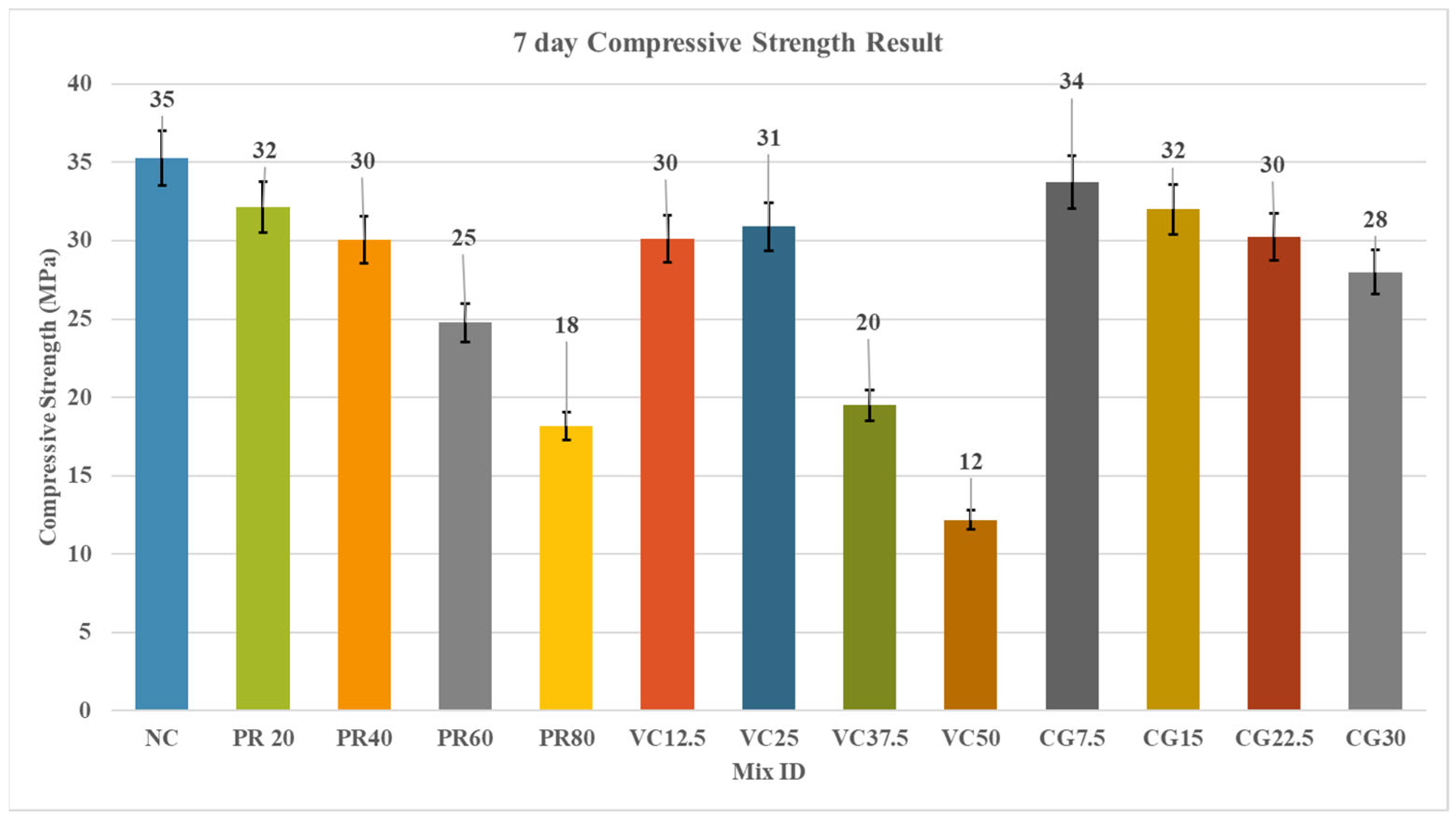
4.2.2. 7 Days Compressive Strength Test
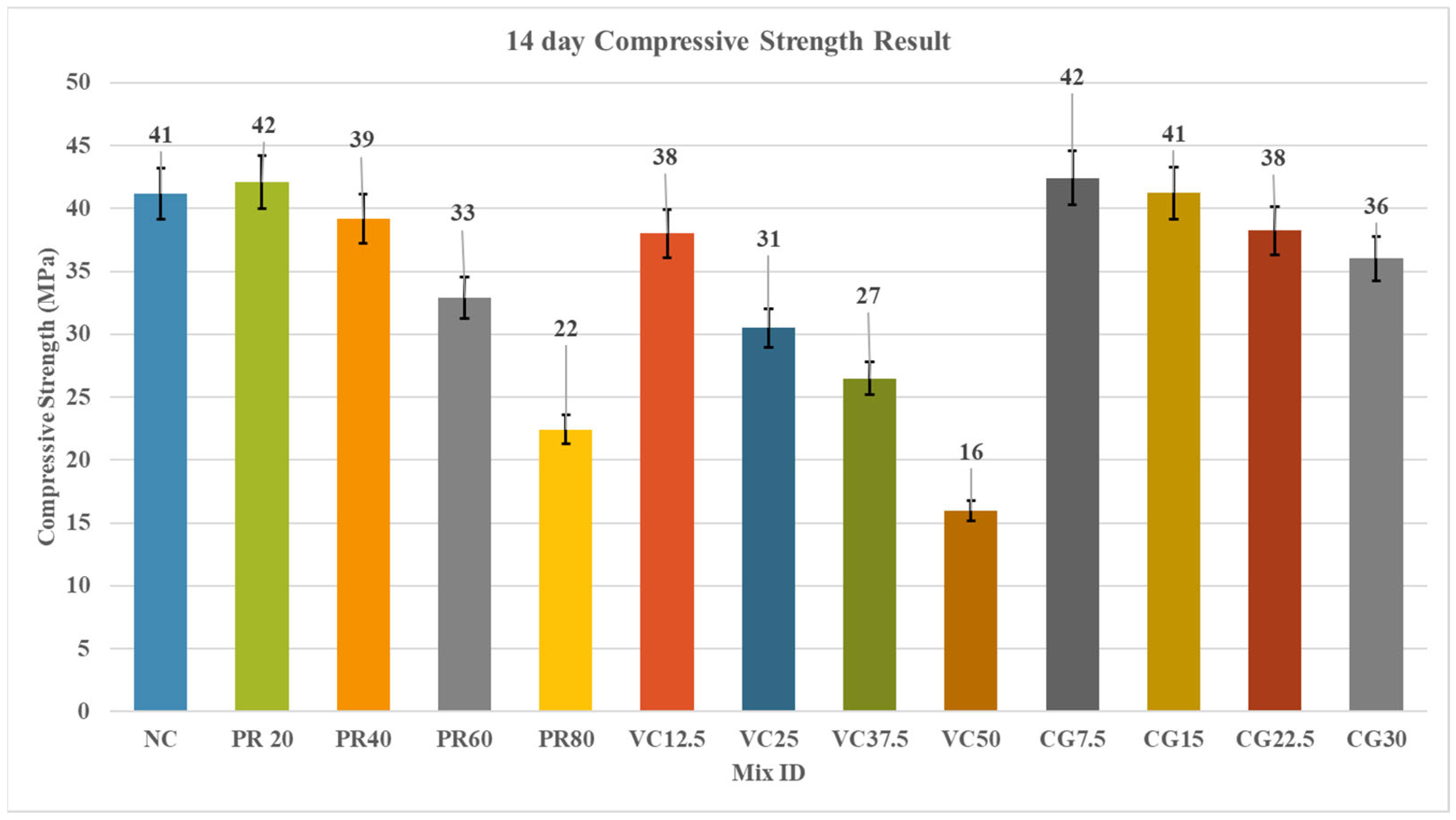
4.2.3. 14 Days Compressive Strength Test
4.2.4. 28 Days Compressive Strength Test
4.3. Thermal Analysis
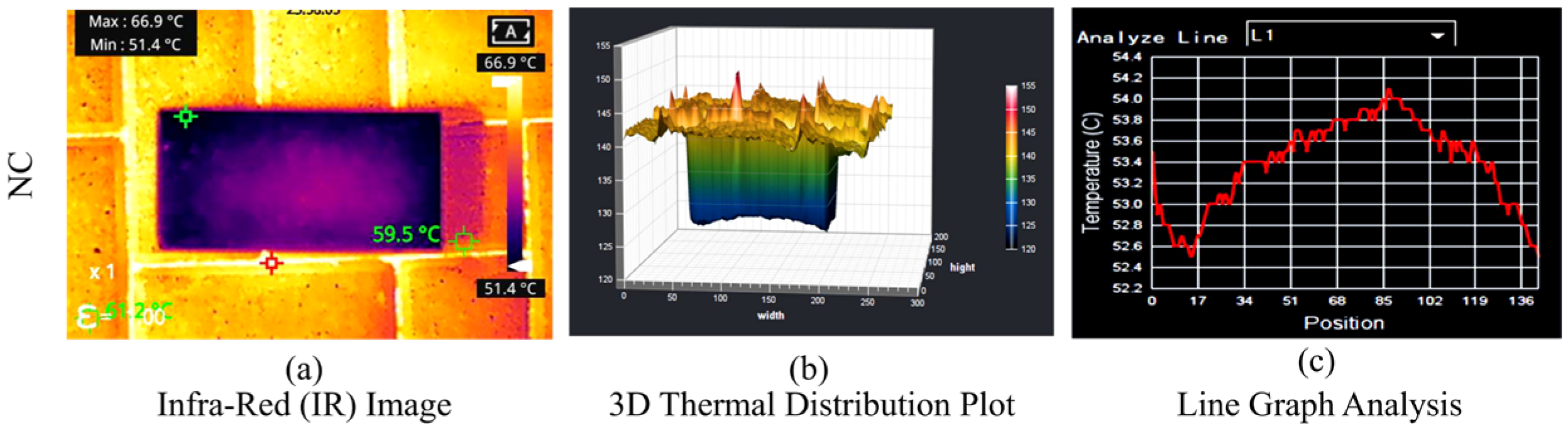
4.3.1. Thermal Analysis of Normal Concrete Mix
4.3.2. Thermal Analysis of Concrete Mix with Perlite Replacement
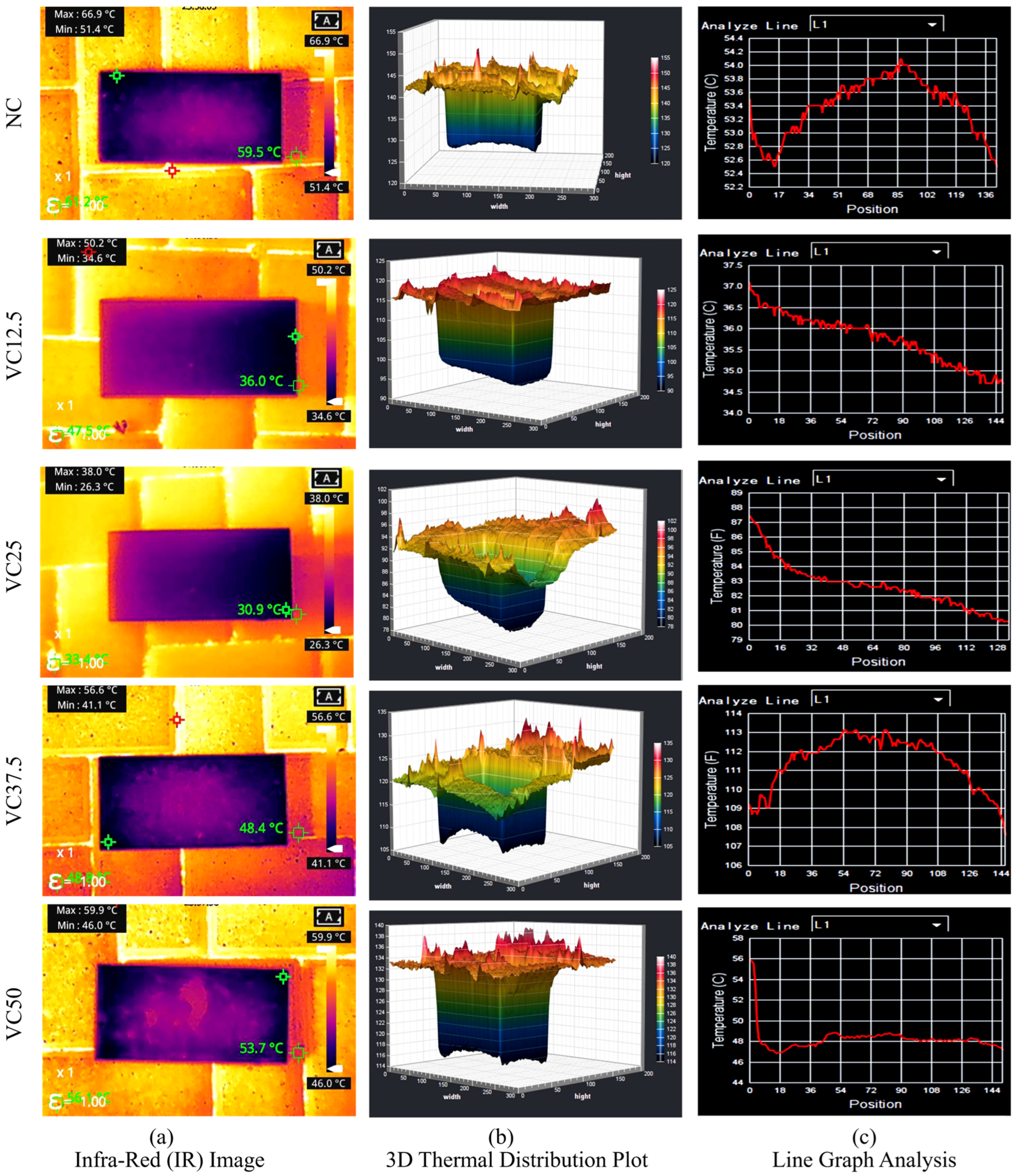
4.3.3. Thermal Analysis of Concrete Mix with Vermiculite Replacement
5. Conclusions and Future Scope
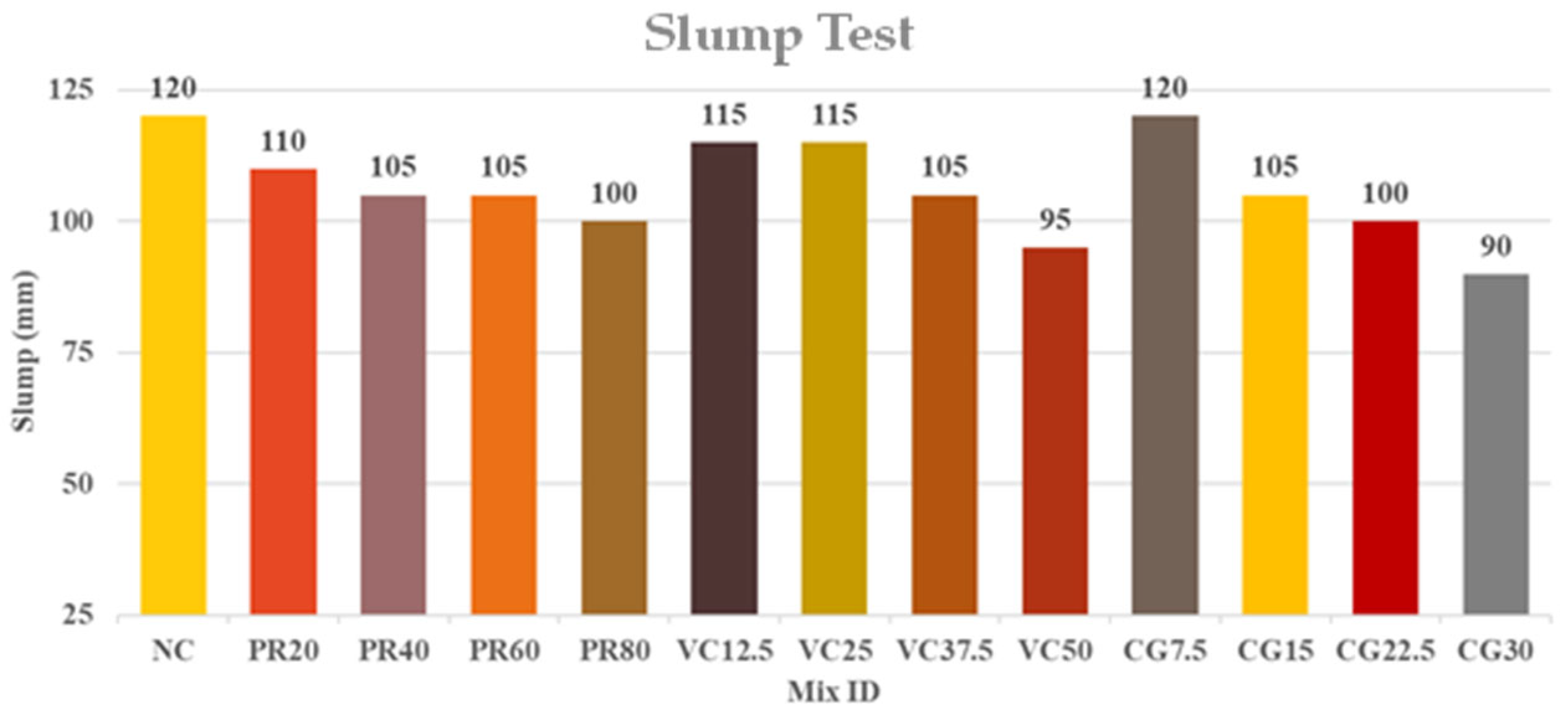
- The workability, as quantified by the slump test, was significantly influenced by the particle morphology and absorption characteristics of the replacement materials. CG mixes exhibited a non-linear response; a 7.5% dosage increased the slump to 120 mm due to the lubricating effect of the glassy particles, while higher replacements (up to 30%) progressively reduced workability (to 90 mm) due to increased specific surface area. In contrast, vermiculite and perlite-maintained workability close to the normal concrete (NC) baseline (110 mm) up to 25% and 40% replacement, respectively, beyond which a slight reduction was observed, attributable to their irregular shape and higher water absorption. The variations in workability across the mixes were primarily governed by the distinct particle morphologies of the replacement materials: the flaky structure of vermiculite increased internal friction, the angular shape of crushed glass elevated water demand, and the highly porous nature of perlite absorbed mix water; collectively, these characteristics significantly influenced slump reduction.
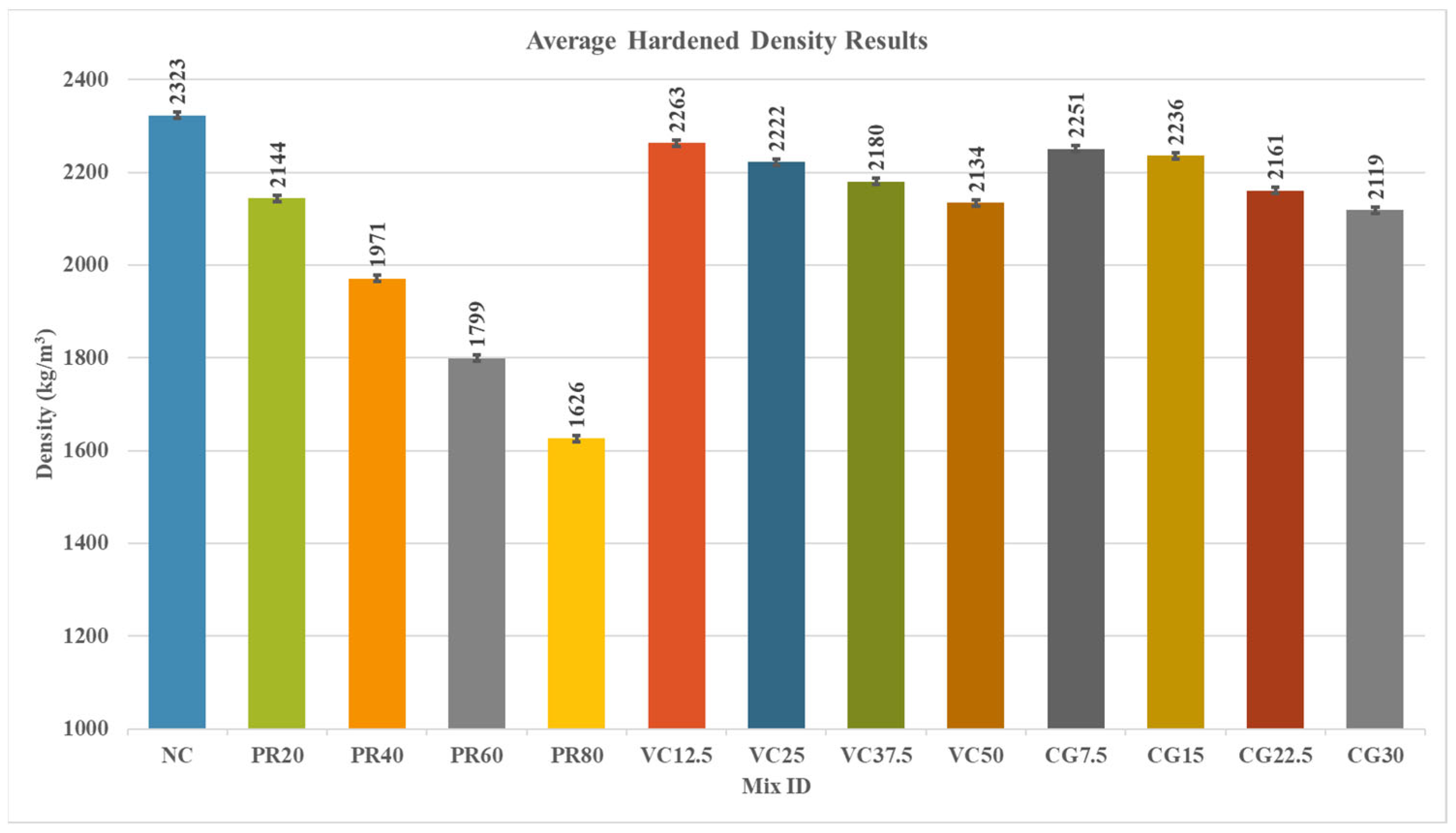
- A pronounced reduction in hardened density was recorded for both perlite and vermiculite mixes, with maximum decreases of approximately 23% (PR80: ~1933 kg/m3) and 19% (VC50: ~1767 kg/m3) relative to NC (~2350 kg/m3). This confirms the successful production of lightweight concrete, directly resulting from the low particle density and highly flaky structure of these aggregates, which introduce significant entrapped air into the cementitious matrix. Conversely, CG mixes showed a marginal density increase (up to ~8% for CG7.5), attributable to the material’s higher specific gravity and pore-filling pozzolanic action.
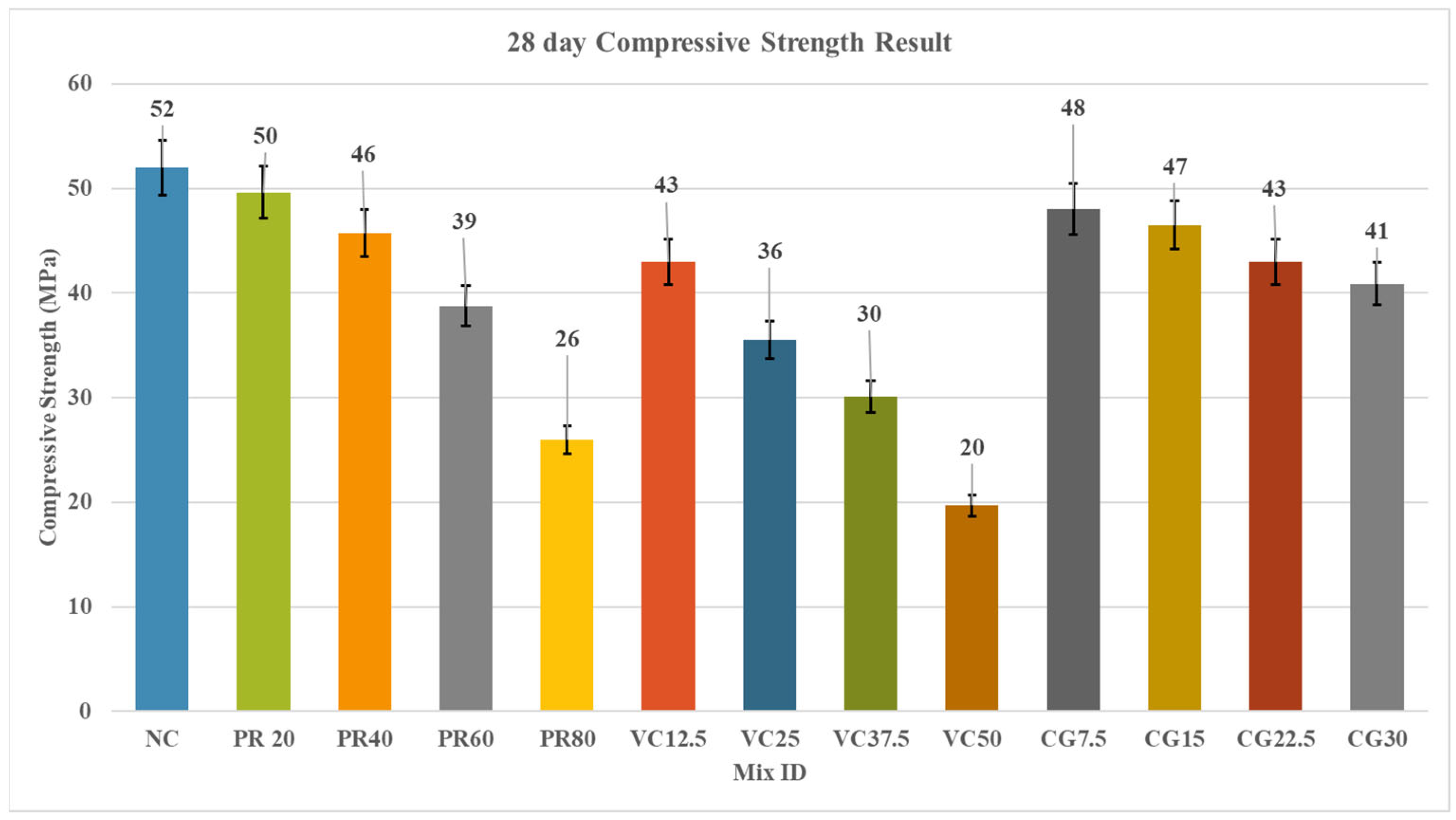
- The 28-day compressive strength results delineated clear optimal dosages. The NC mix achieved the highest strength (~62 MPa). Among the modified mixes, PR20 (49.6 MPa), VC25 (47.8 MPa), and CG15 (~58 MPa) demonstrated an optimal balance, maintaining structural adequacy for M30 grade applications as per IS 15658:2021. Strength degradation beyond these thresholds—exceeding 60% for perlite and 37.5% for vermiculite—was severe, driven by the formation of a highly porous and weakened matrix. For CG, the strength gain at lower dosages (attributed to micro-filler and pozzolanic effects) diminished at 30% replacement, likely due to dilution of cementitious compounds and poor particle interlocking.
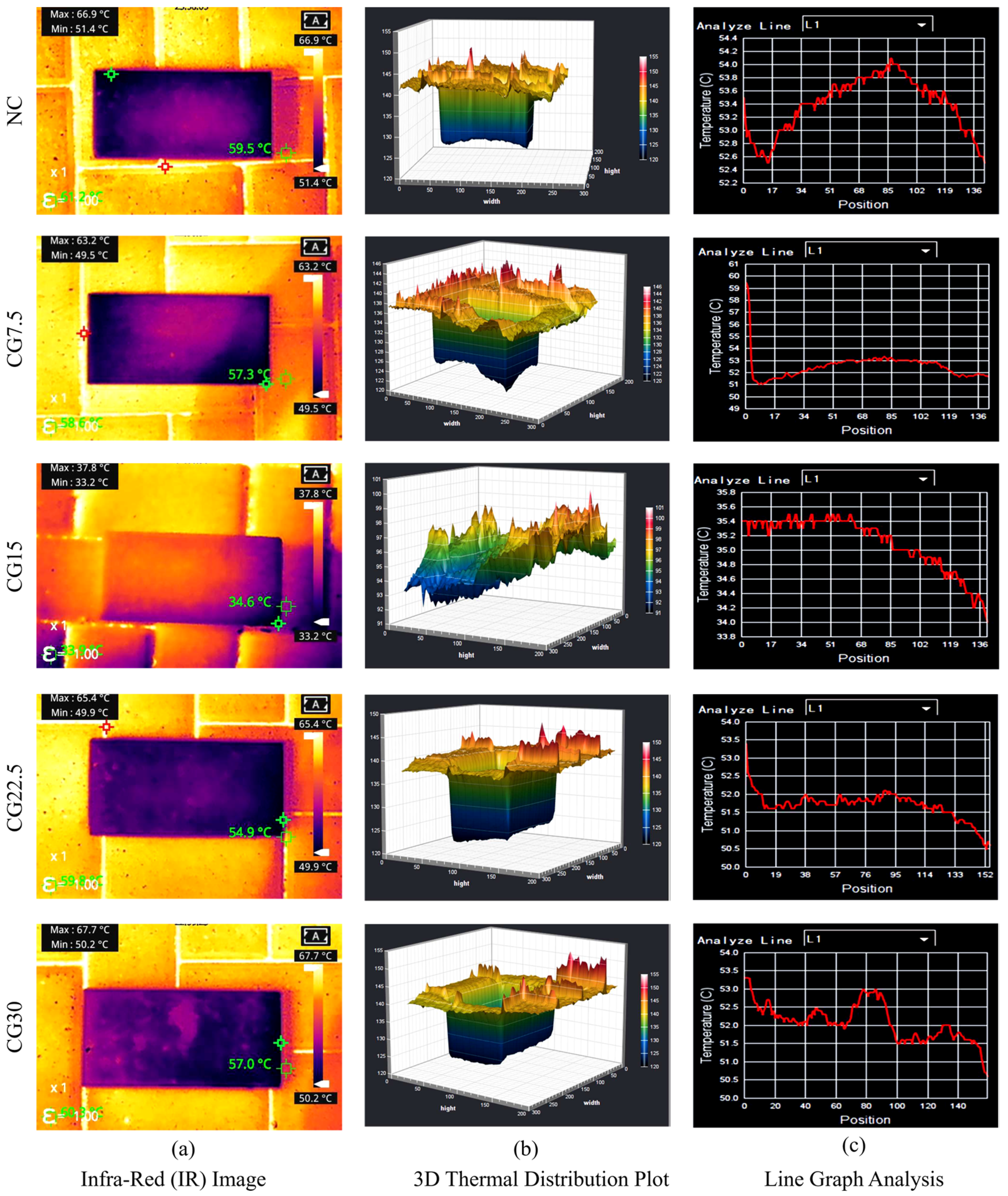
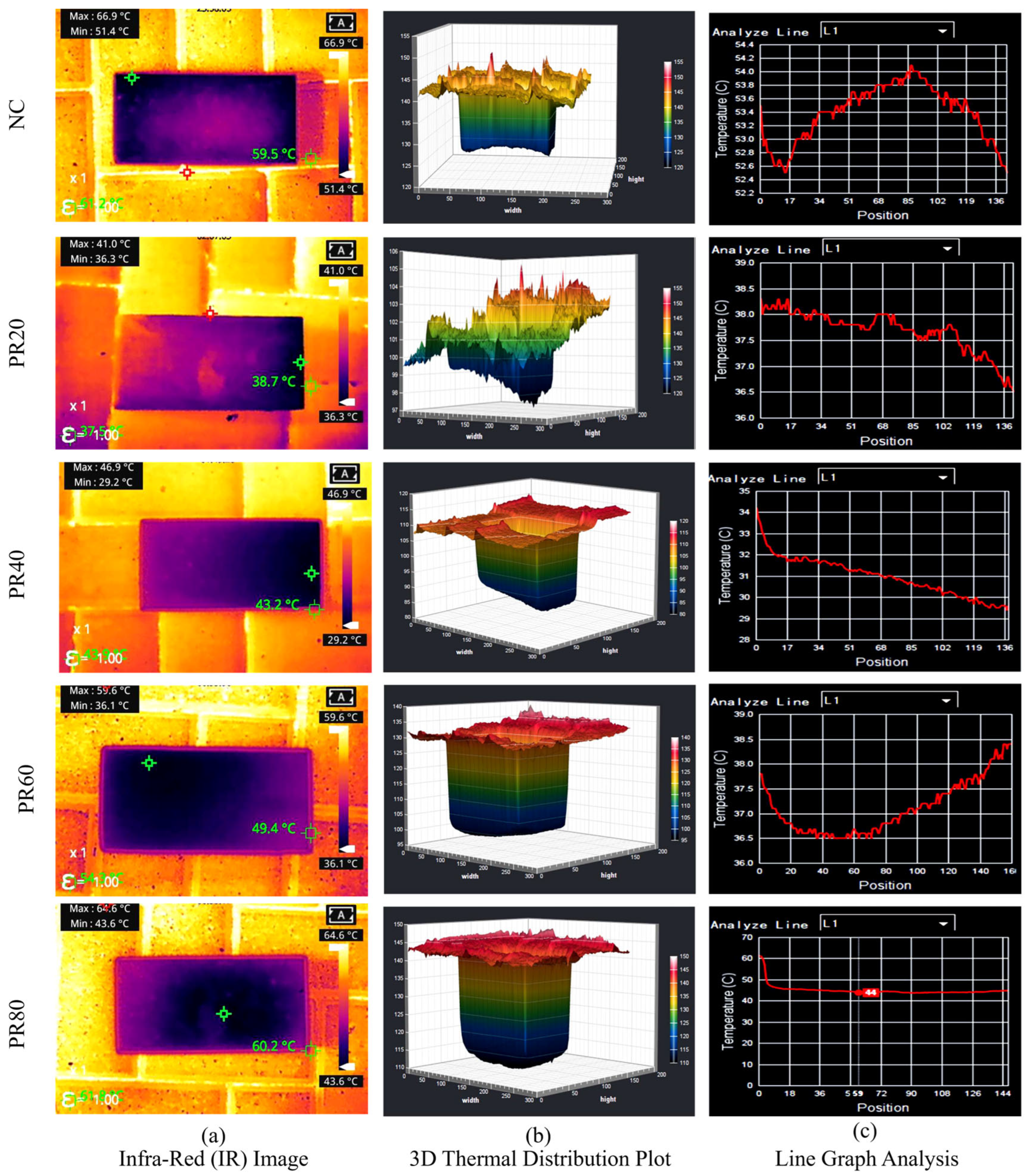
- Infrared thermography established a definitive hierarchy in cooling performance. The VC25 mix emerged as the superior UHI mitigation strategy, exhibiting the lowest maximum surface temperature of 26.3 °C—a reduction of 25.1 °C (48.8%) compared to NC. This was followed by the PR40 mix (29.2 °C, a 22.2 °C reduction). The CG15 mix offered a moderate improvement (33.2 °C, an 18.2 °C reduction). Thermal imaging and 3D surface plots quantitatively confirmed that these optimal mixes promoted exceptional thermal homogeneity, effectively eliminating localized hotspots. Conversely, excessive replacement levels (e.g., VC50, PR80) led to a rebound in surface temperatures and uneven thermal distribution, correlated with increased surface roughness and microstructural deficiencies.
- It was observed that the paver blocks containing perlite and vermiculite exhibited slightly lighter shades compared to the control mix, while blocks with crushed glass appeared marginally darker. These variations in color may influence surface albedo and, consequently, the thermal performance of the blocks.
Author Contributions
Funding
Data Availability Statement
Acknowledgments
Conflicts of Interest
Abbreviations
| UHI | Urban Heat Island |
| VC | Vermiculite |
| PR | Perlite |
| CG | Crushed Glass |
| SDG | Sustainable Development Goals |
| LST | Land Surface Temperature |
| LULC | Land Use/Land Cover |
| CUHI | Canopy Urban Heat Island |
| SUHI | Surface Urban Heat Island |
| UDT | Urban Digital Twin |
| WRF | Weather Research and Forecasting |
| GF | Green Facades |
| LW | Living Walls |
| EGR | Extensive Green Roofs |
| LAI | Leaf Area Index |
| BEM | Building Energy Models |
| UCM | Urban Canopy Models |
| GIF | Green Infrastructure |
| SUHII | Surface Urban Heat Island Intensity |
| NDVI | Normalized Difference Vegetation Index |
| UTHS | Urban Thermal Heterogeneous Subunits |
| UGI | Urban Green Infrastructure |
| PLSR | Partial Least Squares Regression |
| RFR | Random Forest Regression |
| PIPB | Pervious Interlocking Paver Blocks |
| IRC | Indian Road Congress |
| PCM | Phase Change Materials |
| SR | Solar Reflectance |
| SRI | Solar Reflectance Index |
| WRPB | Water Retaining Paver Blocks |
| EVM | Exfoliated Vermiculite |
| RVM | Raw Vermiculite |
| AAFC | Alkali-Activated Foam Concrete |
| GP | Glass Powder |
| SFP | Semi-Flexible Pavement |
| OPC | Ordinary Portland Cement |
| IS | Indian Standard |
| PCE | Poly Carboxylic Ether |
| Nc | Normal Concrete |
| IR | Infra Red |
| MAT | Maximum Surface Temperature |
References
- Mohan, V. India’s Annual Mean Temperature Rise up from 25.05 °C in 2001 to 25.74 °C in 2024, Electricity Generation from Renewable Sources Increased More than Three Times in 10 Years. The Times of India, 6 June 2025.
- Paul, J. 70% Ahmedabad Set to Burn at 45 °C by 2030. The Times of India, 21 March 2022.
- Benrazavi, R.S.; Dola, K.B.; Ujang, N.; Benrazavi, N.S. Effect of Pavement Materials on Surface Temperatures in Tropical Environment. Sustain. Cities Soc. 2016, 22, 94–103. [Google Scholar] [CrossRef] [Scilit]
- Abedrabboh, O.; Alfarra, M.R.; Al-Ansari, T.; Fountoukis, C. Enhancing Human Thermal Comfort in Hot Arid Cities: A Systematic Review of Urban Heat Island Observations and Mitigation Strategies. Build. Environ. 2025, 283, 113398. [Google Scholar] [CrossRef] [Scilit]
- Cheela, V.R.S.; John, M.; Biswas, W.; Sarker, P. Combating Urban Heat Island Effect—A Review of Reflective Pavements and Tree Shading Strategies. Buildings 2021, 11, 93. [Google Scholar] [CrossRef] [Scilit]
- Rajeswari, J.R.; Fountoukis, C.; Siddique, A.; Moosakutty, S.; Mohieldeen, Y.; Ayoub, M.A.; Alfarra, M.R. Urban heat island phenomenon in a desert, coastal city: The impact of urbanization. Urban Clim. 2024, 56, 102016. [Google Scholar] [CrossRef] [Scilit]
- Acosta, M.P.; Vahdatikhaki, F.; Santos, J.; Jarro, S.P.; Dorée, A.G. Data-driven analysis of Urban Heat Island phenomenon based on street typology. Sustain. Cities Soc. 2023, 101, 105170. [Google Scholar] [CrossRef] [Scilit]
- Chettry, V.; Sabarinath, D.; Manonmani, I.K. Urban heat island effect and urban thermal field variance index phenomenon at the heart of ‘chicken’s neck corridor’ of India. Urban Clim. 2024, 54, 101848. [Google Scholar] [CrossRef] [Scilit]
- Lee, Y.; Mohanadoss, P.; Noor, Z.Z.; Chelliapan, S. Overview of urban heat island (uhi) phenomenon towards human thermal comfort. Environ. Eng. Manag. J. (EEMJ) 2017, 16, 2097–2111. [Google Scholar] [CrossRef] [Scilit]
- Bao, Y.; Li, Y.; Gu, J.; Shen, C.; Zhang, Y.; Deng, X.; Han, L.; Ran, J. Urban heat island impacts on mental health in middle-aged and older adults. Environ. Int. 2025, 199, 109470. [Google Scholar] [CrossRef] [Scilit]
- Komarov, A.; Turchaninova, A.; Seliverstov, Y.; Sokratov, S.; Stroeve, J. The impact of urban heat island on snow properties and stratigraphy in the Moscow region. Urban Clim. 2025, 62, 102545. [Google Scholar] [CrossRef] [Scilit]
- Tun, K.Z.; Pramanik, M.; Mallick, S.K.; Chakrabortty, R.; Halder, B.; Moharir, K.N.; Pande, C.B.; Zhran, M. Cooling the Cities: A Comprehensive Review of Urban Heat Island Mitigation Strategies in Southeast Asia. Hum. Settlements Sustain. 2025, 1, 91–102. [Google Scholar] [CrossRef] [Scilit]
- Bai, Y.; Xing, Y. Harnessing Green Infrastructure for Urban Heat Island Mitigation: Evidence-Based Strategies for Sustainable and Climate-Resilient Cities. Sustain. Cities Soc. 2025, 133, 106843. [Google Scholar] [CrossRef] [Scilit]
- Zhang, H.; Kang, M.-Y.; Guan, Z.-R.; Zhou, R.; Zhao, A.-L.; Wu, W.-J.; Yang, H.-R. Assessing the role of urban green infrastructure in mitigating summertime Urban Heat Island (UHI) effect in metropolitan Shanghai, China. Sustain. Cities Soc. 2024, 112, 105605. [Google Scholar] [CrossRef] [Scilit]
- Iaria, J.; Susca, T. Analytic Hierarchy Processes (AHP) evaluation of green roof-and green wall-based UHI mitigation strategies via ENVI-met simulations. Urban Clim. 2022, 46, 101293. [Google Scholar] [CrossRef] [Scilit]
- Elnabawi, M.H.; Hamza, N.; Raveendran, R. ‘Super cool roofs’: Mitigating the UHI effect and enhancing urban thermal comfort with high albedo-coated roofs. Results Eng. 2023, 19, 101269. [Google Scholar] [CrossRef] [Scilit]
- Vitanova, L.; Petrova-Antonova, D.; Shirinyan, E. Urban digital twin for assessing and understanding urban Heat Island impacts. Urban Clim. 2025, 62, 102530. [Google Scholar] [CrossRef] [Scilit]
- Bahadori, E.; Rezaei, F.; He, B.-J.; Heiranipour, M.; Attia, S. Evaluating urban heat island mitigation strategies through coupled UHI and building energy modeling. Build. Environ. 2025, 280, 113111. [Google Scholar] [CrossRef] [Scilit]
- Al-Hadithi, A.I.; Hilal, N.N. The possibility of enhancing some properties of self-compacting concrete by adding waste plastic fibers. J. Build. Eng. 2016, 8, 20–28. [Google Scholar] [CrossRef] [Scilit]
- Liu, C.; Zhu, C.; Bai, G.; Quan, Z.; Wu, J. Experimental investigation on compressive properties and carbon emission assessment of concrete hollow block masonry incorporating recycled concrete aggregates. Appl. Sci. 2019, 9, 4870. [Google Scholar] [CrossRef] [Scilit]
- Wang, Z.; Xie, Y.; Mu, M.; Feng, L.; Xie, N.; Cui, N. Materials to mitigate the urban heat island effect for cool pavement: A brief review. Buildings 2022, 12, 1221. [Google Scholar] [CrossRef] [Scilit]
- Priyadarsini, R. Urban heat island and its impact on building energy consumption. Adv. Build. Energy Res. 2009, 3, 261–270. [Google Scholar] [CrossRef] [Scilit]
- Pancar, E.B.; Akpınar, M.V. Temperature reduction of concrete pavement using glass bead materials. Int. J. Concr. Struct. Mater. 2016, 10, 39–46. [Google Scholar] [CrossRef] [Scilit]
- Tie, T.S.; Mo, K.H.; Alengaram, U.J.; Kaliyavaradhan, S.K.; Ling, T.-C. Study on the use of lightweight expanded perlite and vermiculite aggregates in blended cement mortars. Eur. J. Environ. Civ. Eng. 2020, 26, 3612–3631. [Google Scholar] [CrossRef] [Scilit]
- Xu, B.; Ma, H.; Lu, Z.; Li, Z. Paraffin/expanded vermiculite composite phase change material as aggregate for developing lightweight thermal energy storage cement-based composites. Appl. Energy 2015, 160, 358–367. [Google Scholar] [CrossRef] [Scilit]
- Zhang, X.; Shen, L.; Tam, V.W.; Lee, W.W.Y. Barriers to implement extensive green roof systems: A Hong Kong study. Renew. Sustain. Energy Rev. 2012, 16, 314–319. [Google Scholar] [CrossRef] [Scilit]
- Qin, Y. A review on the development of cool pavements to mitigate urban heat island effect. Renew. Sustain. Energy Rev. 2015, 52, 445–459. [Google Scholar] [CrossRef] [Scilit]
- Qin, Y.; He, Y.; Hiller, J.E.; Mei, G. A new water-retaining paver block for reducing runoff and cooling pavement. J. Clean. Prod. 2018, 199, 948–956. [Google Scholar] [CrossRef] [Scilit]
- Ibrahim, M.; Ahmad, A.; Barry, M.S.; Alhems, L.M.; Suhoothi, A.C.M. Durability of structural lightweight concrete containing expanded perlite aggregate. Int. J. Concr. Struct. Mater. 2020, 14, 50. [Google Scholar] [CrossRef] [Scilit]
- Sreegovind, M.; Mini, K.M. Thermal Performance of Cement Mortar Incorporating Expanded Vermiculite as Partial Fine Aggregate Substitute. Procedia Struct. Integr. 2025, 70, 556–563. [Google Scholar] [CrossRef] [Scilit]
- Naik, B.G.; Nakkeeran, G.; Roy, D.; Alaneme, G.U. Investigating the potential of waste glass in paver block production using RSM. Sci. Rep. 2024, 14, 21508. [Google Scholar] [CrossRef] [Scilit]
- Viana, Q.S.; Eugênio, T.M.C.; Sabino, T.P.F.; Scolforo, J.R.S.; Mendes, R.F. Physical, mechanical, and thermal properties of concrete roof tiles produced with vermiculite. Environ. Sci. Pollut. Res. 2022, 29, 48964–48974. [Google Scholar] [CrossRef] [Scilit]
- Demirboğa, R.; Gül, R. The effects of expanded perlite aggregate, silica fume and fly ash on the thermal conductivity of lightweight concrete. Cem. Concr. Res. 2003, 33, 723–727. [Google Scholar] [CrossRef] [Scilit]
- Topçu, İ.B.; Işıkdağ, B. Effect of expanded perlite aggregate on the properties of lightweight concrete. J. Mater. Process. Technol. 2008, 204, 34–38. [Google Scholar] [CrossRef] [Scilit]
- Nishikant, K.; Nachiket, A.; Avadhut, I.; Sangar, A. Manufacturing of concrete paving block by using waste glass material. Int. J. Sci. Res. Publ. 2016, 6, 61–77. [Google Scholar]
- Nodehi, M.; Taghvaee, V.M. Sustainable concrete for circular economy: A review on use of waste glass. Glas. Struct. Eng. 2022, 7, 3–22. [Google Scholar] [CrossRef] [Scilit]
- IS 12269: 2013; Ordinary Portland Cement, 53 Grade—Specification. Bureau of Indian Standards: New Delhi, India, 2013.
- IS 383: 2016; Coarse and Fine Aggregate for Concrete—Specification. Bureau of Indian Standards: New Delhi, India, 2016.
- IS 9103: 1999; Concrete Admixtures—Specification. Bureau of Indian Standards: New Delhi, India, 1999.
- IS 10262: 2019; Concrete Mix Proportioning—Guidelines. Bureau of Indian Standards: New Delhi, India, 2019.
- IS 456: 2000; Plain and Reinforced Concrete—Code of Practice. Bureau of Indian Standards: New Delhi, India, 2000.
- IS 15658: 2021; Precast Concrete Blocks for Paving—Specification. Bureau of Indian Standards: New Delhi, India, 2021.
- IS 516: 2021; Method of Tests for Strength of Concrete. Bureau of Indian Standards: New Delhi, India, 2021.
- IS 1199 (Part 2): 2018; Fresh Concrete: Methods of Sampling, Testing and Analysis—Part 2: Determination of Consistency of Fresh Concrete (First Revision). BIS: New Delhi, India, 2018.

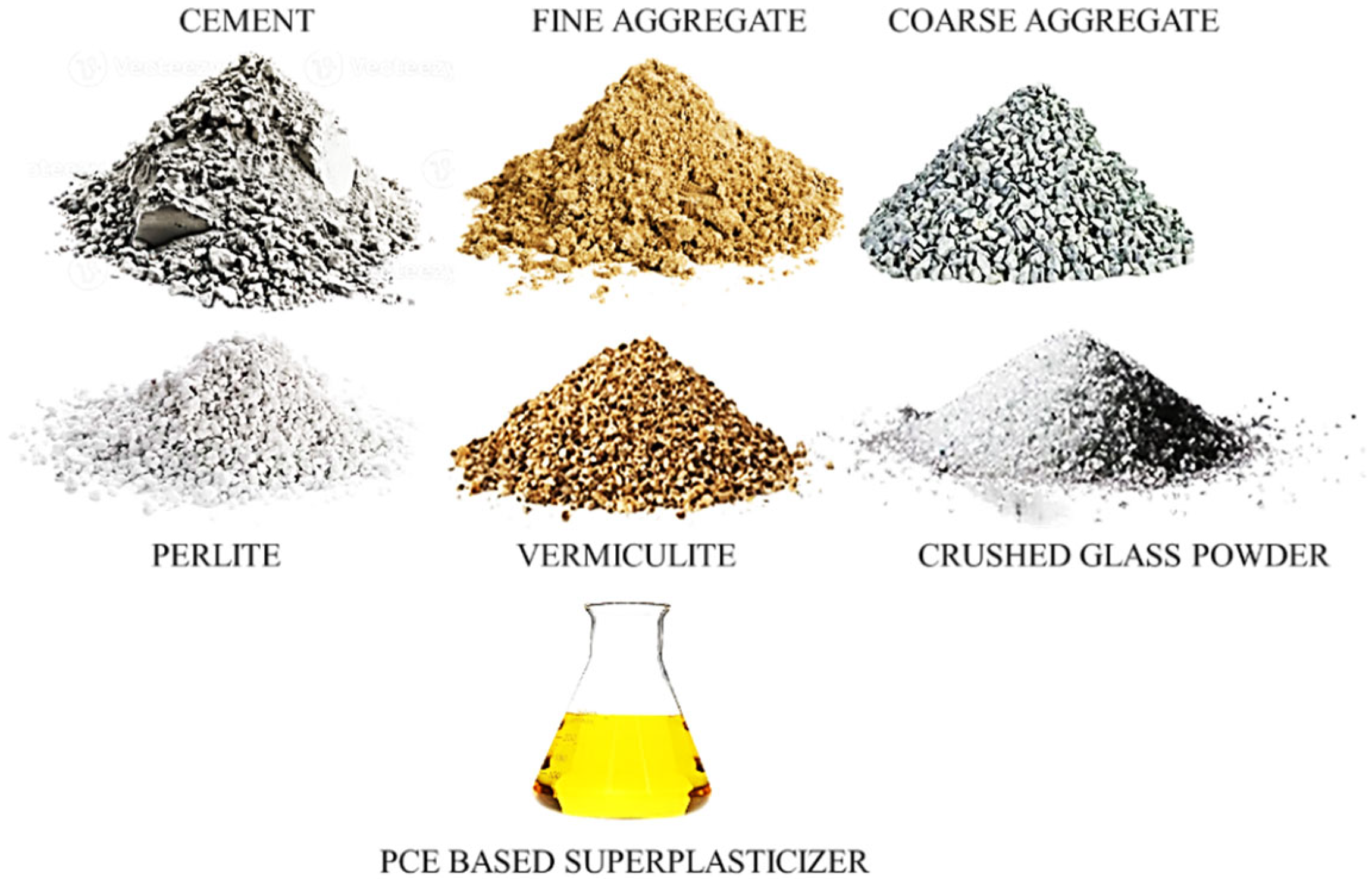





| Cement | |
|---|---|
| Size | 10 to 20 μm |
| Specific Gravity | 3.15 |
| Blaine Fineness | 340 m2/kg |
| Natural fine aggregates | |
| Size | 0.15 to 4.75 mm |
| Specific Gravity | 2.65 |
| Water Absorption | 2% |
| Natural coarse aggregates | |
| Size | <10 mm |
| Specific Gravity | 2.67 |
| Water Absorption | 0.90% |
| Perlite | |
| Specific Gravity | 0.302 |
| Water Absorption | 37% |
| Appearance | White, granular |
| Vermiculite | |
| Specific Gravity | 2.45 |
| Water Absorption | 65% |
| Appearance | Golden-brown, flaky |
| Crushed glass powder | |
| Specific Gravity | 2.32 |
| Water Absorption | 0.20% |
| Appearance | Light green, angular |
| PCE–superplasticizer | |
| Appearance/Colour | Light Yellow to Brownish |
| Specific Gravity | 1.2 |
| Chemical Name of Active Ingredient | Polycarboxylic Ether |
| pH | 7.3 |
| Chloride Content | 0.002% |
| Density | 1050 kg/m3 |
| Form | Liquid |
| Optimum Dosage (Marsh Cone Results) | 0.7% by weight of cement |
| Mix ID | Cement | Natural Fine Aggregate | Perlite | Vermiculite | Crushed Glass Powder | Coarse Aggregate | Water | Chemical Admixture |
|---|---|---|---|---|---|---|---|---|
| NC | 340 | 850 | - | - | - | 1006 | 169 | 2.88 |
| PR20 | 340 | 680 | 15 | - | - | 980 | 171 | 2.88 |
| PR40 | 340 | 510 | 28 | - | - | 950 | 185 | 2.88 |
| PR60 | 340 | 340 | 44 | - | - | 920 | 197 | 2.88 |
| PR80 | 340 | 170 | 59 | - | - | 890 | 209 | 2.88 |
| VC12.5 | 340 | 744 | - | 67 | - | 970 | 184 | 2.88 |
| VC25 | 340 | 638 | - | 133 | - | 935 | 218 | 2.88 |
| VC37.5 | 340 | 531 | - | 199 | - | 900 | 252 | 2.88 |
| VC50 | 340 | 425 | - | 265 | - | 865 | 281 | 2.88 |
| CG7.5 | 340 | 786 | - | - | 57 | 926 | 184 | 2.88 |
| CG15 | 340 | 723 | - | - | 114 | 910 | 191 | 2.88 |
| CG22.5 | 340 | 659 | - | - | 170 | 828 | 206 | 2.88 |
| CG30 | 340 | 595 | - | - | 226 | 785 | 215 | 2.88 |
| Sr. No. | Mix id | Material Replacement Level | Maximum Surface Temperature | Minimum Surface Temperature | Temperature Reduction Compared to Normal Concrete | % Temperature Reduction as Compared to Normal Concrete |
|---|---|---|---|---|---|---|
| 1 | NC | - | 66.90 | 51.40 | 0.00 | 0.00 |
| 2 | PR | 20 | 41.00 | 36.30 | 15.10 | 29.38 |
| 40 | 46.90 | 29.20 | 22.20 | 43.19 | ||
| 60 | 59.60 | 36.10 | 15.30 | 29.77 | ||
| 80 | 64.60 | 43.60 | 7.80 | 15.18 | ||
| 3 | VC | 12.5 | 50.20 | 34.60 | 16.80 | 32.68 |
| 25 | 38.00 | 26.30 | 25.10 | 48.83 | ||
| 37.5 | 56.60 | 41.10 | 10.30 | 20.04 | ||
| 50 | 59.90 | 46.00 | 5.40 | 10.51 | ||
| 4 | CG | 7.5 | 63.20 | 49.50 | 1.90 | 3.70 |
| 15 | 37.80 | 33.20 | 18.20 | 35.41 | ||
| 22.5 | 65.40 | 49.90 | 1.50 | 2.92 | ||
| 30 | 67.70 | 50.20 | 1.20 | 2.33 |
Disclaimer/Publisher’s Note: The statements, opinions and data contained in all publications are solely those of the individual author(s) and contributor(s) and not of MDPI and/or the editor(s). MDPI and/or the editor(s) disclaim responsibility for any injury to people or property resulting from any ideas, methods, instructions or products referred to in the content. |
© 2025 by the authors. Licensee MDPI, Basel, Switzerland. This article is an open access article distributed under the terms and conditions of the Creative Commons Attribution (CC BY) license.
Share and Cite
Joshi, T.; Machchhoya, J.; Dave, U.; Costel, P.; Shah, V. Mitigating Urban Heat Island Effects Through Thermally Efficient Concrete Paver Blocks for Sustainable Infrastructure. Infrastructures 2026, 11, 5. https://doi.org/10.3390/infrastructures11010005
Joshi T, Machchhoya J, Dave U, Costel P, Shah V. Mitigating Urban Heat Island Effects Through Thermally Efficient Concrete Paver Blocks for Sustainable Infrastructure. Infrastructures. 2026; 11(1):5. https://doi.org/10.3390/infrastructures11010005
Chicago/Turabian StyleJoshi, Tejas, Jeet Machchhoya, Urmil Dave, Plescan Costel, and Vedanshi Shah. 2026. "Mitigating Urban Heat Island Effects Through Thermally Efficient Concrete Paver Blocks for Sustainable Infrastructure" Infrastructures 11, no. 1: 5. https://doi.org/10.3390/infrastructures11010005
APA StyleJoshi, T., Machchhoya, J., Dave, U., Costel, P., & Shah, V. (2026). Mitigating Urban Heat Island Effects Through Thermally Efficient Concrete Paver Blocks for Sustainable Infrastructure. Infrastructures, 11(1), 5. https://doi.org/10.3390/infrastructures11010005