1. Introduction
Tunnels serve as the backbone of underground transportation infrastructure, offering several advantages over traditional surface transport, such as reduced travel time and minimized land usage. In urban settings, they also support essential utility services, including water conveyance, telecommunications, sewer systems, and electrical power transmission. Beyond civilian use, tunnels play a vital role in strategic military applications, often housing critical defense equipment. Recognized as lifeline structures, tunnels significantly influence the socioeconomic vitality of the regions they serve. Consequently, ensuring their protection against blast events is of utmost importance. Historically, tunnels have been targeted in terrorist attacks—such as the Bayrampaşa Metro bombing (2015), Minsk Metro attack (2011), and Moscow Metro bombing (2010)—as well as incidents involving vehicular explosions, including the Skatestraum Tunnel (2015), Yanhou Tunnel (2014), and Dimuan Tunnel (2012). These events have led to fatalities, substantial economic losses, and serious disruptions to regional socioeconomic activities.
Since tunnel damage or deformation depends on factors such as the lining material, tunnel cross-sectional shape, explosive charge mass, tunnel diameter, burial depth, detonation location, and standoff distance, several studies have addressed the influence of lining materials. Ansell [
1] found that one-day-old unreinforced shotcrete can withstand vibration levels that would significantly damage fractured rock masses. Archibald and Dirige [
2] demonstrated that applying sprayed materials to the tunnel lining can effectively reduce fracture growth. Prasanna and Boominathan [
3] compared the performance of cast iron and reinforced concrete (RC) tunnels subjected to internal explosions. It has been observed that cast iron tunnels experience less damage than RC tunnels, owing to their greater rigidity and density. Mai, Vu et al. [
4] found that precast tunnels constructed with ultra-high-performance concrete (UHPC) exhibit significantly higher blast resistance compared to traditional concrete tunnels. Therefore, incorporating UHPC in precast tunnel designs—particularly in vulnerable areas—is considered an effective strategy for enhancing blast resistance. Kong, Xu et al. [
5] proposed a new blast-resistant approach using composite steel plate lining structures, due to their superior shear strength and tensile resistance. Their findings showed that the displacement and velocity of the lining increased proportionally with the explosive charge. Furthermore, they demonstrated that as the distance between the explosion source and the reference point decreased, the effects of blast loading—specifically changes in displacement, velocity, and acceleration—at that point on the tunnel lining structure became more pronounced. Rajput et al. [
6] found that using glass fiber-reinforced polymer (GFRP) as a protective shield in (RC) tunnels significantly reduces peak displacement and stress values. For explosive charges of 100 kg, 50 kg, and 10 kg, the peak displacement decreased by approximately 14%, 35%, and 40%, respectively. Similarly, the peak stress values were reduced by about 25% for 100 kg and 50 kg charges, and by 35% for the 10 kg charge. The effectiveness of multilayer lining systems has also been investigated by Chakraborty et al. [
7] and Chaudhary et al. [
8]. They explored conventional linings such as steel, plain concrete, and steel fiber-reinforced concrete, as well as sandwich panels composed of steel layers with Dytherm or polyurethane foam cores. Among the configurations studied, the steel–Dytherm foam–steel combination demonstrated the highest blast resistance. In a comparative study, the blast performance of four common lining materials—steel (S), plain concrete (PC), reinforced concrete (RC), and steel fiber-reinforced concrete (SFRC)—in sandwich panel form with foam cores was studied. The results indicated that the RCC–Dytherm foam–RCC configuration provided the most effective blast resistance among the materials tested [
9]. The blast behavior of truncated cylindrical modular sandwich structures composed of extruded polystyrene (XPS) panels and carbon fiber-reinforced polymer (CFRP) panels with flat and curved surfaces was examined. In addition, the effectiveness of polyurea coatings of varying thicknesses was evaluated. It was noticed that applying polyurea to the interior surfaces of the sandwich panels significantly reduced equivalent von Mises stress, enhancing the structure’s blast resistance [
10]. The use of an intermittent geofoam-filled trench as a passive vibration screening technique for RC tunnels under internal blast loading was explored. It was observed that such trenches effectively reduced blast-induced ground vibrations [
11].
A comparative study was conducted on non-composite and composite sandwich panels under various stiffening conditions. The findings revealed that sandwich panels incorporating a chemosphere aluminum syntactic foam core and steel fiber-reinforced concrete (SFRC) lining offered superior blast mitigation performance compared to steel plates, PC and RC linings [
12]. The influence of different concrete grades (C30, C40, and C50) and lining thicknesses (300 mm, 400 mm, and 500 mm) on tunnel performance under internal blast loading was investigated. The results indicated that deformation in tunnel linings decreased with increased lining thickness and increased with lower concrete grades. These findings suggest that, for a given concrete grade, increasing the lining thickness is more effective for improving blast resistance than upgrading the concrete grade [
13]. Zaid et al. [
14] noted that increasing lining thickness has a less significant impact in tunnels with smaller diameters. As tunnel diameter increases, the deformation of the surrounding soil tends to decrease. Due to the high risks associated with blast testing, such experiments are typically conducted in remote areas, which may pose political and logistical challenges. Consequently, there are limited studies available on internal explosion testing in tunnels where the use of foamed cement-based sacrificial cladding for blast mitigation in tunnel structures was examined. The material demonstrated favorable compressive deformation and plasticity under low-rate compressive loads, making it an effective sacrificial layer for absorbing blast energy [
15,
16,
17]. A multilayer precast tunnel segment constructed from various fiber-reinforced cementitious composites was studied. Compared to conventional RC linings, these composites showed superior performance under internal blast loads, particularly in terms of resisting internal and external bending moments [
18]. The blast resistance of urban utility tunnels reinforced with steel bars and basalt fiber-reinforced polymer (BFRP) bars was investigated. The findings showed that BFRP bars provided superior blast resistance compared to traditional steel reinforcement [
19]. To assess the influence of tunnel shape on blast performance, three common tunnel geometries—circular, horseshoe, and box-shaped—were compared and it was concluded that circular tunnels demonstrated the highest resistance to blast effects, while box-shaped tunnels were the most vulnerable [
20,
21].
The impact of blasting activities—associated with constructing a nearby tunnel—on the concrete lining of an existing tunnel was assessed. The results revealed that the tunnel side facing the blast sustained more damage than the opposite side, and that increasing the distance between the blast source and the existing tunnel improved the lining’s safety [
22]. In the context of twin tunnels, when a blast occurs in one tunnel (the donor tunnel), the adjacent tunnel (the receiver tunnel) experiences reduced pressure on its RC lining and surrounding soil. However, the pressure may increase with higher explosive charge weights. It was also noticed that soil displacement around the donor tunnel rises to a certain distance from the lining before gradually decreasing [
23]. Phulari and Goel [
24] proposed using syntactic foam—a lightweight polymer—as a protective barrier between adjacent tunnels. Their findings demonstrated that this material could reduce tunnel displacement by 80% to 85% when a blast occurs in one of the tunnels.
Despite growing attention to blast-resistant tunnel design, most existing research has focused on the response of single tunnels subjected to internal explosions, with limited consideration given to the effects of such blasts on adjacent tunnels. In increasingly congested urban environments, where twin or closely spaced tunnels are common for transportation, utilities, or military use, understanding the interaction between tunnels under blast loading becomes critically important. The dynamic response of the receiver tunnel, including induced pressure, stress propagation, and soil-structure interaction, remains insufficiently explored. Current literature lacks comprehensive experimental and numerical studies that investigate how parameters such as tunnel spacing, soil type, lining materials, and charge weight influence the blast wave transmission and damage in the neighboring tunnel. Therefore, the aim of this work is to investigate the influence of a blast event in a donor tunnel on the structural and geotechnical response of an adjacent receiver tunnel, identifying key factors that govern inter-tunnel blast effects. Addressing this gap is essential for enhancing the safety and resilience of tunnel networks in blast-prone or high-risk areas.
Moreover, this study is conducted within the context of the operational phase of tunnel service life. The investigated scenario considers an existing (in-service) receiver tunnel subjected to blast-induced loading originating from a nearby explosive source. The objective is to evaluate the structural response and damage characteristics of the tunnel under such extreme loading conditions, rather than to simulate construction-stage excavation or blasting processes. Accordingly, the adopted modeling assumptions are intended to represent operational-phase safety assessment under explosive events.
3. Finite Element Modeling
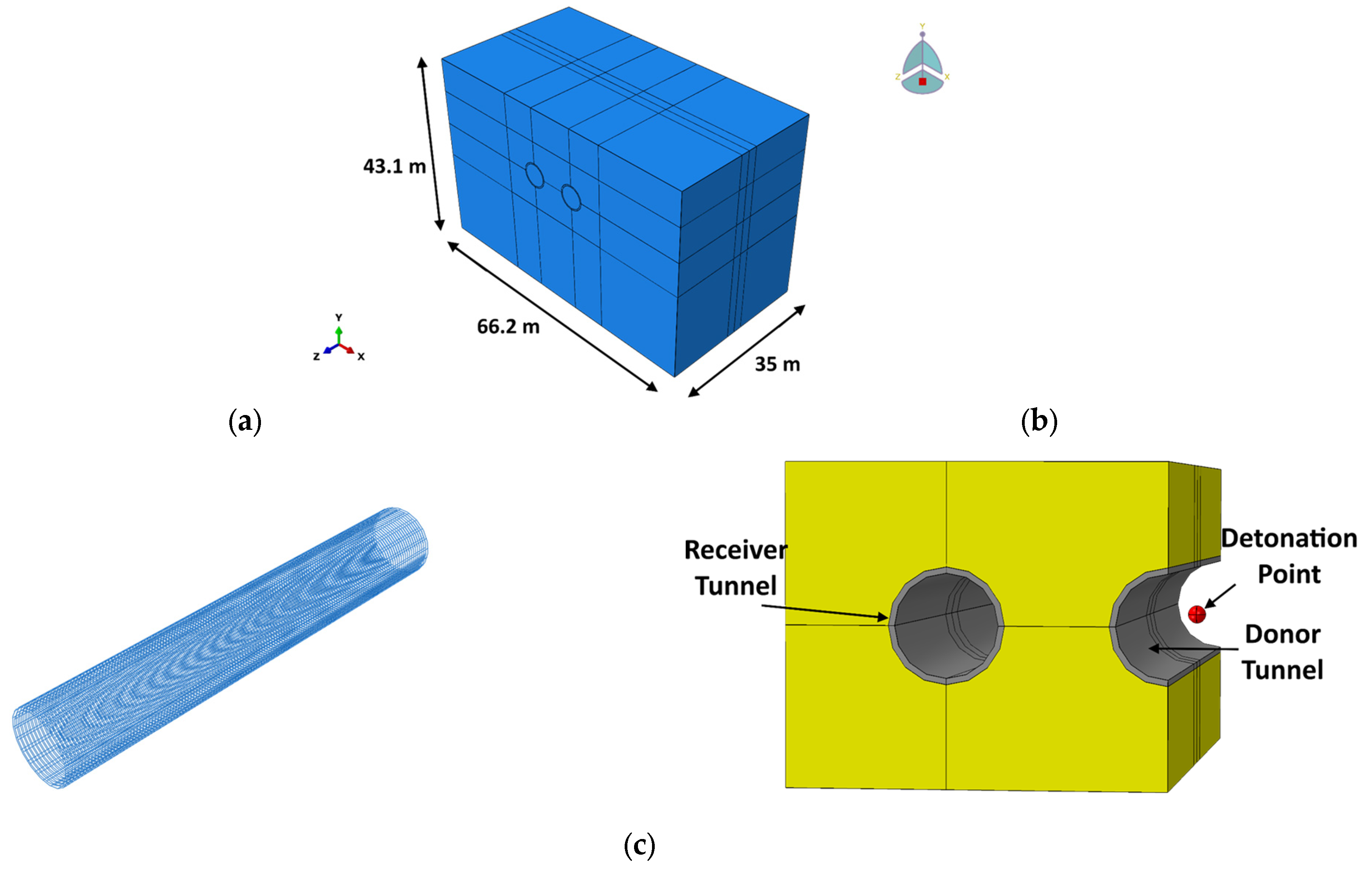
The present study involves twin adjacent tunnels, each with different geometries, dimensions and spacing and a constant length of 35 m. Both tunnels feature a 300 mm-thick lining made of ultra-high-performance -reinforced concrete (UHPRC) with a different types of foam core, as shown in
Table 2. The computational domain measures 66.2 × 43.1 × 35 m, as illustrated in
Figure 4a. Each tunnel is positioned 25 m (i.e., 5 times the tunnel diameter) away from the domain boundaries to minimize boundary effects. The tunnel lining reinforcement was modeled in both longitudinal and transverse directions following the approach presented in [
20,
21]. In the longitudinal direction, two grids of 10 mm diameter bars are uniformly spaced at 850 mm around the tunnel circumference, with a spacing of 120 mm between the two layers. In the transverse direction, 12 mm diameter hoop bars are placed at equal intervals of 250 mm, as shown in
Figure 4b. The explosive charge is located at the center of one tunnel, as depicted in
Figure 4c.
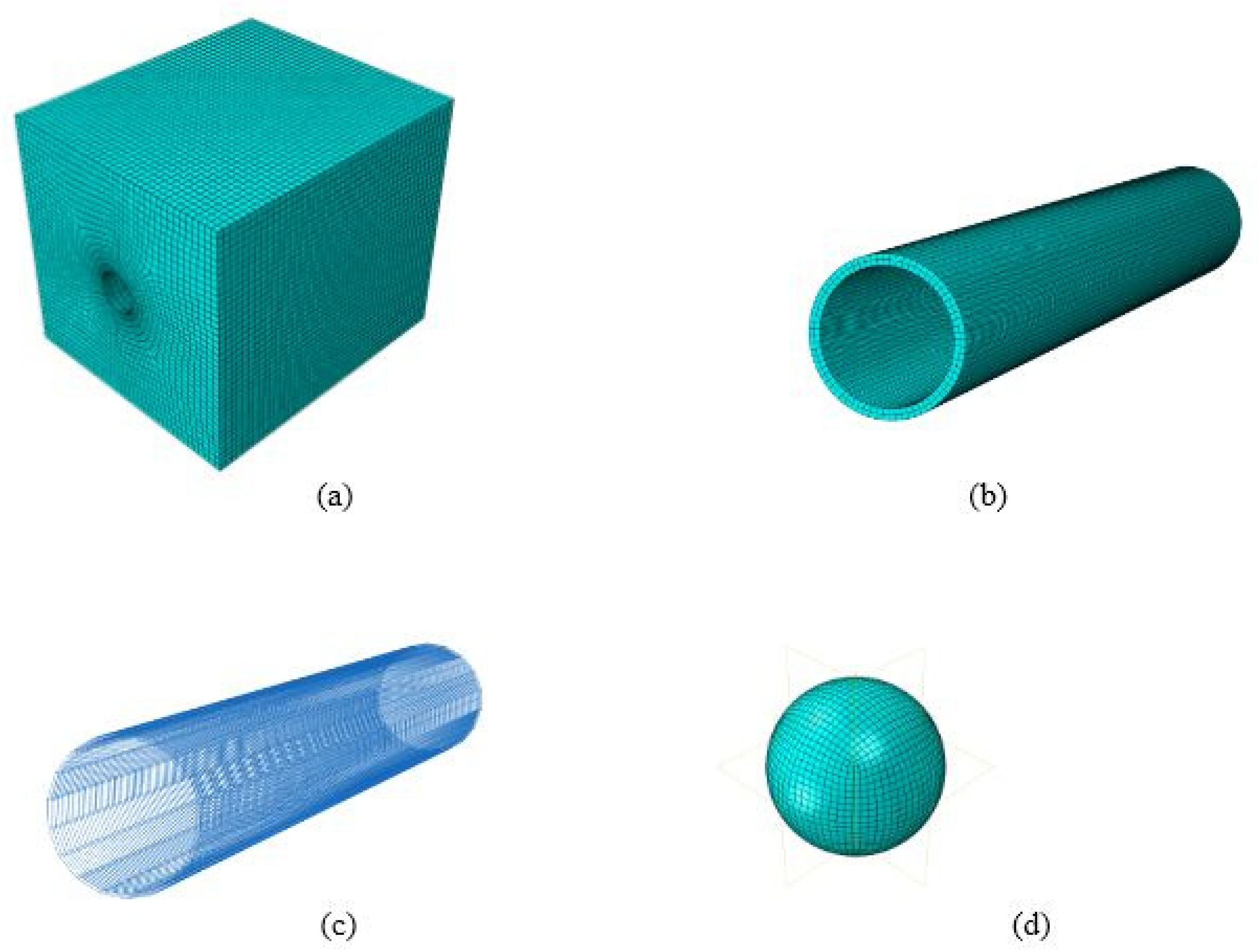
In the studied models, the soil domain and tunnel lining were discretized using the C3D8R element type available in ABAQUS (version 6.14), while the steel reinforcement bars were modeled as three-dimensional deformable wires using T3D2 truss elements. To ensure proper interaction between the concrete lining and the reinforcement, an embedded constraint was applied to bond the reinforcement within the tunnel lining. General contact was defined between the RC lining and the surrounding soil, with hard contact specified in the normal direction and frictional behavior defined in the tangential direction using a penalty friction coefficient of 0.5.
Boundary conditions were applied such that the bottom surface of the model was fully fixed in all directions, while the lateral sides were constrained in the normal direction to replicate realistic confinement. The selected computational domain size is consistent with established blast wave numerical modeling practice, wherein the air domain and boundaries are positioned sufficiently far from the explosive source to allow the positive phase of blast propagation to develop and dissipate without significant artificial reflection effects. Non-reflecting/transmitting boundary conditions are also applied to further minimize spurious interactions at the model limits. Such approaches are commonly adopted in CFD and blast-structure interaction studies to ensure credible blast wave propagation within the simulation time window [
27]. The blast load was simulated using the Coupled Eulerian–Lagrangian (CEL) method available in ABAQUS. The explosive charge, located at the center of the donor tunnel, was represented as a spherical TNT charge using the C3D20R element type.
The CEL-FE analysis was conducted using the Abaqus/Explicit solver. This solver is particularly well-suited for highly dynamic problems such as blast loading, as it offers greater computational efficiency and faster solution times compared to traditional implicit methods. The solver employs a second-order accurate explicit time integration scheme, in which the kinematic state is updated directly from the previous increment without requiring iterative procedures. Consequently, there is no need to solve simultaneous equations, which further enhances computational speed. A parametric study was carried out as part of this analysis, with the TNT explosive charge positioned at the center of the tunnel and a standoff distance of 2.5 m.
3.1. Constitutive Model for Soil
In this study, the soil behavior was modeled using the Drucker–Prager Cap model. This model simplifies the classic Mohr–Coulomb criterion by replacing the hexagonal shape of the failure surface with a circular cone, allowing for smoother numerical implementation. While it retains the general advantages and limitations of the Mohr–Coulomb model, the Drucker–Prager formulation offers improved convergence in finite element simulations. The yield surface in this model is circular and equidistant from the origin, representing isotropic shear strength. The hardening behavior was defined using a relationship between compressive yield stress and absolute plastic strain. Additionally, the shear failure criterion in the Drucker–Prager model was assumed to be linear. This model exhibits both isotropic hardening and perfect plasticity. The yield criterion of this model is given by Equation (1):
where
The yield surface’s shape in the deviatoric (π) plane is determined by the scalar parameter K. When K = 1, the yield surface in the deviatoric plane becomes circular. The lower limit for the yield surface to stay convex is K = 0.778. The third invariant of the deviatoric stress tensor in this case is r. The main and von Mises parameters are p′ and q′ is connected to the cohesion parameter c and the value of β is related to the angle of internal friction. The soil properties are as shown in
Table 3 [
28].
3.2. Constitutive Model for Foam
The dynamic response of the examined tunnel was enhanced by incorporating foam materials. In ABAQUS, different types of foam were modeled using two available constitutive models: the Mohr–Coulomb model and the Crushable Foam model. The Mohr–Coulomb model was applied to simulate expanded polyurethane foam with varying densities, as presented in
Table 4 [
29], while the Crushable Foam model was used to represent aluminum foam and polyurethane foam as detailed in
Table 5 [
30,
31].
3.3. Constitutive Model for UHPC
The Concrete Damage Plasticity (CDP) model was employed to simulate the material behavior of Ultra-High-Performance Concrete (UHPC). The elastic properties of UHPC were defined with an elastic modulus of 43 GPa and a Poisson’s ratio of 0.3. Plasticity parameters included a dilation angle of 36°, an eccentricity of 0.1, and a biaxial-to-uniaxial compressive strength ratio of 1.16. The viscosity parameter was set to 0.6667. The adopted values were derived from the study conducted by Yang and Fang [
32].
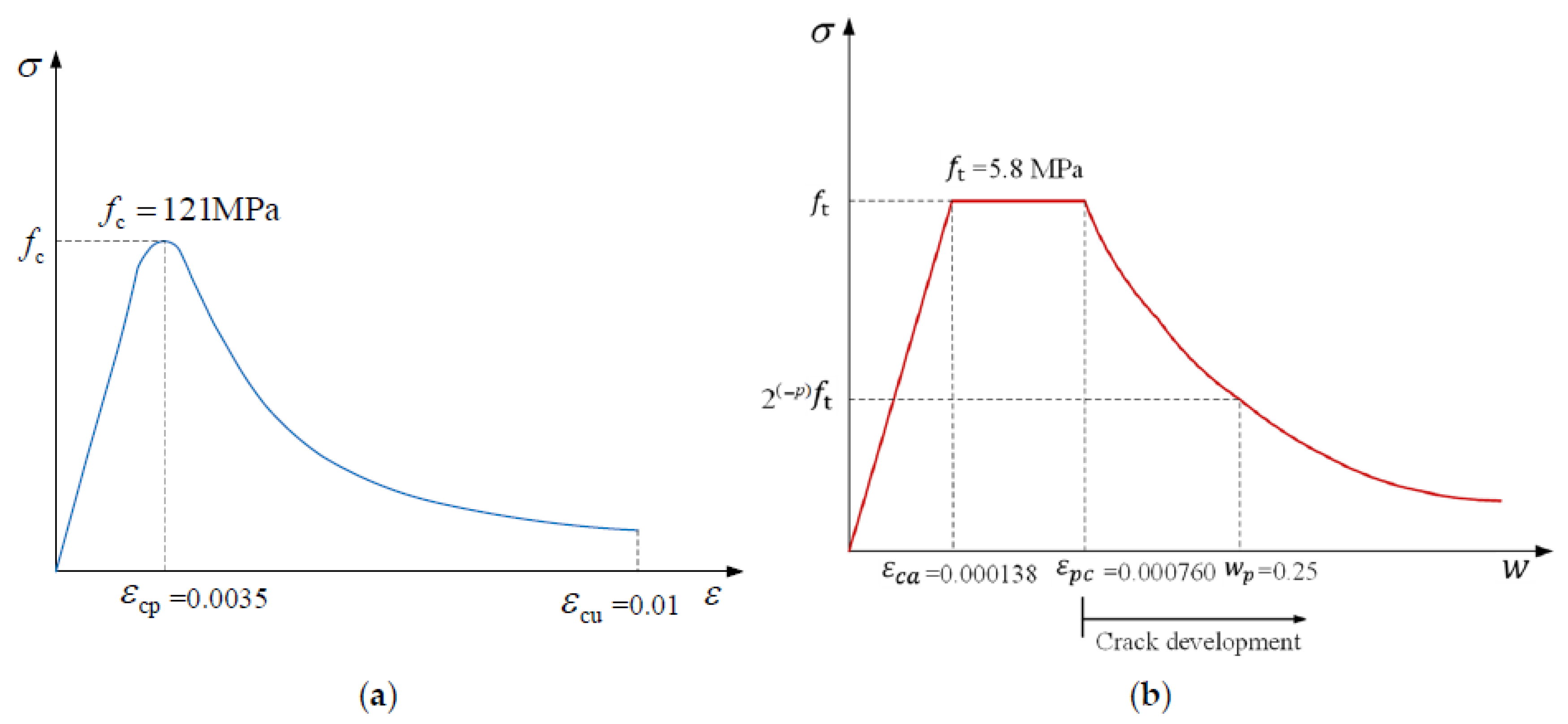
Figure 5a illustrates the proposed compressive stress–strain curve for UHPC under uniaxial compression, while Equation (5) presents the corresponding calculation formulas.
Here fc = 0.95fcu = 121 MPa, representing the uniaxial compressive strength of UHPC. The parameter n = Ec/E0, where E0 denotes the secant modulus at the peak stress (fc) and Ec is the initial elastic modulus. The strain corresponding to the peak stress is εc, which was taken as 0.0035.
Zhang, Shao et al. [
33] proposed the tensile stress–strain curve for UHPC, as shown in
Figure 5b, along with the corresponding calculation Equation (6) derived from direct tension tests. Unlike conventional concrete, the UHPC stress–strain curve incorporates both the strain-hardening phase and the stage of fine fracture width development.
Here, ft = 5.80 MPa denotes the tensile strength of UHPC, the parameters are defined as follows: ωp = 0.25 mm, Ƥ = 0.95, εca = 0.0002, and εƤc = 0.001941.
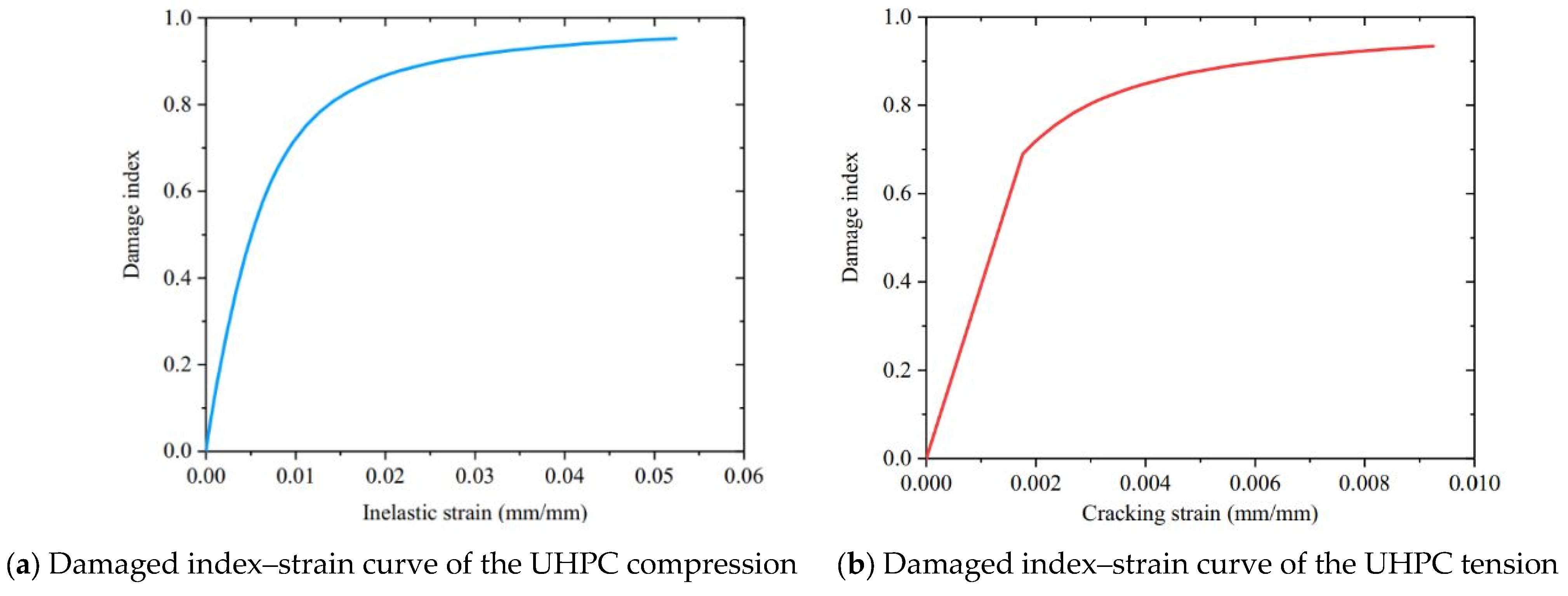
Figure 6 displays the UHPC tensile and compressive damage development curves that were determined using Equation (7).
Figure 5.
The proposed compressive and tensile stress–strain curve for UHPC [
34]. (
a) Constitutive relationship of the UHPC compression; (
b) Constitutive relationship of the UHPC tension.
Figure 5.
The proposed compressive and tensile stress–strain curve for UHPC [
34]. (
a) Constitutive relationship of the UHPC compression; (
b) Constitutive relationship of the UHPC tension.
Given the relatively recent development of Ultra-High-Performance Concrete (UHPC), its dynamic behavior—particularly under high strain rate conditions—has yet to reach a clear consensus. Nonetheless, studies indicate that the dynamic flexural tensile strength of UHPC increases with strain rate, with the fiber content of the mixture being the primary influencing factor. In general, a higher fiber volume leads to a more pronounced strength enhancement under dynamic loading [
35].
where fc is the dynamic compressive strength at strain rate ε˙, fcs is the static compressive strength at reference strain rate ε˙s, α and γs are material specific parameters, and ε˙ is the applied strain rate, typically ranging from 30 e
−6 to 300 s
−1. This formulation enables the adjustment of concrete strength under various loading rates, providing more accurate simulations in dynamic analyses such as blast scenarios.
Strain-rate effects were incorporated in the UHPC model using the Dynamic Increase Factor (DIF) formulation (Equation (8)), which adjusts the compressive strength based on the applied strain rate. This allows the numerical model to capture the increased material resistance under high strain rates typical of blast loading. The parameters α and γs were taken from experimental data reported in the literature [
35], ensuring that the dynamic response of UHPC is accurately represented in the simulations.
3.4. Constitutive Model for Steel
According to ASTM A36, the tunnel was reinforced with steel mesh that had a bar diameter of 12 mm and demonstrated laboratory mechanical parameters of yield strength of 467 MPa and ultimate strength of 728 MPa [
36]. Deformed steel bars with a diameter of 10 mm were used for hoop reinforcement; their yield strength and ultimate strength were reported to be 573 MPa and 742 MPa for simulation stress strain by linear with strain hardening was used [
37].
3.5. Constitutive Model for Air and TNT
Reactive hydrodynamic modeling frequently uses the Jones–Wilkins–Lee Equation of State (JWL-EOS) to represent the thermodynamic behavior of unreacted high explosives (HEs) and their detonation products (DPs) [
38]. In the immediate aftermath of the chemical reaction, it describes the expansion of detonation products from an initial state of extremely high pressure and density to a final state at ambient pressure and gaseous density. The JWL-EOS formulation expresses pressure (P) as a function of specific volume (V) and internal energy (E), or P = P (V, E), using one Tait equation and two Murnaghan-type terms. The Grüneisen principle serves as its foundation, however the JWL-EOS is empirically calibrated to match experimental data [
39]. As with most empirical equations of state, it treats effects such as viscosity, thermal conductivity, friction, and external forces like gravity as secondary. In this study, the JWL-EOS was applied to model TNT, with pressure defined by Equation (9) [
39]. The material parameters used for TNT are provided in
Table 6 [
40], 300 K of temperature and atmospheric pressure replicated the state of an ideal gas. The density of air is 1.25 kg/m
3, and its gas constant is 287 J/kg/K and the specific heat of air is 1004 J/kg/K. Equation (2) defines the relationship between pressure P, relative specific volume V and internal energy E. The relative specific volume V is further defined in Equation (10).
In this context, the initial specific volume (v0) is defined as the inverse of the explosive’s initial density, while the specific volume (v) functions as the independent variable in the equation. The internal energy term E encompasses both the chemical bond energy released during detonation and the kinetic energy associated with the flow’s momentum. The parameters A and B are empirical pressure coefficients, while R1 and R2 represent the primary and secondary exponential decay constants (eigenvalues), respectively. The parameter ω denotes the Grüneisen gamma or the fractional component of the adiabatic exponent in the standard Tait equation of state.
4. Results and Discussion
The simulations were conducted by varying key parameters, including tunnel lining materials—configured in multiple layered arrangements—tunnel geometry, internal tunnel diameter, spacing between adjacent tunnels, and the explosive charge weight. This section presents and discusses the results related to deflection and von Mises stress observed in both the donor tunnel (subjected directly to the blast) and the adjacent receiver tunnel. Although the present study focuses on von Mises stress and deformation, these results can be interpreted in terms of potential damage by comparing them with threshold-based performance levels reported in the literature. For instance, stresses exceeding the concrete tensile strength may indicate cracking, while deformations beyond allowable serviceability limits can compromise tunnel functionality [
27]. This approach provides a practical context for assessing structural safety under blast loading, even without explicit failure simulations.
4.1. Effect of Lining Material
The results of the 3D non-linear finite element (FE) blast analysis of tunnels with different lining materials were evaluated. Five cases, detailed in
Table 1, involved reinforced ultra-high-performance concrete (UHPC) sandwich panels incorporating various types of foam. Each case was subjected to a blast scenario involving 1814 kg of TNT detonated at the tunnel center, positioned 2.5 m from the tunnel wall. The study focused on assessing the structural sensitivity to blast loading. All simulations were conducted using a single type of soil to isolate the effects of lining material. The deformation and von Mises stress responses at the tunnel’s sidewall were analyzed under deterministic conditions to determine the most suitable lining material for the given scenario. Additionally, probabilistic assessments are currently underway to evaluate the performance of lining materials with the least observed displacements under uncertainty.
4.1.1. Donor Tunnel
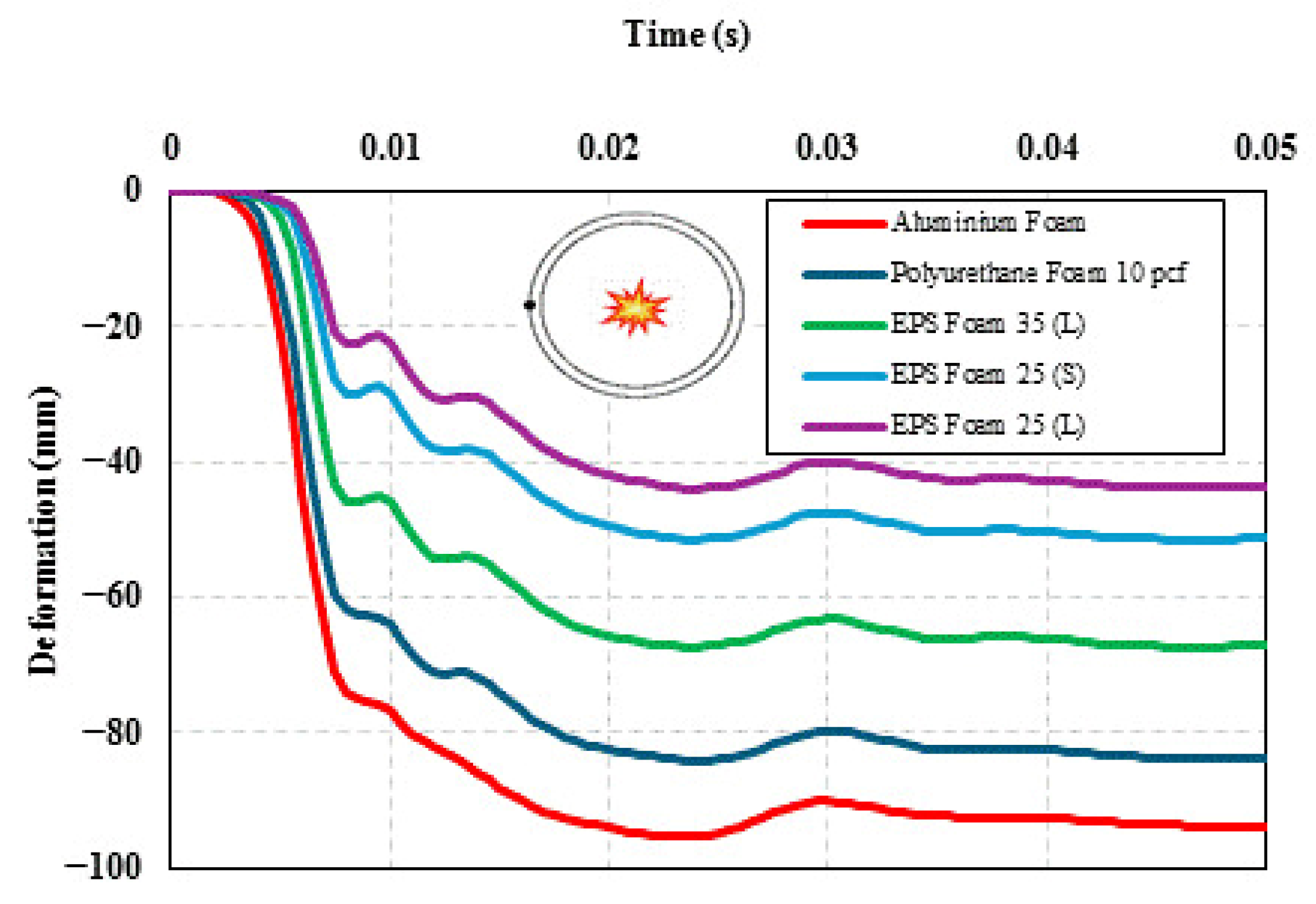
The time history of the deformation at a point located on the outer side wall of the donor tunnel -nearest to the receiver tunnel- for various lining types is presented in
Figure 7. It is noted that the maximum deformation was recorded at 0.024 s for UHPC sandwich panels incorporating aluminum foam, polyurethane foam, EPS foam 35 (long-term), EPS foam 25 (short-term), and EPS foam 25 (long-term).
In Case 1 (aluminum foam), the maximum displacement reached 95.55 mm. When the core was replaced with polyurethane foam (Case 2), the displacement decreased to 84.19 mm, representing a reduction of approximately 11.8%. Using EPS 35 (long-term) in Case 3, the deformation further reduced to 67.43 mm, corresponding to a 29.4% decrease. The application of EPS 25 (short-term) in Case 4 resulted in a displacement of 51.56 mm, marking a 46% reduction. Finally, Case 5, which used EPS 25 (long-term), yielded the lowest displacement at 44.04 mm, translating to a 53.9% reduction. These results clearly indicate that Case 5, involving EPS 25 (long-term) foam, provides the highest level of blast resistance among all materials examined.
For all studied linings, the maximum inner side wall deformation occurred in the explosion zone, extending about 9.6 m along the donor tunnel at 0.047 s. This deformation was most intense at the point closest to the detonation center. The displacement diminished progressively with increasing distance from this central region, and the remainder of the tunnel surface experienced minimal blast effects.
On the outer side of the tunnel wall, the affected region length varied depending on the lining material. Specifically, the deformation-affected lengths were 7.9 m for (case 1), 7.2 m for (case 2), 5.4 m for (case 3), 4.5 m for (case 4) and 4.1 m for (case 5), as shown in
Figure 7. These findings reinforce the effectiveness of EPS 25 (long-term) as the most reliable foam core material for blast mitigation in composite tunnel linings.
4.1.2. Receiver Tunnel
Fundamentally, this study examined the performance of the adjacent (receiver) tunnel, which is inevitably influenced by the explosion occurring in the donor tunnel. The receiver tunnel, identical in inner diameter, lining material, and lining thickness, was positioned at a clear spacing of 5 m from the donor tunnel. To evaluate the structural response, the center point of the inner side wall—the section closest to the donor tunnel—was designated as the reference location for recording the maximum displacement and von Mises stress values in the receiver tunnel lining across the various cases.
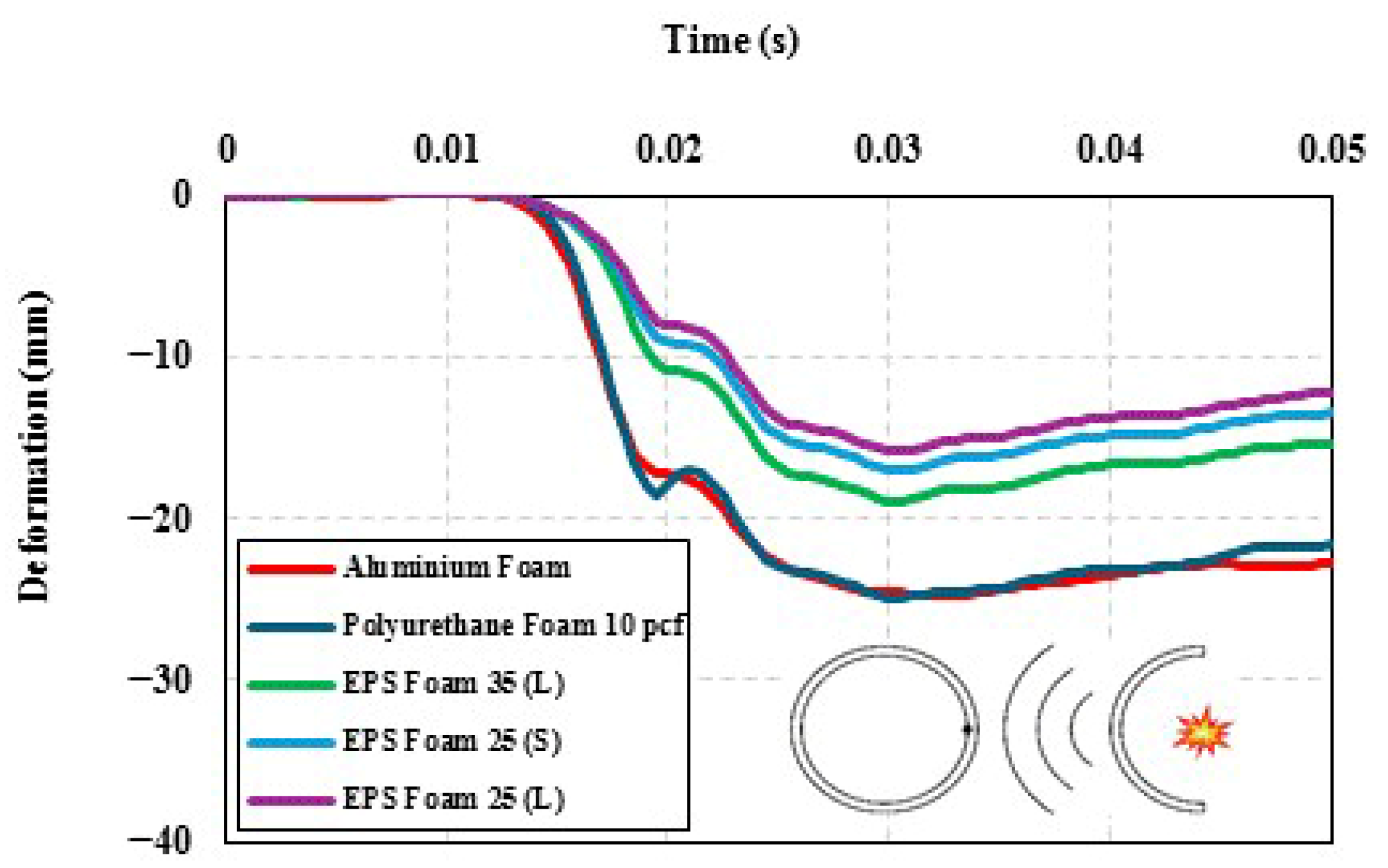
The relation between time and deformation at the interest point located on the inner side wall of receiver tunnel for various lining types is presented in
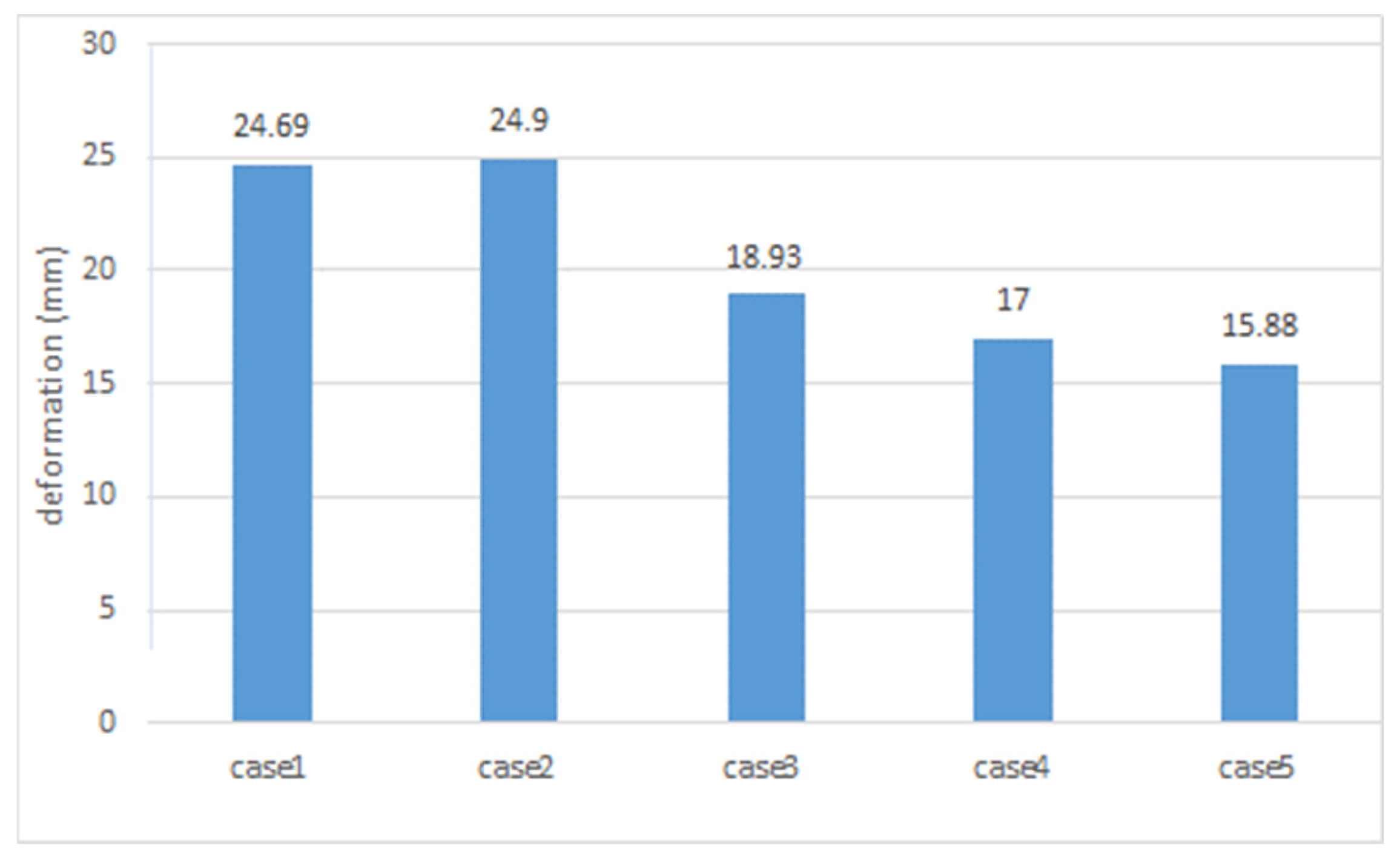
Figure 8. The results of this investigation support the observation that a reduction in foam density correlates with decreased deformation. In Case 2, the maximum deformation caused by the 1814 kg TNT charge occurred at 0.0305 s, reaching 24.9 mm. For Case 1, a slightly lower peak deformation of 24.69 mm was recorded at 0.032 s, representing a 0.8% reduction. In contrast, the composite linings with expanded polyurethane foam cores (Cases 3, 4, and 5) demonstrated significantly improved blast mitigation capabilities. Case 3, 4 and 5 recorded a maximum deformation of 18.93 mm, 17.0 mm and 15.88 mm at 0.0305 s, yielding a 23.9%, 31.7% and 36.2% reduction, Case 4 showed 17.0 mm at the same time, with a 31.7% reduction.
In addition,
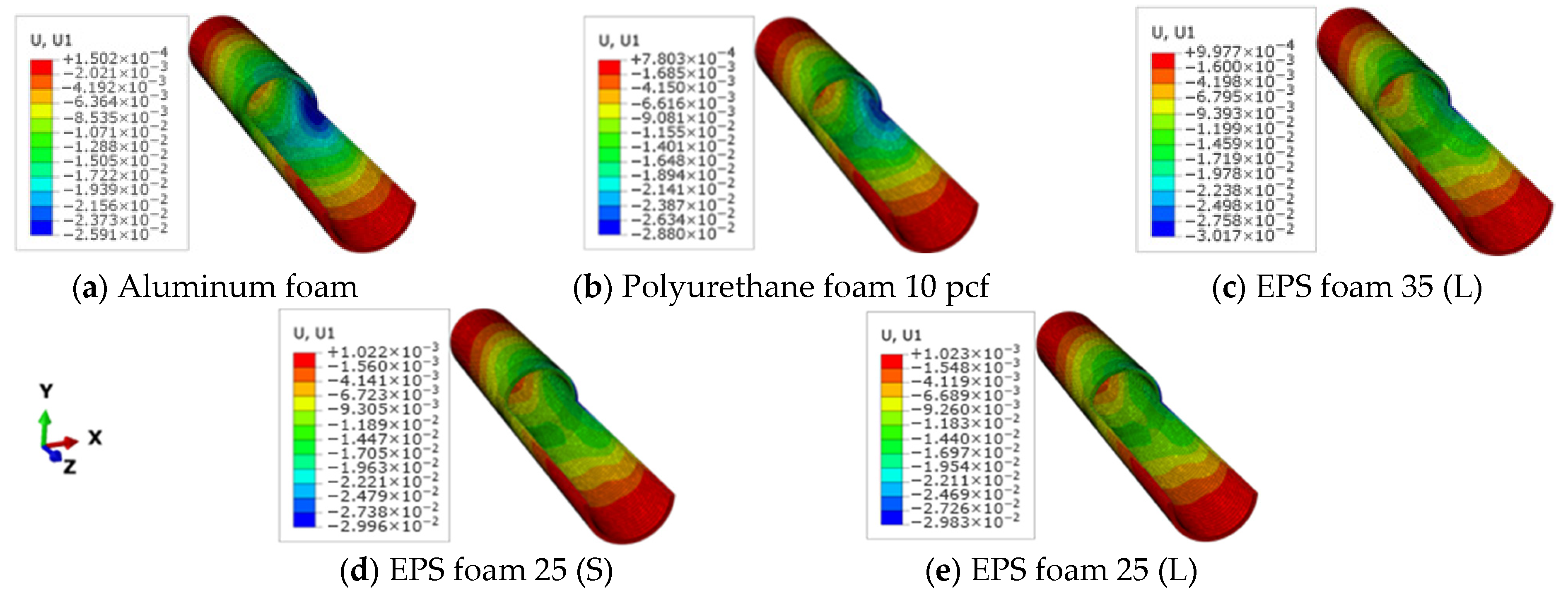
Figure 9 presents the color contour maps of deformation (U1) on the inner face of the receiver tunnel lining for different lining materials subjected to blasting-induced loading. The contour plots illustrate both the magnitude and spatial distribution of deformation, enabling a comparative assessment of the energy absorption and deformation control capabilities of each lining material. For all cases, the deformation exhibits a similar overall pattern, with the maximum displacement concentrated near the central region of the tunnel wall, corresponding to the zone most directly affected by stress wave transmission. This indicates that the global deformation mode is primarily governed by the blast loading configuration and tunnel geometry, while the lining material mainly influences the deformation magnitude. Overall, the results indicate that lining material properties, particularly stiffness and density, play a critical role in mitigating tunnel wall deformation under blasting loads.
Figure 10 compares the peak deformation of the receiver tunnel for different UHPRC-based sandwich lining systems, highlighting their relative deformation control efficiency. Rather than focusing on absolute displacement values, this comparison emphasizes the ranking of lining systems under identical blasting conditions. The UHPRC–Aluminum Foam–UHPRC and UHPRC–Polyurethane Foam–UHPRC systems exhibit the highest deformation levels, indicating that these intermediate layers permit greater overall flexibility of the composite lining. This behavior suggests that although these materials are effective energy absorbers, they allow larger global displacement of the tunnel lining. In contrast, the UHPRC–EPS foam–UHPRC systems demonstrate progressively improved deformation control. The observed reduction in deformation reflects the ability of EPS foam to provide a more stable load-transfer mechanism between the UHPRC layers. Moreover, the differences between EPS foam density and configuration indicate that geometric arrangement and confinement effects play an important role, in addition to material stiffness. From a design perspective, these results show that EPS foam–based sandwich linings offer a more balanced response by limiting excessive deformation while maintaining energy dissipation capacity, making them more suitable for blast-resistant tunnel applications.
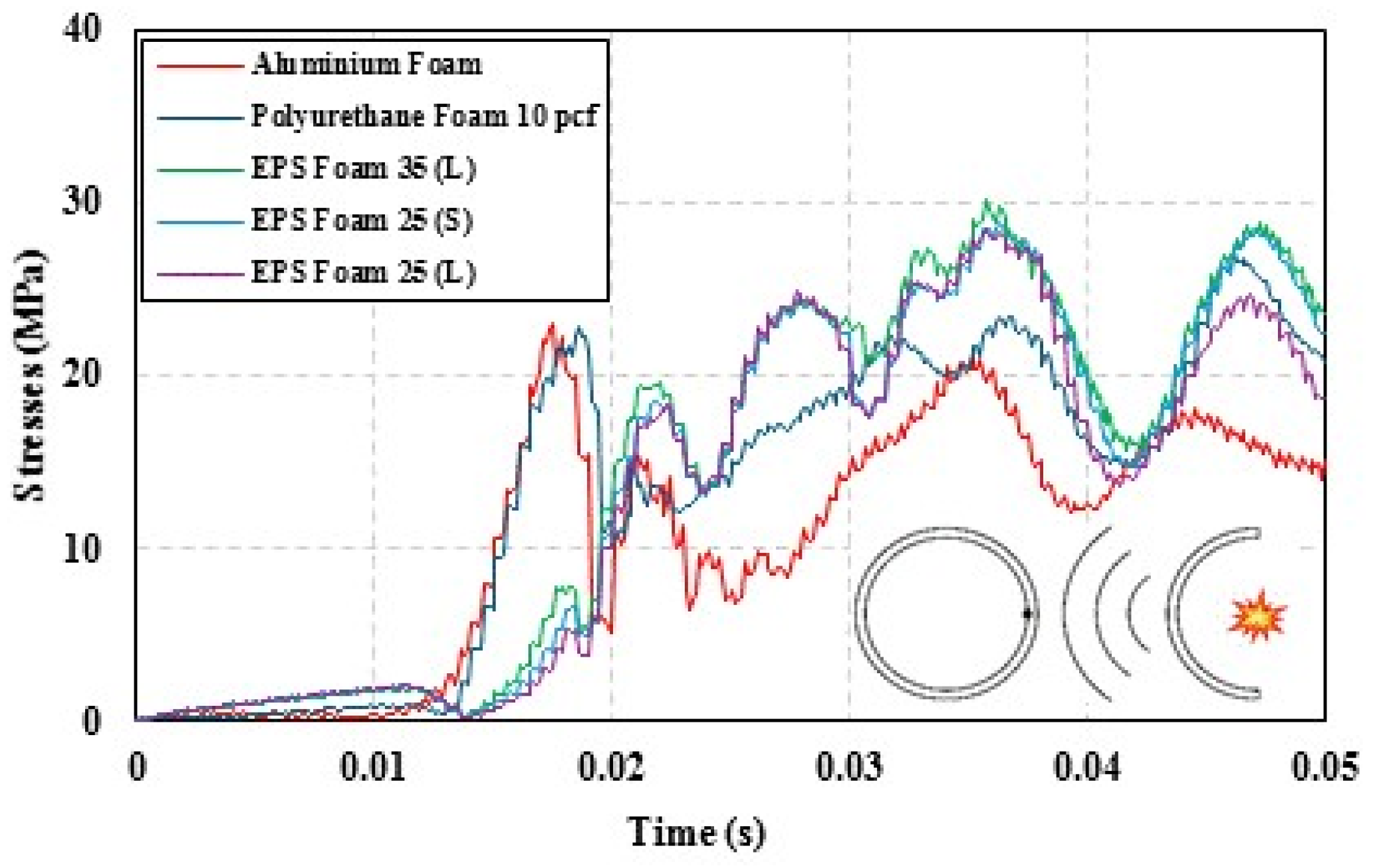
Figure 11 illustrates the relationship between time and von Mises stresses at the reference point located on the inner side wall of the receiver tunnel for various lining configurations. In Case 1, a peak stress of 2.30 × 10
7 Pa was observed at 0.0175 s but this value was not the maximum along the tunnel in this case and the top and bottom points inside tunnel recorded nearly 6.23 × 10
7 Pa, while Case 2 recorded maximum stress of 2.71 × 10
7 Pa at 0.0465 s. The application of expanded polyurethane foam as a core material yielded comparable performance across Cases 3, 4, and 5. In Case 3, the peak stress reached 3.01 × 10
7 Pa at 0.036 s. As foam density decreased, a slight reduction in peak stress was observed: 2.87 × 10
7 Pa in Case 4 at 0.0365 s, and 2.83 × 10
7 Pa in Case 5 at 0.036 s.
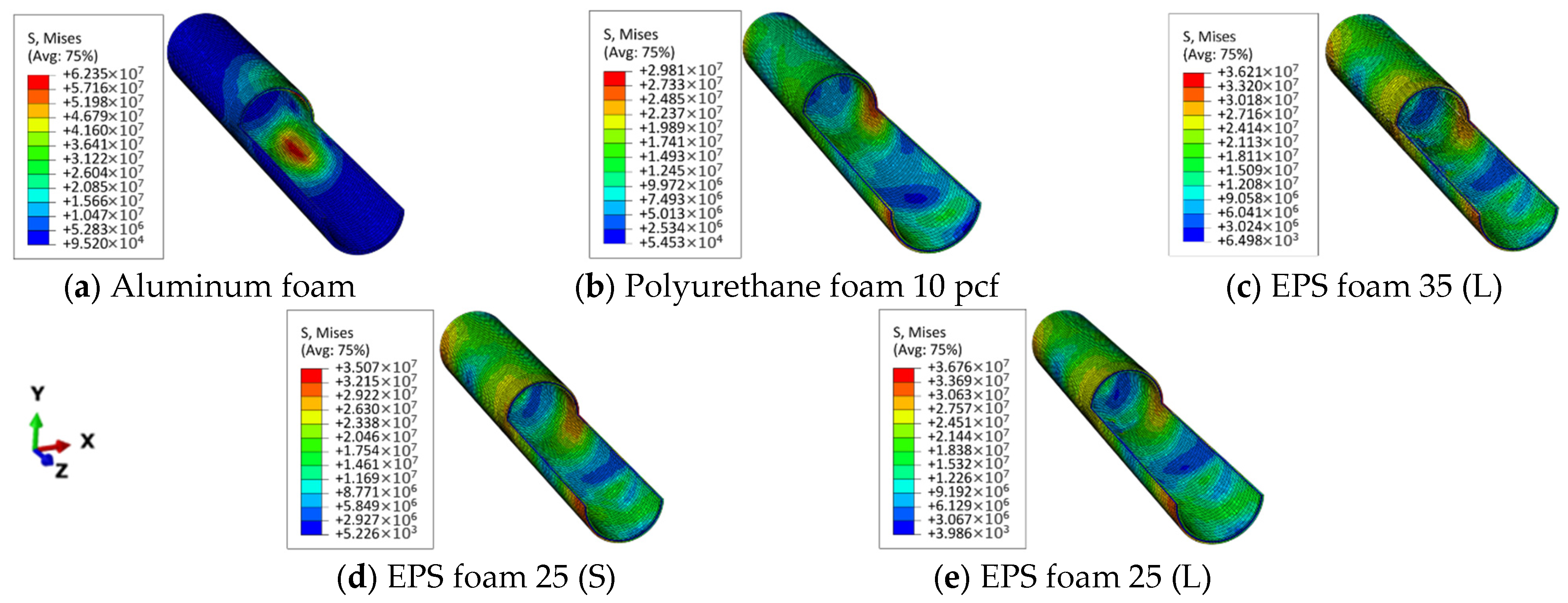
Moreover,
Figure 12 shows the color contour distributions of the maximum von Mises stresses (Smax) on the inner surface of the receiver tunnel lining for different lining materials under blasting loads. The contours reveal both the magnitude and spatial variation in stresses, allowing a direct comparison of the stress mitigation performance of each lining material. For all lining materials, the stress distribution follows a similar pattern, with peak stresses localized near the central region of the tunnel wall, corresponding to the primary interaction zone between the blast-induced stress waves and the tunnel lining. This indicates that the stress concentration location is mainly controlled by the blast loading and tunnel geometry, while the lining material influences the stress magnitude. These findings confirm that lining material properties strongly influence blast-induced stress mitigation.
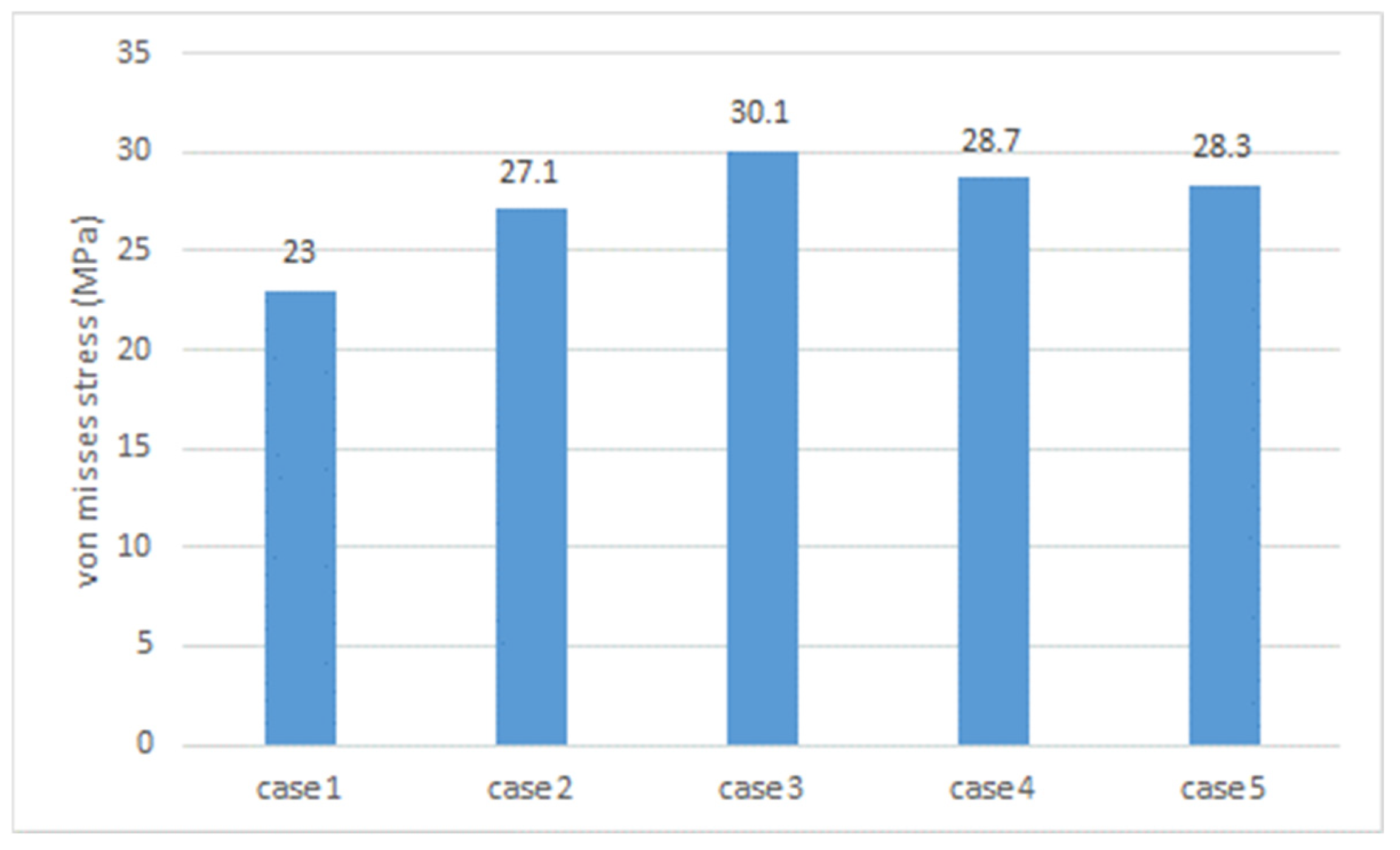
Figure 13 presents a comparison of the peak von Mises stress developed in the receiver tunnel lining for the five investigated lining cases. Unlike the deformation response, the von Mises stress reflects the stress transfer and concentration level within the lining system under blasting loads. The results show that Case 1 exhibits the lowest von Mises stress (23 MPa), indicating relatively limited stress concentration in the tunnel lining. In contrast, Cases 2 and 3 experience higher stress levels, with Case 3 reaching the maximum value of 30.1 MPa, suggesting increased stress transmission through the intermediate layer to the UHPRC lining. For Cases 4 and 5, the von Mises stress decreases slightly compared to Case 3, stabilizing at approximately 28–29 MPa. This behavior implies that these lining configurations provide improved stress redistribution, reducing excessive stress concentration while maintaining structural continuity. The relatively small difference between Cases 4 and 5 further indicates that beyond a certain level of material efficiency, additional improvements in stress reduction become marginal. Overall, the bar chart highlights that the lining material and configuration significantly influence the stress state of the receiver tunnel. While some configurations effectively limit deformation, they may simultaneously induce higher stress levels, emphasizing the need for a balanced design that considers both deformation and stress performance.
4.2. Effect of Inner Diameter
4.2.1. Donor Tunnel
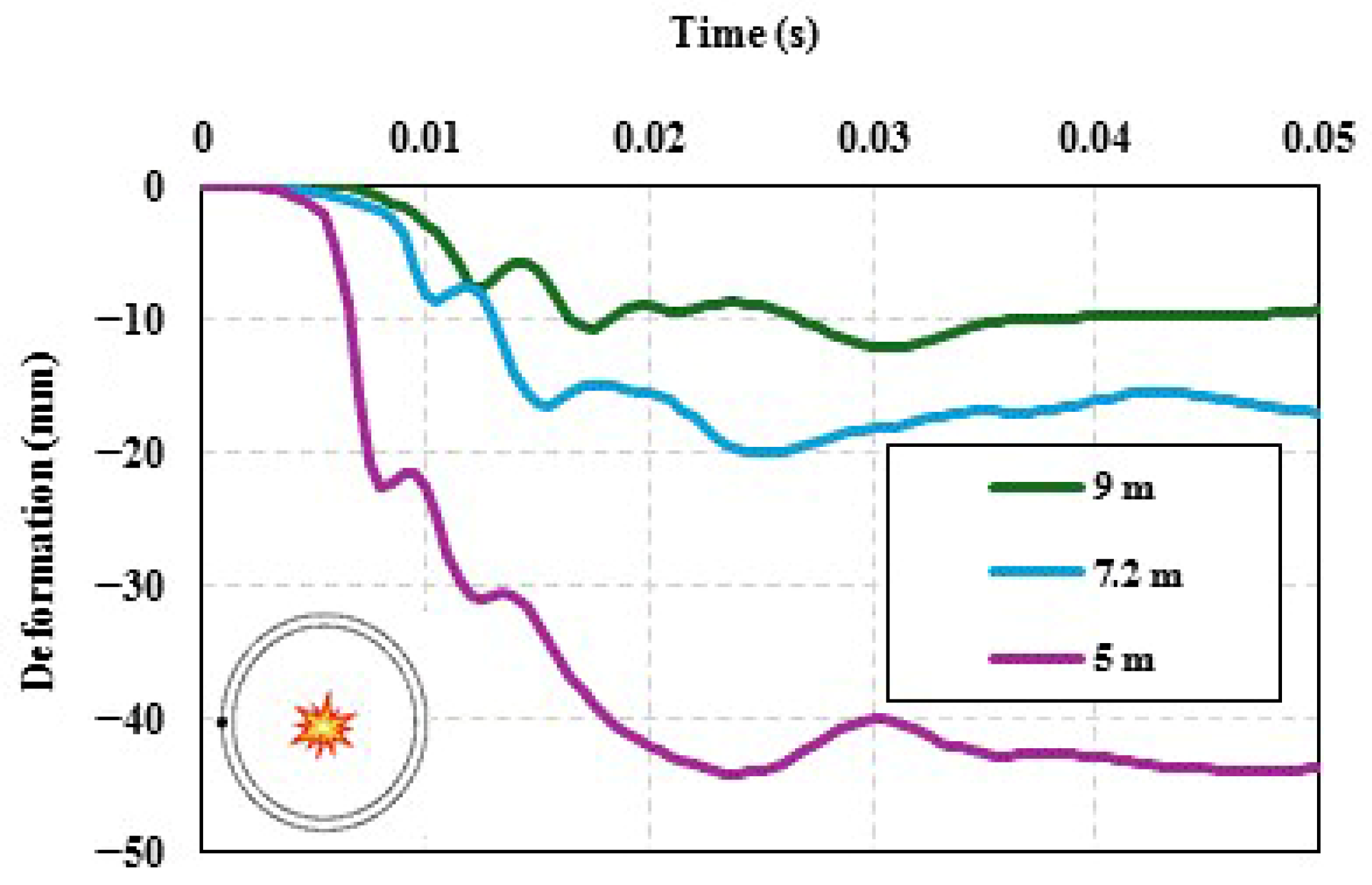
Figure 14 presents the time-history of deformation at a point located on the outer side wall of the donor tunnel, nearest to the receiver tunnel, for various tunnel diameters. The spacing between the donor and receiver tunnels is maintained equal to the tunnel diameter, and the lining configuration is kept constant as UHPRC–EPS Foam 25 (L)–UHPRC. It was concluded that increasing the tunnel diameter significantly reduces the deformation of the lining. When inner diameter increases from 5 m (Case 5) to 7.2 (case 6), the donor tunnel recorded a maximum deformation of 20.0 mm at 0.025 s, representing a 54.5% reduction relative to Case 5. Similarly, Case 7, which features an inner diameter of 9.0 m, exhibited a maximum deformation of 12.07 mm at 0.031 s, indicating a 72.5% reduction compared to Case 5. These results clearly demonstrate that deformation decreases with increasing tunnel diameter, primarily because the blast waves take a longer path to reach the tunnel wall, thereby reducing their intensity upon impact.
4.2.2. Receiver Tunnel
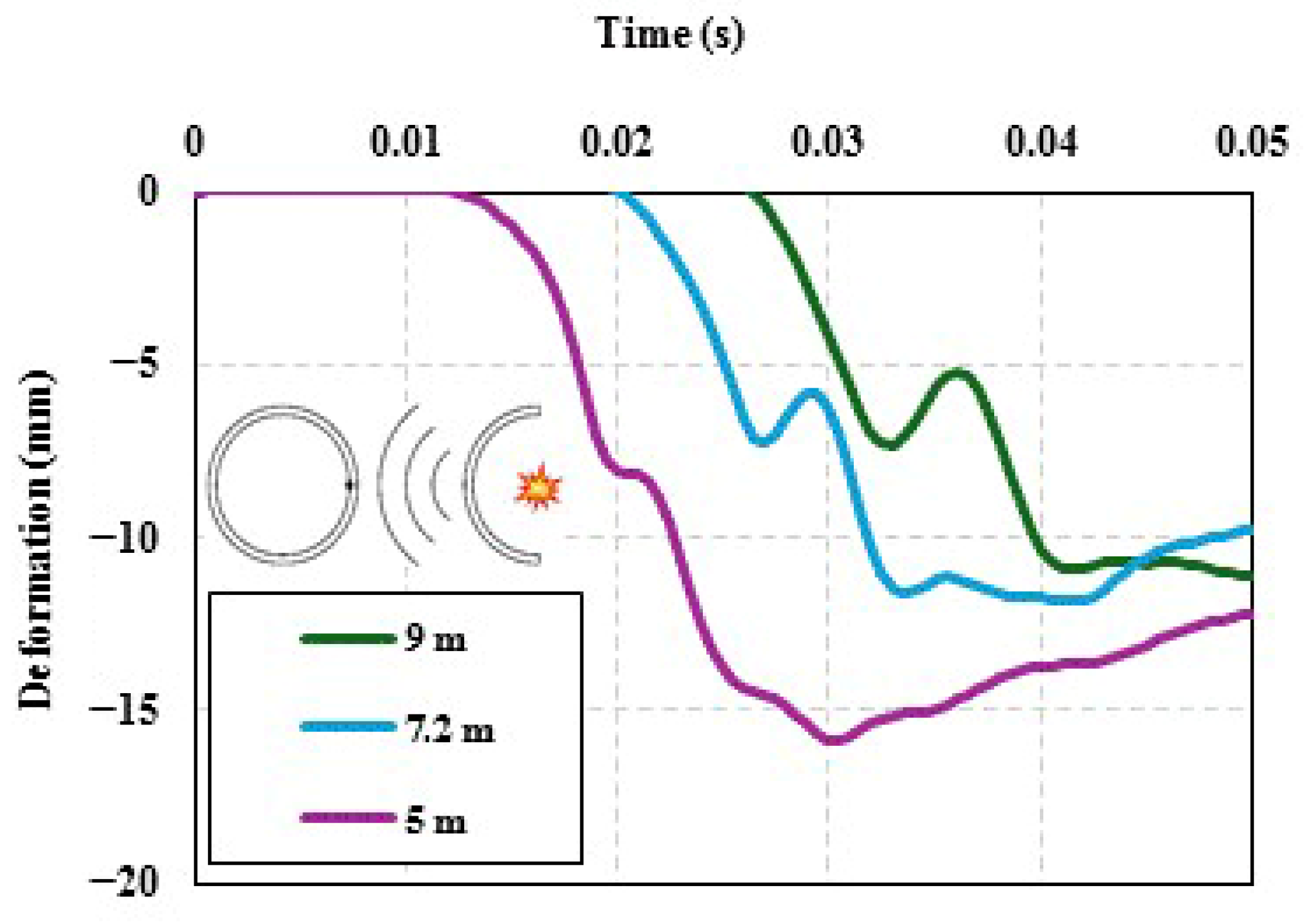
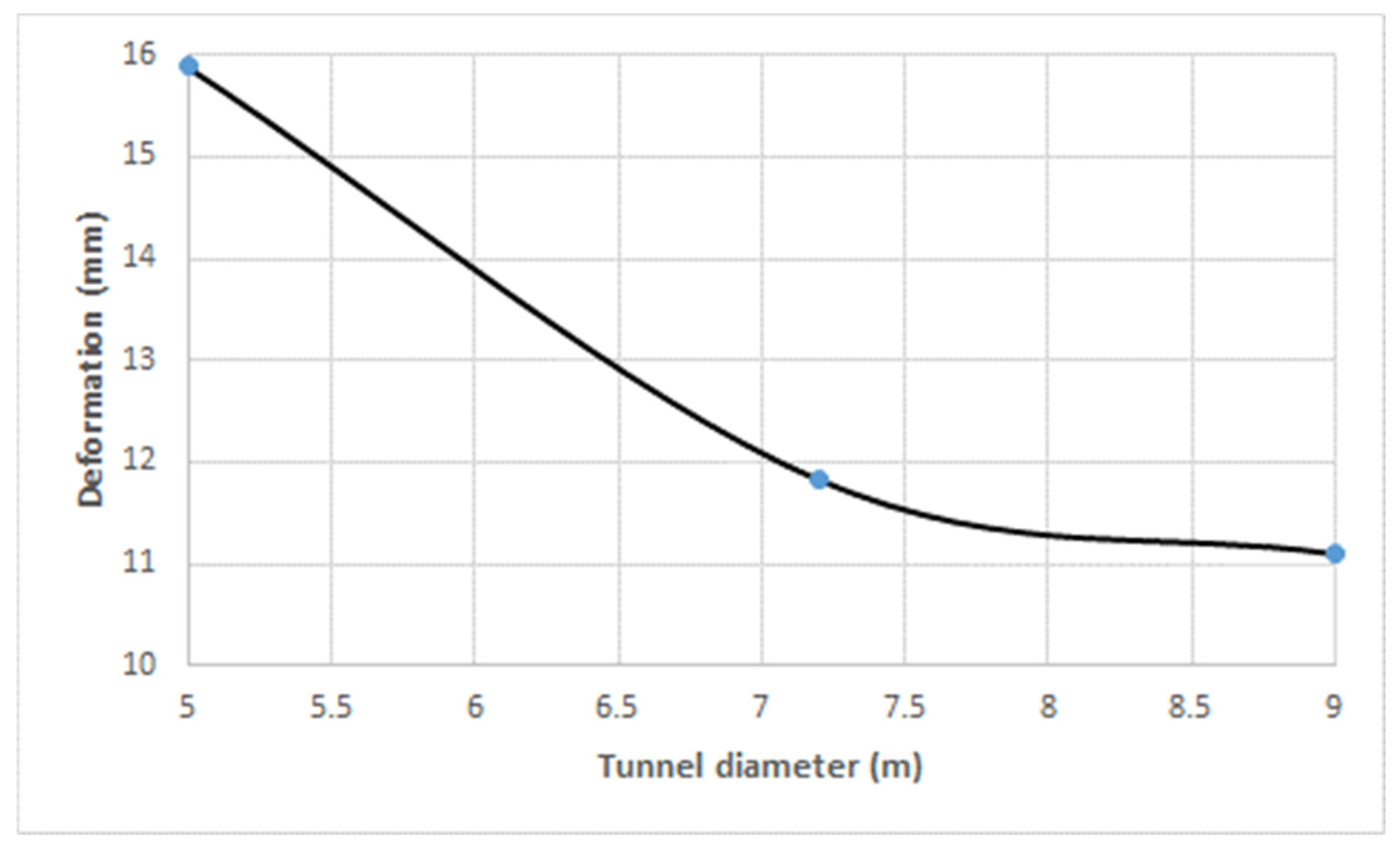
For the receiver tunnel, the difference in deformation is also clearly observed between Cases 5 versus (6 and 7). Case 6 recorded a maximum stress of 11.83 mm at 0.0415 s, representing a 25.5% reduction compared to the maximum value of 15.88 mm in Case 5. Similarly, Case 7 registered a deformation of 11.1 mm at 0.05 s, marking a 30% reduction relative to Case 5, as shown in
Figure 15.
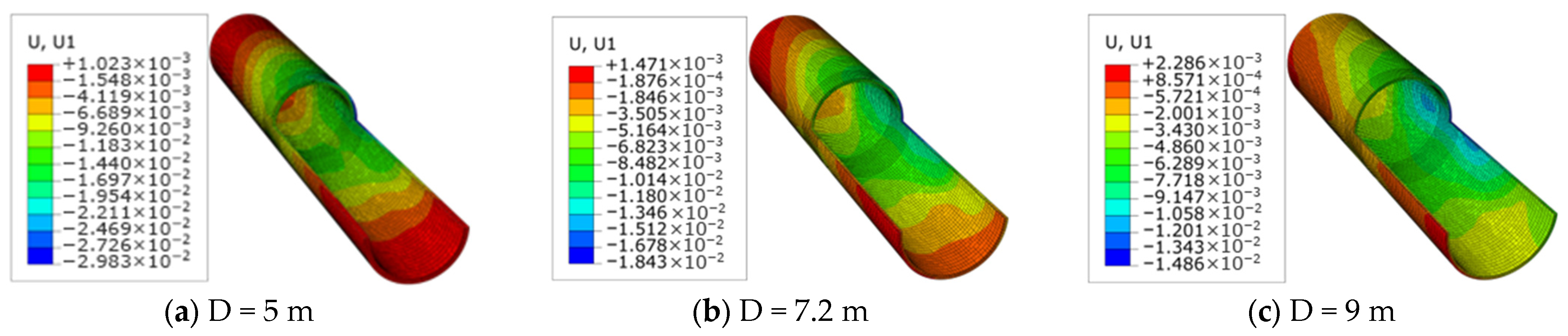
Figure 16 shows the deformation contours (U1) on the inner face of the receiver tunnel wall for different tunnel inner diameters, where the spacing between adjacent tunnels is kept equal to the tunnel diameter. The results highlight the influence of tunnel size on the deformation response under blasting loads. For all cases, the deformation exhibits a similar spatial pattern, with the maximum displacement occurring near the central region of the tunnel wall, indicating that the deformation mode is primarily governed by the blast loading configuration and tunnel geometry. However, the magnitude of deformation varies noticeably with tunnel diameter. Moreover, although the tunnel spacing is scaled proportionally with the tunnel diameter, the results indicate that spacing alone is insufficient to offset the effect of increased tunnel size on deformation. Therefore, tunnel diameter plays a dominant role in controlling the deformation response of the receiver tunnel under blasting. Overall, the results demonstrate that larger tunnel diameters are more vulnerable to blast-induced deformation, emphasizing the need for enhanced lining stiffness or additional protective measures when designing large-diameter tunnels in blasting environments.
Figure 17 shows that the peak deformation decreases nonlinearly with increasing tunnel diameter. This behavior is mainly due to reduced curvature-induced stress concentration and increased tunnel spacing, which weakens stress wave interaction. At larger diameters, the deformation tends to stabilize, indicating a reduced sensitivity to further increases in tunnel size.
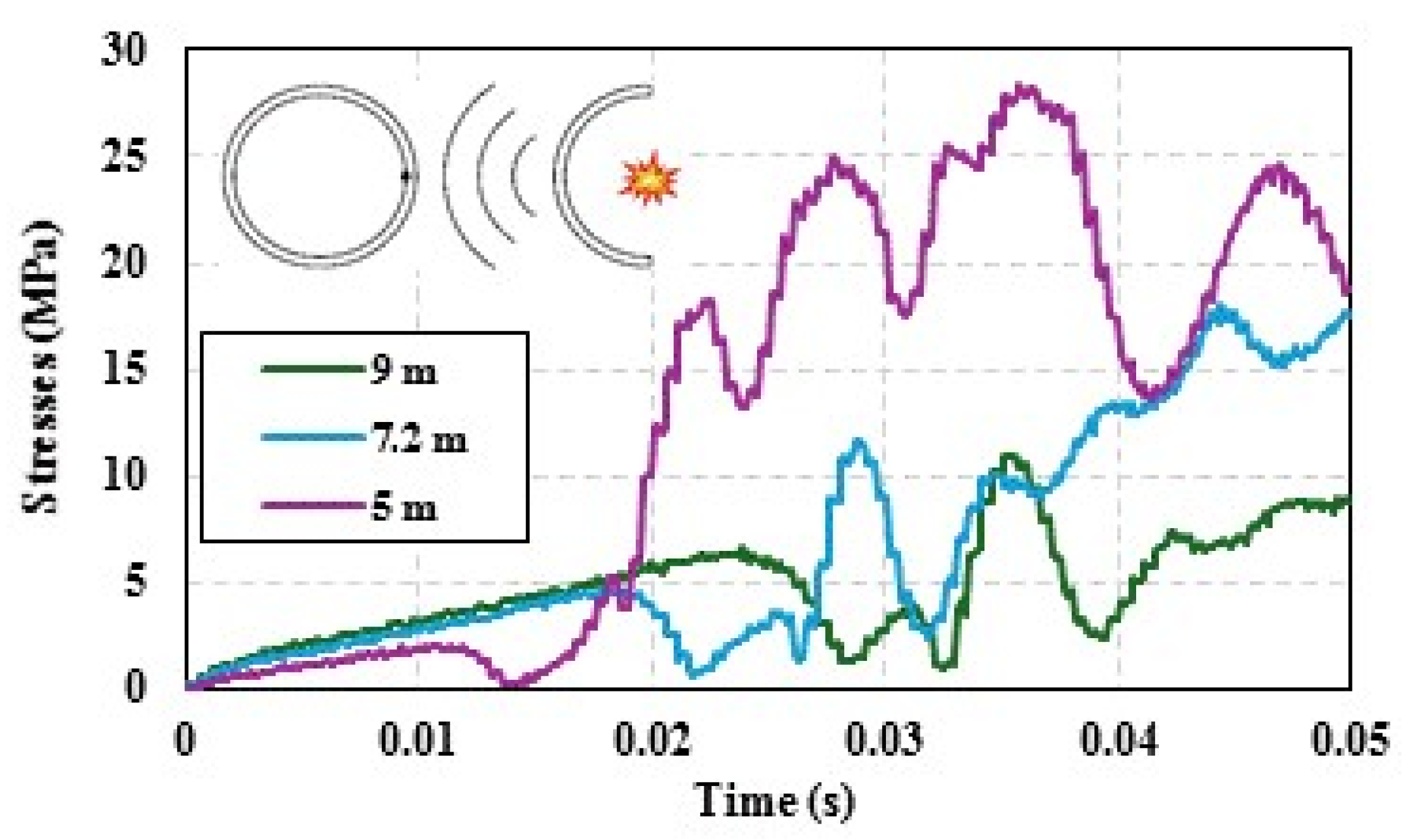
An increase in tunnel diameter resulted in notable variations in von Mises stresses between Case 5 and Cases 6 and 7. In Case 6, the maximum stress reached 1.79 × 10
7 Pa at 0.0445 s, corresponding to a 36.7% reduction compared to the peak value of 2.83 × 10
7 Pa in Case 5. Likewise, Case 7 recorded a von Mises stress of 1.09 × 10
7 Pa at 0.0355 s, reflecting a 61.5% reduction relative to Case 5, as illustrated in
Figure 18.
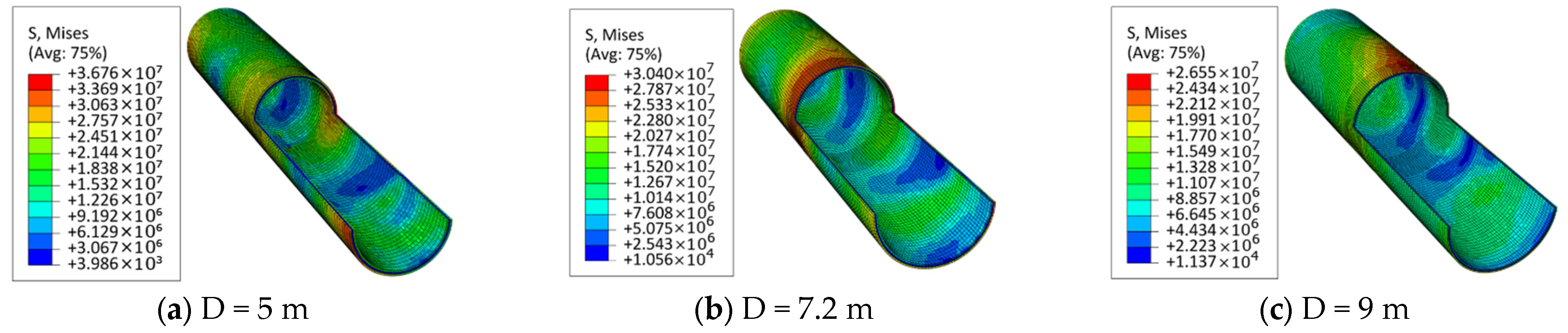
Figure 19 presents the contour plots of von Mises stresses along the inner face of the receiver tunnel wall for varying inner diameters. The color contour plots reveal how the magnitude and distribution of stresses vary as the tunnel diameter increases. As shown, larger tunnel diameters tend to result in higher stress concentrations, particularly around the tunnel periphery and at regions of geometric discontinuity. This trend highlights the influence of tunnel size on the structural response, emphasizing the need for careful consideration of diameter in tunnel design to ensure stability and safety under loading conditions.
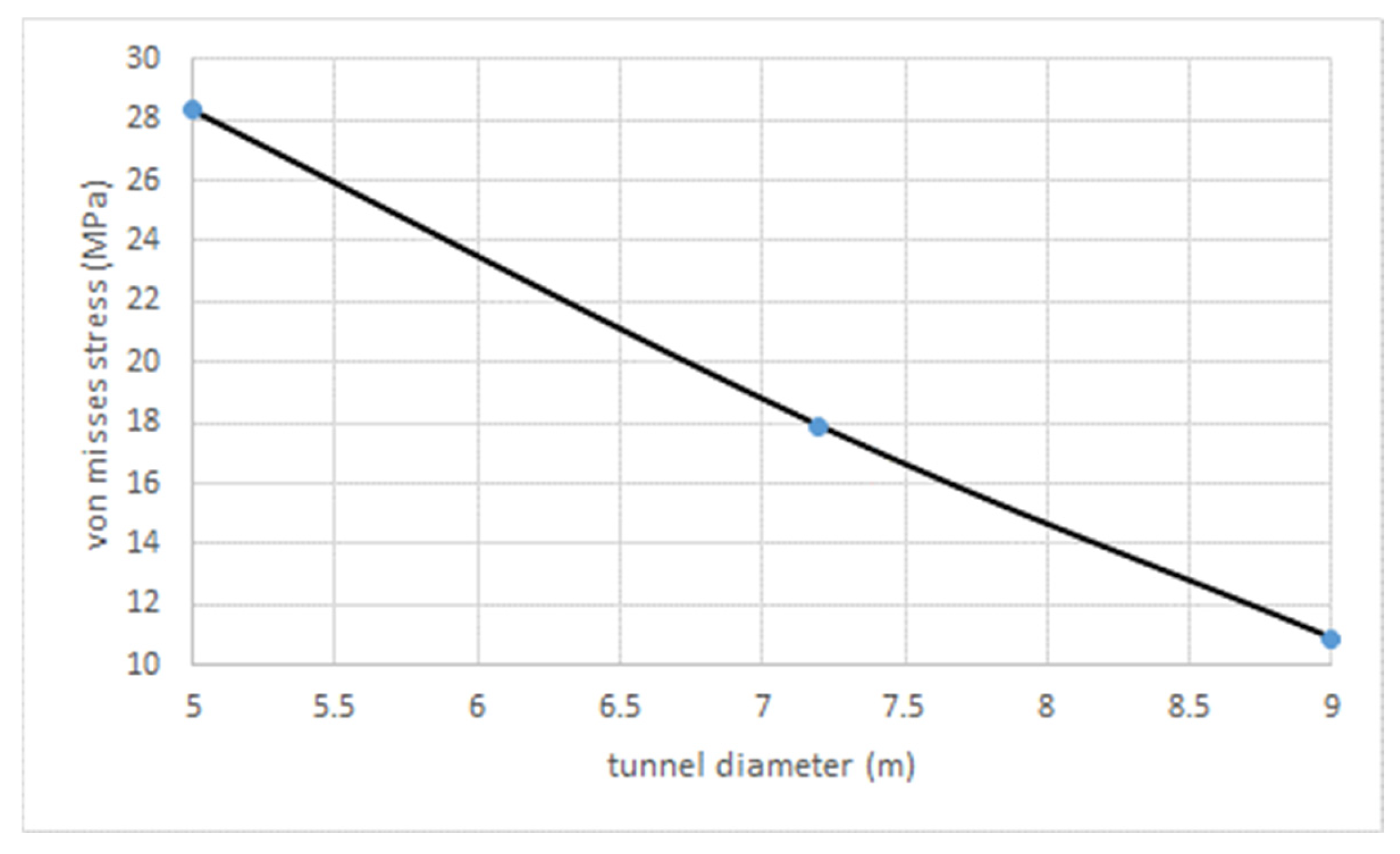
Figure 20 demonstrates the relationship between the tunnel inner diameter and the peak von Mises stress experienced by the receiver tunnel, with the tunnel spacing set equal to the tunnel diameter. The results indicate a clear decreasing trend in peak von Mises stress as the tunnel diameter increases. Specifically, smaller tunnel diameters are associated with higher stress concentrations, while increasing the diameter leads to a significant reduction in the maximum stress values. This behavior suggests that enlarging the tunnel diameter can effectively reduce the structural stresses imposed on the tunnel lining, thereby enhancing the overall stability and safety of the tunnel system.
4.3. Effect of Tunnel Shape
Three tunnel shapes were examined: circular (Case 11), horseshoe (Case 12), and box (Case 13), all constructed using the same composite lining material (UHPRC–EPS Foam 25 (L)–UHPRC). The spacing between the donor and receiver tunnels was maintained at 5 m, and a constant explosive charge of 454 kg of TNT was applied in all cases.
4.3.1. Donor Tunnel
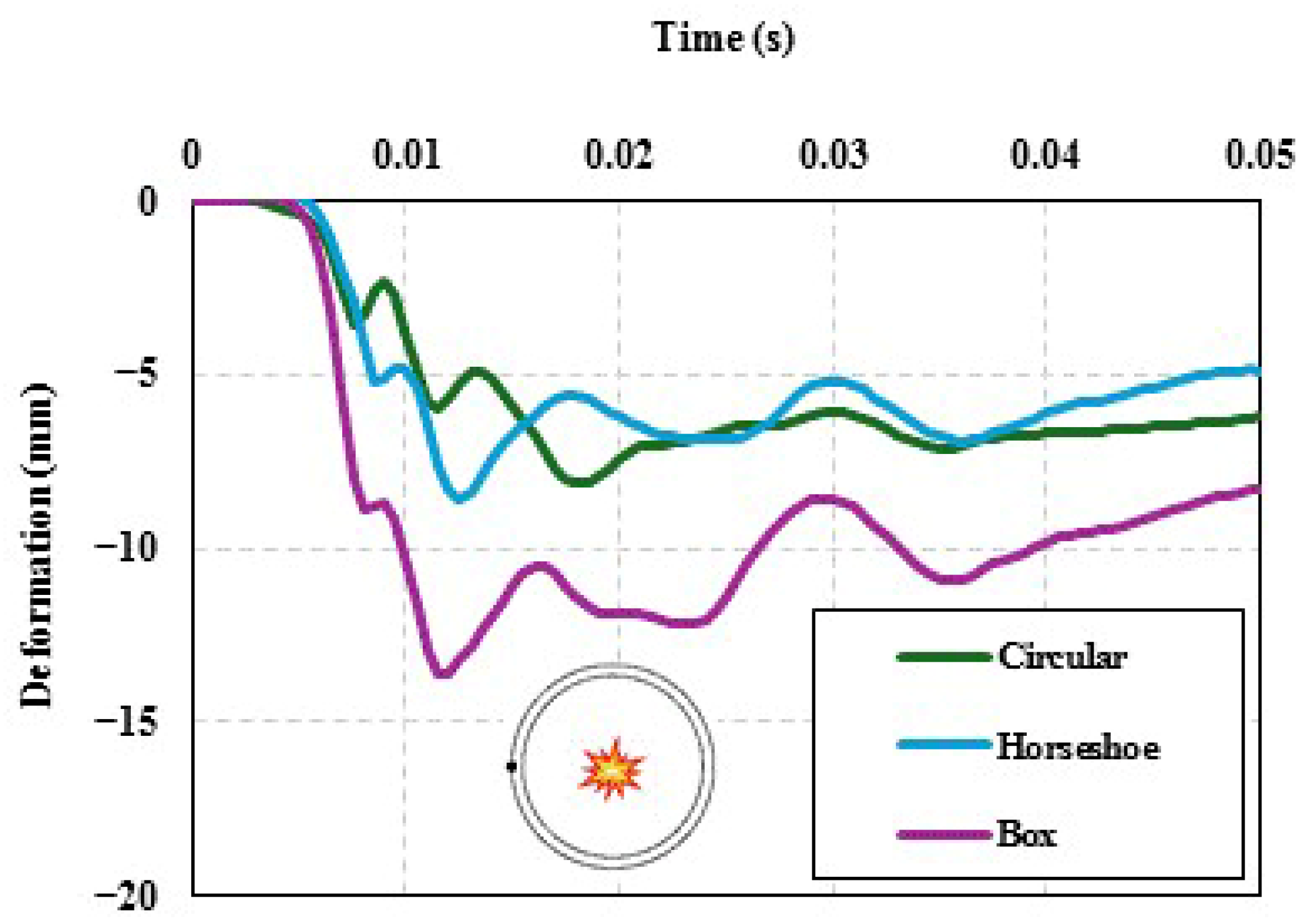
Figure 21 shows the time-history of deformation at a point located on the outer side wall of the donor tunnel, nearest to the receiver tunnel, for various cases. The circular tunnel appeared to be the most effective in mitigating blast effects, particularly in terms of delaying the time to reach maximum deformation. For the donor tunnels, the results revealed comparable peak deformation values for the circular and horseshoe tunnels—8.14 mm and 8.57 mm, respectively. However, the circular tunnel reached its peak at 0.018 s, while the horseshoe tunnel did so earlier at 0.0125 s. The box-shaped tunnel recorded the highest deformation of 13.62 mm, occurring even earlier at 0.012 s. These findings suggest that the box tunnel is the most vulnerable among the three configurations. This vulnerability may be attributed to its flat exterior surfaces, which are more susceptible to absorbing blast waves compared to the curved surfaces of the circular and horseshoe tunnels.
4.3.2. Receiver Tunnel
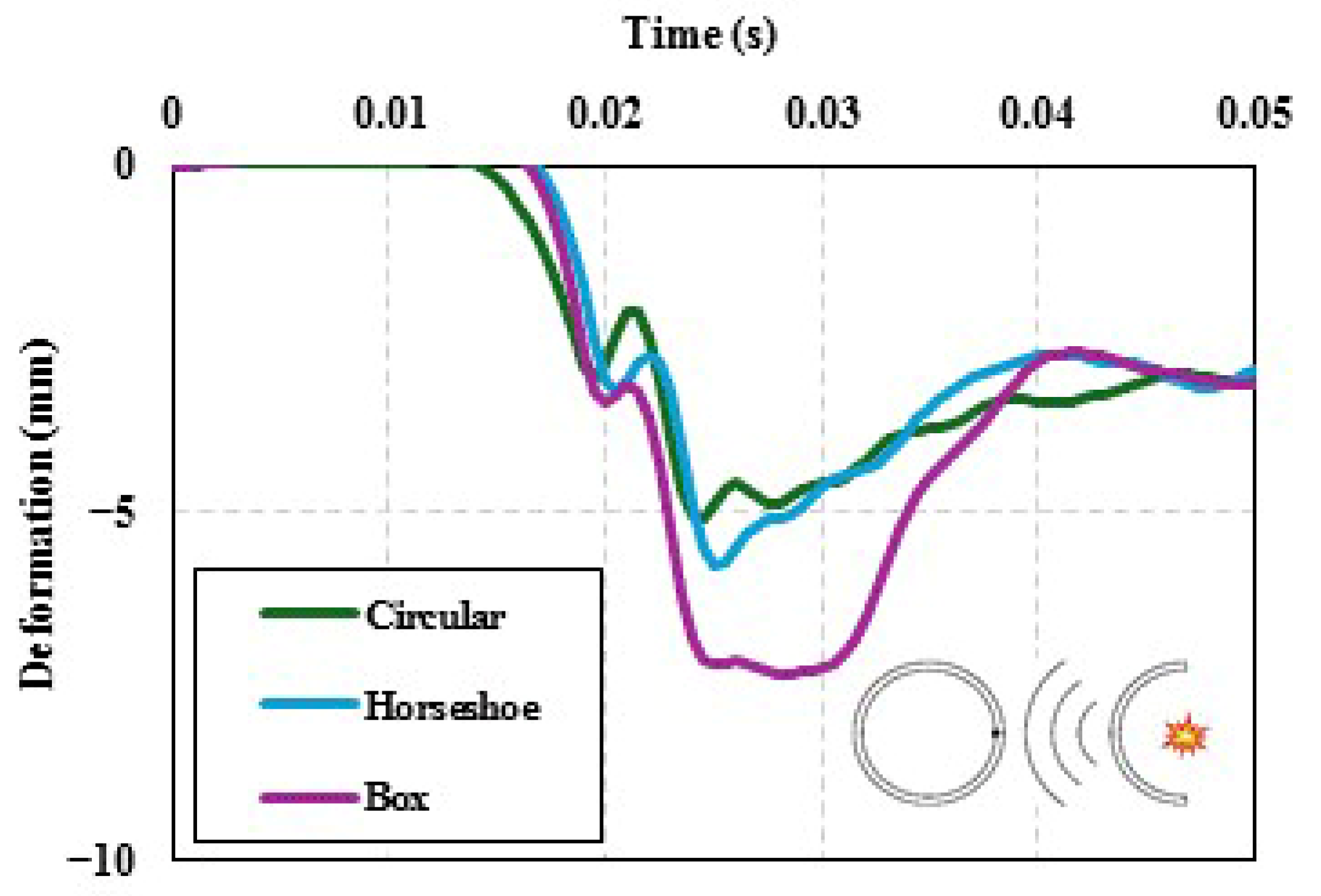
For the receiver tunnel, the results followed a similar trend, with the circular tunnel demonstrating superior performance in mitigating deformation, as presented in
Figure 22. The circular tunnel recorded a maximum deformation of 5.06 mm at 0.0245 s, while the horseshoe-shaped tunnel reached 5.77 mm at 0.025 s. The box-shaped tunnel again proved to be the most vulnerable, exhibiting a maximum deformation of 7.33 mm at 0.028 s. The peak displacement in the box tunnel was approximately 1.2 times greater than that of the horseshoe tunnel and 1.4 times greater than that of the circular tunnel.
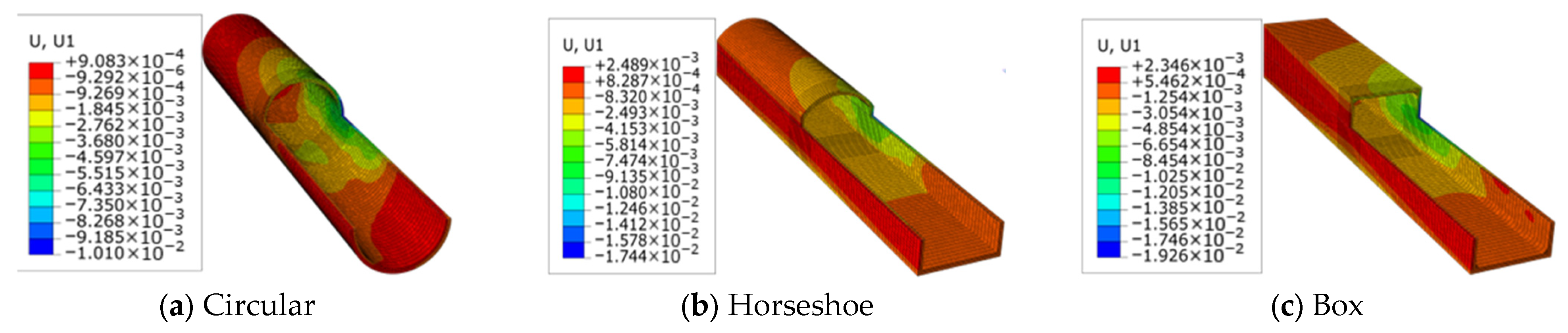
The color contour shading of the receiver tunnel deformation for different tunnel shapes is introduced in
Figure 23. The color contour plots illustrate the distribution and magnitude of deformations within each tunnel geometry. It is evident that the tunnel shape significantly influences the deformation behavior. The circular tunnel exhibits the most uniform deformation distribution, while the horseshoe and box shapes show higher concentrations of deformation, particularly at the corners and along the tunnel walls. These results highlight the importance of tunnel geometry in controlling deformation, with circular tunnels generally providing better structural performance and reduced localized deformations compared to non-circular shapes.
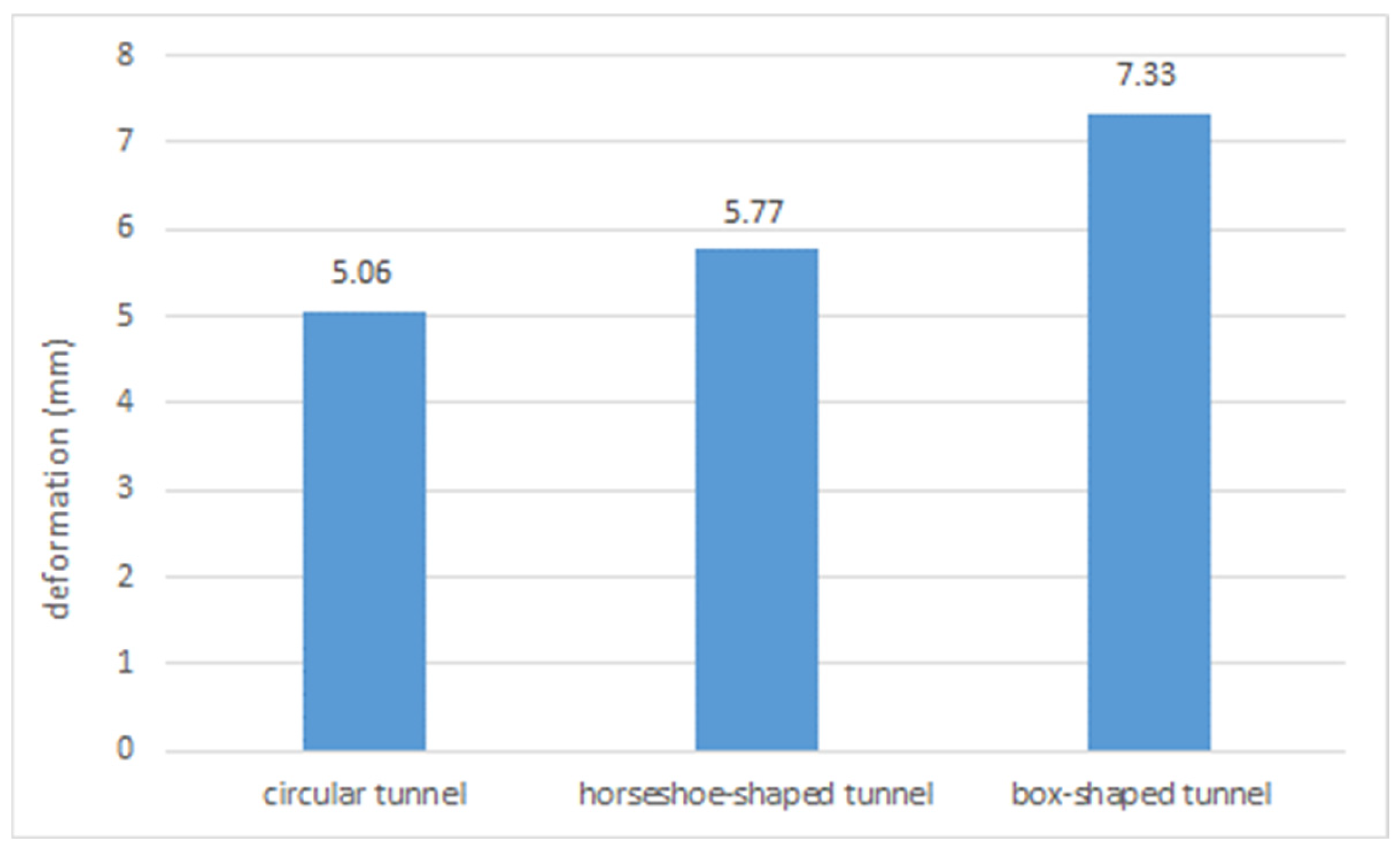
Figure 24 illustrates the effect of tunnel shape on the peak deformation experienced by the receiver tunnel. The results show that the circular tunnel exhibits the lowest peak deformation (5.06 mm), followed by the horseshoe-shaped tunnel (5.77 mm), while the box-shaped tunnel displays the highest deformation (7.33 mm). This trend indicates that circular tunnels are more effective in minimizing structural deformation, likely due to their ability to distribute stresses more evenly around the tunnel perimeter. In contrast, non-circular shapes such as horseshoe and box tunnels are more susceptible to higher deformations, particularly at corners and flat surfaces, emphasizing the structural advantages of circular tunnel designs.
Changes in tunnel shape also produced noticeable differences in von Mises stresses between Case 11 and Cases 12 and 13, as illustrated in
Figure 25.
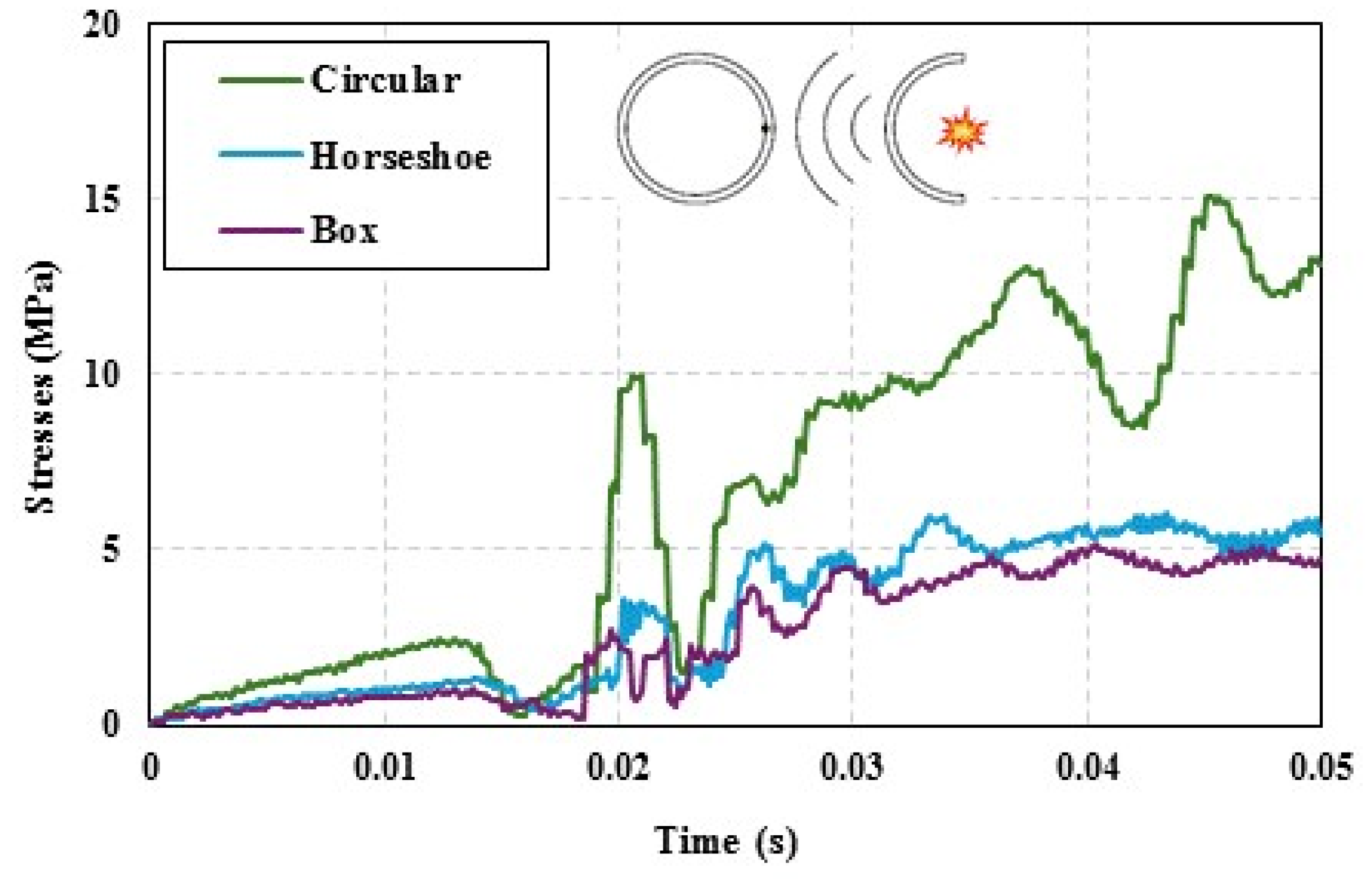
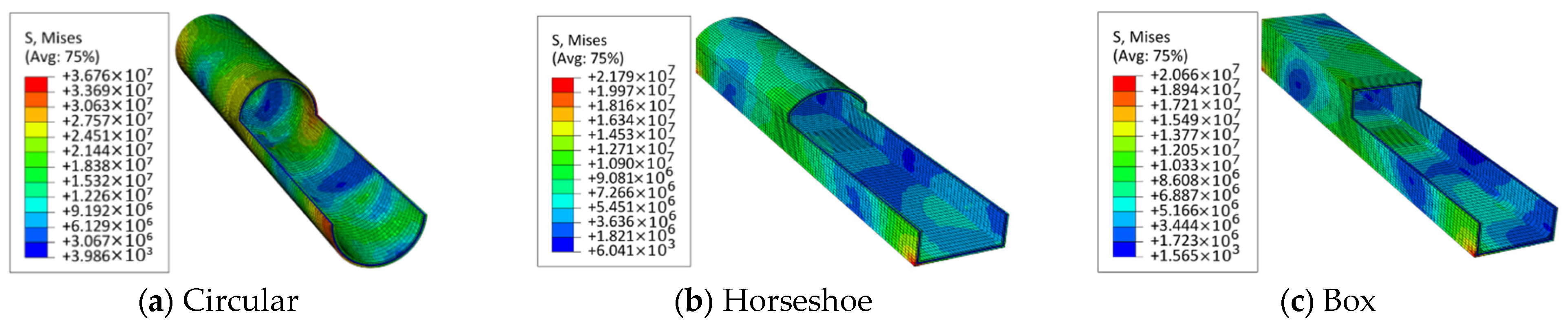
Figure 26 presents the von Mises stress distributions for different tunnel geometries. The results indicate that tunnel shape has a significant influence on the stress response under dynamic loading. The circular tunnel recorded the highest peak von Mises stress of 1.5 × 10
7 Pa at 0.0455 s, suggesting greater stress concentration along its curved perimeter. In contrast, the horseshoe-shaped tunnel reached a reduced maximum of 6.0 × 10
6 Pa at 0.0435 s, while the box-shaped tunnel exhibited the lowest peak of 5.1 × 10
6 Pa at 0.0405 s. These findings demonstrate that non-circular tunnel profiles, particularly the horseshoe and box sections, can effectively mitigate stress concentrations compared to circular tunnels. Moreover, the contour plots reveal that localized stress intensities develop near the crown and sidewalls, emphasizing the importance of geometry selection in minimizing damage initiation within receiver tunnels.
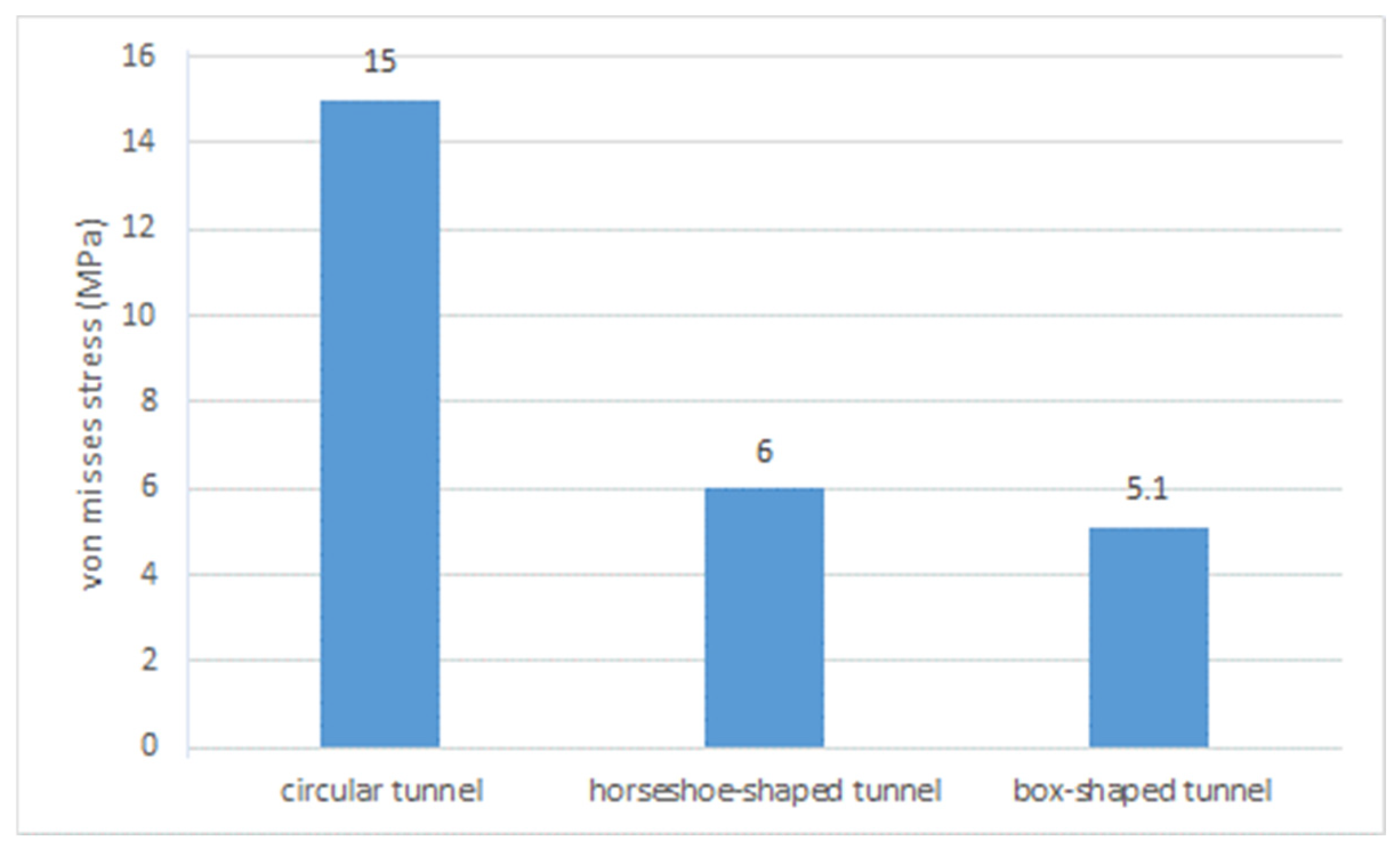
Figure 27 shows the variation in peak von Mises stress in the receiver tunnel for different tunnel shapes: circular, horseshoe, and box. The results indicate that the circular tunnel experiences the highest peak von Mises stress (15 MPa), while the horseshoe-shaped and box-shaped tunnels exhibit significantly lower peak stresses of 6 MPa and 5.1 MPa, respectively. This trend suggests that although circular tunnels are more effective in minimizing deformation, they are subject to higher stress concentrations compared to non-circular shapes. In contrast, the horseshoe and box-shaped tunnels distribute the stresses more evenly, resulting in lower peak von Mises stress values. These findings highlight the trade-off between deformation and stress concentration when selecting tunnel shapes for underground construction.
4.4. Effect of TNT Charge Weight
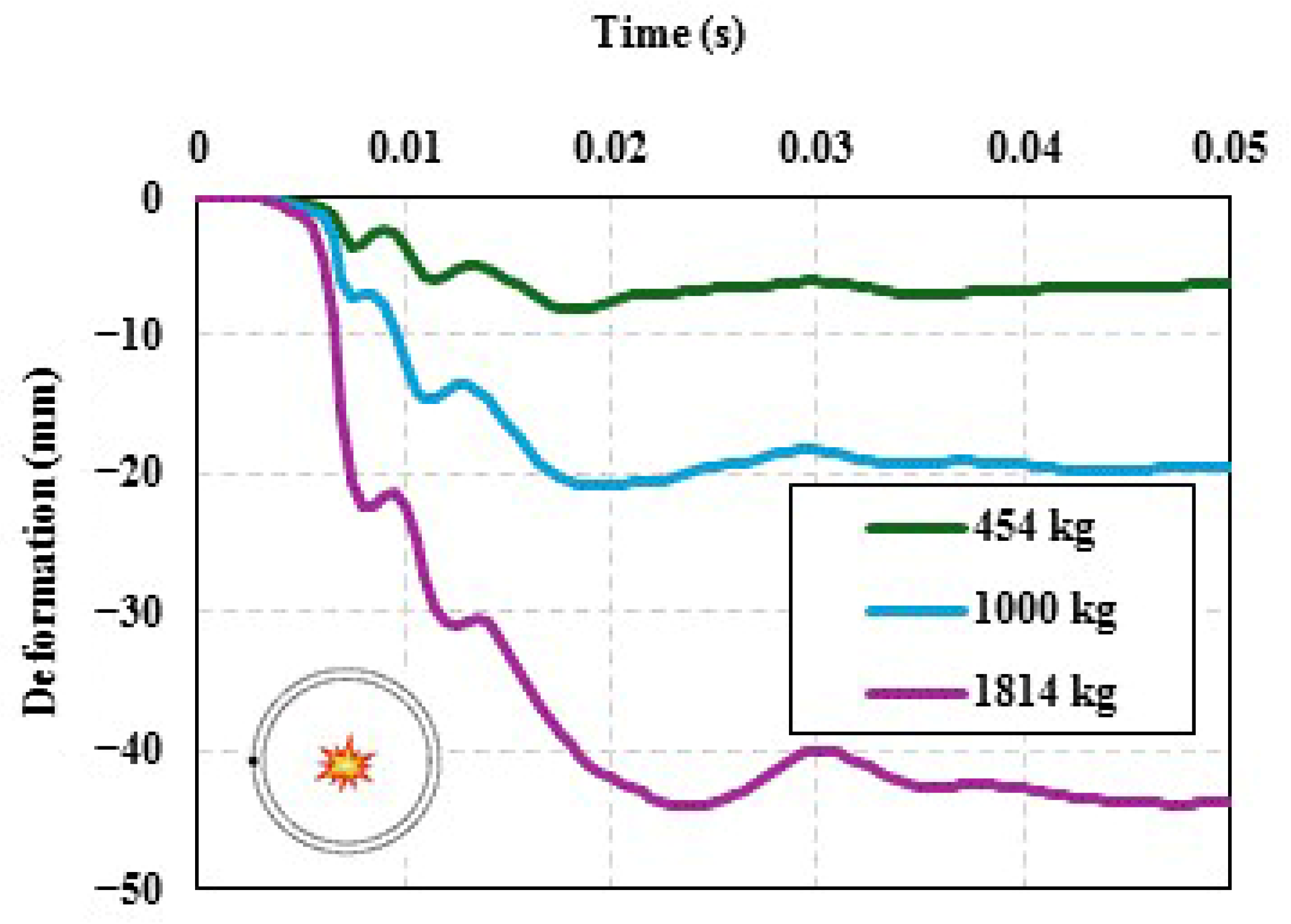
The displacements at the previously defined reference points were analyzed under three different blast load scenarios with TNT charge weights of 1814 kg, 1000 kg, and 454 kg, while keeping the lining material, tunnel diameter, tunnel spacing, and tunnel shape constant, as presented in
Table 1. As expected, the maximum displacement values increased with higher charge weights. Despite this, the oscillation mode at each reference point remained consistent across the different cases. Overall, larger explosive charges resulted in more significant displacements at all reference locations, clearly illustrating the direct relationship between blast intensity and structural response.
4.4.1. Donor Tunnel
Figure 28 presented the time-history of deformation at a point located on the outer side wall of the donor tunnel, nearest to the receiver tunnel, under different TNT weights. For a charge weight of 454 kg (Case 11), the donor tunnel recorded a maximum deformation of 8.14 mm at the reference point, occurring at the early time of 0.018 s. When the charge weight increased to 1000 kg (Case 10), the maximum deformation rose to 20.8 mm at 0.019 s—an increase of approximately 2.5 times. In the baseline Case 5, with a charge weight of 1814 kg, the maximum deformation reached 44.03 mm at 0.024 s, which is nearly 5 times greater than the deformation recorded for the 454 kg charge.
4.4.2. Receiver Tunnel
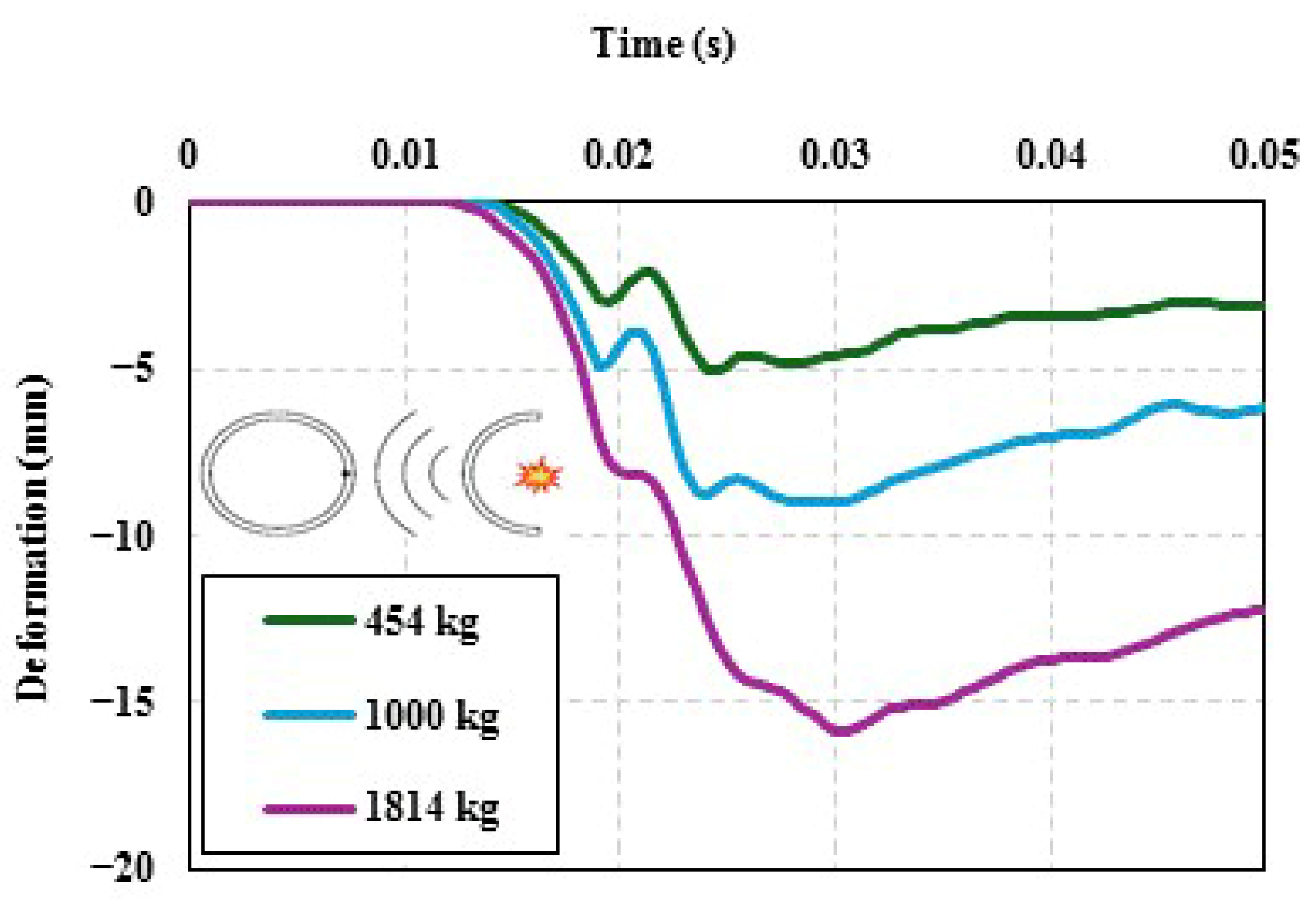
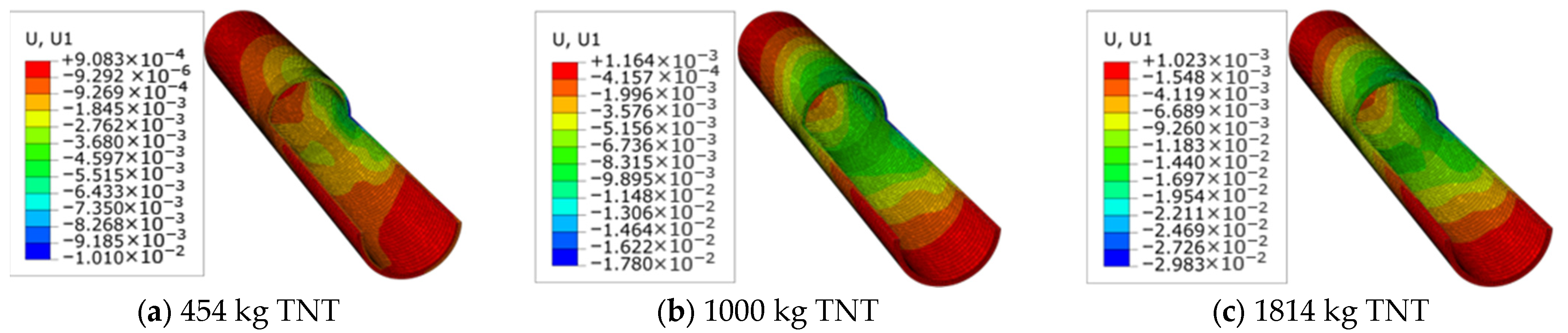
The relationship between time and deformation of the receiver tunnel under varying TNT charge weights is illustrated in
Figure 29, while the corresponding deformation color contour shading is presented in
Figure 30. The results demonstrate that increasing the explosive charge leads to a significant rise in tunnel deformation. In Case 11 (454 kg TNT), the maximum deformation at the reference point was 5.06 mm, occurring at 0.0245 s. When the charge weight increased to 1000 kg in Case 10, the deformation rose to 9.0 mm at 0.030 s. The highest charge weight tested (1814 kg, Case 5) produced a maximum deformation of 15.88 mm at 0.0305 s.
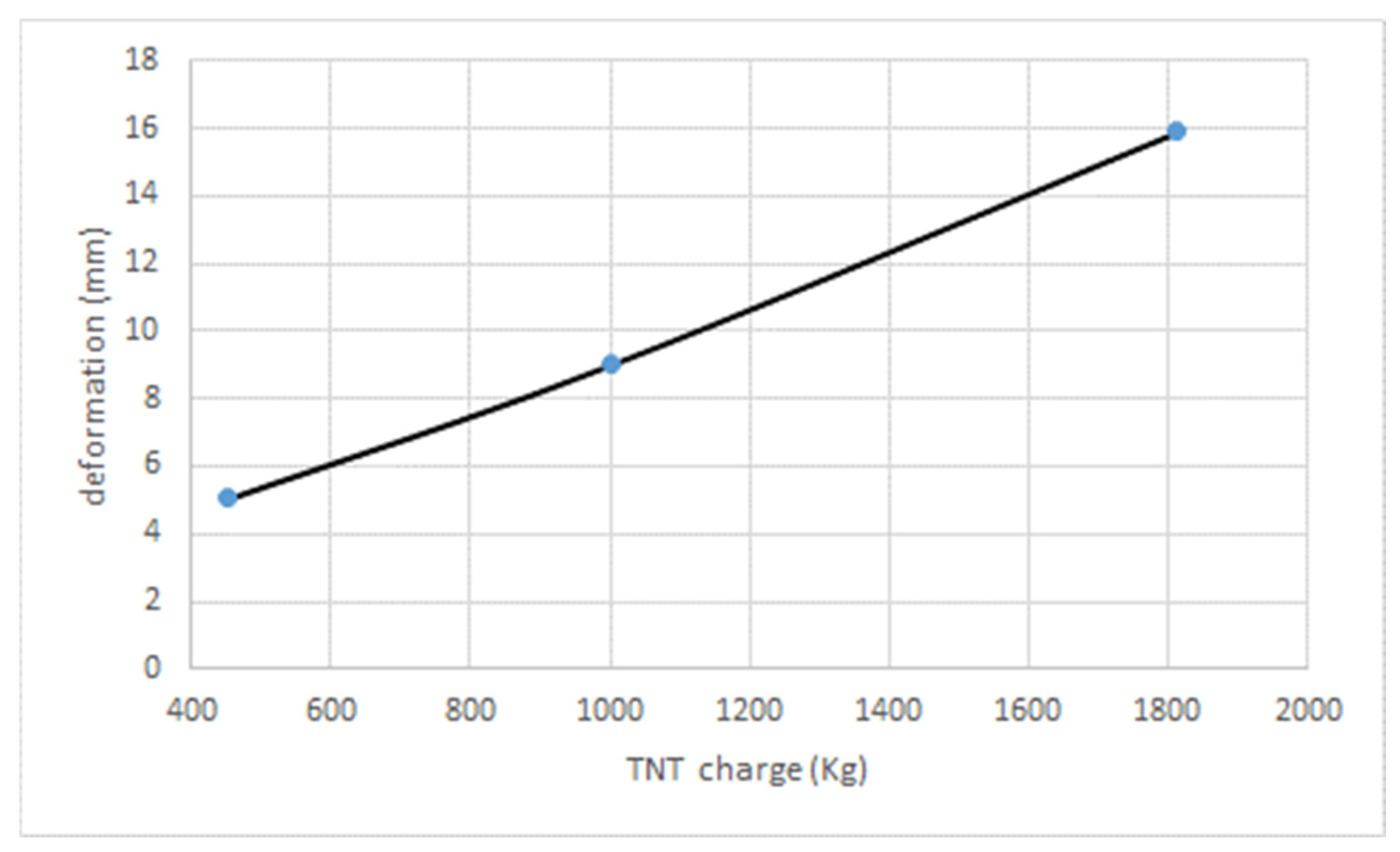
Figure 31 illustrates the relationship between TNT charge and the resulting deformation of the tunnel structure. As shown, there is a clear linear increase in tunnel deformation with increasing TNT charge. Specifically, as the TNT weight rises from 454 kg to 1814 kg, the peak deformation grows significantly, indicating that higher explosive loads induce greater structural displacement. This trend highlights the direct and substantial impact of explosive magnitude on tunnel integrity, emphasizing the importance of considering blast load effects in tunnel design and safety assessments.
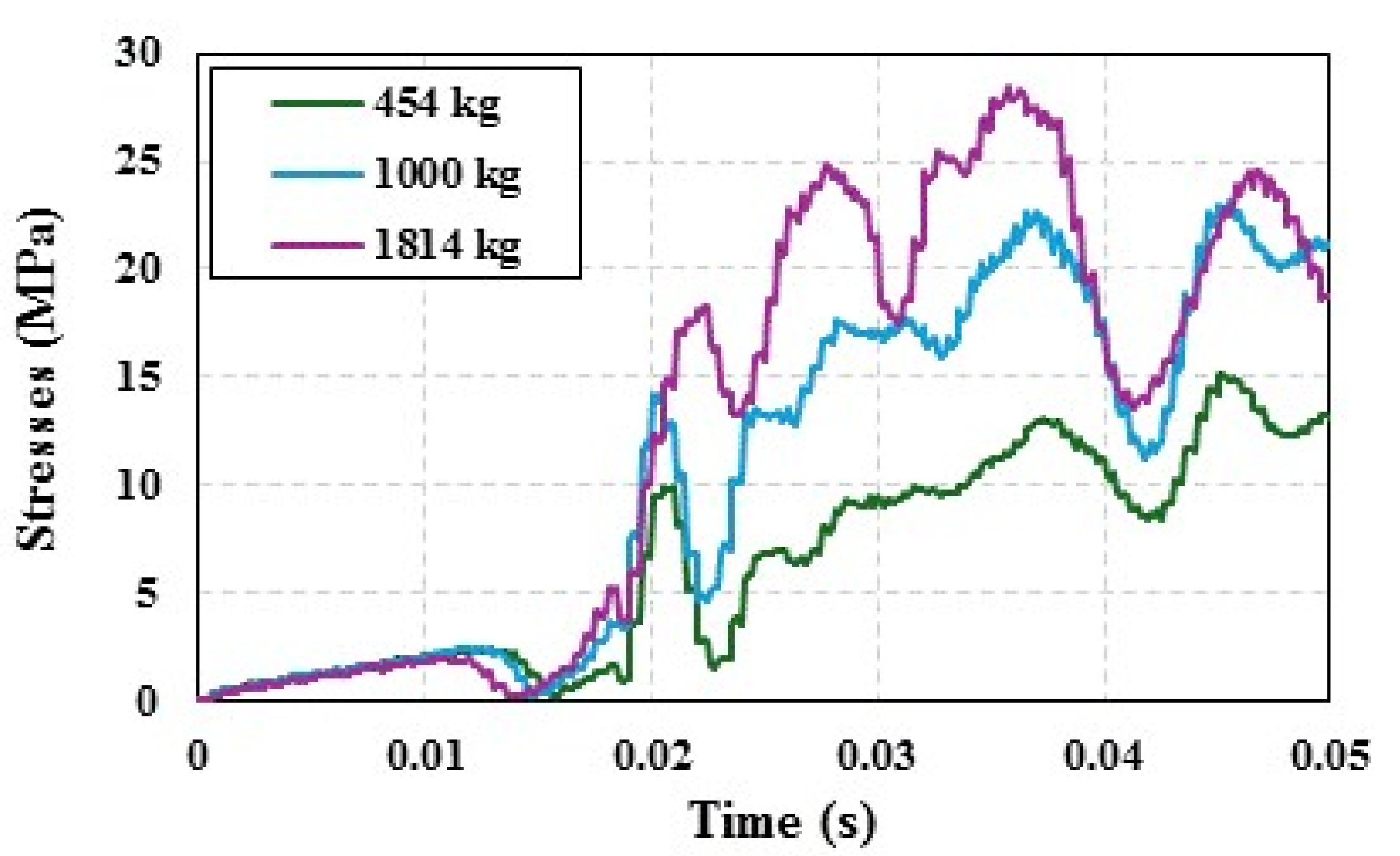
The influence of varying TNT charge weights on stress evolution is illustrated in
Figure 32, while the corresponding von Mises stress contours are shown in
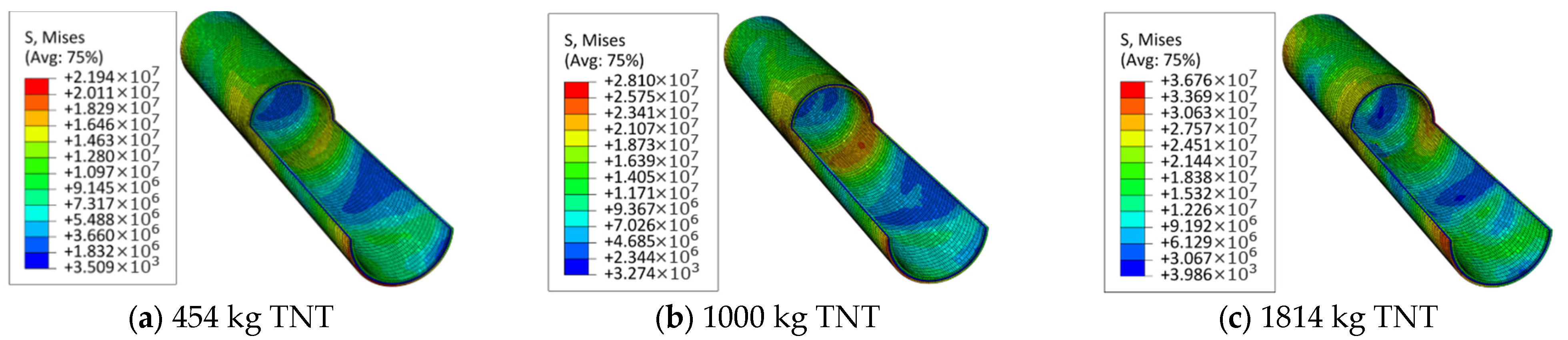
Figure 33. The results clearly demonstrate that increasing the explosive charge significantly amplifies the stresses within the tunnel. For Case 11 (454 kg TNT), the maximum stress at the reference point was 1.5 × 10
7 Pa, occurring at 0.0455 s. When the charge weight was increased to 1000 kg (Case 10), the peak stress rose to 2.3 × 10
7 Pa at the same time. The highest charge weight investigated, 1814 kg (Case 5), generated a maximum stress of 2.8 × 10
7 Pa, which occurred earlier at 0.036 s. These findings highlight the strong dependency of stress magnitude and timing on explosive intensity, with larger charges not only producing higher stress levels but also accelerating their occurrence.
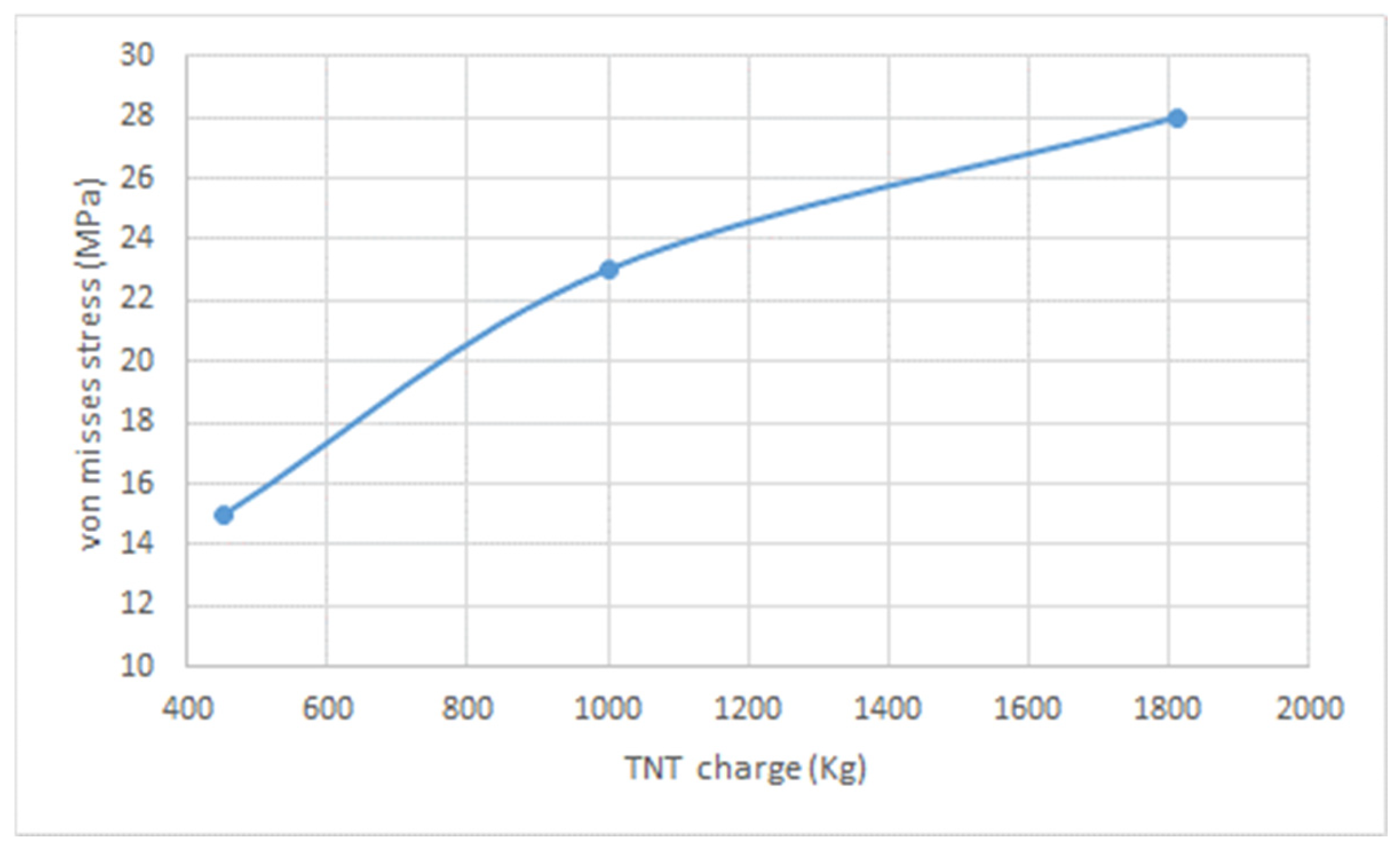
Figure 34 illustrates the relationship between TNT charge weight and the peak von Mises stress experienced by the tunnel structure. As the TNT charge increases from 454 kg to 1814 kg, there is a noticeable rise in the maximum von Mises stress, with the curve showing a nonlinear upward trend. This indicates that higher explosive loads result in significantly greater stress concentrations within the tunnel lining. The results highlight the sensitivity of tunnel structural response to blast magnitude, emphasizing the need for robust design and reinforcement strategies to withstand increased stress levels under larger explosive threats.
4.5. Effect of Spacing on the Receiver Tunnel
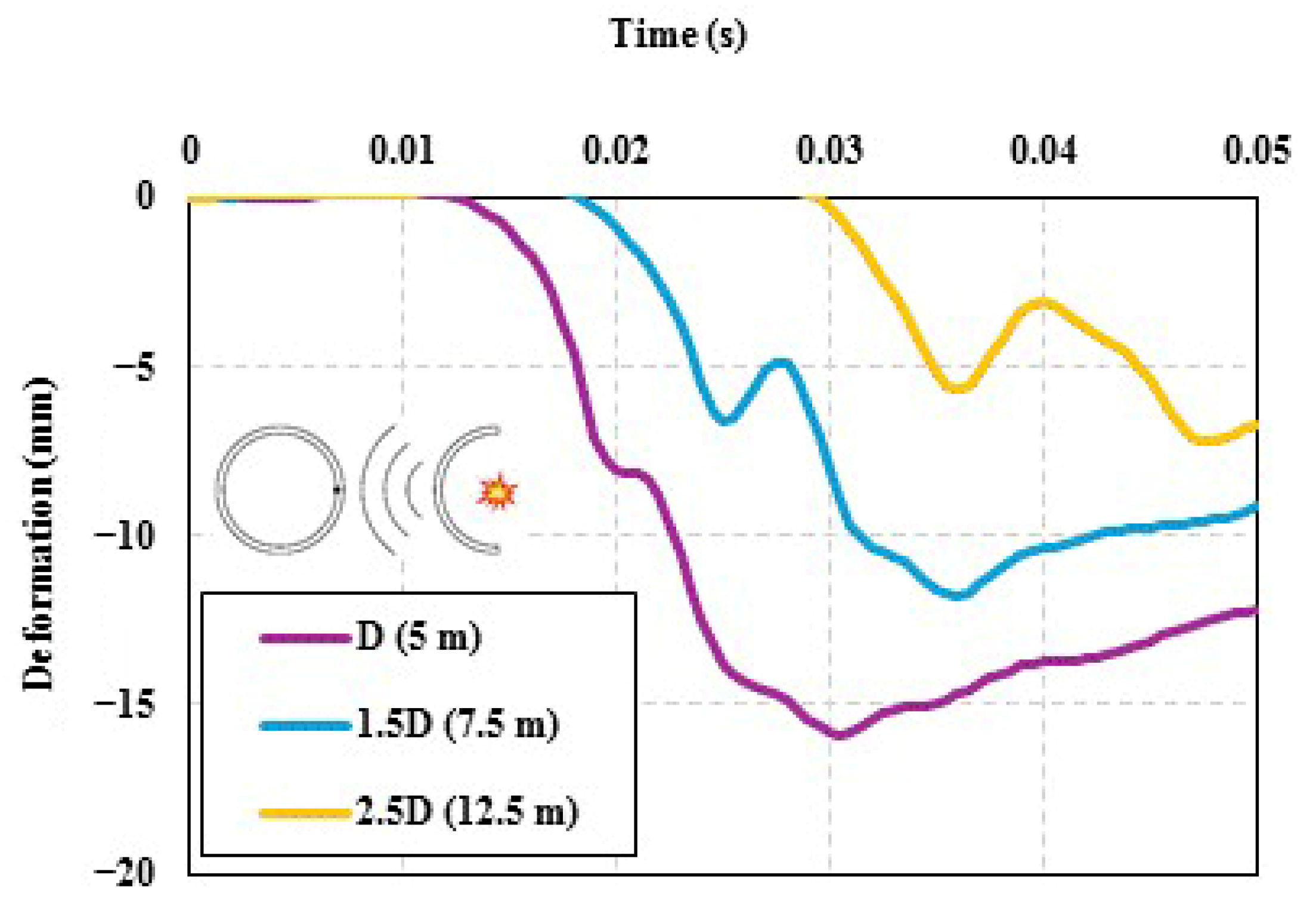
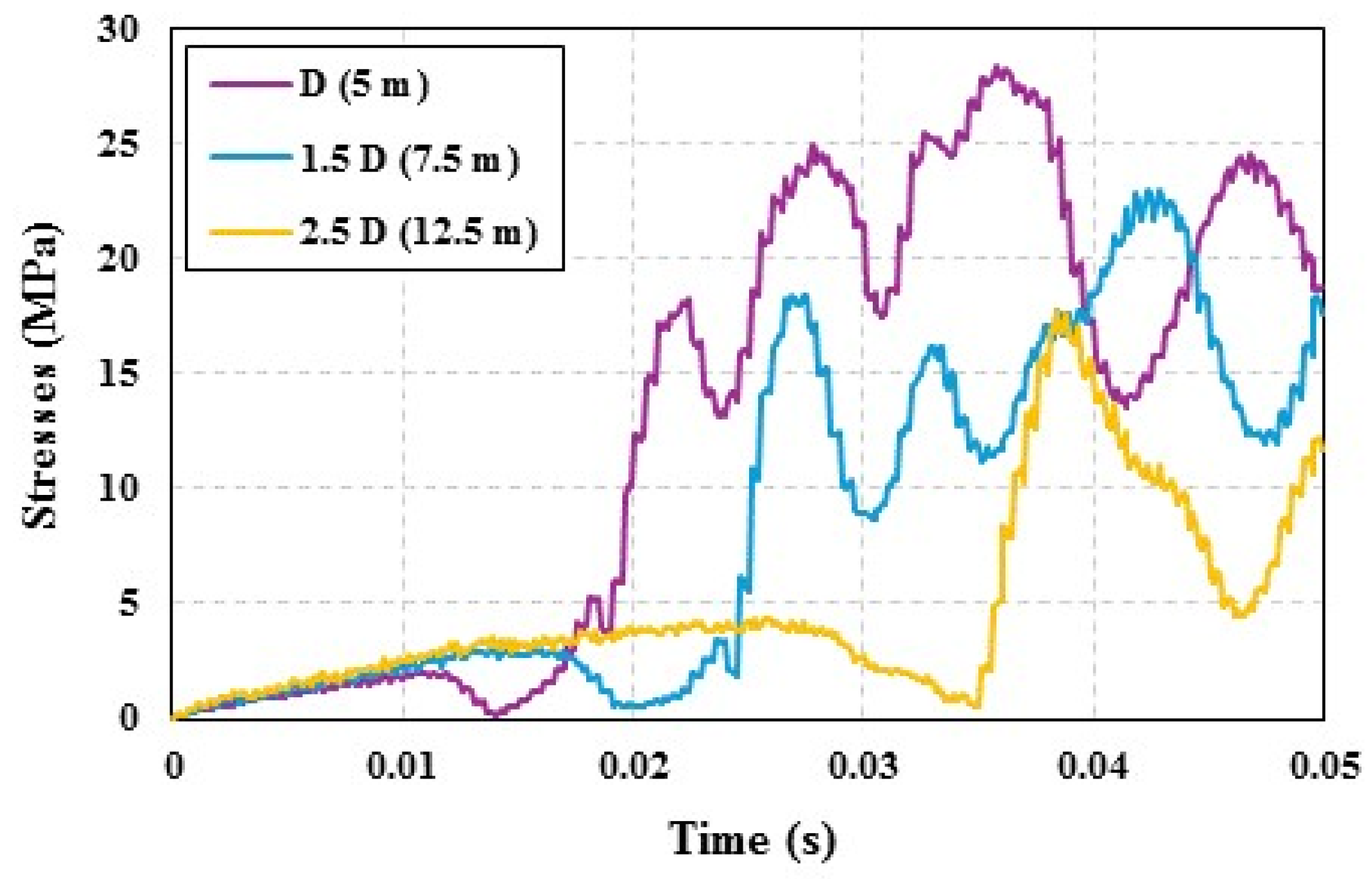
This study investigates how the spacing between tunnels influences the performance of the receiver tunnel when the adjacent (donor) tunnel is subjected to internal explosion. The relationship between time and deformation of the receiver tunnel, under varying spacing between the donor and receiver tunnels, is illustrated in
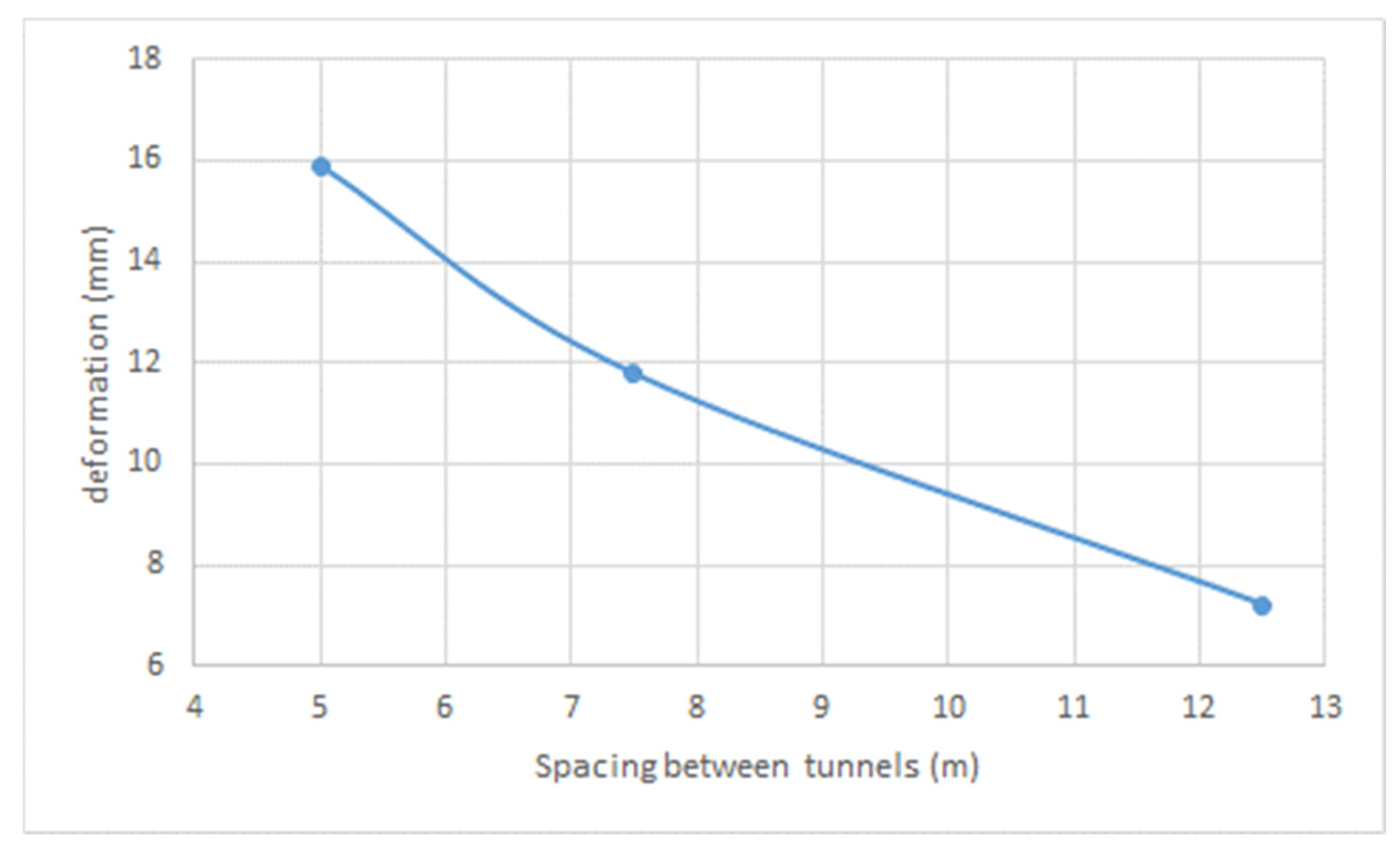
Figure 35. In this analysis, the lining material, tunnel shape, and TNT charge weight are kept constant to isolate the impact of spacing on tunnel performance. The distances between the tunnels are D (5 m), 1.5 D (7.5 m) and 2.5 D (12.5 m). The deformation of the receiver tunnel at the reference point decreases as the distance between the donor and receiver tunnels increases. Additionally, the time required to reach the maximum deformation becomes longer. This delay is attributed to the shock wave traveling a greater distance. When the spacing between tunnels was 1.5 D (7.5 m), the maximum deformation recorded was 11.77 mm at 0.036 s. Increasing the spacing to 2.5 D (12.5 m) reduced the maximum deformation by approximately 38.7%, resulting in a value of 7.21 mm at 0.048 s.
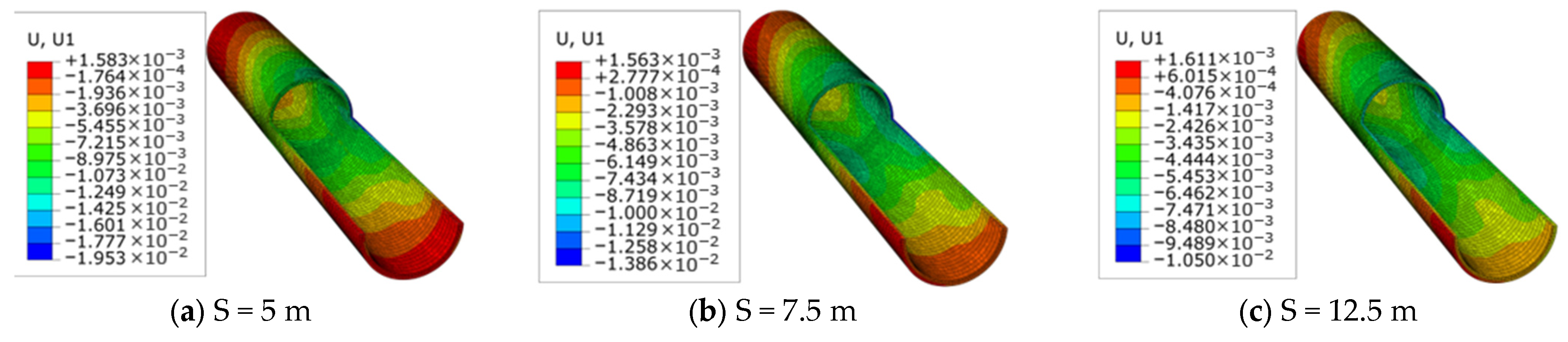
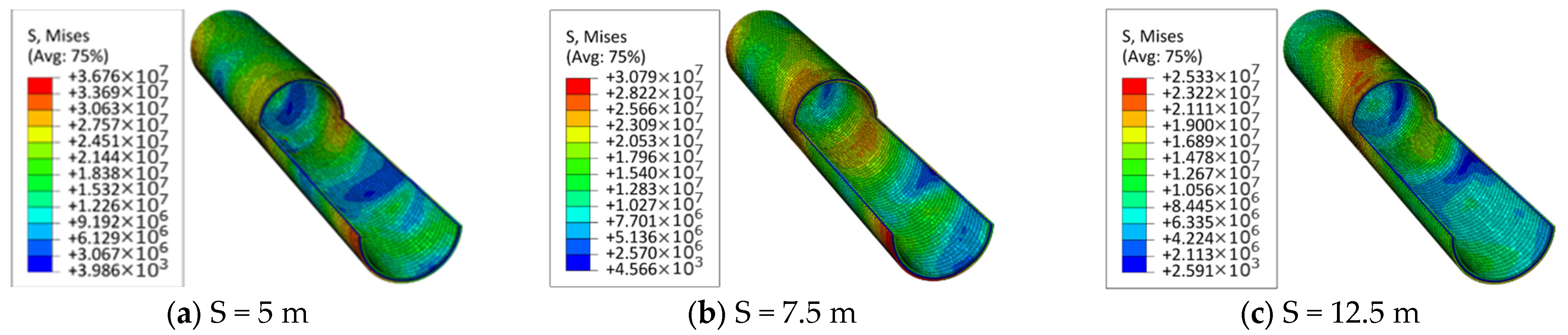
In addition, the color contour shading of the receiver tunnel deformation with different spacing is presented in
Figure 36. The color shading illustrates how the magnitude and distribution of deformation change as the spacing between tunnels increases. It is evident that smaller spacing (S = 5 m) results in higher and more concentrated deformations within the tunnel structure. As the spacing increases to 7.5 m and 12.5 m, the overall deformation decreases and becomes more uniformly distributed. This trend indicates that increasing the distance between tunnels can effectively reduce the structural impact and deformation experienced by each tunnel, highlighting the importance of adequate spacing in tunnel design to enhance stability and minimize adverse interactions.
Figure 37 illustrates the effect of tunnel spacing on the peak deformation experienced by the tunnel structure. As the spacing between tunnels increases from 5 m to 12.5 m, there is a clear and significant reduction in deformation. The highest deformation occurs at the smallest spacing, while the lowest deformation is observed at the largest spacing. This trend demonstrates that increasing the distance between adjacent tunnels effectively reduces structural displacement, likely due to decreased interaction and stress concentration between the tunnels. These findings emphasize the importance of adequate tunnel spacing in minimizing deformation and enhancing the overall stability of underground structures.
Figure 38 and
Figure 39 show the von mises stresses at the reference point of the receiver tunnel under different spacing conditions. It was found that the von mises stresses tend to decrease as the spacing between the donor and receiver tunnels increased. At a spacing of 1.5 D (7.5 m), the maximum recorded stress was 2.29 × 10
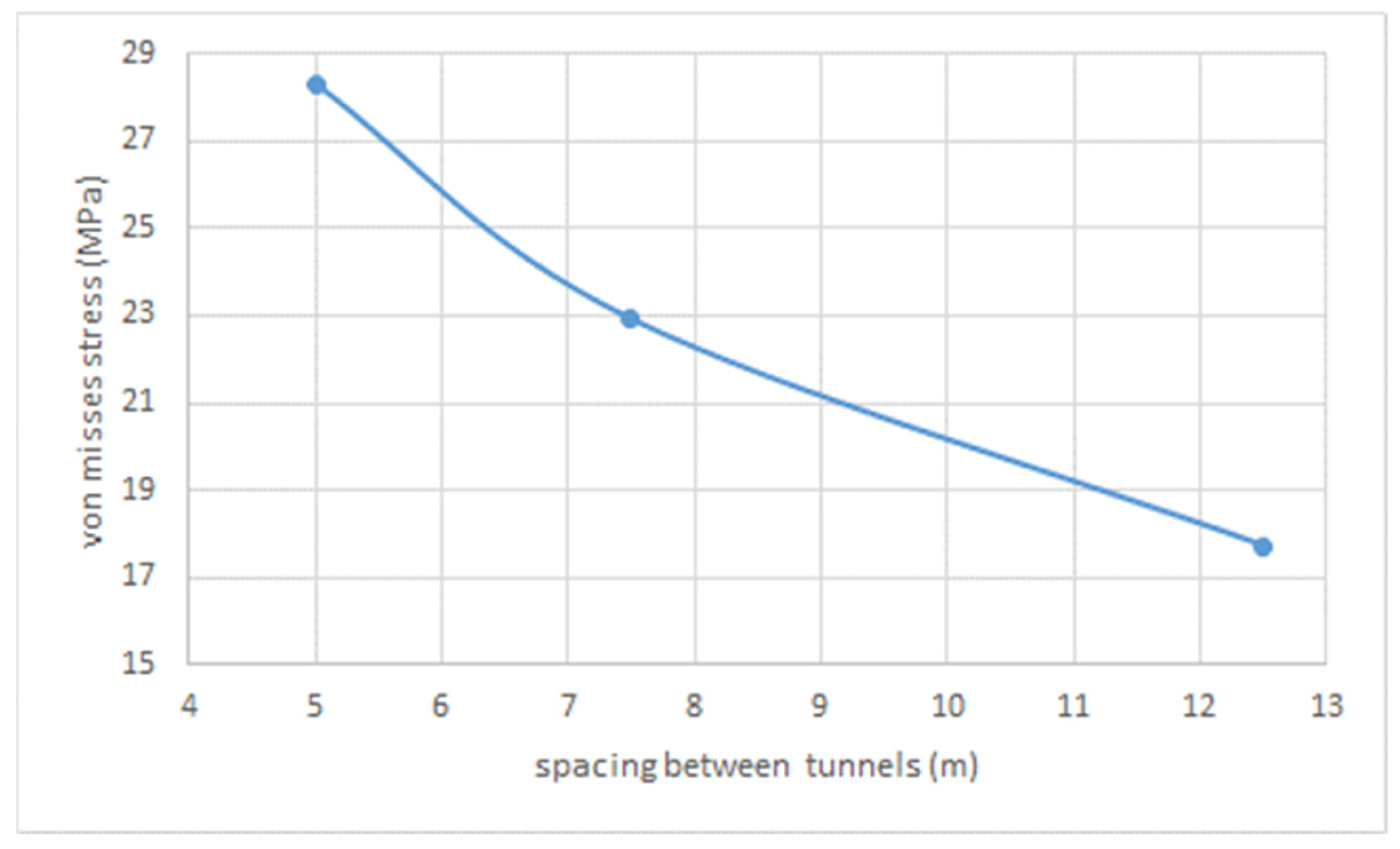
7 Pa at 0.043 s. When the spacing was increased to 2.5 D (12.5 m), the peak stress decreased by approximately 22.7%, reaching 1.77 × 10
7 Pa at 0.0385 s. These results indicate that increasing tunnel separation effectively reduces stress transmission and lowers the dynamic response of the receiver tunnel. The color contour plots reveal that as the spacing between tunnels increases, the magnitude and concentration of von Mises stresses within the tunnel structure decrease. At the smallest spacing (S = 5 m), the tunnel experiences higher stress concentrations, particularly around the regions closest to adjacent tunnels. As the spacing increases to 7.5 m and 12.5 m, the stress levels become lower and more evenly distributed. This trend demonstrates that increasing tunnel spacing effectively reduces stress interactions and concentrations, thereby enhancing the structural safety and performance of the tunnel system.
Figure 40 illustrates the effect of tunnel spacing on the peak von Mises stress within the tunnel structure. The graph shows a clear decreasing trend, where the von Mises stress significantly drops as the spacing between tunnels increases from 5 m to 12.5 m. These findings highlight the importance of adequate tunnel spacing in minimizing structural stresses and improving the overall performance and durability of underground tunnel systems.
Based on the results of this study, several measures can help mitigate blast-induced damage to the receiver tunnel. Increasing the standoff distance between the explosive source and the tunnel significantly reduces peak stress and deformation. Similarly, the use of energy-absorbing materials, such as high-density polyurethane foam, effectively attenuates blast waves and limits structural response. Adjusting the tunnel lining thickness and reinforcing critical zones further improves resistance to damage. The observed trends indicate that these mitigation strategies work by redistributing stresses, reducing localized concentrations, and dissipating energy, thereby lowering the risk of structural failure. These insights provide practical guidance for tunnel design and operational safety under extreme loading scenarios.
4.6. Practical Application of the Findings
To facilitate practical application of the findings, a concise design-oriented summary is provided in
Table 7. This table compares the relative effectiveness of different tunnel geometries, materials, and protective configurations in mitigating blast-induced effects, translating the numerical results into clear engineering guidance.
4.7. Effect of Soil Type
In the present study, a single representative soil type was adopted to isolate the effects of the investigated parameters; however, soil stiffness and strength are known to influence blast wave propagation and tunnel response. In general, soils with higher stiffness or strength tend to transmit stress waves more efficiently, resulting in higher peak stresses and reduced attenuation around the tunnel lining. Conversely, softer or weaker soils are more effective in dissipating blast energy, which may lead to lower stress concentrations but larger overall deformations. Although the absolute magnitudes of stress and displacement may vary with soil properties, the relative trends and parametric relationships observed in this study are expected to remain consistent. This discussion highlights the applicability of the findings while acknowledging the potential influence of soil variability in practical engineering conditions.
4.8. Limitations
The present study is subject to several limitations that should be acknowledged. First, a single representative soil type was considered to isolate the influence of the investigated parameters; variations in soil stiffness and strength may affect the absolute magnitude of the tunnel response under blast loading. Second, certain modeling assumptions were adopted, including idealized material behavior, simplified blast representation, and boundary conditions, which may influence localized response details. Nevertheless, these assumptions are commonly employed in numerical blast–structure interaction studies and allow for a clear investigation of relative trends and response mechanisms. Despite these limitations, the comparative findings and parametric insights provided by this study remain meaningful for understanding tunnel behavior under blast loading.