Article

Deep Learning- and Multi-Point Analysis-Based Systematic Deformation Warning for Arch Dams

1
SPIC Dam Management and Pumped Storage Development Center, Xi’an 716000, China
2
Large Dam Safety Supervision Center, National Energy Administration, Hangzhou 311122, China
*
Author to whom correspondence should be addressed.
Infrastructures 2025, 10(7), 170; https://doi.org/10.3390/infrastructures10070170

Submission received: 15 May 2025 / Revised: 27 June 2025 / Accepted: 1 July 2025 / Published: 3 July 2025
(This article belongs to the Topic Disaster Risk Management and Resilience)

Abstract

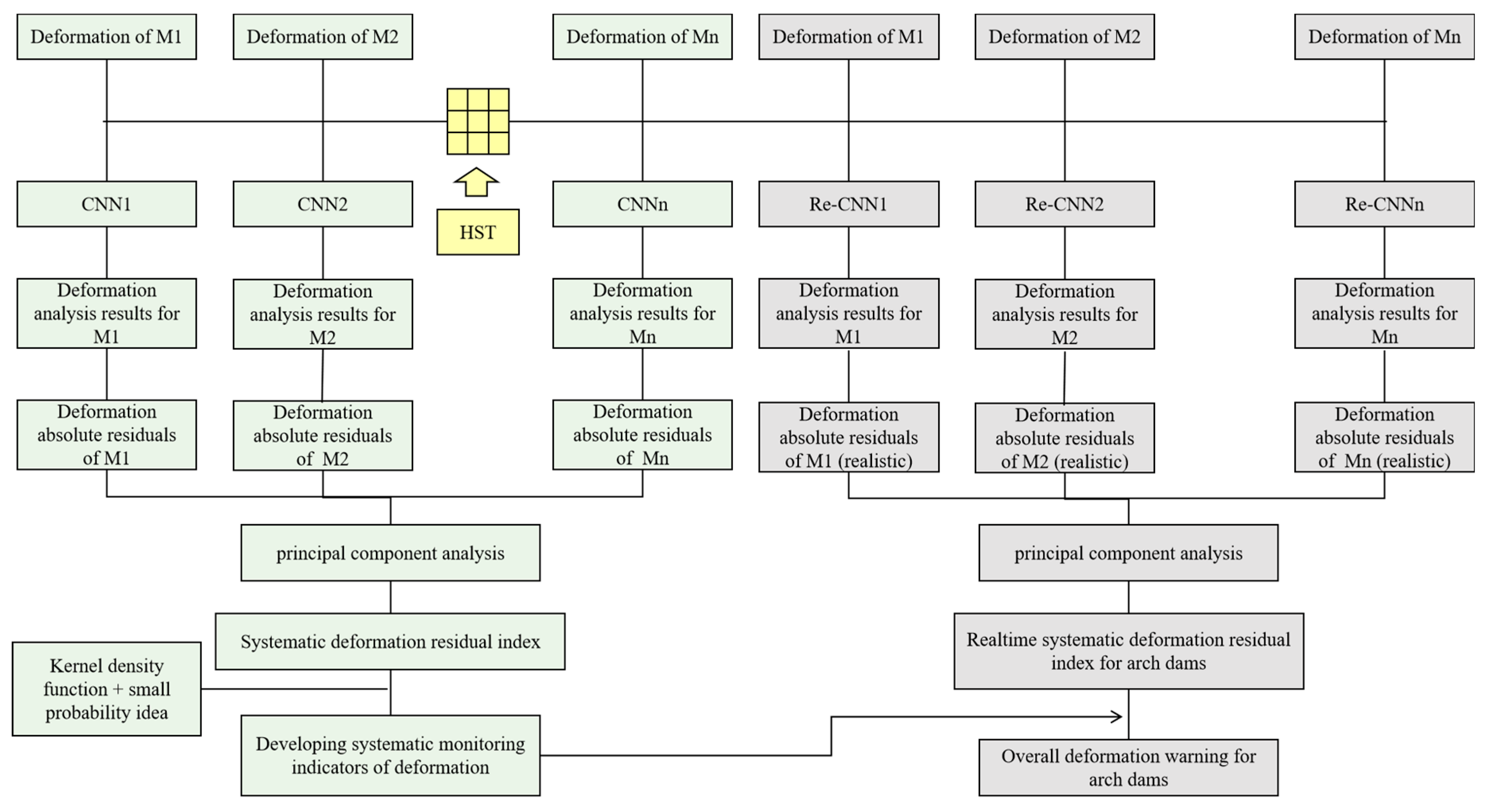
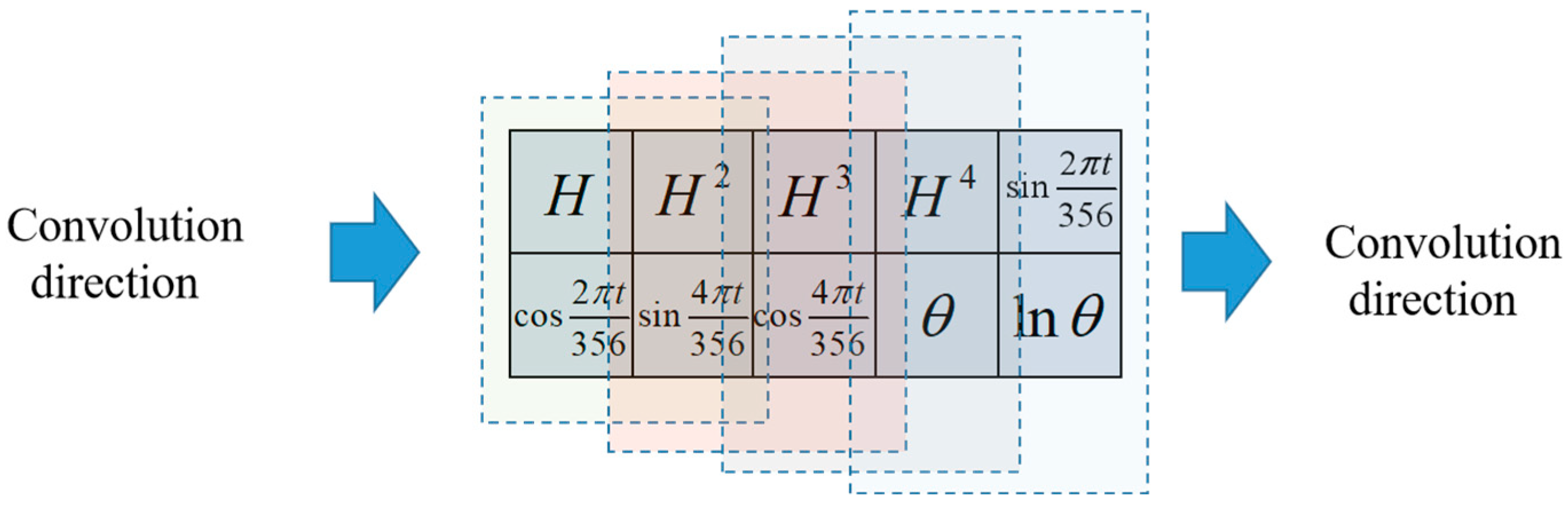
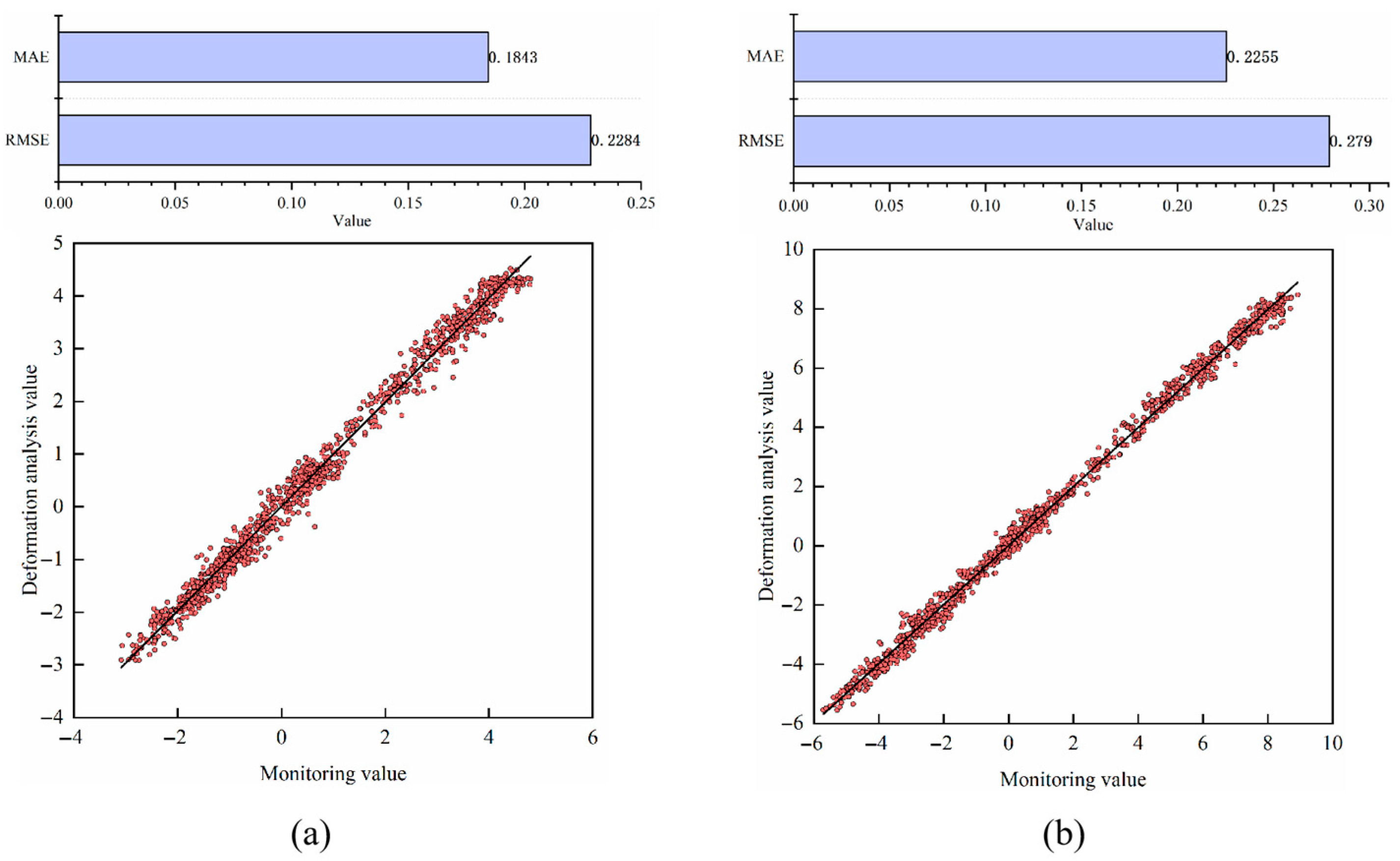
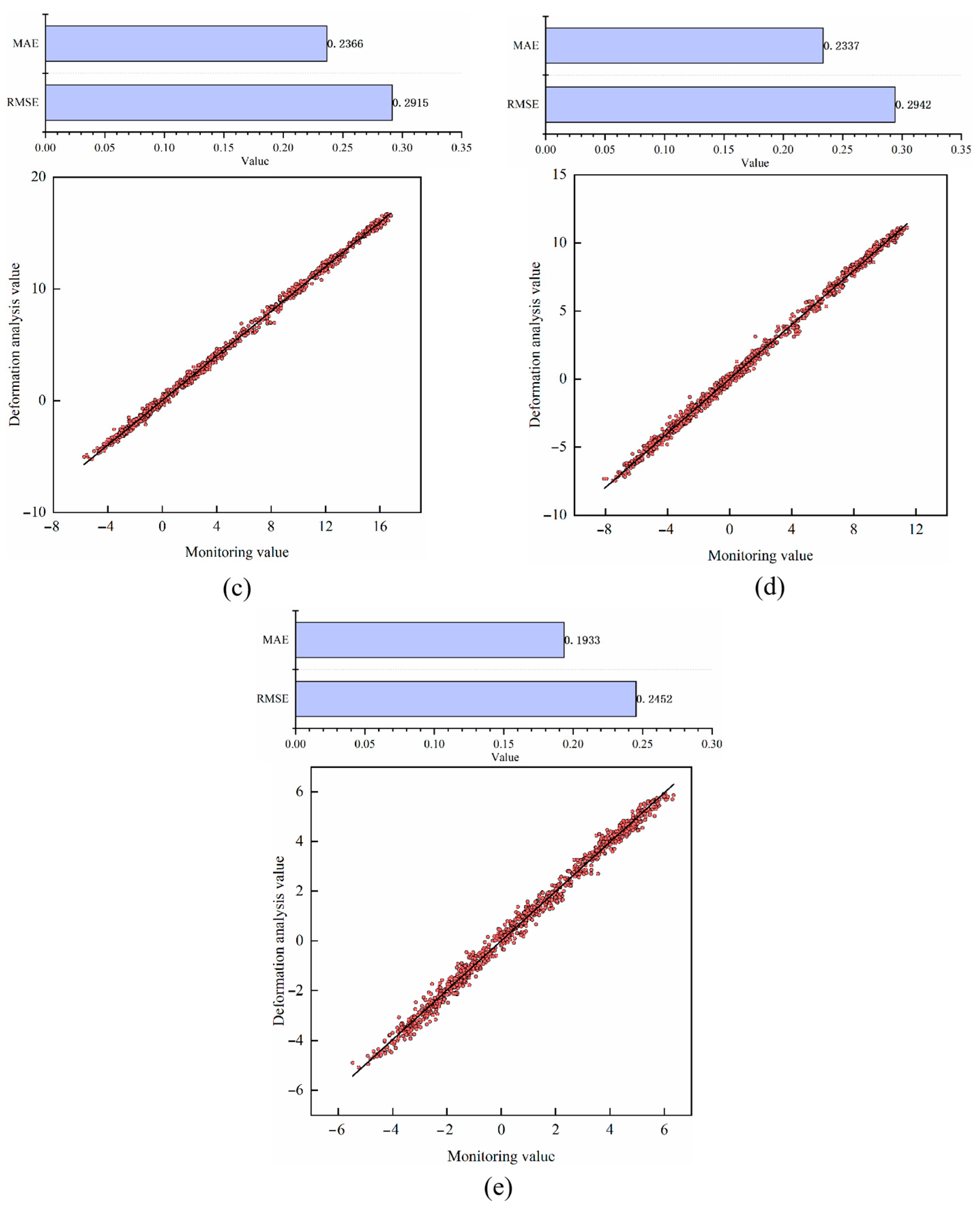
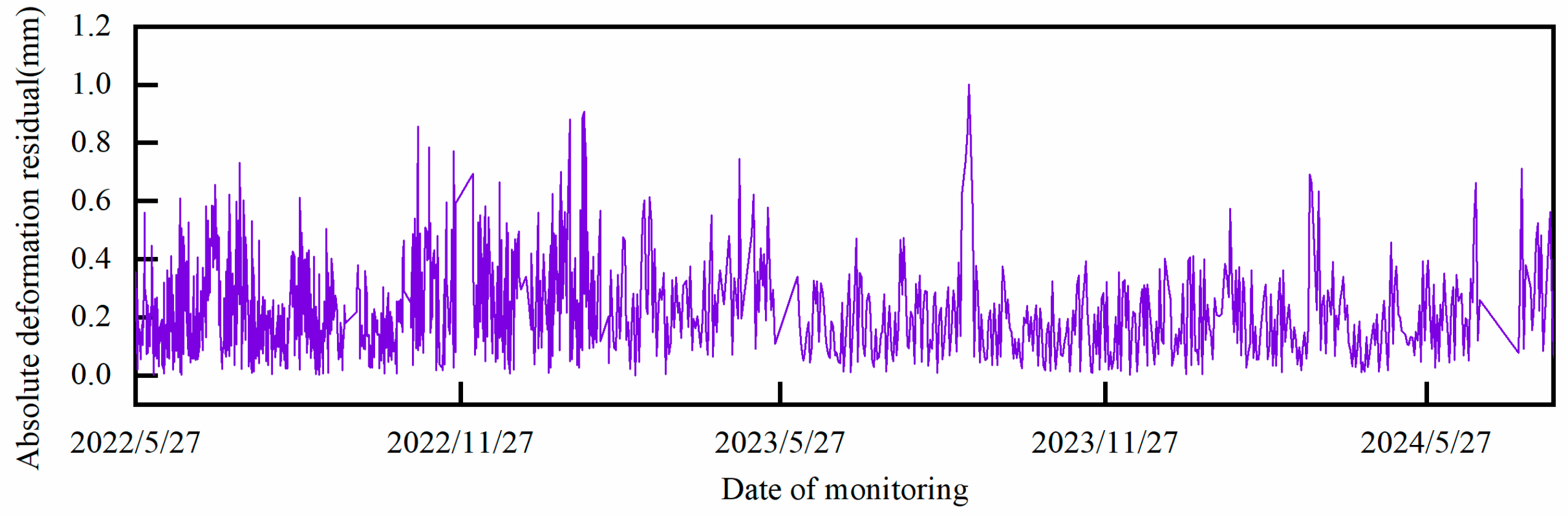
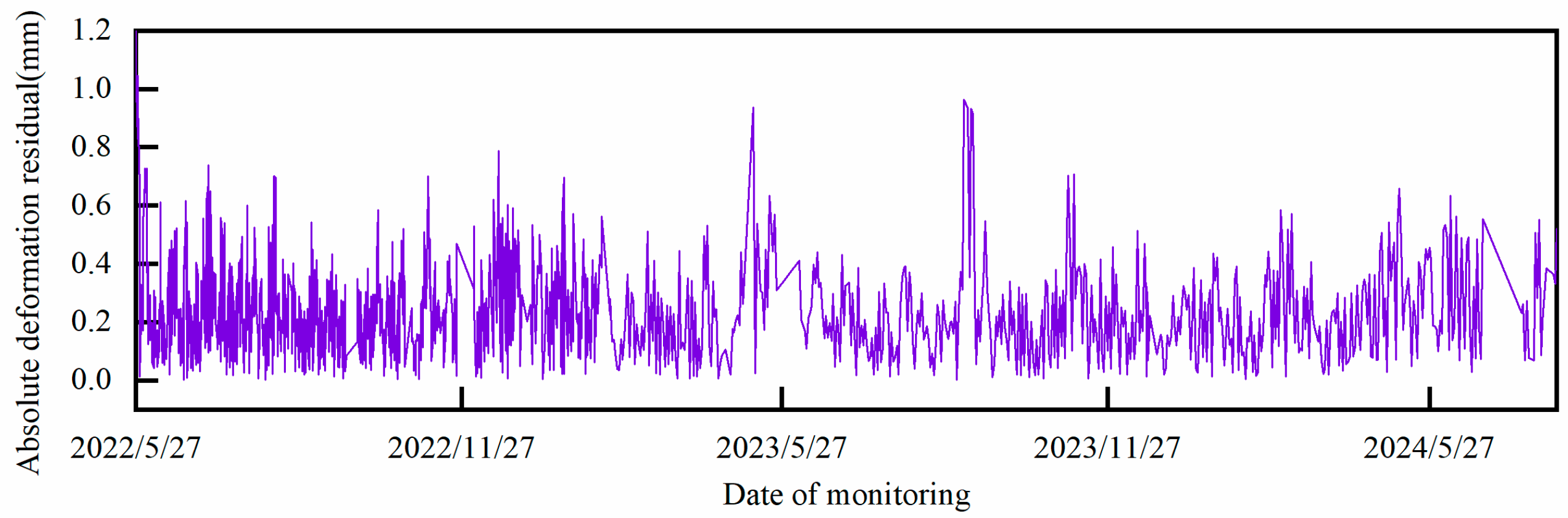
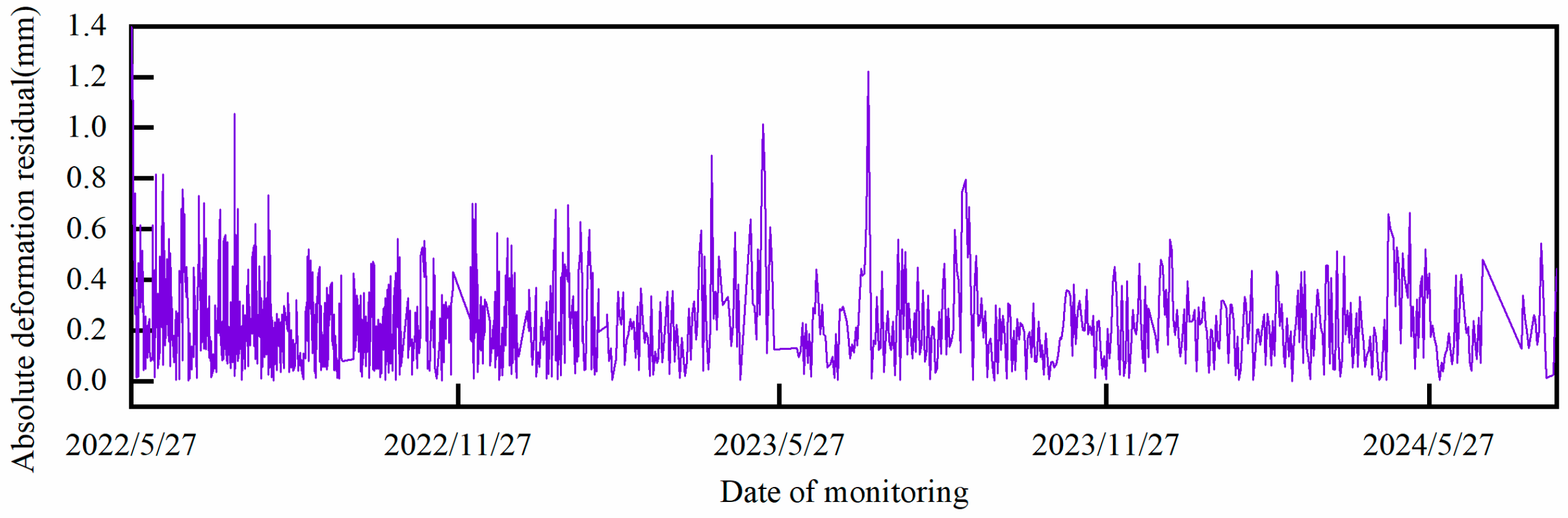
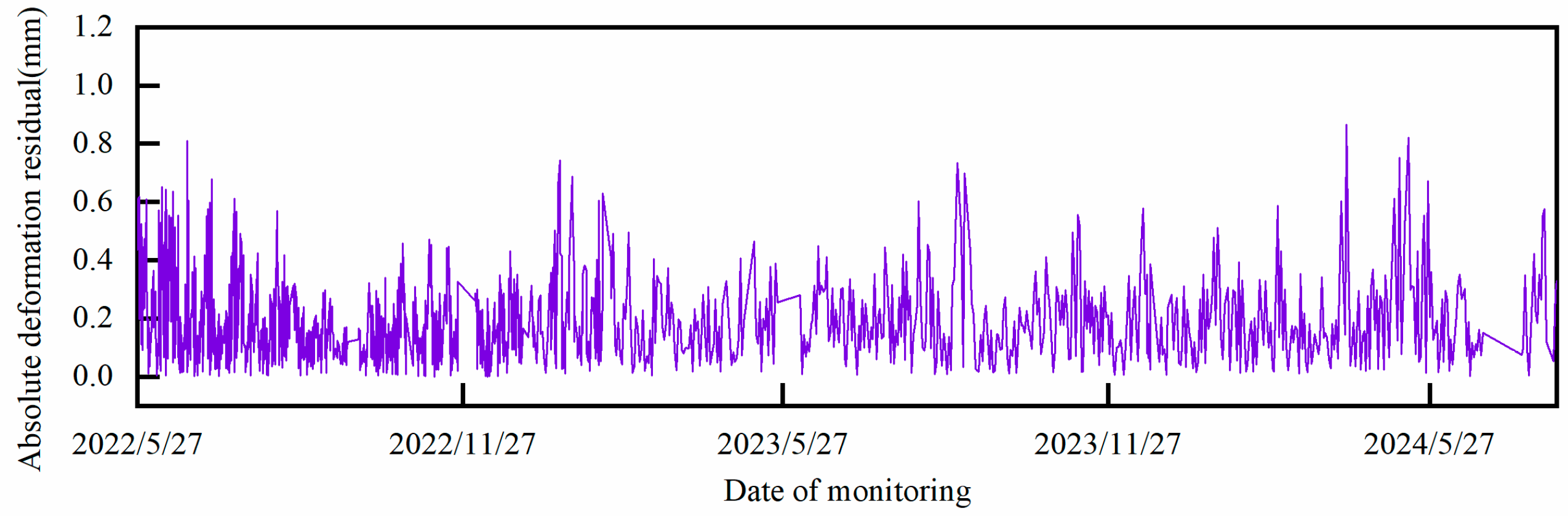
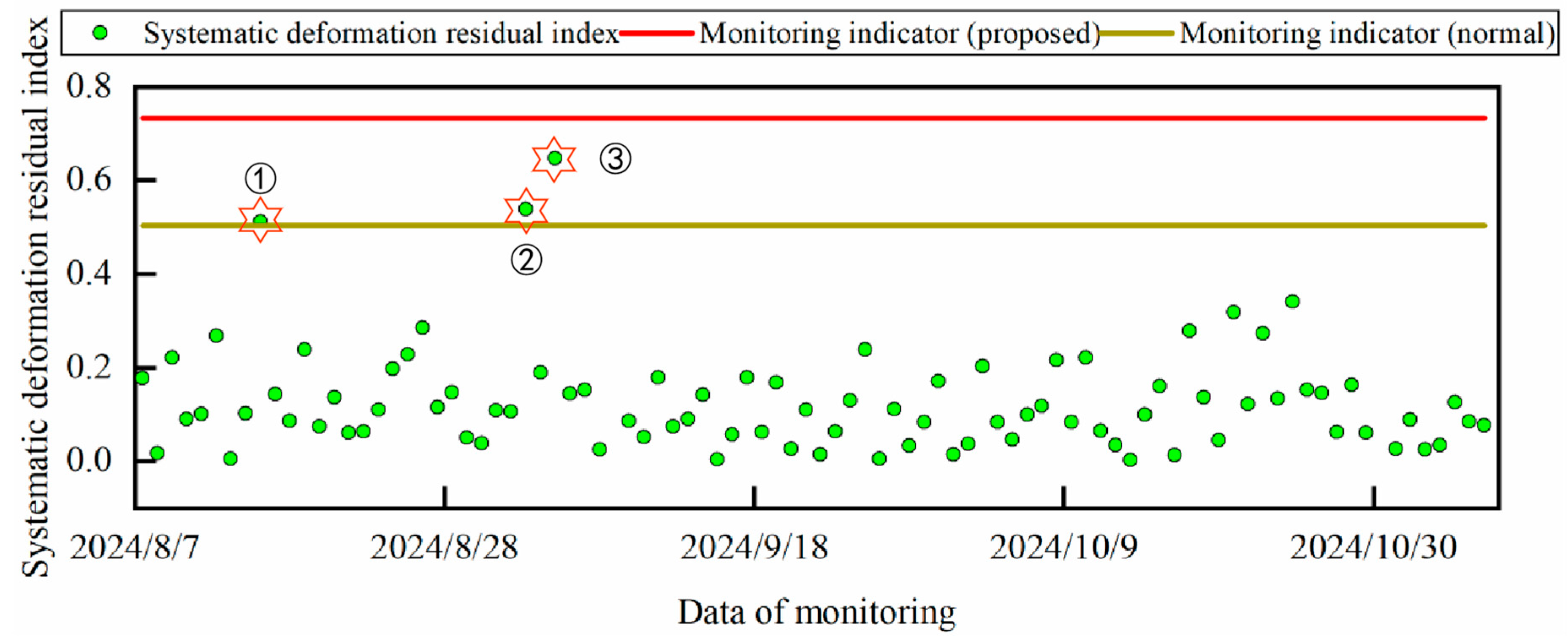
Deformation is a direct manifestation of structural changes that occur during the operation of arch dams, and the development of reliable deformation early warning indicators allows for their timely study. Considering that an arch dam is a systematic overall structure, it is necessary to systematically analyze the formulation of deformation early warning indicators and general early warning methods for this dam type. To this end, this study innovatively proposes a systematic early warning method for arch dams based on deep learning and a multi-measurement point analysis strategy. Firstly, the causal model (HST) is utilized to extract the environmental factors as convolutional neural network (CNN) array samples, and the absolute deformation residual sequences of multiple points are obtained by HST-MultiCNN. Secondly, combining this with principal component analysis, a systematic deformation residual index with multiple points is established. Then, the kernel function is used to simulate the distribution of the abovementioned indicators, and is combined with the idea of small probability to formulate the overall warning indicator. Finally, the Re-CNN strategy is used to train the mapping relationship between the multi-objective residuals and the system indicators, and the mapping relationship outlined above is then used to obtain the system indicators corresponding to real-time prediction values, which in turn determine the overall deformation state of arch dams. Analysis shows that the RMSE of the deformation output of the proposed monitoring method uses a value between 0.2284 and 0.2942, with satisfactory accuracy, and the overall deformation warning accuracy reaches 100%, which is significantly better than the comparison method, and effectively solves the primary defect of the traditional single-point analysis—failure to reflect the overall deformation condition.
Keywords: arch dam deformation; systematic deformation residual index; overall deformation early warning indicator; systematic early warning; CNN; kernel density function arch dam deformation; systematic deformation residual index; overall deformation early warning indicator; systematic early warning; CNN; kernel density function