Article

Evaluation of Performance of Repairs in Post-Tensioned Box Girder Bridge via Live Load Test and Acoustic Emission Monitoring


1
Department of Civil & Architectural Engineering & Mechanics, The University of Arizona, RM 318C, 1209 E 2nd St., Tucson, AZ 85721, USA
2
Department of Construction Science, Texas A & M University, 306 Francis Hall, 3137 TAMU, College Station, TX 77843, USA
3
Department of Civil and Environmental Engineering, Oklahoma State University, 220 Engineering North, Stillwater, OK 74074, USA
*
Author to whom correspondence should be addressed.
Infrastructures 2025, 10(3), 56; https://doi.org/10.3390/infrastructures10030056

Submission received: 6 February 2025 / Revised: 24 February 2025 / Accepted: 5 March 2025 / Published: 9 March 2025

Abstract

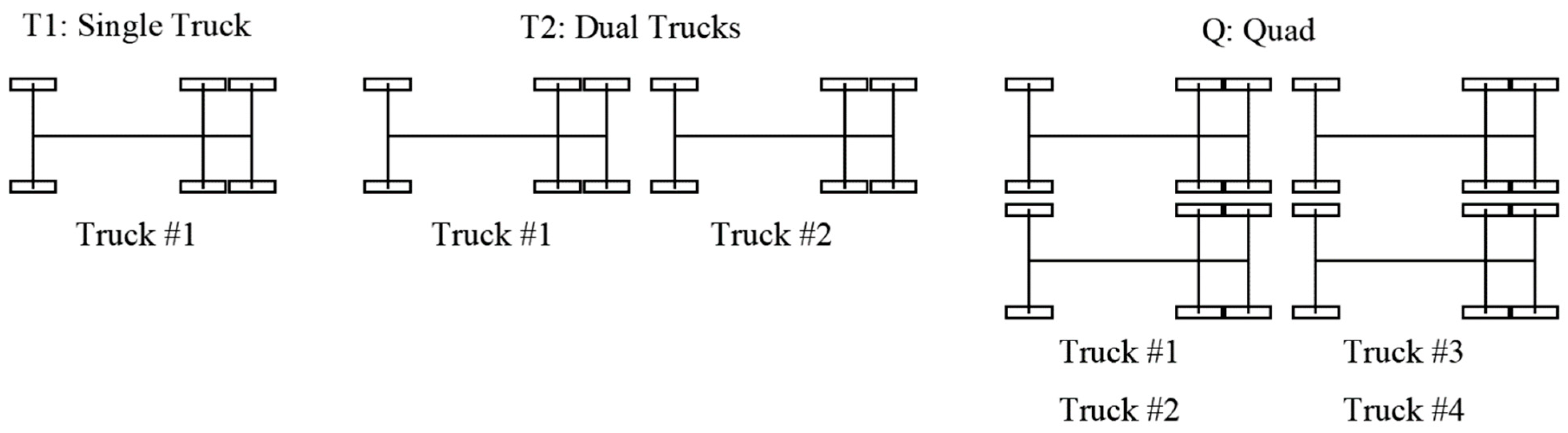
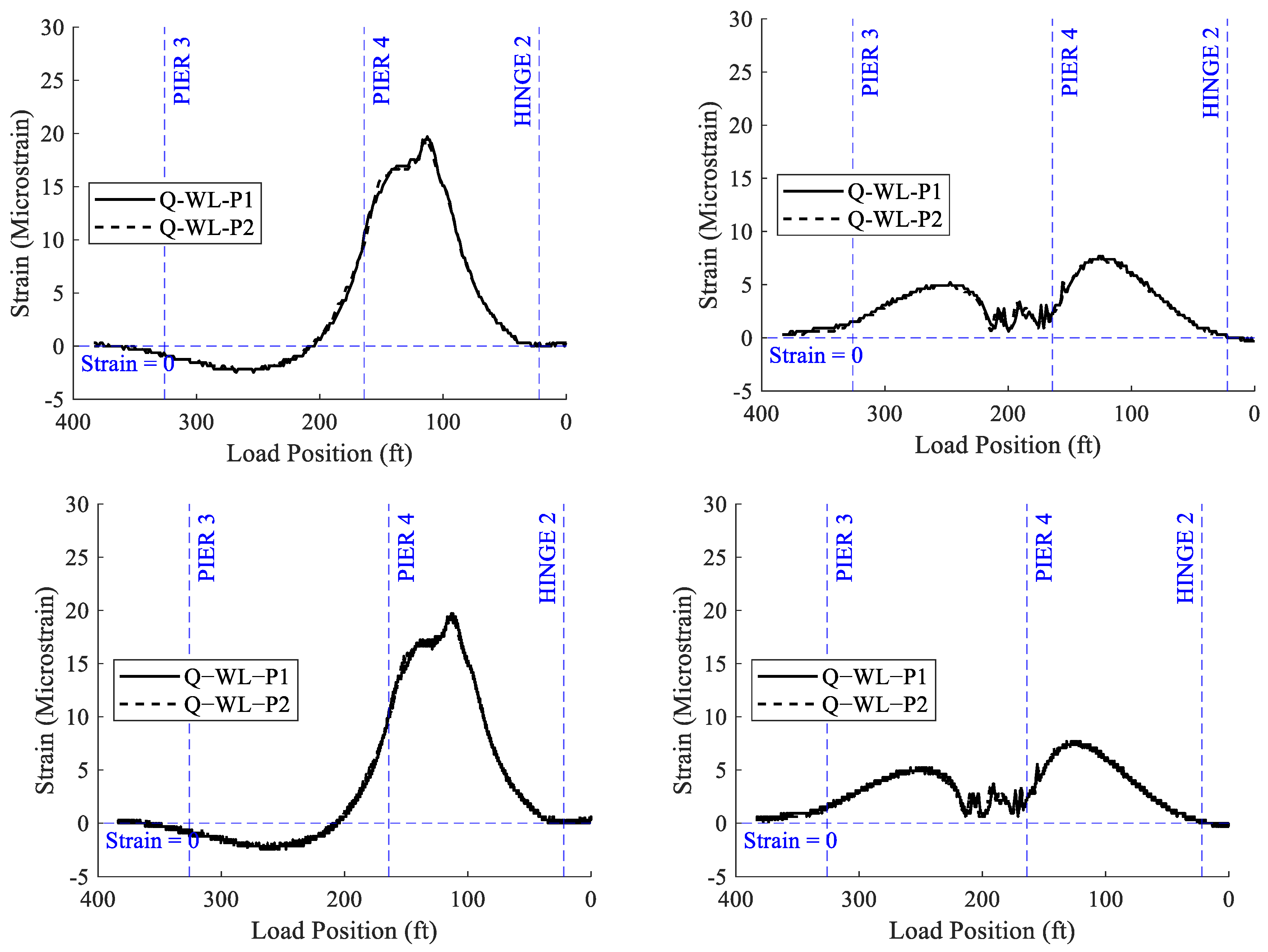
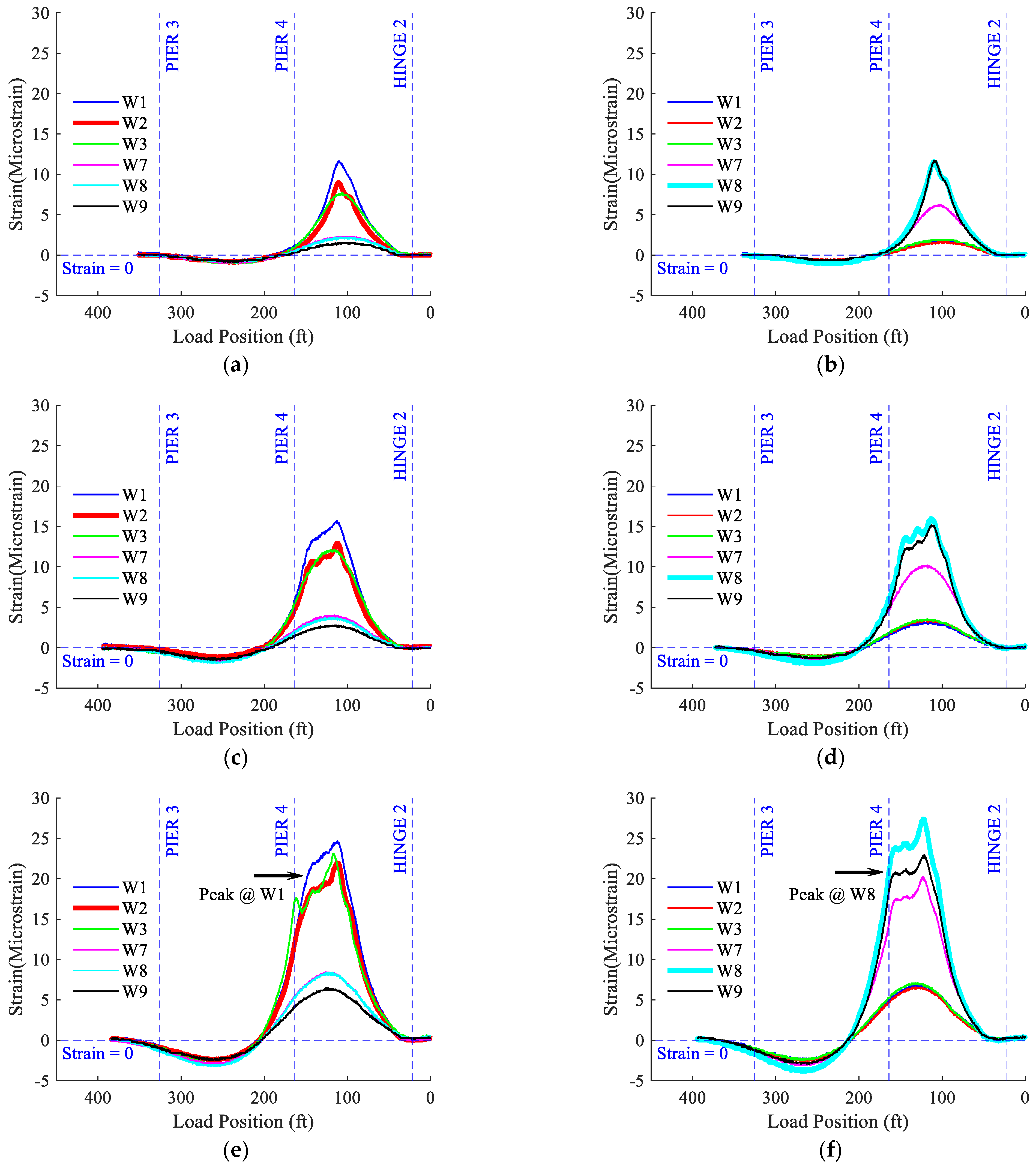
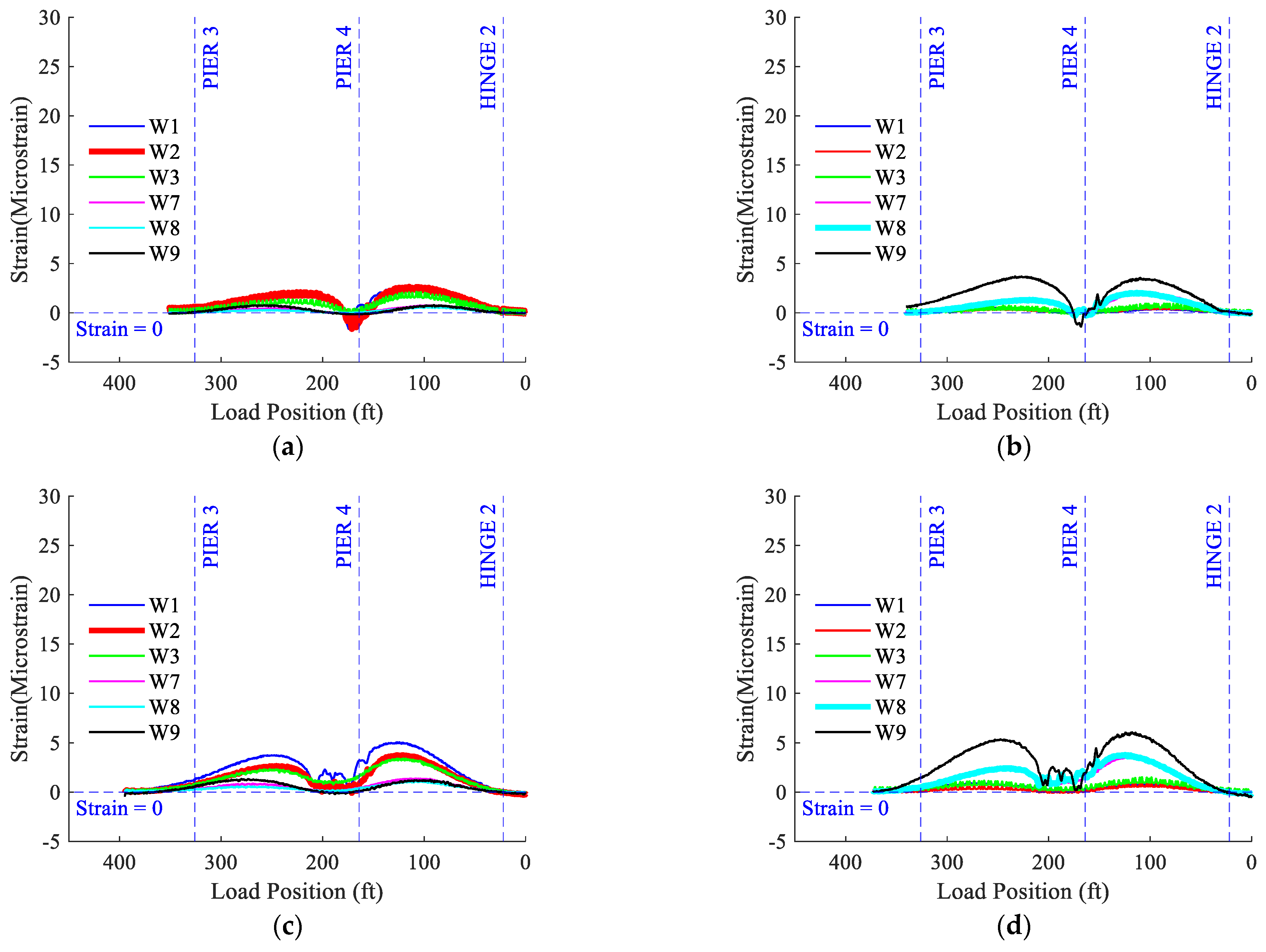
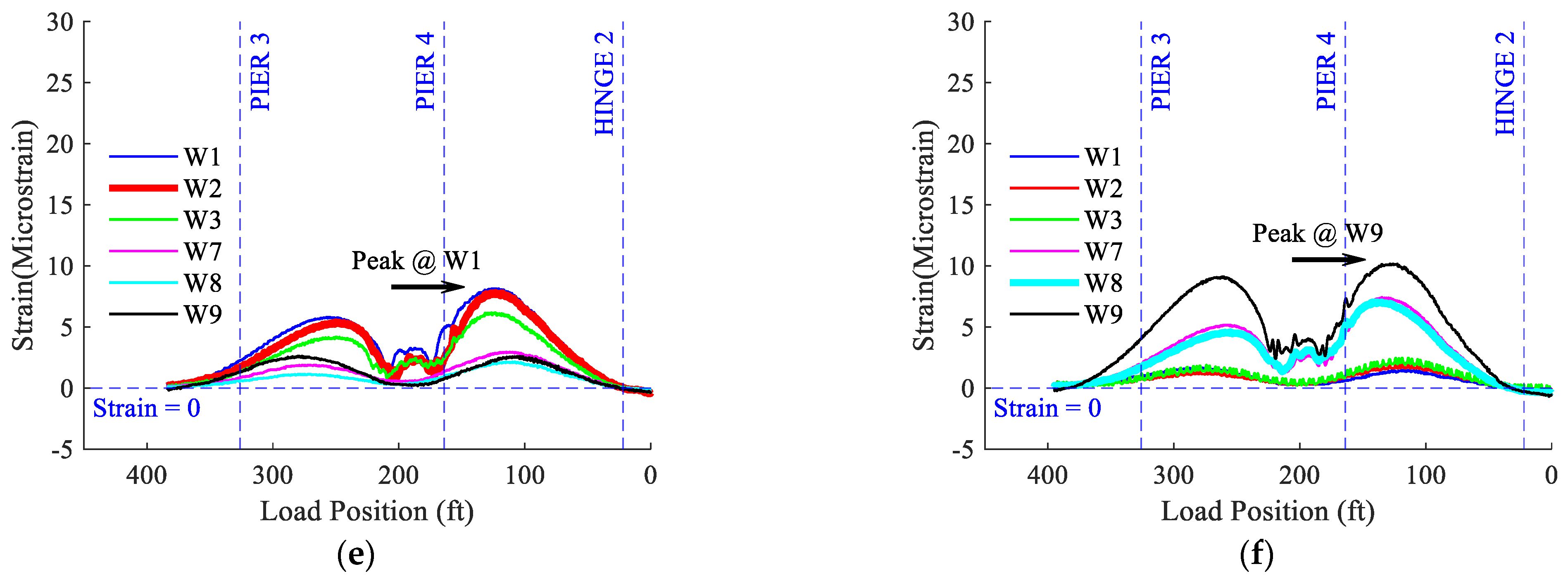
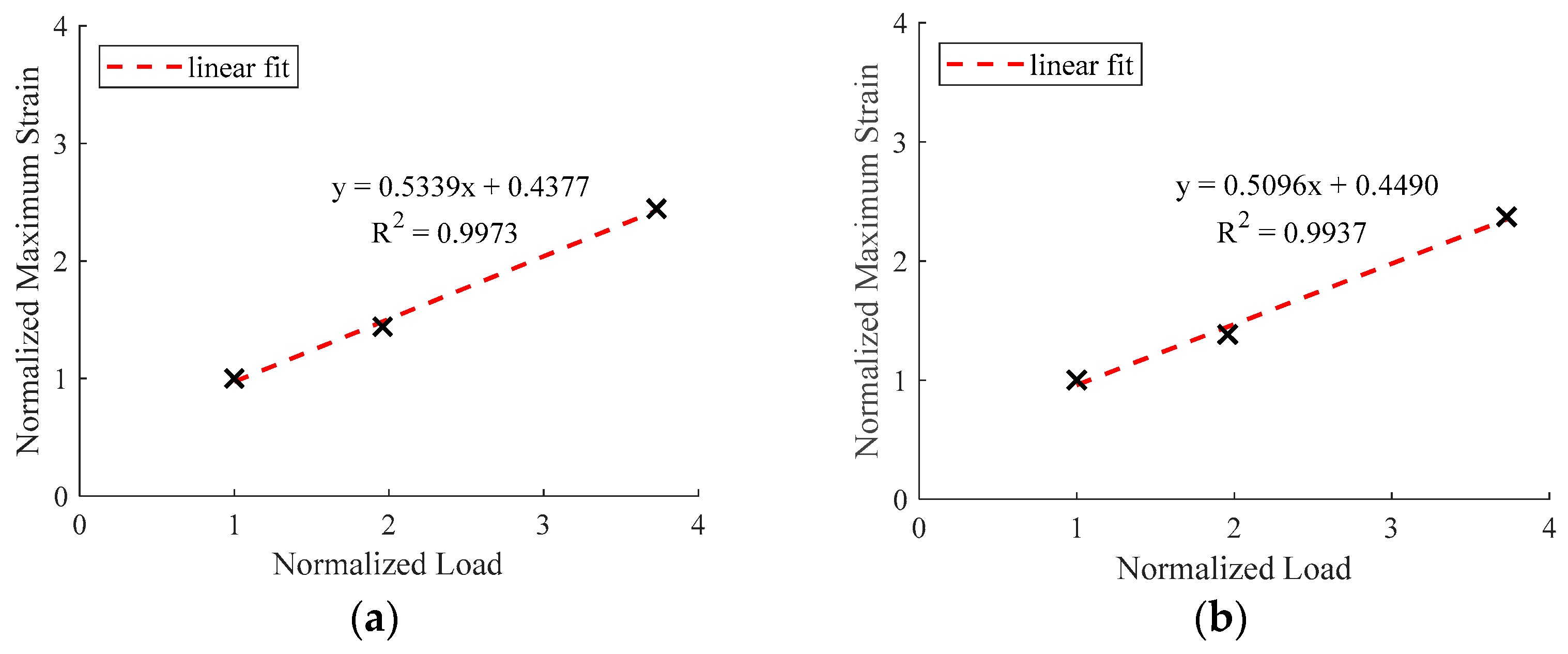
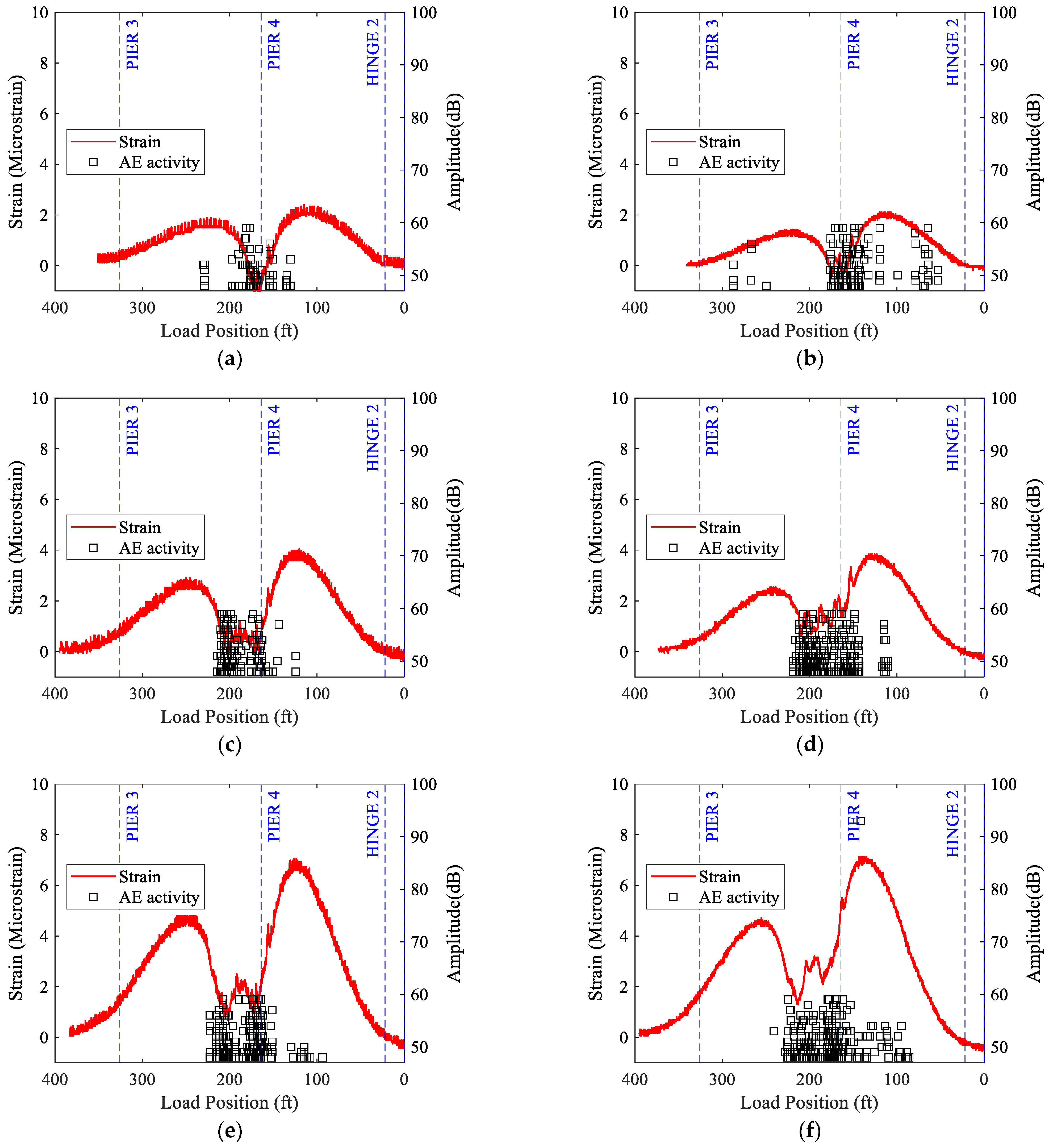
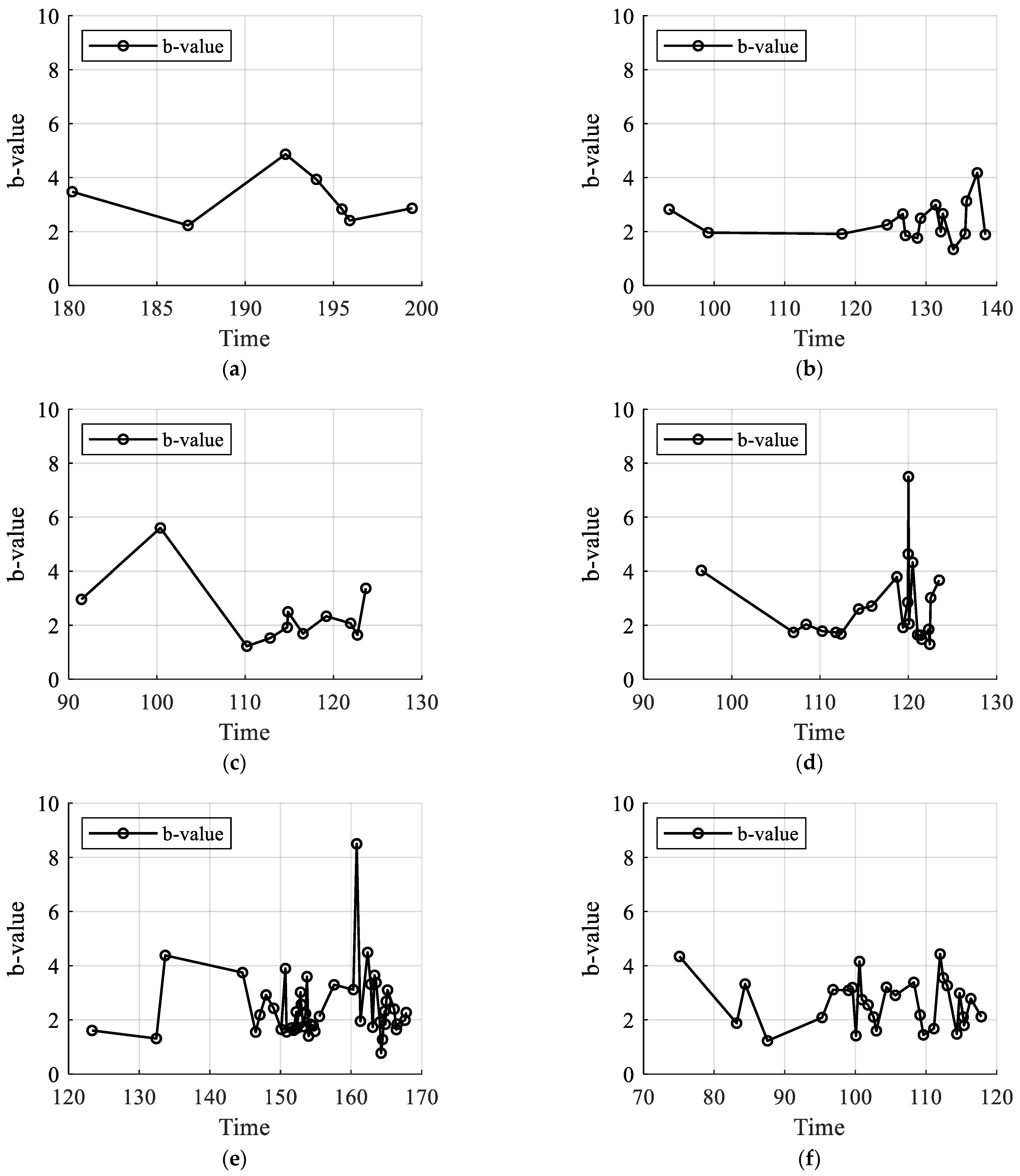
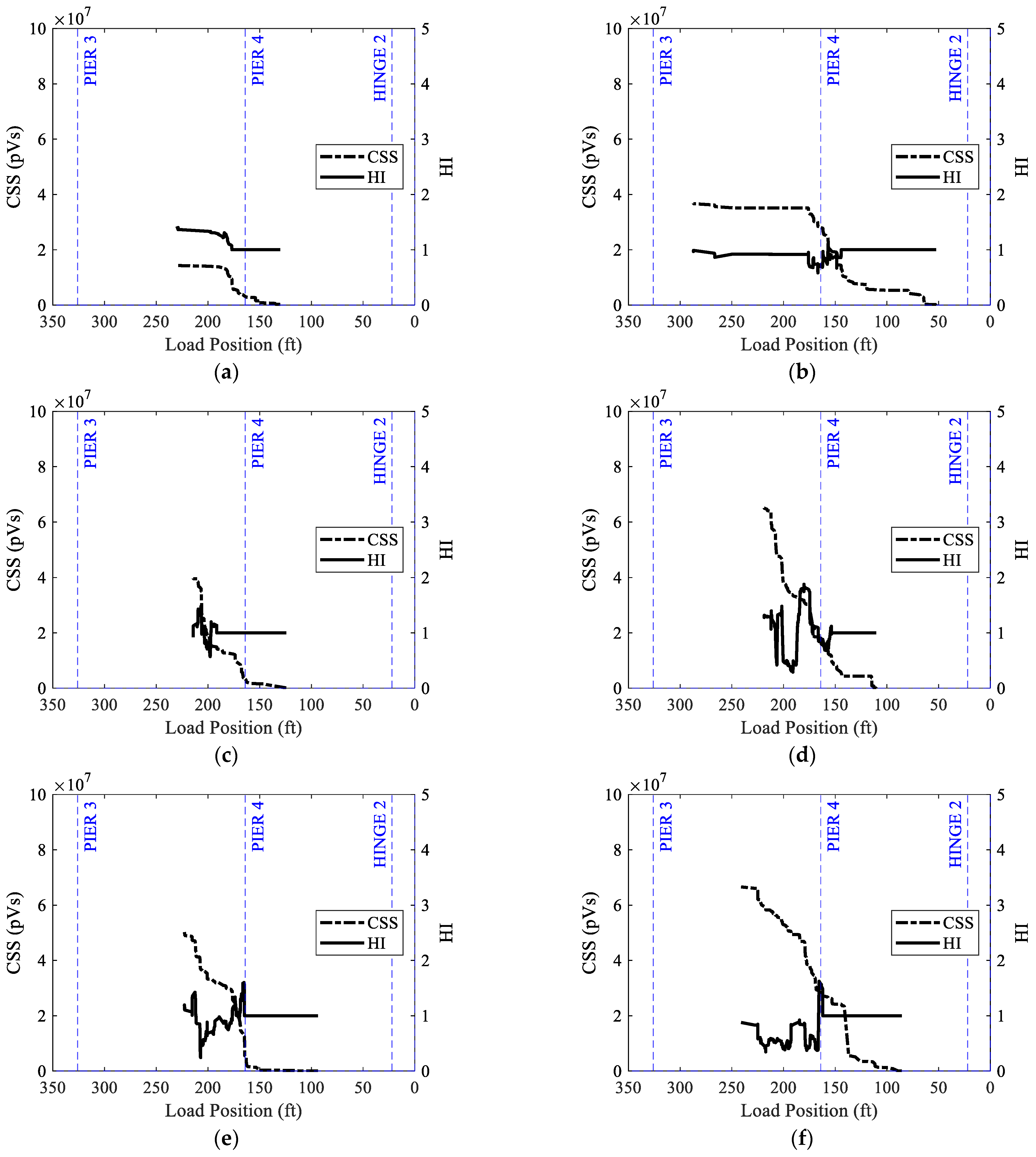
In this paper, bridge live load testing was conducted to examine the performance of repairs on a section of a post-tensioned box girder bridge in Oklahoma City, Oklahoma. The live load test was performed with a single/group of truck(s) with known gross weight. The objective of this study was to characterize the behavior of the test bridge span by comparing the performance of a repair in situ as part of the bridge section’s structural response to that of a section known to be sound. To achieve the objective, the structural strain response was collected from several critical locations across the bridge girders. A comparative analysis of bridge behavior was carried out for the results from both the repaired and structurally sound areas to identify any deterioration and adverse changes. The structural strain response indicated an elastic behavior of the tested bridge span under three different load levels. Meanwhile, acoustic emission monitoring was implemented as a supplementary evaluation method. The acoustic emission intensity analysis also revealed an insignificant change in the effectiveness of the repair upon comparing results obtained from both locations. Although there were fluctuations in the b-value, it consistently remained above one across the different load testing scenarios, indicating no progressive damage and generally reflecting structural soundness, aligning with the absence of visible cracks in the monitored area.
Keywords: bridge live load test; strain monitoring; acoustic emission; intensity analysis bridge live load test; strain monitoring; acoustic emission; intensity analysis