Article

Critical Stress Conditions for Foam Glass Aggregate Insulation in a Flexible Pavement Layered System


1
Department of Civil and Water Engineering, Université Laval, Quebec City, QC G1V 0A6, Canada
2
Department of Civil Engineering, University of Ottawa, Ottawa, ON K1N 6N5, Canada
*
Author to whom correspondence should be addressed.
Infrastructures 2025, 10(12), 339; https://doi.org/10.3390/infrastructures10120339
Submission received: 27 June 2025 / Revised: 27 October 2025 / Accepted: 24 November 2025 / Published: 9 December 2025

Abstract

In cold regions, flexible pavements are vulnerable to frost-induced damage, necessitating effective insulation strategies. Foam glass aggregate (FGA) insulation layers, made from recycled glass, offer promising thermal insulation properties but are mechanically fragile and susceptible to permanent deformation under repeated loading. Manufacturers provide technical recommendations, particularly regarding load limits for installation and the dimensions of the thermal protection layer. These are considered insufficient to assist pavement designers in their work. The definition of critical criteria for permissible loads was deemed necessary to design mechanically durable structures using this alternative technology. This study investigates the critical stress conditions that FGA layers can tolerate within flexible pavement systems to ensure long-term structural integrity. Laboratory cyclic triaxial tests and full-scale accelerated pavement testing using a heavy vehicle simulator were conducted to evaluate the resilient modulus and permanent deformation behavior of FGA. The results show that FGA exhibits stress-dependent elastoplastic behavior, with resilient modulus values ranging from 70 to 200 MPa. Most samples exhibited plastic creep or incremental collapse behavior, underscoring the importance of careful stress management. A strain-hardening model was calibrated using both laboratory and full-scale data, incorporating a reliability level of 95%. This study identifies critical deviatoric stress thresholds (15–25 kPa) to maintain stable deformation behavior (Range A) under realistic confining pressures. FGA performs well as a lightweight, insulating, and draining layer, but design criteria remain to be defined for the design of multi-layer road structures adapted to local materials and traffic conditions. Establishing allowable critical stress levels would help designers mechanically validate the geometry, particularly the adequacy of the overlying layers. These findings support the development of mechanistic design criteria for FGA insulation layers, ensuring their durability and optimal performance in cold climate pavements.

1. Introduction

Flexible pavements built in northern climates must be adequately designed to offer adequate structural performance over the planned service life. However, the subzero temperatures occurring for several months imply that specific attention needs to be paid to frost protection design [1]. When frost penetration reaches frost-sensitive subgrade soils, frost heave may occur through the formation of ice lenses [2]. This can lead to increased surface roughness and to surface deformation and therefore cracking during winter due to differential frost heaving, increased thaw weakening, and therefore accelerated pavement deterioration linked to various damage mechanisms associated with freezing and thawing and surface cracking [3]. Frost heave occurs when three main conditions are met: the presence of frost-susceptible soil, water availability, and freezing temperatures [4]. As part of the design methodologies considered to limit and control the effect of frost action, preventing the progression of freezing temperatures towards subgrade soils is one of the most common approaches [5]. Among other things, this can be achieved using insulating materials, such as polystyrene panels, embedded within the flexible pavement embankment [6]. When the pavement system is subjected to wintertime conditions, the temperatures are colder (below 0 °C) in the upper part and warmer in the deeper part, leading to a thermal gradient and upward heat flow, which results in gradual cooling and frost penetration [1]. The use of insulation significantly decreases heat exchange and, if adequately designed, can prevent frost penetration below the insulation layer or prevent freezing of the subgrade soils. Among the available alternative materials that can be used for pavement insulation, foam glass aggregates (FGAs) have garnered significant research attention [7,8,9,10]. Among other things, this is because the thermal properties are compatible with the application, but also because it creates a new alternative way to reuse recycled glass, as a significant portion of these residues will be buried in waste fields. FGAs are fragile granular materials and may be highly sensitive to the accumulation of permanent deformation associated with repetitive and/or excessive stress from heavy vehicles at the pavement surface [11]. Laboratory work in a railway context has shown that the elastic threshold shear strain and damping ratio are highly dependent on the confining pressure, and so on the installation depth of the material layer. Therefore, to ensure the structural integrity of this insulation material and adequate performance throughout the entire service life, the objective of this study is to assess the critical stress conditions that can be tolerated for FGA layers used in the flexible pavement layered system to ensure long-term structural integrity. To achieve this main objective, resilient modulus and permanent deformation tests were performed using laboratory cyclic triaxial characterization, and accelerated pavement testing was conducted on an experimental test section insulated with FGAs. First, the context for understanding the development of structural rutting in relation to the accumulation of permanent deformations in each layer depending on the stress state will be present. Then, the properties of FGAs are briefly listed. Subsequently, the usual physical models adapted to granular materials unbound in a road context are presented. The methodology and laboratory results used to quantify the mechanical behavior of an FGA layer in a road context at different scales will be detailed. Finally, the qualification of the critical stress conditions criterion of an FGA layer to support the work of the designer will be discussed in the Conclusions section.

2. Literature Review

Structural rutting is a significant type of pavement damage that is primarily linked to load magnitude and repetitions [12]. In the flexible pavement system, it is associated with the accumulation of permanent deformation in each layer [13]. Even though typical design simplifications attribute most of the structural rutting to the weakest layer in the pavement layered system [12,14], which is the subgrade, it has been previously shown that 30 to 80% of surface rutting can be attributed to the granular layers [15]. Resistance to permanent deformation of granular materials is therefore among the key parameters to understand and integrate as part of a comprehensive pavement design, as it is directly related to surface rutting accumulation. Under dynamic loading characteristics of pavements, granular materials exhibit a nonlinear stress-dependent elastoplastic mechanical behavior where the total strain (ε) experienced during the loading/unloading cycle is characterized by a resilient (εr) and permanent deformation (εp) [16]. Permanent deformation accumulation is significantly influenced by stress state; it typically increases with an increase in deviatoric stress (q) and a decrease in confining pressure (σ3) [17], and increases when the ratio of q/(σ3) increases [11]. Permanent deformation is also a cumulative phenomenon, and therefore, it increases with the accumulation of load repetitions (N) [12,16], which occurs at various rates depending on the testing and material conditions. In addition to stress conditions and the number of load cycles, material properties and characteristics, such as grain size distribution, water content, degree of compaction, and particle shape, have an impact on the resistance to the accumulation of permanent deformation [17].
Characterization of permanent deformation for granular materials can be obtained through dynamic triaxial tests. Incremental multistage tests are typically used to assess the effect of stress conditions and the number of load cycles [18]. This test procedure involves a fixed number of load cycles (10,000) applied consecutively under varied stress conditions, defined by deviator stress q and confining pressure (six for each load stage, varying from stage i to stage n). The strain-hardening approach [17,19], as introduced in Figure 1, can be used to model the relationship between the permanent deformation εp and the number of load cycles (N) using
ε p = a N a c c N c o r r b = a N a d j b
Here, a and b are adjustment coefficients for the considered load stage, Nacc is the total absolute number of load cycles accumulated from the beginning of the test, and Ncorr is a constant correction factor to shift the absolute number of load cycles to an equivalent adjusted number of load cycles (Nadj) that takes into account loading history and strain hardening. The values of a, b, and Ncorr are specific to each load stage and are optimized to obtain the best regression for the power model.
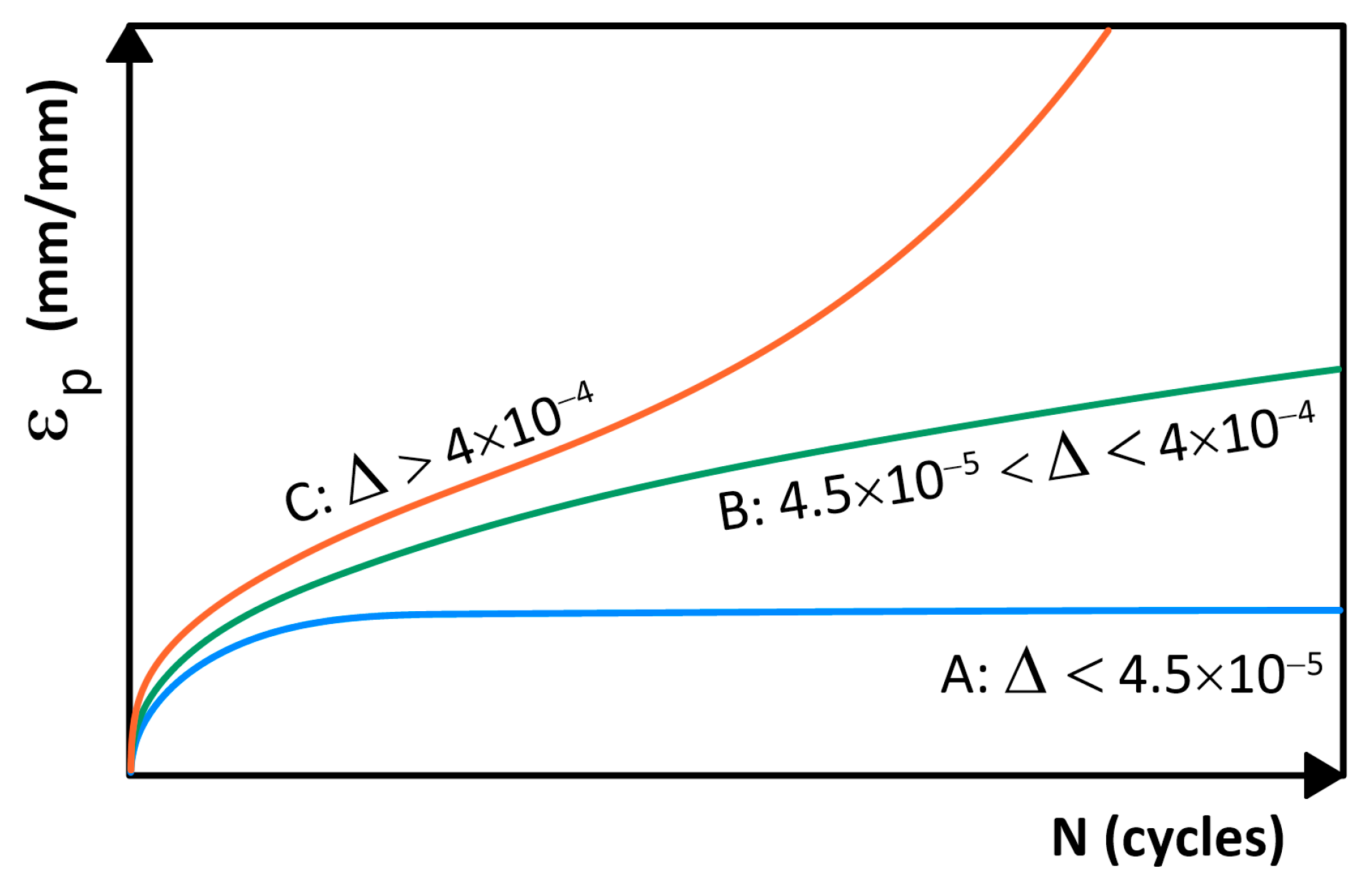
The shakedown approach has been widely used over the past few decades to qualify and predict the permanent deformation of granular materials. Ref. [20] proposed differential criteria that allow the classification of the expected behavior with respect to permanent deformation using three distinct shakedown ranges (Figure 2). Using the subtraction of the permanent deformation at N = 5000 load cycles to the permanent deformation at N = 3000 load cycles, the shakedown range indicator Δ is defined with
Δ = ε p N = 5000 ε p N = 3000
Range A is defined with Δ values lower than 0.000045 mm/mm. Materials in this range are expected to accumulate low permanent deformation and to show a strain rate that gradually transitions towards 0. It represents a stable behavior suitable for pavement engineering. Range B, also referred to as the plastic creep range, is defined with Δ comprising between 0.000045 and 0.0004 mm/mm. In this range, the materials continuously accumulate permanent deformation at a constant rate over the long term. Range C, also referred to as the incremental collapse range, is obtained when Δ is greater than 0.0004 mm/mm. It is an unstable behavior characterized by increasing permanent strain rate leading to accelerated damage and failure.
The first documented mention of foam glass is almost 100 years old during the cork shortage, with a first patent filed by the company Saint-Gobain in France in the 1930s [21,22,23]. FGAs have been used in the road construction industry in Europe for nearly 50 years. Currently, there is no established regulatory framework for assessing the performance of lightweight aggregates in civil engineering applications. In response to this gap, the French Standardization Association (AFNOR) has announced plans to publish a dedicated standard by 2027. AFNOR typically initiates standardization efforts when a deficiency in the technical and scientific literature is identified. The commercialization of FGA within Europe is facilitated by the issuance of a European Assessment Document by the European Organisation for Technical Assessment (EOTA). Complementary national initiatives have also emerged: Sweden published a handbook in 2008 detailing the use of foam glass aggregates (FGAs) in road construction [24], while Norway incorporated FGAs into the 2014 edition of its national road construction manual [25].
FGAs are produced by mixing glass residues (cullet) with a foaming agent [22]; many alternative materials from various origins can potentially be used as cullet for FGA production, like industrial fly ash, cathode ray tubes, or car windshields, for example [23,26,27,28]. The mix is baked at high temperatures (around 800–900 °C) to obtain the viscoelastic state of glass while provoking the gaseous decomposition of the activator, i.e., a foaming agent (e.g., silicon carbide, glycerine) [8] to generate gas bubbles locked in the glassy matrix, creating a material characterized by unconnected millimetric and micrometric alveoli (up to 90%). At the exit of the fluidized bed furnace, quenching generated at ambient temperature leads to fragmentation into aggregates [29,30].
With a thermal conductivity ranging from 0.07 to 0.1 W/(m · K) and a bulk density in the range of 150–300 kg/m3, this material is ideal for lightweight insulation applications [9]. As discussed by [31], it is nevertheless essential to take into account the gradation of the FGA to consider air convection in the pores of the granular assembly. FGA, like other unbound granular materials, are sensitive to the accumulation of permanent deformation when subjected to repeated loading [32].
Large-scale triaxial tests involving both monotonic and cyclic loading within low to medium deformation ranges have been conducted to investigate the deformation behavior of material FGA in a railway engineering context, with a particular focus on shear strain and damping ratio and vibration attenuation capabilities [33]. The findings indicate that mechanical behavior is sensitive to confining pressure. Furthermore, it has been noted that initial post-compaction significantly enhances stiffness under cyclic loading conditions, related to crushing of grain surface to increased intergranular pressure, and then a nearly linear elastic deformation. These observations are consistent with Range A of the shakedown theory.
The work by [32] focused on the mechanical response of FGA and the contribution of compaction. An increased compaction ratio from 10% to 40% significantly reduced accumulated plastic strain to below 4%, making the material stable under cyclic loading. However, higher compaction ratios lead to lower resilient modulus values due to increased recoverable elastic strains caused by particle fragility, although the resilient modulus remains within acceptable ranges (100–219 MPa). It was concluded that FGA compacted at 40% can be safely used as a fill material and, under certain stress conditions, as a base layer for infrastructure applications. Mechanistic/empirical models have been developed to predict rutting performance, incorporating parameters specific to FGA. For example, Reference [34] defined an empirical transfer function relating to the resilient deformation and the number of load repetitions to reach a predetermined damage in the FGA layer and proposed an equivalency factor between the resilient strain and allowable damage.
Building on previous research work and the existing body of knowledge, this study aims to identify rational stress criteria that can be used in a pavement mechanical analysis and that can be incorporated into a design procedure to ensure the adequate long-term performance of FGA insulation layers in flexible pavements. The proposed research methodology involves laboratory tests at the material scale and accelerated testing at the pavement system scale using a heavy vehicle simulator. This ensures that a detailed analytical model can be defined and calibrated afterwards with full-scale test results.

3. FGA Properties

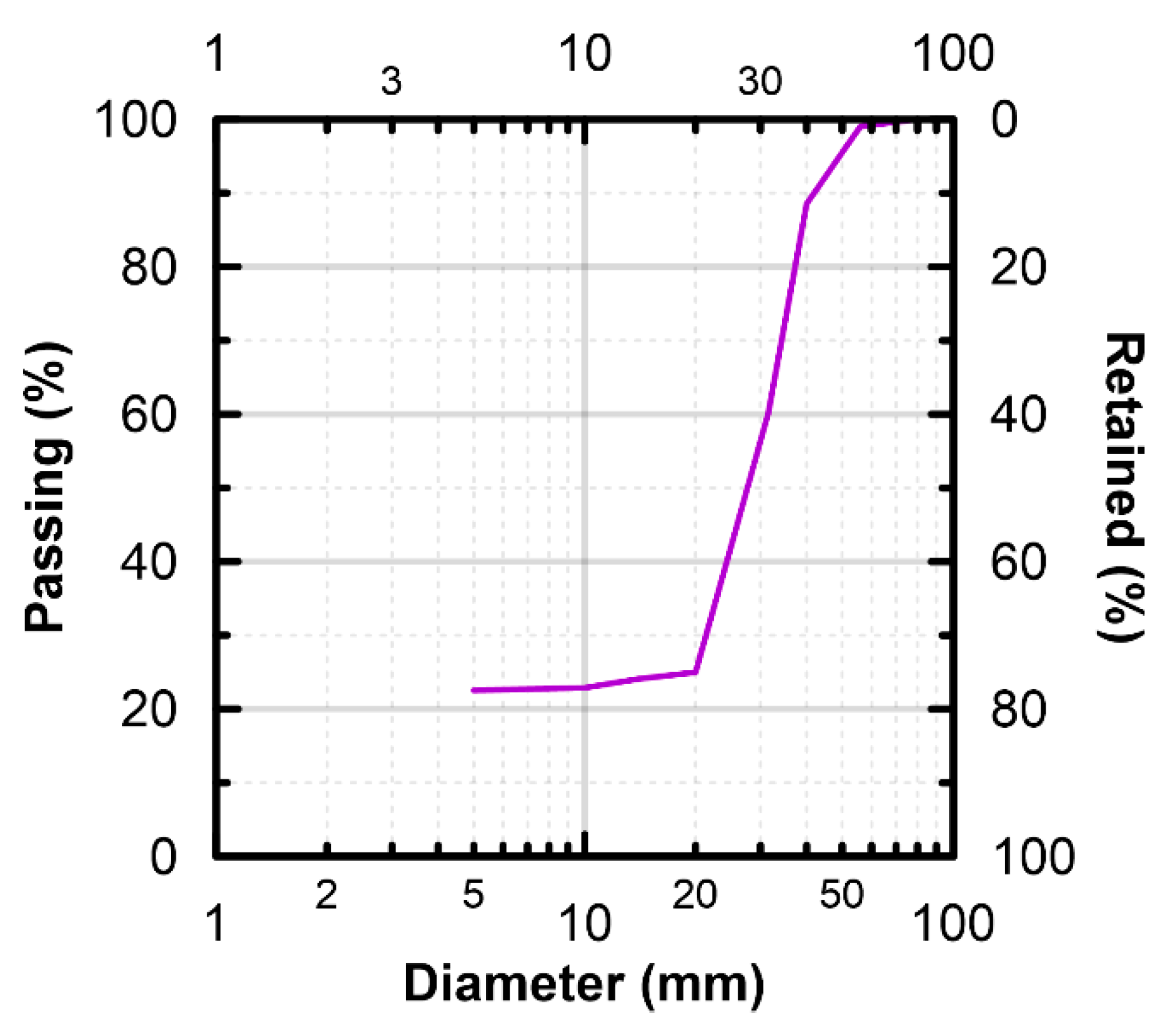
The grain size distribution of the tested FGA is presented in Figure 3. Approximately 80% of the tested FGA falls within the range of 20–60 mm, with a diameter of 28 mm for 50% of the samples to pass. Density values obtained of the FGAs are in the range of 150–300 kg/m3. Frozen thermal conductivity is of the order of 0.15 W.m−1.K−1 and unfrozen thermal conductivity ranges between 0.13 W.m−1.K−1 and 0.18 W.m−1.K−1 depending on the humidity content.

4. Methods

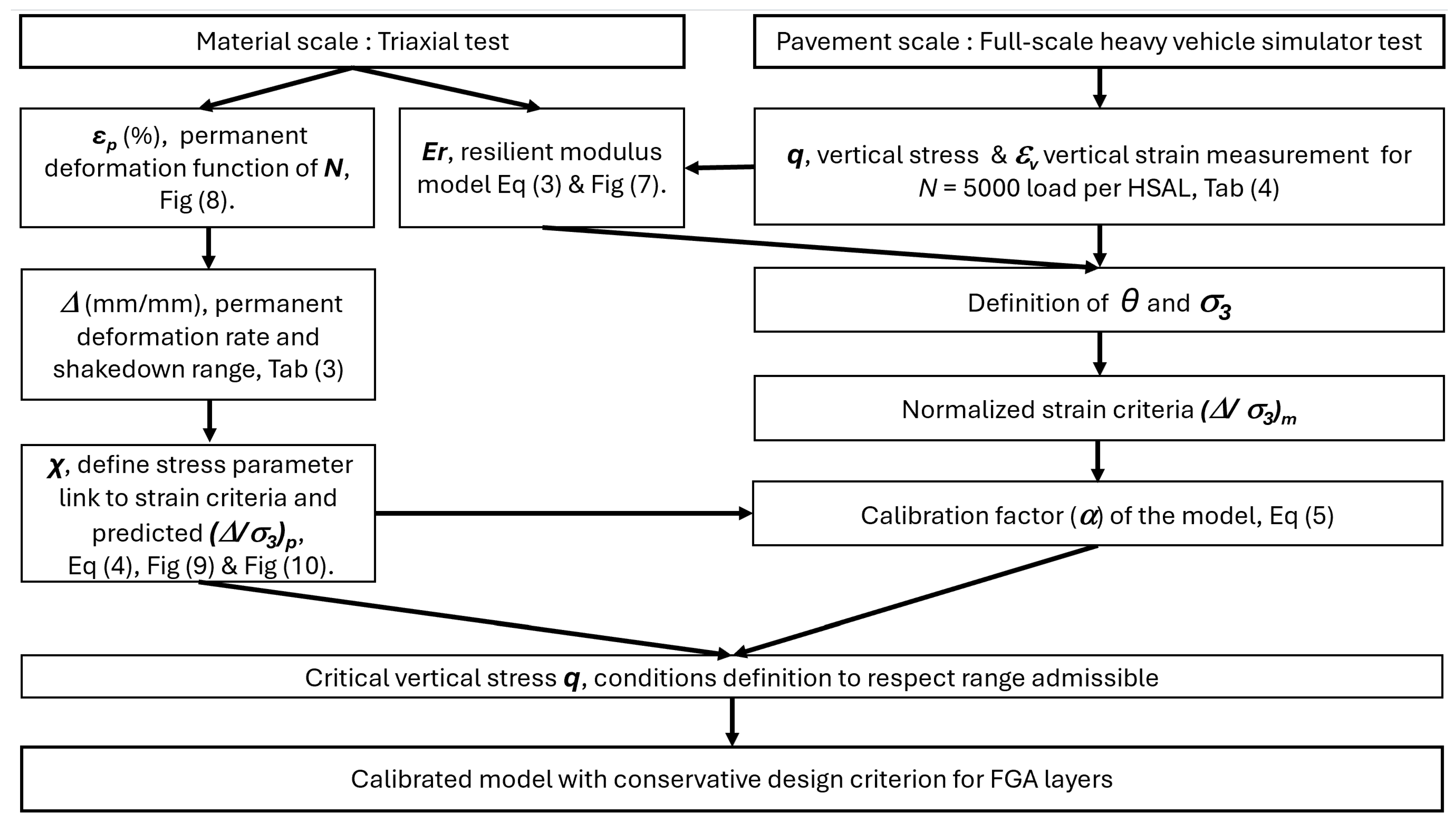
In order to identify critical vertical stress conditions for the tested FGA, the insulation material mechanical properties were characterized using cyclic triaxial and heavy vehicle simulator tests. For the triaxial tests, resilient modulus [35] and permanent deformation sequence were performed [18]. For the full-scale accelerated tests, the accelerated pavement testing facility at Université Laval, equipped with a 24 m3 indoor test pit and a full-scale heavy vehicle simulator, was used. A typical pavement structure and materials used in Quebec, with an FGA insulation layer, were used in this study. The FGA layer is placed under 200 mm of granular material, which is well below the minimum of 450 mm required above the insulating layers by the Quebec Ministry of Transport to limit the risk of icing. This choice is made to increase the risk of mechanical damage on the FGA layer. Figure 4 presents a flow chart of the testing program and the development of the calibrated model.

4.1. Triaxial Tests

The 152.4 mm (diameter) and 300 mm (height) samples were compacted in seven layers using a vibrating hammer inside a split mold. A rubber membrane was installed around the samples, which were sealed with O-rings placed on the top and bottom loading platens. The force was controlled using a 25 kN load cell, and two displacement transducers were used to monitor resilient and permanent axial strain. Table 1 and Table 2 present the stress sequence used for both resilient modulus and permanent deformation tests, which are defined by the deviatoric stress (q) and confining stress (σ3). For the permanent deformation test, only two load stages (out of a standard five-stage sequence) were completed because the FGA specimens could not sustain higher stresses without failure. This underscores the material’s fragility under large stress ratios, although it limited the range of data collected.

4.2. Heavy Vehicle Simulator Tests

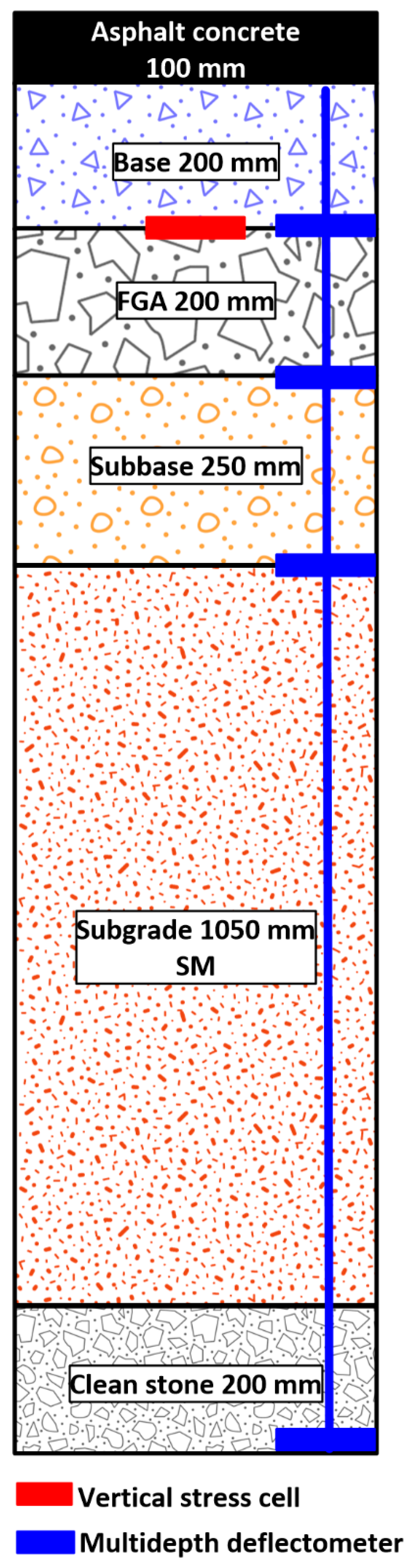
A flexible pavement structure was built inside a 2000 mm wide (X [−1000, +1000]), 6000 mm long (Y [0, +6000]), and 2000 mm deep (Z [0, −2000]) indoor test pit with typical construction materials compacted at their recommended maximum densities. The pavement structure consisted of a dense graded hot-mix asphalt (100 mm), unbound granular base with a size range of 0–20 mm (200 mm), FGA insulation layer with a size range of 0–60 mm (200 mm), unbound granular subbase with a size range of 0–40 mm (250 mm), silty subgrade 0–40 mm (1050 mm) classified as a silty sand (SM), and clean stone with a size range 10–14 mm (200 mm, for bottom drainage). The water table was kept at 1.5 m below the pavement surface for the tests. The pavement stratigraphy is presented in Figure 5.
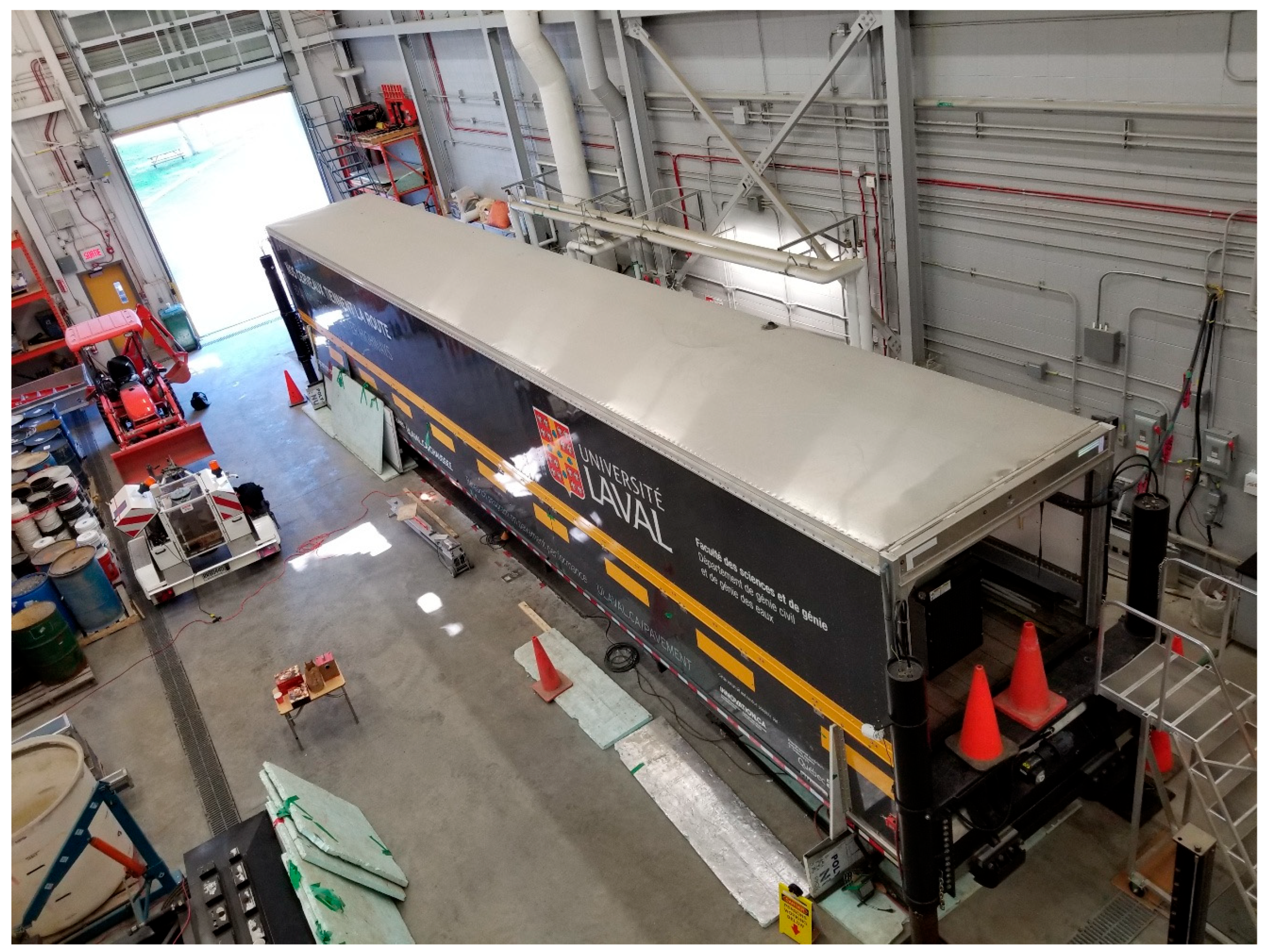
A heavy vehicle simulator, notably previously described in [35], was positioned above the test pit (Figure 6). The machine sides were insulated with surrounding side panels, and a thermal conditioner is used to control the temperature in the test chamber underneath the machine. For this experiment, the surface temperature was maintained at 10 °C to focus on the mechanical deformation of FGA without the confounding effects of frost. The repeated load was applied with a moving carriage equipped with dual tires. A multistage loading procedure was used, each load stage consisting of 5 × 10⁴ unidirectional load cycles (N) at a specified Half-Single Axle Load (HSAL). Four HSALs of 3000, 4000, 5000, and 6000 kg were used. The carriage speed was set at 9 km/h (maximum speed for the equipment), and lateral wandering of +/− 100 mm was used. Sensors were read multiple times per stage to document the mechanical characteristics, response, and performance of the FGA as axle load accumulated. In this paper, each sensor reading reported was obtained when the center of the dual tire assembly was moving directly over the sensors on the central longitudinal axis (X = 0, Figure 4), at a wheel wandering of 0 mm.
Two key instruments were used to assess the mechanical response and performance of the FGA insulation layer (Figure 5). The sensors were positioned on the centerline and at a specific depth to measure the mechanical response and performance of the FGA layer. A stress cell was positioned at the top of the FGA layer (Z = −300 mm) to obtain the vertical compressive stress (σV). A multidepth deflectometer was used to determine deflections occurring in the pavement layered system. For the analysis presented in this paper, deflections and inferred strains are reported for the FGA layer. Reference platens were strategically positioned at the top (Z = −300 mm from the surface) and bottom (Z = −500 mm from the surface) of the FGA insulation layer, that is, at the interface between the base and FGA, as well as at the interface between the FGA and subbase. The reference distance between these two platens was 200 mm. The deflection consumed in the FGA layer is obtained by subtracting the deflection from both platens.

5. Results

5.1. Triaxial Test Results

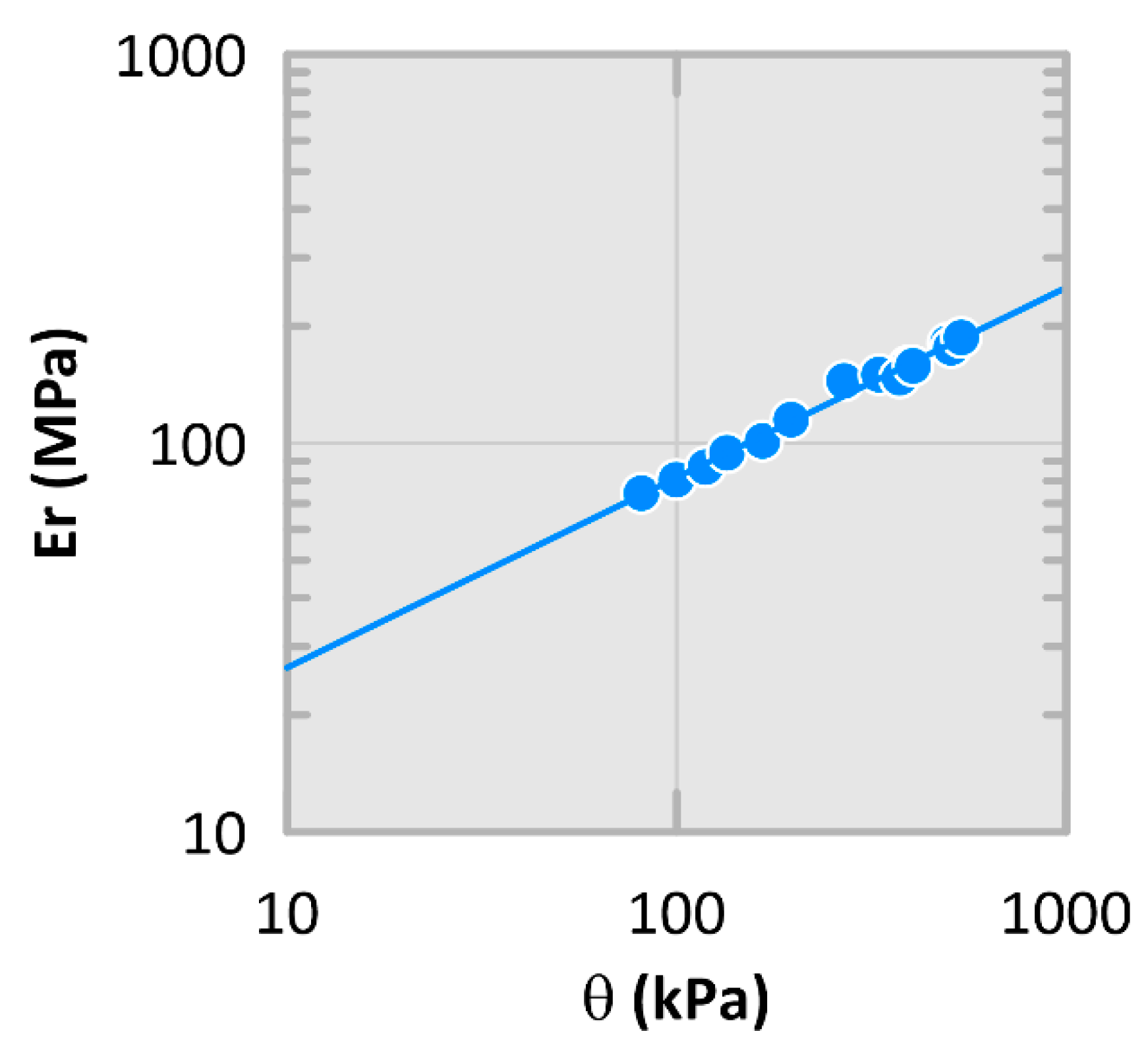
Figure 7 presents the resilient modulus (Er) test results. As per the results previously introduced in the study from [36], the resilient modulus dependence on total stress θ (representing the sum of the principal stress) for the tested FGA was determined and modeled with a simplified K-θ model, defined with
E r M P a = K 1 θ K 2 = 8.587 θ 0.4888 = 8.587 q + 3 σ 3 0.4888
where K1 and K2 are regression constants, with values of 8.587 and 0.4888, respectively, and θ is expressed in kPa. The deviatoric stress q and confining stress σ3 are expressed in kPa. For this model, the coefficient of determination R2 is 0.99. For the range of stresses tested, the Er varies between approximately 70 and 200 MPa, thereby showing reasonable mechanical characteristics for a material typically used below the granular base layer. These values are also in a similar range to clean or well-graded sand.
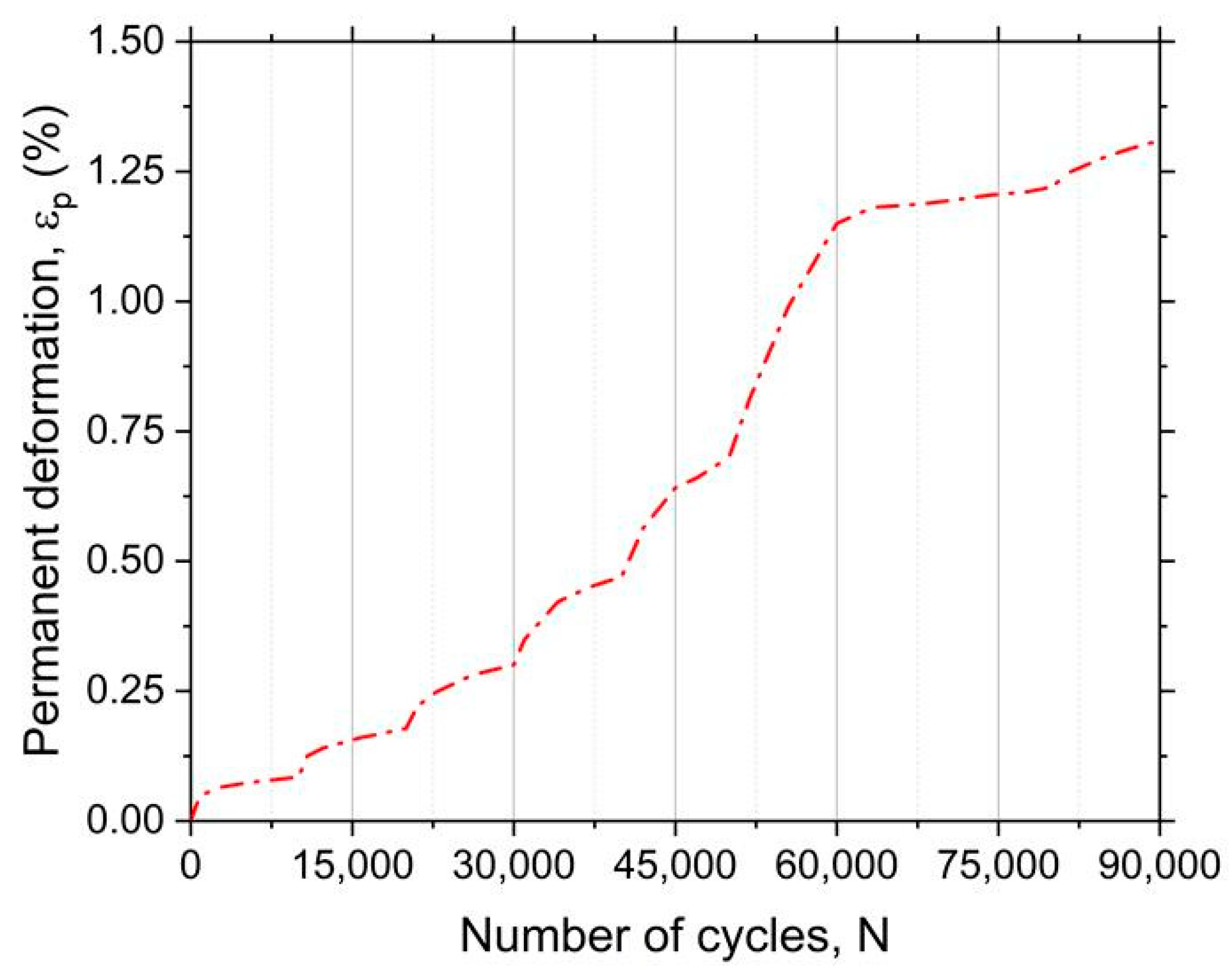
Figure 8 and Table 3 present the results of the permanent deformation triaxial test. The inferred regression parameters for each completed stress stage with respect to Equation (1), a and b, were obtained, as well as the corresponding coefficient of determination. A very high coefficient of determination (R2) was obtained, suggesting that the modelling approach is appropriate. Table 3 also summarizes the tested stress states with the deviatoric (q) and confining stresses (σ3), stress ratios (q/σ3), and the predicted (Δ3)p. It is possible to note that, in general, a and b as well as the shakedown range (Δ) are influenced by the stress state, as a higher magnitude of q leads to increased permanent deformation and a higher confining stress leads to decreased permanent deformation. The coefficients a and b shown in Table 3 are consistent with the values reported for foundation materials in the literature, particularly for granular materials composed of 50% recycled bituminous aggregates [37] or crushed rock [38]. The FGA showed a shakedown response, but for most of the samples, Range B and C behavior was obtained, demonstrating significant sensitivity to the accumulation of permanent deformation. This also emphasizes the importance of accurately determining the critical stress that can favor good performance of the material during its pavement life and ensure that it maintains its structural integrity.
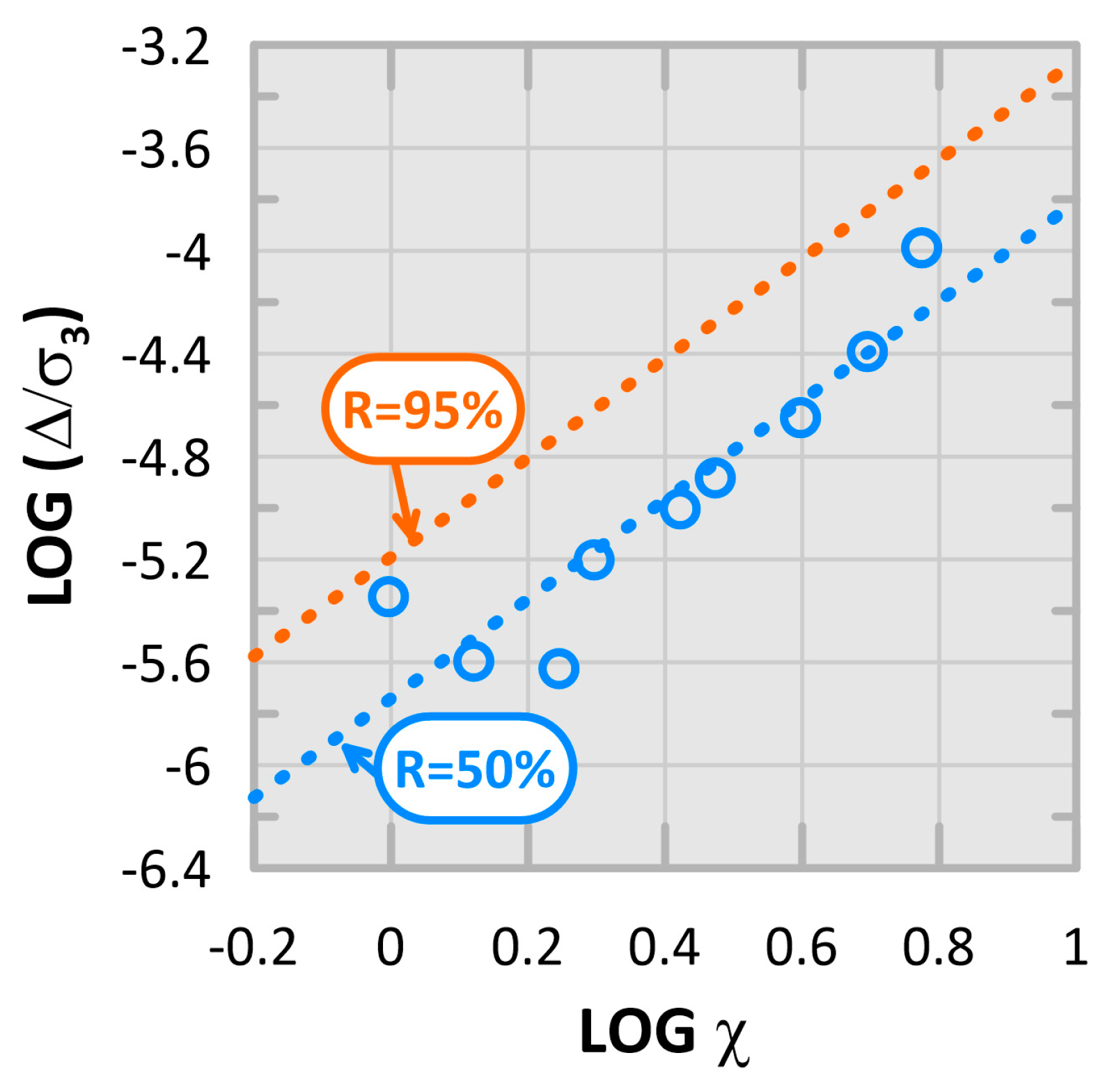
The modeling approach proposed by [17] and modified by [39] was adjusted to link the permanent deformation behavior to stress conditions. This model considers a normalized strain criterion, using Δ (mm/mm) divided by the confining stress σ3 (kPa) (Table 3). This approach allows the modeling of the strain criteria with respect to a stress parameter χ and is defined with
Δ σ 3 = β 1 χ β 2 = β 1 q q P a σ 3 β 2
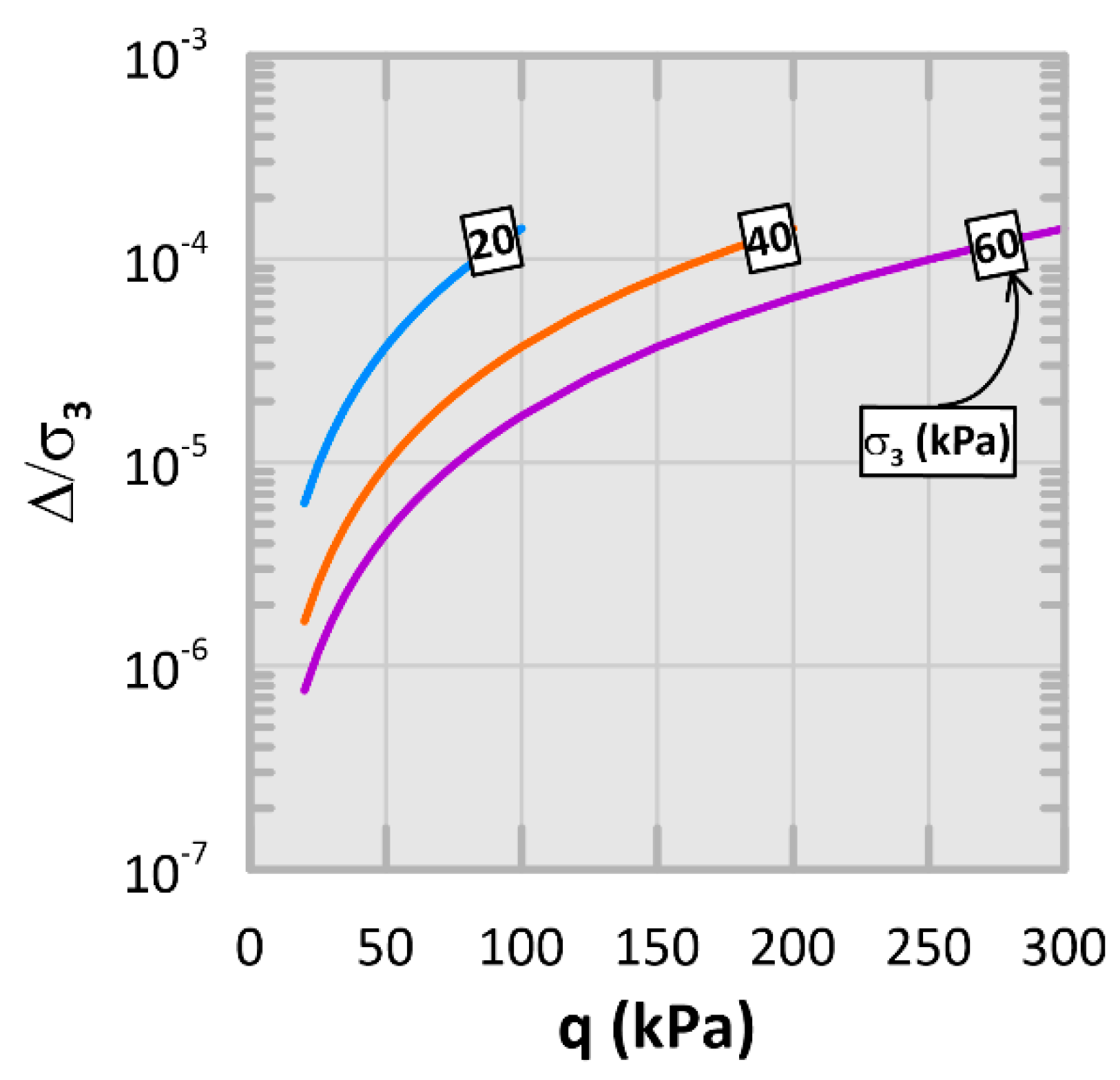
where Pa and q are expressed in kPa (Pa = 100, constant) and β1 and β2 are regression parameters. Figure 9 presents the results obtained from this analysis of the laboratory data, using two reliability levels (R) of 50% and 95% for the prediction interval. The coefficient of determination obtained is R2 = 0.896. Higher R values may be suitable to account for various uncertainties, to consider the fragile nature of FGA, and to ensure that the material retains its structural integrity and design properties throughout the pavement life. The regression coefficient β1 is equal to 1.8198 × 10⁻⁶ (R = 50%) and 6.4521 × 10⁻⁶ (R = 95%), and β2 is equal to 1.93. Throughout the rest of this paper, the model parameters corresponding to a 95th-percentile prediction limit will be used, meaning that there is a 95% probability the actual permanent strain will be lower than our model predicts. This provides a conservative design criterion for FGA layers. Figure 10 presents the model application for representative stress ratios of those considered for the laboratory testing.

5.2. Heavy Vehicle Simulator Test Results

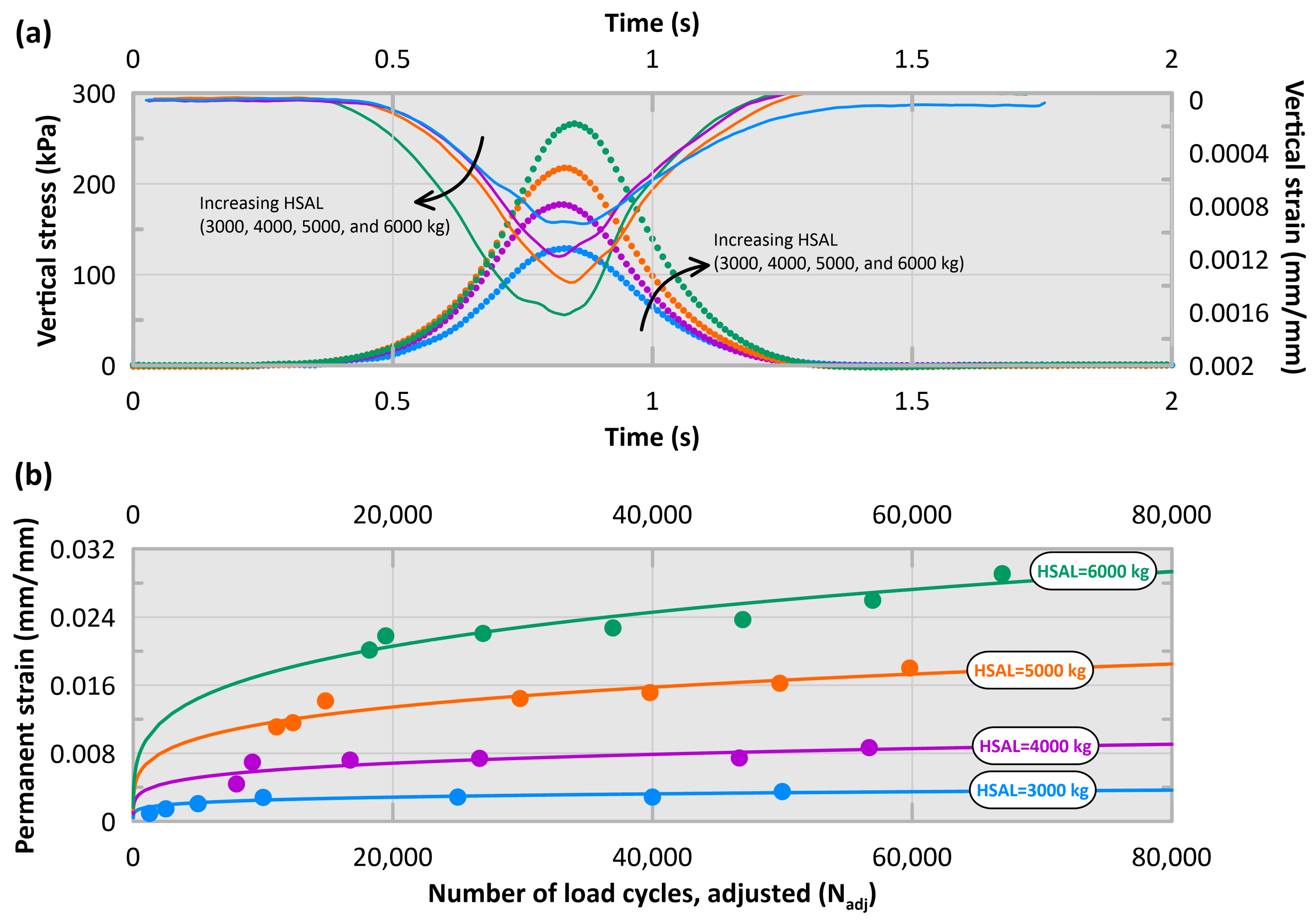
Figure 11 and Table 4 present the results obtained from the heavy vehicle simulator test. In Figure 11a, the characteristic vertical stress at the top of the FGA layer (q) and the vertical strain (εV) consumed in the FGA layer are presented for one load pass at N = 5000 load cycles for each HSAL stage. As expected, an increase in HSAL results in a gradual increase in the stress and strain conditions. The stress and strain conditions were used to estimate the resilient modulus Er of the layer (Table 4). Some inherent slight variability is observed between the load stages. However, the measured stiffness Er for each experimental condition is reasonably consistent, ranging from 151 to 165 MPa, with an average of 160 MPa. Figure 11b presents the accumulation of permanent strain (εp) with respect to the adjusted number of load cycles Nadj (Equation (1)) for each HSAL. Regression analysis was performed to optimize model coefficients and adjustment parameters (Equation (1)) a, b, and Ncorr (Table 4). As can be observed from Figure 11b, the increase in HSAL induces a more significant permanent strain in the insulation layer. The model coefficients a and b also increase for each load sequence, which is consistent with the increased HSAL and vertical stress at the top of the FGA (Table 4). The proposed modeling approach simulates the full-scale permanent strain data reasonably well, with R2 values of approximately 0.9 for three out of four load stages, and an average R2 of 0.84. The second stage presented the lowest R2 value. The inferred model was used to obtain the strain stability criteria for the full-scale tests ΔFS (Table 4). As can be observed, the obtained values are in Range B for the first load stage and in Range C for the other load stages.
The resilient modulus model determined through triaxial characterization of the FGA was used to estimate the confining pressure (σ3) in the full-scale heavy vehicle simulator test. Using the stiffness Er and vertical stress q obtained from the sensors embedded in the FGA layer in the test pit, Equation (3) was used to infer the total stress θ and therefore the confining pressure σ3 in the FGA (Table 4). It can be observed that, for the full-scale characterization, the total and confining stresses do not show a clear relationship with the imposed HSAL conditions; however, they are within a similar range, considering the scale of the tests. Using the estimated confining pressure σ3 and ΔFS, the normalized strain criteria measured for the full-scale tests (ΔFS3)m were inferred. In Table 4, this value is compared to the value predicted (Δ3)p with the proposed model (Equation (4)) using the stress conditions obtained in the full-scale test pit for the FGA layer. The measured values (ΔFS3)m are systematically lower than the predicted ones (Δ3)p, with the FGA layer in the full-scale test showing about 67% of the deformation predicted by the lab model. This discrepancy may be due to the confining effect of the pavement structure and stress distribution under a moving wheel, which are not fully replicated in a triaxial cell. We therefore introduced a calibration factor to adjust the model for field conditions (α). Therefore, Equation (4), was modified to consider this calibration. The calibrated model can be defined with
Δ σ 3 = α β 1 q q P a σ 3 β 2 = 0.67261 β 1 q q P a σ 3 β 2
where β1 is equal to 6.4521 × 10⁻⁶ (R = 95%) and β2 1.9.
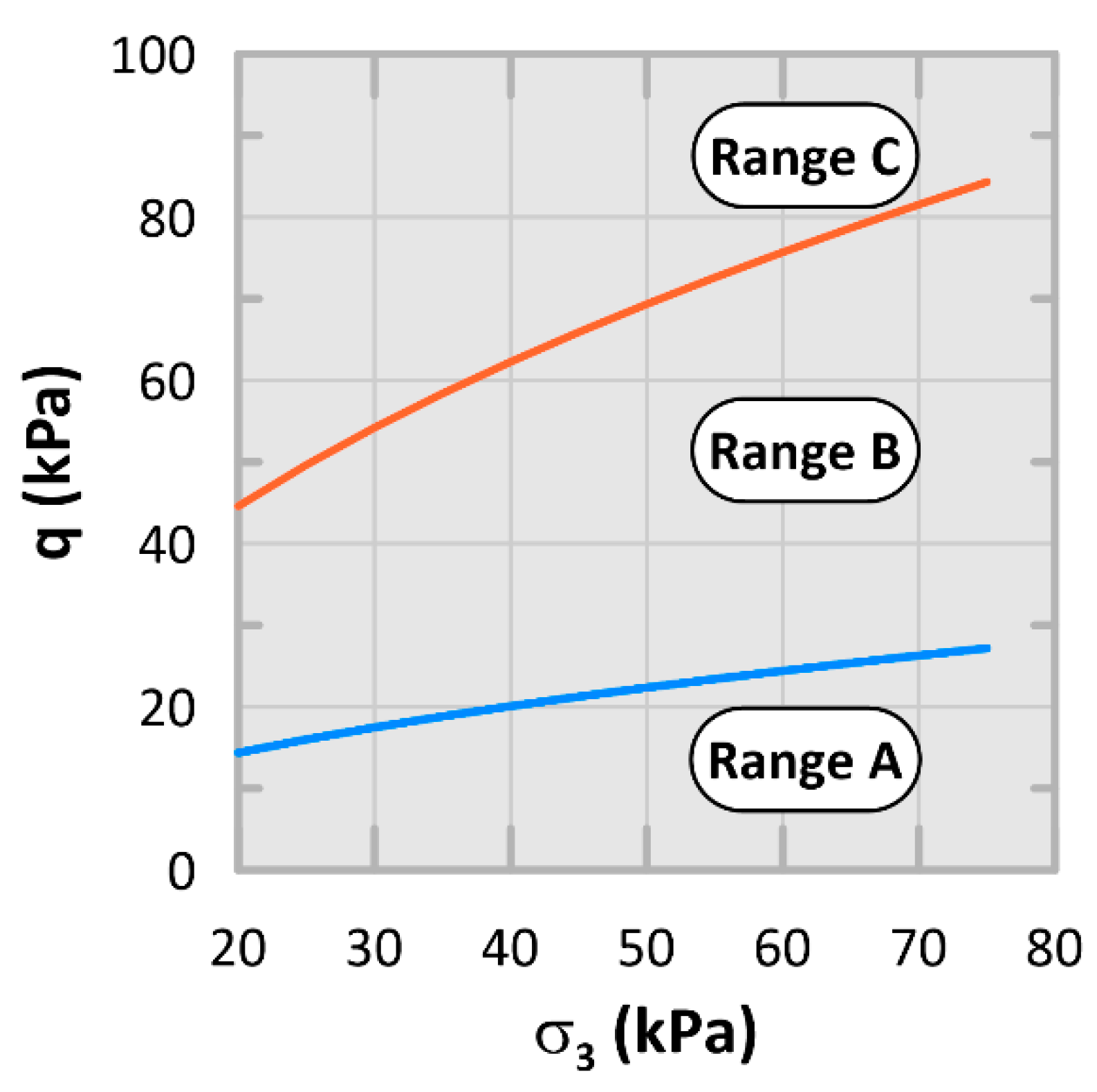
Equation (5) was used to define the critical deviatoric stress conditions (R = 95%) that promote low accumulation of permanent deformation and a decreasing permanent strain rate with the accumulation of load cycles. In order to identify critical deviatoric stress conditions, the Range A behavior limit (Δ = 0.000045) was fixed in Equation (5) and arbitrary confining pressures (σ3) were defined. Therefore, for each of the σ3, the deviatoric stress q was iterated to match the value of Δ3. Figure 12 presents the maximum critical deviatoric stress values that allow the meeting of the limit for the Range A, B, or C criteria, considering various levels of confining stress and a reliability of 95%. One can observe that, given these inputs and analysis parameters, the critical deviatoric stress varies in a range of approximately 15 to 25 kPa for realistic confining stress values and stress ratios (q/σ3) consistently significantly lower than 1. This suggests that, similar to the standard practice for other insulation materials used in pavements, such as polystyrene, a rigorous selection of overlaying materials and an appropriate design must be considered to ensure overall adequate mechanical protection of the fragile FGA insulation layer. Finally, for the reliability level used for the analysis (95%), the Range B-C limit is met for q values of about 55–80 kPa and (q/σ3) values of about 1.2–1.8.

6. Conclusions

Flexible pavement insulation is a valuable tool for ensuring adequate performance in cold regions, where unfavorable geotechnical conditions can lead to accelerated damage. Foam glass aggregates are efficient materials for use as insulation in flexible pavement layered systems. However, as they are fragile materials, adequate engineering consideration must be given to pavement mechanics in order to ensure good performance over the service life and prevent accelerated degradation of the insulation layer. This study combines laboratory triaxial tests at the material scale with accelerated pavement testing on foam glass aggregates at the pavement system scale to assess the critical stress transmitted to a foam glass aggregate insulation layer, ensuring good resistance to permanent deformation at a high reliability level. The main findings of this study are as follows:
  • For the foam glass aggregates tested, the Er varies between approximately 70 and 200 MPa for the range of stresses tested;
  • Foam glass aggregates experience shakedown behavior when subjected to triaxial permanent deformation tests;
  • Foam glass aggregates have mostly exhibited Range B and C behavior during permanent deformation triaxial characterization, demonstrating a significant sensitivity to the accumulation of permanent deformation;
  • Full-scale tests with a heavy vehicle simulator revealed that the strain hardening modeling approach was adapted to the permanent deformation behavior of the tested foam glass aggregates;
  • The normalized strain criteria can be modeled with respect to a stress parameter for the triaxial and full-scale tests;
  • Using the normalized strain criteria model, a calibration factor between laboratory scale and full-scale was calculated and equals 0.67;
  • For a reliability level of 95%, the critical vertical stress for the tested foam glass aggregates to meet the Range A limit varies between 15 and 25 kPa for typical expected confining pressure values.
Future research work needs to be undertaken to have a better understanding of how critical stress can be influenced by industrial processes and foaming agent products used to produce foam glass aggregates. Researchers can also consider studying the fundamental FGA deterioration mechanisms and how they relate to stress and state and environmental properties.

Author Contributions

Conceptualization, J.P.B. and E.P.-G.; methodology, J.P.B. and E.P.-G.; software, J.P.B. and E.P.-G.; validation, J.P.B., E.P.-G., D.W. and P.S.; formal analysis, J.P.B., E.P.-G., D.W. and P.S.; investigation, J.P.B., E.P.-G. and D.W.; resources, J.P.B., E.P.-G. and P.S.; data curation, J.P.B., E.P.-G. and P.S.; writing—original draft preparation, J.P.B., E.P.-G. and D.W.; writing—review and editing, J.P.B., E.P.-G., D.W. and P.S.; visualization, J.P.B., E.P.-G. and P.S.; supervision, J.P.B. and E.P.-G.; project administration, J.P.B.; funding acquisition, J.P.B. All authors have read and agreed to the published version of the manuscript.

Funding

This research was funded by the Natural Sciences and Engineering Research Council of Canada and the partners of the program “Déploiement technologique du verre cellulaire en ingénierie routière” (grant number ALLRP 590244 – 23) for their financial support. We gratefully acknowledge the Center for Northern Studies (CEN), a strategic cluster funded by the Fonds Québécois de Recherche Nature et Technologie for professional and logistical support. Finally, this project could not have been done without the collaboration and involvement of the Sentinel North Research on Northern Infrastructures at Université Laval.

Data Availability Statement

Dataset available on request from the authors.

Conflicts of Interest

The authors declare no conflict of interest.

References

  1. Doré, G.; Zubeck, H.K. Cold Regions Pavement Engineering; American Society of Civil Engineers Press: Reston, VA, USA; New York, NY, USA, 2009. [Google Scholar]
  2. Konrad, J.-M.; Roy, M. Flexible pavements in cold regions: A geotechnical perspective. Can. Geotech. J. 2000, 37, 689–699. [Google Scholar] [CrossRef]
  3. Sylvestre, O.; Bilodeau, J.-P.; Doré, G. Effect of frost heave on long-term roughness deterioration of flexible pavement structures. Int. J. Pavement Eng. 2019, 20, 704–713. [Google Scholar] [CrossRef]
  4. Konrad, J.-M. Frost susceptibility related to soil index properties. Can. Geotech. J. 1999, 36, 403–417. [Google Scholar] [CrossRef]
  5. Saint-Laurent, D. Routine Mechanistic Pavement Design against Frost Heave. In Proceedings of the Cold Regions Engineering 2012: Sustainable Infrastructure Development in a Changing Cold Environment, Quebec City, QC, Canada, 19 August 2012; pp. 144–154. [Google Scholar]
  6. Transportation Association of Canada. Pavement Asset Design and Management Guide; TAC: Ottawa, ON, Canada, 2013. [Google Scholar]
  7. Arnevik, A.; Hoff, I.; Myren, T.H. Thermal and mechanical performance of foam glass aggregates in road structures. Cold Reg. Sci. Technol. 2020, 170, 1029102. [Google Scholar]
  8. Rieksts, K.; Loranger, B.; Hoff, I. The performance of different frost protection materials for road design. In Eleventh International Conference on the Bearing Capacity of Roads, Railways and Airfields, Volume 2; Hoff, I., Mork, H., Saba, R.G., Eds.; CRC Press: Boca Raton, FL, USA, 2022; pp. 281–290. [Google Scholar] [CrossRef]
  9. Segui, P.; Bilodeau, J.-P.; Doré, G. Mechanical behavior of pavement structures containing foam glass aggregates insulation layer: Laboratory and in-situ study. In Proceedings of the International Conference on Cold Regions Engineering, Quebec City, QC, Canada, 19–22 August 2019. [Google Scholar]
  10. Segui, P.; Bilodeau, J.-P.; Côté, J.; Doré, G. Thermal behavior of flexible pavement containing foam glass aggregates as thermal insulation layer. In Proceedings of the International Conference on Cold Regions Engineering, Quebec City, QC, Canada, 19–22 August 2019. [Google Scholar]
  11. Huang, Y.H. Pavement Analysis and Design, 2nd ed.; Pearson Prentice Hall: Upper Saddle River, NJ, USA, 2004. [Google Scholar]
  12. ARA Inc. Guide for the Mechanistic-Empirical Design of New and Rehabilitated Pavement Structures; Transportation Research Board of the National Academies: Washington, DC, USA, 2004. [Google Scholar]
  13. Asphalt Institute. Thickness Design-Asphalt Pavements for Highways and Streets, 9th ed.; Asphalt Institute: Lexington, KY, USA, 1991; MS-1. [Google Scholar]
  14. Pidwerbesky, B.D. Fundamental Behaviour of Unbound Granular Pavements Subjected to Various Loading Conditions and Accelerated Trafficking. Ph.D. Thesis, University of Canterbury, Christchurch, New Zealand, 1996. [Google Scholar]
  15. NSSGA. The Aggregates Handbook, 2nd ed.; National Stone, Sand and Gravel Association: Alexandria, VA, USA, 2013; ISBN 978-0-9889950-0-0. [Google Scholar]
  16. Lekarp, F.; Isacsson, U.; Dawson, A. State of the Art. II: Permanent Strain Response of Unbound Aggregates. J. Transp. Eng. 2000, 126, 76–83. [Google Scholar] [CrossRef]
  17. Pérez, E.L. Development of an Analysis Tool to Quantify the Effect of Superheavy Load Vehicles on Pavements. Ph.D. Thesis, Université Laval, Quebec City, QC, Cananda, 2021. [Google Scholar]
  18. AFNOR NF EN 13286-7; Mélanges Avec Ou Sans Liant Hydraulique Partie 7: Essai Triaxial Sous Charge Cyclique Pour Mélanges Sans Liant Hydraulique. Procédure de laboratoire de l’Association Française de Normalisation: Saint-Denis, France, 2005.
  19. Erlingsson, S.; Rahman, M.S. Evaluation of Permanent Deformation Characteristics of Unbound Granular Materials by Means of Multistage Repeated-Load Triaxial Tests. Transp. Res. Rec. J. Transp. Res. Board 2013, 2369, 11–19. [Google Scholar] [CrossRef]
  20. Werkmeister, S. Permanent Deformation Behaviour of Unbound Granular Materials in Pavement Constructions. Ph.D. Thesis, Dresden Technical University, Dresden, Germany, 2003. [Google Scholar]
  21. Bernardo, E.; Cedro, R.; Florean, M.; Hreglich, S. Reutilization and stabilization of wastes by the production of glass foams. Ceram. Int. 2007, 33, 963–968. [Google Scholar] [CrossRef]
  22. Emersleben, A.; Meyer, N. The use of recycled glass for the construction of pavements. In Proceedings of the 2012 GeoCongress, Oakland, CA, USA, 25–29 March 2012; ASCE: Reston, VA, USA, 2012. [Google Scholar]
  23. Attila, Y.; Güden, M.; Taşdemirci, A. Foam glass processing using a polishing glass powder residue. Ceram. Int. 2013, 39, 5869–5877. [Google Scholar] [CrossRef]
  24. Eriksson, L.; Hägglund, J. Information 18:1. In Handbok: Skumglas i mark-och vägbyggnad; Swedich Geotechnical Institute: Linköping, Sweden, 2008. [Google Scholar]
  25. Vegdirektoratet. Handboker i Statens vegvesen. In Håndbok N200 Vegbygging; Nr. Statens Vegvesens: Oslo, Norway, 2014. [Google Scholar]
  26. Volland, S.; Vereshchagin, V. Cellular glass ceramic materials on the basis of zeolitic rock. Constr. Build. Mater. 2012, 36, 940–946. [Google Scholar] [CrossRef]
  27. Binhussain, M.A.; Marangoni, M.; Bernardo, E.; Colombo, P. Sintered and glazed glass-ceramics from natural and waste raw materials. Ceram. Int. 2014, 40, 3543–3551. [Google Scholar] [CrossRef]
  28. Marangoni, M.; Secco, M.; Parisatto, M.; Artioli, G.; Bernardo, E.; Colombo, P.; Altlasi, H.; Binmajed, M.; Binhussain, M. Cellular glass–ceramics from a self foaming mixture of glass and basalt scoria. J. Non-Cryst. Solids 2014, 403, 38–46. [Google Scholar] [CrossRef]
  29. Shutov, A.; Yashurkaeva, L.; Alekseev, S.V.; Yashurkaev, T.V. Study of the structure of foam glass with different characteristics. Glass Ceram. 2007, 64, 297–299. [Google Scholar] [CrossRef]
  30. Ritola, J.; Vares, S. Recycling of waste glass in foam glass production. In VTT Tiedotteita—Research Notes; VTT Technical Research Centre of Finland: Espoo, Finland, 2008. [Google Scholar]
  31. Adam, Q.F.; Segui, P.; Côté, J.; Bilodeau, J.-P.; Doré, G. Thermal insulation of flexible pavements utilizing foam glass aggregates to mitigate frost action in cold regions—Development of design tools. Constr. Build. Mater. 2024, 414, 134841. [Google Scholar] [CrossRef]
  32. Mustafa, W.S.; Szendefy, J. Uniaxial dynamic behavior of foam glass aggregate under oedometric (fully side restrained) condition at different compaction ratios. Constr. Build. Mater. 2023, 396, 132327. [Google Scholar] [CrossRef]
  33. Lenart, S.; Kaynia, A.M. Dynamic properties of lightweight foamed glass and their effect on railway vibration. Transp. Geotech. 2019, 21, 100276. [Google Scholar] [CrossRef]
  34. Bilodeau, J.-P.; Segui, P.; Pérez, E.L.; Doré, G. Empirical transfer functions for foam glass aggregates insulation used in flexible pavement layered systems. Transp. Geotech. 2024, 45, 101189. [Google Scholar] [CrossRef]
  35. AASHTO T307-99; Determining the Resilient Modulus of Soils and Aggregate Materials. In Standard Specifications for Transportation Materials and Methods of Sampling and Testing, 20th Edition. American Association for State Highway and Transportation Officials (AASHTO): Washington, DC, USA, 2023.
  36. Pérez, E.L.; Bilodeau, J.-P.; Segui, P.; Doré, G. Resilient and permanent deformation of foam glass aggregates assemblies. In Proceedings of the Eleventh International Conference on the Bearing Capacity of Roads, Railways and Airfields, Trondheim, Norway, 27–30 June 2022; Volume 3. [Google Scholar]
  37. Carrier, V. Comportement en Déformation Permanente et Mise en Œuvre des Matériaux Recyclés de Type MR5. Master’s Thesis, Université Laval, Quebec City, QC, Canada, 2020. [Google Scholar]
  38. Korkiiala-Tanttu, L.; Dawson, A. Relating full-scale pavement rutting to laboratory permanent deformation testing. Int. J. Pavement Eng. 2007, 8, 19–28. [Google Scholar] [CrossRef]
  39. Blanchette, M.; Bilodeau, J.-P.; Pérez, E.L.; Fréchette, V.; Doré-Richard, S. Predicting plastic strain rate in the core of embankment dams subjected to heavy vehicle traffic. Can. Geotech. J. 2025, 62, 1–13. [Google Scholar] [CrossRef]
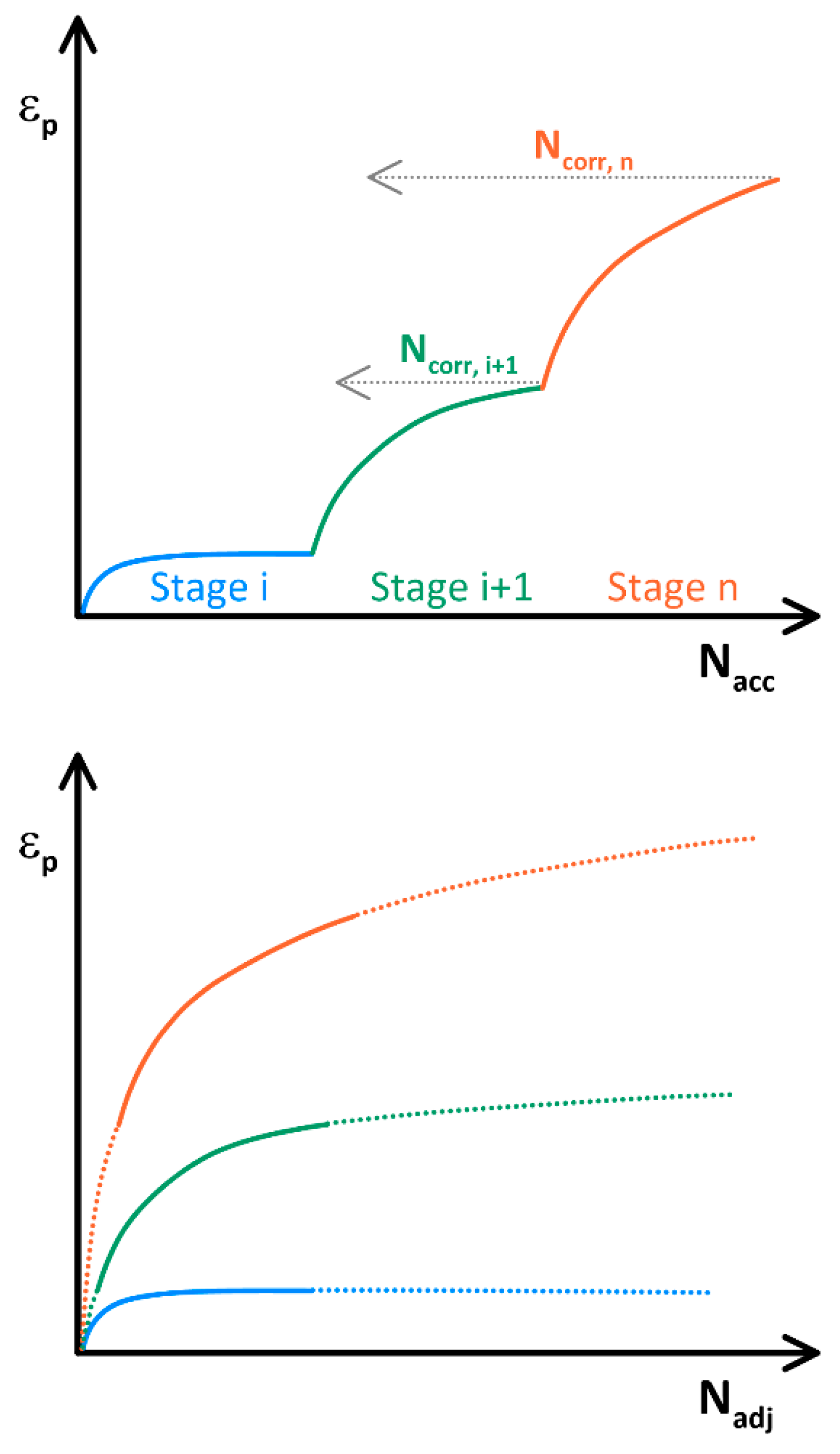
Figure 1. Strain hardening analysis for permanent deformation (blue, green and orange lines represent different load stage).
Infrastructures 10 00339 g001
Figure 2. Shakedown behavior and ranges.
Infrastructures 10 00339 g002
Figure 3. Grain size distribution of the tested FGA.
Infrastructures 10 00339 g003
Figure 4. Flow chart of testing program and the calibrated model development.
Infrastructures 10 00339 g004
Figure 5. Pavement stratigraphy in indoor pit used for accelerated pavement tests.
Infrastructures 10 00339 g005
Figure 6. Heavy vehicle simulator positioned over the test pit.
Infrastructures 10 00339 g006
Figure 7. Resilient modulus test results.
Infrastructures 10 00339 g007
Figure 8. Permanent deformation test results.
Infrastructures 10 00339 g008
Figure 9. Normalized strain criteria for the stress parameter χ for two reliability levels.
Infrastructures 10 00339 g009
Figure 10. Application of the proposed model (R = 95%).
Infrastructures 10 00339 g010
Figure 11. Heavy vehicle simulator results: (a) characteristic vertical stress (dotted line) and strain (full line) measured at 5000 cycles during each load stage (blue, purple, orange and green refer to 3000, 4000, 5000 and 6000 HSAL, respectively); (b) permanent strain vs. adjusted number of load cycles (Nadj).
Infrastructures 10 00339 g011
Figure 12. Critical deviatoric stress for various confining stress conditions to meet the Range A shakedown limit criteria (R = 95%).
Infrastructures 10 00339 g012
Table 1. Resilient modulus test sequence [35].
σ3
(kPa)
q *
(kPa)
Conditioning103.4103.4
120.720.741.462.1
234.534.568.9103.4
368.968.9137.9206.8
4103.468.9103.45206.8
5137.9103.4137.9275.8
* Conditioning: 1000 load cycles; Test sequences 1 to 5: 100 load cycles per deviatoric stress level.
Table 2. Permanent deformation test sequence [18].
Test SequenceN σ 3 q
(kPa)(kPa)
110,0002020
10,0002040
10,0002060
10,0002080
10,00020100
10,00020120
210,0004560
10,0004580
10,00045120
Table 3. Permanent deformation test results.
NabR2Range Δ q σ 3 q/σ3 ( Δ σ 3 ) p
(mm/mm)(kPa)(kPa) (mm/mm/kPa)
10,0000.0004410.13360.9962B0.00009070202014.5348 × 10−6
10,0000.00110.09870.9999B0.00012536402026.2681 × 10−6
10,0000.00160.11961.000B0.00026262602031.3131 × 10−5
10,0000.00200.13941.000C0.00045064802042.2532 × 10−5
10,0000.00230.16990.9999C0.000812721002054.0636 × 10−5
10,0000.00080.32930.9999C0.002046491202061.0232 × 10−4
10,0000.01590.01270.9988A0.0001145660451.32.5458 × 10−6
10,0000.01660.01150.9998B0.0001072480451.82.3830 × 10−6
10,0000.01270.04690.9999B0.00044827120452.79.9615 × 10−6
Table 4. Heavy vehicle simulator test results.
Stage 1Stage 2Stage 3Stage 4
HSAL = 3000 kgHSAL = 4000 kgHSAL = 5000 kgHSAL = 6000 kg
q (kPa) *151181224264
εV (mm/mm) *0.0010.00110.00140.0016
Er (MPa) *151165160165
θ (kPa) *353420397423
σ3 (kPa) *67805853
q/σ32.32.33.95.0
a0.000457390.000912980.001374490.00164335
b0.184551030.203330210.230246910.2552857
Ncorr11,20553,310100,191143,056
Nacc0 to 5 × 1045 × 104 to 1 × 1051 × 105 to 1.5 × 1051.5 × 105 to 2 × 10⁵
R20.9220.6240.8890.916
ΔFS (mm/mm)0.000198160.0005089670.001083920.001767311
(ΔFS3)m (kPa−1)2.948 × 10−66.378 × 10−61.880 × 10−63.33 × 10−6
(Δ3)p (kPa−1) **8.512 × 10−68.672 × 10−62.445 × 10−53.969 × 10−5
* Characteristic mechanical response measured at N = 5000 cycles for each load stage. ** Obtained from equation using Equation (4) and the stress conditions (σV and σ3) measured in the heavy vehicle simulator test.
Disclaimer/Publisher’s Note: The statements, opinions and data contained in all publications are solely those of the individual author(s) and contributor(s) and not of MDPI and/or the editor(s). MDPI and/or the editor(s) disclaim responsibility for any injury to people or property resulting from any ideas, methods, instructions or products referred to in the content.