Article

Influence of Coarse Aggregate Geometry and Mineral Composition on the Durability of Asphalt Concrete

by
Hussein K. Mohammad
1,
Amjad H. Albayati
2 and
Mazen J. Al-Kheetan
3,*
1
Ministry of Higher Education and Scientific Research, Baghdad 10072, Iraq
2
Department of Civil Engineering, University of Baghdad, Baghdad 10071, Iraq
3
Department of Civil and Environmental Engineering, College of Engineering, Mutah University, Karak 61710, Jordan
*
Author to whom correspondence should be addressed.
Infrastructures 2025, 10(10), 263; https://doi.org/10.3390/infrastructures10100263
Submission received: 20 August 2025 / Revised: 22 September 2025 / Accepted: 3 October 2025 / Published: 4 October 2025

Abstract

The durability of asphalt concrete is highly dependent on the geometry and mineralogy of coarse aggregates, yet their combined influence on mechanical and moisture resistance properties is still not fully understood. This study evaluates the effects of coarse aggregate geometry, specifically flat and elongated particle ratios and angularity, as well as mineral composition (quartz versus calcite), on asphalt mixture durability. The durability of mixtures was evaluated through Marshall properties as well as moisture susceptibility indicators, including the tensile strength ratio (TSR) and index of retained strength (IRS). Statistical analyses (ANOVA and t-tests) were also conducted to confirm the significance of the observed effects. Results showed that mixtures containing higher proportions of flat and elongated particles exhibited greater void content, reduced stability, and weaker moisture resistance, with the 1:5 flat-to-elongated ratio showing the most adverse impact (TSR 73.9%, IRS 69.2%). Conversely, increasing coarse aggregate angularity (CAA) enhanced mixture performance, with TSR values rising from 63.5% at 0% angularity to 81.2% at 100% angularity, accompanied by corresponding improvements in IRS. Mineral composition analysis further demonstrated that calcite-based aggregates achieved stronger bonding with asphalt binder and superior resistance to stripping compared to quartz-based ones. These findings confirm that aggregate geometry and mineralogy exert a decisive influence on asphalt mixture durability. They also highlight the need to revise current specifications that permit the use of uncrushed coarse aggregate in asphalt base courses, particularly when such layers may serve as surface courses in suburban or low-volume roads, where long-term resistance to moisture damage is critical.

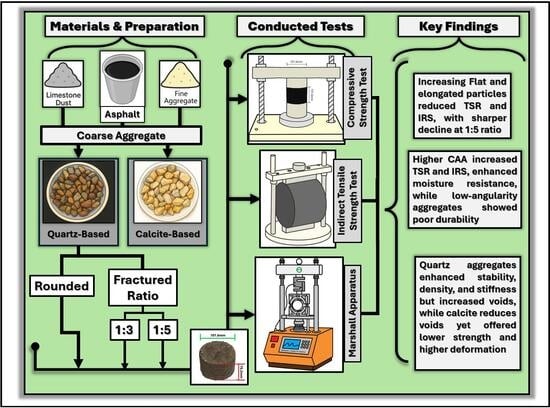
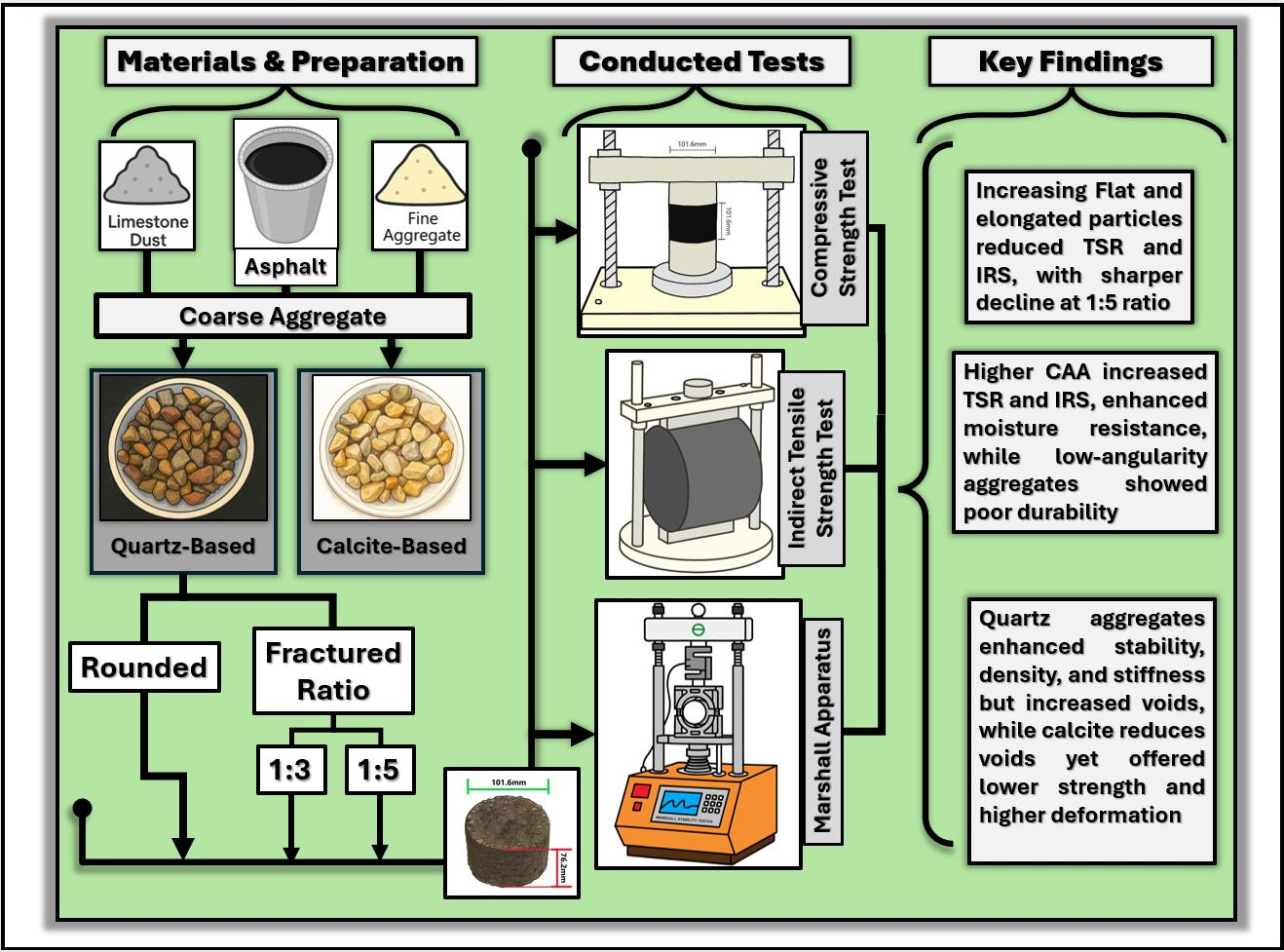
Graphical Abstract

1. Introduction

Aggregate geometry and mineralogy are recognized as key determinants of asphalt concrete performance, directly influencing load-bearing capacity, resistance to deformation, and long-term durability [1,2,3,4,5]. The physical characteristics of coarse aggregate, particularly particle shape, angularity, and surface texture, control aggregate interlock, load transfer efficiency, and the degree of mechanical interlocking with the asphalt binder [6,7,8,9]. Highly angular aggregates provide greater shear resistance and rutting resistance under repeated loading [10,11,12], while excessive flat and elongated particles may create planes of weakness, leading to premature cracking, moisture infiltration, and reduced fatigue life [13,14,15]. Mineralogical composition is equally important in governing binder–aggregate adhesion and moisture damage susceptibility [16,17]. Siliceous aggregates such as quartz are generally hydrophobic, which can reduce asphalt–aggregate bonding strength and increase stripping potential [18,19], whereas calcareous aggregates, such as limestone and calcite, possess a chemically active surface that promotes adhesion with asphalt binders and enhances moisture resistance [20,21,22]. However, these benefits must be balanced against potential trade-offs, such as the lower hardness and skid resistance of some carbonate rocks compared to hard siliceous materials [23,24].
Regional specifications, such as those of Saudi Arabia and the United Arab Emirates, emphasize strict angularity requirements for coarse aggregates to ensure durability and mechanical stability in asphalt pavements [25,26]. For instance, both specifications require coarse aggregates to be clean, to be free from deleterious materials, and to meet high fractured-face and angularity thresholds, typically stipulating that 100% of the coarse aggregate retained on the No. 8 sieve must have at least one fractured face, and at least 70% must be fully crushed, to guarantee superior mechanical interlock and resistance to rutting. International specifications such as Superpave adopt similar but traffic-volume-dependent consensus property criteria, also requiring 100% of the coarse aggregate retained on the No. 8 sieve to have at least one fractured face, with a minimum of 70% fully crushed particles for most traffic levels [27]. These measures are intended to secure adequate shear strength, stability, and rutting resistance under repeated loading [28,29,30]. In contrast, the Iraqi General Specifications for Roads and Bridges allow the use of uncrushed natural gravel in asphalt base courses, provided that gradation and cleanliness requirements are met, without imposing stringent angularity limits [31]. While such practice may be suitable for base layers shielded by thick surface courses, performance concerns arise when base-course-designed mixtures are used directly as surface layers in suburban roads, commonly comprising a 30 cm granular subbase and a 10 cm asphalt concrete layer, where they are exposed directly to traffic loading and environmental moisture [32]. Numerous laboratory and field investigations have reported that aggregate mineral composition and geometry significantly influence asphalt mixture performance, particularly moisture damage resistance, as indicated by parameters such as TSR and IRS, as well as overall long-term stability [7,33,34,35,36,37,38,39,40]. For example, studies [41,42,43] observed that mixtures with higher angularity aggregates achieved TSR values 10–20% higher than those with rounded aggregates. Similarly, Refs. [42,44,45] reported that aggregate mineralogy had a strong influence on stripping resistance, with limestone-rich mixtures retaining over 80% of their strength after moisture conditioning, compared to 60–70% for siliceous-dominated mixtures. More recent studies have combined mineralogy and shape analysis, demonstrating that even high-angularity quartz aggregates may underperform in moisture conditioning tests compared to moderately angular calcareous aggregates with higher chemical affinity to bitumen. Moreover, the combined effect of aggregate type and gradation has been shown to control volumetric properties such as voids in total mix (VTM) and voids in mineral aggregate (VMA), which in turn dictate susceptibility to water-induced damage. The interaction between aggregate source and binder type further modulates durability, with lime-treated calcareous aggregates achieving markedly higher moisture resistance even under aggressive freeze–thaw cycles.
Despite this substantial body of research, a key gap remains in understanding the performance implications of applying base-course-designed asphalt mixtures, denoted as Type I in the state commission for roads and bridges (SCRB) specification [31] and comprising aggregates with lower angularity requirements, as surface courses, in regions where local specifications permit such practice. This is particularly relevant for countries like Iraq, where uncrushed coarse aggregates are allowed in base courses but where economic considerations sometimes lead to their use in 10 cm (approximately 4-inch) surface layers of suburban and low-volume roads without wearing course [32]. Such practice exposes the surface layer to direct traffic loading and moisture ingress, potentially accelerating deterioration through stripping, raveling, and rutting.
Therefore, the objective of this study is to systematically investigate the influence of aggregate geometry (shape, angularity, and surface texture) and mineral composition (quartz vs. calcite) on the durability of asphalt concrete mixtures, with particular emphasis on scenarios where base-course specification mixtures are used as surface courses. A laboratory program was designed to evaluate stability, volumetric characteristics, moisture susceptibility through the tensile strength ratio (TSR) and index of retained strength (IRS), and compressive strength retention. The outcomes are expected to provide practical insights into how aggregate geometry and mineralogy affect mixture performance and to support the refinement of aggregate specifications for pavements in regions with comparable construction practices. The subsequent sections present the materials, mixture preparation, and testing procedures adopted to achieve these objectives.

2. Materials

2.1. Asphalt Cement

The asphalt cement used in this study was obtained from the Al-Doura Oil Refinery, situated southwest of Baghdad, Iraq. Its performance grade was determined following the Superpave Performance Grading (PG) system specified in AASHTO M320. The rheological properties were evaluated using the designated Superpave testing protocols, and the results are summarized in Table 1. Based on these results, the binder meets the requirements for PG 70-16, indicating its suitability for use in hot climate regions with a minimum pavement design temperature of −16 °C.

2.2. Aggregate and Mineral Filler

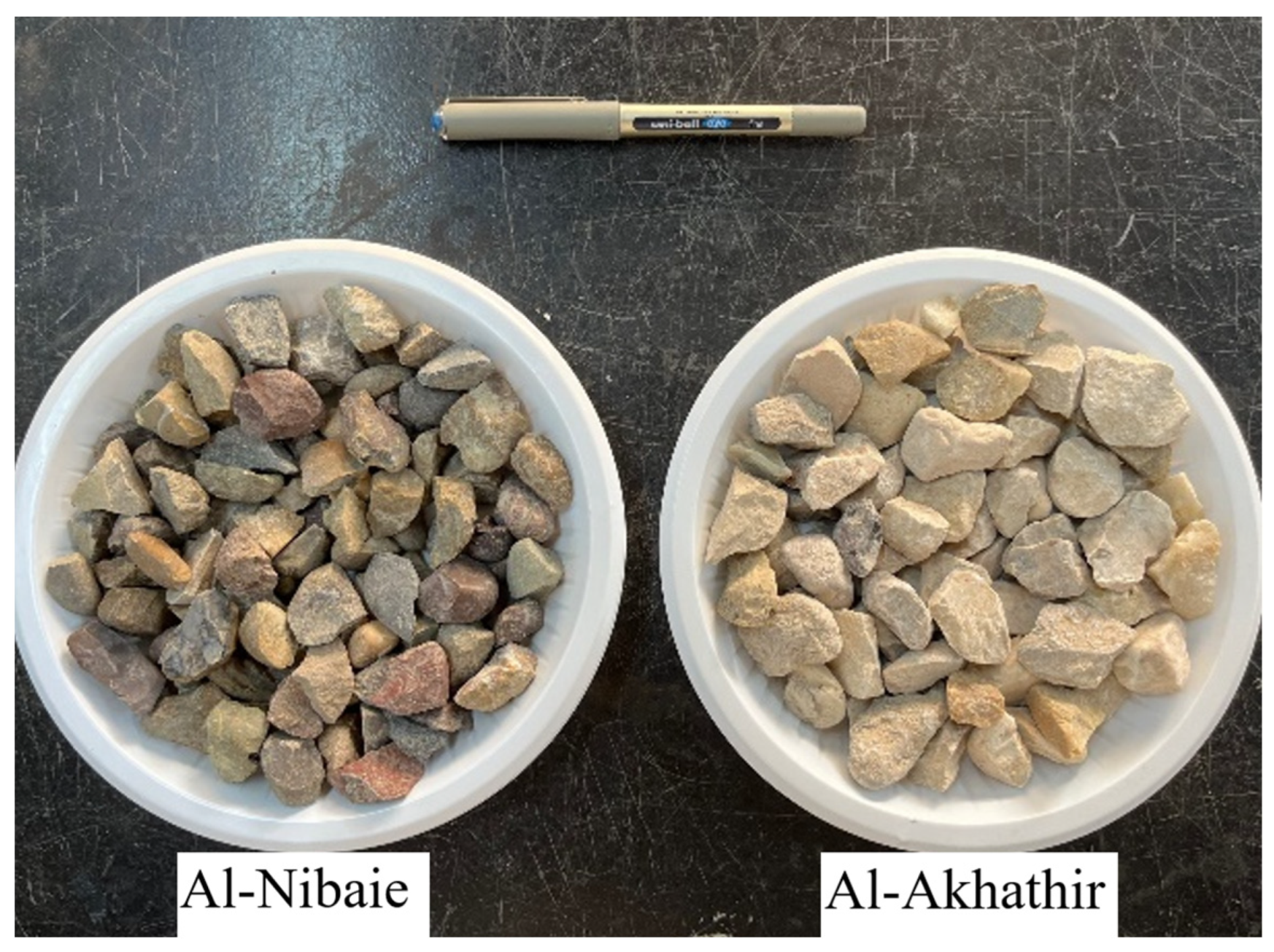
Two types of coarse aggregate were employed in this study. The first was sourced from northern Baghdad (the Al-Nibaie quarry) and is primarily quartz-based, while the second was obtained from south of Baghdad (Al-Akhathir quarry) and is predominantly calcite-based. Two geometrically distinct types of quartz coarse aggregate were prepared from the Al-Nibaie quarry: fractured and rounded. The fractured aggregates were further classified based on flat-and-elongated (F&E) particle ratios determined according to ASTM D4791. In this classification, a 1:3 ratio denotes particles whose maximum length is three times their minimum thickness (moderately elongated). In comparison, a 1:5 ratio denotes particles with a maximum length that is five times their minimum thickness (highly elongated). Each category was sorted and stored separately for subsequent use. To characterize angularity, the CAA test was conducted as per ASTM D5821, which determines the percentage by weight of fractured faces. Mixtures were then prepared using aggregates with different CAA levels (0, 25, 50, 75, and 100%). For the Al-Akhathir quarry, only fractured coarse aggregates with 100% angularity were used. Figure 1 shows the fractured aggregates used from both Al-Nibaie and Al-Akhathir quarries.
A single type of fine aggregate was used throughout the study, quartz fine aggregate from the Al-Nibaie quarry. The physical properties of the coarse aggregates (by source) and the fine aggregate are presented in Table 2, while their chemical compositions are shown in Table 3.
All aggregate fractions were prepared using standard dry-sieving procedures, with size separations at 37.5, 25.0, 19.0, 12.5, 9.5, 4.75, 2.36, 0.30, and 0.075 mm (plus pan). Material passing the 0.075 mm sieve was discarded and replaced with limestone mineral filler, whose properties are presented in Table 4. The final blend was recombined to produce an aggregate gradation corresponding to the midrange of the D-3 mix type specified in ASTM D3515 for base-course applications in flexible pavements (Table 5).

3. Mix Preparation and Design

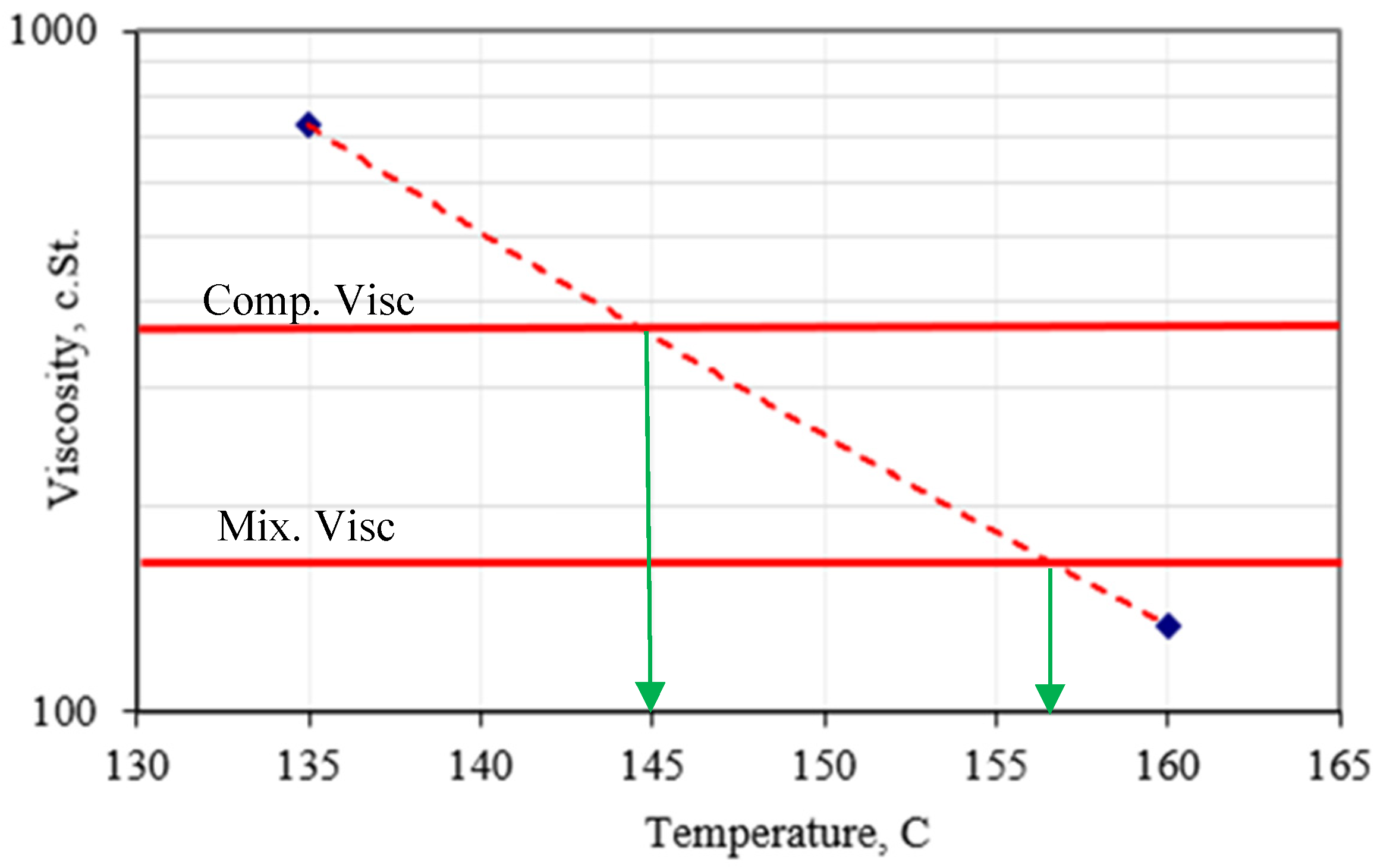
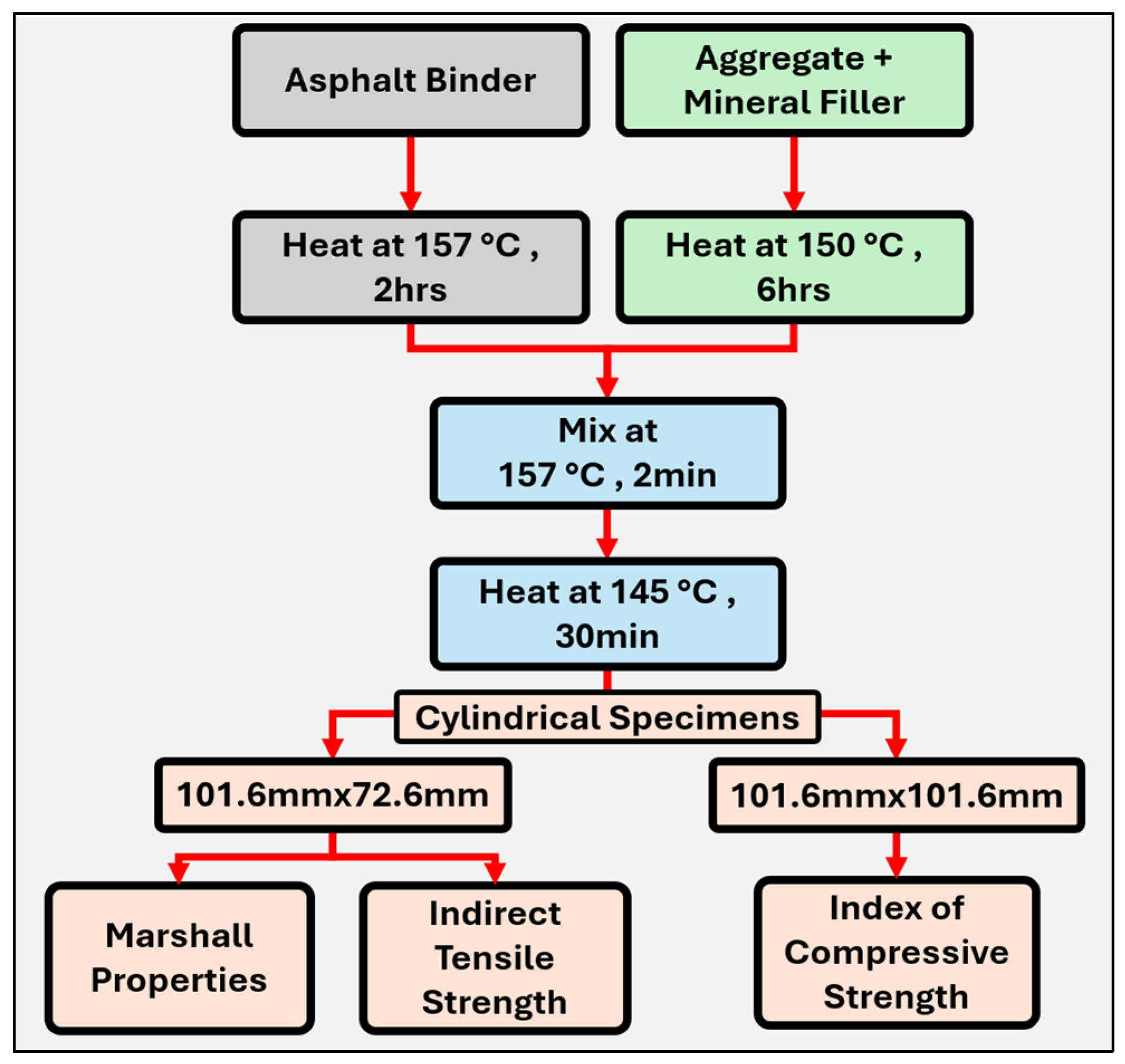
For mixture preparation, the aggregate blend and mineral filler were preheated in a metal bowl at 150 °C for 6 h to ensure uniform temperature distribution. The asphalt cement was heated separately to 157 °C for 2 h, corresponding to a viscosity of 170 cSt, in line with the viscosity–temperature relationship presented in Figure 2. The hot binder was then added to the preheated aggregate blend at the specified binder content, and mixing was carried out at 157 °C for 2 min to achieve homogeneity. The prepared mixture was transferred to an oven and conditioned at a compaction temperature of 145 °C (corresponding to a viscosity of 280 cSt) for 30 min before compaction. Two specimen types were fabricated. The first type consisted of cylindrical specimens measuring 101.6 mm in diameter and 76.2 mm in height, used for Marshall stability testing and indirect tensile strength evaluation. The second type had the same diameter but a height of 101.6 mm, prepared for the compressive strength test. The overall mixing and specimen preparation procedure is summarized in Figure 3.
The Marshall Mix Design Method (ASTM D6927) was adopted to determine the optimum asphalt cement content (OAC). Asphalt contents of 3.3%, 3.6%, 3.9%, 4.2%, and 4.5% by total mixture weight were investigated. The OAC was selected to achieve a target air voids (VTM) content of 4%, as recommended by the Asphalt Institute, while ensuring compliance with other critical design criteria, namely stability, flow, and voids in mineral aggregate (VMA). As summarized in Table 6, the mixture containing 3.9% asphalt cement produced an air void content of 3.97%, closely matching the 4% target. At this binder level, all other Marshall properties met the specification requirements: stability was 7.54 kN (above the 5.0 kN minimum), flow measured 2.46 mm (within the acceptable range of 2.0–4.0 mm), and VMA was 12.68% (exceeding the 12.0% minimum). Accordingly, an asphalt content of 3.9% was selected as the optimum binder content for all subsequent mixtures. This uniform binder content was maintained across all experimental groups to ensure that performance differences could be attributed solely to the effects of coarse aggregate geometry and source, rather than binder content variability.

4. Testing Methods

Marshall properties and moisture susceptibility tests were employed to evaluate the durability of asphalt concrete mixtures prepared with different coarse aggregate geometries and sources. Moisture damage resistance was assessed using two methods: the indirect tensile strength test, which evaluates resistance under tensile loading, and the compressive strength test, which assesses resistance under compressive loading. All tests were conducted in triplicate, and the average values were used in the analysis to ensure reliability and reproducibility of the results.

4.1. Marshall Test

The Marshall test was conducted to determine the plastic flow and deformation characteristics of compacted asphalt mixtures per ASTM D6927. Specimens were compacted with 75 blows per face using a Marshall hammer to simulate heavy traffic conditions (>106 ESAL). Marshall stability was defined as the maximum load the specimen could withstand before failure, while Marshall flow represented the corresponding vertical plastic deformation at failure. Volumetric properties were also assessed, including bulk specific gravity (ASTM D2726), theoretical maximum specific gravity (ASTM D2041), VTM, and VMA.

4.2. Indirect Tensile Strength (ITS) Test

Moisture susceptibility of the asphalt concrete mixtures was evaluated in accordance with ASTM D4867. Specimens for each mix were prepared using the Marshall procedure and compacted to achieve an air void content of 7 ± 1%. Six specimens were fabricated per mix and divided into two groups:
  • Dry condition group (3 specimens): tested directly at 25 °C.
  • Wet condition group (3 specimens): subjected to one freeze–thaw cycle, consisting of conditioning at −18 ± 2 °C for 16 h, followed by immersion in water at 60 ± 1 °C for 24 h, before testing at 25 °C.
During testing, a compressive load was applied at a rate of 50.8 mm/min along the axis of the cylindrical specimens, which were placed horizontally. Failure occurred by splitting along the vertical diameter. The ITS was calculated as:
I T S = 2000 × P m a x π t D
T S R = I T S c I T S u c
where ITS is the indirect tensile strength (kPa), Pmax is the maximum tensile load (N), D is the specimens’ diameter (mm), and t is the specimens’ thickness (mm). Also, TSR is the tensile strength ratio (%), ITSc is the indirect tensile strength (kPa) of conditioned specimens, and ITSuc is the indirect tensile strength (kPa) of unconditioned specimens.

4.3. Compressive Strength Test

The effect of water on the compressive strength of asphalt mixtures was evaluated following ASTM D1075. Cylindrical specimens with dimensions of 101.6 mm × 101.6 mm were fabricated according to ASTM D1074. The mixture was placed in the mold in two layers and subjected to an initial stress of 1 MPa, then gradually increased to 20.7 MPa for 2 min, achieving a specimen height of 101.6 mm.
Six specimens were prepared per mix and divided into two groups:
  • Dry group: tested at 25 °C.
  • Wet group: submerged in water at 60 °C for 24 h, followed by immersion at 25 °C for 2 h before testing.
An axial load was applied at a rate of 50.8 mm/min, and the maximum compressive load was recorded. The compressive strength (CS) was calculated by dividing the maximum load by the cross-sectional area of the specimen. The IRS was determined as:
I R S = C S w C S d × 100
where CSw is the wet compressive strength and CSd is the dry compressive strength, both in kPa.

5. Results and Discussion

5.1. Effect of Aggregate Geometry and Mineral Composition on Marshall Properties

5.1.1. Flat to Elongated Ratio

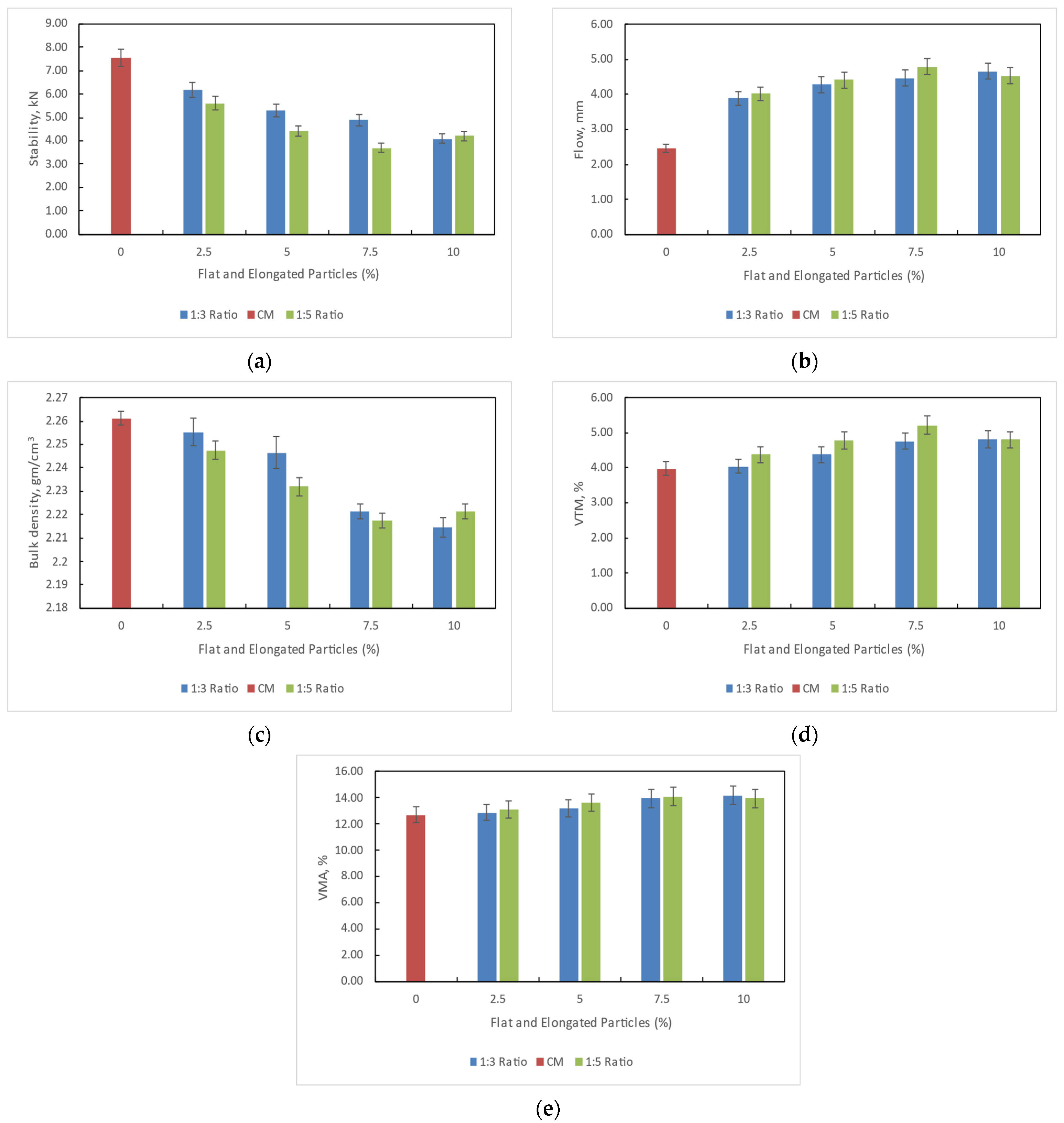
The effect of flat and elongated particles (F&E) on the Marshall properties of asphalt mixtures is shown in Figure 4. Taking the mixture with 0% flat and elongated particles as the reference, it is evident that the inclusion of such particles had a pronounced influence on performance. Marshall stability (Figure 4a) decreased progressively with increasing flat and elongated content, dropping from approximately 7.5 kN in the control to about 4.1 kN at 10% for the 1:3 blend and to around 4.2 kN for the 1:5 blend. The decline was more severe in the 1:5 case, where stability values were consistently lower than those of the 1:3 mixtures, particularly at intermediate contents (e.g., 5–7.5%). This indicates that the 1:5 ratio of flatness to elongation imposes a more detrimental effect on load-carrying capacity, as elongated particles in this geometry tend to create weaker contacts and larger voids within the aggregate skeleton. Interestingly, at 10% flat and elongated content, the 1:5 blend exhibited a slight recovery in stability compared to 7.5%, which may be attributed to the fracture of excessively elongated particles during compaction, producing smaller angular fragments that enhance interlock and partially resist loading. On the other hand, flow values (Figure 4b) demonstrated the opposite trend, rising steadily from about 2.5 mm in the control mix to nearly 4.8 mm at 10% flat and elongated content, indicating that the mixtures became more susceptible to permanent deformation with increasing elongation. Bulk density (Figure 4c) also showed a consistent reduction, decreasing from 2.26 g/cm3 in the control to about 2.21 g/cm3 at 10%, reflecting the less efficient packing of elongated particles compared to equidimensional aggregates. This reduction in density corresponded with a steady increase in voids in total mix (VTM), which rose from roughly 4% in the control to over 5% at higher flat and elongated contents, while voids in mineral aggregate (VMA) increased from around 12.5% to almost 14%. The increase in VTM (Figure 4d) and VMA (Figure 4e) highlights the disruptive effect of elongated particles on aggregate skeleton densification and binder accommodation.
Overall, the results confirm that flat and elongated particles impair the mechanical stability and densification of asphalt mixtures, with the 1:5 ratio causing greater deterioration compared to the 1:3 ratio. However, at higher percentages in the 1:5 blend, the fracture of flaky particles during compaction may partially mitigate their negative effects by generating fines that enhance interparticle contact.

5.1.2. Aggregate Angularity

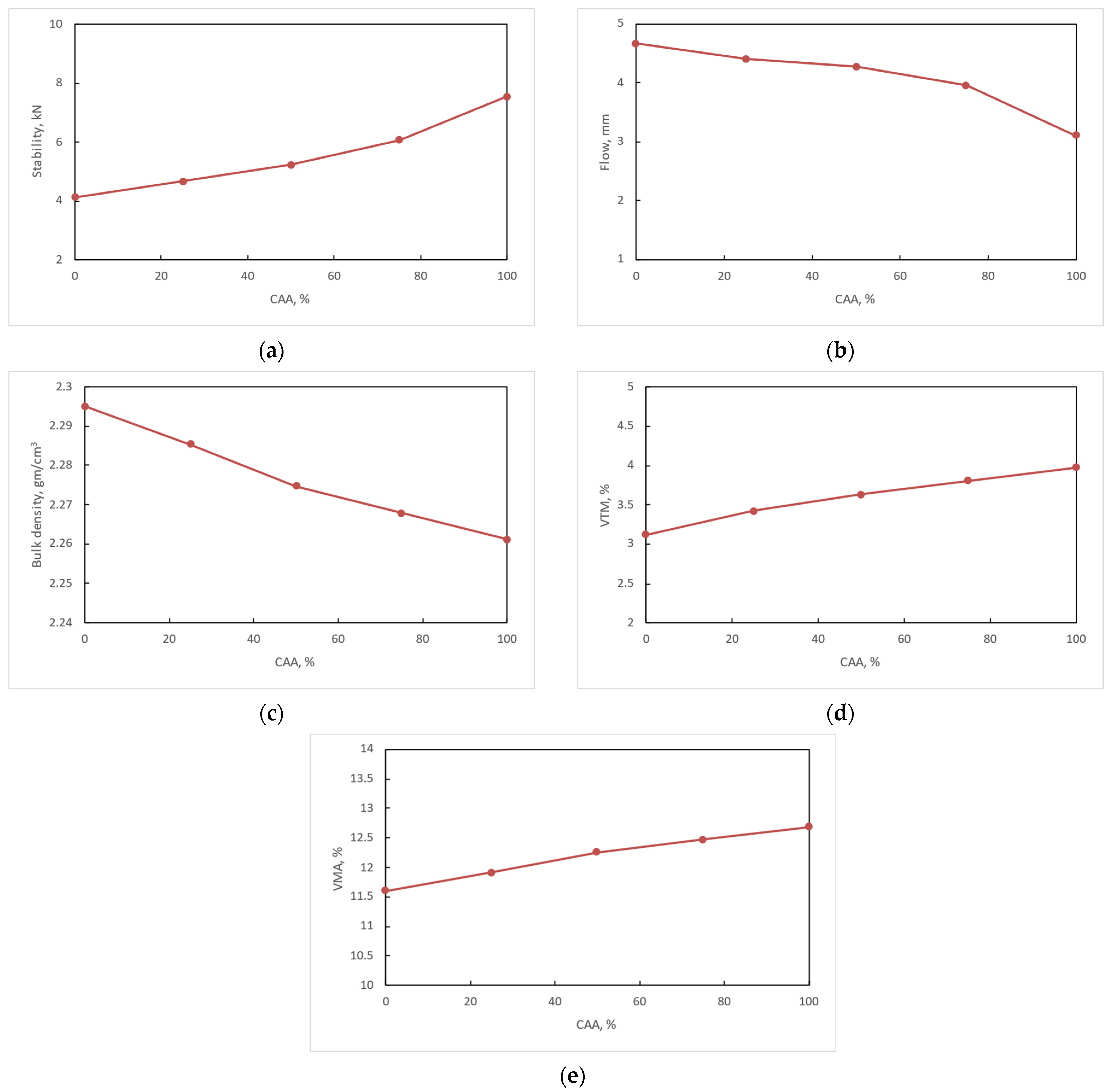
The effect of CAA on the Marshall properties is illustrated in Figure 5. A steady improvement in stability (Figure 5a) was observed with increasing angularity, rising from 4.12 kN at 0% CAA to 7.54 kN at 100% CAA, confirming that angular particles interlocking is more effective and enhances resistance to shear deformation. Moreover, Flow values (Figure 5b) decreased from 4.66 mm to 3.10 mm as angularity increased, reflecting reduced plastic deformation due to the restricted movement of particles. Bulk density (Figure 5c) showed only a slight decrease from 2.296 g/cm3 to 2.261 g/cm3, which may be related to the irregular packing of angular particles; however, this effect is offset by the higher interlock that stabilizes the mix. Significantly, VTM (Figure 5d) increased marginally from 3.12% to 3.98%, while VMA (Figure 5e) rose from 11.60% to 12.69%. This limited sensitivity indicates that VTM and VMA are primarily governed by gradation and binder content, which were kept constant in this study. Nevertheless, the significance of these metrics lies in showing that increased angularity does not compromise volumetric design requirements, while still contributing to higher stability and improved mechanical interlock. In contrast, rounded aggregates, due to their smoothness, can reorient more easily and achieve tighter packing during compaction, often resulting in lower air voids but weaker inter-particle friction and stability. Therefore, higher CAA is overall beneficial for load-bearing capacity, even though it slightly alters volumetric properties.

5.1.3. Aggregate Mineral Composition

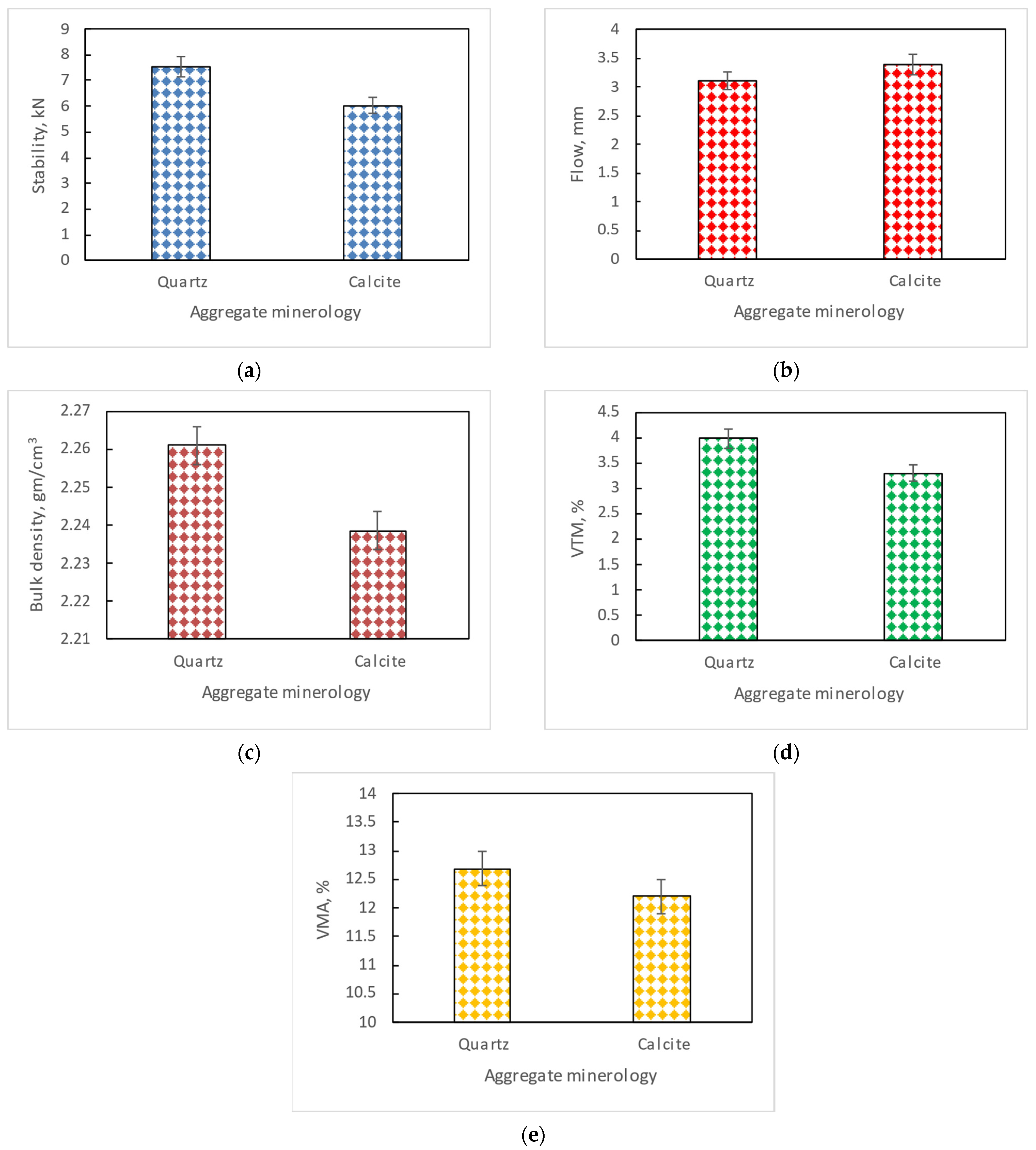
Figure 6 presents the effect of aggregate mineral composition on Marshall properties, including stability, flow, bulk density, VTM, and VMA. As shown in Figure 6a, mixtures prepared with quartz aggregates (Al-Nibaie) achieved a higher stability of 7.54 kN compared to 6.03 kN for those containing calcite aggregates (Al-Akhathir). This difference is attributed to the greater hardness and higher resistance to crushing of quartz aggregates, which provide stronger aggregate interlock and better load-bearing capacity. Flow values (Figure 6b) were slightly lower for quartz (3.11 mm) than for calcite (3.39 mm), reflecting the stiffer and less deformable structure of quartz mixtures, whereas calcite mixtures exhibited more plastic behavior. Bulk density (Figure 6c) was also higher in quartz mixtures (2.261 g/cm3) than in calcite mixtures (2.238 g/cm3), consistent with the higher packing efficiency of quartz aggregates.
In terms of volumetric properties (Figure 6d,e), quartz mixtures exhibited a higher VTM of 3.98% and a higher VMA of 12.69% compared to calcite mixtures (3.30% and 12.21%, respectively). This trend can be attributed mainly to the lower absorption capacity of quartz aggregates, which reduces binder loss to aggregate pores and leaves more effective binder available to lubricate particles during compaction. While this facilitates densification (as reflected by the slightly higher bulk density of the quartz mixtures), it also promotes greater particle slippage and reorientation, producing an aggregate skeleton that retains more voids. Conversely, calcite aggregates, with their higher absorption and rougher surface texture, consume more binder and interlock more effectively, which tends to reduce voids within the mixture.

5.2. Effect of Aggregate Geometry and Mineral Composition on Moisture Susceptibility

5.2.1. Flat to Elongated Ratio

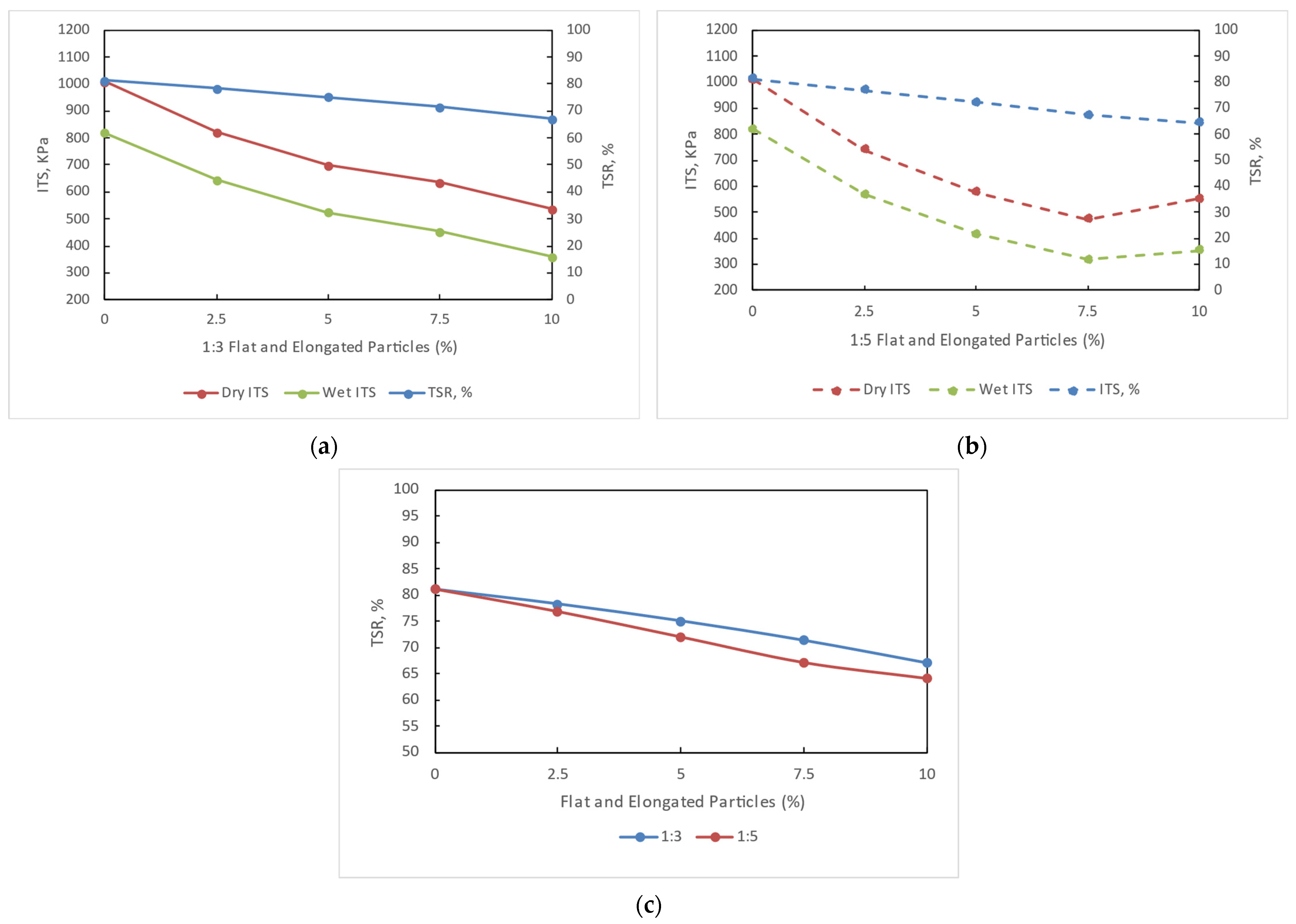
Figure 7 and Figure 8 illustrate the influence of F&E particles on the moisture susceptibility of asphalt mixtures in terms of the TSR and the IRS. For the 1:3 ratio (Figure 7a), the control mixture with 0% F&E achieved a TSR of 81.22%, slightly above the minimum acceptable limit of 80% required to ensure adequate resistance to moisture damage. However, as the F&E content increased, both dry and wet ITS values decreased, leading to a gradual reduction in TSR from 81.22% to about 67%. This indicates that mixtures containing more than 2.5% F&E particles fall below the threshold, signaling a significant loss in durability. A similar but more severe pattern was observed for the 1:5 ratio (Figure 7b), where TSR dropped more sharply, reaching nearly 64% at higher F&E content. The direct comparison in Figure 7c further highlights that the 1:5 ratio consistently underperformed compared to the 1:3 ratio, confirming that highly elongated particles reduce aggregate interlock, weaken the mixture structure, and increase susceptibility to moisture damage, as evident from the higher VTM values obtained in the Marshall results.
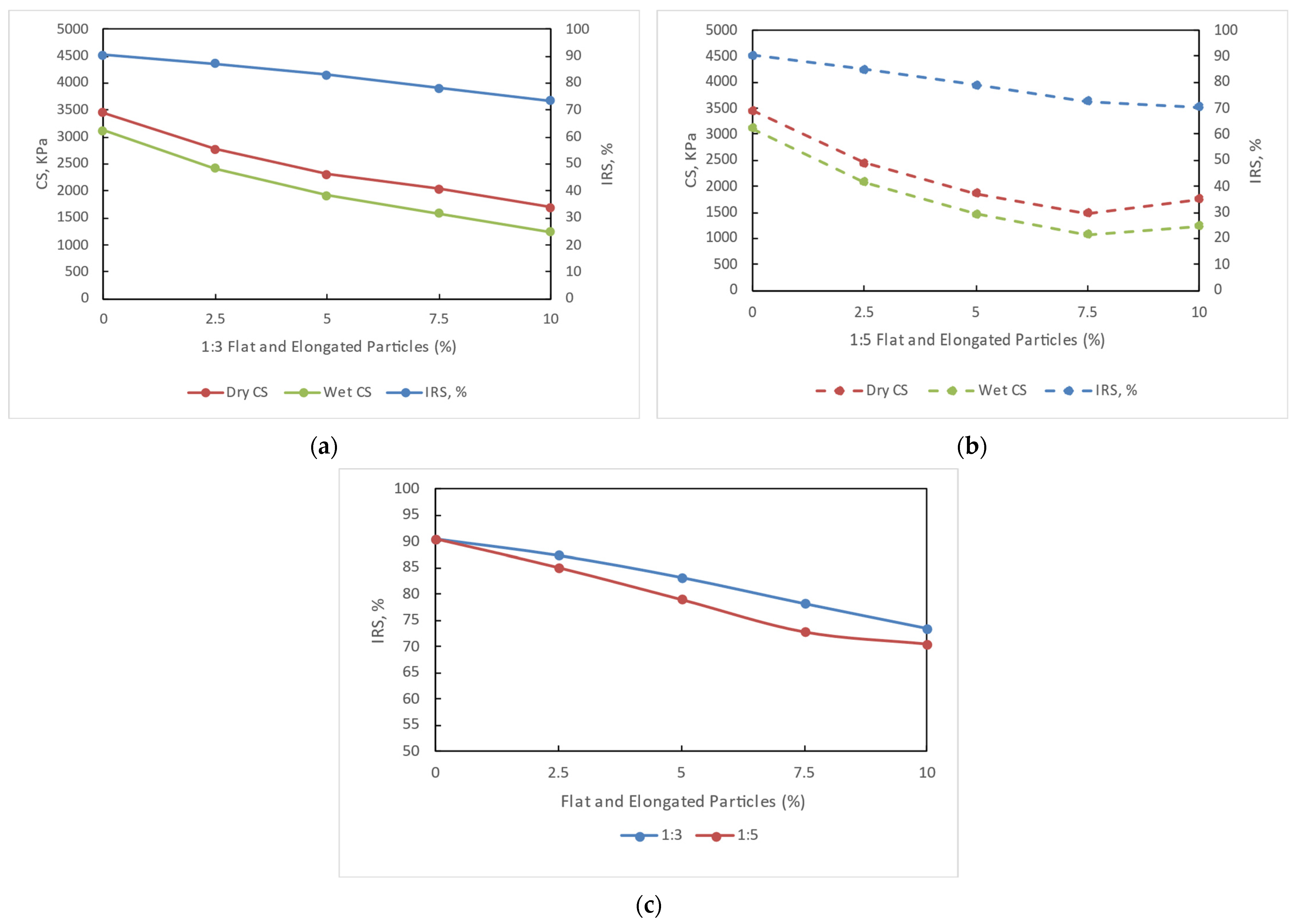
A comparable trend was found for IRS results. For the 1:3 ratio (Figure 8a), the IRS decreased steadily from approximately 90% to 73% with increasing F&E content, remaining above the minimum acceptable limit of 70% but still exhibiting a clear reduction in retained strength. In the case of the 1:5 ratio (Figure 8b), IRS declined sharply to around 70% at 7.5% F&E and only slightly recovered to 72% at 10%. The comparison in Figure 8c clearly shows that IRS values for the 1:5 ratio remain lower than those of the 1:3 ratio across all F&E contents, confirming the detrimental effect of highly elongated particles. Although this minor recovery at 10% may be attributed to particle rearrangement, it was insufficient to restore the original performance. Overall, the findings confirm that increasing F&E particles significantly impairs moisture resistance, with the adverse effect being more pronounced at the 1:5 ratio. Moreover, it was observed that IRS values are generally higher than TSR values, which can be attributed to the freezing cycle involved in the TSR test that generates greater internal stresses and promotes more severe stripping effects, thereby lowering TSR compared to IRS.

5.2.2. Aggregate Angularity

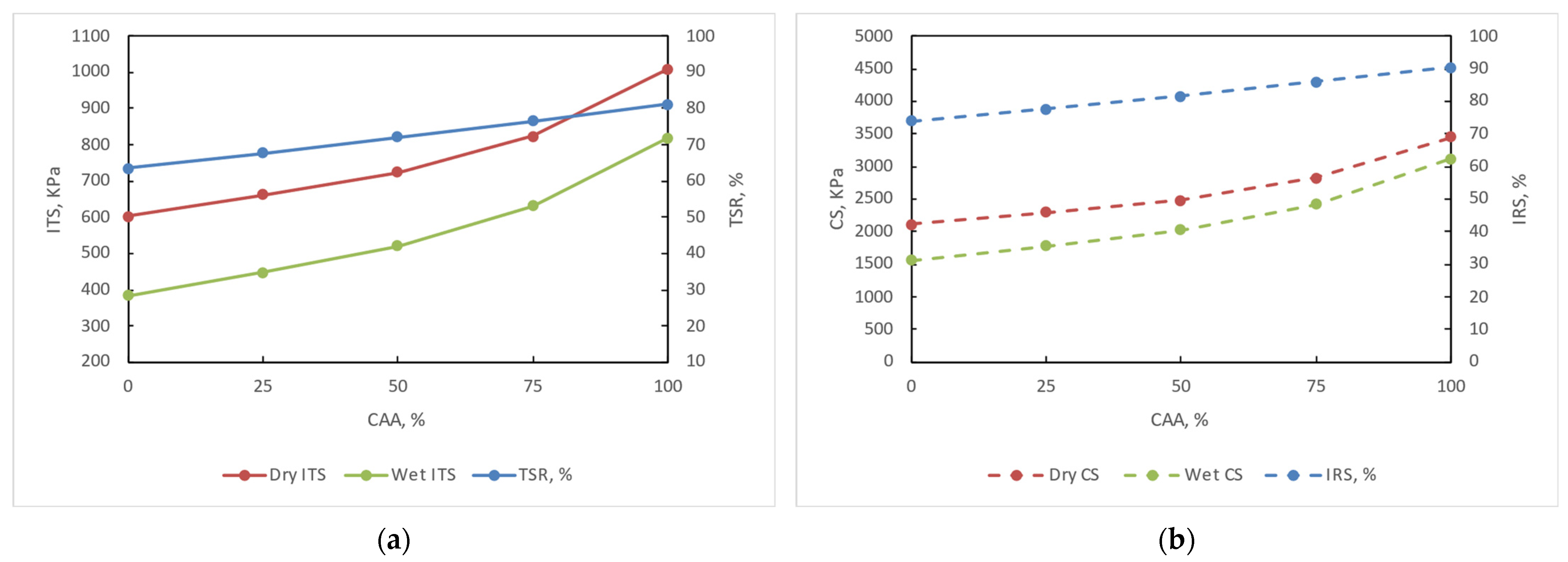
Figure 9 illustrates the effect of CAA on the moisture susceptibility of asphalt mixtures in terms of TSR and IRS. As shown in the TSR results (Figure 9a), the mixture with 0% CAA exhibited a low TSR of 63.5%, which is well below the minimum requirement of 80% specified by the SCRB for adequate moisture resistance. With increasing CAA, TSR values improved steadily, reaching 81.2% at 100% CAA, thereby just meeting the minimum standard. This demonstrates that higher aggregate angularity enhances aggregate interlock and binder adhesion, reducing stripping potential and improving mixture durability.
Similarly, IRS values (Figure 9b) exhibited a rising trend with increasing CAA, starting at 73.97% for 0% CAA and reaching 90.44% for 100% CAA. It is noteworthy that IRS values were generally higher than TSR values across all mixtures, which can be attributed to the more severe conditioning of the freeze–thaw cycle in the TSR test, causing greater stripping effects compared to the IRS procedure. These findings highlight that low-angularity mixtures are highly susceptible to moisture damage and fail to meet specification limits, while higher-angularity mixtures achieve adequate resistance. Given that the current Iraqi SCRB specification allows the use of uncrushed coarse aggregate in asphalt base courses, and in some cases these mixtures are even used as surface courses in suburban roads, it is necessary to reconsider and adjust the specification to include angularity requirements to ensure durable performance against moisture damage under service conditions.

5.2.3. Aggregate Mineral Composition

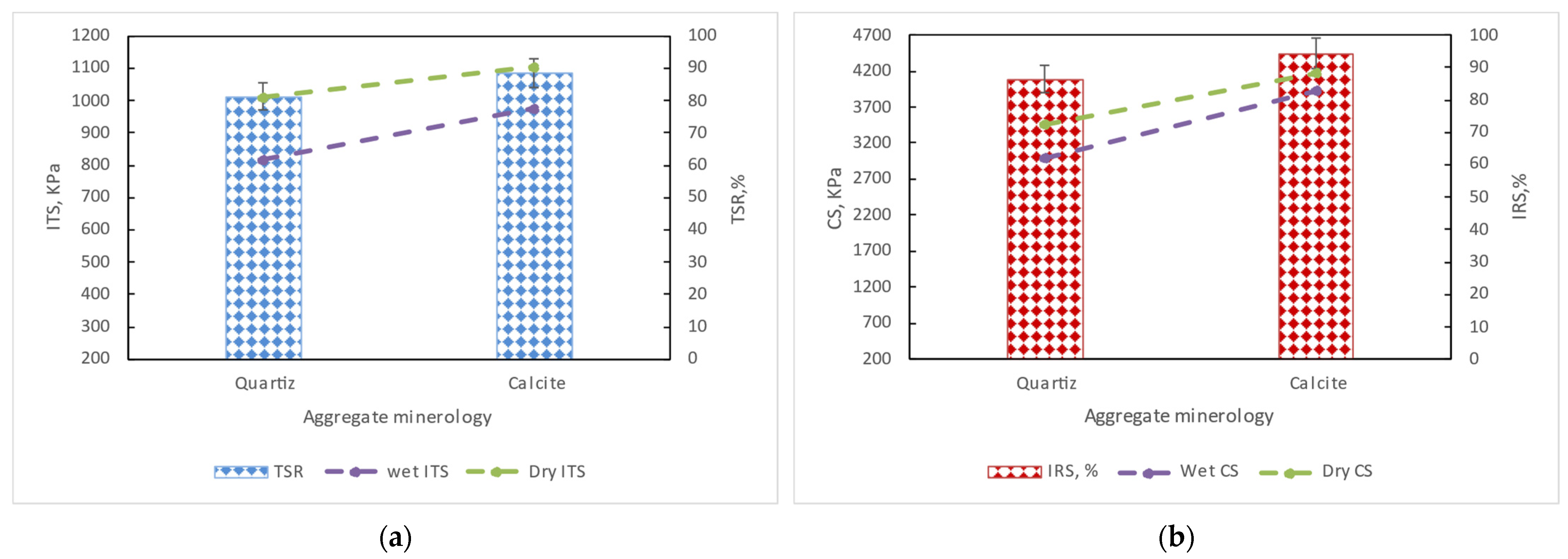
The mineralogical composition of aggregates plays a critical role in governing the durability and moisture susceptibility of asphalt mixtures. Figure 10 shows the influence of aggregate mineral composition on TSR and IRS. Mixtures prepared with calcite aggregates demonstrated superior resistance to moisture damage, achieving higher TSR (Figure 10a) and IRS (Figure 10b) values of 88.44% and 94.23%, respectively, compared to quartz mixtures, which recorded TSR and IRS values of 81.22% and 86.34%, respectively. Both aggregate types exceeded the typical minimum durability thresholds (generally 80%), yet the performance gap highlights the beneficial role of calcite in maintaining strength under wet conditions.
This improvement can be attributed to the relatively stronger physicochemical bonding between the asphalt binder and calcite (calcium carbonate), which enhances adhesive interactions and reduces stripping potential. Although quartz aggregates (siliceous in nature) also provided adequate durability, their wet ITS and CS values were consistently lower than those of calcite mixtures, indicating significantly reduced resistance to water-induced weakening. These findings are in good agreement with earlier studies by [19,44,46], which also reported a significant influence of aggregate mineralogy on the moisture resistance of asphalt mixtures.

6. Statistical Insight

To further validate the experimental findings, an analysis of variance (ANOVA) and t-tests were conducted using Minitab 17 software. A two-way ANOVA was applied to evaluate the effects of flat and elongated (F&E) particle content and ratio, including their interaction, on both Marshall properties and moisture resistance indices (TSR and IRS). For angularity, a one-way ANOVA was employed across the different angularity levels. At the same time, mineralogical differences between quartz and calcite were assessed using independent-sample t-tests performed on triplicate results for each test. The statistical outcomes (presented in Table 7) confirmed that F&E content had a highly significant effect on all Marshall properties, while the ratio effect was comparatively weaker, and interaction terms were mostly insignificant. Angularity also exerted a strong and consistent influence on stability, density, AV, flow, and VMA, indicating that aggregate shape characteristics are robust predictors of mixture performance. In terms of mineral composition, the t-tests demonstrated clear differences between quartz and calcite across all Marshall properties, with calcite mixtures generally providing more favorable volumetric and strength-related characteristics.
Moisture resistance indices (TSR and IRS) showed even greater sensitivity to aggregate variables. Both F&E particles and angularity had statistically significant effects, with TSR and IRS decreasing progressively as the proportion of flat/elongated particles increased and as angularity decreased. Mineralogy was also decisive, as calcite-based mixtures consistently achieved higher TSR and IRS values than quartz-based ones. Overall, the results in Table 7 confirm that aggregate geometry and mineralogical composition are not only experimentally distinct but also statistically significant factors governing the durability of asphalt concrete mixtures.

7. Conclusions

This study examined the impact of coarse aggregate geometry and mineral composition on the durability of asphalt concrete, assessing durability through both Marshall properties and moisture susceptibility indicators (TSR and IRS). The key findings can be summarized as follows:
  • Mixtures with higher proportions of flat and elongated particles showed increased void content and reduced stability, leading to weaker Marshall performance. Among the ratios examined, the 1:5 flat-to-elongated ratio exhibited the most detrimental effect. By contrast, higher aggregate angularity improved stability and reduced flow, thereby enhancing the internal structure and overall durability.
  • The inclusion of flat and elongated particles substantially reduced resistance to moisture damage. TSR decreased from 81.2% at 0% flat–elongated particles to 73.9% at a 1:5 ratio, while IRS declined from 77.6% to 69.2% over the same range. Both indicators fell below acceptable limits, demonstrating that elongated particles compromise binder–aggregate bonding and accelerate stripping under moisture exposure.
  • Increased coarse aggregate angularity enhanced both Marshall stability and resistance to moisture damage. TSR values rose from 63.5% at 0% angularity to 81.2% at 100% angularity, with IRS showing a similar trend. Mixtures with rounded coarse aggregate exhibited poor stability and moisture resistance, highlighting the risks associated with using uncrushed natural gravel.
  • Quartz-based mixtures achieved higher Marshall stability and density due to their hardness and lower absorption, whereas calcite-based mixtures demonstrated superior moisture resistance, attaining higher TSR (88.44%) and IRS (94.23%) values. The ANOVA and t-test results confirmed that these differences related to aggregate geometry and mineral composition were statistically significant.
The durability of asphalt mixtures is strongly governed by aggregate geometry and mineralogy. Since the current Iraqi SCRB specifications permit the use of uncrushed natural gravel in base courses, which may also serve as surface layers in suburban roads, it is essential to revise these specifications. Incorporating angularity and mineralogical requirements will help ensure improved long-term durability in terms of both mechanical strength and resistance to moisture damage.

8. Limitations and Recommendations for Future Research

The results of this study are limited to the specific materials and testing program implemented, particularly the aggregate sources, gradations, and laboratory procedures adopted. While the experimental design allowed for meaningful insights into the roles of aggregate geometry and mineralogy, it should be acknowledged that the mineralogical comparison involved quartz aggregates with variable angularity, whereas calcite aggregates were evaluated at 100% angularity. This overlap between geometry and mineralogy represents a limitation of the study. Future research should therefore focus on isolating mineralogical effects more robustly by employing fully crushed quartz and calcite aggregates at equal angularity levels. Further investigations are also recommended to expand the analysis to other aggregate types, binder modifications, and field validation under different climatic and traffic conditions.

Author Contributions

H.K.M.: Formal analysis, Data curation, Investigation, Writing—original draft, Writing—review & editing. A.H.A.: Conceptualization, Methodology, Formal analysis, Resources, Writing—original draft. M.J.A.-K.: Visualization, Formal analysis, Methodology, Writing—original draft, Writing—review & editing. All authors have read and agreed to the published version of the manuscript.

Funding

This research did not receive any specific grant from funding agencies in the public, commercial, or not-for-profit sectors.

Data Availability Statement

Data will be made available on request.

Conflicts of Interest

The authors have no competing interests to declare that are relevant to the content of this article.

References

  1. Castillo, D.; Caro, S.; Darabi, M.; Masad, E. Influence of aggregate morphology on the mechanical performance of asphalt mixtures. Road Mater. Pavement Des. 2018, 19, 972–991. [Google Scholar] [CrossRef]
  2. Chakravarty, H.; Sinha, S.; Kumar, G. Influence of aggregates on stripping behavior of bituminous mixes. Civ. Eng. J. 2021, 7, 1–10. [Google Scholar] [CrossRef]
  3. Behiry, A.E.A.E.-M. Laboratory evaluation of resistance to moisture damage in asphalt mixtures. Ain Shams Eng. J. 2013, 4, 351–363. [Google Scholar] [CrossRef]
  4. Yang, X.; Bi, Y.; Zhang, J.; Liu, S. Impacts of aggregate morphological characteristics on asphalt mixture performance based on experimental tests. Geo-China 2016, 2016, 34–41. [Google Scholar]
  5. Almasoudi, S.S.; Albayati, A.H.K. Statistical Analysis of Component Deviation from Job Mix Formula in Hot Mix Asphalt. Engineering. Technol. Appl. Sci. Res. 2022, 12, 9295–9301. [Google Scholar] [CrossRef]
  6. Su, J.; Li, P.; Sun, S.; Cheng, L.; Bi, J.; Zhu, D. Effects of composite geometric characteristics of coarse particles on interface interactions of aggregate-asphalt system. Constr. Build. Mater. 2021, 287, 122750. [Google Scholar] [CrossRef]
  7. Hassan, H.M.Z.; Wu, K.; Huang, W.; Chen, S.; Zhang, Q.; Xie, J.; Cai, X. Study on the influence of aggregate strength and shape on the performance of asphalt mixture. Constr. Build. Mater. 2021, 294, 123599. [Google Scholar] [CrossRef]
  8. Yucel, A.O. Aggregate packing and interlock evaluation utilizing 2-dimensional synthetic asphalt concrete sections. Constr. Build. Mater. 2024, 416, 135222. [Google Scholar] [CrossRef]
  9. Al-Mosawe, H.; Thomb, N.; Airey, G.; Albayati, A. Linear viscous approach to predict rut depth in asphalt mixtures. Constr. Build. Mater. 2018, 169, 775–793. [Google Scholar] [CrossRef]
  10. Shu, X.; Huang, B.; Chen, X.; Robison, L. Effect of coarse aggregate angularity on rutting performance of HMA. In Pavement Mechanics and Performance; American Society of Civil Engineers: Reston, VA, USA, 2006; pp. 126–133. [Google Scholar] [CrossRef]
  11. Park, D.W.; Lee, H.S. Test methods for fine aggregate angularity considering resistance of rutting. KSCE J. Civ. Eng. 2002, 6, 421–427. [Google Scholar] [CrossRef]
  12. Zhang, Y.; Luo, X.; Onifade, I.; Huang, X.; Lytton, R.L.; Birgisson, B. Mechanical evaluation of aggregate gradation to characterize load carrying capacity and rutting resistance of asphalt mixtures. Constr. Build. Mater. 2019, 205, 499–510. [Google Scholar] [CrossRef]
  13. Alsheyab, M.A.; Khasawneh, M.A.; Abualia, A.; Sawalha, A. A critical review of fatigue cracking in asphalt concrete pavement: A challenge to pavement durability. Innov. Infrastruct. Solut. 2024, 9, 386. [Google Scholar] [CrossRef]
  14. Sousa, J.B.; Pais, J.C.; Prates, M.; Barros, R.; Langlois, P.; Leclerc, A.-M. Effect of aggregate gradation on fatigue life of asphalt concrete mixes. Transp. Res. Rec. 1998, 1630, 62–68. [Google Scholar] [CrossRef]
  15. Ye, Y.; Chen, H.K.; Cai, Y.Z. The effect of coarse aggregate gradation degradation on the mechanical behavior of asphalt mixture. Adv. Mater. Res. 2013, 811, 223–227. [Google Scholar] [CrossRef]
  16. Bao, L.; He, M.; Wang, S.; Wu, X. Study on the Effect of Asphalt Static Conditions on the Tensile Properties of Acidic Aggregate Hydraulic Asphalt Concrete. Materials 2024, 17, 2627. [Google Scholar] [CrossRef]
  17. Zhang, J.; Apeagyei, A.K.; Airey, G.D.; Grenfell, J.R. Influence of aggregate mineralogical composition on water resistance of aggregate–bitumen adhesion. Int. J. Adhes. Adhes. 2015, 62, 45–54. [Google Scholar] [CrossRef]
  18. Cala, A.; Caro, S.; Lleras, M.; Rojas-Agramonte, Y. Impact of the chemical composition of aggregates on the adhesion quality and durability of asphalt-aggregate systems. Constr. Build. Mater. 2019, 216, 661–672. [Google Scholar] [CrossRef]
  19. Hamedi, G.H.; Esmaeeli, M.R.; Najafi Moghaddam Gilani, V.; Hosseinian, S.M. The Effect of Aggregate-Forming Minerals on Thermodynamic Parameters Using Surface Free Energy Concept and Its Relationship with the Moisture Susceptibility of Asphalt Mixtures. Adv. Civ. Eng. 2021, 2021, 8818681. [Google Scholar] [CrossRef]
  20. Brondani, C.; Faccin, C.; Kraemer, K.W.; Boeira, F.D.; Specht, L.P.; Nummer, A.V. Asphalt aggregate adhesion: Study of the influence of the morphological, chemical and mineralogical properties of different aggregates from Southern Brazil. In RILEM International Symposium on Bituminous Materials; Springer: Cham, Switzerland, 2020. [Google Scholar]
  21. Sohrabi, M.; Shirmohammadi, H.; Hamedi, G.H. Investigating the effect of modifying aggregate surface by micronized calcium carbonate on increasing the moisture resistance of asphalt mixtures. Period. Polytech. Civ. Eng. 2019, 63, 63–76. [Google Scholar] [CrossRef]
  22. Mugume, R.B.; Musumba, S. Contribution of reactive aggregates towards the performance of in-service asphalt pavements. Int. J. Pavement Res. Technol. 2021, 14, 530–536. [Google Scholar] [CrossRef]
  23. Kanitpong, K.; Charoentham, N.; Likitlersuang, S. Investigation on the effects of gradation and aggregate type to moisture damage of warm mix asphalt modified with Sasobit. Int. J. Pavement Eng. 2012, 13, 451–458. [Google Scholar] [CrossRef]
  24. Meng, Y.; Chen, Z.; Wang, Z.; Lu, H.; Qing, G.; Liu, Z.; Wang, Y. Evaluating the anti-skid performance of asphalt pavements with basalt and limestone composite aggregates: Testing and prediction. Buildings 2024, 14, 2339. [Google Scholar] [CrossRef]
  25. MoTLS (Ministry of Transport and Logitics Services in KSA). Hot Mix Asphalt Design System Using SuperPave System; MoTLS: Riyadh, Saudi Arabia, 2006.
  26. Abu Dhabi City Municipality. Internal Roads and Infrastructure Directorate Standard Specification; Version 2; Abu Dhabi City Municipality: Abu Dhabi, United Arab Emirates, 2014. [Google Scholar]
  27. Hossain, M.; Fager, G.; Maag, R. Superpave Volumetric Mixture Design and Analysis Handbook, Volume 1: Mixture Design and Analysis; Kansas Department of Transportation: Topeka, KS, USA, 2016.
  28. Albayati, A.H. A review of rutting in asphalt concrete pavement. Open Eng. 2023, 13, 20220463. [Google Scholar] [CrossRef]
  29. Rajan, B.; Singh, D. Effects of coarse aggregate shape parameters on workability, design, and performance characteristics of stone matrix asphalt mixes. Transp. Res. Rec. 2023, 2677, 1496–1511. [Google Scholar] [CrossRef]
  30. Ahlan, M.; Isya, M.; Fadhly, N. Performance of Asphalt Concrete Containing Crushed and Uncrushed Gravel with High Flat-particle Content. Padur. J. Tek. Sipil Univ. Warmadewa 2019, 8, 245–256. [Google Scholar]
  31. State Corporation of Roads and Bridges. General Specification for Roads and Bridges (SCRB/R9)—Hot-Mix Asphalt Concrete Pavement; Ministry of Housing and Construction: Baghdad, Iraq, 2003.
  32. Albayati, A.; Abdulsattar, H. Performance evaluation of asphalt concrete mixes under varying replacement percentages of natural sand. Results Eng. 2020, 7, 100131. [Google Scholar] [CrossRef]
  33. Valdes-Vidal, G.; Calabi-Floody, A.; Sanchez-Alonso, E.; Miró, R. Effect of aggregate type on the fatigue durability of asphalt mixtures. Constr. Build. Mater. 2019, 224, 124–131. [Google Scholar] [CrossRef]
  34. Cui, P.; Xiao, Y.; Yan, B.; Li, M.; Wu, S. Morphological characteristics of aggregates and their influence on the performance of asphalt mixture. Constr. Build. Mater. 2018, 186, 303–312. [Google Scholar] [CrossRef]
  35. Gao, J.; Wang, H.; Bu, Y.; You, Z.; Hasan, M.R.M.; Irfan, M. Effects of coarse aggregate angularity on the microstructure of asphalt mixture. Constr. Build. Mater. 2018, 183, 472–484. [Google Scholar] [CrossRef]
  36. Singh, D.; Rajan, B.; Guta, H.G. Effects of aggregate shape on performance of gravel-aggregate hot-mix asphalt using digital image-based approach. J. Mater. Civ. Eng. 2019, 31, 04019260. [Google Scholar] [CrossRef]
  37. Kusumawardani, D.M.; Wong, Y.D. Effect of aggregate shape properties on performance of porous asphalt mixture. J. Mater. Civ. Eng. 2021, 33, 04021208. [Google Scholar] [CrossRef]
  38. Masad, E.; Al-Rousan, T.; Bathina, M.; McGahan, J.; Spiegelman, C. Analysis of aggregate shape characteristics and its relationship to hot mix asphalt performance. Road Mater. Pavement Des. 2007, 8, 317–350. [Google Scholar] [CrossRef]
  39. Pouranian, M.R.; Shishehbor, M.; Haddock, J.E. Impact of the coarse aggregate shape parameters on compaction characteristics of asphalt mixtures. Powder Technol. 2020, 363, 369–386. [Google Scholar] [CrossRef]
  40. Fang, M.; Park, D.; Singuranayo, J.L.; Chen, H.; Li, Y. Aggregate gradation theory, design and its impact on asphalt pavement performance: A review. Int. J. Pavement Eng. 2019, 20, 1408–1424. [Google Scholar] [CrossRef]
  41. Lucas Júnior, J.L.; Babadopulos, L.F.; Soares, J.B. Effect of aggregate shape properties and binder’s adhesiveness to aggregate on results of compression and tension/compression tests on hot mix asphalt. Mater. Struct. 2020, 53, 43. [Google Scholar] [CrossRef]
  42. Júnior, J.L.; Babadopulos, L.; Soares, J. Resistance to moisture-induced damage of asphalt mixtures and aggregate-binder interfaces. In RILEM 252-CMB-Symposium on Chemo Mechanical Characterization of Bituminous Materials; Springer: Cham, Switzerland, 2018. [Google Scholar] [CrossRef]
  43. Kong, D.; Chen, M.; Xie, J.; Zhao, M.; Yang, C. Geometric characteristics of BOF slag coarse aggregate and its influence on asphalt concrete. Materials 2019, 12, 741. [Google Scholar] [CrossRef] [PubMed]
  44. Bagampadde, U.; Isacsson, U.; Kiggundu, B. Influence of aggregate chemical and mineralogical composition on stripping in bituminous mixtures. Int. J. Pavement Eng. 2005, 6, 229–239. [Google Scholar] [CrossRef]
  45. Liu, Y.; Apeagyei, A.; Ahmad, N.; Grenfell, J.; Airey, G. Examination of moisture sensitivity of aggregate–bitumen bonding strength using loose asphalt mixture and physico-chemical surface energy property tests. Int. J. Pavement Eng. 2014, 15, 657–670. [Google Scholar] [CrossRef]
  46. Latifi, H.; Amini, N. Effect of aggregate type on moisture susceptibility of modified cold recycled mix asphalt: Evaluation by mechanical tests and Surface Free Energy method. Fract. Struct. Integr. 2020, 14, 211–229. [Google Scholar] [CrossRef]
Figure 1. Aggregates sourced from Al-Nibaie and Al-Akhathir quarries.
Infrastructures 10 00263 g001
Figure 2. Viscosity—Temperature Chart of PG 70-16.
Infrastructures 10 00263 g002
Figure 3. Mixing and specimen preparation procedure.
Infrastructures 10 00263 g003
Figure 4. Effect of flat to elongated ratios on Marshall properties: (a) stability, (b) Flow, (c) bulk density, (d) VTM, and (e) VMA.
Infrastructures 10 00263 g004
Figure 5. Effect of CAA on Marshall properties: (a) stability, (b) Flow, (c) bulk density, (d) VTM, and (e) VMA.
Infrastructures 10 00263 g005
Figure 6. Effect of aggregate mineral composition on Marshall properties: (a) stability, (b) Flow, (c) bulk density, (d) VTM, and (e) VMA.
Infrastructures 10 00263 g006
Figure 7. Effect of flat to elongated ratios on ITS results: (a) 1:3 flat to elongated, (b) 1:5 flat to elongated and (c) direct comparison of TSR for 1:3 vs. 1:5.
Infrastructures 10 00263 g007
Figure 8. Effect of flat to elongated ratios on IRS results: (a) 1:3 flat to elongated, (b) 1:5 flat to elongated and (c) direct comparison of IRS for 1:3 vs. 1:5.
Infrastructures 10 00263 g008
Figure 9. Effect of CAA on moisture susceptibility: (a) TSR and (b) IRS.
Infrastructures 10 00263 g009
Figure 10. Effect of aggregate minerology on moisture susceptibility: (a) TSR and (b) IRS.
Infrastructures 10 00263 g010
Table 1. Rheological characteristics of the used asphalt (performance grading).
Asphalt CementPropertiesTemperature
(°C)
Measured ParametersAASHTO M320-05 Requirements
OriginalViscosity at 135 °C (Pa.s)-7413000 m Pa.s, max
Flash Point (°C)-311230 °C, min
DSR, G/sinδ at 10 rad/s (kPa)587.5641.00 kPa, min
643.928
701.773
760.869
RTFO AgedMass Loss (%)-0.2451%, max
DSR, G/sinδ at 10 rad/s (kPa)646.3222.2 kPa, min
703.256
761.462
PAV
Aged
DSR, G.sinδ at 10 rad/s (kPa)2833875000 kPa, max
255133
Slope m-value−160.3390.3, min
BBR, Creep Stiffness (MPa)−16189300 MPa, max
Table 2. Physical properties of aggregates.
PropertyASTM DesignTest ResultsSpecification
Limits
Al-Nibaie QuarryAl-Akhathir Quarry
Coarse aggregate
Water absorption (%)C-1270.5741.044
Apparent specific gravity2.6112.694
Bulk specific gravity2.5822.618
Soundness loss by sodium sulfate solution (%)C-883.684.8112 Max.
Wear by Los Angeles abrasion (%)C-131162740 Max.
Fractured pieces (%)D5821Variable100Not limited
Fine aggregate
Water absorption (%)C-1280.713
Apparent specific gravity2.627
Bulk specific gravity2.581
Sand equivalent (%)D24196745 min
Clay lumps and friable particles (%)C-1421.23 max.
Table 3. Chemical and mineral composition of coarse aggregate.
Chemical Compound Al-Nibaie Quarry (%)Al-Akhathir Quarry (%)
SiO280.75---
Fe2O31.22---
Al2O32.50---
TiO20.13---
CaO6.4548.90
MgO0.421.13
SO3<0.08<0.08
L.O.I5.5241.60
Na2O0.010.18
K2O0.470.08
T.S.S0.480.30
I.R---6.10
Total98.7699.49
Mineral composition
Quartz81.202.90
Calcite8.6090.60
Anhydrate7.88---
Dolomite2.286.32
Total99.9699.95
Table 4. Physical properties of limestone filler.
Surface Area (m2/kg)Specific GravityPassing Sieve No. 200 (0.075 mm) (%)
2522.77198
Table 5. Aggregate gradation and specification limit.
Sieve Size (mm)37.525.019.012.59.54.752.360.30.075
Gradation (%)100958368614432114
Specification limit (%)10090–100….56–8029–5919–455–171–7
Table 6. Marshall mix design results.
Asphalt Cement Content (%)Stability (kN)Flow (mm)GmbVTM (%)VMA (%)
3.34.471.742.2156.8814.30
3.66.052.042.2285.5213.11
3.97.542.462.2613.9712.68
4.26.712.982.2233.4611.76
4.56.103.882.1973.0212.04
Specification limits5.0 Min.2.0–4.0Not limited3.0–5.012.0 Min.
Table 7. Summary of ANOVA/t-test p-values for aggregate geometry and mineral composition effects.
CategoryGroupPropertyF&E Content p-ValueRatio (1:3 vs. 1:5) p-ValueInteraction p-ValueAngularity p-ValueMineral Composition p-Value
Flat & ElongatedMarshall PropertiesStability0.00010.03890.2590--
Density0.00020.36900.5600--
AV0.00280.14900.9450--
Flow0.00170.65400.9640--
VMA0.00020.36900.5600--
Moisture Resistance IndicesTSR<0.0010.00060.0139--
IRS<0.0010.00360.0940--
AngularityMarshall PropertiesStability---0.0049-
Density---0.0005-
AV---0.0009-
Flow---0.0180-
VMA---0.0005-
Moisture Resistance IndicesTSR---2.27 × 10⁻⁷-
IRS---6.98 × 10⁻⁸-
Mineral CompositionMarshall PropertiesStability----0.0000
Density----0.0001
AV----0.0001
Flow----0.0024
VMA----0.0011
VFA----0.0001
Moisture Resistance IndicesTSR----0.0001
IRS----0.0001
Disclaimer/Publisher’s Note: The statements, opinions and data contained in all publications are solely those of the individual author(s) and contributor(s) and not of MDPI and/or the editor(s). MDPI and/or the editor(s) disclaim responsibility for any injury to people or property resulting from any ideas, methods, instructions or products referred to in the content.