Article

Sensorless Control of SPM Motor for e-Bike Applications Using Second-Order Integrator Flux Observer


Department of Electrical Engineering, University of Padova, 35131 Padova, Italy
*
Author to whom correspondence should be addressed.
These authors contributed equally to this work.
Designs 2026, 10(1), 2; https://doi.org/10.3390/designs10010002
Submission received: 12 October 2025 / Revised: 10 December 2025 / Accepted: 11 December 2025 / Published: 22 December 2025

Abstract

The aim of this research is to present both a sensorless control and a torque derating algorithm in the overload region of a permanent magnet motor for e-bikes. First, the theoretical backgrounds and the field-oriented control are presented. Then, a sensorless control is designed based on the back-emf estimation with a second-order generalized integral flux observer for the permanent magnet motor. The second-order generalized integral flux observer is an adaptive filter which can eliminate the DC offset and strongly attenuate the harmonics of the estimated rotor flux. The algorithms have been simulated and then validated by means of tests on a permanent magnet motor for e-bikes.

1. Introduction

The widespread use of electric vehicles (EVs) in urban areas is inevitable, as the adoption of zero-emission vehicles is becoming mandatory for well-known reasons. This transition will be gradual due to the necessary infrastructure requirements, but it is already recognized that EVs will be the future solution for urban transportation [1]. Due to the absence of excitation currents and having a high power factor, surface-mounted permanent magnet (SPM) synchronous motors are an ideal choice for applications demanding high power efficiency [2]. Electric vehicles used in urban transportation require immediate and highly effective control to prevent any undesirable situations [3]. In sensored field-oriented control (FOC), the rotor position information is provided by a mechanical sensor, which leads to a higher cost and lower reliability [4,5,6,7]. Accurate rotor position is required for both open-loop and closed-loop control. Shaft-mounted sensors face challenges such as mechanical faults, decreased operational reliability, uneven placement of position sensors, and operational failures [8]. However, the mechanical sensors can be replaced with a sensorless algorithm that provides rotor position and speed using the current I d q and reference voltages V d q [9,10,11]. The sensorless motor control algorithm is a compelling research area in the motor drive sector. Although motor position sensors are still widely used in most industrial motor drives, cost considerations are driving the industry to eliminate them. Additionally, mounting position sensors on machines is often problematic, especially in specific applications. For instance, in outer-rotor machines with limited space, attaching the position sensor to the outer cup rotor is challenging. In drones, where the rotor blade motor is typically a small outer-rotor machine, there is no room for a high-accuracy position sensor or even a simple Hall sensor [12].
For medium- and high-speed regions, the most used sensorless algorithms are back-EMF-based, where the rotor position is extracted from the fundamental wave of the back-EMF [13,14,15,16,17]. Back-EMF is calculated from the reference voltage v α β and current i α β . Due to inverter nonlinearity, dead time, parameter variations, and measurement errors, the measured current contains harmonics and unwanted frequency components [11,18,19]. Several research articles have been published that use LC filters, sliding-mode filters, generalized extended state observers, dual sliding-mode observers, modified sliding-mode observers, and adaptive observers to improve estimation by filtering the measured current and voltage [15,20,21,22,23]. In this paper, a second-order generalized integrator is used as a filter. From the results, it is concluded that the proposed filtering algorithm improves sensorless position estimation.
In this paper, the mathematical equations of the SPM motor in the rotating reference frame are first described in Section 2.1. Then, the FOC system and space vector modulation (SVM) technique with sensors are explained in Section 2.2 and Section 2.3, respectively. In Section 3.1, a current loop controller with a sensorless algorithm is designed for the SPM motor based on the given specifications. The back-EMF is estimated in Section Back-Emf using the frequency-locked loop explained in Section 3.3 and phase-locked loop analysis explained in Section 3.4 with a Second-Order Integral Flux Observer (SOIFO) filter given in Section 3.5. Finally, in Section 3.6, the speed ω m e and position θ m e are estimated using the quadrature signal generalized–phase-locked loop method. A brief conclusion is drawn by analyzing the results at different loads and speeds in Section 5.

2. Standard Control of SPM Motor

2.1. Surface-Mounted Permanent Magnet Motor

The surface-mounted permanent magnet (SPM) synchronous motor is described by the following equations in the rotating reference frame [24,25,26,27,28,29]:
v d = R s i d + L d d i d d t ω m e L q i q
v q = R s i q + L q d i q d t + ω m e L d i d + ω m e Λ m
where i d and i q are the phase current, v d and v q are the phase voltage, respectively, ω m e is the electromechanical speed, Λ m is the flux linkage produced by the magnets, R s is the phase resistance, and L d and L q are the d-axis and q-axis synchronous inductances; in addition, L d = L q in the SPM motor.

2.2. Field-Oriented Control

FOC is the most used control for SPM motors. For a given current, maximum torque can be achieved when the stator flux due to the stator current is orthogonal to the rotor flux, created by the PM [30]. Electromagnetic torque is a function of the angle between the stator and rotor flux. The equation that describes the induced electromagnetic torque is [31,32,33,34,35]
τ e m = 3 2 p Λ m i q
where i q is the quadrature current, and p is the number of pole pairs. Such a torque has to balance the torque at the shaft, which includes the load torque τ L , friction torque B ω m , and the acceleration torque J d ω m d t and is given as
τ e m = τ L + B ω m + J d ω m d t
where B is the viscous friction coefficient, ω m is the mechanical speed, and J is the inertia.
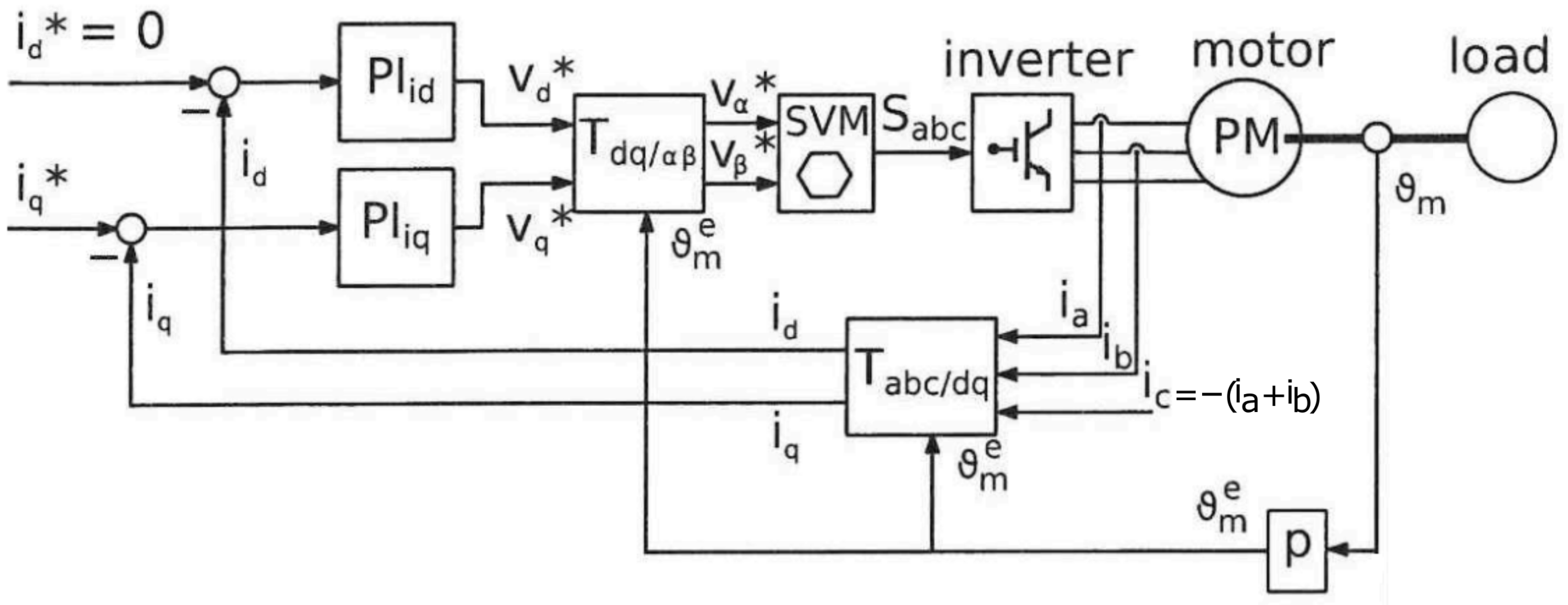
Figure 1 shows the FOC architecture. The three-phase currents and the rotor angle are measured on motor terminals and the rotor shaft, respectively. The three-phase currents are converted into a two-phase vector frame, i α and i β , in the stationary state, using the Clarke transformation, and then to the rotating reference frame using the Park transformation [36]. The currents are referred to as direct-axis current, i d , and quadrature-axis current, i q . In order to have the maximum torque for a given current, the current i q must be fully oriented along the quadrature axis [37]. These two currents are compared to the reference values, and the errors are used as input to PI regulators. The control is implemented in the steady-state frame, since the currents and voltages are constant. The output of the regulators, which are the direct voltage, v d , and quadrature voltage, v q , undergoes a transformation to the stationary reference frame, and the α and β voltages are used to calculate the inverter duty cycle using the space vector modulation (SVM).
The FOC consists of controlling the stator currents and the torque. The idea behind the operation is the transformation from a three-phase system into a two-coordinate system [38].

2.3. Space Vector Modulation

SVM is a modulation technique able to generate the desired phase voltages [39]. Since only one mosfet is ON and the other is OFF in each leg, there are eight possible combinations. The phase vectors divide the plan into six sectors, each spanning 60 . Depending on the sector addressing the desired phase voltage, two adjacent vectors are applied in succession. The two vectors are time-weighted in a switching period T s to produce the desired output voltage [40,41,42,43,44,45]. Let us assume the desired voltage is in the first sector (0°–60°); the following condition holds:
v ¯ = v ¯ 100 t 1 T s + v ¯ 110 t 2 T s + v ¯ 111 t 0 T s
where t 1 and t 2 are the times in which the vectors v ¯ 100 and v ¯ 110 are applied, respectively, and t 0 is the time in which the zero vector v ¯ 111 is applied. Splitting the above equation into real and imaginary parts yields
| v ¯ | sin α = 3 2 | V | t 2 T s | v ¯ | cos α = | V | t 1 T s + 1 2 t 2 T s
Finally, since | V | = 2 3 V d c , the times can be written as
t 1 = 3 | v | ¯ V d c T s sin ( π 3 α ) t 2 = 3 | v | ¯ V d c T s sin ( α )

3. Methodology

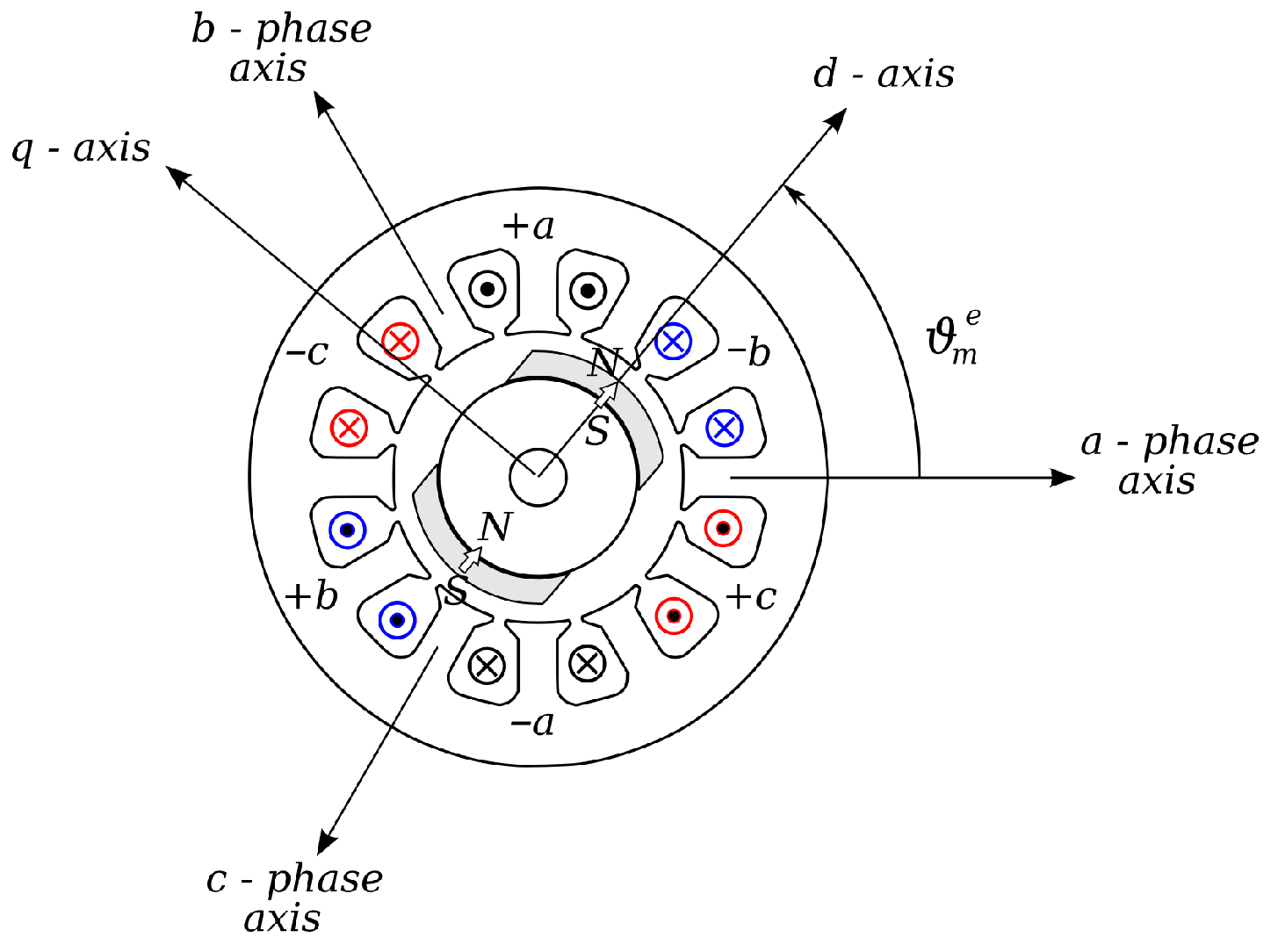
The algorithms have been simulated and then validated with the use of the dSpace MicroLabBox platform. SPM motor parameters are given in Table 1, and the cross-section in shown in Figure 2.

3.1. Current Loop Design

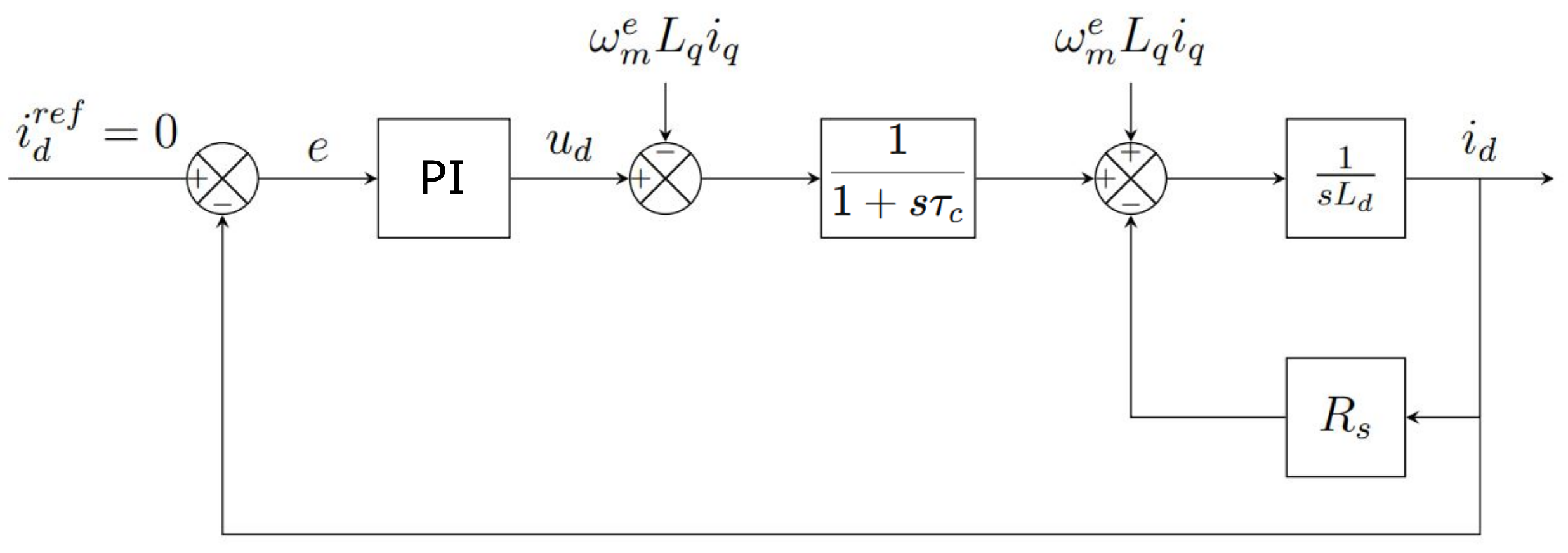
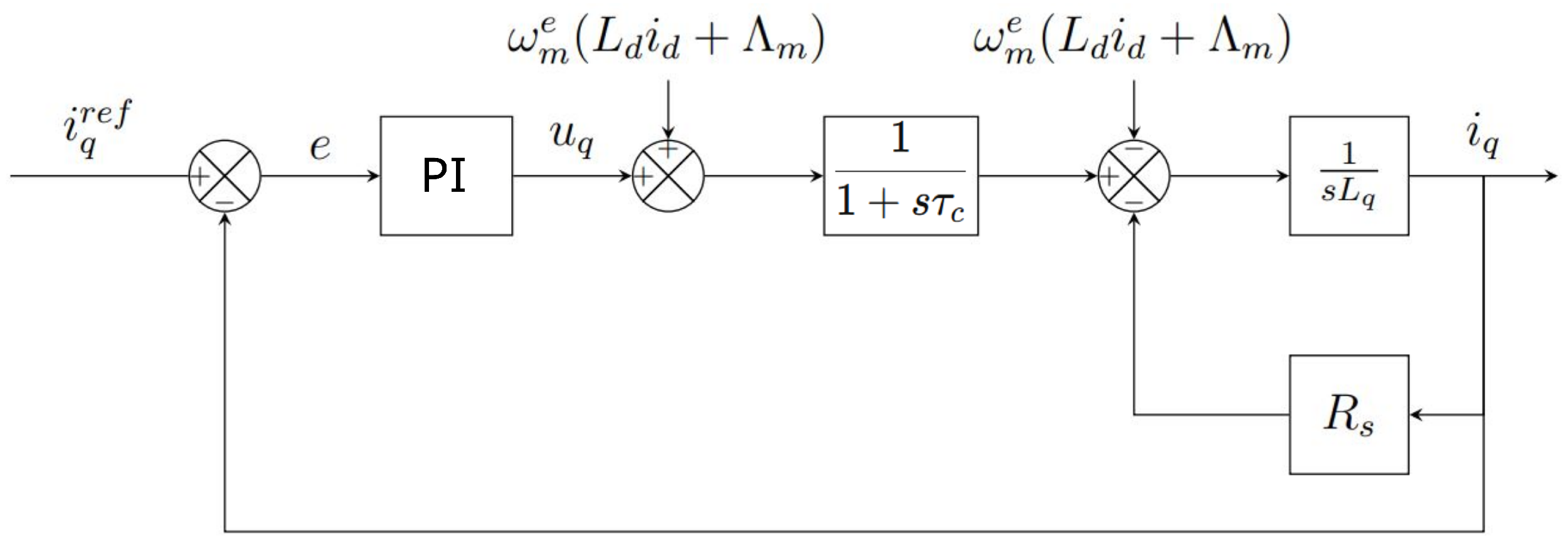
Figure 3 and Figure 4 show the block diagrams related to the current control loop in the synchronous reference frame. If the electric motor is isotropic, then L d = L q [46]. In the control loops, the term ω m e L q i q and the term ω m e L d i d have been added to v d and v q , respectively, in order to decouple the two dynamics. If the time constant τ c introduced by the inverter is negligible with respect to the electric time constant of the motor L d / R s and L q / R s , then the terms added to the voltages will cancel those in the motor block diagrams [47]. In order to better control the dynamic of the i q current loop, the term ω m e Λ m is also added to compensate for the effect of the back-EMF. The open-loop transfer function related to the current loop is then
T O L = k i + k p s s 1 R s 1 1 + s L R s 1 1 + s τ c
The bandwidth is fixed at f = 1   kHz and the phase margin at 60 . The regulator gains that have been calculated from these specifications are k p = 1.44 and k i = 4186 .

3.2. Sensorless Algorithm

The current and voltage are filtered and filtered–integrated by a second-order–second-order generalized integrator (SO-SOGI), which is a forth-order adaptive filter, and they are going to be used to estimate Λ α and Λ β , which will be used to extract the rotor position. The overall structure is called the Second-Order Integral Flux Observer (SOIFO) and has strong attenuation capability against the dc offset and harmonics.

Back-Emf

The voltage and flux equations of an SPM motor in α β coordinates can be described by the following equations [48]:
v α β = R s · i α β + d d t λ s v α β = R s · i α β + d d t L s · i α β + Λ m · cos θ m e sin θ m e
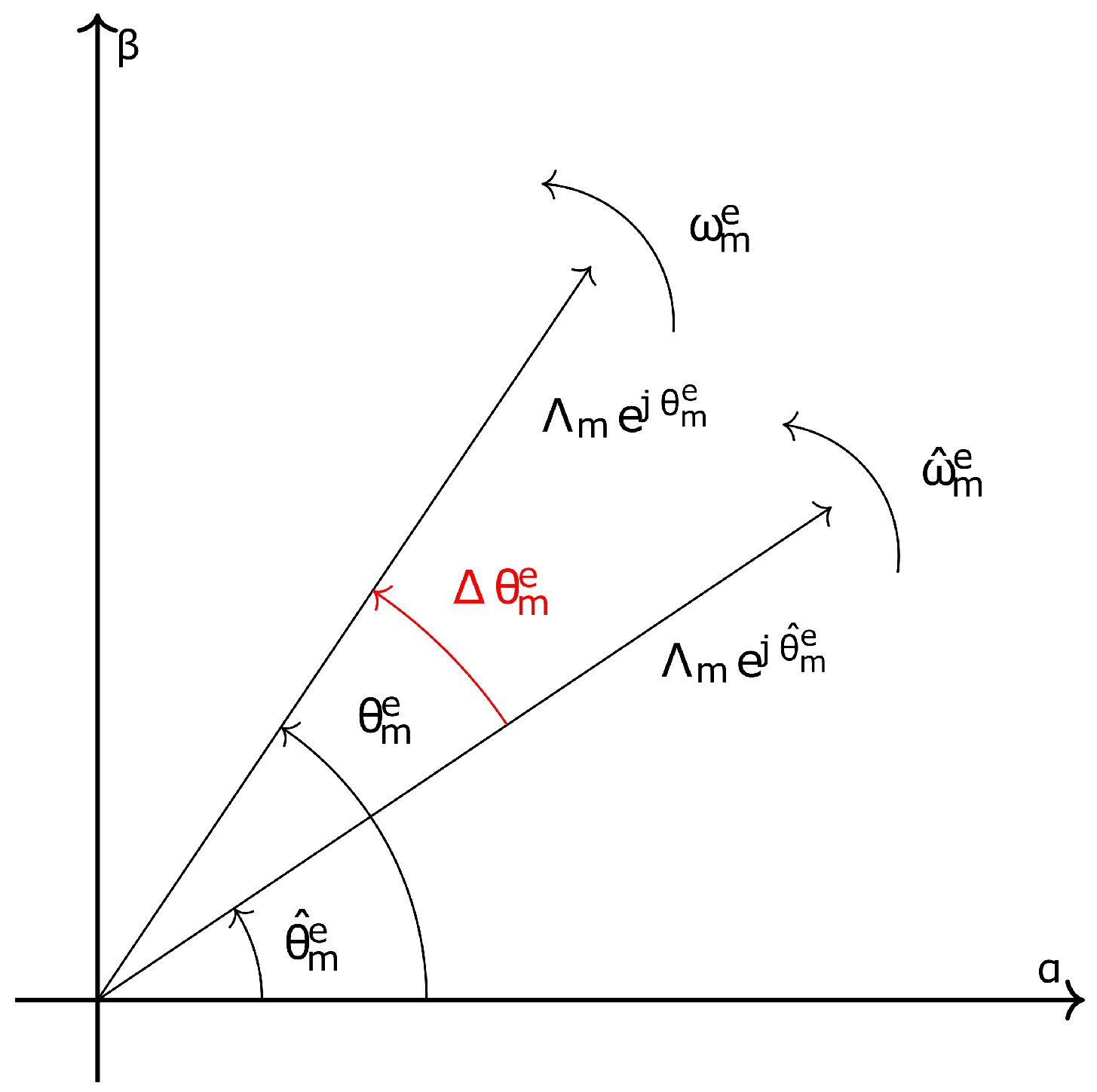
where v α β is the stator voltage vector, i α β is the stator current vector, λ s is the stator flux vector, L s is the stator inductance, R s is the stator resistance, θ m e is the rotor electrical position, and Λ m is the rotor flux linkage. The SPM sensorless control based on the rotor flux observation is shown in Figure 5, where θ ^ m e and ω ^ m e are the estimated electromechanical position and the speed.
From (9), the following equation can be obtained:
λ r ( t ) = t 0 t v α β ( t ) R s i α β ( t ) L s · d d t i α β ( t ) d t
The error due to the integral initial value of the estimated rotor flux is calculated as
λ r ( 0 ) = λ s ( 0 ) L i α β ( 0 )
On top of that, other errors will be introduced due to parameter mismatch, unknown integral initial values, measurement error, inverter nonlinearities, etc. Then, the following equation can be obtained:
λ r ( t ) = t 0 t v α β ( t ) d t t 0 t ( R s + Δ R s ) i α β ( t ) d t t 0 t ( L α β ( t ) + Δ L ) · d d t i α β ( t ) d t + t 0 t e α β 0 ( t ) d t + t 0 t χ ( t ) d t
where Δ R s and Δ L s are the parameter variation, e α β 0 is the initial back-EMF vector, and χ represents other errors.

3.3. Frequency-Locked Loop

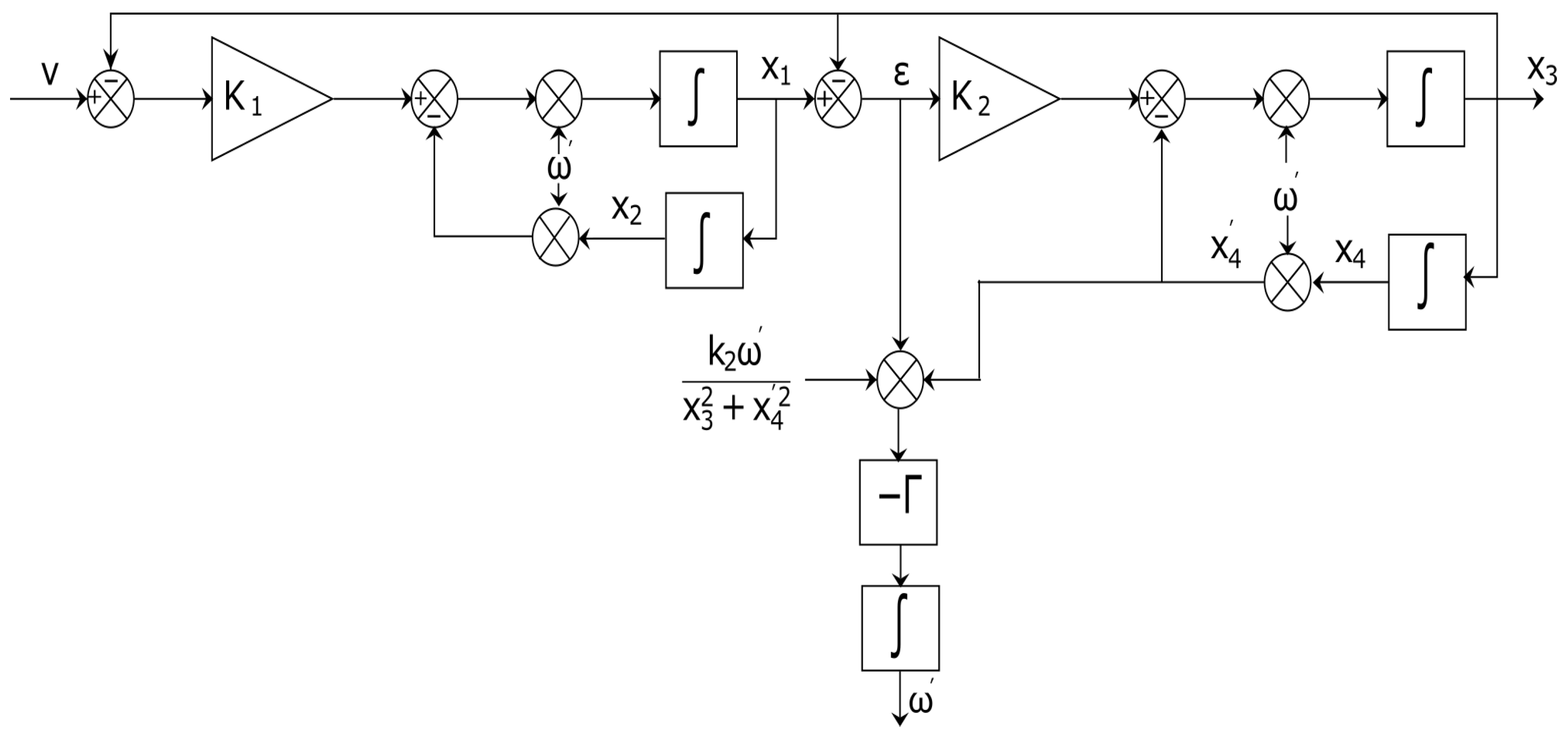
The frequency-locked loop is a control loop used to auto-adapt the center frequency of the SOGI filter to the fundamental input frequency [49]. Figure 6 shows the architecture of the FLL. The transfer function between the error ε and the input signal is
E ( s ) = ε ( s ) v ( s ) = K 1 ω s ( s 2 + ω 2 ) [ s 4 + s 3 ( K 2 ω ) + s 2 ( 2 ω 2 + K 1 K 2 ω 2 ) + s ( K 2 ω 3 ) + ω 4 ]
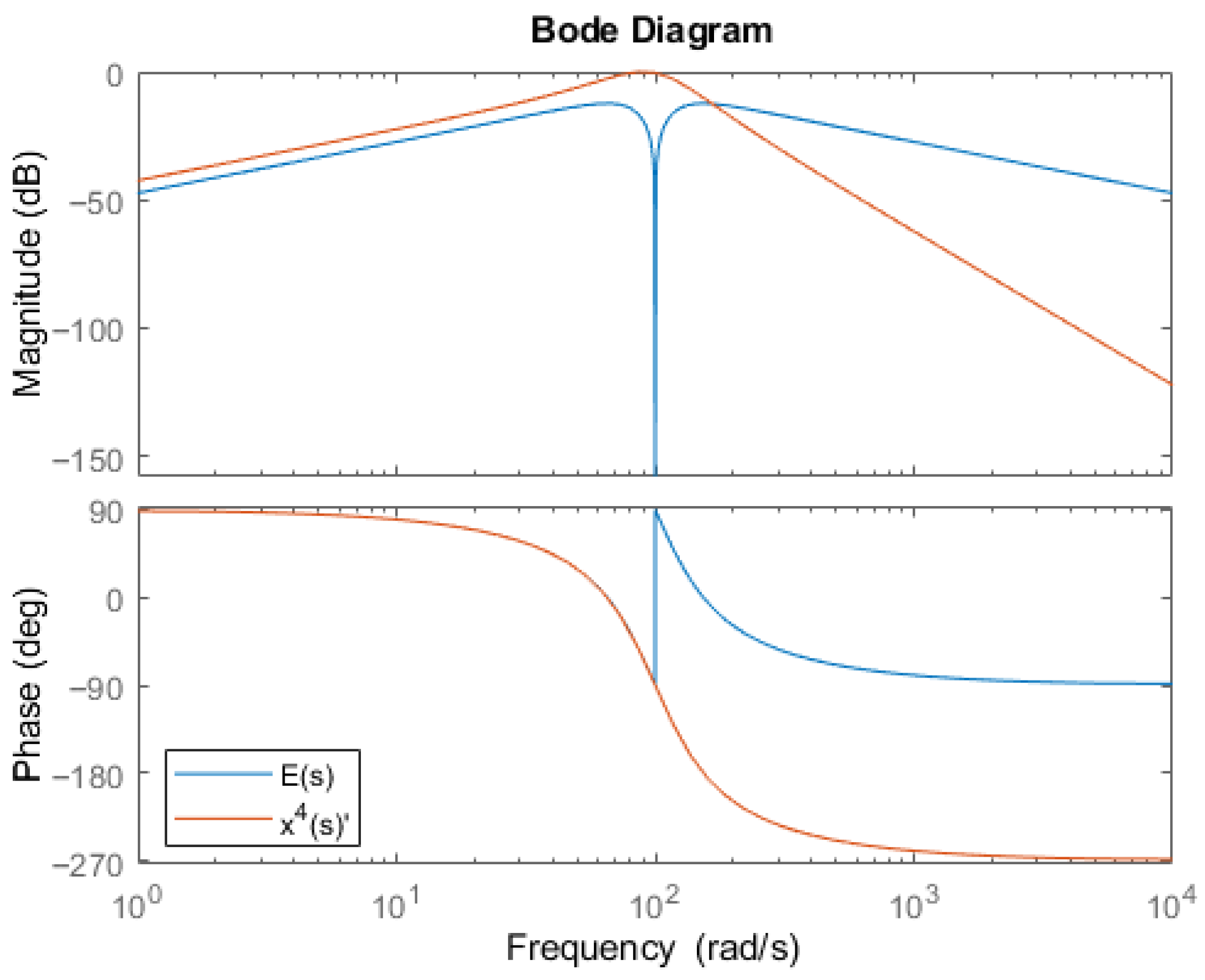
In Section 3.3 and in Figure 6, V is the input voltage, ω′ is the input signal frequency, X 1 and X 2 are the filtered outputs, K 1 and K 2 are the gain coefficients, X 3 is the final filtered output, X 4 is the integrated–filtered output, and ϵ is the error signal. The transfer function is a notch filter with unity gain at the center frequency. The phase angle of this transfer function experiences a phase jump of + 180 when the frequency of the input signal ω goes from lower to higher than that of the estimated ω′ of the FLL. Figure 7 shows that the transfer function E ( s ) and x 4 ( s ) are in phase when the frequency of the input signal is lower than that of the FLL ( ω < ω ), and are in phase opposition otherwise ( ω > ω ). A new variable ε f is defined as the product between ε and x 4 . This variable will be positive when ω < ω , 0 when ω = ω , and negative when ω > ω . Based on these considerations, the FLL can be designed using this frequency error ε f as the input to a negative gain γ and an integrator. In this way, if there is a mismatch between the input frequency and the FLL frequency, this control loop will drive the FLL frequency up to the input frequency. Also, in order to accelerate the dynamic, the center frequency ω can be added as a feed-forward variable, since the magnitude of the input of the FLL decreases as the two frequencies differ, as shown in Figure 7.

3.4. Phase-Locked Loop Analysis

Assuming that the input signal is given by
v = V sin ( θ ) = V sin ( ω t + ϕ )
and the output signal is given by
v = cos ( θ ) = cos ( ω t + ϕ )
the output of the phase multiplier can be written as
ε = V sin ( ω t + ϕ ) cos ( ω t + ϕ ) ε = V 2 [ sin ( ( ω ω ) t + ( ϕ ϕ ) ) low frequency term + sin ( ( ω + ω ) t + ( ϕ + ϕ ) ) high frequency term ]
If the PI regulator of the PLL is a multiplier, it is necessary to choose a bandwidth of the system that is low enough to attenuate the high-frequency term, so only the DC term remains:
ε = V 2 sin ( ( ω ω ) t + ( ϕ ϕ ) )
Assuming that the V C O is tuned to the input frequency, ω ω , the PI regulator error is further simplified into
ε = V 2 sin ( ϕ ϕ )
As a last step, assuming that the phase error is low, ϕ ϕ , the output of the PI regulator can be linearized in the vicinity of that operating point because sin ( ϕ ϕ ) sin ( θ θ ) ( θ θ ) . The result is
ε = V 2 ( θ θ )
Assuming V = 1, the open-loop transfer function in the Laplace domain is
F ( s ) O L = P I ( s ) L F ( s ) V C O ( s ) = k p ( 1 + 1 s T i ) s 2
and the closed-loop transfer function is
F ( s ) C L = s K p + K p T i s 2 + s K p + K p T i
The closed-loop transfer function can be normalized in the following way:
F ( s ) C L = 2 ζ ω n s + ω n 2 s 2 + 2 ζ ω n s + ω n 2
where
ω n = K p T i and ξ = K p T i 2
The response time of this second-order system, from the start of the variation to 99% of the steady-state final value, can be approximated through
t s = 4.6 τ with τ = 1 ξ ω n
From (21), (22), and (24), the parameters of the controller can be tuned as follows:
K p = 2 ξ ω n = 9.2 t s and T i = 2 ξ ω n = t s ξ 2 2.3

3.5. Second-Order Integral Flux Observer Architecture

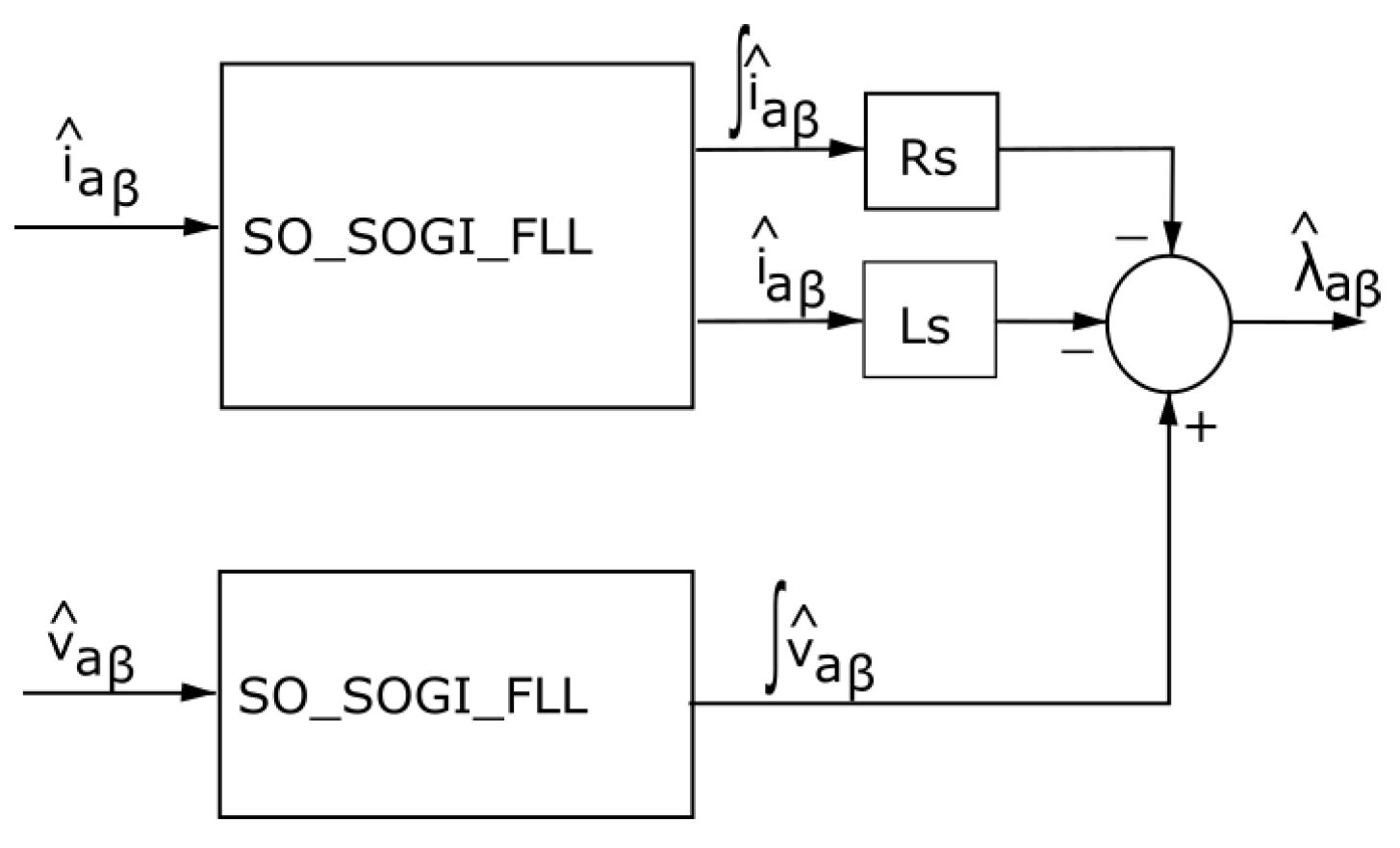
In the SOIFO, there are four SO-SOGI-FLLs that have the following quantities as input: i α , i β , v α , and v β . The output of these SO-SOGI-FLLs will be the filtered and the integrated filtered input. In this way, the following rotor flux linkages can be computed:
λ α ( t ) = t 0 t ( v α ( t ) R s i α ( t ) ) d t L s i α ( t )
λ β ( t ) = t 0 t ( v β R s i β ( t ) ) d t L s i β ( t )
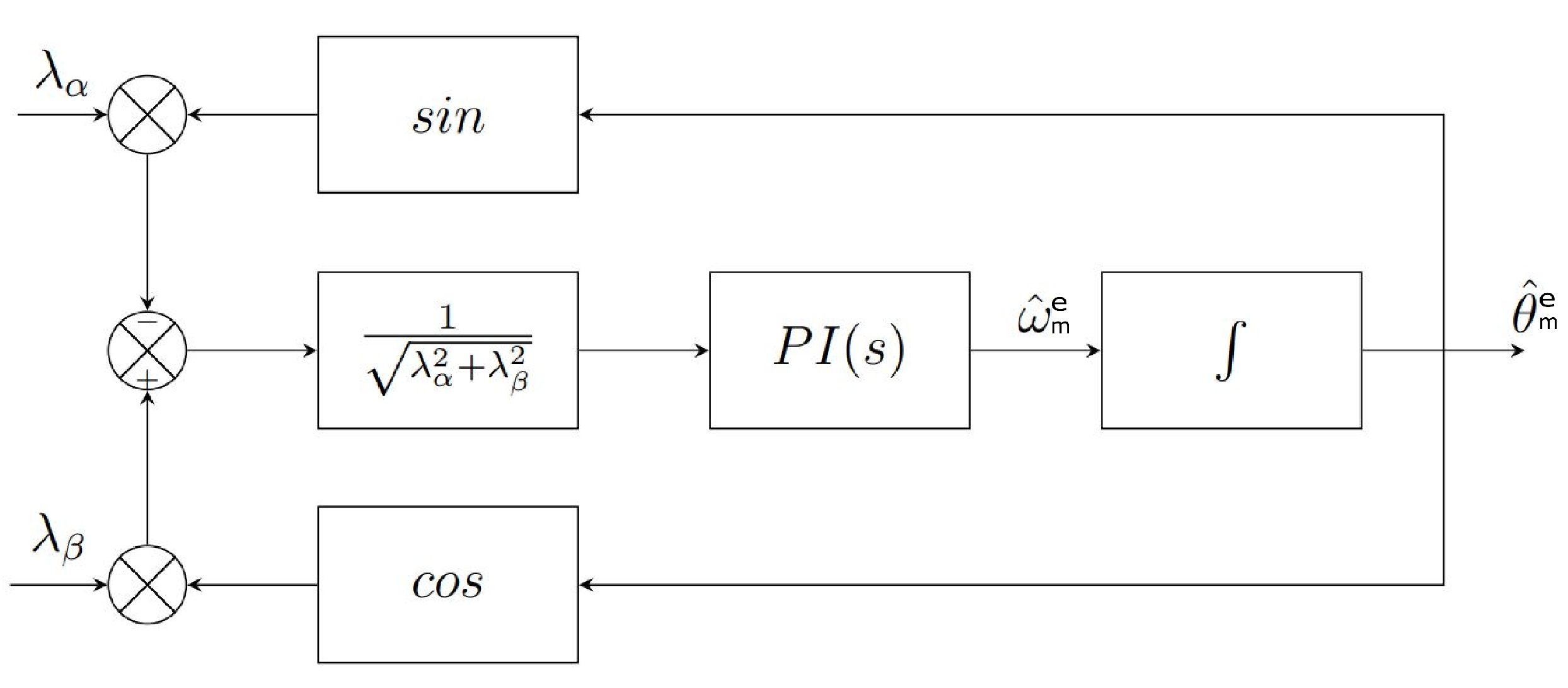
Figure 8 shows the architecture of the two SOIFOs, where i ^ α β and v ^ α β represent the filtered variables. λ α and λ β are used as the input of the QSG-PLL, described hereafter as shown in Figure 9, and the estimated speed ω ^ m e and estimated position θ ^ m e are obtained.

3.6. Quadrature Signal Generator (QSG)–Phase-Locked Loop

There is a high-frequency term in the output of the phase detector. In order to attenuate the effect of this term on the angular velocity and angular position, the bandwidth of the control loop must be decreased [50]. A trade-off arises, because a decrease in bandwidth leads to an increase in the settling time. Because of this, a new PLL scheme called the quadrature signal generator–PLL (QSG-PLL) is introduced in Figure 9. Referring to Figure 9, if v α = V cos ( ω t + ϕ ) and v β = V sin ( ω t + ϕ ) , the new output of the phase detector can be calculated as
ε = V sin ( ω t + ϕ ) cos ( ω t + ϕ ) V cos ( ω t + ϕ ) sin ( ω t + ϕ ) ε = V sin ( ( ω ω t ) + ( ϕ ϕ ) ) ε = V sin ( θ θ ^ )
where ω ^ m e and θ ^ m e are the estimated variables of the PLL. In this way, the high-frequency term disappears, and the bandwidth of the control loop can be increased. Also, a normalization block is introduced to make the bandwidth of the control loop independent from the amplitude of the input signals.
Figure 9. QSG-PLL block diagram.
Designs 10 00002 g009

4. Experimental Results

The proposed algorithms are implemented on a test bench for the SPM machine described in Table 1 using the dSpace MicroLabBox platform. In this platform, there is one Microcontroller (MCU) and one Field-Programmable Gate Array (FPGA). However, only the MCU has been used in this work. Multiple ADCs and DACs are available through BNC connectors, with a resolution of 14 to 16 bits. A large number of digital I/O pins can be accessed via two 50-pin serial cables. Additional interfaces, such as USB and CAN, are also present but were not utilized. The algorithm was developed in the Simulink© environment and subsequently compiled into C code for execution on the MCU. The dSPACE software, ControlDesk, is employed to communicate with the MCU in real time, allowing monitoring of the algorithm’s status.
In the experimental test, the electric angular frequency of the back-EMF at which the proposed sensorless algorithm is started has been chosen as ω m e = 25 rad / s , which is about 48 rpm . By resorting to the design procedure explained in Section 3.3, the settling time has been chosen as t s = 0.1 s and the damping ratio as ζ = 1 / 2 , which leads to an overshoot of σ = 4.3 % . The undamped natural frequency is then 62.23 rad / s . Finally, the gains mentioned in Figure 6 are computed as K 1 = 1.76 and K 2 = 7.04 .

4.1. Second-Order–Second-Order Generalized Integrator Dynamic

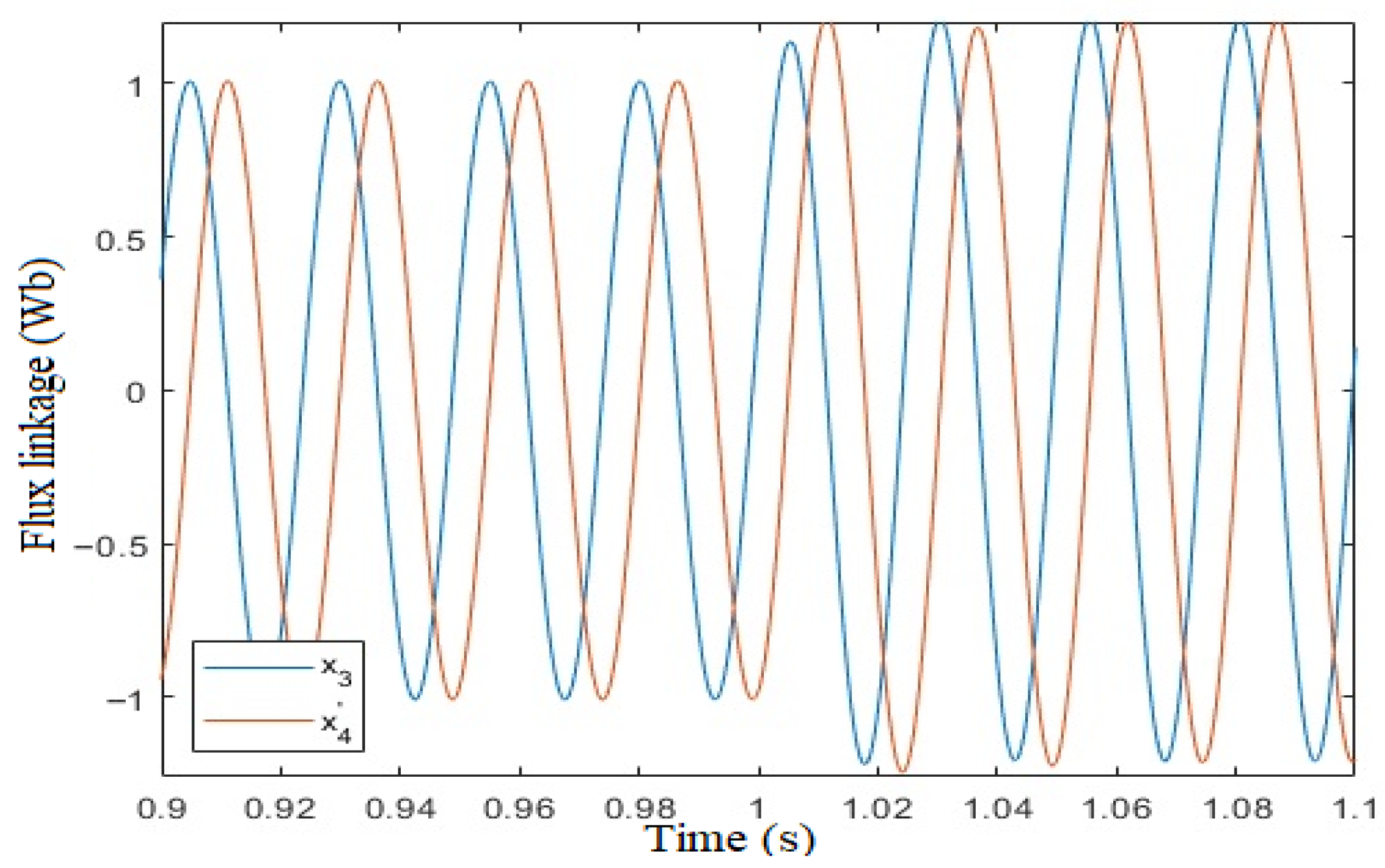
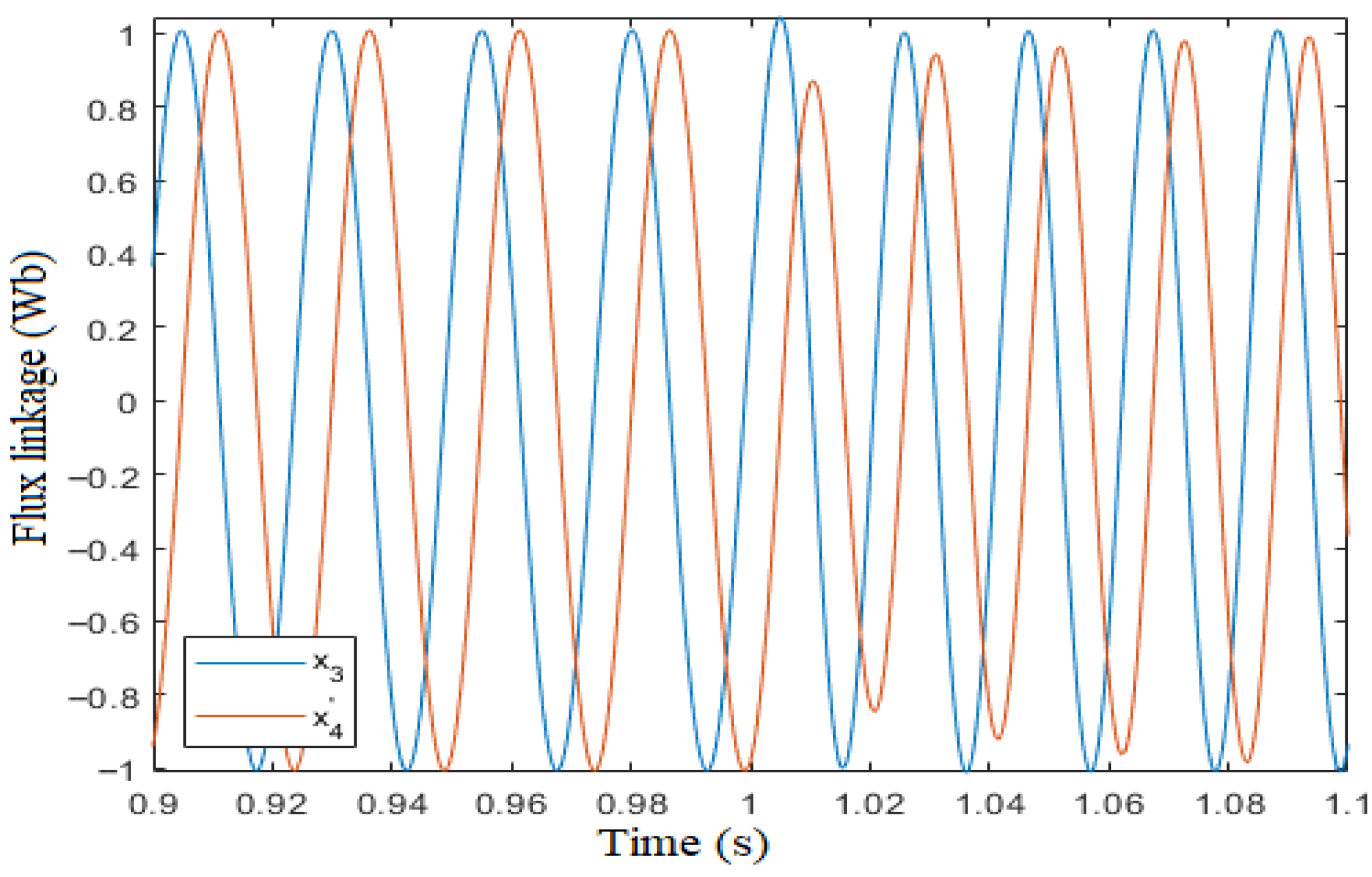
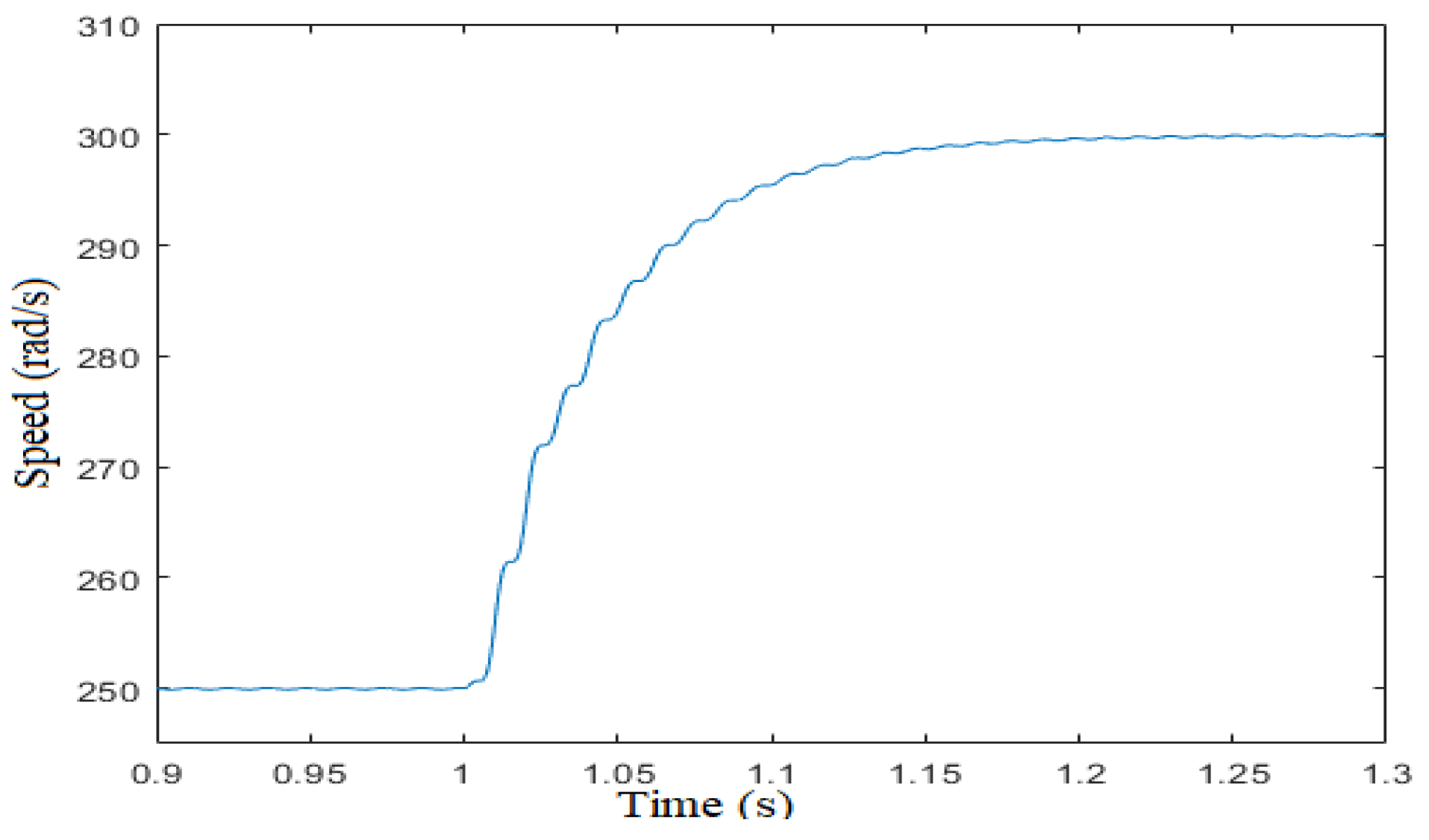
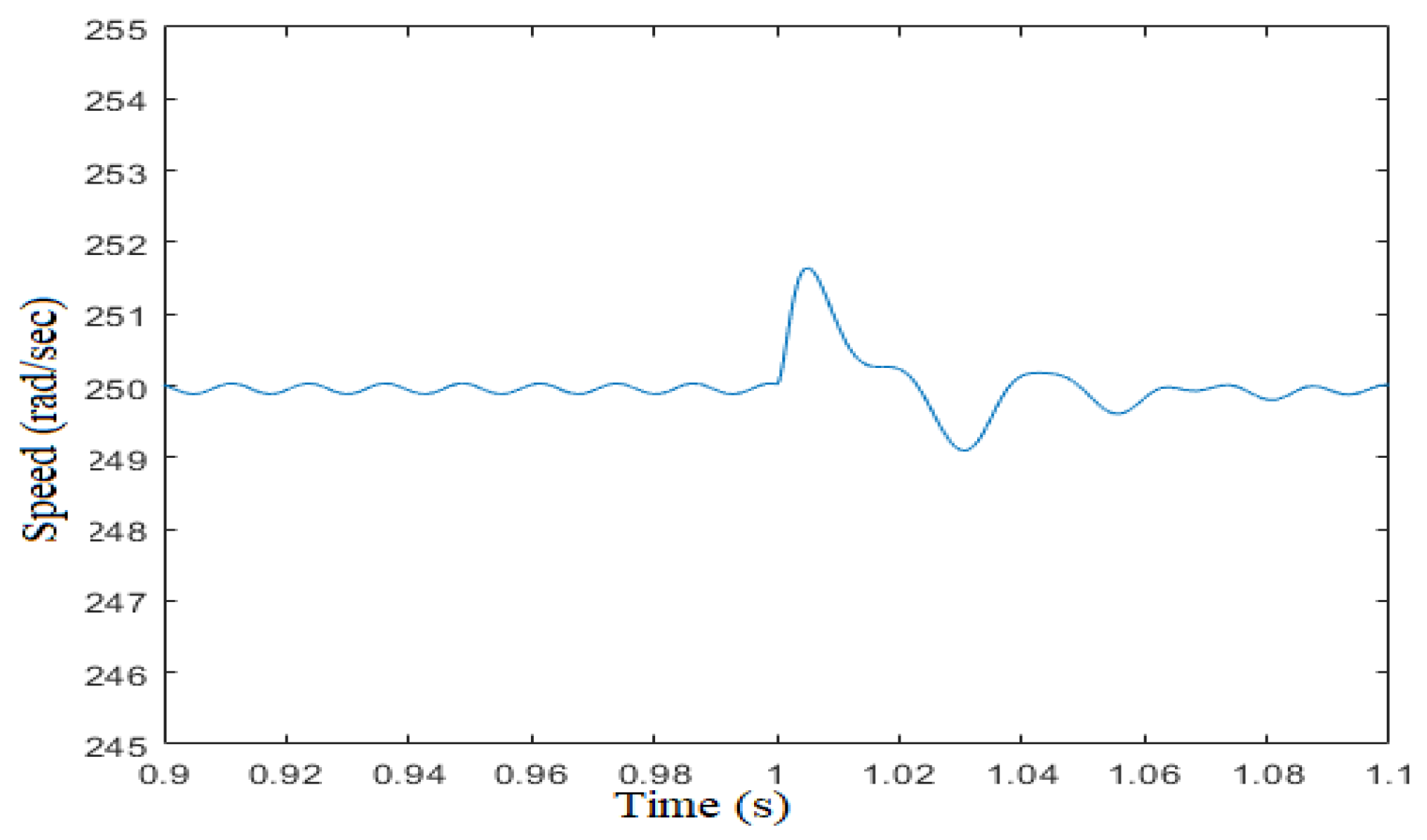
The SO-SOGI is simulated with v = A cos ( ω t ) as input, where A = 1 and ω m e = 250 rad/s. Figure 10 and Figure 12 show the results after a step amplitude variation of 20%, and Figure 11 and Figure 13 show the results after a step frequency variation of 20%.

4.2. Second-Order–Second-Order Generalized Integrator Filtering

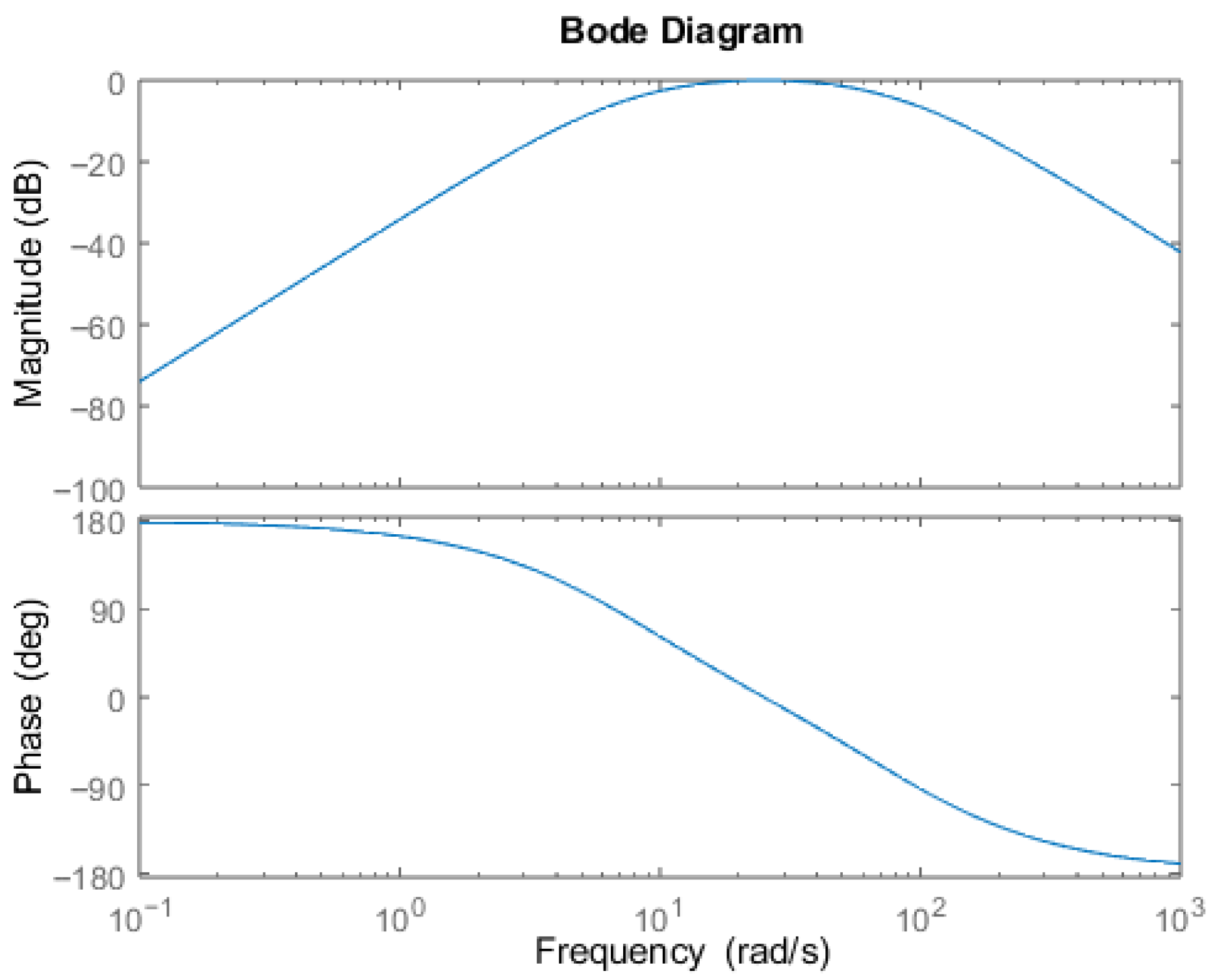
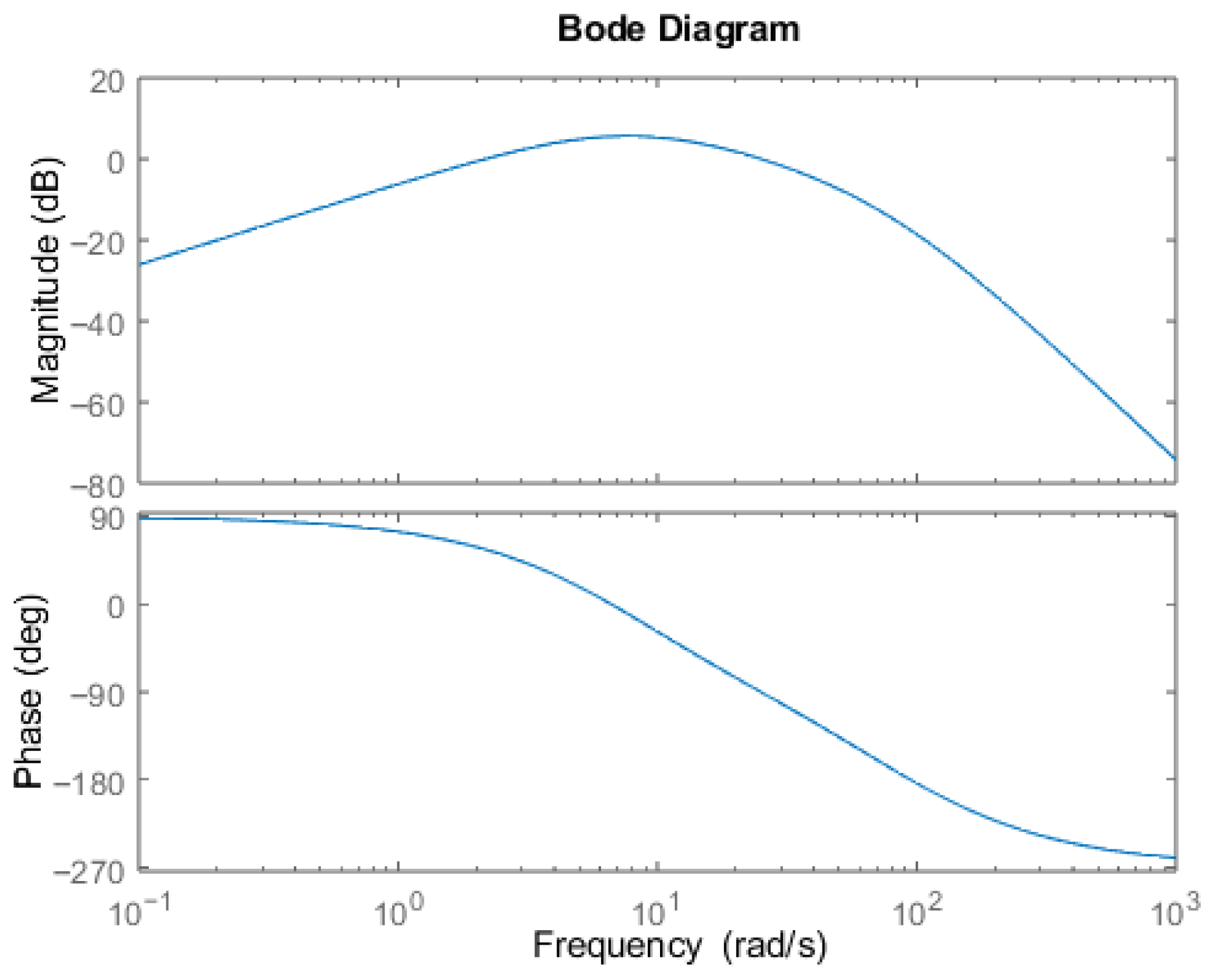
In this section, the filtering capabilities of the sensorless algorithm are described. Figure 14 and Figure 15 show the Bode diagram of variables x 3 ( s ) and x 4 ( s ) , mentioned in Figure 6, respectively. Figure 14 shows that the slope is −20 dB/dec when ω 0 and −60 dB/dec when ω . Instead, Figure 15 shows that the slope is −40 dB/dec when ω 0 and −40 dB/dec when ω . The DC gain in the results is almost but not exactly 0 due to the sampling. In the center frequency, the gain is 1 and at high frequency, the attenuation is as expected by the Bode diagrams.

4.3. Quadrature Signal Generator–Phase-Locked Loop

The time response of the QSG-PLL has been set to t r = 0.1 s. This constraint leads the parameters of the PLL to be k p = 92 and k i = 4232 . When the motor is accelerating, a static position error will appear, while there will not be a static velocity error. That is because of applying a quadratic ramp to a Type-two system. The static error can be calculated as a e / k i , where a e is the electrical acceleration and k i is the integral gain of the PI controller. Assuming a maximum mechanical acceleration of a m = 50 rad/s, which corresponds to electrical acceleration of a e = 250 rad/s, the maximum error will be 0.0035 rad / s , which is negligible.
Figure 16 shows the time response of the estimated speed ω m e after a frequency step variation of 20%. The time response is about 100ms as designed.

4.4. Steady State

This section describes the steady-state performance of the sensorless algorithm at
  • Low speed: ω m e = 25 rad / s , which is about 47 rpm ;
  • Medium speed: ω m e = 250 rad / s , which is about 477 rpm .
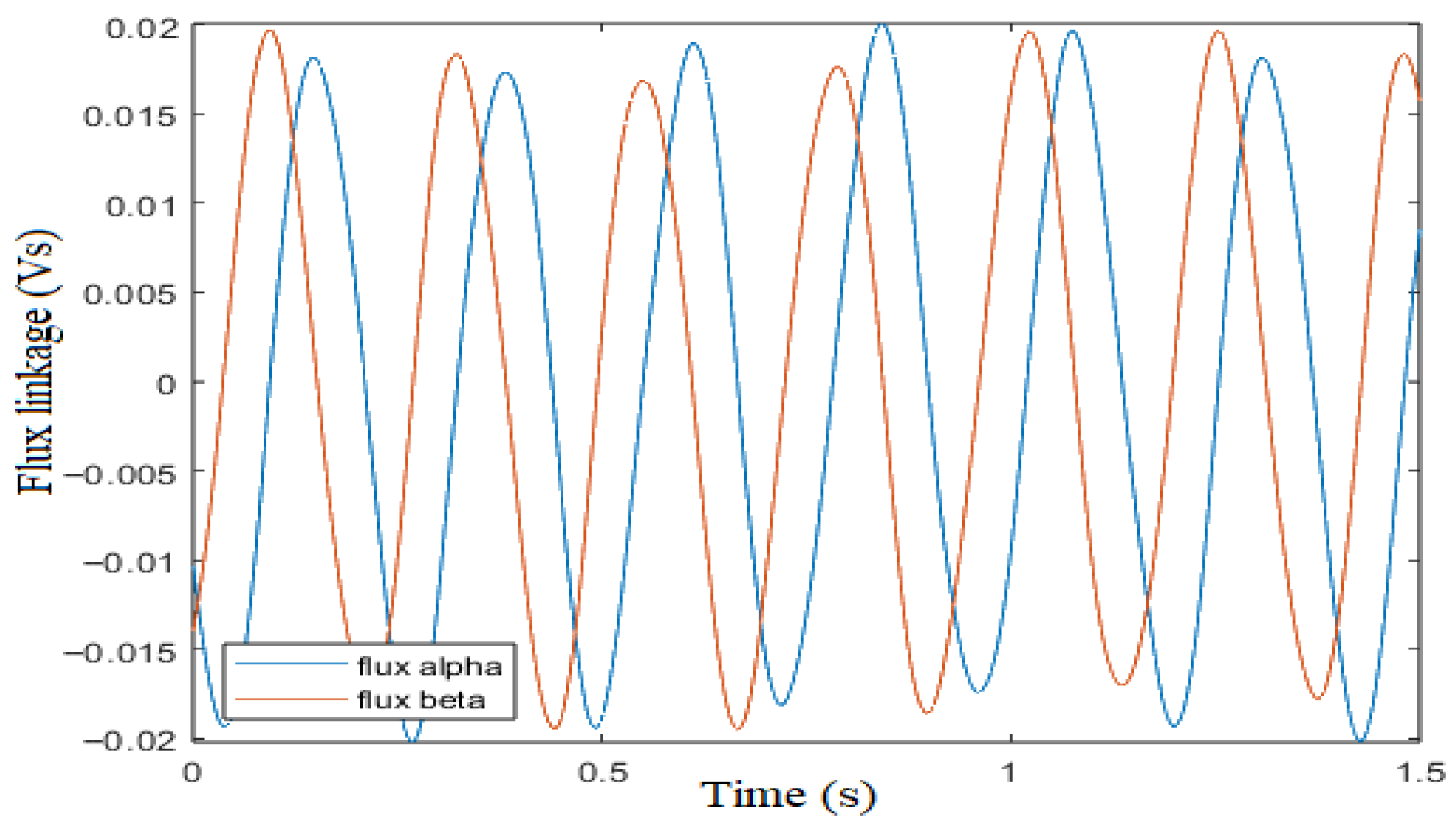
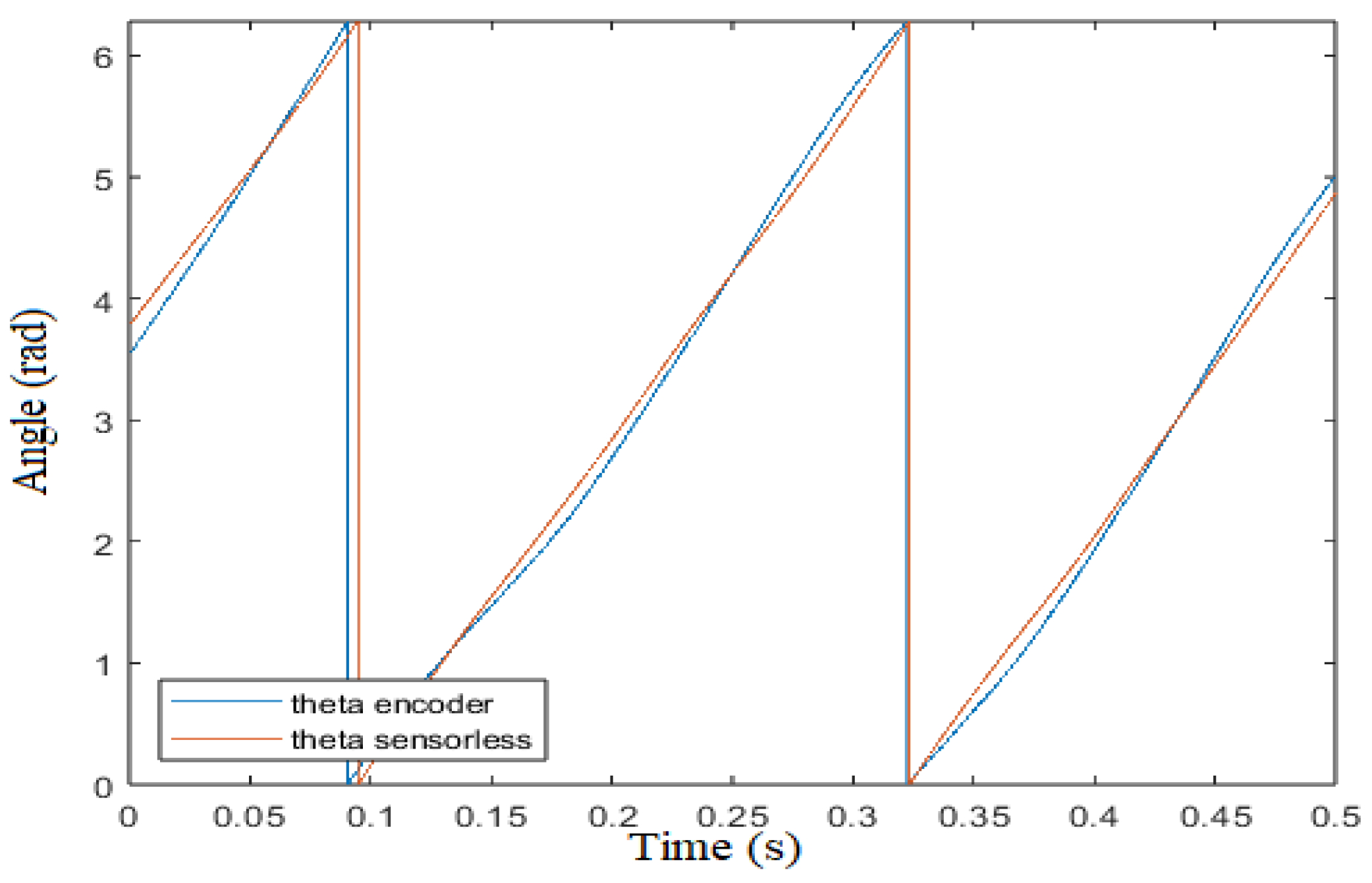
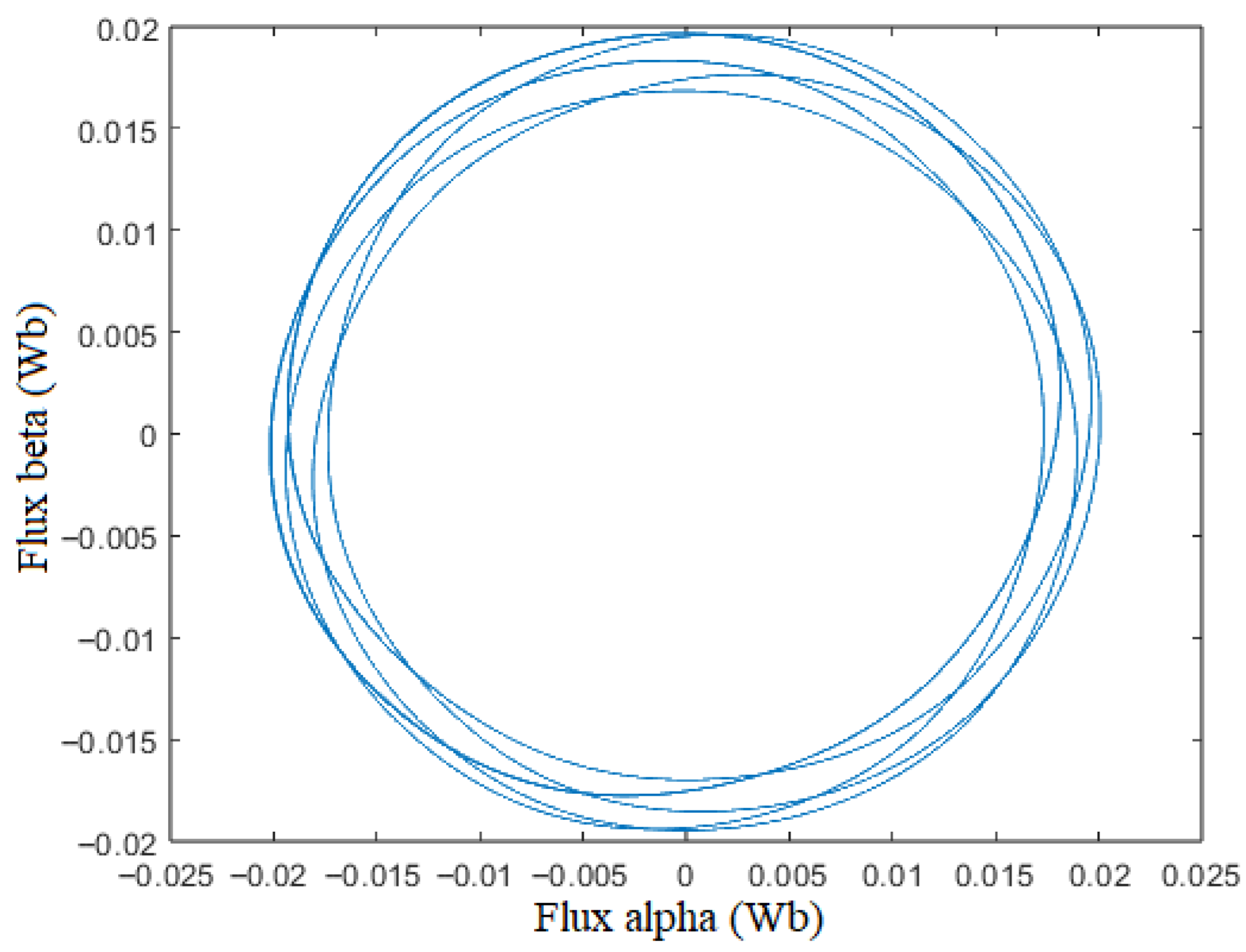
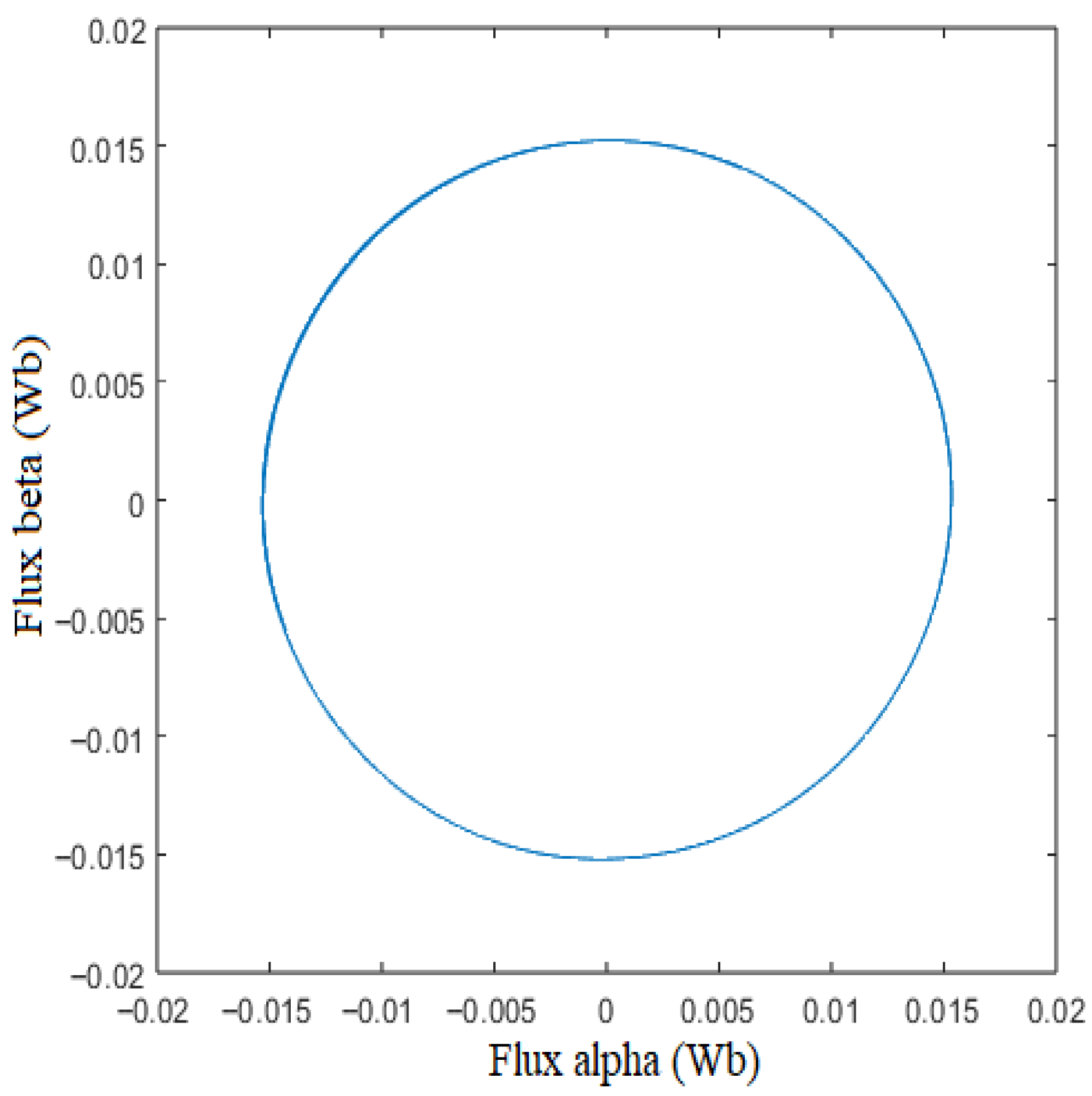
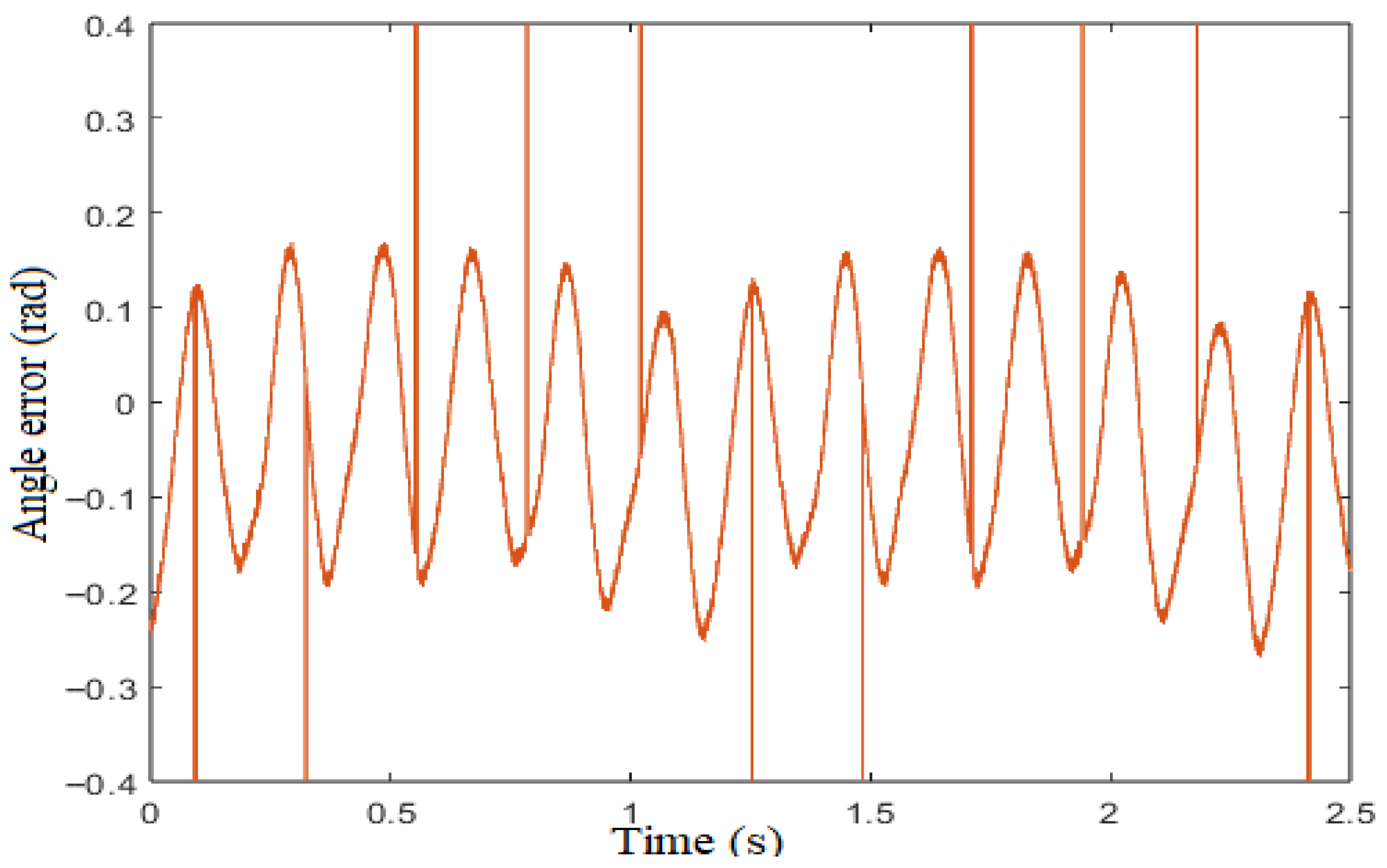
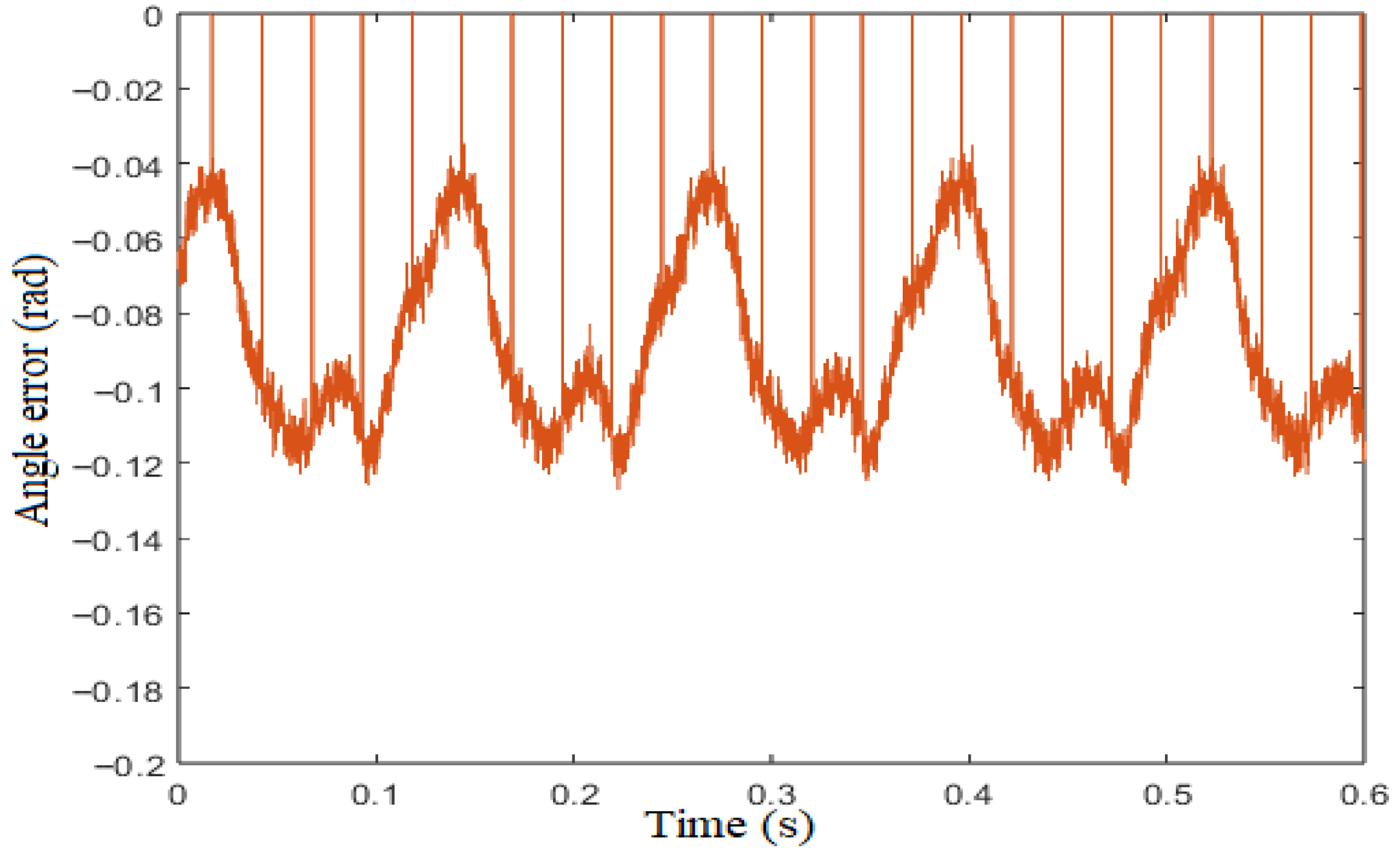
Figure 17, Figure 18 and Figure 19 show the effect of the speed oscillation due to the cogging torque. Figure 19 and Figure 20 show that the flux linkage λ α β moves along a circle centered at (0,0), because the dc components of the α and β emf are effectively rejected. Figure 21 and Figure 22 show the steady-state angle error at low and medium speeds. The maximum error of angle estimation is 0.25 rad when ω m e = 25 rad/s, and 0.12 rad when ω m e = 250 rad/s. One part of this error is due to the sampling delay. It can be estimated by Δ θ m e = ω m e T in the worst case, where T is the sampling delay, which is 50 μs, since T = 1 / f and f = 20 kHz. At ω m e = 25 rad / s , the angular error due to the sampling delay is then Δ θ m e = 0.0013 rad , which is about 0 . 0074 , and at ω m e = 250 rad / s , it is about 0.013 rad / s , which is 0 . 074 . The error due to the sampling delay is then negligible at low and medium speeds, and the main factor of the angle error is parameter mismatch.

4.5. Dynamic

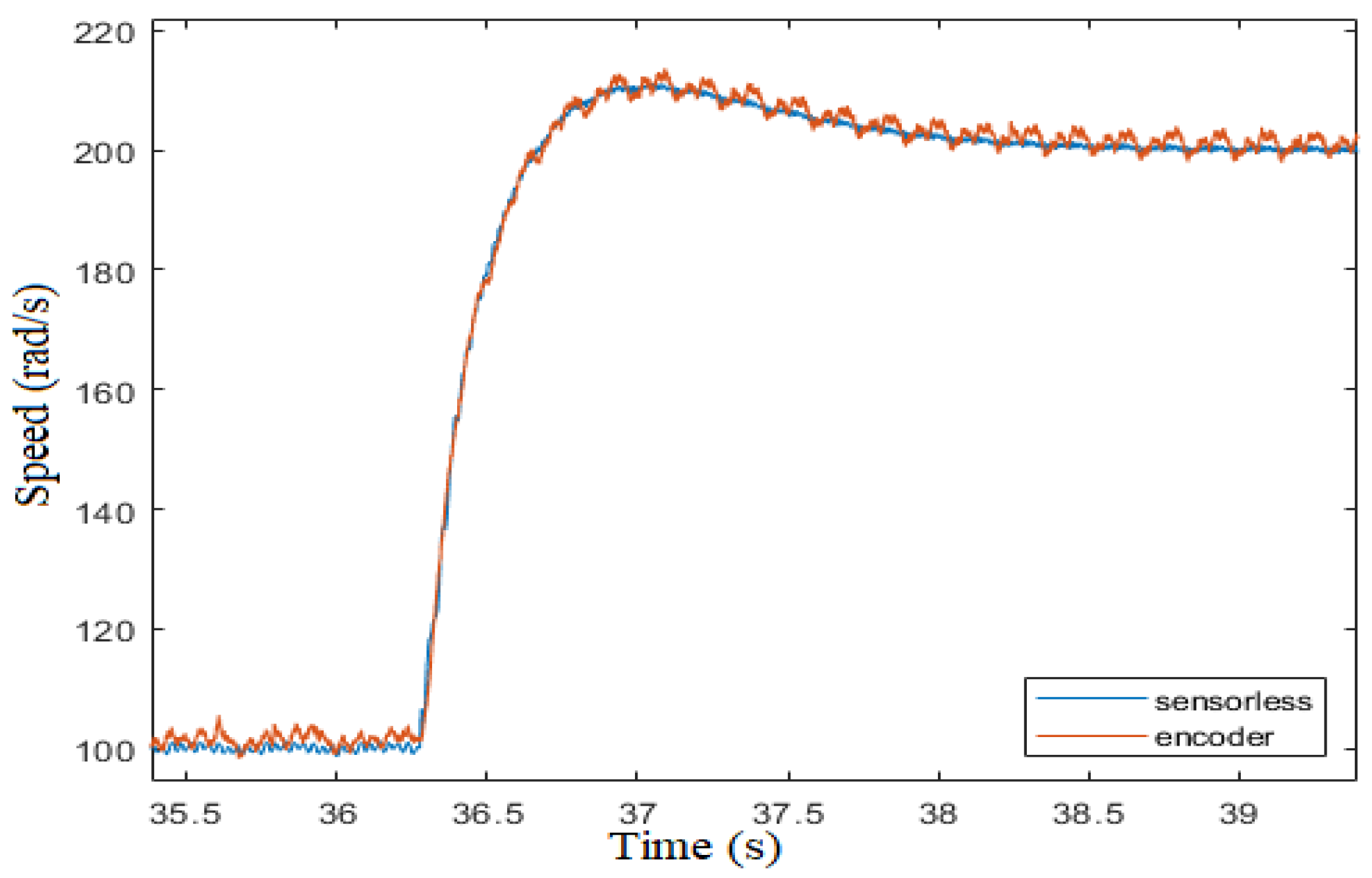
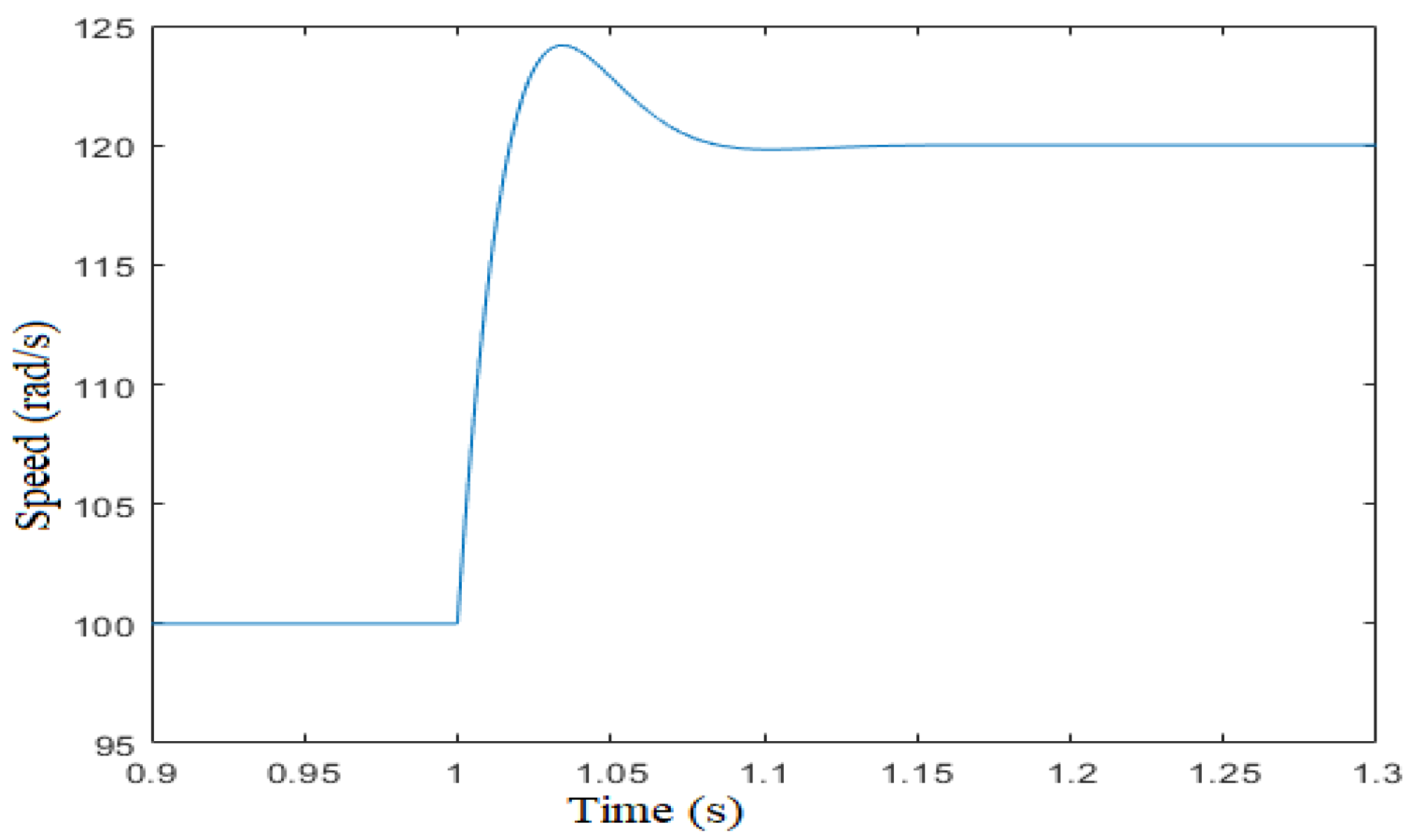
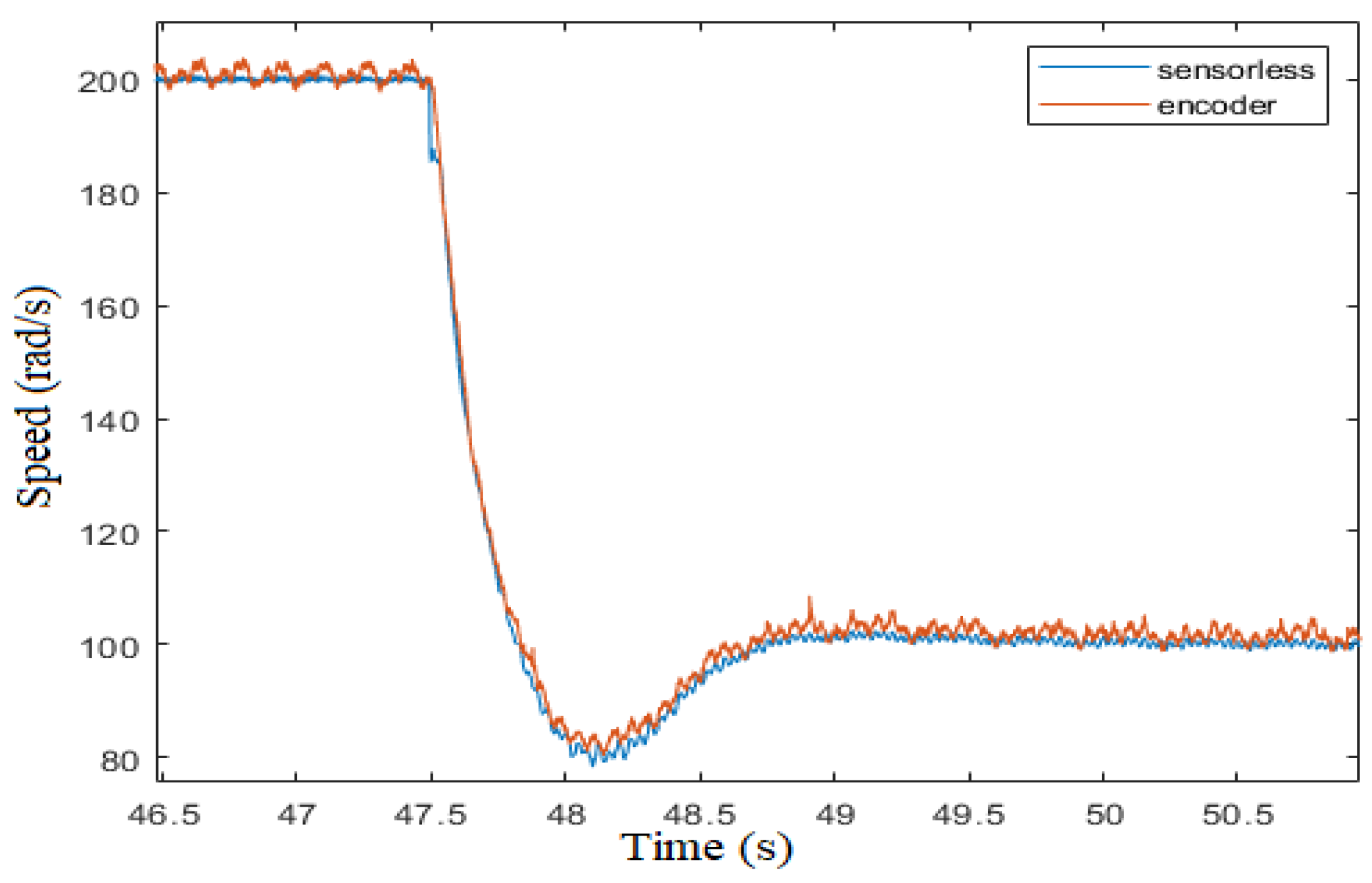
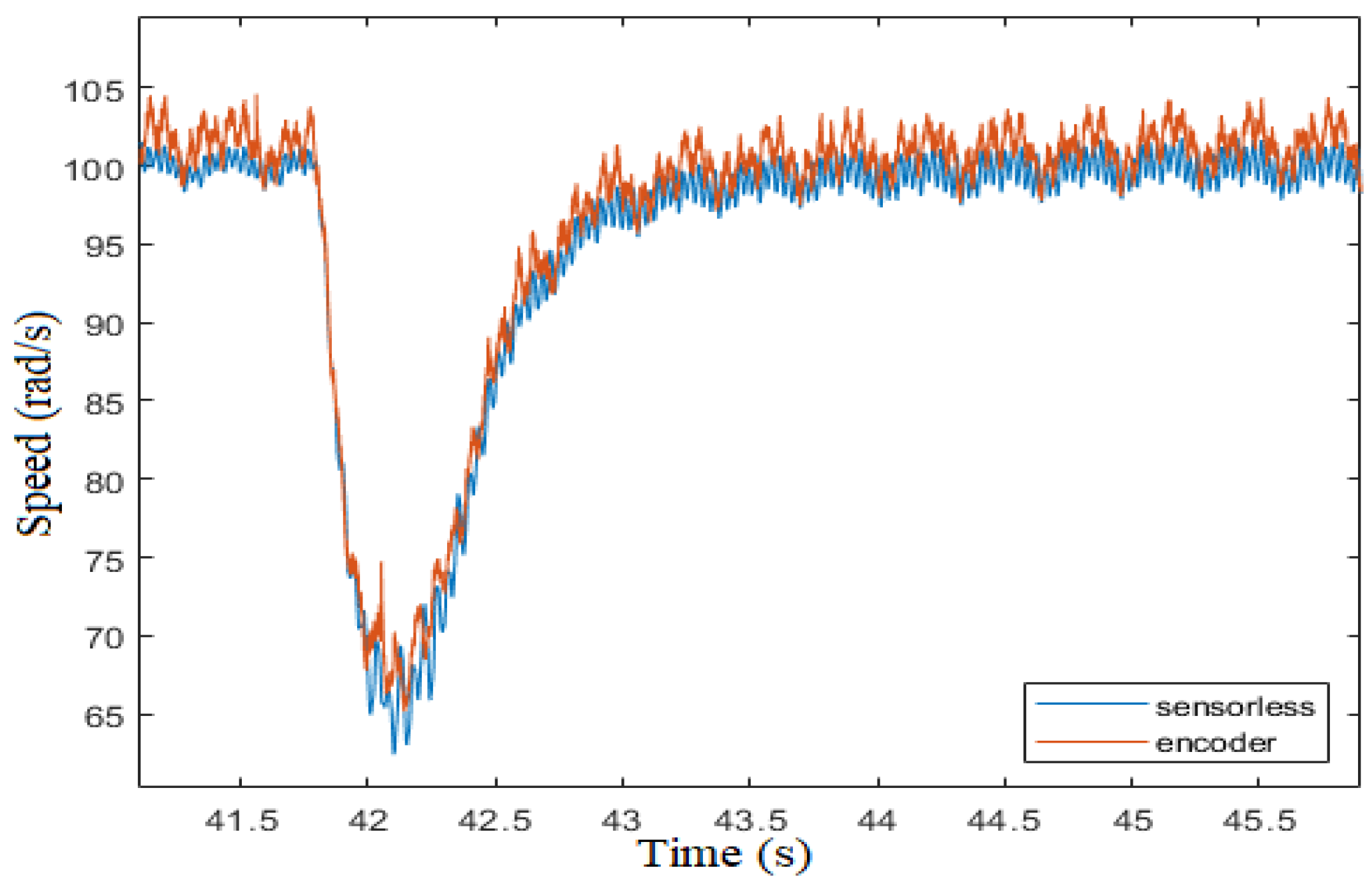
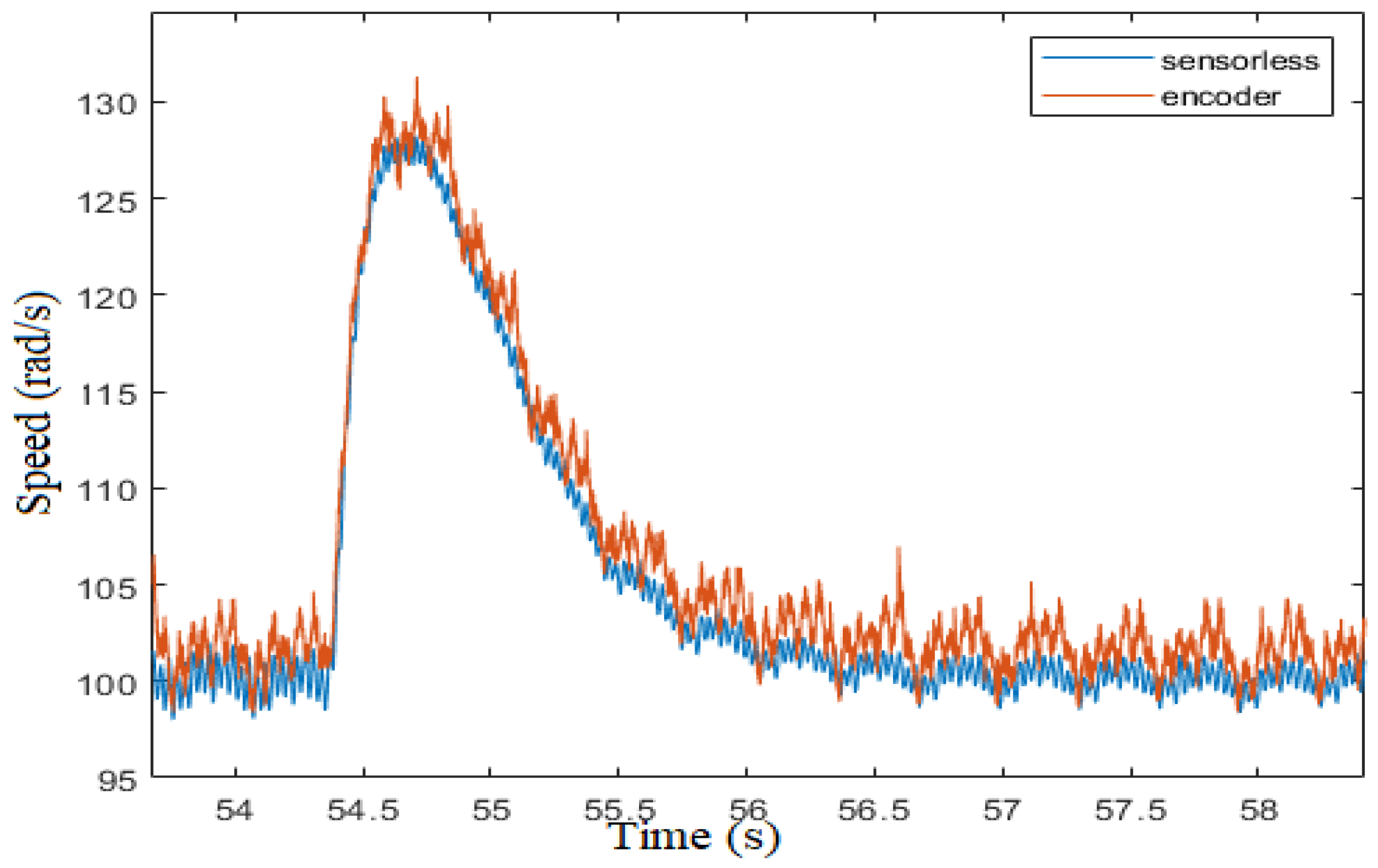
This section deals with the performance of the sensorless algorithm during a variation in the reference speed and a variation in the load torque. Figure 23 and Figure 24 show the results after a step variation in the ω m e reference from 100 to 200 rad / s and vice versa. The results show the stability of the sensorless algorithm even after a fast ω m e variation. The maximum angle error is Δ θ m e = | 0.7 | rad. Figure 25 and Figure 26 show the results after a step load variation of + 0.4 Nm and vice versa. The results show the stability of the sensorless algorithm even after a fast torque variation. The maximum angle error is Δ θ m e = | 0.5 | rad.

5. Conclusions

In this paper, a sensorless algorithm is designed for an SPM synchronous motor using an advanced second-order–second-order generalized integrator filter, and a quadrature signal generator–phase-locked loop controller is used to estimate the rotor position from the filtered output.
The sensorless algorithm is initiated at a 25 rad/s electrical angular frequency of the back-emf, which corresponds to 48 rpm, and also verified at medium speed: ω m e = 250 rad / s , approximately 477 rpm. A negligible error of 0.0035 rad is recorded at a maximum mechanical acceleration of a m = 50 rad/s, with v = A cos ( ω t ) as input of SO-SOGI, where A = 1 and ω m e = 250 rad / s . The time response of the estimated speed ω ^ m e is approximately 100ms after a frequency step variation of 20%. In the steady-state performance of the sensorless algorithm, the maximum error in angle estimation is 0.25 rad at ω m e = 25 rad / s , and 0.12 rad at ω m e = 250 rad / s . Part of this error is due to the sampling delay. It can be estimated by Δ θ m e = ω m e T in the worst case, where T is the sampling delay of 50 μs, given that T = 1 / f and f = 20 kHz. At ω m e = 25 rad / s , the angular error due to the sampling delay is Δ θ m e = 0.0013 rad , approximately 0 . 0074 , and at ω m e = 250 rad / s , it is about 0.013 rad , or 0 . 074 . Thus, the error due to the sampling delay is negligible at both low and medium speeds. Stability of the motor during rapid variation in the reference speed and load torque shows the performance of the sensorless algorithm. The maximum angle error during a fast ω m e variation is Δ θ m e = ± 0.7 rad . Similarly, the algorithm remains stable after rapid torque variations, with a maximum angle error of Δ θ m e = ± 0.5 rad .

Author Contributions

The following are the authors’ contributions to this work: Formal analysis, investigation, data curation, and editing and preparation of the final draft were carried out by A.A. The research concept was developed by professor N.B., who also provided the necessary resources for the simulation and testing equipment. N.B. served as the supervisor, reviewer, and the editor of this article. All authors have read and agreed to the published version of the manuscript.

Funding

This research received no external funding.

Data Availability Statement

The original contributions presented in this study are included in the article. Further inquiries can be directed to the corresponding author(s).

Acknowledgments

We are grateful to DANA for their funding support, and to Pier Francesco Sartori and all our colleagues at the Electric Drive Laboratory (EDLAB) for their invaluable support in preparation of this article.

Conflicts of Interest

The authors declare no conflicts of interest.

Abbreviations

The following abbreviations are used in this manuscript:
EVsElectric vehicles
PMPermanent magnet
SPMSurface-mounted permanent magnet
FOCField-oriented control
EMFElectromotive force
SVMSpace vector modulation
SOIFOSecond-order integral flux observer
SO-SOGISecond-order–second-order generalized integral
PIProportional integral
FLLFrequency-locked loop
PLLPhase-locked loop
QSG-PLLQuadrature signal generated–phase-locked loop

References

  1. Vagati, A.; Pellegrino, G.; Guglielmi, P. Comparison between SPM and IPM motor drives for EV application. In Proceedings of the XIX International Conference on Electrical Machines—ICEM 2010, Rome, Italy, 6–8 September 2010; pp. 1–6. [Google Scholar]
  2. Bianchi, N.; Bolognani, S.; Frare, P. Design criteria for high-efficiency SPM synchronous motors. IEEE Trans. Energy Convers. 2006, 21, 396–404. [Google Scholar] [CrossRef]
  3. Vu, N.T.; Choi, H.H.; Kim, R.Y.; Jung, J.W. Robust speed control method for permanent magnet synchronous motor. IET Electr. Power Appl. 2012, 6, 399–411. [Google Scholar] [CrossRef]
  4. Xin, Z.; Wang, X.; Qin, Z.; Lu, M.; Loh, P.C.; Blaabjerg, F. An improved second-order generalized integrator based quadrature signal generator. IEEE Trans. Power Electron. 2016, 31, 8068–8073. [Google Scholar] [CrossRef]
  5. Rudnicki, T. Measurement of the PMSM shaft position with an absolute encoder. Electronics 2019, 8, 1229. [Google Scholar] [CrossRef]
  6. Park, B.D.; Kim, S.J.; Moon, J.H.; Kang, D.W.; Go, S.C.; Su, K.H. Study on Compensation Method of Encoder Pulse Errors for Permanent Magnet Synchronous Motor Control. Mathematics 2024, 12, 3019. [Google Scholar] [CrossRef]
  7. Ji, R.; Liu, K.; Wang, Y.; Sohel, R.M. High-Precision Low-Speed Measurement for Permanent Magnet Synchronous Motors Using an Improved Extended State Observer. World Electr. Veh. J. 2025, 16, 595. [Google Scholar] [CrossRef]
  8. Mukherjee, P.; Paitandi, S.; Sengupta, M. Sensorless speed control of a laboratory fabricated SPM-BLDC motor prototype. Sādhanā 2023, 48, 236. [Google Scholar] [CrossRef]
  9. Al Kassem Jebai, F.M.; Martin, P.; Rouchon, P. Sensorless position estimation of Permanent-Magnet Synchronous Motors using a saturation model. arXiv 2012, arXiv:1207.5743. [Google Scholar] [CrossRef]
  10. Lee, J.; Hong, J.; Nam, K.; Ortega, R.; Praly, L.; Astolfi, A. Sensorless control of surface-mount permanent-magnet synchronous motors based on a nonlinear observer. IEEE Trans. Power Electron. 2009, 25, 290–297. [Google Scholar]
  11. Shao, L.; Zheng, C.; Zhang, Y.; Xie, G.; Hao, X.; Zheng, X. Research on permanent magnet synchronous motor sensorless control system based on integral backstepping controller and enhanced linear extended state observer. Appl. Sci. 2023, 13, 1680. [Google Scholar] [CrossRef]
  12. Sun, L.; Li, X.; Chen, L. Motor Speed Control with Convex Optimization-Based Position Estimation in the Current Loop. IEEE Trans. Power Electron. 2021, 36, 10906–10919. [Google Scholar] [CrossRef]
  13. Xu, W.; Jiang, Y.; Mu, C.; Blaabjerg, F. Improved nonlinear flux observer-based second-order SOIFO for PMSM sensorless control. IEEE Trans. Power Electron. 2018, 34, 565–579. [Google Scholar] [CrossRef]
  14. Kommuri, S.K.; Veluvolu, K.C.; Defoort, M. Robust observer with higher-order sliding mode for sensorless speed estimation of a PMSM. In Proceedings of the 2013 European Control Conference (ECC), Zurich, Switzerland, 17–19 July 2013; pp. 4598–4603. [Google Scholar]
  15. Zeghlache, A.; Djerioui, A.; Mekki, H.; Zeghlache, S.; Benkhoris, M.F. Robust Sensorless PMSM Control with Improved Back-EMF Observer and Adaptive Parameter Estimation. Electronics 2025, 14, 1238. [Google Scholar] [CrossRef]
  16. Krishnan, R.; Isha, T.; Balakrishnan, P. A back-EMF based sensorless speed control of permanent magnet synchronous machine. In Proceedings of the 2017 International Conference on Circuit, Power and Computing Technologies (ICCPCT), Kollam, India, 20–21 April 2017; pp. 1–5. [Google Scholar]
  17. Tursini, M.; Petrella, R.; Scafati, A. Speed and position estimation for PM synchronous motor with back-EMF observer. In Proceedings of the Fourtieth IAS Annual Meeting, Conference Record of the 2005 Industry Applications Conference, Hong Kong, China, 2–6 October 2005; Volume 3, pp. 2083–2090. [Google Scholar]
  18. Wang, Z.; Lu, Q.; Ye, Y.; Lu, K.; Fang, Y. Investigation of PMSM Back-EMF using sensorless control with parameter variations and measurement errors. Prz. Elektrotechniczny 2012, 88, 182–186. [Google Scholar]
  19. Gao, J.; Wang, Y.; Xu, M.; Mi, Y. A novel rotor position observer for sensorless control of permanent magnet synchronous motor based on adaptive generalized second-order integrator. Machines 2022, 10, 751. [Google Scholar] [CrossRef]
  20. Liang, C.M.; Lin, Y.J.; Chen, J.Y.; Chen, G.R.; Yang, S.C. Sensorless lc filter implementation for permanent magnet machine drive using observer-based voltage and current estimation. Sensors 2021, 21, 3596. [Google Scholar] [CrossRef]
  21. Chen, Y.; Li, M.; Gao, Y.W.; Chen, Z.Y. A sliding mode speed and position observer for a surface-mounted PMSM. ISA Trans. 2019, 87, 17–27. [Google Scholar] [CrossRef] [PubMed]
  22. Ge, Y.; Yang, L.; Ma, X. Sensorless control of PMSM using generalized extended state observer and adaptive resistance estimation. IET Electr. Power Appl. 2020, 14, 2062–2073. [Google Scholar] [CrossRef]
  23. Liu, H.; Li, G. Rotor position and speed estimation method for magnetically suspended pmsm based on modified sliding mode observer. In Proceedings of the 2016 International Conference on Mechatronics, Control and Automation Engineering, Bangkok, Thailand, 24–25 July 2016; pp. 210–214. [Google Scholar]
  24. Pillay, P.; Krishnan, R. Modeling, simulation, and analysis of permanent-magnet motor drives. I. The permanent-magnet synchronous motor drive. IEEE Trans. Ind. Appl. 1989, 25, 265–273. [Google Scholar] [CrossRef]
  25. Liu, J.; Chen, W. Generalized DQ model of the permanent magnet synchronous motor based on extended park transformation. In Proceedings of the 2013 1st International Future Energy Electronics Conference (IFEEC), Tainan, Taiwan, 3–6 November 2013; pp. 885–890. [Google Scholar]
  26. Malrait, F.; Martin, P.; Rouchon, P. Estimation of saturation of permanent-magnet synchronous motors through an energy-based model. In Proceedings of the 2011 IEEE International Electric Machines & Drives Conference (IEMDC), Niagara Falls, ON, Canada, 15–18 May 2011; pp. 1316–1321. [Google Scholar]
  27. Zhang, Y.; Zhao, C.; Dai, B.; Li, Z. Dynamic Simulation of Permanent Magnet Synchronous Motor (PMSM) Electric Vehicle Based on Simulink. Energies 2022, 15, 1134. [Google Scholar] [CrossRef]
  28. Beser, E.K. Electrical equivalent circuit for modelling permanent magnet synchronous motors. J. Electr. Eng. 2021, 72, 176–183. [Google Scholar] [CrossRef]
  29. Abu-Rub, H.; Iqbal, A.; Guzinski, J. High Performance Control of AC Drives with Matlab/Simulink; John Wiley & Sons: Hoboken, NJ, USA, 2021. [Google Scholar]
  30. Jiang, Y.; Xu, W.; Mu, C. Improved SOIFO-based rotor flux observer for PMSM sensorless control. In Proceedings of the IECON 2017-43rd Annual Conference of the IEEE Industrial Electronics Society, Beijing, China, 29 October–1 November 2017; pp. 8219–8224. [Google Scholar]
  31. Yan, M.; Wen, B.; Cui, Q.; Peng, X. Parameter Identification for Maximum Torque per Ampere Control of Permanent Magnet Synchronous Machines under Magnetic Saturation. Electronics 2024, 13, 699. [Google Scholar] [CrossRef]
  32. Li, C.; Zhang, W.; Gao, J.; Huang, S. Permanent magnet flux linkage analysis and maximum torque per ampere (MTPA) control of high saturation IPMSM. Energies 2023, 16, 4717. [Google Scholar] [CrossRef]
  33. Wang, S.; Wang, X. A PINN-Based Nonlinear PMSM Electromagnetic Model Using Differential Inductance Theory. Appl. Sci. 2025, 15, 7162. [Google Scholar] [CrossRef]
  34. Horváth, K. Load torque and permanent magnet flux linkage estimation of surface-mounted PMSM by using unscented Kalman filter. In Proceedings of the 2023 International Conference on Electrical Drives and Power Electronics (EDPE), The High Tatras, Slovakia, 25–27 September 2023; pp. 1–8. [Google Scholar]
  35. Srinivasan, K.; Delgado, F.P.; Hofmann, H.; Sun, J. Nonlinear Magnetics Model for Permanent Magnet Synchronous Machines Capturing Saturation and Temperature Effects. IEEE Trans. Energy Convers. 2025, 99, 1–14. [Google Scholar]
  36. Teodorescu, R.; Liserre, M.; Rodriguez, P. Grid Synchronization in Singlephase Power Converters; Wiley: Hoboken, NJ, USA, 2007. [Google Scholar]
  37. Schenke, M.; Wallscheid, O. A deep Q-learning direct torque controller for permanent magnet synchronous motors. IEEE Open J. Ind. Electron. Soc. 2021, 2, 388–400. [Google Scholar] [CrossRef]
  38. Öztürk, N.; Celik, E. Speed control of permanent magnet synchronous motors using fuzzy controller based on genetic algorithms. Int. J. Electr. Power Energy Syst. 2012, 43, 889–898. [Google Scholar] [CrossRef]
  39. Devi, G.R.; Rajambal, K. Novel space vector pulse width modulation technique for 5-Phase voltage source inverter. In Proceedings of the 2018 IEEE International Conference on System, Computation, Automation and Networking (ICSCA), Pondicherry, India, 6–7 July 2018; pp. 1–9. [Google Scholar]
  40. Tang, C.; Zhao, J.; Thiringer, T. A Comparative Analysis of Space Vector Modulation Based Common Mode Voltage Reduction Strategies in a Modular Multilevel Converter. IEEE Access 2024, 12, 192721–192730. [Google Scholar] [CrossRef]
  41. Man, Z.; Zhao, L.; Zheng, T.; Cheng, S.; Yan, W.; Zhong, G.; Lu, Y.; Zhang, W.; Zhang, L. A Low Common-Mode Voltage Virtual Space Vector Modulation of Three-Level Converters for Doubly-Fed Variable-Speed Pumped Storage Systems. Energy Eng. J. Assoc. Energy Eng. 2025, 122, 3555. [Google Scholar] [CrossRef]
  42. Tawfiq, K.B.; Sergeant, P.; Mansour, A.S. Comparative Analysis of Space Vector Pulse-Width Modulation Techniques of Three-Phase Inverter to Minimize Common Mode Voltage and/or Switching Losses. Mathematics 2024, 12, 2832. [Google Scholar] [CrossRef]
  43. Jing, M.; Xia, Y.; Zhang, B. Research on Two Improved High–Voltage–Transfer–Ratio Space–Vector Pulse–Width–Modulation Strategies Applied to Five–Phase Inverter. Electronics 2024, 13, 1546. [Google Scholar] [CrossRef]
  44. Ben Mahmoud, Z.; Khedher, A. A Comprehensive Review on Space Vector Based-PWM Techniques for Common Mode Voltage Mitigation in Photovoltaic Multi-Level Inverters. Energies 2024, 17, 916. [Google Scholar] [CrossRef]
  45. Zhou, J.; Li, S.; Zhang, J.; Fang, T.; Zhang, X. Research on space vector overmodulation technology of two-level PWM converters. Energies 2022, 15, 7086. [Google Scholar] [CrossRef]
  46. Lee, Y.H.; Hsieh, M.F. Swiveling Magnetization for Anisotropic Magnets for Variable Flux Spoke-Type Permanent Magnet Motor Applied to Electric Vehicles. Energies 2022, 15, 3825. [Google Scholar] [CrossRef]
  47. Shen, H.; Luo, X.; Liang, G.; Shen, A. A robust dynamic decoupling control scheme for PMSM current loops based on improved sliding mode observer. J. Power Electron. 2018, 18, 1708–1719. [Google Scholar]
  48. Song, Y.; Song, Z.; Yao, X. Permanent Magnet Synchronous Motor Control Based on New Sliding Mode Observer. J. Phys. Conf. Ser. 2022, 2218, 012058. [Google Scholar] [CrossRef]
  49. Huang, Y.; Tao, T.; Liu, Y.; Chen, K.; Yang, F. DSC-FLL based sensorless control for permanent magnet synchronous motor. Prog. Electromagn. Res. M 2020, 98, 171–181. [Google Scholar] [CrossRef]
  50. Zheng, Y.; Chang, Y.; Liu, D.; Wang, H.; Zuo, Y.; Ge, X. Sensorless Control of Permanent Magnet Synchronous Motor Based on Finite-Position-Set-Phase-Locked Loop. In Proceedings of the 2022 IEEE 5th International Electrical and Energy Conference (CIEEC), Nanjing, China, 27–29 May 2022; pp. 2790–2795. [Google Scholar]
Figure 1. FOC architecture.
Designs 10 00002 g001
Figure 2. Cross-section of SPM.
Designs 10 00002 g002
Figure 3. Simplified block scheme of i d current loop.
Designs 10 00002 g003
Figure 4. Simplified block scheme of i q current loop.
Designs 10 00002 g004
Figure 5. Rotor flux observation.
Designs 10 00002 g005
Figure 6. SO-SOGI-FLL block diagram.
Designs 10 00002 g006
Figure 7. Bode diagrams of E ( s ) and x 4 ( s ) .
Designs 10 00002 g007
Figure 8. S O I F O α β .
Designs 10 00002 g008
Figure 10. Measured λ α and λ β over time after a 20% step variation in amplitude.
Designs 10 00002 g010
Figure 11. Measured λ α and λ β over time after a 20% step variation in frequency.
Designs 10 00002 g011
Figure 12. Measured ω m e over time after a 20% step variation in amplitude.
Designs 10 00002 g012
Figure 13. Measured ω m e over time after a 20% step variation in frequency.
Designs 10 00002 g013
Figure 14. Bode diagram of x 3 ( s ) .
Designs 10 00002 g014
Figure 15. Bode diagram of x 4 ( s ) .
Designs 10 00002 g015
Figure 16. Measured ω m e over time.
Designs 10 00002 g016
Figure 17. Measured λ α and λ β vs. time ( 25 rad / s ).
Designs 10 00002 g017
Figure 18. θ m e encoder and θ ^ m e sensorless vs. time ( 25 rad / s ).
Designs 10 00002 g018
Figure 19. Measured λ α vs. λ β ( 25 rad / s ).
Designs 10 00002 g019
Figure 20. Measured λ α vs. λ β ( 250 rad / s ).
Designs 10 00002 g020
Figure 21. θ m e error vs. time ( 25 rad / s ).
Designs 10 00002 g021
Figure 22. θ m e error vs. time ( 250 rad / s ).
Designs 10 00002 g022
Figure 23. Actual and estimated speed behavior after a reference speed variation from 100 to 200 rad/s.
Designs 10 00002 g023
Figure 24. Actual and estimated speed behavior after a reference speed variation from 200 to 100 rad/s.
Designs 10 00002 g024
Figure 25. Actual and estimated speed behavior after a step load variation of +0.4 Nm.
Designs 10 00002 g025
Figure 26. Actual and estimated speed behavior after a step load variation of −0.4 Nm.
Designs 10 00002 g026
Table 1. Motor parameters.
ParameterSymbolValueUnit
Pole number 2 p 10-
PM flux linkage Λ m 0.0144Vs
Winding resistance R s 0.222Ω
Winding inductance L s 0.25mH
Nominal speed n n 2500rpm
Nominal torque T n 2Nm
Disclaimer/Publisher’s Note: The statements, opinions and data contained in all publications are solely those of the individual author(s) and contributor(s) and not of MDPI and/or the editor(s). MDPI and/or the editor(s) disclaim responsibility for any injury to people or property resulting from any ideas, methods, instructions or products referred to in the content.