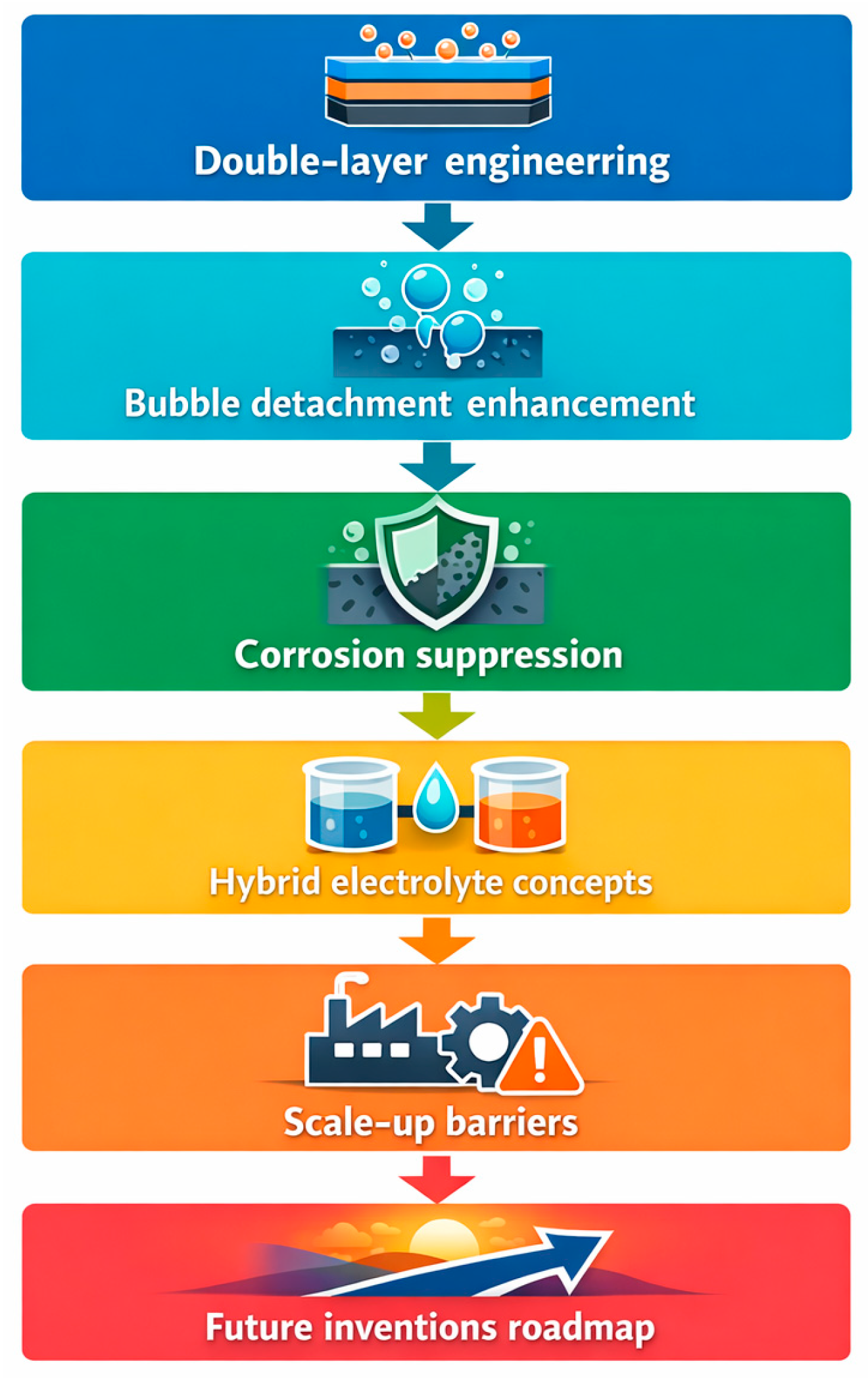
Review

A Review of the Ionic Liquids for Hydrogen Production by Electrolysis

1
IN+ Center for Innovation, Technology and Policy Research, Instituto Superior Técnico, Universidade de Lisboa, Avenida Rovisco Pais, 1049-001 Lisbon, Portugal
2
CINAMIL—Military Academy Research Center, Department of Exact Sciences and Engineering, Portuguese Military Academy, 2720-113 Amadora, Portugal
*
Author to whom correspondence should be addressed.
Inventions 2026, 11(2), 24; https://doi.org/10.3390/inventions11020024
Submission received: 13 February 2026 / Revised: 4 March 2026 / Accepted: 6 March 2026 / Published: 9 March 2026
(This article belongs to the Special Issue Research and Applications of Ionic Liquids)

Abstract

The ionic liquids are increasingly used as versatile media capable of reshaping the electrochemical environment for hydrogen production. Their wide electrochemical windows, thermal stability, and customizable solvation structures enable these liquids to tailor the electrode–electrolyte interface in such a way that the traditional alkaline and polymer-membrane systems cannot. These features allow for reductions in the hydrogen evolution overpotentials, improved catalyst stability, and effective suppression of gas crossover, positioning the ionic liquids as promising components for advanced electrolysis systems. Despite these benefits, their broader deployment remains constrained by certain challenges. The elevated viscosity and associated mass-transport limitations complicate the cell design and energy efficiency, whereas the cost and long-term stability of many ionic liquids limit their competitiveness in industrial hydrogen production. Also, the hydrolysable anions and other reactive species increase the burden, particularly in environments where moisture and anodic potential are present. As a result, the ionic liquids electrolysis has its most promising prospects in niche and hybrid configurations like the renewable integrated systems and configurations where the tailored interfacial chemistry and long operational lifetimes outweigh the investment cost and maintenance requirements. Future progress will depend on the development of greener, task-specific ionic liquids with improved stability and lower synthesis costs, alongside hybrid electrolyte designs that balance the unique interfacial benefits of ionic liquids with the practicality of aqueous systems. Advancing these materials from laboratory research to large-scale sustainable hydrogen production will require coordinated advances in the materials compatibility, device and infrastructural architecture, and techno-economic optimization.

1. Introduction

Hydrogen is central to decarbonization strategies as a versatile energy carrier and industrial feedstock, and water electrolysis offers a pathway to clean hydrogen. However, conventional electrolytes and catalyst systems face tradeoffs among efficiency, durability, safety, and cost, especially under harsh operating conditions and across wide temperature ranges. The ionic liquids (ILs) have emerged as adjustable media capable of addressing these challenges.
ILs are salts made of organic cations and inorganic or organic anions that remain liquid below 100 °C. Their low vapor pressure, wide electrochemical stability window, and thermal and chemical stability, along with exceptional structural tunability [1] make them attractive media for electrochemical processes, including hydrogen production. Their properties can be tuned by selecting different ion pairs, allowing control over viscosity, conductivity, solvation behavior, and catalytic compatibility. They are broadly divided into protic ionic liquids (PILs), formed by proton transfer between a Brønsted acid and base and useful in hydrogen evolution due to their proton-donating ability, and aprotic ionic liquids (AILs), typically composed of imidazolium, pyridinium, ammonium, or phosphonium cations paired with weakly coordinating anions, valued for their stability and broad solvation capacity. Since the ILs are modular, they can be designed as task-specific ionic liquids (TSILs) tailored for specific applications.
In this context, the ILs have become enabling materials for innovative hydrogen production technologies. Beyond serving as alternative electrolytes, ILs can act as functional additives that modulate the electrode–electrolyte interfaces, enhance the bubble detachment, improve the ionic transport, and extend long-term electrode durability. Their ability to tune interfacial environments makes them not only a topic of electrochemical research but also a platform for technological advances aimed at sustainable electrolyzer systems.
ILs can enhance hydrogen evolution reaction (HER) kinetics by altering interfacial electric fields, stabilizing key intermediates, and engineering solvent–ion interactions at catalyst surfaces [2]. By adjusting cation and anion structures, ILs modulate proton availability, double-layer properties, and hydrogen-adsorption energetics, improving activity on both noble and non-noble catalysts [3]. As additives and co-solvents, they mitigate the bubble dynamics and mass-transport limitations, sustaining reaction rates at elevated current densities [4].
Beyond interfacial tuning, the ILs can serve as electrolytes, or electrolyte components, to expand operating windows and stabilize electrode surfaces under acidic, neutral, alkaline, and non-aqueous conditions. In mixed systems, the ILs can reduce corrosivity and enable higher voltages without significant side reactions, whereas specific formulations have demonstrated improved hydrogen production efficiency with alternative electrocatalysts. For example, the TEA·PS–BF4 electrolytes have been reported [5] to support efficient electrolysis, illustrating the practical potential of IL-containing media when catalyst and electrolyte properties are synergistically aligned.
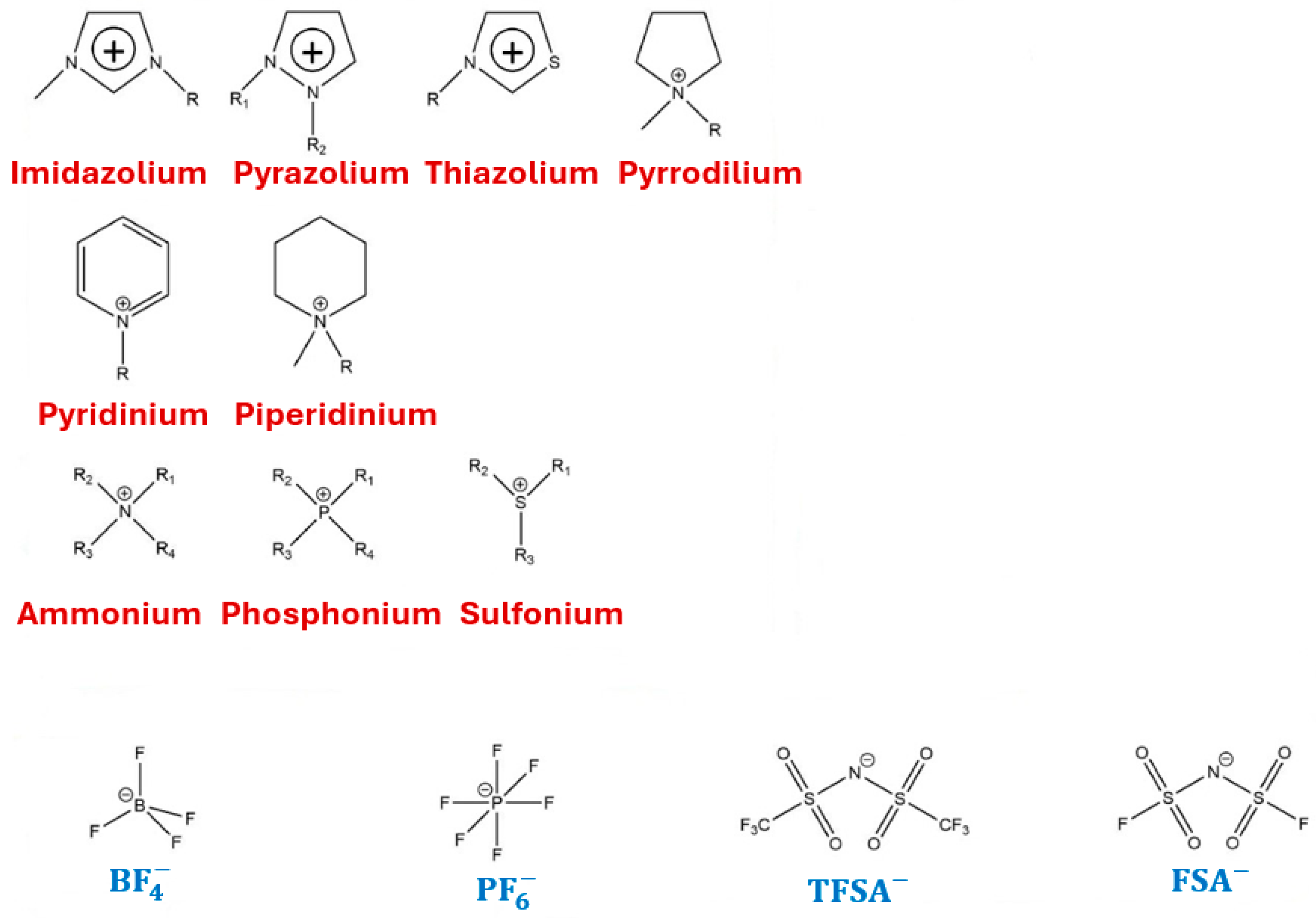
ILs also serve as precursors and templates for electrocatalyst synthesis, enabling atomic-level control of composition, porosity, and surface chemistry. The metal-containing ILs can be converted into catalysts that simultaneously optimize HER and Oxygen Evolution Reaction (OER) behavior in alkaline electrolysis, reducing the system complexity and lowering overall costs [6]. The Ils-derived materials have already demonstrated promising activity and stability by leveraging uniform metal dispersion and heteroatom doping intrinsic to the ILs frameworks. These advances connect electrolyte engineering with catalyst design, reinforcing the integrative role of the ILs across the electrolysis stack. Figure 1 shows representative cationic and anionic species used in IL-based electrolytes.
Recent state-of-the-art reviews [7,8] highlight the rapid expansion of IL-enabled hydrogen technologies and emphasize their versatility across thermochemical and electrochemical pathways. These works collectively underscore the promise of ILs but also reveal persistent gaps: the absence of systematic comparisons of mechanistic ILs action at electrified interfaces, limited long-term stability data particularly under OER-relevant oxidative conditions, scarce pilot-scale and continuous operation validation, insufficient techno-economic and life-cycle assessments tailored to ILs systems, and very few industrial demonstrations despite strong laboratory-scale performance. These gaps indicate that ILs research remains fragmented between fundamental chemistry and applied engineering, with limited integration across scales.
The broader hydrogen-energy landscape increasingly recognizes ILs as a significant step forward, spanning roles from reaction media and proton shuttles to catalyst precursors and separators, with opportunities in safety, storage, and systems integration. Yet progress toward commercialization requires a clearer understanding of how the Ils’ molecular structure governs interfacial reactivity, durability, and system performance.
This review consolidates current knowledge on ILs in electrolysis-based hydrogen production, covering electrolyte formulations, interfacial HER/OER mechanisms, IL-derived electrocatalysts, and system-level considerations. It aims to bridge the interfacial chemistry with practical challenges including corrosion, maintenance, impurity tolerance, and recyclability to provide a coherent framework for future IL-enhanced electrolyzer development. By identifying performance benchmarks, structure–property correlations, and persistent limitations such as viscosity, stability, and cost, this work outlines research directions that can accelerate the transition of ILs technologies from laboratory studies to industrial deployment.

2. Technological Roles of Ionic Liquids in Electrolysis

ILs can contribute to hydrogen production systems through multiple technological pathways. To clarify the field and highlight their innovation potential, their applications in electrolysis may be classified into the following main categories: (i) electrolytes, (ii) functional additives in conventional alkaline and acidic media, (iii) interfacial modifiers, (iv) gas bubble control agents, (v) stability enhancers, and (vi) components for hybrid and advanced electrolyzers.
ILs function as highly adaptable electrolytes for hydrogen-producing electrolysis systems, offering physicochemical properties that extend well-beyond those of conventional aqueous media. Their inherently ionic nature, broad electrochemical stability windows, and structural tunability enable precise control over proton or hydroxide availability, water activity, and ion transport. The ILs can directly supply mobile protons, while aprotic ILs modulate solvation environments and stabilize reactive intermediates, collectively influencing HER and OER kinetics. ILs also exhibit high thermal and chemical stability [9], allowing operation at elevated temperatures and under strong oxidative conditions without volatilization and degradation [10]. Their unusual gas solubility characteristics can mitigate bubble accumulation at electrode surfaces, improving mass transport and reducing overpotentials. Furthermore, the ILs can be immobilized within polymer matrices to form ionogels, enabling hybrid electrolyte formulations with tailored conductivity and stability. These combined attributes position the ILs as versatile electrolyte platforms capable of supporting both conventional and emerging electrolyzer configurations [11,12].
Beyond serving as standalone electrolytes, the ILs can be incorporated into the traditional alkaline and acidic electrolytes to modulate the interfacial and bulk properties. Even at low concentrations, the ILs influence water structuring, ion solvation, and double-layer organization, often leading to reduced overpotentials and improved HER/OER kinetics. Their amphiphilic or hydrogen-bonding characteristics can promote more favorable adsorption environments for key intermediates [13], while simultaneously suppressing parasitic reactions such as electrode corrosion or catalyst dissolution. In alkaline media, ILs additives can enhance hydroxide mobility, stabilize transition-metal active sites, and mitigate carbonate formation, thereby improving long-term performance. In acidic systems, selected ILs can attenuate proton activity or passivate vulnerable surfaces, extending catalyst durability under harsh conditions. Additionally, ILs can alter the gas nucleation behavior and the local viscosity, indirectly improving mass transport. Through these multifaceted effects, ILs act as highly tunable co-electrolytes that upgrade the performance and stability of established aqueous electrolytes without requiring major changes to existing electrolyzer designs. ILs can act as highly effective interfacial modifiers, reshaping the electrode–electrolyte boundary where HER and OER kinetics are determined. Their structured ion layers, strong dipoles, and directional hydrogen-bonding networks enable ILs to reorganize the electric double layer, tune local electric fields, and influence the adsorption energies of key intermediates. By selectively interacting with catalyst surfaces, either through specific ion–metal coordination or through steric shielding, the ILs can suppress unfavorable side reactions, promote more efficient charge transfer, and stabilize reactive sites under dynamic operating conditions.
ILs can also function as effective gas bubble control agents, addressing one of the persistent efficiency losses in water electrolysis: bubble adhesion and accumulation at electrode surfaces. Owing to their tunable amphiphilicity, surface activity, and ability to reorganize interfacial water structures, ILs can significantly modify local surface tension and wettability. These changes promote faster bubble detachment, reduce bubble coalescence, and facilitate more continuous access of reactants to catalytic sites. In addition, the high solubility of hydrogen and oxygen in many ILs can smooth concentration gradients near the electrode, mitigating mass-transport limitations and lowering the overpotentials associated with gas blockage. By forming transient interfacial layers and altering the viscosity, the ILs can further influence the nucleation dynamics, leading to smaller and more mobile bubbles. Through these combined effects, IL additives offer a suitable approach to manage gas evolution behavior and enhance the efficiency of electrolytic hydrogen production.
ILs can significantly enhance the operational stability of electrolyzers by mitigating degradation pathways that limit catalyst and electrode lifetimes. Their strong solvation capabilities, low volatility, and resistance to oxidative and reductive breakdown allow the ILs to buffer the reactive species and suppress the formation of corrosive intermediates. Through specific ion–surface interactions, ILs can passivate vulnerable sites, reduce metal dissolution, and stabilize high-valence states that are essential for sustained OER activity. In aqueous systems, ILs can also moderate the local pH fluctuations, inhibit carbonate precipitation, and prevent the accumulation of impurities that poison catalytic surfaces. Their ability to form thin, protective interfacial layers further shields electrodes from mechanical and chemical stress during prolonged operation. By combining their chemical robustness with the interfacial regulation, the ILs serve as multifunctional stabilizing agents that extend the durability of the catalysts and the electrolyzer components under exigent operating conditions [14,15].
ILs are increasingly integrated as functional components within hybrid and next-generation electrolyzer architectures, where their unique physicochemical properties enable designs that transcend the limitations of purely aqueous systems. ILs can be immobilized in polymer matrices to form ionogels that act as solid or quasi-solid electrolytes, combining high ionic conductivity with mechanical robustness and leak-free operation. Such materials support compact, membrane-free, or flexible electrolyzer formats and facilitate operation under non-standard orientations or dynamic mechanical conditions. In advanced cell concepts, the ILs can serve as selective proton and hydroxide conductors, redox-stable separators, or interlayers that regulate water transport and suppress gas crossover. Their broad electrochemical windows and thermal stability also make them suitable for coupling water splitting with auxiliary reactions, photoelectrochemical systems, or high-temperature processes. By enabling tailored ion transport, enhanced safety, and compatibility with unconventional operating regimes, IL-based components expand the design space for innovative electrolyzer technologies. Figure 2 shows the main research topics regarding the technological roles of the ILs in hydrogen production by electrolysis.

3. Ionic Liquids in Electrolysis

The electrolysis of water is a pivotal route for clean hydrogen production. Nonetheless, its efficiency can be limited by the sluggish kinetics of the HER [16]. The ILs have emerged as promising electrolytes and co-catalytic media that can lower the overpotentials, stabilize the intermediates, and improve the overall system performance of the hydrogen production systems. Their role in electrolysis is particularly evident when comparing PILs and AILs.

3.1. Protic Ionic Liquids

The PILs are formed by proton transfer from a Brønsted acid to a Brønsted base, making them natural proton donors [17]. For example, the TEA.PS-BF4 has been successfully tested as an electrolyte in water electrolysis, showing improved hydrogen yields with alternative electrocatalysts [18]. The beneficial features of these liquids are the reduced overpotentials, compatibility with non-noble metal catalysts, and potential for integration with renewable electricity. Nonetheless, the PILs pose the limitation of having higher viscosity when compared to the aqueous electrolytes, which can hinder the mass transport [17].
The work by Becker et al. [18] demonstrated that the ionic liquid TEA-PS·BF4 (3-triethylammonium-propane sulfonic acid tetrafluoroborate) enabled the hydrogen production through water electrolysis with low overpotentials and high current densities, even at room temperature. The study evaluated several cathode electrocatalysts—Pt, Ni, Pd, Au, and Ag—in a 0.1 M TEA-PS·BF4 electrolyte using a Hoffman cell and electrochemical techniques such as chronoamperometry and linear sweep voltammetry. The authors reported that the platinum exhibited the lowest overpotential and highest current response, confirming its superior catalytic activity, whereas the nickel and palladium also showed meaningful hydrogen evolution performance, suggesting that non-noble metals can be viable alternatives for cost-effective systems. Quantitatively, the study highlights that the TEA-PS·BF4 ionic conductor supports high current densities with high efficiency at room temperature, a behavior consistent with earlier reports on this PIL’s conductivity and stability. The authors emphasized that all tested electrodes produced measurable hydrogen evolution, with Pt delivering the highest current in LSV scans and the lowest activation barrier for the hydrogen evolution reaction. The authors also noted that the PIL physicochemical properties, particularly its ionic conductivity and electrochemical stability window, were the main contributors to the verified performance.
The study performed by Fiengenbaum et al. [5] showed that the triethylammonium–propane sulfonic acid tetrafluoroborate (TEA–PS·BF4) is a considerably effective IL electrolyte for water electrolysis, enabling high current densities and efficiencies, and enhanced HER at room temperature. The authors report that the TEA–PS·BF4 significantly improved the performance of the HER, with hydrogen production increasing with an increasing temperature, and that the system reduced the activation energy required for water electrolysis. These features stem from the IL’s strong proton conductivity and thermal stability, which facilitated faster electrochemical kinetics. Overall, the work demonstrates that tetra-alkyl-ammonium-sulfonic acid ionic liquids, especially the TEA–PS·BF4, serve as high-performance, non-volatile, and efficient electrolytes for hydrogen generation, offering a promising alternative to conventional aqueous or polymer-based systems.

3.2. Aprotic Ionic Liquids

The AILs are stable solvents composed of organic cations like imidazolium and pyridinium and weakly coordinating anions like BF4 and PF6 [19]. They offer wide electrochemical stability windows, allowing for operation under elevated voltages without decomposition. These liquids enable catalyst modification as AILs can adsorb onto electrode surfaces, adjusting the electronic properties and improving the hydrogen binding energies [20]. As advantages of AILs it can be cited the high stability, tunable solvation properties, and compatibility with advanced nanostructured catalysts. However, the lack of intrinsic proton donors means that the HER efficiency depends on added water and co-solvents [21].
De Souza et al. [22] investigated dialkylimidazolium ILs, particularly 1-butyl-3-methylimidazolium tetrafluoroborate (BMI·BF4) and BMI·PF6, as electrolytes for water electrolysis. The cyclic voltammetry confirmed that these ILs possess wide electrochemical windows and stable behavior suitable for hydrogen evolution. When BMI·BF4 was used as the electrolyte in a conventional Hoffman cell with platinum electrodes at room temperature and atmospheric pressure, the system delivered current densities above 20 mA cm−2 and hydrogen production efficiencies exceeding 94.5%, demonstrating that IL-based media sustained high-performance electrolysis without adding any supporting salt. Further work from the same research group showed the results of adding 10 vol.% BMI·BF4 to water-enabled efficient electrolysis with a variety of electrode materials. Remarkably, the low-carbon steel reached current densities up to 42 mA cm−2 with between 95 and 99% efficiency, outperforming platinum under the same conditions, while the platinum electrodes achieved around 30 mA cm−2. The results underscored that the imidazolium ILs not only support high hydrogen evolution rates but can also enable low-cost electrode materials.

3.3. Comparative Insights

Table 1 compares the PILs and AILS features.
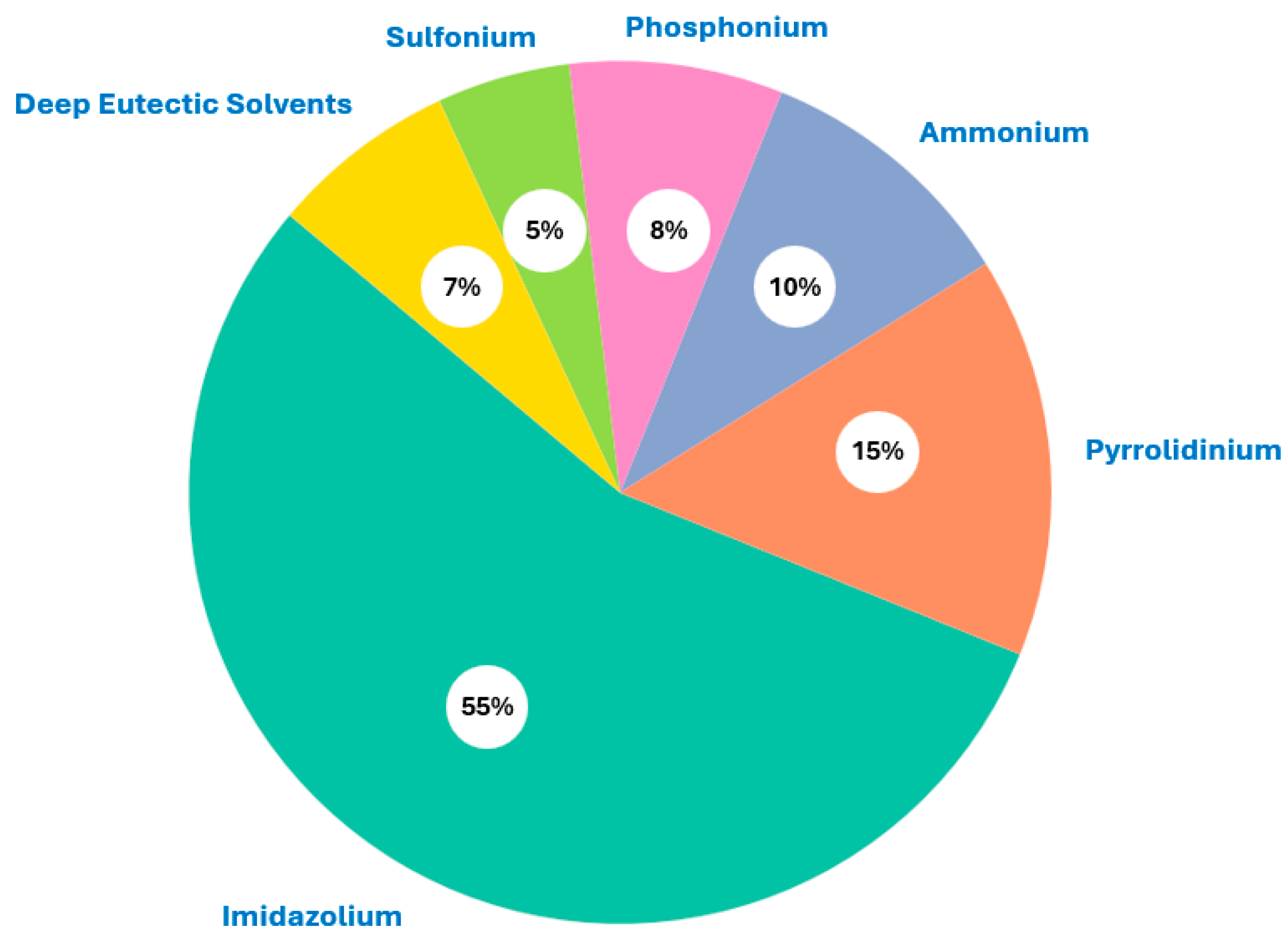
The ILs-based electrolysis remains at the research stage, but the ability to tailor ILs at the molecular level offers a pathway to overcome the current limitations. The PILs are promising for direct hydrogen evolution due to their proton-donating nature, whereas the AILs provide stability and tunability for advanced catalyst systems. On the other hand, the hybrid approaches that combine the ILs with the traditional aqueous electrolytes may bridge the gap between laboratory research and large-scale hydrogen production. In conclusion, the PILs excel at lowering the HER overpotentials by donating protons, whereas the AILs provide stability and tunability but require co-solvents for efficient hydrogen generation. Both families offer considerable beneficial features and hybrid systems may be the most practical route to scale. Figure 3 shows the pie chart relative to the percentual distribution of the main ILs families across the published literature on hydrogen generation by electrolysis.
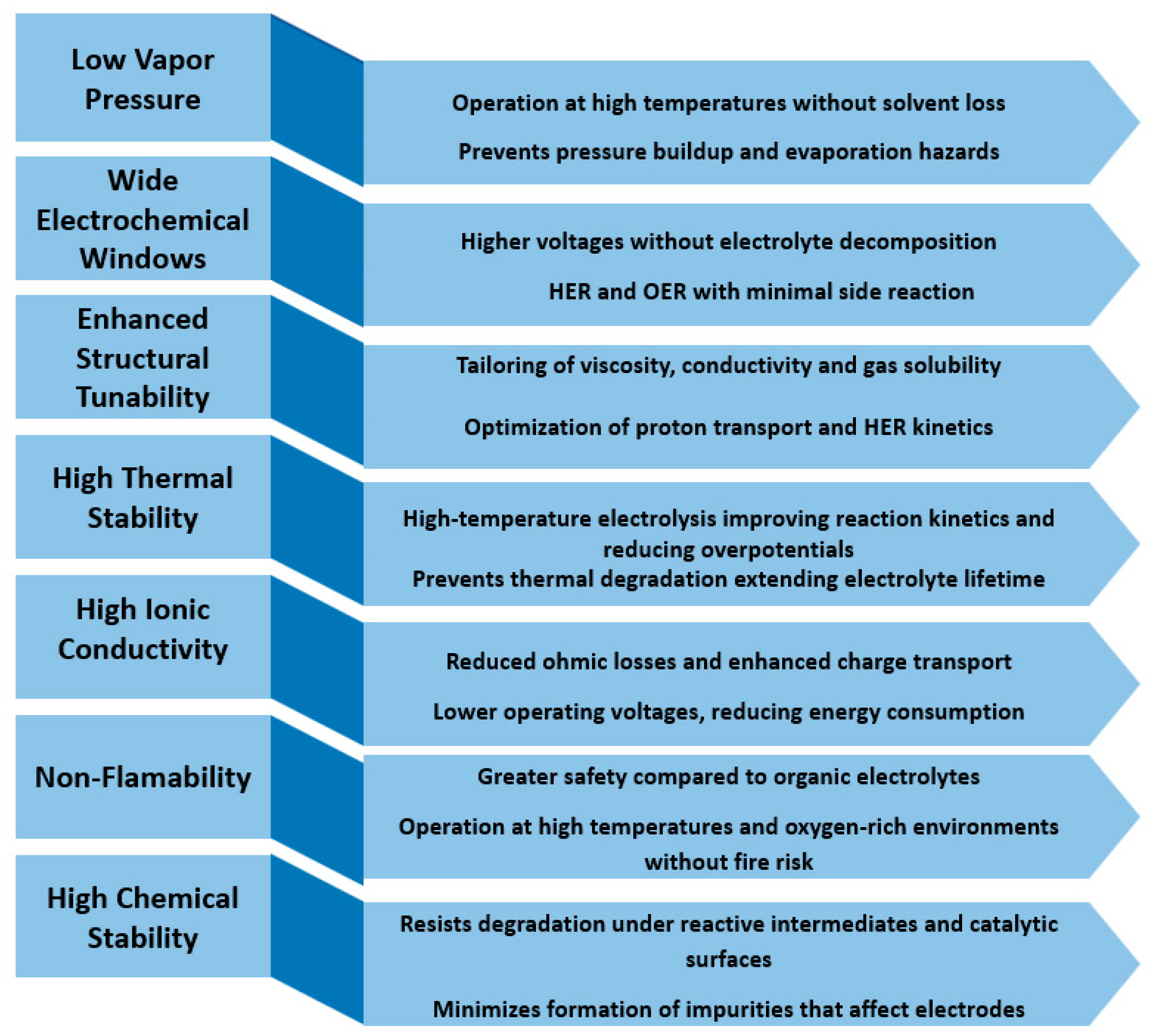
Figure 4 shows the main properties of the ILS and their benefits for acting as electrolytes.

3.4. Mechanisms at Electrode Interfaces

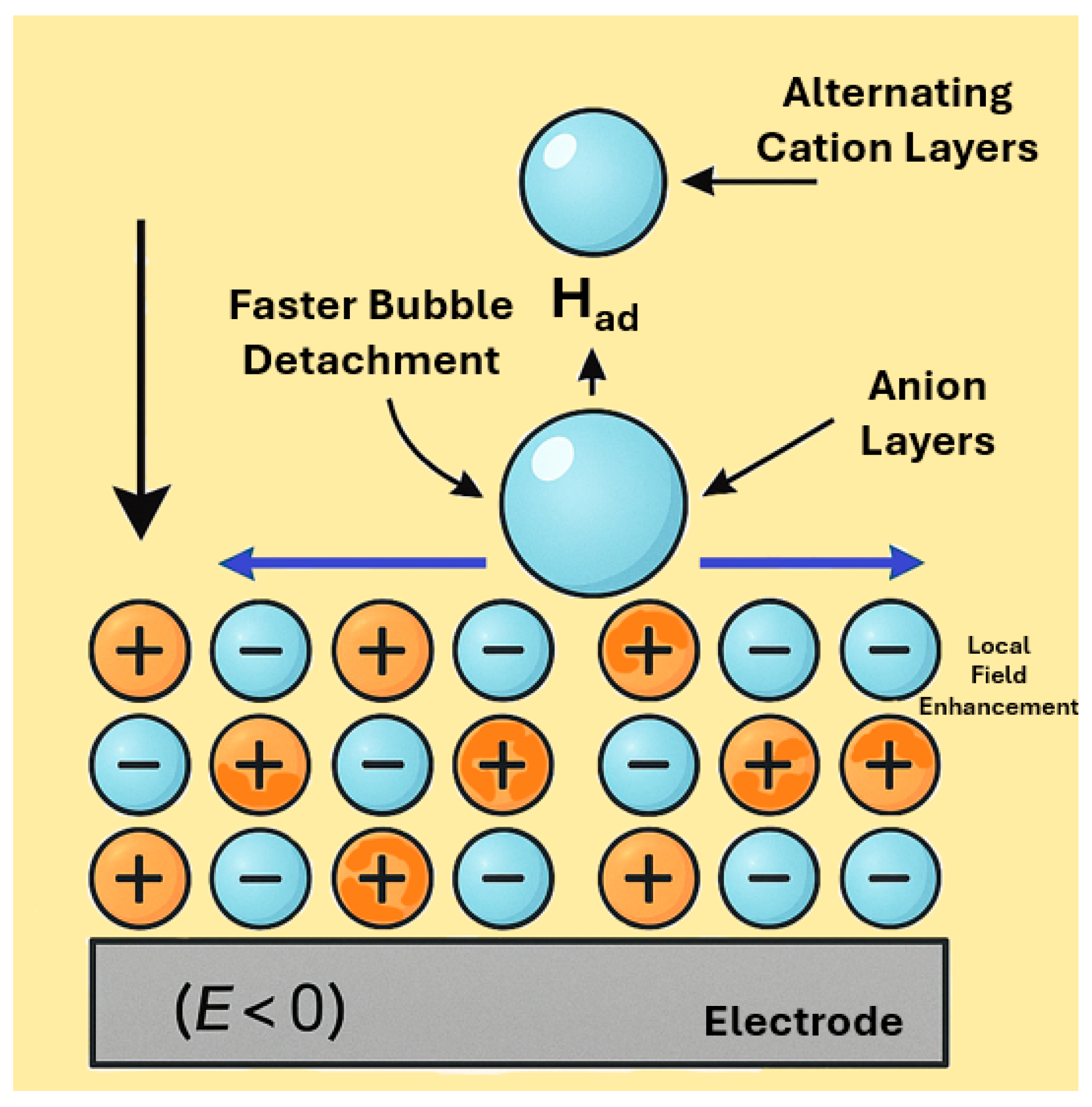
ILs exert their influence on the HER primarily through restructuring of the Electric Double Layer (EDL), modulation of local electric fields, and stabilization of key surface intermediates. At electrified interfaces, ILs form highly ordered, multilayered EDL structures whose composition and orientation depend on ion size, charge distribution, and specific adsorption behavior. These interfacial layers can significantly alter the potential drop across the interface and the local solvation environment of reacting species. Foundational theoretical work has shown that the ILs produce oscillatory charge density profiles and strong interfacial correlations that differ fundamentally from the classical Gouy–Chapman behavior [23]. More recent AFM and SERS studies further confirm that ILs reorganize into layered domains under applied bias, dynamically adjusting ion packing and orientation in response to electrode polarization. These interfacial rearrangements directly impact HER kinetics. By modifying the local electric field, ILs can stabilize adsorbed hydrogen Had and lower the activation barrier for the Volmer step. In addition, IL cations and anions can interact specifically with the electrode surface, tuning hydrogen binding energies and suppressing parasitic reactions such as competitive adsorption of water or dissolved gases. Coskun et al. [24] demonstrated that IL-induced field enhancement and altered solvation structures can shift the free-energy landscape of Had formation, providing a mechanistic basis for the experimentally observed reductions in overpotential. A clear mechanistic distinction emerges between PILs and AILs. PILs possess labile protons capable of direct proton donation at the interface, enabling more facile Volmer–Heyrovsky pathways and lowering the kinetic barrier for hydrogen formation. Their ability to act as localized proton reservoirs leads to enhanced proton availability and reduced dependence on bulk water activity. In contrast, AILs do not contribute protons directly. Instead, they influence HER through solvation effects, surface adsorption, and modulation of interfacial electric fields. The AILs can stabilize the transition states, reorganize water clusters, and suppress competing reactions, but their impact is mediated primarily through physical rather than chemical proton-transfer mechanisms. Together, these mechanistic insights highlight that the ILs act not merely as inert solvents but as active interfacial structuring agents. Their ability to adjust the EDL architecture, local electric fields, and intermediate stabilization provides a suitable platform for modulating the HER activity across a wide range of electrode materials. Figure 5 shows a schematic illustration of the IL-induced EDL restructuring at negative (cathodic) potentials.

4. Advantages, Limitations and Comparative Performance

The beneficial features of the ILs as electrolytes for hydrogen production by electrolysis can be highlighted in the following points:
  • The ILs possess wide electrochemical windows as they can operate under higher voltages without decomposing, enabling a more efficient HER when compared to the traditional electrolytes.
  • Lower overpotentials since PILs act as proton donors, stabilizing the intermediates and facilitating a faster HER kinetics. This reduces the energy required to produce hydrogen.
  • Thermal and chemical stability as ILs resist evaporation and degradation, making them safer and more durable than the volatile electrolytes such as acids and alkalis.
  • By varying cations and anions, the ionic liquids can be engineered to optimize properties such as viscosity, conductivity, and solvation. This molecular design flexibility differs considerably from the conventional aqueous electrolytes.
  • The ILs can adsorb onto catalyst surfaces, modifying the electronic properties and improving the hydrogen binding energies. They also enable doping N, P, S in the carbon materials, improving the catalytic activity.
  • Biomass processing, given that the ILs dissolve lignocellulosic biomass, enabling the hydrogen generation from renewable feedstocks. This paves the way for waste-to-hydrogen systems [25].
  • Integration with renewables as ILs stabilizes the photocatalysts and improves the charge transfer, making them highly suitable for solar-driven hydrogen production and for coupling with intermittent renewable energy sources [26].
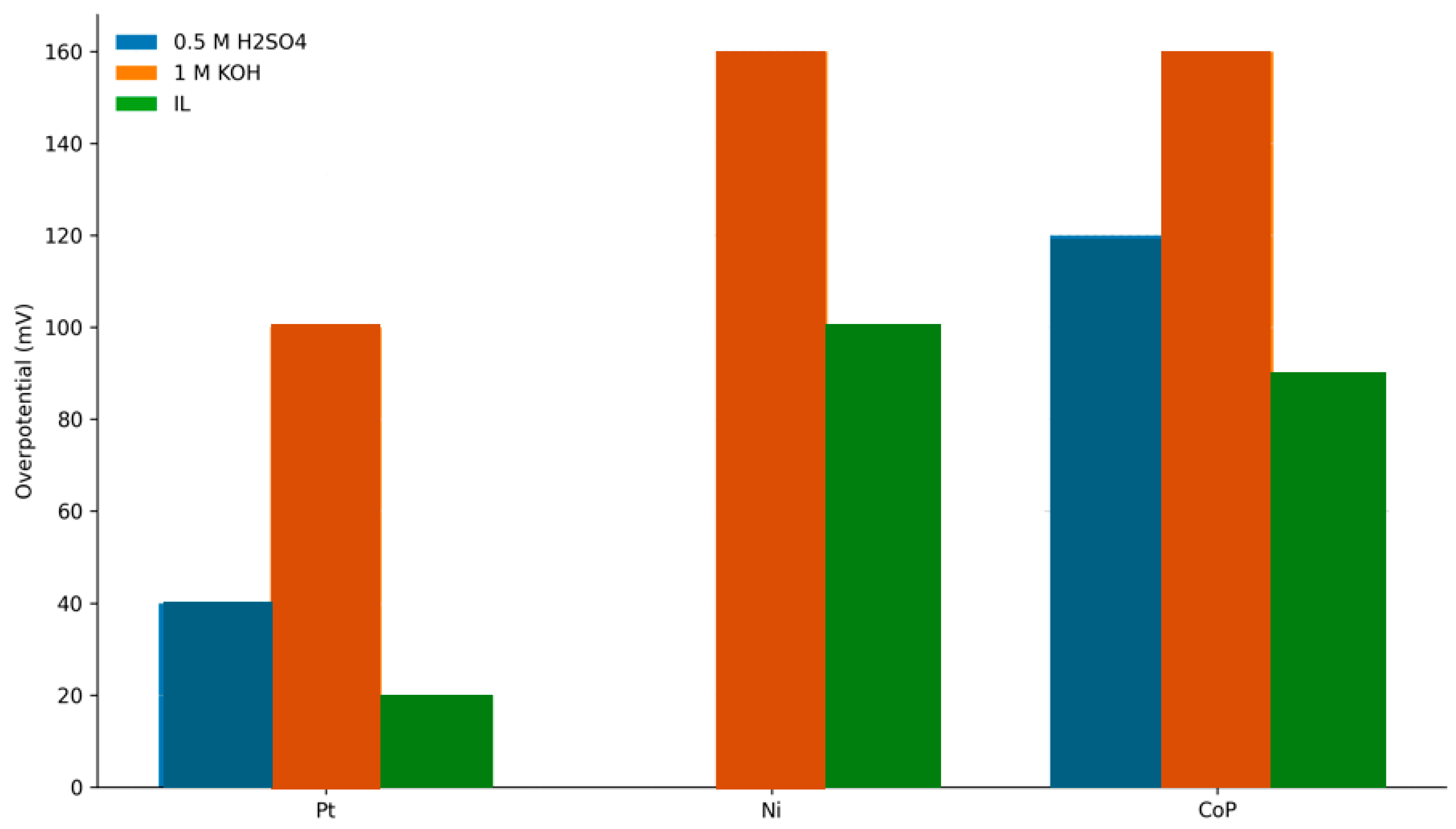
Particularly regarding the overpotentials lowering, the ILs reduce the overpotentials in the HER by stabilizing the intermediates, improving proton transfer, and modifying the catalyst surfaces to reduce energy barriers. This makes hydrogen production more efficient when compared to that obtained with traditional electrolytes. In terms of stabilization of the intermediates, the ILs interact with the main HER intermediates such as adsorbed hydrogen atoms, reducing the energy required for their formation and release. The ILs restructure the interface between the electrode and the electrolyte, reducing the charge-transfer resistance and accelerating the reaction kinetics. Also, IL-derived carbon materials doped with nitrogen, phosphorus, and sulfur improve the conductivity and catalytic activity [27]. As practical examples, Ni-Co alloys in PILs can be cited as an example where the electrodeposition from ILs produces alloys with optimized surface properties, lowering HER overpotentials [28]. Indeed, the work by Xie et al. [28] reported the successful electrodeposition of amorphous and nanocrystalline Ni–Co alloys onto FTO substrates using ethylammonium nitrate (EAN), a neat PIL, as the deposition medium. The authors characterized the physicochemical behavior of Ni2+ and Co2+ salts dissolved in EAN, showing that the IL provided a stable and highly conductive environment that supported well-defined redox processes for both metal ions. Also, the electrochemical analysis confirmed that the reduction in Ni2+ and Co2+ proceeds efficiently in aerated conditions, enabling the controlled alloy formation with tunable composition and microstructure. The resulting nickel–cobalt coatings exhibited amorphous or nanocrystalline morphology, depending on the deposition parameters, and revealed enhanced catalytic activity toward the HER when compared with pure nickel and cobalt. The authors emphasized that the nickel–cobalt alloys deposited from EAN display significantly improved HER kinetics, consistent with the well-known synergistic effect between Ni and Co in alkaline and IL media. The study demonstrates that protic ionic liquids such as EAN can serve not only as unconventional electrolytes for metal deposition but also as a route to HER electrocatalysts with tailored structural properties. Furthermore, the biomass-derived ILs or green ILs can be used as precursors for N,P co-doped carbon-coated catalysts showing high HER efficiencies [29]. In fact, the study conducted by Ma et al. [29] developed a catalyst in which CoP nanocrystals are encapsulated within an N,P co-doped porous carbon matrix derived from a biomass-based PIL. The authors verified that the BIL served simultaneously as a green solvent, a phosphorus/nitrogen dopant source, and a carbon precursor, enabling the one-step synthesis of a highly porous, heteroatom-rich carbon shell integrated with dispersed CoP nanoparticles. This architecture improved the electrical conductivity, increased the number of active sites, and enhanced the proton adsorption, all of which contributed to the enhanced hydrogen evolution performance. Quantitatively, the resulting N,P-co-doped carbon-coated CoP catalyst exhibited low overpotentials and small Tafel slopes, placing it among the more efficient non-noble metal HER catalysts reported in the same period. The researchers emphasized that the material delivers high catalytic activity and stability, outperforming undoped or singly doped analogs due to synergistic effects between CoP and the N,P-rich carbon framework. The porous structure derived from the PIL precursor also provided high surface area and rapid charge transport, further lowering the kinetic barriers for hydrogen evolution. In the IL-assisted Pt/TiO2 nanocrystals, the ILs help to synthesize heteroatom-doped catalysts with superior photocatalytic hydrogen generation [30]. The importance of lowering the overpotentials is closely linked to energy savings as the lower overpotentials mean less electricity needed to produce hydrogen. Figure 6 shows a bar chart of absolute overpotentials for selected common HER catalysts in three different classes of electrolytes, including the ILs. The chart is based on the representative literature-consistent values and not on individual references.
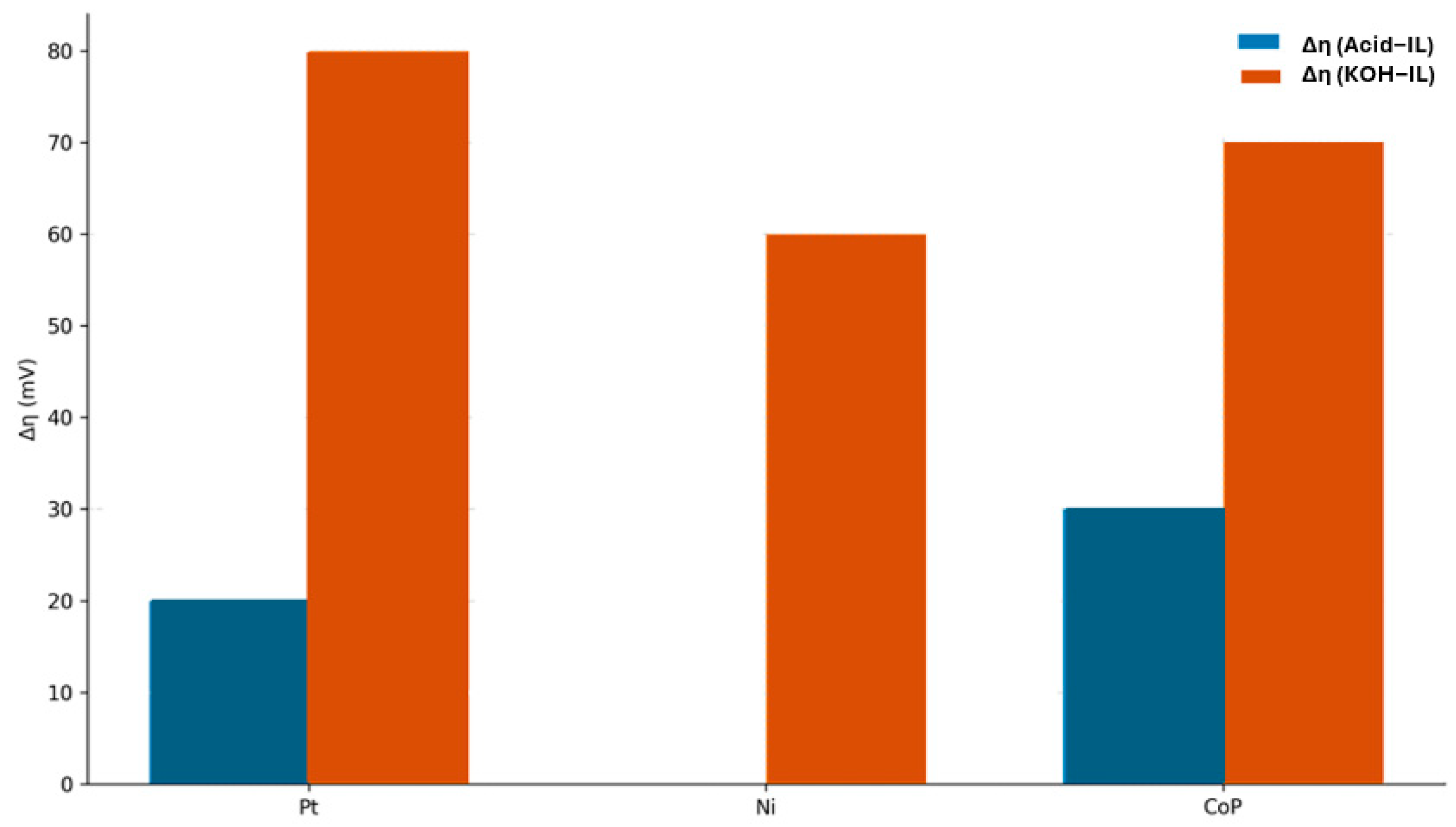
It can be observed that the IL bars are consistently lower than the aqueous ones, especially for Pt and CoP catalysts. Figure 7 presents a bar chart of the overpotential gains in IL media against commonly employed catalysts. The overpotential gain is defined by Δη = ηaq − ηIL. Positive Δη values highlight the overpotential reduction when moving from aqueous (acid or KOH) to IL media, in other words, the kinetic enhancement provided by the IL environment.
In brief, the ILs reduce HER overpotentials by reshaping the reaction environment via stabilizing intermediates, enhancing proton transfer, and tailoring the catalyst surfaces. This makes them a promising advancement for efficient and green hydrogen production. On the other hand, the disadvantageous features and challenges concerning the ILs as electrolytes for hydrogen production by electrolysis can be summarized in the following topics:
  • High overall preparation costs, since many ILs require complex, multi-step synthesis methodologies, making them more expensive than the traditional electrolytes; for instance, potassium hydroxide [31].
  • The ILs are often more viscous than water, complicating the proton diffusion and the gas bubble release, reducing the process efficiency in large-scale production systems, and involving viscosity and mass-transport limitations.
  • Recyclability limitations, as effective recovery and reuse of the ILs are fundamental but still currently involve energy-demanding and expensive procedures [32].
  • Environmental and safety issues as some ILs are toxic and persistent in the environment. The large-scale industrial adoption demands biodegradable and non-toxic ILs in accordance with the current environmental standards.
  • Compatibility with the electrodes as ILs can interact differently with the electrodes, sometimes causing fouling and corrosion [24].
  • System redesign requirements since the current hydrogen plants are optimized mostly for alkaline and PEM systems. The IL-based systems will require new electrolyzers designs, pumps, and separation units, raising the overall investment cost [33].
  • Unproven scalability given that most IL-based hydrogen production remains at laboratory and pilot scales. The long-term durability under industrial operating conditions with high-voltage, temperature, and continuous cycling is not yet validated [34].
In brief, the ILs are powerful enablers of advanced hydrogen production technologies, but they are not yet ready to replace conventional alkaline and PEM systems. Their most promising role lies in specialized, renewable and integrated niches where their unique chemistry can be leveraged. Table 2 compares the major IL families, which are imidazolium [35], pyrrolidinium [36], ammonium [37], phosphonium [38], and sulfonium [39], and how their structural characteristics translate into electrolyte-relevant advantages for hydrogen production.
Table 3 presents how major ILs families perform in HER kinetics and OER compatibility. This table is designed to help you compare IL families from an electrochemical performance perspective.
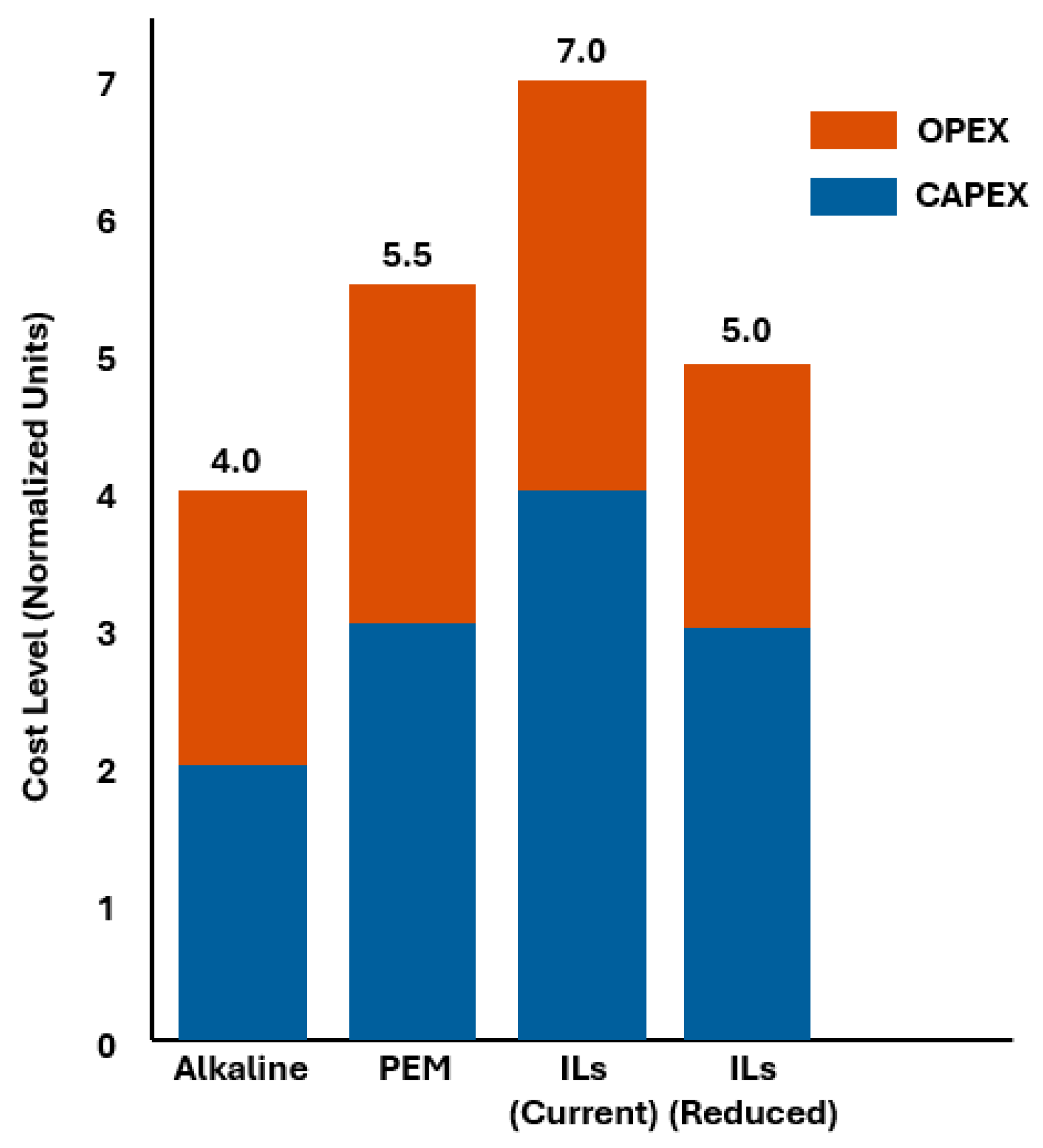
Table 4 presents the advantages and disadvantages of the ILs against the conventional alkaline and PEM electrolysis for hydrogen production.
From the analysis of Table 4 it can be stated that the IL-based systems offer unmatched adjustability, stability, and efficiency improvements, especially in niche applications like biomass-to-hydrogen and solar-driven photocatalysis. On the other hand, the alkaline systems remain the most cost-effective and robust for bulk hydrogen production. The PEM systems provide high efficiency and renewable integration but entail higher investment and operating costs. The ILs reduce the overpotentials in HER by stabilizing the intermediates, improving proton transfer, and modifying the catalyst surfaces to decrease the energy barriers. These facts make hydrogen production more efficient compared to conventional electrolytes-based systems.

5. Ionic Liquids and Conventional Electrolytes Comparison

The ILs electrolytes exhibit mechanistic features and performance behaviors that differ considerably from those of the conventional alkaline (KOH/NaOH) and PEM systems. The differences arise from the unique solvation environment, interfacial structure, and physicochemical stability of the ILs, which can be translated into advantages and practical limitations.
Moreover, the alkaline electrolytes rely on hydroxide transport and require higher overpotentials for HER, especially when non-noble catalysts are employed. In contrast, the PEM systems benefit from high proton conductivity and low kinetic barriers but demand noble metal catalysts and operate under strict thermal and chemical constraints. The ILs systems occupy an intermediate and distinctive regime as their highly structured Electric Double Layer (EDL), wide electrochemical windows, and negligible vapor pressure enable operation under conditions that are inaccessible to aqueous electrolytes.
A fundamental mechanistic distinction is the ability of the ILs to adjust the EDL composition and field strength at the electrode surface. Many studies report 50–200 mV reductions in ηHER when the ILs are incorporated as electrolytes, co-solvents, and interfacial modifiers, which is attributed to the enhanced proton availability, greater interfacial ordering, and stabilization of the reaction intermediates. In the alkaline media, the bubble formation and release often dominate the mass-transport loss, whereas the ILs, owing to their lower gas solubility and altered wetting behavior, can suppress the bubble adhesion and promote smoother gas release. When compared with the PEM systems, the ILs also offer greater thermal and electrochemical stability, with many AILs displaying electrochemical windows exceeding 4–6 V, enabling high-voltage operation without oxidative degradation.
Furthermore, catalyst tolerance is another differentiating factor. Alkaline electrolyzers allow the use of non-noble metals but suffer from carbonate contamination and catalyst leaching. The PEM systems require platinum-group metals due to their strong acidic environment. The ILs, by contrast, can stabilize the non-noble nanostructured catalysts through strong ion–surface interactions, reduced corrosion, and the ability to modulate the local pH and proton donor availability. On the other hand, the inherent low volatility and elevated chemical inertness of the ILs minimize the crossover of dissolved gases and redox-active species, improving the Faradaic efficiency and enhancing the safety.
The study by Amaral et al. [40] investigated the HER in 8 M KOH using a platinum cathode, comparing the alkaline electrolyte with mixtures containing 2 vol.% of the IL [Emim][MeSO3]. The authors showed that adding this room temperature ionic liquid significantly enhanced the HER kinetics at temperatures between 25 °C and 45 °C, where the IL produces a measurable catalytic effect. This improvement was attributed to increases in exchange current density and to the reduction in the apparent activation energy for hydrogen evolution, indicating that the IL modifies interfacial properties in a way that facilitates proton discharge and hydrogen formation. Quantitatively, the IL-containing electrolyte exhibited higher exchange current densities than the pure KOH across the lower temperature range, confirming faster intrinsic HER kinetics. The study also reports a significant decrease in impedance when [Emim][MeSO3] is present, consistent with improved charge-transfer characteristics at the electrode–electrolyte interface. It was stated that the IL addition accelerates the hydrogen evolution rate up to 45 °C, after which the catalytic advantage diminishes as temperature becomes the dominant factor regulating the HER kinetics.
However, the ILs also introduce non-negligible limitations. Their high viscosity reduces the ionic mobility and can impose ohmic penalties unless diluted or engineered with low-viscosity cations/anions. In addition, the overall cost and scalability remain significant barriers when compared with the inexpensive alkaline solutions and industrially mature PEM membranes. Additionally, the long-term durability data for the ILs’ electrolyzers are still limited, and system integration challenges, such as ILs’ compatibility with seals, membranes, and flow components, must be addressed before the widespread deployment.
Overall, the IL electrolytes provide a promising alternative to alkaline and PEM systems by combining wide electrochemical stability, adjustable interfacial structure, negligible vapor pressure, and enhanced catalyst stabilization. These beneficial features open routes for reduced overpotentials, improved gas management, and use of abundant catalysts. Yet the viscosity-related transport losses, higher material costs, and lower technological maturity currently constrain their industrial implementation. The continued optimization of IL composition, hybrid IL–water systems, and IL-compatible cell architectures is expected to further clarify their role in the most advanced electrolyzers.
Table 5 compares the IL electrolytes with conventional alkaline and PEM electrolytes.

6. Ionic Liquids-Based Electrolysis Enhancement Strategies

The combined usage of the ILs with electrolysis enhancers is a very promising approach for the hydrogen production by electrolysis. The ILs will provide chemical stability and tunability, and the ultrasound application and electrode surface modification will offer physical and structural improvements. Together, these technological solutions can overcome the main drawbacks of the ILs alone such as viscosity and mass-transport limitations, while revealing greater hydrogen production efficiency and durability. The next sections of this work will summarize the main synergistic methods involving ILs and different electrolysis enhancers, together with examples from experimental studies. The ILs can adsorb onto the surface of the electrodes, changing the electronic properties and improving the hydrogen binding energies. Moreover, the ILs can act as solvents and templates during the fabrication of the electrodes, allowing for nanostructured electrodes produced in ILs, which demonstrated higher active surface areas and enhanced HER kinetics. As an example, the imidazolium ILs can functionalize the carbon electrodes and decrease the HER overpotentials via stabilizing the hydrogen intermediates [49]. The underlying mechanism of coupling the ultrasound-assisted electrolysis with ILs as electrodes is that the ultrasound generates cavitation microbubbles and shockwaves, improving the mass transport in the viscous ILs. Also, there is the effect of electrode cleaning as the cavitation removes the passivation layers, maintaining the surfaces of the active electrode. In addition, the ultrasounds promote better dispersion of the catalyst nanoparticles in the ILs, preventing particle agglomeration and ensuring a uniform activity. In summary, the synergistic enhancement effect is that combining the ILs, which stabilize the intermediates, with the ultrasound assistance, which accelerate mass transport, can significantly enhance the hydrogen yield via electrolysis. As an example, the ultrasound-assisted electrolysis can be highlighted using ILs and water mixtures that increased the hydrogen yield by accelerating the proton transfer and the release of the gas bubbles [50]. Moreover, the ionic character of the ILs allows them to respond to external fields, improving the charge separation and electron transfer under the applied electric fields. Moreover, the wide electrochemical windows of the ILs enable higher applied voltages without decomposition, synergizing with pulsed electric fields. The ILs can stabilize the magnetic catalysts, which respond to external fields for enhanced HER. The magnetic ionic liquids provide a magneto-responsive, highly stabilizing medium for magnetic nanoparticle catalysts. When exposed to an external magnetic field, synergistic spin-polarization, magnetohydrodynamic flow, and interfacial restructuring collectively enhance proton transport, accelerate electron–proton coupling, and improve bubble removal, resulting in significantly increased HER activity [51]. Additionally, the ILs play an influential role in photoelectrolysis, especially in systems aimed at splitting water or driving other solar-driven redox reactions. Because their cations and anions can be mixed and matched, the ILS can be engineered to optimize the charge transport and improve the interfacial environment around the photoelectrodes. These facts allow for tuning solvation strength, viscosity, and dielectric behavior in such a manner that the traditional organic and aqueous electrolytes cannot match. In practical photoelectrolysis setups, the ILs often enhance efficiency by suppressing the recombination of the photo-generated charge carriers and improving the HER and OER kinetics. Their ability to form structured interfacial layers at the surfaces of the semiconductors can modify the band bending, shift the redox potential, and reduce the surface trap states, all of which contribute to more efficient charge separation. In the photoelectrolysis process, the ILs stabilize photocatalysts such as titanium dioxide, while the solar irradiation enhances the charge separation, which results in increased hydrogen production [52]. Also, some authors have already shown how the ILs enhance charge transfer and the light absorption of the systems [53,54]. On the other hand, the ILs remain stable under elevated temperatures and pressures, allowing the coupling with thermal enhancers. Mild heating reduces viscosity, improving proton mobility, while pressurized IL systems dissolve the hydrogen more effectively, facilitating the release of the gas bubble and reducing the electrode blockage. These characteristics make the ILs suitable for incorporation into high-temperature and pressurized electrolysis systems. For instance, the PILs under mild heating improved the HER kinetics by lowering the viscosity and enhancing the proton mobility [55]. Finally, the most promising advances arise from hybrid enhancement strategies. The combined use of the ILs with ultrasound and nanostructured electrodes yields significant synergistic performance enhancement. In fact, the ILs stabilize the intermediates, the ultrasounds accelerate the transport, and the nanostructures maximize the number of active sites on the surface of the electrodes. The hybrid systems clearly exemplify how the ILs can be tailored to complement the multiple enhancement techniques simultaneously. In conclusion, the coupling of ILs with electrolysis enhancers represents a significant advancement in hydrogen production research. While the ILs by themselves face challenges of excessive viscosity, high cost, and recyclability, their integration with ultrasound assisted electrolysis, electrode nanostructuring, and hybrid systems unlock innovative routes for efficient and durable hydrogen production. These synergies suggest that the ILs will find their strongest role not as stand-alone electrolytes, but as adaptive components within the multi-enhancer electrochemical configurations, particularly in the renewable hydrogen production. Table 6 shows some experimental and review references that link the ILs with electrolysis enhancers such as electrode surface modification, ultrasound, and hybrid systems.
The ILs coupled with electrode surface engineering is the best solution for lowering the overpotentials and stabilizing the catalysts. The ILs united with ultrasound assistance enables it to overcome the viscosity limitations, improving transport and bubble dynamics. The ILs conjugated with hybrid systems show the strongest synergistic gains, especially in renewable-driven hydrogen production. In summary, the integration of the ILs with electrolysis enhancers represents a promising advancement in the hydrogen production area. By themselves, the ILs offer wide electrochemical windows, tunability, and stability, but their viscosity and recyclability challenges limit their industrial adoption. When coupled with electrode nanostructuring, the ILs enable the fabrication of high-surface-area catalysts with lower hydrogen evolution overpotentials. Ultrasound assistance mitigates mass-transport limitations, disperses nanoparticles, and accelerates bubble release, while external fields and thermal control exploit ILs’ ionic nature and thermal stability to further enhance kinetics. The hybrid systems, which combine ILs with ultrasound, nanostructured electrodes, and photocatalysis, demonstrate the strongest synergistic gains, pointing toward renewable-driven hydrogen generation architectures. Yet, these advances must be balanced against the environmental concerns, overall synthesis costs, and the need for recycling. The path forward lies in designing greener, biodegradable ILs, validating their performance in pilot-scale hybrid systems, and embedding them into life-cycle frameworks that ensure net sustainability. In this way, the ILs may evolve from laboratory research topics into enabling technologies that complement alkaline and PEM systems, contributing to a diversified and resilient hydrogen economy.

7. Maintenance Challenges with ILs-Based Electrolysis

7.1. Viscosity and Mass Transport

The ILs are often much more viscous than the aqueous electrolytes and this slows the proton transport and gas bubble release [68]. Consequently, there is the impact related to the fact that the pumps, flow channels, and circulation systems may clog and require higher power input. Also, the cavitation effect and uneven flow increase wear seals and gaskets. To tackle this limitation, it is recommended the regular cleaning of the flow paths, ultrasounds assistance, and the blending of the ILs with water to reduce viscosity and augment the durability of the systems.

7.2. Corrosion and Material Compatibility

The corrosion in ILs electrolyzers, especially those used for hydrolysis or photoelectrolysis for hydrogen production, arises from a combination of chemical, electrochemical, and operational factors. These systems face unique challenges because ILs possess reactive anions, moisture-sensitive chemistries, and low volatility, all of which influence how metals, polymers, and seals degrade over time. Many commonly used ILs anions, such as BF4 and PF6, are hydrolytically unstable. Even trace moisture can trigger their decomposition into hydrogen fluoride and other acidic fluorinated fragments. These species cause pitting in stainless steels and nickel alloys, attack glass and ceramic components, degrade elastomers (EPDM, NBR) and polymer membranes, and accelerate corrosion at moderate temperatures or under anodic potentials. Because ILs are often hygroscopic, moisture ingress is one of the most critical corrosion accelerators [23]. The ILs–water mixtures and protic ILs can create acidic microenvironments, especially near the oxygen-evolving anode. These conditions destabilize passive films on iron–nickel alloys [69]. Conversely, strongly basic ILs can break down protective oxides on aluminum or steel, promoting uniform or localized corrosion. Furthermore, some IL cations and anions adsorb onto metal surfaces and form complexes with dissolved metal ions. Imidazolium-based ILs, for example, can alter the electrical double layer and interfacial kinetics [70]. This effect makes passive films more vulnerable during HER/OER cycling, especially if potentials drift outside the IL’s stability window. If the applied potential exceeds the IL’s electrochemical stability window, oxidative or reductive decomposition generates highly reactive radicals such as sulfonyl species from fluorosulfonyl ILs [71]. These fragments attack metals, seals, and gaskets. Transient conditions of startup, shutdown, cavitation, or pulsed fields can momentarily push local potential beyond safe limits [72]. Finally, synthesis by-products can seed galvanic corrosion, promote under-deposit corrosion, and accelerate dissolution of the electrodes and current collectors [73]. Because IL recycling is difficult, impurities tend to accumulate, making purity control essential for long-term stability [40]. Materials such as nickel, iron, copper, and platinum-coated substrates are particularly sensitive since nickel suffers pitting and crevice corrosion from acidic hydrolysis products and can dissolve more rapidly when ILs form strong Ni2+ complexes [74]. Copper is vulnerable to embrittlement since the acidic IL fragments diffuse into the metal lattice [75]. The hydrogen fluoride-forming ILs degrade common elastomers (EPDM, NBR), causing swelling, softening, and cracking [76]. Also, the polymeric membranes can be stressed because the ILs trap the corrosive species, like hydrogen fluoride, hydrochloric acid, acidic fragments and metal ions, at the interfaces due to their low volatility [77]. Stainless steel manifolds, fittings, and fasteners can undergo intergranular corrosion, stress corrosion cracking, and crevice corrosion in recirculating systems where corrosive species concentrate. The heat and mechanical load exacerbate these effects. Moreover, it should be noted that the following operating conditions intensify corrosion:
  • Moisture ingress, even at ppm-level water content, initiates BF4/PF6 hydrolysis.
  • High temperatures reduce viscosity and improve mass transport but accelerate hydrolysis and corrosion kinetics.
  • Ultrasounds enhance mixing but create local hot spots and cavitation microjets that strip passive films.
  • High anodic potential promotes IL oxidation and passive film breakdown.
  • Transient voltage spikes during pulse operation and startup/shutdown may cause the potential to exceed IL stability limits.
Even though corrosion issues are closely linked with the use of ILs as electrolytes for hydrogen production, some practical corrosion mitigation strategies are being examined in depth in many experimental studies on the use of ILs as corrosion inhibitors [78,79,80,81,82]. The following sections will present some of the corrosion mitigation routes. Prefer anions such as NTf2, sulfonates, or carboxylates over hydrolysis-prone BF4 and PF6. Benign cations like cholinium and amino acid cations reduce toxicity and exhibit gentle interfacial behavior. All ILs should be validated according to the expected OER potential and water activity [83]. Dry ILs to ppm-level water content, use inline molecular sieves and sealed systems, and implement purification methodologies for removing halides, peroxides, and dissolved metals without high-temperature distillation, which can decompose the ILs. For anodic and wet components, use titanium, Hastelloy, or high-Mo stainless steel. Apply TiN, DLC, or ceramic oxide coatings to current collectors and manifolds. Avoid aluminum and low-Mo steels when hydrolysable anions are present. In addition, map oxidation and reduction onset under real operating conditions. Use soft-start procedures, pulsed power, and voltage limits to prevent excursions that generate corrosive species. Finally, use organic inhibitors by employing benzimidazole-based ILs derivatives that can adsorb on metal surfaces [84].

7.3. Degradation and Contamination of the ILs

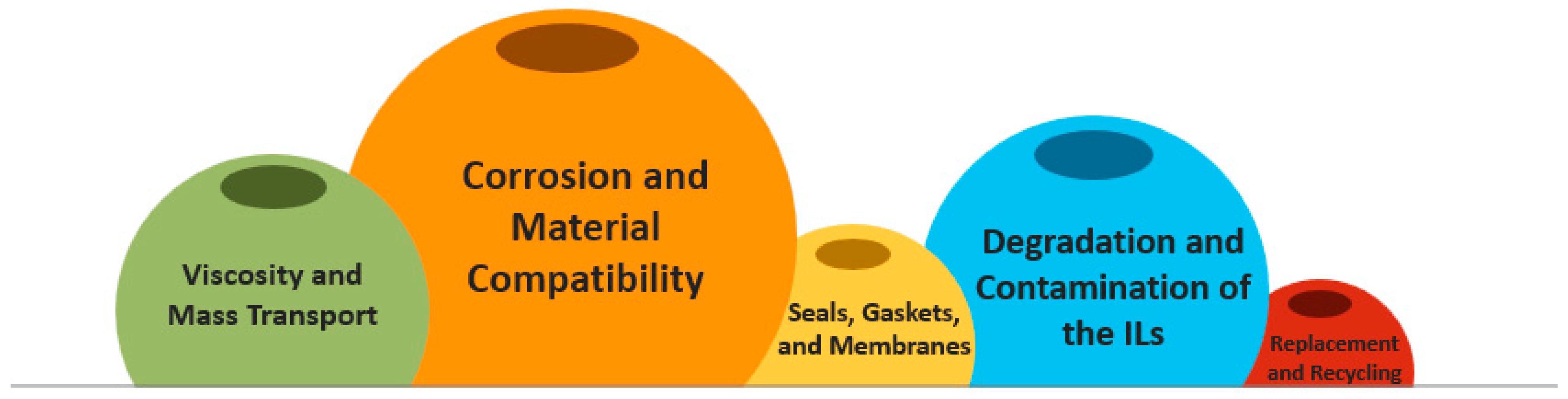
The ILs can decompose under high potential and temperatures, producing corrosive and toxic fragments, and impurities may accumulate during recycling. Because of this, the electrolyte replacement cycles can be shorter than expected. Contaminated ILs foul electrodes and membranes, requiring periodic cleaning and replacement. Degradation and contamination can be mitigated by using closed-loop purification systems, inline filters, and periodic electrolyte analysis. Moreover, the ILs can swell and embrittle elastomers like EPDM and NBR and degrade the polymeric membranes. This entails frequent seal failures, leaks, and decreased durability of the membranes. The mitigation may come from switching to fluoropolymer-based seals like PTFE and FFKM and testing the membrane compatibility with the selected ILs. The ILs systems require strict control of moisture, temperature, and recycling procedures. Hence, they require a higher monitoring burden compared to the alkaline and PEM systems. To mitigate this operational complexity, automated monitoring systems should be used, predictive maintenance schedules, and operator training. Finally, the ILs are expensive to synthesize and recycle and the losses due to leaks and contamination are costly [85]. These increase maintenance burdens and create budget pressures from frequent electrolyte replacement and complex recovery processes. One mitigation route is to develop biomass-derived ILs and energy-efficient recycling methods. Figure 8 illustrates a qualitative weighting of the main maintenance-burden factors in the ILs electrolysis systems, with corrosion and material compatibility representing the dominant maintenance burden and IL replacement and recycling representing the lowest weight burden since it is mostly a consequence of the other factors.
In brief, the ILs-based hydrogen production systems demand more intensive maintenance than conventional alkaline or PEM setups. The main burdens are corrosion control, seal/membrane compatibility, electrolyte recycling, and viscosity management. Until greener, cheaper, and more stable ILs are developed, maintenance will remain a critical barrier to scaling these systems. Table 7 shows a comparative overview of the maintenance issues across the three main hydrogen production electrolyzer types: alkaline, PEM, and ILs systems.
In the alkaline systems, maintenance is frequent but inexpensive since it is based on corrosion control and electrolyte replacement. In the PEM systems, the maintenance is less frequent but more expensive since the membranes and noble metal catalysts are costly to replace. In the ILs system, the maintenance is complex and costly regarding issues like viscosity management, corrosion from hydrolysable anions, seal compatibility, and recycling challenges. Also, the ILs systems demand more precise monitoring and maintenance than the alkaline and PEM systems. Their sustainability depends on developing hydrolytically stable, biodegradable ILs and closed-loop recycling systems that reduce the corrosion and contamination of the systems. Until then, the ILs will remain more maintenance intensive, limiting somewhat their scalability compared to the conventional systems.

8. Compatibility of the Ionic Liquids with the Electrolysis Materials

The compatibility of ILs with electrolysis materials is a critical issue for scaling hydrogen production.

8.1. Metals (Electrodes and Current Collectors)

8.1.1. Stainless Steel (AISI 304/316)

These materials are vulnerable to hydrolysable ILs (BF4, PF6) that release hydrogen fluoride in moist conditions. This may provoke pitting and intergranular corrosion. To mitigate this, higher molybdenum grades should be employed, and Hastelloy and titanium should be used for the anodic parts.

8.1.2. Nickel and Nickel Alloys

These materials are stable in alkaline ILs blends, but imidazolium ILs can form complex Ni2+, destabilizing the passive films. Such an effect causes dissolution under HER cycling. To mitigate it, it should be used protective coatings (TiN, DLC) and alloying with molybdenum and chromium.

8.1.3. Copper

This has poor compatibility since acidic IL fragments accelerate its dissolution. It may cause embrittlement and rapid corrosion. It should be avoided from having direct contact. Copper should be used only in protected electrical connections.

8.1.4. Titanium

This has excellent compatibility with titanium, which clearly resists hydrogen fluoride and acidic ILs fragments. It creates a stable passive oxide layer. It should be the preferred alternative for manifolds and anodic hardware.

8.2. Polymers and Membranes

8.2.1. Nafion (PEM Membranes)

The ILs can swell and plasticize fluoropolymers, especially when dealing with concentrated imidazolium ILs. This may provoke decreased mechanical strength and proton conductivity. One way to mitigate it is to use IL blends at low concentrations and use Nafion and ILs cations composite membranes [86], or, alternatively, explore other membranes more compatible with the ILs such as the sulfonated polyetherketones and corresponding composites with ILs [87].

8.2.2. Elastomers (EPDM, NBR)

These have poor compatibility caused by the fact that the ILs can embrittle and swell elastomers. Such effects cause frequent seal failures and leaks. It should switch to PTFE or perfluoroelastomers (FFKM).

8.3. Glass and Ceramics

8.3.1. Glass (Borosilicate)

It can be attacked by hydrogen fluoride from the anions BF4 and PF6 hydrolysis. This attack may cause etching and weakening [88]. Instead, quartz or, alternatively, ceramic-lined vessels should be used.

8.3.2. Ceramics (Alumina, Silicon Carbide)

These materials are usually stable when in contact with the ILs and this evidence induces prolonged durability. The ceramics are most suitable for insulating and structural electrolyzers components and, recently, for unit-cell stacks using proton conducting ceramics [89].

8.4. Catalysts

8.4.1. Platinum, Iridium, and Ruthenium

These are stable in a major part of the ILs. The IL adsorption can reduce the HER overpotentials. The outcome is enhanced kinetics, but potential contamination may occur if the ILs decompose.

8.4.2. Non-Noble Catalysts MoS2, Fe, and Co

The ILs stabilize nanostructures but can form complex metal ions. This entails improved activity but has the risk of dissolution. The mitigation can come with the use of protective support like carbon [90] and titanium dioxide [91].
Table 8 summarizes the compatibility with ILs of the most usual electrolysis materials.
In essence, the safest materials are the titanium, Hastelloy, alumina and silicon carbide ceramics, PTFE/FFKM seals, and the noble catalysts of platinum and iridium. These materials resist to the IL degradation and to the corrosive fragments. The marginally safe materials are the nickel alloys, Nafion membranes, and non-noble catalysts (MoS2, Fe, Co). They can safely operate but demand careful monitoring and protective approaches. The unsafe materials are the stainless steel (AISI 304/316), copper, elastomers (EPDM/NBR), and borosilicate glass. These materials will suffer from hydrogen fluoride attack, swelling, and embrittlement when using ILs. In terms of design choice, the titanium and ceramics should be prioritized for wet parts in the ILs electrolyzers. Regarding seal selection, it should be stated that the traditional elastomers swiftly fail, and, hence, the use of fluoropolymer seals is vital. For membrane development, Nafion is only marginally compatible and the ILs’ more resistant membranes should be a research priority. Table 9 presents the cost–risk analysis that builds on the compatibility matrix. It indicates the materials which are safe, marginal, and unsafe with the ILs, and the relative maintenance cost impact and risk severity if those materials are employed in ILs-based hydrogen production systems.
In summary, the best choices are the safe materials with low risk and low maintenance cost, which are the titanium, Hastelloy, ceramics, and PTFE/FFKM seals. The materials with marginal compatibility are usable but require protective strategies and higher upkeep and are the nickel alloys and Nafion membranes. The unsafe and avoidable materials involving a high risk of corrosion, swelling, and dissolution, leading to costly maintenance are stainless steel, copper, and elastomers. Table 10 summarizes the fundamental recommendations for material selection in ILs systems.
The preferred materials minimize both risk and cost, making them the backbone of IL system design. The acceptable materials can be used strategically if protective measures are in place, but they increase the monitoring burden. The avoided materials should be excluded from wetted parts to prevent catastrophic corrosion or seal failure. The IL systems will demand premium materials and careful engineering to offset their higher maintenance burden. The strategic use of titanium, ceramics, and fluoropolymers ensures durability, while ongoing research into IL-compatible membranes and cheaper catalysts will broaden the acceptable category over time.

9. Environmental Concerns of the Ionic Liquids

9.1. Toxicity to Aquatic and Terrestrial Ecosystems

Many ILs, especially those based on imidazolium, pyridinium, and phosphonium cations, show moderate-to-high toxicity toward aquatic organisms like algae, daphnia, and fish [92]. Their persistence in water can disrupt microbial communities, which is particularly concerning if the ILs are used in biomass-to-hydrogen systems that rely on microbial fermentation. Moreover, as the alkyl chain length on the cation increases, the IL becomes more hydrophobic, more membrane-active, and more bioaccumulative, leading to higher toxicity [93].

9.2. Persistence and Biodegradability

The ILs are often recognized as green solvents because of their negligible vapor pressure, but low volatility does not match biodegradability. Also, many ILs are resistant to natural degradation, leading to prolonged persistence in soil and water. This persistence raises concerns about bioaccumulation and chronic exposure effects in the terrestrial and aqueous ecosystems.

9.3. Synthesis Footprint

The synthesis of the ILs can involve hazardous reagents and multi-step processes, generating waste streams that may offset their green recognition. Moreover, energy-intensive production increases the carbon footprint of the ILs, especially when compared to conventional electrolytes like potassium hydroxide and sulfuric acid solutions [94].

9.4. Recyclability and Waste Management

The efficient recovery and reuse of the ILs is essential, but the current recycling methods of distillation, extraction, and adsorption are all energy-intensive and costly. An improper disposal could lead to contamination of water bodies and soil, given their chemical stability. Closed-loop recycling systems are still under development, and without them, the ILs risk becoming persistent pollutants [95].

9.5. Human Health Risks

Some ILs can cause skin irritation, respiratory issues, and cytotoxic effects upon exposure. Their low volatility reduces the inhalation risks, but accidental spills and leaks in industrial settings could pose occupational hazards. The prolonged exposure studies are somewhat scarce, leaving uncertainty about chronic health impacts [96].

9.6. Prospects

One future route is to design biodegradable ILs with the incorporation of functional groups (e.g., esters) that allow microbial breakdown [97]. Life-cycle assessments (LCA) for evaluating the ILs from synthesis to disposal to ensure net environmental benefits should be conducted. Green synthesis routes by using biomass-derived precursors to reduce carbon footprint should be followed. Also, implement closed-loop recycling by developing efficient recovery systems to minimize frequent waste and leakage. In summary, the ILs are often labeled as green, but their environmental profile is hybrid as they eliminate air emissions yet raise concerns about toxicity, persistence, and recyclability. Their sustainability depends on designing safer ILs and implementing strict recovery systems.

9.7. Path Forward for Sustainable ILs Use in Hydrogen Production

9.7.1. Development of Greener Ionic Liquids

It should be developed with greener ILs by incorporating functional groups that allow the microbial breakdown (ester, hydroxyl groups) to reduce the persistence in the terrestrial and aquatic ecosystems. The use of renewable feedstocks like sugars, amino acids, and choline derivatives as precursors to a lower carbon footprint and cost of the ILs is also a route to be followed [98]. It should be designed and implemented through the use of task-specific ILs (TSILs), which are engineered ILs with adjusted properties like low viscosity, high proton conductivity, and non-toxicity for hydrogen applications [99].

9.7.2. Improving Recycling and Recovery Processes

Efficient recovery methods by membrane separation [100], adsorption [101], and solvent extraction [102] should be developed to minimize waste and leakage. Also, the distillation-heavy processes should be averted by designing ILs that can be separated under mild conditions. The coupling of the recovery of the ILs with chemical processes such as biomass fractionation to reduce energy demand should be performed [103].

9.7.3. Hybrid Electrolytes

It is recommended to mix the ILs with water and traditional electrolytes to balance the viscosity, cost, and performance challenges. Solid-state integration strategies via embedding the ILs into the polymer membranes and gels to combine stability with conductivity should also be adopted [104]. In addition, designing IL-based electrolytes that can handle fluctuating renewable inputs like solar and wind without degradation are strongly suggested [105].

9.7.4. Life-Cycle Assessment and Regulation

Comprehensive LCAs evaluating the ILs from the synthesis to use and to final disposal to ensure net environmental benefits are vital to better understand the exploration of the ILs in the hydrogen generation by electrolysis. Moreover, establishing industrial standards for IL toxicity, biodegradability, and recyclability is also fundamental. Finally, incentivizing greener IL development through subsidies and carbon credits for sustainable hydrogen pathways is also recommended [106].

9.7.5. Pilot Projects and Scaling

The pilot projects and scaling should first pass by the implementation of biorefineries in which the ILs are deployed in biomass-to-hydrogen plants where their unique dissolution properties are most valuable. Another area with great interest is the one related to renewable hubs for testing ILs photocatalytic systems in the solar-driven hydrogen generation. Also, using ILs in niche applications like drones, military devices, and propulsion are most promising [107].
The path forward lies in designing safer, cheaper, and recyclable ILs, integrating them into hybrid systems, and validating their performance through pilot-scale projects. With green chemistry progress and regulatory frameworks, the ILs could evolve from niche laboratory materials into enabling technologies for industrial hydrogen production, contributing to a sustainable energy future.

10. Life-Cycle Assessment

The following sections of this work present the LCA for the imidazolium-based ILs, which are among the most widely studied ILs families in hydrogen production.

10.1. Goal and Scope

The objective is to assess the environmental impacts of using imidazolium ILs (e.g., 1-butyl-3-methylimidazolium [BMIM] salts) as electrolytes in water electrolysis for hydrogen production. The system boundaries are from IL synthesis, use in electrolysis, recovery/recycling, and final disposal. The functional unit is 1 kg of hydrogen produced.

10.2. Life-Cycle Stages

10.2.1. Synthesis

The imidazolium ILs often require multi-step reactions using halogenated precursors and strong acids. This entails high energy demand and chemical waste generation. The published LCA studies have shown that the synthesis phase contributes with the largest share of environmental impact, especially in terms of Global Warming Potential (GWP) and human toxicity [108].

10.2.2. Use Phase

The ILs reduce overpotentials, improving energy efficiency compared to conventional electrolytes. Lower electricity demand per kg hydrogen offsets some of the synthesis footprint. Nonetheless, viscosity can reduce mass transport, requiring higher operational energy in the systems.

10.2.3. Recovery and Recycling

It should be emphasized that without established recovery methodologies, the ILs will persist in the environment, which is strongly advisable to avoid. The current recycling methods based on adsorption and solvent extraction are energy demanding. It was already demonstrated that the efficient recovery based on closed-loop recycling could reduce overall GWP by around 38% compared to single-use [109].

10.2.4. End-of-Life

If released, the imidazolium ILs show moderate aquatic toxicity and poor biodegradability. The safe disposal requires controlled incineration and advanced treatment, adding environmental burden.

10.3. Impact Categories

The impact categories are the following:
  • GWP: High during synthesis, reduced during use if the efficiency gains are realized.
  • Human toxicity: Linked to precursor chemicals and IL persistence.
  • Ecotoxicity: Moderate-to-high, especially for aquatic ecosystems.
  • Resource depletion: Energy-intensive synthesis increases fossil resource use.

10.4. Main Findings

The imidazolium ILs improve hydrogen production efficiency but carry significant upstream environmental burdens. Recycling and greener synthesis routes are essential to achieve net sustainability. Furthermore, the imidazolium ILs and TILs from biomass can reduce considerably the impact.
In summary, LCA studies show that the imidazolium ILs can lower the operational energy in hydrogen production, but their synthesis and poor biodegradability create major environmental challenges. The path forward lies in greener precursors, closed-loop recycling, and hybrid systems that balance efficiency with sustainability. Table 11 presents the LCA snapshot showing how imidazolium ILs performs against the conventional electrolytes used in alkaline and PEM electrolysis for hydrogen production.
Imidazolium ILs are environmentally costly to synthesize and recycle but can reduce the operational electricity demand through efficiency gains. Their sustainability hinges on greener synthesis and closed-loop recovery. The alkaline systems have the lowest synthesis footprint and simplest recycling, but corrosive hazards and lower efficiency limit the long-term sustainability [110]. The PEM systems have high efficiency but heavy environmental burden from fluorinated membranes and rare metals [111]. The ILs could outperform the conventional systems in niche renewable-integrated applications if greener, biodegradable ILs are developed. Moreover, the alkaline systems remain the most cost-effective and environmentally manageable option today. The PEM systems offer high efficiency but require innovation in sustainable membrane materials.

11. Scalability

Scaling up the ILs-based HER systems from laboratory research experiments to industrial hydrogen production facilities faces several considerable challenges. While the ILs are shown to be very promising in lowering the overpotentials and improving the efficiency of the electrolysis process, their real-world deployment can be constrained by the economy, technology, and sustainability.

11.1. Challenges

One of the main challenges of using ILs as electrolytes is their inherent high cost. In fact, many ILs require complex preparations methods, making them significantly more expensive than the conventional electrolytes. Also, the large-scale hydrogen production demands very high quantities of electrolyte, elevating the overall costs. Other aspects are the recyclability and degradation of the ILs as the ILs must be reused without losing their electrochemical performance. Indeed, some ILs degrade under long-term electrolysis conditions, especially at high voltages and temperatures. Additionally, the recycling processes are not yet fully efficient and cost-effective. Another relevant issue is the one related to the viscosity and mass transport of the ILs as ILs are often more viscous than the aqueous electrolytes, which slows proton diffusion and gas bubble release. This can reduce the efficiency in large-scale electrolyzers. Concerning the compatibility with the industrial electrodes, the ILs interact differently with catalyst surfaces compared to conventional electrolytes. In essence, scaling requires stable and cost-effective electrode materials that can resist ILs without corrosion and fouling. There are also environmental and safety concerns to consider as some ILs are not fully benign and may possess toxicity and environmental persistence issues. The industrial adoption will require ILs that are safe, biodegradable, and compliant with regulations. Furthermore, the system integration of the ILs should be considered since the current hydrogen production plants are optimized for alkaline and PEM electrolysis systems. Switching to ILs systems would require redesigning the electrolyzers, pumps, and separation units to handle the ILs properties. In essence, the research focus should be on developing cheaper, greener ILs like biomass-derived and protic ILs that balance the performance with sustainability. The engineering should be based on hybrid systems that combine the ILs with conventional electrolytes to reduce the viscosity and cost. Finally, the ILs may first find niche applications before scaling to bulk hydrogen production, which will be discussed in detail in the following sections.

11.2. Niche Applications

This section is focused on the real-world niches where the ILs-based HER systems could potentially be deployed first, before scaling up large-scale hydrogen plants. In this sense, the potential industrial niches should be the following:

11.2.1. Biomass-to-Hydrogen Plants

The ILs stand out at dissolving and processing lignocellulosic biomass [112]. They can act as both solvents and electrolytes, enabling the design and implementation of integrated systems that convert agricultural waste into hydrogen [113].

11.2.2. Solar-Driven Microelectrolyzers

The ILs can stabilize photocatalysts and improve the charge transfer in small-scale solar water-splitting devices [114]. These devices are most suitable for the decentralized hydrogen production in remote and off-grid locations. Their tunability allows the optimization for direct coupling with the variable solar input.

11.2.3. Portable Hydrogen Generators

The portable hydrogen electrolyzers are already commercially available in compact formats, including backpack-sized AEM units designed for field hydrogen generation. The ILs, with their high ionic conductivity, thermal stability, and wide electrochemical windows, are strong candidates for future portable electrolyzer electrolytes, even though current commercial devices do not yet incorporate them. These portable ILs electrolyzers can serve niche markets including backup power units, drones, and military field devices. Their stability and low volatility make them safer for transport compared to the conventional electrolytes.

11.2.4. Hybrid Renewable Systems

The ILs can be paired with thermal energy storage and CO2 capture systems [115], creating multifunctional equipment and facilities. This integration could be valuable in pilot-scale renewable energy hubs.
The indicated niches do not require massive volumes of ILs, keeping costs at a manageable level. They leverage the ILs unique advantageous features like biomass solubility, photocatalyst stabilization, and chemical stability. These niches can be taken as the first steps toward a large-scale adoption once the IL synthesis and recycling procedures become more affordable.

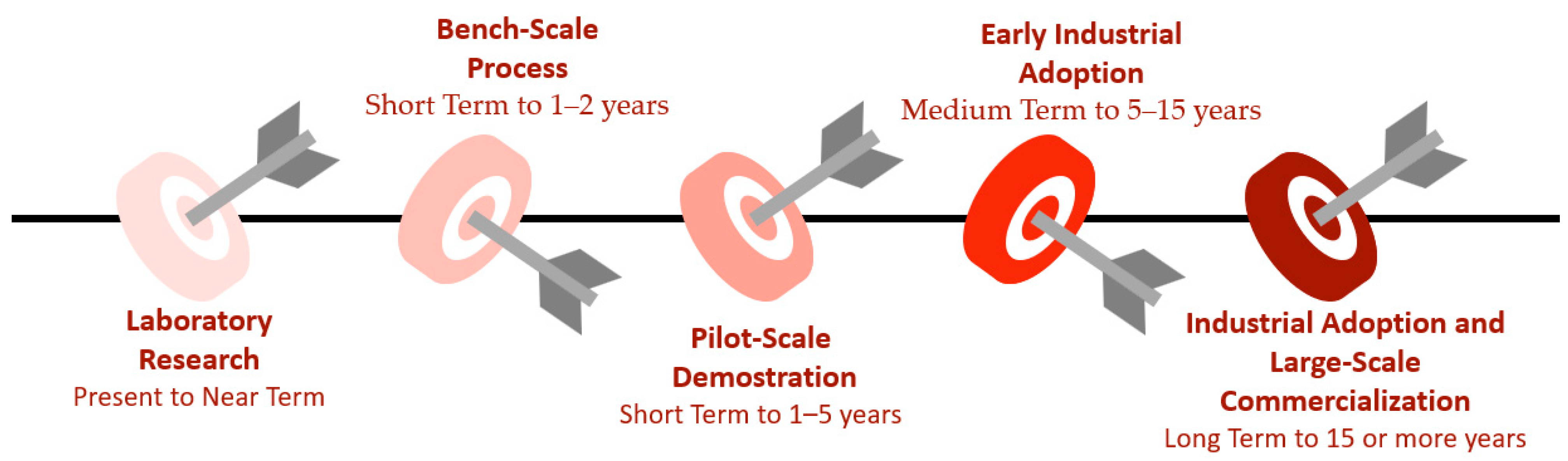
11.3. Hydrogen Production Roadmap

The following lines present a brief roadmap proposed for hydrogen production adopting ILs, starting in the laboratory-scale research work to the mainstream industrial deployment:
  • Phase 1—Laboratory Research
    • Identify the promising ILs for hydrogen production by electrolysis.
    • Study of the physicochemical properties of the ILs such as ionic conductivity, viscosity, stability, and catalytic compatibility.
    • Establish the mechanistic understanding of how the ILs influence the reaction kinetics and energy requirements.
  • Phase 2—Bench-Scale Process
    • Optimize the reaction conditions like temperature, pressure, and ILs composition.
    • Evaluate the recyclability and degradation pathways of the ILs.
    • Develop compact continuous flow reactors to test the performance of the ILs under real-world operating conditions.
    • Conduct preliminary techno-economic assessments to identify the cost drivers.
  • Phase 3—Pilot-Scale Demonstration
    • Scale up the ILs hydrogen production to pilot units producing tens-to-hundreds of kilograms of hydrogen per day.
    • Validate long-term stability, safety, and environmental performance.
    • Compare pilot-scale efficiency and cost with the conventional hydrogen production systems.
  • Phase 4—Early Industrial Adoption
    • Build semi-industrial demonstration plants to test the ILs systems in the industrial environments.
    • Establish standards for the ILs formulations, handling procedures, and recycling protocols with the collaboration between academia and industry.
    • Secure regulatory approvals and develop supply chains for the ILs production and disposal.
    • Create partnerships with energy companies, electrolyzer manufacturers, and industrial gas suppliers.
  • Phase 5—Industrial Adoption and Large-Scale Commercialization
    • Deploy ILs hydrogen production at commercial scale, integrating with renewable energy sources and industrial streams.
    • Optimize plant-wide automation, monitoring, and the ILs life-cycle management.
    • Reduce overall costs through the mass production of ILs and improved catalyst systems.
    • Expand into diverse markets like green hydrogen and energy storage.
Figure 9 shows the main phases of the hydrogen production with the ILs roadmap and corresponding timeline.

11.4. Comparative Roadmap

The ILs are unlikely to displace alkaline and PEM technological solutions immediately but will first thrive in niche, renewable-integrated applications. As greener, cheaper ILs are developed and recycling becomes more effective, these liquids could scale into mainstream hydrogen production, evolving from laboratory research topics into enabling technologies for the hydrogen economy. The following paragraphs briefly describe a timeline roadmap of adoption possibilities for the ILs in comparison to the alkaline and PEM systems in hydrogen production. This shows how each technology could potentially evolve and where ILs might fit in:

11.4.1. Short Term—Up to 5 Years

Alkaline Systems
They continue as the dominant low-cost option for bulk hydrogen. They are used in industrial plants where robustness and simplicity matter more than efficiency.
PEM Systems
There is rapid growth in renewable integration (solar, wind) and mobility (fuel cells). There is also scaling to MW projects despite high material costs.
ILs Systems
This will remain in laboratory and pilot projects. They focus on niche applications like biomass-to-hydrogen, solar-driven microelectrolyzers, and portable hydrogen generators.

11.4.2. Medium Term—Between 5 and 15 Years

Alkaline Systems
These are still widely used but gradually displaced in renewable-heavy grids due to slower response times.
PEM Systems
These are the mainstream renewable-compatible technologies, especially in regions with strong green hydrogen policies. Cost-reduction efforts focus on replacing rare metals and improving membrane durability.
ILs Systems
There is early industrial adoption in biorefineries and renewable hubs. There is development of biodegradable, biomass-derived ILs that reduce the environmental footprint. Hybrid IL–aqueous systems are tested at pilot scale to balance viscosity and cost.

11.4.3. Long Term—More than 15 Years

Alkaline Systems
They have a niche role in legacy plants or regions with limited capital investment.
PEM Systems
There is mature, large-scale deployment with improved sustainability. These are integrated into global hydrogen supply chains.
ILs Systems
There is commercial-scale deployment in specialized sectors like biomass-to-hydrogen plants, solar-driven hydrogen generation, and coupled energy storage and hydrogen systems. Closed-loop recycling and green synthesis make ILs cost-competitive. They have the potential to complement and even partially replace the PEM systems in certain applications.
In summary, the ILs systems are unlikely to replace alkaline or PEM systems immediately. Instead, the ILs will progress from laboratory- to pilot scale, then to niche industrial and finally to specialized commercial adoption, with their unique chemistry leveraged in biomass and renewable integration. In the long term, the ILs systems can become a considerable third option for hydrogen production alongside the alkaline and PEM systems, provided cost, recyclability, and environmental safety are resolved.

12. Cost Analysis

Table 12 presents the cost comparison that maps the maintenance burdens of alkaline, PEM, and ILs electrolysis systems.
In summary, the alkaline systems have the lowest overall maintenance cost but require frequent interventions. The PEM systems have higher costs due to the expensive membranes and noble metals but entail less frequent interventions. The ILs systems have the highest maintenance burden with costly electrolytes, corrosion risks, seal incompatibility, and monitoring, making the periodic maintenance comparatively expensive and technically demanding. The ILs systems will remain maintenance intensive and costly until greener, hydrolytically stable ILs and efficient recycling procedures are developed and implemented. Their adoption will likely be limited to specialized niches (e.g., biomass-to-hydrogen) where their unique chemistry offsets the higher maintenance costs. In terms of cost analysis, Table 13 shows the 10-year life-cycle qualitative cost projection comparing the alkaline, PEM, and ILs electrolysis systems, integrating both CAPEX (capital cost) and OPEX (maintenance cost).
Figure 10 presents the chart bar relative to the OPEX and CAPEX costs of the hydrogen production by electrolysis systems.
The alkaline systems present the lowest CAPEX and moderate OPEX. They have the lowest upfront cost but require frequent maintenance, and this keeps OPEX steady. The PEM systems have high CAPEX, due to membranes and catalysts, moderate-to-high OPEX—expensive to build, but maintenance is predictable and less frequent. Finally, the ILs systems exhibit very high CAPEX and high OPEX, which makes them the most expensive option over 10 years involving premium materials and ILs recycling. This visualization reinforces that ILs systems are currently the most cost-intensive, both in capital and maintenance. Their competitiveness will depend on breakthroughs in the ILs synthesis, recycling, and material compatibility. This stacked view reinforces that the ILs systems are currently the least competitive economically, unless ILs synthesis costs drop and recycling improves. They remain best-suited for specialized niches where their unique chemistry will outweigh the higher life-cycle expenditures. Figure 11 shows the stacked bar chart showing how CAPEX and OPEX combine into total 10-year life-cycle costs for alkaline, PEM, and ILs systems including a scenario where the IL costs drop by 40% in the 10-year period.
The alkaline option is still the most economical option overall, with low CAPEX and moderate OPEX. The PEM systems entail high CAPEX and medium-to-high OPEX and maintain the life-cycle costs elevated, but predictable. The current ILs systems exhibit very high CAPEX and high OPEX making them the most expensive options nowadays. The ILs reduced option with a 40% cost reduction, shift closer to PEM economics but remain above alkaline.
This scenario shows that IL systems could become competitive with PEM if synthesis and recycling costs fall significantly. Nonetheless, they would still struggle to match the low life-cycle cost of alkaline systems unless maintenance burdens like corrosion issues, seal failures, and precise monitoring are also reduced.

13. Proposals for Ionic Liquid–Based Electrolysis Hydrogen Production Systems

Below are three different proposed electrolyzers configurations, each one of them being optimized for a distinct balance of performance, cost, and operational ease and for the materials, operating windows, and control strategies that keep them away from avoidable corrosion concerns.

13.1. Electrolyzer I

Compact membrane-free and low moisture electrolyzer using a hydrolytically robust PIL electrolyte to minimize the corrosion risk and simplify the system.

13.1.1. Electrolyte

Triethylammonium methanesulfonate (TEA·OMs) or, alternatively, cholinium methanesulfonate. The sulfonate anions avoid hydrolysis to hydrogen fluoride. Also, the PILs provide proton carriers without needing a high water content.

13.1.2. Electrodes and Hardware

Anode and cathode should be of titanium felt or titanium mesh with thin iridium (anode) and platinum (cathode) coatings. Current collectors/manifolds: Titanium or Hastelloy; avoid stainless in wet paths. Seals/gaskets of PTFE or FFKM. Avoid the use of EPDM/NBR. Body and insulators are made of alumina or silicon carbide inserts to break crevices and maintain rigidity.

13.1.3. Operating Conditions

The operating temperature between 50 and 70 °C reduces the viscosity without accelerating the decomposition, and current density from 0.3 to 0.8 A/cm2 (dry PILs limit mass transport). Water activity: ≤500 ppm (inline dryer, membrane contactor to strip moisture load). Voltage control is based on soft-start profiles, filtered DC, and no aggressive pulsing.

13.1.4. Balance of Plant

The drying loop is based on molecular sieve columns with bypasses. Swap or regenerate on schedule. Electrolyte polishing is performed by activated alumina and carbon cartridge to remove the peroxides and metal ions. For the hydrogen handling, use a two-stage gas–liquid separator with heated demister to avoid IL aerosol carryover.

13.1.5. Advantages

The advantages of the proposed system are the low corrosion drivers with no hydrolysable fluorinated anions. Furthermore, the membrane-free configuration reduces the potential failure points.

13.1.6. Risks

Viscosity may require higher pumping power. The design is for low shear and uniform flow. PIL stability requires tight voltage limits to avoid oxidative fragments.

13.1.7. Maintenance Demand

There is a drying media rotation every 500–1000 operating hours, based on the moisture breakthrough. Monthly checks should be performed for acid number, metal content, and conductivity drift. The coating quality should be upkept by periodic EIS sweeping to flag catalyst layer degradation before performance drops.

13.2. Electrolyzer II—IL–Water Hybrid PEM Analog (Moderate Moisture, Membrane-Enabled)

A tunable IL–water mixture that drops viscosity and boosts transport, paired with an IL-tolerant membrane to maintain separation and purity while limiting corrosion via chemistry choice and materials is used.

13.2.1. Electrolyte

There is between 20 and 40% cholinium bis(sulfate) or cholinium formate in deionized water. It is a non-fluorinated system, being hydrolysis-resistant and the cholinium cation reduces the toxicity and membrane interaction severity.

13.2.2. Membrane and MEA

The membrane of sulfonated poly(ether ether ketone) SPEEK or hydrocarbon PEM is designed to ensure the IL compatibility. There are catalyst layers of IrO2 in the anode and Pt/C in the cathode. Also, there is augmented PTFE binder fraction to resist the IL plasticization.

13.2.3. Hardware

Flow fields are ensured by titanium plates with ceramic coating in anodic channels. Seals: FFKM; compression-set minimized with wider cross-sections. Fasteners should be of external stainless steel. The wet fastener must be made of titanium or, alternatively, Hastelloy.

13.2.4. Operating Windows

The temperature is between 40 and 60 °C and the current density is between 0.8 and 1.5 A/cm2. The water activity should be controlled via recirculating humidification. Maintain halide content below detection.

13.2.5. Controls and Protection

The potential guardrails are based on the anode potential ceiling to prevent the IL oxidation. Impurity purge through side-stream ion exchange to remove the metal ions without stripping the IL should be performed.

13.2.6. Advantages

There is a higher performance with better kinetics and lower ohmic losses than dry IL. The separation with the membrane limits crossover, and it simplifies the gas handling.

13.2.7. Risks

Membrane compatibility could be put at risk since the ILs may swell or plasticize. Careful material selection and binder tuning is required. Corrosion pockets are the crevices at gaskets concentrate the IL.

13.2.8. Maintenance Essentials

Membrane inspection should be based on an annual dimensional check and proton conductivity test. The electrolyte management should be quarterly by replacing up to 20% bleed to control impurity build-up. The seal program will require the annual replacement of FFKM in the high-stress zones.

13.3. Electrolyzer III—Biphasic IL–Absorption Loop with Aqueous Electrolysis Core

Separate roles by using an IL loop to capture, condition, and buffer species (carbon dioxide and impurities), whilst an aqueous core cell performs the electrolysis process. The IL does not enter the core cell, mitigating corrosion risk but leveraging the IL tunability.

13.3.1. IL Absorption Loop

IL choice: TSIL based on sulfonate or carboxylate for selective impurity uptake (cholinium taurinate). Scrubs feed water and headspace, stabilize pH microenvironments and scavenge halides and peroxides.

13.3.2. Electrolysis Core (Aqueous)

Electrolyte: Mild alkaline potassium hydroxide at 1–2 wt% or buffered sulfate, which should be chosen for compatibility with IL-scrubbed streams. The electrodes should be of nickel foam cathode, IrO2/Ti anode. All wet metal surfaces should be made of titanium or Hastelloy.

13.3.3. Interfaces

Membrane contactor: Transfers impurities from aqueous to IL without mixing phases. Phase management using degasser and coalescer to prevent IL aerosol carryover.

13.3.4. Operating Conditions

The temperature is between 35 and 55 °C in the core and between 30 and 50 °C in the IL loop. The current density should be from 1.0 to 2.0 A/cm2 (aqueous core supports higher throughput). The water activity in the IL should not be critical. The IL loop is designed for stability and not for electrolysis.

13.3.5. Advantages and Limitations

As advantages, it has minimized corrosion since the ILs should never contact the highest potential of the electrochemical cell. The stainless steel can be employed outside the wet IL zones. The IL loop will continuously clean and buffer, prolonging the system lifespan.

13.3.6. Risks

The complexity of using more contactors and separators and controls. The TSIL sourcing with custom ILs may be costly. Hence, recyclability should be ensured.

13.3.7. Maintenance Essentials

The IL loop regeneration needs periodic solvent wash and adsorbent bed swap every 1000 to 2000 service hours. The contactor integrity should be checked by quarterly leak testing and monitoring the differential pressures for fouling. The core cell service requires conventional alkaline maintenance intervals. The IL loop will reduce the frequency.

13.4. Electrolyte Chemistry

Avoid the BF4, PF6, and fluorosulfonyl ILs in moist or anodic environments. It is preferable to use sulfonates, carboxylates, and NTf2 only if hydrolysis and anodic limits are proven.

13.5. Materials

Use titanium, Hastelloy, ceramics, PTFE/FFKM, and noble catalysts. The limit is to use nickel alloys (coat); hydrocarbon membranes validated for IL exposure. Exclude the stainless-steel in wet IL paths, copper, EPDM/NBR, borosilicate glass.

13.6. Geometry and Flow

The design should be based on wide, smooth channels with no crevices and uniform shear to prevent under-deposit corrosion. Gas management should be upkept by using sloped plates, hydrophobic coatings near outlets for a clean gas bubble detachment.

13.7. Controls and Monitoring

Voltage ceilings and soft-start routines are used to avoid ILs oxidation. There are inline moisture, conductivity, peroxide and halide detection. Monthly, perform ICP-OES to check for dissolved metals. The purification should be ensured by side-stream polishing with carbon or alumina, and scheduled bleed-and-feed.

13.8. Safety and Environmental

There should be ventilation to capture IL aerosols. There should be heated demisters on H2/O2 lines. The spill response should be with IL-compatible absorbents. Avoid water flushes if it triggers hydrolysis. In the end-of-life stage it allows for closed-loop IL recovery. The thermal treatments that decompose ILs should be avoided.
In essence, the electrolyzer I will be the simplest of the options and risks lower corrosion. For greater current density and compactness, the electrolyzer II should be the best alternative. Finally, to achieve greater system robustness and most extended lifetime, the electrolyzer III should be elected as the most viable one.

14. Machine Learning Approaches

14.1. System Design and Optimization

Property–performance prediction given by Machine Learning (ML) models like random forests, gradient boosting, neural networks, and GNNs and map descriptors of composition, structure, and electronic features to HER/OER metrics like overpotential, Tafel slope, and stability can be used [116]. Also, in terms of throughput screening combined with DFT and other simulations, the ML accelerates the search for new catalysts and support materials [117] that could be paired with the ILs electrolytes. On the other hand, the ML approaches can be followed for optimizing the parameters of the electrolyzers like current density, temperature, pressure, electrolyte composition, and flow to maximize the efficiency and minimize the energy consumption [118]. Instead of full CFD and multiphysics simulations, the ML surrogate models approximate the cell behavior, enabling fast design implementation. Furthermore, ML has been used to design anodes for proton-conducting solid oxide electrolysis cells, improving hydrogen generation efficiency by learning structure–performance relationships [119]. The same workflow based on the encode structure, train on performance, and optimization through ML can be adapted to the ILs systems; for example, porous electrodes wetted by ILs. Finally, ML can be used to schedule the electrolyzer operation, and manage the degradation, all of which matter when the ILs systems are involved.

14.2. Machine Learning and Ionic Liquids

Using ML to design and control ILs’ electrolysis processes should be based on the ILs selection and design by exploring ML/QSPR models to predict the ILs properties including conductivity, viscosity, electrochemical window, and hydrogen solubility from cation/anion structure. In addition, the multi-objective optimization can search for ILs that maximize conductivity and minimize viscosity, while remaining stable at target potential. The ML can learn relationships between the IL composition, catalyst surface chemistry, and HER/OER performance factors such as overpotential, Faradaic efficiency, and degradation rate. Features might include IL polarity, hydrogen-bonding parameters, ion size, and adsorption energies from DFT. Moreover, operating conditions optimization in the ILs media should involve train models on experimental data varying the ILs type, water content, temperature, and current density. Use Bayesian optimization and reinforcement learning to propose new operating points that improve the efficiency and durability of the systems. Also, predict the ILs decomposition and electrode contamination under different potentials and temperatures, searching for safer operating windows.

14.3. Machine Learning Methods

Supervised learning regression should be employed like random forest, XGBoost, SVR, and neural networks for predicting the overpotential, efficiency, and ILs properties. On the other hand, the clustering and dimensionality reduction (PCA, t-SNE, and UMAP) should be very useful to group the ILs and operating regimes. The active learning and Bayesian optimization iteratively will select new ILs compositions and experiments to conduct, minimizing the number of laboratorial tests needed. Finally, the physics informed and hybrid models combine the mechanistic electrochemical models with ML to respect the conservation laws, while capturing the ILs effects.

14.4. Challenges Concerning Machine Learning

On of the main challenges regarding the application of ML methods to the ILs are the data scarcity and the ILs electrolysis datasets are small, heterogeneous, and often not standardized describing different cell designs, impurities, and measurement protocols. Another considerable challenge is related to the huge ILs chemistry, being the combinatorial space of cation/anion pairs enormous and, hence, careful feature representation learning is required. Moreover, the scale-up and compatibility of the ILs can be expensive, viscous, and sometimes unstable. The ML optimized laboratorial systems must still be economically and practically scalable. Integration with renewable and system level constraints should involve optimizing the ILs electrolysis in isolation as well as in fluctuating power profiles and real-world operation.

14.5. Recommended Directions

Some further directions are recommended; for instance, the data-driven IL screening for HER electrolytes, and the construction of a dataset summarizing the ILs used in electrochemical systems. Also, encoding structures and train models to predict conductivity, viscosity, and electrochemical windows are pathways for further enhancement of the hydrogen production by ILs. Moreover, proposing suitable ILs for water electrolysis by ML optimization of ILs–water composition and operating conditions is also a valuable measure. Experimental and literature datasets varying the ILs type, water fraction, temperature, and current density should be built. The use of Bayesian optimization to identify high-efficiency regimes is strongly suggested. Finally, combine DFT descriptors of ILs–surface interactions with experimental HER performance and train a model to link molecular-level interactions to macroscopic activity.

15. Challenges, Limitations, and Future Prospects

From a technological perspective, ILs are not only electrolyte candidates but also enabling materials for emerging inventions in hydrogen electrolyzer design. Their tunable physicochemical properties allow the engineering of advanced electrode interfaces, improved gas management strategies, and hybrid electrolysis concepts. Recent studies suggest that ILs-based additives may reduce bubble adhesion and facilitate faster gas disengagement, which is critical for high-current-density operation. Moreover, the use of task-specific ionic liquids opens opportunities for designing electrolytes with enhanced stability, lower corrosion rates, and improved selectivity. These developments point toward next-generation electrolyzer inventions, including ILs-assisted alkaline systems, hybrid ILs–aqueous electrolytes, and multifunctional interfacial layers for durable and efficient hydrogen production.

15.1. Economic Limitations

Many ILs require complex multi-step synthesis, making them more expensive than conventional electrolytes like potassium hydroxide. Furthermore, industrial hydrogen production demands large amounts of electrolytes, increasing the overall costs. However, there is still only limited commercial availability with a small subset of ILs being produced, restricting the options for widespread adoption.

15.2. Technological Limitations

One of the technological limitations of the ILs as electrolytes is related to their viscosity and mass-transport ability. The ILs are often more viscous than water, which slows the proton diffusion and the gas bubble release, reducing the efficiency in large-scale cells. Another limitation is the electrode compatibility. The ILs interact differently with the catalyst surfaces, sometimes causing fouling and corrosion, which complicates the integration with industrial electrodes. Regarding system redesign requirements, the existing hydrogen plants are optimized for alkaline and PEM systems and, hence, the ILs must entail system redesign requirements like new reactor designs, pumps, and separation units.

15.3. Environmental and Safety Concerns

One of the main environmental concerns is the inherent toxicity and environment persistence of some ILs raise justified concerns about the environmental release and long-term safety. Concerning recyclability, the efficient recovery and reuse of the ILs is essential to minimize the waste and cost of the electrolysis, but it should be noted that the current recycling procedures are energy intensive. Also, there are some regulatory barriers to transpose since the large-scale industrial adoption needs ILs that meet the strict environmental and safety standards, which many current formulations still do not.

15.4. Scalability Issues

Despite the promising laboratory-scale results, several barriers still limit the industrial deployment of ILs in large-scale electrolysis. The high cost of many IL families, uncertainties regarding long-term chemical stability under anodic oxygen evolution conditions, and the need for electrolyte recyclability remain critical challenges. In addition, most studies have been performed at relatively low current densities, whereas industrial alkaline electrolyzers typically operate above 0.2–0.6 A cm−2. Therefore, future research must validate whether the interfacial benefits of ionic liquids persist under commercially relevant conditions. Addressing these scale-up limitations is essential for translating ionic-liquid-based concepts into practical inventions for sustainable hydrogen technologies.
In summary, the promise of ionic liquids in hydrogen production is currently limited by the elevated overall costs, viscosity-related inefficiencies, recyclability challenges, and environmental concerns. Addressing these limitations using greener synthesis methods, improved recovery processes, and hybrid system designs will be fundamental for the ILs to go beyond niche applications and toward large-scale industrial relevance.

15.5. Future Perspectives

The application of the ILs in hydrogen production is still at an early stage, but their unique characteristics suggest transformative potential if the current barriers can be overcome. The future research and development will likely focus on three interconnected directions: greener synthesis, hybrid system integration, and industrial scaling.

15.5.1. Greener and Cost-Effective Ionic Liquids

Developing biomass derived ILs from renewable feedstock can reduce the reliance on petroleum-based precursors and the overall preparation costs. Designing ILs with tailored properties like TSILS with reduced viscosity, enhanced proton conductivity, and biodegradability will improve the efficiency and sustainability of the electrolysis process with ILs. Emphasis should be given on the recyclable ILs, which can be recovered and reused without performance loss for industrial adoption.

15.5.2. Hybrid Electrolyte Systems

Combining the ILs with the conventional electrolytes may balance viscosity, cost, and overall electrochemical performance, offering a practical route to scale. Furthermore, the ILs can be integrated into solid-state and polymer electrolyte systems, enhancing stability and broadening the operating conditions suitability. The hybrid designs may allow ILs to function under fluctuating renewable power inputs, improving the resilience in real-world energy grids.

15.5.3. Integration into Renewable Energy Hubs

In the solar-driven hydrogen field, the ILs photocatalysts will enable efficient solar water splitting, supporting the decentralized hydrogen production. Also, the ILs can dissolve and fractionate the biomass, making them central to waste-to-hydrogen followable routes. In terms of energy storage coupling, the potential of the ILs to be employed in thermal energy storage suggests integrated systems where the hydrogen production and energy storage converge.

15.5.4. Scaling

The initial deployment will likely occur in niche applications such as biomass-to-hydrogen plants and micro-scaled electrolyzers. In addition, the development of industrial standards for the ILs’ preparation, recovery, and safety will accelerate worldwide commercialization. Further advancements will require cross-disciplinary collaboration between chemists, engineers, and policymakers to align the IL innovation with the sustainable hydrogen economy.
In summary, the future of the ILs-based hydrogen production lies in greener synthesis, hybrid system integration, and niche industrial applications that can gradually scale. With advances in cost reduction, recyclability, and electrolyzers design, the ILs will evolve from laboratory curiosities into enabling technologies for the global hydrogen economy.

16. Conclusions

This review shows that ILs constitute a highly adaptable option for sustainable hydrogen production across electrochemical, photochemical, and biomass-conversion routes. As alternative electrolytes, functional additives, and interfacial modifiers, the ILs can accelerate the hydrogen evolution kinetics, improve gas bubble detachment, mitigate corrosion, and potentially extend the lifespan of the electrolyzers. Their ability to stabilize the reactive intermediates and to dissolve and fractionate lignocellulosic biomass further position the ILs as most promising options for renewable hydrogen derived from agricultural and forestry residues.
Despite these advantages, several barriers continue to limit the transition of the ILs systems from laboratory experiments to large-scale deployment. The elevated synthesis cost, mass-transport limitations, recyclability limitations and environmental safety concerns confine most IL applications to bench-scale and pilot-scale studies. Addressing these challenges will require coordinated advances in molecular design, process engineering, and sustainability.
Looking ahead, further research and engineering directions emerge, for instance:
  • Development of low-cost, biomass-derived TSILs to reduce the overall cost and improve environmental benevolence.
  • Prioritization of hybrid IL–aqueous or IL-additive electrolyte systems that balance performance gains with the economic feasibility.
  • Validation of long-term operational stability (>5000 h) and pilot-scale performance (kW to MW) under renewable-coupled practical operating conditions.
  • Integration of machine learning with high-throughput screening to accelerate the design and implementation of the ILs, catalysts, and ILs–material combinations optimized for hydrogen production.
From an engineering perspective, early adoption of IL technologies is most realistic in biomass-to-hydrogen plants and solar-driven microscale electrolyzers, in which their unique solvation, catalytic, and interfacial properties offer clear advantages over conventional media. As cost-effective synthesis routes, robust recycling strategies, and scalable process designs mature, the ILs have strong potential to evolve from research topics into enabling technologies for green hydrogen production. Their integration into broader hydrogen infrastructures could significantly contribute to the development of durable, efficient, and low-carbon energy systems.

Author Contributions

Conceptualization: J.P.; methodology: J.P. and R.S.; software, A.M.; validation, A.M.; formal analysis, J.P. and A.M.; investigation: J.P. and R.S.; resources: A.M.; data curation: J.P. and R.S.; original draft: J.P. and R.S.; Final revision and edition: J.P. and R.S.; project administration: A.M. All authors have read and agreed to the published version of the manuscript.

Funding

This work was supported by the Fundação para a Ciência e a Tecnologia (FCT), Avenida D. Carlos I, 126, 1249-074 Lisboa, Portugal, through multiple grants and projects. Additional funding was provided by FCT through LA/P/0083/2020 IN + -IST-ID and for financing Dr. Reinaldo Rodrigues de Souza through FCT-Tenure. Ana Moita acknowledges support from CEECINST/00043/2021/CP2797/CT0005 (https://doi.org/10.54499/CEECINST/00043/2021/CP2797/CT0005, accessed on 1 February 2026).

Data Availability Statement

The data presented in this study are available on request from the corresponding author.

Conflicts of Interest

The authors declare no conflicts of interest.

Abbreviations

The following abbreviations are used in this manuscript:
AISIAmerican Iron and Steel Institute
EISElectrochemical Impedance Spectroscopy
EPDMEthylene Propylene Diene Monomer
FFKMPerfluoroelastomer
GWPGlobal Warming Potential
HERHydrogen Evolution Reaction
ICP-OESInductively Coupled Plasma—Optical Emission Spectroscopy
ILIonic Liquid
LCALife-Cycle Assessment
MLMachine Learning
NBRNitrile Butadiene Rubber
OEROxygen Evolution Reaction
PEMProton Exchange Membrane
PTFEPolytetrafluoroethylene
SPEEKSulfonated Poly (Ether Ether Ketone)
TSILTask-specific Ionic Liquid

References

  1. Lei, Z.; Dai, C.; Hallet, J.; Shiflett, M. Introduction: Ionic Liquids for Diverse Applications. Chem. Rev. 2024, 124, 7533–7535. [Google Scholar] [CrossRef]
  2. Lasia, A. Mechanism and kinetics of the hydrogen evolution reaction. Int. J. Hydrogen Energy 2019, 44, 19484–19518. [Google Scholar] [CrossRef]
  3. McNeice, P.; Marr, P.C.; Marr, A.C. Basic ionic liquids for catalysis: The road to greater stability. Catal. Sci. Technol. 2021, 11, 726–741. [Google Scholar] [CrossRef]
  4. Usman, M.; Wirzal, M.D.H.; Hizam, S.M.; Afridi, J.; Zaidi, S.T.H.; Marriam, F. A comprehensive review of ionic liquids based electrolytes for efficient hydrogen production. J. Mol. Liq. 2025, 417, 126537. [Google Scholar] [CrossRef]
  5. Fiegenbaum, F.; Martini, E.M.; de Souza, M.O.; Becker, M.R.; de Souza, R.F. Hydrogen production by water electrolysis using tetra-alkyl-ammonium-sulfonic acid ionic liquid electrolytes. J. Power Sources 2013, 243, 822–825. [Google Scholar] [CrossRef]
  6. Nikoshvili, L.Z.; Doluda, V.Y.; Kiwi-Minsker, L. Transition-Metal-Containing Bifunctional Catalysts: Design and Catalytic Applications. Catalysts 2024, 14, 518. [Google Scholar] [CrossRef]
  7. Chen, K.; Xu, B.; Shen, L.; Shen, D.; Li, M.; Guo, L.-H. Functions and performance of ionic liquids in enhancing electrocatalytic hydrogen evolution reactions: A comprehensive review. RSC Adv. 2022, 12, 19452–19469. [Google Scholar] [CrossRef] [PubMed]
  8. Zhou, T.; Gui, C.; Sun, L.; Hu, Y.; Lyu, H.; Wang, Z.; Song, Z.; Yu, G. Energy applications of ionic liquids: Recent developments and future prospects. Chem. Rev. 2023, 123, 12170–12253. [Google Scholar] [CrossRef]
  9. Singh, S.K.; Savoy, A.W. Ionic liquids synthesis and applications: An overview. J. Mol. Liq. 2020, 297, 112038. [Google Scholar] [CrossRef]
  10. Chen, Y.; Han, X.; Liu, Z.; Li, Y.; Sun, H.; Wang, H.; Wang, J. Thermal decomposition and volatility of ionic liquids: Factors, evaluation and strategies. J. Mol. Liq. 2022, 366, 120336. [Google Scholar] [CrossRef]
  11. Piatti, E.; Guglielmero, L.; Tofani, G.; Mezzetta, A.; Guazzelli, L.; D’Andrea, F.; Roddaro, S.; Pomelli, C.S. Ionic liquids for electrochemical applications: Correlation between molecular structure and electrochemical stability window. J. Mol. Liq. 2022, 364, 120001. [Google Scholar] [CrossRef]
  12. Hu, X.; Wang, Y.; Feng, X.; Wang, L.; Ouyang, M.; Zhang, Q. Thermal stability of ionic liquids for lithium-ion batteries: A review. Renew. Sustain. Energy Rev. 2025, 207, 114949. [Google Scholar] [CrossRef]
  13. Philippi, F.; Welton, T. Targeted modifications in ionic liquids—From understanding to design. Phys. Chem. Chem. Phys. 2021, 23, 6993–7021. [Google Scholar] [CrossRef] [PubMed]
  14. Llaver, M.; Fiorentini, E.F.; Quintas, P.Y.; Oviedo, M.N.; Arenas, M.B.B.; Wuilloud, R.G. Task-specific ionic liquids: Applications in sample preparation and the chemistry behind their selectivity. Adv. Sample Prep. 2022, 1, 100004. [Google Scholar] [CrossRef]
  15. Liu, Y.; Cui, J.; Wang, H.; Wang, K.; Tian, Y.; Xue, X.; Qiao, Y.; Ji, X.; Zhang, S. Ionic liquids as a new cornerstone to support hydrogen energy. Green Chem. 2023, 25, 4981–4994. [Google Scholar] [CrossRef]
  16. Franco, A.; Giovannini, C. Recent and Future Advances in Water Electrolysis for Green Hydrogen Generation: Critical Analysis and Perspectives. Sustainability 2023, 15, 16917. [Google Scholar] [CrossRef]
  17. Bailey, J.; Byrne, E.L.; Goodrich, P.; Kavanagh, P.; Swadźba-Kwaśny, M. Protic ionic liquids for sustainable uses. Green Chem. 2023, 26, 1092–1131. [Google Scholar] [CrossRef]
  18. Becker, M.R.; Arguello, S.A.; Padilha, J.C. Hydrogen production by water electrolysis using TEA.PS-BF4 ionic liquid and alternative electrocatalysts. Int. J. Adv. Eng. Res. Sci. 2022, 9, 191–196. [Google Scholar] [CrossRef]
  19. Akolkar, H.N.; Shaikh, M.H.; Haghi, A.K. Introduction to Ionic Liquids Chemistry. In Ionic Liquids; Synthesis Lectures on Sustainable Development; Springer: Cham, Switzerland, 2026. [Google Scholar] [CrossRef]
  20. Koutsoukos, S.; Becker, J.; Dobre, A.; Fan, Z.; Othman, F.; Phillipi, F.; Smith, G.J.; Welton, T. Synthesis of aprotic ionic liquids. Nat. Rev. Methods Primers 2022, 2, 49. [Google Scholar] [CrossRef]
  21. Kahyarian, A.; Schumacher, A.; Nesic, S. Mechanistic Investigation of Hydrogen Evolution Reaction from Multiple Proton Donors: The Case of Mildly Acidic Solutions Containing Weak Acids. J. Electrochem. Soc. 2019, 166, 8. [Google Scholar] [CrossRef]
  22. de Souza, R.F.; Padilha, J.C.; Gonçalves, R.S.; Rault-Berthelot, J. Dialkylimidazolium ionic liquids as electrolytes for hydrogen production from water electrolysis. Electrochem. Commun. 2006, 8, 211–216. [Google Scholar] [CrossRef]
  23. Fedorov, M.V.; Kornyshev, A.A. Ionic Liquids at Electrified Interfaces. Chem. Rev. 2014, 114, 2978–3036. [Google Scholar] [CrossRef]
  24. Coskun, O.K.; Munoz, M.; Dongare, S.; Dean, W.; Gurkan, B.E. Understanding the Electrode–Electrolyte Interfaces of Ionic Liquids and Deep Eutectic Solvents. Langmuir 2024, 40, 3283–3300. [Google Scholar] [CrossRef]
  25. Salleh, A.; Jalil, R.; Jasmani, L.; Abdullah, M.A.M.; Mustapha, A.; Yusuf, Y. Exploring the versatility of ionic liquids in biomass utilization: A comprehensive review. J. Mol. Liq. 2025, 436, 128250. [Google Scholar] [CrossRef]
  26. Sheikh, S.; Jahromi, A.H. Ionic liquids in green energy storage devices: Lithium-ion batteries, supercapacitors, and solar cells. Monatsh. Chem. 2024, 155, 383–399. [Google Scholar] [CrossRef]
  27. Wu, J.; Jing, R.; Wu, Y.; Li, J.; Guo, C.; Jiang, C.; Zeng, K.; Yang, R. Ionic liquid derived heteroatom-adaptive porous carbon electrode Harness high-performance supercapacitors: Momentous roles of microstructure and self-doped bridge active sites. Carbon 2025, 244, 120679. [Google Scholar] [CrossRef]
  28. Xie, Y.; Miche, A.; Vivier, V.; Turmine, M. Electrodeposition of Ni-Co alloys from neat protic ionic liquid: Application to the hydrogen evolution reaction. Appl. Surf. Sci. 2023, 635, 157693. [Google Scholar] [CrossRef]
  29. Ma, J.; Chi, X.; Huang, Y.; Zou, R.; Li, D.; Li, Z.; Li, X.; Liu, C.; Peng, X. Biomass-based protic ionic liquid derived N, P, co-doped porous carbon-coated CoP nanocrystals for efficient hydrogen evolution reaction. J. Mater. Sci. 2021, 56, 18188–18199. [Google Scholar] [CrossRef]
  30. Tan, X.; Zhang, J.; Tan, D.; Shi, J.; Cheng, X.; Zhang, F.; Liu, L.; Zhang, B.; Su, Z.; Han, B. Ionic liquids produce heteroatom-doped Pt/TiO2 nanocrystals for efficient photocatalytic hydrogen production. Nano Res. 2019, 12, 1967–1972. [Google Scholar] [CrossRef]
  31. Pereira, J.; Souza, R.; Moreira, A.; Moita, A. An overview of the ionic liquids and their hybrids operating in electrochemical cells and capacitors. Ionics 2024, 30, 4343–4385. [Google Scholar] [CrossRef]
  32. Khoo, Y.S.; Tjong, T.C.; Chew, J.W.; Hu, X. Techniques for recovery and recycling of ionic liquids: A review. Sci. Total Environ. 2024, 922, 171238. [Google Scholar] [CrossRef]
  33. Riaz, M.A.; Trogadas, P.; Aymé-Perrot, D.; Sachs, C.; Dubouis, N.; Girault, H.; Coppens, M.-O. Water electrolysis technologies: The importance of new cell designs and fundamental modelling to guide industrial-scale development. Energy Environ. Sci. 2025, 18, 5190–5214. [Google Scholar] [CrossRef]
  34. Younus, H.A.; Al Hajri, R.; Ahmad, N.; Al-Jammal, N.; Verpoort, F.; Al Abri, M. Green hydrogen production and deployment: Opportunities and challenges. Discov. Electrochem. 2025, 2, 32. [Google Scholar] [CrossRef]
  35. Zhuang, H.; Han, F. Imidazolium Ionic Liquids. In Encyclopedia of Ionic Liquids; Zhang, S., Ed.; Springer: Singapore, 2020. [Google Scholar] [CrossRef]
  36. Huang, Q.; Lee, Y.-Y.; Gurkan, B. Pyrrolidinium Ionic Liquid Electrolyte with Bis(trifluoromethylsulfonyl)imide and Bis(fluorosulfonyl)imide Anions: Lithium Solvation and Mobility, and Performance in Lithium Metal–Lithium Iron Phosphate Batteries. Ind. Eng. Chem. Res. 2019, 58, 22587–22597. [Google Scholar] [CrossRef]
  37. Yim, T.; Choi, C.Y.; Mun, J.; Oh, S.M.; Kim, Y.G. Synthesis and Properties of Acyclic Ammonium-based Ionic Liquids with Allyl Substituents as Electrolytes. Molecules 2009, 14, 1840–1851. [Google Scholar] [CrossRef]
  38. Hofmann, A.; Rauber, D.; Wang, T.-M.; Hempelmann, R.; Kay, C.W.M.; Hanemann, T. Novel Phosphonium-Based Ionic Liquid Electrolytes for Battery Applications. Molecules 2022, 27, 4729. [Google Scholar] [CrossRef] [PubMed]
  39. Sampaio, A.M.; Fileti, E.E.; Siqueira, L.J.A. Atomistic study of the physical properties of sulfonium-based ionic liquids as electrolyte for supercapacitors. J. Mol. Liq. 2019, 296, 112065. [Google Scholar] [CrossRef]
  40. Amaral, L.; Minkiewicz, J.; Sljukic, B.; Santos, D.M.F.; Sequeira, C.A.C.; Vranes, M.; Gadzuric, S. Toward Tailoring of Electrolyte Additives for Efficient Alkaline Water Electrolysis: Salicylate-Based Ionic Liquids. ACS Appl. Energy Mater. 2018, 1, 4731–4742. [Google Scholar] [CrossRef]
  41. Yeo, D.; Tini, M.I.; Joly, N.; Souvenir-Zafindrajaona, M.-S.; Mbakidi, J.-P.; Lequart, V.; Chaveriat, L.; Bouquillon, S.; Martin, P. Ionic liquids: History, conception, applications, and perspectives. Green Chem. Lett. Rev. 2025, 18, 2543910. [Google Scholar] [CrossRef]
  42. Lerch, S.; Strassner, T. Synthesis and Physical Properties of Tunable Aryl Alkyl Ionic Liquids (TAAILs). Chemistry 2021, 27, 15554–15557. [Google Scholar] [CrossRef] [PubMed]
  43. Galiński, M.; Lewandowski, A.; Stępniak, I. Ionic liquids as electrolytes. Electrochim. Acta 2006, 51, 5567–5580. [Google Scholar] [CrossRef]
  44. Wishart, J.F. Energy applications of ionic liquids. Energy Environ. Sci. 2009, 2, 956–961. [Google Scholar] [CrossRef]
  45. Durst, J.; Siebel, A.; Simon, C.; Hasché, F.; Herranz, J.; Gasteiger, H.A. New insights into the electrochemical hydrogen oxidation and evolution reaction mechanism. Energy Environ. Sci. 2014, 7, 2255–2260. [Google Scholar] [CrossRef]
  46. Grigoriev, S.A.; Porembsky, V.I.; Fateev, V.N. Pure hydrogen production by PEM electrolysis for hydrogen energy. Int. J. Hydrogen Energy 2006, 31, 171–175. [Google Scholar] [CrossRef]
  47. Carmo, M.; Fritz, D.L.; Mergel, J.; Stolten, D. A comprehensive review on PEM water electrolysis. Int. J. Hydrogen Energy 2013, 38, 4901–4934. [Google Scholar] [CrossRef]
  48. Abbott, A.P. Deep eutectic solvents and their application in electrochemistry. Curr. Opin. Green Sustain. Chem. 2022, 36, 100649. [Google Scholar] [CrossRef]
  49. Li, S.; Kong, W.; Shen, Y.; Chen, L.; Zhang, S.; Li, W.; Li, S. Enhanced electrochemical CO2 reduction to ethylene: Modulating the electronic environment of Cu via imidazolium-based ionic liquid-modified catalysts. Chem. Eng. J. 2025, 513, 162872. [Google Scholar] [CrossRef]
  50. Chatel, G. Ultrasound in Combination with Ionic Liquids: Studied Applications and Perspectives. Top. Curr. Chem. 2016, 374, 51. [Google Scholar] [CrossRef]
  51. Figueiredo, N.M.; Voroshylova, I.V.; Ferreira, E.S.C.; Marques, J.M.C.; Cordeiro, N.D.S. Magnetic Ionic Liquids: Current Achievements and Future Perspectives with a Focus on Computational Approaches. Chem. Rev. 2024, 124, 3392–3415. [Google Scholar] [CrossRef]
  52. Hu, Q.; Liu, Y.; Li, W.; Wang, Y.; Liao, W.; Zou, H.; Li, J.; Huang, X. Enhanced photocatalytic hydrogen evolution under visible-light using C, N co-doped mesoporous TiO2 nanocrystals templated by ionic liquids. Chem. Eng. J. 2023, 451, 138670. [Google Scholar] [CrossRef]
  53. Morshedy, A.S.; Elwakeel, K.Z.; Elgarahy, A.M.; El-Khair, M.A.A. Tailoring charge transfer in Cu-MOF-derived CuO @[OMIM]Br ionic liquid p-n heterojunction photocatalysts for enhanced green hydrogen production via photocatalytic water splitting. Int. J. Hydrogen Energy 2025, 172, 151235. [Google Scholar] [CrossRef]
  54. Wang, Y.; Yang, Y.; Li, N.; Hu, M.; Raga, S.R.; Jiang, Y.; Wang, C.; Zhang, X.-L.; Lira-Cantu, M.; Huang, F.; et al. Ionic Liquid Stabilized Perovskite Solar Modules with Power Conversion Efficiency Exceeding 20%. Adv. Funct. Mater. 2022, 32, 2204396. [Google Scholar] [CrossRef]
  55. Elwan, H.A.; Wills, C.; Mamlouk, M. Understanding hydrogen oxidation and oxygen reduction reactions’ kinetics in non-stoichiometric protic ionic liquids. Electrochim. Acta 2026, 554, 148231. [Google Scholar] [CrossRef]
  56. Wang, Q.; Gao, Y.; Ma, Z.; Zhang, Y.; Ni, W.; Younus, H.A.; Zhang, C.; Chen, Z.; Zhang, S. Supported ionic liquid phase-boosted highly active and durable electrocatalysts towards hydrogen evolution reaction in acidic electrolyte. J. Energy Chem. 2021, 54, 342–351. [Google Scholar] [CrossRef]
  57. Zhang, T.; Li, L.; Liu, S.; Liu, Y. A hydrophobic ionic liquid enhances electrocatalytic hydrogen evolution reaction on high specific-surface ruthenium-doped cobalt catalysts. Chem. Commun. 2025, 61, 4347–4350. [Google Scholar] [CrossRef]
  58. Yang, J.; Chang, L.; Zhang, X.; Cao, Z.; Jiang, L. Ionic Liquid-Enhanced Assembly of Nanomaterials for Highly Stable Flexible Transparent Electrodes. Nano-Micro Lett. 2024, 16, 140. [Google Scholar] [CrossRef]
  59. Islam, M.H.; Lamb, J.J.; Burheim, O.S.; Pollet, B.G. Ultrasound-Assisted Electrolytic Hydrogen Production. In Micro-Optics and Energy; Lamb, J., Pollet, B., Eds.; Springer: Cham, Switzerland, 2020. [Google Scholar] [CrossRef]
  60. De Menezes, C.M.B.; Sobral, D.d.M.; Dos Santos, L.B.; Benachour, M.; Dos Santos, V.A. Revolutionizing green hydrogen production: The impact of ultrasonic fields. Rev. Bras. Ciências Ambient. 2024, 59, e1912. [Google Scholar] [CrossRef]
  61. Gordon, C.M. Photochemistry in Ionic Liquids. In Green Industrial Applications of Ionic Liquids; NATO Science Series; Rogers, R.D., Seddon, K.R., Volkov, S., Eds.; Springer: Dordrecht, The Netherlands, 2003; Volume 92. [Google Scholar] [CrossRef][Green Version]
  62. Zhao, Y.; Wang, H.; Zeng, L.; Huang, L. Understanding the roles of ionic liquids in photocatalytic CO2 reduction. J. Mater. Chem. A 2025, 13, 5546–5560. [Google Scholar] [CrossRef]
  63. Kéki, S.G. Ionic Liquids for Enhancing Water Electrolysis. Master’s Thesis, Instituto Superior Técnico, Lisboa, Portugal, 2020. [Google Scholar]
  64. Kumar, M.; Singh, N.K.; Kumar, R.S.; Singh, R. Production of Green Hydrogen Through Photocatalysis. In Towards Sustainable and Green Hydrogen Production by Photocatalysis: Insights into Design and Development of Efficient Materials (Volume 2); ACS Symposium Series; American Chemical Society: Washington, DC, USA, 2024; Chapter 1; Volume 1468, pp. 1–24. [Google Scholar] [CrossRef]
  65. Bratovic, A.; Tomasic, V. Hydrogen Production Through Newly Developed Photocatalytic Nanostructures and Composite Materials. Processes 2025, 13, 1813. [Google Scholar] [CrossRef]
  66. Jiang, S.; Hu, Y.; Liu, Z.; Ren, C. Viscosity of Ionic Liquids. In Encyclopedia of Ionic Liquids; Zhang, S., Ed.; Springer: Singapore, 2021. [Google Scholar] [CrossRef]
  67. Rilo, E.; Rosende-Pereiro, A.; Domínguez-Pérez, M.; Cabeza, O.; Segade, L. New Insights into the Hygroscopic Character of Ionic Liquids: Study of Fourteen Representatives of Five Cation and Four Anion Families. Int. J. Mol. Sci. 2024, 25, 4229. [Google Scholar] [CrossRef] [PubMed]
  68. Sato, N.; Okamoto, G. Electrochemical Passivation of Metals. In Electrochemical Materials Science; Comprehensive Treatise of Electrochemistry; Bockris, J.O., Conway, B.E., Yeager, E., White, R.E., Eds.; Springer: Boston, MA, USA, 1981; Volume 4. [Google Scholar] [CrossRef]
  69. Ueno, R.; Motobayashi, K.; Ikeda, K. Structures and terahertz dynamics of an imidazolium-based ionic liquid on a gold electrode studied using surface-enhanced Raman scattering. Phys. Chem. Chem. Phys. 2025, 27, 13352–13359. [Google Scholar] [CrossRef]
  70. Yamada, Y.; Yamada, A. Superconcentrated Electrolytes to Create New Interfacial Chemistry in Non-aqueous and Aqueous Rechargeable Batteries. Chem. Lett. 2017, 46, 1056–1064. [Google Scholar] [CrossRef]
  71. Zeng, K.; Zhang, D. Recent progress in alkaline water electrolysis for hydrogen production and applications. Prog. Energy Combust. Sci. 2010, 36, 307–326, Correction in Prog. Energy Combust. Sci. 2011, 37, 631. https://doi.org/10.1016/j.pecs.2011.02.002. [Google Scholar] [CrossRef]
  72. Endres, F.; MacFarlane, D.R.; Abbott, A.P. (Eds.) Electrodeposition from Ionic Liquids; Wiley-VCH Verlag GmbH & Co. KGaA: Weinheim, Germany, 2017. [Google Scholar]
  73. Ghosh, D.; Ahmad, A.; Maruthi, Y.A.; Hossain, K.; Lokhat, D. Chapter 4—Environmental toxicity and biodegradability of ionic liquids. In Ionic Liquid-Based Technologies for Environmental Sustainability; Jawaid, M., Ahmad, A., Reddy, A.V.B., Eds.; Elsevier: Amsterdam, The Netherlands, 2022; pp. 45–60. [Google Scholar] [CrossRef]
  74. Zhang, S.; Sun, N.; He, X.; Lu, X.; Zhang, X. Physical Properties of Ionic Liquids: Database and Evaluation. J. Phys. Chem. Ref. Data 2006, 35, 1475–1517. [Google Scholar] [CrossRef]
  75. Xu, K. Electrolytes and Interphases in Li-Ion Batteries and Beyond. Chem. Rev. 2014, 114, 11503–11618. [Google Scholar] [CrossRef]
  76. Jeon, S.K.; Jung, J.K.; Chung, N.K.; Baek, U.B.; Nahm, S.H. Investigation of Physical and Mechanical Characteristics of Rubber Materials Exposed to High-Pressure Hydrogen. Polymers 2022, 14, 2233. [Google Scholar] [CrossRef]
  77. Plechkova, N.V.; Seddon, K.R. Applications of ionic liquids in the chemical industry. Chem. Soc. Rev. 2008, 37, 123–150. [Google Scholar] [CrossRef] [PubMed]
  78. Verma, C.; Ebenso, E.E.; Quraishi, M.A. Ionic liquids as green and sustainable corrosion inhibitors for metals and alloys: An overview. J. Mol. Liq. 2017, 233, 403–414. [Google Scholar] [CrossRef]
  79. Li, X.; Wang, X.; Nawaz, H.; Zhang, J.; Chen, X.; Cheng, P.; You, T.; Ramaswamy, S.; Xu, F. The choice of ionic liquid ions to mitigate corrosion impacts: The influence of superbase cations and electron-donating carboxylate anions. Green Chem. 2022, 24, 2114–2128. [Google Scholar] [CrossRef]
  80. Verma, C.; Alrefaee, S.H.; Quraishi, M.A.; Ebenso, E.E.; Hussain, C.M. Recent developments in sustainable corrosion inhibition using ionic liquids: A review. J. Mol. Liq. 2021, 321, 114484. [Google Scholar] [CrossRef]
  81. Kumar, P.; Holmberg, K.; Soni, I.; Islam, N.; Kumar, M.; Shandilya, P.; Sillanpää, M.; Chauhan, V. Advancements in ionic liquid-based corrosion inhibitors for sustainable protection strategies: From experimental to computational insights. Adv. Colloid Interface Sci. 2024, 333, 103303. [Google Scholar] [CrossRef] [PubMed]
  82. Ye, J.; Huang, R.; Wang, X.; Bao, Q.; Mu, J.; Pan, K.; Ji, W.; Wei, Z.; Liu, H. Mapping the Knowledge Domain of Corrosion Inhibition Studies of Ionic Liquids. Ind. Eng. Chem. Res. 2023, 62, 14427–14440. [Google Scholar] [CrossRef]
  83. MacFarlane, D.R.; Forsyth, M.; Howlett, P.C.; Kar, M.; Passerini, S.; Pringle, J.M.; Ohno, H.; Watanabe, M.; Yan, F.; Zheng, W.; et al. Ionic liquids and their solid-state analogues as materials for energy generation and storage. Nat. Rev. Mater. 2016, 1, 15005. [Google Scholar] [CrossRef]
  84. El Nagy, H.A.; El Tamany, E.H.; Ashour, H.; El-Azabawy, O.E.; Zaki, E.G.; Elsaeed, S.M. Polymeric Ionic Liquids Based on Benzimidazole Derivatives as Corrosion Inhibitors for X-65 Carbon Steel Deterioration in Acidic Aqueous Medium: Hydrogen Evolution and Adsorption Studies. ACS Omega 2020, 5, 30577–30586. [Google Scholar] [CrossRef]
  85. Jhong, H.-R.; Ma, S.; Kenis, P.J.A. Electrochemical conversion of CO2 to useful chemicals: Current status, remaining challenges, and future opportunities. Curr. Opin. Chem. Eng. 2013, 2, 191–199. [Google Scholar] [CrossRef]
  86. Neves, L.A.; Benavente, J.; Coelhoso, I.M.; Crespo, J.G. Design and characterization of Nafion membranes with incorporated ionic liquids cations. J. Membr. Sci. 2010, 347, 42–52. [Google Scholar] [CrossRef]
  87. Yılmazoğlu, M.; Bayıroğlu, F.; Erdemi, H.; Abaci, U.; Guney, H.Y. Ionic liquid incorporated SPEEK/Chitosan solid polymer electrolytes: Ionic conductivity and dielectric study. J. Solid State Electrochem. 2023, 27, 1143–1154. [Google Scholar] [CrossRef]
  88. Shelby, J.E. Introduction to Glass Science and Technology; Royal Society of Chemistry: London, UK, 2020. [Google Scholar] [CrossRef]
  89. Herradon, C.; Le, L.; Meisel, C.; Huang, J.; Chmura, C.; Kim, Y.D.; Cadigan, C.; O’Hayre, R.; Sullivan, N.P. Proton-conducting ceramics for water electrolysis and hydrogen production at elevated pressure. Front. Energy Res. 2022, 10, 1020960. [Google Scholar] [CrossRef]
  90. Zhang, L.; Yuan, J.; Xu, Q.; Zhang, F.; Sun, Q.; Xie, H. Noble-metal-free Co-N-C catalyst derived from cellulose-based poly(ionic liquid)s for highly efficient oxygen reduction reaction. Int. J. Biol. Macromol. 2023, 242, 125110. [Google Scholar] [CrossRef] [PubMed]
  91. Díaz-Sánchez, M.; Reñones, P.; Mena-Palomo, I.; López-Collazo, E.; Fresno, F.; Oropeza, F.E.; Prashar, S.; O’Shea, V.A.P.; Gómez-Ruiz, S. Ionic liquid-assisted synthesis of F-doped titanium dioxide nanomaterials with high surface area for multi-functional catalytic and photocatalytic applications. Appl. Catal. A Gen. 2021, 613, 118029. [Google Scholar] [CrossRef]
  92. Ventura, S.P.M.; Gurbisz, M.; Ghavre, M.; Ferreira, F.M.M.; Gonçalves, F.; Beadham, I.; Quilty, B.; Coutinho, J.A.P.; Gathergood, N. Imidazolium and Pyridinium Ionic Liquids from Mandelic Acid Derivatives: Synthesis and Bacteria and Algae Toxicity Evaluation. ACS Sustain. Chem. Eng. 2013, 1, 393–402. [Google Scholar] [CrossRef]
  93. Xing, Y.; Hu, Y.; Zhang, X.; Zheng, D.; Ma, G.; Diao, Y.; Yue, H.; Wei, W.; Zhang, S. Cationic alkyl chain length and nanoaggregate form of ionic liquids dominate biocompatibility and toxicity. Nat. Commun. 2025, 16, 6929. [Google Scholar] [CrossRef]
  94. Choudhary, G.; Dhariwal, J.; Saha, M.; Trivedi, S.; Banjare, M.K.; Kanaoujiya, R.; Behera, K. Ionic liquids: Environmentally sustainable materials for energy conversion and storage applications. Environ. Sci. Pollut. Res. 2024, 31, 10296–10316. [Google Scholar] [CrossRef]
  95. Bubalo, M.C.; Radošević, K.; Redovniković, I.R.; Halambek, J.; Srček, V.G. A brief overview of the potential environmental hazards of ionic liquids. Ecotoxicol. Environ. Saf. 2014, 99, 1–12. [Google Scholar] [CrossRef]
  96. Ventura, S.P.M.; e Silva, F.A.; Quental, M.V.; Mondal, D.; Freire, M.G.; Coutinho, J.A.P. Ionic-Liquid-Mediated Extraction and Separation Processes for Bioactive Compounds: Past, Present, and Future Trends. Chem Rev. 2017, 117, 6984–7052. [Google Scholar] [CrossRef]
  97. Trush, M.; Metelytsia, L.; Semenyuta, I.; Kalashnikova, L.; Papeykin, O.; Venger, I.; Tarasyuk, O.; Bodachivska, L.; Blagodatnyi, V.; Rogalsky, S. Reduced ecotoxicity and improved biodegradability of cationic biocides based on ester-functionalized pyridinium ionic liquids. Environ. Sci. Pollut. Res. 2019, 26, 4878–4889. [Google Scholar] [CrossRef]
  98. Carreira, A.R.F.; Rocha, S.N.; Silva, F.A.; Sintra, T.E.; Passos, H.; Ventura, S.P.M.; Coutinho, J.A.P. Amino-acid-based chiral ionic liquids characterization and application in aqueous biphasic systems. Fluid Phase Equilibria 2021, 542–543, 113091. [Google Scholar] [CrossRef]
  99. Armand, M.; Endres, F.; MacFarlane, D.; Ohno, H.; Scrosati, B. Ionic-liquid materials for the electrochemical challenges of the future. Nat. Mater. 2009, 8, 621–629. [Google Scholar] [CrossRef]
  100. Sosa, F.H.B.; Carvalho, P.J.; Coutinho, J.A.P. Recovery of ionic liquids from aqueous solutions using membrane technology. Sep. Purif. Technol. 2023, 322, 124341. [Google Scholar] [CrossRef]
  101. Palomar, J.; Lemus, J.; Gilarranz, M.A.; Rodriguez, J.J. Adsorption of ionic liquids from aqueous effluents by activated carbon. Carbon 2009, 47, 1846–1856. [Google Scholar] [CrossRef]
  102. Pletnev, I.V.; Smirnova, S.V.; Sharov, A.V.; Zolotov, Y.A. New generation extraction solvents: From ionic liquids and aqueous biphasic systems to deep eutectic solvents. Russ. Chem. Rev. 2021, 90, 1109. [Google Scholar] [CrossRef]
  103. Brandt, A.; Grasvik, J.; Hallet, J.P.; Welton, T. Deconstruction of lignocellulosic biomass with ionic liquids. Green Chem. 2013, 15, 550–583. [Google Scholar] [CrossRef]
  104. Susan, A.B.H.; Kaneko, T.; Noda, A.; Watanabe, M. Ion Gels Prepared by in Situ Radical Polymerization of Vinyl Monomers in an Ionic Liquid and Their Characterization as Polymer Electrolytes. J. Am. Chem. Soc. 2005, 127, 4976–4983. [Google Scholar] [CrossRef]
  105. Bousrez, G.; Renier, O.; Adranno, B.; Smetana, V.; Mudring, A.-V. Ionic Liquid-Based Dye-Sensitized Solar Cells—Insights into Electrolyte and Redox Mediator Design. ACS Sustain. Chem. Eng. 2021, 9, 8107–8114. [Google Scholar] [CrossRef]
  106. Lyu, H.; Ma, C.; Arash, F. Government innovation subsidies, green technology innovation and carbon intensity of industrial firms. J. Environ. Manag. 2024, 369, 122274. [Google Scholar] [CrossRef] [PubMed]
  107. Ciezki, H.K. Ionic Liquids in propulsion Applications. Prop. Explos. Pyrotech. 2019, 44, 1071. [Google Scholar] [CrossRef]
  108. Deng, Y.; Besse-Hoggan, P.; Sancelme, M.; Delort, A.-M.; Husson, P.; Gomes, M.F.C. Influence of oxygen functionalities on the environmental impact of imidazolium based ionic liquids. J. Hazard. Mater. 2011, 198, 165–174. [Google Scholar] [CrossRef]
  109. Ordónez, D.F.; Pontillo, A.R.N.; Dowell, N.M.; Welton, T.; Lee, K.-Y. Unveiling the environmental costs of lignocellulosic film production with ionic liquids: The case of 1-ethyl-3-methylimidazolium acetate. RSC Sustain. 2025, 3, 3002–3008. [Google Scholar] [CrossRef]
  110. Tuysuz, H. Alkaline Water Electrolysis for Green Hydrogen Production. Acc. Chem. Res. 2024, 57, 558–567. [Google Scholar] [CrossRef]
  111. Arun, M.; Giddey, S.; Joseph, P.; Dhawalle, D.S. Challenges and mitigation strategies for general failure and degradation in polymer electrolyte membrane-based fuel cells and electrolyzers. J. Mater. Chem. A 2025, 13, 11236–11263. [Google Scholar] [CrossRef]
  112. Barbará, P.V.; Choudhary, H.; Nakasu, P.S.; Al-Ghatta, A.; Han, Y.; Hopson, C.; Aravena, R.I.; Mishra, D.K.; Ovejero-Pérez, A.; Simmons, B.A.; et al. Recent Advances in the Use of Ionic Liquids and Deep Eutectic Solvents for Lignocellulosic Biorefineries and Biobased Chemical and Material Production. Chem. Rev. 2025, 125, 5461–5583. [Google Scholar] [CrossRef]
  113. Wang, Z.; Qin, X.; Dong, H.; Liang, Y.; Huo, Z.; Qian, K.; Yang, F. Applications of Ionic Liquids in the Field of Agriculture: A Review. Agriculture 2023, 13, 2279. [Google Scholar] [CrossRef]
  114. Takashi, H.; Wang, Q.; Zhang, F.; Shane, A.; Erwin, R.; Hiroshi, N.; Akihiko, K.; Taro, Y.; Kazunari, D. Photocatalycic water splitting for large-scale solar-to-chemical energy conversion and storage. Front. Sci. 2024, 2, 1411644. [Google Scholar] [CrossRef]
  115. Alguacil, F.J.; Robla, J.I. Using Ionic Liquids to Improve CO2 Capture. Molecules 2024, 29, 5388. [Google Scholar] [CrossRef] [PubMed]
  116. Maghfuri, A.M.; Kuku, M. Optimized hydrogen production through machine learning: Comparative analysis of electrolyzer technologies using hybrid renewable energy. Appl. Therm. Eng. 2025, 276, 126923. [Google Scholar] [CrossRef]
  117. Yohannes, A.G.; Lee, C.; Talebi, P.; Mok, D.H.; Karamad, M.; Back, S.; Siahrostami, S. Combined High-Throughput DFT and ML Screening of Transition Metal Nitrides for Electrochemical CO2 Reduction. ACS Catal. 2023, 13, 9007–9017. [Google Scholar] [CrossRef]
  118. Shomope, I.; Al-Othman, A.; Tawalbeh, M.; Alshraideh, H.; Almomani, F. Machine learning in PEM water electrolysis: A study of hydrogen production and operating parameters. Comput. Chem. Eng. 2025, 194, 108954. [Google Scholar] [CrossRef]
  119. Zheng, F.; Yuan, B.; Cai, Y.; Xiang, H.; Tang, C.; Meng, L.; Du, L.; Zhang, X.; Jiao, F.; Aoki, Y.; et al. Machine Learning Tailored Anodes for Efficient Hydrogen Energy Generation in Proton-Conducting Solid Oxide Electrolysis Cells. Nano-Micro Lett. 2025, 17, 274. [Google Scholar] [CrossRef]
Figure 1. Main cationic and anionic species in the ILs electrolytes.
Inventions 11 00024 g001
Figure 2. Main research topics regarding the technological roles of the ILs in electrolyzers.
Inventions 11 00024 g002
Figure 3. Estimated usage of the main families of the ionic liquids in the hydrogen production by electrolysis.
Inventions 11 00024 g003
Figure 4. Main properties and advantages for hydrogen production by electrolysis of the ionic liquids.
Inventions 11 00024 g004
Figure 5. IL-induced electric double layer restructuring at negative (cathodic) potentials, showing alternating cation/anion layers, local field enhancement, stabilization of Had, and faster bubble detachment.
Inventions 11 00024 g005
Figure 6. Overpotentials against common catalysts for alkaline, acidic and IL typical electrolytes.
Inventions 11 00024 g006
Figure 7. Overpotential gains against common catalysts for alkaline, acidic and IL typical electrolytes.
Inventions 11 00024 g007
Figure 8. Qualitative weighting of the main maintenance-burden factors in the ILs electrolysis systems.
Inventions 11 00024 g008
Figure 9. Phases of hydrogen production with ionic liquids and corresponding durations.
Inventions 11 00024 g009
Figure 10. 10-year life-cycle relative cost for hydrogen electrolysis systems.
Inventions 11 00024 g010
Figure 11. 10-year life-cycle cost level comparison of electrolysis systems including the current and reduced state of the ILs electrolysis.
Inventions 11 00024 g011
Table 1. Comparison between the proton ionic liquids and aprotic ionic liquids features.
FeaturePILsAILs
Proton AvailabilityHigh (Direct donors)Low (Require water/co-solvent)
HER OverpotentialLowModerate
Electrochemical WindowsModerateWide
Catalyst CompatibilityGood with non-noble metalsExcellent with nanostructured catalysts
Scalability ChallengesViscosity
Cost
Cost
Proton supply
Table 2. Comparison between the main IL families features, advantages for hydrogen production, and limitations.
IL FamilyMain FeaturesElectrolyte Advantages for Hydrogen ProductionLimitations/Observation
ImidazoliumAromatic imidazolium cation
Strong cation–anion interactions
Tunable alkyl chains
High ionic conductivity
Good electrochemical stability
Strong solvation of metal ions and protons
Enhanced tunability for HER kinetics
Higher viscosity at long alkyl chains
Some imidazolium ILs undergo carbene formation at cathodes
PyrrolidiniumSaturated 5-membered ring
Less reactive than imidazolium
Very wide electrochemical stability window
High thermal and chemical stability
Low viscosity when compared to imidazolium
Slightly lower ionic conductivity in some formulations
AmmoniumTetraalkylammonium cations
Tunable alkyl groups
Enhanced chemical stability
Non-reactive under HER/OER conditions
Often lower cost and easier synthesis
Low electrochemical stability windows
Viscosity increases with long alkyl chains
PhosphoniumTetraalkylphosphonium cations
Bulky and highly hydrophobic
Exceptional thermal stability (often > 300 °C)
Very low viscosity at high temperatures
High stability against strong bases and radicals
Lower ionic conductivity at room temperature
More costly and less common
SulfoniumSulfur-centered cations
Moderate steric bulk
Good thermal stability
Often lower viscosity than ammonium/phosphonium
Useful for tailoring hydrophilicity/hydrophobicity
Narrower electrochemical window than pyrrolidinium or phosphonium
Table 3. Comparison across the IL Families for HER kinetics and OER compatibility.
IL FamilyHER Kinetics
(Cathodic Behavior)
OER Compatibility
(Anodic Behavior)
Relevance for Electrolysis
ImidazoliumOften enhance HER via strong proton solvation
Can stabilize intermediates and reduce the overpotential
Some imidazolium form N-heterocyclic carbenes at cathodes that modify the electrode surfaces
Moderate anodic stability
Some cations oxidize at high potential, limiting the OER window
Suitable for HER-focused systems or asymmetric electrolysis
Less ideal for high-voltage OER environments
PyrrolidiniumVery stable under cathodic conditions
Do not form reactive species at the cathode
Provide consistent HER kinetics with minimal side reactions
Excellent anodic stability
Wide electrochemical window supports OER without IL degradation
Strong candidate for full-cell electrolysis where both HER and OER must operate cleanly
AmmoniumChemically inert at cathodes
HER kinetics depend on anion choice and proton availability
Moderate anodic stability
Some ammonium ILs decompose oxidatively at high potentials
Suitable for HER-dominant systems and low voltage electrolysis
Less ideal for aggressive OER conditions
PhosphoniumHighly stable under cathodic conditions
Good for high-temperature HER due to thermal robustness
Very high oxidative stability
Resist decomposition even at extreme anodic potentials
Excellent for high-temperature or high-voltage electrolysis where both HER and OER must be stable
SulfoniumReasonable cathodic stability
Moderate HER kinetics and tunable by anion selection
Limited anodic stability when compared to pyrrolidinium/phosphonium
Oxidation can occur at lower potentials
Better suited for HER-focused or low-voltage systems rather than full OER-HER electrolysis
Table 4. Advantages and disadvantages of the ILs against the conventional alkaline and PEM electrolysis for hydrogen production.
FeatureAlkaline ElectrolysisPEM ElectrolysisILs-Systems
MaturityCommercialCommercialLaboratory/pilot scale
EfficiencyModerate between 60 and 70%High between 70 and 80%Potentially very high (tunable, lower overpotentials)
CostLow capital and operating costHigh due to noble metal catalysts and membranesHigh (complex synthesis, limited availability)
DurabilityRobust and tolerant to impuritiesSensitive to feedwater purity and catalyst degradationStable in principle, but long-term durability unproven
Electrolyte PropertiesAqueous potassium hydroxide/sodium hydroxide
Volatile and corrosive
Solid polymer membrane, compact and safeNon-volatile, wide electrochemical windows, and adjustable process
Catalyst CompatibilityWorks with inexpensive non-noble metalsRequires noble metals like Pt, Ir, and RuStabilize intermediates, enable doping, and improve non-noble catalysts
Renewable IntegrationLimited flexibility and slower responseExcellent flexibility and fast response to variable powerTunable for renewables but untested at scale
Environmental ImpactCorrosive electrolytes, disposal issuesHigh material footprintPotentially greener if biomass-derived, but toxicity concerns
ScalabilityProven at megawatt-to-gigawatt scaleProven at megawatt scaleNot yet scalable mainly due to viscosity and recyclability
Table 5. Comparison between the IL electrolytes and the alkaline and PEM electrolytes.
IssueIL ElectrolytesAlkaline
(KOH/NaOH)
PEM
(Acidic Electrolytes)
References
HER Overpotential (Non-noble Catalysts)50–200 mV lower ηHER against aqueous media due to tuned EDL, specific ion effects, and stabilization of intermediatesHigher ηHER on non-noble metals
Strong dependence on OH transport and bubble coverage
Low ηHER but requires platinum-group catalysts
Kinetics favored by high proton activity
[40]
Electrochemical Stability WindowsWide, often superior to 4–6 V for AILs, enabling high-voltage operation without oxidative decompositionLimited by water decomposition (~1.6–2.0 V) practical cell voltage range)Limited by water and membrane stability
Typically, <2 V cell voltage
[41]
Bubble DynamicsModified wetting and lower gas solubility can reduce bubble adhesion and smooth gas release
IL additives shown to mitigate bubble-induced overpotentials
Bubble accumulation and sluggish detachment can dominate concentration and ohmic overpotentials at high current densityThin channels and high flow rates help, but bubble management critical at high current densities[42]
Thermal and Chemical StabilityHigh thermal stability and negligible vapor pressure
Low flammability and minimal evaporation losses
Good thermal stability but water evaporation and carbonate formation (from CO2) change compositionMembrane and catalyst layers are sensitive to high temperature and impurities
Narrower safe operating window
[43]
Tolerance for Non-Noble CatalystsStrong ion–surface interactions and tunable local environment can stabilize non-noble nanostructures and mitigate corrosionEnables use of Ni, Fe, Co, but susceptible to leaching and carbonate contaminationStrongly acidic environment generally demands Pt-group metals for HER/OER[44]
Crossover of Gases/SolutesLow volatility and tailored transport properties can suppress crossover of dissolved gases and redox-active species, improving Faradaic efficiencyGas crossover governed by diaphragm/porous separator
Aqueous phase allows faster diffusion
Membrane design minimizes H2/O2 crossover but degradation or pinholes can increase it[45]
Viscosity and Mass TransportHigh viscosity, leading to lower ionic conductivity and mass-transport limitations unless diluted or low-viscosity ILs are usedLow viscosity, high ionic conductivity
Mass transport limited by bubbles and separator
High proton conductivity in hydrated membranes
Transport losses in membrane and porous transport layers
[46]
Cost and Technological MaturityILs are relatively expensive
Large-scale supply and recycling are still developing
limited long-term stack data
Very low cost
Mature technology with extensive industrial experience
High capital cost (membranes, noble metals) but commercially established[47]
Advantages of ILs Against Alkaline and PEM ElectrolytesWide electrochemical window
Negligible vapor pressure (safety)
Tunable EDL for lower ηHER
Improved nanostructure stabilization
Potential crossover suppression
Simple
Inexpensive
Robust
Compatible with non-noble catalysts, but
limited by narrower window and bubble/corrosion issues
High current density and compact design but reliant on costly materials and narrower stability window[48]
Table 6. Works on the combined usage of ILs and enhancement techniques.
Enhancement TechniqueILs EffectFindingsReferences
Electrode Surface
Modification
Solvents/templates for nanostructured catalysts; adsorb on surfaces to tune electronic propertiesReduced HER overpotentials, improved charge transfer, and enhanced durability of Pt/TiO2 and carbon electrodes[56,57,58]
Ultrasound AssistanceMass transport in viscous ILs
Disperse nanoparticles and clean the electrode surfaces
Increased hydrogen yield
Faster bubble release
Reduced overpotential in ILs–water systems
[59,60]
Magnetic and electric FieldsStabilize magnetic nanoparticles and respond to pulsed fieldsEnhanced electron transfer
Improved HER kinetics
[61]
PhotoelectrolysisEnhance the charge transport and stabilize the photoelectrode interfacesImproved efficiency
Reduced recombination, and boosted reaction kinetics
[62,63]
Temperature and pressure controlRemain stable at elevated temperature and pressure values
Improved proton mobility
Reduced viscosity under mild heating, higher hydrogen solubility, and faster kinetics[64,65]
HybridStabilize intermediates
Ultrasounds accelerate transport
Nanostructures maximize the active sites
Synergistic efficiency gains
Superior hydrogen
generation under solar irradiation
[66,67]
Table 7. Comparison of the maintenance burden between the main hydrogen production electrolysis systems.
IssueAlkaline ElectrolysisPEM ElectrolysisILs Systems
Corrosion RiskHigh due to caustic electrolytes
Needs corrosion resistant alloys and coatings
Moderate
Fluorinated membranes degrade
Noble metal catalysts corrode
Variable; hydrolysable ILs (BF4, PF6) form hydrogen fluoride, causing severe pitting and seal degradation
Electrolyte ManagementPeriodic replacement and neutralization of the electrolytesMembrane hydration must be controlledDegrade under high potentials
Complex and energy-intensive recycling
Seals and GasketsCaustic attack on elastomers
Frequent replacement
Membrane swelling and shrinkage stresses the sealsSwell and embrittle elastomers
Fluoropolymer seals like PTFE and FFKM are needed
Viscosity and FlowLow viscosity
Simple pumping and circulation
Low viscosity
Compact system design
High viscosity
Pumps and channels may clog
Ultrasound and blending needed to keep flow
Contamination and FoulingCarbonates form from carbon dioxide absorption
Electrodes require cleaning
Catalyst contamination by impurities
Needs strict water purity
ILs accumulate impurities during the recycling
Usual fouling of electrodes and membranes
Monitoring and ControlModerate—pH and electrolyte concentration monitoringHigh—water purity and membrane quality monitoringVery high—moisture, temperature, recycling, and IL purity tracked
Replacement of ComponentsElectrolyte replacement inexpensive and straightforwardMembrane replacement costly
Catalyst degradation expensive
ILs replacement/recycling costly
Considerable losses due to leaks and contamination
Table 8. Compatibility with the ionic liquids of the common electrolysis materials.
MaterialCompatibility with ILs
Non-noble catalysts
(MoS2, Fe, Co)
Marginal
Platinum/iridium catalystsSafe
Ceramics (alumina, silicon carbide)Safe
Glass (Borosilicate)Unsafe
PTFE/PFKMSafe
Elastomers (EPDM, NBR)Unsafe
Nafion membraneMarginal
TitaniumSafe
CopperUnsafe
Nickel alloysMarginal
Stainless-steel 304/316Unsafe
Table 9. Cost–risk analysis of common electrolysis materials with ionic liquids.
MaterialCompatibilityRisk SeverityMaintenance Cost ImpactObservations
TitaniumSafeLowLowExcellent corrosion resistance
Stable passive oxide layer even with hydrogen fluoride traces
Hastelloy and high-Mo stainless steelsSafeLow-to-moderateModerateGood resistance, but alloy cost is higher
Suitable for prolonged ILs exposure
Ceramics Al2O3 and SiCSafeLowLowChemically inert
Ideal for insulating and structural components
PTFE and FFKM sealsSafeLowModerateResistant to swelling and embrittlement
Higher investment cost but longer lifespan
Platinum and iridium catalystsSafeLowHighStable in ILs, but noble metals are expensive to replace if fouled
Nickel alloysMarginalMediumMedium–HighSusceptible to complexation and dissolution in imidazolium Ils
Coatings are recommended
Nafion membraneMarginalMediumHighSwelling and plasticization in ILs reduces durability
ILs compatible membranes under development
Non-noble catalysts MoS2, Fe, and CoMarginalModerate-to-highMediumILs stabilize nanostructures but may risk dissolution
Requires protective support
Stainless steel (304/316)UnsafeHighHighSevere pitting from hydrogen fluoride formation
Frequent replacement required
CopperUnsafeHighHighDissolution in acidic ILs
Not suitable for wetted parts
Elastomers EPDM and NBRUnsafeHighHighSwelling and embrittlement
Seal failure and leaks
Glass (borosilicate)UnsafeHighModerateAttacked by hydrogen fluoride
Etching weakens structural integrity
Table 10. Recommendations for material selection in the ILs electrolyzers.
CategoryMaterialsRecommendationObservations
PreferredTitanium, Hastelloy, Ceramics (alumina, silicon carbide), PTFE/FFKM seals, Platinum/Iridium catalystsUseExcellent corrosion resistance, chemical stability, and extended lifespan in IL environment
Acceptable with MitigationNickel alloys, Nafion membranes, non-noble catalysts (MoS2, Fe, Co)Use with protective coatings, blends, and monitoringFunctional but prone to complexation, swelling, and dissolution
Requires coatings, IL-compatible membranes, or supports
AvoidStainless steel (AISI 304/316), Copper, Elastomers (EPDM/NBR), Glass (borosilicate)Do not use it in wetted partsSevere corrosion, swelling, and embrittlement
Frequent failures increase the maintenance cost
Table 11. Comparative LCA of electrolytes in hydrogen production.
StageImidazolium ILsAlkaline (KOH/NaOH)PEM (Nafion Membrane)
Synthesis footprintHigh—multi-step synthesis, halogenated precursors, high energy demandLow—bulk commodity chemicals and simple productionHigh—complex polymerization, fluorinated precursors, and energy-intensive
Use phase efficiencyPotentially high—lower HER overpotentials and adjustable propertiesModerate—proven but slower kineticsHigh—rapid kinetics and excellent efficiency
RecyclabilityChallenging—energy-intensive recovery and poor biodegradabilityStraightforward—aqueous neutralization, disposal manageableLimited—membranes degrade and the recycling is difficult
Environmental ToxicityModerate-to-high—aquatic toxicity and persistence in soil and water ecosystemsHigh—corrosive and hazardous if leakedModerate—fluorinated waste and persistent pollutants
GWPHigh upfront—reduced during use if efficiency gains realizedLow overall but operational with electricity significative demand High overall—rare metals and membrane production
ScalabilityUnproven—laboratory and pilot scales onlyProven Megawatt–to-Gigawatt scaleProven: Megawatt scale
Table 12. Maintenance cost comparison between the alkaline, PEM, and ILs electrolysis systems.
CategoryAlkaline SystemPEM SystemsILs Systems
Electrolyte ReplacementLow—KOH/NaOH inexpensive, easy to replaceModerate—Membrane hydration controlHigh—ILs are expensive to synthesize
Recycling methods are energy-intensive
Corrosion ControlModerate—Frequent but manageable with coatings and alloysMedium–to-High—Noble metals degrade, fluorinated waste costlyHigh—hydrolysable ILs (BF4, PF6) form hydrogen fluoride, requiring costly resistant materials
Seals and GasketsModerate—Elastomer degradation, frequent replacementModerate—Membrane swelling stresses sealsHigh—the ILs embrittle elastomers
Fluoropolymer seals (PTFE, FFKM) are required
Flow and PumpingLow—Reduced viscosity and simple circulationLow—Compact design, low pumping costHigh—Viscosity increases pumping energy, ultrasound and blending
MonitoringModerate—pH and electrolyte concentration checksHigh—Water purity and membrane health monitoringVery High—Monitoring of moisture, temperature, ILs purity, recycling
Table 13. 10-year life-cycle cost projection.
SystemCAPEXOPEXLife-Cycle CostObservations
Alkaline ElectrolysisLow-to-mediumMedium—frequent electrolyte replacement and corrosion controlModerateIt is cheapest to build, but recurring maintenance adds costs
PEM
Electrolysis
HighMedium–High (membrane/catalyst replacement every 5–7 years)HighExpensive upfront, but predictable OPEX
Suitable for high-purity hydrogen.
ILs
Systems
High–to-very highHigh—complex monitoring, IL recycling, seal/membrane failuresVery HighPremium materials and IL costs dominate
niche unless IL prices drop and recycling improves
Disclaimer/Publisher’s Note: The statements, opinions and data contained in all publications are solely those of the individual author(s) and contributor(s) and not of MDPI and/or the editor(s). MDPI and/or the editor(s) disclaim responsibility for any injury to people or property resulting from any ideas, methods, instructions or products referred to in the content.