1. Introduction
Accurate wind resource assessment is fundamental to the financial viability and technical success of wind energy projects. A core component of this process is the design and implementation of meteorological measurement campaigns, which are used to characterize wind speed, wind direction, and temporal variability at the project site [
1]. Recent advances in mesoscale and microscale modeling are enabling more comprehensive frameworks that integrate meteorological processes with uncertainty quantification in resource assessment [
2]. However, deploying meteorological masts for long durations is both costly and logistically challenging. In practice, these campaigns are often based on meteorological masts supported by LIDAR systems, which provide flexible and height-resolved measurements but typically operate for shorter periods due to frequent relocation as part of broader measurement strategies [
3,
4].
In the context of wind energy development, accurate site characterization is a critical step in reducing project risk and securing financing. While long-term wind data are ideal for reducing uncertainty in energy yield predictions, such datasets are rarely available at potential project locations. As a result, the industry commonly relies on shorter-term on-site measurement campaigns, often supplemented by regional reanalysis datasets or nearby long-term references. However, the extent to which short-duration measurements can reliably represent long-term wind behaviour—particularly in terms of wind directionality and interannual variability—remains a key source of uncertainty. This challenge is especially relevant in complex terrain, where spatial heterogeneity further complicates resource extrapolation. As such, there is growing interest in optimizing the length of measurement campaigns without compromising the reliability of energy production estimates.
Recent evidence also shows that long-term correction (MCP) of sub-annual on-site campaigns can introduce systematic seasonal biases in mean wind speed, variance and AEP—biases strongly influenced by the chosen reanalysis dataset and MCP method—underscoring the risks of relying on short windows for long-term representativeness [
5,
6,
7].
This study investigates how the duration of on-site measurements affects the accuracy and representativeness of wind resource characterization [
8]. The analysis is based on a framework that compares wind data from a primary mast, assumed to have long-term reference records, and a secondary mast, which is considered the target for resource estimation. By evaluating multiple measurement periods of varying lengths—3, 4, 5, 6, 9, and 12 months—the study aims to quantify how extending campaign duration improves the estimation of mean wind speed. Although the analysis is based on mast-to-mast comparisons, the findings are also relevant to LIDAR deployments, whose shorter operational windows make understanding duration-driven uncertainty reductions particularly valuable for practical campaign design.
Following the approach introduced by [
9], this study acknowledges that, in addition to correlation coefficients between masts, the directional representativeness of wind roses across different measurement windows is a relevant aspect in a comprehensive assessment. In this work, campaign-length effects are evaluated using rolling one-month windows across the measurement period, so potential seasonal influences are implicitly averaged over many start dates. Therefore, seasonal bias is outside the scope of the present study and is left for future work. In this work, campaign-length effects are evaluated using rolling one-month windows across the measurement period, sampling multiple start dates so that potential seasonal influences are implicitly averaged and reflected in the resulting distribution of errors and uncertainties. As seasonality is not explicitly modelled at the level of individual campaigns, the reported uncertainty–duration relationships should be interpreted as aggregated benchmarks of expected behaviour, rather than as a quantification of the seasonality-driven risk associated with any single, site-specific short campaign.
In line with this scope, the present study is designed as an empirical benchmark of how dispersion-based MCP uncertainty decreases with campaign length, using 10-min mean wind-speed inputs that are consistently available across sites. Variables required to isolate specific physical mechanisms (e.g., stability metrics, turbulence intensity, shear, or thermal stratification) were not uniformly available across the multi-site dataset; therefore, we do not claim causal attribution of the error to individual drivers. Instead, we interpret the observed trends using terrain complexity and inter-mast correlation as practical proxies that summarize the combined effects of flow complexity and representativeness on MCP performance.
It is worth noting that shorter campaigns, especially those under 6 months, may capture only limited seasonal variability and therefore fail to reproduce the dominant wind sectors observed in long-term datasets [
8,
10,
11].
This work extends previous research by analysing 21 primary–secondary mast pairs worldwide, applying three MCP models, and evaluating campaign lengths from 3 to 12 months. Unlike prior studies, we quantify how uncertainty decreases with each additional month of measurement and how this behaviour depends on terrain complexity and inter-mast correlation. Importantly, to the best of our knowledge, no previous study has conducted a formal, data-driven assessment based on a dataset of this size and diversity, nor provided empirically derived monthly uncertainty-reduction factors that can be directly used to define practical benchmarks and minimum campaign durations for bankable wind resource assessments. Although LR, TLS, and GB are established methods, their use is deliberate: we employ widely accepted baselines to isolate the effect of measurement-period length and to benchmark whether a representative ML model (GB) provides a material improvement over TLS, a fast and commonly adopted reference in practice. Accordingly, the contribution is not the introduction of a new MCP algorithm, but the provision of multi-site, empirically derived monthly uncertainty-reduction factors and benchmark ranges stratified by terrain complexity and inter-mast correlation, enabling campaign-length optimisation and minimum-duration guidance. These insights are particularly relevant for hybrid campaigns combining longer mast measurements with shorter-duration standalone LIDAR deployments.
The remainder of this paper is organized as follows:
Section 2 introduces the available data used in the study, including meteorological mast configurations and terrain classifications, as well as, details the methodology applied for analysing wind speed using multiple MCP models.
Section 3 presents the main results and findings related to the impact of the duration of the measurement campaign on various evaluation metrics. Finally,
Section 4 summarizes the key conclusions.
2. Materials and Methods
The following sections provide a detailed description of the data and methodology applied to analyse wind speed estimation at secondary meteorological masts, including the MCP models used and the evaluation metrics considered in this study.
2.1. Available Data
The tests were conducted using nine primary meteorological masts and twenty-one secondary masts. Each wind farm included at least one primary–secondary mast pair, ensuring concurrent measurements at the same site. The considered wind farms are located on different continents worldwide.
All masts were equipped with anemometers and other standard meteorological instruments according to traditional industry configurations. For all masts, the upper measurement height was selected as the main wind speed.
The measurement setup and data structure follow widely used configurations in wind resource assessment studies [
12], ensuring comparability and methodological transparency.
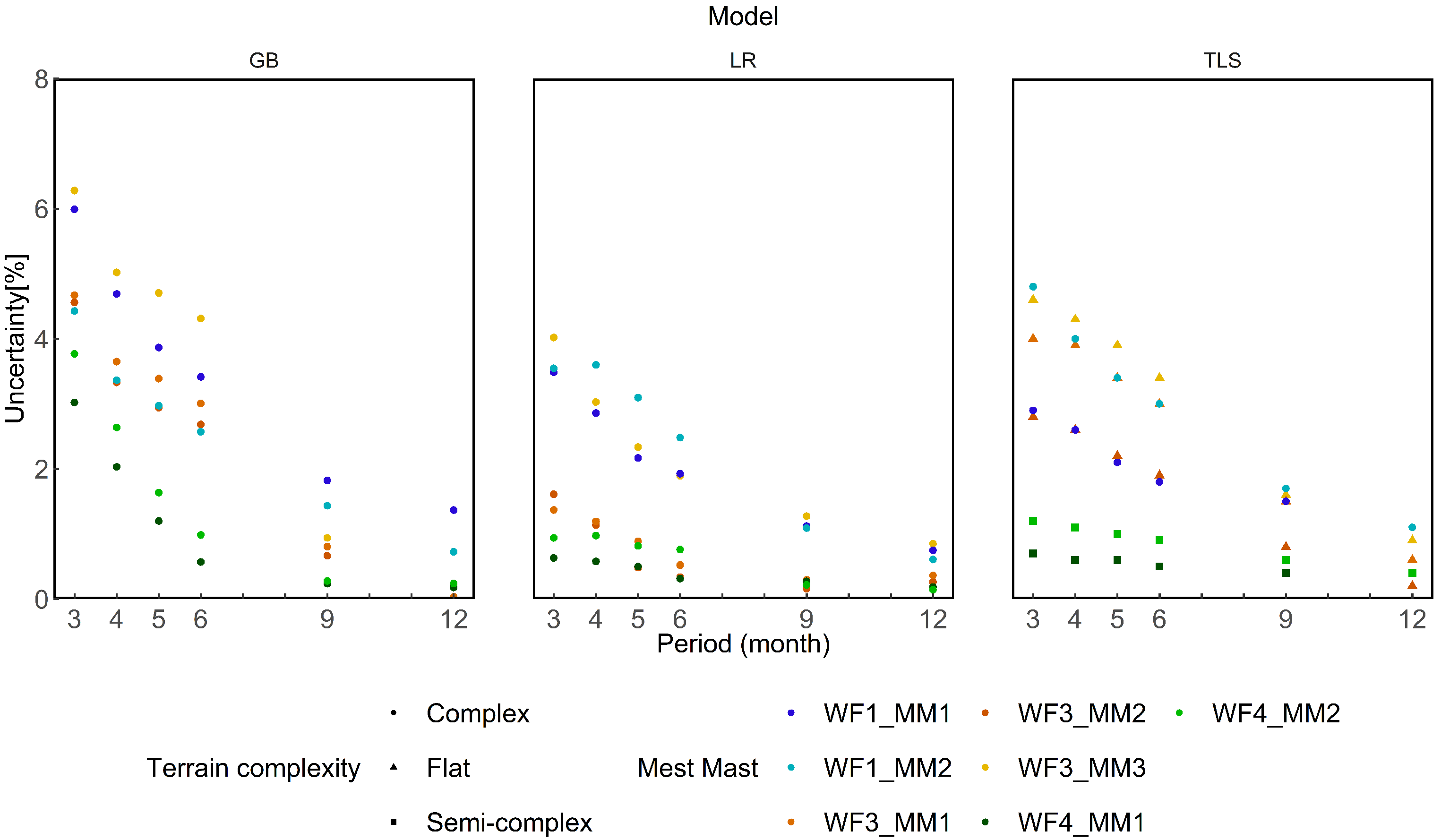
The available masts are located across diverse terrains (flat, semi-complex, and complex) within onshore environments. In this dataset, 4 secondary masts are located in flat terrain, 10 in semi-complex terrain, and 7 in complex terrain. Terrain complexity has been considered as an input variable for evaluating the impact of measurement campaign length.
A concurrent period of up to twenty-seven months, whenever possible, was considered between each primary–secondary mast pair to perform the wind speed correlation required for the analysis.
Prior to the MCP analysis, all wind speed and wind direction time series were subjected to a standardized quality-control (QC) procedure combining automated flagging and expert review. Automated QC was performed using the commercial software Windographer [
13], applying predefined physical-consistency, sensor-range, variability, and icing-detection rules. Additional manual screening was conducted through visual inspection of time series and cross-checks between sensors and mast levels. For transparency and reproducibility, the complete set of QC rules, thresholds, and typical data-removal impacts is reported in
Appendix A (
Table A1 and
Table A2), together with the final temporal resolution and effective sample size used in the analysis. Due to data-confidentiality constraints, mast-level removal rates and exact post-QC record counts are not disclosed; however, the QC workflow was applied consistently across all masts and measurement windows, and only time series with high data availability were retained for the subsequent analysis.
For each wind farm, the representative wind speed at the primary mast (reference data), without long-term correction, was extrapolated to each secondary mast (target data) using correlations based on daily mean wind speeds measured at both masts.
2.2. Measure-Correlate-Predict Models
This section describes the methodologies applied to compare the results and their uncertainty of the three selected MCP models (measure-correlate-predict). Most MCP methods require a significantly high degree of correlation between the target (secondary mast) and reference data (primary mast). On the other hand, MCP models are mainly considered in two groups as linear and nonlinear models. In this analysis, it has been considered “Multiple Linear Regression” algorithm (LR) [
14] and Total Least Squares Method (TLS) [
15] as linear models and, on the other hand, “Quantile Gradient Boosting” (GB) algorithm [
16] as nonlinear model.
2.2.1. Total Least Squares (TLS) Method
Total Least Squares (TLS) [
17] is an extension of the classical least squares approach designed for scenarios where both independent and dependent variables contain measurement errors.
In this paper, TLS is used to characterize the linear wind-speed relationship between the considered primary and the secondary mast in each analysed case.
In the context of meteorological mast correlations, TLS can provide a more reliable estimation of wind-speed relationships between the primary (independent) and secondary (dependent) masts. This results in more robust linear models, particularly when input data exhibit noise or inconsistencies due to measurement quality.
The following equations provide the TLS implementation used for the considered linear fit
. TLS is an errors-in-variables regression that estimates
m and
b by minimizing the orthogonal (perpendicular) distances from the paired observations
to the fitted line (in contrast to ordinary least squares (OLS), which minimizes vertical residuals). This closed-form expression corresponds to the classical unweighted orthogonal regression solution, which is mathematically equivalent to the singular value decomposition (SVD)-based TLS formulation described in [
18,
19].
For
N paired samples, we compute the centered scatter terms:
where
and
denote sample means. The TLS slope is then obtained in closed form as:
and the intercept is:
This estimator accounts for uncertainty in both
x and
y, which matches the mast-to-mast measurement setting considered in this study. In practice, the TLS correlation was implemented using the commercial software Windographer (UL Solutions) through the
Long Term Adjustments module (
Correlate Speed submodule) with the
Total Least Squares (TLS) algorithm [
13].
2.2.2. Quantile Gradient Boosting (GB)
“Quantile Gradient Boosting” (GB) [
16,
20,
21,
22] is a supervised, non-linear regression method based on decision trees, where boosting constructs an additive predictor by sequentially fitting weak learners. Given a training sample
, the goal is to find a function
that minimizes the expected value of a specified loss function
:
Boosting approximates
by an additive expansion
where
denotes the
m-th base learner (here, a regression tree). The model is fit in a forward stage-wise manner and updated as
where
is the shrinkage (learning-rate) parameter.
In this work, GB is used in its quantile-regression form by selecting the quantile (pinball) loss for a chosen quantile level
:
Accordingly, each new tree is fitted to the current pseudo-residuals (negative gradient of the loss), so that successive learners correct the remaining errors of the ensemble [
16,
20]. GB can estimate conditional quantiles; however, in this study we only used
(median) and therefore we do not report prediction intervals.
In practice, the model was trained in R using the
lightgbm package in its quantile-regression setting (
objective =
"quantile") with
alpha = 0.50 (i.e.,
= 0.50) [
23]. The hyperparameters were optimized through grid search. The optimization results indicate that the relationship between the wind speeds of the meteorological stations can be determined using a Quantile Gradient Boosting model with
num_iterations = 1000,
max_depth = 3,
learning_rate = 0.1, and
num_leaves = 5. The model was trained for each meteorological station by combining the target wind speed at the secondary mast with all wind-speed measurements recorded at multiple heights at the reference mast, yielding a station-specific predictor.
2.2.3. Multiple Linear Regression (LR)
“Multiple Linear Regression” (LR) [
14] is a linear model that operates similarly to simple linear regression of the form
, but uses more than one independent variable, as described in Equation (
8)
where “
y” is the response variable, “
” are the independent variables,
is the intercept,
,
,
…,
are the regression coefficients, and
is the error term.
In this work, the linear model was fitted using quantile regression at
(i.e., the conditional median, P50), consistent with the quantile-based formulation used for the GB model [
24,
25]. Following Koenker and Bassett [
24] and Koenker and D’Orey [
26], regression quantiles are defined as solutions to the optimization problem:
where
,
n is the number of observations,
is the vector of predictors for observation
i, and
is the coefficient vector. Under the linear location-shift model
, the corresponding conditional quantile function is [
26]:
In practice, the fit was computed in R using the
rq function from the
quantreg package with its default solver, the modified Barrodale–Roberts algorithm (
method=
br) [
26].
The objective of this model is to identify the best relationship between wind speed at the secondary meteorological station and the speeds at various heights at the primary station.
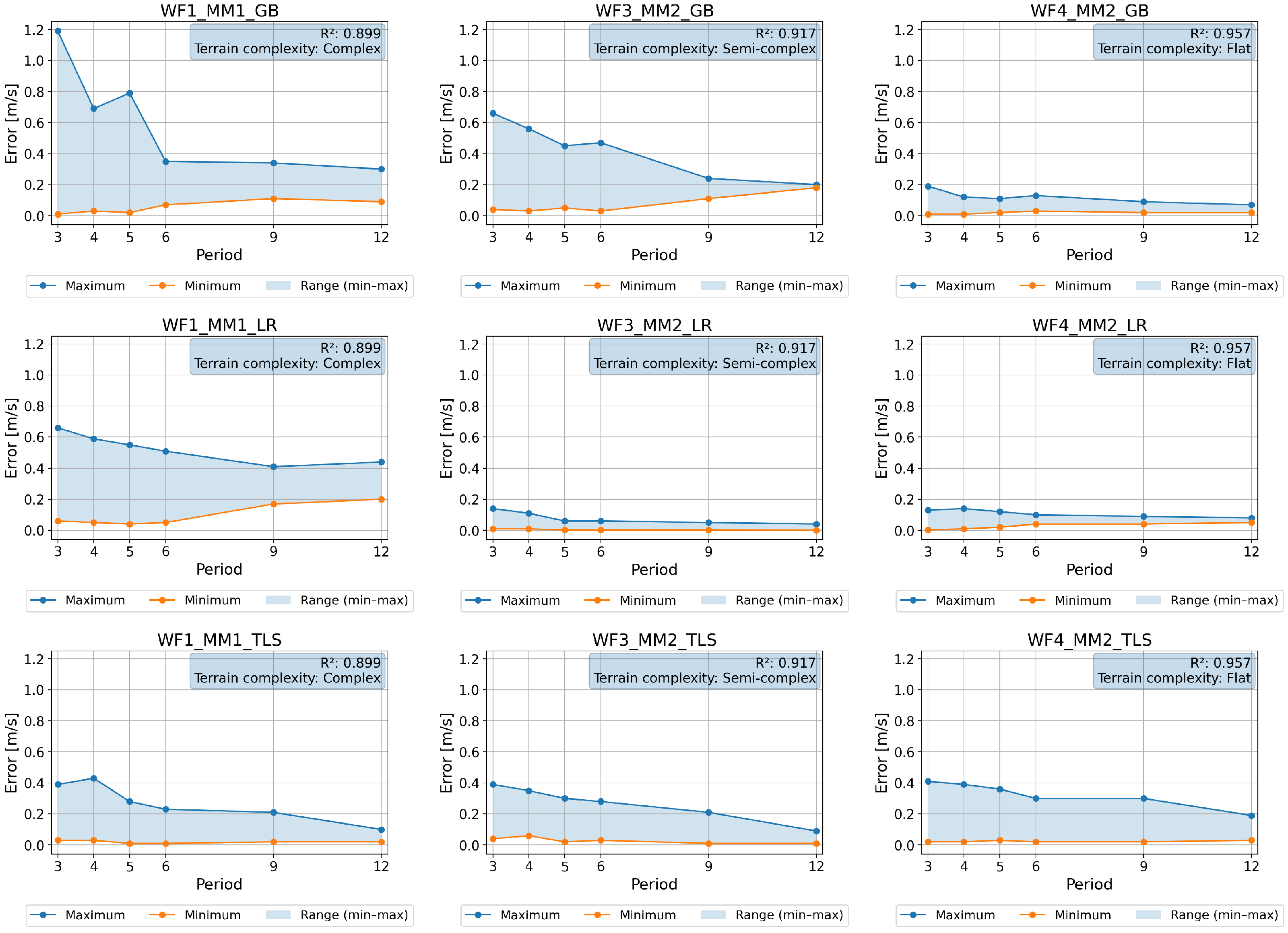
Data were grouped into study periods of 30 consecutive days. For model evaluation, all test data were used. Errors are represented by MAE, and the dispersion-based uncertainty metric defined in Equations (
13) and (
14).
2.3. Evaluation Metrics for Wind Speed Analysis
The main objective of this section is to describe the metrics used to quantify the accuracy of wind speed estimation at secondary masts based on their correlation with primary masts. These metrics form the basis for the subsequent analysis of the effect of measurement campaign length.
In this paper, two metrics are used:
Mean Absolute Error (MAE), used to quantify the absolute deviation between measured and estimated wind speeds.
Wind speed uncertainty (%), defined as the relative dispersion of the estimation error for each variable-length period.
The following subsections describe each metric in detail.
2.3.1. Mean Absolute Error (MAE)
Mean Absolute Error (MAE) [
27] is a metric used to evaluate the accuracy of the MCP models by quantifying the average absolute difference between estimated and measured wind speeds at the secondary mast. Smaller MAE values indicate better agreement between MCP estimates and observations.
The standard definition of MAE is:
For consistency with the notation used in this study, the MAE can be equivalently expressed as:
where:
is the wind speed estimated by the MCP model at sample i.
is the measured wind speed at the secondary mast for the same sample.
N is the number of samples within the available period at the secondary mast.
2.3.2. Dispersion-Based Uncertainty (Error Dispersion) in Terms of Wind Speed
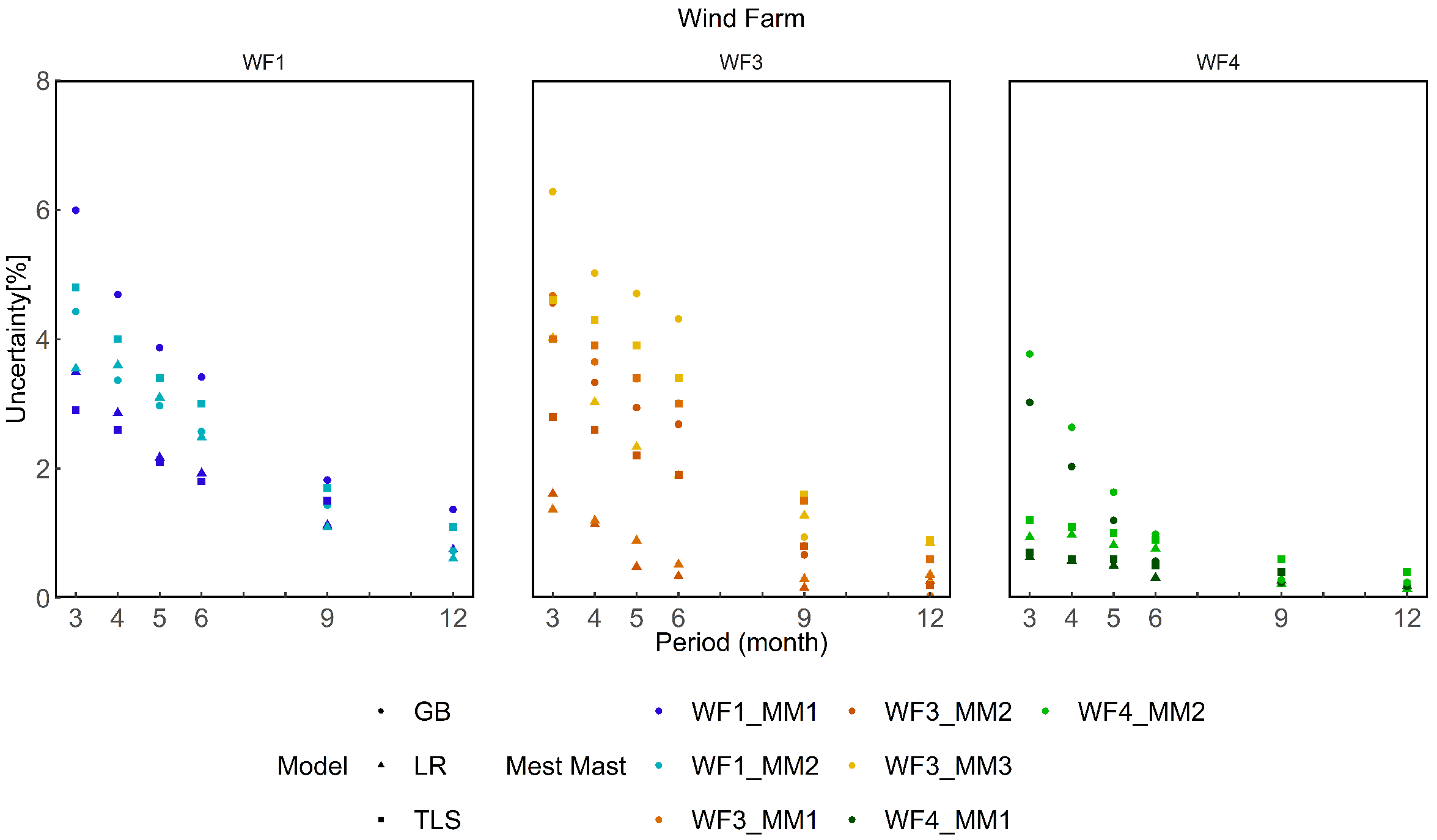
In addition to analysing MAE, the dispersion-based uncertainty (error dispersion) in wind speed estimation was computed for each of the considered variable-length periods (3, 4, 5, 6, 9, and 12 months). For this study, dispersion-based uncertainty is defined as the relative standard deviation of the MCP estimation error, normalised by the average wind speed measured at the secondary mast during the available period.
This can be written more compactly as:
where:
is the wind speed estimated at the secondary mast by the MCP model for sample i.
is the measured wind speed at the secondary mast for the same sample.
is the estimation error at sample i.
is the mean estimation error:
is the sample standard deviation of the error series.
is the mean measured wind speed at the secondary mast over the available period:
N is the number of available samples within the reference period at the secondary mast.
In this work, “uncertainty” refers to the dispersion of the prediction error (standard deviation) normalized by the mean wind speed. This metric does not quantify systematic over- or underestimation (bias). It is used here to analyse the trend of uncertainty reduction with increasing campaign length, supporting a cost–benefit interpretation of whether adding an additional month of measurements provides a meaningful reduction in error dispersion.
This formulation links the uncertainty directly to the length of the measurement period at the secondary mast and provides a consistent measure for comparing MCP model performance across periods and sites. In this study, uncertainty is used as a dispersion measure of error, defined as the standard deviation of the MCP error series normalized by the mean measured wind speed (dimensionless, in %). This choice is well suited to wind applications because wind-speed errors naturally fluctuate due to turbulence, wake effects, terrain heterogeneity, and sensor-related variability; a dispersion-based metric captures how the stability of the estimation evolves as the campaign length increases, which is the central focus of this work. Normalization ensures comparability across sites and wind regimes, and reporting uncertainty is consistent with common practice in wind resource and performance assessment (e.g., IEC/IEA/MEASNET guidance).
2.4. Uncertainty Reduction Analysis
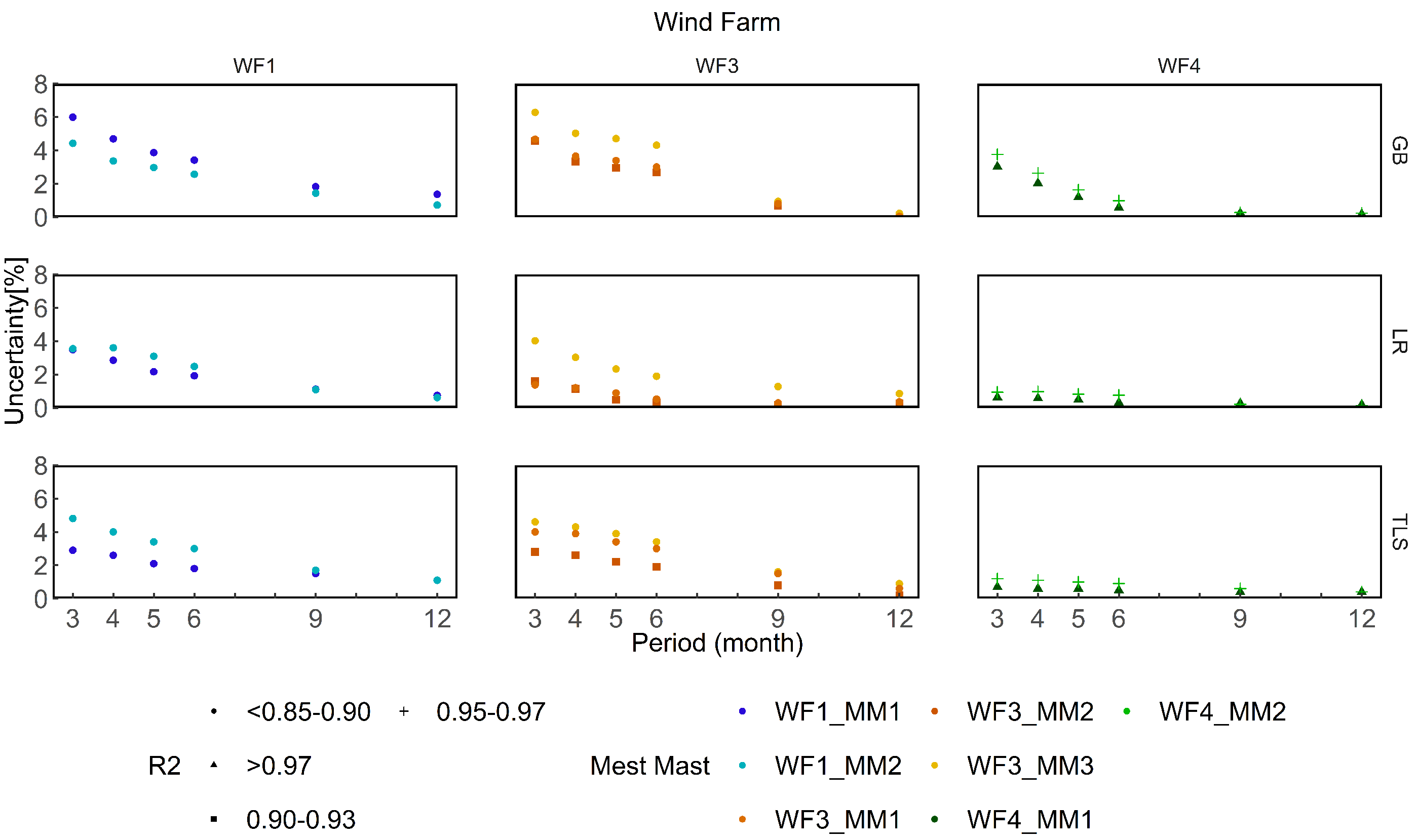
This subsection describes the post-processing strategy used to analyse how wind speed uncertainty decreases as the measurement campaign length increases. The analysis is performed for all MCP models and is further stratified by two key factors that influence uncertainty behaviour: (i) terrain complexity (flat, semi-complex, and complex), and (ii) the correlation coefficient () between primary and secondary masts. These factors allow the evaluation of how different site conditions affect both the absolute uncertainty levels and the incremental reduction achieved when extending the campaign duration.
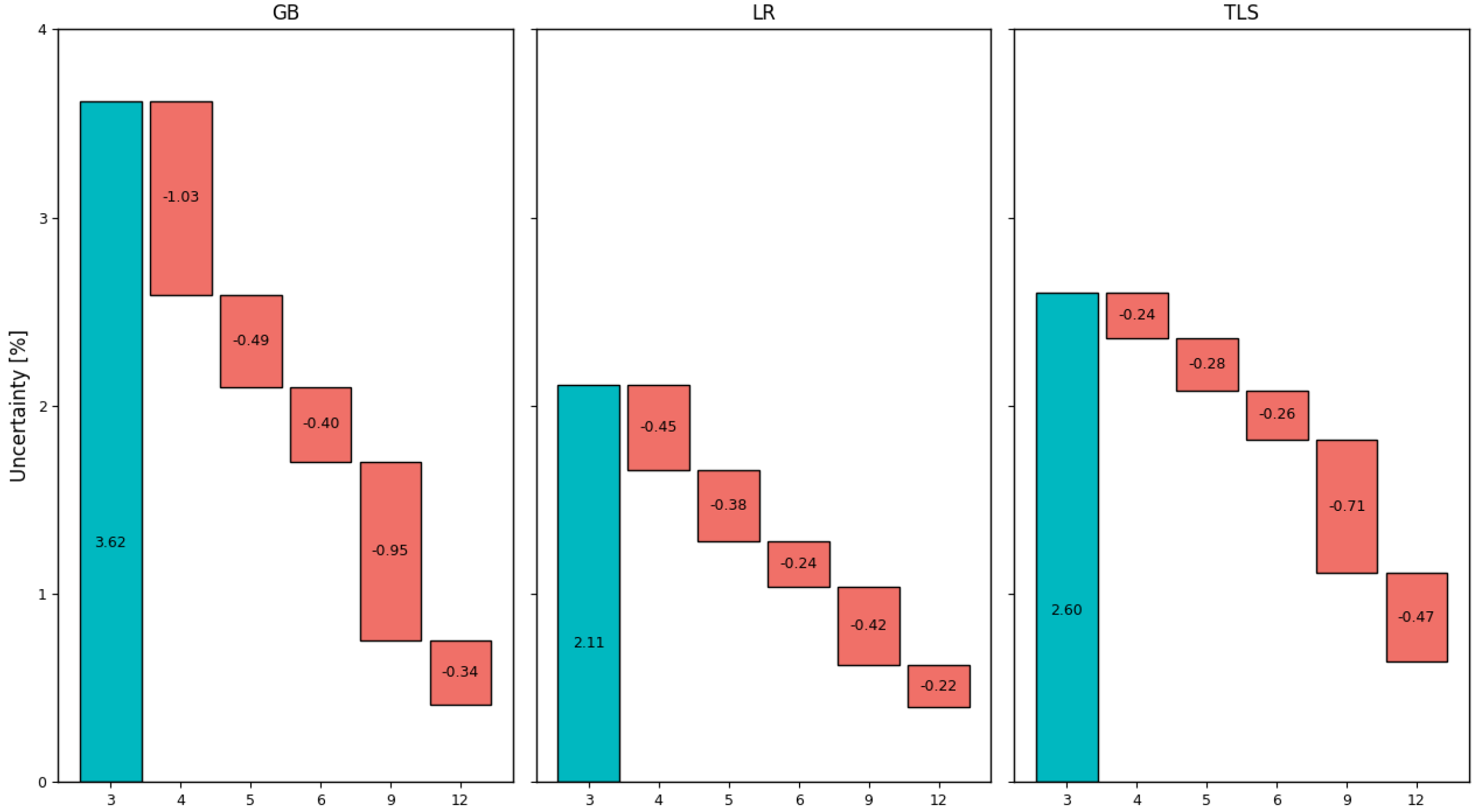
2.4.1. Gain in Wind Speed Uncertainty
This analysis quantifies how wind speed uncertainty decreases when the measurement campaign is extended. For each MCP model and for each fixed campaign length, the uncertainty was first computed as defined in
Section 2.3.2. The gain in uncertainty is then obtained by calculating the difference in uncertainty between two consecutive campaign lengths (e.g., between 3 and 4 months, 4 and 5 months, etc.).
All available primary–secondary mast pairs were included in this calculation, treating each campaign length as an independent sample. The identity of each mast is not considered relevant in this context, since the objective is to characterize the dependence of uncertainty on campaign duration rather than on site-specific conditions.
The gain therefore represents the average reduction in wind speed uncertainty attributable to adding one additional month of measurements, aggregated across all sites and MCP methods.
2.4.2. Impact of Campaign Length (Terrain, , Linearity)
In addition to evaluating the overall gain in uncertainty, a second analysis was conducted to assess how site characteristics influence the rate at which uncertainty decreases with increasing campaign length. This analysis considers two key factors: terrain complexity and the correlation coefficient () between primary and secondary meteorological masts.
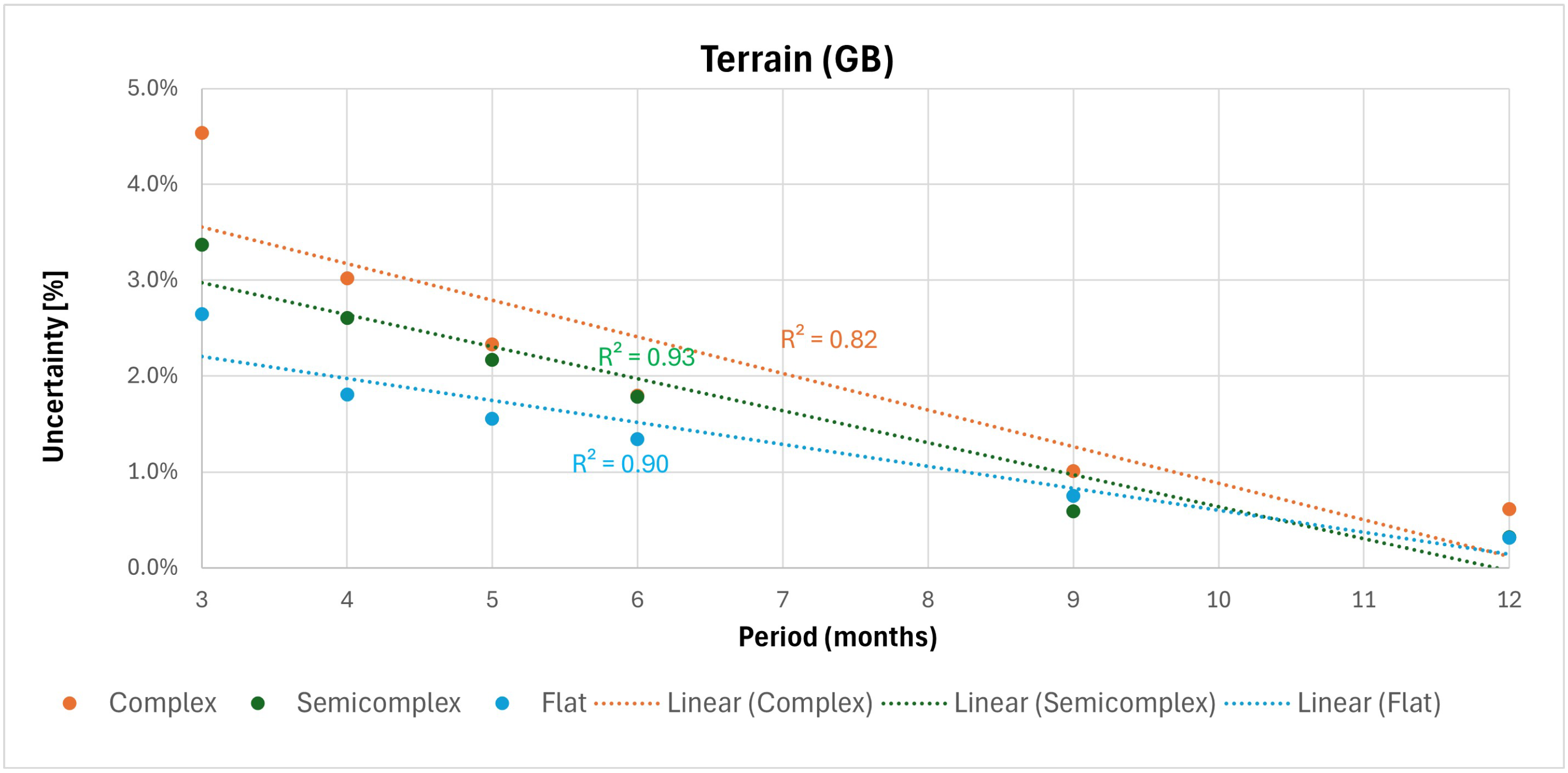
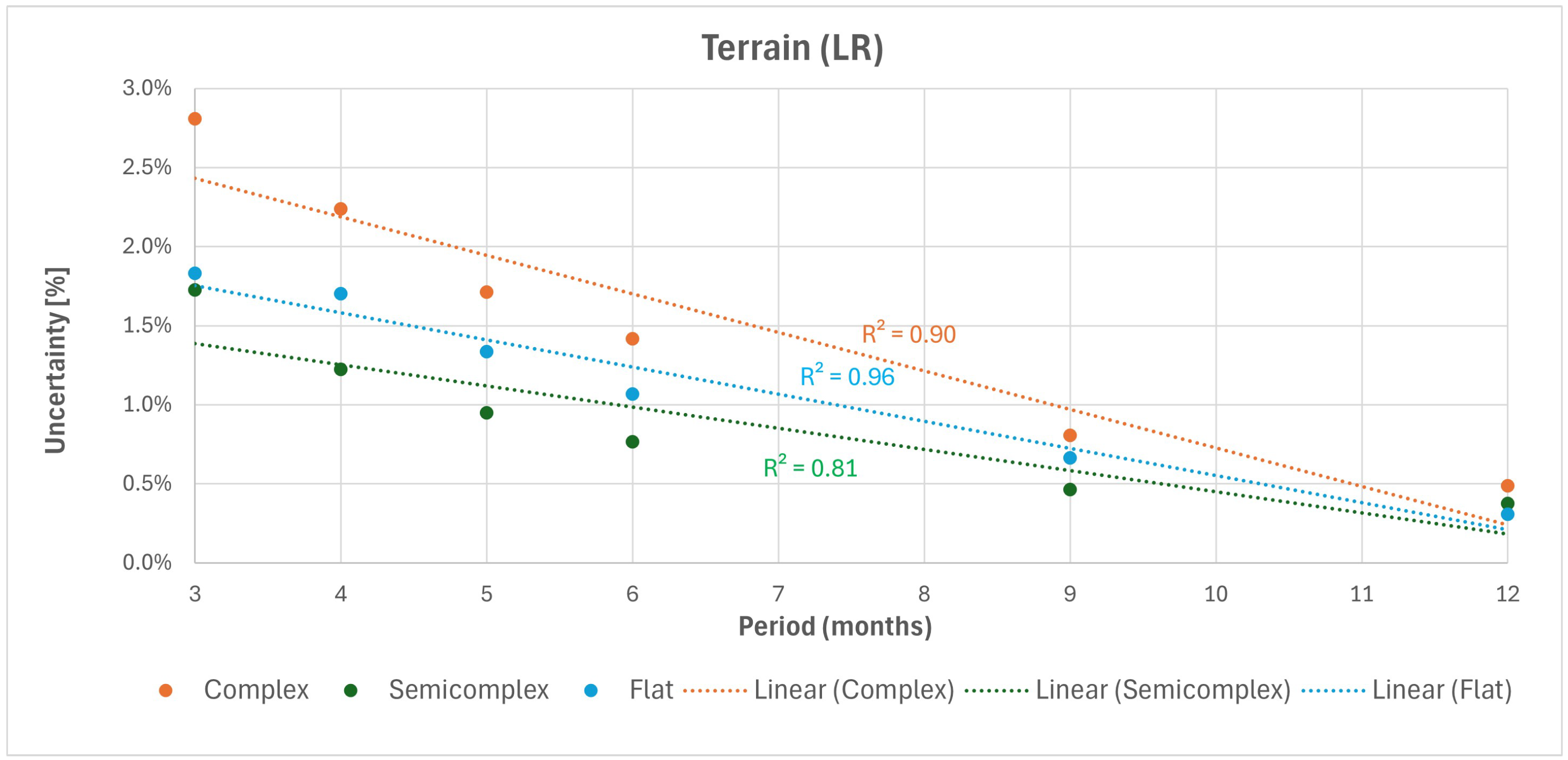
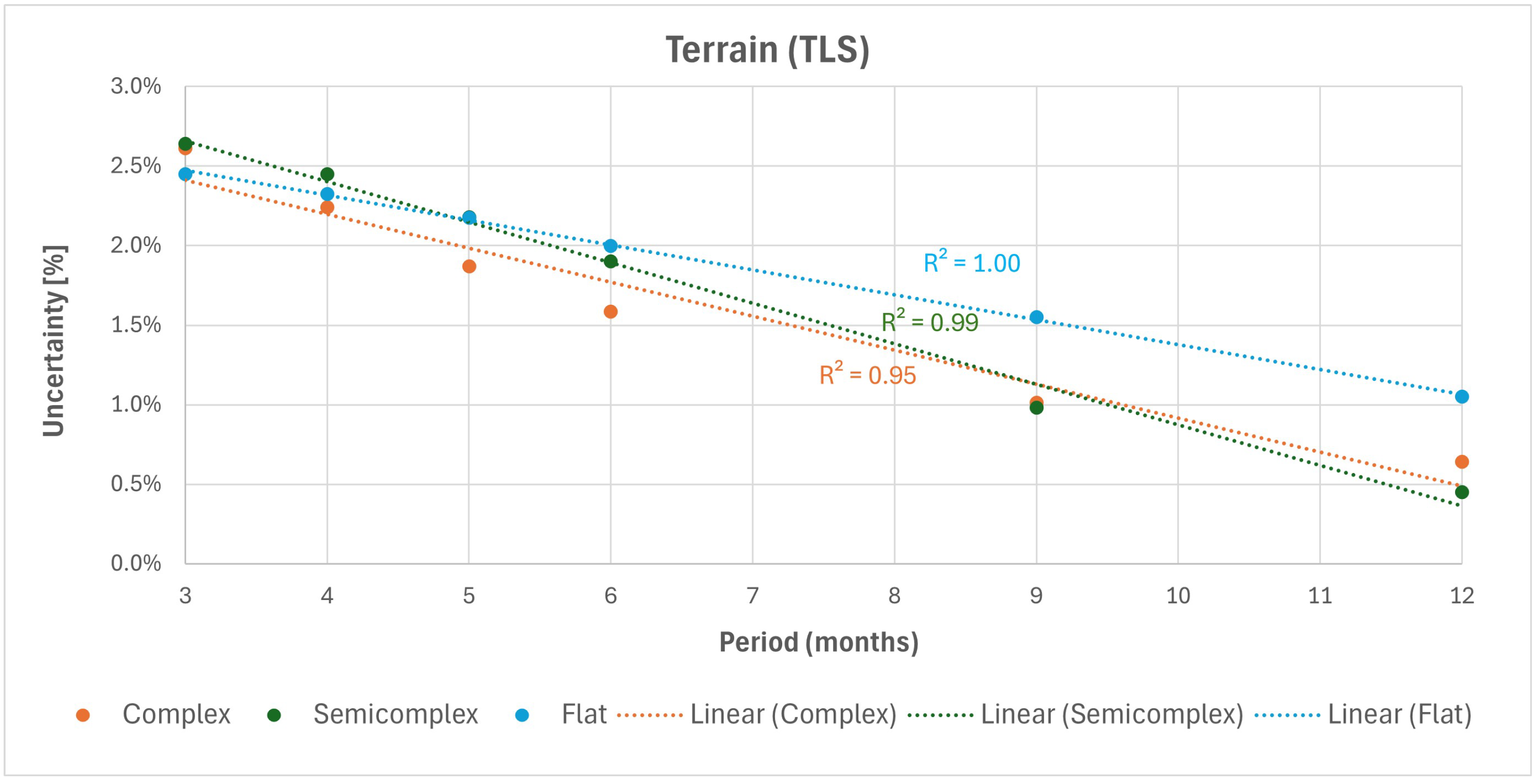
For each fixed campaign duration, uncertainty values were grouped according to the terrain classification of the site (flat, semi-complex, or complex). Averaging the uncertainty across all masts within each terrain class yields representative uncertainty values for every campaign length. The relationship between uncertainty and campaign duration was then examined, and a linear trend was identified. This linear behaviour enables the estimation of uncertainty values for intermediate campaign durations not originally included in the dataset (i.e., 7, 8, 10, and 11 months), which are derived by interpolation.
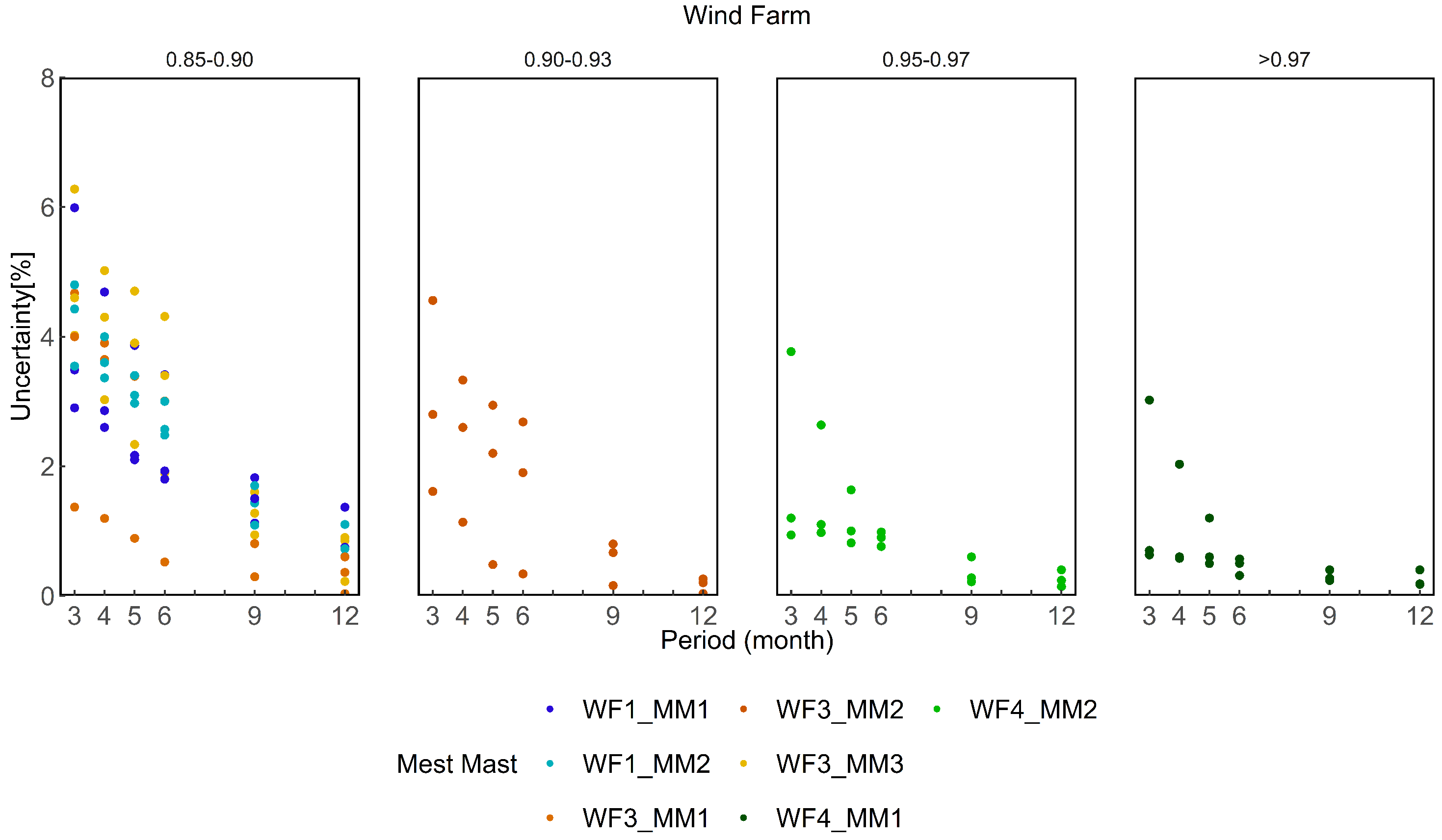
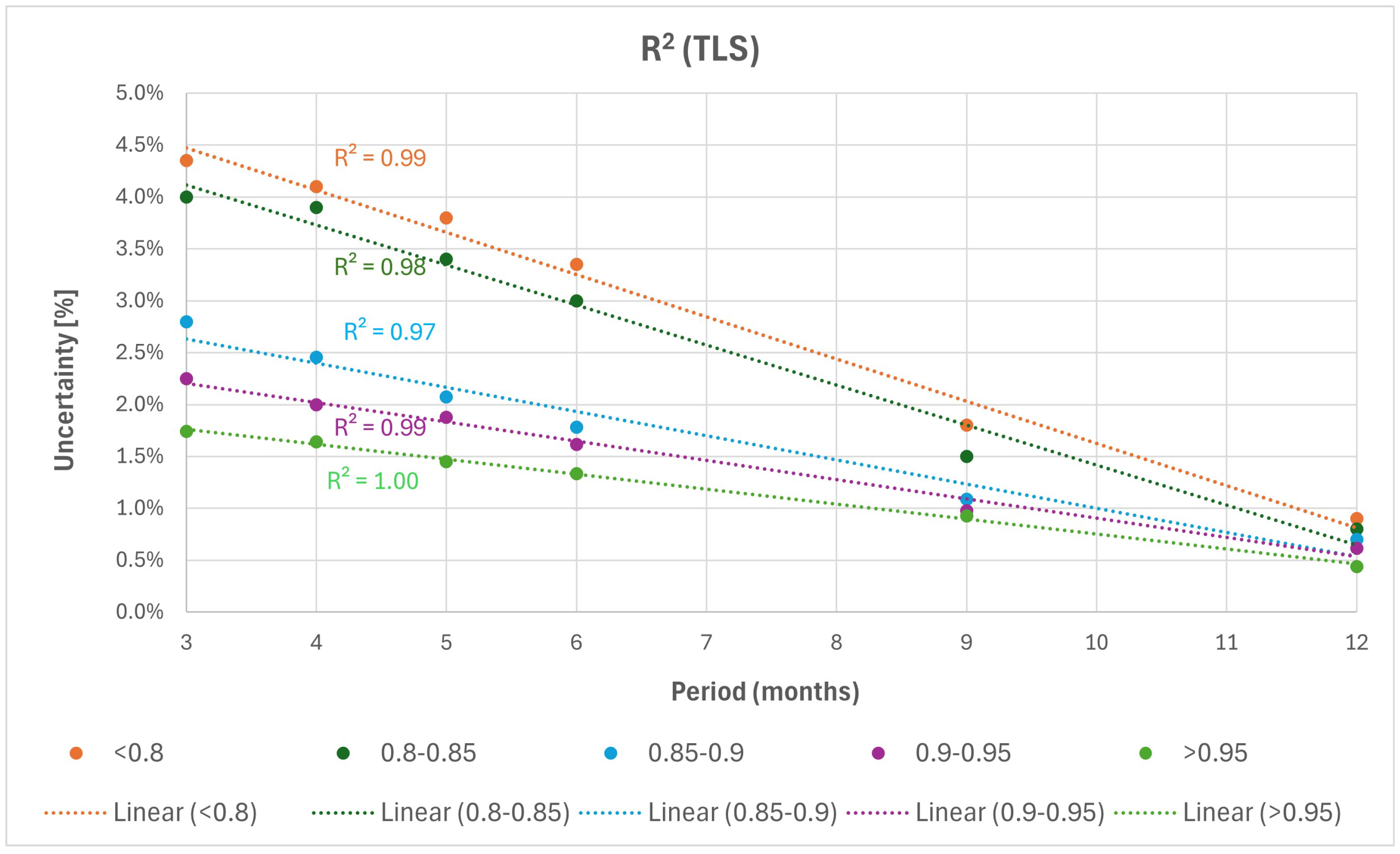
A parallel analysis was performed based on the correlation coefficient (), focusing exclusively on the TLS model, since LR and GB do not compute correlation coefficients for each campaign length. Uncertainty values were grouped into intervals ranging from 0.80 to 1.00, using increments of 0.05. For each interval, representative uncertainty values were derived for each campaign length, and the corresponding monthly uncertainty reduction was obtained.
This approach allows the influence of both terrain complexity and inter-mast correlation on the uncertainty–duration relationship to be quantified, providing a structured basis for interpreting the results presented in
Section 3.
4. Conclusions
This study evaluates how the duration of a wind measurement campaign influences the accuracy and uncertainty of MCP-based wind speed estimation at secondary meteorological masts. The analysis was carried out across nine sites with different terrain characteristics, using a total of 21 pairs of primary-secondary meteorological masts, and applying three MCP methods—Total Least Squares (TLS), Multiple Linear Regression (LR), and Gradient Boosting (GB). The assessment incorporates two key indicators, MAE and wind-speed uncertainty, and examines how both terrain complexity and the inter-mast correlation coefficient affect the monthly reduction in uncertainty, thereby providing a comprehensive view of how site conditions modulate the benefits of extending campaign length.
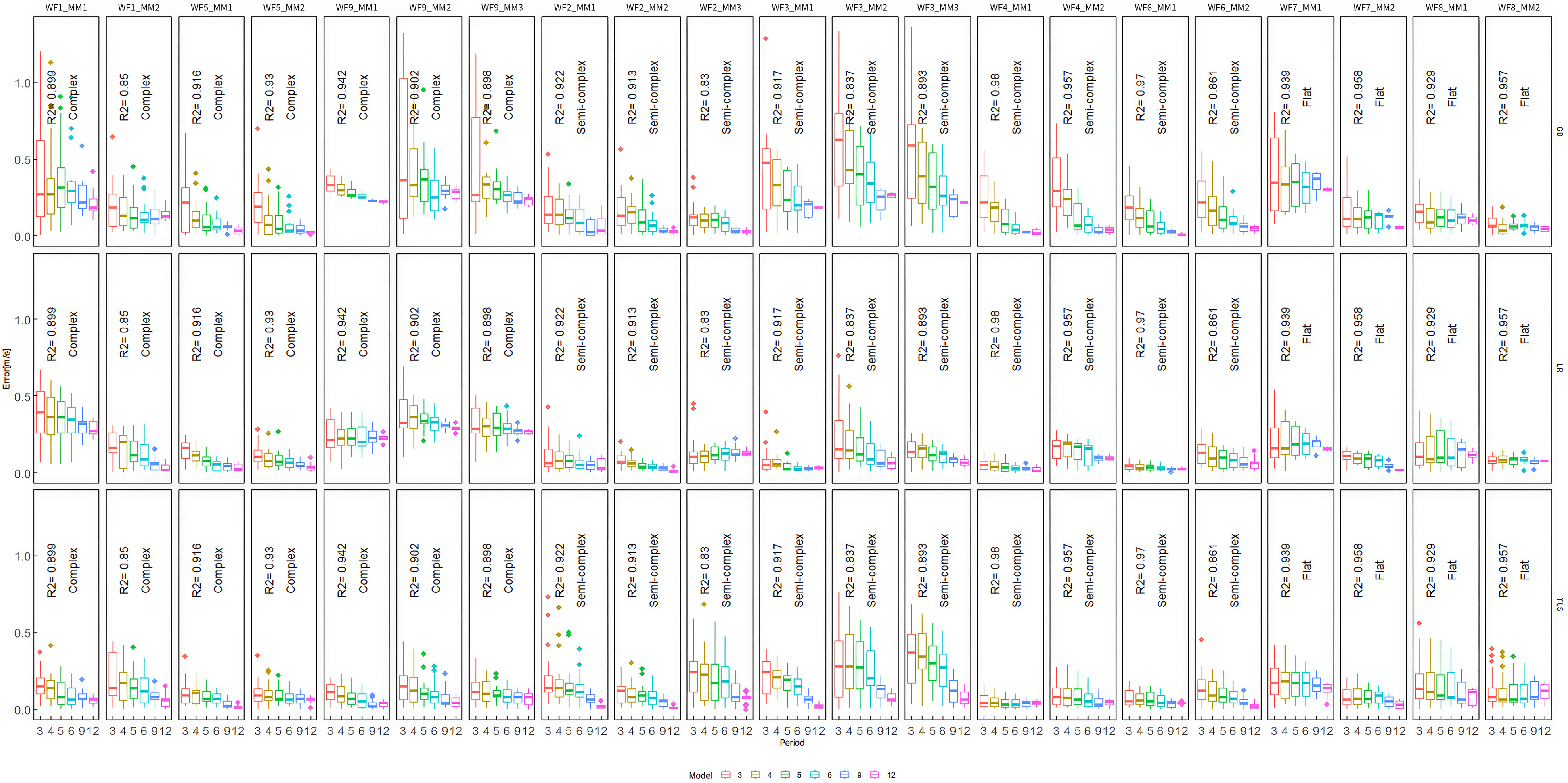
The results show that longer measurement campaigns consistently improve MCP accuracy, with MAE values decreasing and their dispersion narrowing as the campaign length increases. This behaviour is observed regardless of terrain complexity or MCP method, although linear methods (TLS and LR) exhibit lower variability and greater robustness than the non-linear GB model. This result delineates the short-sample, limited-input regime in which linear MCP methods remain a robust baseline and indicates that any systematic advantage of non-linear ML models is more likely to emerge with longer concurrent records and richer predictors. The present analysis relies on wind-speed data that are consistently available across all sites; with this input set, the causal contribution of individual physical mechanisms (e.g., stability, turbulence intensity, wake/terrain-induced effects) to the observed error variability cannot be isolated. Nevertheless, the dependence on terrain complexity and inter-mast correlation is physically plausible: complex terrain typically increases spatial heterogeneity and flow distortion, reducing the stationarity of the mast-to-mast relationship and requiring longer sampling to achieve representative conditions, whereas lower inter-mast correlation indicates that a larger fraction of variability is not explained by the reference mast alone. Accordingly, terrain class and can be interpreted as practical proxies for the combined influence of these physical drivers on the dispersion of MCP errors. Within this scope, the reduction of uncertainty with longer measurement periods is mainly statistical: longer campaigns improve the representativeness of observed conditions and stabilize MCP fitting, thereby reducing error dispersion across rolling windows. Mechanism-resolving attribution using additional covariates remains a clear direction for future work.
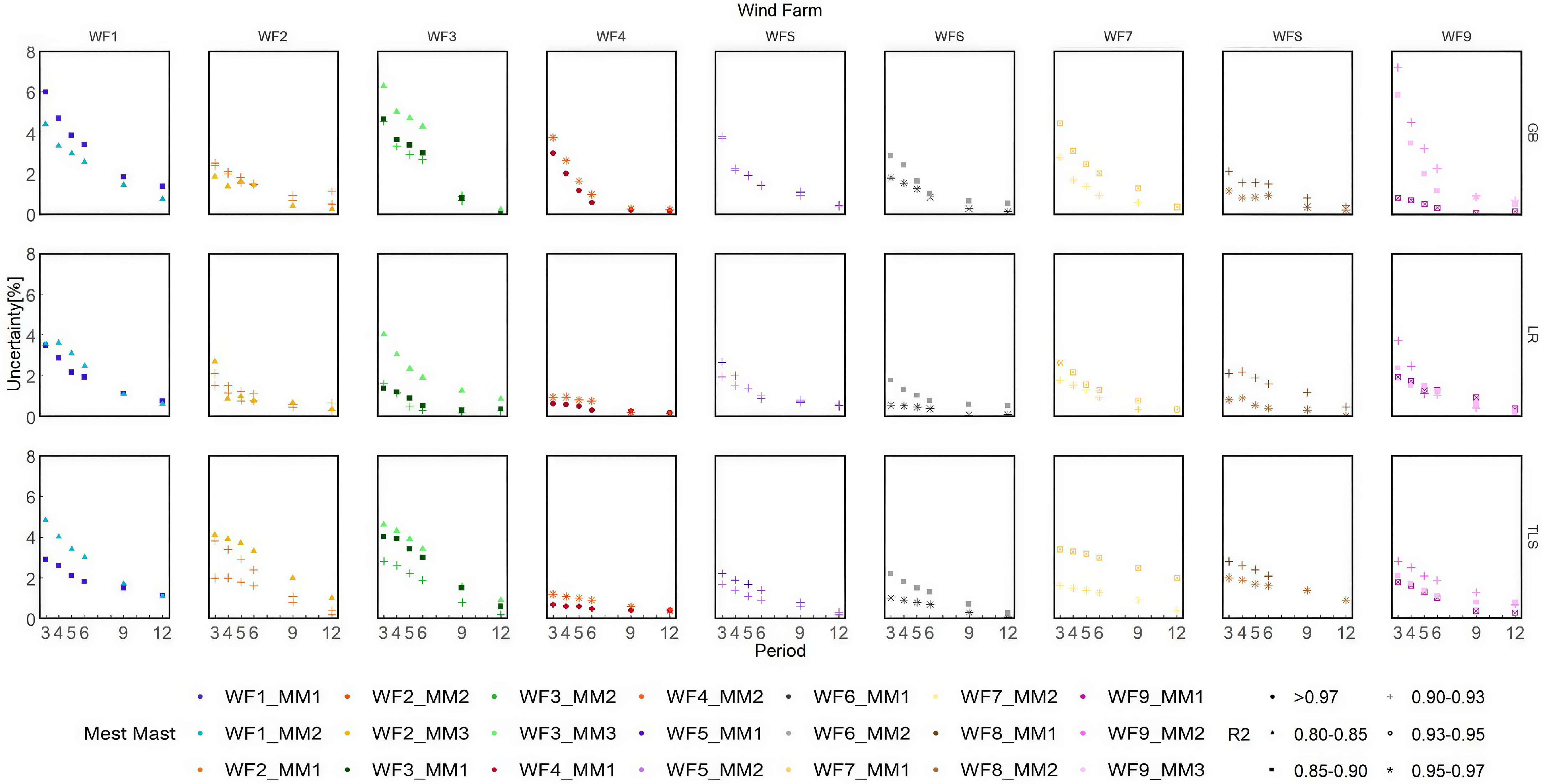
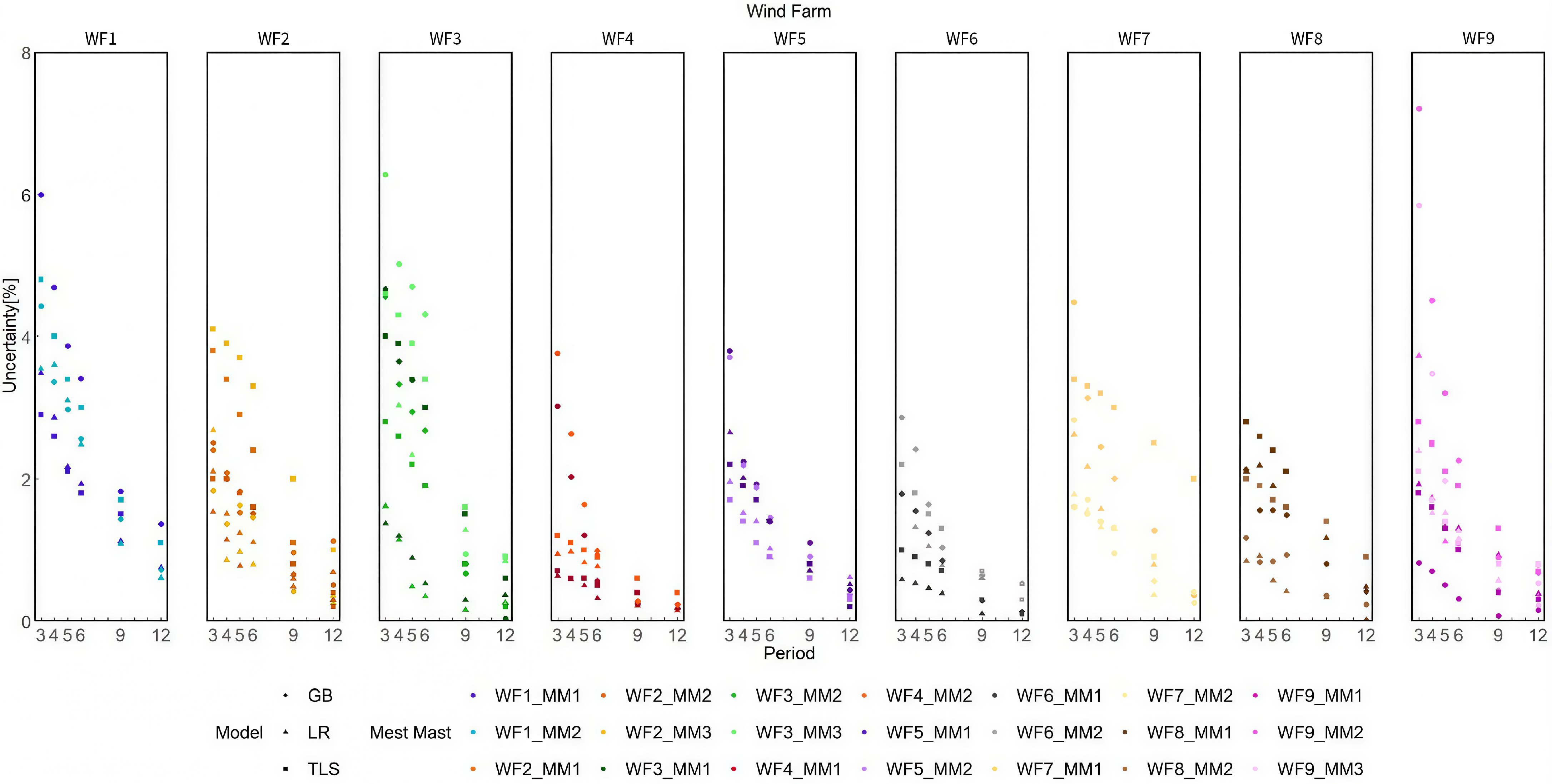
Regarding uncertainty, the results demonstrate a systematic reduction in wind-speed uncertainty with increasing campaign duration. Uncertainty decreases progressively from 3 to 12 months and is strongly influenced by both terrain complexity and the correlation between primary and secondary masts. Linear models again outperform GB, providing more stable uncertainty estimates across varying site conditions.
The analysis of the monthly gain in uncertainty reduction—obtained by quantifying the decrease in uncertainty when extending the campaign—reveals representative ranges between approximately 0.14% and 0.41% per additional month, depending on terrain type and inter-mast correlation. Terrain-based results show that GB provides the largest reductions in complex and semi-complex terrains, followed by TLS, while LR yields smaller reductions in these terrain classes. For flat sites, TLS and LR behave similarly, while GB yields marginally higher reductions. TLS provides typical reductions of 0.21–0.25% in complex and semi-complex terrains and 0.16% in flat terrains, offering practical reference values for campaign-length optimisation.
Rather than reiterating the general principle that longer campaigns reduce uncertainty, the added value of this work lies in quantifying the marginal monthly uncertainty reduction and demonstrating how these rates vary with terrain complexity and inter-mast correlation, providing empirical reference ranges for campaign-length decisions.
Correlation-based analysis confirms that sites with lower require longer campaigns to reach comparable uncertainty levels. The lowest uncertainty is obtained for correlations above 0.95, while increased dispersion persists at values around 0.95 and particularly below 0.90, especially for shorter campaign durations.
Overall, the combined analysis of MAE, uncertainty evolution, and the derived monthly gain demonstrates how terrain characteristics and inter-mast correlation jointly govern the rate at which uncertainty decreases as the measurement campaign is extended. Based on extensive multi-site empirical evidence, the study provides actionable guidance for selecting appropriate campaign lengths and improving the robustness of MCP-based wind resource assessments, ultimately supporting more reliable project development and energy yield evaluation.
A limitation is that the analysis does not quantify the systematic risk of incomplete annual coverage for any single short campaign (e.g., missing a high-wind season), nor does it provide season-specific uncertainty curves. Therefore, the benchmarks describe average expected behaviour over many possible start dates, and site-specific seasonal-bias risk requires additional stratified analysis. Because the analysis is based on aggregated errors over multiple rolling campaign windows, the sign of the error is not preserved in a consistent manner across realizations. Consequently, bias-related metrics are not robustly defined within this framework and are left for future work based on fixed-reference MCP formulations.
Future work could extend the analysis beyond one-year measurement windows to better capture inter-annual variability and its effect on the uncertainty–duration relationship. Future work should also explicitly quantify seasonal bias by stratifying rolling windows by season (or by annual-coverage metrics) and evaluating whether short-campaign uncertainty differs systematically depending on the months sampled. Expanding the dataset to include additional sites—particularly spanning a broader range of terrain complexity—and extending it with longer concurrent records would enable re-training and re-assessment of ML models under larger effective sample sizes, thereby testing whether non-linear methods provide consistent gains beyond the short-campaign regime analysed here. Targeted analyses in locations with distinctive or “extreme” regimes (e.g., bimodal wind distributions, pronounced vertical shear, strong diurnal contrasts, or persistent stability transitions) would provide a robust test of whether the observed behaviours persist under challenging atmospheric conditions.
In addition, while this work focuses on a dispersion-based uncertainty metric to quantify how the spread of estimation errors contracts with added months of data, future studies could incorporate complementary error components (e.g., systematic offsets) and alternative outcomes. Finally, incorporating additional variables beyond mean wind speed—such as temperature, turbulence intensity, and other operationally relevant indicators—would enable assessing whether extending the measurement campaign by an additional month yields materially improved characterization of conditions linked to turbine loading and potential adverse effects over the asset lifetime.
When intermediate, non-computed campaign lengths are inferred, future work should also evaluate whether the assumed linear relationship holds across regimes and durations, and whether non-linear or piecewise trends provide a better description.




 ,
,