Article

Geant4-Based Characterization of Muon, Electron, Photon, and Hadron Signals from Atmospheric Showers in a Water Cherenkov Detector


by
Luiz Augusto Stuani Pereira
1,2,* and
Raiff Hugo Santos
2
1
Instituto de Física, Universidade de São Paulo (IFUSP), R. do Matão, 1371, São Paulo 05508-090, SP, Brazil
2
Unidade Acadêmica de Física, Universidade Federal de Campina Grande (UAF-UFCG), R. Aprígio Veloso, 882, Campina Grande 58429-900, PB, Brazil
*
Author to whom correspondence should be addressed.
Instruments 2025, 9(4), 28; https://doi.org/10.3390/instruments9040028

Submission received: 1 October 2025 / Revised: 11 November 2025 / Accepted: 21 November 2025 / Published: 24 November 2025
(This article belongs to the Special Issue Instruments for Astroparticle Physics)

Abstract

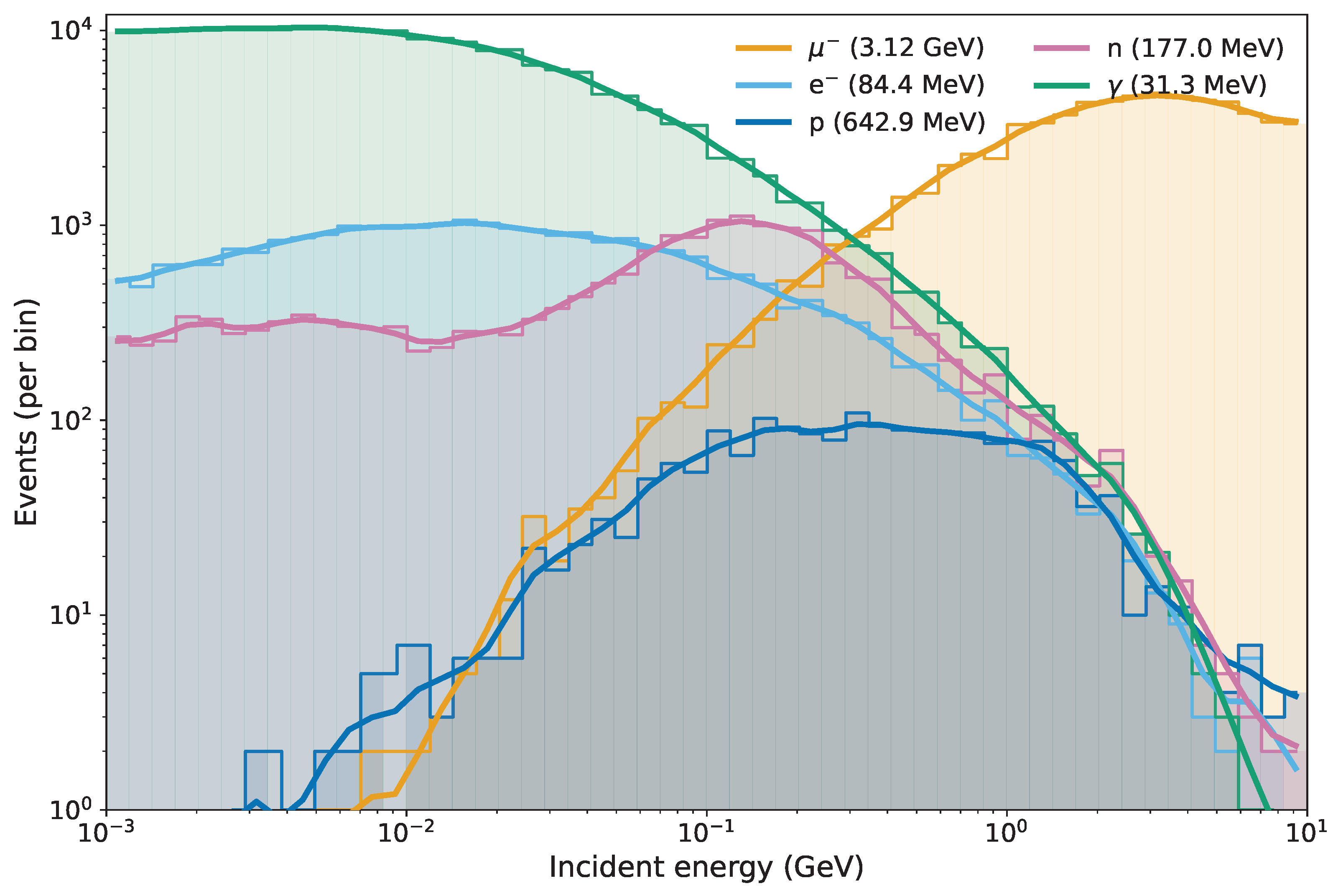
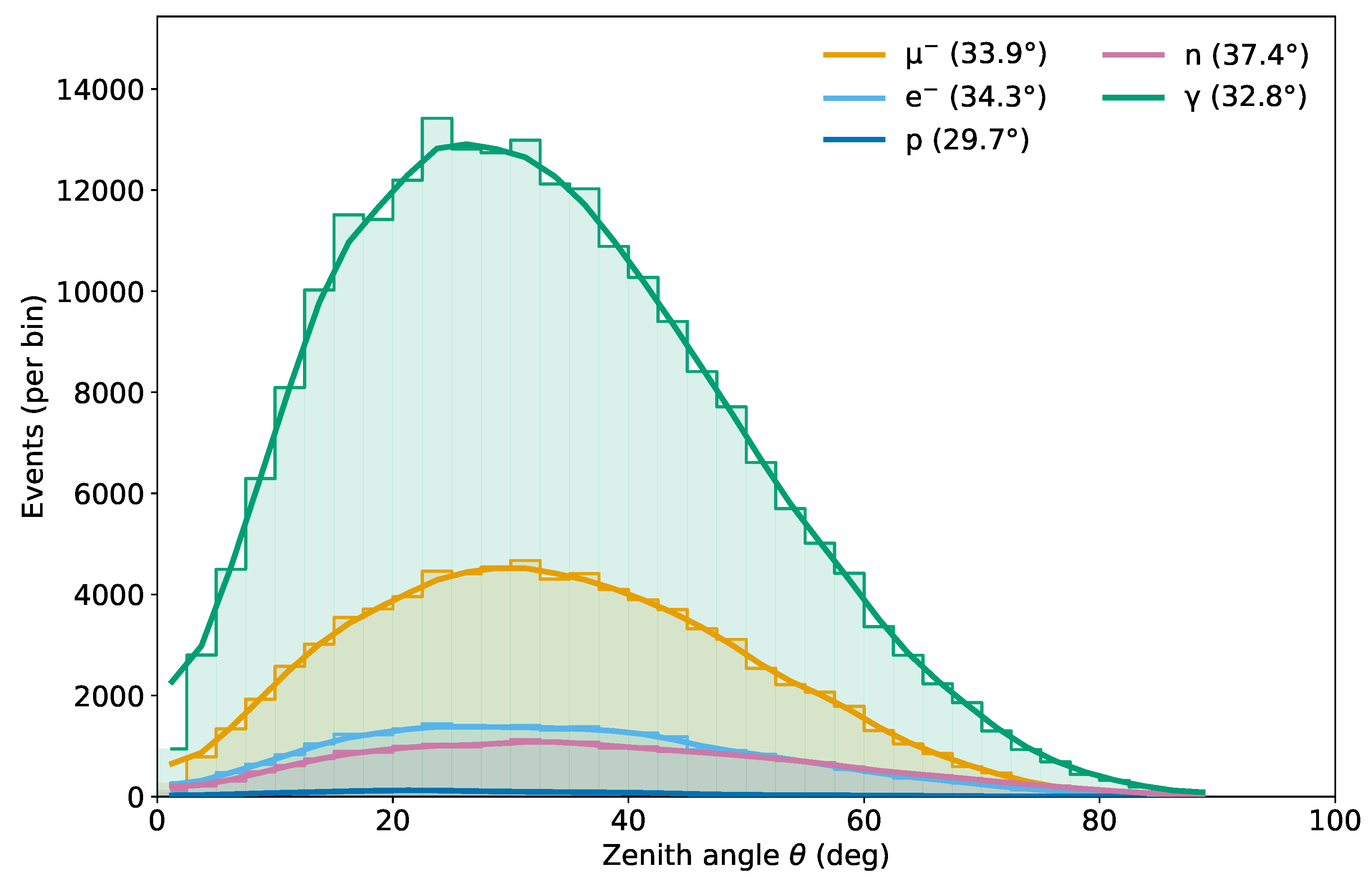
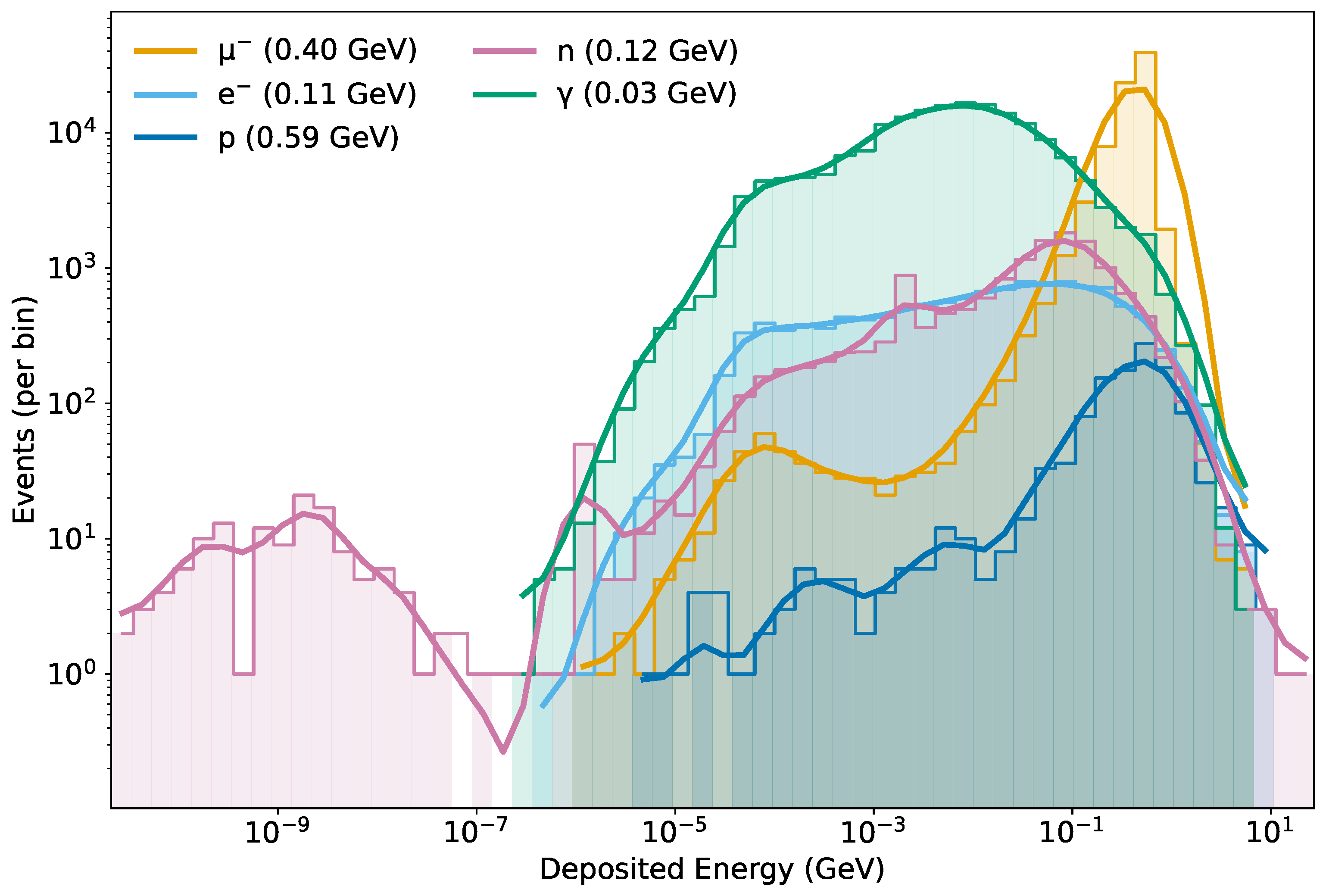
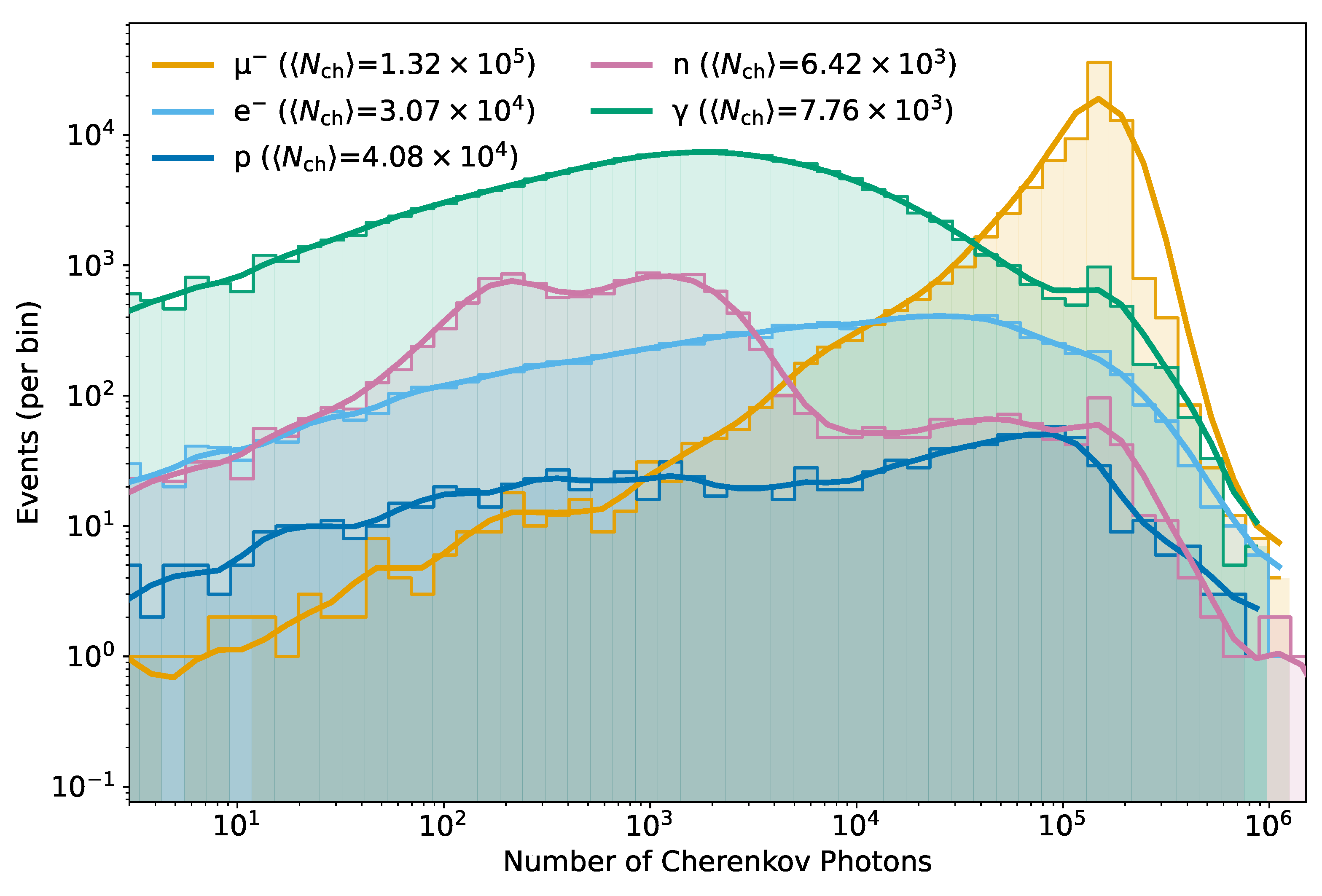
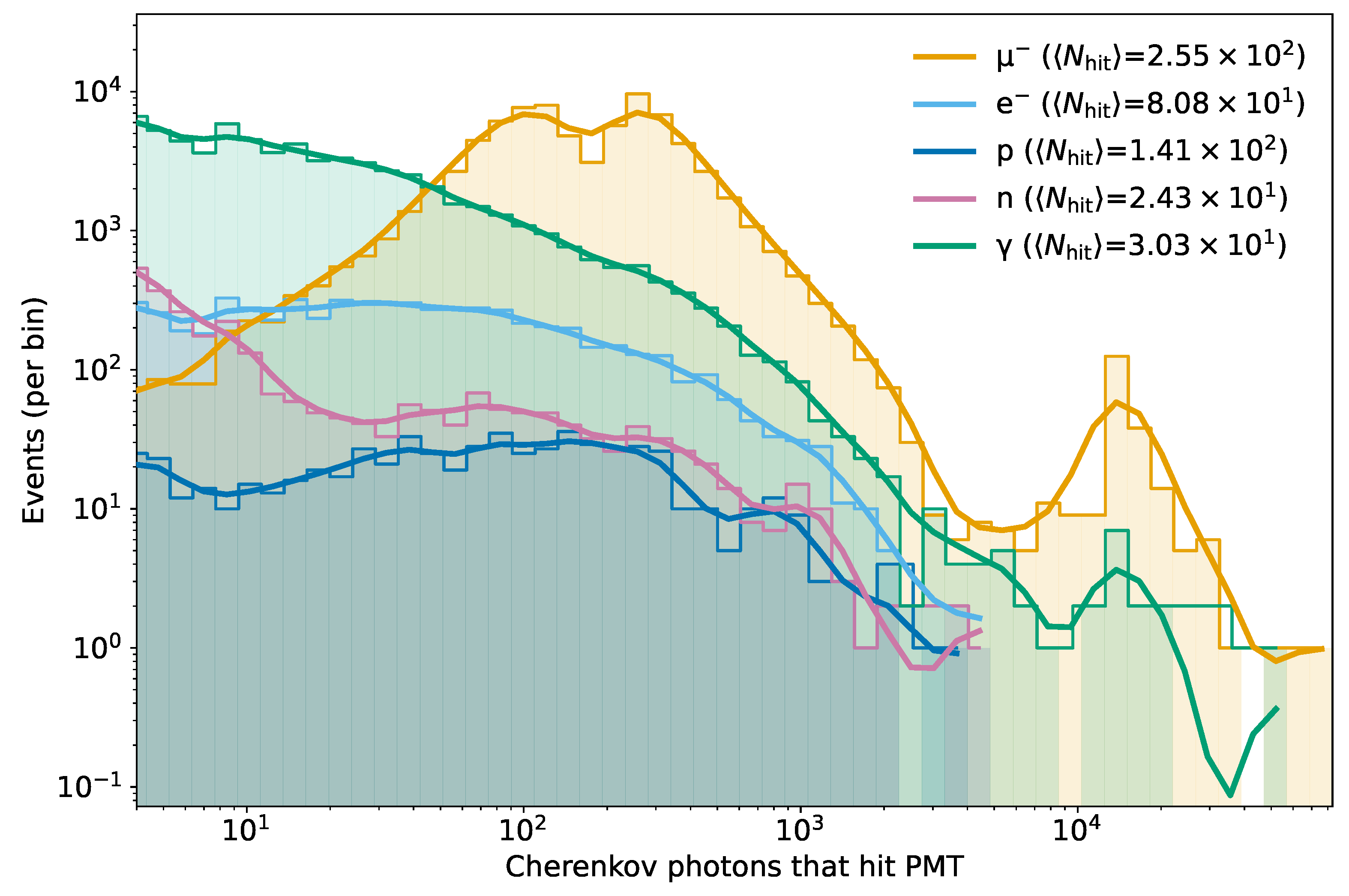
Cherenkov radiation is a widely used detection mechanism in high-energy and astroparticle physics experiments, particularly in water-based detectors operated by leading cosmic-ray observatories. Its popularity stems from its robustness, cost-effectiveness, and high detection efficiency across a broad range of environmental conditions. In this study, we present a detailed Monte Carlo characterization of a Water Cherenkov Detector (WCD) using the Geant4 simulation toolkit as a general, experiment-independent reference for understanding detector responses to secondary cosmic-ray particles. The detector is modeled to register secondary particles produced by the interaction of high-energy cosmic-ray primaries with the Earth’s atmosphere, which give rise to extensive air showers composed of hadronic, electromagnetic, and muonic components capable of reaching ground level. By simulating the differential energy spectra and angular distributions of these particles at the surface, we evaluate the WCD response in terms of energy deposition, Cherenkov photon production, photoelectron generation at the photomultiplier tube, and the resulting charge spectra. The results establish a systematic and transferable baseline for detector performance characterization and particle identification, providing a physically grounded reference that can support calibration, trigger optimization, and analysis efforts across different WCD-based experiments.
Keywords: Water Cherenkov Detector; extensive air showers; Geant4 simulation; secondary cosmic-ray particles; detector response characterization Water Cherenkov Detector; extensive air showers; Geant4 simulation; secondary cosmic-ray particles; detector response characterization