


Abstract
Flat electronic bands, characterized by a nearly dispersionless energy spectrum, have emerged as fertile ground for exploring strong correlation effects, unconventional magnetism, and topological phases. This review paper provides an overview of the theoretical basis, material realization, and emergent phenomena associated with flat bands. We begin by discussing the geometric and topological origins of flat bands in lattice systems, emphasizing mechanisms such as destructive interference and compact localized states. We will also explain the relationship between quantum metrics and flat bands, which are recent theoretical findings. We then survey various classes of materials—ranging from engineered lattices and Moiré structures to transition metal compounds—where flat bands have been theoretically predicted or experimentally observed. The interplay between flat-band physics and strong correlations is explored through recent developments in ferromagnetism, superconductivity, and various Hall effects. Finally, we outline open questions and potential directions for future research, including the quest for ideal flat-band systems, the role of spin–orbit coupling, and the impact of disorder. This review aims to bridge fundamental concepts with cutting-edge advances, highlighting the rich physics and material prospects of flat bands.
1. Introduction
Electrons in a crystal usually have energy dispersion. This is a universal requirement of Bloch’s theorem. However, in some models, energy dispersion can disappear, and the band in which this dispersion disappears is called a flat band (FB). FBs have a unique density of states, and the strong correlation effect due to the narrow band width becomes important, causing various anomalous physical properties. In models in which FBs appear (FB models), attractive physical properties such as perfect ferromagnetism [1,2], high-temperature superconductivity [3,4,5], and fractional quantum Hall effects [6,7,8] have been predicted. Motivated by these fascinating predictions, various experimental efforts have been made to realize these physical properties.
Figure 1 shows search results from the Web of Science for papers containing the word “flat band”. The number of papers has started to increase since perfect ferromagnetism in FBs was mathematically proven in 1991 [1,2]. The next turning point was the appearance of FB in twisted bilayer graphene (TBG) in 2011 [9]. After that, superconductivity was experimentally discovered in TBG in 2018 [10], and the number of papers is still increasing. In addition to TBG, many compounds with FBs have been discovered, and their relationship with superconductivity, magnetism, and states with non-trivial topologies has been vigorously discussed.
Figure 1.
Number of papers containing the word “flat band”, searched on Web of Science: (accessed on 1 January 2020) https://www.webofscience.com/wos/.
A couple of excellent reviews of these studies were reported around 2015 [11,12]. In this topical review, we would like to briefly introduce flat-band research, look back on its history, and introduce recent progress and new findings from this decade.
Brief Overview of Flat-Band Physics
Before diving into the main topic, we will provide a brief overview of the research progress on FB physics.
FB systems have emerged as an important platform for studying strongly correlated phases in condensed-matter physics. FB is characterized by energy dispersion that is completely independent of momentum, meaning that the kinetic energy of electrons is effectively quenched. In this limit, even modest electron–electron interactions can dominate the physics, leading to unconventional ground states. Early examples of FBs were identified in simple lattice models such as the Lieb and kagome lattices, where destructive quantum interference forces certain electronic states to become compact and localized. These compact localized states provide a clear real-space picture of how FBs originate from the geometry and connectivity of the underlying lattice.
In recent years, theoretical progress has greatly broadened our understanding of how FBs arise. Graph-theoretical approaches and cell-construction approach have clarified the conditions under which a flat-band appears, and they have shown that FBs can occur in a wide range of lattice geometries. The importance of the concept of quantum metrics, which describe the evolution of the wave function in -space, has been widely recognized. At the same time, many studies have focused on the behavior of interacting electrons in nearly FBs, revealing a rich variety of possible phases, including ferromagnetism, fractional Hall effects, and unconventional superconductivity.
Experimental developments have further accelerated interest in FB physics. Artificial systems such as photonic lattices, cold atoms in optical lattices, and other engineered materials offer highly tunable platforms where flat bands and their localized eigenmodes can be directly observed. These systems also make it possible to study how FB states respond to disorder, interactions, and external perturbations in controlled environments. More recently, FBs have been realized in naturally occurring materials, including certain kagome metals and pyrochlore oxides, where signatures of FB-induced magnetism and correlated electronic behavior have been reported.
Altogether, FB systems provide a versatile and unifying framework for exploring how geometry, interference, and interactions combine to produce unconventional quantum states. Their study continues to expand, offering promising routes toward understanding and engineering strongly correlated materials. Based on this overview, the following sections will discuss the theoretical and experimental aspects of FB physics.
2. Theory of the Flat Band
There has been a great deal of progress in the theory of FBs over the past 30 years, and it would be impossible to cover them all in this paper. Here, we will mainly introduce the following:
- What is a flat band?
- Representative lattice models that produce flat bands (Lieb/Mielke/Tasaki models);
- Relation between magnetic frustration and flat bands;
- Physical properties expected from flat bands.
We will also briefly introduce the relationship between FBs and the concept of quantum metrics, which has recently attracted attention.
2.1. What Is a Flat Band?
In this subsection, we briefly explain the basic concept of an FB and show its importance. As an example, consider the following one-dimensional tight-binding (TB) model for a sawtooth lattice shown in Figure 2a. For simplicity, we ignore spin. The general form of the one-electron Hamiltonian is
Here, and are the creation and annihilation fermion operators at i site, respectively. The hopping term is generally a complex number but can be chosen as a real number when there is no (internal) magnetic field.
In case of the sawtooth lattice, we can take the hopping term as
In order to have an FB, it is essentially important that there are two or more sites in the unit cell. In this sawtooth model, they are A-site and B-site. In other words, the system consists of two or more sublattices. We denote them by the same notation: A-sublattice and B-sublattice. Let t denote the hopping between A and A, and let denote the hopping between A and B. The energy of site A and B is set to 0 and V, respectively.
Since this system is periodic, it is convenient to define the following operators:
Here, and are the creation and annihilation fermion operators for the wave vector k, respectively. N denotes the number of unit cells in the whole chain.
This can be easily diagonalized and yields two eigenvalues:
When we tune the site energy at , we yield . This eigenvalue does not depend on k; in other words, has no dispersion. This state is called FB. Figure 2b shows the energy dispersion of in the case of , i.e., FB appears. There is a finite band gap at .
Figure 2.
(a) One-dimensional sawtooth lattice. The red rectangle denotes a unit cell, including A (white) site and B (black) site. (b) The energy dispersion of this model. We set , , and . (c) Part of the sawtooth lattice (a) A cluster with two triangles cut out. The value of the eigenfunction is also shown. White circles represent zero amplitude, while red and blue circles represent finite amplitudes with positive and negative signs of the wavefunction, respectively. This state is localized in the dashed circle area and called CLS.
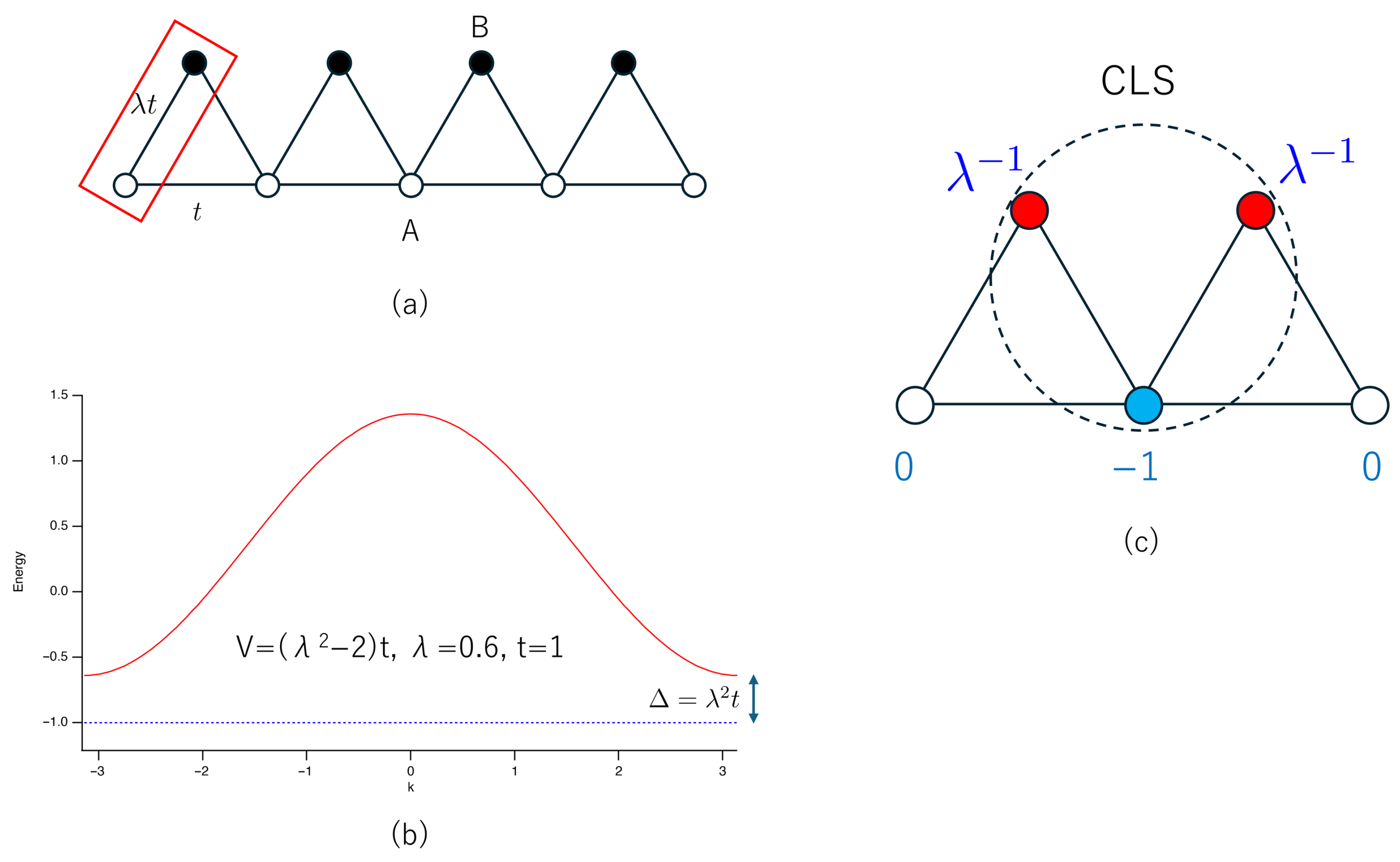
The reason why is flat even though t is finite is due to geometric frustration and quantum destructive interference effects. also has no dispersion when , but such a trivial state will be excluded from this discussion.
In realistic cases where there are hopping terms other than the nearest neighbors and/or the hopping term t is anisotropic, the interference of the wave functions becomes incomplete, and the “flat band” (i.e., ) has small dispersion. In this case, the bandwidth of the “flat band”, which is denoted as , becomes nonzero. is a crucial parameter for the (realistic) flat-band system.
In the case of the above sawtooth model, a condition for the site energy difference is required in order to induce quantum interference. However, in some models like the kagome lattice and pyrochlore lattice shown in the next section, such a condition is not required.
Geometric frustration refers to a situation in which the energy minimization conditions of electrons and spins compete with each other due to the geometric structure of the crystal lattice, making it impossible to obtain a single stable state. This plays an important role in the formation of FBs. The geometrically frustrated lattices include the one-dimensional sawtooth lattice mentioned above, the two-dimensional kagome lattice, and the three-dimensional pyrochlore lattice. Many other lattices also have geometric frustration, as introduced in the following sections.
Theoretically, a method has been developed to systematically construct lattice structures called “partial line graphs” [13], and a method has been developed to systematically design lattice models with FBs using Gram matrices [14].
2.2. Compact Localized State
In the model in the previous section, is flat even though t is finite because of the quantum mechanical interference effect. We will explain this point using Tasaki’s construction method [15].
Figure 2c shows a part of Figure 2a, a cluster with two triangles cut out. This Hamiltonian can be written in real space (site) representation as
In this case, it can be shown that the following wavefunction
is a zero-energy eigenstate of the Hamiltonian in Equation (6).
The wavefunction has zero amplitude at both ends, sites 1 and 5, so the extension of this to the infinite chain
is also the zero-energy eigenfunction of the Hamiltonian of the infinite chain.
In Figure 2b, any two sites could be cut out, so the zero-energy eigenfunction is macroscopically degenerate due to the number of ways of cutting them.
In this way, if a localized “molecular orbital” is constructed in a finite system due to quantum interference and continues to be an eigenfunction of the system even when the size of the system is increased, the “molecular orbital” does not have energy dispersion, and an FB emerges [16,17,18].
This localized state is now called a compact localized state (CLS). CLS can be constructed in general in any model that generates FBs.
2.3. Lieb-Type Lattice
In the following sections, we introduce three types of lattices that exhibit FBs in TB models.
First, we define a bipartite graph. Figure 3a is an example of a (finite) bipartite graph, containing two black sites and one white site. In a bipartite graph, the black site has hopping terms only toward white sites and vice versa. There is no hopping terms for black–black and white–white.
Figure 3.
(a) An example of a (finite) bipartite graph. There are only A–B bonds (hopping terms). (b) An infinite bipartite graph tiling the unit of (a) in x and y direction. This lattice is called Lieb lattice. (c) Energy dispersion for (b) with difference in the on-site energy . Flat band (FB), Dirac point (DP), and van Hove singularities (vHS) are also shown. (d) CLS of the Lieb lattice.
The adjacent matrix (i.e., hopping matrix) of the graph in Figure 3a becomes
when we set and . We also set as the difference of the site energy. The eigenstates of the Hamiltonian can be obtained by diagonalizing the hopping matrix . We obtain the following eigenvalues:
This zero-energy eigenvalue inevitably appears due to the imbalance in the number of black and white sites (indicated by the vertical and horizontal lines in the matrix in Equation (9).
In Figure 3a, the number of sites is finite, but we can extend it to the periodic system with periodic boundary conditions. When we tile the units in Figure 3a in the x and y directions, we obtain Figure 3b, which is the Lieb lattice [19]. Note that Figure 3b is commonly called the Lieb lattice, but Lieb himself [19] discusses the more general case where there are bipartite A and B sublattices with different numbers of sites (=imbalance) between them, i.e., .
Using the Fourier transformation in Equation (3), we obtain the Bloch Hamiltonian with
where . Note that has the same form as the hopping matrix of the three-site system. The eigenvalues are
and an FB appears.
In addition to the FB, the band dispersion of the kagome lattice has characteristic structures such as Dirac points and van Hove singularities. A Dirac point is the point where two bands with linear dispersion intersect, and the effective mass at this point becomes zero. A van Hove singularity is a kind of saddle point, and the density of states becomes singular. These points are also shown in Figure 3c. The CLS associated with the flat band of the Lieb lattice is shown in Figure 3d.
This type of FB (bipartite and imbalance) is also seen in the decorated honeycomb lattice model [20,21].
2.4. Mielke-Type Lattice
First, consider a lattice with AB sublattices. Although it is bipartite, unlike the Lieb lattice, the number of sites in the A sublattice is the same as the number of sites in the B sublattice. An example is the square lattice shown by white circles in Figure 4a.
Figure 4.
(a) Square lattice with AB subliattices. A–B bond is shown with dotted line, and this bond is replaced by a site (vertex) C. (b) If bonds with different Cs are connected at one site A/B, connect the two Cs with a new bond (shown by solid line). These operations generates a new graph, which is called line graph. The graph of (b) becomes a checkerboard lattice.
Next, consider the “line graph” of this lattice using the following procedure:
- Figure 4a: The A-B bond in the original lattice (graph) G is replaced by a site (vertex) C.
- If bonds with different Cs are connected at one site A/B, connect the two Cs with a new bond (Figure 4b). The new graph created by this series of operations is called the “line graph of G”. For example, the line graph of the square lattice becomes a checkerboard lattice.
It has been proven that this type of line graph has an FB [22]. Mielke rigorously proved that the ground state of the Hubbard model on the line graph lattice is a ferromagnetic state [1,2]. So far, FB ferromagnetism and Nagaoka ferromagnetism [23] are the only examples of the Hubbard model where a ferromagnetic ground state has been rigorously demonstrated.
As another example, the line graph of the honeycomb lattice becomes a kagome lattice [22]. We show the kagome lattice in Figure 5a. This lattice can also be regarded as a [111] plane cross-section of the 3D pyrochlore lattice (see Section 2.8 and Section 3.3). The Bloch Hamiltonian reads
where , with the definition of given in Figure 5a. Note that the lower triangle elements are filled so that the Bloch Hamiltonian in Equation (13) is Hermitian.
Figure 5.
(a) Two-dimensional kagome lattice; (b) energy dispersion of the kagome lattice TB model with . Flat band (FB), Dirac point (DP), and van Hove singularities (vHSs) are also shown. (c) CLS of the Kagome lattice.
The eigenvalues of this Bloch Hamiltonian can be analytically calculated as follows:
and
The former one band becomes the FB. We demonstrate the band structure of the kagome lattice TB model in Figure 5b.
Like the Lieb lattice, the Mielke lattice also exhibits Dirac points and van Hove singularities in addition to FBs. Unlike the Lieb lattice, FBs appear at rather than . These points are also shown in Figure 5b. As will be described later, these points are thought to play important roles in real kagome metals as well.
The entire bandwidth W becomes (kagome) and (pyrochlore). The “bandwidth” of FB (=) is zero in this model, but in cases wgere there is finite hopping between the sites other than the nearest neighbors, becomes finite. From now on, we will use the term “band bending” in this sense.
“Band bending” is quite important when we deal with the band structure of realistic materials, as shown in the following sections. For example, in the “ideal” kagome lattice, the many-body ground state is mathematically proven to be ferromagnetic in certain conditions [22]. However, in real materials, is not zero, and the exact solution in this case is unknown. Numerical calculations for some two-dimensional systems have obtained ferromagnetic solutions when [24], but ferromagnetism originating from this FB has not yet been found experimentally.
The kagome lattice and pyrochlore lattice are found in many real materials. We will introduce them in detail in the following sections.
2.5. Tasaki-Type Lattice
In the above two lattice models, i.e., the Lieb-type model and Mielke-type model, there is no gap between FB and the dispersive band. On the contrary, the Tasaki-type model has a unique feature where there is a finite band gap between FB and the dispersive band. The 1D sawtooth lattice shown in Section 2.1 is an example of the Tasaki-type model. This lattice can be easily extended to 2D, and now, it is simply called a “Tasaki lattice”.
Historically, for the Tasaki lattice, Tasaki himself introduced a method for constructing the FB [15]. In that paper, he used the “cell construction method” to show that the Tasaki lattice has an FB (which is introduced in Section 2.1) and further rigorously proved that the ground state of the Hubbard model on the Tasaki lattice is ferromagnetic [25].
Because cell construction in the Tasaki lattice is a local operation, a wide variety of lattices can be generated using a process known as “decoration”. In this sense, it is more flexible than other lattices. On the other hand, parameter tuning is required to maintain interference, as shown in Section 2.1, making it a somewhat artificial model.
2.6. Comparison of the Lieb, Mielke, and Tasaki Models
The three lattices mentioned above—the Lieb lattice, the Mielke lattice, and the Tasaki lattice—have a significant commonality. Not only do the TB models on these lattices have FBs but the Hubbard model with on-site Coulomb interactions is ferromagnetic in the ground state (at the appropriate electron density). This section outlines the differences in the solutions of the TB models on these lattices, as well as the stability conditions for FBs and ferromagnetism.
Flat-band ferromagnetism has been rigorously established in three closely related classes of Hubbard models: the Lieb, Mielke, and Tasaki models. Although all three share common features of having FBs and supporting CLS, the mechanism by which the FB arises and the conditions under which ferromagnetism is stabilized differ significantly among them. However, each of these three models has its own unique features. Table 1 shows the key differences between each model.
Table 1.
Key differences among the Lieb, Mielke, and Tasaki FB models.
The Lieb model is defined on a bipartite lattice with a sublattice imbalance. Its flat band emerges from the lattice geometry itself, independent of the fine-tuning of hopping amplitudes. The CLSs are localized on cross-shaped motifs, and the existence of a flat band is robust against various perturbations. However, rigorous ferromagnetism in the Lieb lattice requires electron filling close to the half-filling of the flat band, where the system exhibits ferrimagnetic rather than purely ferromagnetic order.
In contrast, the Mielke model achieves flatness through a line-graph construction, which automatically generates a flat band at the bottom of the spectrum. The CLSs in this case are loop-like objects defined on the underlying graph. Mielke proved that for the Hubbard model on line graphs, the ground state at the partial filling of the FB is ferromagnetic. The mechanism relies on the connectivity and linear independence of the CLS, ensuring that the fully polarized state minimizes the interaction energy. The Mielke lattice includes kagome and pyrochlore lattices, and a large number of compounds belong to this type. Kagome and pyrochlore compounds will be introduced in detail in later sections.
In the case of the Tasaki model, the FB is created by assembling and connecting CLSs in real space using a cell-construction method. Here, decorated lattices are engineered so that a specific destructive-interference condition isolates an FB. Importantly, Tasaki’s construction gives strong control over the overlap between CLS, allowing a rigorous proof of saturated ferromagnetism for a sufficiently large on-site interaction U. The Tasaki class includes many nontrivial lattices that do not arise from simple bipartite or line-graph constructions, making it the most general framework among the three.
In summary, the Lieb, Mielke, and Tasaki models represent three distinct routes to FB formation—bipartite imbalance, line-graph geometry, and engineered destructive interference—each providing rigorous ground states that exhibit ferromagnetism under appropriate conditions. Together, they form the theoretical foundation of FB ferromagnetism and continue to guide the search for realistic material and lattice designs that can host interaction-driven magnetic order.
2.7. Flat Band with Orbital Degree of Freedom
In the three lattice models above, no special consideration was given to the orbital degrees of freedom. In other words, we have only considered s orbitals so far. On the other hand, some FBs have been proposed that utilize the orientation and the degree of freedom of the orbitals. Interestingly, even in the lattice that generates the FBs described above, FBs do not necessarily appear if orbitals other than s orbitals are placed at each site. Conversely, in the lattice that does not generate the FBs described above, FBs can appear if p or d orbitals are placed at each site. A typical example is a honeycomb lattice with and orbitals [12,26]. The key to forming FBs is to create CLS by skillfully combining anisotropic orbitals. Reference [26] shows a systematic method for creating CLS for various lattices. A similar proposal based on a square lattice is also given [27].
Here, we describe the similarity between the two CLSs: One is in a honeycomb lattice with and orbitals, and the other is in a kagome lattice with s orbitals. The former is shown in Figure 6a. This CLS is formed by six p orbitals in a honeycomb lattice. Each p orbital is a linear combination of and orbitals.
Figure 6.
(a) A compact localized state (CLS) in honeycomb lattice with - orbitals. This CLS is formed by six p orbitals in a honeycomb lattice. Each p orbital is a linear combination of and orbitals. Red (blue) color denotes that the wave function is positive (negative). (b) The sign of the wave function at the midpoint of the vertices of the honeycomb lattice. (c) CLS in kagome lattice with s orbitals.
Next, we consider the line graph of this honeycomb lattice. Similarly to the case of the square lattice shown in Section 2.4, the line graph can be constructed by taking the midpoint of the vertices in the original lattice. This procedure is shown in Figure 6b. The sign of the wave function can be taken in a similar form to the wave function in Figure 6a. We notice that this pattern is the same as the CLS in the kagome lattice with s orbitals, shown in Figure 5a and Figure 6c. Similar discussions for the FBs in non-line-graph lattices are also found in [28].
Milićević et al. artificially realized an FB using a polariton micropillar array with orbital degrees of freedom in an optical honeycomb lattice [29]. They further artificially realized type I-III Dirac cones by adjusting the parameters between the pillars. The details are introduced in a later section: Section 3.6.
Another approach to the FB in a multi-orbital system was reported by Zeng et al. [30]. By combining the isolated molecular approach and the newly proposed mutual eigenstate method (MEM), they bridged the gap between geometric line-graph descriptions and realistic multiorbital TB models. Extending the MEM analysis to realistic multiorbital models, they suggested that similar mechanisms operate in kagome metals such as AV3Sb5 (A = K, Cs, Rb) [31,32] and CsTi3Bi5 [33], where FB physics may underlie unconventional electronic phenomena.
2.8. Relation Between Magnetic Frustration and Flat Band
Geometrical frustration and flat-band formation are two concepts that often appear in the study of strongly correlated and topological states of matter. While they sometimes coexist in the same class of lattices, their origins and implications are fundamentally different. Understanding this distinction is crucial for clarifying why certain frustrated lattices host perfectly flat bands, whereas others do not.
Frustration as a local constraint: Geometrical frustration arises when competing interactions cannot be simultaneously satisfied at the level of a local plaquette or cluster. A typical example is the antiferromagnetic Ising model on the triangular lattice: For three spins on a single triangle, it is impossible for all nearest-neighbor pairs to be antiparallel at the same time, as seen in Figure 7a. This leads to a macroscopically degenerate ground-state manifold, characterized by local constraints rather than a unique long-range order. Similarly, in three dimensions, the pyrochlore lattice exhibits extensive degeneracy due to the impossibility of minimizing all antiferromagnetic bonds within a tetrahedron. Thus, frustration is determined by local energetic incompatibilities, and its presence can be judged by inspecting minimal motifs such as triangles or tetrahedra.
Figure 7.
Schematic diagram of (a) frustration and (b) CLS. Frustration is determined by local energy conditions, so its presence can be determined by examining the smallest motif (triangle or tetrahedron). On the other hand, whether a CLS exists depends on the connectivity of the motifs across the entire lattice. In (b), white circles represent zero amplitudes, while red and blue circles represent finite amplitudes with positive and negative signs of the wavefunction, respectively. The CLS is localized within the region enclosed by the dotted line.
Flat Bands as a Global Interference Phenomenon: In contrast, the emergence of a perfectly flat band requires the existence of CLSs, which are eigenstates strictly confined to a finite region of the lattice. Such states arise through destructive quantum interference that prevents hopping out of the localized cluster. The condition for constructing CLSs is not purely local: it depends on how local motifs are connected across the entire lattice [34]. The kagome lattice provides the most celebrated example. There, destructive interference around a hexagon cancels the amplitude on surrounding sites, yielding a strictly localized eigenstate. As a consequence, the TB model on the kagome lattice exhibits an exactly flat band across the entire Brillouin zone. By contrast, the triangular lattice, although geometrically frustrated in the antiferromagnetic sense, does not admit such CLSs in its nearest-neighbor TB description; the destructive interference needed to trap a wavefunction locally cannot be realized globally, and the bands remain dispersive.
Comparative perspective: This contrast highlights that frustration and flat bands, while conceptually related through the language of “constraints”, act on different levels. Frustration is a local property of interactions that prevents simultaneous energy minimization on basic units, leading to degeneracy and exotic ground states such as spin liquids. Flat bands, on the other hand, are a global property of the lattice connectivity and interference pattern, and they provide a platform for strong correlation effects once partially filled. Some lattices, such as the kagome or pyrochlore, realize both aspects simultaneously: They are locally frustrated in their spin models and also host flat bands in their single-particle spectra. In this sense, these lattices are also called “strongly frustrated lattice”. Others, like the triangular lattice, are frustrated but not FB generators. Recognizing this distinction is important when classifying candidate materials or lattice geometries for hosting FB physics.
Here, we explain the Hamiltonian that describes magnetic compounds. In most of magnetic compounds, the magnetic moments are localized at one atom. The electrons cannot move, and the charge degree of freedom is frozen. The remaining spin degree of freedom controls the magnetic properties. Moreover, the exchange interaction between localized moments is mostly a short-range one, i.e., the nearest-neighbor interaction is dominant.
This situation can be described as a Heisenberg model:
Here, is the spin operator at the site i, and and are the raising and lowering operators.
We can bosonize this Hamiltonian by using the Holstein–Primakoff transformation [35,36]. In the low-energy limit, we apply the Holstein–Primakoff transformation, which expresses the spin operators in terms of bosonic operators. In other words, collective excitations of spin systems can be treated as elementary excitations of bosons in this transformation. To first order the boson number, we approximate the following:
Here, and are the creation and annihilation operators of a boson at the i site, respectively. Substituting these into the Hamiltonian, we obtain
Expanding the terms and ignoring the higher order of operators and the constant energy term , we obtain the following:
This Hamiltonian is written as a quadratic form of operators a and , and it only includes the on-site and nearest-neighbor terms. Therefore, it has the same form as the TB model in Equation (1). The eigenvalues of are called magnons. In the case where a lattice is geometrically frustrated, FB(s) appear in the magnon band.
For example, in the case of the pyrochlore lattice, the magnon dispersion band denotes the eigenvalues of the Bloch Hamiltonian:
where we denote and drop the diagonal constant term. Note that the lower triangle elements are filled so that the Bloch Hamiltonian in Equation (20) is Hermitian.
The eigenvalues of this Bloch Hamiltonian can be analytically calculated as follows:
and
with . The former two bands become FBs.
In the case where (antiferromagnetic case), has lower energy than . In other words, the lowest-energy excited states are macroscopically degenerate. The various magnetic states in strongly frustrated magnets are closely related to the macroscopic degeneracy of the low-energy excited states.
The kagome lattice is a cross-section of a pyrochlore lattice cut along the [111] plane, and the spin waves in this case can be obtained using the same procedure as above. The Bloch Hamiltonian of the spin waves is the same as that shown in Equation (13). The consequent spin-wave energy dispersion becomes Equations (14) and (15). The former gives the FB, i.e., macroscopic degeneracy of the low-energy spin excitation. The CLS, which is the eigenvector of the FB state, is depicted in Figure 7b.
2.9. Physical Properties Expected from the Flat Band
Due to the characteristic band structure and topological nature of the FB, various interesting physical properties have been predicted:
2.9.1. Lifschitz Transition and Many Types of Dirac Fermions
The energy dispersion of free electrons is given by , where is the rest mass of the electron. In a crystal, the mass changes to an effective mass due to the crystal potential and electron–electron scattering. For example, for hole carriers in semiconductors, . The phenomenon where the topology of the Fermi surface changes, transitioning from a hole-like Fermi surface to an electron-like Fermi surface, is called a Lifshitz transition. It can be seen that an FB is realized precisely at the point that Lifshitz transition occurs, especially in interacting systems [37,38].
In some cases, for example, considering the state at the K point of graphene or the K point of the kagome lattice model shown in Section 2.5, energy dispersion becomes linear with respect to the wave number. In the case of relativistic free particles, since the equation governing the motion is a Dirac equation, states with such linear dispersion are called Dirac fermions. Also, because the dispersion is conical in a 3D -space, it is also called a Dirac cone.
By “tilting” this standard (type-I) Dirac cone in -space, various types of Dirac cones can be obtained [29]. Figure 8 demonstrates such Dirac cones. In particular, in Figure 8c, the linear dispersion disappears, and the system becomes an FB (type-III Dirac cone). In this case, the system can be viewed as describing a black hole state [37,39,40]. A systematic approach to designing type-III Dirac cones based on the molecular-orbital representation is proposed by Mizoguchi and Udagawa [41,42].
Figure 8.
Types of Dirac dispersions in two dimensions. (Top) Dispersions together with the zero-energy plane (grey). (Bottom, in red) Zero-energy Fermi surface. (a) Standard type-I Dirac cones characterized by a linear dispersion in all directions in space and a pointlike Fermi surface. (b) Type-I tilted Dirac cone. (c) Type-III Dirac point (critically tilted), combining flat-band and linear dispersions. Its Fermi surface is a line. (d) Type-II Dirac cone. Cited from Ref. [29], American Physical Society, 2019.
In ordinary cases, Dirac points are doubly degenerated, and they are often represented by pseudospins. On the other hand, in Lieb lattices, for example, FB intersects (type I) the Dirac cone. Therefore, in total, three states are degenerated at the Dirac point. This state can be represented by an pseudospin [43]. This “particle” can be regarded as a kind of “beyond-Dirac Fermion” [44].
2.9.2. Magnetism
This subsection discusses the relationship between flat bands and magnetism. First, considering it naively, FB is advantageous for magnetism. Let us consider the Stoner model, which is a simple and standard model for describing the magnetism of itinerant electrons. In this model, an effective magnetic field for an electron is determined as a mean-field , which is proportional to the imbalance of the number of each spin, i.e., . The condition that the ground state becomes ferromagnetic is given by , where I is the exchange energy, and is the density of states at the Fermi level. Therefore, within the framework of Stoner theory, a large in the FB makes the system ferromagnetic.
However, because Stoner theory is a mean-field theory, many-body effects are not always properly incorporated. While accurately incorporating many-body effects is generally extremely difficult, exact solutions are known to exist for some FB models. It can be rigorously shown that the ground state of the Hubbard model on a Lieb lattice system, or more generally, a bipartite lattice, is a ferromagnetic state (more precisely, a ferrimagnetic state) when the number of sites in the two sublattices is unequal [19]. Similarly, in the case of the Mielke lattice, the ground state is also a ferromagnetic state when the FBs are half-filled [1]. Tasaki [15,25] also rigorously proved that the Hubbard model on the Tasaki lattice has a unique ferromagnetic ground state. Later, Tanaka et al. [45] extended Tasaki’s cell construction method to a wider range of FB lattices (including nonstandard unit cells and higher-dimensional structures) and revealed how factors such as band isolation, CLS overlap, and effective interactions govern the stability of ferromagnetism. This work significantly expands the theoretical toolkit for engineering magnetism in FB systems.
In real materials and experimental systems, FB has a small bandwidth due to the effects of second-nearest-neighbor hopping, but an exact solution is not known in this case. However, it has been shown that the ferromagnetic ground state described above is stable against small band bending [46,47]. Numerical calculations have also been performed on the Hubbard model on a 2D-checkerboard lattice, a type of Mielke lattice, and it has been shown that ferromagnetism is the ground state in the parameter region where approximately [24].
2.9.3. Superconductivity
This subsection discusses the relationship between flat bands and superconductivity. Considering it naively, FBs are also advantageous for superconductivity. For example, in the single-band BCS theory, is a monotonically increasing function of . Since becomes extremely large in FB systems, FBs are considered advantageous for superconductivity.
Khodel and Shaginyan considered the instability of the Fermi liquid at the point where the group velocity becomes zero at the Fermi wave vector [48]. According to their work, in a certain parameter range, fermions condense due to the macroscopic degeneracy, undergo a phase transition to a superfluid state, and acquire a finite energy gap. The Fermi liquid theory in flat-band systems is further developed in their subsequent publications [38,49].
On the other hand, flat bands arise from inter-band interference and therefore inherently require multiple bands. Therefore, a theory considering multiple bands is necessary. Miyahara [3] et al. considered a two-band BCS theory including a flat band and showed that and the superconducting gap are approximately proportional to the intra-flat-band interaction .
Aoki’s group also considered a superconducting mechanism due to electron–electron interactions [5,50]. In this case, if the Fermi level is within the FB, becomes too large, so the effective mass of the electrons increases due to the effect of electron correlations, which are disadvantageous for superconductivity. However, when the Fermi level is near the FB (i.e., “incipient”), the effective mass of the electrons remains small, and because the FB effect allows for many electron pairing channels, can be high. This approach has been applied to many lattice models such as 1D diamond chains [51], two- or three-leg ladders, crisscross ladders [52], and various 2D lattices [53].
Peotta and Törmä investigated a multi-band model with BCS-type attractive interactions [4]. They showed that the superfluid density (or superfluid weight) can be expressed as , where is a conventional term depending on energy dispersion, and is a non-conventional term. In the FB limit, vanishes while remains. This term is closely related to the “quantum metric”, which will be explained in the next section.
Furthermore, if FB is topologically nontrivial and has a Chern number , then inequality holds. In this case, superconductivity is protected by topology. Later, this theory was applied to a staggered Lieb lattice model, and it was confirmed that superfluid density is indeed proportional to the quantum metric [54].
2.9.4. Various Hall Effects
Classically, the Hall effect is described by the following equation:
where n is the number of carriers, and q is the particle charge. This equation shows that when there is a current in the x-direction and a magnetic field in the z-direction, an electric field is generated in the y-direction. Hall conductivity is given by . In the semiclassical picture, , so in the FB system, the group velocity is , which means that the current becomes zero, and the Hall effect cannot be defined. This result clearly shows that this simple semiclassical picture is insufficient for discussing the Hall effect in FB systems.
Various Hall effects are now known, such as the anomalous Hall effect, the integer/fractional quantum Hall effect, the spin Hall effect, and so on [55,56,57]. It is known that the geometric structures of the wave function, known as the Berry phase and the Berry curvature, are important for understanding these effects.
Neupert et al. derived a general expression for the Hall conductivity of interacting many-body systems, providing a geometric foundation for the Hall response in FB and topological systems [58]. While the conventional Kubo formula applies only to noninteracting Bloch bands, they reformulated Hall conductivity in terms of the Berry curvature of the many-body wavefunction defined on a torus threaded by fluxes . The Hall conductivity takes the following topological form:
where C is the many-body Chern number associated with the global phase twist of the ground-state wavefunction . This expression ensures the quantization of even in the presence of interactions, and it applies equally to fractional Chern insulators [8] and other correlated FB systems. It explicitly demonstrates that the Hall conductivity is determined not by energy dispersion but by the geometric phase structure of the wavefunction, clarifying why FBs with finite Berry curvature can exhibit quantized Hall effects.
The Berry phase and Berry curvature are part of the larger world of quantum geometry. In the next section, we give a brief overview of quantum metrics, which have recently attracted attention in relation to FB.
2.10. Quantum Metric on Flat Band
The wavefunction lives in a Hilbert space and can have a nontrivial topology. This topology has direct implications in various physical properties, such as the Aharonov–Bohm effect, the quantum Hall effect, and the anomalous Hall effect. The Hilbert spaces not only have topologies but also metrics, just like ordinary space–time. Recently, it has become clear that metrics in this Hilbert space, i.e., quantum metrics, can be important in some cases. This is particularly evident in FB systems. In this section, we will explain the relationship between FBs and quantum metrics.
2.10.1. What Is the Quantum Metric?
In the quantum state space (Hilbert space), the quantum metric is an indicator that measures how a ground state changes with respect to variations in the wave vector . It can be considered as a way to measure the “distance” between neighboring wavefunctions and . The geometry of the quantum state is expressed by the “quantum geometric tensor” [59,60,61,62]:
is a complex tensor; the imaginary part serves as the Berry curvature, and the real part serves as a “quantum metric”, also known as the Fubini–Study metric that measures the quantum “distance”. The Berry curvature is closely related to topological properties like the Hall effect shown in Section 2.9.4, while the quantum metric is closely related to the superconducting pair formation shown in Section 2.9.3 as an example.
Until recently, the relevance of quantum metrics to physical properties was unclear. However, many studies have recently demonstrated their relevance to superconductivity, optical responses, quantum Hall effects, and anomalous Hall effects. In particular, the research of Törmä et al. has shown that the existence of quantum metrics greatly enhances superconducting pair correlations in FB systems [4,62,63].
2.10.2. Physical Significance of the Quantum Metric
The physical significance of the quantum metric lies in the fact that the geometric properties of the band structure determine the collective and macroscopic quantum properties of a system, even in the absence of interactions between electrons [63,64,65,66]. This means that when describing the behavior of electrons, new elements—the “shape” and “extent” of the wave function—are incorporated in addition to conventional kinetic energy (band dispersion).
We will provide an intuitive explanation of the meaning of quantum metrics. Many physical quantities are responses to minute changes in the state of electrons. The state of an electron consists of energy and the wave function . In particular, if we consider the case where the wave number is shifted by a small amount , the energy shift is , and the wave function shift is (if naively considered) . Energy is a scalar quantity, so there is no problem, but this expression for the wave function shift is too naive because it violates gauge invariance.
Consider two wave functions and . Focusing on the “dissimilarity” of these wave functions, we define the following “distance” (Hilbert–Schmidt distance):
If the two wave functions are identical, ; if they are orthogonal, . Furthermore, since this quantity is defined as the dot product of two wave functions, it is gauge-invariant. Now, assuming that is small, we perform a Taylor expansion with respect to and obtain the following:
where is the quantum metric tensor shown in Equation (25) on band n.
In other words, is a metric in a space where distance is defined by . Reflecting the fact that this space is “curved” (for example, unlike ordinary Euclidean distance, does not exceed unity), reflects the curvature of that space. When a wave function responds to a perturbation, such a geometric term is always present.
As seen above, the quantum metric is ubiquitous for many physical properties. The importance of quantum metrics is particularly evident in FB systems, as will be shown in the next section. However, several studies have demonstrated that the quantum metric plays an essential role even in systems without FBs. It governs nonlinear optical responses in ordinary dispersive bands [67], modifies superfluid weight in generic multiband superconductors [68,69], and influences Hall and magnetic responses through field-induced geometrical corrections [70]. These results show that quantum geometry is a fundamental ingredient of band dynamics beyond FB physics.
2.10.3. Why Quantum Metric Is Important in Flat-Band Systems?
As observed in Section 2.9.3 and Section 2.9.4, it is clear that quantum metrics are directly related to various physical quantities, especially for FB systems.
Let us consider the results of Peotta and Törmä [4], introduced in Section 2.9.3, in more detail. They solved a multi-band model with BCS-type attractive interactions using mean-field approximation, obtaining the following formula for the superfluid density tensor :
after some simplifications in the 2D case. Here, is the energy dispersion of electrons, and is the quantum metric tensor. We can see that vanishes in the FB limit (i.e., ), and the remaining term is directly proportional to the real part of , i.e., the quantum metric.
Usually, the term related to energy dispersion is the leading term in transport phenomena. However, in the FB limit, this conventional term vanishes, so the quantum metric becomes fundamentally important. It governs not only superconductivity but also magnetic responses such as anomalous Landau levels [65] and fractional quantum Hall effects [71]. These studies demonstrate that the physical properties of FBs are determined not by energy dispersion but by the geometry of Bloch wave functions.
3. Material Realizations of the Flat Band
In this section, we briefly introduce the recent progress of the material realization of the FB.
Stimulated by the theoretical predictions above and by the improvement of experimental technique, many studies researching the material realization of the FB have been reported. In this section, we introduce some of these studies.
3.1. Twisted Bilayer Graphene (TBG) and Related Compounds
When a two-dimensional lattice is rotated by a small angle and superimposed on the original lattice, a long-period pattern is observed. This is the long-known Moiré pattern. It was theoretically shown in 2011 that FBs appear in the Moiré pattern created by superimposing two honeycomb lattices rotated by a small angle called the “magic angle” [9].
Here, we briefly introduce how FBs emerge at this magic angle, following Bistritzer and Macdonald (BM) [9]. In TBGs, when the twist angle is small, the Moiré period becomes extremely small. This allows for a continuum approximation, in which only the vicinity of the two Dirac points of the original graphene need be considered. The state of single-layer graphene near the Fermi level is represented by a Dirac cone, and its Hamiltonian is of the following form:
where v denotes the Fermi velocity, and is the wave vector. In twisted bilayer graphene, the Hamiltonians of each layer are described by the above equation, and we consider them to interfere with each other as states are shifted by the Moiré wave vector.
In the BM model, interlayer hopping is introduced as a tunneling matrix:
where and denote the indices representing the sublattice within each graphene. If tunneling only occurs when atoms overlap at the same position in the plane, this term becomes a periodic function with wavenumber in real space. Solving the above Hamiltonian numerically, BM obtained FBs at a magic angle of .
When the twist angle is small, the discussion is further simplified. By introducing the parameter , it can be shown that when is small, the Fermi velocity renormalizes as . That is, when , vanishes, and FB appears.
In 2018, Cao et al. made a Moiré pattern appear by twisting two graphene layers by this magic angle, and they observed superconductivity at K [10]. This system is probably the first example of superconductivity being observed in an FB system, and since then, a great deal of theoretical and experimental research has been conducted [64,72,73,74]. More recently, related to the quantum geometry shown in Section 2.10, superfluid stiffness, which is a crucial quantity for superconductivity, has been directly observed in TBG [75].
As a related material of TBG, a novel carbon monolayer cyclicgraphdiyne [76] is predicted to have FB and hole-induced ferromagnetism theoretically. Törmä et al. provided theory and design guidelines that suggest that quantum geometry can play a central role in multilayer superconductors such as the Moiré-TBG system [63]. Lu et al. reported zero-field integer and fractional quantum anomalous Hall effects in a pentalayer graphene–hBN Moiré system, enabled by an electric field–tunable topological FB [77]. Multiple fractional plateaus and composite Fermi-liquid-like behavior emerge, closely paralleling the correlated phases seen in TBG.
3.2. Transition Metal Dichalcogenides (TMDs)
Transition metal dichalcogenides (TMDs) are also known as two-dimensional materials. The chemical composition of TMDs is expressed as MX2, with M being a transition metal atom such as tungsten (W), molybdenum (Mo), niobium (Nb), or tantalum (Ta) and X denoting a chalcogen atom, such as sulphur (S), selenium (Se), or tellurium (Te).
As with graphene, FBs have also been predicted theoretically in twisted bilayer TMDs [78] and experimentally observed in twisted bilayer WSe2 [79]. In the case of twisted bilayer TMDs, there is a degree of freedom that the two TMD layers can be the same or different. Moreover, spin–orbit coupling can be tuned using different chemical compositions.
A recent study demonstrated fractional quantum anomalous Hall states in Moiré MoTe2, where strong correlations emerge within topological FBs engineered by twisting or lattice alignment [80]. By tuning carrier density and displacement fields, the system hosts robust fractional Chern insulator phases without external magnetic fields. We also note that a very recent paper revealed that Moiré WSe2 shows unconventional superconductivity [81].
3.3. Pyrochlore Oxides
As shown in Section 2.8, in geometrically frustrated magnetic materials, FBs appear in low-energy spin waves (i.e., magnons). As a representative example of such a system, we introduce pyrochlore oxides.
There are hundreds of pyrochlore oxides, and the magnetic frustration in these materials have been investigated over 50 years [82]. The chemical composition of (-)pyrochlore oxide is expressed as A2B2O7. The A atoms form a pyrochlore lattice, i.e., corner-shared network of tetrahedra, as shown in Figure 9a. The B atoms form another pyrochlore lattice.
Most pyrochlore oxides contain localized magnetic moments on the A- and/or B- sublattices. For example, Dy2Ti2O7 contains the localized magnetic moment of , while has a configuration and does not have a magnetic moment. Conversely, Y2Mn2O7 contains the localized magnetic moment of , while does not have magnetic moments. As for Yb2V2O7, both and have localized magnetic moments.
First, we consider the simplest case that only the A-atoms have localized moments. Since the active degree of freedom is only localized spins, the system is described by the Heisenberg Hamiltonian shown in Equation (16).
Note that the Heisenberg interaction is short-range and isotropic. In this case, the lowest spin-wave excitation has the same form as the TB Hamiltonian, i.e., Equation (1), and the lowest excitation is described as Equation (21), which does not have dispersion. In other words, the spin-wave excitation spectra of the strongly frustrated lattice has the FB. Due to the macroscopic degeneracy of spin-wave excitations, this system shows the rich variety of magnetic properties, such as spin liquid, spin ice, and even “magnetic monopole” [83,84,85,86,87,88,89].
Figure 9.
(a) Pyrochlore lattice. The balls and sticks denote the sites and bonds, respectively. This is the A-site sublattice of the A2B2O7 pyrochlore structure. (b) Energy dispersion of the kagome lattice TB model with t = 0.3 eV. (c) Band dispersion of Sn2Nb2O7. Cited from Ref. [90], Springer-Nature, 2018.
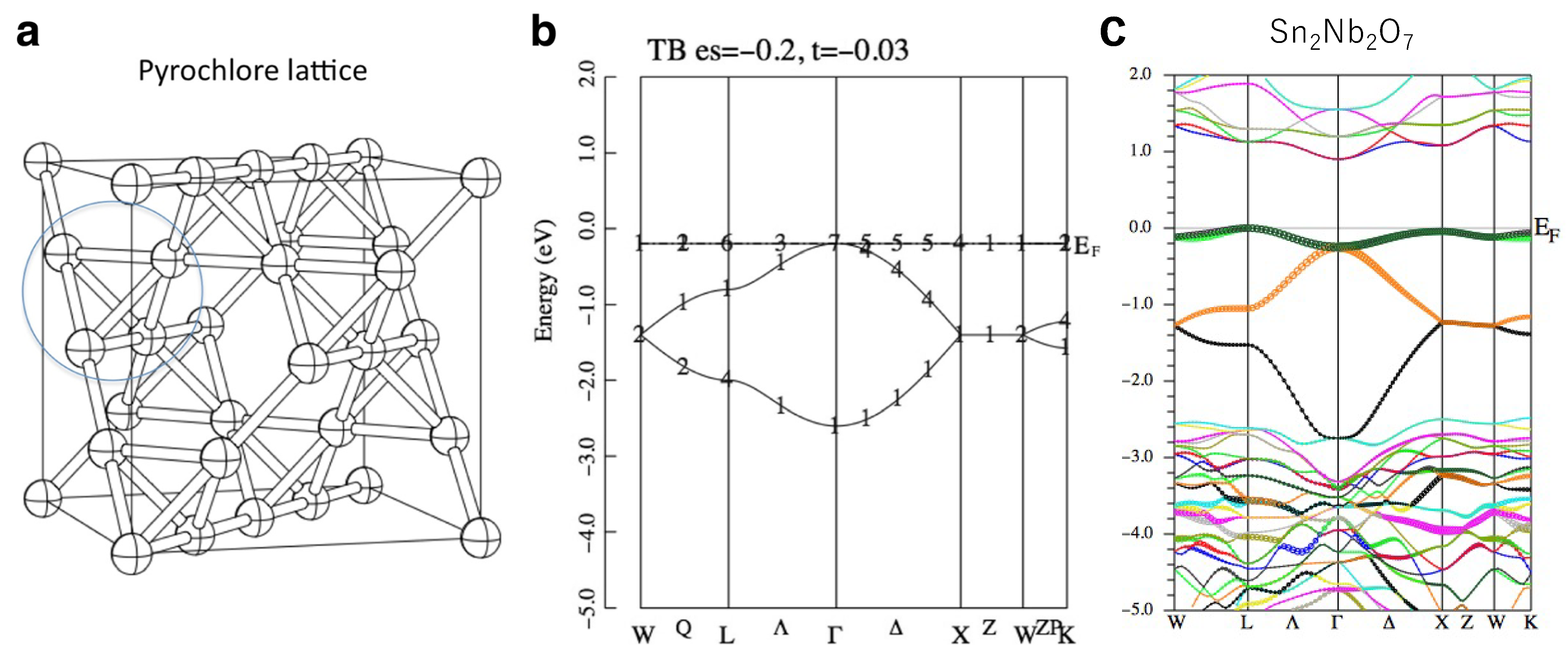
In most pyrochlore oxides, A is a transition metal or rare-earth atom, and B is a transition metal atom. That is, it contains a magnetic element in either the A site or the B site or both. However, some pyrochlore oxides do not contain d or f electrons in the valence electrons [90,91]. A typical example is Sn2Nb2O7, which is known as a candidate of the photocatalytic material [92]. The nominal valence is , i.e., all of the ions are a closed shell. The band structure of Sn2Nb2O7 is shown in Figure 9c. There is a large band gap between the valence band mainly composed of Sn-s and O′-p orbitals, and the conduction band is mainly composed of Nb-d orbitals. The shape of the valence band is similar to the simplest TB model shown in Figure 9b. A small dispersion found in Figure 9c is attributed to the effect of non-nearest neighbor hopping integrals.
A model that adds spin–orbit coupling to this simple TB model was proposed [93]. This is an extension of the Haldane model [94] to a three-dimensional pyrochlore lattice. When the spin–orbit coupling constant is , i.e., in the original model (Figure 9b), band degeneracy occurs at the point [34], but when is negative, this degeneracy is lifted, and a band gap opens in the system. A kind of band inversion occurs, and the system becomes a strong topological insulator.
The magnitude and sometimes even the sign of vary from one pyrochlore oxide material to another [91]. Sn2Nb2O7 is a rare example having negative . In addition, in the lower doping region, ferromagnetism is predicted due to the FB [95]. By simultaneously considering the exchange splitting and spin–orbit coupling, it is predicted that a new type of Weyl point will emerge [96].
Here, we discuss the effect of disorder on the FB. From this flat-band state, a ferromagnetic state is expected by hole doping due to oxygen vacancies, etc. [95], but this has not yet been experimentally confirmed [95]. One possible cause of this is that disorder caused by oxygen vacancies has a negative effect on the flat band. Some numerical works suggest that the FB state is sensitive to disorder [97,98], though the calculation result for the 3D-pyrochlore lattice has not been reported yet.
Regarding the relationship between FB and disorder, a recent paper by Kim and Kim [99] presented calculations in which disorder and a non-Hermitian potential were introduced into an FB system. In the absence of FB, only a localized-to-delocalized transition is observed, but in the presence of a non-Hermitian potential, re-entrant behavior, such as a localized-to-delocalized-to-relocalized transition, is observed. This study predicts that such phenomena can be tested experimentally in systems like optical lattices, non-Hermitian electric circuits, and photonic lattices.
As a compound that does not have the problem of disorder caused by oxygen vacancies, we introduce CaNi2. This compound has a Laves structure, and the Ni atoms form a pyrochlore lattice. Recently, ARPES experiments were conducted on this material, and a flat-band-like energy dispersion was observed [100]. Furthermore, in Ca(Ru0.98Rh0.02)2, which has the same crystal structure, this flat-band-like state was observed near the Fermi level. Surprisingly, this compound exhibits superconductivity at = 6.2 K. However, how this superconductivity is related to the flat band remains an open question. As shown in Section 2.7, even systems having a pyrochlore lattice do not necessarily have flat bands if the d orbitals are dominant. In this paper [100], complicated CLSs formed by several d orbitals are proposed.
3.4. Kagome Compounds
When the pyrochlore lattice shown in the previous section is cut along the [111] plane, the cross-section becomes a two-dimensional kagome lattice. This kagome lattice is also known as a geometrically frustrated lattice. There has been a great deal of research on materials with the kagome lattice, and we will only introduce a portion of it here.
Herbertsmithite has long been known as a magnetic material with this kagome lattice [101]. Since novel magnetic structures due to strong geometric frustration are expected, magnetic materials with the kagome lattice are actively searched for. For example, the magnetic structure of jarosite KFe3(OH)6(SO4)2 and KCr3(OH)6(SO4)2 has been extensively investigated [102,103]. Furthermore, a characteristic 1/3 magnetic plateau was observed in Cs2BTi3F12 (B = K, Na) [104,105].
In Fe3Sn2, where Fe atoms form a kagome lattice, an FB was confirmed by both ARPES and STS experiments [106]. First-principle calculations confirmed the FB’s origin and its strong localization around Fe atoms. Moreover, a robust ferromagnetic order was observed. Theoretical analyses suggest that this magnetism results from the combined effects of FB degeneracy, on-site Coulomb interactions, and interlayer coupling, embodying both Mielke–Tasaki and Stoner-type mechanisms [106]. As for Fe3Sn2, a wealth of approaches are underway from both theoretical analyses and experiments, including the verification of FBs by ARPES and STS, control by doping, and multiphase phenomena in thin films [107,108,109].
Han et al. investigated the quantum geometry of the electronic structure in the kagome antiferromagnet Mn3Sn, combining ARPES measurements with first-principle and model calculations [110]. The authors show that Dirac crossings, FB-like features, and the noncollinear magnetic order generate strong Berry curvature and a pronounced quantum geometric tensor. These geometric properties account for Mn3Sn’s large anomalous Hall effect, orbital magnetization, and nonlinear transport.
Recently, a type of kagome metal AV3Sb5 (A = K, Rb, Cs) was discovered to be superconducting [111]. This material attracted substantial interest from many researchers, and a great deal of research was carried out in a short period of time. A comprehensive review paper was published [112] only three years after the paper that discovered superconductivity [111].
Besides the above 135-type kagome compounds, a recent ARPES experiment confirmed that spin–orbit coupling (SOC) induces a gap between the FB and the Dirac band in 166-type kagome metals such as TbV6Sn6 and that the spin–Berry curvature is finite [113]. These kagome metals exhibit surface states with nontrivial topological properties, and they identified that the gap formation due to SOC is their origin. For example, the non-trivial topology of the electronic state for kagome metals is discussed in [114,115,116].
As seen in Section 2.4, a simple one-orbital isotropic tight-binding model for the kagome lattice not only produces the FB but also the Dirac point (DP) and the van Hove singularity (vHS). In AV3Sb5, the Fermi level is located near the vHS, and the charge density wave (CDW) state takes place. The relation between the observed superconductivity and this CDW is widely discussed [117,118]. However, the importance of FB for superconductivity via incipient-band mechanism [5] is also discussed [119].
Recently, it has become possible to artificially create various crystal structures using a material called MOF (metal organic framework). MOFs are porous crystal structures formed by the binding of metal ions or metal clusters (nodes) and organic ligands (links). By designing and selecting the components, they have the flexibility to design any symmetry or lattice structure. By taking advantage of the high degree of freedom in the structural design of MOFs and appropriately arranging the metal nodes and organic links, it is possible to artificially create MOFs with kagome lattice structures. This makes it possible to experimentally realize materials with electronic and optical FBs.
Theoretically, Yamada et al. showed that it is possible to design a kagome lattice in a 2D MOF structure using first-principle calculations [120]. Liu et al. proposed that a “flat Chern band (topological FB)” can be realized in a metal–organic framework [121].
Following these studies, Wang et al. experimentally synthesized a p-orbital-based honeycomb-kagome lattice using MOFs and characterized its electronic structure by ARPES and STM [122].
3.5. Other Compounds
Cuprate high- superconductors have a two-dimensional CuO2 plane, which has the same structure as Figure 3b. Copper atoms settle at the A and B sites, and oxygen atoms settle at the C sites. However, due to the large transfer integral between two nearest-neighbor oxygens (2–3 bond in Figure 3b) and the different position of the Fermi level, the CuO2 plane in cuprates is not usually considered a Lieb lattice. However, the recently found superconductor Ba2 [123] can be approximately considered as a Lieb lattice [124]. Khodel [38] claims that the Fermi arc and two-gap features observed by ARPES experiments in high- cuprates can be explained if the system hosts some FBs.
Ogura et al. demonstrate that Sr3Mo2O7 and related compounds host a “hidden ladder” electronic structure, naturally generating quasi-1D bands with the enhanced density of states [125]. They show that this ladder-like flat dispersion strongly promotes spin-fluctuation-mediated -wave superconductivity. This work highlights how latent band-structure motifs can drive unconventional superconductivity even in materials not traditionally viewed as FB candidates.
Another interesting example is a putative “superconductor” lead apatite Cu(PO4)6O10, commonly known as LK99 [126]. Whether this material is a room-temperature superconductor is still debated, but its electronic state is unique [127]. That is, while it has a three-dimensional electronic structure overall, the Cu and orbital bands have very strong one-dimensionality and are close to an FB. Therefore, it is thought that the state before doping with carriers is a Mott insulator or charge-transfer insulator.
3.6. Artificial Flat-Band Systems
Besides ordinary crystal materials, various artificial systems are designed and fabricated to realize the FB. There is a brilliant review of these artificial systems, including optical lattices (photonic crystals), cold atoms, quantum nanowires, and superconducting networks [128].
Photonic crystals are periodic nanostructures designed to control the behavior of light (photons). Just as an electronic band’s structure determines the motion of electrons in a solid, in photonic crystals, the photonic band structure determines the propagation of light. By controlling the periodic nanostructure, it is possible to achieve FBs in photon systems and electronic systems. The recent development of nanotechnology has enabled us to realize artificial nanostructures with the size of optical wavelengths.
Figure 10 is an example. As Figure 10a shows, nanorods are arranged so that they form a Lieb lattice. The Lieb lattice has an FB, as shown in Figure 10b, and the corresponding eigenstates are CLSs. Figure 11 shows the experimental intensity profiles of a photonic Lieb lattice. A comprehensive review for this photonic FB is found in Ref. [129].
Figure 10.
(a) A photonic Lieb lattice, which is composed of straight waveguides represented by gray cylinders. An FB state is sketched in this figure, which propagates along the z direction. Different colors indicate a different phase, denoted by 0 or for yellow and orange colors, respectively. The inset specifies the Lieb unit cell, which is formed by sites A, B, and C. These sites couple to nearest-neighbor sites only. (b) The linear spectrum of a Lieb lattice is shown in the first Brillouin zone, where we can clearly observe two dispersive and symmetric (yellow and orange) bands, including a completely flat (grey) band at the very center of the spectrum. Cited from Ref. [129], Taylor-Francis, 2021.
Figure 11.
(a) Output intensity profiles for a photonic Lieb lattice [see Figure 10a] after a propagation distance of 10 cm. (a) B-site excitation (input position denoted by yellow circle) using a focused 633 nm (red) laser beam; (b1–b6) 532 nm (green) laser excitation modulated—in amplitude and phase—using an SLM (spatial light modulator) setup: (b1) FB linear mode profile, (b2) two FB modes in a diagonal configuration, and (b3–b6) four FB mode superpositions. Yellow symbols in (b1–b6) indicate the relative phase of each superposed ring mode. Cited from Ref. [129], Taylor-Francis, 2021.
Figure 12 demonstrates an STM image of a fabricated honeycomb polariton lattice, its TB model, and the photoluminescence spectra [29]. As shown in Section 2.7, the orbital TB model on a honeycomb lattice gives a flat band. In this experiment, micropillars are used to construct light emission modes corresponding to s, p, and d orbitals. Using the and modes, a flat band is clearly observed in the spectrum in Figure 12d. In this paper, by further applying strain to this system, they successfully created the type-III and type-I tilted Dirac points introduced in Section 2.9.1.
Figure 12.
Honeycomb polariton lattice with orbital bands. (a) Scanning electron microscopy image of a single micropillar, the elementary building block of the honeycomb lattice. (b) Characteristic emission spectrum of a single micropillar, showing s, p, and d discrete modes. (c) Scheme of the coupling of and orbitals in the honeycomb lattice. (d) Image of a honeycomb lattice of micropillars. (e) Experimental photoluminescence of an unstrained lattice showing s and p bands. Adapted from Ref. [29], American Physical Society, 2019.
We introduce several recent studies: Lin et al. mapped the Moiré structure onto a one-dimensional photonic lattice and observed localized FB states using a laser [130]. A 2D subwavelength nanocavity was implemented using two atomically thin mirrors including a MoSe2 monolayer [131]. The angle-resolved measurements show an FB, i.e., dispersionless cavity mode, which sets this system apart from conventional photonic cavities.
3.7. Flat-Band Catalogue
Two papers concerning the “flat-band catalogue” were recently published [132,133], which presents a comprehensive catalogue of stoichiometric three-dimensional materials that have an FB near the Fermi level. They used material databases, such as the Inorganic Crystal Structure Database (ICSD) or Material Project Database, and compiled a large number of materials with FBs. With the development of high-throughput first-principle calculations and the accumulation of databases, this method is expected to become increasingly important not only in the search for FBs but also in the search for many functional materials.
4. Conclusions: Toward “Flatronics”
In this paper, we described what flat bands are, the representative lattice models that produce flat bands, the relation between magnetic frustration and flat bands, and what physical properties can be expected. Furthermore, we introduced recent attempts to realize flat bands.
Research on flat bands has a long history, but significant progress has been made over the past decade. From a theoretical perspective, quantum geometry, not only electron energy dispersion, is important, and quantum metrics are crucial for flat-band systems in particular. Experimentally, advances in artificial lattices and Moiré systems have led to significant progress, particularly in two-dimensional systems. The discovery of superconductivity and the observation of quantum stiffness in Moiré systems are shining milestones achieved through the combined efforts of theory and experiment.
However, there are still unresolved questions: For the past 30 years, the question of whether perfect ferromagnetism, rigorously proven in flat-band systems, can be realized in real materials remains a challenge. Rigorous solutions have only been found for the ground state and in the absence of band bending. Moreover, from a thermodynamic perspective, three-dimensional systems are thought to be more likely to have ferromagnetic order compared to two-dimensional systems, but research on three-dimensional systems is still limited.
Furthermore, since band dispersion disappears in FB systems, they inevitably become strongly correlated systems, but it is not yet fully understood what happens when, for example, many-body interactions and disorder are simultaneously introduced. In addition to this, when the size of a system becomes extremely large, as in the Moiré system, unknown physical responses may emerge. Experimentally, precise control of the surface of two-dimensional systems is a difficult challenge. There is also an urgent need to develop methods for observing new physical quantities, such as quantum metrics.
To gain a deeper understanding of a certain phenomenon, it is necessary to systematically control the parameters that govern that phenomenon. We think that the next step will be to control the parameters of flat-band materials to obtain the desired physical properties. We would like to propose a concept called “flatronics”, which stands alongside “spintronics”, controlling the spin degree of freedom of electrons; “valleytronics”, which controls the valley degree of freedom of semiconductors; and “Mottronics”, which controls electron correlations near a Mott insulator.
Among these “-tronics” concepts, we focus on “Mottronics” [134], which may be most related to “flatronics”. The transition from a Mott insulator to a metal is achieved by controlling the ratio of the two parameters U and W that describe the Hubbard model, and systematic experiments on -based (i.e., the outermost electron configuration is (nd)1, ) perovskites and comparisons with theoretical calculations [135] have deepened our understanding of the physics of this system. Another important parameter is the carrier density n, which can also be controlled by the substitution of the cation in (Srx)TiO3 [136] for example. As described above, the two parameters n and are primarily important in the metal–insulator transition around the Mott insulator. By controlling these parameters, a variety of physical properties emerge.
Similarly, two important parameters that govern the physical properties of flat-band systems are n and . Various methods have been tested to control flat-band systems, such as applying external pressure; doping; and using Moiré structures, MOFs, optical lattices, and cold atom systems. Theoretically, these methods have been expanded to various fields, starting with ferromagnetism, superconductivity, quantum Hall effects, and even topology and quantum metrics. If “flatronics”, which combines these, is realized, this will be a huge advance in both academic and applied aspects.
Funding
This study was partially supported by KAKENHI (Grant No. JP26400379, JP17K05559, JP24K07571, and JP19K03731) of the Japan Society for the Promotion of Science (JSPS).
Data Availability Statement
The data presented in this study are available on request from the corresponding author.
Acknowledgments
We thank collaborators T. Yanagisawa, Y. Higashi, A. Iyo, K. Kawashima, H. Eisaki, Y. Aiura, H. Ogino, R. Miwa, and H. Aoki for fruitful discussions.
Conflicts of Interest
The author declares no conflicts of interest.
References
- Mielke, A. Ferromagnetic ground states for the Hubbard model on line graphs. J. Phys. A 1991, 24, L73. [Google Scholar] [CrossRef] [Scilit]
- Mielke, A. Ferromagnetism in the Hubbard model on line graphs and further considerations. J. Phys. A 1991, 24, 3311. [Google Scholar] [CrossRef] [Scilit]
- Miyahara, S.; Kusuta, S.; Furukawa, N. BCS theory on a flat band lattice. Phisica C 2007, 460–462, 1145–1146. [Google Scholar] [CrossRef] [Scilit]
- Peotta, S.; Törmä, P. Superfluidity in topologically nontrivial flat bands. Nat. Commun. 2015, 6, 8944. [Google Scholar] [CrossRef] [Scilit]
- Aoki, H. Theoretical Possibilities for Flat Band Superconductivity. J. Supercond. Nov. Magn. 2020, 33, 2341. [Google Scholar] [CrossRef] [Scilit]
- Neupert, T.; Santos, L.; Chamon, C.; Mudry, C. Fractional Quantum Hall States at Zero Magnetic Field. Phys. Rev. Lett. 2011, 106, 236804. [Google Scholar] [CrossRef] [Scilit]
- Sheng, D.N.; Gu, Z.C.; Sun, K.; Sheng, L. Fractional quantum Hall effect in the absence of Landau levels. Nat. Commun. 2011, 2, 389. [Google Scholar] [CrossRef] [Scilit]
- Regnault, N.; Bernevig, B.A. Fractional Chern Insulator. Phys. Rev. X 2011, 1, 021014. [Google Scholar] [CrossRef] [Scilit]
- Bistritzer, R.; MacDonald, A.H. Moiré bands in twisted double-layer graphene. Proc. Natl. Acad. Sci. USA 2011, 108, 12233–12237. [Google Scholar] [CrossRef] [Scilit]
- Cao, Y.; Fatemi, V.; Fang, S.; Watanabe, K.; Taniguchi, T.; Kaxiras, E.; Jarillo-Herrero, P. Unconventional superconductivity in magic-angle graphene superlattices. Nature 2018, 556, 43–50. [Google Scholar] [CrossRef] [Scilit]
- Derzhko, O.; Richter, J.; Maksymenko, M. Strongly correlated flat-band systems: The route from Heisenberg spins to Hubbard electrons. Int. J. Mod. Phys. B 2015, 29, 1530007. [Google Scholar] [CrossRef] [Scilit]
- Liu, Z.; Liu, F.; Wu, Y.-S. Exotic electronic states in the world of flat bands: From theory to material. Chin. Phys. B 2014, 23, 077308. [Google Scholar] [CrossRef] [Scilit]
- Miyahara, S.; Kubo, K.; Ono, H.; Shimomura, Y.; Furukawa, N. Flat-Bands on Partial Line Graphs –Systematic Method for Generating Flat-Band Lattice Structures. J. Phys. Soc. Jpn. 2005, 74, 1918. [Google Scholar] [CrossRef] [Scilit]
- Xu, Y.; Pu, H. Building flat-band lattice models from Gram matrices. Phys. Rev. A 2020, 102, 053305. [Google Scholar] [CrossRef] [Scilit]
- Tasaki, H. From Nagaoka’s ferromagnetism to flat-band ferromagnetism and beyond: An introduction to ferromagnetism in the Hubbard Model. Prog. Theor. Phys. 1998, 99, 489–548. [Google Scholar] [CrossRef] [Scilit]
- Hatsugai, Y.; Maruyama, I. ZQ topological invariants for Polyacetylene, Kagome and Pyrochlore lattices. Europhys. Lett. 2011, 95, 20003. [Google Scholar] [CrossRef] [Scilit]
- Mizoguchi, T.; Udagawa, M. Flat-band engineering in tight-binding models: Beyond the nearest-neighbor hopping. Phys. Rev. Lett. 2019, 99, 235118. [Google Scholar] [CrossRef] [Scilit]
- Mizoguchi, T.; Kuno, Y.; Hatsugai, Y. Construction of interacting flat-band models by molecular-orbital representation: Correlation functions, energy gap, and entanglement. Prog. Theor. Exp. Phys. 2022, 2022, 023I02. [Google Scholar] [CrossRef] [Scilit]
- Lieb, E. Two Theorems on the Hubbard Model. Phys. Rev. Lett. 1989, 62, 1201. [Google Scholar] [CrossRef] [Scilit]
- Malko, D.; Neiss, C.; Viñes, D.; Görling, G. Competition for Graphene: Graphynes with Direction-Dependent Dirac Cones. Phys. Rev. Lett. 2012, 108, 086804. [Google Scholar] [CrossRef] [Scilit]
- Kim, B.G.; Choi, H.J. Graphyne: Hexagonal network of carbon with versatile Dirac cones. Phys. Rev. B 2012, 86, 115435. [Google Scholar] [CrossRef] [Scilit]
- Mielke, A. Exact ground states for the Hubbard model on the Kagome lattice. J. Phys. A 1992, 25, 4335. [Google Scholar] [CrossRef] [Scilit]
- Nagaoka, Y. Ferromagnetism in a Narrow, Almost Half-Filled s Band. Phys. Rev. 1966, 147, 392. [Google Scholar] [CrossRef] [Scilit]
- Kusakabe, K.; Aoki, H. Robustness of the ferromagnetism in flat bands. Phys. B Condens. Matter 1994, 194–196, 215–216. [Google Scholar] [CrossRef] [Scilit]
- Tasaki, H. Stability of Ferromagnetism in the Hubbard Model. Phys. Rev. Lett. 1994, 73, 1158. [Google Scholar] [CrossRef] [Scilit]
- Chen, Y.; Huang, J.; Jiang, K.; Hu, J. Decoding flat bands from compact localized states. Sci. Bull. 2023, 68, 3165. [Google Scholar] [CrossRef] [Scilit]
- Sun, K.; Gu, Z.; Katsura, H.; Sarma, S.D. Nearly Flatbands with Nontrivial Topology. Phys. Rev. Lett. 2011, 106, 236803. [Google Scholar] [CrossRef] [Scilit]
- Liu, H.; Sethi, G.; Meng, S.; Liu, F. Orbital design of flat bands in non-line-graph lattices via line-graph wave functions. Phys. Rev. B 2022, 105, 085128. [Google Scholar] [CrossRef] [Scilit]
- Milićević, M.; Montambaux, G.; Ozawa, T.; Jamadi, O.; Real, B.; Sagnes, I.; Lemaître, A.; Le Gratiet, L.; Harouri, A.; Bloch, J.; et al. Type-III and Tilted Dirac Cones Emerging from Flat Bands in Photonic Orbital Graphene. Phys. Rev. X 2019, 9, 031010. [Google Scholar] [CrossRef] [Scilit]
- Zeng, K.; Wang, Z. Interorbital antisymmetric hopping generated at bands on kagome and pyrochlore Lattices. npj Quantum Mater. 2024, 9, 74. [Google Scholar] [CrossRef] [Scilit]
- Hu, Y.; Wu, X.; Ortiz, B.R.; Ju, S.; Han, X.; Ma, J.; Plumb, N.C.; Radovic, M.; Thomale, R.; Wilson, S.D.; et al. Rich nature of Van Hove singularities in Kagome superconductor CsV3Sb5. Nat. Commun. 2022, 13, 2220. [Google Scholar] [CrossRef] [Scilit]
- Zeng, K.; Wang, Z.; Jiang, K.; Wang, Z. Electronic structure of AV3Sb5 kagome metals. Phys. Rev. B 2025, 111, 235114. [Google Scholar] [CrossRef] [Scilit]
- Yang, J.; Yi, X.; Zhao, Z.; Xie, Y.; Miao, T.; Luo, H.; Chen, H.; Liang, B.; Zhu, W.; Ye, Y.; et al. Observation of flat band, Dirac nodal lines and topological surface states in Kagome superconductor CsTi3Bi5. Nat. Commun. 2023, 14, 4089. [Google Scholar] [CrossRef] [Scilit] [PubMed]
- Bergman, D.L.; Wu, C.; Balents, L. Band touching from real-space topology in frustrated hopping models. Phys. Rev. B 2008, 78, 125104. [Google Scholar] [CrossRef] [Scilit]
- Holstein, T.; Primakoff, H. Field Dependence of the Intrinsic Domain Magnetization of a Ferromagnet. Phys. Rev. 1940, 58, 1098. [Google Scholar] [CrossRef] [Scilit]
- Kittel, C. Quantum Theory of Solids; John Wiley & Sons Inc.: Hoboken, NJ, USA, 1966. [Google Scholar]
- Volovik, G.E.; Zhang, K. Lifshitz Transitions, Type-II Dirac and Weyl Fermions, Event Horizon and All That. J. Low Temp. Phys. 2017, 189, 276. [Google Scholar] [CrossRef] [Scilit]
- Khodel, V.A. Theory of Fermi Liquid with Flat Bands. J. Low Temp. Phys. 2018, 191, 14. [Google Scholar] [CrossRef] [Scilit]
- Volovik, G.E. Black hole and hawking radiation by type-II Weyl fermions. JETP Lett. 2016, 104, 645. [Google Scholar] [CrossRef] [Scilit]
- Huang, H.; Jin, K.-H.; Liu, F. Black-hole horizon in the Dirac semimetal Zn2In2S5. Phys. Rev. B 2019, 98, 121110. [Google Scholar] [CrossRef] [Scilit]
- Mizoguchi, T.; Hatsugai, Y. Type-III Dirac Cones from Degenerate Directionally Flat Bands: Viewpoint from Molecular-Orbital Representation. J. Phys. Soc. Jpn. 2020, 89, 103704. [Google Scholar] [CrossRef] [Scilit]
- Nagaosa, N. Theoretical Design for a Novel Type of Dirac Fermion in Solids. JPSJ News Comments 2020, 17, 13. [Google Scholar] [CrossRef] [Scilit]
- Leykam, D.; Bahat-Treidel, O.; Desyatnikov, A.S. Pseudospin and nonlinear conical diffraction in Lieb lattices. Phys. Rev. A 2012, 86, 031805. [Google Scholar] [CrossRef] [Scilit]
- Bradlyn, B.; Cano, J.; Wang, Z.; Vergniory, M.G.; Felser, C.; Cava, R.J.; Bernevig, B.A. Beyond Dirac and Weyl fermions: Unconventional quasiparticles in conventional crystals. Science 2016, 353, 558. [Google Scholar] [CrossRef] [Scilit] [PubMed]
- Tanaka, A. An Extension of the Cell-Construction Method for the Flat-Band Ferromagnetism. J. Stat. Phys. 2020, 181, 897. [Google Scholar] [CrossRef] [Scilit]
- Tasaki, H. Stability of ferromagnetism in Hubbard models with nearly flat bands. J. Stat. Phys. 1996, 84, 535. [Google Scholar] [CrossRef] [Scilit]
- Tanaka, A.; Ueda, H. Stability of Ferromagnetism in the Hubbard Model on the Kagome Lattice. Phys. Rev. Lett. 2003, 90, 067204. [Google Scholar] [CrossRef] [Scilit]
- Khodel, V.A.; Shaginyan, V.R. Superfluidity in systems with fermion condensate. JETP Lett. 1990, 51, 553. Available online: http://jetpletters.ru/ps/0/article_17312.shtml (accessed on 1 January 2020).
- Khodel, V.A.; Clark, J.W.; Zverev, M.V. Topology of the Fermi surface beyond the quantum critical point. Phys. Rev. B 2008, 78, 075120. [Google Scholar] [CrossRef] [Scilit]
- Kuroki, K.; Higashida, T.; Arita, R. High-Tc superconductivity due to coexisting wide and narrow bands: A fluctuation exchange study of the Hubbard ladder as a test case. Phys. Rev. B 2016, 72, 212509. [Google Scholar] [CrossRef] [Scilit]
- Kobayashi, K.; Okumura, M.; Yamada, S.; Machida, M.; Aoki, H. Superconductivity in repulsively interacting fermions on a diamond chain: Flat-band-induced pairing. Phys. Rev. B 2016, 94, 214501. [Google Scholar] [CrossRef] [Scilit]
- Matsumoto, K.; Ogura, D.; Kuroki, K. Wide applicability of high-Tc pairing originating from coexisting wide and incipient narrow bands in quasi-one-dimensional systems. Phys. Rev. B 2017, 97, 014516. [Google Scholar] [CrossRef] [Scilit]
- Misumi, T.; Aoki, H. New class of flat-band models on tetragonal and hexagonal lattices: Gapped versus crossing flat bands. Phys. Rev. B 2017, 96, 155137. [Google Scholar] [CrossRef] [Scilit]
- Julku, A.; Peotta, S.; Vanhala, T.I.; Kim, D.-H.; Törmä, P. Geometric Origin of Superfluidity in the Lieb-Lattice Flat Band. Phys. Rev. Lett. 2016, 117, 045303. [Google Scholar] [CrossRef] [Scilit] [PubMed]
- Nagaosa, N.; Sinova, J.; Onoda, S.; MacDonald, A.H.; Ong, N.P. Anomalous Hall effect. Rev. Mod. Phys. 2010, 82, 1539. [Google Scholar] [CrossRef] [Scilit]
- Chang, C.-Z.; Liu, C.-X.; MacDonald, A.H. Colloquium: Quantum anomalous Hall effect. Rev. Mod. Phys. 2023, 95, 011002. [Google Scholar] [CrossRef] [Scilit]
- Sinova, J.; Valenzuela, S.O.; Vunderlich, J.; Back, C.H.; Jungwirth, T. Spin Hall effect. Rev. Mod. Phys. 2015, 87, 1213. [Google Scholar] [CrossRef] [Scilit]
- Neupert, T.; Santos, L.; Shamon, C.; Mudry, C. Elementary formula for the Hall conductivity of interacting systems. Phys. Rev. B 2008, 86, 165133. [Google Scholar] [CrossRef] [Scilit]
- Provost, J.P.; Vallee, G. Riemannian structure on manifolds of quantum states. Commun. Math. Phys. 1980, 76, 289. [Google Scholar] [CrossRef] [Scilit]
- Page, D.N. Geometrical description of Berry’s phase. Phys. Rev. A 1987, 36, 3479. [Google Scholar] [CrossRef] [Scilit]
- Cheng, R. Quantum Geometric Tensor (Fubini-Study Metric) in Simple Quantum System: A pedagogical Introduction. arXiv 2010, arXiv:1012.1337. [Google Scholar]
- Törmä, P. Essay: Where Can Quantum Geometry Lead Us? Phys. Rev. Lett. 2023, 131, 240001. [Google Scholar] [CrossRef] [Scilit] [PubMed]
- Törmä, P.; Peotta, S.; Bernevig, B.A. Superconductivity, superfluidity and quantum geometry in twisted multilayer systems. Nat. Rev. Phys. 2022, 4, 528. [Google Scholar] [CrossRef] [Scilit]
- Rossi, E. Quantum metric and correlated states in two-dimensional systems. Curr. Opin. Solid State Mater. Sci. 2021, 25, 100952. [Google Scholar] [CrossRef] [Scilit]
- Rhim, J.W.; Kim, K.; Yang, B.J. Quantum distance and anomalous Landau levels of flat bands. Nature 2020, 584, 59–63. [Google Scholar] [CrossRef] [Scilit]
- Huhtinen, K.-E.; Herzog-Arbeitman, J.; Chew, A.; Bernevig, B.A.; Törmä, P. Revisiting flat band superconductivity: Dependence on minimal quantum metric and band touchings. Phys. Rev. B 2022, 106, 014518. [Google Scholar] [CrossRef] [Scilit]
- Morimoto, T.; Nagaosa, N. Topological nature of nonlinear optical effects in solids. Sci. Adv. 2016, 2, e1501524. [Google Scholar] [CrossRef] [Scilit]
- Ahn, J.; Nagaosa, N. Superconductivity-induced spectral weight transfer due to quantum geometry. Phys. Rev. B 2021, 104, L100501. [Google Scholar] [CrossRef] [Scilit]
- Kitamura, T.; Yamashita, T.; Ishizuka, J.; Daido, A.; Yanase, Y. Superconductivity in monolayer FeSe enhanced by quantum geometry. Phys. Rev. Res. 2022, 4, 023232. [Google Scholar] [CrossRef] [Scilit]
- Gao, Y.; Yang, S.A.; Niu, Q. Field Induced Positional Shift of Bloch Electrons and Its Dynamical Implications. Phys. Rev. Lett. 2014, 112, 166601. [Google Scholar] [CrossRef] [Scilit]
- Parameswaran, S.A.; Roy, R.; Sondhi, S.L. Fractional quantum Hall physics in topological flat bands. Comptes Rendus. Phys. 2013, 14, 816. [Google Scholar] [CrossRef] [Scilit]
- Cao, Y.; Fatemi, V.; Demir, A.; Fang, S.; Tomarken, S.L.; Luo, J.Y.; Sanchez-Yamagishi, J.D.; Watanabe, K.; Taniguchi, T.; Kaxiras, E.; et al. Correlated insulator behaviour at half-filling in magic-angle graphene superlattices. Nature 2018, 556, 80. [Google Scholar] [CrossRef] [Scilit]
- Lu, X.; Stepanov, P.; Yang, W.; Xie, M.; Aamir, M.A.; Das, I.; Urgell, C.; Watanabe, K.; Taniguchi, T.; Zhang, G.; et al. Superconductors, orbital magnets and correlated states in magic-angle bilayer graphene. Nature 2019, 574, 653–657. [Google Scholar] [CrossRef] [Scilit]
- Pierce, A.T.; Xie, Y.; Park, J.M.; Khalaf, E.; Lee, S.H.; Cao, Y.; Parker, D.E.; Forrester, P.R.; Chen, S.; Watanabe, K.; et al. Unconventional sequence of correlated Chern insulators in magic-angle twisted bilayer graphene. Nat. Phys. 2021, 17, 1210–1215. [Google Scholar] [CrossRef] [Scilit]
- Tanaka, M.; Wang, J.Î.; Dinh, T.H.; Rodan-Legrain, D.; Zaman, S.; Hays, M.; Almanakly, A.; Kannan, B.; Kim, D.K.; Niedzielski, B.M.; et al. Superfluid stiffness of magic-angle twisted bilayer graphene. Nature 2025, 638, 99–105. [Google Scholar] [CrossRef] [Scilit]
- You, J.Y.; Gu, B.; Su, G. Flat Band and Hole-induced Ferromagnetism in a Novel Carbon Monolayer. Sci. Rep. 2019, 9, 20116. [Google Scholar] [CrossRef] [Scilit]
- Lu, Z.; Han, T.; Yao, Y.; Reddy, A.P.; Yang, J.; Seo, J.; Watanabe, K.; Taniguchi, T.; Fu, L.; Ju, L. Fractional quantum anomalous Hall effect in multilayer graphene. Nature 2024, 626, 759–764. [Google Scholar] [CrossRef] [Scilit]
- Vitale, V.; Atalar, K.; Mostofi, A.A.; Lischner, J. Flat band properties of twisted transition metal dichalcogenide homo- and heterobilayers of MoS2, MoSe2, WS2 and WSe2. 2D Mater. 2021, 8, 045010. [Google Scholar] [CrossRef] [Scilit]
- Zhang, Z.; Wang, Y.; Watanabe, K.; Taniguchi, T.; Ueno, K.; Tutuc, E.; LeRoy, B.J. Flat bands in twisted bilayer transition metal dichalcogenides. Nat. Phys. 2020, 16, 1093–1096. [Google Scholar] [CrossRef] [Scilit]
- Park, H.; Cai, J.; Anderson, E.; Zhang, Y.; Zhu, J.; Liu, X.; Wang, C.; Holtzmann, W.; Hu, C.; Liu, Z.; et al. Observation of fractionally quantized anomalous Hall effect. Nature 2023, 622, 74–79. [Google Scholar] [CrossRef] [Scilit] [PubMed]
- Zhu, J.; Chou, Y.-Z.; Xie, M.; Sarma, S.D. Superconductivity in twisted transition metal dichalcogenide homobilayers. Phys. Rev. B 2025, 111, L060501. [Google Scholar] [CrossRef] [Scilit]
- Subramanian, M.A.; Aravamudan, G.; Subba Rao, G.V. Oxide pyrochlores—A review. Prog. Solid State Chem. 1983, 15, 55–143. [Google Scholar] [CrossRef] [Scilit]
- Ramirez, A.P. Strongly Geometrically Frustrated Magnets. Annu. Rev. Mater. Sci. 1994, 24, 453. [Google Scholar] [CrossRef]
- Canals, B.; Lacroix, C. Pyrochlore Antiferromagnet: A Three-Dimensional Quantum Spin Liquid. Phys. Rev. Lett. 1998, 80, 2933. [Google Scholar] [CrossRef] [Scilit]
- Ramirez, A.P.; Hayashi, A.; Cava, R.J.; Siddharthan, R.; Shastry, B.S. Zero-point entropy in ‘spin ice’. Nature 1999, 399, 333–335. [Google Scholar] [CrossRef] [Scilit]
- Castelnovo, C.; Mössner, R.; Sondhi, S.L. Magnetic monopoles in spin ice. Nature 2008, 451, 42–45. [Google Scholar] [CrossRef] [Scilit]
- Kadowaki, H.; Doi, N.; Aoki, Y.; Tabata, Y.; Sato, T.J.; Lynn, J.W.; Matsuhira, K.; Hiroi, Z. Observation of Magnetic Monopoles in Spin Ice. J. Phys. Soc. Jpn. 2009, 78, 103706. [Google Scholar] [CrossRef] [Scilit]
- Matsuhira, K.; Paulsen, C.; Lhotel, E.; Sekine, C.; Hiroi, Z.; Takagi, S. Spin Dynamics at Very Low Temperature in Spin Ice Dy2Ti2O7. J. Phys. Soc. Jpn. 2011, 80, 123711. [Google Scholar] [CrossRef] [Scilit]
- Gingras, M.J.P.; McClarty, P.A. Quantum spin ice: A search for gapless quantum spin liquids in pyrochlore magnets. Rep. Prog. Phys. 2014, 77, 056501. [Google Scholar] [CrossRef] [Scilit]
- Hase, I.; Yanagisawa, T.; Kawashima, K. Computational Design of Flat-Band Material. Nanoscale Res. Lett. 2018, 13, 63. [Google Scholar] [CrossRef] [Scilit]
- Hase, I.; Yanagisawa, T. Possible Three-Dimensional Topological Insulator in Pyrochlore Oxides. Symmetry 2020, 12, 1076. [Google Scholar] [CrossRef] [Scilit]
- Hosogi, Y.; Shimodaira, Y.; Kato, H.; Kobayashi, H.; Kudo, A. Role of Sn2+ in the Band Structure of SnM2O6 and Sn2M2O7 and their Photocatalytic Properties. Chem. Mater. 2008, 20, 1299. [Google Scholar] [CrossRef] [Scilit]
- Guo, H.-M.; Franz, M. Three-Dimensional Topological Insulators on the Pyrochlore Lattice. Phys. Rev. Lett. 2009, 103, 206805. [Google Scholar] [CrossRef] [Scilit] [PubMed]
- Haldane, F.D.M. Model for a Quantum Hall Effect without Landau Levels: Condensed-Matter Realization of the “Parity Anomaly”. Phys. Rev. Lett. 1988, 61, 2015. [Google Scholar] [CrossRef] [Scilit] [PubMed]
- Hase, I.; Yanagisawa, T.; Aiura, Y.; Kawashima, K. Possibility of flat-band ferromagnetism in hole-doped pyrochlore oxides Sn2Nb2O7 and Sn2Ta2O7. Phys. Rev. Lett. 2018, 120, 196401. [Google Scholar] [CrossRef] [Scilit]
- Zhou, Y.; Jin, K.-H.; Huang, H.; Wang, Z.; Liu, F. Weyl points created by a three-dimensional flat band. Phys. Rev. B 2019, 99, 201105R. [Google Scholar] [CrossRef] [Scilit]
- Chalker, J.T.; Pickles, T.S.; Shukla, P. Anderson localization in tight-binding models with flat bands. Phys. Rev. B 2010, 82, 104209. [Google Scholar] [CrossRef] [Scilit]
- Bodyfelt, J.D.; Leykam, D.; Danieli, C.; Yu, X.; Flach, S. Flatbands under Correlated Perturbations. Phys. Rev. Lett. 2014, 113, 236403. [Google Scholar] [CrossRef] [Scilit]
- Kim, S.; Kim, K. Delocalization and re-entrant localization of flat-band states in non-Hermitian disordered lattice models with flat bands. Prog. Theor. Exp. Phys. 2023, 2023, 013l01. [Google Scholar] [CrossRef] [Scilit]
- Wakefield, J.P.; Kang, M.; Naves, P.M.; Oh, D.; Fang, S.; McTigue, R.; Frank Zhao, S.Y.; Lamichhane, T.N.; Chen, A.; Lee, S.; et al. Three-dimensional flat bands in pyrochlore metal CaNi2. Nature 2023, 623, 301–306. [Google Scholar] [CrossRef] [Scilit]
- Lacroix, C.; Mendels, P.; Mila, F. Introduction to Frustrated Magnetism: Materials, Experiments, Theory; Springer: Berlin/Heidelberg, Germany, 2011; Volume 164. [Google Scholar]
- Nishiyama, M.; Maegawa, S.; Inami, T.; Oka, Y. Magnetic ordering and spin dynamics in potassium jarosite: A Heisenberg kagomé lattice antiferromagnet. Phys. Rev. B 2003, 67, 224435. [Google Scholar] [CrossRef] [Scilit]
- Okuta, K.; Hara, S.; Sato, H.; Narumi, Y.; Kindo, K. Observation of 1/3 Magnetization-Plateau-like Anomaly in S = 3/2 Perfect Kagomé Lattice Antiferromagnet KCr3(OH)6(SO4)2 (Cr-jarosite). J. Phys. Soc. Jpn. 2011, 80, 063703. [Google Scholar] [CrossRef] [Scilit]
- Goto, M.; Ueda, H.; Michioka, C.; Matsuo, A.; Kindo, K.; Sugawara, K.; Kobayashi, S.; Katayama, N.; Sawa, H.; Yoshimura, K. Ising-like anisotropy stabilized 1/3 and 2/3 magnetization plateaus in the V3+ kagome lattice antiferromagnets Cs2KV3F12, Cs2NaV3F12, and Rb2NaV3F12. Phys. Rev. B 2017, 95, 134436. [Google Scholar] [CrossRef] [Scilit]
- Goto, M.; Ueda, H.; Michioka, C.; Matsuo, A.; Kindo, K.; Sugawara, K.; Kobayashi, S.; Katayama, N.; Sawa, H.; Yoshimura, K. In-plane spin canting and 1/3-magnetization-plateaulike behavior in S = 3/2 Cr3+ kagome lattice antiferromagnets Cs2KCr3F12 and Cs2NaCr3F12. Phys. Rev. B 2018, 97, 224421. [Google Scholar] [CrossRef] [Scilit]
- Lin, Z.; Choi, J.H.; Zhang, Q.; Qin, W.; Yi, S.; Wang, P.; Li, L.; Wang, Y.; Zhang, H.; Sun, Z.; et al. Flatbands and Emergent Ferromagnetic Ordering in Fe3Sn2 Kagome Lattices. Phys. Rev. Lett. 2018, 121, 096401. [Google Scholar] [CrossRef] [Scilit]
- Ekahana, S.A.; Soh, Y.; Tamai, A.; Gosálbez-Martínez, D.; Yao, M.; Hunter, A.; Fan, W.; Wang, Y.; Li, J.; Kleibert, A.; et al. Anomalous electrons in a metallic kagome ferromagnet. Nature 2024, 627, 67–72. [Google Scholar] [CrossRef] [Scilit]
- Adams, M.; Huang, C.; Shatruk, M. Effect of electron- and hole-doping on properties of kagomé-lattice ferromagnet Fe3Sn2. J. Phys. Condens. Matter 2023, 35, 265801. [Google Scholar] [CrossRef] [Scilit]
- Ren, Z.; Li, H.; Sharma, S.; Bhattarai, D.; Zhao, H.; Rachmilowitz, B.; Bahrami, F.; Tafti, F.; Fang, S.; Ghimire, M.P.; et al. Plethora of tunable Weyl fermions in kagome magnet Fe3Sn2 thin films. npj Quantum Mater. 2022, 7, 109. [Google Scholar] [CrossRef] [Scilit]
- Han, J.; Uchimura, T.; Araki, Y.; Yoon, J.Y.; Takeuchi, Y.; Yamane, Y.; Kanai, S.; Ieda, J.I.; Ohno, H.; Fukami, S. Room-temperature flexible manipulation of the quantum-metric structure in a topological chiral antiferromagnet. Nat. Phys. 2024, 20, 1110–1117. [Google Scholar] [CrossRef] [Scilit]
- Ortiz, B.R.; Gomes, L.C.; Morey, J.R.; Winiarski, M.; Bordelon, M.; Mangum, J.S.; Oswald, I.W.; Rodriguez-Rivera, J.A.; Neilson, J.R.; Wilson, S.D.; et al. New kagome prototype materials: Discovery of KV3Sb5, RbV3Sb5, and CsV3Sb5. Phys. Rev. Mater. 2019, 3, 094407. [Google Scholar] [CrossRef] [Scilit]
- Jiang, K.; Wu, T.; Yin, J.-X.; Wang, Z.; Hasan, M.Z.; Wilson, S.D.; Chen, X.; Hu, J. Kagome superconductors AV3Sb5 (A = K, Rb, Cs). Natl. Sci. Rev. 2023, 10, nwac199. [Google Scholar] [CrossRef] [Scilit]
- Di Sante, D.; Bigi, C.; Eck, P.; Enzner, S.; Consiglio, A.; Pokharel, G.; Carrara, P.; Orgiani, P.; Polewczyk, V.; Fujii, J.; et al. Flat band separation and robust spin Berry curvature in bilayer kagome metals. Nat. Phys. 2023, 19, 1135. [Google Scholar] [CrossRef] [Scilit]
- Yin, J.X.; Ma, W.; Cochran, T.A.; Xu, X.; Zhang, S.S.; Tien, H.J.; Shumiya, N.; Cheng, G.; Jiang, K.; Lian, B.; et al. Quantum-limit Chern topological magnetism in TbMn6Sn6. Nature 2020, 583, 533–536. [Google Scholar] [CrossRef] [Scilit] [PubMed]
- Guo, H.-M.; Franz, M. Topological insulator on the kagome lattice. Phys. Rev. B 2009, 80, 113102. [Google Scholar] [CrossRef] [Scilit]
- Wang, Q.; Lei, H.; Qi, Y.; Felser, C. Topological Quantum Materials with Kagome Lattice. Acc. Mater. Res. 2024, 5, 786. [Google Scholar] [CrossRef] [Scilit]
- Yu, F.H.; Ma, D.H.; Zhuo, W.Z.; Liu, S.Q.; Wen, X.K.; Lei, B.; Ying, J.J.; Chen, X.H. Unusual competition of superconductivity and charge-density-wave state in a compressed topological kagome metal. Nat. Phys. 2021, 12, 3645. [Google Scholar] [CrossRef] [Scilit]
- Tan, H.; Liu, Y.; Wang, Z.; Yan, B. Charge density waves and electronic properties of superconducting kagome metals. Phys. Rev. Lett. 2021, 127, 046401. [Google Scholar] [CrossRef] [Scilit]
- Aida, T.; Matsumoto, K.; Ogura, D.; Ochi, M.; Kuroki, K. Theoretical study of spin-fluctuation-mediated superconductivity in two-dimensional Hubbard models with an incipient flat band. Phys. Rev. B 2024, 110, 054516. [Google Scholar] [CrossRef] [Scilit]
- Yamada, M.G.; Soejima, T.; Tsuji, N.; Hirai, D.; Dincă, M.; Aoki, H. First-principles design of a half-filled flat band of the kagome lattice in two-dimensional metal-organic frameworks. Phys. Rev. B 2016, 94, 081102R. [Google Scholar] [CrossRef] [Scilit]
- Liu, Z.; Wang, Z.-F.; Mei, J.-W.; Wu, Y.-S.; Liu, F. Flat Chern Band in a Two-Dimensional Organometallic Framework. Phys. Rev. Lett. 2013, 110, 106804. [Google Scholar] [CrossRef] [Scilit]
- Wang, X.B.; Xia, B.; Lyu, C.K.; Kim, D.; Li, E.; Fu, S.Q.; Chen, J.Y.; Liu, P.N.; Liu, F.; Lin, N. A p-orbital honeycomb-Kagome lattice realized in a two-dimensional metal-organic framework. Commun. Chem. 2023, 6, 73. [Google Scholar] [CrossRef] [Scilit]
- Li, W.M.; Zhao, J.F.; Cao, L.P.; Hu, Z.; Huang, Q.Z.; Wang, X.C.; Liu, Y.; Zhao, G.Q.; Zhang, J.; Liu, Q.Q.; et al. Superconductivity in a unique type of copper oxide. Proc. Natl. Acad. Sci. USA 2019, 108, 12233–12237. [Google Scholar] [CrossRef] [Scilit]
- Yamazaki, K.; Ochi, M.; Ogura, D.; Kuroki, K.; Eisaki, H.; Uchida, S.; Aoki, H. Superconducting mechanism for the cuprate Ba2CuO3+δ based on a multiorbital Lieb lattice model. Phys. Rev. Res. 2020, 2, 033356. [Google Scholar] [CrossRef] [Scilit]
- Ogura, D.; Aoki, H.; Kuroki, K. Possible high-Tc superconductivity due to incipient narrow bands originating from hidden ladders in Ruddlesden-Popper compounds. Phys. Rev. B 2017, 96, 184513. [Google Scholar] [CrossRef] [Scilit]
- Lee, S.; Kim, J.; Im, S.; An, S.M.; Kwon, Y.W.; Auh, K.H. Consideration for the development of room-temperature ambient-pressure superconductor (LK-99). J. Korean Cryst. Growth Cryst. Technol. 2023, 33, 61. [Google Scholar] [CrossRef]
- Si, L.; Wallerberger, M.; Smolyanyuk, A.; di Cataldo, S.; Tomczak, J.M.; Held, K. Pb10-xCu(PO4)6O10: A Mott or charge transfer insulator in need of further doping for (super)conductivity. J. Phys. Condens. Matter 2024, 36, 065601. [Google Scholar] [CrossRef] [Scilit] [PubMed]
- Leykam, D.; Andreanov, A.; Flach, S. Artificial flat band systems: From lattice models to experiments. Adv. Phys. X 2018, 3, 1473052. [Google Scholar] [CrossRef] [Scilit]
- Vicencio Poblete, R.A. Photonic flat band dynamics. Adv. Phys. X 2021, 6, 1878057. [Google Scholar] [CrossRef] [Scilit]
- Lin, H.M.; Lu, Y.-H.; Chang, Y.-J.; Yang, Y.-Y.; Jin, X.-M. Direct Observation of a Localized Flat-Band State in a Mapped Moiré Hubbard Photonic Lattice. Phys. Rev. Appl. 2024, 18, 054012. [Google Scholar] [CrossRef] [Scilit]
- Suárez-Forero, D.G.; Ni, R.; Sarkar, S.; Jalali Mehrabad, M.; Mechtel, E.; Simonyan, V.; Grankin, A.; Watanabe, K.; Taniguchi, T.; Park, S.; et al. Chiral flat-band optical cavity with atomically thin mirrors. Sci. Adv. 2024, 10, eadr5904. [Google Scholar] [CrossRef] [Scilit]
- Regnault, N.; Xu, Y.; Li, M.R.; Ma, D.S.; Jovanovic, M.; Yazdani, A.; Parkin, S.S.; Felser, C.; Schoop, L.M.; Ong, N.P.; et al. Catalogue of flat-band stoichiometric materials. Nature 2022, 603, 824. [Google Scholar] [CrossRef] [Scilit]
- Neves, P.M.; Wakefield, J.P.; Fang, S.; Nguyen, H.; Ye, L.; Checkelsky, J.G. Crystal net catalog of model flat band materials. npj Comput. Mater. 2024, 10, 39. [Google Scholar] [CrossRef] [Scilit]
- Takagi, H.; Hwang, H.Y. An Emergent Change of Phase for Electronics. Science 2010, 327, 1601. [Google Scholar] [CrossRef] [Scilit]
- Inoue, I.H.; Hase, I.; Aiura, Y.; Fujimori, A.; Haruyama, Y.; Maruyama, T.; Nishihara, Y. Systematic Development of the Spectral Function in the 3d1 Mott-Hubbard System Ca1-xSrxVO3. Phys. Rev. Lett. 1995, 74, 2539. [Google Scholar] [CrossRef] [Scilit]
- Fujimori, A.; Hase, I.; Nakamura, M.; Namatame, H.; Fujishima, Y.; Tokura, Y.; Abbate, M.; de Groot, F.M.; Czyzyk, M.T.; Fuggle, J.C.; et al. Doping-induced changes in the electronic structure of LaxSr1-xTiO3: Limitation of the one-electron rigid-band model and the Hubbard model. Phys. Rev. B 1992, 46, 9841. [Google Scholar] [CrossRef] [Scilit]
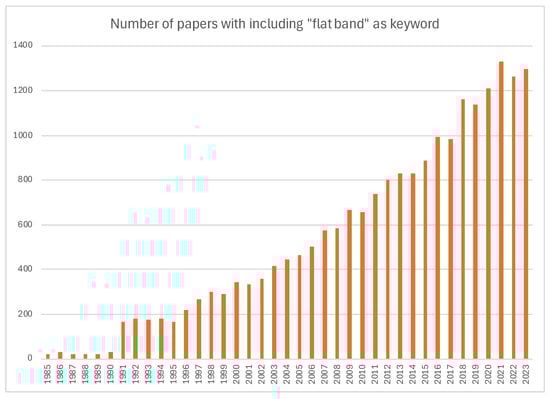
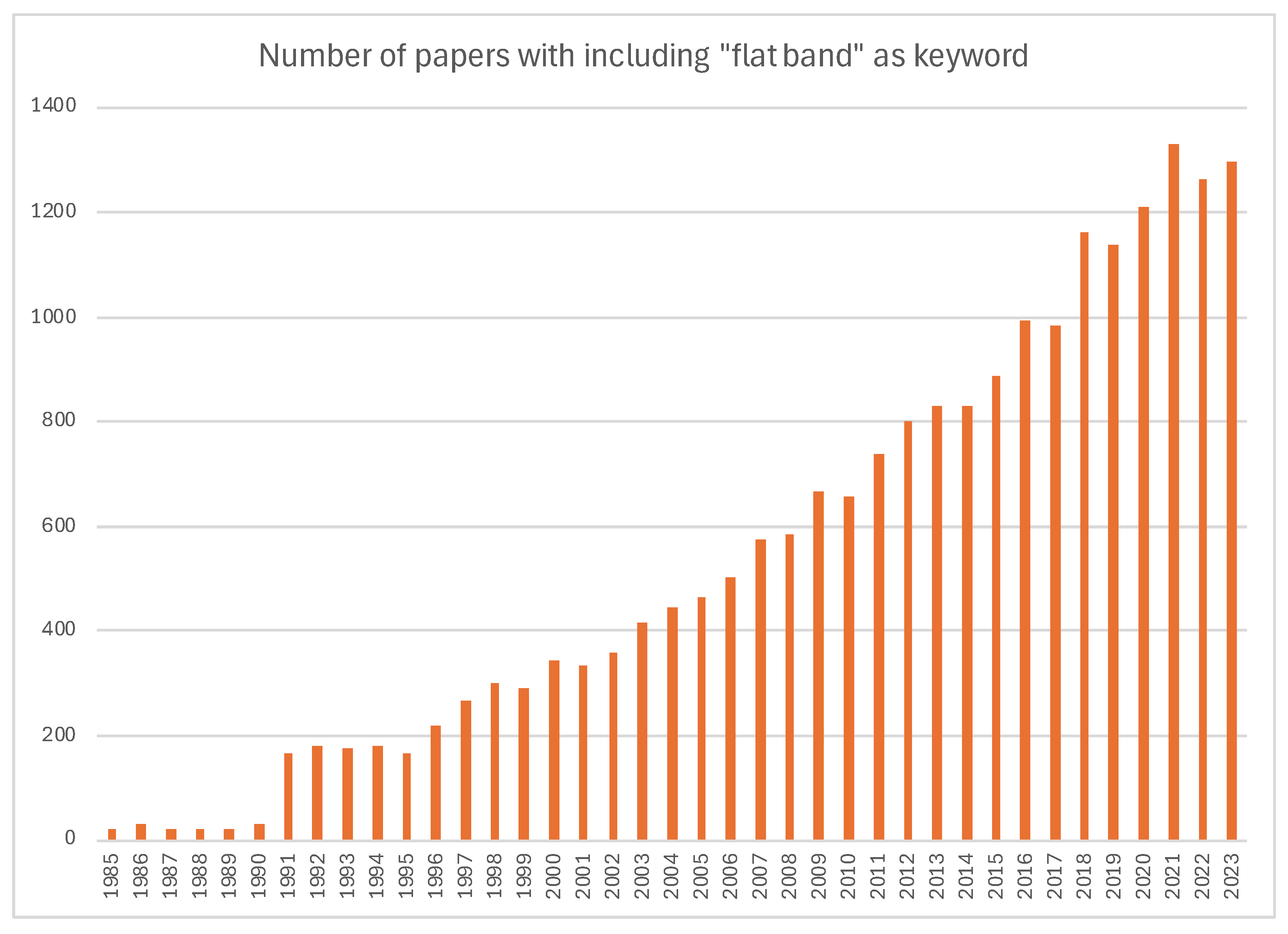
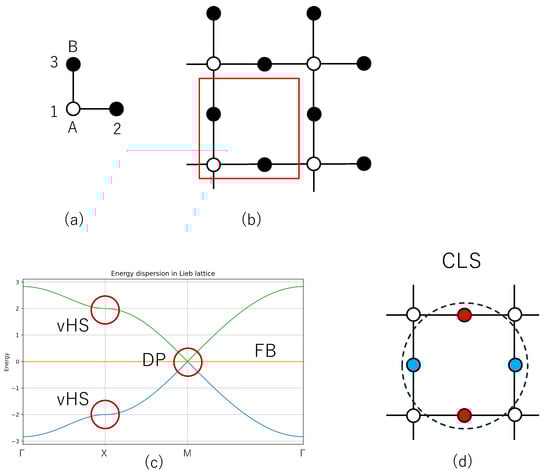
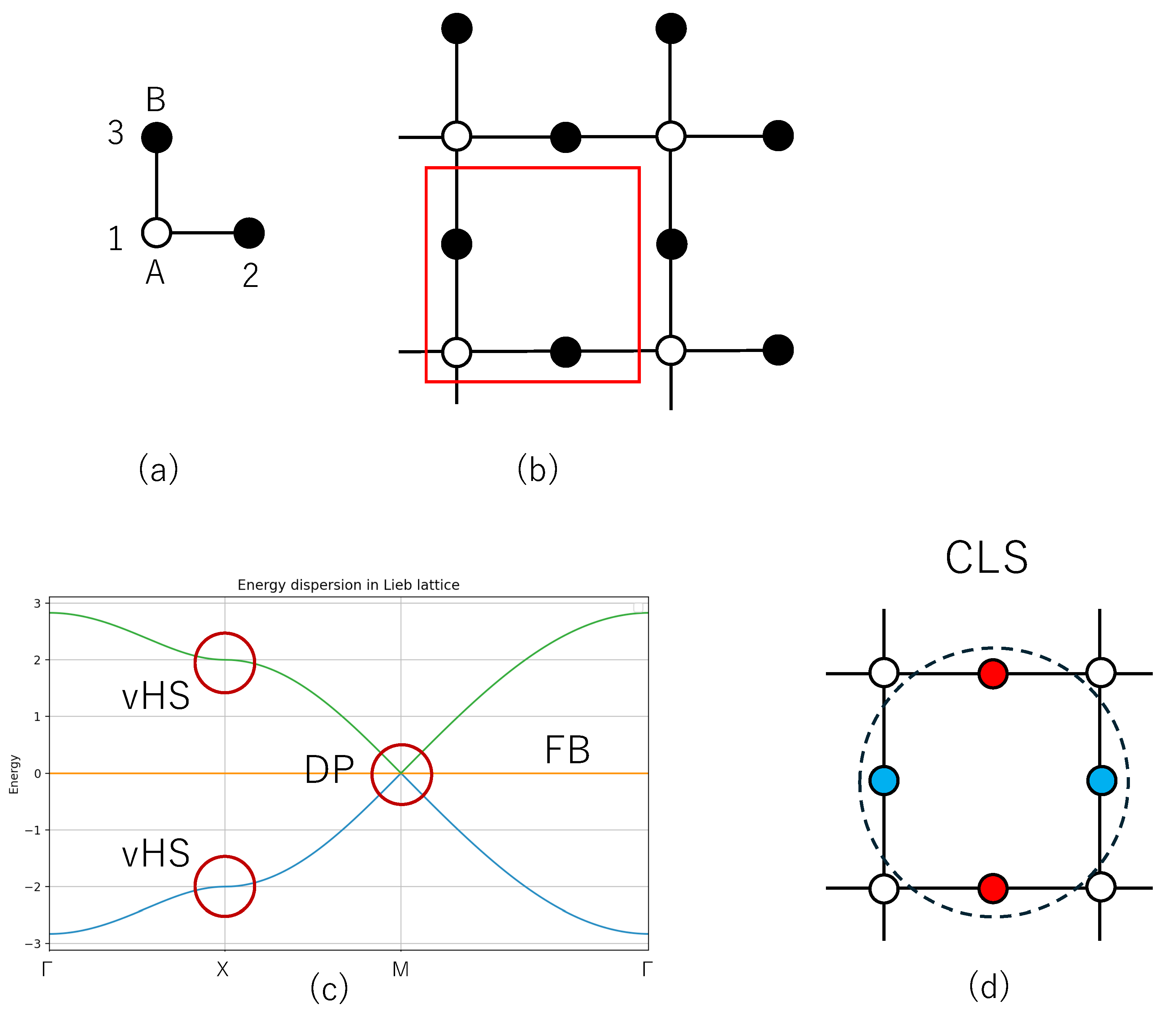
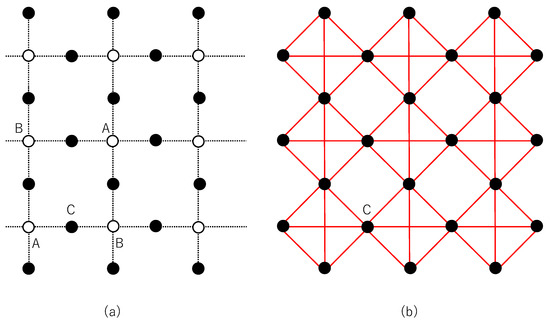
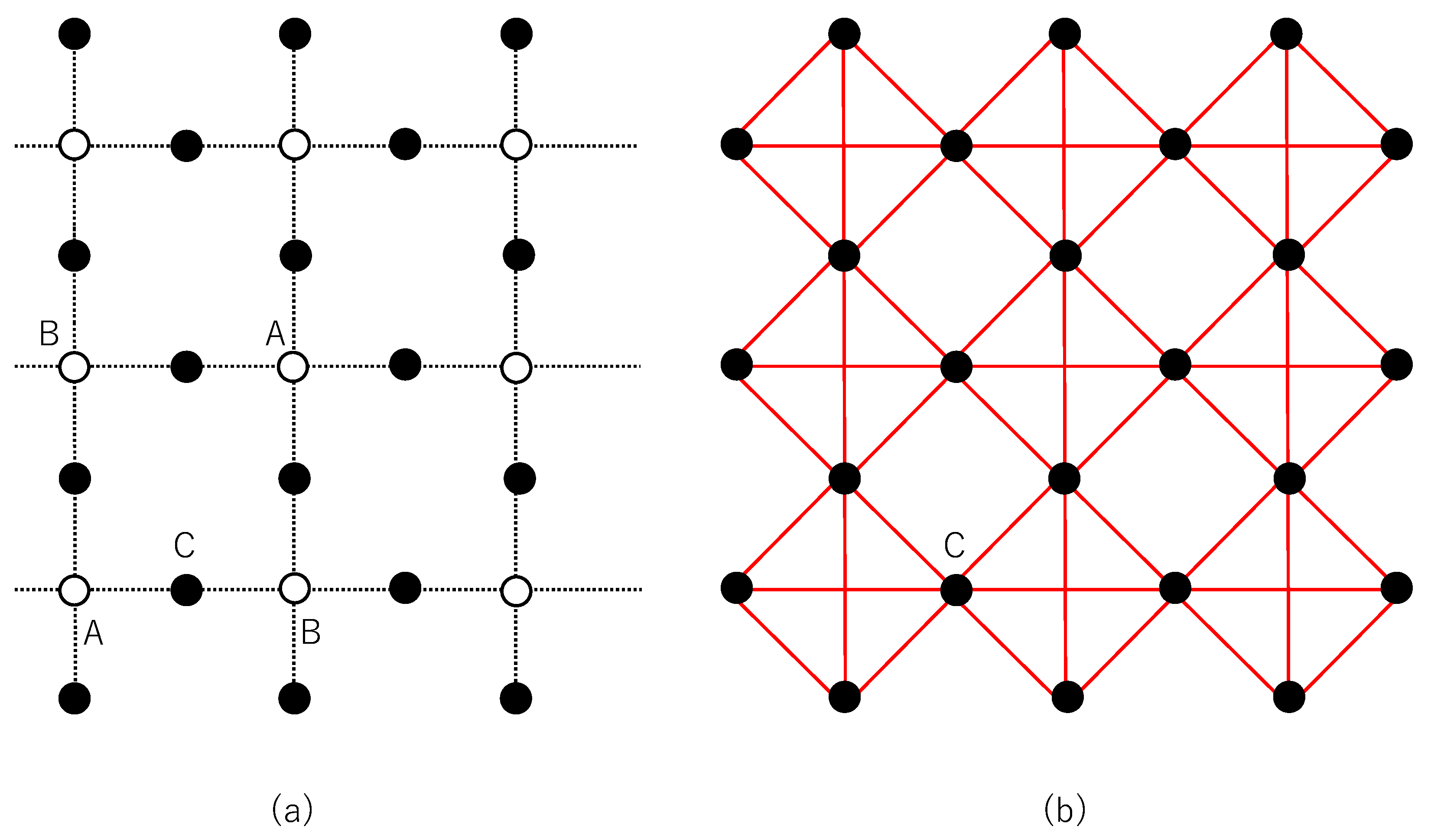
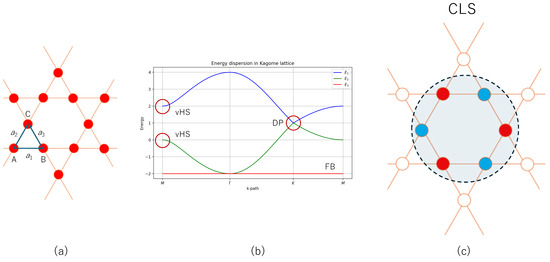
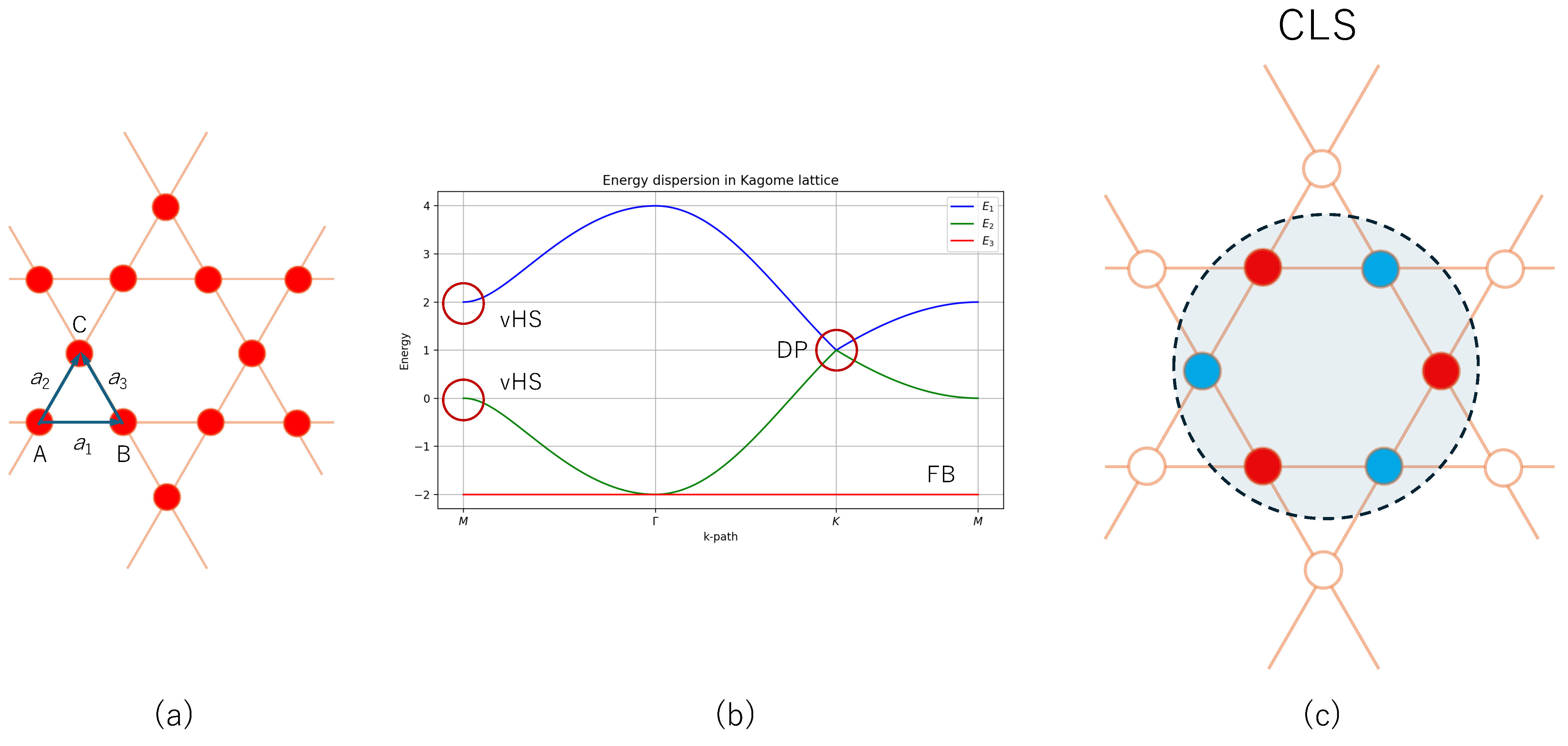
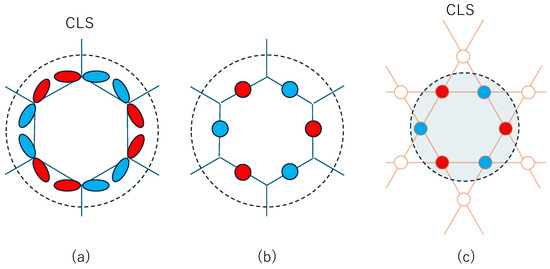
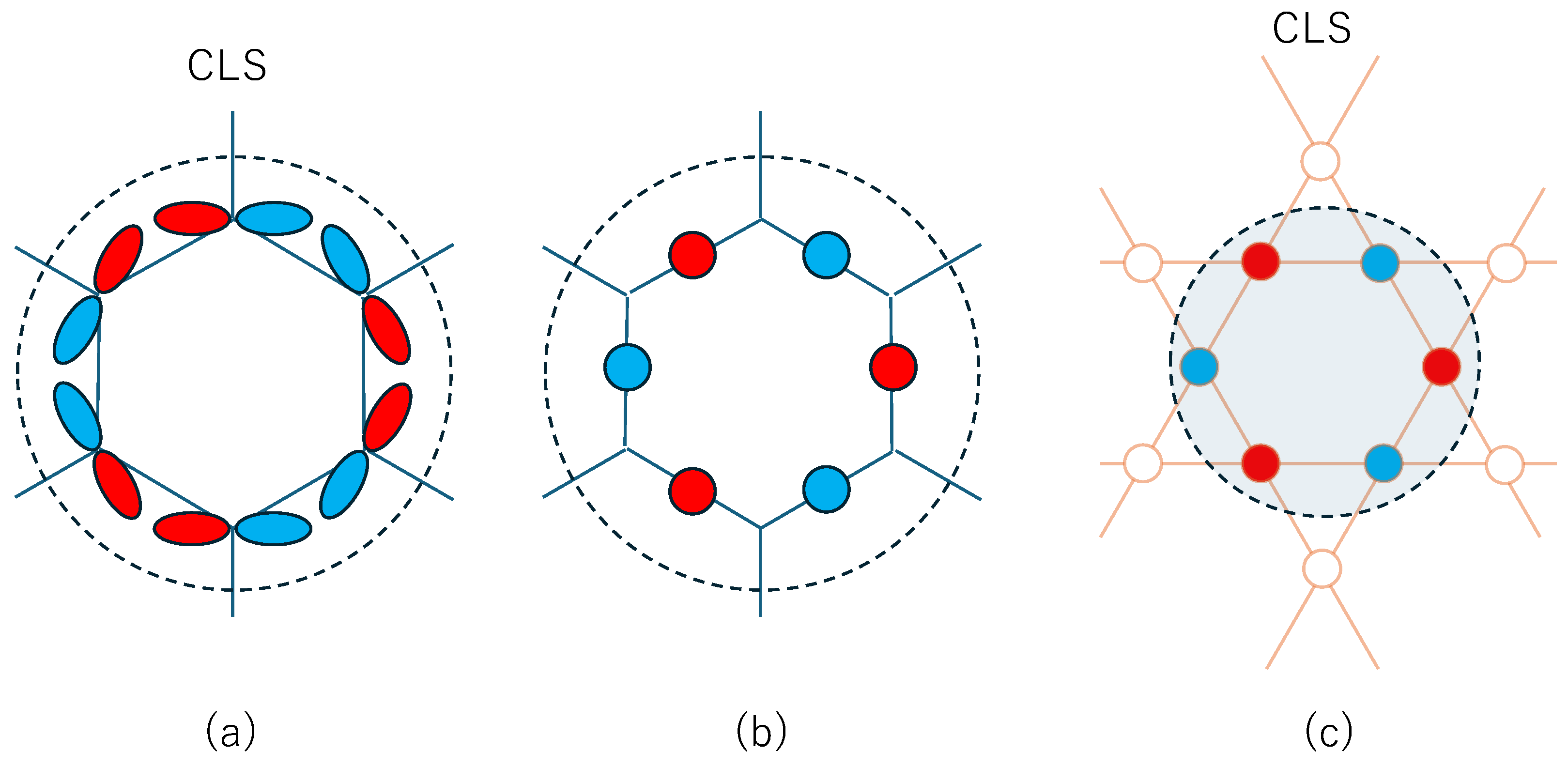
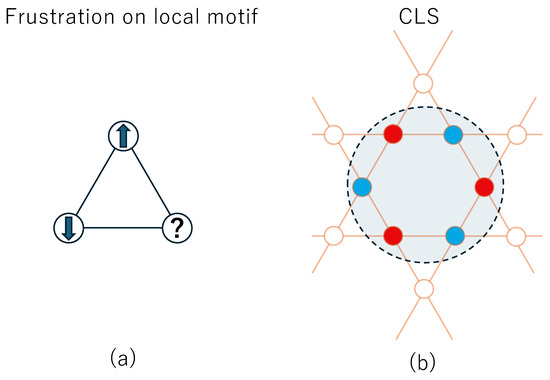
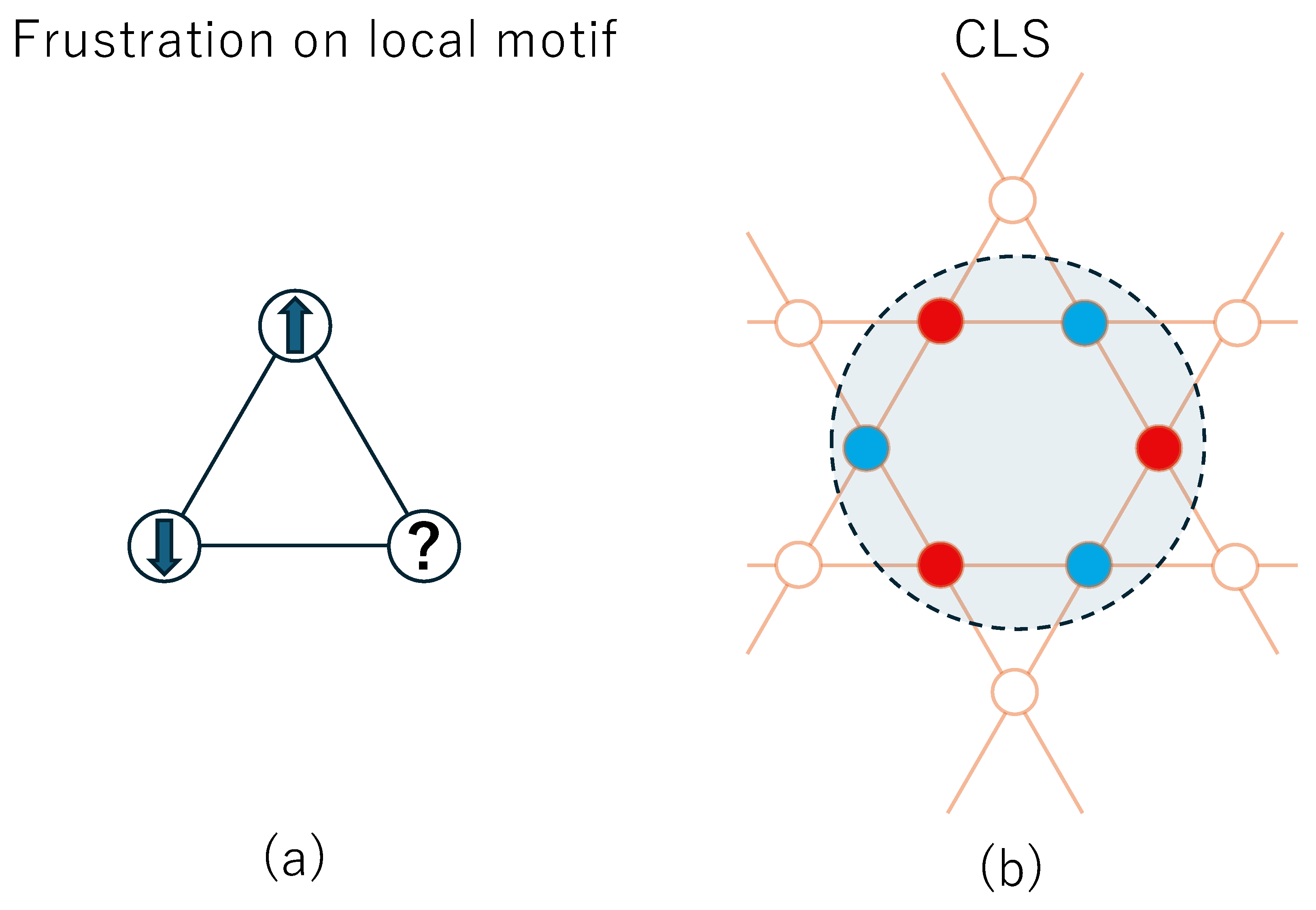
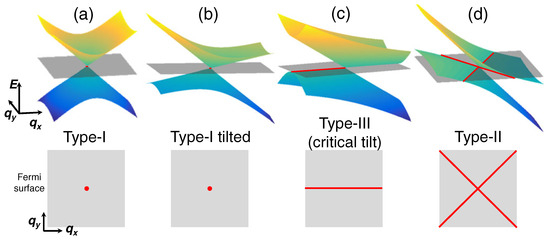
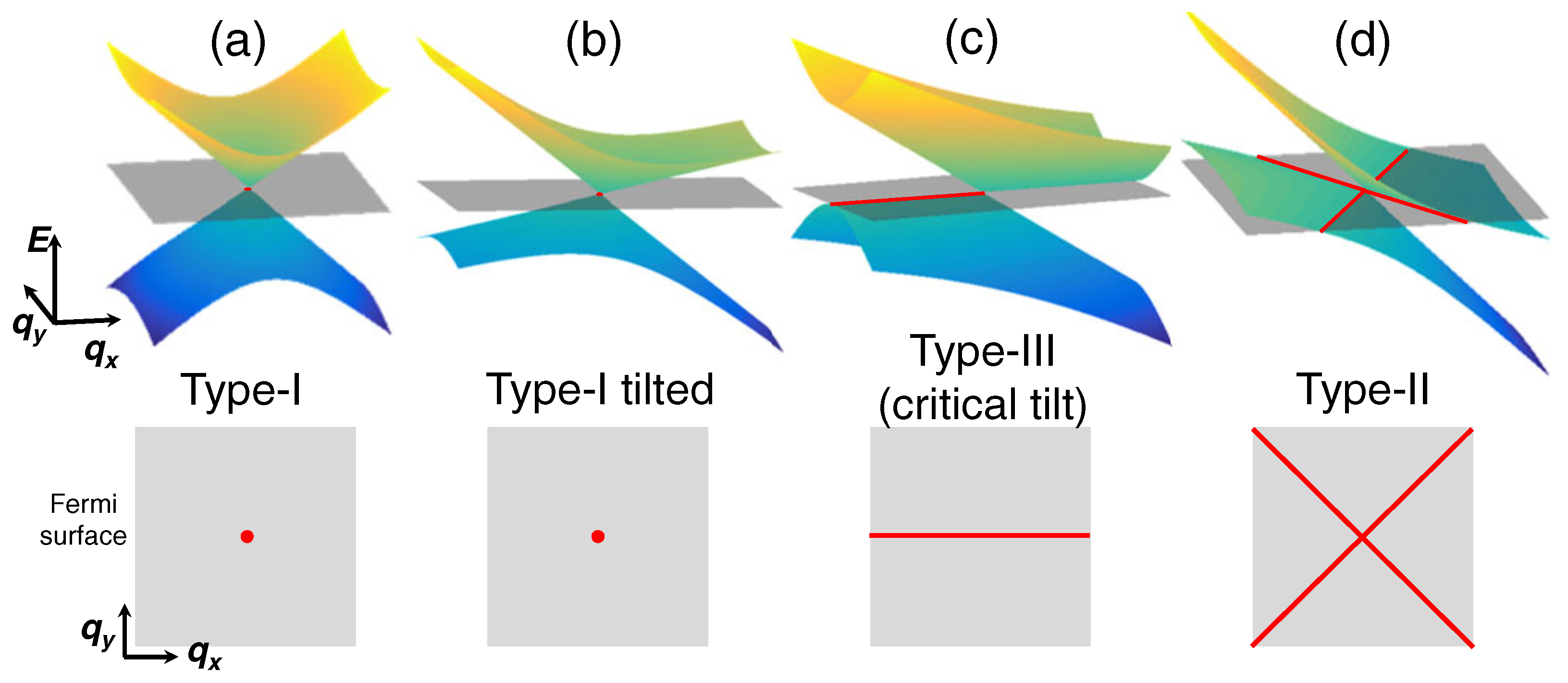
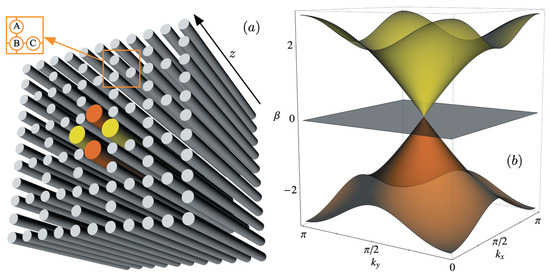
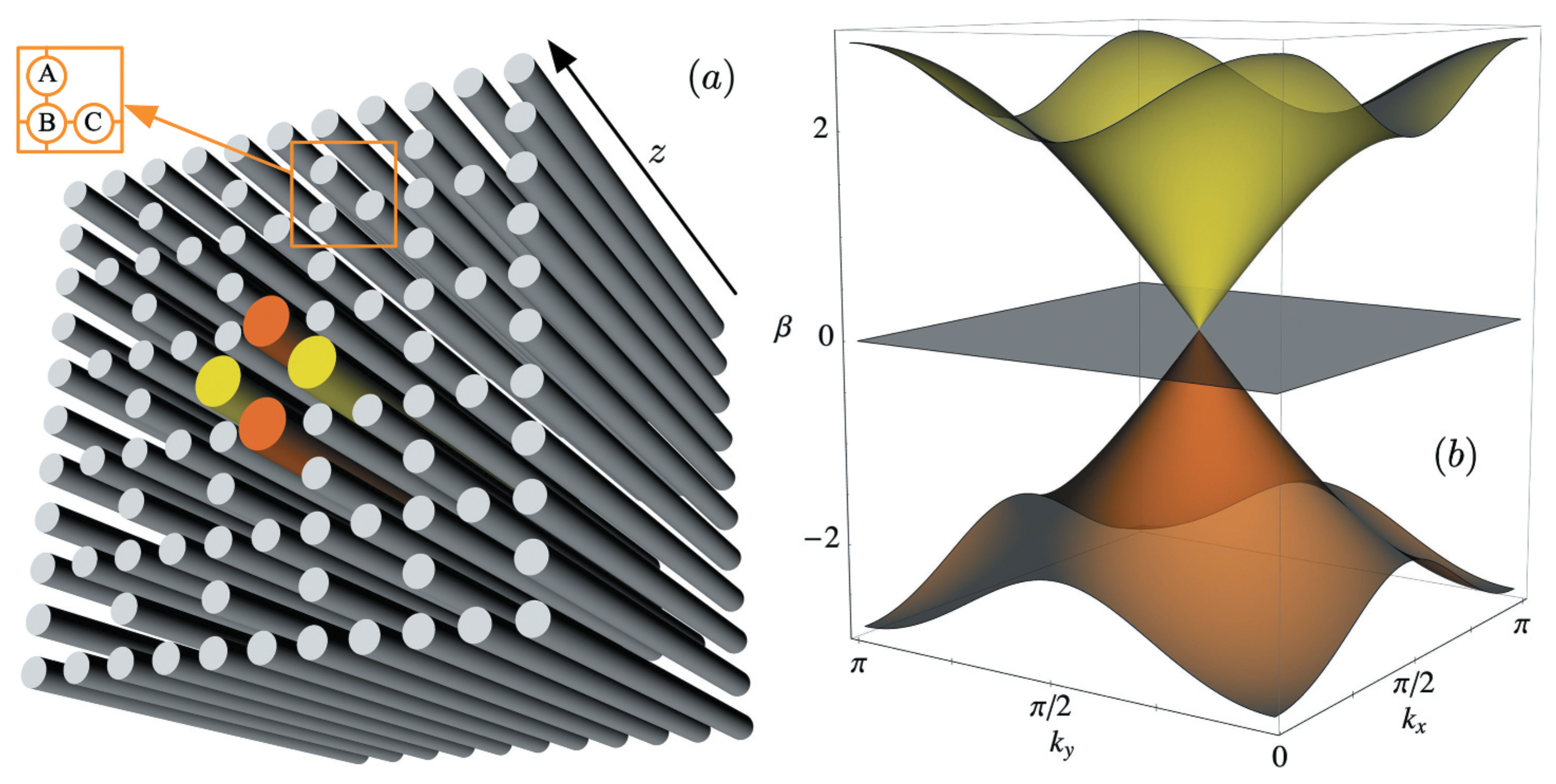
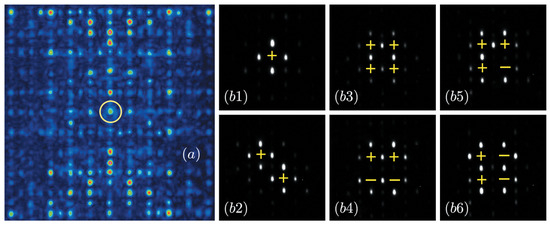
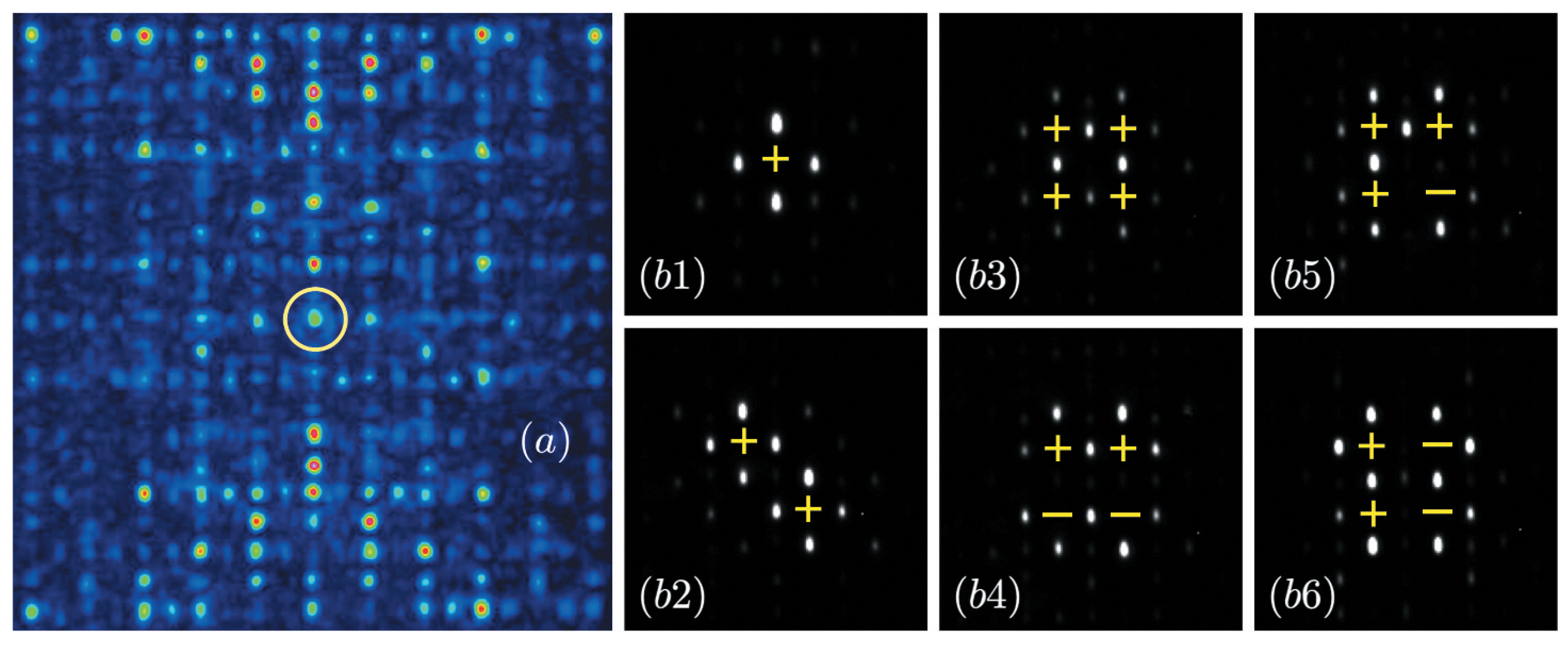
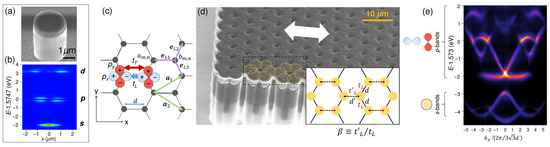
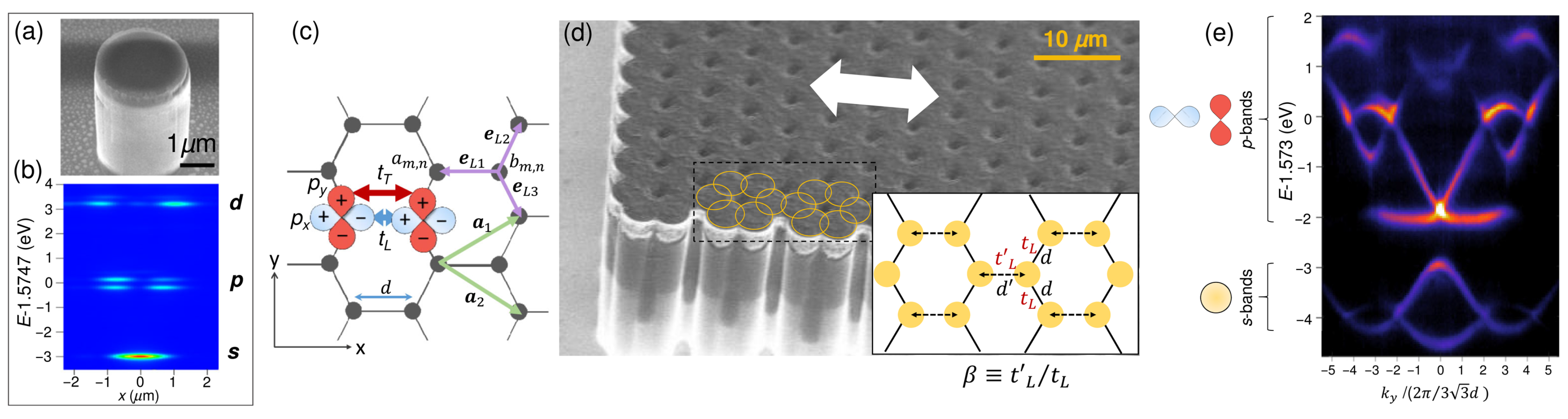

Disclaimer/Publisher’s Note: The statements, opinions and data contained in all publications are solely those of the individual author(s) and contributor(s) and not of MDPI and/or the editor(s). MDPI and/or the editor(s) disclaim responsibility for any injury to people or property resulting from any ideas, methods, instructions or products referred to in the content. |
© 2025 by the author. Licensee MDPI, Basel, Switzerland. This article is an open access article distributed under the terms and conditions of the Creative Commons Attribution (CC BY) license (https://creativecommons.org/licenses/by/4.0/).