1. Introduction
Marine recreational fishing (including sport fishing) is defined as a non-commercial fishing activity practiced for recreational, sporting, or leisure purposes, in which catches are intended for self-consumption and cannot be legally commercialized [
1]. Over recent decades, this activity has gained increasing social and economic relevance at a global scale, becoming one of the main forms of recreational use of marine ecosystems [
2]. It is estimated that approximately 10.6% of the population participates in recreational fishing activities, corresponding to nearly 120 million recreational fishers mainly distributed across Europe, North America, and Oceania [
2,
3,
4].
In Europe, marine recreational fishing represents an activity of considerable socioeconomic importance, involving approximately 8.7 million marine recreational fishers, nearly 77.6 million fishing days annually, and an estimated economic impact of €5.9 billion per year [
5,
6]. This relevance is particularly notable in the European Mediterranean, where around 2.8 million people are estimated to practice marine recreational fishing, generating an annual economic impact close to €920 million [
5,
7].
Within the western Mediterranean, Spain constitutes one of the main areas for marine recreational fishing, with approximately 900,000 recreational fishers and estimated annual catches of around 40,000 tonnes, of which nearly 75% correspond to shore-based fishers [
8]. This activity is particularly widespread in Mediterranean regions, where both local residents and coastal tourists actively participate, contributing to the economic development of sectors associated with nautical tourism, fishing equipment trade, and sport fishing competitions [
9].
A large proportion of marine recreational fishing takes place in coastal environments and shallow estuarine areas [
7,
10], ecosystems that perform essential ecological functions by serving as feeding, refuge, reproductive, and nursery areas for numerous marine species [
11,
12,
13]. Among the species associated with these habitats are several elasmobranchs, a group that includes sharks and rays [
14,
15,
16], which use sandy beaches, coastal lagoons, estuaries, and shallow sedimentary bottoms of the western Mediterranean as nursery and juvenile development areas [
17,
18].
Elasmobranchs play key ecological roles in marine ecosystems as predators occupying intermediate and upper trophic levels, contributing to trophic regulation and the maintenance of ecological stability in both coastal and pelagic environments [
17,
19,
20]. However, biological traits such as slow growth, late sexual maturity, low fecundity, and limited capacity for population recovery increase their vulnerability to fishing pressure [
21,
22]. Consequently, many shark and ray populations have undergone severe declines over recent decades due to the combined effects of overfishing, habitat degradation, and environmental changes associated with climate change [
23,
24].
As a result, the spatial overlap between these sensitive habitats and areas subjected to intense recreational fishing activity increases the likelihood of interactions between fishers and threatened species, both through targeted catches and incidental bycatch [
7,
25]. Nevertheless, monitoring recreational fisheries remains a major challenge due to the spatial dispersion of fishers, the diversity of fishing techniques employed, and the lack of standardized sampling and data collection methodologies [
5,
26]. Consequently, substantial information gaps persist regarding fishing effort, actual catches, and species composition of exploited assemblages [
7,
26].
In this context, citizen science and local ecological knowledge have become relevant supporting tools for the monitoring and conservation of vulnerable marine species [
27,
28,
29]. The involvement of recreational fishers in participatory monitoring programs facilitates the collection of information on relative abundance, spatial distribution, seasonality, catch per unit effort, and the occurrence of threatened species, particularly in areas where conventional scientific monitoring programs face logistical and economic constraints [
30,
31,
32]. Furthermore, the accumulated experience of long-term fishers can provide valuable insights into historical changes in marine communities and temporal trends affecting sensitive species [
33,
34].
From a socioeconomic perspective, the southeastern Spanish coast has historically maintained a close connection with maritime activities, particularly commercial and recreational fishing, which form part of the economic and cultural fabric of many coastal communities. These activities currently coexist with intense tourism development and an increasing recreational use of coastal environments, giving rise to a complex socioecological system in which ecological values, economic interests, and multiple anthropogenic pressures converge. In this context, the southeastern Spanish coast constitutes a particularly relevant area for studying the sustainable management of marine resources and assessing the pressures affecting threatened species, including elasmobranchs [
35].
Against this background, the aim of this study is to assess sport fishing along the south-east coast of Spain. Specifically, it seeks to characterise the profile of sport fishers and identify potential interactions with threatened species, particularly elasmobranchs. Special emphasis is placed on Rhinobatos rhinobatos (Linnaeus, 1758) and Gymnura altavela (Linnaeus, 1758) due to their relevance in the study area and their threatened conservation status. In addition, the study examines trends in fish catches recorded over a five-year period in the Puerto de Mazarrón Fishing Open Championship.
Furthermore, the study highlights the potential of citizen science as a complementary tool for the monitoring and conservation of threatened species in Mediterranean coastal ecosystems.
2. Materials and Methods
Sport Fishing Competitions and Study Area
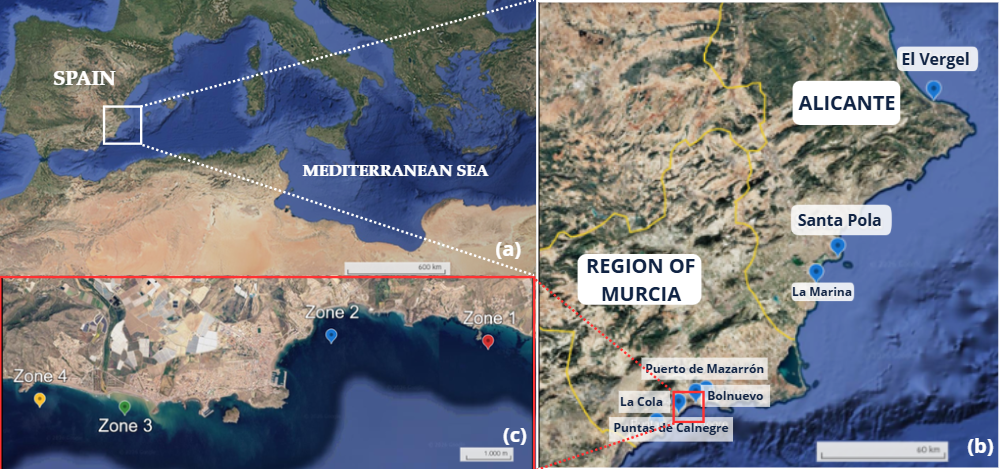
The study area is located along the southeastern Spanish Mediterranean coast, extending between the province of Alicante and the Region of Murcia, within the western Mediterranean basin (
Figure 1). This coastal area is characterized by high geomorphological and ecological diversity, where sandy beaches, dune systems, rocky shores, and cliffs alternate, forming a heterogeneous mosaic of marine and coastal habitats of considerable ecological value. Among the most relevant submerged ecosystems are the
Posidonia oceanica (Delile, 1813) seagrass meadows [
36].
The present study focuses on the historical evolution of the “Puerto de Mazarrón Fishing Open Championship” during the 2019–2025 period, together with eight local sport fishing competitions held at different locations (El Vergel, Santa Pola, La Marina, Puerto de Mazarrón, Bolnuevo, Puntas de Calnegre, La Cola) along this coastal sector during 2025 (
Figure 1b).
The
Puerto de Mazarrón Fishing Open Championship was spatially divided into four fishing sectors: (i) Zone 1 (Isla Plana); (ii) Zone 2 (El Alamillo); (iii) Zone 3 (Castellar); and (iv) Zone 4 (Bolnuevo) (
Figure 1c). These four zones correspond to the official fishing sectors established by the organisers of the Puerto de Mazarrón Fishing Open Championship. As these sectors remained unchanged throughout the five-year study period, they were used as sampling units. Fishing positions were assigned by random draw within each sector during the competition, allowing catch records to be spatially linked to predefined areas and enabling comparisons among sectors throughout the study period. Overall, the four sectors are characterised by shallow coastal environments dominated by mixed sedimentary substrates and different degrees of wave exposure. Zone 1 (
Isla Plana) and Zone 2 (
El Alamillo) correspond to the narrowest beaches within the study area, measuring approximately 580 and 600 m in length and presenting average widths of 12 and 14 m, respectively. Both beaches exhibit moderate slope profiles and are mainly composed of sand and gravel, although Zone 2 shows greater sedimentary heterogeneity, including areas with pebbles, boulders, and isolated patches of
P. oceanica. Zone 1 is characterised by being highly protected from wave action and by the presence of an extensive sandy bank together with an isolated
P. oceanica patch. In contrast, Zone 2 presents more heterogeneous conditions in both substrate composition and habitat structure. Zone 3 (
Castellar) and Zone 4 (
Bolnuevo), in contrast, correspond to larger beaches, reaching approximately 1170 and 1600 m in length, respectively, with widths ranging between 24 and 26 m. Both sectors are influenced by an intermittent natural watercourse through which rainwater flows occasionally
(Rambla de las Moreras), particularly affecting Zone 4. Zone 3 is characterised by predominantly sandy bottoms, low slope, absence of shallow
P. oceanica meadows, and a high degree of protection from wave exposure. Conversely, Zone 4 represents the most wave-exposed sector, presenting a steep slope and greater hydrodynamic activity [
37].
The eight local fishing competitions considered in this study were distributed across seven localities along a relatively continuous coastal strip (
Table 1,
Figure 1). The geographical proximity among the different locations, together with the similarities in their environmental, oceanographic, and socioeconomic characteristics, allows the collected information to be analysed within a homogeneous regional framework (
Figure 1b).
It is important to distinguish between open fishing competitions and social fishing competitions. Social competitions are restricted to members of the organising fishing club, whereas open competitions allow the participation of fishers from other clubs, including competitors from different regions of Spain and even at the national level.
Data Collection Procedure
With the aim of characterising the profile of sport fishers, identifying potential interactions with vulnerable species such as elasmobranchs and analysing the evolution of catches recorded over a five-year period within the study area, the present study applies a methodology based on the direct collection of information during shore-based sport fishing competitions organised by local fishing clubs from the provinces of Alicante and the Region of Murcia.
Following the definition of the study objectives, the fishing competitions included in the sampling programme were identified through collaboration with different fishing clubs operating within the study area. Simultaneously, the key variables analysed throughout the study were established.
The methodology consisted of a structured survey divided into several consecutive phases carried out during local fishing competitions held throughout 2025, together with a temporal series analysis based on the annual Puerto de Mazarrón Fishing Open Championship corresponding to the years 2019, 2022, 2023, 2024, and 2025. The methodological approach combines fieldwork, structured questionnaires, and catch data collection, allowing the acquisition of both quantitative and qualitative information regarding sport fishing activity and its potential interaction with elasmobranch species.
- (a)
Survey design
A structured survey was designed to obtain homogeneous and comparable in situ data during the different events. Questionnaires were administered during all sport fishing competitions attended throughout the study period, following a random sampling strategy. All respondents (100%) were sampled within tournament settings, including both Open Championships and social competitions organized by local fishing clubs. No questionnaires were conducted outside competition events. The response rate was high, indicating strong participation and engagement among the surveyed anglers. Approximately 98% of the anglers approached agreed to complete the questionnaire, whereas only 8–10 individuals declined to participate, resulting in a robust dataset for subsequent analyses.
The questionnaire was divided into two main sections: (A) characterizing the sport fisher profile, including variables related to (i) gender, (ii) place of origin, (iii) experience in sport fishing, (iv) frequency of participation in competitions, (v) main motivation for fishing activity, (vi) years of competitive experience, and (vii) usual fishing areas, and (B) assessing the level of knowledge and experience of sport fishers regarding elasmobranchs. Questions were included concerning (i) the frequency with which participants had captured sharks or rays; (ii) the areas where these captures were more common; (iii) perceptions regarding the abundance of these species; and (iv) the ability to taxonomically identify different elasmobranch species. Additionally, specific questionnaire items were included to evaluate the recognition of species of particular conservation concern, such as the butterfly ray (
Gymnura altavella) and the common guitarfish (
Rhinobatos rhinobatos), in order to assess fishers’ knowledge of protected or highly vulnerable species (
Appendix A.1). General species identification was based on the fishers’ own knowledge and criteria, without external verification. However, for the assessment of recognition of
G. altavela and
R. rhinobatos, participants were shown reference photographs of each species to ensure a standardized evaluation of species recognition.
This approach enabled direct interaction with sport fishers in real fishing conditions, facilitating closer communication and a better understanding of the context of the information gathered. During each competition, informed consent was obtained from all study participants. All fishers surveyed in this study were informed of the study’s objectives and were invited to participate voluntarily by completing the questionnaire.
- (b)
Collection of catch and weighing data
Information regarding catches obtained during the Puerto de Mazarrón Fishing Open Championship editions corresponding to 2019, 2022, 2023, 2024, and 2025 was collected in order to obtain objective data on species abundance and diversity. The information was obtained directly through the competition organisers and managers. Catch records were collected at the individual level, and the complete catch information was obtained for each fishing location, competition, participant, and sampling year. This provided a fine temporal and spatial resolution, allowing comparisons among fishing sectors and years throughout the study period.
The collected records included detailed information on the number of catches and the identification of the species captured by each participant, additionally linking each record to the assigned fishing position number and fishing sector previously allocated by random draw within the competition.
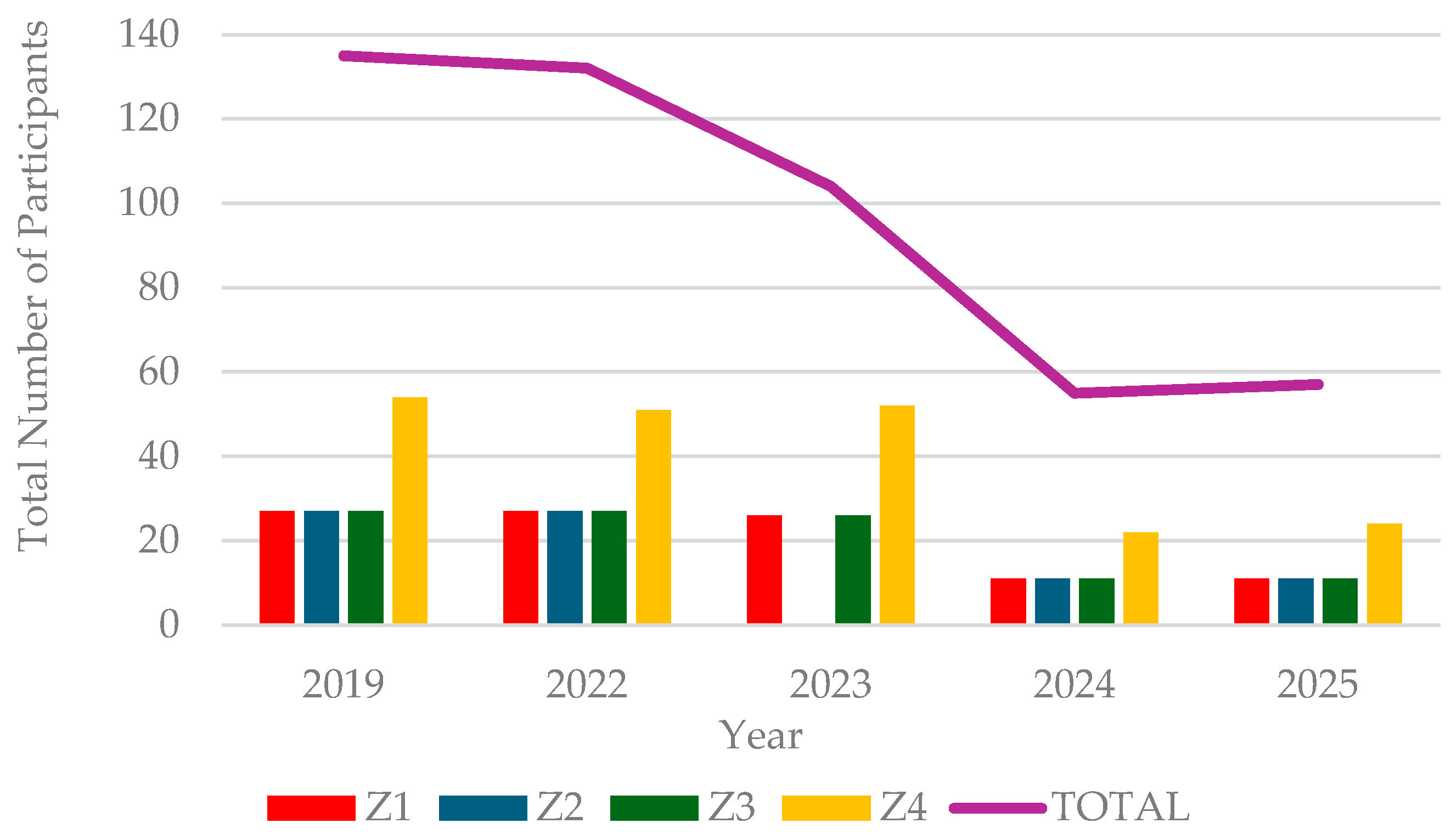
Due to the large number of participants involved in the Open Championship (
Figure 2), data collection activities were supported by the team provided by the General Directorate for Biodiversity, Forests and Desertification of the Spanish Ministry for Ecological Transition and Demographic Challenge (MITECO).
- (c)
Statistical analysis:
In order to achieve the objectives established in this study, the collected data were processed, represented, and analysed using different statistical tools and procedures.
To analyse and characterise the evolution of catches recorded over a five-year period during the Puerto de Mazarrón Fishing Open Championship, a non-metric multidimensional scaling (NMDS) analysis was performed using the vegan R package (v.4.3.2) [
38] with Bray–Curtis dissimilarity to explore the similarities between zones based on species abundance data. A two-dimensional (2D) solution showed high stress (0.21), indicating a poor fit. To improve the representation, the analysis was rerun in three dimensions (k = 3) with 200 random starts (trymax = 200). This produced a more reliable ordination of ecological dissimilarities among the samples (stress = 0.15). A two-dimensional projection of the three-dimensional solution is presented for visualisation purposes.
In addition, a permutational multivariate analysis of variance (PERMANOVA) was conducted to test for significant differences in ichthyofauna caught composition between zones. This analysis enables the evaluation of whether the observed multivariate differences between groups are statistically significant, based on permutation tests of dissimilarity matrices. Homogeneity of multivariate dispersion was evaluated using the betadisper test to determine if differences among groups could be attributed to variation in within-group dispersion. Finally, an SIMPER (Similarity Percentage) analysis was performed to identify the species contributing most to the observed dissimilarities between zones, providing an ecological interpretation of the patterns detected in the multivariate analysis.
Furthermore, the species captured during the different fishing competitions were classified according to their relative abundance within the total recorded catches as dominant (>10–20% of the total abundance), common (5–10%), occasional (1–5%), and rare (<1%), following ecological criteria widely applied in community ecology and species abundance distribution studies [
39]. To avoid disproportionate effects associated with low-frequency occurrences, rare species (<1%) were excluded from the statistical analyses. Additionally, after cleaning the data, 11 replicates per year and zone were randomly selected for subsequent analyses.
A one-way analysis of variance (ANOVA) was performed to evaluate potential differences in the total abundance of captured individuals (sum of all recorded species) among fishing zones (Zones 1, 3, and 4), using a balanced design with n = 55 replicates per zone. Prior to the analysis, the assumptions of normality and homogeneity of variances were assessed using the Shapiro–Wilk and Bartlett tests, respectively. As the original data did not fully satisfy the assumption of homoscedasticity, a logarithmic transformation was applied to stabilise variances and improve data normality. When significant differences were detected, post hoc pairwise comparisons were conducted using Tukey’s Honest Significant Difference (HSD) test.
To analyse temporal differences in total abundance among sampling years (2019, 2022, 2023, 2024, and 2025), a non-parametric Kruskal–Wallis test (n = 33) was applied due to the violation of parametric assumptions required for ANOVA. Subsequently, pairwise post hoc comparisons were performed using Wilcoxon rank-sum tests with p-value adjustment for multiple comparisons in order to identify significant differences between years while controlling for type I error.
3. Results
3.1. Sport Fisher Profile
A total of 425 surveys were conducted. Of these, 244 corresponded to the Puerto de Mazarrón Fishing Open Championship during the 2019–2025 period, while the remaining 181 were carried out throughout 2025 during different social fishing competitions organised by several fishing clubs. Regarding the gender distribution of surveyed participants, 92% were male and 8% were female.
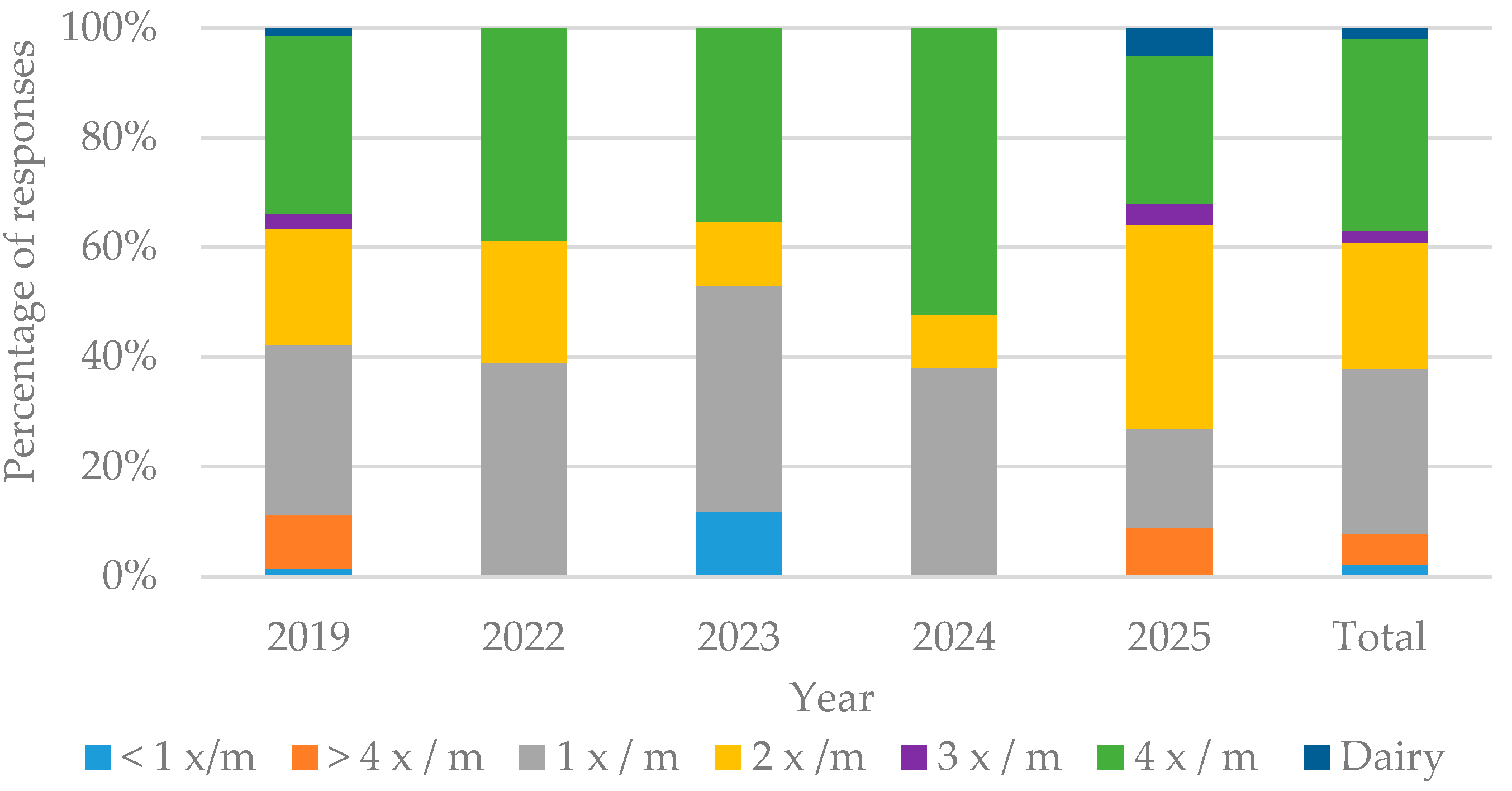
Most surveyed participants engage in this activity regularly throughout the year. Among participants who did not fish throughout the entire year, the highest frequencies corresponded to the 9–11 months categories. In contrast, categories representing low annual fishing frequency (2–8 months) showed considerably lower values, indicating that strictly seasonal or occasional fishing activity is uncommon among the surveyed participants (
Figure 3).
The analysis of the annual evolution of sport fishing frequency, based on the percentage distribution of fishing activity frequency between 2019 and 2025, shows a consistent pattern over time. In all the years analyzed, there is a clear predominance of frequencies that correspond to one, two and four times per month (
Figure 3).
The category corresponding to four times per month maintains a strong presence throughout all years. Similarly, the category of two times per month also presents high values, especially in 2025. Daily fishing or fishing less than once per month appear with low percentages.
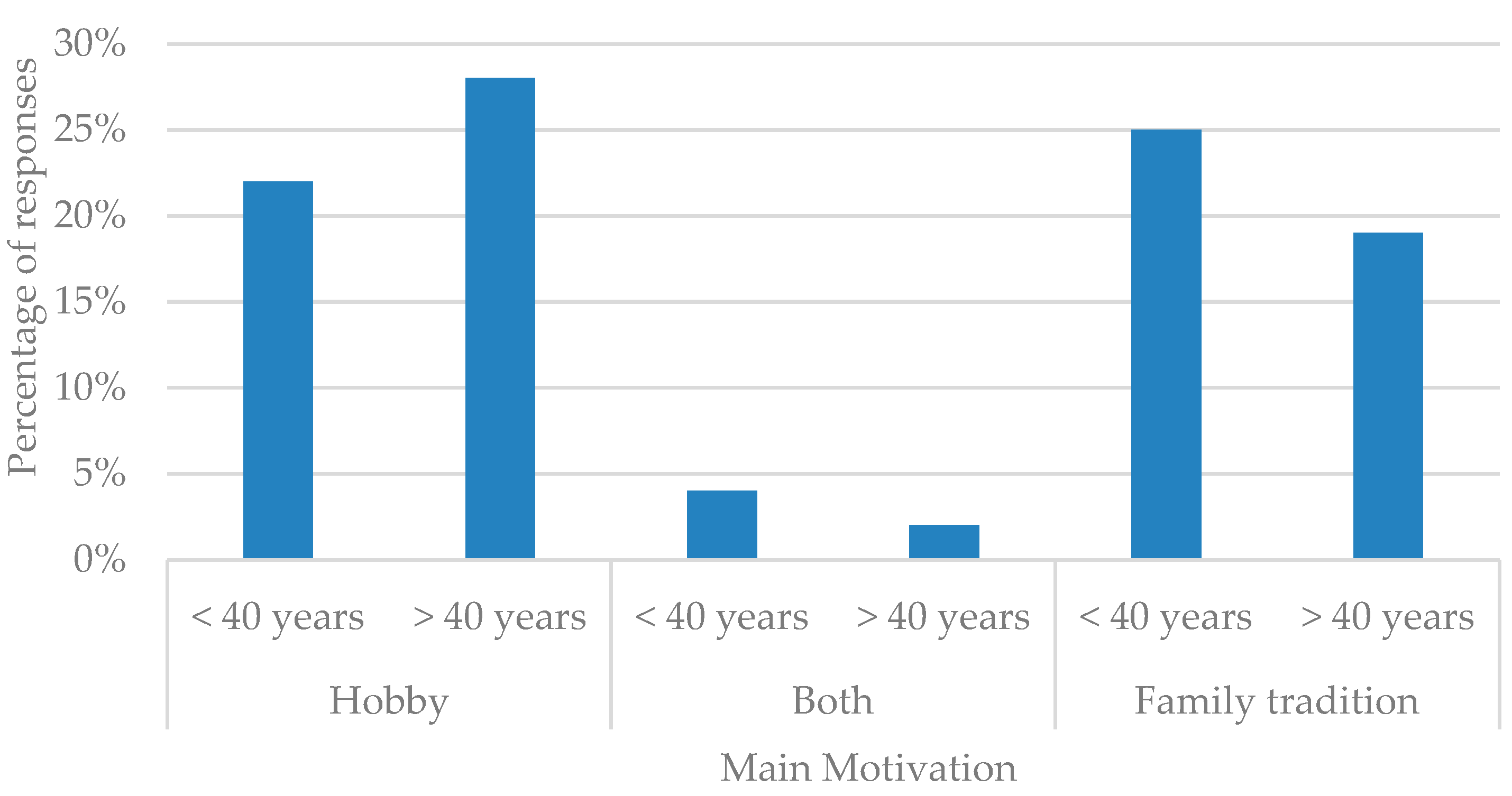
The percentage distribution of participants according to their age group (under and over 40 years old) and their main motivation for practicing sport fishing (personal hobby, family tradition, or both) shows that hobby is the predominant motivation in both groups, being especially relevant among participants over 40 years old (28% of responses) compared with participants under 40 years old (22%) (
Figure 4).
Family tradition appears as the second most relevant motivation, with a marked presence among both younger and older participants, although slightly higher among fishers under 40 years old (25%) than among those over 40 years old (19%). In contrast, the category combining both motivations (hobby and family tradition) presents much lower values, accounting for only 4% of responses among fishers under 40 years old and 2% among those over 40 years old.
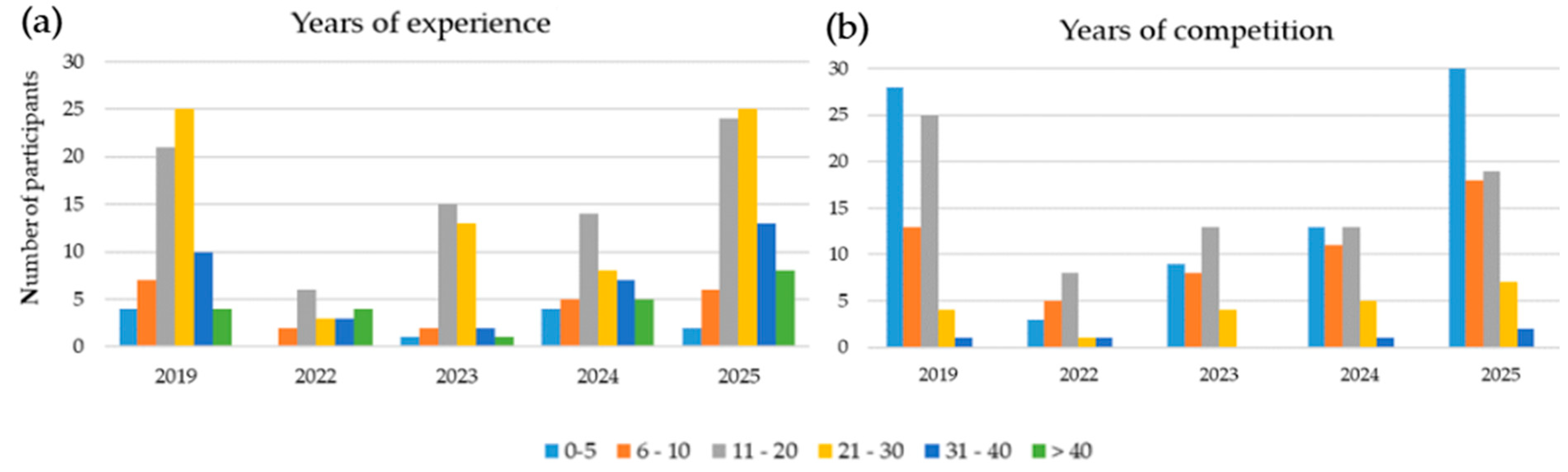
When comparing recreational fishing experience with competitive fishing experience (
Figure 5), a clearly differentiated pattern is observed between both variables across all sampled years. General fishing experience is mainly concentrated within the intermediate and higher intervals, particularly between 11–20 and 21–30 years, with a substantial presence of fishers reporting more than 30 years of experience. This pattern remained relatively stable throughout the study period, although the 21–30 year category predominated in 2019 and 2025, whereas the 11–20 year interval was slightly more represented in 2023 and 2024.
In contrast, competitive fishing experience shows highest proportions corresponding to participants with 0–5 and 6–10 years of competitive practice. This pattern was consistently observed across all analysed years. Fishers surveyed outside the Open Championship in 2025 generally exhibited greater recreational fishing experience, with the 21–30 and 31–40 year categories being the most represented. However, their competitive experience was considerably lower, as more than half of the participants (53%) had accumulated only 0–5 years of competitive fishing experience.
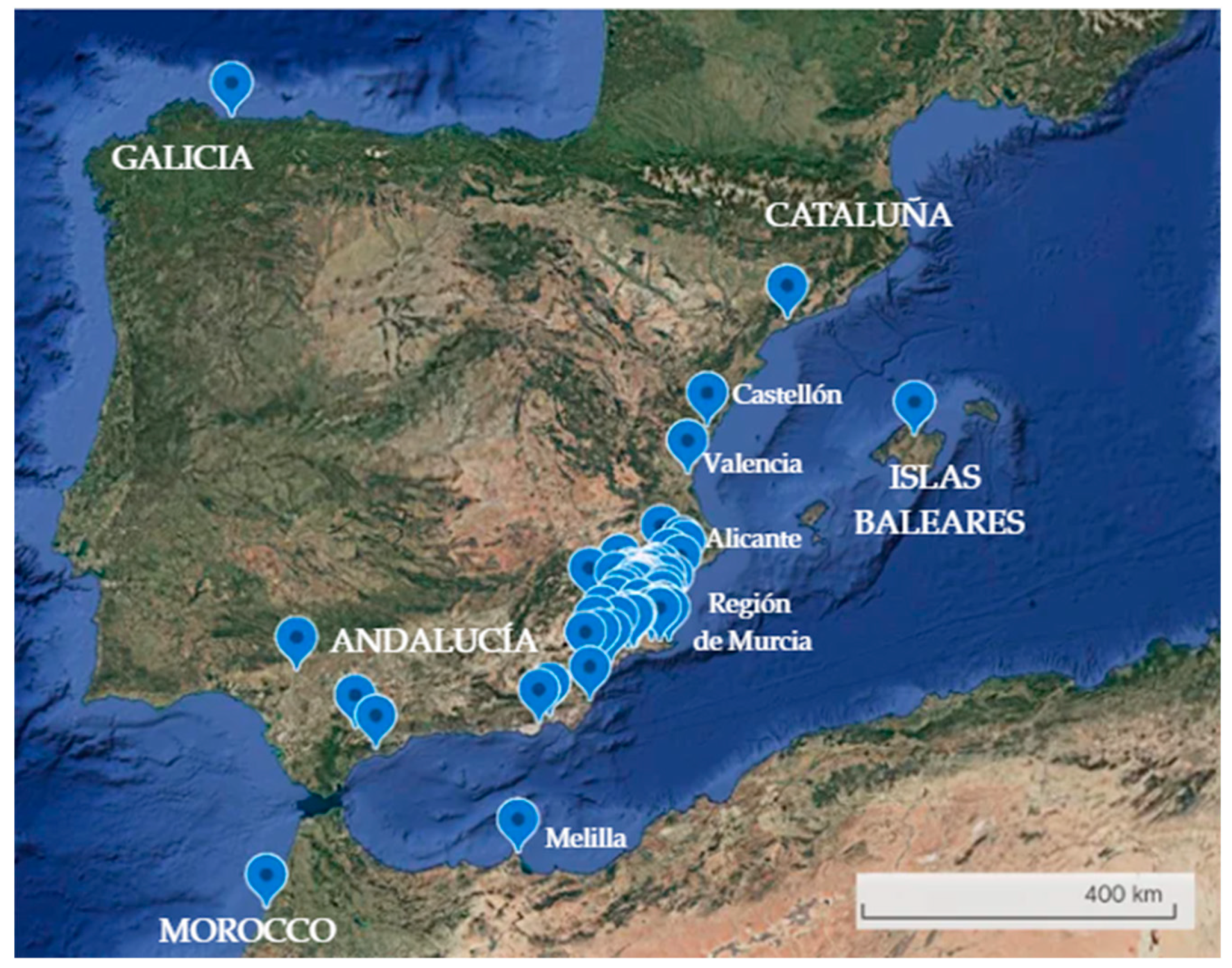
Mapping the main places of origin of participants in the sampled sport fishing competitions, including the Open Championship, reveals a clear spatial concentration in the southeastern Spanish coast, particularly within the Region of Murcia and nearby areas, where the highest participant density is observed. Region of Murcia municipalities (Murcia, Cartagena, Mazarrón, Águilas, and Lorca) constitute the main core, complemented by nearby localities in the province of Alicante (Alicante, Elche, Santa Pola and Orihuela) (
Figure 6).
In addition, contributions from other areas along the Mediterranean coast were identified, including the provinces of Valencia and Castellón in the Comunidad Valenciana, as well as eastern Andalucía (
Figure 6). More dispersed records were also observed in other parts of Spain, including western Andalucía, Galicia, and Islas Baleares, together with isolated cases from North Africa, such as Melilla and Morocco (
Figure 6). These records correspond to a minority of participants and are mainly associated with more open-access events, such as the Puerto de Mazarrón Fishing Open Championship.
Participants’ preferred fishing locations exhibited a predominantly coastal distribution concentrated along the southeastern Spanish Mediterranean, particularly the coastal line between Alicante and Murcia provinces. The highest concentration of preferred fishing areas was observed in the coastal sectors extending from Guardamar del Segura to Mazarrón. Among the most frequently mentioned locations were Guardamar (84 responses), La Manga (81), the beaches of Mazarrón (63), and Vera (56). Nevertheless, a broad spatial dispersion in preferences was also evident, with nearly one hundred different fishing locations reported across the study area and adjacent regions, including other areas of the Spanish Mediterranean and Atlantic coasts (
Appendix A.2).
3.2. Identification of Potential Interactions with Vulnerable Species Such as Elasmobranchs
One of the questions included in the questionnaire was aimed at assessing participants’ previous experience with elasmobranch captures. Analysis of the responses revealed that a significant proportion of respondents had direct contact with elasmobranchs through sport fishing activities. Specifically, 41% of participants reported having captured rays at least once, representing the majority category. In addition, 23% indicated having captured both sharks and rays, demonstrating broader experience in interacting with different groups of elasmobranchs. In contrast, only 4% of respondents reported having captured exclusively sharks, suggesting a lower frequency of interaction with this group compared with rays. Finally, 32% of participants stated that they had never caught elasmobranchs, highlighting the existence of a substantial segment of the sample without direct experience in this field.
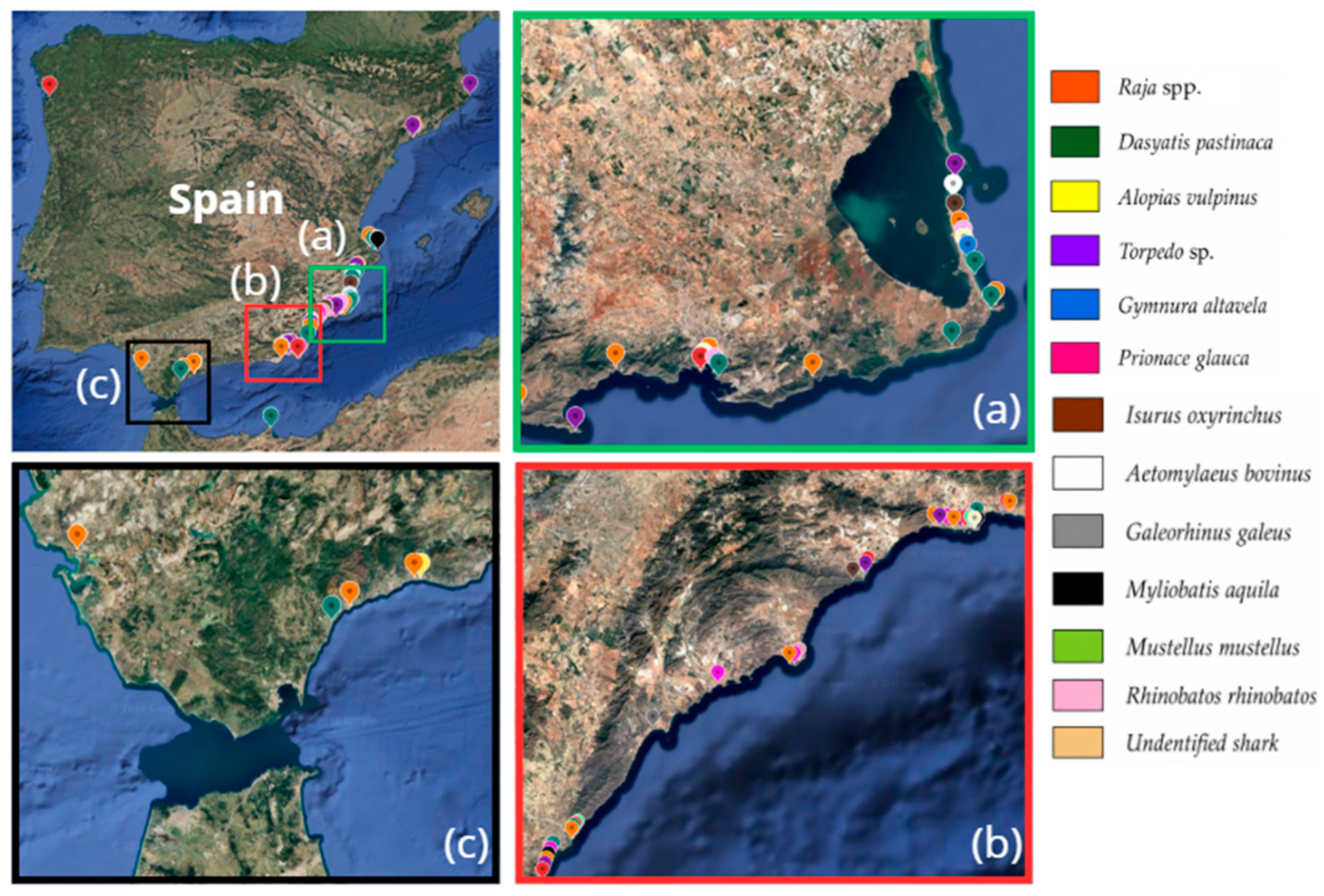
The analysis of records of elasmobranch sightings and catches associated with sport fishing (
Figure 7) reveals a spatial pattern clearly concentrated along the north of Region of Murcia coastline and southern Alicante (La Marina, Guardamar del Segura, La Manga del Mar Menor, and the beaches of Puerto de Mazarrón). These areas exhibit the highest frequency of records and a high species diversity, highlighting the predominance of rays (
Raja spp. and related forms). In addition, other species such as stingrays, guitarfish, blue sharks, smooth-hounds, small-spotted catsharks, and electric rays were also recorded in these areas, reflecting a diverse assemblage of coastal elasmobranchs.
On a broader spatial scale, a continuity of records can be observed along the eastern Andalucía coast, province of Valencia and Castellón in the Valencian Community, and Cataluña, although with a progressive decrease in observation frequency. Isolated records also appear in other regions, such as the western Andalucía coast, Galicia, Islas Canarias, and North Africa, indicating a broad interaction with these taxa, although with lower representation compared with the southeastern Spanish coast.
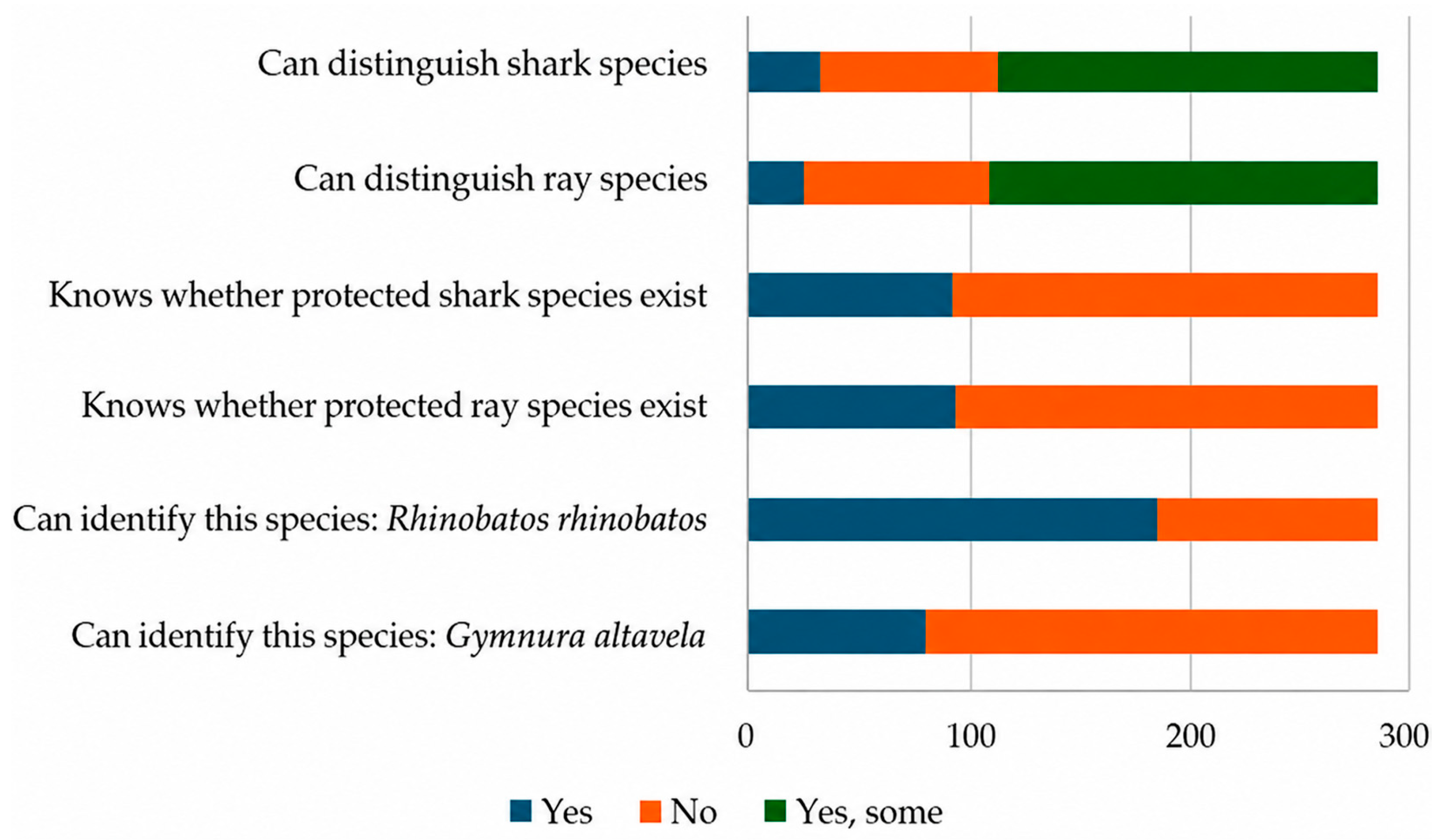
The analysis of participants’ level of knowledge regarding elasmobranchs, assessed through different questions included in the questionnaire, revealed notable differences in terms of understanding and species identification capacity (
Figure 8).
Regarding the ability to distinguish species, approximately 61% of respondents indicated that they were only able to recognise some shark and ray species, whereas only between 9% (rays) and 11% (sharks) stated that they could identify all species correctly. Concerning knowledge of their protection status, responses associated with limited awareness clearly predominated, as around 68% of participants were unaware that certain shark and ray species are legally protected. With respect to the visual recognition of specific species, the common guitarfish (R. rhinobatos) showed a relatively high identification rate, with approximately 65% affirmative responses. In contrast, the spiny butterfly ray (G. altavela) exhibited a considerably lower recognition level, with only 28% positive responses and a clear predominance of negative answers.
3.3. Characterization of the Evolution of Catches over a Five-Year Period During the Puerto De Mazarrón Fishing Open Championship
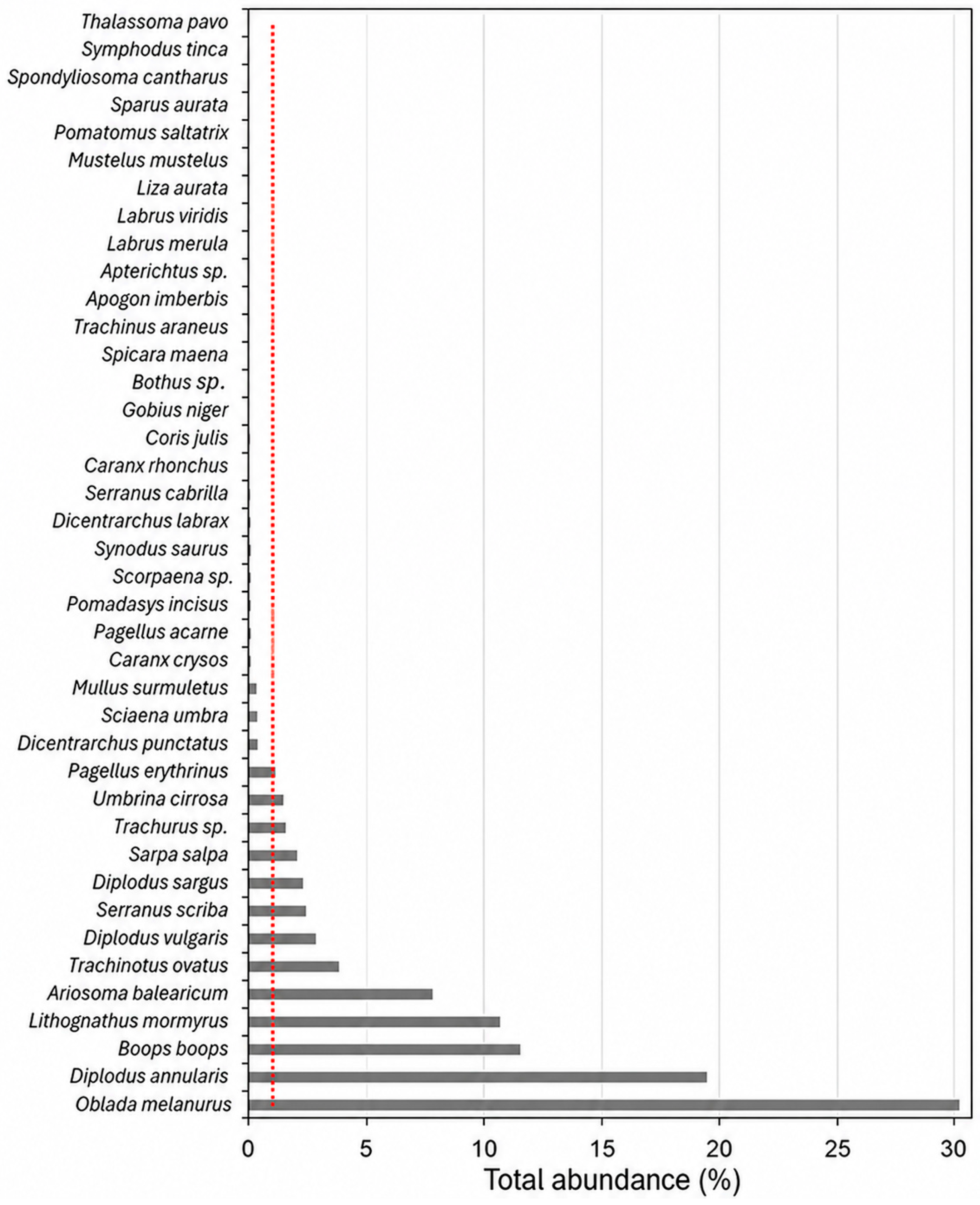
The relative abundance distribution of the species recorded during the Puerto de Mazarrón Fishing Open Championship shows a community clearly dominated by a reduced number of coastal species, whereas most species exhibited low or very low abundances (
Figure 9).
Oblada melanurus (Linnaeus, 1758) was the most abundant species, representing approximately 30% of the total recorded catches, followed by Diplodus annularis (Linnaeus, 1758) and Boops boops (Linnaeus, 1758), which also displayed high percentages compared with the remaining species. Other relatively frequent species included Lithognathus mormyrus (Linnaeus, 1758) and Ariosoma balearicum (Delaroche, 1809), although with considerably lower abundances. In contrast, a high number of species presented values below 1% relative abundance, falling under the threshold established for occasional or rare categories. These included different benthic and nectonic species, as well as some elasmobranchs such as Mustelus mustelus (Linnaeus, 1758).
Furthermore, species were classified following ecological criteria widely applied in studies of community ecology and species abundance distribution (
Table 2), synthetically reflecting the same relative abundance patterns previously observed.
To ensure a standardised and statistically robust analysis, only species exceeding 1% of total relative abundance were retained, resulting in a final dataset of 13 species. Rare and occasional species were excluded to reduce noise and improve the interpretation of spatial and temporal patterns. Additionally, the dataset was balanced by standardising sampling effort to 11 fishing positions for each combination of year and fishing sector, allowing consistent comparisons among sectors and sampling periods.
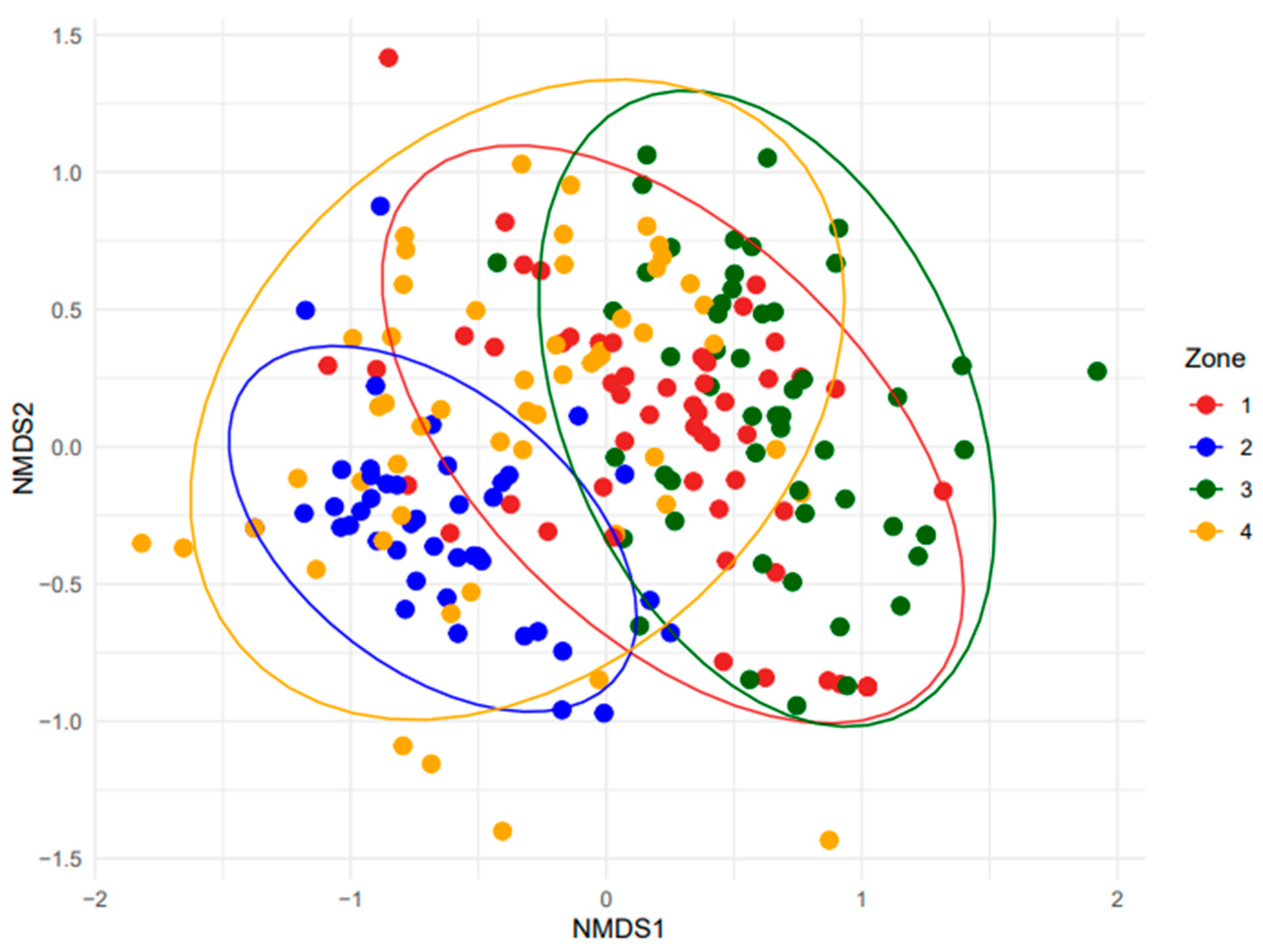
The NMDS analysis revealed a moderate spatial differentiation in fish community composition among the different fishing zones analysed (
Figure 10). Although a certain degree of overlap was observed between groups, particularly between Zones 1 and 4, the ordination showed a clearer separation of Zone 2 from the remaining areas, whereas Zone 3 exhibited a broader and more dispersed distribution. The arrangement of points and grouping ellipses suggests differences in species composition and relative abundances among zones, as well as a considerable degree of internal variability within some groups.
The PERMANOVA results indicated significant differences in community composition among zones (
F = 4.5969;
p = 0.001), demonstrating the existence of significant spatial structuring in the recorded catches (
Table 3). However, the multivariate homogeneity of dispersion analysis (betadisper) was also significant (
F = 5.2484;
p = 0.001654) (
Table 4), indicating that within-group dispersion differed among zones. This suggests that part of the differences detected by the PERMANOVA may be influenced not only by actual shifts in community composition (centroid displacement), but also by differences in the internal heterogeneity of samples among zones. Therefore, the results should be interpreted with caution.
In order to identify the species responsible for the observed differentiation between groups, an SIMPER analysis was performed between Zones 2 and 3, which represented the most clearly separated groups in the NMDS ordination. The results showed that
D. annularis and
O. melanurus were the species contributing most to the dissimilarity between the two zones because these species are more prevalent in catches from Zone 2 than in those from Zone 3, followed by
L. mormyrus and
B. boops (
Table 5). These species accounted for most of the cumulative dissimilarity (>70%), indicating that the separation observed in the NMDS was primarily driven by differences in the relative abundance of a few dominant taxa rather than by a complete species turnover between zones.
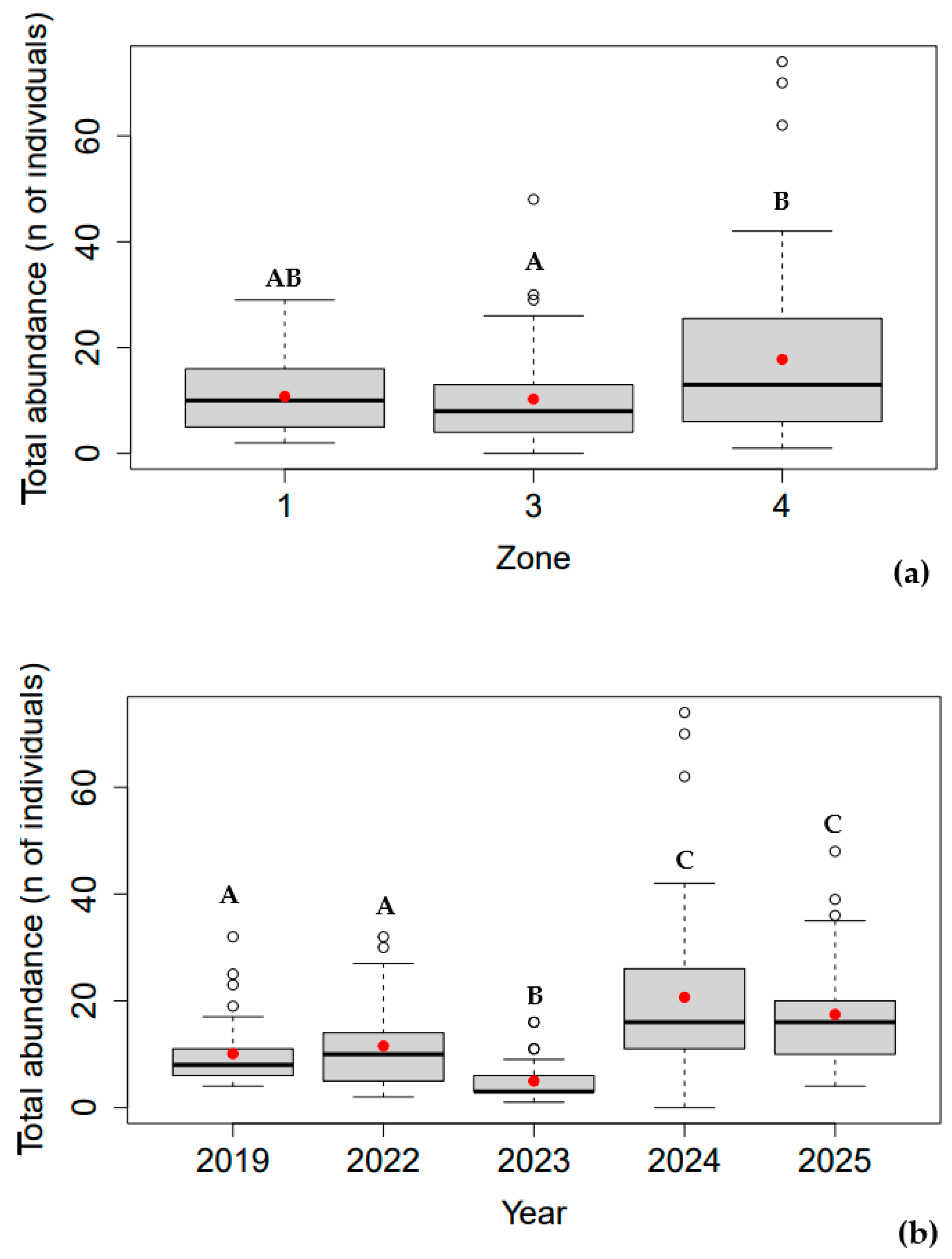
The analysis of total abundance among fishing zones revealed significant spatial differences (
F = 4.675;
p = 0.0106) (
Table 6).
Post hoc Tukey HSD comparisons indicated that Zone 4 exhibited significantly higher abundance values than Zone 3 (
p = 0.0103), whereas no significant differences were detected between Zones 1 and 3 or between Zones 1 and 4 (
Table 7).
These results are consistent with the boxplot representation (
Figure 11), where Zone 4 displayed the highest median abundance values and the greatest variability among samples.
Regarding temporal variation, the Kruskal–Wallis analysis revealed significant differences in total abundance among sampling years (χ2 = 54.734; df = 4; p < 0.001).
Pairwise Wilcoxon comparisons showed that 2023 presented significantly lower abundance values compared with the other years analysed, whereas 2024 and 2025 exhibited the highest abundances and did not differ significantly from each other (
p = 0.83725). In contrast, 2019 and 2022 showed intermediate abundance levels with no significant differences between them. This temporal pattern is also reflected in the boxplot distribution (
Table 8), where a marked increase in abundance is observed from 2024 onwards.
4. Discussion
This study presents an integrated evaluation of shore-based sport fishing competitions in the southeastern Spanish Mediterranean through the examination of organised angling events. The research combines information concerning the socio-demographic and fishing characteristics of participants, potential interactions with vulnerable taxa—particularly elasmobranchs—and the spatial and temporal dynamics of catches recorded over a five-year monitoring period. Overall, the findings indicate that sport fishing activity in the study area is predominantly undertaken by male fishers with extensive previous angling experience and a high frequency of fishing activity maintained throughout the year, and most of those who interrupt their activities do so for short periods of time, usually in connection with holidays or other occasional reasons. Most respondents reported more than ten years of experience in recreational fishing, whereas competitive fishing trajectories were generally shorter, suggesting that participation in fishing competitions commonly occurs after a prolonged involvement in non-competitive recreational fisheries. This pattern is consistent with the longstanding cultural and traditional importance of recreational fishing across many Mediterranean coastal regions [
40,
41].
The spatial distribution of participants showed a marked concentration along the coastline of Region of Murcia and southern Alicante, reinforcing the significance of this sector of the western Mediterranean as an important hotspot for shore-based sport fisheries. Areas including Santa Pola, Guardamar del Segura, La Manga del Mar Menor and Puerto de Mazarrón exhibited particularly high fishing activity, likely associated with a combination of accessibility, local fishing traditions, and the availability of favourable coastal habitats. The shallow sandy bottoms and lagoon-coastal transition zones characteristic of these areas provide suitable ecological conditions for a wide variety of benthic and demersal species, including numerous rays and coastal sharks. Comparable spatial patterns have recently been documented in Mediterranean recreational fisheries, where habitat suitability and coastal accessibility strongly influence both fishing effort and fisher distribution [
40].
The survey responses indicated that a considerable proportion of participants had previously encountered elasmobranchs during sport fishing activities, particularly batoid species. In fact, 41% of anglers reported having captured rays at least once, highlighting the frequent interaction between shore-based recreational fisheries and batoids in the southeastern Spanish Mediterranean. These findings suggest that shore-based sport fisheries may constitute an important source of interaction with vulnerable cartilaginous fishes within Mediterranean coastal ecosystems. The predominance of batoids observed in the present study is consistent with the general structure of Mediterranean elasmobranch assemblages, which are mainly composed of benthic coastal species associated with soft substrates and shallow-water habitats. Although comparable quantitative information remains scarce, previous studies conducted elsewhere in the Mediterranean have also documented elasmobranch captures in recreational fisheries and emphasized the importance of these interactions for conservation and monitoring purposes [
42]. Similarly, citizen-science initiatives developed in Greece and Cyprus have identified recreational fishers as valuable contributors for documenting shark and ray occurrences in the region. Given that Mediterranean elasmobranchs are considered one of the most threatened groups of marine vertebrates worldwide, mainly due to cumulative fishing pressure, habitat degradation, and their intrinsically low biological productivity [
43,
44], recreational fisheries may represent a valuable complementary source of information for monitoring and conservation efforts. However, these interactions may also have negative consequences for vulnerable species. Although many captured individuals are released, recreational fishing may still represent a source of stress and post-release mortality. Prolonged fight times, inappropriate handling, air exposure, and delayed release can negatively affect the physiological condition and survival of sharks and rays. Therefore, promoting best-practice handling protocols and improving fishers’ awareness are essential measures to minimise the impacts of these activities on vulnerable elasmobranch populations.
Despite the relatively frequent interactions reported with these taxa, the results revealed substantial deficiencies in participants’ taxonomic and regulatory knowledge. Most fishers indicated that they were capable of identifying only a limited number of shark and ray species, while awareness regarding protected taxa and associated legislation remained generally low. From a conservation perspective, this limitation is particularly important because inaccurate species identification may result in inappropriate handling practices, accidental retention, or underreporting of protected species. Recent studies have emphasised that the lack of species-specific reporting continues to constrain the effective conservation and management of Mediterranean elasmobranchs [
45]. Nevertheless, the strong interest expressed by participants in receiving environmental training suggests that the sport fishing sector could contribute meaningfully to citizen-science initiatives, participatory monitoring programmes, and environmental awareness campaigns. Recent research has increasingly recognised recreational fishers as valuable collaborators in biodiversity monitoring and data collection concerning Mediterranean elasmobranchs [
46]. In addition, recreational fishers can provide valuable information on species occurrence, distribution, seasonality and incidental captures, contributing to the generation of long-term datasets that are often difficult to obtain through conventional scientific surveys. Therefore, strengthening collaborations between scientists and recreational fishers may considerably improve knowledge on Mediterranean sharks and rays while promoting stewardship and conservation awareness.
Concerning catch composition, the fish assemblage recorded during the Puerto de Mazarrón Fishing Open Championship was strongly dominated by a limited number of coastal teleost species, particularly
O. melanurus,
D. annularis, and
B. boops. This abundance structure, characterised by the coexistence of a few highly dominant taxa alongside numerous rare or occasional species, represents a common ecological pattern in Mediterranean coastal ecosystems. Similar community configurations have frequently been described in Mediterranean coastal fish assemblages, where habitat heterogeneity and environmental gradients favour high species richness combined with uneven abundance distributions [
37]. Furthermore, the simultaneous occurrence of benthic, nectonic, and elasmobranch species highlights the considerable ecological diversity associated with the habitats exploited by shore-based sport fisheries within the study region.
Multivariate analyses further supported the existence of spatial heterogeneity among fishing areas. Although the NMDS ordination showed a certain degree of overlap between zones, the PERMANOVA results confirmed significant differences in species composition, indicating that fish assemblages associated with each sector were not completely homogeneous. However, the significant betadisper results suggest that part of these differences may also reflect variations in within-group dispersion rather than exclusively changes in species composition. Therefore, the observed spatial separation should be interpreted cautiously. These findings highlight the complexity of coastal fish communities and suggest that local environmental variability may influence both species composition and within-group heterogeneity.
The SIMPER analysis showed that most of the dissimilarity among fishing sectors was explained by differences in the relative abundance of a few dominant species, particularly D. annularis, O. melanurus, L. mormyrus and B. boops. This finding indicates that the observed spatial patterns were mainly driven by abundance gradients rather than by complete species replacement.
The results of this study revealed spatial variation in species composition among the fishing areas examined during the competition, suggesting the presence of ecological heterogeneity at a local scale. In Zone 4, all recorded species were present, and overall catch abundance was higher than in the remaining sectors. This pattern may be related to the environmental characteristics of the area, as it constitutes a more open and wave-exposed sector, with a steeper slope and influenced by an intermittent natural watercourse (Rambla de las Moreras). These differences are likely associated with local habitat features and hydrodynamic conditions, which are known to influence the structure of Mediterranean coastal fish assemblages. Comparable ecological responses have previously been described in Mediterranean ecosystems, where habitat complexity and fishing pressure strongly influence abundance gradients within nearshore fish communities [
47].
Temporal analyses also revealed marked interannual variability in total catch abundance. The decline observed during 2023, followed by a substantial increase in 2024 and 2025, may be associated with environmental and oceanographic changes occurring throughout the study period, including fluctuations in seawater temperature. Mediterranean coastal fish communities are known to respond sensitively to thermal variability, recruitment dynamics, and fluctuations in marine productivity, all of which may directly influence the abundance and availability of species targeted by sport fisheries. Recent studies have demonstrated that ongoing climate-driven changes in the Mediterranean are already modifying both community composition and temporal abundance patterns of coastal fish assemblages [
48,
49]. Although the present study was not specifically designed to evaluate environmental drivers, the observed patterns underline the importance of implementing long-term monitoring programmes capable of accurately assessing temporal changes within recreationally exploited fish communities.
Overall, the results demonstrate the substantial potential of organised sport fishing competitions as complementary tools for ecological monitoring in Mediterranean coastal ecosystems. Such events provide valuable information regarding species composition, spatial and temporal variability in catches, and interactions with vulnerable taxa. In a context where recreational fisheries are increasingly recognised as ecologically relevant activities with important conservation implications, integrating recreational fishers into participatory monitoring and environmental awareness strategies could significantly improve scientific knowledge and contribute to the conservation of vulnerable Mediterranean species. Recent regional conservation and management initiatives have also highlighted the importance of incorporating recreational fisheries into Mediterranean monitoring and management frameworks [
50], particularly regarding vulnerable taxa such as sharks and rays [
46]. At the same time, these initiatives should be accompanied by educational programmes focused on species identification, safe handling practices and rapid release techniques, ensuring that the contribution of recreational fisheries to citizen science is compatible with the effective conservation of elasmobranch populations.
Despite the valuable information provided by this study, several limitations should be acknowledged. First, the surveyed participants were associated almost exclusively with organised fishing competitions, which may not fully represent the broader recreational fishing community. Second, part of the information relied on fishers’ self-reported responses and personal knowledge, potentially introducing biases related to species identification and individual perceptions. In addition, the temporal analysis of catches was based on a single long-term event, the Puerto de Mazarrón Fishing Open Championship, which may limit the extrapolation of the observed patterns to other regions or recreational fishing modalities.
Future research should aim to broaden the geographical coverage and include a wider range of recreational fisheries and competition formats. Expanding long-term datasets and incorporating additional environmental and socioeconomic variables would provide a more comprehensive understanding of recreational fishing dynamics and their potential interactions with vulnerable species in Mediterranean coastal ecosystems.




 ,
,