Review

Genomic Fundamentals and Applications in Asian Swamp Eel (Monopterus albus): A Review

1
Hubei Key Laboratory of Waterlogging Disaster and Agricultural Use of Wetland, College of Animal Science and Technology, Yangtze University, Jingzhou 434025, China
2
Honghu Laboratory, College of Animal Science and Technology, Yangtze University, Jingzhou 434025, China
3
CCCC Shanghai Waterway Engineering Design and Consulting Co., Ltd., Shanghai 200120, China
*
Author to whom correspondence should be addressed.
These authors contributed equally to this work.
Fishes 2026, 11(7), 378; https://doi.org/10.3390/fishes11070378 (registering DOI)
Submission received: 19 April 2026 / Revised: 25 May 2026 / Accepted: 11 June 2026 / Published: 25 June 2026
(This article belongs to the Special Issue Applications of Genome-Based Technologies in Aquaculture)

Abstract

The Asian swamp eel (Monopterus albus), a commercially important freshwater aquaculture species in China and Southeast Asia, has attracted growing scientific interest owing to its natural protogynous hermaphroditism and substantial economic significance. Recent advances in genomics technologies have provided new insights into genetic improvement, disease resistance, and growth optimization in this species. However, a cohesive, up-to-date synthesis of the current genomic research landscape remains lacking. This review systematically summarizes progress in Asian swamp eel genomics: (i) reference genome development; (ii) population-level genetic diversity analysis; (iii) genome annotation and functional gene prediction; and (iv) applications of genomics in selective breeding, disease resistance enhancement, and growth performance optimization. We further evaluate emerging tools and platforms, highlight key technical constraints, and address ethical considerations and regulatory gaps in genome-informed aquaculture practices. Finally, we propose priority research avenues to strengthen the scientific foundation for resilient and sustainable swamp eel aquaculture.
Key Contribution: Genomic advances now support genetic improvement, disease resistance, and growth optimization. In this review, we summarize progress in reference genome assembly; genetic diversity; functional annotation; and applications in selective breeding, disease resistance, and growth in the Asian swamp eel. We also assess new tools (e.g., high-throughput sequencing and gene editing), technical challenges, ethical–regulatory issues, and future directions for sustainable aquaculture. This review provides a concise, actionable framework for swamp eel genomics research and industry development.

1. Introduction

The Asian swamp eel (Monopterus albus), belonging to the Synbranchidae family of the order Synbranchiformes, is an important freshwater economic fish species in China and Southeast Asia. According to statistics, the national production of eel farming exceeded 300,000 tons in 2024, with a basic output value of over 20 billion yuan and a total industrial chain output value of about 100 billion yuan [1]. The Asian swamp eel has a unique protogynous biological trait and is the first vertebrate discovered to undergo a natural sex reversal from female to male [2,3]. This trait makes the eel not only an important aquaculture object but also an ideal model organism for studying reproductive development and sex determination mechanisms [4,5,6]. However, for a long time, the Asian swamp eel farming industry has faced two core bottlenecks: one is the persistent difficulty of controlled artificial breeding, resulting in continued dependence on wild-caught juveniles; another is the absence of genetically improved, commercially viable strains, reflected in heterogeneous germplasm resources and substantial phenotypic variation in key economic traits such as growth rate and disease resistance [7]. The rapid development of genomics technologies has provided powerful new tools to address these challenges. From the development of early molecular markers to whole-genome sequencing and assembly, and further to population genetics analysis and molecular breeding innovations, genomics has fundamentally transformed both fundamental research and industrial applications in Asian swamp eel aquaculture. Nevertheless, a cohesive, up-to-date synthesis of the current genomic research landscape remains absent. This paper provides a systematic review of recent advances in Asian swamp eel genomics andthe application progress and technological breakthroughs of genomics in breeding, disease resistance and growth performance optimization; analyzes the current research status and challenges in eel genomics; and outlines prospective research directions, thereby offering a scientific basis for the precise and intelligent development of Asian swamp eel aquaculture.

2. Genomic Foundation of Asian Swamp Eel

2.1. Development of Asian Swamp Eel Genome Sequencing Technology

The development of Asian swamp eel genome sequencing technology has undergone a shift from traditional Sanger sequencing to high-throughput sequencing. Early research relied mainly on expressed sequence tag (EST) sequencing and microsatellite marker (SSR) development [8]; however, the advent of next-generation sequencing technology dramatically improved genome contiguity and completeness. In 2018, researchers completed the sequencing and chromosome-level assembly of the Asian swamp eel genome and constructed the assembly M_albus_1.0, which became the first searchable reference genome for this species in the NCBI Genome database [9]. Subsequent cytogenetic and genomic analyses revealed karyotypic variation across geographically distinct populations, with diploid chromosome numbers ranging from 18 to 24 [10], and uncovered evidence of three whole-genome duplications and four genome fusion events during evolution, resulting in highly fused chromosomes [11]. In 2021, using Pacific Biosciences (PacBio) single-molecule sequencing (SMRT) and high-throughput/resolution chromosome conformation capture (Hi-C) technology, researchers generated an upgraded chromosomal-level assembly, which was a 799 Mb genome with a contig N50 of 2.4 Mb and a scaffold N50 of 67.24 Mb, comprising twelve chromosome sequences that covered 99.26% of the predicted genome size [12]. This high-quality genome provides a solid foundation for functional gene annotation, comparative genomics, and evolutionary inference. In addition, studies on non-sex-reversed (NSR) female eels further optimized genome assembly, using high-fidelity (HiFi) long-read sequencing technology to obtain a high-quality genome with a contig N50 of 49.8 Mb, where chromosomes 2 and 12 were even assembled into single contigs [13]. These technological advancements not only enhanced the continuity and biological accuracy of the Asian swamp eel reference genome but also provided key data for understanding the sex determination mechanism and chromosome evolution.
The development of genome sequencing technology has also accelerated progress in Asian swamp eel transcriptomics. Comparative analysis of gonadal transcriptomes across developmental stages has identified a large number of key genes involved in ovarian differentiation and meiosis, such as signaling receptor and transporter of retinol (stra6), gonadal somatic cell-derived factor (gsdf), and cytochrome P450 family 19 subfamily A member 1a (cyp19a1a) [14]. Meanwhile, the application of long-read transcriptome sequencing techniques such as PacBio isoform-sequencing (Iso-Seq) and the assay for transposase-accessible chromatin using sequencing (ATAC-seq) has substantially improved the completeness and accuracy of gene annotation in this species, enabling detection of alternative splicing events, non-coding RNAs, and novel transcripts [15]. These studies not only delineate stage-specific transcriptional dynamics during gonadal development but also yield mechanistic insights into the epigenetic and post-transcriptional regulation of natural sex reversal. In addition, advances in genome sequencing technology have facilitated comparative genomics studies of Asian swamp eels with other fish species. By comparison with the genomes of model organisms such as zebrafish and medaka, researchers have discovered lineage-specific expansions in gene families associated with immune defense, transmembrane transport, and metabolic regulation [12]. These findings provide a functional context for candidate gene prioritization and inform broader hypotheses regarding adaptive genome evolution in sequential hermaphroditic fishes. Nevertheless, causal validation of key regulatory genes—through targeted approaches such as gene editing—remains essential to establish definitive genotype–phenotype relationships and mechanistic causality in sex reversal.

2.2. Genomic Analysis of the Genetic Diversity of Asian Swamp Eels

Research on the genetic diversity of Asian swamp eels mainly relies on SSR and single-nucleotide polymorphism (SNP) analyses. Genome-wide SSR mining identified 364,802 SSR loci in the reference genome, with single-nucleotide repeats constituting 33.33% of all SSRs, and AC and AAT emerged as the most abundant dinucleotide and trinucleotide repeat motifs, respectively [16]. These SSRs are both densely distributed (456.16 loci/Mb) and highly polymorphic. In a selected population, 38 polymorphic SSR markers detected 201 alleles, yielding a mean allelic richness of 5.29 per locus and a polymorphic information content (PIC) of 0.5068, indicating substantial within-population genetic variation [16]. Such high-resolution diversity metrics related to local adaptation provide a robust foundation for selective breeding and germplasm resource management. Complementing SSR data, large-scale SNP profiling has revealed significant population structure across the species’ range. RAD-seq of 19 wild populations from China identified more than 8.94 million high-quality SNPs [17]. Whole-genomic sequencing of 559 individuals sampled across 37 geographic locations in Asia yielded 82.71 million SNPs, enabling fine-scale detection of multiple, geographically concordant genetic discontinuities that reflect historical isolation and limited gene flow [18]. Building on this genomic framework, insertion and deletion (InDel) molecular markers for the identification of different geographical strains were further developed. Screening of 255 wild eels from 22 sampling sites led to the identification of eight pairs of regionally specific InDel markers, enabling reliable molecular identification of the three major regional strains in Southwest China, Guangdong, Guangxi, and Jiangxi [19]. Cytogenetic evidence further supports Asian swamp eel population subdivision. Two distinct karyotypes (2n = 24 and 2n = 18) have been documented in Thailand populations, likely resulting from chromosome fusion and inversion [20]. Collectively, these multi-layered genomic and cytogenetic analyses reconstruct the demographic history and spatial genetic architecture of Asian swamp eel populations, thereby informing evidence-based conservation strategies, rational germplasm utilization, and the development of genetically improved aquaculture stocks.
Genetic diversity in Asian swamp eels is also reflected in the polymorphisms of immune-related genes. For example, the major histocompatibility complex (MHC) IIA gene exhibits multiple alleles, with individuals carrying 2–5 alleles and showing significant tissue-specific differences in expression levels [21]. In addition, the interferon regulatory factor 10 (IRF10) gene has a single copy in the Asian swamp eel, but its expression is induced by viral infection, indicating its important role in antiviral immunity [22]. Such polymorphisms of immune genes not only reflect adaptive ability against pathogen pressure but also serve as potential molecular markers for selective breeding of disease-resistant strains. At the same time, genetic diversity is also associated with environmental adaptation. In high-temperature environments, Asian swamp eels adapt to environmental changes by regulating the expression of immune and temperature-related genes [23]. These studies suggest that the genetic diversity of Asian swamp eels is an important basis for their adaptation to different environments and is a key factor to be considered in breeding.

2.3. Genome Annotation and Functional Prediction of Asian Swamp Eels

Asian swamp eel genome annotation mainly involves the identification of protein-coding genes, non-coding RNAs, and regulatory elements. By integrating de novo predictions, homology alignment, and transcriptome data, researchers annotated 22,373 protein-coding genes in the Asian swamp eel genome, among which 769 gene families expanded, mainly involving functions such as the immune system, sensory system, and transport and metabolism [12]. The MHC gene family of Asian swamp eels is relatively complete, including MHC I and MHC II class genes, which play a key role in the immune response [13]. In addition, the identification of long non-coding RNAs (lncRNAs) and microRNAs (miRNAs) also provides a new perspective for the study of gene regulation. By small RNA sequencing, researchers identified several miRNAs associated with gonadal development, such as miR-430a and miR-430c, whose expression was significantly higher in the ovaries than in the testes, while miR-430b was expressed only in the testes [24]. Parallel lncRNA profiling across five key developmental stages yielded a total of 12,746 lncRNAs, of which 2901 were differentially expressed in the gonads. Functional enrichment analysis of their predicted target genes, including forkhead box o1/m1/r1 (foxo1, foxm1, and foxr1), mothers against decapentaplegic homolog 3 (smad3), calcium/calmodulin dependent protein kinase IV (camk4), androgen receptor (ar), and transforming growth factor beta 3 (tgfb3), revealed significant overrepresentation in TGF-β, Wnt, and steroid hormone signaling pathways, all centrally implicated in vertebrate gonadal patterning and plasticity [25]. These coding and non-coding genomic features establish a multi-tiered regulatory architecture that not only governs baseline gonadal development but also provides a mechanistic substrate for the natural, reversible sex transition characteristic of Asian swamp eels.
Functional predictions of the Asian swamp eel genome are mainly based on gene ontology (GO) and pathway analyses. Transcriptomic profiling of gonadal tissues identified a large number of genes involved in ovarian differentiation and meiosis, such as stra6, gsdf, and cyp19a1a [14]. Functional predictions of these genes suggest that ovarian differentiation in this species involves a balance between the synthesis and degradation of retinoic acid (RA), as well as the initiation of meiosis. Furthermore, comparative genomics analysis found that the sex-determining gene doublesex and mab-3 related transcription factor 1 (dmrt1) is regulated by histone modifications, such as H2B monoubiquitination enriched in the testes, which correlates with transcriptional activation of dmrt1 and suppression of ovarian pathways [26]. These functional predictions not only reveal the molecular mechanism of sex determination in Asian swamp eels but also provide potential targets for gene editing and marker-assisted breeding. At the same time, there are a large number of genes related to growth performance in the Asian swamp eel genome, such as the insulin-like growth factor (IGF) family and growth hormone receptor (GHR) genes. Mechanistic validation of these loci provides a theoretical basis for optimizing growth performance through genomic selection [27].

3. Genomic Applications in Asian Swamp Eel Aquaculture

3.1. Applications of Genomics in Asian Swamp Eel Breeding

The application of genomics is increasingly integral to Asian swamp eel breeding programs, primarily through molecular marker-assisted selection (MAS) and genomic selection (GS). High-density genetic maps, constructed using genome-wide SSR markers, have enabled robust quantitative trait loci (QTL) mapping and facilitated positional cloning of candidate genes [16]. In a representative breeding population, genotyping with 38 polymorphic SSR markers revealed high within-population genetic diversity (He = 0.5525) yet concurrently detected moderate inbreeding (FIS = 0.155), highlighting the need for strategic germplasm management to maintain allelic variation [16]. These SSR markers can be used for phylogenetic inference and population structure analysis; further research will enable association mapping between marker genotypes and economically important phenotypes, including growth, reproduction, and disease resistance. However, such association analyses require large, well-phenotyped reference populations to ensure statistical power and reproducibility. In addition, using a couple of adults and their 199 six-month-old offspring in genome-wide association studies (GWASs), have identified 37 QTLs distributed across 18 genomic intervals in four linkage groups have been identified. By searching in the human GWAS database and the animal QTL database, 10 genes were found to be involved in growth, including ankyrin repeat and sterile alpha motif domain containing 1a (anks1a), bromodomain and PHD finger containing 3 (brpf3), phospholipase C eta 2 (plch2), cysteine rich with EGF like domains 1 (creld1), FRY microtubule binding protein (fry), solute carrier family 9 member A1 (slc9a1), ras related GTP binding C (rragc), macrophage stimulating 1 receptor (mst1r), 6-phosphofructo-2-kinase/fructose-2,6-biphosphatase 2 (pfkfb2), and diacylglycerol kinase beta (dgkb). These validated QTLs and candidate genes constitute a functionally annotated genomic resource that directly informs marker-assisted breeding decisions and accelerates genetic gain in aquaculture improvement programs [27].
The application of genomic selection techniques has further enhanced the efficiency of Asian swamp eel breeding. By resequencing the Asian swamp eel genome, researchers obtained a large number of SNP markers that could be used to construct genomic selection models to predict the breeding values of individuals [16]. In the growth performance optimization of Asian swamp eels, genomic selection can quickly screen out individuals with excellent growth traits and shorten the breeding cycle [18]. In addition, the application of gene editing technology makes precise breeding of Asian swamp eels possible. The application of these technologies not only enhances the breeding efficiency of Asian swamp eels but also provides technical support for the development of new varieties with strong stress resistance and fast growth. Genomics also provides new methods for sex control in Asian swamp eels, such as editing sex-determining genes (like dmrt1), which can control the sex ratio and improve production efficiency [26].

3.2. Applications of Genomics in Disease Resistance of Asian Swamp Eels

The application of genomics in the study of disease resistance in Asian swamp eels mainly includes the discovery of disease-resistant genes and the analysis of immune mechanisms. Transcriptomic profiling following bacterial challenge has revealed robust, tissue-specific modulation of the expression of immune-related genes. For example, infection with Aeromonas veronii induced significant upregulation of MHC IIA transcripts in the liver, spleen, and kidneys [21]. The interferon regulatory factor 10 (IRF10) was strongly induced by both polyinosinic–polycytidylic acid (Poly(I:C)) and viral infections, underscoring its conserved and pivotal role in antiviral immunity [22]. In addition, transcriptional dynamic analysis of spring virus-infected Asian swamp eels identified several immune-related SNPs, such as toll like receptor 7 (TLR7), laminin receptor 1 (LAMR1), T-cell leukemia/lymphoma protein 1A (TC1A), dendrocyte expressed seven transmembrane protein (DCSTAMP), and secreted frizzled related protein 2 (SFRP2) [28,29]. Collectively, these findings elucidate critical nodes in the Asian swamp eel’s innate and adaptive immune networks and furnish functionally anchored molecular markers for marker-assisted selection in disease-resistant breeding [30].
Genomics also provides new methods for disease diagnosis and prevention and control in Asian swamp eels. Through metagenomic analysis, researchers found that the gut microbiota is closely related to health status, and certain probiotics (such as Clostridium butyricum strain YF1) can enhance Asian swamp eel immunity [31]. In addition, through whole-genome sequencing, researchers identified genes related to disease resistance in Asian swamp eels, such as TLR family genes and antimicrobial peptide genes, whose functional studies provided a theoretical basis for the development of novel vaccines and immune enhancers [12]. At the same time, genomics can also be used to monitor pathogen variation in Asian swamp eel populations. Whole-genome analysis of Aeromonas hydrophila isolated from Asian swamp eels with hemorrhagic septicemia revealed multiple virulence genes and drug resistance genes, providing a reference for disease prevention and control [32]. Sequencing of the complete genome of the Plesiomonas shigelloides strain NBPZ-032, an enteropathogenic swamp eel strain, revealed that the genome contained a circular chromosome of 3,359,540 bp and a circular plasmid of 352,229 bp, encoding a total of 3127 protein-coding sequences [33]. These applications not only enhance the efficiency of disease control in Asian swamp eels but also provide a foundation for sustainable farming.

3.3. Applications of Genomics in Optimizing the Growth Performance of Asian Swamp Eels

The application of genomics in the optimization of Asian swamp eel growth performance mainly includes the mining of growth-related genes and the regulation of nutritional metabolism. Through transcriptome analysis, researchers found that Asian swamp eel growth performance was associated with the expression of multiple genes, such as the IGF family, GHR, and myosin (MYO) genes [13]. In addition, by comparing Asian swamp eels with different growth performances, researchers identified multiple growth-related differentially expressed genes, such as collagen type I alpha 1 chain (col1a1), NK6 homeobox 1 (nkx6.1), neuronal nitric oxide synthase (nnos), plexin A4 (plxna4), insulin like growth factor binding protein 1 (igfbp1), polycomb group ring finger 1 (pcgf1), and H3 histone family member 3 (h3.3) [34]. Functional studies of these genes provided a theoretical basis for optimizing Asian swamp eel growth performance. Genomics can also be used to screen for growth-related molecular markers. QTLs related to body weight and length identified through GWASs can be used for molecular marker-assisted selection to accelerate the breeding of superior varieties [13,17,18].
Genomics also provides new approaches to nutritional regulation in Asian swamp eels. Through transcriptome analysis, researchers found significant changes in the expression of genes related to fat metabolism in the liver of Asian swamp eels after they ingested different levels of lipids, such as cytochrome P450 family 7 subfamily A member 1 (cyp7a1) and uridine diphosphate-glucuronyl transferase (ugt) [35]. In addition, dietary supplements such as melatonin can improve Asian swamp eel growth performance by regulating the expression of gut microbiota and immune-related genes [36]. In the liver transcriptome of Asian swamp eels, genes related to glucose metabolism and energy balance (such as acyl-CoA synthetase short chain family member 1 (acss1), alcohol dehydrogenase (adh), and aldo-keto reductase family 1 member D1 (akr1d1)) show significant changes in expression under a high-sugar diet, indicating their important role in growth regulation [35]. These studies not only reveal the nutritional metabolic mechanisms of Asian swamp eels but also provide references for the development of efficient feed. These applications not only enhance the growth efficiency of Asian swamp eels but also provide support for reducing farming costs and improving economic benefits.

4. Advances in Genomics Technology for Asian Swamp Eel Aquaculture

4.1. High-Throughput Sequencing Technology in Asian Swamp Eel

The application of high-throughput sequencing technology in Asian swamp eel research mainly includes genomic sequencing, transcriptome sequencing, and epigenomic sequencing. For instance, Illumina-based deep RNA sequencing of gonadal tissues yielded 301,267,988 high-quality reads, which were de novo assembled into 265,896 non-redundant unigenes [14]. This comprehensive gonadal transcriptome resource not only elucidates key molecular regulators governing sex differentiation and gonadal development but also serves as a foundational reference for gene annotation; gene functional characterization, and comparative genomics. Moreover, RNA-seq analyses under controlled environmental perturbations have revealed condition-specific transcriptional reprogramming. Under high-temperature stimulation, Asian swamp eels exhibit coordinated upregulation of genes involved in immunity and thermal response pathways, indicating an integrated physiological adaptation strategy [23,37]. These sequencing-driven insights advance mechanistic understanding of developmental biology and environmental resilience in this economically important teleost species and directly inform the development of stress-tolerant breeding lines.
High-throughput sequencing has also enabled systematic epigenomic profiling in the Asian swamp eel. Using bisulfite-seq technology, researchers analyzed the DNA methylation patterns of the Asian swamp eel genome and found that methylation levels were closely related to gene expression [38]. In addition, chromatin immunoprecipitation sequencing (ChIP-seq) identified functionally annotated histone modification landscapes, such as H3K4me3 and H3K27ac, which are closely related to transcriptional activation of genes [26]. Together, these epigenomic datasets delineate a multi-layered regulatory architecture governing gene expression and provide mechanistic insights into biologically critical processes of sex reversal, growth, and development. At the same time, high-throughput sequencing technology can also be used for population genomic analyses. Using restriction siteassociated DNA sequencing (RAD-seq) technology, researchers analyzed the genetic structure of different geographical populations of Asian swamp eels and found significant population differentiation [17]. These applications substantially expand the resolution, scope, and functional interpretability of Asian swamp eel genomics, enabling evidence-based strategies for selective breeding, genetic resource management, and conservation prioritization.

4.2. Advancements in Gene Editing Technology for Asian Swamp Eel

The latest developments in gene editing technology for the Asian swamp eel mainly include the application of the clustered regularly interspaced short palindromic repeats/CRISPR-associated protein 9 (CRISPR/Cas9) technology and improvements in gene editing efficiency. Using CRISPR/Cas9, researchers successfully disrupted the dmrt1, cyp19a1a, and forkhead box l2 (foxl2) genes of Asian swamp eels. Loss of function of the cyp19a1a gene (a key enzyme for estrogen synthesis) resulted in complete gonadal masculinization in juvenile eels, with more than 85% developing testis-like structures; dmrt1 gene (the main regulator of testicular development) knockout impaired testicular development and led to partial or complete retention of ovarian morphology in genetic males; by contrast, foxl2 gene editing had no significant effect on gonadal differentiation, suggesting its functional redundancy or context-dependent role rather than its serving as a non-redundant master regulator of ovarian fate [26,39,40]. However, the application of gene editing technology in this species faces persistent challenges, such as low germline delivery efficiency, potential off-target effects, and a high gonadal chimerism rate in the F0 generation. To improve editing efficiency, researchers have optimized single-guide RNA (sgRNA) design and microinjection methods. By screening for efficient sgRNAs, researchers achieved efficient site-directed mutagenesis and knockout of target genes in Asian swamp eels [26]. These technological advancements improve editing efficiency and reliability, but key challenges, including mosaicism, germline transmission, regulatory approval, and ecological risks, remain unresolved [41].

4.3. Development and Application of Genomic Data Analysis Tools for Asian Swamp Eels

The development and application of eel genomic data analysis tools mainly include genome assembly, annotation, and functional analysis tools. Using Hi-C technology, researchers assembled the Asian swamp eel genome at the chromosomal level, significantly improving its continuity and accuracy [12,13]. In addition, by integrating multiple transcriptomic datasets, researchers developed a gene annotation pipeline, including de novo prediction, homology-based alignment, and transcriptome-assisted annotation [12]. These tools not only enhanced the efficiency and accuracy of genomic annotation but also supported functional gene mining. Meanwhile, researchers developed a genome browser and database for Asian swamp eels to facilitate users’ querying and analysis of genomic data [13].
Genomic data analysis tools also include variant detection and association analysis tools. Using established pipelines such as GATK and SAMtools [42], researchers identified a large number of SNPs and InDel markers in the Asian swamp eel genome that can be used for population genetics and GWASs [16]. In addition, using GWAS-optimized software such as PLINK and TASSEL 5.0 [43], researchers characterized population genetic structure and quantified genome-wide linkage disequilibrium decay patterns, thereby establishing a foundational resource for marker-assisted selection [16]. These tools significantly enhance the efficiency of genomic data analysis in this species and directly support breeding program optimization. Meanwhile, transcriptome-specific analytical workflows have been adapted for the Asian swamp eel. Differential expression analysis using DESeq2 and edgeR [44] revealed condition-specific transcriptional responses to environmental stressors, providing mechanistic insights into phenotypic plasticity [14,35]. Although these integrated bioinformatic advances accelerate fundamental research in eel genomics, many challenges such as multi-omics data integration, functional annotation accuracy, and machine learning-based predictive modeling remain to be addressed.

5. Current Status and Challenges of Genomic Research in Asian Swamp Eel Aquaculture

5.1. An Analysis of the Current Status of Asian Swamp Eel Genomics Research

Significant progress has been made in Asian swamp eel genomic research, including the assembly of high-quality genomes, characterization of population genetic diversity, and functional annotation of biologically relevant genes. Using PacBio and Hi-C technologies, researchers assembled a chromosome-level Asian swamp eel genome with a contig N50 of 49.8 Mb, providing a foundational resource for comparative genomics, gene mapping, and functional studies [13]. In addition, integrated transcriptomic and differential expression analyses identified a large number of genes involved in gonadal development, immune response, and growth metabolism, such as STRA6, IRF10, and IGFBP1A [14,22,34]. These studies elucidated conserved and lineage-specific molecular mechanisms governing key biological processes in this species and established a theoretical and technical basis for genetic improvement. Meanwhile, genomics-driven breeding strategies, including marker-assisted selection and genomic selection, have accelerated the development of improved strains exhibiting enhanced growth performance, disease resistance, and environmental resilience [13,16].
However, critical knowledge gaps persist in Asian swamp eel genomic research. First, gene annotation remains incomplete, particularly for non-coding RNAs and regulatory elements, leaving the functional roles of numerous transcripts and regulatory regions unresolved [12]. Second, the molecular regulatory network underlying sex determination and environmentally triggered sex reversal is poorly defined, with key upstream regulators and epigenetic modulators not yet fully characterized [26]. Third, population genomic resources are severely limited, and the genetic structure, demographic history, and signatures of local adaptation across geographically isolated populations remain inadequately resolved [20]. These deficiencies not only limit our understanding of core biological characteristics but also impede the translation of genomic insights into scalable aquaculture applications. Priority research directions must therefore focus on strengthening fundamental research in Asian swamp eel genomics, improving the accuracy and completeness of gene annotation, and conducting in-depth analyses of its molecular mechanisms and evolutionary history [45,46].

5.2. Technical Challenges in Asian Swamp Eel Genomics

Technical challenges in Asian swamp eel genomics research include difficulties regarding the complexity of genome assembly, the efficiency of gene editing, and bottlenecks in integrative multi-omics data analysis. For example, the Asian swamp eel genome has an exceptionally high proportion of repetitive sequences and abundant structural variations, which severely impede contiguity and completeness during de novo assembly, such that reproducibility and data standardization can hardly be achieved [12]. In addition, CRISPR–Cas9 editing efficiency remains low in this species, with persistent issues including off-target mutations and high rates of gonadal mosaicism in F0 founders [39]. Furthermore, comprehensive biological interpretation requires integration of genomic, transcriptomic, epigenomic and metabolomic datasets; however, current analytical frameworks lack standardized pipelines for cross-omics harmonization, placing substantial demands on computational infrastructure and algorithmic robustness [15]. These technical constraints not only limit mechanistic discovery in fundamental research but also delay translational implementation in aquaculture breeding programs.
To overcome these barriers, researchers must prioritize: (i) developing hybrid assembly strategies that integrate PacBio long-read sequencing and Hi-C technologies to achieve chromosome-level continuity and scaffolding accuracy [13]; (ii) optimizing delivery and editing fidelity through empirically validated sgRNA design, codon-optimized Cas9 variants, and refined microinjection methods for embryonic stages [26]; and (iii) establishing unified, open-source multi-omics integration platforms, incorporating machine learning, enabled feature selection and cross-modal normalization to improve analytical reproducibility and biological interpretability [47,48,49]. These technological advancements will accelerate both basic discovery and industry-ready applications in Asian swamp eel genomics.

5.3. Ethical and Legal Issues in Asian Swamp Eel Genomics

Ethical and legal issues in Asian swamp eel genomics research mainly include the biosafety of genome editing, genetic resource conservation, and intellectual property management. First, unregulated application of gene editing poses tangible risks, including unintended reductions in standing genetic diversity and potential disruption of ecosystem functions through altered fitness traits [20]. Second, transcontinental movement of live Asian swamp eels—driven by aquaculture trade and religious release practices in North America—has resulted in established non-native populations that exhibit invasive behavior, threatening native biodiversity and ecosystem integrity [50,51]. Third, intellectual property management remains underdeveloped, and patenting of gene sequences lacks harmonized international standards, while technology transfer mechanisms for genomic tools are hindered by fragmented licensing policies and insufficient benefit-sharing provisions [12]. These ethical and legal issues not only impede responsible innovation in eel genomics but also risk triggering social controversy.
To address these issues, researchers must enhance safety assessments for gene editing technology and conduct risk assessment and monitoring studies to ensure the environmental safety of gene-edited Asian swamp eels [52,53]. In addition, fishery resource monitoring and release supervision are needed, along with the establishment of Asian swamp eel fishery resource banks and the formulation of relevant laws and regulations, to promote sustainable fishery development and maintain ecological security [50,51]. Meanwhile, intellectual property rights management must be strengthened, a gene sequence sharing platform established, and reasonable technology transfer policies formulated to promote the application and dissemination of genomics technologies [12]. These measures can not only ensure ethical and legal compliance in Asian swamp eel genomics research but also promote its sustainable development.

6. Genomic Future Outlook for Asian Swamp Eel Aquaculture

6.1. Future Directions in Asian Swamp Eel Genomics

The future directions of Asian swamp eel genomics research mainly include functional genomics, epigenomics, and population genomics. Using CRISPR/Cas9 and single-cell sequencing technologies, researchers can deeply analyze gene functions and regulatory mechanisms [26,39,40,54,55,56]. In addition, epigenomic studies—such as DNA methylation and histone modification analyses—can reveal the epigenetic regulatory mechanisms underlying gene expression [26,38,57]. Meanwhile, population genomics approaches—including whole-genome resequencing and GWASs—enable researchers to analyze adaptive evolutionary mechanisms and population structure [16,17,18]. These research directions not only enhance our understanding of Asian swamp eel biological characteristics but also provide a theoretical foundation for genetic improvement [58,59].

6.2. Potential of Genomics in Sustainable Asian Swamp Eel Farming

The potential of genomics in sustainable Asian swamp eel farming mainly includes genetic improvement, disease prevention and control, and nutritional optimization. Using molecular marker-assisted selection and genomic selection, researchers can breed Asian swamp eel varieties with high growth rates, high disease resistance, and high reproductive capacity [13,16]. In addition, gene editing techniques enable researchers to precisely improve Asian swamp eel traits and develop superior germplasm and novel eel breeding lines [26,39,40]. Meanwhile, genomics-informed approaches allow optimization of feed formulations and farming environments, thereby improving production efficiency and reducing environmental impact [35,36]. These applications not only enhance the economic benefits of Asian swamp eel farming but also promote its sustainable development.
In addition, genomics can also be applied to the conservation and management of Asian swamp eel germplasm resources. Through population genomics studies, researchers can assess genetic diversity and population structure and develop evidence-based conservation strategies [16,17]. In addition, genomics techniques enable monitoring of pathogen variation in Asian swamp eel populations and timely implementation of control measures [31,32]. These applications not only protect Asian swamp eel genetic resources but also ensure healthy development of the aquaculture industry.

6.3. Prospects for Interdisciplinary Research in Genomics and Other Disciplines

The prospects for interdisciplinary studies in genomics and other disciplines include combinations with physiology, ecology, nutrition, and environmental science. By integrating genomic and physiological data, researchers can analyze growth and metabolic mechanisms and environmental adaptation mechanisms [23,35,36,60]. In addition, by integrating genomic and ecological data, researchers can analyze population dynamics, historical distribution patterns, and ecological adaptability in this species [17,18,20,61]. Meanwhile, by integrating genomic and nutritional data, researchers can optimize feed formulations and nutritional management strategies [35,36]. These cross-disciplinary studies not only expand the scope of Asian swamp eel genomics research but also provide comprehensive solutions for sustainable swamp eel farming.
Moreover, Asian swamp eel genomics is increasingly converging with artificial intelligence (AI) and big data analytics. Machine learning algorithms—trained on high-dimensional genomic, transcriptomic, and phenotypic datasets—are now being deployed to predict key aquaculture traits, including growth rate, feed conversion efficiency, and pathogen-specific disease resistance [2,16,45,62]. Concurrently, integrative multi-omics analytics enables real-time monitoring of physiological responses to dynamic farming conditions (e.g., water temperature fluctuations, dissolved oxygen variability, and dietary shifts), thereby facilitating adaptive, data-driven management interventions [35,36,63]. These AI-augmented, cross-disciplinary approaches not only enhance the predictive power and biological interpretability of genomic analyses but also accelerate the translation of research insights into scalable precision aquaculture practices.

7. Conclusions

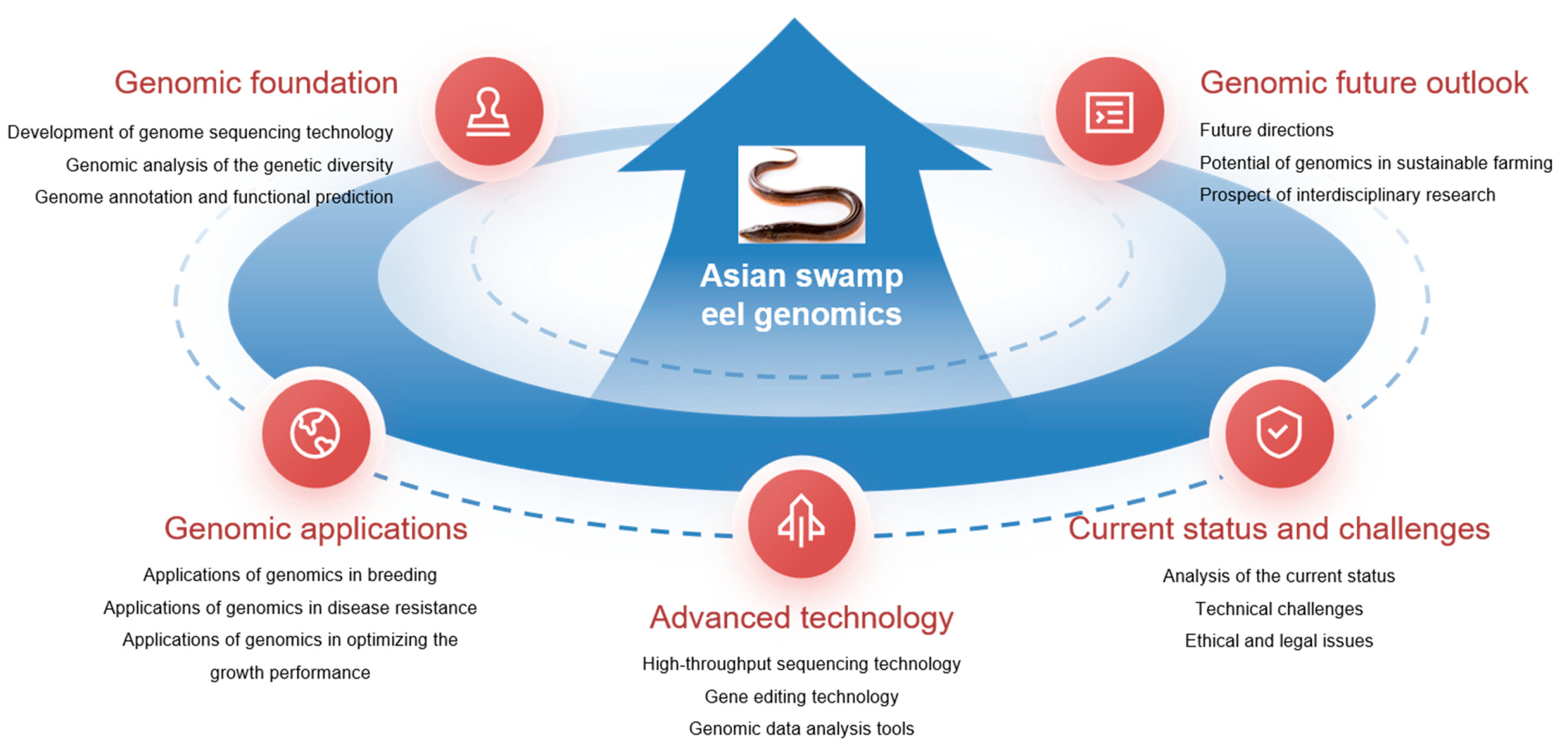
Significant progress has been made in Asian swamp eel genomics research, including the assembly of high-quality genomes, the analysis of genetic diversity, and the identification of functional genes (Figure 1). The application of genomics technologies provides new insights into genetic improvement, disease prevention and control, and growth optimization. However, Asian swamp eel genomics research still faces technical challenges as well as ethical and legal issues, necessitating further strengthening of basic research and interdisciplinary integration. In the future, genomics research will advance toward functional genomics, epigenomics, and population genomics to provide a theoretical foundation and technical support for sustainable Asian swamp eel farming. Through interdisciplinary integration, Asian swamp eel genomics will make significant contributions to the sustainable development of the aquaculture industry.

Author Contributions

Conceptualization, F.C. and Y.S.; methodology, Y.S. and Y.W.; validation, F.C. and Y.S.; investigation, Y.S., Y.W. and T.Y.; resources, H.Y. and D.Y.; writing—original draft preparation, Y.S., Y.W. and F.C.; writing—review and editing, F.C.; supervision, F.C.; funding acquisition, F.C. and Y.S. All authors have read and agreed to the published version of the manuscript.

Funding

This research was funded by the China Postdoctoral Science Foundation (grant no. 2025M773125), the Postdoctoral Fellowship Program of CPSF (grant no. GZC20252051), the Hubei Key Laboratory Open Foundation of Waterlogging Disaster and Agricultural Use of Wetland (grant no. KFG202401), the Jingzhou Science and Technology Plan Project (grant no. 2025EB21), and the Hubei Science and Technology Plan Project (grant no. 2024EBA028).

Institutional Review Board Statement

Not applicable.

Data Availability Statement

No new data were created or analyzed in this study.

Acknowledgments

We would like to thank the editors and reviewers for their insightful and constructive suggestions.

Conflicts of Interest

Author Yao Wu was employed by the company CCCC Shanghai Waterway Engineering Design and Consulting Co., Ltd. The remaining authors declare that the research was conducted in the absence of any commercial or financial relationships that could be construed as a potential conflict of interest.

References

  1. MARACFA (Ministry of Agriculture and Rural Affairs of China Fisheries Administration); CFTES (China Fisheries Technology Extension Station); CFS (Chinese Fisheries Society). China Fishery Statistical Yearbook 2024; China Agriculture Press: Beijing, China, 2025. [Google Scholar]
  2. Liu, C.K. Rudimentary hermaphroditism in the symbranchoid eel Monopterus javanensis. Sinensia 1944, 15, 1–8. [Google Scholar]
  3. Zhou, L.; Gui, J.; Liu, J. A pioneer of sex determination studies in vertebrates. Protein Cell 2016, 7, 1–3. [Google Scholar] [CrossRef] [PubMed]
  4. Bullough, W.S. Hermaphroditism in the lower vertebrates. Nature 1947, 160, 9–11. [Google Scholar] [CrossRef]
  5. Cheng, H.; He, Y.; Zhou, R. Swamp eel (Monopterus albus). Trends Genet. 2021, 37, 1137–1138. [Google Scholar] [CrossRef]
  6. Zhao, H.H.; He, Q.; Zhang, C.L.; Wang, Q.; Zhang, Y.; Yang, H.R.; Lin, F.; Li, Y.; Shi, H.; Zhang, H.F. A review of studies on sex differentiation and sex change in hermaphroditic fishes. J. Fish. China 2022, 46, 644–656. [Google Scholar]
  7. Song, Y.L.; Luo, H.R.; Tao, B.B.; Chen, J.; Luo, D.J.; Chen, K.X.; Zhou, W.Z.; Hu, W. Research Progress on the genetic basis of natural sex reversal and varieties breeding in Monopterus albus. Acta Hydrobiol. Sin. 2022, 46, 1205–1214. [Google Scholar]
  8. Li, W.; Sun, W.X.; Fan, J.; Zhang, C.C. Genetic diversity of wild and cultured swamp eel (Monopterus albus) populations from central China revealed by ISSR markers. Biologia 2013, 68, 727–732. [Google Scholar] [CrossRef]
  9. Zhao, X.; Luo, M.; Li, Z.; Zhong, P.; Cheng, Y.; Lai, F.; Wang, X.; Min, J.; Bai, M.; Yang, Y.; et al. Chromosome-scale assembly of the Monopterus genome. Gigascience 2018, 7, giy046. [Google Scholar] [CrossRef] [PubMed]
  10. Cheng, H.; Zhou, R. Decoding genome recombination and sex reversal. Trends Endocrinol. Metab. 2022, 33, 175–185. [Google Scholar] [CrossRef] [PubMed]
  11. Cheng, Y.; Shang, D.; Luo, M.; Huang, C.; Lai, F.; Wang, X.; Xu, X.; Ying, R.; Wang, L.; Zhao, Y.; et al. Whole genome-wide chromosome fusion and new gene birth in the Monopterus albus genome. Cell Biosci. 2020, 10, 67. [Google Scholar] [CrossRef]
  12. Tian, H.F.; Hu, Q.M.; Li, Z. A high-quality de novo genome assembly of one swamp eel (Monopterus albus) strain with PacBio and Hi-C sequencing data. G3 2021, 11, jkaa032. [Google Scholar] [CrossRef]
  13. Tian, H.F.; Hu, Q.; Lu, H.Y.; Li, Z. Chromosome-scale, haplotype-resolved genome assembly of non-sex-reversal females of swamp eel using high-fidelity long reads and hi-c data. Front. Genet. 2022, 13, 903185. [Google Scholar] [CrossRef]
  14. Cai, J.; Yang, W.; Chen, D.; Zhang, Y.; He, Z.; Zhang, W.; Zhang, L. Transcriptomic analysis of the differentiating ovary of the protogynous ricefield eel Monopterus albus. BMC Genom. 2017, 18, 573. [Google Scholar] [CrossRef]
  15. Li, Y.; Zhao, Y.; Luo, H.; Meng, K.; Song, J.; Yang, J.; Hu, W.; Luo, D. Multi-omics integration identifies diverse transcripts and chromatin accessibility profiles in Monopterus albus gonads. Sci. Data 2026, 13, 161. [Google Scholar] [CrossRef]
  16. Tian, H.F.; Hu, Q.M.; Li, Z. Genome-wide identification of simple sequence repeats and development of polymorphic SSR markers in swamp eel (Monopterus albus). Sci. Prog. 2021, 104, 368504211035597. [Google Scholar] [CrossRef] [PubMed]
  17. Lv, W.; Yuan, Q.; Huang, W.; Sun, X.; Lv, W.; Zhou, W. Asian swamp eel Monopterus albus population structure and genetic diversity in China. Front. Genet. 2022, 13, 898958. [Google Scholar] [CrossRef] [PubMed]
  18. Lv, W.; Li, M.; Zhao, Y.; Huang, W.; Li, M.; Yuan, Q.; Yang, H.; Song, Y.; Luo, H.; Zhang, Y.; et al. Single nucleotide polymorphisms reveal the population genetics and evolutionary history of the Asian swamp eel across Asia. Water Biol. Secur. 2026, 5, 100466. [Google Scholar] [CrossRef]
  19. Li, M.; Zhao, Y.; Huang, W.; Yuan, Q.; Yang, H.; Zhang, Y.; Li, M.; Lv, W.; Zhou, W. Identification of regional strains of rice field eel (Monopterus albus) using InDel markers developed from whole genome re-sequencing. Acta Agric. Shanghai 2025, 41, 9–15. [Google Scholar]
  20. Supiwong, W.; Pinthong, K.; Seetapan, K.; Saenjundaeng, P.; Bertollo, L.A.; de Oliveira, E.A.; Yano, C.F.; Liehr, T.; Phimphan, S.; Tanomtong , A.; et al. Karyotype diversity and evolutionary trends in the Asian swamp eel Monopterus albus (Synbranchiformes, Synbranchidae): A case of chromosomal speciation? BMC Evol. Biol. 2019, 19, 73. [Google Scholar] [CrossRef]
  21. Li, W.; Sun, W.X.; Meng, L.; Hong, D.W. Molecular cloning, genomic structure, polymorphism and expression analysis of major histocompatibility complex class IIA gene of swamp eel Monopterus albus. Biologia 2014, 69, 236–246. [Google Scholar] [CrossRef] [PubMed]
  22. Xu, Q.; Jiang, Y.; Wangkahart, E.; Zou, J.; Chang, M.; Yang, D.; Secombes, C.J.; Nie, P.; Wang, T. Sequence and expression analysis of interferon regulatory factor 10 (IRF10) in three diverse teleost fish reveals its role in antiviral defense. PLoS ONE 2016, 11, e0147181. [Google Scholar] [CrossRef]
  23. Mao, Y.; Lv, W.; Huang, W.; Yuan, Q.; Yang, H.; Zhou, W.; Li, M. Effects on growth performance and immunity of Monopterus albus after high temperature stress. Front. Physiol. 2024, 15, 1397818. [Google Scholar] [CrossRef]
  24. Gao, Y.; Guo, W.; Hu, Q.; Zou, M.; Tang, R.; Chi, W.; Li, D. Characterization and differential expression patterns of conserved microRNAs and mRNAs in three genders of the rice field eel (Monopterus albus). Sex. Dev. 2015, 8, 387–398. [Google Scholar] [CrossRef]
  25. He, Z.; Ye, L.; Yang, D.; Ma, Z.; Deng, F.; He, Z.; Hu, J.; Chen, H.; Zheng, L.; Pu, Y.; et al. Identification, characterization and functional analysis of gonadal long noncoding RNAs in a protogynous hermaphroditic teleost fish, the ricefield eel (Monopterus albus). BMC Genom. 2022, 23, 450. [Google Scholar] [CrossRef] [PubMed]
  26. Lai, F.; Cheng, Y.; Zou, J.; Wang, H.; Zhu, W.; Wang, X.; Zhou, R. Identification of histone modifications reveals a role of H2b monoubiquitination in transcriptional regulation of dmrt1 in Monopterus albus. Int. J. Biol. Sci. 2021, 17, 2009. [Google Scholar] [CrossRef]
  27. Shi, M.; Luo, H.; Zhang, W.; Jiang, Y.; Chen, J.; Cheng, Y.; Hu, W.; Xia, X.Q. A genome-wide linkage map and QTL mapping for growth traits of Asian rice-field eel (Monopterus albus). Aquaculture 2021, 536, 736394. [Google Scholar] [CrossRef]
  28. He, Y.; Ren, X.; Yang, Q.; Feng, Z.; Liu, W.; Li, Y.; Zhou, Y.; Meng, Y.; Fan, Y.; Wu, Z. Transcriptomic dynamics and immune-associated SNP discovery in Monopterus albus infected with Chinese rice-field eel rhabdovirus. Fish Shellfish. Immunol. 2025, 167, 110688. [Google Scholar] [CrossRef] [PubMed]
  29. Ou, Y.; He, Y.; Li, Y.; Ren, X.; Zhou, Y.; Jiang, N.; Liu, W.; Fan, Y. Isolation and identification of a novel variant Rhabdovirus from cultured Chinese rice-field eels (Monopterus albus) in China. Animals 2026, 16, 1045. [Google Scholar] [CrossRef]
  30. Lei, Q.; Li, X.; Wu, H.; Wan, Y.; Xie, Y.; Gao, J.; Suo, W.; Zeng, M.; Liu, L.; Ou, D.; et al. Transcriptomic analysis of non-specific immune responses in the rice field eel (Monopterus albus) infected with Pallisentis (Neosentis) celatus. Fishes 2024, 9, 452. [Google Scholar] [CrossRef]
  31. Feng, Y.; Zhang, J.; Zhou, L.; Jin, J.; Yue, H.; Ye, H.; Fu, P.; Huang, L.; Ruan, R.; Li, C. The isolation, identification, and whole-genome sequencing of a potential probiotic, Clostridium butyricum YF1, isolated from the intestine of the ricefield eel (Monopterus albus). Animals 2025, 15, 511. [Google Scholar] [CrossRef] [PubMed]
  32. Wang, Y.; Qiu, J.; Wang, Y.; Zhou, Z.; Zhang, Y.; Li, M.; Zhang, X.; Chen, X.; Yuan, Q.; Ayana, G.U.; et al. Identification, characteristics and whole genome analysis of a pathogenic Aeromonas hydrophila ST2616 from diseased Asian swamp eel (Monopterus albus) with hemorrhagic sepsis. Aquac. Rep. 2025, 42, 102805. [Google Scholar] [CrossRef]
  33. Chen, W.; He, X.; Wang, Y.; Chen, L.; Yong, M.; Liu, X.; Zhu, L. Complete genome sequence of Plesiomonas shigelloides strain NBPZ-032, isolated from the intestine of Chinese rice-field eels (Monopterus albus). Microbiol. Resour. Announc. 2026, 15, e00914-25. [Google Scholar] [CrossRef]
  34. Huo, H.; Liu, Y.; Zhou, Q.; Guo, F.; Wei, L.; Peng, M.; Zhao, Y.; Chen, W. Primary study on differentially expressed genes screening of Monopterus albus and their regulation mechanism. South China Fish. Sci. 2020, 16, 1–8. [Google Scholar]
  35. Zhang, Y.; Guo, F.; Yang, X.; Liu, Y.; Bao, Y.; Wang, Z.; Hu, Z.; Zhou, Q. Insights into the mechanism of growth and fat deposition by feeding different levels of lipid provided by transcriptome analysis of swamp eel (Monopterus albus, Zuiew 1793) liver. Front. Immunol. 2023, 14, 1118198. [Google Scholar] [CrossRef]
  36. Lv, W.; Li, M.; Mao, Y.; Huang, W.; Yuan, Q.; Li, M.; Zhou, Q.; Yang, H.; Zhou, W. Effects of dietary melatonin supplementation on growth performance and intestinal health of rice field eel (Monopterus albus). Comp. Biochem. Physiol. Part D Genom. Proteom. 2024, 52, 101273. [Google Scholar] [CrossRef] [PubMed]
  37. Yang, Z.; Sun, Y. Phylogenetic analysis, tissue expression, and response to temperature variation of TRP genes in Monopterus albus. Comp. Biochem. Physiol. Part D Genom. Proteom. 2025, 56, 101616. [Google Scholar] [CrossRef]
  38. Wang, X.; Lai, F.; Xiong, J.; Zhu, W.; Yuan, B.; Cheng, H.; Zhou, R. DNA methylation modification is associated with gonadal differentiation in Monopterus albus. Cell Biosci. 2020, 10, 129. [Google Scholar] [CrossRef]
  39. Feng, K.; Luo, H.; Li, Y.; Chen, J.; Wang, Y.; Sun, Y.; Zhu, Z.; Hu, W. High efficient gene targeting in rice field eel Monopterus albus by transcription activator-like effector nucleases. Sci. Bull. 2017, 62, 162–164. [Google Scholar] [CrossRef]
  40. Hou, M.; Feng, K.; Luo, H.; Jiang, Y.; Xu, W.; Li, Y.; Tao, B.; Chen, J.; Zhu, Z.; Song, Y. Multi-locus gene editing effectively knocked out cyp19a1a and foxl2 in Monopterus albus, a hermaphroditic fish. Aquaculture 2023, 565, 739130. [Google Scholar] [CrossRef]
  41. Deng, Y.; Xiong, J.; Huang, K.; Miao, W.; Zhang, C. From gene editing to cell editing: An emerging technology for synthetic biology. Innov. Life 2026, 4, 100225. [Google Scholar] [CrossRef]
  42. Cheng, A.Y.; Teo, Y.Y.; Ong, R.T.H. Assessing single nucleotide variant detection and genotype calling on whole-genome sequenced individuals. Bioinformatics 2014, 30, 1707–1713. [Google Scholar] [CrossRef]
  43. Yan, Y.; Burbridge, C.; Shi, J.; Liu, J.; Kusalik, A. Comparing four genome-wide association study (GWAS) programs with varied input data quantity. In 2018 IEEE International Conference on Bioinformatics and Biomedicine (BIBM); IEEE: New York, NY, USA, 2018; pp. 1802–1809. [Google Scholar]
  44. Varet, H.; Brillet-Guéguen, L.; Coppée, J.Y.; Dillies, M.A. SARTools: A DESeq2-and EdgeR-based R pipeline for comprehensive differential analysis of RNA-Seq data. PLoS ONE 2016, 11, e0157022. [Google Scholar] [CrossRef] [PubMed]
  45. Chen, F.; Wang, Y.; He, J.; Chen, L.; Xue, G.; Zhao, Y.; Peng, Y.; Smith, C.; Zhang, J.; Chen, J.; et al. Molecular mechanisms of spawning habits for the adaptive radiation of endemic East Asian cyprinid fishes. Research 2022, 2022, 9827986. [Google Scholar] [CrossRef]
  46. Chen, F.; Xue, G.; Wang, Y.; Zhang, H.; Clift, P.D.; Xing, Y.; He, J.; Albert, J.S.; Chen, J.; Xie, P. Evolution of the Yangtze River and its biodiversity. Innovation 2023, 4, 100417. [Google Scholar] [CrossRef] [PubMed]
  47. Li, Y.; Chen, Z.; Liu, H.; Li, Q.; Lin, X.; Ji, S.; Li, R.; Li, S.; Fan, W.; Zhao, H.; et al. ASER: Animal Sex Reversal Database. Genom. Proteom. Bioinform. 2021, 19, 873–881. [Google Scholar] [CrossRef]
  48. Cui, H.; Wang, C.; Maan, H.; Pang, K.; Luo, F.; Duan, N.; Wang, B. scGPT: Toward building a foundation model for single-cell multi-omics using generative AI. Nat. Methods 2024, 21, 1470–1480. [Google Scholar] [CrossRef]
  49. Liu, R.; Tang, Q.; Sun, P.; Jin, W.; Yang, Y.; Wu, X.; Cao, W.; Niu, X.; Gong, J.; Gao, Z.X. iFish: A comprehensive multi-omics database for fish genetics, transcriptional regulation, and epigenetic research. Nucleic Acids Res. 2026, 54, D1108–D1118. [Google Scholar] [CrossRef]
  50. Nico, L.G.; Ropicki, A.J.; Kilian, J.V.; Harper, M. Asian swamp eels in North America linked to the live-food trade and prayer-release rituals. Aquat. Invasions 2019, 14, 775–814. [Google Scholar] [CrossRef]
  51. Pintar, M.R.; Strickland, N.D.; Kline, J.L.; Cook, M.I.; Dorn, N.J. Asian swamp eels (Synbranchidae, Monopterus) in Florida: Distribution, spread, and range of hydrologic tolerance over twenty-seven years (1997–2023). Aquat. Invasions 2024, 19, 233–258. [Google Scholar] [CrossRef]
  52. Blix, T.B.; Dalmo, R.A.; Wargelius, A.; Myhr, A.I. Genome editing on finfish: Current status and implications for sustainability. Rev. Aquac. 2021, 13, 2344–2363. [Google Scholar] [CrossRef]
  53. Kho, K.H.; Sukhan, Z.P.; Cho, Y.; Cho, D.; Choi, C.Y. Genome-Edited Fish in the Field. Curr. Issue Mol. Biol. 2025, 47, 1013. [Google Scholar] [CrossRef]
  54. Wang, X.; Lai, F.; Shang, D.; Cheng, Y.; Lan, T.; Cheng, H.; Zhou, R. Cellular fate of intersex differentiation. Cell Death Dis. 2021, 12, 388. [Google Scholar] [CrossRef]
  55. Yi, L.; Zhu, F.; Liu, L.; Zhao, R.; Luo, Y.; Liang, S.; Yang, Q.; Ye, J.; Yang, H.; Wang, L.; et al. Deciphering the gonadal cell atlas of Monopterus albus and cell fate during sex reversal based on single-cell RNA sequencing. Stem Cell Res. Ther. 2025, 17, 36. [Google Scholar] [CrossRef]
  56. Chen, F.; Wang, Y.; Yi, T.; Smith, C.; Zheng, L.; Qin, X.; Lu, W.; Li, H.; Su, Y.; Gao, X.; et al. Single-cell atlas of the mandarin fish ovary reveals the trajectories of oogenesis and its immune microenvironment development. Aquaculture 2026, 612, 743247. [Google Scholar] [CrossRef]
  57. Chen, M.; Ruan, R.; Zhong, X.; Ye, H.; Yue, H.; Li, Z.; Li, C. Comprehensive analysis of genome-wide DNA methylation and transcriptomics between ovary and testis in Monopterus albus. Aquac. Res. 2021, 52, 5829–5839. [Google Scholar] [CrossRef]
  58. Wang, Y.; Xin, C.; Gao, Y.; Li, P.; Wang, M.; Wu, S.; Jin, C.; Zhang, L.; Wang, B.; Bao, Z.; et al. Advancing selective breeding in leopard coral grouper (P. leopardus) through development of a high-throughput image-based growth trait. Agric. Commun. 2024, 2, 100042. [Google Scholar] [CrossRef]
  59. Zhang, J.; Wang, Q.; Cao, Y.M.; Hou, M.X.; Zhao, R.; Chen, Y.J.; Yu, S.T.; Wang, K.K.; Zhang, Q.; Li, S.J.; et al. Genome-wide association analysis identifies genetic variants associated with muscle fatty acids and amino acids in grass carp (Ctenopharyngodon idella). Agric. Commun. 2024, 2, 100043. [Google Scholar] [CrossRef]
  60. Li, Z.; Bao, X.; Liu, X.; Wang, Y.; Zhu, X.; Zhang, Y.; Wang, Z.; Maslennikov, S.; Whiteside, M.; Wang, W.; et al. Transcriptome analysis provides preliminary insights into the response of Sepia esculenta to high salinity stress. Agric. Commun. 2024, 2, 100064. [Google Scholar] [CrossRef]
  61. Chen, F.; Lai, F.; Luo, M.; Han, Y.S.; Cheng, H.; Zhou, R. The genome-wide landscape of small insertion and deletion mutations in Monopterus albus. J. Genet. Genom. 2019, 46, 75–86. [Google Scholar] [CrossRef]
  62. Luo, M.; Yang, W.; Bai, L.; Zhang, L.; Huang, J.W.; Cao, Y.; Xie, Y.; Tong, L.; Zhang, H.; Yu, L.; et al. Artificial intelligence for life sciences: A comprehensive guide and future trends. Innov. Life 2024, 2, 100105. [Google Scholar] [CrossRef]
  63. Liu, L.; Zhou, Q.; Lin, C.; He, L.; Wei, L. Integrative analyses of gene expression and alternative splicing to gain insights into the effects of copper on hepatic lipid metabolism in swamp eel (Monopterus albus). Aquaculture 2022, 546, 737367. [Google Scholar] [CrossRef]
Figure 1. A schematic summary of genomic fundamentals and applications in Asian swamp eel.
Fishes 11 00378 g001
Disclaimer/Publisher’s Note: The statements, opinions and data contained in all publications are solely those of the individual author(s) and contributor(s) and not of MDPI and/or the editor(s). MDPI and/or the editor(s) disclaim responsibility for any injury to people or property resulting from any ideas, methods, instructions or products referred to in the content.