Review

The Influence of Habitat on Intra-Specific Variation in Fish Mating Systems

Biology Department, Saint Mary’s University, Halifax, NS B3J 1E2, Canada
Fishes 2026, 11(7), 375; https://doi.org/10.3390/fishes11070375 (registering DOI)

Submission received: 5 March 2026 / Revised: 16 June 2026 / Accepted: 18 June 2026 / Published: 23 June 2026
(This article belongs to the Special Issue Habitat as a Template for Life Histories of Fish)

Abstract

The diversity of mating systems in fish is unparalleled among vertebrates. This variability is shaped by a long evolutionary history associated with differences in selection pressures and plasticity within species. However, there is also significant intraspecific variability within species, often related to differences in environments among populations. Herein, I explore how habitat features (temperature, oxygen, turbidity and vegetation) and availability of mates or mating resources (nest sites, population density, sex ratio and alternative mating strategies) can affect the distribution of reproductive success in a population. The literature reviewed here indicates that differences in the intensity of sexual selection and variation in mating-system structure can be directly related to differences in breeding habitat. The way in which habitat affects mating-system structure is complex, with both abiotic and biotic factors interacting to influence different aspects of breeding behavior and success. Thus far, our understanding of variation in mating systems in fishes is based on very well-studied species, and more exploration is needed to provide an overview of habitat and mating-system structure. This is critical as we face human-induced changes in breeding habitats that can alter mating systems and potentially affect variation and viability of fish populations.
Key Contribution: This review highlights the flexibility of mating systems in fishes based on abiotic and biotic aspects of their breeding habitat.

1. Introduction

Fish mating systems are among the most diverse among vertebrates, ranging from monogamy with biparental care to broadcast spawning and polygamy. Reproductive strategies among fishes are also extremely variable, with different modes of fertilization (internal and/or external), sequential or simultaneous hermaphroditism, and asexual reproduction [1,2]. This diversity is shaped by evolutionary history, as well as contemporary selective pressures in the current environment. Furthermore, there is considerable capacity for plasticity in mating systems that depends on the interplay between sexual selection and the mating habitat. In this sense, variation in habitat can alter mating-system structure by changing optimal traits for males and/or females during reproductive events. This can include variation in the distribution of resources such as food, nest sites and shelter, as well as the distribution and timing of maturation and availability of mates.
Other reviews [3] have focused on variation among species; the focus of this review is to explore intra-specific variation in fish mating systems that occurs as a result of differences in habitat. From an evolutionary perspective, this variation among populations may be due to variation in selective pressure leading to fixed differences in mating systems or because mating systems in some species or populations are inherently plastic. Throughout this review, I take a broad definition of habitat to include both abiotic and biotic components of the environment [4]. In this sense, the mating habitat can include abiotic features including substrates for nests, shelters, temperature, and turbidity, as well as biotic features such as competitors and potential mates. While categorization of the habitat into living and non-living components is intuitive, I take a slightly different approach to organizing the examples that follow. From a mating-systems perspective, it is instructive to separate the habitat into factors that directly involve the defense of resources (including mates themselves) and those that do not. As such, I separate the discussion of habitat to first touch upon features of the environment that can influence intrinsic factors such as metabolic rate (temperature and oxygen levels) and the capacity for organisms to sense and access potential mates (turbidity and vegetation). I then discuss how resources such as shelter, nesting sites, competitors, and mates can affect the structure of mating systems.

2. Mating Systems

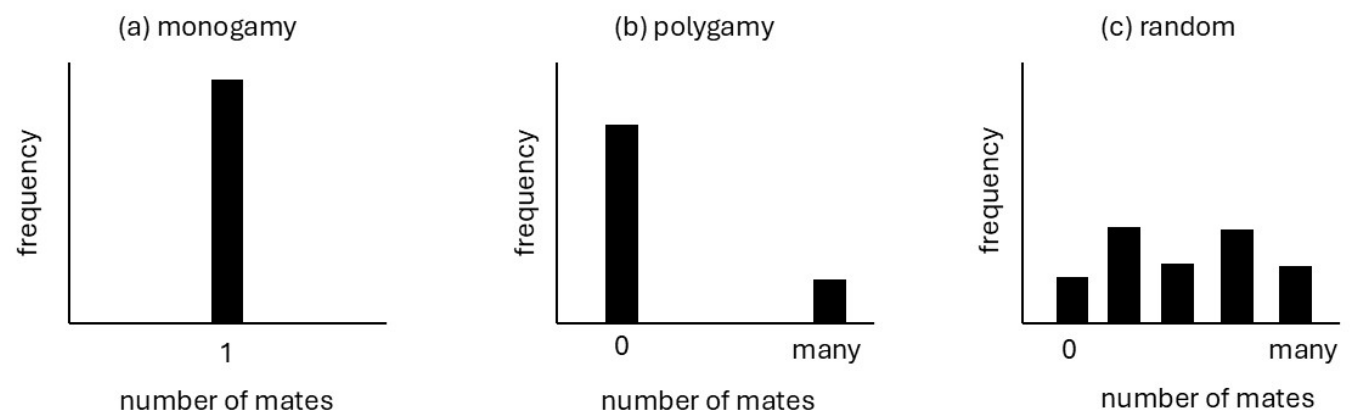
Mating systems are typically described by the number of mates obtained by members of each sex. Classic descriptions of mating systems range from monogamy (a mating pair) to promiscuity, whereby both males and females mate randomly with members of the opposite sex (Figure 1). In their seminal work, Emlen and Oring [5] identified a framework to describe the structure of mating systems based upon ecological and phylogenetic factors that influence the “environmental potential for polygamy”. This potential can determine the degree to which mates can be monopolized and provides a general basis for categorizing a mating system. While categorical descriptions allow for convenient qualitative classifications of different species or populations, an important underlying characteristic of mating systems is the variance in reproductive success among individuals of the same sex, which provides a quantifiable measure for the distribution of mates in a population [6].
Typically, if variance in mating success is relatively low, every individual obtains a mate and the mating system tends toward monogamy (Figure 1). In cases where variance is relatively high, many individuals do not obtain mates and a few individuals have disproportionately more mates than others, which results in a polygamous mating system (Figure 1). The latter situation leads to a strong opportunity for sexual selection, and intense sexual selection on mating-related characteristics can occur, leading to exaggerated traits in the non-limiting sex [6]. Thus, when assessing the effects of habitat on mating-system structure, the fundamental goal should be to understand how habitat affects the variance in mating success among individuals of the same sex to provide a reasonable metric for comparison among populations or species.
It is interesting to note that more recent reviews of fish mating systems have focused on understanding why monogamy evolves [3,7]. This suggests that polygamy (and especially polygyny) is the expected “basal” mating system in fishes. The occurrence of monogamy is often described based on constraints, such that individuals cannot obtain more than one mate because of requirements for parental care (also noted by [5]), habitat limitation, territoriality or mate sequestration (see [3] for an excellent review of these hypotheses). Thus, while Emlen and Oring [5] provided a general framework for the evolution of polygamy, our current understanding of mating systems suggests that monogamy may be the phenomenon worthy of detailed data to provide an evolutionary explanation for its occurrence.
Part of the focus on whether and why fish would be monogamous may be due to the advent of molecular techniques that can be used to understand mating systems in sexually reproducing taxa. As this technology develops and becomes more widely used, there is an increasing understanding that the social and genetic systems of fishes are often in contrast with one another [8,9,10]. This ‘revolution’, which previously occurred in birds [11,12] and mammals [13] has identified important gaps in our understanding of mating systems and sexual selection. The ultimate measure of a mating system involves both pre-and post-copulatory aspects of competition and choice, which often requires measuring mating systems at the genetic level [14,15]. This can reveal differences between the social and genetic mating systems, especially in presumably monogamous species with parental care. While this represents the ‘gold standard’ of measuring mating systems, much research on fish mating systems focuses on behavioral observations and social behavior [7]. Thus, most mating systems and their relationship with different habitat variables are described from the social, rather than genetic, perspective.
Further to considering estimates of variance in both reproductive habitat and the distribution of success, it is equally important to consider different mechanisms of sexual selection when assessing mating systems. Much of our understanding of fish mating systems stems from observations of variance in pre-copulatory mechanisms such as competition for mates or associated resources and/or mate choice (reviewed by [2]). In the sections below, I emphasize how habitat directly influences mating-system structure where data are available, but note that mechanisms of sexual selection are often referenced as a proxy to understand mating-system structure; thus, examples of variation in sexually selected traits are also presented in the context of how they are influenced by the mating environment.

3. Habitat Characteristics Influencing Intrinsic Factors

3.1. Temperature and Oxygen

Temperature can vary among habitats both spatially and seasonally, as well as because of longer term effects of climate change [16]. The effects of temperature on mating systems originate with the potential alteration in energetic capacity as metabolic activity changes when temperatures vary from optimal. In general, as temperature increases, activity is also expected to increase because of kinetic changes [17], resulting in a potential change in mating capacity. For example, in Pomatoschistus minutus, male and female reproductive rates are higher in relatively warmer temperatures, which can alter the propensity to mate as well as the operational sex ratio [18,19]. However, when temperature exceeds a species or population optimum, there may be a reduction in energetic capacity to engage in typical reproductive behavior, which again can alter the distribution of mating success. In Gambusia holbrooki, females receive more coercive mating attempts at higher temperatures, because at high temperatures female burst swimming was compromised, which can lead to an increased frequency of multiple paternity or females mating less discriminately, which can even the distribution of reproductive success [20] and the mating system may tend toward monogamy. Similarly, male–male competition in P. minutus is more intense at higher temperatures because the sex ratio becomes male-biased as male reproductive rate increases with temperature [21,22]. This change in the operational number of males can alter the competitive environment and thus change the opportunity for sexual selection and the capacity for males to monopolize females. Thus, if changes in temperature affect males and females differently, changes in the operational sex ratio can occur. The degree to which this would affect mating systems depends on the skew in operational sex ratio, discussed below.
As with temperature, changes in dissolved oxygen away from the optimum can alter mating behavior and reproductive output. One may make the simple prediction that a decrease in oxygen below optimal levels can result in a decrease in the capacity for one or a few individuals to control resources for mating, and thus the mating system may tend toward monogamy. Documented direct relationships between mating and oxygen indicated that common goby (Pomatoschistus microps) females alter their preference for males with eggs in their nests depending on oxygen level; low O2 conditions led to a more even distribution of eggs among males compared to control conditions [23], thus potentially reducing the variance in mating success. From a behavioral perspective, male Egyptian mouth brooders, Pseudocrenilabrus multicolor, in hypoxic conditions exhibited reduced aggressive and courtship displays compared to those in normoxic conditions [23] as may be expected when energetic capacity is reduced due to low oxygen. However, males of the same species displayed more competitive and courtship interactions than those in normoxic conditions ([24] and this interacted with turbidity—see below). Similarly, male mosquitofish (Gambusia holbrooki) acclimated to hypoxic conditions had more copulations than those in normoxic conditions [25], although this effect disappeared when males were in direct competition. These contrasting results may be associated with differences in the environments that the fish had previously experienced, suggesting that acclimation to hypoxic conditions may alter behavioral patterns. This is further influenced by the competitive environment because of differences in sex ratio or density, and suggests an interactive effect between abiotic and biotic factors on mating behavior.

3.2. Turbidity and Vegetation

Typically, turbidity is expected to affect mate choice that occurs via olfactory or visual cues, as it can impair the assessment of potential mates using these sensory systems. While this is a factor that has been implicated in hybridization of previously separate species [26], differences in turbidity can also affect the outcomes of mating interactions within species. An increase in turbidity or vegetative cover may dampen female preference for certain male traits, and thus push a mating system away from polygyny (if females prefer the same traits) to a more even or random distribution. In an experimental manipulation of turbidity in the sand goby (P. minutus), the distribution of mating success among males was more even in turbid water than in clear water, even though females laid the same total number of eggs in both treatments [27]. Furthermore, females of this species may adjust the number of eggs laid depending on environmental conditions, as large females laid fewer eggs than expected in turbid water than in clear water [28]. The degree to which selection can act on traits such as nuptial coloration may be affected by turbidity or an increase in vegetation, such that the mechanism of sexual selection acting in a mating system can be altered [29]. For example, turbidity decreased male courtship behavior in P. multicolor [24]. By contrast, in a mating system driven mainly by male–male competition, turbidity appeared to increase the variance in success among males, whereby larger males achieved relatively higher reproductive success in turbid water than in clear water [30], possibly because they are more visible than smaller males. In addition, changes in habitat owing to differences in vegetation may affect the variation in male reproductive success; male Threespine stickleback (Gasterosteus aculeatus) experienced lower variation in egg numbers in their nests in areas with relatively high vegetation [31]. Higher habitat complexity can also alter behavior because of decreases in encounter rates; in more structured habitats, male two-spotted goby (Gobiusculus flavescens) decreased courtship and aggression, and females experienced fewer encounters with males and an increase in time to mating [32]. As such, habitats with more vegetation may decreasing the variance in male reproductive success compared to those with less structure.

4. Mating Resources

In theory, if resources are clumped in space or arrive asynchronously in time, economic defense and monopolization of resources by one or more individuals is possible, and there is environmental potential for polygamy [5]. In addition, if resources are limited, competition becomes more intense, and larger or more dominant individuals may control access to them, again resulting in higher variance in reproductive success (i.e., some individuals have multiple mates, while others have none). Mating involves social interactions, and has been described by some authors as a type of social system [33,34]. The socio-sexual environment can play a critical role in the outcome of mating interactions [35], and thus variation in social systems can also lead to differences in mating-system structure among populations.

4.1. Shelters and Nest Sites

Environmental heterogeneity related to the availability of shelters and nest sites can have a profound effect on how organisms interact with their environment. From a mating-systems perspective, a classic example of this is the relationship between coral size and mating systems in the Red Sea coral-dwelling damselfish (Dascyllus marginatus), wherein fish spawn in pairs on small corals (presumed monogamy) or harems defended by a single male, but larger corals with many places to hide were associated with multi-male groups and many females (presumed polygyny or promiscuity), likely because of a reduction in the ability to defend females or mating sites from intruders [36]. Similarly, the availability of nest sites is an important factor that can cause variation both among and within populations. Slimy sulpin (Cottus cognatus) have different degrees of polygyny depending on the availability of nest sites [37]; consistent with Emlen and Oring’s [5] framework, males in a lake with fewer nest sites had more egg masses in their nests, suggesting that resource defense of the few nest sites led to a higher degree of polygyny (more females per male), while mating systems tended closer to monogamy in lakes with more available nest sites [37].
As an indirect measure of mating-system structure, the specific action of sexual selection may also predict differences in the potential for polygamy among populations. When resources such as nesting sites in a particular habitat are scarce, male–male competition for those sites is expected to increase, resulting in a higher potential for polygamy than in areas where nesting sites are common, and female choice may be the primary mechanism of sexual selection. This phenomenon occurs in different populations of sand goby (P. minutus) in the Baltic Sea, where a population in an area of scarce nest sites (Tvärminne, Finland) has a male-biased sexual size dimorphism and variation in male reproductive success is higher than in a population with many nest sites (Klubban, Sweden), where there is no sexual size dimorphism and the mating system is driven by female choice [38]. Within this system, a habitat shift has occurred within the population where nest sites are scarce; while experimental evidence suggests that males prefer to nest in sandy areas, nesting also occurs in rocky habitats (males nest under large cobbles), possibly due to competition for nest sites in sand [39].

4.2. Mates: Sex Ratio and Density

Emlen and Oring’s [5] (1977) seminal work on mating systems highlighted the importance of the operational sex ratio (OSR; the ratio of fertilizable females to mature males at a given time [40]), this population metric is notoriously difficult to measure in practice. Many studies have highlighted the issues with measuring OSR and its links to sexual selection [41,42,43], and it is more than likely that the adult sex ratio (the ratio of females to males in a population during reproduction) is most often used as an intentional or unintentional proxy for the operational sex ratio. Regardless, this aspect of the socio-sexual habitat can have a profound effect on the distribution of reproductive success and therefore mating system structure. As noted by Emlen and Oring [5], mate distribution in both time and space are essential to understanding the structure of a mating system. Mates that are clumped in space or occur asynchronously in time (either due to arrival on spawning grounds or variation in maturation timing/availability to mate) can be defended and mate monopolization is possible, increasing the potential for polygamy.
In populations with discrete breeding seasons, changes in the availability of mates can occur over time. This can be due to reproductive ‘time-outs’ to provide parental care [44]; a reduction in availability of gametes, particularly in females; or sex-biased dispersal or mortality leading to changes in the sex ratio within a population. While these changes can be subtle and have little to no effect on the mating system, in some cases the differences at the beginning and end of a breeding season can be extreme. In two-spotted gobies (G. flavescens), the abundance of males changes drastically over the breeding season, whereby there is a male-biased sex ratio at the start of the season, and a female-biased sex ratio at the end [45]. In this population, the mechanism of sexual selection changes from male–male competition to female–female competition for mates, which, in essence, changes the classification of the mating system from male resource defense to female resource defense. In this system, males invariably defend nests and developing offspring. This is a case where the interpretation of ‘sex roles’ depends on the timing of measurement, and, as noted in Forsgren et al. [45], may not always switch at an OSR of equal numbers of males and females. A similar shift over the course of the breeding season has been documented for the longnose filefish (Oxymonacanthus longirostris), where the sex ratio during breeding changed from even and a monogamous system, to a female-biased sex ratio (likely owing to relatively higher male mortality over the breeding season) that was correlated with an increase in the frequency of polygyny [46].
In many mating systems, density and availability of resources are interconnected. If there are more males than nest sites or breeding territories, for example, competition for those rare sites may be more intense. In European bitterling (Rhodeus sericeus), changing male density in relation to spawning sites (mussels) resulted in a decrease in the variance in male reproductive success, thereby altering the structure of the mating system [47]. This change was driven by a shift in male reproductive tactics whereby the incidence of group spawning increased when more males were available to mate. In this study, variance in female reproductive success remained unchanged, highlighting the importance of measuring the variance in success in both sexes to appropriately characterize the mating system in a particular population.

4.3. Alternative Mating Strategies and Tactics

Mating-system variation, particularly from the genetic perspective, can be strongly influenced by the occurrence of males adopting alternative mating strategies. In species such as Atlantic salmon (Salmo salar), mature males are either large individuals who migrate to sea and return to rivers to spawn, or younger, markedly (~10-fold) smaller individuals who do not experience a period of significant growth in the ocean. The occurrence of the latter ‘sneaker’ male phenotype varies geographically [48,49,50,51,52] and is influenced by growth rate; males that reach a threshold size at a given age can mature early [53,54], and the threshold size at which maturation occurs has a genetic basis [55,56,57]. Observed latitudinal [58] and altitudinal [51] gradients suggest that the habitat may be a potential driver of differences in the occurrence of alternative strategies among populations [59]. Furthermore, maturation thresholds for Atlantic salmon males can vary within a population [54], and thus mating-system structure may vary spatially within a single river.
While variation in the incidence of different alternative strategies alone can alter mating system structure among and within populations, the presence of sneaker males can also influence the degree to which sexual selection can act on large males [60]. Patterns of migratory male size in both Atlantic and masu (Oncorhynchus masou) salmon suggest that when many sneaker males are present, the intensity of sexual selection on migratory male body size is reduced, as competition occurs primarily between—rather than within—each life-history strategy [61,62], thus reducing the advantage of large size when migratory males are competing with each other. This changes the distribution of reproductive success within the population such that there is less variance among males, which can signal a potential shift in mating-system structure.

5. Conclusions

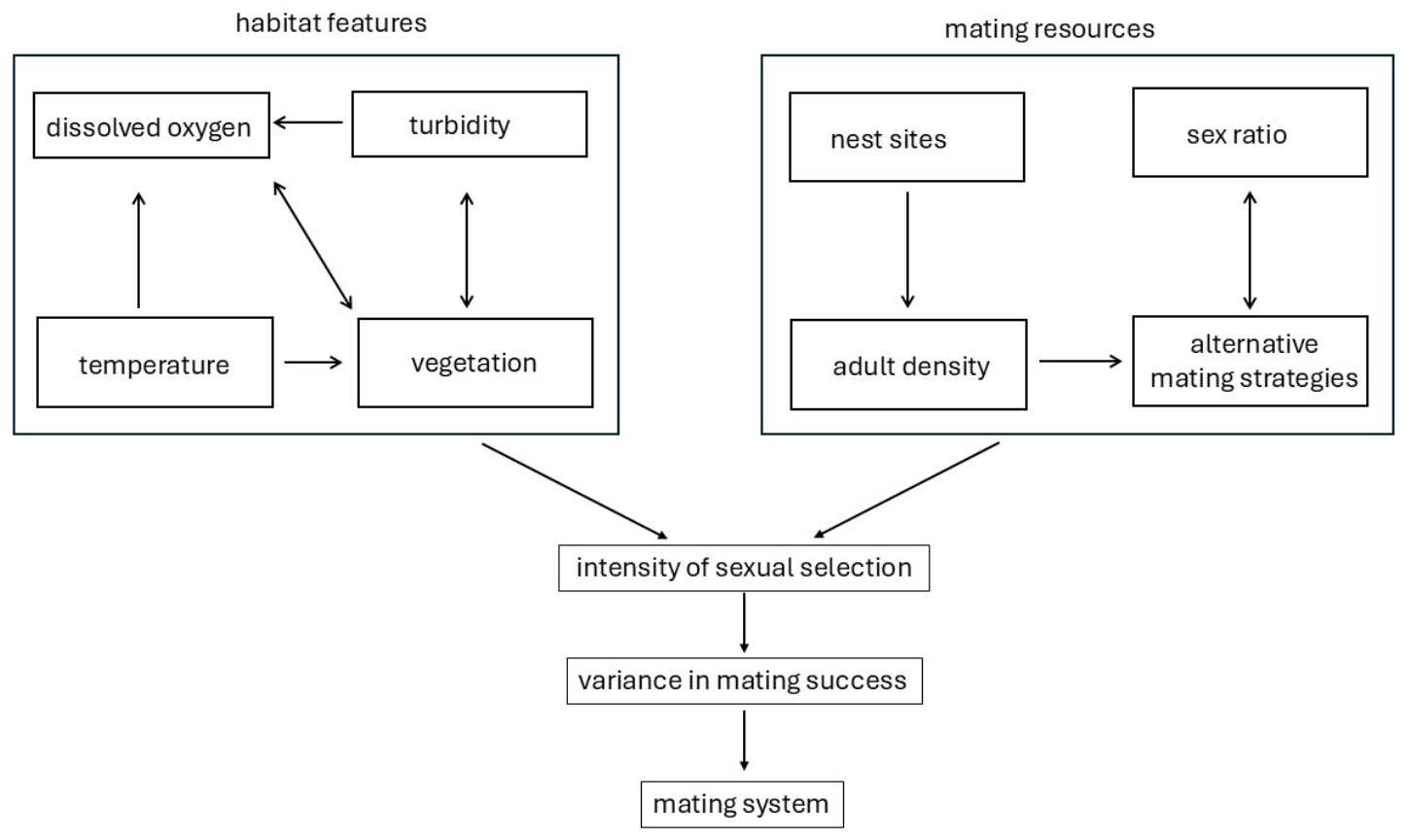
As outlined above, both abiotic and biotic aspects of a habitat can influence the structure of a mating system (Figure 2). While simple predictions can be made based on fundamental biological principles, the studies outlined in this review indicate that the influence of habitat on the distribution of reproductive success, and thus the mating system, is complex and often depends on the mechanisms by which mates are obtained. The structure of mating systems will depend on factors that allow males to obtain and monopolize mating resources. Increases in temperature beyond optimal levels or decreases in oxygen availability may reduce energy available for mating and defense of resources, thus potentially decreasing variance in mating success. Similarly, increases in density, extreme skews in sex ratios or the presence of alternative mating strategies within a sex can affect the nature of competition among individuals, with a change in mating system to an even or random distribution if individuals cannot monopolize resources. Habitat alterations that result in increases in complexity because of vegetation or turbidity can also affect the distribution of reproductive success, and the studies outlined here generally indicate that mating success becomes more evenly distributed as encounter rates decrease.
While the examples in this review, particularly the experimental approaches, typically explored one variable at a time, the different parts of a habitat have the potential to simultaneously affect mating systems by either directly influencing the distribution of mating success or by interacting with one another. The abiotic factors outlined in this review can interact in different ways. For example, in aquatic environments, temperature also affects the dissolution of oxygen, and thus changes in these two factors can occur simultaneously and can have differing effects. In natural conditions, an increase in temperature can result in changes in mating activity, on which the concomitant decrease in oxygen may have a negative effect, resulting in no overall change in the mating system. Similarly, the interactive effects of habitat features and mating resources or competitors can ultimately alter the mating system in unpredictable ways; for example, the expected reduction in activity because of low oxygen availability depends on the competitive environment, at least in short-term experiments [24,25].
Given the diversity of fish mating systems, it is not surprising that the influence of habitat on the variance in reproductive success is complex and often context-dependent. While polygamy is typically considered the basal mating system in fishes, deviations from this mating system may be related to habitat features in some species or populations. There are many factors that may push a mating system toward monogamy [3], and some of the studies outlined here indicate that habitat can play a role in evening the distribution of reproductive success. It is important to continue to use a comparative approach to understand how variation in habitat influences mating-system structure within species to explain the variation that is observed under natural or human-altered conditions.

6. Future Directions

This review has revealed some potential avenues for future directions to improve our understanding of the influence of habitat on fish mating systems. First, it is clear that most research focuses on a handful of well-studied species. These studies provide extremely valuable insight into the evolution of mating systems, but the characterization of different populations and species is highly warranted to improve our understanding of mating-system variation both within and among species. As noted by other authors, there is a dearth of information about many marine species [1], particularly in the context of variation in habitat and its connection with mating-system structure. Second, while genetic assessment of mating systems is becoming increasingly common, the structure of mating systems is often elucidated through behavioral observations. This is a powerful approach from the point of view of sexual selection, but the direct link between the action of sexual selection on the distribution of reproductive success is required to increase our understanding of how pre- and post-copulatory mechanisms actually shape mating-system structure. Finally, much of our knowledge of the habitat features that influence mating systems is based on experimental studies that typically control one or two habitat variables at a time. These studies lead to very useful conclusions and advance our understanding, but (as always) research in situ that captures mating in a natural setting would strengthen our understanding of the plasticity of mating systems.
In the context of a changing climate, it is also instructive to consider how changes in habitat, most directly temperature (and oxygen availability) owing to climate change and turbidity associated with pollution may cause unexpected deviations in the structure of mating systems. At an extreme, a reduction in activity because of high temperature or low oxygen, or an inability to find mates resulting in an Allee effect, can have a profound effect on the reproductive success of a population as whole, and thus consideration of these factors is critical when assessing human-induced habitat changes. These factors also affect developmental rate and survival [63], which can have a secondary impact on population density and sex ratios if one sex is disproportionately affected by these changes. Thus, improving our current understanding of the impact of habitat on fish mating systems will allow us to recognize the potential impacts of human activities on natural populations.

Funding

This research was funded by NSERC Discovery Grant RGPIN-2017-05833.

Institutional Review Board Statement

Not applicable.

Data Availability Statement

No new data were created or analyzed in this study.

Acknowledgments

I thank the associate editor and three referees for their comments that helped improve this manuscript.

Conflicts of Interest

The author declares no conflicts of interest.

References

  1. Taylor, M.I.; Knight, M.E. Mating Systems in Fishes. In Fish Reproduction; Rocha, M.J., Arukwe, A., Kapoor, B.G., Eds.; Science Publishers: Enfield, UK, 2008; pp. 277–309. [Google Scholar]
  2. Ahnesjö, I.; Forsgren, E.; Kvarnemo, C. Variation in Sexual Selection in Fishes. In Fish Behaviour; Magnhagen, C., Braithwaite, V.A., Forsgren, E., Kapoor, B.G., Eds.; Science Publishers: Enfield, UK, 2008; pp. 304–335. [Google Scholar]
  3. Whiteman, E.A.; Côté, I.M. Monogamy in Marine Fishes. Biol. Rev. Camb. Philos. Soc. 2004, 79, 351–375. [Google Scholar] [CrossRef] [PubMed]
  4. Rosenfeld, J.S.; Hatfield, T. Information Needs for Assessing Critical Habitat of Freshwater Fish. Can. J. Fish. Aquat. Sci. 2006, 698, 683–698. [Google Scholar] [CrossRef]
  5. Emlen, S.T.; Oring, L.W. Ecology, Sexual Selection, and the Evolution of Mating Systems. Science 1977, 197, 215–223. [Google Scholar] [CrossRef] [PubMed]
  6. Shuster, S.M.; Wade, M.J. Mating Systems and Strategies; Princeton University Press: Princeton, NJ, USA, 2003. [Google Scholar]
  7. Stanbrook, E.; Fitzpatrick, J.L.; Balshine, S.; Shultz, S. The Evolution of Monogamy in Cichlids and Marine Reef Fishes. Front. Ecol. Evol. 2022, 10, 1045383. [Google Scholar] [CrossRef]
  8. McCune, A.R.; Bogdanowicz, S.M.; Buston, P.M.; Jackson, J.R.; Harrison, R.G. Spawning Behavior in a Non-Teleost Actinopterygian: Genetic Evidence for Both Monogamy and Polygamy in Amia. Ichthyol. Herpetol. 2023, 111, 522–542. [Google Scholar] [CrossRef]
  9. Rueger, T.; Berumen, M.L.; Harrison, H.B.; Gardiner, N.M.; Jones, G.P. Extra—Pair Mating in a Socially Monogamous and Paternal Mouth—Brooding Cardinalfish. Mol. Ecol. 2019, 28, 2625–2635. [Google Scholar] [CrossRef] [PubMed]
  10. Sefc, K.M.; Mattersdorfer, K.; Strumbauer, C.; Koblmüller, S. High Frequency of Multiple Paternity in Broods of a Socially Monogamous Cichlid Fish with Biparental Nest Defence. Mol. Ecol. 2008, 17, 2531–2543. [Google Scholar] [CrossRef] [PubMed]
  11. Westneat, D.F. Extra-Pair Fertilizations in a Predominantly Monogamous Bird: Genetic Evidence. Anim. Behav. 1987, 35, 877–886. [Google Scholar] [CrossRef]
  12. Gibbs, H.L.; Weatherhead, P.J.; Boag, P.T.; White, B.N.; Tabak, L.M.; Hoysak, D.J. Realized Reproductive Success of Polygynous Red-Winged Blackbirds Revealed by DNA Markers. Science 1990, 250, 1394–1397. [Google Scholar] [CrossRef] [PubMed]
  13. Sillero-Zubiri, C.; Gottelli, D.; Macdonald, D.W. Male Philopatry, Extra-Pack Copulations and Inbreeding Avoidance in Ethiopian Wolves (Canis simensis). Behav. Ecol. Sociobiol. 1996, 38, 331–340. [Google Scholar] [CrossRef]
  14. Avise, J.C.; Jones, A.G.; Walker, D.; DeWoody, J.A. Genetic Mating Systems and Reproductive Natural Histories of Fishes: Lessons for Ecology and Evolution. Annu. Rev. Genet. 2002, 36, 19–45. [Google Scholar] [CrossRef] [PubMed]
  15. Hughes, C. Integrating Molecular Techniques with Field Methods in Studies of Social Behavior: A Revolution Results. Ecology 1998, 79, 383–399. [Google Scholar] [CrossRef] [PubMed]
  16. Pilakouta, N.; Baillet, A. Effects of Temperature on Mating Behaviour and Mating Success: A Meta-Analysis. J. Anim. Ecol. 2022, 91, 1642–1650. [Google Scholar] [CrossRef] [PubMed]
  17. Abram, P.K.; Boivin, G.; Moiroux, J.; Brodeur, J. Behavioural Effects of Temperature on Ectothermic Animals: Unifying Thermal Physiology and Behavioural Plasticity. Biol. Rev. 2017, 92, 1859–1876. [Google Scholar] [CrossRef] [PubMed]
  18. Kvarnemo, C. Temperature Differentially Affects Male and Female Reproductive Rates in the Sand Goby: Consequences for Operational Sex Ratio. Proc. R. Soc. Lond. Ser. B Biol. Sci. 1994, 256, 151–156. [Google Scholar] [CrossRef]
  19. Kvarnemo, C.; Forsgren, E. The Influence of Potential Reproductive Rate and Variation in Mate Quality on Male and Female Choosiness in the Sand Goby, Pomatoschistus minutus. Behav. Ecol. Sociobiol. 2000, 48, 378–384. [Google Scholar] [CrossRef]
  20. Wilson, R.S.; Condon, C.H.L.; Johnston, I.A. Consequences of Thermal Acclimation for the Mating Behaviour and Swimming Performance of Female Mosquito Fish. Philos. Trans. R. Soc. B Biol. Sci. 2007, 362, 2131–2139. [Google Scholar] [CrossRef] [PubMed][Green Version]
  21. Kvarnemo, C. Temperature Affects Operational Sex Ratio and Intensity of Male-Male Competition: An Experimental Study of Sand Gobies, Pomatoschistus minutus. Behav. Ecol. 1996, 7, 208–212. [Google Scholar] [CrossRef]
  22. Kvarnemo, C. Temperature Modulates Competitive Behaviour: Why Sand Goby Males Fight More in Warmer Water. Ethol. Ecol. Evol. 1998, 10, 105–114. [Google Scholar] [CrossRef]
  23. Reynolds, J.D.; Jones, J.C. Female Preference for Preferred Males Is Reversed under Low Oxygen Conditions in the Common Goby (Pomatoschistus microps). Behav. Ecol. 1999, 10, 149–154. [Google Scholar] [CrossRef]
  24. Williams, B.; Pintor, L.; Gray, S. Multiple Stressors Lead to Complex Responses in Reproductive Behaviors in an African Cichlid. Curr. Zool. 2024, 70, 821–832. [Google Scholar] [CrossRef] [PubMed]
  25. Carter, A.J.; Wilson, R.S. Improving Sneaky-Sex in a Low Oxygen Environment: Reproductive and Physiological Responses of Male Mosquito Fish to Chronic Hypoxia. J. Exp. Biol. 2006, 209, 4878–4884. [Google Scholar] [CrossRef] [PubMed]
  26. Seehausen, O.; Alphen, J.M.; Witte, F. Cichlid Fish Diversity Threatened by Eutrophication That Curbs Sexual Selection. Science 1997, 277, 1808–1811. [Google Scholar] [CrossRef]
  27. Järvenpää, M.; Lindström, K. Water Turbidity by Algal Blooms Causes Mating System Breakdown in a Shallow-Water Fish, the Sand Goby Pomatoschistus Minutus. Proc. R. Soc. B Biol. Sci. 2004, 271, 2361–2365. [Google Scholar] [CrossRef] [PubMed]
  28. Järvenpää, M.; Pauli, B.D.; Lindström, K. Water Turbidity Constrains Male Mating Success in a Marine Fish. Behav. Ecol. Sociobiol. 2019, 73, 140. [Google Scholar] [CrossRef]
  29. Candolin, U.; Salesto, T.; Evers, M. Changed Environmental Conditions Weaken Sexual Selection in Sticklebacks. J. Evol. Biol. 2007, 20, 233–239. [Google Scholar] [CrossRef] [PubMed]
  30. Sundin, J.; Aronsen, T.; Rosenqvist, G.; Berglund, A. Sex in Murky Waters: Algal-Induced Turbidity Increases Sexual Selection in Pipefish. Behav. Ecol. Sociobiol. 2017, 71, 78. [Google Scholar] [CrossRef] [PubMed]
  31. Candolin, U. Effects of Algae Cover on Egg Acquisition in Male Three-Spined Stickleback. Behaviour 2004, 141, 1389–1399. [Google Scholar] [CrossRef]
  32. Myhre, L.C.; Forsgren, E.; Amundsen, T. Effects of Habitat Complexity on Mating Behavior and Mating Success in a Marine Fish. Behav. Ecol. 2013, 24, 553–563. [Google Scholar] [CrossRef]
  33. West-Eberhard, M.J. Sexual Selection, Social Competition, and Speciation. Q. Rev. Biol. 1983, 58, 155–183. [Google Scholar] [CrossRef]
  34. Lyon, B.E.; Montgomerie, R. Sexual Selection Is a Form of Social Selection. Philos. Trans. R. Soc. B Biol. Sci. 2012, 367, 2266–2273. [Google Scholar] [CrossRef] [PubMed]
  35. Bretman, A.; Gage, M.J.G.; Chapman, T. Quick-Change Artists: Male Plastic Behavioural Responses to Rivals. Trends Ecol. Evol. 2011, 26, 467–473. [Google Scholar] [CrossRef] [PubMed]
  36. Fricke, H.W. Control of Different Mating Systems in a Coral Reef Fish by One Environmental Factor. Anim. Behav. 1980, 28, 561–569. [Google Scholar] [CrossRef]
  37. Mousseau, T.A.; Collins, N. Polygyny and Nest Site Abundance in the Slimy Sculpin (Cottus cognatus). Can. J. Zool. 1987, 65, 2827–2829. [Google Scholar] [CrossRef]
  38. Forsgren, E.; Kvarnemo, C.; Lindstrom, K. Mode of Sexual Selection Determined by Resource Abundance in Two Sand Goby Populations. Evolution 1996, 50, 646–654. [Google Scholar] [CrossRef] [PubMed]
  39. Lehtonen, T.; Lindstrom, K. Changes in Sexual Selection Resulting from Novel Habitat Use in the Sand Goby. Oikos 2004, 104, 327–335. [Google Scholar] [CrossRef]
  40. Emlen, S.T. Lek Organization and Mating Strategies in the Bullfrog. Behav. Ecol. Sociobiol. 1976, 1, 283–313. [Google Scholar] [CrossRef]
  41. Jennions, M.D.; Kokko, H.; Klug, H. The Opportunity to Be Misled in Studies of Sexual Selection. J. Evol. Biol. 2012, 25, 591–598. [Google Scholar] [CrossRef] [PubMed]
  42. Klug, H.; Heuschele, J.; Jennions, M.D.; Kokko, H. The Mismeasurement of Sexual Selection. J. Evol. Biol. 2010, 23, 447–462. [Google Scholar] [CrossRef] [PubMed]
  43. Kokko, H.; Klug, H.; Jennions, M.D. Unifying Cornerstones of Sexual Selection: Operational Sex Ratio, Bateman Gradient and the Scope for Competitive Investment. Ecol. Lett. 2012, 15, 1340–1351. [Google Scholar] [CrossRef] [PubMed]
  44. Clutton-Brock, T.H.; Vincent, A.C.J. Sexual Selection and the Potential Reproductive Rates of Males and Females. Nature 1991, 351, 58–60. [Google Scholar] [CrossRef] [PubMed]
  45. Forsgren, E.; Amundsen, T.; Bjelvenmark, J. Unusually Dynamic Sex Roles in a Fish. Nature 2004, 429, 551–554. [Google Scholar] [CrossRef] [PubMed]
  46. Kokita, T.; Nakazono, A. Plasticity in the Mating System of the Longnose Filefish, Oxymonacanthus Longirostris, in Relation to Mate Availability. J. Ethol. 1998, 16, 81–89. [Google Scholar] [CrossRef]
  47. Mills, S.; Reynolds, J. Operational Sex Ratio and Alternative Reproductive Behaviours in the European Bitterling, Rhodeus Sericeus. Behav. Ecol. Sociobiol. 2003, 54, 98–104. [Google Scholar] [CrossRef]
  48. Dalley, E.; Andrews, C.; Green, J. Precocious Male Atlantic Salmon Parr (Salmo salar) in Insular Newfoundland. Can. J. Fish. Aquat. Sci. 1983, 40, 647–652. [Google Scholar] [CrossRef]
  49. Myers, R.A.; Hutchings, J.A.; Gibson, R.J. Variation in Male Parr Maturation Within and Among Populations of Atlantic Salmon, (Salmo salar). Can. J. Fish. Aquat. Sci. 1986, 43, 1242–1248. [Google Scholar] [CrossRef]
  50. Hutchings, J.A.; Jones, M.E.B. Life History Variation and Growth Rate Thresholds for Maturity in Atlantic Salmon, Salmo salar. Can. J. Fish. Aquat. Sci. 1998, 55, 22–47. [Google Scholar] [CrossRef]
  51. Baum, D.; Laughton, R.; Armstrong, J.D.; Metcalfe, N.B. Altitudinal Variation in the Relationship between Growth and Maturation Rate in Salmon Parr. J. Anim. Ecol. 2004, 73, 253–260. [Google Scholar] [CrossRef]
  52. Valiente, A.G.; Juanes, F.; Garcia-Vazquez, E. Reproductive Strategies Explain Genetic Diversity in Atlantic Salmon, Salmo salar. Environ. Biol. Fishes 2005, 74, 323–334. [Google Scholar] [CrossRef]
  53. Hutchings, J.A.; Myers, R.A. The Evolution of Alternative Mating Strategies in Variable Environments. Evol. Ecol. 1994, 8, 256–268. [Google Scholar] [CrossRef]
  54. Aubin-Horth, N.; Dodson, J.J. Influence of Individual Body Size and Variable Thresholds on the Incidence of a Sneaker Male Reproductive Tactic in Atlantic Salmon. Evolution 2004, 58, 136–144. [Google Scholar] [CrossRef] [PubMed]
  55. Piché, J.; Hutchings, J.A.; Blanchard, W. Genetic Variation in Threshold Reaction Norms for Alternative Reproductive Tactics in Male Atlantic Salmon, Salmo salar. Proc. R. Soc. B Biol. Sci. 2008, 275, 1571–1575. [Google Scholar] [CrossRef] [PubMed]
  56. Lepais, O.; Manicki, A.; Glise, S.; Buoro, M.; Bardonnet, A. Genetic Architecture of Threshold Reaction Norms for Male Alternative Reproductive Tactics in Atlantic Salmon (Salmo salar L.). Sci. Rep. 2017, 7, 43552. [Google Scholar] [CrossRef] [PubMed]
  57. Páez, D.J.; Bernatchez, L.; Dodson, J.J. Alternative Life Histories in the Atlantic Salmon: Genetic Covariances within the Sneaker Sexual Tactic in Males. Proc. R. Soc. B Biol. Sci. 2011, 278, 2150–2158. [Google Scholar] [CrossRef]
  58. Morita, K.; Nagasawa, T. Latitudinal Variation in the Growth and Maturation of Masu Salmon (Oncorhynchus Masou) Parr. Can. J. Fish. Aquat. Sci. 2010, 67, 955–965. [Google Scholar] [CrossRef]
  59. Morita, K.; Tamate, T.; Kuroki, M.; Nagasawa, T. Temperature-Dependent Variation in Alternative Migratory Tactics and Its Implications for Fitness and Population Dynamics in a Salmonid Fish. J. Anim. Ecol. 2014, 83, 1268–1278. [Google Scholar] [CrossRef] [PubMed]
  60. Weir, L.K.; Kindsvater, H.K.; Young, K.A.; Reynolds, J.D. Sneaker Males Affect Fighter Male Body Size and Sexual Size Dimorphism in Salmon. Am. Nat. 2016, 188, 264–271. [Google Scholar] [CrossRef] [PubMed]
  61. Neff, B.D. Alternative Reproductive Tactics and Sexual Selection. Trends Ecol. Evol. 2001, 16, 669. [Google Scholar] [CrossRef]
  62. Jones, A.G.; Walker, D.; Kvarnemo, C.; Lindström, K.; Avise, J.C. How Cuckoldry Can Decrease the Opportunity for Sexual Selection: Data and Theory from a Genetic Parentage Analysis of the Sand Goby, Pomatoschistus minutus. Proc. Natl. Acad. Sci. USA 2001, 98, 9151–9156. [Google Scholar] [CrossRef] [PubMed]
  63. Jonsson, B.; Jonsson, N.; Hansen, M.M. Knock-on Effects of Environmental Influences During Embryonic Development of Ectothermic Vertebrates. Q. Rev. Biol. 2022, 97, 95–139. [Google Scholar] [CrossRef] [PubMed]
Figure 1. Mating systems represented as the distribution of mating success. In monogamous mating systems (a), all individuals each obtain one mate and there is no variance in mating success. By contrast, in polygamous mating systems (b), variance in mating success is relatively high and one or a few individuals obtain a large number of mates, while the rest of the population has none. Random mating (c) is characterized by a distribution of reproductive success that may be intermediate between monogamy and polygamy, with intermediate variance in reproductive success.
Fishes 11 00375 g001
Figure 2. Schematic diagram of the influence of habitat on fish mating systems. Various habitat features can interact and influence one another, and in turn each can affect the intensity of sexual selection. Similarly, feedback and interactions can occur among mating resources, ultimately affecting the variance in reproductive success.
Fishes 11 00375 g002
Disclaimer/Publisher’s Note: The statements, opinions and data contained in all publications are solely those of the individual author(s) and contributor(s) and not of MDPI and/or the editor(s). MDPI and/or the editor(s) disclaim responsibility for any injury to people or property resulting from any ideas, methods, instructions or products referred to in the content.