
Cold Stress and Molecular Adaptations in Aquatic Organisms: A Comparative Review of Fish, Crustaceans, and Mollusks

Abstract
1. Introduction
2. Literature Selection and Comparative Framework
3. General Framework of Aquatic Animal Cold Stress Response
3.1. Layered Responses to Cold Stress: Primary, Secondary, and Tertiary Responses
3.1.1. Primary Response: Neuroendocrine and Rapid Signal Perception
3.1.2. Secondary Response: Metabolism, Oxidative Stress, and Immune Regulation
3.1.3. Tertiary Response: Behavioral Manifestations and Ecological Consequences
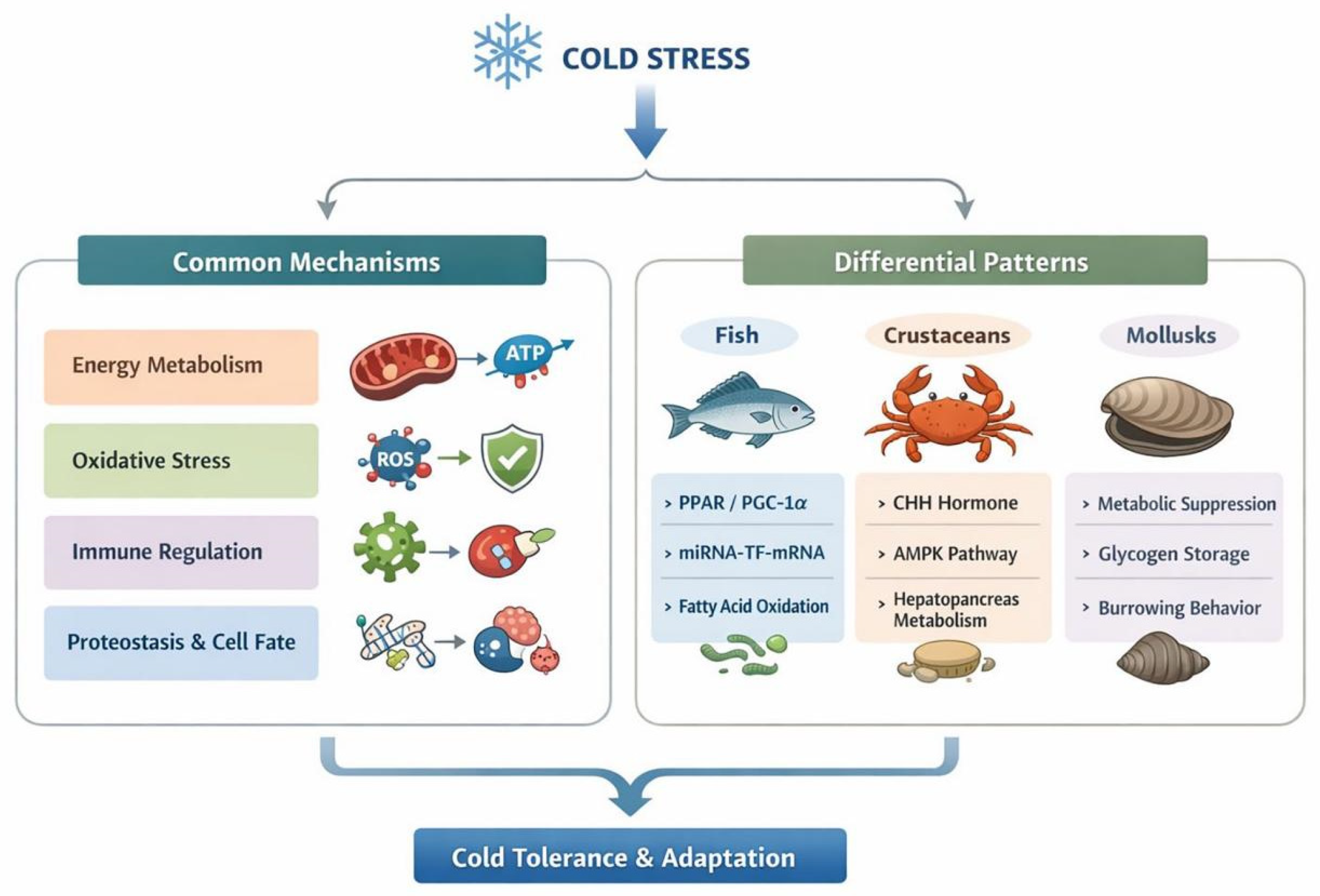
3.2. Common Mechanisms and Differential Patterns in Aquatic Animals’ Cold Stress Response
4. Fish Response Mechanisms to Cold Stress
4.1. Neuroendocrine Response and Behavioral Adaptations
4.2. Metabolic Reprogramming: Lipid and Carbohydrate Metabolism
4.3. Oxidative Stress and Antioxidant Defense
4.4. Immune Modulation in Cold-Stressed Fish
5. Crustacean Response Mechanisms to Cold Stress
5.1. Neuroendocrine Regulation and Behavioral Adaptations
5.2. Energy Metabolism and Lipid Mobilization
5.3. Antioxidant Defense and Oxidative Stress in Crustaceans
5.4. Immune Modulation in Crustaceans
6. Mollusk Response Mechanisms to Cold Stress
6.1. Metabolic Suppression and Energy Reserves
6.2. Oxidative Stress and Antioxidant Defense
6.3. Immune System Modulation
6.4. Behavioral Adaptations and Microhabitat Selection
6.5. Cold Tolerance and Freeze Avoidance
7. Core Regulatory Mechanisms in Cold Stress Response: PGC-1α, DUSP1, and Other Key Players
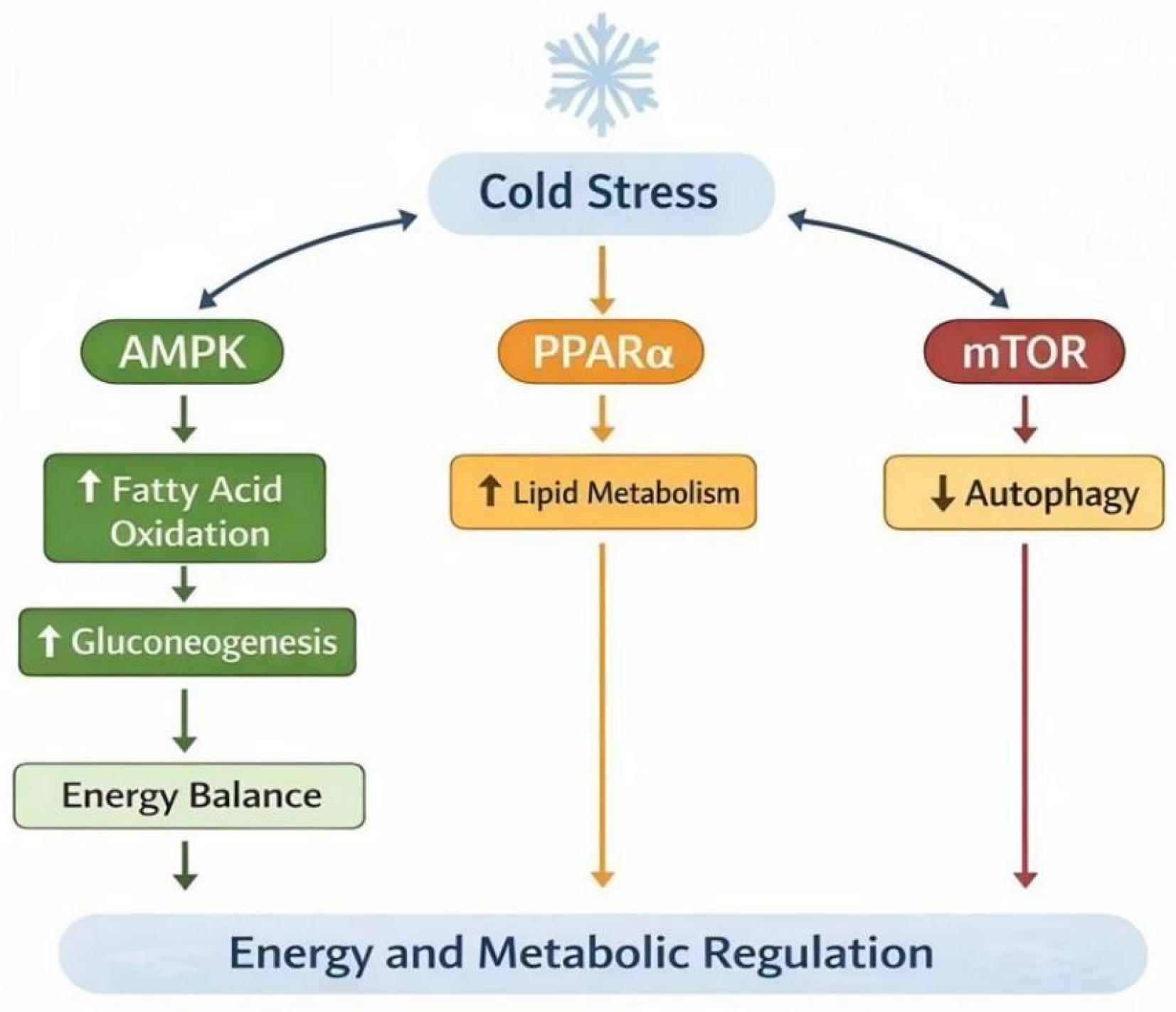
7.1. Energy and Metabolic Regulation: AMPK, PPAR, and mTOR
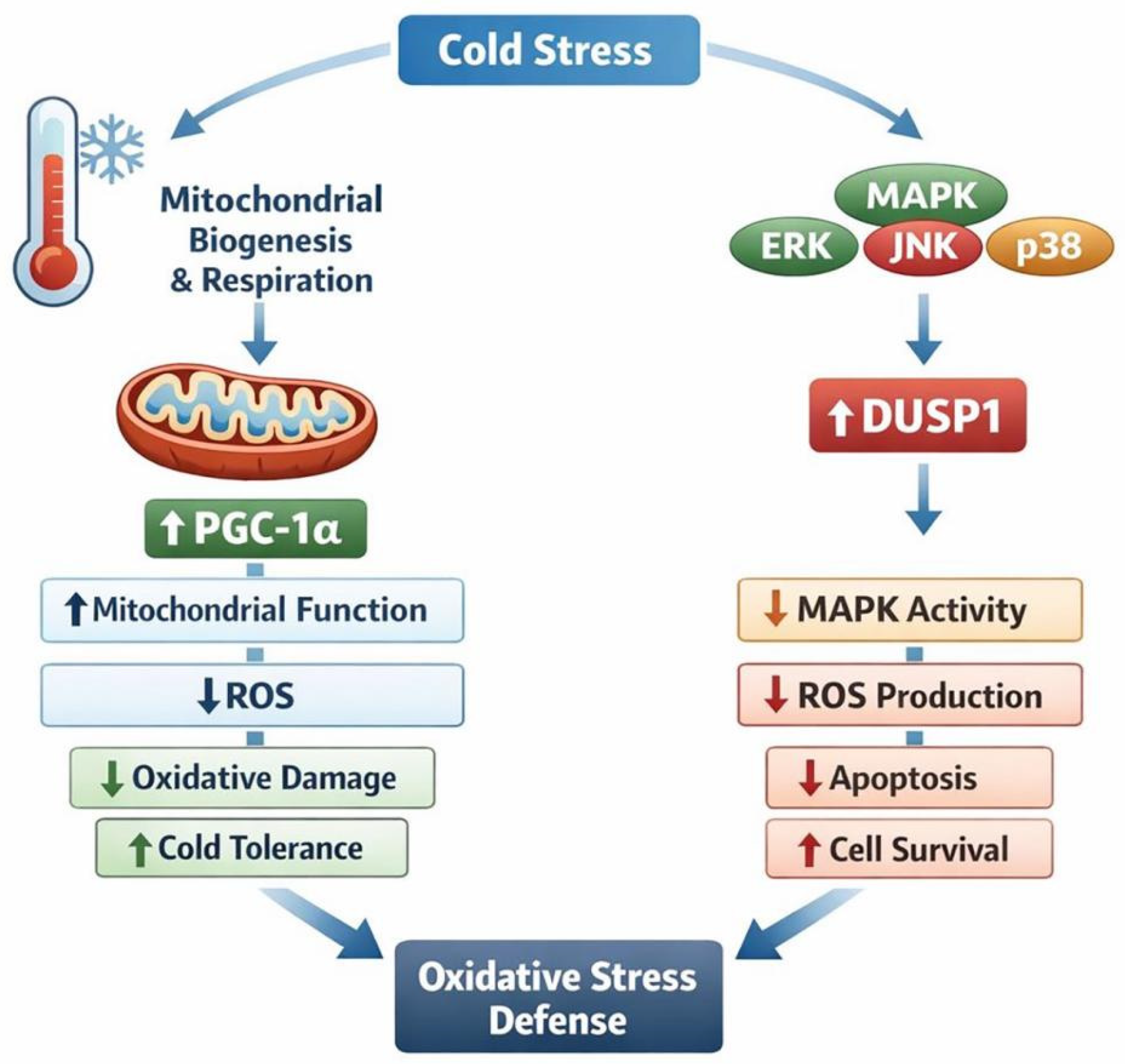
7.2. Oxidative Stress and Antioxidant Defense Mechanisms: PGC-1α and DUSP1
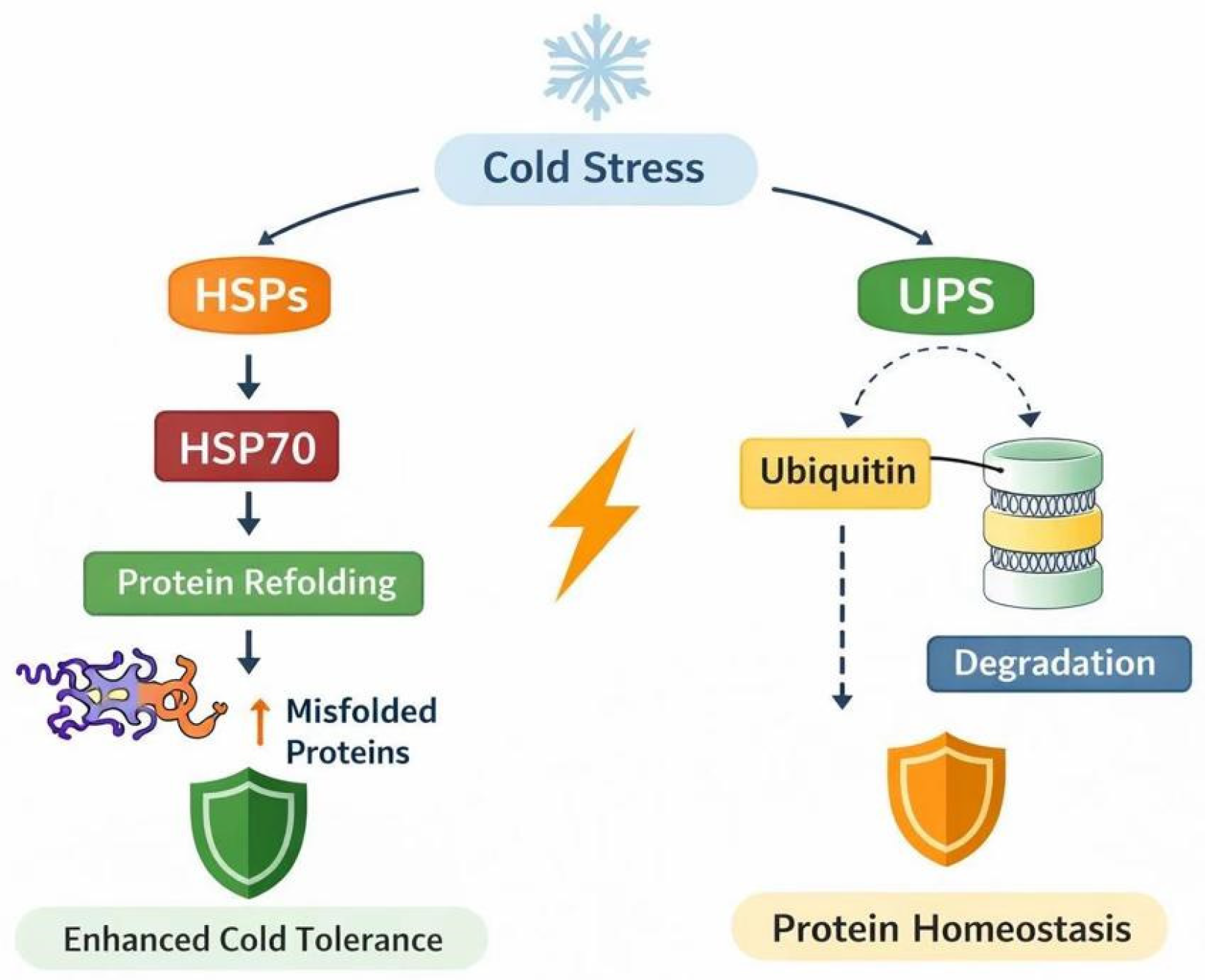
7.3. Protein Homeostasis and Molecular Chaperones: HSPs and Ubiquitin-Proteasome System
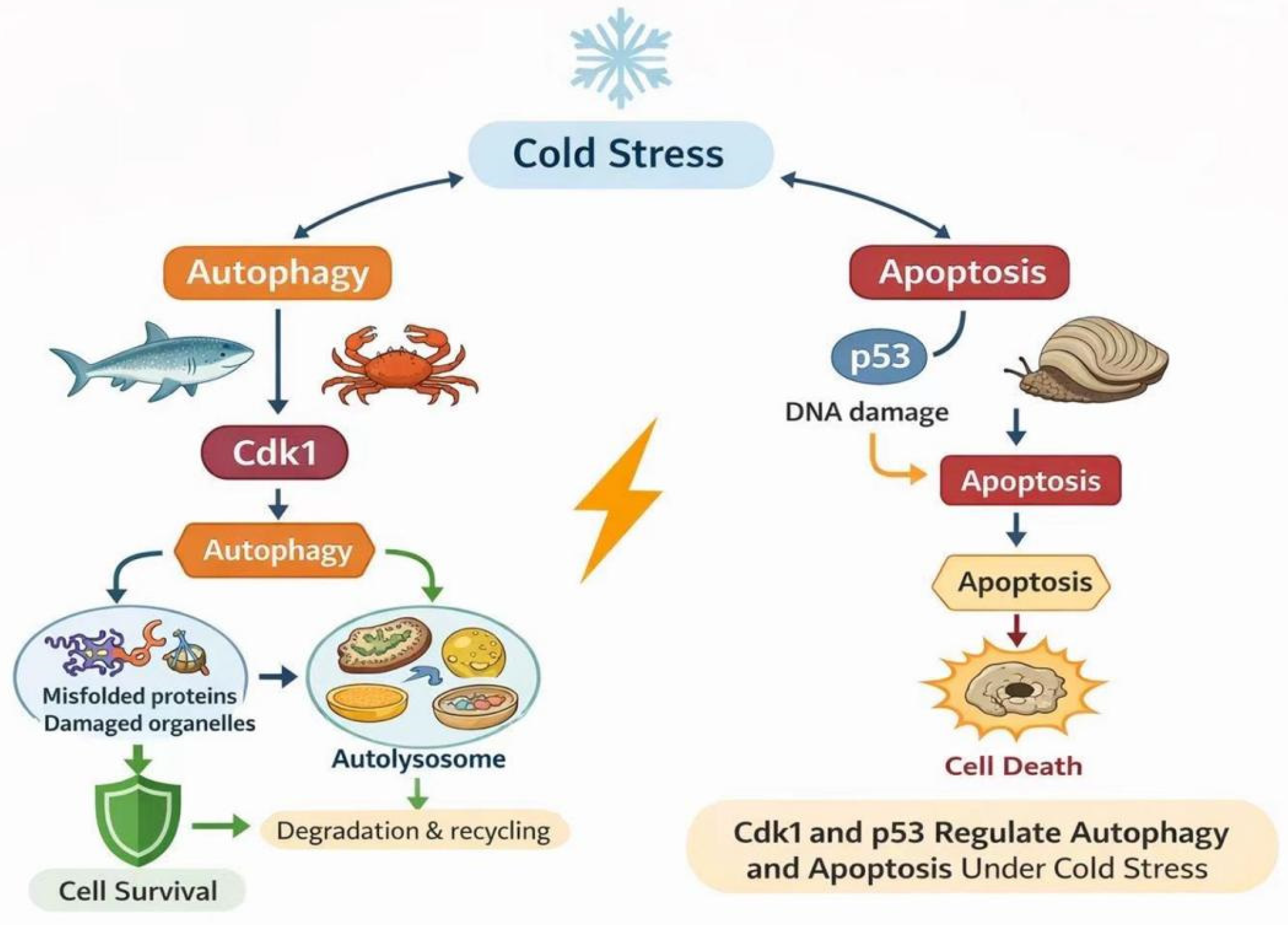
7.4. Autophagy and Apoptosis Regulation: Cdk1 and p53
8. Cold Stress Adaptation and Breeding Strategies
8.1. Physiological Acclimation and Temperature Control Management
8.2. Nutritional Regulation and Metabolic Intervention
8.3. Marker-Assisted Selection (MAS) and Genomic Selection (GS)
8.4. Gene Editing and Functional Gene Improvement
8.5. Hybrid Breeding and Germplasm Utilization
8.6. Strategy Integration and Future Directions
9. Summary and Future Perspectives
9.1. Unified Mechanisms and Cross-Taxon Comparisons
9.2. Future Research Directions
- (1)
- From Differential Expression to Causal Mechanism Verification
- (2)
- Integrating Temporal and Tissue-Level Responses
- (3)
- Studying Combined Stressors, Not Just Cold
- (4)
- From Stress Markers to Breeding Targets
- (5)
- Integrating Physiological Acclimation, Nutritional Regulation, and Genetic Improvement
- (6)
- Aquaculture Implications and Practical Applications
9.3. Conclusions
Author Contributions
Funding
Institutional Review Board Statement
Informed Consent Statement
Data Availability Statement
Conflicts of Interest
Abbreviations
| ACP | acid phosphatase; |
| AFPs | antifreeze proteins; |
| AKP | alkaline phosphatase; |
| AMPK | adenosine 5′-monophosphate-activated protein kinase |
| AMPs | antimicrobial peptides; |
| ARE | antioxidant response element |
| ATF | activating transcription factor |
| CAT | catalase |
| Cdk1 | cyclin-dependent kinase 1 |
| CHH | crustacean hyperglycemic hormone |
| CIRBP | cold-inducible RNA-binding protein |
| CPT1 | carnitine palmitoyltransferase 1 |
| DUSP1 | dual-specificity phosphatase 1 |
| ERK | extracellular signal-regulated kinase |
| GSH-Px | glutathione peroxidase; |
| HPI axis | hypothalamus–pituitary–interrenal axis |
| HSP70 | heat shock protein 70 |
| JNK | c-Jun N-terminal kinase |
| MAPK | mitogen-activated protein kinase |
| MDA | malondialdehyde |
| mTOR | mechanistic target of rapamycin |
| NF-κB | nuclear factor kappa B |
| Nrf2 | nuclear factor erythroid 2-related factor 2 |
| Nrf2/ARE | nuclear factor erythroid 2-related factor 2/antioxidant response element |
| PGC-1α | peroxisome proliferator-activated receptor gamma coactivator 1-alpha |
| PPARα | peroxisome proliferator-activated receptor alpha |
| ROS | reactive oxygen species |
| SOD | superoxide dismutase |
| TF | transcription factor |
| TRP channels | transient receptor potential channels |
| UPS | ubiquitin–proteasome system |
References
- Jiang, H.; Ren, T.; Huang, R.; Yu, K. Marine Heatwaves and Cold Spells in Global Coral Reef Regions (1982–2070): Characteristics, Drivers, and Impacts. Remote Sens. 2025, 17, 2881. [Google Scholar] [CrossRef]
- Qing, Y.; Wu, J.; Luo, J.-J. Characteristics and subseasonal prediction of four types of cold waves in China. Theor. Appl. Clim. 2025, 156, 192. [Google Scholar] [CrossRef]
- Carter, M.J.; Cortes, P.A.; Rezende, E.L. Temperature variability and metabolic adaptation in terrestrial and aquatic ectotherms. J. Therm. Biol. 2023, 115, 103565. [Google Scholar] [CrossRef] [PubMed]
- Sáez-Arteaga, A.; Viegas, I.; Palma, M.; Dantagnan, P.; Valdebenito, I.; Figueroa Villalobos, E.; Hernández, A.; Guerrero-Jiménez, J.; Metón, I.; Heyser, C. Impact of increasing temperatures on neuroendocrine and molecular responses of skeletal muscle and liver in fish: A comprehensive review. Aquac. Rep. 2024, 39, 102448. [Google Scholar] [CrossRef]
- Lai, F.; Budaev, S.; Hundven, I.K.; Balseiro, P.; Handeland, S.O.; Rønnestad, I. Influence of water temperature on feed intake, appetite control, and energy allocation in Atlantic salmon (Salmo salar) post-smolt. Front. Physiol. 2025, 16, 1646208. [Google Scholar] [CrossRef]
- Ren, X.; Wang, Q.; Shao, H.; Xu, Y.; Liu, P.; Li, J. Effects of Low Temperature on Shrimp and Crab Physiology, Behavior, and Growth: A Review. Front. Mar. Sci. 2021, 8, 746177. [Google Scholar] [CrossRef]
- Reid, C.H.; Patrick, P.H.; Rytwinski, T.; Taylor, J.J.; Willmore, W.G.; Reesor, B.; Cooke, S.J. An updated review of cold shock and cold stress in fish. J. Fish Biol. 2022, 100, 1102–1137. [Google Scholar] [CrossRef]
- Priya, A.; Mol, N.; Singh, A.K.; Aditya, A.K.; Ray, A.K. Unveiling the impacts of climatic cold events on the cardiovascular health in animal models. Sci. Total. Environ. 2025, 971, 179028. [Google Scholar] [CrossRef] [PubMed]
- Cheng, C.-H.; Ye, C.-X.; Guo, Z.-X.; Wang, A.-L. Immune and physiological responses of pufferfish (Takifugu obscurus) under cold stress. Fish Shellfish Immunol. 2017, 64, 137–145. [Google Scholar] [CrossRef]
- Hu, J.; Zhang, M.; Yan, K.; Zhang, Y.; Li, Y.; Zhu, J.; Wang, G.; Wang, X.; Li, Y.; Huang, X.; et al. Cold Stress Induces Apoptosis in Silver Pomfret via DUSP-JNK Pathway. Mar. Biotechnol. 2023, 25, 846–857. [Google Scholar] [CrossRef]
- Wang, D.; Li, M.; Liao, M.; Tian, Y.; Wu, Q.; Xie, S.; Luo, W.; Zou, J.; Shi, J.; Du, Z. Molecular mechanisms of cold stress-induced energy stress, cholesterol metabolic disorders, and apoptosis in Pangasianodon hypophthalmus. Aquaculture 2025, 610, 742886. [Google Scholar] [CrossRef]
- Wang, D.; Tian, Y.; Wang, Q.; Zhang, Y.; Ye, B.; Zuo, Z.; He, J.; Pan, Z.; Sun, D.; Zou, J.; et al. Cold stress-induced autophagy and apoptosis disorders are mainly mediated by AMPK/PPAR/PI3K/AKT/mTOR pathways. Aquaculture 2024, 583, 740574. [Google Scholar] [CrossRef]
- Li, B.; Li, J.; Ping, H.; Zhang, T.; He, J.; Ran, S.; Zhang, J.; Yin, X.; Ye, Y.; Shi, H.; et al. Molecular Responses of Cold Stress Adaptation in the Red Grouper (Epinephelus Akaara): Compensatory Regulation Between FOXO and MAPK Signaling Pathways. Mar. Biotechnol. 2026, 28, 24. [Google Scholar] [CrossRef]
- Hapsari, F.; Suprayudi, M.A.; Akiyama, D.M.; Ekasari, J.; Norouzitallab, P.; Baruah, K. Decoding Stress Responses in Farmed Crustaceans: Comparative Insights for Sustainable Aquaculture Management. Biology 2025, 14, 920. [Google Scholar] [CrossRef]
- Liang, X.; Hong, H.; Xu, Y.; Huang, Q.; Fan, X.; Qin, X. Metabolomics-based study on the mechanism of cold-induced stress response in waterless-preserved live Crassostrea hongkongensis. Aquac. Rep. 2025, 45, 103223. [Google Scholar] [CrossRef]
- Lipińska, A.M.; Adamski, P.; Ćmiel, A.M.; Golab, M.J.; Idczak-Figiel, P.A.; Lopes-Lima, M.; Mageroy, J.H.; Nowakowska, A.; Österling, M.; Sniegula, S.; et al. Cold tolerance strategies of freshwater mussels across latitudes. Sci. Rep. 2025, 15, 22232. [Google Scholar] [CrossRef]
- Herman, J.P.; McKlveen, J.M.; Ghosal, S.; Kopp, B.; Wulsin, A.; Makinson, R.; Scheimann, J.; Myers, B. Regulation of the Hypothalamic-Pituitary-Adrenocortical Stress Response. Compr. Physiol. 2016, 6, 603–621. [Google Scholar] [CrossRef]
- Chung, J.S.; Ahn, I.; Yu, O.; Kim, D. Crustacean hyperglycemic hormones of two cold water crab species, Chionoecetes opilio and C. japonicus: Isolation of cDNA sequences and localization of CHH neuropeptide in eyestalk ganglia. Gen. Comp. Endocrinol. 2015, 214, 177–185. [Google Scholar] [CrossRef]
- Kotsyuba, E.; Dyachuk, V. Role of the Neuroendocrine System of Marine Bivalves in Their Response to Hypoxia. Int. J. Mol. Sci. 2023, 24, 1202. [Google Scholar] [CrossRef] [PubMed]
- Zhang, C.; Sun, Y.; Wen, J.; Xu, B.; Zhu, W.; Zhang, H.; Liu, X.; LiChu, L.; Zheng, H. Effects of chronic cold stress on tissue structure, antioxidant response, and key gene expression in the warm-water bivalve Chlamys nobilis. Comp. Biochem. Physiol. Part D. Genom. Proteom. 2024, 50, 101225. [Google Scholar] [CrossRef]
- Los, D.A.; Murata, N. Membrane fluidity and its roles in the perception of environmental signals. Biochim. Biophys. Acta Biomembr. 2004, 1666, 142–157. [Google Scholar] [CrossRef]
- Olivares-Rubio, H.F.; Vega-López, A. Fatty acid metabolism in fish species as a biomarker for environmental monitoring. Environ. Pollut. 2016, 218, 297–312. [Google Scholar] [CrossRef]
- Guo, Y.; Jin, C.; Wei, C.; Zhong, K.; Gao, Y.; Li, P.; Qu, Z.; Bao, Z.; Wang, B.; Hu, J. The Effects of Acute Temperature Changes on Transcriptomic Responses in the Liver of Leopard Coral Groupers (Plectropomus leopardus). Antioxidants 2025, 14, 223. [Google Scholar] [CrossRef]
- Wu, N.; Wen, H.; Xu, P.; Chen, J.; Xue, M.; Li, J.; Wang, M.; Song, C.; Li, H. PPAR Signaling Maintains Metabolic Homeostasis under Hypothermia in Freshwater Drum (Aplodinotus grunniens). Metabolites 2023, 13, 102. [Google Scholar] [CrossRef]
- Bayne, B.L.; Newell, R.C. 9—Physiological Energetics of Marine Molluscs. In The Mollusca; Saleuddin, A.S.M., Wilbur, K.M., Eds.; Academic Press: Cambridge, MA, USA, 1983; pp. 407–515. [Google Scholar]
- Dreyer, A.; Dietz, K.-J. Reactive Oxygen Species and the Redox-Regulatory Network in Cold Stress Acclimation. Antioxidants 2018, 7, 169. [Google Scholar] [CrossRef]
- Tian, M.; Zhao, S.; Zhu, X.; Han, D.; Zhang, L. Effects of temperature stress on intestinal tissues, immune response, intestinal microbiota, and inflammation in juvenile largemouth bass (Micropterus salmoides). Aquaculture 2026, 611, 743051. [Google Scholar] [CrossRef]
- Zhang, Y.; Wang, L.; Ma, X.; Guan, T.; Shi, W.; Zhu, C.; Wang, H.; Li, J. Response of antioxidation and immunity to combined influences of ammonia and temperature in red swamp crayfish (Procambarus clarkii). Aquaculture 2023, 563, 738906. [Google Scholar] [CrossRef]
- Li, H.; Li, H.; Zhao, L.; Xu, J.; Li, X.; Zhao, Q.; Zhang, Y.; Shao, Y.; Wang, R.; Wang, J.; et al. A comparative analysis of immune memory in bivalve and gastropod Mollusks: From mechanistic insights to practical applications. Aquaculture 2026, 612, 743092. [Google Scholar] [CrossRef]
- Genuth, N.R.; Dillin, A. Translational regulation in stress biology. Nat. Cell Biol. 2025, 27, 1609–1621. [Google Scholar] [CrossRef]
- Volkoff, H.; Rønnestad, I. Effects of temperature on feeding and digestive processes in fish. Temperature 2020, 7, 307–320. [Google Scholar] [CrossRef]
- Masanja, F.; Xu, Y.; Yang, K.; Mkuye, R.; Deng, Y.; Zhao, L. Surviving the cold: A review of the effects of cold spells on bivalves and mitigation measures. Front. Mar. Sci. 2023, 10, 1158649. [Google Scholar] [CrossRef]
- Bista, I.; Wood, J.M.D.; Desvignes, T.; McCarthy, S.A.; Matschiner, M.; Ning, Z.; Tracey, A.; Torrance, J.; Sims, Y.; Chow, W.; et al. Genomics of cold adaptations in the Antarctic notothenioid fish radiation. Nat. Commun. 2023, 14, 3412. [Google Scholar] [CrossRef]
- Rana, S.; Jogi, M.K.; Choudhary, S.; Thakur, R.; Sahoo, G.C.; Joshi, V. Unraveling the intricacies of cold-inducible RNA-binding protein: A comprehensive review. Cell Stress Chaperon. 2024, 29, 615–625. [Google Scholar] [CrossRef]
- Ahern, G.P. Transient receptor potential channels and energy homeostasis. Trends Endocrinol. Metab. 2013, 24, 554–560. [Google Scholar] [CrossRef]
- Liu, S.-T.; Chang, C.-Y.; Lee, K.-Y.; Tong, S.-K.; Huang, H.-L.; Chen, H.; Horng, J.-L.; Chou, M.-Y. Alternation of social behaviors for zebrafish (Danio rerio) in response to acute cold stress. Fish Physiol. Biochem. 2024, 50, 653–666. [Google Scholar] [CrossRef]
- Liu, T.; Li, L.; Yang, Y.; Li, J.; Yang, X.; Li, L.; Zheng, Z.; Yang, B.; Zhang, P.; Liu, H. Effects of chronic cold stress and thermal stress on growth performance, hepatic apoptosis, oxidative stress, immune response and gut microbiota of juvenile hybrid sturgeon (Acipenser baerii ♀ × A. schrenkii ♂). Fish Shellfish Immunol. 2025, 157, 110078. [Google Scholar] [CrossRef]
- L Liu, A.; Duan, G.; Yang, L.; Hu, Y.; Zhou, H.; Wang, H. Low-Temperature Stress-Induced Hepatic Injury in Darkbarbel Catfish (Pelteobagrus vachelli): Mediated by Gut–Liver Axis Dysregulation. Antioxidants 2025, 14, 762. [Google Scholar] [CrossRef]
- Wang, L.; Yang, H.; Munyaradzia, H.B.; Zhu, W.; Dong, Z.-J. The mRNA and protein datasets after cold stress of red tilapia. Sci. Data 2024, 11, 1177. [Google Scholar] [CrossRef]
- Guderley, H. Metabolic responses to low temperature in fish muscle. Biol. Rev. 2004, 79, 409–427. [Google Scholar] [CrossRef]
- Rojas, I.; Caballero-Solares, A.; Vadboncoeur, É.; Sandrelli, R.M.; Hall, J.R.; Clow, K.A.; Parrish, C.C.; Rise, M.L.; Swanson, A.K.; Gamperl, A.K. Prolonged Cold Exposure Negatively Impacts Atlantic Salmon (Salmo salar) Liver Metabolism and Function. Biology 2024, 13, 494. [Google Scholar] [CrossRef]
- Himms-Hagen, J. Lipid metabolism during cold-exposure and during cold-acclimation. Lipids 1972, 7, 310–323. [Google Scholar] [CrossRef]
- Wipassa, V.; Jinagool, P.; Chaiyasing, R.; Chukanhom, K.; Aengwanich, W. Effects of acute cold stress on the physiological and biochemical dynamics of Nile tilapia (Oreochromis niloticus Linn.): In vivo and in vitro studies. Fish Physiol. Biochem. 2026, 52, 23. [Google Scholar] [CrossRef]
- Song, S.; Attia, R.R.; Connaughton, S.; Niesen, M.I.; Ness, G.C.; Elam, M.B.; Hori, R.T.; Cook, G.A.; Park, E.A. Peroxisome proliferator activated receptor α (PPARα) and PPAR gamma coactivator (PGC-1α) induce carnitine palmitoyltransferase IA (CPT-1A) via independent gene elements. Mol. Cell. Endocrinol. 2010, 325, 54–63. [Google Scholar] [CrossRef]
- Varis, J.; Haverinen, J.; Vornanen, M. Lowering Temperature is the Trigger for Glycogen Build-Up and Winter Fasting in Crucian Carp (Carassius carassius). Zool. Sci. 2016, 33, 83–91. [Google Scholar] [CrossRef]
- Birnie-Gauvin, K.; Costantini, D.; Cooke, S.J.; Willmore, W.G. A comparative and evolutionary approach to oxidative stress in fish: A review. Fish Fish. 2017, 18, 928–942. [Google Scholar] [CrossRef]
- Shalagina, N.E.; Soldatov, A.A.; Gostyukhina, O.L.; Rychkova, V.N. Effects of Cold Shock on the State of the Antioxidant Enzyme Complex in Tissues of Scorpaena porcus L., 1758. Biol. Bull. 2026, 52, 385. [Google Scholar] [CrossRef]
- Liu, Y.; Zang, X.; Zhao, C.; Chu, P.; Chen, H.; Fu, D.; Wang, S.; Zhang, K.; Wang, T.; Yin, S. Cold stress changes the intestinal oxidative stress-mediated MAPK pathways and lipid metabolism in Takifugu fasciatus. Aquaculture 2025, 598, 742034. [Google Scholar] [CrossRef]
- Refaey, M.M.; Mehrim, A.I.; El-Komy, M.M.; Zenhom, O.A.; Mansour, A.T. Chronic cold-stress induced histopathological changes, oxidative stress, and alterations in liver functions and nutrient composition of hybrid red tilapia and the potential protection of unsaturated fatty acids. Front. Mar. Sci. 2023, 10, 1148978. [Google Scholar] [CrossRef]
- Peng, L.-B.; Wang, D.; Han, T.; Wen, Z.; Cheng, X.; Zhu, Q.-L.; Zheng, J.-L.; Wang, P. Histological, antioxidant, apoptotic and transcriptomic responses under cold stress and the mitigation of blue wavelength light of zebrafish eyes. Aquac. Rep. 2022, 26, 101291. [Google Scholar] [CrossRef]
- Behairy, A.; Ghetas, H.A.; Abd-Allah, N.A.; El-Houseiny, W.; Arisha, A.H.; Metwally, M.M.M.; Elshafey, B.A.; Al-Sagheer, A.A.; Mohamed, E.M.M. Dietary alpha-lipoic acid boosts growth, immune-antioxidant traits, behavior, and transcriptomes of antioxidant, apoptosis, and immune-related genes to combat cold stress in Nile tilapia (Oreochromis niloticus). Aquac. Int. 2024, 32, 4061–4090. [Google Scholar] [CrossRef]
- Abram, Q.H.; Dixon, B.; Katzenback, B.A. Impacts of Low Temperature on the Teleost Immune System. Biology 2017, 6, 39. [Google Scholar] [CrossRef]
- Dellagostin, E.N.; Martins, A.W.; Blödorn, E.B.; Silveira, T.L.R.; Komninou, E.R.; Junior, A.S.V.; Corcini, C.D.; Nunes, L.S.; Remião, M.H.; Collares, G.L.; et al. Chronic cold exposure modulates genes related to feeding and immune system in Nile tilapia (Oreochromis niloticus). Fish Shellfish Immunol. 2022, 128, 269–278. [Google Scholar] [CrossRef] [PubMed]
- Tort, L. Stress and immune modulation in fish. Dev. Comp. Immunol. 2011, 35, 1366–1375. [Google Scholar] [CrossRef]
- Chen, W.-H.; Sun, L.-T.; Tsai, C.-L.; Song, Y.-L.; Chang, C.-F. Cold-Stress Induced the Modulation of Catecholamines, Cortisol, Immunoglobulin M, and Leukocyte Phagocytosis in Tilapia. Gen. Comp. Endocrinol. 2002, 126, 90–100. [Google Scholar] [CrossRef] [PubMed]
- Hsieh, S.; Chen, S.; Yang, Y.; Kuo, C. Involvement of norepinephrine in the hyperglycemic responses of the freshwater giant prawn, Macrobrachium rosenbergii, under cold shock. Comp. Biochem. Physiol. Part A Mol. Integr. Physiol. 2006, 143, 254–263. [Google Scholar] [CrossRef] [PubMed]
- Fang, P.; Sheng, S.; Li, Y.; Li, Y.; Mo, R.; Mei, H.; Jiang, G.; Liu, W.; Liu, H. Personality Traits of the Territorial Crustacean Chinese Mitten Crab (Eriocheir sinensis): Behavioral Adaptations to Environmental Cues. Animals 2025, 15, 757. [Google Scholar] [CrossRef]
- Wang, Z.; Qu, Y.; Zhuo, X.; Li, J.; Zou, J.; Fan, L. Fan, Investigating the physiological responses of Pacific white shrimp Litopenaeus vannamei to acute cold-stress. PeerJ 2019, 7, e7381. [Google Scholar] [CrossRef]
- Wu, D.; Liu, Z.; Yu, P.; Huang, Y.; Cai, M.; Zhang, M.; Zhao, Y. Cold stress regulates lipid metabolism via AMPK signalling in Cherax quadricarinatus. J. Therm. Biol. 2020, 92, 102693. [Google Scholar] [CrossRef]
- Z Zhu, X.; Peng, A.; Zou, Y.; Li, Y.; Wei, H.; Zheng, X.; Zhao, Y. Impact of Cold Stress on Hepatopancreas Transcriptomic and Metabolomic in Red Swamp Crayfish Procambarus clarkii. Int. J. Mol. Sci. 2025, 26, 1221. [Google Scholar] [CrossRef]
- Jia-Yu, S.; Shan, H.; Xiao-Tong, C.; Jiang-Feng, L. High lipolytic capacity improves cold tolerance in red swamp crayfish (Procambarus clarkii). Aquaculture 2025, 595, 741683. [Google Scholar] [CrossRef]
- Yang, Y.; Xu, W.; Jiang, Q.; Ye, Y.; Tian, J.; Huang, Y.; Du, X.; Li, Y.; Zhao, Y.; Liu, Z. Effects of Low Temperature on Antioxidant and Heat Shock Protein Expression Profiles and Transcriptomic Responses in Crayfish (Cherax destructor). Antioxidants 2022, 11, 1779. [Google Scholar] [CrossRef]
- Mengkai, Z.; Cuiluan, Y. The impact of temperature stress on the oxygen metabolism and energy metabolism in the hepatopancreas of shrimp Litopenaeus vannamei. J. Fish. China 2015, 39, 669–678. [Google Scholar]
- Ding, Y.; Sha, W.; Sun, Y.; Cheng, Y. Effects of acute low-temperature stress on respiratory metabolism, antioxidants, and metabolomics of red swamp crayfish, Procambarus clarkii. Comp. Biochem. Physiol. Part B Biochem. Mol. Biol. 2025, 278, 111095. [Google Scholar] [CrossRef] [PubMed]
- Fan, L.; Wang, A.; Wu, Y. Comparative proteomic identification of the hemocyte response to cold stress in white shrimp, Litopenaeus vannamei. J. Proteom. 2013, 80, 196–206. [Google Scholar] [CrossRef]
- Ren, X.; Yu, Z.; Xu, Y.; Zhang, Y.; Mu, C.; Liu, P.; Li, J. Integrated transcriptomic and metabolomic responses in the hepatopancreas of kuruma shrimp (Marsupenaeus japonicus) under cold stress. Ecotoxicol. Environ. Saf. 2020, 206, 111360. [Google Scholar] [CrossRef] [PubMed]
- Manfrin, C.; Pallavicini, A.; Battistella, S.; Lorenzon, S.; Giulianini, P.G. Chapter 8—Crustacean Immunity: The Modulation of Stress Responses. In Lessons in Immunity; Ballarin, L., Cammarata, M., Eds.; Academic Press: Cambridge, MA, USA, 2016; pp. 107–116. [Google Scholar]
- Nam, S.-E.; Yun, Y.-J.; Choi, I.-Y.; Rhee, J.-S. Comparative analysis of transcriptional responses in tolerant and susceptible Pacific oysters to acute cold stress. Mol. Cell. Toxicol. 2025, 21, 879–892. [Google Scholar] [CrossRef]
- Fokina, N.; Ruokolainen, T.; Bakhmet, I.; Nemova, N. Lipid composition in response to temperature changes in blue mussels Mytilus edulis L. from the White Sea. J. Mar. Biol. Assoc. UK 2015, 95, 1629–1634. [Google Scholar] [CrossRef]
- Boroda, A.V.; Kipryushina, Y.O.; Odintsova, N.A. The effects of cold stress on Mytilus species in the natural environment. Cell Stress Chaperon. 2020, 25, 821–832. [Google Scholar] [CrossRef] [PubMed]
- Song, J.A.; Lee, E.; Choi, Y.-U.; Park, J.J.C.; Han, J. Influence of temperature changes on oxidative stress and antioxidant defense responses in the bay scallop, Argopecten irradians. Comp. Biochem. Physiol. Part A Mol. Integr. Physiol. 2024, 299, 111775. [Google Scholar] [CrossRef]
- Yao, C.-L.; Somero, G.N. The impact of acute temperature stress on hemocytes of invasive and native mussels (Mytilus galloprovincialis and Mytilus californianus): DNA damage, membrane integrity, apoptosis and signaling pathways. J. Exp. Biol. 2012, 215, 4267–4277. [Google Scholar]
- Montagnani, C.; Morga, B.; Novoa, B.; Gourbal, B.; Saco, A.; Rey-Campos, M.; Bourhis, M.; Riera, F.; Vignal, E.; Corporeau, C.; et al. Trained immunity: Perspectives for disease control strategy in marine mollusc aquaculture. Rev. Aquac. 2024, 16, 1472–1498. [Google Scholar] [CrossRef]
- Zhao, M.; Lin, Z.; Zheng, Z.; Yao, D.; Yang, S.; Zhao, Y.; Chen, X.; Aweya, J.J.; Zhang, Y. The mechanisms and factors that induce trained immunity in arthropods and mollusks. Front. Immunol. 2023, 14, 1241934. [Google Scholar] [CrossRef]
- Tucci, C.F.; Milan, M.; Rovere, G.D.; Bernardini, I.; Ferraresso, S.; Franch, R.; Babbucci, M.; Monticelli, G.; Panin, M.; Patarnello, T.; et al. Thermal priming mitigates the effects of lethal marine heatwaves on the Manila clam Ruditapes philippinarum. iScience 2025, 28, 113108. [Google Scholar] [CrossRef]
- Nie, H.; Jiang, L.; Huo, Z.; Liu, L.; Yang, F.; Yan, X. Transcriptomic responses to low temperature stress in the Manila clam, Ruditapes philippinarum. Fish Shellfish Immunol. 2016, 55, 358–366. [Google Scholar] [CrossRef]
- Bell, C.; McQuaid, C.D.; Porri, F. Barnacle settlement on rocky shores: Substratum preference and epibiosis on mussels. J. Exp. Mar. Biol. Ecol. 2015, 473, 195–201. [Google Scholar] [CrossRef]
- Archambault, J.M.; Cope, W.G.; Kwak, T.J. Survival and behaviour of juvenile unionid mussels exposed to thermal stress and dewatering in the presence of a sediment temperature gradient. Freshw. Biol. 2014, 59, 601–613. [Google Scholar] [CrossRef]
- Xiang, H.; Yang, X.; Ke, L.; Hu, Y. The properties, biotechnologies, and applications of antifreeze proteins. Int. J. Biol. Macromol. 2020, 153, 661–675. [Google Scholar] [CrossRef]
- Ansart, A.; Vernon, P. Cold hardiness in molluscs. Acta Oecol. 2003, 24, 95–102. [Google Scholar] [CrossRef]
- Hawes, T.; Worland, M.; Bale, J. Freezing in the Antarctic limpet, Nacella concinna. Cryobiology 2010, 61, 128–132. [Google Scholar] [CrossRef]
- Nie, M.; Lu, Y.; Zou, C.; Wang, L.; Zhang, P.; You, F. Insight into AMPK regulation mechanism in vivo and in vitro: Responses to low temperatures in the olive flounder Paralichthys olivaceus. J. Therm. Biol. 2020, 91, 102640. [Google Scholar] [CrossRef]
- Lau, K.H.; Waldhart, A.N.; Dykstra, H.; Avequin, T.; Wu, N. PPARγ and C/EBPα response to acute cold stress in brown adipose tissue. iScience 2023, 26, 105848. [Google Scholar] [CrossRef]
- Cao, L.; Li, Y.; Smirnov, A.; Voshtani, R.; Wang, T.; Shao, C.; Candi, E.; Melino, G.; Shi, Y.; Fang, J. PGC-1α: Key regulator of mitochondrial biogenesis and cellular differentiation in metabolic and regenerative tissues. Cell Biosci. 2025, 16, 9. [Google Scholar] [CrossRef]
- Orczewska, J.I.; Hartleben, G.; O’Brien, K.M. The molecular basis of aerobic metabolic remodeling differs between oxidative muscle and liver of threespine sticklebacks in response to cold acclimation. Am. J. Physiol. Integr. Comp. Physiol. 2010, 299, R352–R364. [Google Scholar] [CrossRef]
- Han, P.; Qiao, Y.; He, J.; Men, Y.; Liu, Y.; Liu, X.; Wang, X. Wang, Identification and functional analysis of dual-specificity phosphatases (DUSP) genes in Japanese flounder (Paralichthys olivaceus) against temperature and Edwardsiella tarda stress. Fish Shellfish Immunol. 2022, 130, 453–461. [Google Scholar] [CrossRef]
- Ou, M.; Huang, R.; Xiong, L.; Luo, L.; Chen, G.; Liao, L.; Li, Y.; He, L.; Zhu, Z.; Wang, Y. Molecular cloning of the MARCH family in grass carp (Ctenopharyngodon idellus) and their response to grass carp reovirus challenge. Fish Shellfish Immunol. 2017, 63, 480–490. [Google Scholar] [CrossRef]
- Dobson, C.M. Protein folding and misfolding. Nature 2003, 426, 884–890. [Google Scholar] [CrossRef]
- Donaldson, M.R.; Cooke, S.J.; Patterson, D.A.; Macdonald, J.S. Cold shock and fish. J. Fish. Biol. 2008, 73, 1491–1530. [Google Scholar] [CrossRef]
- Song, S.-J.; Gu, H.; Li, L.; Gao, Y.; Liang, Y.; Zhu, Y.; Ren, S. Heat shock proteins in hypothermia: A review. Front. Mol. Biosci. 2025, 12, 1564364. [Google Scholar] [CrossRef]
- Park, S.; Hong, J.; Kim, H.; Jeon, H.; Aulia, D.; Lee, D.; Lee, S. Effects of acute temperature exposure duration on plasma metabolites and the expression of genes involved in nutrient metabolism and heat shock response in the liver of juvenile olive flounder. Fish. Aquat. Sci. 2025, 28, 203–213. [Google Scholar] [CrossRef]
- Bian, X.; Ren, X.; Jia, S.; Gao, T.; Wang, J.; Wang, J.; Liu, P.; Li, J.; Li, J. Marsupenaeus japonicus HSP90’s Function Under Low Temperature Stress. Biology 2025, 14, 966. [Google Scholar] [CrossRef]
- Tseng, Y.-C.; Chen, R.-D.; Lucassen, M.; Schmidt, M.M.; Dringen, R.; Abele, D.; Hwang, P.-P. Exploring Uncoupling Proteins and Antioxidant Mechanisms under Acute Cold Exposure in Brains of Fish. PLoS ONE 2011, 6, e18180. [Google Scholar] [CrossRef]
- Li, Q.; Ge, C.; Li, L. Quantitative DIA-based proteomics unveils ribosomal biogenesis pathways associated with increased final size in three-year-old Chinese mitten crab (Eriocheir sinensis). BMC Genom. 2025, 26, 45. [Google Scholar] [CrossRef]
- Guo, J.; Nie, J.; Chen, Z.; Wang, X.; Hu, H.; Xu, J.; Lu, J.; Ma, L.; Ji, H.; Yuan, J.; et al. Cold exposure-induced endoplasmic reticulum stress regulates autophagy through the SIRT2/FoxO1 signaling pathway. J. Cell. Physiol. 2022, 237, 3960–3970. [Google Scholar] [CrossRef]
- Chen, H.; Zhao, F.; Chen, K.; Guo, Y.; Liang, Y.; Zhao, H.; Chen, S. Exposure of zebrafish to a cold environment triggered cellular autophagy in zebrafish liver. J. Fish. Dis. 2022, 45, 991–1000. [Google Scholar] [CrossRef]
- Kawsar, A.; Adikari, D.; Zhang, Y. Zhang, Autophagy in aquatic animals: Mechanisms, implications, and future directions. Front. Immunol. 2025, 16, 1612178. [Google Scholar] [CrossRef]
- Ren, J.; Long, Y.; Liu, R.; Song, G.; Li, Q.; Cui, Z. Characterization of Biological Pathways Regulating Acute Cold Resistance of Zebrafish. Int. J. Mol. Sci. 2021, 22, 3028. [Google Scholar] [CrossRef]
- Qian, B.; Qi, X.; Bai, Y.; Wu, Y. The p53 signaling pathway of the large yellow croaker (Larimichthys crocea) responds to acute cold stress: Evidence via spatiotemporal expression analysis of p53, p21, MDM2, IGF-1, Gadd45, Fas, and Akt. PeerJ 2020, 8, e10532. [Google Scholar] [CrossRef]
- Li, W.; Song, H.; Cai, X.; Wang, Y.; Zhang, Y.; Sun, C.; Han, B.; Zhang, J. Deletion of a novel upstream promoter of p53 impairs cold tolerance capacity in zebrafish. Biochem. Biophys. Res. Commun. 2025, 769, 151969. [Google Scholar] [CrossRef]
- Chen, W.; Lu, H.; Chen, W.; Peng, K.; Chen, X.; Huang, M.; Wang, G.; Li, C.; Liu, D.; Huang, W.; et al. Cyclin-dependent Kinase 1 (CDK1) in Pacific white shrimp (Litopenaeus vannamei): Molecular characterization and its role in response to cold stress. Aquac. Rep. 2023, 29, 101531. [Google Scholar] [CrossRef]
- Yuan, Q.; Wang, Q.; Zhang, T.; Li, Z.; Liu, J. Effects of water temperature on growth, feeding and molting of juvenile Chinese mitten crab Eriocheir sinensis. Aquaculture 2017, 468, 169–174. [Google Scholar] [CrossRef]
- Wang, Z.; Qu, Y.; Yan, M.; Li, J.; Zou, J.; Fan, L. Physiological Responses of Pacific White Shrimp Litopenaeus vannamei to Temperature Fluctuation in Low-Salinity Water. Front. Physiol. 2019, 10, 1025. [Google Scholar] [CrossRef] [PubMed]
- Huang, Y.-P.; Khabusi, S.P. Artificial Intelligence of Things (AIoT) Advances in Aquaculture: A Review. Processes 2025, 13, 73. [Google Scholar] [CrossRef]
- Ma, Q.; Wang, J.; Li, L.; Han, S.; Limbu, S.M.; Li, D.; Chen, L.; Zhang, M.; Du, Z. Fasting enhances cold resistance in fish through stimulating lipid catabolism and autophagy. J. Physiol. 2019, 597, 1585–1603. [Google Scholar] [CrossRef]
- Refaey, M.M.; Mehrim, A.I.; Zenhom, O.A.; Mansour, A.T. Effect of fatty acids manipulation on survival and physiological response of hybrid red tilapia under chronic cold stress. Aquaculture 2022, 561, 738663. [Google Scholar] [CrossRef]
- Liu, A.; To, V.P.T.H.; Dumas, A.; Hernandez, J.M.; Santigosa, E. Vitamin nutrition in shrimp aquaculture: A review focusing on the last decade. Aquaculture 2024, 578, 740004. [Google Scholar] [CrossRef]
- Canosa, L.F.; Bertucci, J.I. The effect of environmental stressors on growth in fish and its endocrine control. Front. Endocrinol. 2023, 14, 1109461. [Google Scholar] [CrossRef] [PubMed]
- Chu, P.-Y.; Li, J.-X.; Hsu, T.-H.; Gong, H.-Y.; Lin, C.-Y.; Wang, J.-H.; Huang, C.-W. Identification of Genes Related to Cold Tolerance and Novel Genetic Markers for Molecular Breeding in Taiwan Tilapia (Oreochromis spp.) via Transcriptome Analysis. Animals 2021, 11, 3538. [Google Scholar] [CrossRef]
- Soyano, K.; Mushirobira, Y. The Mechanism of Low-Temperature Tolerance in Fish. In Survival Strategies in Extreme Cold and Desiccation: Adaptation Mechanisms and Their Applications; Iwaya-Inoue, M., Sakurai, M., Uemura, M., Eds.; Springer: Singapore, 2018; pp. 149–164. [Google Scholar]
- Han, S.; Wang, J.; Zhang, J.; Wang, Y.; Luo, Y.; Liu, Q.; Chen, L. GWAS and selective sweep analysis reveal the genetic basis of cold tolerance in the domesticated pufferfish (Takifugu obscurus). Aquaculture 2025, 598, 742018. [Google Scholar] [CrossRef]
- Kokou, F.; Sasson, G.; Nitzan, T.; Doron-Faigenboim, A.; Harpaz, S.; Cnaani, A.; Mizrahi, I. Host genetic selection for cold tolerance shapes microbiome composition and modulates its response to temperature. eLife 2018, 7, e36398. [Google Scholar] [CrossRef]
- Popovic, I.; Riginos, C. Comparative genomics reveals divergent thermal selection in warm- and cold-tolerant marine mussels. Mol. Ecol. 2020, 29, 519–535. [Google Scholar] [CrossRef]
- Boone, C.; Lewis, S.C. Bridging lipid metabolism and mitochondrial genome maintenance. J. Biol. Chem. 2024, 300, 107498. [Google Scholar] [CrossRef]
- Baskaran, A.; Kaari, M.; Venugopal, G.; Manikkam, R.; Joseph, J.; Bhaskar, P.V. Anti freeze proteins (Afp): Properties, sources and applications—A review. Int. J. Biol. Macromol. 2021, 189, 292–305. [Google Scholar] [CrossRef]
- Bar-Zvi, D.; Lupo, O.; Levy, A.A.; Barkai, N. Hybrid vigor: The best of both parents, or a genomic clash? Curr. Opin. Syst. Biol. 2017, 6, 22–27. [Google Scholar] [CrossRef]
- Hu, J.; Yang, J.; Liao, H. Progress on stress resistance breeding in fish. Reprod. Breed. 2024, 4, 267–278. [Google Scholar] [CrossRef]
- Syafaat, M.N.; Abualreesh, M.H.; Yatim, N.I.; Fazhan, H.; Waiho, K.; Ma, H.; Okomoda, V.T.; Ikhwanuddin, M. Interspecific hybridization of decapod crustacean species with commercial interest—A review. Rev. Aquac. 2024, 16, 741–758. [Google Scholar] [CrossRef]
- Smalås, A.; Primicerio, R.; Kahilainen, K.K.; Terentyev, P.M.; Kashulin, N.A.; Zubova, E.M.; Amundsen, P. Increased importance of cool-water fish at high latitudes emerges from individual-level responses to warming. Ecol. Evol. 2023, 13, e10185. [Google Scholar] [CrossRef] [PubMed]


Disclaimer/Publisher’s Note: The statements, opinions and data contained in all publications are solely those of the individual author(s) and contributor(s) and not of MDPI and/or the editor(s). MDPI and/or the editor(s) disclaim responsibility for any injury to people or property resulting from any ideas, methods, instructions or products referred to in the content. |
© 2026 by the authors. Licensee MDPI, Basel, Switzerland. This article is an open access article distributed under the terms and conditions of the Creative Commons Attribution (CC BY) license.
Share and Cite
Li, L.; Mu, Y.; Zuo, C.; Zhao, M.; Huang, Z.; Zhang, W.; Qiu, M.; Huang, Y. Cold Stress and Molecular Adaptations in Aquatic Organisms: A Comparative Review of Fish, Crustaceans, and Mollusks. Fishes 2026, 11, 330. https://doi.org/10.3390/fishes11060330
Li L, Mu Y, Zuo C, Zhao M, Huang Z, Zhang W, Qiu M, Huang Y. Cold Stress and Molecular Adaptations in Aquatic Organisms: A Comparative Review of Fish, Crustaceans, and Mollusks. Fishes. 2026; 11(6):330. https://doi.org/10.3390/fishes11060330
Chicago/Turabian StyleLi, Lan, Yihong Mu, Chunrong Zuo, Minfang Zhao, Zhiqiu Huang, Wenli Zhang, Meihong Qiu, and Yi Huang. 2026. "Cold Stress and Molecular Adaptations in Aquatic Organisms: A Comparative Review of Fish, Crustaceans, and Mollusks" Fishes 11, no. 6: 330. https://doi.org/10.3390/fishes11060330
APA StyleLi, L., Mu, Y., Zuo, C., Zhao, M., Huang, Z., Zhang, W., Qiu, M., & Huang, Y. (2026). Cold Stress and Molecular Adaptations in Aquatic Organisms: A Comparative Review of Fish, Crustaceans, and Mollusks. Fishes, 11(6), 330. https://doi.org/10.3390/fishes11060330