Article

Embryo and Larval Developmental Staging Guides for Striped Bass

1
Department of Applied Ecology, North Carolina State University, Raleigh, NC 27695, USA
2
Department of Biological Sciences, North Carolina State University, Raleigh, NC 27695, USA
3
Pamlico Aquaculture Field Laboratory, North Carolina State University, Aurora, NC 27806, USA
*
Author to whom correspondence should be addressed.
Fishes 2026, 11(4), 237; https://doi.org/10.3390/fishes11040237

Submission received: 27 February 2026 / Revised: 3 April 2026 / Accepted: 14 April 2026 / Published: 16 April 2026
(This article belongs to the Special Issue Advances in Fish Reproductive Physiology)

Abstract

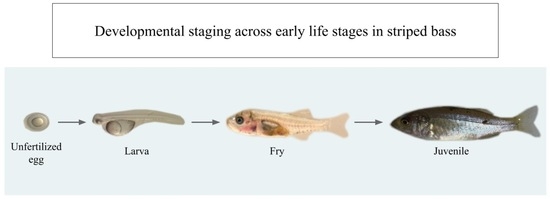
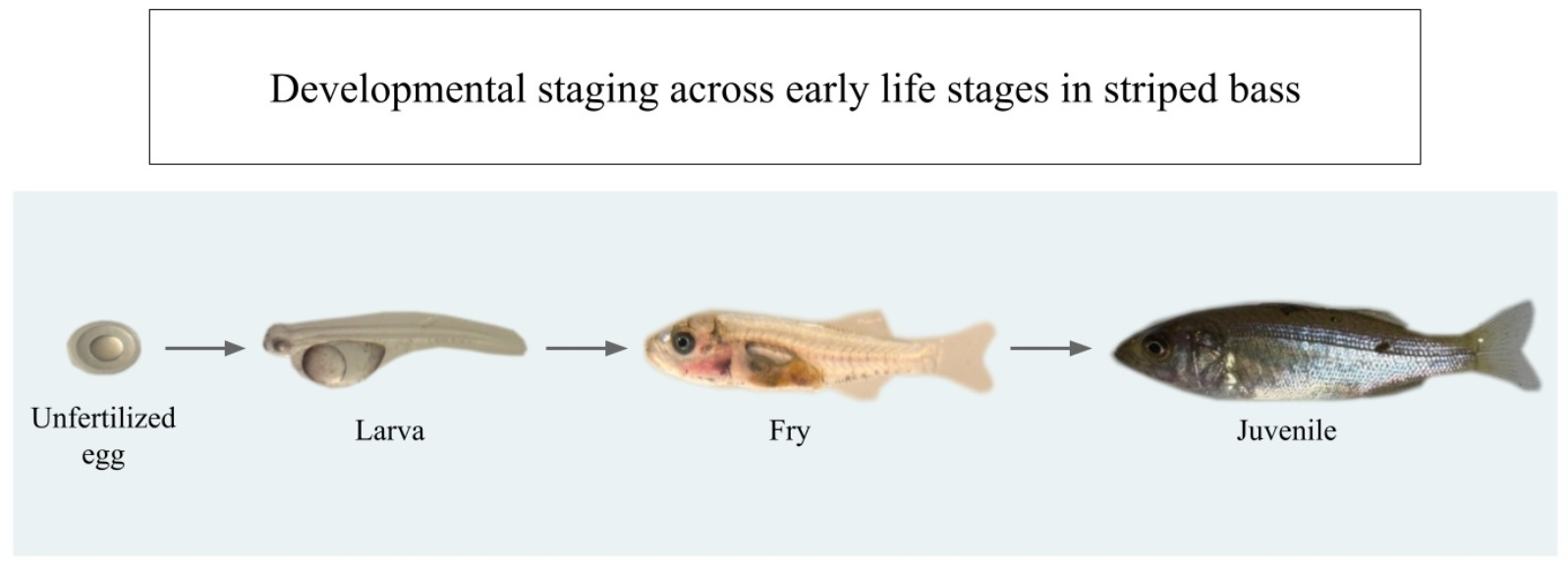
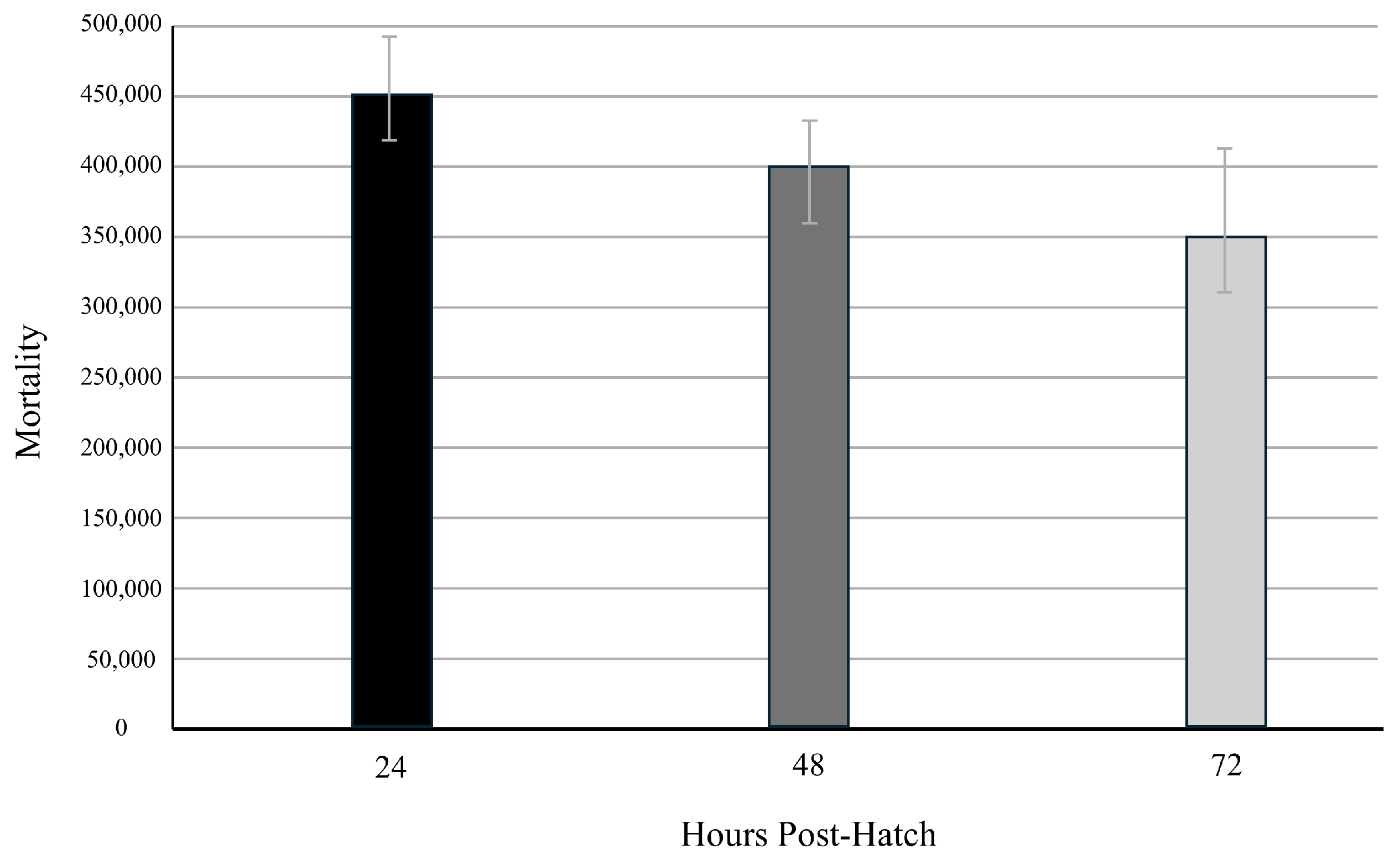
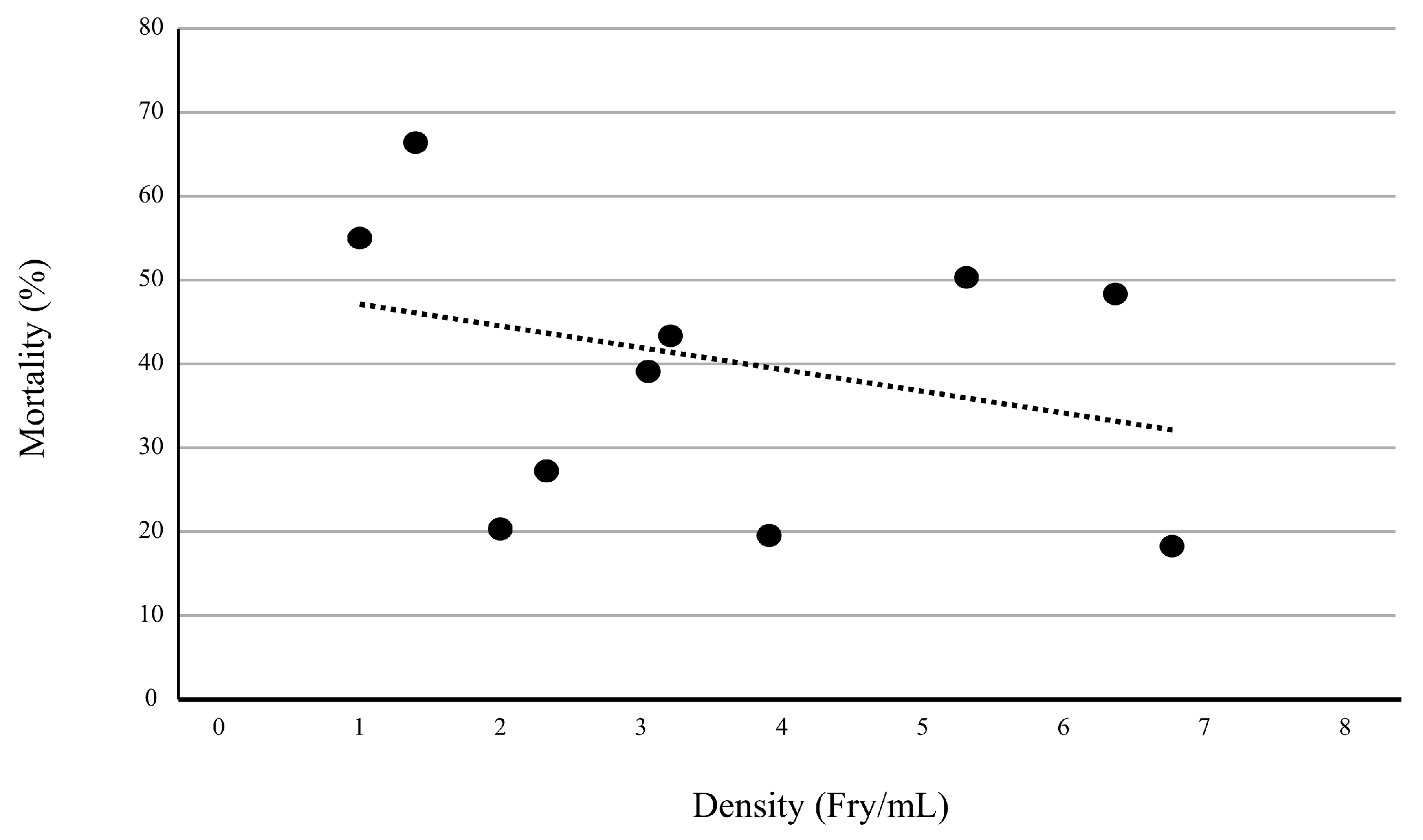
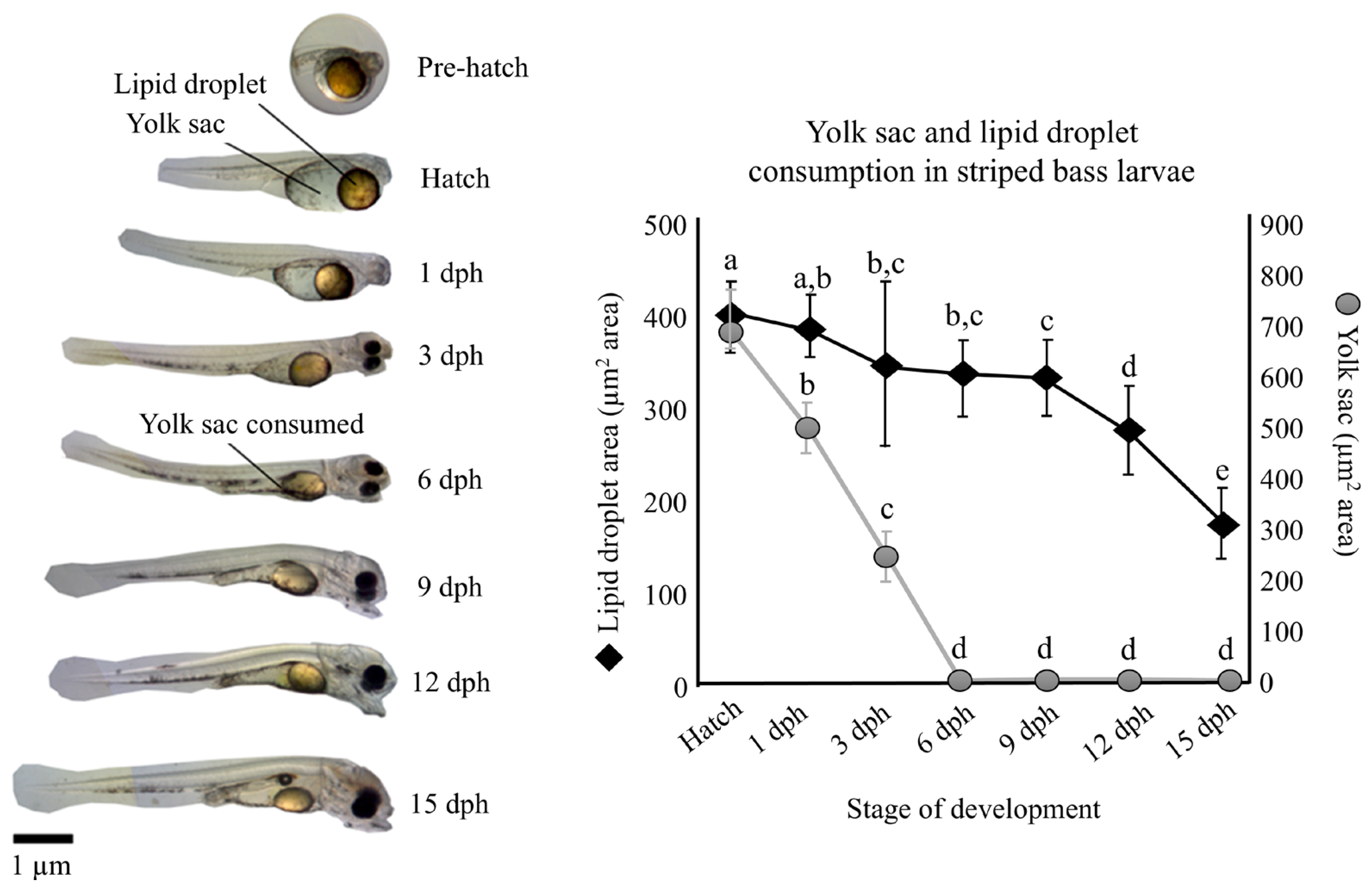
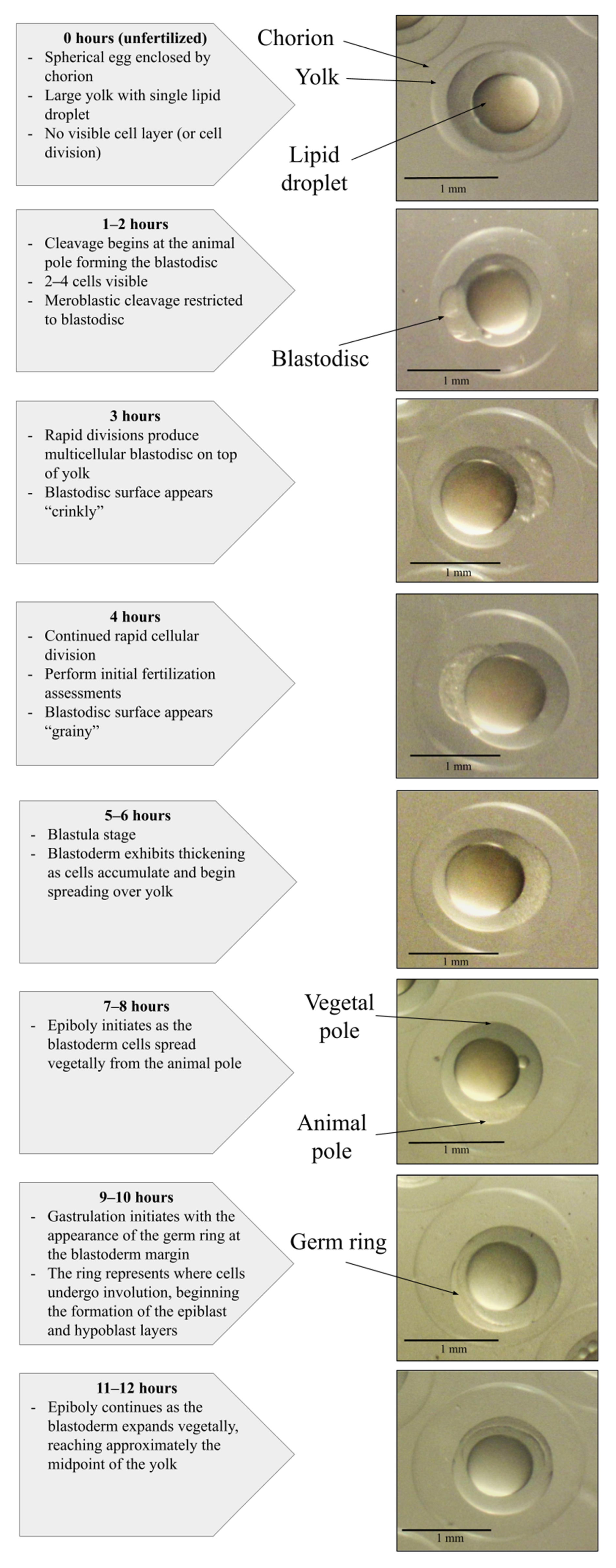
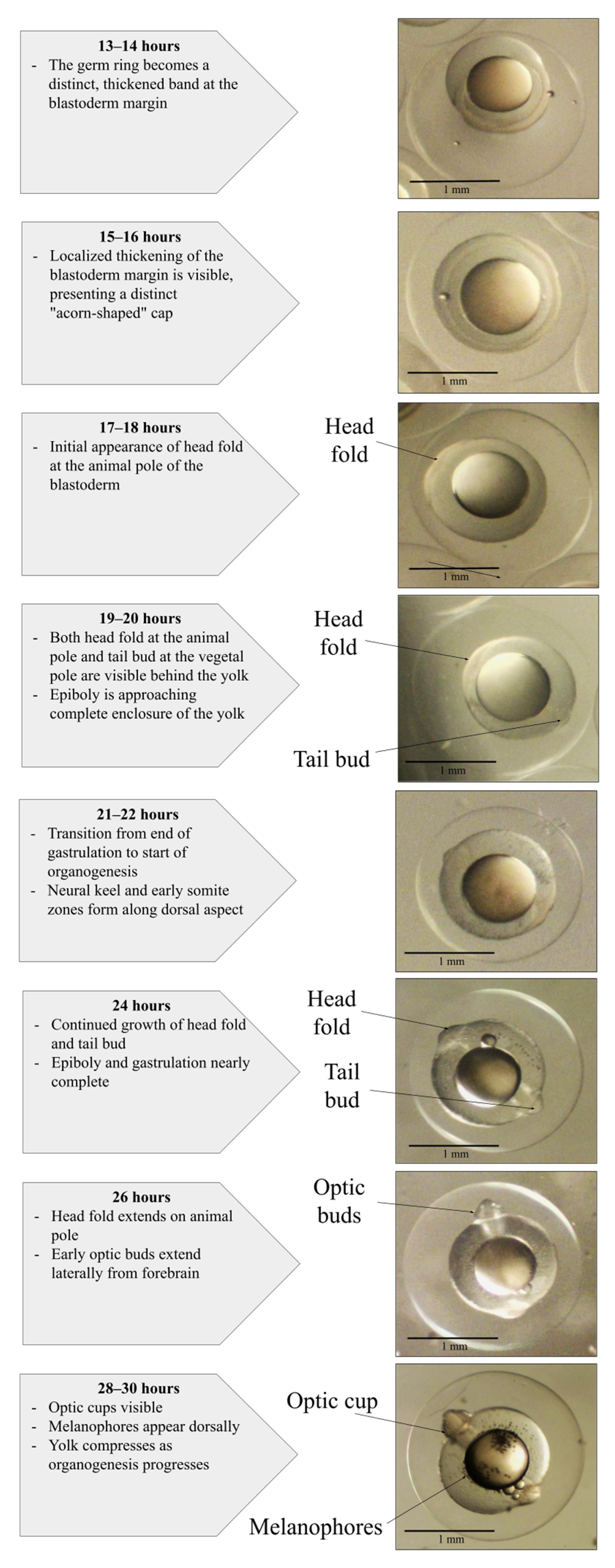
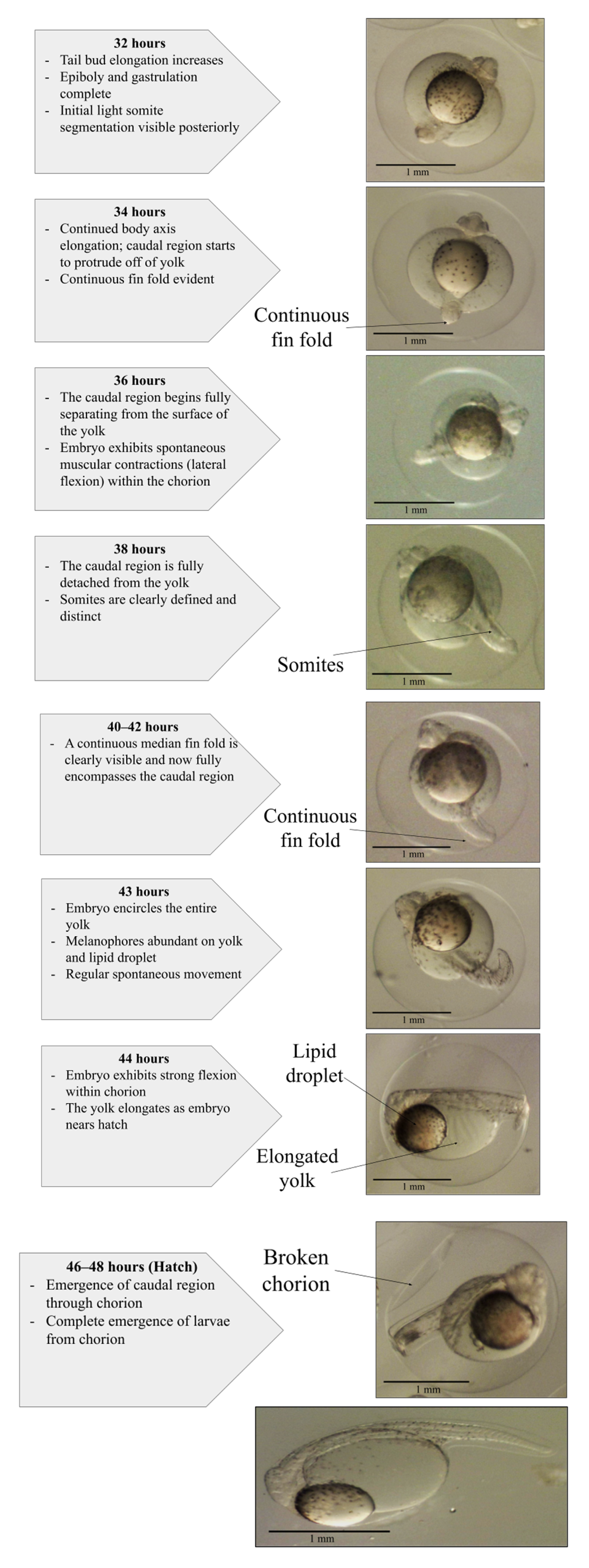
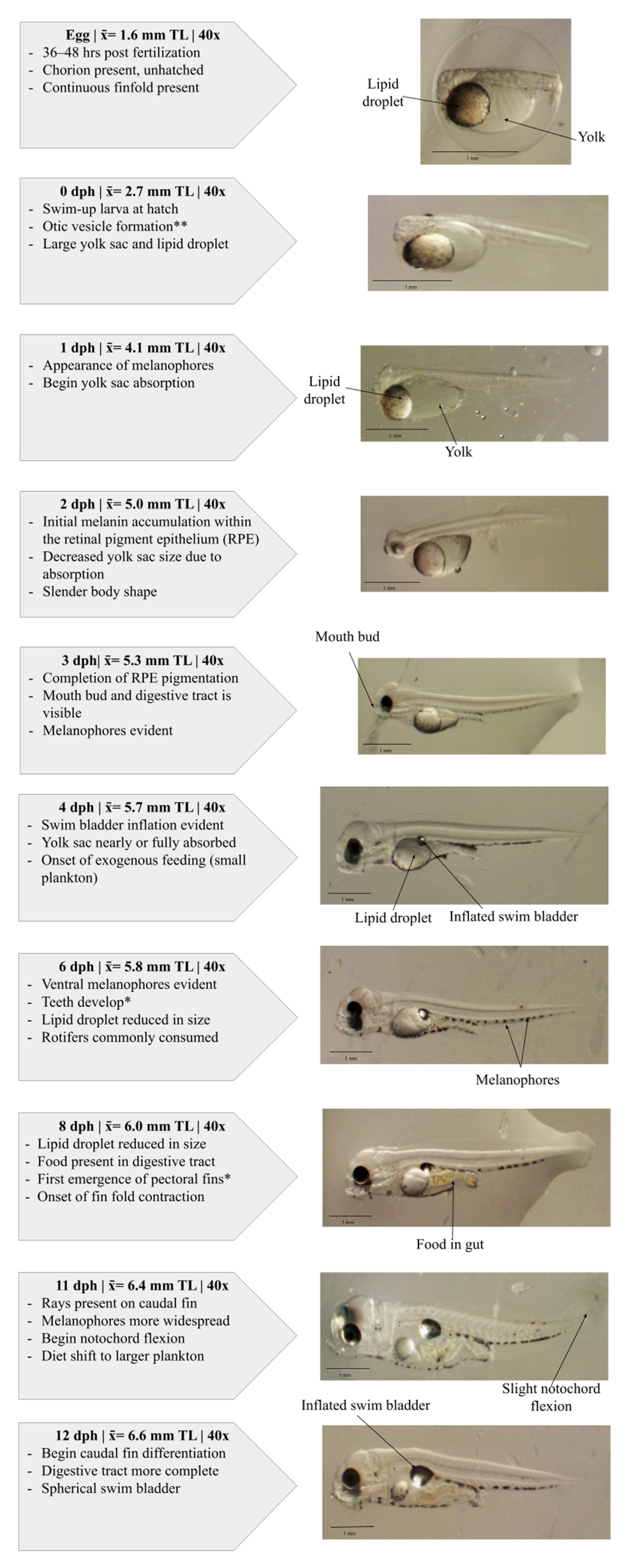
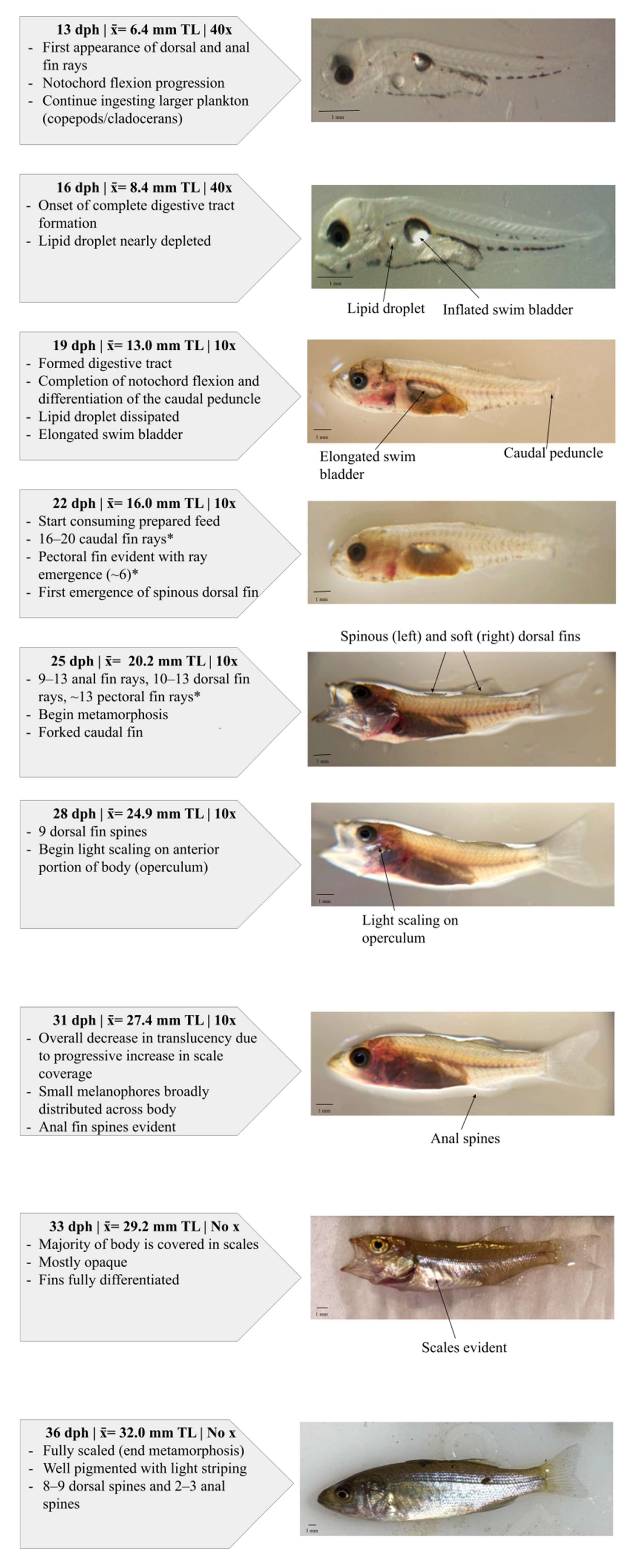
Reliable developmental benchmarks are essential for synchronizing incubation and first-feeding decisions in striped bass (Morone saxatilis) hatcheries, yet existing references are incomplete, outdated, or difficult to apply across variable temperature regimes. We developed contemporary embryo and larval developmental staging guides for striped bass using digital imaging and degree day standardization and paired these guides with measurements of early larval mortality and endogenous energy depletion to provide practical context for hatchery management. Larvae were photographed from hatch through metamorphosis to document key morphological transitions, including yolk absorption, mouth formation, swim bladder inflation, fin differentiation, pigmentation, and diet-related developmental milestones. To place these stages in physiological and survival context, aquarium trials showed there was no clear density-dependent mortality across rearing densities of 1.1–6.8 larvae/mL within the first 72 h post-hatch. Yolk reserves were typically depleted by approximately 4–6 days post-hatch (dph), while lipid droplets persisted longer as secondary endogenous energy stores in unfed larvae through 15 dph. Together, these staging guides provide a transferable developmental framework from fertilization to metamorphosis that links external morphology to endogenous reserve depletion and first feeding, thus supporting standardized hatchery monitoring, improved feeding synchronization, and more consistent assessment of embryo and larval quality.
Keywords: aquaculture; larval rearing; hatchery management; physiology aquaculture; larval rearing; hatchery management; physiology
Graphical Abstract