Article

Phenotypic Variability and Adaptive Differentiation of Tench (Tinca tinca L.) from Aquaculture and Natural Populations in Southern Kazakhstan


1
Laboratory of Aquaculture, Fisheries Research and Production Center, Almaty 050016, Kazakhstan
2
Laboratory of Hydrobiology, Fisheries Research and Production Center, Almaty 050016, Kazakhstan
*
Authors to whom correspondence should be addressed.
Fishes 2026, 11(4), 238; https://doi.org/10.3390/fishes11040238
Submission received: 17 March 2026 / Revised: 10 April 2026 / Accepted: 12 April 2026 / Published: 16 April 2026
(This article belongs to the Section Biology and Ecology)

Abstract

This study provides a comparative analysis of phenotypic variability in the morphological traits of tench (Tinca tinca L.) reared under aquaculture conditions and those from a natural population in southern Kazakhstan. The aim of the study was to evaluate phenotypic plasticity and adaptive differentiation between populations shaped by contrasting ecological and trophic environments. Morphometric analysis revealed significant differences in indices associated with growth patterns and body shape. The aquaculture group demonstrated faster somatic growth and lower variability, whereas the wild population exhibited greater morphological diversity, likely reflecting the effects of natural selection and habitat heterogeneity. The results indicate pronounced phenotypic divergence between pond-reared and wild tench, which is likely driven by environmental conditions and aquaculture practices. These findings highlight the high adaptive plasticity of the species and support its potential for domestication and large-scale aquaculture in Kazakhstan. Overall, the data may contribute to the development of conservation and restocking programs for natural populations, as well as to selective breeding strategies and sustainable aquaculture practices.
Key Contribution: This study demonstrates significant phenotypic divergence and adaptive differentiation between aquaculture and wild populations of tench (T. tinca) in southern Kazakhstan, driven by contrasting environmental and trophic conditions. The identified morphometric variability confirms the species’ high phenotypic plasticity and provides a basis for its selective breeding, domestication, and sustainable aquaculture development.

1. Introduction

Fish domestication under aquaculture conditions involves adaptation to captive environments that differ substantially from natural habitats. These differences result in phenotypic traits between domesticated and wild individuals [1,2]. At the same time, genetic changes associated with domestication may occur within a single generation [3]. Such morphological and genetic changes arise from both direct and indirect responses to artificial selection, as well as from the relaxation of natural selection [4]. For example, morphological variability often reflects the influence of environmental factors such as temperature, hydrochemical regime, substrate type, food availability, and stocking density [5,6].
The study of morphometric and meristic characteristics is a well-established and informative approach for assessing intraspecific variability in fish, and is widely used to identify population structure and adaptive differences [7,8]. For instance, studies on Atlantic salmon have demonstrated significant differences in growth performance among farmed groups [9], highlighting the importance of these traits for evaluating the rate and efficiency of adaptation in domesticated individuals across generations. Furthermore, artificial rearing conditions may promote the retention of morphological traits that would likely be eliminated under natural selection in wild environments [10]. In this context, morphometric analysis provides an important methodological framework for assessing the functional status of fish and supporting their rational use in aquaculture.
In recent years, the development of aquaculture in Kazakhstan has become strategically important in terms of food security and the conservation of biological diversity in inland water bodies [11]. In the southern regions of the country, there is increasing interest in the cultivation of native fish species with high ecological plasticity and nutritional value. Among these, tench (Tinca tinca) occupies a prominent position as a promising species for pond aquaculture [12,13]. This species is characterized by a high capacity to adapt to diverse environmental conditions and exhibits a wide phenotypic range of morphological traits [14]. Under aquaculture conditions, a specific morphotype is often formed, characterized by a shorter body, increased body depth, and a relative reduction in head length, which are associated with intensive feeding and spatial constraints [15]. In tench, these traits are highly plastic and closely linked to habitat conditions, making them useful indicators of adaptive differentiation [16,17].
Studies conducted in various regions of Eastern Europe and Russia have shown that phenotypic variability in tench is expressed as significant differences among populations in a range of morphometric characteristics. Variations in relative head length, body depth, number of lateral line scales, and the number of rays in the dorsal and anal fins have been documented, reflecting adaptation to local environmental conditions and hydrological regimes. Comparative analyses of tench populations from water bodies in the Novosibirsk, Pskov, and Kaliningrad regions have revealed distinct regional phenotypes, confirming the presence of intraspecific differentiation associated with ecological and trophic conditions. At the same time, the influence of environmental factors and stocking density on morphometric profiles has been noted [18]. Similar patterns have been reported under aquaculture conditions in the Baltic States and Central Europe, indicating the generality of adaptive responses under conditions of isolation and varying trophic pressure [19].
In southern Kazakhstan, systematic studies of phenotypic variability and adaptive differentiation in wild and aquaculture populations of tench remain limited. Regional studies are therefore essential for identifying patterns in the formation of morphological traits under the influence of local climatic, hydrological, and rearing conditions. Furthermore, the relevance of the present study is reinforced by the lack of data on morphological differences in tench of the first generation reared under pond conditions compared to individuals from natural populations. The first year of life is a critical period for fish, during which morphological development is closely linked to survival, habitat use, and physiological condition [20,21]. In tench, a cyprinid species characterized by slow juvenile growth and high phenotypic plasticity [22], the assessment of body shape and fin morphology at this early stage may serve as a sensitive indicator of adaptation to rearing environments.
The aim of this study was to assess morphological variability in age-0 tench derived from broodstock originating from a natural population of Lake Kyrykkudyk and subsequently reared under aquaculture conditions. Particular attention was given to identifying traits most sensitive to artificial rearing conditions and to evaluating the direction of their variation relative to wild populations. A comparative analysis of cultured and wild one-year-old tench made it possible to identify the most variable morphological traits associated with domestication. The results of this study expand current knowledge of intraspecific variability in tench in Kazakhstan and beyond, and have practical significance for the selection of highly adapted forms suitable for domestication and pond aquaculture.

2. Materials and Methods

2.1. Sample Collection for Morphometry

Samples for morphological analysis were collected from two locations: (1) the Kapshagay spawning and rearing farm pond and (2) Lake Kyrykkudyk. The comparative analysis included first-generation individuals derived from broodstock originating from the Lake Kyrykkudyk population, as well as individuals of the same age group from the corresponding natural population.
One-year-old tench were reared under aquaculture conditions at the Kapshagay spawning and rearing farm. A map illustrating the sampling locations of one-year-old tench (age 1+) is presented in Figure 1.
Geographically, both sampling sites are located in southeastern Kazakhstan. The coordinates of the sampling locations are as follows: the Kapchagay spawning and rearing farm (43°42′59.01″ N, 77°23′24.18″ E) and Lake Kyrykkudyk (44°05′24.96″ N, 80°11′12.51″ E).
The Kapchagay spawning and grow-out farm has been in operation since 1973. According to the original design, it was established as a full-cycle pond aquaculture system, including spawning, fry, rearing, fattening, wintering, and broodstock ponds [23]. The Kapchagay Reservoir initially served as the primary water source, with high-capacity pumping stations constructed to supply water to the farm. However, over more than 50 years, a significant reduction in the reservoir’s surface area and water level (from a design capacity of 1,847 km2 in 1970 to approximately 1,250 km2, with a drop of 6–8 m in water level) has resulted in decreased efficiency of the pumping system [24,25,26].
At present, the pond system is primarily supplied by the Lavar River, which provides approximately 30% of the farm’s water demand [22,23,24]. In addition to river inflow, low-yield groundwater wells are used to supplement the water supply.
Lake Kyrykkudyk is located approximately 10 km from the village of Kyrykkudyk (Panfilov District, Zhetysu Region, Kazakhstan) [25]. The lake is shallow, with moderate vegetation cover (up to 30%), and has a surface area of 3.72 km2.

2.2. Characteristics of Yearlings of Tench (T. tinca)

For morphological analysis, one-year-old tench were selected. Specimens from the Kapchagay spawning and rearing farm (N = 25) represented the first generation obtained from broodstock originating from Lake Kyrykkudyk and reared under semi-industrial aquaculture conditions. These fish were raised in a fry pond at the farm.
Wild one-year-old tench (N = 25) were collected from Lake Kyrykkudyk. Morphological analysis was subsequently conducted at the aquaculture laboratory of the Fisheries Research and Production Centre LLP.
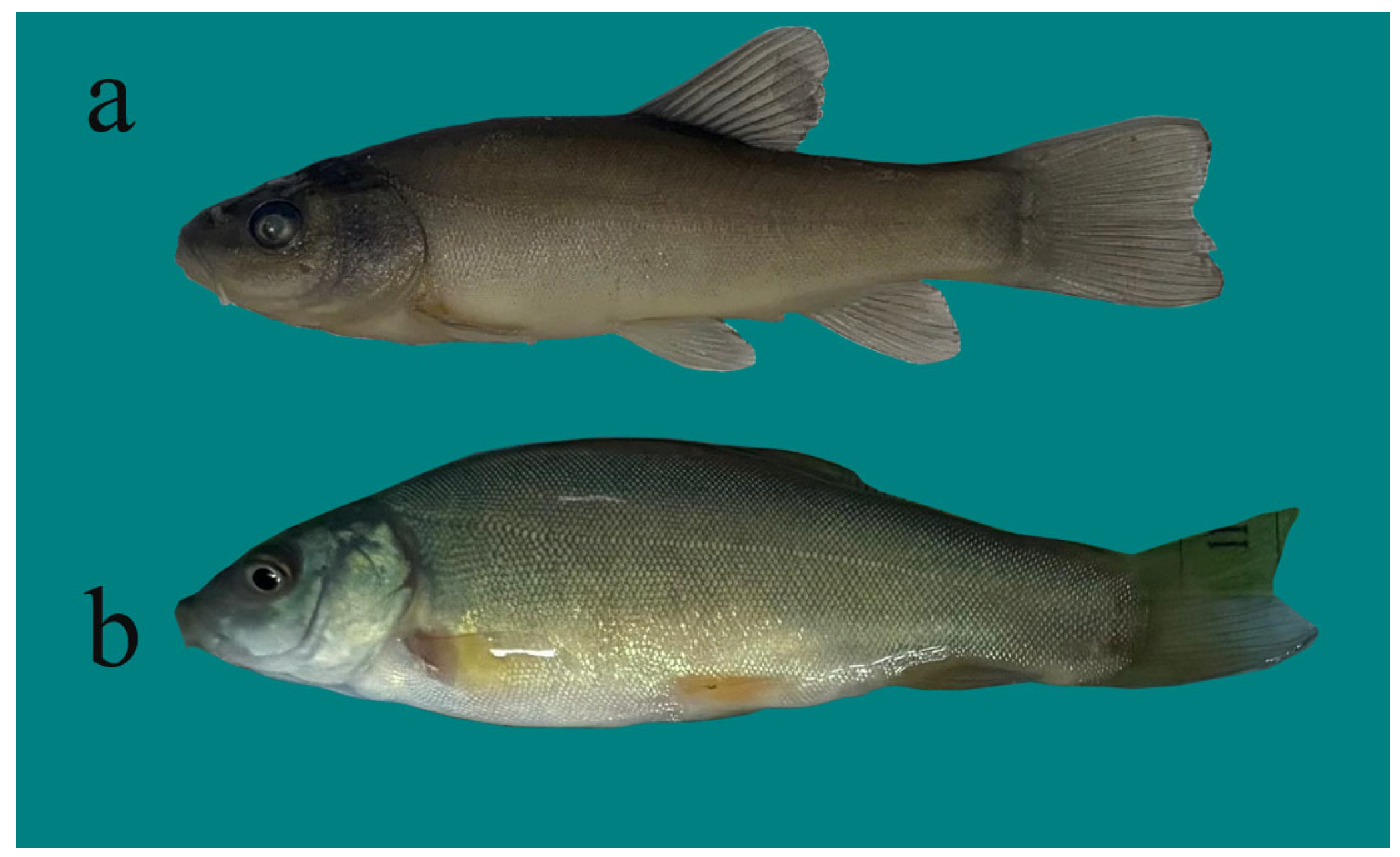
Figure 2 illustrates the external appearance of one-year-old tench from Lake Kyrykkudyk and those reared in the pond of the Kapchagay spawning and rearing farm.

2.3. Morphological Analysis

Morphological analysis was performed in accordance with Pravdin’s manual [27] using a digital caliper with an accuracy of 0.1 mm and analytical scales with a precision of 0.01 g. A total of 50 one-year-old tench were examined.
Prior to measurement, age-1 tench were anesthetized with MS-222 (80–100 mg L−1, buffered to neutral pH). Fish were immersed until loss of equilibrium (1–3 min), measured rapidly, and kept out of water for no more than 60 s. Recovery occurred in aerated water within a few minutes before release or return to tanks [28].
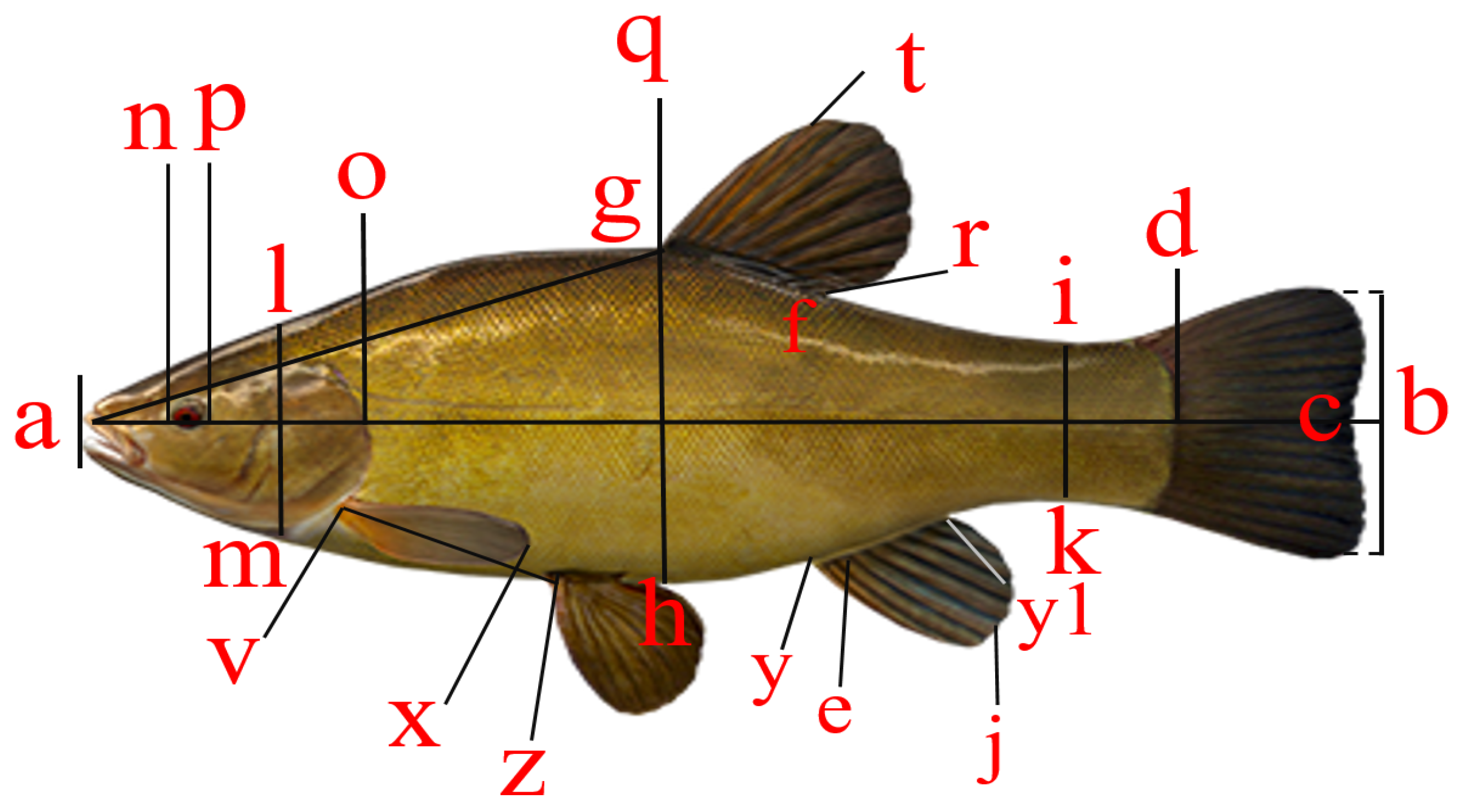
During morphological analysis, fish were positioned on their right side. Measurements were recorded for 11 meristic and 23 morphometric (plastic) traits. Figure 3 presents a measurement scheme for cyprinid fish adapted for tench.
The following abbreviations were used for meristic traits: Dr—number of hard rays in the dorsal fin; Dsof.—number of soft rays in the dorsal fin; Ar—number of hard rays in the anal fin; Asof.—number of soft rays in the dorsal fin; Psof.—number of rays in the pectoral fin; Vsof.—number of soft rays in the pelvic fin; ll—number of scales in the lateral line; sp.br—number of gill rakers; vert.—total number of vertebrae; vert.ch.—number of thoracic vertebrae; vert. tail—number of caudal vertebrae.
Morphological analysis was conducted to assess phenotypic variability in the context of the phenotype convergence hypothesis. The results are presented in tables and illustrated graphically.

2.4. Biological Variables of Tench (T. tinca)

The ratio between total length (TL) and total weight (TW) of tench (T. tinca) was calculated using the formula developed by [29]:
TW = aTLb
where
  • TW—Body weight (g);
  • TL—Absolute body length (mm);
  • a—Regression line intersection;
  • b—Slope of the regression line.

Fulton’s Condition Factor (FCF)

The body condition of tench was determined using the Fulton coefficient (Fulton, 1904), according to the formula by [30]:
FCF = 100 × W/L3,
where W is body weight (g) and L is total length (cm).

2.5. Statistical Data Processing

Statistical analyses were performed using MS Excel 2013, IBM SPSS Statistics 22, and PAST version 4.03 [31,32]. Descriptive statistics and graphical outputs were generated in MS Excel 2013. The following parameters were calculated: range (min–max), mean (M), and standard deviation (±SD). The coefficient of variation (CV) was used to assess the level of variability [33].
Data normality was evaluated using the Shapiro–Wilk test (p > 0.05), and homogeneity of variances was assessed using Levene’s test (p > 0.05).
Multivariate statistical analysis was conducted in PAST (version 4.03) using principal component analysis (PCA). The suitability of the dataset for PCA was evaluated using the Kaiser–Meyer–Olkin (KMO) measure. PCA results were visualized graphically and used to identify variables with the highest loadings, focusing on morphological traits of age-1, first-generation tench derived from Lake Kyrykkudyk broodstock reared at the Kapshagay farm, as well as individuals from the natural population.
In IBM SPSS Statistics 22, differences between farmed and wild tench were assessed using the non-parametric Mann–Whitney U test [34]. The level of statistical significance was set at p ≤ 0.001. Pearson’s correlation analysis was used to evaluate relationships between total length, body weight, and condition factor [35,36].

3. Results

3.1. Body Length-to-Weight Ratio

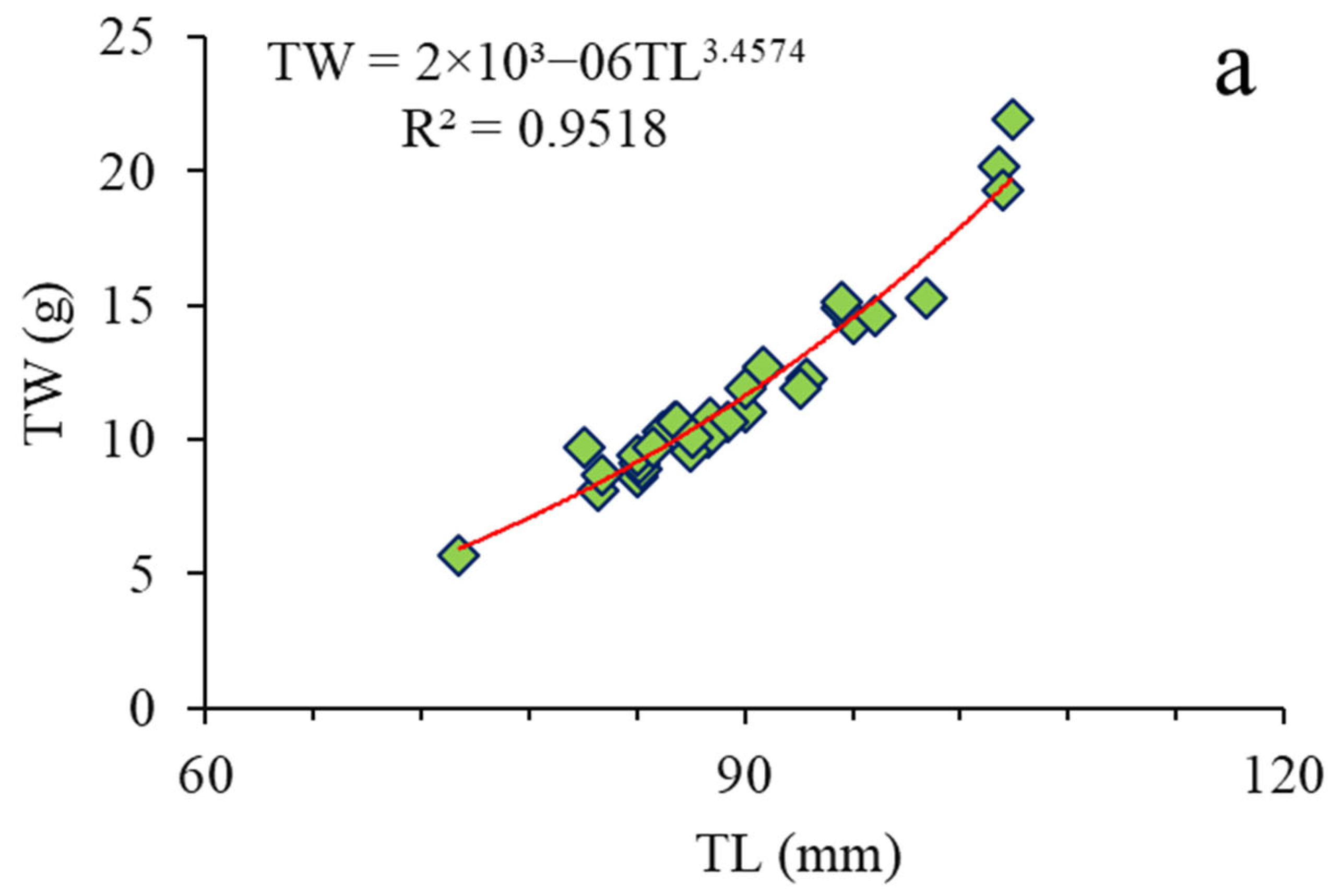
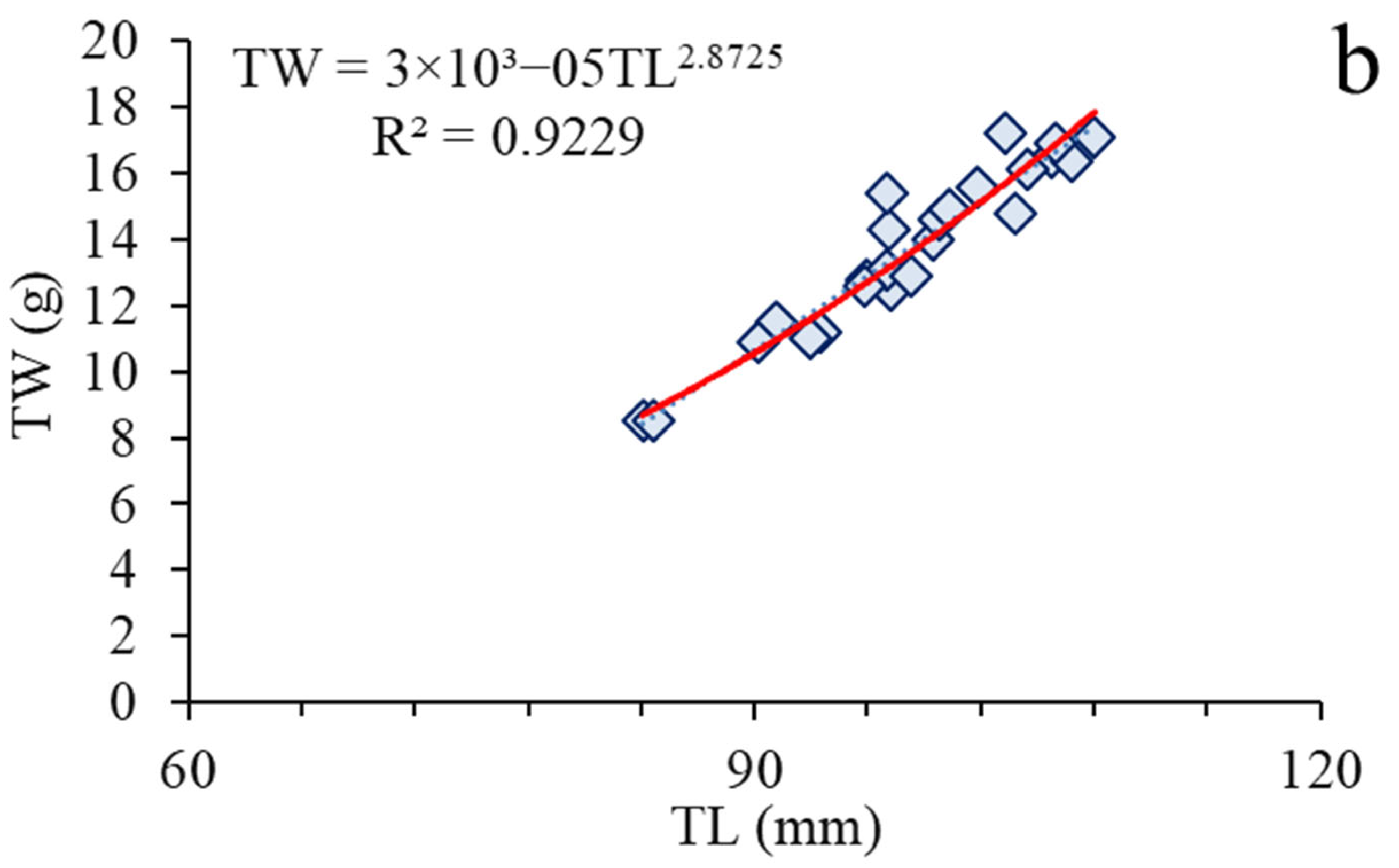
The mean total length and body weight of one-year-old tench reared in ponds were 89.7 ± 7.30 mm and 11.9 ± 3.63 g, respectively. In the Lake Kyrykkudyk sample, the corresponding values were 98.06 ± 6.23 mm and 13.68 ± 2.46 g. The relationships between total length and body weight for one-year-old tench (Tinca tinca) are illustrated in Figure 4a,b.
The value of b differed significantly between groups, being lower in yearlings from the Kapchagay spawning and rearing farm (2.87) compared to those from Lake Kyrykkudyk (3.45) (p ≤ 0.05). The b value for one-year-old tench from the pond is higher (positive allometric growth) and indicates feed availability due to intensive feeding (Table 1).

3.2. Fulton’s Condition Factor (FCF)

The condition factor (CF) for one-year-old tench reared in ponds averaged 1.59 ± 0.10 (range: 1.40–1.90) and was positively correlated with total length (r = 0.511, p > 0.01) and body weight (r = 0.689, p > 0.01). In the Lake Kyrykkudyk sample, the mean CF was 1.44 ± 0.08 (range: 1.32–1.69). In this group, total length showed a weak negative correlation with CF (r = −0.159, p ≤ 0.001), while body weight exhibited a weak positive correlation (r = 0.130, p ≤ 0.001).

3.3. Comparative Analysis of Tench Morphology

Table 2 presents the comparison of morphological characteristics of age-1 tench based on both meristic and morphometric traits. Significant differences in meristic traits between juvenile tench (U test, p < 0.05) were observed for the number of hard rays in the dorsal fin (Dr), soft rays in the anal fin (Asof), pectoral fin rays (Psof), lateral line scales (ll), as well as the number of abdominal (vert.ch.) and caudal vertebrae (vert.caud.).
For morphometric (plastic) traits, significant differences between the two groups were detected in minimum body depth (ik), predorsal distance (aq), preventral distance (az), caudal peduncle length (fd), anal fin base length (yy1), and prepectoral distance (aV). Among head measurements, differences were observed in forehead width (nn), snout length (an), and horizontal eye diameter (np).
The Kaiser–Meyer–Olkin (KMO) measure indicated acceptable sampling adequacy for both datasets, with values of 0.62 for meristic traits and 0.68 for morphometric traits.
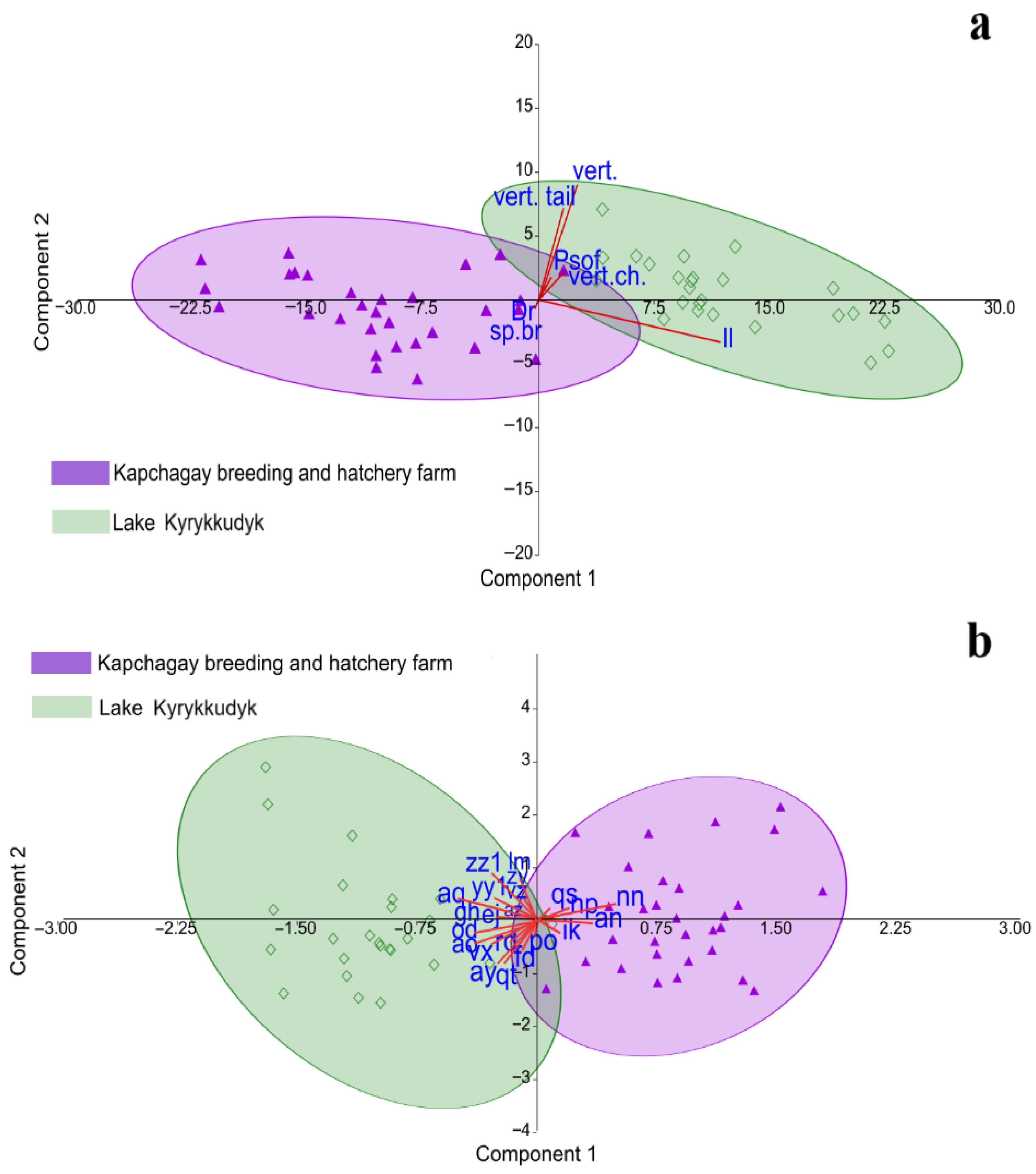
Figure 5 is visualized and grouped using PCA, demonstrating differences in the characteristics studied.
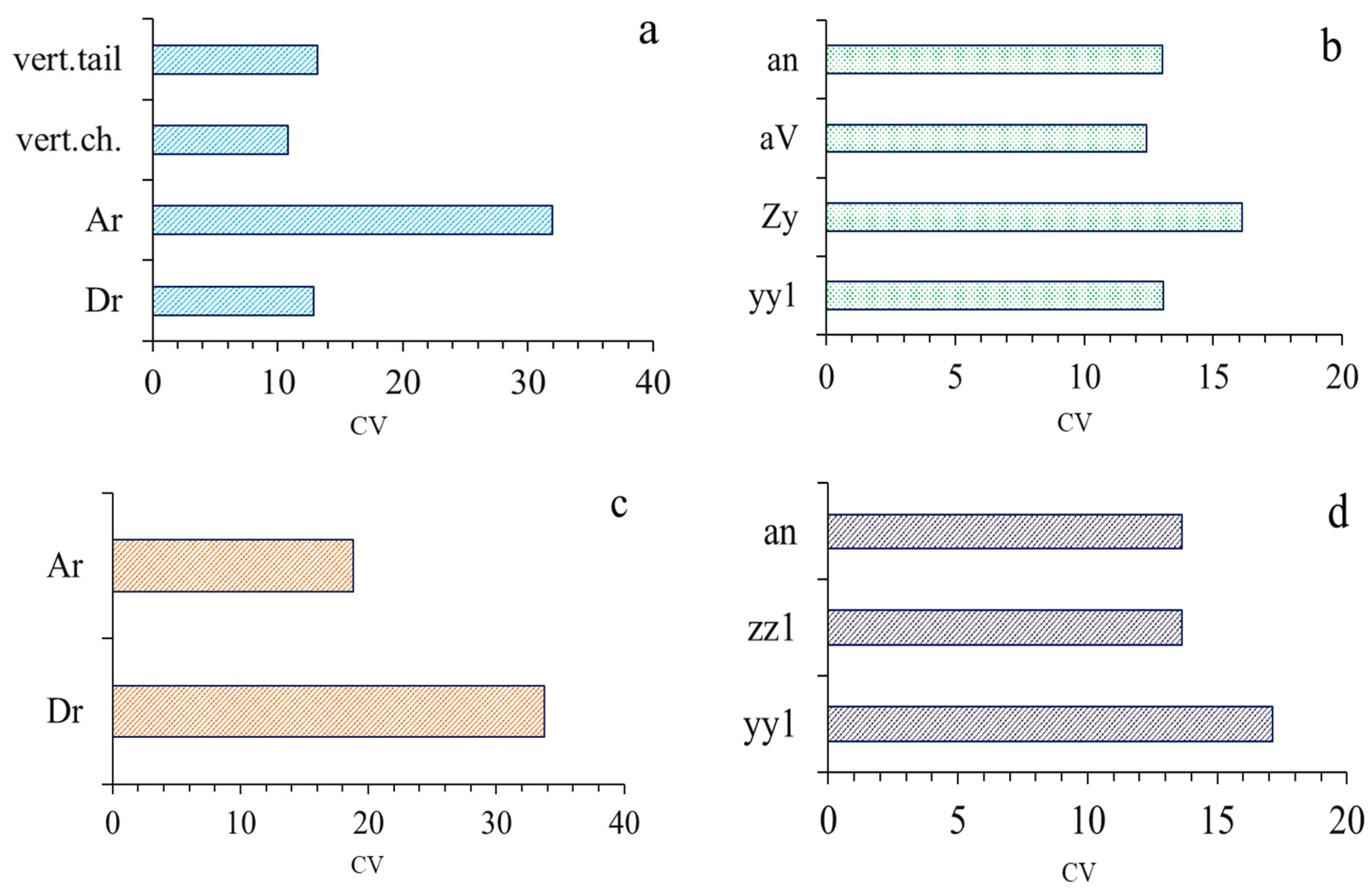
Among the meristic traits examined in the pond-reared population, the most variable were the number of pectoral fin rays (CV = 10.84%), caudal fin rays (CV = 13.20%), hard rays of the dorsal fin (CV = 12.90%), and hard rays of the anal fin (CV = 31.94%). In the Lake Kyrykkudyk population, the highest variability was observed for the number of hard rays in the dorsal fin (CV = 33.76%) and anal fin (CV = 18.84%). Figure 6 presents the coefficients of variation for both meristic and morphometric traits.
Regarding morphometric traits in tench from the Kapchagay spawning and rearing farm, the highest variability (CV) was observed for snout length (13.03%), prepectoral distance (12.4%), distance between the pelvic and anal fins (16.12%), and anal fin base length (13.05%). In the Lake Kyrykkudyk population, the coefficients of variation were highest for snout length (13.64%), pelvic fin length (13.65%), and anal fin base length (17.15%).
Among meristic traits, the number of hard rays in the dorsal (Dr) and anal fins (Ar) exhibited particularly high variability relative to other morphological indicators. The plasticity of these traits is likely associated with the genetic characteristics of the yearlings and the conditions of ontogenetic development.
In addition to the observed variability of individual traits, the direction of morphological variation (trait loadings) was evaluated under pond cultivation and natural habitat conditions. As shown in Table 3, the greatest variability in most meristic traits was observed in the Lake Kyrykkudyk population.
For instance, negative loadings on the first and second principal components indicate a smaller number of hard rays in the Lake Kyrykkudyk population (1.48 ± 0.50) compared with the pond-reared sample (1.93 ± 0.25). Regarding the number of soft rays in the anal and pectoral fins, as well as vertebrae, positive loadings on the first and second components reflect higher counts in the wild population relative to the Kapchagay farm population. In the pond-reared sample, the number of lateral line scales was lower than in the lake population, corresponding to negative loadings on the second and third components.
Changes in morphometric traits were also observed in pond-reared tench. Negative loadings on the first and second principal components were associated with predorsal and preventral distances, caudal peduncle length, and prepectoral distance, whereas positive loadings on PC1 corresponded to minimum body depth, forehead width, snout length, and eye diameter. In the Lake Kyrykkudyk population, plasticity indices exhibited negative loadings for dorsal fin length (PC3) and low loadings for anal fin base length (PC1–PC2).
Overall, age-1 tench from the lake showed more intensive linear growth, with morphometric values clearly differing from pond-reared individuals. However, the Fulton condition factor suggests that pond conditions likely promote faster mass gain due to higher food availability, resulting in weight growth outpacing length growth. These observed morphological changes highlight the high phenotypic plasticity of tench (family Cyprinidae) and support the concept of phenotype convergence under contrasting environmental conditions.

4. Discussion

The morphology of tench (Tinca tinca) from the Irtysh River is well documented: dorsal fin D III–IV (9), anal fin A III 6–8, pectoral fin P I–II 15–18, pelvic fin V II 9; 96–112 lateral-line scales, 24–31 above it; 12–15 gill rakers; 33–39 (42) vertebrae; body coloration generally uniform [37]. Our observations indicate variation in body coloration related to substrate and water color [38], with a greenish-silvery hue in Lake Kyrykkudyk and dark brown with a bronze tint in pond-reared fish.
This study focused on age-1 individuals, whose traits differed from adult reference values. Pond specimens showed D II (9), A I (8), P (12), V (10); 82–105 lateral-line scales; 13–16 gill rakers; 27–36 vertebrae. Lake Kyrykkudyk individuals exhibited DI–II (9), AI–II (7–10), P 15–17, V 9–10; 104–127 lateral-line scales; 12–16 gill rakers; 34–43 vertebrae. These differences reflect both habitat- and culture-related (domestication) effects on phenotypic variability. Similar discrepancies have been reported in tench from the Ugra River [39], and morphological variability has been documented in populations from Lake Seikhan Dam and Lake Beyşehir [40,41]. Sexual dimorphism, expressed as longer pelvic fins in males, has also been observed [42].
Fulton’s condition factor further highlights differences in feeding conditions, with the highest values observed in pond-reared individuals from the Kapchagay spawning farm. Among morphometric traits, the greatest variability was found for the distance between the pelvic and anal fins (16.12%). In the Lake Kyrykkudyk population, coefficients of variation were 13.64% for snout length, 13.65% for pelvic fin length, and 17.15% for anal fin base length. Among meristic traits, the number of rays in the dorsal and anal fins (Dr and Ar) exhibited high variability. These results are consistent with studies from the Asartepe Reservoir, which reported high coefficients of variation: 36.32% for anal fin rays and 31.85% for pelvic fins [43]. Such variability may be associated with sex-specific growth, as thickening of the second pelvic-fin rays occurs in males, whereas females retain thinner rays [44].
Embryological development may also contribute to observed phenotypic variability. In tench, blastopore closure occurs later than in other cyprinids, rendering eggs particularly sensitive to external environmental factors. These hydrological conditions—pond versus lake—likely influence the range and nature of morphophysiological adaptations, contributing to phenotypic deviations.
A comparison of Fulton’s condition factor between the pond and lake groups revealed significant differences (U-test = 88, p ≤ 0.001), likely reflecting variation in feeding conditions. Higher values in hatchery-reared fish may result from a more stable and consistent food supply under pond conditions.
Considering the phenotypic traits of first-generation pond-reared tench from the Kapchagay spawning farm, clear differences are evident in both meristic and morphometric traits (see Section 3). Domestication effects arise from a combination of factors, including genetic and epigenetic influences. Previous studies indicate that noticeable genetic changes can appear in early generations of domestication [44], potentially mediated by epigenetic modulation and/or a slight deficiency of neural crest cells during embryonic development, which can affect craniofacial and fin morphology [45].
This study provides baseline data on the biology and morphology of tench, supporting its potential as a promising species for aquaculture. Future research should include genetic analyses to evaluate epigenetic contributions to observed morphological changes.

5. Conclusions

The results demonstrate that the phenotypic traits of tench are strongly influenced by environmental conditions, particularly food availability and domestication effects. Comparative analysis of biological and morphological indicators in individuals from artificial and natural water bodies revealed significant differences in growth parameters, body condition, and adaptive traits. These observed differences underscore the high phenotypic plasticity of the species and its capacity for morphophysiological adaptation to varying trophic conditions and anthropogenic pressures. The findings highlight the potential of tench for aquaculture and emphasize the importance of considering habitat-specific conditions when developing strategies for artificial breeding and the management of natural populations.

Author Contributions

Conceptualization, R.B., M.A. and S.A.; methodology, R.B. and A.S.; software, A.S.; validation, R.B., S.A. and F.A.; formal analysis, A.S.; investigation, R.B., N.B. (Nina Badryzlova), N.B. (Naila Bulavina) and F.A.; resources, S.A. and A.S.; data curation, M.A. and A.S.; writing—original draft preparation, R.B.; writing—review and editing, M.A., S.A., A.S. and F.A.; visualization, A.S.; supervision, S.A.; project administration, R.B., S.A. and A.S.; funding acquisition, S.A. All authors have read and agreed to the published version of the manuscript.

Funding

The research was carried out with funding from the Ministry of Agriculture of the Republic of Kazakhstan as part of the scientific and technical program BR23591065, “Development and implementation of innovative technologies and new aquaculture facilities that are economically efficient in the natural and climatic conditions of various regions of Kazakhstan”.

Institutional Review Board Statement

Sampling was conducted in a non-destructive manner and did not cause any damage, harm, or distress to the studied organisms. No animals were sacrificed, and no invasive or experimental procedures were applied. The study was based on biological material obtained through routine monitoring and standard non-lethal sampling procedures carried out in accordance with national regulations. The study was approved by the Ethic Committee of the Fisheries Research and Production center (FishRPC) (Approval No. 5; 10 October 2025).

Data Availability Statement

The original contributions presented in this study are included in the article. Further inquiries can be directed to the corresponding author.

Conflicts of Interest

The authors declare no conflicts of interest.

References

  1. Weber, E.D.; Fausch, K.D. Interactions between hatchery and wild salmonids in streams: Differences in biology and evidence for competition. Can. J. Fish. Aquat. Sci. 2003, 60, 1018–1036. [Google Scholar] [CrossRef]
  2. Huntingford, F.A. Implications of domestication and rearing conditions for the behaviour of cultivated fishes. J. Fish Biol. 2004, 65, 122–145. [Google Scholar] [CrossRef]
  3. Christie, M.R.; Marine, M.L.; Fox, S.E.; French, R.A.; Blouin, M.S. A single generation of domestication heritability alters the expression of hundreds of genes. Nat. Commun. 2016, 7, 10676. [Google Scholar] [CrossRef]
  4. Servetnik, G.E. The tench (Tinca tinca L.) as a promising species for agricultural reservoirs. Vestn. Ross. Sel’skokhozyaystvennoy Nauk. 2017, 5, 61–64. [Google Scholar]
  5. Buzatto, B.A.; Clark, H.L.; Tomkins, J.L. Morph-specific artificial selection reveals a constraint on the evolution of polyphenisms. Proc. R. Soc. B 2018, 285, 20180335. [Google Scholar] [CrossRef]
  6. Badryzlova, N.S. Opyt domestikacii linya (Tinca tinca, L. 1758) v rybovodnom hozyajstve Yuga Kazahstana [Experience of domestication of tench (Tinca tinca, L. 1758) in southern Kazakhstan]. In Proceedings of the IV International Scientific and Practical Conference; Astrakhan State University: Astrakhan, Russia, 2025; pp. 167–169. [Google Scholar]
  7. Book, M.V.; Sergeeva, T.A.; Orlov, I.A.; Kruk, A.Y.; Zhmoidyak, D.A. Characterization of phenotypic traits of different age groups of tench. Issues Fish Ind. Belarus 2022, 32, 42–55. Available online: https://fish.belal.by/jour/article/view/281 (accessed on 10 April 2026).
  8. Kozlov, G.M.; Melnik, I.V.; Goncharik, A.A. Morphometric variability of tench under artificial cultivation. Izvestiya VUZov. North Cauc. Reg. 2018, 3, 45–49. [Google Scholar]
  9. Harvey, A.C.; Solberg, M.F.; Troianou, E.; Carvalho, G.R.; Taylor, M.I.; Creer, S.; Dyrhovden, L.; Matre, I.H.; Glover, K.A. Plasticity in growth of farmed and wild Atlantic salmon: Is the increased growth rate of farmed salmon caused by evolutionary adaptations to the commercial diet? BMC Evol. Biol. 2016, 16, 264. [Google Scholar] [CrossRef]
  10. Ruzzante, D.E. Domestication effects on aggressive and schooling behaviour in fish. Aquaculture 1994, 120, 1–24. [Google Scholar] [CrossRef]
  11. Government of the Republic of Kazakhstan. On the State Programme for the Development of the Fishing Industry of the Republic of Kazakhstan for 2021–2030; Decree No. 786; Government of the Republic of Kazakhstan: Astana, Kazakhstan, 2021; Available online: https://adilet.zan.kz/rus/docs/P2100000208 (accessed on 5 April 2021).
  12. Karasyov, S.G.; Sivtsova, A.M. Ecology and morphology of tench in the lower Tobol basin. Sovrem. Probl. Nauk. I Obraz. 2015, 6, 1–6. [Google Scholar]
  13. Goncharenok, O.E.; Smirnova, A.V. Vliyanie abioticheskih faktorov na rost i zhiznestojkost’ molodi linya [Influence of abiotic factors on growth and survival of juvenile tench]. Izv. KGTU 2008, 13, 14–18. [Google Scholar]
  14. Melnik, I.V. Ekologo-morfologicheskie osobennosti linya (Tinca tinca) v razlichnyh tipah vodoyomov [Ecological and morphological features of tench in different water bodies]. Bull. RSAU 2023, 2, 21–31. [Google Scholar]
  15. Chervonenko, E.M. O specializirovannyh kormah dlya linej (Tinca tinca) [Specialized feeds for tench]. Vestn. ASTU 2017, 3, 89–97. [Google Scholar]
  16. Tyurin, V.V. Analiz Izmenchivosti Kolichestvennyh Priznakov Ryb [Analysis of Variability of Quantitative Traits in Fish Populations]. Ph.D. Thesis, Krasnodar State University, Krasnodar, Russia, 2010. Available online: http://aquacultura.org/upload/files/pdf/library/disser/Тюрин.pdf (accessed on 20 January 2026).
  17. Goncharenok, O.E. Rybovodno-Biologicheskie Osobennosti Vosproizvodstva Linya (Tinca tinca) [Fish-Breeding and Biological Features of Tench Reproduction]. Ph.D. Thesis, Kaliningrad State Technical University, Kaliningrad, Russia, 2008. Available online: http://aquacultura.org/upload/files/pdf/biblio/fish/Гoнчаренoк_2009а.pdf (accessed on 20 January 2026).
  18. Panov, V.P.; Esavkin, Y.I.; Grikshas, S.A.; Zolotova, A.V. Anatomical and histological characteristics of tench. Izv. TSHA 2017, 5, 52–59. [Google Scholar] [CrossRef]
  19. Prentice, P.M.; Chivite Alcalde, M.; Císař, P.; Rey Planellas, S. Early-life environmental enrichment promotes positive animal welfare for juvenile Atlantic salmon (Salmo salar) in aquaculture research. Sci. Rep. 2025, 15, 5792. [Google Scholar] [CrossRef]
  20. Pyka, J. Morphology of tench, Tinca tinca (L.), in the first year of postembryonal development. Arch. Pol. Fish. 1995, 3, 59–71. [Google Scholar]
  21. Flajšhans, M.; Gela, D.; Kocour, M.; Buchtova, H.; Rodina, M.; Pšenička, M. A review on the potential of triploid tench for aquaculture. Rev. Fish Biol. Fish. 2010, 20, 317–329. [Google Scholar] [CrossRef]
  22. Kan, O.M.; Kegenova, G.B.; Dzhalaeva, L.A. Characteristics of carp producers in Kapshagay hatchery. Vestn. Kazn. 2012, 1, 76–77. [Google Scholar]
  23. Tursunova, A.; Kurkebaev, A.A.; Myrzakhmetov, A.B. Vnutrigodovoe raspredelenie stoka rek basseyna ozera Balkhash. CyberLeninka. 2010. Available online: https://cyberleninka.ru/article/n/vnutrigodovoe-raspredelenie-stoka-rek-basseyna-ozera-balhash (accessed on 10 April 2026).
  24. Khrustalev, E.I.; Goncharenok, O.E. Biotechnical aspects of tench reproduction in the Curonian Lagoon. Fisheries 2008, 3, 75–77. [Google Scholar]
  25. Agency of the Republic of Kazakhstan on Statistics. KATO Database. Available online: https://data.egov.kz/datasets/view?index=kato (accessed on 25 June 2025).
  26. Moruzhi, I.V.; Pishchenko, E.V.; Belousov, P.V.; Vyzhitovich, M.V. Morphological characteristics of tench in Novosibirsk Region. Fish Farming Fish. 2015, 6, 31–38. [Google Scholar]
  27. Pravdin, I.F. Guide to the Study of Fish; Food Industry: Moscow, Russia, 1966. [Google Scholar]
  28. Neiffer, D.L.; Stamper, M.A. Fish sedation, anesthesia, analgesia, and euthanasia: Considerations, methods, and types of drugs. ILAR J. 2009, 50, 343–360. [Google Scholar] [CrossRef]
  29. Bagenal, T.B.; Tesch, F.W. Age and growth. In Methods for Assessment of Fish Production in Fresh Waters; Blackwell: Oxford, UK, 1978. [Google Scholar]
  30. Fulton, T.W. The rate of growth of fishes. Fish. Board Scotl. Annu. Rep. 1904, 22, 141–241. [Google Scholar]
  31. IBM Corp. IBM SPSS Advanced Statistics 2022; IBM Corp.: Chicago, IL, USA, 2022; Available online: https://pdf4pro.com/view/ibm-spss-advanced-statistics-22-university-of-sussex-4718e9.html (accessed on 27 February 2024).
  32. Hammer, Ø.; Harper, D.A.T.; Ryan, P.D. PAST: Paleontological Statistics Software. Palaeontol. Electron. 2001, 4, 1–9. [Google Scholar]
  33. Hervé, A. Coefficient of variation. In Encyclopedia of Research Design; SAGE: Thousand Oaks, CA, USA, 2010. [Google Scholar]
  34. Nachar, N. The Mann–Whitney U test. Tutor. Quant. Methods Psychol. 2008, 4, 13–20. [Google Scholar] [CrossRef]
  35. Kamden, K.; Mwarumba, M. Design and Analysis in Educational Research; Routledge: London, UK, 2020. [Google Scholar] [CrossRef]
  36. Sedgwick, P. Pearson’s correlation coefficient. BMJ 2012, 345, e4483. [Google Scholar] [CrossRef]
  37. Mitrofanov, V.P.; Dukravets, G.M.; Sidorova, A.F. Fishes of Kazakhstan. Vol. 2: Cyprinids; Nauka: Alma-Ata, Kazakhstan, 1987. [Google Scholar]
  38. Melnik, T.Y.; Rogozinnikova, I.V. Ecological and morphological characteristics of tench as aquaculture species. Agric. Educ. Sci. 2023, 4, 1–14. [Google Scholar]
  39. Blokhin, G.I.; Chugreev, M.K.; Blokhina, T.V.; Nemyko, E.A.; Kidov, A.A. Kharakteristika eksterernykh i interernykh pokazatelei linya, Tinca tinca (Linnaeus, 1758) reki Ugra (Kaluzhskaya oblast) [Characteristics of exterior and interior indicators of tench, Tinca tinca (Linnaeus, 1758), in the Ugra River (Kaluga Region)]. Aquacultura.org. 2017. Available online: http://aquacultura.org/upload/files/pdf/biblio/fish/Блoхин_2017.pdf (accessed on 10 April 2026).
  40. Erguden, S.; Goksu, M.Z. Age and growth of tench in Turkey. J. Appl. Ichthyol. 2010, 26, 546–549. [Google Scholar] [CrossRef]
  41. Balik, I.; Çubuk, H.; Çınar, Ş.; Özkök, R. Population structure of tench. J. Appl. Ichthyol. 2009, 25, 206–210. [Google Scholar] [CrossRef]
  42. Ömer, S.; Göktuğ, G.; Mehmet, Y.; Ali, G. Biological features of tench population. J. Agric. Sci. Technol. 2018, 8, 466–471. [Google Scholar] [CrossRef]
  43. Peňaź, M.; Wohlgemuth, E.; Hamáčková, J.; Kouřil, J. Early ontogeny of tench. Folia Zool. 1981, 30, 165–176. [Google Scholar]
  44. Sylvain, M.; Alain, P.; Leila, E.; Pascal, F. Domestication effects on fish. Rev. Aquac. 2021, 13, 388–405. [Google Scholar] [CrossRef]
  45. Wilkins, A.S.; Wrangham, R.W.; Fitch, W.T. Domestication syndrome in mammals. Genetics 2014, 197, 795–808. [Google Scholar] [CrossRef]
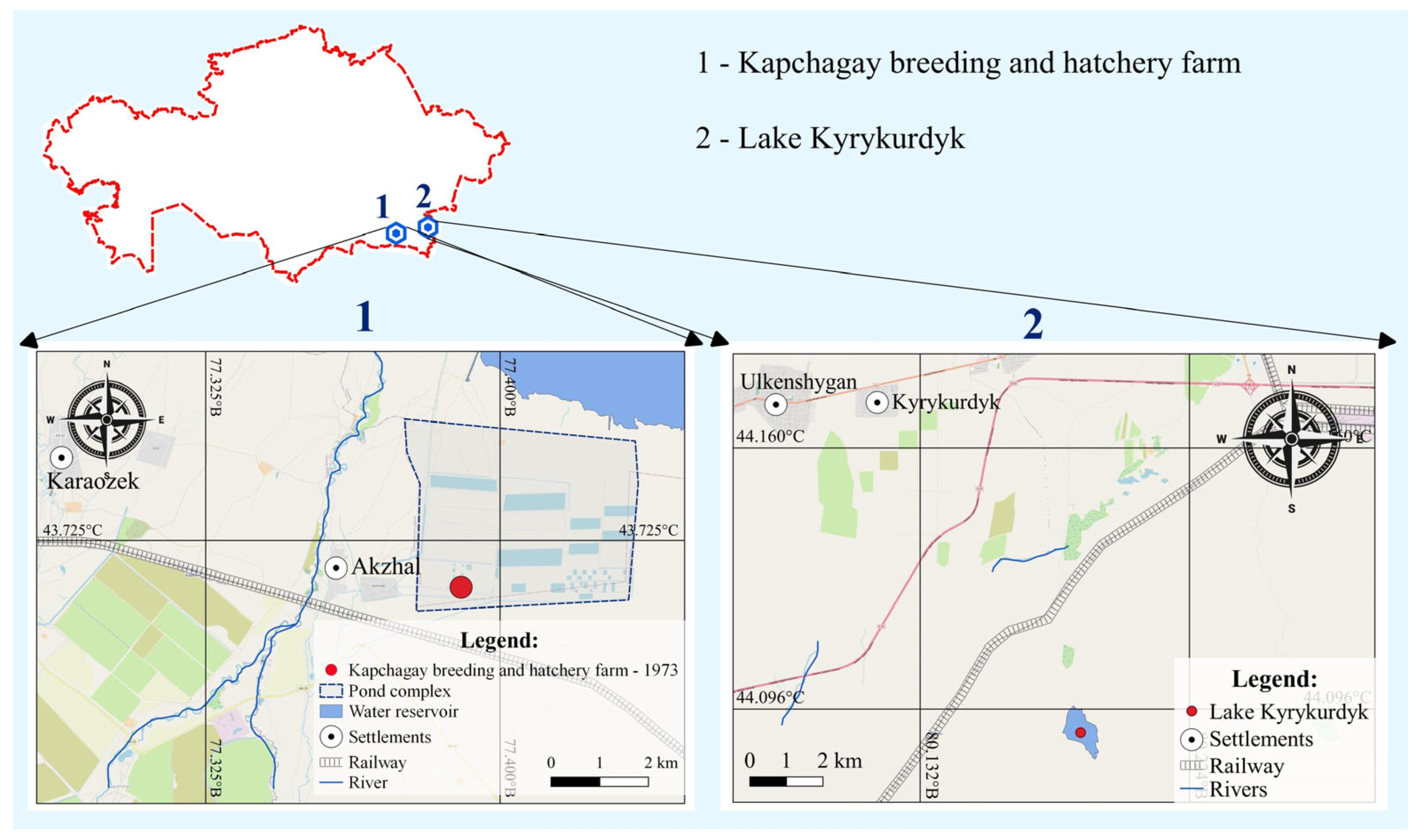
Figure 1. Map showing the sampling locations for yearling tench (T. tinca).
Fishes 11 00238 g001
Figure 2. External appearance of tench (T. tinca) yearlings: (a) from Lake Kyrykkudyk, (b) from the Kapchagay spawning and rearing farm.
Fishes 11 00238 g002
Figure 3. Diagram of carp measurements according to Pravdin (1966) [27] (interpretation of the diagram of carp measurements on a tench). Аbbreviations. Designation of plastic characteristics: ab (L)—absolute body length; ac—Smith’s length; ad (l)—commercial body length; od—trunk length; ao—head length; an—snout length; np—eye diameter (horizontal); po—postorbital region; lm—head length at the occiput; nn—forehead width; gh—maximum body height; ik—minimum body height; aq—anterodorsal distance; rd—postdorsal distance; az—anteroventral distance; ay—anteanal distance; fd—tail stem length; qs—dorsal fin base length; qt—maximum dorsal fin height; yy1—length of the base of the anal fin; ej—maximum height of the anal fin; vx—length of the pectoral fin; zz1—length of the pelvic fin; VZ—distance between the pectoral and pelvic fins; Zy—distance between the pelvic and anal fins; aV—antepectral distance.
Fishes 11 00238 g003
Figure 4. Ratio of absolute length (TL) and body weight (TW) of one-year-old tench: (a) from Lake Kyrykkudyk, (b) from the Kapchagay spawning and rearing farm.
Fishes 11 00238 g004aFishes 11 00238 g004b
Figure 5. Morphological differences between tench yearlings: (a) based on a set of countable characteristics, (b) based on a set of plastic characteristics.
Fishes 11 00238 g005
Figure 6. Coefficients of variation (CV) for the most variable meristic and plastic traits of tench yearlings: (a,b) from the Kapchagay spawning and rearing farm; (c,d) from Lake Kyrykkudyk.
Fishes 11 00238 g006
Table 1. Length–weight relationships (W = aLᵇ) for tench from the Kapshagay spawning and rearing farm and Lake Kyrykkudyk.
Kapchagay Breeding and Hatchery FarmKyrykkudykObservations
W11.9 ± 3.6313.68 ± 2.46Kapshagay: more compact body shape; Kyrykkudyk: more elongated body shape.
L89.7 ± 7.3098.06 ± 6.23
Coefficient of body shape2.04 × 10−61.31 × 10⁻⁶
Coefficient of balancing the dimensions of the equation b2.453.46Kapshagay: negative allometric growth (length increases faster than weight). Kyrykkudyk: positive allometric growth (weight increases faster than length).
Coefficient of determination R20.9220.951-
Note p ≤ 0.05.
Table 2. Comparative morphobiological indicators of one-year tench from the Kapchagay spawning and rearing farm and Lake Kyrykkyduk.
VariablesM ± SU Test (the Level of Statistical Significance)
Kapchagay Breeding and Hatchery FarmLake Kyrykkudyk
N = 25N = 25
Main biological variables
L, mm89.75 ± 7.3098.06 ± 6.23604 (0.000)
l, mm85.58 ± 7.2094.18 ± 5.95628 (0.000)
ad, mm74.48 ± 6.7483.54 ± 5.31611 (0.000)
Q, g11.88 ± 3.6313.68 ± 2.46536 (0.006)
FCF1.59 ± 0.101.44 ± 0.0888 (0.000)
Counting characteristics
Dr1.93 ± 0.251.48 ± 0.50211 (0.000)
Dsof.9 ± 0.269.28 ± 0.45492 (0.007)
Ar1.17 ± 0.371.04 ± 0.20328 (0.087)
Asof.7.97 ± 0.318.72 ± 0.66636 (0.000)
Psof.12.03 ± 1.1715.96 ± 0.53771 (0.000)
Vsof.9.80 ± 0.659.84 ± 0.37408 (0.662)
ll94.60 ± 6.20115.1 ± 6.15771 (0.000)
sp.br15.1 ± 0.9214.8 ± 1.14319 (0.252)
vert.31.07 ± 2.0636.32 ± 1.99734 (0.000)
vert.ch.14.23 ± 1.5415.92 ± 1.29584 (0.001)
vert. tail16.83 ± 2.2220.4 ± 1.26700 (0.000)
Plastic variables
ao20.32 ± 1.8623.46 ± 1.52544 (0.004)
od53.72 ± 5.4359.82 ± 3.61377 (0.966)
gh19.88 ± 2.2123.32 ± 2.20551 (0.003)
ik10.46 ± 1.1110.20 ± 0.8025 (0.000)
aq41.42 ± 3.9448.04 ± 3.20611 (0.000)
rd27.14 ± 2.4629.82 ± 1.79269.5 (0.075)
ay54.18 ± 5.5161.75 ± 3.83560 (0.002)
az36.88 ± 3.6542.53 ± 2.83641 (0.000)
fd13.43 ± 1.5916.42 ± 1.24645 (0.000)
qs10.30 ± 1.059.85 ± 0.977 (0.000)
qt15.28 ± 1.7517.60 ± 1.88465 (0.128)
yy17.20 ± 0.947.51 ± 1.29186 (0.001)
ej11.78 ± 1.0113.76 ± 1.54466 (0.124)
vx11.29 ± 1.2413.56 ± 1.55507 (0.026)
zz112.42 ± 1.4614.23 ± 1.94402 (0.642)
vz18.07 ± 2.1119.47 ± 1.75246 (0.029)
zy16.13 ± 2.6018.18 ± 1.54342.5 (0.583)
aV17.74 ± 2.2022.11 ± 1.56719 (0.000)
lm13.93 ± 1.6616.28 ± 1.50402.5 (0.642)
nn7.77 ± 0.687.46 ± 0.5824.5 (0.000)
an6.62 ± 0.866.24 ± 0.8560 (0.000)
np4.16 ± 0.303.86 ± 0.2318 (0.000)
po9.40 ± 0.9911.2 ± 0.94496.5 (0.040)
Note. p ≤ 0.001.
Table 3. Morphological variables of tench yearlings showing the greatest degree of variation in accordance with loads (PC1–PC3).
Variablesa Kapchagay Breeding and Hatchery Farmb Lake KyrykkudykPrincipal Components
M ± SM ± S123
Counting characteristics
Dr b1.93 ± 0.251.48 ± 0.50−0.0142−0.02940.0077
Asof. b7.97 ± 0.318.72 ± 0.660.02590.0321−0.0196
Psof. b12.03 ± 1.1715.96 ± 0.530.13700.18040.0246
ll a94.60 ± 6.20115.1 ± 6.150.9588−0.2680−0.0329
vert. b31.07 ± 2.0636.32 ± 1.990.19760.72760.2584
vert.ch. b14.23 ± 1.5415.92 ± 1.290.06650.14390.7596
vert. tail b16.83 ± 2.2220.4 ± 1.260.13110.5837−0.5012
Plastic characteristics in %
ik a10.46 ± 1.1110.20 ± 0.800.13050.01719−0.060833
aq a41.42 ± 3.9448.04 ± 3.20−0.1470−0.03660.0245
az a36.88 ± 3.6542.53 ± 2.83−0.12390.00210.0893
fd a13.43 ± 1.5916.42 ± 1.24−0.1432−0.0121−0.0010
qs b10.30 ± 1.059.85 ± 0.970.15040.0311−0.0935
yy1 b7.20 ± 0.947.51 ± 1.290.04710.01700.0197
aV a17.74 ± 2.2022.11 ± 1.56−0.2166−0.0186−0.0412
nn a7.77 ± 0.687.46 ± 0.580.58820.0908−0.2326
an a6.62 ± 0.866.24 ± 0.850.55330.07380.3052
np a4.16 ± 0.303.86 ± 0.230.33650.07960.0374
Note. The loadings on the principal component features are given according to the differences identified between the samples. Indices a and b indicate which sample is characterized by load orientation.
Disclaimer/Publisher’s Note: The statements, opinions and data contained in all publications are solely those of the individual author(s) and contributor(s) and not of MDPI and/or the editor(s). MDPI and/or the editor(s) disclaim responsibility for any injury to people or property resulting from any ideas, methods, instructions or products referred to in the content.