


Abstract
This study investigated the effects of dietary Bacillus cereus, administered alone or in combination with biofloc technology, on the growth performance, immune response, disease resistance, and intestinal microbiota of Litopenaeus vannamei. Shrimp fed diets supplemented with B. cereus, either directly or via biofloc systems, exhibited significantly increased final body weight and specific growth rate, together with a reduced feed conversion ratio compared with the control group. The expression levels of key hepatopancreatic immune-related genes, including lysozyme, prophenoloxidase, superoxide dismutase, Toll, immune deficiency, and Relish, were significantly upregulated in probiotic-associated treatments. Following challenge with Vibrio parahaemolyticus, cumulative mortality was markedly lower in all treatments involving B. cereus or biofloc compared with the control. Although alpha diversity indices were not significantly affected, beta diversity analysis demonstrated that supplementation frequency and delivery mode altered intestinal microbial community structure. The phyla Bacteroidota, Firmicutes, and Proteobacteria predominated across treatments, while members of Marinilabiliaceae and Shewanellaceae were enriched under probiotic-associated conditions, suggesting enhanced nutrient transformation potential. Co-occurrence network analysis further revealed increased microbial network complexity and positive interactions in probiotic and biofloc treatments, indicating improved community stability. These findings demonstrate that the synergistic application of B. cereus and biofloc technology enhances growth performance, immune capacity, and intestinal microbial resilience in intensive shrimp culture, and that supplementation strategy plays a critical role in optimizing probiotic efficacy.
Key Contribution:
The findings provide experimental evidence that combining Bacillus cereus with biofloc technology is an effective and sustainable strategy to enhance growth performance and disease resistance in intensive shrimp farming. This study offers practical guidance for optimizing probiotic application frequency and culture management to improve production efficiency.
1. Introduction
Shrimp aquaculture, particularly of Litopenaeus vannamei, has emerged as a key segment of global seafood production due to its high market value and suitability for intensive culture systems [1,2]. Its versatility under diverse environmental conditions and consistent high yields have driven widespread adoption by farmers [3,4], making it a major contributor to the expanding global shrimp market [5]. However, the intensification of shrimp farming has brought about declines in water quality, increased disease prevalence, and heavy reliance on antibiotics, thereby threatening both environmental sustainability and production efficiency [2]. In response, eco-friendly interventions—such as probiotics and biofloc systems—are gaining traction for their capacity to enhance shrimp health, growth performance, and water quality while reducing chemical inputs [5,6].
Probiotics—beneficial microorganisms that enhance host health and modulate microbial communities—have shown promise in shrimp aquaculture. Among them, Bacillus species are widely recognized as effective due to their spore-forming ability, tolerance to environmental stress, and production of bioactive metabolites [4,7,8]. Non-pathogenic strains of B. cereus have been identified as particularly promising [9], as supplementation can improve growth performance, nutrient utilization, and antioxidant capacity by modulating oxidative stress pathways such as Nrf2 [10]. In addition, B. cereus can improve the intestinal microbiota [11], enriching beneficial taxa such as Romboutsia and Clostridium sensu stricto while suppressing opportunistic pathogens [12,13].
Concurrently, biofloc technology (BFT) has emerged as a sustainable culture strategy that promotes nutrient recycling, microbial homeostasis, and reduced water exchange [14,15]. In shrimp culture, BFT mitigates waste accumulation and improves immunity and water quality through microbial aggregates that assimilate nitrogenous compounds and provide supplemental proteins and vitamins [16]. These biofloc-associated microbial communities contribute to enhanced feed efficiency and accelerated growth compared with conventional systems [17,18].
Recent research has highlighted the synergistic potential of probiotics and biofloc systems when applied together. The introduction of specific probiotic strains, such as B. cereus or B. subtilis, can accelerate floc formation, stabilize microbial communities, and enhance nutrient assimilation within the biofloc environment [6,19]. Probiotic-enriched biofloc systems have been shown to enhance host growth, strengthen host immunity, increase antioxidant enzyme activity, and reduce susceptibility to pathogens, particularly Vibrio spp. [6,20,21,22]. However, most studies have focused on general performance metrics, and the mechanisms underlying probiotic−biofloc interactions—especially regarding intestinal microbial composition, immune gene regulation, and microbial network stability—remain poorly understood. The effects of administration strategy, strain specificity, and microbial community interactions have not been systematically explored.
To address these gaps, the present study investigated the effects of a specific B. cereus strain, isolated from shrimp intestines, administered alone or via biofloc, on growth performance, immune responses, intestinal microbial composition, and network structure in L. vannamei. This work provides new insights into strain-specific probiotic mechanisms and the synergistic potential of probiotic−biofloc applications, offering guidance for sustainable shrimp aquaculture practices.
2. Materials and Methods
2.1. Experimental Strain
The B. cereus strain A4, originally isolated from the intestinal contents of Litopenaeus vannamei, was used as the experimental bacterium in this study. The strain is preserved at the Aquaculture Ecology Laboratory, Ocean University of China. It was cultured in LB broth at 28 °C with constant shaking for 24 h. Bacterial density was initially estimated spectrophotometrically by measuring optical density at 600 nm (OD600). This estimation was subsequently verified by colony-forming unit (CFU) counts using the serial dilution and spread plate method. Specifically, appropriate dilutions were prepared and spread onto LB agar plates, which were then incubated at 28 °C under aerobic conditions for 24 h prior to colony enumeration. The culture was harvested by centrifugation at 12,000 rpm for 10 min at 4 °C, and the resulting pellet was washed three times with sterile 0.9% saline. The cell suspension was filtered through a 0.22 μm membrane to concentrate the bacteria and stored at 4 °C for subsequent use.
2.2. Biofloc Preparation
Bioflocs were generated in 200 L tanks. For B. cereus-enriched bioflocs, 2.5 × 10¹² CFU of B. cereus, 1 kg of powdered shrimp feed, and 5 kg of brown sugar were added to 180 L of seawater and continuously aerated for fermentation at 28 °C, with an initial pH of 7.8. The initial C:N ratio was adjusted to approximately 15:1 by the addition of brown sugar, and carbon was supplemented only once at the beginning of the fermentation process, with no further additions thereafter. No other probiotics were introduced except for B. cereus in the treatment group. The salinity of the seawater was set at 30 PSU at the start and was not adjusted during fermentation. Control bioflocs were prepared following the same procedure but without B. cereus. After 48 h of fermentation, the resulting bioflocs were collected and applied in subsequent experiments.
2.3. Experimental Animal and Feeding Trial
Healthy juvenile L. vannamei were obtained from a commercial hatchery. Prior to experimentation, shrimp were acclimated for 15 days in a 4 × 4 × 1.2 m concrete tank and fed a commercial diet containing ≥42% crude protein, ≥5.5% crude fat, ≤5% crude fiber, ≤16% ash, ≤12% moisture, ≥1.2% total phosphorus, and ≥2.1% lysine. Feeding occurred twice daily (08:30 and 15:00) at 5% of body mass. Rearing conditions were maintained at 25–26 °C, salinity at 27–29 ppt, pH at 7.2–8.0, and dissolved oxygen at 5–8 mg L−1.
After acclimation, shrimp were fasted for 24 h and then randomly assigned to seven experimental treatments (CT, BC, BS, BT, PC, PS, and PT), each with five replicates of 100 shrimp per 400 L tank. The experimental design is summarized in Table 1. A two-factor experimental design was applied to assess the effects of B. cereus on shrimp, with application method (direct sprinkling vs. biofloc) and supplementation frequency (daily vs. every 7 days) as the factors. Seven treatment groups were established to evaluate individual and combined effects on growth performance, immune responses, disease resistance, and intestinal microbiota. Each treatment was replicated, and data were analyzed using two-way ANOVA to examine main and interaction effects, providing a systematic assessment of how application strategy and frequency influence shrimp physiology and gut microbial communities. In the group nomenclature, the initial letters denote specific experimental factors: “B” for B. cereus, “P” for probiotic application via water addition, “C” for collected bacterial cells, “S” for a 7-day treatment cycle, and “T” for biofloc technology. Diets supplemented with B. cereus were used for the BC and BS groups, and probiotic diet preparation followed Li [23]. The application method and probiotic concentration in biofloc aquaculture systems were based on the reports of Jatayu [24] and Khanjani [25]. The CT, BC, and BT groups were reared in a flow-through aquaculture system with continuous water exchange using filtered and aerated seawater. The PC, PS, and PT groups were cultured in biofloc systems with zero water exchange, maintaining settled biofloc volumes below 20 mL L−1. Excess bioflocs were removed using sterile sieves, and filtered water was recycled back into the tanks, with fresh seawater added to maintain volume. The C/N ratio was kept at approximately 15:1 throughout the experimental period. The experimental period lasted 42 days. During this time, the CT, PC, PS, BT, and PT groups were fed commercial feed without B. cereus, while the BC group was fed feed containing B. cereus daily. In the BS group, a 14-day feeding cycle was applied: at the start of each cycle, shrimp were fed feed containing B. cereus for 7 days, followed by 7 days of commercial feed without B. cereus. This 14-day cycle was repeated three times throughout the experiment. The diets for the BC and BS groups were prepared daily and fed to the shrimp within 2 h to ensure the viability of B. cereus. Prior to the start of the rearing experiment, bioflocs were added according to the following treatments: PC group: Bioflocs constructed with B. cereus were added once to achieve a concentration of 0.1 mL/L, followed by daily sprinkling of B. cereus at 1 × 10³ CFU/mL throughout the experiment. PS group: Bioflocs constructed with B. cereus were added once to reach 0.1 mL/L, followed by sprinkling of B. cereus at 1 × 10³ CFU/mL for 7 consecutive days, then suspended for 7 days, forming a 14-day cycle, which was repeated three times. BT group: Bioflocs constructed with B. cereus were added once to achieve 0.1 mL/L, with no further addition during the experiment. PT group: Bioflocs without B. cereus were added once to reach 0.1 mL/L, with no further addition during the experiment. Uneaten feed and feces were removed before each feeding. Continuous aeration maintained dissolved oxygen levels above 5 mg L−1. Shrimp feeding behavior and mortality were recorded daily.
Table 1.
Experimental treatments applied to each group.
2.4. Growth Performance
At the end of the 42-day culture period, all shrimp from each tank were individually weighed to evaluate growth performance. Survival rate (SR), feed conversion ratio (FCR), and specific growth rate (SGR) were calculated as follows [26]:
where N0 and Nt denoted the initial and final numbers of shrimp, respectively; W0 and Wt represented the corresponding average body weights; WG was the weight gain; F0 was the total dry feed intake; and t was the experimental duration in days.
SR (%) = (Nt/N0) × 100
FCR = F0/WG
SGR (%/d) = [(ln Wt − ln W0)/t] × 100
2.5. Immune-Related Gene Expression
Following the feeding trial, three shrimp per tank were randomly sampled for hepatopancreas collection and preserved in RNA Keeper Tissue Stabilizer (Vazyme, Nan Jing, China). Total RNA was extracted using the FastPure Complex Tissue/Cell Total RNA Isolation Kit (Sangon Biotech, Shang Hai, China) according to the manufacturer’s instructions. cDNA was synthesized using the HiScript III 1st Strand cDNA Synthesis Kit (+gDNA wiper; Vazyme, China).
RT-qPCR was performed on a QuantStudio 1 system (Thermo Fisher Scientific, Waltham, MA, USA) using ChamQ Blue Universal SYBR qPCR Master Mix (Vazyme, Nan Jing, China). Each sample was run in triplicate. Immune-related genes, including LZM (lysozyme), proPO (prophenoloxidase), SOD (superoxide dismutase), Toll, Imd, and Relish, were analyzed to assess shrimp immune responses across treatments. β-actin was used as the reference gene for normalization. Primer sequences are listed in Table 2. All primers exhibited efficiencies between 90% and 105%. Relative expression levels were calculated using the 2–ΔΔCT method.
Table 2.
Primer sequences used for gene expression analysis in this study.
2.6. Pathogen Challenge with Vibrio parahaemolyticus
The V. parahaemolyticus strain, isolated from diseased shrimp, was obtained from the Yellow Sea Fisheries Research Institute, Chinese Academy of Fishery Sciences. The strain was cultured in LB broth at 30 °C for 24 h. Cells were collected by centrifugation (12,000 rpm, 4 °C, 15 min), washed three times with 0.9% sterile saline, and resuspended in 0.9% saline to prepare the bacterial suspension. Based on preliminary experiments, the challenge dose was set at 1 × 10⁶ cells/mL [28].
After the 42-day feeding trial, 30 shrimp per tank were randomly selected for the challenge. Each shrimp received a 20 µL intramuscular injection of the V. parahaemolyticus suspension (1 × 10⁶ cells/mL). Mortality was recorded daily over 14 days under stable rearing conditions. Relative percentage survival (RPS) was calculated as follows:
RPS (%) = [1 − (mortality in treatment)/(mortality in control)] × 100
2.7. Intestinal Microbiota Analysis
At the end of the trial, intestinal contents were collected from three shrimp per tank. Surfaces were disinfected with 75% ethanol, and midguts were aseptically dissected. Contents were flushed with sterile water, pooled per tank, flash-frozen in liquid nitrogen, and sent to Biomarker Technologies (Beijing, China) for 16S rRNA (V3–V4) sequencing. Amplicons were generated with primers 343F and 798R and sequenced on an Illumina NovaSeq 6000 (Illumina, San Diego, CA, USA). Reads were merged, quality-filtered, and denoised using DADA2 to obtain ASVs, which were taxonomically assigned via SILVA v138. Alpha diversity (Chao1, Shannon) was calculated in QIIME2, and beta diversity (Bray–Curtis) was assessed using PERMANOVA and ANOSIM via the vegan package in R (v. 4.4.2) [30]. Specificity–occupancy patterns were visualized with the ggplot2 package in R (v. 4.4.2) [31]. Relationships among intestinal microbiota, growth indices, and immune parameters were analyzed via ggcor, ggplot2, and vegan packages in R (v. 4.4.2) [32]. PICRUSt (Phylogenetic Investigation of Communities by Reconstruction of Unobserved States) was employed to infer the potential functional capabilities of the microbial communities. Phylogenetic molecular ecological networks (MENs) were established using a random matrix theory-based thresholding method implemented in the Molecular Ecological Network Analysis pipeline [33]. The resulting networks were subsequently visualized and characterized with Cytoscape (v. 3.10.3) [34]. The raw sequencing data are available at the Sequence Read Archive (SRA) of the NCBI under the accession number PRJNA1354791.
2.8. Statistical Analysis
Data are presented as mean ± SEM. Growth performance, immune gene expression, and challenge test results were analyzed by one-way ANOVA with Duncan’s post hoc test (SPSS 25). The differences in growth performance and immune indices were analyzed by using a two-way ANOVA test, and statistical analysis was performed using SPSS software (SPSS 25). The raw data were diagnosed for normality of distribution and homogeneity of variance with the Kolmogorov-Smirnov test and Levene’s test, respectively. When the raw data did not follow the normal distribution, the data transformation was applied. Intestinal microbiota data were analyzed using Kruskal–Wallis tests. Statistical significance was set at p < 0.05.
3. Results
3.1. Growth Performance Analysis
The effects of different treatments on shrimp growth are summarized in Table 3. Survival rate and initial body weight did not differ significantly among groups (p > 0.05). Except for PT, all treatment groups showed higher final body weight and SGR than the control (F6,28 = 24.793, p = 0.000), with BC and PC exhibiting the greatest gains. Correspondingly, FCR was lowest in BC and PC (F6,28 = 9.433, p = 0.000), with no significant differences between these two groups.
Table 3.
Growth performance of shrimp under different treatments.
3.2. Expression Levels of LZM, proPO, and SOD Genes
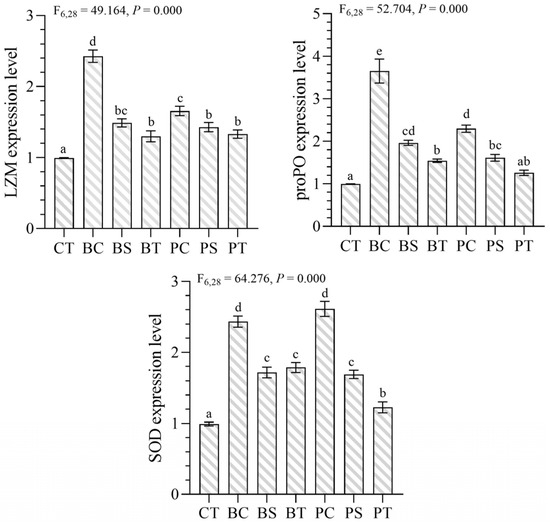
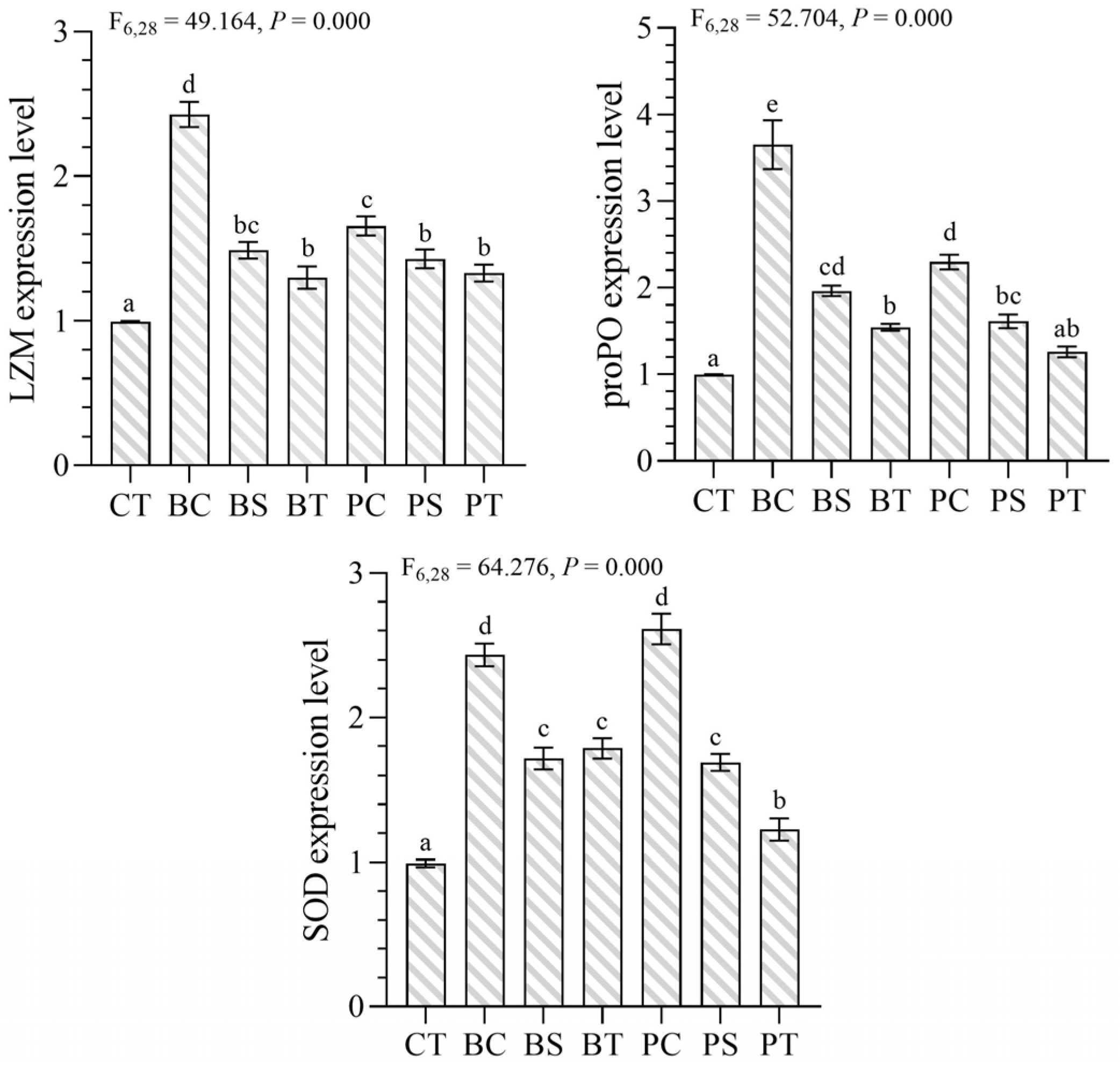
Hepatopancreatic expression of LZM, proPO, and SOD varied among treatment groups (Figure 1). The expression levels of LZM, proPO, and SOD in the BC, BS, BT, PC, and PS groups were significantly higher than those in the CT group (p < 0.05). In the PT group, LZM and SOD expression levels were also significantly elevated compared with CT (p < 0.05). Notably, the BC group showed significantly higher LZM and proPO expression than all other treatments (p < 0.05).
Figure 1.
Relative expression of LZM, proPO, and SOD in the hepatopancreas of L. vannamei. Data are shown as mean ± SEM; different lowercase letters denote significant differences (p < 0.05); CT: Commercial feed only; BC: Feed supplemented daily with B. cereus (1 × 10⁹ CFU/kg), no bioflocs; BT: 0.1 mL/L B. cereus bioflocs added once before experiment, no further addition; BS: Feed with B. cereus (1 × 10⁹ CFU/kg) for 7 days, then commercial feed for 7 days, no bioflocs; PC: 0.1 mL/L B. cereus bioflocs added once before experiment, then daily B. cereus sprinkling (1 × 10³ CFU/mL); PT: 0.1 mL/L bioflocs without B. cereus added once before experiment, no further addition; PS: 0.1 mL/L B. cereus bioflocs added once before experiment, then B. cereus sprinkling (1 × 10³ CFU/mL) for 7 days, stop 7 days; 14-day cycle repeated 3 times.
3.3. Expression Levels of Toll, Imd, and Relish
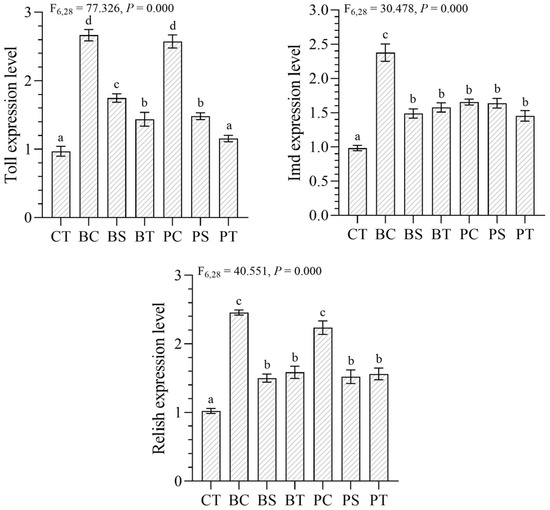
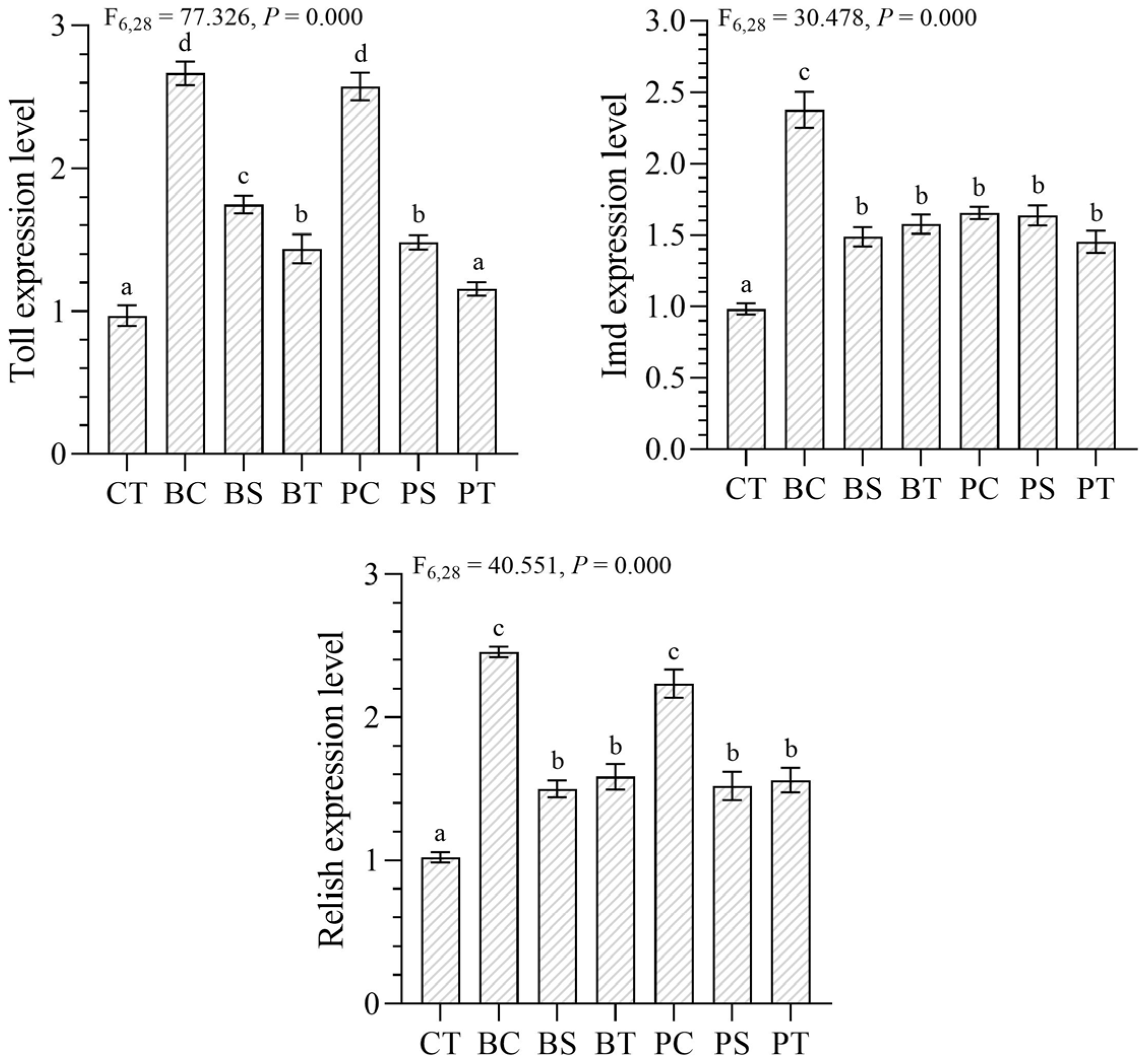
As shown in Figure 2, the expression levels of Imd, Toll, and Relish were significantly higher in the BC, BS, BT, PC, and PS groups than in the CT group (p < 0.05). Toll and Relish expression was particularly elevated in the BC and PC groups compared with all other treatments (p < 0.05), with no significant difference between these two groups (p > 0.05).
Figure 2.
Relative expression levels of Toll, Imd, and Relish genes in the hepatopancreas of L. vannamei. Data are shown as mean ± SEM. Different lowercase letters above the columns indicated statistically significant differences between these groups (p < 0.05); CT: Commercial feed only; BC: Feed supplemented daily with B. cereus (1 × 10⁹ CFU/kg), no bioflocs; BT: 0.1 mL/L B. cereus bioflocs added once before experiment, no further addition; BS: Feed with B. cereus (1 × 10⁹ CFU/kg) for 7 days, then commercial feed for 7 days, no bioflocs; PC: 0.1 mL/L B. cereus bioflocs added once before experiment, then daily B. cereus sprinkling (1 × 10³ CFU/mL); PT: 0.1 mL/L bioflocs without B. cereus added once before experiment, no further addition; PS: 0.1 mL/L B. cereus bioflocs added once before experiment, then B. cereus sprinkling (1 × 10³ CFU/mL) for 7 days, stop 7 days; 14-day cycle repeated 3 times.
3.4. Analysis of Shrimp Disease Resistance
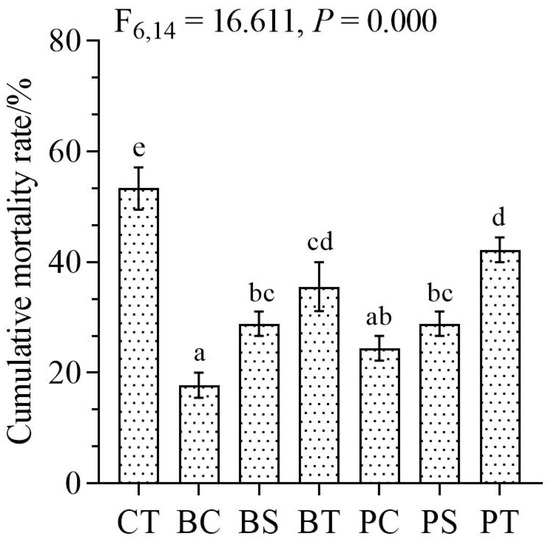
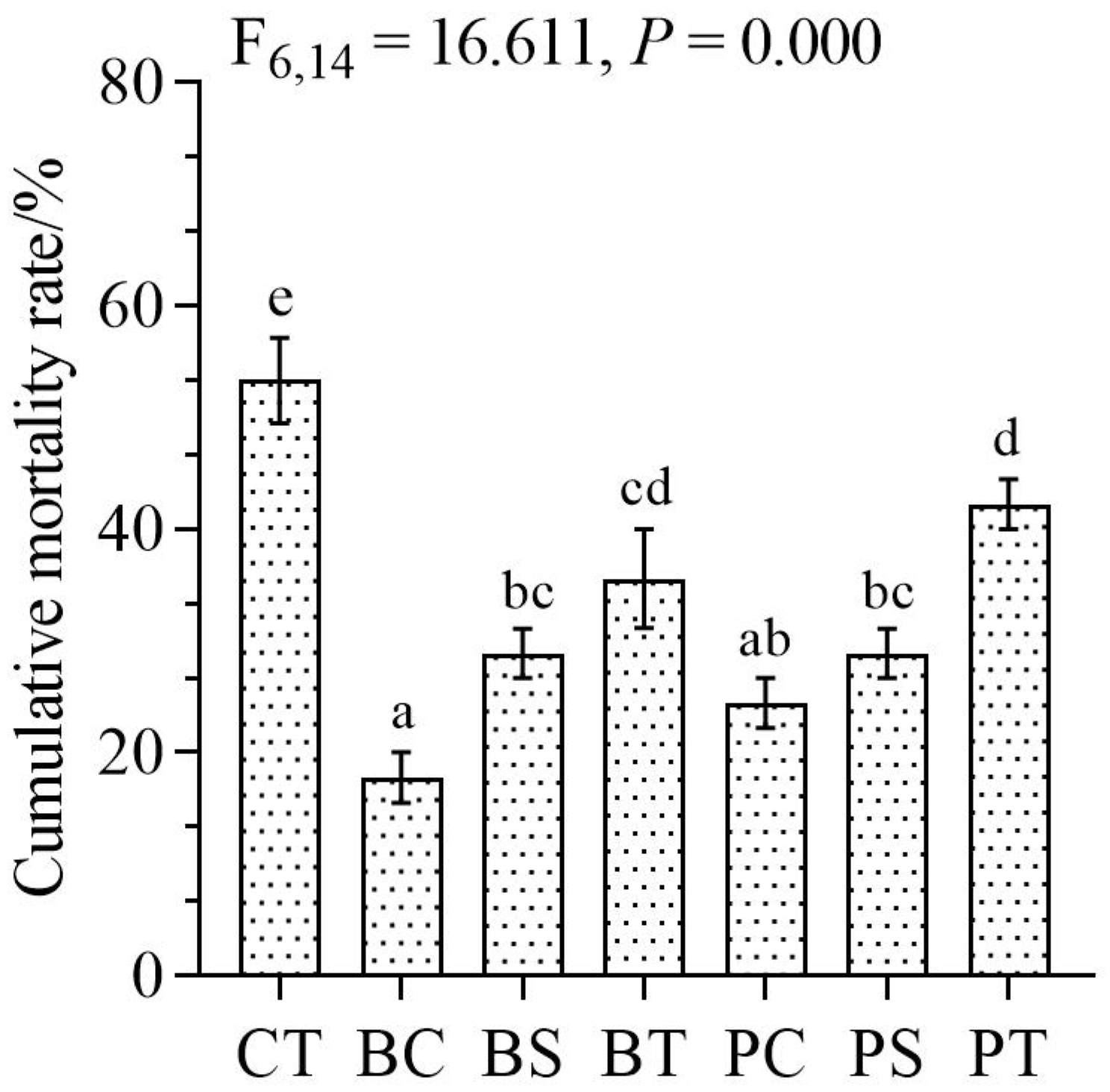
As shown in Figure 3, shrimp resistance to V. parahaemolyticus differed among treatments. Cumulative mortality was significantly lower in BC, BS, BT, PC, PS, and PT groups compared with the CT group (p < 0.05). No significant difference was detected between BS and PC (p > 0.05), nor among BS, PC, and PS (p > 0.05).
Figure 3.
Cumulative mortality of shrimp in the CT, BC, BS, BT, PC, PS, and PT groups. Data are shown as mean ± SEM; different lowercase letters indicate significant differences (p < 0.05); CT: Commercial feed only; BC: Feed supplemented daily with B. cereus (1 × 10⁹ CFU/kg), no bioflocs; BT: 0.1 mL/L B. cereus bioflocs added once before experiment, no further addition; BS: Feed with B. cereus (1 × 10⁹ CFU/kg) for 7 days, then commercial feed for 7 days, no bioflocs; PC: 0.1 mL/L B. cereus bioflocs added once before experiment, then daily B. cereus sprinkling (1 × 10³ CFU/mL); PT: 0.1 mL/L bioflocs without B. cereus added once before experiment, no further addition; PS: 0.1 mL/L B. cereus bioflocs added once before experiment, then B. cereus sprinkling (1 × 10³ CFU/mL) for 7 days, stop 7 days; 14-day cycle repeated 3 times.
3.5. Effects of Treatment and Application Frequency on Growth Performance and Immune Indices
As shown in Table 4, treatment had no significant effects on FCR, SGR, SOD, or Relish (FCR: F1,20 = 0.566, p = 0.461; SGR: F1,20 = 2.882, p = 0.105; SOD: F1,20 = 1.328, p = 0.263; Relish: F1,20 = 0.881, p = 0.359), whereas significant effects were observed for LZM, proPO, Toll, and Imd (LZM: F1,20 = 225.159, p < 0.001; proPO: F1,20 = 154.084, p < 0.001; Toll: F1,20 = 4.943, p = 0.038; Imd: F1,20 = 288.809, p < 0.001). Application frequency significantly affected all measured parameters, including FCR, SGR, LZM, proPO, SOD, Toll, Imd, and Relish (FCR: F2,20 = 12.085, p < 0.001; SGR: F2,20 = 225.280, p < 0.001; LZM: F2,20 = 22.484, p < 0.001; proPO: F2,20 = 157.297, p < 0.001; SOD: F2,20 = 132.405, p < 0.001; Toll: F2,20 = 74.568, p < 0.001; Imd: F2,20 = 104.845, p < 0.001; Relish: F2,20 = 46.334, p < 0.001). Significant interaction effects between treatment and application frequency were detected for LZM, proPO, and Imd (LZM: F2,20 = 199.302, p < 0.001; proPO: F2,20 = 8.590, p = 0.008; Imd: F2,20 = 1.214, p < 0.001).
Table 4.
Effects of treatment and application frequency on growth performance and immune indices based on two-way ANOVA.
3.6. Intestinal Microbiota Diversity
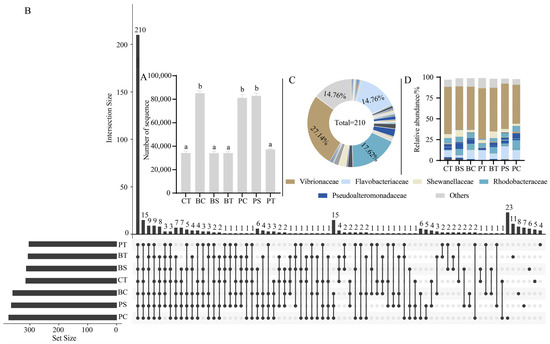
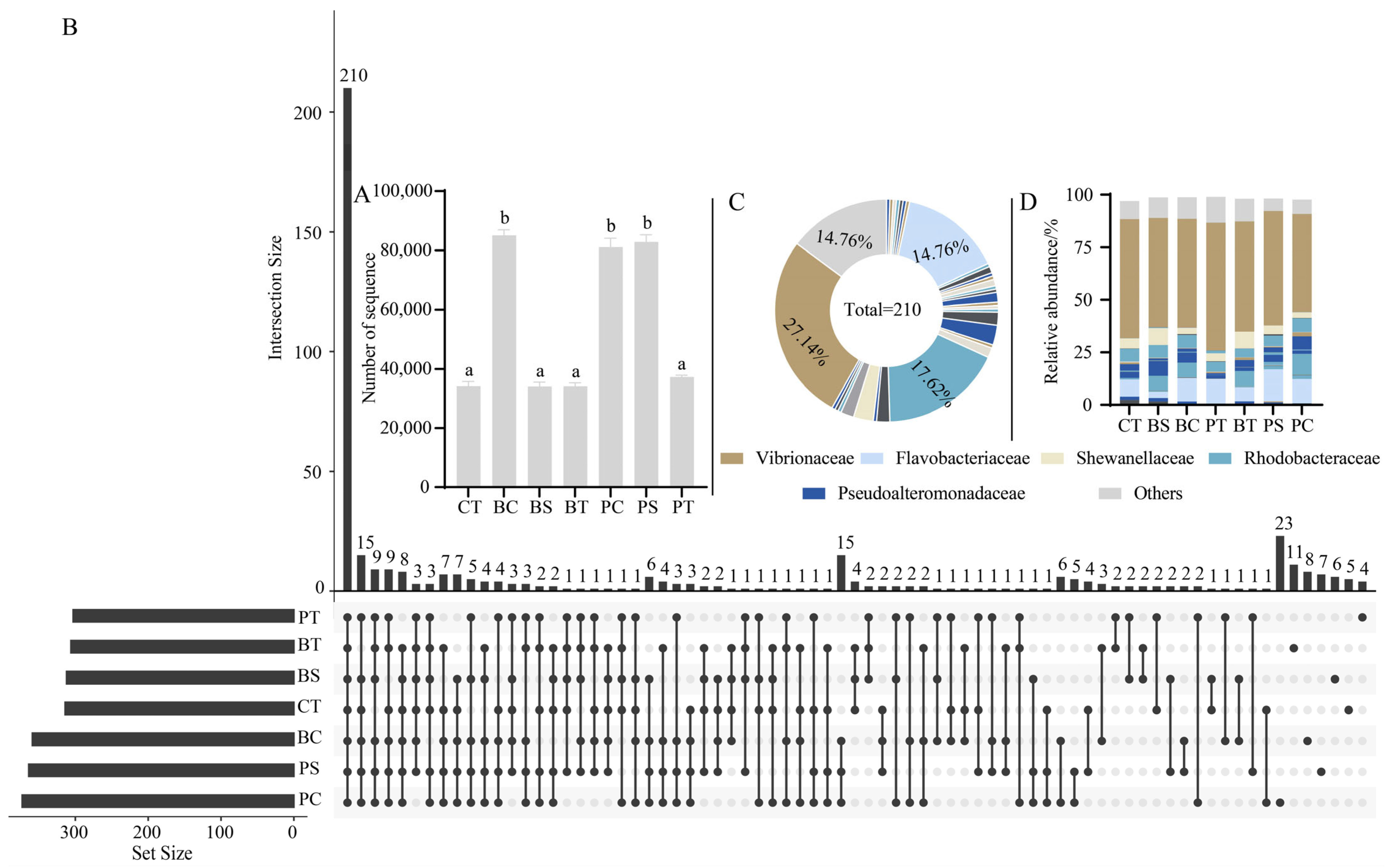
A total of 1,943,861 valid sequences were obtained from 35 samples. Sequence counts were significantly higher in the BC, PC, and PS groups than in the CT, BS, BT, and PT groups (p < 0.05; Figure 4A). An UpSet plot revealed 210 shared ASVs among the seven groups (Figure 4B), most of which belonged to Vibrionaceae (27.14%), Rhodobacteraceae (17.62%), and Flavobacteriaceae (14.76%; Figure 4C). The relative abundances of these dominant families are shown in Figure 4D. Compared with CT, none of the treatments (BC, BS, BT, PC, PS, or PT) showed significant changes in the relative abundances of Vibrionaceae, Rhodobacteraceae, or Flavobacteriaceae (p > 0.05).
Figure 4.
Sequence analysis in all groups (A); upset plot showing shared ASVs in all groups (B); proportion analysis of shared ASVs at the family level (C); and changes in the abundance of shared ASVs across all groups (D); different lowercase letters indicate significant differences (p < 0.05); CT: Commercial feed only; BC: Feed supplemented daily with B. cereus (1 × 10⁹ CFU/kg), no bioflocs; BT: 0.1 mL/L B. cereus bioflocs added once before experiment, no further addition; BS: Feed with B. cereus (1 × 10⁹ CFU/kg) for 7 days, then commercial feed for 7 days, no bioflocs; PC: 0.1 mL/L B. cereus bioflocs added once before experiment, then daily B. cereus sprinkling (1 × 10³ CFU/mL); PT: 0.1 mL/L bioflocs without B. cereus added once before experiment, no further addition; PS: 0.1 mL/L B. cereus bioflocs added once before experiment, then B. cereus sprinkling (1 × 10³ CFU/mL) for 7 days, stop 7 days; 14-day cycle repeated 3 times.
Both Chao1 and Shannon indices showed no significant differences between any treatment group (BC, BS, BT, PC, PS, or PT) and the CT group (Figure S1A, p > 0.05). PCoA revealed no clear separation among the seven groups (Figure S1B). However, PERMANOVA detected significant differences along both the first and second principal components (FPERMANOVA = 1.895, p = 0.001). Subsequent PERMANOVA and ANOSIM analyses indicated that the intestinal microbial community structures in the BC, PC, and PS groups differed significantly from those in CT (Table S1; PERMANOVA: BC vs. CT: FPERMANOVA = 3.034, p = 0.010; PC vs. CT: FPERMANOVA = 3.277, p = 0.011; PS vs. CT: FPERMANOVA = 2.830, p = 0.010; ANOSIM: BC vs. CT: R = 0.808, p = 0.012; PC vs. CT: R = 0.804, p = 0.005; PS vs. CT: R = 0.596, p = 0.003). In contrast, no significant differences were observed between CT and BS, CT and BT, or CT and PT, nor among BC and PC, BC and PS, or PC and PS (p > 0.05).
3.7. Intestinal Microbiota Composition
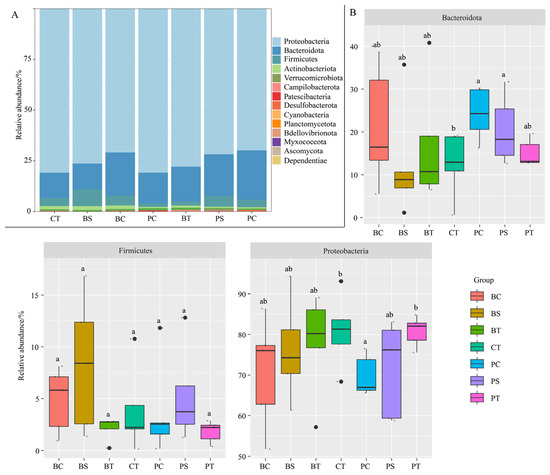
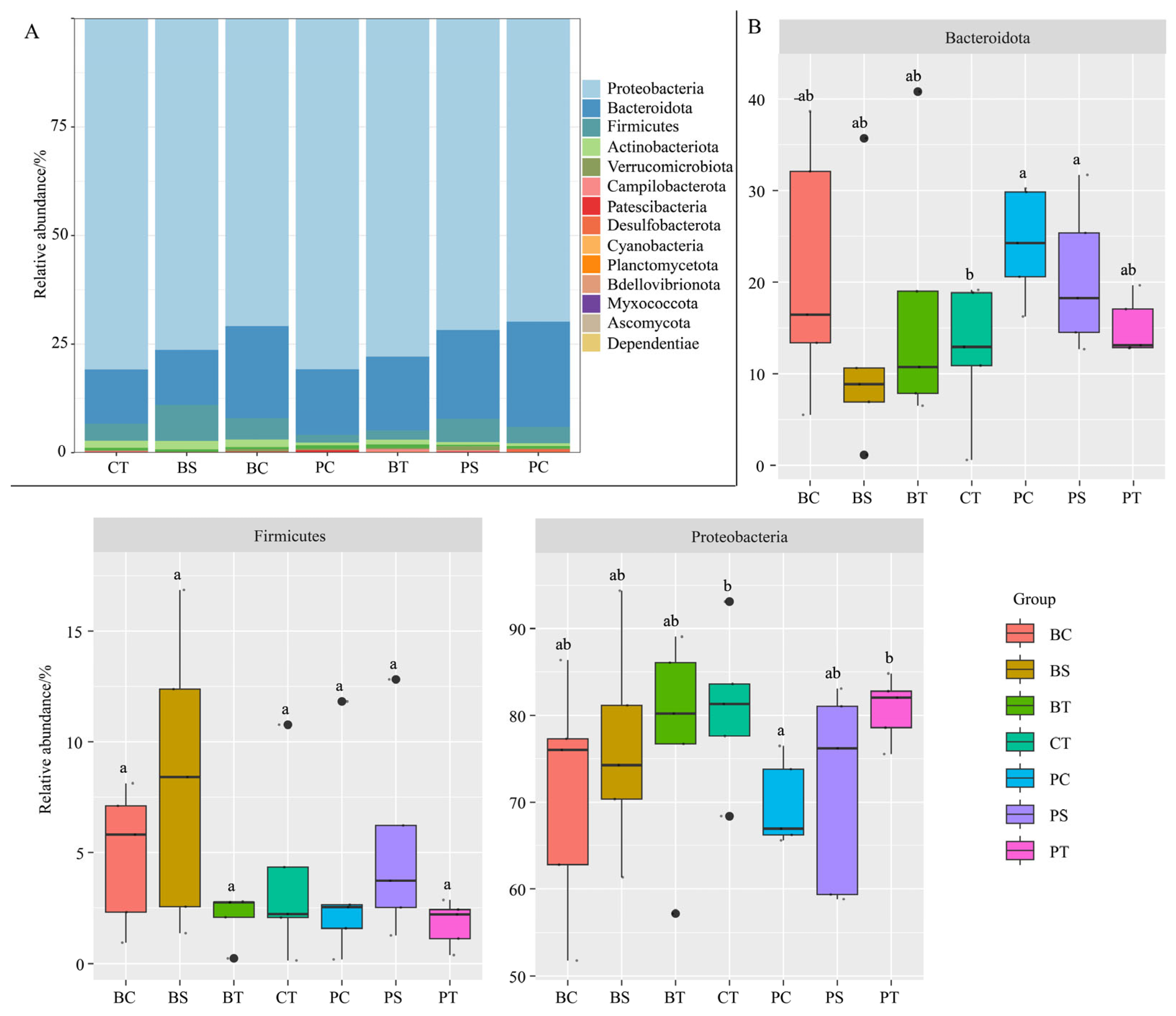
At the phylum level, Bacteroidota, Firmicutes, and Proteobacteria were the dominant taxa across all groups (relative abundance > 96%; Figure 5A). Kruskal–Wallis tests showed no significant differences in Firmicutes between any treatment group and the CT group (p > 0.05; Figure 5B). The relative abundances of Bacteroidota and Proteobacteria did not differ among the BC, BS, BT, and CT groups (p > 0.05). In contrast, the PC group showed significantly higher Bacteroidota and lower Proteobacteria than the CT group (p < 0.05). No significant differences in the relative abundances of the three dominant phyla were detected among the six treatment groups (BC, BS, BT, PC, PS, or PT; p > 0.05).
Figure 5.
Composition of the intestinal microbiota in all groups at the phylum level (A) and differential analysis (B); different lowercase letters indicate significant differences (p < 0.05); CT: Commercial feed only; BC: Feed supplemented daily with B. cereus (1 × 10⁹ CFU/kg), no bioflocs; BT: 0.1 mL/L B. cereus bioflocs added once before experiment, no further addition; BS: Feed with B. cereus (1 × 10⁹ CFU/kg) for 7 days, then commercial feed for 7 days, no bioflocs; PC: 0.1 mL/L B. cereus bioflocs added once before experiment, then daily B. cereus sprinkling (1 × 10³ CFU/mL); PT: 0.1 mL/L bioflocs without B. cereus added once before experiment, no further addition; PS: 0.1 mL/L B. cereus bioflocs added once before experiment, then B. cereus sprinkling (1 × 10³ CFU/mL) for 7 days, stop 7 days; 14-day cycle repeated 3 times.
At the family level, Flavobacteriaceae, Marinilabiliaceae, Pseudoalteromonadaceae, Rhodobacteraceae, Shewanellaceae, and Vibrionaceae (each >82% relative abundance across treatments) were identified as the dominant families (Figure S2A). The relative abundances of Flavobacteriaceae, Pseudoalteromonadaceae, Rhodobacteraceae, and Vibrionaceae in BC, BS, BT, PC, PS, and PT groups did not differ significantly from the CT group (p > 0.05; Figure S2B). Marinilabiliaceae was significantly enriched in the BC, BS, BT, and PC groups compared with the CT, PS, and PT groups (p < 0.05). Shewanellaceae was significantly more abundant in BS and BT than in the BC, CT, PC, PS, and PT groups (p < 0.05).
3.8. Network Analysis of the Intestinal Microbiota
Co-occurrence networks were constructed to assess interspecific interactions within intestinal microbiota under different culture conditions. Network topological properties are summarized in Table S2. All empirical networks exhibited significantly higher modularity than randomized counterparts, indicating modular structures. Average connectivity (avgK), a proxy for network complexity, was highest in the BS network, followed by the PT, PS, PC, BT, BC, and CT networks. Average geodesic distance (GD) and modularity differed significantly among groups, indicating distinct community structures.
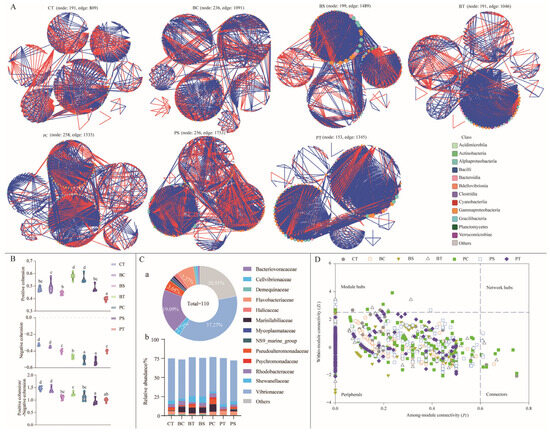
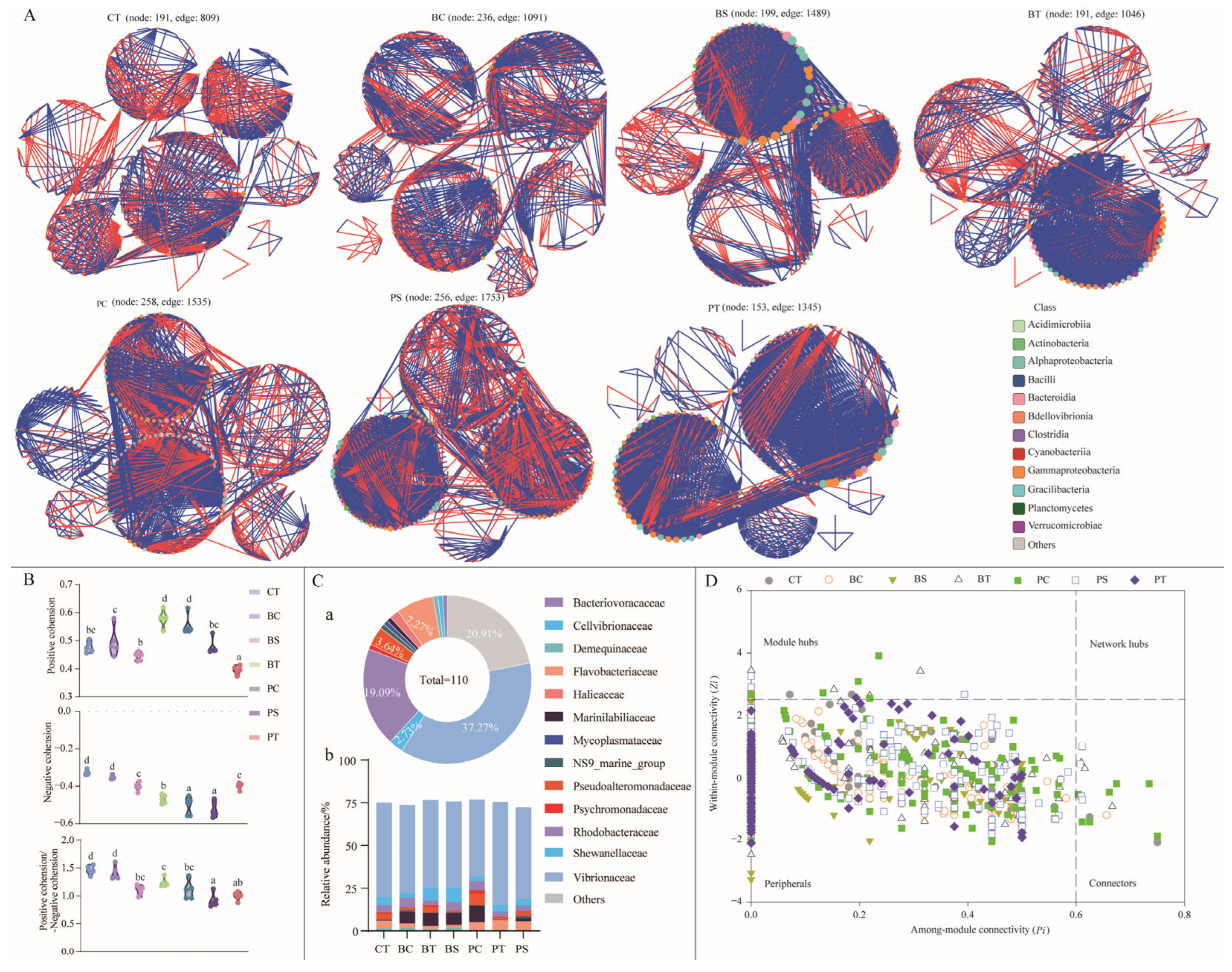
The overall networks were visualized (Figure 6A). The CT, BC, BS, BT, PC, PS, and PT networks comprised 191, 236, 199, 191, 258, 256, and 153 nodes, respectively. Most nodes belonged to Alphaproteobacteria (CT 23.0%, BC 24.6%, BS 23.6%, BT 17.8%, PC 24.8%, PS 21.1%, and PT 20.2%; mainly Rhodobacteraceae), Bacteroidia (CT 13.6%, BC 17.8%, BS 14.6%, BT 15.7%, PC 18.6%, PS 19.9%, and PT 20.4%; mainly Flavobacteriaceae), and Gammaproteobacteria (CT 46.6%, BC 37.7%, BS 41.7%, BT 50.8%, PC 39.9%, PS 38.3%, and PT 41.5%; mainly Vibrionaceae). PS network exhibited the highest number of edges (1753; 1110 positive, 643 negative), followed by the PC, BS, PT, BC, BT, and CT networks. Positive edges indicated cooperative interactions, whereas negative edges indicated competitive interactions, with cooperation dominating all networks. Cohesion analysis revealed significantly higher positive interactions in BT and PC networks than in CT, BC, BS, PS, and PT networks (Figure 6B; p < 0.05). Across all networks, 110 nodes were shared (Figure 6(Ca)), mainly Vibrionaceae (37.3%), Rhodobacteraceae (19.1%), and Flavobacteriaceae (7.3%). The relative proportions of Flavobacteriaceae, Pseudoalteromonadaceae, Rhodobacteraceae, and Vibrionaceae did not differ between CT and other networks (Figure 6(Cb); p > 0.05). Marinilabiliaceae and Shewanellaceae were significantly less abundant in the CT network than in the BS and BT networks (p < 0.05) but were comparable to the BC, PC, PS, and PT networks (p > 0.05). PERMANOVA and ANOSIM confirmed that networked bacterial community composition differed significantly across groups (Table S3).
Figure 6.
Co-occurrence network analysis (A) and cohesion analysis (B) in all groups; proportion analysis of shared ASVs in the co-occurrence network at the family level (Ca); changes in the abundance of shared ASVs across all groups (Cb); and topological analysis of the intestinal microbiota in all groups (D); different lowercase letters indicate significant differences (p < 0.05); CT: Commercial feed only; BC: Feed supplemented daily with B. cereus (1 × 10⁹ CFU/kg), no bioflocs; BT: 0.1 mL/L B. cereus bioflocs added once before experiment, no further addition; BS: Feed with B. cereus (1 × 10⁹ CFU/kg) for 7 days, then commercial feed for 7 days, no bioflocs; PC: 0.1 mL/L B. cereus bioflocs added once before experiment, then daily B. cereus sprinkling (1 × 10³ CFU/mL); PT: 0.1 mL/L bioflocs without B. cereus added once before experiment, no further addition; PS: 0.1 mL/L B. cereus bioflocs added once before experiment, then B. cereus sprinkling (1 × 10³ CFU/mL) for 7 days, stop 7 days; 14-day cycle repeated 3 times.
As shown in Figure 6D, most nodes in all networks were peripherals, characterized by few links restricted to their own modules. Nodes with high within-module or cross-module connectivity were classified as module hubs or connectors. The proportion of module hubs/connectors was 2.6%, 1.7%, 1.0%, 4.2%, 4.7%, 2.7%, and 1.0% in CT, BC, BS, BT, PC, PS, and PT, respectively, and most belonged to Alphaproteobacteria, Bacteroidia, and Gammaproteobacteria (Table S4).
3.9. Habitat Specificity
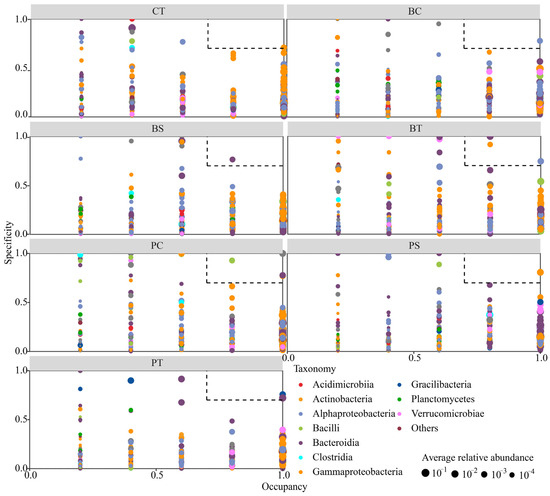
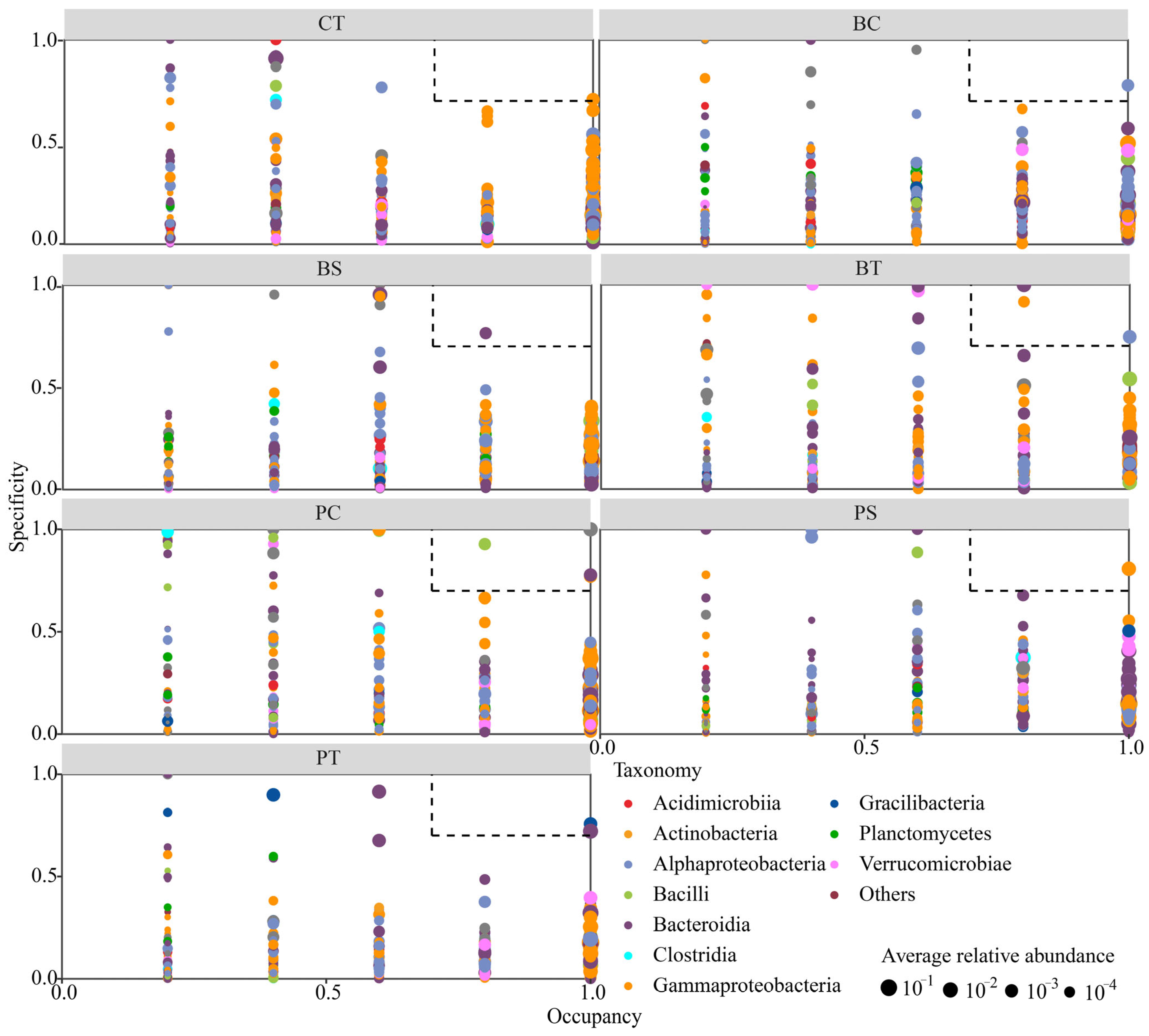
The distribution of ASVs in the intestinal microbiota of the CT, BC, BS, BT, PC, PS, and PT groups is shown in Figure 7. ASVs with both high specificity and high occupancy were classified as specialists. A total of 1, 1, 1, 3, 4, 2, and 2 specialist ASVs were identified in CT, BC, BS, BT, PC, PS, and PT groups, respectively, predominantly affiliated with Alphaproteobacteria (three ASVs), Bacteroidia (four ASVs), and Gammaproteobacteria (four ASVs).
Figure 7.
Distribution of ASVs in the intestinal microbiota across all groups. Values of specificity and occupancy greater than or equal to 0.7 are shown within the dashed line; CT: Commercial feed only; BC: Feed supplemented daily with B. cereus (1 × 10⁹ CFU/kg), no bioflocs; BT: 0.1 mL/L B. cereus bioflocs added once before experiment, no further addition; BS: Feed with B. cereus (1 × 10⁹ CFU/kg) for 7 days, then commercial feed for 7 days, no bioflocs; PC: 0.1 mL/L B. cereus bioflocs added once before experiment, then daily B. cereus sprinkling (1 × 10³ CFU/mL); PT: 0.1 mL/L bioflocs without B. cereus added once before experiment, no further addition; PS: 0.1 mL/L B. cereus bioflocs added once before experiment, then B. cereus sprinkling (1 × 10³ CFU/mL) for 7 days, stop 7 days; 14-day cycle repeated 3 times.
3.10. Functional Analysis of the Intestinal Microbiota
Most functional genes of the intestinal microbiota in the CT, BC, BS, BT, PC, PS, and PT groups were clustered into pathways including metabolic pathways, two-component systems, biosynthesis of secondary metabolites, ABC transporters, microbial metabolism in diverse environments, biosynthesis of antibiotics, quorum sensing, amino acid biosynthesis, carbon metabolism, and biofilm formation in Vibrio cholerae (Figure S3A). Kruskal–Wallis tests revealed no significant differences in these pathways among the groups (p > 0.05). PCoA analysis showed no clear separation of functional gene profiles across groups (Figure S3B), and further PERMANOVA and ANOSIM confirmed the absence of significant differences (p > 0.05). However, individual pathway analysis identified 9, 2, 11, 1, 6, and 19 pathways with significant differences between CT and BC groups, CT and BS groups, CT and BT groups, CT and PC groups, CT and PS groups, and CT and PT groups, respectively (p < 0.05; Figure S3C).
3.11. Associations Among Intestinal Microbiota, Growth, and Immunity
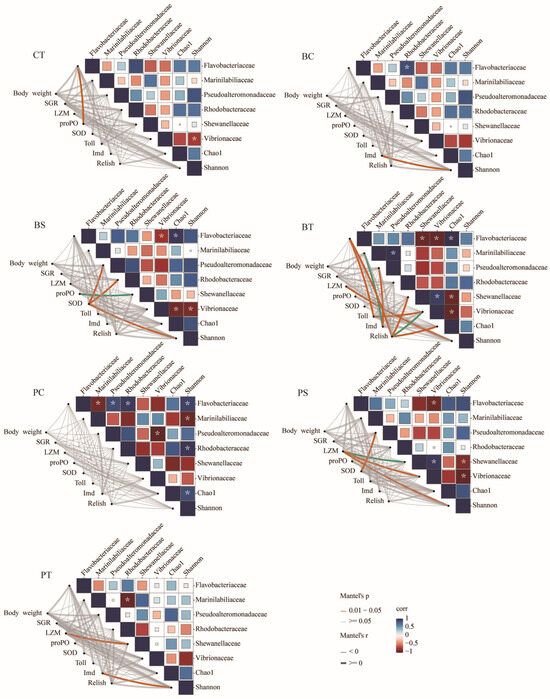
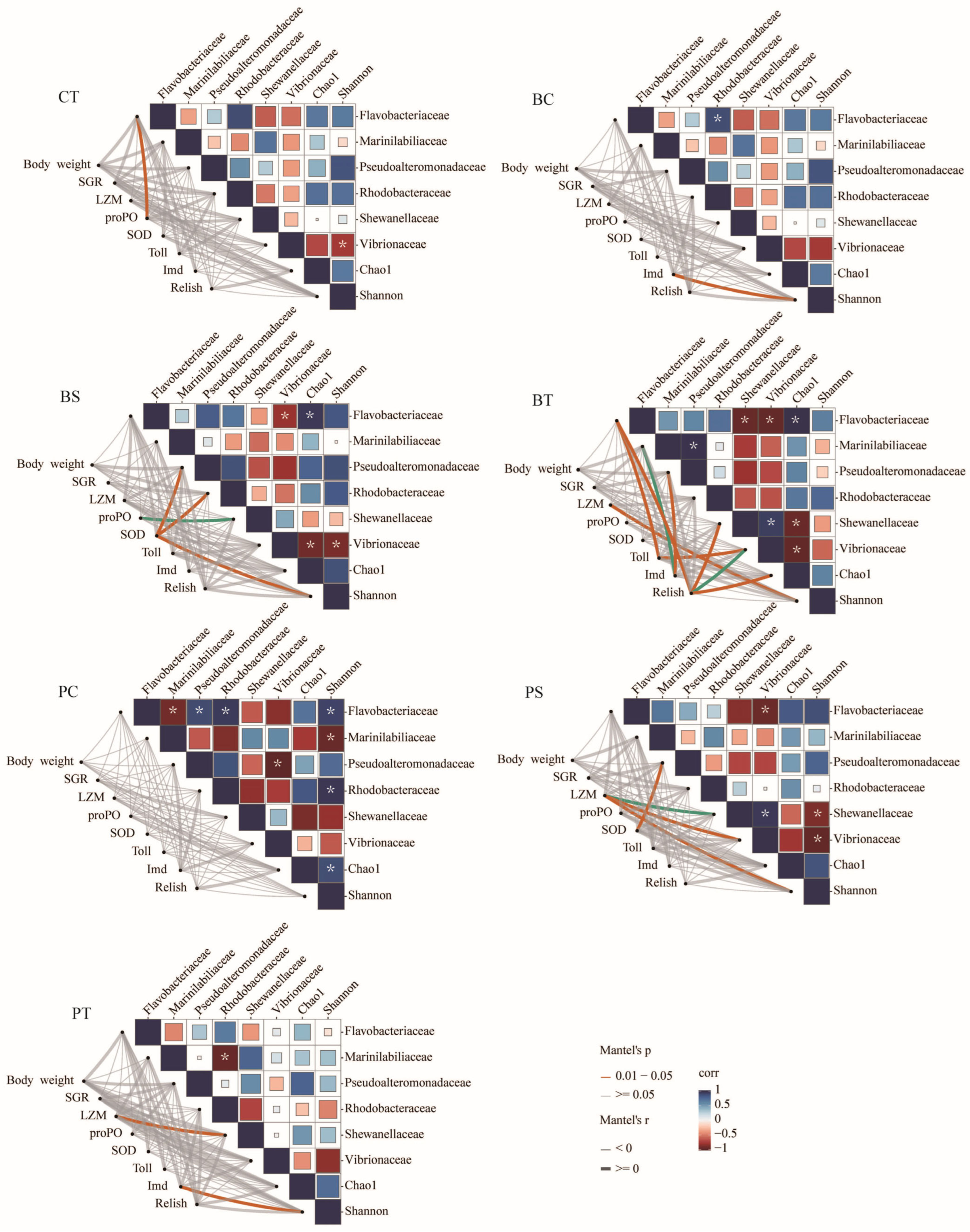
The associations among intestinal microbiota, growth, and immune parameters varied considerably across treatments (Figure 8). In the CT group, Flavobacteriaceae showed a significant positive correlation with proPO expression (p < 0.05), whereas this relationship became negative in the BC, BS, BT, and PT groups. Body weight was positively correlated with Rhodobacteraceae in the CT, BS, and PS groups but was negatively correlated in the BC, BT, PC, and PT groups. Similar treatment-dependent variations were observed among multiple bacterial families, including Flavobacteriaceae, Marinilabiliaceae, Pseudoalteromonadaceae, Rhodobacteraceae, Shewanellaceae, and Vibrionaceae. For example, Flavobacteriaceae displayed no significant correlations with other taxa in the CT and PT groups (p > 0.05), but exhibited significant positive correlations with Rhodobacteraceae in the BC and PC groups (p < 0.05). Notably, Shewanellaceae and Vibrionaceae showed predominantly negative correlations with other taxa across all treatments.
Figure 8.
Associations among the intestinal microbiota, growth, and immune parameters. CT: Commercial feed only; BC: Feed supplemented daily with B. cereus (1 × 10⁹ CFU/kg), no bioflocs; BT: 0.1 mL/L B. cereus bioflocs added once before experiment, no further addition; BS: Feed with B. cereus (1 × 10⁹ CFU/kg) for 7 days, then commercial feed for 7 days, no bioflocs; PC: 0.1 mL/L B. cereus bioflocs added once before experiment, then daily B. cereus sprinkling (1 × 10³ CFU/mL); PT: 0.1 mL/L bioflocs without B. cereus added once before experiment, no further addition; PS: 0.1 mL/L B. cereus bioflocs added once before experiment, then B. cereus sprinkling (1 × 10³ CFU/mL) for 7 days, stop 7 days; 14-day cycle repeated 3 times; Asterisks indicate statistically significant differences (p < 0.05).
4. Discussion
The rapid expansion of intensive aquaculture has created a critical demand for sustainable strategies to maintain water quality and enhance the health of cultured species. In this context, probiotics and biofloc systems have emerged as promising approaches, significantly improving water quality while promoting growth and immune responses in fish and shrimp. Despite these advances, the mechanisms governing interactions among probiotics, bioflocs, and host microbiota remain largely unclear. Addressing this gap is crucial for optimizing biofloc-based aquaculture and developing effective interventions to improve productivity and disease resistance.
Our previous study confirmed that B. cereus, which was isolated from the intestine of healthy shrimp, could enhance growth, digestive enzyme activities, immune responses, and resistance to Vibrio parahaemolyticus [35]. This study investigated the combined effects of B. cereus and biofloc on growth, immune responses, disease resistance, and intestinal microbiota composition in L. vannamei. Results showed that shrimp fed the combination of B. cereus and biofloc had significantly enhanced body weight and specific growth rate (SGR), with significantly reduced feed conversion ratio (FCR). This indicates enhanced nutrient utilization and growth efficiency compared to the control group. Similar improvements have been reported for L. vannamei and other crustaceans supplemented with Bacillus spp., which can secrete digestive enzymes, promote feed digestion, and stimulate gut development [6,24,36]. The superior performance likely resulted from the continuous introduction of B. cereus and biofloc-derived microbial biomass, which not only provided additional nutritional inputs but also stabilized the rearing environment by improving nitrogen cycling and organic matter decomposition [36,37].
Daily or combined administration of B. cereus and biofloc induced significant up-regulation of hepatopancreatic immune genes, including LZM, proPO, and SOD, indicating a coordinated activation of antimicrobial defense and antioxidant mechanisms [38]. Lysozyme (LZM) is a key non-specific immune enzyme that hydrolyses bacterial peptidoglycan, particularly of Gram-positive bacteria. Numerous studies in crustacean aquaculture have reported up-regulation of LZM activity or gene expression following probiotic supplementation or biofloc culture, thereby enhancing antibacterial defense [36,39]. The prophenoloxidase (proPO) cascade is a central humoral effector in crustacean innate immunity, mediating pathogen recognition, melanization, and encapsulation responses that contribute to rapid pathogen clearance. Activation of proPO is tightly regulated by upstream pattern-recognition receptors and immune signaling pathways, including Toll and Imd, which transduce microbial signals into effector responses (e.g., increased proPO activity and melanization) [25,40,41]. In our study, dietary B. cereus supplementation (alone or combined with biofloc) was associated with up-regulation of proPO expression alongside elevated Toll/Imd pathway gene expression, consistent with the hypothesis that probiotic cell-associated MAMPs (microbe-associated molecular patterns) or biofloc-derived microbial signals may engage host PRRs to trigger Toll/Imd signaling and thereby contribute to the activation of the proPO system [7,40]. Similar mechanistic links between Toll signaling and enhanced proPO activity have been observed in shrimp exposed to immunostimulatory molecules or probiotic treatments, supporting a model in which probiotic/biofloc inputs could improve pathogen recognition and accelerate effector activation, potentially leading to more efficient pathogen clearance [25,42,43]. Collectively, these findings suggest that B. cereus may enhance shrimp resistance to Vibrio infection, possibly through coordinated modulation of Toll/Imd pathways and the proPO effector cascade, resulting in improved pathogen recognition and strengthened antimicrobial defenses.
The intestinal microbiota of L. vannamei plays a crucial role in nutrient metabolism, immune modulation, and disease resistance [44,45], and its composition is strongly shaped by diet and culture environment [46,47]. In the present study, although the Shannon index did not differ significantly between the B. cereus-supplemented groups (BC, PC, and PS) and the control (CT), and the Chao1 index showed no significant variation among all groups, β-diversity analyses (PERMANOVA, ANOSIM) revealed that the intestinal microbial community structure was strongly influenced by both the mode and frequency of B. cereus application. Daily dietary supplementation of B. cereus significantly reshaped the intestinal microbiota, whereas supplementation once every seven days induced no detectable shift. Likewise, in the biofloc system, daily or weekly B. cereus addition altered microbial composition, while biofloc alone or biofloc containing B. cereus without continued probiotic input had no significant effect. These findings suggest that probiotic effects on gut microbiota are both frequency- and context-dependent, and that continuous exposure to B. cereus is necessary to sustain measurable microbial shifts. This frequency dependence may be attributed to transient colonization dynamics, where periodic supplementation helps maintain probiotic populations and their associated metabolites within the gut and rearing environment [48,49]. Bacteroidota, Firmicutes, and Proteobacteria dominated the intestinal microbiota across all treatments, which is consistent with previous reports for L. vannamei [50]. Bacteroidota were enriched while Proteobacteria declined in BC, PC, PS, and PT, which may be associated with polysaccharide degradation and potential suppression of opportunistic pathogens [51,52]. Marinilabiliaceae increased in the B. cereus-associated treatments, potentially contributing to organic matter degradation, denitrification, and amino acid metabolism [53,54]. These shifts are consistent with a trend in which probiotic–biofloc systems favor metabolically versatile taxa, which could support biofloc stability and intestinal nutrient turnover.
Co-occurrence network analysis provided detailed insights into the ecological organization of the shrimp intestinal microbiota under different culture conditions. All microbial networks exhibited modular structures, while treatments involving B. cereus or biofloc with B. cereus supplementation displayed greater network complexity and higher numbers of positive edges. These topological patterns suggest a more intricate microbial organization and potentially higher connectivity among taxa, which may contribute to community stability [55]. In contrast, the control network displayed lower connectivity and modularity, reflecting a less structured intestinal microbiota. Core taxa such as Vibrionaceae, Rhodobacteraceae, and Flavobacteriaceae were consistently present across all networks, forming the ecological backbone of the shrimp gut community. Notably, Marinilabiliaceae and Shewanellaceae were enriched in BC, BS, BT, PC, PS, and PT networks, suggesting that B. cereus-associated treatments selectively favor bacterial families involved in organic matter degradation and nutrient cycling, thereby potentially supporting host digestion and growth [56,57].
These results suggest that the observed benefits of B. cereus and biofloc supplementation likely arise from coordinated host–microbiota interactions rather than isolated effects. The intestinal microbiota functions as a “second genome”, providing genes that contribute to digestion, nutrient metabolism, and immune modulation, thereby influencing host growth and homeostasis [58]. In aquatic animals, intestinal microbial composition and network structure have been linked to energy extraction, nutrient uptake, and immune regulation, indicating that microbial communities support both metabolic and defensive host processes [59,60]. Enhanced microbial network connectivity and modularity observed in treated groups could facilitate cooperative interactions that stabilize the community and maintain intestinal balance [61,62]. Probiotics such as B. cereus have been shown to maintain gut integrity, modulate immune-related gene expression, and stimulate innate defenses, highlighting microbiota-mediated signaling pathways in disease resistance and health maintenance [38]. Collectively, these findings emphasize the importance of gut microbial structure and network interactions in shaping growth and immune responses, providing a basis for future studies to explore the specific microbial and host mechanisms involved.
5. Conclusions
Dietary supplementation with a Bacillus cereus strain isolated from shrimp intestines, alone or combined with biofloc, improved growth performance, feed efficiency, immune responses, and resistance to Vibrio parahaemolyticus under the tested 42-day conditions. Daily administration, either directly or via biofloc, modulated intestinal microbial composition and network structure. These findings highlight that targeted probiotic and biofloc strategies can enhance shrimp health and productivity in intensive aquaculture systems, providing practical insights for disease management and culture optimization.
Supplementary Materials
The following supporting information can be downloaded at: https://www.mdpi.com/article/10.3390/fishes11040222/s1; Figure S1: α-diversity (A) and β-diversity (B) analyses of the intestinal microbiota across all treatment groups; Figure S2: Composition of the intestinal microbiota in all groups (A) and differential analysis (B); Figure S3. Functional analysis of the intestinal microbiota in all groups; Table S1: Composition analysis of intestinal microbiota among different treatment groups; Table S2: Topological properties of the empirical phylogenetic molecular ecological networks of gut microbiota and their associated random networks; Table S3: Network structure analysis among different experimental groups; Table S4: Topological roles of intestinal microbiota in the seven groups.
Author Contributions
Investigation, experimentation, data curation, and writing—original draft preparation, S.D.; experimentation and data curation, W.C., Y.X., C.J. and X.M.; methodology, L.R.; supervision and project administration, Y.G.; writing—review and editing, supervision, and project administration, H.L.; writing—review and editing, and funding acquisition, Z.C. All authors have read and agreed to the published version of the manuscript.
Funding
This research was supported by the National Key Research and Development Program of China under Grant No. 2024YFD2401303.
Institutional Review Board Statement
Litopenaeus vannamei, a lower invertebrate commonly used in aquaculture in China, was used in this study. Experimental procedures, including necessary euthanasia for sampling, were performed following accepted practices for lower invertebrates; therefore, formal ethical approval was not required.
Informed Consent Statement
Not applicable.
Data Availability Statement
The data presented in this study are available from the corresponding author upon reasonable request.
Conflicts of Interest
The authors declare no conflicts of interest.
References
- FAO. The State of World Fisheries and Aquaculture 2024—Blue Transformation in Action; FAO: Rome, Italy, 2024. [Google Scholar]
- Xiong, J.B.; Sha, H.N.; Chen, J. Updated roles of the gut microbiota in exploring shrimp etiology, polymicrobial pathogens, and disease incidence. Zool. Res. 2024, 45, 910–923. [Google Scholar] [CrossRef] [Scilit]
- Abdelsamad, A.E.M.; Said, R.E.M.; Assas, M.; Gaafar, A.Y.; Hamouda, A.H.; Mahdy, A. Effects of dietary supplementation with Bacillus velezensis on the growth performance, body composition, antioxidant, immune-related gene expression, and histology of Pacific white shrimp, Litopenaeus vannamei. BMC Vet. Res. 2024, 20, 368. [Google Scholar] [CrossRef] [Scilit] [PubMed]
- Hu, X.; Xu, Y.; Su, H.; Xu, W.; Wen, G.; Xu, C.; Yang, K.; Zhang, S.; Cao, Y. Effect of a Bacillus probiotic compound on Penaeus vannamei survival, water quality, and microbial communities. Fishes 2023, 8, 362. [Google Scholar] [CrossRef] [Scilit]
- Raza, B.; Zheng, Z.; Yang, W. A Review on Biofloc System Technology, History, Types, and Future Economical Perceptions in Aquaculture. Animals 2024, 14, 1489. [Google Scholar] [CrossRef] [Scilit]
- Khanjani, M.H.; Sharifinia, M.; Akhavan-Bahabadi, M.; Emerenciano, M.G.C. Probiotics and Phytobiotics as Dietary and Water Supplements in Biofloc Aquaculture Systems. Aquac. Nutr. 2024, 2024, 3089887. [Google Scholar] [CrossRef] [Scilit]
- Tamilselvan, M.; Raja, S. Exploring the role and mechanism of potential probiotics in mitigating the shrimp pathogens. Saudi J. Biol. Sci. 2024, 31, 103938. [Google Scholar] [CrossRef] [Scilit]
- Monier, M.N.; Kabary, H.; Elfeky, A.; Saadony, S.; El-Hamed, N.N.B.A.; Eissa, M.E.H.; Eissa, E.-S.H. The effects of Bacillus species probiotics (Bacillus subtilis and B. licheniformis) on the water quality, immune responses, and resistance of whiteleg shrimp (Litopenaeus vannamei) against Fusarium solani infection. Aquac. Int. 2023, 31, 3437–3455. [Google Scholar] [CrossRef] [Scilit]
- Kuebutornye, F.K.A.; Abarike, E.D.; Lu, Y. A review on the application of Bacillus as probiotics in aquaculture. Fish Shellfish Immunol. 2019, 87, 820–828. [Google Scholar] [CrossRef] [Scilit] [PubMed]
- Li, F.; Xie, Y.; Guo, M.; Liu, Y.; Tong, T.; Zhang, Q.; Kong, W. Effects of dietary Bacillus cereus supplementation on the growth performance, serum physiology and biochemistry, Nrf2, TLR/NF-κB signaling pathways, and intestinal health of juvenile coho salmon (Oncorhynchus kisutch). Aquac. Rep. 2024, 36, 102177. [Google Scholar] [CrossRef] [Scilit]
- Li, H.; Zhang, W.; Gao, Y.; Tian, X.; Chu, Z.; Cai, Y.; Wang, L. The appropriate dose of Bacillus cereus improves the homeostasis of intestinal microbiota but does not significantly influence microbial functions in Paramisgurnus dabryanus. Aquac. Aquac. Res. 2021, 53, 612–624. [Google Scholar] [CrossRef] [Scilit]
- Li, J.; Fang, P.; Yi, X.; Kumar, V.; Peng, M. Probiotics Bacillus cereus and B. subtilis reshape the intestinal microbiota of Pengze crucian carp (Carassius auratus var. Pengze) fed with high plant protein diets. Front. Nutr. 2022, 9, 1027641. [Google Scholar] [CrossRef] [Scilit] [PubMed]
- James, G.; Radhakrishnan, V.; Marathippallam Jamal, J.; Prasannan Geetha, P.; Pillai, D.; Vattiringal Jayadradhan, R.K. Exploring the probiotic potential of B. cereus and B. velezensis associated with mangrove sediments in aquaculture. Discov. Oceans 2025, 2, 15. [Google Scholar] [CrossRef] [Scilit]
- Ahmed, R. Eco-friendly shrimp farming: Balancing economic growth and environmental sustainability in agriculture. Int. J. Sci. Educ. Sci. 2025, 2, 61–68. [Google Scholar] [CrossRef] [Scilit]
- Li, C.; Ge, Z.; Dai, L.; Chen, Y. Integrated Application of Biofloc Technology in Aquaculture: A Review. Water 2025, 17, 2107. [Google Scholar] [CrossRef] [Scilit]
- Emerenciano, M.G.C.; Miranda-Baeza, A.; Martínez-Porchas, M.; Poli, M.A.; do Nascimento Vieira, F. Biofloc Technology (BFT) in shrimp farming: Past and present shaping the future. Front. Mar. Sci. 2021, 8, 813091. [Google Scholar] [CrossRef] [Scilit]
- Yun, H.S.; Kim, D.H.; Kim, J.G.; Kim, Y.S.; Yoon, H.S. The microbial communities (bacteria, algae, zooplankton, and fungi) improved biofloc technology including the nitrogen-related material cycle in Litopenaeus vannamei farms. Front. Bioeng. Biotechnol. 2022, 10, 883522. [Google Scholar] [CrossRef] [Scilit]
- Manan, H.; Kasan, N.A.; Ikhwanuddin, M.; Kamaruzzan, A.S.; Jalilah, M.; Fauzan, F.; Suloma, A.; Amin-Safwan, A. Biofloc technology in improving shellfish aquaculture production—A Review. Ann. Anim. Sci. 2024, 24, 983–993. [Google Scholar] [CrossRef] [Scilit]
- Styaningrum, M.R.; Widanarni; Yuhana, M.; Gustilatov, M. Synergistic effects of biofloc and the probiotic Pseudoalteromonas piscicida 1Ub on suppression of virulence gene expression in Vibrio parahaemolyticus and immunity enhancement in Pacific white shrimp. Microb. Pathog. 2025, 207, 107899. [Google Scholar] [CrossRef] [Scilit]
- Baref, A.W.; Widanarni; Munti, Y.; Muhamad, G.; Usamah, A. Effectiveness of biofloc, probiotics and the combinations on growth, immune responses and resistance of vannamei shrimp infected with Vibrio parahaemolyticus. Indones. Aquac. J. 2025, 20, 59–73. [Google Scholar] [CrossRef] [Scilit]
- Padeniya, U.; Davis, D.A.; Wells, D.E.; Bruce, T.J. Microbial interactions, growth, and health of aquatic species in biofloc systems. Water 2022, 14, 4019. [Google Scholar] [CrossRef] [Scilit]
- Huang, H.-H.; Li, C.-Y.; Lei, Y.-J.; Zhou, B.-L.; Kuang, W.-Q.; Zou, W.-S.; Yang, P.-H. Effects of Bacillus strain added as initial indigenous species into the biofloc system rearing Litopenaeus vannamei juveniles on biofloc preformation, water quality and shrimp growth. Aquaculture 2023, 569, 739375. [Google Scholar] [CrossRef] [Scilit]
- Li, H.; Tian, X.; Dong, S. Growth performance, non-specific immunity, intestinal histology and disease resistance of Litopenaeus vannamei fed on a diet supplemented with live cells of Clostridium butyricum. Aquaculture 2019, 498, 470–481. [Google Scholar] [CrossRef] [Scilit]
- Jatayu, D.; Ilham; Abrori, M.; Sudiarsa, I.; Utami, D.; Kusmiatun, A.; Nisa, A.; Aras, A.; Insani, L.; Fikriyah, A.; et al. The effects of probiotics on the growth performances of white shrimp (Penaeus vannamei) reared through biofloc technology. Proc. Int. Conf. Fish. Aquac. 2023, 10, 1–12. [Google Scholar]
- Khanjani, M.H.; Mozanzadeh, M.T.; Gisbert, E.; Hoseinifar, S.H. Probiotics, prebiotics, and synbiotics in shrimp aquaculture: Their effects on growth performance, immune responses, and gut microbiome. Aquac. Rep. 2024, 38, 102362. [Google Scholar] [CrossRef] [Scilit]
- Wang, D.; Tian, X.; Dong, S.; Wang, L.; Pan, Z. Effects of several additives on the growth and no-specific immunity in serum of Litopenaeus vannamei. Trans. Oceanol. Limnol. 2017, 106–114. [Google Scholar] [CrossRef]
- Sun, Y.; Liu, F.; Song, X.; Mai, K.; Li, Y.; Huang, J. Effects of adding probiotics in the feed on non-specific immune gene expression and disease resistance of Litopenaeus vannamei. Oceanol. Limnol. Sin. 2012, 43, 845–851. [Google Scholar]
- Li, H.; Tian, X.; Zhao, K.; Jiang, W.; Dong, S. Effect of Clostridium butyricum in different forms on growth performance, disease resistance, expression of genes involved in immune responses and mTOR signaling pathway of Litopenaeus vannamai. Fish Shellfish Immunol. 2019, 87, 13–21. [Google Scholar] [CrossRef] [Scilit] [PubMed]
- Ge, Q.; Liang, J.; Li, J.; Li, J.; Duan, Y.; Zhao, F.; Ren, H. Molecular cloning and expression analysis of Relish gene from the ridgetail white prawn Exopalaemon carinicauda. Fish. Sci. 2015, 81, 699–711. [Google Scholar] [CrossRef] [Scilit]
- Feng, K.; Zhang, Z.; Cai, W.; Liu, W.; Xu, M.; Yin, H.; Wang, A.; He, Z.; Deng, Y. Biodiversity and species competition regulate the resilience of microbial biofilm community. Mol. Ecol. 2017, 26, 6170–6182. [Google Scholar] [CrossRef] [Scilit] [PubMed]
- Gweon, H.S.; Bowes, M.J.; Moorhouse, H.L.; Oliver, A.E.; Bailey, M.J.; Acreman, M.C.; Read, D.S. Contrasting community assembly processes structure lotic bacteria metacommunities along the river continuum. Environ. Microbiol. 2021, 23, 484–498. [Google Scholar] [CrossRef] [Scilit]
- Gao, Q.; Dong, Q.; Wu, L.; Yang, Y.; Hale, L.; Qin, Z.; Xie, C.; Zhang, Q.; Van Nostrand, J.D.; Zhou, J. Environmental antibiotics drives the genetic functions of resistome dynamics. Environ. Int. 2020, 135, 105398. [Google Scholar] [CrossRef] [Scilit] [PubMed]
- Deng, Y.; Jiang, Y.; Yang, Y.; He, Z.; Luo, F.; Zhou, J. Molecular ecological network analyses. BMC Bioinform. 2012, 13, 113. [Google Scholar] [CrossRef] [Scilit] [PubMed]
- Zhou, J.; Deng, Y.; Luo, F.; He, Z.; Yang, Y. Phylogenetic molecular ecological network of soil microbial communities in response to elevated CO2. mBio 2011, 2, e00122–11. [Google Scholar] [CrossRef] [Scilit]
- Li, H.; Fan, S.; Gao, Y.; Cai, Y.; Chu, Z.; Wang, L. Evaluation of modulatory properties of Bacillus cereus isolated from the gut of Litopenaeus vannamai on growth, intestinal morphology, digestive enzyme activities, immune responses and disease resistance of Litopenaeus vannamai. Aquac. Res. 2020, 52, 1299–1310. [Google Scholar] [CrossRef] [Scilit]
- Panigrahi, A.; Das, R.R.; Sivakumar, M.R.; Saravanan, A.; Saranya, C.; Sudheer, N.S.; Kumaraguru Vasagam, K.P.; Mahalakshmi, P.; Kannappan, S.; Gopikrishna, G. Bio-augmentation of heterotrophic bacteria in biofloc system improves growth, survival, and immunity of Indian white shrimp Penaeus indicus. Fish Shellfish Immunol. 2020, 98, 477–487. [Google Scholar] [CrossRef] [Scilit]
- Zheng, Y.; Wu, Y.; Tang, S.; Li, J.; Fan, L.; He, W. Effects of Bacillus licheniformis on the water quality, growth performance and bacterial community in Penaeus vannamei aquaculture system. Front. Microbiol. 2025, 16, 1595680. [Google Scholar] [CrossRef] [Scilit]
- Abo-Al-Ela, H.G.; Mahdi, S.; Angthong, P.; Rungrassamee, W. Probiotic modulation of key immune macromolecules in shrimp. Microb. Pathog. 2025, 203, 107463. [Google Scholar] [CrossRef] [Scilit]
- Panigrahi, A.; Das, R.R.; Sundaram, M.; Sivakumar, M.R.; Jannathulla, R.; Lalramchhani, C.; Antony, J.; Shyne Anand, P.S.; Vinay Kumar, K.; Jayanthi, M.; et al. Cellular and molecular immune response and production performance of Indian white shrimp Penaeus indicus (H. Milne-Edwards, 1837), reared in a biofloc-based system with different protein levels of feed. Fish Shellfish Immunol. 2021, 119, 31–41. [Google Scholar] [CrossRef] [Scilit]
- Wanvimonsuk, S.; Jaree, P.; Kawai, T.; Somboonwiwat, K. Prx4 acts as DAMP in shrimp, enhancing bacterial resistance via the toll pathway and prophenoloxidase activation. iScience 2023, 26, 105793. [Google Scholar] [CrossRef] [Scilit]
- Sukonthamarn, P.; Wongvises, P.; Sangklai, N.; Jaroenlak, P.; Tassanakajon, A. Prophenoloxidase-activating system plays a crucial role in innate immune responses to Enterocytozoon hepatopenaei infection in shrimp Litopenaeus vannamei. Fish Shellfish Immunol. 2024, 154, 109925. [Google Scholar] [CrossRef] [Scilit] [PubMed]
- Borchers, A.; Pieler, T. Programming pluripotent precursor cells derived from Xenopus embryos to generate specific tissues and organs. Genes 2010, 1, 413–426. [Google Scholar] [CrossRef] [Scilit] [PubMed]
- Kewcharoen, W.; Srisapoome, P. Probiotic effects of Bacillus spp. from Pacific white shrimp (Litopenaeus vannamei) on water quality and shrimp growth, immune responses, and resistance to Vibrio parahaemolyticus (AHPND strains). Fish Shellfish Immunol. 2019, 94, 175–189. [Google Scholar] [CrossRef] [Scilit]
- Wanna, W.; Aucharean, C.; Jaeram, N. Analysis of Gut Microbiota Associated with WSSV Resistance in Litopenaeus vannamei. Mar. Biotechnol. 2024, 27, 10. [Google Scholar] [CrossRef] [Scilit] [PubMed]
- Sha, H.N.; Lu, Y.M.; Zhan, P.P.; Chen, J.; Qiu, Q.F.; Xiong, J.B. Beneficial effects of probiotics on Litopenaeus vannamei growth and immune function via the recruitment of gut Rhodobacteraceae symbionts. Zool. Res. 2025, 46, 388–400. [Google Scholar] [CrossRef] [Scilit] [PubMed]
- Huang, Z.; Hou, D.; Zhou, R.; Zeng, S.; Xing, C.; Wei, D.; Deng, X.; Yu, L.; Wang, H.; Deng, Z.; et al. Environmental water and sediment microbial communities shape intestine microbiota for host health: The central dogma in an anthropogenic aquaculture ecosystem. Front. Microbiol. 2021, 12, 772149. [Google Scholar] [CrossRef] [Scilit]
- Dou, Y.; Wen, M.; Shen, H.; Zhang, S.; Jiang, G.; Qiao, Y.; Cheng, J.; Cao, X.; Wan, X.; Sun, X. Intestinal microbiota differences in Litopenaeus vannamei Shrimp between greenhouse and aquaponic rearing. Life 2023, 13, 525. [Google Scholar] [CrossRef] [Scilit]
- Lee, S.; Meslier, V.; Bidkhori, G.; Garcia-Guevara, F.; Etienne-Mesmin, L.; Clasen, F.; Park, J.; Plaza Oñate, F.; Cai, H.; Le Chatelier, E.; et al. Transient colonizing microbes promote gut dysbiosis and functional impairment. npj Biofilms Microbiomes 2024, 10, 80. [Google Scholar] [CrossRef] [Scilit]
- Shen, X.; Jin, H.; Zhao, F.; Kwok, L.-Y.; Zhao, Z.; Sun, Z. Short-term probiotic supplementation affects the diversity, genetics, growth, and interactions of the native gut microbiome. iMeta 2024, 3, e253. [Google Scholar] [CrossRef] [Scilit]
- Zhou, Z.; Wen, M.; Xiang, L.; Shen, H.; Jiang, G.; Cheng, J.; Hu, Y.; Qian, J. Segmental variations in intestinal microbiota composition and functional capacity along the digestive tract of Litopenaeus vannamei. Aquac. Rep. 2024, 34, 101922. [Google Scholar] [CrossRef] [Scilit]
- Vargas-Albores, F.; Porchas-Cornejo, M.A.; Martínez-Porchas, M.; Villalpando-Canchola, E.; Gollas-Galván, T.; Martínez-Córdova, L.R. Bacterial biota of shrimp intestine is significantly modified by the use of a probiotic mixture: A high throughput sequencing approach. Helgol. Mar. Res. 2017, 71, 5. [Google Scholar] [CrossRef] [Scilit]
- Lu, Z.; Kvammen, A.; Li, H.; Hao, M.; Inman, A.R.; Bulone, V.; McKee, L.S. A polysaccharide utilization locus from Chitinophaga pinensis simultaneously targets chitin and β-glucans found in fungal cell walls. mSphere 2023, 8, e00244-23. [Google Scholar] [CrossRef] [Scilit]
- Torres-Lagos, E.; Henríquez-Castillo, C.; Méndez, C.; Morales, M.C.; Cárcamo, C.B.; Navarrete, P.; Schmitt, P.; Brokordt, K. Biofloc culture system shapes the structure and function of environmental and intestinal bacterial communities in the river prawn Cryphiops caementarius. Aquac. Rep. 2024, 39, 102359. [Google Scholar] [CrossRef] [Scilit]
- Li, J.; Dong, C.; Lai, Q.; Wang, G.; Shao, Z. Frequent occurrence and metabolic versatility of marinifilaceae bacteria as key players in organic matter mineralization in global deep seas. mSystems 2022, 7, e00864-22. [Google Scholar] [CrossRef] [Scilit]
- Liu, X.; Wang, M.; Liu, B.; Chen, X.; An, L.; Nie, Y.; Wu, X.-L. Keystone taxa mediate the trade-off between microbial community stability and performance in activated sludges. Nat. Water 2025, 3, 723–733. [Google Scholar] [CrossRef] [Scilit]
- Cheng, Y.; Ge, C.; Li, W.; Yao, H. The Intestinal Bacterial Community and Functional Potential of Litopenaeus vannamei in the Coastal Areas of China. Microorganisms 2021, 9, 1793. [Google Scholar] [CrossRef] [Scilit]
- Wu, J.Y.; Yan, M.C.; Sang, Y.; Li, F.; Luo, K.; Hu, L.H. Correlation between intestinal microbiota and growth of white shrimp (Litopenaeus vannamei). Appl. Ecol. Environ. Res. 2021, 19, 4993–5005. [Google Scholar] [CrossRef] [Scilit]
- Zeng, S.; He, J.; Huang, Z. The intestine microbiota of shrimp and its impact on cultivation. Appl. Microbiol. Biotechnol. 2024, 108, 362. [Google Scholar] [CrossRef] [Scilit] [PubMed]
- Diwan, A.D.; Harke, S.N.; Panche, A.N. Host-microbiome interaction in fish and shellfish: An overview. Fish Shellfish Immunol. Rep. 2023, 4, 100091. [Google Scholar] [CrossRef] [Scilit]
- Negi, A.; Chen, J.-Y. Modulating the gut microbiome-immune axis in shrimp: Use of probiotics to enhance disease resistance. Aquaculture 2026, 612, 743214. [Google Scholar] [CrossRef] [Scilit]
- Sha, H.; Lu, J.; Chen, J.; Xiong, J. Rationally designed probiotics prevent shrimp white feces syndrome via the probiotics–gut microbiome–immunity axis. npj Biofilms Microbiomes 2024, 10, 40. [Google Scholar] [CrossRef] [Scilit]
- Zakaria, M.; Francisco, M.E.; Sanyal, S.K.; Hossain, A.; Mandal, S.C.; Haque, M.I.-M. A review on modulation of gut microbiome interaction for the management of shrimp aquaculture and proposal of the introduction of deep learning-based approach for shrimp disease detection. Microbe 2025, 7, 100299. [Google Scholar] [CrossRef] [Scilit]

Disclaimer/Publisher’s Note: The statements, opinions and data contained in all publications are solely those of the individual author(s) and contributor(s) and not of MDPI and/or the editor(s). MDPI and/or the editor(s) disclaim responsibility for any injury to people or property resulting from any ideas, methods, instructions or products referred to in the content. |
© 2026 by the authors. Licensee MDPI, Basel, Switzerland. This article is an open access article distributed under the terms and conditions of the Creative Commons Attribution (CC BY) license.