1. Introduction
The large yellow croaker (
Larimichthys crocea) is one of the most economically important marine fish species in China, and its aquaculture production has continued to expand in coastal provinces such as Zhejiang and Fujian in recent years. Consumers often regard fish vitality and external appearance as indicators of freshness, which has supported live-fish trading within seafood distribution systems. Although the large yellow croaker is primarily marketed as an iced-fresh product, live-fish distribution still remains relevant in some fresh marketing and temporary holding scenarios [
1]. However, throughout the farm-to-consumer supply chain, the large yellow croaker is exposed to multiple stress-inducing stages, including harvesting, grading, packing, and transportation. Given its high sensitivity to external stressors and environmental changes, the physiological condition of large yellow croakers prior to transport is critical because transport-related stress can impair gill function, disturb hepatic metabolism, and ultimately compromise subsequent quality stability [
2,
3].
Furthermore, pre-transport handling and temperature fluctuations markedly affect key quality indicators, including total volatile basic nitrogen (TVB-N), K-value, biogenic amines, and ATP degradation products. TVB-N generally remains below about 20–35 mg N/100 g in acceptable fish muscle, whereas K-values below 20% indicate high freshness and values above 60% suggest marked deterioration. Similarly, biogenic amines and bitter ATP degradation products increase as freshness declines [
4]. Accordingly, the post-transport shelf life and flavour quality of large yellow croakers are strongly dependent on their physiological condition prior to transport.
Chemical anaesthetics, such as MS-222, are commonly employed in aquaculture to reduce stress during handling and transport. However, concerns about drug residues, negative impacts on fish quality, and regulatory limitations have raised consumer apprehension regarding their use [
5]. Consequently, developing safe, eco-friendly, and acceptable live transport strategies is essential. Recent research has increasingly focused on pre-transport physiological modulation, particularly through optimised temporary rearing management, to improve physiological stability and post-transport quality. For example, fasting and moderate temporary rearing before transport significantly mitigated metabolic stress in Atlantic salmon under high-density conditions [
6]. A study on blunt snout bream (
Megalobrama amblycephala) indicated that prolonged transport resulted in reduced muscle shear force and metabolic rearrangement, whereas appropriate pre-transport fasting alleviated ammonia stress and improved muscle quality [
7]. Additionally, studies on shellfish and several freshwater fish species have shown that optimal rearing periods can enhance water-holding capacity, texture, and muscle energy metabolism after transport [
8,
9].
Lowering water temperature during temporary rearing can effectively mitigate the stress response of fish to external disturbances, thereby creating more favourable conditions for subsequent transport. This approach involves maintaining water at a low yet tolerable temperature to suppress metabolic activity and stress, which can extend fish survival time [
10]. This strategy has been successfully applied in several aquatic species, including turbot (
Scophthalmus maximus), largemouth bass (
Micropterus salmoides), and Pacific white shrimp (
Litopenaeus vannamei) [
11,
12,
13]. However, cold sensitivity differs markedly among species. Excessively low temperatures can induce oxidative damage to organs, ultimately jeopardising fish survival. Previous studies have shown that acute low-temperature exposure leads to distinct histopathological changes in large yellow croakers, while prolonged cold exposure combined with starvation triggers metabolic remodelling through RNA modifications and transcriptional regulation [
14,
15]. Therefore, precise temperature control is crucial for balancing stress suppression with physiological health.
Recent studies on large yellow croakers have mainly concentrated on the transport period, often employing anaesthetics or functional additives to enhance survival and physiological condition [
16,
17]. In contrast, the pre-transport temporary rearing stage has garnered less attention, especially concerning the impact of varying low-temperature conditions on serum physiological responses, muscle energy metabolism, and muscle quality. Maintaining quality stability during live storage and transport continues to pose a significant challenge [
18]. Consequently, research on the effects of low-temperature temporary rearing on serum stress responses, muscle energy metabolism, and quality-related traits in large yellow croakers remains limited. Accordingly, this study was designed to evaluate post-harvest low-temperature rearing as a key intervention to support the long-distance live transport of large yellow croakers.
This study established three temperature groups (8, 10, and 12 °C) and analysed fish samples at multiple time points over 48 h. The focus was on stress response, energy metabolism, antioxidant status, glycogen and lactate metabolism, texture, and primary flavour compounds. The primary aim was to elucidate how temporary low-temperature rearing prior to transport regulates stress response, energy allocation, and muscle quality in large yellow croakers. A secondary objective was to identify the most suitable temperature within the tested range. Overall, this research provides a scientific foundation for enhancing pre-transport rearing management and facilitating safer, more stable live transport of large yellow croakers.
2. Materials and Methods
2.1. Experimental Design and Sampling
A total of 60 farmed large yellow croakers of similar size (200 ± 15 g) were obtained from a local farm in Zhoushan and acclimatised for 7 days in a recirculating aquaculture system (RAS). During acclimation, water temperature, salinity, pH, dissolved oxygen, and total ammonia nitrogen were maintained at 20 °C, 25–28‰, 7.8–8.2, ≥6.0 mg/L, and ≤0.05 mg/L, respectively. Fish were fed a commercial diet twice daily, and feeding was suspended 24 h before sampling to ensure intestinal clearance, following common practice in temporary low-temperature rearing studies.
Based on preliminary behavioural observations and practical considerations for pre-transport rearing, three target temperatures (8, 10, and 12 °C) and four sampling times (0, 12, 24, and 48 h) were selected. At the acclimation temperature of 20 °C, large yellow croakers were highly sensitive to external disturbance. After cooling to 8 °C, fish became nearly unresponsive, and some individuals showed loss of equilibrium and rolling behaviour. At 10 °C, fish remained stable, showed weakened responses to external disturbance, and did not lose equilibrium. At 12 °C, fish were relatively inactive but still responded to disturbance, although less strongly than at 20 °C. These behavioural differences were used as the basis for selecting the three experimental temperatures. Starting from the acclimation temperature of 20 °C, fish were cooled at a rate of 2 °C/h until each tank reached the assigned target temperature. The time point at which the target temperature was reached and stabilised was defined as 0 h. Water temperature was controlled using the RAS temperature-control system. During the experiment, temperature, dissolved oxygen, salinity, and pH were continuously monitored, and total ammonia nitrogen was measured daily. The actual temperature ranges were maintained at 8.0 ± 0.5 °C, 10.0 ± 0.5 °C, and 12.0 ± 0.5 °C, respectively. At each sampling time, five fish were randomly collected from each treatment group for subsequent serum and muscle analyses.
Before sampling, fish were anesthetised with MS-222, and blood was collected from the caudal vein using a sterile 5 mL syringe. Blood samples were allowed to clot at room temperature for 1 h, and serum was obtained by centrifugation at 3000 rpm for 10 min. The serum was transferred into cryotubes, frozen in liquid nitrogen, and stored at −80 °C until analysis. Dorsal white muscle (below the dorsal fin and above the lateral line) was excised after filleting. Fresh subsamples were kept on ice and immediately analysed for texture profile analysis, water-holding capacity, and colour parameters (L*, a*, and b*). Additional muscle samples were frozen in liquid nitrogen and stored at −80 °C for subsequent biochemical assays. All animal procedures were conducted in accordance with institutional guidelines and were approved by the relevant ethics committee.
2.2. Analysis of Serum Parameters
Thirty-six serum samples were used for biochemical analyses, with three biological replicates for each treatment group and sampling time. Commercial assay kits for TP, ALB, glucose, TGs, TC, LZM, AKP, IgM, cortisol, AST, and ALT were purchased from Nanjing Jiancheng Bioengineering Institute, Nanjing, China. Total protein (TP) was determined by the biuret colorimetric method (540 nm, 37 °C, 10 min), and albumin (ALB) by the bromocresol green colorimetric method (628/630 nm, room temperature, 10 min). Glucose, triglycerides (TGs), and total cholesterol (TC) were determined using kit-based endpoint colorimetric assays with absorbance measured at 505, 500, and 510 nm, respectively, after incubation at 37 °C. Lysozyme (LZM) activity was determined by a turbidimetric assay based on the change in bacterial suspension transmittance at 530 nm, and alkaline phosphatase (AKP) activity was determined by a phenol-generation activity assay (King unit method) at 520 nm after incubation at 37 °C for 15 min. Total immunoglobulin M (IgM) and cortisol were determined using ELISA-based immunochemical kits with streptavidin–HRP detection and absorbance read at 450 nm. Aspartate aminotransferase (AST) and alanine aminotransferase (ALT) activities were determined using the Wright/Reitman–Frankel colorimetric transaminase method [
19], in which serum was incubated with prewarmed substrate at 37 °C for 30 min, reacted with 2,4-dinitrophenylhydrazine, developed with 0.4 mol/L NaOH, and measured spectrophotometrically at 505–510 nm against the corresponding control.
2.3. Determination of Muscle Qualities
2.3.1. Physical Properties
The textural properties (hardness, springiness and chewiness) of the muscle sample were analysed according to a previously described method [
20]. These parameters represent resistance to compression, recovery after deformation, and chewing energy, respectively. Briefly, the muscles of five fish from each group were cut into cubes (5 mm × 5 mm × 5 mm). The texture profile analysis (TPA) test was conducted using a texture analyser (CT3 25K, Brookfield Engineering Laboratories, Middleboro, Inc., Middleboro, MA, USA) equipped with a TA19 probe (cylindrical, stainless steel, 11.3 mm diameter, 25 mm length). The testing parameters included a speed of 2.0 mm/s, a deformation of 30%, two press intervals of 5 s, and a trigger force of 5 g.
The water-holding capacity (WHC) was measured according to the method of Peng et al. [
9] using the procedure described below. Briefly, 3 g of fish muscle was weighed and wrapped in a double layer of qualitative filter paper and centrifuged at 4000 rpm for 15 min. The water-holding capacity was expressed as the ratio of sample mass before and after centrifugation.
The evaluation of colour difference in the samples (4 cm × 4 cm × 1 cm) was conducted using a CM-600D colorimeter (Konica Minolta Co., Ltd., Tokyo, Japan). Before measurement, the colorimeter was calibrated using a white calibration plate. Then, the colorimeter was used to measure the values of redness (a*), yellowness (b*), and brightness (L*) on the surface of the sample. The whiteness of the sample was calculated based on the following equation.
2.3.2. Energy Metabolites
The lactic acid and glycogen contents in muscle were determined using commercial kits (Nanjing Jiancheng Bioengineering Institute, Nanjing, China) according to the method of Peng et al. [
9]. Glycogen and lactic acid were detected at 620 and 530 nm, respectively.
The ATP-related compounds were determined by the previous method [
21] with slight modifications. Briefly, 1 g of muscle sample was homogenised with 10 mL of 5% perchloric acid (PCA) and centrifuged at 4000×
g for 4 min at 4 °C. The supernatant was collected, adjusted to pH 3.0 with KOH, centrifuged again under the same conditions, and filtered through a 0.45 μm membrane. The filtrate was analysed for ATP, ADP, AMP, IMP, HxR, and Hx using an HPLC system equipped with a Shodex GS-320 HQ column (Showa Denko K.K., Tokyo, Japan). The mobile phase was a 0.2 mol/L phosphate buffer (pH 3.7), the flow rate was 0.6 mL/min, the column temperature was 30 °C, and absorbance was monitored at 254 nm. The adenylate energy charge (AEC) was calculated by employing the following equation:
2.3.3. Free Amino Acids
Free amino acids were determined according to a previously described method [
21]. Briefly, the minced fish sample (10 g) was mixed with 50 mL ultra-pure water and centrifuged at 4000×
g for 10 min. The supernatant was dissolved in sulfosalicylic acid at a ratio of 1:5, then centrifuged at 6300×
g for 10 min. The resultant supernatant was filtered through a 0.45 μm membrane filter, and 100 μL supernatant was injected into the L-8900 automatic analyser (Hitachi High-Tech Corporation, Tokyo, Japan).
2.3.4. Fatty Acids
Fatty acid analysis was performed according to the Chinese National Standard GB 5009.168–2016 [
22]. The external standard method was applied to analyse fatty acids in muscle samples. The procedure included acid hydrolysis of a 3.0 g sample in 8.3 M HCl, then mixing with 10 mL of 95% ethanol for lipid extraction using a blend of petroleum ether and ether (1:1,
v/
v). A 2% sodium hydroxide methanol solution was introduced to the lipid extract and refluxed at 80 °C until oil droplets vanished. Next, a 15% boron trifluoride methanol solution was added through the reflux condenser, followed by 2 min of refluxing at 80 °C. After cooling, n-heptane was added, and the mixture was shaken for 2 min. The solution was then separated using a saturated sodium chloride solution, and the upper n-heptane layer was gathered for analysis. A GC-MS (Agilent 7890-5973c, Agilent Technologies, Santa Clara, CA, USA; Shanghai, China) was employed to identify the fatty acids in the sample. Hydrogen served as the carrier gas at a constant flow rate of 1.3 mL/min, with a split ratio of 5:1. The chromatographic column HB-88 (100 m × 0.25 mm × 0.20 μm) was utilised for sample detection. The oven temperature starts at 100 °C for 15 min, then increases to 180 °C at 10 °C/min for 6 min, then to 210 °C at 2 °C/min for 6 min, and finally to 240 °C at 4 °C/min for 10 min.
2.4. Statistical Analysis
Three biological replicates were used for each treatment group. Results are expressed as mean ± standard deviation (SD). For comparisons among groups at each sampling time, one-way analysis of variance (ANOVA) followed by Tukey’s multiple-comparison test was performed using SPSS 26.0 (IBM, Armonk, NY, USA). Differences were considered significant at
p < 0.05. Graphs were generated using GraphPad Prism 9.4 (GraphPad Software, San Diego, CA, USA), and heatmap and correlation analyses were performed using the Lianchuan Bioinformatics Cloud Platform (
https://www.omicstudio.cn/home accessed on 8 December 2025).
3. Results and Discussion
3.1. Serum Indices
3.1.1. Metabolic and Endocrine Responses
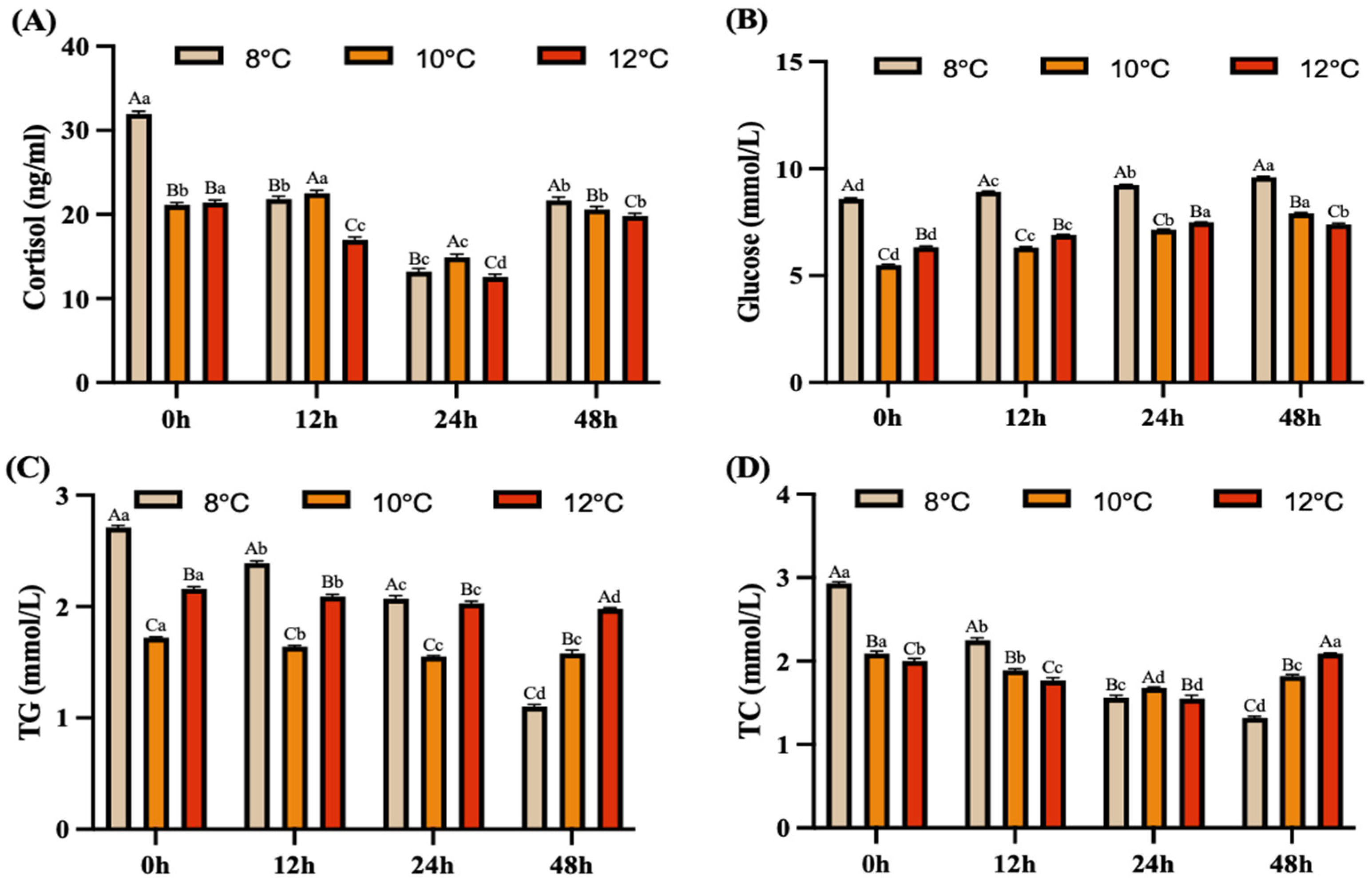
During the low-temperature rearing of large yellow croakers, the physiological indicators exhibited marked differences across the temperature groups (
Figure 1). The cortisol level at 0 h was significantly higher (
p < 0.05) in the 8 °C group compared to other groups, indicating that extreme cold caused acute stress at the initial stage. Subsequently, all groups’ cortisol levels declined to a minimum at 24 h and then rose again (
Figure 1A). As shown in
Figure 1B, blood glucose in the 8 °C and 10 °C groups increased over time, with the highest increment observed in the 10 °C group. In contrast, the highest glucose content in the 12 °C group was observed at 24 h, after which it decreased slightly. TG and TC exhibited sharp reductions at 8 °C, decreasing by 59.30% and 55.17% respectively compared to 0 h, whereas both indices showed a rebound at 48 h in the 10 °C and 12 °C groups.
These results indicate that low-temperature rearing activates the hypothalamic–pituitary–interrenal (HPI) axis in fish, leading to cortisol release and subsequent energy mobilisation to cope with stress [
23]. The highest initial cortisol and significant loss of lipids in the 8 °C group show that fish rely more on fatty acid oxidation for energy under stronger cold stress. These findings are in agreement with previous studies. Sampaio and Freire [
24] reported that deteriorating conditions during transport increase fluctuations in glucose and lipids. Similarly, Bortoletti et al. [
25] confirmed that stress leads to high cortisol levels and slow recovery in the silver croaker (
Pennahia argentata). In our experiment, the 10 °C group showed a more coordinated carbohydrate metabolic adjustment, whereas the 12 °C group still exhibited sustained carbohydrate consumption. However, exposure to extreme cold (8 °C) inhibited the activity of enzymes involved in glucose metabolism [
26]. This forced the fish to shift toward increased reliance on lipid and cholesterol turnover to sustain energy homeostasis [
27].
3.1.2. Liver Function and Membrane Transport
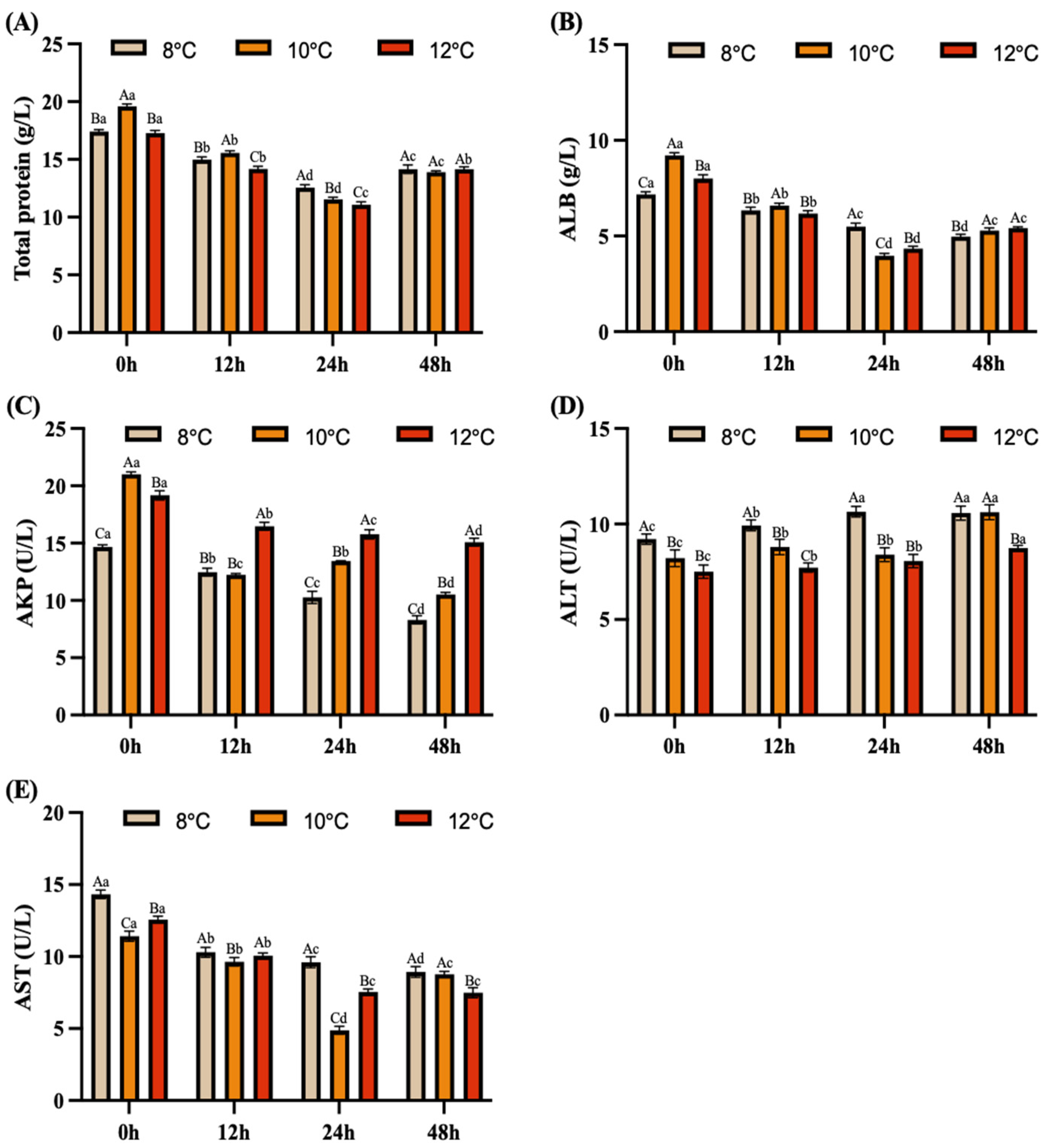
A similar shift in metabolic patterning was also reflected in liver function indicators (
Figure 2). Serum total protein and ALB decreased to the lowest levels at 24 h in all groups. Thereafter, total protein and ALB in the 10 °C and 12 °C groups rebounded markedly at 48 h, while the 8 °C group exhibited a persistent decline in ALB until 48 h, suggesting a slower recovery of hepatic protein synthesis under an extreme cold environment. These initial reductions in all groups may be associated with cold-induced endoplasmic reticulum stress. The activation of the PERK–eIF2α pathway inhibits protein translation and redirects amino acids toward energy supply and cellular defence [
28].
The observed activities of liver-related enzymes further support the above findings. AKP activity decreased at all three temperatures (
Figure 2C), indicating that cold stress may impair hepatobiliary membrane transport function [
29]. Meanwhile, ALT and AST levels remained consistently low throughout the experimental period. Notably, ALT in the 8 °C group showed a slight rise between 24 and 48 h, which reflected a minor increase in the metabolic burden on the liver at extreme cold exposure. Overall, these changes in transaminases are characteristic of metabolic downregulation under low-to-moderate stress, rather than severe hepatocyte necrosis [
30,
31]. Compared to the significant liver damage reported in studies on transport stress [
32,
33], the low-temperature temporary rearing in this study primarily induced reversible metabolic regulation.
3.1.3. Innate and Adaptive Immunity
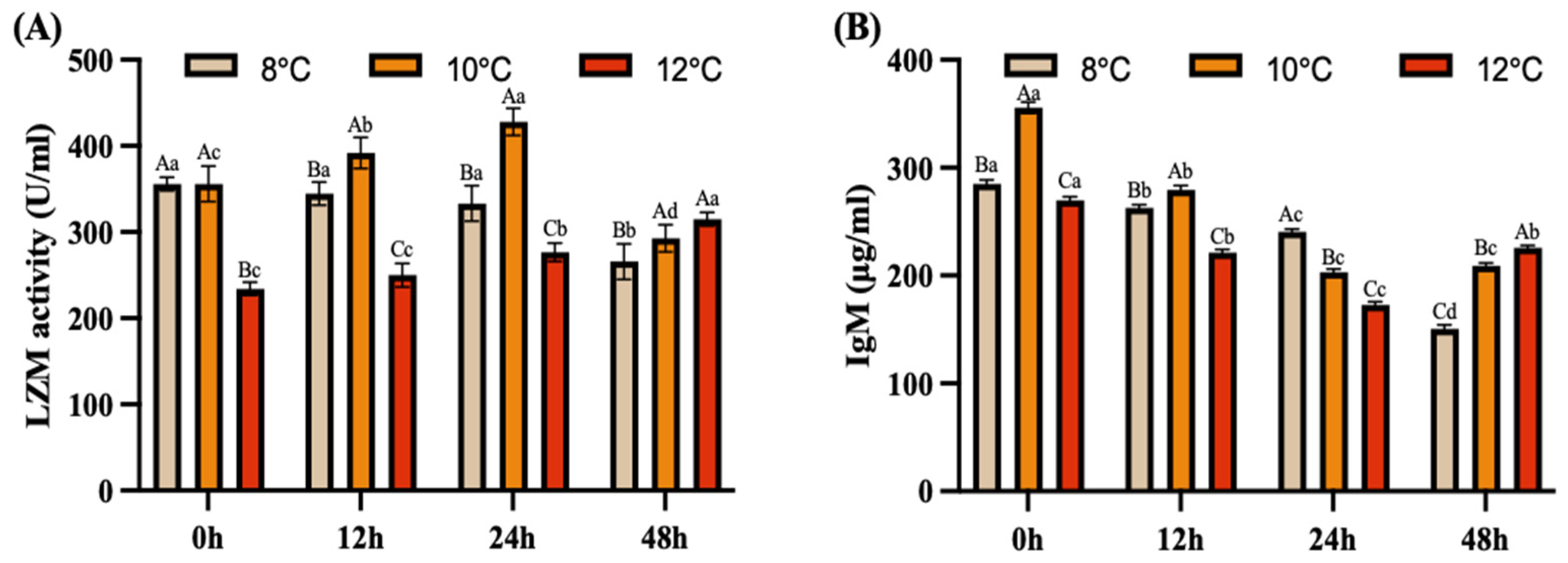
At 8 °C, IgM declined progressively throughout rearing, whereas LZM remained relatively stable during the early stage and decreased markedly by 48 h (
Figure 3), indicating suppression of both humoral and innate immune responses under stronger cold stress. In the 10 °C group, LZM reached its peak at 24 h, whereas IgM showed a pronounced early decline and only limited recovery thereafter. In contrast, the 12 °C group exhibited a clearer recovery pattern, with LZM increasing over time and IgM recovering by 48 h. LZM, primarily secreted by cells such as neutrophils, is a widely used biomarker for assessing innate immune defences [
34]. Although short-term stress may temporarily enhance LZM activity, prolonged intense stress or exposure to extreme temperatures often leads to immune fatigue and diminished vitality [
35]. IgM serves as a critical antibody in humoral immunity. Studies on Nile and Mozambique tilapia have demonstrated that sudden temperature changes or crowding can cause a rapid decline in serum IgM, with a slow recovery process [
35,
36].
Furthermore, hormones released via the HPI axis can inhibit B-cell proliferation and antibody synthesis [
37]. Temperature fluctuations also weaken fish’s immune defences, thereby increasing susceptibility to infections [
38]. Overall, the intense stress at 8 °C diverts energy resources toward critical survival functions, leading to a dual suppression of the immune system. While the 10 °C environment supported innate immunity, it increased the burden on humoral immunity. In contrast, 12 °C was the most effective temperature for maintaining immune balance while preserving metabolic homeostasis.
3.2. Changes in Physical Properties of Muscle
3.2.1. TPA and WHC
TPA and WHC are important indicators for evaluating muscle quality. During the first 24 h of rearing, no significant differences (
p > 0.05) were observed in hardness, springiness, chewiness, or WHC among different groups (
Table 1). This suggests that short-term temperature variations did not immediately affect the structure of the muscle. Up to 48 h, the 10 °C group maintained a relatively high level of hardness and chewiness, with minimal changes in WHC. In contrast, at 48 h, the 12 °C group showed lower chewiness and WHC than the 8 °C and 10 °C groups. Most of these indicators in the 8 °C group fell between those of the 10 °C and 12 °C groups.
The numerical differences in texture and WHC observed in the later stage may be related to protein degradation and the loss of partial structural integrity during the feeding process. Stress and metabolic stress can promote myofibrillary rupture and water redistribution, thereby affecting hardness, masticatory strength and WHC [
39,
40,
41]. However, since most of these differences were not statistically significant in this study, only these mechanisms were discussed here as possible explanations rather than clear evidence of obvious texture degradation.
In the present study, moderate metabolic stress at 10 °C partially suppressed glycolysis and autolysis processes, effectively preserving muscle structure. At 12 °C, the relatively higher metabolic rate likely accelerated proteolysis. In contrast, although the low temperature in the 8 °C group slowed enzymatic reactions, sustained cold stress still resulted in localised protein denaturation, and water redistribution resulted in compromised tissue integrity.
3.2.2. Colour
As shown in
Table 2, no significant differences in the L*, a*, b*, and whiteness values were observed among all groups at 0 h. During the whole rearing period, all colour parameters in the 10 °C group exhibited minimal fluctuations, showing a relatively stable appearance. In the 12 °C group, L*, b*, and whiteness significantly increased during the later period of rearing, resulting in a brighter, whiter, and slightly yellowish muscle appearance. Whereas, in the case of the 8 °C group, L* and a* values showed minor initial fluctuations and then gradually stabilised over time.
Muscle colour remained relatively stable during temporary rearing, and significant changes were mainly limited to the later stage of the 12 °C treatment (
Table 2). In this group, the increases in L*, b*, and whiteness at 48 h suggest a brighter and slightly more yellow appearance. These late-stage changes may be related to surface moisture redistribution and altered light scattering during rearing [
42,
43]. In contrast, colour parameters in the 10 °C group showed only minor fluctuations, indicating a relatively stable appearance, whereas the 8 °C group showed limited early variation followed by stabilisation. Because lipid oxidation was not directly measured in the present study, the increase in b* should not be interpreted as direct evidence of oxidation-derived pigment formation. Overall, the minor differences across different groups suggest that colour variations primarily stem from surface light scattering and water redistribution rather than a significant loss of muscle pigments [
44].
3.3. Changes in Energy Metabolites
3.3.1. Lactate
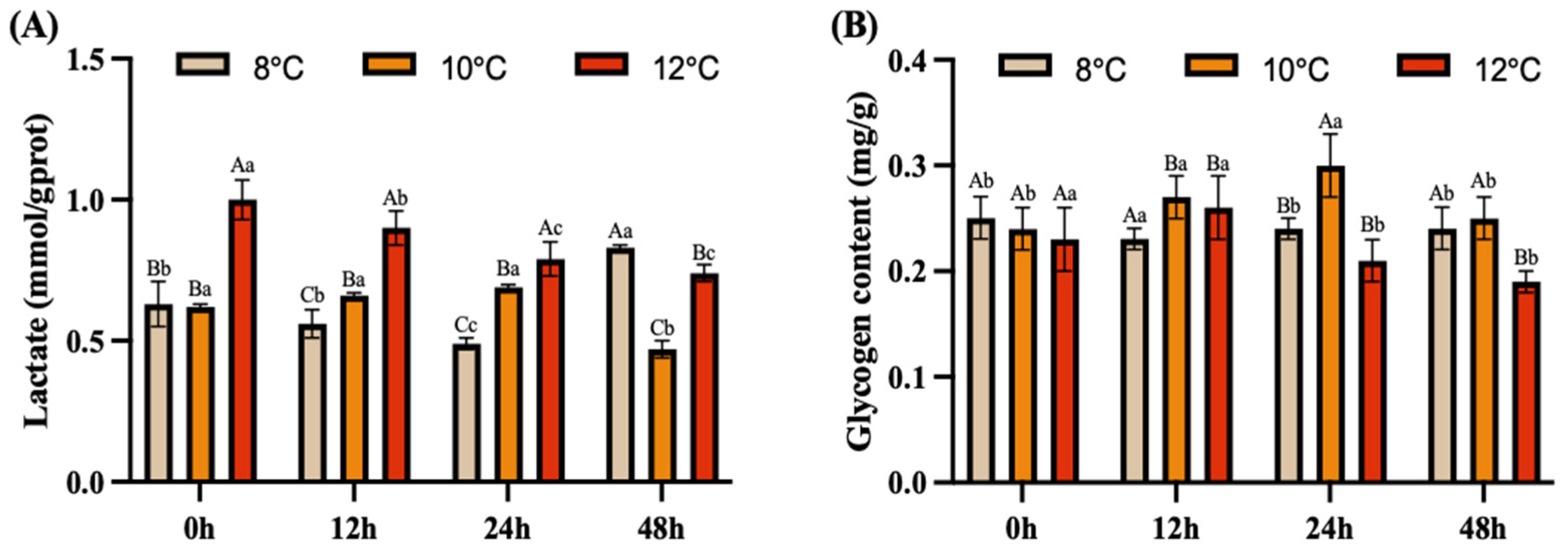
As shown in
Figure 4A, lactate levels varied over time and differed significantly among the groups, serving as a crucial indicator of anaerobic metabolism that may contribute to downstream pH-related quality changes. The 12 °C group started with a high lactate content (~1.01 mmol/g), decreasing to 0.74 mmol/g after 48 h. Because 0 h was defined after the target temperature had been reached and stabilised, this higher initial lactate level more likely reflected an early temperature-induced glycolytic response during cooling. Conversely, the 10 °C group maintained lactate levels around 0.6–0.7 mmol/g. In the 8 °C group, lactate initially decreased but rose to about 0.83 mmol/g at 48 h, indicating increased anaerobic energy production later in the rearing phase. Notably, the decline in lactate at 12 °C suggests less late-stage anaerobic compensation compared to 8 °C, despite sustained high metabolic turnover based on other indicators.
When fish are subjected to stress, pyruvate is converted into lactate to support short-term anaerobic energy supply [
26]. In general, lactate accumulation may lower muscle pH and can contribute to subsequent quality deterioration, including reduced water retention and texture weakening under more pronounced or prolonged stress conditions [
41]. In the present study, lactate remained low and stable at 10 °C, indicating that aerobic metabolism was better maintained under this condition. By contrast, the late-stage rebound of lactate in the 8 °C group suggests that prolonged cold stress progressively constrained aerobic energy turnover. Under such conditions, initial metabolic suppression was no longer sufficient to maintain energy balance, and the fish likely relied more on anaerobic glycolytic turnover during the later rearing period. This late increase in lactate does not necessarily imply a marked additional decline in measured glycogen at the end of the trial, because glycogen in this group had already remained at a relatively low level, and the available carbohydrate reserve was limited. This secondary rise in lactate is important because it implies not only metabolic inefficiency but also a greater risk of pH decline, reduced water-holding capacity, and textural deterioration. Similar patterns have also been observed in
Siniperca chuatsi, where longer transport durations were associated with higher lactate concentrations and a significant decrease in pH [
45]. In bighead carp (
Aristichthys nobilis), an appropriate pre-transport rest reduced lactate accumulation and improved muscle texture [
9]. Collectively, these findings indicate that effective stress reduction alleviates anaerobic metabolic burden and contributes to better muscle quality.
3.3.2. Glycogen
Glycogen is the primary rapid-energy reserve in fish muscle. Sufficient glycogen levels are crucial for maintaining energy supply during stress and preserving muscle function and structure. As shown in
Figure 4B, glycogen content changed over time in all three groups, although the temporal patterns differed markedly among them. In the 12 °C group, glycogen increased slightly at 12 h and then declined progressively, reaching the lowest level at 48 h. In contrast, the 10 °C group showed an increase in glycogen content from 0.24 mg/g to approximately 0.30 mg/g at 24 h. The 8 °C group maintained glycogen contents within a relatively low and narrow range (0.24–0.25 mg/g) throughout the rearing period.
When fish experience stress, glycogen is typically the first energy substrate mobilised. Once glycogen is depleted, the organism relies on gluconeogenesis and lipid oxidation to meet its energy demands. If these reserves are insufficient, amino acids and nucleotides may be catabolised for energy, leading to a decline in muscle quality [
44]. In this study, the continuous depletion of glycogen at 12 °C indicates that metabolic demand remained high throughout the rearing period, resulting in sustained carbohydrate consumption [
46]. In contrast, the temporary increase in glycogen at 10 °C suggests that this temperature facilitated a more coordinated compensatory response. Under this condition, energy expenditure appeared to be sufficiently suppressed, allowing carbon skeletons from glucogenic substrates to be redirected towards glycogen restoration. This pattern is more consistent with partial metabolic adaptation rather than mere substrate exhaustion [
46,
47]. The consistently low and nearly unchanged glycogen content at 8 °C likely indicates that the cold inhibited normal substrate mobilisation and restricted flexible intracellular energy redistribution. Thus, the glycogen responses suggest that 10 °C better balanced metabolic suppression with homeostatic adjustment, while 8 °C and 12 °C showed contrasting forms of energetic imbalance.
3.3.3. ATP-Related Compounds and AEC
Changes in nucleotide content indicate the energy status of fish during rearing and directly affect the umami and bitter flavour profiles of the muscle (
Table 3). ATP content varied with temperature, with the most significant decline observed in the 12 °C group. After 48 h, ATP concentration decreased from 4.48 mg/100 g to 1.35 mg/100 g, reflecting a substantial increase in energy consumption. In contrast, ATP levels in the 10 °C group remained relatively stable throughout the rearing period, ranging from 3.80 to 3.93 mg/100 g. Notably, the 8 °C group maintained the highest levels of ATP and ADP by the end of the experiment. Additionally, AMP and IMP exhibited distinct temperature-dependent changes. The 12 °C group demonstrated a rapid decline in AMP, alongside a marked accumulation of IMP. Concurrently, Hx levels increased, indicating a faster conversion of umami-contributing nucleotides into bitter components at the higher rearing temperature. Furthermore, AEC decreased in all groups during the first 24 h. Although the 12 °C group showed a slight recovery at the end of the rearing period, this trend should be interpreted with caution.
Following post-mortem, ATP degrades sequentially into ADP, AMP, IMP, HxR, and Hx. Among these compounds, IMP significantly contributes to umami flavour, while HxR and Hx are associated with bitterness and flavour deterioration [
48]. AEC serves as a sensitive indicator of cellular energy status, reflecting the relative distribution of adenylates within the cellular adenylate pool [
49]. Under stress, impaired mitochondrial oxidative phosphorylation restricts ATP resynthesis and accelerates nucleotide flux towards HxR and Hx. This process shortens the persistence of umami compounds and promotes the early accumulation of bitter metabolites [
50]. In the present study, the 12 °C group exhibited the most rapid ATP depletion, accompanied by a marked decline in AMP, significant accumulation of IMP, and a subsequent increase in Hx. This indicates accelerated nucleotide turnover under relatively high metabolic flux. The slight late-stage recovery of AEC in this group should not be interpreted as a genuine restoration of cellular energy status. As AEC is a ratio-based index, it may increase slightly when the relative distribution of adenylates changes, even if the absolute energy pool continues to decline. The concurrent decrease in AMP and accumulation of downstream degradation products suggest that the apparent recovery of AEC primarily reflects a repartitioning of the adenylate pool rather than true energetic recovery.
The 8 °C group exhibited a distinct trajectory. Although ATP and ADP levels remained relatively high at the experiment’s conclusion, AEC continued to decline. This suggests that stronger cold stress slowed nucleotide degradation but did not fully preserve effective energy regeneration. Metabolic turnover was suppressed, yet energy homeostasis was not genuinely stabilised. In contrast, the 10 °C group maintained stable ATP and AEC levels while limiting excessive accumulation of undesirable end-products. This pattern indicates that 10 °C effectively balanced ATP consumption, regeneration, and downstream degradation, thereby prolonging the retention of beneficial umami-related nucleotides and reducing the risk of flavour deterioration. Research on Atlantic salmon has shown that prolonged high-density stress accelerates ATP degradation and alters adenylate distribution, resulting in loss of muscle structure and reduced shelf life [
39]. Furthermore, Dong et al. [
48] confirmed that intense stress in large yellow croakers leads to rapid ATP depletion and increased Hx accumulation, triggering deterioration of texture and colour. Collectively, these findings underscore the importance of optimising rearing temperature to minimise stress, thereby prolonging the umami flavour profile and suppressing the formation of bitter-tasting nucleotide end-products.
3.4. Changes in Free Amino Acids
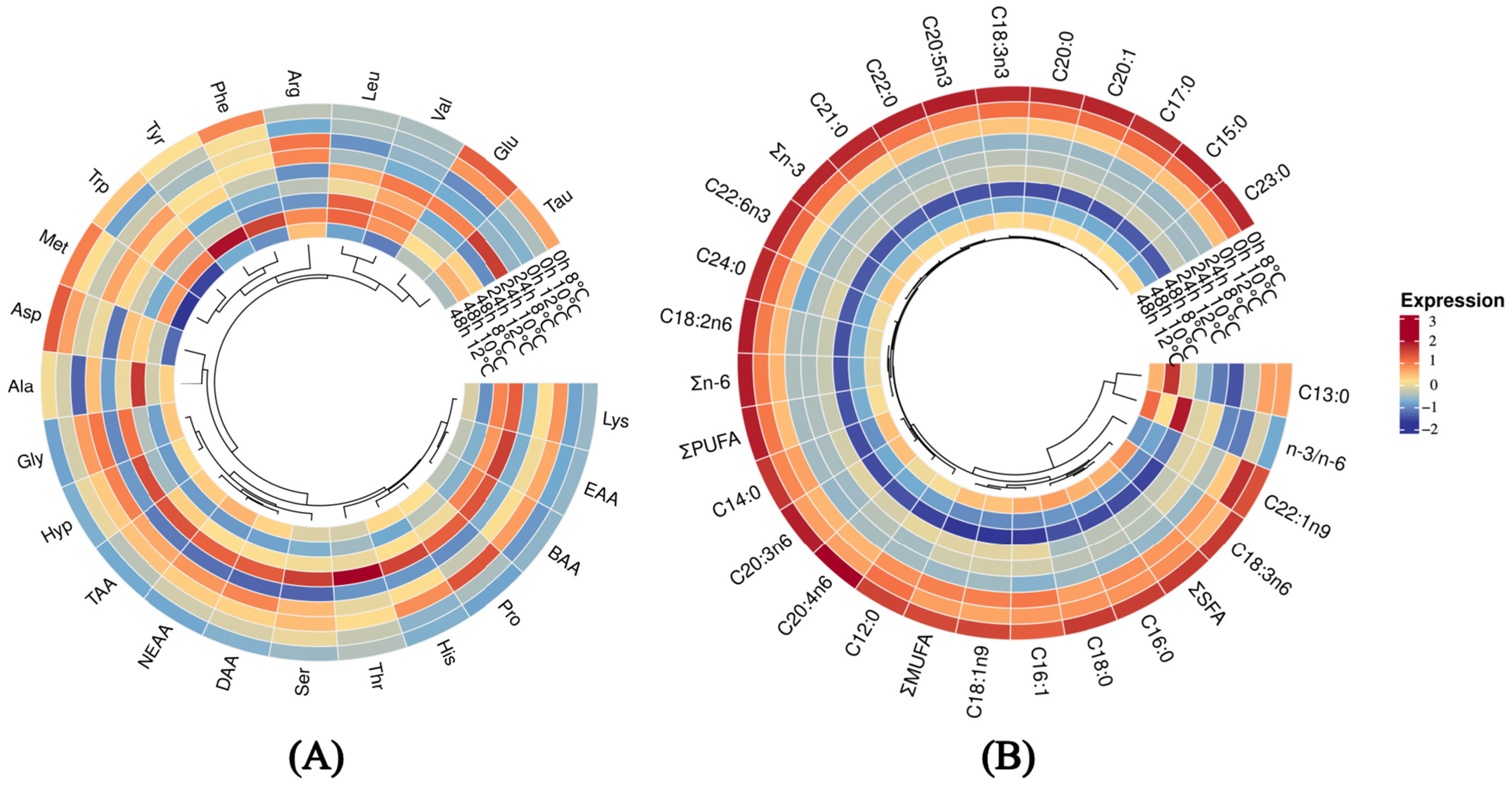
Free amino acids (FAAs) in large yellow croakers differed significantly with rearing temperature and duration (
Figure 5A). Across the rearing period, the 10 °C group generally showed the lowest and most stable total free amino acid (TAA) content, whereas the 8 °C and 12 °C groups exhibited greater fluctuations and accumulation. In the 12 °C group, TAA increased to 383.11 mg/100 g at 24 h and then declined to 292.28 mg/100 g at 48 h. By contrast, TAA in the 8 °C group increased to 317.88 mg/100 g at 24 h and remained relatively high at 290.24 mg/100 g at 48 h (
Table S1). The patterns of total essential amino acids (EAA) and total delicious amino acids (DAA) largely mirrored that of TAA. The group at 10 °C exhibited lower values for EAAs and DAAs, while the groups at 8 °C and 12 °C demonstrated higher DAA levels after 24 h. Bitter amino acids (BAAs) displayed temperature-related differences, peaking in the 8 °C group after 48 h (
p < 0.05).
The higher FAA levels observed in the 8 °C and 12 °C groups relative to the 10 °C group suggest that amino acid turnover and metabolic redistribution were more active under these two conditions. Under stronger cold stress at 8 °C, the sustained elevation of FAA, particularly the marked increase in BAA at 48 h, indicates that amino acid accumulation became progressively associated with catabolic imbalance. By contrast, the transient increase in FAA at 12 °C more likely reflects relatively active amino acid turnover under less suppressed metabolism, rather than the prolonged accumulation pattern observed at 8 °C. Previous studies in fish have shown that stress-related proteolysis and metabolic disturbance can promote FAA accumulation while simultaneously weakening muscle structural stability [
39,
51,
52]. This interpretation is also consistent with the positive association between stress load and muscle FAA reported for large yellow croakers reared at higher stocking density [
53].
The dynamic changes in DAA and BAA further reflect the close relationship between flavour formation and muscle metabolic status. The high BAA level in the 8 °C group at 48 h indicates more pronounced breakdown-associated amino acid accumulation and a greater risk of flavour deterioration. Related studies in large yellow croakers and small yellow croakers have shown that better overall quality depends more on a balanced amino acid profile and the preservation of muscle integrity than on a simple increase in total amino acid content [
54,
55]. In the present study, the simultaneous increase in TAA and BAA in the 8 °C group suggests heightened catabolic disruption rather than a beneficial enhancement in taste.
Key flavour amino acids may also play dual roles in taste perception and metabolic adjustment. Glycine, glutamate, and cysteine are involved in glutathione-related pathways and thus may contribute to redox homeostasis under stress [
56]. In this context, the more stable FAA profile at 10 °C indicates that amino acid release and reutilization were better coordinated compared to temperatures of 8 °C or 12 °C. The release of glucogenic amino acids might have supported energy compensation, while significant degradation of structural proteins was probably restricted at this temperature [
46]. By contrast, the higher FAA levels in the 8 °C and 12 °C groups, especially the accumulation of BAA under 8 °C, indicate that amino acid generation exceeded effective metabolic reuse to a greater extent. These results indicate that 10 °C is the better condition for protein turnover and metabolic homeostasis within the examined temperature range. This conclusion is consistent with the steady glycogen utilisation and ATP responses reported at 10 °C in the preceding sections.
3.5. Changes in Fatty Acids
At the beginning of rearing, the lipid composition of large yellow croakers exhibited typical characteristics of marine carnivorous fish (
Table S2). As shown in
Figure 5B, the major fatty acids were C16:0, C18:1n−9, and C18:2n−6, whereas C22:6n−3 (DHA) and C20:5n−3 (EPA) were the predominant long-chain n−3 polyunsaturated fatty acids. In terms of composition, saturated fatty acids (SFAs), monounsaturated fatty acids (MUFAs), and polyunsaturated fatty acids (PUFAs) accounted for approximately 40%, 30%, and 28–30% of total fatty acids (TFA), respectively. In addition, the initial n−3/n−6 ratio was below 1.0, ranging from 0.47 to 0.51, owing to the relatively high abundance of n−6 PUFA.
During the rearing period, both the total amount and composition of muscle lipids showed clear temperature-dependent differences. At 8 °C, TFA decreased from 69.76 to 13.79 mg/g by 48 h, corresponding to a reduction of approximately 80.2%, while ΣMUFA and ΣPUFA decreased by 83.7% and 80.7%, respectively. The 10 °C group showed an intermediate response, with TFA decreasing by approximately 55% at 48 h. In contrast, the 12 °C group showed the mildest variation; by 48 h, TFA was only 10–15% lower than the initial value, and DHA content remained largely stable.
Although total fatty acid content decreased in all groups, the n−3/n−6 ratio increased by 48 h. This increase was mainly attributable to the greater decline in Σn−6 compared with Σn−3. As a result of this differential change, the greatest increase in the n−3/n−6 ratio was observed in the 8 °C group, followed by the 12 °C group, whereas only a slight increase occurred at 10 °C.
These changes in fatty acid profiles were primarily driven by differences in energy metabolism and oxidative burden. As the rearing period progressed and readily available carbohydrate reserves such as glycogen were depleted, fatty acid β-oxidation contributed increasingly to ATP production [
18]. At 8 °C, stronger cold stress imposed the highest physiological burden on the fish, leading to the strongest lipid mobilisation and the greatest decline in TFA. At 10 °C, the inhibitory effect of low temperature appeared to better balance stress-induced energy demand, resulting in moderate lipid consumption. In contrast, the 12 °C group showed the lowest degree of lipid mobilisation. Although basal metabolic activity was likely higher under this condition, lipid reserves were better preserved because metabolic suppression was insufficient to induce the same level of stress-driven substrate utilisation observed at 8 °C.
These temperature-dependent differences in fatty acid composition may also be interpreted in the context of oxidative stress. Exposure to temperature fluctuations can stimulate the production of reactive oxygen species (ROS), and when ROS generation exceeds the scavenging capacity of the antioxidant defence system, oxidative stress may occur [
57,
58,
59]. Under such conditions, unsaturated fatty acids are generally more susceptible than saturated fatty acids, which may contribute to selective PUFA depletion and broader changes in lipid composition [
60,
61].
Consistent with this general mechanism, in the 8 °C group, the decline in PUFA, especially EPA and DHA, was markedly greater than that in the 10 °C group. Under cold stress, fish would generally be expected to retain PUFA to maintain membrane fluidity and functionality through homeoviscous adaptation [
62]. Therefore, the pronounced reduction in PUFA at 8 °C may reflect the combined effects of stronger lipid mobilisation and greater susceptibility of membrane lipids to oxidative damage under stronger cold stress, rather than adaptive membrane regulation. This not only reduces nutritional value but also weakens membrane integrity, which may increase drip loss and impair muscle quality [
53].
Furthermore, long-chain n−3 PUFA are crucial for maintaining membrane structure and ion channel function [
63], whereas n−6 PUFA are directly involved in the production of signaling molecules associated with inflammation and stress responses [
64]. The 8 °C group showed the most pronounced decline in n−6 PUFA, suggesting that these compounds were extensively mobilised to support stress-related signaling under intense cold exposure.
These results indicate that muscle lipid turnover responded differently across the three temporary rearing temperatures. The relatively small decline in TFA at 12 °C suggests that absolute lipid reserves were better preserved under this condition, whereas the much greater depletion observed at 8 °C indicates more extensive lipid utilisation during rearing. At 10 °C, the intermediate response suggests a more moderate degree of lipid mobilisation. Because lipid oxidation was not directly measured in the present study, these changes are more conservatively interpreted as temperature-dependent differences in lipid turnover and selective fatty acid depletion rather than direct evidence of oxidative degradation alone.
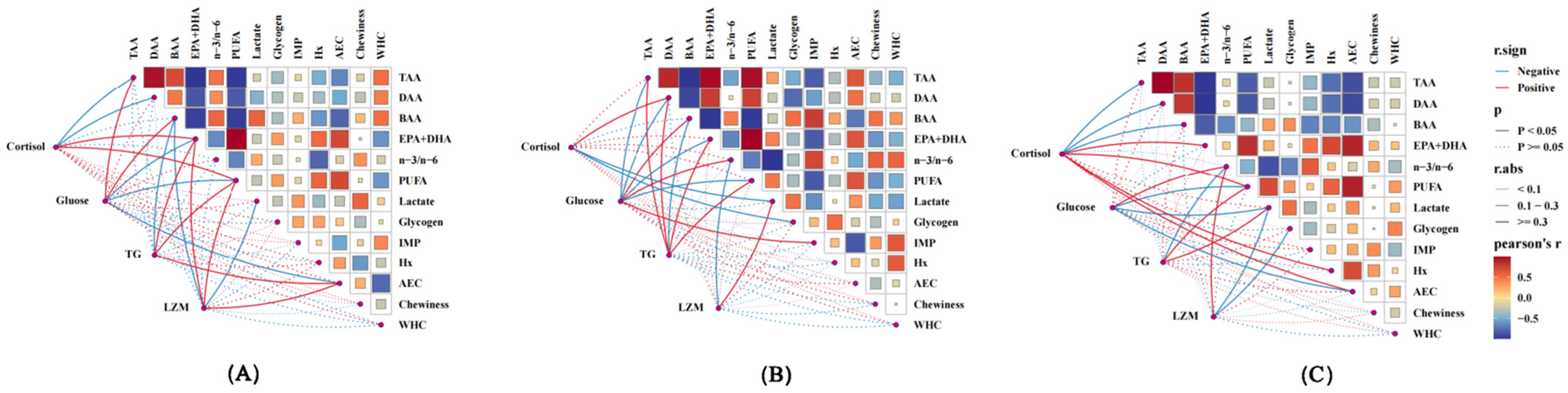
3.6. Correlation Analysis
Correlation analysis was conducted to examine two levels of association within each temperature group: the relationships between serum stress- and metabolism-related indicators and representative muscle trait, and the internal correlation structure among muscle quality-related indices (
Figure 6). The analyses were performed separately for the 8, 10, and 12 °C groups to clarify how systemic physiological responses were associated with muscle flavour and quality formation during temporary rearing. The results revealed distinct temperature-dependent differences in correlation patterns, indicating that systemic metabolic responses were associated with muscle flavour and quality development via different pathways at varying rearing temperatures.
At 8 °C, cortisol exhibited negative correlations with the muscle TAA pool. In contrast, glucose was more closely associated with energy turnover signals and coordinated shifts in amino acid and PUFA traits. TG and LZM were linked to more favourable PUFA retention patterns. Notably, LZM demonstrated an inverse relationship with lactate, while both TG and LZM displayed opposing trends regarding bitter amino acid signals. These observations indicate a strong connection between stress responses and catabolic processes during stronger cold exposure.
At 10 °C, the correlation network indicated a more cohesive relationship between lipid status and flavour precursors. TG were consistently linked to improved preservation of DAA and PUFA indices. In contrast, glucose was more closely associated with nucleotide turnover signals and alterations in the FAA profile. Compared to metabolic variables, texture parameters, and WHC exhibited fewer strong correlations with serum indicators, highlighting the relatively stable quality phenotype observed at this temperature.
At 12 °C, cortisol emerged as a significant link among lipid status, cellular energy state, and purine catabolism signals. In contrast, glucose and TG were associated with alterations in lipid balance, anaerobic metabolism, and energy charge. Additionally, LZM exhibited relationships that were opposite to those of lactate and lipid imbalance signals, underscoring an interaction among metabolic burden, lipid composition, and immune responses at elevated rearing temperatures. Within muscle tissue, TAA closely tracked with DAA, while indices related to PUFA varied consistently, confirming the internal coherence of the primary flavour precursor pools. Notably, the relationship between TAA and BAA was temperature-dependent. At 10 °C, a trade-off pattern was observed, whereas at 8 °C and 12 °C, synchronous variation was more prevalent. This indicates that the balance between amino acid release and utilisation is influenced by temperature.
These correlation analyses suggest that a temperature of 10 °C facilitates better coordination between systemic metabolism and precursors related to muscle flavour and quality. In contrast, temperatures of 8 °C and 12 °C exhibit stronger coupling between stress and catabolism, potentially increasing the risk to quality during extended rearing.
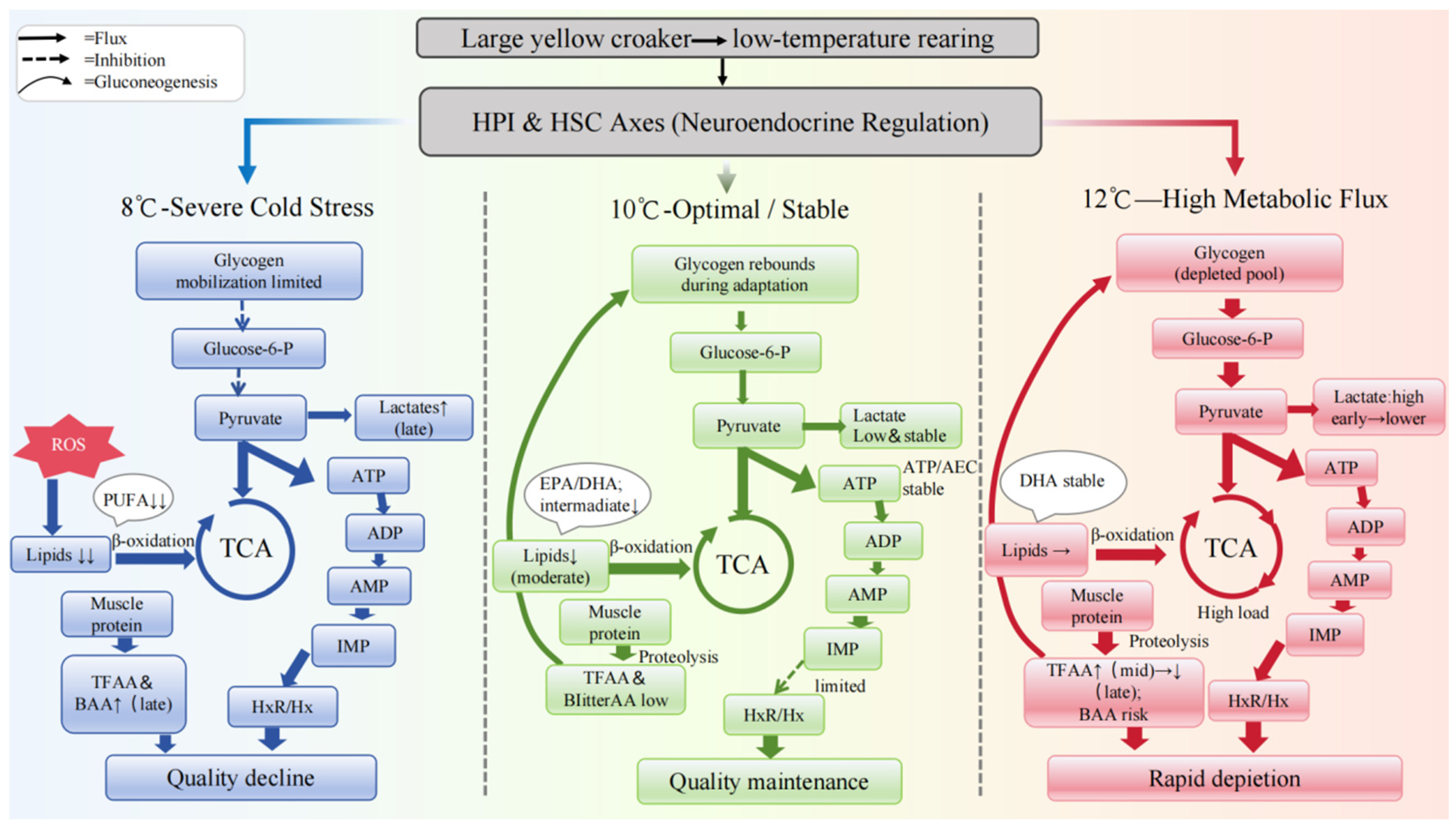
3.7. Conceptual Summary of Potential Temperature-Dependent Mechanisms
As summarised conceptually in
Figure 7, the present results suggest that rearing temperature before transport may influence muscle quality in large yellow croakers through coordinated changes in energy allocation, nucleotide turnover, lipid utilisation, and amino-acid-related quality traits. This framework is intended as an integrative interpretation of the current physiological and biochemical results, rather than direct verification of specific molecular pathways.
These processes are regulated by stress-responsive neuroendocrine mechanisms, particularly the HPI axis, which is crucial for maintaining physiological homeostasis while preserving muscle quality and flavour-related precursors. Notably, the primary distinction among the three temperatures was not merely the degree of metabolic inhibition but whether metabolic suppression could coexist with physiological compensation.
At 8 °C, the fish experienced stronger cold stress. This was reflected in a pronounced initial cortisol response, marked depletion of circulating lipids, subsequent re-accumulation of lactate, substantial loss of PUFA, and stronger signals of bitter amino acids. Collectively, these changes suggest that cold stress at 8 °C constrained metabolic flexibility and gradually shifted energy metabolism towards a less efficient survival-oriented mode. Under this condition, lipid reserves were rapidly mobilised, oxidative stress increased, and protein degradation became more pronounced. Together, these responses likely compromised membrane integrity, water retention, and flavour quality. The relatively high terminal ATP levels observed in this group should therefore be interpreted with caution, as they more likely reflect suppressed degradation kinetics than genuine energy homeostasis.
At 12 °C, metabolic suppression was insufficient to effectively limit basal metabolic consumption. Continuous glycogen depletion, rapid ATP turnover, AMP decline, IMP accumulation, and subsequent Hx increase indicate that the muscle remained in a high-flux metabolic state. Under this condition, energy substrates were consumed rapidly, and flavour precursors were converted more quickly from desirable intermediates into downstream deterioration products. Although this group did not show the same late anaerobic compensation as the 8 °C group, the overall pattern suggests that 12 °C did not sufficiently restrain metabolic activity during the rearing period, thereby providing limited protection for long-term quality preservation.
In contrast, 10 °C produced the most coordinated metabolic trajectory. Lactate remained low, glycogen showed a transient rebound, and both ATP and AEC were relatively stable. In addition, the accumulation of undesirable end-products remained limited. At the same time, lipid depletion and FAA accumulation were moderate, indicating that neither oxidative lipid damage nor stress-induced proteolysis became predominant. These characteristics suggest that 10 °C best balances three competing demands: reducing basal metabolic activity, maintaining adequate adaptive compensation, and preserving quality-related structural and flavour precursors. Therefore, the advantage of 10 °C lies not in maximal metabolic suppression but in achieving a more favourable compromise between metabolic restraint and physiological homeostasis.
3.8. Limitations and Future Perspectives
The present study has several limitations that should be acknowledged. First, juvenile fish of relatively small body size were used under controlled laboratory conditions, which improved experimental consistency but limited direct extrapolation to commercial-sized fish used in live trade. Second, the mechanistic interpretation proposed here is based on coordinated physiological and biochemical responses rather than direct molecular verification. Future work should include finer temperature gradients, validation in commercial-sized fish, simulated transport trials, and targeted molecular analyses related to energy metabolism, oxidative stress, and proteolytic regulation.
4. Conclusions
This study demonstrates that pre-transport rearing temperature significantly affects the relationship between stress response, energy allocation, and muscle quality in large yellow croakers. Among the tested temperatures, 8 °C caused excessive cold stress, leading to delayed anaerobic compensation, notable lipid depletion, and an increased risk of quality loss. In contrast, 12 °C failed to sufficiently suppress metabolic turnover, resulting in accelerated glycogen and nucleotide consumption. Conversely, 10 °C yielded the most balanced response, characterised by a relatively stable endocrine status, coordinated substrate utilisation, reduced accumulation of bitter degradation products, and improved preservation of texture, water-holding capacity, and flavour-related precursors.
These findings suggest that a pre-transport rearing temperature of 10 °C is promising under the present experimental conditions for large yellow croakers. The benefits likely arise from a favourable balance between metabolic suppression and homeostasis, rather than from complete inhibition of physiological activity. Nonetheless, given the absence of an ambient-temperature control or direct molecular validation in this study, additional research is required to verify the appropriateness of this temperature for commercially sized fish and practical transport conditions.




 ,
,