Article

Two New Species of Myxobolus (Cnidaria: Myxosporea: Myxobolidae) from the Gills of Quillback, Carpiodes cyprinus (Cypriniformes: Catostomidae), from the Arkansas River Drainage, Oklahoma, USA


by
Chris T. McAllister
1,*,†,
Donald G. Cloutman
2,
Eric M. Leis
3 and
Henry W. Robison
4
1
Division of Natural Sciences, Northeast Texas Community College, 2886 FM 1735, Chapel Hill Road, Mt. Pleasant, TX 75455, USA
2
Independent Researcher, P.O. Box 197, Burdett, KS 67523, USA
3
La Crosse Fish Health Center–Midwest Fisheries Center, U.S. Fish and Wildlife Service, Onalaska, WI 54650, USA
4
Independent Researcher, 602 Big Creek Drive, Sherwood, AR 72120, USA
*
Author to whom correspondence should be addressed.
ZooBank: urn:lsid:zoobank.org:pub:0BAFF337-4A3F-4D03-AFC6-28E47C0AE598.
Fishes 2026, 11(3), 180; https://doi.org/10.3390/fishes11030180
Submission received: 19 December 2025 / Revised: 24 February 2026 / Accepted: 18 March 2026 / Published: 19 March 2026
(This article belongs to the Section Fish Pathology and Parasitology)

Abstract

A single quillback Carpiodes cyprinus was collected with a boat electrofisher during May 2022 from the Verdigris River, Wagoner County, Oklahoma, USA. Its gills, gall bladder, fins, integument, musculature, and other major organs were macroscopically examined for myxosporeans. The gill rakers and gill lamellae were each infected with a new myxosporean, Myxobolus arkansasense sp. n., and Myxobolus verdigrisense sp. n., respectively. Qualitative and quantitative morphological data were obtained from fresh myxospores. Molecular data consisted of a 772 base pair sequence of the partial small subunit (SSU) ribosomal RNA gene for M. arkansasense sp. n. and a 1700 base pair sequence for M. verdigrisense sp. n. Phylogenetic analysis grouped Myxobolus arkansasense sp. n. and Myxobolus verdigrisense sp. n. with myxosporeans primarily known to infect North American catostomid fishes. To date, M. arkansasense sp. n is the only member of the genus known to infect the gill rakers of C. cyprinus.
Key Contribution: Two new species of Myxobolus are described from the quillback, Carpoides cyprinus, from Oklahoma, USA. One occurred on the gill rakers and the other on the gill lamellae. The former novel species is the first to be found on the gill rakers of this rarely collected catostomid fish.

1. Introduction

The genus Myxobolus Bütschli, 1882, is a very diverse host- and site-specific group of myxosporean parasites infecting numerous marine and freshwater fishes worldwide [1,2,3]. Given the rate of new species being described in recent years [3], over 1000 species of Myxobolus are known. The life cycle typically involves a definitive annelid or bryozoan host and intermediate fish host [4]. In North America, over 133 species of Myxobolus have been reported [1,2,3], including 40 taxa in catostomids (suckers) [5]. Catostomids are particularly susceptible to infection by Myxobolus because of their consumption of aquatic annelids during benthic feeding. As only 18 of 81 (22.2%) species of catostomids have been reported as hosts for Myxobolus [5], much more research is needed to understand the diversity of this group of parasites in suckers.
One of these catostomids, the quillback, Carpioides cyprinus (Lesueur), occupies the Great Lakes–St. Lawrence River, Hudson Bay, and Mississippi River basins from Québec and Alberta, Canada, south to the Gulf Slope drainages of Louisiana, Mississippi, and Alabama, and west to Wyoming, USA [6,7]. In Oklahoma, USA, C. cyprinus is relatively rare in collections but has been collected from the Salt Fork tributary of the Arkansas River and possibly some eastern reservoirs [8,9]. This sucker inhabits clear to turbid watersheds, including large permanent pools, backwaters, and main channels with stable gravel bottoms [10]. The species is an omnivore that randomly ingests bottom sediment but also takes insect larvae, bivalves, and small crustaceans, as well as plant material and various algae [11].
Two previously reported myxosporeans have been reported from gill lamella of C. cyprinus as follows: Myxobolus meglitschi (Meglitsch, 1937) Grinham and Cone, 1990 from Illinois, USA [12,13,14], and Thelohanellus oklahomaensis McAllister, Cloutman, Leis, Camus, Woiak, and Robison, 2023 from Oklahoma [15].
This survey reports on two novel species of Myxobolus found on the gill, one on rakers and the other on lamellae, of a quillback collected from the Arkansas River drainage in Oklahoma, and their phylogenetic affinities.

2. Methods

2.1. Collection and Necropsy

A single adult C. cyprinus (265 mm total length [TL]) was collected on 25 May 2022 with a boat electrofisher from the Verdigris River (Arkansas River drainage) of Wagoner County, Oklahoma. This individual was immediately placed in aerated habitat water, taken to the laboratory, and euthanized with a concentrated solution of tricainemethanesulfonate (TMS-22) following standards for the use of fish in research by the American Fisheries Society [16]. For necropsy, we followed the methods of McAllister et al. [15]. Tissues were placed in Petri dishes containing 0.9% (v/v) saline and macroscopically examined for visible plasmodia with a stereomicroscope (Motic K400, Martin Microscope Company, Easley, NC, USA) at 20–30× magnification. Some fresh plasmodia were singled out directly with fine forceps from excised gills (no other examined anatomical site possessed visible plasmodia). Specimens were placed on clean slides for measurement or transferred to vials containing 90% (v/v) DNA-grade ethanol for molecular analysis.

2.2. Morphological Characterization

Fresh intact plasmodia as well as ruptured plasmodia with released myxospores were examined and photographed in unstained temporary wet mounts at magnification of 400–1000× and archived as digital images taken with a Swift model M10 or an Accuscope 300-LED Series phase-contrast microscope (Accu-Scope Inc., Commack, NY, USA) and camera. Myxosporeans were measured (to the nearest 0.1 mm) following Lom and Arthur [17] and Hoffman [18] from digital images; terminology for shapes of myxospores and polar capsules follow Clopton [19]. Dimensions of myxospores are presented in micrometers (µm) as mean length ± SD, mean width ± SD, with the ranges in parentheses where appropriate. Syntype specimens of parasites were deposited in the Harold W. Manter Laboratory of Parasitology (HWML), University of Nebraska, Lincoln, NE, USA. A host voucher specimen was deposited in the Northeast Texas Community College Vertebrate Collection, Mt. Pleasant, TX, USA. Fish common and scientific names follow Page et al. [20].

2.3. Molecular Characterization and Phylogenetic Analysis

Plasmodia containing myxospores were examined on a microscope slide, photographed, placed in a microcentrifuge tube with molecular grade ethanol, and underwent DNA extraction using a Qiagen DNeasy Kit (Qiagen, Hilden, Germany). A portion of the small subunit (SSU) ribosomal RNA gene was produced using PCR primer pairs (Myxo1F/MyxGen3R; GenMyxo3/H2, H2/H9, and H9/ERIB10) mentioned in Leis et al. [21]. Thermocycler conditions were as follows: 95 °C for 10 min; 40 cycles of 95 °C for 1 min, 50 °C for 1 min, and 72 °C for 2 min; ending with 72 °C for 10 min. Successful PCR products were sequenced by Eurofins Genomics (Louisville, KY, USA). Sequences were edited using Geneious 2021.1.1 (https://www.geneious.com, URL accessed on 1 December 2025). To search for similarity, the contiguous sequence was queried in GenBank (https://www.ncbi.nlm.nih.gov/genbank/ (URL accessed on 1 December 2025)) using a BLAST search. Hennegoides flockae Leis, Rosser, Baumgartner, and Griffin 2019 (MN316529.1; host: western pirate perch, Aphredoderus gibbosus Lesueur in Cuvier and Valenciennes, upper Mississippi River, USA, was selected as the outgroup). The sequences were aligned with CLUSTALW in MEGA X [22]. Bayesian Information Criterion analysis determined that the most appropriate nucleotide substitution model for the data was General Time Reversible [23] with Gamma distribution (GTR + G). Maximum Likelihood analysis, using all sites as well as default parameters, was completed with the aligned data set containing 6766 positions and including 1000 bootstrap replicates.

3. Results

3.1. Description of the New Species

Phylum Cnidaria Hatschek, 1888
Subphylum Myxozoa Grassé, 2021
Class Myxosporea Bütschli, 1881
Order Bivalvulida Shulman, 1959
Suborder Platysporina Kudo, 1919
Family Myxobolidae Thélohan, 1892
Genus Myxobolus Bütschli, 1882
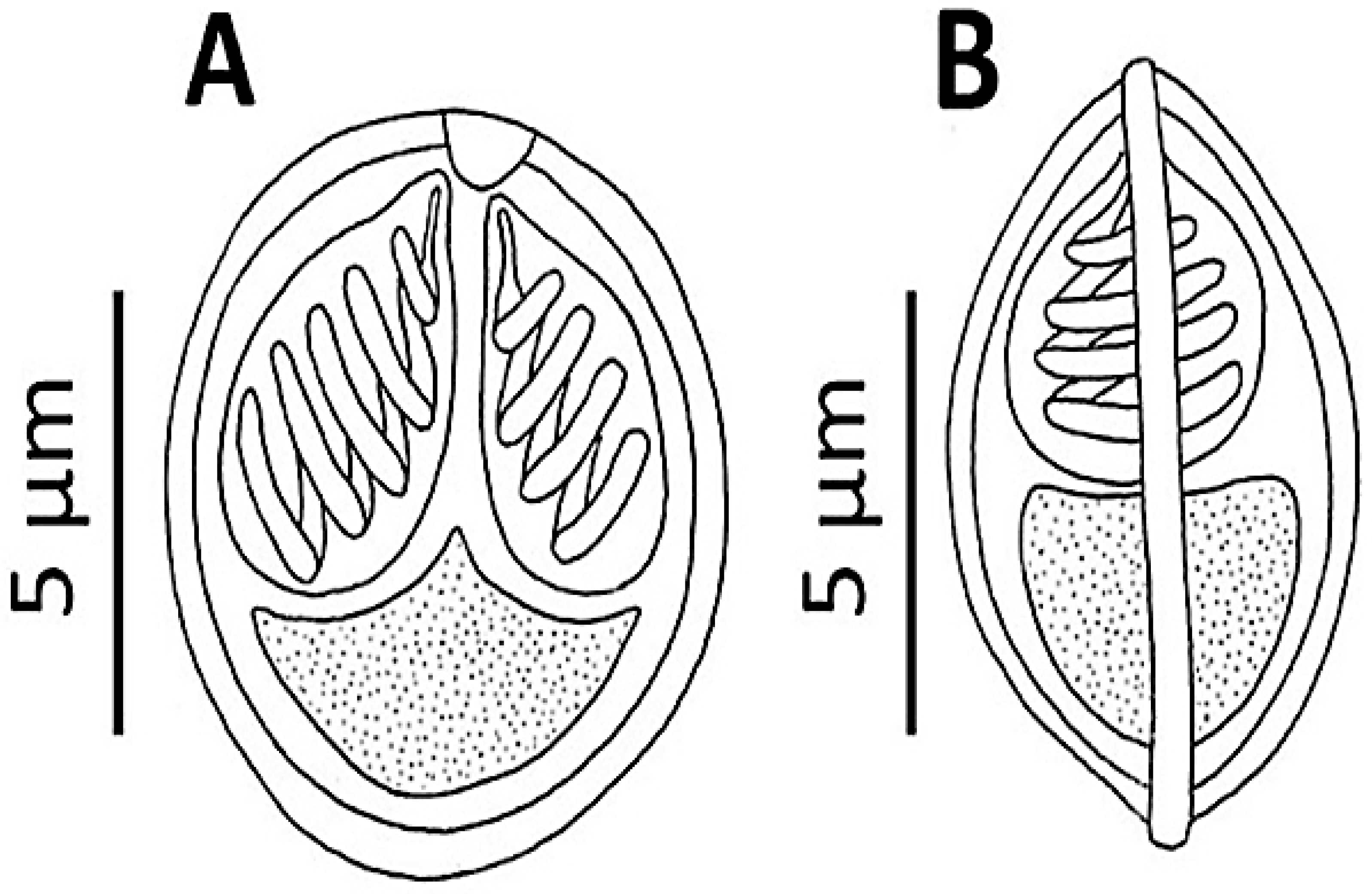
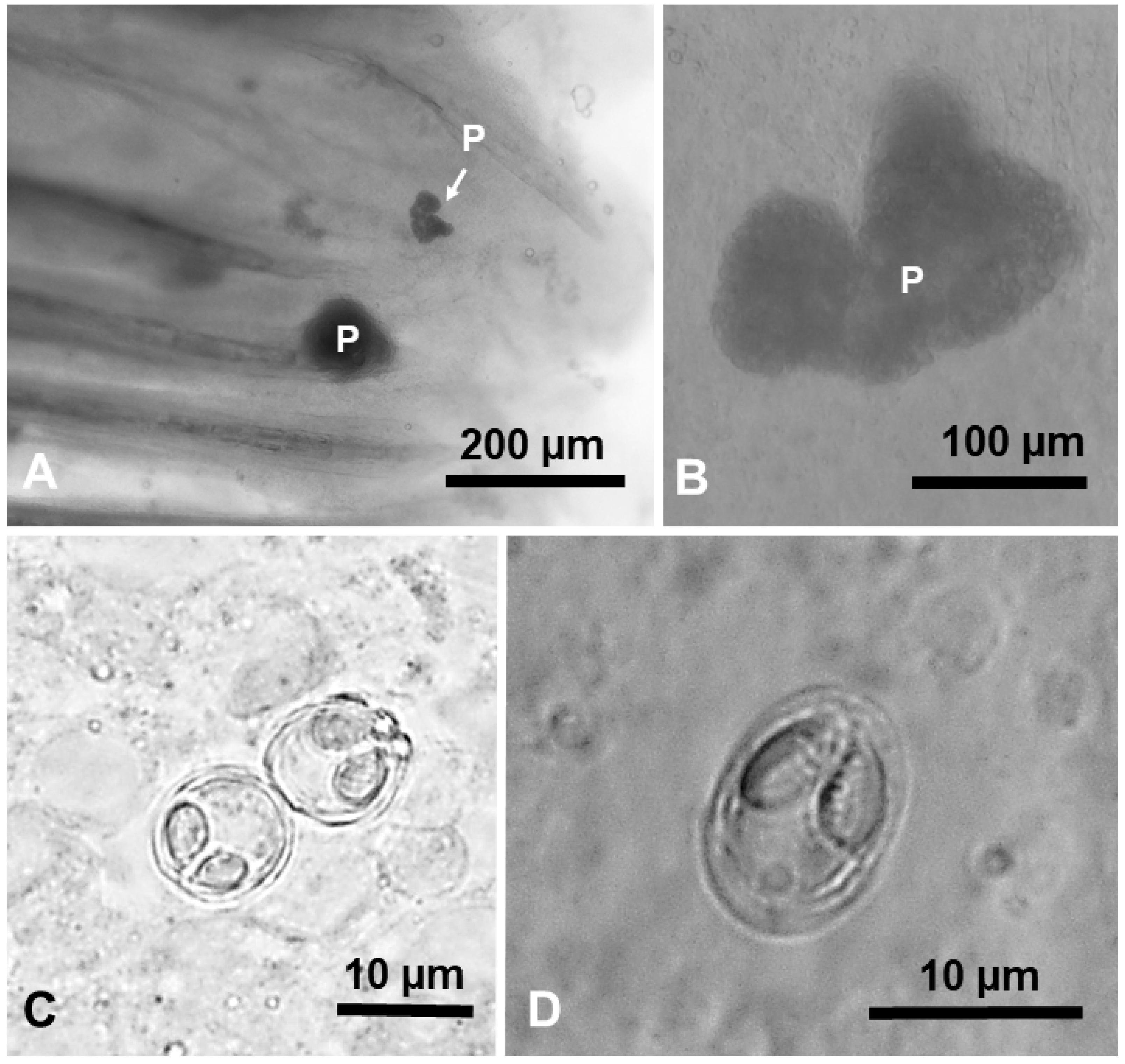
Myxobolus arkansasense sp. n. (Figure 1A–D and Figure 2)
ZooBank: To comply with the regulations set out in article 8.5 of the amended 2012 version of the International Commission of Zoological Nomenclature (ICZN) [24], details of the new species have been submitted to ZooBank. The Life Science Identifier (LSID) for Myxobolus arkansasense sp. n. is urn:lsid:zoobank.org:act:23E144F3-BCD5-40FC-95CA-431A22A214D0.
Material: Syntypes, proxy photographs of myxospores according to ICZN Declaration 45 [25] HWML 218140. Partial SSU rRNA gene (772 bp), GenBank accession number PX627811.
Diagnosis: Myxospores morphologically consistent with those of the genus Myxobolus Bütschli, 1882 [26,27,28], parasitizing C. cyprinus in Oklahoma, USA, are distinguished from other species of Myxobolus by the following combination of characteristics: Plasmodium spherical to elliptoid (rarely irregularly shaped) plasmodia infecting gill rakers, 150 (60–290) × 200 (90–380); orbicular to broadly elliptoid myxospores, 10.5 (8.9–11.6) × 8.7 (7.7–9.4) × 6.2 (5.6–6.5), with distinct sutural ridge; two pyriform polar capsules, equal to subequal in size, longer polar capsule 4.9 (4.4–5.6) × 2.8 (2.6–3.2), and shorter polar capsule 4.8 (4.2–5.6) × 2.7 (2.4–3.2); coiled polar tubule with 5 (4–6) coils; intercapsular process present, mucous envelope sometimes present, sutural markings absent; and possessing a unique partial SSU rRNA gene (GenBank accession PX627811). Of the 42 species of Myxobolus infecting catostomids, only one has shape of plasmodia (spherical to elliptoid) and myxospores (orbicular to broadly elliptoid), site preference (gill rakers), and partially overlapping measurements of myxospores with M. arkansasense sp. n. (10.5 [8.9–11.6] × 8.7 [7.7–9.4] × 6.2 [5.6–6.5]) (see Table 1 in [5] for detailed comparisons of other catostomid species), similar enough to make comparisons: Myxobolus girardi McAllister, Cloutman, Leis, Camus, and Robison, 2025 from the gill arch of western creek chubsucker, Erimyzon claviformis (Girard) in Sevier County, Arkansas, USA [5]. The orbicular plasmodia of M. girardi are generally larger (310 [130–515]) than those of M. arkansasense sp. n. 150 (60–290) × 200 (90–380). The size and shape of myxospores of M. girardi (10.4 [9.0–11.6] × 8.9 [7.7–9.9] × 6.2) and M. arkansasense sp. n. (10.5 [8.9–11.6] × 8.7 [7.7–9.4] × 6.2 [5.6–6.5]) overlap considerably, but the larger of the subequal-sized ovoid to pyriform polar capsules of M. girardi are generally larger (5.5 [4.4–6.0] × 2.9 [2.6–3.4], with 5–7 polar tubule coils) than pyriform polar capsules of M. arkansasense sp. n. (4.9 [4.4–5.6] × 2.8 [2.8–3.4], with 4–6 polar tubule coils). A mucous envelope and intercapsular process are absent from the myxospores of M. girardi but present in M. arkansasense sp. n. [5] and a comparison of the SSU rRNA genes for the two species showed 88.33% similarity. Two other species of myxosporeans have been found on C. cyprinus, both on gill lamellae: Myxobolus meglitschi (Meglitsch, 1937) Grinham and Cone, 1990 in Illinois, USA [7] and Thelohanellus oklahomaensis McAllister, Cloutman, Leis, Camus, Woiak, and Robison, 2024 in Wagoner County, Oklahoma, USA [10]. Myxobolus meglitschi is easily distinguished from M. arkansasense sp. n. by its larger myxospores ([12–14] × [11–13]) (Meglitsch, 1937). Thelohanellus oklahomaensis differs from M. arkansasense sp. n. by having one polar capsule [10].
Description (based on fresh specimens): Measurements are reported in µm as means ± SD followed by range in parentheses: With morphological characters of the genus Myxobolus Bütschli, 1882 [26,27,28]. Plasmodium orbicular (spherical) to elliptoid (rarely irregularly shaped), 150 ± 110 (60–290) (n = 5) × 200 ± 130 (90–380) (n = 5). Myxospores orbicular to broadly elliptoid, 10.5 ± 0.7 (8.9–11.6) long × 8.7 ± 0.4 (7.7–9.4) (n = 20) wide in valvular view. Thickness 6.2 ± 0.3 (5.6–6.5) (n = 5) in sutural view. Polar capsules 2, pyriform, equal to subequal in size; longer polar capsule 4.9 ± 0.4 (4.4–5.6) × 2.8 ± 0.2 (2.6–3.2), 47 (40–55) % of myxospore length (n = 20); shorter polar capsule 4.8 ± 0.4 (4.2–5.6) × 2.7 ± 0.2 (2.4–3.2), 46 (40–55) % of myxospore length (n = 20). Coiled polar tubule with 5 (4–6) coils (n = 12). Intercapsular process present, mucous envelope sometimes present, sutural markings absent.
Type host: Quillback, Carpiodes cyprinus (Lesueur, 1817), 265 mm TL, collected 25 May 2022.
Prevalence: One of one.
Site of infection: Gill rakers. No other tissues possessed visible plasmodia.
Etymology: The new species is named for the river drainage (Arkansas River) from which it was collected. The name originates from a Native American tribe (the Quapaw Indians). Upon hearing the word from the Quapaw, French explorers gave Arkansas territory its name, which evolved into “Arkansas” when it became the 25th US state on 15 June 1836.
Geographic distribution: United States: Oklahoma: Wagoner County, Verdigris River at Tullahassee Loop Recreation Area (35°53′31.56″ N, 95°26′55.76″ W).

3.2. Molecular Characterization and Phylogenetic Analysis

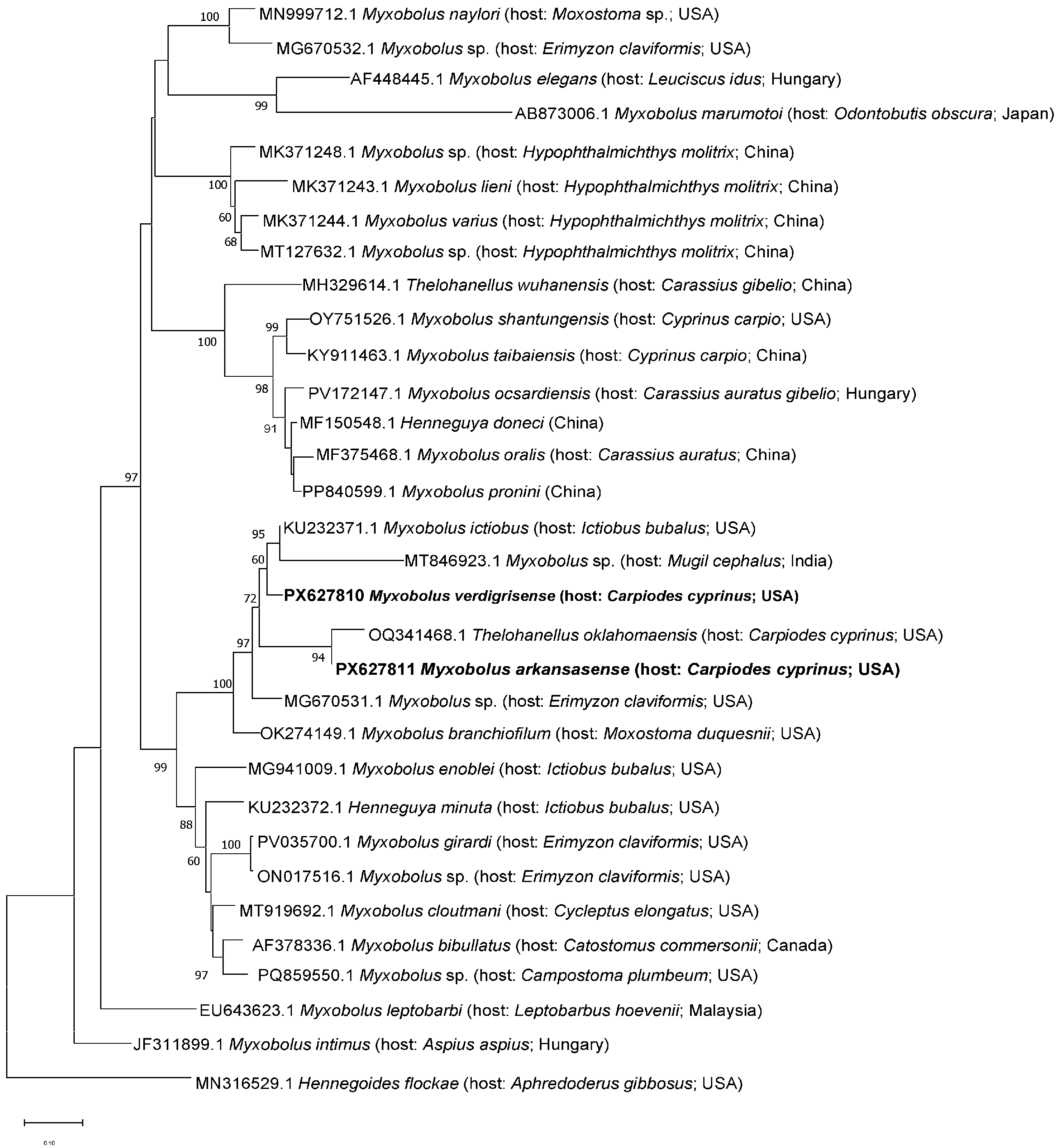
A novel myxozoan, M. arkansasense, occurred on the gill rakers of C. cyprinus. A BLAST search of the partial SSU rRNA gene (772 bp; GenBank Accession PX627811) obtained for M. arkansasense sp. n. revealed this species was 98.58% similar to the recently described T. oklahomaensis (OQ341468.1; host: Carpiodes cyprinus; Oklahoma, USA) and 98.14% similar to Myxobolus ictiobus Rosser, Griffin, Quiniou, Alberson, Woodyard, Mischke, Greenway, Wise, and Pote, 2023 (KU232371.1; host: smallmouth buffalo, Ictiobus bubalus (Rafinesque); Mississippi, USA) with all other similar species sharing <98% similarity. Phylogenetic analysis (Figure 3) placed this species within a strongly supported clade of myxozoan species known to infect catostomid fishes of North America. Myxobolus arkansasense sp. n. was sister to T. oklahomensis from the gills of C. cyprinus [15].

3.3. Description of the New Species

Phylum Cnidaria Hatschek, 1888
Subphylum Myxozoa Grassé, 2021
Class Myxosporea Bütschli, 1881
Order Bivalvulida Shulman, 1959
Suborder Platysporina Kudo, 1919
Family Myxobolidae Thélohan, 1892
Genus Myxobolus Bütschli, 1882
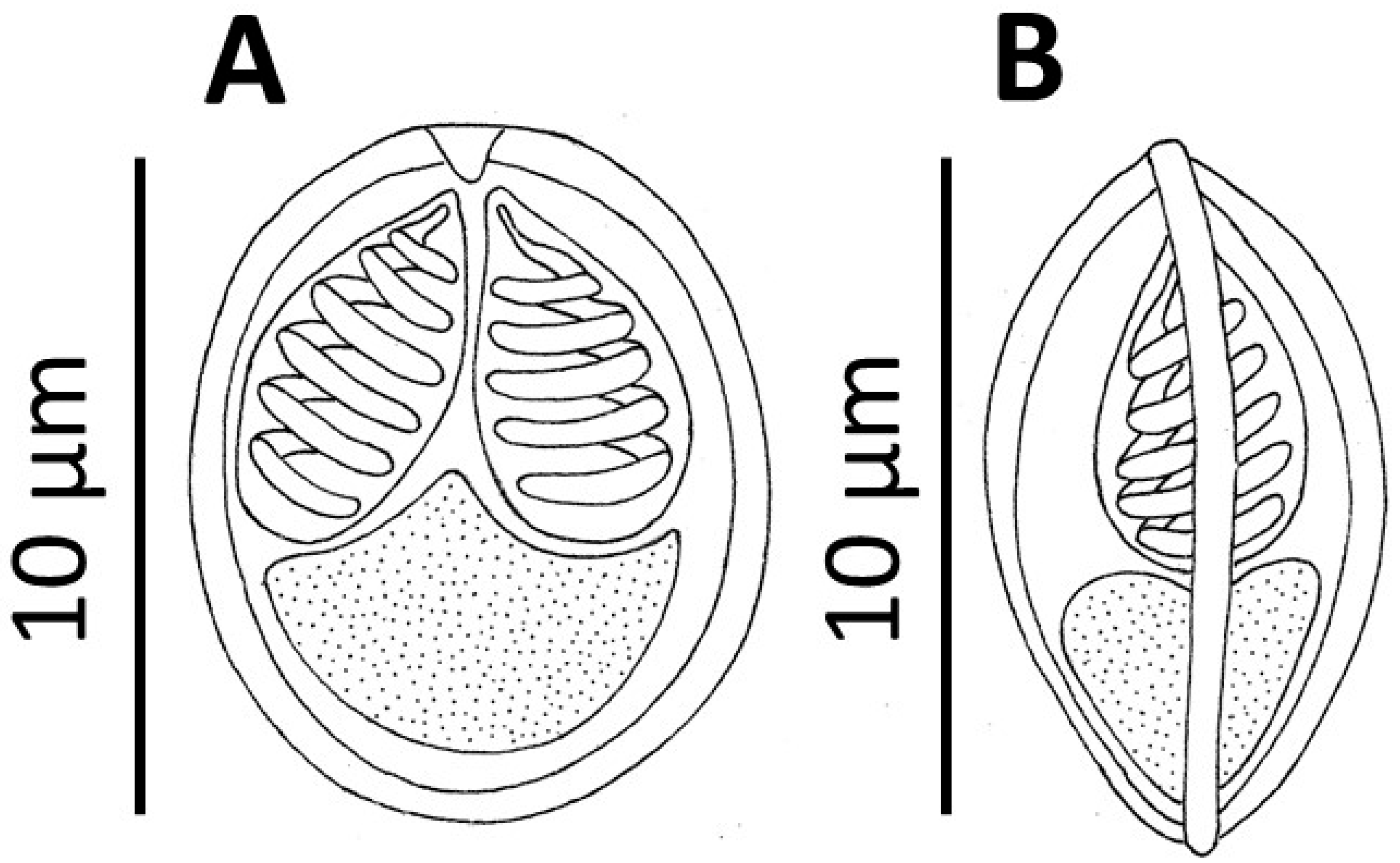
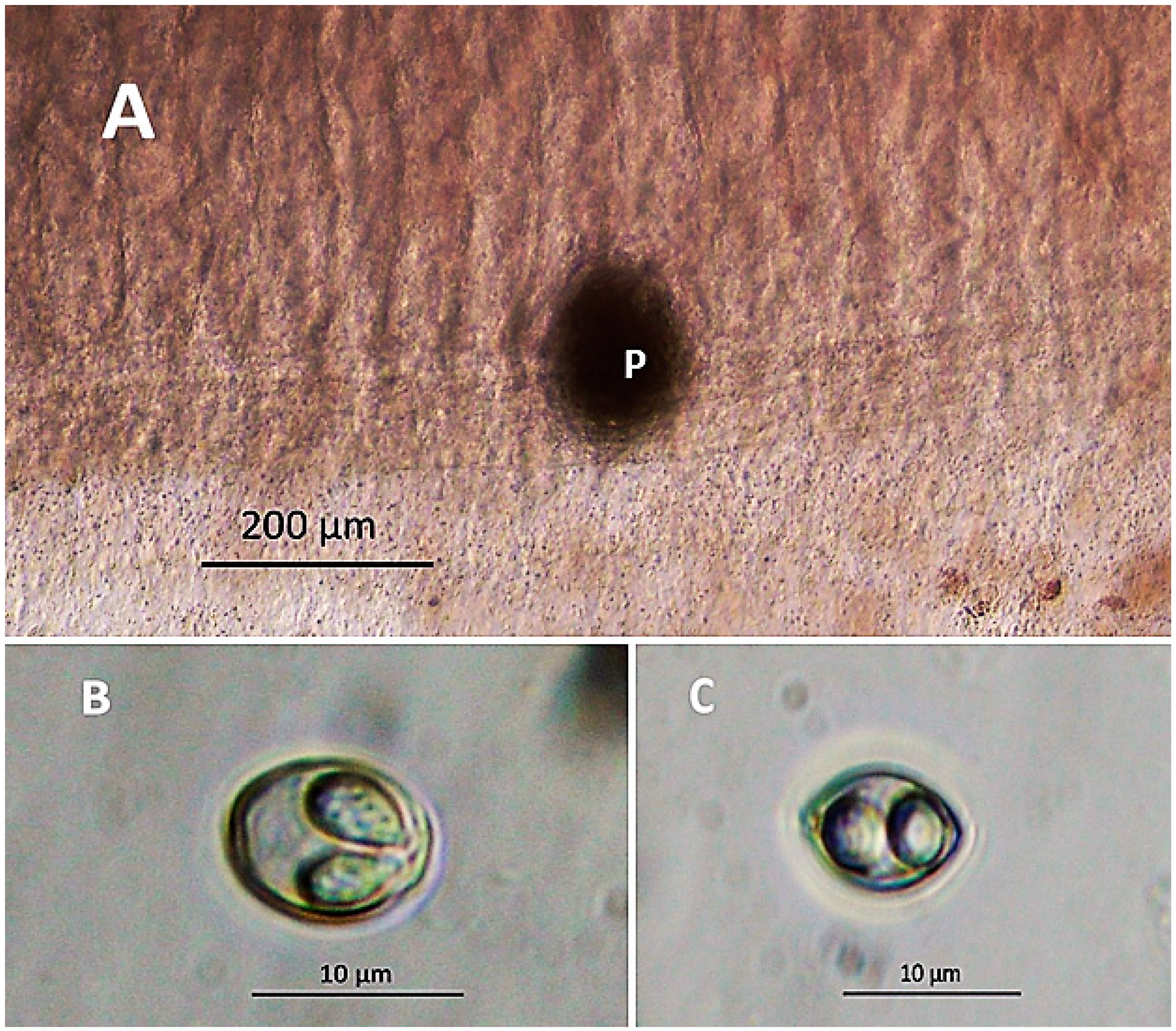
Myxobolus verdigrisense sp. n. (Figure 4A–C and Figure 5)
ZooBank: To comply with the regulations set out in article 8.5 of the amended 2012 version of the ICZN [24], details of the new species have been submitted to ZooBank. The LSID for Myxobolus verdigrisense sp. n. is urn:lsid:zoobank.org:act:F040C815-5C01-4662-B9D1-5AA3C39CF52C.
Material: Syntypes, proxy photographs of myxospores according to ICZN Declaration 45 [25] HWML 218141; partial SSU rRNA gene (1700 bp), GenBank accession number PX627810.
Diagnosis: Myxospores morphologically consistent with those of the genus Myxobolus Bütschli, 1882 [26,27,28], parasitizing C. cyprinus in Oklahoma, USA, are distinguished from other species of Myxobolus by the following combination of characteristics: Plasmodium spherical to elliptoid plasmodia infecting gill lamellae, 180 (140–250) × 230 (180–260); orbicular to broadly elliptoid myxospores, 8.7 (7.3–9.7) × 8.3 (7.3–9.4) × 6.3 (5.6–6.8), with distinct sutural ridge; two pyriform polar capsules, equal to subequal in size, longer polar capsule 5.0 (4.4–5.6) × 3.1 (2.7–3.4), and shorter polar capsule 4.6 (4.2–5.0) × 3.0 (2.4–3.4); coiled polar tubule with four (3–5) coils; intercapsular process present, mucous envelope sometimes present, sutural markings absent; and possessing a unique partial SSU rRNA gene (GenBank accession, PX627810). Of the 42 species of Myxobolus infecting catostomids, only one has shape of plasmodia (spherical to elliptoid) and myxospores (orbicular to broadly elliptoid), site preference (gill lamellae), and partially overlapping measurements of myxospores with M. verdigrisense sp. n. (8.7 [7.3–9.7] × 8.3 [7.3–9.4] × 6.3 [5.6–6.8]) (see Table 1 in [5]) for detailed comparisons of other species), similar enough to make comparisons: Myxobolus cloutmani McAllister, Woodyard, Stilwell, Rosser, Fayton, Camus, Griffin, and Robison, 2021 from the gill lamellae of blue sucker, Cycleptus elongatus (Lesueur) in Lawrence County, Arkansas, USA [29]. The elliptoidal plasmodia of M. cloutmani are generally larger (407 [300–850]) than those of M. verdigrisense sp. n. 150 (60–290) × 200 (90–380). The size and shape of the orbicular to broadly elliptoidal myxospores of M. cloutmani (8.7 [8.1–9.6] × 7.8 [6.6–8.8] × 3.7 [3.3–4.1]) and M. verdigrisense sp. n. (8.7 [7.3–9.7] × 8.3 [7.3–9.4] × 6.3 [5.6–6.8]) overlap considerably in length and width but not in thickness. The larger of the subequal-sized pyriform polar capsules of M. cloutmani (5.5 [4.8–5.9] × 3.1 [2.6–3.7], with 5–6 polar tubule coils) are similar to those of M. verdigrisense sp. n. (5.0 [4.4–5.6] × 3.1 [2.7–3.4], with 4–6 polar tubule coils). The length of the polar capsules of both species usually exceeds 50% of the length of the myxospore, (63 [52–72]% in M. cloutmani and 58 [51–67]% in M. verdigrisense sp. n.). A mucous envelope and intercapsular process are absent from the myxospores of M. cloutmani but present in M. verdigrisense sp. n., with the two species sharing a 90.85% similarity with the SSU rRNA gene. One other species of Myxobolus has been found on the gill lamellae of C. cyprinus: Myxobolus meglitschi (Meglitsch, 1937) Grinham and Cone, 1990 in Illinois, USA [7]. Myxobolus meglitschi is easily distinguished from M. oklahomaense sp. n. by its larger myxospores ([12–14] × [11–13]) [12]. The myxospores of M. arkansasense sp. n. from the gill rakers of C. cyprinus (present study) and M. verdigrisense sp. n. are very similar in shape, but the myxospores of M. arkansasense sp. n. are larger (10.5 [8.9–11.6] × 8.7 [7.7–9.4] × 6.2 [5.6–6.5]) than those of M. verdigrisense sp. n. The polar capsules of M. arkansasense sp. n. are relatively smaller (larger polar capsule length 47 [40–55] % of myxospore length) than those of M. verdigrisense sp. n. (58 [51–67] %).
Description (based on fresh specimens): Measurements are reported in µm as means ± SD followed by range in parentheses): With morphological characters of the genus Myxobolus Bütschli, 1882 [22,23,24]. Plasmodium orbicular (spherical) to elliptoid, 180 ± 60 (140–250) × 230 ± 40 (180–260) (n = 3). Myxospores orbicular to broadly elliptoid, 8.7 ± 0.8 (7.3–9.7) long × 8.3 ± 0.6 (7.3–9.4) (n = 25) wide in valvular view. Thickness 6.3 ± 0.3 (5.6–6.8) (n = 14) in sutural view. Polar capsules 2, pyriform, equal to subequal in size; longer polar capsule 5.0 ± 0.3 (4.4–5.6) × 3.1 ± 0.2 (2.7–3.4), 58 (51–67) % of myxospore length (n = 25); shorter polar capsule 4.6 ± 0.3 (4.2–5.0) × 3.0 ± 0.2 (2.4–3.4), 53 (48–60) % of myxospore length (n = 20). Coiled polar tubule with 5 (3–6) coils (n = 11). Intercapsular process present, mucous envelope sometimes present, sutural markings absent.
Type host: Quillback, Carpiodes cyprinus (Lesueur, 1817), 265 mm TL, collected 25 May 2022.
Prevalence: One of one.
Site of infection: Gill lamellae; no other tissues possessed visible plasmodia.
Etymology: The new species is named after the river in which the host was collected. It is an Arkansas River tributary in southeastern Kansas and northeastern Oklahoma, USA, and is about 500 km long. The name comes from an Old French term, vert-de-Grèce (“green of Greece”).
Geographic distribution: United States: Oklahoma: Wagoner County, Verdigris River at Tullahassee Loop Recreation Area (35°53′31.56″ N, 95°26′55.76″ W).

3.4. Molecular Characterization and Phylogenetic Analysis

Another novel myxosporean, M. verdigrisense, was observed on the gill filament of C. cyprinus and a 1700 bp (GenBank Accession PX627810) portion of the SSU rRNA gene was produced. A BLAST search for M. verdigrisense sp. n. revealed the SSU rRNA gene for this species was 96.28% similar to M. ictiobus with all other entries being <95% similar. A direct BLAST comparison for the two novel species revealed they were 95.81% similar to each other and phylogenetic analysis (Figure 3) placed both species within a strongly supported clade of myxozoan species known to infect catostomid fishes of North America, with the only outlier being an unverified (unpublished) Myxobolus sp. that infects the flathead gray mullet, Mugil cephalus L., in India. It is interesting to note that within this larger clade nearly exclusively comprising myxosporeans of catostomids, there are two separate, but strongly supported lineages, which infects this host family of fishes.

4. Discussion

Several myxosporeans are capable of causing various diseases in fishes, including whirling swimming disease and muscle myoliquification in salmonids, hamburger gill disease and proliferative kidney disease (PKD) in ictalurids, swim bladder inflammation, enteronecrosis, and thelohanellosis in carp, and polycystic kidney (hofferellosis) in goldfish [30]. Often requiring an invertebrate definitive host, particularly in aquaculture locales, these pathogens are capable of causing skeletal deformities and tissue-specific pathology, as well as high mortality. However, in lieu of light microscopic pathologic evidence, we did not notice any macroscopic signs, even using low magnification from a stereomicroscope, suggestive of any sort of myxosporean disease in our single quillback.
This is the fourth and fifth species of myxosporean and second and third species of Myxobolus reported from C. cyprinus [12,13,14,15]. Including those taxa infecting the sucker family Catostomidae, there is considerable host and site specificity among myxobolids (see Table 1 in [5]). Thus, it is highly unlikely that the two novel species reported here infect non-catostomid hosts. With 40 nominal and two undescribed species of Myxobolus now known from catostomids, many with at least some overlap in shape and size (see Table 1 in [5]), it is becoming increasingly challenging to differentiate species based entirely on morphometric parameters. With that caveat in mind, myxospore and plasmodial shape and size are still useful and even necessary in identifying species of Myxobolus, as genetic sequencing data are available for only 12 (29%) species (see Table 1 in [5]; present study). It is especially useful to begin the identification process with myxospore length and width, as unlike most other morphological parameters, these measurements have been reported for all catostomid species (see Table 1 in [5]).
Molecular analysis of the SSU rRNA gene for M. arkansasense sp. n. revealed a relatively high degree of similarity with T. oklahomaensis described from the same host fish. Interestingly, the myxospore of the latter species only has one polar capsule and illustrates how small variations in the SSU rRNA genes can be associated with rather discernable morphological differences. McAllister et al. [15] remarked how the loss of the polar capsule in T. oklahomaensis could have resulted from interactions with the invertebrate definitive host, likely due to ease of infecting this host resulting in less evolutionary pressure to keep both polar capsules. The manner with which morphological and genetic change occurs, not just among the genes associated with the physical adaptation but also the timing and how these changes influence taxonomically important genes, like SSU rRNA, are worthy of future study. Understanding how all these changes occur is crucial to our comprehension of myxozoan taxonomy and speciation, as well as their evolution and how it is shaped according to its host.

5. Conclusions

We provide a description of two novel species of Myxobolus in a rarely collected catostomid fish from Oklahoma, USA: M. arkansasense sp. n. from the gill rakers and M. verdigrisense sp. n. from its gill lamellae. This is the fourth and fifth time that C. cyprinus has been reported to harbor a myxosporean and the 45th and 46th (44th Myxobolus) species reported from this family of sucker fishes. Morphological, mensural, and molecular data is provided to support our descriptions.

Author Contributions

This study was designed by C.T.M., D.G.C. and E.M.L. Field collections were performed by C.T.M. and D.G.C. Laboratory procedures for processing fish and necropsy were performed by C.T.M. Laboratory procedures for measurements, photomicrographs, and isolation of plasmodia and myxospores were performed by C.T.M., D.G.C. and E.M.L. The line drawings were prepared by D.G.C. and E.M.L. performed molecular analyses and prepared Figure 3. The manuscript was written by all authors, including H.W.R. All authors have read and agreed to the published version of the manuscript.

Funding

This research received no external funding.

Institutional Review Board Statement

This research was conducted in accordance with the principles embodied in the Arkansas Game and Fish Commission Scientific Collecting Permit issued to C. T. McAllister, No. 041820251 to do research on fishes.

Data Availability Statement

The original contributions presented in this study are included in the article. Further inquiries can be directed to the corresponding author.

Acknowledgments

The Oklahoma Department of Wildlife Conservation (ODWC) issued Scientific Collecting Permit No. 1551646 to CTM. We especially want to thank Brad Johnston (Fisheries Biologist, Northeast Region, ODWC, Miami, OK, USA) and his helpful crew for collecting the type host. We also thank Scott L. Gardner and Gábor R. Racz (HWML) for expert curatorial assistance and Larry R. Raymond, Ouachita Mountains Biological Station (OMBS), Big Fork, AR, USA, for hosting us at the OMBS and providing laboratory space. Usage of trade names does not imply endorsement by the U.S. Government. The findings and conclusions in this article are those of the authors and do not necessarily represent the views of the U.S. Fish and Wildlife Service.

Conflicts of Interest

The authors declare no conflicts of interest.

References

  1. Eiras, J.C.; Molnár, K.; Lu, Y.S. Synopsis of the species of Myxobolus Bütschli, 1882. Syst. Parasitol. 2005, 88, 11–36. [Google Scholar] [CrossRef] [PubMed]
  2. Eiras, J.C.; Zhang, J.; Molnár, K. Synopsis of the species of Myxobolus Bütschli, 1882 (Myxozoa: Myxosporea: Myxobolidae) described between 2005 and 2013. Syst. Parasitol. 2014, 88, 11–36. [Google Scholar] [CrossRef] [PubMed]
  3. Eiras, J.C.; Cruz, C.F.; Saraiva, A.; Adriano, E.A. Synopsis of the species of Myxobolus (Cnidaria, Myxozoa, Myxosporea) described between 2014 and 2020. Folia Parasitol. 2021, 68, 012. [Google Scholar] [CrossRef] [PubMed]
  4. Okamura, B.; Gruhl, A.; Batholomew, J.L. (Eds.) Myxozoan Evolution, Ecology, and Development; Springer International Publishing: Cham, Switzerland, 2015. [Google Scholar]
  5. McAllister, C.T.; Cloutman, D.G.; Leis, E.M.; Camus, A.C.; Robison, H.W. A new Myxobolus (Cnidaria: Myxosporea: Myxidiidae) from the gills of the Western creek chubsucker, Erimyzon claviformis (Cypriniformes: Catostomidae), in Arkansas, USA. Acta Parasitol. 2025, 70, 68. [Google Scholar] [CrossRef] [PubMed]
  6. Platania, S.P.; Jenkins, R.E. Carpiodes cyprinus (Lesueur). In Atlas of North American Freshwater Fishes; Lee, D.S., Gilbert, C.R., Hocutt, C.H., Jenkins, R.E., McAllister, D.E., Stauffer, J.R., Jr., Eds.; North Carolina State Museum of Natural History: Raleigh, NC, USA, 1980. [Google Scholar]
  7. Page, L.M.; Burr, B.M. Peterson Field Guide to Freshwater Fishes of North America North of Mexico, 2nd ed.; Houghton Mifflin Harcourt: New York, NY, USA, 2011. [Google Scholar]
  8. Miller, R.J.; Robison, H.W. Fishes of Oklahoma; University of Oklahoma Press: Norman, OK, USA, 2004. [Google Scholar]
  9. McAllister, C.T.; Leis, E.M.; Cloutman, D.G.; Robison, H.W. New geographic distribution record for quillback, Carpiodes cyprinus (Cypriniformes: Catostomidae) in the Verdigris River (Arkansas River drainage) of Northern Oklahoma. Proc. Okla. Acad. Sci. 2023, 103, 59–61. [Google Scholar]
  10. Pflieger, W.L. The Fishes of Missouri, 2nd ed; Missouri Department of Conservation: Jefferson City, MO, USA, 1997.
  11. Ross, S.T. The Inland Fishes of Mississippi; University Press of Mississippi: Jackson, MS, USA, 2001. [Google Scholar]
  12. Meglitsch, P.A. On some new and known Myxosporidia of the fishes of Illinois. J. Parasitol. 1937, 23, 467–477. [Google Scholar] [CrossRef]
  13. Grinham, T.; Cone, D.K. A review of species of Myxobolus (Myxosporea) parasitizing catostomid fishes, with a redescription of Myxobolus bibullatus (Kudo, 1934) n.comb. and description of Myxobolus lamellus n.sp. from Catostomus commersoni in Nova Scotia. Can. J. Zool. 1990, 68, 2290–2298. [Google Scholar] [CrossRef]
  14. Landsberg, J.H.; Lom, J. Taxonomy of the genera of the Myxobolus/Myxosoma group (Myxobolidae: Myxosporea), current listing of species and revision of synonyms. Syst. Parasitol. 1991, 18, 165–186. [Google Scholar] [CrossRef]
  15. McAllister, C.T.; Cloutman, D.G.; Leis, E.M.; Camus, A.C.; Woiak, S.; Robison, H.W. A new species of Thelohanellus (Cnidaria: Myxosporea: Myxobolidae) from gill of quillback, Carpiodes cyprinus (Cypriniformes: Catostomidae), from the Arkansas River drainage of Oklahoma. J. Parasitol. 2024, 110, 40–48. [Google Scholar] [CrossRef] [PubMed]
  16. Use of Fishes in Research Committee (Joint Committee of the American Fisheries Society, the American Institute of Fishery Research Biologists, and the American Society of Ichthyologists and Herpetologists). Guidelines for the Use of Fishes in Research. 2014. Available online: https://fisheries.org/policy-media/science-guidelines/guidelines-for-the-use-of-fishes-in-research/ (accessed on 19 September 2025).
  17. Lom, J.; Arthur, J.R. A guideline for the preparation of species description in Myxosporea. J. Fish Dis. 1989, 12, 151–156. [Google Scholar] [CrossRef]
  18. Hoffman, G.L. Parasites of North American Freshwater Fishes, 2nd ed.; Comstock Publishing Associates: Ithaca, NY, USA, 1999. [Google Scholar]
  19. Clopton, R.E. Standard nomenclature and metrics of plane shapes for use in gregarine taxonomy. Comp. Parasitol. 2004, 71, 130–140. [Google Scholar] [CrossRef] [PubMed]
  20. Page, L.M.; Bemis, K.E.; Dowling, T.E.; Espinosa-Pérez, H.S.; Findley, L.T.; Gilbert, C.R.; Hartel, K.E.; Lea, R.N.; Mandrak, N.E.; Neighbors, M.A.; et al. Common and Scientific Names of Fishes from the United States, Canada, and Mexico, 8th ed.; American Fisheries Society: Bethesda, MD, USA, 2023; Volume 37, 447p. [Google Scholar]
  21. Leis, E.M.; Rosser, T.G.; Baumgartner, W.A.; Griffin, M.J. Two novel myxozoans from pirate perch Aphredoderus sayanus (Gilliams, 1824) in the upper Mississippi River, including the first North American species of Hennegoides Lom, Tonguthai, & Dyková, 1991. J. Parasitol. 2019, 105, 918–927. [Google Scholar] [CrossRef] [PubMed]
  22. Kumar, S.; Stecher, G.; Li, M.; Knyaz, C.; Tamura, K. MEGA X: Molecular evolutionary genetics analysis across computing platforms. Mol. Biol. Evol. 2018, 35, 1547–1549. [Google Scholar] [CrossRef] [PubMed]
  23. Nei, M.; Kumar, S. Molecular Evolution and Phylogenetics; Oxford University Press: New York, NY, USA, 2000. [Google Scholar]
  24. ICZN (International Commission on Zoological Nomenclature). Amendment of Articles 8, 9, 10, 21 and 78 of the International Code of Zoological Nomenclature to expand and refine methods of publication. ZooKeys 2012, 69, 161–169. [Google Scholar]
  25. ICZN (International Commission on Zoological Nomenclature). Declaration 45–Addition of recommendations to Article 73 and of the term “specimen, preserved” to the glossary. Bull. Zool. Nomen. 2017, 73, 96–97. [Google Scholar]
  26. Bütschli, O. Myxosporidia. In Klassen und Ordnungen des Thier-Reichs. II; Bronn, H.G., Ed.; C. F. Winter: Leipzig, Germany, 1882; pp. 590–603. [Google Scholar]
  27. Lom, J.; Dyková, I. Myxozoan genera: Definition and notes on taxonomy, life-cycle terminology and pathogenic species. Folia Parasitol. 2006, 53, 1–36. [Google Scholar] [CrossRef] [PubMed]
  28. Fiala, I.; Bartoŝová-Sojková, P.; Whipps, C.M. Classification and Phylogenetics of Myxozoa. In Myxozoan Evolution, Ecology and Development; Okamura, B., Gruhl, A., Bartholomew, J.L., Eds.; Springer International Publishing: Cham, Switzerland, 2015. [Google Scholar]
  29. McAllister, C.T.; Woodyard, E.T.; Stillwell, J.M.; Rosser, T.G.; Fayton, T.J.; Camus, A.C.; Griffin, M.J.; Robison, H.W. A new species of Myxobolus (Cnidaria: Myxosporea: Myxobolidae) from the blue sucker, Cycleptus elongatus (Lesueur) (Cypriniformes: Catostomidae: Cycleptinae), from Arkansas. J. Parasitol. 2021, 107, 582–592. [Google Scholar] [CrossRef] [PubMed]
  30. Banu, H.; Rathinam, R.B. Myxozoan fish diseases: Possible treatment and zoonoses. J. Parasit. Dis. 2023, 47, 215–223. [Google Scholar] [CrossRef] [PubMed]
Figure 1. Photomicrographs of Myxobolus arkansasense sp. n. from the gill rakers of Carpiodes cyprinus. (A) Two plasmodia, one spheroidal (P) and one irregularly shaped (arrow, P). (B) Enlarged photomicrograph of single plasmodium (P). (C) Two myxospores. (D) Single myxospore.
Fishes 11 00180 g001
Figure 2. Composite line drawing of the myxospore of Myxobolus arkansasense sp. n. (A) Valvular view. (B) Sutural view.
Fishes 11 00180 g002
Figure 3. Maximum likelihood analysis of SSU rRNA genes of Myxobolus arkansasense sp. n. and Myxobolus verdigrisense sp. n. identified from the gills of Carpiodes cyprinus as well as related species in GenBank with 1000 bootstrap replications (values > 50 are shown). Boldtype = new species.
Fishes 11 00180 g003
Figure 4. Photomicrographs of Myxobolus verdigrisense sp. n. from gill lamellae of Carpiodes cyprinus. (A) Plasmodium. (B) Myxospore in valvular view. (C) Myxospore in sutural view.
Fishes 11 00180 g004
Figure 5. Composite line drawings of the plasmodium and myxospore of Myxobolus verdigrisense sp. n. (A) Valvular view. (B) Sutural view.
Fishes 11 00180 g005
Disclaimer/Publisher’s Note: The statements, opinions and data contained in all publications are solely those of the individual author(s) and contributor(s) and not of MDPI and/or the editor(s). MDPI and/or the editor(s) disclaim responsibility for any injury to people or property resulting from any ideas, methods, instructions or products referred to in the content.