Article

Early Recovery Responses of Coilia nasus to the Fishing Ban in the Yangtze River Estuary: Spatiotemporal Patterns and Environmental Drivers

by
Guiqin Chen
1,
Wenke Cao
1 and
Guangpeng Feng
2,*
1
Shanghai Xigeng Environmental Technology Co., Ltd., Shanghai 201914, China
2
East China Sea Fisheries Research Institute, Chinese Academy of Fishery Sciences, Shanghai 200090, China
*
Author to whom correspondence should be addressed.
Fishes 2026, 11(2), 97; https://doi.org/10.3390/fishes11020097
Submission received: 30 December 2025 / Revised: 26 January 2026 / Accepted: 4 February 2026 / Published: 6 February 2026
(This article belongs to the Special Issue Sustainable Fisheries Dynamics)

Abstract

To assess the status of Coilia nasus resources in the Yangtze River Estuary and support evaluation of fishing ban effectiveness, this study integrated fishery resource survey data and environmental variables collected from 2023 to 2025. A generalized additive model (GAM) was applied to examine post-ban recovery patterns of C. nasus and the environmental drivers shaping its spatiotemporal distribution. The results revealed pronounced seasonal variation in biomass, with autumn (November) values significantly higher than those in spring and summer. Biomass peaked in autumn 2024, forming a persistent and highly concentrated aggregation. Spatial analyses further indicated that high-biomass areas were consistently distributed within the brackish-water mixing zone of the outer estuary, corresponding to migratory pathways and foraging requirements of the species. GAM results demonstrated that the spatiotemporal distribution of C. nasus was jointly regulated by multiple environmental factors. In spring, temperature, depth, transparency, pH, dissolved oxygen (DO), and chlorophyll-a (Chl-a) exerted significant effects; in summer, salinity and pH were the dominant drivers; and in autumn, temperature, pH, salinity, DO, ammonium (NH4+–N), nitrate (NO3–N), and phosphate (PO43−–P) showed significant influences. This study provides scientific evidence to support the management of C. nasus resources, particularly in the brackish-water mixing zone of the outer Yangtze River Estuary, and to improve evaluation of fishing-ban effectiveness.
Key Contribution: This study identifies a stable autumn biomass peak of Coilia nasus and persistent aggregations in the outer estuarine mixing zone, driven mainly by temperature, salinity, dissolved oxygen, and nutrients, highlighting this area as a priority habitat for post–fishing ban conservation.

1. Introduction

The Yangtze River Basin is one of the most biodiverse large river systems globally, supporting an evolutionary history that has produced 424 fish species [1]. The Yangtze River Estuary, located at the river’s confluence with the East China Sea, represents the largest estuarine ecosystem in China and the western Pacific [2]. Unique geographic and ecological conditions create exceptionally rich fishery resources and form a key migratory corridor for Coilia nasus, Anguilla japonica, and other ecologically important species [2]. This ecological foundation provides essential support for freshwater and marine fishery resources throughout the region.
Within the Yangtze River Estuary ecosystem, C. nasus represents a characteristic anadromous species and has long been one of the most important fishery resources in the Yangtze River Basin, historically recognized as one of the “Three Delicacies of the Yangtze River” [3,4]. C. nasus is highly prized in the seafood market and popular among consumers due to its unique life-history traits and distinctive flavor, giving it high economic value and making it a primary fishing target. [5]. As a dominant species in the estuarine fishery, C. nasus has played a crucial role in connecting riverine and marine food webs and has served as an indicator organism highly responsive to environmental variability [4,6,7]. Long-term overfishing, water pollution, and extensive hydrological modifications have collectively driven severe declines in native fish resources throughout the basin [8,9,10]. The C. nasus population has undergone pronounced reductions, with migratory and spawning behaviors increasingly disrupted, leading to the species’ classification as endangered on the China Biodiversity Red List [11,12]. Each spring, reproductive aggregations assemble in the Yangtze River Estuary and subsequently migrate into the middle and lower Yangtze channel and associated lake systems for spawning [13,14]. Historically, C. nasus constituted one of the most valuable commercial resources in the estuarine fishery, with peak landings reaching 392 × 103 kg in 1973 [2]. Continued environmental degradation and persistent high-intensity exploitation have since caused a dramatic collapse in biomass, with annual landings decreasing to 3.7 × 103 kg by 2016—a 99.06% decline from the historical maximum and the traditional fishing season has nearly vanished [15,16].
To protect and restore C. nasus populations in the Yangtze River, the Ministry of Agriculture and Rural Affairs of China implemented a comprehensive ban on the commercial harvest of wild C. nasus from February 2019, aiming to halt rapid population declines and ensure long-term conservation and recovery [2]. On 1 January 2021, a ten-year fishing moratorium was fully enacted, with an extension of no-fishing zones in the Yangtze River Estuary to provide greater protection for population recovery [5]. This initiative represents the largest inland fishery ecological restoration program worldwide, targeting the restoration of aquatic biodiversity and the integrity of estuarine ecosystems [1]. Despite these extensive conservation efforts, important uncertainties remain regarding the early recovery of C. nasus under the fishing ban. In particular, limited information is available on the spatial and seasonal variability of biomass within the estuary, the dominant environmental factors regulating distribution and aggregation patterns, and the extent to which these controls vary among seasons during periods of high biomass. To address these knowledge gaps, this study analyzes fishery survey data collected from 2023 to 2025 in the Yangtze River Estuary, with the objective of characterizing spatiotemporal biomass patterns, elucidating seasonal aggregation dynamics, and identifying key environmental drivers influencing the distribution of C. nasus. The findings provide a scientific basis for adaptive management and conservation of estuarine migratory fish populations during the early phase of long-term recovery.

2. Materials and Methods

2.1. Description of Study Area

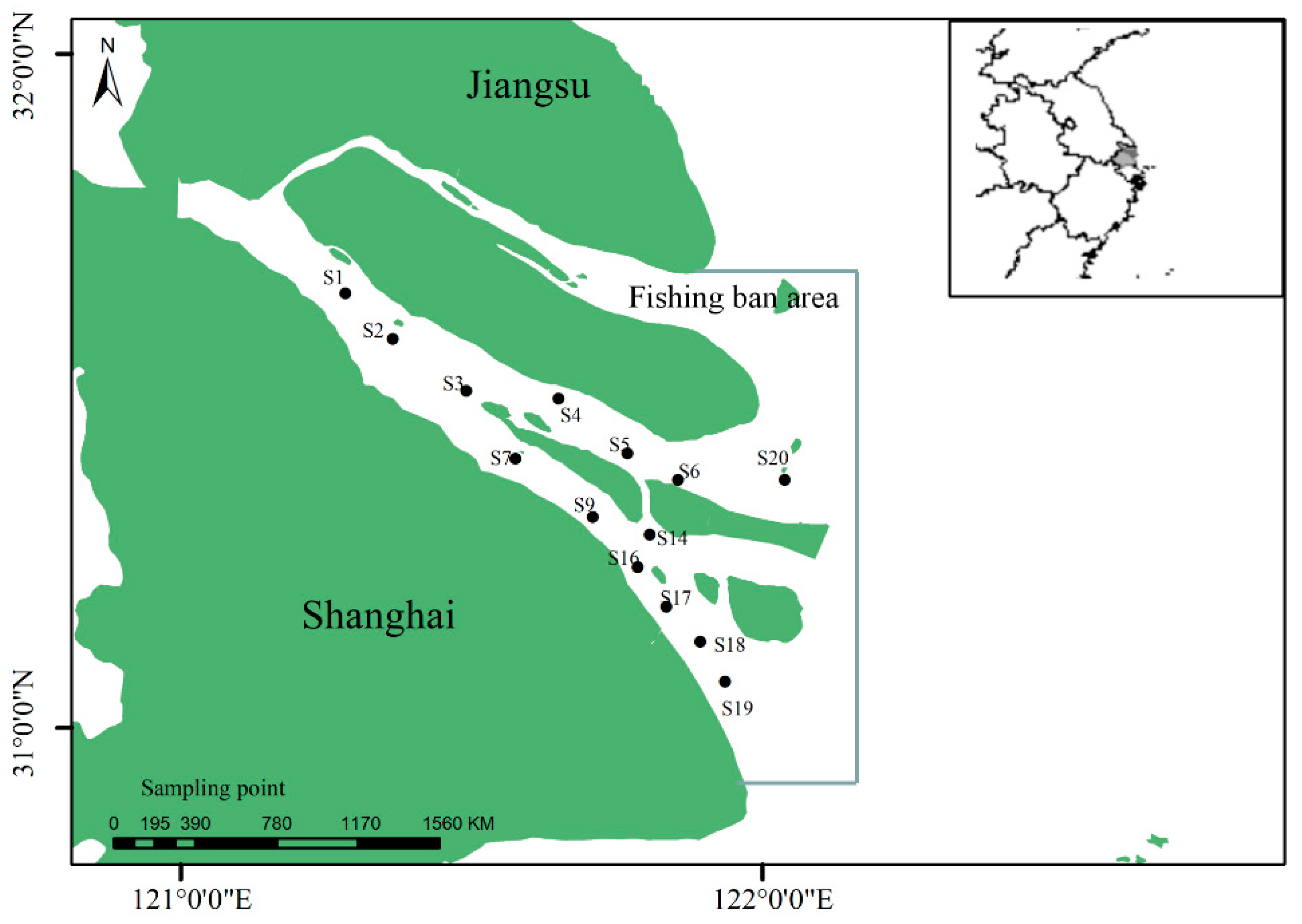
The study data were sourced from the 2023–2025 fishery resources monitoring survey of the Yangtze River Estuary and consisted of 14 fixed sampling points strategically distributed to represent the major environmental gradients of the estuarine region, including sampling points located within fishing ban area (Figure 1). Sampling points were spatially arranged along the estuarine continuum from riverine to brackish-water zones, with a higher density of stations located in the freshwater–brackish mixing area where environmental variability is most pronounced [17]. The hydrology of the Yangtze River Estuary is characterized by strong seasonal variability driven primarily by monsoonal rainfall over the Yangtze River Basin and upstream flow regulation by large dams. Precipitation is concentrated mainly from late spring to summer, resulting in high river discharge during this period, while discharge decreases markedly in autumn and winter. The Yangtze River Estuary is divided by large islands such as Chongming Island into northern and southern branches, which differ markedly in geomorphology, hydrodynamics, and environmental conditions. These differences generate complex spatial gradients in depth, salinity, turbidity, and nutrient availability, supporting high biodiversity, including freshwater, estuarine, marine, and migratory fishes, and forming a key migration corridor for diadromous species within the basin [17]. Such hydrological and geomorphological heterogeneity plays a fundamental role in shaping the spatial distribution and seasonal aggregation patterns of fishery resources in the estuary [18].

2.2. The Origin of Data

The primary study area encompassed the South Branch of the Yangtze River Estuary in eastern China. Fisheries surveys were conducted once per season, with surveys carried out in May (spring), August (summer), and November (autumn) from August 2023 to May 2025 under a national provisional fishing permit, ensuring full regulatory compliance. Specimens were collected using a single-vessel bottom trawl with a net 26 m long and a mouth circumference of 23 m, operated for 30 min at a towing speed of 4 kn (knots; nautical miles per hour). Biomass density (kg/km2) was calculated as trawl catch biomass per unit time divided by the swept area and corrected by a catchability coefficient (q = 0.5), expressed as B i = W i / ( a i q ) . Because bottom trawl gear was used, captured individuals could not be returned alive to the system. All catches were immediately frozen at −20 °C for subsequent analyses. Winter survey activities were not included in this study, as the planned fisheries survey could not be implemented during the winter period. Bottom water samples were obtained with a water sampler, and temperature, salinity, pH, and dissolved oxygen (DO) were measured using a YSI Pro DSS multiparameter instrument. Water depth (m) was recorded using the vessel’s echo sounder. The remaining four environmental indicators were simultaneously investigated in the laboratory in accordance with the “Marine Monitoring Specifications” (GB/T 12763.2–2007 and GB/T 12763.4–2007, [19,20]). The concentrations of nitrate (NO3–N), phosphate (PO43−–P), ammonium salt (NH4+–N), and chlorophyll-a concentration (Chl-a) were determined using spectrophotometry (UV–1200). The swept-area method was applied to estimate fishery resource biomass density at each station.

2.3. Construction Procedure of GAM

Generalized additive models (GAMs) were used to quantify nonlinear relationships between C. nasus biomass and environmental variables. GAMs are widely applied in fisheries and ecological studies because of their flexibility in modeling complex, non-linear responses through non-parametric smoothing functions. In this study, biomass density of C. nasus (kg/km2) served as the response variable. Environmental predictors included water temperature, salinity, dissolved oxygen, transparency, pH, chlorophyll-a concentration, and nutrient variables (NO3–N, NH4+–N, and PO43−–P). Seasonal GAMs were constructed to account for potential differences in environmental controls among spring, summer, and autumn. The general model structure can be expressed as:
Y = a + j = 1 n f i x j + ε
In the model, g(Y) is the link-transformed response variable, fi(Xi) denotes smooth functions of the predictors, a is the intercept, and εi is the error term. In this study, seasonal biomass of C. nasus served as the response variable, and environmental factors were used as explanatory variables in the GAM.
Variance inflation factors (VIF) were used to assess collinearity among season-specific explanatory variables [21]. A constant (0.1) was added to the response variable to avoid transformation errors associated with zero values [22], and k was used to control the complexity of the smoothing functions. Univariate GAMs were then fitted to remove non-significant predictors (p > 0.05). A multivariate GAM was constructed using the Akaike information criterion (AIC) to identify the optimal model. Finally, five-fold cross-validation was applied to reduce overfitting.
Variance inflation factors (VIF) were used to test for multicollinearity among seasonal explanatory variables. A constant (0.1) was added to the response variable to avoid transformation errors associated with zero values and the smoothing complexity was controlled by k. Univariate GAMs were first fitted to exclude non-significant predictors (p > 0.05). A multivariate GAM was then developed using the Akaike Information Criterion (AIC) to identify the optimal model [23]. Finally, 5-fold cross-validation was applied to evaluate model performance and reduce overfitting [24].

2.4. Data Analysis

Spatial distributions of C. nasus biomass were visualized using ArcGIS 10.7. Pearson correlation analysis was used exclusively as an exploratory tool to examine relationships and potential collinearity among environmental variables. Seasonal differences in biomass were tested using one-way analysis of variance (one-way ANOVA). Seasonal and spatial variations in biomass were primarily assessed through GAMs, which allowed for direct evaluation of the effects of multiple environmental drivers on biomass patterns. All statistical analyses were performed in R version 4.3.0 using the mgcv package, and data preprocessing was conducted in Microsoft Excel (2022).

3. Results

3.1. Spatiotemporal Variations in C. nasus Biomass

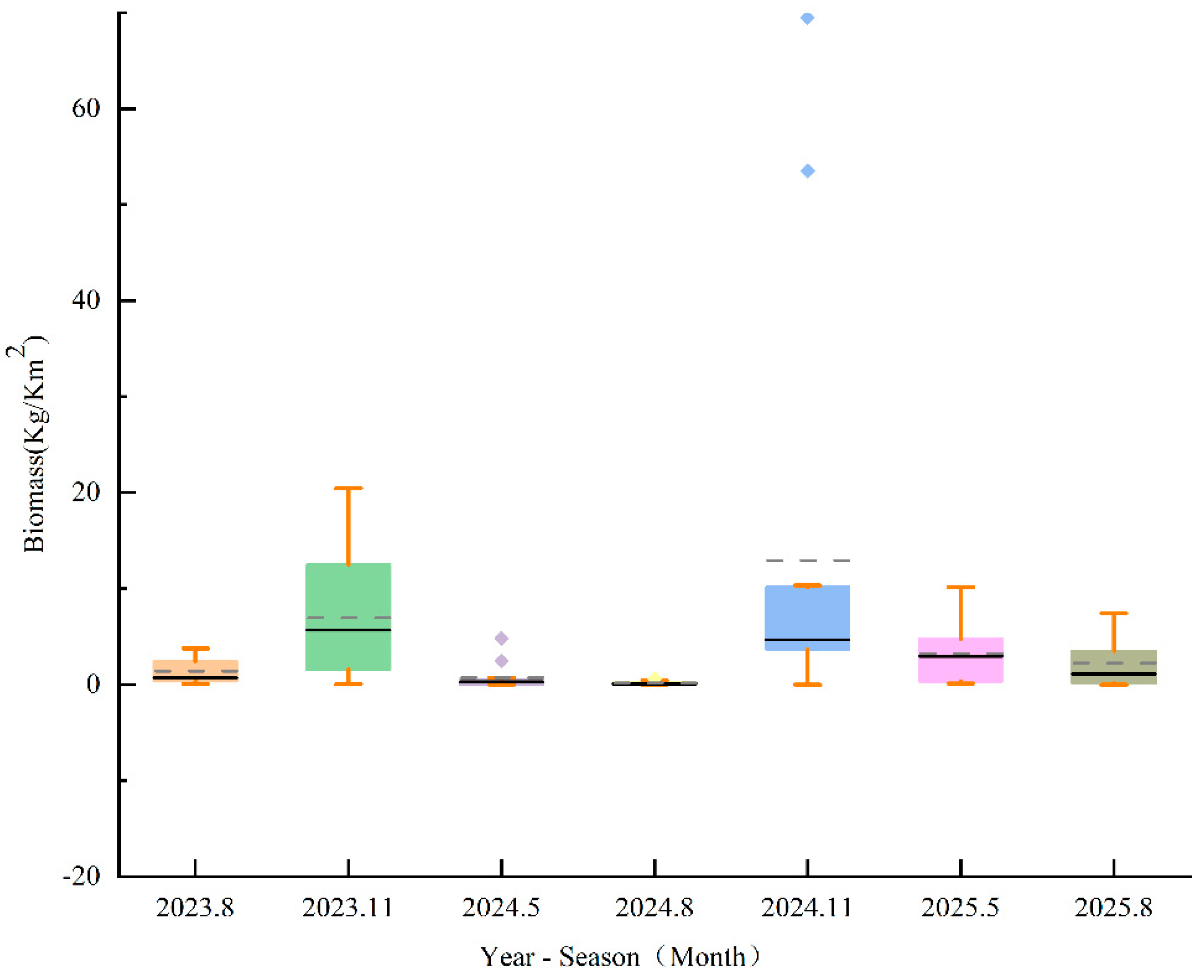
One-way ANOVA indicated significant seasonal variation in C. nasus biomass was observed (p < 0.05) (Figure 2). Biomass in autumn (November) of both 2023 and 2024 was substantially higher than that recorded in other seasons (p < 0.05). An exceptional peak occurred in November 2024, when biomass reached 69.48 kg/km−2 and 53.53 kg/km−2 in the surveyed waters. In contrast, biomass in spring (May 2024) and summer (August 2024) was considerably lower than in other sampling periods, reflecting an overall reduced level during these seasons. Overall, biomass exhibited a clear seasonal gradient: autumn (November) > spring (May) > summer (August).
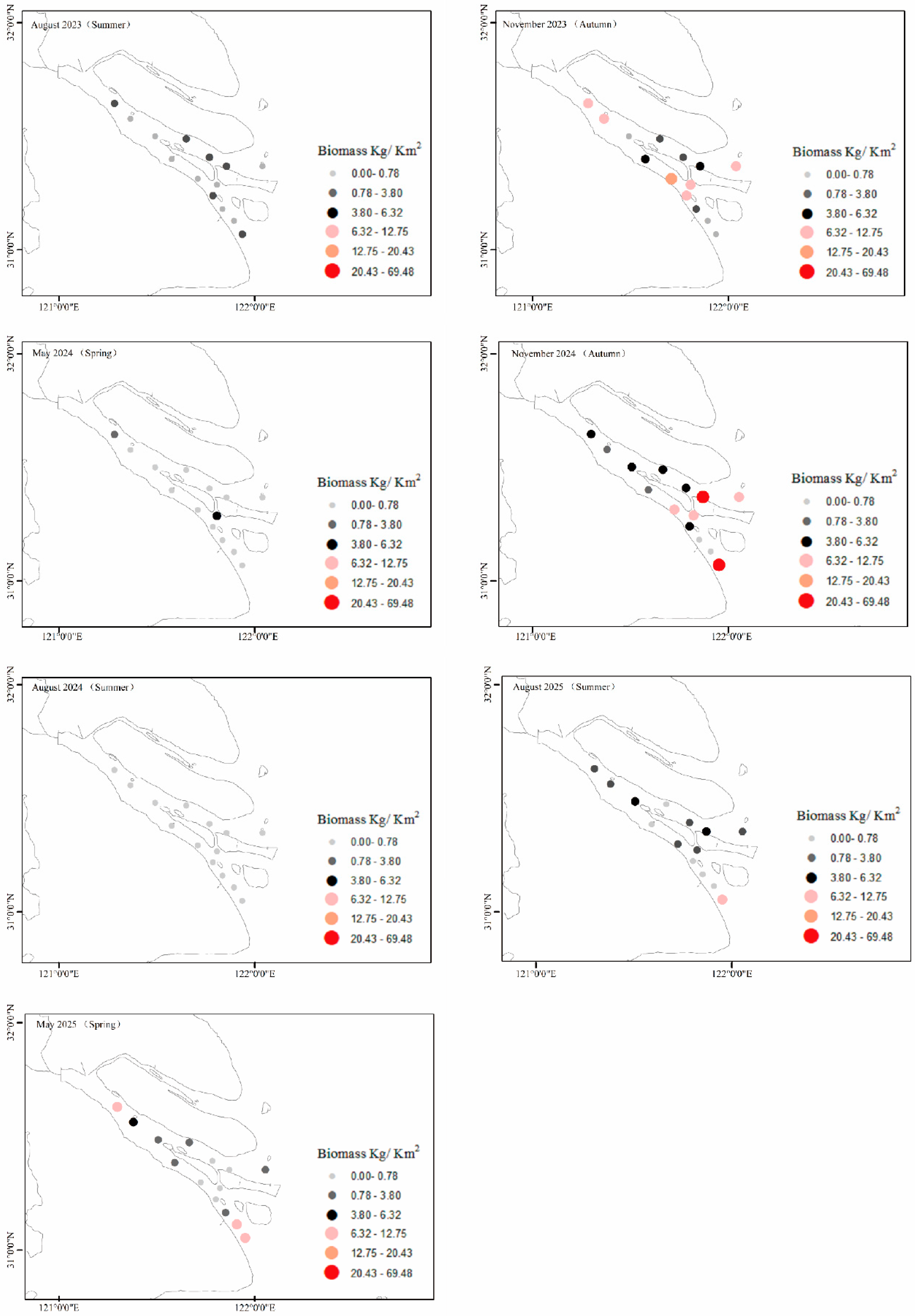
From a spatial perspective, C. nasus biomass exhibited pronounced seasonal variation (Figure 3). Autumn (November) showed the highest biomass, characterized by marked aggregation concentrated from the South Branch estuary to the outer estuary. Spring and summer were characterized by low biomass, with only sparse distributions across the estuarine region. The distributional center remained consistently located near the South Trough mouth. High-density aggregations occurred in both autumn 2023 and autumn 2024, with the 2024 aggregation being more intense and spatially confined. In contrast, biomass remained persistently low during spring and summer from 2023 to 2025, indicating that autumn represents the primary migration and concentration period for C. nasus.

3.2. The Results of Multivariate GAM

3.2.1. Spring

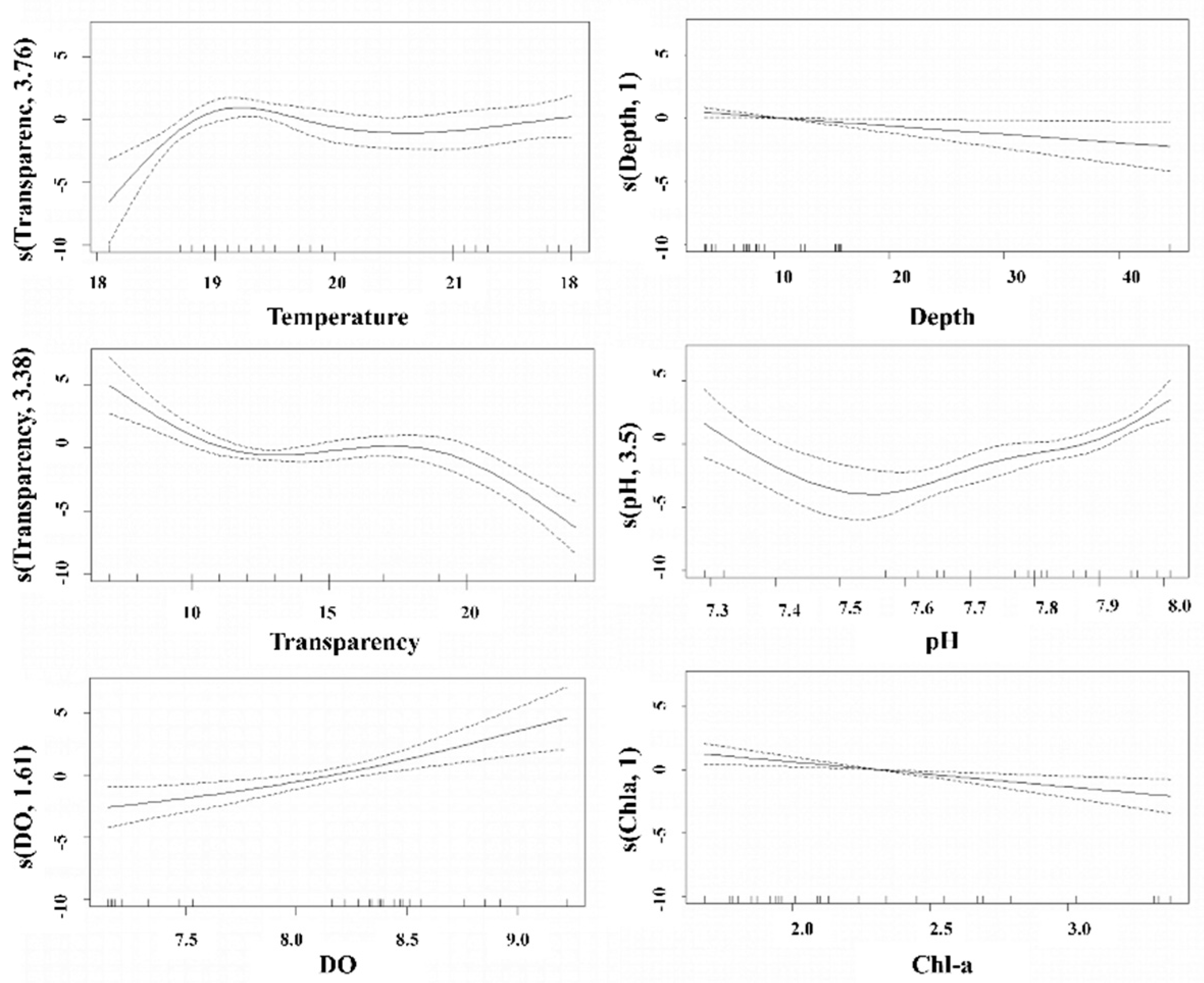
The spring GAM produced an adjusted R2 of 0.869 and explained 95.3% of the variance, indicating strong model performance. Depth and Chl-a exhibited linear negative relationships with C. nasus biomass, with biomass declining gradually as both variables increased (Figure 4). Temperature, transparency, pH, and DO showed nonlinear associations with biomass. Biomass increased rapidly with rising temperature (18–22 °C), stabilized thereafter, and peaked at approximately 19–20 °C. With increasing transparency (5–20 cm), biomass declined initially, followed by a slight rebound, and then decreased steadily beyond 20 cm. Within a pH range of 7.3–8.0, biomass first declined and then increased markedly, reaching a minimum around 7.5–7.6 before rising continuously. Biomass increased monotonically with DO between 7.0 and 9.0 mg L−1.

3.2.2. Summer

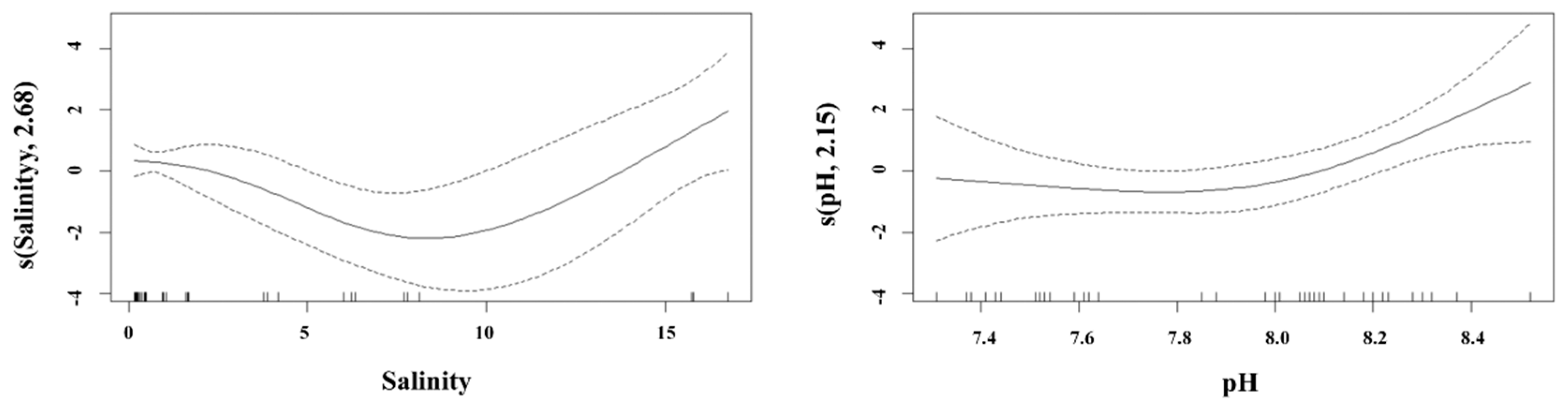
The summer GAM yielded an adjusted R2 of 0.604 and explained 74.1% of the variance, indicating a satisfactory model fit. Salinity and pH exhibited nonlinear relationships with C. nasus biomass (Figure 5). Within the salinity range of 0–10‰, C. nasus biomass exhibited a slight decline followed by persistence at low levels; once salinity exceeded 10‰, biomass increased rapidly and continued to rise, indicating a clear response pattern. Within a pH range of 7.4–8.4, biomass remained relatively stable between 7.4 and 8.0 and then increased steadily at pH values above 8.0.

3.2.3. Autumn

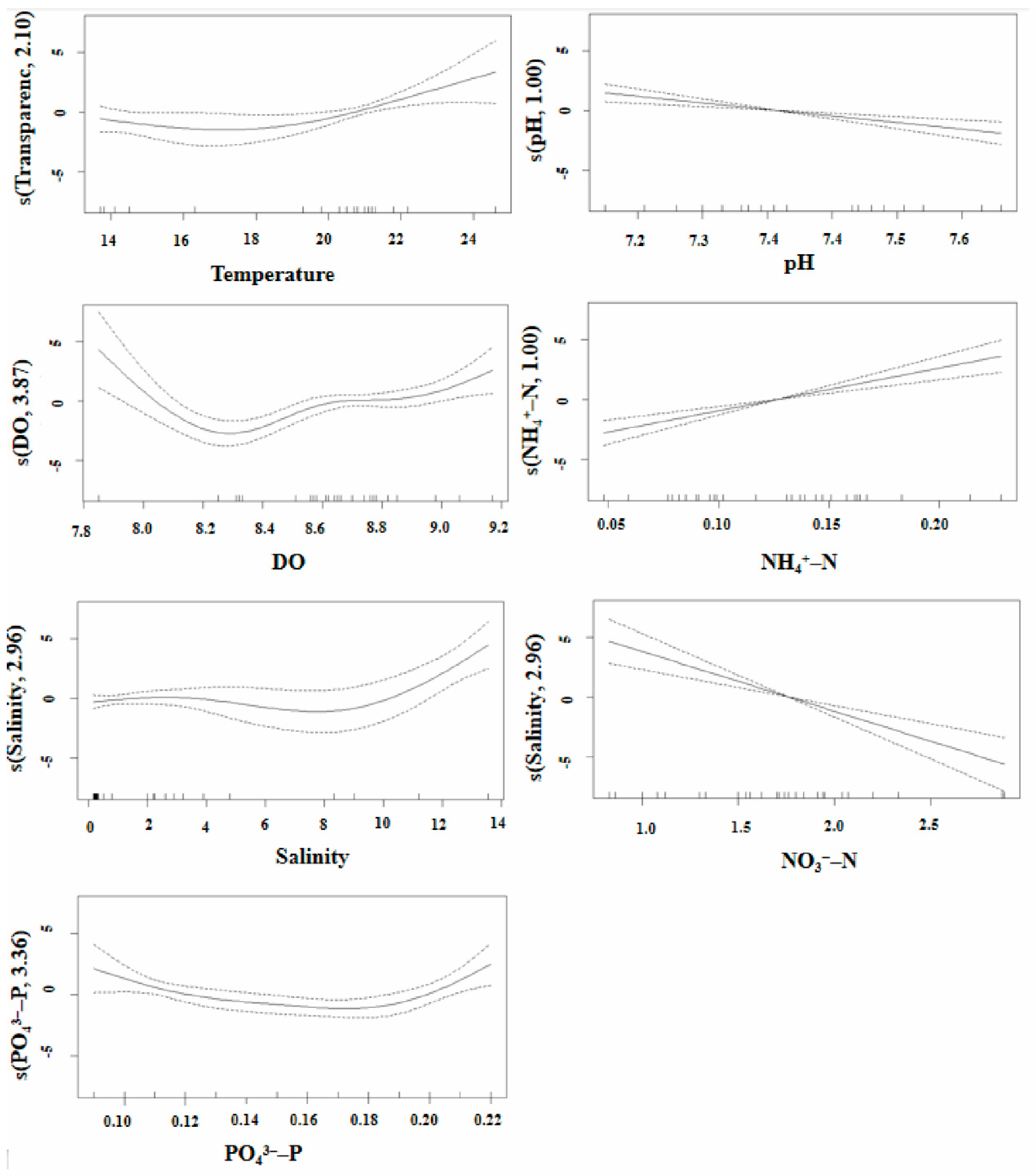
Among the three seasonal models, the autumn GAM showed the strongest explanatory power and ecological relevance, coinciding with the highest observed biomass and the most pronounced aggregation patterns. The autumn GAM yielded an adjusted R2 of 0.837 and explained 94.1% of the variance, indicating strong model performance. pH, NH4+–N, and NO3–N exhibited linear relationships with C. nasus biomass (Figure 6). Biomass decreased with increasing pH within 7.0–8.0 and with increasing NH4+–N within 0–2.6 mg L−1. Biomass increased with rising NO3–N when NO3–N ranged from 0.05 to 0.25 mg L−1. Temperature, salinity, DO, and NO3–N showed nonlinear effects. Biomass remained stable at temperatures of 14–20 °C and increased steadily above 20 °C. Under low-salinity conditions (0–10‰), C. nasus biomass remained at relatively low levels, whereas biomass increased rapidly once salinity exceeded approximately 10‰, indicating a clear threshold-type response and a pronounced preference for brackish-water mixing environments. Within a DO range of 7.8–8.5 mg L−1, biomass declined and then fluctuated upward and increased continuously above 8.5 mg L−1. For PO43−–P concentrations of 0.08–0.22 mg L−1, biomass exhibited a decline–plateau–increase pattern, remaining stable at 0.10–0.20 mg L−1 and increasing above 0.20 mg L−1.

4. Discussion

4.1. Spatiotemporal Variation in C. nasus in the Yangtze Estuary

C. nasus biomass showed a clear seasonal pattern, with autumn (November) values consistently higher than those in spring (May) and summer (August), reaching a peak in autumn 2024. This pattern corresponds to the species’ anadromous migratory behavior and aligns with seasonal distribution trends documented in the Yangtze Estuary prior to the fishing ban (2009–2016) [15]. In contrast, the early post-ban period showed slight deviations; during 2020–2021, the primary migration period shifted to March–April, likely reflecting delayed population responses caused by previous overexploitation [2]. The detection of dense and aggregated populations during both autumns of 2023 and 2024 suggests a gradual return toward the pre-ban distribution pattern [15]. The consistently low C. nasus biomass in spring and summer indicates distinct migratory behavior. During spring, individuals likely ascend into the mainstem and middle–upper reaches of the Yangtze River, resulting in reduced residence time within the estuary [25]. The low summer biomass likely reflects the formation of pre-spawning aggregations in offshore areas of the estuary as the species prepares for the next reproductive migration [26]. Winter biomass could not be assessed due to the absence of winter surveys. This limitation is unlikely to affect interpretations of aggregation dynamics during biologically active seasons. High-biomass zones occurred persistently in the outer estuarine transition area, demonstrating stable spatial patterns across years. This distribution corresponds well with estuarine hydrodynamics and established migration pathways. The outer estuary features strong hydrodynamic exchange, abundant prey resources (e.g., plankton and small benthic invertebrates), and a characteristic freshwater–brackish transition zone—conditions known to facilitate aggregation and temporary residence of migratory fishes [15,27]. During the study period, the autumn high-density aggregation became more spatially concentrated, indicating pronounced pre-migration schooling in C. nasus. This pattern likely reflects improvements in the age structure of the migratory stock and increased energy-reserve requirements prior to migration [5]. Overall, the autumn peak in biomass identifies this season as a critical preparatory phase for migration and highlights an important window for future monitoring and conservation efforts.

4.2. Influence of Environmental Factors on C. nasus Biomass in the Yangtze Estuary

The GAM analysis revealed that the spatial distribution and biomass of C. nasus were strongly influenced by the combined effects of temperature, salinity, dissolved oxygen (DO), transparency, and nutrients, with clear seasonal differences in their relative importance, and the strongest and most interpretable responses occurring in autumn, when biomass peaked across the study area. Among these variables, temperature consistently emerged as the dominant environmental driver, in agreement with numerous studies demonstrating its central role in shaping fishery resource distributions [28]. In spring, peak biomass occurred within a narrow optimal range of 19–20 °C, corresponding to the intensive pre-spawning feeding phase, during which rising temperatures trigger upstream migration from marine waters into the Yangtze River [29]. In autumn, biomass increased markedly once temperatures exceeded 20 °C, reflecting seasonal energy accumulation and intensified schooling behavior, highlighting temperature as the primary trigger regulating autumn aggregation dynamics. The optimal thermal range aligns with previously reported physiological temperature preferences of 18–22 °C for C. nasus [6]. Salinity exhibited a clear threshold-type response, particularly in summer and autumn. Biomass remained low and stable at 0–10‰, reflecting a tendency for aggregation in deeper river channels. Biomass increased substantially above 10‰, indicating a preference for brackish and mildly saline waters. This pattern is consistent with the anadromous ecology of C. nasus, whose adults move between marine and estuarine habitats and exhibit a clear affinity for salinity levels of 10–20‰ [15]. Notably, the stronger positive effect of salinity observed in autumn suggests an increased reliance on estuarine mixing zones during the pre-spawning preparation period, when suitable salinity conditions are critical for physiological conditioning prior to spawning [26]. Dissolved oxygen further constrained habitat suitability, particularly during periods of high biomass. In spring, biomass increased steadily across DO concentrations of 7–9 mg L−1, whereas in autumn a sharper increase was observed above approximately 8.5 mg L−1, underscoring the importance of well-oxygenated waters for sustaining high-density aggregations and elevated metabolic demand during migration [7]. Secondary environmental variables exerted season-specific but ecologically meaningful effects on C. nasus biomass, but their influences should be interpreted as part of coupled. Moderate transparency (10–20 cm) in spring corresponded to higher biomass, likely reflecting improved foraging efficiency and the species’ affinity for turbid rather than clear habitats [27]. pH exhibited a nonlinear response across seasons, with biomass peaking at 7.8–8.2; however, this response likely reflects its linkage with salinity and nutrient conditions rather than a direct physiological control. Values outside this range reduced biomass, consistent with the species’ preference for slightly alkaline estuarine conditions and previously reported negative effects of acidity on fish assemblages in the region [15,30]. Compared with temperature and salinity, however, pH acted as a secondary constraint, refining habitat suitability rather than directly determining large-scale distribution patterns. Nutrient effects were most evident in autumn and appeared to operate primarily through indirect trophic pathways. Moderate PO43−–P and NH4+–N: likely enhanced short-term prey availability through rapid uptake by algae and zooplankton, supporting aggregation during pre-spawning energy accumulation [31]. In contrast, elevated NO3–N, often linked to eutrophication or reduced food quality, suppressed biomass [32]. These results suggest that while moderate nutrient inputs may temporarily promote aggregation, excessive nutrient enrichment suppresses biomass and aggregation intensity. Overall, although multiple environmental variables influence C. nasus distribution, their effects are not independent in dynamic estuarine systems. Notably, the dominance of temperature and salinity identified here is consistent with results obtained using GAM, machine learning, and species-distribution models in estuarine and coastal waters, indicating robust environmental controls across modeling approaches (Table 1) [15,33,34,35,36]. Temperature acts as the primary driver of seasonal migration and aggregation, while salinity, oxygen availability, and nutrient dynamics—largely regulated by seasonal river discharge—modulate habitat suitability and food availability. By emphasizing the most influential variables identified in the autumn model, this interpretation provides a parsimonious and mechanistic understanding of the environmental controls underlying peak biomass and aggregation of C. nasus in the Yangtze River Estuary.

5. Conclusions

C. nasus biomass showed stable seasonal variation from 2023 to 2025, with autumn values markedly exceeding those in spring and summer, and a persistent high-density aggregation forming in the brackish–freshwater mixing zone of the outer estuary in autumn. Spatiotemporal distribution was jointly regulated by multiple environmental drivers across seasons. Accordingly, management should prioritize the outer estuarine brackish-water mixing zone, with seasonal core protection and strengthened enforcement during peak aggregation periods, particularly in autumn, supported by environmental indicator–based monitoring to enhance fishing-ban effectiveness.

Author Contributions

G.C.: Investigation. Conceptualization, data curation, W.C.: data curation and methodology, G.F.: original draft preparation and writing. All authors have read and agreed to the published version of the manuscript.

Funding

This research was supported by the ecological compensation and restoration project for the capacity expansion replacement project of Shanghai Waigaoqiao Power Plant in China, the protection and restoration project for important habitats of rare species in the Yangtze River Estuary by the Minister of Agriculture and Rural Affairs of China (3495-ZC-2024).

Institutional Review Board Statement

This study was conducted as part of a scientific fishery survey and did not involve any laboratory-based animal experiments. All procedures complied with local and international fisheries regulations, and sampling was conducted exclusively within legally designated fishing areas.

Data Availability Statement

The original contributions presented in this study are included in the article. Further inquiries can be directed to the corresponding author.

Conflicts of Interest

The authors Guiqin Chen and Wenke Cao were employed by Shanghai Xigeng Environmental Technology Co., Ltd. The remaining author declares that the research was conducted in the absence of any commercial or financial relationships that could be construed as a potential conflict of interest.

References

  1. Wang, H.; Chen, J.; Wang, P.; Jeppesen, E.; Xie, P. How to manage fish within and after the 10-year fishing ban. Innovation 2024, 5, 100694. [Google Scholar] [CrossRef] [Scilit]
  2. Ma, F.J.; Yang, Y.P.; Fang, D.A.; Ying, C.P.; Xu, P.; Liu, K.; Yin, G.J. Characteristics of Coilia nasus resources after fishing ban in the Yangtze River. Acta Hydrobiol. Sin. 2022, 46, 1580–1590. [Google Scholar] [CrossRef]
  3. Jiang, T.; Li, H.; Yang, J.; Chen, X.B.; Xue, J.R.; Liu, H.B. Reappearance of anadromous Coilia nasus in the Xiangjiang River, Hunan Province. J. Fish. Sci. China 2023, 30, 1409–1416. [Google Scholar] [CrossRef]
  4. Li, X.; Feng, G.P.; Han, Z.Q.; Zhao, F.; Zhang, T.; Yang, G.; Geng, Z.; Huang, X.R. Trophic level and trophic niche of Coilia nasus in the Yangtze River Estuary. J. Fish. Sci. China 2025, 32, 181–189. [Google Scholar] [CrossRef]
  5. Wang, S.Y.; Xiong, Y.; Zhang, H.S.; Song, D.D.; Wang, Y.P.; Ge, H.; Zhang, C.B.; Liang, L.; Zhong, X.M. Recovery of Coilia nasus resources after implementation of the 10-year fishing ban in the Yangtze River: Implied from the Yangtze River Estuary and its adjacent sea areas. Front. Mar. Sci. 2024, 11, 1474996. [Google Scholar] [CrossRef] [Scilit]
  6. Yin, D.H.; Lin, D.Q.; Ying, C.P.; Ma, F.J.; Yang, Y.P.; Wang, Y.P.; Tan, J.H.; Liu, K. Metabolic mechanisms of Coilia nasus in the natural food intake state during migration. Genomics 2020, 112, 3294–3305. [Google Scholar] [CrossRef] [Scilit] [PubMed]
  7. Fang, D.A.; Zhou, Y.F.; Zhang, M.Y.; Xu, D.P.; Liu, K.; Duan, J.R. Developmental expression of HSP60 and HSP10 in the Coilia nasus testis during upstream spawning migration. Genes 2017, 8, 189. [Google Scholar] [CrossRef] [Scilit]
  8. Zhang, H.; Kang, M.H.; Shen, L.; Wu, J.M.; Li, J.Y.; Du, H.; Wang, C.Y.; Yang, H.L.; Zhou, Q.; Liu, Z.G.; et al. Rapid change in Yangtze fisheries and its implications for global freshwater ecosystem management. Fish Fish. 2020, 21, 601–620. [Google Scholar] [CrossRef] [Scilit]
  9. Liu, F.; Lin, P.C.; Li, M.Z.; Gao, X.; Wang, C.L.; Liu, H.Z. Ituations and conservation strategies of fish resources in the Yangtze River basin. Acta Hydrobiol. Sin. 2019, 43, 144–156. [Google Scholar] [CrossRef]
  10. Dong, F.; Fang, D.D.; Zhang, H.; Wei, Q.W. Protection and development after the ten-year fishing ban in the Yangtze River. J. Fish. China 2023, 47, 245–259. [Google Scholar] [CrossRef]
  11. Cheng, F.Y.; Wang, Q.; Delser, P.M.; Li, C.H. Multiple freshwater invasions of the tapertail anchovy (Clupeiformes: Engraulidae) of the Yangtze River. Ecol. Evol. 2019, 9, 12202–12215. [Google Scholar] [CrossRef] [Scilit]
  12. Li, Y.; Chen, J.H.; Feng, G.P.; Wang, Q.Y.; Xia, R.L.; Song, C.; Wang, H.H.; Zhang, Y.P. Analysis of genetic diversity in Coilia nasus based on 2b-RAD simplified genome sequencing. Water 2023, 15, 1173. [Google Scholar] [CrossRef] [Scilit]
  13. Jiang, M.; Zhang, X.Z.; Yang, Y.P.; Yin, D.H.; Dai, P.; Ying, C.P.; Liu, K. Effects of Acanthosentis cheni infection on microbiota composition and diversity in the intestine of Coilia nasus. J. Fish. Sci. China 2019, 26, 577–585. [Google Scholar] [CrossRef] [Scilit]
  14. Xuan, Z.Y.; Jiang, T.; Liu, H.B.; Qiu, C.; Chen, X.B.; Yang, J. Are there still anadromous the estuarine Coilia nasus in Dongting lake. Acta Hydrobiol. Sin. 2020, 44, 838–843. [Google Scholar] [CrossRef]
  15. Ma, J.; Li, B.; Zhao, J.; Wang, X.F.; Hodgdon, C.T.; Tian, S.Q. Environmental influences on the spatio-temporal distribution of Coilia nasus in the Yangtze River estuary. J. Appl. Ichthyol. 2020, 36, 315–325. [Google Scholar] [CrossRef] [Scilit]
  16. Xuan, Z.Y.; Jiang, T.; Liu, H.B.; Chen, X.B.; Yang, J. Mitochondrial DNA and microsatellite analyses reveal strong genetic differentiation between two types of estuarine tapertail anchovies (Coilia) in Yangtze River Basin, China. Hydrobiologia 2021, 848, 1409–1431. [Google Scholar] [CrossRef] [Scilit]
  17. Wang, Y.C.; Wu, J.H.; Wang, X.F. Predicting the distribution of Coilia nasus abundance in the Yangtze River estuary: From interpolation to extrapolation. Estuar. Coast. Shelf Sci. 2024, 308, 108935. [Google Scholar] [CrossRef] [Scilit]
  18. Gao, S.K.; Yao, Y.Q.; Wan, J.C.; Zhang, S.; Fu, G.H.; Lu, J.K. Study on seasonal variations of Chaeturichthys stigmatias population resources and its environmental factors in marine ranching areas. Ocean Coast. Manag. 2024, 257, 107305. [Google Scholar] [CrossRef] [Scilit]
  19. GB/T 12763.2–2007; Specifications for Oceanographic Survey—Part 2: Marine Hydrographic Observation. Standardization Administration of China: Beijing, China; China Standards Press: Beijing, China, 2007.
  20. GB/T 12763.4–2007; Specifications for Oceanographic Survey—Part 4: Survey of Chemical Parameters in Sea Water. Standardization Administration of China: Beijing, China; China Standards Press: Beijing, China, 2007.
  21. Hou, G.; Feng, Y.T.; Chen, Y.Y.; Wang, J.R.; Wang, S.J.; Zhao, H. Spatiotemporal distribution of threadfin Porgy Evynnis cardinalis in Beibu Gulf and its relationship with environmental factors. J. Guangdong Ocean Univ. 2021, 41, 8–16. [Google Scholar] [CrossRef]
  22. Tian, S.Q.; Chen, X.J.; Chen, Y.; Xu, L.X.; Dai, X.J. Standardizing CPUE of Ommastrephes bartramii for Chinese squid-jigging fishery in Northwest Pacific Ocean. Chin. J. Oceanol. Limnol. 2009, 27, 729–739. [Google Scholar] [CrossRef] [Scilit]
  23. Planque, B.; Bellier, E.; Lazure, P. Modelling potential spawning habitat of sardine (Sardina pilchardus) and anchovy (Engraulis encrasicolus) in the Bay of Biscay. Fish. Oceanogr. 2006, 16, 16–30. [Google Scholar] [CrossRef] [Scilit]
  24. Rodriguez, J.D.; Perez, A.; Lozano, J.A. Sensitivity analysis of k-fold cross validation in prediction error estimation. IEEE Trans. Pattern Anal. Mach. Intell. 2009, 32, 569–575. [Google Scholar] [CrossRef] [Scilit] [PubMed]
  25. Yuan, C.M. Spawn migration of Coilia nasus. Bull. Biol. 1987, 12, 1–3. [Google Scholar]
  26. Li, Z.D.; Tang, J.H.; Wu, L.; Yan, X.; Ge, H.; Shi, J.J.; Wang, Y.P.; Zhu, H.C.; Wang, C.Q. Spatio-temporal distribution and influencing factors of Coilia nasus in sea areas off jiangsu before fishing ban in Changjiang River. Oceanol. Limnol. Sin. 2024, 55, 441–450. [Google Scholar] [CrossRef]
  27. Liu, Y.L.; Wu, Z.Q.; Hu, M.L. Advances on Tapertail Anchovy Coilia ectenes in China. Fish. Sci. 2008, 27, 205–209. [Google Scholar]
  28. Chen, X.; Tian, S.Q. Effects of SST and temp-spatial factors on abundance of nylon flying squid Ommastrephes bartrami in the Northwestern Pacific using generalized additive models. Trans. Oceanol. Limnol. 2007, 2, 104–113. [Google Scholar]
  29. Shi, W.G. Present situation of Coilia nasus population features and yield in Yangtze River estuary waters in fishing season. Chin. J. Ecol. 2012, 31, 3138–3143. [Google Scholar] [CrossRef] [Scilit]
  30. Shi, Y.; Chao, M.; Quan, W.; Tang, F.; Shen, X.; Yuan, Q.; Huang, H. Spatial variation in fish community of Yangtze River estuary in spring. J. Fish. Sci. China 2011, 18, 1141–1151. [Google Scholar] [CrossRef] [Scilit]
  31. Heisler, J.; Glibert, P.; Burkholder, J.; Anderson, D.; Cochlan, W.; Dennison, W.; Dortch, Q.; Gobler, C.; Heil, C.; Humphries, E.; et al. Eutrophication and harmful algal blooms: A scientific consensus. Harmful Algae 2009, 8, 3–13. [Google Scholar] [CrossRef] [Scilit]
  32. Powers, S.P.; Peterson, C.H.; Christian, R.R.; Sullivan, E.; Powers, M.J.; Bishop, M.J.; Buzzelli, C.P. Effects of eutrophication on bottom habitat and prey resources of demersal fishes. Mar. Ecol. Prog. Ser. 2005, 302, 233–243. [Google Scholar] [CrossRef] [Scilit]
  33. Wang, Y.; Wu, X.; Zheng, L.; Wu, J.; Zhang, S.; Wang, X. Modeling seasonal changes in the habitat suitability of Coilia nasus in the Yangtze River Estuary using tree-based methods. Reg. Stud. Mar. Sci. 2023, 67, 103212. [Google Scholar] [CrossRef] [Scilit]
  34. Rawat, V.S.; Azhikodan, G.; Yokoyama, K. Prediction of fish (Coilia nasus) catch using spatiotemporal environmental variables and random forest model in a highly turbid macrotidal estuary. Ecol. Inform. 2025, 86, 103048. [Google Scholar] [CrossRef] [Scilit]
  35. Tang, W.; Ye, S.; Qin, S.; Fan, Q.; Tang, J.; Zhang, H.; Liu, J.; Huang, Z.; Liu, W. Habitat suitability of Coilia nasus in southern Zhejiang Province, China, based on a maximum entropy model. Sci. Rep. 2024, 14, 19254. [Google Scholar] [CrossRef] [Scilit] [PubMed]
  36. Pan, S.; Tian, S.; Wang, X.; Dai, L.; Gao, C.; Tong, J. Comparing different spatial interpolation methods to predict the distribution of fishes: A case study of Coilia nasus in the Changjiang River Estuary. Acta Oceanol. Sin. 2021, 40, 119–132. [Google Scholar] [CrossRef] [Scilit]
Figure 1. Sampling points of C. nasus in the Yangtze River Estuary, China.
Fishes 11 00097 g001
Figure 2. The seasonal biomass trend of C. nasus.
Fishes 11 00097 g002
Figure 3. The seasonal distribution of C. nasus biomass.
Fishes 11 00097 g003
Figure 4. The effects of environmental parameters on C. nasus biomass in Spring. Partial effects of key environmental variables on C. nasus biomass from the GAM. The y-axis shows the smooth term (df) on log-transformed biomass; positive values indicate higher relative biomass, negative values lower. Only the indicators with high significance (p < 0.05) were displayed. The same below. Temperature (p < 0.05); Depth (p < 0.05); Transparency (p < 0.01); pH (p < 0.01); DO: dissolved oxygen (p < 0.05); Chl-a: chlorophyll-a concentration (p < 0.05).
Fishes 11 00097 g004
Figure 5. The effects of environmental parameters on C. nasus biomass in Summer. pH (p < 0.05); Salinity (p < 0.05).
Fishes 11 00097 g005
Figure 6. The effects of environmental parameters on C. nasus biomass in Autumn. Temperature (p < 0.05); pH (p < 0.01); Salinity (p < 0.05); DO: dissolved oxygen (p < 0.01); NH4+–N: ammonium salt (p < 0.001); NO3–N: concentrations of nitrate (p < 0.001); PO43−–P: phosphate (p < 0.05).
Fishes 11 00097 g006
Table 1. Comparison of key environmental variables influencing the distribution of C. nasus identified by different modeling approaches in the estuarine and coastal waters.
StudyStudy AreaModel TypeKey Environmental Variables Identified
Ma et al. [15]Yangtze River EstuaryGAMTemperature, salinity, chlorophyll, pH
Wang et al. [33]Yangtze River EstuaryCART, RF, CRFtemperature, total nitrogen
Rawat et al. [34]Chikugo River estuaryRFsalinity, suspended sediment concentration, discharge
Tang et al. [35]southern Zhejiang coastal watersMaxEntSalinity, bottom temperature
Pan et al. [36]Yangtze River EstuaryGAMTemperature and salinity
Disclaimer/Publisher’s Note: The statements, opinions and data contained in all publications are solely those of the individual author(s) and contributor(s) and not of MDPI and/or the editor(s). MDPI and/or the editor(s) disclaim responsibility for any injury to people or property resulting from any ideas, methods, instructions or products referred to in the content.