


Abstract
This review examines the status, challenges, and future trajectories of global mussel aquaculture within the blue food system. Despite steady production growth, mussels’ relative contribution to total bivalve output has significantly declined over recent decades due to disproportionate expansion of oyster, clam, and scallop sectors. A major geographical production shift has occurred, with Asia, spearheaded by China, emerging as the dominant region, supplanting traditional European producers while the Americas rapidly ascend. China’s overwhelming dominance in overall bivalve production starkly contrasts with its underdeveloped mussel sector, where growth lags behind other bivalves despite substantial absolute increases, reflecting a fundamental restructuring of species composition. The industry faces interconnected sustainability constraints: persistent vulnerabilities in spat supply stemming from environmental variability, hatchery limitations, and disease transmission risks; escalating environmental stressors including climate change impacts, harmful algal blooms, pollution, and pathogens; structural flaws in value chains characterized by fragmented production, market volatility, and underutilized byproducts; and governance challenges related to spatial access and licensing inefficiencies. This review advocates for a comprehensive strategy to boost the mussel aquaculture. These encompass advancing hatchery technology and genetic breeding programs, implementing ecosystem-based management such as multi-trophic systems and AI-enhanced environmental monitoring, restructuring value chains through producer cooperation and high value product diversification, and establishing science-based spatial planning frameworks with streamlined governance. Addressing these challenges holistically is critical to position mussel farming as a resilient pillar of sustainable blue food production capable of reconciling ecological integrity with economic viability and social equity.
Key Contribution:
Global mussel production grows but shares in bivalves declines; China dominates bivalve output yet its mussel sector lags; sustainability challenges: spat supply, environment, value chain; integrated strategies proposed for ecological and economic resilience.
1. Introduction
The phylum Mollusca represents one of the largest, most diverse, and ecologically significant groups within the animal kingdom. It comprises at least 50,000 described species, approximately 30,000 of which are marine organisms. Among the eight molluscan classes, the class Bivalvia is characterized by organisms enclosed within two articulated shell valves, including commercially important species such as mussels, oysters, scallops, and clams. Although this class contains a relatively modest number of species (approximately 10,000), it garners considerable attention primarily due to its species’ widespread consumption by humans [1,2].
Aquaculture’s origins trace back to 500 BC, when Chinese politician Fan Lei documented commercial carp farming in his work, the Classic of Fish Culture. Bivalve cultivation parallels this antiquity. Aristotle noted oyster farming in Greece around 350 BC, and Pliny described commercial oyster ponds near Naples, Italy, by 100 BC. However, modern oyster farming, as practiced today, only began in 1624 in Japan’s Hiroshima Bay [3]. Clam farming can be traced back to China, with a history of several hundred years [4]. This has made China the world’s largest producer of clams for a long time. Scallop culture emerged in Japan around 1965 when a fisherman pioneered open-sea seed collection using onion bags, laying the foundation of Japan’s thriving scallop industry [5]. Mussel cultivation traces to 1235, when an Irish sailor shipwrecked off France used tidal poles for bird trapping and discovered they hosted larger, higher-quality mussels than seabed populations. This inspired the enduring “bouchot method.” Nevertheless, mussels’ full aquaculture potential was only realized in the last 40 years.
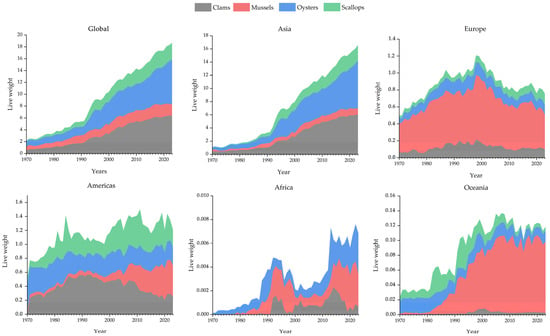
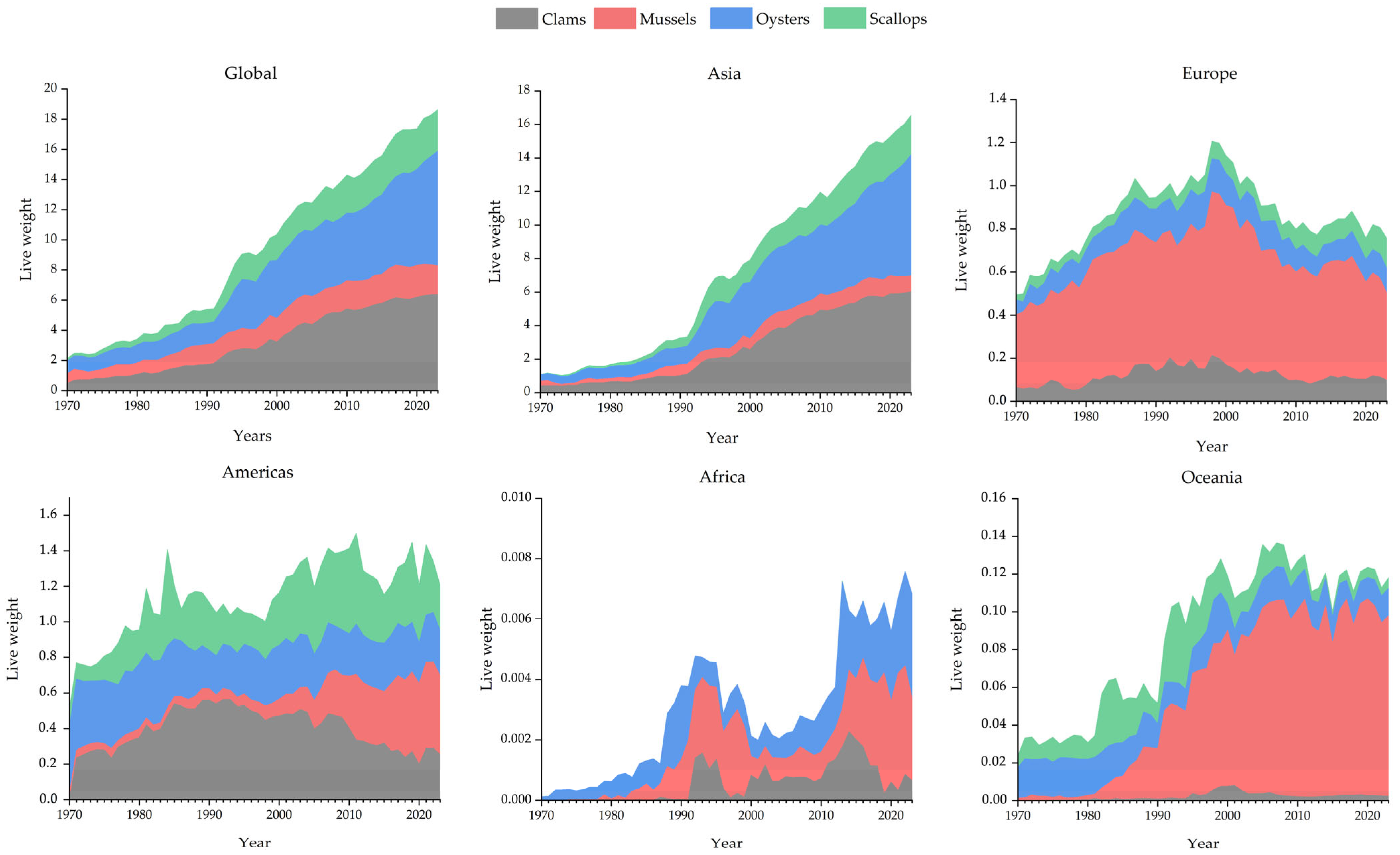
The significant expansion of bivalve shellfish aquaculture commenced in the late 19th century with the establishment of reliable cultivation techniques, spurring rapid production growth. A pivotal shift occurred in the late 20th century when advances in hatchery technology eliminated dependence on wild seedstock, propelling substantial increases in farmed output. Global marine bivalve production first surpassed 15 million tonnes annually in 2014 (Figure 1). By 2023, total production from both wild fisheries and aquaculture reached nearly 18.6 million tonnes (Figure 1), with aquaculture contributing over 93% of this output. This represents approximately 8% of contemporaneous global marine fishery production [6].
Figure 1.
Global and regional live weight production trends of bivalve mollusks (clams, mussels, oysters, scallops) from 1970 to 2023.
The global production of marine bivalves has undergone significant geographical shifts over recent decades, with Asia emerging as the dominant region. According to comprehensive FAO statistics spanning 1970–2023, Asia contributes 78% of the world’s marine bivalve production. In recent years, driven by the synergistic effects of technological innovation, policy support, industrial chain optimization, and market expansion, bivalve production in Asia has experienced sustained growth. FAO data for 2023 indicates that Asia accounts for 89% of global annual bivalve output.
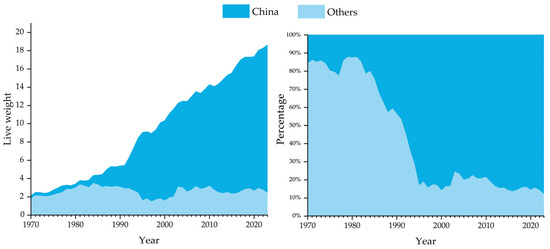
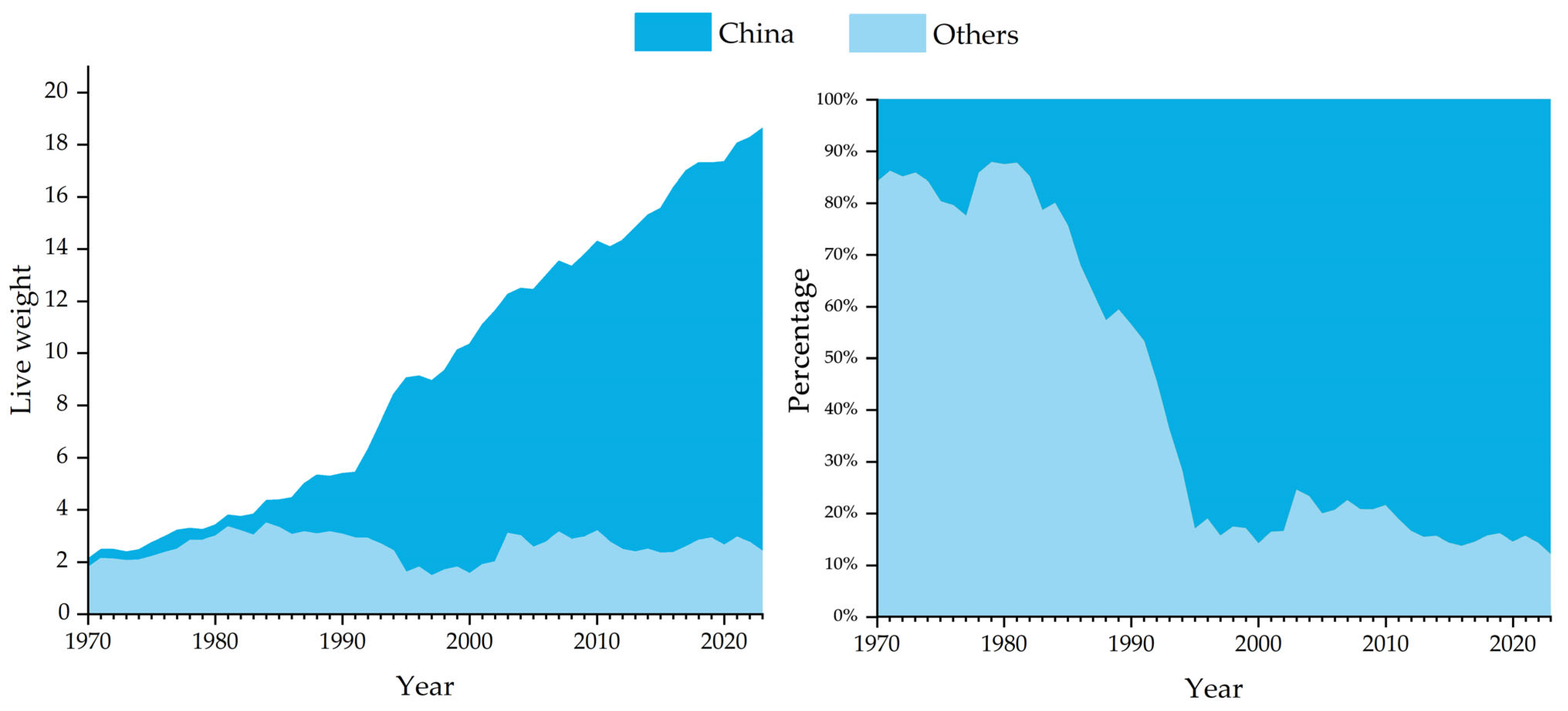
China’s share of global bivalve mollusk production has undergone a profound transformation since 1970, evolving from a marginal contributor to near-complete market dominance. Initially representing less than 20% of worldwide output in the 1970s–1980s, China’s systematic industrialization of aquaculture catalyzed accelerated growth. Strategic state investment in hatchery technology, extensive raft and longline culture systems, and export-oriented policies propelled its share beyond 80% by the early 2000s (Figure 2). By 2023, China’s output of bivalve mollusks reached 16 million tonnes, accounting for 87% of the global total output of bivalve mollusks [6]. The vast majority of this was from aquaculture, while the capture output was negligible.
Figure 2.
Trends in bivalve production in China and its global share from 1970 to 2023.
This dominance stems from unparalleled economies of scale, vertically integrated supply chains, and expansive utilization of coastal and offshore farming zones. Consequently, over four-fifths of globally consumed bivalves now originate from Chinese farms, a concentration that has fundamentally reshaped international seafood markets while intensifying sustainability challenges related to coastal eutrophication, disease management, and habitat degradation. Current forecasts suggest that future growth may level off due to ecological constraints and rising domestic consumption.
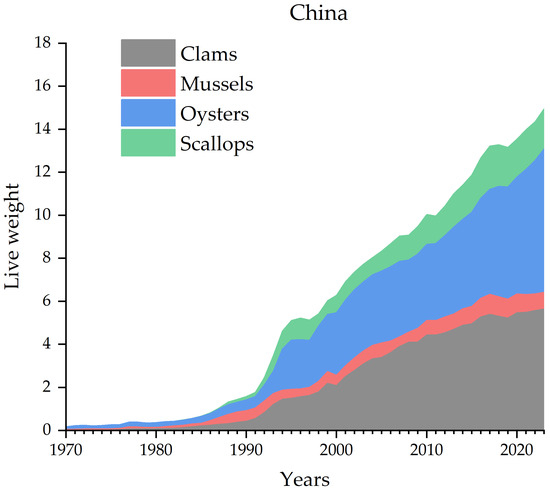
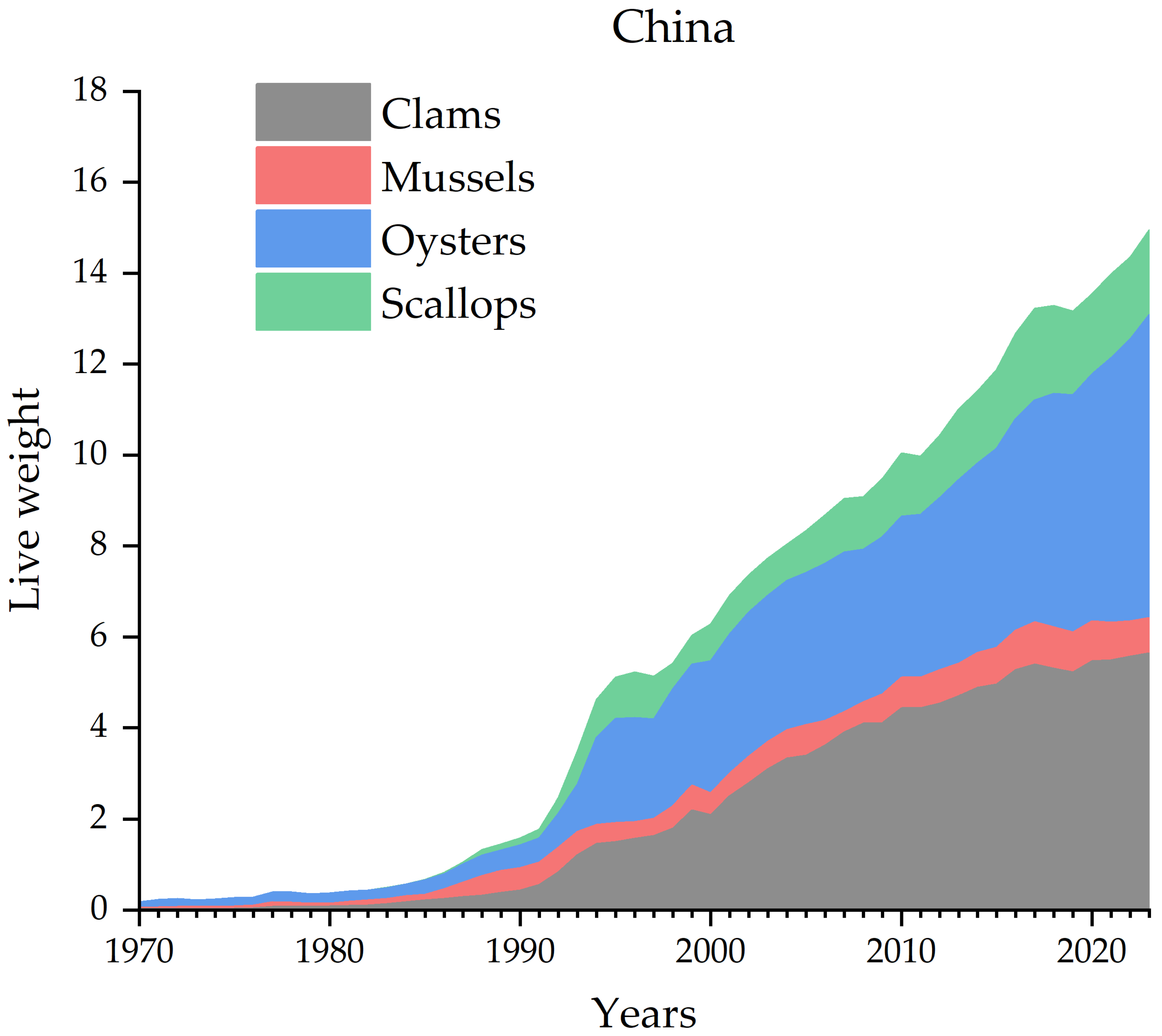
Dominated by oysters (667.1 Mt), clams (564.3 Mt), scallops (185.8 Mt), and mussels (77.7 Mt) (Figure 3), this industry forms an ecological cornerstone of China’s blue food system. Although mussels are the fourth most widely farmed marine shellfish in China, their strategic position in the industry has long been underestimated. Compared with oysters, clams, and scallops, which rank among the top three in terms of production volume, mussels have received significantly less attention. The industry exhibits a notable scale-investment imbalance: this cognitive gap is in sharp contradiction with the inherent advantages of mussels, and is not conducive to the sustainable development of the mussel industry.
Figure 3.
Chinese live weight production trends of bivalve mollusks (clams, mussels, oysters, scallops) from 1970 to 2023.
Mussel farming represents a transformative approach to sustainable protein production, delivering multifaceted environmental and socioeconomic advantages. Ecologically, lifecycle assessments suggest that mussel cultivation has a very low carbon footprint, with farm-gate emissions of merely 0.25 kg CO2e/kg [7], which is significantly lower than that of terrestrial livestock (e.g., beef: 19–36.7 kg CO2e/kg) [8]. While some studies characterize mussel farming as ‘carbon-negative’ due to its minimal input requirements, this term remains debated given the lack of consensus on how to account for indirect carbon fluxes in marine ecosystems. Furthermore, compared to traditionally recognized blue carbon sinks such as mangroves, salt marshes, and seagrass beds, the role of shellfish farming in marine carbon sequestration is subject to considerable academic controversy [9]. A recent study has pioneered from an ecological perspective the “Shellfish-Algae-Bacteria (3M)” community carbon sequestration scheme. This study suggested that shellfish farming may contribute to carbon sequestration through enhancing phytoplankton carbon absorption and promoting the deposition of algae-derived carbon, with functional microorganisms further stabilizing organic carbon [10]. However, this mechanism requires validation across different marine environments, and the magnitude of carbon sequestration by mussel farms relative to natural blue carbon sinks remains unclear, highlighting the need for more comprehensive carbon budget studies. Concurrently, mussels mitigate eutrophication by removing higher than 100 kg N/ha·yr via phytoplankton filtration and enhanced sediment denitrification, effectively offsetting nitrogen loads equivalent to 40–50 coastal inhabitants [11,12,13]. Crucially, the process demands zero freshwater resources, circumventing agricultural water conflicts exacerbated by climate change [14]. Nutritionally, mussels provide high-quality protein (18.8–24 g/100 g) rich in essential amino acids (39.2% EAA/TAA ratio) and omega-3 PUFAs (0.70–1.41 g EPA + DHA/100 g), surpassing terrestrial meats in micronutrient density [15,16]. Offshore-cultured specimens exhibit elevated PUFA levels due to phytoplankton-rich diets, enhancing their health-promoting properties [17]. Economically, byproduct valorization unlocks circular economies: undersized mussels convert into protein-rich aquaculture feed (65% crude protein meal) [18], while shells serve as phosphorus-adsorbing wastewater treatment media [19] or concrete aggregates [20]. These synergies position mussel aquaculture as a keystone of blue food systems, reconciling protein security with planetary boundaries, a paradigm validated by its alignment with 8 UN Sustainable Development Goals [21]. In brief, mussel aquaculture stands out as a highly sustainable, economically viable, and environmentally beneficial form of food production.
While oysters, scallops, clams, and mussels may cater to partially distinct market segments (e.g., oysters for raw consumption, scallops for gourmet dishes, clams for soups), they compete directly for key production resources: coastal space, hatchery capacity, research funding, and policy attention. The disproportionate expansion of oyster, scallop, and clam sectors in China and globally has often occurred through the preferential allocation of these limited resources, thereby constraining mussel sector development. This review therefore examines mussel aquaculture not only as a distinct food system component but also as a sector embedded within a competitive bivalve production landscape, aiming to explain its relative stagnation through a structured comparative framework.
This disparity in sectoral development is not incidental but reflects deeper institutional and economic logics. Policy and investment have historically favored bivalve species with higher immediate market returns, established export channels, and visible technological breakthroughs—criteria that oysters, scallops, and clams often meet more readily than mussels. This has created a path-dependent cycle of preferential support, wherein initial commercial success attracts further research funding, spatial allocations, and policy attention, thereby marginalizing species like mussels despite their compelling sustainability profile. Recognizing these underlying drivers is essential for designing interventions that can rebalance sectoral development within the blue food system.
This review synthesizes the global development status, identifies critical challenges, and explores future trajectories for mussel aquaculture, with a central focus on advancing triple-bottom-line sustainability—encompassing environmental integrity (Planet), economic viability (Profit), and social responsibility (People). Universal environmental constraints including genetic resource conservation, ecosystem carrying capacity thresholds, bioinvasion risks, and organic enrichment impacts such as benthic hypoxia are critically examined, alongside an analysis of socio-economic barriers to equitable value-chain distribution and market growth. To bolster industry credibility and consumer trust worldwide, the study proposes integrated strategies for mitigating biotoxin (e.g., PSTs, DSPs) and contaminant (heavy metals, microplastics) accumulation in products, thereby enhancing mussels’ positioning as safe, nutrient-dense protein sources. Furthermore, a governance framework centered on AI-enhanced real-time monitoring systems for biotoxins and environmental stressors is established, with the argument that such evidence-based management is fundamental to achieving sustainable intensification. Ultimately, this work aims to provide actionable policy and technological pathways that align global mussel aquaculture with blue food transformation goals while offering a replicable model for balancing ecological resilience with scalable production.
This review adopts a narrative synthesis approach, which is suitable for integrating heterogeneous data from production statistics, ecological studies, socioeconomic analyses, and governance frameworks to provide a holistic overview of global mussel aquaculture. The main data sources include: (1) long-term production statistics (1970–2023) from the Food and Agriculture Organization (FAO) of the United Nations, which form the basis for analyzing global and regional production trends; (2) peer-reviewed articles published in international journals (primarily 2000–2025) retrieved from Web of Science, Scopus, and CNKI, covering topics such as mussel biology, aquaculture technology, environmental impacts, value chain management, and policy governance; (3) technical reports from regional fisheries commissions and aquaculture research institutions. The narrative review format was chosen because it allows for flexible integration of quantitative production data and qualitative research findings, facilitating the identification of interconnected challenges and the synthesis of cross-disciplinary solutions. This approach aligns with the goal of providing a comprehensive, accessible, and policy-relevant overview of the sector, rather than testing a specific hypothesis through systematic meta-analysis.
2. Current Status of Global Mussel Production
2.1. Global Mussel Production
Global mussel production has increased steadily, rising from less than 650,000 tonnes in 1970 to nearly 2 million tonnes in 2023, achieving remarkable results. However, its share of total global bivalve production has undergone a marked decline, decreasing from over 30% in 1970 to approximately 10% in 2023 (Figure 4). Consequently, mussels have fallen from the second place, which was only after oysters, to the fourth rank within the global bivalve production hierarchy. This divergence in trends is primarily attributed to declining production in traditional European mussel-growing regions, alongside substantial global increases in oyster, scallop, and clam production. Over the period from 1970 to 2023, clam production increased 12.2 fold, scallop production increased 16.9 fold, and oyster production increased 8.1 fold, whereas mussel production increased only 1.9 fold.
Figure 4.
Trends in the proportion of major bivalve species in global bivalve production from 1970 to 2023.
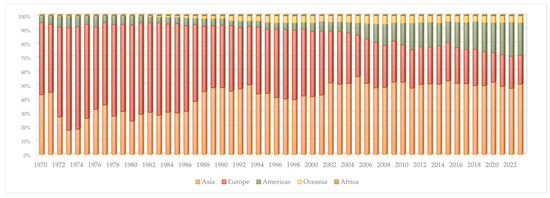
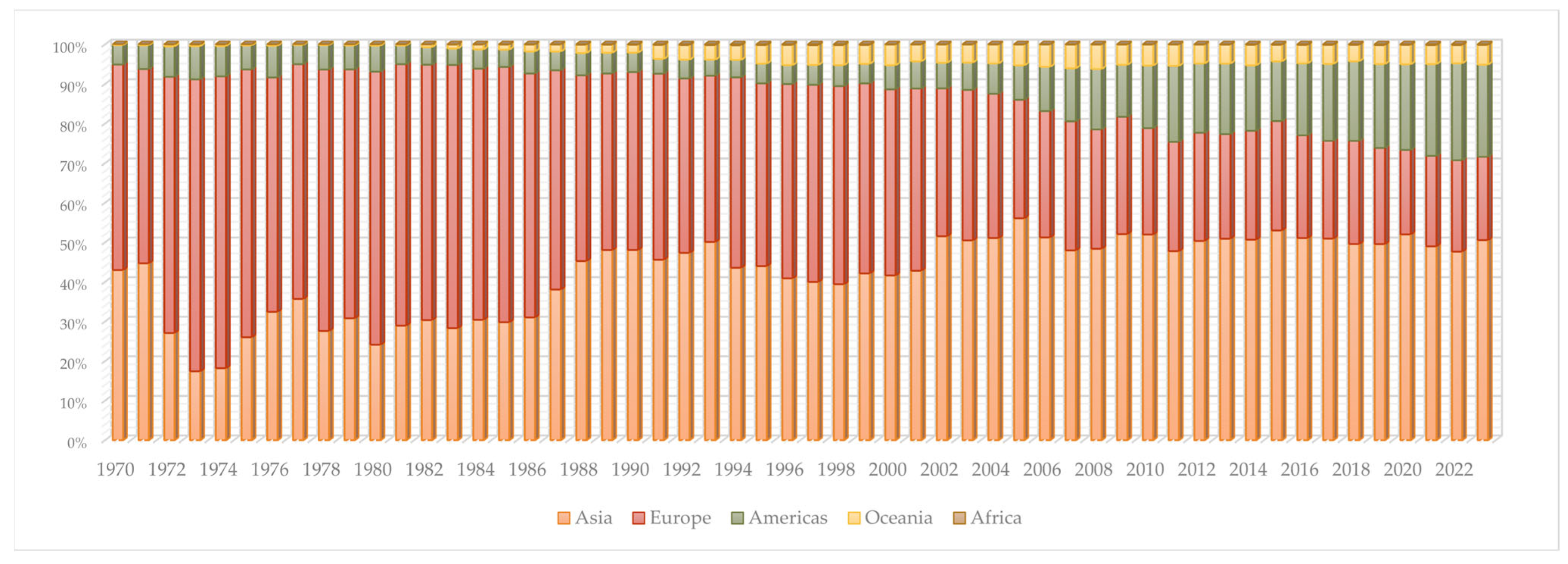
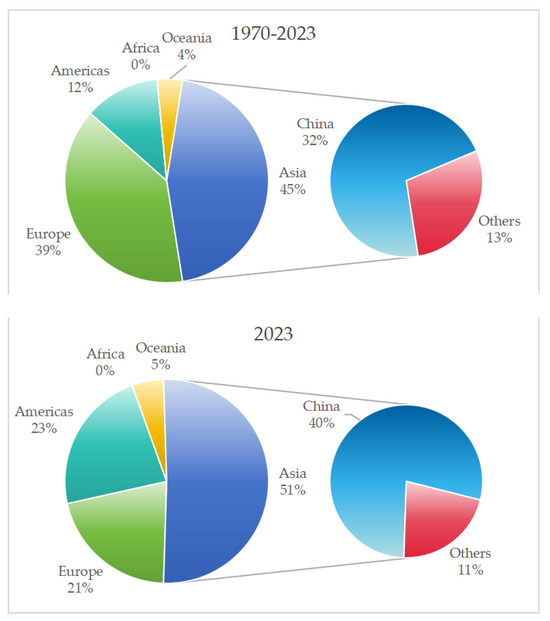
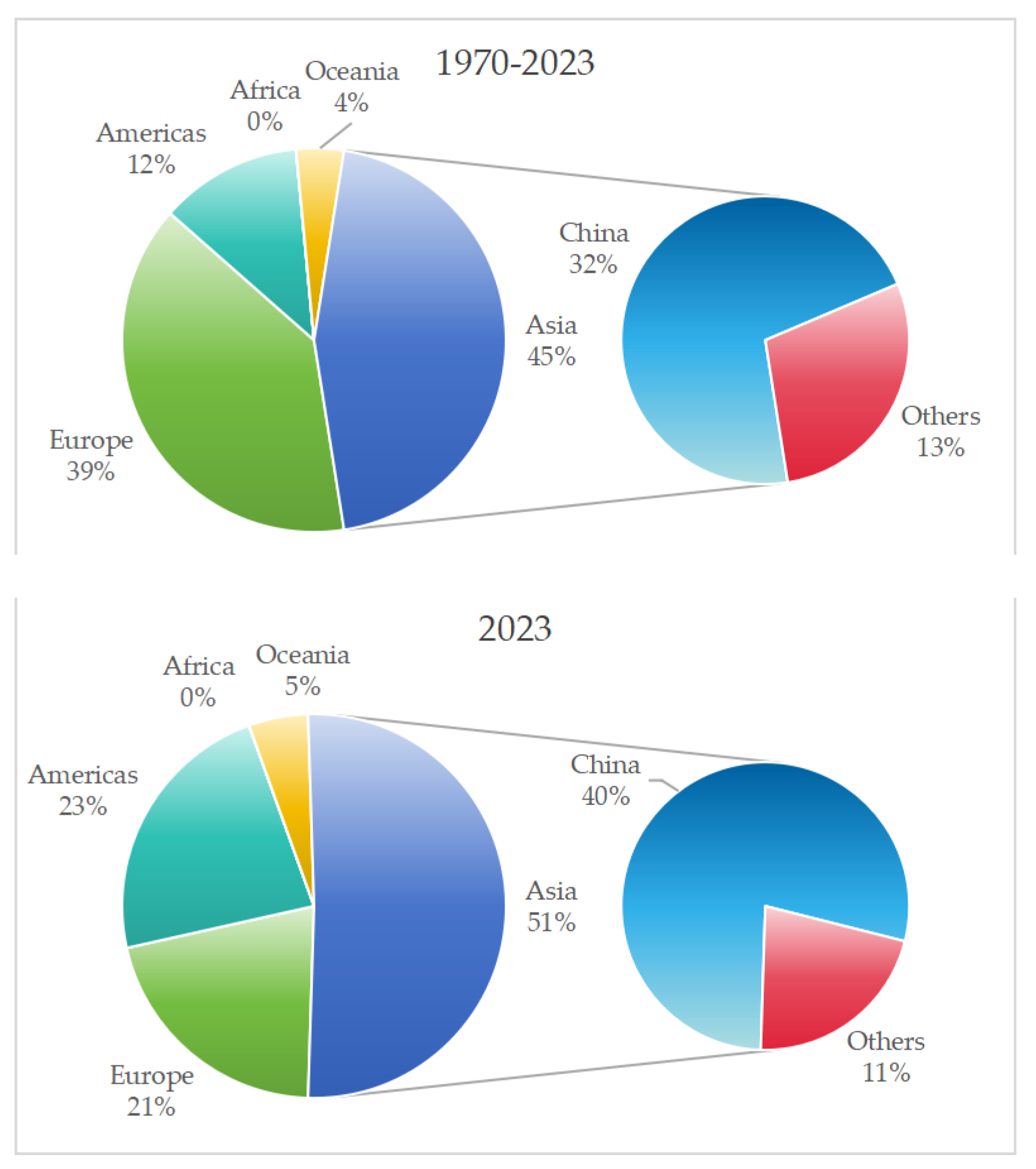
Europe historically held a dominant position in the global mussel industry, consistently ranking as the top global producer between 1970 and 2000, and reaching a historical peak of 762,000 tonnes in 1999. Subsequently, its output experienced a continuous decline, and its dominant position was gradually supplanted by Asia. Asian mussel production achieved significant growth between 2001 and 2002, soaring from 692,000 to 917,000 tonnes, thereby securing the top position in global production (Figure 5). Comprehensive data from the FAO for 1970–2023 indicates that Asia and Europe contributed 45% and 39%, respectively, to the total global mussel output. By 2023, global mussel production reached 1.91 million tonnes, accounting for 12% of total shellfish output, with Asia’s share further increasing to 51% and Europe’s declining to 21% (Figure 6).
Figure 5.
Trends in the proportion of global bivalve production by continent from 1970 to 2023.
Figure 6.
Continental and Chinese shares in global mussel production.
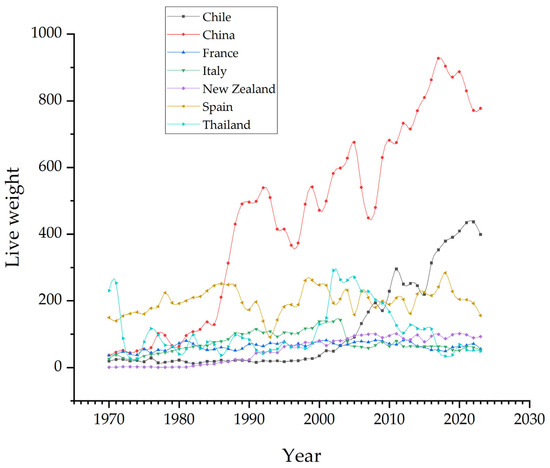
Notably, since around 2010, the Americas’ mussel industry has rapidly emerged, becoming the highest-producing shellfish species in the continent by 2023 (Figure 1). In 2023, its manufacturing output exceeded that of Europe for the first time in history, constituting 23% of the global total and establishing the region as the world’s second-largest production base (Figure 6). In this development process, Chile, as a primary driving force in the Americas, has developed into the world’s second-largest mussel producer, trailing only China (Figure 7).
Figure 7.
Trends in the production volume of mussels by leading countries from 1970 to 2023.
Although Oceania’s mussel production remains limited, the region maintains its traditional strength in aquaculture (Figure 1), contributing 4% of the global total from 1970 to 2023 and 5% in 2023. New Zealand dominates regional production, accounting for the majority of Oceania’s output (Figure 6).
According to FAO statistics, the world’s top seven mussel producing nations, i.e., China, Chile, Spain, New Zealand, France, Italy, and Thailand, collectively account for 90% of total global output (Figure 7). This concentration not only highlights their preeminent role within the global aquaculture value chain but also reflects the distinct regional specialization inherent in mussel aquaculture practices. For instance, China’s dominance is characterized by extensive nearshore cultivation, whereas Chile and New Zealand leverage their pristine marine environments to cater to premium international markets. Thailand, as a nascent producer, primarily serves regional demand within Southeast Asia. Furthermore, despite a recent contraction in the European mussel sector, established producers such as Spain, France, and Italy continue to hold considerable global market presence.
Comparatively, Asia’s (led by China) mussel production is characterized by extensive nearshore cultivation, large-scale output, and integration into domestic blue food systems, but faces constraints from environmental pollution and fragmented value chains. Europe’s production relies on traditional farming methods and premium market positioning, with key challenges including policy inefficiencies and competition from low-cost imports. The Americas (led by Chile) leverage pristine offshore environments for high-value exports, but their rapid growth is vulnerable to climate-induced environmental fluctuations. Oceania (dominated by New Zealand) maintains sustainable, niche production models but is limited by geographic market access.
2.2. Mussel Production in China
China holds a dominant position in the world’s bivalve production. The output of bivalve mollusks has increased from 334,900 tonnes in 1970 to 16.2 million tonnes in 2023, a 47.4-fold growth (Figure 2). Meanwhile, the global bivalve production increased from 2.1 million tonnes in 1970 to 18.6 million tonnes in 2023, a growth of only 7.8 fold (Figure 1). Moreover, the proportion of China’s bivalve production in the global total production has increased from less than 16% in 1970 to over 87% (Figure 2).
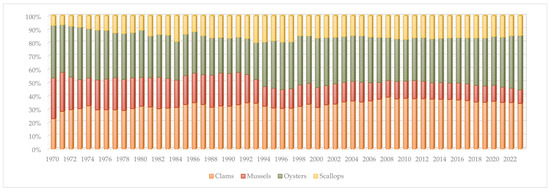
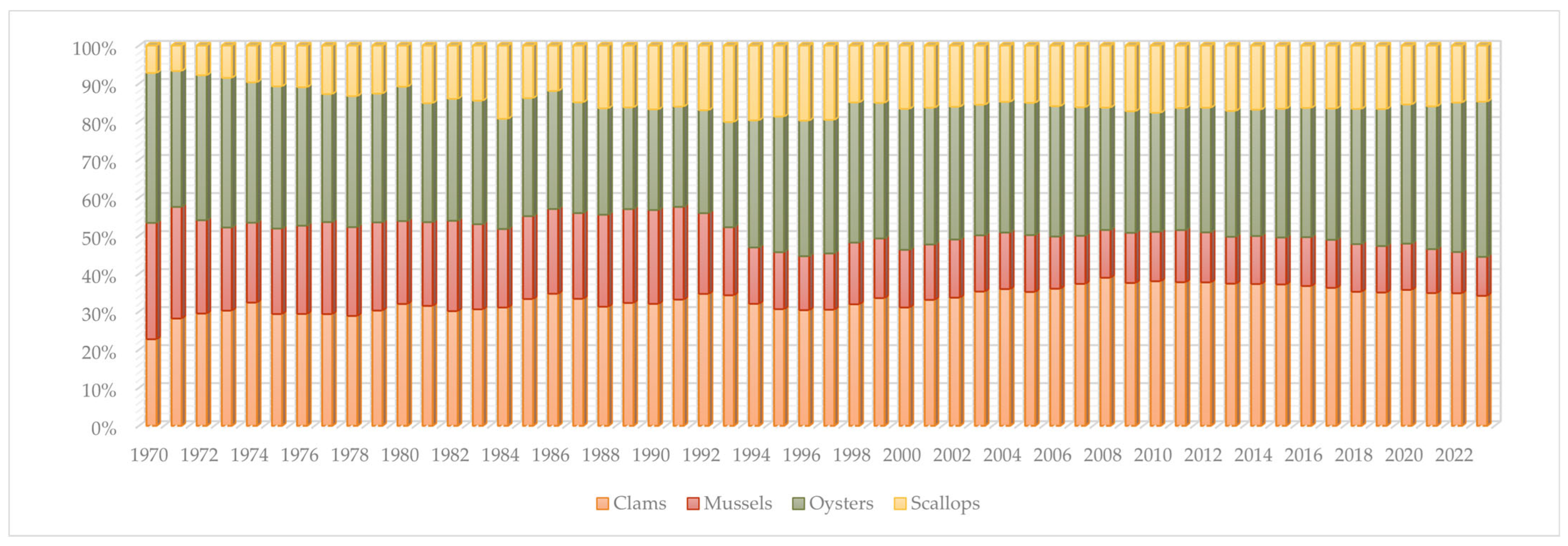
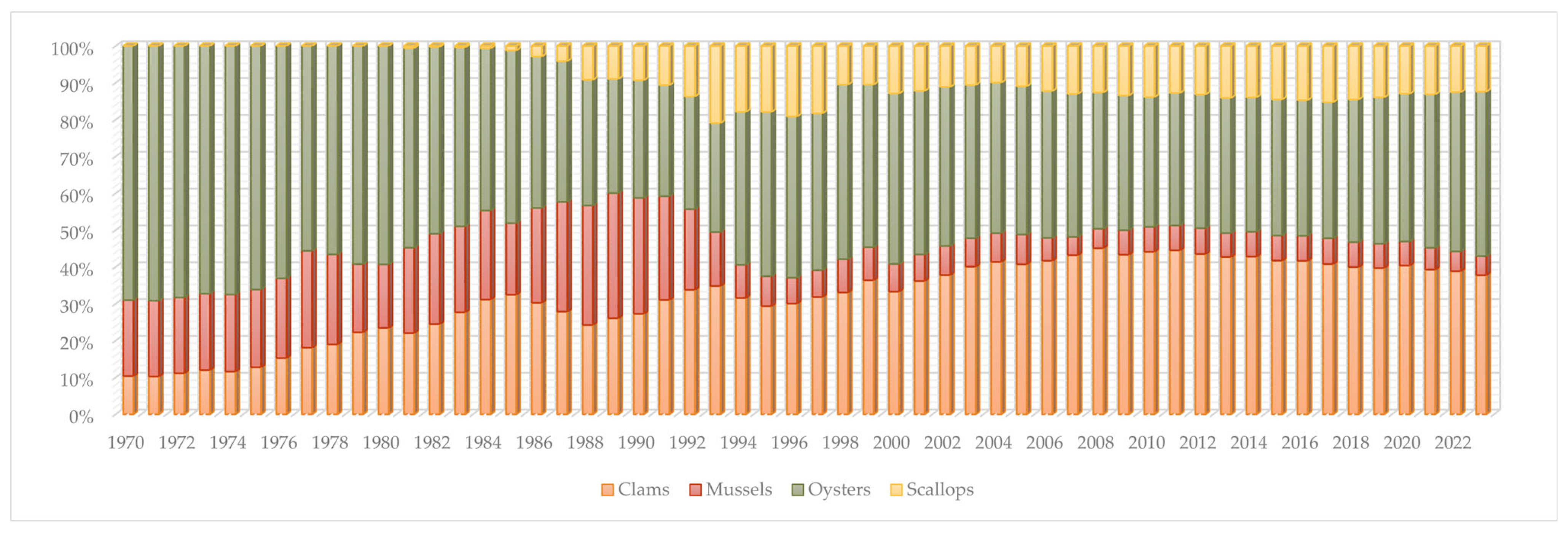
Despite the sustained increase in overall bivalve production, China’s output of different major bivalve species exhibits markedly heterogeneous growth dynamics, reflecting the complex interplay of diverse technological, ecological, and market determinants (Figure 3). Oyster production has experienced the most rapid growth, surging from 122,809 tons in 1970 to 6.7 million tons in 2023, a remarkable 54-fold increase. This expansion is largely attributable to the intensive raft culture systems prevalent along the coastal regions of Fujian and Guangdong [22]. Clam production, while exhibiting an even greater relative increase, soaring from 18,460 tons to 5.64 million tons, a staggering 306-fold rise, is reportedly increasingly constrained by tidal flat carrying capacity and sedimentation issues in Jiangsu and Shandong provinces [23]. Scallop production, virtually negligible in 1970, now dominates in northern production centers, i.e., Shandong and Liaoning, reaching 1.86 million tons, a success largely attributed to the adoption of deep-water suspended culture techniques. Mussels, however, present a distinctly different scenario. While their output increased 21-fold from 36,700 tons in 1970 to 777,065 tons in 2023, their growth rate has significantly lagged behind the overall expansion trend of other bivalve mollusks. Over the nearly two decades from 1970 to 1989, the proportion of mussels in China’s total bivalve production steadily climbed from 20.6% to a historical peak of 40.0% (Figure 8), reflecting the transitional importance of mussel aquaculture in the restructuring of China’s aquaculture sector during this period. However, since the 1990s, this proportion has entered a continuous downward trend. With breakthroughs in breeding technologies for high-value bivalve species, such as triploid oysters and Yesso scallops, and the upgrading of consumer markets, the industrial status of mussels has gradually been superseded. By 2023, their share had shrunk to 5.2% (Figure 8), with the absolute increase in mussel production being overshadowed by the more rapid expansion of other bivalve species, highlighting a fundamental restructuring of China’s bivalve aquaculture species composition. However, China’s share of global mussel production has shown a consistent upward trend. While its output constituted an average of 32% of the global total from 1970 to 2023, this proportion had significantly increased to 40% by 2023 (Figure 6).
Figure 8.
Trends in the proportion of major bivalve species in China bivalve production from 1970 to 2023.
Mussel aquaculture in China is primarily focused on three species: the Mediterranean mussel (Mytilus galloprovincialis), the hard-shelled mussel (Mytilus coruscus), and the green mussel (Perna viridis). Mediterranean mussel farming is concentrated along the northern coast of China and represents the only mussel species cultivated on a commercial scale in the north. Rizhao, Shandong Province, serves as the nation’s primary production hub for Mediterranean mussels, achieving an output of 200,000 tonnes in 2024, which constituted 70% of China’s total Mediterranean mussel production [24]. While naturally distributed in northern waters, the hard-shelled mussel has not established commercial-scale farming there; its industry is centered in southern coastal areas such as Shengsi, Zhejiang Province. Shengsi, renowned as the “Home of the Hard-Shelled Mussel,” produced 243,600 tonnes in 2024, representing over 67% of China’s total hard-shelled mussel output [25]. The green mussel is predominantly distributed in southern China, with primary production hubs in Guangdong and Fujian provinces, where annual output remains stable at approximately 200,000 tonnes.
2.3. Comparative Analysis of Mussel and Other Bivalves
To systematically evaluate the relative position of mussel aquaculture within the bivalve sector and to address the central claim of its “structural undervaluation,” we compare mussels with oysters, scallops, and clams across four key dimensions: environmental performance, technological development, economic characteristics, and institutional support (Table 1). This comparative framework reveals structural disparities that help explain mussels’ declining market share despite their inherent sustainability advantages.
Environmental Performance: Mussel farming exhibits a low carbon footprint (0.25 kg CO2e/kg) and high nitrogen removal capacity (>100 kg N/ha·yr), comparable to or exceeding other bivalves [7,11]. However, its perceived spatial efficiency (yield per unit area) is often lower than that of intensive oyster raft systems [26], potentially influencing spatial planning decisions against mussels in crowded coastal zones.
Technological Development: A stark contrast exists. Oyster and scallop sectors have achieved high reliance on hatchery production (>80% in China) and benefit from numerous selectively bred strains with improved growth and disease resistance [27]. In contrast, mussel aquaculture remains heavily dependent on wild spat collection in many regions, and commercial-scale selective breeding programs are notably underdeveloped [28]. Mechanization in harvesting and processing is also less advanced for mussels compared to scallops.
Economic Characteristics: Farm-gate prices for mussels are generally lower than those for oysters and scallops [29], reflecting a lower perceived market value. Value addition through processing (e.g., smoked, canned, ready-to-eat) is less common for mussels, which are frequently sold live or frozen in bulk, limiting profit margins for producers.
Institutional and Governance Support: Spatial planning policies and research funding often prioritize high-value species. In China, for example, oysters in Fujian and scallops in Shandong receive focused policy support, while mussel farms are frequently allocated to less favorable or more polluted waters [22,23]. This differential support creates a competitive disadvantage for mussel aquaculture.
Table 1.
Comparative analysis of major bivalve groups in global aquaculture systems.
This comparison supports the thesis that the relative stagnation of mussel aquaculture is not incidental but stems from a systemic undervaluation, where its superior environmental profile is not matched by commensurate technological, economic, and policy investment, unlike its bivalve counterparts.
2.4. Institutional Drivers of Sectoral Prioritization
The disparities documented in Table 1 stem from a confluence of institutional and economic factors that systematically prioritize certain bivalve groups. First, market visibility and export orientation play key roles: oysters and scallops often command higher prices in international markets, making them attractive targets for export-driven policies and foreign investment. Second, technological demonstrativeness matters: breakthroughs in triploid breeding or offshore scallop culture generate political and scientific attention, leading to sustained R&D funding. Third, scale and clustering effects reinforce inequality: regions that specialize in high-value bivalves develop entrenched supply chains, lobbying power, and policy advocacy, further marginalizing mussel-producing areas. Finally, short-term economic metrics dominate aquaculture planning; mussels’ lower per-unit revenue and slower adoption of hatchery technology make them less appealing to growth-oriented governance models. Together, these factors create a self-reinforcing cycle that undervalues mussels’ ecological and social benefits, highlighting the need for governance frameworks that explicitly account for sustainability and resilience alongside profitability.
3. The Challenges in Mussel Production
3.1. Vulnerability of Spat Supply
The limitation of mussel spat supply has been a long-standing issue. Early practices primarily involved collecting spat from intertidal rock surfaces, an inefficient and unstable method that exerted considerable pressure on natural resources and was insufficient to meet the escalating demands of aquaculture [35]. Improvements were later achieved through technologies such as spat collector ropes. These innovative methods, by providing artificial substrates, effectively enhanced spat capture rates and concentration, significantly improving collection efficiency and partially mitigating direct damage to wild populations [36].
Despite the significant advancements brought by spat collector rope technology, mussel spat supply continues to face challenges, with fundamental threats stemming from the dual pressures of habitat loss and environmental fluctuations [26]. In the monsoon-affected waters of Galicia, variations in upwelling intensity can lead to a sharp decline of up to 60% in spat abundance [27], a mechanism similarly applicable to monsoon-affected coastal areas in China. Furthermore, warm water events in Southern Portugal have previously caused a complete failure of mussel larval recruitment [28].
Although advancements in hatchery breeding techniques have been made in recent years [22], large-scale spat production remains constrained by low larval survival rates (<20%) and the loss of genetic diversity [23]. More critically, the genetic diversity loss associated with hatchery breeding, coupled with genetic erosion of local strains resulting from gene flow between farmed and wild populations, collectively weakens population resilience [29].
Moreover, trans-regional transportation of spat exacerbates the risk of pathogen transmission. In Europe, the introduction of herpesvirus (OsHV-1) through oyster translocations led to widespread oyster mortalities [37]. China, the largest mussel producer, has yet to establish an effective spat health certification system [38]. In production areas lacking standardized resource assessment, such risks foster a vicious cycle of “introduction demand-pathogen invasion-population decline”.
Ultimately, spat shortages trigger cascading industrial effects: reliance on wild spat sources drives production costs up by over 30% [35], while hatchery-induced genetic diversity loss directly compromises population resistance to environmental stressors [29]. These factors collectively constitute the primary bottleneck for the sustainable development of the mussel industry.
3.2. Environmental Stress
Environmental factors constitute another fundamental cause of the decline in the mussel aquaculture industry, with their impacts exhibiting compounding and escalating trends. A synthesis of these stressors reveals that climate change is the dominant global driver, while eutrophication/harmful algal blooms (HABs) and coastal pollution are exacerbated by anthropogenic activities (with regional variations), and critical knowledge gaps persist in integrated stressor assessment and region-specific mitigation.
Climate change directly stresses mussels through interconnected pathways: rising water temperatures, ocean acidification, and hypoxia. Global warming has led to significant increases in sea surface temperature (projected to rise by 1–5 °C in the coming decades), directly impacting mussel physiology and survival rates [39]; it also increases the frequency/intensity of heatwaves (e.g., projected increases in days > 25 °C), elevating summer mortality risks. Concurrently, altered precipitation patterns boost freshwater runoff, reducing seawater salinity and exacerbating water column stratification (limiting oxygen/nutrient exchange and worsening hypoxia). Laboratory simulations confirm that a 0.3-unit pH decrease (ocean acidification) reduces mussel growth rates by 28% [40], while reduced dissolved oxygen significantly impairs mussel clearance rate, absorption efficiency, and growth, and increases excretion rates [41]. Extreme weather events (intense storms, large waves) cause direct physical damage to infrastructure and stocks, and indirectly trigger mass mortality via altered salinity or resuspended anoxic sediments [3].
Excessive stocking densities have pushed inshore aquaculture capacity close to ecological thresholds, intensifying eutrophication and substantially increasing the frequency of harmful algal blooms (HABs). Since the mid-1970s, HABs have become a decisive factor impacting mussel farming and marketability, leading to farm closures and reduced profitability [42,43].
Coastal pollution, driven by growing coastal populations, poses severe threats to mussel health and food safety. Key pollutants include heavy metals, organic pollutants, excess nutrients, antibiotics/hormones, and microplastics from industrial, agricultural, and domestic sources [44,45,46,47,48]. As filter-feeders, mussels bioaccumulate these pollutants, inducing immunosuppression; pollutant transfer through the food chain also raises human health concerns. A critical knowledge gap here is the cumulative impact of mixed pollutants (e.g., microplastics combined with heavy metals) on mussel physiology and food safety, which remains poorly quantified.
Diseases and parasites are persistent threats, with risks amplified by climate change and intensive farming practices—another global driver interacting with local conditions. As filter-feeders, mussels are exposed to diverse pathogens (bacteria such as Vibrio parahaemolyticus, viruses such as norovirus, and protists such as Martellia refringens) and parasites, causing mass mortality (e.g., vibriosis) and foodborne illnesses; shellfish-borne pathogens alone caused over $3 billion in losses in the US in 2018 [49]. High stocking densities increase parasite abundance and accelerate pathogen transmission [50], while climate warming enhances pathogen survival/range (e.g., Vibrio spp.) and suppresses mussel immune function via thermal stress [51,52]. For example, V. parahaemolyticus infection rates rise sharply at temperatures > 15 °C [53]. Current control methods are limited: antibiotics promote resistant bacteria [54], depuration is inefficient for viruses and costly [55], and monitoring fails to detect non-culturable microorganisms [56]. A key knowledge gap is the development of cost-effective, eco-friendly control strategies tailored to different farming systems and regions.
Biological threats (predation) are widespread, with wild fish (e.g., gilthead seabream), starfish, and ctenophores causing significant losses to mussel seed and adults—sometimes forcing farm closures [57,58,59]. Mitigation measures (e.g., predator nets) incur additional costs and may restrict water flow (hindering growth), while control implementation faces bureaucratic hurdles.
Collectively, these intertwined environmental pressures (dominated by global climate change, modified by regional anthropogenic and geomorphological factors) create cascading effects that erode the ecological foundation of the mussel industry. Critical cross-cutting knowledge gaps include the interactive effects of multiple stressors (e.g., climate change + pollution + pathogens) and the lack of region-specific adaptive management frameworks, which are essential for industry resilience.
3.3. Structural Flaws in the Industrial Chain
The economic resilience of the mussel industry is primarily constrained by inherent structural deficiencies within its supply chain. Globally, mussel aquaculture is predominantly characterized by fragmented, small-scale production. For instance, a significant proportion of Greek farms operate on areas under 3 hectares [26]. This fragmentation severely diminishes farmers’ bargaining power in the market, resulting in their capturing only a minimal share of the final consumer price. Furthermore, excessive reliance on live sales significantly exacerbates price volatility. In markets like China, where live mussels constitute a 40% portion of sales, the industry is highly vulnerable to fluctuations in supply and demand [25]. Concurrently, the underutilization of mussel by-products represents a major bottleneck, as substantial quantities of valuable biological resources remain inadequately developed, severely limiting the sector’s potential for value addition.
Compounding these issues, market preference for smaller-sized mussels, while shortening individual production cycles, comes at the cost of long-term population sustainability. This preference significantly reduces the reproductive contribution per unit of output, posing a latent threat to the sustainable utilization of resources. Early harvesting of small-sized mussels (e.g., <6 cm) reduces the reproductive output per cohort, as a larger proportion of individuals are removed before reaching full maturity. This practice, driven by market demand for smaller, tender meats, may undermine long-term population resilience and genetic diversity, particularly in regions reliant on wild spat collection [26,60].
3.4. Inadequate Policies and Management
As a space-intensive industry, mussel farming critically depends on access to suitable coastal waters. However, the scarcity of coastal space combined with intense competition from diverse development needs creates significant barriers. High occupancy rates and the difficulty in securing access to prime farming areas directly impede the establishment of new farms and the necessary expansion of existing operations, forming a rigid constraint on industry development [39].
The aquaculture licensing process is typically protracted, complex, and fraught with uncertainty regarding issuance, renewal, and fee structures. This significantly increases operational risks and compliance costs for producers and investors. Examples include distortions in the market environment caused by unfair concession fee practices (e.g., Italy’s “super fees”) and rigid permitting systems (e.g., Greece) that directly hinder farms from achieving economies of scale. Public administration shortcomings in providing adequate and appropriate farming licenses further restrict the industry’s potential for scaling up [61].
Regionally, policy and management constraints vary: Europe struggles with rigid licensing systems and unfair concession fee practices (e.g., Italy’s ‘super fees’), while China faces challenges in spatial planning and spat health certification. In the Americas, the main barriers are securing access to prime coastal areas amid competing development needs, and in Oceania, balancing conservation and aquaculture expansion. A common governance gap across regions is the lack of science-based spatial planning frameworks tailored to mussel farming’s space-intensive nature.
3.5. Challenges in Economic and Market
Intense international competition, particularly from low-cost imports (e.g., Chile), squeezes domestic industries in regions like Europe. A stagnant or declining overall European mussel market, coupled with mounting pressure from major retailers on the supply chain, further compresses profit margins. Simultaneously, rising production costs (raw materials, energy) against price stagnation create a widening gap, a factor historically contributing to the exit of larger companies from the sector [26].
The ongoing exodus of younger workers exacerbates labor shortages and a generational succession crisis [62], while a crisis of trust among producers inhibits collaboration and collective action [32]. Studies indicate that longline farms below a certain size threshold (e.g., 3 hectares) struggle to achieve economic sustainability, necessitating cooperation or restructuring to enhance competitiveness [63]. Compounding this, farmers often exhibit cognitive biases in risk perception, underestimating long-term threats like climate change and expressing skepticism towards scientific management solutions. This impedes the effective adoption of advanced farming techniques and management models. Furthermore, consumer misconceptions regarding “shellfish contaminants” damage market confidence. This negative perception, often not fully grounded in scientific evidence, exerts a persistent adverse effect on market demand.
Adding to the industry’s challenges is a problematic market perception issue, where mussels are sometimes viewed as “seafood for the poor,” negatively impacting product image and market value [44]. Addressing this perception gap requires targeted marketing and product diversification strategies, as discussed in Section 4.1.2.
4. Suggestions for Revitalizing the Mussel Production
To translate the broad challenges outlined above into actionable pathways, we propose a prioritized strategy framework. The recommendations are categorized into (I) short-term operational measures that can be implemented relatively quickly to address immediate constraints and stabilize production, and (II) medium- to long-term foundational measures that require sustained investment and systemic changes to ensure the sector’s resilience and growth. This phased approach aims to provide clear guidance for stakeholders with different planning horizons.
4.1. Short-Term Operational Priorities
4.1.1. Advocate Ecological Farming and Adaptive Management
Addressing environmental stressors requires adopting ecosystem-based adaptive management. Multi-trophic aquaculture (IMTA) is a well-established ecological farming approach. For mussel aquaculture, implementing IMTA systems integrating seaweeds or filter-feeding finfish can effectively mitigate eutrophication by absorbing excess nutrients from mussel metabolism, while providing secondary income streams and enhancing water quality [64,65]. Strategic siting of farms in areas with strong hydrodynamics can naturally reduce hypoxia risks and pollutant accumulation, complemented by real-time environmental monitoring networks to forecast and evade harmful algal blooms (HABs) or heatwaves [66,67]. Pathogen and predator management must move beyond reactive measures; developing vaccines against prevalent Vibrio strains, deploying selective predator deterrents like frequency-modulated acoustic devices or habitat modifications (e.g., seabed topography adjustments to discourage starfish), and leveraging selective breeding for disease resistance offer more sustainable solutions than antibiotics or indiscriminate netting [68,69,70].
4.1.2. Diversifying Revenue Streams and Improving Market Positioning
Economic viability within the aquaculture sector is critically dependent on a strategic overhaul of the existing value chain and a concerted effort towards revenue diversification. Value-chain restructuring through producer cooperation is a widely recognized strategy for improving the economic resilience of fragmented aquaculture sectors. For the mussel industry, incentivizing producer cooperatives or Producer Organizations (POs) to centralize supply can enhance bargaining power against processors and retailers, achieve economies of scale, and reduce operational costs [71,72]. This collective approach enables shared logistics, bulk purchasing of inputs, and joint marketing initiatives, all contributing to reduced operational costs and improved profitability per unit. Beyond optimizing the primary supply chain, reducing reliance on volatile live markets is paramount for long-term stability. This requires substantial investment in processing infrastructure dedicated to the creation of value-added products. Such products, including but not limited to smoked mussels, ready-to-eat meals, and protein isolates, offer higher profit margins, extended shelf life, and access to broader, more stable consumer markets. Concurrently, there is immense untapped potential in exploiting underutilized by-products, transforming waste into valuable resources and fostering circular economy models. For instance, shell waste, abundant in calcium carbonate and chitin, can be valorized into high-demand products such as agricultural supplements, advanced biomedical materials (e.g., scaffolds for tissue engineering), or effective water remediation agents [73]. Similarly, mussel meat trimmings, often discarded, can be repurposed for high-quality pet food or nutraceuticals, leveraging their rich protein and omega-3 content, as highlighted by Monteiro, Domingues and Calado [74]. Furthermore, integrating aquaculture tourism, educational farm tours, on-site tastings, or recreational fishing capitalizes on existing assets (boats, facilities) to generate supplementary income and improve public perception, though this requires streamlined national regulations for passenger transport on work vessels [75,76]. To counteract the perception of mussels as “seafood for the poor,” targeted marketing strategies are essential. These include developing premium product lines (e.g., organic or regionally branded mussels), promoting culinary tourism through mussel festivals and farm-to-table experiences, and collaborating with chefs and nutritionists to highlight mussels’ health and sustainability credentials. Successful case studies from New Zealand and Chile demonstrate that rebranding efforts can significantly enhance consumer willingness-to-pay and market positioning [75].
4.2. Medium- to Long-Term Foundational Strategies
4.2.1. Strengthening Hatchery Technology and Genetic Breeding
To enhance spat supply resilience, substantial investment in hatchery technology is paramount. Advances in larval rearing protocols, focusing on improving survival rates beyond the current <20% threshold through optimized nutrition and microbial management [23], are critical. Coupled with these, the application of advanced genetic breeding techniques is indispensable. While other commercially important bivalves like oysters and scallops have seen significant progress in selective breeding, leading to numerous improved strains with enhanced growth rates, disease resistance, and environmental tolerance [30,34,77], mussel breeding programs remain notably underdeveloped. To address this critical gap, beyond maintaining genetic diversity and disease resistance through genomic selection, targeted breeding efforts are crucial. These efforts should focus on developing mussel strains optimized for specific aquaculture conditions, such as faster growth, improved meat yield, enhanced resilience to climate change impacts, and resistance to emerging pathogens [31]. This proactive genetic improvement, mirroring successful programs in oyster and scallop industries, will significantly contribute to the stability and productivity of mussel farming. Simultaneously, establishing mandatory international spat health certification systems is essential to prevent pathogen transmission like OsHV-1, emulating lessons from European oyster translocations [37,60]. Regional spat banks, utilizing collector ropes in environmentally stable refugia, could buffer against fluctuations in wild recruitment driven by monsoon shifts or warming events [27,28].
4.2.2. Ensuring Spatial Planning Security and Governance Reform
Policy and governance reforms are fundamental enablers. Allocated Zones for Aquaculture (AZAs) have been promoted by international organizations such as the FAO-GFCM as a proven spatial planning tool. For mussel farming, establishing AZAs through participatory spatial planning prioritizes aquaculture in ecologically suitable areas, minimizes user conflicts (e.g., with tourism or shipping), and provides long-term investment security [33,78]. Furthermore, the burgeoning interest in multi-use platforms, particularly the co-location of mussel farming within offshore wind farms, presents both opportunities and regulatory challenges [79]. Integrating aquaculture into these energy infrastructures can optimize marine space utilization, potentially leveraging existing grid connections and reducing the visual impact of standalone aquaculture sites [80]. However, this necessitates specific policy adaptations: developing integrated permitting processes that account for both energy production and aquaculture, establishing clear liability frameworks, and ensuring robust environmental monitoring to assess cumulative impacts. Policies must also address operational synergies and potential conflicts, such as navigation safety and maintenance access, while providing incentives for such innovative co-location models that contribute to blue growth and food security. Streamlining licensing and concession systems is urgently needed: replacing fragmented municipal or regional management with national frameworks ensures uniformity, transparency, and durations exceeding 5 years (essential for EMFAF funding access). Resolving the “super fee” inequity and setting concession fees based on ecological carrying capacity rather than arbitrary historical categories is crucial for fairness and sector stability [62].
5. Conclusions
Mussel aquaculture stands as a critically underleveraged component of the global blue food system, uniquely positioned to deliver sustainable protein with minimal environmental footprint through its carbon efficiency, nutrient remediation capacity, and zero freshwater demand. Despite steady production growth, the sector’s declining share within total bivalve output highlights a significant disconnect between its inherent sustainability advantages and its realized market potential. This review, through a structured comparative analysis, attributes this disconnect to a systemic undervaluation of mussels relative to oysters, scallops, and clams, manifested in weaker technological development, lower economic returns, and less policy support. This undervaluation is perpetuated by governance models that prioritize short-term economic returns and technological prestige over long-term ecological resilience and diversified food security. The interconnected biological, environmental, and socio-economic governance challenges—including spat supply instability, escalating climate and pollution stressors, fragmented value chains, suboptimal byproduct utilization, and restrictive spatial policies—collectively constrain sustainable intensification. To unlock this potential, a conscious reorientation of policy logic is required—from favoring historically dominant species to incentivizing ecologically efficient and socially equitable production systems. This entails advancing hatchery technology and genomic selection to secure resilient spat supply; adopting ecosystem-based management like IMTA and AI-enhanced environmental monitoring to mitigate risks; restructuring value chains through producer cooperation and high-value product diversification; and implementing science-based spatial planning with streamlined licensing to secure long-term access and investment. Crucially, future development must recognize that while bivalve markets are partially segmented, competition for space, capital, and innovation resources is real. Policymakers and industry stakeholders should consciously rebalance investment to leverage mussels’ superior environmental performance, rather than allowing historical market biases to dictate resource allocation. By decisively addressing these constraints through innovation, collaboration, and adaptive governance, the global mussel sector can transition towards a model of sustainable intensification. This will solidify its vital role in providing climate-resilient nutrition while delivering essential ecosystem services, contributing significantly to food security, ocean health, and a truly sustainable blue economy.
Author Contributions
Conceptualization, F.L. and P.-Z.Q.; methodology, F.L., H.-J.G. and P.-Z.Q.; software, F.L. and P.-Z.Q.; validation, H.-J.G. and P.-Z.Q.; formal analysis, F.L., H.-J.G. and P.-Z.Q.; investigation, F.L. and H.-J.G.; resources, P.-Z.Q.; data curation, H.-J.G. and P.-Z.Q.; writing—original draft preparation, F.L., H.-J.G. and P.-Z.Q.; writing—review and editing, F.L., H.-J.G., Y.-L.N. and P.-Z.Q.; visualization, H.-J.G. and P.-Z.Q.; supervision, F.L. and P.-Z.Q.; project administration, F.L., Y.-L.N. and P.-Z.Q.; funding acquisition, Y.-L.N. and P.-Z.Q. All authors have read and agreed to the published version of the manuscript.
Funding
This research was funded by the Technology Collaboration Projects of Zhejiang Provincial Department of Agriculture and Rural Affairs (grant number: 2024SNJF057), the Blue Bay Project—Research on the Ecological Impact of the Marine Ecological Protection and Restoration Project in Cangnan County, Wenzhou City (grant number: 21048007025), and the Project of Zhoushan Fishery Breeding and Hatching Innovation Center (Grant number: 2025Y001-3).
Institutional Review Board Statement
Not applicable.
Data Availability Statement
The raw data supporting the conclusions of this article will be made available by the authors on request.
Acknowledgments
During the preparation of this manuscript/study, the author(s) used DeepSeek V3.2 for the purposes of text organization and grammar polishing. The authors have reviewed and edited the output and take full responsibility for the content of this publication.
Conflicts of Interest
The authors declare no conflicts of interest.
References
- Gosling, E. Marine Bivalve Molluscs; John Wiley & Sons: Hoboken, NJ, USA, 2015; ISBN 978-11-1904-521-2. [Google Scholar]
- Gosling, E. Bivalve Molluscs: Biology, Ecology and Culture; John Wiley & Sons: Hoboken, NJ, USA, 2008; ISBN 978-04-7099-553-2. [Google Scholar]
- Fujiya, M. Oyster farming in Japan. Helgoländer Wiss. Meeresunters. 1970, 20, 464–479. [Google Scholar] [CrossRef] [Scilit]
- Pillay, T.V.R. Aquaculture: Principles and Practices; Fishing News Books: Hoboken, NJ, USA, 1990; ISBN 0-85238-183-2. [Google Scholar]
- Ito, S. Patinopecten (Mizuhopecten) Yessoensis (Jay) in Japan. In Estuarine and Marine Bivalve Mollusk Culture, 1st ed.; Menzel, L., Ed.; CRC Press: Boca Raton, FL, USA, 1991; ISBN 978-13-5107-191-8. [Google Scholar]
- FAO. The State of World Fisheries and Aquaculture 2024; Food and Agriculture Organization of the United Nations: Rome, Italy, 2024; ISBN 978-92-5138-761-6. [Google Scholar]
- Fry, J. Carbon Footprint of Scottish Suspended Mussels and Intertidal Oysters; Scottish Aquaculture Research Forum (SARF): Perthshire, UK, 2012. [Google Scholar]
- Pelletier, N.; Tyedmers, P. Feeding farmed salmon: Is organic better? Aquaculture 2007, 272, 399–416. [Google Scholar] [CrossRef] [Scilit]
- Pernet, F.; Dupont, S.; Gattuso, J.P.; Metian, M.; Gazeau, F. Cracking the myth: Bivalve farming is not a CO2 sink. Rev. Aquac. 2025, 17, e12954. [Google Scholar] [CrossRef] [Scilit]
- He, J.Y.; Zhu, Z.Y.; Yan, X.J. The legend continues: The critical evidence showing the bivalve farming is a carbon sink with a novel budget framework. Rev. Aquac. 2025, 17, e70001. [Google Scholar] [CrossRef] [Scilit]
- Lindahl, O.; Hart, R.; Hernroth, B.; Kollberg, S.; Loo, L.-O.; Olrog, L.; Rehnstam-Holm, A.-S.; Svensson, J.; Svensson, S.; Syversen, U. Improving marine water quality by mussel farming: A profitable solution for Swedish society. AMBIO J. Hum. Environ. 2005, 34, 131–138. [Google Scholar] [CrossRef]
- Rose, J.M.; Bricker, S.B.; Ferreira, J.G. Comparative analysis of modeled nitrogen removal by shellfish farms. Mar. Pollut. Bull. 2015, 91, 185–190. [Google Scholar] [CrossRef] [Scilit]
- Shumway, S.E.; Davis, C.; Downey, R.; Karney, R.; Kraeuter, J.; Parsons, J.; Rheault, R.; Wikfors, G. Shellfish aquaculture–in praise of sustainable economies and environments. World Aquac. 2003, 34, 8–10. [Google Scholar]
- Verdegem, M.; Bosma, R.; Verreth, J. Reducing water use for animal production through aquaculture. Water Resour. Dev. 2006, 22, 101–113. [Google Scholar] [CrossRef] [Scilit]
- Chi, C.F.; Zhang, J.S.; Wu, C.W.; Xu, M.Y.; Wang, B. Analysis and evaluation of nutrition composition of mussel. Adv. Mater. Res. 2012, 554, 1455–1458. [Google Scholar] [CrossRef] [Scilit]
- Panayotova, V. Assessment of proximate and bioactive lipid composition of Black Sea mussels (M. galloprovincialis) from Bulgaria. In Biological Resources of Water; IntechOpen: London, UK, 2018; p. 181. [Google Scholar] [CrossRef] [Scilit]
- Nemova, N.N.; Fokina, N.N.; Nefedova, Z.A.; Ruokolainen, T.R.; Bakhmet, I.N. Modifications of gill lipid composition in littoral and cultured blue mussels Mytilus edulis L. under the influence of ambient salinity. Polar Rec. 2013, 49, 272–277. [Google Scholar] [CrossRef] [Scilit]
- Lindahl, O. Mussel meal production based on mussels from the Baltic Sea. Rep. Aquabest Proj. 2013, 6, 2013. [Google Scholar]
- Paradelo, R.; Conde-Cid, M.; Cutillas-Barreiro, L.; Arias-Estévez, M.; Nóvoa-Muñoz, J.; Álvarez-Rodríguez, E.; Fernández-Sanjurjo, M.; Núñez-Delgado, A. Phosphorus removal from wastewater using mussel shell: Investigation on retention mechanisms. Ecol. Eng. 2016, 97, 558–566. [Google Scholar] [CrossRef] [Scilit]
- Martínez-García, C.; González-Fonteboa, B.; Martínez-Abella, F.; Carro-López, D. Performance of mussel shell as aggregate in plain concrete. Constr. Build. Mater. 2017, 139, 570–583. [Google Scholar] [CrossRef] [Scilit]
- Suplicy, F.M. A review of the multiple benefits of mussel farming. Rev. Aquac. 2020, 12, 204–223. [Google Scholar] [CrossRef] [Scilit]
- Tang, Q.S.; Han, D.; Mao, Y.Z.; Zhang, W.B.; Shan, X.J. Species composition, non-fed rate and trophic level of Chinese aquaculture. J. Fish Sci. China 2016, 23, 729–758. [Google Scholar] [CrossRef]
- Wijsman, J.; Troost, K.; Fang, J.; Roncarati, A. Global production of marine bivalves. Trends and challenges. Goods Serv. Mar. Bivalves 2019, 15, 7–26. [Google Scholar] [CrossRef] [Scilit]
- Liu, M.K.; Que, H.Y.; Zhang, G.F.; Li, L. The current standing of the Mediterranean mussel industry, the obstacles posed and its potential restoration. Mar. Sci. 2022, 46, 135–144. [Google Scholar] [CrossRef]
- Cheng, J.; Ye, W.F.; Luo, H.Z.; Song, W.H.; Li, W.Y. Current situation and SWOT analysis of the development of mussel industry in Shengsi, Zhejiang Province. Chin. J. Fish. Econ. 2022, 40, 57–66. [Google Scholar] [CrossRef]
- Avdelas, L.; Avdic-Mravlje, E.; Borges Marques, A.C.; Cano, S.; Capelle, J.J.; Carvalho, N.; Cozzolino, M.; Dennis, J.; Ellis, T.; Fernández Polanco, J.M.; et al. The decline of mussel aquaculture in the European Union: Causes, economic impacts and opportunities. Rev. Aquac. 2021, 13, 91–118. [Google Scholar] [CrossRef] [Scilit]
- Padin, X.A.; Babarro, J.M.; Otero, P.; Gilcoto, M.; Rellán, T.; Suárez, L.; Velo, A.; Peteiro, L.G. The declining availability of wild mussel seed for aquaculture in a coastal upwelling system. Front. Mar. Sci. 2024, 11, 1375269. [Google Scholar] [CrossRef] [Scilit]
- Rodrigues, L.C.; Van den Bergh, J.C.; Massa, F.; Theodorou, J.A.; Ziveri, P.; Gazeau, F. Sensitivity of Mediterranean bivalve mollusc aquaculture to climate change, ocean acidification, and other environmental pressures: Findings from a producer survey. J. Shellfish Res. 2015, 34, 1161–1176. [Google Scholar] [CrossRef] [Scilit]
- Frankham, R. Genetic adaptation to captivity in species conservation programs. Mol. Ecol. 2008, 17, 325–333. [Google Scholar] [CrossRef] [Scilit] [PubMed]
- Hollenbeck, C.M.; Johnston, I.A. Genomic tools and selective breeding in molluscs. Front. Genet. 2018, 9, 253. [Google Scholar] [CrossRef] [Scilit] [PubMed]
- Tan, K.; Zhang, H.K.; Zheng, H.P. Selective breeding of edible bivalves and its implication of global climate change. Rev. Aquac. 2020, 12, 2559–2572. [Google Scholar] [CrossRef] [Scilit]
- Theodorou, J.A.; Tzovenis, I. Risk management in the Greek mussel farming through ISO 31000. Oceanol. Hydrobiol. Stud. 2024, 53, 79–87. [Google Scholar] [CrossRef] [Scilit]
- Sanchez-Jerez, P.; Karakassis, I.; Massa, F.; Fezzardi, D.; Aguilar-Manjarrez, J.; Soto, D.; Chapela, R.; Ávila, P.; Macías, J.C.; Tomassetti, P.; et al. Aquaculture’s struggle for space: The need for coastal spatial planning and the potential benefits of Allocated Zones for Aquaculture (AZAs) to avoid conflict and promote sustainability. Aquac. Environ. Interact. 2016, 8, 41–54. [Google Scholar] [CrossRef] [Scilit]
- Botta, R.; Asche, F.; Borsum, J.S.; Camp, E.V. A review of global oyster aquaculture production and consumption. Mar. Policy 2020, 117, 103952. [Google Scholar] [CrossRef] [Scilit]
- Labarta, U.; Fernández-Reiriz, M.J. The Galician mussel industry: Innovation and changes in the last forty years. Ocean Coast. Manag. 2019, 167, 208–218. [Google Scholar] [CrossRef] [Scilit]
- Filgueira, R.; Peteiro, L.G.; Labarta, U.; Fernández-Reiriz, M.J. Assessment of spat collector ropes in Galician mussel farming. Aquac. Eng. 2007, 37, 195–201. [Google Scholar] [CrossRef] [Scilit]
- Alfaro, A.C.; Nguyen, T.V.; Merien, F. The complex interactions of Ostreid herpesvirus 1, Vibrio bacteria, environment and host factors in mass mortality outbreaks of Crassostrea gigas. Rev. Aquac. 2019, 11, 1148–1168. [Google Scholar] [CrossRef] [Scilit]
- Xu, C.; Liu, Y.; Pei, Z.B. Research on Legal Risk Identification, Causes and Remedies for Prevention and Control in China’s Aquaculture Industry. Fishes 2023, 8, 537. [Google Scholar] [CrossRef] [Scilit]
- Maar, M.; Larsen, J.; Butenschön, M.; Kristiansen, T.; Thodsen, H.; Taylor, D.; Schourup-Kristensen, V. Impacts of climate change on water quality, benthic mussels, and suspended mussel culture in a shallow, eutrophic estuary. Heliyon 2024, 10, e25218. [Google Scholar] [CrossRef] [Scilit] [PubMed]
- Kroeker, K.J.; Gaylord, B.; Hill, T.M.; Hosfelt, J.D.; Miller, S.H.; Sanford, E. The role of temperature in determining species’ vulnerability to ocean acidification: A case study using Mytilus galloprovincialis. PLoS ONE 2014, 9, e100353. [Google Scholar] [CrossRef] [Scilit] [PubMed]
- Wang, Y.J.; Hu, M.H.; Wong, W.H.; Shin, P.K.S.; Cheung, S.G. The combined effects of oxygen availability and salinity on physiological responses and scope for growth in the green-lipped mussel Perna viridis. Mar. Pollut. Bull. 2011, 63, 255–261. [Google Scholar] [CrossRef] [Scilit] [PubMed]
- Campos, M.; Fraga, S.; Mariño, J.; Sánchez, F. Red tide monitoring programme in NW Spain: Report of 1977–1981. In Proceedings of the International Council for the Exploration of the Sea, Copenhagen, Denmark, 27 September–2 October 1982. [Google Scholar]
- Álvarez-Salgado, X.A.; Figueiras, F.; Fernández-Reiriz, M.J.; Labarta, U.; Peteiro, L.; Piedracoba, S. Control of lipophilic shellfish poisoning outbreaks by seasonal upwelling and continental runoff. Harmful Algae 2011, 10, 121–129. [Google Scholar] [CrossRef] [Scilit]
- Soliño, M.; Figueras, A. The vulnerability of mussel aquaculture: Understanding environmental threats and future directions. Aquaculture 2025, 599, 742196. [Google Scholar] [CrossRef] [Scilit]
- Pérez-Cid, B.; Falqué, E.; Simal-Gandara, J. Coastline levels of dissolved heavy metals in the estuarine water–system of Vigo. Int. J. Environ. Res. Public Health 2021, 18, 2136. [Google Scholar] [CrossRef] [Scilit]
- Álvarez-Iglesias, P.; Rubio, B.; Vilas, F. Pollution in intertidal sediments of San Simon Bay (Inner Ria de Vigo, NW of Spain): Total heavy metal concentrations and speciation. Mar. Pollut. Bull. 2003, 46, 491–503. [Google Scholar] [CrossRef] [Scilit]
- Cobelo-García, A.; Prego, R. Heavy metal sedimentary record in a Galician Ria (NW Spain): Background values and recent contamination. Mar. Pollut. Bull. 2003, 46, 1253–1262. [Google Scholar] [CrossRef] [Scilit]
- Rubio, B.; Nombela, M.; Vilas, F. Geochemistry of major and trace elements in sediments of the Ria de Vigo (NW Spain): An assessment of metal pollution. Mar. Pollut. Bull. 2000, 40, 968–980. [Google Scholar] [CrossRef] [Scilit]
- Kunselman, E.; Wiggin, K.; Diner, R.E.; Gilbert, J.A.; Allard, S.M. Microbial threats and sustainable solutions for molluscan aquaculture. Sustain. Microbiol. 2024, 1, qvae002. [Google Scholar] [CrossRef] [Scilit]
- Haag, W.R.; Stoeckel, J.A. The role of host abundance in regulating populations of freshwater mussels with parasitic larvae. Oecologia 2015, 178, 1159–1168. [Google Scholar] [CrossRef] [Scilit] [PubMed]
- Rahman, M.; Henderson, S.; Miller-Ezzy, P.; Li, X.; Qin, J. Immune response to temperature stress in three bivalve species: Pacific oyster Crassostrea gigas, Mediterranean mussel Mytilus galloprovincialis and mud cockle Katelysia rhytiphora. Fish Shellfish Immunol. 2019, 86, 868–874. [Google Scholar] [CrossRef] [Scilit] [PubMed]
- Baker-Austin, C.; Trinanes, J.; Gonzalez-Escalona, N.; Martinez-Urtaza, J. Non-cholera vibrios: The microbial barometer of climate change. Trends Microbiol. 2017, 25, 76–84. [Google Scholar] [CrossRef] [Scilit] [PubMed]
- Baker-Austin, C.; Oliver, J.D.; Alam, M.; Ali, A.; Waldor, M.K.; Qadri, F.; Martinez-Urtaza, J. Vibrio spp. infections. Nat. Rev. Dis. Primers 2018, 4, 1–19. [Google Scholar] [CrossRef] [Scilit]
- Dubert, J.; Osorio, C.R.; Prado, S.; Barja, J.L. Persistence of antibiotic resistant Vibrio spp. in shellfish hatchery environment. Microb. Ecol. 2016, 72, 851–860. [Google Scholar] [CrossRef] [Scilit]
- Love, D.C.; Lovelace, G.L.; Sobsey, M.D. Removal of Escherichia coli, Enterococcus fecalis, coliphage MS2, poliovirus, and hepatitis A virus from oysters (Crassostrea virginica) and hard shell clams (Mercinaria mercinaria) by depuration. Int. J. Food Microbiol. 2010, 143, 211–217. [Google Scholar] [CrossRef] [Scilit]
- Muniain-Mujika, I.; Calvo, M.; Lucena, F.; Girones, R. Comparative analysis of viral pathogens and potential indicators in shellfish. Int. J. Food Microbiol. 2003, 83, 75–85. [Google Scholar] [CrossRef] [Scilit]
- Šegvić-Bubić, T.; Grubišić, L.; Karaman, N.; Tičina, V.; Jelavić, K.M.; Katavić, I. Damages on mussel farms potentially caused by fish predation—Self service on the ropes? Aquaculture 2011, 319, 497–504. [Google Scholar] [CrossRef] [Scilit]
- Leonard, G.H.; Bertness, M.D.; Yund, P.O. Crab predation, waterborne cues, and inducible defenses in the blue mussel, Mytilus edulis. Ecology 1999, 80, 1298–1310. [Google Scholar] [CrossRef] [Scilit]
- Stobart, R.L.; Jeffs, A.G.; Skelton, B.M. Fish Predation in Bivalve Aquaculture: Impacts and Potential Mitigation Strategies. Rev. Aquac. 2025, 17, e70028. [Google Scholar] [CrossRef] [Scilit]
- Fuhrmann, M.; Castinel, A.; Cheslett, D.; Furones Nozal, D.; Whittington, R. The impacts of Ostreid herpesvirus 1 microvariants on Pacific oyster aquaculture in the Northern and Southern Hemispheres since 2008. Rev. Sci. Tech. Int. Off. Epizoot. 2019, 38, 491–509. [Google Scholar] [CrossRef] [Scilit] [PubMed]
- Ahsan, D.A.; Roth, E. Farmers’ perceived risks and risk management strategies in an emerging mussel aquaculture industry in Denmark. Mar. Resour. Econ. 2010, 25, 309–323. [Google Scholar] [CrossRef] [Scilit]
- Tudini, L.; Forgione, A. Issues and Needs for the Sustainable Development of Shellfish Farming in Italy. Aquac. J. 2024, 4, 55–75. [Google Scholar] [CrossRef] [Scilit]
- Theodorou, J.A.; Tzovenis, I.; Adams, C.M.; Sorgeloos, P.; Viaene, J. Risk factors affecting the profitability of the mediterranean mussel (Mytilus galloprovincialis Lamarck 1819) farming in Greece. J. Shellfish Res. 2014, 33, 695–708. [Google Scholar] [CrossRef] [Scilit]
- Nardelli, A.E.; Chiozzini, V.G.; Braga, E.S.; Chow, F. Integrated multi-trophic farming system between the green seaweed Ulva lactuca, mussel, and fish: A production and bioremediation solution. J. Appl. Phycol. 2019, 31, 847–856. [Google Scholar] [CrossRef] [Scilit]
- Checa, D.; Macey, B.M.; Bolton, J.J.; Brink-Hull, M.; O’Donohoe, P.; Cardozo, A.; Poersch, L.H.; Sánchez, I. Circularity assessment in aquaculture: The case of integrated multi-trophic aquaculture (IMTA) systems. Fishes 2024, 9, 165. [Google Scholar] [CrossRef] [Scilit]
- Ralston, D.K.; Moore, S.K. Modeling harmful algal blooms in a changing climate. Harmful Algae 2020, 91, 101729. [Google Scholar] [CrossRef] [Scilit]
- Qian, J.; Qian, L.; Pu, N.; Bi, Y.H.; Wilhelms, A.; Norra, S. An intelligent early warning system for harmful algal blooms: Harnessing the power of big data and deep learning. Environ. Sci. Technol. 2024, 58, 15607–15618. [Google Scholar] [CrossRef] [Scilit]
- Dubert, J.; Barja, J.L.; Romalde, J.L. New insights into pathogenic Vibrios affecting bivalves in hatcheries: Present and future prospects. Front. Microbiol. 2017, 8, 762. [Google Scholar] [CrossRef] [Scilit]
- Beaz-Hidalgo, R.; Balboa, S.; Romalde, J.L.; Figueras, M.J. Diversity and pathogenecity of Vibrio species in cultured bivalve molluscs. Environ. Microbiol. Rep. 2010, 2, 34–43. [Google Scholar] [CrossRef] [Scilit] [PubMed]
- Zeng, Q.S.; Sun, Y.X.; Lai, P.F.; Chen, Q.T.; Wang, H.Q. Advancements in Vibrio vaccines for aquaculture. Aquac. Int. 2024, 32, 3331–3356. [Google Scholar] [CrossRef] [Scilit]
- Gonzalez-Poblete, E.; Hurtado, C.F.; Rojo, C.; Norambuena, R. Blue mussel aquaculture in Chile: Small or large scale industry? Aquaculture 2018, 493, 113–122. [Google Scholar] [CrossRef] [Scilit]
- Fuentes-Santos, I.; Cubillo, A.M.; Labarta, U. A bioeconomic approach to optimize mussel culture production. Rev. Aquac. 2017, 9, 125–140. [Google Scholar] [CrossRef] [Scilit]
- Summa, D.; Lanzoni, M.; Castaldelli, G.; Fano, E.A.; Tamburini, E. Trends and opportunities of bivalve shells’ waste valorization in a prospect of circular blue bioeconomy. Resources 2022, 11, 48. [Google Scholar] [CrossRef] [Scilit]
- Monteiro, J.P.; Domingues, M.R.; Calado, R. Marine animal co-products—How improving their use as rich sources of health-promoting lipids can foster sustainability. Mar. Drugs 2024, 22, 73. [Google Scholar] [CrossRef] [Scilit]
- Kim, G.; Duffy, L.N.; Jodice, L.W.; Norman, W.C. Coastal tourist interest in value-added, aquaculture-based, culinary tourism opportunities. Coast. Manag. 2017, 45, 310–329. [Google Scholar] [CrossRef] [Scilit]
- Alsaleh, M.; Wang, X. Aquaculture growth and coastal tourism development in the context sustainable blue economy. Sustain. Dev. 2025, 33, 2030–2046. [Google Scholar] [CrossRef] [Scilit]
- Peng, D.; Zhang, S.; Zhang, H.; Pang, D.; Yang, Q.; Jiang, R.; Lin, Y.; Mu, Y.; Zhu, Y. The oyster fishery in China: Trend, concerns and solutions. Mar. Policy 2021, 129, 104524. [Google Scholar] [CrossRef] [Scilit]
- Macias, J.C.; Avila Zaragozá, P.; Karakassis, I.; Sanchez-Jerez, P.; Massa, F.; Fezzardi, D.; Gier, G.Y.; Franičevič, V.; Borg, J.A.; Chapela Pérez, R.M. Allocated Zones for Aquaculture: A Guide for the Establishment of Coastal Zones Dedicated to Aquaculture in the Mediterranean and the Black Sea; General Fisheries Commission for the Mediterranean: Rome, Italy, 2019; ISBN 978-92-5131-975-8. [Google Scholar]
- Van Den Burg, S.W.; Kamermans, P.; Blanch, M.; Pletsas, D.; Poelman, M.; Soma, K.; Dalton, G. Business case for mussel aquaculture in offshore wind farms in the North Sea. Mar. Policy 2017, 85, 1–7. [Google Scholar] [CrossRef] [Scilit]
- Di Tullio, G.R.; Mariani, P.; Benassai, G.; Di Luccio, D.; Grieco, L. Sustainable use of marine resources through offshore wind and mussel farm co-location. Ecol. Model. 2018, 367, 34–41. [Google Scholar] [CrossRef] [Scilit]
Disclaimer/Publisher’s Note: The statements, opinions and data contained in all publications are solely those of the individual author(s) and contributor(s) and not of MDPI and/or the editor(s). MDPI and/or the editor(s) disclaim responsibility for any injury to people or property resulting from any ideas, methods, instructions or products referred to in the content. |
© 2026 by the authors. Licensee MDPI, Basel, Switzerland. This article is an open access article distributed under the terms and conditions of the Creative Commons Attribution (CC BY) license.