Article

Effects of Dietary Strontium Supplementation on Growth Performance, Strontium Enrichment, Muscle Nutrition, and Hepatic Lipid Metabolism in Juvenile Hybrid Sturgeon (Acipenser baerii ♀ × Acipenser schrenckii ♂)


1
School of Agronomy, XinJiang Hetian College, Hetian 848000, China
2
Integrative Science Center of Germplasm Creation in Western China (Chongqing) Science City, MOE Key Laboratory of Freshwater Fish Reproduction and Development, Southwest University, Chongqing 400715, China
3
The Agricultural Technology Service Center of Fengdu County, Chongqing 408200, China
4
The Agricultural Technology Service Center of Pengshui Miao and Tujia Autonomous County, Chongqing 409100, China
*
Authors to whom correspondence should be addressed.
These authors contributed equally to this work.
Fishes 2026, 11(2), 71; https://doi.org/10.3390/fishes11020071
Submission received: 23 December 2025 / Revised: 20 January 2026 / Accepted: 20 January 2026 / Published: 23 January 2026
(This article belongs to the Special Issue Pivotal Roles of Feed Additives for Fish)

Abstract

To explore a safe and effective approach for producing strontium-enriched fish, in this study, we modified the feed for juvenile hybrid sturgeon (Acipenser baerii ♀ × Acipenser schrenckii ♂) and set three different levels of strontium chloride content in their diet (0 mg/kg (Sr0, control), 80 mg/kg (Sr80), and 160 mg/kg (Sr160)) for a period of 8 weeks, analyzing their growth performance, strontium enrichment, muscle nutrition, and hepatic physiological, biochemical, and transcriptomic characteristics. The results show that dietary strontium had no significant impact on sturgeon growth or survival rate (p > 0.05). The strontium content in tissues increased with dietary strontium levels, with the highest enrichment in bone plates (p < 0.05). However, muscle crude fat in the strontium-supplemented groups decreased significantly; the Sr160 group had higher glutamic acid, valine, docosahexaenoic acid methyl ester, lower myristic acid, palmitic acid, etc. (p < 0.05). In addition, strontium treatment alleviated hepatic lipid accumulation and mitochondrial swelling. Biochemical analyses revealed reduced plasma levels of Triglyceride (TG), Total Cholesterol (TC), Alanine Aminotransferase (ALT), and Aspartate Aminotransferase (AST), as well as decreased hepatic Malondialdehyde (MDA) content, while hepatic Glutathione (GSH) levels increased (p < 0.05). Transcriptomic data further showed that strontium downregulated the expression of fasn and tfrc and upregulated the expression of cpt1a, apoa1, cyp7a1, and slc3a2 (p < 0.05). In conclusion, dietary supplementation with 80–160 mg/kg strontium enables safe strontium enrichment in hybrid sturgeon, improves muscle nutritional quality, and protects liver function by regulating the genes related to lipid metabolism and antioxidant defense, providing a scientific basis for the development of strontium-enriched fish products.
Key Contribution: Feeding fish with strontium-enriched feed can increase strontium content in their tissues and improve lipid accumulation in their liver, providing a new approach for breeding strontium-rich sturgeon.

1. Introduction

Trace elements play important physiological and biochemical roles in living organisms [1]. Strontium is an example of this [2]; as an essential trace element in the body [3], its functions involve repairing nerve damage, enhancing antibacterial and anti-inflammatory effects [4,5,6]. Additionally, a moderate amount of strontium in the water can enhance the growth efficiency of juvenile chum salmon (Oncorhynchus keta) [7]. Most prior research on strontium has focused on bones, and strontium is the only trace element related to bones’ compressive strength [8]. Strontium can inhibit the proliferation of osteoclasts and promote the differentiation of osteoblasts, thereby promoting bone health [9,10]. Strontium also enhances the antioxidant capacity of the body. By increasing the activities of Superoxide Dismutase (SOD), Catalase (CAT) and Glutathione Peroxidase (GPx) in rats and reducing the content of MDA, it can shorten the duration of chronic inflammation [11]. The nutritional status of strontium may influence the physiological state of the liver [12]. Previous studies have shown that strontium improves endoplasmic reticulum stress by synergistically regulating the expression of endoplasmic reticulum stress and lipid metabolism pathways, thereby improving cases of non-alcoholic fatty liver disease [13].
Products rich in strontium are popular among consumers because strontium is beneficial to human health and significantly increases the added value of agricultural products. Agricultural products rich in strontium, including millet (>1.0 mg/kg), hawthorn (>7.5 mg/kg), and drinking water (>0.4 mg/kg), have greatly enhanced the market value of local agricultural products in China [14]. Fish are rich in various minerals and nutrients and are an excellent source of protein [15]. However, strontium-enriched fish remain rare due to limited natural strontium-rich water in aquaculture areas. To break free from the constraints of strontium-rich water bodies, the exploration of safe, simple and effective new ways to enrich strontium is the inevitable path to the large-scale production of strontium-rich fish.
The hybrid sturgeon (Acipenser baerii ♀ × Acipenser schrenckii ♂) is one of the most important cold-water fish species in the aquatic economy [16]. In 2017, approximately 2329 commercial sturgeon farms were recorded worldwide, representing a 7% increase compared to 2016 [17]. Hybrid sturgeon not only has excellent biological characteristics, but its meat is also highly nutritious. Moreover, it has no intermuscular bones, and its convenience and palatability in terms of consumption are significantly superior to those of common freshwater fish [18]. It is therefore a promising candidate for the large-scale production of strontium-enriched fish.
Therefore, in order to clarify whether making additions to feed can enable hybrid sturgeons to safely, effectively and rapidly accumulate strontium, a comprehensive analysis was conducted. This analysis included data on the growth and survival of hybrid sturgeons, their body composition, physiological and biochemical indicators, and on the metabolomics of important tissues and organs. The research results will clarify the accumulation status of strontium in the organism and its potential effects on growth and lipid metabolism. These findings will provide reference materials for studies on lipid metabolism in organisms related to strontium. They also offer important references for the development of fish with high strontium content.

2. Materials and Methods

2.1. Dietary Formula

A basal diet was formulated using fish meal and chicken meal as primary protein sources, and soybean phospholipid oil and fish oil as lipid sources (Table 1). We designed the feed formula using Excel. The feed raw materials were thoroughly ground and passed through a 60-mesh sieve. Then, various raw materials were mixed evenly using a stepwise expansion method, and different amounts of strontium chloride (SrCl2) (Sinopharm Group Co., Ltd., Shanghai, China) were added to the basic feed. The mixture was then processed into sedimentary granular feed with a particle size of 3 mm using a dry power press (model MUZL180; Muyang Group, Jiangsu, China). The feed was air-dried at room temperature until the moisture content was approximately 10%, then packed into sealed bags and stored at −20 °C. Strontium stability was measured once a week using an inductively coupled plasma mass spectrometer(iCAPQ, Thermo Fisher Scientific, Waltham, MA, USA).

2.2. Experimental Animals and Sample Collection

Hybrid sturgeon were obtained from a breeding base located in Sanjian Township, Fengdu County, and subsequently transported to the Center for Big Science of Germplasm Innovation in the Chongqing High-tech Zone, China, where breeding experiments were conducted. Following a 14-day acclimatization period, healthy juvenile fish (312.21 ± 25.31 g) were randomly assigned to three experimental groups, each consisting of three replicate tanks. The fish were placed in a circular aquaculture tank with a diameter of 3 m and a depth of 2 m. The volume of water in each tank was maintained at approximately 10.6 cubic meters, and 30 fish were placed in each tank. The water used for breeding was treated by aeration and chlorine removal, with the water temperature maintained at 19 ± 2 °C. The dissolved oxygen level was 8.7 ± 0.5 mg/L, and the ammonia nitrogen and nitrite contents were both below the safe limit (Non-ionic ammonia ≤ 0.01 mg/L; Nitrite nitrogen ≤ 0.05 mg/L). The water was filtered and disinfected through sedimentation tanks, micro-filters, ultraviolet irradiation and ozone. Full-spectrum LED was used as the indoor light source, with a light cycle of 12L:12D. Feeding was carried out twice a day, at 09:00 and 16:00, with a total daily feeding amount accounting for 3% of the fish’s body weight. The remaining feed and any feces were removed within an hour of each feeding session to prevent water quality deterioration.
Test samples were collected after eight weeks. All fish were fasted for 24 h and anesthetized using MS-222 (Sinopharm Group Co., Ltd., Shanghai, China). Nine fish were selected for each breeding tank, resulting in a total of eighty-one fish being chosen. The body length and body weight of each fish were recorded. Tissue samples, including muscle, skin-on-muscle, bone plate, cartilage, whole blood, liver, intestine, and heart, were isolated and stored at −20 °C for subsequent analysis of strontium content, muscle nutrient composition, amino acid profile, and fatty acid composition. Blood was collected from the caudal vein using a sterile needle pre-rinsed with sodium heparin (Sinopharm Group Co., Ltd., Shanghai, China), and plasma was separated by centrifugation at 4000 rpm for 15 min under 4 °C conditions, followed by storage at −20 °C for subsequent assays. Liver samples were taken from the corresponding anatomical sites and stored in designated sample tubes. These samples were then preserved in a −80 °C refrigerator for biochemical testing. The remaining liver samples were fixed in paraformaldehyde (Sinopharm Group Co., Ltd., Shanghai, China), glutaraldehyde electron microscopy fixative (Sinopharm Group Co., Ltd., Shanghai, China), or RNA preservation solution (Accurate Biology, Changsha, China), and stored at 4 °C or −80 °C, as appropriate. All animal procedures in this research were conducted according to the Guidelines for the Care and Use of Laboratory Animals in China and approved by the Southwest University Animal Ethics Committee (permit No. IACUC-20230928-01).

2.3. Calculation of Growth Indicators

Each growth performance index was calculated as follows:
Survival rate (SR, %) = 100% × (Nt/No);
Weight gain rate (WGR, %) = 100% × (Wt − Wo)/Wo;
Specific growth rate (SGR, %/d) = 100% × (Wt − Wo)/t;
Feed conversion ratio (FCR) = Wf/(Wt − Wo);
Viscerosomatic index (VSI, %) = 100% × Wv/W;
Condition factor (CF, g/cm3) = 100% × W/L3;
where Nt is terminal number of fish, No is initial number of fish, Wt is terminal body mass (g), Wo is initial body mass (g), t is experimental days (d), Wf is feed intake (g), Wv is visceral weight (g), W is body mass (g), and L is body length (cm).

2.4. Detection of Strontium Content in Tissues

Muscle, skin-on-muscle, bone plates, cartilage, whole blood, liver, and heart tissues of the hybrid sturgeon were thawed and homogenized. The strontium content in the aforementioned tissues was analyzed using an inductively coupled plasma mass spectrometer [19].

2.5. Analysis of Muscle Nutritional Components

Muscle samples of the hybrid sturgeon stored at −20 °C were thawed and homogenized. Crude fat, crude protein, moisture, and ash contents were analyzed per GB 5009.6-2016, GB 5009.5-2016, GB 5009.3-2016 (direct drying method), and GB 5009.4-2016 (feed component testing standards) [20], respectively. A total of 17 amino acids were quantified via an amino acid analyzer (LA8080, Hitachi High-Tech Corporation, Tokyo, Japan) [21], and 37 fatty acids via a gas chromatograph-mass spectrometer (Trace1310 ISQ, Thermo Fisher Scientific, Waltham, MA, USA) [22].

2.6. Observation of Tissue Microstructure

The liver tissue of the hybrid sturgeon, which had been fixed in paraformaldehyde and processed with glutaraldehyde electron microscope solution, was retrieved and appropriate sections were selected for the observation of hepatic morphology. Liver samples were fixed in paraformaldehyde and stored at 4 °C. A graded ethanol (Sinopharm Group Co., Ltd., Shanghai, China) series was used for dehydration, followed by clearing in xylene (Sinopharm Group Co., Ltd., Shanghai, China) and embedding in paraffin (Sinopharm Group Co., Ltd., Shanghai, China). The resulting sections were cut to a thickness of 3–5 μm. Subsequently, the sections were stained with hematoxylin and eosin (HE) [23] and Oil Red O [24], and then examined under a light microscope (Nikon Corporation, Tokyo, Japan).
Liver tissues were fixed in a 2.5% glutaraldehyde solution (Sinopharm Group Co., Ltd., Shanghai, China), post-fixed in 1% osmium tetroxide (Sinopharm Group Co., Ltd., Shanghai, China), dehydrated using a graded ethanol series, embedded in Epon812 resin (Electron Microscopy Sciences, Hatfield, PA, USA), and subsequently sectioned into ultrathin slices. The sections were initially stained with uranyl acetate (Sinopharm Group Co., Ltd., Shanghai, China), followed by staining with lead citrate (Sinopharm Group Co., Ltd., Shanghai, China), and then examined under a transmission electron microscope (JEOL JEM-2100Plus, JEOL Ltd., Tokyo, Japan), with images captured for analysis [25].

2.7. Biochemical Analysis

Total cholesterol (TCH/T-CHO), triglycerides (TG), aspartate aminotransferase (AST), and alanine aminotransferase (ALT) were quantified in the collected plasma supernatant of the hybrid sturgeon [26]. The levels of superoxide dismutase (SOD), catalase (CAT), reduced glutathione (GSH), total antioxidant capacity (T-AOC), and malondialdehyde (MDA) were also assessed in liver tissue samples of the hybrid sturgeon. All biochemical parameters were measured using commercially available assay kits (Jiancheng Biotechnology Co., Ltd., Nanjing, China), following the manufacturer’s instructions.

2.8. Total RNA Isolation and Transcriptome Sequencing

Total RNA was extracted from liver tissue of the hybrid sturgeon using Trizol reagent (Invitrogen, Carlsbad, CA, USA). RNA quality and concentration were assessed using an Agilent 2100 Bioanalyzer (Agilent Technologies, Santa Clara, CA, USA). mRNA molecules containing poly(A) tails were enriched using oligo(dT) magnetic beads and subsequently fragmented randomly using divalent cations in a Fragmentation Buffer (Accurate Biology, Changsha, China). The fragmented mRNA was used as a template for first-strand cDNA synthesis via reverse transcription, followed by second-strand cDNA synthesis using dNTPs. The synthesized cDNA fragments were subjected to end repair, phosphorylation, and adenine base addition (A-tailing), in accordance with Illumina library preparation protocols. Following adapter ligation and library amplification, the quality and concentration of the constructed libraries were evaluated. The samples were then sequenced on an Illumina HiSeq platform (Illumina, Inc., San Diego, CA, USA) according to the required sequencing depth [27].

2.9. Differential Gene Expression

The expression of single genes was calculated using fragment per million mapping per kilobase transcript (FPKM), thereby identifying differentially expressed genes (DEGs) among the three groups of this hybrid sturgeon. DESeq2 R package (1.20.0) was used for differential expression analysis of the two groups. DESeq2 provides statistical procedures for determining differential expression in digital gene expression data using models based on the negative binomial distribution. GOseq (v1.46.0, Bioconductor Project, Seattle, WA, USA) and KOBAS (v3.0, Peking University, Center for Bioinformatics, Beijing, China) software were used to perform GO functional enrichment analysis and KEGG pathway enrichment analysis for differential gene sets. The resulting p values were adjusted to control the false discovery rate using the Benjamini–Hochberg method. The difference between gene expression levels was determined by DESeq2 with an adjusted p-value < 0.05 [28].

2.10. qRT-PCR Validation

The reliability of the transcriptomic data of this hybrid sturgeon was validated using the qRT-PCR technique. A quantitative real-time PCR (qPCR) experiment was conducted using the StepOnePlus™ real-time fluorescence quantitative PCR instrument (Thermo Fisher Scientific, Waltham, MA, USA) [29]. Total RNA was extracted from the samples using AG RNAex Pro Reagent (Accurate Biotechnology (Hunan) Co., Ltd., Hunan, Changsha, China). Complementary DNA (cDNA) was synthesized employing the Evo M-MLV Mix Kit with gDNA Clean for qPCR (Accurate Biology, AG11728, Changsha, China), according to the manufacturer’s protocol. A 20-μL qPCR reaction containing 0.4 μL of PCR forward/reverse primers, 1 μL of cDNA template, and 10 μL of 2× SYBR® Green Premix Ex Taq™ II (Tli RNase H Plus) (Takara Bio Inc., Otsu, Japan) was prepared. The thermocycling conditions were as follows: 95 °C for 10 min, followed by 40 cycles consisting of 95 °C for 15 s and 60 °C for 60 s. The expression level of target genes was normalized to housekeeping gene β-actin and calculated using the 2−ΔΔCt method. Gene-specific primers were designed using Primer5 software (version 5.0) and are listed in Table S1; primers were chemically synthesized by Sangon Biotech Co., Ltd. (Shanghai, China).

2.11. Statistical Analysis

Experimental data are expressed as mean ± standard error. All data were subjected to one-way analysis of variance (ANOVA) using SPSS 22.0 (SPSS, IBM Corporation, Armonk, NY, USA), and differences between groups were considered statistically significant at p < 0.05.

3. Results

3.1. Growth Indicators

The strontium concentration of the diet in this experiment did not significantly affect the weight gain rate, specific growth rate, feed ratio, visceral-body ratio, fatness or survival rate (p > 0.05) (Table 2).

3.2. Enrichment Levels of Strontium in Tissues

The strontium content in various tissues of hybrid sturgeon increased with elevated strontium intake. In particular, a positive correlation was observed between the strontium content in bone plates and intestine and the strontium concentration in the feed, with statistically significant differences among the experimental groups (p < 0.05). Additionally, the strontium levels in the whole blood and heart tissue of the experimental groups were significantly higher than those in the control group (p < 0.05). Furthermore, the Sr160 group exhibited significantly higher strontium concentrations in muscle, skin-on muscle, cartilage, and liver tissues compared to the Sr0 group (p < 0.05) (Table 3), while there was no significant difference between the Sr80 group and the Sr0 group (p > 0.05).

3.3. Principal Nutritional Components in Muscle

The crude fat content in the experimental groups was significantly lower than that in the control group (p < 0.05); however, no statistically significant differences were observed among the treatment groups (p > 0.05). Additionally, no significant differences were found in the crude protein, crude ash, or moisture content across all groups (p > 0.05) (Table 4). The analysis of fatty acid content in muscle tissues demonstrated that the levels of myristic acid, linoleic acid, palmitic acid and γ-linolenic acid in the Sr80 and Sr160 groups were significantly lower than those in the control group (p < 0.05). Furthermore, the concentration of docosahexaenoic acid methyl ester in the Sr160 group was significantly higher than that in the Sr80 group (p < 0.05), although no statistically significant difference was observed when compared to the Sr0 group (p > 0.05). No significant differences were found among the groups with respect to the levels of pentadecanoic acid, heptadecanoic acid, stearic acid, etc. (p > 0.05) (Table 5). The analysis of muscle amino acid content revealed that glutamate and valine levels were significantly higher in the Sr160 group compared to the control group (p < 0.05). In contrast, strontium supplementation did not significantly affect the concentrations of methionine, isoleucine, leucine, phenylalanine, lysine, histidine, arginine, aspartic acid, glycine, alanine, proline, serine, cystine, tyrosine, or threonine in the muscle tissue of juvenile hybrid sturgeon (p > 0.05) (Table 6).

3.4. Results of Biochemical Analyses

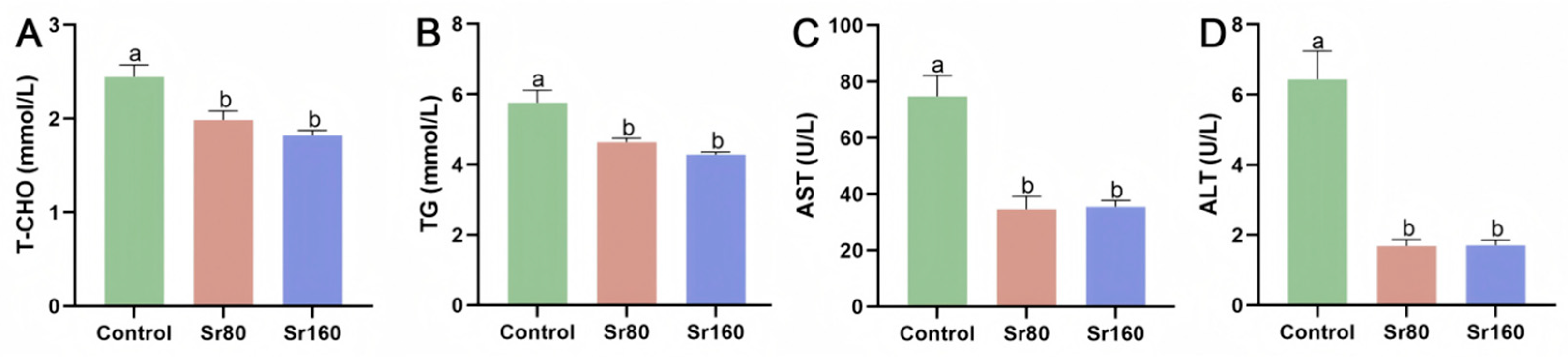
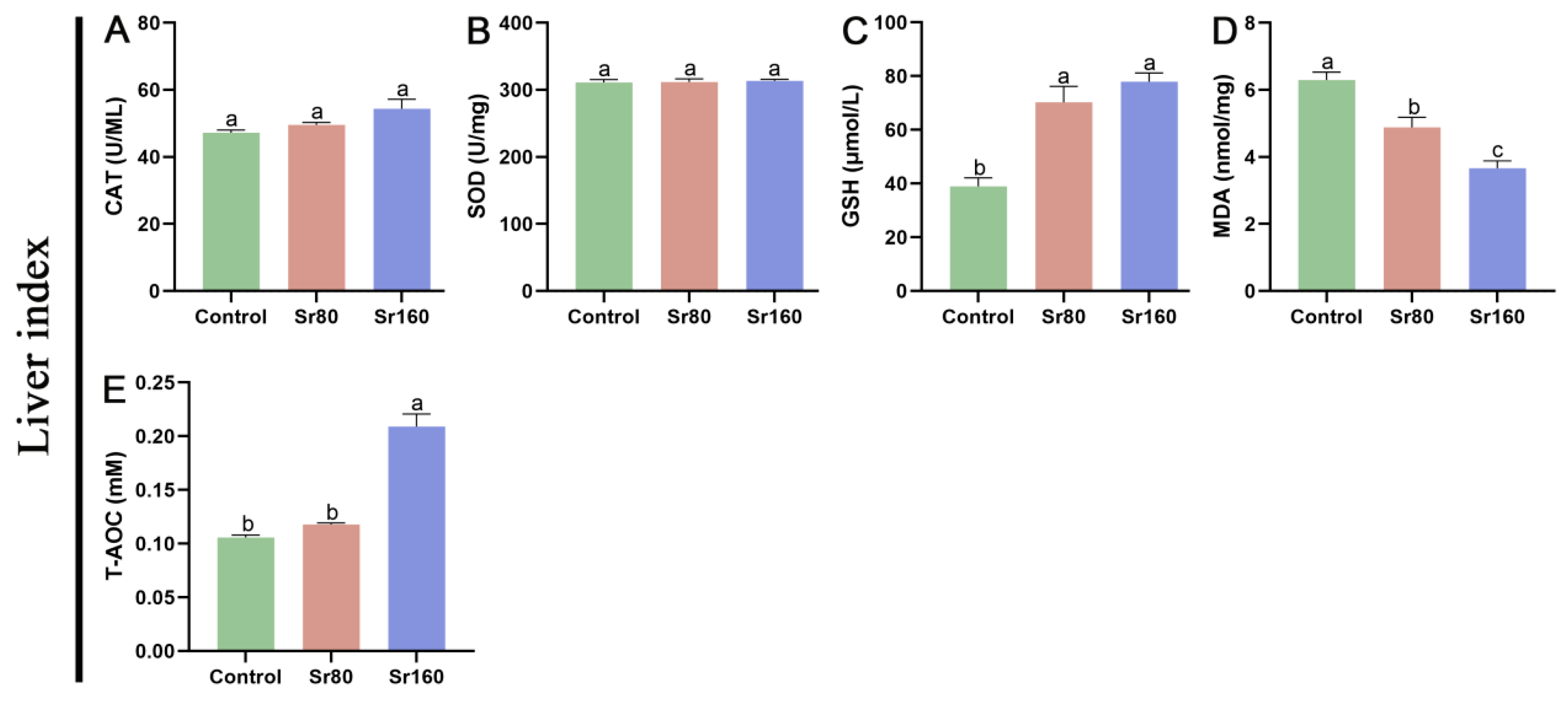
The results of blood biochemical indices demonstrated that, compared with the control group, the plasma levels of triglycerides (TG), total cholesterol (TC), aspartate aminotransferase (AST), and alanine aminotransferase (ALT) in the Sr80 and Sr160 groups were significantly decreased (p < 0.05). No significant differences were observed between the Sr80 and Sr160 treatment groups (p > 0.05) (Figure 1). With regard to liver antioxidant indices, no significant differences were found in catalase (CAT) and superoxide dismutase (SOD) levels among the groups (p > 0.05) (Figure 2A,B). Compared with the control group, glutathione (GSH) content was significantly elevated in both the Sr80 and Sr160 groups (p < 0.05) (Figure 2C), with no significant difference between the two strontium treatment groups (p > 0.05). Additionally, malondialdehyde (MDA) content was significantly reduced in both Sr80 and Sr160 groups compared to the control group (p < 0.05) (Figure 2D), and the Sr160 group exhibited significantly lower MDA levels than the Sr80 group (p < 0.05). However, total antioxidant capacity (T-AOC) was significantly enhanced only in the Sr160 group (p < 0.05) (Figure 2E).

3.5. Histological Morphology and Ultrastructure Observation

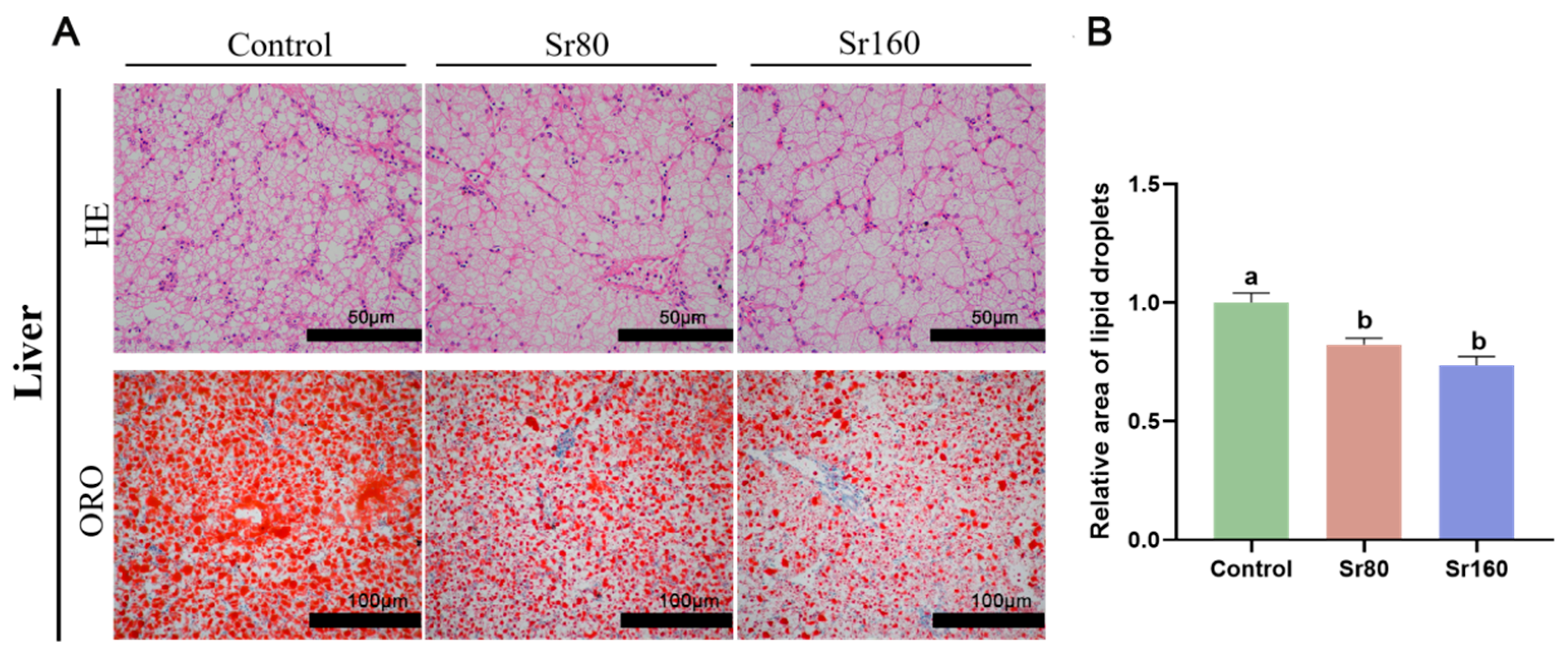
HE and Oil Red O staining showed that the degree of vacuolization in liver cells was higher in the control group, and lipid deposition in the tissue was obvious. In contrast, the degree of vacuolization in liver cells and lipid deposition in the tissue in the Sr80 group and Sr160 group were reduced compared with the control group (Figure 3A). The lipid area in the unit tissue was measured and statistically analyzed. The results showed that lipid accumulation in the Sr80 group was reduced by 18% compared with the control group, and lipid accumulation in the Sr160 group was reduced by 27%. Overall, lipid accumulation in the liver of the strontium treatment groups was significantly lower than that in the control group (p < 0.05) (Figure 3B).
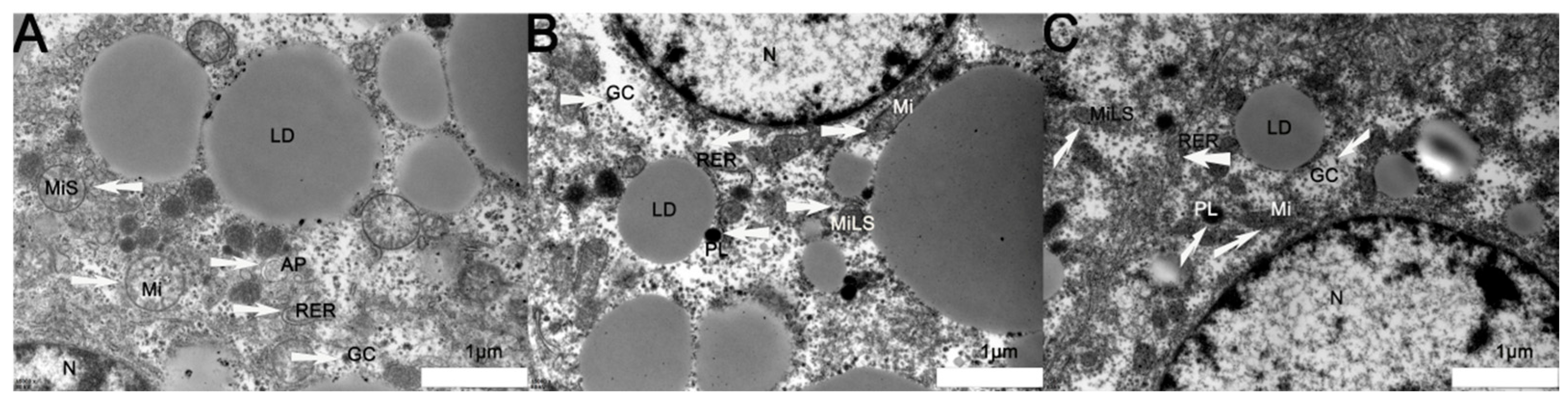
Ultrastructural examination of the liver revealed that, in the control group, the chromatin distribution within hepatocytes was relatively uniform, although mitochondrial swelling and vacuolation were evident. Within these mitochondria, some cristae appeared fragmented or dissolved, and the matrix exhibited signs of dissolution, presenting a flocculent appearance. Autophagic lysosomes were also observed within the cytoplasm (Figure 4A). In both the Sr80 and Sr160 groups, mitochondrial swelling was ameliorated to a certain extent. In most mitochondria, the cristae were densely and regularly arranged, and the matrix displayed a uniform electron density, appearing as a homogeneous gray color under the electron microscope (Figure 4B,C). Lipid droplets of varying sizes were present in the cytoplasm across all three experimental groups.

3.6. DEG Identification and Analysis

To investigate the effects of different concentrations of strontium in the diet on the liver transcriptome of hybrid sturgeon, nine Illumina HiSeq sequencing libraries were constructed, and the clean reads obtained from sequencing were assembled using Trinity. The quality assessment of the transcriptome sequencing data is presented in Table 7. The ranges of Q20 and Q30 for the clean reads were 97.63% to 98.13% and 93.49% to 94.78%, respectively. These results indicate that the sequencing data quality is reliable and can be used for subsequent bioinformatics-related analyses.
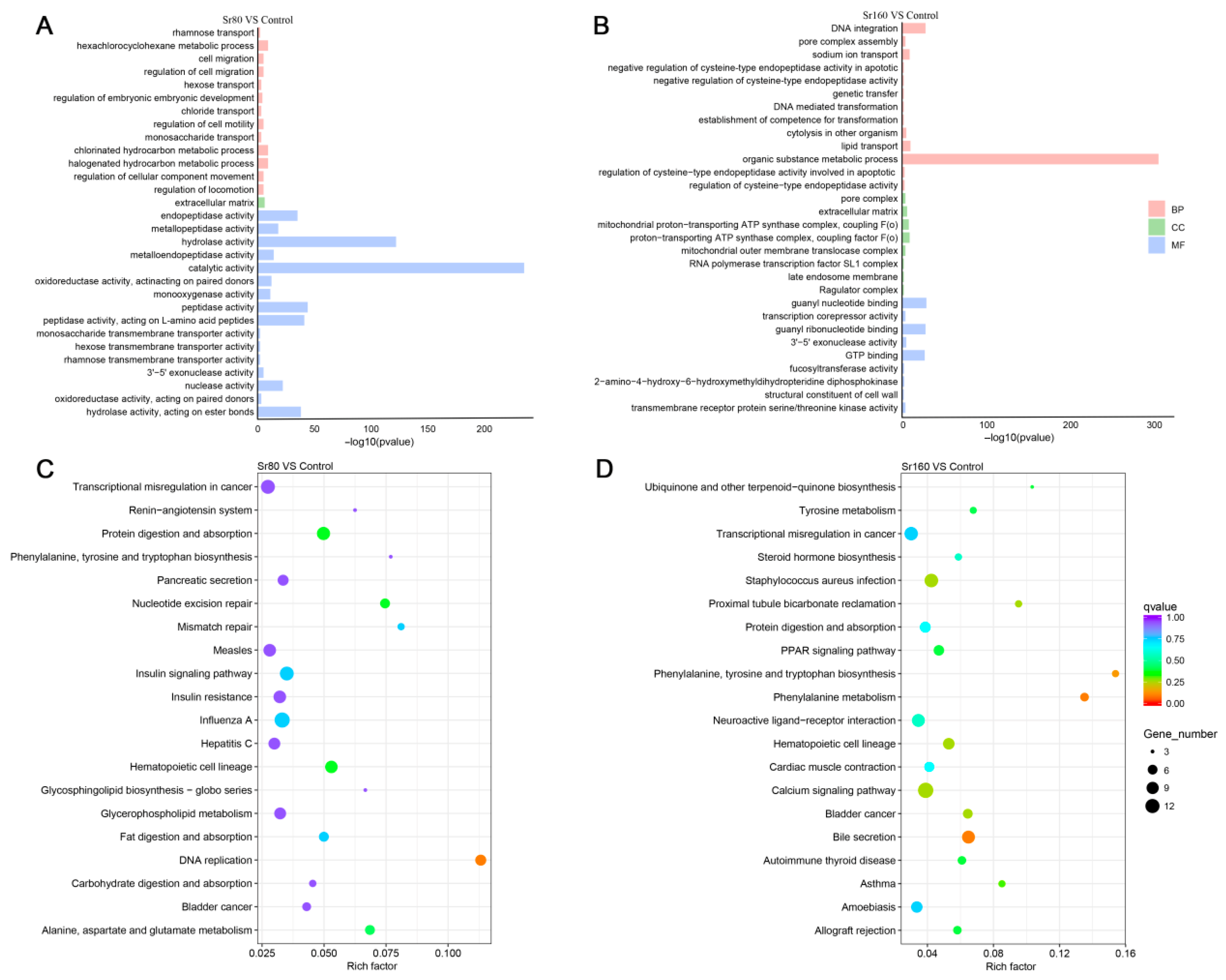
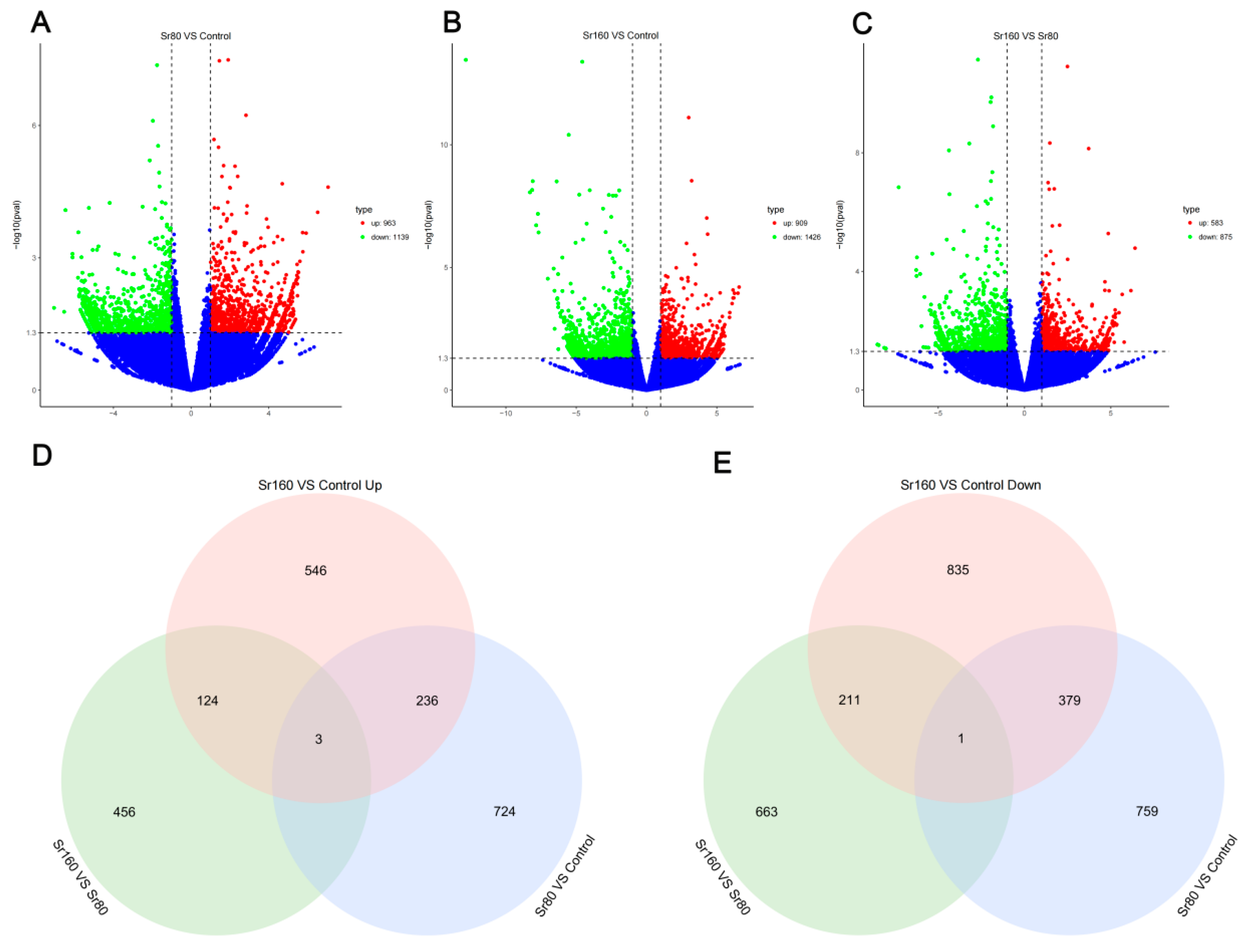
Transcriptomic analysis of the liver revealed 2092, 2335, and 1458 differentially expressed genes (DEGs) in the Sr80 vs. Control group, Sr160 vs. Control group, and Sr160 vs. Sr80 group, respectively (|log2fold change| > 2, p < 0.05). Among these, 963 DEGs were upregulated and 1129 were downregulated in the Sr80 group compared to the Control group (Figure 5A). In the Sr160 vs. Control comparison, 909 DEGs were upregulated and 1426 were downregulated (Figure 5B). Additionally, 583 DEGs were upregulated and 875 were downregulated in the Sr160 vs. Sr80 comparison (Figure 5C). The Venn diagram analysis indicated that three DEGs were significantly upregulated (Figure 5D) and one DEG was significantly downregulated (Figure 5E) across all three groups. GO functional enrichment analysis of differentially expressed genes in the liver revealed that, compared with the control group, the Sr80 group showed significant enrichment in Gene Ontology terms related to the regulation of endonuclease activity (GO:0004175), hydrolase activity (GO:0016787), catalytic activity (GO:0003824), monosaccharide transmembrane transporter activity (GO:0015145), rhamnose transmembrane transport activity (GO:0015153), and cell component movement (GO:0051270), among other areas (Figure 6A). In contrast, the Sr160 group exhibited significant enrichment in GO terms including sodium transport (GO:0006814), lipid transport (GO:0006869), mitochondrial outer membrane transport enzyme complex (GO:0005742), transcriptional co-inhibitory activity (GO:0003714), guanine ribonucleotide binding (GO:0032561), and extracellular matrix (GO:0031012), among other biological processes (Figure 6B).
The KEGG enrichment analysis of differentially expressed genes in the liver demonstrated that the Sr80 group was significantly enriched in pathways related to protein digestion and absorption (ko04974), DNA replication (ko03030), and the insulin signaling pathway (ko04910) when compared to the control group (Figure 6C). In the Sr160 group, metabolic pathways such as bile secretion (ko04976), phenylalanine metabolism (ko00360), calcium signaling pathway (ko04020), hematopoietic cell lineage (ko04640), and PPAR signaling pathway (ko03320) were significantly enriched (Figure 6D).

3.7. Analysis of Functional Gene Expression and qPCR Validation

The key genes involved in fatty acid metabolism were identified in the liver tissues of juvenile hybrid sturgeon using transcriptomic analysis. These included fatty acid transport genes (mttp, fabp1, slc27a1, slc27a4), lipid oxidation genes (cpt1a, acox1, atgl), lipid synthesis genes (acly, fasn, srebp1, dgat, scd1, acc), cholesterol metabolism genes (cyp7a1, apoa1, abcb11, hmgcr), and lipid peroxidation genes (gpx4, trfc, slc3a2) (Table 8). Compared with the control group, the Sr80 group exhibited significantly downregulated expression of fasn, along with significantly upregulated expression of cpt1a and apoa1 (p < 0.05). In the Sr160 group, a significant upregulation of cyp7a1 and apoa1 expression was observed, accompanied by a significant downregulation of abcb11 expression (p < 0.05). All strontium-treated groups showed significantly increased expression of slc3a2 and significantly decreased expression of trfc (p < 0.05).
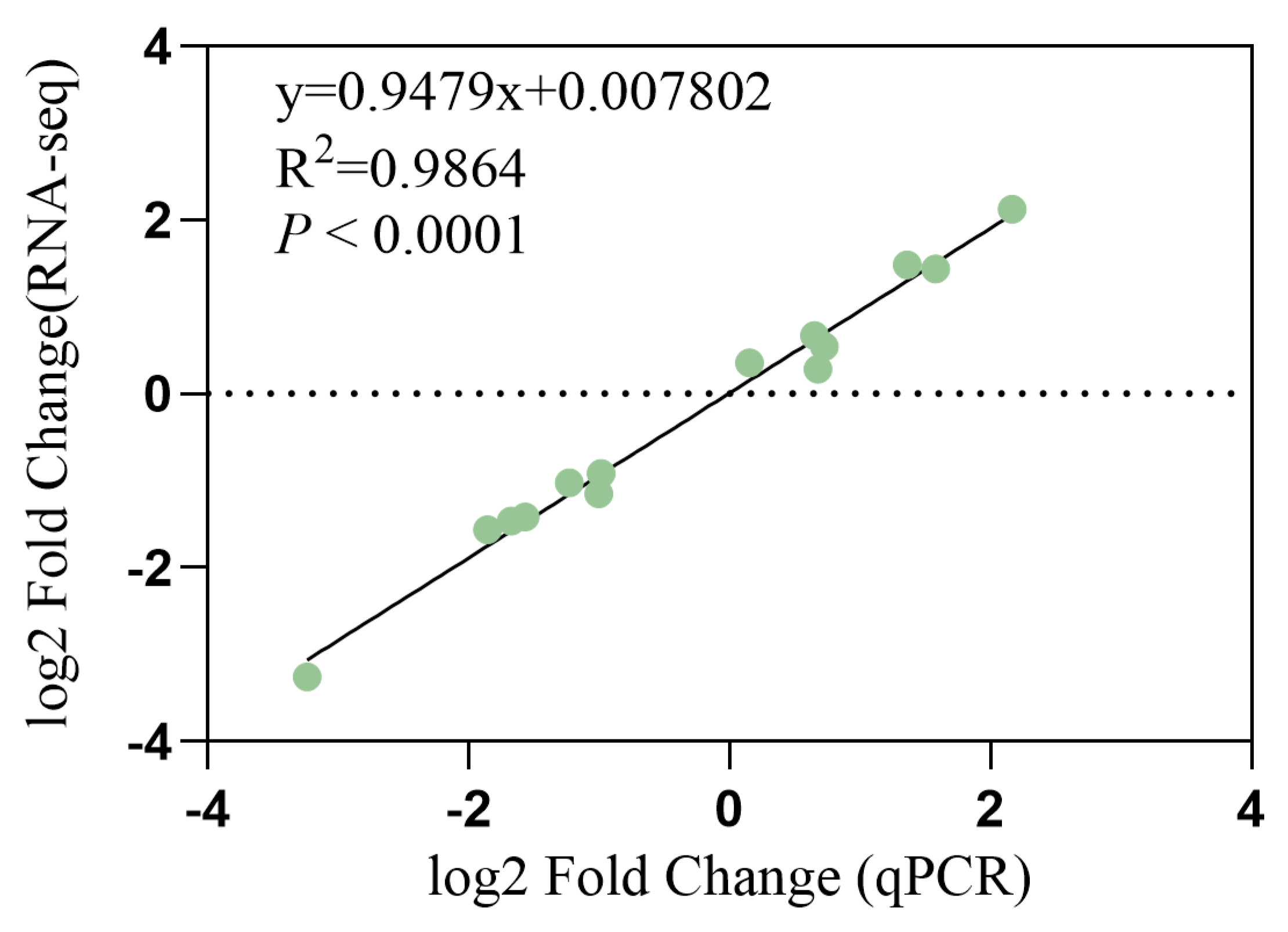
To validate the reliability of the transcriptome sequencing data, seven key genes were selected from the set of DEGs identified in the liver transcriptome for qPCR analysis. These expression values were then converted to log2FoldChange values for correlation analysis with the corresponding RNA-Seq data. The results demonstrated a strong agreement between the qPCR and RNA-Seq datasets (p < 0.0001) (Figure 7), thereby confirming the accuracy and reliability of the RNA-Seq results.

4. Discussion

(a)
Growth Performance
In this study, adding 80 mg/kg and 160 mg/kg of strontium to the feed of juvenile hybrid sturgeon for eight weeks did not significantly affect their growth performance and survival rate. Studies have indicated that soaking Larimichthys crocea fry in water containing 18 mg/L of strontium for seven days did not significantly influence their average body length [30]. In contrast, the young chum salmon raised in water containing 10 mg/L of strontium for 30 days showed a significant increase in weight gain and specific growth rate [7]. This might be due to the relatively low concentration of strontium used and the short experimental period.
(b)
Physiological Performance
In the current study, the extent of strontium enrichment in major strontium-rich tissues of juvenile hybrid sturgeon was ranked as bone plate > skin muscle > cartilage > intestinal tract > muscle > liver, with particularly pronounced strontium concentration observed in the bone plate. Strontium is similar to calcium in terms of its physicochemical properties and is mainly deposited in the skeletal part of animals [31,32]. In a study involving white rabbits, the experimental subjects were continuously given deionized water containing 2 milligrams per liter of strontium for 30 days. The results showed that as the intake increased, the strontium content in the blood and bones gradually rose [33]. When zebrafish were exposed to strontium in water at concentrations of 0, 10, 50 and 250 mg/L for 14 days, strontium accumulation across tissues followed the order bone > liver > whole fish [34]. In this study, we investigated strontium accumulation in hybrid sturgeon through oral administration. It was hypothesized that strontium is primarily absorbed in the intestine after ingestion, subsequently entering the circulatory system and distributing throughout the body, which constitutes a key pathway for strontium enrichment in various tissues and organs.
The present study found that 80/160 mg/kg dietary strontium had no effect on hybrid sturgeon muscle crude ash, protein, or moisture, but reduced crude fat; it also increased muscle glutamic acid (a glutathione component aiding oxidative stress reduction) [35] and valine (a branched-chain amino acid protecting mitochondria) [36] while lowering myristic acid (a pro-obesity/inflammation saturated fatty acid) [37], palmitic acid (a lipid homeostasis disruptor) [38], and linoleic acid (n-6 PUFA) [39] and increasing docosahexaenoic acid methyl ester (n-3 PUFA) promoting fatty acid oxidation [40]. Previous studies showed that the daily administration of 5 mL strontium-containing (6 mmol/kg) drinking water to mice for 3 weeks reduced adipogenesis in mesenchymal stem cells [41], and the administration of 625 mg/kg strontium plus carboxymethylcellulose (Sr + CMC) (5 days/week) to mice post-ovariectomy and exercise for 8 weeks significantly decreased bone fat content [42]. This suggest that strontium improves sturgeon muscle nutrition and lipid homeostasis, and alleviates oxidative stress and inflammation via amino acid/fatty acid regulation.
In this study, we observed that the plasma levels of ALT, AST, TC, and TG in hybrid sturgeons fed with strontium-supplemented feed were significantly lower than those in the control group. Meanwhile, in this study, we also found that the strontium treatment group significantly increased liver GSH levels and reduced MDA levels. Biochemical blood indicators are important parameters that assess the physiological state of organisms [43]. As reported by McGill [44], the markers ALT and AST are released from the hepatocytes with increasing severity of the liver injury. TG is produced in the liver and is often used to assess the health status of bony fish. High levels of triglycerides can harm liver function [45]. TC levels reflect the equilibrium of cholesterol metabolism in the liver; increased TC levels are indicative of disturbances in hepatic cholesterol metabolism [46]. Therefore, ALT, AST, TG, and TC are considered essential biomarkers for evaluating liver function [47]. Lin et al. [48] reported that both 4 mg/L and 6 mg/L high-strontium mineral water-based culture media could promote the proliferation of LO2 human hepatocyte cell lines and reduce transaminase activity. Jiang et al. [7] further demonstrated that the presence of 1–3 mM strontium in the culture medium could significantly decrease TC and TG levels in human hepatocytes in a dose-dependent manner. Animal studies have also shown that providing mice with drinking water containing 5–20 mg/kg strontium can effectively reduce the TC level [49]. This suggests that strontium may reduce the body’s oxidative stress levels by inhibiting lipid peroxidation. These results indicate that dietary supplementation with lower concentrations of strontium not only regulates lipid metabolism but also maintains liver homeostasis and enhances liver health.
(c)
Hepatic Tissue Performance
Our findings indicate that dietary strontium supplementation significantly alleviates mitochondrial swelling and reduces hepatic lipid accumulation in hybrid sturgeon hepatocytes. The liver serves as a critical organ for lipid metabolism in fish. Previous studies have demonstrated that strontium can lower blood lipid levels, inhibit fat synthesis, and enhance antioxidant capacity in animals [50,51,52]. Studies have shown that lipid accumulation in hepatocytes can disrupt the normal structure of mitochondria [53]. Excessive lipid accumulation in the liver can lead to a significant increase in reactive oxygen species (ROS) [54], and excessive ROS can induce the opening of the mitochondrial permeability transition pore (mPTP), thereby causing mitochondrial swelling [55]. Mitochondria are key sites for lipid metabolism, not only participating in fatty acid β-oxidation and ketone body production, but also providing energy and raw materials for lipid synthesis and regulating cellular lipid metabolism signaling pathways [56,57]. Therefore, the occurrence of mitochondrial swelling in the liver will further lead to an imbalance in liver lipid metabolism. Thus, it is hypothesized that strontium may, through some mechanism, improve the swelling of liver cell mitochondria and thereby modulate liver lipid metabolism.
(d)
Functional Gene Expression
In this study, the expression of cyp7a1 (the gene encoding CYP7A1, the rate-limiting enzyme in the classical pathway of bile acid biosynthesis) in the liver of the Sr160 group was significantly upregulated. The liver, as the core organ regulating lipid metabolism, has the bile acid secretion pathway as the main route for cholesterol decomposition [58]. It is known that dietary calcium supplementation can affect bile acid secretion and thereby regulate the accumulation of fat in the liver [59], and since strontium can exert its functions through the calcium transport system, it may have a similar effect on this pathway. CYP7A1 is of great significance for maintaining bile acid homeostasis and regulating liver lipid accumulation [60], and previous studies have shown that upregulating cyp7a1 can promote cholesterol degradation and reduce lipid levels under high-fat-diet-induced metabolic disorders [61,62].
Meanwhile, supplementing strontium in the diet can downregulate the expression of fasn (the gene encoding fatty acid synthase, a key enzyme in fatty acid synthesis that promotes liver lipid accumulation) [63] in the liver, and upregulate the expressions of cpt1a (the gene encoding a subtype of carnitine palmitoyltransferase 1, a key enzyme in fatty acid oxidation that inhibits liver lipid accumulation) [64] and apoa1 (the gene encoding apolipoprotein A1) in relation to lipid transport, as its overexpression can reduce liver lipid levels [65]. This is consistent with the research results of culturing bovine liver cells with strontium solution [66], indicating that strontium can affect lipid metabolism and transport by regulating the expression of these genes. In addition, in this study, we found that strontium could also upregulate the expression of slc3a2 (the gene encoding a subunit of the transport protein that promotes glutathione synthesis) [67] and downregulate the expression of tfrc (the gene encoding a marker of lipid peroxidation-induced apoptosis and an iron transport receptor) [68]. Therefore, it is speculated that strontium may inhibit lipid peroxidation by promoting the synthesis of glutathione in the liver and reducing the accumulation of intracellular iron ions. The above results suggest that strontium plays an important role in the regulation of fish lipid metabolism and that its regulatory mechanism is relatively complex.

5. Conclusions

In this study, we applied 80 and 160 mg/kg dietary strontium to hybrid sturgeon for strontium enrichment, confirming oral administration as safe and effective. The addition of strontium to the feed has no effect on the growth of sturgeon, but it improves the fatty acid and amino acid composition in the muscle and reduces lipid accumulation in the liver by regulating related genes, enhancing antioxidant capacity. This provides support for the production of strontium-rich fish and helps to clarify our understanding of the physiological role of strontium.

Supplementary Materials

The following supporting information can be downloaded at https://www.mdpi.com/article/10.3390/fishes11020071/s1. Table S1: qRT-PCR primer sequences. Table S2: Significantly significant precise p value.

Author Contributions

Conceptualization, S.L., L.P., Y.Y., H.G., Z.W. and F.L.; methodology, S.L., Q.Z. H.C., H.G. and Z.W.; software, Y.Y. and L.P.; validation, S.L., Q.Z. and H.C.; formal analysis, S.L., Z.Z. and Y.S.; investigation, S.L., Q.Z., Z.Z. and Y.S.; resources, J.M.; data curation, Q.Z., H.C., H.G. and F.L.; writing—original draft preparation, S.L.; writing—review and editing, F.L., Z.Z. and Z.W.; visualization, S.L., Q.Z. and H.C.; supervision, J.M., F.L. and Z.W.; project administration, H.G. and Z.W.; funding acquisition, Z.W. and F.L. All authors have read and agreed to the published version of the manuscript.

Funding

This work was supported by the Project on Green Circular Development of Fisheries: Key Technological Research on Green Circular Development of Characteristic Economic Aquatic Products in the Upper Reaches of the Yangtze River (4142500014), Research on the Selenium-Strontium Fish Industry and Formulation of Technical Specifications in Fengdu Project (4412301139), Selection of salt-tolerant aquatic species for farming and development of supporting facilities (20251) and Aquatic Genetic Resources Conservation and Utilization Engineering Technology Research Center (XJPT2025-01).

Institutional Review Board Statement

The experimental protocols were approved by Southwest University, and the study was conducted following the guidelines set forth by the Institutional Animal Care and Use Committee of Southwest University (IACUC-20230928-01, 28 September 2023).

Data Availability Statement

The data presented in this study are available on request from the corresponding author.

Conflicts of Interest

The authors declare no conflicts of interest.

References

  1. Wechselberger, C.; Messner, B.; Bernhard, D. The Role of Trace Elements in Cardiovascular Diseases. Toxics 2023, 11, 956. [Google Scholar] [CrossRef] [PubMed]
  2. Deng, L.; Huang, L.; Pan, H.; Zhang, Q.; Que, Y.; Fan, C.; Chang, J.; Ni, S.; Yang, C. 3D printed strontium–zinc-phosphate bioceramic scaffolds with multiple biological functions for bone tissue regeneration. J. Mater. Chem. B 2023, 11, 5469–5482. [Google Scholar] [CrossRef]
  3. You, J.; Zhang, Y.; Zhou, Y. Strontium Functionalized in Biomaterials for Bone Tissue Engineering: A Prominent Role in Osteoimmunomodulation. Front. Bioeng. Biotechnol. 2022, 10, 928799. [Google Scholar] [CrossRef] [PubMed]
  4. Zhang, X.; Cui, J.; Cheng, L.; Lin, K. Enhancement of osteoporotic bone regeneration by strontium-substituted 45S5 bioglass via time-dependent modulation of autophagy and the Akt/mTOR signaling pathway. J. Mater. Chem. B 2021, 9, 3489–3501. [Google Scholar] [CrossRef] [PubMed]
  5. Alshammari, H.; Neilands, J.; Jeppesen, C.S.; Almtoft, K.P.; Andersen, O.Z.; Stavropoulos, A. Antimicrobial Potential of Strontium-Functionalized Titanium Against Bacteria Associated With Peri-Implantitis. Clin. Exp. Dent. Res. 2024, 10, e903. [Google Scholar] [CrossRef]
  6. Wang, S.; Zeng, F.; Ma, Y.; Yu, J.; Xiang, C.; Feng, X.; Wang, S.; Wang, J.; Zhao, S.; Zhu, X. Strontium Attenuates Hippocampal Damage via Suppressing Neuroinflammation in High-Fat Diet-Induced NAFLD Mice. Int. J. Mol. Sci. 2023, 24, 10248. [Google Scholar] [CrossRef]
  7. Song, H.J.; Liu, W.; Wang, J.L.; Tang, F.J. Effects of Strontium Ion on Growth and ATPase Activity in Muscle of Chum Salmon (Oncorhynchus keta) Juveniles. Chin. J. Fish. 2013, 26, 23–28. [Google Scholar]
  8. Li, H.; Liao, J.; Zhang, Y.; Yang, Y.; Wen, J.; Ma, T.; Guan, Y. Strontium hydroxyapatite/magnesium oxychloride cement with high strength and high osteogenic activity for bone defect repair. Biomed. Mater. 2023, 18, 025023. [Google Scholar] [CrossRef]
  9. Chen, F.; Tian, L.; Pu, X.; Zeng, Q.; Xiao, Y.; Chen, X.; Zhang, X. Enhanced ectopic bone formation by strontium-substituted calcium phosphate ceramics through regulation of osteoclastogenesis and osteoblastogenesis. Biomater. Sci. 2022, 10, 5925–5937. [Google Scholar] [CrossRef]
  10. Mehta, D.; Gentleman, E. Advances in strontium-releasing biomaterials for bone repair. Biomaterials 2026, 326, 123718. [Google Scholar] [CrossRef]
  11. Jebahi, S.; Oudadesse, H.; Jardak, N.; Khayat, I.; Keskes, H.; Khabir, A.; Rebai, T.; El Feki, H.; El Feki, A. Biological therapy of strontium-substituted bioglass for soft tissue wound-healing: Responses to oxidative stress in ovariectomised rats. Ann. Pharm. Fr. 2013, 71, 234–242. [Google Scholar] [CrossRef] [PubMed]
  12. Chen, L.; Guo, Q.; Wang, Q.; Luo, C.; Chen, S.; Wen, S.; Tan, A.; Yang, W.; Bao, W.; Hu, F.B.; et al. Association between plasma strontium, a bone-seeking element, and type 2 diabetes mellitus. Clin. Nutr. 2020, 39, 2151–2157. [Google Scholar] [CrossRef]
  13. Jiang, H.; Guan, Q.; Xiao, Y.; Feng, Z.; Yu, G.; Pan, Q. Strontium Alleviates Endoplasmic Reticulum Stress in a Nonalcoholic Fatty Liver Disease Model. J. Med. Food 2018, 21, 1228–1237. [Google Scholar] [CrossRef]
  14. Liu, W. Yiyuan: Promoting Rural Revitalization through “Branding”. Zibo Daily, 29 April 2024; p. 002. [Google Scholar] [CrossRef]
  15. Pupavac, S.M.; Jovanović, G.K.; Linšak, Ž.; Glad, M.; Traven, L.; Žeželj, S.P. The influence on fish and seafood consumption, and the attitudes and reasons for its consumption in the Croatian population. Front. Sustain. Food Syst. 2022, 6, 945186. [Google Scholar] [CrossRef]
  16. Wu, X.; Teame, T.; Hao, Q.; Ding, Q.; Liu, H.; Ran, C.; Yang, Y.; Zhang, Y.; Zhou, Z.; Duan, M.; et al. Use of a paraprobiotic and postbiotic feed supplement (HWF™) improves the growth performance, composition and function of gut microbiota in hybrid sturgeon (Acipenser baerii x Acipenser schrenckii). Fish Shellfish. Immunol. 2020, 104, 36–45. [Google Scholar] [CrossRef]
  17. Bronzi, P.; Chebanov, M.; Michaels, J.T.; Wei, Q.; Rosenthal, H.; Gessner, J. Sturgeon meat and caviar production: Global update 2017. J. Appl. Ichthyol. 2019, 35, 257–266. [Google Scholar] [CrossRef]
  18. Zhao, Z.M.; Zhang, L.; Zhan, H.; Huang, Z.P.; Ke, H.Y.; Duan, Y.L.; Li, Q.; Zhou, J. Analysis and Evaluation of Nutritive Composition in Muscles of Acipenser baerii, Acipenser schrenckii, and Their Hybrids. Prog Fish Sci. 2022, 43, 129–136. [Google Scholar] [CrossRef]
  19. Somarouthu, S.; Ohh, J.; Shaked, J.; Cunico, R.L.; Yakatan, G.; Corritori, S.; Tami, J.; Foehr, E.D. Quantitative Bioanalysis of Strontium in Human Serum By Inductively Coupled Plasma-Mass Spectrometry. Futur. Sci. OA 2015, 1, FSO76. [Google Scholar] [CrossRef]
  20. Huang, R.; Che, S.; Fang, X.; Wang, Q.; Chen, X.H.; Tao, Q.Y.; Li, Y.; Li, A.; Liu, S.F.; Zhuang, Z.M. The shaping effect of aquaculture environment on the morphology, muscle texture characteristics and nutritional quality of Lateolabrax maculatus. Prog. Fish. Sci. 2025, 1–20. [Google Scholar]
  21. Lin, H.; Yu, X.; Fang, J.; Lu, Y.; Liu, P.; Xing, Y.; Wang, Q.; Che, Z.; He, Q. Flavor Compounds in Pixian Broad-Bean Paste: Non-Volatile Organic Acids and Amino Acids. Molecules 2018, 23, 1299. [Google Scholar] [CrossRef]
  22. Honicky, M.; Cardoso, S.M.; de Lima, L.R.A.; Ozcariz, S.G.I.; Vieira, F.G.K.; Back, I.D.C.; Moreno, Y.M.F. Added sugar and trans fatty acid intake and sedentary behavior were associated with excess total-body and central adiposity in children and adolescents with congenital heart disease. Pediatr. Obes. 2020, 15, e12623. [Google Scholar] [CrossRef] [PubMed]
  23. Feldman, A.T.; Wolfe, D. Tissue processing and hematoxylin and eosin staining. Methods Mol Biol. 2014, 1180, 31–43. [Google Scholar] [CrossRef]
  24. Du, J.; Zhao, L.; Kang, Q.; He, Y.; Bi, Y. An optimized method for Oil Red O staining with the salicylic acid ethanol solution. Adipocyte 2023, 12, 2179334. [Google Scholar] [CrossRef]
  25. Kempen, P.J.; Thakor, A.S.; Zavaleta, C.; Gambhir, S.S.; Sinclair, R. A Scanning Transmission Electron Microscopy Approach to Analyzing Large Volumes of Tissue to Detect Nanoparticles. Microsc. Microanal. 2013, 19, 1290–1297. [Google Scholar] [CrossRef]
  26. Mahran, H.N.; Saber, L.M.; Alghaithy, A.A.; Elareefy, A.A. The role of elevated alanine aminotransferase (ALT), FasL and atherogenic dyslipidemia in type II diabetes mellitus. J. Taibah Univ. Med Sci. 2016, 12, 8–13. [Google Scholar] [CrossRef]
  27. Caporaso, J.G.; Lauber, C.L.; Walters, W.A.; Berg-Lyons, D.; Huntley, J.; Fierer, N.; Owens, S.M.; Betley, J.; Fraser, L.; Bauer, M.; et al. Ultra-high-throughput microbial community analysis on the Illumina HiSeq and MiSeq platforms. ISME J. 2012, 6, 1621–1624. [Google Scholar] [CrossRef] [PubMed]
  28. Yu, L.; Fernandez, S.; Brock, G. Power analysis for RNA-Seq differential expression studies using generalized linear mixed effects models. BMC Bioinform. 2020, 21, 198. [Google Scholar] [CrossRef]
  29. Huang, K.; Wang, R.; Hu, G.; Zhou, W.; Li, W.; Zou, H.; Wang, G.; Li, M. Immune response of Rhinogobio ventralis to Ichthyophthirius multifiliis infection: Insights from histopathological and real-time gene expression analyses. Fish Shellfish. Immunol. 2024, 153, 109801. [Google Scholar] [CrossRef]
  30. Zhang, H.; Jiang, Y.Z.; Yuan, X.W.; Zhang, Y.; Jiang, H.L.; Jiao, H.F.; Cheng, J.H.; Li, S.F. Effects of strontium-enriched water on strontium content in the otolith and body of hatchery-reared Larimichthys crocea. Mar. Fish. 2019, 41, 338–345. [Google Scholar] [CrossRef]
  31. Kołodziejska, B.; Stępień, N.; Kolmas, J. The Influence of Strontium on Bone Tissue Metabolism and Its Application in Osteoporosis Treatment. Int. J. Mol. Sci. 2021, 22, 6564. [Google Scholar] [CrossRef]
  32. Somlyo, A.V.; Somlyo, A.P. Strontium Accumulation by Sarcoplasmic Reticulum and Mitochondria in Vascular Smooth Muscle. Science 1971, 174, 955–958. [Google Scholar] [CrossRef] [PubMed]
  33. He, Y.X.; Yan, D.; Ding, K.; Jiang, X.Y. Simulation study on the distribution and accumulation of strontium in some organs of rabbits. Carcinog. Teratog. Mutagen. 2017, 29, 111–114. [Google Scholar] [CrossRef]
  34. Bo, H.Y.; Feng, J.D.; Zhang, X.H.; Wang, W.T.; Li, Q.; Liu, L.; He, C.Y.; Tian, L.X. Research on the mechanism of enrichment and excretion of strontium ions in Danio rerio. Radiat. Prot. 2024, 44, 46–52. [Google Scholar]
  35. Fournier, C.; Perrier, A.; Thomas, M.; Laroche, N.; Dumas, V.; Rattner, A.; Vico, L.; Guignandon, A. Reduction by strontium of the bone marrow adiposity in mice and repression of the adipogenic commitment of multipotent C3H10T1/2 cells. Bone 2012, 50, 499–509. [Google Scholar] [CrossRef] [PubMed]
  36. Aveline, P.; Cesaro, A.; Mazor, M.; Best, T.M.; Lespessailles, E.; Toumi, H. Cumulative Effects of Strontium Ranelate and Impact Exercise on Bone Mass in Ovariectomized Rats. Int. J. Mol. Sci. 2021, 22, 3040. [Google Scholar] [CrossRef]
  37. Deng, Y.; Xu, Z.-F.; Liu, W.; Xu, B.; Yang, H.-B.; Wei, Y.-G. Riluzole-Triggered GSH Synthesis via Activation of Glutamate Transporters to Antagonize Methylmercury-Induced Oxidative Stress in Rat Cerebral Cortex. Oxidative Med. Cell. Longev. 2012, 2012, 534705. [Google Scholar] [CrossRef] [PubMed]
  38. Sharma, S.; Zhang, X.; Azhar, G.; Patyal, P.; Verma, A.; Kc, G.; Wei, J.Y. Valine improves mitochondrial function and protects against oxidative stress. Biosci. Biotechnol. Biochem. 2023, 88, 168–176. [Google Scholar] [CrossRef]
  39. Saraswathi, V.; Kumar, N.; Ai, W.; Gopal, T.; Bhatt, S.; Harris, E.N.; Talmon, G.A.; Desouza, C.V. Myristic Acid Supplementation Aggravates High Fat Diet-Induced Adipose Inflammation and Systemic Insulin Resistance in Mice. Biomolecules 2022, 12, 739. [Google Scholar] [CrossRef]
  40. Murru, E.; Manca, C.; Carta, G.; Banni, S. Impact of Dietary Palmitic Acid on Lipid Metabolism. Front. Nutr. 2022, 9, 861664. [Google Scholar] [CrossRef]
  41. Horman, T.; Fernandes, M.F.; Tache, M.C.; Hucik, B.; Mutch, D.M.; Leri, F. Dietary n-6/n-3 Ratio Influences Brain Fatty Acid Composition in Adult Rats. Nutrients 2020, 12, 1847. [Google Scholar] [CrossRef]
  42. Zhang, X.; Pang, S.; Liu, C.; Wang, H.; Ye, D.; Zhu, Z.; Sun, Y. A Novel Dietary Source of EPA and DHA: Metabolic Engineering of an Important Freshwater Species—Common Carp by fat1-Transgenesis. Mar. Biotechnol. 2018, 21, 171–185. [Google Scholar] [CrossRef]
  43. Folmar, L.C.; Moody, T.; Bonomelli, S.; Gibson, J. Annual cycle of blood chemistry parameters in striped mullet (Mugil cephalus L.) and pinfish (Lagodon rhomboides L.) from the Gulf of Mexico. J. Fish Biol. 1992, 41, 999–1011. [Google Scholar] [CrossRef]
  44. McGill, M.R. The past and present of serum aminotransferases and the future of liver injury biomarkers. EXCLI J. 2016, 15, 817–828. [Google Scholar] [CrossRef]
  45. Wagner, T.; Congleton, J.L. Blood chemistry correlates of nutritional condition, tissue damage, and stress in migrating juvenile chinook salmon (Oncorhynchus tshawytscha). Can. J. Fish. Aquat. Sci. 2004, 61, 1066–1074. [Google Scholar] [CrossRef]
  46. Tall, A.R.; Yvan-Charvet, L. Cholesterol, inflammation and innate immunity. Nat. Rev. Immunol. 2015, 15, 104–116. [Google Scholar] [CrossRef]
  47. Coz-Rakovac, R.; Strunjak-Perovic1, I.; Hacmanjek, M.; Popovic, N.T.; Lipej, Z.; Sostaric, B. Blood Chemistry and Histological Properties of Wild and Cultured Sea Bass (Dicentrarchus labrax) in the North Adriatic Sea. Veter Res. Commun. 2005, 29, 677–687. [Google Scholar] [CrossRef]
  48. Lin, Y.; Pan, Q.W.; Feng, Z.Q.; Li, Z.H.; Zhao, C.T.; Ran, B. Effect of different concentration of strontium mineral water on proliferation and function of human hepatocytes. J. Luzhou Med. Coll. 2013, 36, 23–26. [Google Scholar]
  49. Xia, Y.H. Regulatory Effects of Dietary Strontium on Cholesterol Metabolism in Mice. Master’s Thesis, Fujian Medical University, Fuzhou, China, 2023. [Google Scholar] [CrossRef]
  50. Vidal, C.; Gunaratnam, K.; Tong, J.; Duque, G. Biochemical changes induced by strontium ranelate in differentiating adipocytes. Biochimie 2013, 95, 793–798. [Google Scholar] [CrossRef]
  51. Tang, X.; Zhang, Q.; Dai, D.; Ying, H.; Wang, Q.; Dai, Y. Effects of strontium fructose 1,6-diphosphate on expression of apoptosis-related genes and oxidative stress in testes of diabetic rats. Int. J. Urol. 2008, 15, 251–256. [Google Scholar] [CrossRef] [PubMed]
  52. Guan, Q.W.; Xiao, Y.W.; Yu, G.; Feng, Z.Q.; Pan, Q.W. Prevention and treatment effects of trace element strontium on non-alcoholic fatty liver disease in rats. Chongqing Med. J. 2016, 45, 2744–2747. [Google Scholar] [CrossRef]
  53. Karkucinska-Wieckowska, A.; Simoes, I.C.M.; Kalinowski, P.; Lebiedzinska-Arciszewska, M.; Zieniewicz, K.; Milkiewicz, P.; Górska-Ponikowska, M.; Pinton, P.; Malik, A.N.; Krawczyk, M.; et al. Mitochondria, oxidative stress and nonalcoholic fatty liver disease: A complex relationship. Eur. J. Clin. Investig. 2022, 52, e13622. [Google Scholar] [CrossRef]
  54. Zeng, J.; Deng, S.; Wang, Y.; Li, P.; Tang, L.; Pang, Y. Specific Inhibition of Acyl-CoA Oxidase-1 by an Acetylenic Acid Improves Hepatic Lipid and Reactive Oxygen Species (ROS) Metabolism in Rats Fed a High Fat Diet. J. Biol. Chem. 2017, 292, 3800–3809. [Google Scholar] [CrossRef] [PubMed]
  55. Maiese, K.; Morhan, S.D.; Chong, Z.Z. Oxidative Stress Biology and Cell Injury During Type 1 and Type 2 Diabetes Mellitus. Curr. Neurovascular Res. 2007, 4, 63–71. [Google Scholar] [CrossRef] [PubMed]
  56. Adeva-Andany, M.M.; Carneiro-Freire, N.; Seco-Filgueira, M.; Fernández-Fernández, C.; Mouriño-Bayolo, D. Mitochondrial β-oxidation of saturated fatty acids in humans. Mitochondrion 2019, 46, 73–90. [Google Scholar] [CrossRef] [PubMed]
  57. Arima, Y. The Impact of Ketone Body Metabolism on Mitochondrial Function and Cardiovascular Diseases. J. Atheroscler. Thromb. 2023, 30, 1751–1758. [Google Scholar] [CrossRef]
  58. Chiang, J.Y.L.; Ferrell, J.M. Bile Acid Metabolism in Liver Pathobiology. Gene Expr. 2018, 18, 71–87. [Google Scholar] [CrossRef]
  59. Aslam, M.N.; Bassis, C.M.; Zhang, L.; Zaidi, S.; Varani, J.; Bergin, I.L. Calcium Reduces Liver Injury in Mice on a High-Fat Diet: Alterations in Microbial and Bile Acid Profiles. PLoS ONE 2016, 11, e0166178. [Google Scholar] [CrossRef]
  60. Pandak, W.M.; Ren, S.; Marques, D.; Hall, E.; Redford, K.; Mallonee, D.; Bohdan, P.; Heuman, D.; Gil, G.; Hylemon, P. Transport of Cholesterol into Mitochondria Is Rate-limiting for Bile Acid Synthesis via the Alternative Pathway in Primary Rat Hepatocytes. J. Biol. Chem. 2002, 277, 48158–48164. [Google Scholar] [CrossRef]
  61. Zheng, H.; Zhao, T.; Xu, Y.-C.; Zhang, D.-G.; Song, Y.-F.; Tan, X.-Y. Dietary choline prevents high fat-induced disorder of hepatic cholesterol metabolism through SREBP-2/HNF-4α/CYP7A1 pathway in a freshwater teleost yellow catfish Pelteobagrus fulvidraco. Biochim. Biophys. Acta Gene Regul. Mech. 2022, 1865, 194874. [Google Scholar] [CrossRef]
  62. Qi, Y.; Jiang, C.; Cheng, J.; Krausz, K.W.; Li, T.; Ferrell, J.M.; Gonzalez, F.J.; Chiang, J.Y. Bile acid signaling in lipid metabolism: Metabolomic and lipidomic analysis of lipid and bile acid markers linked to anti-obesity and anti-diabetes in mice. Biochim. Biophys. Acta 2015, 1851, 19–29. [Google Scholar] [CrossRef]
  63. Przybylska, P.; Kuczaj, M. The Effects of Two Selected Single Nucleotide Polymorphisms of the Fatty Acid Synthase Gene on the Fat Content and Fatty Acid Profile of Cow’s Milk from the Polish Holstein–Friesian Red-and-White Breed versus Two Polish Red-and-White and Polish Red Conservation Breeds Kept in Poland. Animals 2024, 14, 2268. [Google Scholar] [CrossRef]
  64. Schlaepfer, I.R.; Joshi, M. CPT1A-mediated Fat Oxidation, Mechanisms, and Therapeutic Potential. Endocrinology 2020, 161, bqz046. [Google Scholar] [CrossRef] [PubMed]
  65. Guo, Q.; Zhang, C.; Wang, Y. Overexpression of apolipoprotein A-I alleviates endoplasmic reticulum stress in hepatocytes. Lipids Health Dis. 2017, 16, 105. [Google Scholar] [CrossRef] [PubMed]
  66. Zeng, F.Y. The Mechanism of Strontium Regulating the Lipid Metabolism of Bovine Hepatocytes Via the SIRT1/SREBP Pathway. Master’s Thesis, Northwest A&F University, Yangling, China, 2023. [Google Scholar] [CrossRef]
  67. Liu, X.; Li, Y.; Chen, S.; Yang, J.; Jing, J.; Li, J.; Wu, X.; Wang, J.; Wang, J.; Zhang, G.; et al. Dihydromyricetin attenuates intracerebral hemorrhage by reversing the effect of LCN2 via the system Xc-pathway. Phytomedicine 2023, 115, 154756. [Google Scholar] [CrossRef] [PubMed]
  68. Zhao, Y.; Zhang, H.; Cui, J.-G.; Wang, J.-X.; Chen, M.-S.; Wang, H.-R.; Li, X.-N.; Li, J.-L. Ferroptosis is critical for phthalates driving the blood-testis barrier dysfunction via targeting transferrin receptor. Redox Biol. 2023, 59, 102584. [Google Scholar] [CrossRef]
Figure 1. Serum biochemical indices of hybrid sturgeon. (A) Total cholesterol (TCH/T-CHO); (B) Triglyceride (TG); (C) Aspartate aminotransferase (AST); (D) Alanine aminotransferase (ALT). Different letters indicated significant difference (p < 0.05).
Fishes 11 00071 g001
Figure 2. Antioxidant indices of the liver of hybrid sturgeon. (A) Catalase (CAT); (B) Superoxide dismutase (SOD); (C) Reduced glutathione (GSH); (D) Malondialdehyde (MDA); (E) Total antioxidant capacity (T-AOC). Different letters indicated significant difference (p < 0.05).
Fishes 11 00071 g002
Figure 3. Liver tissue sections of hybrid sturgeon. (A) HE staining and oil red O staining; (B) relative area of lipid droplets in oil red O staining. Different letters indicated significant difference (p < 0.05).
Fishes 11 00071 g003
Figure 4. Observation on the Ultrastructure of the Liver of Hybrid Sturgeon. (A) Liver of Control group; (B) liver of Sr80 group; (C) liver of Sr160 group. ER: Endoplasmic reticulum; LD: Lipid droplets; Mi: Mitochondria; MiS: Mitochondrial swelling; MiLS: Mild mitochondrial swelling; GC: Glycogen granules; AP: Autophagy; PL: Primary lysosome; N: Cell nucleus; RER: Endoplasmic reticulum.
Fishes 11 00071 g004
Figure 5. Analysis results of DEGs in the liver. (A) Number of DEGS in Sr80 vs. Control group; (B) number of DEGS in Sr160 vs. Control group; (C) number of DEGS in Sr160 vs. Sr80 group; (D) Winn plot of unique and shared up-regulated DEGS of juvenile hybrid sturgeon in three Sr content groups; (E) Winn plot of DEGS uniquely and jointly down-regulated in juvenile hybrid sturgeon from three Sr content groups.
Fishes 11 00071 g005
Figure 6. GO and KEGG enrichment analysis of DEGs in the liver. (A) GO analysis of Sr80 vs. Control group; (B) GO analysis of Sr160 vs. Control group; (C) KEGG analysis of Sr80 vs. Control group; (D) KEGG analysis of Sr160 vs. Control group.
Fishes 11 00071 g006
Figure 7. Transcriptome data validation. Expression data of genes detected by RNA-seq plotted against those by qPCR. Reference line indicates a linear relationship between qPCR and RNA-seq results.
Fishes 11 00071 g007
Table 1. Experimental feed formulation.
Ingredients (%)Sr0Sr80Sr160
Fish meal35.035.035.0
Chicken meal5.05.05.0
Porcine hemoglobulin powder2.52.52.5
46% Soybean meal12.012.012.0
Fermented soybean meal10.010.010.0
Peanut bran5.05.05.0
vital wheat gluten2.52.52.5
Seaweed powder2.52.52.5
Calcium bicarbonate2.02.02.0
Vitamin premix a1.01.01.0
Mineral premix b1.01.01.0
Soybean phospholipid oil5.05.05.0
Fish oil4.54.54.5
Strong flour12.012.012.0
Strontium SrCl2, (mg/kg) c080160
Proximate composition (analyzed, % dry matter)
Crude protein≥45.0
Crude fat≥12.0
Crude ash≥12.0
Dry matter≥94.0
Lysine≥3.0
a Vitamin premix (per kg of premix): A, 60.00 g/kg; B1, 8.00 g/kg; B2, 12.00 g/kg; B3, 80.00 g/kg; B5, 24.00 g/kg; B6, 12.00 g/kg; H, 0.40 mg/kg; B12, 0.02 mg/kg; C, 600.00 g/kg; D3, 0.04 mg/kg; E, 96.00 g/kg; K3, 8.00 g/kg; M, 4.00 g/kg; α-cellulose, 95.54 g/kg. b Mineral premix (per kg of premix): Calcium Lactate, 350.00 g/kg; K2HPO4, 250.00 g/kg; Ca(H2PO4)2·H2O, 175.00 g/kg; NaCl, 75.00 g/kg; KI, 0.13 g/kg; CuSO4·5H2O, 37.50 g/kg; MnSO4·H2O, 2.50 g/kg; ZnSO4·H2O, 14.05 g/kg; K2CO3, 35.00 g/kg; α-cellulose, 60.823 g/kg. c The strontium source added to the experimental diet was anhydrous chlorosilicic acid (SrCl2, analytical grade, purity ≥ 99.0%), which was used to adjust the strontium content in the diet of each group. Main ingredients: The protein sources include fish meal, chicken meal, 46% soybean meal, and high-quality wheat protein powder; carbohydrates come from strong gluten flour and seaweed powder; fat comes from soybean lecithin oil and fish oil.
Table 2. Effect of dietary strontium levels on growth indices of juvenile hybrid sturgeon.
IndexThe Amount of Strontium Added to the Feed (mg/kg)
Sr0 (0 mg/kg)Sr80 (80 mg/kg)Sr160 (160 mg/kg)
Wo, g312.36 ± 8.03313.51 ± 8.06311.89 ± 7.43
Wt, g677.95 ± 13.00683.68 ± 13.61685.52 ± 11.14
WGR, %1.17 ± 0.041.18 ± 0.041.19 ± 0.03
SGR, %/d1.38 ± 0.031.39 ± 0.051.40 ± 0.02
FCR1.37 ± 0.041.40 ± 0.051.35 ± 0.04
VSI, %0.13 ± 0.010.13 ± 0.000.13 ± 0.00
CF, g/cm30.99 ± 0.030.92 ± 0.030.89 ± 0.02
SR, %100.00100.00100.00
Notes: Values in the same row with different superscripts are significantly different (p < 0.05). Wt is terminal body mass (g); Wo is initial body mass (g); WGR is weight gain rate (%); SGR is specific growth rate (%/d); FCR is feed conversion ratio; VSI is Viscerosomatic index (%); CF is Condition factor (g/cm3); SR is survival rate (%).
Table 3. Effects of dietary strontium levels on strontium enrichment in various tissues of juvenile hybrid sturgeon.
IndexThe Amount of Strontium Added to the Feed (mg/kg)
Sr0 (0 mg/kg)Sr80 (80 mg/kg)Sr160 (160 mg/kg)
Bone plates (mg/kg)55.86 ± 6.05 c85.31 ± 1.42 b110.9 ± 4.59 a
Intestine (mg/kg)0.39 ± 0.00 c0.57 ± 0.01 b0.64 ± 0.02 a
Blood (mg/kg)0.12 ± 0.00 b0.15 ± 0.00 a0.15 ± 0.01 a
Heart (mg/kg)0.12 ± 0.00 b0.15 ± 0.01 a0.15 ± 0.01 a
Muscle (mg/kg)0.13 ± 0.01 b0.24 ± 0.05 b0.46 ± 0.08 a
Skin-on muscles (mg/kg)2.32 ± 0.14 b2.47 ± 0.25 ab3.34 ± 0.28 a
Cartilage (mg/kg)0.64 ± 0.02 b0.80 ± 0.02 ab0.99 ± 0.11 a
Liver (mg/kg)0.19 ± 0.01 b0.19 ± 0.00 b0.28 ± 0.02 a
Notes: Values in the same row with different superscripts are significantly different (p < 0.05).
Table 4. Effect of dietary strontium levels on the basic nutrient composition in the muscle of juvenile hybrid sturgeon (wet weight, %).
IndexThe Amount of Strontium Added to the Feed (mg/kg)
Sr0 (0 mg/kg)Sr80 (80 mg/kg)Sr160 (160 mg/kg)
Crude fat5.20 ± 0.46 a3.93 ± 0.18 b4.03 ± 0.20 b
Crude protein17.16 ± 0.3417.03 ± 0.2417.30 ± 0.35
Crude ash1.46 ± 0.081.40 ± 0.151.36 ± 0.14
Moisture content76.46 ± 1.2177.26 ± 0.6377.46 ± 0.39
Notes: Values in the same row with different superscripts are significantly different (p < 0.05).
Table 5. Effect of dietary strontium level on muscle fatty acid composition in juvenile hybrid sturgeon.
IndexThe Amount of Strontium Added to the Feed (mg/kg)
Sr0 (0 mg/kg)Sr80 (80 mg/kg)Sr160 (160 mg/kg)
Myristic acid0.050 ± 0.005 a0.030 ± 0.003 b0.031 ± 0.005 b
Linoleic acid1.158 ± 0.028 a0.921 ± 0.030 b0.915 ± 0.107 b
Palmitic acid1.066 ± 0.075 a0.708 ± 0.064 b0.777 ± 0.107 b
γ-linolenic acid0.064 ± 0.004 a0.042 ± 0.003 b0.048 ± 0.006 b
Docosahexaenoic acid (DHA)0.163 ± 0.024 ab0.122 ± 0.017 b0.250 ± 0.055 a
Arachidic acid0.006 ± 0.0010.003 ± 0.0000.005 ± 0.003
Pentadecanoic acid0.006 ± 0.0020.005 ± 0.0000.009 ± 0.004
Behenic acid0.002 ± 0.0010.001 ± 0.0000.002 ± 0.001
Heptadecanoic acid0.008 ± 0.0010.007 ± 0.0000.011 ± 0.004
Lignoceric acid0.002 ± 0.0000.001 ± 0.0000.002 ± 0.001
Palmitoleic acid0.102 ± 0.0150.072 ± 0.0080.076 ± 0.011
Oleic acid1.376 ± 0.1891.045 ± 0.1271.004 ± 0.131
Stearic acid0.261 ± 0.0270.162 ± 0.0140.237 ± 0.104
Eicosenoic acid0.055 ± 0.0050.036 ± 0.0040.061 ± 0.031
Erucic acid0.005 ± 0.0010.004 ± 0.0000.007 ± 0.003
Nervonic acid0.008 ± 0.0010.007 ± 0.0010.007 ± 0.002
Alpha-linolenic acid0.043 ± 0.0020.058 ± 0.0070.090 ± 0.041
Eicosadienoic acid0.058 ± 0.0020.036 ± 0.0040.051 ± 0.021
Eicosatrienoic acid (n3)0.008 ± 0.0020.005 ± 0.0000.008 ± 0.003
Eicosatrienoic acid (n6)0.032 ± 0.0070.028 ± 0.0020.036 ± 0.013
Arachidonic acid (ARA)0.054 ± 0.0050.045 ± 0.0060.051 ± 0.013
Eicosapentaenoic acid (EPA)0.053 ± 0.0050.034 ± 0.0020.054 ± 0.020
Docosadienoic acid0.002 ± 0.0000.002 ± 0.0000.003 ± 0.001
Notes: Values in the same row with different superscripts are significantly different (p < 0.05).
Table 6. Effect of dietary strontium levels on amino acid composition in the muscle of juvenile hybrid sturgeon (dry weight, %).
IndexThe Amount of Strontium Added to the Feed (mg/kg)
Sr0 (0 mg/kg)Sr80 (80 mg/kg)Sr160 (160 mg/kg)
Glutamic1.65 ± 0.05 b1.86 ± 0.08 ab1.94 ± 0.01 a
Valine0.66 ± 0.00 b0.71 ± 0.04 ab0.74 ± 0.02 a
Methionine0.26 ± 0.080.33 ± 0.050.31 ± 0.05
Isoleucine0.60 ± 0.010.65 ± 0.020.68 ± 0.01
Leucine1.08 ± 0.021.16 ± 0.051.20 ± 0.01
Phenylalanine0.56 ± 0.010.61 ± 0.020.62 ± 0.00
Lysine1.28 ± 0.021.38 ± 0.061.43 ± 0.02
Histidine0.44 ± 0.010.45 ± 0.020.46 ± 0.00
Arginine0.80 ± 0.010.87 ± 0.040.89 ± 0.02
Aspartic acid1.23 ± 0.021.33 ± 0.051.38 ± 0.01
Glycine0.68 ± 0.000.76 ± 0.050.75 ± 0.03
Alanine0.78 ± 0.010.85 ± 0.040.87 ± 0.01
Proline0.50 ± 0.000.54 ± 0.030.54 ± 0.02
Serine0.52 ± 0.010.55 ± 0.020.57 ± 0.00
Cysteine0.06 ± 0.000.09 ± 0.000.08 ± 0.01
Tyrosine0.37 ± 0.000.41 ± 0.020.40 ± 0.01
Threonine0.26 ± 0.080.33 ± 0.050.31 ± 0.05
Notes: Values in the same row with different superscripts are significantly different (p < 0.05).
Table 7. The descriptive statistics of the raw RNA-seq datasets for all of the nine individuals sequenced in this study.
SampleClean_ReadsClean Base (bp)Q20Q30
Control-122,772,1493,415,822,35097.9994.35
Control-221,712,5263,256,878,90098.1394.77
Control-320,794,3463,119,151,90098.0694.56
S80-121,201,0513,180,157,65098.0794.61
S80-220,824,1463,123,621,90098.1394.78
S80-323,285,1193,492,767,85097.8293.96
S160-124,725,4013,708,810,15097.8894.1
S160-223,419,9933,512,998,95097.6393.49
S160-320,056,6763,008,501,40097.6793.59
Table 8. Genes involved in lipid metabolism and lipid peroxidation in the liver.
CategoriesGene Namelog2FoldChange
(Sr80 vs. Control)
p Valuelog2FoldChange
(Sr160 vs. Control)
p Value
Fatty acid transportmttp0.311930.210630.00472340.98712
fabp10.0384560.93093−0.766490.21357
slc27a10.312910.374590.234850.48278
slc27a4−0.25940.32448−0.296720.3061
Lipid oxidationcpt1a1.58040.0167860.728880.37006
acox1−0.204540.51732−0.17730.5405
atgl0.0384560.930930.484950.31546
Lipid synthesisacly0.19310.870240.81370.4841
fasn−1.67310.036733−1.22990.10991
srebp1−0.200860.570960.0809010.79149
dgat−0.049270.894290.317230.34817
scd1−0.0122120.97168−0.269310.43831
acc−0.763350.063297−0.0420240.90245
Cholesterol metabolismcyp7a10.152410.788532.16880.018518
apoa11.04660.00472290.775670.035034
abcb110.675990.17399−1.56620.0075855
hmgcr−0.119670.67545−0.193560.52885
Lipid peroxidationgpx40.0950120.749140.297690.3401
trfc−1.00390.0046288−0.986140.0058384
slc3a20.427720.352091.19030.0088911
Disclaimer/Publisher’s Note: The statements, opinions and data contained in all publications are solely those of the individual author(s) and contributor(s) and not of MDPI and/or the editor(s). MDPI and/or the editor(s) disclaim responsibility for any injury to people or property resulting from any ideas, methods, instructions or products referred to in the content.