
Article

Development and Validation of a Multienzyme Isothermal Rapid Amplification Combined with Lateral-Flow Dipstick (MIRA-LFD) Assay for Trypanosoma Strains Circulating in Large Yellow Croaker (Larimichthys crocea)

1
State Key Laboratory of Mariculture Breeding, Key Laboratory of Marine Biotechnology of Fujian Province, College of Marine Sciences, Fujian Agriculture and Forestry University, Fuzhou 350002, China
2
Fishery Technology Promotion Station of Fujian Province, Fujian Agriculture and Forestry University, Fuzhou 350002, China
3
Fishery Technology Promotion Station, Fishery Department of Ningde, Ningde 352100, China
4
Southern Marine Science and Engineering Guangdong Laboratory (Zhuhai), Zhuhai 519000, China
*
Authors to whom correspondence should be addressed.
These authors contributed equally to this work.
Fishes 2026, 11(2), 107; https://doi.org/10.3390/fishes11020107

Submission received: 3 December 2025 / Revised: 2 February 2026 / Accepted: 6 February 2026 / Published: 10 February 2026

Abstract

Trypanosomiasis, caused by flagellated protozoa of the genus Trypanosoma, has recently emerged as a major threat to aquaculture in China, particularly in farmed large yellow croaker (Larimichthys crocea). Outbreaks lead to high mortality rates and severe economic losses. Conventional diagnostic tools, such as blood-smear microscopy and molecular assays including polymerase chain reaction or quantitative polymerase chain reaction (qPCR), are often limited by low sensitivity during early infection or by their dependence on sophisticated instruments and trained personnel, restricting their utility in field conditions. To address these challenges, a multienzyme isothermal rapid amplification (MIRA) assay coupled with a lateral-flow dipstick (LFD) was developed for the rapid detection of trypanosoma strains circulating in L. crocea targeting the 18S ribosomal ribonucleic acid gene. After optimizing primer-probe sets, the assay performance was evaluated using plasmid standards and a panel of common aquaculture pathogens. The MRA-LFD assay consistently detected plasmid DNA at concentrations as low as 0.01 fg/µL (≈2.1 copies/µL) and demonstrated no cross-reactivity with other pathogens. Using clinical DNA samples positive for Trypanosoma, the detection limit was 100 fg µL−1. Validation with 150 tissue samples from fish with and without clinical symptoms demonstrated high diagnostic consistency (94%) with qPCR results, confirming the reliability of the assay. This MIRA-LFD platform provides a sensitive, specific and portable diagnostic tool for early detection of Trypanosoma infections in large yellow croaker, offering valuable support for surveillance and disease management in aquaculture.
Key Contribution: This study developed a MIRA-LFD assay that enables rapid, highly sensitive, and specific early detection of Trypanosoma in farmed large yellow croaker, demonstrating equivalent diagnostic reliability to qPCR for on-site disease surveillance.

1. Introduction

Trypanosoma is a genus of flagellated protozoa within the order Kinetoplastida, comprising numerous parasitic species that infect a wide range of vertebrate hosts, including humans, livestock, birds, amphibians, and fish [1]. Fish trypanosomiasis is a globally distributed disease that affects both freshwater and marine species across families such as Cyprinidae, Anguillidae, Gobiidae, Esocidae, Serranidae, Cichlidae, Characidae, and Sciaenidae [2,3,4,5,6,7,8,9,10]. To date, more than 200 species of piscine trypanosomes have been reported, primarily parasitizing the blood and various tissues of their hosts [11,12]. While infections in wild fish are often asymptomatic, outbreaks of trypanosome infections in aquaculture systems have become increasingly significant. Trypanosomiasis has been documented in numerous farmed species, including Nile tilapia (Oreochromis niloticus) [13], largemouth bass (Micropterus salmoides) [14], orange-spotted grouper (Epinephelus fuscoguttatus) [15], and barramundi (Lates calcarifer) [16]. Recently, trypanosomiasis caused by Trypanosoma sp. has been linked to substantial economic losses in large yellow croaker farming [7,9,10].
The large yellow croaker (Larimichthys crocea) is one of the most economically valuable marine species in China’s aquaculture sector, with an annual production exceeding 290,000 tons and an estimated industry valuation of over 20 billion yuan. However, disease outbreaks in the L. crocea population have become more prevalent, posing a major threat to the industry [17,18,19,20,21]. In September 2023, trypanosomiasis was first identified in farmed L. crocea in Sanduao Bay, and it rapidly spread across major production regions in Fujian and Zhejiang Provinces [7,9,10,22]. The disease is characterized by rapid transmission, prolonged incubation and epidemic periods, and high mortality, with cumulative mortality rates in affected farms reaching 30–40% [7]. As an emerging parasitic disease, the origin, epidemiology, and pathogenesis of L. crocea trypanosomiasis remain poorly understood. Currently, there are no effective therapeutic and preventive measures, and management strategies mainly depend on the procurement of healthy fry, early screening, and timely intervention. Consequently, developing a simple, sensitive, and field-deployable diagnostic method is crucial for effective control.
Conventional diagnosis of piscine trypanosomiasis primarily relies on microscopic examination of blood smears, a method that is rapid and inexpensive but suffers from low sensitivity, particularly during early or low-intensity infections [23]. Molecular techniques such as polymerase chain reaction (PCR) and quantitative polymerase chain reaction (qPCR) provide higher sensitivity and specificity, with the additional advantage of sequence-based identification. However, these assays require thermocycling equipment, trained staff, and dedicated laboratory infrastructure, which restricts their use in aquaculture field settings [24]. Isothermal amplification techniques have recently emerged as promising alternatives for point-of-care diagnostics. Among them, multienzyme isothermal rapid amplification (MIRA) represents a recombinase-mediated nucleic acid amplification approach analogous to recombinase polymerase amplification (RPA). MIRA operates at a constant 25–42 °C, optimally between 37 and 42 °C, and does not require thermal cycling [25]. The reaction employs a recombinase complex to invade double-stranded deoxyribonucleic acid (DNA), single-stranded DNA-binding proteins to stabilize unwound strands, and a strand-displacing polymerase to extend primers [25].
Despite advances in molecular diagnostics, no rapid, sensitive assay has yet been developed specifically for detecting trypanosomes in L. crocea. To address this gap, a MIRA–LFD assay targeting the 18S ribosomal ribonucleic acid (rRNA) gene of Trypanosoma was developed and validated. The assay was designed to provide a highly sensitive, specific, and practical tool for on-site detection, thereby facilitating early diagnosis, timely intervention, and enhanced disease control in L. crocea aquaculture.

2. Materials and Methods

2.1. Trypanosome sp. 18S Ribosomal RNA (rRNA) Gene Cloning

The 18S rRNA gene was amplified from DNA extracted from cultured Trypanosoma using primers S762 (5′-GACTTTTGCTTCCTCTATTG-3′) and S763 (5′-CATATGCTTGTTTCAAGGAC-3′). PCR conditions were: Initial denaturation at 95 °C for 5 min, followed by 35 cycles of 95 °C for 15 s, 56 °C for 20 s, and 72 °C for 30 s, with a final extension at 72 °C for 5 min. Each 50 µL reaction mixture consisted of 2 µL of DNA template, 2 µL of each primer, 25 µL of Taq DNA Polymerase Mix, and 19 µL of nuclease-free water. The resulting PCR products were subsequently cloned into the pMD19-T vector and transformed into E. coli Trans-T1 cells. Positive clones were screened and sequenced, and the validated construct was preserved as the standard plasmid (pMD18-Try 18S RNA).

2.2. Genomic DNA Extraction

Two DNA extraction methods were evaluated: A magnetic-bead protocol with TIANGEN’s Magnetic Universal Genomic DNA Kit (Beijing, China) as well as a rapid lysis approach using AMP-Future Biotech’s Animal Tissue DNA Rapid Release Reagent (Weifang, China). For each 0.2 g tissue sample, extractions follow the manufacturer’s protocols. DNA concentration and purity were measured with a NanoDrop 2000 spectrophotometer (Thermo Fisher Scientific, Wilmington, DE, USA); only samples whose OD260/OD280 fell between 1.8 and 2.0 were used for MIRA-LFD and qPCR assays.

2.3. Design and Screening of the MIRA Primer and Probe

Due to limited genomic data on piscine Trypanosoma in the NCBI database and the scarcity of genetic information on Trypanosoma species in the L. crocea, the 18S rRNA gene was used for detection purposes. The complete 18S rRNA gene was selected as the diagnostic target. Complete 18S rRNA sequences of Trypanosoma isolates of L. crocea and other species (GenBank) were aligned using MAFFT software to identify conserved regions.
Primers were designed in Primer Premier 6 according to MIRA requirements: 25–35 nt in length, 40–60% GC content, absence of ≥ 4 nt homopolymers, limited secondary structure, negligible dimer potential, and amplicons of 150–300 bp. A FAM-labeled fluorescent probe, complementary to the target region, included a central THF residue and a 3′ C3 spacer (Table 1). All oligonucleotides were synthesized and HPLC-purified (Tsingke Biotech, Fuzhou, China).
The identification of the optimal primer–probe set was conducted through a rigorous, multi-stage screening process designed to ensure high sensitivity while strictly eliminating false-positive results caused by primer dimers. A total of three FAM-labeled probes (nP1–P3) were synthesized, each systematically paired with three corresponding primer sets (Table 1). In the first stage, each combination was evaluated under No-Template Control (NTC) conditions, where sterile water was used as the template instead of DNA. The MIRA reactions followed the 1-probe/1-forward/3-reverse primer pattern to assess the propensity for primer-dimer formation.
Following amplification, the results were interpreted using the lateral-flow dipstick (LFD). The lateral-flow dipstick (LFD) consists of a sample pad, a conjugate pad (impregnated with colloidal gold-labeled anti-FAM antibodies), a nitrocellulose (NC) membrane, and an absorbent pad. The NC membrane was stripped with streptavidin at the test line (T-line) and secondary antibodies at the control line (C-line). Any combination that exhibited a visible red band at the Test-line (T-line) in the absence of target DNA was classified as susceptible to non-specific amplification and excluded from further study. Subsequently, the stable backbones identified were paired with candidate forward primers (n2F1, n2F2, and n2F3) and tested using serial dilutions of the pMD18-Try 18S RNA plasmid (10, 1, and 0.1 fg per reaction). The amplicons were analyzed via 2% agarose gel electrophoresis to determine which pairs yielded the most distinct and intense specific bands at the lowest concentrations. Finally, to confirm robustness, the remaining lead candidates were subjected to eight independent NTC replicates.

2.4. Development of MIRA Assay for Large Yellow Croaker Trypanosome Detection

Each 50 μL MIRA reaction contained 29.4 μL Buffer A, 1 μL each of forward and reverse primers (10 μM), 0.2 μL probe (10 μM), 2 μL template DNA, and 13.9 μL sterile water. After transfer to a lyophilized reaction tube, 2.5 μL Buffer B was added, mixed by inversion, briefly centrifuged, and incubated at 39 °C for 15 min. The amplicon was diluted 1:10 with sterile water, spotted onto lateral-flow strips, and read within 5 min by checking the control and test lines. The MIRA-LFD results were interpreted visually. A sample was defined as ‘weakly positive’ when a faint but discernible red line appeared at the test line (T-line) location, visible to the naked eye under standard laboratory lighting, while the control line (C-line) remained distinct.

2.5. Specificity and Comparative Sensitivity Analysis

To evaluate the analytical sensitivity of the developed MIRA-LFD assays, the limit of detection at a 95% confidence level LOD95 was determined using pMD18-Try18S rRNA plasmid. A 10-fold serial dilution of the plasmid standards (ranging from 1 ng to 0.001 fg/μL) was initially prepared in nuclease-free water to establish the broad dynamic range. Based on the preliminary results, a narrower range of 2-fold serial dilutions was subsequently generated around the suspected detection limit to ensure the precision of the LOD95 estimation. Each concentration gradient within the sensitivity range was tested in 20 replicates. The LOD value was calculated by probit regression analysis [26]. All statistical analyses were performed using IBM SPSS Statistics 27.
To evaluate the analytical exclusivity of the MIRA-LFD assay, a specificity panel was constructed comprising genomic DNA from common pathogens associated with L. crocea. These included the parasitic protozoans Cryptocaryon irritans and Miamiensis avidus, as well as the metazoans Benedenia seriolae and Pseudograffilla sp., all of which were cultured and maintained in the laboratory. For kinetoplastids and other aquatic parasites where clinical isolates were inaccessible, a comprehensive in silico analysis was performed. Representative 18S rRNA gene sequences were retrieved from the National Center for Biotechnology Information (NCBI) GenBank database, including related species within the same genus (Trypanosoma rotatorium, AJ009161; T. triglae, U39584; T. rajae, MG878995) and other common fish parasites (Lernaea cyprinacea, DQ107554; Ichthyobodo necator, KC208028). Multiple sequence alignments were conducted using MAFFT (version 7.0) to assess the primer and probe complementarity against these non-target sequences. To further validate the specificity beyond computational predictions, core sequences of Trypanosoma rotatorium, T. triglae, T. rajae, Lernaea cyprinacea and Ichthyobodo necator were synthesized (Tsingke Biotech, Fuzhou, China). These synthetic standards were tested experimentally to confirm the absence of cross-reactivity. All specificity tests were performed in triplicate to ensure reproducibility.

2.6. Development of a TaqMan-Based Quantitative PCR Method for L. crocea Trypanosome

A TaqMan qPCR assay targeting the conserved region of the Trypanosoma 18S rRNA gene was developed. Specific primer and probe sequences were designed to avoid cross-reactivity, with the probe labeled using FAM and BHQ1 dyes. The qPCR assay was performed in a total reaction volume of 20 µL. The thermal cycling conditions were optimized as follows: an initial denaturation at 95 °C for 30 s, followed by 35 cycles of denaturation at 95 °C for 5 s and a combined annealing/extension step at 60 °C for 30 s. A recombinant plasmid, pMD18-Try18S rRNA, was utilized as the positive control and for subsequent analytical sensitivity evaluations. For quantification, a standard curve was established by plotting the cycle threshold (Ct) values against the logarithm of the known DNA copy numbers. The amplification efficiency (E) was derived from the slope of the regression line. The DNA copy number (N, copies/µL) for the plasmid standard was calculated using the following equation:
N = C × N A × 10 15 M
  • C: Concentration (0.01 fg/µL).
  • NA: Avogadro’s constant (6.022 × 10²³ copies/mol).
  • M: Molecular weight of the plasmid (pMD19-T + 18S rRNA insert).

2.7. Clinical Validation and Diagnostic Consistency Testing

To assess the clinical performance of the MIRA–LFD assay, a total of 150 clinical samples were obtained from five representative offshore aquaculture sites in Sanduao Bay (Dawan, Panqian, Lai Wei, Leijiang Island, and Changyao Island) located in Ningde, Fujian Province, during the period from October 2023 to December 2024. Additionally, 33 samples were collected from healthy L. crocea maintained in our laboratory. All 183 samples were subjected to parallel testing using both the gold-standard TaqMan-based quantitative PCR (qPCR) and the newly developed MIRA–LFD assay. The agreement between MIRA-LFD and qPCR was evaluated by Cohen’s kappa (κ) analysis and interpreted following the criteria of Landis and Koch (1977) [27]. The diagnostic sensitivity (DSe) and diagnostic specificity (DSp) of MIRA-LFD assay were calculated as the following equation:
O v e r a l l   A g r e e m e n t = T P + T N T o t a l × 100 %
D S e = T P T P + F N × 100 %
D S p = T N T N + F P × 100 %
  • TP (True Positive): Both assays yielded positive result.
  • TN (True Negative): Both assays yielded negative result.
  • FN (False Negative): qPCR-positive but MIRA-LFD-negative result.
  • FP (False Positive): qPCR-negative but MIRA-LFD-positive result.

3. Results

3.1. Screening of Primers and Probes for the MIRA-LFD Assay

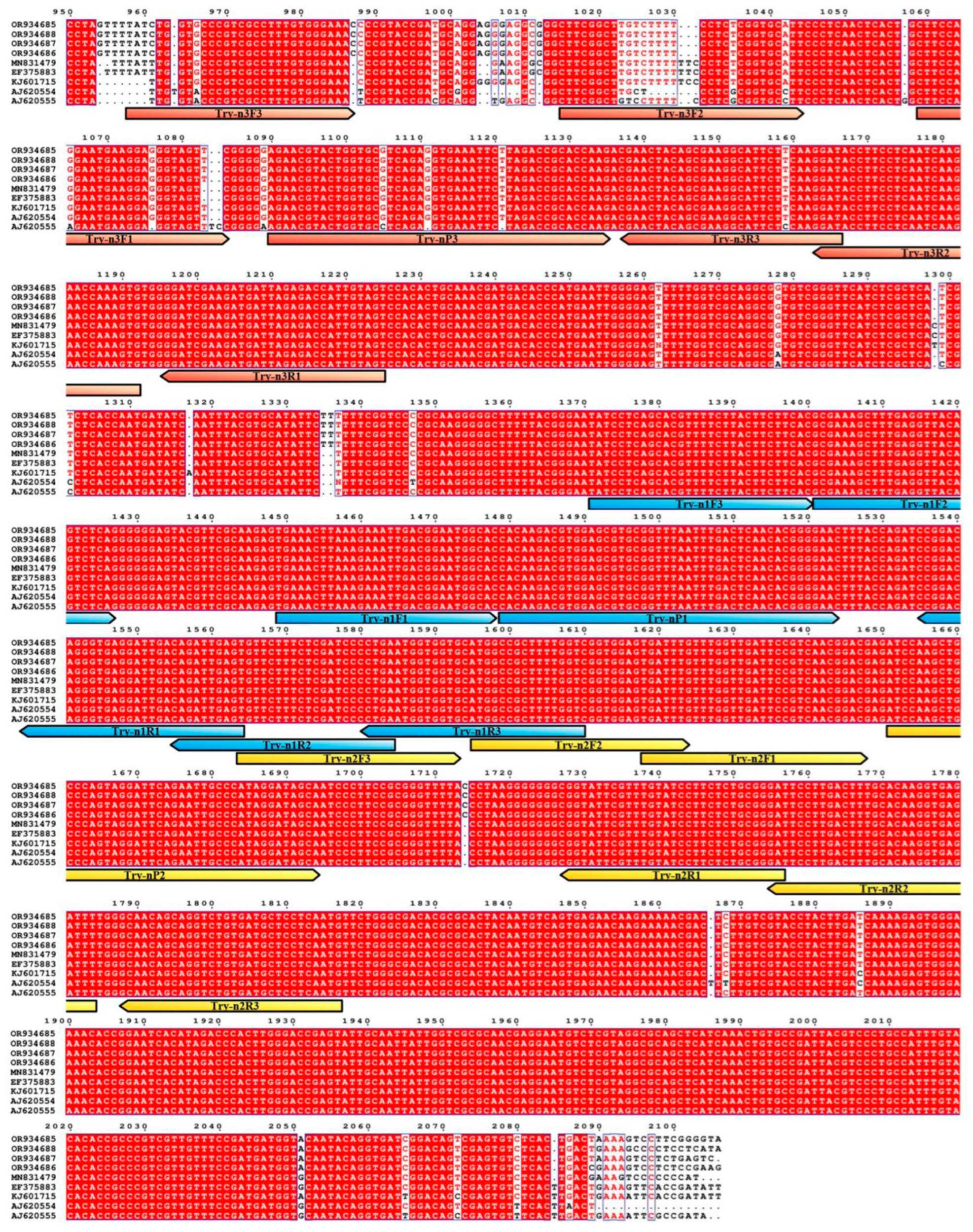
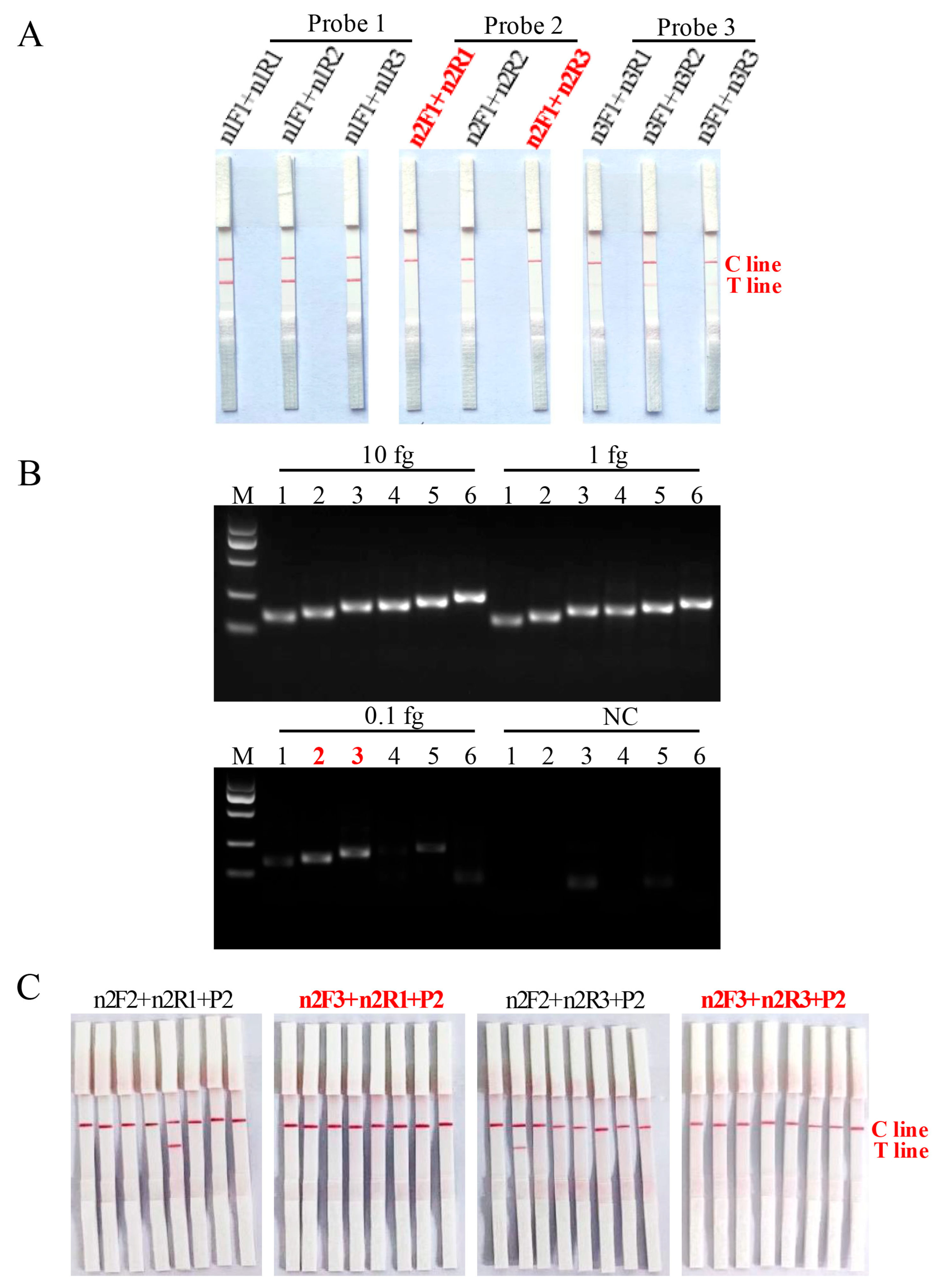
Multiple sequence alignment of the Trypanosoma sp. 18S rRNA genes revealed that sequences from large yellow croaker isolates were identical to and shared more than 99% similarity with strains from other fish species (Table 2). Three sets of primers and probes targeting conserved regions of the 18S rRNA were designed (Figure 1). An initial combinatorial screening evaluated three forward primers, nine reverse primers, and three probes under no-template conditions to identify primer–probe sets susceptible to non-specific amplification. Reactions containing sterilized water instead of DNA were analyzed by lateral-flow readout. Only the combinations n2F1–n2R1–nP2 and n2F1–n2R3–nP2 produced no test-line coloration, indicating true negatives. Thus, n2R1–nP2 and n2R3–nP2 were identified as suitable reverse primer–probe backbones (Figure 2A). Each backbone was subsequently paired with n2F1, n2F2, or n2F3 and tested using plasmid templates (10, 1, and 0.1 fg/reaction). Amplification efficiency was assessed using 2% agarose gel electrophoresis. The combinations n2F2–n2R1–nP2 and n2F3–n2R1–nP2 produced the most intense bands and consistently detected 0.1 fg of plasmid DNA, thus identifying n2F2 and n2F3 as the optimal forward primers (Figure 2B). Consequently, four candidate sets n2F2–n2R1–nP2, n2F2–n2R3–nP2, n2F3–n2R1–nP2, and n2F3–n2R3–nP2 were further tested in eight replicate no-template controls. Only n2F3–n2R1–nP2 and n2F3–n2R3–nP2 consistently yielded negative (no test line), thereby confirming their reliability as effective primer–probe sets (Figure 2C).

3.2. Sensitivity and Specificity in the MIRA-LFD Assay

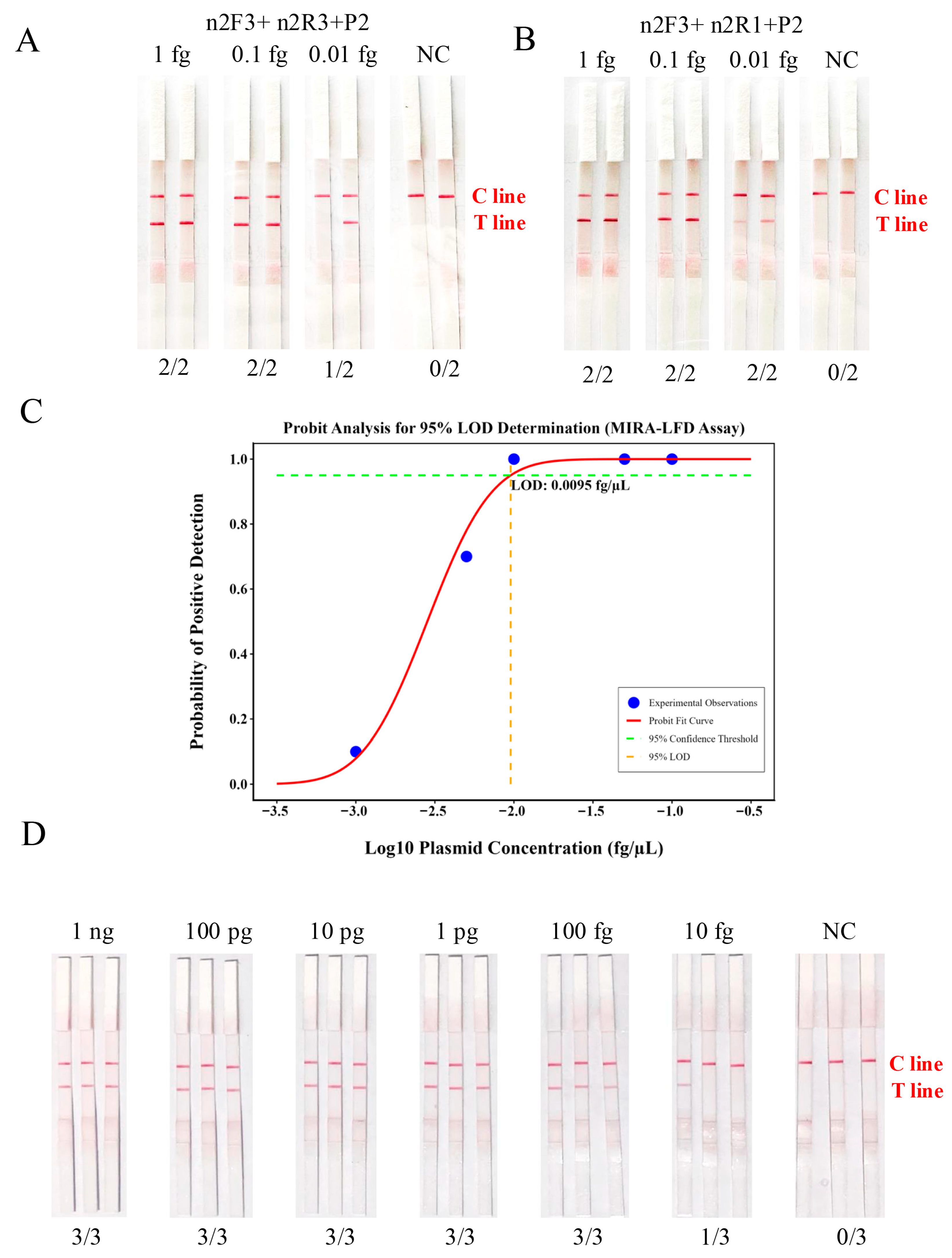
To enhance the detection performance, two candidate primer–probe sets, n2F3–n2R1–nP2 and n2F3–n2R3–nP2, were assessed using serially diluted plasmid DNA. The n2F3–n2R1–nP2 set demonstrated superior analytical sensitivity, consistently achieving a detection limit of 0.01 fg/µL (approximately 2.1 copies/µL), whereas the n2F3–n2R3–nP2 set exhibited significantly lower sensitivity under identical conditions (Figure 3A,B).
To assess the analytical sensitivity and establish the limit of detection (LOD) of the MIRA-LFD assay, a serial dilution of plasmid DNA was prepared, ranging from concentrations of 0.1 to 0.001 fg/μL. Each concentration was tested across 20 independent replicates to ensure statistical robustness. The experimental findings indicated that the MIRA-LFD assay achieved a 100% positivity rate (20/20) at concentrations of 0.1, 0.05, and 0.01 fg/μL. A notable reduction in diagnostic sensitivity was observed as the concentration decreased to 0.005 fg/μL, resulting in a positivity rate of 70% (14/20). At the lowest concentration tested, 0.001 fg/μL, the detection rate further decreased to 10% (2/20). To accurately determine the LOD with a 95% confidence interval, a probit regression analysis was conducted on the cumulative detection data. The statistical model identified the 95% LOD as 0.0095 fg/μL (approximately 0.01 fg/μL). (Figure 3C). When applied to total genomic DNA extracted from Trypanosoma-infected fish tissues, the MIRA-LFD assay maintained a robust detection threshold of 100 fg/µL, confirming its practical utility for clinical samples (Figure 3D).
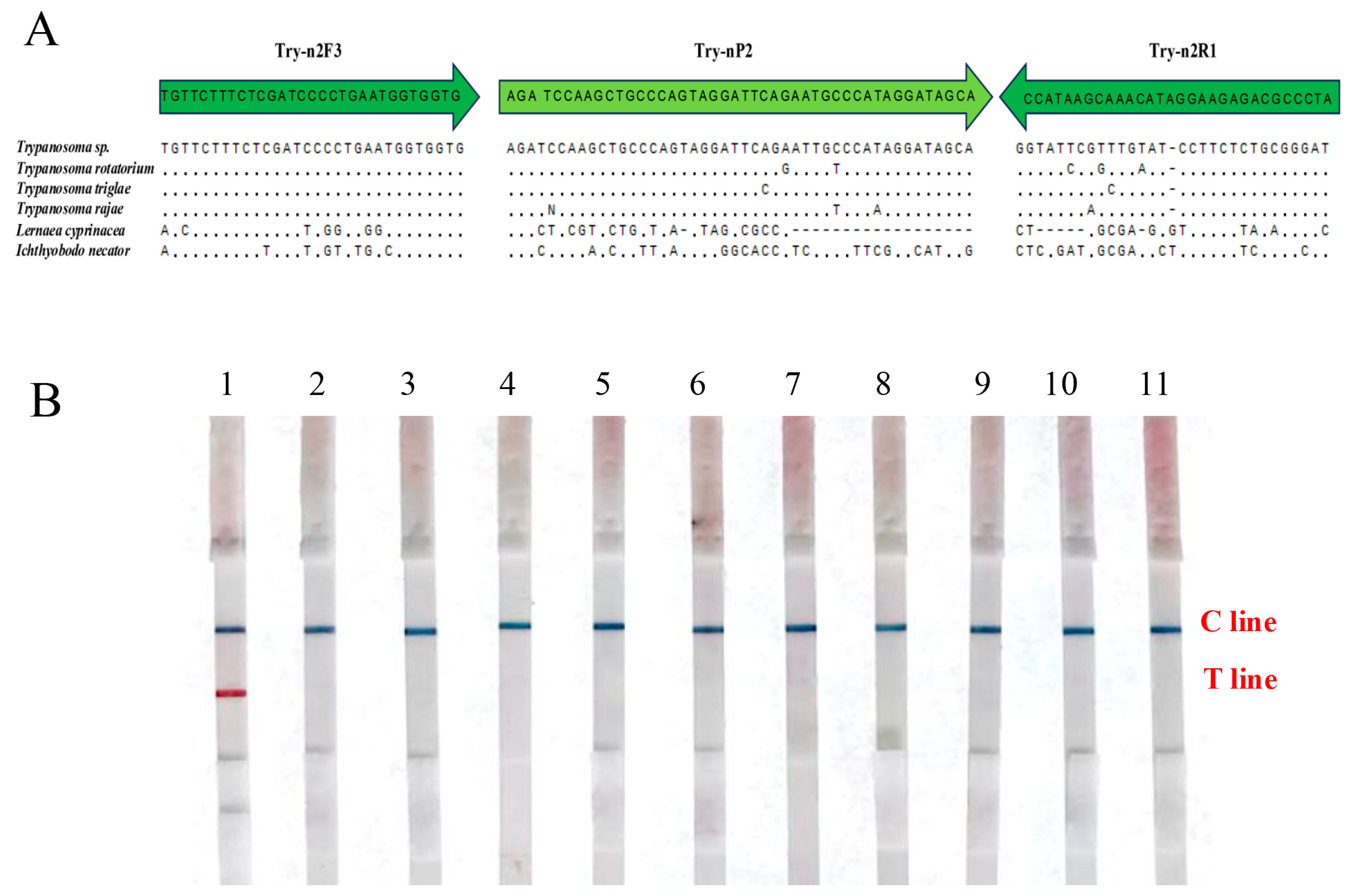
The exclusivity of the finalized primer–probe set (n2F3–n2R1–nP2) was initially evaluated through in silico multiple sequence alignment. As shown in Figure 4A the primers and probe exhibited high conservation across target strains but showed significant mismatches and gaps when compared to other Trypanosoma species (T. rotatorium, T. triglae, and T. rajae) and common aquatic parasites (Lernaea cyprinacea and Ichthyobodo necator). To confirm these findings, experimental specificity validation was performed using a panel of common fish pathogens and synthetic standards of near-neighboring species. A distinct band was observed exclusively at the test line for the positive control (Trypanosoma sp.), while no cross-reactivity was detected for Cryptocaryon irritans, Miamiensis avidus, Benedenia seriolae, or Pseudograffilla sp. (Figure 4B, Lanes 3–6). Furthermore, the assay remained negative when challenged with synthetic 18S rRNA sequences from five related kinetoplastid and parasitic species, demonstrating the exceptional analytical exclusivity of the developed MIRA-LFD platform (Figure 4B, Lanes 7–11).

3.3. Optimization of DNA Extraction Conditions

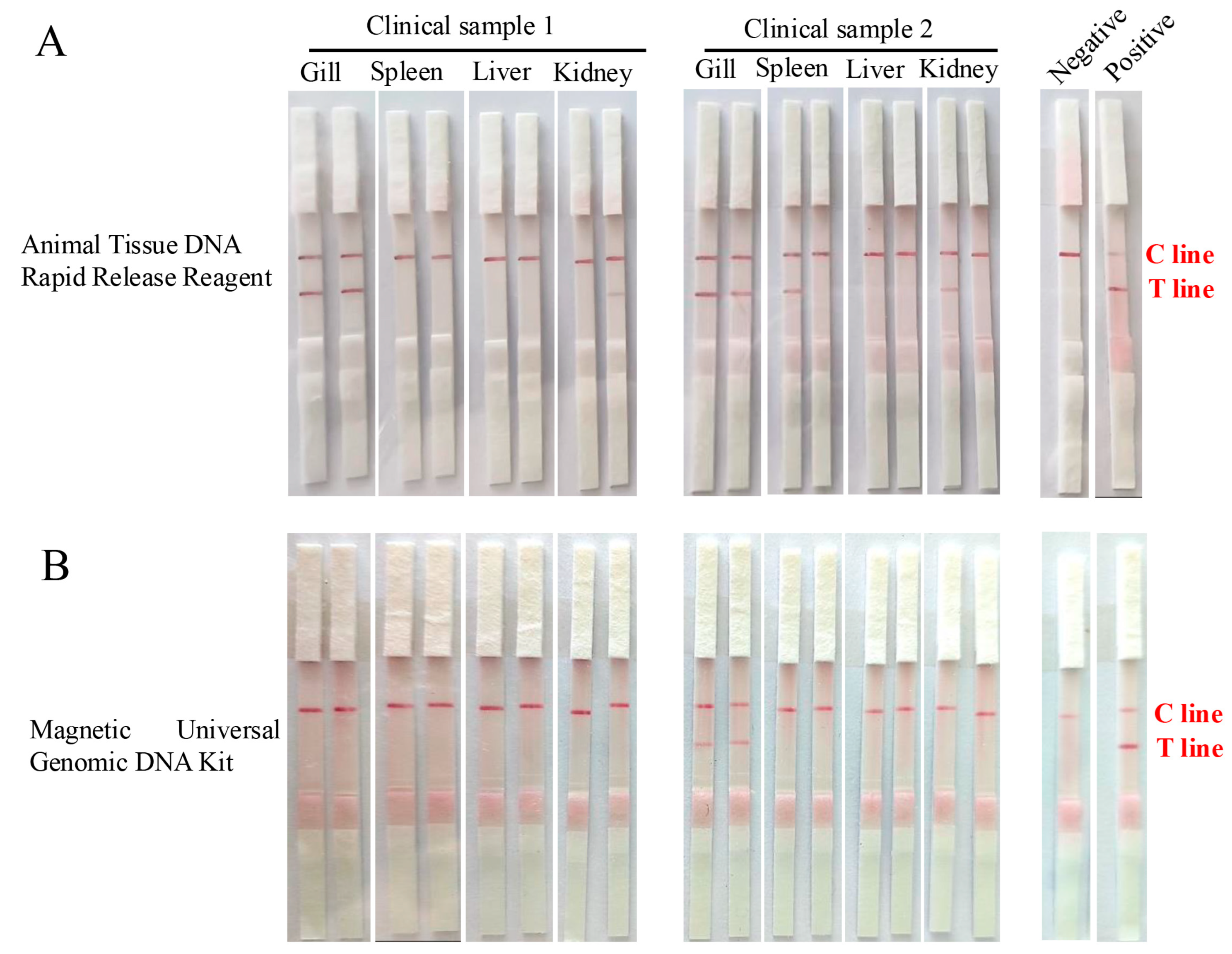
To address the complexities associated with traditional DNA extraction methods, this study employed nucleic acid release reagents as an alternative. DNA was extracted from cultured Trypanosoma sp. (positive control) and Trypanosoma-positive large yellow croaker tissues using the Magnetic Universal Genomic DNA Kit and the Animal Tissue DNA Rapid Release Reagent. The extracted DNA was then evaluated using the MIRA-LFD assay. The results revealed that the nucleic acid release reagent demonstrated higher extraction efficiency, detecting parasite DNA in gill and kidney tissues (Figure 5A), whereas the magnetic bead-based kit detected DNA in the gills of only one fish (Figure 5B). Furthermore, the commercial DNA extraction method required 2 h and specialized nucleic acid equipment, while the nucleic acid release reagent method took only 5 min.

3.4. TaqMan-Based qPCR Detection Assay

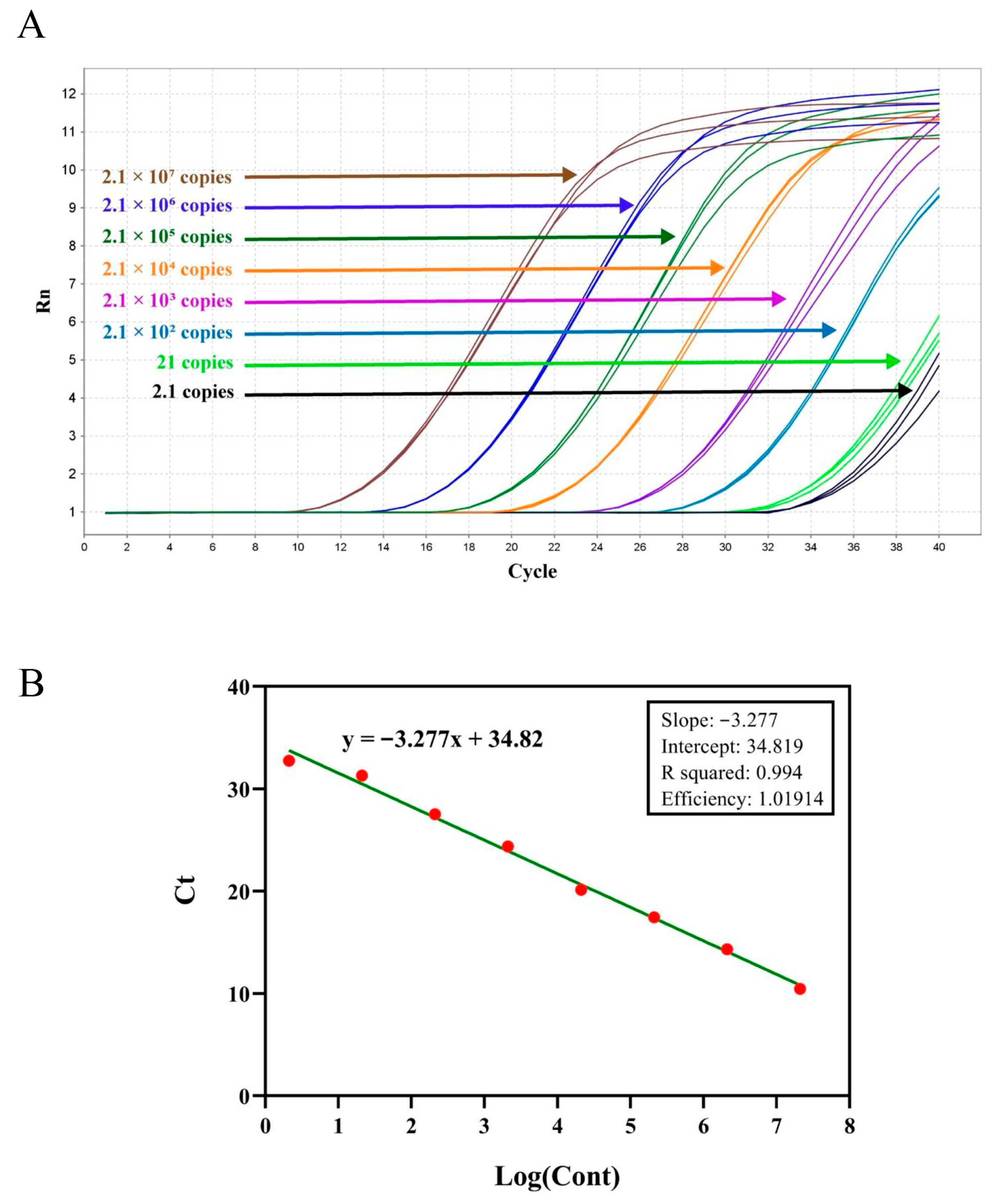
The TaqMan qPCR assay was developed to detect Trypanosoma sp. through the 18S rRNA gene. To evaluate the assay’s performance, a standard curve was generated using ten-fold serial dilutions of the pMD18-Try 18S RNA plasmid, ranging from 2.1 × 10⁷ to 2.1 copies/μL, with each concentration tested in triplicate. The resulting standard curve (Figure 6A) exhibited excellent linearity, defined by the regression equation: y = –3.277x + 34.82 (where y represents the cycle threshold (Ct) value and x represents the log copy number). The assay demonstrated a high correlation coefficient (R2 = 0.994) and an amplification efficiency of 101.9% (Figure 6B), both of which fall within the optimal range for diagnostic qPCR. The analytical limit of detection (LOD) for the plasmid DNA (pMD18-Try 18S RNA) was 0.1 fg/μL (≈21 copies/μL), confirming high sensitivity and quantitative accuracy.

3.5. Assessment of the MIRA Using Clinical Samples

To evaluate the diagnostic reliability of the MIRA-LFD assay, a total of 183 samples were analyzed, using qPCR as the reference standard. The MIRA-LFD assay correctly identified 141 out of 149 qPCR-positive samples and 33 out of 34 qPCR-negative samples (Supplemental Table S1). Accordingly, the MIRA-LFD assay achieved a diagnostic sensitivity (DSe) of 94.63% (95% CI: 89.65–97.66%) and diagnostic specificity (DSp) of 97.06% (95% CI: 84.67–99.93%), with an overall agreement of 95.08%. Furthermore, Cohen’s kappa coefficient (κ) was calculated to be 0.849, indicating high agreement between the two detection methods (Table 3). These results demonstrate that MIRA-LFD is a highly robust and reliable alternative to qPCR for the rapid detection of trypanosoma strains circulating in L. crocea.

4. Discussion

Trypanosomiasis, caused by Trypanosoma sp., has emerged as a major parasitic disease in farmed L. crocea, resulting in high mortality and substantial economic disruption within the marine aquaculture sector. In this study, we developed a MIRA–LFD assay targeting the 18S rRNA gene, achieving an analytical LOD of 0.01 fg/µL (approximately 2.1 copies/µL) for plasmid standards. However, when testing clinical DNA extracts from fish tissues, the detection threshold shifted to 100 fg/μL. This numerical discrepancy is primarily attributed to the “host matrix effect,” where the overwhelming presence of host genomic DNA can competitively inhibit the recombinase-mediated amplification, particularly when the target parasite DNA constitutes only a minute fraction of the total extract. Consequently, the clinical LOD established here represents a more realistic and reliable benchmark for diagnostic performance in field settings.
The specificity of the MIRA-LFD assay was rigorously confirmed through both in silico analysis and experimental testing. The assay demonstrated no cross-reactivity with common co-occurring pathogens of L. crocea, such as Cryptocaryon irritans and Miamiensis avidus. Given the difficulty of obtaining physical samples of near-neighbor kinetoplastids, an in silico specificity analysis was conducted using Multiple Sequence Alignment (MAFFT). This revealed that the 3′ ends of the primers (n2F3 and n2R1) contain 4–7 mismatches against the 18S rRNA sequences of closely related species, such as Ichthyobodo necator. This sequence divergence was further confirmed by the experimental specificity validation, performed using synthetic 18S rRNA sequences from five related kinetoplastid and parasitic species, demonstrating the exceptional analytical exclusivity of the developed MIRA-LFD platform.
During clinical validation with 183 samples, the MIRA-LFD assay exhibited a diagnostic sensitivity (DSe) of 94.63% and a diagnostic specificity (DSp) of 97.06% relative to the gold-standard TaqMan qPCR. The calculated Cohen’s kappa coefficient (κ) of 0.849 indicates high agreement between the two methodologies. The few observed discrepancies, primarily involving samples with elevated Ct values (28.19–29.04), likely arise from parasite loads residing at the assay’s extreme lower limit of detection. Nonetheless, MIRA-LFD provides distinct practical advantages over traditional methodologies; it surmounts the sensitivity limitations of blood-smear microscopy during early-stage or low-intensity infections and bypasses the requirement for specialized thermocyclers and highly trained personnel necessitated by laboratory qPCR.
By integrating a 5-min rapid nucleic acid release protocol, the entire “sample-to-answer” workflow is finalized in approximately 30 min, requiring only minimal equipment (Figure 6). With an estimated cost of ¥20–30 per reaction, this platform is economically comparable to other rapid tests and significantly more cost-effective than centralized qPCR when logistics and infrastructure are considered. Consequently, the MIRA–LFD assay is ideally suited for a tiered diagnostic framework: onsite primary screening for rapid intervention, followed by qPCR for the validation of equivocal results or subsequent epidemiological surveillance. Such early detection of low-parasitemia infections is critical to accelerating intervention, reducing mortality, and mitigating economic losses in the large yellow croaker industry.
The MIRA-LFD assay offers significant practical advantages for on-site disease surveillance. Over the past few years, MIRA has evolved into a versatile diagnostic tool across clinical, veterinary, and food safety settings [28,29,30,31,32,33]. To our knowledge, this study presents the first MIRA-based assay for Trypanosoma sp. detection in aquaculture species. Despite its advantages, the MIRA-LFD assay is primarily a qualitative tool, which limits its utility in quantifying parasite loads or monitoring subtle responses to treatment. Furthermore, the high conservation of the 18S rRNA gene prioritizes pan-genus detection over species-level differentiation. Future research will focus on developing multi-target assays using more polymorphic regions, such as the internal transcribed spacer (ITS), and integrating semi-quantitative band-intensity readers to enhance the analytical depth of point-of-care testing in aquaculture.

5. Conclusions

In summary, the MIRA–LFD assay provides a rapid, sensitive, and portable method for detecting Trypanosoma sp. in L. crocea. Combining high sensitivity, straightforward operation, and rapid turnaround, it enables early diagnosis and target management. This work advances diagnostics for an emerging aquaculture pathogen and delivers a scalable, practical tool for disease surveillance, outbreak control, and the long-term sustainability of large yellow croaker farming.

Supplementary Materials

The following supporting information can be downloaded at: https://www.mdpi.com/article/10.3390/fishes11020107/s1, Table S1: Detection of Trypanosome sp. DNA in clinical samples using qPCR and MIRA-LFD assays.

Author Contributions

P.Q., Y.Z. and B.L. designed the experiments; Y.Z., B.L., L.L., J.Y., Q.X., T.W. and H.W. performed the experiments; S.L. and G.H. collected samples, Y.Z. and P.Q. analyzed the data and wrote the manuscript. X.C. critically reviewed the manuscript. All authors have read and agreed to the published version of the manuscript.

Funding

This study was supported by grants provided by the Special Fund Project for Promoting High-quality Development of Marine and Fishery Industry of Fujian Province (Grant No. FJHYF-L-2025-15) and the Earmarked Fund for China Agriculture Research System (Grant No. CARS-47).

Institutional Review Board Statement

This work was approved by the Animal Care and Use Committee of Fujian Agriculture and Forestry University (Approval Code: 2025NZ0122; Approval Date: 27 March 2025).

Data Availability Statement

The original contributions presented in this study are included in the article/Supplementary Material. Further inquiries can be directed to the corresponding authors.

Conflicts of Interest

The authors declare no conflicts of interest.

References

  1. Stuart, K.; Brun, R.; Croft, S.; Fairlamb, A.; Gürtler, R.E.; McKerrow, J.; Reed, S.; Tarleton, R. Kinetoplastids: Related protozoan pathogens, different diseases. J. Clin. Investig. 2008, 118, 1301–1310. [Google Scholar] [CrossRef]
  2. Shahi, N.; Yousuf, A.R.; Rather, M.I.; Ahmad, F.; Yaseen, T. First report of blood parasites in fishes from Kashmir and their effect on the haematological profile. Open Vet. J. 2013, 3, 89–95. [Google Scholar] [CrossRef] [PubMed]
  3. Karlsbakk, E. Aspects of the Morphology and Ecology of Some North Atlantic Marine Fish Trypanosomes; University of Bergen: Bergen, Norway, 2006. [Google Scholar]
  4. Marques, R.; Jiménez-García, D.; Escobar, L.E.; Krolow, T.K.; Krüger, R.F. Spatial epidemiology of Tabanus (Diptera: Tabanidae) vectors of Trypanosoma. Parasites Vectors 2025, 18, 128. [Google Scholar] [CrossRef] [PubMed]
  5. Le Roux, C.; Cook, C.A.; Netherlands, E.C.; Truter, M.; Smit, N.J. Molecular and morphological characterization of one known and three new species of fish parasitic Trypanosoma Gruby, 1972 from the south coast of South Africa. Parasitology 2025, 152, 531–550. [Google Scholar] [CrossRef]
  6. Zhou, J.-Y.; Xu, L.; Bi, Y.-X.; Zhang, J.; Hide, G.; Lai, D.-H.; Lun, Z.-R. First outbreak of trypanosomiasis in farmed blood parrot cichlids (Vieja melanura♀ × Amphilophus citrinellus♂) from southern China. Aquaculture 2024, 588, 740944. [Google Scholar] [CrossRef]
  7. Qin, P.; Chen, X.; Lou, B.; Wu, T.; Yang, J.; Wang, W.; Huang, G.; Chen, X. Outbreak of trypanosomiasis in cage-cultured large yellow croaker in China. J. Fish Dis. 2024, 48, e13952. [Google Scholar] [CrossRef]
  8. Fouad, A.M.; Abd El-Lateif, R.S.A.; Abo-Al-Ela, H.G.; Abdel-Hakeem, S.S. Cytotoxicity and immunological impact of Trypanosoma sp. infection on blood parameters of wild African catfish, Clarias gariepinus. Parasitol. Res. 2023, 123, 10. [Google Scholar] [CrossRef]
  9. Yang, X.; Qi, P.; Tao, Z.; Zhang, Q.; Wang, Y.; Zhu, D.; Yan, X.; Fu, P.; Guo, B. Identification of a new fish trypanosome from the large yellow croaker (Larimichthys crocea) and description of its impact on host pathology, blood biochemical parameters and immune responses. Parasite 2025, 32, 1. [Google Scholar] [CrossRef]
  10. Wang, J.-F.; Li, X.-T.; Zhang, P.; Xu, L.-W.; Zhang, J.-Y.; Hide, G.; Lai, D.-H.; Lun, Z.-R. Characterization of a trypanosome from large yellow croaker (Larimichthys crocea), cage-cultured in seawater, in China. Aquac. Rep. 2025, 43, 102868. [Google Scholar] [CrossRef]
  11. Leadbeater, B.S.C.; Green, J.C. (Eds.) The Flagellates: Unity, Diversity and Evolution; CRC Press: London, UK, 2000. [Google Scholar]
  12. Lemos, M.; Fermino, B.R.; Simas-Rodrigues, C.; Hoffmann, L.; Silva, R.; Camargo, E.P.; Teixeira, M.M.; Souto-Padrón, T. Phylogenetic and morphological characterization of trypanosomes from Brazilian armoured catfishes and leeches reveal high species diversity, mixed infections and a new fish trypanosome species. Parasit Vectors 2015, 8, 573. [Google Scholar] [CrossRef]
  13. Jesus, R.; Gallani, S.; Valladão, G.; Pala, G.; Silva, T.; Costa, J.; Kotzent, S.; Pilarski, F. Trypanosomiasis causing mortality outbreak in Nile tilapia intensive farming: Identification and pathological evaluation. Aquaculture 2018, 491, 169–176. [Google Scholar] [CrossRef]
  14. Jiang, B.; Lu, G.; Du, J.; Wang, J.; Hu, Y.; Su, Y.; Li, A. First report of trypanosomiasis in farmed largemouth bass (Micropterus salmoides) from China: Pathological evaluation and taxonomic status. Parasitol. Res. 2019, 118, 1731–1739. [Google Scholar] [CrossRef] [PubMed]
  15. Su, Y.; Feng, J.; Jiang, J.; Guo, Z.; Liu, G.; Xu, L. Trypanosoma epinepheli n. sp. (Kinetoplastida) from a farmed marine fish in China, the brown-marbled grouper (Epinephelus fuscoguttatus). Parasitol. Res. 2014, 113, 11–18. [Google Scholar] [CrossRef]
  16. Luo, D.; Xu, L.W.; Liu, X.H.; Sato, H.; Zhang, J.Y. Outbreak of trypanosomiasis in net-cage cultured barramundi, Lates calcarifer (Perciformes, Latidae), associated with Trypanosoma epinepheli (Kinetoplastida) in South China Sea. Aquaculture 2019, 501, 219–223. [Google Scholar] [CrossRef]
  17. Chen, Y.; Huang, W.; Shan, X.; Chen, J.; Wang, H. Growth characteristics of cage-cultured large yellow croaker Larimichthys crocea. Aquac. Rep. 2020, 16, 100242. [Google Scholar] [CrossRef]
  18. Chen, S.; Su, Y.; Hong, W. Aquaculture of the Large Yellow Croaker. In Aquaculture in China; Wiley Online Library: Hoboken, NJ, USA, 2018; pp. 297–308. [Google Scholar]
  19. Chi, H.; Taik, P.; Foley, E.J.; Racicot, A.C.; Gray, H.M.; Guzzetta, K.E.; Lin, H.Y.; Song, Y.L.; Tung, C.H.; Zenke, K.; et al. High genetic diversities between isolates of the fish parasite Cryptocaryon irritans (Ciliophora) suggest multiple cryptic species. Mol. Phylogenet. Evol. 2017, 112, 47–52. [Google Scholar] [CrossRef]
  20. Wang, G.; Luan, Y.; Wei, J.; Li, Y.; Shi, H.; Cheng, H.; Bai, A.; Xie, J.; Xu, W.; Qin, P. Genetic and Pathogenic Characterization of a New Iridovirus Isolated from Cage-Cultured Large Yellow Croaker (Larimichthys crocea) in China. Viruses 2022, 14, 208. [Google Scholar] [CrossRef]
  21. Li, C.; Wang, S.; Ren, Q.; He, T.; Chen, X. An outbreak of visceral white nodules disease caused by Pseudomonas plecoglossicida at a water temperature of 12 °C in cultured large yellow croaker (Larimichthys crocea) in China. J. Fish Dis. 2020, 43, 1353–1361. [Google Scholar] [CrossRef]
  22. Zhang, B.; Xie, X.; Zheng, C.; Wang, X.; Buchmann, K.; Yin, F. Coinfection of large yellow croaker Larimichthys crocea by Trypanosoma sp. (Euglenozoa: Kinetoplastea) and Ceratomyxa xiangshanensis n. sp. (Cnidaria: Myxosporea) in offshore net cage systems in the East China Sea. Parasitol. Int. 2025, 111, 103167. [Google Scholar] [CrossRef]
  23. Desquesnes, M.; Gonzatti, M.; Sazmand, A.; Thévenon, S.; Bossard, G.; Boulangé, A.; Gimonneau, G.; Truc, P.; Herder, S.; Ravel, S.; et al. A review on the diagnosis of animal trypanosomoses. Parasit Vectors 2022, 15, 64. [Google Scholar] [CrossRef]
  24. MacAulay, S.; Ellison, A.R.; Kille, P.; Cable, J. Moving towards improved surveillance and earlier diagnosis of aquatic pathogens: From traditional methods to emerging technologies. Rev. Aquac. 2022, 14, 1813–1829. [Google Scholar] [CrossRef] [PubMed]
  25. Park, S.B.; Zhang, Y. Development of Multienzyme Isothermal Rapid Amplification (MIRA) Combined with Lateral-Flow Dipstick (LFD) Assay to Detect Species-Specific tlh and Pathogenic trh and tdh Genes of Vibrio parahaemolyticus. Pathogens 2024, 13, 57. [Google Scholar] [CrossRef] [PubMed]
  26. Finney, D.J. Probit Analysis, 3rd ed.; Cambridge University Press: Cambridge, UK, 1971; Volume 60, p. 1432. [Google Scholar]
  27. Landis, J.R.; Koch, G.G. The measurement of observer agreement for categorical data. Biometrics 1977, 33, 159–174. [Google Scholar] [CrossRef] [PubMed]
  28. Zhu, C.; Li, J.; Yu, H.; Xu, K.; He, X.; Liu, Z.; Chen, J. CRISPR/Cas13a combined with reverse transcription-multienzyme isothermal rapid amplification for hepatitis B virus RNA detection. Anal. Chim. Acta 2025, 1370, 344389. [Google Scholar] [CrossRef]
  29. Huang, Q.; Dai, F.; Su, L.; Zhang, M.; Miao, X.; Ding, Y.; Xu, C.; Xu, J. Detection of Aeromonas hydrophila by Basic and Fluorescent MIRA Assays. Microorganisms 2025, 13, 2191. [Google Scholar] [CrossRef]
  30. Yin, L.; Zhao, Z.; Wang, C.; Zhou, C.; Wu, X.; Gao, B.; Wang, L.; Man, S.; Cheng, X.; Wu, Q.; et al. Development and evaluation of a CRISPR/Cas12a-based diagnostic test for rapid detection and genotyping of HR-HPV in clinical specimens. Microbiol. Spectr. 2025, 13, e0225324. [Google Scholar] [CrossRef]
  31. Zhu, Y.; Song, M.; Pan, Y.; Zhao, Y.; Liu, H. Evaluation and Application of the MIRA-qPCR Method for Rapid Detection of Norovirus Genogroup II in Shellfish. Microorganisms 2025, 13, 712. [Google Scholar] [CrossRef]
  32. Fan, Y.; Wang, J.; Bian, X.; Wang, W.; Zhou, J.; Zhang, X.; Hu, M.; Sun, M.; Yang, S.; Zhao, Y.; et al. Multienzyme isothermal rapid amplification (MIRA)-LFD assay for rapid detection of PEDV and PoRVA. J. Microbiol. Methods 2025, 238, 107289. [Google Scholar] [CrossRef]
  33. Jinwei, Y.; Jun, H.; Lei, L.; Yang, L.; Min, D.; Chang, M.; Xuliang, Z.; Xiaobo, F.; Hui, C. An on-site detection assay for screening of sendai virus by using palm-sized handheld system based on the reverse transcription multienzyme isothermal rapid amplification. Microb. Pathog. 2025, 209, 108064. [Google Scholar] [CrossRef]
Figure 1. Alignment of the target sequence utilized for the design of primer pairs and probes. Alignment of 18S rDNA sequences from Trypanosoma sp. isolated from various hosts. Three sets of primers and probes were designed to target conserved domains.
Fishes 11 00107 g001
Figure 2. Systematic screening and validation of MIRA–LFD primer–probe combinations: (A) Initial screening of reverse primer and probe pairings. Nine candidate combinations (comprising three probes each paired with three reverse primers) are evaluated. The optimal pair is selected based on the highest signal intensity on the test line and the absence of non-specific amplification as visualized by gel electrophoresis. (B) Optimization of forward primers. Building upon the optimal reverse primer–probe set identified in (A), three candidate forward primers are screened to maximize amplification efficiency. The final set is determined by comparing the resulting amplification yields and diagnostic sensitivity. M, 2000 bp marker; lanes 1–6 represent different primer combinations. Lane 1, Try-n2F1/Try-n2R1, 140 bp; lane 2, Try-n2F2/Try-n2R1, 163 bp; lane 3, Try-n2F3/Try-n2R1, 194 bp; lane 4, Try-n2F1/Try-n2R3, 167 bp; lane 5, Try-n2F2/Try-n2R3, 190 bp; lane 6, Try-n2F3/Try-n2R3, 221 bp. (C) Evaluation of no-template controls (NTCs) for cross-reactivity and stability. Each candidate combination is subjected to eight independent replicates using NTCs to assess the potential for primer-dimer formation or false-positive signals. The primer–probe sets n2F3–n2R1–nP2 and n2F3–n2R3–nP2 demonstrated superior stability, consistently yielding blank test lines across all replicates, and were thus selected for further assay development.
Fishes 11 00107 g002
Figure 3. Analytical sensitivity of the MIRA-LFD assay: (A,B) Sensitivity comparison of candidate primer–probe sets. Analytical sensitivity is evaluated using serial dilutions of the pMD19-T plasmid standard with two candidate sets: (A) n2F3–n2R1–nP2 and (B) n2F3–n2R3–nP2. The n2F3–n2R1–nP2 set exhibit superior performance, with a consistent detection limit of 0.01 fg/µL, whereas the n2F3–n2R3–nP2 set fails to achieve the same sensitivity. (C) Determination of the 95% limit of detection (LOD) for the MIRA-LFD assay via Probit regression analysis. The analytical sensitivity of the MIRA-LFD assay is evaluated using a 10-fold serial dilution of the plasmid DNA standard ranging from 0.1 to 0.001 fg/μL. Each concentration is tested in 20 independent replicates to ensure statistical significance. (D) Sensitivity in clinical tissue extracts. The detection threshold for total DNA extracted from Trypanosoma-positive Larimichthys crocea tissues is determined to be 100 fg/µL.
Fishes 11 00107 g003
Figure 4. Bioinformatics evaluation and diagnostic specificity of the MIRA-LFD assay: (A) Bioinformatics analysis of primer and probe exclusivity. Multiple sequence alignment is performed using MAFFT (version 7.0). Green arrows indicate the relative positions and orientations of the forward primer (Try-n2F3), the reverse primer (Try-n2R1), and the internal probe (Try-nP2). The alignment includes various Trypanosoma species—T. rotatorium (AJ009161), T. triglae (U39584), and T. rajae (MG878995)—alongside common aquatic parasites, Lernaea cyprinacea (DQ107554) and Ichthyobodo necator (KC208028). Dots represent nucleotide identity with the reference Trypanosoma sp. sequence (OR934685), while individual letters and dashes denote mismatches and gaps, respectively. (B) Experimental specificity validation. The exclusivity of the MIRA-LFD assay is verified against genomic DNA from common pathogens of L. crocea and synthetic plasmid standards containing the core 18S rRNA sequences of related kinetoplastids. Lane 1: Positive control (Trypanosoma sp.); Lane 2: Negative control (Nuclease-free water); Lanes 3–6: Cryptocaryon irritans, Miamiensis avidus, Benedenia seriolae, and Pseudograffilla sp.; Lanes 7–9 (Synthetic): T. rotatorium, T. triglae, and T. rajae; Lanes 10–11 (Synthetic): Lernaea cyprinacea and Ichthyobodo necator.
Fishes 11 00107 g004
Figure 5. Comparison of DNA extraction methods for the MIRA–LFD assay. (A) Detection results using the Animal Tissue DNA Rapid Release Reagent. (B) Detection results using the Magnetic Universal Genomic DNA Kit. Both methods were applied to DNA extracted from tissues (gill, spleen, liver, and kidney) of two clinical samples (Clinical sample 1 and 2) of large yellow croaker infected with Trypanosoma sp. Cultured Trypanosoma sp. served as the positive control. C line: Control line; T line: Test line.
Fishes 11 00107 g005
Figure 6. Calibration and performance of the TaqMan probe–based qPCR assay targeting the Trypanosoma 18S rRNA gene. (A) Representative amplification curves: Representative amplification plots are generated using a 10-fold serial dilution of the pMD18-Try 18S RNA plasmid standard, ranging from 2.1 × 10⁷ to 2.1 copies/µL (n = 3 per point). (B) Standard curve analysis: The linear relationship between the log10 copy number and the cycle threshold (Ct) value is shown.
Fishes 11 00107 g006
Table 1. The primers and probes used in this study.
FunctionNameSequence (5′-3′)
Plasmid constructionS7625′-GACTTTTGCTTCCTCTATTG-3′
S7635′-CATATGCTTGTTTCAAGGAC-3′
MIRA primerTry-n1F1TGAAACTTAAAGAAATTGACGGAATGGCAC
Try-n1F2CACGCGAAAGCTTTGAGGTTACAGTCTCAG
Try-n1F3TATCCTCAGCACGTTTTCTTACTTCTTCAC
Try-n1R1[5′-biotin]-ACTCAATCTGTCAATCCTCACCCTGTCCGG
Try-n1R2[5′-biotin]-TCAGGGGATCGAGAAAGAACACTCAATCTG
Try-n1R3[5′-biotin]-ACCAAAAGCGGCCATGCACCACCATTCAGG
Try-n2F1TGATTTGTTTGGTTGATTCCGTCAACGGAC
Try-n2F2ATGGCCGCTTTTGGTCGGTGGAGTGATTTG
Try-n2F3TGTTCTTTCTCGATCCCCTGAATGGTGGTG
Try-n2R1[5′-biotin]-ATCCCGCAGAGAAGGATACAAACGAATACC
Try-n2R2[5′-biotin]-AAATCTCACCTTGTGCAAAGTCAAGGAATC
Try-n2R3[5′-biotin]-CATTGAGGAGCATCACAGACCTGCTGTTGC
Try-n3F1CTGCTTCCAGGAATGAAGGAGGGTAGTTCG
Try-n3F2CTTCGGCTTGTCTTTTCCTCTCGGTGCATT
Try-n3F3TATCTGGTGCCCGTCGCCTTTGTGGGAAAC
Try-n3R1[5′-biotin]-ATCCTTGAAGAATGCCTTCGCTGTAGTTCG
Try-n3R2[5′-biotin]-CACTTTGGTTCTTGATTGAGGAAGGTATCC
Try-n3R3[5′-biotin]-ACTACAATGGTCTCTAATCATCTTCGATCC
MIRA probeTry-nP15′FAM-CACAAGACGTGGAGCGTGCGGTTTAATTTG[THF]CTCAACACGGGGAAC-3′C3spacer
Try-nP25′FAM-AGATCCAAGCTGCCCAGTAGGATTCAGAAT[THF]GCCCATAGGATAGCA-3′C3spacer
Try-nP35′FAM-AGAACGTACTGGTGCGTCAGAGGTGAAATT[THF]TTAGACCGCACCAAG-3′C3spacer
qPCRForwardACGTTCGCAAGAGTGAAACTT
ReverseTGTCAATCCTCACCCTGTCC
ProbeFAM-CCACAAGACGTGGAGCGTGCGG-BHQ1
Table 2. Nucleotide identity analysis of the trypanosome 18S rRNA gene.
ClassifyHostGeneBank No.Identify (%)
FishLarimichthys croceaOR934685100.00
FishLarimichthys croceaOR93468899.05
FishLarimichthys croceaOR93468799.05
FishLarimichthys croceaOR93468698.91
FishLarimichthys croceaPQ27274498.15
FishLarimichthys croceaPQ62109698.15
FishLarimichthys croceaPQ27302998.15
FishLarimichthys croceaPQ62109598.01
FishLarimichthys croceaPQ62301097.96
FishLarimichthys croceaPQ62300897.96
FishLarimichthys croceaPQ62301897.54
FishMicropterus salmoidesMN83147997.54
FishPseudobagras fulvidracoEF37588395.33
FishCarassius carassiusKJ60171595.02
FishChanna argusEU18563494.86
FishAbramis bramaAJ62055494.44
FishClarias angelensisAJ62055594.36
FishMelanogrammus aeglefinusDQ01661889.48
AmphibiansTrachycephalus venulosusEU26707487.26
AmphibiansLeptodactylus chaquensisEU02122587.26
AmphibiansChaunus marinusEU02123087.21
AmphibiansScinax hayiiEU26707587.17
AmphibiansAplastodiscus leucopygiusEU02123487.17
AmphibiansRhinella margaritiferEU02123187.13
InsectsGlossina pallidipesAJ62054788.88
InsectsSciopemyia servulolimaiEU02124187.33
InsectsSciopemyia sordelliiEU02124387.19
Table 3. Comparison of diagnostic results between MARA-LFD and qPCR for clinical samples.
AssayqPCRDSeDSpΚ Value
PositiveNegativeTotal
MIRA-LFDPositive141114294.63%97.06%0.849
Negative83341
Total14934183
Disclaimer/Publisher’s Note: The statements, opinions and data contained in all publications are solely those of the individual author(s) and contributor(s) and not of MDPI and/or the editor(s). MDPI and/or the editor(s) disclaim responsibility for any injury to people or property resulting from any ideas, methods, instructions or products referred to in the content.