Article

Physiological Responses of Kalibaus (Labeo calbasu) to Temperature Changes: Metabolic, Haemato-Biochemical, Hormonal and Immune Effects


by
Masuda Sultana Mimi
1,
Simon Kumar Das
2,
Mohammad Lutfar Rahman
1,
Mohammad Abdus Salam
1,
Md. Nushur Islam
1,
Tamanna Rahman
1,
Sumi Rani Das
3,
Mohammad Nazmol Hasan
4 and
Sabuj Kanti Mazumder
1,*
1
Department of Genetics and Fish Breeding, Faculty of Fisheries, Gazipur Agricultural University, Gazipur 1706, Bangladesh
2
Tropical Aquafeed Innovations Lab, Department of Marine Biology & Aquaculture, James Cook University, Townsville, QLD 4810, Australia
3
Office of the Deputy Commissioner, Ministry of Public Administration, Gazipur 1700, Bangladesh
4
Department of Agricultural and Applied Statistics, Faculty of Agricultural Economics and Rural Development, Gazipur Agricultural University, Gazipur 1706, Bangladesh
*
Author to whom correspondence should be addressed.
Fishes 2026, 11(1), 46; https://doi.org/10.3390/fishes11010046 (registering DOI)
Submission received: 10 April 2025 / Revised: 7 May 2025 / Accepted: 8 January 2026 / Published: 10 January 2026
(This article belongs to the Special Issue Advancing Fish Nutrition Research for Sustainable Aquaculture)

Abstract

A global interest in the cultivation of Kalibaus (Labeo calbasu) has emerged due to decreasing natural stocks and a consistent rise in market value and demand. Given these concerns, understanding the species’ physiological responses to environmental changes is crucial. The present research aimed to assess the effect of varying environmental temperatures on metabolism, haemato-biochemical indices, hormonal concentrations and immune responses in L. calbasu. This study was conducted in triplicate using 100 L glass aquariums at four different temperatures: 22, 26, 30, and 34 °C. The highest weight and length gain were observed at 30 °C, while the lowest occurred at 22 °C. Notably, the best feed conversion ratio (FCR) of 1.51 ± 0.03 was also recorded at 30 °C. Although haematological and biochemical parameters remained within normal ranges, they varied with temperature changes. Indicators of cold and heat stress were evident through lower hematocrit levels and higher white blood cell (WBC) counts. Biochemical indicators such as serum albumin (1.84 ± 0.05 g dL−1), serum globulin (1.64 ± 0.06 gdL−1), HCO3 (30.93 ± 0.62), Na+ (115.60 ± 3.72 mmolL−1), alkaline phosphatase (93.33 ± 9.39 AP, IUL−1), and AST/SGOT (21.00 ± 4.55 UL−1) were significantly higher at 30 °C. Regarding hormonal responses, peak levels of growth hormone (GH), triiodothyronine (T3) (1.44 ± 0.07 ngmL−1), and thyroxine (T4) were recorded at 30 °C. Meanwhile, serum cortisol (1.62 ± 0.06 µgdL−1) and adrenocorticotropic hormone (ACTH) (18.01 ± 3.26 pgmL−1) were highest at 34 °C. Immune responses were strongest between 26 and 30 °C. In conclusion, the results suggest that L. calbasu should ideally be cultured between 26 and 30 °C for optimum growth and health, making it ideal for commercial farming.
Key Contribution: We conducted a comprehensive analysis of the temperature effects on the metabolism; haemato-biochemical parameters; hormonal concentrations; and immunity of Labeo calbasu under controlled conditions. Our results highlight that both the increase and decrease in temperature negatively modulate the growth and feed utilization; physiological conditions; hormone concentrations and immunity of L. calbasu and suggest that L. calbasu should ideally be cultured between 26 and 30 °C for optimum growth and health; making it ideal for commercial farming.

1. Introduction

An increase in the average air temperature is caused by global warming [1,2,3,4]. Fish may be directly impacted by climate change in at least two ways. First, as atmospheric CO2 rises, acidification takes place [5], endangering fish populations [6,7]. Second, fish communities suffer from higher water temperatures linked to climate change, as evidenced by changes in species composition [1,8,9], abundance, and distribution [10,11]. The water temperature may, however, be a limiting factor for fish health because fish physiological response to variations in ambient temperature has limits [12,13].
Wildlife populations are in decline, and certain species might become extinct as a result of the effects of rising temperatures on physiological functions as growth, metabolism, and reproduction [14,15]. Fish are acclimated to water temperatures between 25 and 35 °C in the tropics [16]. Temperature can rise to a threshold where it may be detrimental to growth and physiological functions, albeit this varies from species to species [17]. Growth, which is known to be impacted by a number of biotic and abiotic factors, is one of the most crucial factors in determining the economic viability of commercial fish culture [18]. Low temperatures limit the metabolic rates of ectothermic animals, which reduces aquaculture productivity because these animals are highly sensitive to temperature changes [17]. On the other hand, it is said that higher temperatures accelerate metabolism; however, if the temperature increases too much, fish may suffer from physiological stress [19].
A useful and comparatively non-invasive method for researching fish physiology is blood. It allows for the collection of samples that can reveal information about health, biochemistry, and physiological responses to various stimuli [20]. Assessing blood chemistry provides perfect insights into the health status of fish and is a crucial tool for observing the physiological circumstances brought on by environmental influences [14,21]. The temperature of the living medium has a major effect on the haematological and biochemical components, and variations within the optimal range limit the fish’s physiological health [22]. Hemato-biochemical indices can provide information on the physiological responses to environmental changes that affect homeostasis and are frequently used to evaluate the health of fish [23]. The physiological health of aquatic animals may be indicated by changes in the chemical characteristics of fish blood, which may also be an indication of temperature stress [24].
Fish hormone levels can be strongly impacted by water temperature. Fish undergo stress and increase their cortisol and adrenocorticotrophic hormone (ACTH) production when exposed to temperatures outside of their typical range. In the short term, cortisol can boost growth, immunological response, and reproductive production; however, prolonged exposure can reduce these effects [25]. Additionally, temperature has an impact on fish thyroid function, especially thyroxine (T4) and triiodothyronine (T3), which impacts fish growth, development, and survival. The degradation and conversion rates of T4 and T3 in trout and European eels increase with temperature [26]. On the other hand, an excessively low water temperature may hinder the growth of Atlantic cod by preventing the thyroid gland from doing some of its job. From early egg development to vitellogenesis and maturation, thyroid hormones have been shown to support all phases of reproduction, resulting in successful ovulation and successful spawning [27,28].
Water temperature fluctuations have a significant impact on fish immunological defense [29]. One of the main unique innate immune responses in fish is an increase in immunoglobulin M (Ig M) concentration, which is influenced by environmental stressors such pH, oxygen, salinity, and temperature [30]. Thus, the consequences of thermal stress can be assessed by measuring the Ig M concentration in fish exposed to high temperatures. It is crucial to understand that physiological changes at the molecular, cellular, and entire organism levels cause the observed effects of global warming on fish at different levels of biological organization. Ultimately, species-specific responses will determine how the ecosystem is affected by global warming [31].
The freshwater fish species Labeo calbasu is a member of the Cyprinidae family, which is a subfamily of the Cypriniformes order. According to Gupta et al. [32], this species of freshwater fish is primarily found in rivers, but it is also widely distributed throughout natural lakes, reservoirs, streams, ponds, beels, baors, haors, and canals. This species is significant due to its high protein content and low intramuscular bone count. It is also valued as a sport fish due to its desirable taste. Due to overfishing, habitat degradation, aquatic pollution, dam construction, and other human-caused factors that impact the fish’s feeding, migrating, and spawning, the species’ natural populations have drastically decreased [33]. In recent years, L. calbasu farming has gained attention due to decline wild population and need for species diversification in aquaculture systems. However, like many other cultured species L. calbasu is sensitive to water temperature, which directly affects the growth, feed conversion efficiency, and physiological performance of this species. A study by Islam et al. [34] reported that L. calbasu showed optimal growth, haematological parameters, immune function, and metabolic activity at 31 °C. However, temperature above 34 °C began to impair physiological and immune responses, reduce feed efficiency and caused stress, including higher glucose level and lower HB concentrations.
This study aimed to investigate the physiological responses of Kalibaus (L. calbasu) to acute temperature fluctuations, with a focus on growth performance, metabolic activity, haemato-biochemical responses, hormonal profiles (stress and growth-related), and immune function. The outcomes are intended to enhance understanding of the species thermal tolerance under climate change scenarios and provide a scientific basis for sustainable aquaculture practices and conservation strategies.

2. Materials and Methods

2.1. Sample Collection and Experimental Site

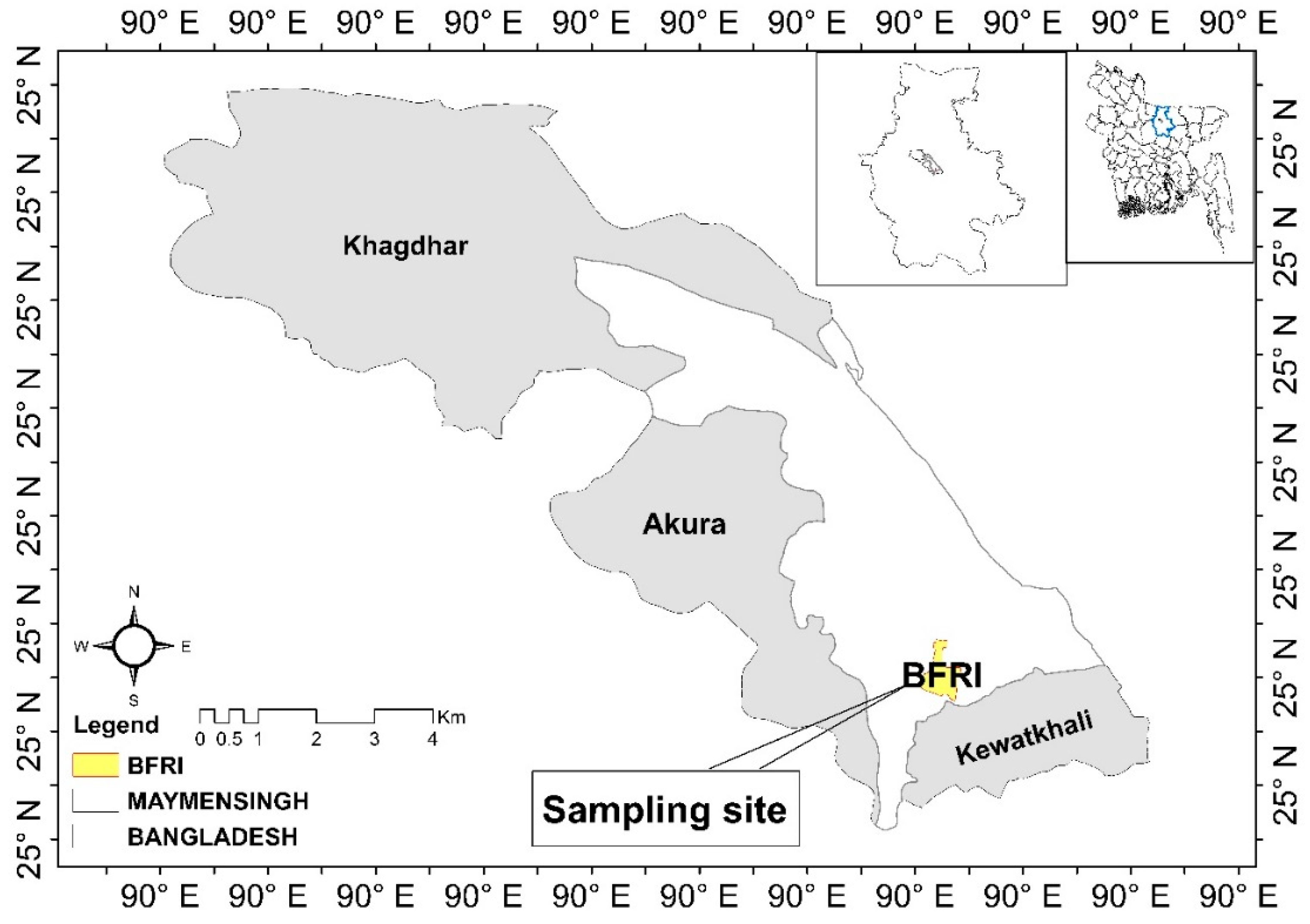
In this investigation, juvenile L. calbasu were employed, with an average body weight of 10.10 ± 0.36 g and an average total length of 10.06 ± 0.23 cm. The fish were brought to the Laboratory of Genetics and Fish Breeding at the Faculty of Fisheries, Gazipur Agricultural University (GAU), Bangladesh, from the Bangladesh Fisheries Research Institute (BFRI) in Mymensingh (Figure 1).

2.2. Experimental Design

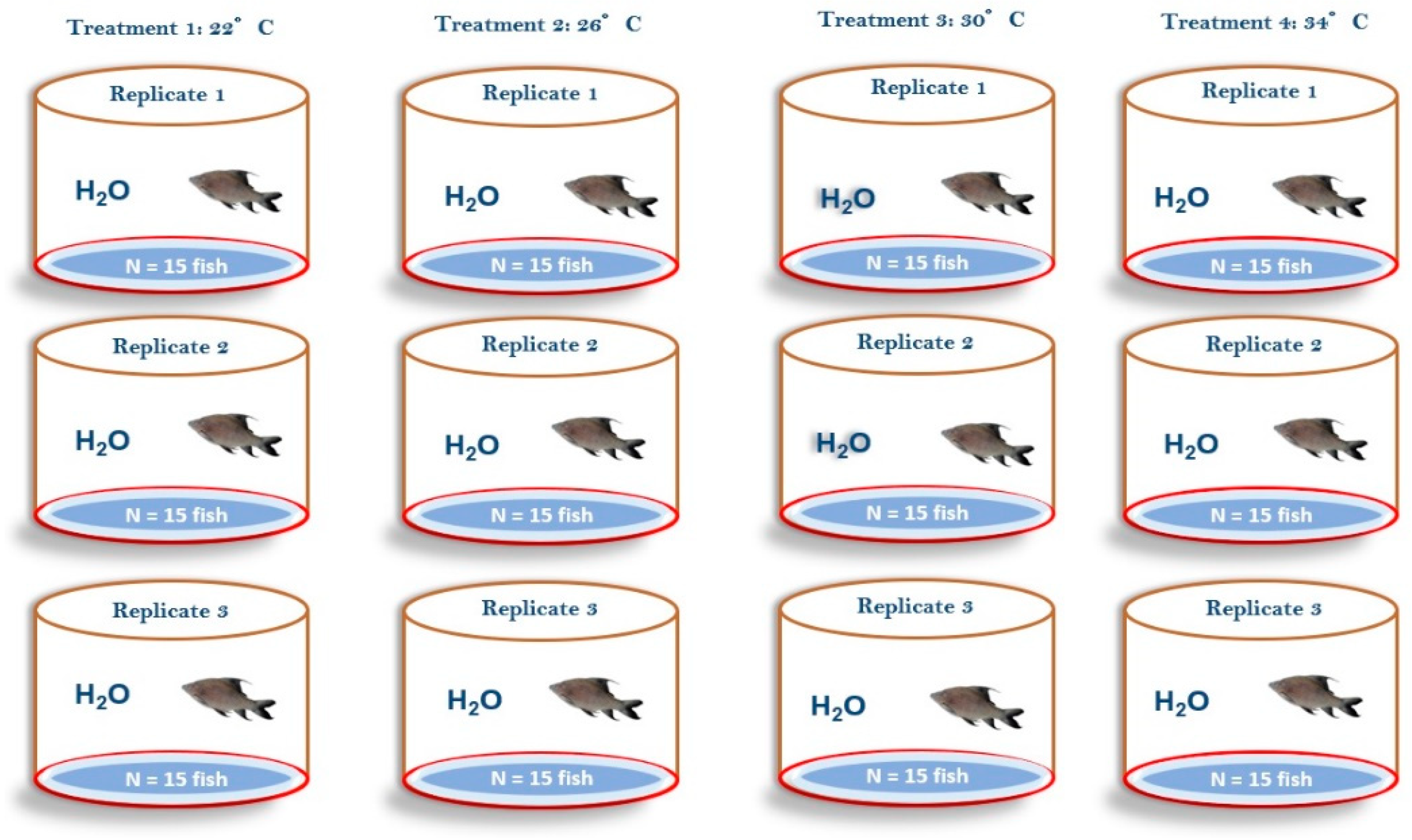
For up to 30 days, the fish were kept in equally sized stocking tanks (5000 L) at room temperature (~26 °C) and fed a commercial meal (Nourish Feeds Ltd., Bogura, Bangladesh, with 30% protein, 5% lipid, 8% crude fibre, and 12% moisture). The fish were moved to experimental tanks where the experiment was conducted for 60 days after they began feeding and excreting waste (Figure 2). With a stocking density of 15 fish per 100 L of water, tanks were randomly assigned to one of four temperature treatments (22, 26, 30, and 34 °C) with three replications. The control was set at 26 °C. A thermostat (E-JET heater 200 W, Penang, Malaysia) was used to raise the temperature changes for the experimental groups to the desired level at a rate of 2 °C day−1. For self-cleaning and aeration during the study period, the tank was equipped with a filtration/aeration system (Sobo-aquarium internal filter WP-850F). The samples were kept on a 12-h light:12-h dark photoperiod for the duration of the experiment. Throughout the experiment, 20% of the water was replaced daily. Fish were sampled and data were recorded every 15 days. Fish were fed a commercial pellet diet twice a day until they were satiated at 9:00 and 16:00 (Nourish Feeds Ltd., Bogura, Bangladesh). Additionally, uneaten food and fish waste were eliminated every day.

2.3. Water Quality Measurements

A YSI Model 59 (Yellow Spring Instrument Company, Yellow Springs, OH, USA) was used to track the water quality parameters, such as temperature, pH, DO, and NH3-N. Temperature and pH were taken every day at 9:00, while NH3-N, and DO were measured every week in the morning before feeding.

2.4. Growth and Metabolic Rate Study

The fish from each experimental tank were weighed and measured separately at the start of the experiment and then every two weeks. α-methyl quinoline (TransmoreR; Nika Trading, Puchong, Malaysia) (0.22 mL L−1 of seawater) was used to gently anesthetize the fish for 10 to 15 min before sampling. At the end of the experiment, the final individual total length and body weight were measured to the nearest 1.0 cm and 0.01 g using a measuring board and an electronic balance (Model: KD-300KC) [35]. Growth and metabolic indices viz. total length (cm), body weight (g), total length gain (cm), body weight gain (g), food conversion ratio, food conversion efficiency, condition factor, and survival rates were measured using the following formulas:
Body weight gain (BWG, g) = (W2 − W1) × n
Food conversion ratio (FCR) = F/(W2 − W1)
Food conversion efficiency (FCE) = (gain in fish mass × g food consumed−1)
Condition factor (CF) = W2 × 100 L2−3
Survival rate % = [Final number of fish/initial number of fish] × 100
Here, L1 & L2 and W1 & W2 represent the starting (0 d) and final (60 d) average individual length and weights, respectively, per treatment, n represents the final number of fish, and F represents the total feed consumption during the experimental period.

2.5. Haematological Indices Study

The fish were anesthetized with α-methyl quinoline (Transmore®; Nika Trading, Puchong, Malaysia) after being starved for 24 h after the experiment. Using a sterile plastic syringe (2.5 mL), blood samples were drawn from the caudal vein of each experimental group’s fish. The samples were then stored in two separate tubes: one (Miniplast 3.0 mL; LP Italiana Spa, Milan, Italy) that contained ethylenediamine tetraacetic acid (EDTA, 1.26 mg/0.6 mL) as an anticoagulant agent and another without EDTA for serum collection. Using an automated haematology analyzer (HeCo Vet C; SEAC, Florence, Italy), the haematological profile—which includes red blood cell count (RBC), white blood cell count (WBC), haemoglobin (HB), haematocrit (HCT), mean corpuscular volume (MCV), mean corpuscular haemoglobin (MCH), mean corpuscular haemoglobin concentration (MCHC), and platelets (PLT)—was determined using the blood samples collected in EDTA tubes [36].

2.6. Serum Biochemical Parameters Study

The blood was drawn and allowed to coagulate in sterile eppendorf tubes. For ten minutes, the clotted blood was centrifuged at 12,000 rpm. For further examination, a clear fluid serum-was pipetted into a 1.5 mL sterile eppendorf tube [37]. Assay kits (Biosino Bio-technology and Science Inc., Beijin, China) were used to measure total protein (TP, g d L−1), albumin (ALB, g dL−1), globulin (GLB, g dL−1), alkaline/globulin ratio (A/G ratio), HCO3 (TCO3), alkaline phosphatase (AP, IU L−1), Ast/SGOT (U L−1), and alanine transaminase ALT/SGPT (U L−1) [37]. A diagnostic reagent kit provided by Monozyme, In-vitro Diagnostics, Hyderabad, India, was used to assess the levels of sodium (Na+, mmol L−1), potassium (K+, mmol L−1), and chloride (Cl, mmol L−1).

2.7. Hormonal Concentration Study

Fish serum was extracted from three replicated fish per treatment for a hormonal analysis, similar to that in the biochemical parameter investigation. The enzyme-linked immunosorbent assay (ELISA), as described by [38], was used to detect growth hormone (GH), cortisol, adrenocorticotropic hormone (ACTH), and thyroid hormones (T3, T4) using test kits that were acquired from Uscnlife (Wuhan, China).

2.8. Immune Responses Study

Enzyme-linked immunosorbent assay (ELISA) quantification kit (MyBioSource Inc., San Diego, CA, USA) was used to quantify the concentration of plasma immunoglobulin M (IgM). Plasma samples and IgM standards were examined manually. Following all procedures, the optical density was measured in 15 min at 450 nm.

2.9. Statistical Analysis

Since there were no discernible differences between any of the replicate averages (p > 0.05), the data for each replicate were averaged [39]. Before statistical analysis, all data were examined for homogeneity of variances using Bartlett’s test [40] and for normality of distribution using the Kolmogornov-Smirnov test [41]. This was performed using a Student-Newman-Keuls multiple comparison test and one-way analysis of variance (ANOVA). A pairwise post hoc Tukey test was performed to identify the precise groups that differed when the ANOVA revealed significant differences [41]. Unless otherwise indicated, a significance level (α) of 0.05 was applied. All information is displayed as mean values ± SE. Minitab™ software version 17 and Origin™ software version 9.0 were used for all statistical analyses.

3. Results

3.1. Water Quality Measurements

Table 1 presents the mean values along with the standard error (SE) of the water quality parameters measured in the experimental tanks throughout the study period. All metrics exhibited no significant differences (p > 0.05) and remained adequately stable at the standard treatment temperatures of 22, 26, 30, and 34 °C.

3.2. Effect of Temperature on Growth and Metabolism

The mean initial weight and length values for the four temperatures (22, 26, 30, 34) were similar (Table 2). This experiment showed that the water temperature substantially affected the fish’s FBW, TLG, BWG, FCE, and FCR. Fish maintained at 30 °C exhibit the highest FTL, FBW, and BWG values (11.26 ± 0.12, 12.78 ± 0.12, and 3.07 ± 0.70, respectively). Fish grown at 22 and 34 °C had significantly higher FCR values (1.91 ± 0.05 and 1.83 ± 0.07) than fish raised at 26 and 30 °C (1.62 ± 0.04 and 1.51 ± 0.03; p < 0.05, Table 2). The FCR values gradually decreased as the temperature was raised from 22 to 30 °C, but they significantly increased when the temperature was raised to 34 °C. Overall, the best FCR performance was shown by the group that was raised at 30 °C. The optimal temperature for FCE, on the other hand, was estimated to be 0.66 ± 0.00 and 30 °C.

3.3. Effect of Temperature on Haematological Parameters

The present study revealed that different temperatures have a strong influence on fish haematology. At 30 °C some haematological parameters were higher (p < 0.05) such as RBC (1.42 ± 0.20), Haemoglobin (8.47 ± 0.81), HCT (42.67 ± 1.70) than other three temperature (Table 3). WBC values were highest at 22 and 34 °C (1.73 ± 0.07; 1.58 ± 0.04, respectively) whereas HCT level lowest at the same temperature (17.67 ± 2.87; 24.00 ± 1.63, respectively). MCV found highest at 26 and 30 °C (332.06 ± 29.97; 307.69 ± 46.76, respectively). For MCV, no notable difference observed between 22 and 34 °C (p > 0.05). On the other hand, MCH, MCHC, PLT were higher (p < 0.05) at 22 °C (3.28 ± 0.57, 32.80 ± 5.65, 4.31 ± 0.42, respectively).
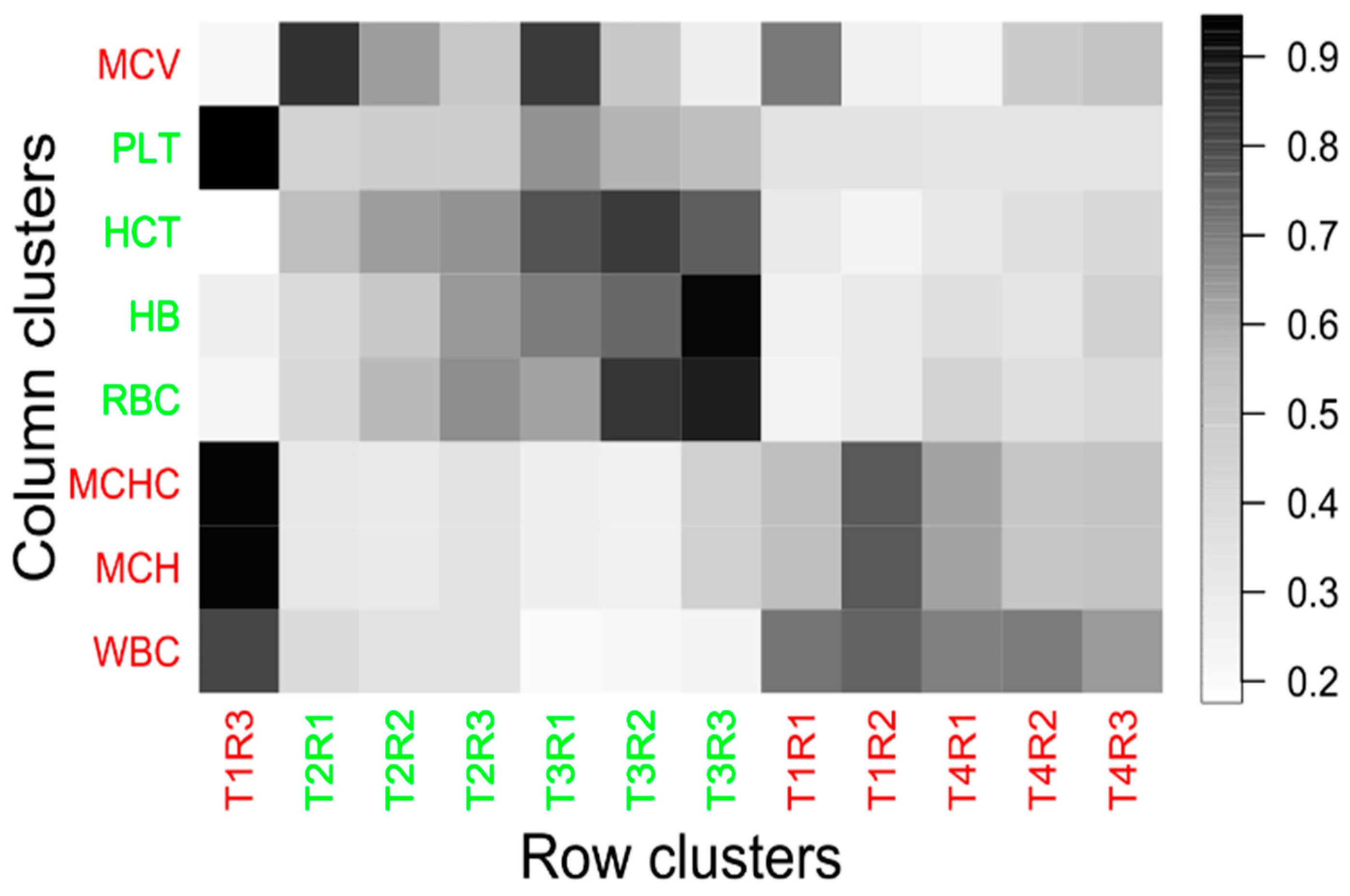
Figure 3 shows the association between haematological parameters and temperature using robust hierarchical co-clustering. The color intensity reflects the scaled values of haematological parameters across samples. White areas show lower values, whereas black areas show greater values. Haematological parameters such as RBC, HB, HCT had strong association, so they were clustered closely, possibly indicating they respond similarly to 30 °C temperature. These parameters were also closely clustered at 26 °C temperature but the intensity was lower compared to 30 °C. On the other hand, MCHC, MCH and WBC showed close clustered and strong association at 20 °C and 34 °C temperatures. The case of MCV and PLT showed cluster in response to 26 °C and 30 °C temperature.
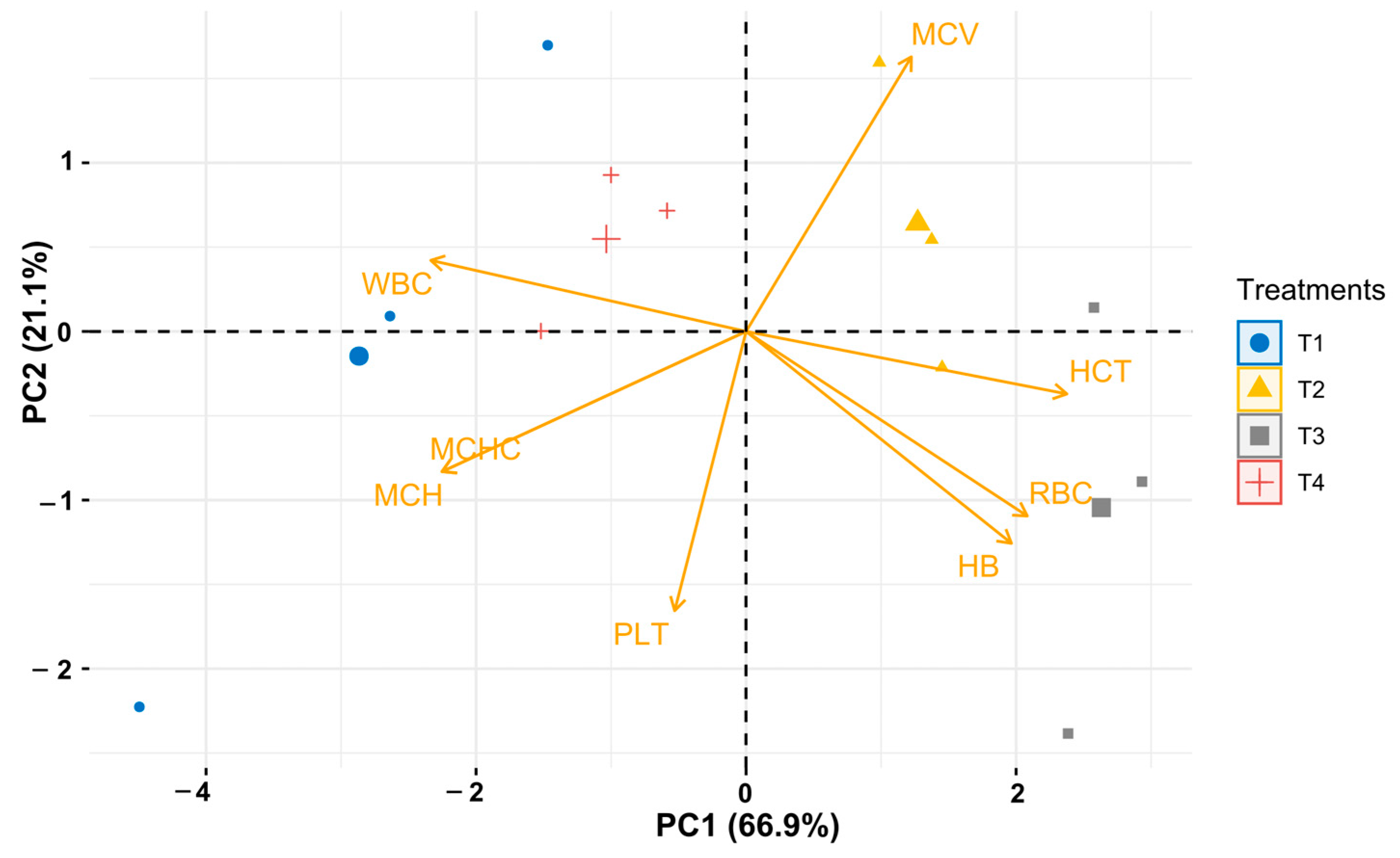
Figure 4 displays the collected principal component analysis (PCA) biplot of the relationship among haematological parameters and their association with four treatments. The first (PC1) and second (PC2) components accounted for 66.9% and 21.1% of the total variance (88%). Blood parameters such as HB, RBC, HCT are strongly and positively correlated, indicating similar direction along PC1. MCV had primarily along PC2 while WBC and MCHC appeared negatively correlated with RBC related parameters based on their opposite orientation. RBC and HB were positively correlated for treatment T3 because they formed a small angle and strongly influenced on first principal component (PC1). Since WBC and PLT met each other at 90° angle, they were not likely to be correlated.

3.4. Effect of Temperature on Biochemical Responses

At 30 °C some parameters such as albumin (1.84 ± 0.05 g dL−1), globulin (1.64 ± 0.06 g dL−1), HCO3 (30.93 ± 0.62), Na+ (115.60 ± 3.72 mmol L−1), alkaline phosphate (93.33 ± 9.39 IU L−1), Ast/SGOT (21.00 ± 4.55 IU L−1) were higher (p < 0.05) than other three temperatures (Table 4). Total Protein, A/G ratio, K+, ALT/ SGPT were higher (p < 0.05) at 34 °C (2.98 ± 0.03 g dL−1, 1.50 ± 0.11, 2.15 ± 0.04 mmol L−1, 19.33 ± 1.25 UL−1, respectively) and between 22 and 34 °C, there is no discernible change (p >0.05). (Table 4).
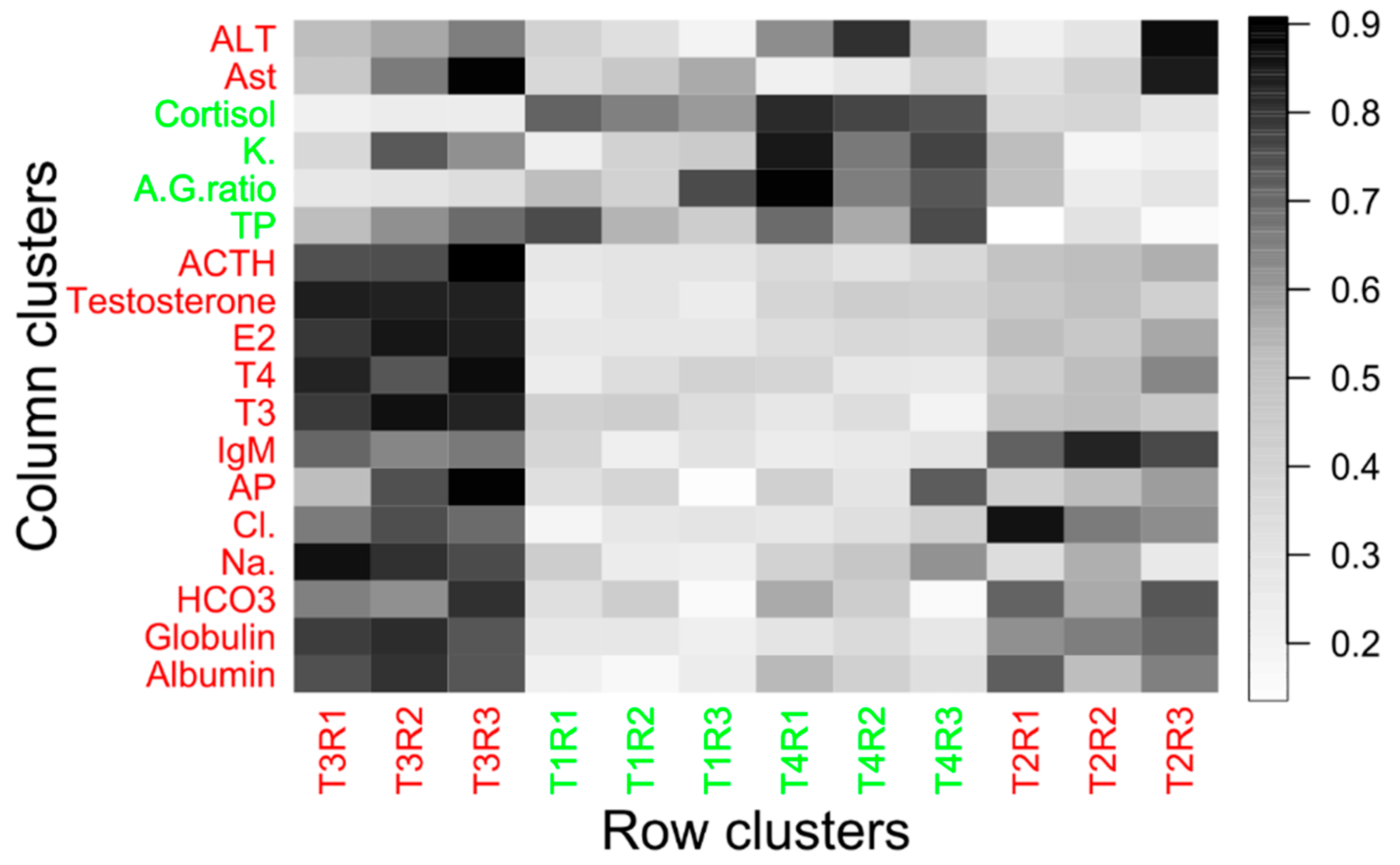
Figure 5 Shows the association between biochemical parameters and temperature using robust hierarchical co-clustering. Biochemical parameters such as albumin, globulin, HCO3, Na, Cl, AP, IgM, T3, T4, E2, Testosterone, ACTH, had strong association, so they were clustered closely, possibly indicating they respond similarly to 30 °C temperature. On the other hand, cortisol, K, A/G ratio and TP had strong association, and clustered closely, reflecting a similar response at 34 °C temperature. In the case of, ALT and AST remained closely and showed strong association with higher STI value at 34 °C and 30 °C temperature.
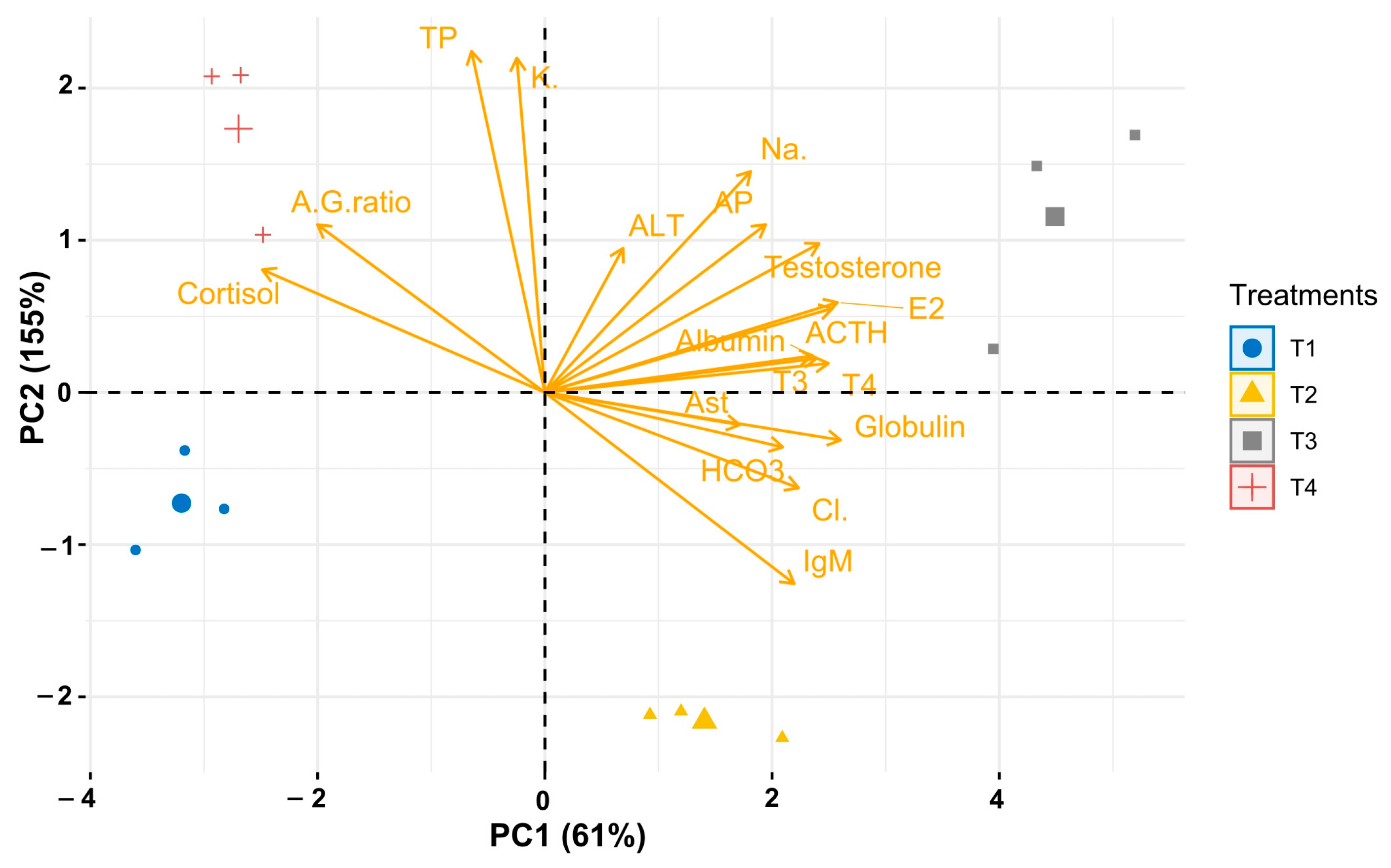
Figure 6 displays the collected principal components as a PCA biplot of the variables. Where the first (PC1) and second (PC2) components accounted for meaningful amounts of the total variance (76.5%). PC1 expressed 61% of the total variance and exhibited positive loadings for albumin, globulin, HCO3, Na, Cl, AP, IgM, T3, T4, E2, Testosterone, ACTH. On the other hand, negative loadings were noted for cortisol, A.G. ratio, TP and K. Biochemical parameters such as TP, K, AP loaded strongly and positively in PC2 that exhibited 15.5% of the total variance. In this figure, hormones including ACTH, testosterone, E2, T3, T4 along with NA, Cl, HCO3 and IgM had strong correlation, contributing significantly to the separation of T2 and T3 treatments. Meanwhile, T1 showed a strong negative association with these parameters. In contrast, T4 separates PC2 with high concentration of cortisol, A/G ratio.

3.5. Effect of Temperature on Hormonal Activity

3.5.1. Impacts of Water Temperature Fluctuations on Growth Hormone Levels

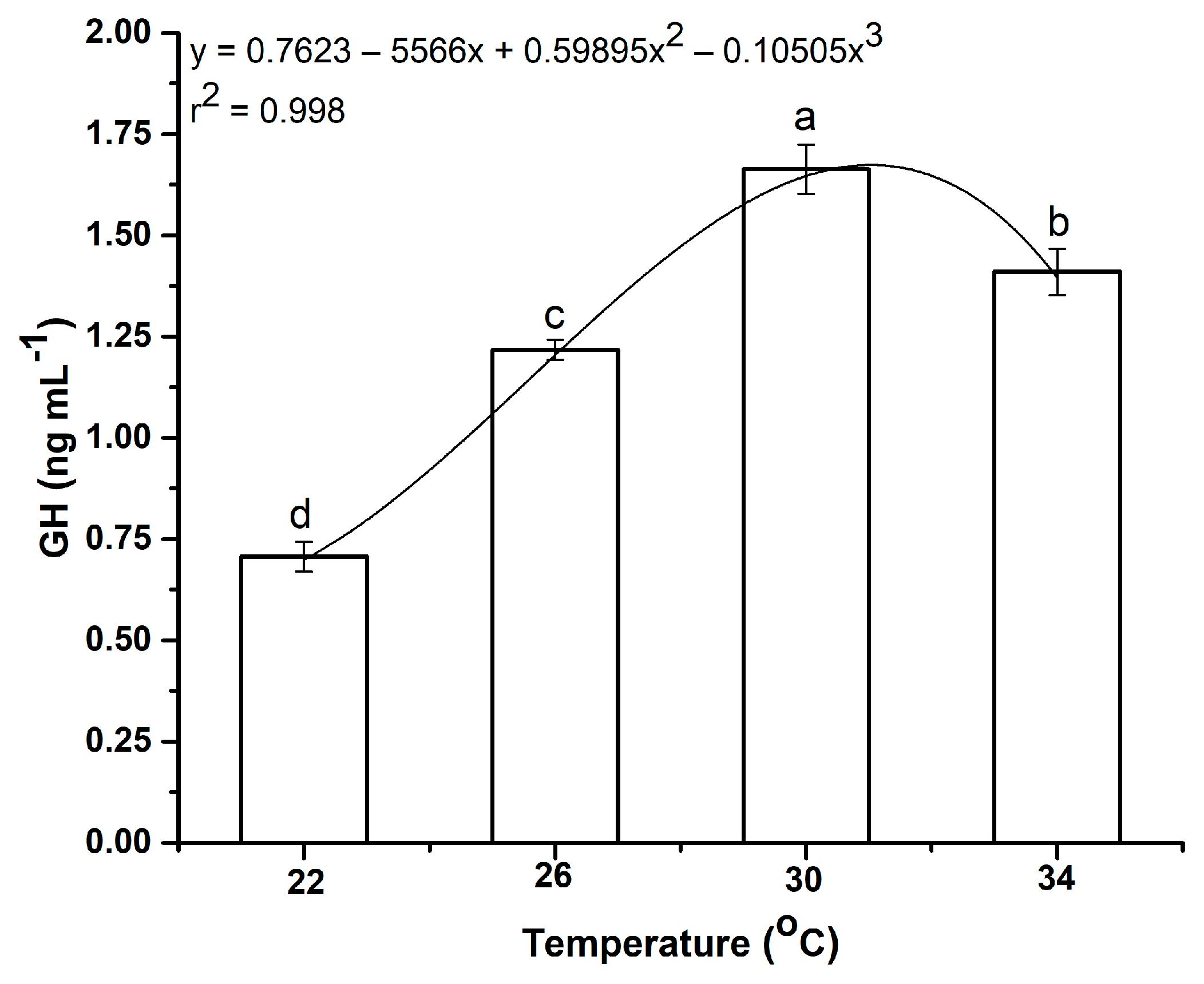
The growth hormone (GH) was lower at 22 °C. As the temperature increased, GH levels also rose significantly (p < 0.05) and the highest level was found at 30 °C, but after 30 °C, it can fall and lower growth was found at 34 °C (Figure 7). The polynomial cubic relationship between GH and temperature (T) could be described as GH = 0.7623 − 0.5566T + 0.59895T2 − 0.10505T3 and revealed that the relation between water temperature and GH is quite significant (r2 = 0.998, p < 0.05).

3.5.2. The Effects of Water Temperature Change on Serum Cortisol and Adrenocorticotropic Hormone (ACTH) Levels

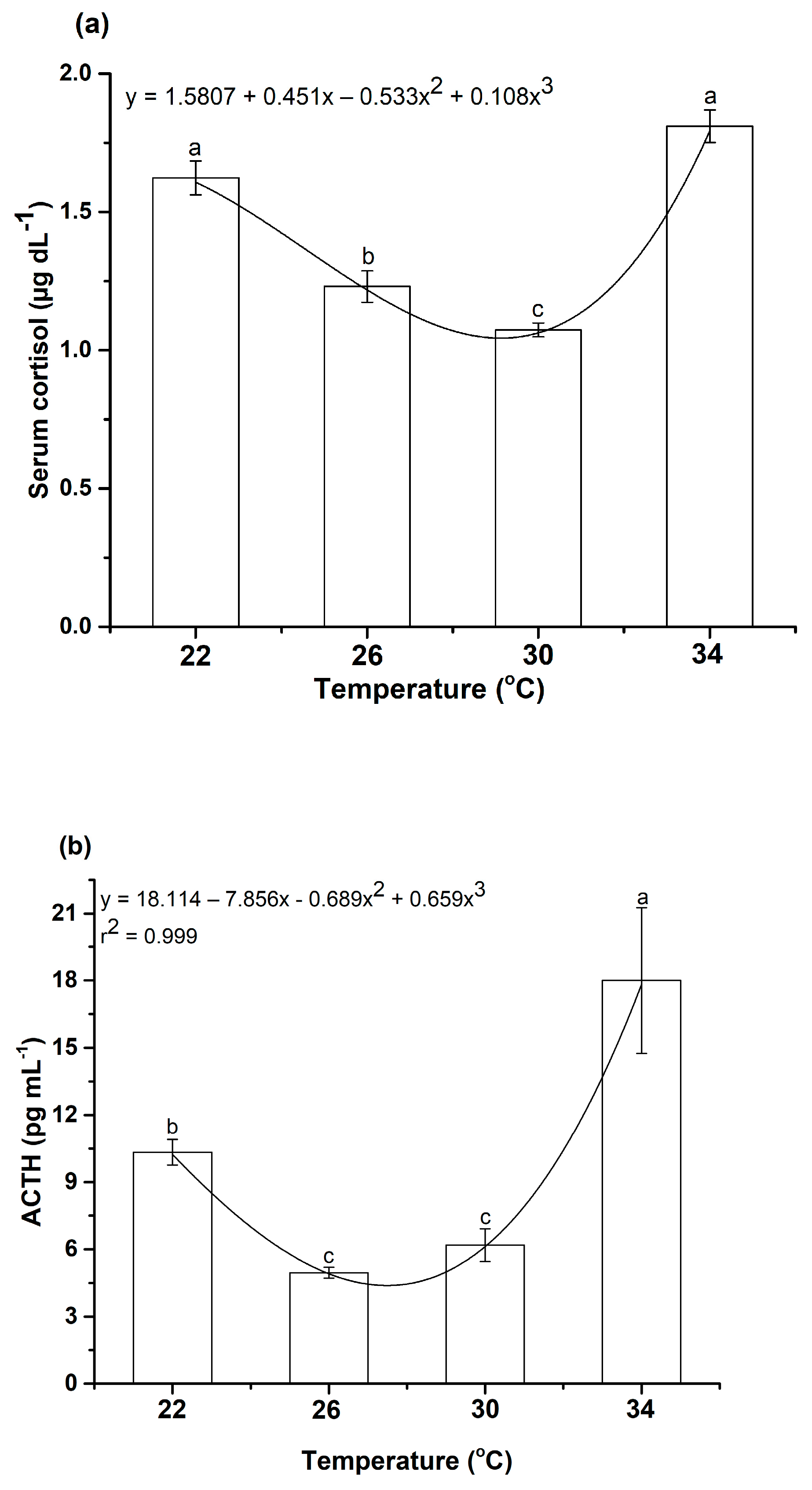
The current study used variations in serum cortisol levels to track how changes in water temperature affected L. calbasu’s stress response. The effects on fish serum cortisol concentrations after water temperature increases from 22 to 26, 30, and 34 °C, respectively, are depicted in Figure 8a. Results illustrate that at lower temperatures (22 °C) serum cortisol level was highest (1.62 ± 0.06 µg dL−1). By increasing temperature, the cortisol concentrations decreased to 30 °C (1.07 ± 0.03 µg dL−1). But at 34 °C suddenly serum cortisol was found at its highest level (1.81 ± 0.06 µg dL−1). Nevertheless, there is no substantial variation between 22 and 34 °C.
The decrease and/or increase in temperature induces a transient increase in ACTH level (Figure 8b). When the temperature increased from the control temperature (26 °C) the ACTH level increased and achieved its maximum temperature of 34 °C (18.01 ± 3.26 (pg mL−1). Again, the ACTH level also increased with decreasing temperature to 22 °C (10.33 ± 0.57 pg mL−1). The plasma ACTH value at 34 °C was significantly increased from the other treated fishes (p < 0.05). Nevertheless, there is no discernible difference between fish treated at 26 and 30 °C (p > 0.05). ACTH levels peaked in fish reared at 34 °C, followed by 22 °C, 30 °C, and 26 °C (Figure 8b).

3.5.3. Effects of Water Temperature Changes on Thyroid Hormones

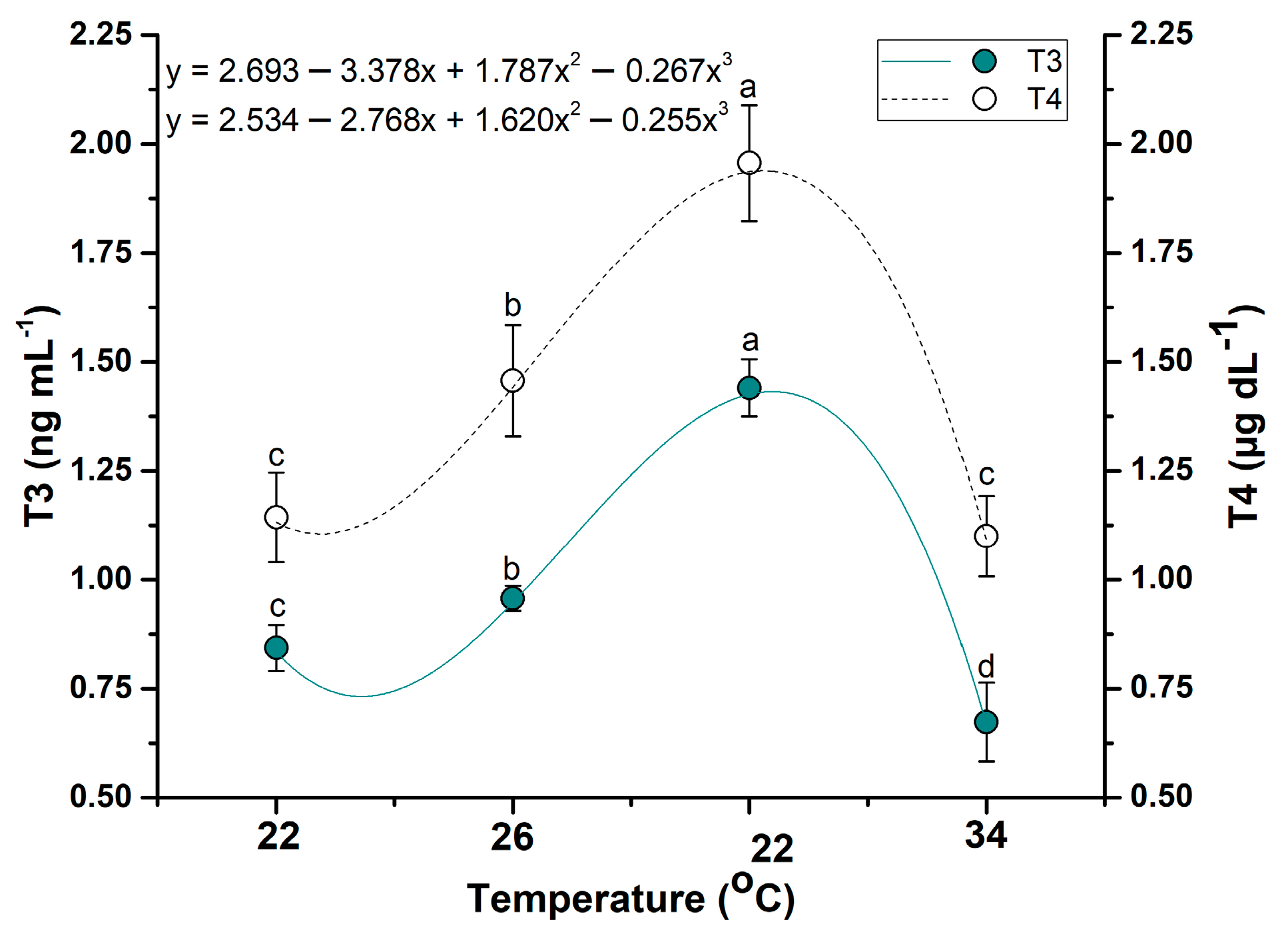
The free T3 and T4 levels displayed variations with temperature fluctuations (Figure 9). Initially, the T3 and T4 were found lower at 22 °C (0.84 ± 0.053 ng mL−1 and 1.14 ± 0.10 µg dL−1 respectively). With increasing temperature, both T3 and T4 increase exponentially up to 30 °C. After that, the thyroid hormones secretions started to reduce and reached the lowest level (0.67 ± 0.09 ng mL−1 and 1.1 ± 0.09 µg dL−1 respectively). The highest level of T3 was found at 30 °C (1.44 ± 0.07 ng mL−1) and significantly differed from the other treatments (p < 0.05). However, no noteworthy difference was revealed between 22 °C and 34 °C (p > 0.05). Similar trends also emerged in the instance of T4.

3.6. Effect of Temperature on Immunology

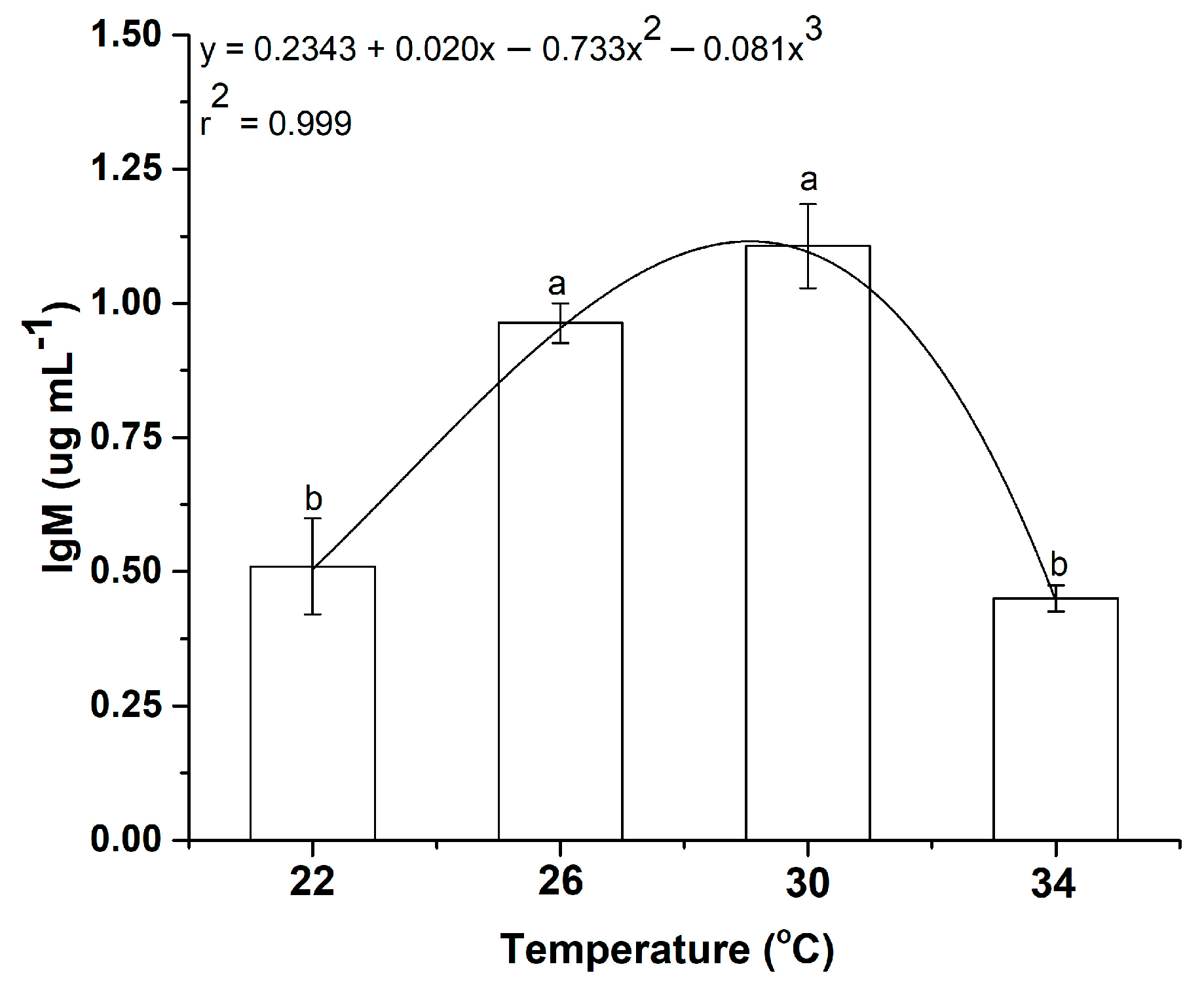
On the immune level, serum fish immunoglobulin M (IgM) levels were decreased in fish grown at lower (22 °C) and higher (34 °C) Temperature (Figure 10). It is notable that the highest fish immunoglobulin M (IgM) shown in fish raised at 30 °C (1.107 ± 0.079 ug mL−1) while the lowest level was recorded at 34 °C (0.45 ± 0.025 ug mL−1). There is no notable difference between the fishes reared at 26 and 30 °C. In the same way, fish housed at 22 and 34 °C did not differ significantly (p > 0.05). However, there were notable differences between the results at 26 and 30 °C and those at 22 and 34 °C.

4. Discussion

Stress in fish is broadly defined as the physiological response to threatening or adverse conditions, similar to other vertebrates [42]. It occurs when environmental factors deviate from the optimal range, impairing normal homeostatic regulation. Among these factors, water temperature plays a particularly significant role in influencing various physiological functions. Each fish species has a specific temperature range within which it operates efficiently, and deviations from this range can induce stress, interfering with normal behavior and biological processes [43]. In this experiment, several parameters measured (growth, metabolism, blood chemistry, growth hormone, cortisol, ACTH, T3, T4 levels, and immunoglobulin) were found to be rather stable at the control temperature (26 °C), suggesting that L. calbasu adapted well to this temperature. As a result, any alteration from this control temperature will lead to temperature-specific changes in how various features manifest.
Temperature influenced growth in this research, with the highest growth rate recorded at 30 °C. Throughout the experiment, temperatures ranged from 26 °C to 30 °C, during which the fish showed no adverse effects such as irreversible damage, loss of equilibrium, respiratory arrest, or reduced food intake. Due to the effect on feed intake, food digestion time, and enzyme activity, both FC and FCR decrease and increase when the temperature deviates from the ideal range [44]. These results may help to explain why the experiment’s FC and FCR values at 30 °C were satisfactory. The Malabar blood snapper showed good FCR values at 26 and 30 °C, which was in line with this result [44,45]. Katersky and Carter [46] showed that SGR peaked in Lates calcarifer between 33 and 36 °C, and that there was no appreciable change when the temperature increased from 27 to 36 °C. They also found that growth efficiency decreased as the temperature increased over 36 °C.
Finding information about the general health of the fish species requires knowledge of the haematological indicators. Stress alters the haematological parameters of fish, with downstream impacts on numerous physiological processes [14]. The results of the study showed that both high and low temperatures had a notable impact on the blood parameters of L. calbasu. The current results showed that at 30 °C, there was an increase in RBC, hemoglobin, HCT, and MCV. Fish have been shown to have a propensity to produce more hemoglobin and red blood cells as the temperature rises [47]. According to Witeska et al. [48], the WBC level is a known measure of fish health and is crucial for boosting innate or nonspecific immunity. The current study’s WBC content increased significantly at both the higher and lower temperature regimes (22 and 34 °C), which may encourage the production of antibodies in response to a stressful environment. The values observed in our current experiment are consistent with those found in Lutjanus malabaricus by Mazumder et al. [35] and Cyprinus carpio by [49]. Abnormal increases in WBC count at both lower and higher temperatures may be a sign that animal physiology is under thermal stress [50].
Serum biochemical characteristics are thought to be a reliable diagnostic method for assessing fish health and nutrition [51,52]. The fish in this study had reduced levels of total protein, albumin, and globulin after being exposed to both hot (34 °C) and cold water (22 °C). Yilmaz et al. [53] observed similar findings in O. mossambicus, O. niloticus, and red hybrid O. niloticus. According to the current study, L calbasu, which is most impacted by cold and hot water stress, has the largest levels of albumin and globulin, which suggests that the fish’s survival mechanisms are more active. Variations in the water temperature in this study caused L. calbasu’s hydromineral status to respond in a number of ways, as evidenced by variations in plasma osmolality and Na+, K+, and Cl values. Temperature variations had an impact on plasma osmolality, which rose as the temperature rose. The decreased temperature, however, had the most noticeable effect on the plasma ion levels (22 °C). Similarly, with Gilthead seabream (Sparus aurata) cultivated in earthen ponds, Vargas-Chacoff et al. [54,55] observed a positive correlation between temperature fluctuation and osmoregulatory performance. AST and ALT are important enzymes in assessing liver injury. When liver and heart cells are injured or their permeability increases, AST and ALT are released into the bloodstream, which raises blood transaminase activity [56]. In this research, the AST levels decreased with cold and hot water stress though, ALT level increased with increasing temperature. According to Zhou et al. [56], O. niloticus’s AST and ALT levels rose following a 6-h, 8 °C cold water stress. High temperatures decrease ionic regulation through the determination of transporter proteins in gills. Furthermore, differential expression of genes in processes related to oxidative stress, protein degradation, metabolism, cell trafficking, and ionic transport have been reported in the transcriptome of gill and kidney tissue in Chinook salmon (Oncorhynchus tshawytscha) and rainbow trout (Oncorhynchus mykiss) exposed to different temperatures [57,58].
Water temperature also affects the hormonal regulation of growth and stress responses in fish. Growth hormone (GH) levels, which are key regulators of fish growth, were found to be lower at 22 °C and higher at 30 °C, aligning with the optimal growth conditions observed in this study. However, at temperatures above 30 °C, the GH levels decreased, resulting in reduced growth. This pattern mirrors the findings of Mingarro et al. [59] and Figueroa et al. [60], who observed similar trends in other fish species, such as gilthead sea bream and carp.
The levels of the vertebrate stress hormones cortisol and ACTH are essential biochemical markers for assessing how stressed-out fish are [61,62]. The present findings showed that at lower temperatures (22 °C) cortisol and ACTH levels were higher. By increasing temperature, the cortisol concentrations decreased to 30 °C. But again at 34 °C, cortisol and ACTH levels increased dramatically. The behavioural alterations seen in this study are comparable to those seen in other species, including silver barbs (Barbonymus gonionotus) and Atlantic salmon (Salmo salar) [33,63]. ACTH is the primary modulator of cortisol secretion [64]. To counteract or lessen the negative effects of stressors, fish frequently use their liver’s protein stores for gluconeogenesis to produce more cortisol and ACTH under stressful conditions [48,62,65,66]. The detrimental effects of temperature fluctuations are demonstrated by the significantly higher cortisol and ACTH levels of L. calbasu under various temperature treatments during the course of the experiment. Higher cortisol and ACTH levels in the treatment groups until the end of the experiment further support the idea that L. calbasu in different temperature treatment groups were under continuous stress. According to Faught and Schaaf [67], stress impacts metabolic pathways and immune responses in fish by activating the Hypothalamus-pituitary interrenal (HPI) axis, which releases stress hormones like cortisol. These hormones bind to glucocorticoid and mineralocorticoid receptors on immune cells, modulating inflammation by regulating pro-inflammatory and anti-inflammatory gene expression. This interaction can suppress or enhance immune function, highlighting the complex role of stress in immune regulation.
A variety of external events and the physiological condition of fish may influence the relationship between thyroid hormone concentrations and water temperature [68]. Thyroid hormones, including T3 and T4, also play a key role in regulating metabolic processes and thermal adaptation. Our findings demonstrated that the concentrations of these hormones were lower in both cold (22 °C) and hot (34 °C) water, indicating that extreme temperatures impair the fish’s ability to acclimate metabolically. Similar results have been reported for rainbow trout [68] and carp [69], further emphasizing the role of thyroid hormones in thermal acclimation.
Immune function is a critical aspect of fish health, particularly in aquaculture settings where diseases can spread rapidly in dense farming environments. Immunoglobulin M (IgM), a key component of the immune system, was found to be highest in fish maintained at 30 °C, suggesting that this temperature supports optimal immune function. In contrast, both lower (22 °C) and higher (34 °C) temperatures resulted in decreased IgM levels, indicating compromised immune defense. These findings are consistent with research by Dominguez et al. [70], who reported similar trends in Nile tilapia, emphasizing the importance of maintaining a stable and optimal temperature for immune function in farmed fish.

5. Conclusions

In summary, the investigation of the extreme ambient temperature-mediated alterations in Kalibaus (Labeo calbasu) offers important new information about the physiological and biochemical responses of this species to heat stress. The results show notable changes in metabolic rates, hemato-biochemical indicators, and stress-induced reactions, underscoring the species’ susceptibility to temperature fluctuations. Notably, the hormonal responses show a disturbed homeostasis, which may affect overall health and stress, especially when it comes to growth and stress hormones. Furthermore, the immunological responses reveal a weakened defensive system, highlighting the negative consequences of temperature-induced stress on L. calbasu. Based on the aforementioned results, it can be concluded that a water temperature of 30 °C is most favorable for the optimal growth of L. calbasu and can be recommended for achieving the best growth performance in aquaculture systems. However, maintaining a consistent water temperature remains a significant challenge in practical aquaculture settings. To address this, a collaborative effort between industry stakeholders and aquaculture experts is necessary to develop cost-effective and efficient solutions for stabilizing water temperature in aquafarms, ultimately enhancing fish growth and farm productivity. The maximal temperature acclimatization and long-term adaptive responses to this species’ fitness in a changing climate situation, however, require more research. Furthermore, the results of this study support the need for more defensive signalling pathway research to help develop new cultivars that are better suited to drier climates of the future.

Author Contributions

S.K.M., M.L.R. and S.K.D. conceived and designed the experiments. M.S.M., S.R.D., M.N.H. and M.A.S. performed the statistical analysis and prepared the manuscript, the table and the figures. M.S.M., T.R. and M.N.I. conducted the experiment. M.N.I., T.R., S.R.D. and M.L.R. collected the samples. All authors have read and agreed to the published version of the manuscript.

Funding

The research was funded by the University Grants Commission of Bangladesh through the research grant 37.01.0000.073.01.150.22.1776.

Institutional Review Board Statement

All fish experiments in the present study were approved by the Research Management Wing of Gazipur Agricultural University, Bangladesh (Approval Code: GAU/RMW/2022/134(KA)6068, Approval date: 22 April 2025).

Informed Consent Statement

Not applicable.

Data Availability Statement

Data are contained within the article.

Acknowledgments

This research was financially supported by the University Grants Commission of Bangladesh through research grant #37.01.0000.073.01.150.22.1776, which is gratefully acknowledged. The authors also extend their appreciation to Gazipur Agricultural University.

Conflicts of Interest

The authors declare no conflicts of interest.

References

  1. Nur, F.; Batubara, A.; Eriani, K.; Tang, U.; Muhammada, A.A.; Siti-Azizah, M.N.; Wilkes, M.; Fadli, N.; Rizal, S.; Muchlisin, Z.A. Effect of water temperature on the physiological responses in Betta rubra, Perugia 1893 (Pisces: Osphronemidae). Int. Aquat. Res. 2020, 12, 1053. [Google Scholar]
  2. Lineman, M.; Do, Y.; Kim, J.Y.; Joo, G.J. Talking about climate change and global warming. PLoS ONE 2015, 10, e0138996. [Google Scholar] [CrossRef]
  3. Mazumder, S.K.; De, M.; Mazlan, A.G.; Zaidi, C.C.; Rahim, S.M.; Simon, K.D. Impact of global climate change on fish growth, digestion and physiological status: Developing a hypothesis for cause and effect relationships. J. Water Clim. Change 2015, 6, 200–226. [Google Scholar] [CrossRef]
  4. Mazumder, S.K.; Ghaffar, M.A.; Das, S.K. The effects of temperature on gastric emptying time of Malabar Blood Snapper (Lutjanus malabaricus, Bloch & Schneider 1801) using X-radiography technique. AIP Conf. Proc. 2015, 1678, 020032. [Google Scholar] [CrossRef]
  5. Cole, J.J.; Prairie, Y.T. Dissolved CO2. In Encyclopedia of Inland Waters; Likens, G.E., Ed.; Elsevier: Oxford, UK, 2009. [Google Scholar]
  6. Doney, S.C.; Fabry, V.J.; Feely, R.A.; Kleypas, J.A. Ocean acidification: The other CO2 problem. Annu. Rev. Mar. Sci. 2009, 1, 169–192. [Google Scholar] [CrossRef]
  7. Pachauri, R.K.; Allen, M.R.; Barros, V.R.; Broome, J.; Cramer, W.; Christ, R.; Church, J.A.; Clarke, L.; Dahe, Q.; Dasgupta, P.; et al. Climate change 2014: Synthesis report. Contribution of Working Groups I, II and III to the fifth assessment report of the Intergovernmental. In Panel on Climate Change; IPCC: Geneva, Switzerland, 2014; p. 151. [Google Scholar]
  8. Li, D.; Li, X.; Wang, Q.; Hao, Y. Advanced techniques for the intelligent diagnosis of fish diseases: A review. Animals 2022, 12, 2938. [Google Scholar] [CrossRef]
  9. Oczkowski, A.; McKinney, R.; Ayvazian, S.; Hanson, A.; Wigand, C.; Markham, E. Preliminary evidence for the amplification of global warming in shallow, intertidal estuarine waters. PLoS ONE 2015, 10, e0141529. [Google Scholar] [CrossRef] [PubMed]
  10. Gupta, B.K.; Sarkar, U.K.; Bhardwaj, S.K. Assessment of habitat quality with relation to fish assemblages in an impacted river of the Ganges basin, northern India. Environmentalist 2012, 32, 35–47. [Google Scholar] [CrossRef]
  11. Kjelland, M.E.; Woodley, C.M.; Swannack, T.M.; Smith, D.L. A review of the potential effects of suspended sediment on fishes: Potential dredging-related physiological, behavioral, and transgenerational implications. Environ. Sys. Dec. 2015, 35, 334–350. [Google Scholar] [CrossRef]
  12. Simpson, S.D.; Blanchard, J.L.; Genner, M.G. Impacts of climate change on fish. In The Pakistan Development Review; Pakistan Institute of Development Economics: Islamabad, Pakistan, 2013. [Google Scholar] [CrossRef]
  13. Prakoso, V.A.; Pouil, S.; Cahyanti, W.; Sundari, S.; Arifin, O.Z.; Subagja, J.; Kristanto, A.H.; Slembrouck, J. Fluctuating temperature regime impairs growth in giant gourami (Osphronemus goramy) larvae. Aquaculture 2021, 539, 736606. [Google Scholar] [CrossRef]
  14. Mazumder, S.K.; Das, S.K.; Bakar, Y.; Abd Ghaffar, M. Effects of temperature and diet on length-weight relationship and condition factor of the juvenile Malabar blood snapper (Lutjanus malabaricus Bloch & Schneider, 1801). J. Zhejiang Univ. 2016, 17, 580. [Google Scholar]
  15. Shahjahan, M.; Zahangir, M.M.; Islam, S.M.; Ashaf-Ud-Doulah, M.; Ando, H. Higher acclimation temperature affects growth of rohu (Labeo rohita) through suppression of GH and IGFs genes expression actuating stress response. J. Therm. Biol. 2021, 100, 103032. [Google Scholar] [CrossRef]
  16. Howerton, R. Best Management Practices for Hawaiian Aquaculturep; Center for Tropical and Subtropical Aquaculture Publication No. 148; Center for Tropical and Subtropical Aquaculture: Waimanalo, HI, USA, 2001. [Google Scholar]
  17. Fu, K.K.; Fu, C.; Qin, Y.L.; Bai, Y.; Fu, S.J. The thermal acclimation rate varied among physiological functions and temperature regimes in a common cyprinid fish. Aquaculture 2018, 495, 393–401. [Google Scholar] [CrossRef]
  18. Islam, M.J.; Kunzmann, A.; Bögner, M.; Meyer, A.; Thiele, R.; Slater, M.J. Metabolic and molecular stress responses of European seabass, Dicentrarchus labrax at low and high temperature extremes. Ecol. Indic. 2020, 112, 106118. [Google Scholar] [CrossRef]
  19. Maulvault, A.L.; Barbosa, V.; Alves, R.; Custódio, A.; Anacleto, P.; Repolho, T.; Ferreira, P.P.; Rosa, R.; Marques, A.; Diniz, M. Ecophysiological responses of juvenile seabass (Dicentrarchus labrax) exposed to increased temperature and dietary methylmercury. Sci. Total Environ. 2017, 586, 551–558. [Google Scholar] [CrossRef]
  20. Lawrence, M.J.; Raby, G.D.; Teffer, A.K.; Jeffries, K.M.; Danylchuk, A.J.; Eliason, E.J.; Hasler, C.T.; Clark, T.D.; Cooke, S.J. Best practices for non-lethal blood sampling of fish via the caudal vasculature. J. Fish Biol. 2020, 97, 4–15. [Google Scholar] [CrossRef] [PubMed]
  21. Fazio, F.; Saoca, C.; Acar, Ü.; Tezel, R.; Celik, M.; Yilmaz, S.; Kesbic, O.S.; Yalgin, F.; Yiğit, M. A comparative evaluation of hematological and biochemical parameters between the Italian mullet Mugil cephalus (Linnaeus 1758) and the Turkish mullet Chelon auratus (Risso 1810). Turk. J. Zool. 2020, 44, 22–30. [Google Scholar] [CrossRef]
  22. Adams, O. Thermal acclimation potential of Australian rainbow trou. In Oncorhynchus Mykiss; University of British Columbia: Kelowna, BC, Canada, 2020. [Google Scholar]
  23. Sharmin, S.; Shahjahan, M.; Hossain, M.A.; Haque, M.A.; Rashid, H. Histopathological changes in liver and kidney of common carp exposed to sub-lethal doses of malathion. Pak. J. Zool. 2015, 47, 1495–1498. [Google Scholar]
  24. Islam, M.A.; Uddin, M.H.; Uddin, M.J.; Shahjahan, M. Temperature changes influenced the growth performance and physiological functions of Thai pangas Pangasianodon hypophthalmus. Aquacul. Rep. 2019, 13, 100179. [Google Scholar] [CrossRef]
  25. O’Toole, C.; White, P.; Thomas, K.; O’Maoiléidigh, N.; Fjelldal, P.G.; Hansen, T.J.; Graham, C.T.; Brophy, D. Effects of temperature and feeding regime on cortisol concentrations in scales of Atlantic salmon post-smolts. J. Exp. Mar. Biol. Ecol. 2023, 569, 151955. [Google Scholar] [CrossRef]
  26. Little, A.G.; Kunisue, T.; Kannan, K.; Seebacher, F. Thyroid hormone actions are temperature-specific and regulate thermal acclimation in zebrafish (Danio rerio). Bmc. Biol. 2013, 11, 26. [Google Scholar] [CrossRef]
  27. Nelson, E.R.; Habibi, H.R. Estrogen receptor function and regulation in fish and other vertebrates. Gen. Comp. Endocrinol. 2013, 192, 15–24. [Google Scholar] [CrossRef]
  28. Habibi, M.; Zamiri, M.J.; Akhlaghi, A.; Shahverdi, A.H.; Alizadeh, A.R.; Jaafarzadeh, M.R. Effect of dietary fish oil with or without vitamin E supplementation on fresh and cryopreserved ovine sperm. Anim. Prod. Sci. 2016, 57, 441–447. [Google Scholar] [CrossRef]
  29. Bowden, T.J. Modulation of the immune system of fish by their environment. Fish Shellfish Immunol. 2008, 25, 373–383. [Google Scholar] [CrossRef]
  30. Kim, J.H.; Kang, J.C. Oxidative stress, neurotoxicity, and metallothionein (MT) gene expression in juvenile rock fish Sebastes schlegelii under the different levels of dietary chromium (Cr6+) exposure. Ecotoxicol. Environ. Saf. 2016, 125, 78–84. [Google Scholar] [CrossRef]
  31. Pörtner, H.O. Ecosystem effects of ocean acidification in times of ocean warming: A physiologist’s view. Mar. Ecol. Prog. Ser. 2008, 373, 203–217. [Google Scholar] [CrossRef]
  32. Gupta, S.; Banerjee, S. A review on Labeo calbasu (Hamilton) with an emphasis on its conservation. J. Fish. 2015, 3, 301–308. [Google Scholar] [CrossRef]
  33. Hossain, M.A.; Wahab, M.A.; Shah, M.S.; Barman, B.K.; Hoq, M.E. Habitat and fish diversity: Bangladesh perspective. In Recent advances in fisheries of Bangladesh. Ban. Fish. Res. For. Dhaka 2014, 246, 1–26. [Google Scholar]
  34. Islam, M.S.; Ashaf-Ud-Doulah, M.; Hasan, M.S.; Biplob, M.S.I.; Ryhan, N.B. Effects of temperature on parameters of calbasu Labeo calbasu fingerlings at laboratory condition. Int. J. Fish. Aquat. Stud. 2022, 10, 156–159. [Google Scholar] [CrossRef]
  35. Mazumder, S.K.; Ghaffar, M.A.; Das, S.K. Exploring the suitable temperature and diet for growth and gastric emptying time of juvenile Malabar Blood Snapper (Lutjanus malabaricus Bloch & Schneider, 1801). Thalassas 2019, 35, 29–41. [Google Scholar]
  36. Wright, G.L., Jr. High resolution two-dimensional polyacrylamide electrophoresis of human serum proteins. Am. J. Clin. Pathol. 1972, 57, 173–185. [Google Scholar] [CrossRef]
  37. Ye, J.; Liu, X.; Wang, Z.; Wang, K. Effect of partial fish meal replacement by soybean meal on the growth performance and biochemical indices of juvenile Japanese flounder Paralichthys olivaceus. Aquacult. Int. 2011, 19, 143–153. [Google Scholar] [CrossRef]
  38. Yu, X.; Zhang, X.; Wang, Z.; Jiang, H.; Lv, Z.; Shen, J.; Wen, K. Universal simultaneous multiplex ELISA of small molecules in milk based on dual luciferases. Anal. Chim. Acta 2018, 1001, 125–133. [Google Scholar] [CrossRef]
  39. Dean, A.; Voss, D. (Eds.) Design and Analysis of Experiments; Springer: Berlin/Heidelberg, Germany, 1999. [Google Scholar]
  40. Sokal, R.R.; Rohlf, F.J. Biometry: The Principles and Practice of Statistics in Biological Research; W.H. Freeman & Co.: San Francisco, CA, USA, 1995. [Google Scholar]
  41. Zar, J.H. Biostatistical Analysis, 2nd ed.; Prentice Hall: Hoboken, NJ, USA, 1984. [Google Scholar]
  42. Schreck, C.B.; Tort, L. The concept of stress in fish. In Fish Physiology; Academic Press: London, UK, 1941; Volume 35, pp. 1–34. [Google Scholar]
  43. Beitinger, T.L.; Bennett, W.A.; McCauley, R.W. Temperature tolerances of North American freshwater fishes exposed to dynamic changes in temperature. Environ. Biol. Fishes 2000, 58, 237–275. [Google Scholar] [CrossRef]
  44. Mazumder, S.K.; Fivelstad, S.; Ghaffar, M.A.; Das, S.K. Haematological and biochemical responses of juvenile Malabar blood snapper (Lutjanus molabaricus Bloch & Schneider, 1801) exposed to different rearing temperatures and diets. Sains Malays. 2019, 48, 1790–1810. [Google Scholar]
  45. Webster, P.J. Dynamics of the Tropical Atmosphere and Oceans; John Wiley & Sons: Hoboken, NJ, USA, 2000. [Google Scholar]
  46. Katersky, R.S.; Carter, C.G. Growth efficiency of juvenile barramundi, Lates calcarifer, at high temperatures. Aquaculture 2020, 250, 775–780. [Google Scholar] [CrossRef]
  47. Islam, S.M.; Akhter, F.; Jahan, I.; Rashid, H.; Shahjahan, M. Alterations of oxygen consumption and gills morphology of Nile tilapia acclimatized to extreme warm ambient temperature. Aquacult. Rep. 2022, 23, 101089. [Google Scholar] [CrossRef]
  48. Witeska, M.; Kondera, E.; Bojarski, B. Hematological and hematopoietic analysis in fish toxicology—A review. Animals 2023, 13, 2625. [Google Scholar] [CrossRef]
  49. Sharma, M.; Shukla, P. Impact of temperature variation on haematological parameters in fish Cyprinus carpio. J. Ent. Zool. Stud. 2021, 9, 134–136. [Google Scholar]
  50. Sikorska, J.; Kondera, E.; Kamiński, R.; Ługowska, K.; Witeska, M.; Wolnicki, J. Effect of four rearing water temperatures on some performance parameters of larval and juvenile crucian carp, Carassius carassius, under controlled conditions. Aquacult. Res. 2018, 49, 3874–3880. [Google Scholar] [CrossRef]
  51. Rashmeei, M.; Shekarabi, S.P.H.; Mehrgan, M.S.; Paknejad, H. Stimulatory effect of dietary chasteberry (Vitex agnus-castus) extract on immunity, some immune-related gene expression, and resistance against Aeromonas hydrophila infection in goldfish (Carassius auratus). Fish Shellfish Immunol. 2020, 107, 129–136. [Google Scholar] [CrossRef]
  52. Gheytasi, A.; Hosseini Shekarabi, S.P.; Islami, H.R.; Mehrgan, M.S. Feeding rainbow trout, Oncorhynchus mykiss, with lemon essential oil loaded in chitosan nanoparticles: Effect on growth performance, serum hemato-immunological parameters, and body composition. Aquacult. Int. 2021, 29, 2207–2221. [Google Scholar] [CrossRef]
  53. Yilmaz, S.; Ergün, S.; Çelik, E.Ş.; Banni, M.; Ahmadifar, E.; Dawood, M.A. The impact of acute cold water stress on blood parameters, mortality rate and stress-related genes in Oreochromis niloticus, Oreochromis mossambicus and their hybrids. J. Therm. Biol. 2021, 100, 103049. [Google Scholar] [CrossRef]
  54. Vargas-Chacoff, L.; Arjona, F.J.; Ruiz-Jarabo, I.; García-Lopez, A.; Flik, G.; Mancera, J.M. Water temperature affects osmoregulatory responses in gilthead sea bream (Sparus aurata L.). J. Therm. Biol. 2020, 88, 102526. [Google Scholar] [CrossRef] [PubMed]
  55. Vargas-Chacoff, L.; Arjona, F.J.; Ruiz-Jarabo, I.; Páscoa, I.; Gonçalves, O.; Martín del Río, M.P.; Mancera, J.M. Seasonal variation in osmoregulatory and metabolic parameters in earthen pond-cultured gizalthead sea bream Sparus auratus. Aquacult. Res. 2009, 40, 1279–1290. [Google Scholar] [CrossRef]
  56. Zhou, T.; Gui, L.; Liu, M.; Li, W.; Hu, P.; Duarte, D.F.; Niu, H.; Chen, L. Transcriptomic responses to low temperature stress in the Nile tilapia, Oreochromis niloticus. Fish Shellfish Immunol. 2019, 84, 1145–1156. [Google Scholar] [CrossRef]
  57. Sáez-Arteaga, A.; Viegas, I.; Palma, M.; Dantagnan, P.; Valdebenito, I.; Villalobos, E.F.; Hernández, A.; Guerrero-Jiménez, J.; Metón, I.; Heyser, C. Impact of increasing temperatures on neuroendocrine and molecular responses of skeletal muscle and liver in fish: A comprehensive review. Aquac. Rep. 2024, 39, 102448. [Google Scholar] [CrossRef]
  58. Huang, J.; Li, Y.; Liu, Z.; Kang, Y.; Wang, J. Transcriptomic responses to heat stress in rainbow trout Oncorhynchus mykiss head kidney. Fish Shellfish Immunol. 2018, 82, 32–40. [Google Scholar] [CrossRef]
  59. Mingarro, M.; de Celis, S.V.R.; Astola, A.; Pendón, C.; Valdivia, M.M.; Pérez-Sánchez, J. Endocrine mediators of seasonal growth in gilthead sea bream (Sparus aurata): The growth hormone and somatolactin paradigm. Gen. Comp. Endocr. 2002, 128, 102–111. [Google Scholar] [CrossRef]
  60. Figueroa, J.; Martín, R.S.; Flores, C.; Grothusen, H.; Kausel, G. Seasonal modulation of growth hormone mRNA and protein levels in carp pituitary: Evidence for two expressed genes. J. Comp. Physiol. B 2005, 175, 185–192. [Google Scholar] [CrossRef] [PubMed]
  61. Esmaeili, N. Blood performance: A new formula for fish growth and health. Biology 2021, 10, 1236. [Google Scholar] [CrossRef]
  62. Mridul, M.M.I.; Zeehad, M.S.K.; Aziz, D.; Salin, K.R.; Hurwood, D.A.; Rahi, M.L. Temperature induced biological alterations in the major carp, Rohu (Labeo rohita): Assessing potential effects of climate change on aquaculture production. Aquacult. Rep. 2024, 35, 101954. [Google Scholar] [CrossRef]
  63. Handeland, S.O.; Arnesen, A.M.; Stefansson, S.O. Seawater adaptation and growth of post-smolt Atlantic salmon (Salmo salar) of wild and farmed strains. Aquaculture 2003, 220, 367–384. [Google Scholar] [CrossRef]
  64. Fryer, J.N. Neuropeptides regulating the activity of goldfish corticotropes and melanotropes. Fish Physiol. Biochem. 1989, 7, 21–27. [Google Scholar] [CrossRef]
  65. Wu, J.; Zhang, S.; Li, W.; Qin, S.; He, Y.; Yang, Z.; Buchanan, T.W.; Liu, C.; Zhang, K. Cortisol awakening response predicts intrinsic functional connectivity of the medial prefrontal cortex in the afternoon of the same day. Neuroimage 2015, 122, 158–165. [Google Scholar] [CrossRef]
  66. Sadoul, B.; Geffroy, B. Measuring cortisol, the major stress hormone in fishes. J. Fish Biol. 2019, 94, 540–555. [Google Scholar] [CrossRef] [PubMed]
  67. Faught, E.; Schaaf, M.J. The mineralocorticoid receptor plays a crucial role in macrophage development and function. Endocrinology 2023, 164, bqad127. [Google Scholar] [CrossRef] [PubMed]
  68. Pavlov, D.S.; Pavlov, E.D.; Kostin, V.V.; Ganzha, E.V. Influence of water temperature on thyroid hormones and on the movement behavior of juvenile rainbow trout (Oncorhynchus mykiss) in water flow. Environ. Biol. Fishes 2022, 105, 1989–2000. [Google Scholar] [CrossRef]
  69. Arslan, G.; Sahin, T.; Hisar, O.; Hisar, S.A. Effects of low temperature and starvation on plasma cortisol, triiodothyronine, thyroxine, thyroid-stimulating hormone and prolactin levels of juvenile common carp (Cyprinus carpio). Mar. Sci. Tec. Bull. 2015, 4, 5–9. [Google Scholar]
  70. Dominguez, M.; Takemura, A.; Tsuchiya, M. Effects of changes in environmental factors on the non-specific immune response of Nile tilapia, Oreochromis niloticus L. Aquacult. Res. 2005, 36, 391–397. [Google Scholar] [CrossRef]
Figure 1. Map showing the sampling site.
Fishes 11 00046 g001
Figure 2. Experimental procedure. For 60 days, L. calbasu was kept under four treatments for the experiment.
Fishes 11 00046 g002
Figure 3. Haematological parameters and temperature relationship are indicated by robust hierarchical co-clustering (method = ward. D2 and distance = Manhattan). The stress tolerance index (STI) values derived from the parameters under study were grouped and normalized. The treatment (temperature) level produced four-row clusters (row clusters 1, 2, 3, and 4), whereas the parameter level produced three-column clusters (column clusters 1, 2, and 3). The cluster numbers were established using the machine language of the gap statistic. The intensity of the modified STI values of the parameters is expressed by various greyscale tones. Variables highlighted in red and green denote groups of physiological indicators responding distinctly among treatments, illustrating treatment-specific clustering patterns.
Fishes 11 00046 g003
Figure 4. The association between treatments and observed haematological parameters is specified by a PCA biplot. The direction of the rising values for each factor is indicated by the yellow arrows. Depending on how divergent they are from one another, parameters are distributed in various ordinates. The temperature and haematological parameters of a vector in this biplot show the proportion of the parameters to the principal components and the quality of representation, respectively. Whether the qualities interacted favorably or unfavorably is indicated by the angles between the vectors created from the biplots’ midway point.
Fishes 11 00046 g004
Figure 5. The relationship between biochemical characteristics and temperature is demonstrated through strong hierarchical co-clustering (method = ward. D2, distance = Manhattan). The stress tolerance index (STI) values derived from the studied parameters were grouped and normalized. The temperature treatments created four row clusters (row clusters 1, 2, 3, and 4), while the parameters formed three column clusters (column clusters 1, 2, and 3). The cluster numbers were determined using the machine learning technique of the gap statistic. The varying intensities of the modified STI values for the parameters are represented by different greyscale shades. Variables highlighted in red and green denote groups of physiological indicators responding distinctly among treatments, illustrating treatment-specific clustering patterns.
Fishes 11 00046 g005
Figure 6. The association between treatments and observed biochemical parameters is specified by a PCA biplot. The direction of the rising values for each factor is indicated by the yellow arrows. Depending on how divergent they are from one another, parameters are distributed in various ordinates. In this biplot, a vector’s temperature and biochemical properties show how well it is represented and how much it contributes to the principal components. Whether the qualities interacted favorably or unfavorably is indicated by the angles between the vectors created from the biplots’ midway point.
Fishes 11 00046 g006
Figure 7. Relationship between Growth Hormone (GH, ng mL−1) and temperature (°C). Values are presented as mean ± SE (n = 15). Patterns with various letters differ significantly (p < 0.05). The line defines the polynomial cubic model fitted to the mean data to show the general trends in growth hormone with temperatures.
Fishes 11 00046 g007
Figure 8. Relationship between (a) cortisol (µg dL−1) and (b) adrenocorticotropic Hormone (ACTH) with temperature (°C) acclimated to four distinct temperatures (22, 26, 30 and 34 °C). Significant differences exist between patterns with different letters (p < 0.05). The line illustrates the general patterns in cortisol and ACTH with temperature by fitting a polynomial cubic model to the mean data.
Fishes 11 00046 g008
Figure 9. T3, T4, and temperature adapted to four distinct temperatures (22, 26, 30, and 34 °C) are related. Values are shown as mean ± SE (n = 15), and trends have significant variation (p < 0.05) with different letters. Filled circles represent data for T3 and white circles represent data for T4. The solid and broken lines illustrate the general patterns in T3 and T4 with temperature by fitting a polynomial cubic model to the mean data.
Fishes 11 00046 g009
Figure 10. Relationship between IgM and temperature. Mean ± SE (n = 15) is used to express values. Significant differences exist between trends with different letters (p < 0.05). The line defines the polynomial cubic model fitted to the mean data to show the general trends in immunoglobulin M with temperatures.
Fishes 11 00046 g010
Table 1. Physico-chemical parameters monitored during the experiment.
Water Quality ParameterTemperatures (°C)
22263034
pH7.5 ± 0.2 a7.5 ± 0.4 a7.7 ± 0.3 a7.7 ± 0.2 a
DO (mg L−1)5.4 ± 0.20 a5.5 ± 0.14 a5.6 ± 0.66 a5.3 ± 0.19 a
NH3-N (mg L−1)0.22 ± 0.03 a0.24 ± 0.04 a0.19 ± 0.02 a0.15 ± 0.01 a
Means ± SE are used for values. Within the same row, mean values that are followed by a common superscript letter do not differ significantly (p < 0.05).
Table 2. Growth performances of L. calbasu (Mean ± SE).
Variables Temperature (°C)
22263034
ITL10.38 ± 0.18 a9.75 ± 0.16 a9.97 ± 0.11 a10.15 ± 0.11 a
FTL10.94 ± 0.11 a10.74 ± 0.14 a11.26 ± 0.12 a10.87 ± 0.10 b
IBW10.6 ± 0.28 a9.8 ± 0.10 b9.71 ± 0.10389 b10.28 ± 0.06 a
FBW12.29 ± 0.28 b12.37 ± 0.25 b12.78 ± 0.12 a12.19 ± 0.11 b
TLG0.56 ± 0.11 b0.99 ± 0.17 a1.29 ± 0.15 a0.72 ± 0.09 b
BWG1.69 ± 0.36 b2.57 ± 0.21 ab3.07 ± 0.20 a1.91 ± 0.51 b
FCR1.91 ± 0.05 c1.62 ± 0.06 a1.51 ± 0.13 a1.83 ± 0.07 b
FCE0.52 ± 0.05 b0.62 ± 0.02 a0.66 ± 0.03 a0.55 ± 0.10 ab
CF0.93 ± 0.08 a1.02 ± 0.20 a0.92 ± 0.19 a0.96 ± 0.15 a
Sur100100100100
Means ± SE are used for values. Within the same row, mean values that are followed by a common superscript letter do not differ significantly (p < 0.05).
Table 3. Haematological parameter of the blood of L. calbasu (Mean ± SE).
Blood ParameterTemperature (°C)
22263034
RBC (×106 mm−3)0.64 ± 0.05 d1.05 ± 0.14 b1.42 ± 0.20 a0.85 ± 0.04 c
WBC1.73 ± 0.07 a1.12 ± 0.03 c0.86 ± 0.03 d1.58 ± 0.04 b
Haemoglobin (g dL−1)5.63 ± 0.12 c6.87 ± 0.49 b8.47 ± 0.81 a6.23 ± 0.26 b
HCT (%)17.67 ± 2.87 d34.33 ± 1.70 b42.67 ± 1.70 a24.00 ± 1.63 c
MCV277.87 ± 43.30 b332.06 ± 29.97 a307.69 ± 46.76 ab282.21 ± 26.99 b
MCH (pg)3.28 ± 0.57 a2.00 ± 0.06 c1.99 ± 0.25 c2.60 ± 0.12 b
MCHC (g dL−1)32.80 ± 5.65 a19.98 ± 0.61 b19.92 ± 2.49 b26.04 ± 1.21 a
PLT (×105)4.31 ± 0.42 a2.44 ± 0.16 b3.96 ± 0.46 a1.08 ± 0.02 c
Means ± SE are used for values. Within the same row, mean values that are followed by a common superscript letter do not differ significantly (p < 0.05).
Table 4. Biochemical parameter of the blood of L. calbasu (Mean ± SE).
ParametersTemperature (°C)
22263034
Total Protein (g d L−1)2.95 ± 0.05 a2.78 ± 0.04 b2.96 ± 0.03 a2.98 ± 0.03 a
Albumin (g d L−1)1.15 ± 0.05 d1.67 ± 0.09 b1.84 ± 0.05 a1.43 ± 0.10 c
Globulin (g d L−1)0.88 ± 0.04 c1.45 ± 0.05 b1.64 ± 0.06 a0.95 ± 0.05 c
A/G ratio1.32 ± 0.12 a1.16 ± 0.09 b1.12 ± 0.02 b1.50 ± 0.11 a
HCO3 (TCO3)28.33 ± 0.92 b30.77 ± 0.48 a30.93 ± 0.62 a28.83 ± 1.27 b
Alkaline Phosphate (AP, IU L−1)69.00 ± 6.48 b81.33 ± 3.30 a93.33 ± 9.39 a80.00 ± 8.83 a
Ast/SGOT (U L−1)16.00 ± 1.63 b17.67 ± 5.25 ab21.00 ± 4.55 a12.33 ± 2.05 c
ALT/SGPT (U L−1)16.07 ± 0.87 b17.67 ± 3.09 ab18.60 ± 0.54 a19.33 ± 1.25 a
Na+ (mmol L−1)84.57 ± 5.48 b89.48 ± 7.17 ab115.60 ± 3.72 a96.13 ± 4.97 b
K+ (mmol L−1)1.97 ± 0.04 b1.95 ± 0.07 c2.06 ± 0.06 a2.15 ± 0.04 a
Cl (mmol L−1)59.13 ± 2.41 c79.43 ± 5.53 a78.27 ± 1.77 a67.10 ± 2.54 b
Means ± SE are used for values. Within the same row, mean values that are followed by a common superscript letter do not differ significantly (p < 0.05).
Disclaimer/Publisher’s Note: The statements, opinions and data contained in all publications are solely those of the individual author(s) and contributor(s) and not of MDPI and/or the editor(s). MDPI and/or the editor(s) disclaim responsibility for any injury to people or property resulting from any ideas, methods, instructions or products referred to in the content.