Article

Nesting and Reproductive Behavior of the Sand-Dwelling Goby Hazeus ammophilus (Gobiidae) with Radial Ditches Around Its Nest


by
Hiroshi Kawase
1,* and
Takeru Tsuhako
2
1
Coastal Branch of Natural History Museum and Institute, 123 Yoshio, Katsuura 299-5242, Chiba, Japan
2
Sensui-Annai Okinawa, 1-10-28 Agariyamamoto-Machi, Uruma 904-1101, Okinawa, Japan
*
Author to whom correspondence should be addressed.
Fishes 2026, 11(1), 45; https://doi.org/10.3390/fishes11010045

Submission received: 31 October 2025 / Revised: 25 December 2025 / Accepted: 3 January 2026 / Published: 9 January 2026
(This article belongs to the Section Biology and Ecology)

Abstract

The reproductive behavior and nest-building activity of the sand-dwelling goby Hazeus ammophilus were investigated to examine its nesting characteristics and to determine how and why this species builds radial structures around its nests. Field observations revealed that males spawned with multiple females in open muddy-sand bottoms, using bivalve shells or fallen leaves as spawning substrates. Males cared for eggs after spawning and repeatedly mated with multiple females, suggesting a male-territory-visiting polygamous mating system. A distinctive feature of this species was the presence of radial ditches extending from the nest. These ditches developed through repeated male behaviors of digging from the nest toward the surrounding area and sweeping accumulated sand out of the nest, resulting in a crater-like structure around the nest. These behaviors may contribute to cleaning and stabilizing the spawning substrate, and the resulting structures themselves may also be involved in female mate choice. Taken together, these findings indicate that H. ammophilus has evolved a flexible reproductive strategy, and nest-building behavior possibly adapted to unstable open sandy environments, highlighting the behavioral diversity and ecological plasticity within gobiid fishes.
Key Contribution: This study provides the first description of the nesting and reproductive behavior of Hazeus ammophilus. Males build nests surrounded by radial ditches by blowing sand with their fins, revealing a unique nest-building process.

Graphical Abstract

1. Introduction

Gobies (family Gobiidae) comprise about 198 genera and approximately 1359 species worldwide [1]. They are found in marine, brackish, and, rarely, freshwater environments, inhabiting most tropical and subtropical regions [1]. Gobies occupy diverse habitats, including coral reefs, rocky reefs, sandy and gravel bottoms, mangrove forests, rivers, and lakes [2]. They spawn in various locations, such as on the ceilings and walls of rocks (e.g., Priolepis cincta [3]), between coral branches (e.g., Paragobiodon echinocephalus [4]), on the walls of burrows dug in sandy bottoms (e.g., Acanthogobius flavimanus [5]), and on exposed rock surfaces on sandy bottoms (e.g., Fusigobius neophytus [6]). In many species, males alone guard and care for the eggs until they hatch [7].
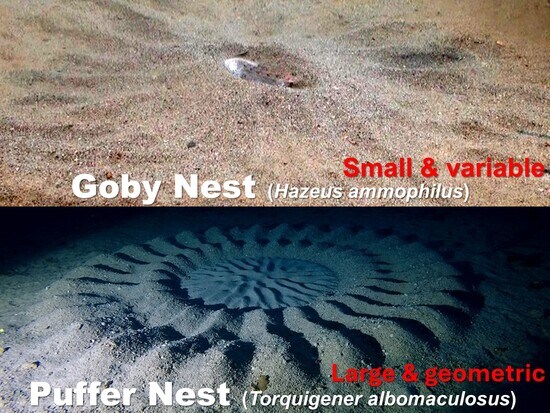
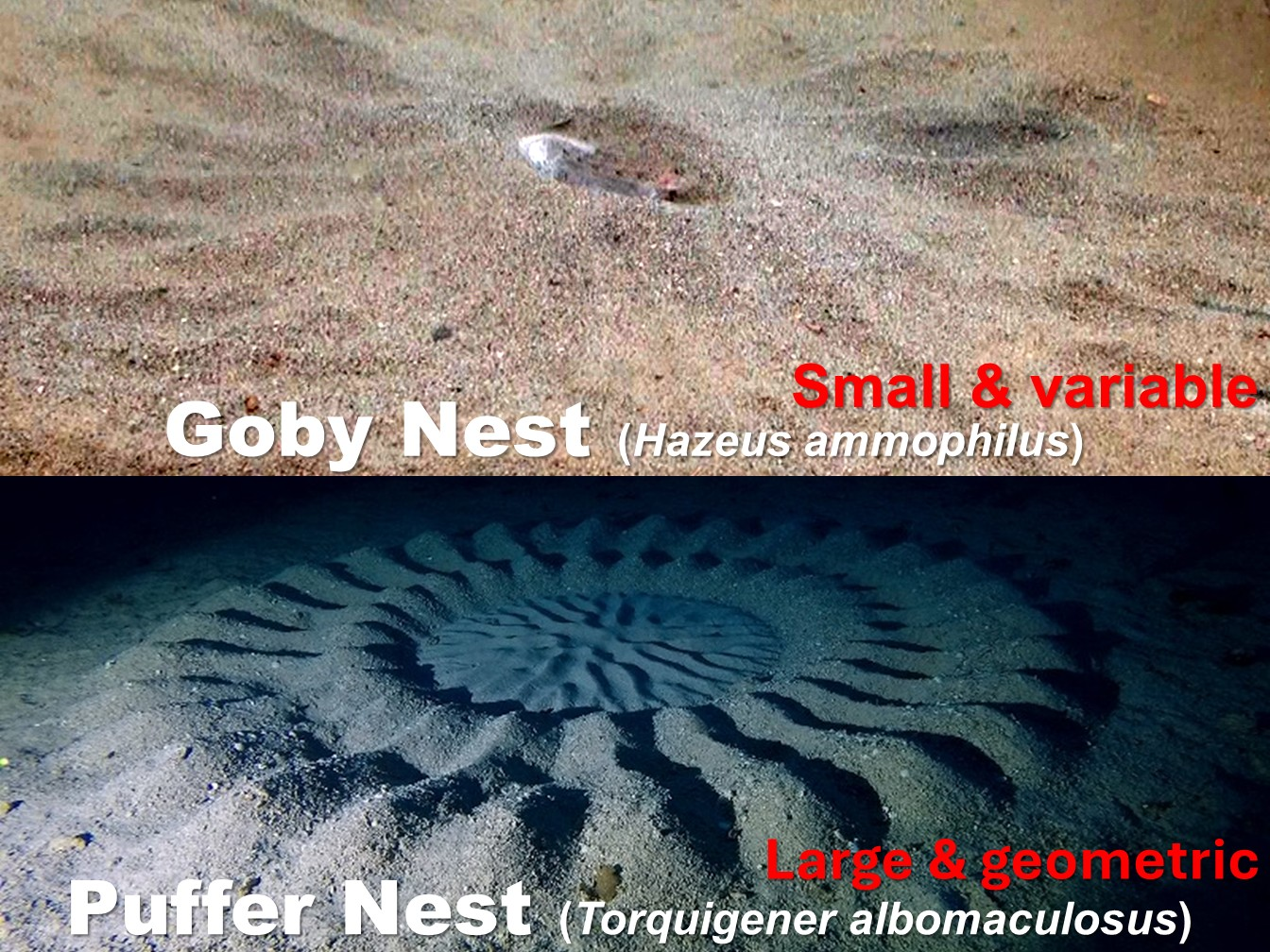
Hazeus ammophilus is a small goby inhabiting tropical sandy bottoms in the western Pacific Ocean from Papua New Guinea (Milne Bay Province) and Indonesia (West Papua Province and Anambas Islands, South China Sea) [8]. Before its formal description, this species had been provisionally referred to as Oplopomops sp. (e.g., [2]). We observed that this goby cares for the eggs laid on the surfaces of dead bivalve shells on muddy-sand bottoms, and that its nests are surrounded by radially arranged ditches. Radially ditched nests have also been reported in Favonigobius gymnauchen [9]; however, no studies have investigated how and why these ditches are built around the nests. Interestingly, similar radial structures have been reported even in a different taxonomic group, the family Tetraodontidae. Males of the white-spotted pufferfish Torquigener albomaculosus construct elaborate geometric circular structures measuring about 2 m in diameter on sandy seabeds [10,11,12,13,14], which are thought to influence female mate choice. Furthermore, these structures are constructed according to a simple algorithm [15].
In this study, we aimed to: (1) examine the nest characteristics, nesting behavior, spawning behavior, and parental egg-care of H. ammophilus, (2) investigate how and why this goby builds radial structures around its nests through field and aquarium observations, (3) compare the reproductive behaviors and nest characteristics of H. ammophilus with those of other gobies inhabiting sandy bottoms and with the elaborate, geometrically shaped nests of the pufferfish T. albomaculosus, and (4) compare the nest-building behavior and algorithm between the goby and the pufferfish.

2. Materials and Methods

2.1. Underwater Observations

We conducted a total of 12 underwater scuba observations (c.a. one hour per dive) of the goby Hazeus ammophilus on muddy-sand bottoms off Red Beach located on the eastern coast of Okinawa Island, Japan (26.4462° N, 127.9060° E) on 24–25 April and on 16–18 May 2018. We established a 20 × 20 m2 observation area on a muddy-sand bottom at a depth of 7–8 m, approximately 100 m offshore from the beach. At the beginning of each observation period, we searched for the nests of H. ammophilus in the observation area and inserted a numbered peg into the seabed beside each nest to mark its location. Using a tape measure and a compass, we recorded nest locations on waterproof graph paper attached to a plastic board. At each nest site, we placed a ruler outside the nest and took an overhead photograph of the entire nest using a digital camera (Olympus TG-5 digital camera with PT-58 housing, Olympus Corporation, Tokyo, Japan). From the photographs, we analyzed nest shapes and measured the lengths and areas of each part using image analysis software (ImageJ 1.51j8, NIH, Bethesda, MD, USA). We also measured the total lengths of the nesting individuals in the first observation period.
To investigate nesting behavior, spawning behavior, and parental egg-care, we visually observed the nesting individuals and recorded photographs and videos using a digital camera. To continuously monitor the behavior of individual nest holders, we set up two video cameras (e.g., GoPro HERO 6 BLACK; Woodman Labs, Inc., San Mateo, CA, USA) in front of two selected nests and recorded continuous video for approximately 2 h per dive.
On the last day of the second observation period, we collected a subset of the nesting individuals using a hand net, along with the spawning substrates they had used. The specimens and substrates were first fixed in 10% formalin and subsequently transferred to 70% ethanol for storage in storage vials. Later, we measured the total length and standard length of the nesting individuals and the major and minor axes of the spawning substrates using calipers. When eggs were present on the substrates, we measured egg diameter, developmental stage, and egg number under a stereomicroscope (OLYMPUS SZ40 with a vertical lighting system LG-PS2, Olympus Corporation, Tokyo, Japan). For hatched eggs, we measured the total length of the larvae.
During the periods above-mentioned, as well as on 22–23 October 2019, 9–10 March 2020, 29–31 October 2023, and 27–29 February 2024, we conducted a total of 22 observations and monitored the nesting status of H. ammophilus and conducted the following manipulative perturbation experiments: (1) placing bivalve shells near active nests, (2) sprinkling sand from the seabed over active nests using a spoon, (3) blowing sand away from active nests using a wash bottle, and (4) leveling and erasing the ditches formed around the nests. After each manipulation, we visually observed the behavior of the nest holders and recorded photographs and videos. During the underwater observations, we measured the water temperature in the observation area using the temperature function of a diving computer (SUUNTO D6, Vantaa, Finland).
To examine the annual nesting status, we conducted approximately monthly underwater observations from 16 February 2021 to 21 February 2022, for a total of nine dives. During each dive, we searched for up to four H. ammophilus individuals nesting within the observation area and recorded the presence or absence of eggs. The nesting individuals and any non-nesting individuals observed nearby were herded into a fence net (10 m wide, 1 m high) and collected using a hand net. A temperature data logger (HOBO Pendant Temperature Data Logger UA-001-64; Onset Computer Corporation, Bourne, MA, USA) was installed in the observation area and recorded the water temperature at 30 min intervals from 9 March 2020 to 31 August 2022, including the period of these observations. Collected individuals were shipped alive to the Coastal Branch of Natural History Museum and Institute, Chiba, anesthetized in the laboratory with 10 ppm benzocaine, and measured for total length and standard length. Sex was determined by examining the genital papilla under a stereomicroscope. These individuals were subsequently used in the aquarium experiments described below.

2.2. Aquarium Observations

From June to December 2021, we conducted aquarium experiments in the laboratory of our museum using the collected specimens (a total of 38 males and 8 females). We used one glass aquarium (60 × 30 × 36 cm3) and three glass aquaria (45 × 30 × 30 cm3) for the experiments. The bottoms of the aquaria were covered with approximately 3 cm of muddy-sand substrate collected from the field observation area. Filtered seawater, supplied through an intake pipe from the sea in front of the museum (35.1338° N, 140.2839° E, depth 2 m), was used to maintain the aquaria at ambient temperature (23–29 °C). After 19 October, a heater was installed in each aquarium to maintain a water temperature of 24–25 °C. The fish were maintained under natural light entering through the windows without artificial fluorescent lighting, and were fed pelleted food once daily.
To examine social interactions, spawning duration, interspawning interval, and parental egg-care period, we kept males and females in various combinations in the aquaria. Each day between 08:00 and 18:00, we recorded videos by placing two video cameras (e.g., GZ-RY980, JVC KENWOOD Co., Yokohama, Japan) in front of two selected aquaria, and analyzed the footage later. On 31 July 2021, we placed additional bivalve shells into two aquaria containing a male (39 mm TL) and a female (30 mm TL) (aquarium I), and a male (41 mm TL) and a female (30 mm TL) (aquarium IV), respectively, and observed the males’ nest-building behavior.

2.3. Statistical Analyses

Statistical analyses were conducted using Microsoft Excel 2024 (Microsoft Corporation, Redmond, WA, USA) and its add-in software Statcel 3 (OMS Publication Ltd., Tokyo, Japan). Differences between two groups in nest-to-nest distances and behavioral frequencies of males were evaluated using the Mann–Whitney U test. The correlation between male total length and the mean ditch length dug by the individual was assessed using Pearson’s correlation test. Multiple regression analysis was performed to examine relationships between the number of eggs in a nest and male standard length, nest area, and mean ditch length.

2.4. Specimen, Videos and Photos

The fish specimens collected in this study, along with the videos and photographs taken, have been deposited at the Coastal Branch of Natural History Museum and Institute, Chiba. Some male specimens are preserved together with the spawning substrates used in the field and the eggs attached to them. Of the photographs and videos used in this study, Figure 3D and Video S5 were taken by T. Tsuhako, and all others were taken by H. Kawase.

3. Results

3.1. Nest Morphology and Egg Characteristics

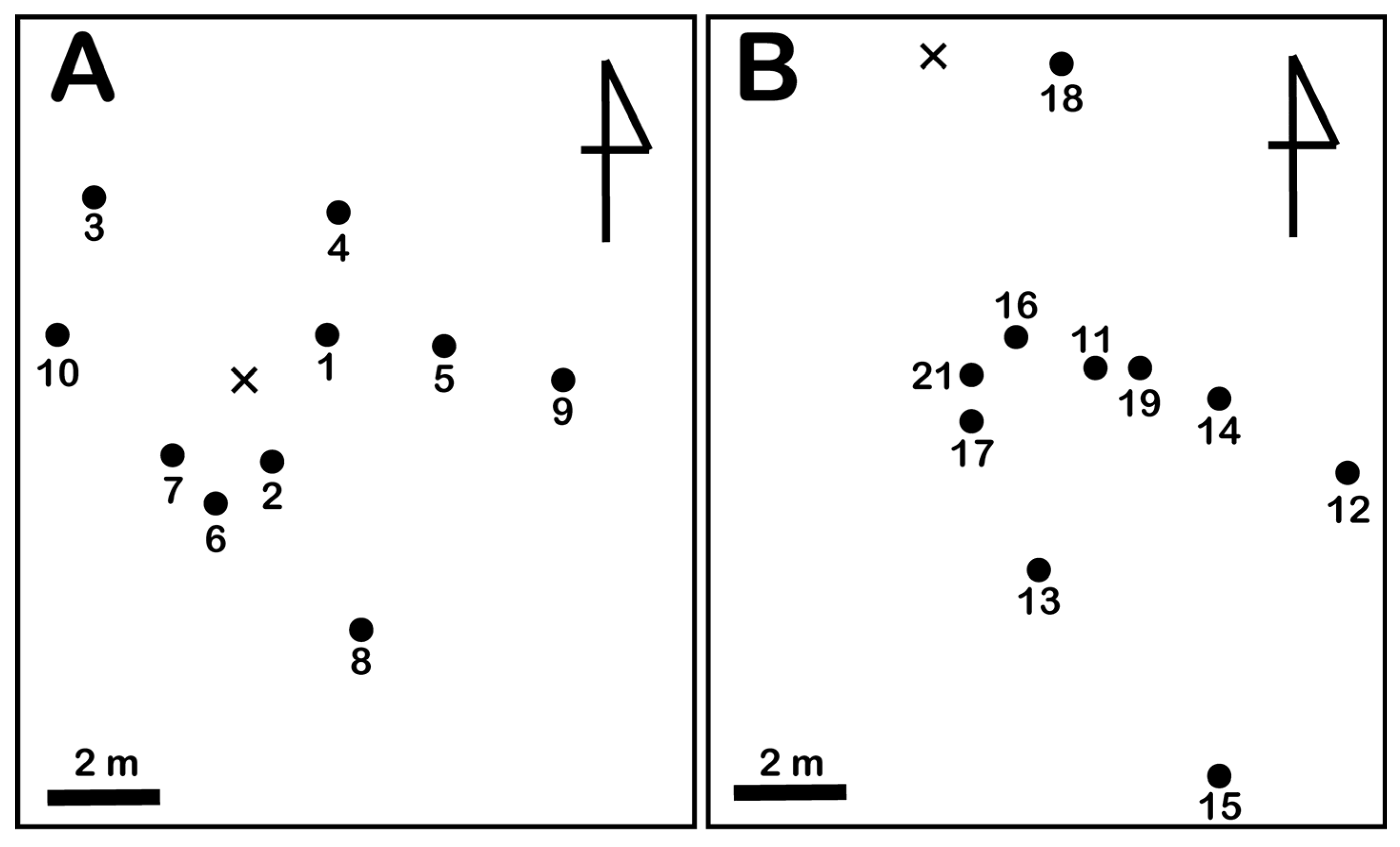
During the underwater surveys conducted at Red Beach, in April and May 2018 (water temperature 23–27 °C), we found 10 and 11 nests of Hazeus ammophilus, respectively, within the observation area (Figure 1, Table 1). All nest holders were males, measuring 41.3 mm in total length (TL) on average (range 37.5–45.3 mm, n = 19). The nest locations had changed substantially one month later. The nearest-neighbor distance between nests was 2.54 m (range 1.45–4.15 m, n = 10) in April and 2.61 m (range 0.95–6.10 m, n = 10) in May, with no significant difference between the two months (Mann–Whitney U test: Z = −0.076, p = 0.940).
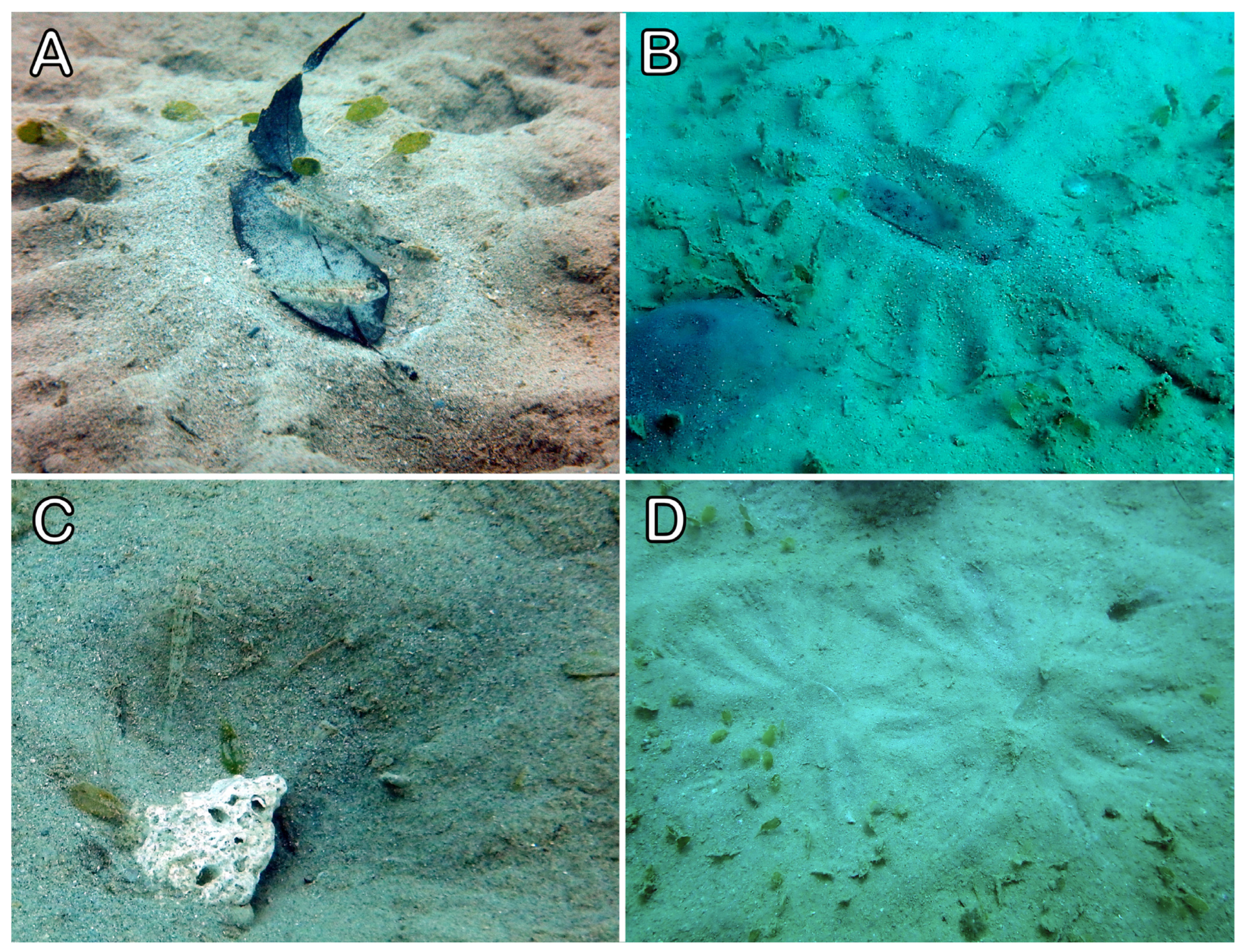
As spawning substrates, dead bivalve shells (42.9%, n = 9), dead leaves of terrestrial plants (33.3%, n = 7), and other materials such as wood fragments or artificial objects (23.8%, n = 5) were used (Figure 2). The mean major and minor axes of the substrates were 51.5 mm (range 17.8–90.9 mm) and 26.3 mm (range 11.8–55.9 mm), respectively (n = 19), and the mean substrate area was 1141.0 mm2 (range 173.9–3427.4 mm2, n = 19). Radially arranged ditches surrounding the substrate were observed in 85% of the nests (n = 20). The number of ditches averaged 10.4 (range 3–20, n = 17), and their mean length was 60.9 mm (range 35.7–94.7 mm, n = 17). The mean major and minor diameters of the nest area, including the ditches, were 114.5 mm (range 54.7–179.5 mm) and 67.6 mm (range 38.8–101.9 mm), respectively (n = 17). No significant correlation was found between male total length and mean ditch length (Pearson’s correlation: r = 0.138, p = 0.598).
Eggs were found on 85.0% of the spawning substrates (n = 20). In 88.2% of these cases, the eggs were attached to the floor of the substrate (Figure 2A,B,D), while in two cases, they were found on the ceiling (Figure 2C) or the wall. The eggs were spindle-shaped, with a mean major and minor axis of 0.743 mm (range 0.702–0.821 mm) and 0.494 mm (range 0.468–0.522 mm), respectively (n = 10). A bundle of adherent threads was present at one end of each egg, anchoring it to the substrate. Newly hatched larvae measured 1.74 mm in total length on average (range 1.63–1.85 mm, n = 10). The mean number of eggs per nest was 2193 (range 210–4511, n = 13). Among the seven nests for which developmental stages were determined, four consisted of eggs at a single stage (eyed or uneyed), whereas three contained eggs at two or three stages, ranging from pre-embryonic to nearly hatching. A multiple regression analysis was performed with egg number as the dependent variable and male total length, nest area, mean ditch length, and number of ditches as explanatory variables, but none of the variables were significant (adjusted R2 = 0.040, n = 16; total length: t = −1.044, p = 0.319; nest area: t = 1.548, p = 0.150; mean ditch length: t = −1.421, p = 0.183; number of ditches: t = 0.182, p = 0.859).

3.2. Behavior of Nest-Holding Males

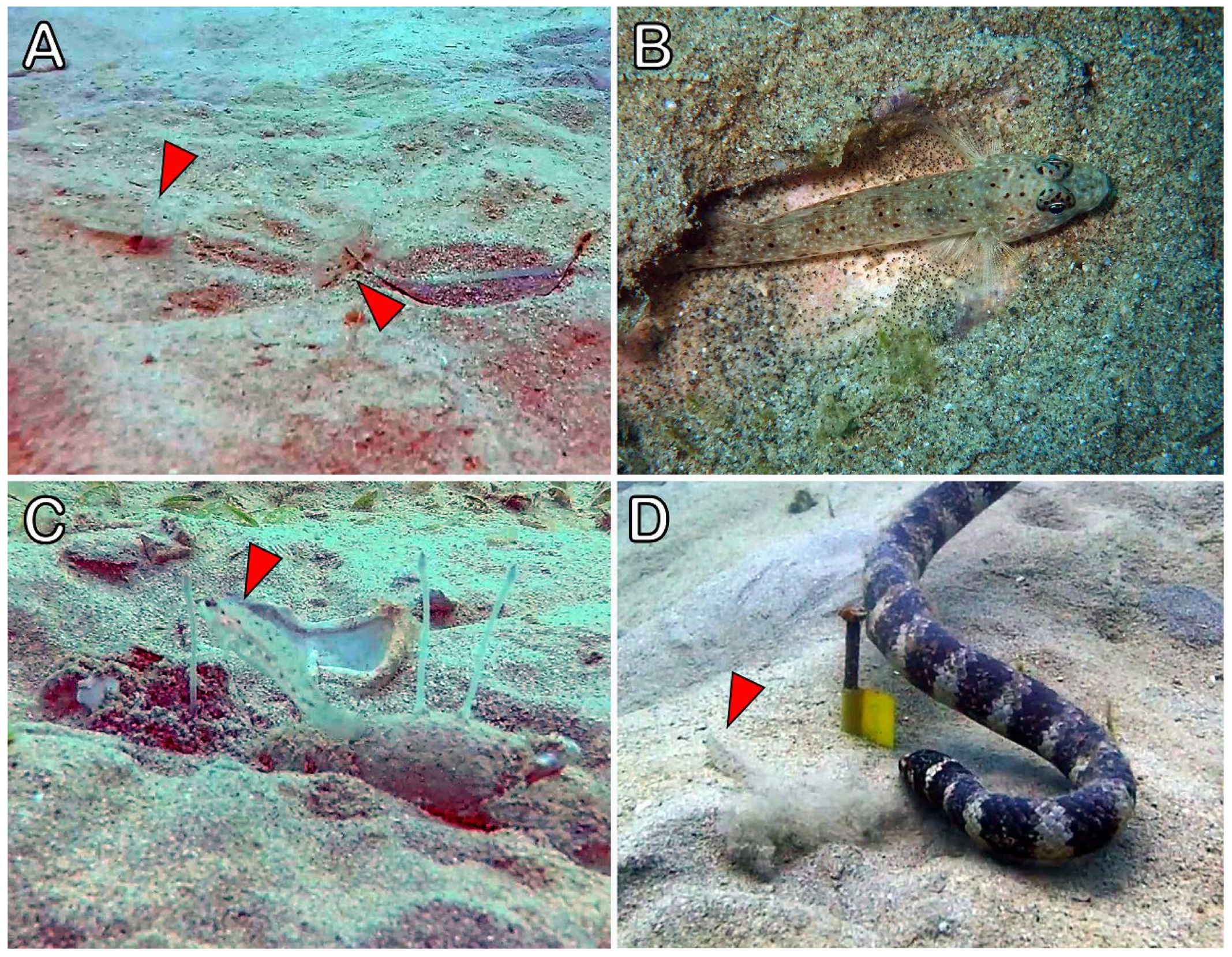
Video analyses (total observation time: 10 h 13 min 48 s) of four nest-holding males of M1, M2, M6, and M8 revealed that when a non-nesting male approached a nest holder, the resident male displayed aggressive behaviors such as threatening or chasing the intruder (0.489 bouts h−1) and blocking the intruder’s access to the nest with its body (0.293 bouts h−1) (Figure 3A). Occasionally, these encounters escalated into fights between the two males (7.04 bouts h−1) (Video S1). On 24 April 2018, an intense fight was observed between male M1 and an unidentified non-nesting male shortly after the start of the observation at 17:00. At 17:48, the non-nesting male drove M1 away and immediately began eating the eggs on M1’s spawning substrate.
In the case of male M6, video analysis (2 h 40 min 6 s) on 24 April 2018 showed that spawning had already begun at the start of the observation (16:48), and the female entered and exited the nest four times until 18:47. When the female approached, the male performed a hopping display toward her and then turned back to the nest, leading the female inside. Once inside, the female spawned on the surface of the substrate (Video S2). The duration of a single spawning bout (from female entry to exit) was 748 s on average (range 259–1085 s, n = 4). Regardless of the female’s presence, the male frequently rubbed his abdomen against the substrate with wriggling movements (29.6 bouts h−1) (Table 2, WR). Video analysis of an unidentified nesting male A on May 18, 2018 (1 h 45 min) revealed that spawning had already been occurring at 09:19, and six spawning events were recorded until 10:11. The mean duration of spawning was 293 s (range 38–1029 s, n = 6). Similar to male M6, this male also showed wriggling behavior (16.6 bouts h−1).
After spawning, females left the nests, while males remained nearby to care for the eggs. Male parental care included both direct and indirect egg care. The direct care (egg tending) consisted of fanning the eggs with the fins to circulate water and cleaning the egg surface (31.5 bouts h−1) (Figure 3B, Video S3). The indirect care (egg guarding) involved defensive behaviors such as blocking or threatening other conspecific males that approached the nest, as described above. On 29 October 2023, a nest-holding male was observed attacking a sentinel crab that approached the nest (Figure 3C, Video S4). On 12 March 2021, when the egg-eating sea snake Emydocephalus ijimae approached, the male covered the nest with sand to conceal the eggs (Figure 3D, Video S5).
Nest-holding males were also observed digging ditches around their spawning substrates. They advanced linearly from the edge of the substrate while fanning their fins (5.28 bouts h−1) (Table 2, DO), causing sand to accumulate inside the substrate. Males also took sand into their mouths and expelled it inside the substrate (3.23 bouts h−1) (Table 2, SO–I). These behaviors were observed even in the absence of egg predators.
When approximately 1 cm3 of sand was placed on a nest under parental care, nest-holding males always (100%, n = 4) fanned the sand out of the nest (Table 2, FS). When sand inside a nest was blown away with a wash bottle, 31.3% (n = 16) of the males subsequently brought sand back into the nest by fin-fanning (DO) or mouth transport (SO–I). When the radial ditches around the nest were leveled and erased, 33.3% (n = 3) of the males reconstructed them.
When a dead bivalve shell was placed 15 cm away from the nesting substrate of male M16, the male began using both substrates for nesting. As a result, radial ditches were formed around both substrates, and some of them overlapped (Figure 2D). Similarly, when a shell was placed 50 cm away from the nesting substrate of male M14, the male initially used both shells for nesting. However, a non-nesting male appeared and engaged in intense displays and attacks with M14. Eventually, the intruding male monopolized the newly placed shell and began nesting there.

3.3. Nest Construction Behavior

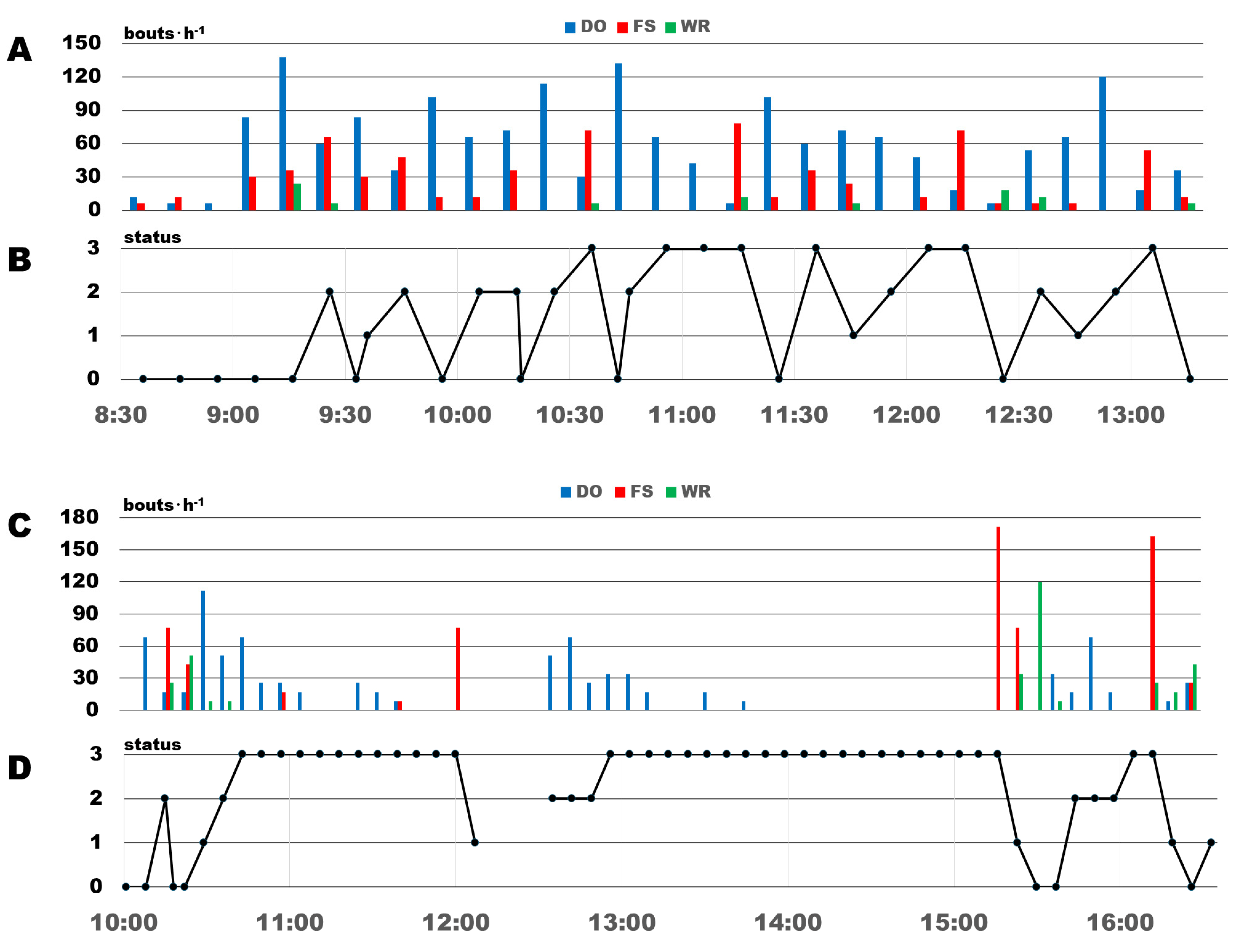
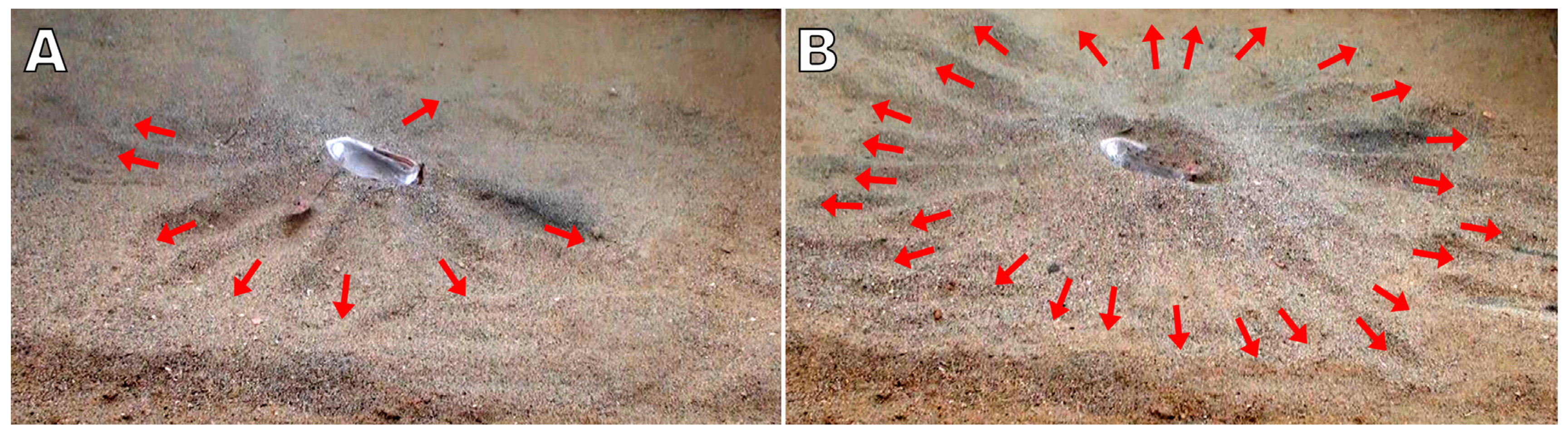
When a bivalve shell was placed on the sandy bottom of Aquarium IV, the male entered the shell for the first time 11 min later. Immediately thereafter, he slipped under the shell and vigorously moved his fins to expel sand outward (Table 2, DU). As he repeated this behavior, the shell gradually subsided, and 17 min later its rim became nearly level with the surrounding sand surface. The male then repeatedly alternated between adding sand to the shell and removing sand from it. As behaviors for adding sand, the male dug ditches radially outward from the shell (DO) (Figure 4A). While doing so, he advanced over the sandy bottom while fanning his fins, causing sand to accumulate inside the shell. He also scooped up sand from the substrate with his mouth and released it inside the shell (SO–I). As behaviors for removing sand, the male fanned his fins inside the shell to sweep sand outward (FS) (Figure 4A). In addition, he took sand that had accumulated inside the shell into his mouth and expelled it outside the shell (SI-O). Because of these behaviors, the amount of sand inside the shell fluctuated, and states in which the shell was more than half buried and completely emptied alternated seven times over 4 h 50 min (Figure 4B). When the shell was first emptied of sand, eight radial ditches had formed around it (Figure 5A), and when it was emptied for the seventh time, 26 longer ditches had formed around it; sand accumulated around the rim, creating a crater-like structure (Figure 5B). After the shell was once buried, the male performed a writhing behavior (WR) whenever little or no sand was present inside the shell (Figure 4A).
When a bivalve shell was placed on the sandy bottom of Aquarium I, similar behaviors were observed in the male. Immediately after he first entered the shell, he slipped underneath it and performed DU (Video S6). As he repeated this behavior, the shell’s rim became nearly level with the sand surface 5 min later. The male then repeatedly performed sand-adding behaviors (DO, SO–I) and sand-removing behaviors (FS, SI-O) (Video S6, Figure 4C). States in which the shell was more than half buried and completely emptied alternated three times over 6 h 03 min (Figure 4D). In contrast to Aquarium IV, no crater-like structure developed around the shell by the end of the observation period. The shell remained buried for more than 1 h on two occasions, during which the frequencies of DO and FS were low (Figure 4C). As with the male in Aquarium IV, WR (Video S6) was observed when little or no sand was present inside the shell (Figure 4C).
The mean DO frequencies of the males in Aquaria IV and I were 59.4 bouts h−1 (n = 52) and 17.0 bouts h−1 (n = 29), respectively, showing a significant difference (Mann–Whitney U test: Z = 5.103, p = 3.35 × 10⁻⁷). The FS frequencies were 23.4 bouts h−1 (n = 52) and 12.7 bouts h−1 (n = 29), respectively, also showing a significant difference (Z = 3.867, p = 0.00011). In contrast, WR frequencies were 3.1 bouts h−1 (n = 52) and 6.6 bouts h−1 (n = 29), with no significant difference (Z = 0.365, p = 0.715).
When the shell was placed with the inner surface facing upward, the male immediately started DU (100%, n = 4). When the shell was placed with the outer surface facing upward, however, the male first turned the shell over with his mouth and then started DU (66.7%, n = 3).

3.4. Breeding Season and Spawning Interval

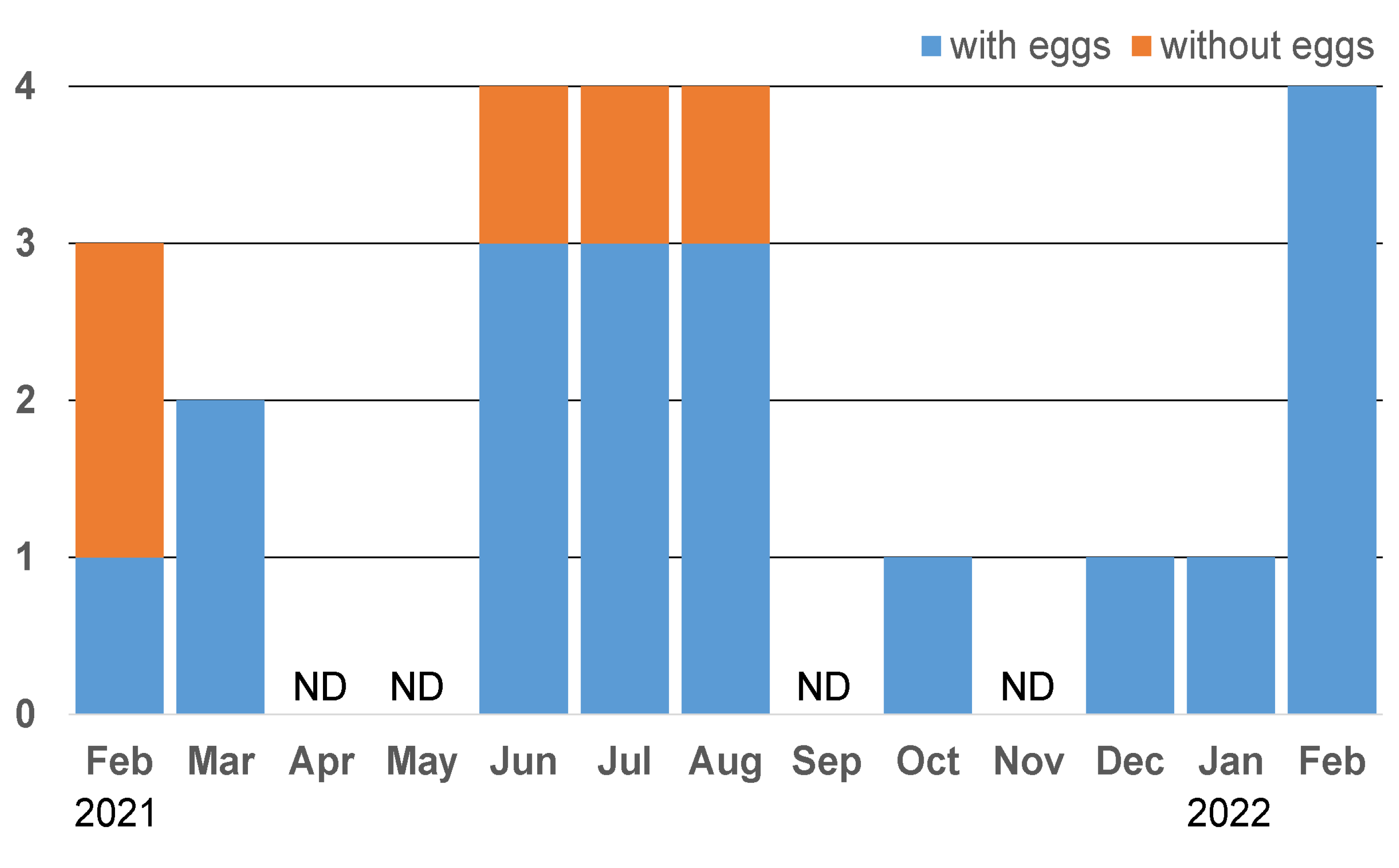
From February 2021 to February 2022, up to four nests were examined per survey to check for the presence of eggs. Nesting males were observed in all survey months, and eggs were found in 33–100% of the nests (n = 9). Although only a single nesting male was found in each survey conducted between October and January, all of them had eggs in their nests (Figure 6). The mean monthly water temperature during this period was 24.9 °C (range: 20.3–30.5 °C). In each observation, no nest was found at the same location as in the previous survey.
In aquarium experiments, females measuring 30–38 mm in total length (n = 4) spawned 2.25 times on average (range: 1–3), with a spawning interval of 10.4 days (range: 6–16, n = 5). The eggs hatched within four days after spawning, and males guarded the eggs for 4–8 days.

4. Discussion

4.1. Characteristics of the Reproductive Ecology of Hazeus ammophilus

Gobiid fishes inhabit a wide range of environments [2], and males exhibit parental care by guarding eggs laid on various types of spawning substrates suited to their habitats [6]. In many species, males care for eggs in concealed spaces such as rock crevices or coral holes (e.g., [3]). In contrast, H. ammophilus was observed to use the shells of bivalves lying on muddy-sand bottoms as spawning substrates, even in areas completely lacking cover, and to perform egg-care there.
Among gobiid fishes that nest in such open habitats, the sand goby Pomatoschistus minutus and the common fusegoby Fusigobius neophytus are comparable species (Table 3). The former occurs in temperate regions of the eastern Atlantic, including the Baltic and Mediterranean Seas, where it inhabits sandy or muddy bottoms [16]. Males are known to construct nests using empty bivalve shells found on the seabed [17,18,19,20]. The latter, F. neophytus, inhabits sandy bottoms in coral reef and rocky areas in tropical and subtropical regions of the Indo-Pacific [21]. Males clear sand from parts of rocks or rubble covered with sand to prepare nest sites [6].
In all three species, males are larger than females [6,19]. In F. neophytus, protogynous transition has been documented, and most nest-holding males are secondary males that have changed sex from female, while floating males are presumed to be primary males. The nest-holding males are larger in total length than both females and the few floating males present [6].
Eggs are oval, demersal, and adhesive, and are attached to the spawning substrate by filaments [19]. The choice of substrate differs slightly among species: H. ammophilus and P. minutus primarily use bivalve shells, whereas F. neophytus uses the surfaces of rocks in sandy or gravelly areas. H. ammophilus and F. neophytus deposit eggs on the floor surface of the substrate, while P. minutus attaches eggs to the ceiling surface [6,19]. In the case of P. minutus, males position the inner side of a bivalve shell as a ceiling, excavating sand beneath it to form a closed nest chamber [17,19]. This behavior allows egg guarding within an enclosed space, even in an open habitat. Conversely, H. ammophilus uses the inner side of a shell as the floor, leaving eggs exposed to the open environment. Therefore, the behavior of covering the substrate with sand when potential egg predators appear may have evolved as an adaptation to reduce predation risk.
Hazeus ammophilus also uses other available substrates capable of supporting egg adhesion, such as dead leaves and wood fragments. Covering these substrates with sand sometimes results in residual sand accumulating around the edges even after it has been removed, which may help stabilize the substrate and prevent its displacement by currents. Although H. ammophilus occasionally uses the ceiling or side surfaces of the substrate for egg attachment, it most often utilizes the floor surface. Even when a bivalve shell was experimentally placed with its outer surface facing upward, the male flipped it over so that the inner surface faced upward before starting nest construction. These observations suggest that although there is some plasticity in the position of egg deposition, H. ammophilus shows a clear preference for using the floor surface.
The spawning behavior of all three species begins when a male courts a female approaching his nest and leads her inside. The female then enters the nest and starts spawning [6,22]. In the present study, females were not individually identified, so it was not confirmed whether the same female spawned repeatedly in H. ammophilus. However, females were observed repeatedly entering and leaving the nest, and spawning continued intermittently for approximately two hours. This spawning duration was similar to that reported for F. neophytus.
During spawning, males of H. ammophilus were observed wriggling their bodies and rubbing their abdomens over the spawning substrate (Table 2, WR) between the female’s egg-laying bouts. This behavior, also observed in H. ammophilus and F. neophytus [6,23], is considered to represent sperm-smearing, a behavior reported in several other gobiid species. In three Mediterranean gobies—Zosterisessor ophiocephalus, Gobius niger, and Knipowitschia panizzae—sperm is released within a gelatinous paste that is applied to the spawning substrate, from which sperm gradually emerge, allowing prolonged sperm viability. Thus, males can fertilize eggs without releasing sperm simultaneously with female spawning [24]. In the dusky frillgoby Bathygobius fuscus, the accessory gland that produces the viscous substance containing sperm is highly developed in nest-holding males. Therefore, sperm-smearing is thought to function as alternative reproductive tactics against sneaker males that attempt to release sperm opportunistically during pair spawning [25]. In H. ammophilus, wriggling behavior was also observed during nest construction. It remains to be determined whether the wriggling observed in this context serves the same function as that exhibited during spawning.
In all three species, males cared for the eggs continuously from spawning until hatching [6,17,19]. Consequently, the duration of egg-care varied depending on the time required for hatching and the interval before additional females spawned in the same nest. In H. ammophilus, eggs hatched after four days. In other case, another female spawned on the fifth day, resulting in an eight-day egg-caring period. In F. neophytus, males guarded one to eight clutches for four to eight days [6]. In P. minutus, which inhabits cooler waters (10–20 °C) than the other two species, eggs hatched in six to twenty days [19], and because males guard multiple clutches simultaneously, the total egg-guarding period is likely even longer. These results indicate that in all three gobies, males sometimes care for multiple clutches at once and repeatedly spawn with females after completing one egg-caring period. Thus, the energetic cost of reproduction for males is likely high. In the two-spotted goby Gobiusculus flavescens, the operational sex ratio becomes increasingly female-biased as the breeding season progresses, resulting in a reversal of sex roles [26].
The breeding seasons of P. minutus and F. neophytus occur from spring to summer, and both species have been reported to reproduce again in the following year [6,19]. Although reproductive behavior of H. ammophilus has been observed throughout the year, it is unclear whether the same individuals breed continuously across seasons.
All three goby species share the following traits: males establish territories around their nests, mate with females that visit them, and receive eggs from multiple females in a single nest [6,19]. If these females repeatedly spawn with the same male, the mating system is polygyny; if not, it is male-territory-visiting (MTV) polygamy: males maintain territories which females visit to spawn, but no pair bond ensures, as the females leave the male territories after spawning [27]. In F. neophytus, long-term individual identification studies have confirmed that the mating system is MTV polygamy [6]. Although the long-term relationships between males and females were not examined in H. ammophilus, it is unlikely that specific pairs persist, as nest-holding males maintain their nests for only short periods. Therefore, H. ammophilus is also presumed to exhibit MTV polygamy. Possible factors preventing males from maintaining nests for extended periods include intense male–male competition caused by the limited availability of suitable spawning substrates, disturbance by burrowing crabs inhabiting the sandy bottom, and physical destruction of nests by waves reaching the seabed in shallow water despite generally calm conditions.

4.2. Radial Structures Formed Around the Nest

Radially arranged ditches were formed around the nests of Hazeus ammophilus. Nests with a similar radial configuration are known in the pufferfish Torquigener albomaculosus, for which the construction process and its adaptive significance have been described. Here, we compare and discuss how these two species construct radial structures, what kinds of structures they produce, and why such radial structures are formed (see Table 4).
In male gobies, once a spawning substrate such as a bivalve shell is located, ditches are excavated outward from the substrate. In contrast, pufferfish males repeatedly press their bodies against an otherwise featureless sandy bottom to create a cluster of depressions, after which they excavate ditches from the outer area toward this cluster [12]. Although both species construct nests on sandy bottoms, gobies differ from pufferfish in their use of a spawning substrate and in the direction of ditch excavation.
In gobies, repeated ditch-digging behavior results in the accumulation of sand within the shell. The male then removes the sand accumulated inside the shell by sweeping it out with its fins. Through repeated cycles of sand deposition and removal, the number of radial ditches increases, the ditches become longer, and the area surrounding the nest develops a crater-like morphology within approximately 5 h. In contrast, in pufferfish, repeated ditch excavation from various positions gradually increases the number of ditches, while a circular and flat area that becomes the nest forms in the center. On both sides of each ditch, sand displaced by excavation accumulates to form ridge-like mounds. After approximately 5 d, the basic structure of a nest surrounded by radially arranged ditches and ridges is completed [10,12]. Two-dimensional computer simulations have shown that in pufferfish, radial structures can emerge through the repeated execution of ditch-digging behavior based on a very simple algorithm [15].
In gobies, the outline connecting the outer ends of the radial ditches (outer circle) forms a distorted ellipse, measuring 114.5 mm along the major axis and 67.6 mm along the minor axis. This shape is likely related to the shape of the spawning substrate, because gobies excavate ditches outward from the nest. In pufferfish, the diameter of the outer circle is 2040 mm, and the diameter of the nest (inner circle) is 750 mm [13]; both are nearly perfect circles (Kawase, unpublished data). The diameter of the outer circle constructed by pufferfish is 17.8 times larger than the long axis of the goby outer circle, indicating that gobies construct far smaller structures even after accounting for the fact that pufferfish are approximately 2.4 times longer in total length. In addition, the time required to complete the basic structure differs greatly, being approximately 5 h in gobies and about 5 d in pufferfish.
Underwater observations revealed that 3–20 ditches were present around goby nests, although some nests lacked ditches entirely. Gobies transport sand to the nest through ditch excavation, but if sand were needed only to fill the nest, a few excavation events would be sufficient. Nevertheless, gobies were observed to repeatedly alternate between depositing sand into the nest and sweeping it out. One possible adaptive significance of this repeated sand deposition and removal is that it cleans the surface of the spawning substrate by removing adherent materials. A small amount of sand was also present inside nests containing eggs, and when this sand was experimentally removed, gobies were observed to excavate ditches to replenish it. This behavior suggests that a small amount of sand is required within the nest even during egg care, possibly for cleaning the egg surfaces. In contrast, in pufferfish, ditch excavation directed outward from the nest becomes evident after the basic nest structure has been completed, resulting in the accumulation of fine sand within the nest. On the day before spawning, males form maze-like patterns in this accumulated sand, primarily using the anal fin. Thus, it has been suggested that both the amount of sand gathered through ditch excavation and the patterns formed in the sand are thought to be related to female mate choice in pufferfish [10,11,14].
Another possible adaptive significance of the repeated sand deposition and removal behavior in gobies is that it increases both the number and length of ditches and promotes the accumulation of sand around the nest, leading to the construction of a crater-like structure. In other words, the size of the nest and surrounding radial structures, as well as differences in height, may influence female mate choice. Numerous studies have reported that nest morphology affects female mate choice in many animals (e.g., [28]), and in the gobiid P. minutus, the amount of sand excavated during nest construction has been shown to be involved [29]. In pufferfish, it has been suggested that the ditches and parallel ridges themselves—specifically their number, length, height differences, and the circularity of both the outer and inner circles—may influence female mate choice [10,11,14]. One line of evidence supporting this idea is that radial structures are maintained by continued ditch excavation until spawning, but are not maintained during egg care after spawning, during which they largely collapse due to tidal currents and other physical forces [10]. Furthermore, male pufferfish collect small shell fragments and other objects from the seabed, carry them in their mouths, and arrange them along the ridges. The quality of these ornaments, their arrangement patterns, and the shape of the ridges serving as placement sites may also be related to female mate choice [10,11,14].
To reproduce, male pufferfish invariably construct nests surrounded by radial structures [10,11,12,14]. In contrast, male gobies do not always construct radial structures around their nests, and even when they do, the number of ditches varies greatly, as does the degree of development of the crater-like structure surrounding the nest. Future studies should examine the conditions under which gobies actively construct radial structures, including relationships with breeding season, population density, and the availability of spawning substrates. In addition, although we conducted preliminary manipulative perturbation experiments involving the removal of ditches around goby nests and the addition or removal of sand from nests, systematic experiments are needed that consider whether eggs are present and, if present, their developmental stage, in order to evaluate the adaptive significance of ditch formation and sand use in the reproduction of this species.

5. Conclusions

This study reveals that the sand-dwelling goby Hazeus ammophilus exhibits a flexible reproductive strategy and a distinctive nest-building process possibly adapted to unstable open muddy-sand environments. Males repeatedly dig outward from the nest and sweep accumulated sand away, and through the repetition of these behaviors, crater-like nests with radial ditches are formed around the spawning site. The formation of radial ditches appears to be closely linked to nest construction and maintenance. At the same time, as in the case of pufferfish that construct highly conspicuous circular structures, the radial structures formed by gobies may also function as visual or spatial cues influencing female mate choice, rather than being mere incidental byproducts of nesting behavior.
Although direct experimental evidence remains limited, our observations suggest that the radial structures around goby nests may have multiple, non-mutually exclusive functions that vary across reproductive stages. Future manipulative experiments conducted at different stages of the reproductive cycle will be essential to disentangle the relative contributions of nest maintenance, environmental modification, and sexual selection to the formation of these structures.
Overall, our findings highlight the potential for relatively simple behavioral routines to generate complex and potentially adaptive spatial structures, emphasizing the ecological plasticity and evolutionary diversity of nest-building strategies in gobiid fishes.

Supplementary Materials

The following supporting information can be downloaded at: https://www.mdpi.com/article/10.3390/fishes11010045/s1, Detailed descriptions can be found in the main text, tables and figure captions. Video S1: Nest defense by a nesting male against a non-nesting male in Hazeus ammophilus; Video S2: Courtship and spawning behavior of male and female Hazeus ammophilus; Video S3: Egg tending by a male Hazeus ammophilus; Video S4: Egg defense by a male Hazeus ammophilus against intruders; Video S5: Egg defense of nest concealment by a male Hazeus ammophilus; Video S6: Nest construction behavior by a male Hazeus ammophilus.

Author Contributions

The first author H.K. conceived and coordinated the overall research plan, conducted underwater and aquarium observations, analyzed images and videos, and performed data analyses. The second author T.T. assisted with the first author’s underwater observations and collected specimens. All authors have read and agreed to the published version of the manuscript.

Funding

This study was funded by JSPS KAKENHI (Grant Number 19K06847).

Institutional Review Board Statement

The collection of fish specimens in this study was conducted under a permit issued by the Kin Fisheries Cooperative. The manuscript was conducted in accordance with the Guidelines for the Use of Fishes in Research established by the Ichthyological Society of Japan. This study included field observations, the collection of gobies from natural habitats to create voucher specimens, and non-invasive aquarium observations using collected specimens. All procedures were performed with proper regard for animal welfare and conservation considerations. No endangered or threatened species were used, and the number of individuals collected was kept to the minimum necessary to achieve the research objectives. Specimens collected for voucher purposes were preserved appropriately and deposited in an official biological research collection. Fish used for aquarium observations were maintained under proper husbandry conditions and treated humanely in accordance with the guidelines. No fish were released into the wild after observation. Under our institution’s regulations and the above guidelines, this type of research does not require approval from an institutional animal ethics committee, and therefore no approval code exists. I hereby certify that the research was conducted responsibly and in full compliance with the ethical standards for the use of fishes in research in Japan.

Data Availability Statement

The original contributions presented in this study are included in the article/Supplementary Materials. Further inquiries can be directed to the corresponding author.

Acknowledgments

We thank K. Shibukawa for providing valuable insights into the morphological characteristics of Hazeus ammophilus. We express our sincere gratitude for his generous guidance.

Conflicts of Interest

Author Takeru Tsuhako is the owner and operator of the diving shop Sensui-annai Okinawa. The remaining authors declare that the research was conducted in the absence of any commercial or financial relationships that could be construed as a potential conflict of interest.

References

  1. Nelson, J.S.; Grande, T.C.; Wilson, M.V.H. Fishes of the World, 5th ed.; Jhon Wiley & Sons, Inc.: Hoboken, NJ, USA, 2016. [Google Scholar]
  2. Senou, H.; Suzuki, T.; Shibukawa, K.; Yano, K. A Photographic Guide to the Gobioid Fishes of Japan, New Edition ed.; Heibonsha Ltd.: Tokyo, Japan, 2021. [Google Scholar]
  3. Sunobe, T.; Nakazono, A. Mating system and hermaphroditism in the gobiid fish, Priolepis cincta, at Kagoshima, Japan. Ichthyol. Res. 1999, 46, 103–105. [Google Scholar] [CrossRef]
  4. Kuwamura, T.; Yogo, Y.; Nakashima, Y. Size-assortative Monogamy and Paternal Egg Care in a Coral Goby Paragobiodon echinocephalus. Ethology 1993, 95, 65–75. [Google Scholar] [CrossRef]
  5. Dotu, Y.; Mito, S. On the breeding-habits, larvae and young of a goby, Acanthogobius flavimanus (TEMMINCK et SCHLEGEL). Jpn. J. Ichthyol. 1955, 4, 153–161. [Google Scholar] [CrossRef]
  6. Tsuboi, M.; Sakai, Y. Polygamous mating system and protogynous sex change in the gobiid fish Fusigobius neophytus. J. Ethol. 2016, 34, 263–275. [Google Scholar] [CrossRef]
  7. Thresher, R.E. Reproduction in Reef Fishes; TFH Publications: Neptune City, NJ, USA, 1984. [Google Scholar]
  8. Allen, G.R.; Erdmann, M.V. Description of two new sand-dwelling gobies (Gobiidae: Hazeus) from the tropical western Pacific Ocean. Aqua Int. J. Ichthyol. 2021, 27, 37–56. [Google Scholar]
  9. Nakamura, N. Breeding Habit of a small marine Goby, Gobius gymnauchen BLEEKER. Suisan-Gakkaihou 1944, 9, 99–102. [Google Scholar]
  10. Kawase, H.; Okata, Y.; Ito, K. Role of huge geometric circular structures in the reproduction of a marine pufferfish. Sci. Rep. 2013, 3, 2106. [Google Scholar] [CrossRef]
  11. Kawase, H.; Okata, Y.; Ito, K.; Ida, A. Spawning behavior and paternal egg care in a circular structure constructed by pufferfish, Torquigener albomaculosus (Pisces: Tetraodontidae). Bull. Mar. Sci. 2014, 91, 33–43. [Google Scholar] [CrossRef]
  12. Kawase, H.; Mizuuchi, R.; Shin, H.; Kitajima, Y.; Hosoda, K.; Shimizu, M.; Iwai, D.; Kondo, S. Discovery of an Earliest-Stage “Mystery Circle” and Development of the Structure Constructed by Pufferfish, Torquigener albomaculosus (Pisces: Tetraodontidae). Fishes 2017, 2, 14. [Google Scholar] [CrossRef]
  13. Kawase, H.; Kitajima, Y.; Iwai, D. 3D model of the geometric nest structure, the “mystery circle,” constructed by pufferfish. Sci. Data 2022, 9, 368. [Google Scholar] [CrossRef]
  14. Kawase, H. Enormous “Mystery Circles” Built by a Small Pufferfish on the Sandy Seabed—How and Why Does the Pufferfish Build These Elaborate Geometric Circular Structures? J. Soc. Powder Technol. Jpn. 2025, 62, 230–235. [Google Scholar] [CrossRef]
  15. Mizuuchi, R.; Kawase, H.; Shin, H.; Iwai, D.; Kondo, S. Simple rules for construction of a geometric nest structure by pufferfish. Sci. Rep. 2018, 8, 12366. [Google Scholar] [CrossRef] [PubMed]
  16. Miller, P.J. Gobiidae. In Fishes of the North-Eastern Atlantic and the Mediterranean; Whitehead, P.J.P., Bauchot, M.L., Hureau, J.C., Nielsen, J., Tortonese, E., Eds.; UNESCO: Paris, France, 1986; Volume 3. [Google Scholar]
  17. Healey, M.C. The distribution and abundance of sand gobies, Gobius minutus, in the Ythan estuary. J. Zool. 1971, 163, 177–228. [Google Scholar] [CrossRef]
  18. Healey, M.C. Gonad Development and Fecundity of the Sand Goby, Gobius minutus Pallas. Trans. Am. Fish. Soc. 1971, 100, 520–526. [Google Scholar] [CrossRef]
  19. Fonds, M. Sand gobies in the Dutch Wadden Sea (Pomatoschistus, gobiidae, pisces). Neth. J. Sea Res. 1973, 6, 417–478. [Google Scholar] [CrossRef]
  20. Lindström, K. Male-Male Competition for Nest Sites in the Sand Goby, Pomatoschistus minutus. Oikos 1988, 53, 67–73. [Google Scholar] [CrossRef]
  21. Randall, J.E. Coastal Fishes of Oman; University of Hawaii Press: Honolulu, HI, USA, 1996. [Google Scholar]
  22. Kvarnemo, C.; Forsgren, E.; Magnhagen, C. Effects of sex ratio on intra- and inter-sexual behaviour in sand gobies. Anim. Behav. 1995, 50, 1455–1461. [Google Scholar] [CrossRef]
  23. Svensson, O.; Kvarnemo, C. The importance of sperm competition risk and nest appearance for male behavior and female choice in the sand goby, Pomatoschistus minutus. Behav. Ecol. 2005, 16, 1042–1048. [Google Scholar] [CrossRef]
  24. Marconato, A.; Rasotto, M.B.; Mazzoldi, C. On the mechanism of sperm release in three gobiid fishes (Teleostei: Gobiidae). Environ. Biol. Fishes 1996, 46, 321–327. [Google Scholar] [CrossRef]
  25. Nakanishi, Y.; Kanatani, Y.; Takegaki, T. Prespawning sperm release behavior by the nest-holding males of dusky frillgoby Bathygobius fuscus. Bull. Fac. Fish. Nagasaki Univ. 2017, 98, 5–9. [Google Scholar]
  26. Forsgren, E.; Amundsen, T.; Borg, Å.A.; Bjelvenmark, J. Unusually dynamic sex roles in a fish. Nature 2004, 429, 551–554. [Google Scholar] [CrossRef]
  27. Kuwamura, T. The evolution of parental care and mating systems among Tanganyikan cichlids. In Fish Communities in Lake Tanganyika; Kawanabe, H., Hori, M., Nagoshi, M., Eds.; Kyoto University Press: Kyoto, Japan, 1997; pp. 59–86. [Google Scholar]
  28. Rossiter, A.; Yamagishi, S. Intraspecific plasticity in the sosial system and mating behaviour of a lek-breeding cichlid fish. In Fish Communities in Lake Tanganyika; Kawanabe, H., Hori, M., Nagoshi, M., Eds.; Kyoto University Press: Kyoto, Japan, 1997; pp. 195–217. [Google Scholar]
  29. Lehtonen, T.K.; Wong, B.B.M. Should females prefer males with elaborate nests? Behav. Ecol. 2009, 20, 1015–1019. [Google Scholar] [CrossRef][Green Version]
Figure 1. Nest locations of Hazeus ammophilus. Observations in April (A) and May (B) 2018. ● indicates nest sites; numbers indicate individual IDs (see Table 1). × indicates the same location on both maps (A,B). The location data for the nest of M20 were lost. Arrows in the upper right of each figure indicate north.
Fishes 11 00045 g001
Figure 2. Variations in nest substrates of Hazeus ammophilus. (A) A fallen leaf from a terrestrial plant used as a spawning substrate, with eggs deposited on its surface for the nest of M6. The substrate is surrounded by radial ditches. (B) A piece of wood used as a spawning substrate, with eggs deposited on its surface for the nest of M14. The substrate is surrounded by radial ditches. (C) A fragment of dead coral used as a spawning substrate, with eggs deposited on the underside for the nest of M5. (D) Two adjacent bivalve shells simultaneously used by the same individual as spawning substrates for the nest of M16. Each substrate is surrounded by radial ditches.
Fishes 11 00045 g002
Figure 3. Parental egg-care in male Hazeus ammophilus. (A) Nest defense behavior of a nesting male against a non-nesting male. After mutual threat displays and attacks, the nesting male (right) blocks the non-nesting male from the nest with his body. See Video S1. (B) Egg tending by a male. The male fans the eggs with his fins. See Video S3. (C) Egg defense against intruders. The male attacks a species of sand crab that emerged from a burrow near the nest, aiming at the eyes at the tip of its eyestalks. See Video S4. (D) Egg defense of nest concealment. When the egg-eating sea snake Emydocephalus ijimae, approaches the nest, the male covers the eggs with sand to conceal them. See Video S5. Red triangles in the figure indicate the positions of males.
Fishes 11 00045 g003
Figure 4. Frequencies of the three types of behaviors observed during nest construction by Hazeus ammophilus and the states of sand accumulation inside the nest. Behavioral frequencies (A) and nest states (B) for Male IV, and behavioral frequencies (C) and nest states (D) for Male I. Observation data for Male I are missing between 12:07 and 12:35. Behavioral counts were recorded at 10 min intervals for A and at 7 min intervals for C, and are shown as hourly frequencies. See Table 2 for DO, FS, and WR. The state of sand accumulated inside the nest was classified as follows: 0, no sand or almost no sand; 1, less than half full; 2, more than half full; and 3, full or nearly full.
Fishes 11 00045 g004
Figure 5. Nest formation process of Hazeus ammophilus. Shapes of the nest of Male IV when the interior of the shell first became empty (09:33) (A) and when it became empty for the seventh time (13:16) (B) after repeated sand-adding and sand-removing behaviors. Arrows indicate ditches.
Fishes 11 00045 g005
Figure 6. Monthly nest status of male Hazeus ammophilus off Red Beach, Japan. ND: no data.
Fishes 11 00045 g006
Table 1. Total length, nest structures, and egg conditions of nesting males of Hazeus ammophilus observed in April and May 2018.
IDM1M2M3M4M5M6M7M8M9M10M11M12M13M14M15M16M17M18M19M20M21
Total length (mm)43.940.8 41.2 39.1 42.2 37.5 41.2 42.2 nd45.3 42.742.940.239.7 43.738.3 40.241.541.640.4nd
Nest substrateDLDLDLBSCFDLBSBSCFDLBSBSBSWBECBSDLBSBSVSDL
Major axis of nest (mm)34.759.3 58.6 23.9 48.5 85.5 24.2 51.6 nd62.4 90.9 25.6 17.8 69.8 52.5 21.0 84.0 52.7 nd62.6 nd
Minor axis of nest (mm)12.127.7 27.4 17.6 35.1 27.4 11.8 20.7 nd25.6 55.9 20.0 12.2 17.2 47.9 14.6 20.0 35.3 nd36.0 nd
Nest area (mm2)368.4 1048.21260.4343.8 1005.71111.2218.4 823.2 nd1192.33427.4403.7 173.9 985.4 1727.8249.7 2562.21527.71497.81751.0nd
Number of ditches14151711ab1165ab15ab471331575820nd
Major axis of nest including ditches (mm)105.0 121.8 133.1 54.7 105.1 74.1 113.9 108.4 96.6 97.1 132.1 145.9 143.6 179.5 139.0 78.4 118.1 nd
Minor axis of nest including ditches (mm)72.7 80.8 68.4 38.8 67.0 43.7 81.5 62.8 54.3 51.3 80.8 101.9 60.3 85.7 84.0 43.0 71.8 nd
Mean length of ditches (mm)66.8 62.6 62.1 35.7 48.0 49.2 65.1 46.6 61.1 44.8 63.6 87.3 73.4 94.7 81.6 40.1 52.8 nd
Maximum length of ditches (mm)83.6 101.4 88.5 44.2 72.3 63.5 85.1 71.5 70.3 65.6 91.6 112.3 127.3 118.0 107.8 56.1 72.9 nd
Minimum length of ditches (mm)49.2 36.2 36.9 23.5 31.6 26.9 50.8 31.3 44.4 12.2 46.5 56.1 43.9 38.2 48.8 27.7 26.7 nd
Position of eggsfloorfloorwallceilingfloorfloorfloorfloorfloorfloorfloorfloorfloorfloorfloorfloorfloor
Number of eggspr1782721ukpr39952169abpr4455665ab210332012667871620ab30064511pr
Embryonic developmental stagendndndndndndndndndOvspOvspndOv, OvspOvpOv, Ovsp, HOvpEb, Eb, Ovspnd
DL: deciduous leaf; BS: bivalve shell; CF: coral fragment; WB: wood block; EC: empty can; VS: vinyl sheet; pr: eggs are present, but the number is unknown; ab: absent; uk: unknown whether eggs are present; nd: no data; pEb: pre-embryonic body formation; Eb: embryonic body formation; Ov: optic vesicles without pigmentation; Ovsp: optic vesicles with slight pigmentation; Ovp: optic vesicles with pigmentation; H: hatched.
Table 2. Definitions of behaviors of male Hazeus ammophilus observed during egg care and nest construction.
AbbreviationDefinition
DUMale digs beneath the nest substrate, causing it to sink.
DOMale digs a ditch outward from the nest.
SO–IMale takes sand into his mouth from the seabed outside the nest and expels it inside the nest.
FSMale fans sand inside the nest with his fins to sweep it out.
SI–OMale takes sand into his mouth inside the nest and expels it outside the nest.
WRMale wriggles his body from side to side inside the nest.
Table 3. Comparison of reproductive traits among three gobiid species that nest on sandy bottoms.
CharacteristicsHazeus ammophilusPomatoschistus minutusFusigobius neophytus
Male TL38.4 mm *161.4 mm *160.4 mm *2
Female TL34.0 mm *158.2 mm *150.5 mm *3
Sexual dimorphism♂ > ♀♂ > ♀♂ > ♀
Spawning substratumBivalve shells, Deciduous leavesBivalve shellsRocks
Range of clutch size210–45112000–40001274–15,056
Number of clutches per nest1–3several1–8
Nature of eggsDemersal, AdhesiveDemersal, AdhesiveDemersal, Adhesive
Egg shapeEllipsoidEllipsoid
Mean major and minor
egg diameter
0.74 mm × 0.49 mm1.08 mm × 0.70 mm
Mean TL of hatched larvae1.74 mm2.5 mm
Egg attachment siteFloorCeilingFloor
Parental carePaternalPaternalPaternal
Days until hatching
and water temperature
4 d, 26–29 °C6–20 d, 10–20 °C
Days of parental care4–8 d4–8 d
Spawning stylePairPairPair
Time required for egg deposition748 s *1151 min *3
Time of mating activity9:25–18:483:11–8:40
Breeding SeasonThroughout the yearMay–JuneJune–October
Mating systemMTV polygamyMTV polygamyMTV polygamy
Observation siteOkinawa-Is., JapanWadden Sea, The NetherlandsKuchierabu-jima Is., Japan
*1: mean; *2: median of nest holding males; *3: median: TL: total length.
Table 4. Comparison of nest structure and nest-building behavior between the goby Hazeus ammophilus and the pufferfish Torquigener albomaculosus.
CharacteristicsHazeus ammophilusTorquigener albomaculosus
Nest substrateBivalve shells, deciduous leavesSandy bottom
Direction of ditch excavationOutward from the nestInward toward the nest for nest construction; Outward from the nest for sand transport
Timing of ditch excavationFrom nest preparation to egg careFrom nest preparation to mating
Time to construct the basic nest structure5 h5 d
Total length of nesting males41.3 mmca. 100 mm
Nest size51.5 mm × 26.3 mm
(major and minor axis)
750 mm in diameter
Size of nest and radial structures114.5 mm × 67.6 mm
(major and minor axis)
2040 mm in diameter
Outline of the nest and ditchesDistorted ellipseNearly perfect circle
Number of ditches3–2028–30
Disclaimer/Publisher’s Note: The statements, opinions and data contained in all publications are solely those of the individual author(s) and contributor(s) and not of MDPI and/or the editor(s). MDPI and/or the editor(s) disclaim responsibility for any injury to people or property resulting from any ideas, methods, instructions or products referred to in the content.