Article

Modulatory Role of Oral GHRP-6 in the Immune Response and Digestive Enzyme Function in Juvenile Tilapia (Oreochromis sp.) Challenged with Pseudomonas aeruginosa


by
Liz Mariam de Armas
1,
Adrian Rodríguez-Gabilondo
1,
Liz Hernández
1,
Ernesto A. Quintana
1,
Alejandro J. Campos
1,
Noelia N. Pérez
1,
Danielle Reyes
1,
Antonio Morales
1,
Osmany Rodrigo
1,
Yaima González
1,
Leandro Rodriguez-Viera
2,*,
Mario Pablo Estrada
1,* and
Rebeca Martínez
1,*
1
Metabolic Modifiers for Aquaculture Group, Agricultural Biotechnology Department, Center for Genetic Engineering and Biotechnology, Havana 10400, Cuba
2
Department of Biology, Faculty of Marine and Environmental Sciences, Institute of Marine Research (INMAR), University of Cadiz, International Campus of Excellence of the Sea (CEIMAR), 11510 Puerto Real, Cádiz, Spain
*
Authors to whom correspondence should be addressed.
Fishes 2026, 11(1), 33; https://doi.org/10.3390/fishes11010033
Submission received: 14 October 2025 / Revised: 28 December 2025 / Accepted: 2 January 2026 / Published: 7 January 2026
(This article belongs to the Special Issue Dietary Supplementation in Aquaculture)

Abstract

Aquaculture has been established as a sustainable alternative to traditional fisheries, which face challenges such as overexploitation and environmental degradation. However, disease outbreaks, often caused by poor farming conditions, pollution, and environmental stress, remain a major concern, leading to economic losses and increasing the risk of antibiotic resistance due to the overuse of antibiotics. Therefore, it is crucial to seek new strategies that improve fish health and well-being, preventing drug resistance and promoting sustainable practices. GHRP-6, a synthetic growth hormone-releasing peptide that mimics ghrelin, has shown potential immunostimulatory properties and feed efficiency in fish. In this study, we evaluated the effects of orally administered GHRP-6 in an oil-based formulation on juvenile tilapia (Oreochromis sp.) challenged or unchallenged with Pseudomonas aeruginosa. We assessed its influence on immune gene expression and digestive enzyme activity. The results demonstrated that GHRP-6 treatment significantly enhanced growth performance (weight and length), reduced in vivo bacterial load after infection, and modulated key genes related to innate and adaptive immunity in the gills, intestine and head kidney. In addition, our results demonstrated, for the first time, a direct link between a growth hormone secretagogue in fish and the modulation of specific enzyme activity in the gut following a bacterial challenge. These findings highlight the potential of GHRP-6 as a dietary immunomodulator and growth promoter in fish farming, offering a promising strategy to reduce antibiotic usage and promote more sustainable aquaculture practices.
Key Contribution: Dietary GHRP-6 supplementation improved growth performance in juvenile tilapia. GHRP-6 peptide enhanced immune gene expression in gills, intestine and head kidney. The peptide reduced bacterial load following Pseudomonas aeruginosa challenge. GHRP-6 modulated digestive enzyme activity following a bacterial challenge, supporting better feed utilization.

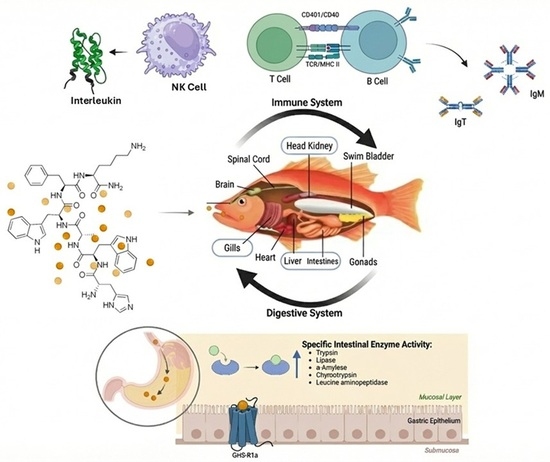
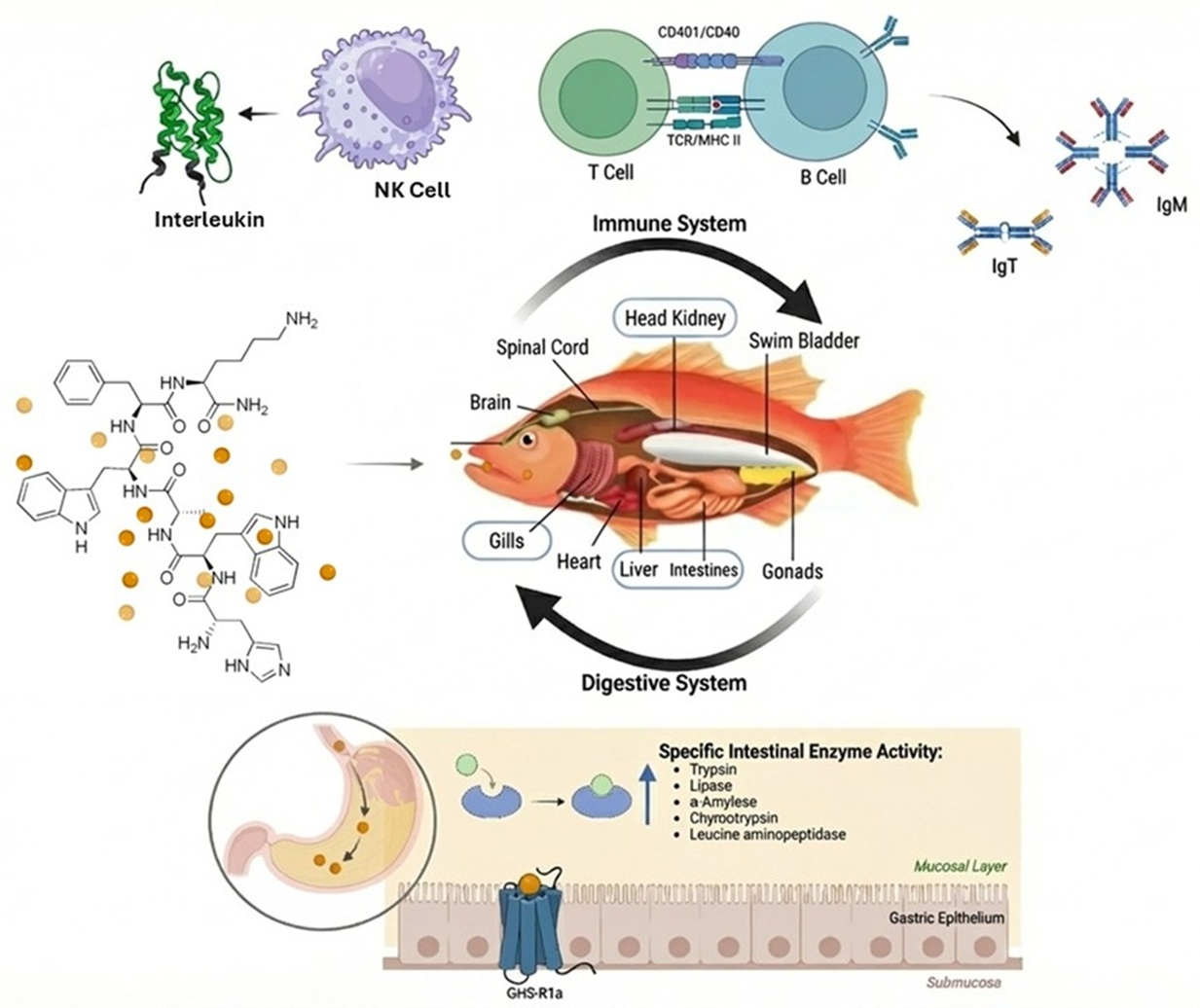
Graphical Abstract

1. Introduction

Aquaculture has experienced significant growth in recent decades, playing a crucial role in global food security and economic development [1]. This expansion has led to the intensification of farming practices, which has increased the susceptibility of cultured organisms to disease outbreaks and consequently heightened reliance on therapeutics, particularly antibiotics [2]. As a result, the sector faces numerous challenges that threaten its sustainability and its capacity to meet the growing global demand for animal protein [3]. Various factors influence the selection of antibiotic alternatives in aquaculture. Vaccination remains a key component of fish health management; however, its widespread application is constrained by logistical challenges, economic factors, and its predominant use in high-value finfish species [4,5].
In this context, functional feed additives (including immunostimulants) have emerged as effective strategies to enhance innate immunity, improve disease resistance, and promote growth performance in aquatic animals. These additives can complement chemotherapeutic agents and vaccines, serving as viable substitutes that reduce the dependence on antibiotics and vaccines for infectious disease control. Both direct and indirect modes of action have been reported for various feed additives, demonstrating their potential to replace in-feed antibiotics traditionally used for growth promotion [6,7].
Recent advances in aquafeeds incorporating probiotics, prebiotics, medicinal herbs, organic acids, and immunostimulants have initiated a new era by improving host health and production outcomes. These additives support gut health by enhancing beneficial gastrointestinal microflora and enabling formulations with healthier, more nutritious ingredients that positively influence intestinal immunity [6,8]. Unlike antibiotics, which risk microbial resistance due to indiscriminate use, functional feed additives are safer and offer multiple benefits, including modulation of host metabolism, immune stimulation, pathogen inhibition in the gut, improved nutrient absorption, and reduced health risks [9]. When combined with good management practices, these additives effectively mitigate stress and control both infectious and non-infectious diseases, sustaining growth and production [10]. Looking forward, ongoing research into immunomodulatory molecules holds promise for novel feed additives with transformative potential in oral immunotherapy.
The synthetic Growth Hormone-Releasing Peptide 6 (GHRP-6) is a promising immunostimulant in aquaculture, acting as a ghrelin mimetic that stimulates growth hormone (GH) release and modulates immune responses. Several studies have documented its positive effects on growth and immune function in teleost fish. For instance, Martinez et al. [11] reported that intraperitoneal administration of GHRP-6 in juvenile tilapia increased liver Insulin Growth Factor-I (IGF-I) mRNA expression and GH levels. Additionally, oral administration of encapsulated and non-encapsulated peptide improved growth performance. In tilapia larvae, dietary supplementation with GHRP-6 enhanced growth and immune parameters, including increased lectin titers and intestinal intraepithelial lymphocytes [11]. Moreover, GHRP-6 modulates adaptive immunity by increasing antigen-specific antibody production in teleosts challenged with heterologous proteins and peptides [12]. Beyond fish, GHRP-6 benefits shrimp physiology: successive immersion baths elevated feed intake, growth metrics, rostral spine and gill branch counts, protein content, and hemocyte numbers in treated shrimp [13]. Morales et al. [14] further explored synergistic effects of the prebiotic fructooligosaccharide (FOS) combined with GHRP-6 on fish growth, digestion, and immunity. While FOS supplementation significantly increased fish size and weight, GHRP-6 enhanced digestive enzyme activity, with both treatments stimulating immune responses. Complementary research by Rodríguez-Viera et al. [15,16] demonstrated in gilthead sea bream (Sparus aurata) that dietary GHRP-6 enhances feed intake, growth, and aerobic metabolism. Furthermore, GHRP-6 administration through feed modulated endocrine and immune responses following intraperitoneal Incomplete Freund’s Adjuvant (IFA) challenge, confirming its immunomodulatory role.
In addition, intraperitoneal injection of GHRP-6 in European seabass upregulated immune gene expression in the head kidney and intestine, reduced nervous necrosis virus (NNV) brain replication, and modulated antiviral immune responses, underscoring its potential as an antiviral agent [17]. As well, prior research has specifically highlighted the interaction between GHRP-6 and the Gram-negative bacterium Pseudomonas aeruginosa. Hernández et al. (2021) demonstrated that GHRP-6 stimulates antimicrobial peptide transcription and antimicrobial activity in tilapia, both with and without P. aeruginosa infection, supporting its candidacy as an aquaculture immunomodulator [18]. This bacterium was selected for the current challenge model not only because of this established research precedent but also due to its significant practical relevance. P. aeruginosa is a major opportunistic pathogen in global aquaculture, responsible for severe outbreaks of septicemia and ulcerative diseases that lead to substantial economic losses across numerous fish and shellfish species [4]. Therefore, evaluating the efficacy of GHRP-6 against this high-impact pathogen directly addresses a critical need within the industry.
The aim of this study was to evaluate, for the first time, the effects of oral administration of oil-based GHRP-6 on growth performance, antimicrobial responses, and immune modulation in juvenile tilapia under bacterial challenge and control conditions. For the challenge, we used P. aeruginosa to build upon previous findings and assess the peptide’s protective efficacy against a pathogen of major concern. To this end, we measured the expression of selected immune genes associated with the secretagogue’s action, together with digestive enzyme activity. Our results demonstrate that oral GHRP-6, a growth hormone secretagogue and ghrelin analog, significantly stimulates antimicrobial peptide gene expression and modulates immune responses in fish. Oral supplementation provides additional advantages by enabling large-scale application across all life stages, minimizing handling stress, and facilitating practical use in aquaculture operations. Thus, GHRP-6 emerges as a promising immunomodulatory agent to promote fish health and welfare.

2. Materials and Methods

2.1. Animal Maintenance

Tilapia (Oreochromis sp.), with an initial mean weight of 2.75 ± 0.52 g, were obtained from the Mini Aquaculture Station at the Center for Genetic Engineering and Biotechnology (CIGB), Havana, Cuba. The specimens were maintained in ponds supplied with clean, continuously recirculated water, with water exchanges occurring two to three times daily before feeding. They were fed a commercial dry feed (CENPALAB, Havana, Cuba), composed of 23% crude protein, 4.50% crude fiber, 3.10% crude fat, 0.38% calcium, 0.54% phosphorus, 0.69% calcium/phosphorus ratio and 2.70 kcal/g of metabolizable energy. Environmental conditions included a natural photoperiod (12 h light: 12 h dark), water temperatures of 26–28 °C, and dissolved oxygen levels of 5–7 mg/L. Fish were allowed a one-week acclimation period prior to the initiation of the experiments. All experimental protocols were reviewed and approved by the Ethics Committee of CIGB and conducted following the provisions of the European Directive 2010/63/EU concerning the protection of animals used for scientific purposes.

2.2. Oil Formulation of the Synthetic Peptide GHRP-6

The synthetic peptide GHRP-6 (His-DTrp-Ala-Trp-D-Phe-Lys-NH2), with over 75% purity, was supplied by the peptide synthesis division of the Center for Genetic Engineering and Biotechnology (CIGB) in Havana, Cuba. The oil-based formulation, prepared by the CIGB Development Department, had a concentration of 1.66 mg/mL, reflecting the peptide content measured as 0.66 mg/mL absorbance (66%). Using a dose of 250 µg GHRP-6 per kilogram of feed, 25 mL of the formulation was prepared in 1× PBS buffer at pH 7.0, consisting of aqueous and oil phases. Components of the formulation are shown in Table 1.

2.3. Experimental Design and Sampling Procedure

The commercial diet was enriched with the oil formulation of the synthetic peptide GHRP-6, and then pellets were prepared by cold extrusion using a manual extruder. Subsequently, the feed was dried at 25 °C. Dosage was 250 µg of GHRP-6/kg feed, administered twice daily with a feeding rate equivalent to 5% of biomass over a three-month period. The dose selection was based on previous laboratory studies [11,15]. Two experimental groups (n = 30 each; total n = 60) were established, each with three experimental replicates per treatment: a control group fed a commercial diet devoid of GHRP-6 (CENPALAB, Havana, Cuba), and a treated group receiving the peptide-supplemented diet. At the end of three months of the feeding regimen, gill, head kidney and intestine samples were harvested from both groups prior to bacterial challenge (pre-challenge time, with ten fish per group sampled). Following this, fish were then exposed to P. aeruginosa, and samples from target organs were collected at 24 and 48 h post-infection (n = 10 per group per sampling time), respectively. Tissue samples for gene expression were immediately placed in Ambion RNAlater (Applied Biosystems, Foster City, CA, USA) and stored at −20 °C until RNA extraction, whereas intestinal samples for enzymatic assays were frozen in liquid nitrogen and maintained at −70 °C until analysis.

2.4. Growth Performance and Biometric Parameters

The initial weight (W0) and length (L0) of fish were recorded at the beginning of the experimental period. Following the three-month administration of GHRP-6, feeding was discontinued to allow full gastric clearance. Before sampling (refer to the previous Section 2.3), final weight (FW) and total length (TL) measurements were taken for each individual. Subsequently, the Specific Growth Rate was calculated as follows: (SGR, %·day − 1) = [100 × (ln FW − ln W0)]/days [19]. The relative condition factor (K) was also evaluated according to the equation: K = 100 × (FW/aTLb). The condition factor was derived using Le Cren’s formula for relative condition factor based on the length-weight relationship, where ‘a’ denotes the intercept and ‘b’ the slope of the regression line [20,21].

2.5. Challenge Trial with Pseudomonas aeruginosa

To evaluate the immunomodulatory and antimicrobial effects of oral administration of an oil-based synthetic GHRP-6 formulation, a challenge trial was conducted using P. aeruginosa strain ATCC 9027, provided by the Microbiology Laboratory of the Quality Control Department at CIGB, Havana, Cuba. Bacterial stocks were refreshed on Tryptic Soy Agar (TSA) (Merck, Darmstadt, Germany) plates and cultured routinely in Tryptic Soy Broth (TSB) (Merck, Darmstadt, Germany) at 32 °C [22].
Twenty-four hours following pre-challenge sampling, twenty fish per experimental group were immersed in a bacterial suspension containing 108 CFU/mL of P. aeruginosa (diluted in sterile PBS) for one hour in 40 L of aerated water. Post-immersion, fish were transferred to 250 L aerated freshwater tanks maintained within an isolated water circulation system. Wastewater was chlorinated to eliminate any remaining viable bacteria. Gill, head kidney and intestinal tissues were sampled from the challenged fish at 24 and 48 h post-infection (n = 10 per group per time point) for subsequent gene expression assays.
The antimicrobial activity of GHRP-6 was assessed on gill surfaces at 24 h post-infection (n = 10 per group). Collected samples were washed with 1 mL sterile 0.9% NaCl, serially diluted in PBS, and plated on TSA and cetrimide agar (selective for P. aeruginosa). Plates were incubated at 37 °C overnight. Identification of P. aeruginosa colonies was confirmed using BioMérieux API®20E strips and Gram staining.

2.6. RNA Extraction and cDNA Synthesis

Tissue samples were homogenized using a TissueLyser unit (Qiagen, Hilden, Germany), and total RNA was extracted with Tri-Reagent (Sigma, Cibolo, TX, USA) following the manufacturer’s instructions. RNA purity and concentration were measured using a NanoDrop spectrophotometer (NanoDrop Technologies, Wilmington, DE, USA). RNA samples were treated with DNase to remove contaminating genomic DNA using the RQ1 RNase-Free DNase kit (Promega, Madison, WI, USA), according to the manufacturer’s protocol. First-strand complementary DNA (cDNA) was then synthesized from 1 μg of DNase-treated total RNA using the Transcriptor First Strand cDNA Synthesis Kit (Roche, Belgium, Germany) for subsequent RT-PCR analysis.

2.7. Gene Expression Analysis

Real-time quantitative polymerase chain reaction (qPCR) was performed to quantify transcript levels in collected tissues. Gene sequences were obtained from the NCBI database as detailed in Table 2. Primers were designed using the Primer3 software [23]. qPCR reactions were run in triplicate on a Rotor-Gene 6000 system (Corbett Research, Mortlake NSW, Australia) using a 72-well rotor. Each reaction (20 μL total volume) contained 10 μL of LightCycler® 480 SYBR Green I Master Mix (2×) (Roche, Germany), 300 nM of each primer, and 4 μL of cDNA (50 ng/μL, diluted 1:25 in RNase-free water). Each run included triplicate wells for calibrator samples and RNA-only negative controls. The thermal profile started with pre-incubation at 95 °C for 5 min, followed by 50 amplification cycles of 95 °C for 15 s, 60 °C for 30 s, and 72 °C for 30 s. A melting curve was generated from 72 °C to 95 °C with fluorescence collected every 5 s to verify the specificity of the amplification products. The qPCR primary results (Ct) were obtained using the Corbett software (version 6.1). Relative gene expression levels were calculated as fold changes normalized to the reference genes EF-1α and β-actin [24].

2.8. Digestive Enzyme Activities

Intestinal tissues were homogenized in 1× PBS buffer using a TissueLyser unit (Qiagen, Hilden, Germany). The homogenates were subsequently centrifuged at 10,000× g for 10 min at 4 °C, and the resulting supernatant (crude enzyme extract) was used for all enzymatic assays [25]. Protein concentration in the crude extract, diluted 1:10 in 1× PBS buffer, was quantified using the Thermo Scientific™ (Waltham, MA, USA) Pierce™ BCA Protein Assay Kit with bovine serum albumin (BSA, 1 mg/mL) as a standard, according to the manufacturer’s protocol.
The activities of digestive enzymes including trypsin, chymotrypsin, leucine aminopeptidase, α-amylase and lipase were measured to evaluate the effect of GHRP-6 administration. Trypsin and chymotrypsin activities were assessed following the protocol designed by [26] with some modifications. The assay for trypsin was performed using Nα-benzoyl-DL-arginine 4 nitroanilide hydrochloride (BAPNA) (Sigma-Aldrich, St. Louis, MI, USA) as the substrate. A 122.78 mM stock substrate solution was prepared using dimethyl sulfoxide (DMSO). Subsequently, a working solution was prepared by diluting the stock solution to a final concentration of 2 mM with 50 mM Tris-HCl buffer, pH 8. Chymotrypsin activity was quantified using succinyl-alanine-phenylalanine-p-nitroanilide (SApNA) (Sigma-Aldrich) as the substrate. A 50 mM stock substrate solution was prepared using DMSO. Subsequently, a working solution was prepared by diluting the stock solution to a final concentration of 1.25 mM with 50 mM Tris-HCl buffer, pH 8. Leucine aminopeptidase activity was determined according to [27], using L-Leu-p-nitroanilide (1.2 mM) as substrate. A 250 mM stock substrate solution was prepared in DMSO. The working solution was prepared by diluting the stock solution to a final concentration of 4 mM with 50 mM sodium phosphate buffer, pH 7.2. For each assay a total of 15 µL of the intestinal extract dilutions was mixed with 135 µL of the buffered substrate. Absorbance was measured at two time points: an initial reading immediately after adding the substrate, and a second reading after incubating the mixture for 15 (trypsin) and 30 (chymotrypsin and leucine aminopeptidase) minutes at 37 °C. The enzymatic activities of trypsin, chymotrypsin, and leucine aminopeptidase were monitored by measuring the increase in absorbance at 410 nm using a Thermo Scientific Multiskan Go microplate reader.
α−Amylase and lipase activities were assayed according to [28] with some modifications. α−Amylase activity was determined using a sodium acetate buffer (0.1 M)/NaCl (6 mM) solution at pH 4.8 and 1% starch as the substrate. A volume of 0.5 mL of this solution was mixed with 25 µL of sample and 0.5 mL of the starch solution. The reaction mixture was incubated at 25 °C for 30 min and stopped by adding 875 µL of dinitrosalicylic acid (DNSA) reagent, followed by incubation in a thermostatic bath for 10 min. Lipase activity was determined by incubating 5 µL of each sample with 475 µL of 50 mM Tris-HCl buffer (pH 7.5) and 50 µL of 100 mM sodium taurocholate. The samples were incubated at 37 °C for 5 min. Subsequently, 5 µL of the substrate b-naphthyl acetate (Sigma-Aldrich) was added, and the mixture was incubated for 30 min at 37 °C. Afterwards, 5 µL of 100 mM Fast Blue B Salt was added. The reaction was then stopped with 50 µL of 0.72 N trichloroacetic acid (TCA) and mixed with 70 µL of ethyl acetate. The enzymatic activities of α−amylase and lipase were monitored by measuring the increase in absorbance at 540 nm using a Thermo Scientific Multiskan Go microplate reader (Vantaa, Finland).
Blanks containing all reagents except enzyme extract were included in all assays to correct for non-enzymatic substrate degradation. All assays were conducted in triplicate to ensure reproducibility. Enzyme activities were expressed as changes in absorbance per minute per milligram of protein. The activity for each enzyme (U mg−1) was calculated using the formula: U mg−1 = [(Absorbance per min × Total reaction volume)/(ɛ × Sample volume)]/mg of protein sample, where ε is the molar absorption coefficient specific to each substrate-product system and for each substrate was obtained from literature and applied in the activity calculations. All data are reported as U mg−1 [27].

2.9. Statistical Analysis

All statistical analyses were performed using GraphPad Prism version 9.0 (GraphPad Software, San Diego, CA, USA). Normality of data was assessed using the D’Agostino-Pearson test, and homogeneity of variances by Bartlett’s test. For growth and antimicrobial CFU data, comparisons at each time point were conducted with a Student’s t-test when assumptions for parametric tests were met; otherwise, a Mann–Whitney nonparametric test was applied. For qPCR data, PCR efficiencies and dissociation analyses were evaluated using Rotor-Gene software (version 6.1, build 93). Relative gene expression was calculated using the 2−ΔΔCt method [24]. Differences between sampling times for each gene were analyzed with the Kruskal–Wallis test followed by Dunn’s multiple comparisons. Enzyme activities were analyzed by two-way parametric ANOVA followed by Tukey’s multiple comparison test. A significance level of 0.05 was used for all analyses.
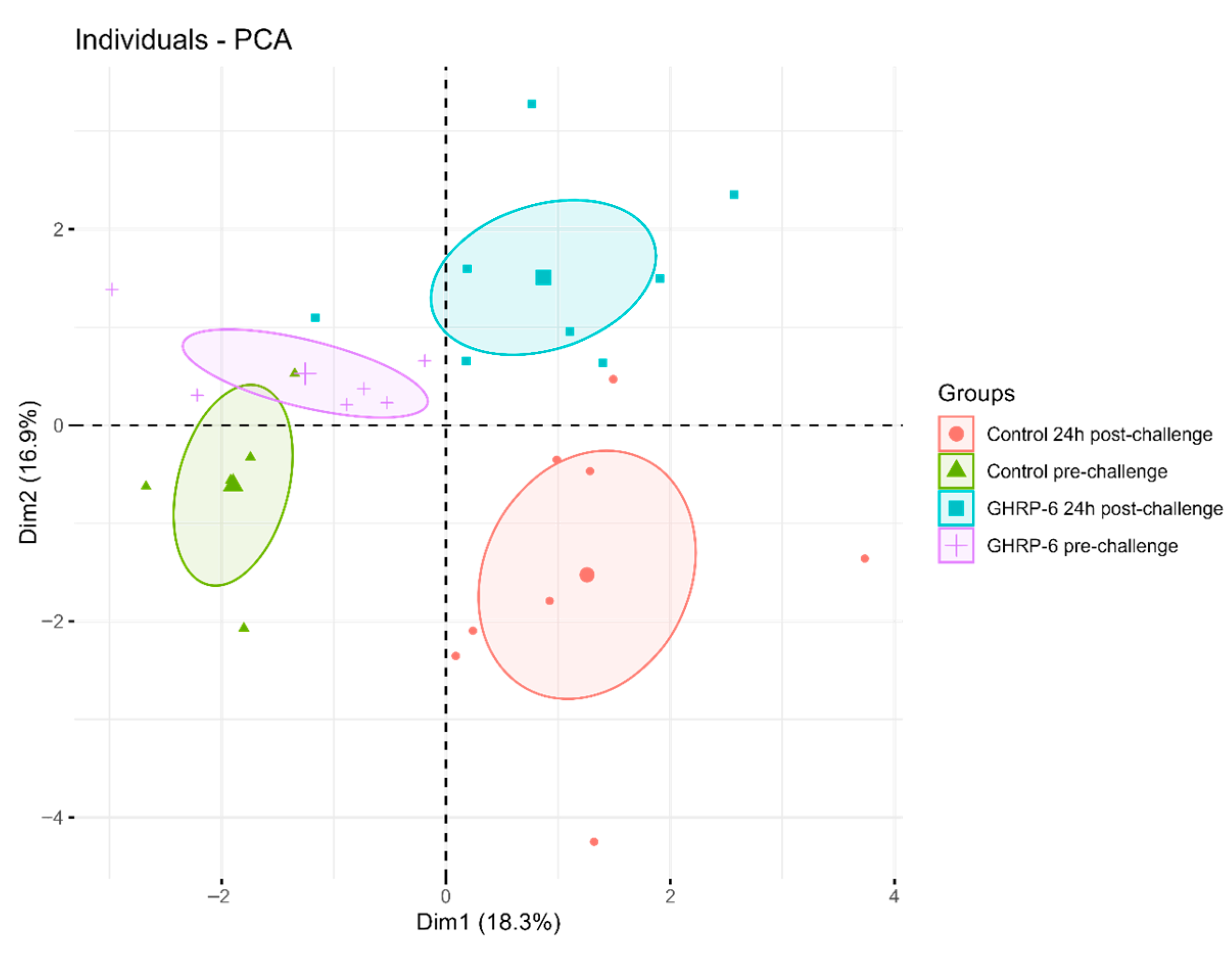
Additionally, to identify patterns in the immune response, normalized gene expression data (ΔCt values) of five immune-related genes per tissue (gill, intestine, and head kidney; 15 genes in total) were analyzed using principal component analysis (PCA). PCA was performed in R using the prcomp function with the argument scale = TRUE to standardize gene variance. Samples were grouped according to experimental conditions: Control pre-challenge, GHRP-6 pre-challenge, Control 24 h post-challenge, and GHRP-6 24 h post-challenge. Clusters were color-coded in the PCA plot, and 95% confidence ellipses were drawn around each group using fviz_pca_ind (res.pca, geom = “point”, ellipse = TRUE)) from the factoextra package. Individuals were plotted according to the first two principal components (PC1 and PC2), which together explained 35.2% of the total variance. The ellipses highlight clustering patterns for each treatment, allowing visual assessment of treatment-specific immune responses. Data analysis was performed using RStudio software version 4.4.0 (24 April 2024).

3. Results

3.1. Effect of Oil-Based GHRP-6 on Juvenile Tilapia Growth

Growth performance was assessed by measuring body length and weight at the start and conclusion of the three-month treatment period. Both control and GHRP-6-treated groups exhibited increases in length from an initial average of 2.3 cm to approximately 10 cm and 12 cm, respectively. Likewise, weight increased from 2.73 g to 23 g in controls and 31 g in the GHRP-6 group. As shown in Table 3, oral administration of oil-based GHRP-6 significantly enhanced both length and weight compared with controls.
In addition, Specific Growth Rate (SGR) and Relative Condition Factor (K) were calculated to further characterize growth responses. SGR values ranged from 2.3 to 2.6% day−1, and K ranged from 1.4 to 1.6 for control and treated groups, respectively. The improved somatic growth was corroborated by significantly increased SGR and K indices in the GHRP-6 group (Table 3).
Summary of growth performance and somatic indices of juvenile tilapia (n = 30 per group) after three months of oral GHRP-6 treatment. Body length (cm), weight (g), Specific Growth Rate (SGR), and Relative Condition Factor (K) were measured at the start and conclusion of the three-month experimental period for both Control and GHRP-6 groups. Data are presented as mean ± SD. Different superscript letters in each row indicate significant differences among dietary treatments based on Student’s t test.

3.2. Antimicrobial Activity of Oral Oil-Based GHRP-6 Following Bacterial Challenge

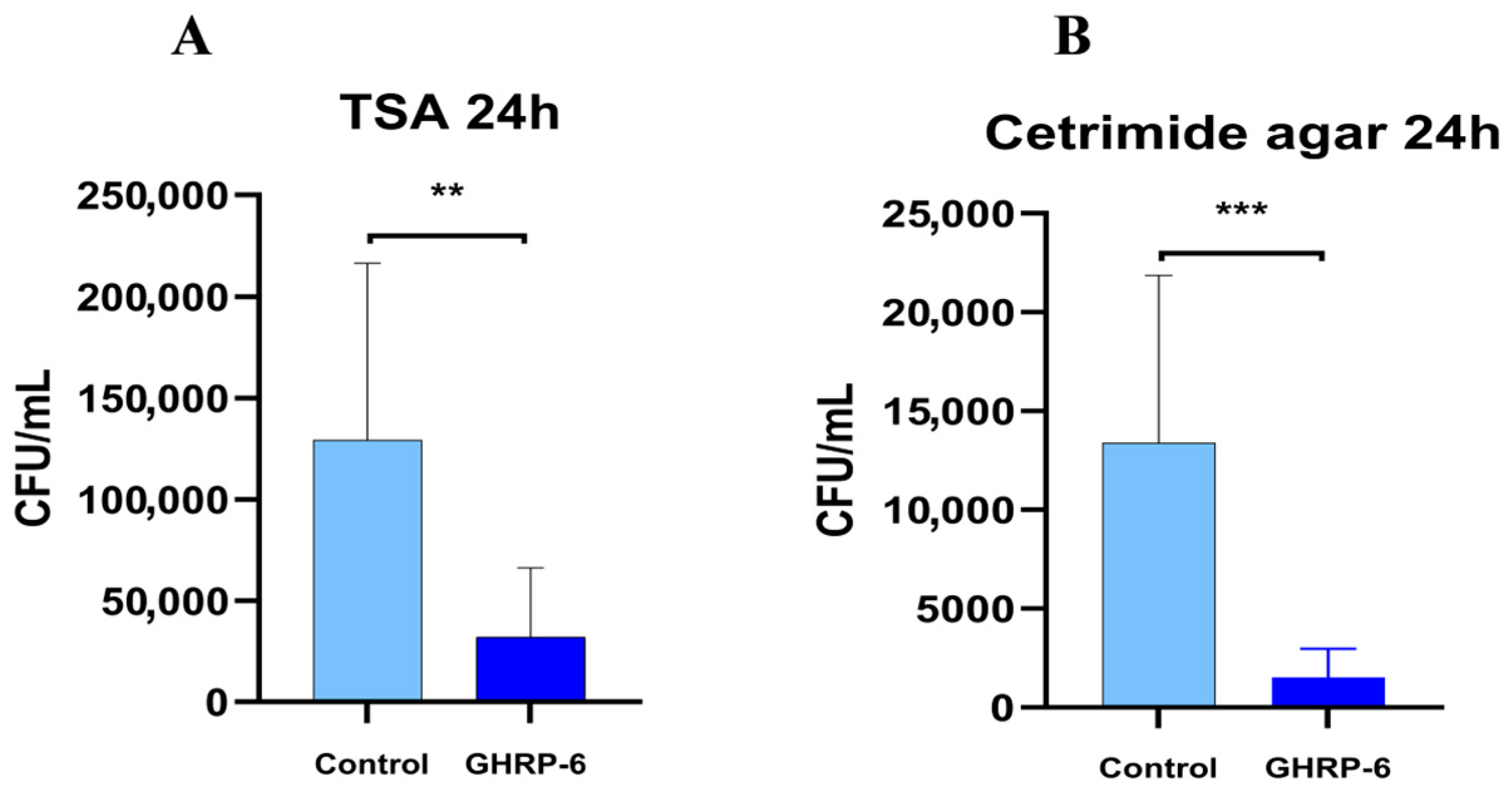
To evaluate the potential stimulation of antimicrobial activity on gill surfaces by oral administration of oil-based GHRP-6, juvenile tilapia were challenged with P. aeruginosa via immersion for one hour. Gill surface rinses were collected 24 h post-challenge and plated on selective (cetrimide agar) and non-selective (TSA) media to quantify bacterial load. In vivo GHRP-6 treatment resulted in a statistically significant reduction in both total and specific colony-forming units (CFUs) compared with controls. Specifically, total bacterial load decreased to 4.4 × 10⁴ ± 4.7 × 10⁴ CFU/mL and specific bacterial load to 1.5 × 10³ ± 1.4 × 10³ CFU/mL, whereas control fish showed 1.2 × 10⁵ ± 8.7 × 10⁴ CFU/mL and 1.3 × 10⁴ ± 8.4 × 10³ CFU/mL, respectively (Figure 1A,B).

3.3. Effect of Oral Oil-Based GHRP-6 on Immune-Related Gene Expression

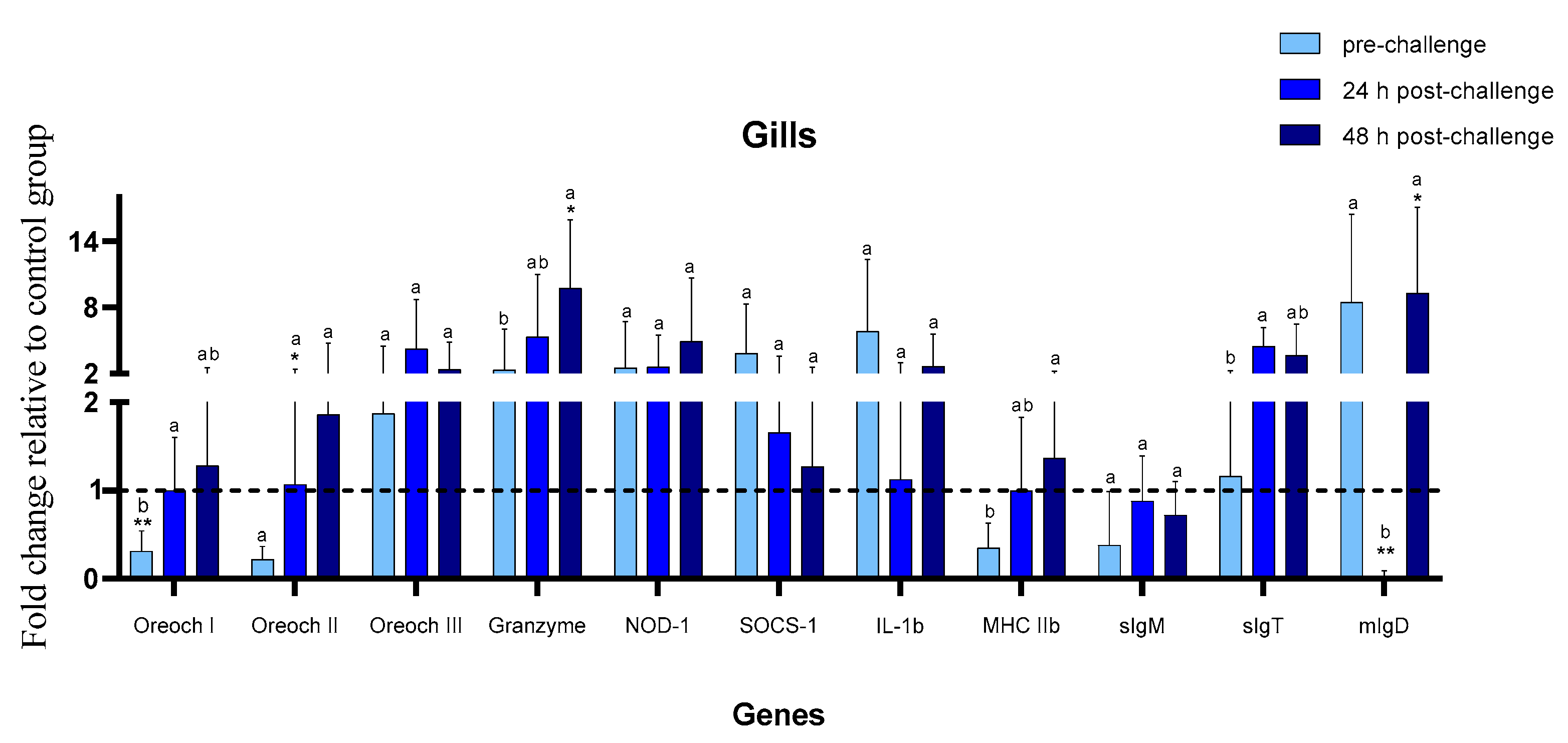
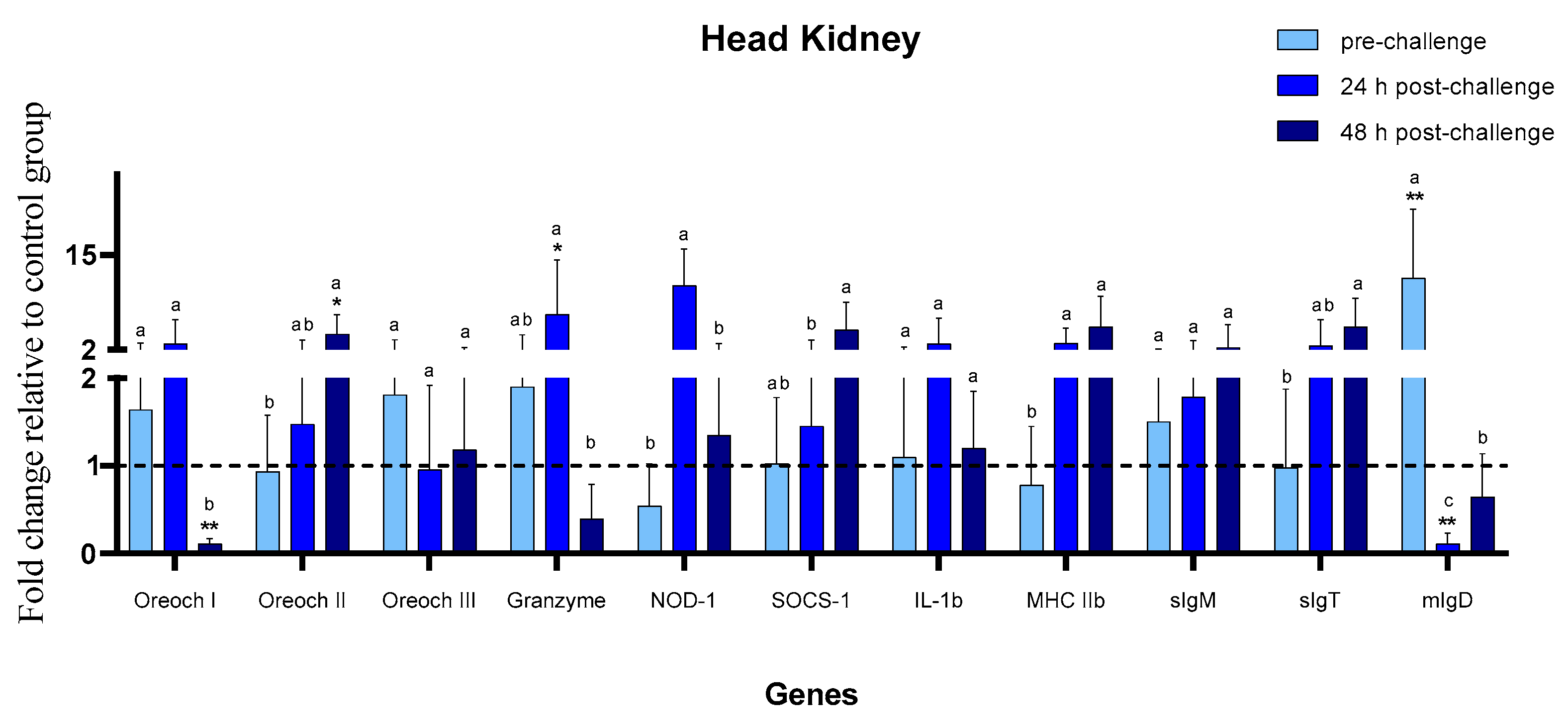
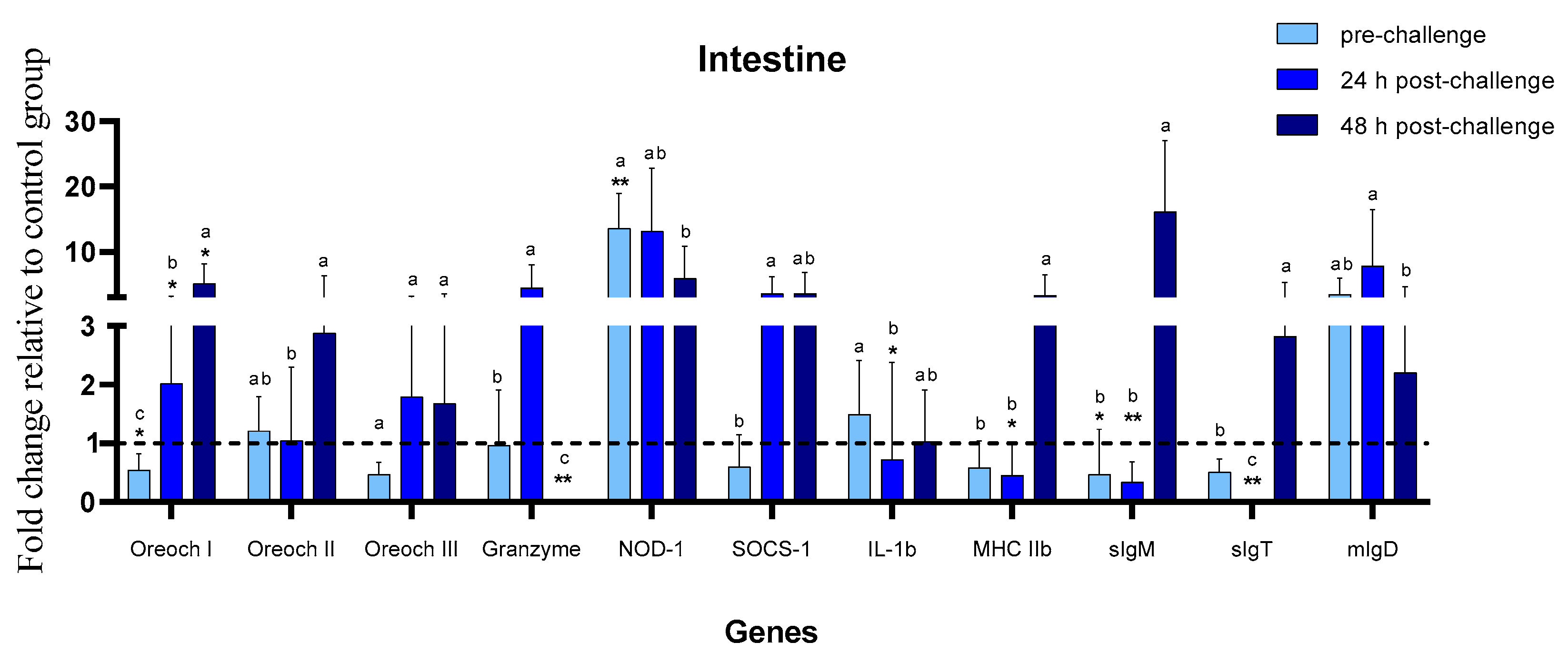
Juvenile tilapia treated with oral oil-based GHRP-6 were assessed for transcriptional changes in immune-related genes in gills (Figure 2), head kidney (Figure 3), and intestine (Figure 4). Gene expression was analyzed at three time points: pre-challenge, and 24 h and 48 h post-bacterial challenge. Data are presented as fold change relative to controls, using elongation factor 1-α (EF 1-α) and β-actin as the housekeeping genes.
In the gills (Figure 2), Oreochromicin I and MHC IIb were significantly upregulated at 48 h post-challenge, while Oreochromicin II showed increased expression at both 24 h and 48 h. Oreochromicin III, Granzyme, NOD-1, SOCS-1, IL-1β, and IgT were upregulated throughout the sampling times. IgD expression was higher pre-challenge and at 48 h. Statistically significant differences relative to controls were observed for Oreochromicin I (pre-challenge, p < 0.01), Oreochromicin II (24 h, p < 0.05), Granzyme (48 h, p < 0.05), and IgD (24 h, p < 0.01; 48 h, p < 0.05). Temporal expression patterns showed upregulation of Oreochromicin I and IgT at 24 h compared to pre-challenge, while Granzyme and MHC IIb peaked at 48 h. IgD levels were highest pre-challenge, decreased at 24 h, and increased again at 48 h.
In the head kidney (Figure 3), Oreochromicin I and Granzyme were upregulated both pre-challenge and at 24 h post-challenge. Oreochromicin II, NOD-1, SOCS-1, MHC IIb, and IgT showed increased expression at 24 h and 48 h, while Oreochromicin III exhibited higher expression pre-challenge and at 48 h. IgM and IL-1β levels were elevated at all time points, whereas IgD was significantly higher only at pre-challenge. Statistically significant differences relative to controls were observed for Oreochromicin I (48 h, p < 0.01), Oreochromicin II (48 h, p < 0.05), Granzyme (24 h, p < 0.05), and IgD (pre-challenge and 24 h, p < 0.01). The mRNA expression profiles revealed temporal variations: Oreochromicin I and Granzyme increased pre-challenge and at 24 h, followed by a decrease at 48 h. In contrast, Oreochromicin II and IgT peaked at 48 h relative to pre-challenge. SOCS-1 expression was higher at 48 h compared to 24 h. IL-1β and NOD-1 exhibited the highest levels at 24 h, declining thereafter at 48 h. MHC IIb expression was elevated at both 24 h and 48 h compared to pre-challenge. Meanwhile, IgD levels were highest pre-challenge, decreased at 24 h, and increased again at 48 h.
In intestine (Figure 4), Oreochromicin I, Oreochromicin III, and SOCS-1 were upregulated at 24 h and 48 h post-challenge, while Oreochromicin II increased pre-challenge and at 48 h. Granzyme increased at 24 h. NOD-1 and IgD were elevated at all times, IL-1β only pre-challenge, and MHC IIb, IgM, and IgT at 48 h. Statistically significant fold changes were found for Oreochromicin I (all time points, p < 0.05), Granzyme (48 h, p < 0.01), NOD-1 (pre-challenge, p < 0.01), IL-1β (24 h, p < 0.05), MHC IIb (24 h, p < 0.05), IgT (24 h, p < 0.01), and IgM (pre-challenge and 24 h, p < 0.05). Expression of Oreochromicin I increased over time, peaking at 48 h. The highest expression levels of Oreochromicin II, MHC IIb, IgM, and IgT were observed at 48 h. Granzyme and SOCS-1 showed peaks at 24 h, while IL-1β decreased over time. NOD-1 expression statistically decreased at 48 h compared to pre-challenge. IgD was highest at 24 h and declined at 48 h.
Additionally, principal component analysis (PCA) of normalized gene expression (ΔCt values) revealed distinct clustering patterns among treatments (Figure 5). The first two principal components (PC1 and PC2) together explained 35.2% of the total variance. Separation along PC1 primarily distinguished pre-challenge from 24 h post-challenge samples, indicating that the challenge itself accounted for the majority of the variance in immune gene expression. In contrast, PC2 separated control and GHRP-6 groups, with clearer divergence observed in 24 h post-challenge samples compared to their pre-challenge counterparts. Thus, while pre-challenge groups overlapped regardless of treatment, post-challenge groups separated more distinctly, suggesting a treatment-dependent modulation of the immune response after exposure. The 95% confidence ellipses further highlighted the overlap between pre-challenge groups and the divergence between challenged controls and GHRP-6-treated fish.

3.4. Effect of Oral Oil-Based GHRP-6 on Digestive Enzyme Activities

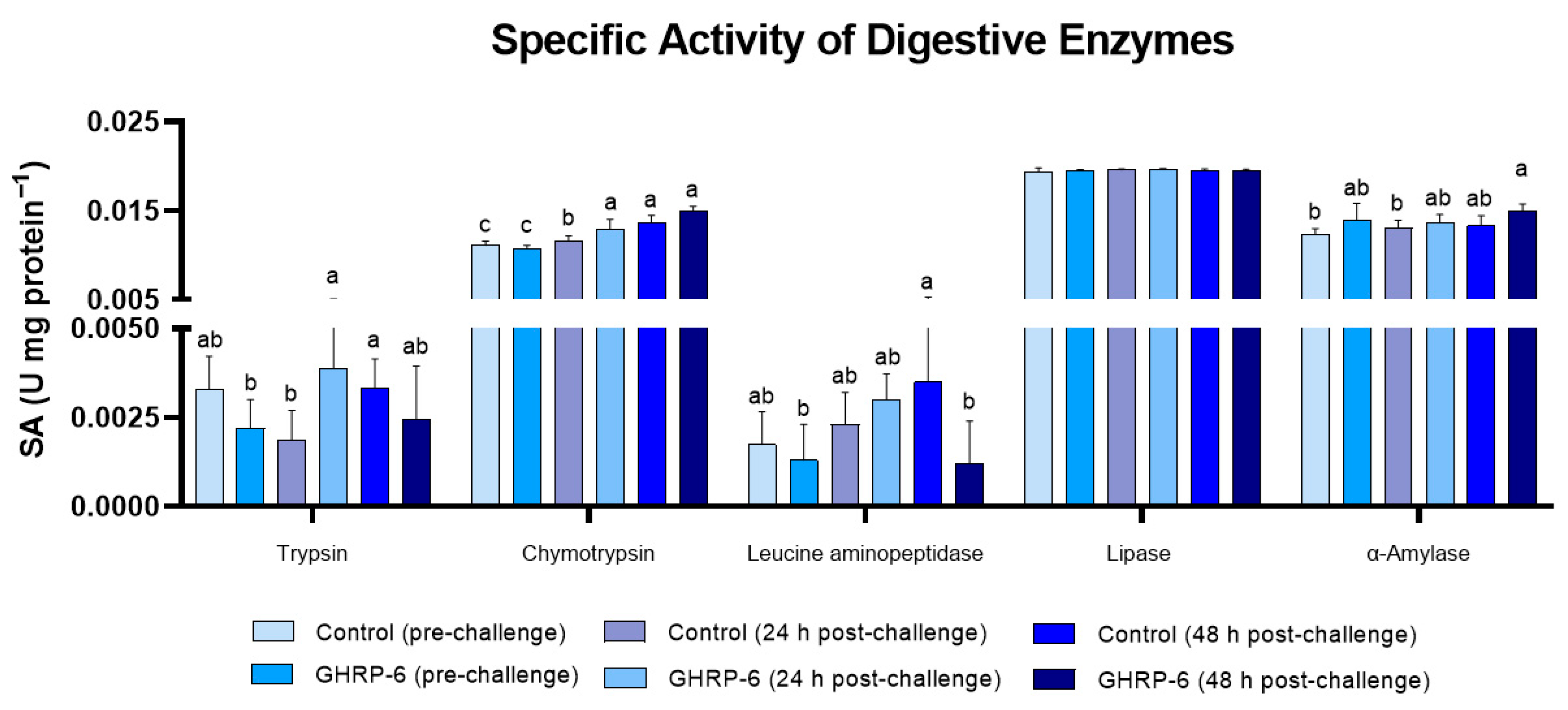
The impact of oral oil-based GHRP-6 on digestive enzyme activity in juvenile tilapia, both challenged and unchallenged, is presented in Figure 6. Two-way ANOVA revealed that chymotrypsin and α-amylase activities were significantly affected by treatment (p = 0.0126 and p = 0.0018, respectively), while chymotrypsin was also strongly influenced by sampling time (p < 0.0001). Significant interactions between treatment and time were observed for trypsin (p = 0.0014), chymotrypsin (p = 0.0158), and leucine aminopeptidase (p = 0.0110), indicating that the effect of treatment on these enzymes varied over time. No significant effects or interactions were found for lipase (p > 0.1 for all factors), suggesting its activity was stable across treatments and time points (Table 4). Lipase activity remained unchanged between treated and control groups throughout the sampling period. Prior to challenge, enzyme activities did not differ significantly among groups.
In the control group, trypsin activity decreased at 24 h post-challenge compared to pre-challenge levels, but recovered by 48 h (p < 0.05). Conversely, trypsin activity in the GHRP-6-treated group increased significantly at 24 h compared to pre-challenge (p < 0.05) and was significantly higher than controls at 24 h (p < 0.001). Chymotrypsin activity increased over time in both groups; however, the GHRP-6 group exhibited significantly higher activity at 24 h (p < 0.0001) and 48 h (p < 0.0001) compared to controls and to pre-challenge levels. Leucine aminopeptidase activity in the control group rose at 48 h relative to treated group at 48 h (p < 0.05). Finally, α-amylase activity progressively increased in the GHRP-6 group, peaking at 48 h (p < 0.05) with significantly higher levels than controls.

4. Discussion

The strategic application of feed additives is increasingly recognized as fundamental for sustainable aquaculture, enhancing growth, feed efficiency, and disease resistance in farmed fish. Immunomodulatory additives, in particular, play a crucial role by stimulating somatic growth, improving energy utilization, bolstering immune responses, and optimizing metabolic-nutritional aspects [29,30,31]. Among these, growth hormone secretagogues (GHS) and ghrelin homologs represent promising avenues. Ghrelin, a key endogenous regulator, and its synthetic analogs, like Growth Hormone-Releasing Peptide-6 (GHRP-6), are known to modulate growth hormone release, stimulate feed intake, and influence metabolic pathways [32,33,34]. Studies have demonstrated GHRP-6’s efficacy in aquaculture species as a dietary supplement, leading to improved growth performance, enhanced feed conversion, and strengthened immunity, reinforcing its potential as a functional feed additive [11,12,13,14,15,16,17,18]. This is the first study to evaluate the immunomodulatory effects of orally administered oil-based GHRP-6 in juvenile tilapia by assessing gene expression in immune-relevant tissues and digestive enzyme activities following bacterial challenge. The findings provide novel insights into how peptide-based nutritional interventions can modulate both mucosal and systemic immune responses and digestive processes in teleost fish, deepening the understanding of the interplay between nutrition and immunology.

4.1. GHRP-6 in an Oil-Based Formulation Enhances Growth Performance

The oral administration of oil-based GHRP-6 significantly enhanced somatic growth in juvenile tilapia, as demonstrated by increased final body length and weight after three months of dietary supplementation. This growth promotion was further supported by a significantly improved specific growth rate compared to the control, as well as an elevated condition factor. The condition factor, an established indicator of nutritional status and overall health closely associated with growth and wellbeing, is commonly calculated from the weight-to-length relationship. For tilapia (Oreochromis sp.), optimal physiological condition corresponds to a factor ranging approximately from 1 to 1.5, where values equal to or above 1 suggest good health, while lower values may indicate stress or malnutrition [35]. In this study, although the increase in condition factor in the GHRP-6-treated group was not statistically significant, values were higher than in the control group and well within the optimal range for the species. Similar growth enhancements in length, weight, specific growth rate, and condition factor have been observed in sea bream receiving oral GHRP-6 supplementation after 97 days of feeding [15]. Similarly, findings are demonstrating that oral administration of GHRP-6, in both encapsulated and non-encapsulated forms, stimulates growth in juvenile and larval tilapia (Oreochromis sp.) [11]. Likewise, dietary supplementation with ghrelin has been shown to increase feed intake and weight gain in teleosts, linked to stimulated hypothalamic neuropeptide Y expression [32,33,34]. Other growth hormone secretagogues, such as A233, have similarly improved growth performance in juvenile Oreochromis niloticus [36], and the addition of neuropeptide Y as a feed additive has promoted growth in tilapia fed low fish meal diets [31]. Furthermore, independent supplementation with GHRP-6 and fructooligosaccharides (FOS) has been demonstrated to significantly increase size and weight in O. niloticus [14]. Studies in shrimp have also documented significant growth improvements following GHRP-6 immersion treatments [13]. Taken together, these results suggest that GHRP-6 supplementation provides benefits that extend beyond growth promotion, potentially enhancing overall fish health and welfare. Moreover, oral administration remains the most practical and least stressful method to deliver growth-promoting compounds in aquaculture, as it minimizes handling stress during treatment.

4.2. Antimicrobial and Immunomodulatory Effects of GHRP-6 in an Oil-Based Formulation

The teleost immune system employs an integrated network of innate and acquired humoral and cellular defenses. Lymphoid tissues, supported by reticular cell networks, provide the structural framework for immune cell interaction and effector production. The kidney, particularly the anterior head kidney, serves as the primary hematopoietic organ, vital for the production and differentiation of key leukocytes, including B lymphocytes, monocytes, macrophages, and granulocytes [37]. Systemic immunity is complemented by specialized mucosal barriers, which are critical for homeostasis, gas exchange, and nutrient absorption. These barriers comprise mucosa-associated lymphoid tissues (MALT), including gut-associated lymphoid tissue (GALT), as well as gill-, skin-, and nasopharynx-associated tissues, which deliver site-specific immune defense [38]. The intestinal immune response is governed by GALT, whose development and function are shaped by the local microbiota and epithelial integrity [8]. The gills, as a major portal for pathogen entry, contain specialized cells that secrete antibacterial peptides and enzymes, constituting a first line of defense against microbial invasion [39].
The synthetic hexapeptide GHRP-6 acts in teleosts as a potent multifunctional regulator, integrating endocrine, metabolic, and immune pathways to enhance overall physiological performance and disease resilience. Its pleiotropic mechanism is initiated by specific binding to the growth hormone secretagogue receptor (GHS-R), which is widely expressed in neuroendocrine, immune, and digestive tissues, enabling coordinated systemic effects [11,12,13,14,15,16,17,18].
The central and best-characterized pathway is the activation of the somatotropic GH/IGF-I axis. Upon administration, GHRP-6 stimulates somatotropic cells in the pituitary, primarily through the phosphatidylinositol signaling pathway, culminating in increased release of growth hormone (GH) into circulation [11]. This effect has been quantified in gilthead seabream (Sparus aurata), where dietary supplementation with 500 µg of GHRP-6 per kg of feed significantly increased plasma GH levels. In turn, GH stimulates hepatic production of insulin-like growth factor I (IGF-I), the main mediator of its anabolic effects. This leads to improved somatic growth and feed efficiency, as demonstrated in seabream fed doses of 100 and 500 µg/kg for 97 days [15].
Concurrently, GHRP-6 modulates energy homeostasis and appetite. As a ghrelin analog, it exerts a significant orexigenic effect, which has been correlated with increased voluntary feed intake in treated fish [11,13,14]. Furthermore, it influences nutrient partitioning and utilization efficiency, optimizing aerobic metabolism. Studies in seabream indicate that the 100 µg/kg dose produced a more favorable aerobic metabolic profile than the higher dose, suggesting a nuanced, dose-dependent modulation of energy efficiency [15]. These anabolic and metabolic benefits underscore its role as a growth-promoting functional additive, aligning with sustainable aquaculture strategies aimed at reducing antibiotic reliance [6,7,8,9,10].
A paramount aspect of GHRP-6’s action is its sophisticated, multi-layered immunomodulatory capacity, which potently enhances both innate and adaptive branches of the fish immune system. This system is organized across primary lymphoid organs (e.g., head kidney) and mucosal surfaces (e.g., gills, intestine) [37,38]. Empirical evidence from juvenile tilapia (Oreochromis sp.) demonstrates that oral administration of GHRP-6, formulated in oil, significantly enhances immune defense against Pseudomonas aeruginosa, as evidenced by a marked reduction in bacterial load (CFU) 24 h post-challenge. This efficacy is consistent with the established antimicrobial and immunomodulatory properties of GHRP-6 and its analog ghrelin in teleosts [11,17,18,40].
At the molecular level, GHRP-6 orchestrates a comprehensive, tissue-specific immune strategy. It primes the initial innate defense by upregulating intracellular pattern recognition receptors [41,42,43]. Expression of NOD-1 and the pro-inflammatory cytokine IL-1β is elevated in a temporally distinct manner across tissues: gills show sustained NOD-1 and a biphasic IL-1β response for regulated inflammation; the head kidney exhibits a sharp systemic IL-1β peak indicative of an acute-phase reaction; and the intestine displays a pre-challenge elevation, suggesting basal priming with restrained post-infection inflammation to preserve mucosal homeostasis [41,42,43,44,45,46]. These results align with previous findings on the role of NOD-like receptors and IL-1β in teleost immunity [42,44,45]. Furthermore, studies in sturgeons have demonstrated the positive role of IL-1β in regulating immune responses and enhancing antibacterial capacity [46].
This enhanced surveillance is coupled with the induction of key effector mechanisms. Antimicrobial peptides (AMPs) play an essential role as the innate immune system’s frontline defense by exhibiting broad antibacterial activity and inducible gene expression in response to pathogens [47,48]. GHRP-6 robustly induces the expression of endogenous AMPs. In tilapia, intraperitoneal injection increased transcription of Oreochromicins in the spleen and reduced P. aeruginosa load in gills [18]. Oral administration of its oil formulation shows a differential modulation: in gills, early upregulation of Oreochromicins I and III correlates with the significant CFU reduction at 24 h, while Oreochromicin II peaks later for sustained defense. The intestine shows progressive AMP enhancement, and the head kidney exhibits patterns of early priming and regulated systemic activation. Similarly, the expression of Oreochromycins I, II, and III in tilapia has been previously demonstrated [49,50]. Together, these patterns reflect complementary roles of mucosal surfaces and systemic lymphoid tissues in achieving effective and balanced defense against bacterial pathogens [51]. Furthermore, significant hepcidin stimulation in gills at 48 h post-challenge in Acanthopagrus schlegelii aligns with these results, suggesting coordinated engagement of later immune response phases, including adaptive immunity development [52,53].
Furthermore, GHRP-6 modulates cell-mediated cytotoxicity. Granzyme expression profiles show sustained elevation in gills, a transient peak in the intestine, and an early systemic response in the head kidney, optimizing pathogen clearance while limiting immunopathology. These findings are corroborated by previous studies. Granzyme expression exhibits distinct upregulation patterns across tissues following infection, suggesting that cell-mediated cytotoxicity plays a prominent role in early defense against intracellular parasitic bacteria, while delayed responses may be more effective against other pathogens [54,55,56]. To impose precise regulatory control, the suppressor SOCS-1 displays organ-specific kinetics: an early rise and decline in gills, sustained elevation in the intestine to prevent excessive inflammation, and a delayed peak in the head kidney for systemic resolution. These findings are supported by studies showing that SOCS-1 is involved in the antibacterial immune response of tilapia [57,58,59,60].
B cells are central to linking innate and adaptive immunity, acting as antigen-presenting cells and phagocytes. Major Histocompatibility Complex class II (MHC II) molecules on B cells facilitate antigen presentation but decline as B cells mature into antibody-secreting cells. These cells secrete immunoglobulins including IgM, predominant in systemic immunity; IgT, specialized for mucosal defense; and IgD, involved in mucosal homeostasis [48,61,62,63]. GHRP-6 also potentiates adaptive humoral immunity, acting as an immunological adjuvant. It tailors the antibody response across compartments: enhancing mucosal immunity via sustained IgT in gills and a coordinated late peak of MHC IIb, IgM, and IgT in the intestine; and driving systemic antibody production via a progressive increase in MHC IIb, IgM, and IgT in the head kidney. Dynamic modulation of IgD across tissues further suggests a role in immune regulation and homeostasis. This adjuvant effect is corroborated in seabream, where dietary GHRP-6 (500 µg/kg) resulted in higher circulating immunoglobulins and increased expression of the IgM heavy chain gene in the spleen during an immunological challenge [16]. These observations align with established immunological principles in teleosts. The upregulation of MHC IIb [64,65]. and the essential role of IgM in both systemic and mucosal humoral responses, including IL-10-mediated induction [66,67], are well-documented. Similarly, the central role of IgT in mucosal defense is corroborated by its strong expression in gills and intestine [66] and its targeting of parasites in infected tissues [68]. The rapid mucosal plasmablast response [69] and the immunoregulatory functions of IgD in microbial homeostasis and inflamed mucosa [70,71] further support the findings that GHRP-6 orchestrates a coordinated immune response, enhancing antigen presentation and antibody production to promote health and mucosal balance.
Additionally, Principal Component Analysis (PCA) of immune gene expression profiles reveals that GHRP-6 supplementation alters both basal (pre-challenge) and active (post-challenge) immunological states. Separation of groups according to PC1 highlights the predominant effect of pathogen exposure, while PC2 distinguishes dietary treatments, especially at 24 h post-exposure. This indicates that GHRP-6 not only primes the immune system in advance but also dynamically shapes the host’s response during active infection, a priming effect similarly observed in gilthead seabream [15,16]. The post-challenge divergence between GHRP-6 and control groups underscores this treatment-specific immunomodulation.
In conclusion, the synthetic peptide GHRP-6 functions as a master immuno-metabolic integrator in teleosts, orchestrating a cohesive physiological response that enhances resilience and disease resistance. Its action, initiated through the GHS-R receptor, synergistically mobilizes the somatotropic GH/IGF-I axis for growth promotion, optimizes nutrient utilization and aerobic metabolism, and buffers the stress response by attenuating HPI axis activation—as evidenced by stable cortisol, lactate, and triglyceride levels in challenged seabream [15]. This mitigation of metabolic stress prevents immunosuppression, allowing primed immune defenses to function optimally.
Simultaneously, GHRP-6 strengthens immunity through a sophisticated, multi-layered strategy. It enhances innate pathogen recognition, amplifies antimicrobial peptide production and cell-mediated cytotoxicity, imposes precise regulatory control, and tailors adaptive humoral responses across mucosal and systemic compartments. This coordinated immunomodulation results in a significant reduction in bacterial load post-challenge, demonstrating an enhanced capacity to limit pathogen proliferation. Collectively, these integrative benefits—spanning improved growth performance, stimulated digestive enzyme activity, enhanced immune priming, and effective disease mitigation—underscore GHRP-6’s value as a multifactorial functional additive. This holistic profile aligns with contemporary sustainable aquaculture strategies aimed at reducing antibiotic reliance and increasing host resilience [6,7,8,9,10].
While the principal pathways of GHRP-6 are well-characterized, the detailed molecular mechanisms linking its systemic effects to specific changes in digestive enzyme activity warrant further investigation. Future research should focus on elucidating these integrative pathways, as well as evaluating long-term immune memory, cross-pathogen protection, and potential synergies with other dietary immunostimulants. Such studies will be crucial for fully harnessing the potential of GHRP-6 as a promising candidate for functional diets designed to simultaneously improve host performance and reduce disease susceptibility.

4.3. GHRP-6 in an Oil-Based Formulation Stimulates Digestive Enzyme Activities

Nutrient digestion is fundamental for converting dietary components into absorbable substrates essential for vital physiological and metabolic activities [72]. Immunostimulants have gained recognition for their positive effects on digestive enzyme activities, which improve nutrient assimilation and promote growth and performance [73]. Due to the gastrointestinal tract’s dual role as a digestive and immunological organ, enzymes such as proteases, amylases, phosphatases, and lipases are critical for fish health [74,75]. In this context, enzymes also play an important role in regulating intestinal immunity by interacting with gut microbes and the host. They contribute to the breakdown of immunoglobulins and antigens, influencing immune tolerance to the gut microbiota and food antigens. Furthermore, enzymes help regulate the acid–base balance, can produce prebiotics for probiotics to generate volatile fatty acids, and catalyze substances to reduce the intestinal pH, processes directly linked to the gut immune system. Conversely, when nutrients are not broken down sufficiently, or when anti-nutritional factors are present, they can cause damage to the intestinal epithelium, undermining this delicate balance [76,77].
Beyond these functions, digestive enzymes can directly modulate the immune system by influencing the production of cytokines and chemokines and affecting the synthesis of antimicrobial peptides [78]. They also play a role in modulating the activity of immune cells in the gut, which is crucial for maintaining gut health and defense against pathogens. This intimate connection is evidenced by studies showing that intestinal infections or inflammation often result in reduced disaccharidase enzyme levels, concurrently exerting significant effects on the secretion and expression of cellular inflammatory factors [79,80].
Our study reveals that oral supplementation with GHRP-6, a synthetic analog of ghrelin, over three months significantly enhances somatic growth in juvenile tilapia, as evidenced in this study and previous studies, by weight and length increases [11,15]. This observation concurs with ghrelin’s role in promoting food intake and growth via the GH/IGF-I axis, a central regulator of nutrient absorption and anabolic metabolism [81,82]. Concomitant with growth stimulation, GHRP-6 significantly elevates intestinal digestive enzyme activities, including trypsin, chymotrypsin, leucine aminopeptidase, and α-amylase during bacterial challenge. Enhanced trypsin activity at 24 h post-challenge reflects improved proteolysis supporting immune and digestive health, consistent with prior findings in β-glucan supplemented fish that showed increased protease activities and beneficial microbiota effects [83]. This suggests that heightened proteolytic activity not only facilitates digestion but also modulates immune defenses, consistent with the gastrointestinal tract’s importance in pathogen defense. Similarly, chymotrypsin activity rose significantly, paralleling growth and immune improvements reported in other aquatic species following immunostimulant application. Leucine aminopeptidase levels were more variable, possibly affected by environmental and husbandry factors [84,85]. Increased α-amylase levels reflect improved carbohydrate digestion, akin to responses in β-glucan studies with fish and shrimp [86]. Other studies have explored the synergistic effects of the prebiotic fructooligosaccharide (FOS) combined with GHRP-6 on fish growth, digestion, and immunity. While FOS supplementation significantly increased fish size and weight, GHRP-6 enhanced digestive enzyme activities; specifically, α-amylase, trypsin, and esterase activities showed significant increases compared to the control group following GHRP-6 treatment. GHRP-6 has also been proven to improve feeding efficiency [14]. These findings underscore GHRP-6’s capacity to enhance digestive enzyme activity and immune responses, effects that are likely facilitated by improved stability and bioavailability due to its protected delivery in an oil-based formulation.
These enhanced enzyme activities accelerate digestion of proteins and carbohydrates, supplying critical substrates for rapid growth. GH-mediated regulation of intestinal nutrient transporters further optimizes nutrient uptake [82]. However, lipase activity remained unaltered despite growth benefits, suggesting metabolic reprogramming possibly favoring lipid storage over immediate catabolism, consistent with previous reports of species- and treatment-dependent lipase modulation [83]. While other dietary enhancers have been shown to increase lipase activity in O. niloticus [87] and nucleotides (which upregulate ghrelin) stimulate lipase in Nile tilapia [88], the absence of lipase induction here may represent a strategic energy allocation prioritizing protein and carbohydrate metabolism.
Moreover, the observed stimulation of immune system genes and decreased bacterial load align with the well-documented immunostimulatory effects of GHRP-6 in tilapia, as demonstrated by our research group. This reduction in pathogenic load and enhanced immune status can be further explained by a significant regulatory mechanism wherein the enhanced enzymatic activity mitigates the immune stress response within the gut. Enzymes reduce unnecessary immune activation by degrading substances that resemble immunogenic agents, such as β-mannans. These compounds can elicit a false immune response because their molecular patterns are mistaken for pathogenic antigens by the host’s pattern recognition receptors, leading to energy-intensive inflammation and microbiota dysbiosis [79]. On the other hand, in broiler chickens, dietary supplementation with the probiotic Clostridium butyricum promoted a significant increase in the activities of digestive enzymes, including amylase and protease, in the jejunal mucosa of the chickens, reversing the decrease caused by the challenge with Escherichia coli [89].
The broad enhancement of digestive enzymes induced by GHRP-6 likely contributes to breaking down these pathogenic-like structures and other antigenic compounds in the diet. This enzymatic intervention would reduce unnecessary intestinal stress, prevent immune system depletion, and help maintain a balanced microbiota, which is consistent with the lower bacterial load and robust immune gene expression we observed. Consequently, this process not only improves nutrient absorption but also contributes significantly to the overall intestinal health and defense of the fish. A robust immune response facilitated by GHRP-6 is likely to reduce the energetic costs associated with fighting infections, thereby allowing more resources to be allocated toward growth and development. This synergistic interplay—enhanced digestion supporting growth, combined with strengthened immune defenses maintaining health—collectively contributes to the improved performance of juvenile tilapia.

5. Conclusions

The present study evaluated the immunomodulatory and digestive responses of juvenile tilapia following oral administration of oil-based GHRP-6 and subsequent challenge with P. aeruginosa. The findings demonstrate that GHRP-6 modulates the expression of key immune-related genes across multiple tissues, including gills, head kidney, and intestine, with distinct temporal patterns indicative of an orchestrated immune response. Enzymatic activity measurements further revealed that GHRP-6 influences digestive enzyme function, particularly trypsin, chymotrypsin, leucine aminopeptidase, and α-amylase, suggesting a positive effect on nutrient digestion and absorption. Together, these results provide novel insights into the multifaceted role of GHRP-6 as an immunomodulator and growth promoter in tilapia aquaculture.

Author Contributions

Conception and design of study: L.M.d.A., A.R.-G., M.P.E. and R.M. Acquisition of data: L.M.d.A., A.R.-G., L.H., E.A.Q., A.J.C., N.N.P., D.R., A.M., O.R., Y.G., L.R.-V. and R.M. Analysis and/or interpretation of data: L.M.d.A., L.H., L.R.-V., M.P.E. and R.M. Drafting the manuscript: L.M.d.A., L.R.-V. and R.M. Revising the manuscript critically for important intellectual content: L.M.d.A., L.R.-V., M.P.E. and R.M. All authors have read and agreed to the published version of the manuscript.

Funding

This research received no external funding.

Institutional Review Board Statement

The animal study protocol was approved by the Ethics Committee of Center for Genetic Engineering and Biotechnology (protocol code 15/01/2024/054 and date of approval 15 January 2024) for studies involving animals.

Data Availability Statement

The original contributions presented in this study are included in the article. Further inquiries can be directed to the corresponding authors.

Acknowledgments

The authors thank Janet Velázquez and Liliana Basabe, and the colleagues from Functional Plant Genomics Laboratory of CIGB, Havana, Cuba, for contributing in this work.

Conflicts of Interest

The authors declare no conflicts of interest.

References

  1. FAO. The State of World Fisheries and Aquaculture 2024 Blue Transformation in Action; FAO: Rome, Italy, 2024. [Google Scholar]
  2. Mog, M.; Ngasotter, S.; Tesia, S.; Waikhom, D.; Panda, P.; Sharma, S.; Varshney, S. Problems of antibiotic resistance associated with oxytetracycline use in aquaculture: A review. J. Entomol. Zool. Stud. 2020, 8, 1075–1082. [Google Scholar]
  3. Matias, A.C.; Andrade, C. New Challenges in Marine Aquaculture Research. J. Mar. Sci. Eng. 2025, 13, 324. [Google Scholar] [CrossRef]
  4. Pérez-Sánchez, T.; Mora-Sánchez, B.; Balcázar, J.L. Biological approaches for disease control in aquaculture: Advantages, limitations and challenges. Trends Microbiol. 2018, 26, 896–903. [Google Scholar] [CrossRef] [PubMed]
  5. Bondad-Reantaso, M.G.; MacKinnon, B.; Karunasagar, I.; Fridman, S.; Alday-Sanz, V.; Brun, E.; Le Groumellec, M.; Li, A.; Surachetpong, W.; Karunasagar, I.; et al. Review of alternatives to antibiotic use in aquaculture. Rev. Aquac. 2023, 15, 1421–1451. [Google Scholar] [CrossRef]
  6. Dawood, M.A.; Koshio, S.; Esteban, M.Á. Beneficial roles of feed additives as immunostimulants in aquaculture: A review. Rev. Aquac. 2018, 10, 950–974. [Google Scholar] [CrossRef]
  7. Wang, B.; Thompson, K.D.; Wangkahart, E.; Yamkasem, J.; Bondad-Reantaso, M.G.; Tattiyapong, P.; Jian, J.; Surachetpong, W. Strategies to enhance tilapia immunity to improve their health in aquaculture. Rev. Aquac. 2023, 15, 41–56. [Google Scholar] [CrossRef]
  8. Dawood, M.A. Nutritional immunity of fish intestines: Important insights for sustainable aquaculture. Rev. Aquac. 2021, 13, 642–663. [Google Scholar] [CrossRef]
  9. Vijayaram, S.; Sun, Y.Z.; Zuorro, A.; Ghafarifarsani, H.; Van Doan, H.; Hoseinifar, S.H. Bioactive immunostimulants as health-promoting feed additives in aquaculture: A review. Fish Shellfish Immunol. 2022, 130, 294–308. [Google Scholar] [CrossRef]
  10. Helmy, Y.A.; Taha-Abdelaziz, K.; Hawwas, H.A.E.H.; Ghosh, S.; AlKafaas, S.S.; Moawad, M.M.; Saied, E.M.; Kassem, I.I.; Mawad, A.M. Antimicrobial resistance and recent alternatives to antibiotics for the control of bacterial pathogens with an emphasis on foodborne pathogens. Antibiotics 2023, 12, 274. [Google Scholar] [CrossRef] [PubMed]
  11. Martinez, R.; Carpio, Y.; Morales, A.; Lugo, J.M.; Herrera, F.; Zaldívar, C.; Carrillo, O.; Arenal, A.; Pimentel, E.; Estrada, M.P. Oral administration of the growth hormone secretagogue-6 (GHRP-6) enhances growth and non-specific immune responses in tilapia (Oreochromis sp.). Aquaculture 2016, 452, 304–310. [Google Scholar] [CrossRef]
  12. Martínez, R.; Hernández, L.; Gil, L.; Carpio, Y.; Morales, A.; Herrera, F.; Rodríguez-Mallón, A.; Leal, Y.; Blanco, A.; Estrada, M.P. Growth hormone releasing peptide-6 enhanced antibody titers against subunit antigens in mice (BALB/c), tilapia (Oreochromis niloticus) and African catfish (Clarias gariepinus). Vaccine 2017, 35, 5722–5728. [Google Scholar] [CrossRef]
  13. Martínez, R.; Carpio, Y.; Arenal, A.; Lugo, J.M.; Morales, R.; Martín, L.; Rodriguez, R.F.; Acosta, J.; Morales, A.; Duconge, J.; et al. Significant improvement of shrimp growth performance by growth hormone-releasing peptide-6 immersion treatments. Aquac. Res. 2017, 48, 4632–4645. [Google Scholar] [CrossRef]
  14. Morales Rojas, A.; Moro, D.F.; Rodriguez, A.; Hernández, L.; Comellas, A.; Herrera, F.; Gonzalez, O.; Pérez Cruz, E.R.; Estrada, M.P.; Martinez, R. Nutritional supplement of FOS enhances growth and immune system in tilapia larvae (Oreochromis niloticus). Bionatura 2023, 8, 22. [Google Scholar] [CrossRef]
  15. Rodríguez-Viera, L.; Martí, I.; Martínez, R.; Perera, E.; Estrada, M.P.; Mancera, J.M.; Martos-Sitcha, J.A. Feed supplementation with the GHRP-6 peptide, a ghrelin analog, improves feed intake, growth performance and aerobic metabolism in the gilthead sea bream Sparus aurata. Fishes 2022, 7, 31. [Google Scholar] [CrossRef]
  16. Rodríguez-Viera, L.; Caderno, A.; Martinez, R.; Martinez-Rodríguez, G.; Oliva, M.; Perera, E.; Mancera, J.M.; Martos-Sitcha, J.A. The Ghrelin Analog GHRP-6, Delivered Through Aquafeeds, Modulates the Endocrine and Immune Responses of Sparus aurata Following IFA Treatment. Biology 2025, 14, 941. [Google Scholar] [CrossRef] [PubMed]
  17. Álvarez-Torres, D.; Martínez, R.; Moreno, P.; Alonso, M.C.; García-Rosado, E.; Estrada, M.P.; Béjar, J. Anti-nervous necrosis virus activity of the growth hormone releasing peptide-6, GHRP-6. Aquac. Int. 2025, 33, 306. [Google Scholar] [CrossRef]
  18. Hernández, L.; Camacho, H.; Nuñez-Robainas, A.; Palenzuela, D.O.; Morales, A.; Basabe, L.; Herrera, F.; Rodrigo, O.; Rodriguez-Gabilondo, A.; Velázquez, J.; et al. Growth hormone secretagogue peptide-6 enhances oreochromicins transcription and antimicrobial activity in tilapia (Oreochromis sp.). Fish Shellfish Immunol. 2021, 119, 508–515. [Google Scholar] [CrossRef]
  19. Ferdous, Z.; Hossain, M.K.; Hadiuzzaman, M.; Rafiquzzaman, S.M.; Halim, K.A.; Rahman, T.; Reza Fatuk, M.A.; Abdul Kari, Z.; Shahjahan, M. Multi-species probiotics enhance survival, growth, intestinal microbiota and disease resistance of rohu (Labeo rohita) larvae. Water Biol. Secur. 2024, 3, 100234. [Google Scholar] [CrossRef]
  20. Le Cren, E.D. The length-weight relationship and seasonal cycle in gonad weight and condition in the perch (Perca fluviatilis). J. Anim. Ecol. 1951, 20, 201–219. [Google Scholar] [CrossRef]
  21. Mir, J.I.; Shabir, R.; Mir, F.A. Length weight relationship and relative condition factor of Schizopyge esocinus (Heckel, 1838) from Jhelum River, Kashmir. Int. J. Aquat. Sci. 2012, 3, 29–36. [Google Scholar]
  22. Otvos, L.; Cudic, M. Broth microdilution antibacterial assay of peptides. In Peptide Characterization and Application Protocols; Springer: Berlin/Heidelberg, Germany, 2007; pp. 309–320. [Google Scholar]
  23. Untergasser, A.; Cutcutache, I.; Koressaar, T.; Ye, J.; Faircloth, B.C.; Remm, M.; Rozen, S.G. Primer3—New capabilities and interfaces. Nucleic Acids Res. 2012, 40, e115. [Google Scholar] [CrossRef] [PubMed]
  24. Livak, K.J.; Schmittgen, T.D. Analysis of relative gene expression data using real-time quantitative PCR and the 2−ΔΔCT method. Methods 2001, 25, 402–408. [Google Scholar] [CrossRef]
  25. Gioda, C.R.; Pretto, A.; Freitas, C.D.S.; Leitemperger, J.; Loro, V.L.; Lazzari, R.; Lissner, L.A.; Baldisserotto, B.; Salbego, J. Different feeding habits influence the activity of digestive enzymes in freshwater fish. Ciência Rural 2017, 47, e20160113. [Google Scholar] [CrossRef]
  26. Perera, E.; Moyano, F.J.; Díaz, M.; Perdomo-Morales, R.; Montero-Alejo, V.; Rodriguez-Viera, L.; Alonso, E.; Carrillo, O.; Galich, G.S. Changes in digestive enzymes through developmental and molt stages in the spiny lobster, Panulirus argus. Comp. Biochem. Physiol. Part B Biochem. Mol. Biol. 2008, 151, 250–256. [Google Scholar] [CrossRef] [PubMed]
  27. Maytorena-Verdugo, C.I.; Peña-Marín, E.S.; Alvarez-Villagómez, C.S.; Pérez-Jiménez, G.M.; Sepúlveda-Quiroz, C.A.; Alvarez-González, C.A. Inclusion of mannan-oligosaccharides in diets for tropical gar Atractosteus tropicus larvae: Effects on growth, digestive enzymes, and expression of intestinal barrier genes. Fishes 2022, 7, 127. [Google Scholar] [CrossRef]
  28. Comabella, Y.; Mendoza, R.; Aguilera, C.; Carrillo, O.; Hurtado, A.; García-Galano, T. Digestive enzyme activity during early larval development of the Cuban gar Atractosteus tristoechus. Fish Physiol. Biochem. 2006, 32, 147–157. [Google Scholar] [CrossRef]
  29. Choi, W.; Moniruzzaman, M.; Hamidoghli, A.; Bae, J.; Lee, S.; Lee, S.; Min, T.; Bai, S.C. Effect of four functional feed additives on growth, serum biochemistry, antioxidant capacity, gene expressions, histomorphology, digestive enzyme activities and disease resistance in juvenile olive flounder, paralichthys olivaceus. Antioxidants 2023, 12, 1494. [Google Scholar] [CrossRef] [PubMed]
  30. Herrera, M.; Mancera, J.M.; Costas, B. The use of dietary additives in fish stress mitigation: Comparative endocrine and physiological responses. Front. Endocrinol. 2019, 10, 447. [Google Scholar] [CrossRef]
  31. Yu, X.; Xin, Y.; Cui, L.; Jia, J.; Yuan, X.; Fu, S.; Zhang, J.; Sun, C.; Miao, X.; Li, W. Effects of neuropeptide Y as a feed additive on stimulating the growth of tilapia (Oreochromis niloticus) fed low fish meal diets. Peptides 2021, 138, 170505. [Google Scholar] [CrossRef]
  32. Gao, Y.-J.; Tian, L.X.; Yang, H.J.; Liang, G.Y.; Yue, Y.R.; Liu, Y.J. The influence of ghrelin and des-ghrelin on feed intake, growth performance and hypothalamic NPY mRNA expression of grouper Epinephelus coioides. Aquaculture 2012, 364, 19–24. [Google Scholar] [CrossRef]
  33. Tinoco, A.B.; Näslund, J.; Delgado, M.J.; de Pedro, N.; Johnsson, J.I.; Jönsson, E. Ghrelin increases food intake, swimming activity and growth in juvenile brown trout (Salmo trutta). Physiol. Behav. 2014, 124, 15–22. [Google Scholar] [CrossRef]
  34. Dar, S.A.; Srivastava, P.P.; Rather, M.A.; Varghese, T.; Rasool, S.I.; Gupta, S. Molecular and computational analysis of Ghrelin, growth hormone Secretagogues receptor and mRNA expression of Growth-related genes after exogenous administered ghrelin peptide in Labeo rohita. Int. J. Biol. Macromol. 2020, 142, 756–768. [Google Scholar] [CrossRef]
  35. Telles, F.S.; Romero, J.M.; Galindo, C.G.; Pulido, H.G. Relaciones talla-peso y factor de condición de la tilapia Orecochromis niloticus en cinco cuerpos de agua del estado de Jalisco, México. CIBA Rev. Iberoam. Cienc. Biológicas Agropecu. 2019, 8, 82–105. [Google Scholar]
  36. Martínez, R.; Morales, C.; Arenal, A.; Morales, A.; Herrera, F.; González, V.; Estrada, M.P. Growth Hormone Secretagogue (A233) Improves Growth and Changes the Tissue Fatty Acid Profile in Juvenile Tilapia (Oreochromis niloticus). Lipids 2018, 53, 429–436. [Google Scholar] [CrossRef]
  37. Biller-Takahashi, J.D.; Urbinati, E.C. Fish Immunology. The modification and manipulation of the innate immune system: Brazilian studies. An. Acad. Bras. Ciências 2014, 86, 1484–1506. [Google Scholar] [CrossRef] [PubMed]
  38. Gómez, G.D.; Balcázar, J.L. A review on the interactions between gut microbiota and innate immunity of fish. FEMS Immunol. Med. Microbiol. 2008, 52, 145–154. [Google Scholar] [CrossRef]
  39. Mokhtar, D.M.; Zaccone, G.; Alesci, A.; Kuciel, M.; Hussein, M.T.; Sayed, R.K. Main components of fish immunity: An overview of the fish immune system. Fishes 2023, 8, 93. [Google Scholar] [CrossRef]
  40. Han, Z.; Zhou, Y.; Zhang, X.; Yan, J.; Xiao, J.; Luo, Y.; Zheng, H.; Zhong, H. Ghrelin modulates the immune response and increases resistance to Aeromonas hydrophila infection in hybrid tilapia. Fish Shellfish Immunol. 2020, 98, 100–108. [Google Scholar] [CrossRef]
  41. He, J.; Meng, Z.; Lu, D.; Liu, X.; Lin, H. Recognition of DAP and activation of NF-κB by cytosolic sensor NOD1 in Oreochromis niloticus. Fish Shellfish Immunol. 2021, 110, 75–85. [Google Scholar] [CrossRef] [PubMed]
  42. Gu, T.; Lu, L.; Wang, J.; Tian, L.; Wei, W.; Wu, X.; Chen, G. The NOD1 and NOD2 in mandarinfish (Siniperca chuatsi): Molecular characterization, tissue distribution, and expression analysis. BMC Genet. 2018, 19, 61. [Google Scholar] [CrossRef] [PubMed]
  43. Zou, J.; Secombes, C.J. The function of fish cytokines. Biology 2016, 5, 23. [Google Scholar] [CrossRef]
  44. Bi, D.; Wang, Y.; Gao, Y.; Li, X.; Chu, Q.; Cui, J.; Xu, T. Recognition of lipopolysaccharide and activation of NF-κB by cytosolic sensor NOD1 in teleost fish. Front. Immunol. 2018, 9, 1413. [Google Scholar] [CrossRef]
  45. Liao, C.-L.; Zhang, G.R.; Zhu, D.M.; Ji, W.; Shi, Z.C.; Jiang, R.; Fan, Q.X.; Wei, K.J. Molecular cloning and expression analysis of interleukin-1β and interleukin-1 receptor type I genes in yellow catfish (Pelteobagrus fulvidraco): Responses to challenge of Edwardsiella ictaluri. Comp. Biochem. Physiol. Part B Biochem. Mol. Biol. 2018, 223, 1–15. [Google Scholar] [CrossRef]
  46. Wang, X.; Zhang, R.; Liu, L.; Ma, G.; Zhu, H. An IL-1β homologue induced inflammation and antibacterial immune defense in Siberian sturgeon (Acipenser baeri). Fish Shellfish Immunol. 2021, 118, 283–293. [Google Scholar] [CrossRef]
  47. Mahrous, K.F.; Aboelenin, M.M.; Abd El-Kader, H.A.; Mabrouk, D.M.; Gaafar, A.Y.; Younes, A.M.; Mahmoud, M.A.; Khalil, W.K.B.; Hassanane, M.S. Piscidin 4: Genetic expression and comparative immunolocalization in Nile tilapia (Oreochromis niloticus) following challenge using different local bacterial strains. Dev. Comp. Immunol. 2020, 112, 103777. [Google Scholar] [CrossRef]
  48. Zhang, X.-J.; Wang, P.; Zhang, N.; Chen, D.D.; Nie, P.; Li, J.L.; Zhang, Y.A. B cell functions can be modulated by antimicrobial peptides in rainbow trout Oncorhynchus mykiss: Novel insights into the innate nature of B cells in fish. Front. Immunol. 2017, 8, 388. [Google Scholar] [CrossRef] [PubMed]
  49. Acosta, J.; Carpio, Y.; Valdés, I.; Velázquez, J.; Zamora, Y.; Morales, R.; Rodriguez, E.; Estrada, M.P. Co-administration of tilapia alpha-helical antimicrobial peptides with subunit antigens boost immunogenicity in mice and tilapia (Oreochromis niloticus). Vaccine 2014, 32, 223–229. [Google Scholar] [CrossRef] [PubMed]
  50. Acosta, J.; Montero, V.; Carpio, Y.; Velázquez, J.; Garay, H.E.; Reyes, O.; Cabrales, A.; Masforrol, Y.; Morales, A.; Estrada, M.P. Cloning and functional characterization of three novel antimicrobial peptides from tilapia (Oreochromis niloticus). Aquaculture 2013, 372, 9–18. [Google Scholar] [CrossRef]
  51. Masso-Silva, J.A.; Diamond, G. Antimicrobial peptides from fish. Pharmaceuticals 2014, 7, 265–310. [Google Scholar] [CrossRef]
  52. Serna-Duque, J.A.; Espinosa-Ruiz, C.; Esteban, M.Á. Hepcidin and piscidin modulation and antibacterial response in gilthead seabream (Sparus aurata) infected with Vibrio harveyi. Fish Shellfish Immunol. 2023, 139, 108899. [Google Scholar] [CrossRef] [PubMed]
  53. Yang, M.; Chen, B.; Cai, J.J.; Peng, H.; Yuan, J.J.; Wang, K.J. Molecular characterization of hepcidin AS-hepc2 and AS-hepc6 in black porgy (Acanthopagrus schlegelii): Expression pattern responded to bacterial challenge and in vitro antimicrobial activity. Comp. Biochem. Physiol. Part B Biochem. Mol. Biol. 2011, 158, 155–163. [Google Scholar] [CrossRef] [PubMed]
  54. Chaves-Pozo, E.; Valero, Y.; Lozano, M.T.; Rodríguez-Cerezo, P.; Miao, L.; Campo, V.; Esteban, M.A.; Cuesta, A. Fish granzyme A shows a greater role than granzyme B in fish innate cell-mediated cytotoxicity. Front. Immunol. 2019, 10, 2579. [Google Scholar] [CrossRef] [PubMed]
  55. Cao, Y.; Zhang, J.; Wang, D.; Zheng, Y.; Cheng, J.; Geng, M.; Li, K.; Yang, J.; Wei, X. Granzyme B secreted by T cells is involved in anti-bacterial immune response of tilapia. Fish Shellfish. Immunol. 2024, 153, 109865. [Google Scholar] [CrossRef] [PubMed]
  56. Chai, Y.; Lin, Y.; Han, J.; Shi, W.; Wang, Y.; Gao, A.; Wu, L.; Ye, J. Identification and expression profiles of granzyme genes in immune response from Nile tilapia (Oreochromis niloticus). Aquaculture 2025, 595, 741601. [Google Scholar] [CrossRef]
  57. Wang, T.; Secombes, C.J. Rainbow trout suppressor of cytokine signalling (SOCS)-1, 2 and 3: Molecular identification, expression and modulation. Mol. Immunol. 2008, 45, 1449–1457. [Google Scholar] [CrossRef]
  58. Wang, T.; Gao, Q.; Nie, P.; Secombes, C.J. Identification of suppressor of cytokine signalling (SOCS) 6, 7, 9 and CISH in rainbow trout Oncorhynchus mykiss and analysis of their expression in relation to other known trout SOCS. Fish Shellfish. Immunol. 2010, 29, 656–667. [Google Scholar] [CrossRef] [PubMed]
  59. Liu, C.-Z.; He, A.Y.; Chen, L.Q.; Limbu, S.M.; Wang, Y.W.; Zhang, M.L.; Du, Z.Y. Molecular characterization and immune response to lipopolysaccharide (LPS) of the suppressor of cytokine signaling (SOCS)-1, 2 and 3 genes in Nile tilapia (Oreochromis niloticus). Fish Shellfish Immunol. 2016, 50, 160–167. [Google Scholar] [CrossRef]
  60. Zhang, H.; Pei, X.; Hu, Y.; Wu, Z.; Zheng, X.; Zhang, G.; Wang, T.; Yin, S. Immune responses of three SOCS genes in yellow catfish (Pelteobagrus fulvidraco) challenged with Aeromonas hydrophila or Edwardsiella ictaluri. Turk. J. Fish. Aquat. Sci. 2019, 20, 531–540. [Google Scholar] [CrossRef]
  61. Wu, L.; Yang, Y.; Gao, A.; Li, J.; Ye, J. Teleost fish IgM+ plasma-like cells possess IgM-secreting, phagocytic, and antigen-presenting capacities. Front. Immunol. 2022, 13, 1016974. [Google Scholar] [CrossRef] [PubMed]
  62. Chan, J.; Carmen, L.C.P.; Lee, S.Q.; Prabakaran, M. Identification and characterization of immunoglobulin tau (IgT) in Asian Seabass (Lates calcarifer) and mucosal immune response to nervous necrosis virus. Front. Immunol. 2023, 14, 1146387. [Google Scholar] [CrossRef]
  63. Herranz-Jusdado, J.G.; Morel, E.; Simón, R.; Díaz-Rosales, P.; Tafalla, C. Teleost IgD+ IgM− B cells in gills and skin have a plasmablast profile, but functionally and phenotypically differ from IgM+ IgD− B cells in these sites. iScience 2023, 26, 8. [Google Scholar] [CrossRef]
  64. Wang, B.; Zhu, F.; Shi, Z.; Huang, Z.; Sun, R.; Wang, Q.; Ouyang, G.; Ji, W. Molecular characteristics, polymorphism and expression analysis of mhc Ⅱ in yellow catfish (Pelteobagrus fulvidraco) responding to Flavobacterium columnare infection. Fish Shellfish Immunol. 2022, 125, 90–100. [Google Scholar] [CrossRef]
  65. Li, X.; Du, H.; Liu, L.; You, X.; Wu, M.; Liao, Z. MHC class II alpha, beta and MHC class II-associated invariant chains from Chinese sturgeon (Acipenser sinensis) and their response to immune stimulation. Fish Shellfish Immunol. 2017, 70, 1–12. [Google Scholar] [CrossRef] [PubMed]
  66. Monir, M.S.; Yusoff, M.S.M.; Zamri-Saad, M.; Amal, M.N.A.; Mohamad, A.; Azzam-Sayuti, M.; Ina-Salwany, M.Y. Effect of an oral bivalent vaccine on immune response and immune gene profiling in vaccinated red tilapia (Oreochromis spp.) during infections with Streptococcus iniae and Aeromonas hydrophila. Biology 2022, 11, 1268. [Google Scholar] [CrossRef] [PubMed]
  67. Wu, S.; Duan, C.; Kong, L.; Tu, X.; Wang, L.; Guo, Z.; Ye, J. Interleukin-10 (IL-10) participates in host defense against bacterial pathogens and promotes IgM antibody production in Nile tilapia (Oreochromis niloticus). Aquaculture 2021, 531, 735829. [Google Scholar] [CrossRef]
  68. Abos, B.; Estensoro, I.; Perdiguero, P.; Faber, M.; Hu, Y.; Díaz Rosales, P.; Granj, A.G.; Secombes, C.J.; Holland, J.W.; Tafalla, C. Dysregulation of B cell activity during proliferative kidney disease in rainbow trout. Front. Immunol. 2018, 9, 1203. [Google Scholar] [CrossRef]
  69. Herranz-Jusdado, J.; Morel, E.; Ordás, M.C.; Martín, D.; Docando, F.; González, L.; Sanjuan, E.; Diaz-Rosales, P.; Saura, M.; Fouz, B.; et al. Yersinia ruckeri infection activates local skin and gill B cell responses in rainbow trout. Fish Shellfish Immunol. 2023, 140, 108989. [Google Scholar] [CrossRef]
  70. Perdiguero, P.; Martín-Martín, A.; Benedicenti, O.; Díaz-Rosales, P.; Morel, E.; Muñoz-Atienza, E.; García-Flores, M.; Simón, R.; Soleto, I.; Cerutti, A.; et al. Teleost IgD+ IgM− B cells mount clonally expanded and mildly mutated intestinal IgD responses in the absence of lymphoid follicles. Cell Rep. 2019, 29, 4223–4235. [Google Scholar] [CrossRef]
  71. Bjørgen, H.; Oaland, Ø.; Midtllyng, P.; Tafalla, C.; Krogdahl, Å.; Koppang, E.O. IgD-transcript positive cells suggest hypersensitivity in feed-related intestinal inflammation in the Atlantic salmon. Fish Shellfish Immunol. 2023, 132, 108469. [Google Scholar] [CrossRef]
  72. Montiel, O.; Acevedo, O.; Posada, E.; Guevara, P.; Blandón, Y. Desarrollo ontogénico y principales enzimas del sistema digestivo en fases tempranas de peces. Orinoquia 2021, 25, 41–57. [Google Scholar] [CrossRef]
  73. Gomez, D.; Sunyer, J.O.; Salinas, I. The mucosal immune system of fish: The evolution of tolerating commensals while fighting pathogens. Fish Shellfish Immunol. 2013, 35, 1729–1739. [Google Scholar] [CrossRef] [PubMed]
  74. Kiron, V. Fish immune system and its nutritional modulation for preventive health care. Anim. Feed Sci. Technol. 2012, 173, 111–133. [Google Scholar] [CrossRef]
  75. AbouShabana, N.M.; Aboseif, A.M.; Taha, M.K.; Ramadan, E.A.; Elhammady, A.K.; Ashour, M.; Van Doan, H.; El-Haroun, E.; Goda, A.M.S. Supplementing Nile tilapia (Oreochromis niloticus) (Linnaeus, 1758) larvae with dietary beta-glucan could improve their growth, survival, immune function, intestinal and liver histomorphology. Ann. Anim. Sci. 2025, 25, 679–693. [Google Scholar] [CrossRef]
  76. Firrman, J.; Liu, L.; Mahalak, K.; Tanes, C.; Bittinger, K.; Tu, V.; Bobokalonov, J.; Mattei, L.; Zhang, H.; Van den Abbeele, P. The impact of environmental pH on the gut microbiota community structure and short chain fatty acid production. FEMS Microbiol. Ecol. 2022, 98, fiac038. [Google Scholar] [CrossRef]
  77. Fukatsu, K.; Kudsk, K.A. Nutrition and gut immunity. Surg. Clin. N. Am. 2011, 91, 755. [Google Scholar] [CrossRef] [PubMed]
  78. Mahapatro, M.; Erkert, L.; Becker, C. Cytokine-mediated crosstalk between immune cells and epithelial cells in the gut. Cells 2021, 10, 111. [Google Scholar] [CrossRef]
  79. Jiang, Z.; Mei, L.; Li, Y.; Guo, Y.; Yang, B.; Huang, Z.; Li, Y. Enzymatic regulation of the gut microbiota: Mechanisms and implications for host health. Biomolecules 2024, 14, 1638. [Google Scholar] [CrossRef]
  80. Solaymani-Mohammadi, S.; Singer, S.M. Host immunity and pathogen strain contribute to intestinal disaccharidase impairment following gut infection. J. Immunol. 2011, 187, 3769–3775. [Google Scholar] [CrossRef] [PubMed]
  81. Riley, L.G.; Fox, B.K.; Kaiya, H.; Hirano, T.; Grau, E.G. Long-term treatment of ghrelin stimulates feeding, fat deposition, and alters the GH/IGF-I axis in the tilapia, Oreochromis mossambicus. Gen. Comp. Endocrinol. 2005, 142, 234–240. [Google Scholar] [CrossRef]
  82. Petro-Sakuma, C.; Celino-Brady, F.T.; Breves, J.P.; Seale, A.P. Growth hormone regulates intestinal gene expression of nutrient transporters in tilapia (Oreochromis mossambicus). Gen. Comp. Endocrinol. 2020, 292, 113464. [Google Scholar] [CrossRef]
  83. Villanueva, L.T.G. Efecto del β-glucano 1, 3/1, 6 sobre la Respuesta Inmune, la Actividad Enzimática Digestiva y la Expresión de Genes de Lutjanus peru y Sparus aurata. PhD Thesis, Centro de Investigaciones Biológicas del Noroeste (CIBNOR), La Paz, México, 2014. [Google Scholar]
  84. Ngasainao, M.; Nilssen, K.; Chakrabarti, R. Effect of dietary supplementation of vitamin C and seeds of Achyranthes aspera on growth, digestive enzyme activities, immune system and lipid peroxidation of snow trout Schizothorax richardsonii. Madridge J. Aquacult. Res. Dev. 2017, 1, 24–30. [Google Scholar] [CrossRef]
  85. Cigarroa Ruiz, L.A.; Toledo-Solís, F.J.; Frías-Gómez, S.A.; Guerrero-Zárate, R.; Camarillo-Coop, S.; Alvarez-Villagómez, C.S.; Peña-Marín, E.S.; Galaviz, M.A.; Martínez-García, R.; Álvarez-González, C.A. Addition of β-glucans in diets for tropical gar (Atractosteus tropicus) larvae: Effects on growth, digestive enzymes and gene expression of intestinal epithelial integrity and immune system. Fish Physiol. Biochem. 2023, 49, 613–626. [Google Scholar] [CrossRef] [PubMed]
  86. Anand, P.S.; Kohli, M.P.S.; Kumar, S.; Sundaray, J.K.; Roy, S.D.; Venkateshwarlu, G.; Sinha, A.; Pailan, G.H. Effect of dietary supplementation of biofloc on growth performance and digestive enzyme activities in Penaeus monodon. Aquaculture 2014, 418, 108–115. [Google Scholar] [CrossRef]
  87. Magouz, F.I.; Dawood, M.A.; Salem, M.F.; El-Ghandour, M.; Van Doan, H.; Mohamed, A.A. The role of a digestive enhancer in improving the growth performance, digestive enzymes activity, and health condition of Nile tilapia (Oreochromis niloticus) reared under suboptimal temperature. Aquaculture 2020, 526, 735388. [Google Scholar] [CrossRef]
  88. Selim, K.M.; Reda, R.M.; Mahmoud, R.; El-Araby, I.E. Effects of nucleotides supplemented diets on growth performance and expressions of ghrelin and insulin-like growth factor genes in Nile tilapia, Oreochromis niloticus. J. Appl. Aquac. 2020, 32, 157–174. [Google Scholar] [CrossRef]
  89. Zhang, L.; Zhang, L.; Zhan, X.A.; Zeng, X.; Zhou, L.; Cao, G.; Chen, A.; Yang, C. Effects of dietary supplementation of probiotic, Clostridium butyricum, on growth performance, immune response, intestinal barrier function, and digestive enzyme activity in broiler chickens challenged with Escherichia coli K88. J. Anim. Sci. Biotechnol. 2016, 7, 3. [Google Scholar] [CrossRef]
Figure 1. Quantification of bacterial load on the gill surfaces of control and GHRP-6 treated juvenile tilapia 24 h after immersion challenge with Pseudomonas aeruginosa. Gill wash samples were cultured on tryptic soy agar (TSA, non-selective) (A) and cetrimide agar (selective) (B). Results are expressed as mean ± SD (n = 10 per group). Statistical significance was determined by Student’s t-test; significance is indicated by asterisks (** p < 0.01, *** p < 0.001).
Fishes 11 00033 g001
Figure 2. Gene expression analysis in the gills of tilapia treated orally with oil-based GHRP-6 over a three-month period followed by challenge with Pseudomonas aeruginosa. Transcript levels were assessed by qPCR at three sampling times: pre-challenge (after the feeding period), 24 h post-challenge, and 48 h post-challenge. Fold change (FC) relative to the control group was calculated (FC > 1 indicates up-regulation; FC < 1 indicates down-regulation) and expressed as mean ± SD (n = 10 fish per group per time point). Asterisks denote statistically significant differences relative to the control group (* p < 0.05, ** p < 0.01). Different letters represent statistically significant differences among sampling times based on Kruskal–Wallis test followed by Dunn’s multiple comparisons.
Fishes 11 00033 g002
Figure 3. Gene expression analysis in the head kidney of tilapia treated orally with oil-based GHRP-6 over a three-month period followed by challenge with Pseudomonas aeruginosa. Transcript levels were assessed by qPCR at three sampling times: pre-challenge (after the feeding period), 24 h post-challenge, and 48 h post-challenge. Fold change (FC) relative to the control group was calculated (FC > 1 indicates up-regulation; FC < 1 indicates down-regulation) and expressed as mean ± SD (n = 10 fish per group per time point). Asterisks denote statistically significant differences relative to the control group (* p < 0.05, ** p < 0.01). Different letters represent statistically significant differences among sampling times based on Kruskal–Wallis test followed by Dunn’s multiple comparisons.
Fishes 11 00033 g003
Figure 4. Gene expression analysis in the intestine of tilapia treated orally with oil-based GHRP-6 over a three-month period followed by challenge with Pseudomonas aeruginosa. Transcript levels were assessed by qPCR at three sampling times: pre-challenge (after the feeding period), 24 h post-challenge, and 48 h post-challenge. Fold change (FC) relative to the control group was calculated (FC > 1 indicates up-regulation; FC < 1 indicates down-regulation) and expressed as mean ± SD (n = 10 fish per group per time point). Asterisks denote statistically significant differences relative to the control group (* p < 0.05, ** p < 0.01). Different letters represent statistically significant differences among sampling times based on Kruskal–Wallis test followed by Dunn’s multiple comparisons.
Fishes 11 00033 g004
Figure 5. Principal component analysis (PCA) of immune-related gene expression (ΔCt values) in response to dietary GHRP-6 supplementation and bacterial challenge. Gene expression profiles are from the gills, head kidney, and intestine of juvenile tilapia after a three-month feeding trial. Score plot of individuals in the plane defined by Dimension 1 (Dim1) and Dimension 2 (Dim2). Symbols represent the experimental groups: triangles for Control pre-challenge, plus signs for GHRP-6 pre-challenge, circles for Control 24 h post-challenge, and squares for GHRP-6 24 h post-challenge. Ellipses represent the 95% confidence intervals for each group. The percentages on the axes of both plots indicate the proportion of total variance explained by each principal component (Dim1:18.3%; Dim2: 16.9%).
Fishes 11 00033 g005
Figure 6. Digestive enzyme activities in the intestine of tilapia treated orally with oil-based GHRP-6 over a three-month period, followed by challenge with Pseudomonas aeruginosa. Specific enzyme activities were measured at three sampling times: pre-challenge (after the feeding period), 24 h post-challenge, and 48 h post-challenge. Activities were expressed in U mg protein−1 and are presented as mean ± SD (n = 10 fish per group per time point). Letters denote statistically significant differences based on ordinary two-way ANOVA followed by Tukey’s multiple comparison test. Different colors indicate the groups and sampling times analyzed.
Fishes 11 00033 g006
Table 1. Components of the oil-based GHRP-6 formulation.
PhaseCompositionContent/25 mLComposition (%)
Oil phaseLight mineral oil14.5 mL58%
Span 60485 mg1.9418%
Aqueous phaseGHRP-610 mL40%
1× PBS buffer pH 7 + Tween 80
Table 2. Primers used for qPCR analysis.
Primer NameOligonucleotide 5′−3′pbGenBank Access No.
EF−1αF: TTGATCTACAAGTGCGGAGGAA
R: CTCACGCTCAGCCTTCAGTTT
22NM_001279647.1
21
β-actinF: ACAGGGAAAAGATGACGCAGAT
R: TCACCGGAGTCCATGACAATAC
22XM_003455949.4
Oreochromicin IF: ACCTGGGGAGGCCTTTATTC
R: GCTGCTGTTGTTGCTGTTTG
20GR691546
Oreochromicin IIF: TTAACCAACGCTTTAACCGAGA
R: TGTTTTTCAGAAGCGCAGAAAG
22GR634176
Oreochromicin IIIF: AACATTTTCTTCATCGGCTCGT
R: GTCGACGAGGGTGGTAACTGAT
22GR604642
GranzymeF: GGAACCCACAATCTGAAGAAGG
R: CTCGAGAGTTTGAGGAGCATGA
22NM_001279442.1
IL−1βF: GCATCAAAGGCACAAACCTCTA
R: TTTCAGCGCTTATCCTTGACAG
22KJ574402.1
MHC−IIβF: AGTGTGGGGAAGTTTGTTGGAT
R: TGTGTTGGCAGTACGTCTCCTT
22NM_001279562.1
NOD−1F: CGAGCCTTACCAACCTCAGTCT
R: CATTTCATTCTCCACCAACCAA
22MF479261.1
SOCS−1F: TCTTCTTCACGCTGTCCTACCA
R: CTCCAAGAGGGCAAAGAGTGTT
22KR149237.1
sIgMF: TCCAGAGACAACAGCAGAAAGC
R: TCCCTTTTCCCCAGTAGTCAAA
22KC677037.1
sIgTF: TGACCAGAAATGGCGAAGTATG
R: GTTACAGTCACATTCTCTGGAATT ACC
22KP685367.1
27
mIgDF: AACACCACCCTGTCCCTGAAT
R: GGGTGAAAACCACATTCCAGC
21KF530821.1
Table 3. Growth performance and somatic indices of juvenile tilapia (n = 30 per group) after three months of oral GHRP-6 treatment. Body length (cm), weight (g), Specific Growth Rate (SGR), and Relative Condition Factor (K) were measured at the start and conclusion of the three-month experimental period for both Control and GHRP-6 groups. Data are presented as mean ± SD. Different superscript letters in each row indicate significant differences among dietary treatments based on Student’s t test.
ControlGHRP-6p  1
Initial Length (cm)2.300 ± 0.4682.300 ± 0.3060.5253
Final Length (cm)10.616 ± 0.112 a12.153 ± 0.881 b<0.0001
Initial Weight (g)2.730 ± 0.5422.75 ± 0.5290.9024
Final Weight (g)23.003 ± 0.323 a31.033 ± 0.927 b<0.0001
SGR (%) 22.359 ± 0.329 a2.684 ± 0.416 b0.0014
K 30.989 ± 0.1561.039 ± 0.1960.2811
1 Values resulting from Student’s t test, 2 Specific Growth Rate (SGR, %·day−1) = [100 × (ln FW − ln W0)]/days, 3 Condition Factor = K = 100 × (FW/aTLb).
Table 4. Comparison of digestive enzyme activity between the control and treated groups at different time points before and after bacterial infection. p-values from the two-way ANOVA followed by Tukey’s multiple comparison test are presented. Statistical significance is indicated as follows: * p < 0.05, ** p < 0.01, **** p < 0.0001; ns = not significant.
Enzymep-Groupsp-Timesp-Interaction
Trypsin0.9968
(ns)
0.9454
(ns)
0.0014
(**)
Chymotrypsin0.0126
(*)
<0.0001
(****)
0.0158
(*)
Leucine aminopeptidase0.1042
(ns)
0.0922
(ns)
0.0110
(*)
Lipase0.3423
(ns)
0.1491
(ns)
0.6698
(ns)
α-Amylase0.0018
(**)
0.1234
(ns)
0.4213
(ns)
Disclaimer/Publisher’s Note: The statements, opinions and data contained in all publications are solely those of the individual author(s) and contributor(s) and not of MDPI and/or the editor(s). MDPI and/or the editor(s) disclaim responsibility for any injury to people or property resulting from any ideas, methods, instructions or products referred to in the content.