Article

Optimized Design and Experimental Evaluation of a Vibratory Screening Unit for Mactra veneriformis Harvesting on Intertidal Mudflats Based on the Discrete Element Method


1
College of Mechanical and Power Engineering, Dalian Ocean University, Dalian 116023, China
2
College of Engineering, China Agricultural University, Beijing 100083, China
3
College of Engineering, Shenyang Agricultural University, Shenyang 110866, China
4
Liaoning Province Marine Fishery Equipment Specialized Technology Innovation Center, Dalian 116023, China
5
Key Laboratory of Facility Fisheries, Ministry of Education, Dalian 116023, China
*
Author to whom correspondence should be addressed.
These authors contributed equally to this work.
Fishes 2025, 10(12), 657; https://doi.org/10.3390/fishes10120657
Submission received: 13 November 2025 / Revised: 12 December 2025 / Accepted: 16 December 2025 / Published: 18 December 2025
(This article belongs to the Section Aquatic Invertebrates)

Abstract

To enhance shell–mud separation and overall harvesting efficiency for Mactra veneriformis under intertidal mudflat conditions, a vibratory harvesting device driven by a crank–rocker mechanism that produces approximately rectilinear simple-harmonic motion was developed. Dynamic analysis of clam motion on the screen deck identified vibration amplitude, vibration frequency, excitation direction angle, and screen deck inclination angle as key determinants of screening performance. Single-factor tests, a Plackett–Burman design, a steepest-ascent experiment, and response surface methodology (RSM) optimization were conducted. Their influences on forward travel speed ranked as follows: screen deck inclination angle > excitation direction angle > vibration amplitude > vibration frequency. The optimized settings were vibration amplitude of 8.5 mm, excitation direction angle of 45°, screen deck inclination angle of 11°, and vibration frequency of 10 Hz. Intertidal mudflat trials yielded a harvesting efficiency of 342 kg/h and a clam breakage rate of 4.6%, meeting the design targets. After harvesting, the shear strength of the mudflat decreased, with disturbance mainly confined to the surface layer, thereby meeting the low-disturbance requirement and enabling ecologically friendly harvesting. These results provide a basis for the design and optimization of M. veneriformis harvesting machinery.
Key Contribution: This study develops a coupled discrete element model of the clam–substrate–vibratory screen system for harvesting Mactra veneriformis on intertidal mudflats. The key kinematics and dominant operating factors are identified, and the optimal parameters are obtained through designed experiments and validated by field trials, providing practical guidance for high-efficiency, low-damage shellfish harvester design.

1. Introduction

Mactra veneriformis, commonly known as the white clam and round clam, is a typical infaunal bivalve favored for its delicate taste and rich nutritional profile, which includes high protein, vitamins, and minerals [1,2,3,4]. In 2024, China’s shellfish production reached 1.76 × 10⁷ t, accounting for approximately 29% of the total aquaculture output, and making a significant contribution to both the national fisheries economy and local economic development [5]. China is the leading global producer and exporter of M. veneriformis, with aquaculture concentrated along the eastern coast in Liaoning, Jiangsu, Zhejiang, Fujian, and Shandong [6]. Mechanized harvesting technologies and equipment for this species have been extensively researched and iteratively improved to enhance harvesting efficiency and recovery [7]. M. veneriformis typically inhabits intertidal mudflat sediments at depths of 50–100 mm, so harvesting requires opening the substrate, making operations difficult and labor-intensive [8]. These constraints have limited industrial development; consequently, the mechanization of M. veneriformis harvesting has become an inevitable trend and a necessary condition for sustainable sectoral advancement [9].
The harvesting of M. veneriformis is primarily conducted by manual, hydraulic, and mechanized methods [10]. Manual harvesting relies on traditional tools such as shellfish forks [11], shellfish tongs [12], and clam rakes [13], together with baskets, tubs, and mesh bags. Although this traditional approach imposes relatively limited pressure on shellfish resources and the marine environment, it no longer meets the demands of rapidly expanding harvest activities as the economy develops. Hydraulic harvesting [14,15,16] uses high-pressure water jets on intertidal mudflats: the jets impinge on the surface to dislodge clams buried in the sediment, and the flow conveys them to designated collection areas or devices. Despite clear advantages in improving efficiency and reducing shell damage, hydraulic methods can degrade benthic habitats and alter sediment properties, including water-holding capacity and nutrient content [17,18]. Mechanized vibratory harvesting [19,20,21,22] employs a vibratory screening unit whereby fine sand–gravel and undersized clams pass through the apertures, while market-size clams travel rearward along the screen into a collection bin to complete harvesting [23]. Vibratory harvesting can fluidize the substrate to reduce draft resistance, induce clams to close their valves in advance to lower sand ingestion, and loosen the substrate to increase dissolved oxygen, thereby achieving high efficiency with improved ecological compatibility.
Simple-harmonic linear vibrating screens are among the most widely applied devices for large-scale agricultural material screening, and their performance has been extensively investigated. Hao [24] examined how operating parameters of a reciprocating planar screen affect grain motion on the screen and the selection rate of undersize material, employed an orthogonal experimental design, analyzed the influence of grain velocity on undersize selection, and proposed two sets of optimal operating parameters. Using experimental data and fuzzy modeling, Craessaerts et al. [25] identified optimal and non-optimal screening conditions for wheat combines. To improve the cleaning performance of the fan-screen unit in a maize grain harvester, Wang et al. [26] optimized the structure of the reciprocating vibrating screen, whose screening performance directly governs the combine’s cleaning efficiency and overall harvest productivity; thus, enhancing vibrating-screen performance is critical to efficient and stable agricultural production. Simple-harmonic linear vibration drives particles to move rectilinearly on the screen surface and thereby enables size separation; to improve kernel passage, Wang et al. [27] proposed a recessed-head simple-harmonic linear screen that uses an inlet inclination to promote post-impact sliding toward the apertures. In plan sifters (circular vibrating screens), relatively rapid feed delivery can cause material accumulation; Geng et al. [28] showed that external moisture content markedly affects screening performance compared with vibratory flip-flow screens. Banana (equal-thickness) screens convey coarse particles faster and facilitate stratification; using the DEM solver LIGGGHTS, Jahani et al. [29] simulated an industrial banana screen and two laboratory banana screens to study separation behavior. Multi-frequency screens couple multiple stages with distinct amplitude-frequency pairs, accelerating particle conveyance and achieving high screening efficiency, albeit with greater structural complexity; for high-throughput, high-moisture materials, Jiang et al. [30] proposed a single-deck equal-thickness screen with large-span biaxial unbalanced excitation. Traditional reciprocating screens continue to play a positive role in agricultural production and have not been widely displaced by multi-degree-of-freedom alternatives because multi-dimensional mechanisms are more expensive and complex, whereas agricultural machinery prioritizes simplicity, practicality, and reliability; at the macroscopic scale, particle flow in continuous screening typically proceeds along a single in-plane direction, while multi-degree-of-freedom screens induce complex spatial trajectories rather than purely planar motion. Consequently, traditional reciprocating screens remain attractive for their simplicity, reliability, stable structures, compact cleaning space, and lower cost. It is also important to note that screening on intertidal mudflats differs from conventional dry-material screening, since tidal cycles induce time-varying moisture content and strength; high moisture and cohesion suppress stratification and passage through apertures, and field operations must balance harvesting efficiency, breakage rate, and ecological disturbance.
Addressing the above challenges and the operational needs for efficient harvesting and low-damage separation on intertidal mudflats, this study develops a M. veneriformis vibratory harvesting device driven by a crank-rocker mechanism, analyzes its operating principle and the key factors governing shell–mud separation, constructs a discrete element model of the clam–mud mixture in EDEM, and performs simulation-based optimization of the principal operating parameters of the vibratory screening unit. Finally, intertidal mudflat trials are conducted to evaluate the harvester’s operational performance, providing a technical reference for the design and optimization of M. veneriformis harvesting machinery.

2. Materials and Methods

2.1. Structure and Operating Principle of the Device

2.1.1. Overall Machine Structure and Operating Principle

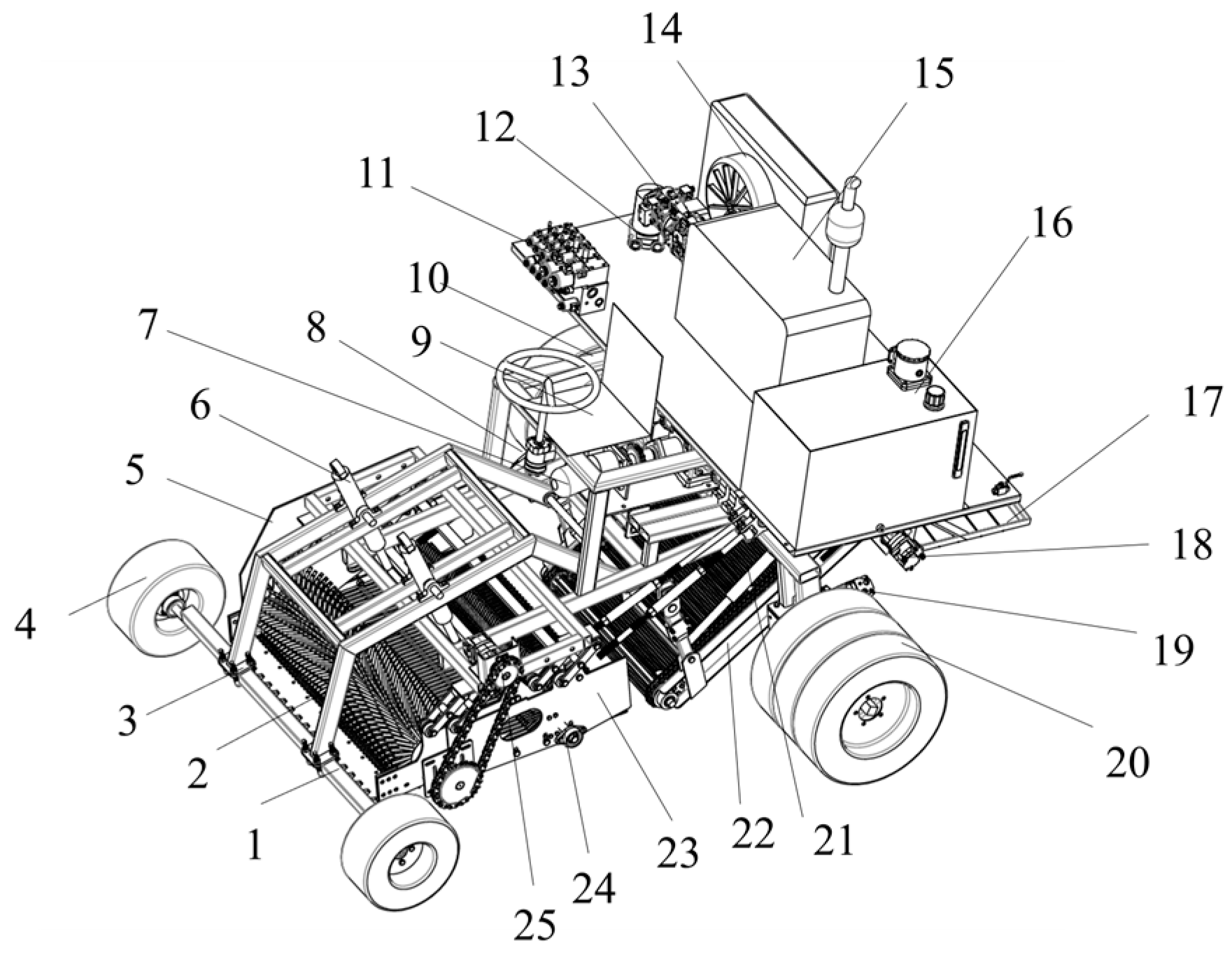
The overall configuration of the M. veneriformis harvester designed in this study is shown in Figure 1. It consists of four main subsystems: the power unit, the harvesting unit, the lifting/transfer unit, and the collection unit. The power unit is mounted at the rear and is driven by an engine. The front-mounted harvesting unit comprises primary and secondary roller brushes and primary and secondary vibratory screens. The centrally located lifting/transfer unit includes a rod-chain elevator and a conveyor motor. The collection unit, also at the rear, consists of a rack for the collection basket.
During operation, the travel hydraulic motor propels the machine forward at speed v0. The vibratory shovel penetrates the substrate at frequency f, while the primary roller brush rotates at angular speed ω1. Working in concert, they disaggregate the substrate and concentrate the harvested M. veneriformis. The fragmented substrate and clam aggregates move rearward over the vibratory screen; during transport, substrate particles and some undersized clams fall back to the intertidal mudflat, loosening the bed and returning small clams to their habitat. Throughout harvesting, the screen performs simple-harmonic linear motion. The secondary roller brush rotates at ω2 and removes adhering sediment from clam surfaces. Upon reaching the secondary vibratory screen, impurities have been largely removed. The clams then transfer to the conveyor chain, which rotates at ω3 and delivers market-size clams to the collection basket.

2.1.2. Vibratory Screen Structure and Components

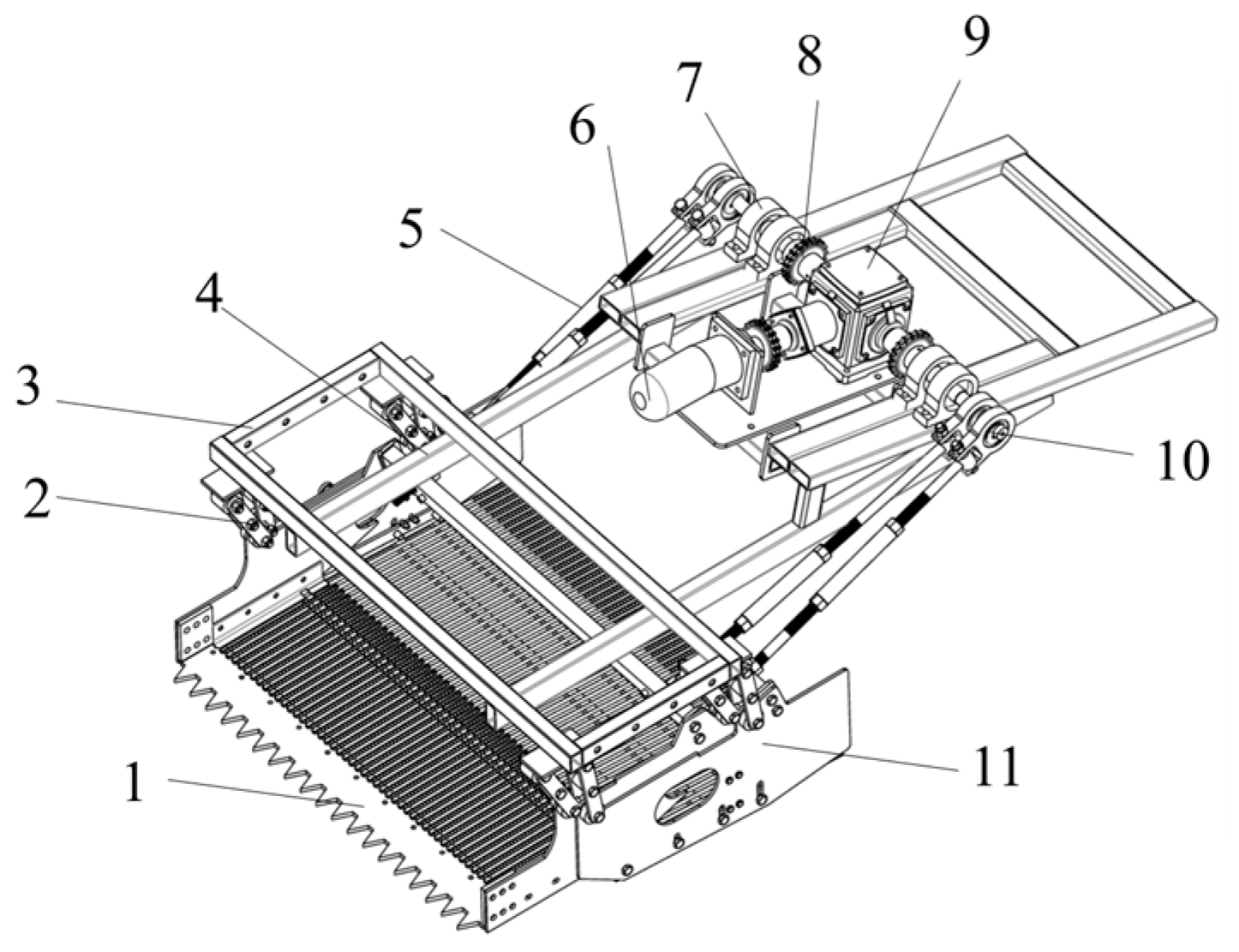
The vibratory screening unit is the key harvesting subsystem. The primary vibratory shovel loosens the substrate and separates M. veneriformis, while the secondary vibratory screen completes the secondary separation of agglomerates. Based on harvesting requirements and material contact characteristics [31], the unit was designed as shown in Figure 2. Power is supplied by a hydraulic motor and transmitted via a T-type reversing gearbox to the screen. Vibration is generated by the eccentric bearing of a crank-rocker mechanism. In operation, the primary shovel performs soil breakup and preliminary screening to reduce draft resistance, and the secondary screen refines separation to improve harvesting efficiency.

2.2. Kinematic and Dynamic Analysis

2.2.1. Kinematics and Trajectory Analysis of the Screen Surface

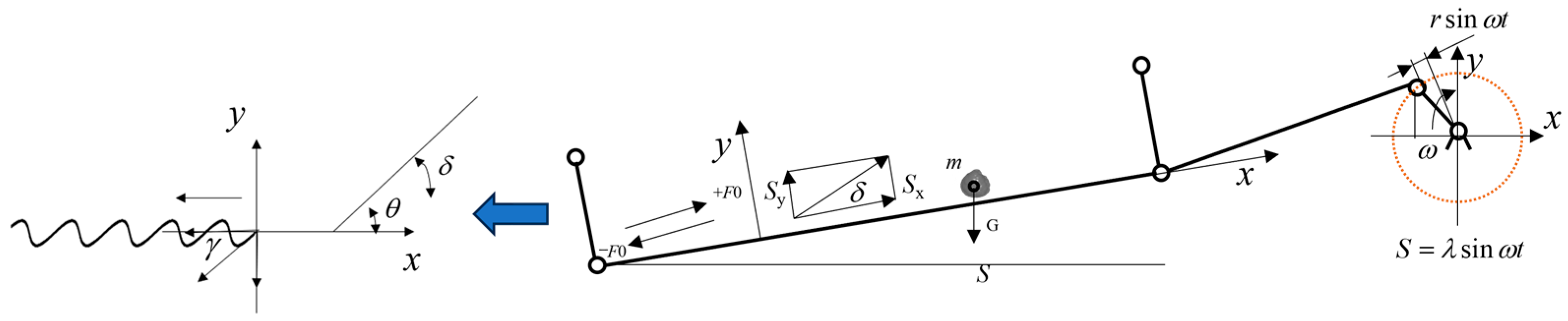
During actual harvesting, once M. veneriformis is screened out of the intertidal mudflat substrate, multiple motion states can occur on the screen surface. To elucidate the clam’s kinematics on the screen, a free-body diagram of the material on the screen was established, as shown in Figure 3, and the interactions between the clam and the vibratory screen were analyzed from kinematic and dynamic perspectives [32,33].
Taking point A, the connection between the crank and the frame, as the origin, a Cartesian coordinate system is established, and the displacement expression for an arbitrary point on the screen surface is obtained:
S = λ sin ω t , ω t = φ
where λ is the single-sided amplitude of the working surface along the vibration direction, mm; ω is the angular frequency of vibration, rad/s; t is time, s; and φ is the vibration phase angle, °.
By resolving the displacement into components normal to and parallel to the working surface, the displacements in the y- and x-directions are obtained:
S y s = λ sin δ sin ω t , S x s = λ cos δ sin ω t
where δ is the angle between the vibration-direction line and the working surface, °.
Differentiating Equation (2) with respect to time t yields the velocities and accelerations in the y- and x-directions:
v y s = λ ω sin δ cos ω t , v x s = λ ω cos δ cos ω t
a y s = λ ω 2 sin δ sin ω t , a x s = λ ω 2 cos δ sin ω t
Any point on the screen deck follows the same kinematic law as the shovel tip at the front edge, so the tip is selected for analysis. Its trajectory can be regarded as the superposition of a horizontal translation along the negative x -direction and an oscillatory arc generated by the rocker about a fixed pivot. Since, for any point on the deck, the vibration amplitude is much smaller than its distance to the rotation center and the swing angle is small, the oscillatory arc can be approximated as an inclined reciprocating linear motion relative to the travel direction with only minor error. Consequently, the overall trajectory is the superposition of the deck vibration and the forward motion, forming an obliquely oriented sinusoidal oscillation. The excitation direction angle δ is defined as the angle between the screen deck and the vibration-direction line and is determined by the structural parameters of the vibratory screen.
The trajectory can be expressed by the following system of coordinate equations:
x = v c t + S x s = v c t + λ cos γ sin ω t y = S y s = λ sin γ sin ω t
where vc is the forward speed of the harvester, m/s; λ is the single-sided amplitude of the working surface along the vibration direction, m; δ is the vibration-direction angle, °; ω is the angular frequency, rad/s; t is time, s.

2.2.2. Analysis of Clam Sliding and Jumping

First, assume that the clam undergoes motion relative to the working surface. The relative displacements in the x- and y-directions are Δx and Δy; the relative velocities are Δ and Δ; and the relative accelerations are Δ and Δÿ. The sum of the inertial force along x and the x-component of gravity, denoted F , is given by:
F = m ( a x + Δ x · · ) G sin θ
The magnitude of the pressure (normal load) exerted by the clam on the working surface in the y-direction is:
F n = m ( a y + Δ y · · ) + G cos θ
where m is the mass of the clam, kg; G is the weight of the clam, N; Δ and Δÿ are the clam’s relative accelerations with respect to the working surface in the x- and y-directions, m/s2; and θ is the screen inclination angle, °.
When M. veneriformis slides relative to the screen surface, it remains in continuous contact with the working surface; the normal force satisfies Fn ≥ 0 and the relative normal acceleration Δÿ = 0. When a throw (lift-off) occurs, Fn = 0 and Δÿ ≠ 0.
Under continuous contact, the limiting friction force exerted by the working surface on the clam is:
F 0 = ± f s F n
where fs is the coefficient of static friction between the clam and the screen surface.
The “−” sign corresponds to forward sliding, and the “+” sign corresponds to reverse sliding. When forward sliding tends to occur, the friction force acts opposite to the x-direction; for reverse sliding, the friction force is aligned with the x-axis. Here, the machine’s travel direction is defined as forward; “forward sliding” denotes the clam sliding rearward along the screen surface, and “reverse sliding” denotes the clam sliding forward along the screen surface.
At the instant sliding initiates, the clam’s acceleration relative to the working surface satisfies Δ = 0; no throw occurs, so Δÿ = 0. Therefore, the force F in Equation (6) and the limiting friction F0 in Equation (8) are both 0:
F + F 0 = 0
Substituting Equation (5) through Equation (8) into Equation (9) yields:
m ω 2 λ cos δ sin ω t G sin θ ± f s ( m ω 2 λ sin δ sin ω t + G cos θ ) = 0
where δ is the angle between the vibration-direction line and the screen surface, °.
Substituting fs = tanμs and G = mg into Equation (10) and simplifying yields the phase angle at the onset of forward sliding, φk0 (hereafter the forward-sliding initiation angle), and the phase angle at the onset of reverse sliding, φq0:
φ k 0 = arcsin 1 D k , φ q 0 = arcsin 1 D q
The forward sliding index Dk and the reverse sliding index Dq are given by:
D k = K cos ( δ + μ s ) sin ( θ μ s ) , D q = K cos ( δ μ s ) sin ( θ + μ s )
where
K = ω 2 λ g
where K is the vibration intensity, mechanical index; μs is the static friction angle, °; g is gravitational acceleration, m/s2.
At the instant when the clam first undergoes a throw, the relative acceleration normal to the screen, Δÿ=0, and the normal force Fn =0:
F n = m ω 2 λ sin δ sin φ d + G cos θ = 0
where φd is the vibration phase angle at the onset of throwing (lift-off), °.
The phase angle at the instant of throwing (lift-off), φd, is:
φ d = arcsin 1 D
where
D = K sin δ cos θ
where D is the throwing index. When D > 1, Equation (16) admits a solution and the material can undergo throwing motion.
The vibratory screen follows a reciprocating simple-harmonic linear path. On the screen deck, M. veneriformis exhibits two modes of motion: sliding and jumping. By adjusting the vibration intensity, forward sliding index, reverse sliding index, and throwing index, the clam motion on the deck can be regulated. Consequently, the principal factors governing screening performance are vibration amplitude, vibration frequency, excitation direction angle, and screen deck inclination angle.

2.3. DEM Modeling and Operating Condition Construction

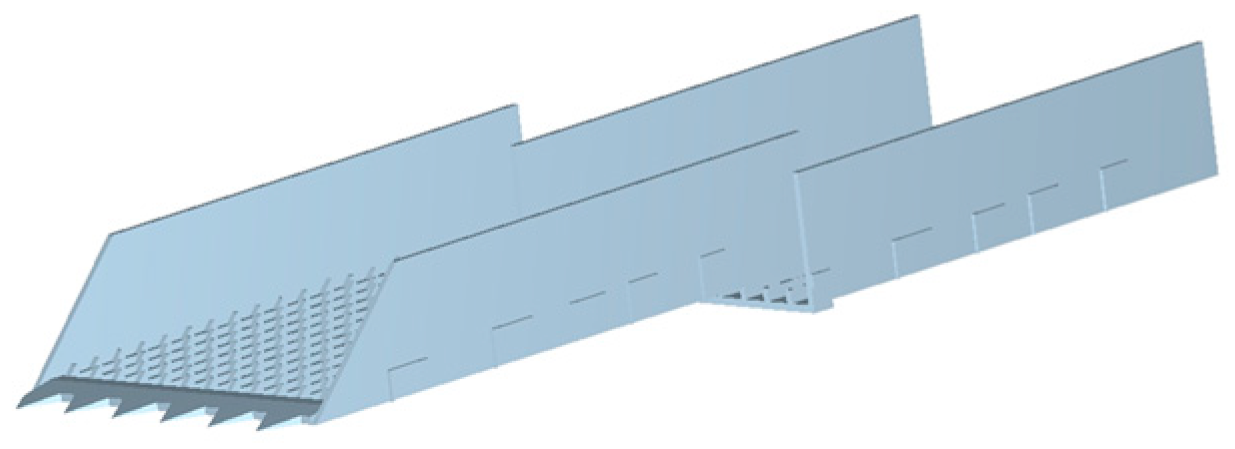
The discrete element method (DEM) is a computational technique for discrete media used to characterize the mechanical behavior of particles, particle assemblies, and their flow processes [34]. DEM enables modeling of contact, collision, friction, and adhesion among M. veneriformis, substrate particles, and screen components, and permits quantification of transport, separation, and force responses under controlled virtual operating conditions, thereby providing reproducible data and design support for structural-parameter selection and excitation-parameter optimization. To evaluate the screening performance of the vibratory screen, three-dimensional models were imported into Altair EDEM 2022 (Altair Engineering Inc., Troy, MI, USA). Certain components complicate import and reduce computational efficiency, so they were omitted from (or simplified in) the DEM model, and geometric simplification was applied: the vibratory screening mechanism was simplified and reconstructed in SolidWorks 2023 (Dassault Systèmes SolidWorks Corp., Waltham, MA, USA), as shown in Figure 4, retaining only those features required for numerical fidelity [35]. In the DEM modeling process, the vibrating screen was imported into EDEM as a rigid-body geometry and discretized using a triangulated surface mesh. The geometry import unit was set to millimeters, the geometry type was specified as “Rigid Body”, and the mesh control option “Auto Mesh Size” was adopted. The corresponding parameters were a minimum mesh scaling factor of 0.33, a maximum mesh scaling factor of 4, a maximum deviation scaling factor of 1, and a maximum angle of 15°. With these settings, sufficiently fine surface meshes are generated on the screen deck and within the clam–screen contact region, ensuring adequate accuracy for contact and collision calculations while maintaining computational efficiency.
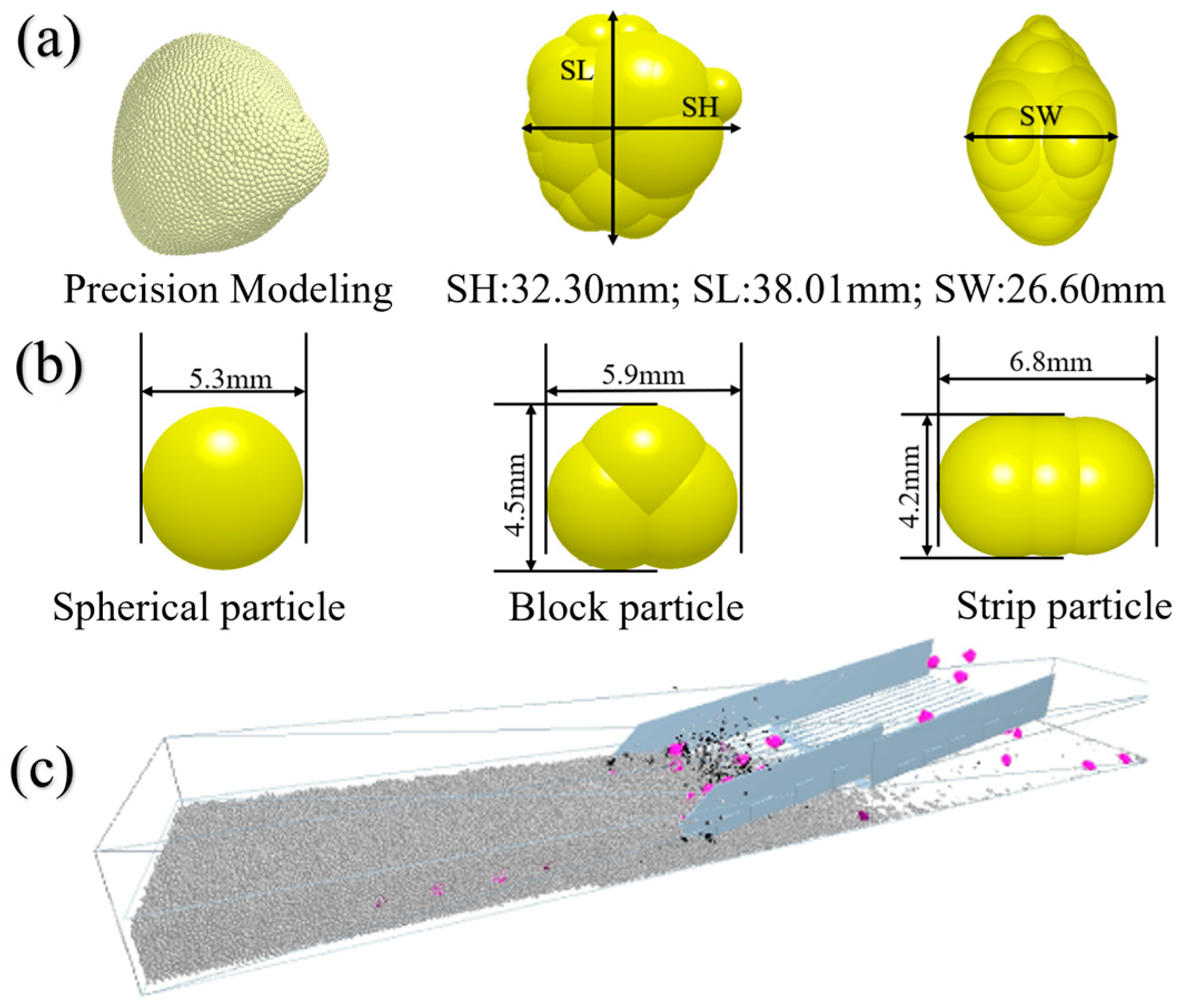
The discrete element model of M. veneriformis was established by first capturing clam geometry with a 3D scanner (POP2, Revopoint, Shenzhen, China); subsequent modeling and calibration procedures followed Xu et al. [36]. Construction of the substrate DEM focused on particle shape, size distribution, and the specification of critical contact parameters. Particle morphology and size were characterized using a laser particle size analyzer (Mastersizer 2000, ver. 5.60, Malvern Panalytical, Malvern, UK) and a scanning electron microscope (SU8600/Regulus 8100, Hitachi, Tokyo, Japan), and the model was generated according to the measured gradation. Given the high water content, viscous/cohesive behavior, and strong interparticle forces of intertidal mudflat sediments, the Hertz–Mindlin with JKR plus Bonding V2 contact models were adopted to represent wet cohesion. Particle size strongly affects both fidelity and runtime: overly small sizes greatly increase computational cost, whereas overly large sizes compromise realism. To balance these factors, the equivalent median particle diameter d50 was set to 5.3 mm, with particle radii of 4–6 mm, which met performance requirements without noticeable distortion [37]. In addition, a DEM equivalent particle-size independence verification was carried out for the mudflat sediment in earlier work. A stainless-steel cylinder lifting test was used to compare macroscopic characteristics such as repose angle and pile profile between the physical sediment and the simulation models before and after particle enlargement. The results show that the enlarged-particle model agrees very well with the physical tests, indicating that the model exhibits good particle-size independence at the current enlargement scale. Considering screen dimensions, boundary effects, and the number of simulation runs, the soil bin was sized to allow unobstructed particle motion; after iterative tuning, its length, width, and height were set to 1300 mm × 800 mm × 500 mm. DEM modeling of the clams and intertidal mudflat substrate is shown in Figure 5, and key input parameters are provided in Table A1.

2.4. Simulation Analysis of Vibratory Screen Operating Parameters

Based on the optimized screen deck structure, the operating parameters of the vibratory screen were further optimized. First, a single-factor experiment was conducted to evaluate the effect of each factor on the forward travel speed of clams. Next, a Plackett–Burman design was employed to identify the most significant factors. Using the steepest-ascent method, we moved along the path of steepest ascent toward the optimum to ensure continuous improvement in performance. Finally, a Box–Behnken design within the framework of response surface methodology (RSM) [38] was applied to the selected factors to determine the optimal combination that maximizes the forward travel speed of clams, thereby markedly improving harvesting efficiency.
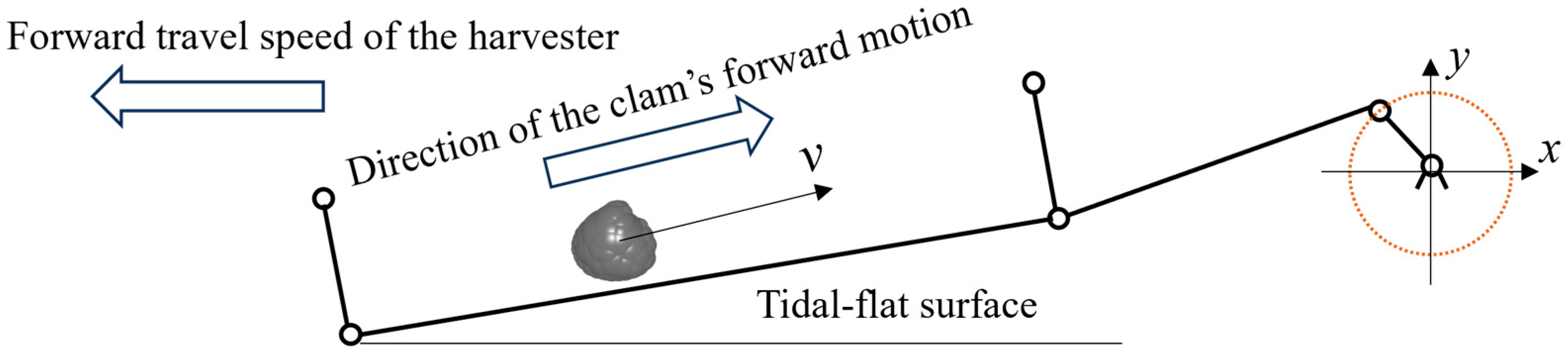
Post-processing in EDEM was used to quantify the forward travel speed of M. veneriformis. Theoretical analysis indicates that screening performance is governed primarily by vibration amplitude, vibration frequency, excitation direction angle, and screen deck inclination angle. The combined action of these parameters determines the conveying performance of the vibratory screen and, consequently, the harvesting efficiency [39]. The working direction of the screen and the clam motion on the deck are illustrated in Figure 6.
To examine the effects of operating parameters on forward travel speed, we varied the vibration amplitude, vibration frequency, excitation direction angle, and screen deck inclination angle and measured the resulting forward travel speed of M. veneriformis. The factor levels and their codes for the single-factor tests are listed in Table 1.

2.5. Intertidal Mudflat Validation Experiments

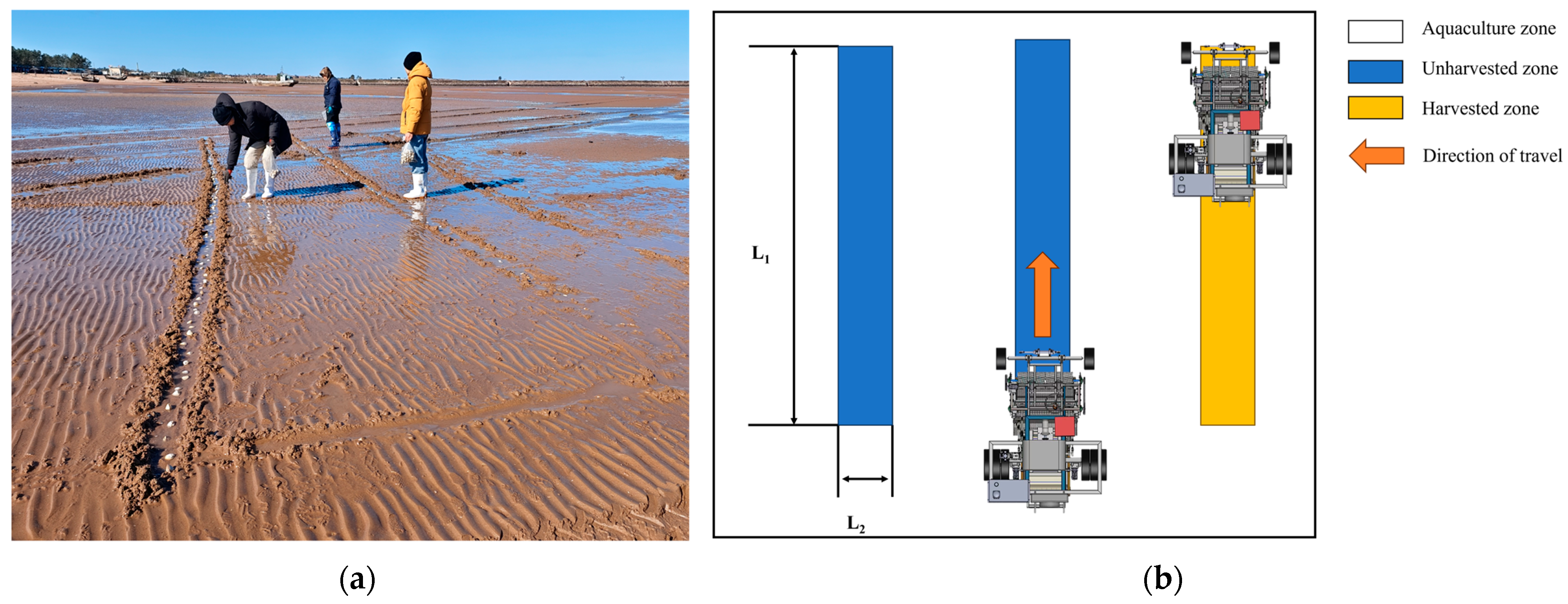
To further validate the operational performance of the M. veneriformis harvesting equipment, intertidal mudflat field trials were conducted on the basis of the theoretical analysis and DEM simulations. Using the optimal screen-deck configuration and operating parameters obtained from the response surface analysis, validation experiments were performed, and the harvester’s performance was measured—specifically harvesting efficiency, clam breakage rate, and the environmental impact of vibratory harvesting on the mudflat. The trials were carried out at Xianyu Bay, Wafangdian, Dalian, Liaoning Province (121°29′11″ E, 39°40′13″ N), targeting M. veneriformis. The principal technical specifications of the harvester are listed in Table 2. Within the designated harvesting area, three test plots were randomly selected. Each plot had a length L1 = 5 m and an operating width L2 = 1.2 m. After operation, data were collected from the worked area to evaluate harvesting performance. Statistics were computed as the mean over the test plots. The experimental scheme is illustrated in Figure 7, and each run proceeded in the direction indicated by the arrow.
The harvester was evaluated using harvesting efficiency, clam breakage rate, and the harvester’s impact on the intertidal mudflat as performance indicators. Taking the mean culture density of clams as the baseline, the number of M. veneriformis collected under each parameter set was normalized. Specifically, Equation (17) was used to standardize the harvest count, ensuring that comparisons across tests were made under an equivalent density condition. In compiling harvest mass and computing proportions, both quantity and time were considered. By jointly accounting for harvest count, duration, and density, this integrated efficiency assessment provides a more accurate measure of harvester performance.
n = ρ × S N 1 + N 2
η = m 1 × n t
where ρ is the culture density of clams, pcs/m2; n is the scaling factor; S is the harvesting area of 1.2 × 5 m, m2; N1 is the number of clams in the collection basket, pcs; N2 is the number of missed clams during the test, pcs; m1 is the total mass of clams, kg; t is the time for each harvesting trial, h; and η is the harvesting efficiency, kg/h.
Breakage rate is defined as the ratio of damaged clams to the total number of clams harvested during the operation. This indicator reflects the extent of mechanical damage inflicted on clams by the harvesting apparatus. For each trial, both the total number of M. veneriformis collected in the basket and the number of broken individuals were recorded.
P 1 = N 3 N 4 × 100 %
where P1 is the clam breakage rate, %; N3 is the number of broken clams, pcs; N4 is the number of clams in the collection basket, pcs.
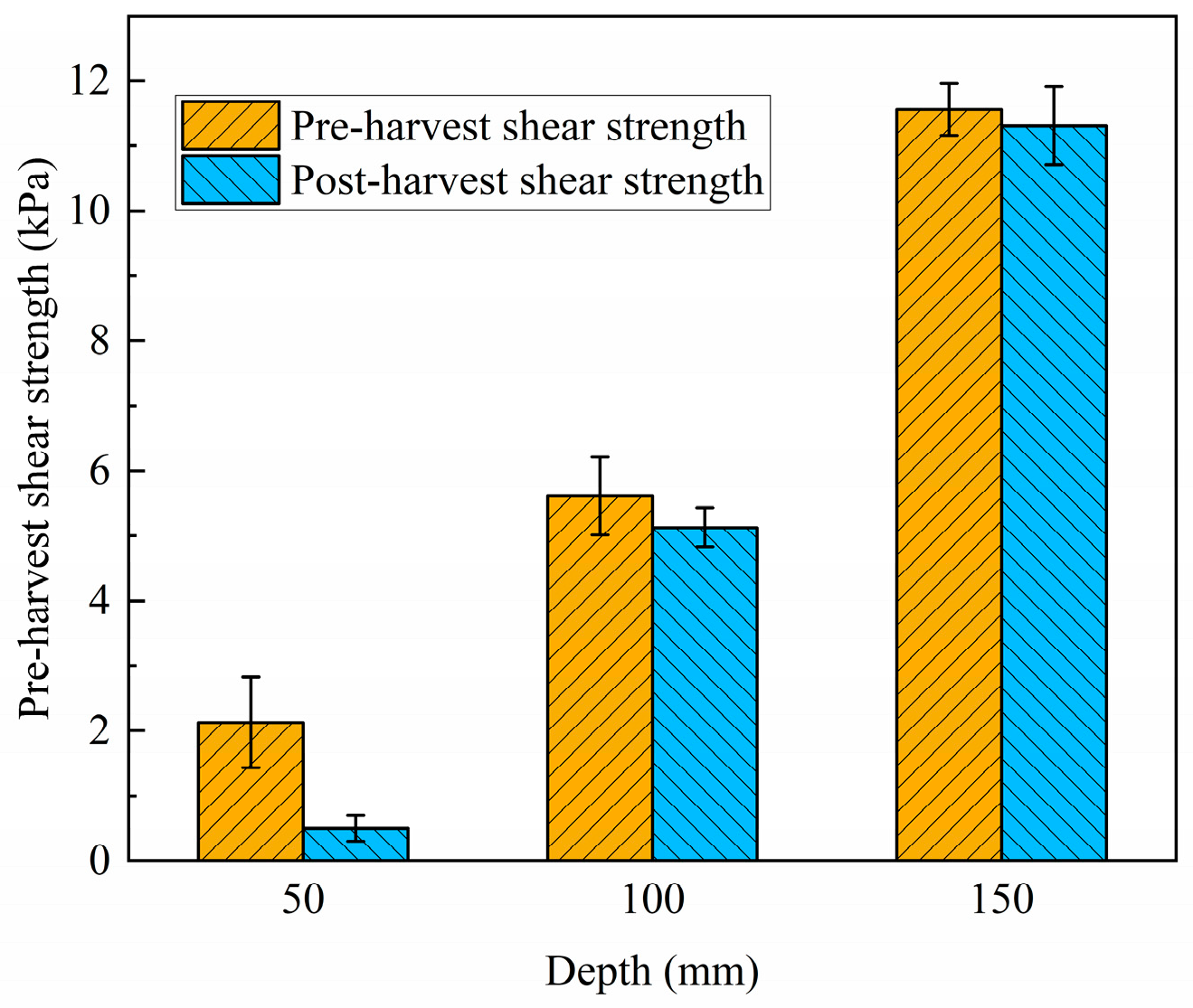
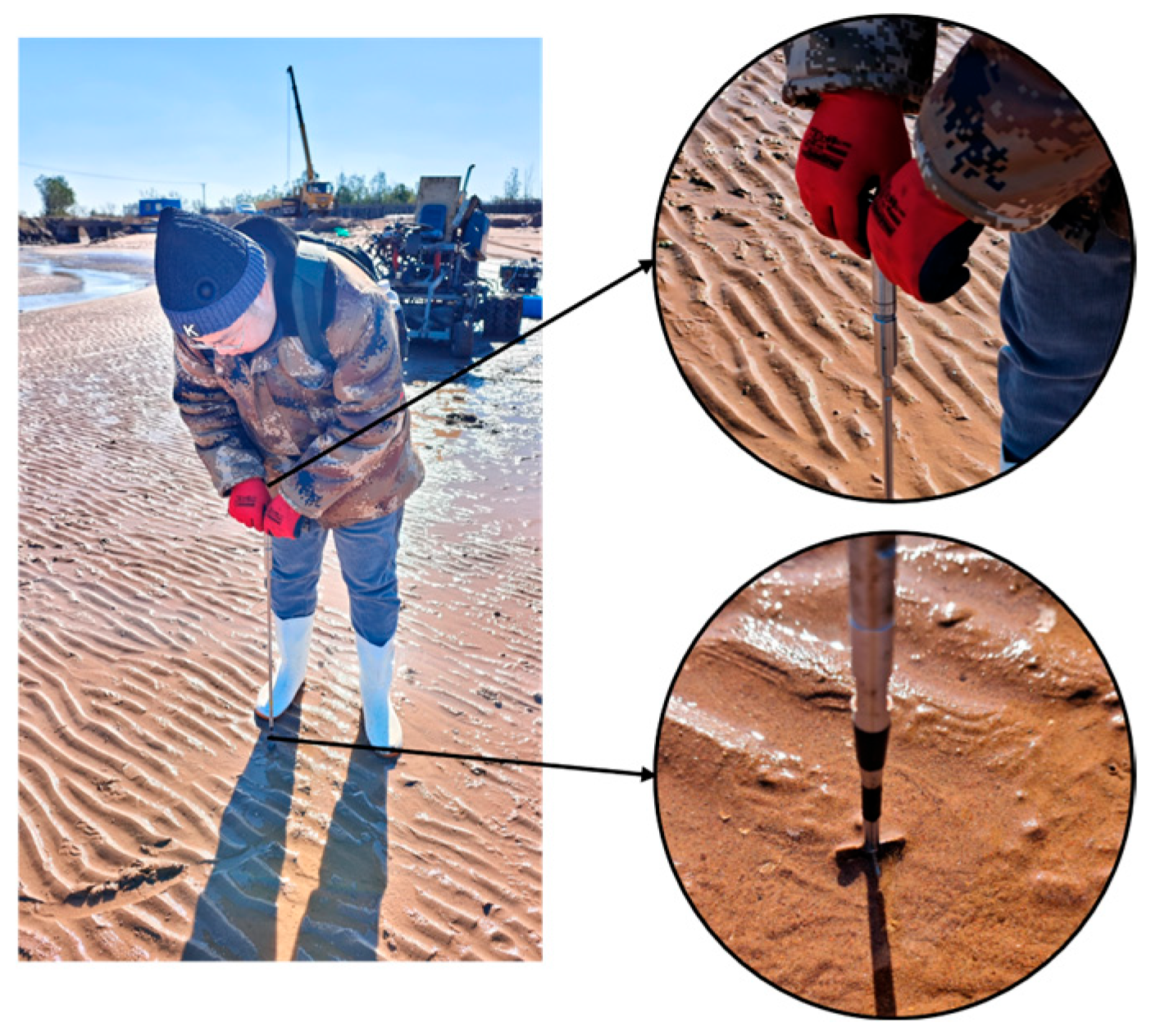
To quantify ecological disturbance during operation, changes in intertidal mudflat substrate shear strength before and after harvesting were used as the primary evaluation metric. As shown in Figure 8, a portable vane shear tester (VST-3M, Ruike, Tianjin, China) was used to measure shear strength at depths of 50, 100, and 150 mm before and after harvesting. The resulting values were compared to quantify harvesting-induced changes.

3. Results and Discussion

3.1. Results of Single-Factor Experiments and Analysis

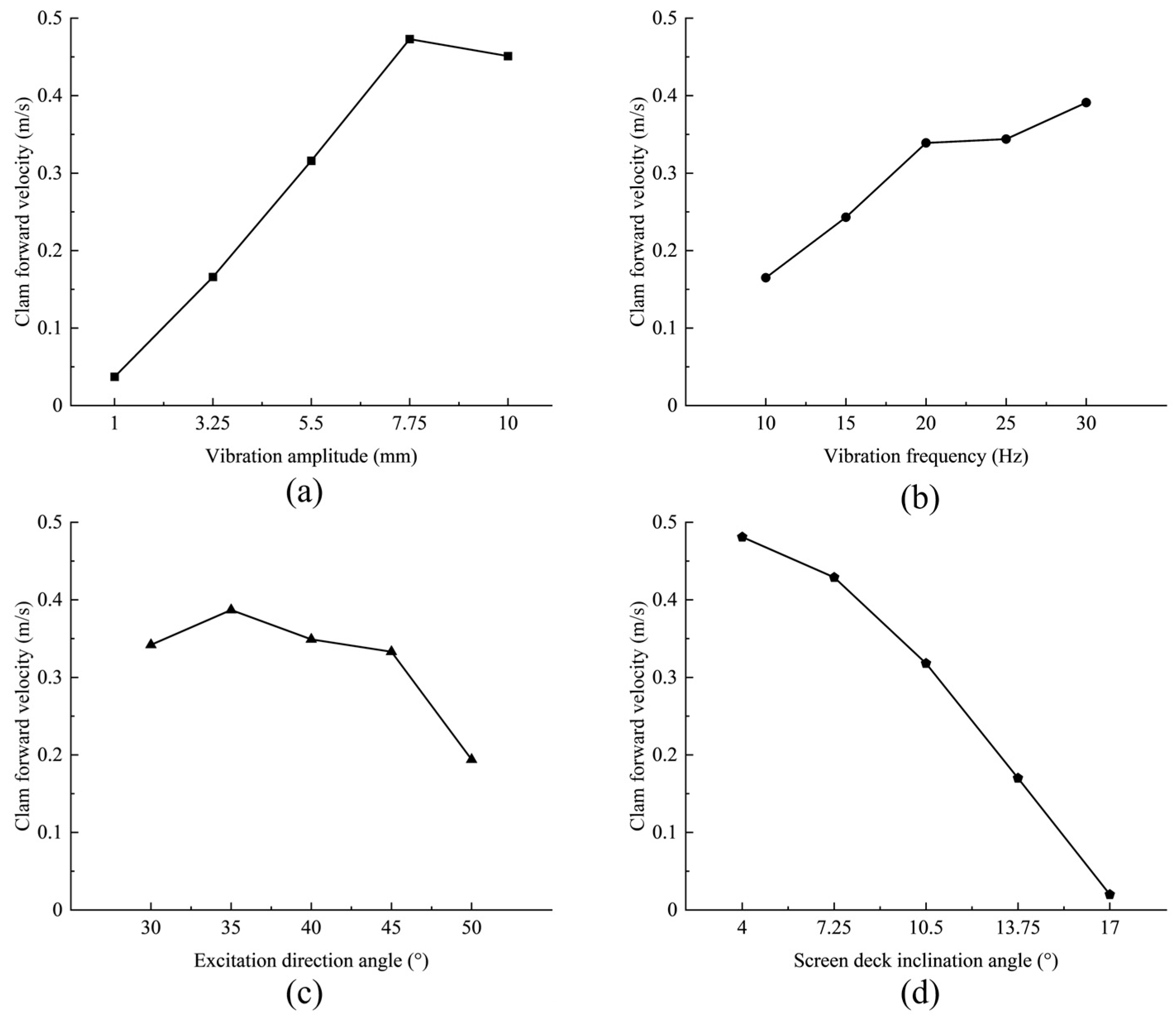
The single-factor results are shown in Figure 9. As illustrated in Figure 9a, vibration amplitude is positively correlated with forward travel speed. When the amplitude increased to 5.5 mm, the speed rose to 0.316 m/s, indicating a pronounced enhancement of clam motion with increasing amplitude. Further increasing the amplitude to 7.75 mm yielded a speed of 0.473 m/s, followed by a 4.86% decrease at 10 mm. This suggests that the rate of increase plateaus at larger amplitudes, likely because the screen approaches an optimal operating state and additional amplitude contributes less to transport. Overall, vibration amplitude exerts a significant effect: speed rises notably with amplitude, but the gain levels off beyond a certain range.
As shown in Figure 9b, at a vibration frequency of 10 Hz the forward speed is about 0.15 m/s. Increasing the frequency to 15 Hz produces a substantial 66.7% increase, indicating that even a modest rise can markedly influence clam motion. With a further increase to 30 Hz, the speed reaches approximately 0.38 m/s. Thus, vibration frequency has a significant positive effect on forward travel speed, although the improvement tends to plateau at higher frequencies.
Figure 9c shows that forward travel speed fluctuates with changes in excitation direction angle. At 30°, the speed is 0.342 m/s. Increasing the angle to 35° raises the speed to 0.387 m/s, indicating a promoting effect in this range. When the angle is further increased to 40°, the speed declines slightly, implying a tendency toward saturation. At 45°, the speed continues to decrease to 0.333 m/s, suggesting a diminishing influence. At 50°, the speed drops sharply by 43.27%, implying that an excessively large excitation direction angle degrades conveying performance.
As shown in Figure 9d, forward travel speed decreases significantly with increasing screen deck inclination angle, exhibiting a negative correlation. At 4°, the speed is highest at about 0.512 m/s, indicating that a small inclination favors faster forward motion. Increasing the inclination to 7.25° reduces the speed by 16.21%. A further increase to 10.5° results in a 25.87% reduction, and at 17° the speed falls to 0.02 m/s. These results demonstrate that larger screen deck inclination angles markedly diminish forward travel speed.

3.2. Plackett–Burman Experimental Results and Analysis

Using a Plackett–Burman design, the effects of vibration amplitude, vibration frequency, excitation direction angle, and screen deck inclination angle on forward travel speed were screened for significance. The factors and their levels for the Plackett–Burman design are listed in Table 3.
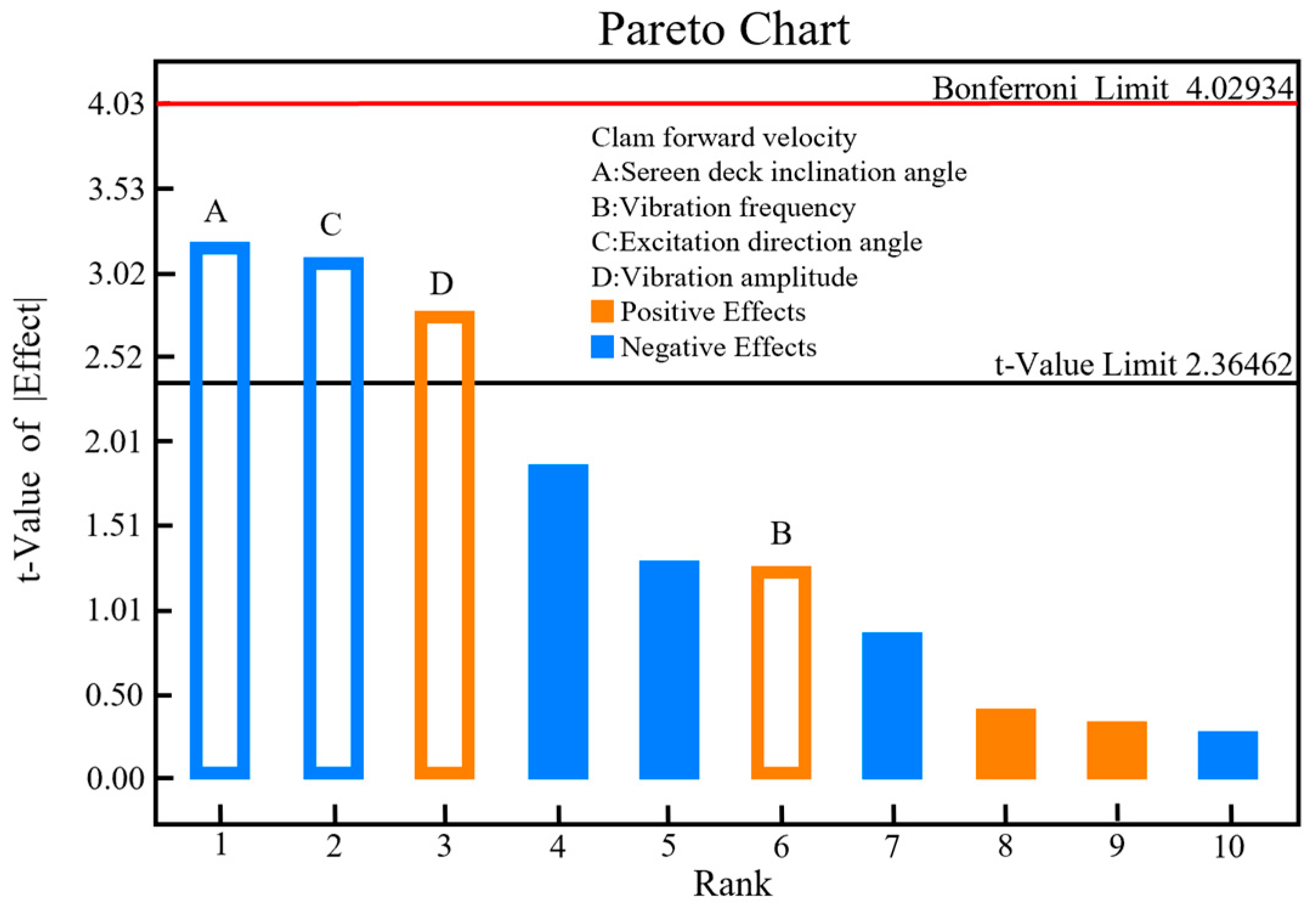
The experimental results are presented in Table 4, with the data analysis results shown in Table 5. The overall model yielded a p-value < 0.05, indicating statistically significant differences among the various treatments. In this experiment, the screen deck inclination angle (p = 0.0147), excitation direction angle (p = 0.0165), and vibration amplitude (p = 0.0271) all showed p-values less than 0.05, whereas the vibration frequency (p = 0.2412) had a p-value greater than 0.05. This demonstrates that the screen deck inclination angle, excitation direction angle, and vibration amplitude have significant effects on the experimental results, while the effect of vibration frequency is not statistically significant. Additionally, the model shows an R2 = 0.9913 and an adjusted R2 = 0.9891. The small difference between the adjusted R2 and predicted R2 indicates the correct selection of the experimental model.
Processing the Plackett–Burman results in Design-Expert yielded a Pareto chart of standardized effects (Figure 10). The screen deck inclination angle and the excitation direction angle show positive correlations with the response, whereas vibration amplitude exhibits a negative correlation. The contributions rank as follows: screen deck inclination angle > excitation direction angle > vibration amplitude > vibration frequency.

3.3. Results and Analysis of the Steepest-Ascent Experiments

Based on the Plackett–Burman results, a steepest-ascent experiment was conducted using the three significant factors: screen deck inclination angle, excitation direction angle, and vibration amplitude. The response is positively correlated with deck inclination and excitation direction, so their levels were increased from low to high, whereas it is negatively correlated with vibration amplitude, whose level was decreased from high to low. The experimental design and results are shown in Table 6. The maximum forward travel speed, 0.51 m/s, occurred in Run 3 at a deck inclination of 9.8°, an excitation direction angle of 36°, and an amplitude of 8.2 mm. This point was therefore selected as the center for the subsequent Box–Behnken design.

3.4. Response Surface Optimization Based on the Box–Behnken Design

A three-factor, three-level RSM experiment was conducted with screen deck inclination angle (A), vibration amplitude (B), and excitation direction angle (C) as the factors. The coded factor levels are shown in Table 7.
The simulation results obtained using Design-Expert (Table 8) were fitted, and the analysis is summarized in Table 9. The coefficient of determination was R2 = 0.9875, and the overall model was highly significant (p < 0.01). For the forward travel speed of M. veneriformis, the model terms indicate that screen deck inclination angle, vibration amplitude, and excitation direction angle all have significant effects. In addition, the interaction between deck inclination and amplitude, as well as the quadratic terms of deck inclination, amplitude, and excitation direction angle, has highly significant effects on forward speed. The lack-of-fit test yielded p > 0.05, indicating a non-significant lack of fit; thus, the quadratic regression adequately represents the relationship between forward travel speed and the three factors.
The resulting quadratic regression model is:
F = 182.1 1.71 A + 1.63 B 5.63 C + 3.26 A B 2.46 A 2 + 69.5 B 2 2.3 C 2
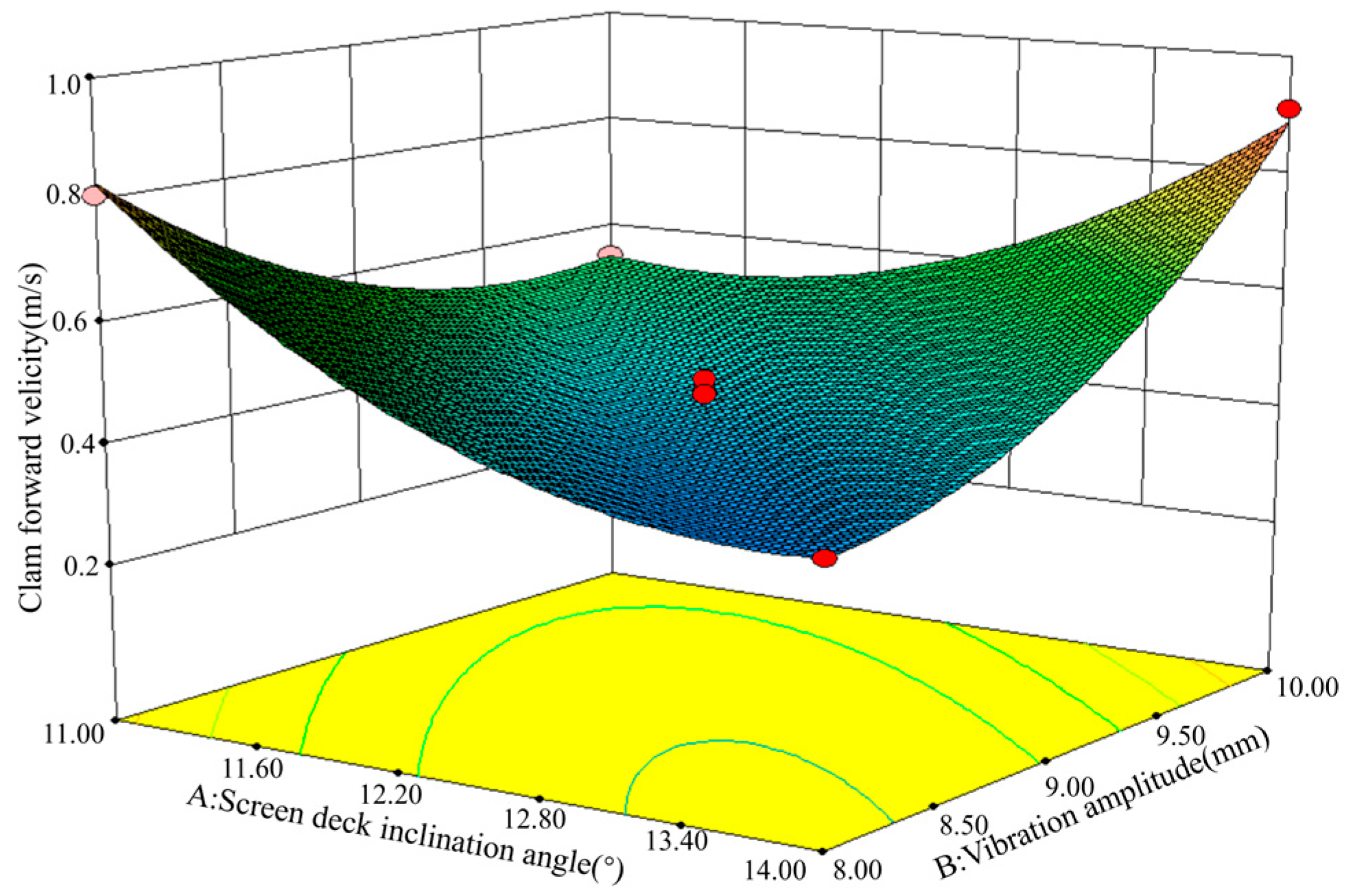
The response surface plot for the interaction between screen deck inclination angle and vibration amplitude on forward travel speed, as obtained from Design-Expert, is shown in Figure 11.
A significant interaction exists between the screen deck inclination angle and vibration amplitude. As the deck inclination varies, the effect of amplitude on forward travel speed also changes. Under the combined influence of these two factors, forward travel speed exhibits a pronounced peak. When both deck inclination and amplitude reach specific values, the forward travel speed attains its maximum. This indicates that, in practical applications, identifying the optimal combination of deck inclination and amplitude can markedly enhance the transport speed on the screen. The interaction between deck inclination and amplitude thus has a significant impact on forward travel speed.
To achieve improved screening performance and identify the optimal combination of operating parameters, the Numerical optimization module in Design-Expert was used to solve for the best settings. Based on the harvester’s practical operating requirements and the preceding analyses, the relevant constraints were specified as in Equation (21).
max ( A , B , C ) 9.8 A 14 7.3 B 10 36 C 45
Solving under these constraints yielded the optimal parameter combination. Using clam forward travel speed as the evaluation metric, the optimization result was a vibration amplitude of 8.5 mm, an excitation direction angle of 45°, and a screen deck inclination angle of 11°, at which point the forward travel speed is 0.6 m/s.

3.5. Results and Analysis of Intertidal Mudflat Experiments

Field harvesting trials for M. veneriformis were conducted on intertidal mudflats, and the corresponding performance indicators of the harvester, including shellfish harvesting efficiency and breakage rate, were measured. The results are presented in Table 10.
The clam breakage rate ranged from 3.40% to 6.06%, with a mean of 4.60%. Across the three trials, some variability was observed; the difference between the maximum and minimum values was 2.62%. This fluctuation is attributable to the brittleness of clam shells and the irregular motion of clams during harvesting, which can lead to collisions with mechanical components and consequent breakage. The discrepancy between the measured breakage rate and the simulation result was 4.30%. The previous-generation prototype [19] exhibited a breakage rate of 7.84%, corresponding to an absolute reduction of 3.24 percentage points after the present improvements. These results indicate that the machine’s harvesting performance meets the design expectations.
The maximum harvesting efficiency was 377 kg/h, the minimum was 319.20 kg/h, and the mean was 342 kg/h. The three trials exhibited considerable dispersion, attributable to variations in microtopography across plots. Field observations indicated higher yields in relatively level areas. The discrepancy between the measured harvesting efficiency and the simulation result was approximately 5%. Compared with the pre-improvement prototype, the mean harvesting efficiency increased by 20%, indicating that the machine meets the design expectations. Manual harvesting achieves about 50 kg/h; at 342 kg/h, a single machine provides productivity equivalent to that of approximately seven workers. Given the current decline and aging of the fisheries workforce, mechanized harvesting enables continuous operation and substantially increases the resource yield per unit time, which is beneficial for the development of the shellfish industry.
Figure 12 illustrates the changes in shear strength at different depths of the intertidal flat before and after the harvesting operation. Overall, the shear strength increases with depth. After harvesting, the shear strength at all measured depths decreased, with reductions of 76.50%, 8.56%, and 2.16% at 50 mm, 100 mm, and 150 mm, respectively. This indicates short-term loosening of the substrate, which is most pronounced at the surface and weaker in deeper layers. These findings suggest a potential increase in the porosity of the substrate beneath the sieve, and that vibration harvesting affects both the substrate above and below the harvesting depth. Compared to hydraulic harvesting, vibration harvesting is less likely to cause compaction and may help loosen the substrate and improve the habitat environment. However, its ecological effects still require further evaluation through significance testing and analysis of the recovery process.

4. Conclusions

This study investigated a vibratory screening unit for Mactra veneriformis harvesting on intertidal mudflats and established an integrated workflow combining structural design, DEM-based optimization and field validation. The main original contributions are as follows:
(1)
A reciprocating, simple-harmonic linear-motion vibratory screen specifically tailored to M. veneriformis harvesting was proposed and designed. A kinematic model of the screen deck was developed, and the sliding and jumping behavior of clams on the deck was clarified. The analysis identified vibration amplitude, vibration frequency, excitation direction angle and deck inclination angle as the dominant factors governing screening and conveying performance and provided engineering-feasible design ranges for these parameters, offering a theoretical basis for parameter selection in vibratory bivalve harvesters.
(2)
A coupled DEM model of the clam–substrate–screen system was established, and Plackett–Burman design, steepest-ascent experiment and Box–Behnken response surface methodology were combined to optimize the operating parameters using the forward travel speed of M. veneriformis as the response. This DEM–design-of-experiments framework ranks the influence of key factors and yields an improved parameter combination, providing a generalizable method for virtual optimization of shellfish harvesting equipment.
(3)
Intertidal mudflat field trials of the prototype harvester were carried out, and harvesting efficiency, clam breakage rate and changes in substrate shear strength were used as integrated evaluation indices. The results show that the improved machine achieves higher efficiency and lower breakage than the previous prototype, while keeping substrate disturbance mainly within the surface layer. This confirms the effectiveness of the DEM-guided design and demonstrates an efficient, low-damage and ecologically compatible solution for mechanized M. veneriformis harvesting.
Future work will focus on further validating the DEM model by directly comparing simulated clam trajectories with in situ measurements. To this end, an instrumented “electronic clam” integrating a wireless sensor has been developed to record the actual motion of M. veneriformis on the screen, and the comparison with DEM-predicted trajectories is currently in progress.

5. Patents

  • Title: A Screening-Shovel Device and Harvesting Method for Intertidal Bivalves
  • Assignee: Dalian Ocean University
  • Jurisdiction: CN (China)
  • Application No.: ZL 2024 1 1684117.6—Filing Date: 2024-11-22
  • Grant/Publication No.: CN 119385122 B—Grant Date: 2025-09-16
  • Status: Granted
Relation to this work: This patent covers the vibratory screening-shovel device and the associated harvesting method investigated and reported in this manuscript.

Author Contributions

Conceptualization, B.X., S.L. and G.M.; methodology, Y.L.; software, J.Z. and Y.C.; validation, H.L. and Y.L.; formal analysis, G.C. and H.W.; investigation, B.X., S.L. and Y.L.; resources, G.M.; data curation, H.L. and Y.C.; writing—original draft preparation, B.X. and S.L.; writing—review and editing, G.M.; visualization, B.X. and Y.C.; supervision, G.M.; project administration, G.M.; funding acquisition, G.M. All authors have read and agreed to the published version of the manuscript.

Funding

This research was funded by the National Key R&D Program of China, grant number 2023YFD240080. The Basic Scientific Research Program of Liaoning Provincial Education Department, Grant Number LJ232410158048. Liaoning Provincial Undergraduate Colleges and Universities Basic Scientific Research Operational Fees Program, Grant number 2024JBPTZ002. Liaoning Provincial Science and Technology Plan Joint Program, grant number 2024JH2/102600082 Dalian Science and Technology Innovation Fund, Grant number 2024JJ13GX039.

Institutional Review Board Statement

Not applicable. This study did not involve human participants or live animals.

Data Availability Statement

Data are contained within the article.

Acknowledgments

The authors would like to express special gratitude to the editors and reviewers for their insightful comments that enhanced the manuscript.

Conflicts of Interest

The authors declare no conflicts of interest.

Abbreviations

The following abbreviations are used in this manuscript:
DEMDiscrete element method
RSMResponse surface methodology
ANOVAAnalysis of variance

Appendix A

The key simulation parameters used in the tidal flat shellfish harvesting operation model established in Section 2.3 are shown in Table A1.
Table A1. Key input parameters for DEM.
ParameterValueMethod
Normal stiffness per unit area/(N/m3)7 × 106Calibration
Penetration test
Vane shear test
Normal interaction range/(N/m3)7 × 105
Shear stiffness per unit area/(N/m3)3 × 106
Shear interaction range/(N/m3)3 × 105
Normal strength/Pa1.7 × 104
Shear strength/Pa1.7 × 104
Surface energy/(J/m2)8.11
Poisson’s ratio of stainless steel0.30Reference [6]
Shear modulus of stainless steel/Pa7.86 × 1012
Density of stainless steel/ (kg/m3)7800
Poisson’s ratio of M. veneriformis0.25Reference [35]
Shear modulus of M. veneriformis/Pa1.1 × 107
Density of M. veneriformis/ (kg/m3)1350
Poisson’s ratio of mudflat substrate0.21Reference [6]
Elastic modulus of mudflat substrate/Pa1 × 107
Density of mudflat substrate/(kg/m3)2600Testing
Drainage method
Substrate–substrate coefficient of restitution0.55Reference [6]
Substrate–substrate coefficient of static friction0.80Testing
Inclined plane test
Coefficient of friction tester
Substrate–substrate coefficient of rolling friction0.15
Substrate–stainless steel coefficient of restitution0.35Reference [6]
Substrate–stainless steel coefficient of rolling friction0.80Testing
Inclined plane test
Coefficient of friction tester
Substrate–stainless steel coefficient of rolling friction0.15
Substrate–M. veneriformis coefficient of restitution0.10Reference [35]
Substrate–M. veneriformis coefficient of rolling friction0.10
Substrate–M. veneriformis coefficient of rolling friction0.30
M. veneriformis–stainless steel coefficient of restitution0.28
M. veneriformis–stainless steel coefficient of rolling friction0.62
M. veneriformis–stainless steel coefficient of rolling friction0.16
M. veneriformisM. veneriformis coefficient of restitution0.29
M. veneriformisM. veneriformis coefficient of rolling friction0.41
M. veneriformisM. veneriformis coefficient of rolling friction0.23

References

  1. Xu, S.; Li, A.; Zhu, L.; Wu, B.; Liu, L.; Jiao, M.; Li, J.; Xue, S.; Mao, Y. Seasonal Shifts of Morphological Traits and Dietary of Mactra Veneriformis (Bivalvia: Mactridae) Populations in the Northern Yellow River Delta’s Intertidal Zone. Biology 2025, 14, 176. [Google Scholar] [CrossRef]
  2. Li, A.; Bai, Y.; Zhu, L.; Xue, S.; Li, J.; Li, X.; Liu, L.; Liu, L.; Mao, Y. Diet Composition and Feeding Habits of Meretrix Meretrix and Mactra Veneriformis in the Northern Bohai Sea Based on High-Throughput Sequencing. Sci. Rep. 2025, 15, 16203. [Google Scholar] [CrossRef]
  3. Chen, Y.; Tian, G.; Wang, L.; Sang, Y.; Sun, J. Effects of Ultrasound-Assisted High Temperature-Pressure Treatment on the Structure and Allergenicity of Tropomyosin from Clam (Mactra veneriformis). Food Chem. X 2023, 18, 100740. [Google Scholar] [CrossRef]
  4. Zhang, T.; Hua, Y.; Zhou, C.; Xiong, Y.; Pan, D.; Liu, Z.; Dang, Y. Umami Peptides Screened Based on Peptidomics and Virtual Screening from Ruditapes Philippinarum and Mactra Veneriformis Clams. Food Chem. 2022, 394, 133504. [Google Scholar] [CrossRef]
  5. Bureau of Fisheries. Ministry of Agriculture and Rural Affairs China Fishery Statistical Yearbook 2025; China Agriculture Press: Beijing, China, 2025. [Google Scholar]
  6. Zhao, L.; Liu, Z.; Jiang, L.; Zhao, L.; Yuan, Y. Evaluation of International Competitiveness of China’s Oyster Industry and Its Impact on Export. Aquaculture 2025, 607, 742661. [Google Scholar] [CrossRef]
  7. Li, H.; Mu, G.; Li, X.; Wu, H.; Bin, X.; Liu, F.; Sun, Z.; Zhang, Q.; Zhang, H.; Xin, M.; et al. Design and Testing of the Clam Vibration Harvester’s V-Shaped Double-Spiral Harvesting Roller Brush Based on DEM-MBD. Aquac. Eng. 2025, 111, 102582. [Google Scholar] [CrossRef]
  8. Li, H.; Mu, G.; Zhang, H.; Wu, H.; Liu, F.; Sun, Z.; Zhang, Q.; Wang, Y.; Wang, Y.; Li, X. Design and Testing of a Mechanized Brush-Screen Cooperative Vibration Harvester for Mudflat-Buried Shellfish Based on the Discrete Element Method. Front. Mar. Sci. 2023, 10, 1134888. [Google Scholar] [CrossRef]
  9. Lu, J.; Yu, Z.; Shen, C.; Lu, S.Y.; Tu, L.; Xue, A. Design and Experiment of Self-Propelled Shellfish Harvester. Fish. Mod. 2021, 48, 85. [Google Scholar] [CrossRef]
  10. Mu, G.; Duan, F.; Yang, J.; Zhang, H.; Li, X.; Pan, L.; Gao, J.; Liu, J.; Zhang, G. Research Progress on Burying Shellfish Harvesters: A Review. J. Dalian Fish. Univ. 2020, 35, 19–30. [Google Scholar] [CrossRef]
  11. K.B. White Clam Forks. Available online: https://clamming.com/collections/clam-forks (accessed on 20 May 2025).
  12. Cloudflare Attention Required!|Cloudflare. Available online: https://www.nationalfisherman.com/mid-atlantic/the-clammers-of-highlands (accessed on 20 May 2025).
  13. K. B. White Clam Rakes. Available online: https://clamming.com/collections/clam-rakes (accessed on 20 May 2025).
  14. Glude, J.B.; Spear, H.; Wallace, D. The Hydraulic Clam Rake, a New Method of Gathering Seed Clams. Proc. Natl. Shellfish. Assoc. 1952, 43, 163–166. [Google Scholar]
  15. Smith, D.W.; LeBlanc, H.; Smith, K.E.H. Digging Efficiency Trials with a Modified Hydraulic Clam Digger; Resource Development Branch, Fisheries and Marine Service, Department of the Environment: Halifax, NS, Canada, 1976. [Google Scholar]
  16. Pickett, G.D. The Impact of Mechanical Harvesting on the Thames Estuary Cockle Fishery; Ministry of Agriculture, Fisheries and Food Directorate of Fisheries Research: Lowestoft, UK, 1973. [Google Scholar]
  17. Clarke, S.; Tully, O. BACI Monitoring of Effects of Hydraulic Dredging for Cockles on Intertidal Benthic Habitats of Dundalk Bay, Ireland. J. Mar. Biol. Assoc. UK 2014, 94, 1451–1464. [Google Scholar] [CrossRef]
  18. Pacific Shellfish Institute Recreational Shellfish. Available online: https://www.pacshell.org/recreational-shellfish.asp (accessed on 20 May 2025).
  19. Li, H.; Zhang, G.; Liu, F.; Li, X.; Wang, Y.; Mu, G. Design and Testing of Mudflat Shellfish Vibrating Harvester Based on DEM-MBD Simulation. Trans. Chin. Soc. Agric. Mach. 2024, 55, 361–370. [Google Scholar] [CrossRef]
  20. PSI. Evaluation and Development of Advanced Farm Management and Harvesting Tools for Economically Efficient and Environmentally Sustainable Production of Manila Clams. Available online: https://www.pacshell.org/%5C%5C//pdf/SKManila.pdf (accessed on 9 June 2025).
  21. Rambaldi, E.; Bianchini, M.L.; Priore, G.; Prioli, G.; Mietti, N.; Pagliani, T. Preliminary Appraisal of an Innovative Hydraulic Dredge with Vibrating and Sorting Bottom on Clam Beds (Chamelea gallina). Hydrobiologia 2001, 465, 169–173. [Google Scholar] [CrossRef]
  22. Kerra, H. Mechanized Clam Harvesting for Coastal British Columbia: An Assessment of Potential Environmental Implications; Aquaculture Science Branch, Fisheries and Oceans Canada: Ottawa, ON, Canada, 2013. [Google Scholar]
  23. Peng, L.; Jiang, H.; Chen, X.; Liu, D.; Feng, H.; Zhang, L.; Zhao, Y.; Liu, C. A Review on the Advanced Design Techniques and Methods of Vibrating Screen for Coal Preparation. Powder Technol. 2019, 347, 136–147. [Google Scholar] [CrossRef]
  24. Hao, X. Experimental Study on Soyabean Cleaning Using a Reciprocating Vibration Screen. Trans. Chin. Soc. Agric. Eng. (Trans. CSAE) 1999, 15, 143–145. [Google Scholar]
  25. Craessaerts, G.; de Baerdemaeker, J.; Missotten, B.; Saeys, W. Fuzzy Control of the Cleaning Process on a Combine Harvester. Biosyst. Eng. 2010, 106, 103–111. [Google Scholar] [CrossRef]
  26. Wang, L.; Zhang, C.; Ding, Z. Structure Optimization of Cleaning Screen for Maize Harvester. Trans. Chin. Soc. Agric. Mach. 2016, 47, 108–114. [Google Scholar] [CrossRef]
  27. Wang, L.; Chai, J.; Wang, H.; Wang, Y. Design and Performance of a Countersunk Screen in a Maize Cleaning Device. Biosyst. Eng. 2021, 209, 300–314. [Google Scholar] [CrossRef]
  28. Geng, R.; Yu, C.; Wang, Y.; Wang, X.; Zhang, X.; Li, R. Effect of External Moisture Content on Screening Performance of Vibrating Flip-Flow Screen and Circular Vibrating Screen. Minerals 2023, 13, 585. [Google Scholar] [CrossRef]
  29. Jahani, M.; Farzanegan, A.; Noaparast, M. Investigation of Screening Performance of Banana Screens Using LIGGGHTS DEM Solver. Powder Technol. 2015, 283, 32–47. [Google Scholar] [CrossRef]
  30. Jiang, H.; Zhao, Y.; Duan, C.; Liu, C.; Wu, J.; Diao, H.; Lv, P.; Qiao, J. Dynamic Characteristics of an Equal-Thickness Screen with a Variable Amplitude and Screening Analysis. Powder Technol. 2017, 311, 239–246. [Google Scholar] [CrossRef]
  31. Lou, Y.; Zhang, G.; Li, X.; Zhang, Q.; Zhang, H.; Zhao, J.; Li, H.; Wu, H.; Ye, Z.; Zhang, Z. Experiment and Calibration of Contact Parameters of Mactra Veneriformis Based on DEM. Comput. Part. Mech. 2025, 12, 313–326. [Google Scholar] [CrossRef]
  32. Liu, Y.; Chen, L.; Chen, W. Vibration Mechanics, 3rd ed.; Higher Education Press: Beijing, China, 2019. [Google Scholar]
  33. Wen, B.; Liu, S. Modern Vibration Screening Technology and Equipment Design; Metallurgical Industry Press: Beijing, China, 2013. [Google Scholar]
  34. Zhang, Q.; Zheng, Z.; Liao, Q.; Yu, L.; Liao, Y.; Wan, X. Application Status and Prospect of Coupled Simulation in Agricultural Engineering Research. Trans. Chin. Soc. Agric. Mach. 2025, 56, 20–37. [Google Scholar]
  35. Zhao, T.; Xu, J.; Tang, Y. Optimization Analysis of Main Parameters of Double-Layer Linear Vibrating Screen Based on Discrete Element Method. Min. Process. Equip. 2025, 53, 39–43. [Google Scholar] [CrossRef]
  36. Xu, B.; Yang, Y.; Li, H.; Chen, G.; Chang, Y.; Guo, F.; Wu, H.; Zhao, J.; Liu, Z.; Zhang, G.; et al. Mechanical Characterization and Dual-Layer Discrete Element Modeling of Mactra veneriformis. Fishes 2025, 10, 429. [Google Scholar] [CrossRef]
  37. Barr, J.B.; Ucgul, M.; Desbiolles, J.M.A.; Fielke, J.M. Simulating the Effect of Rake Angle on Narrow Opener Performance with the Discrete Element Method. Biosyst. Eng. 2018, 171, 1–15. [Google Scholar] [CrossRef]
  38. Chen, Q.; Zhang, S.; Wei, N.; Fan, Y.; Zhang, W.; Wang, Z.; Chen, J.; Chen, Y. Optimizing the Parameters for the Vibration Harvesting of Lycium barbarum L. under Various Excitation Modes. Trans. Chin. Soc. Agric. Eng. 2025, 41, 32–42. [Google Scholar] [CrossRef]
  39. Zhao, L.; Liu, C.; Yan, J.; Jiang, X.; Zhu, Y. Numerical Simulation of Particle Segregation Behavior in Different Vibration Modes. Acta Phys. Sin. 2010, 59, 2582–2588. [Google Scholar] [CrossRef]
Figure 1. Three-dimensional structural model of the Mactra veneriformis harvester. 1. Front frame; 2. Primary roller brush; 3. Primary vibratory shovel; 4. Front wheels; 5. Side plate; 6. Screen lifting cylinder; 7. Screen motor; 8. Hydraulic steering cylinder; 9. Operator’s station; 10. Rear frame; 11. Control valve bank; 12. Hydraulic oil filter; 13. Tandem pump; 14. Hydraulic cooling fan; 15. Engine; 16. Hydraulic reservoir; 17. Collection basket rack; 18. Elevator chain motor; 19. Travel motor; 20. Rear wheels; 21. Elevator lifting cylinder; 22. Elevator chain; 23. Secondary vibratory screen; 24. Secondary roller brush; 25. Roller-brush motor.
Fishes 10 00657 g001
Figure 2. Schematic of the Vibratory Screen Structure. 1. Primary vibratory shovel; 2. Rocker arm; 3. Mounting frame; 4. Coupling link; 5. Connecting rod; 6. Hydraulic motor; 7. Bearing housing; 8. Chain coupling; 9. T-type reversing gearbox; 10. Eccentric block; 11. Secondary vibratory screen.
Fishes 10 00657 g002
Figure 3. Free−body force analysis of material motion on the screen.
Fishes 10 00657 g003
Figure 4. Simplified model of the vibratory screen.
Fishes 10 00657 g004
Figure 5. DEM simulation modeling. (a) DEM modeling of M. veneriformis; (b) DEM modeling of intertidal mudflat substrate; (c) Harvesting operating-condition setup.
Fishes 10 00657 g005
Figure 6. Schematic of clam forward travel speed.
Fishes 10 00657 g006
Figure 7. Intertidal mudflat harvesting trials. (a) Intertidal mudflat harvesting test site; (b) Design of the intertidal mudflat harvesting test scheme.
Fishes 10 00657 g007
Figure 8. Shear strength testing of intertidal mudflat substrate.
Fishes 10 00657 g008
Figure 9. Relationship between various factors and forward travel speed. (a) Vibration amplitude; (b) Vibration frequency; (c) Excitation direction angle; (d) Screen deck inclination angle.
Fishes 10 00657 g009
Figure 10. Relationship between various factors and forward travel speed.
Fishes 10 00657 g010
Figure 11. Effects of vibration amplitude and screen deck inclination angle on forward travel speed.
Fishes 10 00657 g011
Figure 12. Comparison of shear strength before and after harvesting.
Fishes 10 00657 g012
Table 1. Single-factor level-coding scheme.
LevelFactor
Vibration Amplitude/mmVibration Frequency/HzExcitation Direction Angle/°Screen Deck Inclination Angle/°
−21.0010304.00
−13.2515357.25
05.50204010.50
17.75254513.75
210.00305017.00
Table 2. Principal technical specifications of the M. veneriformis harvester.
No.ParameterUnitValue
1Overall dimensions
(L × W × H)
mm3500 × 2500 × 2300
2Harvesting widthmm1200
3Harvesting model-Screen–brush coordinated operation
4Power unithp69.34
5Harvesting depthmm0~100
6Travel speedkm/h0.36~1.4
Table 3. Factors and Levels for the Plackett–Burman Experiment.
LevelFactor
Screen Deck Inclination Angle/mmVibration Frequency/HzExcitation Direction Angle/mmVibration Amplitude/mm
−1710305.5
114304510.0
Table 4. Plackett–Burman Experimental Design Combinations and Results.
No.Screen deck Inclination Angle/mmVibration Frequency/HzExcitation Direction Angle/mmVibration Amplitude/mmClam Forward Velocity/(m/s)
111−111.376
2−11−111.245
311−1−10.779
4−111−11.334
5−1−1−111.213
6−11111.169
7111−10.811
81−1110.980
91−1110.936
101−1−1−10.570
11−1−1−1−10.731
12−1−11−10.684
Table 5. Analysis of Variance (ANOVA) for the Plackett–Burman Experiment.
Source of VariationSum of SquaresDegrees of FreedomMean SquareF-Valuep-Value
Model0.54040.1407.3900.0118 *
Screen deck inclination angle0.19010.19010.340.0147 *
Vibration frequency0.03010.0301.6400.2412
Excitation direction angle0.18010.1809.8300.0165 *
Vibration amplitude0.14010.1407.7600.0271 *
Residual0.13070.018
Lack of Fit0.11060.0191.0900.6250
Pure Error0.01710.017
Total0.67011
Note: * indicates significant difference (p < 0.05).
Table 6. Steepest-ascent experimental design and results.
No.Screen Deck Inclination Angle(A)/mmVibration Frequency(B)/HzExcitation Direction Angle(C)/mmVibration Amplitude(D)/mmClam Forward Velocity/(m/s)
17.0103010.00.432
28.410339.10.460
39.810368.20.510
411.210397.30.470
512.610426.40.385
614.010455.50.312
Table 7. Factor coding for the Box–Behnken design.
LevelFactors
ABC
−111.0839
012.5942
114.01045
Table 8. Analysis of Variance (ANOVA) for the Plackett–Burman Experiment.
No.ABCClam Forward Velocity/(m/s)
101−10.510
2−1100.546
30000.480
4−1−100.810
51−100.384
610−10.452
71010.345
80000.418
90000.299
100110.419
110−110.373
120−1−10.373
13−1010.375
141100.910
15−10−10.571
160000.460
170000.454
Table 9. Analysis of Variance (ANOVA) for the Plackett–Burman Experiment.
Source of VariationSum of SquaresDegrees of FreedomMean SquareF-Valuep-Value
Model0.389.000.0410.510.0026 **
A0.131.000.1333.130.0007 **
B0.081.000.0818.550.0035 **
C0.051.000.0511.250.0122 *
AB0.161.000.1638.560.0004 **
AC0.001.000.000.490.5067
BC0.001.000.000.510.4976
A20.071.000.0717.220.0043 **
B20.051.000.0512.970.0087 **
C20.061.000.0613.790.0075 **
Residual0.037.000.00
Lack of fit0.013.000.000.470.7212
Pure error0.024.000.01
Total0.4116.00
Note: * indicates significance (p < 0.05); ** indicates high significance (p < 0.01).
Table 10. Results of intertidal mudflat experiments.
RunClam Breakage Rate/%Machine Harvesting Efficiency/(kg/h)
16.06377.00
23.44328.80
34.31319.20
Mean4.60342.00
Disclaimer/Publisher’s Note: The statements, opinions and data contained in all publications are solely those of the individual author(s) and contributor(s) and not of MDPI and/or the editor(s). MDPI and/or the editor(s) disclaim responsibility for any injury to people or property resulting from any ideas, methods, instructions or products referred to in the content.