
Distinct Innate Immune Programs in Nile Tilapia Head Kidney During Infections with Streptococcus agalactiae, Escherichia coli and Vibrio harveyi

Abstract
1. Introduction
2. Materials and Methods
2.1. Experimental Fish: Collection, Maintenance and Acclimation
2.2. Bacterial Strains, Culture and Storage
2.3. Bacterial Challenge Experiments
2.4. Infection Validation
2.5. Total RNA Extraction and Transcriptome Sequencing
2.6. Principal Component Analysis (PCA)
2.7. Differential Expression Analysis and KEGG Enrichment Analysis
3. Results
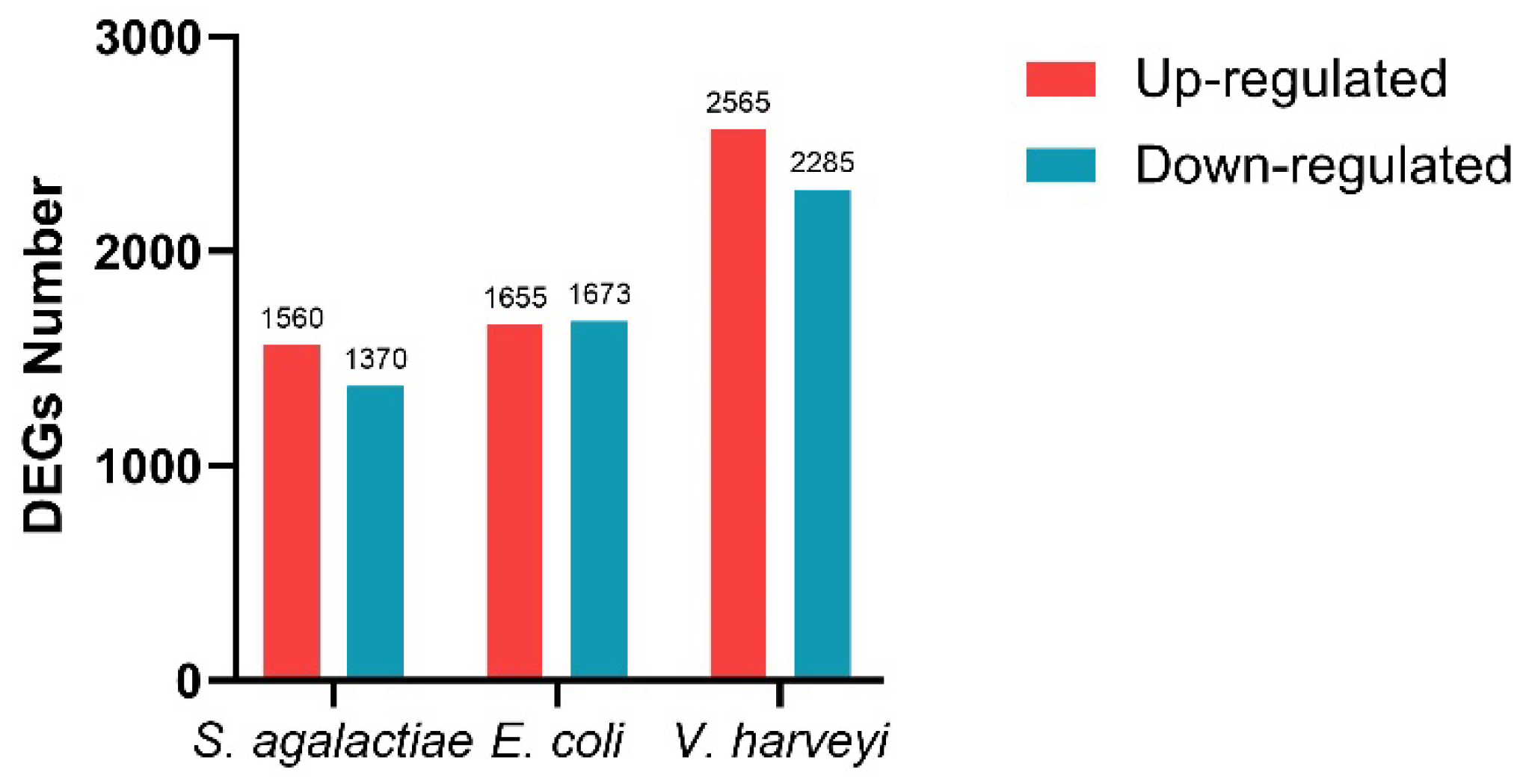
3.1. Overview of Transcriptomic Responses in Nile Tilapia Under Pathogenic Bacterial Infections
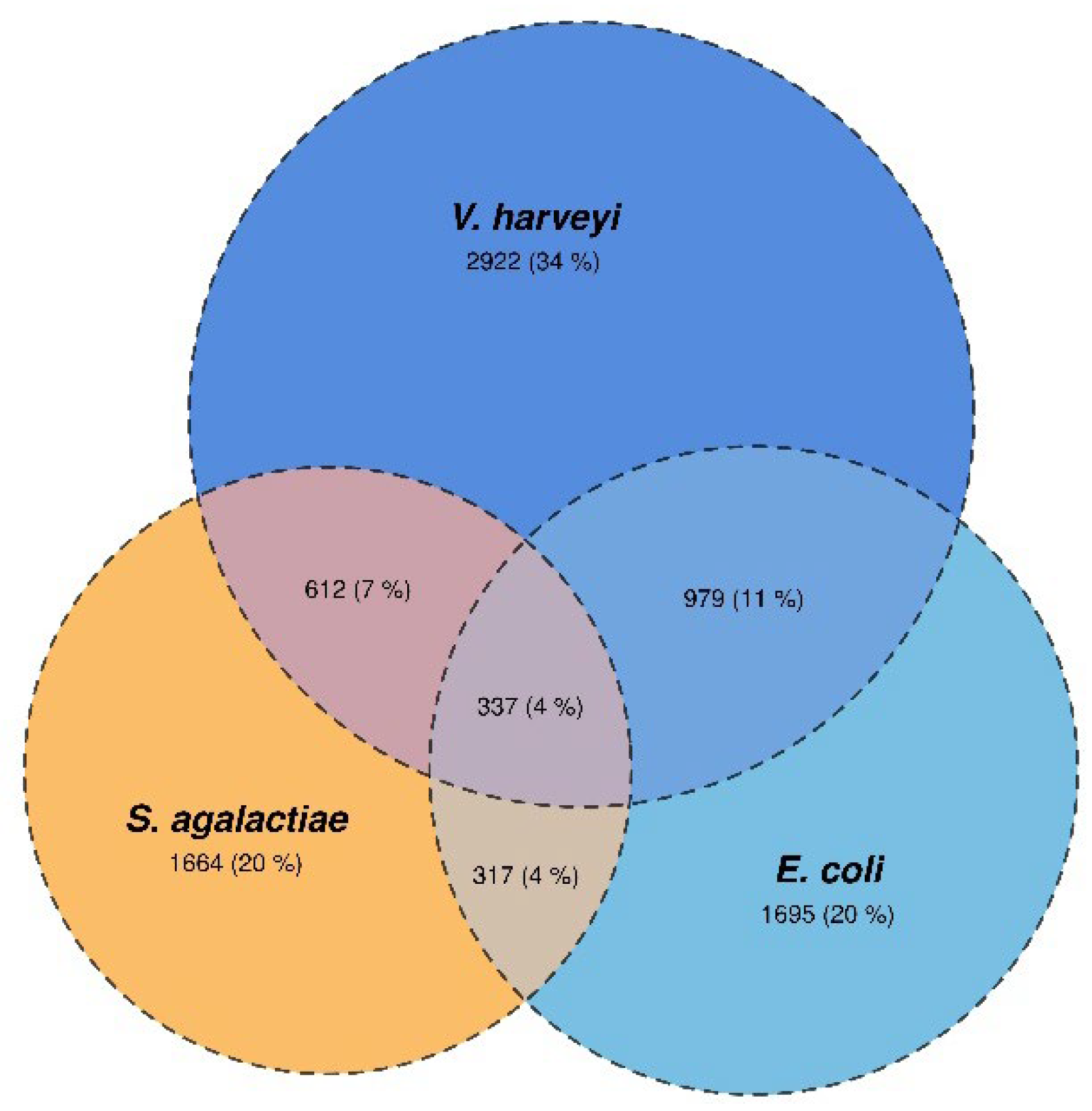
3.2. Comparative Analysis of DEGs Among Pathogenic Bacterial Infection Groups
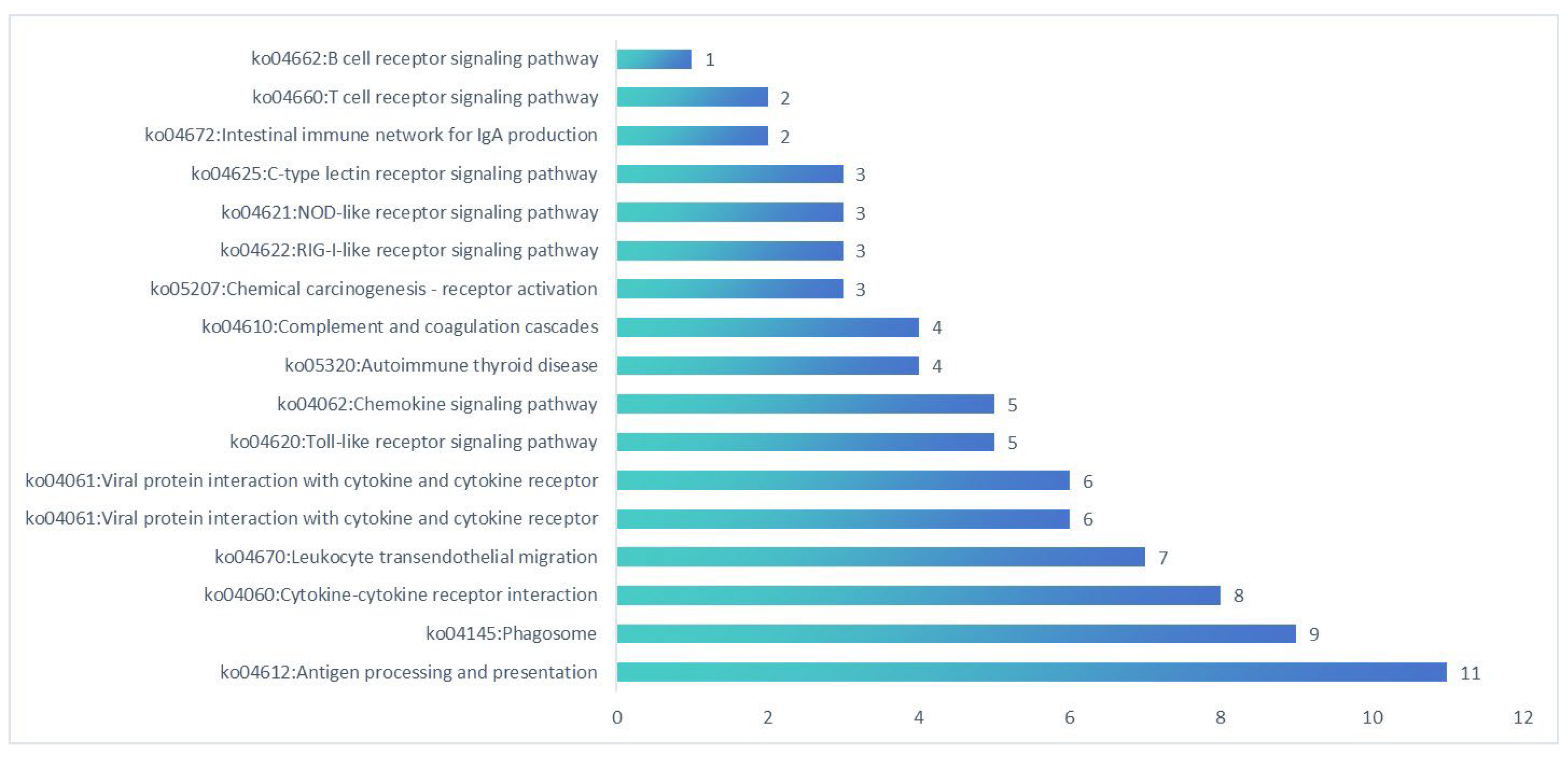
3.3. Shared Immune Responses Induced by Pathogenic Bacterial Infections
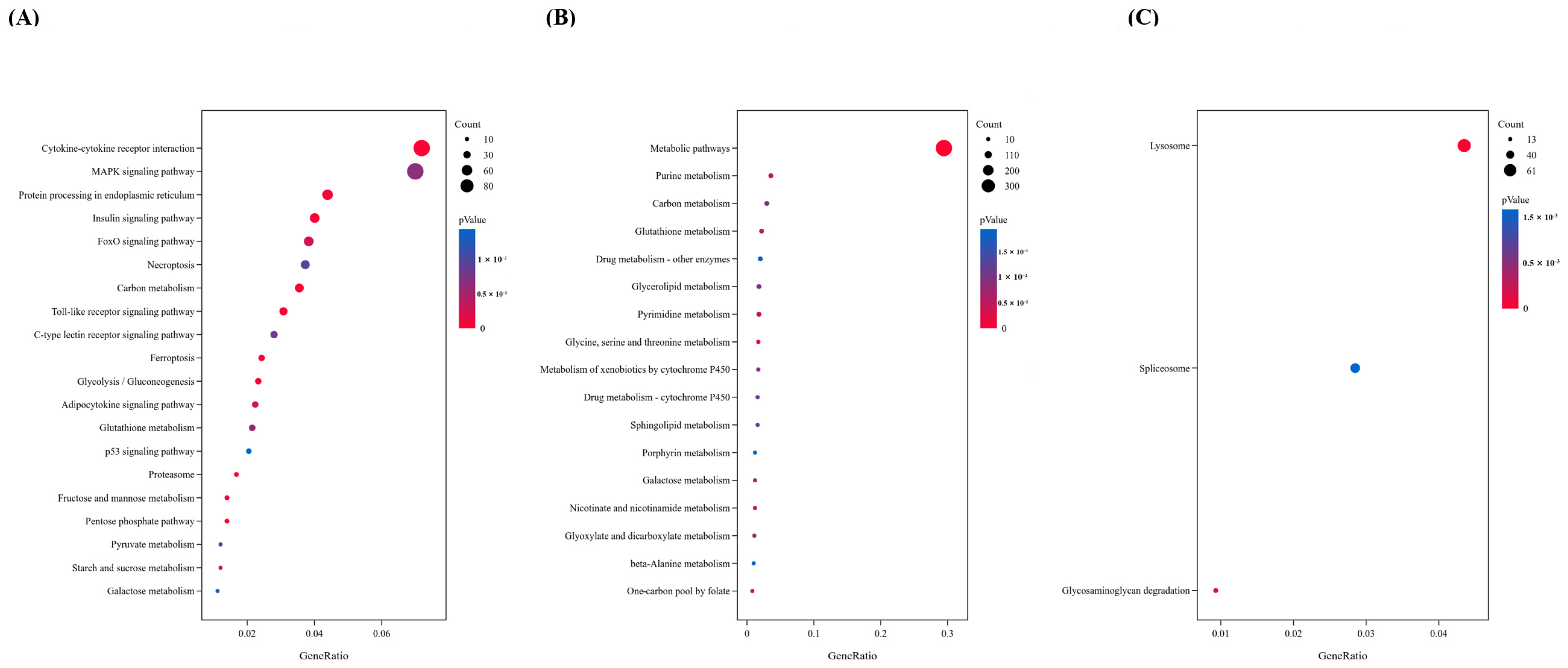
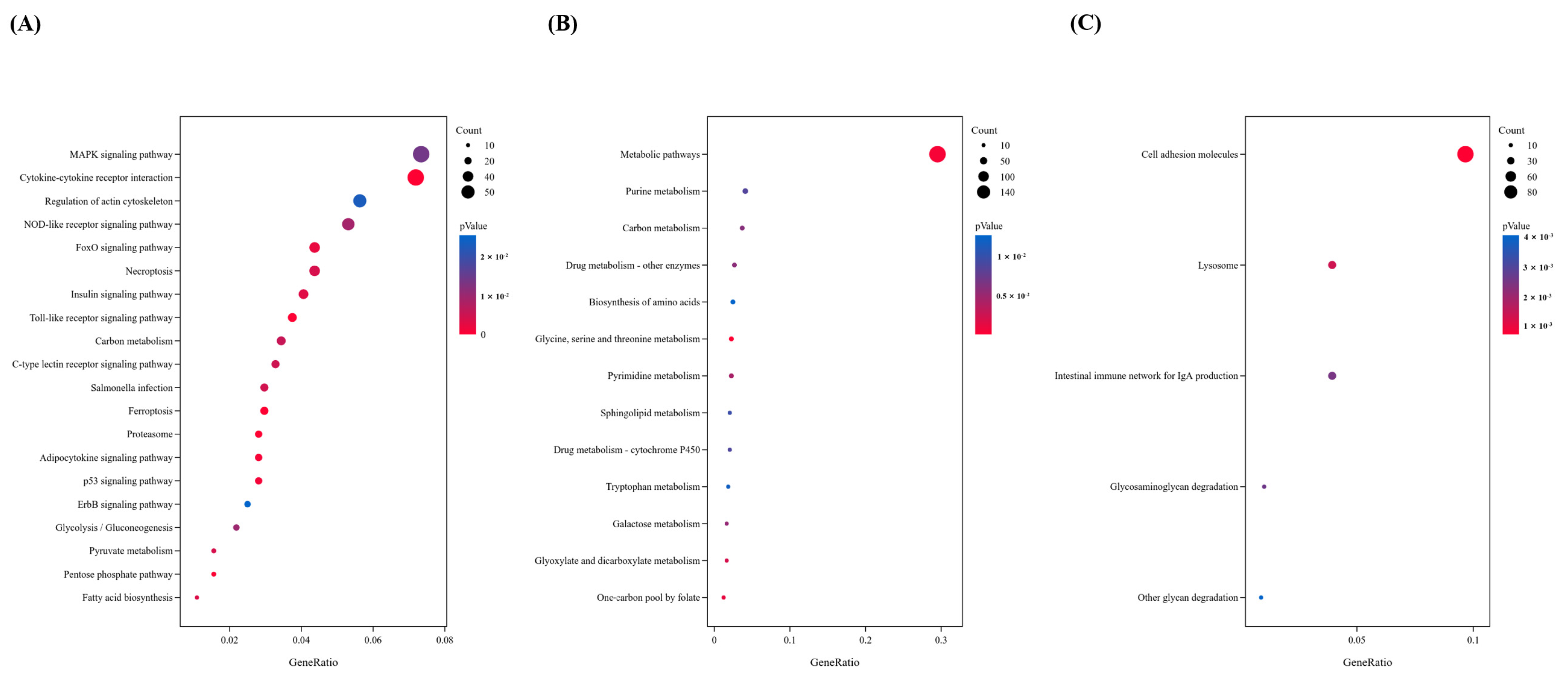
3.4. Pathogen-Specific Transcriptomic Signatures and KEGG Pathway Enrichment
4. Discussion
5. Conclusions
Supplementary Materials
Author Contributions
Funding
Institutional Review Board Statement
Data Availability Statement
Acknowledgments
Conflicts of Interest
References
- Paredes-Trujillo, A.; Mendoza-Carranza, M. A systematic review and meta-analysis of the relationship between farm management, water quality and pathogen outbreaks in tilapia culture. J. Fish Dis. 2022, 45, 1529–1548. [Google Scholar] [CrossRef]
- Debnath, S.C.; McMurtrie, J.; Temperton, B.; Delamare-Deboutteville, J.; Mohan, C.V.; Tyler, C.R. Tilapia aquaculture, emerging diseases, and the roles of the skin microbiomes in health and disease. Aquac. Int. 2023, 31, 2945–2976. [Google Scholar] [CrossRef]
- Duan, S.; Su, H.; Xu, W.; Hu, X.; Xu, Y.; Cao, Y.; Wen, G. Concentrations, distribution, and key influencing factors of antibiotic resistance genes and bacterial community in water and reared fish tissues in a typical tilapia farm in South China. J. Environ. Sci. Health Part B 2024, 59, 21–35. [Google Scholar] [CrossRef]
- Emam, W.; Lambert, H.; Brown, C. The welfare of farmed Nile tilapia: A review. Front. Vet. Sci. 2025, 12, 1567984. [Google Scholar] [CrossRef] [PubMed]
- Abdel-Latif, H.M.R.; Dawood, M.A.O.; Menanteau-Ledouble, S.; El-Matbouli, M. The nature and consequences of co-infections in tilapia: A review. J. Fish Dis. 2020, 43, 651–664. [Google Scholar] [CrossRef] [PubMed]
- Abd El-Hack, M.E.; El-Saadony, M.T.; Nader, M.M.; Salem, H.M.; El-Tahan, A.M.; Soliman, S.M.; Khafaga, A.F. Effect of environmental factors on growth performance of Nile tilapia (Oreochromis niloticus). Int. J. Biometeorol. 2022, 66, 2183–2194. [Google Scholar] [CrossRef] [PubMed]
- Ndraha, N.; Lin, H.Y.; Hsiao, H.I.; Lin, H.J. Managing the microbiological safety of tilapia from farm to consumer. Compr. Rev. Food Sci. Food Saf. 2024, 23, e70023. [Google Scholar] [CrossRef]
- Dong, H.T.; Nguyen, V.V.; Le, H.D.; Sangsuriya, P.; Jitrakorn, S.; Saksmerprome, V.; Senapin, S.; Rodkhum, C. Naturally concurrent infections of bacterial and viral pathogens in disease outbreaks in cultured Nile tilapia (Oreochromis niloticus) farms. Aquaculture 2015, 448, 427–435. [Google Scholar] [CrossRef]
- Haenen, O.L.M.; Dong, H.T.; Hoai, T.D.; Crumlish, M.; Karunasagar, I.; Barkham, T.; Chen, S.L.; Zadoks, R.; Kiermeier, A.; Wang, B.; et al. Bacterial diseases of tilapia, their zoonotic potential and risk of antimicrobial resistance. Rev. Aquacult. 2023, 15, 154–185. [Google Scholar] [CrossRef]
- Pretto-Giordano, L.G.; Müller, E.E.; de Freitas, J.C.; da Silva, V.G. Evaluation on the Pathogenesis of Streptococcus agalactiae in Nile Tilapia (Oreochromis niloticus). Braz. Arch. Biol. Technol. 2010, 53, 87–92. [Google Scholar] [CrossRef]
- Abdallah, E.S.H.; Metwally, W.G.M.; Abdel-Rahman, M.A.M.; Albano, M.; Mahmoud, M.M. Infection in Nile Tilapia (Oreochromis niloticus): A Review. Biology 2024, 13, 914. [Google Scholar] [CrossRef]
- Tavares, G.C.; Carvalho, A.F.; Pereira, F.L.; Rezende, C.P.; Azevedo, V.A.C.; Leal, C.A.G.; Figueiredo, H.C.P. Transcriptome and Proteome of Fish-Pathogenic Streptococcus agalactiae Are Modulated by Temperature. Front. Microbiol. 2018, 9, 2639. [Google Scholar] [CrossRef]
- Appel, R.J.C.; Siqueira, K.N.; Konstantinidis, I.; Martins, M.I.M.; Joshi, R.; Pretto-Giordano, L.G.; Vilas-Boas, L.A.; Fernandes, J.M.O. Comparative transcriptome analysis reveals a serotype-specific immune response in Nile tilapia (Oreochromis niloticus) infected with Streptococcus agalactiae. Front. Immunol. 2024, 15, 1528721. [Google Scholar] [CrossRef] [PubMed]
- Rocha Rdos, S.; Leite, L.O.; de Sousa, O.V.; Vieira, R.H. Antimicrobial Susceptibility of Escherichia coli Isolated from Fresh-Marketed Nile Tilapia (Oreochromis niloticus). J. Pathog. 2014, 2014, 756539. [Google Scholar] [CrossRef] [PubMed]
- Mumbo, M.T.; Nyaboga, E.N.; Kinyua, J.K.; Muge, E.K.; Mathenge, S.G.K.; Rotich, H.; Muriira, G.; Njiraini, B.; Njiru, J.M. Antimicrobial resistance profiles of Salmonella spp. and Escherichia coli isolated from fresh nile tilapia (Oreochromis niloticus) fish marketed for human consumption. BMC Microbiol. 2023, 23, 306. [Google Scholar] [CrossRef] [PubMed]
- Onjong, H.A.; Ngayo, M.O.; Mwaniki, M.; Wambui, J.; Njage, P.M.K. Microbiological Safety of Fresh Tilapia (Oreochromis niloticus) from Kenyan Fresh Water Fish Value Chains. J. Food Prot. 2018, 81, 1973–1981. [Google Scholar] [CrossRef]
- Elgendy, M.Y.; Abdelsalam, M.; Kenawy, A.M.; Ali, S.E. Vibriosis outbreaks in farmed Nile tilapia (Oreochromis niloticus) caused by Vibrio mimicus and V. cholerae. Aquacult. Int. 2022, 30, 2661–2677. [Google Scholar] [CrossRef]
- Gu, Y.D.; Yu, Y.X.; Wang, C.Y.; Wang, Y.E.; Zhang, Z.Q.; Rong, X.J.; Liao, M.J.; Li, B.; Qin, L.; Zhang, Z. First Report on Vibrio harveyi Infection in Black Rockfish (Sebastes schlegeli): Skin Ulcers, Histopathology, and Immune Response. Aquac. Res. 2025, 2025, 1390685. [Google Scholar] [CrossRef]
- Abu Nor, N.; Zamri-Saad, M.; Md Yasin, I.S.; Salleh, A.; Mustaffa-Kamal, F.; Matori, M.F.; Azmai, M.N.A. Efficacy of Whole Cell Inactivated Vibrio harveyi Vaccine against Vibriosis in a Marine Red Hybrid Tilapia (Oreochromis niloticus × O. mossambicus) Model. Vaccines 2020, 8, 734. [Google Scholar] [CrossRef]
- Triga, A.; Smyrli, M.; Katharios, P. Pathogenic and Opportunistic Vibrio spp. Associated with Vibriosis Incidences in the Greek Aquaculture: The Role of Vibrio harveyi as the Principal Cause of Vibriosis. Microorganisms 2023, 11, 1197. [Google Scholar] [CrossRef]
- Cui, M.; Wang, Z.B.; Yang, Y.C.; Liu, R.; Wu, M.; Li, Y.J.; Zhang, Q.Z.; Xu, D.L. Comparative Transcriptomic Analysis Reveals the Regulated Expression Profiles in Oreochromis niloticus in Response to Coinfection of Streptococcus agalactiae and Streptococcus iniae. Front. Genet. 2022, 13, 782957. [Google Scholar] [CrossRef]
- Natnan, M.E.; Mayalvanan, Y.; Jazamuddin, F.M.; Aizat, W.M.; Low, C.F.; Goh, H.H.; Azizan, K.A.; Bunawan, H.; Baharum, S.N. Omics Strategies in Current Advancements of Infectious Fish Disease Management. Biology 2021, 10, 1086. [Google Scholar] [CrossRef] [PubMed]
- Maekawa, S.; Wang, P.C.; Chen, S.C. Comparative Study of Immune Reaction Against Bacterial Infection from Transcriptome Analysis. Front. Immunol. 2019, 10, 153. [Google Scholar] [CrossRef] [PubMed]
- Zhang, R.; Zhang, L.L.; Ye, X.; Tian, Y.Y.; Sun, C.F.; Lu, M.X.; Bai, J.J. Transcriptome profiling and digital gene expression analysis of Nile tilapia (Oreochromis niloticus) infected by Streptococcus agalactiae. Mol. Biol. Rep. 2013, 40, 5657–5668. [Google Scholar] [CrossRef] [PubMed]
- Zhu, J.L.; Zou, Z.Y.; Li, D.Y.; Xiao, W.; Yu, J.; Chen, B.L.; Yang, H. Comparative transcriptomes reveal different tolerance mechanisms to Streptococcus agalactiae in hybrid tilapia, nile tilapia, and blue tilapia. Fish Shellfish Immunol. 2023, 142, 109121. [Google Scholar] [CrossRef]
- Wang, Z.; Liu, Z.G.; Huang, S.W.; Zhu, W.J.; Cao, J.M.; Wang, M.; Yi, M.M.; Lu, M.X.; Ke, X.L. A multiple-population study reveals genetic variation and genes associated with resistance to Streptococcus agalactiae in Nile tilapia (Oreochromis niloticus). Aquaculture 2026, 611, 743005. [Google Scholar] [CrossRef]
- Pan, C.Y.; Liu, Y.H.; Gong, H.Y.; Chen, J.Y. Transcriptome analysis of the effect of polyunsaturated fatty acids against Vibrio vulnificus infection in Oreochromis niloticus. Fish Shellfish Immunol. 2017, 62, 153–163. [Google Scholar] [CrossRef]
- Maekawa, S.; Byadgi, O.; Chen, Y.C.; Aoki, T.; Takeyama, H.; Yoshida, T.; Hikima, J.I.; Sakai, M.; Wang, P.C.; Chen, S.C. Transcriptome analysis of immune response against Vibrio harveyi infection in orange-spotted grouper (Epinephelus coioides). Fish Shellfish Immun. 2017, 70, 628–637. [Google Scholar] [CrossRef]
- Zhou, Q.; Chen, Y.D.; Chen, Z.F.; Wang, L.; Ma, X.R.; Wang, J.; Zhang, Q.H.; Chen, S.L. Genomics and transcriptomics reveal new molecular mechanism of vibriosis resistance in fish. Front. Immunol. 2022, 13, 974604. [Google Scholar] [CrossRef]
- Boltana, S.; Reyes-Lopez, F.; Morera, D.; Goetz, F.; MacKenzie, S.A. Divergent responses to peptidoglycans derived from different E. coli serotypes influence inflammatory outcome in trout, Oncorhynchus mykiss, macrophages. BMC Genom. 2011, 12, 34. [Google Scholar] [CrossRef]
- Wang, R.X.; Hu, X.C.; Lü, A.J.; Liu, R.R.; Sun, J.F.; Sung, Y.Y.; Song, Y.J. Transcriptome analysis in the skin of Carassius auratus challenged with Aeromonas hydrophila. Fish Shellfish Immun. 2019, 94, 510–516. [Google Scholar] [CrossRef] [PubMed]
- Geven, E.J.W.; Klaren, P.H.M. The teleost head kidney: Integrating thyroid and immune signalling. Dev. Comp. Immunol. 2017, 66, 73–83. [Google Scholar] [CrossRef] [PubMed]
- Bjorgen, H.; Koppang, E.O. Anatomy of teleost fish immune structures and organs. Immunogenetics 2021, 73, 53–63. [Google Scholar] [CrossRef] [PubMed]
- Mokhtar, D.M.; Zaccone, G.; Alesci, A.; Kuciel, M.; Hussein, M.T.; Sayed, R.K. Main Components of Fish Immunity: An Overview of the Fish Immune System. Fishes 2023, 8, 93. [Google Scholar] [CrossRef]
- Zhang, Y.; Park, C.; Bennett, C.; Thornton, M.; Kim, D. Rapid and accurate alignment of nucleotide conversion sequencing reads with HISAT-3N. Genome Res. 2021, 31, 1290–1295. [Google Scholar] [CrossRef]
- Kim, D.; Paggi, J.M.; Park, C.; Bennett, C.; Salzberg, S.L. Graph-based genome alignment and genotyping with HISAT2 and HISAT-genotype. Nat. Biotechnol. 2019, 37, 907–915. [Google Scholar] [CrossRef]
- Robinson, M.D.; McCarthy, D.J.; Smyth, G.K. edgeR: A Bioconductor package for differential expression analysis of digital gene expression data. Bioinformatics 2010, 26, 139–140. [Google Scholar] [CrossRef]
- Kanehisa, M.; Furumichi, M.; Sato, Y.; Matsuura, Y.; Ishiguro-Watanabe, M. KEGG: Biological systems database as a model of the real world. Nucleic Acids Res. 2024, 53, D672–D677. [Google Scholar] [CrossRef]
- Kanehisa, M.; Furumichi, M.; Sato, Y.; Kawashima, M.; Ishiguro-Watanabe, M. KEGG for taxonomy-based analysis of pathways and genomes. Nucleic Acids Res. 2023, 51, D587–D592. [Google Scholar] [CrossRef]
- Ginestet, C. ggplot2: Elegant Graphics for Data Analysis. J. R. Stat. Soc. A 2011, 174, 245–246. [Google Scholar] [CrossRef]
- Henry-Silva, G.G.; Cacho, J.C.D.; Moura, R.S.T.; Flickinger, D.L.; Valenti, W.C. Economic, social, and environmental assessment of farming Nile tilapia in net-cages in a reservoir in hot semi-arid region during an extended drought event. Environ. Sci. Pollut. Res. 2022, 29, 78768–78779. [Google Scholar] [CrossRef]
- Vanhove, M.P.M.; Hablützel, P.I.; Pariselle, A.; Simková, A.; Huyse, T.; Raeymaekers, J.A.M. Cichlids: A Host of Opportunities for Evolutionary Parasitology. Trends Parasitol. 2016, 32, 820–832. [Google Scholar] [CrossRef]
- Gomez, D.; Sunyer, J.O.; Salinas, I. The mucosal immune system of fish: The evolution of tolerating commensals while fighting pathogens. Fish Shellfish Immun. 2013, 35, 1729–1739. [Google Scholar] [CrossRef] [PubMed]
- Cuesta-Astroz, Y.; Santos, A.; Oliveira, G.; Jensen, L.J. Analysis of Predicted Host-Parasite Interactomes Reveals Commonalities and Specificities Related to Parasitic Lifestyle and Tissues Tropism. Front. Immunol. 2019, 10, 212. [Google Scholar] [CrossRef] [PubMed]
- Zhu, J.J.; Fu, Q.; Ao, Q.W.; Tan, Y.; Luo, Y.J.; Jiang, H.S.; Li, C.; Gan, X. Transcriptomic profiling analysis of tilapia (Oreochromis niloticus) following Streptococcus agalactiae challenge. Fish Shellfish Immun. 2017, 62, 202–212. [Google Scholar] [CrossRef] [PubMed]
- Alhallaq, A.S.; Sultan, N.S. Decoding NF-κB: Nucleocytoplasmic shuttling dynamics, synthetic modulation and post-therapeutic behavior in cancer. Mol. Biol. Rep. 2025, 52, 804. [Google Scholar] [CrossRef]
- Guo, Q.; Jin, Y.Z.; Chen, X.Y.; Ye, X.M.; Shen, X.; Lin, M.X.; Zeng, C.; Zhou, T.; Zhang, J. NF-κB in biology and targeted therapy: New insights and translational implications. Signal Transduct. Target. Ther. 2024, 9, 53. [Google Scholar] [CrossRef]
- Yu, H.; Lin, L.B.; Zhang, Z.Q.; Zhang, H.Y.; Hu, H.B. Targeting NF-κB pathway for the therapy of diseases: Mechanism and clinical study. Signal Transduct. Target. Ther. 2020, 5, 209. [Google Scholar] [CrossRef]
- Xu, M.; Liu, P.P.; Li, H.L. Innate Immune Signaling and Its Role in Metabolic and Cardiovascular Diseases. Physiol. Rev. 2019, 99, 893–948. [Google Scholar] [CrossRef]
- Hoesel, B.; Schmid, J.A. The complexity of NF-κB signaling in inflammation and cancer. Mol. Cancer 2013, 12, 86. [Google Scholar] [CrossRef]
- Hutchins, A.P.; Takahashi, Y.; Miranda-Saavedra, D. Genomic analysis of LPS-stimulated myeloid cells identifies a common pro-inflammatory response but divergent IL-10 anti-inflammatory responses. Sci. Rep. 2015, 5, 9100. [Google Scholar] [CrossRef]
- Rutz, S.; Ouyang, W.J. Regulation of Interleukin-10 Expression. Regul. Cytokine Gene Expr. Immun. Dis. 2016, 941, 89–116. [Google Scholar] [CrossRef]
- Chen, R.C.; Zou, J.; Chen, J.W.; Zhong, X.; Kang, R.; Tang, D.L. Pattern recognition receptors: Function, regulation and therapeutic potential. Signal Transduct. Target. Ther. 2025, 10, 216. [Google Scholar] [CrossRef] [PubMed]
- Wicherska-Pawlowska, K.; Wrobel, T.; Rybka, J. Toll-Like Receptors (TLRs), NOD-Like Receptors (NLRs), and RIG-I-Like Receptors (RLRs) in Innate Immunity. TLRs, NLRs, and RLRs Ligands as Immunotherapeutic Agents for Hematopoietic Diseases. Int. J. Mol. Sci. 2021, 22, 13397. [Google Scholar] [CrossRef] [PubMed]
- Dong, W.J.; Gao, W.Y.; Cui, J.X.; Xu, T.J.; Sun, Y.A. microRNA-148 is involved in NF-κB signaling pathway regulation after LPS stimulation by targeting IL-1β in miiuy croaker. Fish Shellfish Immun. 2021, 118, 66–71. [Google Scholar] [CrossRef]
- Zimmerman, A.E.; Howard-Varona, C.; Needham, D.M.; John, S.G.; Worden, A.Z.; Sullivan, M.B.; Waldbauer, J.R.; Coleman, M.L. Metabolic and biogeochemical consequences of viral infection in aquatic ecosystems. Nat. Rev. Microbiol. 2020, 18, 21–34. [Google Scholar] [CrossRef]
- He, Z.H.; Zhong, Y.Q.; Liao, M.Z.; Dai, L.X.; Wang, Y.; Zhang, S.; Sun, C.B. Integrated analysis of intestinal microbiota and metabolomic reveals that decapod iridescent virus 1 (DIV1) infection induces secondary bacterial infection and metabolic reprogramming in. Front. Immunol. 2022, 13, 982717. [Google Scholar] [CrossRef]
- Sun, B.; Sun, B.G.; Zhang, B.B.; Sun, L. Temperature induces metabolic reprogramming in fish during bacterial infection. Front. Immunol. 2022, 13, 1010948. [Google Scholar] [CrossRef]
- Liu, L.; Zhang, Y.; Yuan, M.D.; Xiao, D.M.; Xu, W.H.; Zheng, Q.; Qin, Q.W.; Huang, Y.H.; Huang, X.H. Integrated multi-omics analysis reveals liver metabolic reprogramming by fish iridovirus and antiviral function of alpha-linolenic acid. Zool. Res. 2024, 45, 520–534. [Google Scholar] [CrossRef]
- Libran-Perez, M.; Pereiro, P.; Figueras, A.; Novoa, B. Transcriptome Analysis of Turbot (Scophthalmus maximus) Infected with Aeromonas salmonicida Reveals a Direct Effect on Leptin Synthesis as a Neuroendocrine Mediator of Inflammation and Metabolism Regulation. Front. Mar. Sci. 2022, 9, 888115. [Google Scholar] [CrossRef]
- Cai, X.; Gao, C.; Ma, L.; Li, C. Genome-wide identification, evolution and expression analysis of tight junction gene family and the immune roles of claudin5 gene in turbot (Scophthalmus maximus L.). Gene 2023, 877, 147541. [Google Scholar] [CrossRef] [PubMed]
- Ebnet, K. Junctional Adhesion Molecules (JAMs): Cell Adhesion Receptors with Pleiotropic Functions in Cell Physiology and Development. Physiol. Rev. 2017, 97, 1529–1554. [Google Scholar] [CrossRef] [PubMed]
- Su, C.; Mo, J.; Dong, S.; Liao, Z.; Zhang, B.; Zhu, P. Integrinbeta-1 in disorders and cancers: Molecular mechanisms and therapeutic targets. Cell Commun. Signal. 2024, 22, 71. [Google Scholar] [CrossRef] [PubMed]
- Saurabh, S.; Sahoo, P.K. Lysozyme: An important defence molecule of fish innate immune system. Aquac. Res. 2008, 39, 223–239. [Google Scholar] [CrossRef]
- Misra, C.K.; Das, B.K.; Pradhan, J.; Pattnaik, P.; Sethi, S.; Mukherjee, S.C. Changes in lysosomal enzyme activity and protection against vibrio infection in Macrobrachium rosenbergii (De Man) post larvae after bath immunostimulation with β-glucan. Fish Shellfish Immun. 2004, 17, 389–395. [Google Scholar] [CrossRef]
- Zhang, M.; Feng, Y.; Zhong, Z.; Du, Q.; Yu, W.; Wu, J.; Huang, X.; Huang, Z.; Xie, G.; Shu, H. Host Gut-Derived Probiotic, Exiguobacterium acetylicum G1-33, Improves Growth, Immunity, and Resistance to Vibrio harveyi in Hybrid Grouper (Epinephelus fuscoguttatus ♀ × Epinephelus lanceolatus ♂). Microorganisms 2024, 12, 1688. [Google Scholar] [CrossRef]
- Julyantoro, P.G.S.; Waturangi, D.E.; Papuangan, N.; Permana, I.G.N.; Mahardika, K. Antibiofilm from phyllosphere improves survival and gut health of juvenile pearl gentian hybrid grouper challenged with Vibrio harveyi. Sci. Rep. 2025, 15, 31307. [Google Scholar] [CrossRef]
- Hernandez-Cabanyero, C.; Sanjuan, E.; Reyes-Lopez, F.E.; Vallejos-Vidal, E.; Tort, L.; Amaro, C. A Transcriptomic Study Reveals That Fish Vibriosis Due to the Zoonotic Pathogen Vibrio vulnificus Is an Acute Inflammatory Disease in Which Erythrocytes May Play an Important Role. Front. Microbiol. 2022, 13, 852677. [Google Scholar] [CrossRef]
- Legrand, T.P.R.A.; Wynne, J.W.; Weyrich, L.S.; Oxley, A.P.A. A microbial sea of possibilities: Current knowledge and prospects for an improved understanding of the fish microbiome. Rev. Aquacult. 2020, 12, 1101–1134. [Google Scholar] [CrossRef]
- Olive, A.J.; Sassetti, C.M. Metabolic crosstalk between host and pathogen: Sensing, adapting and competing. Nat. Rev. Microbiol. 2016, 14, 221–234. [Google Scholar] [CrossRef]
- Wilde, J.; Slack, E.; Foster, K.R. Host control of the microbiome: Mechanisms, evolution, and disease. Science 2024, 385, eadi3338. [Google Scholar] [CrossRef]
- Nair, A.V.; Singh, A.; Chakravortty, D. Defence Warriors: Exploring the crosstalk between polyamines and oxidative stress during microbial pathogenesis. Redox Biol. 2025, 83, 103648. [Google Scholar] [CrossRef] [PubMed]
- Gleeson, L.E.; Sheedy, F.J. Metabolic reprogramming & inflammation: Fuelling the host response to pathogens. Semin. Immunol. 2016, 28, 450–468. [Google Scholar] [CrossRef] [PubMed]
- Kim, J. Regulation of Immune Cell Functions by Metabolic Reprogramming. J. Immunol. Res. 2018, 2018, 8605471. [Google Scholar] [CrossRef] [PubMed]
- Sun, L.; Yang, X.; Yuan, Z.; Wang, H. Metabolic Reprogramming in Immune Response and Tissue Inflammation. Arterioscler. Thromb. Vasc. Biol. 2020, 40, 1990–2001. [Google Scholar] [CrossRef]
- Lazado, C.C.; Caipang, C.M. Mucosal immunity and probiotics in fish. Fish Shellfish Immunol. 2014, 39, 78–89. [Google Scholar] [CrossRef]
- Firmino, J.P.; Galindo-Villegas, J.; Reyes-Lopez, F.E.; Gisbert, E. Phytogenic Bioactive Compounds Shape Fish Mucosal Immunity. Front. Immunol. 2021, 12, 695973. [Google Scholar] [CrossRef]
- Morshed, S.M.; Lee, T.H. The role of the microbiome on fish mucosal immunity under changing environments. Fish Shellfish Immunol. 2023, 139, 108877. [Google Scholar] [CrossRef]



| Category | Gene ID | log2FC (S. agalactiae) | log2FC (E. coli) | log2FC (V. harveyi) | Note |
|---|---|---|---|---|---|
| Metabolism | pdk3 | −4.75 | −1.42 | 0.35 | Pyruvate dehydrogenase kinase, energy metabolism |
| ldhd | −0.52 | −1.08 | −0.41 | Lactate dehydrogenase D, glycolysis | |
| guk1 | −0.47 | 2.21 | 0.22 | Purine metabolism | |
| nt5c3a | −0.74 | 1.30 | −0.15 | Nucleotide metabolism | |
| dck | −0.30 | 1.79 | 0.95 | Nucleotide salvage | |
| nme6 | −0.78 | 1.31 | 0.03 | Nucleoside diphosphate kinase | |
| ak3 | −2.11 | 1.13 | −0.10 | Adenylate kinase, purine metabolism | |
| chdh | −2.07 | 2.54 | 1.02 | Choline metabolism | |
| shmt1 | −1.09 | 1.08 | 0.98 | Serine/glycine metabolism | |
| cyp1a | 0.91 | 3.15 | 5.20 | Cytochrome P450 1A, xenobiotics | |
| Immunity | tlr5 | −3.76 | −1.58 | −2.38 | TLR5, innate immune sensing |
| traf3 | 1.59 | 0.01 | 0.00 | TNF receptor signaling | |
| traf2 | 1.42 | 0.56 | −0.21 | TNF receptor signaling | |
| nfkbia | 1.12 | −0.15 | −0.01 | NF-κB inhibitor | |
| irf7 | −1.56 | −1.42 | −0.86 | IFN regulatory factor | |
| myd88 | 1.12 | −0.53 | −0.36 | MyD88 adaptor | |
| il-8 | 4.74 | −0.66 | 0.62 | Pro-inflammatory cytokine | |
| ripk1 | −2.24 | −0.59 | 0.14 | Apoptosis/immune signaling | |
| nod1 | −1.37 | −1.04 | −0.08 | NOD-like receptor | |
| il6st | 1.49 | 0.01 | 0.51 | IL-6 signaling | |
| il1rap | −2.32 | 0.41 | 2.03 | IL-1 receptor accessory | |
| il10 | 3.16 | 0.24 | −0.35 | Anti-inflammatory cytokine | |
| tnfaip3 | 2.28 | −0.47 | 0.35 | TNF-induced protein | |
| tnfsf13b | −3.15 | 0.59 | 1.92 | TNF superfamily member | |
| tnfrsf1a | −2.71 | −0.09 | 1.81 | TNF receptor 1A | |
| tap1 | 3.07 | 1.78 | 1.58 | Antigen processing | |
| psme2 | 1.17 | 0.29 | −0.35 | Proteasome activator | |
| Mucosal/Lysosomal defense | itga9 | 0.43 | 0.28 | 2.06 | Integrin α9, adhesion |
| itgb1 | 0.32 | 0.76 | 1.30 | Integrin β1, adhesion | |
| jam2 | 0.40 | 0.34 | 2.17 | Junctional adhesion molecule | |
| cldn5 | 1.66 | 1.05 | 2.28 | Tight junction protein | |
| cdh15 | 1.62 | −0.72 | −3.46 | Cadherin-15, barrier | |
| lgmn | 1.64 | 1.40 | 2.28 | Legumain, lysosomal protease | |
| ids | −1.34 | 0.61 | 1.82 | Iduronate 2-sulfatase, lysosomal enzyme | |
| ctsh | −0.33 | 0.64 | 1.21 | Cathepsin H precursor | |
| tpp1 | 0.26 | 1.07 | 2.05 | Lysosomal peptidase | |
| man2b1 | 0.20 | 0.62 | 1.14 | Lysosomal α-mannosidase | |
| glb1 | −0.84 | 0.01 | 1.04 | β-galactosidase, lysosome | |
| lamp3 | −1.56 | −2.04 | 1.01 | Lysosomal membrane glycoprotein | |
| galnt7 | −1.39 | −1.56 | −1.70 | Mucin O-glycosylation enzyme |
Disclaimer/Publisher’s Note: The statements, opinions and data contained in all publications are solely those of the individual author(s) and contributor(s) and not of MDPI and/or the editor(s). MDPI and/or the editor(s) disclaim responsibility for any injury to people or property resulting from any ideas, methods, instructions or products referred to in the content. |
© 2025 by the authors. Licensee MDPI, Basel, Switzerland. This article is an open access article distributed under the terms and conditions of the Creative Commons Attribution (CC BY) license (https://creativecommons.org/licenses/by/4.0/).
Share and Cite
Cheng, J.; Luo, Y.; Shen, J.; Yang, K.; Lyu, Z. Distinct Innate Immune Programs in Nile Tilapia Head Kidney During Infections with Streptococcus agalactiae, Escherichia coli and Vibrio harveyi. Fishes 2025, 10, 656. https://doi.org/10.3390/fishes10120656
Cheng J, Luo Y, Shen J, Yang K, Lyu Z. Distinct Innate Immune Programs in Nile Tilapia Head Kidney During Infections with Streptococcus agalactiae, Escherichia coli and Vibrio harveyi. Fishes. 2025; 10(12):656. https://doi.org/10.3390/fishes10120656
Chicago/Turabian StyleCheng, Jiaoni, Yupeng Luo, Jie Shen, Kangping Yang, and Zhangxia Lyu. 2025. "Distinct Innate Immune Programs in Nile Tilapia Head Kidney During Infections with Streptococcus agalactiae, Escherichia coli and Vibrio harveyi" Fishes 10, no. 12: 656. https://doi.org/10.3390/fishes10120656
APA StyleCheng, J., Luo, Y., Shen, J., Yang, K., & Lyu, Z. (2025). Distinct Innate Immune Programs in Nile Tilapia Head Kidney During Infections with Streptococcus agalactiae, Escherichia coli and Vibrio harveyi. Fishes, 10(12), 656. https://doi.org/10.3390/fishes10120656