Article

Silencing of the Superaquaporin LvAQP11 Disrupts Salinity Tolerance, Molting Cycle, and Myofibril Organization in Litopenaeus vannamei


1
School of Marine Science and Engineering, Qingdao Agricultural University, Qingdao 266109, China
2
State Key Laboratory of Mariculture Biobreeding and Sustainable Goods, Yellow Sea Fisheries Research Institute, Chinese Academy of Fishery Sciences, Qingdao 266071, China
3
Changyi Ocean Business Development Center, Weifang 261300, China
4
Shandong Evergreen Seedlings Technology Co., Ltd., Weifang 262700, China
*
Author to whom correspondence should be addressed.
These authors contributed equally to this work.
Fishes 2025, 10(12), 631; https://doi.org/10.3390/fishes10120631
Submission received: 22 October 2025 / Revised: 2 December 2025 / Accepted: 8 December 2025 / Published: 9 December 2025
(This article belongs to the Special Issue Advances in Shrimp Physiology and Genomics)

Abstract

The Pacific white shrimp (Litopenaeus vannamei), a euryhaline crustacean of significant economic importance, is widely cultivated for its adaptability to diverse salinity levels. Aquaporins (AQPs) are membrane channel proteins that mediate the transport of water and small solutes across biological membranes. Among them, aquaporin 11 (AQP11) is classified as a superaquaporin, and its physiological roles remain unclear. In this study, RNA interference (RNAi) was employed to silence AQP11 expression in L. vannamei, followed by RNA-seq analysis to investigate transcriptomic responses. Differentially expressed genes (DEGs) were identified by comparing dsAQP11 and control groups. The LvAQP11 knockdown significantly increased mortality to 76.7% under acute high-salinity stress (50‰) but not under low-salinity conditions (10‰). Transcriptomic analysis revealed that LvAQP11 deficiency disrupted amino acid metabolism pathways and triggered endoplasmic reticulum stress, as evidenced by the upregulation of proteasome subunits and unfolded protein response genes. Furthermore, silencing LvAQP11 delayed molting progression in the premolt stages, accompanied by the significant upregulation of molt-inhibiting hormone (LvMIH1/5) and downregulation of retinoic acid X receptor (LvRXR). The long-term silencing of LvAQP11 did not affect the weight gain rate (WGR) or the specific growth rate (SGR) but induced muscle fiber disorganization and significantly increased muscle water content. RNA sequencing identified enriched carbohydrate and chitin metabolism pathways, indicating disrupted cytoskeletal dynamics and extracellular matrix integrity. Through this study, we elucidate the crucial roles of LvAQP11 in osmoregulation, molting, and muscle integrity in L. vannamei, providing novel insights into the multifunctional nature of superaquaporins beyond water transport.
Key Contribution: This study shows that silencing LvAQP11 increases mortality under high-salinity conditions, disrupts amino acid metabolism, triggers ER stress, delays molting, and alters muscle structure, highlighting its multifaceted role in crustacean physiology.

1. Introduction

The Pacific white shrimp, Litopenaeus vannamei, stands as the most extensively cultivated crustacean worldwide, with an annual production exceeding 6.8 million tons according to the Food and Agriculture Organization [1]. This prominence is attributed to its exceptional characteristics, including rapid growth, high survival rates, and most notably, an extraordinary capacity to tolerate a broad spectrum of salinity levels, ranging from 0.5‰ to 78‰ [2,3]. Its adaptability to diverse salinity levels presents commercial producers with the opportunity to exploit non-traditional aquaculture environments beyond seawater. As a result, L. vannamei is found across the aquatic spectrum, from freshwater to brackish, marine, and hypersaline waters. This ecological versatility positions L. vannamei as an exemplary model organism for deciphering the osmoregulatory mechanisms underlying salinity adaptation in crustaceans.
The molecular mechanisms that govern osmoregulation in crustaceans are intricate and encompass a multitude of proteins and genes that are responsive to salinity fluctuations in aquatic environments. Prior research has identified candidate genes with pivotal roles in sustaining ionic homeostasis across crustacean species [4,5]. In decapods, the gill tissue is recognized for its central role in ionic balance through osmoregulatory processes [6]. Furthermore, crucial genes such as Na+/K+-ATPase (NKA), Carbonic anhydrase (CA), Na+/H+-exchanger (NHE), Na+/K+/2Cl-cotransporter (NKCC), and V-type proton (H+)-ATPase (VHA) operate either independently or in concert to mediate the active transport of essential ions in the gills of L. vannamei [7,8,9,10]. In addition to these ion transport genes, other genes also play pivotal roles in maintaining homeostasis under fluctuating environmental conditions. Among these, aquaporins (AQPs) are critical components in the osmoregulatory gene network [11]. AQPs are integral membrane proteins that mediate water transport across the lipid bilayer [12]. They have two highly conserved asparagine–proline–alanine (NPA) motifs and can be divided into three subfamilies based on the variation in the NPA motifs: (1) water-selective AQP (wAQP), which mainly transports water; (2) glycerol-permeable aquaglyceroporin (gAQP), which transports glycerol and other small molecules; and (3) intracellular superaquaporin (sAQP), with less characterized functional roles [13].
In aquatic animals, AQPs are recognized as essential to maintaining water homeostasis. However, research into the osmoregulatory functions of AQPs in decapod crustaceans has been relatively limited, with a focus on only a few species [11,14,15,16]. In the case of L. vannamei, three types of aquaporin genes (LvAQPs) have been characterized, and their expression patterns under salinity stress have been examined, revealing the predominant expression of an sAQP (LvAQP11) in muscle tissue [16,17]. sAQPs, including AQP11 and AQP12, exhibit low sequence similarity to other subfamilies, and their physiological functions remain poorly understood. Previous studies have demonstrated that AQP11 is primarily localized in the endoplasmic reticulum and may contribute to maintaining cellular homeostasis [18]. In fish, AQP11 expression is upregulated in the Amur ide, Leuciscus waleckii, when exposed to alkaline stress, and in the Nile tilapia, Oreochromis niloticus, under brackish water conditions [19,20]. The AQP11 gene is implicated in the response to salinity stress in the kuruma shrimp, Marsupenaeus japonicus, and is also suggested to play a significant role in the molting process of the Chinese mitten crab, Eriocheir sinensis [21,22]. However, as the sAQP subfamily has been more recently identified, our understanding of their functions is less comprehensive compared with other AQP subfamilies [23,24]. Therefore, the molecular mechanism underlying the role of LvAQP11 in water homeostasis and osmoregulation in the muscle remains to be elucidated.
Muscle tissue is crucial to the growth of shrimp, as it constitutes approximately 48% of the total shrimp biomass [25]. Additionally, growth and molting are closely related in L. vannamei, which molts about 50 times in its lifetime [26]. Furthermore, during the molting process, shrimp must rapidly absorb water to accommodate body expansion following the shedding of their old exoskeletons [27]. Consequently, there is a substantial need for further research to elucidate the roles of LvAQP11 in the molting and growth processes in L. vannamei.
Hence, the objective of this study was to elucidate the role of the intracellular superaquaporin gene (LvAQP11) in the salinity adaptation and growth of L. vannamei. To this end, we utilized RNA interference (RNAi) technology to silence the expression of the LvAQP11 gene and then employed transcriptome sequencing to assess the differential gene expression in the muscle tissue under salinity stress. Additionally, we evaluated the effects of long-term LvAQP11 gene knockdown on the molting and growth of this shrimp. Moreover, transcriptome sequencing was also conducted to identify the genes and pathways that are significantly altered following long-term silencing of LvAQP11 in the muscle. This study provides novel evidence enhancing the understanding of the function of AQP11 and its potential involvement in stress response mechanisms.

2. Materials and Methods

2.1. Experimental Animals

Healthy shrimp weighing 3.6 ± 0.5 g and measuring 7.4 ± 0.4 cm in length were obtained from the white shrimp breeding center of BLUP Aquabreed Co., Ltd., in Weifang, Shandong Province, China. Before the experiment, they were acclimated for a week in 300 L PVC tanks with aerated natural seawater at 30‰ salinity, pH 7.8, and 28 ± 0.5 °C. The shrimp were fed dry pellets three times daily (at 09:00, 15:00, and 21:00). Daily maintenance included siphoning to remove feces and uneaten feed, ensuring that dissolved oxygen remained above 6.0 mg/L, and replacing 50% of the water at 09:00. Salinity was monitored using a water quality meter (YSI Incorporated, Yellow Springs, OH, USA). All procedures were approved by the Animal Experiment Ethics Committee of Qingdao Agricultural University.

2.2. Evaluation of RNAi Efficiency for LvAQP11

To identify the target sequence for LvAQP11 with multiple functional siRNA sites, we used the BLOCK-iT™ RNAi Designer (http://rnaidesigner.thermofisher.com, accessed on 5 March 2022) to construct LvAQP11-specific double-stranded RNA (dsRNA). Primers with T7 promoter sequences (Supplementary Table S1) were designed based on LvAQP11 mRNA and synthesized. The gene fragment was amplified using these primers and transcribed in vitro with the T7 RNAi Transcription Kit (Vazyme, Nanjing, China), following the manufacturer’s protocol. dsGFP was similarly synthesized as a control.
Sixty healthy intermolt shrimp were divided into four groups of fifteen, with each group being further split into three replicates of five shrimp. To determine the optimal dsRNA dosage, the shrimp were injected with dsAQP11 or dsGFP at 3 or 5 µg/g body weight, and then, 24 h post-injection, muscle samples from nine shrimp per group (three per replicate) were collected for qPCR to assess LvAQP11 knockdown efficiency.
Another 60 healthy intermolt shrimp were allocated into two groups of 30, with each group being subdivided into three replicates of 10. The shrimp were injected with dsAQP11 or dsGFP at 5 µg/g body weight, and then, 72 and 96 h post-injection, nine shrimp per group (three per replicate) were sampled to quantify LvAQP11 expression with qPCR to determine the duration of dsRNA-mediated gene silencing.

2.3. Impact of LvAQP11 Knockdown on Salinity Adaptation

To evaluate how LvAQP11 knockdown affects salinity adaptation, intermolt shrimp were divided into four groups: two experimental groups were injected with dsAQP11, and two control groups were injected with dsGFP. Each group was further split into three replicates of 10 shrimp, and all groups received a dsRNA dose of 5 µg/g body weight. After 24 h, one group from each category was subjected to acute high-salinity stress at 50‰ (dsAQP11_H and dsGFP_H), while the other was subjected to acute low-salinity stress at 10‰ (dsAQP11_L and dsGFP_L). Mortality was recorded 12 and 24 h post-exposure.
To identify DEGs and pathways responding to LvAQP11 knockdown under salinity stress, the experiment was replicated. Muscle tissues were first sampled from nine shrimp in each group (three per replicate) 24 h post-injection, and after a further 12 h of high- or low-salinity stress, additional muscle samples were collected from nine shrimp in each group (three per replicate).

2.4. Effects of LvAQP11 Knockdown on the Molting Cycle

The molting stages of shrimp were categorized into intermolt (stage C), premolt (stages D1–D4), and postmolt (stage P) based on the microscopic examination of uropods [27]. Shrimp in premolt stage D3 were randomly assigned to dsAQP11 and dsGFP groups, each consisting of three replicates of five shrimp. Each group received injections of dsAQP11 or dsGFP at 5 µg/g body weight, and then, 48 h post-injection, the uropods were dissected and microscopically examined to confirm the molting stage. The shrimp in the remaining premolt stages were sampled to analyze the expression of molting-related genes—molt-inhibiting hormone (MIH), ecdysone receptor (EcR), retinoic acid X receptor (RXR), and E75 in both groups.

2.5. Growth Performance Under Long-Term Silencing of LvAQP11

Healthy intermolt shrimp were randomly assigned to dsAQP11 and dsGFP groups, each with three replicates of 10 shrimp, and both groups received 5 µg/g body weight of dsAQP11 or dsGFP. Fed a formulated diet divided into four daily equal rations, equivalent to 5% of wet weight biomass and adjusted daily, the shrimp were maintained under the conditions described in Section 2.1. dsRNA was re-injected every 72 h for 30 days, and the initial and final body weights were recorded to calculate the weight gain rate (WGR) and the specific growth rate (SGR) as follows:
WGR = (FBW − IBW)/IBW × 100%,
SGR = (LnFBW − LnIBW)/T × 100%,
where IBW and FBW are the initial and final body weights (g), respectively, and T is the rearing period (days).
Post-experiment, muscle tissues were collected for histology. Fixed in 4% paraformaldehyde (Solarbio, Beijing, China) for three days, the samples were decalcified in a solution (30% EtOH, 3% formalin, and 0.2 M EDTA at pH 7.5) for a week with bi-daily solution changes and then were paraffin-embedded. Sections (5 µm) were cut, deparaffinized, stained with hematoxylin and eosin, and examined using a Nikon Eclipse Ci-S microscope (Nikon, Tokyo, Japan). Muscle water content was determined by drying the samples at 60 °C to constant mass.

2.6. RNA Extraction and cDNA Synthesis

Total RNA was extracted from the collected tissues using TRIzol Reagent (Vazyme, Nanjing, China) according to the manufacturer’s instructions. RNA quality and concentration were assessed with NanoDrop 2000 spectrophotometry (Thermo Fisher Scientific, Waltham, MA, USA), and integrity was confirmed with 1% agarose gel electrophoresis and the Agilent Bioanalyzer 2100 system (Agilent Technologies, Santa Clara, CA, USA) and was expressed as an RNA Integrity Number (RIN). According to the results, RNA samples with high quality (OD260/OD280 = 2.0–2.2, OD260/OD230 ≥ 2.0, RIN ≥ 8.0, and 28S:18S ≥ 1.0) were used for library construction. For each replicate, RNA from three individuals was pooled to form a single sample, resulting in three pooled samples per group. First-strand cDNA was synthesized from 1 μg of pooled RNA per replicate using the PrimeScript™ RT Reagent Kit with gDNA Eraser (Vazyme, Nanjing, China).

2.7. Transcriptome Sequencing and Functional Analysis of Differentially Expressed Genes (DEGs)

For RNA-seq, Novogene Corporation (Beijing, China) prepared libraries and performed paired-end sequencing (2 × 150 bp) on the NovaSeq 6000 platform (Illumina, San Diego, CA, USA). Raw FASTQ reads were processed with Perl scripts, and clean reads were obtained by filtering out adapter-containing, poly-N, and low-quality reads. Quality metrics (Q20, Q30, and GC content) of the clean data were calculated. The clean reads were mapped to the reference genome (NCBI: ASM378908v1) by using Hisat2 v2.2.4 with default parameters [28], and the mapped reads of each sample were assembled with StringTie v1.3.1 [29,30]. Then, the fragment per kilobase of transcript per million mapped reads (FPKM) of each gene was calculated to quantify its expression abundance and variations.
Differential expression analysis between the dsAQP11 and dsGFP groups was performed using the DESeq2 R package (version 1.16.1) [31]. Values were adjusted via the Benjamini–Hochberg procedure, and genes with an adjusted p-value < 0.05 and a |log2(Fold Change)| > 1.0 were deemed differentially expressed. GO and KEGG enrichment analyses of these genes were conducted using the clusterProfiler R package, which accounts for gene length bias [32]. Enriched GO terms and KEGG pathways were identified using a p-value threshold of <0.05. Eight DEGs were selected for qPCR validation using the same RNA samples as those used in Illumina sequencing.

2.8. qPCR Analysis of Target Genes

qPCR was used to evaluate the expression of target genes, with the specific primers being listed in Supplementary Table S1. A pre-experiment was conducted to confirm a single cDNA PCR product and avoid the amplification of genomic DNA, and specific PCR products were verified with sequencing. Reactions were prepared using Blastaq Green 2× qPCR Master MIX (Abm, Zhenjiang, China) as per the manufacturer’s protocol. Each 20 µL reaction contained 2.0 µL of cDNA template (5 ng/µL), 10.0 µL of 2× Master Mix, 0.4 µL each of 10 µM forward and reverse primers, and 7.2 µL of RNase-free water. qPCR was performed with a QuantStudio 1 Real-Time PCR System (Thermo Fisher Scientific, Waltham, MA, USA) with the following program: 95 °C for 30 s, followed by 40 cycles of 95 °C for 10 s and 60 °C for 30 s. A melt curve analysis was conducted to verify amplification specificity. Each cDNA sample was analyzed in triplicate, with three biological replicates per group, and a negative control (no-template reaction) was always included. The expression of the target gene was normalized to that of the reference gene EF1α by using the 2−ΔΔCt method [16,33]. The qPCR data were analyzed using one-way or two-way ANOVA as appropriate, with Tukey’s post hoc test for multiple comparisons. The analyses were conducted with GraphPad Prism version 8.0 (GraphPad Software, San Diego, CA, USA), and statistical significance was set at a p-value of less than 0.05.

3. Results

3.1. Effect of LvAQP11 Knockdown on Shrimp Salinity Adaptation

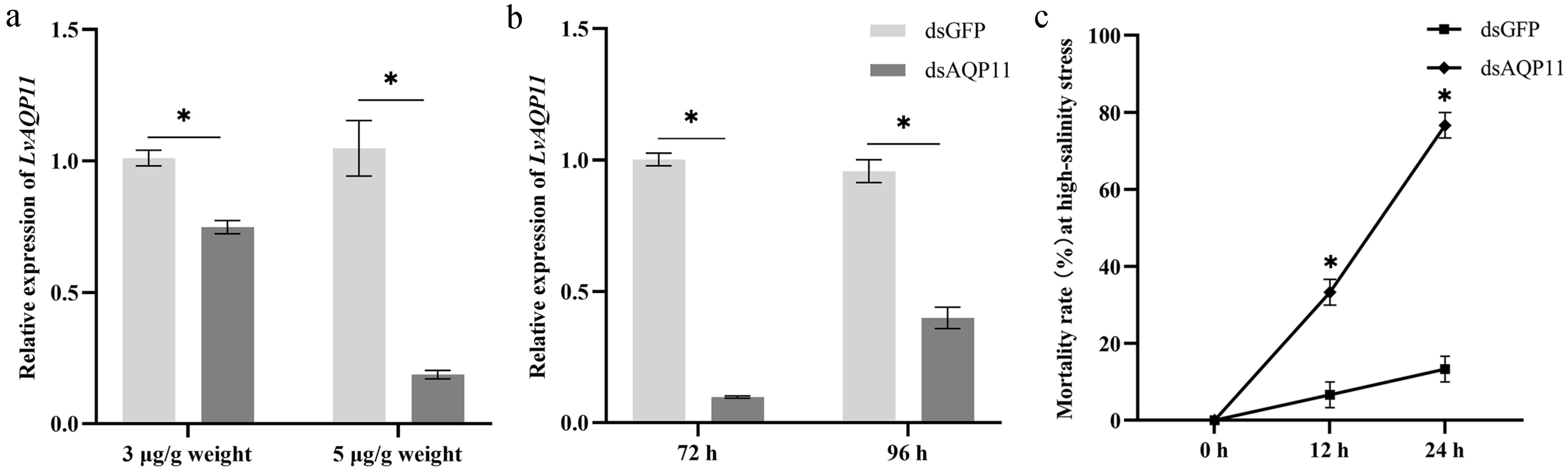
After dsAQP11 administration, LvAQP11 expression decreased by 25% and 80% following injection of 3 μg/g and 5 μg/g body weight doses, respectively (Figure 1a). The 5 μg/g dose was chosen for subsequent experiments. LvAQP11 expression was reduced by 90% after 72 h and by 60% after 96 h (Figure 1b), prompting re-injection every 72 h for sustained gene silencing.
The impact of LvAQP11 knockdown on shrimp survival under salinity stress was assessed. Under high salinity, the dsGFP group exhibited mortality rates of 6.7% at 12 h and 13.3% at 24 h. In contrast, the dsAQP11 group showed significantly higher mortality: 33.3% at 12 h and 76.7% at 24 h (Figure 1c). Notably, no mortality occurred in either group under low-salinity conditions after 24 h.

3.2. RNA-Seq of Muscle Tissues During High-Salinity Stress Post-LvAQP11 Silencing

Nine high-quality muscle RNA samples, with three replicates per group, were utilized for the construction of cDNA libraries and subsequent sequencing. The details of raw reads, clean reads, Q20, Q30, GC percentages, and mapping rates are provided in Table S2. The raw reads have been deposited in the GSA (accession No. CRA030099).
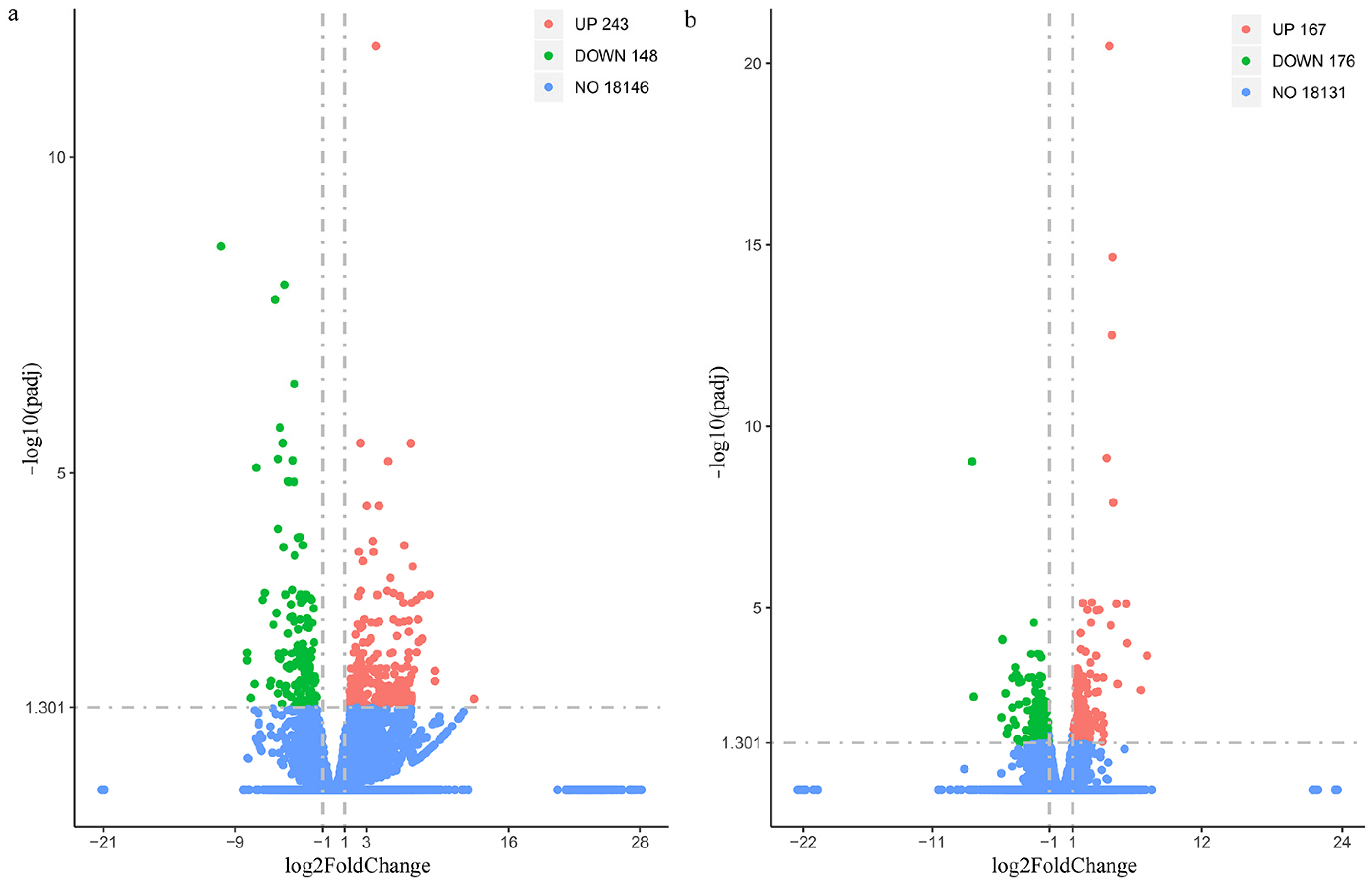
DEGs between different groups were identified based on the criteria of an adjusted p-value < 0.05 and a |log2 Fold Change| > 1.0. The differential expression of these genes was further validated with qPCR analysis, which confirmed the reliability and accuracy of the differential expression analysis (Figure S1). In dsGFP-injected shrimp exposed to 24 h of high-salinity stress, 243 genes were upregulated and 148 downregulated (Figure 2a). In dsAQP11-injected shrimp under high-salinity stress, the number of downregulated and upregulated genes was similar (Figure 2b).

3.3. GO Enrichment Analysis of DEGs Under High-Salinity Stress

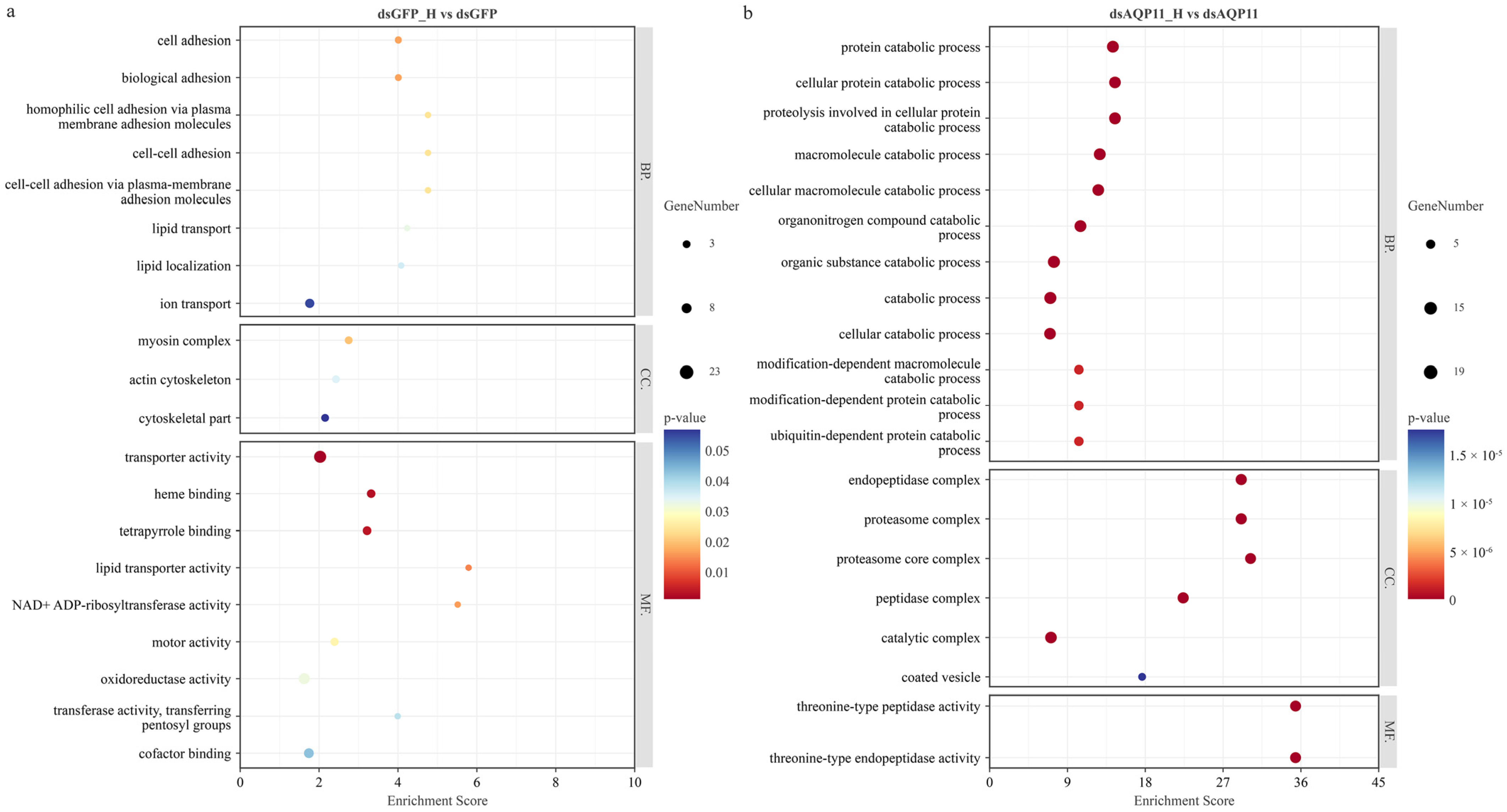
The top 20 enriched GO terms from the DEGs are shown in Figure 3. In the dsGFP_H vs. dsGFP comparison (Figure 3a), enriched biological process (BP) terms included ‘cell adhesion (GO:0007155)’ and ‘biological adhesion (GO:0022610)’. Cellular component (CC) terms related to muscle cell structure included ‘myosin complex (GO:0016459)’, ‘cytoskeleton (GO:0005856)’, and ‘actin cytoskeleton (GO:0015629)’. Molecular function (MF) terms associated with transport and binding activities were also enriched.
In the dsAQP11 groups under high-salinity stress (Figure 3b), the enriched BP terms were linked to catabolic processes: ‘protein catabolism (GO:0030163)’, ‘proteolysis in cellular protein breakdown (GO:0051603)’, ‘cellular protein catabolism (GO:0044257)’, and ‘macromolecule catabolism (GO:0009057)’. Regarding the CC terms, upregulated genes were associated with ‘proteasome complex (GO:0000502)’ and ‘endopeptidase complex (GO:1905369)’. Significant MF terms included enzyme activities such as ‘threonine-type endopeptidase (GO:0004298)’, ‘endopeptidase (GO:0070003)’, and ‘peptide activity (GO:0008233)’.

3.4. KEGG Enrichment Analysis of DEGs Under High-Salinity Stress

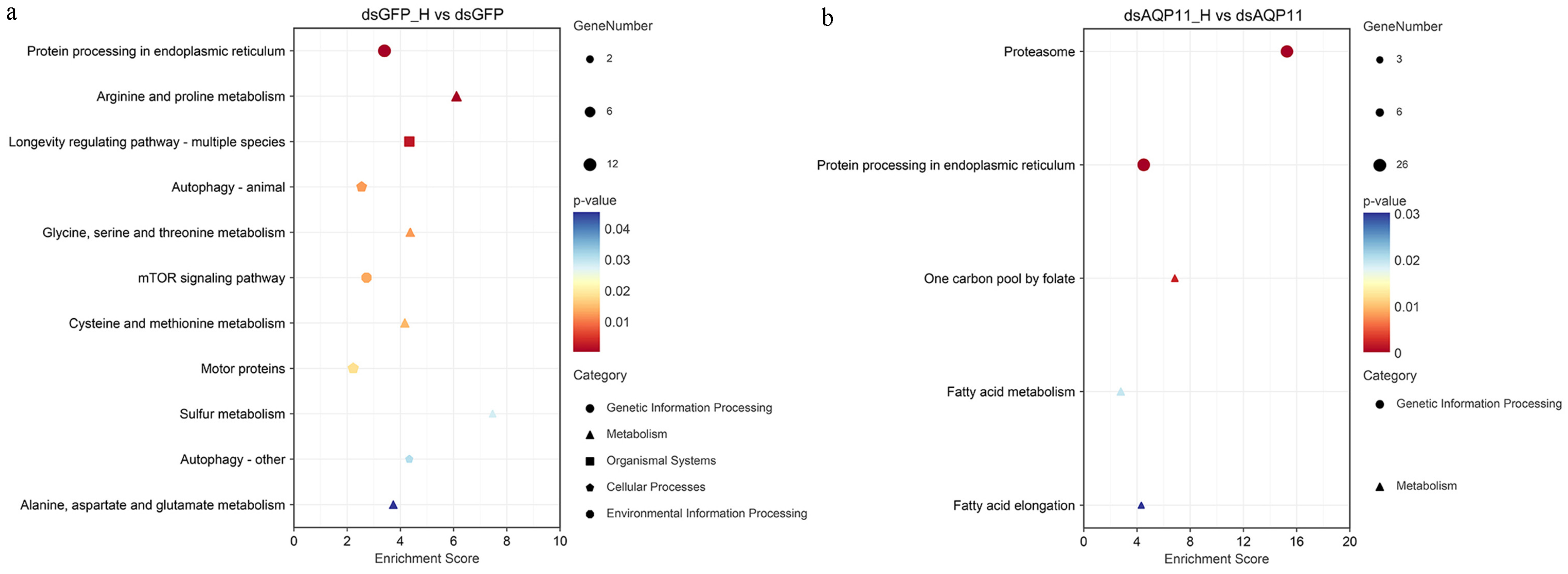
The KEGG pathway enrichment analysis of DEGs is presented in Figure 4. In the dsGFP_H vs. dsGFP comparison (Figure 4a), the most enriched pathway was ‘Protein processing in endoplasmic reticulum (ko04141)’, classified under genetic information processing. The mTOR signaling pathway (ko04150) was also enriched. Additionally, four amino acid metabolism pathways were enriched: ‘Arginine and proline metabolism (ko00330)’, ‘Glycine, serine, and threonine metabolism (ko00260)’, ‘Cysteine and methionine metabolism (ko00270)’, and ‘Alanine, aspartate, and glutamate metabolism (ko00250)’.
In the dsAQP11_H vs. dsAQP11 comparison (Figure 4b), the most enriched pathways were ‘Protein processing in endoplasmic reticulum (ko04141)’ and ‘Proteasome (ko03050)’, also classified under genetic information processing. Two fatty acid metabolism pathways were also enriched: ‘Fatty acid metabolism (ko01212)’ and ‘Fatty acid elongation (ko00062)’.

3.5. Effect of LvAQP11 Knockdown on Molting Cycle

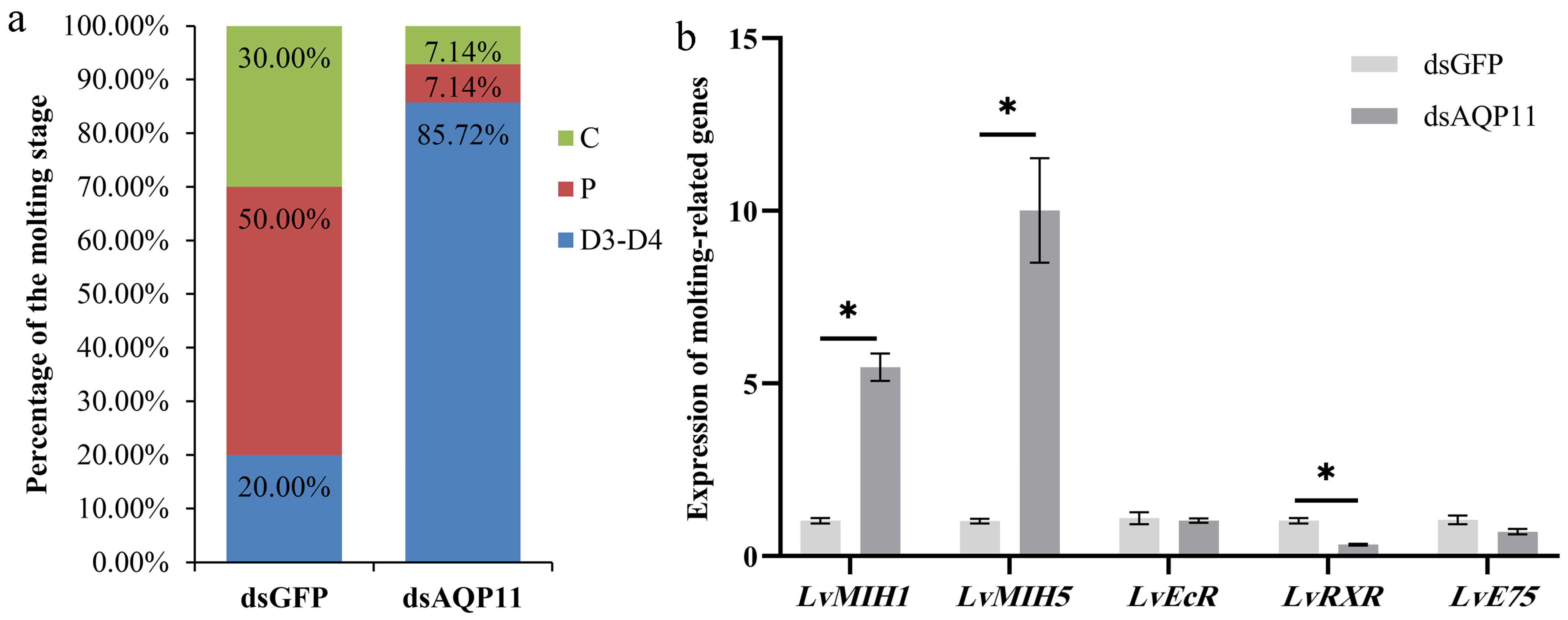
To clarify the role of LvAQP11 in the molting cycle, shrimp in premolt stage D3 were injected with dsRNA, and their molting stage was assessed via microscopic uropod examination 48 h post-injection. The results show that 80% of the dsGFP-injected shrimp progressed to intermolt or postmolt stages, while most dsAQP11-injected shrimp remained in premolt stages D3/D4 (Figure 5a). Additionally, after 48 h of dsRNA treatment, the analysis of molting-related gene expression revealed significant upregulation of LvMIH1 and LvMIH5, downregulation of LvRXR, and unchanged expression of LvEcR and LvE75 (Figure 5b).

3.6. Effect of Long-Term Silencing of LvAQP11 on the Growth of Shrimp

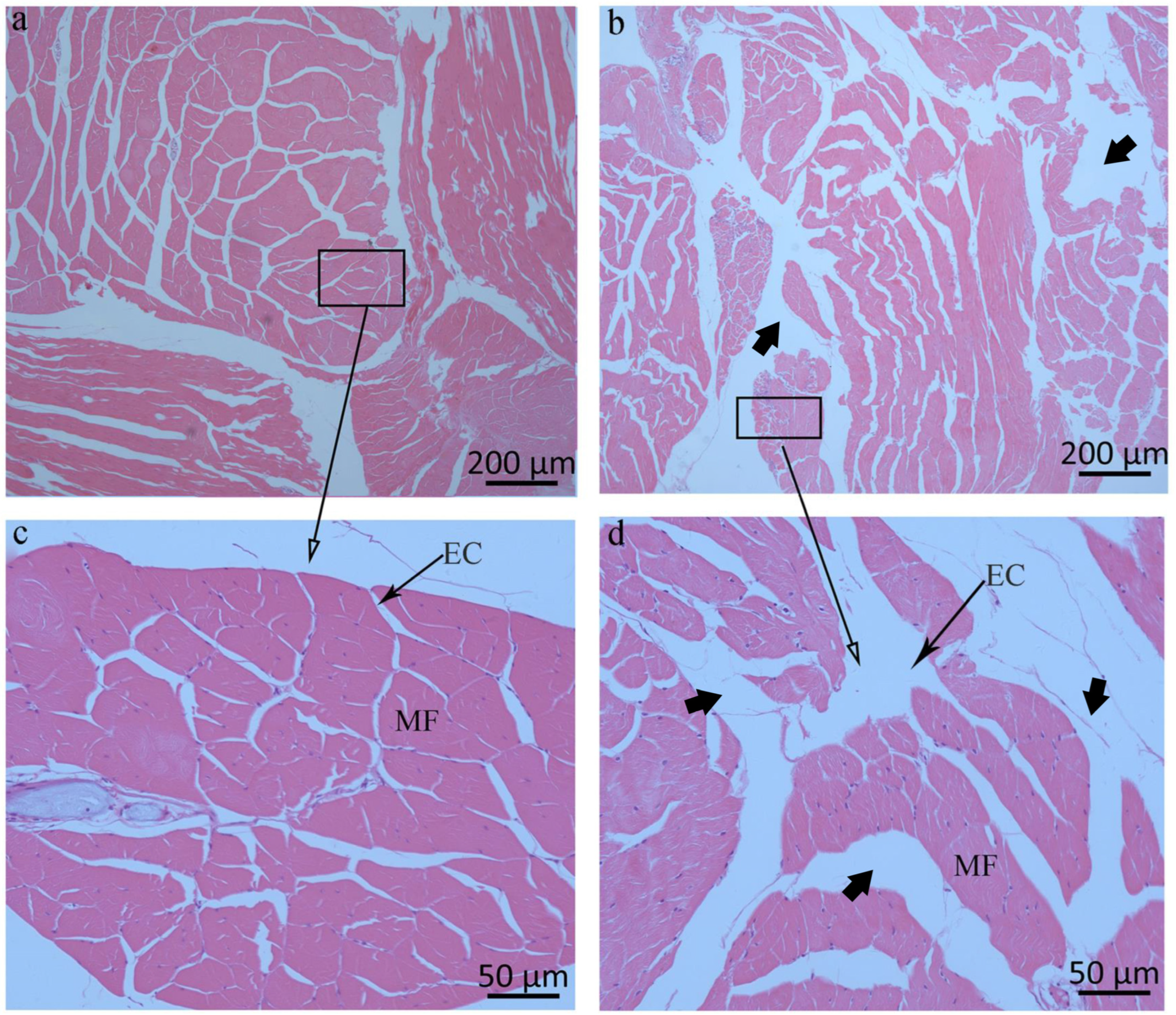
An experiment entailing the 30-day silencing of LvAQP11 was performed to investigate its impact on shrimp growth. The findings indicate no significant differences in the WGR and SGR between the two groups (Table 1). However, the histological examination of muscle tissues revealed that muscle fibers in the dsGFP_M group were densely packed, whereas those in the dsAQP11_M group were more loosely arranged (Figure 6). Additionally, the water content in the muscle tissue was significantly higher in the dsAQP11_M group (Table 1).

3.7. RNA-Seq Analysis of Muscle Tissue After Long-Term Silencing of LvAQP11

Six high-quality muscle RNA samples, three per group, were used to construct cDNA libraries for sequencing. The details are reported in Table S2, and the raw reads are available in the GSA under accession No. CRA030099.
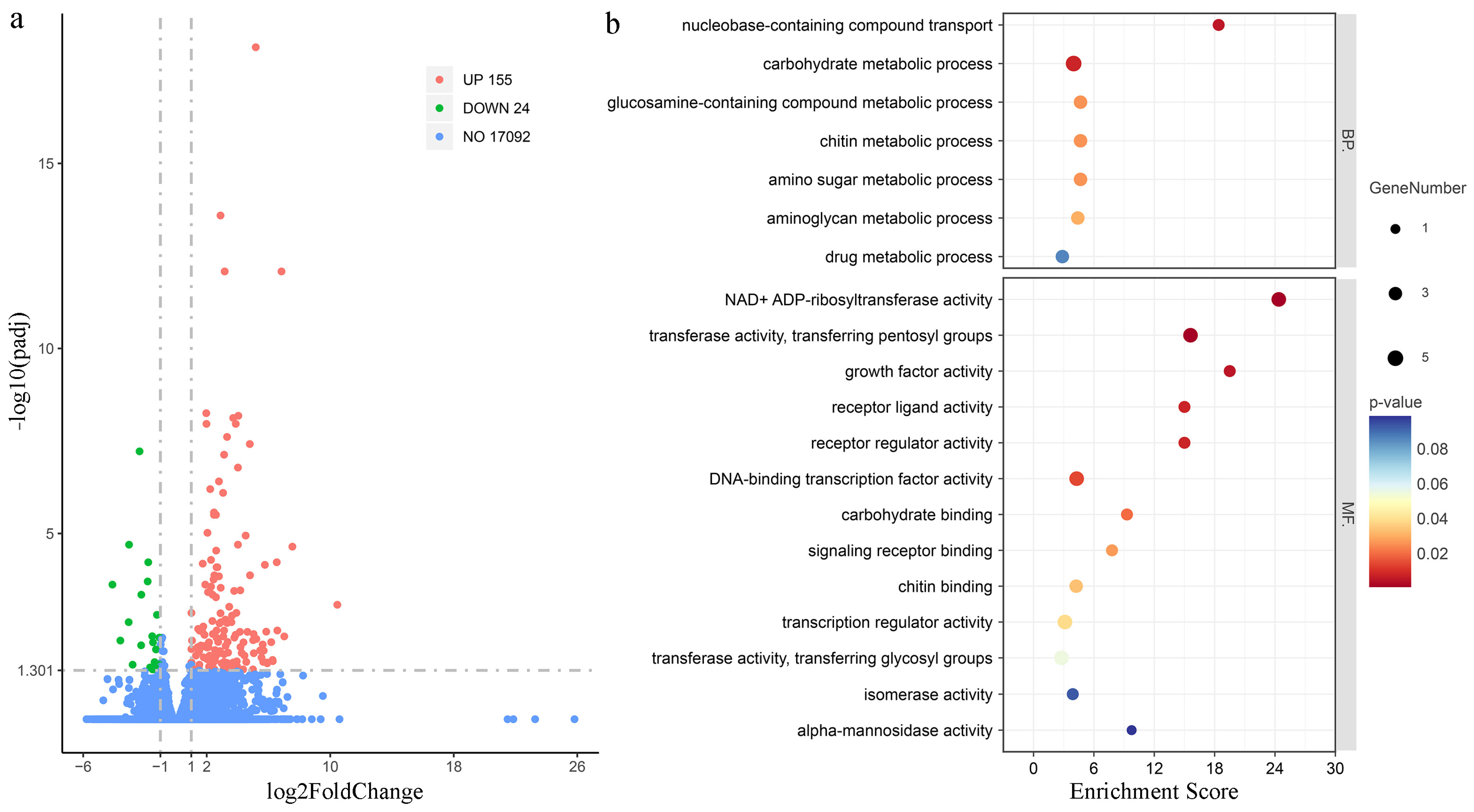
After prolonged LvAQP11 silencing, 24 genes were downregulated and 155 upregulated in the dsAQP11_M vs. dsGFP_M comparison (Figure 7a). The qPCR analysis validated the differential expression results (Figure S2).
The GO enrichment analysis identified six BP terms, including ‘nucleobase-containing compound transport (GO:0015931)’ and five metabolic process terms, including ‘carbohydrate metabolic process (GO:0005975)’, ‘chitin metabolic process (GO:0006030)’, and ‘amino sugar metabolic process (GO:0006040)’ (Figure 7b). Ten molecular function (MF) terms were enriched, including ‘NAD+ ADP-ribosyltransferase activity (GO:0003950)’, ‘transferase activity, transferring pentosyl groups (GO:0016763)’, and ‘growth factor activity (GO:0008083)’ (Figure 7b). The KEGG analysis highlighted three enriched pathways: ‘Phagosome (ko04145)’, ‘Amino sugar and nucleotide sugar metabolism (ko00520)’, and ‘Motor proteins (ko04814)’ (Table 2).

4. Discussion

4.1. The Role of LvAQP11 in the Adaptation to High-Salinity Stress

All shrimp with silenced LvAQP11 genes survived under acute low-salinity stress, indicating that the downregulation of LvAQP11 did not compromise the ability of shrimp to tolerate low-salinity conditions. This observation is consistent with a previous study where LvAQP11 expression was found to decrease under low-salinity stress [17], indicating that the downregulation of LvAQP11 may be an adaptive response to low-salinity environments. Conversely, when subjected to high-salinity stress, the mortality rate of LvAQP11-silenced shrimp reached 76.7% after 24 h, underscoring the crucial role of LvAQP11 in adapting to high-salinity conditions. This result aligns with prior research demonstrating that the knockdown of LvAQP4 leads to higher mortality rates in shrimp under high-salinity stress [16]. Notably, the mortality rate of LvAQP11-silenced shrimp exceeded that of LvAQP4-silenced shrimp, potentially due to the predominant expression of LvAQP11 in muscle tissue, which constitutes approximately 48% of the total shrimp biomass [25]. Collectively, these findings highlight the essential role of AQPs in the salinity adaptation of L. vannamei.
In the control group of shrimp injected with dsGFP, the most significantly enriched BP terms were related to cell adhesion, particularly when comparing dsGFP_H to dsGFP. Notably, the cadherin genes (LOC113830143, LOC113806353, and LOC113808733) exhibited significant upregulation under conditions of high-salinity stress. Cadherins, which constitute a substantial family of cell membrane glycoproteins, play crucial roles in facilitating cell-to-cell adhesion and maintaining normal cellular architecture [34]. High-salinity environments can induce cellular dehydration or alterations in cell volume; therefore, the upregulation of cadherins may enhance intercellular adhesion, thereby preserving the structural integrity of muscle tissue and preventing cellular separation or damage due to osmotic fluctuations. Conversely, in shrimp injected with dsAQP11, cadherin expression did not exhibit significant changes under high-salinity stress. This observation suggests that the silencing of LvAQP11 may inhibit the activation of cadherin genes in response to high-salinity stress. Hence, further studies are needed to clarify the regulatory mechanisms between LvAQP11 and cadherin genes.
In the comparative analysis of dsGFP_H and dsGFP, significant enrichment was observed in the ’protein processing in the endoplasmic reticulum‘ pathway, as well as in four amino acid metabolism pathways. Most differentially expressed genes were upregulated, underscoring the importance of free amino acids as intracellular osmotic effectors in shrimp muscle. Previous studies have shown that crustacean muscle is the largest reservoir of free amino acids [35,36]. These amino acids are well-established osmotic regulators that help maintain cellular turgidity and prevent tissue dehydration [37,38]. Thus, these findings further confirm the role of free amino acids as osmolytes in maintaining osmotic balance in crustacean muscle.
In the comparative analysis of dsAQP11_H and dsAQP11, the most significantly enriched BP and CC terms were related to protein catabolic processes and the proteasome complex, respectively. Furthermore, the proteasome pathway emerged as the most enriched pathway. Within these GO terms and the KEGG pathway, genes encoding proteasome subunits were notably upregulated. This upregulation of the proteasome system may represent a response to endoplasmic reticulum (ER) stress and the unfolded protein response (UPR) induced by LvAQP11 silencing. AQP11 is an ER-resident peroxiporin in mammals that facilitates H2O2 flux across the ER membrane [39]. Previous studies have demonstrated that its inactivation triggers ER stress and UPR, ultimately leading to mortality in AQP11-knockout mice [40,41]. Under ER stress, unfolded proteins accumulate within the ER and are subsequently degraded by the proteasome-involved ER-associated degradation system. Consequently, this result indicates that shrimp AQP11 may also play a crucial role in regulating H2O2 flux within the ER, potentially impacting oxidative stress responses under high-salinity stress.

4.2. The Role of LvAQP11 in the Regulation of Molting

When LvAQP11 expression was silenced in premolt stage D3, the dsAQP11 group exhibited significantly lower molting rates than the control group 48 h post-injection (p < 0.05), indicating that LvAQP11 knockdown delayed molting. During molting, shrimp shed their old exoskeleton and absorb water to expand the new one to accommodate tissue growth [15,42,43]. Previous studies have reported increased AQP expression in the postmolt and intermolt stages in Palaemonetes argentines and L. vannamei [15,27], suggesting a positive role for LvAQP11 in the molting process of L. vannamei.
The knockdown of LvAQP11 resulted in a significant upregulation of the expression of two LvMIH genes, known to function as primary neuroendocrine hormones that inhibit ecdysone synthesis [44], while concurrently leading to marked downregulation of LvRXR expression. RXR is critical in the ecdysone signaling cascade, where ecdysone acts via an EcR/RXR heterodimer to regulate target gene transcription essential to molting [45]. These results imply that LvAQP11 may affect both ecdysone synthesis and its action in L. vannamei. However, it is unclear whether LvAQP11 directly controls MIH and ecdysone pathway genes or modulates them through intermediate factors. Moreover, while gene expression data indicate potential endocrine disruption, direct measurement of hemolymph hormones was not performed, which limits the causal inference of endocrine pathways in molting modulation. Future studies should include the direct measurement of hemolymph hormones to strengthen the evidence for this mechanism.

4.3. The Role of LvAQP11 in the Regulation of Muscle Growth

Following 30 days of LvAQP11 silencing, no significant differences in body weight or growth rate were observed in L. vannamei. Nevertheless, the histological examination of muscle sections from the RNAi-treated group revealed more loosely arranged muscle fibers, indicating potential inhibition of muscle growth in L. vannamei. Numerous genes associated with shrimp growth have been identified with gene cloning and high-throughput sequencing methodologies [46,47,48,49]. However, these genes were identified by comparing shrimp with varying growth rates. Consequently, the inhibitory effect of LvAQP11 on muscle development appears to be distinct from previously identified growth-related genes. Furthermore, the water content in muscle tissue from the dsGFP_M group was approximately 77%, which is consistent with the natural water content in shrimp muscle [50]. In contrast, the dsAQP11_M group exhibited significantly higher water content in muscle tissue. This finding indicates that LvAQP11 silencing leads to an increase in extracellular water within muscle.
Our RNA-seq analysis, performed following the extended silencing of LvAQP11, revealed significant perturbations in specific biological processes and molecular pathways within shrimp muscle tissue. Notably, there was a pronounced enrichment of GO terms associated with ‘carbohydrate metabolism’, ‘amino sugar metabolism’, and ‘chitin metabolism’, as well as the KEGG pathway for ‘Amino sugar and nucleotide sugar metabolism’, which were relatively upregulated in the muscle tissues from the dsAQP11_M group. Among these terms and pathways, several genes encoding chitinases (Table 2), a class of hydrolytic enzymes capable of cleaving glycosidic bonds in chitin [51], were significantly upregulated. Considering that in crustaceans, muscles attach to their chitinous endocuticle, the upregulation of chitinases could potentially weaken this attachment and disrupt the synthesis of structural components essential to maintaining myofibril integrity [52]. On the other hand, superaquaporin, an aquaporin associated with the endoplasmic reticulum, is hypothesized to regulate intracellular osmotic homeostasis [39]. The water imbalance induced by its silencing likely disrupts the enzymatic and organelle environment necessary for these metabolic processes, thereby contributing to the disorganized muscle fiber arrangement observed histologically.
Simultaneously, tubulin subunits, which constitute the primary component of microtubules, were observed to be upregulated and enriched within the ‘Motor proteins’ and ‘Phagosome’ pathways (Table 2). Microtubules play a crucial role in muscle cell elongation and fusion, processes that are integral to muscle mass development [53,54]. Consequently, the dysregulation of the ‘Motor proteins’ pathway indicates impaired cytoskeletal dynamics and myofibril organization, potentially resulting from disrupted ion gradients or limited energy availability essential to motor protein function. Furthermore, microtubules are instrumental in the maturation of phagosomes and in regulating their movement and morphology [55,56]. The upregulation of tubulin subunits contributes to the stabilization of phagosome structures, facilitating the phagocytosis of muscle fibers. Therefore, while LvAQP11 may not directly influence the overall growth rate, as indicated by the unchanged WGR/SGR, it serves as a key regulator of intramuscular osmotic and metabolic homeostasis. Dysfunction in this regulation can lead to cytoskeletal disassembly, altered signaling pathways, and compromised tissue architecture, ultimately resulting in looser myofiber packing and increased water content.

5. Conclusions

This study demonstrates that LvAQP11 is a master regulator of multiple physiological processes in L. vannamei. Knocking down LvAQP11 led to a 76.7% mortality rate under high-salinity stress, highlighting its essential role in osmoregulation. This high mortality was linked to disrupted amino acid-mediated osmotic balance and ER stress, as shown by proteasome pathway activation. LvAQP11 also significantly influences molting dynamics, as evidenced by delayed molting and the altered expression of LvMIH1/5 and LvRXR. The long-term knockdown of LvAQP11 caused muscle-specific changes, including disorganized myofibrils and increased extracellular water, without affecting growth rates. This evidences its key role in maintaining muscle integrity rather than promoting overall growth. Transcriptomics linked these muscle changes to dysregulated carbohydrate/chitin metabolism and cytoskeletal motor proteins. In summary, LvAQP11 maintains osmotic balance via ER-dependent signaling, coordinates molting, and stabilizes the muscle matrix. These findings expand our knowledge of the known functions of superaquaporins beyond water transport, making LvAQP11 a key target for enhancing stress resilience and improving product quality in crustacean aquaculture.

Supplementary Materials

The following supporting information can be downloaded at https://www.mdpi.com/article/10.3390/fishes10120631/s1, Figure S1: qPCR validation of RNA-seq data; Figure S2: qPCR validation of RNA-seq data; Table S1: Specific primers used in the current study; Table S2: Summary of sequence data generated from transcriptome sequencing, quality filtering, and genome mapping.

Author Contributions

Conceptualization, G.S. and S.Z.; methodology, G.S. and L.Z.; software, B.W.; validation, G.S., S.Z. and S.Z.; formal analysis, L.Z. and K.Z.; investigation, Z.W. and G.S.; resources, R.W. and B.W.; data curation, L.Z. and K.Z.; writing—original draft preparation, Z.W. and G.S.; writing—review and editing, Z.W. and G.S.; visualization, Z.W.; supervision, Y.L.; project administration, Z.W. and Y.L.; funding acquisition, Z.W., Y.C., F.L. and Y.L. All authors have read and agreed to the published version of the manuscript.

Funding

This research was funded by the National Key Research and Development Program of China (2022YFD2400203); the Key R&D Program of Shandong Province (2024LZGC038); the Natural Science Foundation of Shandong Province (ZR2024MC077; ZR2024MC208); and the Shrimp and Crab Innovation Team of Shandong Agriculture Research System (SDAIT-15-011).

Institutional Review Board Statement

All treatments in this study were undertaken strictly in accordance with the guidelines of the Animal Experiment Ethics Committee of Qingdao Agriculture University, which also approved the protocol on 10 March 2024 (Approval code: 2020-026).

Informed Consent Statement

Not applicable.

Data Availability Statement

The raw sequence data reported in this paper have been deposited in the Genome Sequence Archive in National Genomics Data Center, China National Center for Bioinformation/Beijing Institute of Genomics, Chinese Academy of Sciences (GSA: CRA030099), which is publicly accessible at https://ngdc.cncb.ac.cn/gsa (accessed on 17 September 2025).

Conflicts of Interest

Author Long Zhang was employed by the company Shandong Evergreen Seedlings Technology Co., Ltd. The remaining authors declare that the research was conducted in the absence of any commercial or financial relationships that could be construed as a potential conflict of interest.

Abbreviations

The following abbreviations are used in this manuscript:
IBWinitial body weight
FBWfinal body weight
WGRweight gain rate
SGRspecific growth rate
MWCmuscle water content

References

  1. FAO. The State of World Fisheries and Aquaculture 2024: Blue Transformation in Action; FAO: Rome, Italy, 2024; ISBN 978-92-5-138763-4. [Google Scholar]
  2. Li, C.; Li, N.; Dong, T.; Fu, Q.; Cui, Y.; Li, Y. Analysis of differential gene expression in Litopenaeus vannamei under high salinity stress. Aquac. Rep. 2020, 18, 100423. [Google Scholar] [CrossRef]
  3. Saraswathy, R.; Muralidhar, M.; Balasubramanian, C.P.; Rajesh, R.; Sukumaran, S.; Kumararaja, P.; Dayal, J.S.; Avunje, S.; Nagavel, A.; Vijayan, K.K. Osmo-ionic regulation in whiteleg shrimp, Penaeus vannamei, exposed to climate change-induced low salinities. Aquac. Res. 2021, 52, 771–782. [Google Scholar] [CrossRef]
  4. Rahi, M.d.L.; Moshtaghi, A.; Mather, P.B.; Hurwood, D.A. Osmoregulation in decapod crustaceans: Physiological and genomic perspectives. Hydrobiologia 2018, 825, 177–188. [Google Scholar] [CrossRef]
  5. Yuan, J.; Zhang, X.; Liu, C.; Duan, H.; Li, F.; Xiang, J. Convergent evolution of the osmoregulation system in decapod shrimps. Mar. Biotechnol. 2017, 19, 76–88. [Google Scholar] [CrossRef]
  6. Moshtaghi, A.; Rahi, M.d.L.; Nguyen, V.T.; Mather, P.B.; Hurwood, D.A. A transcriptomic scan for potential candidate genes involved in osmoregulation in an obligate freshwater Palaemonid prawn (Macrobrachium Australiense). PeerJ 2016, 4, e2520. [Google Scholar] [CrossRef]
  7. Li, H.; Ren, C.; Jiang, X.; Cheng, C.; Ruan, Y.; Zhang, X.; Huang, W.; Chen, T.; Hu, C. Na+/H+ exchanger (NHE) in Pacific white shrimp (Litopenaeus vannamei): Molecular cloning, transcriptional response to acidity stress, and physiological roles in pH Hhomeostasis. PloS ONE 2019, 14, e0212887. [Google Scholar] [CrossRef]
  8. Li, X.; Dai, X. Characterization and functional analysis of Litopenaeus vannamei Na+/K+/2Cl cotransporter 1 under nitrite stress. Comp. Biochem. Physiol. A Mol. Integr. Physiol. 2024, 298, 111749. [Google Scholar] [CrossRef] [PubMed]
  9. Liu, M.; Liu, S.; Hu, Y.; Pan, L. Cloning and expression analysis of two carbonic anhydrase genes in white shrimp Litopenaeus vannamei, induced by pH and salinity Stresses. Aquaculture 2015, 448, 391–400. [Google Scholar] [CrossRef]
  10. Pan, L.; Liu, H.; Zhao, Q. Effect of salinity on the biosynthesis of amines in Litopenaeus vannamei and the expression of gill related ion transporter genes. J. Ocean Univ. China 2014, 13, 453–459. [Google Scholar] [CrossRef]
  11. Moshtaghi, A.; Rahi, M.d.L.; Mather, P.B.; Hurwood, D.A. An investigation of gene expression patterns that contribute to osmoregulation in Macrobrachium australiense: Assessment of adaptive responses to different osmotic niches. Gene Rep. 2018, 13, 76–83. [Google Scholar] [CrossRef]
  12. Agre, P.; King, L.S.; Yasui, M.; Guggino, W.B.; Ottersen, O.P.; Fujiyoshi, Y.; Engel, A.; Nielsen, S. Aquaporin water channels--from atomic structure to clinical medicine. J. Physiol. 2002, 542, 3–16. [Google Scholar] [CrossRef]
  13. Finn, R.N.; Cerdà, J. Evolution and functional diversity of aquaporins. Biol. Bull. 2015, 229, 6–23. [Google Scholar] [CrossRef]
  14. Chung, J.S.; Maurer, L.; Bratcher, M.; Pitula, J.S.; Ogburn, M.B. Cloning of aquaporin-1 of the blue crab, Callinectes sapidus: Its expression during the larval development in hyposalinity. Aquat. Biosyst. 2012, 8, 21. [Google Scholar] [CrossRef] [PubMed]
  15. Foguesatto, K.; Bastos, C.L.Q.; Boyle, R.T.; Nery, L.E.M.; Souza, M.M. Participation of Na+/K+-ATPase and aquaporins in the uptake of water during moult processes in the shrimp Palaemon argentinus (Nobili, 1901). J. Comp. Physiol. B 2019, 189, 523–535. [Google Scholar] [CrossRef]
  16. Zhao, R.; Sun, L.; Zhang, L.; Hao, P.; Wang, X.; Wang, B.; Song, G.; Cui, Y.; Liu, F.; Wang, R.; et al. RNAi-mediated knockdown of the aquaporin 4 gene impairs salinity tolerance and delays the molting process in Pacific white shrimp, Litopenaeus vannamei. Aquac. Rep. 2024, 35, 101974. [Google Scholar] [CrossRef]
  17. Wang, Z.; Chen, Y.; Wang, C.; Zhao, N.; Zhang, Z.; Deng, Z.; Cui, Y.; Wang, R.; Li, Y. Aquaporins in Pacific white shrimp (Litopenaeus vannamei): Molecular characterization, expression patterns, and transcriptome analysis in response to salinity stress. Front. Mar. Sci. 2022, 9, 817868. [Google Scholar] [CrossRef]
  18. Ishibashi, K.; Morishita, Y.; Tanaka-Mochizuki, Y. Role of Mammalian Aquaporin inside the Cell: An Update. In Peroxiporins; CRC Press: Boca Raton, FL, USA, 2023. [Google Scholar]
  19. Zhan, F.; Liang, L.; Wang, S.; Liew, H.; Chang, Y.; Zhang, L.; Zhan, F.; Liang, L.; Wang, S.; Liew, H.; et al. Genome-Wide Identification, Phylogenetic Analysis and Expression Pattern Profiling of the Aquaporin Family Genes in Leuciscus waleckii. Fishes 2023, 8, 107. [Google Scholar] [CrossRef]
  20. Ni, P.; Zhao, X.; Liang, Y. Genome-Wide Identification and Expression Analysis of the Aquaporin Gene Family Reveals the Role in the Salinity Adaptability in Nile Tilapia (Oreochromis Niloticus). Genes Genom. 2022, 44, 1457–1469. [Google Scholar] [CrossRef] [PubMed]
  21. Li, Y.; Zhang, Z.; Wang, Z.; Deng, Z.; Zhao, R.; Sun, J.; Hao, P.; Zhang, L.; Wang, X.; Liu, F.; et al. How Do Gene Expression Patterns Change in Response to Osmotic Stresses in Kuruma Shrimp (Marsupenaeus Japonicus)? J. Mar. Sci. Eng. 2022, 10, 1870. [Google Scholar] [CrossRef]
  22. Zhang, L.; Pang, Y.; Yang, H.; Yang, Z. Cloning and Characterization of Aquaporins 11 and Its Expression Analysis under Molt Cycle in Eriocheir Sinensis. Int. J. Aquac. 2023, 13, 1–10. [Google Scholar] [CrossRef]
  23. Ishibashi, K. Aquaporin Subfamily with Unusual NPA Boxes. Biochim. Biophys. Acta 2006, 1758, 989–993. [Google Scholar] [CrossRef]
  24. Ishibashi, K.; Tanaka, Y.; Morishita, Y. The Role of Mammalian Superaquaporins inside the Cell: An Update. Biochim. Biophys. Acta BBA-Biomembr. 2021, 1863, 183617. [Google Scholar] [CrossRef]
  25. Xu, N.; Shi, W.; Wang, X.; Wang, Z. Effect of Ice Water Pretreatment on the Quality of Pacific White Shrimps (Litopenaeus Vannamei). Food Sci. Nutr. 2018, 7, 645–655. [Google Scholar] [CrossRef]
  26. Zhang, X.; Yuan, J.; Sun, Y.; Li, S.; Gao, Y.; Yu, Y.; Liu, C.; Wang, Q.; Lv, X.; Zhang, X.; et al. Penaeid Shrimp Genome Provides Insights into Benthic Adaptation and Frequent Molting. Nat. Commun. 2019, 10, 356. [Google Scholar] [CrossRef]
  27. Gao, Y.; Zhang, X.; Wei, J.; Sun, X.; Yuan, J.; Li, F.; Xiang, J. Whole Transcriptome Analysis Provides Insights into Molecular Mechanisms for Molting in Litopenaeus Vannamei. PLoS ONE 2015, 10, e0144350. [Google Scholar] [CrossRef]
  28. Kim, D.; Langmead, B.; Salzberg, S.L. HISAT: A Fast Spliced Aligner with Low Memory Requirements. Nat. Methods 2015, 12, 357–360. [Google Scholar] [CrossRef] [PubMed]
  29. Pertea, M.; Pertea, G.M.; Antonescu, C.M.; Chang, T.-C.; Mendell, J.T.; Salzberg, S.L. StringTie Enables Improved Reconstruction of a Transcriptome from RNA-Seq Reads. Nat. Biotechnol. 2015, 33, 290–295. [Google Scholar] [CrossRef] [PubMed]
  30. Pertea, M.; Kim, D.; Pertea, G.M.; Leek, J.T.; Salzberg, S.L. Transcript-Level Expression Analysis of RNA-Seq Experiments with HISAT, StringTie and Ballgown. Nat. Protoc. 2016, 11, 1650–1667. [Google Scholar] [CrossRef]
  31. Love, M.I.; Huber, W.; Anders, S. Moderated Estimation of Fold Change and Dispersion for RNA-Seq Data with DESeq2. Genome Biol. 2014, 15, 550. [Google Scholar] [CrossRef]
  32. Yu, G.; Wang, L.-G.; Han, Y.; He, Q.-Y. clusterProfiler: An R Package for Comparing Biological Themes among Gene Clusters. Omics J. Integr. Biol. 2012, 16, 284–287. [Google Scholar] [CrossRef] [PubMed]
  33. Qian, Z.; He, S.; Liu, T.; Liu, Y.; Hou, F.; Liu, Q.; Wang, X.; Mi, X.; Wang, P.; Liu, X. Identification of ecdysteroid signaling late-response genes from different tissues of the Pacific white shrimp, Litopenaeus vannamei. Comp. Biochem. Phys. A 2014, 172, 10–30. [Google Scholar] [CrossRef]
  34. Shao, Y.; Chong, W.; Liu, X.; Xu, Y.; Zhang, H.; Xu, Q.; Guo, Z.; Zhao, Y.; Zhang, M.; Ma, Y.; et al. Alternative Splicing-Derived Intersectin1-L and Intersectin1-S Exert Opposite Function in Glioma Progression. Cell Death Dis. 2019, 10, 431. [Google Scholar] [CrossRef]
  35. Li, E.; Wang, S.; Li, C.; Wang, X.; Chen, K.; Chen, L. Transcriptome sequencing revealed the genes and pathways involved in salinity stress of Chinese mitten crab, Eriocheir sinensis. Physiol. Genom. 2014, 46, 177–190. [Google Scholar] [CrossRef]
  36. Shinji, J.; Okutsu, T.; Jayasankar, V.; Jasmani, S.; Wilder, M.N. Metabolism of amino acids during hyposmotic adaptation in the whiteleg shrimp, Litopenaeus vannamei. Amino Acids 2012, 43, 1945–1954. [Google Scholar] [CrossRef] [PubMed]
  37. Wang, X.; Wang, S.; Li, C.; Chen, K.; Qin, J.G.; Chen, L.; Li, E. Molecular pathway and gene responses of the Pacific white shrimp Litopenaeus vannamei to acute low salinity stress. J. Shellfish Res. 2015, 34, 1037–1048. [Google Scholar] [CrossRef]
  38. Yuan, J.; Zhang, X.; Wang, M.; Sun, Y.; Liu, C.; Li, S.; Yu, Y.; Gao, Y.; Liu, F.; Zhang, X.; et al. Simple sequence repeats drive genome plasticity and promote adaptive evolution in Penaeid shrimp. Commun. Biol. 2021, 4, 186. [Google Scholar] [CrossRef] [PubMed]
  39. Bestetti, S.; Galli, M.; Sorrentino, I.; Pinton, P.; Rimessi, A.; Sitia, R.; Medraño-Fernandez, I. Human aquaporin-11 guarantees efficient transport of H2O2 across the endoplasmic reticulum membrane. Redox Biol. 2019, 28, 101326. [Google Scholar] [CrossRef]
  40. Atochina-Vasserman, E.N.; Biktasova, A.; Abramova, E.; Cheng, D.-S.; Polosukhin, V.V.; Tanjore, H.; Takahashi, S.; Sonoda, H.; Foye, L.; Venkov, C.; et al. Aquaporin 11 insufficiency modulates kidney susceptibility to oxidative stress. Am. J. Physiol.-Ren. Physiol. 2013, 304, F1295–F1307. [Google Scholar] [CrossRef]
  41. Rützler, M.; Rojek, A.; Damgaard, M.V.; Andreasen, A.; Fenton, R.A.; Nielsen, S. Temporal Deletion of Aqp11 in mice is linked to the severity of cyst-like disease. Am. J. Physiol.-Ren. Physiol. 2017, 312, F343–F351. [Google Scholar] [CrossRef]
  42. de Oliveira Cesar, J.R.; Zhao, B.; Malecha, S.; Ako, H.; Yang, J. Morphological and Biochemical Changes in the muscle of the marine shrimp Litopenaeus vannamei during the molt cycle. Aquaculture 2006, 261, 688–694. [Google Scholar] [CrossRef]
  43. Tian, Z.; Jiao, C. Molt-dependent transcriptome analysis of claw muscles in Chinese mitten crab Eriocheir sinensis. Genes Genom. 2019, 41, 515–528. [Google Scholar] [CrossRef]
  44. Mykles, D.L.; Chang, E.S. Hormonal control of the crustacean molting gland: Insights from transcriptomics and proteomics. Gen. Comp. Endocrinol. 2020, 294, 113493. [Google Scholar] [CrossRef]
  45. Abdullah-Zawawi, M.-R.; Afiqah-Aleng, N.; Ikhwanuddin, M.; Sung, Y.Y.; Tola, S.; Fazhan, H.; Waiho, K. Recent development in ecdysone receptor of crustaceans: Current knowledge and future applications in crustacean aquaculture. Rev. Aquac. 2021, 13, 1938–1957. [Google Scholar] [CrossRef]
  46. Huang, Y.; Wang, G.; Liu, J.; Zhang, L.; Huang, S.; Wang, Y.; Yang, Z.; Ge, H. Analysis of transcriptome difference between rapid-growing and slow-growing in Penaeus vannamei. Gene 2021, 787, 145642. [Google Scholar] [CrossRef]
  47. Santos, C.A.; Andrade, S.C.S.; Teixeira, A.K.; Farias, F.; Guerrelhas, A.C.; Rocha, J.L.; Freitas, P.D. Transcriptome differential expression analysis reveals the activated genes in Litopenaeus vannamei shrimp families of superior growth performance. Aquaculture 2021, 531, 735871. [Google Scholar] [CrossRef]
  48. Xia, Y.; Zhang, X.; Zhang, X.; Zhu, H.; Zhong, X.; Song, W.; Yuan, J.; Sha, Z.; Li, F. Gene structure, expression and function analysis of the MyoD gene in the Pacific white shrimp Litopenaeus vannamei. Gene 2024, 921, 148523. [Google Scholar] [CrossRef] [PubMed]
  49. Zhong, X.; Yu, Y.; Zhang, X.; Zhang, X.; Si, S.; Liu, C.; Yuan, J.; Li, F. RNA sequencing and LncRNA identification in muscle of the Pacific white shrimp Litopenaeus vannamei at different growth rates. Aquaculture 2024, 582, 740534. [Google Scholar] [CrossRef]
  50. Li, E.; Chen, L.; Zeng, C.; Chen, X.; Yu, N.; Lai, Q.; Qin, J.G. Growth, Body Composition, Respiration and ambient ammonia nitrogen tolerance of the juvenile white shrimp, Litopenaeus vannamei, at different salinities. Aquaculture 2007, 265, 385–390. [Google Scholar] [CrossRef]
  51. Niu, S.; Yang, L.; Zuo, H.; Zheng, J.; Weng, S.; He, J.; Xu, X. A chitinase from Pacific white shrimp Litopenaeus vannamei involved in immune regulation. Dev. Comp. Immunol. 2018, 85, 161–169. [Google Scholar] [CrossRef] [PubMed]
  52. von Reumont, B.M.; Undheim, E.A.B.; Jauss, R.-T.; Jenner, R.A. Venomics of remipede crustaceans reveals novel peptide diversity and illuminates the venom’s biological role. Toxins 2017, 9, 23. [Google Scholar] [CrossRef]
  53. Mogessie, B.; Roth, D.; Rahil, Z.; Straube, A. A novel isoform of MAP4 organises the paraxial microtubule array required for muscle cell differentiation. eLife 2015, 4, e05697. [Google Scholar] [CrossRef] [PubMed]
  54. Straube, A.; Merdes, A. EB3 regulates microtubule dynamics at the cell cortex and is required for myoblast elongation and fusion. Curr. Biol. 2007, 17, 1318–1325. [Google Scholar] [CrossRef] [PubMed]
  55. Huynh, K.K.; Eskelinen, E.-L.; Scott, C.C.; Malevanets, A.; Saftig, P.; Grinstein, S. LAMP proteins are required for fusion of lysosomes with phagosomes. EMBO J. 2007, 26, 313–324. [Google Scholar] [CrossRef] [PubMed]
  56. Rai, A.; Pathak, D.; Thakur, S.; Singh, S.; Dubey, A.K.; Mallik, R. Dynein clusters into lipid microdomains on phagosomes to drive rapid transport toward lysosomes. Cell 2016, 164, 722–734. [Google Scholar] [CrossRef]
Figure 1. Efficiency of LvAQP11 knockdown and its impact on salinity tolerance. (a) Knockdown efficiency of LvAQP11 with dsRNA at two dosages. (b) Temporal LvAQP11 silencing profile after a single injection (5 μg/g body weight). (c) Mortality rates of LvAQP11-silenced shrimp under acute high-salinity challenges. The data are presented as means ± SEM, and asterisks indicate significant differences (p < 0.05) between the dsGFP and dsAQP11 groups.
Fishes 10 00631 g001
Figure 2. Distribution of DEGs. (a) Volcano plot of DEGs in the dsGFP_H group. (b) Volcano plot of DEGs in the dsAQP11_H group. Each dot represents a gene, with colors indicating expression status: red for upregulated, green for downregulated, and blue for non-differentially expressed genes.
Fishes 10 00631 g002
Figure 3. GO enrichment analysis of DEGs. (a) Bubble plot of the top 20 GO terms in the dsGFP_H group; (b) Bubble plot of the top 20 GO terms in the dsAQP11_H group. The dot size shows the number of genes, the Y-axis shows the enriched GO terms, and the colors correspond to the p-values.
Fishes 10 00631 g003
Figure 4. KEGG enrichment analysis of DEGs. (a) Bubble plot of the significantly enriched KEGG pathways in the dsGFP_H group. (b) Bubble plot of the significantly enriched KEGG pathways in the dsAQP11_H group. The dot size shows the number of genes, the Y-axis shows the enriched KEGG pathways, the colors correspond to the p-value, and the shape represents the KEGG pathway category.
Fishes 10 00631 g004
Figure 5. Impact of LvAQP11 knockdown on molting progression and associated gene expression. (a) Bar charts showing the proportions of molting stages in dsGFP and dsAQP11 groups; (b) Molting-related gene expression following LvAQP11 silencing. The results are shown as means ± SEM, with asterisks marking significant differences (p < 0.05) between the dsGFP and dsAQP11 groups.
Fishes 10 00631 g005
Figure 6. Histological analysis of muscle tissue after the long-term silencing of LvAQP11. (a) Muscle histological section from the dsGFP_M group showing normal, densely packed muscle fibers. (b) Muscle histological section from the dsAQP11_M group showing loosely arranged muscle fibers and increased extracellular space. (c) Higher magnification of the black square in (a), illustrating the regular arrangement of muscle fibers in the control group. (d) Higher magnification of the black square in (b), illustrating the disorganized muscle fibers and expanded extracellular space in the LvAQP11-silenced group. The bold black arrows denote the presence of loosely organized muscle fibers. MF: muscle fiber; EC: extracellular space.
Fishes 10 00631 g006
Figure 7. Transcriptomic profiling of muscle tissue after 30-day LvAQP11 silencing. (a) Volcano plot of DEGs in dsAQP11_M group. (b) Bubble plot of top 20 GO terms in dsAQP11_M group.
Fishes 10 00631 g007
Table 1. Effects of RNAi on growth performance of L. vannamei.
GroupIBWFBWWGR (%)SGR (%)MWC (%)
dsGFP_M0.97 ± 0.041.57 ± 0.0860.33 ± 8.511.61 ± 0.1877.06 ± 1.53 a
dsAQP11_M1.07 ± 0.051.72 ± 0.1064.67 ± 10.061.57 ± 0.1985.62 ± 2.42 b
Note: IBW, initial body weight; FBW, final body weight; WGR, weight gain rate; SGR, specific growth rate; MWC, muscle water content. The data are presented as means ± SD. Values in the same row with different superscripts differ significantly (p < 0.05).
Table 2. Significantly enriched KEGG pathways.
ComparisonKEGG IDKEGG Pathwaysp-ValueUp *Down *
dsAQP11_M vs. dsGFP_Mko04145Phagosome0.000850
ko00520Amino sugar and nucleotide sugar metabolism0.001931
ko04814Motor proteins0.002842
* The number of upregulated and downregulated DEGs enriched in each KEGG pathway in the first of the two compared groups.
Disclaimer/Publisher’s Note: The statements, opinions and data contained in all publications are solely those of the individual author(s) and contributor(s) and not of MDPI and/or the editor(s). MDPI and/or the editor(s) disclaim responsibility for any injury to people or property resulting from any ideas, methods, instructions or products referred to in the content.