
Review

Noise Sources and Music Stimuli in Teleost Fish Aquaculture Systems—A Review

1
Centre for Agricultural Genomics and Biotechnology, Faculty of Agricultural and Food Sciences and Environmental Management, University of Debrecen, Egyetem tér 1., 4032 Debrecen, Hungary
2
Department of Animal Nutrition, Faculty of Agricultural and Food Sciences and Environmental Management, Institute of Animal Science, Biotechnology and Nature Conservation, University of Debrecen, Böszörményi út 138., 4032 Debrecen, Hungary
*
Author to whom correspondence should be addressed.
Fishes 2025, 10(11), 565; https://doi.org/10.3390/fishes10110565

Submission received: 29 September 2025 / Revised: 29 October 2025 / Accepted: 3 November 2025 / Published: 5 November 2025
(This article belongs to the Special Issue Fish Health and Welfare in Aquaculture and Research Settings)

Abstract

A less-explored stressor in intensive recirculating aquaculture systems (RASs) is noise exposure. The noise profile of RASs, including the level and type of noise sources, can influence fish production. In such systems, creating an environment that enhances fish performance via improved welfare is recommended. One possible environmental enrichment method is the use of music. This study aimed to review the effects of acoustic noise as an environmental stressor and music as a potential performance-enhancing tool in teleost fish. As complete elimination of sound sources is not feasible, technological solutions may help improve acoustic environments by considering the perceptual abilities of fish and potential positive responses to music. It is advisable to design systems in which acoustic stimuli have beneficial effects on fish welfare and productivity. Given the limited existing research, further studies are needed to better understand the impact of noise and music in RASs. Insights from such research could lead to welfare improvements and increased economic yields in intensive aquaculture, a critical element of future global food security.
Key Contribution: This review provides a comprehensive overview of noise exposure as a less-explored environmental stressor in intensive recirculating aquaculture systems (RASs) and analyzes the potential of using music as a potential environmental enrichment and performance-enhancing tool in teleost fish. The literature review highlights that the complete elimination of sound sources is not feasible, but technological interventions can be used to improve the noise environment by taking into account the sensory characteristics of fish species. The use of musical stimuli may have a beneficial effect on fish welfare and production performance, but the available research on this topic is limited. The results of the study highlight the need for further targeted research that can contribute to improving fish welfare, increasing the economic efficiency of production and supporting global food security.

1. Introduction

Providing food in sufficient quantity and quality to meet the ever-increasing global population is a major challenge. According to forecasts, the world population is expected to increase to 9.7 billion by 2050 [1]. Sustainable solutions are needed to meet the growing food demand resulting from demographic growth. The aquaculture sector is currently, and is expected to become, an increasingly important and necessary element of the global food supply in terms of both quantity and quality [2,3].
The most economically feasible way to produce essential animal protein is to develop fish farming. Advancements in breeding and husbandry technologies are required to accommodate increased production [4]. The increase in yield achieved by traditional husbandry and breeding techniques (feeding, mass selection, etc.) is no longer sufficient to meet the demand for fish meat [5]. Due to the increasing demand for fish meat and the need to improve the competitiveness of the fish production sector, it is necessary to further increase the output of existing species, improve the growth rate of fish in intensive production, and explore the inclusion of new species [4].
Fish welfare is a critical issue in the industry, not only because of its potential to improve production efficiency and quality but also due to growing concerns about animal rights [6]. All types of aquaculture systems inherently involve different stressors, and farmed fish must endure a confined environment throughout their entire production cycle [7]. For these reasons, controlling fish behavioral and physiological stress and avoiding maladaptive responses to chronic stressors are central goals in the industry [8]. The study of effects of underwater noise on fish growth performance, physiological state, and behavior has recently attracted increasing interest, but detailed analysis of sound patterns in different fish species remains an under-researched area [9].
In parallel, environmental enrichment is also receiving increasing attention in aquaculture settings. Environmental enrichment is an optimization process that increases the complexity and heterogeneity of the cultured environment by introducing new, diverse stimuli to better meet the physiological, behavioral, and welfare needs of fish [9]. In our opinion, one possible method is musical stimulation, which, in addition to improving fish welfare, may also enhance their growth performance, making it a potential tool for improving production efficiency and economic profitability.
The aim of this study was twofold: (i) to collect and systematize the literature published since 2000 on noise sources present in closed, intensive aquaculture systems and their effects on teleost fish and (ii) to review the possibilities and effects of using acoustic music as an environmental enrichment tool on the growth performance, physiology, and behavior of teleost fish.
We believe that a thorough understanding of the acoustic characteristics of recirculating systems, as well as the experiences to date with musical stimulation, is crucial for improving breeding and husbandry technologies that consider fish welfare, support yield increases and promote the sustainable development of the sector.

Methodology

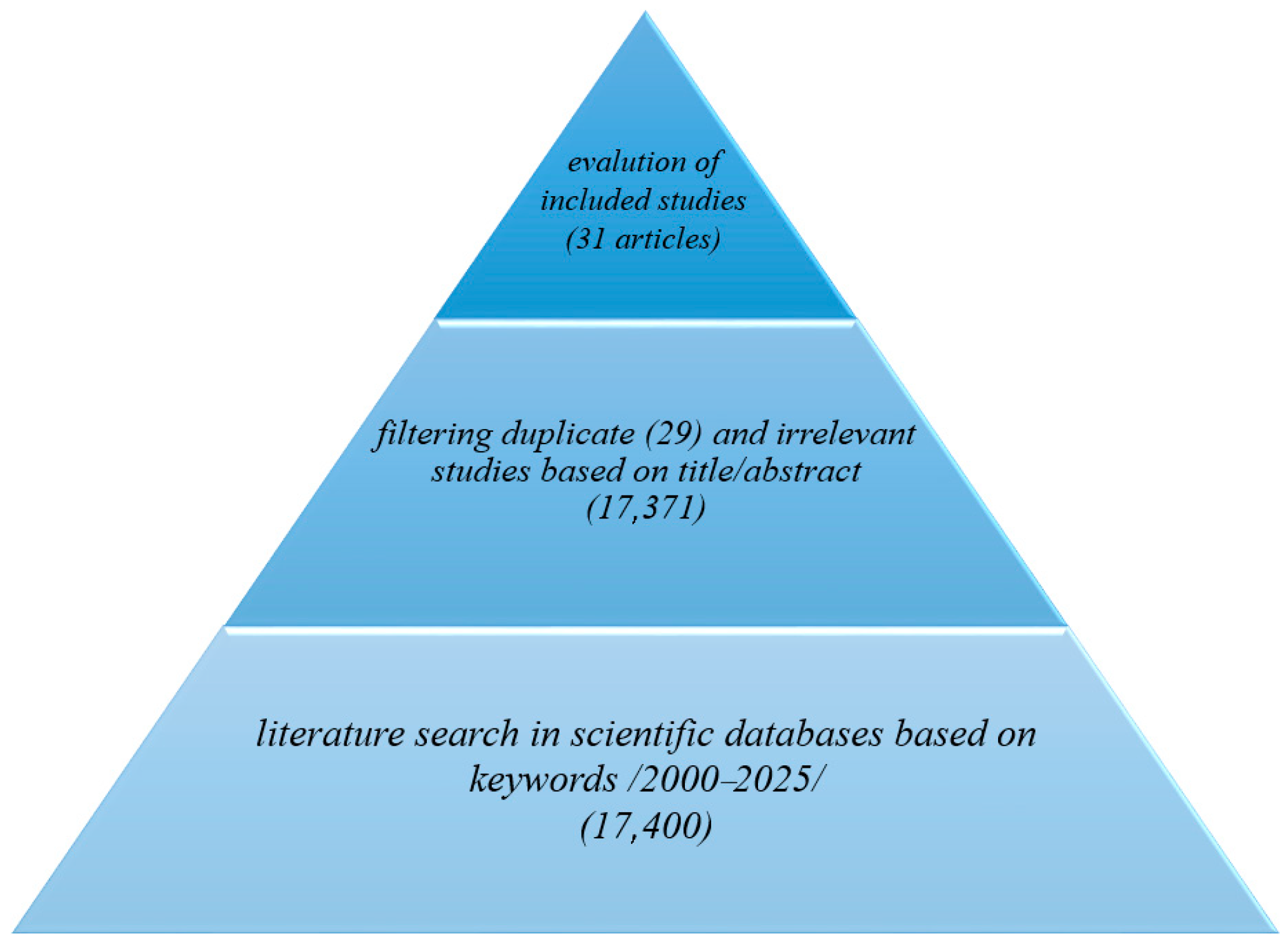
On 10 February 2025, we conducted a targeted literature search in three scientific databases: Google Scholar (https://scholar.google.com/) (accessed on 10 February 2025), Web of Science (https://www.webofscience.com/wos/woscc/basic-search) (accessed on 10 February 2025), and PubMed (https://pubmed.ncbi.nlm.nih.gov/) (accessed on 10 February 2025) to identify studies on the effects of noise sources in closed, recirculating systems (RASs) on teleosts and the use of music as a potential environmental enrichment tool (Figure 1).
The search covered the period from January 2000 to February 2025. The following keywords were used to identify relevant studies: “noise”, “sound”, “fish”, “RAS”, “recirculating systems”, “teleost”, “Cyprinidae”, “effect”, “music”, “growth”, “stimuli” and “soundscape”.
The primary search identified 17,400 hits, many of which were not relevant to the research focus. Duplicate and irrelevant studies were manually filtered based on title and abstract. The selected publications were then evaluated based on the following inclusion criteria: (1) peer-reviewed scientific papers in English (excluding summary articles), (2) papers on experiments on teleost fish in closed, recirculating systems, (3) papers investigating the effects of music or sound stimuli, (4) papers focusing on teleost fish studies, including those that also included other species (e.g., crustaceans) if data on teleost fish could be clearly distinguished, (5) papers specifically analyzing noise effects or music stimuli related to recirculating systems. During the screening, the references of the studies that met the criteria were also reviewed for additional relevant literature.
After the screening process and review of the references, 31 studies published in the last 25 years were selected for detailed analysis. These publications provide a comprehensive overview of the effects of the acoustic environment of closed, recirculating aquaculture systems on fish welfare and growth performance, and the potential of musical stimulation as a non-invasive, potentially welfare-enhancing intervention in the culture of teleost fish.

2. Noise Emission Characteristics of Recirculating Systems and Their Acoustic Effects

To understand the effects of noise sources in aquaculture systems, it is essential to know the operation of recirculating aquaculture systems, the characteristics of sound sources and noise profiles occurring in the RAS environment, and the mechanisms of underwater sound propagation and their effects on fish acoustic perception.

2.1. Basic Principles of Operation of Recirculating Aquaculture Systems

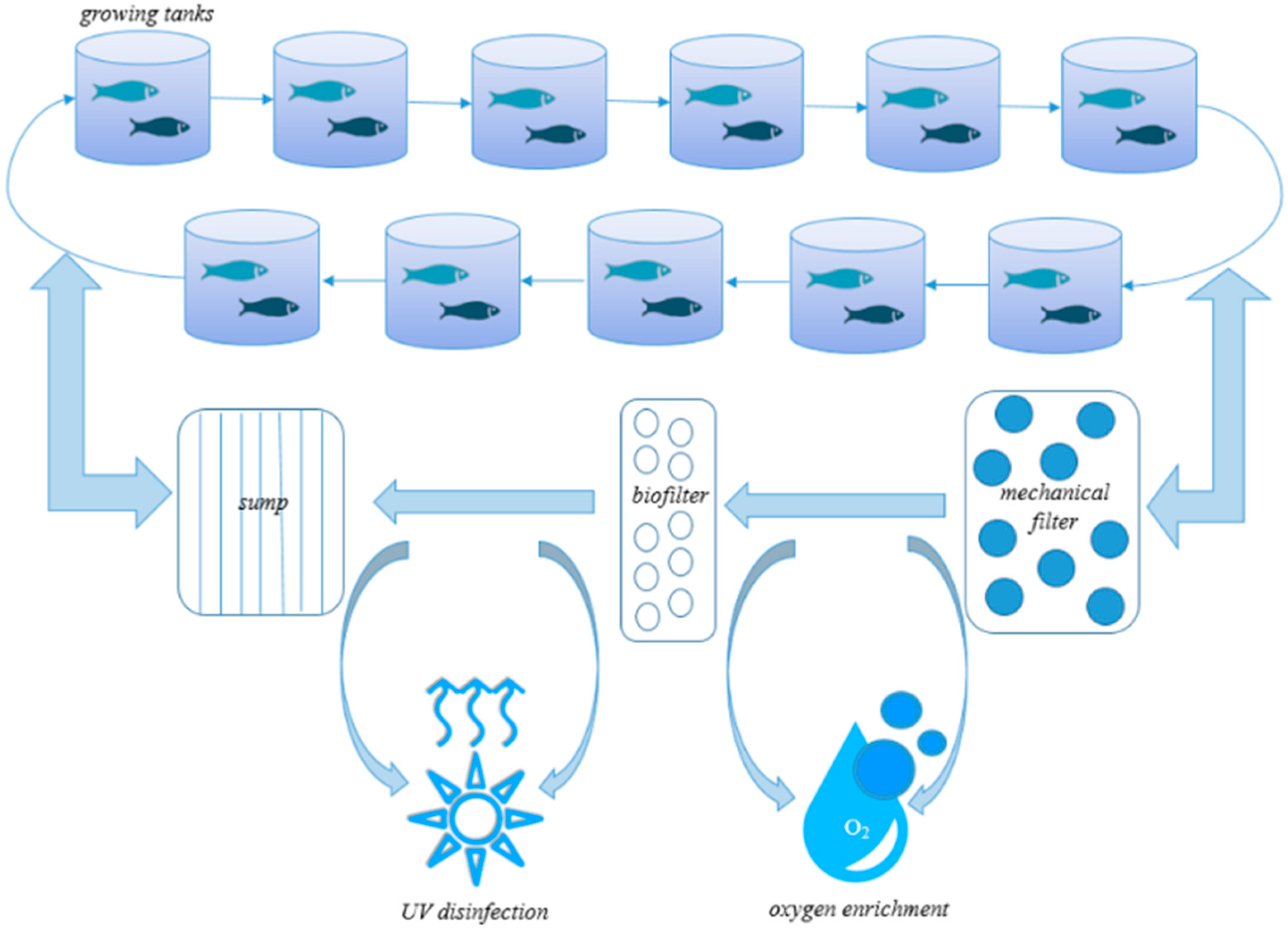
Recirculating aquaculture systems (RASs), especially closed-loop technologies with a tank design, have been developed for intensive fish farming, operating with minimal water exchange. The basic objectives of these systems are to reduce water consumption, precisely control the physical and chemical parameters of the culture environment and effectively remove organic and inorganic end products generated during fish metabolism [10]. The use of biofiltration units is essential for maintaining water quality, which are able to efficiently degrade ionized (NH4+) and non-ionized (NH3) forms of ammonia, thereby preventing the accumulation of toxic substances in the system [11]. The main elements of RASs are the growing tank, the sump, the biofilter unit, the oxygen supply system (e.g., U-tube aeration), and the water circulation pump (Figure 2).
Temperature control is fish species specific and is achieved by thermostatic systems. Ozone- or UV-based water disinfection technologies are often used to minimize microbiological risks [12]. The systems typically recycle more than 90% of the water mass through biological and mechanical filtration stages, ensuring sustainable and environmentally friendly operation [13].

2.2. Sound Sources and Noise Profiles in Recirculating Aquaculture Environments

The acoustic environment of recirculating aquaculture systems (RASs) is primarily determined by the noise emissions from mechanical equipment. Dominant sound sources include pumps (29 Hz), air blowers (59 Hz) and protein separators [14,15]. These devices typically emit sound in the low frequency range (<2000 Hz), with sound pressure levels often reaching or exceeding 100–150 dB re 1 μPa. Underwater noise sources can be divided into three main categories: abiotic (e.g., water turbulence), biotic (e.g., fish sounds) and anthropogenic (e.g., pumps, aerators, human handling operations) [16]. The operation of RASs is closely related to anthropogenic noise emissions, as the technological equipment used in them generates continuous and significant acoustic loads. The sounds thus generated are predominantly of artificial origin, their spectrum and intensity differ significantly from the statistically more complex and generally lower-level noise profiles characteristic of natural aquatic habitats [17,18]. The noise spectrum occurring in RASs largely overlaps the known hearing range of teleost fish, which can potentially affect the physiological state, behavior and hearing of the species [19,20]. Therefore, the investigation of sound sources and noise profiles of RASs is of paramount importance for fish welfare and breeding efficiency.

2.3. Characteristics of Underwater Sound Propagation and Its Significance for the Acoustic Perception of Fish

The propagation of sound underwater differs from its behavior in air as sound waves propagate as longitudinal waves in the form of pressure changes and particle motion [21]. Both components, pressure fluctuations and particle oscillations, play a key role in the auditory physiology of fish [22]. The propagation of sound waves depends on the water depth, the physical properties of the medium, and the frequency. The sound intensity encountered in recirculation systems, especially values up to 135 dB in the range of 25–1000 Hz and 115 dB in the range of 1–2 kHz, can directly affect the hearing threshold and sensory responses of fish [23]. The “hissing” sound effects produced by microbubbles, as well as impulsive noises such as overflows and door closings, can further amplify noise pollution [19].
In addition, structural vibrations generated by electrical devices also contribute to acoustic background noise. Fish, especially hearing specialist species, are sensitive to low-frequency noise transmitted through water, which can affect their behaviour, stress responses, and, in the long term, their growth performance, feed utilization, and reproduction.

3. Effects of Noise Sources in Aquaculture Systems

All types of aquaculture systems are inherently subject to various stressors and farmed fish must endure a confined environment throughout their entire production cycle [7]. Noise sources include water circulation systems, ventilation and other technological equipment, which generate continuous, mostly low-frequency (<1000 Hz) or intermittent sound effects in the aquatic environment, resulting in a complex background noise in the system [15,19]. For fish, these noises can be a disturbing factor, especially in confined spaces where escape or avoidance is not possible [9,24]. These noise effects depend on the auditory specialization of the species, the frequency of the noise, the exposure time, and the design of the system (Table 1).
Anthropogenic activities in aquatic environments in aquaculture systems generate noise in the frequency range below 1 kHz [40], which is within the hearing range of most fish species [41]. When species are exposed to noise sources in this frequency range, they can suffer a number of negative effects. Increased environmental noise levels can affect fish growth performance, behavior and swimming patterns and physiology and can also cause hearing loss through changes in hearing thresholds and disease resistance (Table 2).
All studies have consistently shown that noise exposure is most damaging to fish in the frequency range of 100–1000 Hz because most bony fish have the most sensitive hearing in this range. Noise levels measured in various RASs generally reach a 125–135 dB sound pressure level in this frequency range, which refers to the sound intensity in water that fish can perceive well [25,30]. Studies on white noise [21,27,28] have shown that fish experience the most deterioration in sound perception in this most sensitive range, i.e., their hearing threshold increases, which makes it more difficult to perceive sounds. Noises generated in offshore environments are considered to be more complex noises, but these noises also primarily affect fish in the low frequencies (~100 Hz) [32]. Noise sensitivity is due to anatomical and neurophysiological differences in the auditory system. In hearing specialist species, the Weberian ossicle connects the swim bladder to the inner ear, and pressure waves reach the otolith receptors more strongly. This allows the species to detect underwater vibrations in a wider frequency range, resulting in increased sensitivity [17,20]. This increased sensitivity may predispose these species to noise-induced damage to the otolith receptor and macular hair cells. This may lead to impaired hearing function and stress-induced growth retardation. In contrast, non-hearing specialist species, which lack this connection, have a narrower hearing range, i.e., are sensitive to lower frequencies. Thus, they experience less acoustic stimulation when exposed to noise, but prolonged exposure may result in increased cortisol levels and changes in neurotransmitter systems [32,42,43]. Noise-induced neuroendocrine activation diverts energy from growth, immune and reproductive processes and may lead to a decrease in resistance to disease in the long term. As a result, anatomical and neurophysiological differences in the auditory organs of hearing specialist and non-hearing specialist species determine the direction and extent to which noise exposure affects the physiological and welfare parameters of the species. In addition to biological characteristics, the extent of noise sources is also influenced by experimental and housing conditions. The material of the tank, the acoustic reflectivity of the walls, the water depth, and the stocking density all shape the propagation and reflection of noise. Based on all this, the type of noise source determines whether fish are affected in or outside their most sensitive hearing range. Therefore, detailed mapping of the acoustic characteristics of RASs is essential for the accurate interpretation of biological responses.
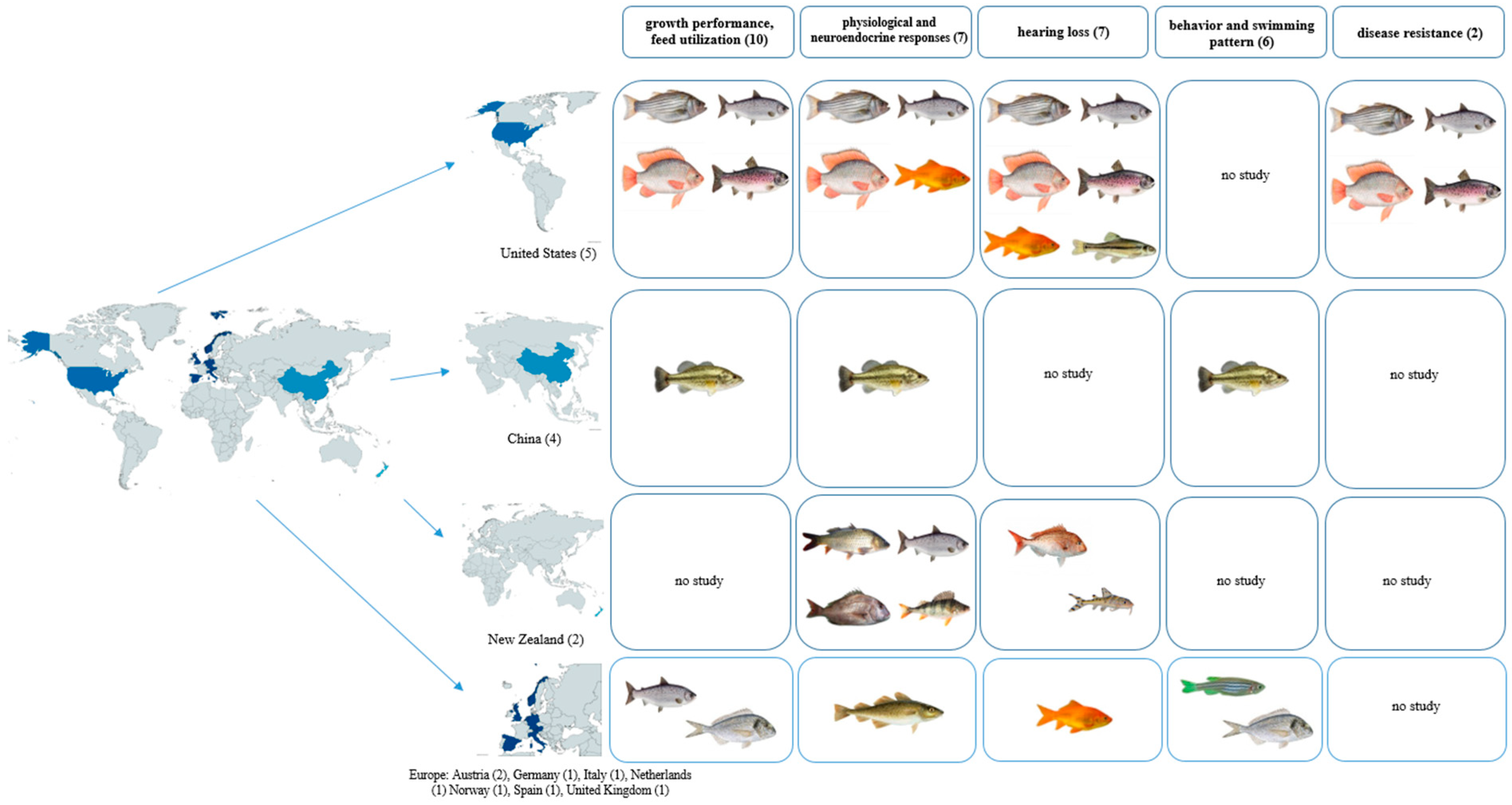
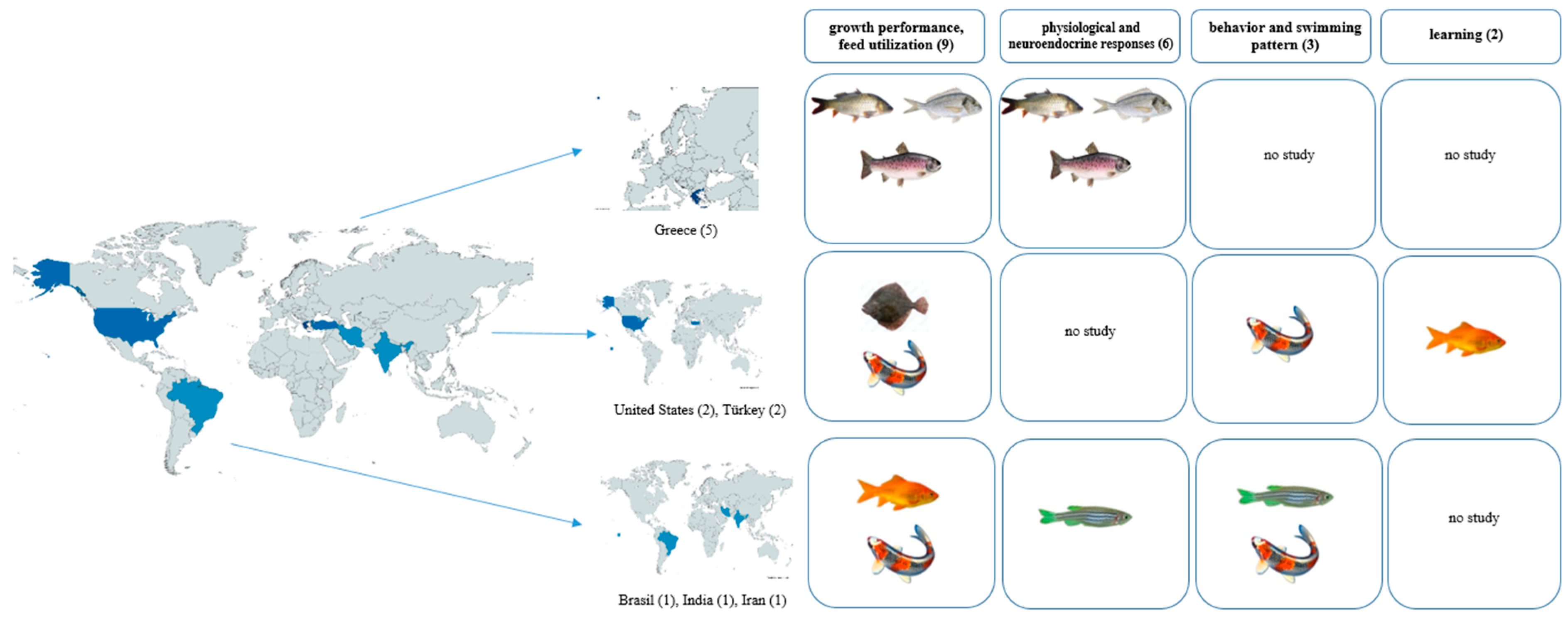
Several studies (Table 2) have investigated how these technological noises affect physiological processes in different fish species, such as growth performance, feed utilization, behavior, swimming patterns, as well as stress responses and disease resistance (Figure 3).
Although the results vary depending on the species and experimental setting, the general trend is that noise exposure mostly has negative effects on fish [9,19,24,25,34,37,38]. In most studies, decreased growth rate, reduced feed intake, and altered behavioral patterns were observed. However, some studies have not found significant differences in long-term noise exposure [15,28,29,33,35], suggesting that some species are capable of a certain degree of habituation. Filiciotto et al. [32] found that there are also differences between different noise environments. Based on their results, offshore (quiet sea background noise and ship noise with random variations) noise environments may be more beneficial for the growth of individuals than onshore (typical noise profile of an open concrete tank) noise environments. A comparison of offshore and onshore rearing environments for Sparus aurata showed that onshore noise profiles were associated with increases in cortisol, glucose, hematocrit and red blood cell count and decreases in white blood cell count, suggesting a pattern of chronic stress. In contrast, the offshore environment resulted in more favorable physiological values and improved growth performance [32]. In Gadus morhua, anthropogenic noise caused an acute increase in cortisol levels, which normalized within one hour after the noise was removed. Repeated daily exposure during the breeding season reduced the number of fertile embryos by more than 50%, and a negative correlation was found between oocyte cortisol levels and fertilization rates [34]. All of this suggests that noise has a significant impact on reproduction and that reproduction is particularly sensitive to chronic noise exposure.
The presented studies have shown that the frequency and intensity of noise in RASs are determining factors: both high- and low-frequency sound effects affect the swimming patterns and behavior of fish. In the short term, these effects are typically stronger and during longer noise exposure; it has been observed that some species adapt to different sound sources [14,28,29,33,35]. All studies examining physiological and neuroendocrine responses [9,19,25,28,34,37] have shown that both intermittent and continuous noise exposure act as stressors on fish. In general, short-term, sudden noise exposure causes an increase in cortisol levels in individuals, but they adapt relatively quickly to the stress and there is no significant impact in the long term.
The mechanism underlying these effects is the activation of the hypothalamus-pituitary-interrenal (HPI) axis, which causes an increase in the cortisol level and changes in neurotransmitter systems [32]. An increase in cortisol levels indicates a stress effect which can also lead to an increase in glucose and lactate concentrations [42,43]. Several studies have shown a decrease in dopamine activity and changes in serotonergic regulation under various sound effects, be it noise exposure or musical stimuli, which can lead to disturbances in feeding motivation, stress management and behavioral regulation [26,27,32,44,45]. Papoutsoglou et al. [46,47] and Kusku et al. [45] have highlighted in their studies that, in parallel with the modification of the neurotransmitter system, growth hormone can also change under the influence of acoustic stimuli. This can indirectly positively influence growth performance and feed utilization. In addition, Zhang et al. [9] and Hang et al. [37] in their results in Micropterus salmoides found that chronic HPI activation is associated with immunosuppression, weakening of the antioxidant defense system and deterioration of mucosal immunity [9,37]. The body shifts energy from growth and reproduction to maintaining homeostasis, which is reflected in reduced growth rates, reduced feed conversion, and reduced reproductive performance [24,34,38].
The effect of noise on hearing sensitivity deserves special attention. Continuous, low-frequency background noise can damage the auditory organ and cause varying degrees of hearing loss. The degree of damage depends largely on the hearing capabilities of the fish species. Hearing specialist species, such as Carassius auratus or Cyprinus carpio, perceive aquatic sounds in a wide frequency range [27,28] and react with a stress response even to low-intensity noise. Carassius auratus, Pimephales promelas, and Pimelodus pictus are highly sensitive, showing an increase in hearing threshold of up to 25–32 dB to white noise [26,27,28,30]. In contrast, non-hearing specialist species, such as Salmo salar, Percidae or Oncorhynchus mykiss, are less sensitive [15,25,29,31,36], but prolonged, high-intensity noise exposure can also have negative physiological consequences for them, and hearing recovery can take several days (>14 days) for both hearing-specialist and non-hearing-specialist species. Sparus aurata and Pagrus auratus show intermediate sensitivity; however, impairment of the immune response, oxidative stress or permanent hearing loss in cultured populations have also been measured in these species [32,35]. Regarding the duration of exposure, acute exposure (minutes to hours) causes a measurable increase in hearing threshold and studies show that short-term (24 h) exposure can cause a more permanent threshold shift, the full regeneration of which can take up to two weeks. In the case of medium-term exposure (days-weeks), some species partially regenerate; however, continuous noise exposure leads to hearing loss and an increase in stress hormones. The effects of long-term exposure (months) are species-specific, with no performance impairment observed in Oncorhynchus mykiss [15], while immune and metabolic damage occurred in Sparus aurata [32,35]. It can also be seen that the noise effect gradually accumulates and the length of the recovery period often exceeds the duration of the noise exposure. All this supports the idea that the effects of noise cannot be generalized to all fish species, but depend on the anatomical specializations of the auditory system, which determines whether a given species is a hearing specialist or not. The results of the studies show that the extent of hearing regeneration depends on the duration of noise exposure and the frequency range examined.
Only two studies have reported the effects of noise exposure on disease resistance [25,29]. One study [25] reported that noise sources in the RAS reduced disease resistance in different species. The other study [29] found no difference in mortality between different noise treatments. Long-term conclusions cannot be drawn from the small number of studies, but it can be assumed that the effects of different noise exposures on disease resistance may be species-specific.
According to the studies presented in Table 1 and Table 2 and available on the subject, there are also many differences in system design, which is an important consideration when setting up an experiment. RASs have the highest noise levels (reaching a sound pressure level of 125–135 dB), which is particularly dangerous for hearing specialist species. In contrast, pond systems operate at much lower noise levels (~95 dB), thus reducing hearing and stress loads. The specific noise profile of offshore cage systems (ships, flow noise, machinery), in addition to causing hearing damage, also induces oxidative stress, which directly affects the well-being of fish and their resistance to disease. In laboratory tanks, pumps and filters generate ~119 dB of noise, which is sufficient to shift the hearing threshold in noise-sensitive species.
Based on all this, we can conclude that technological noise typically generates underwater noise levels and frequency ranges that fall within the hearing range of fish. Although the exact effects of noise on fish are not yet fully understood, the available scientific data suggest that noise exposure can damage fish hearing, impair growth performance, increase stress levels, and affect disease resistance. This can also reduce the economic efficiency of production in the long term in addition to negatively affecting fish welfare.

4. Acoustic Characteristics and Biological Effects of Music on the Fish Organism

Music is a complex, structured acoustic stimulus that carries information in terms of frequency, amplitude, and timbre in a temporally ordered manner. Its physiological and behavioral effects are realized through the neural processing of individual musical elements, such as pitch (Hz), intensity (dB), duration, and timbre [48].
Musical stimuli, if they have a periodic structure and tonality, are able to induce neurosensory processing, which in turn can trigger autonomic nervous system and affective responses [49]. Experimental animal models (e.g., monkeys) have shown that music with a slow tempo and harmonious structure can have a calming effect, while dissonant, high-intensity, fast-paced sound effects can increase stress responses [50].
Different musical styles show different frequency spectra and dynamic profiles. Classical music, especially Baroque and Viennese classical works (e.g., “Mozart”, “Bach”), offers structured rhythms and tonal predictability, typically in the frequency range of 100–5000 Hz. Pop music, which uses simpler melodic lines and electronic timbres, can range in a wider spectrum, from 60–7000 Hz. Rock and metal music often contains intense volume changes, distorted sound, and a wide dynamic range, which means increased auditory stimulation. Ambient music, which synthesizes natural environmental sounds such as rain, waves, or birdsong, typically consists of low-frequency, repetitive, and harmonic sound patterns and can have a potentially calming effect in species adapted to acoustic stimuli. During the perception and processing of music, auditory information is transmitted to emotional centers via structures in the brainstem and central nervous system. This explains why the effect of music can extend not only to acoustic perception, but also to behavior, hormonal levels, and even epigenetic regulation.

5. The Role of Auditory Physiology in the Acoustic Responses of Fish

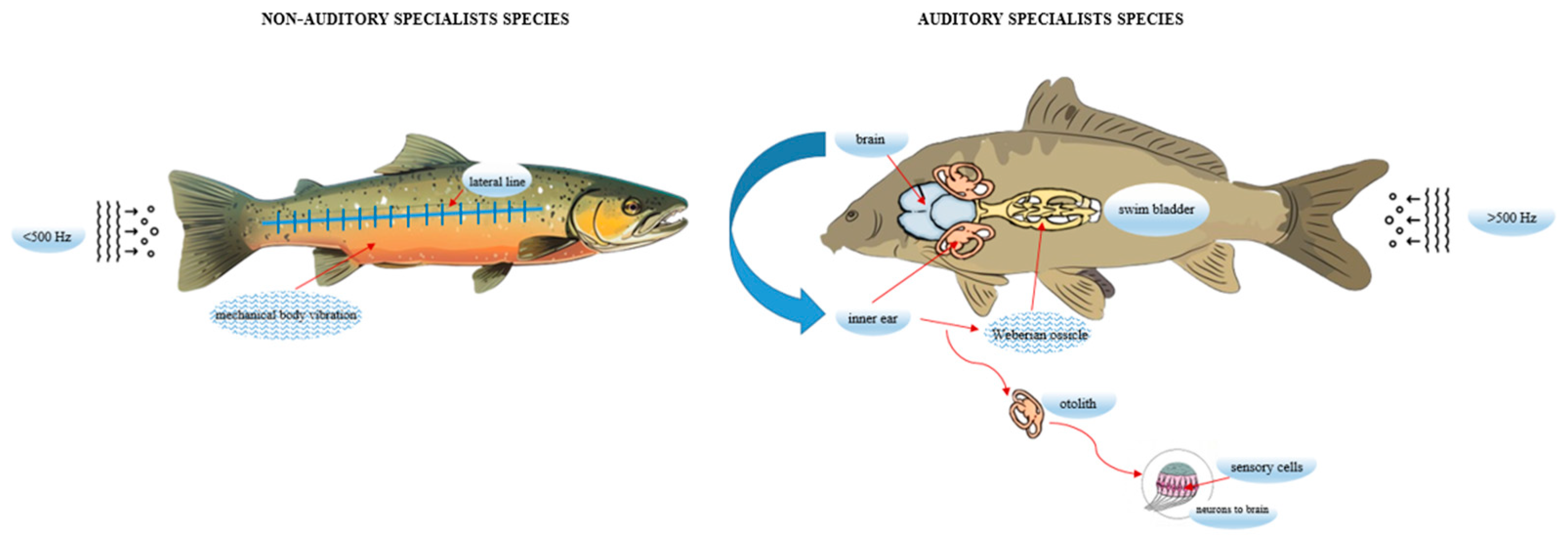
The auditory system of fish is an evolutionarily adapted, species-specific sensory mechanism that allows the processing of acoustic information present in the aquatic environment. The underwater propagation of sounds is based on longitudinal pressure waves, which fish can perceive via two main pathways: the otolith system located in the inner ear and the lateral line organ [17,22]. The otoliths, which are denser than other tissues of the body of the fish, move in response to water vibrations, and this movement is perceived as a mechanical stimulus by macular hair cells. The signals thus generated are transmitted through the acoustic gyrus to the auditory centers located in the medulla oblongata and midbrain, where the direction, frequency and intensity of the sound are processed [15,51].
Based on their anatomical and functional characteristics, fish can be classified into two groups according to their auditory sensitivity: auditory specialists and non-auditory specialists (Figure 4).
Auditory specialist species, such as Cyprinus carpio, Carassius auratus or Siluriformes spp., possess a Weberian ossicle, which provides a physical connection between the swim bladder and the inner ear, which enhances pressure stimuli, thus allowing a wider frequency range (especially in the mid- and high-frequency range) and finer sound differences to be detected [17,20]. These species are typically able to detect frequencies between 100 and 5000 Hz, with the highest sensitivity between 500 and 1000 Hz. Shinozuka et al. [52] studied their ability to isolate and process multiple sound sources at once. They are also able to distinguish between sounds occurring simultaneously, detect reflections and gain information about their environment from background noise. In contrast, non-auditory specialist species, such as Salmonidae or Percidae, mostly sense and detect the low-frequency vibrations (<500 Hz) of water particles, typically in response to mechanical body vibrations or through the lateral line organ. Vibrations coming from different directions activate the hair cells at different angles, which is sufficient for them to hear directional sounds [17].
These neurophysiological and morphological differences fundamentally determine the responsiveness of different fish species to musical or acoustic stimuli. The physiological or behavioral effect of musical stimulation can only be achieved if the sensory organs of the selected species are able to perceive stimuli within the given frequency range. Thus, species-specific hearing threshold and frequency sensitivities are key factors in evaluating the mechanism of action of acoustic enrichment.

6. Effects of Musical Stimuli in Aquaculture Systems

The use of musical stimuli in aquaculture offers a new, interdisciplinary approach to optimizing fish welfare and growth performance. Acoustic stimulation as an environmental enrichment method is receiving increasing attention in aquaculture research, but there is still much unexplored territory in this field. Few studies have investigated the effects of different musical genres and acoustic stimuli on growth performance, feed utilization, behavior, and physiological status of teleost fish (Table 3).
The studies summarized in Table 3 support that the effect of musical stimuli is species-specific, context-dependent and significantly influenced by experimental parameters (sound frequency range, duration of the experiment, light conditions, system) (Table 3). In our opinion, all these different results can be interpreted as a result of these complex interactions, so they are not necessarily contradictory to each other, but may result from the biology of the fish, their sensitivity thresholds and differences in experimental conditions.
The few available studies investigating musical stimuli (Table 3) all demonstrate that musical stimuli influence fish growth performance, behavior, and physiological processes (Figure 5).
The vast majority of studies conducted on teleost fish in recirculating systems have used classical music (Mozart, Bach, Vivaldi), most commonly melodic pieces by Mozart, primarily to improve growth performance and feed utilization. These types of music mostly had a calming and growth-stimulating effect. Several studies have combined musical stimulation with other environmental treatments, such as light treatments or different acoustic stimuli (e.g., water noise, white noise, urban noise) [42,43,46,47,54,55]. Kusku et al.’s [45] study highlighted that not only classical but also musical stimuli with other structured frequency patterns (cultural or religious) can have biologically significant effects [45]. In contrast, disordered sound effects such as urban noise consistently resulted in negative responses, while white noise resulted in neutral or no influencing responses [45,52]. Shinozuka et al. [52] showed that Carassius auratus can discriminate musical stimuli from noise; however, the effect of music on growth performance was moderate, while light intensity had a more significant influence [52]. In contrast, Vasanta [53], Papoutsoglou et al. [43,46] and Kusku et al. [45] showed that Cyprinus carpio and Cyprinus carpio var. koi may respond favorably to certain musical stimuli in terms of growth and stress reduction, but these responses were not consistent. According to the results of Kusku et al. [45], the use of traditional musical forms (Sufi Ney, Quran, Silk Road) provided a growth advantage, while urban noise was detrimental [45]. All these results indicate that fish are able to distinguish between structured and disordered sounds and respond positively to stimuli falling within the regular frequency range.
Most studies have shown that the combination of musical stimuli and light treatments or other acoustic stimuli has a beneficial effect on growth performance, feed utilization efficiency, behavioral stability and stress reduction [42,43,46,47,52]. Most studies highlight the positive effects of classical musical stimuli, especially slow-tempo, ordered frequency structure music, resulting in detectable responses at the biological level [42,45,46,47,52,53,56,57]. Papoutsoglou et al. [46,47] showed in their study that Sparus aurata responds sensitively to different classical music pieces (Mozart, Bach), which can significantly improve growth performance and feed utilization [42,47]. The results of Papoutsoglou et al. [55] also demonstrated that for Oncorhynchus mykiss, the same classical music stimuli had a favorable, similarly positive influence on growth performance, while the effect of white noise was negligible on the biological performance of the fish [55]. Similar results were reported by Barcellos et al. [57] who also found that classical music reduced stress responses and levels of immunological stress markers in Danio rerio individuals, suggesting that it may also be an effective environmental enrichment factor at the psychophysiological level [57].
Imanpoor et al. [54] reported different results in their study on Carassius auratus individuals: they found no significant effect of either musical stimulation or light treatment. Similarly, Papoutsoglou et al. [43] concluded that although musical stimulation did not significantly affect stress levels, it had a positive effect on growth performance. In the same study, it was also observed that even within the same musical category, i.e., classical music, different pieces of music can elicit different responses.
Catli et al. [56] highlighted the importance of musical tempo as a new aspect: based on their experiments, slow music increased growth performance, while fast-paced music induced stress and reduced feed intake in the species Psetta maeotica. Catli et al. [56] and Kusku et al. [45] also pointed out that an inappropriate acoustic environment, such as urban noise or fast-paced music, can have a detrimental effect on the physiological and behavioral parameters of fish [45,56]. In terms of experimental duration, there were experiments with short (30–60 min/day), medium (2–4 h/day) and longer (months) exposure times. Short-term treatments had mostly positive or neutral effects on Cyprinus carpio and Cyprinus carpio var. koi [45,46]. Medium-term treatments also induced positive responses in Sparus aurata, Cyprinus carpio, Cyprinus carpio var. koi and Oncorhynchus mykiss [42,47,53,55]. In contrast to short and medium exposure times, the initially positive effects disappeared during continuous exposure over months, suggesting habituation. In the case of Danio rerio, even shorter treatments of a few weeks were sufficient to induce behavioral and immunophysiological changes. The presented results indicate that exposure time and intensity are species-specific, and continuous exposure over months and excessive intensity may have the opposite effect. Papoutsoglou et al. [42] showed that the effect of musical stimulation can change over time: while it induced a positive growth response in the first phase of the experiment, this effect disappeared by the end of the study, suggesting the possibility of adaptation to the sound stimulus.
Most of the studies were conducted in intensive recirculating aquaculture systems (RASs) where music served a stress-reducing function, probably due to the background noise level (~121 dB). Several studies have shown that light intensity (80–200 lx) and lighting cycle significantly influenced the effect of musical stimuli [42,43,46,54], and that certain settings (classical music combined with light intensity of 80–200 lx) resulted in a synergistic effect in the case of Sparus aurata [42,43]. The technical method of sound transmission (underwater loudspeaker, equipment integrated into RASs, background noise management) is also an important experimental factor that may contribute to the different results.
The results of the presented studies support the fact that music, as a structured acoustic stimulus, can counteract the negative effects of anthropogenic noise pollution, contributing to reducing chronic stress, the maintenance of natural behavioral patterns and the improvement of general animal welfare. Based on the results of the presented studies, the effect of musical stimuli cannot be generalized and is species-specific. Certain species, such as Sparus aurata and Danio rerio, are sensitive to musical stimuli, which provide them with biological benefits. In contrast, in the case of the species Carassius auratus, musical stimuli did not show a significant effect, while light conditions proved to be a distinct influencing factor [54]. These results highlight that structured frequency patterns (classical and cultural music) can potentially reduce stress and enhance growth, while urban noise has a detrimental effect. However, positive responses can only prevail if the duration, tempo, light conditions and environmental noise exposure of the musical stimuli are adjusted to the characteristics of the studied species, since in the case of inappropriate settings, the effect can neutral or even negative.

7. Implications and Perspectives

In closed, intensive aquaculture systems, the ultimate goal is to sell the produced fish at a high price while keeping the production cost as low as possible. During production, increased attention is paid to the welfare of the fish.
Several studies have shown that the source and type of underwater noise, whether continuous, sudden, or transient, can cause significant stress effects that negatively affect the metabolism, behavior, and general health of fish [29,34,45]. However, these effects may be species-specific, as different fish species have different hearing sensitivities and noise tolerances [29,38]. Based on current knowledge, it can be said that the extent of the impact of noise exposure and musical stimuli is determined by the intensity, frequency range and duration of exposure. It is essential to take these factors into account when assessing the effects of noise pollution in aquaculture systems and musical stimuli. In most cases, different noise sources and exposure settings are used in research, which makes it difficult to directly compare the results. In practical applications, the primary consideration should be that species-specific hearing ranges and noise sensitivity thresholds are accurately mapped. Based on these, the level of noise pollution of different systems and the critical frequency ranges can be determined. In addition, real-time monitoring of the noise profile of different aquaculture systems is also necessary to determine what noise levels are safe for fish welfare. Fewer studies examine long-term exposure and often report contradictory results. Some studies describe habituation [28,29], while others indicate permanent hearing loss, impaired immune responses or metabolic abnormalities [32,35]. This suggests that noise adaptation is not a general phenomenon, but is closely related to the acoustic sensitivity of the species, the duration of exposure and the complexity of the noise spectrum. Based on all this, we believe that optimizing the acoustic environment is crucial to ensure fish welfare and increase production efficiency.
The degree of noise exposure is also influenced by the design of the facility: the material of the tanks, the placement of equipment, the type of substrate, the physical characteristics of the environment and the frequency and nature of human activities, which all shape the specific acoustic profile of a given site [14,58]. Noise reduction could be improved from a technological perspective, such as the use of vibration-damping materials, noise-isolating elements for pumps, and the development of low-noise motors and filter systems. The advantages of different systems could be incorporated into the systems, such as the incorporation of background noise variation typical of the offshore environment and the use of white noise for habituation purposes in addition to continuous monitoring. The effectiveness of all of these can be measured by continuously monitoring various stress and immune parameters (cortisol levels, antioxidant capacity, mucosal immunity). Genetic and epigenetic studies play a key role in exploring the long-term consequences of noise effects and the effects of musical stimuli; this research would shed light on how the performance and resilience of the next generations will develop. Reducing the noise load of recirculation systems could contribute to reducing the stress level of fish and improving the health and profitability of the fish stock.
Some studies suggest that as the duration of noise exposure increases, the growth performance of fish may gradually improve or return to the original level, indicating their long-term ability to adapt to noise [37]. This phenomenon may theoretically also apply to musical stimuli, but there is currently insufficient scientific evidence to support this. Therefore, we believe that future studies should pay special attention to the extent to which the effectiveness of music as an environmental enrichment tool is affected by the duration and frequency of application, whether in the case of intermittent or continuous stimulation, and whether habituation develops. Since music can also be a potential source of acoustic stress, its effects should also be examined. One possible solution to this could be to combine different musical styles, for which the learning-related method of Shinozuka et al. [52] can be used, which showed in basic research that individuals are able to distinguish between musical styles [52]. Based on the presented studies, we conclude that auditory-based environmental enrichment, especially classical music with slower tempos and harmonic musical elements, can have a stress-reducing effect, thereby positively contributing to animal welfare, especially in intensive aquaculture environments. The most research on musical stimulation in RASs is based on classical music, primarily on the concept of the “Mozart effect”. However, the acoustic characteristics and psychoacoustic mechanisms of other musical genres, such as rock, electronic or ambient styles, are fundamentally different and are currently an area of research in teleost fish. We believe that a systematic investigation of the effects of the other previously listed musical types could shed new light on the applicability of musical environmental enrichment in improving fish welfare and optimizing production parameters. The existing results draw attention to the fact that in future experiments it is worth investigating whether the positive effect of the musical stimulus persists throughout the entire experimental period or whether the response decreases over time due to habituation. Furthermore, it may be useful to explore the time scale on which this habituation occurs and how the effect can be maintained by changing the acoustic environment.
In most cases, the presented studies highlight the change in cortisol levels in their investigation as a biomarker of both noise and music effects. Cortisol levels are an important indicator in these studies, so its examination is essential; however, revealing the physiological consequences is a more complex process. The mechanistic depth of different noise effects and musical stimuli cannot be measured solely on the basis of a biomarker as they act through complex, interconnected neuroendocrine, immunological and behavioral pathways. There are studies that point to the modification of neurotransmitter systems (dopamine, serotonin) [37], the weakening of antioxidant defenses [35], and the deterioration of mucosal immunity [9]. Various studies have shown that musical stimuli can affect cortisol and growth hormone levels in fish, and can influence food intake dynamics and activity patterns. Furthermore, there is evidence that music can affect gene expression patterns in the nervous system, especially at the level of genes involved in stress and behavioral regulation, which may indirectly affect the growth performance of fish. Therefore, we suggest that future studies should include additional parameters in addition to cortisol, such as glucose and lactate, growth hormone (GH) and antioxidant enzyme activities, and changes in neurotransmitter systems (dopamine, serotonin). Based on all of this, future research should include multiple biomarkers in the analysis to gain a mechanistic understanding of the processes induced by noise and music.
Based on all this, it can be said that despite the progress made in recent years in the field of studying the effects of noise and music, there is still a significant knowledge gap. In the case of economically important fish species (Cyprinus carpio, Oreochromis niloticus, Salmo salar), the precise knowledge of species-specific hearing thresholds and frequency sensitivities is limited. It is important to note that several studies were conducted under laboratory conditions, therefore measurements made in field RASs are often not available. Furthermore, the consequences of long-term, multi-generational effects are poorly understood. In addition, the lack of standardised experimental protocols and noise measurement procedures makes it difficult to compare the results of different studies.
Based on all this, the implementation of studies in field RASs on a practical scale, which would allow for the evaluation of the complex biological consequences of noise and music effects, can be considered an urgent area of research. A key research direction would be to clarify how sound and music stimuli influence the expression of stress-related genes and their effects on growth. A key question for future research is what acoustic intensity and frequency range can be considered safe for fish species, which could even be integrated into fish welfare protocols.
We believe that future research should primarily focus on mapping and optimizing the acoustic properties and biological effects of noise generated by various equipment operating in aquaculture systems in order to ensure the welfare of farmed fish and increase production efficiency. More detailed knowledge of the noise sources, noise profiles and acoustic effects of recirculation systems is essential for the development of appropriate welfare interventions and economically viable solutions.

Author Contributions

B.T.: Conceptualization, writing—original draft, visualization; P.B.: Conceptualization, writing—review and editing, supervision; S.K.: Conceptualization, writing—review and editing, supervision. All authors have read and agreed to the published version of the manuscript.

Funding

This research received no external funding.

Institutional Review Board Statement

Not applicable.

Data Availability Statement

No new data were created or analyzed in this study.

Acknowledgments

The authors would like to thank Ildikó Varga for expert English editing.

Conflicts of Interest

The authors declare no conflicts of interest.

References

  1. United Nations Department of Economic and Social Affairs Population Division. World Population Prospects 2019: Highlights; United Nations: New York, NY, USA, 2019. [Google Scholar]
  2. Bartley, D.M. World Aquaculture 2020—A Brief Overview; NFIAP/C1233; Food and Agriculture Organization of the United Nations (FAO): Rome, Italy, 2020; ISSN 2070-6065. [Google Scholar]
  3. Office of the Parliament. Halgazdálkodás és Akvakultúra. 2020. 71. Available online: https://www.parlament.hu/documents/10181/4464848/Infojegyzet_2020_71_halgazdalkodas_es_akvakultura.pdf/62290a2f-9cec-6e7f-e91e-ff776fc7dc95?t=1605167533447 (accessed on 29 September 2025).
  4. Thornton, P.K. Livestock production: Recent trends, future prospects. Philos. Trans. R. Soc. B Biol. Sci. 2010, 365, 2853–2867. [Google Scholar] [CrossRef]
  5. Park, L.K.; Moran, P. Developments in molecular genetic techniques in fisheries. Rev. Fish Biol. Fish. 1994, 4, 272–299. [Google Scholar] [CrossRef]
  6. Browning, H. Improving welfare assessment in aquaculture. Front. Vet. Sci. 2023, 10, 1060720. [Google Scholar] [CrossRef] [PubMed]
  7. Huntingford, D.A.; Adams, C.; Braithwaite, V.A.; Kadri, S.; Pottinger, T.G.; Sandoe, P.; Turnbull, J.F. Current issues in fish welfare. J. Fish Biol. 2006, 68, 332–372. [Google Scholar] [CrossRef]
  8. Zhang, Z.; He, Y.; Wang, J.; Zheng, Y.; Mo, J.; Zhang, X.; Liu, W. A Global synthesis of environmental enrichment effect on fish stress. Fish Fish. 2024, 26, 131–154. [Google Scholar] [CrossRef]
  9. Zhang, Y.; Shitu, A.; Hang, S.; Ye, Z.; Xu, W.; Zhao, H.; Zhao, J.; Zhu, S. Assessing the impacts of aquaculture soundscapes on the growth, physiology and behavior of Micropterus salmoides. Fishes 2023, 8, 377. [Google Scholar] [CrossRef]
  10. Murray, F.; Bostock, J.; Fletcher, D. Review of Recirculation Aquaculture System Technologies and Their Commercial Application; Prepared for Highlands and Islands Enterprise; University of Stirling Aquaculture: Stirling, UK, 2014; 82p, Available online: http://hdl.handle.net/1893/21109 (accessed on 29 September 2025).
  11. Schreier, H.J.; Mirzoyan, N.; Keiko, S. Microbial diversity of biological filters in recirculating aquaculture systems. Curr. Opin. Biotechnol. 2010, 21, 318–325. [Google Scholar] [CrossRef] [PubMed]
  12. Nilav, A.; Suman, N.; Abhilipsa, B.; Tapas, P. A review on recirculating aquaculture systems: Challenges and opportunities for sustainable aquaculture. Innov. Farming 2020, 5, 17–24. [Google Scholar]
  13. Sugita, H.; Nakamura, H.; Shimada, T. Microbial communities associated with filter materials in recirculating aquaculture systems of freshwater fish. Aquaculture 2005, 243, 403–409. [Google Scholar] [CrossRef]
  14. Davidson, J.; Frankel, A.S.; Ellison, W.T.; Summerfelt, S.; Popper, A.N.; Mazik, P.; Bebak, J. Minimizing noise in fiberglass aquaculture tanks: Noise reduction potential of various retrofits. Aquac. Eng. 2007, 37, 125–131. [Google Scholar] [CrossRef]
  15. Davidson, J.; Bebak, J.; Mazik, P. The effects of aquaculture production noise on the growth, condition factor, feed conversion, and survival of rainbow trout, Oncorhynchus mykiss. Aquaculture 2009, 288, 337–343. [Google Scholar] [CrossRef]
  16. Popper, A.N. Effect of anthropogenic sounds on fishes. Fisheries 2003, 28, 24–31. [Google Scholar] [CrossRef]
  17. Fay, R. Soundscapes and the sense of hearing of fishes. Integr. Zool. 2009, 4, 26–32. [Google Scholar] [CrossRef]
  18. Popper, A.N.; Hastings, M.C. The effects of anthropogenic sources of sound on fishes. J. Fish. Biol. 2009, 75, 455–489. [Google Scholar] [CrossRef]
  19. Radford, C.; Slater, M. Soundscapes in aquaculture systems. Aquac. Environ. Interact. 2019, 11, 53–62. [Google Scholar] [CrossRef]
  20. Popper, A.N. Pure-tone auditory thresholds for the carp, Cyprinus carpio. J. Acoust. Soc. Am. 1972, 52, 1714–1717. [Google Scholar] [CrossRef]
  21. van Berjeik, W.A. Marine Bio-Acoustics; Travolga, W.N., Ed.; Discussion; Pergamon Press: Oxford, UK, 1967; pp. 244–245. [Google Scholar]
  22. Popper, A.N.; Fay, R.R. Sound detection and processing by fish: Critical review and major research questions. Brain Behav. Evol. 1993, 41, 14–25. [Google Scholar] [CrossRef]
  23. Dunning, J.D.; Ross, Q.E.; Geoghegan, P.; Richle, J.J.; Menezes, K.; Watson, J.K. Alewives avoid high-frequency sound. N. Am. J. Fish. Manag. 1992, 12, 407–416. [Google Scholar] [CrossRef]
  24. Zhang, Y.; Shitu, A.; Hang, S.; Ye, Z.; Zhao, H.; Xu, W.; Zhao, J.; Zhu, S. The effects of aerator noise on the swimming, feeding, and growth of Micropterus salmoides. Front. Mar. Sci. 2023, 10, 1242793. [Google Scholar] [CrossRef]
  25. Bart, A.N.; Clark, J.; Young, J.; Zohar, Y. Underwater ambient noise measurements in aquaculture systems: A survey. Aquac. Eng. 2001, 25, 99–110. [Google Scholar] [CrossRef]
  26. Scholik, A.R.; Yan, H.Y. Ejects of underwater noise on auditory sensitivity of a cyprinid fish. Hear. Res. 2001, 152, 17–24. [Google Scholar] [CrossRef] [PubMed]
  27. Amoser, S.; Ladich, F. Diversity in noise-induced temporary hearing loss in otophysine fishes. J. Acoust. Soc. Am. 2003, 113, 2170–2179. [Google Scholar] [CrossRef]
  28. Smith, M.E.; Kane, A.S.; Popper, A.N. Noise-induced stress response and hearing loss in goldfish (Carassius auratus). J. Exp. Biol. 2004, 207, 427–435. [Google Scholar] [CrossRef]
  29. Wysocki, L.E.; Davidson, J.W.; Smith, M.E.; Frankel, A.S.; Ellison, W.T.; Mazik, P.; Popper, A.N.; Bebak, J. Effects of aquaculture production noise on hearing, growth, and disease resistance of rainbow trout Oncorhynchus mykiss. Aquaculture 2007, 272, 687–697. [Google Scholar] [CrossRef]
  30. Gutscher, M.; Wysocki, L.E.; Ladich, F. Effect of aquarium and pond noise on hearing sensitivity in an Otophysine fish. Bioacoustics 2011, 20, 117–136. [Google Scholar] [CrossRef]
  31. Caiger, P.E.; Montgomery, J.C.; Radford, C.A. Chronic low-intensity noise exposure affects the hearing thresholds of juvenile snapper. Mar. Ecol. Prog. Ser. 2012, 466, 225–232. [Google Scholar] [CrossRef]
  32. Filiciotto, F.; Cecchini, S.; Buscaino, G.; Maccarrone, V.; Piccione, G.; Fazio, F. Impact of aquatic acoustic noise on oxidative status and some immune parameters in gilthead sea bream Sparus aurata (Linnaeus, 1758) juveniles. Aquac. Res. 2016, 48, 1895–1903. [Google Scholar] [CrossRef]
  33. Neo, Y.Y.; Parie, L.; Bakker, F.; Snelderwaard, P.; Tudorache, C.; Schaaf, M.; Slabbekoorn, H. Behavioral changes in response to sound exposure and no spatial avoidance of noisy conditions in captive zebrafish. Front. Behav. Neurosci. 2015, 9, 28. [Google Scholar] [CrossRef]
  34. Sierra-Flores, R.; Atack, T.; Migaud, H.; Davie, A. Stress response to anthropogenic noise in Atlantic cod Gadus morhua L. Aquac. Eng. 2015, 67, 67–76. [Google Scholar] [CrossRef]
  35. Mauro, M.; Perez-Arjona, I.; Perez, E.J.B.; Ceraulo, M.; Bou-Cabo, M.; Benson, T.; Espinosa, V.; Beltrame, F.; Mazzola, S.; Vazzana, M.; et al. The effect of low frequency noise on the behaviour of juvenile Sparus aurata. J. Acoust. Soc. Am. 2020, 147, 3795–3807. [Google Scholar] [CrossRef] [PubMed]
  36. Slater, M.; Fricke, E.; Weiss, M.; Rebelein, A.; Bögner, M.; Preece, M.; Radford, C. The impact of aquaculture soundscapes on whiteleg shrimp Litopenaeus vannamei and Atlantic salmon Salmo salar. Aquac. Environ. Interact. 2020, 12, 167–177. [Google Scholar] [CrossRef]
  37. Hang, S.; Zhao, J.; Ji, B.; Li, H.; Zhang, Y.; Peng, Z.; Zhou, F.; Ding, X.; Ye, Z. Impact of underwater noise on the growth, physiology and behavior of Micropterus salmoides in industrial recirculating aquaculture systems. Environ. Pollut. 2021, 291, 118152. [Google Scholar] [CrossRef] [PubMed]
  38. Hang, S.; Zhu, X.; Ni, W.; Wen, Y.; Cai, W.; Zhu, S.; Ye, Z.; Zhao, J. Low-frequency band noise generated by industrial recirculating aquaculture systems exhibits a greater impact on Micropterus salmoidess. Ecotoxicol. Environ. Saf. 2024, 272, 116074. [Google Scholar] [CrossRef] [PubMed]
  39. Helberg, G.A.N.; Anichini, M.; Kolarevic, J.; Saether, B.S.; Noble, C. Soundscape characteristics of RAS tanks holding Atlantic salmon (Salmo salar) during feeding and feed withdrawal. Aquaculture 2024, 593, 741325. [Google Scholar] [CrossRef]
  40. Popper, A.N.; Hawkins, A.D.; Fay, R.R.; Mann, D.A.; Bartol, S.; Carlson, T.J.; Coombs, S.; Ellison, W.T.; Gentry, R.L.; Halvorsen, M.B.; et al. Aquatic organisms of concern. In ASA S3/SC1.4 TR-2014 Sound Exposure Guidelines for Fishes and Sea Turtles: A Technical Report Prepared by ANSI-Accredited Standards Committee S3/SC1 and Registered with ANSI; Springer Briefs in Oceanography; Springer: Cham, Switzerland, 2014. [Google Scholar] [CrossRef]
  41. Popper, A.N.; Fay, R.R. Rethinking sound detection by fishes. Hear. Res. 2011, 273, 25–36. [Google Scholar] [CrossRef]
  42. Papoutsoglou, S.E.; Karakatsouli, N.; Batzina, A.; Papoutsoglou, E.S.; Tsopelakos, A. Effect of music stimulus on gilthead seabream Sparus aurata physiology under different light intensity in a re-circulating water system. J. Fish Biol. 2008, 73, 980–1004. [Google Scholar] [CrossRef]
  43. Papoutsoglou, S.E.; Karakatsouli, N.; Papoutsoglou, E.S.; Vasilikos, G. Common carp (Cyprinus carpio) response to two pieces of music (“Eine Kleine Nachtmusik” and “Romanza”) combined with light intensity, using recirculating water system. Fish Physiol. Biochem. 2010, 36, 539–554. [Google Scholar] [CrossRef]
  44. Chase, A.R. Music discriminations by carp (Cyprinus carpio). Anim. Learn. Behav. 2001, 29, 336–353. [Google Scholar] [CrossRef]
  45. Kusku, H.; Ergun, S.; Yilmaz, S.; Guroy, B.; Yigit, M. Impacts of urban noise and musical stimuli on growth performance and feed utilization of Koi fish (Cyprinus carpio) in recirculating water conditions. Turk. J. Fish. Aquat. Sci. 2018, 19, 513–523. [Google Scholar] [CrossRef]
  46. Papoutsoglou, S.E.; Karakatsouli, N.; Louizos, E.; Chadio, S.; Kalogiannis, D.; Dalla, C.; Polissidis, A.; Papadopoulou-Daifoti, Z. Effect of Mozart’s music (Romanze-Andante of “Eine Kleine Nacht Musik”, sol major, K525) stimulus on common carp (Cyprinus carpio L.) physiology under different light conditions. Aquac. Eng. 2007, 36, 61–72. [Google Scholar] [CrossRef]
  47. Papoutsoglou, S.E.; Karakatsouli, N.; Psarrou, A.; Apostolidou, S.; Papoutsoglou, E.S.; Batzina, A.; Leondaritis, G.; Sakellaridis, N. Gilthead seabream (Sparus aurata) response to three music stimuli (Mozart—”Eine Kleine Nachtmusik”, Anonymous—”Romanza”, Bach—”Violin Concerto No. 1”) and white noise under recirculating water conditions. Fish Physiol. Biochem. 2014, 41, 219–232. [Google Scholar] [CrossRef]
  48. Altenmüller, E.; Kopiez, R.; Grewe, O. A contribution to the evolutionary basis of music: Lessons from the chill response. In Evolution of Emotional Communication; Altenmüller, E., Schmidt, S., Zimmermann, E., Eds.; Oxford University Press: Oxford, UK, 2013; pp. 313–335. ISBN 978-3-319-00106-7. [Google Scholar]
  49. Snowdon, C.T.; Zimmermann, E.; Altenmüller, E. Music evolution and neuroscience. In Progress in Brain Research; Altenmüller, E., Boller, F., Finger, S., Eds.; Elsevier: Oxford, UK, 2015; Volume 218, pp. 17–34. [Google Scholar] [CrossRef]
  50. Snowdon, C.T.; Teie, D. Emotional communication in monkeys: Music to their ears? In Evolution of Emotional Communication; Altenmüller, E., Schmidt, S., Zimmermann, E., Eds.; Oxford University Press: Oxford, UK, 2013; pp. 133–151. [Google Scholar] [CrossRef]
  51. Popper, A.N.; Hawkins, A.D. The importance of particle motion to fishes and invertebrates. J. Acoust. Soc. Am. 2018, 143, 470–488. [Google Scholar] [CrossRef]
  52. Shinozuka, K.; Ono, H.; Watanabe, S. Reinforcing and discriminative stimulus properties of musicin goldfish. Behav. Process. 2013, 99, 26–33. [Google Scholar] [CrossRef] [PubMed]
  53. Vasantha, L.; Jeyakumar, A.; Pitchai, M.A. Influence of music on the growth of Koi Carp, Cyprinus carpio (Pisces: Cyprindae). NAGA WorldFish Cent. Q. 2003, 26, 25–26. [Google Scholar]
  54. Imanpoor, M.R.; Enayat, G.T.; Zolfaghari, M. Effect of light and music on growth performance and survival rate of goldfish (Carassius auratus). Iran. J. Fish. Sci. 2011, 10, 641–653. [Google Scholar]
  55. Papoutsoglou, S.E.; Karakatsouli, N.; Skouradakis, C.; Papoutsoglou, E.S.; Batzina, A.; Leondaritis, G.; Sakellaridis, N. Effect of musical stimuli and white noise on rainbow trout (Oncorhynchus mykiss) growth and physiology in recirculating water conditions. Aquac. Eng. 2013, 55, 16–22. [Google Scholar] [CrossRef]
  56. Catli, L.; Yildirim, O.; Turker, A. The effect of different tempos of music during feeding, on growth performance, chemical body composition and feed utilization of turbot (Psetta maeotica Pallas 1814). Isr. J. Aquac.—Bamidgeh 2015, 67, 20680. [Google Scholar] [CrossRef]
  57. Barcellos, H.H.A.; Koakoski, G.; Chaulet, F.; Kirsten, K.S.; Kreutz, L.C.; Kalueff, A.V.; Barcellos, L.J.G. The effects of auditory enrichment on zebrafish behavior and physiology. PeerJ 2018, 6, e5162. [Google Scholar] [CrossRef]
  58. Craven, A.; Carton, A.G.; McPherson, C.R.; McPherson, G. Determining and quantifying components of an aquaculture soundscape. Aquac. Eng. 2009, 41, 158–165. [Google Scholar] [CrossRef]
Figure 1. Flowchart of the process of collecting literature examining the effects of acoustic stimuli applied in a closed, recirculating system on teleost fish.
Fishes 10 00565 g001
Figure 2. Principle drawing of a recirculation system.
Fishes 10 00565 g002
Figure 3. Global study of the effects of noise sources on teleost fish for various parameters over the period of 2000–2025. The depth of the colours on the map indicates the number of published studies (darkest: indicates the most published studies in the given country; lightest: indicates the fewest published studies in the given countries). The numbers next to the parameters indicate the number of pub-lished studies globally for each trait. The pictograms indicate the species studied in the countries indicated for each parameter: Fishes 10 00565 i001.
Fishes 10 00565 g003
Figure 4. Auditory sensitivity of fish based on their anatomical and functional characteristics.
Fishes 10 00565 g004
Figure 5. Global impact assessment of musical stimuli on teleost fish for various parameters over the period of 2000–2025. The depth of the colors on the map indicates the number of published studies (darkest: indicates the most published studies in the given country; lightest: indicates the fewest published studies in the given countries). The numbers next to the parameters indicate the number of pub-lished studies globally for each trait. The pictograms indicate the species studied in the countries indicated for each parameter: Fishes 10 00565 i002.
Fishes 10 00565 g005
Table 1. Characteristics of differences in species, sound frequencies, exposure durations and system designs in relation to noise effects on teleost fish.
Frequency Range of the Measured Noise SpectrumExposure DurationTank Material and DensitySpeciesNumber of Samples (n)Reference
above and below 315 Hz
(one-third octave band)
no datatank material:
enclosed recirculating raceways
fiberglass
concrete culture tanks outdoor open ponds

tank density:
high density (50–100/m3)
Morone saxatilis
Oreochromis niloticus
Salmo salar
no data[25]
0.3–0.4 kHz;
142 dB re 1 μPa
14 daystank material:
hatchery ponds

tank density:
no data
Pimephales promelasno data[26]
158 dB re 1 μPa14 daystank material:
externally filtered aquaria
all aquaria were planted, equipped with half flowerpots as hiding places, and the bottom was covered with sand

tank density:
no data
Carassius auratus
Pimelodus pictus
12[27]
110–125 dB re 1 μPa;
160–170 dB re 1 μPa
14 daystank material:
76-L glass
aquaria and 19 L plastic bucket

tank density:
no data
Carassius auratusno data[28]
115, 130, 150 dB re 1 μPa8 monthstank material:
round, fiberglass-reinforced plastic
use of insulating washers and PVC pipe covers for noise insulation

tank density:
density of fiberglass polyester composites: ~1.5–1.9 g/cm3
Oncorhynchus mykiss700 fish per tank or 10 kg per cubic meter (kg/m3)
total of 3 tanks
[29]
117 dB re 1 μPa;
149 dB re 1 μPa
5 monthstank material:
round, fiberglass-reinforced plastic
use of insulating washers and PVC pipe covers for noise insulation

tank density:
density of fiberglass polyester composites: ~1.5–1.9 g/cm3
Oncorhynchus mykiss600[15]
119 dB re 1 µPa;
115 dB re 1 µPa;
114 dB re 1 µPa;
95 dB re 1 µPa
no datatank material:
plastic aquarium lined with bubble wrap, with a layer of sand at the bottom, plants, and pots
outdoor pond: natural earthen pond

tank density:
no data
Carassius auratus6[30]
100, 200, 400 Hz;
120 dB re 1 µPa
2 weekstank material:
rectangular flow-through PVC tank with ceramic aerator

tank density:
no data
Pagrus auratusno data[31]
0.025–1 kHz in frequency band 112, 119, 146, 131 and 131 (offshore noise);
0.025–1 kHz in frequency band 126 (onshore noise)
no datatank material:
square PVC experimental tank

tank density:
no data
Sparus aurata270[32]
120–140 dB re 1 μPa;
112 dB re 1 μPa;
89 dB re 1 μPa
no datatank material:
glass pool with PVC and insulation
pool bottom insulated with a layer of Styrofoam fiberglass and rubber pads

tank density:
no data
Danio rerio200[33]
100–1000 Hzno datatank material:
black, round fiberglass-reinforced plastic pools

tank density:
no data
Gadus morhuastress response study: 42
spawning performance study: 16
[34]
100–500 Hzno datatank material:
ultra-high density cement slabs, 50 mm thick walls
high-density polyethylene, wall thickness of 10 mm
ground bed lined with polyethylene film
high-density polyethylene floats and mesh

tank density:
no data
Cyprinus carpio
Salmo salar
Perca fluviatilis
Pagrus major
Palaemon serratus
no data[19]
63, 125, 500 and 1000 Hz (based on one-third octave band);
140–150 dB re 1 µPa
7 htank material:
round PVC or fiberglass-reinforced plastic

tank density:
no data
Sparus aurata90[35]
127 dB re 1 µPa8 weekstank material:
RAS PVC/fiberglass composite

tank density:
no data
Salmo salar120[36]
115 dB re 1 μPa;
69 dB re 1 μPa
60 daystank material:
PVC cylindrical tank surrounded by stainless steel and insulating materials and placed on a vibration-damping pallet

tank density:
no data
Micropterus salmoides600[37]
107.7 dB re 1 μPa;
115.1 dB re 1 μPa;
70.4 dB re 1 μPa
50 daystank material:
circular PVC

tank density:
no data
Micropterus salmoides300[9]
90.3 dB re 1 μPa;
70.4 dB re 1 μPa
50 daystank material:
PVC

tank density:
no data
Micropterus salmoides200[24]
80–1000 Hz, 117 dB re 1 μPa;
1–19 kHz, 117 dB re 1 μPa
30 daystank material:
PVC cylindrical tanks were placed on a PVC vibration-damping tray with a rubber insulating layer

tank density:
no data
Micropterus salmoides300[38]
between 1.7–4 kHz (food particles falling into the water);
between 6.5–9.4 kHz (fish feeding sounds)
15 daystank material:
MicroRAS unit: circular Cornell-type polypropylene tank with double drain

tank density:
no data
Salmo salar2400[39]
Table 2. Effects of noise sources on various parameters (growth performance and feed utilization, behavior and swimming patterns, physiology and neuroendocrine responses, hearing impairment, disease resistance) in teleost fish.
AimsResultsNoise-Causing DeviceSpeciesNoise EffectReference
Water noise testing: closed, recirculation system in concrete and fiberglass pools and open, outdoor lakes.Low-frequency sounds were dominant in all systems measured. The noise level in the low-frequency range was 10 dB re 1 μPa higher in the concrete raceway. Low-frequency noise was particularly high (130 dB re 1 μPa) in fiberglass tanks when compared with that in the concrete tanks (110 dB re 1μPa).High-frequency underwater noise: electric motors, oscillating and collapsing air bubbles, aeration and the water pump.

Low-frequency noise: water flow, ground vibration, tank wall vibration, electric pumps.
Morone saxatilis
Oreochromis niloticus
Salmo salar
High sound pressure levels in the lower-frequency region are within the hearing range of most studied teleost fish species.

High sound pressure levels in the high-frequency region have a detrimental effect on the health and well-being of fish species.

Aerators and other sound sources in aquaculture systems can affect the physiology of individuals, resulting in reduced growth performance and resistance to disease.
[25]
Using Pimephales promelas, it investigates the immediate effect of 24 h exposure to white noise (0.3–0.4 kHz, 142 dB re 1 μPa) on hearing thresholds and the temporal pattern of regeneration following noise exposure.After noise exposure, hearing thresholds were higher in five of the eight frequencies tested compared to the control group. The extent of regeneration depends on the duration of noise exposure and the frequency range.White noise.Pimephales promelasIncreased stress levels, negative impact on growth performance.[26]
The influence of intense white noise on the hearing sensitivity of the non-vocalizing Carassius auratus and the vocalizing Pimelodus pictus at different noise exposure times (12 and 24 h).Immediately after noise exposure, both species showed a significant increase in hearing thresholds. A hearing loss of 26 dB was measured in Carassius auratus and 32 dB in Pimelodus pictus, with the noise effect being more pronounced in Pimelodus pictus. The extent of hearing loss was not affected by the duration of noise exposure. The regeneration capacity was species-specific: the hearing threshold of Carassius auratus recovered to its baseline value within three days, while this process took 14 days in Pimelodus pictus.White noise.Carassius auratus, Pimelodus pictusHearing loss.[27]
Short- (10 min., 1 h, 24 h) and long-term (1, 3, 7, 14, 21 days) evaluation of stress responses and hearing sensitivity of Carassius auratus in response to increased environmental noise.Carassius auratus, as a hearing specialist species, may be more sensitive to temporary stress induced by underwater noise and may suffer significant hearing loss, which may be reversible in the case of prolonged noise exposure, but requires a long regeneration time.White noise.Carassius auratusHearing loss, increased stress levels.[28]
Evaluation of the effects of long-term (8 months) noise exposure on hearing sensitivity, growth performance and survival of Oncorhynchus mykiss.There was no significant difference in hearing threshold values between the different noise treatments.

Hearing damage was not detectable due to noise exposure. There was a significant difference in hearing thresholds between the two groups examined.

There was no significant difference in growth rate and mortality within each noise treatment.

After infection with the pathogen Yersinia ruckeri, there was no significant difference in mortality between the noise treatments, but there was a significant difference between the two groups.

Overall, the noise levels typical of recirculating systems did not have a negative effect on hearing, growth performance, survival, stress response and disease resistance of Oncorhynchus mykiss.
Aerators, water and air pumps, fishing equipment, oxygen saturator pumps, carbon dioxide blower, filter systems, maintenance machines. Oncorhynchus mykissDifference in hearing threshold between individuals in the two groups.

There was a difference between the two groups after infection with the pathogen Yersinia ruckeri.
[29]
A detailed evaluation of the effects of long-term (5 months) noise exposure on growth performance, condition factor, feed utilization efficiency and survival of Oncorhynchus mykiss. There were no significant differences in the parameters examined (final weight, body length, specific growth rate, condition factor, feed conversion, survival).

Growth analysis of individually marked fish showed that individuals placed in a tank with a noise level of 149 dB grew significantly slower in the first month, but subsequently acclimatized to the noise.
Aerators, water and air pumps, blowers and filter systems.Oncorhynchus mykissNoise levels in intensive aquaculture systems have no negative long-term impact on the growth and survival of Oncorhynchus mykiss.[15]
Evaluation of the behavior and hearing sensitivity of Carassius auratus in response to underwater noise. Four noise sources were investigated: an external filter with surface discharge, an external filter with underwater discharge, an internal filter with underwater discharge, and an unfiltered garden pond. The time of exposure: 14 days. The noise exposure of the tested filter types had a negative impact on the hearing of Carassius auratus, especially in the range between 0.1 and 0.3 kHz, where a threshold shift of 15–19 dB was observed for stronger noise sources. The hearing threshold was not significantly affected by the background noise of the garden pond.Filtration equipment.Carassius auratusHearing loss.[30]
Comparison of hearing sensitivity of wild and aquacultured Pagrus auratus to noise. The time of exposure: 14 days.Fish from aquaculture systems had significantly higher hearing thresholds at 100, 200 and 400 Hz than their wild-caught counterparts.

Data fitted to a reef-based model showed that the detectable reef distance for fish from aquaculture systems was reduced to half the distance estimated for wild fish.
Auditory evoked potentials (AEPs) in a recirculating aquaculture system.Pagrus auratusEffect on hearing ability: change in hearing threshold level.[31]
Comparative analysis of the noise environment of offshore and onshore aquaculture systems on stress responses and growth performance of Sparus aurata. The time of exposure: 40 days.Regarding growth performance, individuals exposed to offshore noise showed higher body weights and lengths compared to the control and onshore groups. In the control and onshore groups, higher serum cortisol, glucose, red blood cell count, hematocrit and hemoglobin values were measured, and lower white blood cell counts were measured, indicating chronic stress. The offshore group showed more favorable values, indicating lower stress levels. Based on the results, marine background noise positively affects the growth performance and well-being of Sparus aurata individuals, while the noise profile of inshore aquaculture systems may trigger stress responses.Simulated noise environment for offshore and onshore aquaculture.Sparus aurataThe coastal aquaculture environment (onshore noise exposure) negatively affects growth performance and causes increased stress.[32]
Exploring the effects of noise exposure in Danio rerio through two indoor experimental studies. The time of exposure: 30 min.Danio rerio are able to perceive sound effects even at low volume levels and adapt their behavior in the short term. Higher volume levels were temporarily disruptive but did not result in avoidance behavior.High and medium noise levels and environmental background noise.Danio rerioChanges in swimming behavior: changes in team cohesion, swimming speed and position in the water column.[33]
Study of the effect of anthropogenic noise on stress responses and spawning performance of Gadus morhua. The time of exposure: experiment 1: 10 min.
experiment 2: 6 × 1 h/day for several weeks.
Artificial noise exposure induced a transient and moderate increase in plasma cortisol levels. Cortisol levels returned to baseline within one hour after the cessation of the sound stimulus. Daily application of noise of similar intensity and frequency during the breeding season reduced the number of viable embryos in the breeding population by more than 50%. A negative correlation was found between oocyte cortisol content and fertilization rate.Anthropogenic noise: husbandry activities (hand feeding), disturbances (talking and walking next to the tank, simulated netting in the tank, knocks against the tank walls with increasing intensity) and equipment (aerator, water inflow, oxygenator).Gadus morhuaArtificial noise induced an acute cortisol stress response in Gadus morhua.

Chronic noise exposure negatively affected the quantity and quality of viable embryos.

Adverse effects on reproductive performance.
[34]
Comparative analysis of the acoustic environment of different aquaculture systems (commercial net cages, earth tanks, and recirculating aquaculture system tanks made of concrete and high-density polyethylene).The noise spectrum of the tanks and net cages of the recirculating aquaculture systems is equal to or close to the hearing threshold of the species studied.

The acoustic environment created by the net cages proved to be the most variable and intense.

The measured noise levels reach or exceed the hearing threshold for several species.
Mechanical sound effects of different aquaculture systems.Cyprinus carpio
Perca fluviatilis, Pagrus major
Salmo salar
Increased stress levels, negative impact on growth performance.[19]
Analysis of Sparus aurata behavior (grouping, mobility, and swimming height changes) under the influence of white noise. The time of exposure: 7 h.Regarding grouping, low-frequency noise (63 and 125 Hz) immediately reduced the scattered location of the fish, returning to the baseline state after 2 h (indicating habituation). 1 kHz noise increased scattered location after 2 h, without any sign of habituation. The motility of the individuals decreased at 63 Hz, and their swimming height decreased at all frequencies except 125 Hz. The results showed frequency-dependent behavioral changes.White noise.Sparus aurataBehavior, survival, adaptive capacity.[35]
Long-term study of noise effects of a recirculating aquaculture system in Salmo salar. The time of exposure: 8 weeks.There was no difference in growth rate and survival rate between the noise-exposed and control groups. There was a non-significant weight loss in the noise-exposed group.Mechanical devices typical of a recirculating aquaculture system.Salmo salarThe noise environment of recirculation systems does not have a demonstrably harmful effect on the early rearing stage of Salmo salar.[36]
Analysis of the noise exposure of a recirculating aquaculture system on the growth, physiological state and behavior of Micropterus salmoides using two treatment groups: noise group (recirculating aquaculture system) and control group (natural background noise). The time of exposure: 2 months.There was no difference in the average daily feed intake between the two groups. The average body weight gain was significantly lower in the noise group compared to the control group. Based on the analysis of blood, liver and intestinal samples, noise in the recirculation aquaculture system had a negative effect on the antioxidant defense system and immune function of the individuals.

Noise exposure affected behavior and school structure: the average angle and distance between the focal fish and its nearest neighbor were greater in the noise group than in the control group.

Overall, it was concluded that noise exposure in recirculation aquaculture systems adversely affects the welfare, growth performance and behavior of Micropterus salmoides.
Pumps, aerators, filters.Micropterus salmoidesNegative effect on behavior (fish school structure) and growth performance.[37]
Analysis of the development, physiological processes and behavior of Micropterus salmoides under the influence of three different sound environments (closed recirculation aquaculture system, open recirculation system in a natural pond, noise-free environment). The time of exposure: 50 days. The individuals in the ambient group reached a higher body mass than the individuals in the open aquaculture system group. The noisy environment had a negative effect on the immune response, antioxidant enzyme activity and digestive enzyme function. External noise sources influenced the swimming patterns of the individuals. Orientation (polarity) and cohesion within the group were more dispersed in the closed and open aquaculture systems than in the ambient group. Overall, the research highlighted that the development, physiological state and behavioral characteristics of Micropterus salmoides are influenced by the acoustic environment of the aquaculture systems.Using three different sound sources: 107.7 dB re 1 μPa; 115.1 dB re 1 μPa; 70.4 dB re 1 μPaMicropterus salmoidesNegative effect on growth performance, behavior (swimming pattern), immune response, antioxidant enzyme activity, digestive enzyme function.[9]
Explored the effect of aerator-generated noise on the swimming, feeding, and growth characteristics of Micropterus salmoides using two experimental setups: a noise exposure group and a control group. The time of exposure: 50 days.In the noise exposure group, individuals maintained a greater average angular deviation and physical distance from each other than in the control group. The kinetic energy expended during feeding was lower in the noise-exposed group. The swimming pattern of individuals showed a higher value in the noise exposure group than in the control group. Individuals in the noise exposure group achieved a lower average weight and their specific growth rate decreased. Overall, it was found that the noise generated by the aerator has an adverse effect on the behavior and growth performance of Micropterus salmoides.Aeration system.Micropterus salmoidesNegative impact on growth performance, behavior (swimming pattern).[24]
Analysis of the effects of industrial noise in different frequency ranges on the growth performance, physiology and collective behavior of Micropterus salmoides using three treatment groups: low-frequency noise group, high-frequency noise group, control group (natural background noise). The time of exposure: 30 days.Industrial noise in different frequency ranges had a negative effect on the growth performance of fish. In the control group, the body weight gain rate and the tail length width product were higher compared to the noise groups. The lowest weight gain was observed in the low-frequency noise group. Noise exposure negatively affected the digestive capacity of fish, especially in the groups exposed to low-frequency noise.

Collective feeding behavior was significantly modified: the propagation efficiency of feeding signals and feeding intensity decreased in both noise groups, especially in the case of low-frequency noise.

Overall, it was found that noise exposures at different frequencies generated in recirculating aquaculture systems adversely affect the growth performance, physiological function and group behavior of Micropterus salmoides, of which low-frequency noise proved to be the most harmful.
Different types of equipment for recirculating aquaculture systems.Micropterus salmoidesNegative impact on growth performance, physiological function and group behavior.[38]
Mapping the soundscapes of the recirculation system in Salmo salar. The time of exposure: 15 days.The sound patterns in the recirculation system significantly influenced feeding. Two main noise sources were identified: one was the arrival of the feed at the water surface, and the other was the behavior of the fish during feeding. During the fall of feed pieces on the water, the sound energy was concentrated in the frequency range between 1.7 and 4 kHz, where a decrease in the peak frequency and an increase in the amplitude were observed with an increase in the number of incoming pellets. The feeding sounds of the fish were higher, occurring at frequencies between 6.5 and 9.4 kHz. During feeding events, more complex sound patterns developed, which were evaluated for the first time using acoustic indices in a recirculation aquaculture system.The arrival of food at the water surface the feeding sounds of fish.Salmo salarThe Acoustic Complexity Index (ACI) increased during feeding, while the Acoustic Entropy Index (H) and the Normalized Difference Soundscape Index (NDSI) showed a decreasing trend compared to non-feeding periods. The changes in the identified sound types and acoustic indices suggest that not only the behavior of the fish, but also the operation of the system can be monitored based on the soundscapes.[39]
Table 3. Effects of musical stimuli on various parameters (growth performance and food consumption, behavioral and swimming patterns, physiology and neuroendocrine responses), interspecies differences, sound frequencies, exposure durations and system design features in relation to musical stimuli in teleost fish.
Music StimuliMusic UsedParameters ExaminedMusic EffectExposure DurationTank Material and DensitySpeciesNumber of Samples (n)Reference
trainingblues (John Lee Hooker)
classical music (Bach)
discrimination of musical stimuli—complex auditory discriminationmusic treatment:
-
music categorization: distinguishing between blues and classical music
-
reversal learning: reversing learning associations → they adapted effectively to the new rules
-
musical feature discrimination: distinguishing musical styles, timbres, melodies → one individual was able to do it, the other two individuals were not
no datatank material:
rectangular laboratory glass aquarium

tank density:
no data
Cyprinus carpio3[44]
music therapy: 3 h a day, between 6–9 amclassical music:
a prerecorded tape of violin music (the raga Nalinakanthi)
growth performance: growth rate, specific growth rate

behavior observation
no music:
-
behavior: active swimming, playing with each other

music effect:
-
behavior: fish became inactive, grouped under the speaker, showed slow, vertical movement
-
growth: positive effect
4 monthstank material:
rectangular glass aquarium

tank density:
no data
Cyprinus carpio var. koi6[53]
3 types of music treatment: 30 min of music, 60 min of music, no music (control group)
light treatment: light (room ambient light, fluorescence lamps, 150 lux at water surface) and complete darkness
classical music:
“Romanze-Andante” from W.A. Mozart “Eine Kleine Nacht Musik” (sol major, K525) performed by Holland Symphonic Orchestra (Orbish Publishing Ltd., 1993)
growth performance: specific growth rate, weight, total length, daily growth rate, feed conversion rate

physiology
music:
-
can potentially have a stress-relieving or stress-inducing effect → effect on neurophysiological and metabolic processes

light:
-
constant darkness: positive influence on fish growth
-
lighting: negative effect on growth
-
music and light interaction: significant interactions for brain neurotransmitter, significant effect on fatty acid composition of liver and abdominal cavity

-
complete darkness without music: better growth performance
-
complete darkness with music: reduced growth
-
lighting and music: better growth performance
8 weekstank material:
rectangular glass aquarium

tank density:
no data
Cyprinus carpio/scaled/60[46]
music treatment: 2 h of music, 4 h of music, no music (control group)
light treatment: white light with an intensity of 80 and 200 lux
classical music:
“Romanze-Andante” from W.A. Mozart “Eine Kleine Nacht Musik” (sol major, K525) performed by Holland Symphonic Orchestra (Orbish Publishing Ltd., 1993, London, U.K.).
growth performance

physiology
music effect:
-
improved growth up to 89 days of the experiment; at the end of the experiment, there was no significant change in body weight

music and light interaction:
-
balanced behavior, better feed utilization, difference in digestive enzyme and fatty acid composition, reduced brain neurotransmitter levels
117 daystank material:
rectangular glass aquarium

tank density:
no data
Sparus aurata480[42]
music treatment: 4 h of music: “Mozart”, 4 h of music: “Romanza”, no music (control group)
light treatment: white light with an intensity of 80 and 200 lux
classical music:
Mozart’s “Eine Kleine Nachtmusik” and “Romanza-Jeux Interdits”
physiologymusic effect:
-
there was no significant influence on brain neurotransmitters, but lower digestive enzyme activity was observed in both music treatments

music and light interaction:
-
increased growth performance (especially with 200 lux and Romanza music playing)
-
feed conversion was significantly improved
106 daystank material:
rectangular glass aquarium

tank density:
no data
Cyprinus carpio/scaled/240[43]
3 types of music treatment: 30 min of music, 60 min of music, no music (control group)
light treatment: with light colors: white and red light
no dataweight gain
specific growth rate
daily growth rate
feed conversion rate
survival rate
music: had no effect

white light: had a more favorable effect on specific growth rate and feed conversion rate

music and light interaction: had no effect
2 monthstank material:
70 L aquariums

tank density:
no data
Carassius auratusno data[54]
music treatment: 4 h of music/day: “Mozart”, 4 h of music/day: “Romanza”, white noise, no music (control group)classical music and white noise:
W. A. Mozart “Romanze-Andante” from “Eine Kleine Nacht Musik” (sol major, K525) performed by the Holland Symphony Orchestra (Orbish Publishing Ltd., 1993)
growth performance
physiology
central nervous system neurotransmitter activity
music and white noise effect:
-
positive influence on growth performance
-
higher growth performance in the white noise treated group
-
“Mozart” music effect: increase in brain serotonin and its metabolites lower dopaminergic activity
-
“Romance” and white noise: increase in serotonergic activity
14 weekstank material:
rectangular glass aquarium

tank density:
no data
Oncorhynchus mykiss176[55]
training: up to 60 min per dayclassical music, white noise and water noise:
Toccata and Fugue in D minor (BWV 565) (J.S. Bach) The Rite of Spring (I. Stravinsky); white noise (50 dB 20 Pa); water noise (80 dB 20 Pa) (intermittent tapping of the water surface with a hand, which produced a high-pitched sound, and the constant low-pitched sound of the pump)
discrimination of musical stimuli (reinforcing or discriminative)music treatment:
-
after training, the fish were able to distinguish between two types of music (Bach and Stravinsky)
-
spontaneous sound preference test: the individuals did not show a consistent preference for either piece of music; the individuals consistently avoided the noise stimulus
no datatank material:

glass aquarium painted white


tank density:

no data
Carassius auratus12[52]
music treatment: 4 h of music/day: “Mozart”, “Romanza”, “Bach” (between 9.15–13.15), no music (control group)
light treatment: light and dark periods (between 7.30–19.30, i.e., 12 h of light and 12 h of dark; 10 and 150 lux)
classical music and white noise:
W. A. Mozart “Romanze-Andante” from “Eine Kleine Nacht Musik” (sol major, K525) performed by the Holland Symphony Orchestra (Orbish Publishing LTD, 1993); Anonymous “Romanza-Jeux Interdits” performed by Nicolas de Angelis (Le Meilleur de la Guitare, Sony BMG, 1998); J. S. Bach “Violin Concerto No. 1, Part 1, Allegro moderato” performed by Julia Fischer (in A minor, BWV 1041) (BMG, 1990); white noise (0.2–3.7 kHz).
growth performancemusic effect:
-
Mozart: relaxing effect → changes in brain neurotransmitter levels, improvement in growth rate, body weight and feed conversion ratios
-
interaction between music and white noise: music alone induced growth
94 daystank material:
rectangular glass aquarium

tank density:
no data
Sparus aurata200[47]
music therapy:
5 h a day
music treatment with different tempos:
-
slow tempo (adagio, metronome)
-
medium tempo (moderato)
-
fast tempo (allegro)
-
no music (control group)
growth performance
body chemical composition
feed conversion
music treatment:
-
slow tempo music: best growth results observed
-
fast tempo music: negative influence on growth performance, increased stress level, reduced feed intake
-
slow, medium and fast tempo music: influence on meat fat content
8 weekstank material:
fiberglass tank

tank density:
no data
Psetta maeotica132[56]
music treatment: 3 times/day (08.00–08.30; 12.30–13.00, 17.00–17.30), no music (control group)classical music and urban noise:
music treatment:
-
Silk Road (performed by Kitaro—Aqua);
-
Sufi Ney (performed by Engin Agar, Neyzenbashi Flute Maestro, Bursa—Turkey);
-
Quran performance (Surah-55, Ar-Rahman);
-
Urban noise.
growth performance
feed conversion
behavior
musical effect:
-
musical stimuli positive effect on growth performance, feed utilization ability
-
Urban Noise: negative effect on behavior
90 daystank material:
glass aquarium

tank density:
no data
Cyprinus carpio var. koi225[45]
music therapy: twice a day, 2 h apartclassical music
music treatment: Vivaldi music selection (andante, allegro, larghetto, allegro molto): 65–75 dB (frequency between 330–506 Hz)
behavior
immunophysiological state
musical effect:
-
positive effect on behavior and immunophysiological state
15 daystank material:
glass aquarium

tank density:
no data
Danio rerio36[57]
Disclaimer/Publisher’s Note: The statements, opinions and data contained in all publications are solely those of the individual author(s) and contributor(s) and not of MDPI and/or the editor(s). MDPI and/or the editor(s) disclaim responsibility for any injury to people or property resulting from any ideas, methods, instructions or products referred to in the content.