
Article

Effect of Frequency–Amplitude Parameter and Aspect Ratio on Propulsion Performance of Underwater Flapping-Foil

1
Henan Key Laboratory of Superhard Abrasives and Grinding Equipment, Henan University of Technology, Zhengzhou 450001, China
2
School of Mechanical and Electrical Engineering, Henan University of Technology, Zhengzhou 450001, China
*
Author to whom correspondence should be addressed.
Biomimetics 2024, 9(6), 324; https://doi.org/10.3390/biomimetics9060324

Submission received: 6 May 2024 / Revised: 26 May 2024 / Accepted: 26 May 2024 / Published: 28 May 2024

Abstract

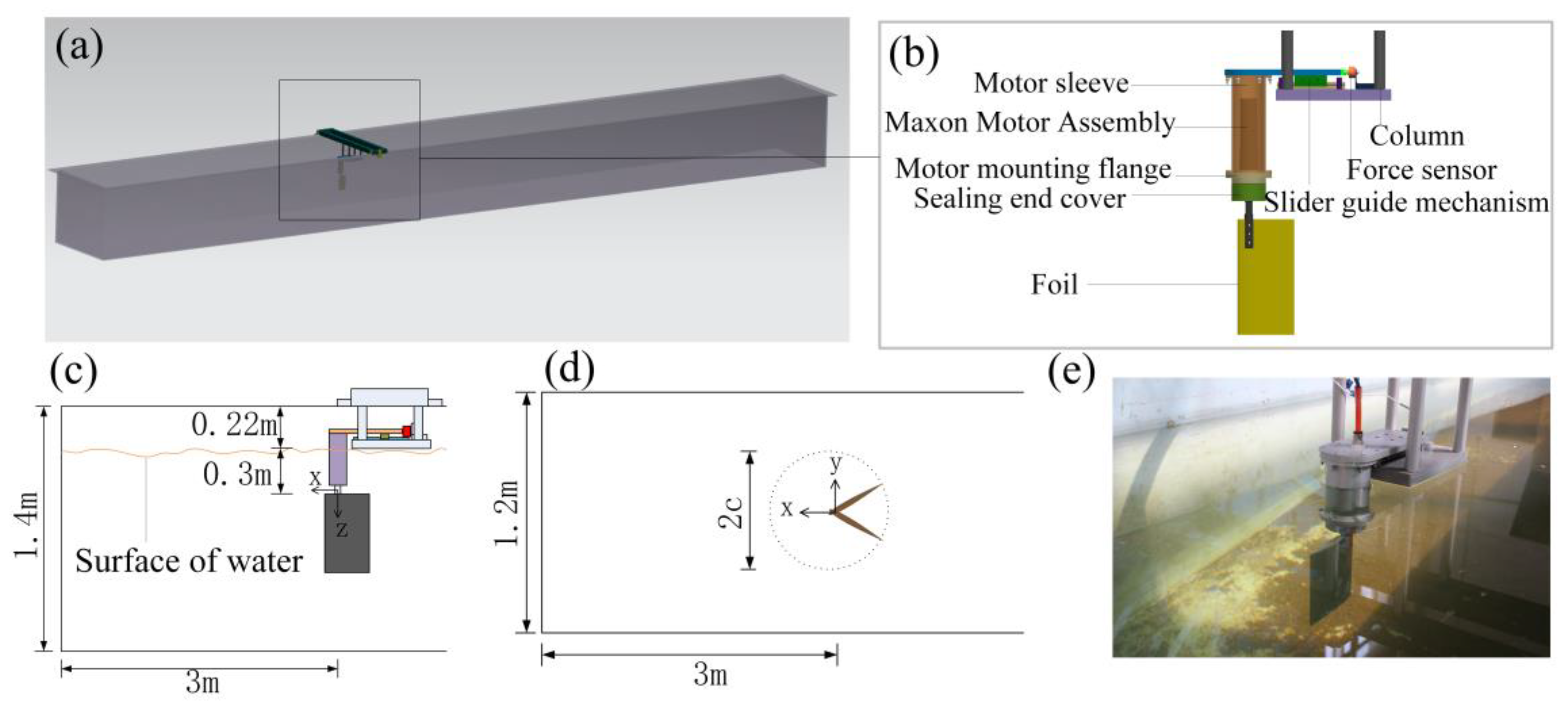
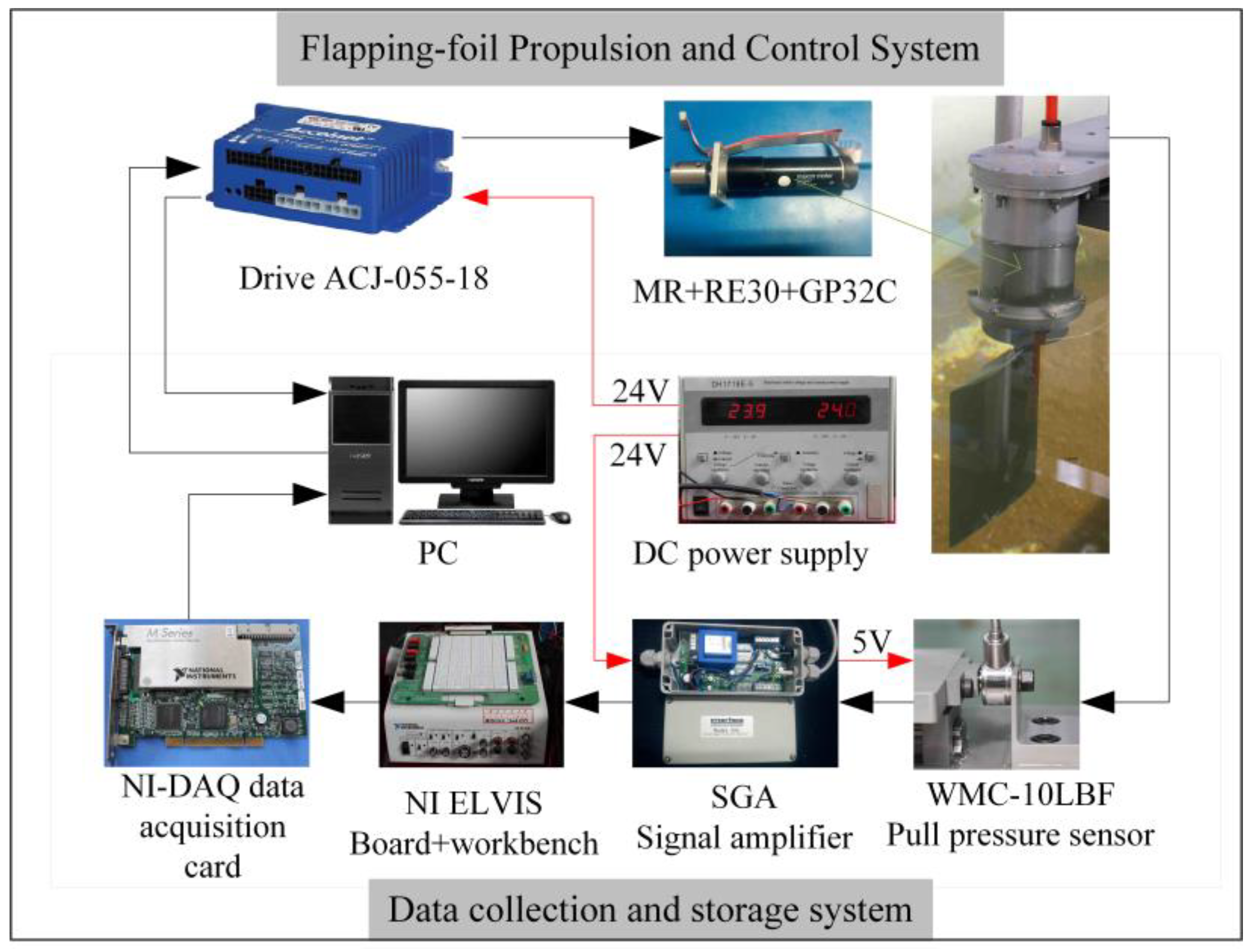
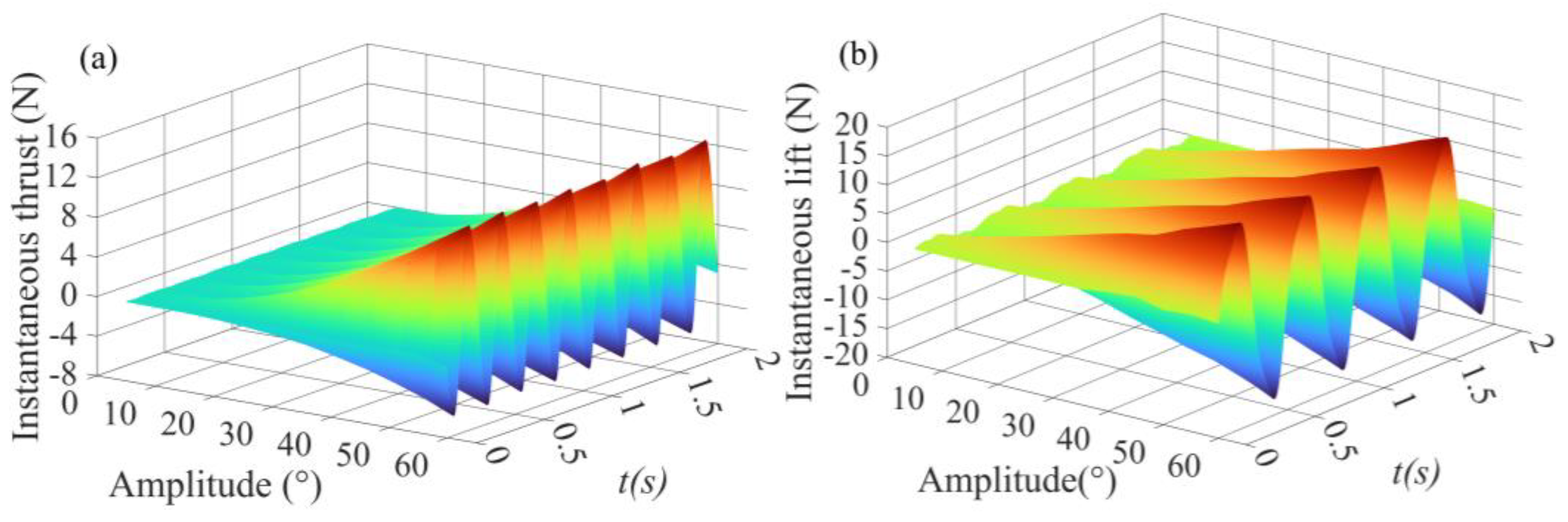
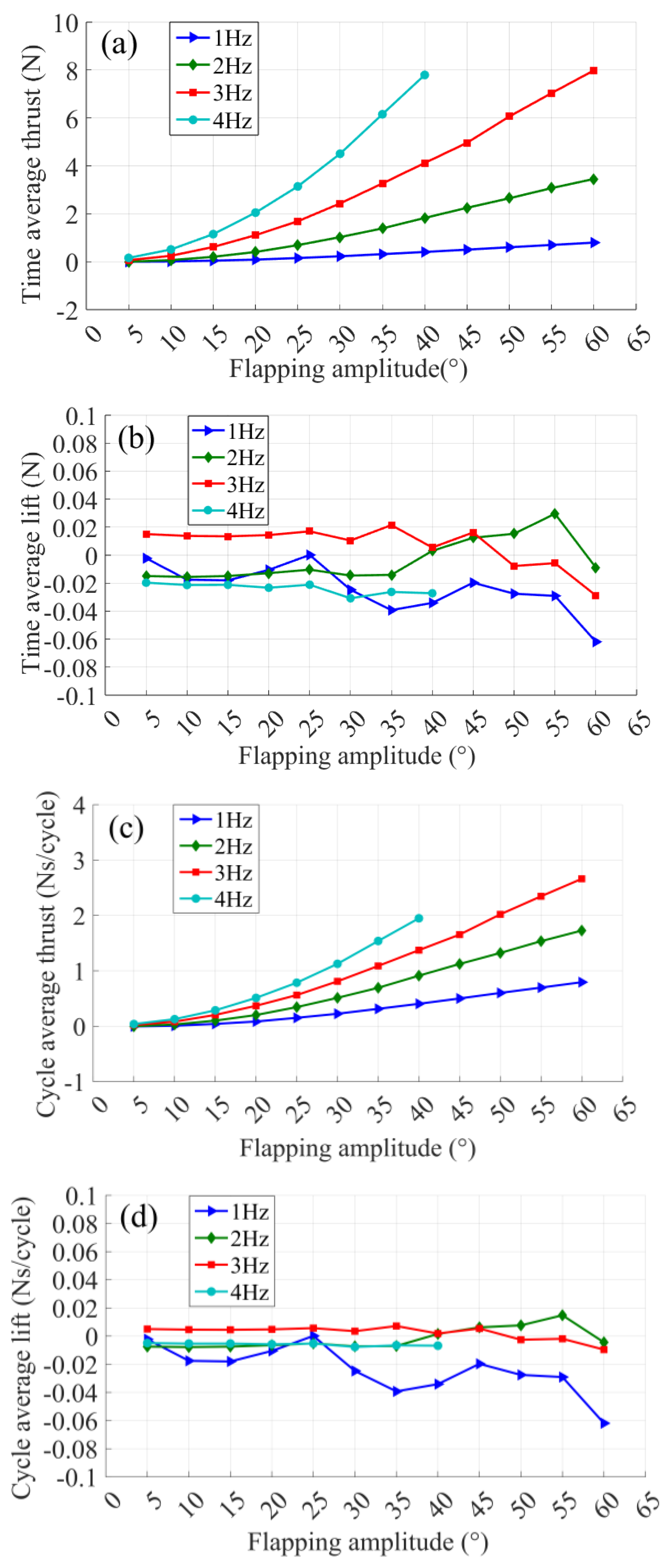
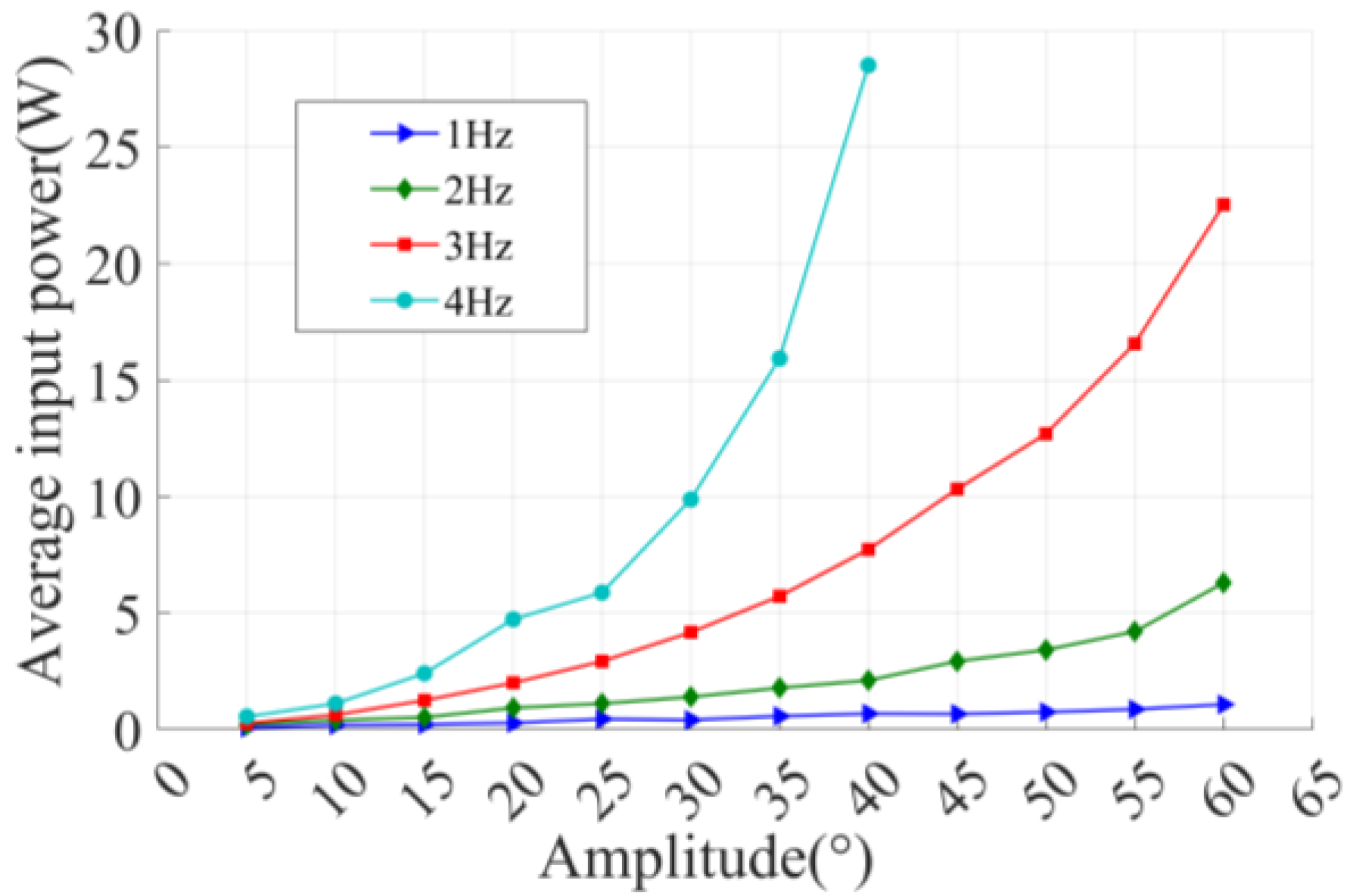
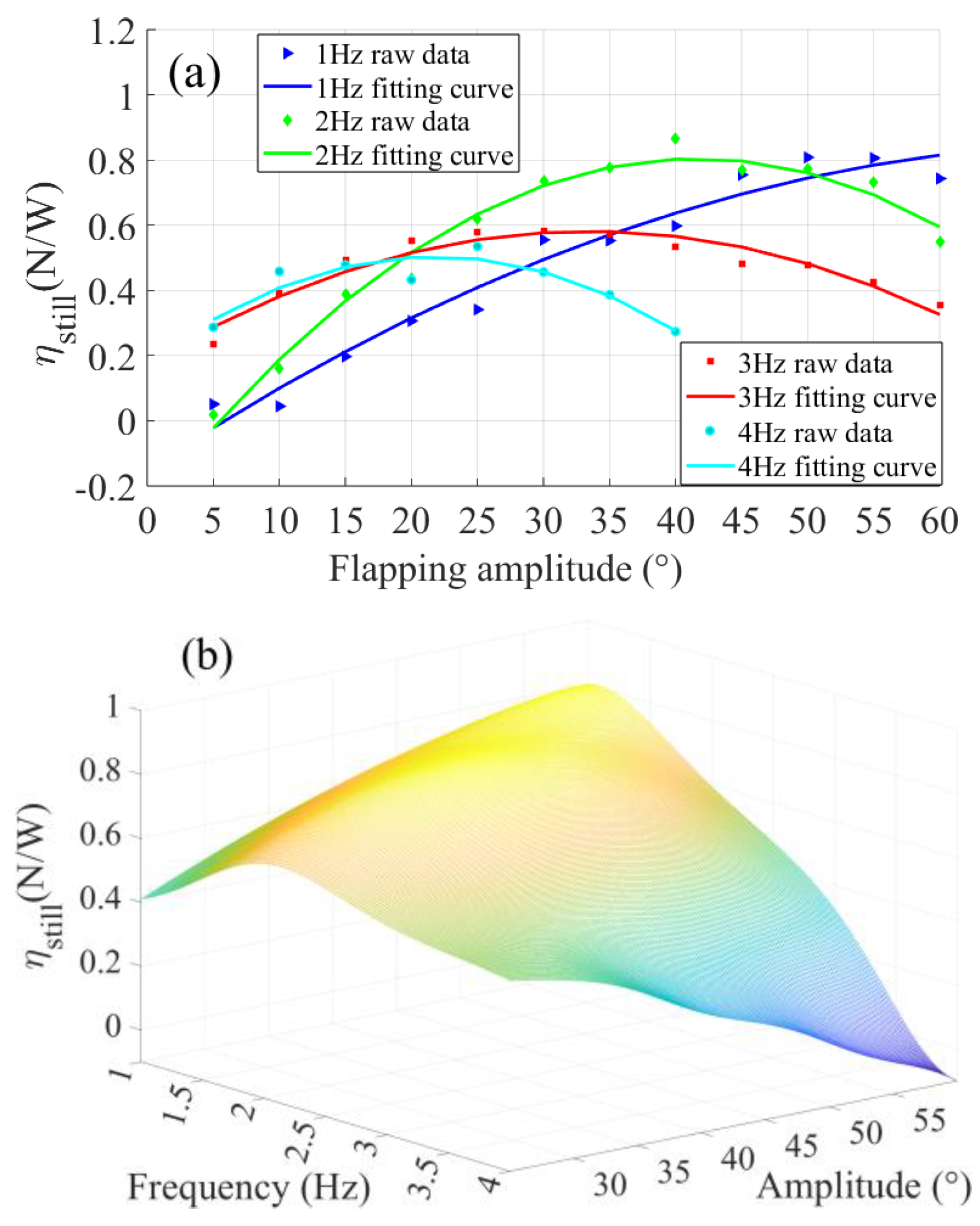
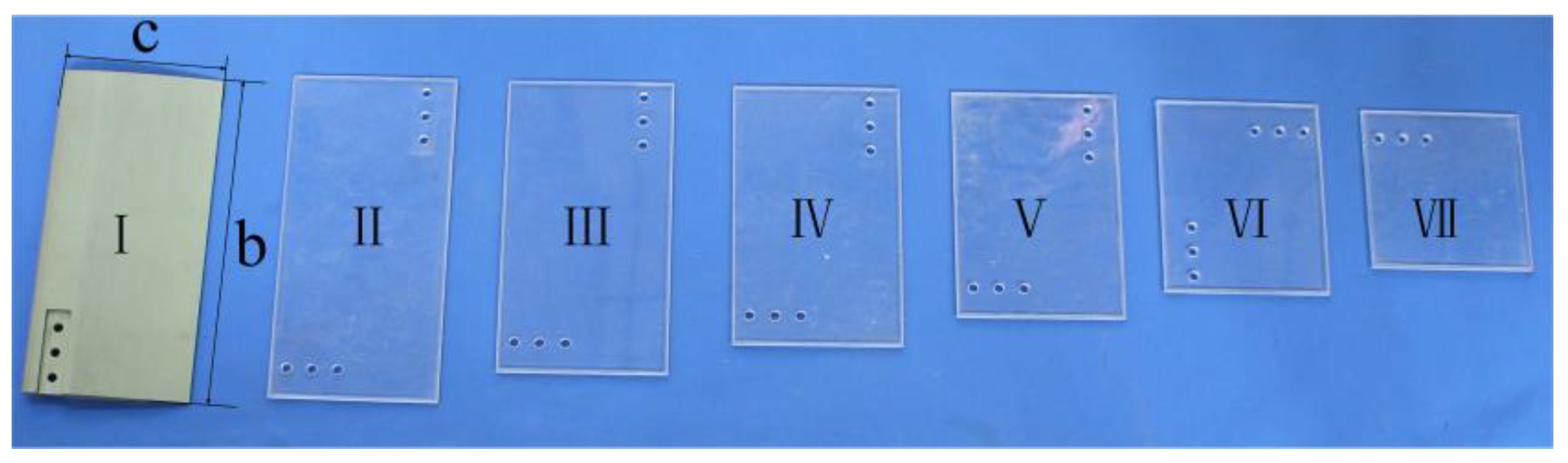
The propulsion system is the core component of unmanned underwater vehicles. The flapping propulsion method of marine animals’ flippers, which allows for flexibility, low noise, and high energy utilization at low speeds, can provide a new perspective for the development of new propulsion technology. In this study, a new experimental flapping propulsion apparatus that can be installed in both directions has been constructed. The guide rail slider mechanism can achieve the retention of force in the direction of movement, thereby decoupling thrust, lift, and torque. Subsequently, the motion parameters of frequency–amplitude related to the thrust and lift of a bionic flapping-foil are scrutinized. A response surface connecting propulsion efficiency and these motion parameters is formulated. The highest efficiency of the flapping-foil propulsion is achieved at a frequency of 2 Hz and an amplitude of 40°. Furthermore, the impact of the installation mode and the aspect ratio of the flapping-foil is examined. The reverse installation of the swing yields a higher thrust than the forward swing. As the chord length remains constant and the span length increases, the propulsive efficiency gradually improves. When the chord length is extended to a certain degree, the propulsion efficiency exhibits a parabolic pattern, increasing initially and then diminishing. This investigation offers a novel perspective for the bionic design within the domain of underwater propulsion. This research provides valuable theoretical guidance for bionic design in the underwater propulsion field.
Keywords: flapping-foil; hydrodynamic; frequency–amplitude motion; aspect ratio; propulsive efficiency flapping-foil; hydrodynamic; frequency–amplitude motion; aspect ratio; propulsive efficiency