
Design of Human-Inspired Feet to Enhance the Performance of the Humanoid Robot Mithra


Abstract
1. Introduction
2. Methods
2.1. The Stiff Foot
2.2. Design Objectives
2.2.1. Foot Power
2.2.2. Impact Force
2.2.3. Balance
2.2.4. Total Objective
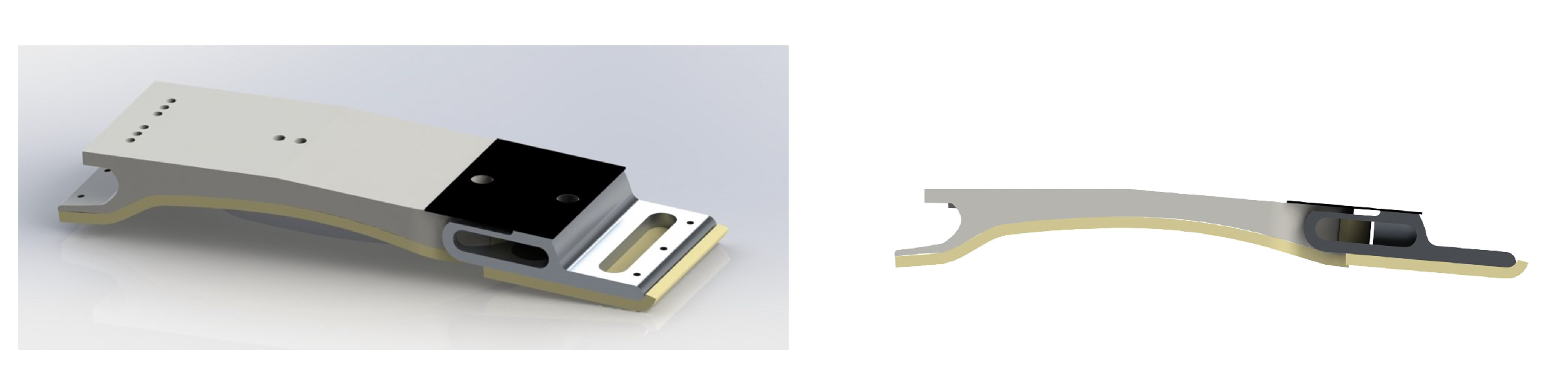
2.3. Foot Concepts
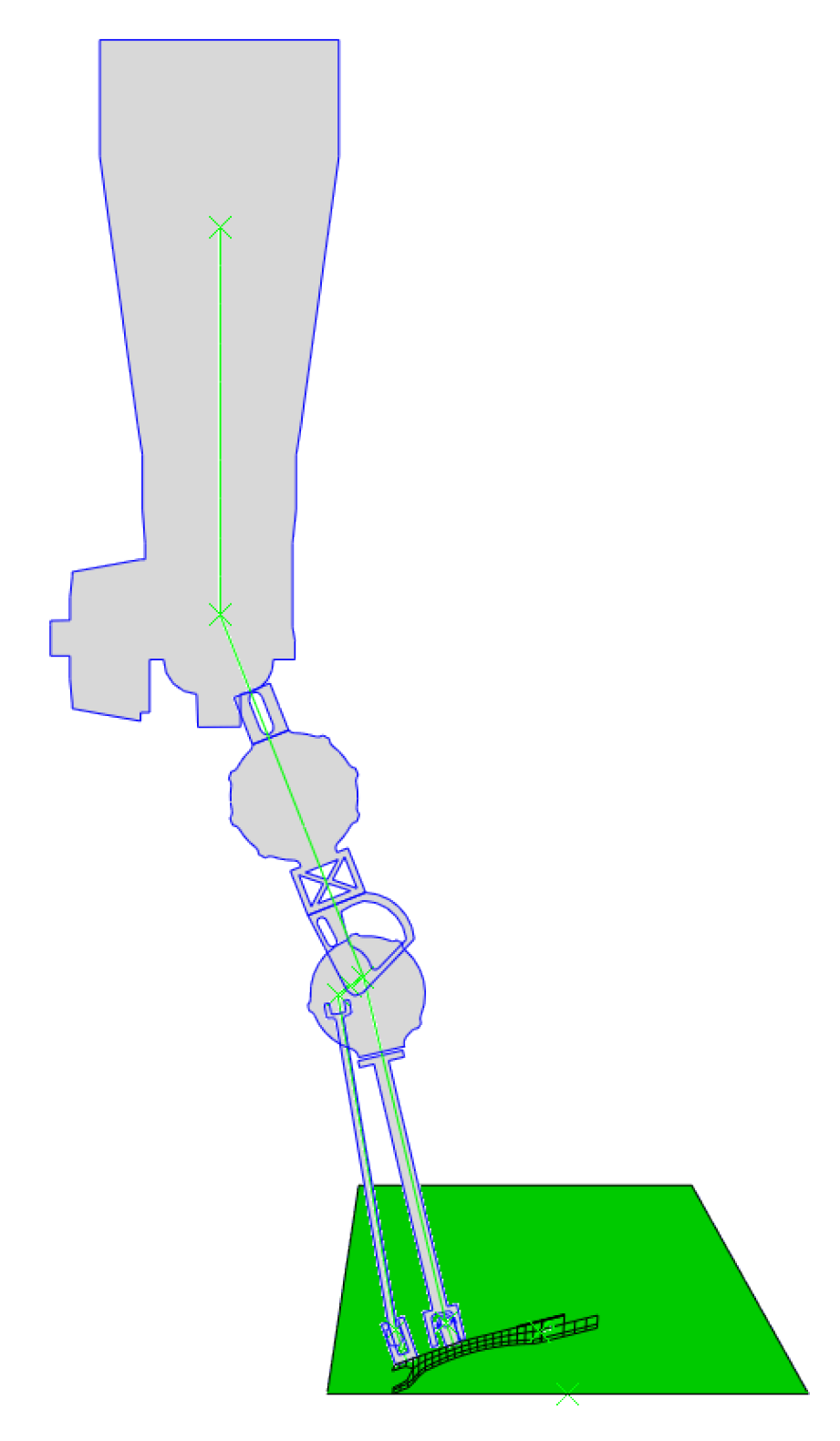
2.4. Finite Element Model
2.4.1. Joint Moment Modeling
2.4.2. Modeling the Robot
2.4.3. Element Selection and Materials
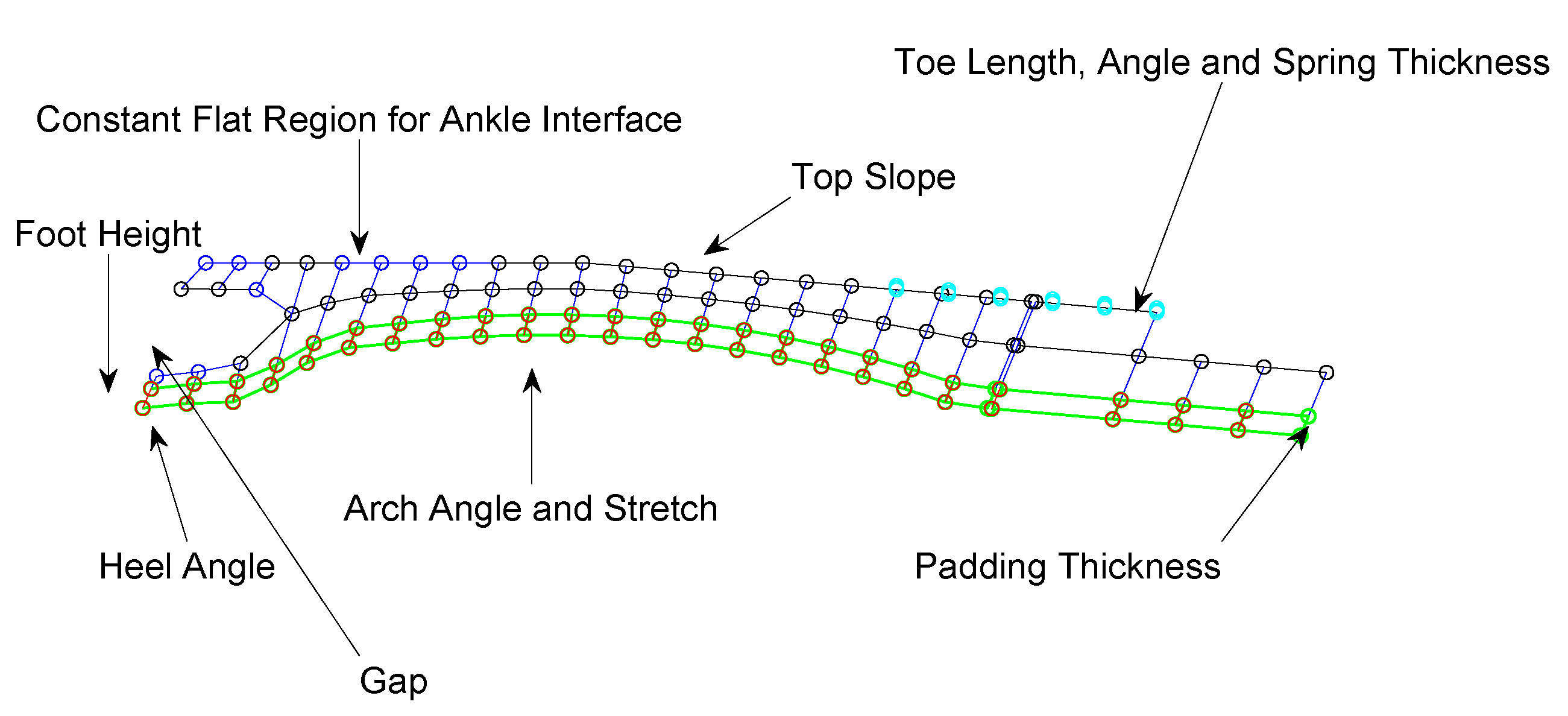
2.5. Optimization Variables
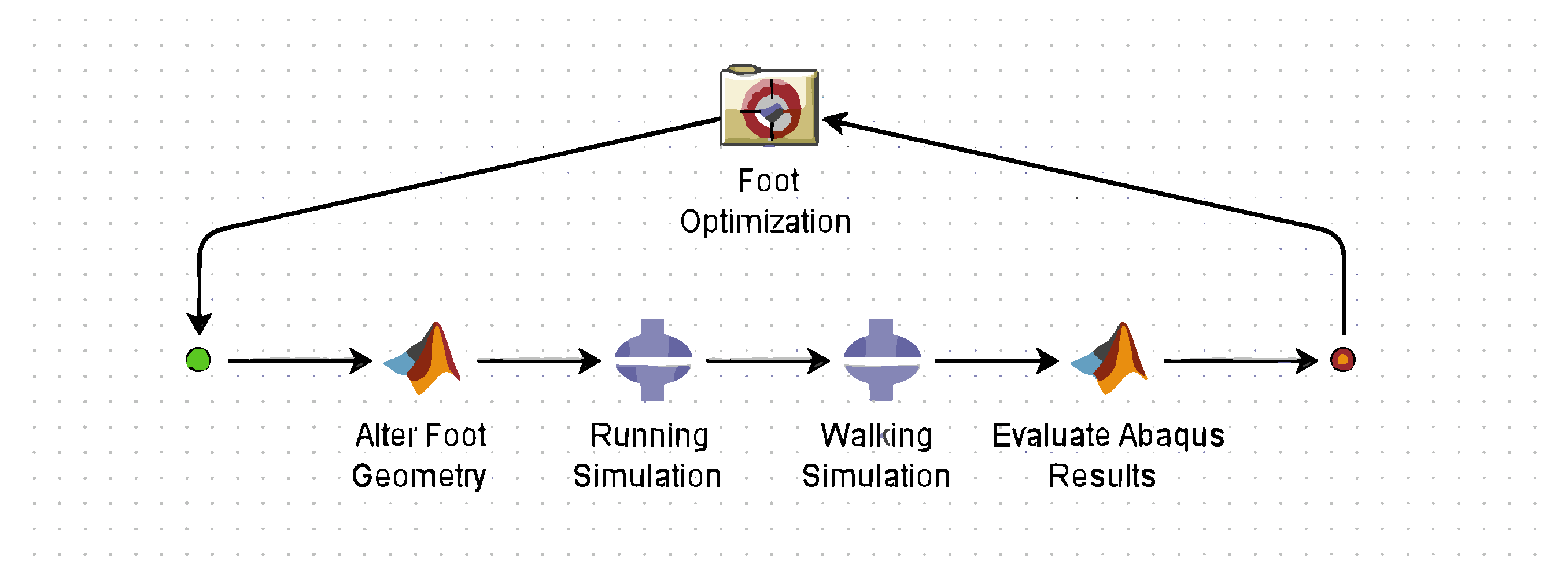
2.6. Optimization Framework
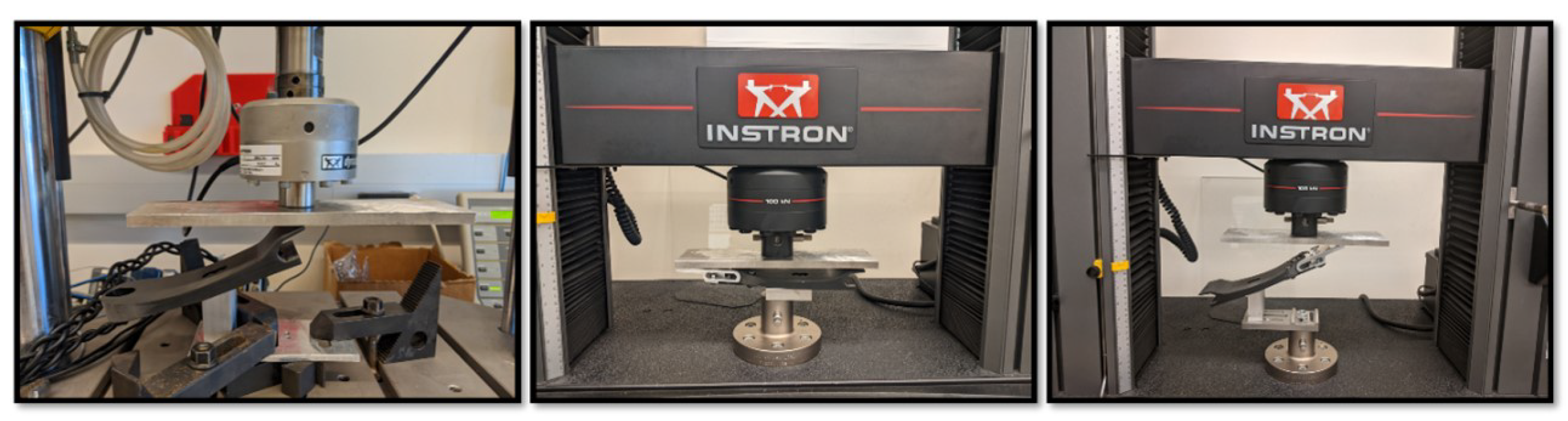
2.7. Physical Tests
3. Results
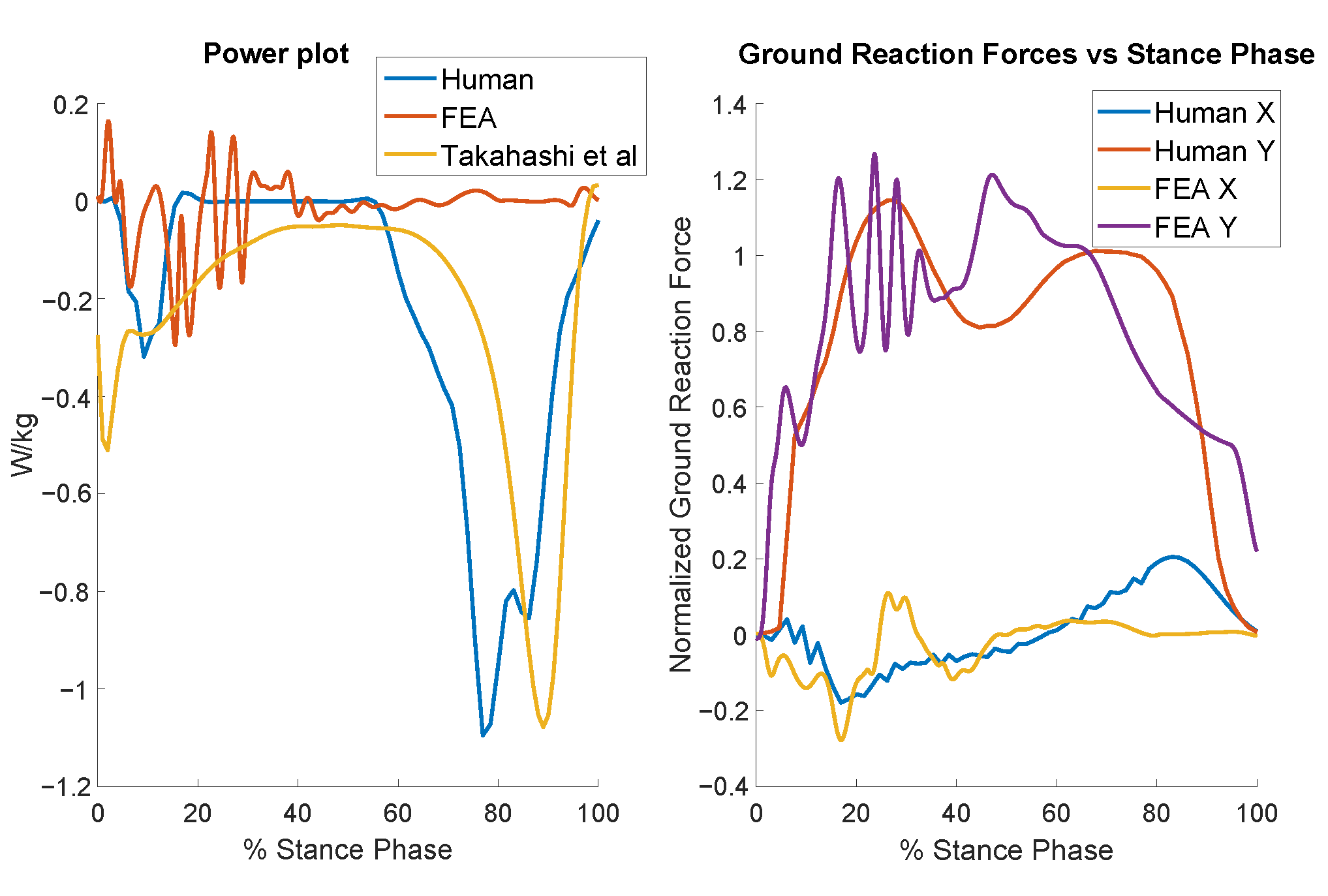
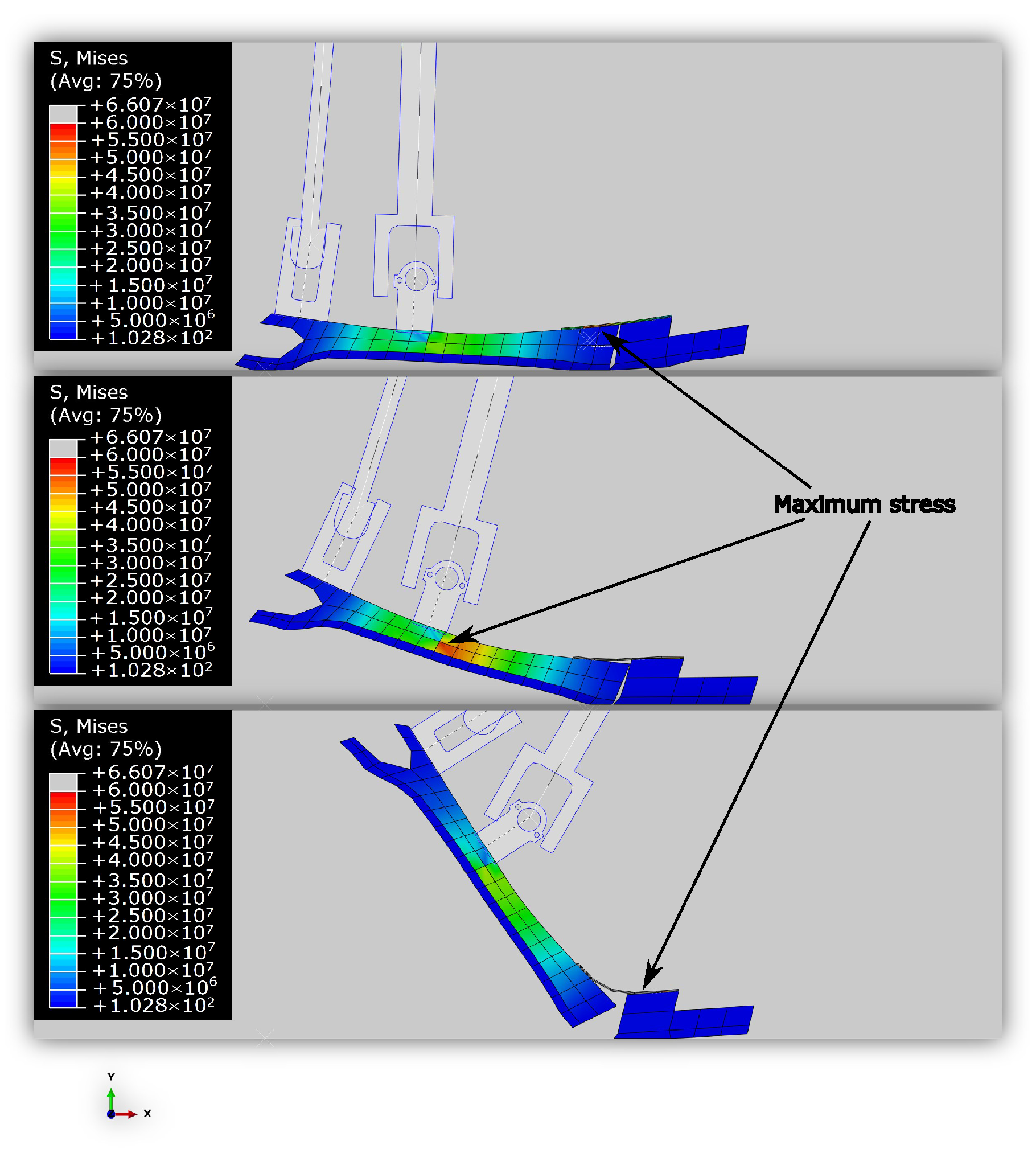
3.1. Stiff Foot Analysis
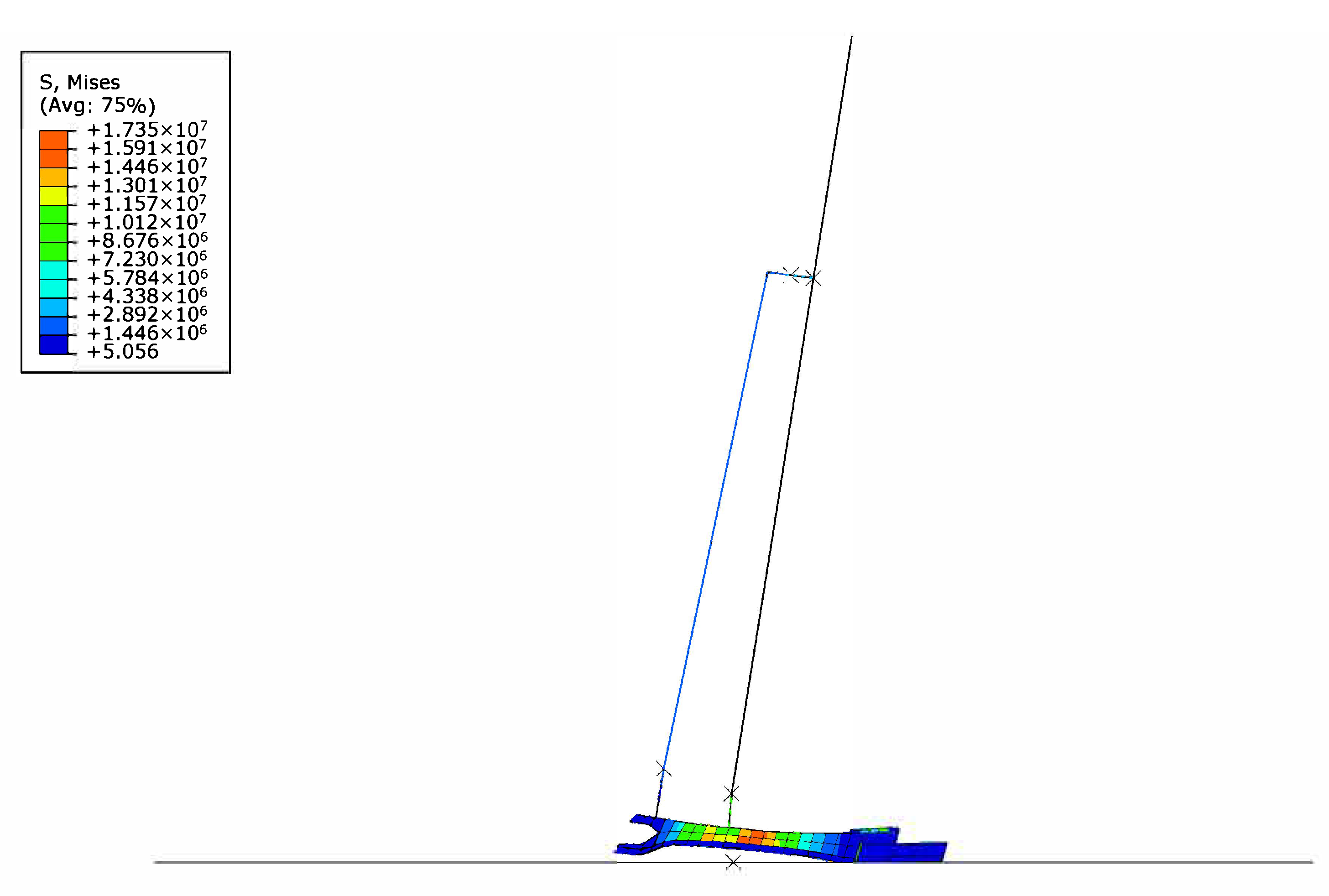
3.2. Compliant Foot Analysis
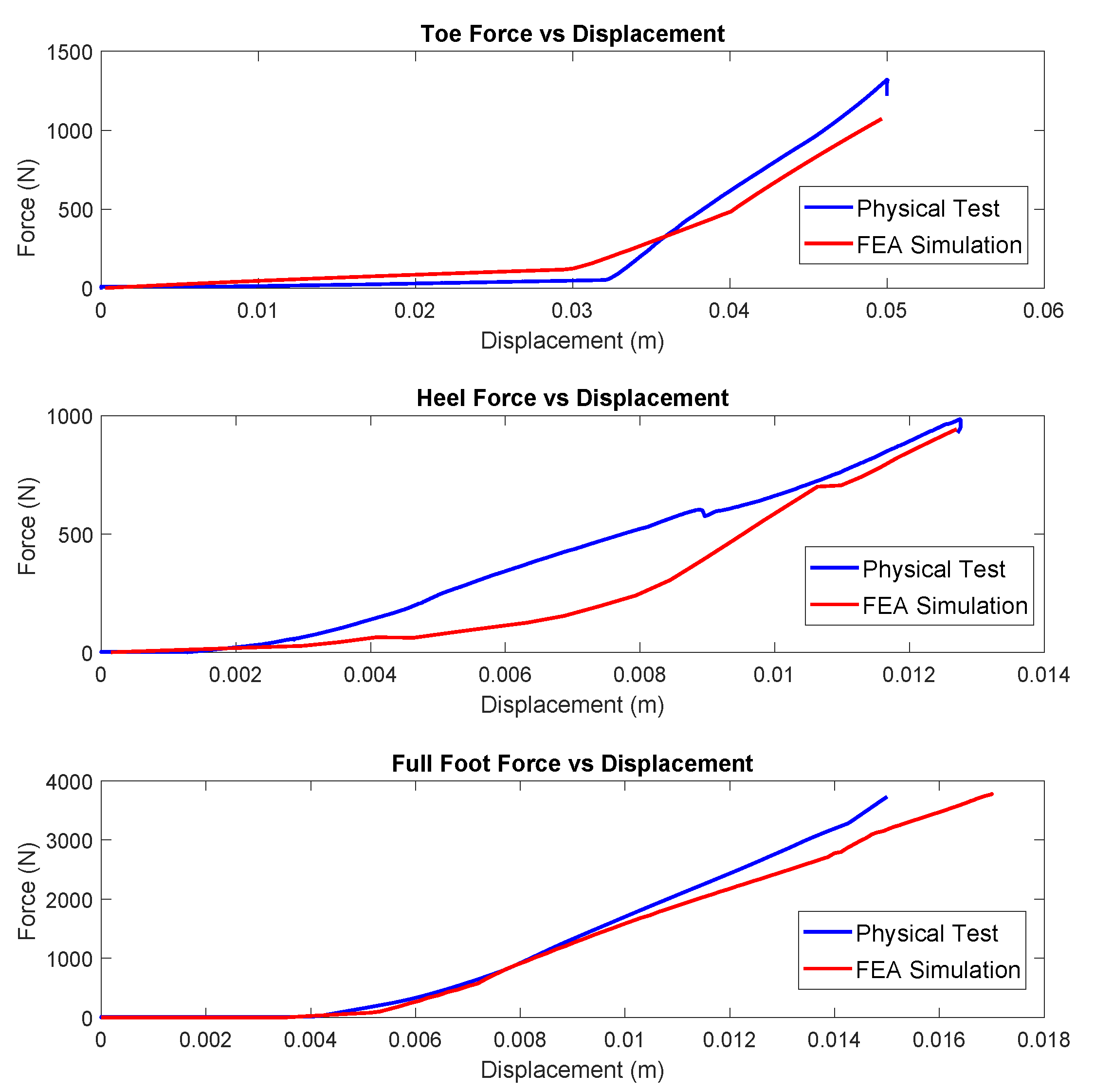
3.3. Physical Test Results
4. Discussion
5. Conclusions and Future Work
Author Contributions
Funding
Data Availability Statement
Acknowledgments
Conflicts of Interest
References
- Vukobratović, M.; Stepanenko, J. On the stability of anthropomorphic systems. Math. Biosci. 1972, 15, 1–37. [Google Scholar] [CrossRef]
- Goswami, A. Postural stability of biped robots and the foot-rotation indicator (FRI) point. Int. J. Robot. Res. 1999, 18, 523–533. [Google Scholar] [CrossRef]
- Hirose, M.; Ogawa, K. Honda humanoid robots development. Philos. Trans. R. Soc. Math. Phys. Eng. Sci. 2007, 365, 11–19. [Google Scholar] [CrossRef]
- Tsagarakis, N.G.; Caldwell, D.G.; Negrello, F.; Choi, W.; Baccelliere, L.; Loc, V.G.; Noorden, J.; Muratore, L.; Margan, A.; Cardellino, A.; et al. Walk-man: A high-performance humanoid platform for realistic environments. J. Field Robot. 2017, 34, 1225–1259. [Google Scholar] [CrossRef]
- Kaneko, K.; Kanehiro, F.; Kajita, S.; Yokoyama, K.; Akachi, K.; Kawasaki, T.; Ota, S.; Isozumi, T. Design of prototype humanoid robotics platform for HRP. In Proceedings of the IEEE/RSJ International Conference on Intelligent Robots and Systems, Lausanne, Switzerland, 30 September–4 October 2002; Volume 3, pp. 2431–2436. [Google Scholar]
- Kaneko, K.; Kanehiro, F.; Morisawa, M.; Akachi, K.; Miyamori, G.; Hayashi, A.; Kanehira, N. Humanoid robot hrp-4-humanoid robotics platform with lightweight and slim body. In Proceedings of the 2011 IEEE/RSJ International Conference on Intelligent Robots and Systems, San Francisco, CA, USA, 25–30 September 2011; pp. 4400–4407. [Google Scholar]
- Kaneko, K.; Kaminaga, H.; Sakaguchi, T.; Kajita, S.; Morisawa, M.; Kumagai, I.; Kanehiro, F. Humanoid robot HRP-5P: An electrically actuated humanoid robot with high-power and wide-range joints. IEEE Robot. Autom. Lett. 2019, 4, 1431–1438. [Google Scholar] [CrossRef]
- Wisse, M.; Schwab, A.L.; van der Linde, R.Q.; van der Helm, F.C. How to keep from falling forward: Elementary swing leg action for passive dynamic walkers. IEEE Trans. Robot. 2005, 21, 393–401. [Google Scholar] [CrossRef]
- Raibert, M.H.; Brown, H.B., Jr.; Chepponis, M. Experiments in balance with a 3D one-legged hopping machine. Int. J. Robot. Res. 1984, 3, 75–92. [Google Scholar] [CrossRef]
- Sreenath, K.; Park, H.W.; Poulakakis, I.; Grizzle, J.W. A compliant hybrid zero dynamics controller for stable, efficient and fast bipedal walking on MABEL. Int. J. Robot. Res. 2011, 30, 1170–1193. [Google Scholar] [CrossRef]
- Sreenath, K.; Park, H.W.; Poulakakis, I.; Grizzle, J.W. Embedding active force control within the compliant hybrid zero dynamics to achieve stable, fast running on MABEL. Int. J. Robot. Res. 2013, 32, 324–345. [Google Scholar] [CrossRef]
- Rezazadeh, S.; Hubicki, C.; Jones, M.; Peekema, A.; Van Why, J.; Abate, A.; Hurst, J. Spring-mass walking with atrias in 3d: Robust gait control spanning zero to 4.3 kph on a heavily underactuated bipedal robot. In Proceedings of the ASME Dynamic Systems and Control Conference, Columbus, OH, USA, 28–30 October 2015; Volume 57243, p. V001T04A003. [Google Scholar]
- Rezazadeh, S.; Hurst, J.W. Control of ATRIAS in three dimensions: Walking as a forced-oscillation problem. Int. J. Robot. Res. 2020, 39, 774–796. [Google Scholar] [CrossRef]
- Apgar, T.; Clary, P.; Green, K.; Fern, A.; Hurst, J.W. Fast Online Trajectory Optimization for the Bipedal Robot Cassie. In Proceedings of the Robotics: Science and Systems, Pittsburgh, PA, USA, 26–30 June 2018; Volume 101, p. 14. [Google Scholar]
- Castillo, G.A.; Weng, B.; Zhang, W.; Hereid, A. Robust feedback motion policy design using reinforcement learning on a 3d digit bipedal robot. In Proceedings of the 2021 IEEE/RSJ International Conference on Intelligent Robots and Systems (IROS), Prague, Czech Republic, 27 September–1 October 2021; pp. 5136–5143. [Google Scholar]
- Li, J.; Huang, Q.; Zhang, W.; Yu, Z.; Li, K. Flexible foot design for a humanoid robot. In Proceedings of the 2008 IEEE International Conference on Automation and Logistics, Qingdao, China, 1–3 September 2008; pp. 1414–1419. [Google Scholar]
- Ackerman, E. Boston Dynamics’ Latest Vids Show Atlas Going Hands On. IEEE Spectrum. Available online: https://spectrum.ieee.org/boston-dynamics-new-atlas (accessed on 4 November 2024).
- Lohmeier, S. Design and Realization of a Humanoid Robot for Fast and Autonomous Bipedal Locomotion. Ph.D. Thesis, Technische Universität München, Munich, Germany, 2010. [Google Scholar]
- Russo, M.; Chaparro-Rico, B.D.; Pavone, L.; Pasqua, G.; Cafolla, D. A bioinspired humanoid foot mechanism. Appl. Sci. 2021, 11, 1686. [Google Scholar] [CrossRef]
- Della Santina, C.; Piazza, C.; Gasparri, G.M.; Bonilla, M.; Catalano, M.G.; Grioli, G.; Garabini, M.; Bicchi, A. The quest for natural machine motion: An open platform to fast-prototyping articulated soft robots. IEEE Robot. Autom. Mag. 2017, 24, 48–56. [Google Scholar] [CrossRef]
- Staros, A. The SACH (solid-ankle cushion-heel) foot. Ortho. Pros. Appl. J. 1957, 11, 23–31. [Google Scholar]
- Hafner, B.J.; Sanders, J.E.; Czerniecki, J.; Fergason, J. Energy storage and return prostheses: Does patient perception correlate with biomechanical analysis? Clin. Biomech. 2002, 17, 325–344. [Google Scholar] [CrossRef]
- Hawkins, J. The Dynamic Characterisation of ESR Prosthetic Running Feet: An Investigation of the Key Parameters Affecting Their Performance. Ph.D. Thesis, Bournemouth University, Poole, UK, 2015. [Google Scholar]
- Olesnavage, K.M.; Prost, V.; Johnson, W.B.; Winter, A.G. Passive prosthetic foot shape and size optimization using lower leg trajectory error. J. Mech. Des. 2018, 140, 102302. [Google Scholar] [CrossRef]
- Olesnavage, K.M.; Winter, A.G. Lower Leg Trajectory Error: A novel optimization parameter for designing passive prosthetic feet. In Proceedings of the 2015 IEEE International Conference on Rehabilitation Robotics (ICORR), Singapore, 11–14 August 2015; pp. 271–276. [Google Scholar]
- South, B.J.; Fey, N.P.; Bosker, G.; Neptune, R.R. Manufacture of energy storage and return prosthetic feet using selective laser sintering. J. Biomech. Eng. 2010, 132, 015001. [Google Scholar] [CrossRef]
- Saunders, M.M.; Schwentker, E.P.; Kay, D.B.; Bennett, G.; Jacobs, C.R.; Verstraete, M.C.; Njus, G.O. Finite element analysis as a tool for parametric prosthetic foot design and evaluation. Technique development in the solid ankle cushioned heel (SACH) foot. Comput. Methods Biomech. Biomed. Eng. 2003, 6, 75–87. [Google Scholar] [CrossRef]
- Mahmoodi, P.; Aristodemou, S.; Ransing, R.; Owen, N.; Friswell, M. Prosthetic foot design optimisation based on roll-over shape and ground reaction force characteristics. Proc. Inst. Mech. Eng. Part C J. Mech. Eng. Sci. 2017, 231, 3093–3103. [Google Scholar] [CrossRef]
- Fey, N.P.; Klute, G.K.; Neptune, R.R. Optimization of prosthetic foot stiffness to reduce metabolic cost and intact knee loading during below-knee amputee walking: A theoretical study. J. Biomech. Eng. 2012, 134, 111005. [Google Scholar] [CrossRef]
- Fey, N.P.; Klute, G.K.; Neptune, R.R. Altering prosthetic foot stiffness influences foot and muscle function during below-knee amputee walking: A modeling and simulation analysis. J. Biomech. 2013, 46, 637–644. [Google Scholar] [CrossRef]
- Au, S.K.; Herr, H.M. Powered ankle-foot prosthesis. IEEE Robot. Autom. Mag. 2008, 15, 52–59. [Google Scholar] [CrossRef]
- Shorter, K.A.; Xia, J.; Hsiao-Wecksler, E.T.; Durfee, W.K.; Kogler, G.F. Technologies for powered ankle-foot orthotic systems: Possibilities and challenges. IEEE/ASME Trans. Mechatron. 2011, 18, 337–347. [Google Scholar] [CrossRef]
- Sup, F.; Bohara, A.; Goldfarb, M. Design and control of a powered transfemoral prosthesis. Int. J. Robot. Res. 2008, 27, 263–273. [Google Scholar] [CrossRef] [PubMed]
- Elery, T.; Rezazadeh, S.; Nesler, C.; Gregg, R.D. Design and validation of a powered knee–ankle prosthesis with high-torque, low-impedance actuators. IEEE Trans. Robot. 2020, 36, 1649–1668. [Google Scholar] [CrossRef] [PubMed]
- Hitt, J.K.; Bellman, R.; Holgate, M.; Sugar, T.G.; Hollander, K.W. The sparky (spring ankle with regenerative kinetics) project: Design and analysis of a robotic transtibial prosthesis with regenerative kinetics. In Proceedings of the International Design Engineering Technical Conferences and Computers and Information in Engineering Conference, Las Vegas, NV, USA, 4–7 September 2007; pp. 1587–1596. [Google Scholar]
- Semasinghe, C.; Taylor, D.; Rezazadeh, S. A unified optimization framework and new set of performance metrics for robot leg design. In Proceedings of the 2021 IEEE International Conference on Robotics and Automation (ICRA), Xi’an, China, 30 May–5 June 2021; pp. 4919–4925. [Google Scholar]
- Semasinghe, C.; Taylor, D.; Rezazadeh, S. The Design and Manufacturing of Mithra: A Humanoid Robot with Anthropomorphic Attributes and High-Performance Actuators. Robotics 2025, 14, 28. [Google Scholar] [CrossRef]
- Semasinghe, C.; Taylor, D.; Rezazadeh, S. Design of Actuators for a Humanoid Robot with Anthropomorphic Characteristics and Running Capability. Actuators 2025, 14, 243. [Google Scholar] [CrossRef]
- Horst, F.; Mildner, M.; Schöllhorn, W.I. One-year persistence of individual gait patterns identified in a follow-up study—A call for individualised diagnose and therapy. Gait Posture 2017, 58, 476–480. [Google Scholar] [CrossRef]
- Takahashi, K.Z.; Stanhope, S.J. Mechanical energy profiles of the combined ankle–foot system in normal gait: Insights for prosthetic designs. Gait Posture 2013, 38, 818–823. [Google Scholar] [CrossRef]
- Takahashi, K.Z.; Worster, K.; Bruening, D.A. Energy neutral: The human foot and ankle subsections combine to produce near zero net mechanical work during walking. Sci. Rep. 2017, 7, 15404. [Google Scholar] [CrossRef]
- Zhao, S.R. Deformable Link Segment Model for Analysis of Prosthetic Foot-Ankle Components. Ph.D. Thesis, Queen’s University, Kingston, ON, Canada, 2018. [Google Scholar]
- Humphrey, L.; Hemami, H. A computational human model for exploring the role of the feet in balance. J. Biomech. 2010, 43, 3199–3206. [Google Scholar] [CrossRef]
- Shamaei, K.; Sawicki, G.S.; Dollar, A.M. Estimation of quasi-stiffness of the human hip in the stance phase of walking. PLoS ONE 2013, 8, e81841. [Google Scholar] [CrossRef]
- Shamaei, K.; Sawicki, G.; Dollar, A. Estimation of Quasi-Stiffness of the Human Knee in the Stance Phase of Walking. PLoS ONE 2013, 8, e59993. [Google Scholar] [CrossRef] [PubMed]
- Shamaei, K.; Sawicki, G.S.; Dollar, A.M. Estimation of quasi-stiffness and propulsive work of the human ankle in the stance phase of walking. PLoS ONE 2013, 8, e59935. [Google Scholar] [CrossRef] [PubMed]
- Zhu, J.; Wang, Q.; Wang, L. On the design of a powered transtibial prosthesis with stiffness adaptable ankle and toe joints. IEEE Trans. Ind. Electron. 2013, 61, 4797–4807. [Google Scholar] [CrossRef]
- Taylor, D. Design of Lower Legs of Mithra, a High-Performance Backdrivable Humanoid Robot. Master’s Thesis, University of Denver, Denver, CO, USA, 2021. [Google Scholar]
- Fey, N.P.; Klute, G.K.; Neptune, R.R. The influence of energy storage and return foot stiffness on walking mechanics and muscle activity in below-knee amputees. Clin. Biomech. 2011, 26, 1025–1032. [Google Scholar] [CrossRef]
- Tang, M.; Huang, G.; Zhang, H.; Liu, Y.; Chang, H.; Song, H.; Xu, D.; Wang, Z. Dependences of rheological and compression mechanical properties on cellular structures for impact-protective materials. ACS Omega 2017, 2, 2214–2223. [Google Scholar] [CrossRef]
- Hawes, M.R.; Sovak, D. Quantitative morphology of the human foot in a North American population. Ergonomics 1994, 37, 1213–1226. [Google Scholar] [CrossRef]
- Nelder, J.A.; Mead, R. A simplex method for function minimization. Comput. J. 1965, 7, 308–313. [Google Scholar] [CrossRef]
- Van der Velden, A.; Koch, P. Isight design optimization methodologies. ASM Handb. 2010, 22, 79. [Google Scholar]


Disclaimer/Publisher’s Note: The statements, opinions and data contained in all publications are solely those of the individual author(s) and contributor(s) and not of MDPI and/or the editor(s). MDPI and/or the editor(s) disclaim responsibility for any injury to people or property resulting from any ideas, methods, instructions or products referred to in the content. |
© 2025 by the authors. Licensee MDPI, Basel, Switzerland. This article is an open access article distributed under the terms and conditions of the Creative Commons Attribution (CC BY) license (https://creativecommons.org/licenses/by/4.0/).
Share and Cite
Brewster, S.; Rullkoetter, P.J.; Rezazadeh, S. Design of Human-Inspired Feet to Enhance the Performance of the Humanoid Robot Mithra. Biomimetics 2025, 10, 675. https://doi.org/10.3390/biomimetics10100675
Brewster S, Rullkoetter PJ, Rezazadeh S. Design of Human-Inspired Feet to Enhance the Performance of the Humanoid Robot Mithra. Biomimetics. 2025; 10(10):675. https://doi.org/10.3390/biomimetics10100675
Chicago/Turabian StyleBrewster, Spencer, Paul J. Rullkoetter, and Siavash Rezazadeh. 2025. "Design of Human-Inspired Feet to Enhance the Performance of the Humanoid Robot Mithra" Biomimetics 10, no. 10: 675. https://doi.org/10.3390/biomimetics10100675
APA StyleBrewster, S., Rullkoetter, P. J., & Rezazadeh, S. (2025). Design of Human-Inspired Feet to Enhance the Performance of the Humanoid Robot Mithra. Biomimetics, 10(10), 675. https://doi.org/10.3390/biomimetics10100675