
Systematic Review

Barriers to Biologic Access in Atopic Dermatitis: Insurance, Cost, and Administrative Challenges

1
General Medical Education, Broward Health Medical Center, Fort Lauderdale, FL 33316, USA
2
Department of Dermatology, HCA Florida Orange Park Hospital, Orange Park, FL 32073, USA
3
College of Osteopathic Medicine–Southern Utah, Rocky Vista University, Ivins, UT 84738, USA
*
Author to whom correspondence should be addressed.
Allergies 2026, 6(3), 29; https://doi.org/10.3390/allergies6030029
Submission received: 1 June 2026 / Revised: 10 July 2026 / Accepted: 31 July 2026 / Published: 6 August 2026
(This article belongs to the Section Dermatology)

Abstract

Biologic therapies have significantly improved outcomes for patients with moderate-to-severe atopic dermatitis (AD), yet access to these treatments remains uneven and frequently limited. This systematic review synthesizes evidence on insurance-related, financial, administrative, prescriber-level, and structural barriers that limit equitable access to biologic therapies for AD. In contrast to prior reviews that primarily focus on biologic efficacy, safety, or general disease management, this review evaluates access itself as the primary outcome. Across diverse study designs and populations, findings consistently demonstrate that high out-of-pocket costs, restrictive insurance policies, and administrative burdens disproportionately impact low-income, minority, and Medicaid-insured patients. However, racial and ethnic disparities should be interpreted cautiously, as factors like insurance type, Medicaid enrollment, socioeconomic status, geographic access, and other structural determinants may influence these associations. Pediatric patients and caregivers also face challenges such as insurance delays, financial burden, and long-term effects of poor disease control. These barriers contribute to delays in treatment initiation, reduced adherence, and poorer clinical outcomes. Persistent racial, socioeconomic, and geographic disparities further exacerbate inequities in care delivery. Variability in prescribing patterns and provider familiarity with biologics also influence treatment access. Collectively, these findings underscore the need for comprehensive policy reform, streamlined authorization processes, and targeted interventions to improve equitable access to biologic therapies in AD.

1. Introduction

Atopic dermatitis (AD) is a chronic inflammatory skin disease with substantial global prevalence, affecting up to 22.6% of children and 17.1% of adults [1,2]. The disease is associated with significant morbidity, including pruritus, sleep disturbance, psychosocial burden, and reduced quality of life. The introduction of biologic therapies, particularly dupilumab, has revolutionized the management of moderate-to-severe AD by offering targeted immune modulation and improved long-term disease control.
Despite these therapeutic advancements, access to biologics remains highly variable and often limited by systemic barriers. Insurance-related challenges—including prior authorization, step therapy requirements, and formulary restrictions—are among the most frequently cited obstacles [2,3,4,5,6]. These barriers are compounded by high medication costs and significant out-of-pocket (OOP) expenses, which disproportionately affect vulnerable populations [7,8].
A growing body of literature highlights persistent disparities in biologic access across racial, socioeconomic, and geographic groups. Minority populations, particularly Black and Hispanic patients, are less likely to receive biologic therapies despite experiencing greater disease severity [9,10,11,12,13]. Similarly, Medicaid-insured and rural patients encounter additional barriers related to provider availability and insurance acceptance [4,14,15].
These disparities reflect a complex interplay of patient-level, provider-level, and system-level factors, including structural determinants such as healthcare policy, reimbursement frameworks, and social inequities [16,17,18]. This multi-level barrier framework is consistent with broader health services research demonstrating that the uptake of novel therapies is influenced not only by cost and insurance design but also by provider behavior, system readiness, and implementation infrastructure [19]. Additionally, comparative dermatologic literature suggests that therapeutic access challenges in AD parallel those observed in other chronic inflammatory diseases such as psoriasis and chronic urticaria, where treatment escalation is often delayed despite disease burden [20].
However, comprehensive analyses integrating these domains remain limited. This review aims to synthesize existing evidence on biologic access barriers in AD, with a focus on insurance-related cost disparities and administrative challenges, in order to inform strategies for improving equitable care. Unlike prior reviews that primarily emphasize clinical efficacy, safety, or general biologic utilization in AD, this review focuses specifically on access as the primary outcome. The central research question is as follows: What insurance-related, financial, administrative, prescriber-level, and structural barriers limit equitable access to biologic therapies for atopic dermatitis, and how do these barriers contribute to disparities in care? By integrating evidence from health services research, pharmacoeconomics, real-world prescribing data, pediatric studies, and health equity literature, this review aims to provide a consolidated evidence base for clinicians, payers, and policymakers seeking to improve equitable biologic access.

2. Methods

A systematic review was conducted to evaluate barriers to biologic access in atopic dermatitis, with a focus on insurance-related cost disparities, prior authorization requirements, administrative burden, prescriber variability, pediatric access, and structural determinants of care. The review was conducted and reported in accordance with the Preferred Reporting Items for Systematic Reviews and Meta-Analyses (PRISMA) 2020 guidelines. The completed PRISMA 2020 checklist is provided as a Supplementary File.
The review protocol and study procedures were publicly registered through the Open Science Framework (OSF). The OSF registration includes the review rationale and objectives, eligibility criteria, information sources and search strategy, study-screening and selection procedures, planned data-extraction variables, risk-of-bias considerations, and the proposed approach to evidence synthesis. The OSF registration information and public access link are provided in the Supplementary Materials.
A comprehensive literature search was performed across PubMed, Embase, Scopus, and Google Scholar, supplemented by gray literature review and citation chaining of relevant articles. The search included combinations of the following keywords and Boolean operators: “atopic dermatitis” OR “eczema” AND “biologic” OR “dupilumab” OR “tralokinumab” OR “lebrikizumab” AND “access” OR “insurance” OR “prior authorization” OR “step therapy” OR “cost” OR “out-of-pocket” OR “healthcare disparities” OR “Medicaid” OR “reimbursement” OR “prescribing patterns.” Where applicable, MeSH terms included “Dermatitis, Atopic,” “Biological Products,” “Insurance Coverage,” “Healthcare Disparities,” “Medicaid,” “Cost of Illness,” and “Health Services Accessibility.”
Studies were eligible for inclusion if they (1) addressed patients with AD or eczema; (2) evaluated biologic therapy access, insurance coverage, prior authorization, step therapy, reimbursement, cost burden, prescribing variability, or disparities in biologic use; (3) included original research, claims analyses, registry studies, survey studies, cohort studies, cross-sectional studies, retrospective studies, economic evaluations, policy analyses, or highly relevant gray literature; and (4) were published in English. The primary publication time frame was 2004–2025, with emphasis on studies published after biologic therapies became clinically available for AD.
Studies were excluded if they (1) did not focus on AD or biologic therapies; (2) evaluated only clinical efficacy or safety without access-related outcomes; (3) were commentaries, editorials, or narrative reviews without extractable access-related findings; (4) lacked relevance to insurance, cost, administrative, prescriber, geographic, or disparity-related barriers; or (5) were non-English publications.
Two reviewers screened titles and abstracts, followed by full-text review using the predefined criteria. Disagreements were resolved through discussion and consensus. Data extraction captured study design, population characteristics, biologic therapy evaluated, insurance barriers, cost burden, prior authorization or step therapy impact, disparities, sex-stratified findings when available, pediatric-specific findings, prescriber-level factors, geographic barriers, and health-system context.
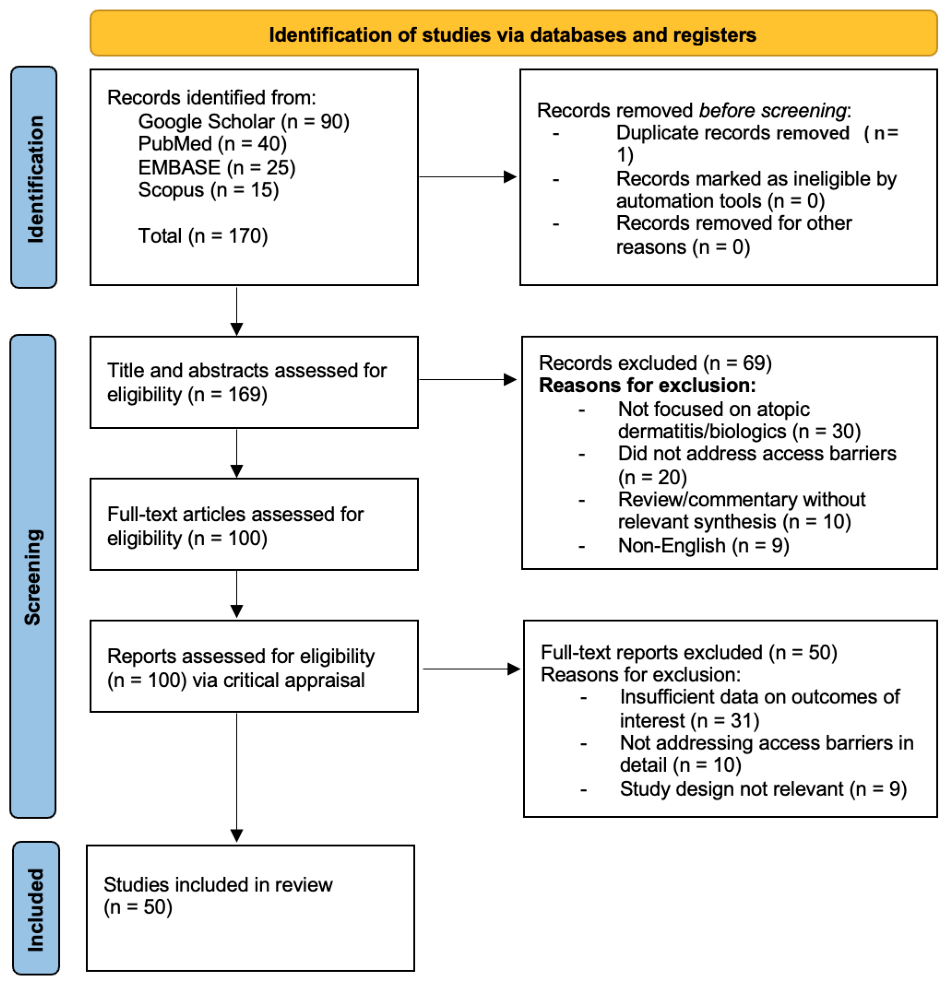
The study-selection process is summarized in Figure 1. Records identified through database searching were screened through title and abstract review, followed by full-text assessment using predefined inclusion and exclusion criteria. A total of 170 records were identified, of which one duplicate was removed before screening, resulting in 169 records undergoing title and abstract review. Following screening and full-text eligibility assessment, 50 high-relevance studies were included in the final synthesis.
Risk of bias and methodological quality were assessed using study-design-appropriate domains adapted from established critical appraisal frameworks, including evaluation of selection methods, representativeness of the study population, completeness of outcome reporting, confounding control, validity of data sources, and generalizability. Because the included studies were heterogeneous and included claims analyses, surveys, retrospective cohorts, economic evaluations, policy analyses, and conference abstracts, a single quantitative scoring system was not applied across all studies. Instead, each study was qualitatively categorized as low, moderate, or high risk of bias. Studies with representative populations, clearly defined outcomes, appropriate adjustment for confounders, and transparent methods were considered lower risk. Studies with convenience sampling, limited demographic detail, incomplete adjustment, abstract-only reporting, or limited external validity were considered higher risk. Given the heterogeneity of study designs and outcomes, a qualitative narrative synthesis was conducted rather than a quantitative meta-analysis.

3. Results

Consistent evidence demonstrates that insurance-related barriers—including prior authorization requirements, step therapy protocols, formulary restrictions, and coverage denials—can delay biologic initiation and contribute to inequitable access among Medicaid-insured, low-income, pediatric, rural, and minority populations [6,10]. Table 1 summarizes the included studies evaluating barriers to biologic access in atopic dermatitis and incorporates study quality and risk-of-bias ratings. Overall, most studies were judged to have a moderate risk of bias, largely due to reliance on retrospective claims data, cross-sectional designs, survey-based sampling, or registry-derived evidence. Although large claims and registry studies provided important real-world insights, they were limited by residual confounding and incomplete socioeconomic data. Survey studies added valuable patient-centered perspectives but were more vulnerable to selection and recall bias.

3.1. Insurance Barriers

Insurance-related barriers emerged as one of the most consistently reported obstacles to biologic access. Numerous studies demonstrate that coverage limitations, formulary restrictions, and outright denials significantly delay or prevent treatment initiation [4,6,21,26]. These barriers are particularly pronounced among Medicaid beneficiaries and individuals in rural or underserved regions, where insurance acceptance and specialist availability are limited [14].
The structure of healthcare systems plays a critical role in shaping these barriers. In fragmented systems such as the United States, variability in payer policies contributes to inconsistent access and increased administrative complexity. In contrast, centralized healthcare systems with standardized reimbursement frameworks demonstrate more uniform access, although cost constraints still exist [27,28,29,30]. These findings highlight the influence of systemic organization on treatment accessibility.
Similar barriers have been well documented in psoriasis care, where failure to achieve guideline-concordant treatment is frequently driven by insurance restrictions, delayed escalation, and system-level inefficiencies [25]. This cross-disease consistency reinforces that access limitations are not disease-specific but rather reflect broader structural issues in dermatologic care delivery.
Because many of the most restrictive insurance barriers described in this review are specific to the U.S. payer environment, the findings should not be assumed to apply uniformly across countries. National treatment guidelines, eligibility thresholds, drug-pricing structures, reimbursement pathways, and public insurance frameworks differ substantially across healthcare systems, as demonstrated by comparative reimbursement and cost studies from Ireland, Taiwan, Italy, Spain, and other non-U.S. settings [27,28,29,30]. Therefore, while administrative and financial barriers are internationally relevant, the mechanisms and magnitude of these barriers vary by country [20,27].

3.2. Racial and Socioeconomic Disparities

Disparities in biologic access are pervasive and multifactorial. Multiple studies consistently report that Black, Hispanic, and low-income patients are less likely to receive biologic therapies despite having more severe disease [3,10,11,12]. These disparities persist even after adjusting for insurance status and comorbidities, suggesting that structural determinants of health—including systemic bias, healthcare access, and socioeconomic inequities—play a significant role [13,16,17].
However, race and ethnicity should not be interpreted as isolated causal variables. Observed racial and ethnic differences in biologic access may be partially mediated by insurance type, Medicaid enrollment, household income, geographic access to dermatologists, and differential exposure to restrictive payer policies [3,10,15,16,17,18]. In this context, racial and ethnic disparities are best understood as markers of broader structural inequities rather than evidence that biologic underuse is caused by race or ethnicity alone [17,18,31].
Recent evidence further emphasizes that racial disparities in dermatology extend beyond access alone, encompassing differences in diagnosis, treatment intensity, and longitudinal disease management, which collectively contribute to worse outcomes in minority populations [31]. These findings highlight the need for equity-focused interventions that address insurance design, administrative burden, specialist access, and social determinants of health rather than focusing solely on patient-level characteristics.

3.3. Pediatric Access Barriers

Pediatric populations exhibit similar patterns, with minority children experiencing reduced access to advanced therapies and increased financial burden on caregivers [9,11,32,33]. These findings underscore the intergenerational impact of healthcare disparities and highlight the need for targeted interventions in vulnerable populations.
Pediatric patients face unique biologic access challenges. Children often depend on caregivers to navigate insurance appeals, prior authorization documentation, pharmacy coordination, transportation, and follow-up visits [4,5]. Delayed access to effective biologic therapy during childhood may have consequences beyond skin disease control, including impaired sleep, reduced school performance, psychosocial distress, caregiver work absenteeism, and increased long-term healthcare utilization [4,32,33]. Inadequate disease control during key developmental periods may also worsen stigma, social avoidance, and quality-of-life impairment [33,34,35,36]. Therefore, pediatric biologic access should be considered not only a medication-coverage issue but also a child-development, caregiver-burden, and health-equity issue [9,36].

3.4. Prior Authorization and Administrative Burden

Prior authorization (PA) and step therapy are major contributors to delays in biologic access. Studies consistently demonstrate that these processes result in prolonged time to treatment, increased administrative workload for providers, and heightened patient frustration [6,21,22,23]. In some cases, delays extend several weeks or longer, particularly for pediatric and Medicaid populations [5,34,35].
Importantly, administrative barriers also contribute to treatment abandonment and non-adherence, particularly in patients with complex regimens or polypharmacy [26,36]. Although interventions such as pharmacy concierge programs and managed access protocols have shown promise in reducing administrative burden, these solutions are not widely implemented [5,28]. As a result, prior authorization remains a significant systemic barrier that disproportionately affects patients requiring complex treatment regimens or polypharmacy.
Administrative burden also has equity implications because patients with limited health literacy, limited English proficiency, inflexible work schedules, transportation barriers, or reduced access to specialty offices may be less able to complete appeals, submit documentation, or repeatedly contact insurers and pharmacies [5,12,15]. Thus, prior authorization may function not only as a cost–control mechanism but also as an access filter that disproportionately disadvantages patients with fewer resources [6,23].

3.5. Cost Burden

The financial burden associated with biologic therapy is a major determinant of access and adherence in AD. High medication costs and out-of-pocket expenses are consistently identified as barriers, particularly among low-income patients, minority populations, caregivers of children with AD, and patients with comorbidities requiring multiple medications [7,10,35]. These costs may contribute to financial toxicity, medication nonadherence, and delayed treatment initiation even when biologic therapy is clinically appropriate [26,36].
Although several economic analyses suggest that biologics may be cost-effective in selected settings because of improved disease control and reduced healthcare utilization, this evidence should be interpreted cautiously [1,37,38]. Cost-effectiveness findings from non-U.S. settings may not translate directly to the United States because drug pricing, reimbursement structures, payer negotiation, and patient cost-sharing differ substantially across healthcare systems [29,30,38]. U.S.-specific claims data demonstrate that advanced therapies for AD remain among the most expensive treatment categories, reinforcing that affordability is a persistent access barrier despite clinical efficacy [39].
Therefore, the central access issue is not whether biologics are effective, but whether payer policies, cost-sharing structures, and reimbursement pathways allow eligible patients to obtain them in a timely and equitable manner. Distinguishing clinical efficacy from real-world affordability is essential when evaluating biologic access, particularly in fragmented payer systems where high acquisition costs and administrative restrictions may prevent appropriate treatment initiation [26,39].

3.6. Prescriber and Geographic Factors

Variability in prescribing patterns represents an additional barrier to equitable biologic access. Studies indicate that provider experience, familiarity with biologics, and adherence to clinical guidelines significantly influence prescribing behavior [40,41,42]. Dermatologists are the primary prescribers of biologics; however, their distribution is uneven, with limited availability in rural and underserved areas [14,24].
Provider-level factors, including concerns about cost, safety, and long-term efficacy, also contribute to variability in biologic adoption [40,43]. Continuing medical education and guideline dissemination have been shown to improve provider confidence and increase prescribing rates [1,44]. However, broader implementation science literature suggests that even when therapies are available, uptake is often limited by clinician familiarity, perceived complexity, and system-level barriers to integration into routine practice [19].
Geographic access barriers may further compound insurance-related barriers. Patients in rural or underserved areas may have fewer dermatologists, longer travel distances, longer wait times, and fewer specialty offices willing to accept Medicaid or complex insurance plans [14,15]. These factors can delay diagnosis, delay documentation of disease severity, and prevent completion of insurer-required treatment steps before biologic approval [6,14,15].
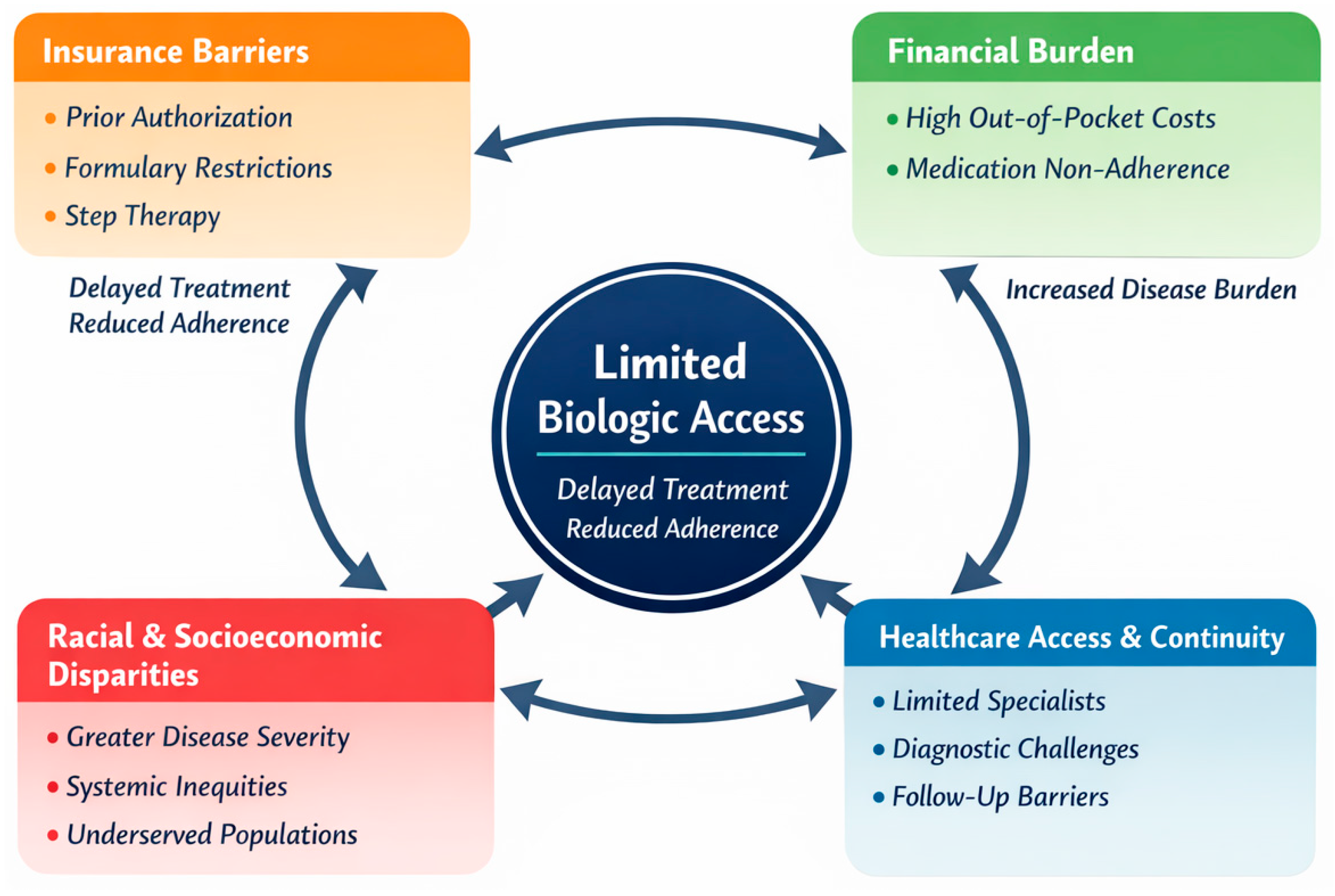
The synthesis of included studies revealed several recurring domains of barriers to biologic access, including insurance-related restrictions, financial burden, and persistent racial and socioeconomic disparities. These major thematic domains are summarized in Table 2, which illustrates how administrative, economic, and structural factors intersect to influence treatment access across diverse patient populations [3,7]. Notably, these barriers rarely occur in isolation, instead functioning synergistically to delay treatment initiation and reduce adherence.

3.7. Stigma and Psychosocial Barriers

Stigma represents an additional barrier that may intersect with insurance, cost, and administrative access barriers. AD is often visible, recurrent, and associated with intense pruritus, sleep disturbance, excoriations, lichenification, and post-inflammatory pigmentary change, all of which can affect daily functioning and quality of life [2,33,36]. Patients may experience embarrassment, social avoidance, bullying, workplace discrimination, or misconceptions that eczema is contagious. These psychosocial burdens may reduce care-seeking, worsen adherence, and delay escalation to advanced therapy, particularly when patients already face financial or administrative obstacles to treatment.
Stigma may be particularly relevant for children, adolescents, and patients with skin of color, in whom visible inflammation or pigmentary sequelae may carry additional psychosocial burden. Prior evidence highlights that disparities in dermatology can involve differences in diagnosis, treatment intensity, longitudinal disease management, and quality-of-life impact [31,33,36]. Inadequate access to effective biologic therapy may therefore prolong not only physical symptoms but also emotional distress, social impairment, school or work disruption, and reduced treatment satisfaction. Future studies evaluating biologic access should incorporate patient-reported outcomes related to stigma, psychosocial burden, school or work impairment, and treatment-related quality of life to better capture the full impact of delayed or restricted access.
Together, these findings demonstrate that biologic access in AD is shaped by overlapping insurance, financial, administrative, geographic, prescriber-level, and psychosocial barriers rather than by any single factor alone. These barriers most consistently affect Medicaid-insured patients, low-income populations, racial and ethnic minority groups, pediatric patients and caregivers, and individuals in rural or underserved areas. Their cumulative effect may include delayed treatment initiation, reduced adherence, prolonged disease burden, and inequitable access to advanced therapy. Overall, biologic access should be understood as a multifactorial issue shaped by patient-, provider-, payer-, and health-system-level influences.

4. Discussion

This review highlights that barriers to biologic access in AD are not isolated but instead represent a complex, multi-level system of interdependent factors. Insurance-related barriers, particularly prior authorization and formulary restrictions, function as gatekeeping mechanisms that delay or prevent access to effective therapies. While these policies are designed for cost containment, they often result in unintended consequences, including delayed treatment initiation, increased disease burden, and reduced adherence [22,23,26].
Financial burden further amplifies disparities in biologic access. High out-of-pocket costs disproportionately affect vulnerable populations and may contribute to medication nonadherence, delayed treatment initiation, and worsening clinical outcomes [7,10,36]. Although some studies suggest that biologics may be cost-effective over time, upfront affordability remains a critical barrier, particularly in fragmented healthcare systems such as the United States [39]. Cost-effectiveness findings from countries with centralized reimbursement systems should also be interpreted cautiously, as biologic prices, insurance design, patient cost-sharing, pharmacy benefit management, and prior authorization policies differ substantially across settings [30,38,39]. Therefore, the policy argument for improved biologic access should be grounded not only in cost-effectiveness modeling but also in clinical eligibility, disease burden, patient-centered outcomes, and equity considerations.
Racial and socioeconomic disparities remain among the most concerning findings. Minority patients have been reported to experience both greater AD disease severity and reduced biologic access, suggesting that structural inequities extend beyond insurance status alone [3,11,13]. However, these findings should be interpreted carefully because insurance coverage, Medicaid enrollment, income, geography, specialist availability, prior authorization burden, and healthcare access are deeply intertwined with race and ethnicity in the United States [10,15,16,17,18]. The available evidence does not fully disentangle whether lower biologic use among Hispanic, Black, or other minority patients is independently associated with race or mediated through these overlapping structural factors. Rather than weakening the findings, this limitation reinforces the need for interventions targeting modifiable systems of coverage, reimbursement, administrative burden, and care delivery.
Pediatric access deserves particular attention because delayed biologic initiation during childhood may have consequences beyond skin disease control. Children with uncontrolled AD may experience sleep disruption, impaired school functioning, psychosocial distress, caregiver work absenteeism, and increased healthcare utilization [4,32,33]. These burdens may also affect family functioning, educational performance, psychosocial development, and long-term quality of life [33,34,35,36]. Because pediatric biologic prescribing often requires additional documentation, age-specific approval criteria, caregiver coordination, and specialist involvement, children from under-resourced families may be especially vulnerable to delayed treatment when insurance, transportation, and specialty-access barriers occur simultaneously [4,5,9].
Pediatric access deserves particular attention because delayed biologic initiation during childhood may have consequences beyond skin disease control. Children with uncontrolled AD may experience sleep disruption, impaired school functioning, psychosocial distress, caregiver burden, and increased healthcare utilization [4,32,33]. Because pediatric treatment often requires repeated visits, documentation of disease severity, prior medication trials, caregiver coordination, and pharmacy follow-up, approval delays may place a sustained burden on families [4,5]. These challenges may be especially pronounced for children from under-resourced families who face transportation barriers, limited caregiver flexibility, and reduced access to dermatology specialists [4,5,9]. Delayed treatment during key developmental periods may therefore affect family functioning, educational performance, psychosocial well-being, and long-term quality of life.
Stigma should also be recognized as a clinically meaningful consequence of delayed or inequitable access. AD is often visible, recurrent, and associated with pruritus, excoriations, lichenification, sleep disruption, and post-inflammatory pigmentary change, all of which can reduce quality of life [2,33,36]. Visible disease may contribute to embarrassment, social withdrawal, bullying, school or work disruption, and misconceptions that eczema is contagious. These effects may be especially relevant for children, adolescents, and patients with skin of color, in whom inflammation or pigmentary sequelae may carry additional psychosocial burden [31,33,36]. Incorporating stigma-related outcomes into future access research may better capture the emotional, social, and quality-of-life consequences of delayed biologic therapy.
Importantly, disparities in dermatology are multifactorial and include differences in healthcare access, diagnostic recognition, treatment intensity, and longitudinal care continuity, all of which may compound inequities in biologic utilization [31]. The findings of this review highlight a complex, multi-level system of barriers influencing biologic access in AD. This relationship is illustrated in Figure 2.
The findings of this review are further supported by evidence from both dermatologic and broader healthcare systems literature. Comparative studies in inflammatory skin diseases demonstrate that patients with AD often experience delays in treatment escalation similar to those seen in psoriasis and chronic urticaria, despite comparable disease burden and quality-of-life impairment [20]. This suggests that therapeutic inertia and access barriers are systemic rather than disease-specific. Additionally, barriers to guideline-concordant care—such as administrative burden, insurance restrictions, and provider variability—have been consistently identified across dermatology, reinforcing the need for system-wide interventions [25].
From a health systems perspective, the adoption of novel therapies is influenced by a combination of structural, provider, and organizational factors. A systematic review of medication uptake identified key barriers, including administrative complexity, lack of provider familiarity, reimbursement uncertainty, and workflow disruption, all of which are highly relevant to biologic prescribing in AD [19]. These findings align closely with the present review and highlight the importance of implementation-focused strategies to complement policy reform.
Interpretation of these findings must be considered in the context of the methodological strengths and limitations of the existing literature. The strengths and limitations of the included studies are summarized in Table 3, highlighting the predominance of retrospective and cross-sectional designs, which limit causal inference and often lack detailed patient-level socioeconomic data [39,45]. These limitations underscore the need for more rigorous prospective and longitudinal research to better characterize the true impact of access barriers on clinical outcomes.
Overall, these findings support a systems-based framework in which patient, provider, and structural factors interact to shape biologic access. Addressing these barriers will require coordinated policy reform, improved provider education, and targeted interventions to reduce disparities.

5. Risk of Bias and Methodological Quality

The overall strength of the evidence is limited by the methodological characteristics of the included studies. Many studies were retrospective, cross-sectional, claims-based, registry-based, or survey-based. These designs are valuable for identifying real-world access patterns but are vulnerable to selection bias, information bias, residual confounding, and incomplete capture of patient-level socioeconomic variables [39,45]. Survey studies may overrepresent patients with stronger engagement in advocacy networks or specialty care, while claims analyses may fail to capture disease severity, patient preferences, rejected prescriptions, samples, manufacturer assistance, or medications never initiated because of anticipated cost.
Several studies reported racial, ethnic, or insurance-related differences in biologic access, but not all analyses adjusted for confounding variables such as income, Medicaid enrollment, geography, disease severity, specialist access, or comorbidities [3,10,15,16,17,18]. In addition, many studies did not report sex-stratified findings, pediatric subgroup analyses, or detailed geographic measures. Economic evaluations also varied substantially by country and payer context, which limits direct comparability and generalizability across healthcare systems [27,30,38,39]. Together, these limitations restrict causal interpretation and highlight the need for more standardized reporting.
Because the evidence base was heterogeneous, a meta-analysis was not performed. Instead, findings were synthesized narratively across recurring domains, including insurance barriers, cost burden, administrative processes, disparities, geographic access, and prescriber-level factors [6,19,23,25]. This approach is appropriate for summarizing access barriers across varied study types, but it introduces potential selection bias and limits the ability to estimate pooled effect sizes. Future systematic reviews should consider standardized risk-of-bias tools, prospective protocols, duplicate independent screening, and quantitative synthesis where outcomes are sufficiently homogeneous.

6. Gaps and Future Research Directions

Despite a growing body of literature examining barriers to biologic access in AD, several critical gaps remain that limit a comprehensive understanding of this issue. First, there is a notable lack of patient-centered research, as many studies rely on provider-reported data or administrative claims, which may not fully capture patient experiences navigating insurance barriers, financial toxicity, and treatment delays [6]. Future studies should incorporate qualitative and mixed-methods approaches to better understand patient perspectives, particularly among marginalized populations. Second, structural determinants of health—including healthcare policy, insurance design, and systemic inequities—are insufficiently integrated into current analyses, despite their significant role in driving disparities in biologic access [16,17,18]. Interdisciplinary research incorporating health economics, policy analysis, and social sciences is needed to address these upstream factors.
Additionally, while prior authorization and step therapy are consistently identified as major barriers, there is a paucity of prospective data quantifying their direct impact on clinical outcomes, time to treatment initiation, and healthcare utilization [6,23]. Longitudinal cohort studies and pragmatic trials are necessary to evaluate the real-world consequences of administrative delays and to assess the effectiveness of interventions such as pharmacy concierge programs. Pediatric populations also remain underrepresented in longitudinal research, particularly regarding the long-term effects of disparities in biologic access on disease progression and quality of life [9]. Furthermore, geographic and provider-level disparities are insufficiently characterized, with limited research examining how workforce distribution, teledermatology, and provider education influence biologic prescribing patterns in underserved areas [14,24].
Finally, economic evaluations of biologic therapies often rely on short-term models and fail to incorporate real-world patient costs, indirect financial burdens, and long-term outcomes, limiting their applicability to policy and payer decision-making [37,38]. Future research should prioritize real-world cost-effectiveness analyses that integrate patient-centered outcomes and affordability metrics. Additionally, implementation science approaches are needed to better understand how to translate therapeutic innovation into equitable clinical practice, particularly by addressing provider-level and system-level barriers to adoption [19]. Comparative studies across dermatologic diseases may also provide valuable insight into shared structural barriers and inform scalable, cross-condition solutions [20,25]. Addressing these gaps will be essential to developing targeted interventions, informing policy reform, and ultimately improving equitable access to biologic therapies for patients with AD.
Despite the breadth of existing research, several critical gaps remain that hinder a comprehensive understanding of biologic access disparities in AD. Key gaps in the literature and corresponding future research priorities are outlined in Table 4, emphasizing the need for patient-centered studies, evaluation of structural determinants of health, and prospective analyses of administrative barriers such as prior authorization [16,17]. Addressing these gaps will be essential for informing targeted interventions and policy reforms aimed at improving equitable access to biologic therapies.

7. Limitations

This review has several limitations. First, despite following PRISMA 2020 reporting guidelines, the evidence base is heterogeneous, with many studies relying on observational, retrospective, survey, or claims data. These designs limit causal inference and increase the risk of selection and recall bias, residual confounding, and incomplete assessment of disease severity and socioeconomic status.
Second, most findings are specific to the United States, as the included studies focused on U.S. insurance coverage, Medicaid, prior authorization, out-of-pocket costs, and payer-specific barriers. Results may not generalize to countries with centralized reimbursement, national eligibility criteria, negotiated drug pricing, or universal healthcare.
Third, many studies lacked sex-stratified results, detailed pediatric subgroup analyses, or adequate adjustment for insurance type, income, geography, specialist access, and comorbidities. This limits conclusions about sex-related differences and independent racial or ethnic effects.
Fourth, publication bias may be present, as studies reporting significant disparities or access barriers are more likely to be published. Although gray literature and conference abstracts were included, they often lack methodological detail.
Finally, without a formal quantitative meta-analysis, conclusions rely on qualitative synthesis. Although consistent patterns strengthen interpretation, the magnitude and independent impact of each barrier on delayed biologic access remain unclear.

8. Conclusions

Access to biologic therapies for moderate-to-severe atopic dermatitis remains limited by a combination of insurance barriers, high costs, administrative burden, and structural inequities. Although biologics demonstrate strong clinical efficacy and long-term cost-effectiveness, their real-world use is disproportionately low among populations with the highest disease burden, including racial and ethnic minorities, low-income individuals, Medicaid beneficiaries, and those in underserved regions.
The evidence also shows that access disparities should be interpreted through a structural lens. Race and ethnicity may correlate with lower biologic use, but these differences are likely mediated in part by insurance coverage, Medicaid enrollment, specialist access, socioeconomic status, and geographic barriers. Therefore, interventions should target modifiable systems of coverage, reimbursement, administrative burden, and care delivery rather than attributing disparities to patient identity alone.
Insurance mechanisms—particularly prior authorization and step therapy—continue to delay treatment initiation and contribute to disease progression and reduced adherence. Concurrently, high out-of-pocket costs further restrict access and reinforce disparities in care and outcomes.
Pediatric patients and caregivers face distinct barriers, including caregiver administrative burden, school and psychosocial consequences of uncontrolled disease, and long-term implications of delayed therapy. Stigma also remains an important but undermeasured consequence of delayed or inadequate treatment, particularly among children, adolescents, and patients with visible disease or pigmentary sequelae.
Provider-level factors, including variability in prescribing practices and unequal geographic distribution of dermatologic care, further compound these challenges. Differences in healthcare system structure also emphasize that access is shaped not only by therapeutic innovation but also by policy and reimbursement environments. Notably, these barriers are not unique to AD but reflect broader systemic challenges in the adoption of advanced therapies.
Clinical trial enrollment represents a promising yet underutilized strategy to improve access. Trials can offer uninsured and low-income patients access to otherwise cost-prohibitive therapies, often at no cost. However, participation remains limited in dermatology, and expanding awareness and integration of clinical research into routine care may help reduce disparities while advancing innovation.
Addressing these barriers will require coordinated, multi-level interventions, including policy reform to reduce financial toxicity, streamline administrative processes, expand equitable coverage, improve prescriber support, and strengthen pediatric and underserved care pathways. Future research should incorporate formal risk-of-bias assessment, sex-stratified reporting, pediatric-specific outcomes, patient-reported stigma measures, and international comparisons of reimbursement systems. Aligning clinical advances with health policy and equity-focused care delivery is essential to ensuring that biologic therapies are accessible to all patients with moderate-to-severe AD.

Supplementary Materials

The following supporting information can be downloaded at: https://www.mdpi.com/article/10.3390/allergies6030029/s1, Table S1: PRISMA 2020 Checklist for “Barriers to Biologic Access in Atopic Dermatitis: Insurance, Cost, and Administrative Challenges”. See [46].

Author Contributions

Conceptualization, C.P.; methodology, C.P. and S.C.; validation, C.P., S.C. and B.R.C.; formal analysis, C.P. and B.R.C.; investigation, C.P. and B.R.C.; resources, C.P.; data curation, C.P.; writing—original draft preparation, C.P., B.R.C., T.R. and S.C.; writing—review and editing, T.R., C.P., A.S., B.R.C. and S.C.; visualization, C.P.; supervision, A.S.; project administration, C.P. and A.S. All authors have read and agreed to the published version of the manuscript.

Funding

This research received no external funding.

Institutional Review Board Statement

Not applicable.

Informed Consent Statement

Not applicable.

Data Availability Statement

No new data were created or analyzed in this study. Data sharing is not applicable to this article.

HCA Disclaimer

This research was supported (in whole or in part) by HCA Healthcare and/or an HCA Healthcare-affiliated entity. The views expressed in this publication represent those of the author(s) and do not necessarily represent the official views of HCA Healthcare or any of its affiliated entities.

Conflicts of Interest

The authors declare no conflicts of interest.

References

  1. Ferrari, M.; Donadu, M.G.; Biondi, G.; Saderi, L.; Sucato, F.; Montesu, M.; Ruggiu, P.; Merella, P.; Chessa, C.; Sias, A.; et al. Dupilumab: Direct cost and clinical evaluation in patients with atopic dermatitis. Dermatol. Res. Pract. 2023, 2023, 4592087. [Google Scholar] [CrossRef] [Scilit] [PubMed]
  2. Wan, V.; Habibi, A.; Abdi, P.; Mukovozov, I.; Asiniwasis, R.; Maibach, H.I. Systematic scoping review on the barriers to access of biologics in moderate-to-severe adult atopic dermatitis. Australas. J. Dermatol. 2024, 65, 387–389. [Google Scholar] [CrossRef] [Scilit] [PubMed]
  3. Lee, L.W.; Knapp, K.; Munoz, B.; Perez, A.; Obi, C.; Calimlim, B.; Grada, A.; Silverberg, J.I. Healthcare disparities in atopic dermatitis: Insights from TARGET-DERM registry. Br. J. Dermatol. 2023, 188, ljad162-042. [Google Scholar] [CrossRef] [Scilit]
  4. Siegfried, E.C.; Paller, A.S.; Mina-Osorio, P.; Vekeman, F.; Kaur, M.; Mallya, U.G.; Héroux, J.; Miao, R.; Gadkari, A. Effects of variations in access to care for children with atopic dermatitis. BMC Dermatol. 2020, 20, 24. [Google Scholar] [CrossRef] [Scilit] [PubMed]
  5. Omar, D.; Brown-Korsah, J.B.; Taylor, S.C. A Medicaid pharmacy concierge program: A model for reducing the burden of prior authorizations in dermatology. J. Am. Acad. Dermatol. 2022, 87, AB9. [Google Scholar] [CrossRef] [Scilit]
  6. Loiselle, A.R.; Johnson, J.J.; Thibau, I.J.; Guadalupe, M.; Butler, L.; Begolka, W.S. Wait times and the impact of insurance coverage delays and denials for atopic dermatitis prescription treatments on patients and caregivers. J. Am. Acad. Dermatol. 2023, 89, AB104. [Google Scholar] [CrossRef] [Scilit]
  7. Begolka, W.S.; Chovatiya, R.; Thibau, I.J.; Silverberg, J.I. Financial burden of atopic dermatitis out-of-pocket health care expenses in the United States. Dermatitis 2021, 32, 333–340. [Google Scholar] [CrossRef] [Scilit] [PubMed]
  8. Elezbawy, B.; Fasseeh, A.; Fouly, E.; Tannira, M.; Dalle, H.; Aderian, S.S.; Esba, L.C.A.; Abdulkarim, H.A.; Ammoury, A.; Altawil, E.; et al. Humanistic and economic burden of atopic dermatitis for adults and adolescents in the Middle East and Africa region. Dermatol. Ther. 2022, 13, 131–146. [Google Scholar] [CrossRef] [Scilit] [PubMed]
  9. Jónsdóttir, U.; Craver, E.S.; Patel, T. Racial and ethnic disparities in dupilumab for pediatric atopic dermatitis in Florida. J. Allergy Clin. Immunol. Glob. 2024, 3, 100344. [Google Scholar] [CrossRef] [Scilit] [PubMed]
  10. Chovatiya, R.; Begolka, W.S.; Thibau, I.J.; Silverberg, J.I. Financial burden and impact of atopic dermatitis out-of-pocket healthcare expenses among Black individuals in the United States. Arch. Dermatol. Res. 2021, 314, 483–491. [Google Scholar] [CrossRef] [Scilit] [PubMed]
  11. Croce, E.A. Closing the Loop: Racial and Ethnic Disparities in Access to Childhood Atopic Dermatitis Healthcare (Publication No. 30281528). Master’s Thesis, The University of Texas at Austin, Austin, TX, USA, 2022. [Google Scholar]
  12. Sachdeva, M.; Price, K.N.; Hsiao, J.L.; Shi, V.Y. Pearls for managing atopic dermatitis in patients with low socioeconomic status. Dermatitis 2020, 31, 297–302. [Google Scholar] [CrossRef] [Scilit] [PubMed]
  13. Narla, S.; Hsu, D.Y.; Thyssen, J.P.; Silverberg, J.I. Predictors of hospitalization, length of stay, and costs of care among adult and pediatric inpatients with atopic dermatitis in the United States. Dermatitis 2018, 29, 22–31. [Google Scholar] [CrossRef] [Scilit] [PubMed]
  14. Cheraghlou, S.; Cohen, J.M. Early adoption of dupilumab in the Medicare population in 2017. Yale J. Biol. Med. 2020, 93, 675–677. [Google Scholar] [PubMed]
  15. Resneck, J.S.; Pletcher, M.J.; Lozano, N. Medicare, Medicaid, and access to dermatologists: The effect of patient insurance on appointment access and wait times. J. Am. Acad. Dermatol. 2004, 50, 85–92. [Google Scholar] [CrossRef] [Scilit] [PubMed]
  16. Sariahmed, K.; Kurian, J.; Singh, A.K.; Leyton, C.; Minuti, A.; Jerschow, E.; Arora, S.; Jariwala, S. Social, political, and economic determinants of access to biologics: A scoping review of structural determinants in the clinical disparities literature. Res. Soc. Adm. Pharm. 2022, 18, 4038–4047. [Google Scholar] [CrossRef] [Scilit] [PubMed]
  17. Polaskey, M.T.; Chovatiya, R. Moving beyond biology: The critical role of social and structural determinants in atopic dermatitis. Int. J. Dermatol. 2025, 64, 272–281. [Google Scholar] [CrossRef] [Scilit] [PubMed]
  18. Wan, V.; Habibi, A.; Mija, L.A.; Abdi, P.; Selvakumar, R.; Mukovozov, I. Disparities and barriers to the access of biologics in moderate-to-severe adult psoriasis. Int. J. Dermatol. 2024, 63, 1293–1301. [Google Scholar] [CrossRef] [Scilit] [PubMed]
  19. Medlinskiene, K.; Tomlinson, J.; Marques, I.; Richardson, S.; Stirling, K.; Petty, D. Barriers and facilitators to the uptake of new medicines into clinical practice: A systematic review. BMC Health Serv. Res. 2021, 21, 1198. [Google Scholar] [CrossRef] [Scilit] [PubMed]
  20. Pascal, C.; Maucort-Boulch, D.; Gilibert, S.; Bottigioli, D.; Verdu, V.; Jaulent, C.; Hacard, F.; Bérard, F.; Nicolas, J.-F.; Nosbaum, A. Therapeutic management of adults with atopic dermatitis: Comparison with psoriasis and chronic urticaria. J. Eur. Acad. Dermatol. Venereol. 2020, 34, 2339–2345. [Google Scholar] [CrossRef] [Scilit] [PubMed]
  21. Loiselle, A.R.; Chovatiya, R.; Thibau, I.J.; Johnson, J.K.; Guadalupe, M.; Smith Begolka, W. Evaluating access to prescription medications in the atopic dermatitis patient population in the USA. Dermatol. Ther. 2024, 14, 1811–1821. [Google Scholar] [CrossRef] [Scilit] [PubMed]
  22. Loiselle, A.R.; Thibau, I.J.; Johnson, J.K.; Guadalupe, M.; Begolka, W.S. Financial and treatment access burden associated with atopic dermatitis comorbidities. Ann. Allergy Asthma Immunol. 2024, 132, 243–245. [Google Scholar] [CrossRef] [Scilit] [PubMed]
  23. Shan, D.M.; Greenzaid, J.D.; Greene, E.; Feldman, S.R. Analyzing the benefits and costs of the Safe Step Act on patients, physicians, and insurers. J. Psoriasis Psoriatic Arthritis 2024, 9, 115–120. [Google Scholar] [CrossRef] [Scilit] [PubMed]
  24. Murphy, M.; Cheraghlou, S.; Damsky, W.; Cohen, J.I. Utilization, cost, and prescription patterns of dupilumab among Medicare beneficiaries in the United States from 2017 to 2019. J. Dermatol. Treat. 2022, 33, 3214–3215. [Google Scholar] [CrossRef] [Scilit] [PubMed]
  25. Eissing, L.; Radtke, M.A.; Zander, N.; Augustin, M. Barriers to guideline-compliant psoriasis care: Analyses and concepts. J. Eur. Acad. Dermatol. Venereol. 2016, 30, 569–575. [Google Scholar] [CrossRef] [Scilit] [PubMed]
  26. Myers, E.; Perche, P.; Jorizzo, J.L.; Feldman, S.R. Reducing costs in atopic dermatitis. Dermatol. Ther. 2022, 35, e15849. [Google Scholar] [CrossRef] [Scilit] [PubMed]
  27. Wang, S. Regulation, reimbursement, and economic access: A health policy perspective on dupilumab in different countries’ health systems. Theor. Nat. Sci. 2025, 124, 84–88. [Google Scholar] [CrossRef] [Scilit]
  28. Barrett, R.; Gorry, C.; Smith, A.; Barry, M.; McCullagh, L. A health technology management approach to dupilumab reimbursement in Ireland: Data from year one. Int. J. Technol. Assess. Health Care 2024, 40, S137. [Google Scholar] [CrossRef] [Scilit]
  29. Tang, C.; Huang, Y.; Chuang, P.; Wang, B.; Wei, C.; Ng, K.J.; Treuer, T.; Chu, C. Patient characteristics, treatment patterns, healthcare resource utilization, and costs of targeted therapy-eligible atopic dermatitis patients in Taiwan: A real-world study. Dermatol. Ther. 2022, 12, 2547–2562. [Google Scholar] [CrossRef] [Scilit] [PubMed]
  30. Ronconi, G.; Dondi, L.; Calabria, S.; Pedrini, A.; Esposito, I.; Scattareggia, M.; Rogliani, P.; Trimarchi, M.; Costanzo, A.; Patruno, C.; et al. Italian healthcare resource consumption and direct costs of adults with atopic dermatitis before and after dupilumab treatment. Ital. J. Dermatol. Venereol. 2024, 159, 417–424. [Google Scholar] [CrossRef] [Scilit] [PubMed]
  31. Narla, S.; Heath, C.R.; Alexis, A.; Silverberg, J.I. Racial disparities in dermatology. Arch. Dermatol. Res. 2023, 315, 1215–1223. [Google Scholar] [CrossRef] [Scilit] [PubMed]
  32. Fernández, A.; Vicente, A.; Martin-Santiago, A.; de Lucas Laguna, R.; Armario-Hita, J.C.; Moro, R.; Díaz-Cerezo, S.; Lizán, L.; Núñez, M. Humanistic and economic burden of atopic dermatitis in pediatric patients in Spain: A systematic review. Actas Dermo-Sifiliográficas 2025, 116, 365–377. [Google Scholar] [CrossRef] [Scilit] [PubMed]
  33. Kim, A.Y.; Cheng, B.T.; Fishbein, A.B. Patterns of cost-related medication non-adherence among children with atopic dermatitis. J. Allergy Clin. Immunol. 2023, 151, AB150. [Google Scholar] [CrossRef] [Scilit]
  34. Igelman, S.; Kurta, A.O.; Sheikh, U.A.; McWilliams, A.; Armbrecht, E.S.; Jackson Cullison, S.R.; Kress, D.W.; Smith, A.; Castelo-Soccio, L.; Treat, J.R.; et al. Off-label use of dupilumab for pediatric patients with atopic dermatitis: A multicenter retrospective review. J. Am. Acad. Dermatol. 2020, 82, 407–411. [Google Scholar] [CrossRef] [Scilit] [PubMed]
  35. Chovatiya, R.; Begolka, W.S.; Thibau, I.J.; Silverberg, J. Atopic dermatitis polypharmacy and out-of-pocket healthcare expenses. J. Drugs Dermatol. 2023, 22, 154–164. [Google Scholar] [CrossRef] [Scilit] [PubMed]
  36. Chovatiya, R.; Begolka, W.S.; Thibau, I.J.; Silverberg, J.I. The financial burden of out-of-pocket healthcare expenses on caregivers of children with atopic dermatitis in the United States. Skin. Health Dis. 2022, 3, e191. [Google Scholar] [CrossRef] [Scilit] [PubMed]
  37. Kolbin, A.S.; Gomon, Y.M.; Proskurin, M.; Balikina, Y.E. Clinical-economic analysis of target therapy in severe atopic dermatitis in adults. Kachestvennaya Klin. Prakt. Good Clin. Pract. 2022, 1, 17–29. [Google Scholar] [CrossRef] [Scilit]
  38. Jiménez, R.R.; Pinto, P.H.; Domínguez, M.C.; Mata, S.A.; Bellmunt, A.; Prades, M.; Arumi, D.; Hernández-Martín, I.; Herrera-Lasso, V.; Llevat, N.; et al. Cost-effectiveness analysis of abrocitinib compared with other systemic treatments for severe atopic dermatitis in Spain. PharmacoEconomics–Open 2024, 8, 291–302. [Google Scholar] [CrossRef] [Scilit] [PubMed]
  39. Eichenfield, L.F.; DiBonaventura, M.; Xenakis, J.; Lafeuille, M.; Duh, M.S.; Fakih, I.; Levenberg, M.; Cappelleri, J.C.; Sikirica, V. Costs and treatment patterns among patients with atopic dermatitis using advanced therapies in the United States: Analysis of a retrospective claims database. Dermatol. Ther. 2020, 10, 791–806. [Google Scholar] [CrossRef] [Scilit] [PubMed]
  40. Weiss, D.; Nordhorn, I.; Tizek, L.; Werfel, T.; Zink, A.; Biedermann, T.; Traidl, S.; Schielein, M.C. Prescription behaviour and barriers to prescription of biologicals for treatment of chronic inflammatory skin diseases in dermatological practice in two German federal states. Acta Derm.-Venereol. 2021, 101, adv00568. [Google Scholar] [CrossRef] [Scilit] [PubMed]
  41. Sivesind, T.; Oganesyan, A.X.; Bosma, G.; Hochheimer, C.; Schilling, L.M.; Dellavalle, R.P. Prescribing patterns of dupilumab for atopic dermatitis in adults: Retrospective observational cohort study. JMIR Dermatol. 2023, 6, e41194. [Google Scholar] [CrossRef] [Scilit] [PubMed]
  42. Hydol-Smith, J.; Sivesind, T.E.; Burnette, C.; Adelman, M.; Dellavalle, R.P. Prescribing patterns of dupilumab for atopic dermatitis: An analysis of the AAD DataDerm database. J. Am. Acad. Dermatol. 2023, 89, AB76. [Google Scholar] [CrossRef] [Scilit]
  43. Traidl, S.; Heratizadeh, A.; Werfel, T.; Dressler, C. Online survey to identify current challenges in atopic dermatitis management and guideline implementation in German-speaking countries. Eur. J. Dermatol. 2021, 31, 806–812. [Google Scholar] [CrossRef] [Scilit] [PubMed]
  44. Agache, I.; Song, Y.; Posso, M.; Alonso-Coello, P.; Rocha, C.; Solà, I.; Beltran, J.; Akdis, C.A.; Akdis, M.; Brockow, K.; et al. Efficacy and safety of dupilumab for moderate-to-severe atopic dermatitis: A systematic review for the EAACI biologicals guidelines. Allergy 2021, 76, 45–58. [Google Scholar] [CrossRef] [Scilit] [PubMed]
  45. Fasseeh, A.; Elezbawy, B.; Korra, N.; Tannira, M.; Dalle, H.; Aderian, S.S.; Abaza, S.M.; Kaló, Z. Burden of atopic dermatitis in adults and adolescents: A systematic literature review. Dermatol. Ther. 2022, 12, 2653–2668. [Google Scholar] [CrossRef] [Scilit] [PubMed]
  46. Page, M.J.; McKenzie, J.E.; Bossuyt, P.M.; Boutron, I.; Hoffmann, T.C.; Mulrow, C.D.; Shamseer, L.; Tetzlaff, J.M.; Akl, E.A.; Shamseer, L.; et al. The PRISMA 2020 statement: An updated guideline for reporting systematic reviews. BMJ 2021, 372, n71. [Google Scholar] [CrossRef] [Scilit] [PubMed]
Figure 1. PRISMA flow diagram of study selection for inclusion in the systematic review.
Allergies 06 00029 g001
Figure 2. Multilevel barriers to biologic access in atopic dermatitis.
Allergies 06 00029 g002
Table 1. Summary of included studies evaluating barriers to biologic access in atopic dermatitis.
StudyStudy DesignPopulationInsurance BarriersDisparities IdentifiedPrior Authorization ImpactCost BurdenPrescriber/System Factors
Loiselle et al., 2024 [21]Survey studyAD patients (US)Frequent insurance delays and denialsDisparities in access among vulnerable populationsPA major cause of delays and denialsHigh OOP costs drive non-adherencePatient difficulty navigating insurance
Loiselle et al., 2024 [22]Survey / cross-sectionalUS AD patients with comorbiditiesInsurance barriers amplified by comorbidity burdenGreater burden in vulnerable populationsPA delays compounded in complex careIncreased OOP costs and polypharmacy burdenSystem complexity; need for coordinated care
Chovatiya et al., 2021 [10]Cross-sectionalUS AD patientsMedicaid-associated financial barriersIncreased burden in Black patientsPA exacerbates delaysSignificant OOP expensesVariable provider awareness of cost burden
Cheraghlou & Cohen, 2020 [14]RetrospectiveMedicare populationReduced biologic access in rural populationsGeographic disparities (rural vs. urban)PA delays more pronounced in rural areasCost limits accessDermatologist distribution limits prescribing
Jónsdóttir et al., 2024 [9]Cohort studyPediatric ADInsurance gaps affect biologic useRacial disparities in pediatric accessPA delays in pediatric initiationHigh caregiver financial burdenPrescribing varies by demographics
Begolka et al., 2021 [7]Economic analysisUS AD patientsInsurance coverage insufficient to offset costsLow-income populations disproportionately affectedPA increases financial burdenHigh OOP costs across therapiesLimited provider cost communication
Shan et al., 2024 [23]Policy analysisUS healthcare systemStep therapy restricts accessDisparities driven by cost-containment policiesPA + step therapy increase delaysCost containment vs. access tradeoffIncreased provider administrative burden
Omar et al., 2022 [5]Program evaluationMedicaid patientsSignificant PA burdenMedicaid populations disproportionately affectedPA delays mitigated by pharmacy supportCost/formulary barriers persistPharmacy concierge improves access
Lee et al., 2023 [3]Claims analysisUS AD patientsInsurance status linked to treatment gapsRacial and ethnic disparities persistPA contributes to delaysHigher cost burden in uninsured/MedicaidProvider bias/system factors influence care
Murphy et al., 2022 [24]RetrospectiveMedicare patientsCoverage variability impacts utilizationGeographic prescribing disparitiesPA delays affect prescribing trendsRising biologic costsUneven provider distribution
Pascal et al., 2020 [20]Comparative observational studyAD, psoriasis, urticaria (Europe)Delayed escalationVariation across diseasesIndirect delaysCumulative treatment burdenSystem inefficiencies
Eissing et al., 2016 [25]ObservationalPsoriasis patientsGuideline access barriersInequities in advanced therapySystem-related delaysReimbursement limits adherenceVariable guideline adherence
Abbreviations: AD: atopic dermatitis; PA: prior authorization; OOP: out-of-pocket.
Table 2. Thematic synthesis of barriers to biologic access in atopic dermatitis.
ThemeDescriptionMechanismsPopulations Most Affected
Insurance & Administrative Barriers [6,19,23,25]Insurance policies delay or restrict biologic accessPrior authorization, step therapy, formulary restrictionsMedicaid, complex cases
Cost Burden [7,19,20,36]High costs limit initiation and adherenceOOP costs, copays, polypharmacyLow-income, minority patients
Racial & Socioeconomic Disparities [3,9,31]Unequal access despite higher disease burdenStructural inequities, healthcare access gapsBlack, Hispanic, low-SES populations
Prescriber Variability [19,40,41]Differences in prescribing patternsProvider knowledge, bias, experienceRural populations, non-specialty care
Geographic Disparities [14,24]Uneven access across regionsProvider shortages, rural access issuesRural, underserved populations
Health System Differences [19,20,27,28]System structure influences accessReimbursement models, policy frameworksUS vs. centralized systems
Abbreviations: OOP: out-of-pocket; SES: socioeconomic status.
Table 3. Strengths and limitations of included studies.
DomainStrengthsLimitations
Insurance & Cost Analysis [27,39]Robust identification of financial barriers across systemsReliance on claims data; limited patient-level granularity
Disparities Research [3,16,31]Consistent findings across populations, including expanded evidence on structural and racial inequitiesUnderrepresentation of minorities; limited longitudinal data
Administrative Barriers [6,19,23,25]Strong evidence of PA delays and burden, supported by cross-disease and system-level analysesLimited quantification of clinical impact
Prescriber Behavior [19,24,40]Identifies provider-level variability, including implementation and adoption barriersSmall sample sizes; cross-sectional designs; limited evaluation of system-level adoption factors
Economic Evaluations [37,38]Demonstrate cost-effectiveness of biologicsShort-term modeling; limited real-world cost data
Abbreviations: PA: prior authorization.
Table 4. Gaps and future research directions.
Gap AreaDescriptionRecommended ResearchPriority
Patient PerspectivesLimited patient-reported data on access barriersQualitative and mixed-methods studiesHigh
Structural DeterminantsUnderexplored systemic and policy-level factors, including implementation and health system barriers to therapy adoptionInterdisciplinary policy researchHigh
Prior Authorization ImpactLack of prospective outcome data and limited understanding of system-level drivers of administrative burdenCohort studies on treatment delays/outcomesHigh
Pediatric DisparitiesLimited longitudinal pediatric dataLong-term pediatric cohort studiesHigh
Geographic AccessInsufficient mapping of provider distributionTeledermatology and workforce studiesMedium
Cost-EffectivenessLimited real-world economic dataLongitudinal cost-effectiveness studiesMedium
Implementation BarriersLimited understanding of how new therapies are integrated into clinical practiceImplementation science and health systems research on the adoption of biologicsHigh
Disclaimer/Publisher’s Note: The statements, opinions and data contained in all publications are solely those of the individual author(s) and contributor(s) and not of MDPI and/or the editor(s). MDPI and/or the editor(s) disclaim responsibility for any injury to people or property resulting from any ideas, methods, instructions or products referred to in the content.